Charlie Kaufman is among the most brilliant and creative screenwriters today and is the mind behind modern cinematic masterpieces such as “Eternal Sunshine of the Spotless Mind” and “Synecdoche, New York”. In this address to the British Academy of Film and Television delivered a few years ago he shares insightful thoughts on his craft and the nature of thought itself. It’s a speech which everyone could potentially gain something of value from.
Category Archives: culture
Carlyle Group’s Latest Acquisition: the JFK Library (!)
By Russ Baker
Source: WhoWhatWhy
Some things you truly cannot make up. Like this: the museum and archives celebrating and exploring the life (if not really wanting to investigate the death) of John F. Kennedy is getting a facelift—courtesy of….the Carlyle Group.
This development was noted, without much fanfare, in a variety of major media. If there was a smidgen of irony, I missed it.
Yet, consider this: The ultimate globe-girdling corporation is playing a major role in preserving the memory of a president who at the time of his death was engaged in what may be described as mortal combat with outfits not unlike Carlyle—if smaller and less global. (I write about this in my book Family of Secrets but you can learn a lot more about JFK versus the corporations in Donald Gibson’s Battling Wall Street: The Kennedy Presidency.)
Kennedy was locked in grim battle with oil and steel and banking interests, hated by mining giants and soda pop companies, resisting pressures from the burgeoning defense industry, and on and on. The list of the offending and the aggrieved was endless. Executives were taking out ads to excoriate him, and even showing up at the White House to practically spit in his face.
“Those robbing bastards,” JFK told Walter Heller, chairman of the Council of Economic Advisors, when Heller mentioned the oil and gas industry. “I’m going to murder them.”—as cited in Family of Secrets, from audiotape held by John F. Kennedy Library and Museum
***
Why is the museum getting a facelift? Apparently, it is to “enhance the visual and interactive offerings.”
Does none of it have to do with the still-mysterious fire that broke out at the museum complex in Boston at approximately the same time as the bombings of the Boston Marathon? Initial news reports suggested that the fire might somehow be linked to the bombings, an event that led to the precedent-setting lockdown of a major American city in a military-style operation.
As with, well, practically everything about that day, we have since been assured that there was in fact no deeper mystery regarding the museum fire—that its cause was accidental and its timing a coincidence. And of course it may well have been, though I (a past user of the archives’ services) was struck by what seemed like a sheepish lack of openness on the part of library personnel when I made inquiries. Call it a reporter’s instincts.
JFK World vs Carlyle World
JFK, who entered the White House as outgoing president Eisenhower warned about the dangerous growth of a “military-industrial complex,” battled constantly with the same forces that today virtually reign supreme. He was an enthusiast of attempts in the mass media to draw attention to threats to freedom here at home, as seen in such movies as Seven Days in May, about a military coup against the U.S. government, and The Manchurian Candidate, about the subversion of our democratic system through mind control.
Times have certainly changed. The CEO of Carlyle, it should be noted, is a Democrat. He worked for Jimmy Carter. Other figures in the Carlyle orbit over the years have been Republicans—including George H.W. Bush, former Secretary of State James Baker III, and former Defense Secretary Frank Carlucci—and high-profile foreigners, including British Prime Minister John Major and members of the bin Laden family.
Carlyle itself is one of the increasing ranks of strange companies that seem to come out of nowhere and are suddenly everywhere and into everything. (You really must treat yourself to a review of its holdings; even in the constrained precincts of Wikipedia, it’s still a wonder to behold—if you just drill down one level, from the military contractors to the pipeline companies, many of which it bought undervalued, reinvigorated with new government funding, and then sold off at great profit.)
As Carlyle puts it on their site:
We are one of the world’s largest and most diversified alternative asset management firms. We manage 120 distinct funds and 133 fund of funds vehicles that invest across four segments, 11 core industries and six continents. Our global size, scale and brand enable us to access opportunities in virtually every market around the world.
Carlyle is the kind of massive, opaque entity that draws its breath and its profits from knowing the right information and having the right connections. As such, it attracts almost no public attention…except when it chooses to do something philanthropic to “enhance” its public image.
We have every right to be amazed that the directors of the John F. Kennedy Presidential Library and Museum decided they needed money so badly that they would take it from the likes of Carlyle. Even more amazing is that they thought, correctly as it turns out, there would be no criticism of this decision and no consequences.
But really—why be amazed? The world has changed a great deal since John F. Kennedy was precipitously removed from the picture after rousing the ire of the very selfsame kinds of interests that today rule the roost.

Saturday Matinee: Ben X
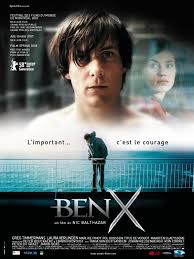
“Ben X” is a Dutch-Belgian drama directed by Nic Balthazar based on his novel “Nothing Was All He Said”. To escape the constant bullying at his school, Ben, a teenager with Asperger syndrome, immerses himself in the world of multiplayer rpg video games where he meets Scarlite, who gives him the inspiration and courage to stand up to the bullies. The film stands out for it’s realistic portrayal of autism, great acting all around, and a resolution much different from other films with a bullied protagonist (and unlike similar actual events that have made the headlines).
George Carlin, Bill Hicks, and Doug Stanhope on Nationalism
Corporate Horror of Thomas Ligotti
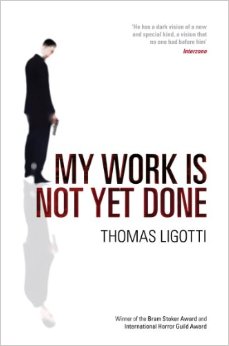
Though I’ve never been much of a horror reader, I recently stumbled across a great novella by Thomas Ligotti first published in 2002 called “My Work is Not Yet Done”. Not being familiar with Ligotti, I found through cursory research on wikipedia and a few other sites that he’s influenced by the work of HP Lovecraft and that much of his work is informed by a pessimistic, almost misanthropic worldview. He’s also one of the literary influences of Nic Pizzolatto, writer of the TV series “True Detective” (which I haven’t seen but have read good things about it).
My Work is Not Yet Done starts off documenting the day-to-day evils of a seemingly average corporate workplace. Gradually we realize the true hellishness of the work environment complete with evil overlord and minions who mercilessly scheme against outcast employee Frank Dominio. Just as the story seems to be going in the direction of revenge fantasy, plot twists occur making one rethink the nature of events that previously occurred and to contemplate the futility of violent revenge.
The novella is followed by a couple of short stories, “I Have a Special Plan for This World” and “The Nightmare Network”, both of which continue the theme of corporate horror but with a more surreal approach.
Though I haven’t yet read any of Ligotti’s other works, if they’re anywhere near as great as My Work is Not Yet Done, they should be worth seeking out. He blends classic horror tropes with a biting corporate critique so effortlessly and effectively it’s surprising that the corporate horror genre isn’t a literary movement (but maybe there’s similar stories out there I haven’t heard of?).
The full text of The Nightmare Network can be read here: http://www.scribd.com/doc/84760640/The-Nightmare-Network-by-Thomas-Ligotti
Two for Tuesday
Top Reasons You Should Never Buy E-Cigs From Big Tobacco
Source: Cascadia Vape Blog
It’s long been suspected that Big Tobacco money was behind early efforts to attack the e-cig industry because it posed a potential threat to the tobacco cigarette industry. Now it’s apparent Big Tobacco is not only jumping on the bandwagon, but setting its sights on taking over the bandwagon.
Lorillard, the 3rd largest Big Tobacco company in the US acquired Blu brand e-cigs last year and just earlier this month Reynolds, America’s 2nd largest Big Tobacco company announced its entry into the market with Vuse e-cigarettes. The no. 1 US Big Tobacco company, Altria, acquired Green Smoke for $110 million in February and is planning national distribution of a new e-cig, NuMark, by the end of the year while Philip Morris, a subsidiary of Altria, recently announced it acquired British e-cigarette maker Nicocig for an undisclosed price. Some in the e-cig community might see this as a positive development thinking that with increased marketing from Big Tobacco brands there’ll be increased public awareness of e-cigarettes. However, I think there’s good reasons to worry about the quality of information and products Big Tobacco pushes to the public, leading to the first of the reasons to not support them:
Reason 1: It is in the interests of Big Tobacco to associate e-cigarettes with tobacco cigarettes.
Big Tobacco companies aren’t about to lose their customer base without a fight, and even as more smokers continue to switch to e-cigarettes, they’re often lured towards e-cig brands owned by the corporations that understand their addiction best. Big Tobacco have decades of experience effectively marketing cigarettes and they’re using similar tactics to make e-cigs especially attractive to smokers and former smokers. Big Tobacco e-cigs such as Green Smoke and Vuse are designed and packaged to look very similar to tobacco cigarettes and are often marketed as “tobacco products”. This may seem like a fair label on the surface because e-cigs use liquids containing nicotine usually extracted from tobacco, but one could argue they’re not exactly tobacco products because nicotine is a chemical that can be synthesized and is found in other plants such as eggplant, tomatoes and peppers. It’s an important distinction to make because a common misconception is that e-cigs are as harmful as tobacco cigarettes when in fact much of the damage caused by smoking cigarettes can be attributed to the combustion of processed tobacco which have been found to contain radiation, gmo genes, ammonia and pesticides. There is at least one e-cig specifically designed for use with tobacco and not surprisingly it’s made by Philip Morris. Many e-cigs produced by big tobacco are designed to emulate the experience of smoking with smoke-like nicotine content and taste. This is great for smokers content to continue vaping in a manner similar to how they’re accustomed to smoking, but not so good for those trying to decrease or end their addiction or would like to experience a wider range of flavors, vape temperatures, nicotine levels, or psychoactive substances. E-cigs and vapes produced by smaller businesses are far more versatile, allowing users to choose the flavors and nicotine content of e-liquids they use, select from variable voltage settings, and with modular attachments they can also vape non-tobacco herbs, oils and concentrates instead. E-cigs from Big Tobacco, on the other hand, use disposable cartridges which have a host of problems leading to the next argument:
Reason 2: E-cigs produced by Big Tobacco are more harmful to you and the environment.
Nearly every Big Tobacco-owned electronic cigarette uses disposable cartridges which are cheap to produce but end up costing consumers more in the long run than refillable cartridges. They also limit consumer choice because such cartridges are usually proprietary, not designed for use with components from other brands and more limited in selection of flavors and nicotine content than liquids sold separately. E-cigs using disposable cartridges are also potentially more hazardous to your health than other forms of vaporizers. Though there still needs to be more research on comparative health effects, a 2009 FDA study (often cited by critics as proof that e-cigs emit low levels of tobacco-specific nitrosamines and other impurities) only tested devices using disposable cartridges (“Njoy”, “Smoking Everywhere” and “Nicotrol” brands). Just like with tobacco cigarette filters, we may one day see disposable e-cig cartridges littered everywhere if Big Tobacco has its way. As with other cheap disposable products, disposable e-cigs and e-cig filters are designed for planned obsolescence; a policy which creates demand by making a product obsolete faster forcing consumers to buy more regularly and discard old products into landfills more often. Such practices of Big Tobacco and other large corporations leads to the third argument:
Reason 3: Big Tobacco has proven itself untrustworthy.
The history of the American tobacco industry is steeped in shame. Early settlers ripped off Native American tribes in order to acquire more land for tobacco fields. Indentured servants were exploited for labor intensive tobacco field work later to be replaced by slaves from Africa. By the 1880s, the industry was dominated by the monopolistic American Tobacco Company which was one of the companies forced to dissolve to comply with the Sherman Antitrust Act. The dissolution led to an increase in cigarette advertising while the four firms created from the breakup continue to dominate the tobacco market to this day. We now know that senior scientists and executives within the cigarette industry knew there was a correlation between smoking and cancer as early as the 1940s and were aware that smoking could cause lung cancer by the mid 1950s. However, it wasn’t until the 1990’s amidst successful lawsuits against Big Tobacco aided by leaked documents that major US cigarette manufacturers publicly admitted to varying degrees that smoking causes cancer and other health problems. Given their track record, it should come as no surprise how Big Tobacco approaches the e-cig market with the same focus on the bottom line.
Like many other large corporations with outsize influence, Big Tobacco is less concerned with wealth creation which extracts value by engaging in mutually beneficial transactions than rent-seeking; the use of social institutions such as government to gain monopolistic advantages while imposing disadvantages on competitors. The effects of rent-seeking are reduced economic efficiency through poor allocation of resources, reduced wealth creation, increased income inequality, lost government revenue (except for select paid-off legislators and regulators), decreases in innovation and entrepreneurship and national decline. Large corporations also create fewer quality domestic jobs per capita because they have the ability to cut costs through increased automation and outsourcing overseas. While CEOs of such companies may have wonderful jobs, there’s an increasingly wide income and quality gap between their position and the people at the lowest level of the company. In most cases, much of their profits are siphoned off to a small group at the top of the hierarchy who hoard it in offshore bank accounts.
Smaller domestic companies, while they may have to source certain components from overseas, tend to do more of the work in-house such as assembly, quality control, packaging, warehousing, etc. which creates more local jobs that distribute wealth into local economies. Small businesses also tend to have less of a wealth gap between employees and are run by people who are more passionate about their line of work, not people who inherited their careers, acquired it through connections or were hired by committee solely for their ability to generate income.
For the sake of your health, the environment, the economy and country, don’t support Big Tobacco. Support responsible small businesses and spread the message.
Today is a Good Day for Science Fiction
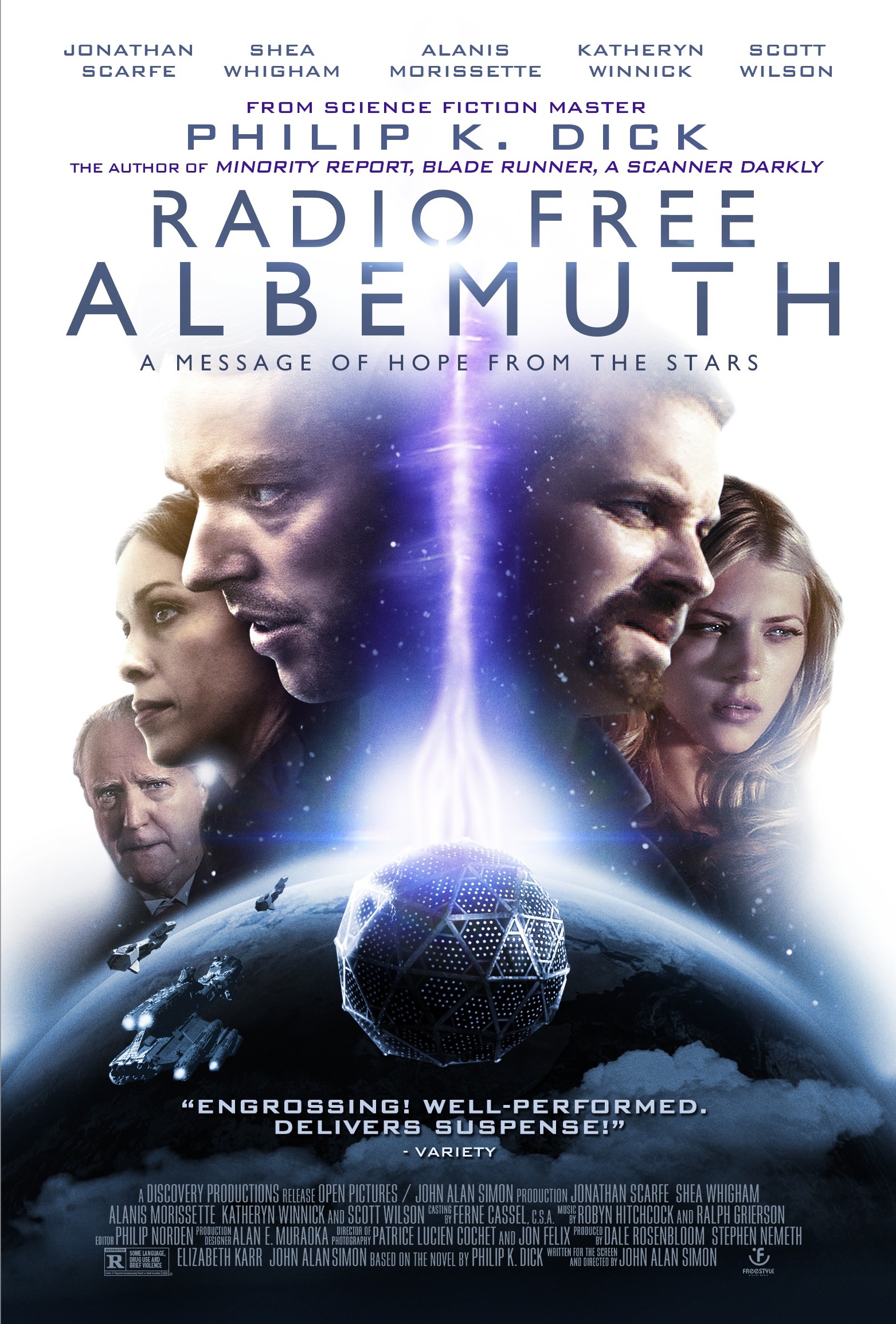
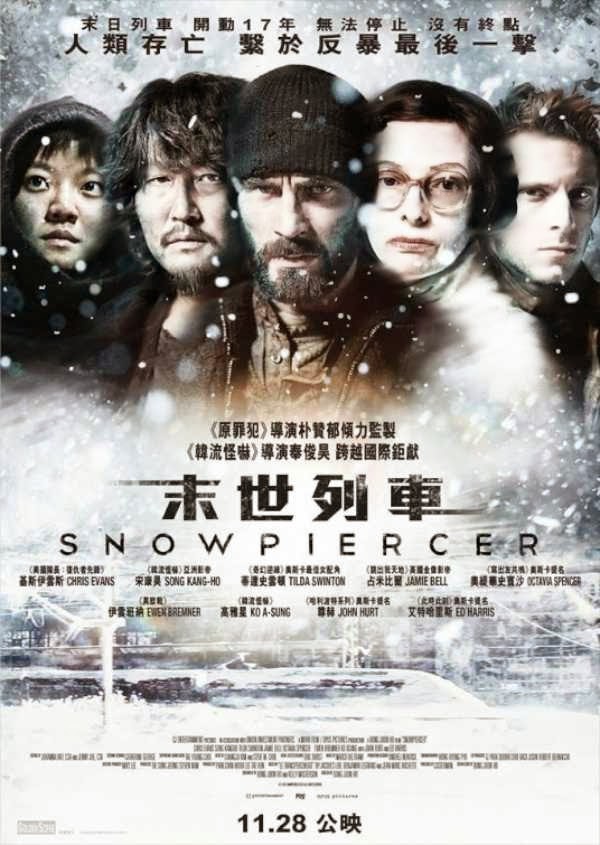
No, I’m not talking about Transformers 4. Today is the official U.S. release date for two films which will likely be regarded as cult classics of the sci-fi genre: “Radio Free Albemuth” and “Snowpiercer”. I’ve had the good fortune to have had the opportunity to see preview screenings of both films and can attest to their quality and excellent screenplays that are as intelligent as they are provocative.
Radio Free Albemuth, a film I’ve previously written about here, is possibly the most faithful cinematic adaptation of a Philip K. Dick novel, and while Snowpiercer may not follow its source material (Jacques Lob’s “Le Transperceneige”) as closely, it’s an excellent movie nevertheless. Korean director Bong Joon-ho, has made great films in the past such as “Memories of Murder” and “Mother”, but with Snowpiercer he manages to balance large scale Hollywood-style spectacle with the emotional intensity of his earlier work while getting excellent performances from English-speaking cast members such as Tilda Swinton, John Hurt and Ed Harris. It’s an odd coincidence that Snowpiercer and Radio Free Albemuth share the same U.S. release date since they’re not only the best science fiction films to come out in quite some time, but are also dark metaphors for the current socio-political moment (but not without a glimmer of hope).
To get an idea of what to expect from these films check out the reviews and trailers linked below to learn more about the projects:
http://totaldickhead.blogspot.com/2009/08/my-first-look-at-radio-free-albemuth.html
http://chycho.blogspot.ca/2014/05/may-i-recommend-post-apocalyptic-movie.html
According to the official Radio Free Albemuth website, June 27th also marks the day of significant events in history including:
- In 1905 – Russian sailors mutinied onboard the Battleship Potemkin (the basis for Segei Eisenstein’s landmark film
- in 1929 – the first color television was demonstrated
- in 1942 – FBI captured 8 Nazi saboteurs from a sub off Long Island, New York.
- 1969 – Police raid Stonewall Bar in Greenwich Village, NY, hundreds of gay patrons protest against police for 3 days
- 1990 – Salman Rushdie, condemned to death by Iran for his novel The Satanic Verses.
- Birthday of anarchist Emma Goldman, blind-deaf author Helen Keller, and the great Polish director Krzysztof Kieslowski