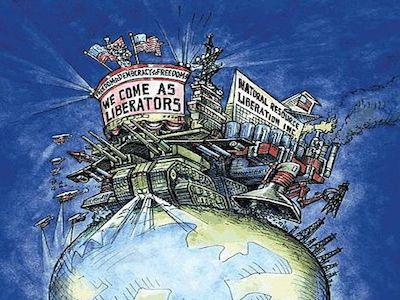
The War on Humanity…

By Eamon McKinney

Source: Information Clearing House

The current situation in Ukraine has once again invigorated the lying Western media and sent them into an anti-Russian frenzy. For the last two years the media has been enthusiastically pushing the genocidal Covid narrative on behalf of the Globalist faction. Whatever doubtful credibility they had prior to Covid they have destroyed with their relentless lies. With an astonishing lack of self-awareness they are now pushing the anti-Russian narrative like the unprincipled mindless hacks that they are. Ignoring both facts and context they are relentlessly promoting war propaganda to justify this hostility to their own beleaguered populations.

The unfortunate reality is that despite unprecedented distrust in the media that propaganda works. Anti-Russian sentiment is rising throughout the West. We have witnessed the same phenomena with the rabid anti-China narrative emanating from Western governments and their client stenographers in the media. The message is clear, unless you are a pliant puppet of the Anglo-American empire, then obviously you are evil and must be destroyed.

The truth of course is deeper, the real war the Globalists are fighting is against the citizenry of every country on earth. As the Covid atrocity is being rapidly exposed the repression of the people is the only option open to the New World Order Davos cabal. As has always been the case, a war abroad is the best excuse to impose tyranny at home. The Western Neo-liberal governments of America, Canada, Australia and most of Europe cannot afford to be removed from power. The full anger of the people will be unleashed full power against those who imposed the Genocidal Covid lie upon them. Trudeau, Macron et al will be held to account (one way or another) for their pivotal roles in this atrocity. They cannot allow that to happen, they have too much to lose.

The tragic and unnecessary conflict in the Ukraine can be viewed as the “Great Reset War”. Although targeted towards Russia for media purposes, its real objective is the further subjugation of the peoples of their own countries. The Western Neo-liberal agenda is failing on every front, economically, socially and morally. The Cabal has destroyed the once prosperous and free societies that they governed. The dystopian future that they have planned for the world is now plain for all to see. It has been on display in Canada and Australia, New Zealand and throughout Europe. It is a prospect that should alarm everybody.

“The Great Reset” is the Cabal’s way of ensuring that the same Globalists who plunged the world into chaos are still in charge after the coming inevitable collapse. The Green agenda and the 4th industrial revolution are about de-industrialising the world and destroying successful industrial competitors such as Russia and China. Not surprisingly, neither Russia or China, along with India and Iran are going along with this insidious plan. They are not alone, many countries from Africa, South America and Asia are also gravitating more towards the Russian/Chinese orbit. All have good reasons to be distrustful and angry at the Empire. The Cabal is weak and failing, it has created powerful enemies who are formidable obstacles to the New World Order and the Great reset. Expect this to embolden other countries to resist the Empire’s plans.

The Empire doesn’t care about the Ukrainians anymore than they care about the people in their own countries. It is about maintaining control over humanity. President Putin is not in essence fighting the Ukraine, he is fighting the N.W.O. And that is everyone’s fight. The battle being waged by the West is for the minds of the Western people so they can justify the imposition of further tyranny. Until recently, President Putin has demonstrated incredible restraint, despite the incessant lies and aggression he has pursued peace and diplomacy. This has not been reciprocated, it has been meet with more lies and provocations. It has been faced with only two options, capitulate or resist, he has resisted. Russia’s fight is the fight of all peoples who value freedom and resist tyranny.

We are all Russians now.

A matter of self-defence

By Ghassan Kadi

Source: The Saker

I am not here to write about historic, strategic and military details pertaining to the issues surrounding the Ukraine crisis. Apart from those fabricating Hollywood material, there are many excellent analysts covering these areas competently.

But as a Syrian/Lebanese, within my limited capacity, I have a duty to show support and reciprocate Russia’s support to Syria where it is due and, in this case, it is as it is one that is based on truths and moral issues that cannot be overlooked, even if Russia did not support Syria at all.

What I want to discuss is the justification and morality of self-defence.

War is a heavily-loaded word, a word that implies man killing man, humanity fighting humanity, armies pillaging nations, creating orphans and widows, refugees, sex slaves, destroying civilizations, economies, beautiful ancient architectural icons and a whole hoard of other atrocities that often are never repaired or resolved.

But there are wars and there are wars.

One cannot place the actions of the USA’s invasion of Iraq in the same basket as that of resistance against Nazi occupation.

People, and nations, have the right of self-defence. Self-defence is not an act of aggression. It is an act to prevent further aggression.

Not surprisingly, when the rules of the jungle prevail, just like in La Fontaine’s fables, aggressors on one hand conjure up for themselves the justification to kill, and on the other hand, they vilify the victims of their aggression when they try to exercise their right of self-defence.

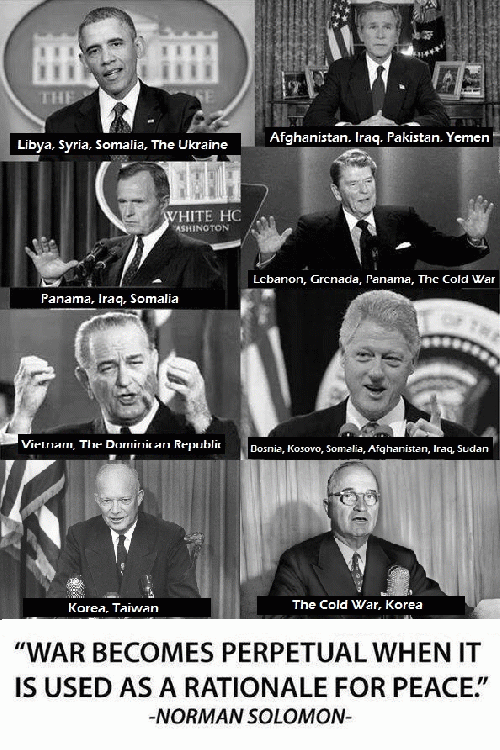
The USA has been engaged in wars ever since WWII ended. Beginning with the Korean War, the West moved the theatre to Vietnam, Laos, Cambodia, Iraq I and Iraq II, Afghanistan, Libya, Syria; not to mention other smaller wars. In reality, there was never ever any justification for any of them and the national security of the United States of America was never under threat by any of those much pooper and much less equipped nations.

What is ironic is the fact that even though the odds were always in favour of America, and this is an understatement, America never won any of those wars. Some cynics argue that America’s objectives were not about winning wars but about leaving mess and destruction behind. Whilst I partially agree with this sentiment, I cannot accept that America has intentionally invaded Iraq to hand it on a silver platter to Iran any more that it invaded Taliban’s Afghanistan to hand it back to the Taliban. Those who believe that America has always been successful in achieving its target of havoc seem to give it more kudos than it deserves. I genuinely believe that America has been a total failure and that its performance as the world’s self-appointed custodian of the post WWII era had been abysmal to put it mildly.

Perhaps America could be excused for it actions during the hot Cold-War era. It was a period of uncertainty, fear, and what was behind the ‘dreaded’ ‘Iron Curtain’ left little surprises to be desired.

But, using American administration rhetoric, with the dismantling of the USSR this hot-cold War era was also supposed to cease.

Contrary to the commonly-held belief in the West, America did not win the Cold War. The Cold War ended when Gorbachev negotiated with Reagan the terms of disengagement. https://sputniknews.com/20190402/gorbachev-nato-expansion-reasons-1073764558.html

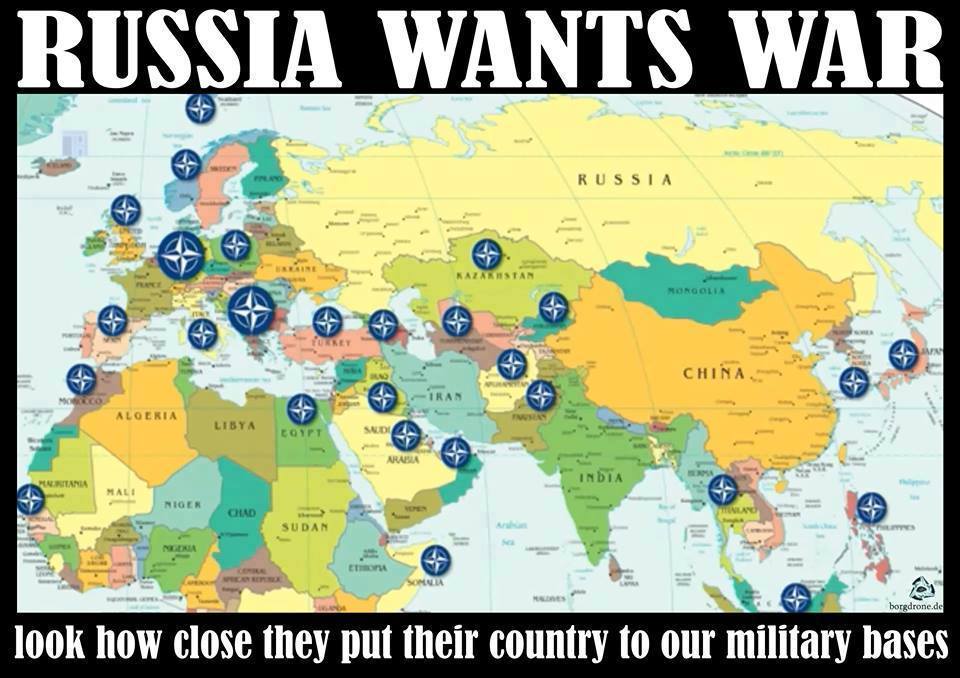
The rest is history. The manner in which America broke all of its promises to never encroach into Eastern Europe, how it coaxed former Warsaw Pact nations to join NATO, how it positioned missiles close to Russian borders, how it pillaged Serbia, how it tried to create a puppet regime in Georgia in 2008, how it sponsored a coup d’etat in Ukraine in 2014 putting Neo-Nazis in charge, how it bombarded the Eastern provinces for eight long years, how it reneged on the Minsk Agreements, how it refused to reach a deal on Ukraine in Jan 2022, a deal that took into consideration Russia’s legitimate security concerns, are all acts of provocation that can only lead to war; a Russian war of self-defence.

Western arrogance remains high despite the fact that Russia has clearly demonstrated red lines in Georgia and Syria. But Kiev is not Damascus. Kiev was the capital of the Russian Empire long before Texas was a state of the Union.

Furthermore, Russia is not Afghanistan or Somalia. Russia is not only a nuclear superpower, but also one with weaponry that is far more advanced than the West’s.

The Western bully has been picking on the wrong would-be adversary, and for a very long time.

What is most unbelievable about the current situation is the Western European compliance with America’s stance. Americans may well be distanced from the history and internal politics of Europe, but Germany, France, Italy and Spain must surely know better, but they are behaving in a manner as if they are either totally ignorant or extremely callous.

Puppet states of Eastern Europe should look over their shoulders and see what real support Ukraine is receiving from America after America promised Ukraine the world and then hung it out to dry.

This brings us back to the issue of drawing the line between instigating war for no reason other than imperial gain and fighting legitimately for self-defence.

The West and its media are taking the line of presenting Russia as the aggressor, portraying Putin as a crazed Tzar who wants to rebuild the USSR; not only ignoring the events of 2014 onwards, but also ignoring past and present atrocities of the West that had no justification at all.

Have we forgotten Iraq’s WMD blunder?

Russia did all it could to avert a military confrontation in Ukraine.

For eight long years, Russia refused to acknowledge the independence of the eastern provinces.

Russia continued to keep all bridges of communication with the West open in the hope of reaching an agreement to end the impasse.

Russia made it clear to America time after time, that it has red lines that cannot be crossed, including not accepting Ukraine to join NATO.

But all that America did was to ignore and continue to intimidate. When the talk about the impending Russian invasion of Ukraine was flagged on Western media, it was because America had the full intention to make sure that the January 2022 Switzerland talks with Russia must fail leaving the military option alone on the table.

The actions of Russia to neutralize and de-Nazify Ukraine are acts of self-defence. Any fair and proper court of justice would attest to this, but not in the West, where media is the echo chamber of the Western globalists and the only key to the hearts and minds of people in the West who unquestionably believe what their media dishes out.

But why are some of Russians so surprised and dismayed now by the new wave of anti-Russian propaganda? Lucky enough to visit Russia a few years ago, I found myself in an alternative paradigm; not a ‘Truman Show’ little bubble, but a huge world that did what it believed was right and didn’t give a pig’s butt (excuse the French) about what the West and Western media thought and decreed.

I was able to see the so-called ‘iron curtain’, way after the USSR was no longer, but not from a Western xenophobic vantagepoint, but from a Russian one that did not seem to care much at all about the views and the attitude of the West.

It was disappointing to see Western franchises like Starbucks and McDonald’s, but Russia looked like a proud stand-alone nation that is big enough, strong enough and rich enough to dictate its own directive and destiny.

If anything, a few years later, Russia is now in a much stronger position to dictate what it wants to the old ailing West and the stronger sanctions today are not going to be any more effective than previous milder ones.

President Biden now represents the West in many more ways than one. Not only he is meant to be the leader of the so-called ‘Free World’, but at his old age, a mental state that borders dementia, he represents the global hemisphere that has lost its technical edge and rationality; not to mention economic clout.

It is very sad that the once developed West that paved the rest of the world in technology and innovation has put its leadership under the hands of short-sighted impotent leaders like Biden, Merkel (formerly), Johnson and Macron. Those weak and shortsighted leaders are pushing the West into the corner of cultural suicide.

They represent the political legacy that led to the exodus of Western manufacturing base.

They are the legacy that destroyed family values, cultural values as well as moral values.

They are the ones forcing Russia to create an alternative global power with China; the West’s main and primary competitor.

But the problem with Western political leaders is that they are not serving their own people; they are serving their sponsors and their own profit and loss statements.

Nations are not corporations, and the corporate aspect of Western political leadership is bursting its own bubble. It is not ready to confront the challenges of either Russia or China, let alone both of them combined. The West continues to live in the euphoria of a bygone era in which it had the upper hand by way of being a leader in technological advances and manufacturing which are the basic foundations for strong economies. It has lost its technical edge, placing itself in a conflict it can neither win, let alone be able to fight.

The West needs to learn to accept humility as a desired value. For the sake of humanity as a whole, it needs to learn this lesson before its obstinance and arrogance leads the world into further and deeper wars and disasters.

Nostalgic for the Future

By Edward Curtin

Source: Behind the Curtain

Despite its pedigree as a fundamental element in civilization’s greatest stories, nostalgia has come to be associated with treacly sentimentality, defeatism, and spurious spiritual inclinations.  Homer, Vergil, Dante, the Biblical writers, and their ilk would demur, of course, but they have been dead for a few years, so progress’s mantra urges us to get on with it.  This is now.

But now is always, and like its twin – exile – nostalgia is perpetual.  The aching for “home” – from Greek algos, pain + nostos, homecoming – is not simply a desire for the past, whether in reality or imagination, time or place, but a passionate yearning for the best from the past to be brought into the future.

Nostalgia may be more a long ache of old people, but it is also a feeling that follows everyone along life’s way.  Its presence may be shorter in youth, and it may be brief, intermittent, and unrecognized, but it is there.  Surely it grows with experience.  As everyone knows, a taste, a smell, a sight, a sound, a song – can conjure up a moment’s happiness, a reverie of possibility.  Paradise regained, but differently.  A yearning recognized, as with seeing for the first time how Van Gogh’s blue paint opens a door to ecstasy or a line of poetry cracks open a space in one’s heart for prospective love.  Hope reborn as an  aperture to the beyond reimagined and made possible.

There is no need to ever leave where we are to find that we are already no longer there, for living is a perpetual leaving-taking, and the ache of loss is its price.

But like all pains, it is one we wish to relieve in the future; and in order to make a future, we must be able to imagine or remember it first.  We are all exiled in our own ways. Home was yesterday, and our lost homes lie in our futures, if we hold to the dream of homecoming, whatever that may mean to each person.  But it also has a universal meaning, since we dwell on this earth together, our one home for our entire human family.

You may think I am engaging in fluff and puff and flimsy imaginings.  But no.

All across the world there are hundreds of millions of exiles, forced by wars, power politics, poverty, starvation, destructive capitalism, and modernization’s calamitous consequences to leave their homes and suffer the disorientation of wandering.  Emigration, immigration, salvaging bits of the old in the new strange lands – thus is their plight.  So much lost and small hopes found in nostalgic remembering. Piecing together the fragments.

But in a far less physical sense, the homeless mind is the rule today.  There are very few people these days who don’t wish to somehow return to a time when the madness that engulfs us didn’t exist; to escape the whirligig of fragmented consciousness in which the world appears – i.e. is presented by the media – as a pointillistic painting whose dots move so rapidly that a coherent picture is near impossible.  This feeling is widespread.  It is not a question of politics.  It crisscrosses the world following the hyper-real unreality of the technologies that join us in a state of transcendental homelessness and anxiety.  All the propaganda about a “new normal” and a digital disembodied future ring hollow. The Great Reset is the Great Nightmare.  Nothing seems normal anymore and the future seems even less so.

The world has become Weirdsville. This is something that most people – young and old – feel, even if they can’t articulate it.  The feeling that all the news is false and that some massive con game is underway is pandemic.

Here is an insignificant bit of nostalgia.  I mention it because it points beyond itself, then and now.  It has always been nostalgia for the future.  I think it is a commonplace experience.

When I was in high school, there was a tiny cheese shop on Lexington Avenue and 85th St. in New York City near the subway that I took to and home from school.  It was the size of a walk-in closet.  Thousands of cheeses surrounded you when you entered. The smells were overwhelming.  I would often stop in there with empty pockets on my way home from school.  The proprietor, knowing I was in awe of the thousands of cheeses, would often give me little samples with pieces of crusty French bread.  He would regale me with tales of Paris and the histories of the various European cheeses. He would emphasize their livingness, how they breathed.  By the door was a large basket filled with long loaves of fragrant French bread flown in every morning from Paris by Air France.  These were the days before every supermarket sold knockoff versions of the genuine thing.  Each long loaf was in a colorful French tricolored paper bag.

Those loaves of bread in the French colors always transported me to Paris, a place I had never been, but whose language I was studying.  Then, and for years afterwards, I was nostalgic for a Paris that was not yet part of my physical experience.  How could this be? I asked myself.  One day I realized that I was not nostalgic for Paris or the cheese shop, nor for the cheese or the bread, which I had tasted many times, but for the paper bags the bread came in.  Why?

This question perplexed me until I realized my notion of nostalgia was wrong.  For those bags had always represented the future for me, the birds of flight a sign of freedom beckoning as my youthful world expanded.  My nostalgia for the Air France bags was a way to go back to go forward, not to wallow in sentimentality and the “good old days,” but to read the entrails for their prophetic message: the small-life world is limiting – expand your horizons.

It was not a question of jumping on a plane and going somewhere different, although that in time would also be good.  It was not an invitation to revisit that cheese shop, as if that were possible, for the store was long gone and in any case it would not mean the same thing.  It was not a desire to become a teenager again. You cannot repeat an experience, despite F. Scott Fitzgerald writing:  “You can’t repeat the past?…Why of course you can.”

The past in that sense is quicksand, a death wish.  For many people (and this is the prevalent understanding of nostalgia as an exclusively negative way of thinking), embittered nostalgia is their way of denying the present and the future, often by the fictitious creation of “the good old days” when everything was supposedly so much better.

But nostalgia can also be an impetus to create a better future, a reminder that good aspects of what has been lost need to be regained to change the course of the present’s future trajectory.

Today most people are bamboozled by world events, as an idiot wind blows through the putrescent words of the media sycophants who churn out their endlessly deceptive and confusing propaganda on behalf of their elite masters.  Given a few minutes peace of mind to analyze this drivel – a tranquility destroyed by the electronic frenzy – it becomes apparent that their fear, anxiety, and contradictory reports are intentional, part of a strategy to pound down the public into drooling, quaking morons.

But many people in their better moments do recall times when they experienced glimpses of a better life, transitory as those experiences might have been.  Moments when they felt more at home in their skin in a world where they belonged and they could make better sense of the news they received.  Not lost and wandering and constantly fearfully agitated by a future seemingly chaotic, leading to dusty death in a story told by an idiot full of sound and fury signifying nothing.

I suggest that those nostalgic moments revolve around the changing nature of our experience of space and time.  There was a time when time was time and space and speed had some human meaning, for people lived within the limits of the natural world of which they were a part.  As I wrote once before:

In former days you could cross over to other people’s lives and come back with a different perspective, knowing what was obvious was true and that to exist meant to be composed of flesh and blood like all the others in different places and to be bound by the natural cycles of life and death, spring and fall, summer and winter. There were limits then, on the land, water, and even in the sky, where space too had dimensions and the stars and planets weren’t imaginary landing strips for mad scientists and their partners in celluloid fantasies.

In that rapidly disappearing world where people felt situated in space and time, life was not yet a holographic spectacle of repetitive images and words, a pseudo-world of shadowy figures engaging in pseudo-debates on electronic screens with people traveling from one place to another only to find that they never left home. When the mind is homeless and the grey magic of digital propaganda is its element, life becomes a vast circinate wandering to nowhere. The experience of traveling thousands of miles only to see the same chain of stores lining the same roads in the same towns across a country where the same people live with their same machines and same thoughts in their same lives in their same clothes. A mass society of mass minds in the hive created by cell phones and measured in nanoseconds where the choices are the freedom to choose what is always the same within a cage of categories meant to render all reality a ‘mediated reality.’

Nostalgia is always about time and space. In that sense, it is equivalent to all human experience that also takes place within these dimensions.  And when technology has radically disrupted our human sense of limits in their regard, it becomes harder and harder to feel at home, to dwell enough to grasp what is happening in the world.

I believe that many people feel nostalgic for slower and more silent days when they could hear themselves think a bit.  When the sense of always being on the go and lacking time predominates as it does today, thinking becomes very difficult.  To think, one must dethrone King Rush and silence Queen Noise, the two conditions that the speed and noise of digital technology render impossible.  Tranquilized by the beeping trivia pouring out of the omnipresent electronic gadgets, the very devices being used by the elites to control the masses, a profound grasp of the source of one’s disquietude is impossible. The world becomes impossible to read. The sense of always being away, ungrounded, and mentally homeless in a cacophonous madhouse becomes the norm.  One feels sick in heart and mind.

Most people sense this, and whether they think of it as nostalgia or not, I believe they feel that something important is missing and that they are wandering like rolling stones, as Dylan voiced it so poetically, with no direction home.

How does it feel?  It feels lousy.

So it’s not a question of returning to “the good old days.”  The future beckons.  But if we don’t find a way to rediscover those essential human needs of slowness and silence, to name but two, I am afraid we will find ourselves speeding along into an inferno of our own making, where it’s noisy as hell and not fit for human habitation.

Saturday Matinee: Natural Born Killers

By Richard Propes

Source: The Independent Critic

Is “Natural Born Killers” an indictment of our current society that is so completely fascinated with crime, criminals and everything that waxes dramatic? Or, is it simply a glossy, stylized romp through random acts of violence?

Oliver Stone’s “Natural Born Killers” takes the life of two of society’s rejects, Mickey and Mallory, and allows them to fall in love and embark on a nationwide killing spree that becomes fodder for the press, an obsession for law enforcement and, ultimately, they become folk heroes to the common man across America.

The film, which on the surface appears to be incredibly and over-the-top violent, is actually far less violent than many films with a lesser rating. While we see shootings and killings, the vision is seldom graphic in nature. These events are much more about attitude and atmosphere than they are the violence itself.

The word “intoxication” is the word I think of most when I think of the film “Natural Born Killers.” Mickey (Woody Harrelson) and Mallory (Juliette Lewis) become intoxicated by killing and the fame it brings…Reporter Wayne Gale (Robert Downey, Jr.) becomes intoxicated by the story, the ratings, the spotlight…Warden McClusky (Tommy Lee Jones) is intoxicated by his power and justice.

The script, by Stone and Quentin Tarantino, vividly brings to life this intoxication in scenes that often resemble television shows and other times take on such a psychedelic feeling that it almost feels like we’re in the middle of one of those lava lamps where you look through the hole and you see different visions every time you look in it.

“Natural Born Killers”, for me, is a visionary film because it sees the truth of our society and where we are headed. We are living in a world where celebrity allows you to get away with most anything, such as in the O.J. Simpson trial, and where even the most heinous criminal becomes an overnight celebrity. In “Natural Born Killers,” Stone and Tarantino are, to me, clearly saying that we can’t just blame the criminals for the deterioration of our society…it’s all of us who buy into the drama, the glamour and the excitement that allows the cycle to perpetuate.

Stellar performances, a powerful, insightful script, groundbreaking camerawork and the unique vision of Oliver Stone combine to make “Natural Born Killers” a bold, visionary film that may shock, may offend, may alienate…but, in the end, it is a film you will remember.

Watch Natural Born Killers on Hoopla here: https://www.hoopladigital.com/title/14507250

Global Technocrat Cabal Exposed Through Network Analysis

“…A very small group of criminal collaborators are at the top of the Great Panic of 2020. Using disciplined network analysis, the players and patterns emerge right before your eyes…According to the anonymous IT specialist who created the document, the core of this “COVID criminal network,” around whom most everything revolves, is no larger than 20 or 30 people”

By Patrick Wood

Source: Technocracy News and Trends

The video above is in German. Click on “Settings” to change the subtitles to English via auto-translate feature.

STORY AT-A-GLANCE

> The German Club of Clear Words takes a deep dive into the network of individuals and organizations responsible for the COVID scam

> Whether blatantly visible or not, you can identify just about any network by connecting dots between individuals and organizations. Who’s working with whom, where, and why? Who’s paying whom? And once you’ve done that, you can more clearly identify the motivations behind various decisions

> The Bill & Melinda Gates Foundation appears to be near the top, or the center, of this COVID plandemic network. Gates is also a major funder of mainstream media, and his network extends into global food and climate change policy

> The Gates Foundation, through its funding of the WEF, also plays an important role in The Great Reset, which was officially unveiled during a WEF summit in May 2020

> Every conceivable aspect of life and society is scheduled to be “reset” according to their plan. Ultimately, that’s where this criminal COVID enterprise is trying to take us

The video above, by the German Club Der Klaren Worte, or the Club of Clear Words, takes a deep dive into the network of individuals and organizations responsible for the COVID scam. The audio is in German but there is a captioned translation at the bottom of the video.

The review is led by journalist and filmmaker Markus Langemann. As noted by Langemann, it’s not necessarily the people with the best ideas who win in life. Rather, the winners are those who are in the “right” network — a network with people in the right places. Never underestimate the power of a network.

Some networks are visible. One example would be an alumni network that you can join and use to promote your career. Other networks are more hidden, secretive and exclusive, and can only be entered into by select invitation by another member.

Whether blatantly visible or not, you can identify just about any network by connecting dots between individuals and organizations. Who’s working with whom, where, and why? Who’s paying whom? And once you’ve done that, you can more clearly identify the motivations behind various decisions.

A Global Network Revealed

In this video, Langemann presents “a network document that is unique in the world and which for the first time shows you the complex network of relationships, from non-governmental organizations (NGOs), companies, documents and people.”

The 170-page document details more than 7,200 links between 6,500 entities and objects, including payment flows and investments.

“In the case of the Bill & Melinda Gates Foundation, already on page 4 of the document, you see that this foundation spent $43 billion [note that is billion with a “b”] in the U.S. alone in the period from 1994 to 2001, and distributed around half a billion dollars in Germany during this period,” Langemann says.

You can review and download the document here.1 The document is mostly in English. It’s incredibly comprehensive in scope, detailing a global network that is working behind the scenes to influence global health, finance and governance.

Download Network Analysis Document

As an interesting aside, the document was actually created using software that investigators and detectives use to help them identify hidden connections between potential suspects. All of the data points, documents, payment data and so on, are publicly available.

Red arrows are used throughout the document to indicate money flows, such as grants, donations and other payments. As one example, as shown on page 3 of the document, at least 21 U.S. universities are financed by and through just three key organizations:

  1. The Bill & Melinda Gates Foundation
  2. The Open Philanthropy project, a research and grantmaking foundation, which is linked to the WEF
  3. The Wellcome Trust, the world’s second-largest health foundation, located in the U.K.

A Small Tight-Knit Group

According to the anonymous IT specialist who created the document, the core of this “COVID criminal network,” around whom most everything revolves, is no larger than 20 or 30 people. Several of them appear on page 36.

They got together May 8, 2019, at a CDU/CSU event where they discussed how to strengthen global health and implement the United Nations Sustainable Development Goals. The CDU/CSU is a political alliance of two German political parties, the Christian Democratic Union of Germany (CDU) and the Christian Social Union in Bavaria (CSU). Attendees included:

Hermann Gröhe, Christian Democration Union (CDU) member and former Minister of Health
Ralph Brinkhaus, Parliamentary leader of the CDU
Dr. Angela Merkel, former Chancellor of Germany and a CDU member
Ilona Kickbush, Ph.D., Graduate Institute of International and Development Studies, Geneva
Tedros Adhanom Ghebreyesus, Director-General of the WHO
Dr. Christian Drosten, a German virologist who in early 2020 created the COVID PCR test
Dr. Clarissa Prazeres da Costa, microbiologist and infectious disease specialist
Joe Cerrell, managing director for Europe, the Middle East and East Asia for The Gates Foundation
Professor Jeremy Farrar, director of the Wellcome Trust
Dr. Georg Kippels, CDU member
Jens Spahn, CDU member and a former Minister of Health

From that May 2019 meeting onward, these individuals are found again and again, in overlapping working groups. You also find them rubbing elbows in the past.

For example, Farrar, Drosten and Kickbush were all present at a February 14, 2019, tabletop exercise on International Response to Deliberate Biological Events, held at the Munich Security Conference, as shown on page 124. Individuals from the Robert Koch Institute, the Chinese CDC and the Gates Foundation were also present.

In 2017 and 2018, Kickbush, Drosten and Farrar were added as members to the International Advisory Board on Global Health. Farrar and Kickbush also joined the Global Preparedness Monitoring Board, a joint arm of the WHO and the World Bank, formally launched in May 2018. (Dr. Anthony Fauci is another member of this board.) Two other key persons within this network are:

  • Dr. Chris Elias, president of the Global Development Program at the Gates Foundation. He too is on both the Global Preparedness Monitoring Board and the International Advisory Board on Global Health, together with Kickbush, Drosten and Farrar.
  • Dr. Peter Piot, a Belgian-British microbiologist known for his research into Ebola and AIDS, a professor of global health, director of the London School of Hygiene and Tropical Medicine, a senior fellow with the Gates Foundation’s Global Health Program, and former undersecretary-general with the United Nations.

Key Organizations

Due to the complexity of the network connections, there’s really no easy way to summarize them here. You simply have to go through the document, page by page. That said, key organizations, whose networking connections are detailed, include:

The Bill & Melinda Gates FoundationThe Wellcome Trust, an organization funded by and strategically linked to GlaxoSmithKline (a vaccine maker in which Bill Gates is financially invested)
The World Health OrganizationThe Rockefeller Foundation
The World Bank GroupThe World Economic Forum (WEF)
GAVI, the Vaccine Alliance, founded by the Gates FoundationCoalition for Epidemic Preparedness Innovations (CEPI), founded by the governments of Norway and India, the Gates Foundation, the Wellcome Trust and WEF
The Global FundForum of Young Global Leaders, founded by WEF in 2004
FIND, the global alliance for diagnostics, seeks to ensure equitable access to reliable diagnosis around the worldBig Pharma
Johns Hopkins UniversityCharité, Universitätsmedizin Berlin
The Robert Koch InstituteThe European Commission
The European Medicines and Healthcare Products Regulatory Agency (MHRA)The Swiss Agency for Therapeutic Products
The German Global Health Hub

Of these, The Bill & Melinda Gates Foundation appears to be near the top, or the center, of this criminal network, depending on how you visualize it. Gates is also a major funder of mainstream media which, of course, is important if you want to ensure one-sidedly good press.

Gates’ Media Control

In the past, the Bill & Melinda Gates Foundation funded the placement of “educational” messages in popular TV shows such as “ER,” “Law & Order: SVU” and “Private Practice,” including topics such as HIV prevention, surgical safety and the spread of infectious diseases, i.e., vaccinations.2 But that was only the beginning.

Via more than 30,000 grants, Gates has contributed at least $319 million to the media, including CNN, NBC, NPR, PBS, The Atlantic, Texas Tribune (U.S.), the BBC, The Guardian, The Financial Times, The Daily Telegraph (U.K.), Le Monde (France), Der Spiegel (Germany), El País (Spain) and global broadcasters like Al-Jazeera.3

More than $38 million of Gates’ money has also been funneled to investigative journalism centers. The majority of that money has gone into developing and expanding media in Africa.4 As you might suspect, Gates’ donations come with strings attached. As reported by Columbia Journalism Review:5

“When Gates gives money to newsrooms, it restricts how the money is used — often for topics, like global health and education, on which the foundation works — which can help elevate its agenda in the news media.

For example, in 2015 Gates gave $383,000 to the Poynter Institute, a widely-cited authority on journalism ethics … earmarking the funds ‘to improve the accuracy in worldwide media of claims related to global health and development.’ Poynter senior vice president Kelly McBride said Gates’s money was passed on to media fact-checking sites …

Since 2000, the Gates Foundation has given NPR $17.5 million [now up to $24.6 million6] through 10 charitable grants — all of them earmarked for coverage of global health and education, specific issues on which Gates works.”

Who Else Controls the Media?

Gates’ power over the media is immense, but he’s a not a sole actor. Other players in media control include BlackRock and the Vanguard Group, the two largest asset management firms in the world, which also control Big Pharma.7 They’re at the top of a pyramid that controls basically everything, but you don’t hear about their terrifying monopoly because they also own the media. As noted in the video, “The Puppet Masters Portfolios,” Vanguard and Blackrock:8

“… own the news that’s been created, they own the distribution of the news that’s been created, they own the lives of the reporters that are reporting the news that’s being distributed that’s being created on your TV screen. CBS, FOX, ABC, it doesn’t matter which you’re watching.”

As it stands, it’s important to be aware that conventional media are under the control of powerful influences — be it Bill Gates, BlackRock or Vanguard — and their primary intent isn’t to give you objective information but, rather, to further the agendas of those influences.

Who Really Owns the World?

BlackRock and Vanguard also own shares in an impossibly long list of virtually every major company in the world. Aside from world media, the companies controlled by Blackrock and Vanguard span everything from entertainment and airlines to social media and communications9 — quite literally everything you can think of, and much that you can’t.

Together, they form a hidden monopoly on global asset holdings, and through their influence over our centralized media, they have the power to manipulate and control a great deal of the world’s economy and events, and how the world views it all.

In all, BlackRock and Vanguard have ownership in some 1,600 American firms, which in 2015 had combined revenues of $9.1 trillion. When you add in the third-largest global owner, State Street, their combined ownership encompasses nearly 90% of all S&P 500 firms.10

Interestingly, Vanguard also holds a large share of Blackrock. In turn, Blackrock has been called the “fourth branch of government” by Bloomberg as they are the only private firm that has financial agreements to lend money to the central banking system.11

Owners and stockholders of Vanguard include Rothschild Investment Corp,12 Edmond De Rothschild Holding,13 the Italian Orsini family, the American Bush family, the British Royal family, and the du Pont family, the Morgan, Vanderbilt and Rockefeller families.14,15

Gates Dictates Global Food Policy Too

In addition to his grip on global health and media, Bill Gates’ network also includes global food and agricultural policy. He’s even one of the largest farmland owners in the U.S.16 Were Gates a proponent of organics, his land ownership would probably be seen as a good thing, but he’s anything but.

On the contrary, not only is he a longtime proponent of GMOs and toxic agricultural chemicals, he’s also gone on record urging Western nations to switch to 100% synthetic lab-grown imitation beef, and has railed against legislative attempts to make sure fake meats are properly labeled, since that will slow down public acceptance.17

Not surprisingly, Gates is financially invested in most of his proposed “solutions” to the world’s problems, be it hunger, disease, viral pandemics or climate change.18

It’s these kinds of self-serving endeavors that have earned Gates the unofficial title of the most dangerous philanthropist in the world. As noted by AGRA Watch,19 Vandana Shiva, Ph.D., and others, Gates’ philanthropy creates several new problems for each one he promises to solve, and can best be described as “philanthrocapitalism.”

Again and again, Gates’ globalist approach to farming has had devastating consequences for food and environmental sustainability in general and local food security in particular. It is profitable for Gates and his corporate allies, though, and furthers the technocratic plan to control the world by owning all the world’s resources.

The WEF, founded by technocrat figurehead Klaus Schwab, is just one of the global nongovernmental agencies that help promote Gates’ destructive agricultural and fake food agenda.

The Great Reset of Life as We Know It

The Gates Foundation, through its funding of the WEF, also plays an important role in The Great Reset, which was officially unveiled during a WEF summit in May 2020. As reported by The Defender, the Great Reset:20

“… is a vision for transferring the world into a totalitarian and authoritarian surveillance state manipulated by technocrats to manage traumatized populations, to shift wealth upward, and serve the interests of elite billionaire oligarchs.”

Every conceivable aspect of life and society is scheduled to be “reset” according to their plan — including global food policies. Leading that specific charge is an organization called the EAT Forum, cofounded by the Wellcome Trust, which describes itself as the “Davos for food.”

The EAT Forum’s largest initiative is called FReSH, which aims to transform the food system as a whole. Project partners in this venture include Bayer, Cargill, Syngenta, Unilever and Google. EAT also collaborates with nearly 40 city governments in Europe, Africa, Asia, North America, South America and Australia, and helps the Gates-funded United Nations Children’s Fund (UNICEF) create updated dietary guidelines.

As you can see, no matter what network you’re looking at, be it global health, finance, media, environmental policy or food, the Gates Foundation, WEF and Wellcome Trust are there, and tying it all together is The Great Reset plan, with its Fourth Industrial Revolution (another Schwab concoction), which is the transformation of humanity itself into internet-connected cyborgs.

Ultimately, that’s where this criminal COVID enterprise is trying to take us. To prevent that dystopian nightmare from becoming our lot, we need to see the hidden networks working behind the scenes.

We need to recognize that decisions are not made by chance. There’s a plan, and decisions in seemingly disparate areas actually have the identical aim. You can’t see that if you’re thinking that people, organizations and even countries are working independently.

They are in fact networked, which is what makes them so powerful. The thing that can interrupt or break that power is public insight into these networks, and understanding that the ultimate goal of all of them is to “reset” and “rebuild” civilization (“Build Back Better”) into one of their own making.

Sources and References

1 Club Klaren Worte, Public-Private Partnership (PDF)

2 Philanthropy News Digest April 3, 2009

3, 4, 6 MintPress News November 15, 2021

5 Columbia Journalism Review August 21, 2020

7, 11 Humans Are Free May 5, 2021

8, 9 The Puppet Masters Portfolios July 31, 2021

10 The Conversation May 10, 2017

12 Fintel Rothschild

13 Fintel Edmond De Rothschild

14 SGT Report May 6, 2021

15 Lew Rockwell April 21, 2021

16 New York Post February 27, 2021

17 Technology Review February 15, 2021

18, 20 The Defender February 4, 2021

19 Third World Network, Philanthrocapitalism: The Gates Foundation’s African Programs Are Not Charity

Patrick Wood is a leading and critical expert on Sustainable Development, Green Economy, Agenda 21, 2030 Agenda and historic Technocracy. He is the author of Technocracy Rising: The Trojan Horse of Global Transformation (2015) and co-author of Trilaterals Over Washington, Volumes I and II (1978-1980) with the late Antony C. Sutton.

Saturday Matinee: Ukraine on Fire – The Real Story

[Originally posted on 2/24/18]

https://vimeo.com/332524840

A Documentary You’ll Likely Never See

By James DiEugenio

Source: Consortium News

It is not very often that a documentary film can set a new paradigm about a recent event, let alone, one that is still in progress. But the new film Ukraine on Fire has the potential to do so – assuming that many people get to see it.

Usually, documentaries — even good ones — repackage familiar information in a different aesthetic form. If that form is skillfully done, then the information can move us in a different way than just reading about it.

A good example of this would be Peter Davis’s powerful documentary about U.S. involvement in Vietnam, Hearts and Minds. By 1974, most Americans understood just how bad the Vietnam War was, but through the combination of sounds and images, which could only have been done through film, that documentary created a sensation, which removed the last obstacles to America leaving Indochina.

Ukraine on Fire has the same potential and could make a contribution that even goes beyond what the Davis film did because there was very little new information in Hearts and Minds. Especially for American and Western European audiences, Ukraine on Fire could be revelatory in that it offers a historical explanation for the deep divisions within Ukraine and presents information about the current crisis that challenges the mainstream media’s paradigm, which blames the conflict almost exclusively on Russia.

Key people in the film’s production are director Igor Lopatonok, editor Alex Chavez, and writer Vanessa Dean, whose screenplay contains a large amount of historical as well as current material exploring how Ukraine became such a cauldron of violence and hate. Oliver Stone served as executive producer and conducted some high-profile interviews with Russian President Vladimir Putin and ousted Ukrainian President Viktor Yanukovych.

The film begins with gripping images of the violence that ripped through the capital city of Kiev during both the 2004 Orange Revolution and the 2014 removal of Yanukovich. It then travels back in time to provide a perspective that has been missing from mainstream versions of these events and even in many alternative media renditions.

A Longtime Pawn

Historically, Ukraine has been treated as a pawn since the late Seventeenth Century. In 1918, Ukraine was made a German protectorate by the Treaty of Brest Litovsk. Ukraine was also a part of the Molotov-Ribbentrop Pact of 1939 signed between Germany and Russia, but violated by Adolf Hitler when the Nazis invaded the Soviet Union in the summer of 1941.

The reaction of many in Ukraine to Hitler’s aggression was not the same as it was in the rest of the Soviet Union. Some Ukrainians welcomed the Nazis. The most significant Ukrainian nationalist group, Organization of Ukrainian Nationalists (OUN), had been established in 1929. Many of its members cooperated with the Nazis, some even enlisted in the Waffen SS and Ukrainian nationalists participated in the massacre of more than 33,000 Jews at Babi Yar ravine in Kiev in September 1941. According to scholar Pers Anders Rudling, the number of Ukrainian nationalists involved in the slaughter outnumbered the Germans by a factor of 4 to 1.

But it wasn’t just the Jews that the Ukrainian nationalists slaughtered. They also participated in massacres of Poles in the western Ukrainian region of Galicia from March 1943 until the end of 1944. Again, the main perpetrators were not Germans, but Ukrainians.

According to author Ryazard Szawlowksi, the Ukrainian nationalists first lulled the Poles into thinking they were their friends, then turned on them with a barbarity and ferocity that not even the Nazis could match, torturing their victims with saws and axes. The documentary places the number of dead at 36,750, but Szawlowski estimates it may be two or three times higher.

OUN members participated in these slaughters for the purpose of ethnic cleansing, wanting Ukraine to be preserved for what OUN regarded as native Ukrainians. They also expected Ukraine to be independent by the end of the war, free from both German and Russian domination. The two main leaders in OUN who participated in the Nazi collaboration were Stepan Bandera and Mykola Lebed. Bandera was a virulent anti-Semite, and Lebed was rabidly against the Poles, participating in their slaughter.

After the war, both Bandera and Lebed were protected by American intelligence, which spared them from the Nuremburg tribunals. The immediate antecedent of the CIA, Central Intelligence Group, wanted to use both men for information gathering and operations against the Soviet Union. England’s MI6 used Bandera even more than the CIA did, but the KGB eventually hunted down Bandera and assassinated him in Munich in 1959. Lebed was brought to America and addressed anti-communist Ukrainian organizations in the U.S. and Canada. The CIA protected him from immigration authorities who might otherwise have deported him as a war criminal.

The history of the Cold War was never too far in the background of Ukrainian politics, including within the diaspora that fled to the West after the Red Army defeated the Nazis and many of their Ukrainian collaborators emigrated to the United States and Canada. In the West, they formed a fierce anti-communist lobby that gained greater influence after Ronald Reagan was elected in 1980.

Important History

This history is an important part of Dean’s prologue to the main body of Ukraine on Fire and is essential for anyone trying to understand what has happened there since the collapse of the Soviet Union in 1991. For instance, the U.S.-backed candidate for president of Ukraine in 2004 — Viktor Yushchenko — decreed both Bandera and his military assistant Roman Shukhevych, who was also involved in atrocitites, were both named national heroes by Yushchenko.

Bandera, in particular, has become an icon for post-World War II Ukrainian nationalists. One of his followers was Dmytro Dontsov, who called for the birth of a “new man” who would mercilessly destroy Ukraine’s ethnic enemies.

Bandera’s movement was also kept alive by Yaroslav Stetsko, Bandera’s premier in exile. Stetsko fully endorsed Bandera’s anti-Semitism and also the Nazi attempt to exterminate the Jews of Europe. Stetsko, too, was used by the CIA during the Cold War and was honored by Yushchenko, who placed a plaque in his honor at the home where he died in Munich in 1986. Stetsko’s wife, Slava, returned to Ukraine in 1991 and ran for parliament in 2002 on the slate of Yushchenko’s Our Ukraine party.

Stetsko’s book, entitled Two Revolutions, has become the ideological cornerstone for the modern Ukrainian political party Svoboda, founded by Oleh Tyahnybok, who is pictured in the film calling Jews “kikes” in public, which is one reason the Simon Wiesenthal Center has ranked him as one of the most dangerous anti-Semites in the world.

Another follower of Bandera is Dymytro Yarosh, who reputedly leads the paramilitary arm of an even more powerful political organization in Ukraine called Right Sektor. Yarosh once said he controls a paramilitary force of about 7,000 men who were reportedly used in both the overthrow of Yanukovych in Kiev in February 2014 and the suppression of the rebellion in Odessa a few months later, which are both fully depicted in the film.

This historical prelude and its merging with the current civil war is eye-opening background that has been largely hidden by the mainstream Western media, which has downplayed or ignored the troubling links between these racist Ukrainian nationalists and the U.S.-backed political forces that vied for power after Ukraine became independent in 1991.

The Rise of a Violent Right

That same year, Tyahnybok formed Svoboda. Three years later, Yarosh founded Trident, an offshoot of Svoboda that eventually evolved into Right Sektor. In other words, the followers of Bandera and Lebed began organizing themselves immediately after the Soviet collapse.

In this time period, Ukraine had two Russian-oriented leaders who were elected in 1991 and 1994, Leonid Kravchuk, and Leonid Kuchma. But the hasty transition to a “free-market” economy didn’t go well for most Ukrainians or Russians as well-connected oligarchs seized much of the wealth and came to dominate the political process through massive corruption and purchase of news media outlets. However, for average citizens, living standards went down drastically, opening the door for the far-right parties and for foreign meddling.

In 2004, Viktor Yanukovych, whose political base was strongest among ethnic Russians in the east and south, won the presidential election by three percentage points over the U.S.-favored Viktor Yushchenko, whose base was asmostly in the country’s west where the Ukrainian nationalists are strongest.

Immediately, Yushchenko’s backers claimed fraud citing exit polls that had been organized by a group of eight Western nations and four non-governmental organizations or NGOs, including the Renaissance Foundation founded by billionaire financial speculator George Soros. Dick Morris, former President Bill Clinton’s political adviser, clandestinely met with Yushchenko’s team and advised them that the exit polls would not just help in accusations of fraud, but would bring protesters out into the streets. (Cambridge Review of International Affairs, Vol. 19, Number 1, p. 26)

Freedom House, another prominent NGO that receives substantial financing from the U.S.-government-funded National Endowment for Democracy (NED), provided training to young activists who then rallied protesters in what became known as the Orange Revolution, one of the so-called “color revolutions” that the West’s mainstream media fell in love with. It forced an election rerun that Yushchenko won.

But Yushchenko’s presidency failed to do much to improve the lot of the Ukrainian people and he grew increasingly unpopular. In 2010, Yushchenko failed to make it out of the first round of balloting and his rival Yanukovych was elected president in balloting that outside observers judged free and fair.

Big-Power Games

If this all had occurred due to indigenous factors within Ukraine, it could have been glossed over as a young nation going through some painful growing pains. But as the film points out, this was not the case. Ukraine continued to be a pawn in big-power games with many Western officials hoping to draw the country away from Russian influence and into the orbit of NATO and the European Union.

In one of the interviews in Ukraine on Fire, journalist and author Robert Parry explains how the National Endowment for Democracy and many subsidized political NGOs emerged in the 1980s to replace or supplement what the CIA had traditionally done in terms of influencing the direction of targeted countries.

During the investigations of the Church Committee in the 1970s, the CIA’s “political action” apparatus for removing foreign leaders was exposed. So, to disguise these efforts, CIA Director William Casey, Reagan’s White House and allies in Congress created the NED to finance an array of political and media NGOs.

As Parry noted in the documentary, many traditional NGOs do valuable work in helping impoverished and developing countries, but this activist/propaganda breed of NGOs promoted U.S. geopolitical objectives abroad – and NED funded scores of such projects inside Ukraine in the run-up to the 2014 crisis.

Ukraine on Fire goes into high gear when it chronicles the events that occurred in 2014, resulting in the violent overthrow of President Yanukovych and sparking the civil war that still rages. In the 2010 election, when Yushchenko couldn’t even tally in the double-digits, Yanukovych faced off against and defeated Yulia Tymoshenko, a wealthy oligarch who had served as Yushchenko’s prime minister.

After his election, Yanukovych repealed Bandera’s title as a national hero. However, because of festering economic problems, the new president began to search for an economic partner who could provide a large loan. He first negotiated with the European Union, but these negotiations bogged down due to the usual draconian demands made by the International Monetary Fund.

So, in November 2013, Yanukovych began to negotiate with Russian President Putin who offered more generous terms. But Yanukovych’s decision to delay the association agreement with the E.U. provoked street protests in Kiev especially from the people of western Ukraine.

As Ukraine on Fire points out, other unusual occurrences also occurred, including the emergence of three new TV channels – Spilno TV, Espreso TV, and Hromadske TV – going on the air between Nov. 21 and 24, with partial funding from the U.S. Embassy and George Soros.

Pro-E.U. protests in the Maidan square in central Kiev also grew more violent as ultra-nationalist street fighters from Lviv and other western areas began to pour in and engage in provocations, many of which were sponsored by Yarosh’s Right Sektor. The attacks escalated from torch marches similar to Nazi days to hurling Molotov cocktails at police to driving large tractors into police lines – all visually depicted in the film. As Yanukovich tells Stone, when this escalation happened, it made it impossible for him to negotiate with the Maidan crowd.

One of the film’s most interesting interviews is with Vitaliy Zakharchenko, who was Minister of the Interior at the time responsible for law enforcement and the conduct of the police. He traces the escalation of the attacks from Nov. 24 to 30, culminating with a clash between police and protesters over the transport of a giant Christmas tree into the Maidan. Zakharchenko said he now believes this confrontation was secretly approved by Serhiy Lyovochkin, a close friend of U.S. Ambassador Geoffrey Pyatt, as a pretext to escalate the violence.

At this point, the film addresses the direct involvement of U.S. politicians and diplomats. Throughout the crisis, American politicians visited Maidan, as both Republicans and Democrats, such as Senators John McCain, R-Arizona, and Chris Murphy, D-Connecticut. stirred up the crowds. Yanukovych also said he was in phone contact with Vice President Joe Biden, who he claims was misleading him about how to handle the crisis.

The film points out that the real center of American influence in the Kiev demonstrations was with Ambassador Pyatt and Assistant Secretary of State for European Affairs Victoria Nuland. As Parry points out, although Nuland was serving under President Obama, her allegiances were really with the neoconservative movement, most associated with the Republican Party.

Her husband is Robert Kagan, who worked as a State Department propagandist on the Central American wars in the 1980s and was the co-founder of the Project for the New American Century in the 1990s, the group that organized political and media pressure for the U.S. invasion of Iraq in 2003. Kagan also was McCain’s foreign policy adviser in the 2008 presidential election (although he threw his support behind Hillary Clinton in the 2016 race).

Adept Manipulators

As Parry explained, the neoconservatives have become quite adept at disguising their true aims and have powerful allies in the mainstream press. This combination has allowed them to push the foreign policy debate to such extremes that, when anyone objects, they can be branded a Putin or Yanukovych “apologist.”

Thus, Pyatt’s frequent meetings with the demonstrators in the embassy and Nuland’s handing out cookies to protesters in the Maidan were not criticized as American interference in a sovereign state, but were praised as “promoting democracy” abroad. However, as the Maidan crisis escalated, Ukrainian ultra-nationalists moved to the front, intensifying their attacks on police. Many of these extremists were disciples of Bandera and Lebed. By February 2014, they were armed with shotguns and rapid-fire handguns.

On Feb. 20, 2014, a mysterious sniper, apparently firing from a building controlled by the Right Sektor, shot both police and protesters, touching off a day of violence that left about 14 police and some 70 protesters dead.

With Kiev slipping out of control, Yanukovich was forced to negotiate with representatives from France, Poland and Germany. On Feb. 21, he agreed to schedule early elections and to accept reduced powers. At the urging of Vice President Biden, Yanukovych also pulled back the police.

But the agreement – though guaranteed by the European nations – was quickly negated by renewed attacks from the Right Sektor and its street fighters who seized government buildings. Russian intelligence services got word that an assassination plot was in the works against Yanukovych, who fled for his life.

On Feb. 24, Yanukovych asked permission to enter Russia for his safety and the Ukrainian parliament (or Rada), effectively under the control of the armed extremists, voted to remove Yanukovych from office in an unconstitutional manner because the courts were not involved and the vote to impeach him did not reach the mandatory threshold. Despite these irregularities, the U.S. and its European allies quickly recognized the new government as “legitimate.”

Calling a Coup a Coup

But the ouster of Yanukovych had all the earmarks of a coup. An intercepted phone call, apparently in early February, between Nuland and Pyatt revealed that they were directly involved in displacing Yanukovych and choosing his successor. The pair reviewed the field of candidates with Nuland favoring Arseniy Yatsenyuk, declaring “Yats is the guy” and discussing with Pyatt how to “glue this thing.” Pyatt wondered about how to “midwife this thing.” They sounded like Gilded Age millionaires in New York deciding who should become the next U.S. president. On Feb. 27, Yatsenyuk became Prime Minister of Ukraine.

Not everyone in Ukraine agreed with the new regime, however. Crimea, which had voted heavily for Yanukovych, decided to hold a referendum on whether to split from Ukraine and become a part of Russia. The results of the referendum were overwhelming. Some 96 percent of Crimeans voted to unite with Russia. Russian troops – previously stationed in Crimea under the Sevastopol naval base agreement – provided security against Right Sektor and other Ukrainian forces moving against the Crimean secession, but there was no evidence of Russian troops intimidating voters or controlling the elections. The Russian government then accepted the reunification with Crimea, which had historically been part of Russia dating back hundreds of years.

Two eastern provinces, Donetsk and Lugansk, also wanted to split off from Ukraine and also conducted a referendum in support of that move. But Putin would not agree to the request from the two provinces, which instead declared their own independence, a move that the new government in Kiev denounced as illegal. The Kiev regime also deemed the insurgents “terrorists” and launched an “anti-terrorism operation” to crush the resistance. Ultra-nationalist and even neo-Nazi militias, such as the Azov Battalion, took the lead in the bloody fighting.

Anti-coup demonstrations also broke out in the city of Odessa to the south. Ukrainian nationalist leader Andrei Parubiy went to Odessa, and two days later, on May 2, 2014, his street fighters attacked the demonstrators, driving them into the Trade Union building, which was then set on fire. Forty-two people were killed, some of whom jumped to their deaths.

‘Other Side of the Story’

If the film just got across this “other side of the story,” it would provide a valuable contribution since most of this information has been ignored or distorted by the West’s mainstream media, which simply blames the Ukraine crisis on Vladimir Putin. But in addition to the fine work by scenarist Vanessa Dean, the direction by Igor Lopatonok and the editing by Alexis Chavez are extraordinarily skillful and supple.

The 15-minute prologue, where the information about the Nazi collaboration by Bandera and Lebed is introduced, is an exceptional piece of filmmaking. It moves at a quick pace, utilizing rapid cutting and also split screens to depict photographs and statistics simultaneously. Lopatonok also uses interactive graphics throughout to transmit information in a visual and demonstrative manner.

Stone’s interviews with Putin and Yanukovych are also quite newsworthy, presenting a side of these demonized foreign leaders that has been absent in the propagandistic Western media.

Though about two hours long, the picture has a headlong tempo to it. If anything, it needed to slow down at points since such a large amount of information is being communicated. On the other hand, it’s a pleasure to watch a documentary that is so intelligently written, and yet so remarkably well made.

When the film ends, the enduring message is similar to those posed by the American interventions in Vietnam and Iraq. How could the State Department know so little about what it was about to unleash, given Ukraine’s deep historical divisions and the risk of an escalating conflict with nuclear-armed Russia?

In Vietnam, Americans knew little about the country’s decades-long struggle of the peasantry to be free from French and Japanese colonialism. Somehow, America was going to win their hearts and minds and create a Western-style “democracy” when many Vietnamese simply saw the extension of foreign imperialism.

In Iraq, President George W. Bush and his coterie of neocons was going to oust Saddam Hussein and create a Western-style democracy in the Middle East, except that Bush didn’t know the difference between Sunni and Shiite Moslems and how Iraq was likely to split over sectarian rivalries and screw up his expectations.

Similarly, the message of Ukraine on Fire is that short-sighted, ambitious and ideological officials – unchecked by their superiors – created something even worse than what existed. While high-level corruption persists today in Ukraine and may be even worse than before, the conditions of average Ukrainians have deteriorated.

And, the Ukraine conflict has reignited the Cold War by moving Western geopolitical forces onto Russia’s most sensitive frontier, which, as scholar Joshua Shifrinson has noted, violates a pledge made by Secretary of State James Baker in February 1990 as the Soviet Union peacefully accepted the collapse of its military influence in East Germany and eastern Europe. (Los Angeles Times, 5/30/ 2016)

This film also reminds us that what happened in Ukraine was a bipartisan effort. It was begun under George W. Bush and completed under Barack Obama. As Oliver Stone noted in the discussion that followed the film’s premiere in Los Angeles, the U.S. painfully needs some new leadership reminiscent of Franklin Roosevelt and John Kennedy, people who understand how America’s geopolitical ambitions must be tempered by on-the-ground realities and the broader needs of humanity to be freed from the dangers of all-out war.

James DiEugenio is a researcher and writer on the assassination of President John F. Kennedy and other mysteries of that era. His most recent book is Reclaiming Parkland.

Perpetual Tyranny: Endless Wars Are the Enemy of Freedom

By John W. Whitehead & Nisha Whitehead

Source: The Rutherford Institute

“Of all the enemies to public liberty war is, perhaps, the most to be dreaded because it comprises and develops the germ of every other. War is the parent of armies; from these proceed debts and taxes… known instruments for bringing the many under the domination of the few.… No nation could preserve its freedom in the midst of continual warfare.” — James Madison

War is the enemy of freedom.

As long as America’s politicians continue to involve us in wars that bankrupt the nation, jeopardize our servicemen and women, increase the chances of terrorism and blowback domestically, and push the nation that much closer to eventual collapse, “we the people” will find ourselves in a perpetual state of tyranny.

It’s time for the U.S. government to stop policing the globe.

This latest crisis—America’s part in the showdown between Russia and the Ukraine—has conveniently followed on the heels of a long line of other crises, manufactured or otherwise, which have occurred like clockwork in order to keep Americans distracted, deluded, amused, and insulated from the government’s steady encroachments on our freedoms.

And so it continues in its Orwellian fashion.

Two years after COVID-19 shifted the world into a state of global authoritarianism, just as the people’s tolerance for heavy-handed mandates seems to have finally worn thin, we are being prepped for the next distraction and the next drain on our economy.

Yet policing the globe and waging endless wars abroad isn’t making America—or the rest of the world—any safer, it’s certainly not making America great again, and it’s undeniably digging the U.S. deeper into debt.

Indeed, even if we were to put an end to all of the government’s military meddling and bring all of the troops home today, it would take decades to pay down the price of these wars and get the government’s creditors off our backs.

War has become a huge money-making venture, and the U.S. government, with its vast military empire, is one of its best buyers and sellers.

What most Americans—brainwashed into believing that patriotism means supporting the war machine—fail to recognize is that these ongoing wars have little to do with keeping the country safe and everything to do with propping up a military industrial complex that continues to dominate, dictate and shape almost every aspect of our lives.

Consider: We are a military culture engaged in continuous warfare. We have been a nation at war for most of our existence. We are a nation that makes a living from killing through defense contracts, weapons manufacturing and endless wars.

We are also being fed a steady diet of violence through our entertainment, news and politics.

All of the military equipment featured in blockbuster movies is provided—at taxpayer expense—in exchange for carefully placed promotional spots.

Back when I was a boy growing up in the 1950s, almost every classic sci fi movie ended with the heroic American military saving the day, whether it was battle tanks in Invaders from Mars (1953) or military roadblocks in Invasion of the Body Snatchers (1956).

What I didn’t know then as a schoolboy was the extent to which the Pentagon was paying to be cast as America’s savior. By the time my own kids were growing up, it was Jerry Bruckheimer’s blockbuster film Top Gun—created with Pentagon assistance and equipment—that boosted civic pride in the military.

Now it’s my grandkids’ turn to be awed and overwhelmed by child-focused military propaganda. Don’t even get me started on the war propaganda churned out by the toymakers. Even reality TV shows have gotten in on the gig, with the Pentagon’s entertainment office helping to sell war to the American public.

It’s estimated that U.S. military intelligence agencies (including the NSA) have influenced over 1,800 movies and TV shows.

And then there are the growing number of video games, a number of which are engineered by or created for the military, which have accustomed players to interactive war play through military simulations and first-person shooter scenarios.

This is how you acclimate a population to war.

This is how you cultivate loyalty to a war machine.

This is how, to borrow from the subtitle to the 1964 film Dr. Strangelove, you teach a nation to “stop worrying and love the bomb.”

As journalist David Sirota writes for Salon, “[C]ollusion between the military and Hollywood – including allowing Pentagon officials to line edit scripts—is once again on the rise, with new television programs and movies slated to celebrate the Navy SEALs….major Hollywood directors remain more than happy to ideologically slant their films in precisely the pro-war, pro-militarist direction that the Pentagon demands in exchange for taxpayer-subsidized access to military hardware.”

Why is the Pentagon (and the CIA and the government at large) so focused on using Hollywood as a propaganda machine?

To those who profit from war, it is—as Sirota recognizes—“a ‘product’ to be sold via pop culture products that sanitize war and, in the process, boost recruitment numbers….At a time when more and more Americans are questioning the fundamental tenets of militarism (i.e., budget-busting defense expenditures, never-ending wars/occupations, etc.), military officials are desperate to turn the public opinion tide back in a pro-militarist direction — and they know pop culture is the most effective tool to achieve that goal.”

The media, eager to score higher ratings, has been equally complicit in making (real) war more palatable to the public by packaging it as TV friendly.

This is what professor Roger Stahl refers to as the representation of a “clean war”: a war “without victims, without bodies, and without suffering”:

“‘Dehumanize destruction’ by extracting all human imagery from target areas … The language used to describe the clean war is as antiseptic as the pictures. Bombings are ‘air strikes.’ A future bombsite is a ‘target of opportunity.’ Unarmed areas are ‘soft targets.’ Civilians are ‘collateral damage.’ Destruction is always ‘surgical.’ By and large, the clean war wiped the humanity of civilians from the screen … Create conditions by which war appears short, abstract, sanitized and even aesthetically beautiful. Minimize any sense of death: of soldiers or civilians.”

This is how you sell war to a populace that may have grown weary of endless wars: sanitize the war coverage of anything graphic or discomfiting (present a clean war), gloss over the actual numbers of soldiers and civilians killed (human cost), cast the business of killing humans in a more abstract, palatable fashion (such as a hunt), demonize one’s opponents, and make the weapons of war a source of wonder and delight.

“This obsession with weapons of war has a name: technofetishism,” explains Stahl. “Weapons appear to take on a magical aura. They become centerpieces in a cult of worship.”

“Apart from gazing at the majesty of these bombs, we were also invited to step inside these high-tech machines and take them for a spin,” said Stahl. “Or if we have the means, we can purchase one of the military vehicles on the consumer market. Not only are we invited to fantasize about being in the driver’s seat, we are routinely invited to peer through the crosshairs too. These repeated modes of imaging war cultivate new modes of perception, new relationships to the tools of state violence. In other words, we become accustomed to ‘seeing’ through the machines of war.”

In order to sell war, you have to feed the public’s appetite for entertainment.

Not satisfied with peddling its war propaganda through Hollywood, reality TV shows and embedded journalists whose reports came across as glorified promotional ads for the military, the Pentagon has also turned to sports to further advance its agenda, “tying the symbols of sports with the symbols of war.”

The military has been firmly entrenched in the nation’s sports spectacles ever since, having co-opted football, basketball, even NASCAR.

This is how you sustain the nation’s appetite for war.

No wonder entertainment violence is the hottest selling ticket at the box office. As professor Henry Giroux points out, “Popular culture not only trades in violence as entertainment, but also it delivers violence to a society addicted to a pleasure principle steeped in graphic and extreme images of human suffering, mayhem and torture.”

No wonder the government continues to whet the nation’s appetite for violence and war through paid propaganda programs (seeded throughout sports entertainment, Hollywood blockbusters and video games)—what Stahl refers to as “militainment“—that glorify the military and serve as recruiting tools for America’s expanding military empire.

No wonder Americans from a very young age are being groomed to enlist as foot soldiers—even virtual ones—in America’s Army (coincidentally, that’s also the name of a first person shooter video game produced by the military). Explorer Scouts, for example, are one of the most popular recruiting tools for the military and its civilian counterparts (law enforcement, Border Patrol, and the FBI).

No wonder the United States is the number one consumer, exporter and perpetrator of violence and violent weapons in the world. Seriously, America spends more money on war than the combined military budgets of China, Russia, the United Kingdom, Japan, France, Saudi Arabia, India, Germany, Italy and Brazil. America polices the globe, with 800 military bases and troops stationed in 160 countries. Moreover, the war hawks have turned the American homeland into a quasi-battlefield with military gear, weapons and tactics. In turn, domestic police forces have become roving extensions of the military—a standing army.

We are dealing with a sophisticated, far-reaching war machine that has woven itself into the very fabric of this nation.

Clearly, our national priorities are in desperate need of an overhaul.

Eventually, all military empires fall and fail by spreading themselves too thin and spending themselves to death.

It happened in Rome: at the height of its power, even the mighty Roman Empire could not stare down a collapsing economy and a burgeoning military. Prolonged periods of war and false economic prosperity largely led to its demise.

It’s happening again.

The American Empire—with its endless wars waged by U.S. military servicepeople who have been reduced to little more than guns for hire: outsourced, stretched too thin, and deployed to far-flung places to police the globe—is approaching a breaking point.

The government is destabilizing the economy, destroying the national infrastructure through neglect and a lack of resources, and turning taxpayer dollars into blood money with its endless wars, drone strikes and mounting death tolls.

This is exactly the scenario President Dwight D. Eisenhower warned against when he cautioned the citizenry not to let the profit-driven war machine endanger our liberties or democratic processes. Eisenhower, who served as Supreme Commander of the Allied forces in Europe during World War II, was alarmed by the rise of the profit-driven war machine that, in order to perpetuate itself, would have to keep waging war.

Yet as Eisenhower recognized, the consequences of allowing the military-industrial complex to wage war, exhaust our resources and dictate our national priorities are beyond grave:

Every gun that is made, every warship launched, every rocket fired signifies, in the final sense, a theft from those who hunger and are not fed, those who are cold and are not clothed. This world in arms is not spending money alone. It is spending the sweat of its laborers, the genius of its scientists, the hopes of its children. The cost of one modern heavy bomber is this: a modern brick school in more than 30 cities. It is two electric power plants, each serving a town of 60,000 population. It is two fine, fully equipped hospitals. It is some 50 miles of concrete highway. We pay for a single fighter with a half million bushels of wheat. We pay for a single destroyer with new homes that could have housed more than 8,000 people. This, I repeat, is the best way of life to be found on the road the world has been taking. This is not a way of life at all, in any true sense. Under the cloud of threatening war, it is humanity hanging from a cross of iron.

We failed to heed Eisenhower’s warning.

The illicit merger of the armaments industry and the government that Eisenhower warned against has come to represent perhaps the greatest threat to the nation today.

What we have is a confluence of factors and influences that go beyond mere comparisons to Rome. It is a union of Orwell’s 1984 with its shadowy, totalitarian government—i.e., fascism, the union of government and corporate powers—and a total surveillance state with a military empire extended throughout the world.

As I make clear in my book Battlefield America: The War on the American People and in its fictional counterpart The Erik Blair Diaries, this is how tyranny rises and freedom falls.

The growth of and reliance on militarism as the solution for our problems both domestically and abroad bodes ill for the constitutional principles which form the basis of the American experiment in freedom.

As author Aldous Huxley warned: “Liberty cannot flourish in a country that is permanently on a war footing, or even a near-war footing. Permanent crisis justifies permanent control of everybody and everything by the agencies of the central government.”