There is nothing inevitable about such vast, fast-rising income-wealth inequality; it is the only possible output of our financial and pay-to-play political system.
One chart defines the 21st century economy and thus its socio-political system: the chart of soaring wealth/income inequality. This chart doesn’t show a modest widening in the gap between the super-wealthy (top 1/10th of 1%) and everyone else: there is a veritable Grand Canyon between the super-wealthy and everyone else, a gap that is recent in origin.
Notice that the majority of all income growth now accrues to the the very apex of the wealth-power pyramid. This is not mere chance, it is the only possible output of our financial system. This is stunning indictment of our socio-political system, for this sort of fast-increasing concentration of income, wealth and power in the hands of the very few at the top can only occur in a financial-political system which is optimized to concentrate income, wealth and power at the top of the apex.
Well-meaning conventional economists have identified a number of structural causes of rising wealth/income inequality, dynamics that I’ve often discussed here over the past decade:
1. Global wage arbitrage resulting from the commodification of labor, a.k.a. globalization
2. A winner-takes-most power law distribution of the gains reaped from new technologies and markets
3. A widening mismatch between the skills of the workforce and the needs of a rapidly changing economy
4. The concentration of capital gains in assets such as high-end real estate, stocks and bonds that are owned almost exclusively by the top 10% of households
5. The long-term stagnation productivity
6. The secular decline in the percentage of the economy that flows to wages and salaries
While each of these is real, the elephant in the room few are willing to mention much less discuss is financialization, the siphoning off of most of the economy’s gains by those few with the power to borrow and leverage vast sums of capital to buy income streams–a dynamic that greatly enriches the rentier class which has unique access to central bank and private-sector bank credit and leverage.
Apologists seek to explain away this soaring concentration of wealth as the inevitable result of some secular trend that we’re powerless to rein in, as if the process that drives this concentration of wealth and power wasn’t political and financial.
There is nothing inevitable about such vast, fast-rising income-wealth inequality; it is the only possible output of our financial and pay-to-play political system.
Policy tweaks such as tax reform are mere public relations ploys. The cancer eating away at our economy and society arises from the Federal Reserve and the structure of our financial system, and the the degradation of our representative democracy into a pay-to-play auction to the highest bidder.
Anyone who thinks our toxic financial system is stable is delusional.
Why are we doomed? Those consuming over-amped “news” feeds may be tempted to answer the culture wars, nuclear war with North Korea or the Trump Presidency.
The one guaranteed source of doom is our broken financial system, which is visible in this chart of income inequality from the New York Times: Our Broken Economy, in One Simple Chart.
While the essay’s title is our broken economy, the source of this toxic concentration of income, wealth and power in the top 1/10th of 1% is more specifically our broken financial system.
What few observers understand is rapidly accelerating inequality is the only possible output of a fully financialized economy. Various do-gooders on the left and right propose schemes to cap this extraordinary rise in the concentration of income, wealth and power, for example, increasing taxes on the super-rich and lowering taxes on the working poor and middle class, but these are band-aids applied to a metastasizing tumor: financialization, which commoditizes labor, goods, services and financial instruments and funnels the income and wealth to the very apex of the wealth-power pyramid.
Take a moment to ponder what this chart is telling us about our financial system and economy. 35+ years ago, lower income households enjoyed the highest rates of income growth; the higher the income, the lower the rate of income growth.
This trend hasn’t just reversed; virtually all the income gains are now concentrated in the top 1/100th of 1%, which has pulled away from the top 1%, the top 5% and the top 10%, as well as from the bottom 90%.
The fundamental driver of this profoundly destabilizing dynamic is the disconnect of finance from the real-world economy.
The roots of this disconnect are debt: when we borrow from future earnings and energy production to fund consumption today, we are using finance to ramp up our consumption of real-world goods and services.
In small doses, this use of finance to increase consumption of real-world goods and services is beneficial: economies with access to credit can rapidly boost expansion in ways that economies with little credit cannot.
But the process of financialization is not benign. Financialization turns everything into a commodity that can be traded and leveraged as a financial entity that is no longer firmly connected to the real world.
The process of financialization requires expertise in the financial game, and it places a premium on immense flows of capital and opaque processes: for example, the bundling of debt such as mortgages or student loans into instruments that can be sold and traded.
These instruments can then become the foundation of an entirely new layer of instruments that can be sold and traded. This pyramiding of debt-based “assets” spreads risk throughout the economy while aggregating the gains into the hands of the very few with access to the capital and expertise needed to pass the risk and assets off onto others while keeping the gains.
Profit flows to what’s scarce, and in a financialized economy, goods and services have become commodities, i.e. they are rarely scarce, because somewhere in the global economy new supplies can be brought online.
What’s scarce in a financialized economy is specialized knowledge of financial games such as tax avoidance, arbitrage, packaging collateralized debt obligations and so on.
Though the billionaires who have actually launched real-world businesses get the media attention–Bill Gates, Jeff Bezos, Steve Jobs, et al.–relatively few of the top 1/10th of 1% actually created a real-world business; most are owners of capital with annual incomes of $10 million to $100 million that are finance-generated.
This is only possible in a financialized economy in which finance has become increasingly detached from the real-world economy.
Those with the capital and skills to reap billions in profits from servicing and packaging student loan debt have no interest in whether the education being purchased with the loans has any utility to the indebted students, as their profits flow not from the real world but from the debt itself.
This is how we’ve ended up with an economy characterized by profound dysfunction in the real world of higher education, healthcare, etc., and immense fortunes being earned by a few at the top of the pyramid from the financialized games that have little to no connection to the real-world economy.
Anyone who thinks our toxic financial system is stable is delusional. If history is any guide (and recall that Human Nature hasn’t changed in the 5,000 uears of recorded history), this sort of accelerating income/wealth/ power inequality is profoundly destabilizing–economically, politically and socially.
All the domestic headline crises–culture wars, opioid epidemic, etc.–are not causes of discord: they are symptoms of the inevitable consequences of a toxic financial system that has broken our economy, our system of governance and our society.
Several years ago in Cameroon, a country in West Africa, a Western Black Rhinoceros was killed. It was the last of its kind on Earth.
Hence, the Western Black Rhinoceros, the largest subspecies of rhinoceros which had lived for millions of years and was the second largest land mammal on Earth, no longer exists.
But while you have probably heard of the Western Black Rhinoceros, and may even have known of its extinction, did you know that on the same day that it became extinct, another 200 species of life on Earth also became extinct?
This is because the sixth mass extinction event in Earth’s history is now accelerating at an unprecedented rate with 200 species of plants, birds, animals, fish, amphibians, insects and reptiles being driven to extinction on a daily basis. And the odds are high that you have never even heard of any of them. For example, have you heard of the Christmas Island Pipistrelle, recently declared extinct? See ‘Christmas Island Pipistrelle declared extinct by IUCN’.
Is anything being done to end this omnicide (the destruction of all life)?
Not really, although there is plenty of rhetoric and limited action in some contexts as all bar a few committed individuals and organizations ignore this onslaught while even fewer take action that addresses the underlying cause and/or fundamental drivers of this killing. Unfortunately, most effort is still wasted on lobbying elites.
Of course, all of this is done at immediate cost to human beings, particularly indigenous peoples – see, for example, ‘Five ways climate change harms indigenous people’ – and those who are in the worst position to resist – see ‘Global Poverty: How the Rich Eat the Poor and the World: The Big Lies’ – but elites know they can ignore our lobbying and occasional, tokenistic and disorganized protests while relying on the fear and powerlessness of most of us to ensure that we do nothing strategic to fight back.
And given the unrelenting criminal onslaught of the insane global elite – see ‘The Global Elite is Insane’ – directed against Earth’s biosphere, together with the elite’s many sycophantic academic, bureaucratic, business, legal, media, military, political and scientific servants who deny science and threaten human survival in the interests of short-term personal privilege, corporate profit and social control, it is long past time when those of us who are genuinely concerned should be developing and implementing a strategy that recognises the elite and its many agents as opponents to be resisted with a careful and powerful strategy.
So, in essence, the problem is this: Human beings are destroying the biosphere and driving countless lifeforms, including ourselves, to extinction. And there is little strategic resistance to this onslaught.
There is, of course, an explanation for this and this explanation needs to be understood if we are to implement a strategy to successfully halt our omnicidal assault on Earth’s biosphere in time to save ourselves and as many other species as possible in a viable ecological setting.
This is because if you want to solve a problem or resolve a conflict, then it is imperative to know and act on the truth. Otherwise you are simply acting on a delusion and whatever you do can have no desirable outcome for yourself, others, the Earth or its multitude of creatures. Of course, most people are content to live in delusion: it averts the need to courageously, intelligently and conscientiously analyse what is truly happening and respond to it powerfully. In short: it makes life ‘easier’ (that is, less frightening) even if problems keep recurring and conflicts are suppressed, to flare up periodically, rather than resolved.
And, of course, this is how elites want it. They do not want powerful individuals or organizations interfering with their scheme to (now rapidly) consolidate their militarized control over the world’s populations and resources.
This is why, for example, elites love ‘democracy’: it ensures disempowerment of the population. How so? you might ask. The fundamental flaw of democracy is that people have been deceived into surrendering their personal power to act responsibly – in relation to the important social, political, economic, environment and climate issues of the day – to elected ‘representatives’ in government who then fearfully represent the elites who actually control them (whether through financial incentives, electoral support or other means), assuming they aren’t members of the elite themselves and simply represent elite priorities out of shared interest (as does Donald Trump).
And because we delegate responsibility to those powerless politicians who fearfully (or out of shared interest) act in response to elite bidding, the best scientific information in relation to the state of the Earth is simply ignored or rejected while conservative ‘scientific warnings’ advocating ‘strategies’ that must fail are widely circulated. See, for example, ‘World Scientists’ Warning to Humanity: A Second Notice’.
So this widespread failure to respond thoughtfully and powerfully is a fundamental reason that we are killing the biosphere and destroying life on Earth. Too few humans are willing to accept personal responsibility to understand why the violence is occurring and to participate in a carefully designed strategy to avert our own extinction, let alone save countless other species from premature entry into the fossil record. It is easier to leave responsibility to others. See ‘The Delusion “I Am Not Responsible”’.
And, clearly, time is running out, unless you are gullible enough to believe the elite-sponsored delusion that promotes inaction, and maximizes corporate profits in the meantime, because we are supposed to have until ‘the end of the century’. Far from it, however. As some courageous scientists, invariably denied access to mainstream news outlets, explain it: near-term human extinction is now the most likely outcome.
One of these scientists is Professor Guy McPherson who offers compelling evidence that human beings will be extinct by 2030. For a summary of the evidence of this, which emphasizes the usually neglected synergistic impacts of many of these destructive trends (some of which are noted above) and cites many references, listen to the lecture by Professor McPherson on ‘Climate Collapse and Near Term Human Extinction’.
Why 2030? Because, according to McPherson, the ‘perfect storm’ of environmental assaults that we are now inflicting on the Earth, including the 28 self-reinforcing climate feedback loops that have already been triggered, is so far beyond the Earth’s capacity to absorb, that there will be an ongoing succession of terminal breakdowns of key ecological systems and processes – that is, habitat loss – over the next decade that it will precipitate the demise of homo sapiens sapiens.
In relation to the climate alone, another scientist, Professor Kevin Anderson, who is Deputy Director of the UK’s premier climate modelling institution, the Tyndall Centre for Climate Change Research, has warned that emissions are now out of control and we are heading for a world that is 6 degrees hotter; he pointed out that even the International Energy Agency, and conservative organisations like it, are warning that we are on track for a 4 degree increase (on the pre-industrial level) by 2040. He also accused too many climate scientists of keeping quiet about the unrealistic assessments put out by governments. See ‘What They Won’t Tell You About Climate Catastrophe’.
So be wary of putting any credence on ‘official’ explanations, targets and ‘action-plans’ in relation to the climate that are approved by large gatherings, whether governmental or scientific. Few people have the courage to tell the truth when it guarantees unpopularity and can readily manifest as career-extinction and social and scientific marginalization.
As an aside, it is perhaps worth mentioning that most people have long forgotten that a decade ago (when the global temperature was .8 degrees above the pre-industrial level) it had been suggested that a decrease in global temperature to not more than .5 degrees above the pre-industrial level was actually necessary to achieve a safe climate, with the Arctic intact (although there was no clear feasible method for humans to reduce the global temperature to this level with any speed). Sadly we have made little progress in the past decade apart from to keep raising the ‘acceptable’ limit (whether to 2 degrees or ‘only’ 1.5). Most humans love to delude themselves to avoid dealing with the truth.
Hence, for those of us committed to responding powerfully to this crisis, the fundamental question is this: Why, precisely, are human beings destroying life on Earth? Without an accurate answer to this question, any strategy to address this crisis must be based on either guesswork or ideology.
So let us briefly consider some possible answers to this question.
Some people argue that it is genetic: human beings are innately violent and, hence, destructive behaviors towards themselves, others and the Earth are ‘built-in’ to the human organism; for that reason, violence cannot be prevented or controlled and humans must endlessly destroy.
However, any argument that human beings are genetically-predisposed to inflict violence is easily refuted by the overwhelming evidence of human cooperation throughout the millennia and there are endless examples, ranging from the interpersonal to the international, of humans cooperating to resolve conflict without violence, even when these conflicts involve complex issues and powerful vested interests. There are also plentiful examples of humans, particularly indigenous communities, living in harmony with, rather than destroying, nature.
Other analysts argue that human violence and destructiveness are manifestations of political, economic and/or social structures – such as patriarchy, capitalism and the state, depending on the perspective – and while I agree that (massive) structural violence actually occurs, I do not believe that these structures, by themselves, constitute an adequate explanation of the cause of violence.
This is simply because any structural explanation cannot account for violence in all contexts (including the violence that led to creation of the structure in the first place) or explain why it doesn’t happen in some contexts where a particular perspective indicates that it should.
So is there another plausible explanation for human violence? And can we do anything about it? Let me offer an explanation and a way forward that also takes advantage of the insights of those traditions that have critiqued structural violence in its many forms.
I have been researching why human beings are violent since 1966 and the evidence has convinced me that the origin of all human violence is the violence inflicted by adults on children under the guise of what sociologists call ‘socialization’. This violence takes many forms – what I call ‘visible’, ‘invisible’ and ‘utterly invisible’ violence – and it creates enormously damaged individuals who then personally inflict violence on themselves, those around them (including their own children) and the Earth, while creating, participating in, defending and/or benefiting from structures of violence and exploitation. For a full explanation of this point, see ‘Why Violence?’ and ‘Fearless Psychology and Fearful Psychology: Principles and Practice’.
Hence, in my view, the evidence is overwhelming that if we want to end human violence, whether inflicted on ourselves, others or the Earth, then the central feature of our strategy must be to end adult violence against children. See ‘My Promise to Children’. I claim that this must be ‘the central feature of our strategy’ for the simple reason that each damaged child grows up to become a willing and active perpetrator of violence when, if they were not so damaged, they would be powerful agents of peace, justice and sustainability committed to resisting violence and exploitation in all contexts until it is eliminated.
This profound evolutionary inheritance – to be an individual of integrity who consciously chooses and lives out their own unique, powerful and nonviolent life path – has been denied to virtually all of us because humans endlessly terrorize their children into mindless obedience and social conformity, leaving them powerless to access and live out their conscience.
And this makes it very easy for elites: By then using a combination of our existing fear, indoctrination (via the education system, corporate media and religion) and intimidation (via the police, legal and prison systems), sometimes sweetened with a few toys and trinkets, national elites maintain social control and maximize corporate profits by coercing the rest of us to waste our lives doing meaningless work, in denial of our Selfhood, in the corporate-controlled economy.
As I implied above, however, we need not be content with just working to end violence against children. We can also work to end all other manifestations of violence – including violence against women, indigenous peoples, people of color, Islamic and working class people, and violence against the Earth – but recognize that if we tackle this violence without simultaneously tackling violence at its source, we fundamentally undermine our effort to tackle these other manifestations of violence too.
Moreover, tackling structural violence (such as capitalism) by using direct violence cannot work either. Because violence always feeds off fear it will always proliferate and remanifest, whether as direct, structural, cultural or ecological violence, however beneficial any short-term outcome may appear.
Importantly then, apart from understanding and addressing the fundamental cause of this crisis, we must implement a comprehensive strategy that takes into account and addresses each and every component of it. There is no point working to achieve a single objective that might address one problem no matter how important that particular problem might be. The crisis is too far advanced to settle for piecemeal action.
And if you would like to publicly commit yourself to participate in the effort to end all human violence, you can do so by signing the online pledge of ‘The People’s Charter to Create a Nonviolent World’.
Killing the biosphere is the most effective way to destroy life on Earth because it destroys the ecological foundation – the vast array of incredibly diverse and interrelated habitats – on which organisms depend for their survival. And we are now very good at this killing which is why averting human extinction is already going to be extraordinarily difficult.
Hence, unless and until you make a conscious personal decision to participate strategically in the struggle to save life on Earth, you will be one of those individuals who kills the biosphere as a byproduct of living without awareness and commitment: A person who simply over-consumes their way to extinction.
So next time you ponder the fate of humanity, which is inextricably tied to the fate of the Earth, it might be worth considering the unparalleled beauty of what Earth has generated. See, for example, ‘Two White Giraffes Seen in Kenyan Conservation Area’.
And as you do this, ask yourself how hard you are willing to fight to save life on Earth.
Biodata: Robert J. Burrowes has a lifetime commitment to understanding and ending human violence. He has done extensive research since 1966 in an effort to understand why human beings are violent and has been a nonviolent activist since 1981. He is the author of ‘Why Violence?’ His email address is flametree@riseup.net and his website is here.
—
Robert J. Burrowes
P.O. Box 68
Daylesford
Victoria 3460
Australia
As someone who grew up on the internet, I credit it as one of the most important influences on who I am today. I had a computer with internet access in my bedroom from the age of 13. It gave me access to a lot of things which were totally inappropriate for a young teenager, but it was OK. The culture, politics, and interpersonal relationships which I consider to be central to my identity were shaped by the internet, in ways that I have always considered to be beneficial to me personally. I have always been a critical proponent of the internet and everything it has brought, and broadly considered it to be emancipatory and beneficial. I state this at the outset because thinking through the implications of the problem I am going to describe troubles my own assumptions and prejudices in significant ways.
One of the thus-far hypothetical questions I ask myself frequently is how I would feel about my own children having the same kind of access to the internet today. And I find the question increasingly difficult to answer. I understand that this is a natural evolution of attitudes which happens with age, and at some point this question might be a lot less hypothetical. I don’t want to be a hypocrite about it. I would want my kids to have the same opportunities to explore and grow and express themselves as I did. I would like them to have that choice. And this belief broadens into attitudes about the role of the internet in public life as whole.
I’ve also been aware for some time of the increasingly symbiotic relationship between younger children and YouTube. I see kids engrossed in screens all the time, in pushchairs and in restaurants, and there’s always a bit of a Luddite twinge there, but I am not a parent, and I’m not making parental judgments for or on anyone else. I’ve seen family members and friend’s children plugged into Peppa Pig and nursery rhyme videos, and it makes them happy and gives everyone a break, so OK.
But I don’t even have kids and right now I just want to burn the whole thing down.
Someone or something or some combination of people and things is using YouTube to systematically frighten, traumatise, and abuse children, automatically and at scale, and it forces me to question my own beliefs about the internet, at every level. Much of what I am going to describe next has been covered elsewhere, although none of the mainstream coverage I’ve seen has really grasped the implications of what seems to be occurring.
To begin: Kid’s YouTube is definitely and markedly weird. I’ve been aware of its weirdness for some time. Last year, there were a number of articles posted about the Surprise Egg craze. Surprise Eggs videos depict, often at excruciating length, the process of unwrapping Kinder and other egg toys. That’s it, but kids are captivated by them. There are thousands and thousands of these videos and thousands and thousands, if not millions, of children watching them.
As I write this he has done a total of 4,426 videos and counting. With so many views — for comparison, Justin Bieber’s official channel has more than 10 billion views, while full-time YouTube celebrity PewDiePie has nearly 12 billion — it’s likely this man makes a living as a pair of gently murmuring hands that unwrap Kinder eggs. (Surprise-egg videos are all accompanied by pre-roll, and sometimes mid-video and ads.)
That should give you some idea of just how odd the world of kids online video is, and that list of video titles hints at the extraordinary range and complexity of this situation. We’ll get into the latter in a minute; for the moment know that it’s already very strange, if apparently pretty harmless, out there.
Another huge trope, especially the youngest children, is nursery rhyme videos.
Little Baby Bum, which made the above video, is the 7th most popular channel on YouTube. With just 515 videos, they have accrued 11.5 million subscribers and 13 billion views. Again, there are questions as to the accuracy of these numbers, which I’ll get into shortly, but the key point is that this is a huge, huge network and industry.
On-demand video is catnip to both parents and to children, and thus to content creators and advertisers. Small children are mesmerised by these videos, whether it’s familiar characters and songs, or simply bright colours and soothing sounds. The length of many of these videos — one common video tactic is to assemble many nursery rhyme or cartoon episodes into hour+ compilations —and the way that length is marketed as part of the video’s appeal, points to the amount of time some kids are spending with them.
YouTube broadcasters have thus developed a huge number of tactics to draw parents’ and childrens’ attention to their videos, and the advertising revenues that accompany them. The first of these tactics is simply to copy and pirate other content. A simple search for “Peppa Pig” on YouTube in my case yielded “About 10,400,000 results” and the front page is almost entirely from the verified “Peppa Pig Official Channel”, while one is from an unverified channel called Play Go Toys, which you really wouldn’t notice unless you were looking out for it:
Play Go Toys’ channel consists of (I guess?) pirated Peppa Pig and other cartoons, videos of toy unboxings (another kid magnet), and videos of, one supposes, the channel owner’s own children. I am not alleging anything bad about Play Go Toys; I am simply illustrating how the structure of YouTube facilitates the delamination of content and author, and how this impacts on our awareness and trust of its source.
As another blogger notes, one of the traditional roles of branded content is that it is a trusted source. Whether it’s Peppa Pig on children’s TV or a Disney movie, whatever one’s feelings about the industrial model of entertainment production, they are carefully produced and monitored so that kids are essentially safe watching them, and can be trusted as such. This no longer applies when brand and content are disassociated by the platform, and so known and trusted content provides a seamless gateway to unverified and potentially harmful content.
(Yes, this is the exact same process as the delamination of trusted news media on Facebook feeds and in Google results that is currently wreaking such havoc on our cognitive and political systems and I am not going to explicitly explore that relationship further here, but it is obviously deeply significant.)
A second way of increasing hits on videos is through keyword/hashtag association, which is a whole dark art unto itself. When some trend, such as Surprise Egg videos, reaches critical mass, content producers pile onto it, creating thousands and thousands more of these videos in every possible iteration. This is the origin of all the weird names in the list above: branded content and nursery rhyme titles and “surprise egg” all stuffed into the same word salad to capture search results, sidebar placement, and “up next” autoplay rankings.
Play Go Toys’ channel consists of (I guess?) pirated Peppa Pig and other cartoons, videos of toy unboxings (another kid magnet), and videos of, one supposes, the channel owner’s own children. I am not alleging anything bad about Play Go Toys; I am simply illustrating how the structure of YouTube facilitates the delamination of content and author, and how this impacts on our awareness and trust of its source.
As another blogger notes, one of the traditional roles of branded content is that it is a trusted source. Whether it’s Peppa Pig on children’s TV or a Disney movie, whatever one’s feelings about the industrial model of entertainment production, they are carefully produced and monitored so that kids are essentially safe watching them, and can be trusted as such. This no longer applies when brand and content are disassociated by the platform, and so known and trusted content provides a seamless gateway to unverified and potentially harmful content.
(Yes, this is the exact same process as the delamination of trusted news media on Facebook feeds and in Google results that is currently wreaking such havoc on our cognitive and political systems and I am not going to explicitly explore that relationship further here, but it is obviously deeply significant.)
A second way of increasing hits on videos is through keyword/hashtag association, which is a whole dark art unto itself. When some trend, such as Surprise Egg videos, reaches critical mass, content producers pile onto it, creating thousands and thousands more of these videos in every possible iteration. This is the origin of all the weird names in the list above: branded content and nursery rhyme titles and “surprise egg” all stuffed into the same word salad to capture search results, sidebar placement, and “up next” autoplay rankings.
A striking example of the weirdness is the Finger Family videos (harmless example embedded above). I have no idea where they came from or the origin of the children’s rhyme at the core of the trope, but there are at least 17 million versions of this currently on YouTube, and again they cover every possible genre, with billions and billions of aggregated views.
Once again, the view numbers of these videos must be taken under serious advisement. A huge number of these videos are essentially created by bots and viewed by bots, and even commented on by bots. That is a whole strange world in and of itself. But it shouldn’t obscure that there are also many actual children, plugged into iphones and tablets, watching these over and over again — in part accounting for the inflated view numbers — learning to type basic search terms into the browser, or simply mashing the sidebar to bring up another video.
What I find somewhat disturbing about the proliferation of even (relatively) normal kids videos is the impossibility of determining the degree of automation which is at work here; how to parse out the gap between human and machine. The example above, from a channel called Bounce Patrol Kids, with almost two million subscribers, show this effect in action. It posts professionally produced videos, with dedicated human actors, at the rate of about one per week. Once again, I am not alleging anything untoward about Bounce Patrol, which clearly follows in the footsteps of pre-digital kid sensations like their fellow Australians The Wiggles.
And yet, there is something weird about a group of people endlessly acting out the implications of a combination of algorithmically generated keywords: “Halloween Finger Family & more Halloween Songs for Children | Kids Halloween Songs Collection”, “Australian Animals Finger Family Song | Finger Family Nursery Rhymes”, “Farm Animals Finger Family and more Animals Songs | Finger Family Collection – Learn Animals Sounds”, “Safari Animals Finger Family Song | Elephant, Lion, Giraffe, Zebra & Hippo! Wild Animals for kids”, “Superheroes Finger Family and more Finger Family Songs! Superhero Finger Family Collection”, “Batman Finger Family Song — Superheroes and Villains! Batman, Joker, Riddler, Catwoman” and on and on and on. This is content production in the age of algorithmic discovery — even if you’re a human, you have to end up impersonating the machine.
Other channels do away with the human actors to create infinite reconfigurable versions of the same videos over and over again. What is occurring here is clearly automated. Stock animations, audio tracks, and lists of keywords being assembled in their thousands to produce an endless stream of videos. The above channel, Videogyan 3D Rhymes — Nursery Rhymes & Baby Songs, posts several videos a week, in increasingly byzantine combinations of keywords. They have almost five million subscribers — more than double Bounce Patrol — although once again it’s impossible to know who or what is actually racking up these millions and millions of views.
I’m trying not to turn this essay into an endless list of examples, but it’s important to grasp how vast this system is, and how indeterminate its actions, process, and audience. It’s also international: there are variations of Finger Family and Learn Colours videos for Tamil epics and Malaysian cartoons which are unlikely to pop up in any Anglophone search results. This very indeterminacy and reach is key to its existence, and its implications. Its dimensionality makes it difficult to grasp, or even to really think about.
We’ve encountered pretty clear examples of the disturbing outcomes of full automation before — some of which have been thankfully leavened with a dark kind of humour, others not so much. Much has been made of the algorithmic interbreeding of stock photo libraries and on-demand production of everything from tshirts to coffee mugs to infant onesies and cell phone covers. The above example, available until recently on Amazon, is one such case, and the story of how it came to occur is fascinating and weird but essentially comprehensible. Nobody set out to create phone cases with drugs and medical equipment on them, it was just a deeply weird mathematical/probabilistic outcome. The fact that it took a while to notice might ring some alarm bells however.
Likewise, the case of the “Keep Calm and Rape A Lot” tshirts (along with the “Keep Calm and Knife Her” and “Keep Calm and Hit Her” ones) is depressing and distressing but comprehensible. Nobody set out to create these shirts: they just paired an unchecked list of verbs and pronouns with an online image generator. It’s quite possible that none of these shirts ever physically existed, were ever purchased or worn, and thus that no harm was done. Once again though, the people creating this content failed to notice, and neither did the distributor. They literally had no idea what they were doing.
What I will argue, on the basis of these cases and of those I’m going to describe further, is that the scale and logic of the system is complicit in these outputs, and requires us to think through their implications.
(Also again: I’m not going to dig into the wider social implications of such processes outside the scope of what I am writing about here, but it’s clear that one can draw a clear line from examples such as these to pressing contemporary issues such as racial and gender bias in big data and machine intelligence-driven systems, which require urgent attention but in the same manner do not have anything resembling easy or even preferable solutions.)
Let’s look at just one video among the piles of kid videos, and try to parse out where it comes from. It’s important to stress that I didn’t set out to find this particular video: it appeared organically and highly ranked in a search for ‘finger family’ in an incognito browser window (i.e. it should not have been influenced by previous searches). This automation takes us to very, very strange places, and at this point the rabbithole is so deep that it’s impossible to know how such a thing came into being.
Once again, a content warning: this video is not inappropriate in any way, but it is decidedly off, and contains elements which might trouble anyone.It’s very mild on the scale of such things, but. I describe it below if you don’t want to watch it and head down that road. This warning will recur.
The above video is entitled Wrong Heads Disney Wrong Ears Wrong Legs Kids Learn Colors Finger Family 2017 Nursery Rhymes. The title alone confirms its automated provenance. I have no idea where the “Wrong Heads” trope originates, but I can imagine, as with the Finger Family Song, that somewhere there is a totally original and harmless version that made enough kids laugh that it started to climb the algorithmic rankings until it made it onto the word salad lists, combining with Learn Colors, Finger Family, and Nursery Rhymes, and all of these tropes — not merely as words but as images, processes, and actions — to be mixed into what we see here.
The video consists of a regular version of the Finger Family song played over an animation of character heads and bodies from Disney’s Aladdin swapping and intersecting. Again, this is weird but frankly no more than the Surprise Egg videos or anything else kids watch. I get how innocent it is. The offness creeps in with the appearance of a non-Aladdin character —Agnes, the little girl from Despicable Me. Agnes is the arbiter of the scene: when the heads don’t match up, she cries, when they do, she cheers.
The video’s creator, BABYFUN TV (screenshot above), has produced many similar videos. As many of the Wrong Heads videos as I could bear to watch all work in exactly the same way. The character Hope from Inside Out weeps through a Smurfs and Trolls head swap. It goes on and on. I get the game, but the constant overlaying and intermixing of different tropes starts to get inside you. BABYFUN TV only has 170 subscribers and very low view rates, but then there are thousands and thousands of channels like this. Numbers in the long tail aren’t significant in the abstract, but in their accumulation.
The question becomes: how did this come to be? The “Bad Baby” trope also present on BABYFUN TV features the same crying. While I find it disturbing, I can understand how it might provide some of the rhythm or cadence or relation to their own experience that actual babies are attracted to in this content, although it has been warped and stretched through algorithmic repetition and recombination in ways that I don’t think anyone actually wants to happen.
Toy Freaks is a hugely popular channel (68th on the platform) which features a father and his two daughters playing out — or in some cases perhaps originating — many of the tropes we’ve identified so far, including “Bad Baby”, above. As well as nursery rhymes and learning colours, Toy Freaks specialises in gross-out situations, as well as activities which many, many viewers feel border on abuse and exploitation, if not cross the line entirely, including videos of the children vomiting and in pain. Toy Freaks is a YouTube verified channel, whatever that means. (I think we know by now it means nothing useful.)
As with Bounce Patrol Kids, however you feel about the content of these videos, it feels impossible to know where the automation starts and ends, who is coming up with the ideas and who is roleplaying them. In turn, the amplification of tropes in popular, human-led channels such as Toy Freaks leads to them being endlessly repeated across the network in increasingly outlandish and distorted recombinations.
There’s a second level of what I’m characterising as human-led videos which are much more disturbing than the mostly distasteful activities of Toy Freaks and their kin. Here is a relatively mild, but still upsetting example:
A step beyond the simply pirated Peppa Pig videos mentioned previously are the knock-offs. These too seem to teem with violence. In the official Peppa Pig videos, Peppa does indeed go to the dentist, and the episode in which she does so seems to be popular — although, confusingly, what appears to be the real episode is only available on an unofficial channel. In the official timeline, Peppa is appropriately reassured by a kindly dentist. In the version above, she is basically tortured, before turning into a series of Iron Man robots and performing the Learn Colours dance. A search for “peppa pig dentist” returns the above video on the front page, and it only gets worse from here.
Disturbing Peppa Pig videos, which tend towards extreme violence and fear, with Peppa eating her father or drinking bleach, are, it turns out very widespread. They make up an entire YouTube subculture. Many are obviously parodies, or even satires of themselves, in the pretty common style of the internet’s outrageous, deliberately offensive kind. All the 4chan tropes are there, the trolls are out, we know this.
In the example above, the agency is less clear: the video starts with a trollish Peppa parody, but later syncs into the kind of automated repetition of tropes we’ve seen already. I don’t know which camp it belongs to. Maybe it’s just trolls. I kind of hope it is. But I don’t think so. Trolls don’t cover the intersection of human actors and more automated examples further down the line. They’re at play here, but they’re not the whole story.
I suppose it’s naive not to see the deliberate versions of this coming, but many are so close to the original, and so unsignposted — like the dentist example — that many, many kids are watching them. I understand that most of them are not trying to mess kids up, not really, even though they are.
I’m trying to understand why, as plainly and simply troubling as it is, this is not a simple matter of “won’t somebody think of the children” hand-wringing. Obviously this content is inappropriate, obviously there are bad actors out there, obviously some of these videos should be removed. Obviously too this raises questions of fair use, appropriation, free speech and so on. But reports which simply understand the problem through this lens fail to fully grasp the mechanisms being deployed, and thus are incapable of thinking its implications in totality, and responding accordingly.
The New York Times, headlining their article on a subset of this issue “On YouTube Kids, Startling Videos Slip Past Filters”, highlights the use of knock-off characters and nursery rhymes in disturbing content, and frames it as a problem of moderation and legislation. YouTube Kids, an official app which claims to be kid-safe but is quite obviously not, is the problem identified, because it wrongly engenders trust in users. An article in the British tabloid The Sun, “Kids left traumatised after sick YouTube clips showing Peppa Pig characters with knives and guns appear on app for children” takes the same line, with an added dose of right-wing technophobia and self-righteousness. But both stories take at face value YouTube’s assertions that these results are incredibly rare and quickly removed: assertions utterly refuted by the proliferation of the stories themselves, and the growing number of social media posts, largely by concerned parents, from which they arise.
But as with Toy Freaks, what is concerning to me about the Peppa videos is how the obvious parodies and even the shadier knock-offs interact with the legions of algorithmic content producers until it is completely impossible to know what is going on. (“The creatures outside looked from pig to man, and from man to pig, and from pig to man again; but already it was impossible to say which was which.”)
Here’s what is basically a version of Toy Freaks produced in Asia (screenshot above). Here’s one from Russia. I don’t really want to use the term “human-led” any more about these videos, although they contain all the same tropes and actual people acting them out. I no longer have any idea what’s going on here and I really don’t want to and I’m starting to think that that is kind of the point. That’s part of why I’m starting to think about the deliberateness of this all. There is a lot of effort going into making these. More than spam revenue can generate — can it? Who’s writing these scripts, editing these videos? Once again, I want to stress: this is still really mild, even funny stuff compared to a lot of what is out there.
Here are a few things which are disturbing me:
The first is the level of horror and violence on display. Some of the times it’s troll-y gross-out stuff; most of the time it seems deeper, and more unconscious than that. The internet has a way of amplifying and enabling many of our latent desires; in fact, it’s what it seems to do best. I spend a lot of time arguing for this tendency, with regards to human sexual freedom, individual identity, and other issues. Here, and overwhelmingly it sometimes feels, that tendency is itself a violent and destructive one.
The second is the levels of exploitation, not of children because they are children but of children because they are powerless. Automated reward systems like YouTube algorithms necessitate exploitation in the same way that capitalism necessitates exploitation, and if you’re someone who bristles at the second half of that equation then maybe this should be what convinces you of its truth. Exploitation is encoded into the systems we are building, making it harder to see, harder to think and explain, harder to counter and defend against. Not in a future of AI overlords and robots in the factories, but right here, now, on your screen, in your living room and in your pocket.
Many of these latest examples confound any attempt to argue that nobody is actually watching these videos, that these are all bots. There are humans in the loop here, even if only on the production side, and I’m pretty worried about them too.
I’ve written enough, too much, but I feel like I actually need to justify all this raving about violence and abuse and automated systems with an example that sums it up. Maybe after everything I’ve said you won’t think it’s so bad. I don’t know what to think any more.
This video, BURIED ALIVE Outdoor Playground Finger Family Song Nursery Rhymes Animation Education Learning Video, contains all of the elements we’ve covered above, and takes them to another level. Familiar characters, nursery tropes, keyword salad, full automation, violence, and the very stuff of kids’ worst dreams. And of course there are vast, vast numbers of these videos. Channel after channel after channel of similar content, churned out at the rate of hundreds of new videos every week. Industrialised nightmare production.
For the final time: There is more violent and more sexual content like this available. I’m not going to link to it. I don’t believe in traumatising other people, but it’s necessary to keep stressing it, and not dismiss the psychological effect on children of things which aren’t overtly disturbing to adults, just incredibly dark and weird.
A friend who works in digital video described to me what it would take to make something like this: a small studio of people (half a dozen, maybe more) making high volumes of low quality content to reap ad revenue by tripping certain requirements of the system (length in particular seems to be a factor). According to my friend, online kids’ content is one of the few alternative ways of making money from 3D animation because the aesthetic standards are lower and independent production can profit through scale. It uses existing and easily available content (such as character models and motion-capture libraries) and it can be repeated and revised endlessly and mostly meaninglessly because the algorithms don’t discriminate — and neither do the kids.
These videos, wherever they are made, however they come to be made, and whatever their conscious intention (i.e. to accumulate ad revenue) are feeding upon a system which was consciously intended to show videos to children for profit. The unconsciously-generated, emergent outcomes of that are all over the place.
To expose children to this content is abuse. We’re not talking about the debatable but undoubtedly real effects of film or videogame violence on teenagers, or the effects of pornography or extreme images on young minds, which were alluded to in my opening description of my own teenage internet use. Those are important debates, but they’re not what is being discussed here. What we’re talking about is very young children, effectively from birth, being deliberately targeted with content which will traumatise and disturb them, via networks which are extremely vulnerable to exactly this form of abuse. It’s not about trolls, but about a kind of violence inherent in the combination of digital systems and capitalist incentives. It’s down to that level of the metal.
This, I think, is my point: The system is complicit in the abuse.
And right now, right here, YouTube and Google are complicit in that system. The architecture they have built to extract the maximum revenue from online video is being hacked by persons unknown to abuse children, perhaps not even deliberately, but at a massive scale. I believe they have an absolute responsibility to deal with this, just as they have a responsibility to deal with the radicalisation of (mostly) young (mostly) men via extremist videos — of any political persuasion. They have so far showed absolutely no inclination to do this, which is in itself despicable. However, a huge part of my troubled response to this issue is that I have no idea how they can respond without shutting down the service itself, and most systems which resemble it. We have built a world which operates at scale, where human oversight is simply impossible, and no manner of inhuman oversight will counter most of the examples I’ve used in this essay. The asides I’ve kept in parentheses throughout, if expanded upon, would allow one with minimal effort to rewrite everything I’ve said, with very little effort, to be not about child abuse, but about white nationalism, about violent religious ideologies, about fake news, about climate denialism, about 9/11 conspiracies.
This is a deeply dark time, in which the structures we have built to sustain ourselves are being used against us — all of us — in systematic and automated ways. It is hard to keep faith with the network when it produces horrors such as these. While it is tempting to dismiss the wilder examples as trolling, of which a significant number certainly are, that fails to account for the sheer volume of content weighted in a particularly grotesque direction. It presents many and complexly entangled dangers, including that, just as with the increasing focus on alleged Russian interference in social media, such events will be used as justification for increased control over the internet, increasing censorship, and so on. This is not what many of us want.
I’m going to stop here, saying only this:
What concerns me is not just the violence being done to children here, although that concerns me deeply. What concerns me is that this is just one aspect of a kind of infrastructural violence being done to all of us, all of the time, and we’re still struggling to find a way to even talk about it, to describe its mechanisms and its actions and its effects. As I said at the beginning of this essay: this is being done by people and by things and by a combination of things and people. Responsibility for its outcomes is impossible to assign but the damage is very, very real indeed.
A report published September 27 by the US Federal Reserve, the Survey of Consumer Finances, shows that the top 10 percent of Americans now own 77 percent of all wealth. The top 1 percent increased its share of wealth from 35.5 percent in 2013 to 38.5 in 2016. The share of the bottom 90 percent declined from 25 percent to 22.9 percent over the same period.
These percentages show a transfer of trillions of dollars from the working class to the rich and affluent in just three years.
The bottom three quarters of the population, some 240 million people, now own less than 10 percent of the wealth. That is, if the United States were a 10-storey apartment building with 100 people, the richest person would be living on the top four floors, the nine next wealthiest people on the next four floors, fifteen on the second floor, and 75 people cramped at the bottom level.
Wealth share by wealth decile, Credit: People’s Policy Project
The Federal Reserve data demonstrates, in empirical terms, profound changes in social relations that affect hundreds of millions of people, touching all aspects of political, cultural and intellectual life. The US is an oligarchy in which the government, trade unions, media, universities, and major political parties are instruments used by the ruling class to manipulate the population, mask its own wealth, and crush social opposition from below.
The figures expose the material basis for the emergence of a campaign in the ruling class to block access to the World Socialist Web Site and other left-wing sites in the guise of combatting “Russian aggression.”
In an oligarchy, social inequality is incompatible with democratic rights. Incapable of and unwilling to address the social needs of the masses of people, the government turns to censorship, surveillance, blacklisting, and violence as its preferred methods for defending unprecedented levels of wealth monopolized by the ruling class.
The data shows that the main dividing line is between the top 10 percent and the bottom 90 percent that comprise the working class. The Federal Reserve figures expose as lies the claims by politicians and media pundits that the bulk of the US population belongs to the “middle class.”
Below the aristocracy and the affluent—concentrated in certain neighborhoods of major centers like New York, the San Francisco Bay Area, Los Angeles, Chicago, Houston, and other cities—the United States is a country dominated by tremendous economic hardship. The data shows that while different strata of the population face economic insecurity at different levels of urgency, decades of social counterrevolutionary policies by both parties are bringing them closer together, marking all with the same scars of class exploitation.
The poorest ten percent of the population, some 32 million people, possess negative wealth. They include the homeless and the hopelessly in debt. For this section of the population, roughly equal to the populations of Texas and New York combined, life expectancy, disease rates, and living standards resemble third world conditions.
The next poorest ten percent have no wealth, between $0 and $5,000 per family, less than the value of a 10-year-old used car. The combined wealth possessed by this layer is not significant as a proportion of overall wealth.
Roughly the lower-middle third of the population, from the 20th to 50th percentile, control just 1.6 percent of total wealth. A family of four with two parents working full-time at the minimum wage with one average-priced vehicle and no other assets would fall in the middle of this broad category of workers.
The 64 million people in the 50 to 70 percent range control just 5.1 percent of the wealth. A family with a below average-priced home worth $150,000, plus a vehicle and $0 in savings would be above the 60th percentile in wealth. A family with two working adults making between $40,000 and $50,000 each would find itself in the 70 to 80 percentile, perhaps possessing two cars, a home valued just above the national average of $175,000, a life insurance policy and $10,000 in savings.
The 80 to 90th percentile owns 11.2 percent of the wealth. Two skilled workers with incomes of $60,000 to $80,000 each, one pension, a $300,000 home, and two vehicles would find themselves in this decile. This section is slightly more comfortable, but by no means financially secure.
The chasm separating the top 10 percent from the working class has widened in recent years. From 2004 to 2016, the working class saw its wealth decline precipitously across all strata. The median family in the poorest fifth lost 29.5 percent of its wealth over this period, followed by 24.7 percent for the median family in the 20th-39th percentile, 10.8 percent in the 40th-59th percentile, 17.3 percent in the 60th-79th percentile, and 1.3 percent in the 80th-89th percentile. This wealth went to the top 10 percent, where median family wealth rose by 38.7 percent over the same period.
As a result of this massive transfer of wealth, median family wealth in the top 10 percent is nearly triple that of the 80 to 90 percent, 20 times greater than a family in the 50th percentile, and 254 times more than the median family net worth in the poorest 20 percent.
The political establishment that has overseen this transfer systematically ignores and aggravates the urgent social problems confronting the vast majority of the population.
Footage of Trump flipping paper towel rolls to victims of the storm in Puerto Rico epitomizes the callous and insulting response of the oligarchy to the problems of the working class. But sanctimonious claims by Democrats that Trump’s actions were “insensitive” ignore the fact that the entire ruling class is responsible for the social catastrophe. After all, it was Barack Obama who travelled to Flint, Michigan and told a crowd of people to “drink the water.” Nobody in the Democratic or Republican parties has made any real effort to address the opioid crisis, homelessness, declining life expectancy, storm protection and disaster infrastructure, skyrocketing student debt and the health care crisis.
The three branches of government, largely comprised of millionaires and billionaires, focus exclusively on the interests and social demands of the top 1, and, more broadly, the top 10 percent of society. A key concern of the affluent 10 percent is blocking the growth of social opposition and protecting their own wealth and privileges. In recent years, the American ruling class has become more aware of the growth of social opposition within the population to war, inequality and poverty.
Fearful that the technological advances of the Internet and social media platforms can increase access to alternative political viewpoints, the oligarchy has initiated a campaign to censor left-wing websites and crack down on social media platforms in the name of blocking “Russian interference” in the US political system. Without a shred of credible evidence to back their claims, newspaper editors, TV talking heads, Senate and House committee members, corporate executives, trade union leaders and academics are engaged in a mad rush to censor the Internet and protect the population from “fake news.”
The anti-fake news censorship and blacklisting initiative is an escalation of a years-long campaign by the ruling class to create the framework for police state methods of rule. At the same time, the growth of social inequality revealed in the Federal Reserve figures points to the inexorable intensification of social and class conflict in the United States, the objective foundation for socialist revolution.
In theory, Americans should be proud of their national capital and all the important work that gets done there. In theory.
In reality, our nation’s capital is an utter cesspool of self-serving, unethical and unaccountable parasites. We all know it and, even worse, it’s probably a hundred times more grotesque than we can imagine. A distressingly high number of people attracted to this swamp don’t go there to do good public work or help the American people. They go in order to enrich themselves at our expense.
A particularly degenerate strain of D.C. cretin is the lobbyist. These people swarm into Washington to influence the purse-strings of the U.S. government and funnel as much American treasure as possible in the direction of their clients, including Wall Street oligarchs, defense contractors and barbaric foreign monarchies like Saudi Arabia. We’re told that Washington D.C. exists specifically to protect and benefit the American public, yet the average citizen is the one constituency which has virtually no actual representation there. Helping the vulnerable doesn’t pay very well.
Over the past couple of days, I’ve be reading political stories describing the “beltway buzz” in the aftermath of the Paul Manafort and Rick Gates indictments. I’ve found these articles quite instructive. The common theme is that hordes of the shady crooks who operate in D.C., and add absolutely zero value to society, are panicking that their gravy train of legalized corruption may be coming to an end.
To see what I mean, let’s examine two recently published articles. First from Politico:
Washington lobbyists who represent foreign powers have taken comfort for decades in the fact that the Justice Department rarely goes after them for potentially breaking the law. That all changed on Monday.
The two-tier justice system works quite nicely for D.C. crooks.
The news of Tony Podesta’s resignation from his namesake firm and indictment of Paul Manafort and Rick Gates sent K Street scrambling, as lobbyists rushed to make sure they’re in compliance with the rules. The developments also renewed calls for Congress to pass legislation beefing up the Justice Department’s enforcement of the law, which lawmakers in both parties have derided for lacking teeth.
“Firms are going to be even more careful than they have been in the past in the foreign lobbying arena,” said Trent Lott, the former Senate majority leader who’s now a lobbyist at Squire Patton Boggs, where his foreign clients have included Saudi Arabia and Turkey.
Prosecutions of violations of the Foreign Agents Registration Act — which requires lobbyists who represent foreign governments, political parties and other groups seeking to influence American foreign policy to register with the Justice Department — are rare. And it’s not clear whether the Justice Department will follow special counsel Robert Mueller’s lead and start cracking down on foreign lobbying violations.
The DOJ unit dedicated to enforcing FARA is small, and has focused in the past on prodding lobbyists to comply with the law voluntarily, rather than going after them by pressing criminal charges. Mueller’s willingness to indict Manafort and Gates instead of just hounding them to file has struck fear into lobbyists that they could be next.
If you’re a D.C. power player, you get asked politely to follow the law. Must be nice.
“It used to be [that the Justice Department would work with you to become compliant,” said another foreign lobbyist, who also spoke on condition of anonymity. “Now there’s a fear that they’ll just prosecute you.”
Oh, the horror. They might “just prosecute you” like a common peasant.
But the bar for criminal prosecution is high. Under the law, prosecutors can go after lobbyists only for willful violation of the law — a tough standard to prove.
“Policy makers are here to serve the interests of the American people, so we need to know when someone is pushing the priorities of a foreign interest,” Grassley said in a statement. “Unfortunately, we’ve seen time and again how lobbyists of foreign principals skirt existing disclosure laws to conceal their clients’ identities and agendas.”
But Lott said he wouldn’t hold his breath waiting for Congress to pass the legislation, especially with President Donald Trump still pushing to move a tax reform bill by the end of the year.
“There’s not much of anything happening right now in Congress, to be perfectly frank,” Lott said.
Of course not. Criminals run the place and they’re not going to prosecute themselves.
Now let’s turn to a few nuggets from a similarly themed BuzzFeed piece:
WASHINGTON – The threat of serving hard time for failing to disclose foreign lobbying work is rattling Washington’s multi-billion dollar influence industry following Monday’s 12-count indictment against Donald Trump’s former campaign chairman Paul Manafort and his deputy, Rick Gates.
And although the charges have largely been seen as a blow to the White House, Monday’s actions by special prosecutor Robert Mueller also sent shivers down the spines of Washington’s lobbyists, both Democrats and Repulicans.
“It’s a swampy place, and the swampy stink knows no partisan allegiance,” said one senior Democratic congressional aide.
A September 2016 report by the Justice Department’s inspector general identified a series of problems with how DOJ had handled FARA cases in the past. There was disagreement within the department about what types of cases should be prosecuted, the inspector general’s office found, and the FBI felt DOJ attorneys were slow in reviewing FARA cases and reluctant to sign off on criminal charges. The report also found that the FBI and local federal prosecutors reported feeling frustrated at being overruled by attorneys from the National Security Division about cases that they believed were worth pursuing.
Hold on a minute, what the heck is the “National Security Division” and why is it preventing rank and file FBI agents from prosecuting criminal lobbyists?
So that’s how the law works for D.C. lobbyists. Let’s now examine what happens if you’re a protester who happened to be in the wrong place at the wrong time during Donald’s Trump inauguration.
Late next month, the first mass trial will be held for some of the roughly 200 people facing years—or even decades—in prison after being arrested during an anti-capitalist, anti-fascist protest that took place on the day of Donald Trump’s inauguration. The “J20” cases, as they are known, offer a glimpse at the treatment of dissent in this country, and the story they tell is one of overreach and criminalization. Defense lawyers have described the government’s approach as “unprecedented,” its indictments as “littered with fatal irremediable defects.” Sam Menefee-Libey of the DC Legal Posse, a group of activists who provide support to the defendants, was more blunt, criticizing the cases as “blatant political prosecutions” designed to “chill resistance.”
The story of the J20 protesters should frighten anyone concerned about the future of both free assembly and dissent in the United States. The charges—which include felony rioting, inciting or urging others to riot, conspiracy to riot, and property destruction—all stem from the same mass arrest, during which police indiscriminately swept up protesters, journalists, and legal observers. What makes the charges all the more troubling is that prosecutors then failed to allege that the bulk of defendants did anything specifically unlawful; rather, merely being at the protest was a crime.
A case in point: The prosecution charged all of the defendants (at one point numbering 214) with breaking the same windows. Prosecutors, of course, know that 200 people cannot break the same windows. But the logic of the case dictates that the defendants’ mere presence at a protest during which property damage occurred makes them guilty…
Few people dispute that property destruction took place during the march. Some individuals smashed windows, including those of a Bank of America branch and a limousine; prosecutors allege that there was more than $100,000 in property damage and that six police officers received minor injuries. Where things get thorny is that many of the people who have been charged did not commit property damage or violence but have been deemed guilty by their mere presence at the protest.
The problems began during the arrests themselves—arrests deemed so troubling that the ACLU has brought a lawsuit against the Metropolitan Police Department (MPD) accusing its members of using excessive force, making unconstitutional arrests, and more.
Among the controversial practices police engaged in that day, lawyers and observers say, was a tactic called “kettling.” Kettling is a form of indiscriminate mass arrest, wherein police block off a given area and arrest everyone within it. To be lawful, an arrest requires probable cause based on individual suspicion. Yet, inevitably, this heavy-handed tactic often sweeps up other protesters and bystanders whose only offense was their physical proximity to the alleged crime. Indeed, a report on the inauguration by the DC Office of Police Complaints noted that “it seems that proximity to the area where property damage occurred was a primary factor” in the arrests.
The mass arrests gave birth to the next government overreach, mass “felony riot” charges against those arrested. Felony rioting carries a penalty of up to 10 years in prison and a $25,000 fine, and applies when the alleged riot results in more than $5,000 in property damage. This is opposed to misdemeanor rioting, which can get you only 180 days in jail.
Attorneys who have long represented protesters in DC report never having encountered mass felony charges stemming from a protest before. Not the least of the reasons is that it’s difficult to produce enough evidence to sustain felony charges against dozens—or in this case, some 200—people. Yet, rather than backing down, prosecutors expanded the case by filing additional charges, and, in April, a grand jury returned a superseding indictment that added inciting or urging to riot and conspiracy to riot to the list of crimes. These new charges brought the number of felony counts up from one to eight and the amount of time defendants could face from 10 years to more than 70 years in prison.
The government’s overarching theory, then, seems to be one of guilt by association. Or that, as Assistant US Attorney Jennifer Kerkhoff asserted during a hearing about dismissing the charges, it is “the group that is the danger, the group that is criminal.” Thus one need not have committed an act of vandalism as an individual; just being present at the protest makes one guilty. (The DoJ declined to comment for this story, as the cases are currently pending.)
Among those swept up in this overbroad approach was a group of at least seven journalists who were covering the J20 protests. While prosecutors ultimately dismissed the felony rioting charges against the bulk of the journalists nearly as quickly as they were filed, two journalists remain in the crosshairs: Aaron Cantú, then a freelancer who has published with The Nation and The Intercept, and Alexei Wood, who livestreamed the event. In April a grand jury brought a superseding indictment of eight felony charges against both reporters along with the other defendants. They face as many as 70 years in prison, possibly more.
The indictment against Cantú deploys the same guilt-by-association approach that mars the entire case. Per prosecutors, Cantú moved in proximity to the march—something that would be necessary in order for him to do his job as a journalist. But prosecutors have additional evidence against Cantú: He wore the color black.
The political representatives of the American ruling class are engaged in a conspiracy to suppress free speech. Under the guise of combating “trolls” and “fake news” supposedly controlled by Russia, the most basic constitutional rights enumerated in the First Amendment are under direct attack.
The leading political force in this campaign is the Democratic Party, working in collaboration with sections of the Republican Party, the mass media and the military-intelligence establishment.
The Trump administration is threatening nuclear war against North Korea, escalating the assault on health care, demanding new tax cuts for the rich, waging war on immigrant workers, and eviscerating corporate and environmental regulations. This reactionary agenda is not, however, the focus of the Democratic Party. It is concentrating instead on increasingly hysterical claims that Russia is “sowing divisions” within the United States.
In the media, one report follows another, each more ludicrous than the last. The claim that Russia shifted the US election by means of $100,000 in advertisements on Facebook and Twitter has been followed by breathless reports of the Putin government’s manipulation of other forms of communication.
An “exclusive” report from CNN last week proclaimed that one organization, “Don’t Shoot Us,” which it alleges without substantiation is connected to Russia, sought to “exploit racial tensions and sow discord” on Instagram, Twitter, YouTube, Tumblr and even Pokémon Go, a reality game played on cell phones.
Another report from CNN on Monday asserted that a Russian “troll factory” was involved in posting comments critical of Hillary Clinton as “part of President Vladimir Putin’s campaign to influence the 2016 election.” All of the negative commentary in news media and other publications directed at Clinton, it implied, were the product of Russian agents or people duped by Russian agents.
As during the period of Cold War McCarthyism, the absurdity of the charges goes unchallenged. They are picked up and repeated by other media outlets and by politicians to demonstrate just how far-reaching the actions of the nefarious “foreign enemy” really are.
While one aim has been to continue and escalate an anti-Russia foreign policy, the more basic purpose is emerging ever more clearly: to criminalize political dissent within the United States.
The most direct expression to date of this conspiracy against free speech was given by the anticommunist ideologue Anne Applebaum in a column published Monday in the Washington Post, “If Russia can create fake ‘Black Lives Matter’ accounts, who will next?”
Her answer: the American people. “I can imagine multiple groups, many of them proudly American, who might well want to manipulate a range of fake accounts during a riot or disaster to increase anxiety or fear,” she writes. She warns that “political groups—on the left, the right, you name it—will quickly figure out” how to use social media to spread “disinformation” and “demoralization.”
Applebaum rails against all those who seek to hide their identity online. “There is a better case than ever against anonymity, at least against anonymity in the public forums of social media and comment sections,” she writes. She continues: “The right to free speech is something that is granted to humans, not bits of computer code.” Her target, however, is not “bots” operating “fake accounts,” but anyone who seeks, fearing state repression or unjust punishment by his or her employer, to make an anonymous statement online. And that is only the opening shot in a drive to silence political dissent.
Applebaum is closely connected to the highest echelons of the capitalist state. She is a member of key foreign policy think tanks and sits on the board of directors of the CIA-linked National Endowment for Democracy. Married to the former foreign minister of Poland, she is a ferocious war hawk. Following the Russian annexation of Crimea, she authored a column in the Washington Post in which she called for “total war” against nuclear-armed Russia. She embodies the connection between militarism and political repression.
The implications of Applebaum’s arguments are made clear in an extraordinary article published on the front page of Tuesday’s New York Times, “As US Confronts Internet’s Disruptions, China Feels Vindicated,” which takes a favorable view of China’s aggressive censorship of the Internet and implies that the United States is moving toward just such a regime.
“For years, the United States and others saw” China’s “heavy-handed censorship as a sign of political vulnerability and a barrier to China’s economic development,” the Times writes. “But as countries in the West discuss potential Internet restrictions and wring their hands over fake news, hacking and foreign meddling, some in China see a powerful affirmation of the country’s vision for the internet.”
The article goes on to assert that while “few would argue that China’s Internet control serves as a model for democratic societies… At the same time, China anticipated many of the questions now flummoxing governments from the United States to Germany to Indonesia.”
Glaringly absent from the Times article, Applebaum’s commentary and all of the endless demands for a crackdown on social media is any reference to democratic rights, free speech or the First Amendment.
The First Amendment, which asserts that “Congress shall make no law… abridging the freedom of speech,” is the broadest amendment in the US Constitution. Contrary to Applebaum, there is no caveat exempting anonymous speech from Constitutional protection. It is a historical fact that leaders of the American Revolution and drafters of the Constitution wrote articles under pseudonyms to avoid repression by the British authorities.
The Constitution does not give the government or powerful corporations the right to proclaim what is “fake” and what is not, what is a “conspiracy theory” and what is “authoritative.” The same arguments now being employed to crack down on social media could just as well have been used to suppress books and mass circulation newspapers that emerged with the development of the printing press.
The drive toward Internet censorship in the United States is already far advanced. Since Google announced plans to bury “alternative viewpoints” in search results earlier this year, leading left-wing sites have seen their search traffic plunge by more than 50 percent. The World Socialist Web Site’s search traffic from Google has fallen by 75 percent.
Facebook, Twitter and other social media platforms have introduced similar measures. The campaign being whipped up over Russian online activity will be used to justify even more far-reaching measures.
This is taking place as universities implement policies to give police the authority to vet campus events. There are ongoing efforts to abolish “net neutrality” so as to give giant corporations the ability to regulate Internet traffic. The intelligence agencies have demanded the ability to circumvent encryption after having been exposed for illegally monitoring the phone communications and Internet activity of the entire population.
In one “democratic” country after another governments are turning to police-state forms of rule, from France, with its permanent state of emergency, to Germany, which last month shut down a subsidiary of the left-wing political site Indymedia, to Spain, with its violent crackdown on the separatist referendum in Catalonia and arrest of separatist leaders.
The destruction of democratic rights is the political response of the corporate and financial aristocracy to the growth of working class discontent bound up with record levels of social inequality. It is intimately linked to preparations for a major escalation of imperialist violence around the world. The greatest concern of the ruling elite is the emergence of an independent movement of the working class, and the state is taking actions to prevent it.
By increasing global competition, the precariousness wrought by financialization has laid the foundations for reactionary authoritarianism around the world.
Financialization: Fictitious Capital in Popular Culture and Everyday Life, released last month in paperback from Palgrave Macmillan. The book argues that financialization is not just the increasing power and authority of speculative capital over the global economy, but also the way the it seems into and is reflected in politics, social institutions and the realm of cultural meaning.
This section comes at the end of a chapter on the ways financialization both drives onward and depends on the increasing precariousness of workers, putting us into global competition with one another and also infecting our sense of value and success. Haiven argues that this situation produces a tendency towards reactionary authoritarianism based on a “forgetting” and a loathing of our shared human condition of precariousness. He concludes by asking us to consider other models for thinking about debt and precarity that stress radical interdependence.
It is followed by a brief authors’ note reflecting on the piece four years since it was first penned in 2013.
Precarious fear and loathing
Today precariousness is the norm, not the exception. Our current precarious moment, one dominated by market and financial forces and manifesting itself as a violent form of hyper-neoliberal austerity (which is producing ever more and deeper economic precariousness), is only one particularly pernicious manifestation of an underlying ontological condition. It is worse than many such manifestations precisely because it is so successful in privatizing precariousness through the logic of individualism and competition.
We come to blame ourselves, rather than the system, for our precariousness, in part because, unlike some rigid caste-based system or a slave society, we are (most of us) legally and technically free to escape precariousness (though, ironically, to escape by embracing precarity, by using every skill, talent and asset we might possess to leverage ourselves into fabled prosperity). It is a system that works by promising that we can, each of us, alone, escape our existential condition of precariousness by getting rich, by obeying the system’s axiomatic dictates and playing our role.
The constant barrage of images and tales of the lifestyles of the rich and famous, of celebrities and of others who have “made it” do not exist (as they did in a previous era) to show us the right social order and the natural superiority of certain sorts of people. Rather, these ubiquitous dream-images promise each of us a life without precariousness or, more accurately (if we think about the cinematic depictions of the Wall Street predator) a life where precariousness is mastered and leveraged.
This helps explain the virulent disdain that grows and grows towards the poor, the refugee, the (almost always racialized) populations deemed to be “at risk.” To the extent that we succeed in leveraging ourselves out of the total liquidation of our lives by building up a life of financial prosperity and (the illusion of) security, we are compelled to close ourselves off to what Judith Butler, drawing on the work of Emmanuel Levinas, calls the “face” of the other: the empathetic image of existential suffering. In fact, to the extent participation in financialization has come afford us the privilege of forgetting our inherent shared condition of precariousness, we come to loathe the face of precarity, loathe the way it calls us back into a fellow precarious human body.
The colors of risk
As a result, we should not expect that the almost universal adoption of the free market will lead to any sort of peace or cosmopolitanism in the world, as neoliberal thinkers like Fredrich Hayek or Francis Fukayama believed. Nor should we assume that the financialized age of austerity will prompt such a wave of popular discontent that radical social transformation is inevitable. To the extent that we are made more and more precarious, we brew an existential anger, a self-loathing that can easily be displaced onto convenient others.
Ironically, it is not easily displaced onto the architects and beneficiaries of financialized capitalism, but instead gravitates towards the more precarious, the more abject: they who call us back into the shared precarious what Marx called our “species being,” our shared precarious condition as imaginative cooperative animals dependent on one another for joy and survival. While this may or may not manifest itself in the form of new nationalisms, it will manifest itself in the form of hatred towards the homeless, towards refugees, towards welfare recipients and towards others.
It is vital to note that, in North America and Europe, and in different ways elsewhere, this precarious vitriol cannot be separated from the history of race and racism. Older modes of racial enslavement, apartheid and segregation served the same function, similarly allowing those read as “white” to posit a superior form of humanity which both occluded a shared precariousness and elevated the material wealth and security of whites at the expense of immiserated, exploited and impoverished non-whites (in different ways, in different times and places).
Indeed, earlier moments of capitalism explicitly mobilized whiteness and its real and perceived benefits vis-a-vis precariousness to divide workers along color lines, a condition that fed, and was fed by, the existential precariousness of non-whites who, as second-class citizens, slaves, migrant laborers or perpetual “outsiders,” were not afforded the same personal safety or security (neither de jure nor de facto).
The current reigning assumption is that we have entered a “post-racial” moment, that racism is merely a marginal anachronism, and that racialized people face no systemic barriers to achieving a non-precarious life like “everyone else” — in other words, they are as free to enter the market as anyone else, and the market does not “see” race. The opposite is, in fact, the case: racism and racial inequality towards non-white people persist and, in some ways, are even worse thanks to the mechanisms of financialized market which also works to make those inequalities functionally invisible.
Banking on resentment
On another level, we might speculate that precariousness, in both image and concept, is already racialized, that our understandings of what it means to be precarious, and the negative associations with which this term resonates, are already coded as non-white and call up a legacy and a present of racialized images of abjection, destitution, subservience and shiftlessness. Indeed, we might ask to what extent political systems in the West base their legitimacy on the invisiblized darkness of precariousness. The politically expedient citation of the disappearance of “hard-working Americans” and “the middle class” (both of which are imagined as white) into a dark miasma of economic depression is indelibly associated with popular depictions of ghettos and menial racialized workers.
Suffice it for now to say that we can certainly see these trends as played out in largely white backlash movements which have arisen to confront non-white peoples’ or groups’ claims to social and economic justice. From anti-Muslim organizing in Western Europe (framed in terms of defending a white national heritage and white workers), to anti-Black “whitelash” in the United States (from the Detroit Riots to Rodney King to Trevon Martin), to the anti-Indigenous vitriol in my home country of Canada, these seemingly spontaneous “social movements” speak not only to the politics of ignorance and fear, but also to the socio-economic conditions of precariousness, as well as the perceived failure of the state to live up to its promises to prevent precariousness for white people, all coupled with a history that locates precariousness along the axes of race and racialization.
This deeper existential and ontological crisis and anger is joined by another: the crisis of the middle class. Those professional or semi-professional workers who have been taught to expect middle-class incomes and job security are quickly finding themselves disposable in a vast pool of precarious workers, leading highly indebted, precarious lives with little hope for reprieve. In the coming years, increasingly fascistic political powers will gain ground by offering hollow promises to rebuild the middle class and to end precarity, through neocolonial geopolitical adventure or by creating or maintaining localized under-classes of hyper-precarious migrant or abject workers.
The cult of risk management
What would a politics look like that promised not to end but to embrace precariousness, not as an inescapable economic “reality” (which is what our current system of financialized austerity pledges) but as a socio-ontological sine qua non?
The answer is yet to be determined. But, ironically, an answer may be emerging out of the financialized paradigm that has driven precariousness to a new level of universality and acuity. The speculative ethos that animates financialization is one intimately and irreducibly acquainted with the ontological realities of precariousness. “Risk” and “risk management” are, underneath all their trappings of quantitative and scientistic rigour, mythological constructs for engaging with, navigating through and manipulating the cultural fabric of precariousness. Investments are, at a certain abstract level, attempts to leverage precarious life into more advantageous out- comes.
Finance, as a broad sphere of activities, is a mechanism by which individuals and society at-large seek to gain agency over the precariousness and contingency of the future. It is a particularly perverse mechanism, and one whose logic and mechanisms are either occluded from sight, or so complex, rapid or vast to be fully grasped, even by their primary engineers and agents in hedge funds and investment banks. Yet finance reproduces itself by cultivating and mobilizing the energies, creativity and hope of almost everyone in their attempts to thwart or diminish precarity, and aggregates all these individual and institutional actions into a system which, tragically, only drives greater and greater precariousness.
Generative debts?
The silver lining is perhaps this: what financialization reveals is the inherent futurity of precariousness. The word itself derives from the Latin prex or prayer, with strong connotations of begging or soliciting: yearning for future outcomes, throwing oneself on the mercy of fate or divine provenance. What our financialized moment might reveal is that our shared precariousness, which is the condition both of disastrous authoritarianism (including the disorganized and diffuse totalitarianism of finance capital itself) and of solidarity, does not only emerge from our shared material and ontological conditions; it is also a horizon of shared futurity. That is, precariousness carries encrypted within it a shared relationship with the future.
In this sense, nascent anti-debt organizing in the United States and elsewhere bears a great deal of potential. As Richard Dienst, David Graeber and Andrew Ross all affirm, the politics of debt, if they are to be a radical challenge to the financialized empire, cannot simply be a demand for some libertarian fantasy of complete individual freedom. Rather, they must embrace a broader, more capacious concept of the ontological wealth of social bonds that make life possible, that render all of us precariously reliant on one another. In this sense, they, each in their own way, encourage us to envision an expanded notion of (non-monetary) debt beyond as a grounds for crafting and building common futures through the entanglement of our social relationships.
Likewise, Angela Mitropoulos insists on the importance of moving beyond the limited concepts of financial debt and “debt servitude,” which depend upon and exalt the ideal of the individuated (white, masculine) self, the esteemed, contract-making personage at the heart of Western liberal political and economic philosophy and law. She notes that behind today’s politics of debt there reside the unacknowledged debts germane to the worlds of social reproduction and affective labor on which we all rely, which today are increasingly commodified in the so-called service sector. Indeed, the growth of precarious, feminized service-based labor over the past few decades cannot be separated from the rise of debt as a means to discipline workers and extract surplus value. Beyond the hollow promise of an ideal state of freedom from all obligations, radical potentialities might emerge from the affirmation and recognition of shared interdependency, of the shared need for what today is misrecognized as “service.” As she puts it:
The question it seems to me is not whether our debts can be erased, but what the lines of indebtedness are, how debt is defined, whether it takes the form of a financial obligation or some other consideration of relational inter-dependence, of the forms of life that the routine accounting of debts lets flourish or those that it obscures behind propositions of a seemingly more natural order of individuation, dependence, and obligation.
Beyond the colonial bond?
Glen Coulthard articulates a radical Indigenous reenvisioning of obligation that goes well beyond the Western philosophical canon:
Consider the following example from my people, the Dene Nations of what is now the Northwest Territories, Canada. In the Yellowknives Dene (or Weledeh) dialect of Dogrib, land (or dè) is translated in relational terms as that which encompasses not only the land (understood here as material), but also people and ani- mals, rocks and trees, lakes and rivers, and so on. Seen in this light, we are as much a part of the land as any other element. Furthermore, within this system of relations human beings are not the only constituent believed to embody spirit or agency. Ethically, this meant that humans held certain obligations to the land, animals, plants, and lakes in much the same way that we hold obligations to other people. And if these obligations were met, then the land, animals, plants and lakes would reciprocate and meet their obligations to humans, thus ensuring the survival and well-being of all over time.
Coulthard’s articulation of a broader field of grounded land-based obligation, reciprocity and care demonstrates the radical potentialities that might emerge from a reconsideration of the bonds of debt and the conditions of shared precarity, were we open to re-envision their meanings beyond the hollow promises of security proffered by capital and the state.
Since the publication of Cultures of Financialization I have felt unhappily vindicated in my suspicion that financialization would give right to revanchist authoritarianism. But were I to approach the topic of this excerpt again, I would take more care to locate the origins of the loathing of precariousness within the specific histories of anti-Black racism. I would approach this by making more explicit the origins of finance capital in the trans-Atlantic slave trade and slave economies in the Americas. I would follow this tendency through to the present-day ways that anti-Black racism and white-supremacy, as the template and operating condition of all forms of modern racism, is manifested again and again in the machinations of the financial empire, from the continued neocolonial pillage of Africa to the racialized dimension of the sub-prime loan crisis which led to the single largest theft of Black family wealth since Reconstruction.
Were I to approach this topic again I would also stress more centrally the ways in which settler colonialism destroys and denigrates a cooperative relationship with land, most horrifically by seeking the systematic elimination of autonomous Indigenous presence and power on land. I would seek to understand (as I have elsewhere) how settler colonialism has always been a financialized project, and how financialization has, historically and in the present, been enabled by settler colonialism.
I think that only with these in mind can we seek to understand how financialization has given rise not only to new forms of authoritarianism that promise (white people) respite from the precarity financialization has created, but which are fundamentally based on the acceleration and intensification of white supremacy and settler colonialism.
Finally, were I to approach this chapter again I would caution myself against a conclusion that could appear to call for a kind of new universalist embrace of shared precarity. I would have concerned myself with the way such a universalism, while noble in a certain abstract sense, can work to erase precisely the continued centrality of (anti-Black) racism and settler colonialism. Instead, I would have stressed that overcoming financialized precarity and these systems of oppression and exploitation will be based not only on high-minded virtues but meaningful relationships of militant solidarity and the collective invention of new forms of power, new institutions of care and new frames and practices of revolutionary thought and action.






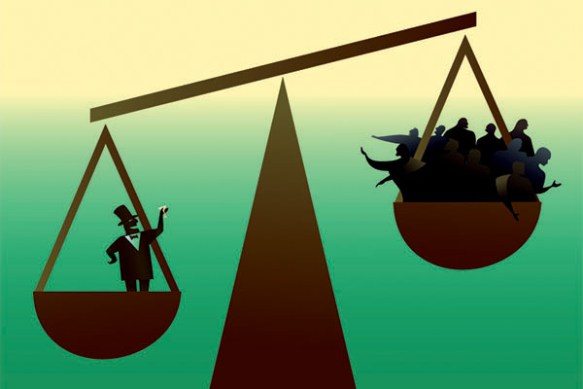




 After the Crash