Why Americans Must Demolish the Political Duopoly and Create a New Progressive Alliance

the-evil-and-corrupt-duopoly

By Thomas Baldwin

Source: Dandelion Salad

A Call to Action!

“Insanity is doing the same thing over and over again and expecting different results.”– Albert Einstein

Duopoly: “preponderant influence or control by two political powers.”

Demolish: “to destroy by breaking apart; to put an end to.”

Corporate fascism (or Corporatism): “the complete merger of corporate and state entities to create a political entity.”

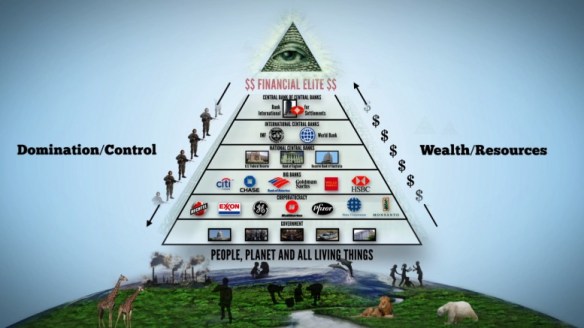
The United States is experiencing a serious crisis and most Americans know it. Our government and the Washington establishment is disintegrating at near breath taking speed. It could well be the most serious situation in at least a hundred years. For years now several authors have described our government in Washington as being “broken” or “dysfunctional”. But these words seem inadequate any longer.

It is much more like a “living” entity which is dying and is in a critical state; all vital signs are poor. Crises are generated in Washington from incompetence and corruption. Little or nothing gets done; few if any serious problems are addressed. Everything is addressed as “partisan.” But that is a delusion because as I will mention later there is really only one party with two different factions serving the corporate fascists. When the two factions finally agree on something, then it is called “bipartisan” because the two political parties appear to be constantly fighting over power and money. What, if anything, is to be done about this evil charade?

Read the full article at  Dandelion Salad.

Finally: the Eruption of the Clinton Foundation Scandal

hillary-frustrated

By Gary Leupp

Source: CounterPunch

“It’s getting really hard to know where any lines were drawn.”

-CNN

I confess I’d been looking forward to this. My son, following the Judicial Watch website, has been saying for months that the big email scandal will involve the State Department-Clinton Foundation ties and Hillary’s use of her office to acquire contributions from Saudi and other donors. As someone opposed to World War III (beginning in Syria and/or Ukraine), I was hoping that they (and he) were right.

It might not be all that immediately clear to many why this is another big deal. After all, it follows Hillary’s ongoing private server email scandal, involving not just issues of the Secretary’s “judgment” and so-called “national security” but also revealing details about Clinton’s key role in the bloody destruction of Libya and her hawkish views in all circumstances.

CNN commentators assure us that the FBI investigation “went nowhere” because the FBI decided she’d committed no crime. (Just move on, folks; this was political all along.)

These new revelations come just after the scandal of the DNC rigging the primaries for Hillary, revealed by email leaks (from an unknown source) provided through Wikileaks. The content of these has been avoided like the plague by mainstream media, which is in Hillary’s camp and is generally protecting her. The focus instead is on alleged Russian efforts to influence the U.S. election, and the imagined Putin-Trump “bromance.” Respectable news agencies have been announcing, as fact, the idea that Wikileaks got the emails from Russia; and that Moscow is trying to swing the election towards Trump (because he’ll accept an invasion of Estonia, wreck NATO etc.). It’s (or it should be) obvious bullshit, an effort to change the subject while exploiting the McCarthyite paranoid sentiments of the most backward.

The headlines are so far cautious. “Emails renew questions about Clinton Foundation and State Department Overlap.” “Newly released Clinton emails shed light on relationship between State Dept. and Clinton Foundation.” They are not (yet) shrieking, “Sheik bought State Dept. favors from Clinton Foundation donation” but we shall see.

What do the emails show so far? Two examples have been highlighted by the conservative Judicial Watch, which requested the email transcripts through the FOIA. In the first, in 2009, Gilbert Chagoury, a Lebanese-born billionaire who has given the foundation up to five million dollars and used its assistance to build a project in Nigeria, and is one of the foundation’s top donors, contacted Doug Band, head of the foundation’s Clinton Global Initiative, asking to be put in touch with a high ranking State Department official connected to Lebanon.

Band emailed Hillary’s top aide Huma Abedin and advisor Cheryl Mills, expressing a need. He writes: “We need Gilbert Chagoury to speak to the substance person re Lebanon. As you know, he’s a key guy there and to us and is loved in Lebanon. Very imp.”

A key guy to us. To the Clinton Foundation? The U.S.A.? Abedin did not ask that question before responding, “It’s jeff feltman. I’m sure he knows him. I’ll talk to jeff.” Feltman had been U.S. ambassador to Lebanon from July 2004 to January 2008 but was apparently still seen as the go-to guy. So Hillary’s chief aide took it upon herself to contact the former ambassador to tell him Chagoury (whom she might mention is a major contributor to the Clintons) needed to talk with him.

Nothing illegal there, they will say. Why shouldn’t the State Department arrange contact between a billionaire Lebanese Clinton donor, loved in Lebanon, and the ex-ambassador, if it contributes to regional stability or U.S. national security? And the hard-core Hillary supporters will nod their heads, and maybe point out that Feltman has denied any “meeting.” (Maybe Huma just passed on his address and they chatted online.)

(CNN I notice is showing a video of Bill Clinton with Chagoury in Nigeria, inaugurating a multi-billion dollar waterfront development on the coastline established “under the umbrella of the Clinton Global Initiative.”)

The other instance of “overlap” central to the discussion so far is a request of Band to Abedin and Mills for “a favor.” Someone who had recently been on a Clinton Foundation trip to Haiti wanted a State Department job. He indicated that it was “important to take care of” this person. Abedin, apparently without questioning Band about why this person was important, got right back to him: “We all have him on our radar. Personnel has been sending him options.” So the head of the Clinton Foundation could snap his fingers, again stressing how “important” his demand was, and Hillary aides Huma and Cheryl paid by your tax dollars would snap into action.

A CNN report deplores “the intermingling of emails between State and Clinton Foundation and others, giving the overall effect that it’s getting really hard to know where any lines were drawn.”

Maybe nothing illegal here. But there is an ongoing FBI investigation, no longer about Hillary’s multiple phones and private server, nor about the content of the communications (revealing her hawkish savagery), but about the routine trade-off of foundation connections for political rewards.

Those transactions are mere corruption, not war crimes. But the U.S. mass media never targets politicians for their bloodiness, and they love the conventional corruption scandal. So let there be more leaks that will absorb the attention of the talking heads! Let’s see clearer pay-for-play evidence! And let’s see more details about how the DNC midwifed Hillary’s nomination, actively sabotaging a supposedly democratic process.

Let the American people see how thoroughly rotten both candidates are, and how thoroughly rotten the system that barfed them up.

Bernie in a fair process would be the Democratic nominee now. Clinton didn’t so much steal the election as buy it in advance, arranging the details through lackey Debbie Wasserman Schultz. Trump would not be the Republican nominee but for the editorial decisions of cable news producers to—from the very inception of his campaign—announce BREAKING NEWS and cover his nearly identical rants every time he held a rally.

This gratuitous coverage obviated the need for any (other) Trump advertising. Even as the anchors, commentators and other talking heads ridiculed, denounced and appeared puzzled about the Trump phenomenon, the networks made the viewers imbibe his vapid rants. They hooked the most reactionary elements of the population on this blowhard billionaire nut case.

In the Democrats’ case, Wall Street and Wasserman Schultz controlled the primaries. In the Republican case, the corporate news media (for its immediate profit motives) advertised a total dick who happened to be a billionaire and represent the One Percent every bit as much as Hillary.

So they’re now in our faces, day after day. Hideous people with their news-anchor supporters, and cable commentators so ready to dismiss serious issues, put the very best face on their candidate, and change the subject to attack the other candidate. In the end it comes down to: We have a two-party system. The parties made their choices. So you HAVE to choose one.

Julian Assange described the U.S. presidential race as a choice between cholera and gonorrhea. Why should the people of this great country of 310,000,000 people—many with great creativity, integrity and intelligence—be assigned this sick choice of Clinton or Trump by the One Percent that controls everything?

Why should any Bernie supporter so debase himself or herself as to say, “Okay, I know the primaries were fixed and that Bernie could not win because the cards were stacked against him. And despite the fact that I put passion and effort into an anti-Wall Street campaign, now I’ll support the Wall Street candidate, who’s also a liar, who’s going to flip-flop again on TPP and bomb Syria to produce regime change, and provoke Russia in Syria and Ukraine—because well anyway she’s better than Trump, and we all have to vote, don’t we”?

But why should anybody have to hold their nose while they vote? The whole process has been exposed as never before as a farce. Why participate at all in something so corrupt? Do you want to vote just to vote, to publicly display the fact that you believe in the system itself, like the North Koreans who routinely go to the polls patriotically to vote for the options available? (As you may know, in some elections in the DPRK you can vote for a candidate of the Workers’ Party of Korea, Chondoist Chogu Party, Korean Social Democratic Party or independent. There is the manicured appearance of multiparty democracy—just like here. And no doubt some people feel good after the voting, knowing they’ve done their civic duty in a system they believe in. But what if you’ve woken up and don’t believe in the system anymore?)

Why not think bigger, and beyond? Either Clinton or Trump will likely take office in January, as the most unpopular newly elected president of all time. Either will have been brought to power by a manifestly anti-democratic, corrupt process that, more than in past years, is well exposed this time. Either will be vulnerable to mass upheaval, in the wake of Mexico wall construction or the announcement of a Syrian no-fly zone. Appalled by the election choices and result, the majority could maybe consider targeting the rigged system itself.

Just a suggestion. Massive demonstrations in Washington on Inaugural Day by people who have come to reject its legitimacy itself, knowing that it’s run by the One Percent to whom black lives don’t matter, drone warfare is cool and global warming is a hoax. Posters and banners with the curt, easy-to-understand and undeniably true popular slogan: THE WHOLE SYSTEM IS RIGGED!

Imagine a huge rally Jan. 20 demanding its overthrow, or at least the immediate resignation of the system’s illegitimate new executive, even if we don’t know what comes next.  Imagine the admiration that would invite throughout the world, the hope it would inspire should the people of this country rise up to challenge not just a war, policy or person but the corrupt (capitalist and imperialist) system under which we live.

***

Now I read that the FBI, directed by James Comey (who recommended no charges for Clinton for her private cell phone use but left open the prospect of recommending criminal charges against Clinton for abusing her office to profit the Clinton Foundation) in fact has recommended charges against Hillary.

But the Department of Justice headed by Clinton loyalist Loretta Lynch rejected the recommendation. Because—don’t you see?—Hillary has to be the next president. To stop Trump, at all costs! And to stop Putin, that aggressive Putin. And to keep together the “Clinton Coalition.”

Good job, Loretta! But regardless of your effort, Hillary’s Pinocchio nose grows longer by the day, while the whole system is exposed as a cancer requiring the most aggressive treatment.

Gary Leupp is Professor of History at Tufts University, and holds a secondary appointment in the Department of Religion. He is the author of Servants, Shophands and Laborers in in the Cities of Tokugawa JapanMale Colors: The Construction of Homosexuality in Tokugawa Japan; and Interracial Intimacy in Japan: Western Men and Japanese Women, 1543-1900. He is a contributor to Hopeless: Barack Obama and the Politics of Illusion, (AK Press). He can be reached at: gleupp@tufts.edu

The Great Ponzi Scheme of the Global Economy

FollowTheMoney-Bank-Pyramid

By Michael Hudson and Chris Hedges

Source: CounterPunch

CHRIS HEDGES: We’re going to be discussing a great Ponzi scheme that not only defines not only the U.S. but the global economy, how we got there and where we’re going. And with me to discuss this issue is the economist Michael Hudson, author of Killing the Host: How Financial Parasites and Debt Destroy the Global Economy. A professor of economics who worked for many years on Wall Street, where you don’t succeed if you don’t grasp Marx’s dictum that capitalism is about exploitation. And he is also, I should mention, the godson of Leon Trotsky.

I want to open this discussion by reading a passage from your book, which I admire very much, which I think gets to the core of what you discuss. You write,

“Adam Smith long ago remarked that profits often are highest in nations going fastest to ruin. There are many ways to create economic suicide on a national level. The major way through history has been through indebting the economy. Debt always expands to reach a point where it cannot be paid by a large swathe of the economy. This is the point where austerity is imposed and ownership of wealth polarizes between the One Percent and the 99 Percent. Today is not the first time this has occurred in history. But it is the first time that running into debt has occurred deliberately.” Applauded. “As if most debtors can get rich by borrowing, not reduced to a condition of debt peonage.”

So let’s start with the classical economists, who certainly understood this. They were reacting of course to feudalism. And what happened to the study of economics so that it became gamed by ideologues?

HUDSON: The essence of classical economics was to reform industrial capitalism, to streamline it, and to free the European economies from the legacy of feudalism. The legacy of feudalism was landlords extracting land-rent, and living as a class that took income without producing anything. Also, banks that were not funding industry. The leading industrialists from James Watt, with his steam engine, to the railroads …

HEDGES: From your book you make the point that banks almost never funded industry.

HUDSON: That’s the point: They never have. By the time you got to Marx later in the 19th century, you had a discussion, largely in Germany, over how to make banks do something they did not do under feudalism. Right now we’re having the economic surplus being drained not by the landlords but also by banks and bondholders.

Adam Smith was very much against colonialism because that lead to wars, and wars led to public debt. He said the solution to prevent this financial class of bondholders burdening the economy by imposing more and more taxes on consumer goods every time they went to war was to finance wars on a pay-as-you-go basis. Instead of borrowing, you’d tax the people. Then, he thought, if everybody felt the burden of war in the form of paying taxes, they’d be against it. Well, it took all of the 19th century to fight for democracy and to extend the vote so that instead of landlords controlling Parliament and its law-making and tax system through the House of Lords, you’d extend the vote to labor, to women and everybody. The theory was that society as a whole would vote in its self-interest. It would vote for the 99 Percent, not for the One Percent.

By the time Marx wrote in the 1870s, he could see what was happening in Germany. German banks were trying to make money in conjunction with the government, by lending to heavy industry, largely to the military-industrial complex.

HEDGES: This was Bismarck’s kind of social – I don’t know what we’d call it. It was a form of capitalist socialism…

HUDSON: They called it State Capitalism. There was a long discussion by Engels, saying, wait a minute. We’re for Socialism. State Capitalism isn’t what we mean by socialism. There are two kinds of state-oriented–.

HEDGES: I’m going to interject that there was a kind of brilliance behind Bismarck’s policy because he created state pensions, he provided health benefits, and he directed banking toward industry, toward the industrialization of Germany which, as you point out, was very different in Britain and the United States.

HUDSON: German banking was so successful that by the time World War I broke out, there were discussions in English economic journals worrying that Germany and the Axis powers were going to win because their banks were more suited to fund industry. Without industry you can’t have really a military. But British banks only lent for foreign trade and for speculation. Their stock market was a hit-and-run operation. They wanted quick in-and-out profits, while German banks didn’t insist that their clients pay as much in dividends. German banks owned stocks as well as bonds, and there was much more of a mutual partnership.

That’s what most of the 19th century imagined was going to happen – that the world was on the way to socializing banking. And toward moving capitalism beyond the feudal level, getting rid of the landlord class, getting rid of the rent, getting rid of interest. It was going to be labor and capital, profits and wages, with profits being reinvested in more capital. You’d have an expansion of technology. By the early twentieth century most futurists imagined that we’d be living in a leisure economy by now.

HEDGES: Including Karl Marx.

HUDSON: That’s right. A ten-hour workweek. To Marx, socialism was to be an outgrowth of the reformed state of capitalism, as seemed likely at the time – if labor organized in its self-interest.

HEDGES: Isn’t what happened in large part because of the defeat of Germany in World War I? But also, because we took the understanding of economists like Adam Smith and maybe Keynes. I don’t know who you would blame for this, whether Ricardo or others, but we created a fictitious economic theory to praise a rentier or rent-derived, interest-derived capitalism that countered productive forces within the economy. Perhaps you can address that.

HUDSON: Here’s what happened. Marx traumatized classical economics by taking the concepts of Adam Smith and John Stuart Mill and others, and pushing them to their logical conclusion. Progressive capitalist advocates – Ricardian socialists such as John Stuart Mill – wanted to tax away the land or nationalize it. Marx wanted governments to take over heavy industry and build infrastructure to provide low-cost and ultimately free basic services. This was traumatizing the landlord class and the One Percent. And they fought back. They wanted to make everything part of “the market,” which functioned on credit supplied by them and paid rent to them.

None of the classical economists imagined how the feudal interests – these great vested interests that had all the land and money – actually would fight back and succeed. They thought that the future was going to belong to capital and labor. But by the late 19th century, certainly in America, people like John Bates Clark came out with a completely different theory, rejecting the classical economics of Adam Smith, the Physiocrats and John Stuart Mill.

HEDGES: Physiocrats are, you’ve tried to explain, the enlightened French economists.

HUDSON: The common denominator among all these classical economists was the distinction between earned income and unearned income. Unearned income was rent and interest. Earned incomes were wages and profits. But John Bates Clark came and said that there’s no such thing as unearned income. He said that the landlord actually earns his rent by taking the effort to provide a house and land to renters, while banks provide credit to earn their interest. Every kind of income is thus “earned,” and everybody earns their income. So everybody who accumulates wealth, by definition, according to his formulas, get rich by adding to what is now called Gross Domestic Product (GDP).

HEDGES: One of the points you make in Killing the Host which I liked was that in almost all cases, those who had the capacity to make money parasitically off interest and rent had either – if you go back to the origins – looted and seized the land by force, or inherited it.

HUDSON: That’s correct. In other words, their income is unearned. The result of this anti-classical revolution you had just before World War I was that today, almost all the economic growth in the last decade has gone to the One Percent. It’s gone to Wall Street, to real estate …

HEDGES: But you blame this on what you call Junk Economics.

HUDSON: Junk Economics is the anti-classical reaction.

HEDGES: Explain a little bit how, in essence, it’s a fictitious form of measuring the economy.

HUDSON: Well, some time ago I went to a bank, a block away from here – a Chase Manhattan bank – and I took out money from the teller. As I turned around and took a few steps, there were two pickpockets. One pushed me over and the other grabbed the money and ran out. The guard stood there and saw it. So I asked for the money back. I said, look, I was robbed in your bank, right inside. And they said, “Well, we don’t arm our guards because if they shot someone, the thief could sue us and we don’t want that.” They gave me an equivalent amount of money back.

Well, imagine if you count all this crime, all the money that’s taken, as an addition to GDP. Because now the crook has provided the service of not stabbing me. Or suppose somebody’s held up at an ATM machine and the robber says, “Your money or your life.” You say, “Okay, here’s my money.” The crook has given you the choice of your life. In a way that’s how the Gross National Product accounts are put up. It’s not so different from how Wall Street extracts money from the economy. Then also you have landlords extracting …

HEDGES: Let’s go back. They’re extracting money from the economy by debt peonage. By raising …

HUDSON: By not playing a productive role, basically.

HEDGES: Right. So it’s credit card interest, mortgage interest, car loans, student loans. That’s how they make their funds.

HUDSON: That’s right. Money is not a factor of production. But in order to have access to credit, in order to get money, in order to get an education, you have to pay the banks. At New York University here, for instance, they have Citibank. I think Citibank people were on the board of directors at NYU. You get the students, when they come here, to start at the local bank. And once you are in a bank and have monthly funds taken out of your account for electric utilities, or whatever, it’s very cumbersome to change.

So basically you have what the classical economists called the rentier class. The class that lives on economic rents. Landlords, monopolists charging more, and the banks. If you have a pharmaceutical company that raises the price of a drug from $12 a shot to $200 all of a sudden, their profits go up. Their increased price for the drug is counted in the national income accounts as if the economy is producing more. So all this presumed economic growth that has all been taken by the One Percent in the last ten years, and people say the economy is growing. But the economy isn’t growing …

HEDGES: Because it’s not reinvested.

HUDSON: That’s right. It’s not production, it’s not consumption. The wealth of the One Percent is obtained essentially by lending money to the 99 Percent and then charging interest on it, and recycling this interest at an exponentially growing rate.

HEDGES: And why is it important, as I think you point out in your book, that economic theory counts this rentier income as productive income? Explain why that’s important.

HUDSON: If you’re a rentier, you want to say that you earned your income by …

HEDGES: We’re talking about Goldman Sachs, by the way.

HUDSON: Yes, Goldman Sachs. The head of Goldman Sachs came out and said that Goldman Sachs workers are the most productive in the world. That’s why they’re paid what they are. The concept of productivity in America is income divided by labor. So if you’re Goldman Sachs and you pay yourself $20 million a year in salary and bonuses, you’re considered to have added $20 million to GDP, and that’s enormously productive. So we’re talking in a tautology. We’re talking with circular reasoning here.

So the issue is whether Goldman Sachs, Wall Street and predatory pharmaceutical firms, actually add “product” or whether they’re just exploiting other people. That’s why I used the word parasitism in my book’s title. People think of a parasite as simply taking money, taking blood out of a host or taking money out of the economy. But in nature it’s much more complicated. The parasite can’t simply come in and take something. First of all, it needs to numb the host. It has an enzyme so that the host doesn’t realize the parasite’s there. And then the parasites have another enzyme that takes over the host’s brain. It makes the host imagine that the parasite is part of its own body, actually part of itself and hence to be protected.

That’s basically what Wall Street has done. It depicts itself as part of the economy. Not as a wrapping around it, not as external to it, but actually the part that’s helping the body grow, and that actually is responsible for most of the growth. But in fact it’s the parasite that is taking over the growth.

The result is an inversion of classical economics. It turns Adam Smith upside down. It says what the classical economists said was unproductive – parasitism – actually is the real economy. And that the parasites are labor and industry that get in the way of what the parasite wants – which is to reproduce itself, not help the host, that is, labor and capital.

HEDGES: And then the classical economists like Adam Smith were quite clear that unless that rentier income, you know, the money made by things like hedge funds, was heavily taxed and put back into the economy, the economy would ultimately go into a kind of tailspin. And I think the example of that, which you point out in your book, is what’s happened in terms of large corporations with stock dividends and buybacks. And maybe you can explain that.

HUDSON: There’s an idea in superficial textbooks and the public media that if companies make a large profit, they make it by being productive. And with …

HEDGES: Which is still in textbooks, isn’t it?

HUDSON: Yes. And also that if a stock price goes up, you’re just capitalizing the profits – and the stock price reflects the productive role of the company. But that’s not what’s been happening in the last ten years. Just in the last two years, 92 percent of corporate profits in America have been spent either on buying back their own stock, or paid out as dividends to raise the price of the stock.

HEDGES: Explain why they do this.

HUDSON: About 15 years ago at Harvard, Professor Jensen said that the way to ensure that corporations are run most efficiently is to make the managers increase the price of the stock. So if you give the managers stock options, and you pay them not according to how much they’re producing or making the company bigger, or expanding production, but the price of the stock, then you’ll have the corporation run efficiently, financial style.

So the corporate managers find there are two ways that they can increase the price of the stock. The first thing is to cut back long-term investment, and use the money instead to buy back their own stock. But when you buy your own stock, that means you’re not putting the money into capital formation. You’re not building new factories. You’re not hiring more labor. You can actually increase the stock price by firing labor.

HEDGES: That strategy only works temporarily.

HUDSON: Temporarily. By using the income from past investments just to buy back stock, fire the labor force if you can, and work it more intensively. Pay it out as dividends. That basically is the corporate raider’s model. You use the money to pay off the junk bond holders at high interest. And of course, this gets the company in trouble after a while, because there is no new investment.

So markets shrink. You then go to the labor unions and say, gee, this company’s near bankruptcy, and we don’t want to have to fire you. The way that you can keep your job is if we downgrade your pensions. Instead of giving you what we promised, the defined benefit pension, we’ll turn it into a defined contribution plan. You know what you pay every month, but you don’t know what’s going to come out. Or, you wipe out the pension fund, push it on to the government’s Pension Benefit Guarantee Corporation, and use the money that you were going to pay for pensions to pay stock dividends. By then the whole economy is turning down. It’s hollowed out. It shrinks and collapses. But by that time the managers will have left the company. They will have taken their bonuses and salaries and run.

HEDGES: I want to read this quote from your book, written by David Harvey, in A Brief History of Neoliberalism, and have you comment on it.

“The main substantive achievement of neoliberalism has been to redistribute rather than to generate wealth and income. [By] ‘accumulation by dispossession’ I mean … the commodification and privatization of land, and the forceful expulsion of peasant populations; conversion of various forms of property rights (common collective state, etc.) into exclusive private property rights; suppression of rights to the commons; … colonial, neocolonial, and the imperial processes of appropriation of assets (including natural resources); … and usury, the national debt and, most devastating at all, the use of the credit system as a radical means of accumulation by dispossession. … To this list of mechanisms, we may now add a raft of techniques such as the extraction of rents from patents, and intellectual property rights (such as the diminution or erasure of various forms of common property rights, such as state pensions, paid vacations, and access to education, health care) one through a generation or more of class struggle. The proposal to privatize all state pension rights, pioneered in Chile under the dictatorship is, for example, one of the cherished objectives of the Republicans in the US.”

This explains the denouement. The final end result you speak about in your book is, in essence, allowing what you call the rentier or the speculative class to cannibalize the entire society until it collapses.

HUDSON: A property right is not a factor of production. Look at what happened in Chicago, the city where I grew up. Chicago didn’t want to raise taxes on real estate, especially on its expensive commercial real estate. So its budget ran a deficit. They needed money to pay the bondholders, so they sold off the parking rights to have meters – you know, along the curbs. The result is that they sold to Goldman Sachs 75 years of the right to put up parking meters. So now the cost of living and doing business in Chicago is raised by having to pay the parking meters. If Chicago is going to have a parade and block off traffic, it has to pay Goldman Sachs what the firm would have made if the streets wouldn’t have been closed off for a parade. All of a sudden it’s much more expensive to live in Chicago because of this.

But this added expense of having to pay parking rights to Goldman Sachs – to pay out interest to its bondholders – is counted as an increase in GDP, because you’ve created more product simply by charging more. If you sell off a road, a government or local road, and you put up a toll booth and make it into a toll road, all of a sudden GDP goes up.

If you go to war abroad, and you spend more money on the military-industrial complex, all this is counted as increased production. None of this is really part of the production system of the capital and labor building more factories and producing more things that people need to live and do business. All of this is overhead. But there’s no distinction between wealth and overhead.

Failing to draw that distinction means that the host doesn’t realize that there is a parasite there. The host economy, the industrial economy, doesn’t realize what the industrialists realized in the 19th century: If you want to be an efficient economy and be low-priced and under-sell competitors, you have to cut your prices by having the public sector provide roads freely. Medical care freely. Education freely.

If you charge for all of these, you get to the point that the U.S. economy is in today. What if American factory workers were to get all of their consumer goods for nothing. All their food, transportation, clothing, furniture, everything for nothing. They still couldn’t compete with Asians or other producers, because they have to pay up to 43% of their income for rent or mortgage interest, 10% or more of their income for student loans, credit card debt. 15% of their paycheck is automatic withholding to pay Social Security, to cut taxes on the rich or to pay for medical care.

So Americans built into the economy all this overhead. There’s no distinction between growth and overhead. It’s all made America so high-priced that we’re priced out of the market, regardless of what trade policy we have.

HEDGES: We should add that under this predatory form of economics, you game the system. So you privatize pension funds, you force them into the stock market, an overinflated stock market. But because of the way companies go public, it’s the hedge fund managers who profit. And it’s those citizens whose retirement savings are tied to the stock market who lose. Maybe we can just conclude by talking about how the system is fixed, not only in terms of burdening the citizen with debt peonage, but by forcing them into the market to fleece them again.

HUDSON: Well, we talk about an innovation economy as if that makes money. Suppose you have an innovation and a company goes public. They go to Goldman Sachs and other Wall Street investment banks to underwrite the stock to issue it at $40 a share. What’s considered a successful float is when, immediately, Goldman and the others will go to their insiders and tell them to buy this stock and make a quick killing. A “successful” flotation doubles the price in one day, so that at the end of the day the stock’s selling for $80.

HEDGES: They have the option to buy it before anyone else, knowing that by the end of the day it’ll be inflated, and then they sell it off.

HUDSON: That’s exactly right.

HEDGES: So the pension funds come in and buy it at an inflated price, and then it goes back down.

HUDSON: It may go back down, or it may be that the company just was shortchanged from the very beginning. The important thing is that the Wall Street underwriting firm, and the speculators it rounds up, get more in a single day than all the years it took to put the company together. The company gets $40. And the banks and their crony speculators also get $40.

So basically you have the financial sector ending up with much more of the gains. The name of the game if you’re on Wall Street isn’t profits. It’s capital gains. And that’s something that wasn’t even part of classical economics. They didn’t anticipate that the price of assets would go up for any other reason than earning more money and capitalizing on income. But what you have had in the last 50 years – really since World War II – has been asset-price inflation. Most middle-class families have gotten the wealth that they’ve got since 1945 not really by saving what they’ve earned by working, but by the price of their house going up. They’ve benefited by the price of the house. And they think that that’s made them rich and the whole economy rich.

The reason the price of housing has gone up is that a house is worth whatever a bank is going to lend against it. If banks made easier and easier credit, lower down payments, then you’re going to have a financial bubble. And now, you have real estate having gone up as high as it can. I don’t think it can take more than 43% of somebody’s income to buy it. But now, imagine if you’re joining the labor force. You’re not going to be able to buy a house at today’s prices, putting down a little bit of your money, and then somehow end up getting rich just on the house investment. All of this money you pay the bank is now going to be subtracted from the amount of money that you have available to spend on goods and services.

So we’ve turned the post-war economy that made America prosperous and rich inside out. Somehow most people believed they could get rich by going into debt to borrow assets that were going to rise in price. But you can’t get rich, ultimately, by going into debt. In the end the creditors always win. That’s why every society since Sumer and Babylonia have had to either cancel the debts, or you come to a society like Rome that didn’t cancel the debts, and then you have a dark age. Everything collapses.


Michael Hudson’s new book, Killing the Host is published in e-format by CounterPunch Books and in print by Islet. He can be reached via his website, mh@michael-hudson.com. Chris Hedges’s latest book is Days of Destruction, Days of Revolt, illustrated by Joe Sacco.

The National Endowment for Democracy: Not National and Not for Democracy

ned

By Tony Cartalucci

Source: New Eastern Outlook

Using a front to hide illegal or immoral activities has been a feature of human criminality since the beginning of human civilization itself. Facades, both ideological and economical, have helped criminal enterprises conceal the true nature of their activities for centuries.
In ages past, organized religion would often take systems of legitimate philosophy and spirituality, and transform them into a means of organizing the masses for the benefit of an elite few, often those heading empires, kingdoms, or nation-states. More recently, patriotism and now the notion of “democracy” have been used successfully by similar cadres of special interests to conceal their self-serving agendas behind notions likely to recruit support from large segments of a population that would otherwise be disinterested.

There is no example of this more transparent than that of the US National Endowment for Democracy (NED). According to its own website, it claims:

The National Endowment for Democracy (NED) is a private, nonprofit foundation dedicated to the growth and strengthening of democratic institutions around the world. Each year, NED makes more than 1,200 grants to support the projects of non-governmental groups abroad who are working for democratic goals in more than 90 countries.

“The growth and strengthening  of democratic institutions around the world” sounds noble enough. One would expect, then, that the NED would be led by a collection of some of the most notable activists involved in the empowerment of “the people.” Instead, upon NED’s board of directors, we find people representing corporate-financier interests notorious for instead, exploiting and subjugating “the people.”

Unfortunately, for those receiving the millions upon millions of dollars the NED hands out annually to “nongovernmental organizations” (NGOs) around the world, few bother to actually check who it is underwriting their daily activities, and fewer still have the integrity to both turn down the money let alone inform the people they claim to represent just who is attempting to reach into their respective nations and subvert their political systems, and to what end.

Quite literally, each and every member of the NED’s board of directors represents Fortune 500 corporations, insidious corporate-financier funded policy think-tanks, and a wide variety of other obvious conflicts of interest unbecoming of an organization truly interested in, “the growth and strengthening of democratic institutions around the world.” 

NED: Who’s Who

The worst part of NED’s activities worldwide and the fact that allegedly liberal progressive NGOs are taking money from them and aiding and abetting their agenda, is the fact that the background of NED’s board of directors is posted directly on NED’s own website. This means recipients of NED cash either recklessly didn’t bother to look into the organization sponsoring them, or simply do not care about the compromised nature of their sponsors.

For example, Marilyn Carlson Nelson (NED secretary) is co-CEO of one of the largest privately held companies in the world, Carlson Holdings operating hotels around the world. She also serves on the board of Exxon Mobil and chairs the U.S. Travel and Tourism Advisory Board. She alone represents such a tangled web of compromising and conflicting interests, it calls into question the integrity and true agenda of NED.

Carlson Nelson’s company, Carlson Holdings, deals in hotels, yet she concurrently sits on a government board under the International Trade Administration which makes decisions and policies on behalf of the US that directly benefits private industry specifically like that of Carlson Holdings. Her position upon Exxon Mobil’s board of directors is also troublesome. Exxon, a gargantuan multinational corporation, conducts business around the world and by necessity, requires political (and military) interventions to enter into and overwhelm those few remaining markets it has yet to dominate.

Carlson Nelson’s role in the NED, then, could be (and is) easily abused to subvert foreign governments that pose barriers to Carlson Holdings or Exxon, and put into power opposition parties that would deal in favor of such multinations – all under the guise of “the growth and strengthening of democratic institutions around the world.” 

Other NED board members representing compromising corporate-financier special interests include Marne Levine (Facebook, Coo, Instagram), Mark Ordan (WP Glimcher – real estate), and with Carl Gershman, Princeton Lyman, Stephen Sestanovich, and Melanne Verveer serving as members of the Council on Foreign Relations (CFR) – a corporate-financier funded think-tank representing the collective economic and geopolitical ambitions of Wall Street, London, and Brussels’ most powerful special interests.
The CFR’s corporate sponsors include Bank of America, Chevron, Citi, Exxon, Goldman Sachs, JP Morgan, PepsiCo, Shell Oil, Coca-Cola, BP, Google, Lockheed Martin, AT&T, Boeing, Facebook, DynCorp, Northrop Grumman, Pfizer, Raytheon, Microsoft, and Merck – a virtual who’s who of abusive special interests plaguing the world with socioeconomic disparity, compromising “free trade” deals, and driving conflicts ranging from “color revolutions” and proxy wars to full-scale invasions and decade-long occupations.

NED – which poses as a liberal-progressive organization – includes a surprising number of right-wing Neoconservatives (Neocons). This includes Vin Weber, a Bush-era Neocon who strongly advocated the invasion and occupation of Iraq – a war now revealed to have been predicated on an intentional lie regarding Iraq’s supposed chemical and biological weapons program.

Weber is a partner at the public strategy firm, Mercury. There, he consults and lobbies for multinational corporations, governments, and corporate-funded foundations including Microsoft, Visa, Pfizer, AT&T, Ebay, the Ford Foundation, pharmaceutical firm Gilead, NBC, the government of Qatar, and many others.

For what reason would NED include a pro-war corporate lobbyist on its board of directors if not for the fact that NED itself is but a facade for carrying out pro-corporate-financier agendas under the guise of promoting “democracy” around the world?

Other Neocons populating NED’s board of directors includes Elliot Abrams, Francis Fukuyama, Zalmay Khalilzad,  and Will Marshall. One pro-war Neocon could have been an anomaly – five begins to fit a pattern. It should be noted that NED’s subsidiary, Freedom House, also hosts corporate lobbyists and pro-war Neocons as well, including Kenneth Adelman.

NED Funds Your Local “Pro-Democracy Activists,” But Who Funds NED? 

One of NED’s subsidiaries, Freedom House, is admittedly funded by multinational corporations including AT&T, defense contractors BAE Systems and Northrop Grumman, industrial equipment exporter Caterpillar, tech-giants Google and Facebook, and financiers including Goldman Sachs.

NED itself – according to a 2013 disclosure (.pdf) – is funded by among others, Chevron, Coca-Cola, Goldman Sachs, Google, Microsoft, and the US Chamber of Commerce.

What do these corporations have to do with “the growth and strengthening of democratic institutions around the world?” 

The US Chamber of Commerce in particular is also heavily involved in post-regime change operations carried out by the US government either through direct military conflict or proxy wars and “color revolutions,” being the first to appear in front of new proxy governments to establish Western corporate-financier hegemony over newly “opened” market space.

NED’s individual donors also are telling. They include Frank Carlucci of the notorious Bush-family linked equity firm, the Carlyle Group. There is also former NED board member Kenneth Duberstein, a board member of defense contractor Boeing, big oil’s ConocoPhillips, and the Mack-Cali Realty Corporation. Duberstein also served as a director of Fannie Mae until 2007. He too is a CFR member as are two of the companies he chairs, Boeing and ConocoPhillips.

Also listed as an individual donor to NED is Neocon Paula Dobriansky – a trustee at NED’s subsidiary Freedom House, as well as former US Secretary of State Condoleezza Rice who served during the Bush administration.

Supposedly liberal-progress NGOs around the world taking money from corporate-financiers, warmongers, and right-wing ideologues embodies perfectly the notion of a fraudulent front used to conceal criminal intentions under the guise of a noble cause.

How it Works: A Case Study 

The Southeast Asian state of Thailand is currently gripped by a long-running political crisis centered around Thailand’s indigenous institutions and political order, and that of US-backed proxy Thaksin Shinawatra. Shinawatra himself was – like NED individual donor Frank Carlucci, a member of the Carlyle Group. Before becoming prime minister in 2001, Shinawatra would pledge to his friends in the US business community that he would use his office to serve as a “matchmaker” between Wall Street and Thailand’s people and resources.

Upon taking office, he would carry out a series of abusive and unpopular moves including the commitment of  Thai troops to America’s illegal invasion and occupation of Iraq, the hosting of the CIA’s abhorrent rendition program on Thai soil, and an attempt to ram through a US-Thai free trade agreement in 2004 without parliamentary approval.

In 2006, Shinawatra would ultimately be ousted from power by the Thai military. Since then, he has been represented by some of the largest lobbying firms in Washington, including by the above mentioned Freedom House trustee Kenneth Adelman. However, that is not the limit to which the NED has helped prop up Shinawatra’s political front in Thailand.

The NED also funds a myriad of “NGOs” in Thailand aimed specifically at undermining Thailand’s institutions – most notably the military, monarchy, courts, and even the economy itself. These are included on a long list on NED’s own website and include:

  • Thai Poor Act;
  • Thai Civil Rights and Investigative Journalism;
  • Thai Volunteer Service;
  • Makhampom Foundation;
  • Cafe Democracy;
  • Media Inside Out Group;
  • ENLAWTHAI Foundation;
  • Human Rights Lawyers Association and;
  • Foundation for Community Educational Media

It should be noted that in recent years, NED has become as ambiguous as possible about listing which NGOs it specifically funds – while NGOs in Thailand receiving NED funding regularly attempt to conceal NED funding and have been caught on several occasions outright lying about it.

For instance, while NED lists “Foundation for Community Educational Media,” it actually includes organizations like Thai Netizen and Prachatai – two entwined media fronts who have habitually covered up their foreign funding all while asking for donations locally.

Such behavior indicates that NGOs like Thai Netizen and Prachatai are fully aware of the impropriety they are a party to.

Each and every NED-funded NGO in Thailand is currently engaged in daily attacks against the current government, and serves a direct supporting role in bolstering opposition fronts directly tied to the ousted regime of Thaksin Shinawatra. “Human rights lawyers” underwritten by NED regularly represent US-backed agitators rounded and charged for various crimes while media fronts like Prachatai churn out a daily tidal wave of disinformation in support of US interests both in Thailand and across Asia.

Legitimate grassroots campaigns such as opposition to foreign multinational agribusiness and attempts to impose genetically modified organisms (GMOs) upon Thai agriculture receive little to no support from this milieu of US-funded fronts. Likewise, pragmatic and constructive opposition to current government policies done within a framework of cooperating with government agencies to arrive at compromises are also ignored entirely by NED’s networks.

NED’s various fronts are solely focused on pressuring the government into arranging elections and giving America’s proxies, Thaksin Shinawatra and his political allies, another opportunity at seizing power.

Shinawata, once back in power, and after sufficiently diminishing the power of Thailand’s existing political order, would return to destructive pro-US policies ranging from “free trade” with Wall Street special interests to supporting America’s unending wars worldwide. His regime would also likely mobilize Thailand’s population and resources on behalf of Washington’s proxy war with China – costing Thailand a valuable trade and military partner along with peace and stability across Asia.

When political instability surfaces around the world – opposition forces mobilizing in the streets and over the airwaves must be carefully scrutinized. Determining from where they receive their funding and political support is essential in determining whether these opposition forces are legitimate or the manufactured pawns of Western corporate-financier special interests being funded through fronts like the National Endowment for Democracy – a front that is private – not national, and that is for corporate-financier special interests – only under the guise as being “for democracy.”


Confirmed: “Draw Mohammed” Contest Attackers Were Managed by FBI

david-yerushalmi-pamela-geller-640x480

Anti-Muslim activists Pamela Geller and David Yerushalmi

UPDATE: Readers should backtrack to CNN’s 2015 coverage of the Garland, Texas shooting to see just how badly they are being deceived. As readers watch CNN’s video coverage and read the article, they must keep in mind that the FBI had been in contact with the suspects for years, and encouraged them to carry out the attack.

By Tony Cartalucci

Source: Land Destroyer

To some the 2015 shooting in Garland Texas at a “Draw Mohammed” contest organized by state-sponsored agitators seemed all too convenient.

The protest was meant to prove Muslims were irrational and violent, and amid the protest two armed men did indeed attack, both killed by police who were already on the scene.

The event was meant to reinforce the narrative that Islam is an irrational and dangerous ideology, that Muslims pose a danger to America and the West in general, and that both Islam and Muslims should be actively resisted culturally, politically, and militarily.

It was the culmination of years of agitation through networks maintained by Washington politicians and policymakers, particularly those who have – ironically – not only engineered America’s various and unending wars begun during the so-called “War on Terror,” but who have also armed and funded some of the most dangerous terrorist organizations on Earth via America’s Persian Gulf allies.

Now it is revealed that not only was the protest organized by politicians and organizations associated with Washington, but the shooting was as well.

The two suspects were being directed by undercover FBI agents, one of which reportedly told one of the shooters shortly before the attack to “tear up Texas.”

The Daily Beast in its article, “FBI Agent Apparently Egged on ‘Draw Muhammad’ Shooter,” would report that:

Days before an ISIS sympathizer attacked a cartoon contest in Garland, Texas, he received a text from an undercover FBI agent. 

“Tear up Texas,” the agent messaged Elton Simpson days before he opened fire at the Draw Muhammad event, according to an affidavit (pdf) filed in federal court Thursday.

The Daily Beast would also report:

That revelation comes amidst a national debate about the use of undercover officers and human sources in terrorism cases. Undercover sources are used in more than half of ISIS-related terror cases, according to statistics kept by the George Washington University Program on Extremism, and civil liberties advocates say some of those charged might not have escalated their behavior without those interventions.

This latest development regarding the 2015 incident reveals how the entire event and attack were organized by the state for the expressed purpose of creating fear, hysteria, and division within American society. It is very likely that similar attacks both in the United States and across Europe are also the work of concerted efforts by Western governments to manipulate public perception.

The toxic climate created by a phenomenon known as “Islamophobia” is helping the West justify an increased police state at home and wider wars abroad. It is also playing a role in helping to radicalize Muslims sorely needed to fill the ranks of the West’s militant fronts in nations like Syria where they are being used to target and overthrow governments obstructing American special interests.

Despite the rhetoric, there are approximately 1.6 billion Muslims on Earth today, meaning that if even 1% were truly as they are characterized by state-sponsored propaganda – as violent fanatics bent on global conquest – that would constitute an army of some 16 million strong – or in other words – an army larger than all of the military forces of the industrialized world combined.

In reality, the number of extremists is extremely low – a fraction of 1% of the total global Muslim population – and the vast majority of these extremists are indoctrinated by US-Saudi funded and facilitated “madrases,” trained, funded, and armed by US and its Persian Gulf allies, and “coincidentally” waging war on all of the West’s enemies – ranging from the now toppled government of Libya to the current governments of Syria and Iraq, as well as even Russia and China.

Those feeding into Islamophobia – then – are in fact aiding and abetting the cycle of violence, ignorance, and fear that keeps viable the West’s use of terrorism as a geopolitical tool both at home and abroad. It is particularly ironic that the “radical Islam” many Westerners are now paralyzed in fear over, is in fact a creation of the modern Western state, springing out of Washington-based policy papers, not the pages of the Qu’ran.

ANOTHER MYSTERIOUS DEATH – Activist and Sanders Supporter Who Served Papers to DNC on Fraud Case Found Dead

shawn-lucas

By Jim Hoft

Source: Gateway Pundit

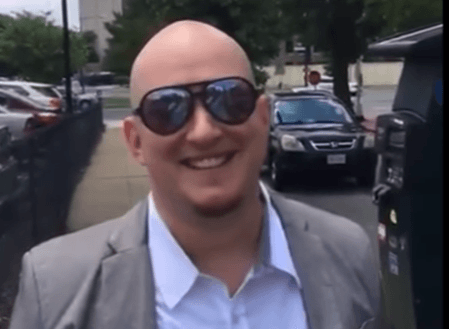
On July 3, 2016, Shawn Lucas and filmmaker Ricardo Villaba served the DNC Services Corp. and Chairperson Debbie Wasserman Schultz at DNC’s headquarters in Washington, D.C., in the fraud class action suit against the Democrat Party on behalf of Bernie Sanders supporters.

Shawn Lucas was thrilled about serving the papers to the DNC before Independence Day.

** This was before Wikileaks released documents proving the DNC was working against the Sanders campaign during the 2016 primary.

Shawn Lucas was found dead this week.

shawn-lucas-dead-575x427

According to Snopes Lucas was found dead on his bathroom floor.

We contacted Lucas’ employer on 4 August 2016 to ask whether there was any truth to the rumor. According to an individual with whom we spoke at that company, Shawn Lucas died on 2 August 2016. The audibly and understandably shaken employee stated that interest in the circumstances of Lucas’ death had prompted a number of phone calls and other queries, but the company had not yet ascertained any details about Lucas’ cause of death and were unable to confirm anything more than the fact he had passed away.

An unconfirmed report holds that Lucas was found lying on the bathroom floor by his girlfriend when she returned home on the evening of 2 August 2016. Paramedics responding to her 911 call found no signs of life.

This follows the death of 27 year-old Democratic staffer Seth Conrad Rich who was murdered in Washington DC on July 8. The killer or killers appear to have taken nothing from their victim, leaving behind his wallet, watch and phone. Shortly after the killing, Redditors and social media users were pursuing a “lead” saying that Rich was en route to the FBI the morning of his murder, apparently intending to speak to special agents about an “ongoing court case” possibly involving the Clinton family.

seth-rich-bloomingdale_02

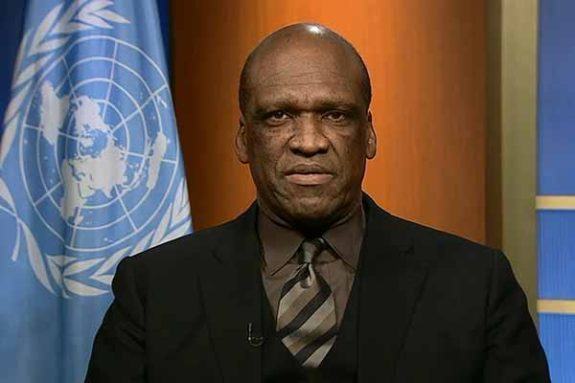
And on June 22, 2016, former UN official John Ashe “accidentally” crushed his own throat and died a week before he was scheduled to testify against the Clintons and Democrat Party.

john-ashe-un-575x383

John Ashes died before his court appearance.


Related Podcast:

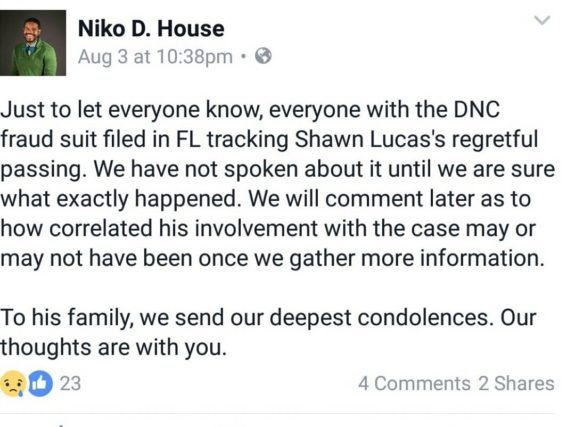
The Opperman Report – 08.07.16 Niko House; DNC Infiltration, Rigging, Deaths


2016 election decides who controls the drug trade

04cd33bf632b3727f5f42ed26a16ae08

By Daniel Hopsicker

(Mad Cow Morning News)

In the Presidential Election of 2016, Republican and Democratic insiders are wrestling like two dogs over a bone over who controls the illegal drug trade.

To the victor go the spoils. Who wins the election wins control of America’s vast drug bazaar, largest in the world, whose proceeds prop up lucky bankers and politicians lapping at the trough of  the biggest richest slush fund in the history of the world.

It’s the smart play

It’s the biggest business in the world, and the No. 1 industry on the face of the planet, in terms of foreign trade. And if you didn’t know that about the illegal drug trade, then the vast amounts spent on propaganda and disinformation every year in the so-called “War on Drugs” is working.

The first industry to globalize vertically was the illegal drug business. It’s an open question whether drug trafficking drove globalization, or the other way around.

Negotiated by Bill Clinton, the chief beneficiary of NAFTA (North American Free Trade Agreement)—by dollar volume and impact on the economy—was the drug trade.

The Democrats, committed to globalization, will continue to farm out transportation and money laundering to, among others,  minions of Mexico’s President Enrique Nieto Pena, cronies of retired Colombian strongman Alvaro Uribe, and a host of eager bankers from the world’s largest banks.

Will a Republican victory will bring back Oliver North? No, it’ll be a Trump Administration appointee with a certain erect posture and short-but-stylishly-cut hair,  chosen to occupy the Oliver North seat on the National Security Council.

The Enterprise Lives. And prospers.

Why there’s no Global War on Johnnie Walker Red

Although America’s sun is slowly sinking  below the horizon, the country still boasts the biggest and the best illegal drug delivery pipeline on the planet, so efficient it’s sick, the and envy of the world. The UK and Europe may be nipping at our heels, growing bigger vis a vis the U.S. as drug consumers, but the U.S. remains the biggest market.

This market is what we sell to the world; one of a few businesses where we’re still No. 1, along with financial services, which basically means meaning laundering drug money, and movies based on comic books.

Here’s a statistic from the UN’s World Drug Report for 2016:

207,000 drug-related deaths globally.

Compare that with this fact from the UN’s World Health Organization:

“In 2012, 3.3 million deaths, or 5.9 percent of all global deaths, were due to alcohol consumption.”

If the U.S. cares about the health of its citizens we’ll soon have a Liquor Enforcement Administration(an LEA), with approximately sixteen times the funding that the War on Drugs receives every year, which is 40 billion dollars.

That’s within reach of the Pentagon budget; its safe to say it ain’t gonna happen.

It doesn’t happen, becauses of the banks, and also because, as the UN World Drug Report also states, and flatly, worldwide people spend more money on drugs every day than on food.

Yup. You can look it up.

An even bigger reason: Global Too Big to Jail Banks.

London’s Financial Times has warning for global elite

Even when you think you’re talking about something else, you’re talking about drugs, even if you don’t know it. London’s Financial Times briefly surfaced from the 19th Century with a headline reading “Global elites must heed the warning of populist rage’

“The explanation for the prolonged stagnation in real incomes are repeated financial crises and subsequent weak recoveries, which have destroyed popular confidence in the competence and moral principles, honesty, and decency of the elite.”

The greedy parasitic elite that betrayed the middle class, and the country.

The Times continues, “The role of finance is excessive. The financial system remains riddled with perverse incentives.”

Without drug money there is no financialization. Because the banks by themselves don’t have the capital. Some say that sounds like a good thing.

“Air America meets  Traffic meets Pineapple Express”

A steady diet of movies like the upcoming ‘Mena’ starring Tom Cruise playing the supposedly-swashbuckling former Air America  pilot Barry Seal, has given the movie-going public the idea that the real action in the illegal drug trade is in drug trafficking.

That’s not the case. The real action is in money laundering. Because if you can’t wash clean the money you end up with, it quickly becomes useless to anyone with more long-term goals than throwing the biggest party or longest orgy the world has ever seen. And because money weighs more than drugs—and is way more bulky unless you’re smuggling marijuana which is today considered more out of the stone age than old school.

So there’s a problem. Providing a solution are casinos, bodegas, cambios, Western Union, grocery stores, restaurants, even dry cleaners, and banks. Especially banks. In fact it they weren’t for laundering drug money, HSBC, JP Morgan, Barclays and Bank of America would have already gone the way of Mario Brothers or YAHOO, which only makes news anymore when pieces are sold off in foreclosure.

Three brief moments  in time in the drug trade

A Turkish boat carrying a massive 3.2 tonnes of high purity cocaine hidden in a ballast tank at the front of the MV Hamal was busted 100 miles east of the Aberdeenshire coast.

It was a record $673 million (£512 million) cocaine haul.The captain and second in command—Mumin Sahin and Emin Ozmen—were convicted, and sent to prison.

The Captain and the second in command” are the drug trade’s equivalent of David Letterman Show favorites Mujibur and Sirajul, who ran a t-shirt shop in a tiny frontage near the Ed Sullivan Theater. They were ordinary people who Letterman found exceptional just because there were so ordinary.

Is there a shortage of people ready to take a chance smuggling a half-billion cargo?  Is that the plan?

“Operation SCREENPLAY” gets a tentative green light

OPERATION Screenplay will go down as one of the all-time great UK drug busts,” enthused John McGowan, head of border investigations.

“To put it in perspective, the total seizure of cocaine by all police forces in England and Wales in 2014-15 was 3.4 tons. That was for everything.  This single seizure was 3.2 tons.”

In a blatant pitch for more government funding—so that he could presumably really go to town, he added, “And all we had was intelligence from the French that there was a considerable quantity of cocaine on board.”

The paper seemed not so sure. The report ended, “Despite the size of the seizure, anecdotal evidence suggests police did not record a dip in the amount of cocaine on our streets.”

Playing whack-a–mole around the world

An expert who testified at their trial about “recognised trade routes” for shipping cocaine was perhaps a little too candid. He told the jury:

“It is now south of Venezuela and Guyana because of a lot of enforcement activity by the USA patrolling the coast. It’s massive importation – unprecedented in my experience.”

Those sneaky traffickers. Always playing whack-a-mole.

Cocaine production in Colombia increased dramatically—shooting up a staggering 46 percent—last year.  The country now has the resources to produce 712 tons of cocaine annually. Growth exploded in lawless areas in the Sierra Nevada mountains in the north and in the Amazon region, on the Venezuelan and Ecuadorean borders and along the Pacific coast.

But cultivation dropped in central Colombia, where the people running  both Colombia’s government and drug trade of Colombia.

Huh. Imagine that.

The Mexican Navy left with many barrels of zesty condiments

The Mexican navy found 13 tons of cocaine inside barrels of hot sauce in Manzanillo, 500 miles west of Mexico City. The barrels full of zesty condiment and cocaine were believed to belong to the Sinaloa Cartel.

A week earlier, busy Mexican sailors discovered almost a ton of cocaine—more than 900 keys—floating in the open sea off the coast of Chiapas.

A ton of cocaine. Just… floating…100 miles from shore.

The world’s richest industries

How much money an industry makes is the best rule of thumb for how much clout that industry exerts on the countries in which it operates. The illegal drug trade has yearly revenues exceeding the 946 billion in annual revenue of Walmart, Microsoft, Google, Ebay, and British Petroleum, combined.

In the U.S., and almost everywhere else, it’s a cash cow of almost unimaginable proportions.

The richest industries are all based on at assets we use in our lives every day, from computers to entertainment, to oil, to shopping, to drugs. According to therichest.com, “They are industries we give our hard-earned money to out of necessity, desire, or a mix of the two. And they also tend to be the most valuable, and not just from a monetary standpoint.  Their value lies in the fact that they’re needed to help society advance and function smoothly.”

Imagine several hundred million people trying to get through Monday morning with coffee. Luckily, that won’t ever happen.


About Daniel Hopsicker

Daniel Hopsicker is an investigative journalist dubious about the self-serving assertion of U.S. officials that there are no American Drug Lords.

Yes, Hillary Clinton Served on the Board of a Company Who Funds ISIS

hillary-libya

By Alice Salles

Source: theAntiMedia.org

As the race for the White House heats up, WikiLeaks continues to unveil sensitive information showing ties between the Democratic Presidential nominee Hillary Clinton, foreign governments, and corrupt companies.

In a recent tweet, WikiLeaks reported its unveiling of Clinton’s dubious ties to Lafarge, an American company owned by a French conglomerate that, between 2011 and 2013, paid taxes to the Islamic State (ISIS) in order to protect its cement factory 95 miles northeast of Aleppo, Syria. The arrangements were discovered by the French daily, Le Monde. The story became relevant once again after the Office of the Mayor of Paris recently struck a corporate partnership naming Lafarge as its main supplier.

Lafarge bought the cement plant in Syria in 2007, but in 2011, civil war broke out, forcing Lafarge to make the choice of paying the terrorist organization to continue production. The taxes were allegedly paid to ISIS middlemen and other rebel groups in Syria.

Another investigation carried out by Zaman al-Wasl, an independent news organization based in Syria, adds that Lafarge may have also bought oil from ISIS regularly.

On July 13, 2014, Zaman al-Wasl reported, Mamdooh al-Khalid, who served as the manager and sales manager of Lafarge Syria, “wrote to Bruno Pescheux, General Manager of Lafarge warning him about buying [f]uel from non-governmental company in areas out of the regime’s control.” If Bashar al-Assad’s regime discovered the deal, al-Khalid allegedly warned, the regime would not be pleased.

In a reply to al-Khalid, Pescheux “advised him to mention that Lafarge had done its best to get fuel from the government, and wondered about the previous requests for fuel from Homs refinery” before illegally buying fuel from ISIS in case the regime were to find out about the dealings.

According to The Canary, “Al-Wasl reported that the CEO of Lafarge Cement Syria, Frederic Jolibois, had personally instructed his firm to make payments to Isis.”

But the fact a private Western company has allegedly had dealings with ISIS is not the only worrying factor in this story.

According to an article from 2007 published by the Washington Post, Hillary Clinton was the Clinton family’s breadwinner in the early 1990s, when she was “earning more than $100,000 a year from her law firm salary and corporate board fees.” At the time, she served on Lafarge’s board, making about $31,000 a year from the company.

The report added that “[s]hortly before Bill Clinton was elected president in 1992, Lafarge was fined $1.8 million by the Environmental Protection Agency for pollution violations at its Alabama plant.” As soon as Clinton was elected, however, the administration “reduced that fine to less than $600,000.” Hillary left the board in 1992 after her husband won the Democratic nomination.

According to an investigative report published in the 1980s by the American Spectator and used as a source by The Canary, Hillary Clinton was already involved with the firm when Lafarge helped to facilitate the CIA’s support for Saddam Hussein’s secret weapons program. At the time, Clinton “did legal work for Lafarge … [providing] key services for the covert arms export network that supplied Saddam Hussein.” The Canary added that the investigative report unveiled how “the Justice Department was told to bury the investigation” to “prevent exposure of that secret supply line, and collateral damage to Hillary Clinton.”

During the 2013 annual meeting of the Clinton Foundation, Lafarge’s Executive Vice President for Operations, Eric Olson, was a “featured attendee.” In both 2015 and 2016, Lafarge was listed as a donor to the Clinton Foundation.

As Paris accepts a bid from Lafarge to provide sand for this summer’s Paris-Plages event, an international corporate watchdog known as SumOfUs is now urging Paris Mayor Anne Hidalgo to “immediately cut Paris’ partnership” with the company.

In a petition with nearly 40,000 SumOfUs member signatures, the group claims the partnership with Paris is “scandalous.” According to the SumOfUs campaign manager, Eoin Dubsky, this deal “should have never happened.”

By partnering with Lafarge for this summer’s Paris-Plages event, the City of Paris is whitewashing the company’s obscene show of corporate greed that profits off the war and violence created by terrorists,” the SumofUs announcement reads.


Related Article: WikiLeaks Exposes Hillary’s Stunning Connection to ISIS — Mainstream Media Blackout Ensues