
Social Schizophrenia, Social Depression: What does TV tell us about America?

wash_dees

By Charles Hugh Smith

Source: Dangerous Minds

The difference between what we experience and what we’re told we experience creates a social schizophrenia that leads to self-destructive attitudes and behaviors.

What can popular television programs tell us about the zeitgeist (spirit of the age) of our culture and economy?

It’s an interesting question, as all mass media both responds to and shapes our interpretations and explanations of changing times. It’s also an important question, as mass media trends crystallize and express new ways of understanding our era.

Those who shape our interpretation of events also shape our responses.  This of course is the goal of propaganda: Shape the interpretation, and the response predictably follows.

As a corporate enterprise, mass media’s goal is to make money—the more the better—and that requires finding entertainment products that attract and engage large audiences.  The products that change popular culture are typically new enough to fulfill our innate attraction to novelty—but this isn’t enough. The product must express an interpretation of our time that was nascent but that had not yet found expression.

We can understand this complex process of crystallizing and giving expression to new contexts as one facet of the politics of experience.

The Politics of Experience

It is not coincidental that the phrase politics of experience was coined by a psychiatrist, R.D. Laing, for the phrase unpacks the way our internalized interpretation of experience can be shaped to create uniform beliefs about our society and economy that then lead to norms of behavior that support the political/economic status quo.

Here’s how Laing described the social ramifications in Chapter Four of his 1967 book, The Politics of Experience:

“All those people who seek to control the behavior of large numbers of other people work on the experiences of those other people. Once people can be induced to experience a situation in a similar way, they can be expected to behave in similar ways. Induce people all to want the same thing, hate the same things, feel the same threat, then their behavior is already captive – you have acquired your consumers or your cannon-fodder.”

For Laing, the politics of experience is not just about influencing social behavior – it has an individual, inner consequence as well:

“Our behavior is a function of our experience. We act according to the way we see things. If our experience is destroyed, our behavior will be destructive. If our experience is destroyed, we have lost our own selves.”

How the media shapes our interpretation affects not just our beliefs and responses, but our perceptions of self and our role in society. If the media’s interpretation no longer aligns with our experience, the conflict can generate self-destructive behaviors.

In other words, mass media interpretations can create a social schizophrenia that can lead to self-destructive attitudes and behaviors.

Social Analysis of TV

By its very nature as a mass shared experience, popular entertainment is fertile ground for social analysis.

Here’s a common example: what does a child learn about conflict resolution if he’s seen a thousand TV programs in which the “hero” is compelled to kill the “bad guy” in a showdown? What does that pattern suggest, not just about the structure of drama, but about the society that creates that drama?

Analyzing entertainment has been popular in America since the 1950s, if not earlier.  The film noir of the 1950s, for example, was widely deemed to express the angst of the Cold War era.  Others held that the rising prosperity of the 1950s enabled the populace to explore its darker demons—something the hardships and anxieties of the Depression did not encourage.

Many believe the Depression gave rise to screwball comedies and light-hearted entertainment featuring the casually wealthy precisely because these were escapist antidotes to the grinding realities of the era.

Even television shows that were denigrated as superficial in their own time (for example, Bewitched in the 1960s) can be seen as politically inert but subconsciously potent expressions of profound social changes: the “witch” in Bewitched is a powerful young female who is constantly implored by her conventional husband to conform to all the bland niceties of a suburban housewife, but she finds ways to rebel against these strictures.

Laing saw the potential conflict between what we experience and how we’re told to interpret that experience not just in social terms but in psychiatric terms: such splits open a gulf that can lead to a form of schizophrenia.

Diagnosing Our Disease with TV

What can we make of the popular TV series of the present era? What do they say, beneath the surface, about American society?

I contend that popular TV expresses three key aspects of U.S. society and economy that are at odds with the core idealized values espoused in civic classes and the media. The three idealized values are:

1.  America is a meritocracy—selections, admissions, etc., are based on the candidates’ merits

2.  Anyone can get ahead if they get an education and work hard

3.  America is the wealthiest nation on earth in terms of opportunity, fairness and capital

TV expresses three aspects that confound these idealized values:

1.  Life is a game in which the winner takes all

2.  The opportunity to “get ahead” via conventional means—getting educated, working hard, etc.—is a joke; only those who skirt conventions and the law get rich

3.  Life is a tortuous endurance course where those in charge demand the cruel and the impossible

Winner-Take-All Talent Shows

Let’s start with the genre that has been a dominant force in American TV since the 2000s: the winner-take-all talent show (reality and game shows).

The long-running Survivor series, for example, was a winner-take-all contest of physical prowess and political guile, while the many programs staging singing/dancing contests (American Idol, etc.) put entertainment skills to the competitive test.  A wide range of other entries stage competitions in cooking, entrepreneurship, losing weight, negotiating obstacle courses, and so on.

What interpretations of our experience do these highly competitive winner-take-all reality shows promote?

We could start with the fact that the stars (other than the hosts/judges) are apparently ordinary “every man/woman” Americans, i.e. people not unlike us.  Watching them, it is not too much of a stretch to imagine ourselves on stage, in the kitchen, etc., trying to impress the judges with our talents. It’s easy to identify with the contestants.

These shows enable us to vicariously experience the fantasy that we, too, could be on national TV and could win the accolades of the judges and fans and be the winner who takes it all.

This natural empathy with the temporarily famous with whom we can vicariously share the thrill of victory and the agony of defeat is clearly tapping a deep cultural desire to taste celebrity and the implied financial rewards of winning in an increasing winner-take-all society/economy.

Could the financial/political marginalization of the average citizen and the widening gulf between the typical household and those at the top of the fame/wealth pyramid have something to do with this fascination for winner-take-all competitions on the public stage?

Since there have been game shows on TV for decades, it could be argued that this proliferation of winner-take-all contests is nothing new. But this fails to account for the difference between a game show in which the correct answer is a fact and the subjective votes of judges, other players and the audience that count in winner-take-all contests.

I would argue that this recent explosion of competitions (“modern gladiator,” anyone?) is an expression of deeply held shared cultural values: we accept that ours is a highly competitive society, and that it is becoming even more so as the top “winners” skim the vast majority of the winnings (media visibility, wealth, adulation, social status. etc.), leaving a few morsels for the top 5% and nothing but crumbs for the bottom 95%.

But these TV programs also project the fantasy that our fight-to-the-figurative-death society is still a meritocracy—the best guy/gal wins, as judged by “experts” (or celebrities claiming expertise; the judges’ expertise is structured to be unassailable, just like all the other “experts” in our society).

But if we can’t win it all on merit, there is an alternative way to win: display superior political guile or greater popularity with the audience. (Interestingly, this echoes the coliseum audiences of the late Roman era, who also had some sway over who lived to fight another day on the choreographed battlefield below.)

Perhaps this helps explain our collective obsession with celebrity and the many measures of popularity available to everyone now—Instagram, Facebook likes, Twitter followers (for sale in lots of 10,000), Klout scores, and so on.

In other words, as success in the real world grows increasingly distant, vicariously competing and “winning it all” becomes very compelling. Rather than deal with the vast injustices of our system, we cling to the idealized norm that meritocracy matters, even as “winning” in real life is increasingly a game of cronyism, guile, gaming the system, misrepresenting the truth, etc.

And so we thrill to these play-acting displays of meritocracy in action, as it confirms our cultural value system that that despite the predations of Wall Street and Washington, merit still counts.

And when all else fails, we have a fallback source of identity and “winning”—our popularity. And if we don’t have enough of our own, then we can share vicariously in the popularity of TV show winners and celebrities who have reached the pinnacle.

This is the core message of an interesting and erudite half-hour talk on celebrity given by Games of Thrones actor Jack Gleeson:

“During a recent visit to the Oxford Union, Gleeson took the opportunity to dismantle the ‘religious hysteria’ of celebrity worship with an appropriately epic rant, breaking down the economic, psychological, and sociological catalysts for public reverence of celebrities and their negative impact on society as a whole.”

Gleeson draws upon a number of intellectual sources (Weber, Baudrillard, et al.) in his discussion of the contemporary culture of celebrity, and concludes that celebrity fills the void left when development of an authentic self is stunted.

The parallel with Laing’s “lost self” is striking.

In effect, when the opportunities for developing an authentic self have been reduced to popularity, public visibility and the status that flows from these forms of recognition, then the worship of celebrity and the aching desire for a moment in the spotlight become rational substitutes for a True Self.

As these wispy contingencies can never form an authentic selfhood, even those who do “win” the competition for celebrity are ultimately dissatisfied and disillusioned.

My conclusion: the popularity of competitive winner-take-all TV programs reflects the paucity of opportunities for selfhood and the substitution of celebrity worship for the difficult task of forging an independent identity in a society that marginalizes all but the top players.

If this isn’t a form of cultural schizophrenia, then what exactly is it? The claim that this is all just good clean fun is absurd, as is the claim that it’s perfectly healthy to sacrifice one’s identity in a competition for recognition that 99.9% of us are sure to lose.

Confronting Battered Citizen Syndrome

cycle_of_violence

By James F. Tracy

Source: The Memory Hole

State-sponsored terrorism poses a significant challenge to the psychological well-being of the body politic. While evident in many geopolitical locales, this condition arising from such government abuses is especially prevalent in the West. Such a disorder is comparable to the psychological manipulation recognized on a micro-level in some spousal relationships.

Indeed, the 13-year-old “war on terror” has contributed to a grave societal malady that might be deemed “battered citizen syndrome.” As the project of a transnational New World Order is laid out, the psychological constitution of the polity must necessarily experience perpetual crises and the threat thereof. Genuinely non-conventional political communication, organization and activism are among the few substantial means of combating battered citizen syndrome and the spiritual and psychological slavery it perpetuates.

Battered citizen syndrome is an extremely damaging psychological condition that effects individuals who are collectively subjected to emotional abuse and political disenfranchisement by the psychopathic types that all-too-frequently occupy public office in an era of political and socio-economic decay. The condition is often the result of “false flag” terrorism initiated by a tyrannical state that has long grown unresponsive to the citizen’s actual needs. This syndrome subdues individuals’ awareness of their own historical and political agency, and discourages them from seeking assistance for and ultimately remedying their unsafe situation.

There are various stages one will experience as a result of this condition. When persons in the singular or aggregate undergo the threat or experience of state violence in the form of false flag terror (i.e., political assassinations, seemingly spontaneous bombings or shootings, gigantic skyscrapers falling inexplicably at free-fall speed, CIA-sponsored terror bogeys such as Al Qaeda and ISIS, and perhaps even deadly plagues) they will find it expedient to deny such exploitation and decline to admit they are being manipulated by a paranoid and psychopathic state. Corporate-owned or controlled mass media routinely propagating the notion of “free choice” and personal agency by touting the supposed integrity of electoral processes and political institutions actively aid in this denial.

Once a victim accepts the fact that such manipulation is taking place, they will feel remorse. Victims will often believe that the abuse is their fault and not the fault of criminal governance. Eventually, a victim of state terror and violence will realize that they are not to blame for the cruelty they are being subjected to. Despite this realization, the individual will typically choose to remain in the abusive relationship. It may take some time, but eventually the truly self-respecting citizen-victim will understand that in order to defend themselves and their loved ones from harm they must escape their injurious relationship. These stages can be observed in many of the victims who have ultimately recognized and escaped their relationships with an abusive state.

Denial
The first stage of battered citizen syndrome is denial. Denial occurs when a victim of abuse is unable to acknowledge and accept that they are being subjected to political violence in the form of false flag terror and contrived events. During this stage, a victim of such psychological abuse will not only avoid admitting the mistreatment to their friends and their family members, but they themselves will not acknowledge the brutality from which they suffering. They will fail to recognize any problems between themselves and their government. There are numerous factors that may contribute to such steadfast denial.

In many instances, an individual does not realize they are being subjected to such calculating state violence. This is largely due to the manipulative and coercive behavior of the offending government. The acts of abuse may be so subtle that they do not appear to be harmful or damaging. In other instances, a victim of Machiavellian offenses may suppose that denial is the most effective way to avoid being subjected to further violence and cruelty. Whatever the cause, denial is extremely unhelpful to the victim. Until citizens individually and collectively admit and confront the abuses they are experiencing, they will not be able to secure necessary psychic and material aid and protection.

Guilt
After a citizen experiences the denial period they will move on the guilt stage. During this phase, victims of such coercive violence will undergo feelings of extreme guilt and dishonor by being fingered as potential terrorists themselves. Through the suggestion that they may also be terrorists, citizens will believe they may have somehow caused the harm that in reality elements within their exploitative government has subjected them to.

Abusive governments stage false flag terror events not only to create confusion, but also induce guilt in their subjects. Professional political and opinion leaders prompt feelings of guilt through similar rhetorical appeals. Those of the liberal or “progressive” sort in particular claim that such events are the result of “blow back,” due to the given nation’s foreign policy and imperialist overreach. Similarly, conservatives assert that the nation has been victimized because it has been too forthright in parading its “freedoms.”

Once internalized, “war on terror” guilt ideation is reinforced via the messaging slogans of state agencies. Typical messaging may include communications such as, “Is your neighbor or coworker a homegrown extremist?” “Keep your luggage with you at all times,” “Step this way after removing your shoes and valuables,” and so on.

Regardless of guilt stimulus, feelings of culpability are used to exert further control via rituals of submission, such as enacting excessive and unwarranted security measures to partake in travel, gain access to a public building, or withdraw cash from one’s bank account.

Along these lines, the offending government will convince the victim that it must resort to physical violence in order to punish the citizenry for their negative qualities or behavior. They may threaten or enact violence to teach the citizen not to take part in the activities of which it disapproves or finds inconvenient, such as public demonstrations and civil disobedience.

In addition to such acts, tyrannical governments strip citizens of their civil liberties and establish or strengthen a police state in order to further expand their control. As a result, the citizen’s already low self-esteem and depression will accelerate downward. Once this occurs, it is not difficult to convince the victim that they are being subjected to abuse due to their own faults and inadequacies. If they could only be more dependent on the state and live up to its expectations, they would not be experiencing state terror and exploitation. Victims of such manipulation will believe this. Therefore, they will not contest the abuse being experienced because they have rationalized that their abusive government is not to blame for such cruelty.

Enlightenment
One of the most important phases of the battered citizen’s syndrome is enlightenment. This occurs when a target of abuse recognizes how they are not to blame for their ill-treatment. They will begin to understand that no one deserves to be subjected to state-inflicted terror and violence regardless of their personal characteristics or perceived shortcomings. The fact that the state  seeks to manipulate their subjects and exhibits disapproval of their victim’s behavior does not justify exposing the victim to the trauma prompted by terrorist threats and violence.

During this stage, a citizen will begin to acknowledge that most states are abusive, violent, overseen by psychopathic personalities, and thus the violence experienced is the result of an external socio-political condition and not inherent in themselves. It is now that a victim begins to realize the importance of coming to terms with their situation and holding those in power accountable.

Despite the realization that their fear, anxiety, and loss of civil liberties likely stem from the broader designs of treacherous individuals in power, victims will continue to accept overzealous state power and commit themselves to saving the seriously flawed relationship. They will often use various reasons in order to justify this decision. However, individuals who choose to remain in such an environment will soon find that in most cases the tyrannical government will only increase the severity of its abuses.

Responsibility
Once a citizen recognizes how the psychological torment and terroristic violence they are suffering from is the fault of their government, it is only a matter of time before these victims understand the importance of taking responsibility and escaping their current situation. In the majority of cases, state violence does not improve over time. Most governments subjecting their citizens to violence and brutality are “repeat offenders” and will continue to reinforce control by exposing subjects to heightened abuses. When an individual acknowledges this, they will understand that their safety, and the safety of their loved ones, depends on establishing new modes of governance. During the responsibility stage of the battered citizen’s syndrome, a victim of state violence may experience a vast array of difficulties.

It is essential that an individual plan their escape well. Citizens who have decided to depart from their unfavorable situation should avoid the enticements of major political parties that are usually the root cause of battered citizen syndrome.

If a victim would like support and advice about leaving their abusive relationship they may wish to contact or support a third party candidate running for public office. Citizen violence shelters in the form of information derived from alternative news media, meaningful political discussion and debate, and grassroots and independent political organizing can also provide victims with the necessary support to make a clean break from tyrannical state power that will ultimately lead toward the forging of more constructive political realities for themselves and their fellow citizenry.

Ruling-Class Supremacy and the Free World

tn51f8143d

By Mark Weiser

Source: Dissident Voice

Soon after children start noticing differences between others and themselves, they’re old enough to believe they’re superior or entitled in some ways. These feelings come naturally, and are reinforced by adults as children learn social behaviors by comparing attributes and values so they can fit in with, or be seen apart from, certain others in society. This is all instinctual to some degree and a normal part of life. To make the case for instinct and superiority, think about what anyone would consider when choosing a partner for a serious or long-term relationship. If a potential partner does not meet the standards of another, by default one person is considering their self above the other in some way. And speaking generally for superior humans, when considering procreation, they don’t want their superior self to mix with inferior genes. Everybody has standards of age, looks, intelligence, income, occupation, social standards and more or less, it’s different for everybody.

Pro-creationist superiority is instinctual to best insure our genetic code is passed along into the future. Of course there’s pure romantic attraction, but that’s only triggered because the partner being considered hasn’t been ruled out. It could ultimately be the depth and types of emotions which compel the romantic to get deeply involved, but they still make relative comparisons the first time meeting someone and along the way. We’re not speaking hypothetical, these attitudes are accepted realities and I would guess, at minimum, 96% of all readers over age twenty can relate by direct experience, even if they’ve not been in a serious intimate relationship.

Instinct and human nature overlap when it comes to seeking society with others, and societies or social groups necessarily have a culture that sets boundaries for ideological beliefs, abilities, practices, social status etc. If a group doesn’t set boundaries, by default, that group would be all inclusive and non-judgmental concerning any specific particulars. As individuals or groups looking at others, it’s all so much instinct and human second-nature, we may not be aware we’re being judgmental. Whether superiority by comparison is instinct due to genetics and the natural workings of the mind, or is influenced by personal nature and prejudices, or results from ideological and social culture, it makes no difference at all in the real world if the end result is the same.

What does make a difference in the real world is whether or not we unjustly impose on others. If our sense of imposing or taking advantage of others is not disabled, and we do impose unjustly on others, ultimately it’s some sense of superiority or entitlement which allows us to impose. Benign superiority is basically harmless as no actions are taken which harm or impose on others; although, if a person feels superior to others and doesn’t participate in something that could benefit himself, he could be a victim of his own perceived superiority.

In the U.S. we have laws against supremacist entitlement being imposed on the unwilling, but because of social conditioning there are times we might assume we’re not being imposed on when, in fact, we are the victim(s). It’s often considered justifiable that one should feel morally or intellectually superior to racists or sexists. But what about assuming religious or ideological superiority and entitlement(s)? Why would either of those be considered fair game in certain circles or social situations? If you have moral values you may feel superior to Wall Street bankers and our enabling Washington D.C politicians – as those two groups were literally the driving forces behind the 2008 economic crash – while at the same time they enriched themselves at the expense of innocent U.S. and world citizens.

The 2008 economic collapse was brought about by the deregulation and non-enforcement of banking laws which resulted in the Federal Reserve and banks both taking excessive risks. There was the Federal Reserve policy of giving the banks too much low interest money to begin with. The banks relaxed loan qualifications which led to real estate and stock market bubbles. It was all tied to fraudulent mortgage default insurance known as credit default swaps being used to prop up bundled mortgage securities which were sold all over the world to individuals, groups and all sizes of governments. The fraudulent mortgage default insurance and grossly exaggerated security ratings made the bundled mortgages securities look much less risky than they actually were, and the bundled mortgage securities were fraudulent due to the grossly misrepresented financial risks. So great were the cumulative risks of all combined, the world economy in 2008 was lined up like dominoes and literally ready to fall as soon as the mortgage defaults started adding up. By the time this was all recognized publicly as the unsustainable confidence game it was, the banks’ corporate officers had already pocketed hundreds of million$ and intended on leaving you and your grandchildren to pay for their entitlements.

With D.C. politicians, the regulatory boards, and Department of Justice looking the other way – while they’re supposed to oversee banking practices in some manner – the bankers were able to pull off the greatest financial scheme in human history. The two main groups which lined those dominoes up, the bankers and D.C. politicians, in this instance are prime examples of interdependent criminals. Our Republican and Democratic parties essentially accepted election campaign funding (bribes) from the bankers, in exchange for legislation the bankers wanted, which finally led to the 2008 crash. And because politicians wanted those campaign funding bribes to continue after 2008, they didn’t pressure the U.S. Attorney General to prosecute the bankers and most likely instructed him not to. These types of crimes and failure to prosecute are nearly guaranteed with the existing campaign funding laws when combined with the accepted political culture among the “ruling-class” in Washington D.C. Not only was the 2008 crash painful for many at the time, but people in the U.S and around the world are, in fact, enslaved to a certain degree while the true costs of those violations are still being paid off.

Assuming they didn’t suffer from psychological disorders, the bankers necessarily had to feel superior or entitled to put their personal interests above the U.S. law and country. A complex and intertwined scheme of 2008 magnitude could only have taken place if the laws on the books prior to the crash were non-existent (deregulated), corrupt as written, corrupted as practiced, or corrupted by enforcement (or non-enforcement) thereof; and we had all of those contributing factors leading up to the crash.

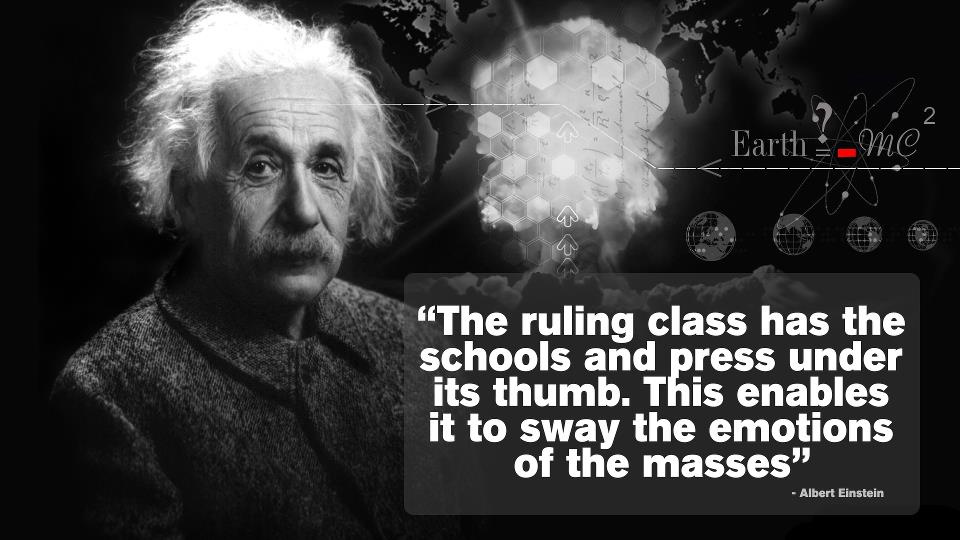
In the U.S. today we have a ruling-class supremacist culture holding itself, the self-chosen few, above the law. And they demand you comply with the law as they cultivate systemic enslavement to a degree as it’s being imposed on the vast majority of citizen-victims. And by all means they invite you, as a dupe, to join their party as a Democrat or Republican, neither of which are looking out for the American people; but join them, and you too can shill for the status quo. If big money likes you enough, they might select you through a screening and grooming process, to be in the U.S. Senate or Congress representing the personal best interests of ruling-class elites to the overall detriment of the country.

As a collective in the U.S. we believe ourselves to be validly non-supremacist as decreed by law, while also believing our culture is morally grounded, and that moral citizens wouldn’t impose unjust self-entitlements by forcing citizens into a degree of slavery. So what is it in our human instinct, human nature or various cultures which allow these types of supremacist-entitlement violations to occur? If the collective sense of injustice is not disabled by some psychological disorder, then as a “moral culture”, these transgressions could only take place by having a population with sufficiently corrupted-intellects, or by having a few corrupted-intellects imposing on the vast majority through concentrated political power. Corrupted-intellect for our purposes here would include the mindset to commit any act of deceitfulness, denial, or false rationalizations by either the perpetrators or victims, which allow legal violations to be committed without eventual prosecution. And regardless of whether or not we suffer from a disabling disorder, corrupted-intellect has collectively disabled our society from attaining a reasonable amount of “liberty and justice for all”. Among those unable to maintain intellectual integrity due to the influence of religious, academic or political cultures, collective denial can take the form of institutionalized supremacist-entitlements as we’ve seen with bankers and politicians surrounding the 2008 fiasco.

Does that mean we’re stuck in a non-democracy being run by a collective of predominately corrupted-intellects of a self-entitled ruling-class supremacist culture? That may depend on Americans understanding just how openly and blatantly they’re still being taken advantage of, and whether or not enough of them are outraged enough to demand some changes. Our two-party political system is essentially a self-perpetuating power structure and would require a major mutiny among members of at least one party to change the existing campaign funding laws, or the Supreme Court would have to overrule itself; the first case is extremely unlikely specifically because getting elected requires receiving huge amounts of campaign funds from the excessively wealthy “ruling-class”, and there’s little hope for the Supreme Court considering the corrupted-intellects sitting there on the bench without a clue.

The joke may be on “we the people” for the time being, but unjust power structures historically fail as the one in question is failing now by eroding the strength and health of its own population. It’s only a matter of time as to when and how a major shift takes place. And regardless of anyone’s sentiment toward the system as is, it’s not working to represent the best interests of the country. What’s left to be said for a system that has systemic corruption guaranteed by existing laws enjoyed by unjustly self-entitled ruling-class supremacists? According to the Declaration of Independence “we the people” have final say and it’s our duty as patriotic Americans, “to throw off such Government”.

Another group which more than deserves mention in the grand scheme of supremacy-entitlements is the so called “news” media. The press has immense power to pressure both, corporate industry and the government to operate within legal and moral parameters that would be beneficial to our overall society. What’s often referred to as “corporate news” isn’t really news, but is actually manipulative propaganda. And those running the show behind the scenes perceive personal benefits by having a bias slanted strongly toward corporate or special interests – which also means not exposing the government because the government works for corporate and special interests also. With the press not using its immense power to benefit U.S citizens and country as a whole, the people running the major news networks are performing a great disservice to the country by denying citizens the absolute truth for their own considerations. Corrupted-intellects are everywhere…

And going back to speaking of dupes, we need to acknowledge the entire subservient culture of politicians around the globe that cater to the whims of Washington D.C. Those foreign office holders often see their compliance to Washington as benefitting themselves personally while it victimizes their own citizens. If those “leaders” are not plain ignorant for any reason, then by default they are willing accomplices on some level. Whatever the case, they’re arguably not fit to look out for the best interests of their own countrymen – just as they’re currently not doing. This subservience is not only applicable to economic issues at present, but also enables unjust military incursions and illegal “wars” of chosen aggression for some perceived political or monetary gain.

If a constant and stable life could be realized, the vast majority of world citizens would prefer to live without trespassing on others. But the brokers of industry, media, and politics, who seek extreme wealth and power, are a different sort – some of these people are beyond being supremely self-entitled, where sociopath or psychopath would be a fitting definition. They act without consideration for truth or the lives they abuse and destroy. Nothing is beneath them, not robbing granny’s life savings while personally benefitting, not starting and backing unnecessary wars of personal choice for monetary or political gain. Over just the last five-and-a-half decades the U.S is directly and indirectly responsible for the deaths of millions in various places around the world. The worldwide self-entitled “ruling-class” supremacists of the “free world” predominately exists in a cultural bubble of extreme criminal immorality and exceptionalism — all due to a combination of genetic instinct, human nature and social culture(s) rendering their corrupted-intellects incapable of acknowledging absolute truth and the motives behind their actions. With most of these activities being approved and orchestrated from the epicenter in Washington D.C., the destructive earthquakes travel around the globe through varying forms of imposed ideological and economic tyranny, often with a military “solution” being carelessly and recklessly forced on countless innocent victims of the current day, year, decade or century as the case may be… The “ruling-class” puts all of our lives at risk by keeping our planet in constant jeopardy.

Due to the shear waste and destruction of war along with the possibility of wanton escalation, the entire earth and the world’s population are threatened by the practices of a tiny and miniscule minority comprising the collective ruling-class supremacist culture; and with everything on earth being directly and indirectly interconnected to everything else, their victims, I’m sure you know, include all living things and every last human being.


10 Things You Didn’t Know About the History of Marijuana

Cannabis_sativa_Koehler_drawing

By Keri Blakinger

Source: Waking Times

Fancy yourself a connoisseur of all things weed? Then see whether this trip from ancient China to modern Alaska takes you anywhere unexpected.

What do Sarah Palin, Barack Obama, Justin Bieber, Maya Angelou and well over 100 million Americans all have in common? They’ve all smoked pot. Throughout its history, marijuana has attracted plenty of unexpected users and proponents. And much of the history of greenery is now familiar to us—thanks to History Channel specials, the burgeoning legalization movement and the popularity of anti-pot propaganda films like Reefer Madness. But even if you’re intimately familiar with the plant in all its forms, we’re willing to wager that some of these facts will surprise you.

1. The first known potheads lived in ancient China, circa 2,727 BC. Emperor Shen Nung helpfully compiled an encyclopedic list of drugs and their uses, which includes “ma,” or cannabis. But ancient Chinese weed consumption is indicated by more than just written records: Six years ago, archaeologists on a dig in the Gobi Desert found the world’s oldest pot stash in the grave of a shaman of the Gushi tribe. The purpose of the cannabis was easily identified because the male plant parts, which are less psychoactive, had been removed.

The Chinese certainly weren’t the only ancient culture to enjoy toking. The Greeks and Romans used marijuana, as did the citizens of the Islamic empires. In 1545, Spanish conquistadors introduced it to the New World when they began planting cannabis seed in Chile to be used for fiber.

2. You probably heard that a bunch of the Founding Fathers grew weed, but did you know the details? Technically, you can’t really classify them as pot farmers because they were growing hemp, which is not the same cannabis variety that you’ll find in a joint. Hemp and pot are the same species—cannabis sativa—but the hemp variety has a lower THC content and was useful instead as a source of fiber for those distinguished dudes’ duds.

But debate continues about whether the Founding Fathers actually smoked cannabis in addition to growing it. While many traditional sources say there’s no evidence of it, other, less buttoned-down ones—including, predictably, High Times—contend that there is.

One factor that muddies the water and the Internet is an oft-repeated Thomas Jefferson “quote” that experts agree is not legit. Although he was a hemp farmer, Thomas Jefferson never said: “Some of my finest hours have been spent sitting on my back veranda, smoking hemp and observing as far as my eye can see.”

Admittedly, that’s a pretty difficult image to forget.

3. Hashish, which is a compressed or purified form of pot resin, became faddish in the mid-1800s, as a result of its prominence in popular novels of the era, including two classics: The Count of Monte Cristo and Arabian Nights, an early English translation of One Thousand and One Nights.

In one scene fit to make any DARE instructor shudder, the Count of Monte Cristo virtually coerces another character into a mind-bending hashish adventure, urging, “Taste the hashish, guest, taste the hashish!”

Arabian Nights meanwhile contains multiple references to hashish, including the story “The Tale of the Hashish Eater.” Both Monte Cristo and Arabian Nights found wide audiences due to their exotic settings, foreign cultures and adventure plots that heightened the allure of the drug described on the pages. Contemporary readers who would never had the opportunity to go Persia could at least cop a little bit of Persia off seafaring vessels from foreign ports.

4. Pot’s reputation began to go south when the first English-language newspaper started in Mexico in the 1890sSensationalized stories of marijuana-induced violence gave the drug a bad rap, although pot didn’t really hit the US until after the Mexican Revolution in 1910, when a flood of Mexican immigrants moved north, bringing their favorite weed.

US groups began spreading stories of violence induced by the drug, playing on anti-immigrant sentiment, and referring to the drug by the Mexican-sounding name “marijuana.” This highly racialized propaganda led to widespread fear of the drug, which grew into a panic in the early 1930s when government research “determined” that marijuana-induced criminal acts were “primarily committed by ‘racially inferior’ or underclass communities.”

Interestingly, some of the accounts of violence and crime may not have been entirely fabricated. Just as the myth of the unicorn may have been based on early and inaccurate descriptions of the rhinoceros, the tales may have partly been the result of some confusion regarding plant names. Some media stories of the era conflated marijuana with locoweed, a type of poisonous plant. So it’s just possible that some of the horror stories held a grain of truth—relating to a completely different plant.

5. There is no consensus about where the word “marijuana” came from. The word sounds like a Spanish language cognate, but some etymologists trace its origins to China or India. The plant itself originated in Central Asia, and China and India were the first two regions to begin cultivating it.

One theory is that Chinese immigrants brought the phrase ma ren hua—which translates more or less as “hemp seed flowers”—to Mexico, where it became Spanishized into “marijuana.” Another theory is that Angolan slaves brought the Bantu word for cannabis—ma’kaña—to the Americas via Brazil and Spanish-speakers later adapted it. Yet another theory traces the word back to the Semitic root mrr.

Whatever its origins, there is some agreement that the first recorded use of a similar term was in a feature called “The American Congo” published in Scribner’s Magazine in 1894. In the article, author John G. Burke used the word “mariguan” to refer to a species of plant included in his description of the flora on the banks of the Rio Grande River between Texas and Mexico.

6.  But we do know that the term “pot” entered the lexicon in the 1930s as a shortened form of the Spanish potiguaya, an alcoholic drink in which cannabis buds have been steeped. A literal translation of potiguaya or potacion de guaya is “the drink of grief.”

Other terms are also far easier than “marijuana” to trace. “Ganja,” for example, likely entered the English lexicon in the 1800s when it was borrowed from a similar Hindi word. While words like pot and ganja endured, other terms for cannabis—such as “gage” (17th-century word for a pipe)  and “muggles” (used in the 1920s by the New Orleans jazz crowd)—have sadly fallen by the wayside.

7. Henry Ford experimented with the invention of a car that was possibly partially made of hemp. Some pro-pot sites claim that Ford actually developed a hemp-based automobile, but the evidence suggests that they are blowing smoke.

In the early 1940s, Ford developed a plastic car intended to be a lighter, stronger and more affordable alternative to traditional metal vehicles. Newspaper articles stated that the new car was a combination of resin binder and cellulose fiber supposedly drawn from pine fiber, hemp, soybean and ramie. However, The Henry Ford, a museum in Michigan, says that the exact ingredients for the car’s recipe have been lost, so they can’t confirm that hemp was in the mix.

Whether or not Ford’s car contained hemp, current scientists have apparently drawn inspiration from the concept as they work to develop cars made of plant fibers such as hemp and elephant grass.

8. Marijuana was initially criminalized by the federal government in an indirect, de facto way: a 1937 tax act. The act set such high taxes on the purchase of weed that it discouraged people from going through the proper legal channels. And because arrest was the penalty for non-compliance, the tax act essentially criminalized marijuana possession.

In 1969, the act was ruled unconstitutional because paying the federal tax required admitting to the possession of something already made illegal by some state laws—and thus violated the right against self-incrimination spelled out in the Fifth Amendment. The following year the law was repealed and replaced with a measure that fully criminalized marijuana. Prior to the federal bans, though, many states had adopted the Uniform Narcotics Drug Act in the early 1930s, which made pot and other drugs illegal under state law.

Today, in a reversal of that situation, marijuana remains illegal on a federal level but two states—Colorado and Washington—legalized recreational use in 2012. More are likely to follow soon.

9. Popular urban legend has it that the term “420” is a reference to a 1970s police code, but in fact a group of high school kids coined the term. In 1971, five California high school students heard about a plot of pot plants whose owner could no longer tend them. Eager to find the green, sticky treasure, the students agreed to meet outside the school at 4:20 pm to look for the plants until they found them. They never did, even after weeks of hunting.

But their fruitless search would be immortalized. Because their school was in Marin County, a counterculture hotspot, and because the treasure hunters had an indirect contact with Grateful Dead member Phil Lesh, the term 420 gradually became a part of drug culture throughout California and then the country.

10. Alaska effectively legalized marijuana 39 years ago. You might have thought otherwise—especially considering the viral video of Alaskan reporter Charlo Greene quitting on-air last month in order to campaign for marijuana legalization. And policy wonks would insist that pot is technically decriminalized, rather than legalized, in the state. But marijuana in Alaska occupies an interesting legal gray area.

In 1975, the Alaska Supreme Court decided that the state’s constitutional right to privacy protects the right of adults to use and possess small amounts of marijuana in their own homes. However, Alaskan criminal law currently bans the possession of even small amounts of pot. As a result, Alaskans can be charged with possession for having pot in their homes—but technically courts should throw out the charges for amounts under four ounces.

This confusing state of affairs may be cleared up very soon, though: Next month, Alaskans go to the polls to vote on an initiative to officially legalize marijuana for recreational use.

Treading water in the stream

yun_2729

By Chris Arkenberg

Source: URBEINGRECORDED

I haven’t posted much here in a while and, honestly, I don’t know if I have an audience anymore. You gotta feed the beast or it’ll just go gorge elsewhere at the unlimited trough of spankulation that is the Internet. It’s easier to tweet, and now there’s Ello which hasn’t yet found its center of gravity or true genus locii to root down a thriving community. But it’s refreshing to post more than 140 char without the expectation of serious long-form journeys. And I don’t use Facebook so Ello at least offers some potential to have an intellectual cohort that won’t rat-hole into that heady blend of extremism and uncritical non-thinking that seems to be coded directly into the DNA of Disgracebook. So consider this post my sort of Fakebook personal rant…

But then, I’m not sure I have a lot to say these days. Partly, I do so much of this sort of thing at work where the audience is internal. The content is fairly narrow but still insightful. Not the broad random walks through techno-behaviorology that I’m inclined to pursue here. Partly, on another axis, the Twitters and the constant streams of the technoverse and geopolity have got me a bit swirly, like the inertia of information is too great to adequately slow down and process into some sort of theory. The fascination with the stream is at the expense of any fascination with the particulars of life, like it’s all moving too fast and I’m being entrained to be little more than a relay node in the network. Click, retweet, copy-past, post. A servant to the memes, like apes collared to silicon just to grind out more 1’s and 0’s.

So much of the stream seams meaningless – fleeting glimpses, spikes of outrage, stories about things and events that will be wiped from the collective memory within a week. And maybe that’s the point, to bring all the mundane details to light, to share the bits with each other, to fully become the eyes of the world, in witness of it all. But then, if I really think about it, it’s appalling how many resources, how much energy, how much labor born on the backs of the impoverished, how much of this all goes to keeping the platters spinning and the switches switching and the rare earth’s rare-earthing, across global data centers sucking down megawatts to make sure we archive every random bleating of the global mind. To a post-psychedelic techno-futurist like myself, it’s a bit confusing to feel at odds with the marvel of it all.

I can’t remember the source but this phrase about digital transformation really stuck with me: that it’s emulsifying entire industries. Which underlines that there’s very real import to the network spankulation, that we have some obligation to roll the dung ball of modernity around and around beneath the Sun, to check it for deformations that might drive truly dangerous emulsifications. We can snicker at the death of old industries but what about the demise of comfort or wellness or nutrition or the oft-anticipated end of the state… Are we really ready for this degree of transformation? So I’m left with a crutch of faith that the stream is, on balance, a positive tool to keep us all engaged with the Great Work of unfolding the possible with some integrity, without destroying more than we create. That the relentless bleating of sheep is what keeps the shepherds attentive and considerate, and that the global mind helps us better evolve the animal within towards something more tenable than base self-preservation, something much holier than religion, something much more wise than science.

It’s a lot to put on a stream, I know, but maybe having a degree of faith is what keeps us swimming, lest we give in to the rushing depths and fall like stones, inert and silent.

Awakened Warriors Arise

Silhouette illustration of two figures doing martial art stance

By Zen Gardner

Source: ZenGardner.com

Life is a struggle. How much more then is the spiritual life, the fight to remain conscious in an illusory world where deviant forces vie for control more than caring, battering your very body and soul day in and day out on top of your struggle to survive. Oh, we’re going peacefully downstream in the conscious dimensions. There we learn to let go and follow the flow of the Universe and synchronicity. But in this physical, lower density world, we’re fighting directly upstream.

In addition, we’re living in a time of increasingly turbulent waters. Our kayaks hit all kinds of eddies and crosscurrents, never mind the rocks and rapids we have to navigate–all while idiots, enemies and doubters, prodded on by the propaganda whores, are screaming obscenities from the shore and trying to hit us with anything they can get their hands on! But alas, grasshoppers—we have powers they know not of!

The Call to Battle

We’re in a warfare, any way you look at it. Only it’s not a warfare of hate, but of love. It’s not a warfare of physical violence, but a spiritual one of intention and a Truth directed life. The inherent cause and effect of Universal consciousness is the dissolution of the ways born of ignorance and darkness by means of the all powerful exposing and enlightening weapons of Light, Love and Truth.

The medieval matrix, no matter how fancy and hi-tech it has become, is dissolving and losing its grip. We need to actively help it on its way to oblivion, identifying its lies and blatant agenda for control and subjugation.

Don’t forget, non-compliance is a decisive action, not inaction. Inaction is going with the current of the matrix.

There is no sitting still. We’re all doing one or the other. Complying, or rejecting and countering their flow.

That’s the choice. That’s the battle.

In A Time of Imbalance the Call to Rise is Natural

Similar to the poetic beauty of martial arts, the Truth warrior uses his weapons skillfully and with great discretion. While many argue we need evil for good to exist and all that esoterica, we happen to be living in a time of great imbalance.

Do you enjoy having lords of darkness rule over you and yours, exercising more death dealing, spirit quelling control over humanity by the day?

I didn’t think so. Will it collapse under its own weight? In many ways it has to. Will it do it all by itself? We have to play our parts. As long as we’re here we’re integral to the Great Design and clearly need to do our part.

All I know is that what I am finding out and tuning in to calls me to participate, as so many are experiencing. It’s as real as the sun and water hitting a seedling and the organism responding. If it’s not evident to you that our planet and civilization are under attack I do wonder how you got to this article. It couldn’t be any clearer. That’s why they direct the angst people are feeling, the knowing that something is wrong, towards fabricated “outside” enemies to divert attention from the real perpetrators and agenda. Hence the daily “scare” headlines, whatever they are.

Similar to how religion co-opts, steers and contains the human soul’s hunger for the spiritual, the Controllers arouse, channel and misdirect humanity’s sense that it is being attacked and they literally harness what they themselves have aroused, using it for their own parasitic, vampiric purposes.

Cattle prods and sheep dogs driving humanity into the slaughterhouse, mentally, spiritually and physically.

Sorry, not on our watch. It’s long been time to sound the alarm and awaken as many as we possibly can. The spiritual, mental and physical arousal has way more effect than we can begin to imagine. Only your mind and low level system programming diminish its importance.

Trust your heart.

There is No “They”…They Said.

The old “tell a big enough lie” ploy is at work here. Their biggest tool is to say there is no “they”. There are no dark forces according to mainstream understanding in this dumbed down world. In fact, we’re told the “they” are the good guys looking out for us. It reminds me of the adage that the biggest lie Satan ever told is that he doesn’t exist. Pretty clever these demons. Just laugh at them.

Yet their all usurping lie remains:

There is no negative, destructive, usurping parasitic force in the Universe other than far away safely distanced religious concepts. Most feel humanity just has other controlling humans to worry about. The powers that be are here to simply save us from each other then becomes the most believable option, and into the cattle chute they go.

After all, that’s the mantra of the anti-conspiracy camp. ” THEY? Are you crazy? You really think there’s some ‘secret cabal’ running things from behind the scenes? How insane are you? If that were the case we’d be hearing all about it in the mainstream media! No way they could hide something that big!”

Same old, same old.

A very dark time right now indeed. All the recent pandemic scares, terrorism stagings, and economic and phony political rattlings attest to it. And if those fade they’ll create some new ones.

Consciousness Calling

If you feel the call to participate more it’s consciousness calling, any way you slice it.  Take your place on the great mandala and all that, but there’s a bulldozer headed for your house. Are you just gonna sit there?

No doubt you’ve given all of this serious thought. And I know many of you have activated and it’s absolutely beautiful. I’m proud to be associated with so many amazing, loving committed people. I think we just need to be adaptive and prepared for more. The winds are picking up and the battlefield is becoming more fluid, more challenging and more demanding.

And for those on the sidelines: It’s time to choose your course of action – or let it choose you.

I’m not gonna tell anyone what to do. If people don’t learn to choose for themselves, consciousness is not at work and back to the old paradigms we go. But do something. Get the boat in motion or the rudder can’t take effect. Find and take your calling seriously and step it up. We all have to.

Meditate, intend, pray, affirm, that’s great…but act! Change your life, change the etheric world around you by your loving actions and intentions. Try new consciousness technologies while changing your lifestyle. And perhaps move to a smarter and safer location away from this obvious steamroller coming at many of you. Why just sit there?

Meanwhile write, talk, show up, contribute, speak to groups, attend gatherings of active and motivated individuals or just get honest with your loved ones. Find the opening and jump in. The rest will follow. Time is too short to do otherwise.

Contribute we must. Hopefully with our whole lives. It’s all we have for all we’re worth.

It’s not a time to get frantic by any means, but take this as a loving alert, something I know many of you are also feeling. Our old views of just weeks and months ago are shifting and will continue to do so. It’s subtle, but it’s profoundly real. We have to step it up and yield to what consciousness is calling each of us to do and let go of the baggage holding us back.

A purely inspired and motivated heart will always find the way.

Again and again.

Much love,

Zen

www.zengardner.com

The Light Side of the Dark Night of the Soul

man_in_a_dark_forest_with_fog_by_macinivnw-d68mxhc

By Kim Hutchinson

Source:  In5d.com

The phenomenon known as the Dark Night of the Soul is something which many spiritual seekers experience on their journey to re-enlightenment. It can be a painful and frightening process, but it can also be liberating and empowering. It all depends on your perspective and your ability to remain detached.

Peeling the Onion

The word ‘night’ is misleading. This is a process, and thankfully so. I doubt you would want to experience the purification process all at once. My own Dark Night journey began in 1994 and culminated this year (2013). While that may seem like an inordinate amount of time, I didn’t go through the process continually, thank heavens, but rather in stages. The length and intensity of the process is determined by the degree of purification one requires.

Think of this as peeling an onion. Each layer you strip away brings tears to your eyes. You stop for a while in order to recover, and then you proceed to the next layer. Once you reach the core, you are at the heart of your angst. This is often the toughest part of the process which is why it comes last. You build up your strength and your ability to face your core issue(s). Your higher self will not let you access this core until you are ready.

The good news is you have already faced the worst. Nothing that you unearth during this process will ever be as bad as the original pain you experienced. You were strong enough to face it once, so you are more than capable of releasing it now. And, once it’s purified, it is gone for good.

Ego Death

Essentially, the Dark Night of the Soul is the death of the (malignant) ego. I say ‘malignant’ because the ego is not inherently bad or in need of extinguishing. The ego provides the soul with the illusion of separation so that we may explore creations that differ from the unified field of Love from which we originate.

The ego in its present form, however, is overly dominant. We live in an egocentric era. The Cult to Self is celebrated through our worship of celebrity, fame, fortune, superficial beauty and power. Narcissistic behaviours are often rewarded in this ego-driven climate. The external world is a projection result of the malignancy of our collective ego state.

Needless to say, the ego does not take kindly to the awakening and enlightenment process. It sees the spiritual awakening process as a threat to its very existence and, in many ways, it is right. As you begin to remember more about your spiritual origins, the allure of ego lessens. This eventually breaks ego’s hold over you, and the ego begins to shrink away.

From the ego’s perspective, this equates to death. It, therefore, isn’t going to surrender without a fight. The key is not to resist the ego. That being said, non-resistance is not easy. In fact, your ego will do everything in its power to cling to the old, but your higher self knows better.

Existential Crisis

As we awaken from the shadows of our dream life on Earth to the limitless, formless, eternal nature of the Soul, the form and thought-based illusions of our life begin to dissolve. The very foundation of one’s human existence crumbles, leading to an existential crisis of faith.

Symptoms Include:

  • Deep introspection and angst
  • Questioning the meaning and purpose of life
  • Feeling that life is meaningless
  • Isolation; feeling alone, cut off from others
  • Facing mortality
  • Feeling empty, devoid of joy

Your existential crisis can cut you off from others. The battle you’re fighting is internal. It’s akin to depression, except that it is spiritual rather than mental in nature. The ego is fighting for its life, and thus it resists the purification process.

Remember though, these symptoms stem from the ego’s perspective on life. The soul knows that everything has meaning, pleasure and beauty. Once you supplant your ego with your soul, life becomes vibrant again.

Purification by Fire

As your ego’s domain is dismantled, your external world will reflect this internal process. That which does not serve your highest good falls away. While this stage may seem destructive and painful, it is actually helping to break ego’s hold over you by forcing it to surrender everything it holds dear.

It’s like the old adage says: “Beware the man who has nothing left to lose”. That man is absolutely fearless. When you lose everything your ego values, its fear-based hold on you shatters.

Please note, I’m not advocating that you must lose everything. I’m just explaining what sometimes happens during the process. For instance, if you find yourself facing loss (i.e. divorce, job loss, and bankruptcy) know that this has helped to shatter your ego’s hold over you. The more dramatic the loss, the more rapid the purification process.

As you empty yourself of ego/fear, you create more room to house your soul’s love, light, wisdom, beauty and joy.

The Phoenix Rises

At this point, things may appear bleak and hopeless; but, to quote another old gem, “It’s always darkest before the dawn”. I liken this to sinking into the murky depths. You feel like you will never see the light of day again, and that all is lost. Then, suddenly, your feet touch ground and you are able to push off the bottom giving you the momentum propel you back into the light.

You’re almost through this learning curve, and when you emerge on the other side of the Dark Night, you will rediscover the joy and beauty of the world. You are the phoenix, being purified by fire. Once you have rid yourself of the ego fears, you will be ‘reborn’ or transformed as a freer, happier higher-vibrational version of you.

Sanity-Saving Solutions

  • Higher Perspective: Understand that darkness, fear and ego are all illusions. You’re a child of Love and Light. Your current experiences are simply a dream that your soul is having. It wants to better understand Love and Light but it cannot do so without contrast. Since the ego isn’t real, try changing its nature from a narcissistic dictator to a small, frightened child. Then, when it acts up, love and nurture it instead of fighting it or being controlled by it.
  • Non-Resistance: Do not resist the process. The greater the resistance, the more painful the symptoms. Remember, that which you resist persists. Don’t give your ego anything to push against. Just go with the flow. And remember, the ego is fighting for its life. Rather than seeking to destroy it, love it instead and teach it to trust your spirit to keep you safe. The ego can be retrained.
  • Non-Attachment: Release everything that no longer serves your higher good. No matter how scary it may seem, until you let go of the old ego-based elements in your life, nothing new and spiritually-uplifting can come in. Think of it as cleaning house. You’re ridding your vessel of darkness and density to make way for lightness.
  • Spiritual Guides: Enlist the help of the spirit realms. Call on your spirit guides; soul family; soul group; departed loved ones; the angels; ascended masters; animal totems; Mother Earth; Father Sun; the Creator/God/Goddess, and with whomever else you resonate. Be open to receiving help in all forms.
  • Kindred Support: Find like-minded souls with whom you can share your experiences. You are not alone. There are many others who are currently experiencing, or have recently gone through, the Dark Night of the Soul. Ask your spirit guides to help you find these people, or they you. Then, pay attention to the messages you receive intuitively. If a stranger stops to talk to you, s/he may be a kindred spirit.
  • TLC: You need extra love and gentle care right now. Be your own best friend. Talk gently and lovingly to yourself. Release obligations and commitments that are draining you. Set healthy boundaries with others. Treat yourself with kid gloves. Eat a healthy diet, drink plenty of pure water, sleep when you’re tired, and practice mindful exercise such as yoga, Tai Chi and Qigong. Energy medicine can also help alleviate the severity and duration of the symptoms. Above all, never forgot, you are a precious child of the divine.

War, Media Propaganda, and the Police State

looks-like-youve-had-a-bit-too-much-to-think-support-your-local-thought-police-dont-speak-out-or-question-closed-minds-stop-thought-crimes

By James F. Tracy

Source: Memory Hole

The following essay is intended to provide a brief overview of topics addressed in a discussion graciously recorded by Julie Vivier at the offices of the Center for Research on Globalization in Montreal Canada on August 5, 2014.-JFT

Modern propaganda techniques utilized by the corporate state to enforce anti-democratic and destructive policies routinely entail the manufacture and manipulation of news events to mold public opinion and, as Edward Bernays put it, “engineer consent” toward certain ends.

Such events include not only overt political appeals, but also acts of seemingly spontaneous terrorism and militarism that traumatize the body politic into ultimately accepting false narratives as political and historical realities.

Western states’ development and utilization of propaganda closely parallels the steady decay of political enfranchisement and engagement throughout the twentieth century. Upon securing a second term in 1916, the Democratic administration of Woodrow Wilson plunged the United States into the most violent and homicidal war in human history. Wilson, a former Princeton University academician  groomed for public office by Wall Street bankers, assembled a group of progressive-left journalists and publicists to “sell the war” to the American people.

George Creel, Walter Lippmann, Edward Bernays and Harold Lasswell all played influential roles in the newly-formed Committee on Public Information, and would go on to be major figures in political thought, public relations, and psychological warfare research.

The sales effort was unparalleled in its scale and sophistication. The CPI was not only able to officially censor news and information, but essentially manufacture these as well. Acting in the role of a multifaceted advertising agency, Creel’s operation “examined the different ways that information flowed to the population and flooded these channels with pro-war material.”

The Committee’s domestic organ was comprised of 19 subdivisions, each devoted to a specific type of propaganda, one of which was a Division of News that distributed over 6,000 press releases and acted as the chief avenue for war-related information. On an average week, more than 20,000 newspaper columns carried data provided through CPI propaganda. The Division of Syndicated Features enlisted the help of popular novelists, short story writers, and essayists. These mainstream American authors presented the official line in a readily accessible form reaching twelve million people every month. Similar endeavors existed for cinema, impromptu soapbox oratory (Four Minute Men), and outright advertising at home and abroad.[1]

With the experiences and observations of these war marketers variously recounted and developed throughout the 1920s (Lippmann, Public Opinion, The Phantom Public, Bernays, Propaganda, Crystallizing Public Opinion, Creel, How We Advertised America, Lasswell, Propaganda and the World War), alongside the influence of their elite colleagues and associates, the young publicists’ optimism concerning popular democracy guided by informed opinion was sobered with the realization that public sentiment was actually far more susceptible to persuasion than had been previously understood. The proposed solutions to guarantee something akin to democracy in an increasingly confusing world lay in “objective” journalism guided by organized intelligence (Lippmann) and propaganda, or what Edward Bernays termed “public relations.”

The argument laid out in Lippmann’s Public Opinion was partly motivated by the US Senate’s rejection of membership in the League of Nations. An adviser to the Wilson administration, a central figure behind intelligence gathering that informed postwar geopolitical dynamics laid out at the Paris Peace Conference, and an early member of the Council on Foreign Relations, Lippmann increasingly viewed popular democracy as plagued by a hopelessly ill-informed public opinion incapable of comprehending the growing complexities of modern society. Only experts could be entrusted with assessing, understanding, and acting on the knowledge accorded through their respective professions and fields.

Along these lines, journalism should mimic the then-fledgling social sciences by pursuing objectivity and deferring to the compartmentalized expertise of established authority figures. News and information could similarly be analyzed, edited, and coordinated to ensure accuracy by journalists exercising similar technocratic methods. Although Lippmann does not exactly specify what body would oversee such a process of “organized intelligence,” his postwar activities and ties provides a clue.

Edward Bernays’ advocacy for public opinion management is much more practical and overt. Whereas Lippmann suggests a regimented democracy via technocratic news and information processing, Bernays stresses a privileged elite’s overt manipulation of how the populace interprets reality itself. Such manipulation necessitates contrived associations, figures and events that appear authentic and spontaneous. “Any person or organization depends ultimately on public approval,” Bernays notes,

“and is therefore faced with the problem of engineering the public’s consent to a program or goal … We reject government authoritarianism or regimentation, but we are willing to be persuaded by the written or spoken word. The engineering of consent is the very essence of the democratic process, the freedom to persuade and suggest.[2]

Bernays demonstrates an affinity with Lippmann’s notion of elite expediency when pursuing prerogatives and decision-making the public at large cannot be entrusted to interpret. In such instances,

democratic leaders must play their part in leading the public through the engineering of consent to socially constructive goals and values. This role naturally imposes upon them the obligation to use educational processes, as well as other available techniques, to bring about as complete an understanding as possible.[3]

Written in the early 1950s, these observations become especially apt in the latter half of the twentieth century, where the US is typically a major aggressor in foreign (and eventually domestic) affairs. Yet what does Bernays mean by, for example, “educational processes”? An indication may be found by noting his central role in the promotion of tobacco use, municipal water fluoridation, and the overthrow of the democratically-elected Arbenz regime in Guatemala.[4]

With the advent of the national security state in 1947, secret programs emerge where the people are as a matter of course intentionally left unaware of the state’s true rationales and objectives.

Indeed, a wealth of contemporary historical examples suggest how the “engineering of consent” is wholly calculating and anti-democratic, and where the crises requiring such drastic and immediate public relations and military measures are themselves the result of the same leadership’s policies and actions. The US economic provocation of the Japanese attack on Pearl Harbor and the Tonkin Gulf incident precipitating US military occupation of Vietnam are obvious examples of such manufactured events.

Similar techniques are apparent in the major political assassinations of the 1960s, where to this day the public is prompted to partake in the false reality that Lee Harvey Oswald was the sole culprit in the murder of President John F. Kennedy, much as Sirhan Sirhan was responsible for the death of Senator Robert F. Kennedy.

In fact, in each instance overwhelming evidence points to Central Intelligence Agency involvement in orchestrating the assassinations while training and presenting Oswald and Sirhan as the would-be assassins.

The US government’s assassination of Dr. Martin Luther King Jr., probably the most influential African American public persona of the twentieth century, is not even open to debate, having been soundly proven in a court of law.[5] Yet as with the Kennedys, it is a genuine public relations achievement that much of the American population is oblivious to the deeper dynamics of these political slayings that are routinely overlooked or inaccurately recounted in public discourse.

Along these lines, in the historical context of Operation Gladio, the Oklahoma City Murrah Federal Building bombing, the events of September 11, 2001, the London 7/7/2005 bombings, and lesser episodes such as the “shoe” and “underwear” bombers, the engineering of consent has reached staggering new heights where state-orchestrated terrorism is used to mold public opinion toward acceptance of militarized policing operations, the continued erosion of civil liberties, and major sustained aggression against moderate Middle Eastern nations to cartelize scarce resources and politically reconfigure an entire region of the world.

Again, the public is essentially compelled to believe that political extremism of one form or another is the cause of each event, even in light of how the sophistication and scope of the Oklahoma City and 9/11 “attacks” suggest high-level forces at work. If one is to delve beneath the public relations narrative of each event, the recent Newtown massacre and Boston Marathon bombing likewise appear to have broader agendas where the public is again purposely misled.

Conventional journalists and academics are reluctant to publicly address such phenomena for fear of being called “conspiracy theorists.” In the case of academe this has severely curtailed serious and potentially crucial inquiry into such deep events and phenomena in lieu of what are often innocuous intellectual exchanges divorced from actually existing social and political realities that cry out for serious interrogation and critique.

The achievements of modern public relations are further evident in the Warren and 9/11 Commissions themselves, both of which have spun the fantastic myths of Allan Dulles and Peter Zelikow respectively, and that today maintain footholds in public discourse and consciousness.

Indeed, the “conspiracy theory” meme, a propaganda campaign waged by the CIA beginning in the mid-1960s to counter criticism of the Warren Commission report, is perhaps as little-known as Operation Mockingbird, the CIA program where hundreds of journalists and publishers actively devoted their services to spread Agency disinformation. The overall effect of these combined operations has been an immensely successful program continues to shape the contours of American political life and mediated reality.[6]

The present socio-political condition and suppression of popular democracy are triumphs of modern propaganda technique. So are they also manifest in the corporate state’s efforts to engineer public acquiescence toward such things as the colossal frauds of genetically modified organisms masquerading as “food,” toxic polypharmacy disguised as “medicine,” and the police state and “war on terror” seeking to preserve “national security.”

Notes

[1] Aaron Delwiche, “Propaganda: Wartime Propaganda: World War I, The Committee on Public Information,” accessed September 28, 2014 at http://www.propagandacritic.com/articles/ww1.cpi.html; George Creel, How We Advertised America, New York: Harper and Brothers, 1920. Available at http://archive.org/details/howweadvertameri00creerich

[2] Edward Bernays, Public Relations, Norman OK: University of Oklahoma Press, 1952, 159-160.

[3] Ibid. 160.

[4] “You can get practically any ideas accepted,” Bernays reflected on the campaign to fluoridate New York City’s water supply. “If doctors are in favor, the public is willing to accept it, because a doctor is an authority to most people, regardless of how much he knows, or doesn’t know … By the law of averages, you can usually find an individual in any field who will be willing to accept new ideas, and the new ideas then infiltrate the others who haven’t accepted it. Christopher Bryson, The Fluoride Deception, New York: Seven Stories Press, 2004, 159.

[5] William F. Pepper, An Act of State: The Execution of Martin Luther King, New York: Verso, 2003.

[6] James F. Tracy, “Conspiracy Theory: Foundations of a Weaponized Term,” Global Research, January 22, 2013.