Russiagate as Organized Distraction

By Oliver Boyd-Barrett

Source: Consortium News

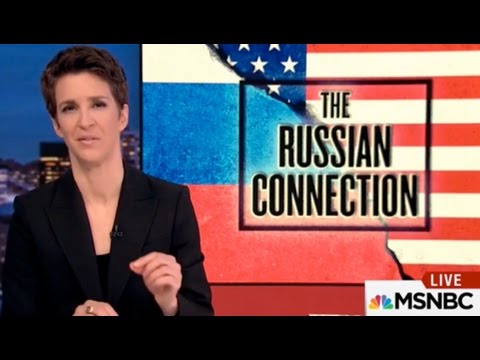
For over two years Russiagate has accounted for a substantial proportion of all mainstream U.S. media political journalism and, because U.S. media have significant agenda-setting propulsion, of global media coverage as well. The timing has been catastrophic. The Trump administration has shredded environmental protections,jettisoned nuclear agreements, exacerbated tensions with U.S. rivals and pandered to the rich.

In place of sustained media attention to the end of the human species from global warming, its even more imminent demise in nuclear warfare, or the further evisceration of democratic discourse in a society riven by historically unprecedented wealth inequalities and unbridled capitalistic greed, corporate media suffocate their publics with a puerile narrative of alleged collusion between the 2016 Trump campaign and Russia.

The Russiagate discourse is profoundly mendacious and hypocritical. It presumes that the U.S. electoral system enjoys a high degree of public trust and security. Nothing could be further from the truth. The U.S. democratic system is deeply entrenched in a dystopian two-party system dominated  by the rich and largely answerable to corporate oligopolies; it is ideologically beholden to the values of extreme capitalism and imperialist domination. Problems with the U.S. electoral system and media are extensive and well documented.

U.S. electoral procedures are profoundly compromised by an Electoral College that detaches votes counted from votes that count. The composition of electoral districts has been gerrymandered to minimize the possibility of electoral surprises. Voting is dependent on easily hackable corporate-manufactured electronic voting systems. Right-wing administrations reach into a tool-box of voter-suppression tactics that run the gamut from minimizing available voting centers and voting machines through to excessive voter identification requirements and the elimination of swathes of the voting lists (e.g. groups such as people who have committed felonies or people whose names are similar to those of felons, or people who have not voted in previous elections). Even the results of campaigns are corrupted when outgoing regimes abuse their remaining weeks in power to push through regulations or legislation that will scuttle the efforts of their successors. Democratic theory presupposes the formal equivalence of voice in the battlefield of ideas. Nothing could be further from the reality of the U.S. “democratic” system in which a small number of powerful interests enjoy ear-splitting megaphonic advantage on the basis of often anonymous “dark” money donations filtered through SuperPacs and their ilk, operating outside the confines of (the somewhat more transparently monitored) electoral campaigns.

Free and Open Exchange of Ideas

Regarding media, democratic theory presupposes a public communications infrastructure that facilitates the free and open exchange of ideas. No such infrastructure exists.  Mainstream media are owned and controlled by a small number of large, multi-media and multi-industrial conglomerates that lie at the very heart of U.S. oligopoly capitalism and much of whose advertising revenue and content is furnished from other conglomerates.

The inability of mainstream media to sustain an information environment that can encompass histories, perspectives and vocabularies that are free of the shackles of U.S. plutocratic self-regard is also well documented. Recent U.S. media coverage of the U.S.-gestated crisis in Venezuela is a case in point.

The much-celebrated revolutionary potential of social media is illusory. The principal suppliers of social media architecture are even more corporatized than their legacy predecessors. They depend not just on corporate advertising but on the sale of big data that they pilfer from users and sell to corporate and political propagandists often for non-transparent AI-assisted micro-targeting during “persuasion” campaigns. Like their legacy counterparts, social media are imbricated within, collaborate with, and are vulnerable to the machinations of the military-industry-surveillance establishment. So-called election meddling across the world has been an outstanding feature of the exploitation of social and legacy media by companies linked to political, defense and intelligence such as – but by no means limited to – the former Cambridge Analytica and its British parent SCL.

Against this backdrop of electoral and media failures, it makes little sense to elevate discussion of and attention to the alleged social media activities of, say, Russia’s Internet Research Agency.

Russian Contacts Deplored

Attention is being directed away from substantial, and substantiated, problems and onto trivial, and unsubstantiated, problems. Moreover, in a climate of manufactured McCarthyite hysteria, Russiagate further presupposes that any communication between a presidential campaign and Russia is in itself deplorable. Even if one were to confine this conversation only to communication between ruling oligarchs of both the U.S. and Russia, however, the opposite would surely be the case. This is not simply because of the benefits that accrue from a broader understanding of the world, identification of shared interests and opportunities, and their promise for peaceful relations. A real politick analysis might advise the insertion of wedges between China and Russia so as to head off the perceived threat to the USA of a hybrid big-power control over a region of the world that has long been considered indispensable for truly global hegemony.

Even if we address Russiagate as a problem worthy of our attention, the evidentiary basis for the major claims is weak.

Former Special Counsel Robert Mueller’s indictments and investigations implicated several individuals for activities that in some cases have no connection whatsoever to the 2016 presidential campaign.  In some other instances they appear to have been more about lies and obstructions to his investigation rather than material illegal acts, or amount to charges that are unlikely ever to be contested in a court of law.

The investigation itself is traceable back to two significant but extremely problematic reports made public in January 2017. One was the “Steele dossier” by former MI6 officer Christopher Steele. This is principally of interest for its largely unsupported allegations that in some sense or another Trump was in cahoots with Russia. Steele’s company, Orbis, was commissioned to write the report by Fusion GPS which in turn was contracted by attorneys working for the Democratic National Campaign. Passage of earlier drafts of the Steele report through sources close to British intelligence, and accounts by Trump adviser George Papadopoulos concerning conversations he had concerning possible Russian possession of Clinton emails with a character who may as likely have been a British as a Russian spy, were instrumental in stimulating FBI interest in and spying on the Trump campaign.

There are indirect links between Steele, another former MI6 agent, Pablo Miller (who also worked for Orbis) and Sergei Skripal, a Russian agent who had been recruited as informer to MI6 by Miller and who was the target of an attempted assassination in 2018. This event has occasioned controversial, not to say highly implausible and mischievous British government claims and accusations against Russia.

The  most significant matter raised by a second report, issued by the Intelligence Community Assessment and representing the conclusions of a small team picked from the Director of Intelligence office, CIA, FBI and NSA, was its claim that Russian intelligence was responsible for the hacking of the computer systems of the DNC and its chairman John Podesta in summer 2016 and that the hacked documents had been passed to Julian Assange and WikiLeaks. No evidence for this was supplied.

Although the hacking allegations have become largely uncontested articles of faith in the RussiaGate discourse they are significantly reliant on the problematic findings of a small private company hired by the DNC. There is also robust evidence that the documents may have been leaked rather than hacked and by U.S.-based sources. The fact that the documents revealed that the DNC, a supposedly neutral agent in the primary campaign, had in fact been biased in favor of the candidacy of Hillary Clinton, and that Clinton’s private statements to industry were not in keeping with her public positions, has long been obscured in media memory in favor a preferred narrative of Russian villainy.

Who Benefits?

Why then does the Russiagate discourse have so much traction? Who benefits?

Russiagate serves the interest of a (No. 1) corrupted Democratic Party, whose biased and arguably incompetent campaign management lost it the 2016 election, in alliance (No. 2) with powerful factions of the U.S. industrial-military-surveillance establishment that for the past 19 years, through NATO and other malleable international agencies, has sought to undermine Russian President Vladimir Putin’s leadership, dismember Russia and the Russian Federation (undoubtedly for the benefit of Western capital) and, more latterly, further contain China in a perpetual and titanic struggle for the heart of EurAsia.

In so far as Trump had indicated (for whatever reasons) in the course of his campaign that he disagreed with at least some aspects of this long-term strategy, he came to be viewed as unreliable by the U.S. security state.

While serving the immediate purpose of containing Trump, U.S. accusations of Russian meddling in U.S. elections were farcical in the context of a well-chronicled history of U.S. “meddling” in the elections and politics of nations for over 100 years. This meddling across all hemispheres has included the staging of coups, invasions and occupations on false pretext in addition to numerous instances of “color revolution” strategies involving the financing of opposition parties and provoking uprisings, frequently coupled with economic warfare (sanctions).

A further beneficiary (No.3) is the sum of all those interests that favor a narrowing of public expression to a framework supportive of neoliberal imperialism. Paradoxically exploiting the moral panic associated with both Trump’s plaintive wailing about “fake news” whenever mainstream media coverage is critical of him, and social media embarrassment over exposure of their big-data sales to powerful corporate customers, these interests have called for more regulation of, as well as self-censorship by, social media.

Social media responses increasingly involve more restrictive algorithms and what are often partisan “fact-checkers” (illustrated by Facebook financial support for and dependence on the pro-NATO “think tank,” the Atlantic Council). The net impact has been devastating for many information organizations in the arena of social media whose only “sin” is analysis and opinion that runs counter to elite neoliberal propaganda.

The standard justification of such attacks on free expression is to insinuate ties to Russia and/or to terrorism. Given these heavy handed and censorious responses by powerful actors, it would appear perhaps that the RussiaGate narrative is increasingly implausible to many and the only hope now for its proponents is to stifle questioning. These are dark days indeed for democracy.


Oliver Boyd-Barrett is professor emeritus at Bowling Green State University. He is author of “RussiaGate and Propaganda: Disinformation in the Age of Social Media” London and New York (Routledge).

More Than a Threat, America’s Criminal Ways

By Gordon Duff

Source: New Eastern Outlook

It is one thing watching the news, such as it is, a mix of conspiracy theories, flummery and distraction but quite something else watching the United States under its current regime wage war and politics. We haven’t seen this kind of theatre since Goebbels, Himmler and Von Ribbentrop.

How does one describe Secretary of State Pompeo’s trip to Iraq in early May 2019? Do remember that the United States already murdered two million Iraqi civilians, that was done openly and many of those who planned that fake war backed by fake intelligence now advise Trump, names like “John Bolton” for instance.

The blubbering monstrosity Pompeo, reeling from a failed coup attempt in Venezuela, lands in Baghdad to threaten the Iraqis with 4 nuclear armed B 52s and an American aircraft carrier “racing to the scene.”

Why? The answer is simple, and Trump openly admits it, the Israelis told them to do it. Ouch!

How about Israel? Problems there? Didn’t several hundred rockets just land somewhere inside Israel? Didn’t their US financed “Iron Dome” missile defense system utterly fail? More than that, something else far more serious was exposed.

Not one social media post, not one photo, no interviews, not even a phone call to relatives in the United States was made from Israel regarding these attacks. To be clear, the attacks were in retaliation for the killing of Palestinian protesters by not just IDF forces but armed Israeli civilians.

As an aside, the real threat isn’t from inside Israel, a proven total surveillance state capable of unprecedented tyranny, but that Israel’s model is being sold to nations around the world, particularly the United States, where Facebook and Google, two companies controlled by Israeli passport holders, are leading the way to a draconian society with few nations holding the line.

That those nations are either bombed or sanctioned or both by the United States is telling.

Tyranny as Patriotism

The assumptions aren’t just wrong, they are ignorance in its purest form. Hiding behind patriotic songs, pompous rhetoric and always “hugging the flag,” America is a nation run by gangsters. Was it always that way? To an extent, that answer would be yes, but even the criminal elites, the slave traders, opium shippers, land speculators and robber barons of American history would never have imagined what today has brought.

The world is terrified of America. It is one thing for a nuclear superpower to bully the world on behalf of the wealthy elites that own America’s government. When those elites run every government, not just the US, but Europe as well, Africa and Latin America, much of Asia too, and stage fake wars, quite probably fake terror attacks, mass murders, and many suspect so-called “natural disasters,” we are in uncharted waters here.

Every advancement in science and technology is placed into the waiting hands of, well who? We can thank the controlled media, another equally theatrical organization dominated by fake opposing sides tasked with polarizing the public on issues like abortion rights, vaccinations, racial hatred and class envy, with making a Frankensteinian world possible.

The Threat of Science and Technology

Many are aware that, during World War II, science was pushed to new depths. In America it was the Manhattan Project, creating a capability of incinerating entire cities and making much of the earth’s surface uninhabitable.

In Japan, among their efforts was a biological weapons program under “Unit 731.” Headquartered in China, the Japanese developed weaponized forms of the most virulent diseases known to man, tested them on the Chinese along with American prisoners of war, and unleashed them on the world with limited success. Japan even tried spreading the Black Plague to the United States by attaching infected rats to balloons.

Japan also had a nuclear program and built several very large submarines capable of delivering aircraft off the US coast in order to do to America exactly what it did to Japan. There are records, still classified, that show both Japan and Germany exploding nuclear devices during the closing days of World War II.

Anecdotally, uranium oxide from Germany, destined for Japan by submarine in April 1945, to be used against the United States, was diverted to the Manhattan project with the vessel carrying it, the U234, docked at Portsmouth, New Hampshire. There are many such untold stories from World War II, and here is why some of them matter so much.

Let’s look at Unit 731. What happened to the scientists, the war criminals, who unleashed the plague on China’s cities? They came to the US under “Operation Paperclip,” under the auspices of CIA founder Allen Dulles and his assistant, a young Naval officer, Richard Millhouse Nixon. This was the origin of the American biological warfare program that now runs allegedly “peaceful” labs around the world in places like Tbilisi, Georgia.

These facilities are part of the reason so many fear the US. Information on the real research is more than rumors. We know the US has been collecting DNA samples from specific “target” populations, particularly in the Russian Federation, collected and collated by the same organizations that are capable of creating “designer disease.” In fact, this capability comes up in publications, demonstrating the frightening capability of tying genetically modified diseases to racial and/or ethnic markers in human DNA.

An Ethnically Cleansed Planet

Real or not, there are wide perceptions at government level, across Africa for certain but elsewhere as well, that “weaponized medical science” is misusing research into vaccines and studies of genetics to create a world as envisioned by eugenicists in the late 19th and early 20th century.

A movement funded by the wealthiest American families, America began sterilizing its “unfit,” based on race, religion or even social gossip. From Indy Week:

“In Britain, eugenic thought was more of an abstract concept of a utopian society that would prove difficult to put into practice. However, eugenic ideology found fertile ground across the Atlantic in the United States. With the rising influx of immigrants after 1890, increased urbanization and related social ills, people needed a promise of stability and a better future. Eugenics seemed to have the answers. During its heyday, it enjoyed broad support across a variety of social and political spectrums: from social reformers and humanitarians to staunch racists, from strict conservatives to progressives, and from academic and medical communities to religious circles. And it had the financial backing of some of the wealthiest capitalists in the country, including the Kellogg, Carnegie, and Harriman family fortunes.

A national Eugenics Record Office was established in 1910 to collect pedigrees of families suspected of carrying defective genes, and several organizations were formed to promote the study and practice of eugenics. These organizations would sponsor “Better Babies” and “Fitter Families” contests at state fairs across the country. Eugenics exhibits proclaimed “Some people are born to be a burden on the rest, ” with a flashing light going off every 16 seconds to signal the birth of another possibly defective human. Eugenic sermon contests were held across the nation, and biblical passages were quickly reinterpreted to show how eugenics was perfectly compatible with Christian thought. Indeed, advocates claimed, Jesus himself was a eugenicist, according to Christine Rosen’s book, Preaching Eugenics. Scary stories about degenerate family lines sometimes completely fabricated were widely disseminated.

Although eugenics may have started out as a serious science, and elements of it would later shift to the valuable studies of genetics and heredity, the ideology was hijacked by people who knew little about the science and needed a reason to justify their own prejudices. The national Eugenics Record Office would spend years amassing volumes of data on individuals and families, combining “equal portions of gossip, race prejudice, sloppy methods and leaps of logic, all caulked together by elements of actual genetic knowledge to create the glitter of a genuine science,” Edwin Black writes in War Against the Weak.

The goal of the eugenics movement in the United States was to get rid of the “bottom tenth” of society. This, eugenicists hoped to accomplish through restrictive immigration laws, miscegenation laws and forced sterilizations of the unfit. The “fit” of society were imagined as healthy, white, middle-class or higher, educated, English-speaking Protestants bearing a remarkable resemblance to the eugenicists who defined the word “fit.’”

Still the Same Game?

Were one to delve into a darker view of geopolitics than is normally publicly espoused, one where governments, perhaps themselves controlled by what is now termed the Deep State, act in a broadly criminal manner, a pattern emerges. Not all patterns are viable, some if not most are agenda driven and data is always subjective, with fakery and propaganda working its way into the accepted narrative.

One might even go further, that the “accepted narrative” is, in itself, only fakery and propaganda. In fact, stringently focused analytical models reveal exactly this truth.

What is clear is that policies are being enacted that favor lower birth rates in developing nations due to poverty, disease and war.

Moreover, there is a wealth of evidence that scientific research and technological development doesn’t stop at social engineering or even “thought control.” Modeling reveals a broad agenda of capabilities that mirrors the values of those oligarchical elites that so long ago decided a “custom bred” humanity of mindless drones controlled by elites is the only desirable future for mankind.

Thus, when the CIA or USAID builds mysterious laboratories in the dark recesses of the world, Romania, Tbilisi, Georgia, Southern Libya yet no research is published and the only “output” is occasional outbreaks of genetically engineered experimental diseases, fears and suspicions become reality.

One must remember, and this is fact, not conjecture, that the origin of Hitler’s Germany traces to Americans. Hitler’s race laws originated in America and Hitler was long a student of America’s “Black Stork” laws that mandated killing unfit children. From the Guardian:

“Various methods of eugenic euthanasia – including gassing the unwanted in lethal chambers – were a part of everyday American parlance and ethical debate some two decades before Nevada approved the first such chamber for criminal executions in 1921.

Hitler proudly told his comrades how closely he followed American eugenic legislation. ‘Now that we know the laws of heredity,’ he told a fellow Nazi, ‘it is possible to a large extent to prevent unhealthy and severely handicapped beings from coming into the world. I have studied with interest the laws of several American states concerning prevention of reproduction by people whose progeny would, in all probability, be of no value or be injurious to the racial stock.’”

Conclusion

Looking at who overtly rules America today, giving no credence to claims of a Deep State or secret societies, we are still faced with overwhelming proof that the “American democracy” is controlled by oligarchical hereditary elites that favor ethnic cleansing and elimination of those they deem unfit.

Though the seats of government may be held by those with different names, the money behind them, the think tanks, the fake institutes, are all under control by these forces.

The policies? Open ethnic cleansing for sure, overtly through sanctions and war, less openly through supporting clearly fascistic regimes around the world, a policy America adopted long ago. When the reins of control in Washington fall into the hands of right-wing extremists, these policies which are always present go a step further, as is now being seen under the Trump regime.

As Trump will be attending the 75th anniversary of the D Day landings in France, a real examination of that war and Hitler’s truncated rule of Europe, would reveal how not only did Hitler follow policies learned from America but how he was funded by Americans as well, from his earliest career to continued full partnership in war industries right up until the end of the war.

It would not be inaccurate to call Hitler a failed American experiment, one like so many others, Diem in Vietnam, the repressive regimes in South Korea, Chaing in China and ten dozen “tin pot” dictators placed in power by the CIA, with that list growing each day.

The goal? Technology and science wielded to create a world envisioned long ago, one with few people, endless power for the debauched few where the self-anointed “high born” could look down from their lofty heights on humanity as though it were a giant ant farm.


Gordon Duff is a Marine combat veteran of the Vietnam War that has worked on veterans and POW issues for decades and consulted with governments challenged by security issues. He’s a senior editor and chairman of the board of  Veterans Today and the online magazine “New Eastern Outlook.”

Orwell’s 1984 no longer reads like fiction. It’s the reality of our times

By Robert Bridge

Source: RT.com

70 years ago, the British writer George Orwell captured the essence of technology in its ability to shape our destinies in his seminal work, 1984. The tragedy of our times is that we have failed to heed his warning.

No matter how many times I read 1984, the feeling of total helplessness and despair that weaves itself throughout Orwell’s masterpiece never fails to take me by surprise. Although usually referred to as a ‘dystopian futuristic novel’, it is actually a horror story on a scale far greater than anything that has emerged from the minds of prolific writers like Stephen King or Dean Koontz. The reason is simple. The nightmare world that the protagonist Winston Smith inhabits, a place called Oceania, is all too easily imaginable. Man, as opposed to some imaginary clown or demon, is the evil monster.

In the very first pages of the book, Orwell demonstrates an uncanny ability to foresee future trends in technology. Describing the protagonist Winston Smith’s frugal London flat, he mentions an instrument called a ‘telescreen’, which sounds strikingly similar to the handheld ‘smartphone’ that is enthusiastically used by billions of people around the world today.

Orwell describes the ubiquitous device as an “oblong metal plaque like a dulled mirror” affixed to the wall that “could be dimmed, but there was no way of shutting it off completely.” Sound familiar? It is through this gadget that the rulers of Oceania are able to monitor the actions of its citizens every minute of every day. At the same time, the denizens of 1984 were never allowed to forget they were living in a totalitarian surveillance state, under the control of the much-feared Thought Police. Massive posters with the slogan ‘Big Brother is Watching You’ were as prevalent as our modern-day advertising billboards. Today, however, such polite warnings about surveillance would seem redundant, as reports of unauthorized spying still gets the occasional lazy nod in the media now and then.

In fact, just in time for 1984’s anniversary, it has been reported that the National Security Agency (NSA) has once again been illicitly collecting records on telephone calls and text messages placed by US citizens. This latest invasion of privacy has been casually dismissed as an “error” after an unnamed telecommunications firm handed over call records the NSA allegedly “hadn’t requested” and “weren’t approved” by the Foreign Intelligence Surveillance Court. In 2013, former CIA employee Edward Snowden blew the whistle on the NSA’s intrusive surveillance operations, yet somehow the government agency is able to continue – with the help of the corporate sector – vacuuming up the private information of regular citizens.

Another method of control alluded to in 1984 fell under a system of speech known as ‘Newspeak’, which attempted to reduce the language to ‘doublethink’, with the ulterior motive of controlling ideas and thoughts. For example, the term ‘joycamp’, a truncated term every bit as euphemistic as the ‘PATRIOT Act’, was used to describe a forced labor camp, whereas a ‘doubleplusgood duckspeaker’ was used to praise an orator who ‘quacked’ correctly with regards to the political situation.

Another Newspeak term, known as ‘facecrime’, provides yet another striking parallel to our modern situation. Defined as “to wear an improper expression on your face (to look incredulous when a victory was announced, for example) was itself a punishable offense.” It would be difficult for the modern reader to hear the term ‘facecrime’ and not connect it with ‘Facebook’, the social media platform that regularly censors content creators for expressing thoughts it finds ‘hateful’ or inappropriate. What social media users need is an Orwellian lesson in ‘crimestop’, which Orwell defined as “the faculty of stopping short, as though by instinct, at the threshold of any dangerous thought.” Those so-called unacceptable ‘dangerous thoughts’ were determined not by the will of the people, of course, but by their rulers.

And yes, it gets worse. Just this week, Mark Zuckerberg’s ‘private company’ agreed to give French authorities the “identification data” of Facebook users suspected of spreading ‘hate speech’ on the platform, in what would be an unprecedented move on the part of Silicon Valley.

‘Hate speech’ is precisely one of those delightfully vague, subjective terms with no real meaning that one would expect to find in the Newspeak style guide. Short of threatening the life of a person or persons, individuals should be free to criticize others without fear of reprisal, least of all from the state, which should be in the business of protecting free speech at all cost.

Another modern phenomenon that would be right at home in Orwell’s Oceania is the obsession with political correctness, which is defined as “the avoidance of forms of expression or action that are perceived to exclude, marginalize, or insult groups of people who are socially disadvantaged or discriminated against.” But since so many people today identify with some marginalized group, this has made the intelligent discussion of controversial ideas – not least of all on US college campuses, of all places – exceedingly difficult, if not downright dangerous. Orwell must be looking down on all of this madness with much surprise, since he provided the world with the best possible warning to prevent it.

For anyone who entertains expectations for a happy ending in 1984, be prepared for serious disappointment (spoiler alert, for the few who have somehow not read this book). Although Winston Smith manages to finally experience love, the brief romance – like a delicate flower that was able to take root amid a field of asphalt – is crushed by the authorities with shocking brutality. Not satisfied with merely destroying the relationship, however, Smith is forced to betray his ‘Julia’ after undergoing the worst imaginable torture at the ‘Ministry of Love’.

The book ends with the words, “He had won the victory over himself. He loved Big Brother.” Will we too declare, like Winston Smith, our love for ‘Big Brother’ above all else, or will we emerge victorious against the forces of a technological tyranny that appears to be just over the horizon? Or is Orwell’s 1984 just really good fiction and not the instruction manual for tyrants many have come to fear it is?

An awful lot is riding on our answers to those questions, and time is running out.

The Propaganda Ministry Known as “the Free Press”

By Paul Craig Roberts

Source: PaulCraigRoberts.org

As I have reported on many occasions, the presstitutes constitute not a free press but a Ministry of Propaganda for the government and ruling oligarchic interests. Ben Norton explains that the New York Times gets permission from Washington before it prints a story:

The New York Times has publicly acknowledged that it sends some of its stories to the US government for approval from “national security officials” before publication.

He explains that CIA control and manipulation of the media has a long tradition, a tradition exposed by journalists who know:

Legendary journalist Carl Bernstein, a former Washington Post reporter who helped uncover the Watergate scandal, published a major cover story for Rolling Stone in 1977 titled “The CIA and the Media: How America’s Most Powerful News Media Worked Hand in Glove with the Central Intelligence Agency and Why the Church Committee Covered It Up.”

Bernstein obtained CIA documents that revealed that more than 400 American journalists in the previous 25 years had “secretly carried out assignments for the Central Intelligence Agency.”

Bernstein wrote:

“Some of these journalists’ relationships with the Agency were tacit; some were explicit. There was cooperation, accommodation and overlap. Journalists provided a full range of clandestine services—from simple intelligence gathering to serving as go‑betweens with spies in Communist countries. Reporters shared their notebooks with the CIA. Editors shared their staffs. Some of the journalists were Pulitzer Prize winners, distinguished reporters who considered themselves ambassadors without‑portfolio for their country. Most were less exalted: foreign correspondents who found that their association with the Agency helped their work; stringers and freelancers who were as interested in the derring‑do of the spy business as in filing articles; and, the smallest category, full‑time CIA employees masquerading as journalists abroad. In many instances, CIA documents show, journalists were engaged to perform tasks for the CIA with the consent of the managements of America’s leading news organizations.”

Virtually all major US media outlets cooperated with the CIA, Bernstein revealed, including ABC, NBC, the AP, UPI, Reuters, Newsweek, Hearst newspapers, the Miami Herald, the Saturday Evening Post, and the New York Herald‑Tribune.

However, he added, “By far the most valuable of these associations, according to CIA officials, have been with the New York Times, CBS and Time Inc.”

These layers of state manipulation, censorship, and even direct crafting of the news media show that, as much as they claim to be independent, The New York Times and other outlets effectively serve as de facto spokespeople for the government — or at least for the US national security state.

http://www.informationclearinghouse.info/51828.htm 

Udo Ulfkotte, an editor of the German newspaper, Frankfurter Allgemeine Zeitung, Explained in his book, Gekaufte Journalisten (Bought Journalism), that no significant journalist in Europe is free of CIA influence. The English language edition, Journalists For Hire: How The CIA Buys The News, has been suppressed. A few copies managed to escape destruction.  Two are currently available on Amazon, one for $910.99 and one for $1,994.99.

As I have often reported, in the “Western democracies” truth is suppressed and controlled explanations are put in its place. Western peoples are largely unaware of the agendas of the national security state and ruling elites.  People in all walks of life serve these agendas without knowing it. Those who try to inform them are usually dismissed as “conspiracy theorists.”  Obviously, there can be no democracy when the electorate is kept in the dark.

People Who Support Internet Censorship Are Infantile Narcissists

By Caitlin Johnstone

Source: CaitlinJohnstone.com

As of this writing, journalist Ford Fischer is still completely demonetized on YouTube as the result of a new set of rules that were put in place because of some doofy Twitter drama between some unfunny asshole named Steven Crowder and some infantile narcissist who thinks the world revolves around his opinions named Carlos Maza. It remains an unknown if Fischer will ever be restored to an important source of income around which he has built his livelihood.

Fischer often covers white supremacist rallies and counter-protests, and his channel was demonetized within minutes of YouTube’s new rules against hate speech going into effect because some of his content, as you’d expect, includes white supremacists saying and doing white supremacist things. Maza, a Vox reporter who launched a viral Twitter campaign to have Crowder removed from YouTube for making homophobic and bigoted comments about him on his channel, expressed concern over Fischer’s financial censorship.

“What’s happening to Ford is fucking awful,” Maza tweeted yesterday. “He’s a good journalist doing important work. I don’t understand how YouTube is still so bad at this. How can they not differentiate between white supremacist content and good faith reporting on white supremacy?”

https://twitter.com/gaywonk/status/1136425011970019329

I say that Maza is an infantile narcissist who thinks the world revolves around his opinions because it genuinely seems to have surprised him that good people would get harmed in the crossfire of his censorship campaign.

I mean, what did he think was going to happen? Did he think some soulless, multibillion-dollar Silicon Valley corporation was going to display company-wide wisdom and woke insightfulness while implementing his agenda to censor obnoxious voices? Did he imagine that YouTube executives were going to sit down with him over a cup of coffee and go down a list with him to get his personal opinion of who should and should not be censored?

Think about it. How narcissistic do you have to be to assume that a vast corporation is going to use your exact personal perceptual filters while determining who should and should not be censored for oafish behavior? How incapable of understanding the existence of other points of view must you be to believe it’s reasonable to expect that a giant, sweeping censorship campaign will exercise surgical precision which aligns perfectly with your own exact personal values system? How arrogant and self-centered must you be to demand pro-censorship reforms throughout an enormous Google-owned platform, then whine that they’re not implementing your censorship desires correctly?

This is the same staggering degree of cloistered, dim-eyed narcissism that leads people to support Julian Assange’s persecution on the grounds that he’s “not a journalist”. These egocentric dolts sincerely seem to believe that the US government is going to prosecute Assange for unauthorized publications about US war crimes, then when it comes time to imprison the next Assange the US Attorney General is going to show up on their doorstep to ask them for their opinion as to whether the next target is or is not a real journalist. Obviously the power-serving agenda that you are helping to manufacture consent for is not going to be guided by your personal set of opinions, you fucking moron.

The fact that other people aren’t going to see and interpret information the same way as you do is something Carlos Maza and the thousands of people who’ve supported his pro-censorship campaign should have learned as small children. Understanding that the world doesn’t revolve around you and your wants and desires is a basic stage in childhood development. People who believe Silicon Valley tech giants can implement censorship in a way that is wise and beneficent are still basically toddlers in this respect. One wonders if they still interrupt their mother’s important conversations with demands for attention and apple juice.

Ford Fischer was not the first good guy to get caught in the crossfire of internet censorship, and he will not be the last. In addition to the way unexpected interpretations of what constitutes hate speech can lead to important voices losing their platforms or being unable to make a living doing what they do, the new rules appear to contain a troubling new escalation that could see skeptics of legitimate military false flags completely censored.

“Finally, we will remove content denying that well-documented violent events, like the Holocaust or the shooting at Sandy Hook Elementary, took place,” reads a single sentence in the official YouTube blog about its new rules.

The sentence appears almost as an aside, without any elaboration or further information added, and at first glance it reads innocuously enough. No Holocaust deniers or Sandy Hook false flag videos? Okay, got it. I personally am not a denier of either of those events, so this couldn’t possibly affect me personally, right?

Wrong. YouTube does not say that it will just be censoring Holocaust deniers and Sandy Hook shooting deniers, it says it will “remove content denying that well-documented violent events, like the Holocaust or the shooting at Sandy Hook Elementary, took place.”

So what does this mean? Where exactly is the line drawn? If you are not an infantilized narcissist, you will not assume that YouTube intends to implement this guideline in the same way you would. It is very possible that it will include skeptics of violent events which the entire political/media class agrees were perpetrated by enemies of the US-centralized power alliance, which just so happen to manufacture support for increased aggressions against those nations.

Would the new rules end up forbidding, for example, this excellent YouTube video animation explaining how a leaked OPCW report disputes the official narrative about an alleged chemical attack in Douma, Syria last year? If you are not making the assumption that YouTube will be implementing its censorship using your own personal values system, there is no reason to assume it wouldn’t. After all, the official narrative that dozens of civilians were killed by the Assad government dropping chlorine cylinders through rooftops is the mainstream consensus narrative maintained by all respected US officials and “authoritative” news outlets.

This is a perfect example of a very real possibility that could be a disastrous consequence of increased internet censorship. It is a known fact that the US government has an extensive history of using false flags to manufacture consent for war, from the USS Liberty to the Gulf of Tonkin to the false Nayirah testimony about removing babies from incubators to the WMD narrative in Iraq. These new rules could easily serve as a narrative control device preventing critical discussions about suspicious acts of violence which have already happened, and which happen in the future.

Consider the fact that Google, which owns YouTube, has had ties to the CIA and the NSA from its very inception, is known to have a cozy relationship with the NSA, and has served US intelligence community narrative control agendas by tweaking its algorithms to deliberately hide dissenting alternative media outlets. Consider this, then ask yourself this question: do you trust this company to make wise and beneficent distinctions when it comes to censoring public conversations?

In a corporatist system of government which draws no meaningful distinction between corporate power and state power, corporate censorship is state censorship. Only someone who believes that giant Silicon Valley corporations would implement censorship according to their own personal values system could ever support giving these oligarchic establishments that kind of power. And if you believe that, it’s because you never really grew up.

The Omnipresent Surveillance State: Orwell’s 1984 Is No Longer Fiction

By John W. Whitehead

Source: The Rutherford Institute

“You had to live—did live, from habit that became instinct—in the assumption that every sound you made was overheard, and, except in darkness, every movement scrutinized.”—George Orwell, 1984

Tread cautiously: the fiction of George Orwell has become an operation manual for the omnipresent, modern-day surveillance state.

It’s been 70 years since Orwell—dying, beset by fever and bloody coughing fits, and driven to warn against the rise of a society in which rampant abuse of power and mass manipulation are the norm—depicted the ominous rise of ubiquitous technology, fascism and totalitarianism in 1984.

Who could have predicted that 70 years after Orwell typed the final words to his dystopian novel, “He loved Big Brother,” we would fail to heed his warning and come to love Big Brother.

“To the future or to the past, to a time when thought is free, when men are different from one another and do not live alone— to a time when truth exists and what is done cannot be undone: From the age of uniformity, from the age of solitude, from the age of Big Brother, from the age of doublethink — greetings!”—George Orwell

1984 portrays a global society of total control in which people are not allowed to have thoughts that in any way disagree with the corporate state. There is no personal freedom, and advanced technology has become the driving force behind a surveillance-driven society. Snitches and cameras are everywhere. People are subject to the Thought Police, who deal with anyone guilty of thought crimes. The government, or “Party,” is headed by Big Brother who appears on posters everywhere with the words: “Big Brother is watching you.”

We have arrived, way ahead of schedule, into the dystopian future dreamed up by not only Orwell but also such fiction writers as Aldous Huxley, Margaret Atwood and Philip K. Dick.

“If liberty means anything at all, it means the right to tell people what they do not want to hear.”―George Orwell

Much like Orwell’s Big Brother in 1984, the government and its corporate spies now watch our every move. Much like Huxley’s A Brave New World, we are churning out a society of watchers who “have their liberties taken away from them, but … rather enjoy it, because they [are] distracted from any desire to rebel by propaganda or brainwashing.” Much like Atwood’s The Handmaid’s Tale, the populace is now taught to “know their place and their duties, to understand that they have no real rights but will be protected up to a point if they conform, and to think so poorly of themselves that they will accept their assigned fate and not rebel or run away.”

And in keeping with Philip K. Dick’s darkly prophetic vision of a dystopian police state—which became the basis for Steven Spielberg’s futuristic thriller Minority Report—we are now trapped in a world in which the government is all-seeing, all-knowing and all-powerful, and if you dare to step out of line, dark-clad police SWAT teams and pre-crime units will crack a few skulls to bring the populace under control.

What once seemed futuristic no longer occupies the realm of science fiction.

Incredibly, as the various nascent technologies employed and shared by the government and corporations alike—facial recognition, iris scanners, massive databases, behavior prediction software, and so on—are incorporated into a complex, interwoven cyber network aimed at tracking our movements, predicting our thoughts and controlling our behavior, the dystopian visions of past writers is fast becoming our reality.

Our world is characterized by widespread surveillance, behavior prediction technologies, data mining, fusion centers, driverless cars, voice-controlled homes, facial recognition systems, cybugs and drones, and predictive policing (pre-crime) aimed at capturing would-be criminals before they can do any damage.

Surveillance cameras are everywhere. Government agents listen in on our telephone calls and read our emails. Political correctness—a philosophy that discourages diversity—has become a guiding principle of modern society.

“People sleep peaceably in their beds at night only because rough men stand ready to do violence on their behalf.”―George Orwell

The courts have shredded the Fourth Amendment’s protections against unreasonable searches and seizures. In fact, SWAT teams battering down doors without search warrants and FBI agents acting as a secret police that investigate dissenting citizens are common occurrences in contemporary America. And bodily privacy and integrity have been utterly eviscerated by a prevailing view that Americans have no rights over what happens to their bodies during an encounter with government officials, who are allowed to search, seize, strip, scan, spy on, probe, pat down, taser, and arrest any individual at any time and for the slightest provocation.

“The creatures outside looked from pig to man, and from man to pig, and from pig to man again; but already it was impossible to say which was which.”―George Orwell, Animal Farm

We are increasingly ruled by multi-corporations wedded to the police state.

What many fail to realize is that the government is not operating alone. It cannot. The government requires an accomplice. Thus, the increasingly complex security needs of the massive federal government, especially in the areas of defense, surveillance and data management, have been met within the corporate sector, which has shown itself to be a powerful ally that both depends on and feeds the growth of governmental overreach.

In fact, Big Tech wedded to Big Government has become Big Brother, and we are now ruled by the Corporate Elite whose tentacles have spread worldwide. For example, USA Today reports that five years after the 9/11 terrorist attacks, the homeland security business was booming to such an extent that it eclipsed mature enterprises like movie-making and the music industry in annual revenue. This security spending to private corporations such as Google, Amazon, Microsoft and others is forecast to exceed $1 trillion in the near future.

The government now has at its disposal technological arsenals so sophisticated and invasive as to render any constitutional protections null and void. Spearheaded by the NSA, which has shown itself to care little to nothing for constitutional limits or privacy, the “security/industrial complex”—a marriage of government, military and corporate interests aimed at keeping Americans under constant surveillance—has come to dominate the government and our lives. At three times the size of the CIA, constituting one third of the intelligence budget and with its own global spy network to boot, the NSA has a long history of spying on Americans, whether or not it has always had the authorization to do so.

Money, power, control. There is no shortage of motives fueling the convergence of mega-corporations and government. But who is paying the price? The American people, of course.

Orwell understood what many Americans, caught up in their partisan flag-waving, are still struggling to come to terms with: that there is no such thing as a government organized for the good of the people. Even the best intentions among those in government inevitably give way to the desire to maintain power and control over the citizenry at all costs. As Orwell explains:

The Party seeks power entirely for its own sake. We are not interested in the good of others; we are interested solely in power, pure power. What pure power means you will understand presently. We are different from the oligarchies of the past in that we know what we are doing. All the others, even those who resembled ourselves, were cowards and hypocrites. The German Nazis and the Russian Communists came very close to us in their methods, but they never had the courage to recognize their own motives. They pretended, perhaps they even believed, that they had seized power unwillingly and for a limited time, and that just around the corner there lay a paradise where human beings would be free and equal. We are not like that. We know what no one ever seizes power with the intention of relinquishing it. Power is not a means; it is an end. One does not establish a dictatorship in order to safeguard a revolution; one makes the revolution in order to establish the dictatorship. The object of persecution is persecution. The object of torture is torture. The object of power is power. Now you begin to understand me.

“The further a society drifts from truth the more it will hate those who speak it.” ― George Orwell

How do you change the way people think? You start by changing the words they use.

In totalitarian regimes—a.k.a. police states—where conformity and compliance are enforced at the end of a loaded gun, the government dictates what words can and cannot be used. In countries where the police state hides behind a benevolent mask and disguises itself as tolerance, the citizens censor themselves, policing their words and thoughts to conform to the dictates of the mass mind.

Dystopian literature shows what happens when the populace is transformed into mindless automatons. In Ray Bradbury’s Fahrenheit 451, reading is banned and books are burned in order to suppress dissenting ideas, while televised entertainment is used to anesthetize the populace and render them easily pacified, distracted and controlled.

In Huxley’s Brave New World, serious literature, scientific thinking and experimentation are banned as subversive, while critical thinking is discouraged through the use of conditioning, social taboos and inferior education. Likewise, expressions of individuality, independence and morality are viewed as vulgar and abnormal.

And in Orwell’s 1984, Big Brother does away with all undesirable and unnecessary words and meanings, even going so far as to routinely rewrite history and punish “thoughtcrimes.” In this dystopian vision of the future, the Thought Police serve as the eyes and ears of Big Brother, while the Ministry of Peace deals with war and defense, the Ministry of Plenty deals with economic affairs (rationing and starvation), the Ministry of Love deals with law and order (torture and brainwashing), and the Ministry of Truth deals with news, entertainment, education and art (propaganda). The mottos of Oceania: WAR IS PEACE, FREEDOM IS SLAVERY, and IGNORANCE IS STRENGTH.

All three—Bradbury, Huxley and Orwell—had an uncanny knack for realizing the future, yet it is Orwell who best understood the power of language to manipulate the masses. Orwell’s Big Brother relied on Newspeak to eliminate undesirable words, strip such words as remained of unorthodox meanings and make independent, non-government-approved thought altogether unnecessary. To give a single example, as psychologist Erich Fromm illustrates in his afterword to 1984:

The word free still existed in Newspeak, but it could only be used in such statements as “This dog is free from lice” or “This field is free from weeds.” It could not be used in its old sense of “politically free” or “intellectually free,” since political and intellectual freedom no longer existed as concepts….

Where we stand now is at the juncture of OldSpeak (where words have meanings, and ideas can be dangerous) and Newspeak (where only that which is “safe” and “accepted” by the majority is permitted). The power elite has made their intentions clear: they will pursue and prosecute any and all words, thoughts and expressions that challenge their authority.

This is the final link in the police state chain.

“Until they became conscious they will never rebel, and until after they have rebelled they cannot become conscious.”—George Orwell

Americans have been conditioned to accept routine incursions on their privacy rights. In fact, the addiction to screen devices—especially cell phones—has created a hive effect where the populace not only watched but is controlled by AI bots. However, at one time, the idea of a total surveillance state tracking one’s every move would have been abhorrent to most Americans. That all changed with the 9/11 attacks. As professor Jeffrey Rosen observes, “Before Sept. 11, the idea that Americans would voluntarily agree to live their lives under the gaze of a network of biometric surveillance cameras, peering at them in government buildings, shopping malls, subways and stadiums, would have seemed unthinkable, a dystopian fantasy of a society that had surrendered privacy and anonymity.”

Having been reduced to a cowering citizenry—mute in the face of elected officials who refuse to represent us, helpless in the face of police brutality, powerless in the face of militarized tactics and technology that treat us like enemy combatants on a battlefield, and naked in the face of government surveillance that sees and hears all—we have nowhere left to go.

We have, so to speak, gone from being a nation where privacy is king to one where nothing is safe from the prying eyes of government. In search of so-called terrorists and extremists hiding amongst us—the proverbial “needle in a haystack,” as one official termed it—the Corporate State has taken to monitoring all aspects of our lives, from cell phone calls and emails to Internet activity and credit card transactions. Much of this data is being fed through fusion centersacross the country, which work with the Department of Homeland Security to make threat assessments on every citizen, including school children. These are state and regional intelligence centers that collect data on you.

“Big Brother is Watching You.”―George Orwell

Wherever you go and whatever you do, you are now being watched, especially if you leave behind an electronic footprint. When you use your cell phone, you leave a record of when the call was placed, who you called, how long it lasted and even where you were at the time. When you use your ATM card, you leave a record of where and when you used the card. There is even a video camera at most locations equipped with facial recognition software. When you use a cell phone or drive a car enabled with GPS, you can be tracked by satellite. Such information is shared with government agents, including local police. And all of this once-private information about your consumer habits, your whereabouts and your activities is now being fed to the U.S. government.

The government has nearly inexhaustible resources when it comes to tracking our movements, from electronic wiretapping devices, traffic cameras and biometrics to radio-frequency identification cards, satellites and Internet surveillance.

Speech recognition technology now makes it possible for the government to carry out massive eavesdropping by way of sophisticated computer systems. Phone calls can be monitored, the audio converted to text files and stored in computer databases indefinitely. And if any “threatening” words are detected—no matter how inane or silly—the record can be flagged and assigned to a government agent for further investigation. Federal and state governments, again working with private corporations, monitor your Internet content. Users are profiled and tracked in order to identify, target and even prosecute them.

In such a climate, everyone is a suspect. And you’re guilty until you can prove yourself innocent. To underscore this shift in how the government now views its citizens, the FBI uses its wide-ranging authority to investigate individuals or groups, regardless of whether they are suspected of criminal activity.

“Nothing was your own except the few cubic centimetres inside your skull.” ― George Orwell

Here’s what a lot of people fail to understand, however: it’s not just what you say or do that is being monitored, but how you think that is being tracked and targeted. We’ve already seen this play out on the state and federal level with hate crime legislation that cracks down on so-called “hateful” thoughts and expression, encourages self-censoring and reduces free debate on various subject matter.

Say hello to the new Thought Police.

Total Internet surveillance by the Corporate State, as omnipresent as God, is used by the government to predict and, more importantly, control the populace, and it’s not as far-fetched as you might think. For example, the NSA is now designing an artificial intelligence system that is designed to anticipate your every move. In a nutshell, the NSA will feed vast amounts of the information it collects to a computer system known as Aquaint (the acronym stands for Advanced QUestion Answering for INTelligence), which the computer can then use to detect patterns and predict behavior.

No information is sacred or spared.

Everything from cell phone recordings and logs, to emails, to text messages, to personal information posted on social networking sites, to credit card statements, to library circulation records, to credit card histories, etc., is collected by the NSA and shared freely with its agents in crime: the CIA, FBI and DHS. One NSA researcher actually quit the Aquaint program, “citing concerns over the dangers in placing such a powerful weapon in the hands of a top-secret agency with little accountability.”

Thus, what we are witnessing, in the so-called name of security and efficiency, is the creation of a new class system comprised of the watched (average Americans such as you and me) and the watchers (government bureaucrats, technicians and private corporations).

Clearly, the age of privacy in America is at an end.

“If you want a picture of the future, imagine a boot stamping on a human face—for ever.”—Orwell

So where does that leave us?

We now find ourselves in the unenviable position of being monitored, managed and controlled by our technology, which answers not to us but to our government and corporate rulers. This is the fact-is-stranger-than-fiction lesson that is being pounded into us on a daily basis.

It won’t be long before we find ourselves looking back on the past with longing, back to an age where we could speak to whom we wanted, buy what we wanted, think what we wanted without those thoughts, words and activities being tracked, processed and stored by corporate giants such as Google, sold to government agencies such as the NSA and CIA, and used against us by militarized police with their army of futuristic technologies.

To be an individual today, to not conform, to have even a shred of privacy, and to live beyond the reach of the government’s roaming eyes and technological spies, one must not only be a rebel but rebel.

Even when you rebel and take your stand, there is rarely a happy ending awaiting you. You are rendered an outlaw.

So how do you survive in the American surveillance state?

We’re running out of options.

As I make clear in my book Battlefield America: The War on the American People, we’ll soon have to choose between self-indulgence (the bread-and-circus distractions offered up by the news media, politicians, sports conglomerates, entertainment industry, etc.) and self-preservation in the form of renewed vigilance about threats to our freedoms and active engagement in self-governance.

Yet as Aldous Huxley acknowledged in Brave New World Revisited: “Only the vigilant can maintain their liberties, and only those who are constantly and intelligently on the spot can hope to govern themselves effectively by democratic procedures. A society, most of whose members spend a great part of their time, not on the spot, not here and now and in their calculable future, but somewhere else, in the irrelevant other worlds of sport and soap opera, of mythology and metaphysical fantasy, will find it hard to resist the encroachments of those would manipulate and control it.”

The Limits of American Destructiveness

By Dmitry Orlov

Source: Club Orlov

US foreign policy has always been directed at wrecking anything that wasn’t deemed sufficiently American and replacing it with something more acceptable—especially if that something allowed wealth to flow into the US from the outside. Compromises were reserved for the USSR, but even there the Americans constantly tried to cheat. For everyone else there was just submission, which was usually tactfully disguised as a positive—a seat at the big table which offered better chances for peace, prosperity and economic and social development.

Of course, it was a simple enough matter to pierce this veil of hypocritical politeness and to point out that the US, living far beyond its means, has only managed to survive by looting the rest of the world, but anyone who dared to do so would be ostracized, sanctioned, regime-changed, invaded and destroyed—whatever it took.

The US establishment has lavished its wrath on anyone who dared to oppose it ideologically, but it reserved its most extreme forms of malice for those who dared commit the cardinal sin of attempting to sell oil for anything other than US dollars. Iraq was destroyed for this very reason, then Libya. With Syria the juggernaut bogged down and stalled out; with Iran it is unlikely to ever get started.

Even the spineless European politicians are now forced to admit that US policies are designed to enrich certain American interests at the expense of their constituents; they understand by now that further denial would cause them further harm at the polls. Most insultingly to the American ego, US attempts at making Russia and China submit are being greeted with shrugs, titters and eye rolls. And now anybody who wants to can openly criticize the US and scheme behind its back.

How times have changed! US politicians and officials have abandoned all attempts at maintaining decorum and no longer disguise their rapacious, grasping ways. Instead of veiled threats, they now deploy big lies and fake threats. Focusing on the manufacture and dissemination of fakes, they have been attempting to use them to coerce obedience. There are the fake threats—Russian, Chinese, Iranian, North Korean, Cuban—that are used to call for discipline within NATO and for compliance with US unilateral sanctions.

There are also the fake (or false flag) events—a Boeing shot down over the Ukraine by “pro-Russian rebels”; the Skripal poisoning; fake chemical attacks in Syria preposterously blamed on the government; damaged oil tankers in UAE blamed on Iran. These fakes are being used as an an excuse to wreck everything—international security and trade agreements, the systems for insuring that these agreements are adhered to, and world trade.

Before the Americans would do their best to wreck anything that wasn’t theirs, then work to replace it with something that was theirs; but now they have nothing to offer as a replacement for what they are destroying. The only thing the US can offer China is Chinese victory in the trade war. China does not need the US, and this point is being rather loudly pounded home, not just by the Chinese government but by private companies and individuals as well.

First, there is a flood of countersanctions. In particular, a halt to the export of rare earth minerals will shut down electronics manufacturing and with it the entire US high tech sector. Then there are the bonuses to those who buy Huawei products and punishments for buying anything American, up to and including eating at McDonald’s. iPhones have been all but banned—not by the government but by peer pressure. Taking a trip to the US is now a firing offense. There is now a good chance that, caught up in this patriotic uplift, the Chinese are being prepared to make any sacrifice for the sake of outright victory in their trade war with the US.

But do the Americans still have the power to destroy? When Saddam Hussein decided to start selling oil for euros, the CIA organized a provocation that caused him to invade Kuweit as punishment for stealing Iraqi oil. This allowed the US to organize a gigantic expeditionary force with divisions from a large number of countries, including Syria and Egypt and pretty much all of NATO. After a decade of Hussein festering in place, a somewhat smaller coalition dealt him the coup de grâce, destroying Iraq in the process. The victims of the American invasion and occupation outnumber Saddam Hussein’s victims by orders of magnitude. Later, the same thing was done to Muammar Qaddafi, for similar reasons, and Libya is likely to remain as a ruin. There, some sort of minor coalition was cobbled together.

But now the US finds that it urgently needs to knock out Iran because otherwise it will be too late. It is time to form a new coalition and Mike Pompeo has started racing around Eurasia. First off, he offended the Germans by canceling his state visit with Angela Merkel on a moment’s notice and without offering a reason. Instead, he flew to Baghdad—a perfect location for launching an attack on Iran, except that the Iraqi response was a message of solidarity with Iran, willingness to mediate the US-Iranian dispute, and consideration of a ban on US troops on Iraqi soil.

And so Mike flew to Sochi, where he met with Russian foreign minister Sergei Lavrov and, briefly, with Putin. Most likely, Putin told him where he can stuff his war plans, and so Mike canceled his planned trip to Moscow, to avoid having Sergei Lavrov wipe his feet on him again. And so Mike flew on to Europe, where he got a quick “no” on Iran from EU foreign policy head Federica Mogherini and an outright refusal to meet from the foreign ministers of France, Germany and Great Britain. And so Mike flew back to Washington. You can’t tell anything by looking at his smirking fat mug, but I am sure that he was crying on the inside.

US actions around the world can now be compiled into two lists. The first list is of what the US has succeeded or may yet succeed in wrecking. The second list is of what the US wants to or has been trying to wreck but won’t be able to. There is no third list of what the US has managed to wreck and then make whole again. The challenge for the whole world is to move as many items as possible from the first list to the second list. There are many ways of going about doing this that do have a chance of working and one that doesn’t: negotiating with Americans. Because they lie and cheat and aren’t worth talking to.

Manufacturing War With Russia

By Chris Hedges

Source: Information Clearing House

Despite the Robert Mueller report’s conclusion that Donald Trump and his campaign did not collude with Russia during the 2016 presidential race, the new Cold War with Moscow shows little sign of abating. It is used to justify the expansion of NATO to Russia’s borders, a move that has made billions in profits for U.S. arms manufacturers. It is used to demonize domestic critics and alternative media outlets as agents of a foreign power. It is used to paper over the Democratic Party’s betrayal of the working class and the party’s subservience to corporate power. It is used to discredit détente between the world’s two largest nuclear powers. It is used to justify both the curtailment of civil liberties in the United States and U.S. interventions overseas—including in countries such as Syria and Venezuela. This new Cold War predates the Trump presidential campaign. It was manufactured over a decade ago by a war industry and intelligence community that understood that, by fueling a conflict with Russia, they could consolidate their power and increase their profits. (Seventy percent of intelligence is carried out by private corporations such as Booz Allen Hamilton, which has been called the world’s most profitable spy operation.)

“This began long before Trump and ‘Russiagate,’ ” Stephen F. Cohen said when I interviewed him for my television show, “On Contact.” Cohen is professor emeritus of politics at Princeton University, where he was the director of the Russian studies program, and professor emeritus of Russian studies and history at New York University. “You have to ask yourself, why is it that Washington had no problem doing productive diplomacy with Soviet communist leaders. Remember Richard Nixon and Leonid Brezhnev? It was a love fest. They went hunting together [in the Soviet Union]. Yet along comes a post-Soviet leader, Vladimir Putin, who is not only not a communist but a professed anti-communist. Washington has been hating on him ever since 2003, 2004. It requires some explanation. Why do we like communist leaders in Russia better than we like Russia’s anti-communist leader? It’s a riddle.”

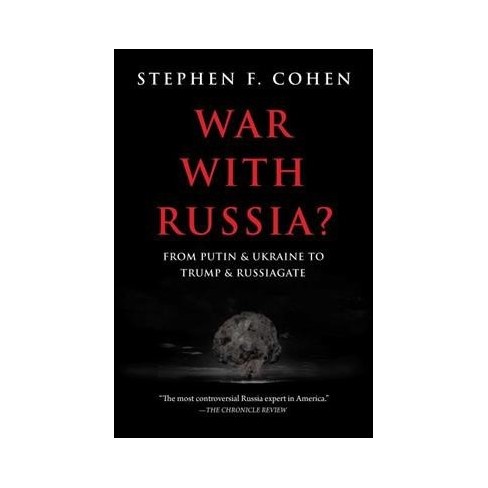
“If you’re trying to explain how the Washington establishment has dealt with Putin in a hateful and demonizing way, you have to go back to the 1990s before Putin,” said Cohen, whose new book is “War With Russia? From Putin & Ukraine to Trump & Russiagate.” The first post-Soviet leader is Boris Yeltsin. Clinton is president. And they have this fake, pseudo-partnership and friendship, whereas essentially the Clinton administration took advantage of the fact that Russia was in collapse. It almost lost its sovereignty. I lived there in the ’90s. Middle-class people lost their professions. Elderly people lost their pensions. I think it’s correct to say that industrial production fell more in the Russian 1990s than it did during our own Great Depression. It was the worst economic and social depression ever in peacetime. It was a catastrophe for Russia.”

In September 1993 Russians took to the streets to protest the collapse of the economy—the gross domestic product had fallen by 50% and the country was convulsed by hyperinflation—along with the rampant corruption that saw state enterprises sold for paltry fees to Russian oligarchs and foreign corporations in exchange for lavish kickbacks and bribes; food and fuel shortages; the nonpayment of wages and pensions; the lack of basic services, including medical services; falling life expectancy; the explosion of violent crime; and Yeltsin’s increasing authoritarianism and his unpopular war with Chechnya.

In October 1993 Yeltsin, after dissolving the parliament, ordered army tanks to shell the Russian parliament building, which was being occupied by democratic protesters. The assault left 2,000 dead. Yet during his presidency Yeltsin was effusively praised and supported by Washington. This included U.S. support for a $10.2 billion International Monetary Fund loan to Russia during his 1996 re-election campaign. The loan enabled the Yeltsin government to pay huge sums in back wages and pensions to millions of Russians, with checks often arriving on the eve of the election. Also, an estimated $1.5 billion from the loan was used to directly fund the Yeltsin presidential campaign. But by the time Yeltsin was forced out of office in December 1999 his approval rating had sunk to 2%. Washington, losing Yeltsin, went in search of another malleable Russian leader and, at first, thought it had found one in Putin.

“Putin went to Texas,” Cohen said. “He had a barbecue with Bush, second Bush. Bush said he ‘looked into his eyes and saw a good soul.’ There was this honeymoon. Why did they turn against Putin? He turned out not to be Yeltsin. We have a very interesting comment about this from Nicholas Kristof, the New York Times columnist, who wrote, I think in 2003, that his own disillusion with Putin was that he had turned out not to be ‘a sober Yeltsin.’ What Washington was hoping for was a submissive, supplicant, post-Soviet Russian leader, but one who was younger, healthier and not a drinker. They thought they had that in Putin. Yeltsin had put Putin in power, or at least the people around Yeltsin did.”

“When Putin began talking about Russia’s sovereignty, Russia’s independent course in world affairs, they’re aghast,” Cohen said of the Washington elites. “This is not what they expected. Since then, my own thinking is we were pretty lucky after the 1990s to get Putin because there were worst contenders in the wings. I knew some of them. I don’t want to name names. But some of these guys were really harsh people. Putin was kind of the right person for the right time, both for Russia and for Russian world affairs.”

“We have had three years of this,” Cohen said of Russiagate. “We lost sight of the essence of what this allegation is. The people who created Russiagate are literally saying, and have been for almost three years, that the president of the United States is a Russian agent, or he has been compromised by the Kremlin. We grin because it’s so fantastic. But the Washington establishment, mainly the Democrats but not only, have taken this seriously.”

“I don’t know if there has ever been anything like this in American history,” Cohen said. “That accusation does such damage to our own institutions, to the presidency, to our electoral system, to Congress, to the American mainstream media, not to mention the damage it’s done to American-Russian relations, the damage it has done to the way Russians, both elite Russians and young Russians, look at America today. This whole Russiagate has not only been fraudulent, it’s been a catastrophe.”

“There were three major episodes of détente in the 20th century,” Cohen said. “The first was after Stalin died, when the Cold War was very dangerous. That was carried out by Dwight Eisenhower, a Republican president. The second was by Richard Nixon, advised by Henry Kissinger—it was called ‘the Nixon détente with Brezhnev.’ The third, and we thought most successful, was Ronald Reagan with Mikhail Gorbachev. It was such a successful détente Reagan and Gorbachev, and Reagan’s successor, the first Bush, said the Cold War was over forever.”

“The wall had come down,” Cohen said of the 1989 collapse of East Germany and the fall of the Berlin Wall. “Germany was reunifying. The question became ‘where would a united Germany be?’ The West wanted Germany in NATO. For Gorbachev, this was an impossible sell. Twenty-seven point five million Soviet citizens had died in the war against Germany in the Second World War on the eastern front. Contrary to the bunk we’re told, the United States didn’t land on Normandy and defeat Nazi Germany. The defeat of Nazi Germany was done primarily by the Soviet army. How could Gorbachev go home and say, ‘Germany is reunited. Great. And it’s going to be in NATO.’ It was impossible. They told Gorbachev, ‘We promise if you agree to a reunited Germany in NATO, NATO will not move—this was Secretary of State James Baker—one inch to the east. In other words, NATO would not move from Germany toward Russia. And it did.”

“As we speak today, NATO is on Russia’s borders,” Cohen said. “From the Baltics to Ukraine to the former Soviet Republic of Georgia. So, what happened? Later, they said Gorbachev lied or he misunderstood. [That] the promise was never made. But the National Security Archive in Washington has produced all the documents of the discussion in 1990. It was not only [President George H.W.] Bush, it was the French leader François Mitterrand, it was Margaret Thatcher of England. Every Western leader promised Gorbachev NATO would not move eastward.”

“What do you end up with today?” he asked. “Betrayal. Any kind of discussion about Russian-American relations today, an informed Russian is going to say, ‘We worry you will betray us again.’… Putin said he had illusions about the West when he came to power.”

“Trump comes out of nowhere in 2016 and says, ‘I think we should cooperate with Russia,’ ” Cohen said. “This is a statement of détente. It’s what drew my attention to him. It’s then that this talk of Trump being an agent of the Kremlin begins. One has to wonder—I can’t prove it—but you have to think logically. Was this [allegation] begun somewhere high up in America by people who didn’t want a pro-détente president? And [they] thought that Trump, however small it seemed at the time that he could win—they really didn’t like this talk of cooperation with Russia. It set in motion these things we call Russiagate.”

“The forefathers of détente were Republicans,” Cohen said. “How the Democrats behaved during this period of détente was mixed. There was what used to be called the Henry Jackson wing. This was a very hard-line, ideological wing of the Democratic Party that didn’t believe in détente. Some Democrats did. I lived many years in Moscow, both Soviet and post-Soviet times. If you talk to Russian, Soviet policymakers, they generally prefer Republican candidates for the presidency.”

Democrats are perceived by Russian rulers as more ideological, Cohen said.

“Republicans tend to be businessmen who want to do business in Russia,” he said. “The most important pro-détente lobby group, created in the 1970s, was called the American Committee for East-West Accord. It was created by American CEOs who wanted to do business in Soviet Russia.”

“The single most important relationship the United States has is with Russia,” Cohen went on, “not only because of the nuclear weapons. It remains the largest territorial country in the world. It abuts every region we are concerned about. Détente with Russia—not friendship, not partnership, not alliance—but reducing conflict is essential. Yet something happened in 2016.”

The accusations made repeatedly by James Clapper, the former director of the National Security Agency, and John Brennan, the former director of the Central Intelligence Agency, concerning the Kremlin’s supposed control of Trump and Russia’s alleged theft of our elections are deeply disturbing, Cohen said. Clapper and Brennan have described Trump as a Kremlin “asset.” Brennan called Trump’s performance at a news conference with the Russian president in Finland “nothing short of treasonous.”

Clapper in his memoir, “Facts and Fears: Hard Truths From a Life in Intelligence,” claims Putin’s interference in the 2016 presidential election on behalf of Trump was “staggering.”

“Of course, the Russian efforts affected the outcome,” writes Clapper. “Surprising even themselves, they swung the election to a Trump win. To conclude otherwise stretches logic, common sense and credulity to the breaking point. Less than eighty thousand votes in three key states swung the election. I have no doubt that more votes than that were influenced by this massive effort by the Russians.”

Brennan and Clapper have on numerous occasions been caught lying to the public. Brennan, for example, denied, falsely, that the CIA was monitoring the computers that Senate staff members were using to prepare a report on torture. The chairwoman of the Senate Intelligence Committee, Dianne Feinstein, took to the Senate floor to accuse Brennan and the CIA of potentially violating the U.S. Constitution and of criminal activity in its attempts to spy on and thwart her committee’s investigations into the agency’s use of torture. She described the situation as a “defining moment” for political oversight. Brennan also claimed there was not a “single collateral death” in the drone assassination program, that Osama bin Laden used his wife as a human shield before being gunned down in a U.S. raid in Pakistan, and insisted that torture, or what is euphemistically called “enhanced interrogation,” has produced valuable intelligence. None of these statements are true.

Clapper, who at the time of the U.S. invasion of Iraq was the head of the National Geospatial-Intelligence Agency, the Pentagon unit responsible for interpreting spy-satellite photos and intelligence such as air particles and soil samples, concocted a story about Saddam Hussein spiriting his nonexistent weapons of mass destruction and the documents that verified his program to Syria on the eve of the invasion. He blatantly committed perjury before the Senate when being questioned about domestic surveillance programs of the American public. He was asked, “Does the NSA [National Security Agency] collect any type of data at all on millions, or hundreds of millions of Americans?” Clapper responded, “No, sir. … Not wittingly.” It was, as Clapper knew very well, a lie.

Our inability to oversee or control senior intelligence officials and their agencies, which fabricate information to push through agendas embraced by the shadow state, signals the death of democracy. Intelligence officials seemingly empowered to lie—Brennan and Clapper have been among them—ominously have in their hands instruments of surveillance, intimidation and coercion that effectively silence their critics, blunt investigations into their activities, even within the government, and make them and their agencies unaccountable.

“We have the Steele dossier that was spookily floating around American media,” Cohen said of the report compiled by Christopher Steele.

The report was commissioned by Fusion GPS and paid for by the Hillary Clinton presidential campaign and the Democratic National Committee. Bob Woodward reported that Brennan pushed to include the Steele dossier in the intelligence community assessment of Russian election interference.

“He [Steele] got it from newspapers,” Cohen said. “I don’t think he had a single source in Russia. Steele comes forward with this dossier and says, ‘I’ve got information from high-level sources.’ The Clinton campaign is funding this operation. But Steele is very important. He’s a former U.K. intelligence officer, if he’s really former, who had served in Russia and ran Russian cases. He says he has this information in the dossier about Trump frolicking with prostitutes. About Trump having been corrupted decades ago. He got it from ‘high-level’ Kremlin sources. This is preposterous. It’s illogical.”

“The theory is Putin desperately wanted to make Trump president,” Cohen said. “Yet, guys in the Kremlin, around Putin, were feeding Trump dirt to a guy called Steele. Even though the boss wants—does it make any sense to you?”

“Why is this important?” Cohen asked. “Right-wing American media outlets today, in particularly Fox News, are blaming Russia for this whole Russiagate thing. They’re saying that Russia provided this false information to Steele, who pumped it into our system, which led to Russiagate. This is untrue.”

“Who is behind all this? Including the Steele operation?” Cohen asked. “I prefer a good question to an orthodox answer. I’m not dogmatic. I don’t have the evidence. But all the surface information suggests that this originated with Brennan and the CIA. Long before it hit America—maybe as early as late 2015. One of the problems we have today is everybody is hitting on the FBI. Lovers who sent emails. But the FBI is a squishy organization, nobody is afraid of the FBI. It’s not what it used to be under J. Edgar Hoover. Look at James Comey, for God’s sake. He’s a patsy. Brennan and Clapper played Comey. They dumped this stuff on him. Comey couldn’t even handle Mrs. Clinton’s emails. He made a mess of everything. Who were the cunning guys? They were Brennan and Clapper. [Brennan,] the head of the CIA. Clapper, the head of the Office of [the Director of] National Intelligence, who is supposed to oversee these agencies.”

“Is there any reality to these Russiagate allegations against Trump and Putin?” he asked. “Was this dreamed up by our intelligence services? Today investigations are being promised, including by the attorney general of the United States. They all want to investigate the FBI. But they need to investigate what Brennan and the CIA did. This is the worst scandal in American history. It’s the worst, at least since the Civil War. We need to know how this began. If our intelligence services are way off the reservation, to the point that they can try to first destroy a presidential candidate and then a president, and I don’t care that it’s Trump, it may be Harry Smith next time, or a woman; if they can do this, we need to know it.”

“The second Bush left the Anti-Ballistic Missile Treaty in 2002,” Cohen said. “It was a very important treaty. It prevented the deployment of missile defense. If anybody got missile defense that worked, they might think they had a first strike [option]. Russia or the United States could strike the other without retaliation. Once Bush left the treaty, we began to deploy missile defense around Russia. It was very dangerous.”

“The Russians began a new missile program which we learned about last year,” he said. Hypersonic missiles. Russia now has nuclear missiles that can evade and elude any missile defense system. We are in a new and more perilous point in a 50-year nuclear arms race. Putin says, ‘We’ve developed these because of what you did. We can destroy each other.’ Now is the time for a serious, new arms control agreement. What do we get? Russiagate. Russiagate is one of the greatest threats to national security. I have five listed in the book. Russia and China aren’t on there. Russiagate is number one.”