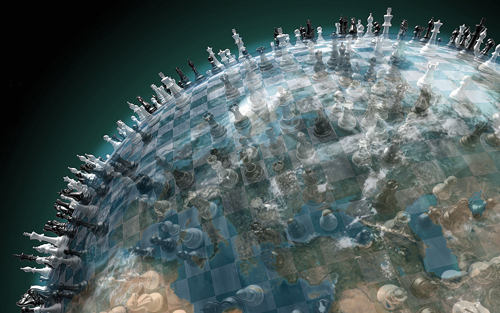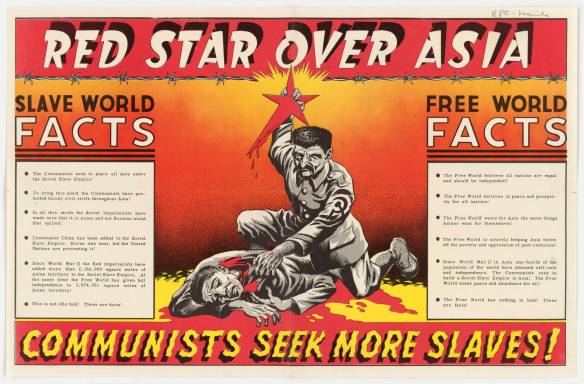
Peace is a Cliché: When the West cannot Control the World Unopposed it Means War

Dedicated to my friend, a philosopher, John Cobb, Jr.

By Andre Vltchek

Source: Dissident Voice

The West likes to think of itself as a truly “peace-loving part of the world”. But is it? You hear it everywhere, from Europe to North America, then to Australia, and back to Europe: “Peace, peace, peace!”

It has become a cliché, a catchphrase, a recipe to get funding and sympathy and support. You say peace and you really cannot go wrong. It means that you are a compassionate and reasonable human being.

Every year, there are “peace conferences” taking place everywhere where peace is worshipped, and even demanded. I recently attended one, as a keynote speaker, on the west coast of Denmark.

If a heavy-duty war correspondent like myself attends them, he or she gets shocked. What is usually discussed are superficial, feel-good topics.

At best, ‘how bad capitalism is’, and how ‘everything is about oil’. Nothing about the genocidal culture of the West. Nothing about continuous, centuries-long plunders and benefits that virtually all Westerners have been getting from it.

At worst, it is all about how bad the world is – “all people are the same” cliché. And, also, there are increasingly, bizarre, uninformed outbursts against China and Russia which are often labeled by Western neo-cons as “threat” and “rival powers”.

Participants of these gatherings agree “Peace is Good”, and “War is Bad”. This is followed by standing ovations and patting each other on the back. Few heartfelt tears are dropped.

However, reasons behind these displays are rarely questioned. After all, who would be asking for war? Who’d crave for violence, terrible injuries and death? Who’d want to see leveled, charred cities and abandoned, crying infants? It all appears to be very simple, and very logical.

But then, why do we not hear too often that “peace speech” pouring from the devastated and still de facto colonized African or the Middle Eastern countries? Aren’t they suffering the most? Shouldn’t they be dreaming about the peace? Or are all of us, perhaps, missing the main point?

My friend, a great Indian writer and thinker, Arundhati Roy wrote, in 2001, reacting to the Western “War on Terror”:

When he announced the air strikes, President George Bush said, “We’re a peaceful nation.” America’s favourite ambassador, Tony Blair, (who also holds the portfolio of Prime Minister of the UK), echoed him: “We’re a peaceful people.” So now we know. Pigs are horses. Girls are boys. War is Peace.

When it comes from the lips of the Westerners, is ‘peace’ really peace, is ‘war’ really a war?

Are people in that ‘free and democratic West’, still allowed to ask such questions? Or is the war and peace perception just a part of the dogma that is not allowed to be questioned and is ‘protected’ by both the Western culture and its laws?

I’m not in the West, and I don’t want to be. Therefore, I’m not sure what they are allowed to say or to question there. But we, those lucky people who are ‘outside’ and therefore not fully conditioned, controlled and indoctrinated, will definitely not stop asking these questions anytime soon; or to be precise, never!

*****

Recently, through Whatsapp, I received a simple chain of messages from my East African friends and Comrades – mostly young left-wing, revolutionary opposition leaders, thinkers and activists:

Free Africa is a socialist Africa! We are ready for war! The young Africans are on fire! Death to the imperialist forces! Viva Bolivarian revolution! South-South Cooperation! Today we take the battle to the streets! Africa Must Unite!

Such statements would sound almost ‘violent’ and therefore could be even be classified as ‘illegal’, if pronounced openly in the West. Someone could end up in Guantanamo for this, or in a ‘secret CIA prison’. A few weeks ago, I directly addressed these young people – leaders of the left-wing East African opposition – at the Venezuelan Embassy in Nairobi, Kenya. Yes, they were boiling, they were outraged, determined and ready.

For those who are not too familiar with the continent, Kenya has been, for years and decades, an outpost of the British, US and even Israeli imperialism in East Africa. It was playing the same role that West Germany used to play during the Cold War – a window shopping paradise, stuffed with luxury goods and services.

In the past, Kenya was supposed to dwarf the socialist experiment of Tanzania under the leadership of Nyerere.

Today, some 60 percent of Kenyans live in slums; some of the toughest in Africa. Some of these ‘settlements’, like Mathare and Kibera are housing at least one million people, in the most despicable, terrible conditions. Four years ago, when I was making my documentary film, in these slums, for South American network TeleSUR, I wrote:

…Officially, there is peace in Kenya. For decades, Kenya functioned as a client state of the West, implementing a savage market regime, hosting foreign military bases. Billions of dollars were made here. But almost nowhere on earth is the misery more brutal than here.

Two years earlier, while filming my “Tumaini” near Kisumu city and the Uganda border, I saw entire hamlets standing empty like ghosts. The people had vanished, died – from AIDS and hunger. But it was still called peace.

Peace it was when the US military medics were operating under the open sky, on desperately poor and sick Haitians, in the notorious slum of Cité Soleil. I saw and photographed a woman, laid on a makeshift table, having her tumor removed using only local anesthetics. I asked the North American doctors, why is it like this? I knew there was a top-notch military facility two minutes away.

“This is as close as we get to real combat situation”, one doctor replied, frankly. “For us, this is great training.”

After the surgery was over, the woman got up, and supported by her frightened husband, walked away towards the bus stop.”

Yes, all this is, officially, peace.

*****

In Beirut, Lebanon, I recently participated in discussion about “Ecology of War”, a scientific and philosophical concept created by several AUB Medical Center doctors from the Middle East. Doctor Ghassan ‘Gus’ Abu-Sitta, the head of the Plastic Surgery Department at the AUB Medical Center in Lebanon, explained:

The misery is war. The destruction of the strong state leads to conflict. A great number of people on our Planet actually live in some conflict or war, without even realizing it: in slums, in thoroughly collapsed states, or in refugee camps.

During my work, in almost all devastated corners of the world, I saw much worse things than what I described above. Perhaps I saw too much – all that ‘peace’ which has been tearing limbs from the victims, all those burning huts and howling women, or children dying from diseases and hunger before they reach their teens.

I wrote about war and peace at length, in my 840-page book Exposing Lies Of The Empire”.

When you do what I do, you become like a doctor: you can only stand all those horrors and suffering, because you are here to help, to expose reality, and to shame the world. You have no right to decompose, to collapse, to fall and to cry.

But what you cannot stand is hypocrisy. Hypocrisy is ‘bulletproof’. It cannot be illuminated by correct arguments, by logic and by examples. Hypocrisy in the West is often ignorant, but mostly it is just self-serving.

So, what is real peace for the people in Europe and North America? The answer is simple: It is a state of things in which as few Western people as possible are killed or injured. A state of things in which the flow of resources from the poor, plundered and colonized countries is pouring, uninterrupted, predominantly to Europe and North America.

The price for such peace? How many African, Latin American or Asian people die as a result of such arrangement of the world, is thoroughly irrelevant.

Peace is when the business interests of the West are not endangered, even if tens of millions of non-white human beings would vanish in the process.

Peace is when the West can, unopposed, control the world, politically, economically, ideologically and ‘culturally’.

“War” is when there is rebellion. War is when the people of plundered countries say “No!”. War is when they suddenly refuse to be raped, robbed, indoctrinated and murdered.

When such a scenario takes place the West’s immediate reaction ‘to restore peace’ is to overthrow the government in the country which is trying to take care of its people. To bomb schools and hospitals, to destroy supply of fresh water and electricity and to throw millions into total misery and agony.

As the West may soon do to North Korea (DPRK), to Cuba, Venezuela, Iran – some of the countries that are being, for now, ‘only’ tormented by sanctions and, foreign -sponsored, deadly “opposition”. In the Western lexicon, “peace” is synonymous to “submission”. To a total, unconditional submission. Anything else is war or could potentially lead to war.

For the oppressed, devastated countries, including those in Africa, to call for resistance, would be, at least in the Western lexicon, synonymous with the “call for violence”, therefore illegal. As ‘illegal’ as the calls were for resistance in the countries occupied by German Nazi forces during the WWII. It would be, therefore, logical to call the Western approach and state of mind, “fundamentalist”, and thoroughly aggressive.

Crisis in Consciousness: Change and the Individual

By Graham Peebles

Source: Dissident Voice

Our society is besieged by a series of interconnected crises. Millions of people around the world know this and are crying out for change, for a different way of living, for justice, peace and freedom.

Political leaders, Prime Ministers, Presidents and the like, are apparently incapable of responding to these demands; they do not understand the depth of the anguish or the complex interconnected nature of the problems. Instead of presenting new possibilities and working for peace and social harmony, they do all they can to maintain the divisive status quo and act in accordance with the past. But life is not static, it cannot be contained within any ideology – religious, political/economic or social – all must change to accommodate the new. And ‘the new’ is now flooding our world, stimulating change, demanding response and accommodation.

The world and the individual are one; for substantive change to occur this basic fact must be acknowledged; responsibility for the world rests firmly with each and every one of us. If we are to heal the planet and create harmony in the world change is imperative, but it must first of all take place within the individual. Over the last 40 years or so a gentle, yet profound shift in attitudes has indeed been taking place within large numbers of people; the increased level of social-political participation and in many nations revolt against historical injustice and suppression testify to this development. Whilst this is extremely positive, urgent and fundamental change is required if the many issues facing humanity are to be overcome and a new way of living set in motion.

What are the crises facing humanity: The environmental catastrophe and war conventional and nuclear – global poverty, inequality, terrorism, the displacement of people, and, festering beneath all of these, the socio-economic systems under which we all live. These issues, and they are but the most pressing, are the effects of certain ideals and conditioned ways of thinking; they are the results of the underlying crisis, what we might term the Crisis in Consciousness, or the Crisis of Love. Not sentimental, emotional love, but love as a unifying force for liberation and change. Love as the Sword of Cleavage, as the exposer of all that is false, unjust and corrupt in our world.

‘Society’, large or small, is a reflection of the consciousness of those who constitute that society; it is formed by the values, relationships and behaviour consistently and predominantly expressed by the people within it. Such expressions are to a large degree the result of socio-psychological conditioning, poured into the minds of everyone from birth by parents and peers, friends and educators, the media and political propaganda. This conditioning pollutes the mind, distorts behaviour and creates a false sense of self. It colours every relationship and forms the corrupt foundations upon which our lives are set. From this polluted centre, filled as it is with selfishness, competition, nationalism and religious ideologies, action proceeds and the divisive pollution of the mind is externalized. Where there is division conflict follows, violent conflict or psychological conflict, community antagonism or regional disputes.

For lasting change to take place, for peace and justice to flower, we must do all we can to break free of this inhibiting conditioning and in so doing cease to add to the collective pollution. The instrument of release in this battle is awareness: Observation and awareness are synonymous. In choiceless observation there is awareness – awareness of the values, motives and ideals conditioning behaviour. In the light of such awareness, unconscious patterns are revealed, and through a process of non-engagement can, over time, be negated and allowed to fall away.

Realizing unity

Through competition, fear and ‘ism’s of all kinds we have divided life up; separated ourselves from the natural environment and from one another. The prevailing economic system encourages such divisions; individuals are forced to compete with one another, as are cities, regions and nations. Competition feeds notions of separation and nationalism, ‘America First’ and Brexit being two loud examples of countries, or certain factions within these countries, following a policy which they mistakenly believe to be in their nation’s interest, meaning their economic interest. Such divisions work against the natural order of things by strengthening the illusion of separation.

The natural environment is an integrated whole, humanity is One and an essential part of that whole; the realization of unity in human affairs, however, is dependent upon social justice, and this is impossible within the constraints of the current economic model, which is inherently unjust. Neo-Liberalism is a major source of the psychological and sociological conditioning which is polluting the mind and society; creative alternatives that challenge the orthodoxy, which proclaims ‘there is no alternative’, must be cultivated and explored.

New criteria need to be established for any alternative economic model; the acknowledgment that human need is universal and should be universally met, and that nobody ‘deserves’ to live a life of suffering and hardship simply because of their place and family of birth. Sharing is a key principle of the time; it must be placed at the heart of our lives and of any new socio-economic structures. Not just sharing of the natural ‘God-given’ resources of the world, but of space, ideas, knowledge and skills, all should be distributed based on need, not bought and sold based on wealth and power. The recognition that humanity is one is crucial in bringing about the needed transformation in consciousness; sharing flows quite naturally from the acknowledgment of this fact and by its expression encourages a shift in attitudes away from the individual towards the group, thus strengthening social cohesion and unity.

Sharing, justice and freedom are vibrant expressions of Love and the Crisis in Consciousness is itself the consequence of a Lack of Love. Like virtually every aspect of life, love has been perverted, distorted and trivialized. Love is not desire, it is not dependent on anything or anyone for its being: Love is the nature of life itself. Remove the psychological clutter and Love will shine forth, bringing clarity and lasting change, within the individual and by extension society.

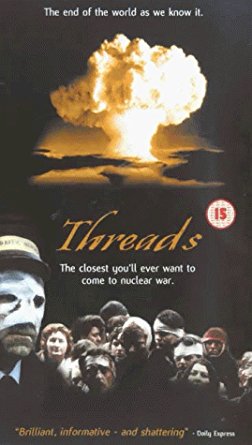
Saturday Matinee: Threads

“Threads” (1984) is an apocalyptic cautionary tale written by Barry Hines, directed by Mick Jackson, and originally aired on BBC  2. It’s a docudrama depiction of nuclear war and its devastating effect on society and in particular two families in Sheffield England. Various news media reports describe the events leading up to the war (precipitated by aggressive US movements against Iran). With unflinching realism, the film depicts the sudden nuclear attack and devastating aftermath including medical, economic, social and environmental consequences. Should be required viewing for all chickenhawk neoliberals, though some may be too psychopathic to rethink their pro-war convictions.

Challenges for Resolving Complex Conflicts

By Robert J. Burrowes

While conflict theories and resolution processes advanced dramatically during the second half of the 20th century, particularly thanks to the important work of several key scholars such as Professor Johan Galtung – see ‘Conflict Transformation by Peaceful Means (the Transcend Method)’ – significant gaps remain in the conflict literature on how to deal with particular conflict configurations. Notably, these include the following four.

First, existing conflict theory does not adequately explain, emphasize and teach how to respond in those circumstances in which parties cannot be brought to the table to deeply consider a conflict and the measures necessary to resolve it. This particularly applies in cases where one or more parties is violently defending (often using a combination of direct and structural violence) substantial interrelated (material and non-material) interests. The conflict between China and Tibet over the Chinese-occupied Tibetan plateau, the many conflicts between western corporations and indigenous peoples over exploitation of the natural environment, and the conflict between the global elite and ‘ordinary’ people over resource allocation in the global economy are obvious examples of a vast number of conflicts in this category. As one of the rare conflict theorists who addresses this question, Galtung notes that structural violence ‘is not only evil, it is obstinate and must be fought’, and his preferred strategy is nonviolent revolution. See The True Worlds: A Transnational Perspective p. 140. But how?

Second, existing conflict theory does not explain how to respond in those circumstances in which one or more parties to the conflict are insane. The conflict between Israel and Palestine over Israeli-occupied Palestine classically illustrates this problem, particularly notable in the insanity of Israeli Prime Minister Binjamin Netanyahu, Defense Minister Avigdor Lieberman and Justice Minister Ayelet Shaked. But it is also readily illustrated by the insanity of the current political/military leadership in the USA and the insanity of the political, military and Buddhist leaders in Myanmar engaged in a genocidal assault on the Rohingya. For a brief discussion of the meaning and cause of this insanity see ‘The Global Elite is Insane Revisited’.

As an aside, there is little point deluding ourselves that insanity is not a problem or even ‘diplomatically’ not mentioning the insanity (if this is indeed the case) of certain parties in particular conflicts. The truth enables us to fully understand a conflict so that we can develop and implement a strategy to deal with all aspects of that truth. Any conflict strategy that fails to accurately identify and address all key aspects of the conflict, including the insanity of any of the parties, will virtually certainly fail.

Third, and more fundamentally, existing conflict theory does not take adequate account of the critical role that several unconscious emotions play in driving conflict in virtually all contexts, often preventing its resolution. This particularly applies in the case of (but is not limited to) suppressed terror, self-hatred and anger which are often unconsciously projected as fear of, hatred for and anger at an opponent or even an innocent third-party (essentially because this individual/group feels ‘safe’ to the person who is projecting). See ‘The Psychology of Projection in Conflict’.

While any significant ongoing conflict would illustrate this point adequately, the incredibly complex and interrelated conflicts being conducted in the Middle East, the prevalent Islamophobia in some western countries, and the conflicts over governance and exploitation of resources in the Democratic Republic of Congo are superlative examples. Ignoring suppressed (and projected) emotions can stymie conflict resolution in any context, interpersonally and geopolitically, and it does so frequently.

Fourth, existing conflict theory pays little attention to the extinction-causing conflict being ongoingly generated by human over-consumption in the finite planetary biosphere (and currently resulting in 200 species extinctions daily) which is sometimes inadequately identified as a conflict caused by capitalism’s drive for unending economic growth in a finite environment.

So what can we do?

Well, to begin, in all four categories of cases mentioned above, I would use Gandhian nonviolent strategy to compel violent opponents to participate in a conflict transformation process such as Galtung’s. Why nonviolent and why Gandhian? Nonviolent because our intention is to process the conflict to achieve a higher level of need satisfaction for all parties and violence against any or all participants is inconsistent with that intention. But Gandhian nonviolence because only Gandhi’s version of nonviolence has this conflict intention built into it. See ‘Conception of Nonviolence’.

‘But isn’t this nonviolent strategy simply coercion by another name?’ you might ask. Well, according to the Norwegian philosopher, Professor Arne Naess, it is not. In his view, if a change of will follows the scrutiny of norms in the context of new information while one is ‘in a state of full mental and bodily powers’, this is an act of personal freedom under optimal conditions. Naess highlights this point with the following example: Suppose that one person carries another against their will into the streets where there is a riot and, as a result of what they see, the carried person changes some of their attitudes and opinions. Was the change coerced? According to Naess, while the person was coerced into seeing something that caused the change, the change itself was not coerced. The distinction is important, Naess argues, because satyagraha (Gandhian nonviolent struggle) is incompatible with changes of attitudes or opinions that are coerced. See Gandhi and Group Conflict: An Exploration of Satyagraha pp. 91-92.

To elaborate this point: Unlike other conceptions of nonviolence, Gandhi’s nonviolence is based on certain premises, including the importance of the truth, the sanctity and unity of all life, and the unity of means and end, so his strategy is always conducted within the framework of his desired political, social, economic and ecological vision for society as a whole and not limited to the purpose of any immediate campaign. It is for this reason that Gandhi’s approach to strategy is so important. He is always taking into account the ultimate end of all nonviolent struggle – a just, peaceful and ecologically sustainable society of self-realized human beings – not just the outcome of this campaign. He wants each campaign to contribute to the ultimate aim, not undermine vital elements of the long-term and overarching struggle to create a world without violence.

Consequently, given his conception of nonviolence, Gandhi’s intention is to reach a conflict outcome that recognizes the sanctity and unity of all life which, obviously, includes the lives (but also the physical and emotional well-being) of his opponents. His nonviolent strategy is designed to compel participation in a conflict process but not to impose his preferred outcome unilaterally. See Nonviolent Campaign Strategy and Nonviolent Defense/Liberation Strategy.

This can apply in the geopolitical context or in relation to ordinary individuals ‘merely’ participating in the violence of overconsumption. Using nonviolent strategy to campaign on the climate catastrophe or other environmental issues can include mobilizing individuals and communities to emulate Gandhi’s asceticism in a modest way by participating in the fifteen-year strategy outlined in The Flame Tree Project to Save Life on Earth which he inspired.

But even if we can use nonviolent strategy effectively to get the conflicting parties together, the reality is that suppressed and projected emotions – particularly fear, self-hatred and anger as mentioned above – or even outright insanity on the part of one or more parties may still make efforts to effectively transform the conflict impossible. So for conflict resolution to occur, we need individuals who are willing and able to participate with at least minimal goodwill in designing a superior conflict outcome beneficial to everyone concerned.

Hence, I would do one more thing in connection with this process. Prior to, and then also in parallel with, the ‘formal’ conflict process, I would provide opportunities for all individuals engaged in the process (or otherwise critical to it because of their ‘background’ role, perhaps as a leader not personally present at the formal conflict process) to explore in a private setting with a skilled ‘nisteler’ (who is outside the conflict process), the unconscious emotions that are driving their particular approach to the conflict. See ‘Nisteling: The Art of Deep Listening’. The purpose of this nisteling is to allow each participant in the conflict process to bring a higher level of self-awareness to it. See ‘Human Intelligence or Human Awareness?’

I am not going to pretend that this would necessarily be possible, quick, easy or even work in every context. Insane individuals are obviously the last to know they have a psychological problem and the least likely to participate in a process designed to uncover and remove the roots of their insanity. However, those who are trapped in a dysfunctional psychological state short of insanity may be willing to avail themselves of the opportunity. In time, the value of this aspect of the conflict resolution process should become apparent, particularly because delusions and projections are exposed by the person themself (as an outcome of the expertise of the person nisteling).

Obviously, I am emphasizing the psychological aspects of the conflict process because my own considerable experience as a nonviolent activist together with my research convinces me that understanding violence requires an understanding of the psychology that drives it. If you are interested, you can read about the psychology of violence, including the 23 psychological characteristics in the emotional profile of archetype perpetrators of violence, in the documents Why Violence? and Fearless Psychology and Fearful Psychology: Principles and Practice.

Ideally, I would like to see the concept of nistelers operating prior to, and then parallel with, focused attention on the conflict itself normalized as an inherent part of the conflict resolution process. Clearly, we need teams of people equipped to perform this service, a challenge in itself in the short-term.

If, however, conflicting parties cannot be convinced to participate in this process with reasonable goodwill, we can always revert to using nonviolent strategy to compel them to do so. And, if all attempts to conduct a reasonable conflict process fail (particularly in a circumstance in which insanity is the cause of this failure), to impose a nonviolent solution which nevertheless takes account of the insane’s party’s legitimate needs. (Yes, on just that one detail, I diverge from Gandhi.)

Having stated that, however, I acknowledge that only a rare individual has the capacity to think, plan and act strategically in tackling a violent conflict nonviolently, so considerable education in nonviolent strategy will be necessary and is a priority.

Given what is at stake, however – a superior strategy for tackling and resolving violent geopolitical conflicts including those (such as the threat of nuclear war, the climate catastrophe and decimation of the biosphere) that threaten human extinction – any resources devoted to improving our capacity to deliver this outcome would be well spent.

Provided, of course, that reducing (and ultimately eliminating) violence and resolving conflict is your aim.

In addition to the above, I would do something else more generally (that is, outside the conflict process).

Given that dysfunctional parenting is ultimately responsible for the behaviour of those individuals who generate and perpetuate violent conflicts, I would encourage all parents to consider making ‘My Promise to Children’ so that we start to produce a higher proportion of functional individuals who know how to powerfully resolve conflicts in their lives without resort to violence. If any parent feels unable to make this promise, then they have the option of tackling this problem at its source by ‘Putting Feelings First’.

If we do not dramatically and quickly improve our individual and collective capacity to resolve conflicts nonviolently, including when we are dealing with individuals who are insane, then one day relatively soon we will share the fate of those 200 species of life we drove to extinction today.


Biodata: Robert J. Burrowes has a lifetime commitment to understanding and ending human violence. He has done extensive research since 1966 in an effort to understand why human beings are violent and has been a nonviolent activist since 1981. He is the author of Why Violence? His email address is flametree@riseup.net and his website is here.

Robert J. Burrowes
P.O. Box 68
Daylesford, Victoria 3460
Australia

Email: flametree@riseup.net

Websites:
Nonviolence Charter
Flame Tree Project to Save Life on Earth
‘Why Violence?’
Feelings First
Nonviolent Campaign Strategy
Nonviolent Defense/Liberation Strategy
Anita: Songs of Nonviolence
Robert Burrowes
Global Nonviolence Network

Nonviolence or Nonexistence? The Legacy of Martin Luther King Jr.

By Robert J. Burrowes

Fifty years ago, on 4 April 1968, the Reverend Martin Luther King Jr. was assassinated.

The night before he died, King gave another of his many evocative speeches; this one at the packed Mason Temple in Memphis. The speech included these words:

‘Men for years now have been talking about war and peace. Now no longer can they just talk about it. It is no longer a choice between violence and non-violence in this world, it is non-violence or non-existence. That is where we are today.’

In clearly identifying this stark choice and having been inspired by Mohandas K. Gandhi’s wideranging social concerns, King’s concerns were also broad:

‘The Triple Evils of poverty, racism and militarism are forms of violence that exist in a vicious cycle. They are interrelated, all-inclusive, and stand as barriers to our living in the Beloved Community. When we work to remedy one evil, we affect all evils.’ See ‘The King Philosophy’.

So what has changed in the past 50 years? The world has traveled a great deal further down the path of violence. So far, in fact, that nonexistence is now the most likely outcome for humanity. See ‘On Track for Extinction: Can Humanity Survive?’

Despite the vastly more perilous state of our planet, many people and organizations around the world are following in the footsteps of Gandhi, King and other nonviolent luminaries like Silo, and are engaged in what is effectively a last ditch stand to end the violence and put humanity on a path to peace, justice and sustainability.

Let me tell you about some of these people and organizations and invite you to join them.

In Bolivia, Nora Cabero works with the Movimient Humanista. The Movement has many programs including the Convergence of Cultures which aims to facilitate and stimulate true dialogue – oriented towards the search for common points present in the hearts of different peoples and individuals – to promote the relationship between different cultures and to resist discrimination and violence. Another program, World Without Wars and Violence emerged in 1994 and was presented for the first time internationally in 1995 at the Open Meeting of Humanism held in Chile at the University of Santiago. It is active in about 40 countries. It carries out activities in the social base and also promotes international campaigns such as Education for Nonviolence and the World March for Peace and Nonviolence.

Eddy Kalisa Nyarwaya Jr. is Executive Secretary of the Rwanda Institute for Conflict Transformation and Peace Building and also President of the Alternatives to Violence Program. For the past 18 years, he has been active in the fields of ‘peace, reconciliation, nonviolence, healing of societies, building harmonious communities’ in many countries including Burundi, Chad, eastern Congo, Darfur (western Sudan), Kenya, Rwanda, Somalia, South Sudan and northern Uganda. Late last year he was in New Zealand to deliver a paper on the Great Lakes conflict. In Rwanda, the Institute for Conflict Transformation particularly works on nonviolence education in schools, universities and refugee camps. Another initiative is the conduct of workshops on nonviolence and peace through sports for head teachers in the country but it also has programs to fight early marriages and pregnancies, as well as offering trauma counseling to refugees.

In Russia, Ella Polyakova is a key figure at the Soldiers’ Mothers of Saint-Petersburg. Ella and her colleagues work to defend the rights of servicemen and conscripts in the Russian military. Ella explains why:

‘When we were creating our organization, we understood that people knew little about their rights, enshrined in Russia’s Constitution, that the concept of “human dignity” had almost disappeared, that no one had been working with the problems of common people, let alone those of conscripts. We clearly understood what a soldier in the Russian army was a mere cog in the state machine, yet with an assault rifle. We felt how important hope, self-confidence and trust were for every person. At the beginning of our journey, we saw that people around us, as a rule, did not even know what it meant to feel free. It was obvious for us that the path towards freedom and the attainment of dignity was going through enlightenment. Therefore, our organization’s mission is to enlighten people around us. Social work is all about showing, explaining, proving things to people, it is about convincing them. Having equipped ourselves with the Universal Declaration of Human Rights and Russia’s Constitution, we started to demolish this dispossession belt between citizens and their rights. It was necessary to make sure that people clearly understood that, having a good knowledge of rights, laws, and situations at hand, they would be able to take responsibility and protect themselves from abuse.’

Bruce Gagnon, coordinator of the Global Network Against Weapons & Nuclear Power in Space, was recently part of a committed effort to convince the Maine state legislature not to give warship-builder General Dynamics, which has already received more than $200 million in state and local tax breaks for the Bath Iron Works (BIW), any more ‘corporate welfare’. Bruce recently completed a fast, which lasted for more than a month, as one of the actions that Maine peace activists took to try to prevent this welfare payment to a company that has spent $14.4 billion buying back its own stocks between 2013-2017 and whose CEO was paid $21 million in 2016.

Despite their efforts, the Maine House of Representatives voted 117-31 in favor of the $45million General Dynamics corporate welfare bill and the Senate supported it 25-9. The decision was announced on the same day that General Dynamics sacked 31 workers from the BIW. As Bruce noted: ‘It was an honor to work alongside [those] who stood up for the 43,000 children living in poverty across Maine, for the tens of thousands without health care, for our starving public education system, and for the crumbling physical infrastructure as Maine joins Mississippi in the “race to the bottom”’. You can read more about this ongoing campaign to convert the Bath Iron Works into a location for the production of socially useful and ecologically sustainable non-killing technologies on the website above. There are some great photos too.

Gaëlle Smedts and her partner Luz are the key figures at Poetry Against Arms based in Germany. ‘The inspiration for this campaign is the life, work and legacy of the Latin American poet, philosopher and mystic: Mario Rodriguez Cobos, also known as Silo. His total commitment to active nonviolence, his denunciation of all forms of violence, his doctrine for overcoming pain and suffering and his magnificent poetry are a great affirmation of the meaning of life and transcendence.’ Poetry Against Arms publishes poetry/songs of people around the world who take action to resist militarism.

Since the 1970s, the world’s leading rainforest activist, John Seed, has devoted his life to saving the world’s rainforests. Founder and Director of the Rainforest Information Centre in Australia, one of his latest projects is to save the tropical Andes of Ecuador, which is ‘at the top of the world list of biodiversity hotspots in terms of vertebrate species, endemic vertebrates, and endemic plants’. From the cloud forests in the Andes to the indigenous territories in the headwaters of the Amazon, the Ecuadorean government has covertly granted mining concessions to over 1.7 million hectares (4.25 million acres) of forest reserves and indigenous territories to multinational mining companies in closed-door deals without public knowledge or consent. These concessions will decimate headwater ecosystems and biodiversity hotspots of global significance. If you would like to read more about this campaign and what you can do to help, you can do so in John’s article ‘Ecuador Endangered’.

Apart from the individuals mentioned above, signatories and endorsing organizations are engaged in an incredibly diverse range of activities to end violence in one context or another. These include individuals and organizations working in many countries to end violence against women (including discriminatory practices against widows), to rehabilitate child soldiers and end sexual violence in the Congo, activists engaged in nonviolent defense or liberation struggles – see Nonviolent Defense/Liberation Strategy – in several countries and occupied territories, as well as campaigns on a vast range of environmental, climate and indigenous rights issues, campaigns to promote religious and racial harmony as well as campaigns for nuclear disarmament and to end war. See Nonviolent Campaign Strategy.

But it also includes many individuals tackling violence at its source – see Why Violence?’ and Fearless Psychology and Fearful Psychology: Principles and Practice – by focusing on their own healing – see ‘Putting Feelings First’ – and/or working on how they parent their children for a nonviolent world. See ‘My Promise to Children’.

Given the perilous state of the global environment and climate, still others are focusing their efforts on reducing their consumption and increasing their self-reliance in accordance with the fifteen-year strategy outlined in The Flame Tree Project to Save Life on Earth.

If you would like to be part of the worldwide movement to end violence that has drawn the six people and several organizations mentioned above together, along with many others in 103 countries around the world, you are welcome to sign the online pledge of The Peoples Charter to Create a Nonviolent World.

Reverend King posed the fundamental choice of our time: nonviolence or nonexistence. What is your choice?


Biodata: Robert J. Burrowes has a lifetime commitment to understanding and ending human violence. He has done extensive research since 1966 in an effort to understand why human beings are violent and has been a nonviolent activist since 1981. He is the author of Why Violence? His email address is flametree@riseup.net and his website is here.


Robert J. Burrowes
P.O. Box 68
Daylesford, Victoria 3460
Australia

Email: flametree@riseup.net

Websites:
Nonviolence Charter
Flame Tree Project to Save Life on Earth
‘Why Violence?’
Feelings First
Nonviolent Campaign Strategy
Nonviolent Defense/Liberation Strategy
Anita: Songs of Nonviolence
Robert Burrowes
Global Nonviolence Network


Thinking Beyond Exceptionalism

By David Swanson

Source: Let’s Try Democracy

Excepted from Curing Exceptionalism: What’s wrong with how we think about the United States? What can we do about it? (April, 2018).

Try this experiment: Imagine that space aliens really come to earth and really have, as I think is very unlikely, developed the ability to travel to earth while simultaneously remaining so primitive as to violently attack the places they visit. In contrast to the space aliens, could you identify as an earthling to such an extent as to diminish your other senses of identity? “Earthlings — F— Yeah!” “We’re Number 1!” “Greatest Earthlings on Earth!” And can you hold that thought, in the absence of the space aliens, and rid yourself of any notion of opposing any other or foreign group, while still holding that earthling thought? Alternatively, can you cast climate change and environmental collapse in the role of the evil alien Hollywood monster against whom humanity must unite?

Or try this one: Imagine that various species of humans survived to the current day, so that we Sapiens share the earth with the Neanderthals, the Erectus, the tiny little Floresiensis, etc.[i] Could you form your identity in your mind as a Sapiens? And then, can you hold that thought while either imagining the other species back out of existence or imagining learning to be as respectful and kind to the other species of humans as we should perhaps actually be attempting to be to other types of living human and non-human earthlings right now?

Perhaps the most powerful tool for altering habits of thought about groups of people is role reversal. Let’s imagine that for whatever reasons, beginning some seventy years ago North Korea drew a line through the United States, from sea to shining sea, and divided it, and educated and trained and armed a brutal dictator in the South United States, and destroyed 80 percent of the cities in the North United States, and killed millions of North USians. Then North Korea refused to allow any U.S. reunification or official end to the war, maintained wartime control of the South United States military, built major North Korean military bases in the South United States, placed missiles just south of the U.S. demilitarized zone that ran through the middle of the country, and imposed brutal economic sanctions on the North United States for decades. As a resident of the North United States, what might you think when the president of North Korea threatened your country with “fire and fury”?[ii] Your own government might have gazillions of current and historical crimes and shortcomings to its credit, but what would you think of threats coming from the country that killed your grandparents and walled you off from your cousins? Or would you be too scared to think rationally?

This experiment is possible in hundreds of variations, and I recommend trying it repeatedly in your own mind and in groups, so that people’s creativity can feed into the imagination of others. Imagine that you’re from the Marshall Islands seeking restitution for nuclear testing and/or the rising seas.[iii] Imagine you’re from Niger and less than amused that Americans first hear about your country when their government pretends that Iraq purchased uranium in your country, and that Americans only learn about their own military’s actions in your country when the U.S. president is rude to the mother of a deceased U.S. soldier.[iv] Imagine you’re my friends from Vicenza, Italy, who found local and national majority support for blocking the proposed construction of a U.S. Army base but couldn’t stop it — or similar people in Okinawa or Jeju Island or elsewhere around the globe.

And don’t just imagine you’re the other people. Learn and then re-tell the stories with all the details inverted. It’s not Okinawa. It’s Alabama. Japan is filling Alabama with Japanese military bases. The towns and state are opposed, but craven politicians in Washington, D.C., are going along. The military airplane crashes happen in Alabama. The spread of prostitution and drugs happens in Alabama. The local girls raped and murdered are Alabaman. The Japanese troops say it’s for your own good whether you think so or not, and they don’t really care what you think. You get the idea. This can be done with wealth distribution, with environmental impact, with militarism, with any issue under the sun. The danger of over-simplification should be resisted. The idea is not to stupidly convince yourself that all Americans are 100% evil while all Japanese are some sort of angels. The idea is to reverse some key facts and see whether anything happens to your attitudes. If not, then perhaps your attitudes were fair and respectful to begin with.

Another nominee for most powerful tool for altering habits of thought about groups of people is what goes by the very odd name “humanization.” This is the process wherein you supposedly take a human being or group of human beings, and by learning their names and facial expressions and little idiosyncrasies, you “humanize” them, and you come to the conclusion that these humans are . . . wait for it . . . wait for it . . . humans. Now, I’m 100 percent in favor of this to whatever extent it is needed and works. I think Americans (and probably most people) should read more foreign books, learn more foreign languages, watch more foreign films, and travel more in ways that truly involve them in foreign cultures. I think students should be required to spend a year as exchange students in foreign families and schools. I think a key test of childhood education in the United States should be: What have these children learned about all of humanity, including the 96% outside the United States?

I am hopeful that at some point we can jump the humanization and arrive squarely on the understanding that, in fact, humans are all humans, whether we know anything about them or not! It might help to pretend that all Hollywood movies have been made about and starring Syrians (or any other nationality). If that were so, if every favorite character from every film and TV show were Syrian, would anyone in the world have any doubt that Syrians were human beings? And what effect would that have on our perception of the reported Israeli government position, seemingly abetted by U.S. government policy, that the best outcome in Syria is for nobody to win but the war to continue forever?[v]

David Swanson’s forthcoming book from which this is excerpted is called Curing Exceptionalism: What’s wrong with how we think about the United States? What can we do about it? (April, 2018).


[i] This scenarios was suggested to me by this book: Yuval Noah Harari, Sapiens: A Brief History of Humankind Paperback (Harper Perennial, 2018).

[ii] https://www.nytimes.com/2017/08/08/world/asia/north-korea-un-sanctions-nuclear-missile-united-nations.html (January 16, 2018).

[iii] Marlise Simons, “Marshall Islands Can’t Sue the World’s Nuclear Powers, U.N. Court Rules,” New York Times, https://www.nytimes.com/2016/10/06/world/asia/marshall-islands-un-court-nuclear-disarmament.html (October 5, 2016).

[iv] David Caplan, Katherine Faulders, “Trump denies telling widow of fallen soldier, ‘He knew what he signed up for’,” ABC News, http://abcnews.go.com/Politics/trump-denies-telling-widow-fallen-soldier-knew-signed/story?id=50549664 (October 18, 2017).

[v] Jodi Rudoren, “Israel Backs Limited Strike Against Syria,” New York Times, http://www.nytimes.com/2013/09/06/world/middleeast/israel-backs-limited-strike-against-syria.html?pagewanted=all (September 5, 2013).

Spies, Lies and War Propaganda: The Making of Another Conspiracy Theory

By Timothy Alexander Guzman

Source: Silent Crow News

What is insane is how Western governments and the mainstream media (MSM) is that they can tell you that they have the proof that their enemies committed an act of war, or how they interfere in the affairs of other countries but cannot release the evidence due to national security issues or they just outright know in their gut instincts that their enemies did whatever it is that they did, and then they expect us to believe them. While we in the alternative media can show you mountains of evidence including government documents, photos, quotes from world leaders, reports and analysis from respected journalists and researchers from all over the world who represent the facts, yet we are called conspiracy theorists by the same Western governments and the MSM.

Russia is now accused of poisoning another former Russian spy, this time it’s Sergei Skripal (the late Alexander Litvinenko was the last victim) and his daughter Yulia who was living in the Salisbury section of the UK with a military-grade nerve agent produced by..drum roll, please… Russia! How convenient, especially during a time when the U.S. and its allies accuse the Syrian government of launching chemical attacks on civilians, but in reality (which has been proven time and time again) it was the US-backed terrorists or who they call the “rebel forces” who launched the chemical attacks. It’s amazing how Western governments and the MSM constantly link their adversaries to Weapons of Mass Destruction (WMDs). For example, The New York Times published an article on February 27th titled ‘U.N. Links North Korea to Syria’s Chemical Weapons Program’ suggesting that North Korea shipped supplies to Syria to produce chemical weapons due to an investigation by United Nations:

North Korea has been shipping supplies to the Syrian government that could be used in the production of chemical weapons, United Nations experts contend.

The evidence of a North Korean connection comes as the United States and other countries have accused the Syrian government of using chemical weapons on civilians, including recent attacks on civilians in the Damascus suburb of eastern Ghouta using what appears to have been chlorine gas.

The supplies from North Korea include acid-resistant tiles, valves and thermometers, according to a report by United Nations investigators. North Korean missile technicians have also been spotted working at known chemical weapons and missile facilities inside Syria, according to the report, which was written by a panel of experts who looked at North Korea’s compliance with United Nations sanctions

O.K. So now North Korea is shipping supplies to help the Syrian government of Bashar al-Assad to produce chemical weapons? What is interesting about the accusation is that The New York Times reviewed the report, but would not release it themselves. The authors and other members of the UN security council would also not comment on the report:

The possible chemical weapons components were part of at least 40 previously unreported shipments by North Korea to Syria between 2012 and 2017 of prohibited ballistic missile parts and materials that could be used for both military and civilian purposes, according to the report, which has not been publicly released but which was reviewed by The New York Times.

Neither the report’s authors nor members of the United Nations Security Council who have seen it would comment, and neither would the United States’ mission to the international agency. It is unclear when, or even whether, the report will be released

Of course they are not even sure if they would release the report to the public because it would most likely be criticized by the alternative media who would view it as a propaganda plot to demonize Kim Jung-Un. We can call The New York Times article for what it really is, and that is fake news. North Korea would not get involved in a Middle East conflict because it would not be in their interest, politically or economically. It would give the US and South Korean governments more reasons to threaten North Korea with a military strike if something like that was true, but it’s not. Kim Jung -Un does not have a relationship with ISIS and other terrorist groups who have been launching chemical attacks throughout Syria since the start of the conflict, the U.S. and its allies do. So it’s ludicrous accusation.

On March 12th, British Prime Minister Theresa May spoke at the House of Commons about the Skripal incident in Salisbury, UK:

It is now clear that Mr Skripal and his daughter were poisoned with a military-grade nerve agent of a type developed by Russia. This is part of a group of nerve agents known as ‘Novichok’.

Based on the positive identification of this chemical agent by world-leading experts at the Defence Science and Technology Laboratory at Porton Down; our knowledge that Russia has previously produced this agent and would still be capable of doing so; Russia’s record of conducting state-sponsored assassinations; and our assessment that Russia views some defectors as legitimate targets for assassinations; the Government has concluded that it is highly likely that Russia was responsible for the act against Sergei and Yulia Skripal

The case of Sergei Skripal is becoming another farfetched conspiracy theory just like the Alexander Litvinenko case. If you remember Alexander Litvinenko who allegedly drank a cup tea at a business meeting with two other Russians (who were charged with his murder) which contained a fatal dose of Polonium-210. The editorial director of Antiwar.com, Justin Raimondo wrote an article on the assassination of Alexander Litvinenko titled ‘The Craziest Conspiracy Theory of Them All: The British government’s report on the death of Alexander Litvinenko reads like a bad thriller’:

To those of us who grew up during the cold war years, it’s just like old times again: Russian plots to subvert the West and poison our precious bodily fluids are apparently everywhere. Speaking of poisoning plots: the latest Russkie conspiracy – and the most imaginative by far – was the alleged assassination by poisoning of Alexander Litvinenko , a former agent of the Russian intelligence services who fled to the West to become a professional anti-Russian propagandist and conspiracy theorist with a talent for the improbable. According to his fantastic worldview, the many terrorist attacks that have occurred in Russia have all been committed by … Vladimir Putin. Aside from championing the Chechen Islamo-terrorists who actually committed these crimes, Litvinenko’s stock-in-trade was an elaborate conspiracy theory in which he regularly accused Putin of blowing up Russian apartment buildings and murdering schoolchildren and then diverting attention from his own nefarious plots by blaming those lovable Chechens. Not very believable – unless one is predisposed to believe anything, so long as it casts discredit on those satanic Russians.

The conspiracy theory promulgated by the British government – and now memorialized in this official report – surpasses anything the deceased fantasist might have come up with. According to the Brits, Litvinenko was poisoned on British soil whilst imbibing a cup of tea spiked with a massive dose of radioactive polonium-210 – and, since Russia is a prime source of this rare substance, and since the Russians were supposedly out to get Litvinenko, the FSB – successor to the KGB – is named as the “probable” culprit.

Looking at the report, one has to conclude that they don’t make propaganda the way they used to: the certitude of, say, a J. Edgar Hoover or a Robert Welch has given way to the tepid ambiguity of Lord Robert Owen, the author of this report, whose verdict of “probably” merely underscores the paucity of what passes for evidence in this case

Raimondo made his case with a common-sense approach to the conspiracy theory:

To begin with, if the Russians wanted to off Litvinenko, why would they poison him with a substance that left a radioactive trail traceable from Germany to Heathrow airport – and, in the process, contaminating scores of hotel rooms, offices, planes, restaurants, and homes? Why not just put a bullet through his head? It makes no sense.

But then conspiracy theories don’t have to make sense: they just have to take certain assumptions all the way to their implausible conclusions. If one starts with the premise that Putin and the Russians are a Satanic force capable of anything, and incompetent to boot, then it’s all perfectly “logical” – in the Bizarro World, at any rate.

The idea that Litvinenko was a dangerous opponent of the Russian government who had to be killed because he posed a credible threat to the existence of the regime is laughable: practically no one inside Russia knew anything about him, and as for his crackpot “truther” theories about how Putin was behind every terrorist attack ever carried out within Russia’s borders – to assert that they had any credence outside of the Western media echo chamber is a joke. So there was no real motive for the FSB to assassinate him, just as there is none for the FBI to go after David Ray Griffin

To assassinate Litvinenko with a dose of radioactive polonium-210 in his cup of tea is an incredibly ridiculous allegation by both the British and American establishment. Another anti-Putin crusader is the Hudson Institute’s own senior fellow, David Satter who wrote ‘The Russian State of Murder Under Putin’ in 2016 and said:

It is now imperative not only for the West but for the future of Russia that the Litvinenko inquiry set a precedent for the objective international review of the cases of political terrorism in Russia. These include the bloody sieges at Moscow’s Dubrovka theater in 2002 and at a school in Beslan in 2004, the assassinations of journalists and opposition leaders and, above all, the deadly 1999 apartment bombings that helped bring Mr. Putin to power.

In the Litvinenko case, the alleged assassins, Andrei Lugovoi and Dmitry Kovtun, were accused by the British inquiry of slipping polonium-210 into Litvinenko’s tea. A radioactive trail was left all over London. Traces of polonium were found in Mr. Lugovoi’s hotel room, at a sushi restaurant where Litvinenko dined with the two men, and on the seat occupied by Mr. Lugovoi on a British Airlines flight from Moscow to London

Satter’s view concerning Putin’s killing machine apparatus that uses chemical weapons to silence its opposition is pure nonsense. There are many ways to murder an individual if they really wanted to, so why would they use ‘Novichok’ a nerve agent that can be traced back to Russia? Novichok was produced in the former Soviet Union and then in Russia until 1993.

So who would benefit from such an attack? Putin himself? not really, it would somehow benefit the Anglo-American establishment by continuing the demonization of the Russian government. Sergei Skripal, was a former Russian military intelligence colonel who was found guilty of passing state secrets to the U.K. and was sentenced to 13 years in prison back in 2006. If Putin really wanted Skripal dead, he would have had him executed while in custody. The Western powers including the U.S., the U.K., Germany and France want to maintain their “International Order” as Prime Minister May had mentioned in a statement she gave last Monday:

“The UK does not stand alone in confronting Russian aggression. In the last 24 hours I have spoken to President (Donald) Trump, Chancellor (Angela) Merkel and President (Emmanuel) Macron. We have agreed to cooperate closely in responding to this barbaric act and to co-ordinate our efforts to stand up for the rules based international order which Russia seeks to undermine”

So Who Could Have Possibly Poisoned Sergei Skripal and his Daughter?

On March 4th, 2018 Sergei Skripal and his daughter Yulia were found unconscious on a public bench by a shopping centre in Salisbury by a doctor and nurse who happened to be passing by (what are the chances that happening?). It was soon discovered by a medical staff at the Salisbury District Hospital that Sergei Skripal and his daughter were poisoned with a nerve agent. They both remain in critical condition. Three police officers investigating the scene were also hospitalized. The poison discovered on the Skripal family was apparently ‘Novichok.’ According to a New York Times report titled ‘In Poisoning of Sergei Skripal, Russian Ex-Spy, U.K. Sees Cold War Echoes’ basically says Russia is the culprit:

With its echoes of stranger-than-fiction plots from the Cold War and earlier episodes from the Putin era, the case threatens to worsen the already tense relations between the West and a Russian government that has annexed Crimea, destabilized eastern Ukraine and propped up the government of Bashar al-Assad in Syria, all while being accused of disrupting elections and sowing discord within Western democracies.

“This is a form of soft war that Russia is now waging against the West,” said Tom Tugendhat, chairman of the Foreign Affairs Committee in the British Parliament. British officials have accused the Kremlin of only one assassination on British soil in recent years, but the Russian government has been suspected of being behind numerous other mysterious deaths in Britain and elsewhere.

In Mr. Litvinenko’s case, the weapon is believed to have been a poisoned teapot later found to contain polonium 210, a radioactive isotope; his death was slow and agonizing

Russia along with several other nations are not following the globalist’s blueprint because they want their sovereignty respected and therefore it is seen by the West as a threat to its World Order. If the Russian agents did poison Sergei Skripal (which is obviously, a false accusation) with a deadly military-grade nerve agent that can spread throughout the Salisbury community and traced back to Russia, then they must be the most idiotic and most incompetent intelligence agency on planet earth. There is no evidence of the Russian government being involved in Mr. Skripal’s poisoning, in fact, it sounds like a false-flag attack by using Mr. Skripal to blame Russia. Any of the Western intelligence agencies including MI6 or the CIA could have obtained the nerve agent or something close to it in order to poison Skripal. It is also most likely that we would never find out who actually committed the crimes against Skripal and Litvinenko, but according to the West, its Russia. The Alexander Litvinenko story told by the British government and the MSM (in this case, BBC News) is like a bad thriller and so does the Sergei Skripal case. Both cases will most likely make it to the big screen in the future since many of films produced by Hollywood is based on propaganda against America’s enemies including Russia (many Hollywood films, especially since the Cold War usually portray Russia as the enemy) and recently, North Korea made it to the big screen with the 2013 film, ‘Olympus Has Fallen’ about a North Korean terrorist organization who takes over the White House (yes, another really bad thriller). Rest assured, the Sergey Skripal case as well as the murder of Alexander Litvinenko will most likely make its way to the big screen someday.

The UK government along with its Western partners are spreading far-fetched conspiracy theories, but the MSM will cover their lies and deceit and tell you that it is the alternative media who needs to be censored because we are the ones who are spreading conspiracy theories and fake news. The American and the British governments accused Saddam Hussein of having “weapons of mass destruction” which as we all know, was not only a lie, but a lie that destroyed Iraq. Sooner or later, the facts of the Sergei Skripal case will show the world who are the liars and the conspiracy theorists really are, and once again, the Anglo-American establishment and its MSM representatives would lose even more credibility. In my opinion, they lost all of their credibility a very long time ago.

The most perilous time in world history got worse

By Stephen Lendman

Source: Intrepid Report

Events ongoing should terrify everyone—things likely heading for greater war than already.

Most Americans, Brits, and others in NATO countries are unaware of the danger posed by hardline Western extremists in charge of policymaking—notably in Washington, London and Israel, the Jewish state an alliance Mediterranean Dialogue member.

Businessman Trump was co-opted to be a warrior president—neocon generals in charge of geopolitical policies, their agenda hardened by Mike Pompeo replacing Rex Tillerson at State, along with torturer-in-chief Gina Haspel appointed new CIA director.

An unholy alliance of US extremist policymakers allied with likeminded ones in partner countries risks war winds reaching gale force, a terrifying prospect if confrontation with Russia, Iran or North Korea occurs—the possibility increased by recent events.

Earlier this week, US Defense Secretary Mattis and UN envoy Haley threatened Russia and Damascus.

Russia vowed to retaliate against US attacks on Syrian forces in East Ghouta or elsewhere endangering its personnel in the country.

Anti-Russia hysteria in Britain over the Sergey Skripal poisoning affair, most certainly Moscow had nothing to do with, soured bilateral relations more than already.

In response to British PM Theresa May demanding swift Russian answers to questions posed about the incident, Russian Foreign Ministry spokeswoman (speaking for her government) replied sharply saying, “One does not give 24 hours notice to a nuclear power,” adding the “Skripal poisoning was not an incident but a colossal international provocation,” addin, not a “single international legal mechanism [exists] to probe the Skripal case.”

Russia’s embassy in London said “Moscow will not respond to London’s ultimatum until it receives samples of the chemical substance to which the UK investigators are referring.”

“Britain must comply with the Chemical Weapons Convention which stipulates joint investigation into the incident, for which Moscow is ready.”

“Without that, there can be no sense in any statements from London. The incident appears to be yet another crooked attempt by the UK authorities to discredit Russia.”

“Any threat to take ‘punitive’ measures against Russia will meet with a response. The British side should be aware of that.”

“Not only is Russia groundlessly and provocatively accused of the Salisbury incident, but apparently, plans are being developed in the UK to strike Russia with cyber weapons.”

“Judging by the statements of the prime minister, such a decision can be taken at tomorrow’s meeting of the National Security Council.”

Given the gravity of the situation, the above comments by Russian diplomats were uncharacteristically strong.

Sergey Lavrov warned Washington that “[i]f a new [US] strike . . . takes place [against Syrian forces], the consequences will be very serious,” adding, “I simply don’t have any normal terms left to describe all this.”

What’s coming remains to be seen. Hostile rhetoric from US and UK officials, along with hawkish extremists Pompeo in charge at State and Haspel appointed new CIA chief likely signal more war, not less.

What’s ongoing assures no possibility of improving dismal bilateral relations with Russia, China, Iran and other sovereign independent countries.

Talks with North Korea could either be scuttled or confrontational if they take place.

Given very disturbing ongoing events, the perilous state of world conditions reached a new low.

Be scared about what may follow—be very scared!


Stephen Lendman lives in Chicago. He can be reached at lendmanstephen@sbcglobal.net. His new book as editor and contributor is titled “Flashpoint in Ukraine: How the US Drive for Hegemony Risks WW III.” Listen to cutting-edge discussions with distinguished guests on the Progressive Radio News Hour on the Progressive Radio Network.