America’s “War on Drugs” Has Triggered a “Humanitarian Crisis” in Central American. Children Converging at the US Border

war-on-drugs

By Joachim Hagopian

Source: Global Research

Since 2011 the US has not only continued “losing” its war on drugs while militarizing so called anti-drug police forces throughout Central America (not unlike the secret dirty wars of yesteryear), during this exact same time period murderous violence in Central America has skyrocketed.

Meanwhile, since 2011 simultaneous effects from US foreign policy in the region have only promoted more drug trafficking as well as child trafficking in the form of the massive proliferation of children from Central America (currently 73% from Central America while just 25% are now coming from Mexico) crossing the Mexican border into the US unaccompanied by adults. Just five years ago these percentages were nearly reversed when only 17% of unaccompanied minors originated in Central America and 82% were from Mexico. These four co-occurring developments, the US militarization of the region, nonstop increasing flow of drugs into US, the intensifying, out of control drug cartel-gang violence and influx of young children pouring into the US are all interconnected and intentionally driven by US foreign policy. Either by calculated design or minimally by complicity, America has thousands and thousands of children crossing our border. 

None of these phenomena deviate in the least from the oligarch-US-EU-NATO global agenda to destabilize all nations throughout every region on earth through a unified, consistent policy of militarization and globalization that in turn lead directly to political destabilization, racial and class warfare, economic impoverishment, increased violence, war, civil breakdown and ultimate societal and national collapse. This then further creates undermining crises conditions ripe for predatory world bank-IMF loans that cause national bankruptcy and extreme economic hardship accompanied by a full frontal assault unimpeded by transnational corporations to systematically move in for the kill, raping, pillaging, plundering and privatizing every nation on the planet.

The agenda to “balkanize” as in the West’s 1990’s model of breaking up Yugoslavia into 13 small ineffectual, defenseless pieces is currently being executed in Iraq with the formation of three separate states controlled by the Kurds in the north and the Sunni and Shiite sections dividing the rest of the country. Again, this formulaic divide and conquer strategy has proven 100% effective in weakening each nation and region’s sovereignty and autonomy that in turn facilitate and maximize exploitation, ensuring ultimate materialization of the oligarchs’ New World Order agenda.

This parallel process is unfolding in both Latin America and the US. The CIA controls and manages global drug smuggling from the Afghan poppy fields to the coca plantations run by Central-South American-Mexican drug cartels that supply and feed the constant demand for illicit drugs into both North America as well as Europe. Worldwide drug distribution operates under the convenient cover of the tax funded US war on drugs just like the tax funded US war on terror. They are designed to continue on indefinitely as the long as the US government is able to persist in getting away with this global theft, death and destruction on such an unparalleled, unprecedented, monumental scale.

Ever since the Iran-Contra Affair of the 1980’s when CIA got caught red-handed running drugs for guns during the Reagan years, and financing, arming, and training death squad commandos throughout Central America, the US government has always played an integral and active role in covert drug smuggling operations generating over the decades trillions in drug money revenue laundered through the central banking cabal. San Jose Mercury journalist Gary Webb exposed their “Dark Alliance” operations and paid for it with his life in December 2004. That is how powerful and heavily invested the US government is through its CIA cover in the international drug trade.

The fact remains that to this day, the CIA meets regularly with informants and representatives from selected Latin American drug cartels, making deals to gain incriminating information on rival cartels while assuring favored ones a free pass of drugs entering North America (an example is using the Sinaloa cartel to get to the Juarez cartel). Numerous inside US government officials including current Secretary of State (then Senator) John Kerry, and both CIA as well as the Drug Enforcement Administration (DEA) whistleblowers, corroborated further by various Mexican government officials and high ranking cartel players all admit how the CIA manages the highly lucrative international drug smuggling business. In fact, El Universal reports that more than 2,000 US officials that include Border Patrol agents, police officers among other agency officials are currently being investigated this year for their ties to organized crime, proving widespread grand scale corruption. Thus, despite common knowledge that the so called war on drugs is a complete and utter failure as defined by its abysmal record in actual interdiction and cutoff of any drug flow into America, with inside US assistance, the prolonged war on drugs has only steadily increased the narco supply during the four plus decades since Nixon declared war on drugs way back in 1971.

That is why President Obama calling upon Congress last week to implement the same policy toward unaccompanied children from Central America as those from Mexico is a hypocritically disingenuous way to sweep what he himself calls “a humanitarian crisis” swiftly and conveniently under the rug by making their deportation instantaneous after a brief Border Patrol interview. Obama knows full well why since last October 52,000 kids mostly from El Salvador, Honduras and Guatemala have been showing up at our doorstep in droves in recent months. In a joint press conference with the Costa Rican president during a brief visit to the Central American country in May 2013, President Obama made the statement:


“But we also have to recognize that problems like narco-trafficking arise in part when a country is vulnerable because of poverty, because of institutions that are not working for the people, because young people don’t see a brighter future ahead.”

Obama understands the plain and simple truth very well – Central America’s weak and corrupt governments that the US supports cannot protect the children from the rampant murder and rape that befall this young, most defenseless population. Desperate parents wanting to protect their children from death are sending them to seek political asylum even in such poor neighboring nations as Nicaragua as well as Belize, Mexico, Panama and Costa Rica also in record numbers (rising by 712 percent). The spiked violence in their own countries has them not just swarming to the US but seeking safety in any and all surrounding nations throughout the region. Their arrival in America has nothing to do with sponging off US social services or gaining an economic advantage as some would have the American public believe.

With 52,000 already in the US, a projected 90,000 children are expected for the fiscal 2014 year. Because the bulk of the migrant kids have been apprehended at the eastern Mexico-Texas Rio Grande border, quickly overwhelming the facilities there, busloads and planeloads of thousands of children have been transported to Arizona and most recently California. Initial reports from the facility in Nogales, Arizona raised humanitarian issues of overcrowding. The Border Patrol has not allowed media inside the facility. Vehement protests in Murrieta, California where the three California planeloads were originally scheduled had to be re-routed to San Diego. Many of the children in these groups now in San Diego already have adult sponsors or family members. Others will need local housing.

Meanwhile, during the last decade that the US has funded the militarization of Latin American security forces, violence in Mexico and Central America has increased exponentially, at times committed by the security forces themselves, not just by the criminal thugs from drug cartels. Human rights violations perpetrated by both the cartels as well as the government security forces are reminiscent of the dirty secret civil wars of the 1980’s. In short, US funded militarization dating back to the Bush regime has only inflicted substantial collateral damage on the civilian populations and neither diminished the drug cartel empires nor diminished the flow of drug trafficking into the US. Under Obama’s watch, well over $2.5 billion US tax dollars were allocated for beefing up Latin American security forces. The bottom line is that the corrupt governments from Mexico and Central America are too often colluding with the drug cartels, which in turn do business covertly with various US governmental agencies. The result – enormous US tax waste, financial malfeasance, increasingly unsafe drug war zones in Latin America and uninterrupted drug flow passage into North America.

Incredibly in the face of glaring evidence of policy failure and the bloodbath spillage of increasing violence and terror in Mexico and Central America that is the direct result, the State Department’s head of the Bureau of International Narcotics and Law Enforcement Affairs, William Brownfield, recently told the Associated Press that “the bloodshed tends to occur and increase when these trafficking organizations…come under some degree of pressure.” More boldface government lies in a feeble and vain effort to justify US caused death and destruction.

Current immigration laws distinguish between the policy for handling unaccompanied Mexican children at the US border and unaccompanied children from other nations. Standing protocol has children from Mexico interviewed by a Border Patrol agent to discern if grounds for potential political asylum are present. If the interviewer concludes that conditions are not met, the child is then deported back to Mexico immediately. Last week Obama requested that Congress make the policy for handling the children from Central America the same as Mexico’s, which would rescind current existing laws voted into place during the Bush administration specifically designed to protect potential asylum seeking youth from other countries. After taking lots of flack and criticism for his rigidly harsh and hypocritical stand all week, today Obama backed down away from that hard-line position. Instead, the White House announced today that the current children in federal custody from Central America will be processed under existing law and given due process that ensures the children will be granted opportunity for an immigration hearing that might lead to legal asylum. However in a seemingly hollow, face saving gesture, it was also announced today that “most of the children will be deported.” And Obama aims still to expedite legislation for removal of all future undocumented children at the border regardless of their national origin or danger at home.

Also $2 billion in additional emergency funding was requested this week to deal with the growing crisis. The funding will be allocated for more immigration judges along with legal aid and detainment facilities to provide adequate housing and care for the children.

Public announcements in Central America are already being aired on television in attempt to dissuade parents from sending their children to the US. Yet that may be a hard sell when parents observe their children already in the US being allowed to stay in America, especially when other family members already are living in America.

Many Americans who have never experienced the dangerously dire conditions that families in Central American nations face every single day cannot possibly grasp how parents can be so “coldhearted” as to ship their children away. But it is all relative. Their option of trying to keep their kids safe in their own country is simply weaker than the calculated risk involved in sending them 1500 miles or more north to America to face an unknown, uncertain future there.

Two reputable investigations found that a high percentage of the children meet the necessary criteria to qualify for political asylum. The United Nations agency, the High Commissioner for Refugees (UNHCR), assessed 404 young people who left Latin America and found that 58 percent of the minors were seeking international asylum because their own nations failed to protect them. A 2012 report from the Vera Institute determined that at least 40 percent warranted consideration for asylum. With the worsening conditions in Central America just in the last two years, that percentage would undoubtedly be higher now. A look at current life conditions in the children’s homelands of these three “Northern Triangle” Central American nations might shed light to explain why parents in desperation are so willing to send their offspring to far away foreign lands.

Displacement of families in Central America due to systematic criminal violence and extortion by drug cartels and local gangs are extremely commonplace. So is murder. The murder rates in Mexico, Honduras, Guatemala and El Salvador have skyrocketed, largely due to oppressive national security forces as well as highly organized street gangs and very powerful drug cartels. All are murdering innocent people at will. In Mexico alone since 2006, the war on drugs has killed150,000 people. Known as the murder capital of the world, Honduras has 85 to 91 killings per 100,000 people and a daily rate of 19 murders a day. Out of the 52,000 unaccompanied children at the border since last October, over 15,000 are from Honduras.

After the military coup in 2009, trafficking gangs diverted their weapons and narco-routes from South America through Honduras into Mexico. An estimated three-quarters of all US-bound cocaine passes through Honduras. Two out of three people in the country live in poverty. The two transnational gangs imported from California prisons – Mara Salvatrucha and Barrio 18 gangs compete in turf wars and control the cities. Gang members recruit children as young as kindergarteners. They will kill those young people who refuse to become members and will target “girlfriends” that are customarily raped by one or more members. Because 40% of the Honduran population is under 15 years of age, they are extremely vulnerable to being forced into violent and destructive gang life. This is the primary reason why parents send their children away seeking refuge in other safer countries.

El Salvador suffered from a US induced civil war from 1980 to 1992. Infamous death squads financed, armed and trained by US Special Operations forces murdered nearly 40,000 people. As a result, two million Salvadorans reside in the US, the third largest Hispanic group behind Mexicans and Puerto Ricans. This is another reason many families in El Salvador with relatives in the US are sending their children to America. And with the US policy re-militarizing El Salvador’s national security forces ostensibly to fight drug cartels and gangs, a reactivation of the ruthless killing of citizens en masse once again has become the norm. Elizabeth Kennedy, a Fulbright researcher working in the country, has stated that the current homicide rates are even more than during the civil war, and that assault, rape, disappearance and extortion are at higher rates than ever before. El Salvador murder rate ranks at number two in the world behind Honduras. Nearly 11,500 youth from El Salvador comprise the 52,000 children apprehended at the border.

Guatemala sustained a civil war from 1960 to 1996. For multiple generations war, violence and rape are all Guatemalans have known. Ethnic cleansing of Mayan Indians and mass murder over such a prolonged period has given rise to a lawless drug trafficking operation that is an organized crime syndicate. In 2012 this small nation incurred nearly 100 murders a week. Rape and teenage pregnancy are among the highest in the Northern Triangle. Nearly 13,000 of the 52,000 migrant children are from Guatemala.

Another high risk for children in central America is falling victims to human trafficking, prostitution, and child slavery that have become a major global problem. The regional crime syndicates not only traffic drugs but humans as well. Just from all these horrific, highly disturbing Central American statistics, young family members seeking safety and escape in other countries appears not only understandable but a prudent decision as well.

Extracted from the UN Commissioner report, 17-year old Alfonso offers the following compelling testimony:

“The problem was that where I studied there were lots of M-18 gang members, and where I lived was under control of the other gang, the MS-13. The M-18 gang thought I belonged to the MS-13. They had killed the two police officers who protected our school. They waited for me outside the school. It was a Friday, the week before Easter, and I was headed home. The gang told me that if I returned to school, I wouldn’t make it home alive. The gang had killed two kids I went to school with, and I thought I might be the next one. After that, I couldn’t even leave my neighborhood. They prohibited me. I know someone whom the gangs threatened this way. He didn’t take their threats seriously. They killed him in the park. He was wearing his school uniform. If I hadn’t had these problems, I wouldn’t have come here.”

Unfortunately the issue of so many children converging at the US border has been politicized (like everything else in Washington) and used as a hot potato weapon against any chance of passing much needed, long overdue immigration reform. And during an election year when politicians play it safe and focus exclusively on getting reelected, what to do with unwanted kids at the border has put the nail in the coffin. No attempt to even deal with such a volatile and divisive issue will be forthcoming from Congress and status quo inactivity only buys more time of business as usual deportations that continue breaking up thousands of immigrant families.

Since 2009 Obama, Homeland Security and the Border Patrol have teamed up with local law enforcement agencies throughout the US and began an accelerated and unprecedented campaign of deporting parents as undocumented immigrants, ruthlessly ripping families apart, creating orphans of their children as legal US born citizens. Obama removes illegal immigrants at nine times the rate of just twenty years ago, far more than any other president. Two million of the undocumented have in fact been removed already. Regardless of how long a person may be residing in America, and regardless of having a family here, being a law biding, productive citizen, it makes no difference. Victims of the US militarized police state are only being sent back to militarized Latin American police states funded and largely created by the US where the deported are frequently persecuted, tortured and murdered. The hardship and tragedy brought down on so many hardworking, taxpaying families are anything but humane and compassionate. But then American Empire aggression has never been humane and compassionate.

Another oligarch plan is to homogenize all regions of the earth through massive migrant immigration globally. This systematic leveling of the so called playing field between the developed Western world (North America and Europe) and the developing Third World is simply part of the plan leading to the New World Order. Hence, the globalized aggressive attack and disintegration of the middle class around the world is designed to lower the standard of living in the West, homogenizing a destabilized worldwide lower standard of living that will facilitate maximum control over a desperate, struggling global population. With this bigger picture in mind, current policies promoting mass migrant immigration perceived by the likely majority in the host nation as unwanted guests and an additional burden, in effect stirs up tension and conflict between ethnicities and classes, acting as more evidence of the divide and conquer tactic. By design, the present humanitarian crisis at the US border is US made.

Joachim Hagopian is a West Point graduate and former US Army officer. He has written a manuscript based on his unique military experience entitled “Don’t Let The Bastards Getcha Down.” It examines and focuses on US international relations, leadership and national security issues. After the military, Joachim earned a masters degree in Clinical Psychology and worked as a licensed therapist in the mental health field for more than a quarter century. He now concentrates on his writing.


Related Podcast: Peter Dale Scott covers CIA drug trafficking and the Deep State on “Guns and Butter” (7/9/14):

http://archives.kpfa.org/data/20140709-Wed1300.mp3

Why It’s Worth Paying More for Legal Pot

By Dominic Holden

Source: The Stranger

I bought a bag of marijuana today at Cannabis City, Seattle’s first legal retail pot store, just after they opened at noon. (Surprisingly for a pot store, they opened on time.) It was a different experience from every other time I’ve bought pot—and I’ve bought a lot of pot before—not just because there were dozens of TV crews swarming outside. What legalization provides, prohibition never could: explicit certainty about what I purchased, what it contains, what it doesn’t contain, where it came from, where the money goes, and the promise that every time I purchase this product it will be essentially the same.

Here’s the excellent pot, the bag, a receipt, and a very detailed label:

thumb-1404869035-pot_and_receipt

$40 gets you two grams of pot and more information about your stash than you’ve ever had before.

Consumers will decide whether all that certainty is worth the price; the two-gram bag was $40, including $10 in tax, which is generally higher than street prices.

Some people already say it’s not worth it. Standing beyond the media frenzy was John Stuart, 24, who was wearing a pair of pot-leaf-print shorts and a Marilyn Manson t-shirt. His friend had a white pit bull on a rope. Were they waiting to buy pot inside? “No, because I got a medical-marijuana card and it’s way too expensive at Cannabis City,” said Stuart. “You could go to Westlake Park and get it for $10 a gram. That’s a lot cheaper than going to the store.”

But the pot Stuart can buy in a dispensary or in a park will never be like this. The glut of information on that label represents something between government overreach and a pot-lover’s dream come true.

The largest typeface on the label details the precise composition of the drug. This strain is called OG’s Pearl, which contains exactly 21.5 percent THC (the predominant set of psychoactive chemicals in cannabis). The label then lists the CBD, a more narcotic chemical found in marijuana, and the nonpsychoactive CBG. The label goes on: These buds are 80 percent indica-type cannabis (as opposed to the more stimulating sativa, which presumably makes up the other 20 percent). It lists the moisture content (6.25 percent), the day it was harvested (June 2), the day it was tested (June 23), where it was grown (Kitsap County), how it was grown (indoors), and who grew it (Nine Point Growth Industries).

If I like this product, I can buy it again and it will reliably be the same thing. If the product changes—how or where it’s grown, whether there are shifts in chemical composition at the next harvest—it will be right there on the label.

This chunk of vegetation, like all the pot legally sold in Washington, was tracked from the time it was a baby clone to a full-grown plant, then tracked from harvest and into this package. And because it’s so closely tracked, consumers have unprecedented certainty that it’s not tainted with contaminants (other drugs, sketchy fertilizers, tobacco juice, mold, soap, etc.).

It’s also a guaranteed weight—you’re not going to get shorted on your deal—and you know your money is paying for legit, in-state jobs, not funding some murderous interstate cartel.

But if Mr. Stuart buys pot in the park, it’s all but certain he’ll have no idea what he’s really getting (or where his money goes). Even dispensaries will lie through their teeth about what they’re selling—I know because it was once my job to tell that lie.

In my 20s, I worked briefly as an assistant manager in a marijuana dispensary in California. Each morning, growers would deliver massive sacks of weed to the back door, and we’d haul them to an upstairs office for inventory purposes. It turns out, one of my jobs there was to name the strains. People talk a lot about pot strains like they’re of hallowed pedigree, and some of them are legit examples of growers developing a unique variety (classics like White Widow or Blueberry, or newer strains like Jack Herer). But a lot of strain names? They’re totally fabricated. There’s always pothead lore about how one strain is stronger, how it makes you happy, how it’s got a “really mellow vibe,” or it’s “good for sleep.” But most of that is bullcrap. At the dispensary I worked for, part of my job was to fabricate names as a marketing ploy. I’d just make ’em up. I called them Einstein, Alligator, Beethoven, Plato—any name I’d think could sell. And if the name was marketable and we’d run out of that type of pot? We’d find another type of pot and call it the same name. Long story short: Under prohibition, the name’s meaningless. The place you bought it didn’t guarantee its provenance. You never knew what you were getting from one bag to the next.

With the standards we have in Washington, we don’t have punk-ass kids (like me) making up stuff about your weed and you don’t have to guess what you’re smoking. The question is: Do we have enough legal pot to keep this system running?

1404863612-holcomb_and_pot

ALISON HOLCOMB: Beaming for bud.

Alison Holcomb, who sponsored the initiative that legalized marijuana, bought a bag of pot herself today. She acknowledged the shortages of ready-to-use marijuana, as we wrote about over here, and said the first day was not as critical as the state being able to license enough growers to maintain a supply chain: “It is critical that we can sustain stores, instead of seeing them going under due to lack of product to sell to customers.”

But she added that the stores we have are better than what she expected. “When we drafted the initiative [in 2011], we were thinking of the state-run liquor stores,” said Holcomb. But unlike the austere state booze outlets, which were nixed by voters, the Cannabis City showroom has hardwood floors, wooden paneling, and illuminated display cases. “This is warmer and more inviting than what we envisioned,” said Holcomb. (It’s also a helluva lot nicer than buying pot in an alley or at some chatty dealer’s apartment.)

Cannabis City owner James Lathrop was beside himself with self-satisfaction. “I declare this war over,” he told the crowd. (Good for him, but tell that to people in the other 48 states.)

However, Lathrop, Holcomb, and others also provided something with legal pot you’ll never see from a street dealer: a level-headed warning in writing.

Every customer was handed an informational “consumer’s guide” pamphlet with “what you should know” about pot use in a Washington State. It warns about the potency of edibles (which aren’t in stores yet), the law about driving stoned (don’t do it), and the rules about where you can consume it (in private places, but not in hotels that ban smoking).

That pamphlet—free of fear-mongering—represents a tiny but critical revolution in drug education: It’s produced by the Washington State Liquor Control Board, a state agency, but it’s sponsored by and features the logos of the ACLU, the National Organization for the Reform of Marijuana Laws, and the Marijuana Business Association. This pamphlet is evidence of government critics co-opting government.

This is the end of “Just Say No” in our state. That was an era of the government lying about the harms of pot and promising you that one toke led to a lifetime of addiction, while pro-pot forces generally exaggerated the benefits and downplayed the risks. More and more, both sides are settling on the facts and providing all the information—sometimes more than you know what to do with, right on the label—for users make up their own minds. You know you’re buying local.

So if it costs a few bucks more per gram, it’s worth it.

Editor’s note: while I agree with much of the author’s arguments, there is something to be said for supporting blackmarket pot as well. In cases where you and the dealer develop friendship and trust you can get comparable consistency of quality. Though it may not always be the exact same strain, it can be a pleasant surprise to try something new. You may also have an opportunity to experience other illegal substances if you choose (but always do the research first). If/when cannabis becomes as commercialized as foods and tobacco, you may not be able to trust the labels on the package anyway. And why not show loyalty towards those who have provided quality service through the dark days of prohibition at the risk of their freedom and security?

The Untold Story Behind Why I Am a Narco News Journalist

GaryWebb2003SAJ

By Bill Conroy

Source: Narco News

“Authenticity Is Not the Easiest Path … But It’s The Only Path That Leads Forward” — Al Giordano

Narco News on July 9 will celebrate its fourteenth anniversary at a bash in the Big Apple. For me, it also will be a tenth anniversary fiesta. I started reporting and writing for Narco News in 2004.

Until now, though, I have never been able to tell fully the story of why I hooked up with Al Giordano and Narco News in the first place, because I was employed by a company that I felt would not appreciate the story being told in real time, as it really happened.

Recently, I stepped down from my position as editor-in-chief for one of the business newspapers owned by that company, American City Business Journals, for reasons I outlined in a past story I penned for Narco News, which can be found here.

Given I no longer work for ACBJ, and am no longer dependent on a paycheck from them to help feed young children — since my four kids now ten years later are adults — I am finally at liberty to tell the story without fear of job-ending retaliation from an employer.

And it’s an important story, I feel, one that needs to be in the public record for journalists who might decide to pursue an authentic path and need to understand the consequences — and the far more substantial benefits.

It all started with a story about an FBI agent who went undercover, posing as a “businessman” in a successful effort to infiltrate Chinese crime syndicates. Those criminal organizations, as it turns out, can be a path into the highest reaches of government power. In this case, they gave the FBI spy access to China’s intelligence apparatus, allowing him to gather intel and cultivate human assets for U.S. intelligence agencies.

It was an extremely dangerous, deep-cover assignment for the FBI agent, named Lok Lau, who was required to exist inside the criminal underworld for years.

Once Lau had completed his mission, however, the US government ignored his resulting Post Traumatic Stress Disorder [PTSD] and difficulty in re-entering normal society. Consequently, the FBI eventually fired Lau for poor performance, prompting him to file a lawsuit in federal court in California alleging wrongful termination and discrimination.

From a declaration filed by Lau in his civil rights case:

The assignment was extraordinarily dangerous and stressful. I was cut off from my family and friends, and the [FBI] “handlers” did not remain constant. I later learned I was not treated as other undercover agents were treated and should have been provided support, emotional, financial and human to ease my stress and anxiety. I was literally on guard 24 hours a day, and I knew my death could come at anytime. The outside world, including my family, knew nothing of what I did or how. In fact, even though I was an FBI Agent, my badge was kept at the field office and I could not even see it or my FBI credentials.

From an amicus curiae brief filed in Lau’s case:

… From a reading of the record, it is not difficult to discern that Lau was involved in espionage activities, kidnappings, trading in human slavery, illegal immigration, murder, torture, kidnapping, extortion, hostage taking and any number of other criminal activities that involved crimes against humanity, then and now, in his undercover work. Lau “penetrated” the Chinese Triads, the Tong and other Chinese Organized Crime Organizations that trade in all of these things as a way of life. There is no way that Lau could have performed his undercover so well that he received awards and other forms of recognition were that not so.

As part of that lawsuit, Lau put into the public record in 2003 certain pleadings that the US government — then controlled by President George W. Bush and Attorney General John Ashcroft — deemed not fit for public consumption, because they revealed too much detail about Lau’s spying mission on China, which remains to this day a highly classified operation.

Unfortunately for me, I had already obtained and made public the details of Lau’s court pleadings in a newspaper article for the San Antonio Business Journal. The US government attorneys handling Lau’s lawsuit found out about my story, and what I knew, because I did the proper journalistic thing and called them for comment.

And so, on the Friday that my Texas-based newspaper was published (after going to press two days earlier, on Wednesday), the Assistant US Attorney defending the Department of Justice against Lau’s charges of discrimination and wrongful termination filed pleadings with a federal court in California asking the judge in the case to retroactively classify portions of Lau’s pleadings. The government attorney in her motion also asked the judge to order that all copies of those pleadings in existence be returned to the FBI — going so far as to demand that “an FBI computer specialist be permitted to remove the specific files containing classified information from [any] unauthorized computer.”

Needless to say, ACBJ (the parent company of my San Antonio newspaper) was not happy about that, since if the judge issued the requested order, then the government could have seized not only my computer, but also any computer in ACBJ’s 40-newspaper chain that they thought might be housing the documents — potentially shutting down the company for a time. That wouldn’t be good for business, nor is crossing the Department of Justice and FBI, in general, good for career security in corporate America, even in the journalism world.

So I was about to get thrown under the bus by my employer, and likely the Bush administration, as I saw it, and the lawyering around the matter behind the scenes led me to believe that would be the result as well.

So I turned to two people I respected to help me out: Gary Webb, author of the Dark Alliance newspaper series that exposed US-sponsored drug-trafficking; and Al Giordano, whose Narco News online investigative publication, then only a bit more than three years old, had exposed the executive of a major bank as a drug trafficker — and emerged victorious in the resulting legal challenge waged by his bank to suppress that information.

I figured these two authentic journalists — whom I had only to that point corresponded with via email (and an occasional phone call in Webb’s case) — would have a trick or two up their sleeves when confronted with a challenge from corrupt power.

And they did.

Each asked me to email to them the court pleadings the US government attorneys and FBI were seeking to classify and remove from my computer. At that point, the documents were still technically in the public record because the judge had not yet ruled on the DOJ attorney’s motion to classify and purge Lok Lau’s pleadings.

I complied with Webb and Giordano’s requests, and within hours of me sending them the court documents via email, the pleadings were spread around the world via the Internet.

As a result, the judge in the case, in an Oct. 15, 2003, ruling, determined that he did not have the power to seize all copies of Lok Lau’s pleadings existing outside of the “court’s possession” (which included the copies on my computers, and now thousands of computers worldwide). In other words, the judge knew, to paraphrase an old nursery rhyme, that “Humpty Dumpty had a great fall”, via the Internet, and his court did not have the power to put “Humpty Dumpty back together again.”

So, in the end, authentic journalism won — well, sort of that is.

After the dust had settled, I received word through my boss that ACBJ’s corporate brass wanted me to cease and desist all investigative reporting at the San Antonio Business Journal.

Following is an excerpt from an email I sent to Webb and Giordano in early December 2003 — a few weeks after publishing what turned out to be the final investigative story in the Business Journal on the Lok Lau case:

My corporate office in Charlotte came calling. They’ve shut me down — from the highest level of the company.

I’m to do no more investigative reporting on the feds. I can only speculate on the real reason, but the one put forward is that the stories aren’t business reporting, in essence. (This is curious as I’ve been writing these stories — Customs, FBI, DEA, Homeland Security — for 4 years now and have won numerous “that ‘a boy” awards, including two from my own company.)

… I suspect the recent Lau FBI spy stuff, and the threat to take our computers, put the corporate blue bloods over the top.

… I expect I’ll be down for a bit, but will resurface somehow, somewhere. So keep in touch.

As it turned out, I did find a loophole. I still had the option of pursuing stories on a freelance basis, something allowed for in company policy. But my investigative-reporting days for the San Antonio Business Journal were done — if I wanted to keep my job and feed my four kids, still all in grade school or high school at that point.

In response to my email, Webb wrote the following:

Fuck. I’m sorry. Wish I could say this is unheard of, but you and I both know it’s not. It’s sad that investigative journalism is the only field whose practitioners are routinely punished for doing their jobs too well. You, obviously, were doing it exceptionally well to draw the attentions of the pinheads in chief.

… Believe me, I know this doesn’t help much when something like this happens but there is a certain honor in being ordered not to write about something. It’s like a dueling scar or a Purple Heart. You’ve been wounded in combat. Many reporters go through an entire career without getting near enough to the power structure to get a scratch. (Plus, you got away with punching the feds in the eye for four years.)

… So you can’t write about this topic any longer (at least not while you’re at your current esteemed organ). Any orders against freelancing future fed whistleblower stories?

… It’s not the end of the world. Who knows, this might set you off on a trail you never would have gone down before. Happened to me.

Giordano, in an email response to me at the time, wrote the following:

Welcome to the club. You can wear that shutdown like a badge of pride… Like Jim Morrison who, after singing censored lyrics was told “You’ll never do the Ed Sullivan show again,” replied: “Man, I just DID the Ed Sullivan show!”

Authenticity is not the easiest path, Bill… but it’s the only path that leads forward. If I can help you in any way, and I’m sure Gary [Webb] feels the same way, let me know. Ya done good.

And so, that’s how I came to Narco News. Giordano opened that door for me some 10 years ago, and I continued to live a double life since that time — serving as editor of a conservative, even stuffy, business weekly during the day; and by night pursuing investigative reporting on the drug war, pro bono, for Narco News.

That double life ended this past May, when I stepped down from my editor position at the Business Journal.

With this story, comes the proof, including the US government’s motion and judge’s order, which I’m putting online for the first time for everyone to see.

Enjoy the reading, and if you’re in the neighborhood next week, make sure to stop by Narco News’ fourteenth anniversary celebration at MV Studios in Long Island City, Queens, on Wednesday, July 9, starting at 7 pm. Directions and other details can be found at this link to the Facebook page for the event.

Gary Webb (1953-2004), who’s David vs. Goliath story will be told in the major motion picture Killing the Messenger, played by Jeremy Renner this October, sadly, isn’t alive to attend. But Giordano will be there, I’ll be there, and more than a few of the younger journalists who have come out of the School of Authentic Journalism’s eleven sessions since 2003 will also be there. We all hope to meet you there, too.

Proof of Authenticity

The US government’s motion that called for seizing Lau’s pleadings, which was broad enough to include my computer

The judge’s ruling in response to the government’s motion

FBI agent Lok Lau’s uncensored pleadings

• My San Antonio Business Journal series on Lok Lau

Lawyers, civil rights group claim government turning up the heat in Lau spy case

Media’s computers are on FBI’s radar screen in Lau spy case

Judge orders previously public court records sealed in case of former FBI agent

Former federal agents’ spy story opens Pandora’s box for FBI

• An investigative story advancing the Lok Lau saga further, written for the Asian Times by Gary Webb

The spy who was left out in the cold

George Carlin, Bill Hicks, and Doug Stanhope on Nationalism

Patriotism

Just in time for the  4th of July, here’s a compilation of classic material from three of the funniest American social critics reminding us of what nationalism is all about:

Bonus Doug Stanhope clip:

Podcast Roundup

6/25: On the C-Realm podcast, KMO interviews Ed Whitfield, Hannah Jones and Gar Alperovitz, covering topics ranging from appropriate and inappropriate uses of private property, responsible investing and social progress. The podcast concludes with a conversation with Alixa and Naima of Climbing Poetree, who critique the Drug War and deliver a couple of excellent poems.

http://www.c-realm.com/wp-content/uploads/420_Just_Transition.mp3

6/25: Catherine Austin Fitts discusses a wide array of issues (including: The Financial Coup d’Etat; Missing Money; Black Budget Funding of Private Corporate Projects; History and Organization of the Financial System since World War II; the Exchange Stabilization Fund Managed by the New York Fed; Digital Currencies and the Shadow Government) on the latest episode of Guns and Butter.

http://archives.kpfa.org/data/20140625-Wed1300.mp3

6/25: The author of “Confessions Of An Economic Hitman”, John Perkins, joins The Higherside Chats to talk about his newest book, “Hoodwinked” which traces how the tactics described in his earlier book has evolved since the 70′s and offers practical solutions to get society back on track.

http://thehighersidechats.com/wp-content/uploads/2014/06/115-John-Perkins.mp3

6/25: On Red Ice Radio, host Henrik Palmgren has a conversation with David McGowan, author of “Weird Scenes Inside the Canyon: Laurel Canyon, Covert Ops & The Dark Heart of the Hippie Dream”. They discuss the dark underbelly of the California counterculture scene of the late 60’s and early 70’s.

http://rediceradio.net/radio/2014/RIR-140625-davidmcgowan-hr1.mp3

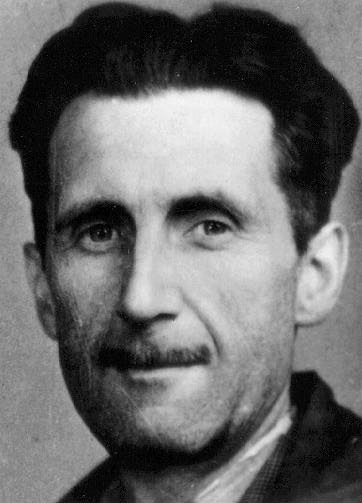
George Orwell on the Atomic Bomb

George_Orwell_press_photo

On this day in 1903, Eric Blair (who later adopted the pen name George Orwell) was born in Bihar, India. He’s best known as the author of  “1984”, one of the greatest dystopian novels and a major influence on countless novels and films (and unfortunately, seemingly a prophetic manual for authoritarian surveillance states around the world). Anyone who hasn’t read 1984 by now should definitely read it as soon as possible because it’s more relevant than ever. Many of Orwell’s socio-political predictions of the novel are shockingly accurate though descriptions of some technologies may be dated. As Robert Montgomerie noted in a recent OpEdNew.com article, 1984 also describes different stages many working within a system may experience as they come to terms with its fascist nature: apathy, cognitive dissonance, awakening, passive aggressive rebellion, and salvation through confession.

On October 19, 1945, two months after atomic bombs were dropped over Hiroshima and Nagasaki (a holocaust which many are only now realizing was not morally defensible), he wrote the following essay which hints at some of the themes covered in greater detail in the novel 1984 which was published in 1949:


You and the Atomic Bomb

By George Orwell

Considering how likely we all are to be blown to pieces by it within the next five years, the atomic bomb has not roused so much discussion as might have been expected. The newspapers have published numerous diagrams, not very helpful to the average man, of protons and neutrons doing their stuff, and there has been much reiteration of the useless statement that the bomb ‘ought to be put under international control.’ But curiously little has been said, at any rate in print, about the question that is of most urgent interest to all of us, namely: ‘How difficult are these things to manufacture?’

Such information as we — that is, the big public — possess on this subject has come to us in a rather indirect way, apropos of President Truman’s decision not to hand over certain secrets to the USSR. Some months ago, when the bomb was still only a rumour, there was a widespread belief that splitting the atom was merely a problem for the physicists, and that when they had solved it a new and devastating weapon would be within reach of almost everybody. (At any moment, so the rumour went, some lonely lunatic in a laboratory might blow civilisation to smithereens, as easily as touching off a firework.)

Had that been true, the whole trend of history would have been abruptly altered. The distinction between great states and small states would have been wiped out, and the power of the State over the individual would have been greatly weakened. However, it appears from President Truman’s remarks, and various comments that have been made on them, that the bomb is fantastically expensive and that its manufacture demands an enormous industrial effort, such as only three or four countries in the world are capable of making. This point is of cardinal importance, because it may mean that the discovery of the atomic bomb, so far from reversing history, will simply intensify the trends which have been apparent for a dozen years past.

It is a commonplace that the history of civilisation is largely the history of weapons. In particular, the connection between the discovery of gunpowder and the overthrow of feudalism by the bourgeoisie has been pointed out over and over again. And though I have no doubt exceptions can be brought forward, I think the following rule would be found generally true: that ages in which the dominant weapon is expensive or difficult to make will tend to be ages of despotism, whereas when the dominant weapon is cheap and simple, the common people have a chance. Thus, for example, tanks, battleships and bombing planes are inherently tyrannical weapons, while rifles, muskets, long-bows and hand-grenades are inherently democratic weapons. A complex weapon makes the strong stronger, while a simple weapon — so long as there is no answer to it — gives claws to the weak.

The great age of democracy and of national self-determination was the age of the musket and the rifle. After the invention of the flintlock, and before the invention of the percussion cap, the musket was a fairly efficient weapon, and at the same time so simple that it could be produced almost anywhere. Its combination of qualities made possible the success of the American and French revolutions, and made a popular insurrection a more serious business than it could be in our own day. After the musket came the breech-loading rifle. This was a comparatively complex thing, but it could still be produced in scores of countries, and it was cheap, easily smuggled and economical of ammunition. Even the most backward nation could always get hold of rifles from one source or another, so that Boers, Bulgars, Abyssinians, Moroccans — even Tibetans — could put up a fight for their independence, sometimes with success. But thereafter every development in military technique has favoured the State as against the individual, and the industrialised country as against the backward one. There are fewer and fewer foci of power. Already, in 1939, there were only five states capable of waging war on the grand scale, and now there are only three — ultimately, perhaps, only two. This trend has been obvious for years, and was pointed out by a few observers even before 1914. The one thing that might reverse it is the discovery of a weapon — or, to put it more broadly, of a method of fighting — not dependent on huge concentrations of industrial plant.

From various symptoms one can infer that the Russians do not yet possess the secret of making the atomic bomb; on the other hand, the consensus of opinion seems to be that they will possess it within a few years. So we have before us the prospect of two or three monstrous super-states, each possessed of a weapon by which millions of people can be wiped out in a few seconds, dividing the world between them. It has been rather hastily assumed that this means bigger and bloodier wars, and perhaps an actual end to the machine civilisation. But suppose — and really this the likeliest development — that the surviving great nations make a tacit agreement never to use the atomic bomb against one another? Suppose they only use it, or the threat of it, against people who are unable to retaliate? In that case we are back where we were before, the only difference being that power is concentrated in still fewer hands and that the outlook for subject peoples and oppressed classes is still more hopeless.

When James Burnham wrote The Managerial Revolution it seemed probable to many Americans that the Germans would win the European end of the war, and it was therefore natural to assume that Germany and not Russia would dominate the Eurasian land mass, while Japan would remain master of East Asia. This was a miscalculation, but it does not affect the main argument. For Burnham’s geographical picture of the new world has turned out to be correct. More and more obviously the surface of the earth is being parceled off into three great empires, each self-contained and cut off from contact with the outer world, and each ruled, under one disguise or another, by a self-elected oligarchy. The haggling as to where the frontiers are to be drawn is still going on, and will continue for some years, and the third of the three super-states — East Asia, dominated by China — is still potential rather than actual. But the general drift is unmistakable, and every scientific discovery of recent years has accelerated it.

We were once told that the aeroplane had ‘abolished frontiers’; actually it is only since the aeroplane became a serious weapon that frontiers have become definitely impassable. The radio was once expected to promote international understanding and co-operation; it has turned out to be a means of insulating one nation from another. The atomic bomb may complete the process by robbing the exploited classes and peoples of all power to revolt, and at the same time putting the possessors of the bomb on a basis of military equality. Unable to conquer one another, they are likely to continue ruling the world between them, and it is difficult to see how the balance can be upset except by slow and unpredictable demographic changes.

For forty or fifty years past, Mr. H. G. Wells and others have been warning us that man is in danger of destroying himself with his own weapons, leaving the ants or some other gregarious species to take over. Anyone who has seen the ruined cities of Germany will find this notion at least thinkable. Nevertheless, looking at the world as a whole, the drift for many decades has been not towards anarchy but towards the reimposition of slavery. We may be heading not for general breakdown but for an epoch as horribly stable as the slave empires of antiquity. James Burnham’s theory has been much discussed, but few people have yet considered its ideological implications — that is, the kind of world-view, the kind of beliefs, and the social structure that would probably prevail in a state which was at once unconquerable and in a permanent state of ‘cold war’ with its neighbors.

Had the atomic bomb turned out to be something as cheap and easily manufactured as a bicycle or an alarm clock, it might well have plunged us back into barbarism, but it might, on the other hand, have meant the end of national sovereignty and of the highly-centralised police state. If, as seems to be the case, it is a rare and costly object as difficult to produce as a battleship, it is likelier to put an end to large-scale wars at the cost of prolonging indefinitely a ‘peace that is no peace’.


Immortal Words from George Carlin

George Carlin in 2004.

Six years ago today George Carlin, one of the great American comedian/social critics, died of heart failure. It’s often assumed that people mellow with age but Carlin’s life and career is proof that the opposite can be true. Throughout much of the 60s, Carlin’s brand of comedy was good but rather mainstream and not outstanding. During the 70s, he reinvented himself, becoming one of the top counterculture comedians of the era. Carlin continued to make occasional appearances in mainstream film and television (eg. “Outrageous Fortune” and the Bill and Ted films), but from around the late 90s to 2008, his counterculture sensibilities came back with a vengeance. At the time, his later material didn’t seem to resonate with audiences as much as his material from the 70s. It was even more edgy, dark, and pessimistic, probably too much for the aging boomer demographic that previously made up the majority of his fanbase. However, for younger audiences discovering Carlin through the internet his words reflected the reality of the world as effects of increasingly corrupt political and economic systems could no longer be kept hidden by corporate media.

The following clip exemplifies what many people around the world love most about George Carlin and will forever remember him for:

Transcript

But there’s a reason… there’s a reason. There’s a reason for this, there’s a reason education SUCKS, and it’s the same reason it will never, ever, EVER be fixed.

It’s never going to get any better, don’t look for it, be happy with what you’ve got.

Because the owners, the owners of this country don’t want that. I’m talking about the real owners now, the BIG owners! The Wealthy… the REAL owners! The big wealthy business interests that control things and make all the important decisions.

Forget the politicians. They are irrelevant. The politicians are put there to give you the idea that you have freedom of choice. You don’t. You have no choice! You have OWNERS! They OWN YOU. They own everything. They own all the important land. They own and control the corporations. They’ve long since bought, and paid for the Senate, the Congress, the state houses, the city halls, they got the judges in their back pockets and they own all the big media companies, so they control just about all of the news and information you get to hear. They got you by the balls.

They spend billions of dollars every year lobbying, lobbying, to get what they want. Well, we know what they want. They want more for themselves and less for everybody else, but I’ll tell you what they don’t want:

They don’t want a population of citizens capable of critical thinking. They don’t want well informed, well educated people capable of critical thinking. They’re not interested in that. That doesn’t help them. Thats against their interests.

Thats right. They don’t want people who are smart enough to sit around a kitchen table and think about how badly they’re getting fucked by a system that threw them overboard 30 fucking years ago. They don’t want that!

You know what they want? They want obedient workers. Obedient workers, people who are just smart enough to run the machines and do the paperwork. And just dumb enough to passively accept all these increasingly shitty jobs with the lower pay, the longer hours, the reduced benefits, the end of overtime and vanishing pension that disappears the minute you go to collect it, and now they’re coming for your Social Security money. They want your retirement money. They want it back so they can give it to their criminal friends on Wall Street, and you know something? They’ll get it. They’ll get it all from you sooner or later cause they own this fucking place! It’s a big club, and you ain’t in it! You, and I, are not in the big club.

By the way, it’s the same big club they use to beat you over the head with all day long when they tell you what to believe. All day long beating you over the head with their media telling you what to believe, what to think and what to buy. The table has tilted folks. The game is rigged and nobody seems to notice. Nobody seems to care! Good honest hard-working people; white collar, blue collar it doesn’t matter what color shirt you have on. Good honest hard-working people continue, these are people of modest means, continue to elect these rich cock suckers who don’t give a fuck about you….they don’t give a fuck about you… they don’t give a FUCK about you.

They don’t care about you at all… at all… AT ALL. And nobody seems to notice. Nobody seems to care. Thats what the owners count on. The fact that Americans will probably remain willfully ignorant of the big red, white and blue dick thats being jammed up their assholes everyday, because the owners of this country know the truth.

It’s called the American Dream because you have to be asleep to believe it.