Is Open-Ended Chaos the Desired US-Israeli Aim in the Middle East?

98412608_second day of war in Iraq

By Thomas S. Harrington

Source: Counterpunch

During the last week we have seen Sunni militias take control of ever-greater swathes of eastern Syria and western Iraq. In the mainstream media, the analysis of this emerging reality has been predictably idiotic, basically centering on whether:

a) Obama is to blame for this for having removed US troops in compliance with the 2008 Status of Forces Agreement (SOFA) negotiated and signed by Bush.

b) Obama is “man enough” to putatively resolve the problem by going back into the country and killing more people and destroying whatever remains of the country’s infrastructure.

This cynically manufactured discussion has generated a number of intelligent rejoinders on the margins of the mainstream media system. These essays, written by people such as Juan Cole, Robert Parry, Robert Fisk and Gary Leupp, do a fine job of explaining the US decisions that led to the present crisis, while simultaneously reminding us how everything occurring  today was readily foreseeable as far back as 2002.

What none of them do, however, is consider whether the chaos now enveloping the region might, in fact, be the desired aim of policy planners in Washington and Tel Aviv.

Rather, each of these analysts presumes that the events unfolding in Syria and Iraq are undesired outcomes engendered by short-sighted decision-making at the highest levels of the US government over the last 12 years.

Looking at the Bush and Obama foreign policy teams—no doubt the most shallow and intellectually lazy members of that guild to occupy White House in the years since World War II—it is easy to see how they might arrive at this conclusion.

But perhaps an even more compelling reason for adopting this analytical posture is that it allows these men of clear progressive tendencies to maintain one of the more hallowed, if oft-unstated, beliefs of the Anglo-Saxon world view.

What is that?

It is the idea that our engagements with the world outside our borders—unlike those of, say, the Russians and the Chinese—are motivated by a strongly felt, albeit often corrupted, desire to better the lives of those whose countries we invade.

While this belief seems logical, if not downright self-evident within our own cultural system, it is frankly laughable to many, if not most, of the billions who have grown up outside of our moralizing echo chamber.

What do they know that most of us do not know, or perhaps more accurately, do not care to admit?

First, that we are an empire, and that all empires are, without exception, brutally and programmatically self-seeking.

Second, that one of the prime goals of every empire is to foment ongoing internecine conflict in the territories whose resources and/or strategic outposts they covet.

Third, that the most efficient way of sparking such open-ended internecine conflict is to brutally smash the target country’s social matrix and physical infrastructure.

Fourth, that ongoing unrest has the additional perk of justifying the maintenance and expansion of the military machine that feeds the financial and political fortunes of the metropolitan elite.

In short, what of the most of the world understands (and what even the most “prestigious” Anglo-Saxon analysts cannot seem to admit) is that divide and rule is about as close as it gets to a universal recourse the imperial game and that it is, therefore, as important to bear it in mind today as it was in the times of Alexander the Great, Julius Caesar, the Spanish Conquistadors and the British Raj.

To those—and I suspect there are still many out there—for whom all this seems too neat or too conspiratorial, I would suggest a careful side-by side reading of:

a) the “Clean Break” manifesto generated by the Jerusalem-based Institute for Advanced Strategic and Political Studies (IASPS) in 1996

and

b) the “Rebuilding America’s Defenses” paper generated by The Project for a New American Century (PNAC) in 2000, a US group with deep personal and institutional links to the aforementioned Israeli think tank, and with the ascension of  George Bush Junior to the White House, to the most exclusive  sanctums of the US foreign policy apparatus.

To read the cold-blooded imperial reasoning in both of these documents—which speak, in the first case, quite openly of the need to destabilize the region so as to reshape Israel’s “strategic environment” and, in the second of the need to dramatically increase the number of US “forward bases” in the region—as I did twelve years ago, and to recognize its unmistakable relationship to the underlying aims of the wars then being started by the US in Afghanistan and Iraq, was a deeply disturbing experience.

To do so now, after the US’s systematic destruction of Iraq and Libya—two notably oil-rich countries whose delicate ethnic and religious balances were well known to anyone in or out of government with more than passing interest in history—, and after the its carefully calibrated efforts to generate and maintain murderous and civilization-destroying stalemates in Syria and Egypt (something that is easily substantiated despite our media’s deafening silence on the subject), is downright blood-curdling.

And yet, it seems that for even very well-informed analysts, it is beyond the pale to raise the possibility that foreign policy elites in the US and Israel, like all virtually all the ambitious hegemons before them on the world stage, might have quite coldly and consciously fomented open-ended chaos in order to achieve their overlapping strategic objectives in this part of the world.

Thomas S. Harrington is a professor of Iberian Studies at Trinity College in Hartford, Connecticut and the author of the recently released  Livin’ la Vida Barroca: American Culture in a Time of Imperial Orthodoxies.

Ralph Nader: “The Total Support Of The Military-industrial Complex And Empire By Barack Obama And Hillary Clinton Is Staggering”

ralph_nader

Source: Reason.com via Investment Watch

“The total support of the military-industrial complex and empire by Barack Obama and Hillary Clinton is staggering,” Ralph Nader tells Reason TV.

Nader’s latest book is Unstoppable: The Emerging Left-Right Alliance to Dismantle the Corporate State.

To watch the full hour-long interview and read a transcript go to http://reason.com/reasontv/2014/06/11/ralph-nader.

Saturday Matinee: Documentary Double Feature

MV5BMTQxMjMzMTczM15BMl5BanBnXkFtZTcwNzg5MzUyMQ@@._V1_SY317_CR4,0,214,317_AL_MV5BMTM4Nzk5Mzk4N15BMl5BanBnXkFtZTcwNTk5OTgyMQ@@._V1_SY317_CR5,0,214,317_AL_

Today I’m featuring two classic political documentaries, both more than a decade old (from 2003) yet still equally topical and among the best films on their respective subject matters.

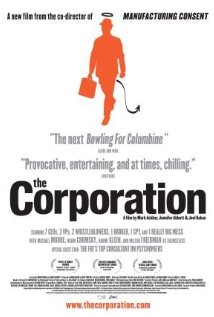
The first is Mark Achbar and Jennifer Abbott’s “The Corporation”, a comprehensive and well-researched film exploring the history of corporations, how they operate and how they’ve come to attain so much political power. Related topics they cover include the 1933 attempted corporate coup exposed by General Smedley Butler, the Fox news coverup of the dangers of Monsanto’s Bovine Growth Hormone, and the mass protests in Bolivia sparked by the attempted privatization of their water supply in 2000.

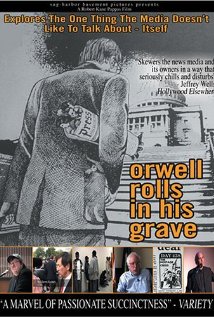
“Orwell Rolls in His Grave” directed by Robert Kane Pappas is possibly the best dissection of contemporary mass media propaganda yet, with a focus on corporate media consolidation and the role of corporate media in the controversial US presidential election of 2000. The film features interviews with Mark Crispin Miller, Bernie Sanders and Danny Schechter among others.

Podcast Roundup

6/8: Hosts Mickey Huff and Peter Phillips discuss the ongoing situation in the Ukraine with Dr. Michael Parenti, Prof. Michel Chossudovsky, and former Congresswomen and Green Party Presidential candidate Cynthia McKinney on “the Project Censored Show”. All of them are contributors to a new book by Clarity Press edited by Stephen Lendman, “Flashpoint Ukraine: How the US Drive for Hegemony Risks WWIII.”

https://s3.amazonaws.com/Pcradiodos/Project+Censored+060614.mp3

6/9: On “the Progressive Commentary Hour”, host Gary Null interviews Dr. Andrew Wakefield, a gastroenterologist and academician specializing in inflammatory bowel disease and the measles-mumps-rubella vaccine or MMR. They discuss how the US government uses corporations and universities to support policies, silence top scientists, jeopardize public health and protect corporate profits.

http://s36.podbean.com/pb/3f11f4e516587793b6f2d38475623afc/5398ccbc/data1/blogs18/371244/uploads/ProgressiveCommentaryHour_060914.mp3

6/10: On “the Higherside Chats”, Adam Gorightly and Vyzygoth joins host Greg Carlwood for a freewheeling but illuminating conversation about the suppressed history of the United States hidden beneath lies and disinformation most have been led to believe.

http://thehighersidechats.com/wp-content/uploads/2014/06/112-Vyzygoth.mp3

6/12: KMO talks with Vincent Horn of Buddhist Geeks on the lastest C-Realm podcast. They discuss the use of mindfulness techniques in technological society and its connection to DIY, Quanitifed Self and Maker movements. KMO wraps up with commentary on the nature of individualism and community.

http://www.c-realm.com/wp-content/uploads/418_Adaptive_Comtemplation.mp3


Deep Anger

rage-super-rage

By Darren Fleet with Stefanie Krasnow

Source: Adbusters

In a better world, there’d be no reason to write this. In that world, plastic bags would be outlawed, rednecks would voluntarily stop driving those obnoxious Ford F-350s and the yogis in yuppie neighborhoods would stop believing that a hybrid SUV could save the planet. But that’s not the world we live in.

In this world, when push comes to shove, most of us are too comfortable to care, too polite to speak out. With so much at stake we need to rediscover something we lost along the way: our anger.

I’ve been around a while now and all I can say is that everything has gotten worse. Deforestation. Species extinction. Overfishing. Melting glaciers. CO2 through the roof. We won a few symbolic victories here and there, but the big picture is total loss. And that’s why this isn’t your standard a-better-world-is-possible-peace-and-love-we’re-all-in-this-together-be-the-change-you-want-to-see circle jerk that has become the cachet of an entire generation of professional activists.

I’m a child of the “awareness generation,” the one who grew up learning to reduce, reuse and recycle. I remember first learning about global warming and climate change in high school in the 90s. Back then it was called the Greenhouse Gas Effect. Most of my early environmental knowledge came from classroom videos about acid rain, slash-and-burn logging in the Amazon and the hole in the ozone layer. There was also the slogan “think globally, act locally” plastered across my Social Studies 11 class wall. Those of us who cared two cents about anything believed in that mantra religiously, even though by that point almost everything around us—the school supplies, the clothes on our backs, even the food in our stomachs—came from across an ocean.

At the same time that we were learning to be more conscientious about our market choices, the global bazaar was pried open by the WTO, NAFTA and GATT trade regimes, effectively eliminating any possibility we had to make truly environmental choices. Before we were even old enough to know about our carbon footprint, it was already ten times that of a kid in the developing world. Meanwhile, our history books were full of inspirational Gandhi, MLK and Mandela quotes, all driving home the point that change, even revolution, was sentimental, nice, easy, positive. The first time the cops threatened to arrest us at an environmental protest, we shit our pants. Turns out positivity has its limits. And that’s exactly how we got into this mess.

There’s nothing worse than interorganizational bitching, especially among environmental campaigners and NGOs. We’re like a bunch of abused children taking out our frustrations on each other when we should be unified and directing our focus elsewhere. But since we don’t have the collective gumption to stand up to the man, we squabble among ourselves; it’s the only way to release the impotent rage we all feel. Even so, I have this to say: every time I see one of my environmental heroes jump on the corporate bandwagon to say some stupid-ass shit about how there are no sides in the climate struggle—how pessimism is an affront to the imagination—my heart breaks.

Recently, best-selling environmental author, TED talker, anthropologist and National Geographic explorer-in-residence Wade Davis went down that road. In an interview with a Vancouver newspaper he reflected proudly on his days as an energy company consultant, saying, “In all these resource conflicts, there are no enemies, only solutions.” This kind of well mannered sweetness, in the face of such a violent problem, is our greatest problem.

So if we’re going to get serious about disrupting an increasingly apocalyptic horizon, we’ve got to challenge the feel-good Hallmark sentiments that inundated my generation. We have to say fuck the TED talks, with their sincere but vacuous optimism. Fuck the positivity gurus claiming the world is not dying, it’s only changing. And fuck environmentalists willing to play nice with Big Oil and Big Energy, saying things like: “you’re not going to stop the tar sands. It’s naive to think you can,” as Davis recently proclaimed. This type of thinking sounds a lot like those fearful souls who thought apartheid was too entrenched to defeat, that Big Tobacco was too rich to take on, that austerity was too fixed to shake—that there’s nothing you, or I, or we can do in the face of a multi-trillion dollar industry. Truth is, nothing on this Earth is inevitable.

Last year, I watched in amazement as a group of radical First Nations scholars brought down the house in Vancouver at an academic conference called Global Power Shifts. Rather than reply with academia’s standard response when confronted with a social issue—“that’s problematic”—they had the guts to take a stand. One in particular, Dr. Glen Coulthard of the Yellowknife Dene, delivered a paper saying that folks on the front-lines of land, climate and environmental battles in Canada are tired of being told not be angry; that given the ongoing process of colonization, theft and exploitation, anger is not only the natural response, but the only moral response.

What he hinted at was a resurgent anger. Deep Anger. The type of anger that overturns tables, defends the weak from the strong, would rather die than live on its knees. Most mainstream environmentalists don’t like this kind of language. It means you have to do more than sign a petition. It means you can’t count miniscule corporate concessions as victories. It means you have to let yourself unravel a bit.

In our culture, anger is seen as impolite, brutish, violent and indulgent. It’s politically incorrect. It makes people squeamish. We’re afraid of anger like we’re afraid of obsessive passion and overt eroticism. Anger is dark and dirty, but Deep Anger is a form of empathy, care, even love.

Psychologists explain that anger is a natural and appropriate response to violating behavior, to situations where our boundaries have been crossed. Not having a say in whether or not ecocide is going to happen—and being asked to participate in a calm and nice debate about whether or not the tar sands should expand or not—is a violation of our boundaries. Yet somehow, we’re expected to smile and keep our imaginations open as if positivity were the goal of the movement.

The great irony is that, despite our civilization’s claim to reason, there is a deep irrationality, a fatal blind spot blocking out emotion and sanity. We’re so deeply in denial about what is happening to our planet that we’re risking our own extinction.

Unless humanity breaks through the denial, unless we start to get angry—fuckin’ angry—then we won’t ever be able to accept the challenge at hand. We won’t ever be able to rise up and face our planetary reality … we won’t ever be able to fight … and we won’t be able to win.

Lee Camp’s Redacted Tonight

index

Activist/comedian Lee Camp, best known for his Moment of Clarity YouTube channel and podcasts (and who follows the fine tradition of stand-up social critics such as George Carlin or Bill Hicks), is host of the new RT program “Redacted Tonight”. Not surprisingly it’s an expert blend of humor and news, and you can watch the entire premier episode here: