Gandhi: ‘My life is my message’

mahatma-gandhi


Robert J. Burrowes

As most of the world ignores or hypocritically celebrates the 147th birthday of Mohandas Karamchand Gandhi on the International Day of Nonviolence on 2 October, some of us will quietly acknowledge his life by continuing to build the world that he envisioned. When asked for his message for the world, Gandhi responded with the now famous line ‘My life is my message’ reflecting his lifelong struggle against violence.

Gandhi’s life was dotted with many memorable quotes but one that is less well known is this: ‘You may never know what results come of your actions but if you do nothing there will be no results’.

Fortunately, there are many committed people who have identified the importance of taking action to end the violence in our world – whether it occurs in the home or on the street, in wars, as a result of economic exploitation or ecological destruction – and this includes the courageous people below. These people have identified themselves as part of the worldwide network, now with participants in 96 countries, committed to ending violence in all of its forms. I would like to share their inspirational stories and invite you to join them.

Christophe Nyambatsi Mutaka is the key figure at the Groupe Martin Luther King which promotes active nonviolence, human rights and peace. The group is based in Goma in the eastern Democratic Republic of the Congo (DRC) in central Africa. They particularly work on reducing sexual and other violence against women.

Also based in Goma, the Association de Jeunes Visionnaires pour le Développement du Congo headed by Leon Simweragi is a youth peace group that works to rehabilitate child soldiers as well as offer meaningful opportunities for the sustainable involvement of young people in matters that affect their lives and those of their community.

Given the phenomenal suffering in the DRC, which has experienced the loss of six million lives and the displacement of eight million people due to the long war driven by Western corporations keen to exploit the country’s mineral wealth, Christophe, Leon and their colleagues are testimony to the fact that committed people strive in the most adverse of circumstances.

Tess Burrows in the UK is an adventurer (including parachutist, mountaineer, cyclist and marathon runner), peace activist, author, speaker, healer, and ‘most importantly a mother and grandmother’. In her words: ‘I am dedicated to the pursuit of World Peace and the healing of the Earth.’ Tess has written several books and, if you are looking for inspiration, I suggest you try these: ‘Cry from the Highest Mountain’ (describing a climb to the point furthest from the centre of the Earth), ‘Cold Hands, Warm Heart’ (describing a trek across the coldest, driest, windiest place on Earth: the Geographic South Pole), ‘Touch the Sky’ (describing her climb of Mt Kilimanjaro, in Africa’s heartland, pulling a car tyre which included peace messages from every nation on Earth and embodying their desire for everyone to pull together to promote peace) and her latest book ‘Soft Courage’. Her video ‘Climb For Tibet’ won’t bore you either! The funds raised from sales of the books and donations have, among other things, built six schools in Tibet and supported a Maasai community tree-planting project in Africa. Tess collects messages of peace from individuals and speaks them out from ‘far high places’. So far, this has included the North and South Poles, the Himalayas, Andes, Pacific and Africa. You can be part of her next Peace Climb in Australasia by writing your personal message on her website where you can also check out her books. Be warned however, this website will exhaust you!

Recently, on the International Day of Peace, the Afghan Peace Volunteers and Borderfree Street Kids in Kabul, mentored by Dr Teck Young Wee (Hakim), reached out to the visually impaired and blind students at Rayaab (Rehabilitation Services for the Blind Afghanistan). They brought MP3 players as gifts to 50 visually impaired students. The students will use the MP3 players to listen to recorded school lessons and educational programs. Rayaab is an Afghan non-governmental organization run by Mahdi Salami and his wife Banafsha, who are themselves visually impaired. If you want to see photos from this day, and to watch an extraordinary three minute video, you can do so at ‘To Touch a Colourful Afghanistan‘.

Kristin Christman in the USA continues her tireless efforts to make our world more peaceful by seeking to understand the deeper drivers of conflict while offering practical steps forward. She is currently working on a book based on her monumental ‘Taxonomy of Peace: A Comprehensive Classification of the Roots and Escalators of Violence and 650 Solutions for Peace‘. A recent rather personal article offers insight into her approach: ‘Make serving in war an option, not an order‘ and illustrates how violence is ‘built-into’ society.

Ghanaian Gifty A. Korankye has just developed a new website titled ‘Daughters of Africa‘. Explaining why, she writes: ‘Over the years I watched women go through unbearable pain …. Our daughters go through FGM in their puberty…. The humiliation we face when we lose our spouse, all in the name of customs and tradition.’ Determined to help address the issues that plague many African women she wants to give them the chance to be ‘a useful voice to our communities’, to share the success stories of African women and African-American women in business administration, the entertainment industry and elsewhere in order to share learning from their journeys and to ‘help mentor our young generation’. She invites African women to write to share their stories and work together to find solutions. ‘We
can do it because we are daughters of Africa.’

So what about you? Do you believe that ending human violence is possible? Even if you believe that it is not, do you believe that it is worth trying? As Gandhi noted: ‘The future depends on what we do in the present.’ What will you do?

In essence, working to end human violence and to create a world of peace, justice and ecological sustainability for all life on Earth might not be what gets you out of bed in the morning. But if it is or you would like it to be, you are welcome to join those of us who are committed to striving for this outcome by signing the online pledge of ‘The People’s Charter to Create a Nonviolent World’.

And if you subscribe to Gandhi’s belief that ‘Earth provides enough to satisfy every [person’s] needs, but not every [person’s] greed’, then you might consider participating in ‘The Flame Tree Project to Save Life on Earth‘ which he inspired as well.

Each of us has a choice. We can stand aside in the great fight for survival in which humanity is now engaged. Or we can be involved. What is your choice?

The bottom line is this: What will be the message of your life?


Biodata: Robert J. Burrowes has a lifetime commitment to understanding and ending human violence. He has done extensive research since 1966 in an effort to understand why human beings are violent and has been a nonviolent activist since 1981. He is the author of ‘Why Violence?‘.
His email address is flametree@riseup.net
and his website is at http://robertjburrowes.wordpress.com


Robert J. Burrowes
P.O. Box 68
Daylesford
Victoria 3460
Australia
Email: flametree@riseup.net

Websites:
Nonviolence Charter
Flame Tree Project to Save Life on Earth
‘Why Violence?’
Nonviolent Campaign Strategy
Nonviolent Defense/Liberation Strategy
Anita: Songs of Nonviolence
Robert Burrowes
Global Nonviolence Network

An Open Letter to the People of the United States: Election or Revolution?

votefornobody

(Editor’s note: While we do believe positive change is possible on a local level through grass-roots campaigns and voter initiatives, until major systemic changes are forced into existence we have no reason to expect anything from presidential politics other than what we’ve been subjected to for the past few decades.)

By Robert J. Burrowes

As citizens of the USA with a presidential election approaching you have a wonderful opportunity to ponder whether to participate in this election or to participate in the ongoing American Revolution.

Your first revolution might have overthrown the authority of the British monarchy and aristocracy but the one in progress must remove the US elite which has executed a political coup against your government. And you cannot remove elite coupmakers in a fraudulently conducted election in which the ‘choice’ is essentially between two violently insane individuals, each of whom represents the violently insane US elite. See ‘The Global Elite is Insane‘ and ‘Why Violence?

The real value of this second revolution, which moves along steadily with routine outbreaks over a multitude of peace, environmental and social justice issues and occasional ‘uprisings’, such as the Occupy Movement in 2011 which spawned a range of new and visionary initiatives, is that it could give citizens of your country the chance to finally reclaim the Republic for those people who genuinely care about ‘life, liberty and the pursuit of happiness’. And, just as importantly, have sufficient vision to regard these aspirations as something to be shared with the entire US population, starting with Native Americans, and even those of us in the rest of the world including those countries that are currently victims of US elite violence, whether it be wars, drone strikes, coups, economic exploitation or ecological destruction.

Such a revolution might rewrite your constitution and replace the second amendment ‘right of the people to keep and bear arms’ with the right to live free of the fear of gun violence. It might result in a form of social organization that distributes wealth equitably (perhaps by actually taxing the wealthy and outlawing the use of offshore tax havens) while reallocating the annual military (killing) budget to life-enhancing projects such as poverty alleviation, affordable housing, free education, free healthcare, clean water, renewable energy technologies, and a substantial budget for compensation to those countries that the US elite has systematically exploited or simply destroyed during the past 200 years. This would allow the 50 million US citizens who live in poverty, and another billion people around the world who also live in poverty, the chance to live a decent life.

Now, you might ask, ‘How are we, the ordinary citizens of the United States, even with our handguns, rifles and assault weapons, going to take on the US military and police to remove elite control of our government?’ Well, the answer is that you do not need even one weapon for this ongoing revolution and, in fact, you are vastly better off without them. Weapons have only one use – to kill people – and any revolution worth the name has a more profoundly ambitious aim than this.

What you need is intelligence, commitment, courage and a sound nonviolent strategy. The US elite controls your government and has crippled your republic because, over successive generations, you have let them. Every time you cooperate with the elite, because you are scared, by paying your taxes (more than 50% of which finances US wars and other military violence), putting your money into their corporate banks, shopping at their corporate shopping malls, buying and consuming the ‘news’ presented by their corporate media, rationalizing their policies as reasonable, participating in their unjust and violent legal system, fighting (as an enlisted person or as a mercenary) in their military forces, working in their prison system, accepting exploited employment of any kind, eating their poisoned and genetically mutilated foods (GMOs), going along with their endless attempts to divide you along racial, class, religious and other lines, you simply consent to their control. Why?

You have a simple alternative. Consciously and systematically participate in the ongoing nonviolent revolution that is already taking place and give it added life by your presence. Remake the US republic as you want it by withdrawing your cooperation with elite structures and processes while creating alternatives that meet your needs and the needs of those around you.

Join those US visionaries who are creating cooperatives where people are both managers and valued workers, take your money out of elite banks and put it into financial organizations that exist or which you create to serve the interests of their members (or, if you prefer, use LETSystems), refuse to participate in or pay for (with your taxes) US imperialism (and win friends all over the world), grow or buy healthy locally-grown organic/biodynamic (and, if you are concerned about the climate catastrophe as well, vegetarian) food, read progressive news outlets so that you know what is really going on in the USA and the world, read literature that deepens your understanding and concern for humanity and doesn’t just offer you a distraction from the horror in which you live, and support or even become one of those many fine nonviolent activists in your country who take personal risks in the struggle to create a better world.

If you want more of what you have, then you should vote and/or buy a gun. They have an equivalent outcome: they both legitimize elite violence and exploitation directed at you and those you love.

If you want to participate in this second and ongoing American revolution, then spend your time participating in the wholesome activities that many grassroots organizations already offer and in creating its next manifestations in your own neighborhood. It is the powerful conscience-based choices that you make as an individual that define your Self. And it is these choices that will have most impact on your family, neighborhood, community organization, trade union, religious organization and elsewhere and that will help decide the future of the USA and its role in the world.

Now you might say, I do some or even all of the sorts of things you mentioned above, so why not vote too? My answer is simply this: Voting is an act of disempowerment. It’s essential message is ‘I appoint you to govern for me’. I prefer to govern myself (both meanings intended). And you?

So what of those who present the ‘lesser evil’ argument: one candidate is so bad that it is better to have the other. This ‘argument’ is not worthy of scrutiny. If you are deceived by this argument, you will vote forever in the delusional hope that you will one day get a choice to vote for someone genuinely decent. In 2008, Barack Obama was supposed to be the candidate of hope and change. Did you get that hope and change? Are you going to get it with Clinton or Trump? Of course not. Elites simply ensure that change via the electoral system cannot happen; its function is to absorb and dissipate our dissent.

If you vote you are saying that you endorse this system of electoral exploitation. The tragedy is that even third-party candidates, who may be people of genuine principle, have no chance. Even worse, they add a veneer of legitimacy to your corrupt electoral system.

In essence, if you vote for the ‘lesser evil’ you are still voting for an ‘evil’ and, more importantly, you have participated in and endorsed an ‘evil’ system: one which denies you a genuine ‘free and fair’ choice to vote for a candidate who actually represents your interests and views and has a reasonable chance of winning. And, having won, is then able to actually implement their policies (rather than be stymied by a power structure that has no intention of letting this happen). Given your circumstances, ‘the only winning move is not to play’ their corrupt game and to put your energy into a genuinely winning move: working for the regeneration of American society.

Look at it this way. If there are two rotten eggs, would you choose the one that is less rotten and eat it? Presumably you would seek another option and only after you have identified and fixed what is causing the problem in the first place. The point is this: Unless you spend your time deeply contemplating the nature of the society in which you want to live and then devoting your time and energy into creating that society, you will never have it. And you have betrayed yourself.

The reality is that either Clinton or Trump is going to be president of the USA for the next four years and a lot of people (both in the US but particularly in foreign countries) are going to die because of it (through US military violence and corporate exploitation). What we can do is to invest our political energy into creating a United States in which, at some point in the future, the likes of Clinton and Trump, and those they represent, no longer drive outcomes in our world.

To reiterate: I am not saying ‘Don’t vote and do nothing’ (as so many people do already). I am suggesting that you ponder the dysfunctionality of your society, do some research into the secretive ‘deep state’ (or military-industrial complex or power elite or the 1% or however you wish to describe it) that controls your ‘republic’ with its electoral system designed to delude you into believing that you have a say in governing your nation, and then consider how you want to engage politically and act in accord with your conscience in doing so. It is only by doing this that we will have any chance of getting the society and the world that we want, even if it is beyond our lifetimes (and assuming we can avert extinction at our own hand in the meantime).

In summary, profound change only occurs from the ‘bottom up’ when enough ordinary people take the initiative to remake their own society. And if you are really interested in doing this, one important place to start is by reviewing the way in which you nurture children. See ‘My Promise to Children‘.

Other straightforward options, in addition to those mentioned above, include participation in ‘The Flame Tree Project to Save Life on Earth‘ and signing the online pledge of ‘The People’s Charter to Create a Nonviolent World‘.

But for those of you who are serious strategic thinkers, I have outlined a strategy for removing coupmakers on the website Nonviolent Defense/Liberation Strategy which is a straightforward presentation of the more detailed explanation offered in the book
The Strategy of Nonviolent Defense: A Gandhian Approach‘.

Is our destiny in our own hands? Only if we have enough people of courage to accept responsibility for it. Are you one of them?


Biodata: Robert J. Burrowes has a lifetime commitment to understanding
and ending human violence. He has done extensive research since 1966 in
an effort to understand why human beings are violent and has been a
nonviolent activist since 1981. He is the author of ‘Why Violence?
His email address is flametree@riseup.net
and his website is at http://robertjburrowes.wordpress.com


Robert J. Burrowes
P.O. Box 68
Daylesford
Victoria 3460
Australia
Email: flametree@riseup.net

Websites:
Nonviolence Charter
Flame Tree Project to Save Life on Earth
‘Why Violence?’
Nonviolent Campaign Strategy
Nonviolent Defense/Liberation Strategy
Anita: Songs of Nonviolence
Robert Burrowes
Global Nonviolence Network

The Party’s Over: Beyond Politics, Beyond Democracy

illusionofvote

Source: CrimethInc.

Nowadays, democracy rules the world. Communism is long dead, elections are taking place even in Afghanistan and Iraq, and world leaders are meeting to plan the “global community” we hear so much about. So why isn’t everybody happy, finally? For that matter-why do so few of the eligible voters in the United States, the world’s flagship democracy, even bother to vote?

Could it be that democracy, long the catchword of every revolution and rebellion, is simply not democratic enough? What could be the problem?
Every little child can grow up to be President

No, they can’t. Being President means occupying a position of hierarchical power, just like being a billionaire: for every person who is President, there have to be millions who are not. It’s no coincidence that billionaires and Presidents tend to rub shoulders; both exist in a privileged world off limits to the rest of us. Speaking of billionaires, our economy isn’t exactly democratic-capitalism distributes resources in absurdly unequal proportions, and you have to start with resources if you’re ever going to get elected.

Even if it was true that anyone could grow up to be President, that wouldn’t help the millions who inevitably don’t, who must still live in the shadow of that power. This imbalance is intrinsic to the structure of representative democracy, at the local level as much as at the top. The professional politicians of a town council discuss municipal affairs and pass ordinances all day without consulting the citizens of the town, who have to be at work; when one of those ordinances displeases citizens, they have to use what little leisure time they have to contest it, and then they’re back at work again the next time the town council meets. In theory, the citizens could elect a different town council from the available pool of politicians and would-be politicians, but the interests of politicians as a class always remain essentially at odds with their own-besides, voting fraud, gerrymandering, and inane party loyalty usually prevent them from going that far. Even in the unlikely scenario that a whole new government was elected consisting of firebrands intent on undoing the imbalance of power between politicians and citizens, they would inevitably perpetuate it simply by accepting roles in the system-for the political apparatus itself is the foundation of that imbalance. To succeed in their objective, they would have to dissolve the government and join the rest of the populace in restructuring society from the roots up.

But even if there were no Presidents or town councils, democracy as we know it would still be an impediment to freedom. Corruption, privilege, and hierarchy aside, majority rule is not only inherently oppressive but also paradoxically divisive and homogenizing at the same time.
The Tyranny of the Majority

If you ever found yourself in a vastly outnumbered minority, and the majority voted that you had to give up something as necessary to your life as water and air, would you comply? When it comes down to it, does anyone really believe it makes sense to accept the authority of a group simply on the grounds that they outnumber everyone else? We accept majority rule because we do not believe it will threaten us-and those it does threaten are already silenced before anyone can hear their misgivings.

The average self-professed law-abiding citizen does not consider himself threatened by majority rule because, consciously or not, he conceives of himself as having the power and moral authority of the majority: if not in fact, by virtue of his being politically and socially “moderate,” then in theory, because he believes everyone would be convinced by his arguments if only he had the opportunity to present them. Majority-rule democracy has always rested on the conviction that if all the facts were known, everyone could be made to see that there is only one right course of action-without this belief, it amounts to nothing more than the dictatorship of the herd. But even if “the” facts could be made equally clear to everyone, assuming such a thing were possible, people still would have their individual perspectives and motivations and needs. We need social and political structures that take this into account, in which we are free from the mob rule of the majority as well as the ascendancy of the privileged class.

Living under democratic rule teaches people to think in terms of quantity, to focus more on public opinion than on what their consciences tell them, to see themselves as powerless unless they are immersed in a mass. The root of majority-rule democracy is competition: competition to persuade everyone else to your position whether or not it is in their best interest, competition to constitute a majority to wield power before others outmaneuver you to do the same-and the losers (that is to say, the minorities) be damned. At the same time, majority rule forces those who wish for power to appeal to the lowest common denominator, precipitating a race to the bottom that rewards the most bland, superficial, and demagogic; under democracy, power itself comes to be associated with conformity rather than individuality. And the more power is concentrated in the hands of the majority, the less any individual can do on her own, whether she is inside or outside that majority.

In purporting to give everyone an opportunity to participate, majority-rule democracy offers a perfect justification for repressing those who don’t abide by its dictates: if they don’t like the government, why don’t they go into politics themselves? And if they don’t win at the game of building up a majority to wield power, didn’t they get their chance? This is the same blame-the-victim reasoning used to justify capitalism: if the dishwasher isn’t happy with his salary, he should work harder so he too can own a restaurant chain. Sure, everyone gets a chance to compete, however unequal-but what about those of us who don’t want to compete, who never wanted power to be centralized in the hands of a government in the first place? What if we don’t care to rule or be ruled?

That’s what police are for-and courts and judges and prisons.
The Rule of Law

Even if you don’t believe their purpose is to grind out nonconformity wherever it appears, you have to acknowledge that legal institutions are no substitute for fairness, mutual respect, and good will. The rule of “just and equal law,” as fetishized by the stockholders and landlords whose interests it protects, offers no guarantees against injustice; it simply creates another arena of specialization, in which power and responsibility are ceded to expensive lawyers and pompous judges. Rather than serving to protect our communities and work out conflicts, this arrangement ensures that our communities’ skills for conflict resolution and self-defense atrophy-and that those whose profession it supposedly is to discourage crime have a stake in it proliferating, since their careers depend upon it.

Ironically, we are told that we need these institutions to protect the rights of minorities-even though the implicit function of the courts is, at best, to impose the legislation of the majority on the minority. In actuality, a person is only able to use the courts to defend his rights when he can bring sufficient force to bear upon them in a currency they recognize; thanks to capitalism, only a minority can do this, so in a roundabout way it turns out that, indeed, the courts exist to protect the rights of at least a certain minority.

Justice cannot be established through the mere drawing up and enforcement of laws; such laws can only institutionalize what is already the rule in a society. Common sense and compassion are always preferable to the enforcement of strict, impersonal regulations. Where the law is the private province of an elite invested in its own perpetuation, the sensible and compassionate are bound to end up as defendants; we need a social system that fosters and rewards those qualities rather than blind obedience and impassivity.
Who Loses?

In contrast to forms of decision-making in which everyone’s needs matter, the disempowerment of losers and out-groups is central to democracy. It is well known that in ancient Athens, the “cradle of democracy,” scarcely an eighth of the population was permitted to vote, as women, foreigners, slaves, and others were excluded from citizenship. This is generally regarded as an early kink that time has ironed out, but one could also conclude that exclusion itself is the most essential and abiding characteristic of democracy: millions who live in the United States today are not permitted to vote either, and the distinctions between citizen and non-citizen have not eroded significantly in 2500 years. Every bourgeois property owner can come up with a thousand reasons why it isn’t practical to allow everyone who is affected to share in decision making, just as no boss or bureaucrat would dream of giving his employees an equal say in their workplace, but that doesn’t make it any less exclusive. What if democracy arose in Greece not as a step in Man’s Progress Towards Freedom, but as a way of keeping power out of certain hands?

Democracy is the most sustainable way to maintain the division between powerful and powerless because it gives the greatest possible number of people incentive to defend that division.

That’s why the high-water mark of democracy-its current ascendancy around the globe-corresponds with unprecedented inequalities in the distribution of resources and power. Dictatorships are inherently unstable: you can slaughter, imprison, and brainwash entire generations and their children will invent the struggle for freedom anew. But promise every man the opportunity to be a dictator, to be able to force the “will of the majority” upon his fellows rather than work through disagreements like a mature adult, and you can build a common front of destructive self-interest against the cooperation and collectivity that make individual freedom possible. All the better if there are even more repressive dictatorships around to point to as “the” alternative, so you can glorify all this in the rhetoric of liberty.
Capitalism and Democracy

Now let’s suspend our misgivings about democracy long enough to consider whether, if it were an effective means for people to share power over their lives, it could be compatible with capitalism. In a democracy, informed citizens are supposed to vote according to their enlightened self-interest-but who controls the flow of information, if not wealthy executives? They can’t help but skew their coverage according to their class interests, and you can hardly blame them-the newspapers and networks that didn’t flinch at alienating corporate advertisers were run out of business long ago by competitors with fewer scruples.

Likewise, voting means choosing between options, according to which possibilities seem most desirable-but who sets the options, who establishes what is considered possible, who constructs desire itself but the wealthy patriarchs of the political establishment, and their nephews in advertising and public relations firms? In the United States, the two-party system has reduced politics to choosing the lesser of two identical evils, both of which answer to their funders before anyone else. Sure, the parties differ over exactly how much to repress personal freedoms or spend on bombs-but do we ever get to vote on who controls “public” spaces such as shopping malls, or whether workers are entitled to the full product of their labor, or any other question that could seriously change the way we live? In such a state of affairs, the essential function of the democratic process is to limit the appearance of what is possible to the narrow spectrum debated by candidates for office. This demoralizes dissidents and contributes to the general impression that they are impotent utopians-when nothing is more utopian than trusting representatives from the owning class to solve the problems caused by their own dominance, and nothing more impotent than accepting their political system as the only possible system.

Ultimately, the most transparent democratic political process will always be trumped by economic matters such as property ownership. Even if we could convene everyone, capitalists and convicts alike, in one vast general assembly, what would prevent the same dynamics that rule the marketplace from spilling over into that space? So long as resources are unevenly distributed, the rich can always buy others’ votes: either literally, or by promising them a piece of the pie, or else by means of propaganda and intimidation. Intimidation may be oblique-“Those radicals want to take away your hard-earned property”-or as overt as the bloody gang wars that accompanied electoral campaigns in nineteenth century America.

Thus, even at best, democracy can only serve its purported purpose if it occurs among those who explicitly oppose capitalism and foreswear its prizes-and in those circles, there are alternatives that make a lot more sense than majority rule.
It’s no coincidence freedom is not on the ballot

Freedom is a quality of activity, not a condition that exists in a vacuum: it is a prize to be won daily, not a possession that can be kept in the basement and taken out and polished up for parades. Freedom cannot be given-the most you can hope is to free others from the forces that prevent them from finding it themselves. Real freedom has nothing to do with voting; being free doesn’t mean simply being able to choose between options, but actively participating in establishing the options in the first place.

If the freedom for which so many generations have fought and died is best exemplified by a man in a voting booth checking a box on a ballot before returning to work in an environment no more under his control than it was before, then the heritage our emancipating forefathers and suffragette grandmothers have left us is nothing but a sham substitute for the liberty they sought.

For a better illustration of real freedom in action, look at the musician in the act of improvising with her companions: in joyous, seemingly effortless cooperation, they create a sonic and emotional environment, transforming the world that in turn transforms them. Take this model and extend it to every one of our interactions with each other and you would have something qualitatively different from our present system-a harmony in human relationships and activity. To get there from here, we have to dispense with voting as the archetypal expression of freedom and participation.

Representative democracy is a contradiction.

No one can represent your power and interests for you-you can only have power by wielding it, you can only learn what your interests are by getting involved. Politicians make careers out of claiming to represent others, as if freedom and political power could be held by proxy; in fact, they are a priest class that answers only to itself, and their very existence is proof of our disenfranchisement.

Voting in elections is an expression of our powerlessness: it is an admission that we can only approach the resources and capabilities of our own society through the mediation of that priest caste. When we let them prefabricate our options for us, we relinquish control of our communities to these politicians in the same way that we have ceded technology to engineers, health care to doctors, and control of our living environments to city planners and private real estate developers. We end up living in a world that is alien to us, even though our labor has built it, for we have acted like sleepwalkers hypnotized by the monopoly our leaders and specialists hold on setting the possibilities.

But we don’t have to simply choose between presidential candidates, soft drink brands, television shows, and political ideologies. We can make our own decisions as individuals and communities, we can make our own delicious beverages and social structures and power, we can establish a new society on the basis of freedom and cooperation.

Sometimes a candidate appears who says everything people have been saying to each other for a long time-he seems to have appeared from outside the world of politics, to really be one of us. By persuasively critiquing the system within its own logic, he subtly persuades people that the system can be reformed-that it could work, if only the right people were in power. Thus a lot of energy that would have gone into challenging the system itself is redirected into backing yet another candidate for office, who inevitably fails to deliver.

But where do these candidates-and more importantly, their ideas and momentum-come from? How do they rise into the spotlight? They only receive so much attention because they are drawing on popular sentiments; often, they are explicitly trying to divert energy from existing grass-roots movements. So should we put our energy into supporting them, or into building on the momentum that forced them to take radical stances in the first place?

More frequently, we are terrorized into focusing on the electoral spectacle by the prospect of being ruled by the worst possible candidates. “What if he gets into power?” To think that things could get even worse!

But the problem is that the government has so much power in the first place-otherwise, it wouldn’t matter as much who held the reigns. So long as this is the case, there will always be tyrants. This is why it is all the more important that we put our energy into the lasting solution of opposing the power of the state.
But what are the alternatives to democracy?
Consensus

Consensus-based decision-making is already practiced around the globe, from indigenous communities in Latin America and direct action groups in Europe to organic farming cooperatives in Australia. In contrast to representative democracy, the participants take part in the decision-making process on an ongoing basis and exercise real control over their daily lives. Unlike majority-rule democracy, consensus process values the needs and concerns of each individual equally; if one person is unhappy with a resolution, it is everyone’s responsibility to find a new solution that is acceptable to all. Consensus-based decision-making does not demand that any person accept others’ power over her, though it does require that everybody consider everyone else’s needs; what it loses in efficiency it makes up tenfold in freedom and accountability. Instead of asking that people accept leaders or find common cause by homogenizing themselves, proper consensus process integrates everyone into a working whole while allowing each to retain his or her own autonomy.
Autonomy

To be free, you must have control over your immediate surroundings and the basic matters of your life. No one is more qualified than you are to decide how you live; no one should be able to vote on what you do with your time and your potential unless you invite them to. To claim these privileges for yourself and respect them in others is to cultivate autonomy.

Autonomy is not to be confused with so-called independence: in actuality, no one is independent, since our lives all depend on each other. The glamorization of self-sufficiency in competitive society is an underhanded way to accuse those who will not exploit others of being responsible for their own poverty; as such, it is one of the most significant obstacles to building community.

In contrast to this Western mirage, autonomy offers a free interdependence between people who share consensus.

Autonomy is the antithesis of bureaucracy. There is nothing more efficient than people acting on their own initiative as they see fit, and nothing more inefficient than attempting to dictate everyone’s actions from above-that is, unless your fundamental goal is to control other people. Top-down coordination is only necessary when people must be made to do something they would never do of their own accord; likewise, obligatory uniformity, however horizontally it is imposed, can only empower a group by disempowering the individuals who comprise it. Consensus can be as repressive as democracy unless the participants retain their autonomy.

Autonomous individuals can cooperate without agreeing on a shared agenda, so long as everyone benefits from everyone else’s participation. Groups that cooperate thus can contain conflicts and contradictions, just as each of us does individually, and still empower the participants. Let’s leave marching under a single flag to the military.

Finally, autonomy entails self-defense. Autonomous groups have a stake in defending themselves against the encroachments of those who do not recognize their right to self-determination, and in expanding the territory of autonomy and consensus by doing everything in their power to destroy coercive structures.
Topless Federations

Independent autonomous groups can work together in federations without any of them wielding authority. Such a structure sounds utopian, but it can actually be quite practical and efficient. International mail delivery and railway travel both work on this system, to name two examples: while individual postal and transportation systems are internally hierarchical, they all cooperate together to get mail or rail passengers from one nation to another without an ultimate authority being necessary at any point in the process. Similarly, individuals who cannot agree enough to work together within one collective can still coexist in separate groups. For this to work in the long run, of course, we need to instill values of cooperation, consideration, and tolerance in the coming generations-but that’s exactly what we are proposing, and we can hardly do worse at this task than the partisans of capitalism and hierarchy have.
Direct Action

Autonomy necessitates that you act for yourself: that rather than waiting for requests to pass through the established channels only to bog down in paperwork and endless negotiations, establish your own channels instead. This is called direct action. If you want hungry people to have food to eat, don’t just give money to a bureaucratic charity organization-find out where food is going to waste, collect it, and share. If you want affordable housing, don’t try to get the town council to pass a bill-that will take years, while people sleep outside every night; take over abandoned buildings, open them up to the public, and organize groups to defend them when the thugs of the absentee landlords show up. If you want corporations to have less power, don’t petition the politicians they bought to put limits on their own masters-take that power from them yourself. Don’t buy their products, don’t work for them, sabotage their billboards and offices, prevent their meetings from taking place and their merchandise from being delivered. They use similar tactics to exert their power over you, too-it only looks valid because they bought up the laws and values of your society long before you were born.

Don’t wait for permission or leadership from some outside authority, don’t beg some higher power to organize your life for you. Take the initiative!
How to Solve Disagreements without Calling the Authorities

In a social arrangement that is truly in the best interest of each participating individual, the threat of exclusion should be enough to discourage most destructive or disrespectful behavior. Even when it is impossible to avoid, exclusion is certainly a more humanitarian approach than prisons and executions, which corrupt police and judges as much as they embitter criminals. Those who refuse to respect others’ needs, who will not integrate themselves into any community, may find themselves banished from social life-but that is still better than exile in the mental ward or on death row, two of the possibilities awaiting such people today. Violence should only be used by communities in self-defense, not with the smug sense of entitlement with which it is applied by our present injustice system. Unfortunately, in a world governed by force, autonomous consensus-based groups are likely to find themselves at odds with those who do not abide by cooperative or tolerant values; they must be careful not to lose those values themselves in the process of defending them.

Serious disagreements within communities can be solved in many cases by reorganizing or subdividing groups. Often individuals who can’t get along in one social configuration have more success cooperating in another setting or as members of parallel communities. If consensus cannot be reached within a group, that group can split into smaller groups that can achieve it internally-such a thing may be inconvenient and frustrating, but it is better than group decisions ultimately being made by force by those who have the most power. As with individuals and society, so with different collectives: if the benefits of working together outweigh the frustrations, that should be incentive enough for people to sort out their differences. Even drastically dissimilar communities still have it in their best interest to coexist peacefully, and must somehow negotiate ways to achieve this…
Living Without Permission

…that’s the most difficult part, of course. But we’re not talking about just another social system here, we’re talking about a total transformation of human relations-for it will take nothing less to solve the problems our species faces today. Let’s not kid ourselves-until we can achieve this, the violence and strife inherent in conflict-based relations will continue to intensify, and no law or system will be able to protect us. In consensus-based structures, there are no fake solutions, no ways to suppress conflict without resolving it; those who participate in them must learn to coexist without coercion and submission.

The first precious grains of this new world can be found in your friendships and love affairs whenever they are free from power dynamics, whenever cooperation occurs naturally. Imagine those moments expanded to the scale of our entire society-that’s the life that waits beyond democracy.

It may feel like we are separated from that world by an uncrossable chasm, but the wonderful thing about consensus and autonomy is that you don’t have to wait for the government to vote for them-you can practice them right now with the people around you. Put into practice, the virtues of this way of living are clear. Form your own autonomous group, answering to no power but your own, and chase down freedom for yourselves, if your representatives will not do it for you-since they cannot do it for you.
Appendix: A Fable

Three wolves and six goats are discussing what to have for dinner. One courageous goat makes an impassioned case: “We should put it to a vote!” The other goats fear for his life, but surprisingly, the wolves acquiesce. But when everyone is preparing to vote, the wolves take three of the goats aside.

“Vote with us to make the other three goats dinner,” they threaten. “Otherwise, vote or no vote, we’ll eat you.”

The other three goats are shocked by the outcome of the election: a majority, including their comrades, has voted for them to be killed and eaten. They protest in outrage and terror, but the goat who first suggested the vote rebukes them: “Be thankful you live in a democracy! At least we got to have a say in this!”

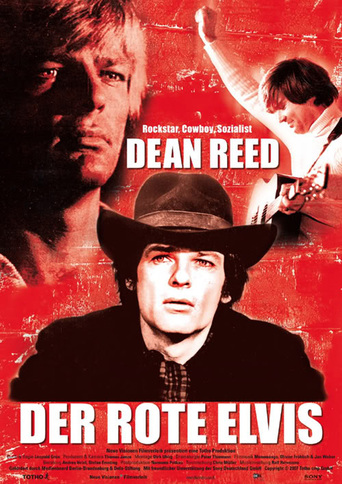
Saturday Matinee: The Red Elvis

fRSMiON8cdHNGyHcCcW3HJJtdkK

“The Red Elvis” (2007) is a German documentary directed by Leopold Grün about the life and legacy of Colorado-born singer Dean Reed who, after a promotional tour in Chile, fell in love with the culture and became involved in anti-imperialist politics around the world. Through archival footage and interviews the film explores Reed’s unique personal and professional journey which was tragically cut short by his mysterious death in 1986 at age 47. Some of the circumstances surrounding Dean Reed’s death suggest it may be more complicated than the narrative presented in the film.

Democracy Is Dead

democracydictatormini_pic

Source: News Junkie Post

From the west to the east, and the south to the north of our global horizon, it is the same tableau: the horrendous killing fields of disaster capitalism where its cohorts of 18-wheelers, heavy road machinery and police patrol cars roam the landscape continuously and are turning us and the better principles of our humanity into countless road kills. Hell on Earth is to be our common fate, and we might have already reached a point of no return. The corporate hyenas and political vultures that generally constitute the global elite are joyfully feeding on the carcasses of justice and morality; rationality and empathy; common sense and the notion of public good; sound governance without corruption and equality before the law; and last but not least, freedom and fair governance through democracy.

Comparing this small group of depraved elite sociopaths, with not a trace of compassion or even consciousness to the scavengers of the natural world, is actually unfair to vultures and hyenas. Scavengers in nature have an important function in the ecosystem for their role of recycling waste. On the other hand, the few thousand rulers of global corporate imperialism are parasites weakening our common life force. If vultures are the useful garbage collectors of the natural world, the corrupt rulers of globalization are tics and leeches gorging on our blood. The British exit vote from the European Union, known as Brexit, has to be understood in the context of rejection of globalization. The global corporate world order has only worked for its masters but certainly not for the vast majority of the people, who are becoming the serfs of a new feudalism.

Calling the vote in favor of Brexit xenophobic doesn’t address the issues at stake. Cheap labor coming from Eastern Europe has served the interests of corporations and the rich very well, but it has had a negative impact on the welfare of British-born workers. This problem is general across the EU. The purpose of the EU was never to be a capitalist paradise where a free circulation of people, money, goods, and services would cater to the needs of multinational corporations, and where people ultimately would be uprooted to become the slaves of the so-called free market. The EU project was not centered on economic considerations but instead on cultural and social-value notions. It was a way out of the nightmare eras of World War I and World War II for founding members France and Germany. The formation of the EU was about a resolute rejection of war to embrace lasting peace. Other countries might follow the British people in their intention of leaving supra-national entities such as the EU. Paradoxically, the United Kingdom itself might disintegrate with the independence of Scotland, Wales, and Northern Ireland.

Globalists of all stripes are calling this nationalist revival narrow-minded and obscurantist. Their leading argument is that global problems such as climate change, overpopulation, and poverty require institutions with global authority. But what they should keep in mind is that those various supra-national institutions or entities, which started with stated good intentions, such as the United Nations, the World Bank, and the International Monetary Fund (IMF), not only have failed to solve any global problems but have, by their corrupt nature made them worse. In the case of the supra-national North Atlantic Treaty Organization (NATO), there is no pretense of being a do-gooder. The armed fist of the Orwellian empire is in the business of globalization of war with decisions made in Washington, DC.  In Orwellian times, many supra-national organizations behave like corporations under humanitarian pretenses, when they are in fact parasitic organisms depleting our strength. Meanwhile, no one represents We The People at all. In the world of humanitarianism for profit, public servants have vanished and been replaced by corrupt incompetent groups operating like crime families.

All members of the fake left advocate that the system must be changed progressively from within and that a collapse would be mainly a disaster for the poor and weak. This notion is as valid as to claim that a building destroyed by an earthquake is in need of some fresh window dressing. Regardless of the global elite’s arrogance, a systemic collapse is on its way and will exponentially take hold of the planet within two or three decades. The super-rich will eventually have nowhere to run or hide, and no private armies to protect them from the wrath of nature. Forcefully resisting the brand of globalization imposed on us by the thugs and slave drivers of disaster capitalism is a moral obligation all world citizens should embrace. When people in power live in the castle of their own lies, it is time to dismantle the fortress. When governance has lost all moral ground and reason, it is time to call for a revolution.

If, as human beings, we could understand that We The People should be all of us, regardless of geographic location, then perhaps the concept of globalization would serve a purpose and be beneficial. No workers in Europe and the United States should tolerate that people in places like Haiti, Vietnam, Bangladesh, and Honduras be paid slave wages; otherwise, down the line they will either lose their jobs or be exploited by the same corporations. Under the globalization of the plantation owners, the people are living in chains. Once upon a time, words like freedom, liberty, and democracy had meaning. They have largely been gutted out and are just empty shells, ghosts in a play of smoke and mirrors animated by the sinister masters of ceremony of the universal rat race. A first necessary step to take would be for all people still able to exercise free will and critical thinking to understand that what government and political representation has become is precisely the opposite of democracy. Voting under these kinds of circumstances is as delusional as giving substance to the figments of our own imaginations. When democracy is dead, it is time to boycott elections.


Gilbert Mercier is the author of The Orwellian Empire.

An Open Letter to the People of Brazil

dilma-jpg_1718483346

By Robert J. Burrowes

As I read of the latest coup in Brazil, once again removing a democratically elected leader from power, my anger surged. Not again! However, as I see and read about the ongoing massive protests, as well as calls by prominent community leaders to mobilize in defense of your country’s democracy, I feel great hope for Brazil. Having been a nonviolent activist for many years, I would like to support Brazilian activists to develop a nonviolent strategy that will increase your chances of success.

On 31 August 2016, the Brazilian elite executed a political coup to remove your democratically elected president Dilma Rousseff from office in a desperate attempt to halt corruption investigations in which they are clearly implicated. See ‘Democracy Is Dead in Brazil‘ and ‘The Real Reason Brazil’s Democratically Elected Dilma Rousseff Was Impeached‘.

Behind the scenes, of course, the United States elite was heavily involved. With vast quantities of highly profitable fossil fuels, mineral and forest resources, as well as fresh water at stake, the US elite (and its allied elites) is not going to stand aside while Brazil
and BRICS endeavour to create a more just world for at least some of its human inhabitants. See ‘Impeachment of Dilma Rousseff: Brazil’s Parliamentary Coup and the “Progressive Media”‘.

Despite what has happened and as your ongoing street protests demonstrate, you know that you do not have to accept this outcome. You also know that you do not have to wait until the 2018 election to register your disapproval of this coup.

In fact, you can reverse this coup and restore the president you first elected in 2010 to finish her current term so that her party can face your judgment in 2018. And this is what Joao Pedro Stedile, a founder and leader of the Landless Workers’ Movement in Brazil has called on you to do. See ‘MST: Social Movements Must Rise up Against Coup Govt in Brazil‘.

If you do this, you will also have widespread support among your solidarity allies around the world as indicated in this letter: ‘Noam Chomsky, Oliver Stone Sign Letter Against Brazil’s Coup‘.

Given my own support for your right to elect any president of your choice (and to remove them if necessary at a subsequent election), I invite you to consider planning and implementing a nonviolent strategy to remove the coupmakers in your country and restore the president that you elected.

If you are interested in doing so, I have outlined a strategy for removing coupmakers on the website Nonviolent Defense/Liberation Strategy which is a straightforward presentation of the more detailed explanation offered in the book ‘The Strategy of Nonviolent Defense: A Gandhian Approach‘.

If you want an idea of the twelve components of strategy that you will need to plan, you can see them on the Nonviolent Strategy Wheel. If you want a taste of how this strategy works (at the tactical level), you will get it by reading ‘The Political Objective and Strategic Goal of Nonviolent Actions‘.

Vitally, the strategic goals need to include mobilizing people in strategically focused ways and causing the police and military to withdraw their support for the coupmakers. It will usefully include causing key local and foreign corporations to withdraw their support too. This would usually include corporations involved in the weapons industry, the mainstream media, banks and the resource extraction of fossil fuels, strategic minerals, forest products and fresh water. To make it clear, I have listed a provisional set of strategic goals that you might consider modifying as appropriate below.

Of course, as suggested above, you will need a comprehensive strategy and it might take some time to plan and then fully implement.

However, if you do plan and implement a comprehensive strategy, you have every chance of reversing this coup with minimal loss of life. For example, the article ‘Nonviolent Action: Minimizing the Risk of Violent Repression‘ identifies 20 things that you can do to minimize the risk that your mobilizations will be violently repressed. This article was written after a careful study, throughout history, of nonviolent mobilizations that were met with extreme violence.

Suggested Strategic Goals in a Nonviolent Strategy to Liberate Brazil

Strategic goals that would usually be appropriate for resisting a political or military coup include those listed below although, it should be noted, the list would be considerably longer as individual organizations should be specified separately.

Of course, individual groups resisting the coup would usually accept responsibility for focusing their work on achieving just one or two of the strategic goals. It is the responsibility of the struggle’s strategic leadership to ensure that each of the strategic goals, which should be identified and prioritized according to your precise understanding of the circumstances in Brazil, is being addressed.

(1) To cause the women in [women’s organizations WO1, WO2, WO…] in
Brazil to join the liberation strategy by participating in [your
nominated nonviolent action(s)/campaign(s) and/or constructive program
activities]. For example, simple nonviolent actions would be to wear a
national symbol (such as a badge of your national flag or ribbons in the
national colors), to boycott all corporate media outlets supporting the
coup and/or to withdraw all funds from banks supporting the coup. For
this item and many items hereafter, see the list of possible actions you
can take here: ‘198 Tactics of Nonviolent Action’.
https://nonviolentliberationstrategy.wordpress.com/strategywheel/tactics-and-peacekeeping/198-tactics-of-nonviolent-action/

(2) To cause the workers in [trade unions or labor organizations T1, T2,
T…] in Brazil to join the liberation strategy by participating in [your
nominated nonviolent action(s)/campaign(s) and/or constructive program
activities]. For example, this might include withdrawing their labor
from an elite-controlled or foreign-owned bank/corporation operating in
Brazil.

(3) To cause the small farmers and farmworkers in [organizations F1, F2,
F…] in Brazil to join the liberation strategy by participating in
[your nominated nonviolent action(s)/campaign(s) and/or constructive
program activities].

(4) To cause the members of [religious denominations R1, R2, R…] in
Brazil to join the liberation strategy by participating in [your
nominated nonviolent action(s)/campaign(s) and/or constructive program
activities].

(5) To cause the members of [ethnic communities EC1, EC2, EC…] in Brazil
to join the liberation strategy by participating in [your nominated
nonviolent action(s)/campaign(s) and/or constructive program
activities].

(6) To cause the activists, artists, musicians, intellectuals and other
key social groups in [organizations O1, O2, O…] in Brazil to join the
liberation strategy by participating in [your nominated nonviolent
action(s)/campaign(s) and/or constructive program activities].

(7) To cause the students in [student organizations S1, S2, S…] in
Brazil to join the liberation strategy by participating in [your
nominated nonviolent action(s)/campaign(s) and/or constructive program
activities].

(8) To cause the soldiers in [military units M1, M2, M…] to refuse to
obey orders from the coupmakers to arrest, assault, torture and shoot
nonviolent activists and the other citizens of Brazil.

(9) To cause the police in [police units P1, P2, P…] to refuse to obey
orders from the coupmakers to arrest, assault, torture and shoot
nonviolent activists and the other citizens of Brazil.

(10) To cause businesspeople who conduct small businesses in
[organizations SB1, SB2, SB…] in Brazil to refuse to cooperate with the
coupmakers by participating in [your nominated nonviolent
action(s)/campaign(s) and/or constructive program activities].

(11) To cause businesspeople who operate multinational franchises in
[organizations MF1, MF2, MF…] in Brazil to refuse to cooperate with the
coupmakers by participating in [your nominated nonviolent
action(s)/campaign(s) and/or constructive program activities].

(12) To cause businesspeople who manage local branches of large
multinational corporations in [organizations MNC1, MNC2, MNC…] in Brazil
to refuse to cooperate with the coupmakers by participating in [your
nominated nonviolent action(s)/campaign(s) and/or constructive program
activities].

(13) To cause large farmers and ranchers in [organizations FO1, FO2,
FO…] in Brazil to refuse to cooperate with the coupmakers by
participating in [your nominated nonviolent action(s)/campaign(s) and/or
constructive program activities].

(14) To cause the foreign managers and technical workers [working for
resource extraction corporations X1, X2, X…] who are from [the United
States and other relevant countries where the elite supports the
coupmakers in Brazil] to withdraw from Brazil.

(15) To cause the workers [in trade union or labor organizations T4, T5,
T…] in [the United States and other relevant countries where the elite
supports the coupmakers in Brazil] to interrupt the supply of military
weapons to Brazil.

(16) To cause the workers in [trade unions or labor organizations T7,
T8, T…] in [the United States and other relevant countries where the
elite supports the coupmakers in Brazil] to interrupt the transport of
[military personnel/military weapons] to Brazil.

(17) To cause the workers in [trade unions or labor organizations T10,
T11, T…] in [the United States and other relevant countries where the
elite supports the coupmakers in Brazil] to support your liberation
struggle by refusing to handle [a particular resource] extracted and
exported from Brazil.

(18) To cause the workers [in trade unions or labor organizations T13,
T14, T…] working in [the United States and other relevant countries
where the elite supports the coupmakers in Brazil] to support your
liberation struggle by participating in [your nominated nonviolent
action(s)/campaign(s) and/or constructive program activities].

(19) To cause the women in [women’s organizations WO4, WO5, WO…] in [the
United States and other relevant countries where the elite supports the
coupmakers in Brazil] to support your liberation struggle by
participating in [your nominated nonviolent action(s)/campaign(s) and/or
constructive program activities].

(20) To cause the members of [religious denominations R4,R5, R…] in [the
United States and other relevant countries where the elite supports the
coupmakers in Brazil] to support your liberation struggle by
participating in [your nominated nonviolent action(s)/campaign(s) and/or
constructive program activities].

(21) To cause the solidarity activists in [activist organizations A1,
A2, A…] in [the United States and other relevant countries where the
elite supports the coupmakers in Brazil] to support your liberation
struggle by participating in [your nominated nonviolent
action(s)/campaign(s) and/or constructive program activities].

(22) To cause the members of [your exile communities E1, E2, E…] in [the
United States and other relevant countries where the elite supports the
coupmakers in Brazil] to support your liberation struggle by
participating in [your nominated nonviolent action(s)/campaign(s) and/or
constructive program activities].

(23) To cause the students in [students organizations S4, S5, S…] in
[the United States and other relevant countries where the elite supports
the coupmakers in Brazil] to support your liberation struggle by
participating in [your nominated nonviolent action(s)/campaign(s) and/or
constructive program activities].

In the struggle to make this world the place of peace, justice and environmental sustainability that it could be, the people of Brazil have been playing an inspirational role. You do not need to let this coup be more than a temporary setback. You also have solidarity allies around the world and many of us are willing to assist you, if you decide to let us play a role too.

For the liberation of Brazil,

Robert

Biodata: Robert J. Burrowes has a lifetime commitment to understanding
and ending human violence. He has done extensive research since 1966 in
an effort to understand why human beings are violent and has been a
nonviolent activist since 1981. He is the author of ‘Why Violence?‘ His email address is flametree@riseup.net and his website is here.

Websites:
http://thepeoplesnonviolencecharter.wordpress.com (Nonviolence Charter)
http://tinyurl.com/flametree (Flame Tree Project to Save Life on Earth)
http://tinyurl.com/whyviolence (‘Why Violence?’)
https://nonviolentstrategy.wordpress.com/ (Nonviolent Campaign Strategy)
https://nonviolentliberationstrategy.wordpress.com/ (Nonviolent Defense/Liberation Strategy)
http://anitamckone.wordpress.com (Anita: Songs of Nonviolence)
http://robertjburrowes.wordpress.com (Robert)
https://globalnonviolencenetwork.wordpress.com/ (Global Nonviolence Network)

America the Epicenter of Pure Evil

aa-American-Empire-statue-of-liberty-and-military

By Stephen Lendman

Source: SteveLendmanBlog

No nation in world history harmed more people grievously over a longer duration than America – never beautiful, no bastion of democratic values, no advocate of world peace and stability.

Bipartisan lunatics run things, a criminal cabal, humanity’s greatest threat. The domestic and geopolitical agendas of each new administration is worse than its predecessors.

Elections when held are farcical. Duopoly power always wins, monied interests alone served, ordinary people increasingly harmed – full-blown tyranny and nuclear war perhaps following the next major state-sponsored false flag.

Americans have no say on how they’re governed, democracy a mirage. None whatever exists. Scoundrel media and self-serving politicians pretend otherwise – most people either unaware of how they’re ill-served or too indifferent to try changing things, going along with what harms them.

Intelligent people I know are too preoccupied in their daily lives to realize and get involved against the grave danger facing humanity.

The likelihood of a Hillary presidency should terrify everyone – a war goddess, the greatest threat to world peace of any leader in US history if she succeeds Obama.

Yet media scoundrels serve as her press agents. Polls show her ahead. US voters are so out-of-touch, uninformed and indifferent, they support what demands opposition.

I tremble at what’s coming with her in charge. Things may never be the same again. How many more wars will be waged?

How many victims will die or be gravely harmed with her as president? Will the remnants of social justice be entirely discarded? Will police state ruthlessness be harsher than ever? Is unthinkable nuclear war likely?

Is Orwell’s dystopian nightmare on steroids our future? Will Americans ever awaken to the clear and present danger they face? Will they revolt or remain dismissive?


Stephen Lendman lives in Chicago. He can be reached at lendmanstephen@sbcglobal.net.

His new book as editor and contributor is titled “Flashpoint in Ukraine: How the US Drive for Hegemony Risks WW III.” http://www.claritypress.com/LendmanIII.html

Visit his blog site at sjlendman.blogspot.com.