Figure 1 Finite element model of WTC 7 in SAP2000.
By Lead Researcher: J. Leroy Hulsey, Project Team: Feng Xiao (Associate Professor, Nanjing University of Science and Technology), Zhili Quan (Bridge Engineer, South Carolina Department of Transportation)
This report presents the findings and conclusions of a four-year study of the collapse of World Trade Center Building 7 (WTC 7) — a 47-story building that suffered a total collapse at 5:20 PM on September 11, 2001, following the horrible events of that morning. This study was conducted by a three-person team of researchers at the University of Alaska Fairbanks (UAF) Department of Civil and Environmental Engineering with funding provided by Architects & Engineers for 9/11 Truth, Inc., a 501(c)(3) nonprofit organization whose purpose is to conduct research and educate the public about the World Trade Center building collapses on 9/11.
According to the National Institute of Standards and Technology (NIST) — an agency of the U.S. Department of Commerce that investigated the three building failures on 9/11 — the collapse of WTC 7 was the first known instance of the total collapse of a tall building primarily due to fires. However, many independent researchers have studied the collapse of WTC 7 and assembled a body of evidence that raises questions about the validity of NIST’s conclusions.
The objective of this study, therefore, was threefold: (1) Examine the structural response of WTC 7 to fire loads that may have occurred on September 11, 2001; (2) Rule out scenarios that could not have caused the observed collapse; and (3) Identify types of failures and their locations that may have caused the total collapse to occur as observed.
The UAF research team utilized three approaches for examining the structural response of WTC 7 to the conditions that may have occurred on September 11, 2001. First, we simulated the local structural response to fire loading that may have occurred below Floor 13, where most of the fires in WTC 7 are reported to have occurred. Second, we supplemented our own simulation by examining the collapse initiation hypothesis developed by NIST. We also reviewed the collapse initiation hypotheses advanced by private engineering firms whose studies were commissioned as part of litigation related to the collapse of WTC 7. Third, we simulated a number of scenarios within the overall structural system in order to determine what types of local failures and their locations may have caused the total collapse to occur as observed.
Fire Did Not Cause the Collapse of WTC 7
The principal conclusion of our study is that fire did not cause the collapse of WTC 7 on 9/11, contrary to the conclusions of NIST and private engineering firms that studied the collapse.
This conclusion is based upon a number of findings from our different analyses. Together, they show that fires could not have caused weakening or displacement of structural members capable of initiating any of the hypothetical local failures alleged to have triggered the total collapse of the building, nor could any local failures, even if they had occurred, have triggered a sequence of failures that would have resulted in the observed total collapse.
Near-Simultaneous Failure of Every Column Explains the Collapse
The secondary conclusion of our study is that the collapse of WTC 7 was a global failure involving the near-simultaneous failure of every column in the building.
This conclusion is based primarily upon the finding that the simultaneous failure of all core columns over 8 stories followed 1.3 seconds later by the simultaneous failure of all exterior columns over 8 stories produces almost exactly the behavior observed in videos of the collapse, whereas no other sequence of failures that we simulated produced the observed behavior. We cannot completely rule out the possibility that an alternative scenario may have caused the observed collapse; however, the near-simultaneous failure of every column is the only scenario we identified that was capable of producing the observed behavior.
Key Findings Upon Which the UAF Team’s Conclusions Are Based
Approach 1 Findings
•During our nonlinear connection study (Section 2.1.3.2), we discovered that NIST over-estimated the rigidity of the outside frame by not modeling its connections, essentially treating the exterior steel framing as thermally fixed, which caused all thermally-induced floor expansion to move away from the exterior. The exterior steel framing was actually flexible, while the stiffest area resistant to thermal movements, i.e., the point of zero thermal movement, was near the elevator shafts.
•Therefore, during our analysis of WTC 7’s response to fire loading (Section 2.6), we found the overall thermal movements at the A2001 base plate support near Column 79 were not sufficient to displace girder A2001 to the point that it walked off its seat (the initiating failure alleged by NIST). Whereas NIST asserted that the differential westward displacement of girder A2001 relative to Column 79 was 5.5 inches and later revised its calculation to 6.25 inches, we found that the westward displacement of girder A2001 relative to Column 79 would have been less than 1 inch under the fire conditions reported by NIST.
Approach 2 Findings
Under our second approach, we used a solid element model to evaluate the validity of NIST’s collapse initiation hypothesis, introducing a number of assumptions made by NIST that we considered to be invalid or, at best, questionable (Section 3.1). These assumptions included assuming the east exterior wall to be rigid and thermally fixed, assuming shear studs on several beams were broken due to differential thermal movement, assuming no shear studs were installed on girder A2001, and assuming that the bolts fastening girder A2001 to its seats at Columns 44 and 79 were broken (Section 3.1.1). Allowing for these overly generous assumptions, we found the following:
•When girder A2001 is heated to the temperatures assumed by NIST, it expands such that it becomes trapped behind the side plate on the western side of Column 79 as it is pushed to the west by thermally expanding floor beams. This prevents the girder’s web from traveling beyond the bearing seat, thus preventing the girder from walking off its seat (Section 3.2.1).
•NIST, by its own admission, did not include the partial height web stiffeners known to be on girder A2001. In addition to stiffening the web, these stiffeners significantly increase the bending resistance of the flange. In a subsequent analysis where we removed the side plate described in the previous analysis in order to allow for further westward travel of girder A2001, we found that the stresses in the girder flange and stiffener would not be sufficient to cause the flange to fail, thus preventing the girder from walking off its seat (Section 3.2.2).
•In a preliminary collapse initiation hypothesis, NIST posited that beam G3005 buckled because its thermal expansion was restrained by girder A2001. We found that this can happen only when the three lateral support beams S3007, G3007, and K3007 spanning from beam G3005 to the north exterior wall are not included in the model. While these short beams are observed in some of the figures in the NIST report, they are missing from the model(s) used in the thermal and structural analysis shown in the report (Section 3.2.3).
Separate from the NIST investigation, two studies of WTC 7’s collapse were commissioned by opposing sides in the lawsuit “Aegis Insurance Services, Inc. v. 7 World Trade Center Company, L.P.” Experts working in connection with engineering firms Ove Arup & Partners (Arup) and Guy Nordenson and Associates (Nordenson) were retained by the plaintiffs. The engineering firm Weidlinger Associates Inc. (Weidlinger) was retained by the defendants. After evaluating NIST’s collapse initiation hypothesis, we reviewed the Arup, Nordenson, and Weidlinger reports and found the following:
•Arup’s finite element analysis corroborates our finding that girder A2001 would become trapped behind the western side plate of Column 79. However, Arup’s analysis then goes on to contend that the five beams to the east of girder A2001 were heated enough to sag and pull the girder to the east and off of its seats. Putting aside whether this initiating mechanism is valid, we found that Nordenson incorrectly calculated the impact force of the falling girder by considering it as a point load, thus implying an infinite stiffness and no deflection. Calculating the impact force correctly, we found that it is only 34% of the 632,000 lb. force required to shear the girder bearing seat support welds at Floor 12. Therefore, the northeast corner of Floor 12 would not have collapsed if the Floor 13 girder came off its seat at Column 79, and a cascade of floor failures would not ensue.
•The Weidlinger report was prepared as a rebuttal to the Arup and Nordenson reports. Among its points of rebuttal, it corroborates our finding that the falling Floor 13 beam and girder assembly could not break through Floor 12. The Weidlinger report contends instead that Floors 9 and 10 were simultaneously heated to between 750° and 800°C in the exact same area of each floor, eventually causing those floors to fail and triggering a cascade of floor failures down to Floor 5. However, the details of the thermal analysis are not shown in the Weidlinger report, and the thermal analysis has not been made public. It is important to understand that steel structural members reaching temperatures of 750°C due to office fires can be considered extraordinary. Without any analysis provided to substantiate such temperatures, Weidlinger’s collapse initiation hypothesis must be viewed skeptically and can be assumed to have a very low probability of occurrence (Section 3.4.1).
Approach 3 Findings
Under our third approach, we simulated a number of hypothetical scenarios in order to determine what types of local failures and their locations may have caused the total collapse to occur as observed. Based upon a series of analyses, we found the following:
•Columns 79, 80, and 81 did not fail at the lower floors of the building, as asserted by NIST. In order to allow for the observed collapse of the east penthouse approximately 7 seconds prior to the collapse of the rest of the structure, these columns needed to have failed at the upper floors of the building all the way to the penthouse. Yet there were no documented fires above Floor 30. Therefore, fire did not cause the collapse of Columns 79, 80, and 81 nor the collapse of the east penthouse (Section 4.3).
•The hypothetical failure of Columns 79, 80, and 81 — the three easternmost core columns — would not trigger a horizontal progression of core column failures. Therefore, the hypotheses of NIST, Arup/Nordenson, and Weidlinger that the buckling of Column 79 could trigger a progressive collapse of the entire building are invalid, and the collapse of Columns 79, 80, and 81 high in the building was a separate and distinct event (Section 4.4). •Even if we assume the failure of Columns 79, 80, and 81 could lead to the failure of the next row of core columns, the hypothetical failure of Columns 76 to 81 would overload the exterior columns around the southeast of the building, rather than overloading the next row of core columns to the west, which would result in the building tipping to the southeast and not in a straight-down collapse (Section 4.4).
•The hypothetical simultaneous failure of all core columns (but not exterior columns) would cause the building to tip to the southwest rather than causing a straight-down collapse (Section 4.5).
•The simultaneous failure of all core columns over 8 stories followed 1.3 seconds later by the simultaneous failure of all exterior columns over 8 stories produces almost exactly the behavior observed in videos of the collapse. The collapse could have started at Floor 16 and below and produced the same behavior (Section 4.6).
It is our conclusion based upon these findings that the collapse of WTC 7 was a global failure involving the near-simultaneous failure of all columns in the building and not a progressive collapse involving the sequential failure of columns throughout the building.
After getting curb stomped on the debate stage by Tulsi Gabbard, the campaign for Tim “Who the fuck is Tim Ryan?” Ryan posted a statement decrying the Hawaii congresswoman’s desire to end a pointless 18-year military occupation as “isolationism”.
“While making a point as to why America can’t cede its international leadership and retreat from around the world, Tim was interrupted by Rep. Tulsi Gabbard,” the statement reads. “When he tried to answer her, she contorted a factual point Tim was making— about the Taliban being complicit in the 9/11 attacks by providing training, bases and refuge for Al Qaeda and its leaders. The characterization that Tim Ryan doesn’t know who is responsible for the attacks on 9/11 is simply unfair reporting. Further, we continue to reject Gabbard’s isolationism and her misguided beliefs on foreign policy. We refuse to be lectured by someone who thinks it’s ok to dine with murderous dictators like Syria’s Bashar Al-Assad who used chemical weapons on his own people.”
Ryan’s campaign is lying. During an exchange that was explicitly about the Taliban in Afghanistan, Ryan plainly said “When we weren’t in there, they started flying planes into our buildings.” At best, Ryan can argue that when he said “they” he had suddenly shifted from talking about the Taliban to talking about Al Qaeda without bothering to say so, in which case he obviously can’t legitimately claim that Gabbard “contorted” anything he had said. At worst, he was simply unaware at the time of the very clear distinction between the Afghan military and political body called the Taliban and the multinational extremist organization called Al Qaeda.
More importantly, Ryan’s campaign using the word “isolationism” to describe the simple common sense impulse to withdraw from a costly, deadly military occupation which isn’t accomplishing anything highlights an increasingly common tactic of tarring anything other than endless military expansionism as strange and aberrant instead of normal and good. Under our current Orwellian doublespeak paradigm where forever war is the new normal, the opposite of war is no longer peace, but isolationism. This removal of a desirable opposite of war from the establishment-authorised lexicon causes war to always be the desirable option.
This is entirely by design. This bit of word magic has been employed for a long time to tar any idea which deviates from the neoconservative agenda of total global unipolarity via violent imperialism as something freakish and dangerous. In his farewell address to the nation, war criminal George W Bush said the following:
“In the face of threats from abroad, it can be tempting to seek comfort by turning inward. But we must reject isolationism and its companion, protectionism. Retreating behind our borders would only invite danger. In the 21st century, security and prosperity at home depend on the expansion of liberty abroad. If America does not lead the cause of freedom, that cause will not be led.”
A few months after Bush’s address, Antiwar‘s Rich Rubino wrote an article titled “Non-Interventionism is Not Isolationism“, explaining the difference between a nation which withdraws entirely from the world and a nation which simply resists the temptation to use military aggression except in self defense.
“Isolationism dictates that a country should have no relations with the rest of the world,” Rubino explained. “In its purest form this would mean that ambassadors would not be shared with other nations, communications with foreign governments would be mainly perfunctory, and commercial relations would be non-existent.”
“A non-interventionist supports commercial relations,” Rubino contrasted. “In fact, in terms of trade, many non-interventionists share libertarian proclivities and would unilaterally obliterate all tariffs and custom duties, and would be open to trade with all willing nations. In addition, non-interventionists welcome cultural exchanges and the exchange of ambassadors with all willing nations.”
“A non-interventionist believes that the U.S. should not intercede in conflicts between other nations or conflicts within nations,” wrote Rubino. “In recent history, non-interventionists have proved prophetic in warning of the dangers of the U.S. entangling itself in alliances. The U.S. has suffered deleterious effects and effectuated enmity among other governments, citizenries, and non-state actors as a result of its overseas interventions. The U.S. interventions in both Iran and Iraq have led to cataclysmic consequences.”
Calling an aversion to endless military violence “isolationism” is the same as calling an aversion to mugging people “agoraphobia”. Yet you’ll see this ridiculous label applied to both Gabbard and Trump, neither of whom are isolationists by any stretch of the imagination, or even proper non-interventionists. Gabbard supports most US military alliances and continues to voice full support for the bogus “war on terror” implemented by the Bush administration which serves no purpose other than to facilitate endless military expansionism; Trump is openly pushing regime change interventionism in both Venezuela and Iran while declining to make good on his promises to withdraw the US military from Syria and Afghanistan.
Another dishonest label you’ll get thrown at you when debating the forever war is “pacifism”. “Some wars are bad, but I’m not a pacifist; sometimes war is necessary,” supporters of a given interventionist military action will tell you. They’ll say this while defending Trump’s potentially catastrophic Iran warmongering or promoting a moronic regime change invasion of Syria, or defending disastrous US military interventions in the past like Iraq.
This is bullshit for a couple of reasons. Firstly, virtually no one is a pure pacifist who opposes war under any and all possible circumstances; anyone who claims that they can’t imagine any possible scenario in which they’d support using some kind of coordinated violence either hasn’t imagined very hard or is fooling themselves. If your loved ones were going to be raped, tortured and killed by hostile forces unless an opposing group took up arms to defend them, for example, you would support that. Hell, you would probably join in. Secondly, equating opposition to US-led regime change interventionism, which is literally always disastrous and literally never helpful, is not even a tiny bit remotely like opposing all war under any possible circumstance.
She’s not “antiwar” – she’s anti a US war. She’s totally pro the Russian air war in Syria and celebrated Russian air strikes that have killed hundreds if not thousands of civilians.
Another common distortion you’ll see is the specious argument that a given opponent of US interventionism “isn’t anti-war” because they don’t oppose all war under any and all circumstances. This tweet by The Intercept‘s Mehdi Hasan is a perfect example, claiming that Gabbard is not anti-war because she supports Syria’s sovereign right to defend itself with the help of its allies from the violent extremist factions which overran the country with western backing. Again, virtually no one is opposed to all war under any and all circumstances; if a coalition of foreign governments had helped flood Hasan’s own country of Britain with extremist militias who’d been murdering their way across the UK with the ultimate goal of toppling London, both Tulsi Gabbard and Hasan would support fighting back against those militias.
The label “anti-war” can for these reasons be a little misleading. The term anti-interventionist or non-interventionist comes closest to describing the value system of most people who oppose the warmongering of the western empire, because they understand that calls for military interventionism which go mainstream in today’s environment are almost universally based on imperialist agendas grabbing at power, profit, and global hegemony. The label “isolationist” comes nowhere close.
It all comes down to sovereignty. An anti-interventionist believes that a country has the right to defend itself, but it doesn’t have the right to conquer, capture, infiltrate or overthrow other nations whether covertly or overtly. At the “end” of colonialism we all agreed we were done with that, except that the nationless manipulators have found far trickier ways to seize a country’s will and resources without actually planting a flag there. We need to get clearer on these distinctions and get louder about defending them as the only sane, coherent way to run foreign policy.
TruePublica Editor: We have published almost nothing about 9/11 on TruePublica. When independent news outlets do, they are immediately branded by the mainstream media and so-called ‘fact-checkers’ as conspiracy theorists. The BBC makes this point precisely in a 2018 article that starts like this – “On 11 September 2001, four passenger planes were hijacked by radical Islamist terrorists – almost 3,000 people were killed as the aircraft were flown into the World Trade Centre, the Pentagon and a Pennsylvania field. Just hours after the collapse of New York’s Twin Towers, a conspiracy theory surfaced online which persists more than 16 years later.”
The entire article is dedicated to all the ‘conspiracy theories’ involved in 9/11 and makes a mockery of anyone or anything that questions the official government line. They even heavily mock the brother of one man killed in 9/11 and frankly, true or not, the BBC’s report itself is rather sickening to read.
And yet, here we are, all these years later and it’s hardly surprising the theories of a conspiracy continue.
A 2016 study from Chapman University in California, found more than half of the American people believe the government is concealing information about the 9/11 attacks. This is in part because, large sections of the official US government report were redacted for years – and is still missing to this day.
The big problem is that the government is withholding crucial evidence. And then there’s other evidence the state and mainstream media refuse to even consider.
Paul Craig Roberts is an American economist and former United States Assistant Secretary of the Treasury for Economic Policy under President Reagan. Roberts was an associate editor and columnist for The Wall Street Journal and columnist for Business Week and has received the Warren Brookes Award for Excellence in Journalism. In 1993 the Forbes Media Guide ranked him as one of the top seven journalists in the United States.
Roberts wrote this really interesting piece of information just a few days ago that the mainstream media has been completely silent about: “Although the United States is allegedly a democracy with a rule of law, it has taken 17 years for public pressure to bring about the first grand jury investigation of 9/11. Based on the work of Architects & Engineers for 9/11 Truth led by Richard Gage, first responder and pilots organizations, books by David Ray Griffin and others, and eyewitness testimony, the Lawyers’ Committee for 9/11 Inquiry has presented enough hard facts to the US Attorney for the Southern District of New York to force his compliance with the provisions of federal law that require the convening of a federal grand jury to investigate for the first time the attacks of September 11, 2001. https://www.lawyerscommitteefor9-11inquiry.org
This puts the US Justice (sic) Department in an extraordinary position. There will be tremendous pressures on the US Attorney’s office to have the grand jury dismiss the evidence as an unpatriotic conspiracy theory or otherwise maneuver to discredit the evidence presented by the Lawyers’ Committee, or modify the official account without totally discrediting it.
“What the 9/11 truthers and the Lawyers’ Committee have achieved is the destruction of the designation of 9/11 skeptics as “conspiracy theorists.” No US Attorney would convene a grand jury on the basis of a conspiracy theory. Clearly, the evidence is compelling that has put the US Attorney in an unenviable position.”
If the Lawyers’ Committee and the 9/11 truthers trust the US Attorney to go entirely by the facts, little will come of the grand jury. If the United States had a rule of law, something as serious as 9/11 could not have gone for 17 years without investigation.”
Three weeks before Roberts’ made this statement a letter was published by Off-Guardian about a Huffington Post hit piece about an academic teaching journalism. Its first paragraph explains entirely its own position.
An academic teaching journalism students at one of the UK’s top universities has publicly supported long-discredited conspiracy theories about the 9/11 terror attack, HuffPost UK can reveal.
This entire article, like that of the BBC’s, vigorously attacks any individual or organisation that has the temerity to question the ‘official’ narrative on any major incident as offered up by the state, such as the Skripal poisonings, Syria’s chemical weapons, Iraq and Chilcot Report.
HuffPost even uses an unnamed former head of MI6 and an unnamed former Supreme Commander of Nato to dispel such challenges to this narrative and then attacks other sources of news such as RT as nothing more than Russian propaganda irrespective of the source. As a rule, TruePublica does not publish news sourced by RT but that does not make all of its content propaganda.
David Ray Griffin, a retired American professor and political writer who founded the Center for Process Studies which seeks to promote the common good by means of the relational approach found in process thought was the co-author of the book ‘9/11 Unmasked’ – part of the attack piece was centred on by the HuffPost hit piece.
The head of the 9/11 Consensus Panel, the other co-author, responded to the HuffPost. For information, the goal of the Consensus Panel is to “provide a ready source of evidence-based research to any investigation that may be undertaken by the public, the media, academia, or any other investigative body or institution.”
That letter is as follows:
Jess Brammer, UK Huffington Post
Chris York, UK Huffington Post
Dear Ms. Brammar and Mr. York:
I was the head information specialist serving the Medical Health Officers of British Columbia, Canada, for 25 years.
I have assisted Dr. Griffin with 10 of his investigative books into the events of 9/11. In 2011 we decided to create the international 9/11 Consensus Panel to review and evaluate the official claims relating to September 11, 2001. The Panel we formed has 23 members, including people from the fields of physics, chemistry, structural engineering, aeronautical engineering, piloting, airplane crash investigation, medicine, journalism, psychology, and religion (For the full list, see here).
In seeking a consensus methodology, I was advised by the former provincial epidemiologist of British Columbia to employ a leading model that is used in medicine to establish the best diagnostic and treatment evidence to guide the world’s doctors using medical consensus statements.
Each Consensus Point, now a chapter in this book, was given three rounds of review and feedback by the Panel members. The panelists were blind to one another throughout the process, providing strictly uninfluenced individual feedback. Any Points that did not receive 85% approval by the third round were set aside.
The Honorary Members of the Panel include the late British (and longest-serving) parliamentarian Michael Meacher, the late evolutionary biologist Lynn Margulis, and the late Honorary President of the Italian Supreme Court, Ferdinando Imposimato.
The Huffington Post drastically lowered its standards to publish this hit piece, and what influenced it to do so is a question worth pursuing.
Yours truly
Elizabeth Woodworth, Co-author with Dr. David Ray Griffin 9/11 Unmasked
It is over 18 years now since the world-changing event of 9/11. One wonders when the information held by the American government, that continues to anger so many people affected by it will ever emerge.
However, one reason why such questions persist is precisely that of the actions of the US government itself. One should not forget those so-called ‘conspiracy theories’ that actually came true that continues to pour petrol on the flames of doubt.
For example, the American government killed thousands by poisoning alcohol to prove its point that alcohol was bad for the general public during prohibition. This was a ‘conspiracy theory’ that went on for decades – until it was proven to be true.
Then, you can take your pick of the lies government tells when it comes to starting wars – how about the lie the Saddam Hussain and Iraq had WMD ready to fire at Western targets. Total deaths exceeded 1 million. Yet another classic American lie was the Gulf of Tonkin incident in August 1964, as a pretext for escalating the country’s involvement in the Vietnam War that killed 60,000 American soldiers. Total deaths racked up 1.35 million, all based on a lie. That incident only came about because of an unintentional declassification of an NSA file in 2005.
Edward Snowden proved with his revelations in 2013 that the government was spying on everyone when the government had denied they had ever done so. It took a whistleblower to let us all know. The UK government has been found by the highest courts in the land to have broken numerous privacy and surveillance laws as a result of mass civilian surveillance systems.
Operation Mockingbird was a US government operation where journalists were paid to publish CIA propaganda, only uncovered by the Watergate scandal. It took a thief to unknowingly capture secret documents and recordings for the public to find out.
The list goes on and on – just as 9/11 will, so it will be interesting to see how the US Attorney, presented with evidence from so many prominent professionals will bury yet more 9/11 evidence. Don’t hold your breath though, the same questions will, no doubt, still be being asked in another 18 years time.
Society should not do the wrong thing for the right reason, even though it frequently does the right thing for the wrong reason.
History has shown us what happens when you try to make society too civilized, or do too good a job of eliminating undesirable elements. It also shows the tragic fallacy in the belief that the destruction of democratic institutions will cause better ones to arise in their place.
An obscure Texas political consultant named Bill Miller once said “politics is show business for ugly people”. It’s true for the most part, aside from the consequences. This is because the theatrics of politicians result in policies that affect the lives of others; often against the will of the governed. In books and movies, however, the characters are much ado about nothing. Until, that is, life imitates art.
So it is with the futuristic dystopian story of “A Clockwork Orange”. Both the book, by the author Anthony Burgess, and the film by director Stanley Kubrick, serve as moral dilemmas and cautionary tales plumbing such considerations as free will, the duality of mankind, societal anarchy, and the ascendancy of an all-powerful state.
A 1973 review written in Sight and Sound Magazine, stated: “Kubrick has appropriated theme, character, narrative and dialogue from Anthony Burgess’ novel, but the film is more than a literal translation of a construct of language into dramatic-visual form”. Therefore, for that reason, and for others described later, the film will remain this article’s primary focus.
As any perfunctory internet research will show, Stanley Kubrick is known as a visionary artist and director, but also as the subject of multiple conspiracies. In addition to A Clockwork Orange, Kubrick’s oeuvre includes avant-garde films such as Dr. Strangelove, The Shining, 2001 A Space Odyssey, and Eyes Wide Shut; to name a few. Just as these movies demonstrate the inner workings of mankind operating through the disparate threads which bind reality, so do some claim that a larger picture is presented as well. The big picture, of course, is said to include conspiratorial clues and undertones in Kubrick’s films ranging from Freemasonry, to America’s alleged faked moon landing, to an occultist global financial elite, and the terrorist attacks of 911 being planned as a world transformational event.
There exist multiple published writings, both online and in print, describing the secret meanings hidden in Kubrick’s movies. Furthermore, it has been argued that Kubrick’s “somewhat surreal films” appeal to the viewer’s subconscious and, therefore, “lend themselves to this sort of interpretation”.
That is another reason why Kubrick’s film will remain the focus of this essay, as opposed to the novel: Either these alleged conspiracies are imagined in the minds of the viewers, or Kubrick deliberately inserted these elements into his creations. Given Kubrick’s reputation for perfectionism, one can only conclude the symbolism was specifically placed and for exact reasons.
In his other films, like 2001 A Space Odyssey, it has been argued the strategic placement of the sun, or other circular lights, were utilized by Kubrick as symbolic movie projectors of sorts, whereby time and events unwind before the audience like a clock. Additionally, even in movies not directed by Kubrick, there are those who say mirrors are used to demonstrate mind control. It is a fact both of these visualizations are present in A Clockwork Orange.
Once again, and for all of the reasons delineated heretofore, the following presentation will analyze Kubrick’s film as opposed to the novel from which it derived. The story, and Kubrick’s alchemy, will then be analyzed through the lens of three separate realities followed by some concluding comments at the very end.
THE UNWINDING
In Kubrick’s A Clockwork Orange, the viewers witness the tragic life and circumstances of a teenager named Alex DeLarge navigating a decadent post-modern world. In the film, Alex is played by the actor Malcolm McDowell. The story unfolds against the backdrop of a futuristic dystopian society that has descended into anarchy and violence; especially within the younger generation.
The very first scene focuses on the evil-eyed Alex adorned with a black fedora and sunray eyeliner beneath his right eye. As the camera pulls back, the boy is shown with three of his young friends identified in the narrative as “droogs”. The youths are shown sitting in the Korova Milk Bar where they imbibe “Milk Plus”; or milk laced with recreational drugs of various types.
Upon leaving the bar, the boys come across a drunk lying in an alley and singing what Alex calls the songs of the drunk man’s “fathers”. This implies a line of separation between the previous time and the new; between the old and the young. This separation of time is actually confirmed when the drunk tells the young hooligans he no longer wants to live in this “stinking world” because there’s “no law and order anymore”, where the young “get onto the old”, and “it’s no world for an old man any longer”.
The boys commence to beat the old boozer senseless.
In the next scene, Alex and his droogs come across a group of five other boys who, on an abandoned theatrical stage, are attempting to rape a young woman. Seemingly, the stage implies the violence unfolding as melodrama, causing this viewer to question if the descent into societal violence was staged as well? The boys assaulting the woman were wearing military-style camo clothing and adorned with Nazi accoutrements. Alex taunted them in a near Shakespearean manner, and the rival gangs went to war. The battle also appeared as theatrically choreographed and was set in sync to Giaochino Rossini’s La Gazza Ladra overture.
In the next scene, we see Alex and his gang fleeing to the countryside in a red sports car, looking very much like four demons racing towards hell.
Chaos ensued until Alex eventually ended up in prison and, thus, in possession of the state.
In prison, Alex sat before an open Bible and fantasized he was a Roman soldier whipping the back of Jesus Christ. His voiceover narration said he didn’t like the New Testament’s “preachy talking” as much as the Old Testament’s violence and sex. He furthermore envisioned slicing open the throats of ancient enemies and later eating grapes fed to him by the naked wives and handmaidens of his vanquished foes.
In the privacy of the facility’s library, Alex petitioned the prison chaplain regarding a new treatment that could help him secure his freedom. The chaplain informed Alex the new treatment was called the Ludovico Technique and that it was dangerous. The boy then tells the priest that in spite of any potential danger, he wanted “for the rest of his life to be one act of goodness”.
In response, the chaplain tells Alex that “goodness is chosen” and “when a man cannot choose, he ceases to be a man”.
The next scenes showed a group of prisoners walking outside around a circle on the ground. Before the men are lined up for inspection, a cadre of dignitaries exit from a long hallway, and walk before the prisoners. In so doing, one man tells the others that, soon, the “prisons will be full of political prisoners” and that the “petty criminals need faster reconditioning”. Standing in line, Alex speaks up and the man selects Alex from the group. The viewer later discovers the man was actually the new Minister of the Interior who was visiting the prison that day.
Soon, Alex is admitted into the Ludovico Treatment Center and begins his reconditioning. He is strapped to a chair with brackets forcing both of his eyes open so they can’t be closed. He then watches violent videos of which he greatly enjoys at first. When a man begins to bleed on screen, Alex’s bloodlust is quenched, and speaking in the Nadsat lingo (a combination of Cockney English and Russian), he says: “It’s funny how the colors of the real world only seem really real when you viddy them on a screen”.
After the first video, another film is shown where a woman in a red wig is being gang-raped. Due to the drugs being injected into Alex’s bloodstream, he begins to feel ill, but he can’t avert his gaze due to the brackets on his eyes. Even trying to move his eyes away, he says: “I still could not get out of the line of fire of this picture”.
In another scene, Alex views another session which consists of Nazis marching, paratroopers jumping, bombs falling, and all to the light and airy melody of Beethoven’s “Ninth Symphony, Fourth Movement”. When Alex realizes the soundtrack is Beethoven, he begins to scream pitifully, begging the doctors to stop the treatment; because he once enjoyed that music as a free man.
Certainly one of the most challenging and difficult social problems we face today is, how can the State maintain the necessary degree of control over society without becoming repressive, and how can it achieve this in the face of an increasingly impatient electorate who are beginning to regard legal and political solutions as too slow? The State sees the spectre looming ahead of terrorism and anarchy, and this increases the risk of its over-reaction and a reduction in our freedom. As with everything else in life, it is a matter of groping for the right balance, and a certain amount of luck.
His treatment complete, Alex is then presented to a group of onlookers as the Ministry of Interior addresses the audience. The man tells them his political party promised Law and Order and “to make the streets safe for ordinary peace-loving citizens“.
In a demonstration that ensues on a raised dais, or stage, in front of the group, Alex is verbally and physically bullied while remaining unable to fight back. As the bully exits the stage, an overhead spotlight, appearing very much like a film projector, or the sun, follows the man as he bows and waves to the audience.
Next, Alex was presented with a gorgeous, nicely tanned, platinum blonde who stands topless before him wearing only a pair of cotton panties. As Alex, on his knees, reaches upward to touch her breasts, he becomes sick once again. The blonde then exits the stage similar to the bully, waving and bowing in dramatic fashion.
As the minister touts the new and improved Alex, the boy’s old prison chaplain rises up to challenge him, claiming Alex had been deprived of choice, and that his “reformation is insincere” because his conditioning requires “self-interest merely to avoid pain”. The chaplain then says: “He ceases to be a wrongdoer, he ceases also to be a creature capable of moral choice”.
In response, the Minister exclaims: “We’re not concerned with motives, with the higher ethics; we are concerned only with cutting down on crime and with relieving the ghastly congestions within our prisons”. He then added:
“He will be your true Christian, ready to turn the other cheek. Ready to be crucified rather than crucify. Sick to the very heart at the thought of even killing a fly. Reclamation. Joy before the angels of God! The point is that it works!”
The State had set Alex free. Literally. More chaos ensued; but, this time, it is all directed against the boy. As Alex eventually returns to his old self, and the State even apologizes for not knowing any better, it remains clear the government still views Alex as a political pawn to be played in its next theatrical production.
The viewer is left with the impression of the cycle continuing; or merely more of the same as the sun rises and sets over the spinning world.
Alex is characterised not only by his actions against society, but in the actions of the State against Alex. The two are equated in the film, his charm reproduced in its durance, the principal difference – a perhaps considerable one – in the State’s coarsely institutional and indiscriminately committed immoralities that Alex can only practise on a restricted scale.
[A clockwork orange is] an organic entity, full of juice and sweetness and agreeable odor, being turned into an automaton.
– Burgess, Anthony. 1987 prefatory note to “A Clockwork Orange: A Play With Music”
…the attempt to impose upon man, a creature of growth and capable of sweetness, to ooze juicily at the last round the bearded lips of God, to attempt to impose, I say, laws and conditions appropriate to a mechanical creation, against this, I raise my swordpen–”
– Burgess, Anthony. The character F. Alexander, “A Clockwork Orange”, p. 25
Through the Lens of Psychology and Violence, Chemically Enhanced
When I was a young man at college more than three decades ago, I asked one of my friends what he thought of the film A Clockwork Orange. Now, this guy had a high IQ. When younger, he was identified as a gifted child who then became member of Mensa, and later the dean of the psychology department at a large American university. I’ve never forgotten his answer. He said: “The future is sex and violence”.
Obviously, both he and Kubrick were proven correct.
Over the past four decades, global academia has made ignorant the youth in Western Societies. Whereas emphasis was once placed on critical thinking, logic, classic literature, science, and math, today’s schools now prioritize identity politics while the youth, especially boys, fall through society’s cracks mesmerized by television, violent video games, and drugs; prescribed or otherwise.
In A Clockwork Orange, Alex and his gang of droogs demonstrated awareness and cleverness, but simultaneously lacked compassion and empathy in ways that were near reptilian. Moreover, Alex’s parents were goofy enablers; the mother in particular, who had purple hair and seemed blind to her son’s evil. They were, in fact, perfect representations of the modern real-world parents who go on television, after their child murders and maims, to say: “He seemed like such a nice boy. We never saw it coming”.
This has remained true since the Columbine shooters through the most current of events in even the bucolic U.S. Midwestern state of Iowa, where two separate girls were recently brutally assaulted and murdered in as many months. Both the killers of Mollie Tibbets and Celia Barquin Arozamena were young men in their early twenties. In the latter case, the murderer, Collin Daniel Richards, admitted he had “an urge to rape and kill a woman” and the meme for his Facebook cover page said: “Let’s go commit a murder”.
Obviously, we no longer live in a Norman Rockwell world. Even so, we can’t say we weren’t warned by Kubrick in A Clockwork Orange.
The famous psychologist, Sigmund Freud, presented the idea that humans operate by means of a trinity of cognitive processes as follows: The Id (instincts), Ego (reality) and Superego (morality). Freud furthermore speculated these three systems (i.e. tripartite) developed at different stages of life.
In the case of Alex in Kubrick’s film, he was representative of the Id, acting out of his desire for childish satisfaction. It is therefore possible the Ego in the film was represented by the modifying presence of the prison chaplain, and with the State acting as the Superego taming Alex’s Id by means of chemically conditioned censorshipof action.
The Id, Ego, and Superego could also be perceived as manifested in the body (impulse), mind/soul (cognitive) and spirit (conscious /law).
As both the film, A Clockwork Orange, and present reality indicate: When balance is lacking, chaos follows in the form of hell on earth. But, on the other hand, if proper balance can be restored, then both individuals and society are better off.
But what is the proper balance and who decides? The State? Or, is there another way to unify mankind into peace and harmony?
By definition, a human being is endowed with free will. He can use this to choose between good and evil. If he can only perform good or only perform evil, then he is a clockwork orange–meaning he has the appearance of an organism lovely with colour and juice but is in fact only a clockwork toy to be wound up by God or the Devil or (since this is increasingly replacing both) the Almighty State. It is as inhumane to be totally good as it is to be totally evil. The important thing is moral choice. Evil has to exist along with good, in order that moral choice may operate. Life is sustained by the grinding opposition of moral entities.
– Burgess, Anthony. 1986 introduction to “A Clockwork Orange”
I think this suggests the failure of culture to have any morally refining effect on society. Hitler loved good music and many top Nazis were cultured and sophisticated men but it didn’t do them, or anyone else, much good.
Through the Lens of the Occult, Sun Worship, and Ancient Knowledge
Again, a simple internet search of “Stanley Kubrick occult” will yield a number of online links and even a book on the topic entitled “Kubrick’s Code: An Examination of Illuminati & Occult Symbolism in Stanley Kubrick’s Films”. In A Clockwork Orange, specifically, there are those who contend “subliminals”are present therein, including references to MK Ultra/mind control, Freemasonry, Sun/Solar worship, Templar/Iron Cross, Black Sun, the Eye of Horus, and more.
Having personally seen the movie, and recently, I will say these elements are definitely incorporated into the film. I was intrigued by the “Clockwork Orange as Sun” angle but, upon viewing the movie again, it appeared to me the solar aspect was presented (similar to Kubrick’s other films) as more of a film projector of sorts; whereby the viewers could nearly perceive themselves as projections in the screen, along with the fictional characters, as the story unwound.
A Clockwork Orange. Mechanical. Circles. Time.
It is also said the sun can affect people’s moods; as does film.
In the earliest written creation epic, the “Enuma Elish”, claimed by some scholars to have influenced the Bible’s Book of Genesis, Marduk is the Babylonian god who defeats the female water god, Tiamat. Marduk is then awarded fifty other names. In Mesopotamia and Sumeria, Marduk is known as the sun gods Shamash and Anu (Utu), respectively. In Egypt he was worshipped as Ra.
In the scriptures of Judaism and Christianity, Marduk and Tiamat were first identified as the humans Nimrod (In Genesis, chapter 10, called “a mighty hunter before the Lord”) and his wife Semiramis (later known as the mythological Queen of Heaven).
There are those who say it was Nimrod who established the first state religion by unifying mankind and building a tower in the Tigris/Euphrates region of antiquity. However, after he incorporated, and then diversified, he went public:
Did it all start on the plains of Shinar after a great flood, when the malesun overcame femalewater?
In A Clockwork Orange, Alex and his droogs were certainly warlike and sought to ravage the females in their paths. Moreover, perhaps as another clue, one of the songs on the film’s soundtrack is titled “Overture to the Sun”.
In the scene previously described, when the rival gang was in the act of melodramatically wrestling a woman in order to rape her on a stage, it did appear Kubrick incorporated elements of the “Enuma Elish” into his film: namely the expanse of sky above and a winged sun god overlooking acts of sex and violence (Chaos) below.
Within the occult, there are those identifying the Sun as being a symbol of Lucifer the Light Bringer and with the accompanying “illuminating rays of knowledge”; all supposedly essential to the ancient sun worship cult called “The Illuminati”.
Furthermore, others have connected both Freemasonry and the Illuminati as having originated in ancient Egypt:
Popular history texts and encyclopedias generally paint the Illuminati as having its origins in 1776 Bavaria. However, the origins go back much further. The Illuminati are tied directly through masonry to the sun and Isis cults of ancient Egypt.
In truth, Kubrick’s A Clockwork Orange has more occult symbols than even a U.S. dollar bill; along with specific parallels to Freemasonry. All of these visuals, like the Eye of Horus right on the money, are hidden in plain sight:
The checkered pattern is found in Freemason lodges and is known as “Moses Pavement” which symbolizes the duality of man. Of course, the Eye of Horus, snakes, and phalluses, are all symbols of the occult as well.
Why would Kubrick have included these in A Clockwork Orange and, also, in his other films?
Coincidence? Art? Conspiracy?
Let the readers, and viewers, decide.
Additionally, as addressed before, Kubrick’s film does include some peculiar references to Christianity. Complementing Alex’s aforementioned prison fantasy of being a Roman soldier in the act of whipping Christ, there was an earlier scene in his room where he fondles his pet snake before the snake appeared to act as a phallus between the legs of a naked woman pictured on his wall. The buttocks of the woman looked to have been held up by the raised arms of four naked Jesus Christ figurines; complete with crowns of thorns. Then, as a rapturous Alex enjoyed the music of Beethoven in a near masturbatory manner, he envisioned himself a vampire and saw a woman in a white (wedding?) dress being hung by rope, along with fiery explosions and men being crushed by rocks.
These examples, along with the symbols of Alex’s pet snake and the Eye of Horus on his right sleeve and right eye, leave the viewer with the impression the boy’s worldview was nothing short of Luciferian.
Moreover, just as western holidays like Christmas (Sol) and Easter (Ishtar) have their originations in ancient sun worship and female pagan fertility deities, so too, it seems, does A Clockwork Orange. In another example, one of the droogs in the Korova Milk Bar, with sun/projector overhead, drew milk from the breasts of a replica nymph that he called “Lucy”.
Are all of these occult references designed to point the viewer’s attention towards Lucifer? Was Kubrick trying to warn his audience that the future for both individual and state belonged to Satan? Or, is it possible the director was actually advocating for such?
Through the Lens of the Established State, Modern Politics , Time, and the Circular Cycles of Man
There are those who have tied Donald Trump to Kubrick’s A Clockwork Orange:
And, paradoxically, it now appears the Satanists are even threatened by The Orange Jesus as they seek to convert the younger generation.
Founded in 2012, The Satanic Temple (not to be confused with the Church of Satan) is a non-theistic organization that has gained prominence since President Trump’s election. The group reported it gained “thousands of new members” after Trump won the presidential race.
…Since the election, The Satanic Temple has launched multiple campaigns aimed at challenging Christian influence in the political sphere. One example is their After School Satan Clubs.
Obviously those on the Political Left, and some in the middle, view Trump as similar to the right-wing, authoritarian (law and order) party in Kubrick’s film; who brainwashed naive dupes into supporting misguided policies. Yet, to the other half of the audience watching the political theater on their screens, it appears that Trump is more comparable to Alex; who, after creating carnage in the proverbial political swamp, is now undergoing reeducation by the Established State right before their very eyes.
Could Kubrick have foreseen the inevitability of time’s passage delivering an Orange Reality TV Star to the world stage? It’s doubtful, because he didn’t write the book. Even so, is it still possible that Trump is a clockwork man, arriving right on schedule?
Since the times of the first songs, the elite have cynically oppressed the proles while telling them it’s for their own good; for their safety, or for the good of Mankind overall. That is the commonality of gangsters, thugs, neocons, corrupt politicians, fascists, and tyrannical collectivists. They abrogate timeless moral principles for their own benefit and tell us it’s for ours.
In the narrative of A Clockwork Orange, there is a contrarian to the current government, an author, who played dual roles in the film’s plot. Towards the end, he argues on the telephone with an unseen coconspirator that “the common people must not sell liberty for a quieter life”.
Yet, isn’t that what we’ve done today in the once free nations of the western world?
In many ways, A Clockwork Orange is a mirrored representation of modern America. In the movie, a right-wing party is the established power suppressing the rights of commoners in order to sustain its continuity of control; and the media, and opposition party, were fighting on the side of liberty.
Paradoxically, in the real world currently, the media, the Political Left, and lukewarm conservatives, are in singularity with the Established State; as Trump and his Deplorables wreak havoc before the global towers of power.
Based upon raw intuition, instinct, and Tweets, Trump is the political manifestation of Freud’s Id. Therefore, he and his gang of supporters must be reformed via electronic programming and conditioning (punishment and reward) by the state as it seeks to secure its everlasting continuity.
Play ball and society will experience harmony, but only on the state’s terms. Disobey at your own peril. This is one of the themes in A Clockwork Orange. Other undertones of the film speak to secrecy, smoke, mirrors, and mind control, where the state vanquishes the violent urges of its citizens by creating a new reality via cyclical, or looped, feedback. Consensus will be manufactured and contrarian views need not apply. Not acceptable? No problem. The state has a pill for that.
As humans, we have free will, and that is a right that cannot be denied to us. The Ludovico Technique represents the government’s, or any authority figure’s, interference with our personal liberties, and the dangers of these interferences. The battle of good versus evil is presented an innumerable amount of times in literature and cinema–but A Clockwork Orange puts a twist on this common theme. Which is worse, chosen evil or forced good? According to A Clockwork Orange, chosen evil is the lesser evil, because it demonstrates it allows us a choice. If humans lose moral choice, they become machines. Free will to choose between good and evil is the central theme and message in A Clockwork Orange.
Whether or not Trump is real or just an actor, like in Kubrick’s films, he has revealed certainrealities. The fact remains the state does not now endorse free will and it has, instead, resorted to electronic conditioning to form its new reality.
This will work until it doesn’t. Then the process begins again, just has it always has throughout history; as predictable as seasons, or the sun crossing the sky.
Conclusion
In researching this article, and Stanley Kubrick’s life’s work, I discovered many websites that were a strange combination of profoundly perceptive insights, unique observations, and batshit craziness. But one interesting theme presented in Kubrick’s storytelling is the idea of mankind’s Odyssey: Seeking meaning through faith, action, and fortune, upon the world stage; overcoming base instincts, then rising on a tide of reason and rationality, before the cycle rounds another bend and mankind falls again.
When watching A Clockwork Orange, the viewer is forced to consider the ironies of individual and state. In turn, this blogger now questions if both entities are not merely two parallel paths to hell on earth.
The sun rises and sets on individuals and nations alike. Yet, throughout history, Man’s Id was successfully moderated at times by his Ego and Superego thus allowing, for the most part, periods of equilibrium and justice; even if only for a season.
Fate or free will? That is the question. Given the cycles of history, where does hope now reside? Why would anyone have optimism at all?
In A Clockwork Orange, the Ludovico Technique was meant to fix dystopia’s problems. Today, in the real world, it is media narratives that are meant to address what ails us. Unfortunately, however, these are twin movies unspooling separately and all at once. In turn, it means certain worldviews must be reprogrammed, as it were.
This explains why social media companies are purging “incorrect thinkers” on their respective platforms. They are viewed as subversive moles, and petty criminals, damaging the fertile ground of the new world order.
It’s also why a bogus Russian dossier was utilized to derail the Orange Criminal. One wonders if he was wound up as part of a plan to place asunder the old ways; like the tide rolling out before the dawn of a new day.
The lesson learned from A Clockwork Orange is to beware the algorithmic hammers of conformity; always watching, ever ready, and waiting to shine down from on high; ceaselessly smiling, shaking hands, and kissing babies on the way.
Before new experiments and orthodoxies can be tried, there must be good reasons to do so. For out of chaos comes creation. The circle runs like clockwork and always on time.
The Id of Man will be tempered by a new religion; or perhaps an old one by another name.
The past is not dead; it is people who are sleeping. The current night and daymares that we are having arise out of murders lodged deep in our past that have continued into the present. No amount of feigned amnesia will erase the bloody truth of American history, the cheap grace we bestow upon ourselves. We have, as Harold Pinter said in his Nobel address, been feeding on “a vast tapestry of lies” that surrounds us, lies uttered by nihilistic leaders and their media mouthpieces for a very long time. We have, or should have, bad consciences for not acknowledging being active or silent accomplices in the suppression of truth and the vicious murdering of millions at home and abroad.
But, as Pinter said, “I believe that despite the enormous odds which exist, unflinching, unswerving, fierce intellectual determination, as citizens, to define the real truth of our lives and our societies is a crucial obligation which devolves upon us all. It is in fact mandatory.”
No one is more emblematic of this noble effort than David Ray Griffin, who, in book after book since the attacks of 11 September 2001, has meticulously exposed the underside of the American empire and its evil masters. His persistence in trying to reach people and to warn them of the horrors that have resulted is extraordinary. Excluding his philosophical and theological works, this is his fifteenth book since 2004 on these grave issues of life and death and the future of the world.
In this masterful book, he provides a powerful historical argument that right from the start with the arrival of the first European settlers, this country, despite all the rhetoric about it having been divinely founded and guided, has been “more malign that benign, more demonic than divine.” He chronologically presents this history, supported by meticulous documentation, to prove his thesis. In his previous book, Bush and Cheney: How They Ruined America and the World, Griffin cataloged the evil actions that flowed from the inside job/false flag attacks of September 11, while in this one—a prequel—he offers a lesson in American history going back centuries, and he shows that one would be correct in calling the United States a “false flag empire.”
The attacks of 11 September 2001 are the false flag fulcrum upon which his two books pivot. Their importance cannot be overestimated, not just for their inherent cruelty that resulted in thousands of innocent American deaths, but since they became the justification for the United States’ ongoing murderous campaigns termed “the war on terror” that have brought death to millions of people around the world. An international array of expendable people. Terrifying as they were, and were meant to be, they have many precedents, although much of this history is hidden in the shadows. Griffin shines a bright light on them, with most of his analysis focused on the years 1850-2018.
As a theological and philosophical scholar, he is well aware of the great importance of society’s need for religious legitimation for its secular authority, a way to offer its people a shield against terror and life’s myriad fears through a protective myth that has been used successfully by the United States to terrorize others. He shows how the terms by which the U.S. has been legitimated as God’s “chosen nation” and Americans as God’s “chosen people” have changed over the years as secularization and pluralism have made inroads. The names have changed, but the meaning has not. God is on our side, and when that is so, the other side is cursed and can be killed by God’s people, who are always battling el diabalo.
He exemplifies this by opening with a quote from George Washington’s first Inaugural Address where Washington speaks of “the Invisible Hand” and “Providential agency” guiding the country, and by ending with Obama saying “I believe in American exceptionalism with every fiber of my being.” In between we hear Andrew Jackson say that “Providence has showered on this favored land blessings without number” and Henry Cabot Lodge in 1900 characterize America’s divine mission as “manifest destiny.” The American religion today is American Exceptionalism, an updated euphemism for the old-fashioned “God’s New Israel” or the “Redeemer Nation.”
At the core of this verbiage lies the delusion that the United States, as a blessed and good country, has a divine mission to spread “democracy” and “freedom” throughout the world, as Hilary Clinton declared during the 2016 presidential campaign when she said that “we are great because we are good,” and in 2004 when George W. Bush said, “Like generations before us,we have a calling from beyond the stars to stand for freedom.” Such sentiments could only be received with sardonic laughter by the countless victims made “free” by America’s violent leaders, now and then, as Griffin documents.
Having established the fact of America’s claim to divine status, he then walks the reader through various thinkers who have taken sides on the issue of the United States being benign or malign. This is all preliminary to the heart of the book, which is a history lesson documenting the malignancy at the core of the American trajectory.
“American imperialism is often said to have begun in 1898, when Cuba and the Philippines were the main prizes,” he begins. “What was new at this time, however, was only that America took control of countries beyond the North American continent.” The “divine right” to seize others’ lands and kill them started long before, and although no seas were crossed in the usual understanding of imperialism, the genocide of Native Americans long preceded 1898. So too did the “manifest destiny” that impelled war with Mexico and the seizure of its land and the expansion west to the Pacific. This period of empire building depended heavily on the “other great crime against humanity” that was the slave trade, wherein it is estimated that 10 million Africans died, in addition to the sick brutality of slavery itself. “No matter how brutal the methods, Americans were instruments of divine purposes,” writes Griffin. And, he correctly adds, it is not even true that America’s overseas imperialistic ventures only started in 1898, for in the 1850s Commodore Perry forced “the haughty Japanese” to open their ports to American commerce through gunboat diplomacy.
Then in 1898 the pace of overseas imperial expansion picked up dramatically with what has been called “The Spanish-American War” that resulted in the seizure of Cuba and the Philippines and the annexing of Hawaii. Griffin says these wars could more accurately be termed “the wars to take Spanish colonies.” His analysis of the brutality and arrogance of these actions makes the reader realize that My Lai and other more recent atrocities have a long pedigree that is part of an institutional structure, and while Filipinos and Cubans and so many others were being slaughtered, Griffin writes, “Anticipating Secretary of Defense Donald Rumsfeld’s declaration that ‘we don’t do empire,’ [President] McKinley said that imperialism is ‘foreign to the temper and genius of this free and generous people.’”
Then as now, perhaps mad laughter is the only response to such unadulterated bullshit, as Griffin quotes Mark Twain saying that it would be easy creating a flag for the Philippines:
We can have just our usual flag, with the white stripes painted black and the stars replaced by the skull and cross-bones.
That would have also worked for Colombia, Panama, Puerto Rico, the Dominican Republic, Haiti, Nicaragua, and other countries subjugated under the ideology of the Monroe Doctrine; wherever freedom and national independence raised its ugly head, the United States was quick to intervene with its powerful anti-revolutionary military and its financial bullying. In the Far East the “Open Door” policy was used to loot China, Japan, and other countries.
But all this was just the beginning. Griffin shows how Woodrow Wilson, the quintessentially devious and treacherous liberal Democrat, who claimed he wanted to keep America out of WW I, did just the opposite to make sure the U.S. would come to dominate the foreign markets his capitalist masters demanded. Thus Griffin explores how Wilson conspired with Winston Churchill to use the sinking of the Lusitania as a casus belli and how the Treaty of Versailles’s harsh treatment of Germany set the stage for WW II.
He tells us how in the intervening years between the world wars the demonization of Russia and the new Soviet Union was started. This deprecation of Russia, which is roaring at full-throttle today, is a theme that recurs throughout The American Trajectory. Its importance cannot be overemphasized. Wilson called the Bolshevik government “a government by terror,” and in 1918 “sent thousands of troops into northern and eastern Russia, leaving them there until 1920.”
That the U. S. invaded Russia is a fact rarely mentioned and even barely known to Americans. Perhaps awareness of it and the century-long demonizing of the U.S.S.R./Russia would enlighten those who buy the current anti-Russia propaganda called “Russiagate.”
To match that “divine” act of imperial intervention abroad, Wilson fomented the Red Scare at home, which, as Griffin says, had lasting and incalculable importance because it created the American fear of radical thought and revolution that exists to this very day and serves as a justification for supporting brutal dictators around the world and crackdowns on freedom at home (as is happening today).
He gives us brief summaries of some dictators the U.S has supported, and reminds us of the saying of that other liberal Democrat, Franklin Roosevelt, who famously said of the brutal Nicaraguan dictator Anastasio Somoza, that “he may be a son-of-a-bitch, but he’s our son-of-a-bitch.” And thus Somoza would terrorize his own people for 43 years. The same took place in Cuba, Chile, Iran, Guatemala, the Dominican Republic, Haiti, etc. The U.S. also supported Mussolini, did nothing to prevent Franco’s fascist toppling of the Spanish Republic, and supported the right-wing government of Chiang-Kai Shek in its efforts to dominate China.
It is a very dark and ugly history that confirms the demonic nature of American actions around the world.
Then Griffin explodes the many myths about the so-called “Good War”—WW II. He explains the lies told about the Japanese “surprise” attack on Pearl Harbor; how Roosevelt wished to get the U.S. into the war, both in the Pacific and in Europe; and how much American economic self-interest lay behind it. He critiques the myth that America selflessly wished to defend freedom loving people in their battles with brutal, fascist regimes. That, he tells us, is but a small part of the story:
This, however, is not an accurate picture of American policies during the Second World War. Many people were, to be sure, liberated from terrible tyrannies by the Allied victories. But the fact that these people benefited was an incidental outcome, not a motive of American policies. These policies, as [Andrew] Bacevich discovered, were based on ‘unflagging self-interest.’
Then there are the conventional and atomic bombings of Hiroshima and Nagasaki. Nothing could be more demonic, as Griffin shows. If these cold-blooded mass massacres of civilians and the lies told to justify them don’t convince a reader that there has long been something radically evil at the heart of American history, nothing will. Griffin shows how Truman and his advisers and top generals, including Dwight Eisenhower and Admiral William D. Leahy, Truman’s chief of staff, knew the dropping of the atomic bombs were unnecessary to end the war, but they did so anyway.
He reminds us of Clinton’s Secretary of State Madeline Albright’s response to the question whether she thought the deaths of more than 500,000 Iraqi children as a result of Clinton’s crippling economic sanctions were worth it: “But, yes, we think the price is worth it.” (Notice the “is,” the ongoing nature of these war crimes, as she spoke.) But this is the woman who also said, “We are the indispensable nation. We stand tall . . .”
Griffin devotes other chapters to the creation of the Cold War, American imperialism during the Cold War, Post-Cold War interventions, the Vietnam War, the drive for global dominance, and false flag operations, among other topics.
As for false flag operations, he says, “Indeed, the trajectory of the American Empire has relied so heavily on these types of attacks that one could describe it as a false flag empire.” In the false flag chapter and throughout the book, he discusses many of the false flags the U.S. has engaged in, including Operation Gladio, the U.S./NATO terrorist operation throughout Europe that Swiss historian Daniele Ganser has extensively documented, an operation meant to discredit communists and socialists. Such operations were directly connected to the OSS, the CIA and its director, Allen Dulles, his henchman James Jesus Angleton, and their Nazi accomplices, such as General Reinhard Gehlen. In one such attack in 1980 at the Bologna, Italy, railway station, these U.S. terrorists killed 85 people and wounded 20 others. As with the bombs dropped by Saudi Arabia today on Yemeni school children, the explosive used was made for the U.S. military. About these documented U.S. atrocities, Griffin says:
These revelations show the falsity of an assumption widely held by Americans. While recognizing that the US military sometimes does terrible things to their enemies, most Americans have assumed that US military leaders would not order the killing of innocent civilians in allied countries for political purposes. Operation Gladio showed this assumption to be false.
He is right, but I would add that the leaders behind this were civilian, as much as, or more than military.
In the case of “Operation Northwoods,” it was the Joint Chiefs of Staff who presented to President Kennedy this false flag proposal that would provide justification for a U.S. invasion of Cuba. It would have involved the killing of American citizens on American soil, bombings, plane hijacking, etc. President Kennedy considered such people and such plans insane, and he rejected it as such. His doing so tells us much, for many other presidents would have approved it. And again, how many Americans are aware of this depraved proposal that is documented and easily available? How many even want to contemplate it? For the need to remain in denial of the facts of history and believe in the essential goodness of America’s rulers is a very hard nut to crack. Griffin has written a dozen books about 11 September 2001, trying to do exactly that.
If one is willing to embrace historical facts, however, then this outstanding book will open one’s eyes to the long-standing demonic nature of the actions of America’s rulers. A reader cannot come away from its lucidly presented history unaffected, unless one lives in a self-imposed fantasy world. The record is clear, and Griffin lays it out in all its graphic horror. Which is not to say that the U.S. has not “done both good and bad things, so it could not sensibly be called purely divine or purely demonic.” Questions of purity are meant to obfuscate basic truths. And the question he asks in his subtitle—Divine or Demonic?—is really a rhetorical question, and when it comes to the “trajectory” of American history, the demonic wins hands down.
I would be remiss if I didn’t point out one place where Griffin fails the reader. In his long chapter on Vietnam, which is replete with excellent facts and analyses, he makes a crucial mistake, which is unusual for him. This mistake appears in a four page section on President Kennedy’s policies on Vietnam. In those pages, Griffin relies on Noam Chomsky’s terrible book—Rethinking Camelot: JFK, the Vietnam War, and US Political Culture (1993), a book wherein Chomsky shows no regard for evidence or facts—to paint Kennedy as being in accord with his advisers, the CIA, and the military regarding Vietnam. This is factually false. Griffin should have been more careful and have understood this. The truth is that Kennedy was besieged and surrounded by these demonic people, who were intent on isolating him, disregarding his instructions, and murdering him to achieve their goals in Vietnam. In the last year of his life, JFK had taken a radical turn toward peace-making, not only in Vietnam, but with the Soviet Union, Cuba, and around the globe. Such a turn was anathema to the war lovers. Thus he had to die. Contrary to Chomsky’s deceptions, motivated by his hatred of Kennedy and perhaps something more sinister (he also backs the Warren Commission, thinks JFK’s assassination was no big deal, and accepts the patently false official version of the attacks of 11 September 2001), Griffin should have emphatically asserted that Kennedy had issued NSAM 263 on October 11, 1963, calling for the withdrawal of American troops from Vietnam, and that after he was assassinated a month later, Lyndon Johnson reversed that withdrawal order with NSAM 273. Chomsky notwithstanding, all the best scholarship and documentary evidence proves this. And for Griffin, a wonderful scholar, to write that with the change from Kennedy to Johnson that “this change of presidents would bring no basic change in policy” is so shockingly wrong that I imagine Griffin, a man passionate about truth, simply slipped up and got sloppy here. For nothing could be further from the truth.
Ironically, Griffin makes a masterful case for his thesis, while forgetting the one pivotal man, President John Kennedy, who sacrificed his life in an effort to change the trajectory of American history from its demonic course.
It is one mistake in an otherwise very important and excellent book that should be required reading for anyone who doubts the evil nature of this country’s continuing foreign policy. Those who are already convinced should also read it, for it provides a needed historical resource and impetus to help change the trajectory that is transporting the world toward nuclear oblivion, if continued.
If—a fantastic wish!—The American Trajectory: Divine or Demonic? were required reading in American schools and colleges, perhaps a new generation would arise to change our devils into angels, the arc of America’s future moral universe toward justice, and away from being the greatest purveyor of violence in the world today, as it has been for so very long.
Edward Curtin is a sociologist and writer who teaches at Massachusetts College of Liberal Arts and has published widely.
Around August 6, 2018 independent journalist Alex Jones was kicked off Facebook, YouTube, Google, Spotify and Apple, in a coordinated, late-night purge, due to Jones’ criticisms and “threats” against Special Counsel Robert Mueller. Jones has also taken unpopular, iconclastic positions on Jeffrey Epstein, 9/11, Sandy Hook, and President Trump, so mainstream public opinion was swift to condemn him. Even the ACLU has been silent on this case, refusing to consider a defense of the First Amendment. No one seems willing to consider the controversial content of Jones’ complaint against Mueller.
It’s true that Jones is beyond politically incorrect. This article is not a defense of his anti-Muslim, anti-gay, or anti-transgender statements. Those things should be roundly condemned. And CNN’s Olivery Darcy hands in a pretty good summary of those here.
The problem however, is that Jones sometimes gets things right. These things are never acknowledged by the CNN reporters, or the decision-makers who pulled the plug on him. Alex Jones has a valid claim: that Special Counsel Mueller is a do-nothing who is criminally negligent. Jones’ accusations deserve First Amendment protection, because while they may be unpopular now, they could lead to an indictment someday against Mueller. This whole situation shows clear media bias in favor of the powerful, against outsiders who know too much and speak facts too loud.
Robert Mueller is a textbook example of a “Deep State” operative, with a track record of multiple cover-ups. And even if you hate Alex Jones’ politics, they need to be separated from this question: how can we save our country, when we silence and censor a maverick journalist who points out the hypocrisy of Special Counsel Robert Mueller?
Robert Mueller presided as head of FBI for 12 years, where he stoically observed the carnage of 9/11 and the Anthrax attacks, neither of which Mueller managed to explain, or seriously investigate. In fact, he helped to cover up these two great crimes, and helped turn them into a justification for the Iraq War.
Time Magazine Person of the Year, the FBI’s own Coleen Rowley, named Mueller as an agent of the 9/11 “cover-up.” On May 21, 2002 she said that Mueller “and others at the highest levels of FBI management” were guilty of a “delicate and subtle shading/skewing of the facts” when it came to 9/11. When Senator Bob Graham wanted to subpoena the FBI about why an FBI informant lived in San Diego with two of the key 9/11 hijackers, the FBI agent fled the Senate office, rather than accept the subpoena. 9/11 widow and key member of the “Jersey Girls” Kristen Breitweiser said, “Mueller and other FBI officials had purposely tried to keep any incriminating information specifically surrounding the Saudis out of the Inquiry’s investigative hands.”
Speaking of the Saudis, earlier in his career, Mueller hid the crimes of their Bank of Credit and Commerce International (BCCI). He stymied the US Senate investigation into this criminal, sleazy, narcotics and prostitution bank. Both Senator John Kerry and NY Attorney General Robert Morgenthau had their investigations into BCCI blocked, by Mueller, when he was head of the Criminal Division of the US DOJ. Morgenthau told the Wall Street Journal, regarding Mueller, “documents were withheld, and attempts were made to block other federal agencies from cooperating.” BCCI was controlled by the richest Saudis, and CIA/Deep State operatives, and operated to benefit Bush and Bin Laden Families, Wall Street Democrats, and the Iran/Contra cabal. Mueller helped protect them, while over 16 independent investigators and journalists were murdered.
This same Mueller is called a “demon” by Alex Jones. Perhaps the term “demon” sounds too Biblical for a cynical New York attitude. But this reporter recalls what attorney Bill Veale once said, in court, as he sued Bush, Cheney and Rumsfeld for 9/11. “Evil exists. And it’s attracted to power.”
According to recently released FBI documents, available online, Billionaire pedophile Jeffrey Epstein benefited greatly from Mueller’s FBI. Epstein ran a “sex slave island” on his own land in the Caribbean, and flew powerful celebrities and Democrats there on a private plane dubbed the “Lolita Express.” Just like BCCI, Epstein’s operation involved the rich and powerful, it included Bill Clinton, and numerous under-age girls for sale. Could it get any worse? Sure it can. This FBI document seems to indicate that Epstein was also some kind of FBI informant. Mueller’s FBI only gave him a slap on the wrist. And Epstein’s immunity from prosecution is what enraged Alex Jones.
A moral response would be to investigate Jones’ claims, not kill the messenger. Jones can seem histrionic at times, yes, but his sense of mission inflames him. Alex Jones, discussing Epstein, child-sex, and Mueller, called Mueller a “a demon I will take down, or I’ll die trying…we’re going to walk out in the square, politically, at high noon….” Jones said this as he mimed a gunfight with a pistol in his hand. Sure, the cowboy routine is a bit much, but remember, Jones did qualify the shoot-out vision as something that he was imagining could happen “politically.”
BIG MEDIA MYTH: Censorship is Necessary because There Is No Alternative.
For a look at the kind of censorship that Jones got in response, take a look at this article by
VOX’s Zack Beauchamp. It’s over the top. When Twitter was the only major online platform not to censor Alex Jones, Beauchamp attacked Twitter. His approach is similar to CNN’s Oliver Darcy who reports that he persistently pestered Twitter and showed them reasons to remove Alex Jones. Twitter declined to do so.
Beauchamp doesn’t even think to look at the content of Jones’ claims, about Epstein or Mueller. His arch tone is arrogant, nasty, biased, and smug. And he gets his facts wrong, to boot.
“Conspiracy theories, once they spread, create hermetically sealed communities that are impervious to correction,” he claims. It’s a false claim, and it’s not a justification for censorship. When you take on something as enormous as BCCI, or the 9/11 cover-up, you kind of have to be humble, and be open to correction. It takes years to get a sense of the big picture. Even the brash Alex Jones has amended his earlier claims about Sandy Hook.
Beauchamp is wrong, because even though some truthers are a passionate lot, the ones in it for the long haul do change. Look at how alternative historians of the 9/11 event have evolved. Using collaborative tools like conferences, internet and social media, the 9/11 truth movement has developed, and improved over 17 years. It has grown from marginal conspiracy theorists, into a serious intellectual force with organized opposition. Over 3,000 licensed architects and engineers reject the theory that two planes could have brought down three steel skyscrapers. And in 2018, the Lawyers Committee for 9/11 Inquiry filed a petition for a Special Grand Jury, regarding the buildings’ collapses. The movement effectively helped to create the term “Deep State” which is now used in mainstream media to describe a level of federal government corruption which is alarming, almost beyond reform, and out of control. A recent ABC poll showed that half of the USA believes there is a “Deep State” and of that half, 58% call it a “serious problem.”
The same Senator Bob Graham who attempted to subpoena Mueller’s FBI was on 60 Minutes a couple years ago, advocating for the release of the 28 Pages (documents Bush censored from Congress’s 9/11 report). Once these were released by Congress, the world changed. Despite Obama’s veto, Congress passed legislation that acted on what we all saw in the 28 Pages (those of us who read them, despite Big Media falsely claiming there was nothing there.) The 28 Pages make it plain: the US Deep State, Prince Bandar, and Saudis clearly were backing the key 9/11 hijackers. This is the story of the century. The Zack Beauchamps of the world don’t dare to comment. They avert their eyes. But Alex Jones has done 17 years of investigating, interviews, and commentary. His work has millions of followers. Our “free” society is grossly guilty of hypocrisy and censorship. We can’t even find a way to talk to each other. Censorship only makes everyone angrier.
Zack Beauchamp wants Alex Jones’ media platforms to be strangled and asphyxiated: “Jones was spreading dangerous lies, and….journalists simply couldn’t debunk them. The only way to stop these ideas was to deprive them of oxygen, to prevent people from being exposed to them in the first place.”
No, Zack. The media should not get to decide what people can “be exposed to.” The spirit of First Amendment says that they should be allowed to a diversity of information, and that the powers that be should not restrain freedom of the press. And no, don’t tell me that Facebook is not subject to the First Amendment. Recent case law says that even privately owned corporations can create spaces that can be termed a “public forum” that are thus subject to First Amendment protection.
At the end of the day, Authoritarian denunciations from government or media beg the question: What are you afraid of? Why can’t these topics be discussed? And who are you working for?
Beauchamp in his Vox article often quotes Harvard professors Cass Sunstein and Adrian Vermeule, regarding their article about the 9/11 truth movement. But a deeper look at that article shows that there’s a sinister violation of Constitutional Rights there. Those authors urge that, “government operatives, whether anonymous or otherwise, should infiltrate and disrupt” the 9/11 truth movement. They wrote, “Government agents (and their allies) might enter chat rooms, online social networks, or even real-space groups and attempt to undermine percolating conspiracy theories by raising doubts about their factual premises, causal logic or implications for political action.”
As author Kevin Ryan wrote on his blog, “In retrospect, it is comforting to know that so much effort at disruption was needed to prevent 9/11 questions from taking over the national discussion. It means that many people were informed to some degree and that citizen groups working for the truth were seen as a threat to a corrupt system.”
IN SUM
The election of President Trump showed a desperate decision to break with status quo corruption and career politicians like Hillary Clinton. The people just don’t trust the system. With the murder of Seth Rich, the uninvestigated pedophilic crimes exposed by the DNC emails, the major revelations about the 9/11 cover-up going unprosecuted, it’s no surprise the that corporate media has such low approval ratings in public opinion polls.
But the bottom line is that, with Alex Jones, cooler heads will prevail. The truth about Epstein and 9/11 will eventually win out. That’s what the soul of the First Amendment says. If you allow for a diversity of opinion, eventually the truth will prevail.
A group of over 70 attorneys has taken action recently, based on the 17 years of independent research into 9/11. The Lawyers Committee for 9/11 Inquiry in April filed a petition for a Special Grand Jury into the collapse of the World Trade Towers, in US Federal Court. Of course, US Attorney Geoffrey Berman ignored the petition, and ignored his legal duty to convene a Grand Jury, despite the 57 categories of evidence. So, on the 10th of September this year, the Lawyers will escalate and file a Mandamus suit.
Alex Jones’ work on 9/11 Truth, is probably the most important of all his work on controversial topics. In some ways, the national 9/11 Truth movement has received a great gift here. Nothing unites a movement like the feeling of being attacked, especially on the verge of the 17th Anniversary of 9/11, in an eventful year for work against the Deep State. The censorship of Alex Jones shows that our work is relevant, and that the struggle is escalating. We have hard facts. If they can’t debate us, they will try to silence us. It won’t work. The First Amendment is on our side.
ABOUT THE AUTHOR:
Sander Hicks is an independent progressive candidate for US Congress, in NYC’s 12th Congressional District. He has been a guest on Alex Jones’ show, and has debated CNN’s Oliver Darcy on the Comedy Central video podcast. He is author of two books about the War on Terror. Please learn more about his campaign, and consider a donation, at www.hicksforcongress.com




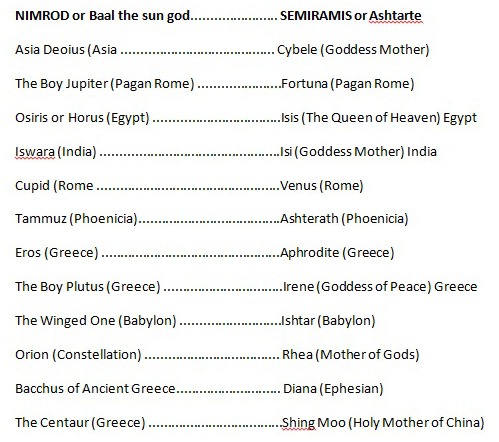


 After the Crash
