Drop the Rope

8583170_f520

By Zen Gardner

Source: ZenGardner.com

It’s interesting how we get entangled in compromising situations and interactions, often unwittingly. We all face this challenge continually. So often the very encounter itself is predestined to failure without our even knowing it and results in a sense of energy sapping futility.

If you find yourself in such a tug of war, it’s time to rethink your entire stance. In fact, it might be time to drop the connection all together. Winning ain’t what it’s cracked up to be, nor to your benefit in most cases in these circumstances.

This happens because we get snared into lower level thinking on a preset playing field designed to do just that. Ensnare and entrap. This societal mechanism is designed to set the parameters and disguise the real solution which is way outside this constructed paradigm. When we join into the “contest” we subject ourselves to the win-lose dialectic, the pitting of one versus another paradigm that has beset humanity for eons.

That’s not to say there isn’t a time to attempt to illuminate ignorance or expose manipulative mechanisms, we just can’t expect to “win” in an arena built for pointless conflict that distracts from seeing the essential and empowering reality that blows their entire construct to bits.

If we’re too busy fighting amongst ourselves, physically or intellectually, we’ll never see that bigger picture where the true problem truly lies.

The conscious conclusion to draw on such encounters is clear. If you don’t want to play their insidious, pointless, draining and distracting games of tug of war, simply drop the rope and walk away.

The Conflict Dialectic

Society has been manipulated to such a degree that the easiest way to control us is through simple distraction. Bread and circus competitive sports and similar mind-stinting entertainment, right-left paradigm political charades and society dividing issues such as race, immigration and social, economic and class status are furiously alive trigger points of distraction running rampant in this seriously dysfunctional world mind.

We help define and reinforce these memes ourselves by our participation. Without rising above this imposed playing field and understanding the world we’re already living in we certainly cannot find the way to change it, never mind the way out into a new paradigm without their constrictions.

Simply said, if you don’t want to play their insidious, pointless, draining and distracting games of tug of war, simply drop the rope and move on. Let them fall in their own devices.

Dropping the Rope

When dealing with this seeming “conflict resolution” we appear to be confronting on many levels, “dropping the rope” is a very interesting way to break this sycophantic relationship with our oppressors. What invariably surfaces in our left brain human response in these sorts of circumstances is a sort of contest between people or situations. One side opposes the other in some form, and one or the other or both sides express umbrage at what the other is saying.

It’s a programmed and mass entranced conflict, the “strategy of tension” as they call it, utilized by the media and military with very successful abandon.

When we find ourselves in these situations it can be quite stressful. Reflexive thinking usually kicks in and we take sides, concentrating on the “issues” at hand while ignoring the overall. Even in a personal heated exchange, subtle or obvious, no one wins. They can’t. The overarching truth is being missed in this morass of “logical” confined thought subscribed to by the perspective of the participants.

Overall social psychosis perhaps, or the left brained reptilian mind going to work, who knows. It’s just futile in that type of paradigm. These types of conflicts are an exercise in futility. Oh, we may bring some light of truth to the conversation or situation but the problem is that we’re buying into their boxing ring. Someone has to come out the “victor” and the game goes on, without addressing the underlying reality outside the ring, or imposed and deliberately created stadium of conflict.

This realization is a blow to the egoic mind set and, while essentially counter intuitive, it’s only destined to be repeated. And the pointless game goes on. Don’t fall for it. You’re well above all this.

Spiritual Scoliosis and Letting Go of the Unchangeable

The application of this realization can get quite personal.  Those we’re closest to can often display usage of this dialectic and it’s not easy to discern up close and personal, nor know how to respond to it.

There’s often an embedded agenda to what is being said or proposed, as exemplified by news outlets, or as we usually see it by people around us, that is much more profound than the surface argument. You’ll often hear sweeping language with generalities that appear to be true in such contests of mind but these can have a much more insidious nature.

People, as well as social engineers, often use this technique.

It’s usually very cleverly embedded, be it by an individual or ideology. But on an individual basis it can get pretty dicey.

The Personal Touch

It’s naive to think we could correct spiritual scoliosis or perform some kind of exorcism or somehow overwhelm this mechanism to get it into its proper place and perspective when dealing with an infected individual with such a mindset. In fact, those are the things and persons that conscious people sidestep until the subject really wants help and starts to see the light of day and fully lets go of their petty shibboleths.

These are issues that really aren’t so petty when you get down to the spiritual nature of it and difficult to discern as well as confront.

But when you’re awake to these traits you don’t argue with them or plea with them to let go. They either do when confronted with conscious awareness or they don’t. Otherwise you leave them alone until there’s a change, and move on to those open to real dialogue. This kind of conscious awareness is sadly thin in today’s world but people are catching on.

No players, no game is a great default setting.

Their approach has a lot to do with posturing, as if they’re authoritative on some subject. Unthinking people often submit to that. When someone comes on pretending to be an authority on anything and speaks in that tone and posture it’s time to sit up and take notice – carefully. Not sit back in acquiescence. Real truth sharers propose and entreat. Remember, words, which carry spirit, can eventually overpower you if you keep listening to where you sense it’s empowering rooted in truth and love, or isn’t healthy.

It’ll be clear. Just listen.

Be Like Water

Avoiding these kinds of obstacles is a bit of an an acquired art, but it can be learned. This has to do with the nature of on going change. Water just goes around the rock, or over it, or both. Sometimes rocks move with the water a little but never fully. Like those set in their ways.

They’re rocks. That’s the attached baggage people won’t let go of in their hearts and it clogs up the works and infects anything it embeds in. They’re fine, or should I say less dangerous, on their own and they have their place despite their issues. But they’re not water; and if you expect them to come along like water it’s going to be a long and arduous journey that pretty much is playing the rock’s game.

Water moves on to where its welcomed. Go with the flow. Let the rocks be, i.e; let go of the rope.

Conclusion

It’s important to not get caught up in futile and ultimately destructive contests of any sort, be they relationships or unconscious dialogue as they can have very deceitful and disempowering consequences.

That’s how the system works. Getting everyone caught up in lower vibrational interactions that muffle the call to conscious awareness and activism in avenues that have real meaning. It’s something to which they are clearly diametrically opposed. They’re more than happy to entangle you in anything petty to keep you from realizing that.

You can’t win on their level. Don’t even go there. But if you do and find yourself in a tug of war with ignorance, egos or manipulating entities…..just drop the rope. It’s that simple.

Let ’em fall on their asses and you go merrily on your way.

And go take a nice walk in our majestic freedom and glory in your independent magnificence! Then turn and do and say what’s right – in every situation you come up against.

Screw the programming. We’re free.

That’s how truth wins out.

Much love,

Zen

ZenGardner.com


One dog’s solution to overcoming lower vibrational conflicts:
Saturday Matinee: High Velocity

91y4encjnjL._SY679_

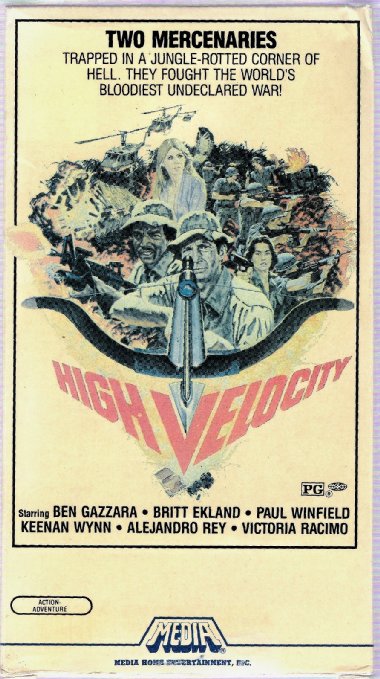
“High Velocity” (1976) is an obscure b-movie starring Ben Gazzara and Paul Winfield as Vietnam vets hired by a corporation to rescue a CEO kidnapped by an underground resistance group in the Philippines. On one level, it’s an early version of the heroic mercenary film which had a resurgence in the 80s after the success of Rambo and Missing in Action, but it’s also unrelentingly cynical with a surprisingly astute depiction of colonialism, government/corporate corruption and the power elite. The film is further elevated by a great lead performance by Ben Gazzara and atmospheric soundtrack by Jerry Goldsmith (famous for his work on Star Trek). Interestingly, High Velocity was the first film produced by Takafumi Ohashi, who later produced tons of great (and not-so-great) Japanese genre features.

The Golden Era Of Knowledge Resistance Is Upon Us

freedom-mental-slavery2

By Bernie Suarez

Source: Truth and Art TV

With the recent Virginia shooting false flag incident now blown wide open it occurred to me recently that humanity is in the middle of an era of all-time highest abundance of knowledge and information.  We are swimming in knowledge thanks to the internet and technology. This knowledge is easily available to almost anyone in a moderately developed country. Even children have access to this abundance of knowledge. Used properly, the technology and information available to us today gives humanity the tools it needs to overcome and even replace the dying new world order empire seeking control of it.

That’s the good side of today’s technology, knowledge-sharing and information available to humanity. Here’s the dark side of the story however. With much knowledge comes much responsibility and intellectual expectation from the species. Given how much knowledge there is available to humanity, we must face objectively what is transpiring before our very eyes. A large percentage of humans are still blinded by the controllers because they are deliberately resisting this otherwise easily available knowledge and this almost unique first-of-its-kind level of resistance seems to be at an all-time high.

I say “resistance” because more than ever before in the history of mankind humans can rapidly educate themselves about almost anything. Anyone can easily get past the information bottleneck of mainstream media and do their research and discover how real the globalist new world order plans are. After all, they are not even hiding their intentions. Ask yourself why would they publish the Project for a new American Century BEFORE 9/11 telling the world what their intentions would be? How is it that we have access to ‘Operation Northwood‘ documents clearly outlining the controller’s plans for staging false flag terror attacks throughout the U.S. to use as a pretext for war, yet people still think this is not possible? They’ve admitted Vietnam was a war based on a lie but does anyone care? Crisis actors are now regularly being used to stage sloppy staged shootings but many refuse to look into this too deep for fear of what this new knowledge will require of them. Thus today it requires more mental energy to fend off the knowledge that is easily available at everyone’s fingertips. People are apparently willing to put lots of energy into resisting this knowledge just to preserve their paradigms.

Consider that today’s generation has easier access to concrete proof of false flags faster and more accurately than at any point in history. Much of this information can be obtained in almost real-time. Today, unlike any point in history, people who are privileged to this surreal flow of amazing information simply ignore the information like its not there. This unique engineered modern day complacency and resistance to easily available knowledge I believe is very special and must be pointed out to understand where we are and what possible solutions will work best.

Think about that next time you hear people still clinging on to government engineered “official story” lies, false flag events, planned agendas and propaganda. One of the reasons people cling to government lies and resist easily available truth and knowledge is because people don’t want to believe things are that bad. They would rather believe that government is looking out for the greater good of the people. They don’t want to believe anything that will compromise their view of the world and their paradigm about life. Paradigms are very real and many refuse to change how they think to accommodate a new paradigm. They will ignore logic, avoid tough questions, even ridicule the messenger to protect their belief systems and all of these examples are forms of resistance to knowledge.

Cognitive dissonance is at an all-time high. More than ever, people prefer to keep the conversation light. They just don’t want to discuss “conspiracies” or government corruption for fear of getting into an unwanted debate. So in order to avoid a debate or conflict over a political issue it’s better to avoid the topic. Today many work places expect their employees to avoid discussions about controversial topics because it’s not good for the work place. This is an institutionalized resistance to knowledge and it’s all deliberate and engineered. This resistance is cognitive dissonance at a mass scale.

So, although many people are waking up to the nature and true meaning of current and political events both domestically and globally, there is a great sifting going on and more than ever people are resisting simple truth that would have easily persuaded and awakened the average person many centuries ago if they had the same available information in their time. Thus, I believe this is widening the knowledge gap within the species and this knowledge gap widening is part of an intellectual and consciousness extinction phenomenon that I believe is happening. Sadly, many humans are deeply mentally tangled in the matrix of lies and will likely die in the matrix never having understood how or why they died. Like sheep led to the slaughter.

You may wonder, how did we get here? Perhaps due to several factors including that today, propaganda is much more sophisticated and thus more effective. We have sophisticated sensationalized mass media, advertisements, billboards, radio, TV, Hollywood movies, video games, news papers, magazines, social media, cell phone apps and more. All of these sources of information are well equipped to manipulate the human mind especially knowing that today people are subjected to these devices and distractions every day.

Solutions

You may be thinking, what can we do about this mass resistance to knowledge seen today. For one, keep the information awareness circulating. Don’t get too worked up every time they execute another false flag. Instead see the false flag from the point of view of the usual script blueprint they implement almost every time and do your best to share the information with those who are still living in the matrix of lies. Then move on and continue focusing on viable solutions for the problems we face.

Still running into people clinging on to government “official stories” on one false flag event after another? Realize who you are. Remind yourself that truth exists on its own and it’s not up to you to convince anyone, just show them the truth and let them recognize it for themselves. Realize we are living in an era of unusual resistance to knowledge because this resistance is engineered. Realize that it’s not about you winning an argument or convincing others of your personal point of view. It’s about putting out the objective truth and hoping people see the bigger picture for their own survival benefit. You can lead a horse to water but you cannot make it drink.

I believe understanding this engineered resistance to common knowledge we see today is a big part of the puzzle in terms of staying mentally healthy and staying focused on solutions. It’s all about keeping things in the right perspective and maintaining your own personal mental, emotional, spiritual and physiological balance.

Realize that for as much as people resist knowledge and information freely and widely available to humanity today, there is a constant hope and positive outlook that is burning in our hearts that reminds us that we may be part of an inevitable and important mass human awakening phenomenon.

Also lets consider that this knowledge resistance is equivalent to the diver who is too afraid to jump from the high diving board for fear of what will happen if he does. All those people who are afraid of giving up their current paradigms wouldn’t be if they were assured that everything was going to be all right.

Finally, realize that as things get worse many more people will be inclined to want to change their paradigms for a better one. That is why we need to offer hope to others. It’s not enough to point out false flags and focus on the fear and government corruption. We must answer back with some kind of solution and hopeful strategizing. Deliberate knowledge resistance is best met with the fewest amounts of words. Show someone the truth don’t debate with them so much. Allow them to believe whatever they want and move on after telling them what they need to hear. It’s not about convincing these people or winning an argument, it’s about being mentally stronger, more assured and wiser as you expose the other person to objective truth. It’s about staying focused on the bigger picture not about burning energy to fix someone else’s resistance to truth.

Bernie Suarez
Creator of Truth and Art TV Project

Bernie is a revolutionary writer with a background in medicine, psychology, and information technology. He has written numerous articles over the years about freedom, government corruption and conspiracies, and solutions. A former host of the 9/11 Freefall radio show, Bernie is also the creator of the Truth and Art TV project where he shares articles and videos about issues that raise our consciousness and offer solutions to our current problems. His efforts are designed to encourage others to joyfully stand for truth, to expose government tactics of propaganda, fear and deception, and to address the psychology of dealing with the rising new world order. He is also a former U.S. Marine who believes it is our duty to stand for and defend the U.S. Constitution against all enemies foreign and domestic. A peace activist, he believes information and awareness is the first step toward being free from enslavement from the globalist control system which now threatens humanity. He believes love conquers all fear and it is up to each and every one of us to manifest the solutions and the change that you want to see in this world, because doing this is the very thing that will ensure victory and restoration of the human race from the rising global enslavement system, and will offer hope to future generations.

Public School Students Are the New Inmates in the American Police State

school_is_prison_by_twarrior-d4atw5g

By John W. Whitehead

Source: The Rutherford Institute

In the American police state, you’re either a prisoner (shackled, controlled, monitored, ordered about, limited in what you can do and say, your life not your own) or a prison bureaucrat (police officer, judge, jailer, spy, profiteer, etc.).

When you’re a child in the American police state, life is that much worse.

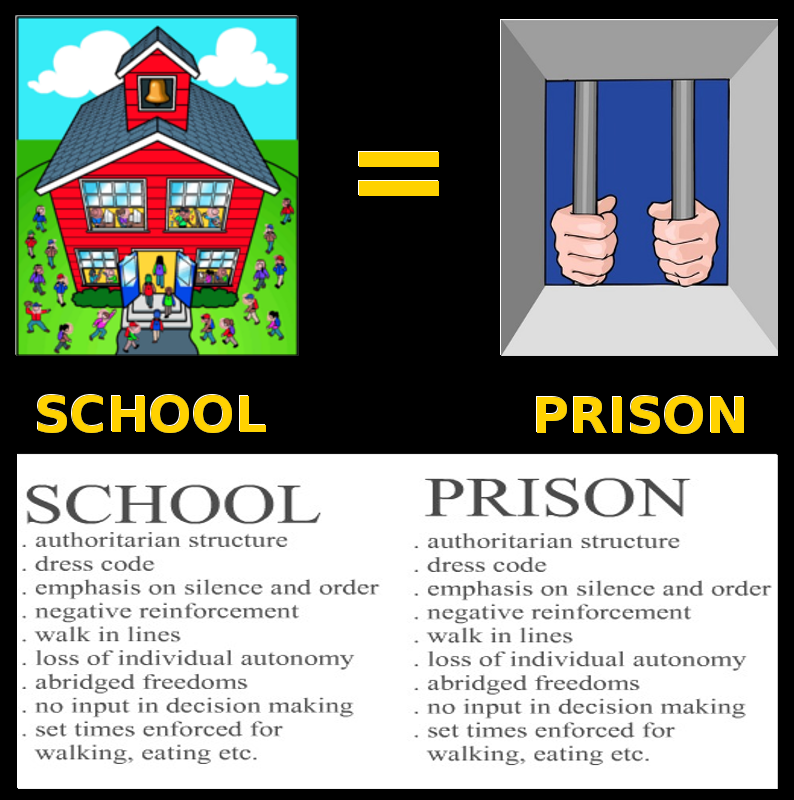
Microcosms of the police state, America’s public schools contain almost every aspect of the militarized, intolerant, senseless, overcriminalized, legalistic, surveillance-riddled, totalitarian landscape that plagues those of us on the “outside.”

From the moment a child enters one of the nation’s 98,000 public schools to the moment she graduates, she will be exposed to a steady diet of draconian zero tolerance policies that criminalize childish behavior, overreaching anti-bullying statutes that criminalize speech, school resource officers (police) tasked with disciplining and/or arresting so-called “disorderly” students, standardized testing that emphasizes rote answers over critical thinking, politically correct mindsets that teach young people to censor themselves and those around them, and extensive biometric and surveillance systems that, coupled with the rest, acclimate young people to a world in which they have no freedom of thought, speech or movement.

If your child is fortunate enough to survive his encounter with the public schools, you should count yourself fortunate.

Most students are not so lucky.

By the time the average young person in America finishes their public school education, nearly one out of every three of them will have been arrested.

More than 3 million students are suspended or expelled from schools every year, often for minor misbehavior, such as “disruptive behavior” or “insubordination.”

For instance, a Virginia sixth grader, the son of two school teachers and a member of the school’s gifted program, was suspended for a year after school officials found a leaf (likely a maple leaf) in his backpack that they suspected was marijuana. Despite the fact that the leaf in question was not marijuana (a fact that officials knew almost immediately), the 11-year-old was still kicked out of school, charged with marijuana possession in juvenile court, enrolled in an alternative school away from his friends, subjected to twice-daily searches for drugs, and forced to be evaluated for substance abuse problems.

Under similarly misguided school zero tolerance policies, students have been suspended for bringing to school household spices such as oregano, breath mints, birth control pills and powdered sugar. Look-alike weapons (toy guns—even Lego-sized ones, hand-drawn pictures of guns, pencils twirled in a “threatening” manner, imaginary bows and arrows, even fingers positioned like guns) can also get a student kicked out.

Acts of kindness, concern or basic manners can also result in suspensions. One 13-year-old was given detention for exposing the school to “liability” by sharing his lunch with a hungry friend. A third grader was suspended for shaving her head in sympathy for a friend who had lost her hair to chemotherapy. And then there was the high school senior who was suspended for saying “bless you” after a fellow classmate sneezed.

Unfortunately, these incidents are indicative of a nationwide phenomenon in which children are treated like suspects and criminals, especially within the public schools.

When you bring the police into the picture, after-school detention and visits to the principal’s office are transformed into punishments such as misdemeanor tickets, juvenile court, handcuffs, tasers and even prison terms.

More and more, police are “stepping in to deal with minor rulebreaking—sagging pants, disrespectful comments, brief physical skirmishes. What previously might have resulted in a detention or a visit to the principal’s office was replaced with excruciating pain and temporary blindness, often followed by a trip to the courthouse.”

Thanks to a combination of media hype, political pandering and financial incentives, the use of armed police officers to patrol school hallways has risen dramatically in the years since the Columbine school shooting.

Funded by government grants, these school resource officers have become de facto wardens in the elementary, middle and high schools, doling out their own brand of justice to the so-called “criminals” in their midst with the help of tasers, pepperspray, batons and brute force.

Now advocates for such harsh police tactics and weaponry will tell you that school safety should be our first priority lest we find ourselves with another Sandy Hook. What they will not tell you is that such shootings are rare. As one congressional report found, the schools are, generally speaking, safe places for children.

In their zeal to crack down on guns and lock down the schools, these cheerleaders for police state tactics in the schools might also fail to mention the lucrative, multi-million dollar deals being cut with military contractors such as Taser International to equip these school cops with tasers, tanks, rifles and $100,000 shooting detection systems.

Indeed, the transformation of hometown police departments into extensions of the military has been mirrored in the public schools, where school police have been gifted with high-powered M16 rifles, MRAP armored vehicles, grenade launchers, and other military gear. One Texas school district even boasts its own 12-member SWAT team.

As if it weren’t bad enough that the nation’s schools have come to resemble prisons—complete with surveillance cameras, metal detectors, drug-sniffing dogs, random locker searches and active shooter drills—the government is also contracting with private prisons to lock up young people for behavior that once would have merited a stern lecture. Nearly 40 percent of those young people who are arrested will serve time in a private prison, where the emphasis is on making profits for large megacorporations above all else.

Young people have become easy targets for the private prison industry. For instance, two Pennsylvania judges made headlines when it was revealed that they had been conspiring with two businessmen in a $2.6 million “kids for cash” scandal that resulted in more than 2500 children being found guilty and jailed in for-profit private prisons.

It has been said that America’s schools are the training ground for future generations. Yet as I point out in my book Battlefield America: The War on the American People, instead of raising up a generation of freedom fighters, however, we seem to be busy churning out newly minted citizens of the American police state who are being taught the hard way what it means to comply, fear and march in lockstep with the government’s dictates.

The lesson is this: you not only get what you pay for, but you reap what you sow.

If you want a nation of criminals, treat the citizenry like criminals.

If you want young people who grow up seeing themselves as prisoners, run the schools like prisons.

But if you want to raise up a generation of freedom fighters, who will actually operate with justice, fairness, accountability and equality towards each other and their government, then run the schools like freedom forums. Remove the metal detectors and surveillance cameras, re-assign the cops elsewhere, and start treating our nation’s young people like citizens of a republic and not inmates in a police state.


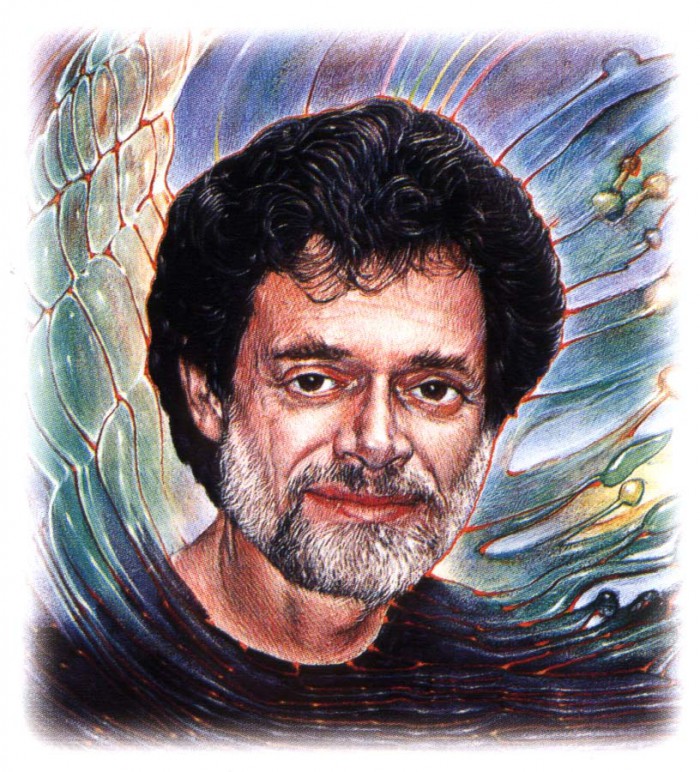
Terence McKenna’s Disillusioned Perspective on Mass-Consumerist Culture

Editor’s note: Since Terence McKenna’s passing on April 3 2000, his ideas have only grown in relevance and popularity largely because of their prescience and resonance to growing segments of internet culture. In commemoration of the 70th anniversary of his birthday we’re sharing this article which reflects an important yet often neglected aspect of McKenna’s worldview.

By Jordan Bates

Source: Refine the Mind

“We have to create culture, don’t watch TV, don’t read magazines, don’t even listen to NPR. Create your own roadshow.”

Terence McKenna is one of those cult-famous, societal-fringe figures of whom the majority of people have never heard. He’s also someone whose views probably have a polarizing effect on anyone who encounters them. At the very least, though, Terence was an exceptionally original thinker, and those who explore a fraction of his work will note his erudition and incredible ability to articulate his thoughts.

McKenna was an American philosopher and ethnobotanist who passed away in the year 2000. He was known for possessing expertise on a broad range of subjects including history, biology, geology, botany, and ecology. He toured and lectured extensively on everything from language and science to shamanism and extraterrestrials, developing a sizable and enthusiastic following.

His controversial status is in large part due to his vocal advocacy of  mind-altering substances. McKenna was a well-known psychonaut–one who explores consciousness through the ingestion of psychedelic hallucinogens–and a staunch proponent of the use of naturally occurring psychoactive compounds.

Obviously this latter aspect of McKenna’s legacy is an immediate turn-off to many. For a major sector of the population, the colossal stigma surrounding psychedelic substances is sufficient reason to lambaste the views of a well-known user. I, however, am not so quick to dismiss such a person, especially one as lucid, compelling, internally consistent, and dedicated to free inquiry as Terence McKenna.

McKenna’s Views on Mass-Consumerist Culture

I’ve delved into hours of McKenna’s lectures, and I am particularly interested in his ideas on culture. When McKenna speaks of culture, he seems to refer primarily to modern, mass-consumerist culture, so keep that in mind.

McKenna held a rather unfriendly position toward culture that can be summed up succinctly by one of his most famous quotations: “Culture is not your friend.” McKenna saw modern culture as a sort of engine detached from the interests of the individual and serving the manipulative, power-focused agendas of various institutions and wealthy individuals.

The following short video contains a portion of one of his lectures in which he addresses culture. I encourage you to watch it now (I will transcribe and elaborate on its central ideas below):

What Civilization is and What it Could be

McKenna certainly had a way of poetically articulating his ideas, and the video opens with what I feel is one of Terence’s most memorable metaphors:

“What civilization is is 6 billion people trying to make themselves happy by standing on each other’s shoulders and kicking each other’s teeth in. It’s not a pleasant situation. And yet you can stand back and look at this planet and see that we have the money, the power, the medical understanding, the scientific know-how, the love, and the community to produce a kind of human paradise.”

With this statement McKenna addresses the hyper-competitive environment that is symptomatic of the modern capitalistic socioeconomic paradigm. Our culture has a tendency to glorify competition, and many would argue that competition drives innovation and “progress” (a slippery word). I doubt McKenna would argue that competition has not been essential to the invention of our modern world, but he seems to step back and ask, “Yes, but when will it be enough?”

McKenna suggests that we’ve reached a stage of technological advancement and knowledge that would allow us to “produce a kind of human paradise.” This declaration sounds vague and idealistic, but based upon what I know of McKenna, I assume that by “human paradise” he envisioned something like a drastic change in the work paradigm, an elimination of poverty and starvation, a great reduction in disease and illness-related death, the end of war, and a much more palpable sense of a world community.

“Culture is Not Your Friend”

These items might sound far-fetched, but McKenna is not the first to suggest that such a situation is possible with our modern technology. R. Buckminster Fuller comes to mind as another prominent thinker who held similar views. After making this statement, McKenna elaborates on what he believes prevents us from attaining this state of affairs–namely, a lack of significant resistance to the poor leadership, dehumanizing values, and damaging cultural “control icons” that he perceives in the world. He states:

“Culture is not your friend. Culture is for other peoples’ convenience and the convenience of various institutions, churches, companies, tax collection schemes, what have you. It is not your friend. It insults you. It disempowers you. It uses and abuses you. None of us are well-treated by culture.”

[…]

But the culture is a perversion. It fetishizes objects. It creates consumer mania. It preaches endless forms of false happiness, endless forms of false understanding in the form of squirrelly religions and silly cults. It invites people to diminish themselves and dehumanize themselves by behaving like machines.”

Modern World as Dystopia?

McKenna holds that modern culture is centered around the agendas of those who are almost certainly not you. He believes that culture diminishes and dehumanizes the vast majority of the population by inviting them to unreflectively reinforce its models.

McKenna seems to suggest that instead of focusing on creating the type of world that is possible, we are caught up in a game of culture–a robotic pursuit of fetishized objects and false visions of a proverbial light at the end of the tunnel.

To some, this view may seem rather grim and dystopian. I don’t see it that way. I see it as a warning that remains pertinent in 2013 [and 2015]. The culture McKenna refers to does exist, and its effects are far-reaching and potentially insidious. However, I know that there are many, many people who are aware of this cultural game and do not conform to its status quo, who resolve to try to choose their own way of life and who see through the glitzy media-images.

Simply by being among this latter group of people, I think we’re doing the work that McKenna believed needed to be done–the work of resisting the damaging and dehumanizing aspects of modern consumerist culture. The mere realization that we are culturally conditioned to behave in certain ways is a sufficient catalyst to begin assuming a more active and reflective role in deciding how to live and act.

I see nothing wrong with being a cultural participant, but it should be our goal to develop a deeper awareness of the ideals our culture would have us pursue. When we understand the culture’s vision for our lives, we can continue to exist within our given society while challenging its flaws in subtle ways. We can deliberately express ourselves in forms that disrupt its norms, and we can consciously choose which aspects of it are worth partaking in. In this way, we become active constituents of culture, shifting and re-imagining its values, contributing to the gradual creation of a culture that we can call our “friend”.

McKenna Suggests We Must Create Culture

McKenna was certainly a vocal critic of mass culture, but to his credit, he was also quite vocal about offering alternatives. He believed strongly in the importance and utility of art, the primacy of felt experience, and the need to create our own values and alternative spaces for expression.

I’ll leave you with one last quote from another of Terence’s lectures that is especially poignant here. He was a frank and opinionated speaker, to be sure, but don’t let his style put you off. Terence was also always quick to check his own views and make light of his position. He didn’t want to insult people–he just wanted us to ask questions. This message from beyond the grave is valuable to each of us; ponder it with an open mind:

“We have to create culture, don’t watch TV, don’t read magazines, don’t even listen to NPR. Create your own roadshow. The nexus of space and time where you are now is the most immediate sector of your universe, and if you’re worrying about Michael Jackson or Bill Clinton or somebody else, then you are disempowered, you’re giving it all away to icons, icons which are maintained by an electronic media so that you want to dress like X or have lips like Y. This is shit-brained, this kind of thinking. That is all cultural diversion, and what is real is you and your friends and your associations, your highs, your orgasms, your hopes, your plans, your fears. And we are told ‘no’, we’re unimportant, we’re peripheral. ‘Get a degree, get a job, get a this, get a that.’ And then you’re a player, you don’t want to even play in that game. You want to reclaim your mind and get it out of the hands of the cultural engineers who want to turn you into a half-baked moron consuming all this trash that’s being manufactured out of the bones of a dying world.”
― Terence McKenna

Living in a PNAC World: The Toxic Legacy of 9/11

pnac-criminals-2-1

By Chris Floyd

Source: Empire Burlesque

In September 2000, an advocacy group called “Project for New American Century,” led by Jeb Bush, Dick Cheney, Donald Rumsfeld, Paul Wolfowitz and others — published a “blueprint” for “transforming” America’s future. PNAC acknowledged that the “revolutionary” changes it envisaged could take decades to bring about — unless, they said, the United States was struck by “some catastrophic and catalyzing event – like a new Pearl Harbor.” One year later, after the disputed election of George W. Bush, came the “catalyzing” event of the 9/11 attacks — which indeed “transformed” America’s future in many “revolutionary” ways.

Here are some of the changes PNAC called for in 2000, all of which came about after the “new Pearl Harbor” they had hoped for: An attack on Iraq. Vast increases in military spending. Planting new American bases all over the world. Embracing the concept of “pre-emptive war” and unilateral action as cornerstones of national strategy. Developing sophisticated new technologies to “control the global commons of cyberspace” by closely monitoring communications and transactions on the Internet. Pursuing the development of “new methods of attack – electronic, ‘non-lethal, biological…in new dimensions, in space, cyberspace and perhaps the world of microbes.”

Oddly enough, although “regime change” in Iraq was clearly a priority for PNAC, it had little to do with Saddam Hussein and his brutal rule. Instead, removing Saddam was tied to the larger goal of establishing a permanent U.S. military presence in the Persian Gulf in order to “secure energy supplies” and preclude any other power from dominating the vital oil regions of the Middle East and Central Asia. The PNAC report puts it quite plainly:
“The United States has for decades sought to play a more permanent role in Gulf regional security. While the unresolved conflict with Iraq provides the immediate justification, the need for a substantial American force presence in the Gulf transcends the issue of the regime of Saddam Hussein.”

This is why the Bush Administration offered a constantly shifting menu of rationales for the impending attack on Iraq: because the decision to remove Saddam was taken long ago, as part of a larger strategic plan, and had little to do with any imminent threat from the broken-backed Iraqi regime, which at that time was constantly bombed, partially occupied (with U.S. forces already working in the autonomous Kurdish territories) and swarming with UN inspectors. If the strategic need for the attack “transcends the issue of the regime of Saddam Hussein,” then almost any rationale will do.

The same desire to “secure energy supplies” and prevent any other power from gaining dominance in the oil regions also underlies current and recent US policies in Libya, Syria, Yemen and elsewhere. That’s why we see the same shifting rationales, see policies that on the surface seem to make no sense: we fight al Qaeda in Iraq, we support al Qaeda in Yemen and Syria; we say defeating ISIS is of supreme global importance, but we prevent other countries (Iran, Russia) from joining the fight; we push “regime change” to “liberate” Libya and Syria while partnering with one of most repressive, extremists nations on earth, Saudi Arabia, and arming other dictators like Sisi in Egypt. We are “fighting” terrorism while turning whole nations (Iraq, Libya, Syria) into swamps of ruin and violence where terrorism can breed. None of these contradictory rationales make sense on the surface. But viewed as part of an ongoing, bipartisan agenda of securing American dominance of economically strategic lands — and of “discouraging advanced industrial nations from challenging our leadership or even aspiring to a larger regional or global role” (as an earlier Cheney-Wolfowitz document put it) — it becomes easier to see a pattern in today’s howling chaos.

This is not “conspiracy theory.” These motives and agendas are out in the open, and always have been. Our bipartisan leaders eagerly trumpet them, and declare that it is our right and our duty to dominate the world in this way. What’s more, any actions we take to accomplish this — wars, regime change, intrusive surveillance, drone campaigns, death squads, torture, killing thousands of innocent people (mere “collateral damage”), fomenting more hatred and extremism, breaking our own laws, turning our own people into fearful cowards ready to throw away their liberties to “stay safe,” etc. — are automatically just and righteous, because we are “exceptional.”

So yes, the “transformations” wrought in American policy — and the American psyche — since that “new Pearl Harbor” have indeed been “revolutionary.” Post-9/11, we are all living in a PNAC world.

Note: The above post was adapted (and updated) from a much more detailed piece originally written in 2002, which can be found here.


Rope-a-Dope

rope-a-dope3By Rodney Swearengin

Source: Adbusters

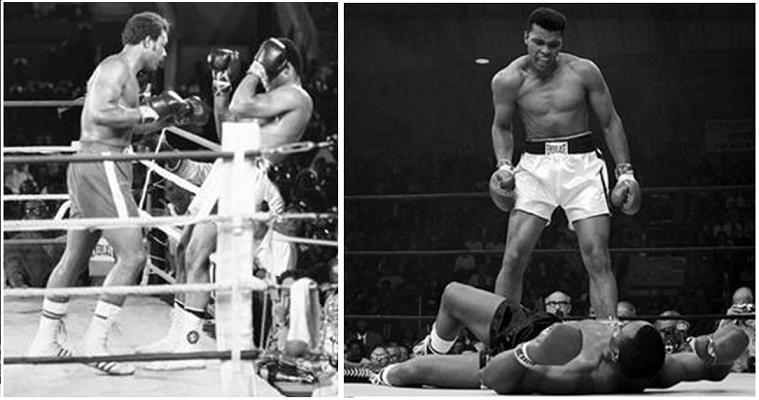
During the second round of the 1974 epic boxing match billed as the Rumble in the Jungle, Mohammad Ali leaned extraordinarily far back upon the ropes as George Foreman relentlessly bludgeoned Ali’s body and arms. It looked much like the devastating beating Ali took at the hands of Joe Frazier in 1971. Foreman’s notoriously powerful punches were sure to do Ali in as he languished on the ropes round after round. But in the eighth — with Foreman’s stamina sapped — Ali got off the ropes, and went on the attack, winning the bout with a knockout. He called it the “rope-a-dope.”

I feel worked over — not knowing if I can keep up the pace of the caffeine infused all-night drift through a world-wide cataloging of every failure of imagination — large and small — the war, disease, simple stupidity, the latest meme designed to bring a smile all the way to your eyes — brought not only into your living room, but also the kitchen, the bedroom. It seems we&rsquo—re always peering deep into our glowing box, trying to sort out the trouble and hop to the next possible potential of some game-changing inspiration in the incessant production-line flow of recycled mediocrity. But the troubles are never through. The work is never done. That breakthrough — that genius sabot insight never comes.

But the metaphor of production-line work — already passé when McLuhan made us aware of so many similarly irrelevant tropes — is based on psychological responses and concepts conditioned by the former technology — mechanization — of the factory. There is something comforting in the nostalgic ease with which Lucille Ball or Charlie Chaplin revealed the absurdity of Fordist efficiency, the worker as a mere appendage of the machine. Although laughable even then — that was a time in which the worker still had a genuine role to play; being more than an option cheaper than automation. That time is gone.

I feel over worked. But I’ve never worked at the mill. I’ve never done a 12-hour stint keeping pace with cogs and conveyer belts. I’m not being over worked. I’m being worked over — as we all are — not by a craftwork mechanized pace that drives us to exhaustion — but by an alluring rhythm — a rhythm that can at once lull us into acquiescence while at the same time keeping us off balance — all the better mobilized for each permutation of familiar themes. We are mesmerized by the rhythm of electrostatic transmissions coded through glitches of the cybernetic network and the fragments of old media. Cycling through neoclassic postmodern motifs destructured and reformulated into predictably surprising combinations — this rhythm — this aesthetic — makes us move —and more importantly, buy. Consumers at heart, the rhythm sucks us in and incorporates us more completely than any machine ever could. Somehow thinking that we are breaking free from the autonomic conditioning of a youthful wasteland, we wait in eager anticipation for the next issue of a magazine devoted to the pure form of advertising —though in its pages there is none to be found. It makes our consumer heart skip a beat. Like Victorians who wouldn’t dare indulge in such an unsavory act — but nonetheless cannot stop talking about it — we swoon, sway and jerk with the rhythm of the spliced (dis)tasteful image juxtaposed by words of a hopeful, anxious, elliptical cant — breakdown and breakthrough.

I get the breakdown. Where’s the breakthrough? We talk and all the while we’re being worked over. And this is no massage. This is a beat down. In the expanded edition of his vintage Politics and Vision, Sheldon Wolin argued that the particular rhythm of our contemporary aesthetic has been put to expert use by the new corporate form of governance he called “inverted totalitarianism.” Perhaps Wolin really put his finger on our fatal flaw when he suggested that the “cascades of ‘critical theory’ and their postures of revolt, and the appetite for theoretical novelty, function as support rather than opposition” to capitalism, because this sort of frenetic, syncopated, decentering only “encourages its rhythms.” Like a prizefighter — agile, yet made of solid, consolidated muscle. The centralized corporate entity gets in step with our fancy footwork — bobs and weaves into every new channel of communication and community, coopts every sophistication of critique, adopts the most non-hierarchical, horizontal stance of organization and deployment — moving with the rhythm — adapting the rhythm to its own purpose — waiting for the opportunity to unload its notoriously devastating punch — coming in on the trash talker of dissent — Muhammad Ali stumbling back on the ropes, body blow after wicked body blow — pummeled — worked over completely.

I don’t want to go down on the ropes. Where’s the rope-a-dope? Where’s the rope-a- dope?!