Saturday Matinee: Fight Club

Fight Club: A philosophical analysis

Alter ego, consumerism, identity, anarchy, masculinity, order and chaos.

By DM

Source: blastingnews

Based on Chuck Palahniuk’s novel of the same name, a film that was initially a commercial failure is now widely considered a cult classic and a philosophical marvel. Fight Club is one of the most important films of its generation and one of Fincher’s best. This thought-provoking masterpiece scratches the surface of various philosophical concepts and makes its audience think.

It is still as relevant as ever, perhaps even more so than before. Emasculation, Consumerism, beauty standards, identity, chaos vs order — these philosophical concepts are perhaps even more topical today than they’ve ever been.

Philosophically radical, this is a film that condemns the society of consumerism. As Edward Norton’s character says: “It’s just, when you buy furniture, you tell yourself, that’s it.

That’s the last sofa I’m gonna need. Whatever else happens, I’ve got that sofa problem handled.”

Fight Club also takes a critical look at beauty standards for men and women both and at advertisements that are served to us through mass media. Identity and alter-ego are philosophical concepts on which Fight Club is based on. Tyler Durden (Brad Pitt’s character) is what the narrator (Edward Norton’s character) wants to be.

The ideal alpha male. A leader of men. Tyler Durden gradually appears throughout the movie, emerging from the narrator’s subconscious and almost destroying him in the process.

Order vs chaos

Order, anarchy and chaos are perhaps the most prominent theme of Fight Club. At one point, Tyler Durden says: “It’s only after we’ve lost everything that we’re free to do anything.” Although primarily a critique of consumerism, this is a rejection of order and an acceptance of chaos.

When the underground fight club evolves into Project Mayhem and starts pouring into the outside world, members of it begin to dismantle every societal concept, causing controlled, deliberate and channeled chaos. Installing anarchy and rejecting every societal norm that had turned them into slaves. This is how they attempt to set themselves free, but the main protagonist loses himself in the chaos, initially merging with his alter-ego and then rejecting it.

In today’s America, where controlled chaos is caused by the media and fed to the panicked public, Fight Club resembles a warped house of mirrors in which the reflection of today’s America is seen.


Mass Media Delusions

By Dmitry, Orlov

Source: Club Orlov

For anyone who lives in the West (the US, the EU and its various adjuncts such as Australia, New Zealand) and wants to know what really goes on in the world, a major hindrance is the powerful filter imposed on reality by Western mass media. It uses two methods to prevent reality from leaking through to the public, one active, one passive.

The passive method uses omission and obfuscation: certain events and facts are simply not reported. Some are willfully suppressed, others carefully underemphasized, yet others are presented in a context designed to disguise their significance. For example, anybody attentive enough could have easily ascertained that Robert Mueller is senile and in no way shape or form was ever capable of running any sort of investigation or writing a report. And yet this salient fact was not reported at all; that’s willful suppression.

But now that Mueller has provided six hours of congressional testimony to prove this fact before anyone who cared to watch, outright suppression has become impossible and context substitution has come into play: those who draw attention to Mueller’s obvious senility are accused of being right-wing extremists. But how can a readily observable medical fact be dismissed as political bias? How could he have failed to recall important details from a report he supposedly wrote (or at least read)? Mind you, I am just using the Mueller disaster as a handy example. As I have explained many times, it doesn’t matter who is president and the entire ridiculous witch-hunt is an instance of fiddling while Rome burns.

The active method is to label all those who try to circumvent their filter as “conspiracy theorists”—a derogatory term that is easy to apply, although making it stick is rather tricky. It is easy to fall into the trap by insisting on a certain version of events without being in possession of specific physical proof. But it is equally easy to act as an independent collector and connoisseur of conspiracy theories (which are popular because they are interesting) in which case your accusers must be on par with you in their depth of knowledge of conspiracies or else be ready to forfeit their position as preeminent authorities on all things conspiratorial.

If none of the major Western news outlets reported a certain salient fact that can be readily exposed and attested by multiple sources by some people who, each one separately, do a bit of research, then how are these people conspiring, and how is that a theory? It can perhaps be argued that there is indeed a conspiracy—on the part of the major Western news outlets—to suppress this salient fact. That would indeed be a theory, but a difficult one to prove, and so why would anyone care to argue this point? Why not just let the salient fact speak for itself?

In short, the trick for avoiding the label of “conspiracy theorist” when reporting an unreported or underreported fact is to always couch it in the form of a question—“Here’s some evidence of something quite important, but Western mass media has failed to cover it; why?”—and leave Western mass media with the burden of proof that they didn’t conspire to suppress the coverage. Of course, no mass media outlet would ever accept such a challenge. Alternative responses include stony silence and, when that tactic starts looking ridiculous, resorting to ad hominem attacks and name-calling. But that leads to an inevitable loss of face because it automatically reduces to the childish game of “I know you are, but what am I?” As, for instance, in “Is refusing to report on Mueller’s obvious senility a sign of political extremism?”

Western mass media malfeasance doesn’t stop at suppression of facts; there is also its massive failing to provide any sort of meaningful analysis, or even to form rather obvious conjectures that we can then consider on their merits. For example, I might wildly conjecture that Robert Mueller was chosen as a senile stooge behind whose back Hillary Clinton’s political operatives conspired to unseat Donald Trump by a combination of falsified and coerced evidence, entrapment and various other forms of prosecutorial misconduct.

Again, I don’t have a dog in this race because I believe the US is in the process of flushing itself down the same golden toilet no matter who is its president. I have no particular love of “Donny, Putin’s man in Washington” (that’s a joke; Russians find it hilarious), but I do enjoy the comedic elements of watching this “Art of the Deal” president fail to close a single deal with anyone. In any case, I am perfectly happy to wait until the truth of the matter comes out. Sure, maybe it was Putin’s clever plan to make Americans spend four years beating each other up over an orange-haired buffoon who, as ordered by Putin, has been working tirelessly to wreck the relationship between the US and China and to ease China into an alliance with Russia, and also to wreck the relationship between the US and Europe, leaving a weakened and faltering US stranded all alone on the wrong side of the planet, but that’s just a conspiracy theory, isn’t it?


WaPo Publishes Gabbard Smear Piece Filled With Blatant Lies

By Caitlin Johnstone

Source: CaitlinJohnstone.com

The Washington Post, which is wholly owned by a CIA contractor who is reportedly working to control the underlying infrastructure of the global economy, has published a shockingly deceitful smear piece about Democratic presidential candidate Tulsi Gabbard in the wake of her criticisms of her opponent Kamala Harris’ prosecutorial record during the last Democratic debate.

The article’s author, Josh Rogin, has been a cheerleader for US regime change interventionism in Syria since the very beginning of the conflict in that nation. It is unsurprising, then, that he reacted with orgasmic exuberance when Harris retaliated against Gabbard’s devastating attack by smearing the Hawaii congresswoman as an “Assad apologist”, since Gabbard has been arguably the most consistent and high-profile critic of Rogin’s pet war agenda. His article, titled “Tulsi Gabbard’s Syria record shows why she can’t be president”, is one of the most dishonest articles that I have ever read in a mainstream publication, and the fact that it made it through The Washington Post‘s editors is enough to fully discredit that outlet.

You can read Rogin’s smear piece without giving Jeff Bezos more money by clicking here for an archive. There’s so much dishonesty packed into this one that all I can do is go through it lie-by-lie until I either finish or get tired, so let’s begin:

“Gabbard asserts that the United States (not Assad) is responsible for the death and destruction in Syria, that the Russian airstrikes on civilians are to be praised

This is just a complete, brazen, whole-cloth lie from Rogin. If you click the hyperlink he alleges supports his claim that Gabbard asserts “Russian airstrikes on civilians are to be praised,” you come to a 2015 tweet by the congresswoman which reads, “Bad enough US has not been bombing al-Qaeda/al-Nusra in Syria. But it’s mind-boggling that we protest Russia’s bombing of these terrorists.”

Now, you can agree or disagree with Gabbard’s position that the US should be participating in airstrikes against al-Qaeda affiliates in Syria, but there’s no way you can possibly interpret her acceptance of Russia doing so to be anywhere remotely like “praise” for “airstrikes on civilians”. There is simply no way to represent the content of her tweet that way without knowingly lying about what you think it says. The only way Rogin’s claim could be anything resembling truthful would be if “al-Qaeda” and “civilians” meant the same thing. Obviously this is not the case, so Rogin can only be knowingly lying.

“That bias, combined with her long record of defending the Assad regime and parroting its propaganda, form the basis for the assertion Gabbard has ‘embraced and been an apologist for’ Assad, as Sen. Kamala D. Harris (D-Calif.) said Wednesday post-debate on CNN.”

Gabbard has no record whatsoever of “defending the Assad regime”. This is a lie. There exist copious amounts of quotes by Gabbard opposing US regime change interventionism in Syria and voicing skepticism of the narratives used to promote said interventionism, but there are no quotes anywhere in which she claims Assad is a nice person or that he hasn’t done bad things. If such quotes existed, Rogin would have included them in his smear piece. He did not. All he can do is lie about their existence.

“To repeat: There is no quote in which Tulsi praises, supports, or otherwise ‘apologies for’ Assad,” journalist Michael Tracey recently tweeted with a link to his January articleon the subject. “I checked the record a long time ago, and it doesn’t exist. This is just a smear intended to delegitimize diplomatic engagement”

“Claiming that politicians are ‘defending’ objectionable rulers they meet with, in pursuit of achieving some alternative to war, is a tired trope that has been frequently used throughout history to discredit diplomatic engagement,” Tracey wrote. “As Gabbard told me in an interview shortly after returning from Syria: ‘The reason why I decided to take this meeting on this trip was because if we profess to care about the Syrian people — if we really truly care about ending their suffering and ending this war — then we should be ready to meet with anyone if there is a chance that that meeting and that conversation could help to bring about an end to this war.’”

Gabbard has been remarkably consistent in explaining her position that she opposes US regime change interventionism in Syria because US regime change interventionism is reliably disastrous. This isn’t “defending” anyone, nor is it “parroting propaganda”. It’s an indisputable, thoroughly established fact.

“Other Democratic candidates have promised to end U.S. military adventurism without making excuses for a mass murderer. It’s neither progressive nor liberal to defend Assad, a fascist, totalitarian psychopath who can never peacefully preside over Syria after what he has done.”

Again, claiming that Gabbard has done anything at all to “defend Assad” is a lie. If anything Gabbard has been too uncritical of establishment war propaganda narratives, calling Assad “a brutal dictator” who has “used chemical weapons and other weapons against his people.” Gabbard’s sole arguments on the matter have been in opposition to US military interventionism and skepticism of narratives used to support such interventionism, which only an idiot would object to in a post-Iraq invasion world.

Rogin argues that it’s possible to end US military adventurism without defending and making excuses for Assad, yet this is exactly the thing that Tulsi Gabbard has been doing since day one. Which means Rogin doesn’t actually believe it’s ever okay for any presidential candidate to want to end US military adventurism under any circumstances. Which is of course the real driving motivation behind his deceitful smear piece against Gabbard.

“Gabbard never talks about her other trip — to the Turkish-Syrian border with a group of lawmakers in June 2015, when she met with authentic opposition leaders, victims of Assad’s barrel bombs and members of the volunteer rescue brigade known as the White Helmets. Their stories, which don’t support Assad’s narrative, never make it into Gabbard’s speeches on the campaign trail.”

This one is bizarre. Rogin says this as though Gabbard’s meeting with Assad is something that she brings up “on the campaign trail” rather than something war propagandists like himself bring up and force her to respond to. The fact that those propagandists never bring up Gabbard’s meetings with the Syrian opposition is an indictment of their bias, not hers. The mental gymnastics required to make Gabbard’s meetings with all sides of the Syrian conflict feel more pro-Assad rather than less deserve an Olympic gold medal.

Obviously Gabbard having met with all sides is indicative of an absence of favoritism, not the presence of it. The fact that she didn’t come away from her meetings with empire-allied opposition forces with the opinion that the US should help storm Damascus doesn’t mean she supports any particular side.

“Gabbard’s candidacy should be taken very seriously — not because she has a significant chance of being president, but because her narrative on Syria is deeply incorrect, immoral and un-American. If it were adopted by her party and the country, it would lead the United States down a perilous moral and strategic path.”

Saying a “narrative” can be “un-American” is a fairly straightforward admission that you are authoring propaganda. Unless you believe your nation has one authorized set of narratives, a narrative can’t be “un-American”. This is as close as you’ll ever get to an admission from Rogin that US power structures work to control the dominant narratives about world events, and that he helps them do it. To such a person, opposition to your narrative control agendas would be seen as the antithesis of the group you identify with.

The US empire has an extensive and well-documented history of using lies, propaganda and false flags to initiate military conflicts which advantage it. To continue to deny this after Iraq is either willful ignorance or propaganda.

The fact that Rogin adds “strategic path” to his argument nullifies his claim that his position has anything to do with morality. If your foreign policy concern is with strategic leverage, you will naturally try to interpret anything which advances that strategic path as the moral choice.

“Listening to Gabbard, one might think the United States initiated the Syrian conflict by arming terrorists for a regime-change war that has resulted in untold suffering.”

This is exactly what happened. The US armed extremist militants with the goal of effecting regime change, and before Russia intervened they almost succeeded. According to the former Prime Minister of Qatar, the US and its allies were involved in this behavior from the very beginning of the conflict in 2011. Here is a link to an articlefull of primary source documents showing that the US and its allies had been scheming since well before 2011 to provoke a civil war in Syria with the goal of regime change. They did exactly what they planned to do, which is exactly the thing Rogin claims they did not do.

But Gabbard never even takes her analysis this far. She simply says the US should not get involved in another US regime change war, because it shouldn’t.

“Responding to Harris, Gabbard called Assad’s atrocities ‘detractions,’ [sic] before eventually saying she doesn’t dispute that he’s guilty of torture and murder. That’s a slight improvement from her previous protestations that there was not enough evidence.”

Rogin falsely implies here that Gabbard only just began accusing Assad of war crimes, and that she only did so in response to new pressure resulting from Harris’ criticism. As noted earlier, this is false; Gabbard has been harshly critical of Assad.

“Gabbard then quickly accused President Trump of aiding al-Qaeda in Idlib. ‘That does sound like a talking point of the Assad regime,’ CNN’s Anderson Cooper said. He could have just said she is wrong.”

Even the US State Department has acknowledged that Idlib is an al-Qaeda stronghold, and the Trump administration has taken aggressive moves to prevent the Assad coalition from launching a full-scale campaign to reclaim the territory. Claiming that this did not happen is a lie per even the accepted narratives of the US political/media class.

“Gabbard’s 2017 trip was financed and run by members of a Lebanese socialist-nationalist party that works closely with the Assad regime.”

Former US Congressman Dennis Kucinich, who accompanied Gabbard on this trip, dismissed this accusation as “so much horseshit I can’t believe it.” All parties involved have denied this narrative, which Rogin has played a pivotal role in promoting from the very beginning and to which he has been forced to make multiple embarrassing corrections.

“Gabbard’s plan to overtly side with Assad and Russia while they commit crimes against humanity would be a strategic disaster, a gift to the extremists and a betrayal of decades of U.S. commitments to stand up to mass atrocities. Democratic voters who believe in liberalism and truth must reject not only her candidacy but also her attempt to disguise moral bankruptcy as a progressive value.”

Another lie; Gabbard has no such plan. Opposing US regime change interventionism isn’t “siding” with anybody, it’s just not supporting a thing that is literally always disastrous and literally never helpful.

Rogin’s closing admonishment to reject not just Gabbard but her skepticism of US war narratives is yet another admission that he’s concerned with narrative control here, not with truth and not even really with a US presidential candidate.

Whoever controls the narrative controls the world, and shameless war propagandists like Josh Rogin are the attack dogs of establishment narrative control.

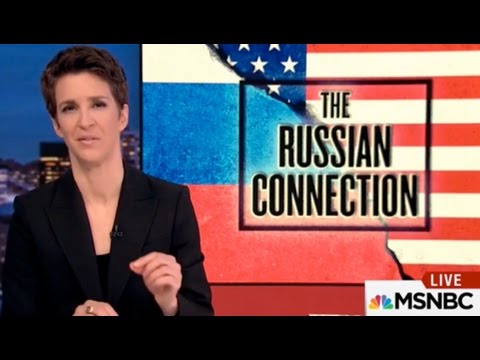
Russiagate as Organized Distraction

By Oliver Boyd-Barrett

Source: Consortium News

For over two years Russiagate has accounted for a substantial proportion of all mainstream U.S. media political journalism and, because U.S. media have significant agenda-setting propulsion, of global media coverage as well. The timing has been catastrophic. The Trump administration has shredded environmental protections,jettisoned nuclear agreements, exacerbated tensions with U.S. rivals and pandered to the rich.

In place of sustained media attention to the end of the human species from global warming, its even more imminent demise in nuclear warfare, or the further evisceration of democratic discourse in a society riven by historically unprecedented wealth inequalities and unbridled capitalistic greed, corporate media suffocate their publics with a puerile narrative of alleged collusion between the 2016 Trump campaign and Russia.

The Russiagate discourse is profoundly mendacious and hypocritical. It presumes that the U.S. electoral system enjoys a high degree of public trust and security. Nothing could be further from the truth. The U.S. democratic system is deeply entrenched in a dystopian two-party system dominated  by the rich and largely answerable to corporate oligopolies; it is ideologically beholden to the values of extreme capitalism and imperialist domination. Problems with the U.S. electoral system and media are extensive and well documented.

U.S. electoral procedures are profoundly compromised by an Electoral College that detaches votes counted from votes that count. The composition of electoral districts has been gerrymandered to minimize the possibility of electoral surprises. Voting is dependent on easily hackable corporate-manufactured electronic voting systems. Right-wing administrations reach into a tool-box of voter-suppression tactics that run the gamut from minimizing available voting centers and voting machines through to excessive voter identification requirements and the elimination of swathes of the voting lists (e.g. groups such as people who have committed felonies or people whose names are similar to those of felons, or people who have not voted in previous elections). Even the results of campaigns are corrupted when outgoing regimes abuse their remaining weeks in power to push through regulations or legislation that will scuttle the efforts of their successors. Democratic theory presupposes the formal equivalence of voice in the battlefield of ideas. Nothing could be further from the reality of the U.S. “democratic” system in which a small number of powerful interests enjoy ear-splitting megaphonic advantage on the basis of often anonymous “dark” money donations filtered through SuperPacs and their ilk, operating outside the confines of (the somewhat more transparently monitored) electoral campaigns.

Free and Open Exchange of Ideas

Regarding media, democratic theory presupposes a public communications infrastructure that facilitates the free and open exchange of ideas. No such infrastructure exists.  Mainstream media are owned and controlled by a small number of large, multi-media and multi-industrial conglomerates that lie at the very heart of U.S. oligopoly capitalism and much of whose advertising revenue and content is furnished from other conglomerates.

The inability of mainstream media to sustain an information environment that can encompass histories, perspectives and vocabularies that are free of the shackles of U.S. plutocratic self-regard is also well documented. Recent U.S. media coverage of the U.S.-gestated crisis in Venezuela is a case in point.

The much-celebrated revolutionary potential of social media is illusory. The principal suppliers of social media architecture are even more corporatized than their legacy predecessors. They depend not just on corporate advertising but on the sale of big data that they pilfer from users and sell to corporate and political propagandists often for non-transparent AI-assisted micro-targeting during “persuasion” campaigns. Like their legacy counterparts, social media are imbricated within, collaborate with, and are vulnerable to the machinations of the military-industry-surveillance establishment. So-called election meddling across the world has been an outstanding feature of the exploitation of social and legacy media by companies linked to political, defense and intelligence such as – but by no means limited to – the former Cambridge Analytica and its British parent SCL.

Against this backdrop of electoral and media failures, it makes little sense to elevate discussion of and attention to the alleged social media activities of, say, Russia’s Internet Research Agency.

Russian Contacts Deplored

Attention is being directed away from substantial, and substantiated, problems and onto trivial, and unsubstantiated, problems. Moreover, in a climate of manufactured McCarthyite hysteria, Russiagate further presupposes that any communication between a presidential campaign and Russia is in itself deplorable. Even if one were to confine this conversation only to communication between ruling oligarchs of both the U.S. and Russia, however, the opposite would surely be the case. This is not simply because of the benefits that accrue from a broader understanding of the world, identification of shared interests and opportunities, and their promise for peaceful relations. A real politick analysis might advise the insertion of wedges between China and Russia so as to head off the perceived threat to the USA of a hybrid big-power control over a region of the world that has long been considered indispensable for truly global hegemony.

Even if we address Russiagate as a problem worthy of our attention, the evidentiary basis for the major claims is weak.

Former Special Counsel Robert Mueller’s indictments and investigations implicated several individuals for activities that in some cases have no connection whatsoever to the 2016 presidential campaign.  In some other instances they appear to have been more about lies and obstructions to his investigation rather than material illegal acts, or amount to charges that are unlikely ever to be contested in a court of law.

The investigation itself is traceable back to two significant but extremely problematic reports made public in January 2017. One was the “Steele dossier” by former MI6 officer Christopher Steele. This is principally of interest for its largely unsupported allegations that in some sense or another Trump was in cahoots with Russia. Steele’s company, Orbis, was commissioned to write the report by Fusion GPS which in turn was contracted by attorneys working for the Democratic National Campaign. Passage of earlier drafts of the Steele report through sources close to British intelligence, and accounts by Trump adviser George Papadopoulos concerning conversations he had concerning possible Russian possession of Clinton emails with a character who may as likely have been a British as a Russian spy, were instrumental in stimulating FBI interest in and spying on the Trump campaign.

There are indirect links between Steele, another former MI6 agent, Pablo Miller (who also worked for Orbis) and Sergei Skripal, a Russian agent who had been recruited as informer to MI6 by Miller and who was the target of an attempted assassination in 2018. This event has occasioned controversial, not to say highly implausible and mischievous British government claims and accusations against Russia.

The  most significant matter raised by a second report, issued by the Intelligence Community Assessment and representing the conclusions of a small team picked from the Director of Intelligence office, CIA, FBI and NSA, was its claim that Russian intelligence was responsible for the hacking of the computer systems of the DNC and its chairman John Podesta in summer 2016 and that the hacked documents had been passed to Julian Assange and WikiLeaks. No evidence for this was supplied.

Although the hacking allegations have become largely uncontested articles of faith in the RussiaGate discourse they are significantly reliant on the problematic findings of a small private company hired by the DNC. There is also robust evidence that the documents may have been leaked rather than hacked and by U.S.-based sources. The fact that the documents revealed that the DNC, a supposedly neutral agent in the primary campaign, had in fact been biased in favor of the candidacy of Hillary Clinton, and that Clinton’s private statements to industry were not in keeping with her public positions, has long been obscured in media memory in favor a preferred narrative of Russian villainy.

Who Benefits?

Why then does the Russiagate discourse have so much traction? Who benefits?

Russiagate serves the interest of a (No. 1) corrupted Democratic Party, whose biased and arguably incompetent campaign management lost it the 2016 election, in alliance (No. 2) with powerful factions of the U.S. industrial-military-surveillance establishment that for the past 19 years, through NATO and other malleable international agencies, has sought to undermine Russian President Vladimir Putin’s leadership, dismember Russia and the Russian Federation (undoubtedly for the benefit of Western capital) and, more latterly, further contain China in a perpetual and titanic struggle for the heart of EurAsia.

In so far as Trump had indicated (for whatever reasons) in the course of his campaign that he disagreed with at least some aspects of this long-term strategy, he came to be viewed as unreliable by the U.S. security state.

While serving the immediate purpose of containing Trump, U.S. accusations of Russian meddling in U.S. elections were farcical in the context of a well-chronicled history of U.S. “meddling” in the elections and politics of nations for over 100 years. This meddling across all hemispheres has included the staging of coups, invasions and occupations on false pretext in addition to numerous instances of “color revolution” strategies involving the financing of opposition parties and provoking uprisings, frequently coupled with economic warfare (sanctions).

A further beneficiary (No.3) is the sum of all those interests that favor a narrowing of public expression to a framework supportive of neoliberal imperialism. Paradoxically exploiting the moral panic associated with both Trump’s plaintive wailing about “fake news” whenever mainstream media coverage is critical of him, and social media embarrassment over exposure of their big-data sales to powerful corporate customers, these interests have called for more regulation of, as well as self-censorship by, social media.

Social media responses increasingly involve more restrictive algorithms and what are often partisan “fact-checkers” (illustrated by Facebook financial support for and dependence on the pro-NATO “think tank,” the Atlantic Council). The net impact has been devastating for many information organizations in the arena of social media whose only “sin” is analysis and opinion that runs counter to elite neoliberal propaganda.

The standard justification of such attacks on free expression is to insinuate ties to Russia and/or to terrorism. Given these heavy handed and censorious responses by powerful actors, it would appear perhaps that the RussiaGate narrative is increasingly implausible to many and the only hope now for its proponents is to stifle questioning. These are dark days indeed for democracy.


Oliver Boyd-Barrett is professor emeritus at Bowling Green State University. He is author of “RussiaGate and Propaganda: Disinformation in the Age of Social Media” London and New York (Routledge).

Were the Atomic Bombings of Hiroshima and Nagasaki a War Crime and a Crime Against Humanity?

This August 6, 1945 file photo shows the destruction from the explosion of an atomic bomb in Hiroshima Japan AP-Photo-File

By Rossen Vassilev Jr.

Source: Global Research

74 Years Ago, the first atomic bomb was dropped on Hiroshima on August 6, 1945

Was President Harry Truman “a murderer,” as the renowned British analytic philosopher Gertrude Elizabeth Anscombe once charged? Were the atomic bombings of Hiroshima and Nagasaki indeed a war crime and a crime against humanity, as she and other academic luminaries have publicly claimed? A Distinguished Professor of Philosophy and Ethics at Oxford and Cambridge, who was one of the 20th century’s most gifted philosophers and recognizably the greatest woman philosopher in history, Dr. Anscombe openly called President Truman a “war criminal” for his decision to have the Japanese cities of Hiroshima and Nagasaki leveled by atomic bombs in August 1945 (Rachels & Rachels 127). According to another academic critic, the late American historian Howard Zinn, at least 140,000 Japanese civilians were “turned into powder and ash” in Hiroshima. Over 70,000 civilians were incinerated in Nagasaki, and another 130,000 residents of the two cities died of radiation sickness in the next five years (Zinn 23).

The two most often cited reasons for President Truman’s controversial decision were to shorten the war and to save the lives of “between 250,000 and 500,000” American soldiers who could have possibly died in battle had the U.S. military had to invade the home islands of Imperial Japan. Truman reportedly claimed that

“I could not bear this thought and it led to the decision to use the atomic bomb” (Dallek 26).

But Dr. Gertrude Anscombe, who along with her husband, Dr. Peter Geach, Professor of Philosophical Logic and Ethics, were the 20th century’s foremost philosophical champions of the doctrine that moral rules are absolute, did not buy this morally callous argument:

“Come now: if you had to choose between boiling one baby and letting some frightful disaster befall a thousand people—or a million people, if a thousand is not enough—what would you do? For men to choose to kill the innocent as a means to their ends is always murder” (Rachels & Rachels 128-129).

In 1956, Professor Anscombe and other prominent faculty members of Oxford University openly protested the decision of university administrators to grant Truman an honorary degree in gratitude for America’s wartime help. She even wrote a pamphlet, explaining that the former U.S. President was “a murderer” and “a war criminal” (Rachels & Rachels 128).

In the eyes of many contemporaries of Elizabeth Anscombe, the atomic bombings of Hiroshima and Nagasaki violated famous philosophical-ethical norms such as the “Sanctity of Human Life,” the “Wrongfulness of Killing,” and also that “it is wrong to use people as means to other people’s ends.” Former President Herbert Hoover was another early critic, openly declaring that

“The use of the atom bomb, with its indiscriminate killing of women and children, revolts me” (Alperovitz The Decision 635).

Even President Truman’s own Chief of Staff, the five-star Admiral William D. Leahy (the most senior U.S. military officer during the war) made no secret of his strong disapprobation of the atomic bombings:

“It is my opinion that the use of this barbarous weapon at Hiroshima and Nagasaki was of no material assistance in our war against Japan. The Japanese were already defeated and ready to surrender because of the effective sea blockade and the successful bombing with conventional weapons…. My own feeling is that in being the first to use it, we had adopted an ethical standard common to the barbarians of the Dark Ages…. I was not taught to make war in that fashion, and wars cannot be won by destroying women and children” (Claypool 86-87, emphasis added).

The apologists for President Truman, on the other hand, seem to be using the quasi-Utilitarian “Benefits Argument” to justify the barbaric use of a devastating weapon of mass destruction, which killed hundreds of thousands of innocent civilians in the two targeted Japanese cities even though (contrary to Truman’s many public pronouncements at that time) there had been no military troops, no heavy weaponry, or even any major war-related industries in either city. Because nearly the entire adult male population of both Hiroshima and Nagasaki had been drafted by the Japanese military, it was mostly women, children, and old men who fell victims to fiery death from the sky. The excuse that Truman himself repeatedly offered was:

“The dropping of the bombs stopped the war, saved millions of lives” (Alperovitz Atomic Diplomacy 10).

He even boasted that he had “slept like a baby” the night after signing the final order to use the atomic bombs against Japan (Rachels & Rachels 127). But what Truman was saying in self-justification was far from being the truth—let alone the whole truth.

Unleashing a nuclear Frankenstein

At the urging of a fellow nuclear physicist—the anti-Nazi Hungarian émigré Leo SzilardAlbert Einstein wrote a letter to President Franklin D. Roosevelt on August 2, 1939, recommending that the U.S. government should start work on a powerful atomic device as a defensive deterrent to Nazi Germany’s possible acquisition and use of nuclear weaponry (Ham 103-104). But when the top-secret Manhattan Project finally got off the ground in early 1942, the U.S. military obviously had other, much more offensive plans regarding the future targets of America’s A-bombs. While at least 67 other Japanese cities, including the capital Tokyo, were reduced to rubble by daily conventional firebombing, including the use of napalm and other incendiaries, Hiroshima and Nagasaki had been deliberately spared for the sole purpose of testing the destructiveness of the new atomic device (Claypool 11).

An even more important reason for employing the bomb was to scare Stalin, who had turned quickly from “Old Uncle Joe” at the time of the FDR presidency into “the Red Menace” in the eyes of Truman and his top advisers. President Truman had quickly abandoned FDR’s policy of cooperation with Moscow, replacing it with a new policy of hostile confrontation with Stalin, in which America’s newly-acquired monopoly over nuclear armaments would be exploited as an aggressive tool of Washington’s anti-Soviet diplomacy (Truman’s so-called “atomic diplomacy”). Fully two months before Hiroshima and Nagasaki, the same Leo Szilard had met privately with Truman’s Secretary of State, James F. Byrnes, and had tried unsuccessfully to persuade him that the nuclear weapon should not be used to destroy helpless civilian targets such as Japan’s cities. According to Dr. Szilard,

“Mr. Byrnes did not argue that it was necessary to use the bomb against the cities of Japan in order to win the war…. Mr. Byrnes’s view [was] that our possessing and demonstrating the bomb would make Russia more manageable in Europe” (Alperovitz Atomic Diplomacy 1, 290).

The Truman Administration had, in fact, postponed the Potsdam meeting of the Big Three until July 17, 1945—one day after the successful Trinity test of the first A-bomb at the Alamogordo testing range in New Mexico—to give Truman extra diplomatic leverage in negotiating with Stalin (Alperovitz Atomic Diplomacy 6). In Truman’s own words, the atom bomb “would keep the Russians straight” and “put us in a position to dictate our own terms at the end of the war” (Alperovitz Atomic Diplomacy 54, 63).

At this point, the Truman Administration was no longer interested in having Moscow’s Red Army liberate Northern China (Manchuria) from Japanese military occupation (as FDR, Churchill, and Stalin had jointly agreed at the Yalta Conference in February 1945)—let alone invade or capture Imperial Japan itself. Quite to the contrary. Publicly deploring the “political-diplomatic rather than military motives” behind Truman’s decision to nuke Japan, Albert Einstein complained that “a great majority of scientists were opposed to the sudden employment of the atom bomb. I suspect that the affair was precipitated by a desire to end the war in the Pacific by any means before Russia’s participation” (Alperovitz The Decision 444). Winston Churchill privately told his Foreign Secretary, Anthony Eden,at the Potsdam Conference that

“It is quite clear that the United States do not at the present time desire Russian participation in the war against Japan” (Claypool 78).

Not even Tokyo’s last-minute desperate offer (made during and after the Potsdam Conference) to surrender if the Allies promised not to prosecute Japan’s god-like emperor or remove him from office—could prevent this deadly decision, even though Truman “had indicated a willingness to maintain the emperor on the throne” (Dallek 25).

Therefore, sparing the lives of American GIs was hardly one of Truman’s more convincing arguments. In early 1945, FDR and Army General Dwight Eisenhower, Supreme Commander of the Allied Forces in Europe, had together decided to leave the capture of Berlin to Soviet Marshal Georgi Zhukov‘s battle-hardened troops in order to avoid heavy American casualties. After officially declaring war on Tokyo on August 8, 1945, and having destroyed the Japanese military forces in Manchuria, Stalin’s Red Army prepared to invade and occupy Japan’s home islands—which certainly would have saved the lives of thousands of U.S. servicemen about whom Truman seemed so vocally concerned. But following Nazi Germany’s unconditional surrender in May 1945, Truman had come to share Winston Churchill’s famous revisionist assessment that “We have slain the wrong swine.”

It is not even clear whether Tokyo finally surrendered on August 14 due to the two U.S. nuclear attacks carried out on August 6 and August 9, respectively (after which there were practically no more Japanese cities left to destroy nor any more U.S. A-bombs to drop)—or because of the threat of Soviet invasion and occupation after Moscow had entered the war against the Empire of Japan. Just days before the Soviet declaration of war, the Japanese ambassador to Moscow had cabled Foreign Minister Shigenori Togo in Tokyo that Moscow’s entry into the war would spell a total disaster for Japan:

“If Russia…should suddenly decide to take advantage of our weakness and intervene against us with force of arms, we would be in a completely hopeless situation. It is clear as day that the Imperial Army in Manchukuo [Manchuria] would be completely unable to oppose the Red Army which has just won a great victory and is superior to us on all points” (Barnes).

To nuke or not to nuke

General Eisenhower was later quoted as stating his conviction that it had not been “necessary” militarily to use the bomb to force Japanese surrender:

“Japan was, at that very moment, seeking some way to surrender with a minimum loss of ‘face’…it wasn’t necessary to hit them with that awful thing” (Alperovitz Atomic Diplomacy 14).

In private, Eisenhower repeated his objections to his direct boss, Truman’s Secretary of War Henry L. Stimson:

“I had been conscious of a feeling of depression and so I voiced to him my strong misgivings, first on the basis of my belief that Japan was already defeated and that dropping the bomb was completely unnecessary, and secondly because I thought that our country should avoid shocking world opinion by the use of a weapon whose employment was, I thought, no longer mandatory as a measure to save American lives” (Alperovitz Atomic Diplomacy 14).

Admiral William F. Halsey, commander of the U.S. Third Fleet (which conducted the bulk of naval operations against the Japanese in the Pacific during the entire war), agreed that there was “no military need” to employ the new weapon, which was used only because the Truman Administration had a “toy and they wanted to try it out…. The first atomic bomb was an unnecessary experiment…. It was a mistake to ever drop it” (Alperovitz The Decision 445). Indeed, it was quite “certain” at the time that a totally devastated Japan, which was on the verge of internal collapse, would have surrendered within weeks, if not days, without the atomic bombings of Hiroshima and Nagasaki or even without the Soviet declaration of war against Tokyo. As the official U.S. Strategic Bombing Survey concluded at the end of the war, “certainly prior to 31 December 1945, and in all probability prior to 1 November 1945, Japan would have surrendered even if the atomic bombs had not been dropped, even if Russia had not entered the war, and even if no invasion had been planned or contemplated” (Alperovitz Atomic Diplomacy 10-11).

Major General Curtis E. Lemay, commander of the U.S. Twenty-first Bomber Command which had conducted the massive conventional bombing campaign against wartime Japan and dropped the atomic bombs on Hiroshima and Nagasaki, stated publicly: “I felt there was no need to use them [atomic weapons]. We were doing the job with incendiaries. We were hurting Japan badly…. We went ahead and dropped the bombs because President Truman told me to do it…. All the atomic bomb did was, in all probability, save a few days” (Alperovitz The Decision 340).

The fateful decision to drop the two atomic bombs code-named “Little Boy” and “Fat Man” on Japan may have been made a little bit more morally acceptable for Truman by the daily carpet bombing of German and Japanese cities throughout the war, including the firebombings of Hamburg, Dresden, and Tokyowhich had nearly wiped out their civilian populations. The declared goal of these relentless city-busting air raids was to destroy the morale and the will to fight of the German and Japanese people and thus shorten the war. But many years after the war Dr. Howard Zinn (himself a B-17 co-pilot and bombardier who had flown dozens of bombing missions against Nazi Germany) sadly mused: “No one seemed conscious of the irony—that one of the reasons for the general indignation against the fascist powers was their history of indiscriminate bombing of civilian populations” (Zinn 37). But, in fact, Secretary of War Henry Stimson, Admiral William Leahy, and Army General Douglas MacArthur were no less disturbed by what they saw as the barbarity of the “terror” air campaign, with Stimson privately fearing that the U.S. would “get the reputation for outdoing Hitler in atrocities” (Ham 63).

Clearly, Japan was defeated and was preparing to surrender before the bomb was used, whose main—if not the only—purpose was to intimidate the Soviet Union. But there had been several viable alternatives, some of which were discussed prior to the atomic bombings. The Under Secretary of the Navy, Ralph Bard, had become convinced that “the Japanese war was really won” and was so disturbed by the prospect of using atom bombs against defenseless civilians that he secured a meeting with President Truman, at which he unsuccessfully pressed his case “for warning the Japanese of the nature of the new weapon” (Alperovitz Atomic Diplomacy 19). Admiral Lewis L. Strauss, Special Assistant to the Secretary of the Navy, who replaced Bard after the latter’s angry resignation, also believed that “the war was very nearly over. The Japanese were nearly ready to capitulate.” That is why Admiral Strauss insisted that the atom bomb should be demonstrated in a way that would not kill large numbers of civilians, proposing that “…a satisfactory place for such a demonstration would be a large forest of cryptomeria trees not far from Tokyo” (Alperovitz Atomic Diplomacy 19). General George C. Marshall, U.S. Army Chief of Staff, was equally opposed to the bomb being used on civilian areas, arguing instead that

“…these weapons might be used against straight military objectives such as a large naval installation and then if no complete result was derived from the effect of that…we ought to designate a number of large manufacturing areas from which people would be warned to leave —telling the Japanese that we intend to destroy such centers…. Every effort should be made to keep our record of warning clear…. We must offset by such warning methods the opprobrium which might follow from an ill-considered employment of such force” (Alperovitz Atomic Diplomacy 20).

General Marshall also insisted that instead of surprising the Russians with the first use of the atom bomb, Moscow should be invited to send observers to the Alamogordo nuclear test. Many of the scientists working for the Manhattan Project likewise urged that a demonstration be arranged first, including a possible nuclear explosion at sea in close proximity to Japan’s coast, so that the bomb’s destructive power would be made clear to the Japanese before it was used against them. But, like the U.S. military’s dissenting views, the nuclear scientists’ opposition was never considered seriously by the Truman Administration (Alperovitz Atomic Diplomacy 20-21).

Conclusion

As a result of Truman’s immoral decision to use nuclear explosives against the “Japs” (a derogatory name for the Japanese commonly used in public in wartime America, including by President Truman himself), well over 200,000 civilians were instantly cremated and many thousands died later of radiation sickness. J. Robert Oppenheimer, scientific director of the Manhattan Project and “father” of the U.S. atom bomb, declared that Truman’s decision was “a grievous error,” because now “we have blood on our hands” (Claypool 17). Howard Zinn agreed with Dr. Oppenheimer’s judgment, remarking that “much of the argument defending the atomic bombings has been based on a mood of retaliation, as if the children of Hiroshima had bombed Pearl Harbor…. Did American children deserve to die because of the U.S. massacre of Vietnamese children at My Lai?” (Zinn 59).

The controversial General Curtis Lemay, who had opposed the two atomic blasts, later confided to former Secretary of Defense Robert McNamara (who had worked for Lemay during the war, helping select Japanese targets for the American firebombing raids): “If we’d lost the war, we’d all have been prosecuted as war criminals” (Schanberg). Given the unjustifiable and unnecessary use of such an inhumane and indiscriminate weapon of mass destruction as the atomic bombs dropped on Hiroshima and Nagasaki, Professor Elizabeth Anscombe called President Truman a murderer and a war criminal. Until the day she died, Dr. Anscombe believed that Truman should have been put on trial for having committed some of the worst war crimes and crimes against humanity during WWII.


Sources

Alperovitz, Gar. Atomic Diplomacy: Hisroshima and Potsdam. The Use of the Atomic Bomb and the American Confrontation with Soviet Power. London and Boulder, CO: Pluto Press. 1994. Print.

—-. The Decision to Use the Atomic Bomb. New York: Vintage Books. 1996. Print.

Barnes, Michael. “The Decision to Use the Atomic Bomb: Arguments Against.” Web. 14 Apr. 2019.
Claypool, Jane. Hisroshima and Nagasaki. New York and London: Franklin Watts, 1984. Print.

Dallek, Robert. Harry S. Truman. New York: Times Books, 2008. Print.

Ham, Paul. Hiroshima Nagasaki: The Real Story of the Atomic Bombings and Their Aftermath. New York: St. Martin’s Press. 2011. Print.

Rachels, James, and Stuart Rachels. The Elements of Moral Philosophy (8th edition). McGraw-Hill Education, 2015. Print.

Schanberg, Sydney. “Soul on Ice.” The American Prospect, October 27, 2003. Web. 14 Apr. 2019.

Zinn, Howard. The Bomb. San Francisco, CA: City Lights Books, 2010. Print.

Epstein’s Nazi Brain: Eugenics and Transhumanism

By Kurt Nimmo

Source: Another Day in the Empire

Not only is Jeffrey Epstein a predator of innocent children, he’s also a Malthusian and a transhumanist who wanted to have his head and penis cryogenically preserved. 

According to a story published by The New York Times, Epstein wanted to use his compound outside of Santa Fe, New Mexico as an insemination lab. 

The pedo predator thought so much of himself that he “hoped to seed the human race with his DNA by impregnating women.”

This has a frightening parallel with the Nazi Lebensborn program. 

Mr. Epstein’s vision reflected his longstanding fascination with what has become known as transhumanism: the science of improving the human population through technologies like genetic engineering and artificial intelligence. Critics have likened transhumanism to a modern-day version of eugenics, the discredited field of improving the human race through controlled breeding.

The ruling elite is keen to live forever. In 2015, Technocracy News & Trends reported:

The eugenicists at DARPA in conjunction with Academy of Medical Sciences, British Academy and Royal Academy of Engineering came together this month to discuss the potentials, opportunities and challenges of the melding of man with machine (i.e. transhumanism) under the guise of augmentation technologies.

In addition to funding transhumanist projects at Stanford and other elite institutions, the Pentagon is looking at creating the perfect cybernetic soldier and cop.

The Defense Advanced Research Projects Agency (DARPA) has a $2 billion yearly budget for research into creating a super solider as well as developing a synthetic police force. Working with the human genome, DARPA hopes to manipulate certain gene expressions. In experimentation, DARPA and the military industrial pharmaceutical complex are using natural abilities that are enhanced through genetic engineering.

But it isn’t simply transhumanism that motivated the pervert, Epstein. He also preached the Malthusian doctrine. 

At one session at Harvard, Mr. Epstein criticized efforts to reduce starvation and provide health care to the poor because doing so increased the risk of overpopulation, said [cognitive psychologist Steven Pinker], who was there. Mr. Pinker said he had rebutted the argument, citing research showing that high rates of infant mortality simply caused people to have more children. Mr. Epstein seemed annoyed, and a Harvard colleague later told Mr. Pinker that he had been “voted off the island” and was no longer welcome at Mr. Epstein’s gatherings.

Culling the herd is a key concept of the elite Club of Rome and the subject of Rockefeller foundation projects. 

Eradicating disease and reducing infant mortality rates are a negative for the global elite. “If I were reincarnated I would wish to be returned to Earth as a killer virus to lower human population levels,” Prince Philip reportedly mused. 

The New York Times article reveals Epstein’s alignment with the global elite, of which he considered himself a member. In fact, he is, like so many lower-level water carriers, completely dispensable, especially now that his reckless predatory behavior has exposed the blackmail scheme used by the CIA-Mossad-MI6 to keep the political class and other pawns in line. 

“Be The Change You Wish To See In The World” - Misattributed, Misused, And Obscenely Underappreciated

By Caitlin Johnstone

Source: CaitlinJohnstone.com

Name a quote by Mahatma Gandhi.

Odds are the first thing that jumps into your mind is the famous, “Be the change you wish to see in the world.” It’s a good quote. It’s pithy enough to fit on a bumper sticker, and it resonates deeply with something inside us all which tells us that it points to something true and valuable.

But, like so many other pithy bumper sticker quotes we see floating around today, these words were never spoken by the person they’re attributed to. What Gandhi actually said was this:

“If we could change ourselves, the tendencies in the world would also change. As a man changes his own nature, so does the attitude of the world change towards him.”

Oof. That’s a bit more confrontational than the popularized version, isn’t it? Change my own nature? I thought we were talking about something light and easy, like not wearing fur or buying fair trade coffee beans.

That’s how “Be the change you wish to see in the world” tends to get interpreted today. It’s a line that is so commonly regurgitated in our society that it’s now cliché and almost meaningless, something you see on cheap keychains at the mall and scan over without really reading, but assume you understand because you’ve seen it so many times before. If pressed to really think about it, most people will say it means something like make the changes in the world that you want to see. If you don’t like factory farming, become a vegan. If you don’t like poverty, volunteer at a soup kitchen.

But that isn’t what the quote says. It’s nothing like what the original one by Gandhi says. It’s not even what the stripped-down bumper sticker version says.

Even if you look at the popularized version of the quote, really look at it with fresh eyes that haven’t seen it thoughtlessly regurgitated by corporate liberals and plastered on K-Mart products, you come away with the same message as the original. It doesn’t say “Do the change you wish to see in the world.” It doesn’t say “Enact the change you wish to see in the world.” It says “Be the change you wish to see in the world.” It isn’t referring to a mere change in behavior or lifestyle, it’s saying change who you are as a person. It’s saying change your own nature to change the world.

This is night-and-day different from the conventional interpretation. The conventional interpretation of the quote exists as a vapid platitude that people make fun of hippies and New Agers for over-using. A deep, visceral understanding of that same quote, however, conveys more wisdom than all religious texts in the world combined. It’s a call into a transformation that is more real than childbirth. More existentially confrontational than a terminal cancer diagnosis.

The first challenge of the quote is to get you thinking hard about what changes you do in fact want to see in the world. Most people never even get that far into it. Few have actually thought hard about what kind of world they’d like to see in a positive way that actually envisions what that world would look like. Most people only think in terms of the little partisan battles they’re seeing currently: universal healthcare, immigration policies, gun control, austerity policies, abortion, LGBTQ issues, police brutality, etc. Few people get as far as sitting down and deeply contemplating a positive vision for the kind of world they’d like to help create.

When I make an inventory of the changes I wish to see in the world, I know I want to see people consistently choosing health over the illusion of security.

I want them making choices with the highest interest of everyone concerned over their own self-interest, even if those choices make them feel exposed or vulnerable because they appear to go against their finances or tribal groupthink, or are outside their comfort zone.

I want people to be collaborative rather competitive.

I want people to start trusting that the steps will appear in front of them as we forge a path onto a new, undiscovered route rather than retreat to the well-trodden highways because they are familiar even though we already know they lead the wrong way.

I want to see people giving up their tribalism and embracing their humanism.

I want to see people loving themselves deeply enough to love others meaningfully and with clear eyes.

I want people to rise above the competing narratives and make their distinctions according to actions and reality rather than the stories of the manipulators or their own internal manipulations.

I want people to have the wisdom to acknowledge where they have power and privilege and use it courageously, and where they are powerless so they may force those in power to change our suicidal trajectory immediately.

I want people to tell the truth, even if at first it’s only to themselves.

I want people to choose life over death, every time, without hesitation, and I want them to always seek their solutions in life and healing and harmony and reject the solutions offered by death, destruction, manipulation, sabotage and chaos.

These are just my personal desires for the world. After laying those out, the next challenge posed by “Be the change you wish to see in the world” is far more serious, and, if undertaken, will remain front and center in your attention the rest of your life.

Looking at the changes I wish to see in the world, I endeavor to be someone who consistently chooses to press the “health” button even if it scares me, or others, or both.

I try to be someone who always chooses in the highest interest rather than manipulating it slightly so I get a bit more or I look a bit cooler.

I try to tell the truth even when my tribe is yelling at me to shut up, but I try to have the wisdom to only do that when it benefits everyone and not just to seek drama or attention.

I try to trapeze through life using my inner compass because I know for sure that my old paths never led anywhere good.

I try to not manipulate others, and I try to not manipulate myself in order to pretend to myself that I’m not manipulating others.

I try to love the parts of me that I see in others, especially those parts that make me cringe, but also I try to love myself enough to walk away from someone whose patterns are hurting me.

I try to make distinctions by what I see people doing rather than what I hear them saying, and I try to integrate my thoughts and my actions as much as possible.

I try to use my power and privilege for the highest interest of everyone, but I refuse to take responsibility for things outside of my control, and I pledge to hold those who do have that power to account.

I try always to tell the truth, even if it’s just to myself at times because in that instance I don’t have enough power and privilege to speak it without getting unjustly punished. But if it’s in the highest interest to take unjust punishment, then I choose that.

I choose life, every time, without hesitation, and I want to heal any blocks either in me or outside of me that is resistant to turning every atom of my being towards life and healing.

Of course I fail a lot, but I hope to continue to noticing when I fail and course-correcting as often as needed, because getting this right is much more important to me than feeling like I’m right. I want this more than I want the story of having this already. I want to change the world more than I want the story of changing the world.

Crucially, I want this more than I want “me”, more than I want the personality that I think of as “me”. Whole parts of my identity have had to die in order to change into something healthier and more agile, and there will be many more parts of me that have to die in the future, and I welcome that. I welcome that with a deep breath of trepidation because it’s not easy, and in the moment before letting go it feels like I really am dying, but I know that it has to happen, and the more I do it, the more positive reinforcement I get as my reluctance gets overridden with curiosity as to what will manifest in the space I’ve created. And I know that in any case it’s better than the alternative, which is a slow, actual death through stagnation.

Beyond the bumper sticker, I’m pretty sure ol’ Mahatma was on to something pretty huge. I’m pretty sure this is how we fix it. It calls to mind that other hackneyed chestnut, The Serenity Prayer. “God, grant me the serenity to accept the things I cannot change, courage to change the things I can, and wisdom to know the difference,” another saying that has eroded into superficiality but contains some deep wisdom if you take it on as your calling. If we all individually took sincere responsibility for the only thing we can actually change — ourselves — then the knock-on effects are unquantifiable.

And, inevitably, world-changing.