

By Colin Todhunter
Source: Defend Democracy Press
In Libya, NATO bombed a path to Tripoli to help its proxy forces on the ground oust Gaddafi. Tens of thousands lost their lives and that country’s social fabric and infrastructure now lies in ruins. Gaddafi was murdered and his plans to assert African independence and undermine Western (not least French) hegemony on that continent have been rendered obsolete.
In Syria, the US, Turkey, France, Britain, Saudi Arabia and Qatar have been helping to arm militants. The Daily Telegraph’s March 2013 article “US and Europe in ‘major airlift of arms to Syrian rebels through Zagreb’” reported that 3,000 tons of weapons dating back to the former Yugoslavia had been sent in 75 planeloads from Zagreb airport to the rebels. The New York Times March 2013 article “Arms Airlift to Syria Rebels Expands, With CIA Aid” stated that Arab governments and Turkey had sharply increased their military aid to Syria’s opposition fighters. This aid included more than 160 military cargo flights.
Sold under the notion of a spontaneous democratic uprising against a tyrannical political leader, Syria is little more than an illegal war for capital, empire and energy. The West and its allies have been instrumental in organising the war as elaborated by Tim Anderson in his book ‘The Dirty War on Syria’.
Over the last 15 years or so, politicians and the media have been manipulating popular sentiment to get an increasingly war-fatigued Western public to support ongoing wars under the notion of protecting civilians or a bogus ‘war on terror’. They spin a yarn about securing women’s rights or a war on terror in Afghanistan, removing despots from power in Iraq, Libya or Syria or protecting human life, while then going on to attack or help destabilise countries, resulting in the loss of hundreds of thousands of civilian lives.
Emotive language designed to instill fear about potential terror attacks in Europe or myths about humanitarianism intervention are used as a pretext to wage imperialist wars in mineral-rich countries and geostrategically important regions.
Part of the battle for the public’s hearts and minds is to keep people confused. They must be convinced to regard these wars and conflicts as a disconnected array of events and not as the planned machinations of empire. The ongoing disinformation narrative about Russian aggression is part of the strategy. Ultimately, Russia (and China) is the real and increasingly imminent target: Moscow has stood in the way of the West’s plans in Syria and both Russia and China are undermining the role of the dollar in international trade, a lynchpin of US power.
The countries of the West are effectively heading for war with Russia but relatively few among the public seem to know or even care. Many are oblivious to the slaughter that has already been inflicted on populations with the help of their taxes and governments in far-away lands. With the reckless neoconservative warmonger John Bolton now part of the Trump administration, it seems we could be hurtling towards major war much faster than previously thought.
Most of the public remains blissfully ignorant of the psy-ops being directed at them through the corporate media. Given recent events in the UK and the ramping up of anti-Russia rhetoric, if ordinary members of the public think that Theresa May or Boris Johnson ultimately have their best interests at heart, they should think again. The major transnational corporations based on Wall Street and in the City of London are the ones setting Anglo-US policy agendas often via the Brookings Institute, Council on Foreign Relations, International Crisis Group, Chatham House, etc.
The owners of these companies, the capitalist class, have off-shored millions of jobs as well as their personal and company tax liabilities to boost their profits and have bankrupted economies. We see the results in terms of austerity, unemployment, powerlessness, privatization, deregulation, banker control of economies, corporate control of food and seeds, the stripping away of civil liberties, increased mass surveillance and wars to grab mineral resources and ensure US dollar hegemony. These are the interests the politicians serve.
It’s the ability to maximise profit by shifting capital around the world that matters to this class, whether on the back of distorted free trade agreements, which open the gates for plunder, or through coercion and militarism, which merely tear them down.
Whether it is the structural violence of neoliberal economic policies or actual military violence, the welfare of ordinary folk around the world does not enter the equation. In an imposed oil-thirsty, war-driven system of globalised capitalism and over-consumption that is wholly unnecessary and is stripping the planet bare, the bottom line is that ordinary folk – whether workers in the West, farmers in India or civilians displaced en masse in war zones like Syria – must be bent according to the will of Western capital.
We should not be fooled by made-for-media outpourings of morality about good and evil that are designed to create fear, outrage and support for more militarism and resource-grab wars. The shaping of public opinion is a multi-million-dollar industry.
Take for instance the mass harvesting of Facebook data by Cambridge Analytica to shape the outcomes of the US election and the Brexit campaign. According to journalist Liam O’Hare, its parent company Strategic Communications Laboratories (SCL) has conducted ‘behavioural change’ programmes in over 60 countries and its clients have included the British Military of Defence, the US State Department and NATO. According to O’Hare, the use of the media to fool the public is one of SCL’s key selling points.
Among its activities in Europe have been campaigns targeting Russia. The company has “sweeping links” with Anglo-American political and military interests. In the UK, the interests of the governing Conservative Party and military-intelligence players are brought together via SCL: board members include “an array of Lords, Tory donors, ex-British army officers and defense contractors.”
O’Hare says it is clear is that all SCL’s activities have been inextricably linked to its Cambridge Analytica arm. He states:
“International deception and meddling is the name of the game for SCL. We finally have the most concrete evidence yet of shadowy actors using dirty tricks in order to rig elections. But these operators aren’t operating from Moscow… they are British, Eton educated, headquartered in the City of London and have close ties to Her Majesty’s government”
So, what are we to make of the current anti-Russia propaganda we witness regarding the nerve agent incident in Salisbury and the failure of the British government to provide evidence to demonstrate Russian culpability? The relentless accusations by Theresa May and Boris Johnson that have been parroted across the corporate media in the West indicate that the manipulation of public perception is everything and facts count for little. It is alarming given what is at stake – the escalation of conflict between the West and a major nuclear power.
Welcome to the world of mass deception à la Edward Bernays and Josef Goebbels.
US social commentator Walter Lippmann once said that ‘responsible men’ make decisions and have to be protected from the ‘bewildered herd’ – the public. He added that the public should be subdued, obedient and distracted from what is really happening. Screaming patriotic slogans and fearing for their lives, they should be admiring with awe leaders who save them from destruction.
Although the West’s political leaders are manipulating, subduing and distracting the public in true Lippmannesque style, they aren’t ‘saving’ anyone from anything: their reckless actions towards Russia could lead towards a war that could wipe out all life on the planet.
* Colin Todhunter is a frequent contributor to Global Research and Asia-Pacific Research.

By Matt Agorist
Source: Free Thought Project
Late Saturday night, the mainstream media began spreading the news of an alleged chemical weapons attack in Douma, Syria. It was reported that the tragic attack has claimed the lives of some 70 innocent civilians. Immediately after the unconfirmed reports, President Donald Trump began threatening Russia, Iran and “Animal Assad,” and blamed them for the attack.
The report of the alleged attack is unconfirmed and reported only by the known ISIS sympathizers, the White Helmets.
There has been no independent verification of the chemical attack and it is only being reported by a group who was caught multiple times staging fake attacks.
“Seventy people suffocated to death and hundreds are still suffocating,” said Raed al-Saleh, head of the White Helmets. This was their second tweet as the first one—now deleted—which claimed 150 people were killed, was apparently too big of an exaggeration to be believable.
Indeed, less than a month ago, the Russian military predicted this exact scenario. As CNBC reported last month, the threat, by Chief of Russia’s General Staff Valery Gerasimov, was widely reported by Russia media sites such as state news agency RIA and Tass. It said Gerasimov said Russia had “reliable information” about militants preparing to falsify a government chemical attack against civilians.
In spite of the fact that Syria and Russia are decrying the allegations as false, referring to them as a “fabrication,” the US has begun the pretext to provoking more war in Syria and potentially Russia and Iran.
The US state department said Russia – with its “unwavering support” for Syria’s government – “ultimately bears responsibility” for the alleged attacks.
There has been zero investigation, and the US government is already pointing fingers and implicating a world power in a massive war crime. Irresponsible indeed.
However, it was entirely predictable as these alleged gas attacks all follow a similar scheme.
For those who don’t remember, below is a timeline showing how conveniently timed this gas attacks are for the military-industrial complex.
On March 30, 2017, Reuters reported that Syria was no longer a US priority and that the government is no longer focused on “getting Assad out.” Conveniently, only 5 days after trying to de-escalate the situation, an alleged gas attack takes place to which Trump responds with 59 Tomahawk missiles.
Three days after the missile attack, the US ambassador to the United Nations, Nikki Haley, issued a statement that regime change in Syria is inevitable.
As TFTP reported at the time, a leading weapons academic, and one of the foremost experts in the field, came forward in a series of reports noting his opposition to the official story in regards to the Khan Sheikhoun nerve agent attack in Syria. According to the expert, that Syrian gas attack was staged.
Fast forward to March 29, 2018 and Trump put many people to ease when he said that the US would “be coming out of Syria like very soon,” just hours after the Pentagon highlighted the need for US troops to remain in the country for the immediate future. “We’re knocking the hell out of ISIS. We’ll be coming out of Syria like very soon. Let the other people take care of it now,” Trump told supporters at an Ohio event on infrastructure, as CNN reported.
Days later, on April 7, 2018, the White Helmets report that Assad gassed his own people — again — and no one, other than the people known for staging videos, is the source.
On April 8, 2018, Trump then blames Russia, Iran, and Syria and issues “Big price to pay” threats to all of them.
“Many dead, including women and children, in mindless CHEMICAL attack in Syria. Area of atrocity is in lockdown and encircled by Syrian Army, making it completely inaccessible to outside world. President Putin, Russia and Iran are responsible for backing Animal Assad. Big price……to pay. Open area immediately for medical help and verification. Another humanitarian disaster for no reason whatsoever. SICK!” wrote Trump.
No one here is claiming that Assad is some hero, but for him to make this move—knowing the end result—is entirely preposterous and would not happen.
This alleged chemical attack is in spite of the Syrian regime successfully defeating ISIS in over 90 percent of the county. Just as Assad hears that Trump is considering pulling out of the country—which would have been a massive win for the Syrian regime—he gases his own people ensuring the exact opposite of this would happen. Sure thing.
But, we are supposed to believe this. According to the official narrative, every time Syria is on the verge of a military victory in their own country, Assad then randomly gases his own people to thwart this victory and gives the US a reason to invade and turn what’s left of Syrian infrastructure into rubble.
And, the American mainstream is eating it up and ramming it down the throats of US citizens who couldn’t point to Syria on a map, yet demand we spend billions bombing brown people in a country that has never done a single thing to them.
As Finian Cunningham notes, “this weekend’s alleged chemical-weapon attack on civilians in Syria has all the hallmarks of a false-flag propaganda stunt. Only people who have had their critical senses numbed by saturated Western media distortion could possibly believe otherwise.”
Indeed, if you are one of these people who believes this most preposterous story, please consider turning off your television and opening a book instead. Being uninformed is far better than being misinformed.
Related Video:

By Jennifer Bleyer
Source: MAPS
Buddhism and psychedelic use have been linked since at least the 1950s, when influential thinkers and writers such as Allen Ginsberg, Jack Kerouac, and Alan Watts experimented with both as avenues toward understanding the mind. The tacitly acknowledged connection took a leap forward in 2002 with the publication of Zig Zag Zen: Buddhism and Psychedelics, a collection of essays, interviews, articles edited by Allan Badiner, which examines the two realms and their similarities and differences. A new edition of Zig Zag Zen was published in 2015. Badiner, a contributing editor of Tricycle, is a longtime supporter of MAPS.—Jennifer Bleyer
How did you become involved in Buddhism?
I’d never had any interest or belief in any religion, but when I was in my early 30s, I spent a year traveling in India, and right before returning home I took some advice to enroll in a Buddhist meditation retreat in Sri Lanka. I hated it. My bones ached, the only food was stewed greens, the venue was overrun with bugs, and the bed was a blanket over wood boards. Suddenly, when the ten-day retreat was almost over, I felt free of any pain and almost ecstatic— and not just because I was leaving. The bugs were my relatives. I slept like a baby. I was overtaken by a subtle but persistent wave of ecstasy, and felt a diminished sense of separation from others.
And how were you exposed to psychedelics?
After that I trip I returned to California, and the meditative glow eventually faded. But I had been “bitten” by the Buddhist bug. I took classes with a senior Buddhist monk, studied Pali, the original language of the Buddha, and earned a Masters degree at the College of Buddhist Studies, a small Theraveda university in Los Angeles—all because I was trying to understand how to return to the blissful state I had experienced on the retreat. I was writing a column called “Mind and Spirit” for the LA Weekly while working on my Buddhist studies, and had a plan to interview Terence McKenna. He accused me of being an “armchair Buddhist” and challenged me to try sacred plants, such as psilocybin mushrooms. We became friends, and I visited him at his home in Hawaii where he treated me to yagé, or ayahuasca, the so-called vine of the soul. Sometime later, I experienced MDMA and got to know Alexander Shulgin. I regularly enjoyed Friday night dinners at the Shulgin home, where the Bay Area psychedelic community gathered. So, indeed, I became formally and viscerally connected to both Buddhism and psychedelics.
How do you describe the relationship between Buddhism and psychedelics?
Both share an interest in the primacy of mind and present moment awareness, and while they are very different in character, the 1950s Beat Generation and the 1960s cultural revolution were both heavily influenced by Eastern wisdom traditions, including Buddhism, as well as LSD, psilocybin, and peyote. I think their relationship manifests in the human pursuit of evolution. Many people seek the compassionate wisdom of the Buddhist philosophy, also known as the Dharma, as well as the psychic reset and transformational power that certain plant substances offer. A kind of practical magic results when the “Zig” zags into Zen—when a time-tested philosophy and ethical system meets plant-assisted changes in consciousness.
Your book identified the complementary natures of Buddhism and psychedelics as facilitators of the “liberation of the mind.” How has it been received in the Buddhist community?
It was fascinating to me that, with only one exception, every American Buddhist teacher I interviewed had personally experienced psychedelics prior to getting into Buddhism. One of the most revered and respected teachers, Jack Kornfield, went so far as to say that were it not for LSD, he would never have been able to grasp the Dharma. It should be noted that Zig Zag Zen also presents the thinking of teachers who are clearly not fans of psychedelics. I was secretly hoping for Zig Zag Zen to ruffle a lot of Buddhist feathers, envisioning that the controversy would drive sales. When the book was released, the Buddhist community in general was like, “Buddhism, psychedelics, ok…so?” The anti-Zig Zag Zen rallies and Buddhist book boycotts I was imagining never materialized. (laughs)
You said in a recent interview with Tricycle that “psychedelic use is an issue for many contemporary Buddhists.” Why is that?
Anyone who becomes seriously focused on spiritual development has to at least consider the issue of psychedelic use. Everyone knows someone who, after taking acid or magic mushrooms, or attending a peyote sweat lodge, experienced themselves as changed forever for the better. In the mid-20th century, famous Buddhist writers like Alan Watts and Ram Dass popularized psychedelics, even as Buddhist centers were filled with young people who had experienced psychedelics and were eager to find more practical and gentle routes to the same “destination.” Added to the question of psychedelic use is the realization that we live in a critical time ecologically. The sixth great extinction is underway. Who would have thought that we would live to see the extinction of elephants, or tigers, or orangutans? Coastal cities are experiencing unremitting flooding, and the end of ice caps is a planetary inevitability. Recognizing the interbeing of people and planet is the fundamental awakening of our time. Buddhists are enlightened by the extent of their compassion—for themselves, for other people, for all living beings, and for the planet itself.
Isn’t there a Buddhist rule about not using intoxicants?
Buddhist precepts are not hard rules or commandments but guiding principles meant to facilitate progress on the path. Buddhists refrain from killing, taking what is not given, sexual misconduct, and incorrect speech. According to Robert Thurman, the chair of Buddhist studies at Columbia University, the Buddhist fifth precept, which is interpreted by some as prohibiting all substance use, specifically refers to grain alcohol, which was a problem even in the Buddha’s day as it’s likely to lead to carelessness, and to the user violating the other four precepts. Obviously, one can misuse many substances to the point of intoxication, but it is not correct to say generally that psychedelics are intoxicants.
How did you get involved with MAPS?
I met Rick Doblin through mutual friends when he was a college student, and he had just attended a psychedelic conference at Esalen Institute, my neighbor in Big Sur. He was very excited about the emergence of a psychedelic culture consisting of scientists, physicians, caregivers, and psychiatrists. He had personally experienced the healing power of psychedelics and told me that he was dedicating his life to making these materials legal and respected for their helpful effects. I promptly told him he was hallucinating, so to speak, and that he should get a job, maybe in academia. These were the Reagan years. Attitudes about cannabis and psychedelics in the ’80s were harshly negative. It is a profound testament to the power of psychedelics and of Rick’s formidable persistence that now the government is approving clinical testing of psychedelic drugs for medical use. Rick’s dream is coming true. The physical, mental, and emotional healing possible with psychedelics makes this pursuit a moral imperative. Rick does not consider himself a Buddhist, but he is definitely in the business of relieving suffering—and that is the primary goal of Buddhism.
Why are you so passionate about MAPS’ work?
Well, having entered on the ground floor, I’ve watched MAPS grow from the moment Rick spoke about his vision in my driveway, to its emergence as an amazing organization making epic and sorely needed change. It is poised to open the first non-profit pharmaceutical company, turning psychedelics and cannabis into prescription medicines; educating therapists in to practice psychedelic-assisted therapy; building a network of clinics, and educating the public about the risks and benefits of these substances. As the psychologist, Ralph Metzner, a contributor to Zig Zag Zen, points out: “Two of the most beneficent potential areas for application of psychedelic technologies are in the treatment of addictions and in the psycho-spiritual preparation for the final transition.” I feel totally aligned with this vision.
Ultimately, what do you hope to achieve through your support of MAPS?
I hope to play a role in helping MAPS raise the funds required for the Phase 3 trials of MDMA as a treatment for PTSD—the critical step to becoming a prescription medicine. Like everyone, I see so many people suffering around me. I have confidence that psychedelics can be a serious medicine, as well as a powerful tool for personal self-development. The Anthropocene—the age of human-driven change to the Earth’s natural systems—has ushered in a new urgency for shamanic and psychedelic tools. The clock is ticking. We need all the help available to foment an evolution in our relationships with our neighbors, neighboring nations, and the planet.

“High Rise” (2015) is a British dystopian film directed by Ben Wheatley and based on a novel of the same name by J.G. Ballard. The film is set in luxury tower in a 1970s version of the future. The building houses all the conveniences of modern life, giving inhabitants the delusion of self-sufficiency as they become increasingly insular and detached from the outside world. Unfortunately the building is faulty and as the the infrastructure gradually collapses, social pressures among residents approach a breaking point. Truly a metaphor for our times.
Watch the full film here.
By Andre Damon
Source: WSWS.org
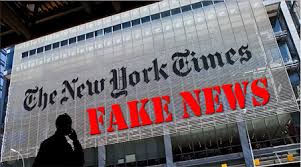
Since late 2016, the New York Times, working together with the US intelligence agencies and the Democratic Party, has been engaged in a campaign to promote internet censorship in the guise of targeting “fake news” and “Russian propaganda.”
In waging this campaign, the Times’ motives are both political and pecuniary. Speaking for a ruling elite that sees the growth of social opposition on all sides and expects far worse, the Times has promoted censorship to remove opportunities for the working class to organize outside the framework of official politics.
In addition, the Times, for the most part a clearinghouse for staid and predigested state propaganda, is seeking to carve back market share it has lost to online publications that carry out genuine investigative journalism and oppose the lies peddled by the US government and media.
In recent months, this campaign has entered a new and malignant phase. Increasingly dropping the pretext of “Russian meddling,” the Times is now directly attacking its main target: the fact that the internet, and in particular social media, helps empower the population to access oppositional sources of news and have their voices heard in public.
Among the Times’ latest broadsides against freedom of expression is an article by its “State of the Art” columnist Farhad Manjoo headlined “For Two Months, I Got My News From Print Newspapers. Here’s What I Learned.” The piece, supposedly written as a first-hand account of a journalist turning off social media and only reading the news from print newspapers, is—in an unusually literal sense—a piece of lying propaganda from beginning to end.
As the Columbia Journalism Review pointed out, during the period in which he supposedly stopped using social media, Manjoo managed to post on Twitter virtually every day. “Manjoo remained a daily, active Twitter user throughout the two months he claims to have gone cold turkey, tweeting many hundreds of times, perhaps more than 1,000,” the Review pointed out.
Manjoo’s blatant falsifying of his own social media use is hardly the most sinister aspect of his piece. However, it expresses something essential about the Times’ notion of “reporting”: its writers feel they can say anything and get away with it, so long as their claims conform to the dictates of the establishment and the intelligence agencies whose interests determine what is and what is not reported in the US media.
The columnist’s dishonesty about his own activities provides much needed context for his article as a whole, which is little more than a long-form denunciation of a reading public that feels compelled to obtain its news from sources not massaged by the CIA-vetted hacks at the New York Times. In the process, Manjoo gives his unqualified blessings to the pronouncements of his own publication and castigates anyone who would question them as a member of an ignorant “herd,” whose opinions ought to be suppressed.
During his pretended sojourn into the desert of print media, Manjoo said he learned to value having the news spoon-fed to him by “professionals,” without having to worry about whether what he was reading was true or false.
As he puts it, “It takes professionals time to figure out what happened, and how it fits into context… This was the surprise blessing of the newspaper. I was getting news a day old, but in the delay between when the news happened and when it showed up on my front door, hundreds of experienced professionals had done the hard work for me.”
He continues, “Now I was left with the simple, disconnected and ritualistic experience of reading the news, mostly free from the cognitive load of wondering whether the thing I was reading was possibly a blatant lie.”
Here, we assume, the reader is supposed to heave a sigh of relief. How soothing not to have to think for oneself! The author’s surrender of his critical faculties supposedly did wonders for his health and general well being. Not only did he become “less anxious,” but he had the time to “take up pottery” and “became a more attentive husband and father”! Wonderful! And so much more wonderful if he hadn’t actually made up the story about his abstinence from social media.
Manjoo’s condemnation of critical thinking aside, the real core of the piece is a scathing denunciation of the public, which he describes as a “herd” and a “crowd,” and which, moreover, is empowered to express its rotten opinions by the sinister power of social media.
“Avoid social [media],” he declares. “Technology allows us to burrow into echo chambers, exacerbating misinformation and polarization and softening up society for propaganda.”
The statements posted by the “online hordes” are not “quite news, and more like a never-ending stream of commentary, one that does more to distort your understanding of the world than illuminate it,” Manjoo adds. “On social networks … People don’t just post stories—they post their takes on stories, often quoting key parts of a story to underscore how it proves them right.”
People are posting “their takes on stories!” The horror! Instead of just consuming the news as worked over by the Times, complete with big lies (“weapons of mass destruction”) and small ones (its technology columnist giving up Twitter for two months), social media allows users to critically examine the stories they read. In other words, the internet allows the public to bypass the monopoly of “professional” falsifiers and “gatekeepers” like Manjoo, Judith Miller, Thomas Friedman and the like.
The author’s only hope is that “the government” and “Facebook” will soon “fix” this problem. The clear implication is that once social media is “fixed,” the “herd,” “crowd,” and “hordes” will no longer be allowed to pollute cyberspace by questioning the pronouncements of the New York Times. Manjoo’s self-righteous pontifications, worthy of Polonius (if Polonius were also a liar), would be comical if they were not so ominous. Faced with a growing wave of social struggles, the ruling elite is preparing censorship on a massive scale. Having succeeded in dramatically reducing traffic to left-wing web sites, the technology giants and intelligence agencies are proceeding to the next phase: censoring all expressions of social opposition, in particular by the working class, on social media.

By Gary Leupp
Source: CounterPunch
Sergei Skripal and his daughter were poisoned by a nerve agent on March 4 on a park bench in Salisbury, England.
Skripal had been a Russian double agent, a spy who turned over 300 names of Russian spies to British intelligence from 1995 to 2004. He was (not so surprisingly) arrested in Russia in 2004 and sentenced to thirteen years in prison. He was released in a spy-swap in 2010, settled in the UK and became a British citizen.
I see no reason to judge his moral character, although some might reflect that in Kantian general terms what he did was rather bad. (In precisely the same sense that it would be bad for a British citizen to become a double agent for Russia.) Double agents are often punished harshly; this is the way of the world.
Skripal posed no further threat to the Russian state. There is at least one report that he sought to return to Russia recently. It’s hard to comprehend why at this time Moscow would poison him and his young daughter visiting from Russia with a nerve agent (Novichok) created in the USSR from the 1970s but subsequently banned and destroyed under international supervision. Cui bono? Who profits from these poisonings?
In all the outrage, expressed in Britain and elsewhere, about this attack, there is precious little analysis. The Russian foreign minister Sergey Lavrov has said, “This is nonsense. This has nothing to do with us.” The group of military-grade nerve agents called Novichok have been described in academic literature such that many different actors could produce Novichok. The Russians say they have long since destroyed their stocks and suggest the Czech Republic could be the source of the substance used.
But this attack on Skripal and his 33-year-old daughter (by somebody) is highly useful to those who want to vilify Vladimir Putin, just as the use of chemical weapons in Syria last April (by somebody) was useful for those wanting to further vilify Bashar Assad and justify a U.S. missile strike. Have you noticed that we live in an age of constant disinformation, misinformation and “fake news”?
The most annoying thing is, once these unproven causal relations are posited, embraced by cable news directors, such that they become Truth, discussion centers solely on how the U.S. and allies should respond. Why, pundits ask, didn’t Trump raise the issue in his last chat with Putin? Why is Britain’s Labour Party leader Jeremy Corbyn skeptical about the Russia link, suggesting the Novichok could have been possessed by East European mafia? Why isn’t everyone on board the obvious conclusion that Russia did it?
Which would mean: Putin—facing no threat from this traded ex-spy or his innocent daughter—ordered their killing, not because they threatened him, but rather to manifest his deep cruelty and evil to the world and his willingness to invite more and more sanctions against Russia. It doesn’t make much sense.
Putin is ex-KGB. Very rational and calm. He knows all about agents and double agents. I doubt that he is morally judgmental; he understands why people do what Skripal did. He made a deal for the man’s release eight years ago. His only motive to kill him at this point would be to punish Skripal for past sins and warn others not to ever sell secrets. But why would such a rational person incur global outrage by using a banned agent to attempt to murder a British citizen and his Russian daughter, for no compelling reason?
There are international legal processes for investigating charges of use of chemical weapons. Russia has asked Britain to observe them, providing evidence, samples, details. It urges adherence to rules established by the Organization for the Prohibition of Chemical Weapons (OPCW) to establish the facts. But London has merely announced it knows Putin was responsible for the state of these two on that park bench.
So the grand narrative now includes: Russian invasions of Georgia in 2008 and Ukraine in 2014 (somehow becoming in the process “adversaries” of the U.S.); alleged “threats” against the Baltic states; multiple political assassinations; dictatorial control of the Russian polity, economy and media; the accumulation of billions in illicit wealth. To say nothing of his brash exposure of his naked chest to his fandom, his judo, his hunting, his annoyingly high approval ratings.
I don’t know who attacked these two who now struggle for their lives in hospital. But I know that the response means nothing good for Russia, or the world. It is just another short chapter in the new Cold War, and like the old war, basically irrational. What is Putin’s motive? Fareed Zakaria says he’s trying to “undermine democracies” although why anyone would want to do that in principle puzzles me. Putin is not the Heath Ledger’s Joker in the Dark Knight Batman film, just spreading chaos for its own sake.
Putin is not interested in heading a European movement towards isolationist nationalisms but rather in thwarting NATO expansion plans, which any rational Russian leader would want to do. To use the strange Skripal incident as a rationale for further Cold War-type confrontation is more than sad. Yet in a supposed display of solidarity with Britain, which has kicked out Russian diplomats in response, the U.S. has suddenly expelled 60 Russian diplomats and closed down the Russian consulate in Seattle. Trump, under constant criticism for not criticizing Putin, and not bringing up election meddling or the Skripal affair in his recent phone call, has approved the move without commenting on it.
If Trump planned for better relations with Russia to be a hallmark of his presidency, he has been stymied by his foes’ insistence that he express the traditional knee-jerk hostility. Why, they keep asking, when he criticizes his own cabinet members, does he never say anything bad about Putin? And from there, they proceed to the conclusion that the Russians have stuff on Trump and are blackmailing him…into not being default-mode hostile.
Trump is an ignorant man, uninterested in the world intellectually, unable to invest time in reading, clueless about the historical context of current crises. Part of his candidate persona was opposition to recent U.S. wars (not so much because they’ve killed hundreds of thousands of people, but because they have been expensive and not resulted in the U.S. taking the oil). But he loves men in uniform, surrounds himself with them, relies on them. These are men who grew up during the Cold War and can’t kick it from their minds. Baby-sitting what they surely see (with McMaster) as a “moron,” “idiot,” “dope,” “kindergartner” they see their minimal task the responsibility to remind him that Russia is an adversary.
And so without even ascertaining the facts of the Skripal incident, Washington expels all these diplomats. TV pundits applaud: “absolutely the right thing to do, to defend western values” etc. , the system succeeds in maintaining, even strengthening, Cold War Russophobic mentality. The Skripal incident was a blessing to Trump’s critics, who want him with his child-mind to embrace this mentality. We have to support Theresa May in Britain, they told him. This was the first offensive use of a nerve agent in Europe since World War II, they told him; very, very serious. A Russian attack on the UK.
Whoever administered that agent triggered a wave of sanctions on Russia, adding to those earlier imposed after the 2014 coup in Ukraine and the Russian response. Russia will respond proportionately. Whoever did this forces Trump to harden a political line against Russia. As his presidency teeters in the winds of scandal, he is prone to more crazy moves like the appointment of John Bolton. Trump’s sole saving grace in his campaign was his advocacy of better ties with Russia. This immediately upon his election became his chief fault. Pundits demand that he abandon any hope for cordial relations with Putin’s Russia and properly denounce him for multiple crimes.
Maybe that’s what’s in store. Trump’s unpredictable. He agrees to meet Kim Jong Un then appoints Bolton (advocate of war with North Korea, removed from negotiations with the DPRK after Pyongyang called him “human scum”) as national security advisor. And why follow up that cordial call to Putin with the expulsion of so many diplomats? What the hell. Doesn’t make sense.
Had Hillary won, I would probably have found some logic and predictability in her evil. With Trump the evil unfolds erratically. He drops a MOAB on Afghanistan (or his generals do, without necessarily consulting). He attacks a Syrian army base in response to an unproven sarin attack. His cabinet members contradict him, espousing the gospel truth that Russia and its allies such as Syria are threats to U.S. national security, whatever that is. One feels that as his personal situation deteriorates, the president will be more prone to lean on his generals, and listen to their advice while also heeding the horrific Bolton. This is a very bad situation.
4/05 Update:
Double miracle as BOTH Skripals are now said to be recovering from deadly nerve agent attack. How?

By Robert J. Burrowes
Fifty years ago, on 4 April 1968, the Reverend Martin Luther King Jr. was assassinated.
The night before he died, King gave another of his many evocative speeches; this one at the packed Mason Temple in Memphis. The speech included these words:
‘Men for years now have been talking about war and peace. Now no longer can they just talk about it. It is no longer a choice between violence and non-violence in this world, it is non-violence or non-existence. That is where we are today.’
In clearly identifying this stark choice and having been inspired by Mohandas K. Gandhi’s wideranging social concerns, King’s concerns were also broad:
‘The Triple Evils of poverty, racism and militarism are forms of violence that exist in a vicious cycle. They are interrelated, all-inclusive, and stand as barriers to our living in the Beloved Community. When we work to remedy one evil, we affect all evils.’ See ‘The King Philosophy’.
So what has changed in the past 50 years? The world has traveled a great deal further down the path of violence. So far, in fact, that nonexistence is now the most likely outcome for humanity. See ‘On Track for Extinction: Can Humanity Survive?’
Despite the vastly more perilous state of our planet, many people and organizations around the world are following in the footsteps of Gandhi, King and other nonviolent luminaries like Silo, and are engaged in what is effectively a last ditch stand to end the violence and put humanity on a path to peace, justice and sustainability.
Let me tell you about some of these people and organizations and invite you to join them.
In Bolivia, Nora Cabero works with the Movimient Humanista. The Movement has many programs including the Convergence of Cultures which aims to facilitate and stimulate true dialogue – oriented towards the search for common points present in the hearts of different peoples and individuals – to promote the relationship between different cultures and to resist discrimination and violence. Another program, World Without Wars and Violence emerged in 1994 and was presented for the first time internationally in 1995 at the Open Meeting of Humanism held in Chile at the University of Santiago. It is active in about 40 countries. It carries out activities in the social base and also promotes international campaigns such as Education for Nonviolence and the World March for Peace and Nonviolence.
Eddy Kalisa Nyarwaya Jr. is Executive Secretary of the Rwanda Institute for Conflict Transformation and Peace Building and also President of the Alternatives to Violence Program. For the past 18 years, he has been active in the fields of ‘peace, reconciliation, nonviolence, healing of societies, building harmonious communities’ in many countries including Burundi, Chad, eastern Congo, Darfur (western Sudan), Kenya, Rwanda, Somalia, South Sudan and northern Uganda. Late last year he was in New Zealand to deliver a paper on the Great Lakes conflict. In Rwanda, the Institute for Conflict Transformation particularly works on nonviolence education in schools, universities and refugee camps. Another initiative is the conduct of workshops on nonviolence and peace through sports for head teachers in the country but it also has programs to fight early marriages and pregnancies, as well as offering trauma counseling to refugees.
In Russia, Ella Polyakova is a key figure at the Soldiers’ Mothers of Saint-Petersburg. Ella and her colleagues work to defend the rights of servicemen and conscripts in the Russian military. Ella explains why:
‘When we were creating our organization, we understood that people knew little about their rights, enshrined in Russia’s Constitution, that the concept of “human dignity” had almost disappeared, that no one had been working with the problems of common people, let alone those of conscripts. We clearly understood what a soldier in the Russian army was a mere cog in the state machine, yet with an assault rifle. We felt how important hope, self-confidence and trust were for every person. At the beginning of our journey, we saw that people around us, as a rule, did not even know what it meant to feel free. It was obvious for us that the path towards freedom and the attainment of dignity was going through enlightenment. Therefore, our organization’s mission is to enlighten people around us. Social work is all about showing, explaining, proving things to people, it is about convincing them. Having equipped ourselves with the Universal Declaration of Human Rights and Russia’s Constitution, we started to demolish this dispossession belt between citizens and their rights. It was necessary to make sure that people clearly understood that, having a good knowledge of rights, laws, and situations at hand, they would be able to take responsibility and protect themselves from abuse.’
Bruce Gagnon, coordinator of the Global Network Against Weapons & Nuclear Power in Space, was recently part of a committed effort to convince the Maine state legislature not to give warship-builder General Dynamics, which has already received more than $200 million in state and local tax breaks for the Bath Iron Works (BIW), any more ‘corporate welfare’. Bruce recently completed a fast, which lasted for more than a month, as one of the actions that Maine peace activists took to try to prevent this welfare payment to a company that has spent $14.4 billion buying back its own stocks between 2013-2017 and whose CEO was paid $21 million in 2016.
Despite their efforts, the Maine House of Representatives voted 117-31 in favor of the $45million General Dynamics corporate welfare bill and the Senate supported it 25-9. The decision was announced on the same day that General Dynamics sacked 31 workers from the BIW. As Bruce noted: ‘It was an honor to work alongside [those] who stood up for the 43,000 children living in poverty across Maine, for the tens of thousands without health care, for our starving public education system, and for the crumbling physical infrastructure as Maine joins Mississippi in the “race to the bottom”’. You can read more about this ongoing campaign to convert the Bath Iron Works into a location for the production of socially useful and ecologically sustainable non-killing technologies on the website above. There are some great photos too.
Gaëlle Smedts and her partner Luz are the key figures at Poetry Against Arms based in Germany. ‘The inspiration for this campaign is the life, work and legacy of the Latin American poet, philosopher and mystic: Mario Rodriguez Cobos, also known as Silo. His total commitment to active nonviolence, his denunciation of all forms of violence, his doctrine for overcoming pain and suffering and his magnificent poetry are a great affirmation of the meaning of life and transcendence.’ Poetry Against Arms publishes poetry/songs of people around the world who take action to resist militarism.
Since the 1970s, the world’s leading rainforest activist, John Seed, has devoted his life to saving the world’s rainforests. Founder and Director of the Rainforest Information Centre in Australia, one of his latest projects is to save the tropical Andes of Ecuador, which is ‘at the top of the world list of biodiversity hotspots in terms of vertebrate species, endemic vertebrates, and endemic plants’. From the cloud forests in the Andes to the indigenous territories in the headwaters of the Amazon, the Ecuadorean government has covertly granted mining concessions to over 1.7 million hectares (4.25 million acres) of forest reserves and indigenous territories to multinational mining companies in closed-door deals without public knowledge or consent. These concessions will decimate headwater ecosystems and biodiversity hotspots of global significance. If you would like to read more about this campaign and what you can do to help, you can do so in John’s article ‘Ecuador Endangered’.
Apart from the individuals mentioned above, signatories and endorsing organizations are engaged in an incredibly diverse range of activities to end violence in one context or another. These include individuals and organizations working in many countries to end violence against women (including discriminatory practices against widows), to rehabilitate child soldiers and end sexual violence in the Congo, activists engaged in nonviolent defense or liberation struggles – see Nonviolent Defense/Liberation Strategy – in several countries and occupied territories, as well as campaigns on a vast range of environmental, climate and indigenous rights issues, campaigns to promote religious and racial harmony as well as campaigns for nuclear disarmament and to end war. See Nonviolent Campaign Strategy.
But it also includes many individuals tackling violence at its source – see ‘Why Violence?’ and ‘Fearless Psychology and Fearful Psychology: Principles and Practice’ – by focusing on their own healing – see ‘Putting Feelings First’ – and/or working on how they parent their children for a nonviolent world. See ‘My Promise to Children’.
Given the perilous state of the global environment and climate, still others are focusing their efforts on reducing their consumption and increasing their self-reliance in accordance with the fifteen-year strategy outlined in ‘The Flame Tree Project to Save Life on Earth’.
If you would like to be part of the worldwide movement to end violence that has drawn the six people and several organizations mentioned above together, along with many others in 103 countries around the world, you are welcome to sign the online pledge of ‘The People’s Charter to Create a Nonviolent World’.
Reverend King posed the fundamental choice of our time: nonviolence or nonexistence. What is your choice?
Biodata: Robert J. Burrowes has a lifetime commitment to understanding and ending human violence. He has done extensive research since 1966 in an effort to understand why human beings are violent and has been a nonviolent activist since 1981. He is the author of ‘Why Violence?’ His email address is flametree@riseup.net and his website is here.
Robert J. Burrowes
P.O. Box 68
Daylesford, Victoria 3460
Australia
Email: flametree@riseup.net
Websites:
Nonviolence Charter
Flame Tree Project to Save Life on Earth
‘Why Violence?’
Feelings First
Nonviolent Campaign Strategy
Nonviolent Defense/Liberation Strategy
Anita: Songs of Nonviolence
Robert Burrowes
Global Nonviolence Network
INDIAN COUNTRY NEWS
"It is the duty of every man, as far as his ability extends, to detect and expose delusion and error"..Thomas Paine
Human in Algorithms
100% Accurate Google Sheets + KDP Book Formatting | 24hr Delivery
From the Roof Top
I See This
blog of the post capitalist transition.. Read or download the novel here + latest relevant posts
अध्ययन-अनुसन्धानको सार

