Saturday Matinee: Rollerball (1975)

The Science Fiction of Rollerball Is Nothing Compared to the Facts of Real Life Control

By Rich Monetti

Source: Omni

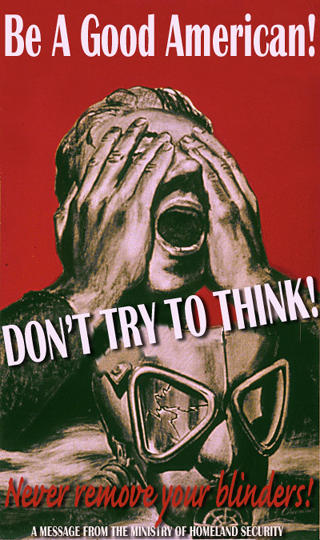
If you’ve never seen Rollerball, stop what you’re doing and dial up the DVD for this 1975 Science Fiction Movie classic. Set in the year 2024, this dystopia puts Bread and Circuses on a violent whirlwind that’s engineered to keep the world’s corporate overlords out of the crosshairs. As such, revolving door heroes are amply provided and give the population cause to question the saccharin surroundings they live in. That is until each warrior meets their predetermined end and complacency has no other choice but to comply. Great Science Fiction but real control is so much easier.

Nonetheless, the backdrop of this dark world takes place after the “Corporate Wars” have bankrupted the world’s nations. In the void left behind, the corporations employ and govern. This leaves the public free of concerning themselves with important decisions, which are better left to “the few” in this standout among dystopian movies.

The Privileged Few

They also enjoy the privilege – even at the expense of Jonathan E. (James Caan). In the hero class of distraction, E. lost his wife to an executive who wanted her for himself.  Paid off to leave him, the accompanying villa in Rome was no match for the rugged, introspect of the world renowned figure.

In this, we are given the vehicle to dig into underbelly as we digest the glory of the game and all its bloodletting. Obviously discontented, Jonathan questions the tradeoff between the material preeminence his position affords and freedom. One of his hanger’s on who serves among the privilege Jonathan reaps doesn’t have such depth and toes the line the system forges like the mindless drone she is. “But comfort is freedom,” reasons Ella.

Enough of the citizenry bought off with nice things, the oversight does not even consider those who may reap much less, because this set up is sure to have losers on a far greater scale. This all sends E. off to determine how people have been so effectively siphoned off as sheep.

Information is Power

Expectedly, the information is scarce – or better yet – properly edited. Summaries of important works are readily available, and in case 24-7 of the game on telescreen gives way to inquiry, the overlords will reset any doubt in the comfort of your own easy chair.  “What do you want books for?,” Jonathan’s teammate, Moon Pie asks  “Look Johnny, if you wanna learn somethin’, just get a Corporate Teacher to come and teach it to ya’.

Jonathan defers and goes to Geneva to visit a computerized archive.  The prospects are quickly eradicated as the librarian is little help, and the system even less. Leaving E at a loss, the willing agent reveals that “the whole of the 13th Century is gone.”

All still escapes Ella with Jonathan coming to a crossroad. “Why don’t you do what the executives want – especially since you’ll be paid handsomely,” she doesn’t get it.

Specifically, they want him to retire. His survival defies the preset odds and disturbs the complacency. Or in chilling John Houseman-speak, the game was created to demonstrate “the futility of individuality.”

Real Control is much Easier

Your mind is officially blown. But a simple look at voter turnout or the tune out that hundreds of TV stations afford us and control takes on the form of despondency. Most significantly, a two party system in which the same elites support both sides, and the important decisions gives the many the illusion of choice.

Even so with the two party gaming clearly at our disposal, we are still sold on the stark differences, and coalesce into our corners over less substantial issues. So while we all don’t like American jobs shipped overseas of elite born trade policy, hate money in politics, the never ending improprieties of the big banks and inefficient delivery of healthcare, we are unable to find crossover or a leader able to unite across party lines.

Instead, our only common place involves a shared sense that the other side is mired in stupidity. This even as we see enough smarts among them that they are also able to navigate survival against such a stacked deck. Blinded by the many fictional divides, who really needs to pick up spilled guts or dislodged eyeballs when the powerlessness our elites have created is so much easier to clean up.

All the News That’s Fit to Print

Of course, the chance to narrow the divides can be a function of the availability of information. In the Science Fiction of Rollerball, this is diminished by keeping information controlled by offering tidbits or official accounts. But secrets only give rise to the desire to seek out what you’re not supposed to know.

It’s far more efficient to let people think they have a free press, and now with the internet and cable news, sources that rise to the top are the ones providing fictitious entertainment in place of facts.

In addition, the unseen hand of Google elevating disinformation now rivals the wall between advertising and content, which doesn’t really exist, and has always acted as editors to protect the elite.

Of course, we do have our distractions, and the cult-like mass following of the NFL can’t help but be seen as a parallel to Rollerball. The circus though is subtle and smarter than 2024.

Whoever has the most Toys

Putting aside violence on the decline, a no one left standing approach has been replaced with parity where everyone has a chance to win. Far more effective for viewership, and the Sunday, Monday, Thursday cascade plays right into the American consumerism that one ups Rollerball’s ability to feign comfort for the masses.  Or why give people stuff to keep them complacent when you can make them ever in pursuit of the next gadget that is sure to bring unending happiness.

As Brad Pitt says in Fight Club, “the things you own, they ending up owning you.” For example, when Apple outsources production to a Chinese factory where nets keep workers from jumping out the windows, stock options go a long way to allaying the guilt and getting you that Lexus you can’t do without.

But who knows, Rollerball might have emerged because people figured out how to beat the system, and the powerful went back to the basics that the Romans perfected.  Maybe, we should be content, and let the elites have their ball so they go don’t go home and take it with them.  You know, before they return with something worse, and we’re left rolling over dead instead of despondent.


Watch the full film here.

(To switch off subtitles, click the “cc” button on the bottom left corner of the video window.)

US Gov’t Proves Love for ISIS as Bill to “Stop Arming Terrorists” Gets Only 13 Supporters

By Matt Agorist

Source: Activist Post

For the last several decades, the US government has openly funded, supported, and armed various terrorist networks throughout the world to forward an agenda of destabilization and proxy war. It is not a secret, nor a conspiracy theory, America arms bad guys.

Given the insidious history of the American empire and its creation and fostering of terrorist regimes across the globe, it should come as no surprise that the overwhelming majority of politicians would refuse to sign on to a law that requires them to ‘Stop Arming Terrorists.’ And, that is exactly what’s happened.

H.R.608 – Stop Arming Terrorists Act was introduced by Rep. Gabbard, Tulsi [D-HI] on January 23 of this year. The bill doesn’t have any crazy strings attached and its original cosponsors are a mix of Republicans and Democrats — highlighting that it transcends party lines.

“For years, our government has been providing both direct and indirect support to these armed militant groups, who are working directly with or under the command of terrorist groups like Al-Qaeda and ISIS, all in their effort and fight to overthrow the Syrian government,” Gabbard said in an interview earlier this year.

The text of the bill is simple. It merely states that it prohibits the use of federal agency funds to provide covered assistance to: (1) Al Qaeda, Jabhat Fateh al-Sham, the Islamic State of Iraq and the Levant (ISIL), or any individual or group that is affiliated with, associated with, cooperating with, or adherents to such groups; or (2) the government of any country that the Office of the Director of National Intelligence (ODNI) determines has, within the most recent 12 months, provided covered assistance to such a group or individual.

The only thing this bill does is prohibit the US government from giving money and weapons to people who want to murder Americans and who do murder innocent men, women, and children across the globe. It is quite possibly the simplest and most rational bill ever proposed by Congress. Given its rational and humanitarian nature, one would think that representatives would be lining up to show their support. However, one would be wrong.

After nearly 5 months since its introduction, only 13 of the 535 members of Congress have signed on as co-sponsors. What this lack of support for the bill shows is that the federal government is addicted to funding terror and has no intention of ever stopping it.

To add insult to treason and murder, Senator Rand Paul [R-KY] introduced this same legislation in the Senate. He currently has zero cosponsors.

Given the overwhelming lack of support for a bill that simply asks the government to stop giving money to people who behead children and video it, it should come as no surprise that Donald Trump signed hundreds of billions of dollars in weapons deals with other countries who also fund these people.

As Americans bicker over Trump’s bogus and non-existent Russian scandal, he’s signing a deal worth hundreds of billions of dollars with the largest state sponsor of terror in the world — ensuring decades of future wars and the continuation of the cycle of terrorism.

What’s more is the fact that less than one week after publicly reprimanding Qatar for terrorism, President Trump signed off on the sale of $12 billion in weapons to the country he referred to as a “funder of terrorism.” This move, in Trump’s own stance, makes him a de facto funder of terrorism now.

What this lack of support for the bills and the recent moves to arm the terrorist regimes illustrates is the fact that the US has no intention of ever stopping terrorism. Trump, just like Obama and Bush before him, will continue to foster the growth of terrorism to enrich those who profit from war.

Terrorism is necessary for the State. War, is the health of the State.

Without the constant fear mongering about an enemy who ‘hates our freedom’, Americans begin questioning things. They challenge the status quo and inevitably desire more freedom. However, when they are told that bogeymen want to kill them, they become immediately complacent and blinded by their fear.

While these bogeymen were once mostly mythical, since 9/11, they have been funded and supported by the US to the point that they now pose a very real threat to innocent people everywhere. As the recent attacks in the UK illustrate, ISIS is organizing and spreading. Even the terrorists in the UK had ties to the British government who allowed them to freely travel and train with ISIS-linked groups because those groups were in opposition to Muammar Gaddafi, who the West wanted to snub out.

It’s a vicious cycle of creating terrorists, killing innocence, and stoking war. And, unless something radical happens, it shows no signs of ever reversing.

The radical change that is necessary to shift this paradigm back to peace is for people to wake up to the reality that no matter which puppet is in the White House, the status quo remains unchanged.

Trump is proving that he can lie to get into power and his supporters ignore it. If you doubt this fact, look at what Trump did by calling out Saudi Arabia for their role in 9/11 and their support for terror worldwide prior to getting elected. He now supports these terrorists and his constituency couldn’t care less.

This madness has to stop. Humanity has to stop being fooled by rhetoric read from teleprompters by puppets doing the bidding of their masters.

Please share this article with your friends and family to show them how their supposed ‘leaders’ — except for a few good ones — are content with funding the enemy, laying waste to rights, and condone the murder of innocence.

Godzilla Amazon: The Amount of Power in Jeff Bezos’ Hands Should Frighten All Americans

Amazon very effectively uses technology and data to sidestep traditional restrictions on monopoly power.

By Matt Stoller

Source: AlterNet

To understand the depth and breadth of Jeff Bezos’ ambitions for the company he built, type www.relentless.com into your browser. The domain Bezos registered in 1994 will redirect to Amazon, the company aptly, and ambitiously, nicknamed The Everything Store. He tells his shareholders that the company will act like an aggressive startup — that at Amazon, it is always Day One.

Like Google and Facebook, Amazon uses technology and data to sidestep traditional restrictions on monopoly power. Our lives are increasingly organized by the platforms these companies run, platforms which now mediate the way we communicate and engage in commerce with each other. We are living in a world organized by tech monopolists, a change in power relationships that no one voted for but has been imposed upon us nonetheless.

Now, Bezos is attempting to add more power to his empire with the surprise announcement that the company will pay $13.7 billion for Whole Foods Market. Amazon will now have a store footprint in neighborhoods across America.

Our communities and the way we engage in commerce will change. Imagine walking into a Whole Foods store and seeing different prices depending on whether you are a member of Amazon Prime — or seeing different prices depending on any other way that you interact with Amazon.

This isn’t implausible. It is what the company does when it opens up stores. For instance, Amazon is creating a chain of physical book stores to take the place of the book stores the company destroyed. In these stores, there are no price tags at all: You scan the items with your phone and have a price delivered to you, personalized by Amazon. Why wouldn’t Amazon extend this to Whole Foods? “Our goal with Amazon Prime, make no mistake,” says Amazon CEO Jeff Bezos, “is to make sure that if you are not a Prime member, you are being irresponsible.”

This statement and the amount of power in Bezos’ hands should frighten all Americans. Bezos meant that Amazon will soon be so good for consumers that it would just be folly not to be a member. But what he unwittingly implied is that as a citizen, you will have no choice but to interact with his institution to buy and sell key goods that everyone needs — on his terms.

Jeff Bezos, in other words, has a vision. To be everywhere, to be the platform for everything for every consumer. So when Bezos calls you irresponsible for not tithing to Amazon, America has a big political problem.

Amazon’s takeover of Whole Foods means that it can target and eliminate regional competitors one by one as it did with its online competitors. When Diapers.com emerged as a competitor to Amazon, Amazon simply sold diapers below cost until the company capitulated and sold itself to Bezos. There’s no reason to assume Amazon wouldn’t bring the same predatory pricing strategy to bear in every city in America. Why wouldn’t it? Even though predatory pricing is illegal, the government hasn’t enforced those laws for decades. Whole Foods tends to source from local farms as part of a commitment to localism; these farms will now be negotiating with a much bigger entity that is committed to a ruthless model of efficiency.

There are so many ways that Amazon can use its power that it’s simply impossible to figure out what it will do. Amazon probably doesn’t even know yet; it will discover and test them, relentlessly. Maybe you will get first in line, or last in line, for the most popular toy during the Christmas period, or maybe the restaurant you own will get access to the freshest yet limited batch strawberries you need based on whether you are giving better deals to Prime members.

Or here’s a more creative possibility. Amazon is excluding Amazon Prime video from Apple TV so that Prime members will buy its streaming device instead of Apple’s. As the smartphone market commodifies and transforms, Bezos could simply use his combined physical and online footprint to keep you from even seeing prices at his stores unless you are using Amazon-approved electronic devices. If Amazon were just one of many stores that would be one thing. But Amazon is quickly becoming the dominant way to buy and sell.

And this, make no mistake, is what is happening. Upon the announcement of the acquisition, Target’s stock price dropped by 10 percent and Walmart’s by 5 percent. Amazon’s rose by more than the price it is paying for Whole Foods. Wall Street sees the writing on the wall. There is only one force that can stop Amazon from organizing and regulating basically all American retail commerce — our democratic institutions and our political system. We the people.

Bezos knows Amazon is a political enterprise at this point. The day before he announced his company’s attempt to buy this supermarket chain, he released a request on Twitter to have people offer ideas for where he can direct charity money. That is the kind of public relations undertaken by political leaders. And Amazon put out an ad for a Ph.D. economist-cum-lobbyist “to educate regulators and policy makers about the fundamentally procompetitive focus of Amazon’s businesses.” And he has put political fixers, like Ivanka Trump’s lawyer and ex-Clinton administration officer Jamie Gorelick, on his board of directors. He also bought The Washington Post.

The public should speak out in opposition to this merger. More than that, the government should take this opportunity to reject the entire pro-finance pro-concentration philosophy that has taken hold in this country since the Reagan era. It is no accident that Whole Foods founder John Mackey was forced to surrender his life’s work because financiers looking for a quick buck bought up a large bloc of shares in his company and pressured him to sell the company to Amazon. The day before the announcement of the sale, he called these hedge funds “Ringwraiths,” after the evil characters in “Lord of the Rings.” Bezos might be the most powerful empire-builder in the land, but he had help.

This merger should frighten all of us. But it should also embolden anyone who believes that America should not be in thrall to monopolists like Bezos. For them, today, as Jeff Bezos might put it, is Day One.

Matt Stoller is fellow at the Open Markets program, where he is researching the history of the relationship between concentrated financial power and the Democratic party in the 20th century.

Absent Without Leave

By James Howard Kunstler

Source: Kunstler.com

It ain’t bragging if it’s true. I’ve said repeatedly on this blog for years that the federal government would only become more impotent, more incompetent, and more ineffectual as The Long Emergency rolled out. And here we are now, at just such pass in history.

The process has been well underway since the beginning of the century. Even the attempts to expand its scope and reach — such as the post 9-11 addition of God-knows-how-many new intelligence services — has only produced an epic clusterfuck of cross-purposed mission creep that threatens the federal government’s existential legitimacy.

After nearly a year of investigating, the FBI, the CIA, the NSA, the DIA, DHS, et. al. haven’t been able to leak any substantial fact about “Russian collusion” with the Trump election campaign — and, considering the torrent of leaks about all manner of other collateral matters during this same period, it seems impossible to conclude that there is anything actually there besides utterly manufactured hysteria.

Now, one might imagine that this intelligence community could have manufactured some gift-wrapped facts rather than just waves of hysteria, but that’s where the incompetence and impotence comes in. They never came up with anything besides Flynn and Sessions having conversations with the Russian ambassador — as if the ambassadors are not here to have conversations with our government officials. You’d think that with all the computer graphics available these days they could concoct a cineplex-quality feature film-length recording of Donald Trump making a “great deal” to swap Kansas for Lithuania, or Jared Kushner giving piggyback rides to Vladimir Putin in the Kremlin. But all we’ve really ever gotten was a packet of emails from the Democratic National Committee and John Podesta of the Clinton campaign gloating about how nicely they fucked over Bernie Sanders — and that doesn’t exactly reflect so well on what has evolved to be the so-called “Resistance.”

The net effect of all this sound and fury is a government so paralyzed that it can’t even pass bad legislation or execute its existing (excessive) duties. That might theoretically be a good thing, except what we’re seeing are individual departments just veering off on their own, especially the military, which now operates without any civilian control. Apparently General Mattis, the Secretary of Defense, pretty much decided on his own to dispatch another 8,000 US troops to Afghanistan to move things along there in the war’s 16th year. Or did he get President Trump to look up from his Twitter window for three seconds to explain the situation and get a nod of approval?

Perhaps you also didn’t notice the news item over the weekend that a US-led fighter plane coalition shot down a Syrian air force plane in Syrian airspace. In an earlier era that could easily be construed as an act of war. Who gave the order for that, you have to wonder. And what will the consequences be? Reasonable people might also ask: haven’t we already made enough deadly mischief in that part of the world?

With the US military gone rogue in foreign lands, and the intelligence community off-the-reservation at home, and the Trump White House all gummed up in the tarbaby of RussiaGate, and the House and Senate lost in the shuffle, you also have to wonder what anybody is going to do about the imminent technical bankruptcy of the USA as the Treasury Department spends down its dwindling fund of remaining cash money to pay ongoing expenses — everything from agriculture subsidies to Medicare. That well is going dry in the middle of the summer, and without any resolution to the debt ceiling debate, the country will not be able to borrow more to pretend that it’s solvent.

I don’t see any indication that the House and Senate will be able to bluster their way through this. Instead, the situation will compel extraordinary new acts of financial fraud via the central banks and its cadre of Too-Big-To-Fail associates. In the event, the likely outcome will be a spectacular fall in the value of the US dollar, and perhaps consecutively, the collapse of the equity and real estate markets.

The public may not give a shit about Syria, Afghanistan, or federal dairy supports, but they’ll sure perk up and notice that their money is going worthless. I doubt they’ll be clamoring for Hillary Clinton to be installed as the first US Caesar to fix it all.

America’s Retarded Awareness

By Denis Conroy

(RINF)

Alternative ideas don’t come easily to Americans. It seems that Americans imported colonial hierarchal practices from Europe to cultivate them to their own advantage. Over millennia, Europeans had come to accept the authority of Church, Monarchy or State Principalities to be the places where the ‘rightful-centres’ existed. The ‘rightful-centre’ was always beyond the reach of the masses. Pontiffs and warlords alike had built their power base upon the belief that the common people should accept the fact that the centre of power was somewhere above their heads and that it was the lot of underlings to live the life of fellow travellers.

The Confucian idea, that the centre was everywhere, had failed to penetrate the European pantheon.  In Asia, actions and their consequences were measured in language that was neither hierarchical nor internalised within rhetorical borders, but connected to truths that had their origin in humanity-oriented-grass-root realism…ethics. Europe, for its part, went the way of evangelical Christianity by legitimizing religion as the celebrity voice par excellence. Operating in space above the heads of the common folk, Emperors and Popes engaged in the practice of issuing edicts that instructed the commoners on how they should think and respond to the celebrity classes doing their thinking for them.

Branding religion was the event that opened the door to the branding of everything. Patriarchal authority, the central tenet of the Old Testament, reappeared again in the guise of male-dominated New Testament culture when it was integrated into the Roman state. Rebranding regulations to secure the authority of the power-base required a narrative that sought to recluse authority from popular critique. The Founding Fathers in Rome or Washington, became very astute in crafting directives and devices that enabled them to toss their bountiful wisdom to an amorphous flock that would forever defer to their ‘wisdom’. The creation of an inscrutable Machiavellian dimension…secrecy…put in place to coddle the aspirations of the commoners, had the desired effect of separating them from the business of government.

By these means, the State as a force-unto-itself came into being, with lawmakers, merchants and agents of the evangelical stripe committing rank, energy and capital to fulfilling a dream of progress that would see them on a path to seeking mastery over all things…nature included…per subjugation of all things. This was the philosophy that the colonial mind found prepossessing…business-as-usual as a staple operation that would take devotees of their exceptional ilk anywhere they chose to go to, expropriate whatever resources were available to them, while defiling the health of the planet in the process…and think about what we Westerners became and what we did and to whom in the process?

When the genie was released from Europe’s empirical arse-crack, was it because the grass looked greener across the vast expanses of America’s prairies which appeared to be there for the taking? Was the Australian bush an all too alluring opportunity to rebrand someone else’s homeland? Europeans, living midway between science and barbarism went across the world to smote the idyllic ‘innocents’ living midway between paradise and paralysis, believing them to be inferior. With a pugnacious conviction born of arrogance, they swarmed through the greener-grasses with scant regard for life or limb.

So, moving on to present day America…which sees itself as the leader of the free world… who or what can explain the introverted perspectives that draw the national psyche into an ever-expanding empirical loop. There is much evidence available to show that a covert passion for Great-Game memes continues to haunt the power-elites in Washington. It now seems that American presidents may come and go but Henry Kissinger is here to stay. Henry…who served first as Nixon’s national security adviser and then as his secretary of state 1969 until 1974… and nowadays frequently seen slumped in a chair in the Oval Office, looking like a grim medieval gargoyle, whose drooping flesh and demeanour convey an image of intransigence…worthy of Machiavelli’s attention… hovering there to counsel the many presidents who pass through the White House, in the art of genuflecting before Zion. Henry, the Zionist Pope, keen to examine the credentials of all those aspiring to occupy this high office, conjures up the inevitable question; at what point in time did this secondary space and highest office in the land become a Zionist habitat?

Strangest of all, the recent election happened and hardly anybody gave a fig about the destructive consequences of America’s wars abroad. It was like permanent war was o.k. so long as it happens in somebody else’s country…or benefited Israel. The public, before-during-and-after the election, expressed zilch concern for the millions of people their government had destroyed. After all, the American corporate juggernaut was unstoppably hooked on exploiting the globe…leave no paddock unexploited…and the electorate, the fellow travellers… who accepted the propagandized narrative coming per media…from above their heads…would always accept corporate branded salve.

What helped them to ignore the consequences of permanent war was an inhouse injunction…the American narrative had become a religion that represented all that was good for business as gospel…and that was that! Confirming the only ‘reality’ they knew, the fellow travellers passively accepted a piece of the action. America’s brutality in the world at large would continue, signalling that ‘butcher shop’ carte blanche would go on, regardless of who was elected.

The election focused on brand and who would control the narrative. The winner was ‘more-of-the-same’…and that was good for business. The election was merely about people choosing their favourite celebrity, but the one who succeeded failed to fulfil the expectations of the liberal-elite and that meant a ‘wigs-on-the-green’ melee was in the offing. An awareness-deficient electorate left the rest of the world wondering if there was much difference between educated and uneducated Americans.

Where were the voices that might have stormed the barricades with rhetoric that condemned the American practice of sending its apprentices…butcher-boys all…abroad to kill! Kill! Kill! Awareness was absent because the electorate was too comfortable with the hierarchical world above their heads…Wall Street, the Pentagon and the accompanying galaxy of job opportunities available to the educated and uneducated alike. After all, inclusion in the system was all that mattered come payday… and after all, cash cows R us!

“According to U.S. Census 2013 data, 1.68 percent of Americans over the age of 25 have a PhD. This equates to approximately 2.5 million people. People with professional degrees such as MD or DDS make up 1.8 percent of the U.S. population making the total percent of Americans referred to as doctors equal to 3.16 percent.

The vast majority of adults in the U.S., over 88 percent, have a high school diploma or additional education. Around 31 percent of the population has a bachelor’s degree or higher, and almost 12 percent have a master’s degree or higher”…which begs the question; how can so many people live with so much carnage? Can it be that the American dream of freedom and independence, for so long the playbook of the straight white man expressing racial bravado in his quest for dominance, is now beginning to show evidence of him falling…in slow motion…upon his own petard? 

As America grew bigger and bolder and wealthier, the echelons attached to the running of the state multiplied too. In subtle ways, the business of the people operating in the zone above the level of the common people became ever more numerous and secretive…after 9/11, the main perpetrators of secrecy became the CIA and the FBI, regulating the level of fear to kept the public focused on fabricated threats designed to promulgate the ‘war-on terror’ mantra. In the process, the temporal beast grew an extra dimension of the mystical kind to extend its purview beyond its own borders so that the people could believe that greatness was now a context in which America and Americans could shine and shove it to the world. What was happening abroad was bound to enrich them…and to hell with the consequences.

Americans, surfing the contours of their very own exceptional imperial arse-crack, in quest of ever easier access to mother nature’s assets, deluded themselves into believing that the assets allocated to sand-bunnies and other assorted detritus were mistakes that needed correcting. Deriving emotional security from the possession of their vast stock of ballistic missiles, the American imperial persona descended into a state of amnesia as a convenient way of ignoring the increasing problem of the body-count forever multiplying in the countries they were rendering dysfunctional. American boots on the ground had come to spell venality abroad and valour at home.

What was happening abroad was inconsequential…reportage at home became more heated, but it had little impact on a critique-resistant ‘exceptional’ entity like astigmatic America. Retarded awareness was turning the ‘great’ society into an intellectual cadaver…critique had caught some fatal disease that caused ‘John Brown’s Body’ to mournfully turn in its grave.

As Uncle Sam, in horizontal locomotion style, cast his war-ware across the Muslim world, people came to recognized the familiar appearance of the grim reaper, hidden in the folds of the stars and stripes, as their great airpower transported democracy eastwards. They were aware that death and destruction in their country had long ceased to receive much attention in Western media. America was too busy navel-gazing.

To be too preoccupied with one’s own anatomy or infrastructure is likely to cause serious problems for people who live in glasshouses. America’s post traumatic rage over the result of the 2016 presidential election might have gained something if people had stopped a moment to reflect on proverbial insightfulness for a moment, “people who live in glass houses shouldn’t throw stones”.

Ad hominem warfare in America is spreading like wildfire. The population is determined to leave no stone unturned. A veritable ‘kristallnacht’ of sorts, affecting the secondary classes…celebrity classes…more than the ‘deplorable-class’ suggests that the America dream and its affiliations with politic heft and hove is up shit-creek. The current brand of stone thrower lives in that space above the common people’s heads and personifies the American dream from a specific perspective; status, power, money, independence et al… and nothing gels!

But on second thought, perhaps proverbial wisdom needs revision; for example; insular people who live in glass houses shouldn’t throw tantrums or missiles.

And there’s more; Wall Street, AIPAC, The Pentagon, The FBI, The CIA, The State Department, T.V. Talk Hosts, Established Media, Hollywood, Silicon Valley and countless other membranous boundaries that represent the hydra-headed social order are all insular to a man (or woman). Insularity however, inevitably means more trouble for the uninitiated masses excluded from the banquet… secrecy being the better part of valour…but?

So, we don’t ever really know what goes on behind closed doors. Nobody ever comes through the door to explain why evangelical America threatens 150 million Russian Christians with nuclear annihilation. Nobody comes through the door to explain why American bombing throughout the Middle East is Guernica writ large in perpetuity…as was the case with Korea, Vietnam, Cambodia, Laos, etc. etc., Nobody knows who decides which democratically elected government abroad is next in line for regime change. Nobody, on the other hand, is ever allowed to enter the closed doors that conceal the little men who ruminate over charts, statistics, numbers, surveillance data and funding dossiers that help insular careerists to navigate a path ever deeper into Doctor Strangelove’s hoary entrails where drone strikes and Armageddon is contemplated.

The American Constitution, Thomas Jefferson, James Madison, George Washington all have their place in history as instructors…and instructors are there to advise one on how to move forward. The great achievement of the new great country which embarked on so many projects to develop infrastructure, failed to acknowledge that developing at so great a tempo left no time to reflect on the consequences of its actions. As it rushed headlong into the future, it lost sight of where it was coming from.

On becoming a country without a past, its memory span disappeared more and more as the locomotion of its enterprise took America ever deeper into an illusion that the country had to keep its foot on the accelerator 24/7 to achieve greatness for all. In the absence of grass-root ethics that might have revealed the connection between object and subject, respecting and being respected, ‘greatness’ became a synonym of pedigree and power… ‘us-and-them’ a code for superior and inferior, exceptional and unexceptional. The America of superman fame adopted the eagle as super-bird, not as a Phoenix rising in a new world, but as a symbol of a bird of prey with a mission to destroy…the corporeal devouring the spiritual! …History does repeat itself!

“By three methods we may learn wisdom: First, by reflection, which is noblest; Second, by imitation, which is easiest; and third by experience, which is the bitterest”…………..Confucius, 551—479 BC……..

The Crisis of US Imperial Governance and the Struggle for a New World

By Danny Haiphong

Source: Black Agenda Report

“Economic crisis at home and endless war abroad has placed finance and monopoly capital in political disarray.”

When I was here last year, I spoke a lot about ideology and how the struggle for social transformation in the mainland of imperialism partly depended upon the ideological development of oppressed people trapped within US borders. The 2016 elections were beginning to pick-up momentum, but it was unclear what direction they would go. Fast-forward to the present and, I don’t know about you all, but I am exhausted. The election of Donald Trump has presented both new and old challenges. It has created an almost circus-like political environment with dire consequences for the masses. What precipitated the circus-show is a crisis of governance that has been intentionally misunderstood by US imperialism’s corporately owned media and political elite.

To distort the crisis, a state of anti-Russian madness has been prescribed to medicate political consciousness in rapidly changing times. The rise of China and Russia has exposed the bankruptcy of US imperialism on all fronts. Economic crisis at home and endless war abroad has placed finance and monopoly capital in political disarray. Donald Trump took advantage of the chaos. He spoke about jobs, he spoke about wars, and he spoke to the growing insecurities of white Americans of working and middle class status who no longer can rely on the wages of whiteness for guaranteed prosperity. The duopoly and its capitalist masters had no one to offer, indeed nothing to offer, so Trump rode in on his orange horse to become the head of state of imperialism.

“The rise of China and Russia has exposed the bankruptcy of US imperialism on all fronts.”

The ruling class does not want people in the United States to understand the context of the Trump Presidency. It has reapplied Cold War fears with Russia as the prime target. Russia’s geopolitical moves away from imperialism have been deemed just as criminal as China’s economic supremacy. The US does not depend as much on Russia in the economic sense, but it trembles in fear at the prospect of growing Russian economic activity across Eurasia. Yet, provoking Russia militarily will lead to World War. This is a risk the ruling class appears willing to take as the anti-Russia narrative in the US has only intensified since Hillary Clinton made the erroneous claim of Russian interference in the 2016 elections.

According to the US ruling class and its “intelligence officials,” Russia promotes “fakes news” to assist Donald Trump. Russian President Vladimir Putin lurks in our social media, and is hacking his way through algorithms to smear the US political system. Russia is infecting minds with its Russia Today “propaganda” arm. The Ruskies have no regard for the damage they have caused to so-called US democracy. Putin wants total control of the US and will wield his most talented social media users to get the job done. This is what the corporate media sounds like these days.

“The U.S. trembles in fear at the prospect of growing Russian economic activity across Eurasia.”

Of course, the US ruling class doesn’t want to talk about how US intelligence already collects the numbers, emails, and calls of every single person in the world who uses a cell phone or computer. They don’t want to tell you about how the US has interfered in every election in Russia since the Soviet Union fell, or how it has led bloody proxy wars and coups in over fifty countries in as many years. They don’t want to discuss how Russia has absolutely nothing to do with the millions of incarcerated people in the US or the fact that it is the US monopoly capitalist economy, not the emerging capitalist economy of Russia, which has automated many of the jobs and siphoned much of the wealth that once belonged to a privileged sector of US workers. No, it would rather attention be placed on the Russian boogeyman.

Anti-Russian hysteria doesn’t just distract the broad masses of people from the legitimate causes of the conditions afflicting the working and unemployed. It feeds into an atmosphere of war that strikes the very roots of the US social order. Imperialism is the rule of monopoly and finance capital. This system has run its course. It cannot hold onto political legitimacy any more than it can spur economic development beyond the meager 1 to 2 percent growth calculated year after year. In a sense, war is all the system has left. And war is exactly what the ruling class will get, with or without Trump.

“They don’t want to tell you about how the US has interfered in every election in Russia since the Soviet Union fell, or how it has led bloody proxy wars and coups in over fifty countries in as many years.”

War with Russia is today’s clarion call for “American unity.” In times of crisis, the US imperial state has relied on war to bring political and economic relief from domestic crisis. Every major US-led war has in part been waged for this purpose. What differs now is that war with Russia could bring about the destruction of humanity. Scientists have confirmed that nuclear war could make the planet uninhabitable.

What is also different about this current war drive with Russia is how it marks the historical conclusion of the current stage in the world imperialist order. When the US threatened nuclear war with the atomic bombing of Japan in 1945 and the Cuban missile crisis almost two decades later, the world was in the midst of a transition from Western monopoly capitalism to proletarian socialism. Revolutions in Vietnam, Cuba, and the Soviet Union, to name a few, threatened to undo the very notion of private property. And while US and Western backlash nearly eliminated the socialist bloc by 1991, the imperialist order entered a transition stage of its own that some call “neo-liberalism.”

Neo-liberalism has greatly expanded the reach of capitalism’s tentacles and widened the impact of capitalist crisis since its inception in the late 1970s. Neo-liberalism has unleashed unfettered capitalist production by imposing economic stagnation on participating countries. Meanwhile, China’s socialist model has paved a different path, one marked by unprecedented growth and poverty reduction. China has understandably attracted underdeveloped nations so desperately seeking to escape from the clutches of neo-colonial impoverishment. Russia has grown close to China, providing both countries with much assistance in the way of constructing a multi-polar economic arrangement based on the principles of sovereignty and mutually beneficial cooperation. According to the logic of neo-liberal capital, only war with Russia and China can save the system from itself.

“War with Russia could bring about the destruction of humanity.”

This conclusion stems from the fact that neo-liberal capital is not growing, it is contracting. Eighty-percent of workers are near-poor in the US while six mega billionaires hold ownership of over half of the planet’s wealth. Concentrated profit does not mean that all is well with the ruling class. Internal contradictions are eating the capitalist system alive. Neither finance capital nor its monopoly investors can arrest the resultant decline. The growth of technology to speed up production and profit has left millions stuck in permanent unemployment. A high-tech system of production is an expensive system of production, requiring lower wages and debt to absorb the falling rate of profit. Global overproduction has thus developed alongside mass misery.

Such conditions are at the root of mass incarceration, where millions of mostly Black and poor workers are warehoused in cages because there is nothing on the outside that the system can offer. They are also the root of mass surveillance, as the system must keep tabs on an increasingly restless population and justify infringements on civil liberties as necessary counter-terror measures. The War on Terror and Drugs have been prerequisites toward keeping the population scared and its attention away from the US capitalist overlords who fund and support drug trafficking and terrorism for political gain. And when all else fails, blame Russia.

“The system must keep tabs on an increasingly restless population and justify infringements on civil liberties as necessary counter-terror measures.”

The struggle against neo-liberal capital and anti-Russian hysteria is a struggle to transform and revolutionize society. This struggle requires both practical political organization and ideological development. There will be no revolution without revolutionary thought, and no revolution without revolutionary action. All too often the left is debating which one is the most important for the future success of a revolutionary movement. The answer is both, together.

For most, this explanation is understandably too broad to inform individual political energy. Liberal thought and action thus becomes attractive because it hides behind the cloak of the possible and pragmatic. It is easier to think in terms of electoral politics than in global struggle. It is far more simple to advocate for a cooperative economy or universal basic income without spelling out the broad context that prevents their formation. In order for any material victories to be won on a mass scale, the victors must understand the world in which they fight.

“A movement for social transformation in the US has still yet to be born.”

Conscious struggle has brought about meaningful and deep changes in recent years. Mumia Abu-Jamal is now receiving Hep-C treatment after years of struggle with the State of Pennsylvania. The release of Chelsea Manning and Oscar Rivera Lopez also come to mind. Solidarity with Cuba freed the Cuban 5 and has given the socialist nation more opportunities to develop its economy. But these victories have come in the midst of great cost. A movement for social transformation in the US has still yet to be born, as the presence of dozens of political prisoners and the ongoing US blockade against Cuba reminds us.

Not once did I mention the Democratic or Republican Party. Both parties have done their part to create the crisis before us. A rejection of the two-parties means an embrace of the struggle against imperialism worldwide. It means that the nations with US targets on their backs should be seen as potential allies. Yes, this includes Russia. And Syria. It includes the left movements in Latin America. In the spirit of Malcolm X, the Black liberation movement, and the historic anti-imperialist struggle around the world, the time has come to search for real bonds of solidarity around the world to aid in the struggle against white supremacy, capitalism, and empire in the US and the West. Let no one, not even those who call themselves “the left,” tell you otherwise.


Danny Haiphong is an Asian activist and political analyst in the Boston area. He canbereachedatwakeupriseup1990@gmail.com

Radicle and Rhizomati: Notes from a Folk Herbalist

By Lisa Fazio

Source: Resilience

Hierarchy

Power structures establish various systems to ensure the organisation of interrelationships and the distribution of resources throughout a group, community, or ecosystem. In human terms, these systems become our tribes, societies, and civilisations. The dominant power structure in the Western world at this time is capitalist, colonial, and hierarchical, with resources being distributed (or, more accurately, hoarded) from the top down.

Before capitalism, many of us who have descended from the nations of Europe have a cultural history of feudalism or some other social-ranking hierarchy. Feudal society is the rootstock of capitalism. One of the primary differences subsumed from this medieval power structure by early capitalism was the waged exchange of labour. The feudal peasants were non-waged, that is, not paid in monetary currency for their labourInstead, they were paid by an exchange of resources such as land, shelter, and farming rights. Both capitalist and feudal hierarchies were architected to direct and control the circulation of currency from those at the top, who are the elite and few, down to those at the bottom, who are the poor and many.

Capitalism depends on unrestrained growth and production, the manufacturing of material goods, and the extraction of resources to meet these ends. Colonisation, the imperious expansion of geographic, cultural, and political boundaries becomes requisite — with all its cruelty and overconsumption — as a result of this excessive and continuous reach to sustain the unsustainable.

When contemplating the quagmire of obstacles and institutions within our capitalist society that interfere with the equitable and just interchange of currency and access to resources, I find myself motivated to explore less oppressive economic, social, and political human relationships.

In doing so, I have become aligned with that ever-gallant and hopeful group of folks dismissed as unrealistic dreamers. We ‘dreamers’ always hold fast to the truth that the wilful designation of creation and power can be delineated into a network of horizontal or lateral functions that make greed, conquest, and competition unnecessary and invalid, except in extreme conditions.

In the words of Larry Wall, creator of Perl, the open-sourced computer programming language: ‘There is more than one way to do it.’ Perl, and Wall’s band of merry hackers, revolutionised the internet with a coding script that encourages other programmers to interject or hack, as they say in the business, their own design style and innovations that contribute to improvements and success for everyone using the network.¹ These internet wizards built the bridge between those of us who simply want to use the internet and those who actually understand it.

I personally am not remotely skilled in the exotic language of programming or the strange tongue of capitalist economics. As one called to the path along the hedges, in the woods, the fields, the gardens, and all the green, untamed and untrailed places, I have found another way to do things in learning the ways of the world beneath the dark shadows of treetops and in the soils with the rooted ones.

As a folk herbalist practising in the foothills of the Adirondack Mountains of New York State, I live remotely, keeping a distant participation to some degree (perhaps never enough?), in the mainstream rush and panic of daily life in the ‘real’ world of productivity, competition and corporate time sheets. My work with others, however, brings me into direct contact with the consequent ills, both physical and emotional, of life within the overworked, overstimulated and ‘red in tooth and claw’ system. My long hours and days gathering and growing the herbs to share with my clients, family, neighbours and friends feels like a different world or alternate reality in contrast to the interface I must make with the civilised world of offices, fluorescent lights and concrete. While I truly love all parts of my work, this polar interchange always clearly elucidates for me the distinct difference between the world of unruly winds and wild waters, and the tame and burning filaments of electricity enslaved within the lightbulb.

Much of my herbal work is spent with a shovel, basket and clippers as I dig and gather roots, leaves, flowers, bark and berries that are prepared into teas and other herbal formulations. I make every practical effort to harvest from local sources. This requires me to be tuned into to the seasonal cycles and growing patterns of wild plants. I also grow a variety of herbs in my own garden, and have become acutely tuned into conservation and ethical harvesting techniques that ensure the long-term survival and proliferation of our wild medicine plants.

This art and practice of traditional herbalism has deep roots into the history of every culture on earth. These roots have twisted, turned and intertwined throughout thousands of years of human civilisation, often being lost and forgotten as the quality of our communal engagements and our narrative with the world has placed humans on top of a hierarchy that centralises power into an above-ground, rootless, disembodied, hegemony.

That said, I think it’s important here to acknowledge that hierarchies occur naturally in wild communities, especially in herd animals, and that hierarchy is not always played out as an oppressive power structure. It can be an excellent tool for ensuring survival, protection and the health of a herd or community when based on consensus, synergy and cooperative principles.

Becoming radicle

Radicle: a rootlike subdivision, the portion of the embryo that gives rise to the root system of the plant
— biology-online.org 

Radicle describes the first part of the seed to emerge after germination that subsequently becomes the primary root. Radicles and the roots they become are a most powerful natural force that, as every city sidewalk knows, will crack and divide concrete. The soil depends upon these mighty revolutionaries to deeply move, turn and aerate the surface of the planet so that life can ascend from it. Plants ‘know’ that in order for productive growth to be sustained, they must first set their roots and begin to make contact with the vast and nutritious field of minerals and essential microbes within the substratum.

Plant roots have many different and effective growing styles, but my favourite are those that are rhizomatic. A rhizome is actually an underground stem that is rootlike; it spreads horizontally, sending out shoots and creating a lateral chain of connection where new sprouts can emerge.

Rhizomes are non-hierarchical and extremely resilient because even if you dig up one part, the other sections will continue to grow and proliferate. Rhizomes have no top or bottom, any point can be connected to any other. They can be broken off at any point and will always be able to start up again. Their network can be entered at any point; there is no central origin. And because there is no central regulatory force, rhizomes function as open systems where connections can emerge regardless of similarities or differences. Freedom of expression exists within a rhizome.

Rhizomes, therefore, are heterogeneous and can create multiplicities, or many different roots, that are sovereign but still in contact and communication with all other parts of the system. This is in contrast to, for instance, a tree, which has a central origin or trunk from which all of its roots and branches emerge. Disconnected from that source, they are no longer in direct contact with their growing system.

As author and storyteller Martin Shaw writes about ‘the rhizomatic universe’ in his book A Branch From the Lightening Tree:

The rhizome is a plant root system that grows by accretion rather than by separate or oppositional means. There is no defined center to its structure, and it doesn’t relate to any generative model. Each part remains in contact with the other by way of roots that become shoots and underground stems. We see that the rhizome is de-territorial, that it stands apart from the tree structure that fixes an order, based on radiancy and binary opposition.

Learning methods and cultural philosophies have been inspired and developed from the patterns observed within rhizomatic root systems. One such concept was introduced by philosopher Guilles Deleuze and psychoanalyst Felix Guattari. From their book on the subject, A Thousand Plateaus: Capitalism and Schizophrenia:

As a model for culture, the rhizome resists the organizational structure of the root-tree system, which charts causality along chronological lines and looks for the original source of ‘things’ and looks towards the pinnacle or conclusion of those ‘things.’ A rhizome, on the other hand, is characterized by ‘ceaselessly established connections between semiotic chains, organizations of power, and circumstances relative to the arts, sciences, and social struggles.’ Rather than narrativize history and culture, the rhizome presents history and culture as a map or wide array of attractions and influences with no specific origin or genesis, for a ‘rhizome has no beginning or end; it is always in the middle, between things, interbeing, intermezzo.’ The planar movement of the rhizome resists chronology and organization, instead favoring a nomadic system of growth and propagation.

In this model, culture spreads like the surface of a body of water, spreading towards available spaces or trickling downwards towards new spaces through fissures and gaps, eroding what is in its way. The surface can be interrupted and moved, but these disturbances leave no trace, as the water is charged with pressure and potential to always seek its equilibrium, and thereby establish smooth space.

Examples of rhizomatic patterns exist throughout the living world and include plants such as ginger, crabgrass, violets and, my favourite, wild sarsaparilla (Aralia nudicalis). In human terms we can see many examples of rhizomatic systems, such as we discussed above about Larry Wall and the internet, even amid the context of complex societal hierarchy. New economic and environmental models of power such as permaculture, bioregionalism, and re-localisation are designed to work as horizontal, cooperative, synergistic, and non-competitive systems.

The Rhizomati

Rhizome: A continuously growing horizontal underground stem that puts out lateral shoots and adventitious roots at intervals.
— Oxford English Dictionary online

Herbal medicines are, and always have been, a rhizomatic source of the equitable and lateral distribution of basic needs that seeks not to hoard, commercialise, and capitalise on healthcare or to dole it out only to those with access to the necessary currency. Herbs themselves have not escaped the thralls of patriarchal conquest. All of our modern medicine was founded on the insight gained from the common people and their unwritten relationship with the medicine of the plants. Many of the early European physicians gathered their knowledge from village herbalists, often women who could not read or write (as the patriarchy forbade them). These women are rarely even mentioned in the published literature of medical history. An example can be found in the book written by Dr William Withering (1774-1799), the man who is said to have ‘discovered’ the medicinal use of foxglove. The very first page of his book makes a short mention of a village wise woman who used it in a formula for dropsy: ‘I was told that it had been a long-kept secret by an old woman in Shropshire, who had sometimes made cures after the more regular practitioners had failed.’

The village healers were not elite or favoured by the ruling classes, and in fact were historically perceived as a threat. Their healing work was focused on the direct and intimate needs of their local community, which they frequently sought to empower and support. Traditional herbal medicine was not motivated by profit nor was it sanctioned by the overculture.

In our current times, herbal medicine and plant-based culture has re-emerged in many forms and I perceive it is in a major cycle of transformation. Many call it the ‘herbal renaissance’ and it’s not clear yet what the trajectory will be, as the world seemingly changes at the speed of light. However, the core values remain inextricably connected to the interdependent place-based character of the village healer and his or her reciprocal conversation with the wild and green world.

Our ancestors in healing, the long-ago plant people, were in service to their human community as well as the medicine allies they harvested from the hedges. These plant people often lived on the edge of town and worked as not only healers of physical sickness, but also practitioners of spirit, shamans of the village soul, and knowers of, or in old English ‘cunners’ of, the ‘wort’, or herb. Some were called wortcunners. Some were called magicians. Some were called witches. There are many different types of herbalists now and in the past. In ancient times — interestingly! — they were called the rhizomati, or by some sources, rhizotomoki, meaning ‘root gatherers’ or ‘root cutters’.

The rhizomati were rhizomatic practitioners of underground and lateral energy patternsas found in the plant kingdom. According to Christian tsch, ‘the rhizotomoki still spoke with the plant spirits…’ He adds: ‘These root-gatherers observed the gods sacred to the respective plant. They made use of the moon’s energy and knew the particular oath formulas for each plant. Witchcraft medicine belongs to the spiritual and cultural legacy of the rhizotomoki.’

tsch asserts, therefore, that ‘witchcraft medicine is wild medicine. It is uncontrollable, it surpasses the ruling order, it is anarchy. It belongs to the wilderness.’² Anarchy and wildness, in this sense, are not instances of chaos, mayhem, or lack of a system; rather, it is a system that is self-organised, organic, self-regulated, and impervious to oppressive external control mechanisms.

The rhizomati were carriers of traditional healing knowledge and have emerged at various points in time. In fact, as would a rhizome — going underground for a time andsprouting their legacy up to the surface in another place or time. Renowned modern-day herbalist David Hoffman has compared herbalists of our time to the Greek ‘rhizotomoi’ who held a very special place in the hierarchy of health-care practitioners during ancient times. He asserts that, now as then, herbal healers ‘breach so many realms.’

It is important to understand that the rhizotomoi were not merely the garden labourers that grew the plants, nor did they have the status of academic physicians who dispensed already prepared pills and formulas. Hoffman says: ‘They were people who knew the plants, knew where they grew, knew how to cultivate them, knew how to collect them appropriately, knew how to make the medicine, but then also knew how to use the medicine in the context of the people’s needs… they were herbalists.’

The legacy of these herbalists has carried their medicine bags into the vernacular, or kitchen, gardens of the past few hundred years in Europe and North America. Such gardens belonged to people of any class, and provided subsistence food and medicine to individuals and families. These communal plots were stewarded by the rhizomati and provided a local source of plants and seeds, were designed to meet the natural rhythms of the seasons, and were small enough to adapt to changing local conditions. They were places ‘in which “herb women” and rhizomati, root gatherers, are a key source of plant materials and seeds, and garden innovations are shared among peers—family, neighbors, friends—rather than distributed by a central authority.’³

Today’s root cutters, root gatherers, folk herbalists, plant charmers, and the like, face unknown challenges as the trail leads into the future of a global, capitalist economy. Herbal medicine has become increasingly mainstream and, will no doubt, continue to be commodified and profiteered at some level.

The overculture has made many recent bids to commercialise, exploit and restrict the use of plants by the people. There have been recent regulations enacted that limit the ability of herbalists to maintain home-based businesses, thereby restricting access to local products and serving the burgeoning corporate herbal industry.4

That is not to say that there is not a place in our health-care system for phyto-physicians that work with herbs allopathically. Plant-based preparations have already found a place in mainstream bio-medicine as a complementary modality, a method of prevention, and as a tool of synergy to potentise pharmaceutical protocols. However, this does not concede the necessity of the decentralised, community focused, and client-centred practice of folk herbalists. The modern rhizomati are a source of resilience and empowerment for our society and world, thanks to their interface with plants and people. This resilience will come not only at our resistance to capitalist exploits, but in our ability to establish rhizomatic, horizontal and local systems of vital sustenance, imagination, and community.

Change and dissent are enacted on even the simplest, most humane level when we just become aware of equitable alternatives to our dominant power structure. This I believe to be true well beyond the realms of herbal medicine practice. It has implications for our homes, businesses, communities local and beyond, schools, food production, the arts, and developing technologies. The key to the door of social justice and change is the knowledge that there are other ways to do it — as well as in the courage and innovation of those that are willing to imagine more than one possibility.

May the rhizomati live again and may we all rise rooted!

Footnotes
1. Silberman, Steve, Neurotribes, New York: Avery, 2015
2. Müller-Ebeling, Claudia, Christian Rätsch, and Wolf-Dieter Storl, Witchcraft Medicine: Healing Arts, Shamanic Practices, and Forbidden Plants, Rochester, Vermont Inner Traditions, 2003
3. ‘Vernacular Gardens’, Wyrtig.com, For gardeners with a sense of history, 2015. Accessed February 18, 2017
4. For more on these regulations or the cGMP laws: A Radicle blogspot. FDA cGMP compliance open source project. aradicle.blogspot.com, 2015. Accessed February 18, 2017