Saturday Matinee: Short Peace

55731

“Short Peace” (2013) is an anthology of diverse anime short films each from a different director including Hajime Katoki (Patlabor) and Katsuhiro Otomo (Akira). Possessions is an animist ghost story in which a lone traveler struggles against spirits haunting an abandoned shrine. Combustable tells a story of love and honor using the style of a classic Japanese scroll painting. Gambo depicts a fight between a giant white bear diety and a grotesque red demon from outer space. A Farewell to Weapons takes place in a post-apocalyptic city where a nomadic platoon encounters a renegade robotic death machine. Based on a manga of the same name by Katsuhiro Otomo.

Watch the full film here.

Life’s Most Important Dramas Are Being Disrupted

index

By Charles Hugh Smith

Source: Washington’s Blog

The idea that human life subdivides rather naturally into stages is based on our natural progression from childhood into adulthood and eventual (if we’re lucky) old age.

Confucian thought views life as a developmental process with seven stages, each roughly corresponding to a decade: childhood, young adulthood (16-30), age of independence (30-39), age of mental independence (40-49), age of spiritual maturity (50-59), age of acceptance (60-69), and age of unification (70 – end of life).

Each stage has various tasks, goals and duties, which establish the foundation for the next stage.

Each stage is centered on a core human drama: for the teenager, establishing an identity and life that is independent of parents; for the young adult, finding a mate and establishing a career; for the middle-aged, navigating the challenges of raising children and establishing some measure of financial security; for those in late middle-age, helping offspring reach independent adulthood and caring for aging parents; early old age, seeking fulfillment now that life’s primary duties have been accomplished and managing one’s health; and old age, the passage of accepting mortality and the loss of vitality.

The End of Secure Work and the diminishing returns of financialization are disrupting these core human dramas and frustrating those who are unable to proceed to the next stage of life:

1. Teenagers are being pressured to focus their lives on achieving a conventional financial success that is becoming harder to achieve.

2. Young adults without secure full-time careers cannot afford marriage or children, so they extend the self-absorption of late adolescence into middle age.

3. The middle-aged are finding financial security elusive or out of reach as they struggle to fund their young adult children, aging parents and their own retirement.

4. Increasing longevity is pressuring the late-middle-aged’s stage of fulfillment, as elderly parents may require care even as their children reach their own retirement (65-70).

The financial pressures generated by the demise of financialization and the End of Secure Work are not just disrupting each stage; they are upending essential financial balances between the young, the middle-aged and the old.

The elderly, protected by generous social welfare benefits paid by current taxpayers, also benefit from the soaring value of assets such as real estate and stocks. Meanwhile, financialization’s asset bubbles have pushed housing beyond the reach of most young people.

Downsizing, lay-offs, low-paying replacement work and poor decisions to buy houses near the peak of the prior bubble have left many of the middle-aged with high fixed costs and a stagnant or increasingly insecure income.

The stresses of trying to make enough money to afford what was once assumed to be a birthright–a “middle class” lifestyle–is taking a heavy toll on the mental and physical health of the middle-aged, leaving many of them too tired for any fulfilling activities and easy prey for destructive self-medication.

This erosion of opportunities to complete life’s stages and core dramas is gradual, and rarely recognized, much less addressed. We are constantly bombarded with messages to innovate, keep up, be fulfilled, etc.–essentially impossible demands for those with multiple generational and/or business duties.

The most productive response to these financial disruptions is to focus not on what’s scarce and fraught with intense competition (the top 5% slots of conventional financial security) but on what’s still abundant, which is opportunities outside conventional hierarchies, ways of reducing fixed costs and life-skills that are entrepreneurial, adaptive and fulfilling.

When I talk about the Mobile Creative class, I’m not talking about a finance-centric definition of success or a path to join the top 5% in Corporate America and the government. The herd is chasing those dwindling slots, too, guaranteeing frustration and failure for the 95% who won’t secure one of those slots.

What we’re really discussing is a way of living that places a premium on independent thinking, maintaining very low fixed costs, establishing a healthy honesty with oneself and one’s associates and customers, the ability to make realistic assessments of oneself, one’s successes, failures and errors, and a focus on challenges, opportunities, risks, adaptability, flexibility and experimentation, all with a goal of building one’s own human, social and physical capital–the foundations not just of well-being but of any meaningful measure of independent, real wealth.

The Hate-Filled Origins of the War on Drugs they Don’t Want you to Know

war-on-drugs-poster

By Jay Syrmopoulos

Source: The Free Thought Project

An eye-opening video produced by the folks at ATTN, lays out how cocaine was banned as a means of social engineering, using racism as the main tool in driving this agenda. The desired results were achieved by utilizing stereotypically false racist attributions, perpetuated in the media as a means of turning public opinion against specific substances.Cannabis was attributed to Hispanics, hence the coining of the term “marijuana,” as a means of correlating the drug with Mexicans immigrants. Cocaine was attributed to blacks while opium was linked to the Chinese, with each being associated with racist depictions relating to use of the drug in question.

As hysteria grew, mainly due to the racial demonization of drugs, Congress took action with the passage of the Harrison Act of 1914, which outlawed the production, distribution or importation of opium and cocaine.

These actions were then followed up with the outlawing of marijuana on a federal level with the Marihuana Tax Act of 1937.

The modern “War on Drugs,” which has been waged disproportionately upon urban minorities, has its roots in the Nixon administration.

Nixon dramatically increased the size and presence of federal drug control agencies and pushed through measures such as mandatory sentencing and no-knock warrants.

In the early 1980’s the crack cocaine epidemic hit the inner cities of urban America with a vengeance. It began the devastation of black communities and the disenfranchising of many of the socially conscious organizations, such as the Black Panthers, which were working towards ending institutionalized racism.

Journalist Gary Webb in his groundbreaking investigative series, Dark Alliance, exposed deep connection between the CIA and large scale drug trafficking, which many attribute to the crack cocaine epidemic.

The violence associated with the crack scourge was steadily fed to the living rooms of middle America on the nightly news, which once again manifested as fear in the public. The public then begged the politicians to save them from the media spoon fed menace.

Thus began the approach to “get tough on crime,” which can be seen in the disparate penalties for crack cocaine vs. powder cocaine. Crack, which was primarily used by blacks, was given a penalty 100 times more severe than that of powder cocaine, which was primarily used by whites. This sentencing difference was in spite of the drugs being the same pharmacologically speaking.

In 2010, the Fair Sentencing Act reduced this disparity down to an 18 times more severe penalty for crack vs. powder cocaine, but a massive difference in the way these almost identical substances are treated remains.

It’s quite clear what the impetus for making drugs illegal has historically been, racial fear. The violence perpetrated upon innocent people under the guise of a “War on Drugs” clearly shows that it’s actually a war being waged on all freedom loving Americans.

The manner in which racial prejudice has been used by the state to forward its agenda throughout history is consistent with the divide and conquer approach that continues to be used domestically and abroad, with the mainstream media seemingly ever ready to assist.

Jay Syrmopoulos is an investigative journalist, free thinker, researcher, and ardent opponent of authoritarianism. He is currently a graduate student at University of Denver pursuing a masters in Global Affairs. Jay’s work has previously been published on BenSwann.com and WeAreChange.org. You can follow him on Twitter @sirmetropolis, on Facebook at Sir Metropolis and now on tsu.

Related Video:

Economic grace of ‘Social Credit’: national dividend with compensated retail prices for consumer goods distribution in an age of technology

quote-at-the-present-time-the-alternative-is-not-between-change-or-no-change-but-between-change-c-h-douglas-77-2-0224By Wallace Klinck

Source: The Daily Censored

“The unacknowledged, but obvious, truth is that unnecessary work, imposed by either edict or contrived financial legerdemain, is slavery and servitude—totally irrational and immoral.  Every engineer worthy of the name is trying to eliminate the need for human effort as a factor of production while every witless or hypocritical politician, pressured by the financial powers above and an insecure and uncomprehending population below, is professing, at least, to promote policies designed to ‘put people back to work.’” (from the below article)

Five minute video of Major C.H. Douglas, founder of Social Credit (1934):

Because of its deleterious impact on personal freedom and initiative, centralization of both economic and political power is the critical issue facing society. The primary obstacle to reversing this growing concentration of power is an almost universal ignorance of the manner in which the existing financial system renders the price-system increasingly non-self-liquidating, making impossible the recovery of industrial production costs through sales. Institutions and individuals attempt to resolve this problem by resorting to bank debt, thereby obtaining access to the products of industry by the self-defeating expedient of mortgaging our future–i.e., transferring these costs as an exponentially growing debt charge against future cycles of production–and by engaging in an orgy of wasteful and destructive activities, effectively culminating in continuous war.

Their monopolistic proclivities disincline both Finance-Capitalism operating under the Monopoly of Credit and every form of collectivist organization (e.g., socialism, communism or fascism) from grappling with this problem.  The solution must entail an appropriate modification of the existing financial-credit and price system so as to properly facilitate distribution of the immense output of modern technology-based industry, in the context of expanding leisure.

Nearly a century ago this emergent challenge was studied in depth by the British engineer Clifford Hugh Douglas, who not only analyzed the defects of the existing price system as it functions under present financial and industrial cost-accounting conventions, but also put forward realistic remedial proposals.  Between and for a period after the World Wars, Douglas’s ideas, which he named “Social Credit”, attracted large numbers of adherents and spawned many political movements in countries around the world.

Douglas recognized that life is more than bread alone and that in order to attain his full stature man must be released from unnecessary material concerns in order to make time for matters of the Mind and Spirit. This clearly was inherent in certain much-neglected aspects of the message of Jesus, who explicitly stated that lack of faith is the reason for our obsession with toiling our own way to material survival. Jesus asked how we could doubt that God, who provides for the fish and birds and the beasts, knows our needs and will provide even better for us. On more than one occasion Jesus unconditionally distributed loaves and fishes to crowds that had gathered to hear him. To indicate how reality operates outside of puritanical human notions of morality, Jesus pointed out that his heavenly Father causes the sun to rise on the evil and the good, and lets rain fall on both the just and the unjust.

An aspect of this divine caring is the ability we have been given to accumulate understanding of natural laws, which has resulted in an endless extension of “mechanical advantage”—termed by Social Crediters the Unearned Increment of Association—from which has emerged our amazing modern technology with its outflow of material abundance. Through learning how to associate effectively in the areas of both human endeavours and material resources, we have multiplied our productive capacity many thousands, if not millions, of times over.  The historical aggregation of Unearned Increments has provided the vast Cultural Heritage upon which we all so greatly, if unconsciously, depend.

This is the background of why Social Credit came to be perceived by its leading thinkers as “practical Christianity”. Although Douglas did not set out to design it as such, ongoing development of Social Credit thought has revealed it to be uniquely consonant with and revelatory of the assurances given by the founder of the Christian faith.

This realistic perception of our situation is absent from the major ideologies of our time.  For example, Libertarians promote the notion that the individual must “make it on his/her own”. No one today (apart maybe from individuals lost in the wilderness) is doing this; all have the benefit of the Cultural Heritage, which ties us in a web of dependencies not only with our contemporaries but also with previous generations.

Socialism, which calls for State ownership and administration of the means of production—the central planning of the economy and of human activity—similarly endeavors to alienate people from their heritage.  Besides specifically attacking the very principle of inheritance, Socialists force the energies of the members of society into mandatory employment in projects prescribed by the State. Suppression of individual initiative is an inevitable result of this constraint of access to the possibilities afforded by the richness of the Cultural heritage. This observation applies to all forms of “socialism”, whether national or international in nature.

Social Credit is the inverse of socialism and a negation of finance capitalism.  Many persons have it in their minds that a sharing society necessarily is socialistic; i.e., power centralizing. Presumably they think this way on the erroneous assumption that the sharing will be accomplished by redistributing existing wealth by means of various confiscatory forms of taxation.  However, Social Credit, uniquely, stands not for redistribution of earned incomes, but rather for distribution of consumer goods at source as they emerge from the production line.

Douglas enunciated and stressed the truism that production without consumption is sheer futility and waste.

The fundamental task of economic policy is to match and balance the cycles of consumption and production.  Producers’ costs cannot be recovered without money received from consumers, whose incomes alone provide business its means to liquidate all financial costs of production.

In order to effect this balance, Douglas recommended that National (Consumer) Dividends and Compensated (lowered) Prices at point of retail sale must be provided and financed by a Government Agency (created or existing, whatever is most efficient and convenient) with funds not derived from taxation but drawn down from a properly constructed National Credit Account.  This would be a continuously updated actuarial accounting of the nation’s real credit, being an inventory of all those resources which are available to be used for production and which, if so used, may result in the making of financial prices.

Unfortunately, the public are conditioned to reason from the false assumption that the economic “pie” is limited to the financial incomes paid out in production, and hence they perceive this as the only possible source of funding. This assumption includes the erroneous corollary that the price-system is self-liquidating; i.e., that incomes paid out as wages, salaries and dividends are not only equal to, but available to meet, the total financial costs of production. That this is a major fallacy is readily proved by the enormous accumulation of inflationary private and public debt created as loans by the banking system, which allows goods to be purchased after a fashion but does not liquidate their financial costs of production in a synchronized fashion.  As a kind of stop-gap expedient, these loans merely transfer these costs into the future, to be liquidated with income derived from later cycles of production unrelated to the cycles in which they were incurred.

The physical (i.e., real) costs of production are met as production takes place. Obviously, if this were not the case, production could not proceed.  This is self-evident and axiomatic. When goods are produced in finished form they are meant to be used and should be immediately available to the overall consuming public in toto and without entailing any residual financial debt.

This universal piling-up of debt is bogus and is required only because price increasingly includes, as real capital replaces labor as a factor of production, allocated charges in respect of real capital which are not distributed as income in the same cycle of production. Consumer income is cancelled prematurely, leaving a growing deficiency of income relative to the total prices of goods awaiting purchase. In other words, the flow of final prices increasingly exceeds the flow of effective financial purchasing-power. Purchasing-power is prematurely cancelled in respect of still existing real capital, whereas it should be cancelled only at the rate of actual physical consumption or depletion.  Money should be issued at the rate of production and cancelled at the rate of consumption

In the face of this predicament, we can simply forgo acquisition of these goods, leaving the producer no option but to warehouse or destroy them and go bankrupt—making his endeavors a mindless exercise in futility. Or we can ensure that, while required remaining actual “workers” (i.e., recipients of remuneration from others for services rendered) continue to have the benefit of their earnings, all citizens, workers included, have access to the full output of industry by being provided adequate aggregate purchasing-power to make this possible.

Besides being a practical necessity, such an arrangement recognizes the share all have in the almost fantastic Cultural Heritage of Civilization. In a Social Credit dispensation, Inheritance would be generalized.

In stark contrast is the socialist attitude, which is that inheritance is evil and should be abolished.

Social Credit stands most definitely, unashamedly and unabashedly, for a sharing society—and as labor is increasingly reduced by technology it would become more sharing with the passage of time. Unlike Socialism, which in reality has always been more about centralized control than about sharing, Social Credit does not involve State ownership, planning or administration of the economy or of social organization as such. By giving people as individuals full access to the ever-increasing abundance made possible by technology and to concomitant economic independence, it is in fact highly decentralizing.

The rational purpose of technology is to eliminate inefficiency, and “jobs” concocted merely for the sake of distributing incomes are precisely that—mere wasted energy and materials.  The solution to the problem of economic insecurity in the modern age of super-production does not lie primarily in “making” work, but increasingly in facilitating

distribution.  Those who clamor for “jobs” actually visualize a model along the lines of fascist and communist states, which give and demand of everyone endless work throughout their lifetime, in accordance with the rather suspect dictum that “work will make you free”—but not until you die.

The unacknowledged, but obvious, truth is that unnecessary work, imposed by either edict or contrived financial legerdemain, is slavery and servitude—totally irrational and immoral.  Every engineer worthy of the name is trying to eliminate the need for human effort as a factor of production while every witless or hypocritical politician, pressured by the financial powers above and an insecure and uncomprehending population below, is professing, at least, to promote policies designed to “put people back to work.”

Frankly, if I desire “work”, then I want to do it by my own choice and at my own leisure, increasingly freed from the enforced conformity and servitude of the existing system.

We should not be striving to provide more, and more, human work but rather more technological productive efficiency with augmented effective consumer purchasing-power capable of eliminating consumer debt and liquidating industrial costs in a timely manner.  Let robots do the work.  Tirelessly and without complaint, they perform the vast majority of it better than people can.

You want more work?  Then let’s have another war—or, better yet, continuous wars until we end up destroying the whole planet or all life upon it.

Indeed, the flaws in the current financial system provide a constant incentive for military war, which normally is just an extension of economic war. Unbalanced international trade is driven by the increasing inherent orthodox need to export—not to receive an equivalent of real wealth in return, but to capture financial credits from other nations to compensate for the internal intrinsic deficiency of consumer purchasing-power that exists in the domestic price-system of every nation.

Anyone who does not understand this compulsive destructive dynamic of the modern financial-economic system is totally unqualified even to comment on our economic position.

The abundance that technology makes possible should set men and women free from physical want, increasingly enabling them to choose independently and without duress their preferred activities in life. As opposed to the ubiquitous Keynesian, cognitively dissonant, counterfeit socialist concept of “economic democracy” as a centralized administrative proletarian Work-State, Social Credit gives real meaning to the concept of economic democracy by favoring a consumer-motivated system of production.

C. H. Douglas stressed the importance of understanding policy by tracing its pedigree.  From a metaphysical standpoint, Social Credit would be a practical, physical incarnation of the Christian Doctrine of Salvation by Unearned Grace—in contradistinction to the prevailing Judaic conception, and system, of Salvation through Works. The current financial system is predicated upon a materialist philosophy characterizable as do ut des,  meaning “this for that”—in other words, that nothing can be obtained except it be earned, that, as the saying goes, “There is no free lunch”. It is the underlying principle of the madness-inducing doctrine of “Salvation through Works”.

Hence, the existing financial system issues money only as debt for production and never for consumption, except in the latter case as debt which must be acquitted by future work This policy of issuing money only for work might have had some basis in equity in the primitive economy where production was primarily due to human effort. It makes no rational or moral sense whatever in the modern highly technological economy where non-human factors of production predominate and human intervention becomes increasingly a mere, although essential, catalyst within a vast productive complex.

Social Credit coheres profoundly with the Christian philosophy of Salvation through Unearned Grace–Grace being an outright gift from God. Spiritual Grace has, or should have, a physical counterpart, or incarnation, in the economic or material realm. Thus, from this philosophical standpoint access to consumer goods and services should increasingly be justified not by work alone but rather by the individual’s share in an inalienable inheritance of the communal capital that has accumulated over the ages.  The effect of growth of our historic Cultural Heritage has always been to advance the potential for faster, more diversified and less wasteful productivity, with an accompanying potential for enhanced human leisure.

Christian philosophy holds that it is a major sin to make an end of a means. The rational purpose and end of production is consumption, not to create work (a means). An economic system should provide goods and services for mankind as efficiently as possible with minimal trouble and effort for all concerned.

One might ask how it is possible for a nation such as the United States of America, professedly predicated upon Christian principles, to base its entire economy and social structure upon a financial system that is a total inversion of those principles. A clue to this strange contradiction may be found in Douglas’s observation that Finance and the Established Media are concentric. As a result, he said, society has been hypnotized, with the consequence that only a drastic de-hypnotization can save it.

If society can pursue a continuous, destructive, malevolent and malignant policy of devastating the continents and populations of foreign nations, then surely we can easily pursue instead the civilized alternative of providing (Consumer) Dividends and Compensated (lowered) Retail Prices to support a secure and leisured life for our citizens.  Under the existing iniquitous financial system we are driven to deliver those potential Dividends to other nations in the form of bombs.  This would appear to be insanity by any rational criterion, but it satisfies the overarching irrational one of providing plenty of “jobs” and “incomes” (not to mention “profits”)—albeit at the additional cost of stupendous physical waste, human suffering and a massive, exponentially expanding financial mortgage burdening our future.  This too would appear to be insanity, but apparently not to members of the banking fraternity, which finances it all with conspicuously detached equanimity.

Surely the time is long past when individuals and nations should have stopped “fighting” amongst themselves and instead concentrated their intelligence, energies and talents on demanding reality-grounded financial and economic policies.

I hope that the above commentary may help to clarify some of the major questions and issues often raised about Social Credit.

Dr. Oliver Heydorn has recently published a major informative book, comprehensively incorporating C. H. Douglas’s essential ideas. Refer:  http://www.socred.org

See also:

https://en.wikipedia.org/wiki/Social_credit

http://social-credit.blogspot.ca

http://www.socialcredit.com.au

http://socialcredit.schooljotter2.com

___________________________________________________________

The author was born during the so-called “Great Depression” when in 1935 the historic election of the world’s first “Social Credit” Government in the Province of Alberta, Canada startled the pundits and alarmed the global financial powers.  In later years he became acquainted with several Cabinet Ministers of that Government.  His close mentor was Mr. Leslie Denis Byrne, O.B.E., a British actuary and technical expert in Social Credit who was sent, with a colleague, from Britain by C. H. Douglas to advise the fledgling new Provincial Administration. The author holds baccalaureate degrees in Arts and Education. In Arts, he majored in political science, and minored in economics. In Education, he majored in social studies, secondary route.

Appreciation is expressed to Robert E. Klinck, M.A. for his considerate and patient assistance in editing this essay.


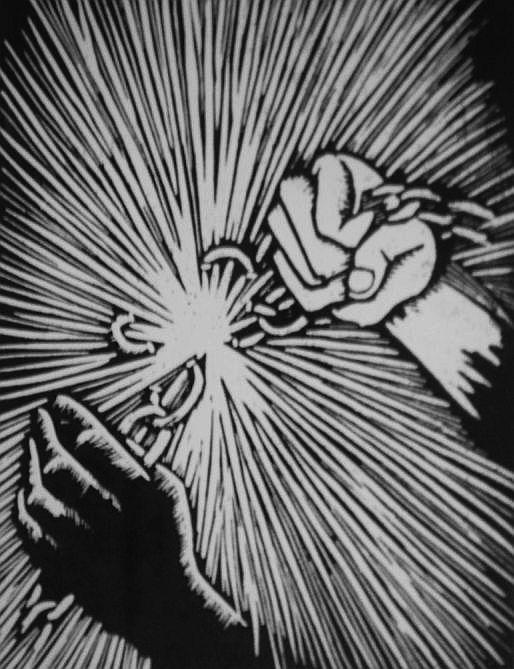
Breaking the chains: precarity in the Age of Anxiety

breaking-the-chainsBy Joseph Todd

Source: RoarMag.org

In our Age of Anxiety, society assaults us from every possible angle with an avalanche of uncertainty. How do we fight back under conditions of precarity?

­An Age of Anxiety is upon us, one where society assaults us from every possible angle with an avalanche of uncertainty, fear and alienation. We live with neither liberty nor security but instead precariousness. Our housing, our income and our play are temporary and contingent, forever at the whim of the landlord, policeman, bureaucrat or market. The only constant is that of insecurity itself. We are gifted the guarantee of perpetual flux, the knowledge that we will forever be flailing from one abyss to another, that true relaxation is a bourgeois luxury beyond our means.

Our very beings come to absorb this anxiety. We internalize society’s cruelty and contradiction and transform them into a problem of brain chemistry, one that is diagnosed and medicated away instead of being obliterated at root. All hope is blotted out. Authentic experience, unmediated conversation, distraction-free affection and truly relaxed association feel like relics of a bygone era, a sepia dream that perhaps never existed.

Instead we have the frenetic social arenas of late capitalism: the commodified hedonism of clubs and festivals, express lunches, binge culture and the escapist, dislocating experience of online video games, all underlined by either our desperate need to numb our anxieties or to create effective, time-efficient units of fun so we are available for work and worry.

This is assuming we have work, of course. Many of us are unemployed, or are instead held in constant precarity. Stuck on zero-hour contracts or wading through as jobbing freelancers in industries that used to employ but don’t anymore, we are unable to plan our lives any further than next week’s rota, unable to ever switch off as the search for work is sprawling and continuous.

And if we do have traditional employment, what then? We are imprisoned and surveilled in the office, coffee shop or back room, subject to constant assessment, re-assessment and self-assessment, tracked, monitored and looped in a perpetual performance review, one which even our managers think is worthless, but has to be done anyway because, hey, company policy.

Continuous is the effective probationary period and we are forever teetering on the edge of unemployment. We internalize the implications of our constant assessment, the knowledge that we’re always potentially being surveilled. We censor ourselves. We second-guess ourselves. We quash ourselves.

And thanks to the effective abolition of the traditional working day, work becomes unbearable and endless. The security of having delineated time — at work and then at play — has been eradicated. Often this is because individuals have to supplement their atrocious wages with work on the side. But it is also because traditional 9-to-5 jobs have suffered a continuous extension of working hours into out-of-office time, enabled and mediated by our laptops and smartphones. These gadgets demand immediacy and, when coupled with the knowledge that you are always reachable and thus available, they instill in us a frantic need to forever reply in the now.

And with this expectation comes obligation. Hyper-networked technologies gift our bosses the ability to demand action from us at any moment. Things that had to wait before become doable — and thus are done — in the now. If you are unwilling, then someone is ready to take your place. You must always be at their beck and call. From this, our only refuge is sleep, perhaps the last bastion of delineated time against frenetic capitalism, and one that is being gradually eroded and replaced.

For those that are out of work the situation is no better. They face the cruel bureaucracy of the Job Centre or the Atos assessment, institutions that have no interest in linking up job seekers with fulfilling employment but instead attempt only to lower the benefits bill through punitive, arbitrary sanctions and forcing the sick back to work. Insider accounts of these programs betray the mix of anxiety inducing micro-assessment and surveillance they employ.

Disabled claimants — always claimants, never patients, insists Atos — are assessed from the moment they enter the waiting room, noted as to whether they arrive alone, whether they can stand unassisted and whether they can hear their name when called. Compounding this is the hegemonic demonization of those that society has failed: if you are out of work, you are a scrounger, a benefit cheat and a liar. Utterly guilty of your failure, a situation individualized in its totality and attributable to no system, institution or individual but yourself.

We are surveilled, monitored and assessed from cradle to grave, fashioned by the demand that we must be empirical, computable and trackable, our souls transformed into a series of ones and zeros. This happens in the workplace, on the street and in various government institutions. But its ideological groundwork is laid in the nursery and the school.

These institutions bracket our imaginations while still in formation, normalizing a regime of continuous surveillance and assessment that is to last for the rest of our lives. Staff are increasingly taken away from educating and nurturing and instead are made to roam nurseries taking pictures and recording quotes, all to be computed and amalgamated so authorities can track, assess and predict a child’s trajectory.

It is true that this does not trouble the child in the same way traditional high intensity rote examination does. But what it instead achieves is the internalization of the surveillance/assessment nexus in our minds; laying the groundwork for an acquiescence to panoptical monitoring, a resignation to a private-less life and a buckling to regimes of continuous assessment.

Britain is particularly bad in this respect. Not only does our government have a fetish for closed-circuit television like no other, but also, GCHQ was at the heart of the Snowden revelations. Revelation, however, is slightly misleading — as what was most telling about the leaks wasn’t the brazen overstep by government institutions, but that few people were surprised. Although we didn’t know the details, we suspected such activity was going on. We acted as if we were being watched, tracked and monitored anyhow.

In this we see the paranoid fugitive of countless films, books and television dramas extrapolated to society writ large. We are all, to some extent, that person. Our growing distrust of governments, the knowledge that our technologically-integrated lives leave a heavy trace and the collection of “big” data for both commercial and authoritarian purposes contributes to our destabilized, anxious existence. An existence that impels us towards self-policing and control. One where we do the authority’s job for them.

Many individuals offer the amount of choice we have, or the amount of knowledge we can access at the click of a button, as the glorious consequences of late capitalist society. But our rampant choice society, one where we have to make an overwhelming number of choices — about the cereal we eat, the beer we drink, or the clothes we wear — is entirely one sided. While we have an incredible amount of choice over issues of little importance, we are utterly excluded from any choice about the things that matter; what we do with the majority of our time, how we relate to others or how society functions as a whole. Nearly always these choices are constricted by the market, the necessity of work, cultures of overwork and neoliberal ideology.

Again we find this ideology laid down in primary education. Over the years more and more “continuous” learning has been introduced whereby children, over a two week period or so, have to complete a set of tasks for which they can choose the order. This is an almost perfect example of how choice functions in our society, ubiquitous when insignificant but absent when important. The children can choose when they do an activity, which matters little as they will have to do it at some point anyway, but cannot choose not to do it, or to substitute one kind of activity with another.

Why does this matter? Because meaningful choices about our lives give us a sense of certainty and control. Avalanches of bullshit choices that still have to be made, as study after study has shown, make us incredibly anxious. Each of them takes mental effort. Each contains, implicitly, the multitude of choices that we didn’t make; all those denied experiences for every actual experience. This is fine if there are only one or two. But if there are hundreds, every act is riddled with disappointment, every decision shot with anxiety.

Compounding this orgy of choice, and in itself another root cause of anxiety, is the staggering amount of information that assaults us every day. Social media, 24-hour news, the encroachment of advertising into every crack — both spatially and temporally — and our cultures of efficiency that advocate consuming or working at every possible moment all combine to cause intense sensory overload. This world, for many, is just too much.

Although we’ve talked mostly about work, surveillance, assessment and choice, there are a multitude of factors one could add. The desolation of community due to the geographical dislocation of work, the increased transiency of populations and the growing privatization of previously public acts — drinking, eating and consuming entertainment are increasingly consigned to the home — shrinks our world to just our immediate families.

Camaraderie, extended community and solidarity are eroded in favor of mistrust, suspicion and competition. Outside of work our lives become little more than a series of privatized moments, tending to our property and ourselves rather than each other, flitting between the television shows, video games, home DIY and an incredible fetish for gardening with no hint towards the thought that perhaps these experiences would be better if they were held in common, if they appealed to the social and looked outward rather than in.

In the same way we could mention the ubiquity of debt — be it the mortgage, the credit card or the student loans — and the implicit moral judgment suffered by the debtor coupled with the anxiety-inducing knowledge that they could lose everything at any moment. Or we could consider the near-existential crises humanity faces, be it climate change, ISIS or the death throes of capitalism; all too abstract and total to comprehend, all contributing to a sense that there is no future, only a grainy, distant image of lawless brutality, flickering resolutely in our heads.

But the crux, and the reason anxiety could become a revolutionary battleground, is that neoliberal ideology has individualized our suffering, attributing it to imbalances in our brain chemistry, constructing it as a problem of the self, rather than an understandable human reaction to a myriad of cruel systemic causes. Instead of changing society the problem is medicalized and we change ourselves, popping pills to mold our subjectivities to late-capitalist structures, accepting the primacy of capitalism over humanity.

This is why “We Are All Very Anxious”, a pamphlet released by the Institute of Precarious Consciousness, is so explosively brilliant. Not only does it narrate the systemic causes of anxiety, but it situates the struggle within a revolutionary strategy, constructing a theory that is at once broad and personal, incorporating one’s own subjective experience into an explanatory framework, positing anxiety as a novel, contemporary revolutionary battleground, ripe for occupation.

It is, they claim, one of three eras spanning the last two-hundred years where we have progressed between different dominant societal affects. Until the postwar settlement we suffered from misery. The dominant narrative was that capitalism benefited everybody; while at the same time overcrowding, malnourishment and slum dwelling were rife. In response to this appropriate tactics such as strikes, mutual aid, cooperatives and formal political organization were adopted.

After the postwar settlement, until around the 1980s, a period of Fordist boredom ensued. Compared to the last era, most people had stable jobs, guaranteed welfare and access to mass consumerism and culture. But much of the work was boring, simple and repetitive. Life in the suburbs was beige and predictable. Capitalism, as they put it, “gave everything needed for survival, but no opportunities for life.” Again movements arose in opposition, positioned specifically against the boredom of the age. The Situationists and radical feminism can be mentioned, but also the counter-culture surrounding the anti-war movement in America and the flourishing DIY punk scene in the UK.

This period is now finished. Capitalism has co-opted the demand for excitement and stimulation both by appropriating formerly subversive avenues of entertainment — the festival, club and rave — while dramatically increasing both the amount and intensity of distractions and amusements.

In one sense we live in an age of sprawling consumerism that avoids superficial conformity by allowing you to ornament and construct your identity via hyper-customized, but still mass-produced products. But technological development also mean that entertainment is now more total, immersive and interactive; be it the video game or the full-color film watched on a widescreen, high-definition television.

Key to this linear conception is the idea of the public secret, the notion that anxiety, misery or boredom in these periods are ubiquitous but also hidden, excluded from public discourse, individualized and transformed into something unmentionable, a condition believed to be isolated and few because nobody really talked about it. Thus to even broach the subject in a public, systematic manner becomes not just an individual revelation but also a collective revolutionary act.

I’ve seen this first-hand when running workshops on the topic. Sessions, which were often argumentative and confrontational, became, when the subject was capitalism and anxiety, genuinely inquisitive and exploratory. Groups endeavored to broaden their knowledge of the subject, make theoretical links and root out its kernel rather than manning their usual academic ramparts and launching argument after rebuttal back and forth across the battlefield.

But more than this, there was a distinct edge of excitement, the feeling that we were onto something, a theory ripe with explosive newness, one that managed to combine our subjective experiences and situate them in a coherent theoretical framework.

However, we must be critical. To posit anxiety as a specifically modern affect, unique to our age, is contentious. What about the 1950s housewife, someone mentioned in one of the sessions, with her subjectivity rigidly dictated by the misogyny and overbearing cultural norms of the time? Didn’t this make her feel anxious?

Well, perhaps. But if we take anxiety to mean a general feeling of nervousness or unease about an uncertain outcome — with chronic anxiety being an actively debilitating form — then we can draw distinct differences. Although the housewife was oppressed, her oppression was codified and linear, her life depressingly mapped out with little room for choice or maneuver. Similarly with the slave — surely the universal symbol of oppression — hierarchies aren’t nebulous but explicit, domination is ensured by the whip and the gun, the master individualized and present.

This is in stark contrast to the current moment. While it is obvious that oppressions are distinct and incomparable, we can nevertheless see that the fug of the 21st century youth is of a different nature. Our only certainty is that of uncertainty. Our oppressor is not an individual but a diffuse and multiplicitous network of bureaucrats, institutions and global capital, hidden in its omnipotence and impossible to grasp.

We aren’t depressed by the inevitability of our oppression, but instead are baffled by its apparent (but unreal) absence, forever teetering on the brink, not knowing why, nor knowing who we should blame.

Similarly it is bold to claim that anxiety is the dominant affect of Western capitalism, tantamount to pitching it as the revolutionary issue of our age. Yet if we analyze the popular struggles of our time — housing, wages, work/life balance and welfare — they are often geared, in one way or another, towards promoting security over anxiety.

Housing for many is not about having a roof over their heads, but about security of tenure, be it via longer fixed-term tenancies or the guarantee that they won’t be priced out by rent rises that their precarious employment can’t possibly cover. In the same way struggles over welfare are often about material conditions, but what particularly strikes a chord is the cruel insecurity of a life on benefits, forever at the whim of sanction-wielding bureaucrats who are mandated to use any possible excuse to remove your only means of support.

Anxiety is also a struggle that unites diverse social strata, emanating from institutions such as the job center, loan shark, university, job market, landlord and mortgage lender, affecting the unemployed, precariously employed, office worker, indebted student and even the comparatively well-off. Again we find this unification in the near-universal adoption of the smartphone and other hyper-networked technologies. All of us, and especially our children, are beholden to a myriad of glowing screens, flitting between one identity and another, alienated and disconnected from our surroundings and each other.

This is not to say a movement against anxiety itself will ever arise. Such a rallying cry would be too abstract and fail to inspire. Instead, anxiety must be conceptualized both as an affect which underlies various different struggles, and a schema within which they can be assembled into a revolutionary strategy.

So, what is our tangible aim here? In part it must be to reduce the level of general anxiety so as to increase quality of life. Yet if we are to take a revolutionary rather than a mere humanitarian approach, this drop in anxiety must in some way translate into a rise in revolutionary disposition. In certain ways it obviously will. If there is a public realization that large swathes of the mentally ill are not as such because of their unfortunate brain chemistry but instead because of a misconfiguration of society, people are already thinking on an inherently challenging, systemic level.

Similarly, conflict with the state or capital — be it on the street, in the workplace or inside one’s own head — tends to be high-impact and anxiety-inducing. A drop in general anxiety will make it more likely that individuals will engage in such moments of conflict and, crucially, experience the intense radicalization and realization of hegemonic power that can only be achieved through such visceral moments. But a second part to this, hinted at already and integral to giving the struggle a revolutionary edge, is to emphasize that there is a public secret to be aired. As well as combating the sources of anxiety, we must say we are doing so; we must situate these struggles within larger frameworks and provide education on its systemic nature.

Thus, any strategy would need to be both abstract and practical. On one hand we must explode the public secret by raising consciousness. This would require a general onslaught of education, including, but not limited to, consciousness-raising sessions, participatory workshops, articles, books, pamphlets, leaflets, posters, YouTube videos and “subvertised” adverts. The emphasis would be to educate but also to listen, to intermingle theoretical understanding with subjective experience.

The second part would be to strategically support campaigns and make demands of politicians that specifically combat anxiety in its various different guises. When it comes to work, the abolition of zero-hour contracts, the raising of the minimum wage in line with the actual cost of living, and the tightening of laws on overwork as part of a broader campaign to assert the primacy of life over work, of love over pay, would be a good start.

For those out of work, underpaid or precarious, the introduction of a basic citizen’s income would represent a revolutionizing of the job market. In one move it would alleviate the cultural and practical anxieties of worklessness — ending the bureaucratic cruelty of the job center while removing the anxiety-inducing stigma associated with claiming benefits — while simultaneously allowing individuals to pursue culturally important and revolutionary activities such as art, music, writing or (dare I say it?) activism, without the crushing impossibility of trying to make them pay. When we look to housing obvious solutions include mandatory, secured five-year tenancies, capped rent increases and a guarantee of stable, suitable social housing for those who need it.

There are many more reforms I could list. You will notice, however, that these are indeed reforms; bread and butter social democracy. Does that mean such a program is counter-revolutionary? A mere placatory settlement between capital and the working class? No, it does not. Revolution does not emerge from the systematic subjection of individuals to increased misery, anxiety and hardship as accelerationist logic demands. Instead it flourishes when populations become aware of their chains, are given radical visions for the future and the means to achieve them. It is when leftists critique but also offer hope. It is when the population writ large are included in and are masters of their own liberation; not when they are viewed as a lumpen, otherly mass, of only instrumental importance in achieving the glorious revolution.

Look at the practicalities and this becomes obvious. How can we expect individuals to launch themselves into high-tension anxiety-inducing conflicts if the mere thought of such a situation causes them to have a panic attack? How can individuals, in the face of near panoptical surveillance and monitoring, combat the overwhelming desire to conform if they aren’t awarded some freedom from the practical anxieties of life? How are we to think and act in a revolutionary, and often abstract, manner if the very real and immediate anxieties of work, home and play fog our minds so totally?

This is not to say freedom will be given to us. It must always be taken, and we must not rely on electoral politics to hand us the revolution down from above. Nor will true struggle ever be an anxiety-free leisure pursuit. Genuine conflict with the state and capital will always entail danger, stress and the possibility of intensified precariousness.

Nevertheless, the dismissal of electoral politics in its totality represents abysmal revolutionary theory. The pursuit of reforms by progressive governments being bitten at the heels by sharp, vibrant social movements can produce real, tangible change.

It was what should have happened with Syriza, and it is what will hopefully happen with the new Labour leadership in the UK. And if, as individuals and communities, we are to puncture the distress, precariousness and general sense of cruel unknowing so particular to the moment in which we live, if we are to overcome the avalanche of bullshit and reclaim our confidence, if we to construct and disseminate a distinctly communal, hopeful revolutionary fervor, such changes are imminently needed.


Joseph Todd is a writer and an activist. Find more of his writings here or follow him on twitter.

Grim New Year tidings

father-time-in-space_thumb

By Stephen Lendman

Source: Intrepid Report

The new year traditionally is a time for hope and change, a new beginning, a shift from policies causing so much harm to many millions worldwide—nameless, faceless victims of imperial ruthlessness.

New Year’s day and each successive ones assure more of the same, business as usual—a continued menu of endless imperial wars, neoliberal harshness, government serving elitist interests exclusively, and harsh crackdowns on nonbelievers, America heading toward full-blown tyranny in the name of combating terrorism—the greatest hoax in modern times.

The larger issue is whether humanity can survive the ravages of US-led pure evil—the greatest threat it ever faced in world history, power-crazed lunatics in Washington willing to risk destroying Planet Earth to own it.

Instead of sounding the alarm and urging a call to action, presstitutes masquerading as journalists support what demands condemnation.

Ordinary people are manipulated by bread, circuses, and daily misinformation—mindless of the dangers they face, indifferent to the risk of ending life on Earth, ignorant of the pure evil Washington represents, complicit with its rogue partners.

Each new year begins with the threat of US-launched nuclear war, the unthinkable possibility able to kill us all. Power-crazed lunatics make ruthless choices.

Witness them in one war theater after another—endless mass slaughter and destruction, making the world safe for monied interests.

Madness defines US policies. Its criminal class is bipartisan. Whoever succeeds Obama in January 2017 will exceed the worst of his homeland and geopolitical agenda.

America already is third-worldized, on a fast track toward a ruler-serf society, unfit and unsafe to live in, fundamental freedoms eliminated in plain sight, run by a gangster class serving its own interests exclusively.

It devotes more resources to homeland and foreign militarism, belligerence and confrontational policies than the rest of the world combined.

Expect more of the same in the new year, likely more than ever before, maybe looked back on as the year WW III began—if anyone survives the onslaught, a long shot at best.

Another holiday season brings no joy to the vast majority of people worldwide. Human suffering remains extreme.

US policymakers consider it a small price to pay, nothing too outlandish in serving their interests.

The horrors of their maniacal agenda are airbrushed from official and scoundrel media reports—on New Year’s and every other day.


Stephen Lendman lives in Chicago. He can be reached at lendmanstephen@sbcglobal.net. His new book as editor and contributor is “Flashpoint in Ukraine: US Drive for Hegemony Risks WW III.” Visit his blog at sjlendman.blogspot.com . Listen to cutting-edge discussions with distinguished guests on the Progressive Radio News Hour on the Progressive Radio Network. It airs three times weekly: live on Sundays at 1PM Central time plus two prerecorded archived programs.

The Psychopathy of Greed

psychos_in_power

By Zen Gardner

Source: ZenGardner.com

I always find it interesting that people blame corporate greed for our overall condition. Sure it’s a major factor at one level, but it’s just an obvious outcropping of something much, much deeper. Sadly not that many are willing to go there.

That the entire world system is built on a capitalist system in one form or another is mind boggling. Defying our innate conscious awareness to the contrary, the signal has been given and repeatedly endorsed as well as crassly promoted that we need to gain off of each other, in each and every transaction, every exchange, in a no holds barred, dog eat dog environment.

One look at the marketing world and you get the picture. And the supposed “fittest” come out on top.

This is how and why the populace acquiesces to domination by the few. “They’re just good at what they do. They’re smarter and more motivated than the rest of us so surely they deserve to be winners in the game.”

Humanity’s being told how the game works and that this is your only option. “It’s just the way it is, so get to work and earn your salary, then invest in the game and try to get ahead and make a name and lots of money for yourself.” At which point the sharks devour the unsuspecting guppy.

Group absolved endemic greed doesn’t make it right, however justified, by any stretch of the imagination.

The Corporate “Growth” Model

It’s fully accepted that corporations need to grow. For their good, for our good, or so we’re told. It’s a fear based econo-survivalist psychological scam. Who says they need to constantly make more, for their investors’ interests or otherwise? Yet this is considered healthy in a capitalistic system, under the guise of increased jobs and benefits and a prosperous economy.

Do the employees really benefit? Do the consumers who go increasingly into debt trying to catch the materialist carrot benefit? Who really benefits?

Yet this model is accepted carte blanche as a driving force for a healthy economy. If you stand back to think about it outside of all this financial gibberish it’s completely destructive, enslaving insanity for the good of the few. And yet this model is mimicked as if it’s the paradigm of truth through every level of Pavlovian entrained economic and interpersonal commerce engagement.

Getting to the Root of the Problem

The entire system is built on a background of assumed scarcity, that there’s not enough to go around so unless you push and shove your way into a place where you “earn” your keep and beat those around you you’ll be hung out to dry.

Clever bastards. All while they sit at the top of the food chain devouring their prey.

What’s even more surreal is how those who “succeed” in making a lot of money are then considered authorities on any and every subject. Just look the Rockefeller family, one such clusterfuck among many, screwing their way up the capitalist ladder who then set up think tanks, foundations and whatnot to influence the course of humanity according to their whims.

What or who made them the “wise ones” to rule over us? Guess what: Endorsed greed, abject avarice and the resultant intoxicating money and power in the hands of a few.

Look at creeps like George Soros or Bill Gates and a plethora of other unelected plutocrats, inserted intellectuals and accepted moral and geopolitical authorities like the Pope, lap dog Kissinger or voice pet Brzezinski and the panorama of puppet heads of state. It’s insane. Never mind the Rothchilds, Carnegies, Morgans, the so-called royal families of Europe such as the Windsors and House of Orange-Nassau of the Netherlands, the Vatican or whomever is hoarding the really big bucks.

The message is the same: in their minds we and our world are owned. And they ain’t sharing nothing with the rest of us. Why? Apparently we don’t deserve it. Do you like that fate and outcome? “Everyone else is accepting it, so it must be OK”…reasons the stilted servant.

Greed – A Name You Can Trust

You’ve all heard the outlandish statistics about how few have so much in this world. Yet it is by and large accepted by quiet submission, incredible as that may seem. The problem is humanity’s acquiescence to a rigged system. While the wealth of some of these bloodline families, banking moguls and mega rich corporate thugs could feed the poor of the earth many times over, they sit on their booty and only get more oppressive.

This brings us to the psychopathy of greed, amongst many other issues. Greed is insatiable. It is a vampiristic dynamic. It only sucks and is never satisfied. Wealth soon takes a back seat to power and control, their ultimate aphrodisiac. This is what it all leads to. And this reptilian, archontic urge is never satisfied, it always wants more. At any cost to the hosts of these parasites.

The issue is that psychopathy, especially in positions of power, is not just rampant but so readily accepted. That’s where the problem exponentially compounds.

This is the heartbreaking aspect to all of this, how humanity has bought into their program and replicates these unnatural urges at every level of society, which of course their system is designed to do. And while the masses abuse each other in this same lower vibrational parasitic frequency, no one is conscious enough to realize their oppressive trendsetters are feeding off of all of humanity by the very meme they’ve put into place.

If people woke up to that one fact we’d have an overnight revolution of disengagement causing a massive resetting of how society should and could cooperate.

Conclusion – The 5 Step Program

Parasitic forces build parasitic institutions, and encourage the same in others while maintaining their dominance. Be it corporatism, capitalism, communism and socialism, fractional banking or base line competition for resources and day to day needs, this system is rigged to the core.

Agreeing to help foment this dog eat dog mentality under the guise of survival or “rightful competition” only perpetrates the problem.

To become free and help build the better world we know exists requires conscious disconnection with this systemic disease. It begins in both small and big steps. But the underlying propellant towards change is identifying the problem for what it is. A parasitic disease, promulgated by those who stand to gain, and realizing their mindset is a pathological, direly destructive one that seeks to exert its twisted idea of oligarchical as well as personal control at any expense.

Step Up

First, do your part. Realize what is transpiring before your eyes, no matter how horrid it may first appear.

Second, disengage. In any and every way possible. Just take steps in that direction and the mounting freedom it engenders will empower you to take the next step.

Third, tell others – like a house afire. Use wisdom but never hold back. The hour is late as they are entering their last phases of implementable programs and are getting desperate to throttle humanity’s awakening.

Fourth – stand strong in your convictions. Feed those convictions, strengthen them, and encourage the same in others, as the mainstream of society is a nasty polluted river we must avoid, resist, oppose and most of all penetrate and reverse with everything in us.

Fifth – Stand fast in your convictions. Live a life committed to your newfound awakened understanding….fearlessly. This presence of awakened individuals does more than we’ll ever know.

See greed for what it is, but most of all don’t comply with their fabricated hierarchical world of abuse. It’s fraudulent, manipulative, destructive and a de facto form of voluntary enslavement.

See the world for what it has become. But more importantly, see the world as it should be and operate within that paradigm. Their fabricated world of lies will then crumble at our feet.

Much love, Zen

ZenGardner.com