Saturday Matinee: Hemp Doc Double Feature

MV5BMjE4ODY2OTI5N15BMl5BanBnXkFtZTcwNTk0OTcxMQ@@._V1_SX214_AL_MV5BMjA3Mzk5NDQ1OV5BMl5BanBnXkFtZTcwOTQwMjIyMQ@@._V1_SX214_AL_The Hemp Revolution (1995) covers the history, cultivation and usage of hemp including food, fuel, building material and medicine. It also explores some of the factors behind the prohibition of hemp production in the U.S. in 1938 (including pressure from the petro-chemical industry). The impressive roster of interview subjects featured in the film includes such notable figures as Dr. Andrew Weil, Dr. Lester Grinspoon, Terence McKenna, Peter Dale Scott, and Prof. Sheri Tonn among many others.

The Emperor of Hemp (1999) documents the life of Jack Herer, his struggle for the decriminalization of cannabis and hemp and his legacy. It’s also an overview of his seminal book The Emperor Wears No Clothes: The Official Hemp Bible including the history and many utilizations of hemp, the conspiracy against it, and a rallying cry to end its prohibition.

Hillary Clinton Breaks the Irony Meter

By Kevin Carson

Source: Center for a Stateless Society

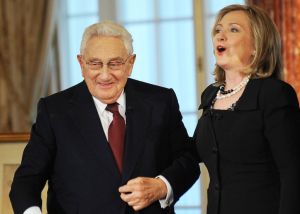
At the March 9 Democratic debate, Hillary Clinton had this to say about competitor Bernie Sanders’s favorable comments on Castro’s Cuba and the Sandinista regime in the ’80s:  “if the values are that you oppress people, you disappear people, imprison people or even kill people for expressing their opinions…, that is not the kind of revolution of values that I ever want to see anywhere.” This, coming from a former Secretary of State who backed a right-wing coup in Honduras and proudly name-drops Henry Kissinger — Henry Kissinger! — as a close friend and mentor, is the kind of thing the Onion can’t compete with.

If Kissinger was known for anything in his years as National Security Adviser and Secretary of State, it was installing dictators who oppressed, disappeared and imprisoned people. He oversaw a wave of coups that swept South America in the late ’60s and ’70s, installing right-wing military regimes that tortured, murdered or disappeared dissidents by the thousands, and where a common fate for labor and peasant activists was to be found in a ditch with their faces hacked off. Under Kissinger the U.S. actively supported Operation Condor — the program by which these South American dictators used torture and murder to suppress opposition — with military aid and technical assistance. He gave the green light to Indonesia’s genocidal invasion of East Timor.

Clinton has a long history of close personal friendship with this monster, and indeed touts herself as something of a protege. According to both Hillary and Bill, Kissinger praised her for running the State Department better than anybody in decades. And well might he praise her, because she’s followed in his footsteps in many ways. As Secretary of State, she oversaw the sale of millions of dollars worth of arms to despotic regimes that oppressed, disappeared and imprisoned people for expressing their opinions — many of which regimes were also large donors to the Clinton Foundation. And while we’re on the subject of people being murdered and disappeared, how about Berta Caceres — an activist murdered by the right-wing Honduran regime whose seizure of power Clinton backed in 2009?

As senator, Clinton voted to authorize George Bush’s criminal war of aggression on Iraq, which has resulted in hundreds of thousands of Iraqi deaths since 2003. She says now it was “a mistake.” It was a mistake all right. She mistakenly believed the vote would make her more viable as a future presidential candidate. She mistakenly predicted the way the political winds would be blowing when she decided to run for president.

And don’t forget Clinton’s support for the Obama administration’s indiscriminate use of drones for extrajudicial killing. Many of the victims were civilians, and hundreds of them were actually children.

If you add it all up, Hillary Clinton still isn’t quite the war criminal her old friend and mentor Henry Kissinger is. Those are some big, bloody shoes to fill. But if she’s elected she’ll grow into them.

A Warning From the B.I.S.: the Calm Before the Storm?

banker-thief

By Mike Whitney

Source: CounterPunch

The Bank for International Settlements (BIS) is worried that recent ructions in the equities markets could be a sign that another financial crisis is brewing. In a sobering report titled “Uneasy calm gives way to turbulence”  the BIS states grimly: “We may not be seeing isolated bolts from the blue but the signs of a gathering storm that has been building for a long time.”

The authors of the report are particularly concerned that the plunge in stock prices and the slowdown in global growth are taking place at the same time that investor confidence in central banks is waning. The Bank Of Japan’s announcement that it planned to introduce negative interest rates (aka–NIRP or negative interest rate policy) in late January illustrates this point. The BOJ hoped that by surprising the market, the policy would have greater impact on borrowing thus generating more growth. But, instead, the announcement set off a “second phase of turbulence” in stock and currency markets as nervous investors sold off risk assets and moved into safe haven bonds. The BOJ’s action was seen by many as act of desperation by a policymaker that is rapidly losing control of the system. According to the BIS:

“Underlying some of the turbulence of the past few months was a growing perception in financial markets that central banks might be running out of effective policy options.”

This is a recurrent theme in the BIS report, the notion that global CBs have already used their most powerful weapons and are currently trying to muddle-by with untested, experimental policies like negative rates that slash bank profitability while having little impact on lending.

While the BIS report provides a good rundown of recent events in the financial markets, it fails to blame central banks for any of the problems for which they alone are responsible. The sluggish performance of the global economy, the massive debt overhang, and the erratic behavior of the stock market are all directly attributable to the cheap money policies coordinated and implemented by central banks following the Great Recession in 2008.  It’s hard to believe that the BIS’s failure to insert this fact into its narrative was purely accidental.

But the real problem with the BIS report is not that it refuses to assign blame for the current condition of the markets and the economy,  but that it deliberately misleads its readers about the facts. While it’s true that China is facing slower growth, oil prices are plunging, emerging markets have been battered by capital flight, and yields on junk bonds are relentlessly rising, it’s also true that central bank policy is not primarily designed to address these problems, but to ensure the continued profitability of its main constituents,  the big banks and mega-corporations. Keep in mind, the global economy has been sputtering for the last 6 years, but the BIS has only expressed alarm just recently.  Why? What’s changed?

What’s changed is profits are down, and when profits are down,  Wall Street and its corporate allies lean on the central banks to work the levers to improve conditions. Here’s more on the so called “earnings recession” from an article in the Wall Street Journal titled “S&P 500 Earnings: Far Worse Than Advertised”:

“There’s a big difference between companies’ advertised performance in 2015 and how they actually did.

How big? ….S&P earnings per share fell by 12.7%, according to S&P Dow Jones Indices. That is the sharpest decline since the financial crisis year of 2008. Plus, the reported earnings were 25% lower than the pro forma figures—the widest difference since 2008 when companies took a record amount of charges.

The implication: Even after a brutal start to 2016, stocks may still be more expensive than they seem. Even worse, investors may be paying for earnings and growth that aren’t anywhere near what they think. The result could be that share prices have even further to fall before they entice true value investors.” ( “S&P 500 Earnings: Far Worse Than Advertised“, Wall Street Journal)

Profits are down and stocks are in trouble. Is it any wonder why the BIS is running around with its hair on fire?

Also, corporate earnings have dropped for two straight quarters which is a sign that the economy is headed for a slump. Take a look at this clip from CNBC:

“Recessions have followed consecutive quarters of earnings declines 81 percent of the time, according to an analysis from JPMorgan Chase strategists, who said they combed through 115 years of records for their findings.”(CNBC)

“81 percent” chance of a recession?

Yep.

This is what the BIS is worried about.  They could are less about China or the instability they’ve created with their zero rates and cheap money policies. Those things simply don’t factor into their decision-making. It’s all just fluff for the sheeple. Here’s more from Jim Quinn at Burning Platform:

“The increasing desperation of corporate CEOs is clear, as accounting gimmicks and attempts to manipulate earnings in 2015 has resulted in the 2nd largest discrepancy between reported results and GAAP results in history, only surpassed in 2008…..Based on fake reported earnings per share, the profits of the S&P 500 mega-corporations were essentially flat between 2014 and 2015…..earnings per share plunged by 12.7%, the largest decline since the memorable year of 2008….

With approximately $270 billion of “one time” add-backs to income used to deceive the public, the true valuation of the median S&P 500 stock is now the highest in history – higher than 1929, 2000, and 2007. Wall Street’s latest con game, with the active participation of corporate CEO co-conspirators, is a last ditch effort to fend off the inevitable stock market crash….All economic indicators are flashing red for recession. Stocks are poised for a 40% decline faster than you can say Wall Street criminal banks.” (“The Great Corporate Earnings Fraud“, Burning Platform)

Get it? When the profitability of the world’s biggest corporations are at stake, the central banks will move heaven and earth to lend a hand. This was the basic subtext of the discussions at the recent G-20 summit in Shanghai, China. The finance ministers and central bankers wracked their brains for two days to see if they could settle on new strategies for boosting earnings. In fact, the austerity-minded IMF even called on the G-20 to support a coordinated plan for fiscal stimulus to  boost activity and decrease the risks to the equities markets. Unfortunately, finance ministers balked because fiscal stimulus puts upward pressure on wages and shifts more wealth to working stiffs. That’s why the idea was shelved, because the oligarchs can’t stand the idea that workers are getting a leg-up. What they want is a workforce that scrapes by on minimum wage and lives in constant fear of losing their job.  The class war continues to be a top priority among the nations voracious CEOs and corporate bigwigs.

The “failed” G-20 summit was clearly a turning point for the markets. Now that the central banks are out of ammo, the only hope to keep stock prices artificially high rested on Keynesian fiscal stimulus injected directly into the real economy. That hope was extinguished at the meetings. The prospect that equities can continue to climb higher in the face of shrinking profits, tighter credit, slower growth and bigger corporate debtloads is unrealistic to say the least. Just check out this excerpt from a recent article at Bloomberg:

“Companies still have a little time before they must pay down the bulk of $9.5 trillion of debt maturing in the next five years….But it’s not getting any easier for these corporations to borrow, at least not in the U.S. In fact, many of these obligations are becoming harder and more expensive to repay at a time when companies face a historic pile of bonds and loans coming due.

It’s not terribly surprising that companies have a bigger debt load to pay down. They borrowed trillions of dollars on the heels of unprecedented stimulus efforts started by the Federal Reserve at the end of 2008 during the worst financial crisis since the Depression. They kept piling on the leverage as central banks around the world doubled down on low-rate policies and kept purchasing assets to encourage investors to buy riskier securities….”(“Scaling the $9.5 trillion debt wall, Bloomberg)

DB-US-Corp-leverage-close-to-peak

What the author is saying is that central bank policy seduced corporations into borrowing tons of money that they frittered-away on stock buybacks and dividends, neither of which create the revenue streams necessary to repay their debts. So rather than build their companies for the future, (Business investment is at record lows) corporations have been behaving the same way the Wall Street banks acted before the Crash of ’08. They’ve been borrowing trillions from Mom and Pop investors via the bond market, goosing their share prices through stock buybacks, increasing executive compensation, and dumping the money in offshore accounts. Now the bill is coming due, and they don’t have the money to repay the debt or the earnings-potential to avoid default. Something’s gotta give.

unnamed

Corporate red ink is one of many reasons why the BIS thinks “We may not be seeing isolated bolts from the blue but the signs of a gathering storm that has been building for a long time.” Like the gigantic asset-price bubble in stocks, it’s a sign that the economy and the markets are headed for a long and painful period of adjustment.


MIKE WHITNEY lives in Washington state. He is a contributor to Hopeless: Barack Obama and the Politics of Illusion (AK Press). Hopeless is also available in a Kindle edition. He can be reached at fergiewhitney@msn.com.


The Federal Reserve and the Global Fracture

Octopus 1912

An Interview with Finnish Journalist Antti J. Ronkainen

Michael Hudson

Source: The Unz Review

Antti J. Ronkainen: The Federal Reserve is the most significant central bank in the world. How does it contribute to the domestic policy of the United States?

Michael Hudson: The Federal Reserve supports the status quo. It would not want to create a crisis before the election. Today it is part of the Democratic Party’s re-election campaign, and its job is to serve Hillary Clinton’s campaign contributors on Wall Street. It is trying to spur recovery by resuming its Bubble Economy subsidy for Wall Street, not by supporting the industrial economy. What the economy needs is a debt writedown, not more debt leveraging such as Quantitative Easing has aimed to promote. But the Fed is in a state of denial that the U.S. and European economies are plagued by debt deflation.

The Fed uses only one policy: influencing interest rates by creating bank reserves at low give-away charges. It enables banks too make easy gains simply by borrowing from it and leaving the money on deposit to earn interest (which has been paid since the 2008 crisis to help subsidize the banks, mainly the largest ones). The effect is to fund the asset markets – bonds, stocks and real estate – not the economy at large. Banks also are heavy arbitrage players in foreign exchange markets. But this doesn’t help the economy recover, any more than the ZIRP (Zero Interest-Rate Policy) since 2001 has done for Japan. Financial markets are the liabilities side of the economy’s balance sheet, not the asset side.

The last thing either U.S. party wants is for the election to focus on this policy failure. The Fed, Treasury and Justice Department will be just as pro-Wall Street under Hillary. There would be no prosecutions of bank fraud, there would be another bank-friendly Attorney General, and a willingness to subsidize banks now that the Dodd-Frank bank reform has been diluted from what it originally promised to be.


So let’s go back to beginning. When the Great Financial Crisis escalated in 2008 the Fed’s response was to lower its main interest rate to nearly zero. Why?

The aim of lowering interest rates was to provide banks with cheap credit. The pretense was that banks might lend to help the economy get going again. But the Fed’s idea was simply to re-inflate the Bubble Economy. It aimed at restoring the value of the mortgages that banks had in their loan portfolios. The hope was that easy credit would spur new mortgage lending to bid housing prices back up – as if this would help the economy rather than simply raising the price of home ownership.

But banks weren’t going to make mortgage loans to a housing market that already was over-lent. Instead, homeowners had to start paying down the mortgages they had taken out. Banks also reduced their credit-card exposure by a few hundred billion dollars. So instead of receiving new credit, the economy was saddled with having to repay debts.

Banks did make money, but not by lending into the “real” production and consumption economy. They mainly engaged in arbitrage and speculation, and lending to hedge funds and companies to buy their own stocks yielding higher dividend returns than the low interest rates that were available.


In addition to the near zero interest rates, the Fed bought US Treasury bonds and mortgage backed securities (MBS) with almost $4 trillion during three rounds of Quantitative Easing stimulus. How have these measures affected the real economy and financial markets?

In 2008 the Federal Reserve had a choice: It could save the economy, or it could save the banks. It might have used a fraction of what became the vast QE credit – for example $1 trillion – to pay off the bad mortgages and write them down. That would have helped save the economy from debt deflation. Instead, the Fed simply wanted to re-inflate the bubble, to save banks from having to suffer losses on their junk mortgages and other bad loans.

Keeping these debts on the books, in full, let banks foreclose on defaulting homeowners. This intensified the debt-deflation, pushing the economy into its present post-2008 depression. The debt overhead is keeping it depressed.

One therefore can speak of a financial war waged by Wall Street against the economy. The Fed is a major weapon in this war. Its constituency is Wall Street. Like the Justice and Treasury Departments, it has been captured and taken hostage.

Federal Reserve chairwoman Janet Yellen’s husband, George Akerlof, has written a good article about looting and fraud as ways to make money. But instead of saying that looting and fraud are bad, the Fed has refused to regulate or move against such activities. It evidently recognizes that looting and fraud are what Wall Street is all about – or at least that the financial system would come crashing down if an attempt were made to clean it up!

So neither the Fed nor the Justice Department or other U.S. Government agencies has sanctioned or arrested a single banker for the trillions of dollars of financial fraud. Just the opposite: The big banks where the fraud was concentrated have been made even larger and more dominant. The effect has been to drive out of business the smaller banks not so involved in derivative bets and other speculation.

The bottom line is that banks made much more by getting Alan Greenspan and the Clinton-Bush Treasury officials to deregulate fraud than they could have made by traditional safe lending. But their gains have increased the economy’s overhead.


Do you believe Mike Whitney’s argument that QE was about a tradeoff between the Fed and the government: the Fed pumped the new bubble and saved the banks that the government didn’t need to bail out more banks. The government’s role was to impose austerity so that inflation and employment didn’t rise – which would have forced the Fed to raise interest rates, ending its QE program? source: http://www.counterpunch.org/2016/01/15/the-chart-that-explains-everything/]

That was a great chart that Mike put up from Richard Koo, and you should reproduce it here. It shows that the Fed’s enormous credit creation had zero effect on raising commodity prices or wages. But stock market prices doubled in just six years, 2008-15, and bond prices rose to new peaks. Banks left much of the QE credit on deposit with the Fed, earning an interest giveaway premium.

(Richard Koo: “The struggle between markets and central banks has only just begun,”

http://www.businessinsider.com/richard-koo-struggle-between-markets-and-central-banks-has-only-just-begun-2015-9?r=UK&IR=T

The important point is that the Fed (backed by the Obama Administration) refused to use this $4 trillion to revive the production-and-consumption economy. It claimed that such a policy would be “inflationary,” by which it meant raising employment and wage levels. The Fed thus accepted the neoliberal junk economics proposing austerity as the answer to any problem – austerity for the industrial economy, not the Fed’s own Wall Street constituency.


According to a Fed staff report, QE would lower the exchange rate of dollar to the other currencies causing competitiveness boost for the U.S. firms. Former finance minister of Brazil Guido Mantega, as well as the chairman of Central Bank of India Raghuram Rajan, have described the Fed’s QE as a “currency war.” What’s your take?

The Fed’s aim was simply to provide banks with low-interest credit. Banks lent to hedge funds to buy securities or make financial bets that yielded more than 0.1 percent. They also lent to companies to buy their own stock, and to corporate raiders for debt-financed mergers and acquisitions. But banks didn’t lend to the economy at large, because it already was “loaned up,” and indeed, overburdened with debt.

Lower interest rates did spur the “carry trade,” as they had done in Japan after 1990. Banks and hedge funds bought foreign bonds paying higher rates. The dollar drifted down as bank arbitrageurs could borrow from the Fed at 0.1 percent to lend to Brazil at 9 percent. Buying these foreign bonds pushed up foreign exchange rates against the dollar. That was a side effect of the Fed’s attempt to help Wall Street make financial gains. It simply didn’t give much consideration to how its QE flooding the global economy with surplus dollars would affect U.S. exports – or foreign countries.

Exchange rate shifts don’t affect export trends as much as textbook models claim. U.S. arms exports to the Near East, and many technology exports are non-competitive. However, a looming problem for most countries is what may happen when ending QE increases the dollar’s exchange rate. If U.S. interest rates go back up, the dollar will strengthen. That would increase the cost to foreign countries of paying dollar-denominated debts. Countries that borrowed all dollars at low interest will need to pay more in their own currencies to service these debts. Imagine what would happen if the Federal Reserve let interest rates rise back to a normal level of 4 or 5 percent. The soaring dollar would push debtor economies toward depression on capital account much more than it would help their exports on trade account.


You have said that QE is fracturing the global economy. What do you mean by that?

Part of the flood of dollar credit is used to buy shares of foreign companies yielding 15 to 20 percent, and foreign bonds. These dollars are turned over to foreign central banks for domestic currency. But central banks are only able to use these dollars to buy U.S. Treasury securities, yielding about 1 percent. When the People’s Bank of China buys U.S. Treasury bonds, it’s financing America’s dual budget and balance-of-payment deficits, both of which stem largely from military encirclement of Eurasia – while letting U.S. investors and the U.S. economy get a free ride.

Instead of buying U.S. Treasury securities, China would prefer to buy American companies, just like U.S. investors are buying Chinese industry. But America’s government won’t permit China even to buy gas station companies. The result is a double standard. Americans feel insecure having Chinese ownership in their companies. It is the same attitude that was directed against Japan in the late 1980s.

I wrote about this financial warfare and America’s free lunch via the dollar standard in Super Imperialism (2002) and The Bubble and Beyond (2012), and about how today’s New Cold War is being waged financially in Killing the Host (2015).


The Democrats loudly criticized the Bush administration’s $700 billion TARP-program, but backed the Fed’s QE purchases worth of almost $4 trillion during the Obama administration. How does this relate to the fact that officially, QE purchases were intended to support economic recovery?

I think you’ve got the history wrong. My Killing the Host describes how the Democrats supported TARP, while the Republican Congress opposed it on populist grounds. Republican Treasury Secretary Hank Paulson offered to use some of the money to aid over-indebted homeowners, but President-elect Obama blocked that – and then appointed Tim Geithner as Treasury Secretary. FDIC head Sheila Bair and by SIGTARP head Neil Barofsky have written good books about Geithner’s support for Wall Street (and especially for Citigroup and Goldman Sachs) against the interests of the economy at large.

If you are going to serve Wall Street – your major campaign contributors – you are going to need a cover story pretending that this will help the economy. Politicians start with “Column A”: their agenda to reimburse their campaign contributors – Wall Street and other special interests. Their public relations team and speechwriters then draw up “Column B”: what public voters want. To get votes, a rhetorical cover story is crafted. I describe this in my forthcoming J is for Junk Economics, to be published in March. It’s a dictionary of Orwellian doublethink, political and economic euphemisms to turn the vocabulary around and mean the opposite of what actually is meant.


How do TARP and QE relate to the Federal Reserve’s mandate about price stability?

There are two sets of prices: asset prices and commodity prices and wages. By “price stability” the Fed means keeping wages and commodity prices down. Calling depressed wage levels “price stability” diverts attention from the phenomenon of debt deflation – and also from the asset-price inflation that has increased the advantages of the One Percent over the 99 Percent. From 1980 to the present, the Fed has inflated the largest bond rally in history as a result of driving down interest rates from 20 percent in 1980 to nearly zero today, as you have noted.

Chicago School monetarism ignores asset prices. It pretends that when you increase the money supply, this increases consumer prices, commodity prices and wages proportionally. But that’s not what happens. When banks created credit (money), they don’t lend much to people to buy goods and services or for companies to make capital investments to employ more workers. They lend money mainly to transfer ownership of assets already in place. About 80 percent of bank loans are mortgages, and the rest are largely for stocks and bond purchases, including corporate takeovers and stock buybacks or debt-leveraged purchases. The effect is to bid up asset prices, while loading down the economy with debt in the process. This pushes up the break-even cost of doing business, while imposing debt deflation on the economy at large.

Wall Street isn’t so interested in exploiting wage labour by hiring it to produce goods for sale, as was the case under industrial capitalism in its heyday. It makes its gains by riding the wave of asset inflation. Banks also gain by making labour pay more interest, fees and penalties on mortgages, and for student loans, credit cards and auto loans. That’s the postindustrial financial mode of exploiting labor and the overall economy. The Fed’s QE program increases the price at which stocks, bonds and real estate exchange for labour, and also promotes debt leverage throughout the economy.


Why don’t economists distinguish between asset-price and commodity price inflation?

The economics curriculum has been turned into an exercise for students to pretend that a hypothetical parallel universe exists in which the rentier classes are job creators, necessary to help economies recover. The reality is that financial modes of getting rich by debt leveraging creates a Bubble Economy – a Ponzi scheme leading to austerity and shrinking markets, which always ends in a convulsion of bankruptcy.

The explanation for why this is not central to today’s economic theory is that the discipline has been captured by this neoliberal tunnel vision that overlooks the financial sector’s maneuvering to make quick trading profits in stocks, bonds, mortgages and derivatives, not to take the time and effort to develop long-term markets. Rentiers seek to throw a cloak of invisibility around how they make money. They know that if economists don’t measure their wealth and the public does not see it, voters will be less likely to bring pressure to regulate and tax it.

Today’s central economic problem is that inflating asset prices by debt leveraging extracts more interest and financial charges. When the resulting debt deflation ends up hollowing out the economy, creditors try to blame labour, or government spending (except for bailouts and QE to help Wall Street). It is as if debtors are exploiting their creditors.


If there is a new class war, what is the current growth model?

It’s an austerity model, as you can see from the eurozone and from the neoliberal consensus that cites Latvia as a success story rather than a disaster leading to de-industrialization and emigration. In real democracies, if economies polarize like they are doing today, you would expect the 99 Percent to fight back by electing representatives to enact progressive taxation, regulate finance and monopolies, and make public investment to raise wages and living standards. In the 19th century this drive led parliaments to rewrite the tax rules to fall more on landlords and monopolists.

Industrial capitalism plowed profits back into new means of production to expand the economy. But today’s rentier model is based on austerity and privatization. The main way the financial sector always has obtained wealth has been by privatizing it from the public domain by insider dealing and indebting governments.

The ultimate financial business plan also is to lend with an eye to end up with the debtor’s property, from governments to companies and families. In Greece the European Central Bank, European Commission and IMF demanded that if the nation’s elected representatives did not sell off the nation’s ports, land, islands, roads, schools, sewer systems, water systems, television stations and even museums to reimburse the dreaded austerity troika for its bailout of bondholders and bankers, the country would be isolated from Europe and faced with a crash. That forced Greece to capitulate.

What seems at first glance to be democracy has been hijacked by politicians who accept the financial class war ideology that the way for an economy to get rich is by austerity. That means lowering wages, unemployment, and dismantling government by turning the public domain over to the financial sector.

By supporting the banking sector even in its predatory and outright fraudulent behavior, U.S. and European governments are reversing the trajectory along which 19th-century progressive industrial capitalism and socialism were moving. Today’s rentier class is not concerned with long-term tangible investment to earn profits by hiring workers to produce goods. Under finance capitalism, an emerging financial over-class makes money by stripping income and assets from economies driven deeper into debt. Attacking “big government” when it is democratic, the wealthy are all in favor of government when it is oligarchic and serves their interests by rolling back the past two centuries of democratic reforms.


Does the Fed realize global turbulences what its unconventional policies have caused?

Sure. But the Fed has painted itself in a corner: If it raises interest rates, this will cause the stock and bond markets to go down. That would reverse the debt leveraging that has kept these markets up. Higher interest rates also would bankrupt Third World debtors, which will not be able to pay their dollar debts if dollars become more expensive in their currencies.

But if the Fed keeps interest rates low, pension funds and insurance companies will have difficulty making the paper gains that their plans imagined could continue exponentially ad infinitum. So whatever it does, it will destabilize the global economy.


China’s stock market has crashed, western markets are very volatile, and George Soros has said that the current financial environment reminds him of the 2008 crash. Should we be worried?

News reports make it sound as if debt-ridden capitalist economies will face collapse if the socialist countries don’t rescue them from their shrinking domestic markets. I think Soros means that the current financial environment is fragile and highly debt-leveraged, with heavy losses on bad loans, junk bonds and derivatives about to be recognized. Regulators may permit banks to “extend and pretend” that bad loans will turn good someday. But it is clear that most government reports and central bankers are whistling in the dark. Changes in any direction may pull down derivatives. That will cause a break in the chain of payments when losers can’t pay. The break may spread and this time public opinion is more organized against 2008-type bailouts.

The moral is that debts that can’t be paid, won’t be. The question is, how won’t they be paid? By writing down debts, or by foreclosures and distress sell-offs turning the financial class into a ruling oligarchy? That is the political fight being waged today – and as Warren Buffet has said, his billionaire class is winning it.


That’s all for now. Thank you Michael!

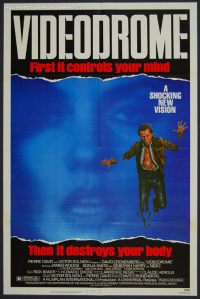
David Cronenberg’s Videodrome Was a Technology Prophecy

videodrome_one_sheet_movie_poster_l

Editor’s note: Since today marks director David Cronenberg’s 73rd birthday, it’s a good time to appreciate one of his greatest and most notorious works. Though my favorite of his remains the distinctly PKD-like eXistenZ, a close runner up is the cult classic Videodrome, which the following analysis reappraises in the context of contemporary social media-fixated culture.

By Nathan Jurgenson

Source: Omni Reboot

David Cronenberg’s vision of technology as the “new flesh” in Videodrome isn’t so shocking anymore.

Videodrome is the best movie ever made about Facebook.

What felt “vaguely futuristic” about it in 1983 is prescient today: technology and media are ever more intimate, personal, embodied, an interpenetration that David Cronenberg’s film graphically explores.
Videodrome offers a long-needed correction to how we collectively view and talk about technology. As the anti-Matrix, Videodrome understood that media is not some separate space, but something which burrows into mind and flesh. The present has a funny habit of catching up with David Cronenberg.
Still, Videodrome is deeply of its time and place. It’s set in Toronto, where Cronenberg was born and studied at the same time as University of Toronto superstar media theorist Marshall McLuhan, who coined the phrase “the medium is the message.” Beyond McLuhan’s reputation, Toronto was also known as a wired city; among other things, it was an early adopter of cable television.
In suit, Videodrome follows a Toronto cable television president, Max Renn (James Woods). He becomes involved with a radio psychiatrist named Nikki Brand (Debbie Harry, of Blondie fame), who reminds us of popular criticisms of television culture: we want to be stimulated until we’re desensitized, becoming (at best) apolitical zombies and (at worst) amoral monsters. Television signal saturates this film. The satellite dishes, screens, playback devices, and general aesthetics of analogue video are on glorious, geeked-out display. Although Videodrome’s operating metaphor is television, this film can be understood as being a fable about media in general. And what seemed possible with television in 1983 seems obvious today with social media.
Over the course of the film, Max comes to know a “media prophet” named Professor Brian O’Blivion—an obvious homage to Marshall McLuhan. O’Blivion builds a “Cathode Ray Mission,” named after the television set component which shoots electrons and creates images. The Cathode Ray Mission gives the destitute a chance to watch television in order to “patch them back into the world’s mixing board,” akin to McLuhan’s notion of media creating a “global village,” premised on the idea that media and technology, together, form the social fabric. O’Blivion goes on to monologue, “The television screen is the retina of the mind’s eye. Therefore, the television screen is part of the physical structure of the brain. Therefore, whatever appears on the television screen appears as raw experience for those who watch it. Therefore, television is reality; and reality is less than television.”
This is Videodrome’s philosophy. It’s the opposite of The Matrix’s reading of Baudrillard’s theories of simulation, and it goes completely against the common understanding of the Web as “virtual,” of the so-called “offline” as “real.” O’blivion would agree when I claim that “it is wrong to say ‘IRL’ to mean offline: Facebook is real life.”
This logic—that the Web is some other place we visit, a “cyber” space, something “virtual” and hence unreal—is what I call “digital dualism” and I think it’s dead wrong. Instead, we need a far more synthetic understanding of technology and society, media and bodies, physicality and information as perpetually enmeshed and co-determining. If The Matrix is the film of digital dualism, Videodrome is its synthetic and augmented opponent.
As P.J. Rey illustrates, fictional Web-spatiality is the favorite digital dualist plot device. Yet more than fiction books and films, what has come to dominate much of our cultural mythology around the Web is the idea that we are trading “real” communication for something simply mechanical: that real friendship, sex, thinking, and whatever else lazy op-ed writers can imagine are being replaced by merely simulated experiences. The non-coincidental byproduct of inventing the notion of a “cyber” space is the simultaneous invention of “the real,” the “IRL,” the offline space that is more human, deep, and true. Where The Matrix’s green lines of code or Neal Stephenson’s 3D Metaverse may have been the sci-fi milieu of the 1990s, the idea of a natural “offline” world is today’s preferred fiction.
Alternatively, what makes Videodrome, and Cronenberg’s oeuvre in general, so useful for understanding social media is their fundamental assumption that there is nothing “natural” about the body. Cronenberg’s trademark flavor of body-horror is highly posthuman: boundaries are pushed and queered, first through medical technologies in Shivers , Rabid , The Brood , and Scanners , then through media technology in Videodrome  and eXistenZ , then, most notoriously, in The Fly, where the human and animal merge. If The Matrix is René Descartes, Videodrome is Donna Haraway.
Cronenberg’s characters are consistent with Haraway’s theory of the cyborg: not the half-robot with the shifty laser eye, but you and me. In the film, the goal is never to remove the videodrome signal that is augmenting the body, but to reprogram it. To direct it. As Haraway famously wrote, “I’d rather be a cyborg than a goddess.” “Natural” was never a real option anyways.
Max Renn is especially good at finding the real in the so-called “virtual” because he is equally good at seeing virtuality in the “real.” From the beginning, he understands that much of everyday life is a massive media event devoid of meaning. The old flesh is tired, used up, and toxic. The world is filled with a suffering assuaged only by glowing television screens. As the film progresses, the real and unreal blur, making each seem hyperbolic: hallucinations become tangible, while the tangible drips with a surrealism that’s gritty, jumpy, dirty, erotic, and violent—closer to Spring Breakers than The Wizard of Oz. As such, Cronenberg’s universe is always a little sticky: an unease which begs the nightmares to come true, so that we at least know what’s real.
Videodrome’s depiction of techno-body synthesis is, to be sure, intense; Cronenberg has the unusual talent of making violent, disgusting, and erotic things seem even more so. The technology is veiny and lubed. It breaths and moans; after watching the film, I want to cut my phone open just to see if it will bleed. Fittingly, the film was originally titled “Network of Blood,” which is precisely how we should understand social media, as a technology not just of wires and circuits, but of bodies and politics. There’s nothing anti-human about technology: the smartphone that you rub and take to bed is a technology of flesh. Information penetrates the body in increasingly more intimate ways.
This synthesis of the physical and the digital is mirrored in the film’s soundtrack, too. In his book on Videodrome’s production, Tim Lucas calls Howard Shore’s score “bio-electronic” because it was written, programmed into a synthesizer, and played back on a computer in a recording studio while live strings played along. Early in the film, the score is mostly those strings, but as time passes the electronic synthesizers creep up in the mix, forming the bio-electronic synthesis.
The most fitting example of techno-human union in Videodrome is the famous scene of Max inserting his head into a breathing, moaning, begging video screen; somewhere between erotic and hilarious, media and humanity coalesce. There isn’t a person and then an avatar, a real world and then an Internet. They’re merged. As theorists like Katherine Hayles have long taught, technology, society, and the self have always been intertwined. Videodrome knows this, and it shows us with that headfirst dive into the screen—to say nothing of media being inserted directly into a vaginal opening in Max’s stomach, or the gun growing into his hand.

Thirty years after its release, Videodrome remains the most powerful fictional representation of technology-self synthesis. This merger wasn’t invented with the Internet, or even television. Humans and technology have always been co-implicated. We often forget this when talking about the Web, selling ourselves instead a naive picture of defined “virtual” spaces which somehow lack the components of “real” reality. This is why The Matrix and “cyberspace” have long outworn their welcome as a frame for understanding the Internet. It should be of no surprise that body horror is as useful for understanding social media as cyberpunk.

Credible Account Says Clinton Is Behind Violent Protesters at Trump Rallies

hillary-clinton-winking-AP-640x480

By Eric Zuesse

Source: RINF

This concerns the question of the identity of the people who are behind the violent protesters at Donald Trump’s rallies.

There are going to be ad-hominem attacks against me for my reporting this account, which will contradict the myths that both progressives and conservatives hold regarding the U.S. government, but anyone who recognizes that the press to this day hides its having hidden the incontestable fact that George W. Bush knowingly falsified, lied regarding the evidence concerning “Saddam’s WMD,” will at least give this account, and its source, fair and unprejudiced consideration, as being possibly accurate and honest. Sometimes, in order to get to the truth in a case, it’s necessary to rely upon the testimony of people that one considers despicable; the FBI wouldn’t be able to crack many cases otherwise — and, sad to say, neither can I. So: please don’t dismiss me for relying here upon a researcher whom I personally detest — and whom you might likewise detest.

I believe that the libertarian Roger Stone, who is the Republican Party’s most gifted opposition-researcher, after having been Richard Nixon’s most gifted dirty-trickster, and after his having ferreted out the hypocrisy of Eliot Spitzer for paying prostitutes — after, in other words, Stone’s having worked for politicians I despise, and destroyed the careers of ones I admire — is among this nation’s stellar investigative journalists; and I have found, over the years, that, when he reports about dirty tricks, what he has reported is only confirmed, not disconfirmed, as time passes. In other words: though I don’t like the man, and I disagree with his politics, I respect his news-reporting. And, here is what he says, in a rush interview with the ‘conspiracy theorist’ (another libertarian) Alex Jones, on Saturday evening, March 12th, and I think that the entire nation needs to hear Stone’s account, at least to give it consideration. So, here it is:

https://www.facebook.com/AlexanderEmerickJones/videos/10153989651258459

My rush transcript of highlights from his rush-interview:

I think everybody in the country has now heard about these violent protests [at Trump rallies] which are being blamed on supporters of Bernie Sanders. … This is a false-flag. These demonstrators are flying under a false banner. They are not Sanders supporters by-and-large. This is an operation directed by supporters of Hillary Clinton, paid for by George Soros and Move-On, by David Brock at Media Matters for America, also funded by Soros, and also by the reclusive billionaire Jonathan Lewis. Now, Lewis was identified by the Miami New Times as a ‘mystery man.’ He inherited roughly a billion dollars from his father Peter Lewis … [founder of Progressive Insurance Company]. Jonathan Lewis interestingly withdrew his support of the Democratic National Committee over the immigration bill that he thought was unfair to gays. In any event, this is a Hillary Clinton operation. The idea here, very clearly, is to divide the Sanders economic voters from Trump; in other words, those voters who lost their jobs because of NAFTA and all of the other globalist international trade-deals that have screwed this country, they now realize that these voters are potentially, when Sanders is out of the race, Trump votes, and this is an effort to make Trump toxic, to disqualify him, [as a] racist, bigot, the whole thing is essentially a hoax. It’s a gambit directed, by the way, by Brock. Brock was once a friend of mine and was a comrade in the fight for freedom; but he went over to the dark side, with the Clintons, for money: big, big, big, money; and this is unfortunately his little dirty trick, Unfortunately, they have leaks within their operation, my sources are of the very best. The entire collaboration in Chicago is a Hillary Clinton operation. And, frankly, I can’t see Bernie Sanders having anything to do with it. I don’t agree with Bernie, but I respect him, and this is not his handiwork or the handiwork of his campaign.

[Jones here goes on to explain why he respects the investigative reports from Stone, then says, “When I saw all these Bernie shirts and Bernie people saying ‘We attack!’ — you know, people shooting guns in the air saying ‘We support Bernie!’  that is so clearly a way to attack him, make him look like a radical revolutionary, and to make Hillary look good, and also make Trump look like a racist when the media plays this up. You’re absolutely right. … To be clear: you have sources inside saying this is a Soros/Brock Media Matters, which they admit is run by the White House, they have weekly meetings, Obama’s former transition chief. … We’ve seen the build-up toward race-war this summer, this fall, to try to cloud the entire election; is that what you’re getting at; is this the opening salvo …  ]

[Stone continues] I think Hillary understands that Trump would lose the votes of certain establishment Republicans if he is the nominee. On the other hand, it doesn’t matter, because of his crossover outreach. Right now in Ohio, Democrats and independents in the Mahoning Valley, these people have lost their jobs because of these great globalist trade deals, are lining up to vote for Donald Trump in the Republican primary, which is legal in Ohio with some paperwork. And we saw this same crossover in Michigan. So it occurred to the Clinton people that Bernie’s economic voters — not his hard-left voters, she’s not going to get them, they’re not going for Hillary, blue-collar folks who have just figured out that they have been left out of the new-world-order economy, are a ripe target for Trump; he’s already getting that, she is petrified of it; so, this little maneuver, this David Brock dirty trick, solves two problems at once: it helps knock down Bernie, because after all these people are involved in violence; and it also disqualifies Trump as a future vote, by portraying him as a racist or a bigot. The whole thing is a kabuki dance. And I think it’s very important that Trump understand that it’s not the Sanders campaign that’s disrupting his rallies; this is a Hillary Clinton operation.

[Jones asks for more details.]

[Stone continues] Hillary Clinton empowered a certain member of Congress to approach the billionaire John Lewis to pay for a portion of this overall program. This isn’t just Chicago. You’re now going to see these phony demonstrators, these ringers, showing up at other Trump events. … That’s as much as I’m prepared to say. … 

——

That’s the interview.

Hillary Clinton’s campaign benefits enormously by this tactic:

1: It re-orients the issue away from economics toward race; away from economic issues and toward ethnic conflicts

2: It identifies Sanders with violent supporters.

3: It identifies Trump with racism and violence by his having black ‘Bernie supporters’ (of which there are few) disrupting Trump’s rallies.

4: While it smears both Sanders, her current opponent, and Trump, her likely future opponent, it leaves Hillary herself unscathed.

So: the proposed explanation makes sense, and it’s entirely in character for Hillary Clinton.

Therefore: I believe it.

Death In Honduras: The Coup, Hillary Clinton And The Killing Of Berta Cáceres

dt.common.streams.StreamServer.cls

By Media Lens

Source: Dissident Voice

On February 28, Hillary Clinton told an audience from the pulpit of a Memphis church: ‘we need more love and kindness in America’. This was something she felt ‘from the bottom of my heart’.

These benevolent sentiments recalled the national ‘purpose’ identified by President George H.W. Bush in 1989, shortly before he flattened Iraq. It was, he said, ‘to make kinder the face of the nation and gentler the face of the world’.

Clinton, of course, meant North America, specifically the United States. But other places in America are short on love and kindness, too. Consider Honduras, for example.

On June 28, 2009, the Honduran President Manuel Zelaya was kidnapped at gunpoint by masked soldiers and forced into exile. Since the ousting, the country ‘has been descending deeper into a human rights and security abyss’ as the military coup ‘threw open the doors to a huge increase in drug trafficking and violence, and… unleashed a continuing wave of state-sponsored repression’. In 2012, Honduras had a murder rate of 90.4 per 100,000 population, then the highest rate in the world. In 2006, three years before the coup, the murder rate had stood at 46.2 per 100,000.

The years since 2009 have seen ‘an explosive growth in environmentally destructive megaprojects that would displace indigenous communities. Almost 30 percent of the country’s land was earmarked for mining concessions, creating a demand for cheap energy to power future mining operations. To meet this need, the government approved hundreds of dam projects around the country, privatizing rivers, land, and uprooting communities.’ In 2015, Global Witness reported that Honduras was ‘the most dangerous country to be an environmental defender’.COPINH

Berta Cáceres, a mother of four children, was co-founder and general coordinator of the COPINH (Consejo Cívico de Organizaciones Populares e Indígenas de Honduras) group opposing this state-corporate exploitation. Last year, Cáceres was awarded the Goldman Environmental Prize, the world’s leading award recognising grassroots environmental activists, for her work opposing a major dam project. Many of COPINH’s leaders have been murdered in recent years. In 2013, Cáceres said:

The army has an assassination list of 18 wanted human rights fighters with my name at the top. I want to live, there are many things I still want to do in this world. I take precautions, but in the end, in this country where there is total impunity I am vulnerable. When they want to kill me, they will do it.

Last week, on the night of March 3, armed men burst through the back door of Cáceres’s house and shot her four times, killing her in her bed. US media watch site Fairness and Accuracy in Reporting (FAIR) commented:

There was widespread outcry and grief over her death, and the story was covered by major media in the United States. But there was a glaring problem with the coverage: Almost none of it mentioned that the brutal regime that likely killed Cáceres came to power in a 2009 coup d’état supported by the United States, under President Barack Obama and then-Secretary of State Hillary.

Confidential – The Embassy Perspective

Following the 2009 coup, the United Nations, the Organization of American States (OAS) and the European Union all condemned Zelaya’s removal as a military coup. A confidential US Embassy cable, later published by Wikileaks, commented:

The Embassy perspective is that there is no doubt that the military, Supreme Court and National Congress conspired on June 28 in what constituted an illegal and unconstitutional coup against the Executive Branch… There is equally no doubt from our perspective that Roberto Micheletti’s assumption of power was illegitimate.

That was behind closed doors. In public, fifteen US House Democrats urged the US regime to ‘fully acknowledge that a military coup has taken place and… follow through with the total suspension of non-humanitarian aid, as required by law’. Writing for the Common Dreams website, Alexander Main supplied some detail:

Ann-Marie Slaughter, then director of Policy Planning at the State Department, sent an email to [Secretary of State] Clinton on August 16 [2009] strongly urging her to “take bold action” and to “find that [the] coup was a ‘military coup’ under U.S. law,” a move that would have immediately triggered the suspension of all non-humanitarian U.S. assistance to Honduras.

This, Hillary Clinton’s State Department refused to do, thus implicitly recognising the military takeover. As FAIR noted, Clinton makes clear in her memoirs that she had no intention of restoring President Zelaya to power:

In the subsequent days [after the coup] I spoke with my counterparts around the hemisphere, including Secretary Espinosa in Mexico. We strategized on a plan to restore order in Honduras and ensure that free and fair elections could be held quickly and legitimately, which would render the question of Zelaya moot.

In September 2009, US State Department officials blocked the OAS from adopting a resolution that would have rejected the legitimacy of Honduran elections carried out under the dictatorship, thus giving the coup the final US seal of approval.

Ousted former president, Manuel Zelaya, said last year:

Secretary Clinton had many contacts with us. She is a very capable woman, intelligent, but she is very weak in the face of pressures from groups that hold power in the United States, the most extremist right-wing sectors of the U.S. government, known as the hawks of Washington. She bowed to those pressures. And that led U.S. policy to Honduras to be ambiguous and mistaken.

Zelaya added:

President Obama has not wanted to hear our peoples. He has turned a deaf ear on the cry of the people. First we protested in the opposition. A few months ago, they physically removed me from the Congress, the National Congress, because our party mounted a peaceful protest. The military removed us, using tear gas in the Congress. They expelled us, beating us with batons, beating us into the street. This is the government that President Obama supports, a government that is repressive, a government that violates human rights, as has been shown by the very Inter-American Commission on Human Rights of the Organization of American States. It has shown this to be the case.

Alexander Main concluded:

A careful reading of the Clinton emails and Wikileaked U.S. diplomatic cables from the beginning of her tenure, expose a Latin America policy that is often guided by efforts to isolate and remove left-wing governments in the region.

An assertion supported by the increase in US military assistance to Honduras even as state-corporate violence has massively escalated. Noam Chomsky explained the logic:

Zelaya was moving somewhat tentatively towards the kinds of social reforms that the United States has always opposed and will try to stop if it can.

A Local Matter – The Media Response

Corporate politics and media, of course, never tire of proclaiming the West’s ‘responsibility to protect’ in places like Iraq, Libya and Syria. So how did these same humanitarians respond to the murder of a compassionate, respected and awesomely courageous activist in Honduras? FAIR commented on the overwhelming evidence of US support for the coup:

One wouldn’t know any of this reading US reports of Cáceres’ death. The coup, and its subsequent purging of environmental, LGBT and indigenous activists, is treated as an entirely local matter… The Washington Post, Guardian, NBC, CNN and NPR didn’t mention the 2009 coup that brought to power Cáceres’ likely murderers, let alone the US’s tacit involvement in the coup.

On the same day FAIR’s report was published, the first and only reference to these hidden truths in the UK press recorded by the Nexis media database was supplied by Jonathan Watts in the Guardian:

But Washington’s role is also controversial because the US backed the current government, which took power after a 2009 coup that ousted the democratically elected president Manuel Zelaya. The US is now providing fund [sic] for the Honduran police force.

Watts quoted International Rivers, an NGO that worked with Cáceres:

We must note that during the 2009 military coup in Honduras, the US government, with Hillary Clinton as secretary of state, worked behind the scenes to keep Honduras’ elected government from being reinstated. Additionally, the US government continues to fund the Honduran military, despite the sharp rise in the homicide rate, political repression, and the murders of political opposition and peasant activists.

While hardly exhaustive, this is the only mention of these issues we have found in the UK corporate press. A more recent piece by the Guardian’s Washington correspondent, David Smith, mentioned the coup but not US involvement. With touching naivety, Smith observed that ‘the US, determined to stop the flow of illegal immigrants from Central America, has been pouring money into Honduras’s security apparatus’.

The Times – so vocal in promoting Western ‘intervention’ to ‘protect’ human rights from Official Enemies – printed 68 words on the killing penned by the Associated Press. The Telegraph gave the story a single mention. In the Independent, Phil Davison wrote of Cáceres:

As if anyone needed reminding, her murder brought back to Honduras the dark days of the 1980s Central American guerrilla wars, in which they and their neighbours fought to rid themselves of dictators backed by the US.

But in stark contrast to the courage of Cáceres and so many others in Honduras, Davison was not able to bring himself to mention that the tyranny in Honduras is today being backed by the region’s great superpower. Also in the Independent, Caroline Mortimer made no mention of US complicity in the coup. Nor, unsurprisingly, did the BBC in two pieces here and here on the killing.

As ever, ‘mainstream’ ‘compassion’ turns out to be rooted in rather more ‘pragmatic’ concerns. If an Official Enemy had been responsible for Cáceres’s death, the cries of outrage, horror and denunciation would have blazed from our corporate front pages and TV screens. Action would have been demanded, perhaps even ‘intervention’. But when the horror is committed by a faithfully corrupt and brutal servant of Empire aided and abetted by the ‘Leader of the Free World’, none of the buttons on the vast, high-tech propaganda machine are pressed and the story is quickly buried along with the victim.

Needless to say, awareness of the kind offered here threatens to jam a spanner in the conditionally ‘compassionate’ propaganda waterworks and must be scrupulously ignored or, at best, ridiculed.


Media Lens is a UK-based media watchdog group headed by David Edwards and David Cromwell. The second Media Lens book, Newspeak: In the 21st Century by David Edwards and David Cromwell, was published in 2009 by Pluto Press. Read other articles by Media Lens, or visit Media Lens’s website.

Related Article: Before Her Assassination, Berta Cáceres Singled Out Hillary Clinton for Backing Honduran Coup (Democracy Now)