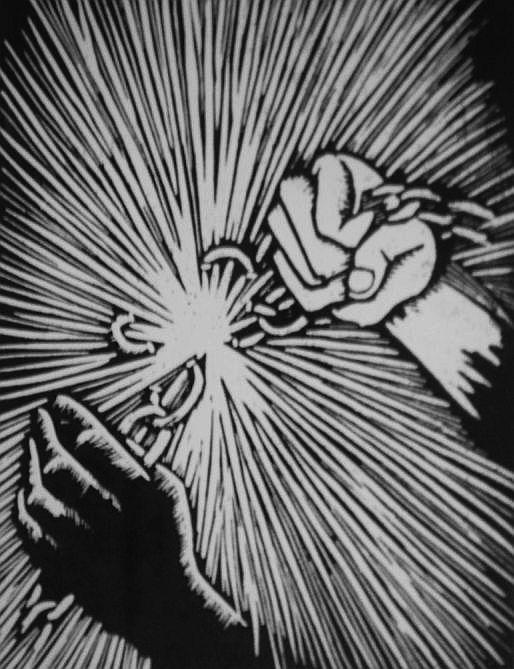
Life’s Most Important Dramas Are Being Disrupted

index

By Charles Hugh Smith

Source: Washington’s Blog

The idea that human life subdivides rather naturally into stages is based on our natural progression from childhood into adulthood and eventual (if we’re lucky) old age.

Confucian thought views life as a developmental process with seven stages, each roughly corresponding to a decade: childhood, young adulthood (16-30), age of independence (30-39), age of mental independence (40-49), age of spiritual maturity (50-59), age of acceptance (60-69), and age of unification (70 – end of life).

Each stage has various tasks, goals and duties, which establish the foundation for the next stage.

Each stage is centered on a core human drama: for the teenager, establishing an identity and life that is independent of parents; for the young adult, finding a mate and establishing a career; for the middle-aged, navigating the challenges of raising children and establishing some measure of financial security; for those in late middle-age, helping offspring reach independent adulthood and caring for aging parents; early old age, seeking fulfillment now that life’s primary duties have been accomplished and managing one’s health; and old age, the passage of accepting mortality and the loss of vitality.

The End of Secure Work and the diminishing returns of financialization are disrupting these core human dramas and frustrating those who are unable to proceed to the next stage of life:

1. Teenagers are being pressured to focus their lives on achieving a conventional financial success that is becoming harder to achieve.

2. Young adults without secure full-time careers cannot afford marriage or children, so they extend the self-absorption of late adolescence into middle age.

3. The middle-aged are finding financial security elusive or out of reach as they struggle to fund their young adult children, aging parents and their own retirement.

4. Increasing longevity is pressuring the late-middle-aged’s stage of fulfillment, as elderly parents may require care even as their children reach their own retirement (65-70).

The financial pressures generated by the demise of financialization and the End of Secure Work are not just disrupting each stage; they are upending essential financial balances between the young, the middle-aged and the old.

The elderly, protected by generous social welfare benefits paid by current taxpayers, also benefit from the soaring value of assets such as real estate and stocks. Meanwhile, financialization’s asset bubbles have pushed housing beyond the reach of most young people.

Downsizing, lay-offs, low-paying replacement work and poor decisions to buy houses near the peak of the prior bubble have left many of the middle-aged with high fixed costs and a stagnant or increasingly insecure income.

The stresses of trying to make enough money to afford what was once assumed to be a birthright–a “middle class” lifestyle–is taking a heavy toll on the mental and physical health of the middle-aged, leaving many of them too tired for any fulfilling activities and easy prey for destructive self-medication.

This erosion of opportunities to complete life’s stages and core dramas is gradual, and rarely recognized, much less addressed. We are constantly bombarded with messages to innovate, keep up, be fulfilled, etc.–essentially impossible demands for those with multiple generational and/or business duties.

The most productive response to these financial disruptions is to focus not on what’s scarce and fraught with intense competition (the top 5% slots of conventional financial security) but on what’s still abundant, which is opportunities outside conventional hierarchies, ways of reducing fixed costs and life-skills that are entrepreneurial, adaptive and fulfilling.

When I talk about the Mobile Creative class, I’m not talking about a finance-centric definition of success or a path to join the top 5% in Corporate America and the government. The herd is chasing those dwindling slots, too, guaranteeing frustration and failure for the 95% who won’t secure one of those slots.

What we’re really discussing is a way of living that places a premium on independent thinking, maintaining very low fixed costs, establishing a healthy honesty with oneself and one’s associates and customers, the ability to make realistic assessments of oneself, one’s successes, failures and errors, and a focus on challenges, opportunities, risks, adaptability, flexibility and experimentation, all with a goal of building one’s own human, social and physical capital–the foundations not just of well-being but of any meaningful measure of independent, real wealth.

Economic grace of ‘Social Credit’: national dividend with compensated retail prices for consumer goods distribution in an age of technology

quote-at-the-present-time-the-alternative-is-not-between-change-or-no-change-but-between-change-c-h-douglas-77-2-0224By Wallace Klinck

Source: The Daily Censored

“The unacknowledged, but obvious, truth is that unnecessary work, imposed by either edict or contrived financial legerdemain, is slavery and servitude—totally irrational and immoral.  Every engineer worthy of the name is trying to eliminate the need for human effort as a factor of production while every witless or hypocritical politician, pressured by the financial powers above and an insecure and uncomprehending population below, is professing, at least, to promote policies designed to ‘put people back to work.’” (from the below article)

Five minute video of Major C.H. Douglas, founder of Social Credit (1934):

Because of its deleterious impact on personal freedom and initiative, centralization of both economic and political power is the critical issue facing society. The primary obstacle to reversing this growing concentration of power is an almost universal ignorance of the manner in which the existing financial system renders the price-system increasingly non-self-liquidating, making impossible the recovery of industrial production costs through sales. Institutions and individuals attempt to resolve this problem by resorting to bank debt, thereby obtaining access to the products of industry by the self-defeating expedient of mortgaging our future–i.e., transferring these costs as an exponentially growing debt charge against future cycles of production–and by engaging in an orgy of wasteful and destructive activities, effectively culminating in continuous war.

Their monopolistic proclivities disincline both Finance-Capitalism operating under the Monopoly of Credit and every form of collectivist organization (e.g., socialism, communism or fascism) from grappling with this problem.  The solution must entail an appropriate modification of the existing financial-credit and price system so as to properly facilitate distribution of the immense output of modern technology-based industry, in the context of expanding leisure.

Nearly a century ago this emergent challenge was studied in depth by the British engineer Clifford Hugh Douglas, who not only analyzed the defects of the existing price system as it functions under present financial and industrial cost-accounting conventions, but also put forward realistic remedial proposals.  Between and for a period after the World Wars, Douglas’s ideas, which he named “Social Credit”, attracted large numbers of adherents and spawned many political movements in countries around the world.

Douglas recognized that life is more than bread alone and that in order to attain his full stature man must be released from unnecessary material concerns in order to make time for matters of the Mind and Spirit. This clearly was inherent in certain much-neglected aspects of the message of Jesus, who explicitly stated that lack of faith is the reason for our obsession with toiling our own way to material survival. Jesus asked how we could doubt that God, who provides for the fish and birds and the beasts, knows our needs and will provide even better for us. On more than one occasion Jesus unconditionally distributed loaves and fishes to crowds that had gathered to hear him. To indicate how reality operates outside of puritanical human notions of morality, Jesus pointed out that his heavenly Father causes the sun to rise on the evil and the good, and lets rain fall on both the just and the unjust.

An aspect of this divine caring is the ability we have been given to accumulate understanding of natural laws, which has resulted in an endless extension of “mechanical advantage”—termed by Social Crediters the Unearned Increment of Association—from which has emerged our amazing modern technology with its outflow of material abundance. Through learning how to associate effectively in the areas of both human endeavours and material resources, we have multiplied our productive capacity many thousands, if not millions, of times over.  The historical aggregation of Unearned Increments has provided the vast Cultural Heritage upon which we all so greatly, if unconsciously, depend.

This is the background of why Social Credit came to be perceived by its leading thinkers as “practical Christianity”. Although Douglas did not set out to design it as such, ongoing development of Social Credit thought has revealed it to be uniquely consonant with and revelatory of the assurances given by the founder of the Christian faith.

This realistic perception of our situation is absent from the major ideologies of our time.  For example, Libertarians promote the notion that the individual must “make it on his/her own”. No one today (apart maybe from individuals lost in the wilderness) is doing this; all have the benefit of the Cultural Heritage, which ties us in a web of dependencies not only with our contemporaries but also with previous generations.

Socialism, which calls for State ownership and administration of the means of production—the central planning of the economy and of human activity—similarly endeavors to alienate people from their heritage.  Besides specifically attacking the very principle of inheritance, Socialists force the energies of the members of society into mandatory employment in projects prescribed by the State. Suppression of individual initiative is an inevitable result of this constraint of access to the possibilities afforded by the richness of the Cultural heritage. This observation applies to all forms of “socialism”, whether national or international in nature.

Social Credit is the inverse of socialism and a negation of finance capitalism.  Many persons have it in their minds that a sharing society necessarily is socialistic; i.e., power centralizing. Presumably they think this way on the erroneous assumption that the sharing will be accomplished by redistributing existing wealth by means of various confiscatory forms of taxation.  However, Social Credit, uniquely, stands not for redistribution of earned incomes, but rather for distribution of consumer goods at source as they emerge from the production line.

Douglas enunciated and stressed the truism that production without consumption is sheer futility and waste.

The fundamental task of economic policy is to match and balance the cycles of consumption and production.  Producers’ costs cannot be recovered without money received from consumers, whose incomes alone provide business its means to liquidate all financial costs of production.

In order to effect this balance, Douglas recommended that National (Consumer) Dividends and Compensated (lowered) Prices at point of retail sale must be provided and financed by a Government Agency (created or existing, whatever is most efficient and convenient) with funds not derived from taxation but drawn down from a properly constructed National Credit Account.  This would be a continuously updated actuarial accounting of the nation’s real credit, being an inventory of all those resources which are available to be used for production and which, if so used, may result in the making of financial prices.

Unfortunately, the public are conditioned to reason from the false assumption that the economic “pie” is limited to the financial incomes paid out in production, and hence they perceive this as the only possible source of funding. This assumption includes the erroneous corollary that the price-system is self-liquidating; i.e., that incomes paid out as wages, salaries and dividends are not only equal to, but available to meet, the total financial costs of production. That this is a major fallacy is readily proved by the enormous accumulation of inflationary private and public debt created as loans by the banking system, which allows goods to be purchased after a fashion but does not liquidate their financial costs of production in a synchronized fashion.  As a kind of stop-gap expedient, these loans merely transfer these costs into the future, to be liquidated with income derived from later cycles of production unrelated to the cycles in which they were incurred.

The physical (i.e., real) costs of production are met as production takes place. Obviously, if this were not the case, production could not proceed.  This is self-evident and axiomatic. When goods are produced in finished form they are meant to be used and should be immediately available to the overall consuming public in toto and without entailing any residual financial debt.

This universal piling-up of debt is bogus and is required only because price increasingly includes, as real capital replaces labor as a factor of production, allocated charges in respect of real capital which are not distributed as income in the same cycle of production. Consumer income is cancelled prematurely, leaving a growing deficiency of income relative to the total prices of goods awaiting purchase. In other words, the flow of final prices increasingly exceeds the flow of effective financial purchasing-power. Purchasing-power is prematurely cancelled in respect of still existing real capital, whereas it should be cancelled only at the rate of actual physical consumption or depletion.  Money should be issued at the rate of production and cancelled at the rate of consumption

In the face of this predicament, we can simply forgo acquisition of these goods, leaving the producer no option but to warehouse or destroy them and go bankrupt—making his endeavors a mindless exercise in futility. Or we can ensure that, while required remaining actual “workers” (i.e., recipients of remuneration from others for services rendered) continue to have the benefit of their earnings, all citizens, workers included, have access to the full output of industry by being provided adequate aggregate purchasing-power to make this possible.

Besides being a practical necessity, such an arrangement recognizes the share all have in the almost fantastic Cultural Heritage of Civilization. In a Social Credit dispensation, Inheritance would be generalized.

In stark contrast is the socialist attitude, which is that inheritance is evil and should be abolished.

Social Credit stands most definitely, unashamedly and unabashedly, for a sharing society—and as labor is increasingly reduced by technology it would become more sharing with the passage of time. Unlike Socialism, which in reality has always been more about centralized control than about sharing, Social Credit does not involve State ownership, planning or administration of the economy or of social organization as such. By giving people as individuals full access to the ever-increasing abundance made possible by technology and to concomitant economic independence, it is in fact highly decentralizing.

The rational purpose of technology is to eliminate inefficiency, and “jobs” concocted merely for the sake of distributing incomes are precisely that—mere wasted energy and materials.  The solution to the problem of economic insecurity in the modern age of super-production does not lie primarily in “making” work, but increasingly in facilitating

distribution.  Those who clamor for “jobs” actually visualize a model along the lines of fascist and communist states, which give and demand of everyone endless work throughout their lifetime, in accordance with the rather suspect dictum that “work will make you free”—but not until you die.

The unacknowledged, but obvious, truth is that unnecessary work, imposed by either edict or contrived financial legerdemain, is slavery and servitude—totally irrational and immoral.  Every engineer worthy of the name is trying to eliminate the need for human effort as a factor of production while every witless or hypocritical politician, pressured by the financial powers above and an insecure and uncomprehending population below, is professing, at least, to promote policies designed to “put people back to work.”

Frankly, if I desire “work”, then I want to do it by my own choice and at my own leisure, increasingly freed from the enforced conformity and servitude of the existing system.

We should not be striving to provide more, and more, human work but rather more technological productive efficiency with augmented effective consumer purchasing-power capable of eliminating consumer debt and liquidating industrial costs in a timely manner.  Let robots do the work.  Tirelessly and without complaint, they perform the vast majority of it better than people can.

You want more work?  Then let’s have another war—or, better yet, continuous wars until we end up destroying the whole planet or all life upon it.

Indeed, the flaws in the current financial system provide a constant incentive for military war, which normally is just an extension of economic war. Unbalanced international trade is driven by the increasing inherent orthodox need to export—not to receive an equivalent of real wealth in return, but to capture financial credits from other nations to compensate for the internal intrinsic deficiency of consumer purchasing-power that exists in the domestic price-system of every nation.

Anyone who does not understand this compulsive destructive dynamic of the modern financial-economic system is totally unqualified even to comment on our economic position.

The abundance that technology makes possible should set men and women free from physical want, increasingly enabling them to choose independently and without duress their preferred activities in life. As opposed to the ubiquitous Keynesian, cognitively dissonant, counterfeit socialist concept of “economic democracy” as a centralized administrative proletarian Work-State, Social Credit gives real meaning to the concept of economic democracy by favoring a consumer-motivated system of production.

C. H. Douglas stressed the importance of understanding policy by tracing its pedigree.  From a metaphysical standpoint, Social Credit would be a practical, physical incarnation of the Christian Doctrine of Salvation by Unearned Grace—in contradistinction to the prevailing Judaic conception, and system, of Salvation through Works. The current financial system is predicated upon a materialist philosophy characterizable as do ut des,  meaning “this for that”—in other words, that nothing can be obtained except it be earned, that, as the saying goes, “There is no free lunch”. It is the underlying principle of the madness-inducing doctrine of “Salvation through Works”.

Hence, the existing financial system issues money only as debt for production and never for consumption, except in the latter case as debt which must be acquitted by future work This policy of issuing money only for work might have had some basis in equity in the primitive economy where production was primarily due to human effort. It makes no rational or moral sense whatever in the modern highly technological economy where non-human factors of production predominate and human intervention becomes increasingly a mere, although essential, catalyst within a vast productive complex.

Social Credit coheres profoundly with the Christian philosophy of Salvation through Unearned Grace–Grace being an outright gift from God. Spiritual Grace has, or should have, a physical counterpart, or incarnation, in the economic or material realm. Thus, from this philosophical standpoint access to consumer goods and services should increasingly be justified not by work alone but rather by the individual’s share in an inalienable inheritance of the communal capital that has accumulated over the ages.  The effect of growth of our historic Cultural Heritage has always been to advance the potential for faster, more diversified and less wasteful productivity, with an accompanying potential for enhanced human leisure.

Christian philosophy holds that it is a major sin to make an end of a means. The rational purpose and end of production is consumption, not to create work (a means). An economic system should provide goods and services for mankind as efficiently as possible with minimal trouble and effort for all concerned.

One might ask how it is possible for a nation such as the United States of America, professedly predicated upon Christian principles, to base its entire economy and social structure upon a financial system that is a total inversion of those principles. A clue to this strange contradiction may be found in Douglas’s observation that Finance and the Established Media are concentric. As a result, he said, society has been hypnotized, with the consequence that only a drastic de-hypnotization can save it.

If society can pursue a continuous, destructive, malevolent and malignant policy of devastating the continents and populations of foreign nations, then surely we can easily pursue instead the civilized alternative of providing (Consumer) Dividends and Compensated (lowered) Retail Prices to support a secure and leisured life for our citizens.  Under the existing iniquitous financial system we are driven to deliver those potential Dividends to other nations in the form of bombs.  This would appear to be insanity by any rational criterion, but it satisfies the overarching irrational one of providing plenty of “jobs” and “incomes” (not to mention “profits”)—albeit at the additional cost of stupendous physical waste, human suffering and a massive, exponentially expanding financial mortgage burdening our future.  This too would appear to be insanity, but apparently not to members of the banking fraternity, which finances it all with conspicuously detached equanimity.

Surely the time is long past when individuals and nations should have stopped “fighting” amongst themselves and instead concentrated their intelligence, energies and talents on demanding reality-grounded financial and economic policies.

I hope that the above commentary may help to clarify some of the major questions and issues often raised about Social Credit.

Dr. Oliver Heydorn has recently published a major informative book, comprehensively incorporating C. H. Douglas’s essential ideas. Refer:  http://www.socred.org

See also:

https://en.wikipedia.org/wiki/Social_credit

http://social-credit.blogspot.ca

http://www.socialcredit.com.au

http://socialcredit.schooljotter2.com

___________________________________________________________

The author was born during the so-called “Great Depression” when in 1935 the historic election of the world’s first “Social Credit” Government in the Province of Alberta, Canada startled the pundits and alarmed the global financial powers.  In later years he became acquainted with several Cabinet Ministers of that Government.  His close mentor was Mr. Leslie Denis Byrne, O.B.E., a British actuary and technical expert in Social Credit who was sent, with a colleague, from Britain by C. H. Douglas to advise the fledgling new Provincial Administration. The author holds baccalaureate degrees in Arts and Education. In Arts, he majored in political science, and minored in economics. In Education, he majored in social studies, secondary route.

Appreciation is expressed to Robert E. Klinck, M.A. for his considerate and patient assistance in editing this essay.


Breaking the chains: precarity in the Age of Anxiety

breaking-the-chainsBy Joseph Todd

Source: RoarMag.org

In our Age of Anxiety, society assaults us from every possible angle with an avalanche of uncertainty. How do we fight back under conditions of precarity?

­An Age of Anxiety is upon us, one where society assaults us from every possible angle with an avalanche of uncertainty, fear and alienation. We live with neither liberty nor security but instead precariousness. Our housing, our income and our play are temporary and contingent, forever at the whim of the landlord, policeman, bureaucrat or market. The only constant is that of insecurity itself. We are gifted the guarantee of perpetual flux, the knowledge that we will forever be flailing from one abyss to another, that true relaxation is a bourgeois luxury beyond our means.

Our very beings come to absorb this anxiety. We internalize society’s cruelty and contradiction and transform them into a problem of brain chemistry, one that is diagnosed and medicated away instead of being obliterated at root. All hope is blotted out. Authentic experience, unmediated conversation, distraction-free affection and truly relaxed association feel like relics of a bygone era, a sepia dream that perhaps never existed.

Instead we have the frenetic social arenas of late capitalism: the commodified hedonism of clubs and festivals, express lunches, binge culture and the escapist, dislocating experience of online video games, all underlined by either our desperate need to numb our anxieties or to create effective, time-efficient units of fun so we are available for work and worry.

This is assuming we have work, of course. Many of us are unemployed, or are instead held in constant precarity. Stuck on zero-hour contracts or wading through as jobbing freelancers in industries that used to employ but don’t anymore, we are unable to plan our lives any further than next week’s rota, unable to ever switch off as the search for work is sprawling and continuous.

And if we do have traditional employment, what then? We are imprisoned and surveilled in the office, coffee shop or back room, subject to constant assessment, re-assessment and self-assessment, tracked, monitored and looped in a perpetual performance review, one which even our managers think is worthless, but has to be done anyway because, hey, company policy.

Continuous is the effective probationary period and we are forever teetering on the edge of unemployment. We internalize the implications of our constant assessment, the knowledge that we’re always potentially being surveilled. We censor ourselves. We second-guess ourselves. We quash ourselves.

And thanks to the effective abolition of the traditional working day, work becomes unbearable and endless. The security of having delineated time — at work and then at play — has been eradicated. Often this is because individuals have to supplement their atrocious wages with work on the side. But it is also because traditional 9-to-5 jobs have suffered a continuous extension of working hours into out-of-office time, enabled and mediated by our laptops and smartphones. These gadgets demand immediacy and, when coupled with the knowledge that you are always reachable and thus available, they instill in us a frantic need to forever reply in the now.

And with this expectation comes obligation. Hyper-networked technologies gift our bosses the ability to demand action from us at any moment. Things that had to wait before become doable — and thus are done — in the now. If you are unwilling, then someone is ready to take your place. You must always be at their beck and call. From this, our only refuge is sleep, perhaps the last bastion of delineated time against frenetic capitalism, and one that is being gradually eroded and replaced.

For those that are out of work the situation is no better. They face the cruel bureaucracy of the Job Centre or the Atos assessment, institutions that have no interest in linking up job seekers with fulfilling employment but instead attempt only to lower the benefits bill through punitive, arbitrary sanctions and forcing the sick back to work. Insider accounts of these programs betray the mix of anxiety inducing micro-assessment and surveillance they employ.

Disabled claimants — always claimants, never patients, insists Atos — are assessed from the moment they enter the waiting room, noted as to whether they arrive alone, whether they can stand unassisted and whether they can hear their name when called. Compounding this is the hegemonic demonization of those that society has failed: if you are out of work, you are a scrounger, a benefit cheat and a liar. Utterly guilty of your failure, a situation individualized in its totality and attributable to no system, institution or individual but yourself.

We are surveilled, monitored and assessed from cradle to grave, fashioned by the demand that we must be empirical, computable and trackable, our souls transformed into a series of ones and zeros. This happens in the workplace, on the street and in various government institutions. But its ideological groundwork is laid in the nursery and the school.

These institutions bracket our imaginations while still in formation, normalizing a regime of continuous surveillance and assessment that is to last for the rest of our lives. Staff are increasingly taken away from educating and nurturing and instead are made to roam nurseries taking pictures and recording quotes, all to be computed and amalgamated so authorities can track, assess and predict a child’s trajectory.

It is true that this does not trouble the child in the same way traditional high intensity rote examination does. But what it instead achieves is the internalization of the surveillance/assessment nexus in our minds; laying the groundwork for an acquiescence to panoptical monitoring, a resignation to a private-less life and a buckling to regimes of continuous assessment.

Britain is particularly bad in this respect. Not only does our government have a fetish for closed-circuit television like no other, but also, GCHQ was at the heart of the Snowden revelations. Revelation, however, is slightly misleading — as what was most telling about the leaks wasn’t the brazen overstep by government institutions, but that few people were surprised. Although we didn’t know the details, we suspected such activity was going on. We acted as if we were being watched, tracked and monitored anyhow.

In this we see the paranoid fugitive of countless films, books and television dramas extrapolated to society writ large. We are all, to some extent, that person. Our growing distrust of governments, the knowledge that our technologically-integrated lives leave a heavy trace and the collection of “big” data for both commercial and authoritarian purposes contributes to our destabilized, anxious existence. An existence that impels us towards self-policing and control. One where we do the authority’s job for them.

Many individuals offer the amount of choice we have, or the amount of knowledge we can access at the click of a button, as the glorious consequences of late capitalist society. But our rampant choice society, one where we have to make an overwhelming number of choices — about the cereal we eat, the beer we drink, or the clothes we wear — is entirely one sided. While we have an incredible amount of choice over issues of little importance, we are utterly excluded from any choice about the things that matter; what we do with the majority of our time, how we relate to others or how society functions as a whole. Nearly always these choices are constricted by the market, the necessity of work, cultures of overwork and neoliberal ideology.

Again we find this ideology laid down in primary education. Over the years more and more “continuous” learning has been introduced whereby children, over a two week period or so, have to complete a set of tasks for which they can choose the order. This is an almost perfect example of how choice functions in our society, ubiquitous when insignificant but absent when important. The children can choose when they do an activity, which matters little as they will have to do it at some point anyway, but cannot choose not to do it, or to substitute one kind of activity with another.

Why does this matter? Because meaningful choices about our lives give us a sense of certainty and control. Avalanches of bullshit choices that still have to be made, as study after study has shown, make us incredibly anxious. Each of them takes mental effort. Each contains, implicitly, the multitude of choices that we didn’t make; all those denied experiences for every actual experience. This is fine if there are only one or two. But if there are hundreds, every act is riddled with disappointment, every decision shot with anxiety.

Compounding this orgy of choice, and in itself another root cause of anxiety, is the staggering amount of information that assaults us every day. Social media, 24-hour news, the encroachment of advertising into every crack — both spatially and temporally — and our cultures of efficiency that advocate consuming or working at every possible moment all combine to cause intense sensory overload. This world, for many, is just too much.

Although we’ve talked mostly about work, surveillance, assessment and choice, there are a multitude of factors one could add. The desolation of community due to the geographical dislocation of work, the increased transiency of populations and the growing privatization of previously public acts — drinking, eating and consuming entertainment are increasingly consigned to the home — shrinks our world to just our immediate families.

Camaraderie, extended community and solidarity are eroded in favor of mistrust, suspicion and competition. Outside of work our lives become little more than a series of privatized moments, tending to our property and ourselves rather than each other, flitting between the television shows, video games, home DIY and an incredible fetish for gardening with no hint towards the thought that perhaps these experiences would be better if they were held in common, if they appealed to the social and looked outward rather than in.

In the same way we could mention the ubiquity of debt — be it the mortgage, the credit card or the student loans — and the implicit moral judgment suffered by the debtor coupled with the anxiety-inducing knowledge that they could lose everything at any moment. Or we could consider the near-existential crises humanity faces, be it climate change, ISIS or the death throes of capitalism; all too abstract and total to comprehend, all contributing to a sense that there is no future, only a grainy, distant image of lawless brutality, flickering resolutely in our heads.

But the crux, and the reason anxiety could become a revolutionary battleground, is that neoliberal ideology has individualized our suffering, attributing it to imbalances in our brain chemistry, constructing it as a problem of the self, rather than an understandable human reaction to a myriad of cruel systemic causes. Instead of changing society the problem is medicalized and we change ourselves, popping pills to mold our subjectivities to late-capitalist structures, accepting the primacy of capitalism over humanity.

This is why “We Are All Very Anxious”, a pamphlet released by the Institute of Precarious Consciousness, is so explosively brilliant. Not only does it narrate the systemic causes of anxiety, but it situates the struggle within a revolutionary strategy, constructing a theory that is at once broad and personal, incorporating one’s own subjective experience into an explanatory framework, positing anxiety as a novel, contemporary revolutionary battleground, ripe for occupation.

It is, they claim, one of three eras spanning the last two-hundred years where we have progressed between different dominant societal affects. Until the postwar settlement we suffered from misery. The dominant narrative was that capitalism benefited everybody; while at the same time overcrowding, malnourishment and slum dwelling were rife. In response to this appropriate tactics such as strikes, mutual aid, cooperatives and formal political organization were adopted.

After the postwar settlement, until around the 1980s, a period of Fordist boredom ensued. Compared to the last era, most people had stable jobs, guaranteed welfare and access to mass consumerism and culture. But much of the work was boring, simple and repetitive. Life in the suburbs was beige and predictable. Capitalism, as they put it, “gave everything needed for survival, but no opportunities for life.” Again movements arose in opposition, positioned specifically against the boredom of the age. The Situationists and radical feminism can be mentioned, but also the counter-culture surrounding the anti-war movement in America and the flourishing DIY punk scene in the UK.

This period is now finished. Capitalism has co-opted the demand for excitement and stimulation both by appropriating formerly subversive avenues of entertainment — the festival, club and rave — while dramatically increasing both the amount and intensity of distractions and amusements.

In one sense we live in an age of sprawling consumerism that avoids superficial conformity by allowing you to ornament and construct your identity via hyper-customized, but still mass-produced products. But technological development also mean that entertainment is now more total, immersive and interactive; be it the video game or the full-color film watched on a widescreen, high-definition television.

Key to this linear conception is the idea of the public secret, the notion that anxiety, misery or boredom in these periods are ubiquitous but also hidden, excluded from public discourse, individualized and transformed into something unmentionable, a condition believed to be isolated and few because nobody really talked about it. Thus to even broach the subject in a public, systematic manner becomes not just an individual revelation but also a collective revolutionary act.

I’ve seen this first-hand when running workshops on the topic. Sessions, which were often argumentative and confrontational, became, when the subject was capitalism and anxiety, genuinely inquisitive and exploratory. Groups endeavored to broaden their knowledge of the subject, make theoretical links and root out its kernel rather than manning their usual academic ramparts and launching argument after rebuttal back and forth across the battlefield.

But more than this, there was a distinct edge of excitement, the feeling that we were onto something, a theory ripe with explosive newness, one that managed to combine our subjective experiences and situate them in a coherent theoretical framework.

However, we must be critical. To posit anxiety as a specifically modern affect, unique to our age, is contentious. What about the 1950s housewife, someone mentioned in one of the sessions, with her subjectivity rigidly dictated by the misogyny and overbearing cultural norms of the time? Didn’t this make her feel anxious?

Well, perhaps. But if we take anxiety to mean a general feeling of nervousness or unease about an uncertain outcome — with chronic anxiety being an actively debilitating form — then we can draw distinct differences. Although the housewife was oppressed, her oppression was codified and linear, her life depressingly mapped out with little room for choice or maneuver. Similarly with the slave — surely the universal symbol of oppression — hierarchies aren’t nebulous but explicit, domination is ensured by the whip and the gun, the master individualized and present.

This is in stark contrast to the current moment. While it is obvious that oppressions are distinct and incomparable, we can nevertheless see that the fug of the 21st century youth is of a different nature. Our only certainty is that of uncertainty. Our oppressor is not an individual but a diffuse and multiplicitous network of bureaucrats, institutions and global capital, hidden in its omnipotence and impossible to grasp.

We aren’t depressed by the inevitability of our oppression, but instead are baffled by its apparent (but unreal) absence, forever teetering on the brink, not knowing why, nor knowing who we should blame.

Similarly it is bold to claim that anxiety is the dominant affect of Western capitalism, tantamount to pitching it as the revolutionary issue of our age. Yet if we analyze the popular struggles of our time — housing, wages, work/life balance and welfare — they are often geared, in one way or another, towards promoting security over anxiety.

Housing for many is not about having a roof over their heads, but about security of tenure, be it via longer fixed-term tenancies or the guarantee that they won’t be priced out by rent rises that their precarious employment can’t possibly cover. In the same way struggles over welfare are often about material conditions, but what particularly strikes a chord is the cruel insecurity of a life on benefits, forever at the whim of sanction-wielding bureaucrats who are mandated to use any possible excuse to remove your only means of support.

Anxiety is also a struggle that unites diverse social strata, emanating from institutions such as the job center, loan shark, university, job market, landlord and mortgage lender, affecting the unemployed, precariously employed, office worker, indebted student and even the comparatively well-off. Again we find this unification in the near-universal adoption of the smartphone and other hyper-networked technologies. All of us, and especially our children, are beholden to a myriad of glowing screens, flitting between one identity and another, alienated and disconnected from our surroundings and each other.

This is not to say a movement against anxiety itself will ever arise. Such a rallying cry would be too abstract and fail to inspire. Instead, anxiety must be conceptualized both as an affect which underlies various different struggles, and a schema within which they can be assembled into a revolutionary strategy.

So, what is our tangible aim here? In part it must be to reduce the level of general anxiety so as to increase quality of life. Yet if we are to take a revolutionary rather than a mere humanitarian approach, this drop in anxiety must in some way translate into a rise in revolutionary disposition. In certain ways it obviously will. If there is a public realization that large swathes of the mentally ill are not as such because of their unfortunate brain chemistry but instead because of a misconfiguration of society, people are already thinking on an inherently challenging, systemic level.

Similarly, conflict with the state or capital — be it on the street, in the workplace or inside one’s own head — tends to be high-impact and anxiety-inducing. A drop in general anxiety will make it more likely that individuals will engage in such moments of conflict and, crucially, experience the intense radicalization and realization of hegemonic power that can only be achieved through such visceral moments. But a second part to this, hinted at already and integral to giving the struggle a revolutionary edge, is to emphasize that there is a public secret to be aired. As well as combating the sources of anxiety, we must say we are doing so; we must situate these struggles within larger frameworks and provide education on its systemic nature.

Thus, any strategy would need to be both abstract and practical. On one hand we must explode the public secret by raising consciousness. This would require a general onslaught of education, including, but not limited to, consciousness-raising sessions, participatory workshops, articles, books, pamphlets, leaflets, posters, YouTube videos and “subvertised” adverts. The emphasis would be to educate but also to listen, to intermingle theoretical understanding with subjective experience.

The second part would be to strategically support campaigns and make demands of politicians that specifically combat anxiety in its various different guises. When it comes to work, the abolition of zero-hour contracts, the raising of the minimum wage in line with the actual cost of living, and the tightening of laws on overwork as part of a broader campaign to assert the primacy of life over work, of love over pay, would be a good start.

For those out of work, underpaid or precarious, the introduction of a basic citizen’s income would represent a revolutionizing of the job market. In one move it would alleviate the cultural and practical anxieties of worklessness — ending the bureaucratic cruelty of the job center while removing the anxiety-inducing stigma associated with claiming benefits — while simultaneously allowing individuals to pursue culturally important and revolutionary activities such as art, music, writing or (dare I say it?) activism, without the crushing impossibility of trying to make them pay. When we look to housing obvious solutions include mandatory, secured five-year tenancies, capped rent increases and a guarantee of stable, suitable social housing for those who need it.

There are many more reforms I could list. You will notice, however, that these are indeed reforms; bread and butter social democracy. Does that mean such a program is counter-revolutionary? A mere placatory settlement between capital and the working class? No, it does not. Revolution does not emerge from the systematic subjection of individuals to increased misery, anxiety and hardship as accelerationist logic demands. Instead it flourishes when populations become aware of their chains, are given radical visions for the future and the means to achieve them. It is when leftists critique but also offer hope. It is when the population writ large are included in and are masters of their own liberation; not when they are viewed as a lumpen, otherly mass, of only instrumental importance in achieving the glorious revolution.

Look at the practicalities and this becomes obvious. How can we expect individuals to launch themselves into high-tension anxiety-inducing conflicts if the mere thought of such a situation causes them to have a panic attack? How can individuals, in the face of near panoptical surveillance and monitoring, combat the overwhelming desire to conform if they aren’t awarded some freedom from the practical anxieties of life? How are we to think and act in a revolutionary, and often abstract, manner if the very real and immediate anxieties of work, home and play fog our minds so totally?

This is not to say freedom will be given to us. It must always be taken, and we must not rely on electoral politics to hand us the revolution down from above. Nor will true struggle ever be an anxiety-free leisure pursuit. Genuine conflict with the state and capital will always entail danger, stress and the possibility of intensified precariousness.

Nevertheless, the dismissal of electoral politics in its totality represents abysmal revolutionary theory. The pursuit of reforms by progressive governments being bitten at the heels by sharp, vibrant social movements can produce real, tangible change.

It was what should have happened with Syriza, and it is what will hopefully happen with the new Labour leadership in the UK. And if, as individuals and communities, we are to puncture the distress, precariousness and general sense of cruel unknowing so particular to the moment in which we live, if we are to overcome the avalanche of bullshit and reclaim our confidence, if we to construct and disseminate a distinctly communal, hopeful revolutionary fervor, such changes are imminently needed.


Joseph Todd is a writer and an activist. Find more of his writings here or follow him on twitter.

There is something extraordinary happening in the world

flux1-660x375

By Gustavo Tanaka

Source: Medium

A few months ago, I freed myself from society, I’ve released myself from attachments I had and fear that locked me to the system. And since then, I started seeing the world from a different perspective. The perspective that everything is changing and most of us have not even realized that.

Why is the world changing? In this post I’ll list the reasons that take me to believe this.

1 — No one can stand the employment model anymore.

Each one is reaching its own limit. People that work in big corporations can’t handle their jobs. The lack of purpose starts to knock the door of each one as a desperate scream coming from the heart.

People want to escape. They want to leave everything behind. Look how many people trying to become entrepreneurs, how many people going on sabbaticals, how many people depressed in their jobs, how many people in burnout.

2- The entrepreneurship model is also changing

A few years ago, with the explosion of the startups, thousands of entrepreneurs, ran to their garages to create their billion dollar ideas. The glory was to get funded by an investor. Investor’s money in hand was just like winning the World Cup.

But what happens after you get funded?

You become an employee again. You have people that are not aligned with your dream, that don’t give a damn to the purpose and everything turns into money. The financial return starts to be the main driver.

Many people are suffering with this. Brilliant startups start to fall because the model of chasing money never ends.

We need a new model of entrepreneurship.

And there is already many good people doing this.

3- The rise of collaboration

Many people have already realized that makes no sense to go alone. Many people awake to this crazy mentality of “going on your own”.

Stop, take a step back and think. Isn’t it an absurd, we, 7 billion people living in the same planet get so separated from each other? What sense does it make, you and the thousands (or millions) of people living in the same city turn your back to each other? Every time I think of that I get kind of depressed.

But fortunately, things are changing. All the movements of sharing and collaborative economy are pointing towards this direction. The rise of collaboration, sharing, helping, giving a hand, getting united.

It is beautiful. It brings tears to my eyes.

4- We are finally starting to understand what the internet is

Internet is an incredibly spectacular thing and only now, after so many years we are understanding it’s power. With internet, the world opens, the barriers fall, separation ends, union starts, collaboration explodes, help emerges.

Some nations made revolution with the internet, such as the Arab Spring. In Brazil we are just starting to use better this magnificent tool.

Internet is taking down mass control. There is no more television, no more few newspapers showing the news they want us to read. You can go after whatever you want, you relate to whoever you want. You can explore whatever you want, whenever you want.

With internet, the small starts to get a voice. The anonymous become known. The world gets united. And the system may fall.

5- The fall of exaggerated consumption

For many years, we have been manipulated, stimulated to consume as maniacs. To buy everything that was launched in the market. To have the newest car, the latest iphone, the best brands, lots of clothes, lots of shoes, lots of lots, lots of everything.

But many people have already understood that it makes no sense at all. Movements such as the lowsumerism, slow life, slow food, start to show us that we have organized ourselves in the most absurd possible way.

Each time less people using cars, less people buying a lot, each time more people trading clothes, donating, buying old things, sharing goods, sharing cars, apartments, offices.

We need nothing of what they told us we needed.

And this consciousness can break any corporation that depends on exaggerated consumption.

6- Healthy and organic eating

We were so crazy that we accepted eating any kind of garbage. It only needed to taste good, that was ok.

We were so disconnected, that the guys started to add poison in our food and we didn’t say anything.

But then some guys started to wake up and give strength to movements of healthy eating and organic consumption.

And this is going to be huge.

But what does it have to do with economy and work? Everything!

The production of food is the basis of our society. Food industry is one of the most important in the world. If consciousness changes, our eating habits also change, and consumption changes, and then the big corporations must follow these changes.

The small farmer is starting to have strength again. Also people who are planting their own food.

And that changes the whole economy.

7 — The awakening of spirituality

How many friends do you have that practice yoga? What about meditation?

How many used to do it 10 years ago?

Spirituality for many years was a thing of the esoteric people. Of those weird people from mysticism.

But fortunately, this is also changing. We got to the limit of our rationality. We could see that only with the rational mind we cannot understand everything that happens here. There is something more happening and I know you want to understand.

You want to understand how things work in here. How life operates, what happens after death, what is this energy thing that people talk so much, what is quantum physics, how can thoughts become things and create our reality, what are coincidences and synchronicities, why meditation works, how is it possible to cure with the hands and what about these alternative therapies that medicine does not approve, but work?

Companies are promoting meditation to their employees. Schools teaching meditation to kids.

8 — Unschooling movements

Who created this teaching model? Who chose the classes you have to take? Who chose the lessons we learn in history classes? Why didn’t they teach us the truth about other ancient civilizations?

Why should the kids obey rules? Why should they watch everything in silence? Why should they wear uniform?

Take a test to prove that you learned?

We created a model that forms followers of the system. That prepare people to be ordinary human beings.

But fortunately there are many people working to change that. Movements like unschooling, hackschooling, homeschooling.

Maybe you have never thought of this and you are chocked with the points I’m listing here.

But all these things are happening.

Silently, people are awakening and realizing how crazy it is to live in this society.

Look at all these movements and try to think everything is normal.

I don’t think it is.

There is something extraordinary happening.

— — — — — — — — — — — — — — — — — — — — — — — — — — — — —

Gustavo Tanaka — Brazilian author and entrepreneur, trying to create with my friends a new model, a new system and maybe helping to create a new economy.

A New Lost Generation: Student Loans, Wage Slavery, and Debt Peonage

Dr. Nicholas Partyka

Source: The Hampton Institute

In literature, the term “lost generation” refers to a cohort of authors whose work defines the post-First World War era. This group includes literary notables like Ernest Hemingway and F. Scott Fitzgerald, among others. According to the dominant understanding, what made this group of expatriate writers, centered in Paris, ‘lost’ was not a sense of geographic dislocation, but rather one of spiritual or moral dislocation. Their experiences in or with the war led them to question, even to abandon, the systems of values that they had held prior to the war. This kind of sentiment, and experience, was not uncommon in society at large. This is likely part of why these authors’ work achieved such prominence in this period. Many people felt lost in this era, even before the onset of the Great Depression.

The project of liberalism had been brought into serious question by the First World War. According to liberals, as society embraces the philosophical tenets, the economic and political institutions, the social and economic practices, as well as political values of liberalism, greater social peace and stability would arise. This would occur both nationally, as society came more and more to resemble the liberal ideal, and internationally, as liberal states cooperated and traded rather than fought with each other. Up to the time of the First World War liberals retained their faith in the idea, rooted in the Enlightenment, of ‘Progress’. The reality of the war shattered these comforting illusions. Indeed, since the Napoleonic defeat, with some exceptions largely in their colonial possessions, liberal states had not gone to war with each other. This made it easy for some, based on an argument from Kant, to believe in an idea like the liberal, or democratic, peace.

Being ‘lost’ in this fashion was to experience a form of social disorientation resulting from a sense of, what Durkheim called, anomie. Having lost the easy faith in liberalism, many in this generation found themselves without the traditional moral framework, or social guidelines around which most people construct their lives, and their life trajectories. The fact that war occurred; that the introduction of modern industrial technology on an unprecedented scale caused such unfathomable carnage; that modern communications technology was advanced enough for the people on the home front to see, and to understand the reality of the war; the ever increasing heights of wealth and opulence enjoyed alongside crushing poverty; the continuing rapid pace of industrial and technological, as well as social change. All these contributed to the feeling of anomie, and even ennui, that made so many in this generation feel ‘lost’, or disoriented.

The term “lost generation” also has a usage in political-economy. There are some interesting similarities in the experience of being ‘lost’, of social disorientation, between the two different usages here. In political-economy, the notion of a ‘lost generation’ refers to a cohort of workers adversely impacted by a persistently weak labor market. A generation of workers can be lost to the impact of poor macro-economic conditions in several ways. From the point of view of society, this generations’ labor is lost, and the material progress of society delayed, in that it is never deployed in its most productive use, or at its full potential. This generation, and the next, can be lost in that their progress on the ladder of social mobility, assuming that such a thing existed, can be slowed by the practical limitations imposed by economic constraints. Most mainstream capitalist economists understand the notion of a “lost generation” as a cohort of workers whose lifetime earnings are likely to be less than they otherwise would have likely been, due to the poor performance of the macro-economy.

A lost generation is a serious matter, because it will have a significant, widespread, and multifaceted impact on society. A potential lost generation will impact not only the individual workers, but also their families and their communities. Workers who make less are not able to invest in important resources and opportunities for themselves, and for their families, especially their children. The diminished capacity of the majority of workers to invest in the personal development of themselves, and importantly, of their children, will have important consequences for the health of workers’ democracy. In a heavily stratified form of society, such as capitalism, the effects of a potential lost generation will be different in specific segments of the labor market, and income spectrum. Those higher up may be able to avoid to worst of the negative effects of the kind of poor economic climate that produces a lost generation. Those lower down may end up being crushed under the weight of the forces causing the disruption. Suicide, lack of adequate medical attention, lack of adequate housing, lack of sufficient food, all take the lives of people forced onto the margins of a commercial, capitalist society. Workers are also ‘lost’ in these latter ways during periods of economic turbulence and distress.

It is the specter of exactly such a lost generation of students and workers that haunts many economies in the Euro-Atlantic world, especially including the US. The dominance of neo-liberal austerity policies only further exacerbates this problem of a potential lost generation. As social programs are increasingly defunded, or even privatized, workers and the poor face increasing pressure to make ends meet, that is, to obtain basic subsistence goods. And when crisis is combined with austerity these pressures only multiply, causing many on the margins to crack under the pressure. The neo-liberal response to the crisis in the US, and even the job-less recovery, further increased these pressures on the most vulnerable, which has caused widespread social dislocation in many countries. Though every country has a unique experience, some of the main symptoms are the same; higher unemployment and underemployment, especially among youth; increases in the ranks of the long-term unemployed; increases in homelessness; increases in suicides; increases in premature deaths due to inadequate medical care, shelter, and nutrition; increases in drug and alcohol abuse. The social dislocation resulting from the fallout of the 2008 global financial crisis, and its aftermath, has so disrupted the pre-crisis status quo that many, especially young people, increasingly feel a kind of anomie, like that which animated the literary Lost Generation of the 1920s.
Austerity & Social Dislocation in Greece

To see what a lost generation can look like, and what its social consequences can be, Greece offers a striking case study. Since the 2008 global financial crisis, and the Euro crisis which followed, Greece has been at the center of the action. Indeed, it was exposure to Greek debt which was, and still is, the major fault-line of the Eurozone crisis. In order to save the Eurozone, creditor nations, and international financial institutions, have intervened on more than one occasion to provide Greece with “bailouts” and rescue loans to prevent a default on their debt; which many fear would trigger a collapse of the entire Eurozone. The unrelenting austerity measures imposed on Greece since 2010 have taken a massive toll on the Greek population. As the drama of the negations between the new SYRIZA-led Greek government and its creditors unfolds, it continues to be the Greek people, especially the most vulnerable, who bear the costs of neo-liberal prescribed austerity policies.

Right now, Greece is in the process of being the victim of what gangsters of another era would call a “shake-down”. That is ultimately what the negotiations with its creditors are. And, in light of how the creditors have acted toward Greece, this appearance has hardly been dispelled . Those to whom the Greeks owe money are insisting on full repayment, and have a clear policy agenda for how to get it, and have thus far steadfastly refused to engage in any discussion of a pro-growth policy programme. Greece is begin held-up by European financial elites by using access to credit and bond markets -indispensible tools for all modern governments- to coerce Greece into compliance. Being cut-off from these markets would make it harder for Greek businesses to do business with the rest of the world, it would also hamper the efforts of the Greek government to achieve its political and economic objectives. In order to pay back what they owe, creditors are and have been demanding the Greeks “privatize”, i.e. sell to the highest bidder, state assets, raise more tax revenue, and spend less on social programs. This is the general policy prescription the troika has consistently applied to Greece. The international creditors, just like Shakespeare’s famous Shylock, are in essence demanding their pound of flesh from Greece.

The affects of these policies has been utterly devastating on Greek society. By 2012, the enormous scale of the economic and social crisis brought on by neo-liberal austerity policies was abundantly clear. The main results of austerity for Greek workers and families have been; around 25% unemployment, and the rate for youth under twenty-four is double the overall rate; near 20% decline in wages across the board; about 30% of the population living below the poverty line, and have no access to affordable healthcare; the average family income in Greece has fallen back to its 2003 level; 40% of Greek children are growing up below the poverty line; 45% of Greek pensioners living below the poverty line; 58% of the unemployed live below the 2009 poverty line; a 25% increase in homelessness just between 2009 and 2011; a dramatic rise in personal bankruptcy filings. Meanwhile the tax increases, as well as wage and pension cuts, in addition to cuts to social services, demanded by the troika have resulted, according to one study, in the poorest households in Greece losing 86% of their pre-crisis income. The wealthiest by contrast have lost an estimated 20%, and this is at the upper end of estimates.

Steep declines in wages, deep cuts to social services, rises in unemployment, and tax increases, have all combined to put brutal pressure on 3 million Greeks living on or close to the edges of subsistence. The tumult created by the economic fallout of the austerity agenda imposed on Greece has resulted in a humanitarian crisis of immense scale. As Greece has been forced to spend less on hospitals, for example, the social effects have been dire . Greece has seen rises in infant mortality, a return of malaria, rising rates of HIV among drug users, limited access to important pharmaceuticals, and a dramatic spike in suicides and incidents of major depression. These are the results of Greece now spending less on healthcare than any pre- 2004 EU member state. With the severe wage and pension cuts, food insecurity has also exploded, as nearly three million Greeks do not have enough food to eat.

One of the major trends to emerge from this social catastrophe is the large-scale emigration of Greek youth. Given the unemployment picture, the continued recession, the deterioration or privatization of social welfare programs, many young Greeks see no option but to leave their home country to seek work abroad. This unfortunate trend is leading to what some call a “brain drain” effect as the most educated, the most talented young Greeks leave the country, thus depriving the nation of the type of talent necessary to lift it out of its economic malaise. This growing Greek austerity-fueled diaspora, lack of investment in social programs like health and education, increasing poverty and desperation, all combine to produce the conditions for a lost generation. After more than a half-decade of recession and austerity, the costs of the Eurozone crisis have been largely foisted upon the Greek people, and especially the most vulnerable among them.

The continued imposition of economic austerity policies on Greece will only produce more of what we have already seen, it will only deepen the social and humanitarian crisis in Greece. This brain-drain from a large-scale emigration of Greek youth would only compound Greece’s financial problems, as it shifts the composition of the population, skewing it much older. This youth diaspora issue is a problem that Cuba, for example, is now confronting, as the economic effects of the US blockade continue to fuel the emigration of young Cubans for employment opportunities. Austerity and recession are choking the life out of the Greek economy, and the Greek people, just as the US blockade is meant to do to Cuba. Austerity is a political choice, it is a policy programme, and it is thus that a lost generation is being imposed on Greeks by the creditors, by the troika.

The other major trend to emerge from the crisis is a flourishing of truly grass-roots solidarity movements and projects. Soup-kitchens, free schools, and clinics, among other social-welfare and relief-oriented initiatives, have proliferated in Greece as communities and activist groups- especially anarchists- organizes themselves to help provide for those being deprived, those being starved, so that European banks and other creditors can be repaid on the terms they demand. This amazing social solidarity response is an optimistic sign of a flourishing anti-austerity, anti-neoliberal, anti-capitalist resistance movement in Greece. Indeed, the many protest marches, strikes, and occupations of public spaces and buildings shows this movement is very healthy, and has widespread support. The repeated and deep wage and pension cuts, the draconian cuts to social programs, the continued recession, and the loss of labor rights and even collective bargaining rights have severely affected so many people in Greece that radical (from the point of view of mainstream capitalist political parties) SYRIZA party won snap-elections earlier this year.

Despite the July 5th referendum, Greece’s situation remained highly precarious. By returning a decisive victory for the anti-austerity “no” option, the Greeks not only displayed their pride and independence, but also gave some indication of the depth and breadth of the anti-austerity, and anti-troika sentiment in Greece. On the other hand, the results of the referendum have seemed to have embolden the creditors, and indeed, they appeared to dig in their heels even before the ballots were cast; that is, if one is to judge from the public pronouncements in the days preceding the referendum. The situation in Greece is dire, and deteriorating. As financial panic and bank runs became more intense, they compounded Greece’s already significant social woes. It appears that fears of a much worse social and economic crisis, should Greece exit the Eurozone and re-institute the Drachma, are what led Prime Minister Tsipras and his government to capitulate to the creditor’s demands. And also what led him to accept a new bailout agreement, with even more draconian austerity conditions than the agreement the Greeks ostensibly rejected in the July 5th referendum. The creditors decided they were prepared to financially strangle Greece, and allow its banks to collapse, if their terms were not accepted. In essence, the Greek government was forced to choose between being strangled and slowly suffocated, and in the end they chose the latter.
The Student-Loan Debt Crisis: The Making of a Lost Generation in the US ?

The main outlines of a potential lost generation are already becoming clear. A great many young workers today find themselves over-educated , over-qualified, un- or under-employed, living with roommates or back with parents, working jobs well beneath their educational level, and in debt for the education they hoped would lead them out of the lower ends of the labor market. One finds that this group has been delaying family formation, and delaying major purchases like houses, automobiles, and other “consumer durables”. This is often attributed to this group typically paying off their loans over a much longer period of time than previous cohorts, which is itself attributed to the poor economic situation of the cohort of graduates that came into the labor market in and around the time of the financial crisis and the onset of the Great Recession. The unemployment rate among youth, as well as among college graduates, and the large increase in the rates of default on student loans gives some measure of the troubled economic situation many recent graduates face. The rise in forbearances, and Income-Based Repayment ( IBR) enrollments, because they deflate the default rate, offers an important insight into the poor situation recent graduate face after they leave school.

Many factors contribute to creating this student loan crisis and a potential lost generation. The first factor to notice is the increasing democratization of college and the college culture beginning with the mid-20th century middle class. Following Thomas Piketty’s analysis, one should see the period after the World Wars and the Great Depression as a historically unique, and unprecedented epoch. In Piketty’s terms, this was the first epoch in which the rate of return to labor was higher than the rate of return to capital. That is, for Piketty, this was a period in which the fundamental law of capital, as had been observed for several centuries, was reversed. This happened, Piketty argued, because of the dramatic, indeed unprecedented, social, political, and economic changes made necessary or expedient by the upheavals of the 1914-1945 period. In order to win the wars and combat the depression, governments across the capitalist world made concession to the workers movements which had been gathering momentum since the late 19th century. These accommodations, and the government intervention needed to achieve them, resulted in the reversal of Piketty’s historical law of capital.

In practical terms, these policies left workers, especially those in the US with much more disposable income than ever before. The Baby Boom generation was thus able to go to college in record numbers, and achieve extraordinary social mobility because of a fortuitous confluence of historical circumstances. The parents of the Baby Boomers enjoyed the kinds of economic conditions that allowed them to afford the things which came to characterize the American middle class lifestyle; suburban houses, multiple automobiles, family summer vacations, college educations for children, retirement savings, et cetera. Because the Baby Boom generation was able to go to college, and as a result, attain professional success, and therewith social mobility, they quite naturally passed on these lived experiences as expectations for their children.

And for a generation or so this pattern worked. Young middle class-ish people graduated from high school, went to college, got jobs, moved out on their own, got married, bought houses, had children, and reinforced for those children the importance of going to college. Yet, as macro-economic change occurred, driven by neo-liberalism, and as the labor market came to contain more and more workers with college degrees, the pecuniary advantages attached to college degrees began to erode. Yet, as the economic advantages of a college education diminish, the dominant cultural narrative, at least for the “middle class” and those who aspire to it, is that the path to a good life runs through a good job with a high salary, and one gets this by having the right skills, and these one acquires in college. So, whether it is necessarily a good idea or not, millions of young Americans aspire to, apply to, and enroll in American colleges. Most do this in the hope of being able to get a job which will pay them enough to live a comfortable life.

Also contributing to this crisis is the rapidly rising costs of college. As more and more students were able to muster the financial means, largely due to continued access to “easy money”, that is an excess of cheap credit in the financial system, to register effective demand on the market college became a big business. As enrollments continued to grow, this business grew. There emerged an arms-race dynamic among colleges, which has only intensified, and spread over time. This arms race is based on the need for colleges to attract students, and involves spending money on buildings, facilities, amenities, technologies, events, and more to attract students. At the same time as this arms race drives up costs, so too do the ever inflating salaries of the typically expanding ranks of college administrators. Making the situation even worse is the fact that concurrently with the latter two sources of cost inflation, is the fact that state financial support for public education, on all levels, not just higher education, has deceased markedly over recent decades. Thus, as a result of neoliberal efforts to decrease taxes on the wealthy, the costs of education are being born more and more by students and families, driving many of them into debt, or deeper into debt, in search of the prospect of the social mobility they think a college education can provide.

The reality of the present situation is that the labor market that many post-crisis graduates have found themselves in is decidedly not favorable. The macro-economic shift in employment in the US predominantly to the service sector, and systemic forces inherent in capitalism that produce persistent pressures toward automation, have combined to create a labor market in which job growth is concentrated in the high and low end segments. Computer and internet technologies have facilitated a great deal of further redundancy of human labor in the production process for many manufactured goods. They have also rendered large amounts of human labor unnecessary in other sectors by automating via digitization, various customer service operations or routine business functions. Globalization has also helped hollow out the old middle class by moving out of the country the kinds of skilled and semi-skilled manufacturing jobs that did not require college education.

In 2011 the Occupy Wall-Street movement burst dramatically onto the scene in America. This movement gave voice to the first stirrings of large-scale anti-austerity sentiment in the US. Many graduates who entered the labor market at the time of the crisis and its immediate aftermath, had by 2011 experienced the effects of the economic crunch. This movement brought many of these people together through their shared experience of disillusionment, and social as well as economic dislocation. The recent emergence of the Corintian15, which very quickly became the Corinthian100, and the student-loan debt-strike movement, shows that this movement is not dead. Instead, this movement is gaining momentum as the economic situation for more and more young workers becomes more and more desperate. As the student loan crisis continues to build, and as austerity and neo-liberalism dominate the policy response, the resistance movement will only spread. Though capitalist elites, through municipal governments nation-wide, were able to suppress the initial incarnation of the Occupy Wall-Street movement, the basic social, political, and economic conditions that created it remain.

If the austerity-driven response continues, a lost generation is exactly what could emerge in the US. The impact of the most recent crisis is still being felt, and little in the way of recovery has trickled down to many of those displaced by the crisis, or the Great Recession which followed it. And there are other groups besides young graduates who face uncertain economic futures. Older workers pushed into early retirements despite smaller pensions and rising costs. Pensioners and the elderly, who are already largely marginalized in society, also suffer. Middle-aged workers displaced from their jobs during this past crisis have had a quite difficult time finding new employment, at least at the level of their previous job. This is exactly the broad base of suffering that unites many in Greece against neo-liberalism. The young, and recent graduates, are not the only ones to suffer, nor are they the ones who suffer the most, just as in Greece.

However, the current cohort of young Americans is the most well-educated in the nation’s history, indeed, college degrees are more abundant than ever. Every social group seems to be experiencing growth in the rate of college degrees; though disparities between racial groups persist, and indeed increase. The current narrative in the dominant culture about how to achieve “middle class” social mobility, is still to get and education, i.e. go to college. Throughout the post-war period, in order to facilitate economic growth, by way of personal development through education, the US government increasingly helped make money available to help more and more people attend college; this, of course, began to change with the rise of the ideological hegemony of neo-liberalism. There is thus a sinister bait and switch at play between the narrative about college and mobility, and the social reality of these. Students are encouraged to take out increasingly more in loans, so as to afford to go to college, in the hopes of getting a job that pays enough to live on. When graduates emerge from colleges, what they find is a labor market overflowing with college graduates all seeking employment in the fewer and fewer good jobs, for which they are all qualified, as well as for the growing number of low-paying jobs for which they are all over-qualified. Stultified by low wages, abusive scheduling, and a polarized labor market, this lost generation is already delaying family formation, and may in the future be marked by the kinds of increases in depression and suicide that we have already seen in Greece.

This post-crisis generation of graduates, which is still emerging into fuller maturity, has been set up to become a lost generation. They are likely, unless drastic policy changes occur, to endure economic lives in which they make less money on average over their working lives, have less secure employment, less secure access to healthcare for their families, less access to or lower quality of education for their children, less ability to afford to retire, and many other of the same forms of social and economic dislocation being experienced by workers in Greece. The social realty this post-crisis generation confronts can only serve to disillusion and disenchant, as it disenfranchises through poverty, austerity, and inequality. This post-crisis generation is well placed by socio-economic circumstance to experience the social, moral, economic, and political confusion and disorientation that characterizes a lost generation.

Bound to jobs that don’t engage the talents cultivated by education, and that impose abusive workplace practices, in order to pay back student loans, this post-crisis generation is being groomed to become a dependent, and hence docile one politically. Given the poor state of the labor market, the rising costs of a college education, and the diminishing return on a college education, student loans are taking longer and longer to pay off. In many cases this process can stretch out for decades, becoming in essence life-long debts; or, at least, debts that will require the bulk of one’s working life to discharge. These student loan obligations thus keep young workers feeling insecure, and beholden to their employers, if they’re lucky enough to have jobs.

From the point of view of elites, of entrenched powers, education has always been a double-edged sword. On the one hand, one wants the fruits of scientific, philosophical, and artistic discovery and achievement. For, indeed, these are the hallmarks of civilization, of progress, and of enlightenment. On the other hand, the more education is allowed to be received by more and more “lower” ranks of society, the more questions start being asked about the nature of the social order, and about potential changes. Education is a pandora’s box in this way. Once people acquire education, it can’t be repossessed, and there is little way to stop people from passing it on to others. For example, once a person learns to read, there is often little authorities can do to stop people from reading subversive material. The long history of underground, or samizdat, literature, especially of a political nature, in most Euro-Atlantic societies evidences this. Thus, while the increased access to education, especially higher education, for the Baby Boomers, and their children, is great for those individuals, from the point of view of elites, this educational democratization was lamentable. Indeed, the revolutionary 1960s and 1970s were to some degree enabled by high levels of access to higher education, but on affordable terms, that is, without high levels of debt. Even though this was the tail end, this was still an era of social investment in education.

With the rise of neo-liberalism beginning in the mid-1970s, came continuing waves social dis-investment in education on all levels. Along with rising costs, shifts in the tax burden and stagnant wages led many working-class and poor families to bear more and of more the costs of education, particularly higher education. This served to price some out of the market, however the decline in government support for education was replaced by the increased availability of loans. This is in some measure due to the re-rise to dominance of finance capital, and the need for monopoly capitalism to generate bubbles in order to spark growth. In any event, more and more working-class and poor individuals and families took on increasing amounts of debt in order to acquire college educations.

However, rather than achieving the same kind of easy mobility their parents did, this first generation under neo-liberalism was marked by the effects of stagflation and austerity, multiple recessions and stock market collapses, and the Savings & Loan Crisis. Thus, in the early 1990s, one sees this generation become “Gen X”, the cultural emblem of which became the un – or under-employed, aimless and cynical, “slacker”. Before the unbridled optimism and euphoria of the Dot Com Bubble set in, Gen X was a potential lost generation. The apathy, dislocation, disillusionment that characterize the artistic and cultural products of this generation showcase the sense of being lost, of lacking grounding and guidelines that mark the experience of lost generations. By the mid-1990s however, the economy began to pick up, eventually becoming the tech, or dot com, bubble, and many former slackers and “grunge” kids became successful professionals in a suddenly more hospitable labor market.

Between the mid-1990s and 2007-2008 the US economy was buoyed by a succession of asset prices bubbles, or episodes of speculative mania. These bubbles prevented a lost generation from emerging beyond the early 1990s. Moreover, the effects of neo-liberalism had a beneficial effect on working-class and poor households in the form of cheap goods, particularly textiles, from Asia. Cheaper basic goods, like food and clothing, imported from the Third World had a wealth effect on many American households. A rising stock market also contributed to this feeling as well, for those who owned stock, which was increasingly many. This continued to allow many working-class families to send their children to college, and with a booming economy many were able to get good jobs and achieve social mobility. However, a lingering specter of the potential lost generation of the early 1990s was the emergence in the late 1990s of the anti-globalization movement, announced forcefully by the 1999 anti-WTO protests in Seattle.

When the economy was rising, young workers could be bribed into being politically neutral through jobs that pay enough to afford “middle class” luxuries. Individuals become bound to their jobs in order to pay for the things that they own. The price of material comfort and convenience is thus obedience and passivity, it is the faux choice to be a consumer rather than a citizen. In a rising economy, debt, especially for education, can be seen as an investment in oneself, in one’s own future. Since an expanding labor market is likely to provide one with a salary that enables one to repay the loans in a reasonable period of time, this investment can often be a good one. When, however, the economy turns from boom to bust, debt serves as a set of financial shackles. Whether in boom or bust, capitalism requires that workers be bound to their jobs, i.e. be dependent on their employer and the wages he or she pays. Thus, either preparing the way for entrance into a gilded cage, or confining one to an only quasi-metaphorical chain-gang, student debt serves the interests of capital. Some, capitalism rewards with high salaries, their obedience and loyalty is bought and paid for, since the employees material position is dependent on the employers’ wages. Others capitalism condemns to various forms of forced labor in order to enforce obedience to its regime of surplus-extraction, and to stifle much revolutionary activity.
Slavery, Debt, & Peonage

Debt has been used by societies throughout history in order to coerce some people into performing coerced, that is, un-free, forms of labor for others. This is the history of class society, debt is the mechanism by which workers are incorporated into the apparatus of exploitation, that is, of forced labor. This is something which David Graeber is keen to point out throughout his book, “Debt: The First 5,000 Years”. The basic point of debt is to control the labor of others. Once one controls the labor of others, one can use it to one’s own advantage, to increase one’s own position. This fundamental tenet remains true today, debt is used as leverage to achieve control of others’ labor, and therewith their lives and their futures. Young people today, who want to go to college, are being forced to mortgage their future betting that their college degree will help them secure a job with a high, or perhaps just stable, income. Coming out of school in debt ensures that graduates must seek wage employment to repay their loans, that is they must remain politically neutral; or at least confine their activism to the bourgeois-approved, “democratic” methods of protest.

The reliance of class society on un-free labor can be seen even in its most liberal moments, for example, the various times when slavery has been “abolished”. The formal abolition of chattel slavery, or simply its disappearance, may seem to evidence a rising tide of liberalization, however, in most cases slavery is simply replaced by a new form un-free labor. Class society is a mechanism for extracting un-free labor from some for the benefit of others. So, for example, upon the abolition of slavery one very commonly sees the institution of various forms of serfdom, share-cropping, and tenancy relations between former slaves and former masters. In practice these systems perpetuate the social, political, and economic dominance of the former elites, as well as the subjugation and servility of the former slaves. One sees this process unfold time and time again. From the disappearance of slavery after the collapse of the Western Roman Empire, to the abolition of slavery by British in early 19th century, or to the abolition of slavery by the Americans in the middle of the same century, the ostensible rise in social status by former slaves was undercut by the imposition of new forms of coerced labor.

Central to this process is debt, that is, the creation of debts, which once acquired will serve to bind former slaves or serfs to their former owners, and former occupations. Since salves come into the society with no possessions, or at least little to no savings, they quickly find the need to take on debt to get by, and thus become locked into a cycle of debt and dependence whereby their labor and lives are largely controlled by the obligation to repay the debt. Necessities like food must be bought, and once slavery was abolished former slaves were no longer provided with food, however meager and putrid it often was. Former owners readily offered employment to their former slaves, because they were already familiar with the routines of the particular labor process, not to mention already physically present. Cash advances on the wages employers were now required to pay legally free workers was a very common way of creating initial debts, which would routinely spiral into large debts; debts of a size that turned formerly free persons, even if only nominally so, into debt-peons, i.e. un-free, or bonded, laborers.

In America, the transition from slavery to share-cropping in the post-Civil War period is a very clear example of this process of creating debt-peons. After the war, and even after the so-called Reconstruction era, former slaves were returned to a condition not much different from that which they suffered under slavery.[1] This was done by imposing on former slaves a vicious cycle of debt, poverty and dependence, which economically and politically disenfranchised them. For example, see the ubiquitous “black codes” that arose during Reconstruction. These were as much about enforcing social norms, but also, and equally importantly, they regulated labor in the post-war South. [2] Since, due to the economic effects of the war and of emancipation, most southern farmers could not afford to re-employ their former slaves as wage-workers because they lacked sufficient capital; that is, even if the recently freed slaves were willing to go back to work, which many were not. Thus, sharecropping was the expedient that was resorted to most often. Through the law, and other legal devices, white southerners shifted all, or the proverbial lion’s share of the risk, onto what were, ostensibly, their new business partners. The black codes, also, through criminalization of vagrancy, always disproportionately enforced on blacks, forced many former slaves back into their old jobs.

This latter leaves out the effects of the rampant, naked, and direct white-supremacist violence perpetrated against the newly liberated African-American population. Thus it was, through debt and violence, that the newly freed African-Americans were bound to their former masters, and thus forced to continue to work at their former occupation, cotton farming. The historical experience of many coal miners, and other industrial workers, especially those having lived in company towns in America, also very clearly displays the process whereby workers’ debt are used to entrap workers, and force them into a condition very much like slavery. Most newly freed slaves ended up facing a choice, especially after the end of Reconstruction, between working their old jobs as sharecroppers, or being arrested for vagrancy and being sentenced to forced labor. In either case, the newly liberated slaves were forced back to work, often for their former masters.

The same process of creating debt-peons observed in the American South after the Civil War, in the main outlines, occurred earlier in the 19th century after the British abolished slavery. Outside of those in the actual slave trade itself, this policy change primarily affected the British sugar industry in the Caribbean.[3] Former slaves were very commonly re-employed as wage laborers on sugar plantations, typically for very low wages. After cheap African slaves could no longer be acquired, plantation owners began to import cheap laborers from other parts of the world, primarily East Asia and the Sub-Continent. These laborers were routinely entrapped after arrival in the Caribbean owing the company, or perhaps some type of agent or broker, for transport and provision, as well as the very common cash advance. Cash advances were very often quickly spent, either through consuming necessaries like food, through dissipation, or through being hoodwinked. In many cases cash advances would be handed over to family in the locality where the laborer was recruited. This process of controlling cheap foreign workers through debt, and draconian repayment conditions, can be seen clearly in Qatar, particularly with regard to the building programme related to the World Cup tournament it will host in 2022.

Wage labor is also a form of slave labor, though more similar to debt-peonage than chattel slavery. If a rose by any other name would smell as sweet, then slavery by any name is always odious, and the opposite of liberty. Wage laborers in liberal-democratic regimes may have more social and political privileges than serfs or slaves, but they are in no wise the free laborers economic theory posits them to be. Wage labor is just another form of un-free labor. Workers, i.e. former serfs and peasants, were coerced into adopting the forms and routines of industrial life because they were forcibly deprived of, eventually, all means of sustaining themselves without recourse to wage-paying employment. The social, economic, and political transition from feudalism and mercantilism, to commercial and industrial capitalism created an industrial proletariat, a working-class, where none existed previously. This was a violent, disruptive, and often chaotic experience for these people, who in this fashion bore the brunt of the costs of the process of creating liberal-democratic, capitalist regimes.

Just as it was thousands of years ago, debt works to keep poor people working for rich people, who can then accumulate great wealth as a result, which is the ultimate goal. David Graeber describes how debt functioned in ancient Sumer to bring poor farmers, and their produce, under the control of the temple-industrial complex. The fastest and easiest way to create debts would be, of course, to levy a tax, which could be paid in kind rather than in coin; the requirement to pay in coin was related, as Graeber shows to the desire of early states to equip and provision armies. Thus, debt, along with military force, allowed the palace-temple complexes to accumulate the provisions that sustained its inhabitants and the raw materials its artisans required. So it is still today, debt continues to work to bind the working-classes to occupations that further the accumulation of wealth by the elites, social, political, and economic, of a society.

Young people across the US, and around the developed world, have been sold a narrative, for more than one generation now, that led them to believe that higher education was the path to social mobility and economic prosperity. In order to roll the dice and take their chance, a great many working-class and poor families and individuals have take on more and more debt so as to pursue education, higher education in particular. Now, in a post-crisis, recessionary environment, what was years ago an investment, is now increasingly an economic albatross. Left largely to fend for themselves in a confusing, and unfavorable labor market, wherein they are often over-qualified for the kinds of jobs which are available, young people across the US, and indeed across the industrialized world, are at grave risk of becoming a lost generation by way of becoming, in essence, debt-peons as a result of their getting an education in attempt to better themselves.

This latter fate excludes those graduates who are lucky enough, through circumstance or planning, to be educated in highly in-demand and thus highly remunerated subject areas. If one, either by personal proclivity or cunning strategy, desires to be an investment banker, and one is good at it, then the rewards can be unfathomably large. If one can do well something the market highly rewards, then one can find their pursuit of an education in this subject profitable indeed. And if one is unfortunate enough to be interested in a subject, for which there is not great demand by capitalists, or the state, then one’s pursuit of an education will likely be unprofitable, and result in a condition essentially the same as debt-peonage. Of course, in capitalism, the structure of outcomes in the labor market in regards to pecuniary rewards is colored to a great extent by personal connections, nepotism, cronyism, “inside baseball”, “old-boys clubs”, et cetera. Social class matters very much in the real-world sorting process in the labor market after college. Who gets what position, and for how much salary, is in many ways a heavily rigged game, especially now, as more and more, years and years of un-paid, or lowly paid, internships stand between new graduates and entrance into the professions they desire.
Avoiding a Lost Generation

The macro-level indicators, and general economic and social statistics at present are not positive, and the initial outlines of a crisis in the US are only now beginning to emerge. We are very much still in the early stages of this unfolding crisis, and there are still many possible lines of development, depending on the actions of various actors, e.g. labor, capital, and the state. On one, perhaps extremely pessimistic view, this potential lost generation could end up being a multi-generational crisis, that has a wide array of effects that form, develop, and blossom over several decades. On a more optimistic view, this “crisis” might amount to no more than a lost decade. Sure the labor market might be bad now, but that could change the next time the economy picks up. The important point to keep in mind is that the shape and scope of the crisis to emerge can be changed by conscious and deliberate action. Though a lost generation is looming, it is by no means inevitable.

One promising line of resistance to a potential lost generation is the debt strike being organized by the Strike Debt! collective around the Corinthian100. These students, defrauded by the predatory practices of the Corinthian for-profit college network, banded together in protest to declare that they would not repay their loans, deeming them to be immorally acquired, and thus illegitimate. Despite a negotiated settlement in March of this year, some former Corinthian students judged, and not unreasonably so, the terms to be insufficient, given the scale and scope of Corinthian’s fraud, of which they were the victims. The rapidity with which the Corinthian15 became the Corinthian100 shows how wide the appeal of the original message was, and how deep is the feeling of betrayal an injustice felt by these students. The highly conscious predatory behavior engaged in by for-profit colleges like Corinthian makes the moral argument for a debt amnesty in this case particularly strong. The debt strike currently being organized may indeed by successful at provoking the state into taking precisely this action.

It is important to note that the amount of privately-held student debts is a small fraction of the total amount of outstanding student debt. Even an unconditional debt forgiveness for all Corinthian students, as well as for all other students at for-profit colleges, would not do very much to avert a lost generation. A debt strike could, however, do much to raise revolutionary consciousness among the strikers. Some who might otherwise never have been radicalized, or even exposed to radical ideas, can engage with them as a result of their personal experience. If the movement is successful in winning total debt forgiveness for Corinthian students, this will undoubtedly be a great boon to those who would be freed from those debts. This is no insignificant achievement. But, since most student debt is owned or backed by the government, and cancelling this debt as yet has no movement behind it, this post-crisis generation may very well end up knowing the experience of being lost.

One potential solution to the crisis would be some variety of Keynesian stimulus plan, or a 21st century New Deal. This would, quite naturally, require a great deal of state intervention in the economy. This latter is heresy to the current orthodoxy in economics, and moreover, there is a lack of political will to enact such a program. Yet, the logic remains as sound as it ever was, money spent on wages will have multiplier effects that work to increase output and employment. When workers get paid, they spend. This spending stimulates the economy by raising aggregate demand. Whether the private sector or public sector, wages are wages to workers, and the workers’ expenditure is the income of the retailers, and their suppliers. America does not lack for significant projects, whether infrastructure, social services, or others, worth spending money on which could improve the quality of public life, and provide the kinds of opportunity and mobility that we saw in the mid-twentieth century.

The bourgeois-democratic state itself can take, and has taken, steps to blunt some of the worst effects of the student loan crisis, and the burgeoning lost generation. In 2013 Congress acted to lower interest rates on student loans, after the rate had risen earlier in the year. While this was no doubt a boon to many, it remained the case that students pay much more to be able to afford to go to school than do the biggest banks to borrow from the federal government. It remained the case that the federal government is attempting to make money from student borrowers. Moreover, it remained the case that US students take on a higher debt burden than students in other countries. Recently, President Obama took action to help ease some of the problems associated with student loans, especially in the repayment of these loans. His action this year follows another step he took last year to help student borrowers by limiting the percentage of their income that creditors could demand as monthly payments. Needless to say, these measure are good for the people they help, to the extent they actually work to reduce the financial burden student borrowers face in the repayment phase of their loans.

However, such measures, by blunting the most severe effects of the student loan crisis, serve to forestall any larger economic or social crisis emerging out of the student loan crisis. These policies also work to forestall the worst, but also potentially most politically radicalizing, effects of the experience of being in a lost generation. Thus, the action of the bourgeois-democratic state is a double-edges sword. While the amelioration of financial hardship is good for those suffering under them, it is also bad in that it forestalls the development of the revolutionary consciousness that is necessary to provoke radical social change. Just as in Greece, as elsewhere today and in numerous historical examples, the hardships and sufferings imposed by economic crisis would generate much solidarity and revolutionary working-class consciousness, and activism. Though this kind of radicalization is still happening because of the student loan crisis, it is at a much slower pace.
Conclusion

In some discussions of the student loan debt crisis the word “bubble” is used to describe the crisis. And, indeed, in the wake of the 2008 financial crisis it was fashionable for a time to attempt to predict the next bubble, especially after two successive bubbles were largely ignored until they popped. The comparison to a speculative “bubble” is an inaccurate characterization of the student loan debt crisis in some respects. It is inaccurate in that the student loan crisis lacks some of the important features of traditional economic crises associated with the collapse of an artificially inflated asset price. Instead, the collapse of the student loan “bubble”, rather than causing an economic crisis akin to the collapse of the housing bubble, is likely to take the form of a lost generation.

The fallout of this crisis will be borne by young graduates and workers in the form of diminished lifetime earnings, chronic under-employment, delayed household formation, and increased dependence on employers and attendant political passivity. In this way, the comparison to speculative bubbles is correct, in that, just as has been the case with bubbles throughout history, it will be the smallest investors, the working-class people who buy into the market at the end of the boom period who bear the bulk of the costs of the collapse.

Despite record high levels of outstanding student debt, the crisis is not likely to cause widespread economic chaos as it erupts. First, historically, bubbles have typically arisen in the asset price of private, as opposed to public, goods. Because the US government and its immense financial resources backs the large majority of student loans, either by originating the loans in a federal agency or by guaranteeing payment to issuing private banks, there is unlikely to be a collapse in the asset price. Asset price bubbles collapse largely because investors lose faith in the future solvency of an enterprise, thus the backing of the government of the world’s largest economy removes this latter fear in the case of inventors in student loan debt.

Even a debt strike by the whole population of student borrowers in the US would not necessarily work to burst this alleged bubble. Moreover, as was seen in the 2008 financial crisis, even when bubbles do burst bourgeois-democratic regimes often bail-out the wealthiest owners of the formerly valuable asset. Second, given that student loan debt totals just about 7% of US GDP, even a collapse of this alleged bubble would be unlikely to cause a large-scale economic crisis like the one seen as a result of the 2007-2008 collapse. While still an important drag on the macro-economy, the student loan crisis is not likely to be the epicenter of a future economic earthquake.

Not mentioned at all yet in this discussion are those students who take on debt to attend college but do not graduate. This group faces the same poor labor that market graduates do, remain saddled with the financial burden of student debt like graduates, however, dropouts lack a degree, that is, the credential that largely governs access to the higher paying segments of the labor market. Though it remains true that college graduate tend to earn more over their lifetime than non-college graduates, college dropouts combine the worst of both worlds; the debt of college attendance, and the diminished economic prospects of non-graduates.

Notes

[1] For an excellent discussion of this see Zinn, Howard. “Slavery Without Submission, Emancipation without Freedom”. A People’s History of the United States: 1492-Present. 1980. Harper Perennial, (2003): 171-210.

[2] See Brands, H.W. “The Conquest of the South”. American Colossus. Anchor Books (2010): 135-166.

[3] For an excellent description of this process see, Abbott, Elizabeth. Sugar: A Bittersweet History. Duckworth Overlook: 2010.

The Reason You Work So Hard to Participate in the Rat Race

6a01116888abb7970c01a3fd366b75970b-800wi-800x425

By M.J. Higby

Source: Waking Times

Ralph Waldo Emerson once said, “A man in debt is so far a slave.” Money has no intrinsic value yet we spend our days damaging our health and spirit in order to obtain it. Why do we sacrifice our well-being for it? Is it the cliché that “we just want to provide a better life for our kids than we had?” Is it just way of the civilized world? The most important question to ask, however, is what power do we have to change this way of thinking and living? The reality is simple: money is a vehicle for social control. Debt makes us good, obedient workers and citizens.

The traditional workweek started in 1908 at The New England Cotton Mill in order to allow followers of the Jewish religion to adhere to Sabbath.  With the passage of The Fair Labor Standards Act in 1938, the 40-hour workweek became the norm. Data from the 2013 American Community Survey showed that the average commute time in America is about 26 minutes each way. According to a Gallup poll, the average workweek in America is 34.4 hours, however, when only taking into account full time workers, that average shoots up to 47, or 9.4 hours per day during a 5-day workweek. Keeping averages in mind then, between commuting, working and figuring in an hour for lunch (usually less), that puts us at approximately 11 hours and 40 minutes for the average full time worker. If you have a family with young kids, just add in another few hours for homework, baths, etc.

When the day is done, how much time do you have for yourself? To exercise, meditate or otherwise unwind the way that all the healthy living gurus preach? And how much of yourself, your presence of mind, is left to devote to family? We give the company the heat of our most intense mental fire while our families get the smoke. Yet Jeb Bush, the 2016 GOP presidential hopeful, says we need to work more.

The answer to why we put ourselves through this daily grind is multifaceted. The most pervasive reason is workplace and societal pressures. We are raised in a matrix of sorts. The cycle starts around the age of five when we are expected to adhere to a regimented 8-hour day of school. At this age, we don’t have the intellect to question why, so we mechanistically follow the path that’s laid out. This daily path becomes engraved in our minds and becomes as automatic as the sun’s daily journey. Our school system is adept at churning out working class individuals en masse.  We are taught along the way not to question authority, again adhering to the working class mentality.

On the opposite end of the spectrum are those in power. They are the ones that like to color outside the lines. Many books abound with titles such as The Wisdom of Psychopaths that illustrate how people with psychopathic traits, ones who don’t tend to follow rules, are often found in managerial roles such as CEOs all the way up to presidents of countries. With these rare manipulative, coldhearted personalities in place and the rest of us following like good sheeple without questioning, the stage is set for compliance.

If you have been in the working world long enough, then the following statement should ring true: if you work extra hours, you are a great worker; if you decline, you’re useless and apathetic. In the work world, there’s typically no in between. The pressure to succeed for the pride and benefit of the company unfortunately supersedes that of the pressure to be a good parent, sibling, son or daughter. According to a study done by the economic policy institute, between 1948 and 2013, productivity has grown 240% while income for non-managerial workers has grown by 108%. To make up for this discordance, pride of doing what’s best for the company has been employed as a motivational tactic. This tactic has been used as a sharp IV needle that’s been inserted into our veins and we have willingly ingested the contents that are injected through it. Pressure to conform toward achieving the company’s goals has overcome our will to be compensated accordingly.

The other side of this pressure comes from society as a whole outside the education/workplace. A close friend of mine works for a state court and makes about $40K/year. He is also a self-employed business owner on the off hours. I estimate that he works about 70-80 hours a week. He owns a home in a well-to do neighborhood and he drives a seventy thousand dollar luxury car. This crystallizes the saying ‘big hat, no cattle.’ But when a lie is told over and over, the lie becomes the truth.

When we look at someone who drives a luxury car and lives in an upscale part of town, we see this as success because of how often that visual of it has been pounded tirelessly into our minds. We fail to see that these are nothing but symbols of success and false ones at that. They appear real because as a society, we have been conditioned to see them this way by the advertising industry. In the book, The Millionaire Next Door, the authors annihilate this illusion. Numbers don’t lie and the statistics show that most true millionaires, those with a net worth of over one million dollars, do not own those luxuries that we typically associate with success and wealth. They view them as the reality of what they are: a depreciating liability. According to the book, the typical millionaire owns a home in the two to three hundred thousand dollar-range and a non-luxury automobile. If something goes wrong with either, they have the cash reserves to fix it. On the other hand, the commonplace owner of the luxury home and car can’t afford the roof and the tires respectively without going deeper into debt if they should need replacing.

Ownership of these symbols of wealth becomes a self-perpetuating illusion to satisfy the psychological need for acceptance. Unfortunately, human behavior dictates that emotional needs often override logical thinking. It’s been said that the borrower is slave to the debt-owner and with luxury items, debt is the rule, not the exception. Debt is healthy for those in power and contributes to a needy and thus obligated worker.

The current wisdom of slave, spend and save for retirement has only one destiny. That destiny can be summed up in three sentences. Spend your healthiest and most productive years working to support a life of materials and thus illusions of success while elevated stress damage your health. During this time, be sure to save enough money for retirement so you can enjoy those years of the subsequent poor health. And lastly, do it in the name of pride for your company and country.

I take pride in being American, as I’m sure most Americans do, however, if you’re reading this you’re likely smart enough to see the holes in the daily grind. It saps our creative potential and our physical, as well as our spiritual energy. We don’t need any studies to tell us how stressed we are and subsequently, how unhealthy we are. The physical manifestations of stress such as obesity, hypertension, heart disease, increased risk of cancer, depression, anxiety and many others tell us all we need to know. They tell us that we need a better work/life balance. They tell us that the pendulum has swung too much in the direction of work and away from life. Fortunately, there’s a way that we can take it back.

The most important way to restore this balance is to realize the power that we, as consumers, hold. Tyler Durden, the protagonist in the film, Fight Club said it best…

“…advertising has us chasing cars and clothes, working jobs we hate so we can buy shit we don’t need.”

The marketing and advertising industry know, more than anyone else, what motivates the human mind and how to tap into those instinctual drives. To defend against this industries seductiveness, we need to journey within ourselves and bring to light what’s really important to us. What most of us will find is that experiences and time well spent, not materials, are what makes us happy. In the book, aptly titled Well Being, the authors Tom Rath and Jim Harter discuss how experiences have been proven to make us happier than material posessions.

We revel in the anticipation of the experience, we enjoy the experience itself and we look back on it fondly for as long as we live. We do this while the expensive car or house that we borrowed money long ago to obtain falls apart causing us to borrow more money. If we live according to the rule that everything we purchase, with the exception of a home, is acquired by cash, then we fail to become slaves to debt and by extension, work. We no longer relinquish our power to creditors.

Oscar Wilde was famously quoted as saying that anyone who lives within their means suffers from a lack of imagination. Materialistically speaking, living by this notion will bind us with shackles to a life of debt servitude. When we rip those shackles of debt from our wrists, our minds become clear and we see what truly makes us happy. We spend more time with friends and family. We focus on our passions and hobbies. In essence, we get back to the foundation of what it means to be human. After all, none of us will ever arrive upon the mountain of our last moments of existence wishing we spent more time at the office. We will instead arrive wishing we completed that book, that painting or that experience with those we love most. For those can be purchased not with debt, but with time. And there is no more cunning, covert and deceitful thief of time as that villain we call debt.


About the Author

M.J. Higby practices medicine in Phoenix, AZ. He is passionate about martial arts, most notably Brazilian Jiu Jitsu. He enjoys writing about mental, spiritual and physical well being and questioning the methods by which we attain it. You can reach him on Facebook and Twitter @MJHigby

Bukowski on Quitting a Soul-Sucking Job to Become a Full-Time Writer

Charles_Bukowski_smokingTomorrow marks the birthday of working class poet and author Charles Bukowski (he would have been 94). Bukowski’s creativity had been stifled for most of his adult life as a wage slave until at age 49 he seized an opportunity to break free. Bukowski showed his gratitude to his benefactor, Black Sparrow Press, by publishing most of his subsequent major works with them while supporting countless other independent presses across the country with numerous poetry and short story submissions. He also wrote a letter of thanks to John Martin, owner of Black Sparrow Press in 1986, (also containing thoughts on modern life many of us can relate to) featured in the following article:

Bukowski’s Letter of Gratitude to the Man Who Helped Him Quit His Soul-Sucking Job and Become a Full-Time Writer

By Maria Popova

Source: Brain Pickings

“To not have entirely wasted one’s life seems to be a worthy accomplishment, if only for myself.”

“Unless it comes unasked out of your heart and your mind and your mouth and your gut,” Charles Bukowski wrote in his famous poem about what it takes to be a writer, “don’t do it.” But Bukowski himself was a late bloomer in the journey of finding one’s purpose, as his own “it” — that irrepressible impulse to create — took decades to coalesce into a career.

Like many celebrated authors who once had ordinary day jobs, Buk tried a variety of blue-collar occupations before becoming a full-time writer and settling into his notorious writing routine. In his mid-thirties, he took a position as a fill-in mailman for the U.S. Postal Service. But even though he’d later passionately argue that no day job or practical limitation can stand in the way of true creativity, he found himself stifled by working for the man. By his late forties, he was still a postal worker by day, writing a column for LA’s underground magazine Open City in his spare time and collaborating on a short-lived literary magazine with another poet.

In 1969, the year before Bukowski’s fiftieth birthday, he caught the attention of Black Sparrow Press publisher John Martin, who offered Buk a monthly stipend of $100 to quit his day job and dedicate himself fully to writing. (It was by no means a novel idea — the King of Poland had done essentially the same for the great astronomer Johannes Hevelius five centuries earlier.) Bukowski gladly complied. Less than two years later, Black Sparrow Press published his first novel, appropriately titled Post Office.

But our appreciation for those early champions often comes to light with a slow burn. Seventeen years later, in August of 1986, Bukowski sent his first patron a belated but beautiful letter of gratitude. Found in Reach for the Sun: Selected Letters 1978–1994 (public library), the missive emanates Buk’s characteristic blend of playfulness and poignancy, political incorrectness and deep sensitivity, cynicism and self-conscious earnestness.

August 12, 1986

Hello John:

Thanks for the good letter. I don’t think it hurts, sometimes, to remember where you came from. You know the places where I came from. Even the people who try to write about that or make films about it, they don’t get it right. They call it “9 to 5.” It’s never 9 to 5, there’s no free lunch break at those places, in fact, at many of them in order to keep your job you don’t take lunch. Then there’s overtime and the books never seem to get the overtime right and if you complain about that, there’s another sucker to take your place.

You know my old saying, “Slavery was never abolished, it was only extended to include all the colors.”

And what hurts is the steadily diminishing humanity of those fighting to hold jobs they don’t want but fear the alternative worse. People simply empty out. They are bodies with fearful and obedient minds. The color leaves the eye. The voice becomes ugly. And the body. The hair. The fingernails. The shoes. Everything does.

As a young man I could not believe that people could give their lives over to those conditions. As an old man, I still can’t believe it. What do they do it for? Sex? TV? An automobile on monthly payments? Or children? Children who are just going to do the same things that they did?

Early on, when I was quite young and going from job to job I was foolish enough to sometimes speak to my fellow workers: “Hey, the boss can come in here at any moment and lay all of us off, just like that, don’t you realize that?”

They would just look at me. I was posing something that they didn’t want to enter their minds.

Now in industry, there are vast layoffs (steel mills dead, technical changes in other factors of the work place). They are layed off by the hundreds of thousands and their faces are stunned:

“I put in 35 years…”

“It ain’t right…”

“I don’t know what to do…”

They never pay the slaves enough so they can get free, just enough so they can stay alive and come back to work. I could see all this. Why couldn’t they? I figured the park bench was just as good or being a barfly was just as good. Why not get there first before they put me there? Why wait?

I just wrote in disgust against it all, it was a relief to get the shit out of my system. And now that I’m here, a so-called professional writer, after giving the first 50 years away, I’ve found out that there are other disgusts beyond the system.

I remember once, working as a packer in this lighting fixture company, one of the packers suddenly said: “I’ll never be free!”

One of the bosses was walking by (his name was Morrie) and he let out this delicious cackle of a laugh, enjoying the fact that this fellow was trapped for life.

So, the luck I finally had in getting out of those places, no matter how long it took, has given me a kind of joy, the jolly joy of the miracle. I now write from an old mind and an old body, long beyond the time when most men would ever think of continuing such a thing, but since I started so late I owe it to myself to continue, and when the words begin to falter and I must be helped up stairways and I can no longer tell a bluebird from a paperclip, I still feel that something in me is going to remember (no matter how far I’m gone) how I’ve come through the murder and the mess and the moil, to at least a generous way to die.

To not to have entirely wasted one’s life seems to be a worthy accomplishment, if only for myself.

yr boy,

Hank

Complement with Bukowski’s “so you want to be a writer,” then revisit this essential compendium of advice on how to find your purpose and do what you love and the spectacular resignation letter Sherwood Anderson wrote when he decided to quit his soul-sucking corporate job and become a full-time writer.

The Six-Hour Day

Source: The Hipcrime Vocab

But don’t look for it in Calvinist America anytime soon, where we’re always on the hunt to ferret out “moochers:”

Gothenburg (Sweden) (AFP) – Robert Nilsson, a 25-year-old mechanic in Sweden’s second city Gothenburg, may be the harbinger of a future where people work less and still enjoy a high standard of living. He gets out of bed at the same time as everyone else, but instead of rushing to work, he takes it easy, goes for a jog, enjoys his breakfast, and doesn’t arrive at his Toyota workshop until noon, only to punch out again at 6:00 pm.

“My friends hate me. Most of them think because I work six hours, I shouldn’t be paid for eight,” Nilsson said, talking while fitting part of a rear window onto a Toyota Prius with swift, expert moves.

Sweden often stuns first-time visitors with its laid-back prosperity, making foreigners wonder how it is possible to have both lots of money and lots of leisure.

Part of the answer, according to economists, is a productive and well-educated workforce that adapts to new technologies quicker than most. Exactly how much –- or how little –- Swedes work compared with other nations is a somewhat open question.

“We have a 40-hour work week, but also we have a little more absence than many people and we start work late in life because we study longer,” said Malin Sahlen, an analyst at Timbro, a libertarian Stockholm-based think tank. In 2012, the average Swede worked a total of 1,621 hours, according to the Paris-based Organisation for Economic Co-operation and Development. This is more than the Netherlands with 1,381 hours, but less than Britain with 1,654 hours or the United States with 1,790 hours – and way below Chile’s 2,029 and Mexico’s 2,226 hours.

“We could work more, that’s a fact,” said Sahlen.

But far from looking to increase time spent at work, some in Sweden are out to prove that less is more and that cutting hours can boost productivity.

In an international productivity ranking by the Conference Board, a non-profit business research organisation, Sweden was already placed close to the top, coming 11th out of 61 countries. The United States was third, the Netherlands number five, and Britain number 13, whereas Chile and Mexico were both in the bottom third.

[…]

Left-wing councillor Pilhem says the concept has already proven its merits — at mechanic Nilsson’s workplace, Toyota. Toyota’s Gothenburg branch introduced the six-hour day in 2002 to make its facilities more efficient by having two shifts, one in the morning and one in the afternoon, instead of a single, longer one. Nilsson confirms that in his experience a six-hour day — paid as much as eight — is more efficient because it requires fewer breaks.

“Every time you have a break, it takes 10 to 15 minutes to get back to work, because you have to see where you were when you left off,” he said.

That efficiency is reflected in the salary, as the Toyota workshop pays technicians like Nilsson 29,700 Swedish kronor (3,300 euro, $4,510) a month, well above the 25,100 kronor (2,790 euro, $3,810) national average for workers in the private sector.

“It was a huge success straight away,” said Toyota service centre manager Elisabeth Jonsson. “We saw the results, and everything was working for the staff, for the company, for the customers, so I don’t think we ever had any discussion about putting an end to it.”

Swedes test a future of less work, more play (Yahoo! News)

Clearly, laziness will turn Sweden into an impoverished, hellish dystopia. Oh, wait, that’s the U.S. I’m describing.

Here’s a Reddit page on the article. From that page:

I used to work salary at 30 hrs a week. They told me I needed to go to 40 and get a corresponding pay increase. I did not want to but they made me.

Getting in at 9am and leaving at 3pm left me so much free time that working 30 hours a week felt like a hobby. I had more time outside of work during the day than at work. Now my butt is stuck in a chair 40 hours a week still doing 30 hours a week worth of work.

Though instead of adding just 2 hours to the work day, it added more like 4.

Extra Rush hour driving time 45 mins each way instead of 15- 1 hour extra.

Necessary Lunch Break- 1 hour extra

2 hours extra at the office- 2 hrs

So, even though I got a corresponding 33% increase in pay (from 6 hrs a day to 8 hrs a day), the time it is costing me increased by 61% (from 6.5 hrs to 10.5 hrs).

So technically, by earning more I got a pay cut.

Despite my top line salary going up 33%, my earnings per hour devoted to work dropped by 17%.

Definitely not worth it.