It Is Bettter to Light One Candle than to Curse the Darkness

hqdefault

By Harvey Lothian

Source: Dissident Voice

The world is in bad shape. Every reasonably intelligent, aware, objective person in the world knows, if only intuitively, that something is very, very wrong. There should not be this many armed conflicts, this much anger, this much violence, this much unemployment and underemployment, this much debt, this much homelessness, hunger, poverty, this ever widening gap between the income and wealth of the super rich and everyone else, and this much distrust in government and politicians. The future does not look good; a financial crisis and a socioeconomic collapse are just around the corner. Another World War or innumerable smaller wars seem almost certain.

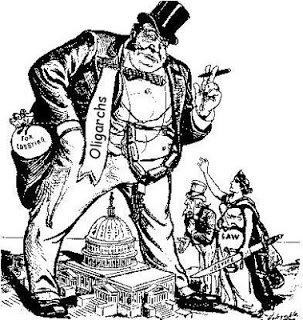
Things are dark everywhere in the world, except in the offices and homes of the wealthy and highly connected people of the world. They control the world. There are no genuine democracies in the world, only oligarchies and dictatorships. The wealthy classes have never had it better. Never in recorded history has this class had higher income and wealth compared to the average working family. Oxfam reported that the richest 50% of the people own over 99% of the world’s wealth, the richest 1% of the world’s population hold over 50% of the world’s wealth, and the richest 62 people in the world has as much wealth as the poorest half of the global population, about 3.6 billion people.

Rich people’s insatiable greed has brought the world to this lamentable state. Make no mistake about it, the greed of the wealthy classes and their flunkies are responsible for the wretched state of the world today. We, the masses of the world, believed their lies because we are decent trusting people. We did not believe anyone would tell us such monstrous lies. The wealthy classes did, then they had us go to war against other innocent trusting people around the world while they looted the assets of our countries and stole our future. They have left us nothing but our confusion as to why our lives are going down the drain when we believed and tried our best to be patriotic citizens of our country. Our confusion is rapidly turning to anger as we learn more details about how the wealthy classes and leaders have deceived us, betrayed us, and ruined our lives. They have used us in the most despicable of ways; they used our trust, and naivety to rob and violate us to our very core, by destroying our lives and our hope and dreams for a better future for ourselves and our children.

To put this insanity in clear perspective, consider the following. Reliable U.N. agencies estimate that 32,000 children die around the world every day from hunger and hunger related diseases. They die because their parents do not have enough money to feed them a nourishing diet. Billions of people around the world live on one to three dollars a day, so we can safely say that if these 32,000 children’s parents earned $3 a day these children would not die. A tiny $96,000 a day given to these children’s parents, in wages for work performed, would save these children from what is apparently a painful death. That is $35,040,000 per year to save 32,000 innocent children, or, $1,095 per year to save one child. According to Forbes magazine there are 1,810 billionaires in the world worth a total of $6.5 trillion. Why do 32,000 children die every day from hunger and hunger related diseases, 224,000 every week, 11,648,000 every year when there is enough food to feed them and enough money to buy that food? Because we live in a totally insane world where accumulating wealth is more important to some that feeding hungry children.

There is no way out of the insane economic house of cards the rich have built except total collapse. The rich made that inevitable when they relentlessly incurred ever increasing amounts of federal debt, in our name, as they continually sent our well paying jobs to low wage countries making it impossible for us to reduce that debt through our taxes. They got super rich, we lost our good jobs and had enormous amounts of new debt piled on to us. This is not sustainable, the house of cards must eventually collapse. Or, our insane leaders will try to turn the world into one huge war zone.

We, the decent, sane people of the world now have an important decision to make; we can continue to curse the darkness the insane wealthy people of the world have created with their insane endless pursuit of more wealth, or, we can begin lighting candles by seeking and employing methods of solidly uniting us so we can defeat our common enemy and move us to a better way of living together. If we do not have a clear picture in our minds of how we want to live together in peace and harmony chaos will occur when the socio economic system collapses. We have to know where we are going, or we are lost.

Where do we want to go? The answer is obvious; we are all human beings, we all sprang from the same source, we are all brothers and sisters and all have exactly the same innate needs for food, water, shelter, warmth, sleep, social order, safety, security, stability, employment, a sense of belonging and love, and the opportunity to develop to our fullest potential. Simply put. we want and need to live in a world where countries are at peace with each other while we live in peace and harmony with each other in our country and we have the opportunity to lead decent normal lives while developing to our fullest potential.

The only way out of the horrendous mess of the collapsing house cards the greedy people have erected is if a vast majority of people around the world solidly unite as brothers and sisters under the motto, “All for one, one for all.” After the collapse occurs no one must be left without the necessities of life. Brothers and sisters take care of each other.

No kind of violence can be tolerated after the house of cards collapses. Violence breeds violence and solves no important long term problems. Brothers and sisters are not violent with each other.

Can we, the people of the world, do this? Can we solidly unite, watch out for each other, protect each other and help those in need? The alternative is too awful to think about. So, we must try. If we try we may succeed. It would be a wonderful world if we cared about others as much as we cared about ourselves; if we were all brothers and sisters. It is time to start lighting candles and stop cursing the darkness. Love thy neighbour as thyself. Or, at least try to do it.


Harvey Lothian is a 79-year-old and living on the Sunshine Coast of BC, Canada. His passions since a teenager have been history, politics, economics, sociology, social psychology, learning, traveling and reading. In recent years he has come to understand what Plato meant when he said all dogs have the soul of a philosopher.

The Acquisitive Self, Minus the Self

article-2386232-1B30C5F9000005DC-668_634x633

By Natasha Vargas-Cooper

Source: The Baffler

Los Angeles isn’t exactly the place that comes to mind when you think of decorous restraint in the display of wealth, even in the dregs of the Great Recession. Here in my hometown, possibly more than in any other outpost of faux-meritocratic privilege in our republic of getting and spending, untrammeled acquisition is understood as an expression of individual will—and more than that, a matter of taste.

Yet for all the studio money sloshing around our bright, stucco world, most of us have never encountered the miniscule stratum of humans that hovers above the rich: the pure, gilt-edged, entrenched, multigenerational wealthy. Movie star money is food stamps compared to oil money, hedge fund money, and even some of that dank old money that still floats around the haciendas of Pasadena. We might have stood kegside next to Kirsten Dunst once, but we don’t know the kinds of rich people that F. Scott Fitzgerald had in mind when he wrote that the rich “are different from you and me”: the Vanderbilts, Rothschilds, and Astors. Hell, our L.A. doesn’t even boast a new-money Midwestern poultry heiress.

We don’t see these types—let alone interact with them—because they’ve largely seceded from public view. This is the guilt-prone social formation that Paul Fussell dubbed the “top out-of-sight class,” because you typically can’t see their houses/compounds unless you have access to a helicopter. Prior to the mid-twentieth century, the top out-of-sight class had been very much in sight; Manhattan’s Fifth Avenue and Philadelphia’s Main Line mansions are still monuments to their Caligulan self-regard. But ever since the Great Depression, and its attendant booms in Social Realist art and Popular Front politics, they staged a quiet but striking mass retreat. So spooked out were the über-rich that they became almost discreet. “The situation now is very different from the one in the 1890s satirized by Thorstein Veblen in The Theory of the Leisure Class,” Fussell wrote in 1983. “In [Veblen’s] day the rich delighted to exhibit themselves conspicuously. . . . Now they hide.”

Thirty years later, this is still mostly true, but thanks to the exhibition-friendly canons of social media, the scions of excess are back and flaunting it, baby—and it’s an entirely underwhelming display. These aren’t the out-of-sight rich but their twentysomething children, flouting their parents’ wealth-whispers code of silence. With acres of unproductive time on their hands, bored rich kids are using their gold-plated iPhones to post images of their baubles of privilege, their chemical stimulants of preference, and their outlandish bar tabs on Instagram, the photo-sharing service of the moment. It’s a bit as though a Bret Easton Ellis novel has come blandly to life, without the benefit of any irony.

Predictably enough, a Tumblr photo-blog has stirred vacantly into being, to compile all these outpourings of opulence in one convenient place. Launched in 2012 by a founder who remains anonymous, Rich Kids of Instagram (RKOI for short) curates and tags photos posted on Instagram by the likes of Barron Hilton, Tiffany Trump, and other “funemployed” trust-funders. The Tumblr, which slaps a whimsical, intricately scrolled frame around each photo but adds little else, doesn’t come with a explanation or an editorial policy, other than that it purports to show you the lifestyles that the unseen rich had previously shared only with their similarly rich friends. “They have more money than you do and this is what they do,” goes the tagline.

Why should we look? The payoffs for the nonrich civilian viewer are oddly perfunctory. After all of the social mythologies we’ve lovingly constructed to envelop the delusions of the 1 percent, this is the lurid end-of-the-rainbow payoff they’ve decided to lord over the rest of us—a fistful of watches, car interiors, and European spa photos? The content of Rich Kids of Instagram is less the aftermath of an imperial Roman bacchanal than the shamefaced hangover of an especially inane and oversexed (though well-appointed!) frat party. Around about the dozenth selfie featuring a buff and/or emaciated scion nestled into a private jet with a bottle of Cristal and a $10,000 clip of cash (“Always make sure to tip your pilot and co-pilot 10k. #rulesofflyingprivate”), you can’t help but wonder, “Is that all there is?”

The Duller Image

Indeed, in strictly visual terms, the site is hard to distinguish from a luxe Sharper Image catalog—merchandised out, to be sure, but disappointingly clichéd. The rich boys of Instagram—the son of fashion mogul Roberto Cavalli, for example, and a weak-chinned fellow with the handle Lord_Steinberg—post pictures of their IWC Grande Complication Perpetual watches, multiple Lamborghinis, and six-figure bar tabs. Here, all the shiny expensive crap seems to cry out, is what I’ve done with my life in lieu of becoming an adult. The young rich ladies, such as Alexa Dell (of, you know, the Dell computers fortune), mainly document how all this pelf looks from the other side of the gender divide: they snap pics of themselves surrounded by tangerine Hermès shopping bags, eating sushi sprinkled with 24K gold flakes, and holding their American Express Centurion card minimum payment notifications (typically $40,000).

There’s not even much in the way of the makings of righteous socialist outrage. (Swazi Leaks this most definitely is not; that project, by contrast, pairs leaked photographs of Swaziland’s high-rolling absolute monarch with pictures of $1-a-day sub-subsistence conditions in the slums.) Yes, the rich kids seem determined to remind us that they have stuff the rest of us will never have. The captions they post with their photos are, at times, slyly aware of their part in inequality (cf. a picture of a private jet and a luxury car with the caption “The struggle is real”). But for all that, the kids don’t seem especially power-hungry so much as aimless and languid. Behind these faux-provocative posts lurks a desperate clamor for attention that almost verges on a cry for help—something that makes you feel a certain involuntary (and certainly undeserved) pity for these manically self-documented upper-crusters.

Nevertheless, the rich kids keep on multiplying their blandified self-inventories, and some among the rest of us, presumably, keep looking. In the beginning, few of the kids knew their Instagram feeds were being monitored by RKOI; the security detail for Alexa Dell, for one, wasn’t prepared to see some of her pictures, with recognizable details that could give away her whereabouts (usually closely guarded by her family), show up on the site. Her social media presence was quickly scrubbed. But now, many of the kids featured know they’re getting Tumblr’d, and some court the attention by submitting photos for consideration, tagged with #rkoi. Rich Kids of Instagram has earned its subjects thousands of followers for their individual feeds, and even momentarily catapulted some of the sort-of rich, perhaps splashing out on a once-a-year chartered yacht to Saint Tropez, into better company than they could ordinarily afford.

American media culture has done its part by spinning off these social-media maunderings into a full complement of incoherent dreck. Last winter, the E! cable network debuted #RichKids of Beverly Hills, a reality TV series loosely organized around the premise (if we can call it that) of the Tumblr account. (The show even features—wink, wink—an “Instagram-obsessed” cast member named Morgan Stewart, who delivers such walk-on anathemas to viewer interest as “I’ve taken so many selfies on my cell phone today it’s, like, embarrassing.” No, son, what’s embarrassing is that you’re saying this shit out loud, in front of a television camera.)

The PG-13 Class War

If an E! show wasn’t enough, this summer saw the release of a book-like object, also called The Rich Kids of Instagram, credited to the site’s anonymous founder together with a ghostwriter/collaborator named Maya Sloan. Like its “inspiration,” the book—billed for some reason as a novel—is unrelentingly dumb, though it does supply an important clue to the weird demographic marketing strategy behind the Rich Kids franchise. It’s clearly written for kids or, um, young adults, suggesting that the notion of “aspirational” reading and viewing—the grand media euphemism for the lifestyle-voyeurism genre—is ripe for retirement. Instead, this plotless, and nearly character-less, flight of fancy is something far more inert, and less interesting: an empty vessel of careless adolescent fantasy.

The book’s careful observance of PG-13 canons of teen rebellion is so pronounced as to be obtrusive. There’s little in the way of appalling or casual sex; the cussing and chronic drug use (nothing too hard, mind you: pills, weed, blow) is there mainly for box-checking shock value. In this, as well, the book is true to the real-life Tumblr; nowhere do you see anything truly threatening or transgressive, like Jordan Belfort snorting coke out of a hooker’s ass in Martin Scorsese’s The Wolf of Wall Street. No, all you encounter, in the book as on the Tumblr feed, is the sort of teen spliff smoking you’d find at an average Dave Matthews show—but in a jet, bro!!

In the same way that such scenes beg to be seen as transgressive, the Rich Kids oeuvre begs to be seen as a populist-baiting vindication of privilege for privilege’s sake: Take that, plebes! But there’s a telling sleight of hand here. The book’s main gimmick is identical to the Tumblr’s MO: the outrage is all imputed to you, the reader, in advance, by its ostensible targets or by the medium itself. This means, in turn, that the proceedings float serenely above any semblance of real-world criticism. So, not surprisingly, the book suffers from the same thing the actual rich kids of Instagram kids do, only at far more tedious length: a depressing lack of imagination. Here, for example, is one of the novel’s rich kids fuming about her maid while also clumsily name-checking her 1,200-thread-count sateen sheet set: “Woven in Italy. For what I paid, I could buy your illegal Guatemalan cousins. That is, if you weren’t from Jersey.”

There’s no pulse-pounding social tension or class resentment on offer here—unless you’re especially aroused by inarticulate dialogue. The novel doesn’t proceed in a mood of detached anthropological inquiry, the way that, say, Louis Auchincloss or John Marquand’s old-money fictions did. There’s no anger, no weight, no insight. All you have in the way of a rich-kid call-to-arms is the empty bravado of the anonymous site creator’s acknowledgements at the front of the book: “To all the RKOI kids, who are unapologetically themselves; in a world where so few people will live out loud, you guys have guts, and for that you deserve admiration.” (And yes, Rich Kid self-awareness once again stops well short of the obvious irony involved in an anonymous social media impresario’s celebration of the overclass’s bold capacity “to live out loud.”)

For “gutsy” exemplars of individual lifestyle, the kids are distressingly uniform in their motivation, behavior, and dramatic purpose. Far from emblazoning their excellent individuality upon our collective prole brainpan, the novel’s cast of characters merges into an interchangeable ensemble of predictable, privileged reflexes and half-copped attitude. Each member of this brat pack is outfitted with a suffocatingly oversignifying name and a ponderous chapter rendered in his or her voice. To save time, here’s a rundown of the main players in the book (think of it as the literary equivalent of a bar-tab selfie):

• Annalise Hoff, a high-strung media heiress who dotes on her Murdoch/Hearst mashup Daddy: “I know: Freud would have a field day with me. I don’t take the short bus, after all. I have a Bentley waiting.”

• Christian Rixen, a Denmark Royal and jewelry designer, who employs an oddly clinical diction suggesting that this is what Southern Californian rich assholes hear when Europeans speak to them: “The countess may have birthed me, but she was far from maternal.”

• Miller Crawford, a Mayflower legacy, rifle heir, and aspiring record producer—and what passes for a self-starting entrepreneur in these circles: “I made a promise long ago: I won’t be that guy. The kind who orders staff to do petty bullshit. Sure, there are emergencies. Scoring coke for an after-hours, buying last-minute condoms. As for the rest? I can get my own double latte, thanks.”

• Todd Evergreen, a Mark Zuckerberg stand-in with a suitably generic name—an upper-middle-class kid who became an overnight billionaire by captaining an overcapitalized software startup. We don’t hear from Evergreen, who is eventually driven into paranoia and Howard Hughes–like seclusion until the novel’s crashingly unpersuasive, life-affirming coda. “I liked their things,” Evergreen says of the rich kids, “don’t get me wrong. Not for the things themselves, but how excited they got about them. How their faces lit up when they talked about them. But I liked the people for other reasons. Better reasons.”

• Desdemona Goldberg, a bipolar singer/actress: “Wow, I think, that coke was awesomeness.

You don’t say. This novelization rounds out the Rich Kids trifecta: Tumblr, TV show, and book. The net effect is, fittingly enough, akin to that of another notorious plutocratic foray into cultural exhibitionism—a Damien Hirst installation. In both, we see our culture lords courting outrage in the most safely inert and vanity-fed forms of display. Both aim to provoke an aesthetic response that is little more than a fleeting revulsion, compounded by the inevitable gawking at the price tag attached to the finished product. And both make a huge deal of curating predators, whether it be champagne-squirting twentysomethings captured in photo-blog form (RKOI) or a really big shark lifelessly preserved in a bath of acid (Hirst).

Binge and Purge

For that matter, the Rich Kids franchise outdoes even Hirst, and achieves a further refinement of this recursive aesthetic of total consumption: it’s a monument to the acquisitive self minus the actual self. Sometimes the kids don’t even bother to take pictures of items they buy. Instead, they share photos of the shopping bags from whatever luxury store they just blew through. Other times, they display pictures of receipts, personal check stubs, or their names embossed on credit cards.

Capital is always on the verge of dematerializing our common world; as Marx and Engels famously warned back in the day, under the height of bourgeois domination, “all that is solid melts into the air.” Here, however, is a gloss on that crippling dynamic that the founders of socialism never could have anticipated: the children of capital are rendering their innermost selves—their critics-be-damned determination to live out loud—as a random agglomeration of nonsignifying digits. The beauty they transmit back, what they see, is nothing more than a place-holding string of credit limits where a human self, or at least a measure of use value, might once have been.

Still, there are evidently some young self-starters who are gleaning a different aspirational message from the whole enterprise. When frequent RKOI contributor Aleem Iqbal, a nineteen-year-old whose dad owns a luxury car leasing service in England, went on a recent binge of selfie-taking, some unintended consequences ensued. The younger Iqbal saturated his Instagram feed with shots of himself driving really expensive cars with the vanity plate “LORD.” On June 6 the teenager leased a $560,000 Lamborghini Aventador Roadster, and a few hours later someone set it on fire. A week after that, three more of his luxury cars, two Audi R8 Spyder supercars and a Bentley Flying Spur, were torched. This was not his understanding of the new social contract at all. Instead of a reality TV or book deal, all his self-infatuated Instagram entries had earned him was the smoldering hulks of four plute-mobiles. On his Facebook page, the aggrieved teen called the campaign of high-end vandalism “a vile act of jealously towards my business.”

Maybe so; it could be like George Orwell said, and there really are only two classes, the rich and the haters. On the other hand, a follower of some RKOI property might have thought it was high time to perform a salutary act of simple math: subtracting some small amount of indecent luxury from the torrent of inert and unproductive excess that we all, inexplicably, must endure. Vileness, after all, is in the eye of the beholder.


The Reason You Work So Hard to Participate in the Rat Race

6a01116888abb7970c01a3fd366b75970b-800wi-800x425

By M.J. Higby

Source: Waking Times

Ralph Waldo Emerson once said, “A man in debt is so far a slave.” Money has no intrinsic value yet we spend our days damaging our health and spirit in order to obtain it. Why do we sacrifice our well-being for it? Is it the cliché that “we just want to provide a better life for our kids than we had?” Is it just way of the civilized world? The most important question to ask, however, is what power do we have to change this way of thinking and living? The reality is simple: money is a vehicle for social control. Debt makes us good, obedient workers and citizens.

The traditional workweek started in 1908 at The New England Cotton Mill in order to allow followers of the Jewish religion to adhere to Sabbath.  With the passage of The Fair Labor Standards Act in 1938, the 40-hour workweek became the norm. Data from the 2013 American Community Survey showed that the average commute time in America is about 26 minutes each way. According to a Gallup poll, the average workweek in America is 34.4 hours, however, when only taking into account full time workers, that average shoots up to 47, or 9.4 hours per day during a 5-day workweek. Keeping averages in mind then, between commuting, working and figuring in an hour for lunch (usually less), that puts us at approximately 11 hours and 40 minutes for the average full time worker. If you have a family with young kids, just add in another few hours for homework, baths, etc.

When the day is done, how much time do you have for yourself? To exercise, meditate or otherwise unwind the way that all the healthy living gurus preach? And how much of yourself, your presence of mind, is left to devote to family? We give the company the heat of our most intense mental fire while our families get the smoke. Yet Jeb Bush, the 2016 GOP presidential hopeful, says we need to work more.

The answer to why we put ourselves through this daily grind is multifaceted. The most pervasive reason is workplace and societal pressures. We are raised in a matrix of sorts. The cycle starts around the age of five when we are expected to adhere to a regimented 8-hour day of school. At this age, we don’t have the intellect to question why, so we mechanistically follow the path that’s laid out. This daily path becomes engraved in our minds and becomes as automatic as the sun’s daily journey. Our school system is adept at churning out working class individuals en masse.  We are taught along the way not to question authority, again adhering to the working class mentality.

On the opposite end of the spectrum are those in power. They are the ones that like to color outside the lines. Many books abound with titles such as The Wisdom of Psychopaths that illustrate how people with psychopathic traits, ones who don’t tend to follow rules, are often found in managerial roles such as CEOs all the way up to presidents of countries. With these rare manipulative, coldhearted personalities in place and the rest of us following like good sheeple without questioning, the stage is set for compliance.

If you have been in the working world long enough, then the following statement should ring true: if you work extra hours, you are a great worker; if you decline, you’re useless and apathetic. In the work world, there’s typically no in between. The pressure to succeed for the pride and benefit of the company unfortunately supersedes that of the pressure to be a good parent, sibling, son or daughter. According to a study done by the economic policy institute, between 1948 and 2013, productivity has grown 240% while income for non-managerial workers has grown by 108%. To make up for this discordance, pride of doing what’s best for the company has been employed as a motivational tactic. This tactic has been used as a sharp IV needle that’s been inserted into our veins and we have willingly ingested the contents that are injected through it. Pressure to conform toward achieving the company’s goals has overcome our will to be compensated accordingly.

The other side of this pressure comes from society as a whole outside the education/workplace. A close friend of mine works for a state court and makes about $40K/year. He is also a self-employed business owner on the off hours. I estimate that he works about 70-80 hours a week. He owns a home in a well-to do neighborhood and he drives a seventy thousand dollar luxury car. This crystallizes the saying ‘big hat, no cattle.’ But when a lie is told over and over, the lie becomes the truth.

When we look at someone who drives a luxury car and lives in an upscale part of town, we see this as success because of how often that visual of it has been pounded tirelessly into our minds. We fail to see that these are nothing but symbols of success and false ones at that. They appear real because as a society, we have been conditioned to see them this way by the advertising industry. In the book, The Millionaire Next Door, the authors annihilate this illusion. Numbers don’t lie and the statistics show that most true millionaires, those with a net worth of over one million dollars, do not own those luxuries that we typically associate with success and wealth. They view them as the reality of what they are: a depreciating liability. According to the book, the typical millionaire owns a home in the two to three hundred thousand dollar-range and a non-luxury automobile. If something goes wrong with either, they have the cash reserves to fix it. On the other hand, the commonplace owner of the luxury home and car can’t afford the roof and the tires respectively without going deeper into debt if they should need replacing.

Ownership of these symbols of wealth becomes a self-perpetuating illusion to satisfy the psychological need for acceptance. Unfortunately, human behavior dictates that emotional needs often override logical thinking. It’s been said that the borrower is slave to the debt-owner and with luxury items, debt is the rule, not the exception. Debt is healthy for those in power and contributes to a needy and thus obligated worker.

The current wisdom of slave, spend and save for retirement has only one destiny. That destiny can be summed up in three sentences. Spend your healthiest and most productive years working to support a life of materials and thus illusions of success while elevated stress damage your health. During this time, be sure to save enough money for retirement so you can enjoy those years of the subsequent poor health. And lastly, do it in the name of pride for your company and country.

I take pride in being American, as I’m sure most Americans do, however, if you’re reading this you’re likely smart enough to see the holes in the daily grind. It saps our creative potential and our physical, as well as our spiritual energy. We don’t need any studies to tell us how stressed we are and subsequently, how unhealthy we are. The physical manifestations of stress such as obesity, hypertension, heart disease, increased risk of cancer, depression, anxiety and many others tell us all we need to know. They tell us that we need a better work/life balance. They tell us that the pendulum has swung too much in the direction of work and away from life. Fortunately, there’s a way that we can take it back.

The most important way to restore this balance is to realize the power that we, as consumers, hold. Tyler Durden, the protagonist in the film, Fight Club said it best…

“…advertising has us chasing cars and clothes, working jobs we hate so we can buy shit we don’t need.”

The marketing and advertising industry know, more than anyone else, what motivates the human mind and how to tap into those instinctual drives. To defend against this industries seductiveness, we need to journey within ourselves and bring to light what’s really important to us. What most of us will find is that experiences and time well spent, not materials, are what makes us happy. In the book, aptly titled Well Being, the authors Tom Rath and Jim Harter discuss how experiences have been proven to make us happier than material posessions.

We revel in the anticipation of the experience, we enjoy the experience itself and we look back on it fondly for as long as we live. We do this while the expensive car or house that we borrowed money long ago to obtain falls apart causing us to borrow more money. If we live according to the rule that everything we purchase, with the exception of a home, is acquired by cash, then we fail to become slaves to debt and by extension, work. We no longer relinquish our power to creditors.

Oscar Wilde was famously quoted as saying that anyone who lives within their means suffers from a lack of imagination. Materialistically speaking, living by this notion will bind us with shackles to a life of debt servitude. When we rip those shackles of debt from our wrists, our minds become clear and we see what truly makes us happy. We spend more time with friends and family. We focus on our passions and hobbies. In essence, we get back to the foundation of what it means to be human. After all, none of us will ever arrive upon the mountain of our last moments of existence wishing we spent more time at the office. We will instead arrive wishing we completed that book, that painting or that experience with those we love most. For those can be purchased not with debt, but with time. And there is no more cunning, covert and deceitful thief of time as that villain we call debt.


About the Author

M.J. Higby practices medicine in Phoenix, AZ. He is passionate about martial arts, most notably Brazilian Jiu Jitsu. He enjoys writing about mental, spiritual and physical well being and questioning the methods by which we attain it. You can reach him on Facebook and Twitter @MJHigby

Five Studies: The Psychology of the Ultra-Rich, According to the Research

OLIGARCHY

Bernie Sanders says that billionaires have “psychiatric issues.” He’s not entirely incorrect.

By Livia Gershon

Source: Pacific Standard

“Let me tell you about the very rich. They are different from you and me. They possess and enjoy early, and it does something to them, makes them soft where we are hard, and cynical where we are trustful, in a way that, unless you were born rich, it is very difficult to understand. They think, deep in their hearts, that they are better than we are because we had to discover the compensations and refuges of life for ourselves. Even when they enter deep into our world or sink below us, they still think that they are better than we are. They are different.”
—F. Scott Fitzgerald

Bernie Sanders’ unexpectedly popular presidential campaign features a lot of rhetoric that we don’t usually hear in mainstream politics. One striking example is the Vermont senator’s contention that the ultra-rich suffer from “psychiatric issues” that manifest in an addiction to money and a worldview divorced from reality.

When we talk about inequality, we often spend lot of time considering poor people’s attitudes and behaviors, from whether they get married to how they talk to their kids. We’re less likely to stop and look at how the rich are different. But extremely wealthy people play a huge role in increasing inequality. With their heavy political clout, they help shape government economic policies, supporting very different positions from those of average Americans. From their perches on corporate boards and compensation committees they also give direct raises to their fellow oligarchs.

As inequality grows, in the United States and in the world, the shape of the wealthiest classes is also changing. The significance of inherited wealth fell rapidly in the mid-20th century, making way for the “self-made” rich. Now, though, there’s growing evidence that, as Thomas Piketty has famously argued, dynasties are making a comeback.

So there’s good reason to pay at least as much attention to the behaviors and beliefs of the rich as we do to those of the poor. But what does research tell us about the nature of wealth? How does it affect those who have it? Studies suggest the wealthy really do have significant psychological differences from the middle class in how they view money, and how they look at their relationship with society.

1. MONEY BUYS HAPPINESS—KIND OF

Richer people tend to be happier, but not by all that much. And it’s not really right to say money makes them happy. Wealth only makes affluent people more satisfied to the extent that it gives them more control over their own lives, making them feel richer. (Anyone who feels financially and personally stable because they’ve got a steady job, enough money to get them through an emergency, and a nicer house than their neighbor is likely to be happier than the poorest multi-millionaire in a hyper-rich enclave they can’t really afford.) Still, holding everything else equal, people who have more money have more stability. Of course, they also usually know they’re well off. And those two factors make them happier.

—”How Money Buys Happiness: Genetic and Environmental Processes Linking Finances and Life Satisfaction,” Wendy Johnson and Robert F. Krueger, Journal of Personality and Social Psychology, Vol 90(4), Apr 2006

 2. BUT RICH PEOPLE HAVE DIFFERENT CRITERIA FOR HAPPINESS

Asked about what makes people happy, extremely rich Americans, just like average Americans, typically put love first. But the ultra-wealthy are more likely than everyone else to say happiness depends on winning the appreciation and respect of others. They’re also more likely to cite the realization of personal potential as a key to happiness. But they’re much less likely than non-wealthy people to say that physical health is most important. (Perhaps because they’ve never been uninsured?) Rich people are also a bit more likely than the rest of us to say having a lot of money can occasionally present an obstacle to happiness.

—”Happiness of the Very Wealthy,” Ed Diener, Jeff Horwitz, and Robert A. Emmons, Social Indicators Research, April 1985

3. THE WEALTHY ARE MORE AND MORE LIKELY TO IDENTIFY WITH AN INTERNATIONAL ECONOMIC ELITE

Board members of the world’s largest corporations—a significant and influential segment of the ultra-rich—are increasingly likely to serve on the boards of foreign and multinational companies. Even directors who don’t serve on the boards of foreign companies usually interact with others who do. In other words, modern corporate elites are likely to be part of cosmopolitan, global social networks, whereas most poor and middle-class people are more likely to identify with their home populations.

—”Transnationalists and National Networkers in the Global Corporate Elite,” William K. Carroll, Global Networks, June 2009

4. AS A RESULT, THEY’RE NOT GREAT AT EMPATHY

People from higher socioeconomic classes do worse on a test where they’re asked to identify emotions in photographs of human faces. They’re also less accurate at perceiving the emotional states of others in real-life interactions. In fact, researchers can reduce people’s empathy just by prompting them to think of themselves as relatively high-status. Test subjects who are asked to imagine an interaction with someone from a lower social rung get worse at understanding other people’s emotions. The trouble higher-status people have recognizing emotions is tied to the fact that they tend to think about themselves and others in terms of fixed traits (“She’s a nervous person.”) In contrast, people from lower social classes are more likely to use contextual explanations for people’s behavior (“This interview is making her uncomfortable.”)

—”Social Class, Contextualism, and Empathic Accuracy,” Michael W. Kraus, Stéphane Côté, and Dacher Keltner, Psychological Science, October 25, 2010

5. AND THEY THINK DOMESTIC INEQUALITY REPRESENTS JUST DESSERTS

Americans are known for our trust in an ideal of meritocracy. When you ask the general public to assess statements like “most people who want to get ahead can make it if they’re willing to work hard,” well over 70 percent of us agree. But what happens when people see high levels of income inequality in their daily lives? It turns out that low-income Americans are less likely to believe in meritocracy if they live in counties with extreme economic inequality—places where they’re likely to run into much richer people a lot. For high-income people, the effect is exactly the opposite. The study’s authors suggest that rich people could be using a defense mechanism to stave off guilt and justify their relatively privileged position within a visibly unequal system. But, for whatever reason, the more inequality rich people see in their home county, they more likely they are to believe that meritocracy is working.

—”False Consciousness or Class Awareness? Local Income Inequality, Personal Economic Position, and Belief in American Meritocracy,” Benjamin J. Newman, Christopher D. Johnston, and Patrick L. Lown, American Journal of Political Science, April 2015


The enduring reality of government by wealth and some of its consequences

Plutocracy-2

By John Chuckman

Source: Intrepid Report

If you really want to understand the world in which we live—its endless wars, coups, interventions, and brutality towards great masses of people—you need to start with a correct understanding of the political machinery at work.

Talk of liberal interventions or fighting for rights, Western values, and democracy are hopelessly naïve and mostly deliberately deceptive. America’s record in such matters is one of securing everything from bananas, copper, and crude oil concessions to, at the very least, foreign governments obedient to its mandates after removing a disliked leader, whether elected or not. There is no concern for principles outside of their being featured in blowhard, insincere political speeches. The interests of America’s government do not match the interests of ordinary people, those in America or anywhere else, and, were the informed consent of the governed genuinely involved in launching bloody adventures, they likely never would happen.

The underlying reality of how people in the West are governed now compared to hundreds of years ago is surprisingly unchanged, much the way the rules governing how chemical bonds form have not changed despite a long and great parade of events and discoveries in the visible world. Despite all the revolts, revolutions, congresses, constitutions, and great movements over the centuries, we are in fact governed in the same essential way, people.

Of course to see this, you have to strip away the forms and rituals we have constructed over the centuries, forms and rituals which create impressive effects much like the green smoke and thunderous voice of the Wizard of Oz, a wizened old man who worked from his curtained control room, pulling levers and hitting buttons to create intimidating effects. Most Americans remain impressed with the smoke and thunder and cheap magic tricks, it requiring some dedicated effort to shake off well-done illusions, and, as I’ve written before, Americans work extremely hard in their jobs or live a kind of marginal life trying to scrape by on low wages or part-time work, either of which situations leaves little time or inclination to question what government is really doing and for whose benefit.

And so long as America remains under the rule of wealth, it is unlikely other states, as in Western Europe, will emerge from it because America’s establishment has such decisive influence—economic, financial, military, and political—over many of them.

What is considered as wealth changes over time and with economic development, and with those changes so do its interests as well as the practices of its power. Great deposits of copper ore or crude oil In the Middle Ages were virtually worthless. Wealth then was land for agriculture, forestry, and hunting, with the family names of owners determined by their estates. The revenue from that natural wealth was converted to great houses and jewels and the implements of war. War, too, was a source of wealth with most wars being little more than adventures for dominance and looting on a grand scale. Again, as in our own day, they were dressed up with slogans about principles or causes which had almost no meaning. The case of the “Christian” Crusades, which continued their pillaging and orgy of killing, on and off, for centuries, springs to mind. Soldiers and sailors, up until modern times, were not motivated by their paltry pay and poor supplies, it being understood as a condition of employment that they would enjoy a share of the bounty looted in any campaign.

Today, the forms wealth are as diverse and complex as is our society, and many of them are not apparent to ordinary people in the way great estates and hunting rights and obligations in war and peace to great lords were apparent in 800. Even as late as, say, 1850, wealth in the form of belching factories employing armies of people was often still quite apparent, but today’s complex banking and securities and financial institutions are not well understood by most people, although they represent immense wealth just as real in its demands and power as estates and obligations of the 9th century. Wealth today also comes from huge global manufacturing concerns of every description often with operations scattered out of sight, great shipping and transportation fleets, or electronic and communications empires. Land itself remains an important form of wealth where it can produce industrial-scale crops or contains deposits of valuable minerals or can generate flows of electricity or has been developed into great cities or resorts. War remains a source of wealth, only on a scale which could not have been imagined a few hundred years ago, but the spoils no longer go to soldiers in professional armies, they go to those responsible for the war, often in forms not easily recognized, as with special rights and concessions and secret arrangements.

As the nature of wealth evolved from the Middle Ages to the Modern Era, outward forms and rituals of government also changed. We have moved from the near-absolute power of kings and autocrats through aristocracies and republics with senates to a great variety of forms, parliaments and congresses, which appear designed to yield, to one degree or another, to the consent of the governed.

But appearances, as in the case of the Wizard of Oz, can be deceiving.

Today, a single wealthy individual cannot make the kind of demands upon ordinary people that marked arrangements in the Middle Ages—although that must be qualified as I’m sure anyone who has become involved in a dispute with a wealthy neighbor or a great corporation will be happy to explain—but the class of wealthy people can indeed make just such demands, and they do so all the time. You will be taxed to pay for the schemes that their lobbying establishes, your water and air will contain the pollution of their manufacturing and mining, your children will be sent to kill and die in their wars, the ethics or morals you were taught as a child will be trampled upon, and virtually all important legislation will deal with the rights and interests of wealth, and not those of the broad mass of people.

In America, once in four years you will be asked to choose between two names, both of which have been closely vetted by the powers that be, to elect as head of government. Not only have they been vetted, but the immense costs of their campaigns in reaching you on television, at rallies, and with opinion polls to regularly fine tune their words will be paid almost exclusively by those whose real interests are at stake in every major election, the wealthy and their important serving institutions of government. The end effect is not really all that different than the old single-candidate Soviet elections at which the press trained Americans to sneer.

Many of America’s founding fathers had dark suspicions about the existence of wealth being secure in the presence of democratic government, and that is why they created forms—mostly adapted from Britain, a place no one regarded as a democracy then—to keep wealth safe. Over a couple of centuries, the original arrangements were modified, the country moving from a tiny one percent or so privileged voters—for perspective, that’s roughly the same as the percent of voters in China’s Communist Party deciding who rules the country—to something approaching universal suffrage, but always arrangements were made to safeguard wealth against the assumed predations of democracy.

In elections for the American Senate, the legislative body with real power, authority, and privilege, you again will be asked to choose between two well-vetted and well-connected candidates. Others may run, but they will be rendered helpless by the vetted candidates’ flood of money and resources, you will never hear their voices, and America’s press—itself an empire of wealth serving wealth—will waste no time on their views. In the case of the Senate, you will be asked once in six years to vote, with the elections staggered so that only one-third of that body faces election at any time—a perfectly-conceived formula for keeping the old bunch in charge despite issues which might have generated election discontent. In fact, you can never “throw the bums out” in America. Anyway, there really isn’t much risk for senators running for re-election, with incumbents winning about 95% of the time. Senate seats are so secure they sometimes become family sinecures, handed down from father to son. After the election, unless you live in a small-population, insignificant state, you will never see or meet your senator, and you will certainly have no opportunity to lobby. Virtually all seeing, meeting, and lobbying will be done by the wealthy sponsors of the successful candidates or by their hired help.

The average American senator is said to spend two-thirds of his or her time securing funds for the next election, and such elections have now been bid-up to unbelievable amounts of money. The huge costs serve as what economists call “a barrier to entry,” a kind of high financial wall which keeps others from entering the political market, or, if somehow they do manage to enter, keeps them from effectively competing. Only the other wealth-vetted and connected candidate will have any hope of collecting a big enough pot of money to threaten an incumbent. The belief that people giving millions of dollars to candidates expect nothing in return is not even worth discussing. What they get—apart from goodies like important and prestigious appointments or valuable government contracts—is access, and access is exactly what most people never enjoy. Intimate access to politicians in high office, people always mindful of the necessity for another overflowing campaign war chest, is genuine power.

It is not impossible to have compatibility between democracy and wealth, but it requires a set of laws and regulations concerned with campaign financing, lobbying, and disestablishing a political duopoly of two privileged parties, laws which simply cannot happen in America over our lifetimes. In America, law makes corporations persons, and the highest court, packed by judges appointed to serve wealth’s interests, has ruled that campaign money is free speech. These are not things easily turned around.

The American system of campaign financing not only assures the secure power of domestic wealth, it assures also the influence of wealthy lobbies serving the interests of foreign states, Israel being the most outstanding example. Other foreign states also exploit this system to varying degrees, but no other state has more than five million American citizens in great part keen to serve its interests. And many of them are successful, affluent, and well-placed people enjoying a connected set of organizations and well-funded lobbies. Other foreign states also do not enjoy having many of their lobbyists in America being dual-citizens, free to move back and forth between the country being lobbied and the country being lobbied for, surely an ethical issue for politics and foreign affairs of the first magnitude. It is a unique situation in many respects, and it has helped create a unique set of problems in the world.

The wealthy interests of America happen to share some important interests with lobbyists for Israel, including securing the Western world’s supply of energy and not permitting the rise of states of any power in the Middle East who disagree with America’s essential views. It is important to keep in mind that “America’s essential views” are not necessarily the views of most of the American people and that many of those “essential views” have never received genuine informed consent. Elections conducted the way America’s high-level elections are conducted are incapable of bestowing meaningful consent, especially in vitally important matters.

The Israeli-American alliance is something of an unholy one because in binding America so closely to Israel, some huge and unresolvable conflicts have been created. Israel is associated with a long series of wars and abuses in the region, and, ipso facto, so is America. Israel, given the nature of its founding, expansion, and practices, is not liked by any neighboring states, although many now cooperate secretly, and sometimes even openly, in areas of mutual interest and have learned to tolerate its existence, the way generally eased by large American bribes or equally large American threats.

Traditionally, states in the Middle East are not democracies. Their often short histories have given limited opportunity for wide-spread development and prosperity creating a strong middle-class, the sine qua non for democracy. With the United States always (insincerely) praising democracy—including Israel’s grotesque contradiction of “democracy for some but not others”—it has been caught in a bind between supporting what it says it opposes and opposing what it says it supports.

Its proposed solution was a huge CIA project, nicknamed “the Arab Spring” by America’s wealth-serving and often dishonest press, a set of manufactured uprisings intended to bring a semblance of democracy to the region. It has been largely a failure, ending with some countries trapped in chaos or civil war and others, notably Egypt, briefly gaining a government Israel hated intensely, the truth being that genuine democracy in virtually any of these countries will not be friendly to Israel’s geopolitical ambitions in the region nor to those of its American promoter and protector. While the “Arab Spring” was allowed to proceed in some states, in others, where it was neither intended nor desired, such as Saudi Arabia or Bahrain, spill-over effects were deliberately and violently suppressed with American assistance. So the American-Israeli relationship now still locks the United States effectively in fighting against democracy in some countries and in supporting absolute monarchs and oligarchs in others, while in still others, such as Syria and Iraq, it is involved literally in smashing them as states, in violation of all international law and long-term good sense.

The entire situation is an ongoing disaster and is almost certainly not sustainable over the long term. How do you insist a huge country like Egypt remain a backwater without democratic rights indefinitely? How can you justify the destruction of an ancient and beautiful country like Syria? How can you justify supporting absolute monarchs and keeping their people in total political darkness? How do you continue supporting Israel in its abuse of millions, depriving them of every human right, or in its constant aggression to secure its hegemony? The drive for regional hegemony is all that is behind Israel’s constant hectoring of Iran, and how is that behavior different to the aggressive wars condemned by the Nuremburg Tribunal? It’s not, of course. Further, destructive, deliberately-induced conflicts like that in Syria, by degrading its economic advance, only slow the day for democracy’s having a real chance to emerge.

So here is America, self-proclaimed land of the free, mired in a vast situation where it works to suppress democracy, supports tyrants, and supports aggressive war because its leaders, with no genuine consent of the governed, have put it there, and this is just one of many unhealthy and destructive consequences of wealth’s rule in the United States. Wealth has no inherent interest in democracy, and it is entirely up to a people anywhere to demand respect for democracy through laws.

John Chuckman is former chief economist for a large Canadian oil company. He has many interests and is a lifelong student of history. He writes with a passionate desire for honesty, the rule of reason, and concern for human decency. John regards it as a badge of honor to have left the United States as a poor young man from the South Side of Chicago when the country embarked on the pointless murder of something like 3 million Vietnamese in their own land because they happened to embrace the wrong economic loyalties. He lives in Canada, which he is fond of calling “the peaceable kingdom.” John’s columns appear regularly on Counterpunch, Media Monitors, Politics Canada, Baltimore Chronicle, Intrepid Report, Scoop (New Zealand), Asian Tribune, Aljazeerah.info, Smirking Chimp, Dissident Voice, and many other Internet sites. He has been translated into at least ten languages and is regularly translated into Italian and Spanish. Several of his essays have been published in book collections, including two college texts. His first book has just been published, “The Decline of the American Empire and the Rise of China as a Global Power,” published by Constable and Robinson, London. Contact him at jc60649@yahoo.com.