
Rule by Criminals: When Dissidents Become Enemies of the State

By John & Nisha Whitehead

Source: The Rutherford Institute

In these days of worldwide confusion, there is a dire need for men and women who will courageously do battle for truth.”— Martin Luther King Jr.

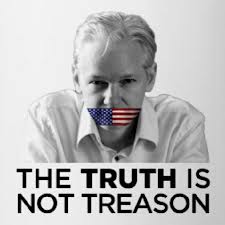
When exposing a crime is treated as committing a crime, you are being ruled by criminals.

In the current governmental climate, obeying one’s conscience and speaking truth to the power of the police state can easily render you an “enemy of the state.”

The government’s list of so-called “enemies of the state” is growing by the day.

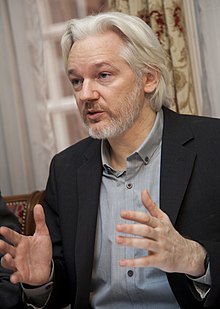
Wikileaks founder Julian Assange is merely one of the most visible victims of the police state’s war on dissidents and whistleblowers.

Five years ago, on April 11, 2019, police arrested Assange for daring to access and disclose military documents that portray the U.S. government and its endless wars abroad as reckless, irresponsible, immoral and responsible for thousands of civilian deaths.

Included among the leaked materials was gunsight video footage from two U.S. AH-64 Apache helicopters engaged in a series of air-to-ground attacks while American air crew laughed at some of the casualties. Among the casualties were two Reuters correspondents who were gunned down after their cameras were mistaken for weapons and a driver who stopped to help one of the journalists. The driver’s two children, who happened to be in the van at the time it was fired upon by U.S. forces, suffered serious injuries.

There is nothing defensible about crimes such as these perpetrated by the government.

When any government becomes almost indistinguishable from the evil it claims to be fighting—whether that evil takes the form of war, terrorism, torture, drug trafficking, sex trafficking, murder, violence, theft, pornography, scientific experimentations or some other diabolical means of inflicting pain, suffering and servitude on humanity—that government has lost its claim to legitimacy.

These are hard words, but hard times require straight-talking.

It is easy to remain silent in the face of evil.

What is harder—what we lack today and so desperately need—are those with moral courage who will risk their freedoms and lives in order to speak out against evil in its many forms.

Throughout history, individuals or groups of individuals have risen up to challenge the injustices of their age. Nazi Germany had its Dietrich Bonhoeffer. The gulags of the Soviet Union were challenged by Aleksandr Solzhenitsyn. America had its color-coded system of racial segregation and warmongering called out for what it was, blatant discrimination and profiteering, by Martin Luther King Jr.

And then there was Jesus Christ, an itinerant preacher and revolutionary activist, who not only died challenging the police state of his day—namely, the Roman Empire—but provided a blueprint for civil disobedience that would be followed by those, religious and otherwise, who came after him.

Indeed, it is fitting that we remember that Jesus Christ—the religious figure worshipped by Christians for his death on the cross and subsequent resurrection—paid the ultimate price for speaking out against the police state of his day.

A radical nonconformist who challenged authority at every turn, Jesus was a far cry from the watered-down, corporatized, simplified, gentrified, sissified vision of a meek creature holding a lamb that most modern churches peddle. In fact, he spent his adult life speaking truth to power, challenging the status quo of his day, and pushing back against the abuses of the Roman Empire.

Much like the American Empire today, the Roman Empire of Jesus’ day had all of the characteristics of a police state: secrecy, surveillance, a widespread police presence, a citizenry treated like suspects with little recourse against the police state, perpetual wars, a military empire, martial law, and political retribution against those who dared to challenge the power of the state.

For all the accolades poured out upon Jesus, little is said about the harsh realities of the police state in which he lived and its similarities to modern-day America, and yet they are striking.

Secrecy, surveillance and rule by the elite. As the chasm between the wealthy and poor grew wider in the Roman Empire, the ruling class and the wealthy class became synonymous, while the lower classes, increasingly deprived of their political freedoms, grew disinterested in the government and easily distracted by “bread and circuses.” Much like America today, with its lack of government transparency, overt domestic surveillance, and rule by the rich, the inner workings of the Roman Empire were shrouded in secrecy, while its leaders were constantly on the watch for any potential threats to its power. The resulting state-wide surveillance was primarily carried out by the military, which acted as investigators, enforcers, torturers, policemen, executioners and jailers. Today that role is fulfilled by the NSA, the FBI, the Department of Homeland Security and the increasingly militarized police forces across the country.

Widespread police presence. The Roman Empire used its military forces to maintain the “peace,” thereby establishing a police state that reached into all aspects of a citizen’s life. In this way, these military officers, used to address a broad range of routine problems and conflicts, enforced the will of the state. Today SWAT teams, comprised of local police and federal agents, are employed to carry out routine search warrants for minor crimes such as marijuana possession and credit card fraud.

Citizenry with little recourse against the police state. As the Roman Empire expanded, personal freedom and independence nearly vanished, as did any real sense of local governance and national consciousness. Similarly, in America today, citizens largely feel powerless, voiceless and unrepresented in the face of a power-hungry federal government. As states and localities are brought under direct control by federal agencies and regulations, a sense of learned helplessness grips the nation.

Perpetual wars and a military empire. Much like America today with its practice of policing the world, war and an over-arching militarist ethos provided the framework for the Roman Empire, which extended from the Italian peninsula to all over Southern, Western, and Eastern Europe, extending into North Africa and Western Asia as well. In addition to significant foreign threats, wars were waged against inchoate, unstructured and socially inferior foes.

Martial law. Eventually, Rome established a permanent military dictatorship that left the citizens at the mercy of an unreachable and oppressive totalitarian regime. In the absence of resources to establish civic police forces, the Romans relied increasingly on the military to intervene in all matters of conflict or upheaval in provinces, from small-scale scuffles to large-scale revolts. Not unlike police forces today, with their martial law training drills on American soil, militarized weapons and “shoot first, ask questions later” mindset, the Roman soldier had “the exercise of lethal force at his fingertips” with the potential of wreaking havoc on normal citizens’ lives.

A nation of suspects. Just as the American Empire looks upon its citizens as suspects to be tracked, surveilled and controlled, the Roman Empire looked upon all potential insubordinates, from the common thief to a full-fledged insurrectionist, as threats to its power. The insurrectionist was seen as directly challenging the Emperor.  A “bandit,” or revolutionist, was seen as capable of overturning the empire, was always considered guilty and deserving of the most savage penalties, including capital punishment. Bandits were usually punished publicly and cruelly as a means of deterring others from challenging the power of the state.  Jesus’ execution was one such public punishment.

Acts of civil disobedience by insurrectionists. Much like the Roman Empire, the American Empire has exhibited zero tolerance for dissidents such as Julian Assange, Edward Snowden and Chelsea Manning who exposed the police state’s seedy underbelly. Jesus was also branded a political revolutionary starting with his attack on the money chargers and traders at the Jewish temple, an act of civil disobedience at the site of the administrative headquarters of the Sanhedrin, the supreme Jewish council.

Military-style arrests in the dead of night. Jesus’ arrest account testifies to the fact that the Romans perceived Him as a revolutionary. Eerily similar to today’s SWAT team raids, Jesus was arrested in the middle of the night, in secret, by a large, heavily armed fleet of soldiers.  Rather than merely asking for Jesus when they came to arrest him, his pursuers collaborated beforehand with Judas. Acting as a government informant, Judas concocted a kiss as a secret identification marker, hinting that a level of deception and trickery must be used to obtain this seemingly “dangerous revolutionist’s” cooperation. 

Torture and capital punishment. In Jesus’ day, religious preachers, self-proclaimed prophets and nonviolent protesters were not summarily arrested and executed. Indeed, the high priests and Roman governors normally allowed a protest, particularly a small-scale one, to run its course. However, government authorities were quick to dispose of leaders and movements that appeared to threaten the Roman Empire. The charges leveled against Jesus—that he was a threat to the stability of the nation, opposed paying Roman taxes and claimed to be the rightful King—were purely political, not religious. To the Romans, any one of these charges was enough to merit death by crucifixion, which was usually reserved for slaves, non-Romans, radicals, revolutionaries and the worst criminals.

Jesus was presented to Pontius Pilate “as a disturber of the political peace,” a leader of a rebellion, a political threat, and most gravely—a claimant to kingship, a “king of the revolutionary type.” After Jesus is formally condemned by Pilate, he is sentenced to death by crucifixion, “the Roman means of executing criminals convicted of high treason.”  The purpose of crucifixion was not so much to kill the criminal, as it was an immensely public statement intended to visually warn all those who would challenge the power of the Roman Empire. Hence, it was reserved solely for the most extreme political crimes: treason, rebellion, sedition, and banditry. After being ruthlessly whipped and mocked, Jesus was nailed to a cross.

Jesus—the revolutionary, the political dissident, and the nonviolent activist—lived and died in a police state. Any reflection on Jesus’ life and death within a police state must take into account several factors: Jesus spoke out strongly against such things as empires, controlling people, state violence and power politics. Jesus challenged the political and religious belief systems of his day. And worldly powers feared Jesus, not because he challenged them for control of thrones or government but because he undercut their claims of supremacy, and he dared to speak truth to power in a time when doing so could—and often did—cost a person his life.

Unfortunately, the radical Jesus, the political dissident who took aim at injustice and oppression, has been largely forgotten today, replaced by a congenial, smiling Jesus trotted out for religious holidays but otherwise rendered mute when it comes to matters of war, power and politics.

Yet for those who truly study the life and teachings of Jesus, the resounding theme is one of outright resistance to war, materialism and empire.

What a marked contrast to the advice being given to Americans by church leaders to “submit to your leaders and those in authority,” which in the American police state translates to complying, conforming, submitting, obeying orders, deferring to authority and generally doing whatever a government official tells you to do.

Telling Americans to blindly obey the government or put their faith in politics and vote for a political savior flies in the face of everything for which Jesus lived and died.

Will we follow the path of least resistance—turning a blind eye to the evils of our age and marching in lockstep with the police state—or will we be transformed nonconformists “dedicated to justice, peace, and brotherhood”?

As Martin Luther King Jr. reminds us in a powerful sermon delivered 70 years ago, “This command not to conform comes … [from] Jesus Christ, the world’s most dedicated nonconformist, whose ethical nonconformity still challenges the conscience of mankind.”

Ultimately, as I make clear in my book Battlefield America: The War on the American People and in its fictional counterpart The Erik Blair Diaries, this is the contradiction that must be resolved if the radical Jesus—the one who stood up to the Roman Empire and was crucified as a warning to others not to challenge the powers-that-be—is to be an example for our modern age.
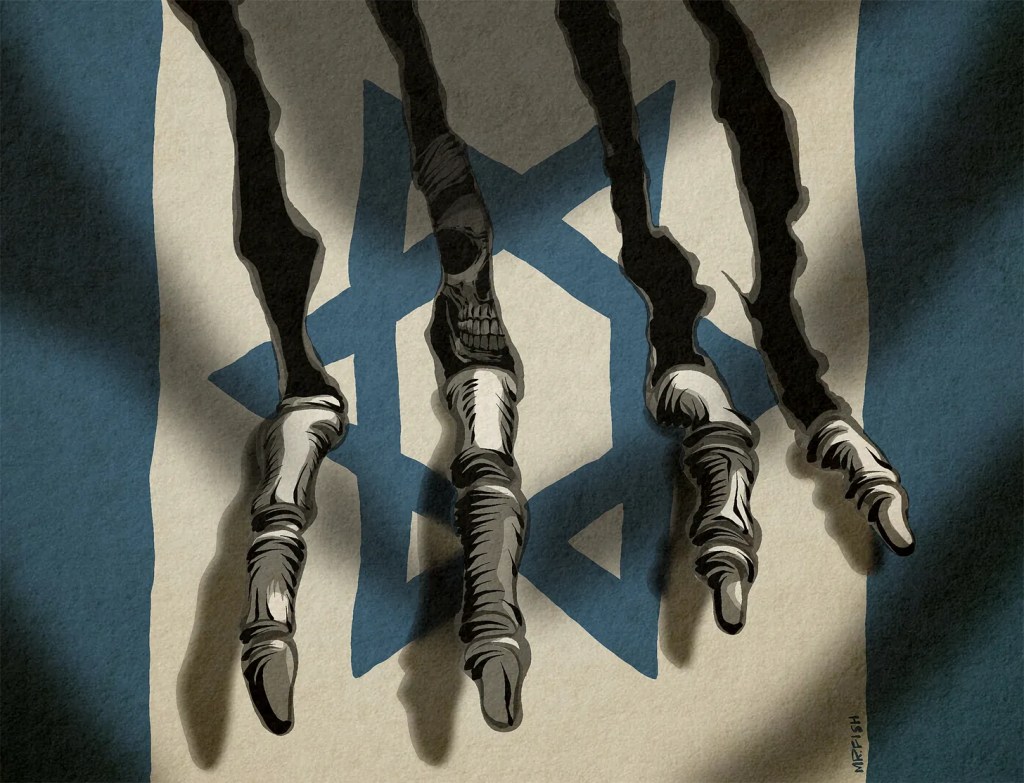
The Death of Israel

Settler colonial states have a terminal shelf life. Israel is no exception.

Birth of a New Nation – by Mr. Fish

By Chris Hedges

Source: The Chris Hedges Report

Israel will appear triumphant after it finishes its genocidal campaign in Gaza and the West Bank. Backed by the United States, it will achieve its demented goal. Its murderous rampages and genocidal violence will exterminate or ethnically cleanse Palestinians. Its dream of a state exclusively for Jews, with any Palestinians who remain stripped of basic rights, will be realized. It will revel in its blood-soaked victory. It will celebrate its war criminals. Its genocide will be erased from public consciousness and tossed into Israel’s huge black hole of historical amnesia. Those with a conscience in Israel will be silenced and persecuted

But by the time Israel achieves its decimation of Gaza — Israel is talking about months of warfare — it will have signed its own death sentence. Its facade of civility, its supposed vaunted respect for the rule of law and democracy, its mythical story of the courageous Israeli military and miraculous birth of the Jewish nation, will lie in ash heaps. Israel’s social capital will be spent. It will be revealed as an ugly, repressive, hate-filled apartheid regime, alienating younger generations of American Jews. Its patron, the United States, as new generations come into power, will distance itself from Israel the way it is distancing itself from Ukraine. Its popular support, already eroded in the U.S., will come from America’s Christianized fascists who see Israel’s domination of ancient Biblical land as a harbinger of the Second Coming and in its subjugation of Arabs a kindred racism and white supremacy. 

Palestinian blood and suffering — 10 times the number of children have been killed in Gaza as in two years of war in Ukraine — will pave the road to Israel’s oblivion. The tens, perhaps hundreds, of thousands of ghosts will have their revenge. Israel will become synonymous with its victims the way Turks are synonymous with the Armenians, Germans are with the Namibians and later the Jews, and Serbs are with the Bosniaks. Israel’s cultural, artistic, journalistic and intellectual life will be exterminated. Israel will be a stagnant nation where the religious fanatics, bigots and Jewish extremists who have seized power will dominate public discourse. It will find its allies among other despotic regimes. Israel’s repugnant racial and religious supremacy will be its defining attribute, which is why the most retrograde white supremists in the U.S. and Europe, including philo-semites such as John HageePaul Gosar and Marjorie Taylor Greene, fervently back Israel. The vaunted fight against anti-Semitism is a thinly disguised celebration of White Power.

Despotisms can exist long after their past due date. But they are terminal. You don’t have to be a Biblical scholar to see that Israel’s lust for rivers of blood is antithetical to the core values of Judaism. The cynical weaponization of the Holocaust, including branding Palestinians as Nazis, has little efficacy when you carry out a live streamed genocide against 2.3 million people trapped in a concentration camp.

Nations need more than force to survive. They need a mystique. This mystique provides purpose, civility and even nobility to inspire citizens to sacrifice for the nation. The mystique offers hope for the future. It provides meaning. It provides national identity. 

When mystiques implode, when they are exposed as lies, a central foundation of state power collapses. I reported on the death of the communist mystiques in 1989 during the revolutions in East Germany, Czechoslovakia and Romania. The police and the military decided there was nothing left to defend. Israel’s decay will engender the same lassitude and apathy. It will not be able to recruit indigenous collaborators, such as Mahmoud Abbas and the Palestinian Authority — reviled by most Palestinians — to do the bidding of the colonizers. The historian Ronald Robinson cites the inability to recruit indigenous allies by the British Empire as the point at which collaboration inverted into noncooperation, a defining moment for the start of decolonization. Once noncooperation by native elites morphs into active opposition, Robinson explains, the Empire’s “rapid retreat” is assured. 

All Israel has left is escalating violence, including torture, which accelerates the decline. This wholesale violence works in the short term, as it did in the war waged by the French in Algeria, the Dirty War waged by Argentina’s military dictatorship and during Britain’s conflict in Northern Ireland. But in the long term it is suicidal.

“You might say that the battle of Algiers was won through the use of torture,” the British historian Alistair Horne observed, “but that the war, the Algerian war, was lost.”

The genocide in Gaza has turned Hamas fighters into heroes in the Muslim world and the Global South. Israel may wipe out the Hamas leadership. But the past — and current — assassinations of scores of Palestinian leaders has done little to blunt resistance. The siege and genocide in Gaza has produced a new generation of deeply traumatized and enraged young men and women whose families have been killed and whose communities have been obliterated. They are prepared to take the place of martyred leaders. Israel has sent the stock of its adversary into the stratosphere.

Israel was at war with itself before Oct. 7. Israelis were protesting to prevent Prime Minister Benjamin Netanyahu’s abolition of judicial independence. Its religious bigots and fanatics, currently in power, had mounted a determined attack on Israeli secularism. Israel’s unity since the attacks is precarious. It is a negative unity. It is held together by hatred. And even this hatred is not enough to keep protestors from decrying the government’s abandonment of Israeli hostages in Gaza.

Hatred is a dangerous political commodity. Once finished with one enemy, those who stoke hatred go in search of another. The Palestinian “human animals,” when eradicated or subdued, will be replaced by Jewish apostates and traitors. The demonized group can never be redeemed or cured. A politics of hatred creates a permanent instability that is exploited by those seeking the destruction of civil society.

Israel was far down this road on Oct. 7 when it promulgated a series of discriminatory laws against non-Jews that resemble the racist Nuremberg Laws that disenfranchised Jews in Nazi Germany. The Communities Acceptance Law permits exclusively Jewish settlements to bar applicants for residency on the basis of “suitability to the community’s fundamental outlook.” 

Many of Israel’s best educated and young have left the country to places like Canada, Australia and the U.K., with as many as one million moving to the United States. Even Germany has seen an influx of around 20,000 Israelis in the first two decades of this century. Around 470,000 Israelis have left the country since Oct. 7. Within Israel, human rights campaigners, intellectuals and journalists — Israeli and Palestinian — are attacked as traitors in government-sponsored smear campaigns, placed under state surveillance and subjected to arbitrary arrests. The Israeli educational system is an indoctrination machine for the military.

The Israeli scholar Yeshayahu Leibowitz warned that if Israel did not separate church and state and end its occupation of the Palestinians, it would give rise to a corrupt Rabbinate that would warp Judaism into a fascistic cult. “Israel,” he said, “would not deserve to exist, and it will not be worthwhile to preserve it.”

The global mystique of the U.S., after two decades of disastrous wars in the Middle East and the assault on the Capitol on Jan. 6, is as contaminated as its Israeli ally. The Biden administration, in its fervor to unconditionally support Israel and appease the powerful Israel lobby, has bypassed the congressional review process with the Department of State to approve the transfer of 14,000 rounds of tank ammunition to Israel. Secretary of State Antony Blinken argued that “an emergency exists that requires the immediate sale.” At the same time he has cynically called on Israel to minimize civilian casualties.

Israel has no intention of minimizing civilian casualties. It has already killed 18,800 Palestinians, 0.82 percent of the Gazan population — the equivalent of around 2.7 million Americans. Another 51,000 have been wounded. Half of Gaza’s population is starving, according to the U.N. All Palestinian institutions and services that sustain life — hospitals (only 11 out of 36 hospitals in Gaza are still “partially functioning”), water treatment plantspower gridssewer systemshousingschoolsgovernment buildings, cultural centerstelecommunications systemsmosqueschurches, U.N. food distribution points — have been destroyed. Israel has assassinated at least 80 Palestinian journalists alongside dozens of their family members and over 130 U.N. aid workers along with members of their families. Civilian casualties are the point. This is not a war against Hamas. It is a war against the Palestinians. The objective is to kill or remove 2.3 million Palestinians from Gaza. 

The shooting dead of three Israeli hostages who apparently escaped their captors and approached Israeli forces with their shirts off, waving a white flag and calling out for help in Hebrew is not only tragic, but a glimpse of Israel’s rules of engagement in Gaza. These rules are — kill anything that moves.

As the retired Israeli Major General Giora Eiland, who formerly headed the Israeli National Security Council, wrote in Yedioth Ahronoth, “[T]he State of Israel has no choice but to turn Gaza into a place that is temporarily or permanently impossible to live in…Creating a severe humanitarian crisis in Gaza is a necessary means to achieve the goal.” “Gaza will become a place where no human being can exist,” he wrote. Major General Ghassan Alian declared that in Gaza, “there will be no electricity and no water, there will only be destruction. You wanted hell; you will get hell.” 

Settler colonial states that endure, including the United States, exterminate through diseases and violence nearly the entirety of their indigenous populations. Infectious diseases brought by the colonizers to the Americas, such as smallpox, killed an estimated 56 million indigenous people over about 100 years in South, Central and North America. By 1600 less than a tenth of the original population remained. Israel cannot kill on this scale, with nearly 5.5 million Palestinians living under occupation and another 9 million in the diaspora.

The Biden presidency, which ironically may have signed its own political death certificate, is tethered to Israel’s genocide. It will try to distance itself rhetorically, but at the same time it will funnel the billions of dollars of weapons demanded by Israel — including $14.3 billion in supplemental military aid to augment the $3.8 billion in annual aid — to “finish the job.” It is a full partner in Israel’s genocide project.

Israel is a pariah state. This was publically on display on Dec. 12 when 153 member states at the U.N. General Assembly voted for a ceasefire, with only 10 — including the U.S. and Israel — opposed and 23 abstaining. Israel’s scorched earth campaign in Gaza means there will be no peace. There will be no two state solution. Apartheid and genocide will define Israel. This presages a long, long conflict, one the Jewish State cannot ultimately win.

Hedges: The Execution of Julian Assange

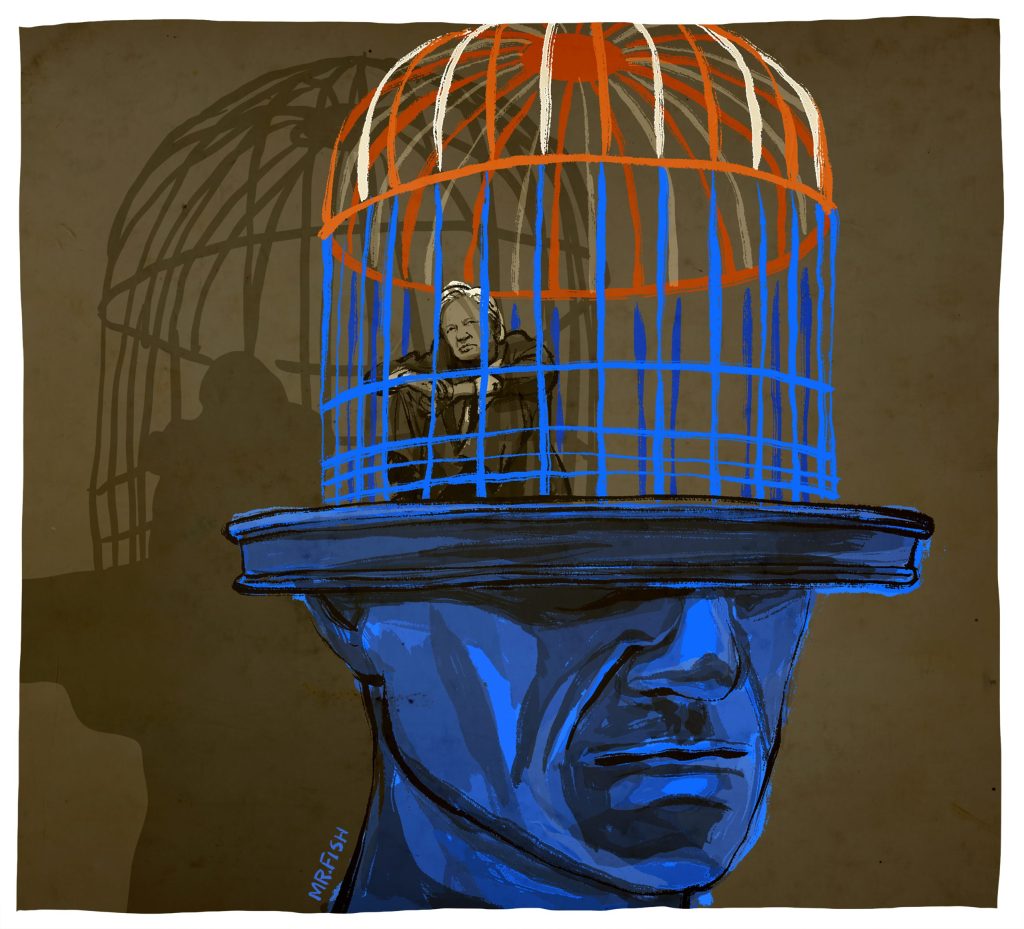
Original illustration by Mr. Fish, “Mind Games.”

He committed empire’s greatest sin. He exposed it as a criminal enterprise. He documented its lies, callous disregard for human life, rampant corruption and innumerable war crimes. And empires always kill those who inflict deep and serious wounds.

By Chris Hedges

Source: ScheerPost

Let us name Julian Assange’s executioners. Joe Biden. Boris Johnson. Scott Morrison. Theresa May. Lenin Moreno. Donald Trump. Barack Obama. Mike Pompeo. Hillary Clinton. Lord Chief Justice Ian Burnett and Justice Timothy Victor Holroyde. Crown Prosecutors James Lewis, Clair Dobbin and Joel Smith. District Judge Vanessa Baraitser. Assistant US Attorney in the Eastern District of Virginia Gordon Kromberg. William Burns, the director of the CIA. Ken McCallum, the Director General of the UK Security Service or MI5.

Let us acknowledge that the goal of these executioners, who discussed kidnapping and assassinating Assange, has always been his annihilation. That Assange, who is in precarious physical and psychological health and who suffered a stroke during court video proceedings on October 27, has been condemned to death should not come as a surprise. The ten years he has been detained, seven in the Ecuadorian Embassy in London and nearly three in the high security Belmarsh prison, were accompanied with a lack of sunlight and exercise and unrelenting threats, pressure, anxiety and stress.  “His eyes were out of sync, his right eyelid would not close, his memory was blurry,” his fiancé Stella Morris said of the stroke. 

His steady physical and psychological deterioration has led to hallucinations and depression. He takes antidepressant medication and the antipsychotic quetiapine. He has been observed pacing his cell until he collapses, punching himself in the face and banging his head against the wall. He has spent weeks in the medical wing of Belmarsh. Prison authorities found “half of a razor blade” hidden under his socks. He has repeatedly called the suicide hotline run by the Samaritans because he thought about killing himself “hundreds of times a day.” The executioners have not yet completed their grim work. Toussaint L’Ouverture, who led the Haitian independence movement, the only successful slave revolt in human history, was physically destroyed in the same manner, locked by the French in an unheated and cramped prison cell and left to die of exhaustion, malnutrition, apoplexy, pneumonia and probably tuberculosis.  

Assange committed empire’s greatest sin. He exposed it as a criminal enterprise. He documented its lies, callous disregard for human life, rampant corruption and innumerable war crimes. Republican or Democrat. Conservative or Labour. Trump or Biden. It does not matter. The goons who oversee the empire sing from the same Satanic songbook. Empires always kill those who inflict deep and serious wounds. Rome’s long persecution of the Carthaginian general Hannibal, forcing him in the end to commit suicide, and the razing of Carthage repeats itself in epic after epic. Crazy Horse. Patrice Lumumba. Malcolm X. Ernesto “Che” Guevara. Sukarno. Ngo Dinh Diem. Fred Hampton. Salvador Allende. If you cannot be bought off, if you will not be intimidated into silence, you will be killed. The obsessive CIA attempts to assassinate Fidel Castro, which because none succeeded have a Keystone Cop incompetence to them, included contracting Momo Salvatore Giancana, Al Capone’s successor in Chicago, along with Miami mobster Santo Trafficante to kill the Cuban leader, attempting to poison Castro’s cigars with a botulinum toxin, providing Castro with a tubercle bacilli-infected scuba-diving suit, booby-trapping a conch shell on the sea floor where he often dived, slipping botulism-toxin pills in one of Castro’s drinks and using a pen outfitted with a hypodermic needle to poison him. 

The current cabal of assassins hide behind a judicial burlesque overseen in London by portly judges in gowns and white horse-hair wigs mouthing legal Alice-in-Wonderland absurdities. It is a dark reprise of Gilbert and Sullivan’s Mikado with the Lord High Executioner drawing up lists of people “who would not be missed.”

I watched the latest installment of the Assange show trial via video link on Friday. I listened to the reading of the ruling granting the appeal by the United States to extradite Assange. Assange’s lawyers have two weeks to appeal to the Supreme Court, which they are expected to do. I am not optimistic. 

Friday’s ruling was devoid of legal analysis. It fully accepted the conclusions of the lower court judge about increased risk of suicide and inhumane prison conditions in the United States. But the ruling argued that US Diplomatic Note no. 74, given to the court on February 5, 2021, which offered “assurances” that Assange would be well treated, overrode the lower court’s conclusions. It was a remarkable legal non sequitur. The ruling would not have gotten a passing grade in a first-semester law school course. But legal erudition is not the point. The judicial railroading of Assange, which has eviscerated one legal norm after another, has turned, as Franz Kafka wrote, “lying into a universal principle.” 

The decision to grant the extradition was based on four “assurances” given to the court by the US government.  The two-judge appellate panel ruled that the “assurances” “entirely answer the concerns which caused the judge [in the lower court] to discharge Mr. Assange.” The “assurances” promise that Assange will not be subject to Special Administrative Measures (SAMs) which keep prisoners in extreme isolation and allow the government to monitor conversations with lawyers, eviscerating attorney-client privilege; can, if the Australian his government agrees, serve out his sentence there;  will receive adequate clinical and psychological care; and, pre-trial and post trial, will not be held in the Administrative Maximum Facility (ADX) in Florence, Colorado. 

“There is no reason why this court should not accept the assurances as meaning what they say,” the judges wrote. “There is no basis for assuming that the USA has not given the assurances in good faith.”

And with these rhetorical feints the judges signed Assange’s death warrant. 

None of the “assurances” offered by Biden’s Department of Justice are worth the paper they are written on.  All come with escape clauses. None are legally binding. Should Assange do “something subsequent to the offering of these assurances that meets the tests for the imposition of SAMs or designation to ADX” he will be subject to these coercive measures. And you can be assured that any incident, no matter how trivial, will be used, if Assange is extradited, as an excuse to toss him into the mouth of the dragon. Should Australia, which has marched in lockstep with the US in the persecution of their citizen not agree to his transfer, he will remain for the rest of his life in a US prison. But so what. If Australia does not request a transfer it “cannot be a cause for criticism of the USA, or a reason for regarding the assurances as inadequate to meet the judge’s concerns,” the ruling read. And even if that were not the case, it would take Assange ten to fifteen years to appeal his sentence up to the Supreme Court, more than enough time for the state assassins to finish him off. I am not sure how to respond to assurance number four, stating that Assange will not be held pre-trial in the ADX in Florence. No one is held pre-trail in ADX Florence. But it sounds reassuring, so I guess those in the Biden DOJ who crafted the diplomatic note added it. ADX Florence, of course, is not the only supermax prison in the United States that might house Assange. Assange can be shipped out to one of our other Guantanamo-like facilities. Daniel Hale, the former US Air Force intelligence analyst currently imprisoned for releasing top-secret documents that exposed widespread civilian casualties caused by US drone strikes, has been held at USP Marion, a federal penitentiary in Marion, Illinois, in a Communications Management Unit (CMU) since October. CMUs are highly restrictive units that replicate the near total isolation imposed by SAMs. 

The High Court ruling ironically came as Secretary of State Antony Blinken announced at the virtual Summit for Democracy that the Biden administration will provide new funding to protect reporters targeted because of their work and support independent international journalism. Blinken’s “assurances” that the Biden administration will defend a free press, at the very moment the administration was demanding Assange’s extradition, is a glaring example of the rank hypocrisy and mendacity that makes the Democrats, as Glen Ford used to say, “not the lesser evil, but the more effective evil.” 

Assange is charged in the US under 17 counts of the Espionage Act and one count of hacking into a government computer. The charges could see him sentenced to 175 years in prison, even though he is not a US citizen and WikiLeaks is not a US-based publication. If found guilty it will effectively criminalize the investigative work of all journalists and publishers, anywhere in the world and of any nationality, who possess classified documents to shine a light on the inner workings of power. This mortal assault on the press will have been orchestrated, we must not forget, by a Democratic administration. It will set a legal precedent that will delight other totalitarian regimes and autocrats who, emboldened by the United States, will gleefully seize journalists and publishers, no matter where they are located, who publish inconvenient truths. 

There is no legal basis to hold Julian in prison. There is no legal basis to try him, a foreign national, under the Espionage Act. The CIA spied on Assange in the Ecuador Embassy through a Spanish company, UC Global, contracted to provide embassy security. This spying included recording the privileged conversations between Assange and his lawyers. This fact alone invalidates any future trial. Assange, who after seven years in a cramped room without sunlight in the embassy, has been held for nearly three years in a high-security prison in London so the state can, as Nils Melzer, the UN Special Rapporteur on Torture, has testified, continue the unrelenting abuse and torture it knows will lead to his psychological and physical disintegration. The persecution of Assange is designed to send a message to anyone who might consider exposing the corruption, dishonesty and depravity that defines the black heart of our global elites. 

Dean Yates can tell you what US “assurances” are worth. He was the Reuters bureau chief in Baghdad on the morning of July 12, 2007 when his Iraqi colleagues Namir Noor-Eldeen and Saeed Chmagh were killed, along with nine other men, by US Army Apache gunships. Two children were seriously wounded. The US government spent three years lying to Yates, Reuters and the rest of the world about the killings, although the army had video evidence of the massacre taken by the Apaches during the attack. The video, known as the Collateral Murder video, was leaked in 2010 by Chelsea Manning to Assange. It, for the first time, proved that those killed were not engaged, as the army had repeatedly insisted, in a firefight. It exposed the lies spun by the US that it could not locate the video footage and had never attempted to cover up the killings. 

[Watch the full interview I did with Yates:]

The Spanish courts can tell you what US “assurances” are worth. Spain was given an assurance that David Mendoza Herrarte, if extradited to the US to face trial for drug trafficking charges, could serve his prison sentence in Spain. But for six years the Department of Justice repeatedly refused Spanish transfer requests, only relenting when the Spanish Supreme Court intervened.

The people in Afghanistan can tell you what U.S “assurances” are worth. US military, intelligence and diplomatic officials knew for 18 years that the war in Afghanistan was a quagmire yet publicly stated, over and over, that the military intervention was making steady progress.  

The people in Iraq can tell you what US “assurances” are worth. They were invaded and subject to a brutal war based on fabricated evidence about weapons of mass destruction. 

The people of Iran can tell you what US “assurances” are worth. The United States, in the 1981 Algiers Accords, promised not to interfere in Iran’s internal affairs and then funded and backed The People’s Mujahedin Organization of Iran (MEK), a terrorist group, based in Iraq and dedicated to overthrowing the Iranian regime.

The thousands of people tortured in US global black sites can tell you what US “assurances” are worth. CIA officers, when questioned about the widespread use of torture by the Senate Intelligence Committee, secretly destroyed videotapes of torture interrogations while insisting there was no “destruction of evidence.” 

The numbers of treaties, agreements, deals, promises and “assurances” made by the US around the globe and violated are too numerous to list. Hundreds of treaties signed with Native American tribes, alone, were ignored by the US government. 

Assange, at tremendous personal cost, warned us. He gave us the truth. The ruling class is crucifying him for this truth. With his crucifixion, the dim lights of our democracy go dark.  

Stand Up to Tyranny: How to Respond to the Evils of Our Age

By John W. Whitehead & Nisha Whitehead

Source: The Rutherford Institute

“The church must be reminded that it is not the master or the servant of the state, but rather the conscience of the state. It must be the guide and the critic of the state, and never its tool. If the church does not recapture its prophetic zeal, it will become an irrelevant social club without moral or spiritual authority.”—Martin Luther King Jr. (A Knock at Midnight, June 11, 1967)

In every age, we find ourselves wrestling with the question of how Jesus Christ—the itinerant preacher and revolutionary activist who died challenging the police state of his time, namely, the Roman Empire—would respond to the moral questions of our day.

For instance, would Jesus advocate, as so many evangelical Christian leaders have done in recent years, for congregants to “submit to your leaders and those in authority,” which in the American police state translates to complying, conforming, submitting, obeying orders, deferring to authority and generally doing whatever a government official tells you to do?

What would Jesus do? 

Study the life and teachings of Jesus, and you may be surprised at how relevant he is to our modern age.

A radical nonconformist who challenged authority at every turn, Jesus spent his adult life speaking truth to power, challenging the status quo of his day, pushing back against the abuses of the Roman Empire, and providing a blueprint for standing up to tyranny that would be followed by those, religious and otherwise, who came after him.

Those living through this present age of government lockdowns, immunity passports, militarized police, SWAT team raids, police shootings of unarmed citizens, roadside strip searches, invasive surveillance and the like might feel as if these events are unprecedented. However, the characteristics of a police state and its reasons for being are no different today than they were in Jesus’ lifetime: control, power and money.

Much like the American Empire today, the Roman Empire of Jesus’ day was characterized by secrecy, surveillance, a widespread police presence, a citizenry treated like suspects with little recourse against the police state, perpetual wars, a military empire, martial law, and political retribution against those who dared to challenge the power of the state.

A police state extends far beyond the actions of law enforcement.  In fact, a police state “is characterized by bureaucracy, secrecy, perpetual wars, a nation of suspects, militarization, surveillance, widespread police presence, and a citizenry with little recourse against police actions.”

Indeed, the police state in which Jesus lived (and died) and its striking similarities to modern-day America are beyond troubling.

Secrecy, surveillance and rule by the elite. As the chasm between the wealthy and poor grew wider in the Roman Empire, the ruling class and the wealthy class became synonymous, while the lower classes, increasingly deprived of their political freedoms, grew disinterested in the government and easily distracted by “bread and circuses.” Much like America today, with its lack of government transparency, overt domestic surveillance, and rule by the rich, the inner workings of the Roman Empire were shrouded in secrecy, while its leaders were constantly on the watch for any potential threats to its power. The resulting state-wide surveillance was primarily carried out by the military, which acted as investigators, enforcers, torturers, policemen, executioners and jailers. Today that role is fulfilled by the NSA, the FBI, the Department of Homeland Security and the increasingly militarized police forces across the country.

Widespread police presence. The Roman Empire used its military forces to maintain the “peace,” thereby establishing a police state that reached into all aspects of a citizen’s life. In this way, these military officers, used to address a broad range of routine problems and conflicts, enforced the will of the state. Today SWAT teams, comprised of local police and federal agents, are employed to carry out routine search warrants for minor crimes such as marijuana possession and credit card fraud.

Citizenry with little recourse against the police state. As the Roman Empire expanded, personal freedom and independence nearly vanished, as did any real sense of local governance and national consciousness. Similarly, in America today, citizens largely feel powerless, voiceless and unrepresented in the face of a power-hungry federal government. As states and localities are brought under direct control by federal agencies and regulations, a sense of learned helplessness grips the nation.

Perpetual wars and a military empire. Much like America today with its practice of policing the world, war and an over-arching militarist ethos provided the framework for the Roman Empire, which extended from the Italian peninsula to all over Southern, Western, and Eastern Europe, extending into North Africa and Western Asia as well. In addition to significant foreign threats, wars were waged against inchoate, unstructured and socially inferior foes.

Martial law. Eventually, Rome established a permanent military dictatorship that left the citizens at the mercy of an unreachable and oppressive totalitarian regime. In the absence of resources to establish civic police forces, the Romans relied increasingly on the military to intervene in all matters of conflict or upheaval in provinces, from small-scale scuffles to large-scale revolts. Not unlike police forces today, with their martial law training drills on American soil, militarized weapons and “shoot first, ask questions later” mindset, the Roman soldier had “the exercise of lethal force at his fingertips” with the potential of wreaking havoc on normal citizens’ lives.

A nation of suspects. Just as the American Empire looks upon its citizens as suspects to be tracked, surveilled and controlled, the Roman Empire looked upon all potential insubordinates, from the common thief to a full-fledged insurrectionist, as threats to its power. The insurrectionist was seen as directly challenging the Emperor.  A “bandit,” or revolutionist, was seen as capable of overturning the empire, was always considered guilty and deserving of the most savage penalties, including capital punishment. Bandits were usually punished publicly and cruelly as a means of deterring others from challenging the power of the state.  Jesus’ execution was one such public punishment.

Acts of civil disobedience by insurrectionists. Starting with his act of civil disobedience at the Jewish temple, the site of the administrative headquarters of the Sanhedrin, the supreme Jewish council, Jesus branded himself a political revolutionary. When Jesus “with the help of his disciples, blocks the entrance to the courtyard” and forbids “anyone carrying goods for sale or trade from entering the Temple,” he committed a blatantly criminal and seditious act, an act “that undoubtedly precipitated his arrest and execution.” Because the commercial events were sponsored by the religious hierarchy, which in turn was operated by consent of the Roman government, Jesus’ attack on the money chargers and traders can be seen as an attack on Rome itself, an unmistakable declaration of political and social independence from the Roman oppression.

Military-style arrests in the dead of night. Jesus’ arrest account testifies to the fact that the Romans perceived Him as a revolutionary. Eerily similar to today’s SWAT team raids, Jesus was arrested in the middle of the night, in secret, by a large, heavily armed fleet of soldiers.  Rather than merely asking for Jesus when they came to arrest him, his pursuers collaborated beforehand with Judas. Acting as a government informant, Judas concocted a kiss as a secret identification marker, hinting that a level of deception and trickery must be used to obtain this seemingly “dangerous revolutionist’s” cooperation. 

Torture and capital punishment. In Jesus’ day, religious preachers, self-proclaimed prophets and nonviolent protesters were not summarily arrested and executed. Indeed, the high priests and Roman governors normally allowed a protest, particularly a small-scale one, to run its course. However, government authorities were quick to dispose of leaders and movements that appeared to threaten the Roman Empire. The charges leveled against Jesus—that he was a threat to the stability of the nation, opposed paying Roman taxes and claimed to be the rightful King—were purely political, not religious. To the Romans, any one of these charges was enough to merit death by crucifixion, which was usually reserved for slaves, non-Romans, radicals, revolutionaries and the worst criminals.

Jesus was presented to Pontius Pilate “as a disturber of the political peace,” a leader of a rebellion, a political threat, and most gravely—a claimant to kingship, a “king of the revolutionary type.” After Jesus is formally condemned by Pilate, he is sentenced to death by crucifixion, “the Roman means of executing criminals convicted of high treason.”  The purpose of crucifixion was not so much to kill the criminal, as it was an immensely public statement intended to visually warn all those who would challenge the power of the Roman Empire. Hence, it was reserved solely for the most extreme political crimes: treason, rebellion, sedition, and banditry. After being ruthlessly whipped and mocked, Jesus was nailed to a cross.

As Professor Mark Lewis Taylor observed:

The cross within Roman politics and culture was a marker of shame, of being a criminal. If you were put to the cross, you were marked as shameful, as criminal, but especially as subversive. And there were thousands of people put to the cross. The cross was actually positioned at many crossroads, and, as New Testament scholar Paula Fredricksen has reminded us, it served as kind of a public service announcement that said, “Act like this person did, and this is how you will end up.”

Jesus—the revolutionary, the political dissident, and the nonviolent activist—lived and died in a police state. Any reflection on Jesus’ life and death within a police state must take into account several factors: Jesus spoke out strongly against such things as empires, controlling people, state violence and power politics. Jesus challenged the political and religious belief systems of his day. And worldly powers feared Jesus, not because he challenged them for control of thrones or government but because he undercut their claims of supremacy, and he dared to speak truth to power in a time when doing so could—and often did—cost a person his life.

Unfortunately, the radical Jesus, the political dissident who took aim at injustice and oppression, has been largely forgotten today, replaced by a congenial, smiling Jesus trotted out for religious holidays but otherwise rendered mute when it comes to matters of war, power and politics.

Yet for those who truly study the life and teachings of Jesus, the resounding theme is one of outright resistance to war, materialism and empire.

Ultimately, as I point out in my book Battlefield America: The War on the American People, this is the contradiction that must be resolved if the radical Jesus—the one who stood up to the Roman Empire and was crucified as a warning to others not to challenge the powers-that-be—is to be an example for our modern age.
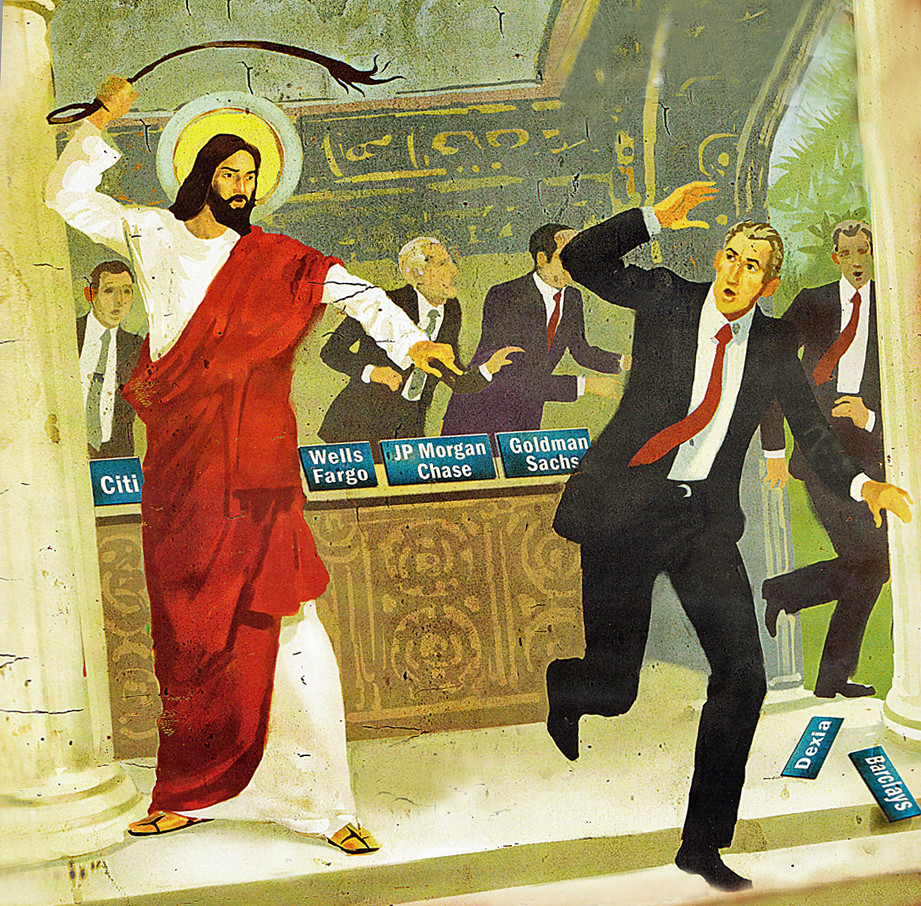
After all, there is so much suffering and injustice in the world, and so much good that can be done by those who truly aspire to follow Jesus Christ’s example.

We must decide whether we will follow the path of least resistance—willing to turn a blind eye to what Martin Luther King Jr. referred to as the “evils of segregation and the crippling effects of discrimination, to the moral degeneracy of religious bigotry and the corroding effects of narrow sectarianism, to economic conditions that deprive men of work and food, and to the insanities of militarism and the self-defeating effects of physical violence”—or whether we will be transformed nonconformists “dedicated to justice, peace, and brotherhood.”

As King explained in a powerful sermon delivered in 1954, “This command not to conform comes … [from] Jesus Christ, the world’s most dedicated nonconformist, whose ethical nonconformity still challenges the conscience of mankind.”

Furthermore:

We need to recapture the gospel glow of the early Christians, who were nonconformists in the truest sense of the word and refused to shape their witness according to the mundane patterns of the world.  Willingly they sacrificed fame, fortune, and life itself in behalf of a cause they knew to be right.  Quantitatively small, they were qualitatively giants.  Their powerful gospel put an end to such barbaric evils as infanticide and bloody gladiatorial contests.  Finally, they captured the Roman Empire for Jesus Christ… The hope of a secure and livable world lies with disciplined nonconformists, who are dedicated to justice, peace, and brotherhood.  The trailblazers in human, academic, scientific, and religious freedom have always been nonconformists.  In any cause that concerns the progress of mankind, put your faith in the nonconformist!

…Honesty impels me to admit that transformed nonconformity, which is always costly and never altogether comfortable, may mean walking through the valley of the shadow of suffering, losing a job, or having a six-year-old daughter ask, “Daddy, why do you have to go to jail so much?”  But we are gravely mistaken to think that Christianity protects us from the pain and agony of mortal existence.  Christianity has always insisted that the cross we bear precedes the crown we wear.  To be a Christian, one must take up his cross, with all of its difficulties and agonizing and tragedy-packed content, and carry it until that very cross leaves its marks upon us and redeems us to that more excellent way that comes only through suffering.

In these days of worldwide confusion, there is a dire need for men and women who will courageously do battle for truth.  We must make a choice. Will we continue to march to the drumbeat of conformity and respectability, or will we, listening to the beat of a more distant drum, move to its echoing sounds?  Will we march only to the music of time, or will we, risking criticism and abuse, march to the soul saving music of eternity?

The Twilight of Liberty: the State Destroys Alternative Media

By Kurt Nimmo

Source: Another Day in the Empire

It should be obvious by now what the plan is for Julian Assange—psychological torture resulting in either a total breakdown or an untimely death, the latter supported by the psychopaths who claim they are our leaders. This psychological torture was noted, with standard corporate media disinterest, by Nils Melzer, an internationally recognized expert on torture treatment.

“Unless the UK urgently changes course and alleviates his inhumane situation, Mr. Assange’s continued exposure to arbitrariness and abuse may soon end up costing his life,” Melzer, UN special rapporteur on torture and other cruel, inhuman or degrading treatment, said in a statement last week.

Melzer demanded “that London immediately take measures to protect Assange’s health and dignity… However, what we have seen from the UK Government is outright contempt for Mr. Assange’s rights and integrity… Despite the medical urgency of my appeal, and the seriousness of the alleged violations, the UK has not undertaken any measures of investigation, prevention and redress required under international law.”

In America, the UK, and much of Europe, the financial elite and its political class consider truth-telling a cardinal sin, a crime punishable by death—not by lethal injection, but slowly and sadistically under a torture system tweaked by the CIA and put into action in rendition dungeons scattered around the world.

An article at Strategic Culture Foundation summarizes:

Assange has provided vital information to the international public which demonstrates systematic corruption by Washington and its allies. For telling the truth, he is now being persecuted, just as his whistleblowing colleagues, Chelsea Manning and Edward Snowden are. Manning has been repeatedly imprisoned in the US, while Snowden has had to seek asylum in Russia for fear of being summarily incarcerated as a “traitor” if he returns to the US.

In fact, all of us, those who look beyond the headlines and ferret out the truth, are half a dozen steps away from suffering Julian Assange’s fate.

The national security state and its political class plan to kill Assange, keep Chelsea Manning in prison and find a way to return Snowden to the US for a show trial and life behind bars (or execution).

It must, however, first salt the earth where truth is harvested. Thousands of blogs, similar to this one, and websites contradicting and disassembling approved narratives, will be targeted for extinction.

The Mueller investigation did not result in dethroning Donald Trump. The Clinton-DNC attack on a duly elected president, however, resulted in millions of easily duped Americans believing Russia somehow meddled in the 2016 election and will do it again in 2020.

According to corporate entities in “partnership” with the state (the true nature of fascism), Russia is not alone in its supposed hatred of democracy and the self-proclaimed exceptional nation-state.

“There is an undeclared war that Russia and China are waging against the United States and the West,” Jim Sciutto,  CNN’s chief national security correspondent and co-anchor of CNN Newsroom, told the Poynter Fellowship in Journalism Speaker Series in October. “China and Russia, over the last 10 years, have done a remarkably good job at this.”

This alleged manipulation of American voters, according to the state and its corporate propaganda media, is assisted by Russian agents and a countless number of mindless dupes unaware of Vladimir Putin’s desire to destroy America.

In 2016, Max Blumenthal wrote:

A shady website that claims “Russia is Manipulating US Opinion Through Online Propaganda” has compiled a blacklist of websites its anonymous authors accuse of pushing fake news and Russian propaganda. The blacklist includes over 200 outlets, from the right-wing Drudge Report and Russian government-funded Russia Today, to Wikileaks and an array of marginal conspiracy and far-right sites. The blacklist also includes some of the flagship publications of the progressive left, including Truthdig, Counterpunch, Truthout, Naked Capitalism, and the Black Agenda Report, a leftist African-American opinion hub that is critical of the liberal black political establishment.

“You can see in the current atmosphere, where anti-Russia hysteria has spread like typhoid, how readily-accepted such a notion would be by many. The reds are under our beds and the Russkies have taken over our airwaves,” wrote Daniel McAdams of The Ron Paul Institute for Peace & Prosperity wrote in 2017.

The Washington Post, owned by billionaire Jeff Bezos, rolled out the red carpet for the shadowy group, PropOrNot, and its baseless fact-devoid accusations of alternative media treason and complicity with Russia.

Bezos is working closely with the CIA on a $600 million internet-cloud deal to get the NSA, DoD, the National Reconnaissance Office, the National Geospatial-Intelligence Agency, and other government snoop-and-subvert operations interconnected.

The Alliance for Securing Democracy’s Hamilton 68 effort to destroy alternative media also has roots in the 2016 election loss of Hillary Clinton. Hamilton 68 is a project supported by the US State Department, the German Marshall Fund, and NATO. Neocon William Kristol and DNC operative John Podesta sit on its advisory board. The organization leans heavily on the Russian collusion fairy tale, thus lending to the conclusion alternative media is a Trojan horse that will help the “New Hitler” Putin destroy democracy.

I certainly don’t have a crystal ball to gaze into and read the future. However, it seems rather obvious what the outcome of all this feverish work to demonize truth-tellers and install gatekeepers on the internet will be.

First, high visibility “fake news” websites will feel the heat. This is already well underway with the persecution of Alex Jones for the crime of questioning Sandy Hook and promoting the Pizzagate conspiracy theory. Lawsuits aimed at Jones are intended to drive his operation into bankruptcy and hold him criminally responsible for questioning official narratives.

The takeaway here—questioning official narratives and positing counter-narratives is a risky business and you are advised not to engage in treasonous behavior with Russian agents if you value your freedom, ability to earn a living, and want to stay off a government terror list.

Second, the concerted effort to sanitize social media of heretical political expression is moving along at a fairly robust clip. Numerous activists and alternative websites and individuals—including the above mentioned McAdams—have been scrubbed since Hillary Clinton declared war on freedom of political expression, which she fallaciously and absurdly chalked up to malfeasance by Russia and the misbehavior of Deplorables.

Third, there will be “meddling by Russia” in the 2020 election regardless of the winner of the presidential teleprompter reader sweepstakes. This will be considered a national emergency and the floodgates will fly open to suffuse the population with scary stories of democracy lost to the autocrat Putin. Radical measures to stem the tide of subversion will be put forward and turned into law by the political class.

I have no idea what the outcome of this will be except to say many of us will be prevented from posting counter-narratives and unearthing hidden truths—historical, political, and economic. Earlier this year the FBI designated alternative media commentary as domestic terrorism.

“The FBI assesses these conspiracy theories very likely will emerge, spread, and evolve in the modern information marketplace, occasionally driving both groups and individual extremists to carry out criminal or violent acts,” the document states. It also goes on to say the FBI believes conspiracy theory-driven extremists are likely to increase during the 2020 presidential election cycle.

The FBI’s not talking about flat-earthers and UFOologists. It is targeting alternative media. The historical record—ignored by the propaganda media—of the FBI’s COINTELPRO operation to destroy political movements in the 1960s and 70s should be revisited. It is paradigmatic of the state and its subversion of opposition. For the FBI, terror is truth unshackled.

Again, I have no idea what will happen, but considering the emphasis placed on the destruction of the First Amendment—along with the Second and Fifth—and the manufactured hysteria of insidious Russian (and Chinese) subversion, and the credulity (or indifference) of the American people, it now appears the alternative media is in danger of extinction, at least on the internet.

Demasking the Torture of Julian Assange

By Nils Melzer, UN Special Rapporteur on Torture

Source: Medium

I know, you may think I am deluded. How could life in an Embassy with a cat and a skateboard ever amount to torture? That’s exactly what I thought, too, when Assange first appealed to my office for protection. Like most of the public, I had been subconsciously poisoned by the relentless smear campaign, which had been disseminated over the years. So it took a second knock on my door to get my reluctant attention. But once I looked into the facts of this case, what I found filled me with repulsion and disbelief.

Surely, I thought, Assange must be a rapist! But what I found is that he has never been charged with a sexual offence. True, soon after the US had encouraged allies to find reasons to prosecute Assange, two women made the headlines in Sweden. One of them claimed he had ripped a condom, and the other that he had failed to wear one, in both cases during consensual intercourse — not exactly scenarios that have the ring of ‘rape’ in any language other than Swedish. Mind you, each woman even submitted a condom as evidence. The first one, supposedly worn and torn by Assange, revealed no DNA whatsoever — neither his, nor hers, nor anybody else’s. Go figure. The second one, used but intact, supposedly proved ‘unprotected’ intercourse. Go figure, again. The women even texted that they never intended to report a crime but were ‘railroaded’ into doing so by zealous Swedish police. Go figure, once more. Ever since, both Sweden and Britain have done everything to prevent Assange from confronting these allegations without simultaneously having to expose himself to US extradition and, thus, to a show-trial followed by life in jail. His last refuge had been the Ecuadorian Embassy.

Alright, I thought, but surely Assange must be a hacker! But what I found is that all his disclosures had been freely leaked to him, and that no one accuses him of having hacked a single computer. In fact, the only arguable hacking-charge against him relates to his alleged unsuccessful attempt to help breaking a password which, had it been successful, might have helped his source to cover her tracks. In short: a rather isolated, speculative, and inconsequential chain of events; a bit like trying to prosecute a driver who unsuccessfully attempted to exceed the speed-limit, but failed because their car was too weak.

Well then, I thought, at least we know for sure that Assange is a Russian spy, has interfered with US elections, and negligently caused people’s deaths! But all I found is that he consistently published true information of inherent public interest without any breach of trust, duty or allegiance. Yes, he exposed war crimes, corruption and abuse, but let’s not confuse national security with governmental impunity. Yes, the facts he disclosed empowered US voters to take more informed decisions, but isn’t that simply democracy? Yes, there are ethical discussions to be had regarding the legitimacy of unredacted disclosures. But if actual harm had really been caused, how come neither Assange nor Wikileaks ever faced related criminal charges or civil lawsuits for just compensation?

But surely, I found myself pleading, Assange must be a selfish narcissist, skateboarding through the Ecuadorian Embassy and smearing feces on the walls? Well, all I heard from Embassy staff is that the inevitable inconveniences of his accommodation at their offices were handled with mutual respect and consideration. This changed only after the election of President Moreno, when they were suddenly instructed to find smears against Assange and, when they didn’t, they were soon replaced. The President even took it upon himself to bless the world with his gossip, and to personally strip Assange of his asylum and citizenship without any due process of law.

In the end it finally dawned on me that I had been blinded by propaganda, and that Assange had been systematically slandered to divert attention from the crimes he exposed. Once he had been dehumanized through isolation, ridicule and shame, just like the witches we used to burn at the stake, it was easy to deprive him of his most fundamental rights without provoking public outrage worldwide. And thus, a legal precedent is being set, through the backdoor of our own complacency, which in the future can and will be applied just as well to disclosures by The Guardian, the New York Times and ABC News.

Very well, you may say, but what does slander have to do with torture? Well, this is a slippery slope. What may look like mere «mudslinging» in public debate, quickly becomes “mobbing” when used against the defenseless, and even “persecution” once the State is involved. Now just add purposefulness and severe suffering, and what you get is full-fledged psychological torture.

Yes, living in an Embassy with a cat and a skateboard may seem like a sweet deal when you believe the rest of the lies. But when no one remembers the reason for the hate you endure, when no one even wants to hear the truth, when neither the courts nor the media hold the powerful to account, then your refuge really is but a rubber boat in a shark-pool, and neither your cat nor your skateboard will save your life.

Even so, you may say, why spend so much breath on Assange, when countless others are tortured worldwide? Because this is not only about protecting Assange, but about preventing a precedent likely to seal the fate of Western democracy. For once telling the truth has become a crime, while the powerful enjoy impunity, it will be too late to correct the course. We will have surrendered our voice to censorship and our fate to unrestrained tyranny.

This Op-Ed has been offered for publication to the Guardian, The Times, the Financial Times, the Sydney Morning Herald, the Australian, the Canberra Times, the Telegraph, the New York Times, the Washington Post, Thomson Reuters Foundation, and Newsweek.

None responded positively.

From Jesus Christ to Julian Assange: When Dissidents Become Enemies of the State

By John W. Whitehead

Source: The Rutherford Institute

“In a time of universal deceit, telling the truth is a revolutionary act.” — George Orwell

When exposing a crime is treated as committing a crime, you are being ruled by criminals.

In the current governmental climate, where laws that run counter to the dictates of the Constitution are made in secret, passed without debate, and upheld by secret courts that operate behind closed doors, obeying one’s conscience and speaking truth to the power of the police state can render you an “enemy of the state.”

That list of so-called “enemies of the state” is growing.

Wikileaks founder Julian Assange is merely the latest victim of the police state’s assault on dissidents and whistleblowers.

On April 11, 2019, police arrested Assange for daring to access and disclose military documents that portray the U.S. government and its endless wars abroad as reckless, irresponsible, immoral and responsible for thousands of civilian deaths.

Included among the leaked materials was gunsight video footage from two U.S. AH-64 Apache helicopters engaged in a series of air-to-ground attacks while American air crew laughed at some of the casualties. Among the casualties were two Reuters correspondents who were gunned down after their cameras were mistaken for weapons and a driver who stopped to help one of the journalists. The driver’s two children, who happened to be in the van at the time it was fired upon by U.S. forces, suffered serious injuries.

There is nothing defensible about crimes such as these perpetrated by the government.

When any government becomes almost indistinguishable from the evil it claims to be fighting—whether that evil takes the form of war, terrorism, torture, drug trafficking, sex trafficking, murder, violence, theft, pornography, scientific experimentations or some other diabolical means of inflicting pain, suffering and servitude on humanity—that government has lost its claim to legitimacy.

These are hard words, but hard times require straight-talking.

It is easy to remain silent in the face of evil.

What is harder—what we lack today and so desperately need—are those with moral courage who will risk their freedoms and lives in order to speak out against evil in its many forms.

Throughout history, individuals or groups of individuals have risen up to challenge the injustices of their age. Nazi Germany had its Dietrich Bonhoeffer. The gulags of the Soviet Union were challenged by Aleksandr Solzhenitsyn. America had its color-coded system of racial segregation and warmongering called out for what it was, blatant discrimination and profiteering, by Martin Luther King Jr.

And then there was Jesus Christ, an itinerant preacher and revolutionary activist, who not only died challenging the police state of his day—namely, the Roman Empire—but provided a blueprint for civil disobedience that would be followed by those, religious and otherwise, who came after him.

Indeed, it is fitting that we remember that Jesus Christ—the religious figure worshipped by Christians for his death on the cross and subsequent resurrection—paid the ultimate price for speaking out against the police state of his day.

A radical nonconformist who challenged authority at every turn, Jesus was a far cry from the watered-down, corporatized, simplified, gentrified, sissified vision of a meek creature holding a lamb that most modern churches peddle. In fact, he spent his adult life speaking truth to power, challenging the status quo of his day, and pushing back against the abuses of the Roman Empire.

Much like the American Empire today, the Roman Empire of Jesus’ day had all of the characteristics of a police state: secrecy, surveillance, a widespread police presence, a citizenry treated like suspects with little recourse against the police state, perpetual wars, a military empire, martial law, and political retribution against those who dared to challenge the power of the state.

For all the accolades poured out upon Jesus, little is said about the harsh realities of the police state in which he lived and its similarities to modern-day America, and yet they are striking.

Secrecy, surveillance and rule by the elite. As the chasm between the wealthy and poor grew wider in the Roman Empire, the ruling class and the wealthy class became synonymous, while the lower classes, increasingly deprived of their political freedoms, grew disinterested in the government and easily distracted by “bread and circuses.” Much like America today, with its lack of government transparency, overt domestic surveillance, and rule by the rich, the inner workings of the Roman Empire were shrouded in secrecy, while its leaders were constantly on the watch for any potential threats to its power. The resulting state-wide surveillance was primarily carried out by the military, which acted as investigators, enforcers, torturers, policemen, executioners and jailers. Today that role is fulfilled by the NSA, the FBI, the Department of Homeland Security and the increasingly militarized police forces across the country.

Widespread police presence. The Roman Empire used its military forces to maintain the “peace,” thereby establishing a police state that reached into all aspects of a citizen’s life. In this way, these military officers, used to address a broad range of routine problems and conflicts, enforced the will of the state. Today SWAT teams, comprised of local police and federal agents, are employed to carry out routine search warrants for minor crimes such as marijuana possession and credit card fraud.

Citizenry with little recourse against the police state. As the Roman Empire expanded, personal freedom and independence nearly vanished, as did any real sense of local governance and national consciousness. Similarly, in America today, citizens largely feel powerless, voiceless and unrepresented in the face of a power-hungry federal government. As states and localities are brought under direct control by federal agencies and regulations, a sense of learned helplessness grips the nation.

Perpetual wars and a military empire. Much like America today with its practice of policing the world, war and an over-arching militarist ethos provided the framework for the Roman Empire, which extended from the Italian peninsula to all over Southern, Western, and Eastern Europe, extending into North Africa and Western Asia as well. In addition to significant foreign threats, wars were waged against inchoate, unstructured and socially inferior foes.

Martial law. Eventually, Rome established a permanent military dictatorship that left the citizens at the mercy of an unreachable and oppressive totalitarian regime. In the absence of resources to establish civic police forces, the Romans relied increasingly on the military to intervene in all matters of conflict or upheaval in provinces, from small-scale scuffles to large-scale revolts. Not unlike police forces today, with their martial law training drills on American soil, militarized weapons and “shoot first, ask questions later” mindset, the Roman soldier had “the exercise of lethal force at his fingertips” with the potential of wreaking havoc on normal citizens’ lives.

A nation of suspects. Just as the American Empire looks upon its citizens as suspects to be tracked, surveilled and controlled, the Roman Empire looked upon all potential insubordinates, from the common thief to a full-fledged insurrectionist, as threats to its power. The insurrectionist was seen as directly challenging the Emperor.  A “bandit,” or revolutionist, was seen as capable of overturning the empire, was always considered guilty and deserving of the most savage penalties, including capital punishment. Bandits were usually punished publicly and cruelly as a means of deterring others from challenging the power of the state.  Jesus’ execution was one such public punishment.

Acts of civil disobedience by insurrectionists. Much like the Roman Empire, the American Empire has exhibited zero tolerance for dissidents such as Julian Assange, Edward Snowden and Chelsea Manning who exposed the police state’s seedy underbelly. Jesus branded himself a political revolutionary starting with his act of civil disobedience at the Jewish temple, the site of the administrative headquarters of the Sanhedrin, the supreme Jewish council. When Jesus “with the help of his disciples, blocks the entrance to the courtyard” and forbids “anyone carrying goods for sale or trade from entering the Temple,” he committed a blatantly criminal and seditious act, an act “that undoubtedly precipitated his arrest and execution.” Because the commercial events were sponsored by the religious hierarchy, which in turn was operated by consent of the Roman government, Jesus’ attack on the money chargers and traders can be seen as an attack on Rome itself, an unmistakable declaration of political and social independence from the Roman oppression.

Military-style arrests in the dead of night. Jesus’ arrest account testifies to the fact that the Romans perceived Him as a revolutionary. Eerily similar to today’s SWAT team raids, Jesus was arrested in the middle of the night, in secret, by a large, heavily armed fleet of soldiers.  Rather than merely asking for Jesus when they came to arrest him, his pursuers collaborated beforehand with Judas. Acting as a government informant, Judas concocted a kiss as a secret identification marker, hinting that a level of deception and trickery must be used to obtain this seemingly “dangerous revolutionist’s” cooperation.

Torture and capital punishment. In Jesus’ day, religious preachers, self-proclaimed prophets and nonviolent protesters were not summarily arrested and executed. Indeed, the high priests and Roman governors normally allowed a protest, particularly a small-scale one, to run its course. However, government authorities were quick to dispose of leaders and movements that appeared to threaten the Roman Empire. The charges leveled against Jesus—that he was a threat to the stability of the nation, opposed paying Roman taxes and claimed to be the rightful King—were purely political, not religious. To the Romans, any one of these charges was enough to merit death by crucifixion, which was usually reserved for slaves, non-Romans, radicals, revolutionaries and the worst criminals.
Jesus was presented to Pontius Pilate “as a disturber of the political peace,” a leader of a rebellion, a political threat, and most gravely—a claimant to kingship, a “king of the revolutionary type.” After Jesus is formally condemned by Pilate, he is sentenced to death by crucifixion, “the Roman means of executing criminals convicted of high treason.”  The purpose of crucifixion was not so much to kill the criminal, as it was an immensely public statement intended to visually warn all those who would challenge the power of the Roman Empire. Hence, it was reserved solely for the most extreme political crimes: treason, rebellion, sedition, and banditry. After being ruthlessly whipped and mocked, Jesus was nailed to a cross.

As Professor Mark Lewis Taylor observed:

The cross within Roman politics and culture was a marker of shame, of being a criminal. If you were put to the cross, you were marked as shameful, as criminal, but especially as subversive. And there were thousands of people put to the cross. The cross was actually positioned at many crossroads, and, as New Testament scholar Paula Fredricksen has reminded us, it served as kind of a public service announcement that said, “Act like this person did, and this is how you will end up.”

Jesus—the revolutionary, the political dissident, and the nonviolent activist—lived and died in a police state. Any reflection on Jesus’ life and death within a police state must take into account several factors: Jesus spoke out strongly against such things as empires, controlling people, state violence and power politics. Jesus challenged the political and religious belief systems of his day. And worldly powers feared Jesus, not because he challenged them for control of thrones or government but because he undercut their claims of supremacy, and he dared to speak truth to power in a time when doing so could—and often did—cost a person his life.

Unfortunately, the radical Jesus, the political dissident who took aim at injustice and oppression, has been largely forgotten today, replaced by a congenial, smiling Jesus trotted out for religious holidays but otherwise rendered mute when it comes to matters of war, power and politics.

Yet for those who truly study the life and teachings of Jesus, the resounding theme is one of outright resistance to war, materialism and empire.

What a marked contrast to the advice being given to Americans by church leaders to “submit to your leaders and those in authority,” which in the American police state translates to complying, conforming, submitting, obeying orders, deferring to authority and generally doing whatever a government official tells you to do.

Telling Americans to march in lockstep and blindly obey the government—or put their faith in politics and vote for a political savior—flies in the face of everything for which Jesus lived and died.

Ultimately, this is the contradiction that must be resolved if the radical Jesus—the one who stood up to the Roman Empire and was crucified as a warning to others not to challenge the powers-that-be—is to be an example for our modern age.
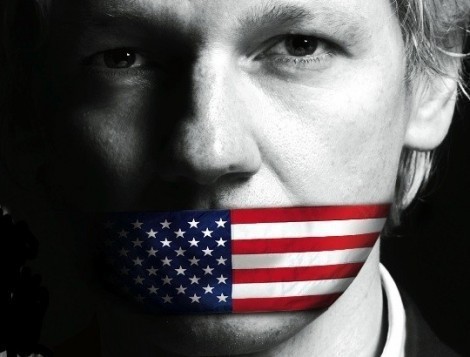
As I make clear in my book Battlefield America: The War on the American People, we must decide whether we will follow the path of least resistance—willing to turn a blind eye to what Martin Luther King Jr. referred to as the “evils of segregation and the crippling effects of discrimination, to the moral degeneracy of religious bigotry and the corroding effects of narrow sectarianism, to economic conditions that deprive men of work and food, and to the insanities of militarism and the self-defeating effects of physical violence”—or whether we will be transformed nonconformists “dedicated to justice, peace, and brotherhood.”

As King explained in a powerful sermon delivered in 1954, “This command not to conform comes … [from] Jesus Christ, the world’s most dedicated nonconformist, whose ethical nonconformity still challenges the conscience of mankind.”

We need to recapture the gospel glow of the early Christians, who were nonconformists in the truest sense of the word and refused to shape their witness according to the mundane patterns of the world.  Willingly they sacrificed fame, fortune, and life itself in behalf of a cause they knew to be right.  Quantitatively small, they were qualitatively giants.  Their powerful gospel put an end to such barbaric evils as infanticide and bloody gladiatorial contests.  Finally, they captured the Roman Empire for Jesus Christ… The hope of a secure and livable world lies with disciplined nonconformists, who are dedicated to justice, peace, and brotherhood.  The trailblazers in human, academic, scientific, and religious freedom have always been nonconformists.  In any cause that concerns the progress of mankind, put your faith in the nonconformist!

…Honesty impels me to admit that transformed nonconformity, which is always costly and never altogether comfortable, may mean walking through the valley of the shadow of suffering, losing a job, or having a six-year-old daughter ask, “Daddy, why do you have to go to jail so much?”  But we are gravely mistaken to think that Christianity protects us from the pain and agony of mortal existence.  Christianity has always insisted that the cross we bear precedes the crown we wear.  To be a Christian, one must take up his cross, with all of its difficulties and agonizing and tragedy-packed content, and carry it until that very cross leaves its marks upon us and redeems us to that more excellent way that comes only through suffering.

In these days of worldwide confusion, there is a dire need for men and women who will courageously do battle for truth.  We must make a choice. Will we continue to march to the drumbeat of conformity and respectability, or will we, listening to the beat of a more distant drum, move to its echoing sounds?  Will we march only to the music of time, or will we, risking criticism and abuse, march to the soul saving music of eternity?

Uncle Sam, the Human Rights Hypocrite

By Paul Street

Source: TruthDig

This year marks the 70th anniversary of the Universal Declaration of Human Rights. Signed by the United States and adopted by the United Nations General Assembly on Dec. 10, 1948, the document was a great and shining step forward in the articulation of how human beings might organize their social and political systems in accord with democratic and civilized ideals.

The U.S. has long wielded the Universal Declaration (UD) as a weapon to brandish selectively against officially designated enemies. But seven decades after its signing (and trumpeting) the document, American society stands in rarely noted gross violation of the declaration’s key principles.

Take the UD’s first’s article: “All human beings are born free and equal in dignity and rights. They are endowed with reason and conscience and should act towards one another in a spirit of brotherhood.”

The United States falls far short here. Someone born into one of the 57 percent of U.S. households with less than $1,000 in savings will not enjoy remotely the same amount of “dignity and rights” as those enjoyed by someone born into the top 1 percent of households, which together possess as much wealth as the bottom 90 percent of U.S. citizens. Access to basic means of comfort, dignity and freedom—like quality housing, quality education, strong legal representation, leisure, travel, health care, quality food and recreation—is filtered by the militantly disparate distribution of wealth and income in the U.S., the most savagely unequal nation among all Western “capitalist democracies.” Like the polarized and nasty political culture to which it is merged, the nation’s extreme socioeconomic imbalance is inconsistent with calls for conscience and brotherhood.

Article 2 of the UD proclaims, among other things, that everyone is entitled to human rights and freedoms without distinctions of “race, color” and “national or social origin.” Here again, the U.S. stands in stark contravention.

Median white wealth is 12 times higher than median black wealth in the U.S.—a reflection of persistent anti-black discrimination and segregation built into the nation’s social structures and institutions. Reflecting stark racial disparities in arrest, prosecution, legal representation and sentencing, black and Latinos make up 56 percent of the nation’s 2.2 million incarcerated people though they comprise roughly 32 percent of the U.S. population. One in three adult black males is saddled with the crippling lifelong mark of a felony record—a critical barrier to opportunity and full citizenship (even the right to vote in many U.S. states) on numerous levels. Thanks to the racially disparate waging of the so-called war on drugs, one of every 10 U.S. black men in their 30s is in jail or prison on any given day. African-Americans and whites use drugs at similar rates, but the imprisonment rate of African-Americans for drug charges is almost six times that of whites.

Millions of undocumented immigrant workers and residents are unwilling to fight for their “universal human rights” in the U.S. because they reasonably fear arrest and deportation.

The UD’s fourth article declares, “No one shall be held in slavery or servitude.” Hundreds of thousands of U.S. prisoners—the modern-day and very disproportionately nonwhite human chattel that provides the essential raw material for the self-declared “Land of Freedom’s” curiously gigantic prison-industrial complex—perform labor tasks for tiny levels of compensation and often for no payment at all. The Global Slavery Index estimates that 57,000 people are victims of human trafficking, the modern form of slavery, with illegal smuggling and trading of people, for forced labor or sexual exploitation, in the United States.

Hundreds of millions of nominally free Americans are de facto slaves and servants to employers (upon whom a shocking number of Americans absurdly depend for health coverage), financial institutions, insurance corporations, retail corporations, credit agencies, property associations, government tax collectors, gambling agencies (including state lottery systems), health care providers, lawyers and drug dealers.

The UD’s fifth article says, “No one shall be subjected to torture or to cruel, inhuman or degrading treatment or punishment.” Torture and such treatment is endemic across the United States’ vast prison system, the largest in world history. One particularly widespread and egregious form of cruel and inhuman treatment inside that system is solitary confinement—a punishment well known to cause grave damage to its victims’ mental and physical health. The American Civil Liberties Union reports that:

Over the last two decades, the use of solitary confinement in U.S. correctional facilities has surged … 44 states and the federal government have supermax units, where prisoners are held in extreme isolation, often for years or even decades. On any given day in this country, it’s estimated that over 80,000 prisoners are held in isolated confinement. This massive increase in the use of solitary has happened despite criticism from legal and medical professionals, who have deemed the practice unconstitutional and inhumane.

Other forms of torture and cruel and inhumane treatment that are common in the nation’s vast archipelago of racially disparate mass incarceration include widespread beatings, rape, ignoring cries for help, overcrowding, underfunding, forcing inmates to fight, dehydration, starvation, denial of medical care, executions (including botched executions) and forced scalding showers.

Article 7 of the UD proclaims, “All are equal before the law and are entitled without any discrimination to equal protection of the law.”

This principle, too, is brazenly violated in the purported homeland and headquarters of global freedom and democracy. Many Americans are familiar with the old working-class aphorism that “money talks and bullshit walks”—meaning that the wealthy few hire high-priced lawyers to enhance their chances and power in the courts while everyday people do far less well with fewer resources to pay for legal representation. It’s no joke. As the Georgia gubernatorial candidate and former Georgia House Minority Leader Stacey Abrams noted last February, people with money “artfully navigate the criminal justice system and maybe even avoid it altogether,” but those who are poor are overwhelmed.

Wall Street chieftains who threw millions of Americans out of work and destroyed billions of dollars in lost savings through their reckless and often criminal practices have escaped prosecution while the nation’s jails and prisons are loaded with disproportionately black, Latino and poor people serving long terms for comparative small-time drug offenses. Hundreds of thousands of Americans rot in jail prior to conviction for the simple reason that they lack the financial resources to “make bail.” Abrams reports, “The majority of Georgians incarcerated in local jails have never been convicted of crime. They are simply too poor to pay their bail.”

The UD’s ninth and 10th articles say that “[n]o one shall be subjected to arbitrary arrest, detention or exile” and “Everyone is entitled in full equality to a fair and public hearing by an independent and impartial tribunal, in the determination of his rights and obligations and of any criminal charge against him.”

The 11th article says, “Everyone charged with a penal offence has the right to be presumed innocent until proved guilty according to law in a public trial at which he has had all the guarantees necessary for his defence.”

The “land of freedom” contravenes these core civil-libertarian principles without the slightest hint of embarrassment. The U.S. National Defense Authorization Act (NDAA) authorizes the indefinite military detention, without charge or trial, of any person labeled a “belligerent”—including an American citizen. The legislation overrides habeas corpus, the critical legal procedure that prevents the government from detaining you indefinitely without showing just cause.

In addition, the federal government has used the post 9/11 Authorization to Use Military Force (AUMF) law to justify the direct killing (without a trial or verdict) of anyone proclaimed an “enemy combatant” in the global war on terrorism. The AUMF is unbound by geographic or time limitations. U.S. citizens are not exempted, nor is U.S. territory.

Meanwhile, The Washington Post reported last January, “For the third year in a row, [U.S. local and state] police nationwide shot and killed nearly 1,000 people. …” Police killings, disproportionately inflicted against poor people and people of color, amount to executions, without trial or verdict.

The presumption of innocence does not prevent hundreds of thousands of American from experiencing the torture of incarceration simply because they cannot pay bail while awaiting trial.

The UD’s 12th article proclaims, “No one shall be subjected to arbitrary interference with his privacy, family, home or correspondence.” So what? Americans are subject to a vast private and public surveillance apparatus that has essentially abolished privacy in the name of “national security.” As the ACLU reports:

Numerous government agencies—including the National Security Agency, the Federal Bureau of Investigation, the Department of Homeland Security, and state and local law enforcement agencies—intrude upon the private communications of innocent citizens, amass vast databases of who we call and when, and catalog “suspicious activities” based on the vaguest standards. … Innocuous data is fed into bloated watchlists, with severe consequences—innocent individuals have found themselves unable to board planes, barred from certain types of jobs, shut out of their bank accounts, and repeatedly questioned by authorities. Once information is in the government’s hands, it can be shared widely and retained for years, and the rules about access and use can be changed entirely in secret without the public ever knowing.

Article 15 of the UD says, “Everyone has the right to a nationality” and “No one shall be deprived of the right to change his nationality.” Millions of “illegal” immigrants in flight from impoverished and repressive regimes supported by the United States are stateless people, too afraid of deportation to declare their foreign citizenship or to fight for decent conditions inside the U.S. They are not free to change their nationality by becoming U.S. citizens.

The UD’s 19th article declares, “Everyone has the right to freedom of opinion and expression; this right includes freedom to hold opinions without interference.” That’s nice. Millions of U.S. citizen-subjects know very well that they cannot write or say (or sing or post or march on behalf of) what they believe without putting their livelihoods at risk by offending or otherwise concerning their employers and other authorities. And in the United States, where health insurance is strongly and absurdly tied to place of employment, putting one’s job at risk also endangers a person’s and his or her family’s access to health care.

Freedom of expression is strictly qualified, to say the least, in the hidden and despotic abode of the capitalist workplace, where most working-age Americans spend most of their waking hours under managerial supervision.

Even tenured academics can be fired for expressing their opinions. The University of Illinois at Urbana-Champaign fired tenured professor Steven Salaita over his personal tweets criticizing Israel’s mass-murderous 2014 assault on Gaza. The prolific radical Native American author Ward Churchill was stripped of his tenured professorship on trumped-up grounds because of political comments he made on the 9/11 terror attacks.

Article 20 of the UD says, “Everyone has the right to freedom of peaceful assembly and association.”

These rights are strictly qualified in the U.S., where public assembly is controlled by onerous permitting processes and fees and peaceful protest gatherings commonly face militarized police forces that make random arrests, infiltrate marches and meetings, target organizers, give protesters petty charges (and deadly criminal records) and rough-up protesters. Numerous Republican-controlled states have passed bills that increase penalties for public protest in the wake of the many protests that accompanied Donald Trump’s election and inauguration.

Workers are fired for trying to organize unions in the U.S., where once union-friendly labor laws have been eviscerated.

The UD’s 21st article proclaims that “Everyone has the right to take part in the government of his country, directly or through freely chosen representatives. The will of the people shall be the basis of the authority of government; this shall be expressed in periodic and genuine elections which shall be by universal and equal suffrage and shall be held by secret vote or by equivalent free voting procedures.”

The reality of U.S. politics and policy stands in brazen defiance of this universal human right. As the distinguished liberal political scientists Benjamin Page (Northwestern) and Marin Gilens (Princeton) showed in their expertly researched book, “Democracy in America?” last year:

[T]he best evidence indicates that the wishes of ordinary Americans actually have little or no impact on the making of federal government policy. Wealthy individuals and organized interest groups—especially business corporations—have had much more political clout. When they are taken into account, it becomes apparent that the general public has been virtually powerless. … The will of majorities is often thwarted by the affluent and the well-organized, who block popular policy proposals and enact special favors for themselves. … Majorities of Americans favor … programs to help provide jobs, increase wages, help the unemployed, provide universal medical insurance, ensure decent retirement pensions, and pay for such programs with progressive taxes. Most Americans also want to cut “corporate welfare.” Yet the wealthy, business groups, and structural gridlock have mostly blocked such new policies [and programs].

“Elections alone,” Page and Gilens note, “do not guarantee democracy.” Majority U.S. opinion is regularly trumped by a deadly complex of forces in the nation’s politics, including:

    • The campaign finance, candidate-selection, lobbying and policy agenda-setting power of wealthy individuals, corporations and interest groups
    • The special primary election influence of full-time party activists
    • The disproportionately affluent, white and older composition of the active (voting) electorate
    • The manipulation and restriction of voter turnout
    • The widespread dissemination of distracting, confusing, misleading and just plain false information
    • Absurdly and explicitly unrepresentative political institutions like the Electoral College, the unelected Supreme Court, the over-representation of the predominantly white rural population in the U.S. Senate and the one-party rule in the House of “Representatives”
    • The fragmentation of authority in government
    • Corporate ownership of the reigning media, which frames current events in accord with the wishes and world view of the nation’s real owners—its “unelected dictatorship or money”
    • Americans get to vote but mammon reigns nonetheless in the United States, where, Page and Gilens find, “government policy … reflects the wishes of those with money, not the wishes of the millions of ordinary citizens who turn out every two years to choose among the preapproved, money-vetted candidates for federal office.

You wouldn’t know a thing about these and other brazen violations of the UD (you can find supplemental text on U.S. “homeland” violations of UD articles 22, 23, 24, 25, 27 and 28 on my website) by reading the U.S. State Department’s recently released annual “Country Reports on Human Rights Abuses.” Beyond two disturbing novelties—the deletion of most prior reporting on women’s rights and reproductive rights and the redaction of the term “Occupied Territories” from the report’s description of Israel and its, well, occupied territories—the Trump-era rendering of the annual State Department document (this year’s is the first put together entirely by the Trump State Department) runs in four familiar grooves. Consistent with previous versions, it fails to acknowledge the United States’ longstanding political, economic and military backing of governments whose human rights abuses it mentions—as if Washington had nothing to do with them.

We learn, for example, that Saudi Arabia kills civilians in Yemen and carries out “unlawful killings, including execution for other than the most serious offenses and without requisite due process; torture; arbitrary arrest and detention, including of lawyers” in its own territory. The report says nothing about how Washington considers the Saudi regime one of its most prized allies. Or that it equips the absolutist Saudi state (whose crown prince was recently hosted by Donald Trump, who boasted during the royal’s visit of U.S. arms sales to Saudi Arabia) with tens of billions worth of lethal military equipment. Nor does it say anything about the United States’ own direct egregious abrogation of human rights through things like its horrific torture camp at Guantanamo Bay and its ongoing arch-criminal drone war program of “targeted assassination” (execution without trial) Noam Chomsky has called “the most extensive global terrorism campaign the world has yet seen.”

The world has every reason to respond to the State Department’s report with another old maxim: “Don’t piss on my boots and tell me it’s raining.”

The Country Reports document continues the United States’ longstanding practice of selective criticism, playing up violations in rival and enemy nations over those in allied nations. Relying on just the document’s country-level write-ups, one would think that human rights are no better in Iran and Cuba than they are in Saudi Arabia and Honduras. You’d never know that the Saudis make Iran look like a bastion of civil liberties, women’s rights and democracy by comparison. Or that ordinary Cubans enjoy remarkable guaranteed incomes and access to educational resources and health care services that are unrivaled across Latin America and especially in right-wing Latin American states like Honduras, where a vicious right-wing regime was installed with no small help from the U.S. nine years ago.

The State Department report vastly understates the scale of the Saudis’ U.S.-backed and U.S.-equipped crimes in Yemen. It gives no sense that the U.S.-Saudi war on that small nation has created there one of the worst humanitarian catastrophes (replete with a mass outbreak of deadly cholera) in recent history.

In rolling out the report, John Sullivan, Trump’s then-acting secretary of state, singled out Russia and China as leading “threats to global stability,” claiming that their poor human rights records put them in the same dastardly club as evil Iran and North Korea. Where, one might well ask, should we rank U.S. allies like Saudi Arabia, Honduras, Egypt and Israel? The last country has recently and openly slaughtered unarmed Palestinians who were peacefully protesting along its border with Gaza, which is essentially an open-air Palestinian prison subjected to a vicious blockade by Israel and Egypt since 2007. What about other U.S.-allied states like the Philippines, whose strongman president Rodrigo Duterte has ordered the death-squad killings of drug dealers and drug users and been praised by Trump for doing “an unbelievable job on the drug problem”?

It has not been lost on properly critical observers that that the Trump administration has curiously designated the American Empire’s top strategic rivals—China, Russia, Iran and North Korea—as the world’s worst human rights violators.

As per usual, the latest State Department global human rights report ignores positive human rights accomplishments of states on the wrong side of Uncle Sam’s division of the world into friend and enemy. It has nothing to say, for example, about Cuba’s remarkable achievements in reducing poverty, providing health care, educating its citizens and developing its economy and society with a low-carbon footprint that reduces its contribution to the greatest problem of our times, one whose advance is being led by the United States: anthropogenic climate change.

Last, but not least, this year’s version of the report has, as usual, absolutely nothing to say against or about egregious and endemic human rights abuses carried out by (both at home and abroad) and inside the United States—the supposed “beacon to the world of the way life should be,” to quote former U.S. Sen. Kay Bailey Hutchinson (currently Trump’s permanent representative to NATO) in a fall 2002 speech in support of Congress authorizing George W. Bush to criminally invade Iraq if he wanted to (he did). The State Department’s “Country Reports on Human Rights Abuses” covers every country on the planet but one: The most powerful nation on earth, the headquarters of a historically unparalleled global empire that most of the world’s politically cognizant populace has long and with good reason identified as the leading threat to peace and stability on earth. Fully 194 countries are covered in the reports, just not the world’s only superpower, itself home to 4.4 percent of the world’s population but 22 percent of the world’s prisoners—quite an accomplishment for the self-declared homeland and headquarters of global freedom and democracy.

As far as the State Department, Washington and the nation’s reigning corporate, financial, and imperial power elite is concerned, the violations of the UD outlined at the outset of this article (and in my linked supplemental text) belong down George Orwell’s memory hole, consistent with the principle that history is written by and for the winners and Big Bother’s maxim: “He who controls the past controls the future. He who controls the present controls the past.”

It’s nothing remotely new or distinctive to the Trump era. The United States sees itself as an inherently splendid and humanitarian City on a Hill, fit to judge other nations, particularly those it deems as rivals and enemies, while giving itself an “exceptionalist” free pass because, as Bill Clinton’s Secretary State Madeleine Albright once explained, “The United States is good.” That’s no way to get its human rights reports taken seriously by world citizens familiar with the timeworn adage that “people who live in glass houses shouldn’t throw stones.”