Is the human race under spiritual attack? And did the esoteric philosopher and clairvoyant Rudolf Steiner warn about it over a century ago when he said a ‘vaccine’ would be the delivery system for the defeat of humanity?
For many, the overly-authoritarian response by governments worldwide to Covid-19 pointed to some deeper, more sinister, driving force. But it hasn’t just been the governments that seemed to be acting strange. Over the last two years we’ve witnessed people across a broad spectrum of society meekly submit to draconian attacks on their freedoms, many even fiercely defending the assault. In the same way, we’ve seen politicians and parties who once ran on platforms of personal freedom and economic autonomy almost overnight turn into overbearing control freaks, intent on micromanaging every aspect of our lives. How has this happened?
Recently, the term ‘mass formation psychosis’ has been on everybody’s lips. It’s defined as a psychological phenomenon whereby a mass of people voluntarily go through a process of deindividuation and a herd mentality forms. Due to their contagious nature, the thoughtforms affecting these deindividuated people, catalysed by the positive feedback loops of news programmes, social media and peer interaction, spread like wildfire throughout the population. In the past, this used to be called mob psychology, or more plainly, the madness of crowds.
Psychology: from Science to the Occult
Someone for whom the events of the past couple of years would not have been so surprising was the Austrian esoteric philosopher and mystic Rudolf Steiner, who died almost a century ago. Throughout the course of his life Steiner wrote numerous books and delivered thousands of lectures on his theories, contributing greatly to diverse spheres from architecture to education, and agriculture to beekeeping. His highly unique – and sometimes controversial – insights and methods led to the founding of the spiritual movement known as Anthroposophy, which emphasises the existence of a boundless potential for human beings.
Unlike some esoteric thinkers, Steiner saw the great importance of materialistic science, but argued that it was vital to see it as only a single aspect of reality which should ideally be combined with what he called ‘spiritual science’ – gained by mystical experience – in order to present the full picture. After all, breakthroughs often occur when scientists receive insights from beyond the material realm, as in the famous case of James Watson, credited with the discovery of the double helix shape of DNA which came to him in a dream featuring two intertwined serpents. Similarly, Dmitri Mendeleev, created the period table after a dream of “… a table where all the elements fell into place as required.” These cases go to show that not all scientific discoveries are the result of logical deduction and experimentation.
In fact, Steiner, who had been on the receiving end of mystical insights since childhood, honed his clairvoyant skills to such an extent that the information he received from non-conventional sources became more than the occasional flash of insight, His quest became the establishment of methods for obtaining objective extrasensory perception – a task he considered of paramount importance for he believed an epic battle was being fought in the spiritual realm that would have disastrous consequences for humankind unless it was addressed head-on.
Spirits of Darkness
His clearest warnings about the future fate of humanity came in a series of lectures delivered towards the end of his life in Dornach, Switzerland; these lectures are reproduced in the book The Fall of the Spirits of Darkness. Although Steiner’s detractors say his prose can be leaden, his lectures meandering, and his concepts difficult to grasp, he is remarkably clear and straightforward when it comes to the fate that awaits humanity if our obsession with scientific materialism is allowed to reign free without being pulled back into balance by the counterbalancing forces of spirituality.
This is most clearly illustrated in the final two lectures in the series – 13 and 14 – which are respectively titled The Fallen Spirits’ Influence in the World and Into the Future. Steiner posits that an unseen battle took place in the early 19th century which certain ‘spirits of darkness’ lost. These spirits were duly ejected from their heavenly realms and cast down into a more material plane of existence i.e. here. He is remarkably precise about when this occurred: autumn 1879.
These newly arrived spirits joined those who were already here – the ones that have been existing alongside and influencing humanity since the mythological times associated with the Fall. Given that it takes time for these malign spirits to work their way through human societies, it wasn’t until 1914 when their malign influence manifested in human society in the form of the First World War – a disastrous event the cause of which still puzzles secular historians.
Lucifer and Ahriman – the Leaders of the Pack
The spirits Ahriman and Lucifer have been hacking humanity for thousands of years, says Steiner, with Lucifer being the ‘light bringer’ intent on making us more spiritual and granting us more free will, and Ahriman doing the opposite and making us more materialistic and easier to control. In simplistic terms, Lucifer is an ascending influence, which Ahriman is a descending one.
Why should they want to do this? Well, we just don’t know – it’s difficult for our human minds to figure out what makes angels and demons tick. But whenever there’s one of those periodic battles in the spirit world, Steiner said, it tends to result in a new batch of reinforcements being thrown down into the material realm to join forces with those already here.
Steiner told us that Ahriman – a demon first identified by the Zoroastrians in ancient Persia – has the upper hand right now. He had a personal beef with Ahriman and had seen his face in vision – in fact he was still carving a likeness of it out of wood at the time of his death. Ahriman’s main aim seems to be to drag humankind into a purely materialistic state devoid of any form of spirituality, removing even the impulse to connect with our souls. The method of attack would be through science and technology, and by taking possession of the minds of powerful and influential people in order to push through this agenda. These controlled people could be scientists, politicians, religious leaders, or anyone with any influence. Thus, demonic forces would work through these people, and the people themselves, blinded by all-too-human failings such as greed or a lust for power, would lack the basic awareness to recognise what was occurring.
A New Religion for a New Age
The background to this power grab was the rise of atheism and the worship of science and progress. Now, we have a situation in which a purely materialist perspective is presented as the only explanation for all creation. Atheism has, for some, become a de facto religion, while the rich traditions of native spirituality have been side-lined and crushed under its heel. People, animals and in fact all life is regarded in the same cold manner; merely receptacles of proteins and genetic code that can be exploited. The endgame of this play is presented as a bleak, monochrome world expunged of spirit and light, where humans – their minds and spirits broken – are herded together and monitored like lab animals.
We can see how this scenario is being expedited. The CEOs of tech corporations are viewed almost as saints or Bodhisattvas, dangling the carrot of eternal life in the form of uploading the ‘data’ contained within our brains onto microchips. At the same time, politicians, corporate scientists, civil servants and economists are regarded as technocratic engineers tasked with ensuring the smooth functioning of the juggernaut of the material economy. Free will? The implicit assumption is that this will be unnecessary once the AI powered algorithms – which know us better than we do – reach escape velocity. At this stage, human life would have no intrinsic value, and the shells of our former selves would be occupied by the demonic army that Steiner warned us was waiting for its moment.
In the Blood
Some people say that Rudolf Steiner predicted a vaccine would appear which would be the delivery system for the final defeat of humankind. In light of the clandestine efforts made over the last two years to inject almost everybody on the planet with a gene editing treatment, his prescience seems remarkable – but how true is it? Amazingly, Steiner was remarkably clear (by his own standards) about the physical process by which this takeover would occur. He states in his final lecture in The Fall of the Spirits of Darkness that the spiritual world where entities such as angels, demons and archangels dwell is within the human blood. He meant this quite literally, saying:
“Both the Archangels and the Angels had their dwelling place in the blood, as it were. Truly, the blood is not something merely for chemists to analyse; it is also the dwelling place of entities from higher worlds.”
To that end, he speculated that the delivery mechanism will be in the form of a vaccine, injected directly into our bodies.
“Today [in 1917] bodies are vaccinated against one thing and another; in future, children will be vaccinated with a substance which it will certainly be possible to produce, and this will make them immune so that they do not develop foolish inclinations connected with spiritual life – ‘foolish’ here, of course, in the eyes of the materialists.”
This ‘vaccine’, he goes on to say, would block off any communication from the spirit world, meaning no messages or impulses would be able to get through from the ‘spirits of light’ whose aim is always to help humanity progress and fulfil our destiny. Positive impulses which were once transmitted to us would be permanently locked out by the vaccine, and instead the hapless victims would only be able to receive the impulses coming to them from disruptive sources, which we can imagine today might include the media, the education system and even established religion. There would be great confusion, he says, and Ahrimanic forces will turn people’s thoughts upside down and inside out. Everything that once was good and sensible will appear evil and crazy, while everything that was once considered insane and evil will be presented as sensible and good.
Squid Games: From Wetiko to The Matrix
Does this all sound implausible, the ramblings of a long-dead mystic? Many will no doubt say that it does, and that there are more earthly and plausible explanations for the psychic epidemic which has gripped the world. Perhaps Steiner was speaking metaphorically after all, some may reason. Nevertheless, the phenomenon to which Steiner alluded bears striking similarities to the Native American concept of the demonic force they call wetiko. The author Paul Levy has written extensively about this, defining it as “a contagious psychospiritual disease of the soul, a parasite of the mind that is currently being acted out en masse on the world stage via a collective psychosis of titanic proportions.”
Listening to a recent Legalise Freedom podcast entitled Covid-19: War on Humanity, Emma Farrell, a plant healer who uses shamanic techniques to access inner realms, made the observation that she and others in the same field had seen a veritable horde of spiritual parasitic entities attached to people over the last two years – as if a floodgate had been opened and they had poured through it. These entities, she says, come in all shapes and sizes but there are two very common and recognisable ones, one of which is squid-like. These squid-like beings, she says, attach themselves to unprotected people and harvest their spiritual energy by causing division and discord among us.
This struck me as interesting as we’ve seen this squid archetype move into human consciousness over the past few years, not least becoming apparent through popular culture. Many people have reported having dreams of octopus or squid-like creatures, and artists such as Peter Yankowski have painted pictures of these visions. Indeed, the villainous machines that control humans and harvest their energies in the Matrix movies look like robotic squids, while one of the top Netflix series of 2021 was Squid Game, a grim and violent survival thriller that posits human nature as intrinsically barbaric. What’s more, the resurgence in popularity of H.P. Lovecraft’s supernatural tales of horrors from the deep adds another tentacled layer to this rugose cake.
And let’s not forget when Goldman Sachs, one of the world’s largest investment banks, was memorable described by Rolling Stone journalist Matta Taibbi as a “great vampire squid wrapped around the face of humanity, relentlessly jamming its blood funnel into anything that smells like money.” The description is apt, after all, what is the purpose of an investment bank other than to turn every aspect of the sacred world into a monetised asset that can be traded, exploited and leveraged?
The Path Back to Sanity
Could this manifestation of a squid/octopus archetype into human consciousness be what Steiner was warning us about? Are there really spiritual entities within our blood that could account for billionaire technocrats’ obsession with injecting substances into us that are said to contain nanoparticles we know very little about? And how does this sit with the psychospiritual disease of wetiko outlined by Paul Levy, and the concept of ‘mass formation psychosis’ being talked about in the alternative media?
Perhaps the truth lies somewhere in the nexus of these concepts, with the implicit suggestion that we should not rest in our deep enquiry into the manner of the affliction that is currently so prevalent across the world. Only by doing so can we hope to find the necessary tools and weapons to fight back against it.
Or maybe the Ahrimanic demons that Steiner warned us about, the wetiko mind parasites Paul Levy writes of, and the tentacled entities that have squirmed into our collective consciousness via popular culture are all playing on the same team. If so, what does our team look like? And how do we win this game? Perhaps the fight is a necessary one at this juncture in human development, and that by defeating these ‘spirits of darkness’ we can progress to a higher level.
Whatever the case, referring back to the old adage alluded to earlier, people it’s said, might go mad in crowds, but the path back to sanity happens one person at a time.
On a video podcast the other day, I made reference to the lockdown orders of March 2020. The host turned off the recording. He said it was fine to talk about this subject but from now on please refer to “the events of March 2020” with no specifics.
Otherwise, it will be taken down by YouTube and Facebook. He needs those platforms for reach, and reach is necessary for his business model.
I complied, but I was spooked. Are we really now in the position that talking about what happened to us is verboten on mainstream venues? Sadly, that seems to be where we headed. In big and small ways, and throughout the culture and the whole world, we are bit by bit being trained to forget and hence not learn and thus repeat the whole thing.
This makes no sense since nearly every public issue in play today traces to those fateful days and the fallout thereof, including censorship, the entrenchment of industry-government oligarchs, the corruption of media and tech, the educational upheaval, the abuse of courts and law, and the developing financial and banking crisis.
And yet hardly anyone wants to speak about the topic frankly. It is too upsetting. There is too much at stake. We cannot risk being canceled, the single greatest fear of every aspirational professional in today’s world. Plus too many powerful people were in on it and don’t want to admit it. It would appear that the whole subject is being memoryholed in ways of which they all approve.
For nearly two years, or longer, respectable intellectuals knew not to dissent from the prevailing norms and challenge the whole machinery. This was true of Washington think tanks, which went on their merry way from March 2020 either celebrating the “public health response” or just remaining quiet. The same was true of the leadership of major political parties and third parties.
Most religious leaders stayed quiet too, even as their doors were padlocked for as long as 2 holiday seasons. Civic organizations played along. If you thought that the job of the ACLU was to defend civil liberties, you were wrong: they one day decided that lockdowns, mandatory masks, and forced shots were essential to their mission.
So many were compromised over 3 years. These same people now just want the whole subject to go away. We find ourselves in an odd position, having experienced the biggest trauma in our lives and in many generations and yet there is precious little open talk about it. Brownstone was established to fill this void but we’ve become a target as a result.
The search engines have been gamed for the better part of 3 years to keep the science channeled in only one direction. If web platforms step out of line, it is easy enough for search engines and social-media companies to tag them as problematic and thus throttle their reach. But for Substackers – and they are being targeted now too – it would be hard to find out anything other than what the oligarchs want you to believe.
This silent treatment is filtering down to every aspect of our lives and becoming entrenched in the political culture too. Here is an example from this week.
When Donald Trump returned from his theatrical and ridiculous indictment on nothing in New York, he flew immediately back to Mar-a-Lago where he told his story to people gathered in a pastiche-baroque ballroom. He told of the fake news, the attempted impeachments for Russia and Ukraine, the plots and schemes, and onward to the fake ballots and the FBI raid on his home, and now this preposterous new thing.
It was a solid narrative overall. But his story left out a hugely important detail. He said not one word about Covid lockdowns and Operation Warp Speed that was supposed to be the great fix for the virus but flopped. This was a rather important detail to leave out since it wrecked the economy, the Bill of Rights, education, and led to a massive demographic upheaval in addition to the continuing fallout in terms of culture, economics, and everything else.
It also caused him to lose the presidency, whether because the shock resulted in mass demoralization (this was certainly not a path to making America great again) or because of the mail-in ballots made possible by Covid restrictions, or probably both. However you look at it, it was the most disastrous decision of his presidency or possibly any presidency in history.
How in the world are we just supposed to pretend that this did not happen? And yet he is playing along simply because he does not want to admit error. He thinks it makes him appear weak. Nor does he still slam the successor presidency for mask and shot mandates even though hundreds of millions were affected by them. He would rather not bring up the topic at all, lest doing so raises questions about his own judgment in those fateful days of March 2020.
Meanwhile, the DNC does not want to admit that it celebrated and built on Trump’s biggest disaster while the RNC does not want to discuss that the policies they decry from the DNC actually began under the RNC. And so you have a kind of “mutually assured destruction” pact between them that needs no plot or contract. In silencing all talk about this, each party is only doing what is in its interest.
We can fully expect that these issues will be locked out of the campaign narratives in 2024 just as they were in 2020 and 2022. Everyone seems to agree: the less said the better. And this is precisely why the announced candidacy of Robert Kennedy, Jr., has triggered the usual and expected gaslighting from the mainstream media. The plan is to flog him into marginalization. And if that doesn’t work, they will flog and flog again.
We are seeing a real-time example of how history is really written. The narrative is more self-serving than we knew. If all the power centers in society get something tremendously wrong, an informal conspiracy of silence develops around it, with the hope of just wiping it from the history books.
As Michael Senger has written, “Lockdowns met little resistance in part because they reinforced existing power structures. The rich got richer, the Zoom class got a vacation, workers got stimulus, while some business owners, their employees, and the most vulnerable had to sacrifice everything for this fantasy.”
And we can add to that: government gained vastly more power. In fact, Covid became the template for the biggest expansion of government power over the population in world history, more effective than ancient myths about god-like rulers, heresy trials and witch burnings of the Middle Ages, sedition purges of the 18th and 19th centuries, red scares of the 20th centuries, the Cold War, or even the wars on terror. Fear of infectious disease was more effective than all of them for ratcheting up despotism.
When something works this well for the most powerful people in society, why not just keep quiet about it?
The tellers of tales can write stories but they cannot invent their own realities. There will be no restoration of liberty, rights, and truth until we come to terms with what happened, why, and how to prevent it in the future. Playing along with this conspiracy of silence surrounding a policy that effectively blotted out every advance in human rights since the Magna Carta is a disastrous error that could lead to the entrenchment of a new dark age.
As an Australian, it troubles me that if the whole world lived like us, we would need 4.5 planet Earths. Thanks to over-consuming nations like mine, worldwide we are living as if we have 1.75 planet Earths, a figure that has increased from 1 (that is, living within our means) since 1970. What this boils down to is that those of us in the global north are taking from both countries in the global south and future generations to fuel our lifestyles today. The ‘Earth Overshoot’ research is supported by the work of the late Earth System Scientist, Professor Will Steffen, who brought to our attention The Great Acceleration, whereby “[a]fter 1950 we can see that major Earth System changes became directly linked to changes largely related to the global economic system.” Steffen is referring to our growth-based economies, and while three percent economic growth each year might sound small, it means that within 24 years we will be consuming twice as many resources as today, and within 100 years 19 times as many. As economist Kenneth Boulding said: “[a]nyone who believes that exponential growth can go on forever in a finite world is either a madman or an economist.”
For this reason, I am a big proponent of degrowth in over-consuming nations in order to fit back within planetary boundaries. For anyone not familiar with the term, degrowth is a planned, democratic reduction in material and energy use in high-income nations while improving the well-being of people in those nations. It is more than this though. While very often the focus of degrowth is on how life can be better in a smaller economy, Federico Demaria and Serge Latouche argue that “[t]he point of degrowth is to escape from a society that is absorbed by the fetishism of growth…. It implies decolonization of the imaginary and the implementation of other possible worlds”. In this respect, the former definition of degrowth applies only to over-consuming nations, while the latter definition applies to all nations, and to all people. It is this second definition of degrowth to which this essay relates.
The concept of degrowth is powerful because it is clear that we need systemic change to avoid ecological collapse: business as usual with a “green tinge” isn’t going to be enough. It is also true that individual change drives cultural change which can be the key to unlocking political change leading to fundamental change. On this point, I find it fascinating to consider how “growth has entered our minds and souls”, and how an awareness of these “mental infrastructures of growth” might free us from growthism and help unlock the cultural changes that will bring about the necessary systemic changes.
With this in mind, here are a couple of points to consider in relation to how growth may be enshrined in the psychological structure of our collective minds, largely based on the work of Harald Welzer:
Our dreams for the future are centred around it being better than today, in the sense of ‘more’ (e.g., a bigger house, a larger salary, more travel).
We see ourselves as something to continually develop and optimise, our lives are seen as a process of creating biographies or filling curriculum vitae.
While we used to see paid labour as drudgery and something we did until we had met our needs, now we view it as noble, esteemed even, to be sought out and with no end. Sadly, this cultural 180° turnaround becomes a regret of many as they are dying.
Similarly, society views ‘hard-work’ as virtuous and thus ‘hard-work’ entitles those who undertake it to whatever their heart desires without limit or consideration of the harm caused, their purchases being the fruits of their labour.
We typically live by the rhythms of the industrial workday via a standardised worldwide time regime, unaware that there is a natural rhythm of time (for example, consider that in 2023 there will be 13 moons but only 12 calendar months or that, on the whole, our pace of work is unchanged by the seasons).
It is a collective belief that we should be able to own parcels of land, excluding others from that land. An example of this is that home (and correspondingly land) ownership in Australia is described as the ‘Great Australian Dream’, a term derived from the ‘American Dream’ of the same nature.
In various ways, these – and probably many more aspects of our modern day lives – relate back to the surpluses created by industrialisation (enabling the future to have more than today, a concept that is “historically quite recent”), the enclosure of the commons (the very foundation of growth-dependent capitalism) and the subsequent imperative to work to have our needs met (rather than simply being able to directly meet our needs). Our ability to recognise and unpick these ‘mental infrastructures’ – that is, the worldview that influences all of our actions – will be key to throwing off the shackles of growth and unlocking a culture of sufficiency, whereby we recognise when we have ‘enough’ in a material sense and from then on meet our “nonmaterial needs nonmaterially”, increasing our sense of wellbeing and contentment.
The work of Antonio Gramsci on cultural hegemony is relevant in unlocking a culture of sufficiency. Michael Mezz describes Gramsci’s theory on how the ruling class maintains power via a cultural form of dominance:
“…the ruling class creates an ideology in which its own values become common sense for the rest of society and Gramsci argued that the role of the state is to maintain institutions such as media and the education system that educate the masses on the cultural ideology of the ruling class. The goal of that education being that the working class develop a sense of freedom and a good life that serves the purposes of the people in power. In other words, the working class starts to value things like innovation and productivity and economic growth that doesn’t actually serve them.”
Gramsci tells us that the way to overcome cultural hegemony is by creating a new culture that is not based on the values of the ruling class. A counter-culture, if you like.
So, what are the counter-hegemonic narratives that we can begin to embrace? What would a mind and soul not infiltrated by growth look like? There is much to learn from indigenous cultures on this topic. As Jeff Sparrow highlights in his book, Crimes Against Nature, First Nation Australians found paid labour to be antithetical to their egalitarian lifestyles:
“Today, we take the wages system for granted. It appears normal, almost eternal, since we can barely conceive of an alternative. It did not seem normal to pre-colonial people. In Australia, as elsewhere in the world, they found capitalist practices utterly horrifying…. Indigenous people, accustomed to an egalitarian ethos and to work carried out for the collective good, saw the authority exerted by employers as tyranny. As late as 1888, a churchman complained of the difficulty he had in persuading Indigenous people that one man was innately better than another, that a certain individual, by virtue of his possessions, mandated obedience from his fellows…. Indigenous people did not despise wage labour primarily because of the effort that it entailed. Rather, they thought the work demanded by capitalists stripped life of its humanity.”
Furthermore, First Nations people lived with the rhythms of nature, not the industrial workday, and there was no private land ownership, they had the wisdom to know that “… you are undone if you once forget that the fruits of the earth belong to us all, and the earth itself to nobody” (Jean-Jacques Rousseau).
There are many examples of counter-hegemonic narratives arising more recently too. The following list is skewed more towards examples from the global North because the global North represents the vast majority of the over-consumption and is therefore where cultural change is most needed. Such examples include:
Those people, like the Futuresteaders and others who practice voluntary simplicity and frugal abundance, who appreciate the simple things in life, and find happiness in what they have rather than what they want. Seeking only ‘enough’ and not ‘more’ represents an affront to the dominant culture of dreams of the future being materially greater than today. This point is relevant only to those whose needs are already met. Of course, those who are living in conditions of deprivation should have access to ‘more’, until they too have ‘enough’.
People who choose to spend their time doing work that is traditionally undervalued and lacking in both career trajectory and pay increases, but is socially valuable, forgoing future surpluses (think of the stay-at-home parents, childcare workers, teachers, nurses, carers, small farmers, those who work part-time voluntarily, and those who volunteer their time to worthy but under-funded causes).
The move towards minimalism which seeks to value time and non-material items over ‘the grind’ and the accumulation of things as a reward for hard work. The Tiny House Movement shows us that it is possible to enjoy living with less, including the freedom of a smaller mortgage.
The tang ping (lying flat) movement in China and quiet quitting in the U.S.A. are taking back our right to be humans, not simply workers who devote more time than they would like to paid labour.
Anyone advocating for job guarantees, enabling anyone who wants to work to do so. Job guarantees seek to remove the artificial scarcity of employment we see today, where the threat of joblessness looms ever large and we constantly need to better ourselves so that we can compete for work. Those who advocate for a Universal Basic Income – an unconditional liveable wage for all – are fighting to remove the need for waged employment at all.
People organising for the community rather than the individual are prioritising others over their own interests, giving up the opportunity to build their own CVs in favour of the greater good, and there are some wonderful examples of such union building here, here and here.
The move towards a 4-day work week challenges the dominant narrative that more time at work is better.
The many activists calling out the harm caused by the carbon-intensive lifestyles revered by the dominant culture, such as Greta Thunberg (who beautifully articulated in her book, The Climate Book, that “we all have a responsibility to find quick ways of making that [extremely high-emitting] lifestyle socially unacceptable”), activists who block private jets, people promoting going flight free, and those seeking to reduce the dominance of cars on our streets. For these people, simply having the means to live a materially intensive lifestyle – regardless of the hard work involved in acquiring those means – isn’t enough to justify the harm it causes.
The locals of the Greek Island Ikaria, who do things in their own time, not that of the industrial workday. This fascinating paper describes “people arriving to appointments in ‘Ikarian time’, that is, a ‘few hours late’ or shopkeepers telling bewildered tourists that ‘the shop will open when it is time to open’”.
There are, of course, many other wonderful counter-culture examples beyond this short list – this is merely scratching the surface – but the point is that we need to advance these, and those of the same theme, until they become the leading narrative.
Unpicking the dominant, growth-based worldview will mean closely analysing the stories we have been told (and who those stories might serve), and bravely and courageously assessing whether all of this growth really does bring us ‘the good life’. We will likely find that we can achieve ‘a good life’ (that is, harmony with ourselves, our community, and the physical world) by living simpler but more meaningful lives. Perhaps we will even come to realise the very wise words of English writer, Alan Watts: “the meaning of life is just to be alive. It is so plain and so obvious and so simple. And yet, everybody rushes around in a great panic as if it were necessary to achieve something beyond themselves”. The way that growth manifests in our minds, our thoughts, our dreams, and our souls is important to consider because if we can create a culture of sufficiency, we will have found the key to systemic change and avoiding ecological catastrophe. I’m sure we can all agree that this is a worthy task indeed.
As has been carefully documented, under cover of the ‘virus’/‘vaccine’ narrative, the Global Elite is implementing long-planned and profound changes to 200 areas of human life.
Needless to say, with some people already resisting and more people likely to perceive the truth of what is happening and join the resistance with the passage of time, policing the imposition of this program will be a critical factor in ensuring its success.
As indicated then, just one area in which profound change will take place is policing.
Future policing will be done by a smaller number of militarily-equipped police, transhuman police and technocratic police supported by corporate private security technology. In this article, I will briefly outline the key changes to policing, in these three distinct categories, and also explain why these changes must be resisted and how we can do this most effectively.
Fewer and MilitarizedPolice
Reflecting a longer term trend, in 2019 the International Association of Chiefs of Police reported that ‘Law enforcement agencies across the United States are struggling to recruit and hire police officers.’ While police killings of innocent civilians – see ‘Mapping Police Violence’ and ‘Not just “a few bad apples”: U.S. police kill civilians at much higher rates than other countries’ – failed to rate a mention in the report, it did at least acknowledge ‘Scrutiny of the police, cellphone recordings of interactions between the police and public, media coverage, and popular entertainment portrayals of police have led many young people to view police differently than their parents may have.’ See ‘The State of Recruitment: A Crisis for Law Enforcement’.
In late 2021, two years into policing the pandemic, US police reported a substantially increased rate of retirement and resignation among police officers, with more than five times as many police leaving the New York Police Department in 2021 as left in 2020. According to the report: ‘In the wake of a spasmodic year of protests and pandemic, plus an aftermath of violent crime, the profession may be fast approaching a generational and possibly historic reckoning.’ See ‘Law enforcement faces unprecedented challenges in hiring and keeping recruits’.
But on top of long-standing issues in relation to police numbers exacerbated by political direction of policing behaviour while enforcing ‘pandemic’ lockdown measures, it is clear that the number of serving police has been reduced throughout the past three years by using two additional mechanisms: In many places, forcing those who resisted the ‘kill shot’ to resign from service – see, for example, ‘Victoria Police facing exodus due to draconian Covid rules’ – and, everywhere, by killing off a proportion of the police who were mandated to take the shot (which will continue to have impact in the years ahead).
Apart from this, the damaged reputation police suffered as a result of their role in enforcing the Elite program against those people willing to nonviolently protest the violation of their constitutional and human rights, has meant that the conscience-based resignation rate of police has risen – see, for example, ‘Conscientious Resignation of Police Officer in Australia’ – while recruitment has suffered in many places.
In any case, two critical questions to ask are these: Were government policies that led to police violence during the pandemic designed to provoke public anger and induce police retirements and resignations as ways of reducing police numbers easily? And was official interference in police decisions about whether or not to investigate injection deaths partly designed to disenchant conscientious officers and induce further resignation/retirements?
Why would governments do this? Could it be part of a plan to facilitate the transformation of how policing is conducted? After all, the World Economic Forum has been clear about the Elite intention to robotize the workforce, with more than half of human workers projected to be replaced by robots within a few years. See ‘Machines Will Do More Tasks Than Humans by 2025 but Robot Revolution Will Still Create 58 Million Net New Jobs in Next Five Years’. So why should we expect police to be forced out of the workforce, one way or another, at a lesser rate than elsewhere?
Moreover, there is an additional problem: Any human police officer with a reasonably ‘normal’ psychological profile has a conscience. And these will not serve well in enforcing the coming technocratic order.
Separately from the numbers issue, the ongoing militarization of police forces around the world has been noted by many scholars. For a summary of some issues in relation to policing in the USA, see this article written in 2017: ‘Why are Police in the USA so Terrified?’
But it is clear that the trend to militarize policing has been accelerating for some years. In a recent article US constitutional attorney John Whitehead succinctly elaborates this trend as just one of the features to be expected from the US government in 2023:
‘Militarized police. Having transformed local law enforcement into extensions of the military, the Department of Homeland Security, the Justice Department and the FBI are moving into the next phase of the transformation, turning the nation’s police officers into techno-warriors, complete with iris scanners, body scanners, thermal imaging Doppler radar devices, facial recognition programs, license plate readers, cell phone extraction software, Stingray devices and so much more.’ See ‘What to Expect from the Government in 2023? More of the Same’ and ‘Stingray Tracking Devices: Who’s Got Them?’
So police numbers are being reduced and police are being militarized. But that is not all.
Transhuman Police
A critical component of the Elite program is to turn those not killed into transhuman slaves.
While many people involved in this field are concerned with treating disabilities to improve the life experience of those afflicted, and some are engaged in ongoing discussions to consider the ethical issues this raises, it is clear that this is the sanitized version of a program that has far more hideous implications. For a sanitized version, watch this video of a World Economic Forum discussion held on 24 January 2020: ‘When Humans Become Cyborgs’.
But, for the Elite, there is little point deploying these technologies unless they can be controlled by Elite agents. After all, as the World Economic Forum made clear in 2016, by 2030 ‘You’ll Own Nothing. And You’ll Be Happy.’ See ‘8 predictions for the world in 2030’.
Obviously, if you are to own nothing and be happy about it, either you have reached some exalted state of human consciousness in which possessions no longer matter or someone is messing with your mind so that you believe what is not true.
And the best way to mess with someone’s mind is to implant a microchip into their body that enables control of that mind by someone else.
After all, altering what people think, feel, believe and do – through genetic manipulation and implanting technologies – is the very essence of transhumanism. So, to reiterate, transhumanists don’t want individuals with free will, they want individuals whose thoughts, feelings and behaviour can be controlled; that is, they want slaves. While this is explained at some length in the article ‘Beware the Transhumanists’ above, it is also made emphatically clear by World Economic Forum spokesperson, Professor Yuval Noah Harrari, in a 3-minute video which includes these words:
COVID is critical because this is what convinces people to accept, to legitimize, total biometric surveillance.
We now see mass surveillance systems established, even in democratic countries which previously rejected them, and we also see a change in the nature of surveillance. Previously, surveillance was mainly above the skin, now it’s going under the skin….
In summary then, the technology now available after decades of effort enables receiver nanochips to be sprayed, injected or otherwise implanted into human bodies. With the ongoing deployment of 5G (which includes extensive space and ground-based technologies: see ‘Deadly Rainbow: Will 5G Precipitate the Extinction of All Life on Earth?’), just one outcome of these combined technologies is that it will be possible to direct the individual behaviour of each person so implanted with directions from an external source.
You can watch a description of how the Covid-19 shots have been used to inject nanotechnology into the bodies of people which, under the direction of other individuals via EMF signals, can be assembled to establish a permanent communication and control link between the transhuman and those responsible for controlling it. Watch Maria Zeee’s interview of Dr. David Nixon who shows real time video footage of the nanotechnology inside the Covid-19 injections assembling robotic arms that guide the nanotechnology development: ‘World First: Robotic Arms Assembling Via Nanotech Inside COVID-19 “Vaccines” – Filmed in Real Time’.
There is another excellent video interview by Dr. Faiez Kirsten of Dr. Ana Mihalcea discussing the transhumanist agenda. This includes consideration of how geoengineering – by spraying metal particulates (such as aluminium, barium and strontium) and synthetic biology into the atmosphere – is being used to modify all life on this planet (‘to modify every cell, every microbe, to digitize it and then to fuse it in its natural state with synthetic biology’), the role of electromagnetic frequencies (EMF) such as 5G in this scheme, and the purpose of nanotechnology ingredients in the injections. In essence, they conclude,besides killing vast numbers of people, they want to control the minds of those left alive. In summarizing, Mihalcea emphasised that her research demonstrates that the unvaccinated are not safe and they must take further action to defend their health from the synthetic biology attacks through atmospheric geoengineering and contaminated food.
‘We are running out of time as the human species and our planet is being destroyed via synthetic biology. If you want to survive and you want your children and grandchildren to have a chance of survival you must rise now and you must fight.’ Watch ‘A Discussion with Dr Ana Mihalcea on Transhumanism and EDTA Chelation’.
Moreover, given that the control technology of its transhuman slaves will be owned by corporate executives, this means that the Elite will be able to control everything from the launch of nuclear weapons (by using remote control to direct the chosen individual in a particular chain of command to order [or execute] the launch of one or more nuclear weapons at the target[s] nominated at the time[s] specified), deploy ‘cyborg soldiers’, ‘cyborg workers’ and ‘cyborg consumers’ to do as directed and, of course, ‘cyborg police’ to carry out the orders issued by those controlling the command technology.
In the case of transhuman police, this could range from duties resembling those now performed by police to any other task whatsoever to which they are assigned. And because the implanted chip will override free will, the transhuman individual will have no awareness of choice and will simply robotically perform the tasks delivered by an artificial intelligence program to the technological implants in its body and brain.
So whether programmed to issue a fine, kill a noncompliant individual, forcibly relocate one or more people from a rural area to the nearest ‘smart city’ or simply go home, the cyborg police officer will do as directed without thought or feeling of its own.
Technocratic Police and Corporate Private Security
And this is clearly evident in relation to police work where, beyond even the measures outlined above, a substantial range of new technologies will robotize policing, particularly in relation to primary functions: surveillance and control.
In essence, an increasing number of policing functions are being technologized to make policing more ruthlessly efficient. This involves use of a range of technologies such as 5G, the Internet of Things (IoT), the Internet of Bodies (IoB), the Internet of Places (IoP), artificial intelligence (AI), geofencing, digital identity, surveillance and facial recognition (3D) cameras, smart street poles and lights (which gather data via facial recognition cameras and environmental sensors, display digital signage and use speakers to instruct the immediate population how to behave), license plate readers and vehicle kill switches as well as autonomous and electromagnetic weapons.
But how these technologies are combined and deployed varies. To illustrate this, consider the Israeli private security company Gabriel Protects which offers a suite of surveillance and control services: ‘Preempt and contain physical threats in real time with smart technology. Billions are spent monitoring and recording security incidents. Gabriel detects and responds to them. Gabriel’s next generation security technology instantly detects and automates the response to violent threats, saving precious time and lives.’
As Whitney Webb explains: ‘much of the company’s future vision coincides with the vision of the intelligence agencies backing it – pre-crime, robotic policing and biometric surveillance.’ Hence, under the guise of stopping mass shootings ‘a surveillance system backed by top Mossad, CIA and FBI officials is being installed in schools, houses of worship, and other civilian locations’ throughout the USA. The Gabriel system includes the company’s ‘threat detection’ technology, which involves the use of ‘smart cameras’ that use AI as well as facial recognition and related technologies to detect weapons, ‘fights’ and ‘abnormal behavior’ in a particular area. The cameras throughout a facility, along with ‘smart shield’ panic buttons which can be activated both manually and remotely, are meant to act as ‘activation triggers’, with the triggering largely automated and managed by AI. When a trigger is set off, the Gabriel system enters the appropriate ‘alert mode’, which includes emergency, panic, silent panic and yellow (for minor incidents). Once activated, the panic button offers two-way communication, a live video feed and gunshot detection by acoustic means. See ‘CIA and Mossad-linked Surveillance System Quietly Being Installed Throughout the US’ and ‘Anonymous Philanthropist Gifts Israeli Life-Saving Tech to 500 US Synagogues and Schools’.
As one would expect, given the company is providing technologies that enable implementation of the Elite program to lock us all into their ‘smart cities’, Gabriel intends to expand far beyond schools and houses of worship to retail stores, warehouses, data centers and banks and is already heavily reliant on AI and machine learning while using drones and robots as security tools. Beyond this, it intends to develop predictive policing (‘pre-crime’) capabilities. See ‘Incident Response Solutions’ and ‘Disrupting Legacy Security’. Of course, ‘pre-crime’ protocols are designed to ‘eliminate public dissent’. See ‘CIA and Mossad-linked Surveillance System Quietly Being Installed Throughout the US’.
Gabriel is not the only corporation researching and providing technologies in these fields. Another prominent corporation is Palantir Technologies. There are others.
Needless to say, these corporations have close ties to the academy, the military and the intelligence community as well, all of which are also playing key roles in imposing the Elite program.
Obviously, these surveillance and control technologies are being widely deployed around the world with countries like China, Israel (including in Palestine) and the United States leading the way.
But ‘explosive ordnance disposal robots’ have been used offensively since 1993 when a one-metre tall, 218-kilogram remote-controlled robot was sent into an apartment, used a television camera to locate a suspect hidden in a cupboard and then, under the remote-control direction of a technician, used a high-pressure water gun to knock the shotgun out of the suspected gunman’s hands, enabling the county police department’s version of a SWAT team to arrest him.
More dramatically, a police ‘killer robot’ has already been used to kill a suspected gunman. In 2016, police in Dallas in the USA crudely attached a bomb to a robot originally designed to investigate and safely discharge explosives and then deployed it near a suspect where it was detonated remotely. See ‘How the Dallas Police Used an Improvised Killer Robot to Take Down the Gunman’.
The fundamental point is that human police officers are being replaced by a series of technologies guided by artificial intelligence and ending with the use of autonomous weapons systems (AWS).
And these technologies are already being widely deployed and used as part of the ongoing Elite program to build a technocratic state that will subvert human identity, privacy, dignity, volition and freedom.
How Can We Resist this Technocratic Policing Model Effectively?
A long-planned, vast range and parallel sequence of measures is being rapidly implemented to capture political, social, economic, medical and technological control of the human population. The intention is to kill off a substantial proportion of humanity and imprison those left alive as transhuman slaves in the Elite’s technocratic (surveillance and control) ‘smart’ cities, which will be policed by a range of current and emerging technologies.
And, as I have explained previously – see ‘We Are Being Smashed Politically, Economically, Medically and Technologically by the Elite’s ‘Great Reset’: Why? How Do We Fight Back Effectively?’ – because the Global Elite controls conventional political, economic, financial, technological, medical, educational, media and other important levers of society, the Elite has control of how events unfold while simultaneouslygiving it control of the narrative about what is taking place. As a result, the truth about the Elite planis easily concealed. Consequently, effective resistance to this complex and sophisticated program requires a response based on a full understanding of the Elite’s deeper agenda and that is equally sophisticated.
This means that we cannot rely on any conventional channel, political, legal or otherwise.
Hence, the most effective defence against any aspect, including the technocratic policing model, of the full program that Elite agents in the World Economic Forum and elsewhere are imposing on us is to take action now that prevents foundational components of their program from being put into place.
Obviously, this requires us to clearly identify the foundations on which the Elite program is being built and to then mobilize as many people as possible, in as many countries as possible, to nonviolently noncooperate with the building of these foundations or, to the extent they exist already, to disrupt them so that they cannot function effectively.
And the time to do this is now.
If we do this effectively, the technologies – including 5G, Artificial Intelligence (AI), digital ID, Central Bank Digital Currencies (CBDCs), geofencing, a plethora of ‘Smart’ devices, and the surveillance and facial recognition cameras – that will make the technocratic policing model possible will be stopped before they are fully deployed.
So if you are interested in being strategic in your resistance to the ‘Great Reset’ and its related agendas, you are welcome to participate in the ‘We Are Human, We Are Free’ campaign which identifies a list of 30 strategic goals for doing so.
One of these strategic goals reads as follows:
‘To cause the police and security personnel to resist the introduction and use of those surveillance and control technologies – including (among many others) 5G, 6G, the Internet of Things (IoT), artificial intelligence (AI), geofencing, smart street poles and lights (which gather data via facial recognition cameras and environmental sensors, display digital signage and use speakers to instruct the immediate population how to behave), digital identity, surveillance and facial recognition cameras, license plate readers, vehicle kill switches, drones (used as aerial police), robots (including as a ‘deadly force option’), autonomous and electromagnetic weapons – that are being used to transform policing to collect your data and control your behaviour as part of the ongoing Elite program to build a technocratic prison that will subvert human identity, human dignity, human volition, human privacy and/or human freedom.’
So one vital role that you can play is to talk to individual police officers that you know personally, inform them of the role they are slated to play in the coming technocratic order, and invite them to consider the implications of this for them and their loved ones, and then listen to them as they talk about it.
And you can visit your local police station or write them a letter to raise awareness of what is happening and ask them to consider whether this is a future they wish for themselves or their family.
In addition, you can download the ‘We Are Human, We Are Free’ one-page flyer that identifies a short series of crucial nonviolent actions that anyone can take. This flyer, now available in 23 languages (Chinese, Croatian, Czech, Danish, Dutch, English, Finnish, French, German, Greek, Hebrew, Hungarian, Italian, Japanese, Malay, Polish, Portuguese, Romanian, Russian, Serbian, Spanish, Slovak and Turkish) with several more languages in the pipeline, can be downloaded from here: ‘One-page Flyer’.
Moreover, if this strategic resistance to the ‘Great Reset’ (and related agendas) appeals to you, consider joining the ‘We Are Human, We Are Free’ Telegram group (with a link accessible from the website).
And if you want to organize a mass mobilization, such as a rally, at least make sure that one or more of any team of organizers and/or speakers is responsible for inviting people to participate in this campaign and that some people at the event are designated to hand out the one-page flyer about the campaign.
Ideally, prior to any such event, a liaison team should visit the police responsible for policing the event to discuss it but also raise awareness of how police are being used by the Elite in this context. See ‘Nonviolent Activism and the Police’ and ‘How To Do Police Liaison’.
At this point too, it is worth keeping in mind that in virtually all contexts, including when dealing with police, it is invaluable to listen, deeply. This should help you understand the other person better and might help open a door to greater awareness on their part in the future. In any case, it is a great gift, whatever its immediate outcome. See ‘Nisteling: The Art of Deep Listening’.
If you like, you can also watch, share and/or organize to show, a short video about the campaign here: ‘We Are Human, We Are Free’ video.
In parallel with our resistance, we must create the political, economic and social structures that serve our needs, not those of the Elite. That is why long-standing efforts to encourage and support people to grow their own biodynamic/organic food – see ‘23 Reasons You Should Start a Garden in 2023’ – participate in local trading schemes (involving the exchange of knowledge, skills, services and products with or without a local medium of exchange), such as Local Exchange Trading Systems and Community Exchange Systems, as well as develop structures for cooperation, governance, nonviolent defence and networking with other communities are so important.
Conclusion
To summarize very simply: human police officers are being militarily-equipped in the short term, to be rapidly replaced by transhuman police as well as ‘technocratic police’: artificial intelligence (AI) that will direct policing and involve transhuman police, drones, robots and autonomous & electromagnetic weapons systems (AWS). This is one small but vital part of the comprehensive Elite program to kill off most of us, enslave those left alive, enclose the Commons forever and capture all wealth.
Hence, one valuable function we can perform is to inform police of this and invite them to resist it.
Of course, it is not a message that will resonate with every police officer or every member of the community, for that matter. As you already know.
But it is crucial that we keep telling the truth and giving people chances to perceive the deeper Elite program and what it portends for humanity. Because it is not a future any human being, including police officer, should want to embrace if they value human identity, privacy, dignity, volition and freedom for themselves or their children.
Hence, our persistence in presenting the information, while listening well when appropriate, is crucial to mobilizing the resistance we need to succeed.
4/2023
Biodata: Robert J. Burrowes has a lifetime commitment to understanding and ending human violence. He has done extensive research since 1966 in an effort to understand why human beings are violent and has been a nonviolent activist since 1981. He is the author of ‘Why Violence?’ His email address is flametree@riseup.net and his website is here.
“In my seventy-plus years from 1946 to now, the chorus of fear-mongering bullshit has never ceased – only grown louder. The joke is on us. Ha Ha Ha.”
– Oliver Stone, Chasing the Light
Perhaps silence is the best response to the endless cavalcade of official lies that is United States history. The Internet and digital technology have allowed those lies to increase exponentially in number and frequency with the result that people’s minds have become like 7-Eleven stores, open 24/7 for snack-crap “news.”
But once you become conscious that it’s lies night and day, it sets your head aswirl and plunges your soul into depths of despair. You are tempted to retreat from such knowledge and talk of trees and trivia. But you are ashamed of your country. It’s hard to laugh. You feel you are drowning. You flounder and gasp for air. You look around and wonder why most people are able to go their merry ways believing the lies and whistling in the dark. Junk news nation, indeed.
Yes, there are alternative voices who tell the truth, but their audiences and monetary support are very small or non-existent compared to the corporate mainstream media and those who shout and scream across the Internet as they take in a lot of money from naive followers. The recent revelations about Alex Jones’s wealth probably don’t bother his diehard fans, but they should. Likewise, the funding sources for websites and writers of various persuasions are important to know, for they reveal possible biases in their work. Snake oil salesmen are commonplace, and there are many naive customers lining up for their wares.
Wealth and power are the main drivers of the media chicanery that has captured so many minds. Writers, of course, should be fairly paid for their work, but in this Internet age, most are not. As with the movies and book publishing, the income gap between the big names – the celebrity stars – and less well-known writers, even if their work is excellent, is huge.
Some sites and writers make a lot of money, but who they are is a guessing game. No one’s talking. Some regularly tell their readers that if they don’t receive enough contributions, they will be unable to continue to write or publish, even when the sites do not pay their contributors. Whether this is good marketing or income-by-threat is up for grabs. Whichever it is, it seems to work, as far as I can tell, for these writers and websites don’t disappear.
Money is the dirty secret of all news and commentary. To paraphrase someone: It is very difficult to get truth from writers whose income is dependent on pleasing those who fund them.
You may have noticed how many former military officers, CIA agents, mainstream journalists, pharmaceutical company executives, and sundry other government and corporate bigwigs appear in the mainstream and alternative media to support or oppose government policies. The mainstream ones doing the propaganda they always did, while the alternative ones appear as converts to the dissident faith. No one ever explains how and by whom these people are financed or how their lucrative pensions affect their consciences. “Former” is a funny word. Ha Ha Ha.
Confidence “men” come in all shapes and sizes with no one talking money.
So let me fess up. I received about $200 in support last year for edwardcurtin.com, my website. Nothing before that and not a cent over the last 5-6 years for many hundreds of articles that have appeared very widely across the Internet. Before the Internet, publications paid for work, mine and others. Not now, at least for me. How much money writers are receiving, and who is supporting their sites, is a taboo subject.
So I am thinking about selling mugs at my site with my name and mug shot on them and a line of supplements that will increase one’s testosterone and estrogen in equal measure to make sure no one takes offense in this era of delicate feelings. Ha Ha Ha. Yes, the joke is on us. I identify as a man since I am one. Don’t be offended.
Jokes aside, as Leonard Cohen sang:
“Oh, like a bird on the wire Like a drunk in a midnight choir I have tried in my way to be free”
If you are stubborn enough and have the good fortune to find inspiration from those brave dissidents who have gone before us and those who continue to lead us on, you realize silence is betrayal and that you must speak, even if all seems hopeless at times. Even when no one is paying you, or maybe more accurately, because no one is paying you. Even though it is hopeless, even though it isn’t. This is another secret. There are many.
It’s been twenty years since the U.S. brutally invaded Iraq. When George W. Bush, at a staged pseudo-event in Cincinnati on October 7, 2002, as he set Americans up for the invasion of Iraq in March 2003, said, “Facing clear evidence of peril, we cannot wait for the final proof, the smoking gun, that could come in the form of a mushroom cloud,” no one laughed him out of the house. His claim was simply an evil joke that was reported as truth. It was all predictable, blatant deception. And the media played along with such an absurdity, which is their job and what they always do. I pointed it out at the time in a newspaper column, but who listened to a hick writer in a regional newspaper.
Iraq obviously had no nuclear weapons or the slightest capability to deliver even a firecracker on the U.S. But the mainstream media, Senator Joe Biden, politicians galore, celebrities like Oprah Winfrey with her guest, the eventually disgraced Judith Miller of the New York Times, the despicable Tony Blair, et al., all supported Bush’s blatant lies. Soon Colin Powell, the “hero” of George H. W. Bush’s 1991 made-for-TV Gulf War of aggression against Iraq, would do his Pinocchio act at the United Nations and the U.S. military was off to get Saddam Hussein, Osama bin Laden’s evil twin, both the latest Hitlers until Vladimir Putin replaced them. I guess I skipped some others such as Muammar Gaddafi and Bashar Al-Assad. New Hitlers proliferate so fast it’s hard to keep track of them. Ha Ha Ha. The joke is on us.
As everyone knows, or should, more than a million Iraqis died because of George W. Bush, but how many cared? How many cared when once Bush was gone, Barack Obama, aided and abetted by the cackling Hilary Clinton, destroyed Libya and ignited the war against Syria? You want examples? There are too many to name here. But let it be said these lies span all American administrations, whether it’s Bill Clinton continuously bombing Iraq and Serbia through Trump bombing Syria and Somalia, up to the present day with Biden attacking Russia via Ukraine, etc. All these presidents are liars, but their followers treat them otherwise. Biden says Jimmy Carter asked him to deliver his eulogy. What does that tell you? Shall we laugh? Sing?
On the clear understanding That this kind of thing can happen Shall we laugh? Shall we laugh? Shall we laugh?
Shall we laugh harder if I mention the Covid-19 propaganda and all those writers who have failed to even address it, as they have failed to question 9/11 and other obvious official lies? Is it not evident that if they did so, their money flows might dry up? Here and no further is a widespread rule, for they must adhere to the boundaries imposed by “responsible thought” and the “no go” zones with which they tie their own hands in order to keep their wallets full.
If you are lucky, as I was, when you are young you discover how fearful of free thought and how corrupt our institutional authorities are. You don’t spend decades feasting off the spoils of those institutions only to “wake up” once you have made your name and secured your fortune, which seems to be the way of so many wise luminaries of the Internet Age who are either trying to ease their consciences as they get ready to kick the bucket or are perhaps putting us on.
When I was twenty-four years-old, I accepted my first teaching job at a small Catholic college where I taught theology. I had been trained in the latest and best scholarly work of the most renown international theologians. Rather than indoctrinating my students with rote learning, I taught them to read widely and think deeply in the tradition of a liberal arts education. To seek out the best scholarship.
But doing so became quickly apparent to the college and Church authorities who were stuck in the inquisitorial age of obedience or else and no thinking allowed. Although my students loved my courses and felt freed up for the first time to think about their spiritual lives, I was hounded to correct my heretical teaching, which of course I refused to do.
At one point when I was at lunch in the cafeteria, a nun who was a professor, stole my brief case with my notes and left the cafeteria. One of my students saw her do this and chased her into the ladies’ room where the nun hid in a stall. The nun kept flushing the toilet to scare the student away, but the student wouldn’t let her out until she returned the briefcase. Ha Ha Ha. It sounds funny to recount but was an example of my experience at this college. Someone vandalized my office door and ripped down anti-war posters that were on it. I was gone from that college soon thereafter. It taught me a lot. Obey or else.
Heresy: The Latin word is from Greek hairesis, a taking or choosing for oneself, a choice.
At another teaching job a year or so later, I had a more chilling experience. I was known as an anti-war activist, a conscientious objector from the Marines, etc., and one day, a late Friday afternoon when few were around, an administrator asked to meet me on a deserted stairwell where he proceeded in hushed tones to try to convince me to join him in Army Intelligence to spy on others. He said I would be perfect for the job since I was known as an anti-war dissident. I told him to fuck off, but I was shocked by his double life and his request.
I have since learned that this guy the spy was not an anomaly, for government confidence men are widespread.
I’ve had many other such early experiences for which I am very grateful, even though when I was fired from jobs and lost income it was traumatic at the time. By my thirtieth year, I knew the system was corrupt to its core and subsequent experience has only ratified that conclusion. I got the joke.
I recount these incidents not because my experiences are singular and I’m special, for others have suffered the same youthful fate. But such good fortune can fortify you for life or break your spirit. If the former, you don’t wait to retire to push back against all the lies or regret your past. You find that it’s all good and life has set you on the heretic’s path of freedom and choice. You realize that what you went through is absolutely nothing compared to people around the world who have and continue to suffer at the hands of the U.S. military industrial complex. You realize your experiences are trivial in the larger scope of things and that your government’s conduct is beyond condemnation. It is an abomination. You feel ashamed to live in a land where killing is a game.
The sociologist Peter Berger puts it well in his little classic, Invitation to Sociology, when he discusses experiences that lead to seeing through the play-acting nature of social life:
Experiences such as these may lead to a sudden reversal in one’s view of society – from an awe-inspiring vision of an edifice made of massive granite to the picture of a toy-house precariously put together with papier mâché. While such metamorphosis may be disturbing to people who have hitherto had great confidence in the stability and rightness of society, it can also have a very liberating effect on those more inclined to look upon the latter as a giant sitting on top of them, and not necessarily a friendly giant at that. It is reassuring to discover that the giant is afflicted with a nervous tick.
Notice the giant George W. Bush’s clicking eyes as he delivers his “facing clear evidence of peril” lies for the invasion of Iraq. He and his presidential good friends are cardboard cartoon characters whose eyes reveal their evil intentions. “It’s a Barnum and Bailey world/Just as phony as it can be,” but it would all fall to pieces if it weren’t for you and me failing to see through all the bad actors, not just presidents but the whole cast of characters that populate the Spectacle of news and opinion.
The Russians are coming! Ha Ha Ha. Yes, Oliver, the joke’s on us.
But it’s not really funny, except in the most sardonic and dark way, for we now do really face clear evidence of peril as a result of Biden and his crazy predecessors who have run U.S. foreign policy for so long. They have brought us to the edge of nuclear war with Russia by surrounding Russia with NATO bases and nuclear weapons, while doing the same to China.
Bertolt Brecht was right in his poem “To Those Born After”:
Truly I live in dark times!
Frank speech is naïve. A smooth forehead
Suggests insensitivity. The man who laughs
Has simply not yet heard
The terrible news.
What kind of times are these, when
To talk about trees is almost a crime
Because it implies silence about so many horrors?
When the man over there calmly crossing the street
Is already perhaps beyond the reach of his friends
When I was in secondary school, a teacher showed me an animated optical illusion in which a dancer appears to be spinning in one direction. I was adamant that the dancer was spinning clockwise, while my teacher insisted it was spinning counterclockwise. She then told me that you could change the direction of the dancer by focusing on the feet. I gazed with meditative fixation, and suddenly, to my amazement, the dancer started spinning counterclockwise! My teacher explained that since there are no visual cues for three-dimensional depth, your mind can determine what direction the dancer spins.
At that moment, I realised that reality is a construct of the mind, and we all potentially see the same world differently. I may have put it in less eloquent terms than that (considering I was only a teenager), but there was a fundamental shift in my understanding. The illusion made me realise that the notion of ‘objective truth’ was essentially arbitrary since our subjective beliefs mediate sensory experience.
My teacher and I could have argued for hours, days or weeks as to which direction the dancer was spinning; science couldn’t have proven either of us correct since it was a matter of perception rather than ‘truth’. In ‘reality’, the dancer was spinning in both directions, but since the brain has a natural tendency to classify, categorise and catalogue information in binary terms (up/down, left/right, black/white, clockwise/counterclockwise), the animated optical illusion appears monodirectional.
There are numerous examples of this in our day-to-day lives, like when we fail to appreciate other people’s viewpoints because we perceive the world differently. We believe we are right despite the multiple (if not infinite) interpretations about the nature of reality.
What are Reality Tunnels?
The countercultural guru Timothy Leary coined the term ‘reality-tunnel’ to describe our filtered perceptions of the world. Robert Anton Wilson later developed the concept to describe “pre-composed patterns of thinking which limit and distort the perception of reality by reducing complexity and options.”1 According to Wilson, reality-tunnels shape our phenomenological sense of self, editing out experiences that do not support our beliefs while focusing on those which do.2
An advocate for capitalism, for example, will gather facts to support the view that capitalism is the most effective socioeconomic model, discarding any information that runs contrary to this viewpoint. Similarly, a Marxist will construct arguments based on select information to support the view that communism is the best system, often neglecting evidence that contradicts their position.
As the psychedelic scholar Ido Hartogsohn states, “all of us harbour established ideas about minorities, religions, nationalities, the sexes, the right ways to think, act, feel govern, eat, drink, and what not. Reality tunnels act to help us fortify these ideas against challenging information.”3 In this sense, there is a crossover between the concept of reality-tunnels and confirmation bias, the latter described as the “human tendency to notice and assign significance to observations that confirm existing beliefs while filtering out or rationalising away observations that do not fit with prior beliefs and expectations.”4 The phenomenon of confirmation bias helps explain why people who ascribe to a reality-tunnel are oblivious. Most people believe their worldview corresponds to the “one true objective reality,” however, Wilson emphasises that many reality tunnels are artistic creations, a culmination of biological, cultural and environmental inputs.5
The notion that reality is shaped by the conditions of the human mind is not new. The 18th-century German philosopher Immanuel Kant proposed in his Critique of Pure Reason that experience is based “on the perception of external objects and a priori knowledge.”6 We receive information about the external world through our five senses, which is then processed by the brain, allowing us to conceptualise its contents. When I look at an object, such as a chair or a table, I have no understanding of its external nature. The qualities that enable me to denote the meaning of the object, such as shape, colour, size etc., have no objective existence; they are merely by-products of the brain.
The French psychoanalyst and psychiatrist Jacques Lacan proposed his theory distinguishing between ‘The Real’ and the ‘Symbolic’. Lacan argued that ‘The Real’ is the “imminent unified reality which is mediated through symbols that allow it to be parsed into intelligible and differentiated segments.”7 However, the ‘Symbolic’, which is primarily subconscious, is “further abstracted into the imaginary (our actual beliefs and understandings of reality). These two orders ultimately shape how we come to understand reality.”8
The Harvard sociologist, Talcott Parsons, uses the word gloss to describe how our minds come to perceive reality. According to Parsons, we are taught how to “put the world” together by others who subscribe to a consensus reality based on shared beliefs, norms and associations.9 A gloss constitutes a total system of language and/or perception. For example, the word ‘house’ is a gloss since we lump together a series of isolated phenomena – floor, ceiling, window, lights, rugs, etc. – and turn it into a totality of meaning.
The author and anthropologist Carlos Castaneda commented on this notion, stating, “we have to be taught to put the world together in this way. A child reconnoitres the world with few preconceptions until he is taught to see things in a way that corresponds to the descriptions everybody agrees on. The world is an agreement. The system of glossing seems to be somewhat like walking… we learn we are subject to the syntax of language and the mode of perception it contains.”10
The French philosopher Jacques Derrida stated that our understanding of objects (and the words which denote them) are only understood in relation to how they are contextually related to other objects (and denotive words).11
We can break free from prescribed reality-tunnels by using objects and language in unusual or disjointed ways, thereby creating new discursive meanings, associations and connotations. This was the aim and outcome of certain art movements such as Dadaism and Surrealism, as well as Brion Gysin and William Burroughs’ cut-up method.12
The famous ethnobotanist and psychonaut, Terence McKenna, argued that ideology and culture are tools “which give other people control over one’s experience and identity since they lead individuals to shape their identity according to pre-conceived forms. If a person identifies with commercial brands or with popular ideas of what is beautiful, true or important, they give away their power to other people.”13 McKenna once said that you should not see “culture and ideology as your friends,” implying that you should understand reality on your own terms rather than buying into “pre-packaged ideological and cultural ideals” such as communism, capitalism, democracy or some form of totalitarianism.14 Belief in itself, argued McKenna, was “limiting to the individual, because every time you believe in something you are automatically precluded from believing its opposite. By believing something, you are virtually shutting yourself from all contradictory information, thus once again performing the sin of imposing a rigid simplified structure upon an infinitely complex reality.”15
Much like McKenna, Wilson recommends that a “fully functioning human ought to be aware of their reality tunnel and be able to keep it flexible enough to accommodate and, to some degree, empathise with different ‘game rules’, different cultures.”16 According to Wilson, constructivist thinking, which considers how social and cultural processes determine our perception of the world, constitutes an exercise in metacognition, enabling us to become aware of how reality tunnels are never truly objective, thereby decreasing the “chance that we will confuse our map of the world with the actual world.”17
How Your Reality Tunnel Is Formed
The constraints of human biology partially limit our models of reality. As Wilson states, our DNA “evolved from standard primate DNA and still has a 98% similarity to chimpanzee (and 85% similarity to the DNA of the South American Spider Monkey). We have the same gross anatomy as other primates, the same nervous system and the same sense organs. While our highly developed pre-frontal cortex enables us to perform ‘higher’, more complex mental tasks than other primates, our perceptions remain largely within the primate norm.”18
The neural apparatus produced by our genetic coding helps create what ethologists call the umwelt, or “world-field.” Birds, reptiles and insects occupy a separate umwelt or reality-tunnel to primates (ourselves, included). For example, bees are able to perceive floral patterns in ultraviolet light, which we cannot (unless certain technologies are utilised). Canine, feline and primate reality-tunnels remain similar enough that friendship and communication can occur between these different species, however, a snake (for example) occupies such a different reality tunnel that their behaviour appears entirely alien.
As Wilson argues, the belief that human umwelt reveals “reality” or “deep-reality” is as “naïve as the notion that a yardstick shows more reality than a voltmeter or that ‘my religion is better than your religion’. Neurogenetic chauvinism has no more scientific justification than national or sexual chauvinisms.”19 He goes so far as to suggest that “no animal, including the domesticated primate, can smugly assume the world created by its senses and brain equal in all respects the ‘real world’ or the ‘only real world’.”20
Reality-tunnels are also influenced by “imprint vulnerability,” periods in our lives when early childhood/adolescent experiences “bond neurons into reflex networks which remain for life.”21 The psychological researchers, Lorenz and Tinbergen, won a Nobel Prize in 1973 for their research into imprinting, which demonstrated that “the statistically normal snow-goose imprints its mother, as distinct from any other goose, shortly after birth. This imprint creates a ‘bond’ and the gosling attaches itself to the mother in every possible way.”22 These imprints can be imposed onto literally anything. Lorenz observed a case in which a gosling, in the absence of its mother, imprinted a ping-pong ball. It followed the ping-pong ball around and, on reaching adulthood, “attempted to mount the ball sexually.”23
Wilson estimates that the age at which we are imprinted with language determines lifelong programs of “cleverness” (verbal intelligence) and “dumbness” (verbal unintelligence), since linguistic models enable us to articulate mental processing, evaluate complex ideas and communicate with those around us.24 Furthermore, how and when our first sexual experiences are imprinted can “determine lifelong programs of heterosexuality, brash promiscuity or monogamy etc.”25 In more obscure imprints, such as celibacy, foot-fetishism and sadomasochism, the “bounded brain circuitry seems quite as mechanical as the imprint which bounded the gosling to the ping-pong ball.”26
These examples suggest that experiences during childhood, when the brain exhibits optimal ‘neuroplasticity’ (a term used to refer to malleability of neural networks in the brain), can shape our reality tunnels far into adulthood. As Sigmund Freud proposed, many “rational” thoughts and behaviours are typically the result of “repressed” memories, impulses and desires, which dwell in the murky depths of the unconscious mind.27
Furthermore, reality-tunnels are shaped by social conditioning, the “sociological process of training in a society to respond in a manner generally approved by the society in general and peer groups within society.”28 Manifestations of social conditioning are multifarious but include nationalism, education, employment, entertainment, popular culture, spirituality and family life. Unlike imprinting, which usually requires only one powerful experience to set permanently into the neural networks of the brain, conditioning requires “many repetitions of the same experience and does not set permanently.”29
The processes of social conditioning vary greatly, depending on the cultural environment to which one is exposed. For example, an individual born in a Muslim country (such as Saudi Arabia) will likely believe in the teachings of the Quran and adhere to certain religious norms, customs and traditions. However, individuals born in a Western capitalist/consumerist country, or an Eastern country with Hindu or Buddhist traditions, will adhere to different cultural and behavioural codes.
Reality-tunnels are also formed through the process of learning. Much like conditioning, learning requires repetition, but it also requires motivation. Therefore, it plays “less of a role in human perception and belief than genetics and imprinting and even less than conditioning does.”30 Learning marks a major difference between how mammals, reptiles, insects and birds perceive the world. For example, snakes share the same reality tunnel since they merely act on biologically determined reflexes, with only minor imprinted differences. Mammals show “more conditioned and learned differences in their reality tunnels.”31
Humans demonstrate a higher aptitude for learning due to our highly developed cortex and frontal lobes as well as our prolonged infancy. This variability functions as “the greatest evolutionary strength of the human race” since it enables us to pass down knowledge from one generation to the next. But it also means that we can become brainwashed and label other people who do not share our beliefs as “mad,” “anti-social,” or “blasphemous.” In fact, it could be said that the majority of all wars are the result of two (or more) opposing reality tunnels fighting for supremacy. This is particularly evident in the case of religious conflict, where people kill each other in the name of “God.”
Tunnel Vision: The Politicisation of Reality
The rise of “identity politics” in the 21st century perfectly demonstrates how reality-tunnels prevent us from considering alternative perspectives and viewpoints. During the last decade, the political domain has become increasingly polarised as the left and right engage in a battle for cultural supremacy. Such polarisation was apparent in the Brexit referendum of 2016, in which 51.9% of the British public voted to leave the European Union while 48.1% voted to remain.32 The marginal success of the ‘leave’ campaign highlighted the strong division between both sides of the political spectrum. The former stressed the importance of the Union in promoting social and economic stability, while the latter emphasised the importance of national identity, sovereignty and independence.
The rhetoric employed by both the ‘leave’ and ‘remain’ campaign was so binary in its articulation that neither side engaged in meaningful dialogue; instead, the referendum became a series of baseless slogans, mottos and catchphrases – an advertising campaign designed to appeal to target demographics. The referendum was more about two separate reality-tunnels competing for ideological supremacy than a balanced analysis of benefits and risks.
The US presidential election of 2016 was a similar drama of competing reality-tunnels, shaped by masterful spin doctors and hidden persuaders who exploited modern advertising techniques to capture specific demographics based on class, age, sex, religion, geographical location and other criteria.
Donald Trump was well-known for his campaign slogan ‘Make America Great Again’ and other catchphrases that employed a lexicon of patriotism, populism and protectionism to appeal to those on the right. On the other hand, Hillary Clinton used the slogan ‘Stronger Together’ to evoke feelings of unity, compassion, and solidarity. The election became a battle between two contrasting reality-tunnels, grounded in meaningless rhetoric and hyperbole.
Another example of politicisation is the Covid-19 crisis, with the public divided into two camps – those who supported measures such as lockdowns versus the other side that rejected many of these same measures. Political polarisation demolished a sane balanced approach to the crisis, exacerbated and intensified by the ongoing political divide across the media landscape.
‘Echo Chambers’ & Identity Politics
Social media has fuelled identity politics by enabling groups and movements to generate an online presence and have real-world impacts. According to independent scholar and author Ilaria Bifarini, this results in the emergence of ‘echo chambers’ in which internet users “find information that validates their pre-existing opinions and activates confirmation bias.”33 This mechanism, says Bifarini, “strengthens one’s beliefs and radicalises them, without adding anything to information and knowledge. The result is the ideological extremism that we are observing today and in which we are taking part, where political debates have been replaced by supporters and verbal violence.”34
Another way this happens, for example, is how Google’s online video sharing and social media platform YouTube utilises algorithmic data to show users similar content to their prior engagements – content they are likely to engage with in the future, thus creating a feedback loop in which they are exposed to media reinforcing their political preferences.35 As media scholars Brooke E. Auxier and Jessica Vitak state, “many social media platforms structure their content-feeds based on what an algorithm determines to be the ‘top’ or most ‘relevant’ stories. While these tools may help users control their information and news environments – making consumption more manageable and mitigating information overload – it is possible that these tailoring tools will expose users to redundant information and singular viewpoints.”36
Both sides of the political spectrum fail to engage in meaningful discussion when they are entrapped in a single reality-tunnel, the stability of which is threatened by competing narratives. Instead, political dialogue becomes characterised by inflammatory insults, name-calling and defamation.
Loaded language – such as ‘virtue signallers’, ‘snowflakes’, ‘racist’, ‘transphobic’, ‘Islamophobic’, ‘hetero-normative’, ‘privileged’ – enables identity groups to protect the integrity of their reality-tunnel by excluding those who hold a different opinion. In the same way that religious cult leaders isolate their members from the outside world, so too do identity groups orientate themselves around a closed belief system, which is immune to criticism, contention or challenge.
In order to facilitate a more meaningful discussion, it is important that both sides learn to break free from the constraints of their reality-tunnel.
Rising Above the Fray
In his book Prometheus Rising, Robert Anton Wilson provides various techniques for challenging dominant reality tunnels. Writing in the early 1980s, Wilson suggested that “if you are a liberal, subscribe to the [conservative magazine] National Review… Each month try to enter their reality-tunnel for a few hours while reading their articles. If you are a conservative, subscribe to New York Review of Books for a year and try to get into their headspace for a few hours a month. If you are a rationalist, subscribe to Fate Magazine for a year. If you are an occultist, join the Committee for the Scientific Investigation of Claims of the Paranormal and read their journal, The Sceptical Inquirer, for a year.”37
To put a modern ‘spin’ on this exercise, if you follow conservative thinkers online such as Jordan Peterson or Ben Shapiro, expose yourself to leftist thinkers such as Slavoj Zizek or Noam Chomsky, and do the opposite if you are on the left. Subscribe to internet channels that do not align with your reality-tunnel. By performing this exercise, you will find that you can think about political issues in a more balanced, neutral and multidimensional way, free from the constraints of ideological dogma.
You can use the same technique with religion. In one exercise, Wilson says, “become a pious Roman Catholic. Explain in three pages why the Church is still infallible and holy despite Popes like Alexander VI (the Borgia Pope), Pious XII (ally of Hitler), etc.”38 Then explain why the Church is an immoral and outdated institution; also write three pages detailing why you believe this to be the case. If you have the time, you can perform the same exercise with other religions such as Hinduism, Buddhism, and even Satanism. Explain why these religions hold the key to the ‘true’ nature of ‘reality’ and then refute yourself by providing a counterargument.
You can use the same technique to become more conspiratorial in your thinking. In one exercise, Wilson says, “start collecting evidence that your phone is bugged. Everyone gets a letter occasionally that is slightly damaged. Assume that somebody is opening your mail and clumsily revealing it. Look around for evidence that your co-workers or neighbours think you’re a bit queer and are planning to have you committed to a mental hospital.”39 Observe how these assumptions influence your perception of other people and their behaviour – it won’t be long before you find evidence to support your paranoid thinking!
Once you have sufficiently experimented with this reality-tunnel, “try living a whole week with the program, ‘Everybody likes me and tries to help me achieve all of my goals’.”40 Then try living a whole month with the program, “I have chosen to be aware of this particular reality.”41 Then try living a day with the program, “I am God playing at being a human being. I created every reality I notice.”42 Then try living forever with the metaprogram, “Everything works out more perfectly than I plan it.”43 By adopting these different reality-tunnels, you will notice how malleable your perceptual faculties really are – the world can become a place of conspiracy and collusion or a place of benevolence and positivity, depending on how you view it.
Wilson provides another interesting exercise to expand the boundaries of consciousness, in which you “list at least 15 similarities between New York (or any large city) and an insect colony, such as a bee-hive or termite hill. Contemplate the information in the DNA loop, which created both of these enclaves of high coherence and organisation, in primate and insect societies.”44 Then, “Read the Upanishads and every time you see the word ‘Atman’ or ‘World Soul’, translate it as DNA blueprint. See if it makes sense to you that way.”45 According to Wilson, “Contemplating these issues usually triggers Jungian synchronicities. See how long after reading this chapter you encounter an amazing coincidence – e.g., seeing DNA on a license plate, having a copy of the Upanishads given to you unexpectedly…”46
Experimenting with different reality tunnels is a necessary practice if one wishes to challenge dominant narratives, perspectives and viewpoints and expand the boundaries of human consciousness. As we find ourselves in a post-modern ‘information age’, where an increasing number of political factions compete for informational authority, we are exposed to the hidden forces of propaganda more than ever before.
Every time we log into Facebook, Twitter, Instagram and YouTube, we allow ourselves to be manipulated by a complex system of algorithms that generates content based on our likes, dislikes, and even our differences. In order to escape the trappings of ideological dogma, we must become conscious of our biological, social and environmental conditioning and adopt a more multidimensional way of thinking.
Understanding about ‘reality-tunnels’ becomes instrumental in achieving true inner liberation since it enables us to think about the mind as a form of technological software that can be continually updated and reorganised. We achieve a state of metacognition, an awareness of one’s thought processes and an understanding of the patterns behind them. It is what the pioneering mind explorer John Lilly called our capacity for “metaprogramming,” the creation, revision, and reorganisation of mental programs.47
Although we are constrained by the limitations of biological programming (to a certain extent), the creativity of human consciousness is infinite, a maze of endless possibilities and potentialities waiting to be explored. As the Buddha said, “All that we are is the result of all that we have thought. It is founded on thought. It is based on thought.”48
Footnotes
1. Hartogsohn, I. (2015). The Psychedelic Society Revisited: On Reducing Valves, Reality Tunnels and the Question of Psychedelic Culture, Psychedelic Press, 3
36. Auxier, B. and Vitak (2019). Factors Motivating Customization and Echo Chamber Creation Within Digital News Environments. Social Media and Society, April-June 2019
37. Prometheus Rising, 83
38. Ibid, 159
39. Ibid, 241
40-43. Ibid, 242
44-46. Ibid, 190
47. Lilly, John C. Programming & Metaprogramming in the Human Biocomputer, New York: The Julian Press, Inc., 1967
Eliot Jacobson is a retired professor of mathematics and computer science who regularly appears on our Twitter feed discussing the climate crisis. He sends tweets under the grim title, ‘Your “moment of doom” for the day’. These channel the latest news on rapidly rising carbon emissions and temperatures, catastrophic examples of extreme weather, and so on. It’s depressing fare, and Jacobson is candid about the level of anguish he feels:
‘I woke up feeling angry at about 2:30 AM this morning.
‘It’s easy to find something wrong with just about anything I look at. It’s all projection. I’ve been writing and deleting Tweets, but I still feel angry.
‘I’m angry that there’s very little I can do and there’s no way out.’
‘This sadness is so overwhelming, so all-consuming, that it takes my breath away. The things I do to cope with the weight of it all are mere distractions from this sadness. Volunteer for a few hours, then sadness. Go for a walk, then sadness. Listen to music, read, visit websites, then sadness. Visit with friends or family, then sadness. Sadness returns every time I have a moment to reflect on the predicament of the present moment.’
I’m no stranger to this emotional roller-coaster. 1988 was the big year for me, when NASA scientist James Hansen told the world we were heading for disaster. I had no difficulty believing him.
It seemed inconceivable to me that the profit motive driving global industry could be restrained, let alone reversed, in time. I was then working as a marketing manager for British Telecom in the West End of London where I set up a Green Initiatives Group. Small changes were made, but they were just window dressing – deeper changes impacting profit were completely unthinkable. It seemed obvious to me that this fundamentalist corporate resistance must, sooner or later, lead to disaster.
I first protested for action on climate change with Friends of the Earth on the streets of central London in October 1989. I was 27 when I started campaigning; I’m now 61. I’ve thought a lot, worried a lot, talked a lot, read a lot, and written a lot about these issues for three and a half decades, more than half my life.
It seems absolutely incredible to me – by which I mean it seems something that I honestly would not have believed was possible – that what seemed like an urgent crisis to me in the late 1980s can still seem like ‘hype’, a ‘liberal tax scam’, an ‘oligarch plot’ and ‘bourgeois hysteria’ to large numbers of people in 2023. In the 1980s, we said things would change when there were ‘bodies in the streets’ – but the bodies are all around us now, and there is still no sign of meaningful change.
I say all this to make clear that I am in no way complacent about, or indifferent to, the looming climate catastrophe (it seems absurd to even describe it as ‘looming’). My comments below are not intended to detract from the vital need to take immediate action; they are addressed to the despair that I know many people, like Jacobson, are feeling.
You, Me And The Mysterium Tremendum
After everything I have myself suffered, it seems to me that we have two main tasks at the present time: first, to do everything in our power to avert the terrifying crisis threatening us with extinction. Second, to do everything we can to transform the fear and suffering of our predicament into love and bliss.
The first of these is new. The second may sound preposterous, even annoying, but it has actually always been the great human task.
Many activists devoted to action, to change, despise the very idea that our own happiness should be any kind of concern. The suggestion is dismissed as self-indulgent ‘navel gazing’. We have to dispense with all such ‘sentimentality’ and focus on ‘hard politics’. We have to plunge into the darkness of realpolitik and fight for our lives. It’s going to be bruising, to hurt – forget all kitten-cuddling ideas about ‘love’ and feeling good. And how on earth can you feel ‘bliss’ when the world is falling apart? Such nonsense!
As so often, the anger is rooted in fear – the fear that such concerns will divert energy and attention away from what really matters. The counter-argument is that not giving a damn about personal feelings, about our needs as human beings in this short life, is actually one of the key factors that got us into this fine mess in the first place. (See my Cogitation: ‘Our Indifference To Ourselves’ – Beyond The ‘Virtue’ Of Self-Sacrifice – Parts 1 and 2)
Just as I can’t understand how so many people can fail to see the truth of the existential crisis we’re facing, I can’t understand how people can feel so absolutely certain about the significance, the meaning, of this crisis that they fall into absolute despair.
First of all, we need to remember that despair is a function of mind; it is not something mandated by Existence. As Thoreau noted, we have a choice:
‘However mean your life is, meet it and live it; do not shun it and call it hard names.’ (Thoreau, ‘Walden’, Oxford University Press, 1997, p.292)
This has been as true for everyone in human history facing death from illness, starvation, genocide, as it is for all of us now, facing extinction.
I find the universe so mysterious, so fundamentally Unknown, and even Unknowable, that I cannot establish a solid base of existential certainty that allows me to be confidently desperate about even this situation.
Of course, climate collapse is terrible for us – I don’t want to die, you don’t want to die; we don’t want so-called human ‘civilisation’ to disappear. But we all do have to die and the deeper significance of even a disaster on this scale is fundamentally unknown.
We are a miniscule part of billions of years of existence involving 200 billion galaxies each containing 200 billion stars, and who knows how many planets, swirling over distances that completely defy imagination – all of it emerging out of the mysterium tremendum, the how and why of Existence (we can’t say Creation; we don’t even know if it has a beginning or an end).
This immensity of space and time has led to this moment that stands before us. Here we are! Everything in this cosmos has led us here. We can’t just blame politicians, corporate executives and their journalistic enablers – the universe made them as they are and this is what the universe has given us to deal with.
Who are we to break down in despair as if we were certain about the final meaning of what is happening? What do we really know about anything? Do we really know enough to find a solid position from which we can cast judgement even on the extinction of human life, or even of all life, on this planet?
In November, spiritual writer Steve Taylor posted a poem, ‘Being Watched by The Moon’, on Facebook. Taylor wrote of our cosmic near neighbour:
‘Then I noticed a look of concern on her face.
There was a glint of disapproval, a hint of dismay
in her gaze, as it followed me home
as if she was witnessing an accident, or a crime.
Had I done something wrong? I wondered.
Had I injured or offended someone?
Had I gone astray, and lost the meaning of my life?
But then I looked closer, and realised:
she wasn’t just watching me.
She was watching the whole world.’
A glint of ‘concern’, ‘disapproval’ and ‘dismay’, as if ‘witnessing an accident, or a crime’? Is this really the most likely reaction of the Moon? After all, she has seen a lot – she’s around 4.5 billion years old, about the same age as the Earth. Human beings have been around for just 2.8 million years, and in our problematic modern form for just 200,000 years. The Sun formed about 4.6 billion years ago from an enormous molecular cloud that gave birth to numerous other stars. Our star has about 5 billion years of life left; she’s in her prime. The universe itself is about 13.8 billion years old – at least in this cycle, if it is a cycle. We don’t know where all this comes from, what it means, what lies at the base of it all.
Worst case scenarios suggest that human-induced climate change might devastate most animal and plant species to such an extent that it could take five million years for life to recover. But 5 million years is a blink of the cosmic eye to old-timers like the Moon, Earth and Sun whose memories stretch back, not millions, but billions of years. And if things don’t work out here post-climate collapse, maybe they’ll go better among the billions and billions of stars out there – that’s a lot of stars, a lot of possibility. From this perspective, one might surmise that human despair at the prospect of human extinction is one more manifestation of an egotism that causes us to vastly overestimate our own importance.
Might it alter our despairing perspective to consider that the enlightened mystics might be right in declaring that, not just plants and animals, but the entire universe is alive? We think life arises miraculously, ‘accidentally’ (what on earth does that mean?), Lazarus-like, from dead matter. But atoms are pretty lively phenomena; they are whizzing flea circuses of jumping sub-atomic particles, quantum waves and other forms of energy. Might we one day conclude that what we call life arises from these subtler forms of life? Is energy in some sense life?
And might our despair be leavened by the possibility, as mystics also insist, that, not just human beings, but the entire cosmos is conscious? What would it mean, if it turns out that even rocks are consciousness in a kind of coma; that evolution is ultimately a process of consciousness awakening from the slumber (not the death) of matter?
If everything is alive and everything is conscious, then even human beings are unable to inflict any real damage – a manifestation of eternal life rises and falls, comes and goes, but the ocean of living consciousness continues completely unharmed.
The universe seems to consist of objects, of material ‘things’. But that is not all: these rocks, animals, planets and stars appear in the something that is no-thing that we call space. Likewise, our awareness also provides an internal space in which sense perceptions, thoughts and emotions can appear and be known. We assume the universe is material and yet awareness seems non-material, seems entirely other than that which is material. Is it possible that external space and the internal space of awareness are related? Could they actually be the same phenomenon? We tend to see our internal space as an epiphenomenon of the brain, but is external space an epiphenomenon of matter?
Could the mystics even be right when they insist that awareness evolves in the universe by moving from ageing bodies to new ones? Westerners find this a childishly obvious example of wishful thinking. But does that make it untrue? Do we imagine that Buddha, Bodhidharma, Nagarjuna, Lao tse and all other enlightened humans were inventing when they made this claim over and over again? Could they even be right in arguing that consciousness moves from old, exhausted planets to fresh, new planets better suited to the continued evolution of consciousness?
If that sounds ludicrous, is it any crazier than the idea that the universe suddenly emerged from nothingness – nothing, nothing, nothing, then, Bang! – or that it has somehow always existed? These appear to be the only two possibilities, and yet both seem totally nonsensical to us. If the only logical possibilities seem impossible, how can we so confidently root our despair in our clearly inadequate human capacity for logic?
‘Satchitananda‘
I controversially suggested our task was to find bliss in the face of looming extinction. Is that possible? Is it moral even to try in the face of so much suffering?
Seasoned meditators tell us that the mysterious awareness perceiving these words is inherently blissful. Not just pleasurable, mind you – ecstatic. We are told the bliss is already there, is always there; that it is the very nature of awareness. The idea is captured in the Sanskrit epithet ‘satchitananda’, or ‘reality, consciousness, bliss’ – existence is aware and awareness is blissful.
This sounds counter-intuitive standing at a bus stop on a rainy Monday morning commute to work. We are here, we are aware, thank you very much, and we are emphatically not beaming with delight.
There are two possible explanations for this contradiction: either all the enlightened mystics were talking nonsense, or we are not in fact here, not in fact aware, and are therefore not able to experience the bliss that is here.
But if we’re not here, where on earth are we?
We are physically here, of course, but our minds are not in the present; they are in the past and in the future. Because the past and future do not exist, because they are mere ideas in the mind, when we are thinking we are absent; we are not truly here.
There are times when I sit in meditation for an hour when thoughts finally drop away; thoughts by which I am otherwise unceasingly plagued by day and night (dreams are thinking in pictures). When thoughts drop away, even for a moment, something very subtle, but very powerful slips through. In my experience, it emerges like a wispy strand of pink candy floss spinning out from some completely unknown depth and melting into my heart (my ‘dantian’ and ‘lower dantian’, in the terminology of Qigong). The melting is experienced as a sweetness, a delight, that glows with unconditional love for everyone and everything.
It is clear, sitting alone in a room, that this loving bliss is uncaused. I may have been as miserable as sin about the state of the world before slumping down to watch my thoughts and feelings – nothing in my world has objectively changed in that hour. In fact, as all the mystics insist, this loving delight has not been caused; it has simply been unveiled, revealed.
Thought is the veil. This is why we can’t feel the bliss of existence: it is hidden from us by layer upon layer of thought, rather like the multiple layers of cloud that typically greet solemn holidaymakers returning to Britain.
Human beings are the only animal that can become lost in the unreal world of mentation. All the virtuous, politically correct and well-intentioned thought by which we have always hoped to make the world a better place – the whole, misguided 17th and 18th century dream of the European ‘Enlightenment’ – has combined with all other thoughts to form an almost impenetrable barrier between us and the real source of civilisation, of personal and global salvation, within us.
The truth is that we have destroyed our planet and become almost completely estranged from the inherent bliss of being because we have sought civilisation and happiness in our heads. In reality, true civilisation – not the ability to build machines to pyrrhically ‘conquer’ nature, other animals and humans – is found when we transcend thought and connect deeply and often with our hearts.
‘The Best People In The World’ – Actual Human Civilisation
The very idea of technological ‘progress’ implies some kind of ‘Manifest Destiny’. It is our ‘destiny’ – the natural path of any ‘advanced’ civilisation on any planet – to develop ever more powerful technology, that we might one day voyage across the cosmic ocean just as we once voyaged across the water and air of our home planet.
But this may be wrong. It may be that the right option is to journey inwards in an exploration of being, of consciousness, to an unimagined brave new world of love and bliss.
Perhaps we don’t hear anything from highly technological ‘civilisations’ out there in the cosmos because the whole effort is a suicidal wrong turn that leads to near-instant decline and extinction. The cosmos may nevertheless be teeming with genuinely civilised beings who have gone in a very different direction.
After all, even on our planet, there have been examples of authentically civilised humans – people who live in their hearts rather than in their heads, who are free of our obsessive thinking. They appear to have rooted their daily lives in the kind of love and bliss that we in the West can only find in meditation.
In his book, ‘The Conquest of Paradise’, writer and ecologist Kirkpatrick Sale described the low-tech, Taino society encountered by the Spanish conquistadors in 1492:
‘So little a part did violence play in their system that they seem, remarkably, to have been a society without war (at least we know of no war music or signals or artifacts, and no evidence of intertribal combats) and even without overt conflict (Las Casas reports that no Spaniard ever saw two Tainos fighting).’ (Kirkpatrick Sale, ‘The Conquest of Paradise’, Papermac, 1992, p.99)
But the lack of violence was only one aspect of the Tainos’ towering civilisation:
‘And here we come to what was obviously the Tainos’ outstanding cultural achievement, a proficiency in the social arts that led those who first met them to comment unfailingly on their friendliness, their warmth, their openness, and above all – so striking to those of an acquisitive culture – their generosity.’ (p.99)
Even Admiral Cristobal Colon (‘Christopher Columbus’ in old money), the man who brought death and disaster to the lives of the Taino, recorded in his journal:
‘They are the best people in the world and above all the gentlest. They became so much our friends that it was a marvel… They traded and gave everything they had, with good will.’ (pp.99-100)
He continued:
‘I sent the ship’s boat ashore for water, and they very willingly showed my people where the water was, and they themselves carried the full barrels to the boat, and took great delight in pleasing us. They are very gentle and without knowledge of what is evil; nor do they murder or steal.’
Colon added:
‘They love their neighbours as themselves, and they have the sweetest talk in the world, and are gentle and always laughing.’ (p.100)
Sale wrote poignantly:
‘It is to be regretted that the Admiral, unable to see past their nakedness, as it were, knew not the real virtues of the people he confronted. For the Tainos’ lives were in many ways as idyllic as their surroundings, into which they fit with such skill and comfort. They were well fed and well housed, without poverty or serious disease. They enjoyed considerable leisure, given over to dancing, singing, ballgames, and sex, and expressed themselves artistically in basketry, woodworking, pottery, and jewellery. They lived in general harmony and peace, without greed or covetousness or theft.’ (pp.100-101)
American geographical scholar Carl Sauer concluded:
‘…the tropical idyll of the accounts of Columbus… was largely true’. (p.101)
The Tainos were human beings who lived in their hearts, not in their heads. They had no august universities packed with thinkers, philosophers and other half-crazed intellectuals; no 24/7 outpourings of media pollution – they lived in the bliss of awareness unclouded by obsessive thought.
As for us! By painful contrast, in his book, ‘Impact of Western Man’, historian William Woodruff commented on the society from which Colon had sailed:
‘No civilization prior to the European had occasion to believe in the systematic material progress of the whole human race; no civilization placed such stress upon the quantity rather than the quality of life; no civilization drove itself so relentlessly to an ever-receding goal; no civilization was so passion-charged to replace what is with what could be; no civilization had striven as the West has done to direct the world according to its will; no civilization has known so few moments of peace and tranquillity.’ (Sale, ibid, p.91, my emphasis)
To live in the head, to sacrifice the moment for the future, to prioritise the ‘serious’, ‘important’ work of the greedy, plotting mind over the bliss of the heart is to build a self-destructive, doomed version of fake ‘civilisation’.
Or consider the experience of the Mexican anthropologist Miguel Covarrubias on visiting the island of Bali in 1938. Covarrubias wrote:
‘No other race gives the impression of living in such close touch with nature, creates such a complete feeling of harmony between the people and the surroundings… The Balinese belong in their environment in the same way that a humming-bird or an orchid belongs in a Central American jungle.’ (Miguel Covarrubias, ‘Island of Bali’, KPI, 1986, p.11)
Covarrubias added:
‘A man is assisted by his neighbours in every task he cannot perform alone; they help him willingly and as a matter of duty, not expecting any reward other than the knowledge that, were they in his case, he would help in the same manner’. (p.14)
The result, Covarrubias wrote, was a village system which operated as ‘a closely unified organism in which the communal policy is harmony and cooperation – a system that works to everybody’s advantage’. (p.15)
In the late 1990s, I worked with the Swedish ecologist and activist Helena Norberg-Hodge who lived for many years among the people of Ladakh on the Tibetan plateau of Northern India. In her book ‘Ancient Futures’, Norberg-Hodge wrote of how she was bewildered by the strange fact that the Ladakhis were always smiling:
‘At first I couldn’t believe that the Ladakhis could be as happy as they appeared. It took me a long time to accept that the smiles I saw were real. Then, in my second year there, while at a wedding, I sat back and observed the guests enjoying themselves. Suddenly I heard myself saying, “Aha, they really are that happy”. Only then did I recognize that I had been walking around with cultural blinders on, convinced that the Ladakhis could not be as happy as they seemed. Hidden behind the jokes and laughter had to be the same frustration, jealousy, and inadequacy as in my own society. In fact, without knowing it, I had been assuming that there were no significant cultural differences in the human potential for happiness. It was a surprise for me to realize that I had been making such unconscious assumptions, and as a result I think I became more open to experiencing what was really there.’ (Helena Norberg-Hodge, ‘Ancient Futures – Learning From Ladakh,’ Sierra, 1992, p.84)
As amongst the Tainos, fighting in traditional Ladakhi society was unknown, disputes were settled quickly and peaceably, and when one person had a problem the entire community did its best to help:
‘In traditional Ladakh, aggression of any sort is exceptionally rare: rare enough to say that it is virtually non-existent… Even arguments are rare. I have hardly ever seen anything more than mild disagreement in the traditional villages—certainly nothing compared with what you find in the West.’ (p.46)
Norberg-Hodge concluded:
‘I have never met people who seem so healthy emotionally, so secure, as the Ladakhis.’ (p.85)
These societies that seem so ‘primitive’ and ‘uncivilised’ to goal-oriented, power-obsessed, head-trapped Europeans, were actually exemplars of authentic human civilisation.
I am not suggesting that we can become like the Tainos, Balinese and Ladakhis. If we are too high-tech primitive to save ourselves from climate disaster, we can obviously not hope to create that kind of paradise on earth.
What I am suggesting, though, is that the existence of these societies powerfully supports the contention of the mystics: that awareness unclouded by obsessive thinking is indeed in the nature of bliss and love. I am suggesting that such low-tech civilisations may exist in abundance, undetected, on other planets that will of course continue to thrive no matter what happens on our planet. I am also suggesting that you and I can create a little patch of this paradise in our own hearts.
Perhaps in our world as it is, genuinely civilised, loving societies are doomed to be destroyed by brutal, head-trapped, Western-style societies. But you and I still have the freedom, even in the face of this wider brutality, even in the face of environmental catastrophe, to live a life overflowing with love and bliss. Maybe that is all that is possible for us, and maybe that is enough.
In his iconic 1950s anti-war hit song ‘Where Have All the Flowers Gone?’, Pete Seeger posed the eternal question about war: ‘when will they ever learn?’ Of course, Seeger’s question was primarily directed at those individuals who choose to participate in the fighting. But it might equally have been directed at those in the ‘anti-war’ movement.
A few years later in 1963, Native Canadian Buffy Sainte-Marie penned the equally iconic ‘Universal Soldier’ to draw attention to ‘individual responsibility’ for war.
The question ‘Why war?’ has troubled human beings for millennia and individuals of conscience have long resisted it, sometimes paying a heavy price for doing so. And back in 1932, two of humanity’s giants – Albert Einstein and Sigmund Freud – grappled with the question, exchanging letters on the subject.
Beyond war, a great deal of effort has gone into understanding conflict and violence, including their structural and cultural components, and I have noted some of these efforts, including my own, in a wide range of documents such as these:
Four things fundamentally missing from all previous efforts to halt a particular war or to end war generally, however, are these:
a serious effort to understand the dysfunctional psychology, and what causes it, that drives human violence generally,
a serious effort to analyse war as a system of power: Who is causing it, why and how? (This is important because understanding how power works in the world system as well as who, precisely, is driving what is happening, why, and how they are doing it are crucial prerequisites for developing an effective strategy to resist, or end, war.)
a sophisticated nonviolent strategy based on this understanding and analysis that is thoughtfully designed to address each of the foundational components of war, and
sufficient courageous people committed to implementing this strategy by participating in it themselves and mobilizing others to do so too.
Consequently, to say that anti-war efforts lack sophistication is to put it mildly in the extreme. As the very long history of ‘anti-war’ struggle clearly demonstrates.
And so it was listening to the anti-war speeches delivered in Washington DC at the Rage Against the War Machine rally on 19 February 2023. You can watch whole or abridged versions of these speeches here: Rage Against the War Machine.
Rage might give a person power in some contexts but, in itself, rage has zero strategic value. And are these people really feeling ‘rage’ about the ongoing war all over the planet or even the war in Ukraine? And acting on it? Of course not. Even if they were, as mentioned ‘rage’ is no substitute for acting powerfully (that is, strategically) to end war.
Moreover, there is a simple reason for this. Most anti-war activists do not feel rage against the war machine for the simple reason that they are terrified of it.
And this fear incapacitates them, leaving most anti-war activists too scared to seriously commit themselves to doing what is necessary to end war. Again, as the record demonstrates.
Hence, they complain powerlessly, rather than analysing, devising strategy and then acting powerfully knowing that their actions will contribute to the long-term struggle to end war once and for all.
So let me go back a step and analyze why the anti-war movement is so frightened and powerless and why it cannot learn from its own history of failure.
Why do most people complain?
In essence, this happens because when they were children, their parents interfered with their emotional expression which, in turn, stifled those innate behaviors bestowed by evolution to ensure that the baby, and later the child and then adult, acted to have their needs met. Usually by a young age, the child will learn to complain powerlessly when they do not get what they want. But complaining, rather than acting, does not meet their needs.
Thus, just as the child, endlessly thwarted by a parent who ignores the child’s genuine needs and then ignores their pleas to have these addressed, is trapped in the mode of complaining, most activists never learn that the role of politicians is to ignore them too. Of course, the value in this for those who genuinely wield power in society and whose aim is to facilitate perpetual war to achieve a variety of Elite ends (notably including the ongoing consolidation of Elite power and the maximization of corporate profits by financing both sides in any war) is that efforts of this nature, such as public protests against ‘government policies’ absorb and dissipate dissent, as intended.
And so it was on 19 February 2023 when a list of anti-war speakers echoed the eternal cries of powerlessness at one of the latest manifestations of an anti-war street protest:
As even former US Secretary of State Alexander Haig once noted about a massive anti-war demonstration: ‘Let them march all they want, as long as they continue to pay their taxes.’ See Alexander Haig. As a four-star general, Haig, not regarded as the most intelligent Secretary of State in US history, certainly understood that tactical choice is a question of strategy. Most activists have no idea.
So What Must We Do to End War?
Earlier in this article I identified four elements missing from the anti-war movement’s efforts. Let me restate them and offer my own learning in relation to these points.
a serious effort to understand the dysfunctional psychology, and what causes it, that drives human violence generally.
As the final stage of more than four decades investigating the cause of violence, I spent 14 years living in seclusion with Anita McKone. You can read what I learned in the document ‘Why Violence?’, in which I explain the destructive impact of the ‘visible’, ‘invisible’ and ‘utterly invisible’ violence that adults relentlessly inflict on children – resulting in the bulk of the adult human population being unconsciously terrified, self-hating and powerless, with Anita’s description of our process in:
a serious effort to analyse war as a system of power: Who is causing it, why and how? This is important because understanding how power works in the world system as well as who, precisely, is driving what is happening, why, and how they are doing it are crucial prerequisites for developing an effective strategy to resist, or end, war.
I made considerable effort to explain this as part of a wider study identifying the Global Elite and how its power is exercised in the world system. This included explaining why the Elite has a vested interest in ensuring that war continues. For more than 200 years, members of this Elite have carefully facilitated the precipitation of war and then profited immensely from financing both sides in any war of significance as well as the rebuilding of infrastructure and the care of injured soldiers in its aftermath. Hence, preparations for war, the conduct of war and the rebuilding/healing necessary post-war is the most profitable economic venture, by far, conducted on Planet Earth and it greatly enriches Elite families, such as the Rothschilds and Rockefellers, as well as their agents.
But for the simplest explanation of nonviolent strategy to end war, you can read it on this website starting with the list of ‘Strategic Goals for Ending War’.
sufficient courageous people committed to implementing this strategy by participating in it themselves and mobilizing others to do so too. This is important because nonviolent activism to end war has a price, measured in jail terms, adverse psychological assessments from people intent on stopping you, and a myriad other penalties depending on the legal jurisdiction in which the activist operates.
But if the antiwar activist is not willing to pay the price of their nonviolent activism, then the victims of wars in other places will pay the price of war with their lives.
Clearly, identifying sufficient courageous people is a primary challenge and the obvious shortage of courageous and tenacious people committed to strategically resisting war is just another outcome of our violently dysfunctional parenting of children mentioned in the first point above.
So if we are going to mobilize sufficient people willing to act powerfully over an extended period to resist all of those foundational elements that make war possible, we must profoundly alter our parenting model to produce powerful children and offer adults a chance to heal from the violence they suffered as children as well.
Otherwise we are condemned to watch people speak against war and march up and down in ‘anti-war’ rallies (or employ other tactics devoid of strategic impact) until the world is blown up.
An Obvious Criticism
An obvious criticism of the approach I have outlined above is that it is ‘too slow’. It offers no quick solution to deal with the immediacy of the threat we face at the current moment with the proxy war being fought by the US and NATO through Ukraine against Russia which includes the risk of the war ‘going nuclear’.
And I am well aware of the many calls for negotiations on the one hand – see, for example, ‘The Ukraine War: Think Deeper Or We Shall All Lose’ – and long-standing US war-fighting policy on the other as routinely explained in a plethora of US Government ‘defense strategy’ documents.
But the obvious response to the ‘too slow’ criticism of my longer-term proposals above is simple: The result of the current crisis is so far beyond the existing anti-war movement to realistically influence, it is laughable. And so, in my view – which is consistent with my research into, and analysis of, what has transpired historically:
And while there is undoubtedly considerable risk of the war ‘going nuclear’ through policy or strategic miscalculation – see ‘Stanislav Petrov, “The Man Who Saved The World,” Dies At 77’ – accident – see Command and Control – or rogue local ‘initiative’, the Elite will ‘gamble’ against these possibilities while (presumably) constraining it at policy level, as has most likely occurred throughout the nuclear age.
Insane? Of course, it is insane. See ‘The Global Elite is Insane Revisited’. It’s just that, in my view, there is nothing new to observe here: Just repetition of what we have seen before, which includes being taken to the brink of nuclear war and relying on ‘unknown factors’ – including, but not exclusively, background control by the Elite – to avoid it.
Conclusion
War is brutal. The Elite perpetuates war endlessly to capture control of people and resources to maintain the existing system of world power and make monumental profits. It will not be stopped because we make fine speeches, chant anti-war slogans at rallies or call for negotiations.
The human world is a system of power. And we need to understand how that system of power works to understand, and change, the world. This applies particularly when dealing with systems, structures and processes at the heart of Elite power, such as economics and war.
But underlying even this we need to understand the psychology of human violence because this also enables us to understand why the Elite controls world affairs to precipitate war (among a vast range of other violent and exploitative outcomes) as well as why ‘ordinary’ people fight in wars and the vast bulk of people who identify as ‘anti-war’ are so powerless.
In essence, war will be ended by analysing and understanding what makes it all happen and taking action intelligently, courageously and tenaciously to change what makes it possible; that is, by resisting in strategically appropriate ways the foundational components on which the entire system of war is built.
And given the ultimate foundation of the war system is our violent parenting model that renders virtually all humans into a state of fearful submission to violence, we haven’t even started the long journey to end war yet.
Nevertheless, while my own lifetime of effort has failed to remedy anything significant about the war system, out of love for my uncles, great uncles and humanity generally – see ‘Who Am I?’ – I continue to focus my own attention on undermining its foundations as documented above. It is slow, ‘unrewarding’ work in the short term.
Obviously, given the precarious state of the world in many respects, a tremendous amount of intelligent, strategically-oriented action will be needed for this hope to be realized.
Biodata: Robert J. Burrowes has a lifetime commitment to understanding and ending human violence. He has done extensive research since 1966 in an effort to understand why human beings are violent and has been a nonviolent activist since 1981. He is the author of ‘Why Violence?’ http://tinyurl.com/whyviolence His email address is flametree@riseup.net and his website is here. http://robertjburrowes.wordpress.com




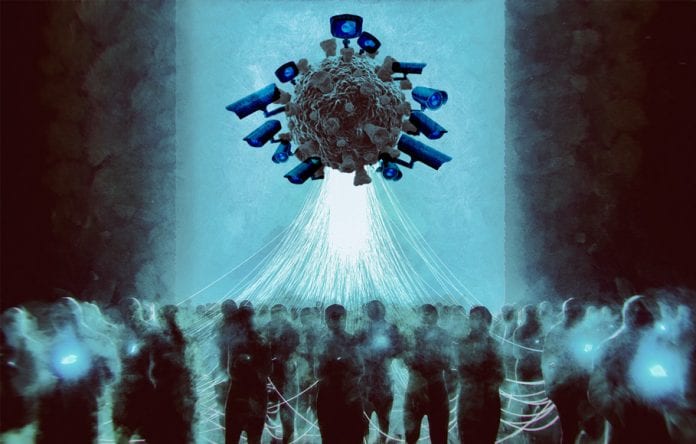
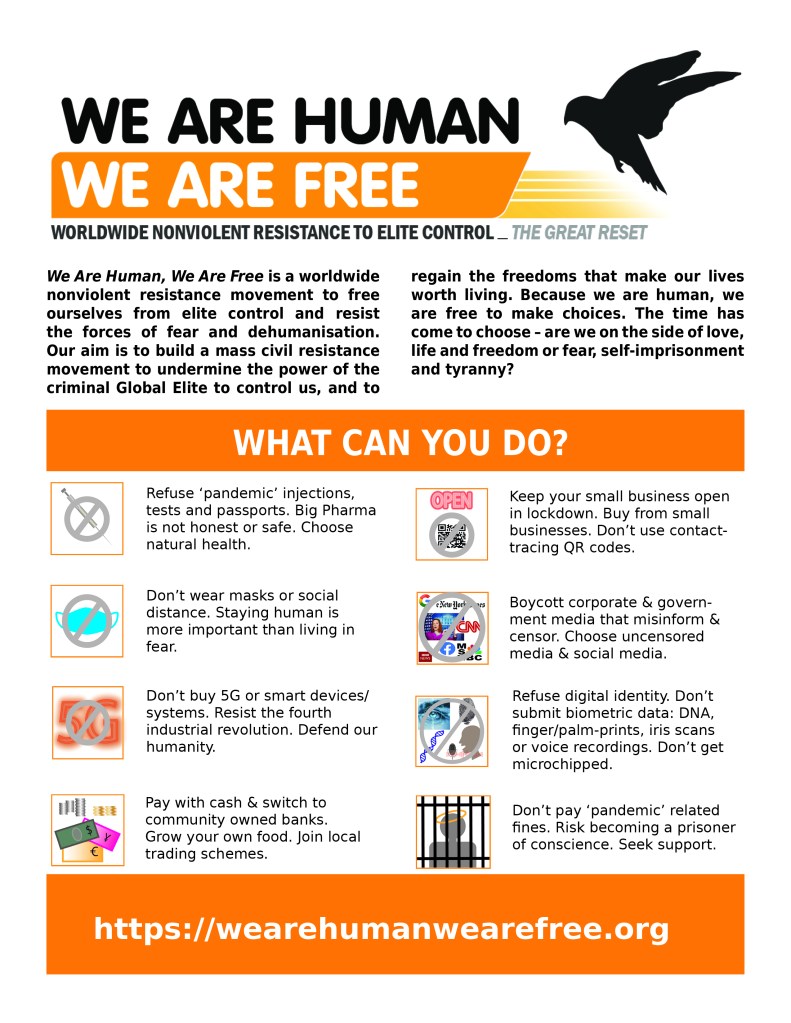



 After the Crash