Einstein and Freud’s ‘Why War?’ Revisited: Why Anti-War Efforts Go Nowhere

By Robert J. Burrowes

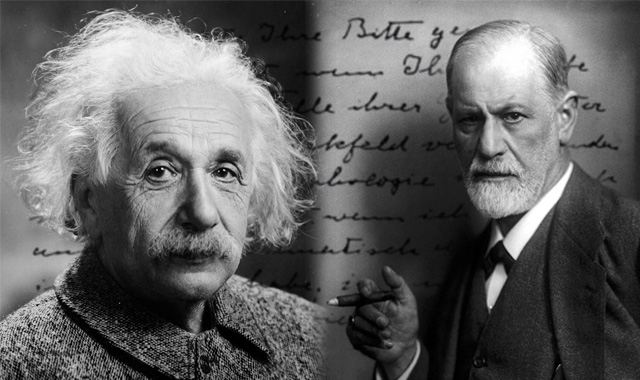
In 1932, Sigmund Freud and Albert Einstein exchanged letters, later published under the title ‘Why War?’ See ‘Why War? An exchange of letters between Freud and Einstein’.

However, whatever insight these two giants of an earlier era brought to our understanding of war, the reality is that a great deal has been learned since they corresponded.

Nevertheless, since the emergence of an identifiable, organized anti-war movement during World War I which has grown to include a diverse range of activists and organizations from across the political spectrum, as well as peace and conflict resolution scholars from various disciplines, there is little evidence that this movement, or any of the many organizations within it, has been learning from its failures by systematically undertaking or commissioning further research to understand the phenomenon of war more completely and then devising a strategy to end it based on that learning.

Hence, during its existence for more than 100 years, the organized anti-war movement – and the subsequently developed peace movement with its broader agenda – has had minimal impact in preventing or halting particular military conflicts, including wars, and zero impact in ending war generally, as the record testifies.

And so, even today, war continues in several countries in West Asia (the Middle East), Africa, elsewhere and, more recently, in Ukraine with the antiwar movement again demonstrating its ineffectiveness and, in the case of Ukraine, failing to comprehend the deeper agenda behind what is taking place in that country. See ‘The War in Ukraine: Understanding and Resisting the Global Elite’s Deeper Agenda’.

Of course, while an utterly inadequate analysis of what, fundamentally, is driving war is the critical foundation of the anti-war movement’s problems, it is still just one of the substantial range of problems it faces, some of which derive from this flawed analysis but others which a better analysis would expose. These include, for example, an understanding of why the fear of most of those within the anti-war movement is preventing the movement from mustering the commitment and courage that will be necessary if we are to undertake the many actions necessary to end war. In essence, fear makes most participants in the movement happy to complain about war but not take action themselves (or take action that has zero or minimal impact).

As Daniel Berrigan noted in his 1969 book No Bars to Manhood: ‘the waging of war, by its nature, is total – but the waging of peace, by our own cowardice, is partial.’

This cowardice means that a large proportion of the anti-war movement contents itself with a range of powerless measures – usually extending no further than signing petitions, issuing lameduck ideologically-oriented statements, writing articles, organizing conferences, issuing calls for negotiations or appeals to politicians – all invariably devoid of emotional and geopolitical reality as well as realistic measures to avert/halt the latest war.

This might include advocacy of measures, such as those developed under the guise of international humanitarian law, in relation to ‘outlawing war’ or outlawing particular weapons systems, despite the obvious observation that these legal constraints are routinely violated with impunity by any military power, starting with the United States, or non-state actor that is unconstrained by questions of legality.

Beyond this, ‘action’, when it is taken, is usually confined to conducting (notoriously ineffective) street protests or employing other tactics devoid of strategic impact in the context (of ending war). As former US Secretary of State Alexander Haig once noted about a massive anti-war demonstration: ‘Let them march all they want, as long as they continue to pay their taxes.’ See Alexander Haig. As a four-star general, Haig, not regarded as the most intelligent Secretary of State in US history, certainly understood that tactical choice is a question of strategy. Most activists have no idea.

So if we are to end war as a phenomenon in human affairs, or even meaningfully attempt to prevent or end a particular war, we need to do a number of things. Most fundamentally, we must start with a sound understanding of what causes violence to begin with because war does not emerge from a vacuum. War, when all is considered, is just another manifestation of violence, like everything from violence against women to economic exploitation to environmental destruction.

And if we are not able or willing to investigate and understand what is causing violence, and address this fundamental cause as part of our strategy, then our other efforts to end the manifestations of violence, including war, must all be in vain. Again, as the record readily testifies.

What Causes Violence?

So what is the cause of violence? Here is what 41 years (1966-2007) of concerted effort taught me.

Perpetrators of violence learn their craft in childhood. If you inflict violence on a child, they learn to inflict violence on others. The political leaders who decide to wage war, the military leaders who plan and conduct it, as well as the soldiers, sailors and aircraft personnel who fight war each suffered violence as a child. The terrorist suffered violence as a child. The neo-Nazi suffered violence as a child. The individual who inflicts violence on his (or her) partner suffered violence as a child. The corporate executive who exploits working class people and/or those who live in Africa, Asia or Central/South America suffered violence as a child. The racist or religious bigot suffered violence as a child. The individual who perpetrates violence in the home, in the schoolyard or on the street suffered violence as a child. The individual who overconsumes, or even consumes certain products and/or otherwise destroys the biosphere, suffered violence as a child.

So let me illustrate this point, in a very simplified way, by briefly explaining the parenting experience of a neo-Nazi. This individual has been terrorized by their parents and/or other significant adults in their life into projecting their fear onto particular groups of human beings and into believing that violence is a morally correct and superior way of dealing with these ‘different’ people. But for a much fuller and more nuanced explanation of this point, see the sections headed ‘The Emotional Profile of Archetype Perpetrators of Violence’ and ‘The Spectrum of the Violent Personality’ in ‘Why Violence?’

If we want to end violence in all of its manifestations, structural and otherwise, locally and globally, then we must finally end our longest and greatest war: the adult war on children. And here is an additional incentive: if we do not tackle the fundamental cause of violence, then our combined and unrelenting efforts to tackle all of its other symptoms must ultimately fail. And extinction at our own hand – by nuclear war or other means – is inevitable.

How can I claim that violence against children is the fundamental cause of all other violence? Consider this. There is universal acceptance that behaviour is shaped by childhood experience. If it was not, we would not put such effort into education and other efforts to ‘socialize’ children to ‘fit into’ their society. And this is why many psychologists have argued that exposure to war toys and violent video games shapes attitudes and behaviours in relation to violence.

But it is far more complex than this and, strange though it may seem, it is not just the ‘visible’ violence (such as hitting, screaming at and sexually abusing) that we normally label ‘violence’ that causes the main damage, although this is extremely damaging. The largest component of damage arises from the ‘invisible’ and ‘utterly invisible’ violence that we adults unconsciously inflict on children during the ordinary course of the day. Tragically, the bulk of this violence occurs in the family home and at school. See ‘Why Violence?’ and ‘Fearless Psychology and Fearful Psychology: Principles and Practice’.

So what is ‘invisible’ violence? It is the ‘little things’ we do every day, partly because we are just ‘too busy’. For example, when we do not allow time to listen to, and value, a child’s thoughts and feelings, the child learns to not listen to themSelf thus destroying their internal communication system. When we do not let a child say what they want (or ignore them when they do), the child develops communication and behavioral dysfunctionalities as they keep trying to meet their own needs (which, as a basic survival strategy, they are genetically programmed to do).

When we blame, condemn, insult, mock, embarrass, shame, humiliate, taunt, goad, guilt-trip, deceive, lie to, bribe, blackmail, moralize with and/or judge a child, we both undermine their sense of Self-worth and teach them to blame, condemn, insult, mock, embarrass, shame, humiliate, taunt, goad, guilt-trip, deceive, lie, bribe, blackmail, moralize and/or judge.

The fundamental outcome of being bombarded throughout their childhood by this ‘invisible’ violence is that the child is utterly overwhelmed by feelings of fear, pain, anger and sadness (among many others). However, mothers, fathers, teachers, religious figures and other adults also actively interfere with the expression of these feelings and the behavioral responses that are naturally generated by them and it is this ‘utterly invisible’ violence that explains why the dysfunctional behavioral outcomes actually occur.

For example, by ignoring a child when they express their feelings, by comforting, reassuring or distracting a child when they express their feelings, by laughing at or ridiculing their feelings, by terrorizing a child into not expressing their feelings (for example, by screaming at them when they cry or get angry), and/or by violently controlling a behavior that is generated by their feelings (for example, by hitting them, restraining them or locking them into a room), the child has no choice but to unconsciously suppress their awareness of these feelings.

However, once a child has been terrorized into suppressing their awareness of their feelings (rather than being allowed to have their feelings and to act on them) the child has also unconsciously suppressed their awareness of the reality that caused these feelings. This has many outcomes that are disastrous for the individual, for society and for nature because the individual will now easily suppress their awareness of the feelings that would tell them how to act most functionally in any given circumstance and they will progressively acquire a phenomenal variety of dysfunctional behaviors, including some that are violent towards themself, others and/or the Earth.

From the above, it should also now be apparent that punishment should never be used. ‘Punishment’, of course, is simply one of the words we use to obscure our awareness of the fact that we are using violence. Violence, even when we label it ‘punishment’, scares children and adults alike and cannot elicit a functional behavioural response. See ‘Punishment is Violent and Counterproductive’ and ‘The Rule of Law: Unjust and Violent’.

If someone behaves dysfunctionally, they need to be listened to, deeply, so that they can start to become consciously aware of the feelings (which will always include fear and, often, terror) that drove the dysfunctional behaviour in the first place. They then need to feel and express these feelings (including any anger) in a safe way. Only then will behavioural change in the direction of functionality be possible. See ‘Nisteling: The Art of Deep Listening’.

‘But these adult behaviors you have described don’t seem that bad. Can the outcome be as disastrous as you claim?’ you might ask. The problem is that there are hundreds of these ‘ordinary’, everyday behaviors that destroy the Selfhood of the child. It is ‘death by a thousand cuts’ and most children simply do not survive as Self-aware individuals. And why do we do this? As mentioned above, we do it so that each child will fit into our model of ‘the perfect citizen’: that is, obedient and hardworking student, reliable and pliant employee/soldier, and submissive law-abiding citizen (that is, one who pays their taxes, including those for war, and votes and/or lobbies politicians rather than acting powerfully themSelf).

The bottom line is simple: As parents, teachers, religious figures and adults generally, we want the child to be obedient to our commands, and not powerfully able to act in accord with their own Self-will. And we achieve this outcome by terrorizing the child into doing what we want rather than nurturing the child’s innate capacity to listen, deeply, to themSelf in order to follow their own will.

Moreover, once we destroy the Selfhood of a child, it has many flow-on effects. For example, once you terrorize a child into accepting certain information about themSelf, other people and the state of the world – with the bulk of this information mediated by elite agents including education systems, the entertainment industry and the corporate media – the child becomes unconsciously fearful of dealing with new information, especially if this information is contradictory to what they have been terrorized into believing. As a result, the child will unconsciously dismiss new information, no matter how truthful, out of hand.

In short, the child has been terrorized in such a way that they are no longer capable of learning (or their learning capacity is seriously diminished by excluding any information that is not a simple extension of what they already ‘know’). If you imagine any of the bigots you know, you are imagining someone who is utterly terrified. But it’s not just the bigots; virtually all people are affected in this manner making them incapable of responding adequately to new (or even important) information. This is one explanation why some people are ‘climate deniers’, most people do nothing in response to the climate catastrophe and even those people who do take action usually do so ineffectively. See ‘The Global Climate Movement is Failing: Why?’

But the same can be said for those working to end war – see ‘The War to End War 100 Years On: An Evaluation and Reorientation of our Resistance to War’ – end the nuclear weapons race or engage in other struggles, including liberation struggles, that are vital parts of the global struggle to create a more peaceful, just and sustainable human culture. See ‘Why Activists Fail’.

And to briefly put this issue in the current global context, the vast bulk of the human population, including most of those individuals whom society would regard as ‘highly intelligent’, has been readily terrorized into believing that they are threatened by a pathogenic virus (labeled ‘SARS-CoV-2’) when there is no documented, scientific proof that such an entity as a pathogenic virus even exists – see ‘Dismantling the Virus Theory – The “measles virus” as an example’ and What Really Makes You Ill? Why everything you thought you knew about disease is wrong – and certainly no documented scientific proof that a virus labeled SARS-CoV-2 exists. See ‘COVID-19: The virus does not exist – it is confirmed!’ and ‘Statement On Virus Isolation (SOVI)’. And for an account of researcher Christine Massey’s fruitless search over the course of more than a year to find evidence of an isolated virus, via Freedom of Information requests to health/science institutions all over the world, see ‘177 health/science institutions globally all failed to cite even 1 record of “SARS-COV-2” purification, by anyone, anywhere, ever’.

Despite this, the vast bulk of the human population has been terrorized into accepting a series of medical intrusions (including lockdowns, PCR tests, mask-wearing and gene-altering injectables) when, in fact, there is no documented, scientific proof that (assuming there was a ‘pathogenic virus’) lockdowns, PCR tests, mask-wearing or ‘vaccines’ even ‘work’ and/or extensive documentation of their harm. See, for example, ‘And How Are the Children? Lockdowns, Massive Fear, Deaths from Suicides and Drug Abuse’The WHO Confirms that the Covid-19 PCR Test is Flawed: Estimates of “Positive Cases” are Meaningless. The Lockdown Has No Scientific Basis’‘Conclusion Regarding Masks: They Do Not Work’‘Masks “don’t work,” are damaging health and are being used to control population: Doctors panel’‘The Truth about the Covid-19 Vaccine’A Final Warning to Humanity‘COVID Shots to “Decimate World Population,” Warns Dr. Bhakdi’ and ‘20 Facts about Vaccination Your Doctor Forgot To Tell You’.

And because the fear generated by the elite-driven ‘virus’/injectable narrative has been so debilitating and thus engendered a high level of obedience by the population at large, it is a rare individual who has investigated both the shortcomings in this narrative and the horrific agenda that this narrative is concealing, let alone identified a powerful strategy to resist it. See ‘We Are Human, We Are Free’.

So, to return to the focus of this article, let me briefly reiterate this vital point: The essence of what human beings call ‘socialization’ is the process by which each child is terrorized in such a way that they are no longer capable of learning or their learning capacity is seriously diminished. The multifaceted violence inflicted throughout childhood and adolescence ensures that the adult who emerges is suppressing awareness of an enormous amount of fear, pain, sadness and anger (among many other feelings) and must live in delusion to remain unaware of these suppressed feelings. This ensures that, as part of their delusion, the individual develops a strong sense that what they are doing already is functional and working (no matter how dysfunctional and ineffective it may actually be) while not investigating the existence of evidence that might contradict their delusion and/or unconsciously suppressing awareness of any evidence they come across that does contradict it. They do this because, unconsciously, people learn to identify obedience with ‘functional and working’ (because they do not get punished for being obedient). See ‘Why Violence?’‘Fearless Psychology and Fearful Psychology: Principles and Practice’‘Do We Want School or Education?’‘Love Denied: The Psychology of Materialism, Violence and War’ and ‘Human Intelligence or Human Awareness?’

Just one critically important outcome of this terrorization process is that a significant proportion of the human population is effectively insane, and this certainly includes the Global Elite and those primary elite agents on which it relies to generate and maintain wars. See ‘The Global Elite is Insane Revisited’.

Another critically important outcome of this terrorization process is that the international conflict resolution architecture – which is essentially a legal framework – does not take emotional factors into account. Hence it is not capable of resolving conflicts in any meaningful way. This is why negotiations often go nowhere, particularly in a timeframe that would avert adverse outcomes. And why ‘agreements’ that are reached are utterly superficial. The fundamental drivers of the conflict – invariably including suppressed terror, self-hatred and anger which are often unconsciously projected at the other party – are never addressed and will continue to manifest as violence in various forms, even if military violence is ended in a particular context. See ‘Challenges for Resolving Complex Conflicts’.

So if we want a powerfully effective anti-war movement (or peace movement, environmental movement, social justice movement….) then we need Self-aware individuals who can think, plan and act powerfully as part of strategically-oriented organizations to achieve ambitious longer-term goals. Such as ending the institution of war.

Anything less will fail. Again, as the record demonstrates.

So What Can We Do?

Ending war is possible. But it will take a courageous, sophisticated, strategic effort, given how deeply violence is embedded into the human ‘socialization’ process which makes war just one of the many approved violent behaviours in which adults are expected and encouraged to participate, beginning with paying taxes to finance it.

So while it is possible to end war, this won’t be happening any time soon.

And it can’t happen until we commit ourselves to eliminating violence against children so that human society creates adults who are psychologically whole and powerfully able to participate in conflict without resorting to violence to ‘resolve’ it.

Nevertheless, in parallel with efforts to eliminate violence against children, those powerful enough can also participate in a comprehensive strategy to end war as explained on the ‘Nonviolent Strategy’ website, starting with this list of ‘Strategic Goals to End War’. This is extrapolated from a book which explained why a strategy of nonviolent defense, understood and implemented by sufficient committed and organized individuals, is strategically superior to any military strategy. See The Strategy of Nonviolent Defense: A Gandhian Approach.

Or, if you want to participate in a strategy to end a particular war, such as that in Ukraine, particularly given the possibility of it morphing into a longer term insurgency – see ‘Ukraine And The New Al Qaeda’ – you can read how to do so here: Nonviolent Defense/Liberation Strategy.

But, as explained above, precisely because of their socialization experience during childhood, most of those who would identify as ‘anti-war’ are simply too frightened to act powerfully in resisting it. Hence, war will continue until we address its root cause: violence against children.

Biodata: Robert J. Burrowes has a lifetime commitment to understanding and ending human violence. He has done extensive research since 1966 in an effort to understand why human beings are violent and has been a nonviolent activist since 1981. He is the author of ‘Why Violence?‘ . His email address is flametree@riseup.net and his website is at http://robertjburrowes.wordpress.com

A Clockwork Orange: Waiting for the Sun

By Doug “Uncola” Lynn

Source: The Burning Platform

Society should not do the wrong thing for the right reason, even though it frequently does the right thing for the wrong reason.

 History has shown us what happens when you try to make society too civilized, or do too good a job of eliminating undesirable elements. It also shows the tragic fallacy in the belief that the destruction of democratic institutions will cause better ones to arise in their place.

Stanley Kubrick on “A Clockwork Orange”, an interview with film critic Michel Ciment

An obscure Texas political consultant named Bill Miller once said “politics is show business for ugly people”.  It’s true for the most part, aside from the consequences.  This is because the theatrics of politicians result in policies that affect the lives of others; often against the will of the governed. In books and movies, however, the characters are much ado about nothing. Until, that is, life imitates art.

So it is with the futuristic dystopian story of “A Clockwork Orange”.  Both the book, by the author Anthony Burgess, and the film by director Stanley Kubrick, serve as moral dilemmas and cautionary tales plumbing such considerations as free will, the duality of mankind, societal anarchy, and the ascendancy of an all-powerful state.

A 1973 review written in Sight and Sound Magazine, stated: “Kubrick has appropriated theme, character, narrative and dialogue from Anthony Burgess’ novel, but the film is more than a literal translation of a construct of language into dramatic-visual form”. Therefore, for that reason, and for others described later, the film will remain this article’s primary focus.

As any perfunctory internet research will show, Stanley Kubrick is known as a visionary artist and director, but also as the subject of multiple conspiracies. In addition to A Clockwork Orange, Kubrick’s oeuvre includes avant-garde films such as Dr. Strangelove, The Shining, 2001 A Space Odyssey, and Eyes Wide Shut; to name a few.  Just as these movies demonstrate the inner workings of mankind operating through the disparate threads which bind reality, so do some claim that a larger picture is presented as well.  The big picture, of course, is said to include conspiratorial clues and undertones in Kubrick’s films ranging from Freemasonry, to America’s alleged faked moon landing, to an occultist global financial elite, and the terrorist attacks of 911 being planned as a world transformational event.

There exist multiple published writings, both online and in print, describing the secret meanings hidden in Kubrick’s movies.  Furthermore, it has been argued that Kubrick’s “somewhat surreal films” appeal to the viewer’s subconscious and, therefore, “lend themselves to this sort of interpretation”.

That is another reason why Kubrick’s film will remain the focus of this essay, as opposed to the novel: Either these alleged conspiracies are imagined in the minds of the viewers, or Kubrick deliberately inserted these elements into his creations.  Given Kubrick’s reputation for perfectionism, one can only conclude the symbolism was specifically placed and for exact reasons.

For example, in Kubrick’s The Shining, there are those who contend it is “laden with symbolism, hidden messages”, and “conspiracy theories”.   In Eyes Wide Shut, some contend it was meant to reveal secret societies and sex-magic by means of “evidence” which includes occult symbolism and references to Ishtar, the ancient Babylonian goddess of fertility, love, war and sex.

In his other films, like 2001 A Space Odyssey, it has been argued the strategic placement of the sun, or other circular lights, were utilized by Kubrick as symbolic movie projectors of sorts, whereby time and events unwind before the audience like a clock.  Additionally, even in movies not directed by Kubrick, there are those who say mirrors are used to demonstrate mind control.  It is a fact both of these visualizations are present in A Clockwork Orange.

Once again, and for all of the reasons delineated heretofore, the following presentation will analyze Kubrick’s film as opposed to the novel from which it derived.  The story, and Kubrick’s alchemy, will then be analyzed through the lens of three separate realities followed by some concluding comments at the very end.

THE UNWINDING

In Kubrick’s A Clockwork Orange, the viewers witness the tragic life and circumstances of a teenager named Alex DeLarge navigating a decadent post-modern world. In the film, Alex is played by the actor Malcolm McDowell.  The story unfolds against the backdrop of a futuristic dystopian society that has descended into anarchy and violence; especially within the younger generation.

The very first scene focuses on the evil-eyed Alex adorned with a black fedora and sunray eyeliner beneath his right eye. As the camera pulls back, the boy is shown with three of his young friends identified in the narrative as “droogs”. The youths are shown sitting in the Korova Milk Bar where they imbibe “Milk Plus”; or milk laced with recreational drugs of various types.

Upon leaving the bar, the boys come across a drunk lying in an alley and singing what Alex calls the songs of the drunk man’s “fathers”.  This implies a line of separation between the previous time and the new; between the old and the young.  This separation of time is actually confirmed when the drunk tells the young hooligans he no longer wants to live in this “stinking world” because there’s “no law and order anymore”, where the young “get onto the old”, and “it’s no world for an old man any longer”.

The boys commence to beat the old boozer senseless.

In the next scene, Alex and his droogs come across a group of five other boys who, on an abandoned theatrical stage, are attempting to rape a young woman.  Seemingly, the stage implies the violence unfolding as melodrama, causing this viewer to question if the descent into societal violence was staged as well?  The boys assaulting the woman were wearing military-style camo clothing and adorned with Nazi accoutrements. Alex taunted them in a near Shakespearean manner, and the rival gangs went to war.  The battle also appeared as theatrically choreographed and was set in sync to Giaochino Rossini’s La Gazza Ladra overture.

In the next scene, we see Alex and his gang fleeing to the countryside in a red sports car, looking very much like four demons racing towards hell.

Chaos ensued until Alex eventually ended up in prison and, thus, in possession of the state.

In prison, Alex sat before an open Bible and fantasized he was a Roman soldier whipping the back of Jesus Christ. His voiceover narration said he didn’t like the New Testament’s “preachy talking” as much as the Old Testament’s violence and sex. He furthermore envisioned slicing open the throats of ancient enemies and later eating grapes fed to him by the naked wives and handmaidens of his vanquished foes.

In the privacy of the facility’s library, Alex petitioned the prison chaplain regarding a new treatment that could help him secure his freedom.  The chaplain informed Alex the new treatment was called the Ludovico Technique and that it was dangerous.  The boy then tells the priest that in spite of any potential danger, he wanted “for the rest of his life to be one act of goodness”.

In response, the chaplain tells Alex that “goodness is chosen” and “when a man cannot choose, he ceases to be a man”.

The next scenes showed a group of prisoners walking outside around a circle on the ground.  Before the men are lined up for inspection, a cadre of dignitaries exit from a long hallway, and walk before the prisoners. In so doing, one man tells the others that, soon, the “prisons will be full of political prisoners” and that the “petty criminals need faster reconditioning”. Standing in line, Alex speaks up and the man selects Alex from the group. The viewer later discovers the man was actually the new Minister of the Interior who was visiting the prison that day.

Soon, Alex is admitted into the Ludovico Treatment Center and begins his reconditioning. He is strapped to a chair with brackets forcing both of his eyes open so they can’t be closed. He then watches violent videos of which he greatly enjoys at first. When a man begins to bleed on screen, Alex’s bloodlust is quenched, and speaking in the Nadsat lingo (a combination of Cockney English and Russian), he says: “It’s funny how the colors of the real world only seem really real when you viddy them on a screen”.

After the first video, another film is shown where a woman in a red wig is being gang-raped. Due to the drugs being injected into Alex’s bloodstream, he begins to feel ill, but he can’t avert his gaze due to the brackets on his eyes. Even trying to move his eyes away, he says: “I still could not get out of the line of fire of this picture”.

In another scene, Alex views another session which consists of Nazis marching, paratroopers jumping, bombs falling, and all to the light and airy melody of Beethoven’s “Ninth Symphony, Fourth Movement”.  When Alex realizes the soundtrack is Beethoven, he begins to scream pitifully, begging the doctors to stop the treatment; because he once enjoyed that music as a free man.

Certainly one of the most challenging and difficult social problems we face today is, how can the State maintain the necessary degree of control over society without becoming repressive, and how can it achieve this in the face of an increasingly impatient electorate who are beginning to regard legal and political solutions as too slow? The State sees the spectre looming ahead of terrorism and anarchy, and this increases the risk of its over-reaction and a reduction in our freedom. As with everything else in life, it is a matter of groping for the right balance, and a certain amount of luck.

Stanley Kubrick on “A Clockwork Orange”, an interview with film critic Michel Ciment

His treatment complete, Alex is then presented to a group of onlookers as the Ministry of Interior addresses the audience.  The man tells them his political party promised Law and Order and “to make the streets safe for ordinary peace-loving citizens“.

In a demonstration that ensues on a raised dais, or stage, in front of the group, Alex is verbally and physically bullied while remaining unable to fight back.  As the bully exits the stage, an overhead spotlight, appearing very much like a film projector, or the sun, follows the man as he bows and waves to the audience.

Next, Alex was presented with a gorgeous, nicely tanned, platinum blonde who stands topless before him wearing only a pair of cotton panties.  As Alex, on his knees, reaches upward to touch her breasts, he becomes sick once again. The blonde then exits the stage similar to the bully, waving and bowing in dramatic fashion.

As the minister touts the new and improved Alex, the boy’s old prison chaplain rises up to challenge him, claiming Alex had been deprived of choice, and that his “reformation is insincere” because his conditioning requires “self-interest merely to avoid pain”. The chaplain then says: “He ceases to be a wrongdoer, he ceases also to be a creature capable of moral choice”.

In response, the Minister exclaims: “We’re not concerned with motives, with the higher ethics; we are concerned only with cutting down on crime and with relieving the ghastly congestions within our prisons”.  He then added:

“He will be your true Christian, ready to turn the other cheek. Ready to be crucified rather than crucify. Sick to the very heart at the thought of even killing a fly. Reclamation. Joy before the angels of God! The point is that it works!”

The State had set Alex free. Literally.  More chaos ensued; but, this time, it is all directed against the boy.  As Alex eventually returns to his old self, and the State even apologizes for not knowing any better, it remains clear the government still views Alex as a political pawn to be played in its next theatrical production.

The viewer is left with the impression of the cycle continuing; or merely more of the same as the sun rises and sets over the spinning world.

Alex is characterised not only by his actions against society, but in the actions of the State against Alex. The two are equated in the film, his charm reproduced in its durance, the principal difference – a perhaps considerable one – in the State’s coarsely institutional and indiscriminately committed immoralities that Alex can only practise on a restricted scale.

  – Daniels, Don. “A Clockwork Orange”,  Sight & Sound, Winter 1973

[A clockwork orange is] an organic entity, full of juice and sweetness and agreeable odor, being turned into an automaton.

 – Burgess, Anthony. 1987 prefatory note to “A Clockwork Orange: A Play With Music”

…the attempt to impose upon man, a creature of growth and capable of sweetness, to ooze juicily at the last round the bearded lips of God, to attempt to impose, I say, laws and conditions appropriate to a mechanical creation, against this, I raise my swordpen–”

  – Burgess, Anthony.  The character F. Alexander, “A Clockwork Orange”, p. 25

Through the Lens of Psychology and Violence, Chemically Enhanced

When I was a young man at college more than three decades ago, I asked one of my friends what he thought of the film A Clockwork Orange.  Now, this guy had a high IQ. When younger, he was identified as a gifted child who then became member of Mensa, and later the dean of the psychology department at a large American university.  I’ve never forgotten his answer. He said: “The future is sex and violence”.

Obviously, both he and Kubrick were proven correct.

Over the past four decades, global academia has made ignorant the youth in Western Societies. Whereas emphasis was once placed on critical thinking, logic, classic literature, science, and math, today’s schools now prioritize identity politics while the youth, especially boys, fall through society’s cracks mesmerized by television, violent video games, and drugs; prescribed or otherwise.

In A Clockwork Orange, Alex and his gang of droogs demonstrated awareness and cleverness, but simultaneously lacked compassion and empathy in ways that were near reptilian. Moreover, Alex’s parents were goofy enablers; the mother in particular, who had purple hair and seemed blind to her son’s evil. They were, in fact, perfect representations of the modern real-world parents who go on television, after their child murders and maims, to say:  “He seemed like such a nice boy. We never saw it coming”.

This has remained true since the Columbine shooters through the most current of events in even the bucolic U.S. Midwestern state of Iowa, where two separate girls were recently brutally assaulted and murdered in as many months.  Both the killers of Mollie Tibbets and Celia Barquin Arozamena were young men in their early twenties.  In the latter case, the murderer, Collin Daniel Richards, admitted he had an urge to rape and kill a woman” and the meme for his Facebook cover page said:  “Let’s go commit a murder”.

Obviously, we no longer live in a Norman Rockwell world.  Even so, we can’t say we weren’t warned by Kubrick in A Clockwork Orange.

The famous psychologist, Sigmund Freud, presented the idea that humans operate by means of a trinity of cognitive processes as follows:  The Id (instincts), Ego (reality) and Superego (morality).  Freud furthermore speculated these three systems (i.e. tripartite) developed at different stages of life.

In the case of Alex in Kubrick’s film, he was representative of the Id, acting out of his desire for childish satisfaction.  It is therefore possible the Ego in the film was represented by the modifying presence of the prison chaplain, and with the State acting as the Superego taming Alex’s Id by means of chemically conditioned censorship of action.

The Id, Ego, and Superego could also be perceived as manifested in the body (impulse), mind/soul (cognitive) and spirit (conscious /law).

As both the film, A Clockwork Orange, and present reality indicate: When balance is lacking, chaos follows in the form of hell on earth.  But, on the other hand, if proper balance can be restored, then both individuals and society are better off.

But what is the proper balance and who decides?  The State?  Or, is there another way to unify mankind into peace and harmony?

By definition, a human being is endowed with free will.  He can use this to choose between good and evil.  If he can only perform good or only perform evil, then he is a clockwork orange–meaning he has the appearance of an organism lovely with colour and juice but is in fact only a clockwork toy to be wound up by God or the Devil or (since this is increasingly replacing both) the Almighty State.  It is as inhumane to be totally good as it is to be totally evil.  The important thing is moral choice.  Evil has to exist along with good, in order that moral choice may operate.  Life is sustained by the grinding opposition of moral entities.

 –  Burgess, Anthony. 1986 introduction to “A Clockwork Orange”

I think this suggests the failure of culture to have any morally refining effect on society. Hitler loved good music and many top Nazis were cultured and sophisticated men but it didn’t do them, or anyone else, much good.

Stanley Kubrick on “A Clockwork Orange”, an interview with film critic Michel Ciment

Through the Lens of the Occult, Sun Worship, and Ancient Knowledge

Again, a simple internet search of “Stanley Kubrick occult” will yield a number of online links and even a book on the topic entitled “Kubrick’s Code: An Examination of Illuminati & Occult Symbolism in Stanley Kubrick’s Films”.  In A Clockwork Orange, specifically, there are those who contend “subliminals” are present therein, including references to MK Ultra/mind control, Freemasonry, Sun/Solar worship, Templar/Iron Cross, Black Sun, the Eye of Horus, and more.

Having personally seen the movie, and recently, I will say these elements are definitely incorporated into the film.  I was intrigued by the “Clockwork Orange as Sun” angle but, upon viewing the movie again, it appeared to me the solar aspect was presented (similar to Kubrick’s other films) as more of a film projector of sorts; whereby the viewers could nearly perceive themselves as projections in the screen, along with the fictional characters, as the story unwound.

A Clockwork Orange.  Mechanical. Circles. Time.

It is also said the sun can affect people’s moods; as does film.

In the earliest written creation epic, the “Enuma Elish”, claimed by some scholars to have influenced the Bible’s Book of Genesis, Marduk is the Babylonian god who defeats the female water god, Tiamat. Marduk is then awarded fifty other names. In Mesopotamia and Sumeria, Marduk is known as the sun gods Shamash and Anu (Utu), respectively.  In Egypt he was worshipped as Ra.

According to ancient lore, Marduk’s act of creation marks the start of time. He was also worshipped as Bel Marduk the God of war.

In the scriptures of Judaism and Christianity, Marduk and Tiamat were first identified as the humans Nimrod (In Genesis, chapter 10, called “a mighty hunter before the Lord”) and his wife Semiramis (later known as the mythological Queen of Heaven).

There are those who say it was Nimrod who established the first state religion by unifying mankind and building a tower in the Tigris/Euphrates region of antiquity.  However, after he incorporated, and then diversified, he went public:

Source

Did it all start on the plains of Shinar after a great flood, when the male sun overcame female water?

In A Clockwork Orange, Alex and his droogs were certainly warlike and sought to ravage the females in their paths.  Moreover, perhaps as another clue, one of the songs on the film’s soundtrack is titled “Overture to the Sun”.

In the scene previously described, when the rival gang was in the act of melodramatically wrestling a woman in order to rape her on a stage, it did appear Kubrick incorporated elements of the “Enuma Elish” into his film: namely the expanse of sky above and a winged sun god overlooking acts of sex and violence (Chaos) below.

Within the occult, there are those identifying the Sun as being a symbol of Lucifer the Light Bringer and with the accompanying “illuminating rays of knowledge”; all supposedly essential to the ancient sun worship cult called “The Illuminati”.

Furthermore, others have connected both Freemasonry and the Illuminati as having originated in ancient Egypt:

Popular history texts and encyclopedias generally paint the Illuminati as having its origins in 1776 Bavaria. However, the origins go back much further. The Illuminati are tied directly through masonry to the sun and Isis cults of ancient Egypt.

Source

In truth, Kubrick’s A Clockwork Orange has more occult symbols than even a U.S. dollar bill; along with specific parallels to Freemasonry.  All of these visuals, like the Eye of Horus right on the money, are hidden in plain sight:

The checkered pattern is found in Freemason lodges and is known as “Moses Pavement” which symbolizes the duality of man.  Of course, the Eye of Horus, snakes, and phalluses, are all symbols of the occult as well.

Why would Kubrick have included these in A Clockwork Orange and, also, in his other films?

Coincidence? Art? Conspiracy?

Let the readers, and viewers, decide.

Additionally, as addressed before, Kubrick’s film does include some peculiar references to Christianity.  Complementing Alex’s aforementioned prison fantasy of being a Roman soldier in the act of whipping Christ, there was an earlier scene in his room where he fondles his pet snake before the snake appeared to act as a phallus between the legs of a naked woman pictured on his wall.  The buttocks of the woman looked to have been held up by the raised arms of four naked Jesus Christ figurines; complete with crowns of thorns.  Then, as a rapturous Alex enjoyed the music of Beethoven in a near masturbatory manner, he envisioned himself a vampire and saw a woman in a white (wedding?) dress being hung by rope, along with fiery explosions and men being crushed by rocks.

These examples, along with the symbols of Alex’s pet snake and the Eye of Horus on his right sleeve and right eye, leave the viewer with the impression the boy’s worldview was nothing short of Luciferian.

Moreover, just as western holidays like Christmas (Sol) and Easter (Ishtar) have their originations in ancient sun worship and female pagan fertility deities, so too, it seems, does A Clockwork Orange.  In another example, one of the droogs in the Korova Milk Bar, with sun/projector overhead, drew milk from the breasts of a replica nymph that he called “Lucy”.

Are all of these occult references designed to point the viewer’s attention towards Lucifer? Was Kubrick trying to warn his audience that the future for both individual and state belonged to Satan? Or, is it possible the director was actually advocating for such?

Either way, Kubrick’s futuristic vision may have been right, on many levels correct, and in more ways, than most people today realize.

Through the Lens of the Established State, Modern Politics , Time, and the Circular Cycles of Man

There are those who have tied Donald Trump to Kubrick’s A Clockwork Orange:

And, paradoxically, it now appears the Satanists are even threatened by The Orange Jesus as they seek to convert the younger generation.

Founded in 2012, The Satanic Temple (not to be confused with the Church of Satan) is a non-theistic organization that has gained prominence since President Trump’s election. The group reported it gained “thousands of new members” after Trump won the presidential race.

…Since the election, The Satanic Temple has launched multiple campaigns aimed at challenging Christian influence in the political sphere. One example is their After School Satan Clubs.

Obviously those on the Political Left, and some in the middle, view Trump as similar to the right-wing, authoritarian (law and order) party in Kubrick’s film; who brainwashed naive dupes into supporting misguided policies. Yet, to the other half of the audience watching the political theater on their screens, it appears that Trump is more comparable to Alex; who, after creating carnage in the proverbial political swamp, is now undergoing reeducation by the Established State right before their very eyes.

Could Kubrick have foreseen the inevitability of time’s passage delivering an Orange Reality TV Star to the world stage? It’s doubtful, because he didn’t write the book.  Even so, is it still possible that Trump is a clockwork man, arriving right on schedule?

Since the times of the first songs, the elite have cynically oppressed the proles while telling them it’s for their own good; for their safety, or for the good of Mankind overall.  That is the commonality of gangsters, thugs, neocons, corrupt politicians, fascists, and tyrannical collectivists. They abrogate timeless moral principles for their own benefit and tell us it’s for ours.

In the narrative of A Clockwork Orange, there is a contrarian to the current government, an author, who played dual roles in the film’s plot. Towards the end, he argues on the telephone with an unseen coconspirator that “the common people must not sell liberty for a quieter life”.

Yet, isn’t that what we’ve done today in the once free nations of the western world?

In many ways, A Clockwork Orange is a mirrored representation of modern America.  In the movie, a right-wing party is the established power suppressing the rights of commoners in order to sustain its continuity of control; and the media, and opposition party, were fighting on the side of liberty.

Paradoxically, in the real world currently, the media, the Political Left, and lukewarm conservatives, are in singularity with the Established State; as Trump and his Deplorables wreak havoc before the global towers of power.

Based upon raw intuition, instinct, and Tweets, Trump is the political manifestation of Freud’s Id.  Therefore, he and his gang of supporters must be reformed via electronic programming and conditioning (punishment and reward) by the state as it seeks to secure its everlasting continuity.

Play ball and society will experience harmony, but only on the state’s terms.  Disobey at your own peril. This is one of the themes in A Clockwork Orange.   Other undertones of the film speak to secrecy, smoke, mirrors, and mind control, where the state vanquishes the violent urges of its citizens by creating a new reality via cyclical, or looped, feedback.  Consensus will be manufactured and contrarian views need not apply.  Not acceptable? No problem. The state has a pill for that.

As humans, we have free will, and that is a right that cannot be denied to us.  The Ludovico Technique represents the government’s, or any authority figure’s, interference with our personal liberties, and the dangers of these interferences. The battle of good versus evil is presented an innumerable amount of times in literature and cinema–but A Clockwork Orange puts a twist on this common theme.  Which is worse, chosen evil or forced good?  According to A Clockwork Orange, chosen evil is the lesser evil, because it demonstrates it allows us a choice.  If humans lose moral choice, they become machines.  Free will to choose between good and evil is the central theme and message in A Clockwork Orange.

Source

Whether or not Trump is real or just an actor, like in Kubrick’s films, he has revealed certain realities. The fact remains the state does not now endorse free will and it has, instead, resorted to electronic conditioning to form its new reality.

This will work until it doesn’t. Then the process begins again, just has it always has throughout history; as predictable as seasons, or the sun crossing the sky.

Conclusion

In researching this article, and Stanley Kubrick’s life’s work, I discovered many websites that were a strange combination of profoundly perceptive insights, unique observations, and batshit craziness.  But one interesting theme presented in Kubrick’s storytelling is the idea of mankind’s Odyssey:  Seeking meaning through faith, action, and fortune, upon the world stage; overcoming base instincts, then rising on a tide of reason and rationality, before the cycle rounds another bend and mankind falls again.

When watching A Clockwork Orange, the viewer is forced to consider the ironies of individual and state. In turn, this blogger now questions if both entities are not merely two parallel paths to hell on earth.

The sun rises and sets on individuals and nations alike. Yet, throughout history, Man’s Id was successfully moderated at times by his Ego and Superego thus allowing, for the most part, periods of equilibrium and justice; even if only for a season.

Fate or free will? That is the question. Given the cycles of history, where does hope now reside?  Why would anyone have optimism at all?

In A Clockwork Orange, the Ludovico Technique was meant to fix dystopia’s problems.  Today, in the real world, it is media narratives that are meant to address what ails us. Unfortunately, however, these are twin movies unspooling separately and all at once. In turn, it means certain worldviews must be reprogrammed, as it were.

This explains why social media companies are purging “incorrect thinkers” on their respective platforms. They are viewed as subversive moles, and petty criminals, damaging the fertile ground of the new world order.

It’s also why a bogus Russian dossier was utilized to derail the Orange Criminal.  One wonders if he was wound up as part of a plan to place asunder the old ways; like the tide rolling out before the dawn of a new day.

The lesson learned from A Clockwork Orange is to beware the algorithmic hammers of conformity; always watching, ever ready, and waiting to shine down from on high; ceaselessly smiling, shaking hands, and kissing babies on the way.

Before new experiments and orthodoxies can be tried, there must be good reasons to do so.  For out of chaos comes creation.  The circle runs like clockwork and always on time.

The Id of Man will be tempered by a new religion; or perhaps an old one by another name.

Why War? Building on the legacy of Einstein, Freud and Gandhi

By Robert J. Burrowes

In 1932, Sigmund Freud and Albert Einstein conducted a correspondence subsequently published under the title ‘Why War?’ See ‘Why War: Einstein and Freud’s Little-Known Correspondence on Violence, Peace, and Human Nature’. In many ways, this dialogue between two giants of the 20th century is symbolic of the effort made by many humans to understand that perplexing and incredibly damaging feature of human experience: the institution of war.

In a recent article, the founder of peace research, Professor Johan Galtung, reminded us of the legacy of Freud and Einstein in this regard and reflected on their dialogue, noting some shortcomings including their failure to ‘unpack conflict’. See ‘Freud-Einstein on Peace’.

Of course, Freud and Einstein weren’t the first to consider the question ‘Why War?’ and their dialogue was preceded by a long sequence of individuals and even some organizations, such as the Women’s International League for Peace and Freedom and War Resisters’ International, who sought to understand, prevent and/or halt particular wars, or even to understand and end the institution itself, as exemplified by the Kellogg-Briand Pact in 1928 outlawing war. Moreover, given the failure of earlier initiatives, many individuals and organizations since Freud and Einstein have set out to understand, prevent and/or halt wars and these efforts have taken divergent forms.

Notable among these, Mohandas K. Gandhi was concerned to develop a mode of action to deal with many manifestations of violence and he dramatically developed, and shared, an understanding of how to apply nonviolence, which he labeled satyagraha (holding firmly to the truth), in overcoming large-scale violence and exploitation. He successfully applied his strategic understanding of nonviolence to the Indian independence struggle against British colonial rule. But while Gandhi was happy to acknowledge his debt to those who had gone before, he was not shy in proclaiming the importance of finding new ways forward: ‘If we are to make progress, we must not repeat history but make new history. We must add to the inheritance left by our ancestors.’

My own journey to understand human violence was caused by the death of my two uncles, Bob and Tom, in World War II, ten years before I was born. My childhood in the 1950s and 1960s is dotted with memories of my uncles, stimulated through such events as attending memorial services at the Shrine of Remembrance where their war service was outlined. See ‘My Brothers’ on my father’s website.

But by the early 1960s, courtesy of newspaper articles and photos, I had become aware of exploitation and starvation in Africa and elsewhere, and as a young university student in the early 1970s I was reading literature about environmental destruction. It wasn’t just war that was problematic; violence took many other forms too.

‘Why are human beings violent?’ I kept asking. Because I thought that this question must have been answered somewhere, I kept reading, including the work of Freud and Karl Marx as an undergraduate, but also the thoughts of many other scholars, such as Frantz Fanon, as well as anarchists, feminists and those writing from other perspectives which offered explanations of violence, whether direct, structural or otherwise.

By the early 1980s I had started to read Gandhi and I had begun to understand nonviolence, as Gandhi practised and explained it, with a depth that seemed to elude the activists I knew and even the scholars in the field that I read.

Separately from this, I was starting to gain a sense that the human mind was not something that could be understood well by viewing it primarily as an organ of thinking and that much of the literature and certainly most of the practitioners in the field of psychology and related fields, especially psychiatry, had failed to understand the emotional depth and complexity of the human mind and the implications of this for dealing with conflict and violence. In this sense, it was clear to me, few had understood, let alone been able to develop, Freud’s legacy. This is because the fundamental problem is about feeling (and, in relation to violence, particularly suppressed fear and anger). Let me explain why.

Violence is something that is usually identified as physical: it involves actions like hitting, punching and using weapons such as a gun. This is one of the types of violence, and probably the one now most often lamented, that is inflicted on indigenous peoples, women and people of colour, among others.

Separately from this, Gandhi also identified exploitation as violence and Galtung elaborated this concept with his notion of ‘structural violence’. Other forms of violence have been identified and they take many forms such as financial violence, cultural violence and ecological violence. But violence can be more subtle than any of these and, hence, much less visible. I have given two of these forms of violence the labels ‘invisible violence’ and ‘utterly invisible violence’. Tragically, ‘invisible violence’ and ‘utterly invisible violence’ are inflicted on us mercilessly from the day we are born. And, as a result, we are all terrorized.

So what are ‘invisible’ and ‘utterly invisible’ violence?

In essence, ‘invisible’ violence is the ‘little things’ we do every day, partly because we are just ‘too busy’. For example, when we do not allow time to listen to, and value, a child’s thoughts and feelings, the child learns to not listen to themSelf thus destroying their internal communication system.

When we do not let a child say what they want (or ignore them when they do), the child develops communication and behavioural dysfunctionalities as they keep trying to meet their own needs (which, as a basic survival strategy, they are genetically programmed to do). When we blame, condemn, insult, mock, embarrass, shame, humiliate, taunt, goad, guilt-trip, deceive, lie to, bribe, blackmail, moralize with and/or judge a child, we both undermine their sense of Self-worth and teach them to blame, condemn, insult, mock, embarrass, shame, humiliate, taunt, goad, guilt-trip, deceive, lie, bribe, blackmail, moralize and/or judge.

The fundamental outcome of being bombarded throughout their childhood by this ‘invisible’ violence is that the child is utterly overwhelmed by feelings of fear, pain, anger and sadness (among many others). However, parents, teachers and other adults also actively interfere with the expression of these feelings and the behavioural responses that are naturally generated by them and it is this ‘utterly invisible’ violence that explains why the dysfunctional behavioural outcomes actually occur.

For example, by ignoring a child when they express their feelings, by comforting, reassuring or distracting a child when they express their feelings, by laughing at or ridiculing their feelings, by terrorizing a child into not expressing their feelings (e.g. by screaming at them when they cry or get angry), and/or by violently controlling a behaviour that is generated by their feelings (e.g. by hitting them, restraining them or locking them into a room), the child has no choice but to unconsciously suppress their awareness of these feelings.

However, once a child has been terrorized into suppressing their awareness of their feelings (rather than being allowed to have their feelings and to act on them) the child has also unconsciously suppressed their awareness of the reality that caused these feelings. This has many outcomes that are disastrous for the individual, for society and for nature because the individual will now easily suppress their awareness of the feelings that would tell them how to act most functionally in any given circumstance and they will progressively acquire a phenomenal variety of dysfunctional behaviours, including many that are violent towards themselves, others and/or the Earth.

Moreover, this emotional (or psychological) damage will lead to a unique combination of violent behaviours in each case. And some of these individuals will gravitate to working in one of the social roles that specifically requires, or justifies, the use of ‘legitimized violence’, such as the violence carried out by police, prosecuting lawyers, magistrates and judges, as well as that inflicted by the military. Others, of course, will operate outside the realm of legitimized violence and be labelled as ‘criminals’.

But, you might be wondering, what is the link between what happens in childhood and war?

The answer is simply that perpetrators of violence, and those who collaborate with them, are created during childhood. And these perpetrators and collaborators are all terrified, self-hating and powerless – for much greater detail of the precise psychological characteristics of perpetrators of violence and their collaborators, see ‘Why Violence?’  and ‘Fearless Psychology and Fearful Psychology: Principles and Practice’ – and they go on to perform all of the key roles in creating, maintaining, equipping, staffing and legitimizing the institutions of war and in conducting it.

If it weren’t for the violence to which we are all mercilessly subjected throughout childhood, there would be no interest in violence or war of any kind. If we were raised without violence, we would be naturally peaceful and cooperative, content to spend our time seeking to achieve our own unique evolutionary potential and to nurture the journey of others as well as life itself, rather than just become another cog in someone else’s military (or other bureaucratic or corporate) machine.

If any of the above resonates with you, then I invite you to make ‘My Promise to Children’.

In addition, if further reducing the violence in our world appeals to you, then you are also welcome to consider participating in ‘The Flame Tree Project to Save Life on Earth’,  signing the online pledge of ‘The People’s Charter to Create a Nonviolent World’ and/or considering using the strategic framework on one or the other of these two websites for your campaign to end violence or war in one context or another: Nonviolent Campaign Strategy and Nonviolent Defense/Liberation Strategy.

A child is not born to make war. But if you inflict enough violence on a child, and destroy their capacity to become their own unique and powerful self, they will be terrorised into perceiving violence and war as their society wants them to be perceived. And violence and war, and the institutions that maintain them, will flourish.

If we want to end war, we must halt the adult war against children as a priority.


Biodata: Robert J. Burrowes has a lifetime commitment to understanding
and ending human violence. He has done extensive research since 1966 in
an effort to understand why human beings are violent and has been a
nonviolent activist since 1981. He is the author of ‘Why Violence?
His email address is flametree@riseup.net
and his website is at http://robertjburrowes.wordpress.com


Robert J. Burrowes
P.O. Box 68
Daylesford
Victoria 3460
Australia
Email: flametree@riseup.net

Websites:
Nonviolence Charter
Flame Tree Project to Save Life on Earth
‘Why Violence?’
Nonviolent Campaign Strategy
Nonviolent Defense/Liberation Strategy
Anita: Songs of Nonviolence
Robert Burrowes
Global Nonviolence Network

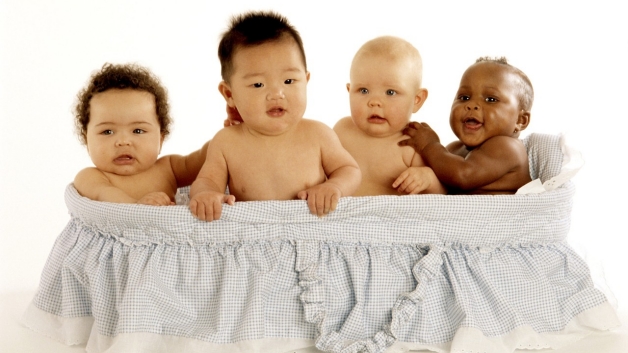
Are Babies Moral Beings?

051812-national-census-race-black-baby-white-baby-asian-baby-infant-pregnancy

By Leanne Italie, AP

Are we naturally good or naturally evil? Cognitive scientist Paul Bloom argues in a new book that we’re both.

In “Just Babies: The Origins of Good and Evil” (Crown), the developmental psychologist and Yale professor takes on the nature of morality and vast research spanning evolutionary biology to philosophy, drawing on everyone from Sigmund Freud to Louis C.K.

His conclusion? Babies have the capacity for empathy and compassion, possess a limited understanding of justice and have the ability to judge. Yet they navigate not along colour lines but as Us versus Them, usually landing squarely in the Us camp.

A conversation with Paul Bloom:

AP: What light do you shed on the “moral sense” of babies?

Bloom: We’re born with this extraordinary moral sense. A sense of right and wrong just comes naturally to humans and shows up in the youngest babies we can study. But this morality is limited. I think tragically limited. So we are morally attuned to those around us, to our kin, to our friends, to those we interact with, and we are utterly cold-blooded toward strangers. To some extent I think babies are natural-born bigots. They are strongly attuned to break the world into Us versus Them and have no moral feelings at all toward the Them, and this shows up all through development.

So in some way, although a lot of morality is inborn, I think the great success of humans … is expanding and transcending this inborn morality. You and I believe that, you know, not only is it wrong to kill somebody, it’s wrong to kill somebody from anywhere around the world. We might also agree that we’re obliged to help people in trouble, even if they look different from us or are from a different land.

We have notions of fairness and equity and justice that, again, extend more broadly, and although we might favour our own group in some ways, consciously or unconsciously, we’re probably not racist. We probably think that racism is wrong, and that a good moral system should treat all humans more or less the same, but none of that is present in the mind of a baby.

AP: Is it a revelation that we create the environments that can transform a partially moral baby into a very moral adult?

Bloom: I think in some sense it is not. I think any good parent knows that you raise a kid into a moral kid not by, you know, imparting moral lessons and making moral pronouncements, but by shaping the environment in ways that bring out our better selves. When you want to make people good people you don’t just say, ‘Oh, try real hard.’ You try to structure their environment so as to bring out their better aspects.

AP: Is that surprising?

Bloom: I think it’s surprising the extent to which it works and the extent to which the alternative fails. So, for instance, many people believe that giving people moral stories, expressing through literature moral values, has a profound effect on people’s lives. The actual evidence says it has no effect at all. It’s just zero. In fact, there are some studies showing that if you give kids stories about being generous and kind it paradoxically makes them a little bit meaner, roughly between the ages of 4 and 10. Preaching in general with kids often backfires.

AP: Where do serial killers come from?

Bloom: Serial killers are very unusual people. … We know that there’s genetic differences in people’s empathy, in people’s compassion and how much they care about other people, in their ability to control violent rages, for example, and I’m sure a serial killer is somebody who has the genetic short end of the stick. Then you toss in certain environments. Your typical serial killer had a very unhappy childhood.

AP: What about being hard-wired at birth?

Bloom: Some people are more likely to be serial killers than other people due to accidents of genes. I am far more likely to be a murderer or a rapist or a serial killer than you are because I’m a man. There’s some evidence that people who turn out to be psychopaths, even murderous psychopaths, have the short end of the genetic stick but there’s all sorts of environmental factors. … Fifty years ago, slapping one’s wife or raping one’s wife would be viewed as comical, legitimate, certainly not a crime. Now it’s the sort of thing that only a monster would do, and so we have tremendous evidence for profound changes that have nothing to do with genes.

AP: You discuss “hodgepodge morality.” Is there such a thing in babies?

Bloom: I think we naturally have multiple moral systems, multiple responses. Some of our responses are created by disgust, some by empathy, some by a sense of justice, some by a sense of fairness, some by self-interest. We respond to kin, to our family members in different ways than we respond to strangers in all sorts of ways that don’t fall into any elegant philosophical theory. And I think this is true for babies, too.

Babies are moral beings but they aren’t moral philosophers. They don’t have some sort of coherent theory. Rather they have a series of gut reactions, a series of moral triggers that they respond to. What we find in our research is all sorts of moral capacities on the part of babies. What we don’t find is some kind of careful, contemplative theory.

AP: Is that a bad thing?

Bloom: It isn’t. It’s the way we are, one way or another, but if you set yourself the task of constructing a society where everybody lives and everybody follows the same rules and adheres to the same notions, then you do want to some degree a consistent and coherent theory.

So it may be a good theory of psychology to say that a white person naturally cares a lot more toward another white person than toward a black person, and that’s an instinctive response that could develop in certain societies, but from the standpoint of constructing a theory of what actually is good, how we should live our lives, we would say, ‘Well that’s too hodgepodge for us. It’s inconsistent. It’s actually a cruel way for the mind to work.’

AP: You write about conflicts in research on racial bias in young children.

Bloom: For kids there’s a lot of evidence that they’re very strongly biased on Us versus Them if you get them to do it on the basis of things like different colored T-shirts, for example, but race and skin colour isn’t an automatic way of dividing up the world. So you take a two- or three-year-old and typically a two- or three-year-old shows no signs of being racist in any way. When you get older, if kids are in an environment when blacks and whites interact and they’re totally mellow with each other and there’s not much conflict, they’ll see black and white but it won’t matter at all. If you’re in an environment where it matters then it will matter.

Children are extremely prone and very ready to divide the world into groups, but the groups that they focus on is determined through learning.