‘Rublegas:’ the world’s new resource-based reserve currency

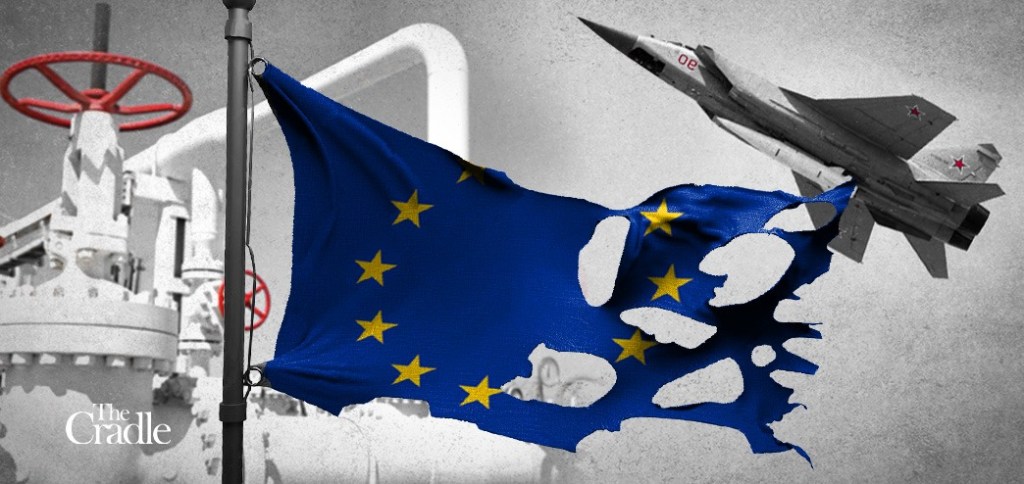
The Russian ruble is sitting pretty right now, having regained its pre-sanctions value and set to become a major commodity currency.Photo Credit: The Cradle

Rublegas is the commodity currency du jour and it isn’t nearly as complicated as NATO pretends. If Europe wants gas, all it needs to do is send its Euros to a Russian account inside Russia.

By Pepe Escobar

Source: The Cradle

Saddam, Gaddafi, Iran, Venezuela – they all tried but couldn’t do it. But Russia is on a different level altogether.

The beauty of the game-changing, gas-for-rubles, geoeconomic jujitsu applied by Moscow is its stark simplicity.

Russian President Vladimir Putin’s presidential decree on new payment terms for energy products, predictably, was misunderstood by the collective west. The Russian government is not exactly demanding straightforward payment for gas in rubles. What Moscow wants is to be paid at Gazprombank in Russia, in its currency of choice, and not at a Gazprom account in any banking institution in western capitals.

That’s the essence of less-is-more sophistication. Gazprombank will sell the foreign currency – dollars or euros – deposited by their customers on the Moscow Stock Exchange and credit it to different accounts in rubles within Gazprombank.

What this means in practice is that foreign currency should be sent directly to Russia, and not accumulated in a foreign bank – where it can easily be held hostage, or frozen, for that matter.

All these transactions from now on should be transferred to a Russian jurisdiction – thus eliminating the risk of payments being interrupted or outright blocked.

It’s no wonder the subservient European Union (EU) apparatus – actively engaged in destroying their own national economies on behalf of Washington’s interests – is intellectually unequipped to understand the complex matter of exchanging euros into rubles.

Gazprom made things easier this Friday, sending official notifications to its counterparts in the west and Japan.

Putin himself was forced to explain in writing to German Chancellor Olaf Scholz how it all works.

Once again, very simple: Customers open an account with Gazprombank in Russia. Payments are made in foreign currency – dollars or euros – converted into rubles according to the current exchange rate, and transferred to different Gazprom accounts.

Thus it is 100 percent guaranteed that Gazprom will be paid.

That’s in stark contrast to what the United States was forcing the Europeans to do: pay for Russian gas in Gazprom accounts in Europe, which would then be instantly frozen. These accounts would only be unblocked with the end of Operation Z, Russia’s military ops in Ukraine.

Yet the Americans want the war to go on indefinitely, to “bog down” Moscow as if this was Afghanistan in the 1980s, and have strictly forbidden the Ukrainian Comedian in front of a green screen somewhere – certainly not Kiev – to accept any ceasefire or peace deal.

So Gazprom accounts in Europe would continue to be frozen.

As Scholz was still trying to understand the obvious, his economic minions went berserk, floating the idea of nationalizing Gazprom’s subsidiaries – Gazprom Germania and Wingas – in case Russia decides to halt the gas flow.

This is ridiculous. It’s as if Berlin functionaries believe that Gazprom subsidiaries produce natural gas in centrally heated offices across Germany.

The new rubles-for-gas mechanism does not in any way violate existing contracts. Yet, as Putin warned, existing contracts may indeed be stopped: “If such [ruble] payments are not made, we will consider this to be the buyers’ failure to perform commitments with all ensuing implications.”

Kremlin spokesman Dmitri Peskov was adamant that the mechanism will not be reversed under the current, dire circumstances. Still that does not mean that the gas flow would be instantly cut off. Payment in rubles will be expected from ‘The Unfriendlies’ – a list of hostile states that includes mostly the US, Canada, Japan and the EU – in the second half of April and early May.

For the overwhelming majority of the Global South, the overarching Big Picture is crystal clear: an Atlanticist oligarchy is refusing to buy the Russian gas essential to the wellbeing of the population of Europe, while fully engaged in the weaponization of toxic inflation rates against the same population.

Beyond Rublegas

This gas-for-rubles mechanism – call it Rublegas – is just the first concrete building block in the construction of an alternative financial/monetary system, in tandem with many other mechanisms: ruble-rupee trade; the Saudi petroyuan; the Iran-Russia SWIFT- bypassing mechanism; and the most important of all, the China-Eurasia Economic Union (EAEU) design of a comprehensive financial/monetary system, with the first draft to be presented in the next few days.

And all of the above is directly linked to the stunning emergence of the ruble as a new, resource-based reserve currency.

After the predictable initial stages of denial, the EU – actually, Germany – must face reality. The EU depends on steady supplies of Russian gas (40 percent) and oil (25 percent). The sanction hysteria has already engineered certified blowback.

Natural gas accounts for 50 percent of the needs of Germany’s chemical and pharmaceutical industries. There’s no feasible replacement, be it from Algeria, Norway, Qatar or Turkmenistan. Germany is the EU’s industrial powerhouse. Only Russian gas is capable of keeping the German – and European – industrial base humming and at very affordable prices in case of long-term contracts.

Disrupt this set up and you have horrifying turbulence across the EU and beyond.

The inimitable Andrei Martyanov has summed it up this way: “Only two things define the world: the actual physical economy, and military power, which is its first derivative. Everything else are derivatives but you cannot live on derivatives.”

The American turbo-capitalist casino believes its own derivative “narrative” – which has nothing to do with the real economy. The EU will eventually be forced by reality to move from denial to acceptance. Meanwhile, the Global South will be fast adapting to the new paradigm: the Davos Great Reset has been shattered by the Russian Reset.

The Inflation Crisis Of 2022 Is Now Worse Than Anything That We Experienced During The 1970s

By Michael Snyder

Source: Activist Post

Most Americans don’t realize this, but we truly have entered historic territory.  As you will see below, the inflation crisis of 2022 has now escalated to a level that is beyond anything that we experienced during the horrible Jimmy Carter era of the 1970s.  If you are old enough to have been alive back then, you probably remember the constant headlines about inflation.  And you also probably remember that it seemed like the impotent administration in power in Washington was powerless to do anything about it.  In other words, it was a lot like what we are going through today.  Unfortunately for us, this new economic crisis is still only in the very early chapters.

Of course the mainstream media would like us to believe that what we are experiencing today is not even close to what Americans went through in the late 1970s and early 1980s.  According to CNN, the U.S. inflation rate hit a peak of 14.6 percent in the first half of 1980…

The inflation rate hit a record high of 14.6% in March and April of 1980. It helped to lead to Carter’s defeat in that fall’s election. It also led to some significant changes in the US economy.

Compared to that, the numbers we have been given in early 2022 seem rather tame.  On Tuesday, we learned that the official rate of inflation in the U.S. hit 8.5 percent in the month of March…

Prices that consumers pay for everyday items surged in March to their highest levels since the early days of the Reagan administration, according to Labor Department data released Tuesday.

The consumer price index, which measures a wide-ranging basket of goods and services, jumped 8.5% from a year ago on an unadjusted basis, above even the already elevated Dow Jones estimate for 8.4%.

8.5 percent is much lower than 14.6 percent, and so to most people it would seem logical to conclude that we are still a long way from the kind of nightmarish crisis that our nation endured during the waning days of the Carter administration.

But is that the truth?

In reality, we can’t make a straight comparison between the official rate of inflation in 2022 and the official rate of inflation in 1980.  The way that the inflation rate is calculated has been changed more than 20 times since 1980, and every time it was changed the goal was to make the official rate of inflation appear to be lower.

What we really need is an apples-to-apples comparison; fortunately, John Williams over at shadowstats.com has done the math for us.

According to Williams, if the inflation rate was still calculated the way that it was back in 1980, the official rate of inflation would be somewhere around 17 percent right now.

17 percent!

That means that the inflation that we are seeing now is even worse than anything that Americans went through during the Jimmy Carter era.

And government figures for individual categories seem to confirm that inflation is now wildly out of control.  For example, the price of gasoline has risen by 48 percent over the past year…

The price of gasoline rose by 48.0 percent from March 2021 to March 2022, according to numbers released today by the Bureau of Labor Statistics.

In just one month—from February to March—the seasonally adjusted price of gasoline went up 18.3 percent.

Vehicle prices have escalated to absurd levels as well.  If you can believe it, the average retail selling price of a used vehicle at CarMax has risen by 39.7 percent in just 12 months…

CarMax experienced a slowdown in fourth-quarter used car sales volume as its average retail selling price jumped 39.7% year-over-year to $29,312, an increase of approximately $8,300 per unit.

And I discussed yesterday, home prices in the United States have jumped 32.6 percent over the past two years.

We have entered a full-blown inflationary nightmare, and the Biden administration is trying to blame Vladimir Putin for it.

Needless to say, that is extremely disingenuous of Biden, because prices were already skyrocketing even before the war in Ukraine started.

But it is true that the war is making economic problems even worse all over the globe, and that isn’t going to end any time soon.

A couple of weeks ago there was a bit of optimism that some sort of a ceasefire agreement could be reached, but now there appears to be no hope that there will be one any time soon.

On Tuesday, Putin told the press that peace talks have reached “a dead end”

Talks with Ukraine have reached “a dead end,” Russian President Vladimir Putin said in fresh Tuesday remarks. “We will not stop military operations in Ukraine until they succeed.” He explained that Ukraine has “deviated” from agreements and any possible prior progress reached during the Istanbul meetings, according to state-run RIA.

The strong remarks aimed at both Kiev and the West were given during a joint presser with his Belarusian counterpart Alexander Lukashenko. He further hailed that the military operations is still going “according to plan,” Bloomberg reports, however while admitting to the domestic population that “Russian logistics and payment systems remain a weakness and the long-term impact of western measures could be more painful.” But he also said the county has withstood the economic “blitzkrieg” from the West.

And Volodymyr Zelenskyy is now saying that the return of Crimea is a “red line” for him

Ukrainian President Volodymyr Zelensky named recognition of the annexation of the Crimea region as one of his red lines for Moscow in any potential peace talks with Russian President Vladimir Putin to end war between the two countries.

Russia annexed the southern region of Crimea in 2014. Russian-backed separatists and forces, as well Ukrainian soldiers, have since been fighting in the eastern region of Ukraine.

Russia will never, ever willingly give Crimea back to Ukraine.

Anyone who thinks otherwise is simply being delusional.

So unless someone changes their tune, this war between Russia and Ukraine is going to keep going until someone achieves total victory.

And that could take a really long time.

Meanwhile, global food supplies will get tighter and tighter, and global economic conditions will continue to rapidly deteriorate.

In other words, the kind of nightmare scenario that I have been warning about for years is now upon us.

And so what happens if another “black swan event” or two hits us later in 2022?

We are so vulnerable right now, and it wouldn’t take much at all to push us over the edge and into an unprecedented worldwide crisis of epic proportions.

The fog of war and the global paradigm shift

By Fabio Reis Vianna

Source: The Saker

Perhaps the maxim of the Brazilian thinker José Luís Fiori that “expansionism and war are two essential parts of the machine that produces power and wealth in the interstate system” has never been so pertinent and seems to be confirmed at the exact historical moment we are witnessing.

The extraordinary events that resulted from the Russian intervention in Ukraine, which began on February 24, leave indelible marks and confirm some of the perceptions that have already been mentioned in other articles by us.

The western-led international order is clearly being questioned in its hierarchy of power, and the war in Ukraine is a clear symptom of this questioning.

What really causes astonishment, however, is the perception that this war aims at something much bigger than it might seem at first sight, because it would not be a regional war, but a war of global proportions: a hegemonic war.

The paradigm shift represented by the Russian intervention in Ukraine consolidates, therefore, the path of a new international system, more fragmented, and where Western power is weakened. In this scenario, the tectonic plates of the international system are slowly moving in the face of the new, and unprecedented, world that is unfolding.

Therefore, like it or not, the elites of countries like Brazil, so subservient to the security strategy of the United States, are being pushed towards a consensual solution in the direction of the Eurasian experience through the BRICS. In this way, the brazilian military, so reactionary and obedient to Washington, is facing a new world, apparently already understood by the diplomatic tradition of “Itamaraty”, and even by the powerful Brazilian agrobusiness lobby.

In the opposite direction, the blindness of the European elites causes astonishment by feeding a game that plunges Europe back into what it has always been: the great stage of military interstate competition of the last 500 years.

Therefore, taking this terrible premise into consideration, the armistice that made possible the creation of the European Union, as well as the common currency, would have been a mere interregnum of peace, until the next war.

Retaking its tragic place in the classical international system, Europe is once again the scene of the old theater of death, and the maxim that “peace is almost always a truce which lasts for the time imposed by the expansive compulsion of the winners, and the need for revenge of the losers,” has never been more apposite.

In this context, the german humiliation represented by the American veto of the Nord Stream II gas pipeline is paradigmatic. On February 7, in the middle of the White House, and even before the Russian intervention in Ukraine, Joe Biden publicly disavows the newly appointed german chancellor Olaf Scholz, stating categorically that the Nord Stream II pipeline would be stopped.

This attitude could be considered the trigger for Russian intervention and the opening of Pandora’s Box for the new world that is opening. Besides representing, in symbolic terms, the humiliation of Germany as a sovereign country, it consolidates the definitive “Coup d’Etat” in the European integration project.

With Ukrainian president Vladimir Zelensky being a kind of spokesman of a script written in Washington – or, who knows, Hollywood – the repeated attacks on European leaders who have worked so hard for the normalization of Russian-European Union relations, as is the case of the recent attack on former chancellor Angela Merkel, indicate that the instruments of fourth generation war, already used by the United States in other regions of the planet, are intensifying in the heart of the western alliance.

Not only the maintenance, but the deepening of the continuous and unlimited reproduction and expansion of the American military empire is a reality that became even clearer after the first Russian tank entered Ukrainian territory, even if this meant destabilizing, or even destroying, old and loyal allies.

In this sense, the old premise carried by many scholars of the “realist” school of International Relations, as well as by great thinkers of the World System, that the concentration of global power in a single state would be an essential condition for lasting world peace, falls to the ground.

The “Hyperpower Paradox” is confirmed as a slap in the face of the enormous theoretical consensus developed since the mid-1970s of the last century.

In other words, since the first minute of the US bombing of Iraq in 1991, which followed the 48 military interventions of the 1990s, and the 24 interventions in the first two decades of the 21st century – which in turn culminated in 100,000 bombings around the globe – the International System is immersed in a somber process of permanent, or infinite, war, which contradicts the Kantian utopia of perpetual peace reflected in the idea of hegemonic stability.

Thus, it was a mistake to consider that the unipolar global power that emerged with the victory in the cold war could exercise its hegemony in the name of peace and global stability, assuming, therefore, a responsible leadership and in the name of a great global governance.

On the contrary, what we have witnessed over the last 30 years is the escalation of interstate competition, with the reaction of other states to the insane and inconsequential process of power expansion carried out by the American military empire.

As a result, we find ourselves before a world that seemed to belong only to the history books; where the national interests of the great powers return with the force that, as it turns out, they never stopped having, but were only dormant.

This new (old) geopolitics of nations, therefore, leaves its clearest mark with what Russia imposes in its intervention in Ukraine: contesting the primacy that only westerners have the legitimacy to impose their will through war.

This is the novelty that shakes the structures of the International System.

In the face of this imminent war of global proportions, resulting from the Russian challenge and the intensification of the arms race – with the alarming return of Germany and Japan to the game – we are inexorably heading for a deepening of the interstate systemic chaos, as well as the escalation of systemic social conflict, particularly in Europe.

As in other moments in the history of the World System, Europe is once again the nerve center of the global power struggle. And as in other tragic moments in history, the behavior of European leaders is once again irrational; in the midst of a negative-sum game. The Europeans lose.


Fabio Reis Vianna, lives in Rio de Janeiro, is a bachelor of laws (LL.B), MA student in International Relations at the University of Évora (Portugal), writer and geopolitical analyst. He currently maintains a column on international politics at the centennial Brazilian newspaper Monitor Mercantil.

Thralldom and Its Uses

By James Howard Kunstler

Source: Kunstler.com

Spring is always convulsive, with new things heaving into life. Under every dead leaf, something stirs and seeks light, the old must make way for the new, and to some degree the earth is not quite the same place as it was the last time it turned, though the scene looks superficially familiar. Winter’s torpor is, at least, a cold comfort, but springtime’s warmth and movement rattle the nerves. Things unseen shift ominously beneath us. Everything is pending and tending, and nothing is resolved.

Having wrecked its latest business model —hypertrophic financial fakery — Western Civ stumbles into the blinding new reality that it takes real stuff to run an economy, and that money itself is not an adequate replacement for the stuff. The trillions supposedly vested, for instance, in stock market valuations mostly represent mere wishes and promises, and for what? Why, for more money — which responds by losing value, so that we’re racing ever faster toward a receding horizon.

The net result: a world with less available stuff and plenty of money that’s increasingly worthless in pursuit of stuff. It isn’t long before people recognize the disutility of both conditions. The idea that we can fix this problem with central bank digital money is hilarious. When faced with less available stuff, resorting to “money” ever more abstracted from any relation to stuff only puts you in thrall to more empty wishes and promises when this is exactly the moment to be less in thrall and more in touch.

America has had enough of being in thrall, especially to figures and forces dedicated to our destruction. This spring is the beginning of a national life with less stuff, including, looks like, stuff to eat. That will sure enough put folks in touch with something real, and then they will naturally have to do something about it. Centralized control of the population via trackable digital money is the last thing that will avail in the face of hunger and desperation. In fact, that is just another set of empty wishes and promises.

The reality is that centralized government, such as the one in Washington DC, is less and less in control of anything — except the manufactured pretense that it can fix the problems of less stuff and decaying money. The federal government is increasingly impotent, unable to discharge its basic obligations to preserve public order and safety. Its previous attempt to fix something was the response to Covid-19, which has culminated in the fiasco of the mRNA vaccines, now pending and tending toward an astounding wave of early deaths among those in thrall to the transparently dishonest promises of officialdom (“safe and effective”).

That’s the trouble with thrall. It narrows the field-of-vision so badly, you can’t see what’s coming at you indirectly, like: hardship and death. The country has been in serious trouble for more than a decade. Cavalcades of bad choices — and then lying to ourselves about these bad choices — has shoved us well over the edge of our cherished expectations. One way out, then, is to simply refuse to remain in thrall to officialdom and the manufactured bullshit that is its only product.

We are lately in thrall to the melodrama in Ukraine, largely engineered by figures and forces in our own government and for their own ends, which look suspiciously at odds with the nation’s actual interests (the nation being us, its people). Perhaps this illustrates the widening gulf between the slouching beast government has become and the people trying to operate their lives and destinies under it. No food for you, no fertilizers for future food for you, no spare parts for you, no free speech for you, no social or economic role for you, no health for you, and (watch it, now!) soon no life for you.

Collectively going crazy has been a luxury we can’t afford anymore. You fell for RussiaGate and it kept you in thrall for years. You fell for the Adam Schiff orchestrated Ukraine phone call impeachment gambit. You fell for the Covid scare and the dangerously defective vaccines forced on you. You fell for the fraud-drenched election of the empty vessel known as “Joe Biden.” Don’t fall for the invitation to World War Three.

Russia means business in its historic sphere of influence. It’s none of our business, and we’re only making it worse for the Ukrainian people by pretending it’s our business with the false promise of our support. The only thing that matters to us about Ukraine just now is that we’re standing in the way of useful negotiations to end the conflict there and egging on various other countries in Europe to aggravate the situation.

It’s been a fine distraction from everything else that is slipping away in our own country, including the loss of liberty, the right to a livelihood, the need for legitimate meaning, the value of our money, our respect for the law, the ability to speak our minds, and our duty and obligations to each other. Our government is not interested in supporting any of that, and we might doubt that it even could anymore if it wanted to. It only wants to keep you in a state of abject thrall while it fritters away our posterity.

Einstein and Freud’s ‘Why War?’ Revisited: Why Anti-War Efforts Go Nowhere

By Robert J. Burrowes

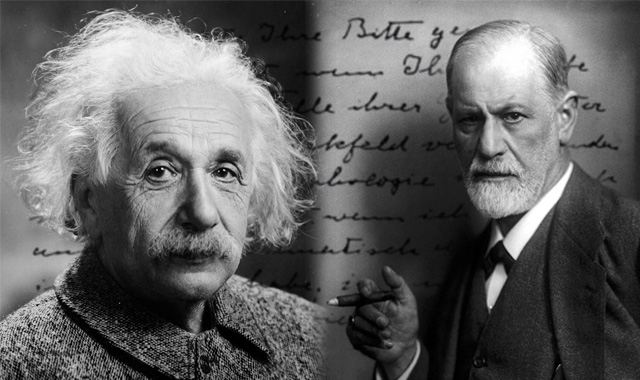
In 1932, Sigmund Freud and Albert Einstein exchanged letters, later published under the title ‘Why War?’ See ‘Why War? An exchange of letters between Freud and Einstein’.

However, whatever insight these two giants of an earlier era brought to our understanding of war, the reality is that a great deal has been learned since they corresponded.

Nevertheless, since the emergence of an identifiable, organized anti-war movement during World War I which has grown to include a diverse range of activists and organizations from across the political spectrum, as well as peace and conflict resolution scholars from various disciplines, there is little evidence that this movement, or any of the many organizations within it, has been learning from its failures by systematically undertaking or commissioning further research to understand the phenomenon of war more completely and then devising a strategy to end it based on that learning.

Hence, during its existence for more than 100 years, the organized anti-war movement – and the subsequently developed peace movement with its broader agenda – has had minimal impact in preventing or halting particular military conflicts, including wars, and zero impact in ending war generally, as the record testifies.

And so, even today, war continues in several countries in West Asia (the Middle East), Africa, elsewhere and, more recently, in Ukraine with the antiwar movement again demonstrating its ineffectiveness and, in the case of Ukraine, failing to comprehend the deeper agenda behind what is taking place in that country. See ‘The War in Ukraine: Understanding and Resisting the Global Elite’s Deeper Agenda’.

Of course, while an utterly inadequate analysis of what, fundamentally, is driving war is the critical foundation of the anti-war movement’s problems, it is still just one of the substantial range of problems it faces, some of which derive from this flawed analysis but others which a better analysis would expose. These include, for example, an understanding of why the fear of most of those within the anti-war movement is preventing the movement from mustering the commitment and courage that will be necessary if we are to undertake the many actions necessary to end war. In essence, fear makes most participants in the movement happy to complain about war but not take action themselves (or take action that has zero or minimal impact).

As Daniel Berrigan noted in his 1969 book No Bars to Manhood: ‘the waging of war, by its nature, is total – but the waging of peace, by our own cowardice, is partial.’

This cowardice means that a large proportion of the anti-war movement contents itself with a range of powerless measures – usually extending no further than signing petitions, issuing lameduck ideologically-oriented statements, writing articles, organizing conferences, issuing calls for negotiations or appeals to politicians – all invariably devoid of emotional and geopolitical reality as well as realistic measures to avert/halt the latest war.

This might include advocacy of measures, such as those developed under the guise of international humanitarian law, in relation to ‘outlawing war’ or outlawing particular weapons systems, despite the obvious observation that these legal constraints are routinely violated with impunity by any military power, starting with the United States, or non-state actor that is unconstrained by questions of legality.

Beyond this, ‘action’, when it is taken, is usually confined to conducting (notoriously ineffective) street protests or employing other tactics devoid of strategic impact in the context (of ending war). As former US Secretary of State Alexander Haig once noted about a massive anti-war demonstration: ‘Let them march all they want, as long as they continue to pay their taxes.’ See Alexander Haig. As a four-star general, Haig, not regarded as the most intelligent Secretary of State in US history, certainly understood that tactical choice is a question of strategy. Most activists have no idea.

So if we are to end war as a phenomenon in human affairs, or even meaningfully attempt to prevent or end a particular war, we need to do a number of things. Most fundamentally, we must start with a sound understanding of what causes violence to begin with because war does not emerge from a vacuum. War, when all is considered, is just another manifestation of violence, like everything from violence against women to economic exploitation to environmental destruction.

And if we are not able or willing to investigate and understand what is causing violence, and address this fundamental cause as part of our strategy, then our other efforts to end the manifestations of violence, including war, must all be in vain. Again, as the record readily testifies.

What Causes Violence?

So what is the cause of violence? Here is what 41 years (1966-2007) of concerted effort taught me.

Perpetrators of violence learn their craft in childhood. If you inflict violence on a child, they learn to inflict violence on others. The political leaders who decide to wage war, the military leaders who plan and conduct it, as well as the soldiers, sailors and aircraft personnel who fight war each suffered violence as a child. The terrorist suffered violence as a child. The neo-Nazi suffered violence as a child. The individual who inflicts violence on his (or her) partner suffered violence as a child. The corporate executive who exploits working class people and/or those who live in Africa, Asia or Central/South America suffered violence as a child. The racist or religious bigot suffered violence as a child. The individual who perpetrates violence in the home, in the schoolyard or on the street suffered violence as a child. The individual who overconsumes, or even consumes certain products and/or otherwise destroys the biosphere, suffered violence as a child.

So let me illustrate this point, in a very simplified way, by briefly explaining the parenting experience of a neo-Nazi. This individual has been terrorized by their parents and/or other significant adults in their life into projecting their fear onto particular groups of human beings and into believing that violence is a morally correct and superior way of dealing with these ‘different’ people. But for a much fuller and more nuanced explanation of this point, see the sections headed ‘The Emotional Profile of Archetype Perpetrators of Violence’ and ‘The Spectrum of the Violent Personality’ in ‘Why Violence?’

If we want to end violence in all of its manifestations, structural and otherwise, locally and globally, then we must finally end our longest and greatest war: the adult war on children. And here is an additional incentive: if we do not tackle the fundamental cause of violence, then our combined and unrelenting efforts to tackle all of its other symptoms must ultimately fail. And extinction at our own hand – by nuclear war or other means – is inevitable.

How can I claim that violence against children is the fundamental cause of all other violence? Consider this. There is universal acceptance that behaviour is shaped by childhood experience. If it was not, we would not put such effort into education and other efforts to ‘socialize’ children to ‘fit into’ their society. And this is why many psychologists have argued that exposure to war toys and violent video games shapes attitudes and behaviours in relation to violence.

But it is far more complex than this and, strange though it may seem, it is not just the ‘visible’ violence (such as hitting, screaming at and sexually abusing) that we normally label ‘violence’ that causes the main damage, although this is extremely damaging. The largest component of damage arises from the ‘invisible’ and ‘utterly invisible’ violence that we adults unconsciously inflict on children during the ordinary course of the day. Tragically, the bulk of this violence occurs in the family home and at school. See ‘Why Violence?’ and ‘Fearless Psychology and Fearful Psychology: Principles and Practice’.

So what is ‘invisible’ violence? It is the ‘little things’ we do every day, partly because we are just ‘too busy’. For example, when we do not allow time to listen to, and value, a child’s thoughts and feelings, the child learns to not listen to themSelf thus destroying their internal communication system. When we do not let a child say what they want (or ignore them when they do), the child develops communication and behavioral dysfunctionalities as they keep trying to meet their own needs (which, as a basic survival strategy, they are genetically programmed to do).

When we blame, condemn, insult, mock, embarrass, shame, humiliate, taunt, goad, guilt-trip, deceive, lie to, bribe, blackmail, moralize with and/or judge a child, we both undermine their sense of Self-worth and teach them to blame, condemn, insult, mock, embarrass, shame, humiliate, taunt, goad, guilt-trip, deceive, lie, bribe, blackmail, moralize and/or judge.

The fundamental outcome of being bombarded throughout their childhood by this ‘invisible’ violence is that the child is utterly overwhelmed by feelings of fear, pain, anger and sadness (among many others). However, mothers, fathers, teachers, religious figures and other adults also actively interfere with the expression of these feelings and the behavioral responses that are naturally generated by them and it is this ‘utterly invisible’ violence that explains why the dysfunctional behavioral outcomes actually occur.

For example, by ignoring a child when they express their feelings, by comforting, reassuring or distracting a child when they express their feelings, by laughing at or ridiculing their feelings, by terrorizing a child into not expressing their feelings (for example, by screaming at them when they cry or get angry), and/or by violently controlling a behavior that is generated by their feelings (for example, by hitting them, restraining them or locking them into a room), the child has no choice but to unconsciously suppress their awareness of these feelings.

However, once a child has been terrorized into suppressing their awareness of their feelings (rather than being allowed to have their feelings and to act on them) the child has also unconsciously suppressed their awareness of the reality that caused these feelings. This has many outcomes that are disastrous for the individual, for society and for nature because the individual will now easily suppress their awareness of the feelings that would tell them how to act most functionally in any given circumstance and they will progressively acquire a phenomenal variety of dysfunctional behaviors, including some that are violent towards themself, others and/or the Earth.

From the above, it should also now be apparent that punishment should never be used. ‘Punishment’, of course, is simply one of the words we use to obscure our awareness of the fact that we are using violence. Violence, even when we label it ‘punishment’, scares children and adults alike and cannot elicit a functional behavioural response. See ‘Punishment is Violent and Counterproductive’ and ‘The Rule of Law: Unjust and Violent’.

If someone behaves dysfunctionally, they need to be listened to, deeply, so that they can start to become consciously aware of the feelings (which will always include fear and, often, terror) that drove the dysfunctional behaviour in the first place. They then need to feel and express these feelings (including any anger) in a safe way. Only then will behavioural change in the direction of functionality be possible. See ‘Nisteling: The Art of Deep Listening’.

‘But these adult behaviors you have described don’t seem that bad. Can the outcome be as disastrous as you claim?’ you might ask. The problem is that there are hundreds of these ‘ordinary’, everyday behaviors that destroy the Selfhood of the child. It is ‘death by a thousand cuts’ and most children simply do not survive as Self-aware individuals. And why do we do this? As mentioned above, we do it so that each child will fit into our model of ‘the perfect citizen’: that is, obedient and hardworking student, reliable and pliant employee/soldier, and submissive law-abiding citizen (that is, one who pays their taxes, including those for war, and votes and/or lobbies politicians rather than acting powerfully themSelf).

The bottom line is simple: As parents, teachers, religious figures and adults generally, we want the child to be obedient to our commands, and not powerfully able to act in accord with their own Self-will. And we achieve this outcome by terrorizing the child into doing what we want rather than nurturing the child’s innate capacity to listen, deeply, to themSelf in order to follow their own will.

Moreover, once we destroy the Selfhood of a child, it has many flow-on effects. For example, once you terrorize a child into accepting certain information about themSelf, other people and the state of the world – with the bulk of this information mediated by elite agents including education systems, the entertainment industry and the corporate media – the child becomes unconsciously fearful of dealing with new information, especially if this information is contradictory to what they have been terrorized into believing. As a result, the child will unconsciously dismiss new information, no matter how truthful, out of hand.

In short, the child has been terrorized in such a way that they are no longer capable of learning (or their learning capacity is seriously diminished by excluding any information that is not a simple extension of what they already ‘know’). If you imagine any of the bigots you know, you are imagining someone who is utterly terrified. But it’s not just the bigots; virtually all people are affected in this manner making them incapable of responding adequately to new (or even important) information. This is one explanation why some people are ‘climate deniers’, most people do nothing in response to the climate catastrophe and even those people who do take action usually do so ineffectively. See ‘The Global Climate Movement is Failing: Why?’

But the same can be said for those working to end war – see ‘The War to End War 100 Years On: An Evaluation and Reorientation of our Resistance to War’ – end the nuclear weapons race or engage in other struggles, including liberation struggles, that are vital parts of the global struggle to create a more peaceful, just and sustainable human culture. See ‘Why Activists Fail’.

And to briefly put this issue in the current global context, the vast bulk of the human population, including most of those individuals whom society would regard as ‘highly intelligent’, has been readily terrorized into believing that they are threatened by a pathogenic virus (labeled ‘SARS-CoV-2’) when there is no documented, scientific proof that such an entity as a pathogenic virus even exists – see ‘Dismantling the Virus Theory – The “measles virus” as an example’ and What Really Makes You Ill? Why everything you thought you knew about disease is wrong – and certainly no documented scientific proof that a virus labeled SARS-CoV-2 exists. See ‘COVID-19: The virus does not exist – it is confirmed!’ and ‘Statement On Virus Isolation (SOVI)’. And for an account of researcher Christine Massey’s fruitless search over the course of more than a year to find evidence of an isolated virus, via Freedom of Information requests to health/science institutions all over the world, see ‘177 health/science institutions globally all failed to cite even 1 record of “SARS-COV-2” purification, by anyone, anywhere, ever’.

Despite this, the vast bulk of the human population has been terrorized into accepting a series of medical intrusions (including lockdowns, PCR tests, mask-wearing and gene-altering injectables) when, in fact, there is no documented, scientific proof that (assuming there was a ‘pathogenic virus’) lockdowns, PCR tests, mask-wearing or ‘vaccines’ even ‘work’ and/or extensive documentation of their harm. See, for example, ‘And How Are the Children? Lockdowns, Massive Fear, Deaths from Suicides and Drug Abuse’The WHO Confirms that the Covid-19 PCR Test is Flawed: Estimates of “Positive Cases” are Meaningless. The Lockdown Has No Scientific Basis’‘Conclusion Regarding Masks: They Do Not Work’‘Masks “don’t work,” are damaging health and are being used to control population: Doctors panel’‘The Truth about the Covid-19 Vaccine’A Final Warning to Humanity‘COVID Shots to “Decimate World Population,” Warns Dr. Bhakdi’ and ‘20 Facts about Vaccination Your Doctor Forgot To Tell You’.

And because the fear generated by the elite-driven ‘virus’/injectable narrative has been so debilitating and thus engendered a high level of obedience by the population at large, it is a rare individual who has investigated both the shortcomings in this narrative and the horrific agenda that this narrative is concealing, let alone identified a powerful strategy to resist it. See ‘We Are Human, We Are Free’.

So, to return to the focus of this article, let me briefly reiterate this vital point: The essence of what human beings call ‘socialization’ is the process by which each child is terrorized in such a way that they are no longer capable of learning or their learning capacity is seriously diminished. The multifaceted violence inflicted throughout childhood and adolescence ensures that the adult who emerges is suppressing awareness of an enormous amount of fear, pain, sadness and anger (among many other feelings) and must live in delusion to remain unaware of these suppressed feelings. This ensures that, as part of their delusion, the individual develops a strong sense that what they are doing already is functional and working (no matter how dysfunctional and ineffective it may actually be) while not investigating the existence of evidence that might contradict their delusion and/or unconsciously suppressing awareness of any evidence they come across that does contradict it. They do this because, unconsciously, people learn to identify obedience with ‘functional and working’ (because they do not get punished for being obedient). See ‘Why Violence?’‘Fearless Psychology and Fearful Psychology: Principles and Practice’‘Do We Want School or Education?’‘Love Denied: The Psychology of Materialism, Violence and War’ and ‘Human Intelligence or Human Awareness?’

Just one critically important outcome of this terrorization process is that a significant proportion of the human population is effectively insane, and this certainly includes the Global Elite and those primary elite agents on which it relies to generate and maintain wars. See ‘The Global Elite is Insane Revisited’.

Another critically important outcome of this terrorization process is that the international conflict resolution architecture – which is essentially a legal framework – does not take emotional factors into account. Hence it is not capable of resolving conflicts in any meaningful way. This is why negotiations often go nowhere, particularly in a timeframe that would avert adverse outcomes. And why ‘agreements’ that are reached are utterly superficial. The fundamental drivers of the conflict – invariably including suppressed terror, self-hatred and anger which are often unconsciously projected at the other party – are never addressed and will continue to manifest as violence in various forms, even if military violence is ended in a particular context. See ‘Challenges for Resolving Complex Conflicts’.

So if we want a powerfully effective anti-war movement (or peace movement, environmental movement, social justice movement….) then we need Self-aware individuals who can think, plan and act powerfully as part of strategically-oriented organizations to achieve ambitious longer-term goals. Such as ending the institution of war.

Anything less will fail. Again, as the record demonstrates.

So What Can We Do?

Ending war is possible. But it will take a courageous, sophisticated, strategic effort, given how deeply violence is embedded into the human ‘socialization’ process which makes war just one of the many approved violent behaviours in which adults are expected and encouraged to participate, beginning with paying taxes to finance it.

So while it is possible to end war, this won’t be happening any time soon.

And it can’t happen until we commit ourselves to eliminating violence against children so that human society creates adults who are psychologically whole and powerfully able to participate in conflict without resorting to violence to ‘resolve’ it.

Nevertheless, in parallel with efforts to eliminate violence against children, those powerful enough can also participate in a comprehensive strategy to end war as explained on the ‘Nonviolent Strategy’ website, starting with this list of ‘Strategic Goals to End War’. This is extrapolated from a book which explained why a strategy of nonviolent defense, understood and implemented by sufficient committed and organized individuals, is strategically superior to any military strategy. See The Strategy of Nonviolent Defense: A Gandhian Approach.

Or, if you want to participate in a strategy to end a particular war, such as that in Ukraine, particularly given the possibility of it morphing into a longer term insurgency – see ‘Ukraine And The New Al Qaeda’ – you can read how to do so here: Nonviolent Defense/Liberation Strategy.

But, as explained above, precisely because of their socialization experience during childhood, most of those who would identify as ‘anti-war’ are simply too frightened to act powerfully in resisting it. Hence, war will continue until we address its root cause: violence against children.

Biodata: Robert J. Burrowes has a lifetime commitment to understanding and ending human violence. He has done extensive research since 1966 in an effort to understand why human beings are violent and has been a nonviolent activist since 1981. He is the author of ‘Why Violence?‘ . His email address is flametree@riseup.net and his website is at http://robertjburrowes.wordpress.com

Sit back and watch Europe commit suicide

Washington’s competition with rising power Russia is so fierce, it is willing to sacrifice Europe.Photo Credit: The Cradle

If the US goal is to crush Russia’s economy with sanctions and isolation, why is Europe in an economic free fall instead?

By Pepe Escobar

Source: The Cradle

The stunning spectacle of the European Union (EU) committing slow motion hara-kiri is something for the ages. Like a cheap Kurosawa remake, the movie is actually about the US-detonated demolition of the EU, complete with the rerouting of some key Russian commodities exports to the US at the expense of Europeans.

It helps to have a 5th columnist actress strategically placed – in this case astonishingly incompetent European Commission head Ursula von der Lugen – with her vociferous announcement of a crushing new sanctions package: Russian ships banned from EU ports; road transportation companies from Russia and Belarus prohibited from entering the EU; no more coal imports (over 4.4 billion euros a year).

In practice, that translates into Washington shaking down its wealthiest western clients/puppets. Russia, of course, is too powerful to directly challenge militarily, and the US badly needs some of its key exports, especially minerals. So, the Americans will instead nudge the EU into imposing ever-increasing sanctions that will willfully collapse their national economies, while allowing the US to scoop everything up.

Cue to the coming catastrophic economic consequences felt by Europeans in their daily life (but not by the wealthiest five percent): inflation devouring salaries and savings; next winter energy bills packing a mean punch; products disappearing from supermarkets; holiday bookings almost frozen. France’s Le Petit Roi Emmanuel Macron – perhaps facing a nasty electoral surprise – has even announced: “food stamps like in WWII are possible.”

We have Germany facing the returning ghost of Weimar hyperinflation. BlackRock President Rob Kapito said, in Texas,“for the first time, this generation is going to go into a store and not be able to get what they want.” African farmers are unable to afford fertilizer at all this year, reducing agricultural production by an amount capable of feeding 100 million people.

Zoltan Poszar, former NY Fed and US Treasury guru, current Credit Suisse grand vizir, has been on a streak, stressing how commodity reserves – and, here, Russia is unrivaled – will be an essential feature of what he calls Bretton Woods III (although, what’s being designed by Russia, China, Iran and the Eurasia Economic Union is a post-Bretton Woods).

Poszar remarks that wars, historically, are won by those who have more food and energy supplies, in the past to power horses and soldiers; today to feed soldiers and fuel tanks and fighter jets. China, incidentally, has amassed large stocks of virtually everything.

Poszar notes how our current Bretton Woods II system has a deflationary impulse (globalization, open trade, just-in-time supply chains) while Bretton Woods 3 will provide an inflationary impulse (de-globalization, autarky, hoarding of raw materials) of supply chains and extra military spending to be able to protect what will remain of seaborne trade.

The implications are of course overwhelming. What’s implicit, ominously, is that this state of affairs may even lead to WWIII.

Rublegas or American LNG?

The Russian roundtable Valdai Club has conducted an essential expert discussion on what we at The Cradle have defined as  Rublegas – the real geoeconomic game-changer at the heart of the post-petrodollar era. Alexander Losev, a member of the Russian Council for Foreign and Defense Policy, offered the contours of the Big Picture. But it was up to Alexey Gromov, Chief Energy Director of the Institute of Energy and Finance, to come up with crucial nitty-gritty.

Russia, so far, was selling 155 billion cubic meters of gas to Europe each year. The EU rhetorically promises to get rid of it by 2027, and reduce supply by the end of 2022 by 100 billion cubic meters. Gromov asked “how,” and remarked, “any expert has no answer. Most of Russia’s natural gas is shipped over pipelines. This cannot simply be replaced by Liquified Natural Gas (LNG).”

The risible European answer has been “start saving,” as in “prepare to be worse off” and “reduce the temperature in households.” Gromov noted how, in Russia, “22 to 25 degrees in winter is the norm. Europe is promoting 16 degrees as ‘healthy’, and wearing sweaters at night.”

The EU won’t be able to get the gas it needs from Norway or Algeria (which is privileging domestic consumption). Azerbaijan would be able to provide at best 10 billion cubic meters a year, but “that will take 2 or 3 years” to happen.

Gromov stressed how “there’s no surplus in the market today for US and Qatar LNG,” and how prices for Asian customers are always higher. The bottom line is that “by the end of 2022, Europe won’t be able to significantly reduce” what it buys from Russia: “they might cut by 50 billion cubic meters, maximum.” And prices in the spot market will be higher – at least $1,300 per cubic meter.

An important development is that “Russia changed the logistical supply chains to Asia already.” That applies for gas and oil as well:  “You can impose sanctions if there’s a surplus in the market. Now there’s a shortage of at least 1.5 million barrels of oil a day. We’ll be sending our supplies to Asia – with a discount.” As it stands, Asia is already paying a premium, from 3 to 5 dollars more per barrel of oil.

On oil shipments, Gromov also commented on the key issue of insurance: “Insurance premiums are higher. Before Ukraine, it was all based on the Free on Board (FOB) system. Now buyers are saying ‘we don’t want to take the risk of taking your cargo to our ports.’ So they are applying the Cost, Insurance and Freight (CIF) system, where the seller has to insure and transport the cargo. That of course impacts revenues.”

An absolutely key issue for Russia is how to make the transition to China as its key gas customer. It’s all about the Power of Siberia 2, a new 2600-km pipeline originating in the Russian Bovanenkovo and Kharasavey gas fields in Yamal, in northwest Siberia – which will reach full capacity only in 2024. And, first, the interconnector through Mongolia must be built – “we need 3 years to build this pipeline” – so everything will be in place only around 2025.

On the Yamal pipeline, “most of the gas goes to Asia. If the Europeans don’t buy anymore we can redirect.” And then there’s the Arctic LNG 2 project – which is even larger than Yamal: “the first phase should be finished soon, it’s 80 percent ready.” An extra problem may be posed by the Russian “Unfriendlies” in Asia: Japan and South Korea. LNG infrastructure produced in Russia still depends on foreign technologies.

That’s what leads Gromov to note that, “the model of mobilization-based economy is not so good.” But that’s what Russia needs to deal with at least in the short to medium term.

The positives are that the new paradigm will allow “more cooperation within the BRICS (the emerging economies of Brazil, Russia, India, China and South Africa that have been meeting annually since 2009);” the expansion of the International North South Transportation Corridor (INSTC); and more interaction and integration with “Pakistan, India, Afghanistan and Iran.”

Only in terms of Iran and Russia, swaps in the Caspian Sea are already in the works, as Iran produces more than it needs, and is set to increase cooperation with Russia in the framework of their strengthened strategic partnership.

Hypersonic geoeconomics

It was up to Chinese energy expert Fu Chengyu to offer a concise explanation of why the EU drive of replacing Russian gas with American LNG is, well, a pipe dream. Essentially the US offer is “too limited and too costly.”

Fu Chengyu showed how a lengthy, tricky process depends on four contracts: between the gas developer and the LNG company; between the LNG company and the buyer company; between the LNG buyer and the cargo company (which builds vessels); and between the buyer and the end user.

“Each contract,” he pointed out, “takes a long time to finish. Without all these signed contracts, no party will invest – be it investment on infrastructure or gas field development.” So actual delivery of American LNG to Europe assumes all these interconnected resources are available – and moving like clockwork.

Fu Chengyu’s verdict is stark: this EU obsession on ditching Russian gas will provoke “an impact on global economic growth, and recession. They are pushing their own people – and the world. In the energy sector, we will all be harmed.”

It was quite enlightening to juxtapose the coming geoeconomic turbulence – the EU obsession in bypassing Russian gas and the onset of Rublegas – with the real reasons behind Operation Z in Ukraine, completely obscured by western media and analysts.

A US Deep State old pro, now retired, and quite familiar with the inner workings of the old OSS, the CIA precursor, all the way to the neocon dementia of today, provided some sobering insights:

“The whole Ukraine issue is over hypersonic missiles that can reach Moscow in less than four minutes. The US wants them there, in Poland, Romania, Baltic States, Sweden, Finland. This is in direct violation of the agreements in 1991 that NATO will not expand in Eastern Europe. The US does not have hypersonic missiles now but should – in a year or two. This is an existential threat to Russia. So they had to go into the Ukraine to stop this.  Next will be Poland and Romania where launchers have been built in Romania and are being built in Poland.”

From a completely different geopolitical perspective, what’s really telling is that his analysis happens to dovetail with Zoltan Poszar’s geoeconomics: “The US and NATO are totally belligerent. This presents a real danger to Russia. The idea that nuclear war is unthinkable is a myth. If you look at the firebombing of Tokyo against Hiroshima and Nagasaki, more people died in Tokyo than Hiroshima and Nagasaki. These cities were rebuilt. The radiation goes away and life can restart. The difference between firebombing and nuclear bombing is only efficiency. NATO provocations are so extreme, Russia had to place their nuclear missiles on standby alert. This is a gravely serious matter. But the US ignored it.”

New York Times — a Bastion of Censorship and Corruption — Warns ‘America Has a Free Speech Problem’

The New York Times editorial board recently opined that Americans are losing “the right to speak their minds and voice their opinions,” yet this same newspaper refused to review, or even publish an advertisement for, RFK, Jr.’s runaway bestseller, “The Real Anthony Fauci.”

By Tony Lyons

Source: The Defender

In a bold, but clearly disingenuous, statement from its famed editorial board, “a group of opinion journalists whose views are informed by expertise, research, debate, and certain longstanding values,” The New York Times issued a cautionary statement:

“For all the tolerance and enlightenment that modern society claims, Americans are losing hold of a fundamental right as citizens of a free country: the right to speak their minds and voice their opinions in public without fear of being shamed or shunned.”

The editorial board pounded the point home:

“People should be able to put forward viewpoints, ask questions and make mistakes, and take unpopular but good-faith positions on issues that society is still working through — all without fearing cancellation …. Freedom of speech requires not just a commitment to openness and tolerance in the abstract. It demands conscientiousness…

“We believe it isn’t enough for Americans to just believe in the rights of others to speak freely; they should also find ways to actively support and protect those rights.”

Of course, The New York Times should be leading by example. In fact, it has not supported free speech, protected the First Amendment, or allowed honest debate. It has not allowed competing perspectives about the most important issues of the day.

Instead, it has been a mouthpiece for greedy corporations and corrupt government officials.

In support of the newspaper’s interests, and at the expense of the interests of American citizens, The New York Times censored Robert F. Kennedy, Jr.’s latest book, “The Real Anthony Fauci,” in every conceivable way.

It ranked the book No. 7 on its non-fiction bestseller list even though the book outsold any other book in America that week by thousands of copies.

Then it refused to allow Skyhorse Publishing to place an advertisement for the book because its censorship division, ironically called “Standards Management,” decided the book itself constituted misinformation — despite the paper’s stated policy that “Standards” only looks into whether an ad itself is “non-defamatory and accurate.”

The New York Times followed up with a scathing hit piece targeting Kennedy as “a leading voice in the campaign to discredit coronavirus vaccines and other measures being advanced by the Biden White House to battle a pandemic that was … killing close to 1,900 people a day.”

The Times accused Kennedy of circulating “false information” — without indicating what that information was or explaining why it was false — and of comparing the government pandemic response to the Holocaust, even though he didn’t do that.

Finally, The New York Times refused to review “The Real Anthony Fauci” or so much as comment on its historic grassroots success, even though it’s become a cult classic, selling more than 1 million copies in just four months, and launching a worldwide movement against government corruption and corporate greed.

“Despite all the lying, or maybe in reaction to it,” Tucker Carlson told me, “Robert F. Kennedy, Jr. is becoming a legitimate folk hero.”

He is a folk hero because he stood up, grabbed a bullhorn and spoke truth to power. He’s risked everything. He’s realized that you either care about justice or you care about personal consequences.

And for him there have been many.

After suppressing freedom of speech for two years and defending a specific, myopic and harmful narrative, the editorial board of the New York Times decided it was the perfect time to take a strong stance against censorship and cancel culture.

The irony of the most powerful and high-profile violator of First Amendment rights lamenting the lack of free speech — and offering up ideas to protect the rights of Americans — was palpable, inescapable and despicable.

Like Captain Renault in “Casablanca,” when he closes Rick’s Café Americain and proclaims: “I’m shocked, shocked to find that gambling is going on in here,” The New York Times gladly accepts its winnings.

The paper’s profitability has soared during the worst and most pervasive period of censorship in recent American history. Its owners have done absolutely nothing to protect the free speech rights of hundreds, if not thousands, of doctors, nurses, scientists and concerned citizens who have tried to discuss views, make arguments and analyze scientific studies that challenge the prevailing COVID narrative.

The Times has silenced debate, worked tirelessly to chastise, vilify and discredit those whose positions they disagree with, and failed to investigate serious claims of government corruption.

Nevertheless, the paper claims to lament that “when public discourse in America is narrowed, it becomes harder to answer … the urgent questions we face as a society.”

What could be more important, more urgent, than the truth about corruption at the highest levels of government, about a pandemic response that led to more serious illness and death than was necessary, about the most powerful public health official in the country being more concerned with helping Big Pharma maximize return on investment and mitigate risk to industry, rather than protecting people’s lives?

As The Times wrote, the worst kind of censorship is cancel culture and the worst kind of cancel culture is the “piling on” kind.

Why then, one might ask, did the paper run a hit piece about Robert F. Kennedy, Jr. that covered essentially the same subject matter as a dozen other hit pieces? Why now? Why this target?

His family thinks he’s wrong about vaccines, The Times noted. His friends think he’s wrong about vaccines. Dr. Fauci thinks he’s wrong about vaccines. Ever heard that before?

Any analysis about vaccine safety? Any facts? Any citations? Any discussion of Dr. Fauci’s despicable corruption as described in “The Real Anthony Fauci”?

No, no, no, no and no.

What was The New York Times doing when the whole world was attacking Robert F. Kennedy, Jr.?

Where was The New York Times when Robert F. Kennedy, Jr., Dr. Robert Malone, Dr. Judy Mikovits, Dr. Pierre Kory — and so many other impressive voices — were being stifled?

They were “piling on.” (If The New York Times really wants to do something for free speech, it should publish a book review, finally, of the runaway bestseller — “The Real Anthony Fauci.”)

The Times has stated it won’t “publish ad hominem attacks,” but it does publish hit pieces that any rational person understands are meant to discredit a book they don’t mention and obviously haven’t read.

The Times protects corrupt government officials against the unsuspecting public by forwarding policy statements or official memos their editors and reporters have not thoroughly vetted, investigated or corroborated.

The Times writers and editors are the worst kind of co-conspirators: the kind that claims to be protecting their victims.

The New York Times writes:

“At the individual level, human beings cannot flourish without the confidence to take risks, to pursue ideas and express thoughts that others might reject…. When speech is stifled or when dissenters are shut out of the public discourse, a society also loses its ability to resolve conflict, and it faces the risk of political violence.”

That’s where we are in America today. There is no debate, no public discourse, and we have lost the ability to resolve conflict.

We have separated the country into two Americas, at least partially because of the policies and practices of The New York Times.

The New York Post pointed out that the New York Times “published lies to serve a biased narrative.” The Post accused The Times of “malicious misreporting” and cites a book, “The Grey Lady Winked,” by Ashley Rindsberg.

Rindsberg is quoted as calling The New York Times “a truth-producing machine.” He believes the “fabrications and distortions” they’ve peddled since the 1920s were a system of twisting facts to manipulate public opinion about everything from “Hitler’s Germany and Stalin’s Russia to Vietnam and the Iraq War.”

The “reporting” is designed to “support a narrative aligned with the corporate whims, economic needs and political preferences” of The New York Times, Rindsberg claims. He believes the paper has consistently created “false narratives.”

The New York Post says The Times has the resources to do it:

“With close to $2 billion in annual revenue, the Times has the money, prestige, experience and stature to set the narratives that other news outlets invariably follow.”

Rindsberg alleges a former Times bureau chief in Berlin was a Nazi collaborator and that another star reporter for the paper parroted Soviet propaganda to defend Stalin.

The New York Times coverage in the lead-up to the Vietnam and Iraq wars seemed like government disinformation designed to support going to war.

More recently Rindsberg points to the stories that The New York Times published about Russia putting a bounty on U.S. soldiers in Afghanistan, which the Biden administration later conceded was misinformation, and the story about Capitol Police Officer Brian Sicknick being “murdered by rampaging Trump supporters,” though it was later proven he died of a stroke.

Similarly, Glenn Greenwald accused The New York Times of participating in “one of the most successful disinformation campaigns in modern electoral history.”

The Times, which before the 2020 election dismissed the Hunter Biden laptop as Russian disinformation, recently conceded that it was authentic.

It seems likely The New York Times coverage of the COVID Pandemic isn’t any different than its coverage of Hitler, Stalin, Vietnam, the Iraq War, January 6, the Russian bounty on American soldiers or the Hunter Biden laptop.

Like most of the major Big Tech platforms, The New York Times appears to have worked closely with Dr. Fauci and others, as representatives of the U.S. government, to control and propagate a specific narrative and to do what the government can’t legally do itself — censor ideas that it disagrees with or narratives that might be harmful to its corporate partners.

As discussed above, The New York Times actively suppressed Robert F. Kennedy, Jr.’s book and his allegations of corruption against Dr. Anthony Fauci. It defended Dr. Fauci without any investigation, without a full, free and fair discussion of what is clearly the most important book of the decade.

By ignoring Kennedy’s book, by refusing to review it, by not allowing advertisements, by misrepresenting its success on its bestseller list, the paper clearly did everything in its power to avoid any debate whatsoever about the real science behind the origins of COVID or the best practices for controlling the virus and protecting the public.

The New York Times has shown a total disregard for the scientific process, individual due process rights or for any real search for truth.

And, once again, it did all this while lecturing us about the importance of free speech.

We have arrived at George Orwell’s “1984.” Doublespeak is the universal language. The paper of record floods the world with disinformation, claims to be working tirelessly to protect the American people and has clearly become The Ministry of Truth.

Reading Robert F. Kennedy, Jr.’s book, “The Real Anthony Fauci” — the book Big Pharma, Dr. Fauci, the U.S. government and The New York Times will do absolutely anything to prevent you from reading — has become an act of rebellion, a blow to fascism and a clear message that censorship in America just doesn’t work.

Tony Lyons, president and publisher at Skyhorse publishing, and an attorney, was publisher at The Lyons Press between 1997 and 2004. He founded Skyhorse Publishing in 2006 and has been involved with every aspect of the book publishing process.

Liberal Russophobia and War Propaganda

Image: PRIMICIAS

By Margaret Kimberley

Source: Black Agenda Report

U.S. liberals are the worst perpetrators of Russophobic behavior. They are most likely to follow the dictates of corporate media and the democratic party and proudly take part in discriminatory acts. But foolish bans of anything Russian are just the most visible indication that war propaganda is at the root of the hysteria.

The city of Boston and the Commonwealth of Massachusetts prohibit discrimination based upon race, color, gender, disability, religion, and national origin. Such discrimination is prohibited by most cities, states, and the federal government as well. But one wouldn’t know that due to a plethora of discriminatory acts carried out against Russian nationals. The latest perpetrator is the Boston Athletic Association (BAA) , which announced that citizens of Russia and Belarus who reside in those countries will be barred from participating in the Boston marathon taking place on April 18, 2022. The war in Ukraine, years of Russiagate hysteria, and corporate media demonization of Vladimir Putin and all Russians have led to this moment of dubious distinction.

The weaknesses of what passes for a left wing movement have been fully exposed ever since Russian troops entered Ukraine on February 24, 2022. Of course many people who are called leftists and even those who consider themselves as such are in fact just liberals. They do not stand against imperialism as any leftist ought to do. The eight-year long U.S./NATO scheme to use Ukraine as a weapon against Russia should be universally condemned by anyone claiming to be in that cohort. Leftists can have principled disagreement about Putin’s decision, but they should not ignore the culpability of the U.S. and NATO and their support for the 2014 coup which overturned an election and put neo-Nazi groups in power.

Their confusion on Russia and Ukraine is emblematic of their confusion about so many other issues. The faux left are a highly problematic group, making common cause with the democratic party wing of the war party, and ignoring the war crimes committed by Bill Clinton, Barack Obama, and now Joe Biden. Not only do they fail to ask, “What about?,” but they have no critique of the U.S. role which instigated this crisis. They say nothing about the U.S. and its NATO allies refusing to engage in negotiations which might end the suffering of the Ukrainian people they claim to care about so much.

So deep is the rot that they say nothing about increasingly blatant and bizarre examples of Russophobia. Russian cats cannot enter international cat shows, a Russian singer was fired from the Metropolitan Opera when she refused to denounce her government, an orchestra canceled a festival featuring the music of Russian composer Tchaikovsky, and a tribute to space exploration removed the name of cosmonaut Yuri Gagarin from the program.

It is tempting to snicker about the denial of recognition to Russian cats, but the lack of opposition to the Boston marathon action is shameful indeed. People who see themselves as enlightened, and even intellectually and morally superior to others are silent in the face of an obviously unfair and illegal act.

The BAA is typical of U.S. elite organizations. It makes a big show of proving itself diverse and equitable by establishing a Boston Runners Collaborative whose mission is “… expanding access to running and walking in Boston with a focus on communities of color.” The outreach was in part motivated by the murder of Ahmaud Arbery , whose memory is not certainly not honored by phony shows of racial solidarity. So the BAA used the cold blooded murder of a Black man to jump on a superficial liberal bandwagon and illegally banned people who live in a country their government is telling them to hate.

Of course the BAA is not alone. Politicians, pundits and corporate media all tell us to “stand with Ukraine” and to call Putin a war criminal. American presidents are never connected to war crimes, even when they invade Iraq and kill thousands of people, destroy Libya and kill thousands of people, or enact sanctions and steal government assets that kill thousands of people. The war criminal category is only deemed appropriate for leaders the U.S. doesn’t like.

U.S. liberal elites are as much in the thrall of the dictates of their leadership as the members of January 6th mob who attacked the capital. Their critical thinking skills are practically non-existent, or they go along to get along, or silence themselves due to cowardice. The end result is much worse than a Russian missing a race.

The blue and yellow flags and whipping up of hysteria have a very important and dangerous aim. The goal of the propagandists is to get the country in the mood for war. When the slippery slope gets steeper and the public are convinced that the use of “tactical nukes” or other such nonsense is acceptable, the entire world will be at risk.

Perhaps the plight of Russian and Belarusian athletes isn’t viewed as an important human rights issue. Of course world leaders do much worse to millions more people. But every acceptance of what may seem to be a minor slight can lead to major implications. Liberalism itself is a great danger. The censoring of left voices in media and the conscious effort to disappear all but the state narrative are liberal led efforts and lead to dehumanizing whomever the president and his friends in corporate media may choose to target.

So let the Russians run. Acquiescing to this misguided effort will lead to greater dangers in the future.