Decoding the Orlando Shooting, Cui Bono? Who Benefits?

problem-reaction-solution1

By Mark Taliano

Source: GlobalResearch.ca

The shooting in Orlando, Florida, is not about homosexuals, or Muslims, or assault rifles.

It is about waging aggressive warfare overseas, empowering the domestic police state, and electing a warmongering President.

Dr. Graeme McQueen, founding member of the Centre for Peace Studies at McMaster University, Canada and author of The 2001 Anthrax Deception, argues that the prime suspects in any such case should be intelligence agencies.

We don’t have to go far to see the hand of intelligence agencies in this catastrophe. The shooter himself was an employee of G4S, described by journalist Alex Emmons as “a giant, often controversial global contracting corporation that provides mercenary forces, prison guards and security services.”

Additionally, the shooter’s father is said to be a CIA asset.

Given that Intelligence agencies are well-positioned to engineer synthetic terror threats, author Naomi Wolf argues that it is “crazy” not to question new events, since “spectacles” drive “outcomes”.  Further, she observes that propagandizing the public includes films (i.e. “Zero Dark Thirty”) – arguing that the Pentagon must have “signed off” on it —which indirectly seek to “normalize” intelligence operations such as torture and mass surveillance.

Intelligence operatives know that synthetic terror events shock and anesthetize the public; that they make people susceptible to manipulation; and that they lay the groundwork for the terror event to be easily politicized.

Naomi Klein describes the same dynamic in The Shock Doctrine.  When people are shocked by a real or man-made event, they can be easily manipulated to support wars, or neoliberal market schemes, or any number of toxic agendas.

A simple formula underpins these operations:  problem, reaction, solution.

The problem from the perspective of criminal warmongers is that the public doesn’t want war or a police state.  The intended reaction of the operation is that the synthetic terror event will induce people to seek protection from the state, coupled with aggressive war to bomb the threat out of existence. The solution, or intended result, is already occurring.  Engineered fear and racism have set the stage for the public to be manipulated to accept a covert agenda that it would otherwise reject.

Cui Bono?  Who benefits? The police state apparatus, War Inc., and a warmongering Presidential agenda all benefit.

The manipulation of the public is further enabled by an amendment to the National Defense Authorization Act (NDAA) which negates the Smith-Mundt Act (SMA) of 1984 which prohibits government agencies from propagandizing domestic populations.

Susan Posel explains in “How the NDAA Allows US Gov to Use Propaganda Against Americans”:

“SMA  defines the prohibition of domestic access to influence information through a variety of means, from broadcast to publishing of books, media, and online sources by restricting the State Department.”

The Broadcasting Board of Governors was created from SMA. This agency claims to “inform, engage, and connect people around the world in support of ‘freedom and democracy’. They omit that their specialty is making sure propaganda is added to the informational flow we all depend on.”

Instead of succumbing to the shock of terror events, instead of allowing our “reptilian minds” to overrule rational decision-making processes, we need to decode the Orlando shooting, and other terror events, within the “problem, reaction, solution” framework, and be conscious of how they are being manipulated and politicized to suit covert agendas that do not serve the public interest. The “therapy” for the shock will allow us to subordinate our “reptilian” mindsets, and to act rationally.  A rational mindset will reject the racism, hatred, and warmongering which are intended off-shoots of these terror events.


Related Podcast:

Radio WhoWhatWhy – Russ Baker: Don’t Rush to Judgment in Orlando Shooting

Related Video:

Saturday Matinee: La Haine

haine_1

“La Haine” (1995) is the second feature film written and directed by Mathieu Kassovitz. The plot follows 19 hours in the lives of a multi-ethnic 20-something trio of friends from the housing projects of Paris where racism, police brutality and poverty have created a social pressure cooker. After finding a police pistol in the aftermath of a riot in which one of their friends was severely beaten by police, they navigate a series of perilous situations exemplifying simmering race and class hatred in French society (often escalated by the presence of the weapon). Though set in France, the basic storyline is all too relatable for disenfranchised people everywhere including the US. The film features great performances from the three leads (Hubert Koundé, Vincent Cassel and Saïd Taghmaoui), striking black and white cinematography by Pierre Aïm, and excellent writing/direction by Mathieu Kassovitz.

Watch the full film on Kanopy: https://www.kanopy.com/product/la-haine

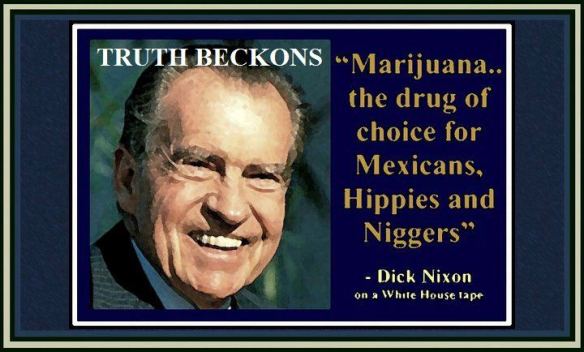
On the Drug War, and Other “Mistakes”

nixon-war-on-drugs-quote

By Kevin Carson

Source: Center for a Stateless Society

In a new article at Harper’s (“Legalize It All,” April 2016), Dan Baum recalls a 1994 confession by former Nixon domestic policy adviser John Ehrlichmann, about Nixon’s motives in first launching the War on Drugs. Baum, interviewing Ehrlichman for a book on drug prohibition, asked a “series of earnest, wonky questions, that he impatiently waved away”:

“The Nixon campaign in 1968, and the Nixon White House after that, had two enemies:  the antiwar Left, and black people…. We knew we couldn’t make it illegal to be either against the war or black. But by getting the public to associate the hippies with marijuana and blacks with heroin, and then criminalizing both heavily, we could disrupt those communities. We could arrest their leaders, raid their homes, break up their meetings, and vilify them night after night on the evening news. Did we know we were lying about the drugs? Of course we did.”

Judged by those objectives, Nixon’s War on Drugs and its subsequent dramatic escalation under Reagan have been resounding successes.

Many liberals, unfortunately, are prone to describing the War on Drugs as a “failure” — much as the Vietnam or Iraq War was “a mistake” — implicitly accepting the general goals of the American state as good and well-meaning, and merely unfortunate in their execution. The liberals who frame the wars in this way, as Noam Chomsky has argued, share the hawks’ view that “America owns the world” and has the right to define as a “threat” any country that defies its authority or attempts to undermine the global corporate order. And liberals and progressives are nauseatingly prone to referring to criminal foreign wars of aggression and domestic police wars on civil society as something “we” did.

But if you genuinely think the actions of the American state have anything to do with “we” or “us,” either you belong to the economic classes served by the state, or you probably still ask the dentist to save your extracted molars to put under your pillow.

Long before I saw Ehrlichman’s admission, I noted that the expanded War on Drugs against crack and meth under Reagan and Clinton had had a disruptive effect on two of the demographic groups (inner city black people and rural poor whites) that, as it happens, are least socialized to cheerfully accept direction from authority figures behind desks.

Going back to the passage of the Virginia Slave Code after the defeat of Bacon’s Rebellion, running through the use of racial divisions to split and defeat the southern tenant farmers’ unions, and right up to the present, the possibility of a strategic political alliance between poor black and white people has been one of the major fears of the propertied classes who control the American state.

So whether it be Nixon’s or Reagan’s War on Drugs, or the Clintons’ support for a Crime Bill (to “bring to heel” so-called black “super-predators”) that completed America’s growth into the largest carceral state in the world, the fact that a third of the urban black male population is in some phase of the “criminal justice” system and deprived of the franchise has had an enormous effect on radical political possibilities in this country. It has gone a long way towards nullifying the effects of the Voting Rights Act, in much the same way that Black Codes nullified the effects of Emancipation. Jeb Bush’s purge of 70,000 alleged “felons” — mostly not felons, but mostly black — from the Florida voting rolls was the main factor in handing the presidency to his brother.

I’m not, by the way, the kind of conspiracist who thinks every government policy fits into some larger, malign strategy that serves as the “real” motivation for all officials. I don’t doubt a great deal of legislation and executive action is intended as a good faith response to the stated concerns of policy-makers. Of course even such “well-meaning” policies are subject to the law of unintended consequences, mission creep, refusal to reassess in response to feedback on their effectiveness, and abusive or self-dealing execution by the bureaucracies tasked with enforcement.

But even when policies are sincerely “well-meaning,” they still tend to serve vested interests through a sort of structural “invisible hand” effect. The “well-meaning” policies that get passed are those that structurally benefit the economic ruling class, and those that get repealed are those that no longer do so.

The state does not represent “us,” and the destructive and genocidal effects of its policies are not “mistakes.”

Rent Strikes: ‘together we can defeat the housing market’

Rent-Strikers-1

By Matt Broomfield

Source: RoarMag.org

As they revive a long-dormant form of protest, rent strikers in London and San Francisco must learn lessons from the great strikes of the 20th century.

When you can no longer afford to pay your rent, only one course of action remains: stop paying it. On both sides of the Atlantic, tenants are militating against the unbearable pressure of the housing market via the only locus of power available to them — going on rent strike.

Midtown Apartments, San Francisco

Jose LaCrosby was an African-American hair stylist to the stars. Nina Simone, James Brown and Miles Davis all frequented his San Francisco salon. Terminally ill at the age of 89, LaCrosby was told by his doctors that he should return to die among his friends in Midtown Apartments.

But the City of San Francisco had just hiked rents by up to 300 percent. If the Korean War veteran wanted to move back in to a ground-floor apartment it would now cost him $3700 a month. LaCrosby had lived in Midtown for two decades, but he spent the last 7 months of his life under fluorescent lights in an anodyne hospice ward, unable to afford the grossly inflated rent.

LaCrosby’s treatment is symptomatic of the way Midtown is being used as an asset to be stripped for cash, says long-time resident and Save Midtown organizer Jay Majitov. “This community is being displaced by the greed and avarice of property pimps preying on the weak and the disenfranchised,” he explains. Many of Majitov’s neighbors moved into Midtown after being socially cleansed from other areas of San Francisco in the 1960s, on what they understood was a rent-to-buy agreement.

But though Midtown paid off its collective mortgage in 2007, the city reneged on its agreement to hand the building over to the tenants. Instead, Midtowners were hit with a threefold increase in rent, far outstripping the maximum increase set by San Francisco rent controls. Appalled by this betrayal of trust, the tenants of 65 Midtown apartments have been withholding their rent increase since August 2015.

University College London

On the face of it, LaCrosby’s working-class neighbors in Midtown have little in common with the primarily middle-class, primarily white students of University College London. But the price of UCL accommodation has risen by 56 percent in the last six years, and the university extracts £16 million annually in pure profit from their residences. The halls remain shabby, cramped and infested with cockroaches.

As a result, around 150 students are currently striking for a 40 percent rent decrease. “UCL call residents in halls customers, not students,” says David Dahlborn of UCL, Cut The Rent (UCL-CTR). “It’s sheer exploitation.”

There have been rumblings about wider rent strikes across the British left for months, while US activists in Portland and elsewhere are now looking to copy Midtown’s example. Yet until a couple of years ago, no one was talking about rent strikes at all.

The problem(s) with rent strikes

Once a cornerstone of tenants’ rights activism, since the 1980s the rent strike has largely been absent from the arsenal of the left. The most famous rent strike in history occurred in 1915, when the fear of a Bolshevik insurrection forced the UK government to appease strikers in Glasgow by introducing rent controls. As the Communist threat faded after the second Red Scare, so too did the need to form housing policy with one eye on the Kremlin, and the government’s attitude toward rent strikers hardened accordingly.

Given that many rent strikes occurred in mutual relation with industrial strikes, their decline in popularity can partially be ascribed to the decimation of workers’ right to strike by Thatcher and her successors. The UK now loses a tenth as many days to industrial action as it did in the 1980s, and “strike” has become a politically toxic term. (UCL-CTR advise their activists to avoid the word altogether when door-knocking.) The fragmentation of the left and the castration of the trade unions have left Britain without left-wing superstructures capable of amplifying wildcat rent strikes into a broader social movement.

There are also delocalized issues inherent in the mode of protest. The vulnerable people who stand to gain the most from a reduction in rent are also those most imperiled by eviction: working-class people, people of color, single mothers and the disabled, often living in social housing. According to Jay Majitov, many Midtowners will be forced out of state or onto the street if their strike is broken. There is no legal protection for rent strikers in the UK or the USA.

Recrimination can be brutal: after the arrest of rent strikers in Kings’ Cross in 1960, crowds of protesters were baton-charged and violently dispersed by mounted police. Mary Barbour and her army of Glaswegian housewives were forced to fight off heavy-handed bailiffs with wet clothes, rotten food and flour-bombs. Barbour would stomp round the tenements whirling a football rattle to summon her troops as the “factor” moved in.

Midtown property managers Mercy Housing have kept up an aggressive campaign of intimidation, towing residents’ cars for minor infractions and muscling into pensioners’ homes. “They came in as an occupying force, a colonizer. There’s no regard for cultural sensitivity or the long-term tenants,” says Majitov. Tenants have been told they face eviction if their grandchildren visit more than twice a week, or if they hold barbecues on their own property. “I’m sorry, man, but barbecues are what we do,” Majitov adds.

Making rent strikes work

An industrial striker does no work and so loses her pay, but rent strikers actually save money while they agitate, as astronomic rents stop crippling working people and start depreciating from the profits of housing companies. The more unbearable the financial burden on the renters, the keener the loss suddenly felt by the landlord, in an efficacious reversal of power dynamics.

Last year, UCL-CTR organized students from UCL and SOAS in a successful strike, securing £400,000 compensation after the university conceded it had left students in unlivable conditions among cockroaches, rats and incessant building works. London’s first genuine rent strike for 40 years only involved 50 students, but each individual striker made a tangible, measurable impact on the university’s finances. Glasgow 1915 and UCL-SOAS 2015 are century-spanning testaments to the fact that a well-executed rent strike can be devastatingly effective.

Historically, successful mass rent strikes have benefited from a united left providing the infrastructure to exponentially increase the strike’s effect across multiple homes and into the industrial sphere, rather than leaving isolated strikers at the mercy of the bailiffs. A New York strike in 1907 relied on the backing of a strong, active Socialist Party, and the Glasgow strikes would not have succeeded without union support.

As noted above, the male-dominated superstructures traditionally capable of supporting mass direct action have diminished in size and power. If they want to achieve this vital escalation, 21st century rent strikers must look to alternative, grassroots networks of activists.

Alternate support networks

Most successful rent strikes have been led by women. The distinction between rent strikes and industrial strikes should not be collapsed into a crude dichotomy between the male public sphere and the female domestic sphere. In 1907, 16-year-old Pauline Newman led strikes which secured rent reductions for 2000 New York families. She worked till 9pm in a textile factory before campaigning all night in the slums of Manhattan. Working-class women have always worked formally in the marketplace, as well as informally (and unpaid) in the home.

But Newman, the “East Side Joan of Arc”, was supported by housewives who spent the day going from tenement to tenement urging other families to join the strike. Working-class shop-floor networks intermeshed with female-dominated domestic networks. The Glasgow rent strike was sparked by landlords seeking to cow women into submission while their husbands were away fighting in the war. Again, Mary Barbour and her army rapidly spread information through the slums whenever the factor descended, militating via a social infrastructure which their landlords grossly underestimated.

Half of all British housing benefit recipients are single women. The average female flat-sharer in London earns £4236 less than her male counterpart, and twice as many women as men spend over half their salary on rent. Women have a disproportionate stake in the housing crisis, and male politicians continue to underestimate their ability to organize and resist. Though not a rent strike per se, the success of the Focus E15 mothers in resisting eviction attempts by Newham Council illustrates the continued power of localized, female, working-class support networks.

Interlocking working-class communities and communities of color have proven similarly capable of disseminating information and resistance. Rent strikers in 1930s Peckham relied on a rolling guard of unemployed laborers to defend their homes while successfully agitating for an improvement in living conditions. Majitov repeatedly emphasizes the importance of working-class solidarity in Midtown: “We don’t build apps, we don’t code. We drive buses and we deliver mail. And if this working-class community of color hadn’t stood together we would have been out a long time ago. ”

African-American Jean King (another woman) secured rent controls in St Louis after a year-long strike in 1969, while Majitov proudly notes that Save Midtown has the support of civil rights luminary Andrew Young, who successfully organized a rent strike alongside Martin Luther King in 1960s Chicago. Just like in Glasgow in 1907, Save Midtown have appointed tenant organizers with responsibility for contacting strikers across the development, and they are now reaching out to other African-American communities being abused by Mercy to launch a nationwide class action against the housing company.

The university bubble

A rent strike is a very different proposition for students, who are typically more privileged than the general population — a state of affairs maintained by the inaccessible rent conditions UCL-CTR are striking against. Many students have family homes to return to, and this can be leveraged against universities.

David Dahlborn explains: “When nothing had happened by the end of summer 2015, the international students who were on strike said ‘well, fuck it, I’m going home’. The university realized they couldn’t really send bailiffs to Mexico.” UCL capitulated soon after. Again, rent strikes reverse a power dynamic familiar to anyone who has tried to secure the return of a deposit from a suddenly evanescent landlord.

Students can also leverage the disjuncture between the public face of the academic university and its profit-making operations. “They say they’re concerned with education,” says UCL striker Aleksandra Tomaszewska. “But they’ve cut funding and bursaries while raising rent and tuition fees.”

Where housing companies are not hugely concerned with positive public relations, university authorities are at pains to emphasize that they provide a caring, nurturing environment. It would be a PR disaster for UCL to forcibly evict white, well-spoken, middle-class students. As with much student activism, student rent strikers can trade on their privilege to enjoy a much greater degree of security than their counterparts in council housing.

Universities constitute a ready-made network for the expansion of a strike. A successful rent strike at Sussex University in 1972-3 rapidly spread to 23 other universities. UCL-CTR is sharing advice and materials with student activists from SOAS, Imperial and Goldsmiths, as they seek to expand the current rent strike across the capital.

“Anyone could do it,” says Dahlborn, who repeatedly emphasizes the lateral organization of UCL-CTR. “Everybody on the strike is a potential organizer.” Students have more free time than workers; they have access to condensed bodies of left-leaning tenants paying vastly excessive rent; and they are keyed in to networks of information exchange between these bodies.

Rent strikes for the 21st century

Paradigms established by 20th century rent strikers could be instructive for those on the radical left wrangling about their relationship with Momentum and Jeremy Corbyn’s Labour Party. Newman and Barbour instigated their strikes alone, but willingly worked alongside hierarchical, party-rooted structures to replicate these actions on a wider scale.

But as Dahlborn argues, a successful general rent strike must ultimately emerge from coordinated grassroots action, as multiple localized organizations “replicate and generalize” tactics that have worked well elsewhere. An emphasis on the dispersal of power underpins much recent left-wing strategizing, and rent strikes can operate particularly effectively through decentralized, lateral organization.

“Together we are powerful, and united we can defeat the market,” Dahlborn says. The unity he describes is not monolithic but dispersed, varied and multiple. Strikes should be generated through grassroots networks, not mandated by top-down frameworks.

Networks of university activists provide one such structure. London’s Radical Housing Network, which unites housing co-ops, community action groups and union representatives, is another. (This organization could also facilitate liaison between university students and working-class activists).

Roger Hallam’s concept of “Conditional Commitment” involves assuring potential strikers that a strike will only go ahead once a certain number of other tenants have committed to the action. Successfully implemented by UCL-CTRE, this system of collective responsibility would function well in enabling dispersed networks of rent strikers to operate in unison.

Industrial strikes expose the gulf between the evaluated worth of employees’ labor and the evaluated worth of the products they manufacture. The fact that a rent strike is even tenable as a concept illustrates the fact that tenants, like workers, are treated as profit-making organs.

Historically, the establishment has therefore reacted ferociously to rent strikes, which expose the cruelty of market logic. A general rent strike called by a hypothetical national tenants’ union would likely meet with overwhelming opposition. But it would be much more difficult for the establishment to defeat a network of localized, coordinated strikes breaking out on university campuses and council estates across the country.

Dead, White, and Blue

Supporters hold signs as Republican US presidential candidate Donald Trump speaks at a campaign rally in Norcross, Georgia, USA, 10 October 2015. The visit, attended by thousands, is Trump's first rally in metro Atlanta since he joined the race. (EPA/ERIK S. LESSER)

The Great Die-Off of America’s Blue Collar Whites 

By Barbara Ehrenreich

Source: TomDispatch.com

The white working class, which usually inspires liberal concern only for its paradoxical, Republican-leaning voting habits, has recently become newsworthy for something else: according to economist Anne Case and Angus Deaton, the winner of the latest Nobel Prize in economics, its members in the 45- to 54-year-old age group are dying at an immoderate rate. While the lifespan of affluent whites continues to lengthen, the lifespan of poor whites has been shrinking. As a result, in just the last four years, the gap between poor white men and wealthier ones has widened by up to four years. The New York Times summed up the Deaton and Case study with this headline: “Income Gap, Meet the Longevity Gap.”

This was not supposed to happen. For almost a century, the comforting American narrative was that better nutrition and medical care would guarantee longer lives for all. So the great blue-collar die-off has come out of the blue and is, as the Wall Street Journal says, “startling.”

It was especially not supposed to happen to whites who, in relation to people of color, have long had the advantage of higher earnings, better access to health care, safer neighborhoods, and of course freedom from the daily insults and harms inflicted on the darker-skinned. There has also been a major racial gap in longevity — 5.3 years between white and black men and 3.8 years between white and black women — though, hardly noticed, it has been narrowing for the last two decades. Only whites, however, are now dying off in unexpectedly large numbers in middle age, their excess deaths accounted for by suicide, alcoholism, and drug (usually opiate) addiction.

There are some practical reasons why whites are likely to be more efficient than blacks at killing themselves. For one thing, they are more likely to be gun-owners, and white men favor gunshots as a means of suicide. For another, doctors, undoubtedly acting in part on stereotypes of non-whites as drug addicts, are more likely to prescribe powerful opiate painkillers to whites than to people of color. (I’ve been offered enough oxycodone prescriptions over the years to stock a small illegal business.)

Manual labor — from waitressing to construction work — tends to wear the body down quickly, from knees to back and rotator cuffs, and when Tylenol fails, the doctor may opt for an opiate just to get you through the day.

The Wages of Despair

But something more profound is going on here, too. As New York Times columnist Paul Krugman puts it, the “diseases” leading to excess white working class deaths are those of “despair,” and some of the obvious causes are economic. In the last few decades, things have not been going well for working class people of any color.

I grew up in an America where a man with a strong back — and better yet, a strong union — could reasonably expect to support a family on his own without a college degree. In 2015, those jobs are long gone, leaving only the kind of work once relegated to women and people of color available in areas like retail, landscaping, and delivery-truck driving. This means that those in the bottom 20% of white income distribution face material circumstances like those long familiar to poor blacks, including erratic employment and crowded, hazardous living spaces.

White privilege was never, however, simply a matter of economic advantage. As the great African-American scholar W.E.B. Du Bois wrote in 1935, “It must be remembered that the white group of laborers, while they received a low wage, were compensated in part by a sort of public and psychological wage.”

Some of the elements of this invisible wage sound almost quaint today, like Du Bois’s assertion that white working class people were “admitted freely with all classes of white people to public functions, public parks, and the best schools.” Today, there are few public spaces that are not open, at least legally speaking, to blacks, while the “best” schools are reserved for the affluent — mostly white and Asian American along with a sprinkling of other people of color to provide the fairy dust of “diversity.” While whites have lost ground economically, blacks have made gains, at least in the de jure sense. As a result, the “psychological wage” awarded to white people has been shrinking.

For most of American history, government could be counted on to maintain white power and privilege by enforcing slavery and later segregation. When the federal government finally weighed in on the side of desegregation, working class whites were left to defend their own diminishing privilege by moving rightward toward the likes of Alabama Governor (and later presidential candidate) George Wallace and his many white pseudo-populist successors down to Donald Trump.

At the same time, the day-to-day task of upholding white power devolved from the federal government to the state and then local level, specifically to local police forces, which, as we know, have taken it up with such enthusiasm as to become both a national and international scandal. The Guardian, for instance, now keeps a running tally of the number of Americans (mostly black) killed by cops (as of this moment, 1,209 for 2015), while black protest, in the form of the Black Lives Matter movement and a wave of on-campus demonstrations, has largely recaptured the moral high ground formerly occupied by the civil rights movement.

The culture, too, has been inching bit by bit toward racial equality, if not, in some limited areas, black ascendency. If the stock image of the early twentieth century “Negro” was the minstrel, the role of rural simpleton in popular culture has been taken over in this century by the characters in Duck Dynasty and Here Comes Honey Boo Boo. At least in the entertainment world, working class whites are now regularly portrayed as moronic, while blacks are often hyper-articulate, street-smart, and sometimes as wealthy as Kanye West. It’s not easy to maintain the usual sense of white superiority when parts of the media are squeezing laughs from the contrast between savvy blacks and rural white bumpkins, as in the Tina Fey comedy Unbreakable Kimmy Schmidt. White, presumably upper-middle class people generally conceive of these characters and plot lines, which, to a child of white working class parents like myself, sting with condescension.

Of course, there was also the election of the first black president. White, native-born Americans began to talk of “taking our country back.” The more affluent ones formed the Tea Party; less affluent ones often contented themselves with affixing Confederate flag decals to their trucks.

On the American Downward Slope

All of this means that the maintenance of white privilege, especially among the least privileged whites, has become more difficult and so, for some, more urgent than ever. Poor whites always had the comfort of knowing that someone was worse off and more despised than they were; racial subjugation was the ground under their feet, the rock they stood upon, even when their own situation was deteriorating.

If the government, especially at the federal level, is no longer as reliable an enforcer of white privilege, then it’s grassroots initiatives by individuals and small groups that are helping to fill the gap — perpetrating the micro-aggressions that roil college campuses, the racial slurs yelled from pickup trucks, or, at a deadly extreme, the shooting up of a black church renowned for its efforts in the Civil Rights era. Dylann Roof, the Charleston killer who did just that, was a jobless high school dropout and reportedly a heavy user of alcohol and opiates. Even without a death sentence hanging over him, Roof was surely headed toward an early demise.

Acts of racial aggression may provide their white perpetrators with a fleeting sense of triumph, but they also take a special kind of effort. It takes effort, for instance, to target a black runner and swerve over to insult her from your truck; it takes such effort — and a strong stomach — to paint a racial slur in excrement on a dormitory bathroom wall. College students may do such things in part out of a sense of economic vulnerability, the knowledge that as soon as school is over their college-debt payments will come due. No matter the effort expended, however, it is especially hard to maintain a feeling of racial superiority while struggling to hold onto one’s own place near the bottom of an undependable economy.

While there is no medical evidence that racism is toxic to those who express it — after all, generations of wealthy slave owners survived quite nicely — the combination of downward mobility and racial resentment may be a potent invitation to the kind of despair that leads to suicide in one form or another, whether by gunshots or drugs. You can’t break a glass ceiling if you’re standing on ice.

It’s easy for the liberal intelligentsia to feel righteous in their disgust for lower-class white racism, but the college-educated elite that produces the intelligentsia is in trouble, too, with diminishing prospects and an ever-slipperier slope for the young. Whole professions have fallen on hard times, from college teaching to journalism and the law. One of the worst mistakes this relative elite could make is to try to pump up its own pride by hating on those — of any color or ethnicity — who are falling even faster.

Barbara Ehrenreich, a TomDispatch regular and founding editor of the Economic Hardship Reporting Project, is the author of Nickel and Dimed: On (Not) Getting By in America (now in a 10th anniversary edition with a new afterword) and most recently the autobiographical Living with a Wild God: A Nonbeliever’s Search for the Truth about Everything.

The Hate-Filled Origins of the War on Drugs they Don’t Want you to Know

war-on-drugs-poster

By Jay Syrmopoulos

Source: The Free Thought Project

An eye-opening video produced by the folks at ATTN, lays out how cocaine was banned as a means of social engineering, using racism as the main tool in driving this agenda. The desired results were achieved by utilizing stereotypically false racist attributions, perpetuated in the media as a means of turning public opinion against specific substances.Cannabis was attributed to Hispanics, hence the coining of the term “marijuana,” as a means of correlating the drug with Mexicans immigrants. Cocaine was attributed to blacks while opium was linked to the Chinese, with each being associated with racist depictions relating to use of the drug in question.

As hysteria grew, mainly due to the racial demonization of drugs, Congress took action with the passage of the Harrison Act of 1914, which outlawed the production, distribution or importation of opium and cocaine.

These actions were then followed up with the outlawing of marijuana on a federal level with the Marihuana Tax Act of 1937.

The modern “War on Drugs,” which has been waged disproportionately upon urban minorities, has its roots in the Nixon administration.

Nixon dramatically increased the size and presence of federal drug control agencies and pushed through measures such as mandatory sentencing and no-knock warrants.

In the early 1980’s the crack cocaine epidemic hit the inner cities of urban America with a vengeance. It began the devastation of black communities and the disenfranchising of many of the socially conscious organizations, such as the Black Panthers, which were working towards ending institutionalized racism.

Journalist Gary Webb in his groundbreaking investigative series, Dark Alliance, exposed deep connection between the CIA and large scale drug trafficking, which many attribute to the crack cocaine epidemic.

The violence associated with the crack scourge was steadily fed to the living rooms of middle America on the nightly news, which once again manifested as fear in the public. The public then begged the politicians to save them from the media spoon fed menace.

Thus began the approach to “get tough on crime,” which can be seen in the disparate penalties for crack cocaine vs. powder cocaine. Crack, which was primarily used by blacks, was given a penalty 100 times more severe than that of powder cocaine, which was primarily used by whites. This sentencing difference was in spite of the drugs being the same pharmacologically speaking.

In 2010, the Fair Sentencing Act reduced this disparity down to an 18 times more severe penalty for crack vs. powder cocaine, but a massive difference in the way these almost identical substances are treated remains.

It’s quite clear what the impetus for making drugs illegal has historically been, racial fear. The violence perpetrated upon innocent people under the guise of a “War on Drugs” clearly shows that it’s actually a war being waged on all freedom loving Americans.

The manner in which racial prejudice has been used by the state to forward its agenda throughout history is consistent with the divide and conquer approach that continues to be used domestically and abroad, with the mainstream media seemingly ever ready to assist.

Jay Syrmopoulos is an investigative journalist, free thinker, researcher, and ardent opponent of authoritarianism. He is currently a graduate student at University of Denver pursuing a masters in Global Affairs. Jay’s work has previously been published on BenSwann.com and WeAreChange.org. You can follow him on Twitter @sirmetropolis, on Facebook at Sir Metropolis and now on tsu.

Related Video:

15 News Stories from 2015 You Should Have Heard About But Probably Didn’t

Year_end_cropped_1_.560d8b1a89b8b

By Carey Wedler

Source: AntiMedia

In 2015, the iron fist of power clamped down on humanity, from warfare to terrorism (I repeat myself) to surveillance, police brutality, and corporate hegemony. The environment was repeatedly decimated, the health of citizens was constantly put at risk, and the justice system and media alike were perverted to serve the interests of the powers that be.

However, while 2015 was discouraging for more reasons than most of us can count, many of the year’s most underreported stories evidence not only a widespread pattern that explicitly reveals the nature of power, but pushback from human beings worldwide on a path toward a better world.

 1. CISA Pushed Through the Senate, Effectively Clamping Down on Internet Freedom: For years, Congress has attempted to legalize corporate and state control of the internet. First, in 2011, they attempted to pass PIPA and SOPA, companion bills slammed by internet and tech companies and ultimately defeated after overwhelming public outcry. Then they passed  CISPA — which the president had threatened to veto, having caught wind of the public’s opposition to heavy regulation of the internet (earlier this year, Obama reversed his position). However, corporate interests, like Hollywood’s studio monopoly, kept lawmakers’ tenacity afloat.

In October, Congress passed CISA, the Cybersecurity Information Sharing Act, but as the Electronic Freedom Foundation explained: “CISA is fundamentally flawed. The bill’s broad immunity clauses, vague definitions, and aggressive spying powers combine to make the bill a surveillance bill in disguise. Further, the bill does not address problems from the recent highly publicized computer data breaches that were caused by unencrypted files, poor computer architecture, un-updated servers, and employees (or contractors) clicking malware links.” Just before Christmas, Congress went even further, adding an amendment to the annual omnibus budget bill that strips CISA’s minimal privacy provisions even more. That budget bill was approved, though Representative Justin Amash of Michigan has vowed to introduce legislation to repeal the CISA provisions when Congress reconvenes.

But CISA wasn’t the only attack on citizens’ privacy this year. Though lawmakers touted the USA Freedom Act as a repeal of the mass surveillance state, in reality, it simply added a bureaucratic step to the process by which government agencies obtain private information. Further, a hack on Italian security firm, aptly called Hacker Tools, revealed that various agencies — including the DEA, NSA, Army, and FBI — possess software that enables them to, as Anti-Media reported, “view suspects’ photos, emails, listen to and record their conversations, and activate the cameras on their computers…” At the same time, the United Kingdom and France moved to tighten their already comprehensive surveillance States in the wake of multiple terrorist attacks. Though governments claim systematic surveillance is necessary to protect citizens — and Snowden’s leaks endangered that safety — the United States government has been unable to produce sufficient evidence the programs work. Instead, the documents the Department of Defense released this year as proof of the alleged endangerment were entirely redacted.

2. CIA Whistleblower Sent to Prison for Revealing Damning Information to a Journalist: While the government has no problem invading the privacy of its citizens, it offers swift backlash for those who attempt to violate its own clandestine operations. Jeffrey Sterling, a former CIA agent, had his first altercation with the CIA when he sued for racial discrimination in 2001. He was subsequently fired. Years later, the CIA filed espionage charges against him for speaking with New York Times journalist, James Risen. Sterling had revealed a botched CIA scheme, Operation Merlin, to infiltrate Iranian intelligence that ultimately worsened the situation, gave Iran a nuclear blueprint, and was deemed espionage, itself. Rather than acknowledge the woeful misstep, the CIA arrested him, charged him, and ultimately sentenced him to 42 months in prison. The trial was reportedly biased, but nevertheless, was severely underreported by the media. Sterling’s conviction reflects the ongoing war on whistleblowers, which Obama has successfully expanded during his presidency. Sterling joins the ranks of Edward Snowden, Chelsea (formerly Bradley) Manning, and others, including a whistleblower who worked for OSHA’s Whistleblower Protection Program and was fired for exposing dysfunction and incompetence within the ranks.

3. Press Freedom Continued to Deteriorate: An annual report from the World Press Freedom Index saw the United States slip 29 spots from last year, landing 49th out of 180 total. Investigative journalist Barrett Brown was sentenced to five years in prison for exposing the findings of hacker Jeremy Hammond. Brown was charged with obstructing justice, aiding and abetting, and separate charges of allegedly threatening the FBI in a rant. Hammond, who exposed severe violations of privacy on the part of Stratfor, a CIA contractor, was sentenced to ten years in prison. Brown’s experience was not an isolated incident. Journalists around the world, like several journalists who were killed while investigating ISIS in Turkey, faced increased danger. One small-town journalist in India was burned alive after exposing a corrupt politician.

4. Multiple Activists Arrested, Charged with Felonies for Educating Jurors About Their Rights: In an ongoing trend, otherwise peaceful, non-violent individuals were harassed by police and courts — not for exposing clandestine information, but for providing information to potential jurors about their rights in the courtroom. One Denver jury nullification activist, followed by another, was charged with multiple felonies for handing out pamphlets that explain a juror’s right to vote “not guilty” in a verdict, even if the defendant is clearly guilty. This right was established to allow jurors to vote with their conscience and question the morality of laws, from the 19th century’s Fugitive Slave Act to Prohibition, both of alcohol in the 1920s and of marijuana today. The Denver activists are awaiting trial, while more recently, a former pastor was charged with a felony for the same reason.

In other unjust convictions and failings of the “justice” system, an African-American man was sentenced to seven years in prison for barking at a police dog, a Kansas mother faces decades in prison for using marijuana to treat her debilitating Crohn’s disease, and a mentally ill man died in jail after being held for stealing five dollars worth of snacks from a convenience store. He was inexplicably awaiting transfer to a medical facility. Ross Ulbricht, founder of the dark web marketplace, the Silk Road, was sentenced to life in prison in spite of the fact that he committed no violent crimes — though the FBI attempted to paint a false picture that he did, albeit without filing formal charges. The prosecution was rife with corruption and scandal; two FBI agents involved in the case were charged with stealing Bitcoin during the investigation. In July, one admitted to stealing $700,000 worth of the digital currency.

5. Six-year-old Autistic Boy Killed by Police: 2015 established not only that the justice system remains broken, but the the enforcement class — police officers — continues to terrorize citizens. In one underreported case, a six-year-old boy was fatally caught in the crossfire of a police shootout against his father, who was unarmed. In another case, an African-American motorist was shot and killed by University of Cincinnati police over a missing front license plate. While high-profile cases of misconduct, including Freddie Gray and Sandra Bland, rightly dominated the news cycle, many more cases of police brutality received little attention. In fact, in 2015, it was revealed not only that the media-propagated “War on Cops” in America was a myth, but that American police kill exponentially more people in weeks than other countries’ police kill in years. On the bright side, many police officers did face charges — and even prosecution — in 2015, including one repeat rapist who cried upon being convicted of his crimes. The officers involved in the shooting of the six-year-old boy were also charged with murder.

6. Earth Enters Sixth Mass Extinction: 2015, like many years before, was disastrous for the environment. Researchers from Stanford University, University of California, Berkeley, and Princeton determined Earth is entering its sixth mass extinction, citing that species are disappearing at a rate 100 times faster than the normal rate between mass extinctions. Further, thanks, in part, to the widespread use of Monsanto’s glyphosate-based Roundup herbicide, populations of bees and Monarch butterflies dwindled — though, happily, the Monarchs appear to have bounced back. Polar bears also met continued endangerment.

The much-anticipated Paris Climate Conference yielded what many environmental activists deemed weak, if not fraudulent, solutions. Meanwhile, man-made environmental catastrophes endangered humans. In Flint, Michigan, lead levels in the water led to increased rates of contamination in children’s blood, prompting the mayor to declare a state of emergency. A massive methane gas leak in the San Fernando Valley, located just north of Los Angeles, has sickened residents and forced countless families to relocate. Authorities have been unable to stop the leak.

Thankfully, some measures to help the environment were taken, including creative solutions to stop animal poaching, the first flight of a solar-powered plane, the launch of a solar-powered airport in India, and Costa Rica’s successful effort to draw 99% of its energy from renewable sources.

7. Civilian Casualties in Western Wars Continue: Though ISIS and other terrorist groups were rightly condemned for killing civilians in 2015, the West pointed fingers while committing the same crimes. In fact, one U.N. report released in September found U.S. drone strikes have killed more civilians in Yemen than al-Qaeda. Another analysis released this year proved Obama’s drone wars have killed more people than were murdered during the Spanish Inquisition. Though the U.S. military’s bombing of a Doctors Without Borders (MSF) hospital received global attention and outrage, many other incidents went underreported. In May, one U.S. airstrike on Syria killed 52 civilians in one fell swoop. Additionally, U.S.-backed coalitions have bombed civilian populations, like in Yemen, where Saudi Arabia killed at least 500 children, not to mention thousands more adult civilians. In other egregious misdeeds, it was revealed that the U.S. military sanctions pedophilia in Afghanistan.

8. Insurrection at the Pentagon’s Defense Intelligence Agency Over Misleading Reports on ISIS: Over the summer, dissent grew within the ranks of the DIA, the Pentagon’s internal intelligence agency. In September, news broke that 50 intelligence analysts filed a report with the Department of Defense’s Inspector General to expose their superiors’ alleged manipulation of intelligence. The intention of the coverup was to downplay the threat of ISIS and the U.S.’s losing effort to fight it, all to maintain the Obama administration’s narrative the bombing campaigns have been successful.

Similar mishandlings of foreign affairs plagued 2015. It was revealed that the Pentagon had no idea what it did with $8.5 trillion, lost track of $500 million worth of weapons and equipment, and spent $43 million on a single gas station in Afghanistan. A DIA report released in June intimated the military was aware of the rising threat of ISIS, and not only allowed it, but welcomed it. The program to train moderate rebels in the fight cost half a billion dollars but yielded only four or five fighters. Further, multiple generals spoke out this year about the U.S. military’s role in creating ISIS. Additionally, news broke in 2015, that one ISIS recruiter had previously been trained by infamous Iraq War profiteer, Blackwater.

9. Activists Inch a Small Step Closer to Exposing the Actors Behind 9/11: Though few Americans heard about it, in August, a New York judge allowed a trial to move forward that could expose a potential government cover-up in the notorious terrorist attack. The ruling was tepid, allowing a 60 to 90 day window for the case to be dismissed or proceed. A later ruling hindered the effort, citing a reported lack of evidence; but activists have not stopped fighting for the release of 28 redacted pages from the 9/11 commission report that allegedly implicate Saudi Arabia (a majority of the hijackers on 9/11 were of Saudi origin).

Whatever the truth may be, 2015 witnessed growing doubts about the Saudi government, which beheaded more people than ISIS this year. It also sentenced a poet to beheading for writing poetry about his experience as a refugee from Palestine, sentenced a young man, Ali al-Nimr, to crucifixion for participating in anti-government protests, attempted to issue 350 lashings to a British man in possession of wine (though the U.K. intervened on his behalf, and that of al-Nimr; neither will be punished), and initiated a punishment of 1,000 lashings for a pro-democracy blogger, Raif Badawi.

10. The FDA Approved OxyContin for Use in Children: Though the approval of the powerful, addictive painkiller for use in 11-year-olds and younger children was unsurprising, the FDA’s justification was shocking. After lawmakers wrote a letter expressing concern to the FDA, the agency’s spokesperson, Eric Pahon, said the news was, in fact, not that serious because it was already standard practice. It’s important to stress that this approval was not intended to expand or otherwise change the pattern of use of extended-release opioids in pediatric patients,” Pahon said. “Doctors were already prescribing it to children, without the safety and efficacy data in hand with regard to the pediatric population.

However disturbing, the FDA’s decision comported with other events this year: President Obama appointed a pharmaceutical lobbyist Deputy Commissioner of medical and tobacco products, a study found swaths of heroin users graduate from prescription painkillers, and similarly, 75% of high school students who used heroin had previously abused pharmaceuticals.

In other stories regarding the misconduct of agencies tasked with keeping people safe, the FDA continued to allow meat companies to use a pharmaceutical additive banned in 150 countries, while whistleblowers at the USDA revealed several plants were producing pork filled with fingernails, hair, bile, and feces.

11. The Federal Government Finally Admitted Cannabis May Help Fight Brain Cancer: Though the government has long known about the medical benefits of cannabis — it holds patents on several medicinal qualities — the National Institute on Drug Abuse made waves this year when it published a document acknowledging the healing properties of cannabidiol, a non-psychoactive endocannabinoid. In particular, it noted “[e]vidence from one animal study suggests that extracts from whole-plant marijuana can shrink one of the most serious types of brain tumors.” Though more research is needed, the government’s admission was unexpected, albeit welcomed by many cannabis enthusiasts. Other studies this year revealed cannabis may help heal broken bones and is associated with lower rates of obesity.

Though many Americans still faced criminal prosecution for treating themselves and their children with cannabis, 2015 demonstrated the long-term trend of decriminalization and legalization will not be reversed. Nations around the world, from Ireland to Costa Rica to Canada laid groundwork to legalize marijuana to various degrees, while a majority of Americans now support legalization.

12. Nestle Paid $524 to Plunder the Public’s Water Resources: This year, Anti-Media reported on the insidious relationship between Nestle and the Forest Service in California. The investigation found not only that Nestle was using an expired permit to turn exponential profit on 27 million gallons of water, but that a former Forest Service official went on to consult for the company.

While corporate exploitation ran rampant in 2015, many countries around the world fought back. India banned one Nestle product for containing lead, while nations around the world banned Monsanto and GE products. Scotland, Denmark, and Bulgaria, among others, all moved to ban GE crops, while multiple lawsuits highlighted the serious potential health consequences of the widespread use of pesticides. Though corporate power remains all but monolithic, 2015 saw humans across the world rise up to resist it. Most recently (and comically), a proposed initiative in California is about to enter the next phase — signature gathering — to place it on the 2016 ballot. If placed on the ballot and passed, it will force California legislators to wear the logos of their top ten donors while they participate in legislative activities. The effort has drawn widespread praise and enthusiasm.

13. Establishment Caught Manipulating News to Fit Narratives: Following the death of Freddie Gray in Baltimore, contentious protests broke out, eventually resulting in limited rioting and looting. However, while the media attempted to paint protesters as aggressive, it failed to report officers’ systemic prohibition of their physical movement, to say nothing of the riot gear police showed up wearing. After being unable to move, a brick was thrown, but the media failed to reporting the instigation and discrimination law enforcement imposed that ultimately led the students and protesters to grow unruly.

In other manipulations, it was revealed that one Fox News contributor lied about his experience as a CIA agent; he had never been employed at the agency, and only obtained later national security jobs by lying about his CIA experience. Further, CBS edited out comments from Muslims, who discussed U.S. foreign policy as a driver of Islamic extremism during a televised focus group.

A study by fact checker, Politifact, revealed that all the major outlets surveyed — Fox News, CNN, and MSNBC— consistently report half-truths and lies. It is little wonder, then, that another survey found only 7% of Americans still harbor “a great deal of trust” in the mainstream media.

Still, it wasn’t just the media that lied. On multiple occasions, government agencies were caught attempting to distort facts. In March, news emerged that an IP address linked to the NYPD had attempted to edit the Wikipedia page on Eric Garner. Computers inside Britain’s parliament were linked to attempted edits on pages detailing sex scandals, among other transgressions. In a related story, the FBI reported it had foiled yet another terrorist plot, and once again, it was revealed the culprits were provided support from an informant working for the bureau.

14. TPP: In one of the most widely-contested pieces of legislation in recent memory, the Trans-Pacific Partnership moved forward, often in secret. The TPP has been condemned as a corporate power grab that ensures profit for pharmaceutical companies, among many other loathed industries. From clamping down on internet freedom to effectively sanctioning sex trafficking, TPP signals an ominous fate for the future of freedom.

15. Sharp Uptick in Islamophobia: Amid the carnage of the Paris terror attacks, the recent shooting in San Bernardino, and the surge in Syrian refugees seeking asylum in Western nations, attacks against Muslims skyrocketed in 2015. In the United States, Muslims have been attacked for praying in public, wearing traditional head scarves, and for simply being out in public. Sikhs have been caught in the crossfire for the crime of being brown and wearing cloth on their heads — and thus being confused with Muslims — while at least one Christian has been terrorized as a result of the unmitigated hate currently permeating modern society. Many European nations and U.S. states have rejected the influx of refugees from war-torn Syria.

Amid the increased hate against Muslims, however, has come an outpouring of love and tolerance. Muslim groups across the world have condemned terror attacks, raised money to help the families of victims, and promoted programs to discourage extremism. At the same time, citizens across Europe and throughout the United States have welcomed Syrian refugees with open arms.

2015 was a year of chaos, violence, hate, and an ongoing struggle of freedom versus oppression. In many ways, it was like the years, decades, and even centuries and millenia that came before. But amid the conflict and often discouraging headlines, humanity has continued to persevere, offering resistance to seemingly all-powerful forces and paving the way for, if nothing else, potential peace, freedom, and respect for human life.

Terrorizing School Children in the American Police State

stpp

By Henry Giroux

Source: Counterpunch

Americans live in an age, to rephrase, W.E.B. Dubois, in which violence has become the problem of the twenty-first century. As brutalism comes to shape every public encounter, democratic values and the ethical imagination wither under the weight of neoliberal capitalism and post-racial racism. Giving way to the poisonous logics of self-interest, privatization, and the unfettered drive for wealth, American society reneges on the social contract and assumes the role of a punishing state.[i] Under the regime of a predatory neoliberalism, compassion and respect for the other are viewed increasingly with contempt while the spectacle of violence titillates the multitudes and moves markets. A free-market mentality now drives and corrupts politics, destroys social protections, celebrates a hyper-competitiveness, and deregulates economic activity. As politics is emptied of any sense of social responsibility, the apostles of casino capitalism preach that allegedly amoral economic activity exacts no social costs, and in doing so they accelerate the expanding wasteland of disposable goods and people.[ii] One consequence is a vast and growing landscape of human suffering, amplified by a mass-mediated metaphysics of retribution and violence that more and more creeps into every commanding institution of American society, now serving a myriad of functions such as sport, spectacle, entertainment, and punishment. Alain Badiou rightly calls those who run our current political system a “regime of gangsters.”[iii] These so called gangsters produce a unique form of social violence. According to Badiou, they:

Privatize everything. Abolish help for the weak, the solitary, the sick and the unemployed. Abolish all aid for everyone except the banks. Don’t look after the poor; let the elderly die. Reduce the wages of the poor, but reduce the taxes on the rich. Make everyone work until they are ninety. Only teach mathematics to traders, reading to big property-owners and history to on-duty ideologues. And the execution of these commands will in fact ruin the lives  of millions of people.[iv]

Increasingly, institutions such as schools, prisons, detention centers, and our major economic, cultural and social institutions are being organized around the production of violence. Rather than promote democratic values and a respect for others or embrace civic values, they often function largely to humiliate, punish, and demonize any vestige of social responsibility. Violence both permeates and drives foreign policy, dominates popular culture, and increasingly is used to criminalize a wide range of social behaviors, especially among African-Americans.[v] In part, the totality of violence in American society can be understood in terms of its doubling function. At one level, violence produces its own legitimating aesthetic as part of a broader spectacle of entertainment, offering consumers the pleasure of instant gratification, particularly in the visibility and celebration of extreme violence. This is evident in television series such as Game of Thrones and Hannibal, endless Hollywood films such as Dread (2012), Django (2012), and Mad Max: Fury Road (2015), and video games such as Grand Theft Auto 4 (2008), and Mortal Combat (2011), and Battlefield Hardline (2015).

At another level, violence functions as a brutalizing practice used by the state to squelch dissent, incarcerate poor minorities of class and color, terrorize immigrants, wage a war on minority youth, and menace individuals and groups considered disposable or a threat. Not only does such violence destroy the conditions and institutions necessary to develop a democratic polity, it also accelerates abusive forms of punitiveness and control that extend from the prisons to other institutions such as schools. In this instance, violence becomes the ultimate force propagating what might be called punishment creep. The punishment creep that has moved from prisons to other public spheres now has a firm grip on both schools and the daily rituals of everyday life. Margaret Kimberly captures one instance of the racist underside of punishment creep. She writes: “Black people are punished for driving, for walking down the street, for having children, for putting their children in school, for acting the way children act, and even for having children who are killed by other people. We are punished, in short, because we still exist.”[vi]

Violence in America has always been defined partly by a poisonous mix of chauvinism, exceptionalism, and terrorism that runs through a history marked by genocidal assaults against indigenous Native Americans, the brutality of slavery, and a persistent racism that extends from the horror of lynchings and chain gangs to a mass incarceration state that criminalizes black behavior and subjects many black youth to the shameful dynamics of the school-to-prison-pipeline and unprecedented levels of police abuse. Violence is the premier signature of what Ta-Nehisi Coates calls “The Dreamers,” those individuals and groups who have “signed on, either actively or passively, to complicity in everything from police shootings to real estate redline, which crowds blacks into substandard housing in dangerous neighborhoods…The Dream is about the totality of white supremacy in American history and its cumulative weight on African-Americans, and how one attempts to live with that.”[vii] In part, violence whether produced by the state, corporations, or racist individuals is difficult to abstract from an expression of white supremacy, which functions as an index for demanding “the full privileges of the state.”[viii]

Police violence against African-Americans has become highly visible and thrust into the national spotlight as a result of individuals recording acts of police abuse with their cell phones and other tools of the new technologies. In the last few years, there has been what seems like a torrent of video footage showing unarmed black people being assaulted by the police. For instance, there is the shocking video of Walter Scott being shot in the back after fleeing from his car; Eric Garner dying as a result of being put in a chock hold by a white policeman who accused him of illegally selling cigarettes; the tragic killing of Freddie Gray who after making eye contact with a police officer was put in a police van and purposely given a jarring ride that resulted in his death; and the needless shooting of 12 year-old Tamir Rice for playing with a pellet gun in the snow in a park, and so it goes. All of these deaths are morally indefensible and are symptomatic of the deep-seated racism and propensity for violence in many police forces in the United States.

Yet, as Jeah Lee observes, while such crimes have attracted national attention, the “use of force by cops in schools…. has drawn far less attention [in spite of the fact that] over the past five years at least 28 students have been seriously injured, and in one case shot to death, by so-called school resource officers—sworn, uniformed police assigned to provide security on k-12 campuses.”[ix] Increasingly as public schools hand over even routine disciplinary problems to the police, there is a resurgence of cops in schools. There are over 17,000 school resource officers in more than half of the schools in the United States.[x] In spite of the fact that violence in schools have dropped precipitously, school resource officers are the fastest growing segment of law enforcement.

In part, the militarizing of schools and the accompanying surge of police officers are driven by the fear of school shootings, particularly in the aftermath of the Columbine High School tragedy in 1999, and the massacre that took place at Sandy Hook Elementary School in 2013, both of which have been accentuated by the ever present wave of paranoia that followed the terrorist attacks of 9/11.[xi] What advocates of putting police in the schools refuse to acknowledge is that the presence of police in schools has done nothing to stop such mass shootings. While the fear of school shootings are overestimated, the fact remains that schools are still one of the safest places for children to be. Caught under the weight of a culture of fear and a rush to violence, many young people in schools are the most recent victims of a punishing state in a society that “remains in a state of permanent, endless war,” a war that is waged through militarized policies at home and abroad. [xii]

What has become clear is that cops in schools do not make schools safer. Erik Eckholm reporting for the New York Times stated that judges, youth advocates, parents, and other concerned citizens “are raising alarm about what they have seen in the schools where officers are already stationed: a surge in criminal charges against children for misbehavior that many believe is better handled in the principal’s office.”[xiii] In Texas, police officers have written “more than 100,000 misdemeanor tickets each year” and many of these students “face hundreds of dollars in fines, community service, and in some cases, a lasting record that could affect applications for jobs or the military.”[xiv] The transformation of disciplinary problems into criminal violations has often resulted in absurd if not tragic results. For instance, in 2009, in Richardson, Texas “a 14-year old boy with Asperger’s syndrome was given a $364 police citation for using an expletive in his classroom.”[xv] It gets even more ludicrous. “A 12-year-old student in Stuart, Florida, was arrested in November 20008 for ‘disrupting a school function.’ The ‘disruption’ was that the student had ‘passed gas.’”[xvi]

Similarly, a number of civil rights groups have reported that the presence of police in schools often “means more suspensions, which disproportionately affect minority students.” [xvii] Many of the young people who end up in court are poor black and brown students, along with students with disabilities. What must be recognized is that schools in general have become combat zones where it is routine for many students to be subjected to metal detectors, surveillance cameras, uniformed security guards, weapons searches, and in some cases SWAT team raids and police dogs sniffing for drugs.[xviii] Under such circumstances, the purpose of schooling appears to be to contain and punish young people, especially those marginalized by race and class, rather than educate them. What is beyond doubt is that “Arrests and police interactions… disproportionately affect low-income schools with large African-American and Latino populations.”[xix] For the many disadvantaged students being funnelled into the “school-to-prison pipeline,” schools ensure that their futures look grim indeed, as their educational experiences acclimatize them to forms of carceral treatment.[xx] There is more at work here than a flight from responsibility on the part of educators, parents, and politicians who support and maintain policies that fuel this expanding edifice of law enforcement against the young and disenfranchised. Underlying the repeated decisions to turn away from helping young people is the growing sentiment that youth, particularly minorities of color and class, constitute a threat to adults and the only effective way to deal with them is to subject them to mind-crushing punishment. Students being miseducated, criminalized, and arrested through a form of penal pedagogy in prison-type schools provides a grave reminder of the degree to which the ethos of containment and punishment now creeps into spheres of everyday life that were largely immune in the past from this type of state and institutional violence.

No longer are schools spaces of joy, critical teaching, and support, as too many are now institutions of containment and control that produce pedagogies of conformity and oppression and in the name of teaching to the test serve to kill the imagination. Within such schools, the lesson that young people are learning about themselves is that they can’t engage in critical thinking, be trusted, rely on the informed judgments of teachers and administrators, and that their behavior is constantly subject to procedures that amount to both an assault on their dignity and a violation of their civil liberties. Schools have become institutions in which creativity is viewed as a threat, harsh discipline a virtue, and punishment the reward for not conforming to what amounts to the dictates of a police state. How many more images of young school children in handcuffs do we have to witness before it becomes clear that the educational system is broken, reduced largely to a punishing factory defined by a culture of fear and an utter distrust of young people?

According to the Advancement Project, schools have become increasingly intolerant of young people, imposing draconian zero tolerance policies on them by furthering a culture steeped in criminalizing often minor, if not trivial, student behaviors. What is truly alarming is not only the ways in which young people are being ushered into the criminal justice system and treated less as students than as criminals, but the harsh violence to which they are often subjected by school resource officers. According to a report by Mother Jones, Jonathan Hardin, a Louisville Metro Police officer, in 2014 “was fired after his alleged use of force in two incidents at Olmsted Academy North middle school: He was accused of punching a 13-year-old student in the face for cutting the cafeteria line, and a week later of putting another 13-year-old student in a chokehold, allegedly knocking the student unconscious and causing a brain injury.”[xxi] In a second incident that year, “Cesar Suquet, then a 16-year-old high school student in Houston, was being escorted by an officer out of the principal’s office after a discussion about Suquet’s confiscated cell phone. Following a verbal exchange, police officer Michael Y’Barbo struck Suquet at least 18 times with a police baton, injuring him on his head, neck and elsewhere.”[xxii] Y’Barbo claimed that beating a student with a police baton was “reasonable and necessary” and “remains on regular assignment including patrol.”[xxiii] There are have also been incidents where students have been shot, suffered brain injuries, and have been psychologically traumatized. Jaeah Lee cites a young black high school student in Detroit who after a troubling interaction with a school police officer speaks for many young people about the dread and anxiety that many students experience when police occupy their schools. He states that “”Many young people today have fear of the police in their communities and schools.”[xxiv]

If one important measure of a democracy is how a society treats its children, especially young children who are black, brown, or suffer from disabilities, there can be little doubt that American society is failing. As the United States increasingly models its schools after prisons, students are no longer viewed as a social investment in the future. A deadly mixture of racism and violence in the 21st century has become increasingly evident in the violence being waged against young people in American schools. If students in general are now viewed as a potential threat, black students are regarded increasingly as criminals. One result is that schools increasingly have come to resemble war zones, spaces marked my distrust, fear, and demonization. With more police in the schools than ever before, security has become more important than providing children with a critical education and supportive learning environment. As authority in many of the schools is often handed over to the police and security forces who are now asked to deal with all alleged disciplinary problems, however broadly defined, the power and autonomy of teachers and school administrators are weakened at the expense of the safety of the students. This loss of authority is clear in New York City where school administrators have no control over security forces who report directly to local police departments.

In most cases, the disciplinary problems that take place in schools involve trivial the infractions such as violating a dress code, scribbling on a desk, or holding a 2-inch toy gun. The assault on children in the public schools suggest that black and brown children cannot view schools as safe places where they can be given a quality education. Instead, schools have become sites of control, testing, and punishment all too eager to produce pedagogies of repression, and more than willing to erect, once again, what has been called the school-to-prison pipeline, especially for youth of color. Roxane Gay is right in observing that

Black children are not allowed to be children. They are not allowed to be safe, not at home, not at pool parties, not driving or sitting in cars listening to music, not walking down the street, not in school. For black children, for black people, to exist is to be endangered. Our bodies receive no sanctity or safe harbor.[xxv]

It is inconceivable that in an alleged democracy poor minorities at all grade levels in the public schools are subjected to shameful criminal practices such as being handcuffed and carted off to jail for minor incidents— and that such draconian practices could take place in a society that views itself as a democracy. Stripped of their public mission as institutions that nurture young people to become informed, critically engaged citizens, schools have become punishing factories all too willing to turn disciplinary authority over to the police and to usher students into the harsh bureaucracy of the criminal justice system.[xxvi]

One recent example of a particularly disturbing incident of police brutality was captured in a series of videos recorded in West Spring High School in South Carolina. Prior to the incident being filmed, a young black student named Shakara took out her cellphone in class. The teacher asked her for it and when she refused to hand it over, she was asked to leave the class. The teacher then called the vice principal. Rather than attempt to defuse the situation, the vice principal called for a School Resource Officer.  At this point, Officer Ben Fields enters the classroom. One of Shakira’s classmates, Niya Kenny, asked her classmates to start filming because as she put it: “I told them to start filming because we know his reputation–well, I know it.” In what follows, as filmed by one of the students, Officer Ben Fields approaches the young woman, appears to give her no time to stand up and proceeds by grabbing her left arm while placing his right arm around her neck; he then lifts her desk, pulls her out of her seat, slams her to the ground, and drags her across the floor before handcuffing her. The video is difficult to watch given the extreme level of violence used against a high school student. The young woman was arrested as was Kenny, who both filmed the incident and loudly protested the treatment of Shakara. Fields was fired soon afterwards, but incredulously both students are being charged with “disturbing schools, a crime punishable by up to ninety days in jail or a thousand dollar fine.”[xxvii]

What has emerged after the incident went viral was information indicating that Fields had a previous reputation for being aggressive with students, and he was viewed as a threat by many students who nicknamed him “Officer Slam.” Moreover, he had a previous record of violently assaulting people.[xxviii] The question that should be asked as a result of this shocking act of police violence against a young black girl is not how Fields got a job in a school working with children, but what kind of society believes that police should be in the school in the first place. Whatever happened to teacher and administrator responsibility? Sadly, it was a school administrator who called in the police at Spring Valley High School because the student would not turn over her phone. Even worse, when Sheriff Leon Lott announced his decision to fire Fields, he pointed out that the classroom teacher and administrator supported actions of the police officer and made it clear that “they also had no problems with the physical part.”[xxix] Both the teacher and administrator should be fired. This incident was in all probability a simple disciplinary problem that should have been handled by responsible educators. Students should not be treated like criminals. It is one thing to not assume responsibility for students, but another to subject them to brutal assaults by the police.

Lawlessness runs deep in American society and has been normalized. Brutal attacks on defenseless children rarely get the attention they deserve and when they do the corporate media refuses to acknowledge that America has become a suicidal society willing even to sacrifice its own children to an expanding punishing state that protects the interests of the corporate and financial elite.[xxx] How else to explain the shameless defense of such a brutal assault against a young black girl by pundits such as CNN’s Harry Houck and Don Lemon, who implied that such violence was warranted because Shakara did not respect the officer, as if the beating of a black child by a police officer, who happens also to be a body-builder, who can lift 300 pounds, justifies such actions. This is a familiar script in which black people are often told that whatever violence they are subject to is legitimate because they acted out of place, did not follow rules that in reality oppress them, or simply refused to fall in line. The other side of this racist script finds expression in those who argue that any critique of the police endangers public safety. In this dangerous discourse, the police are the victims, a line of argument recently voiced in different ways by both President Obama and by James Comey, the director of the Federal Bureau of Investigation. This discourse not only refuses to recognize the growing visibility of police violence, it shores up one of the foundations of the authoritarian state, suggesting that the violence propagated by the police should not be subject to public scrutiny. As an editorial in the New York Times pointed out, this “formulation implies that for the police to do their jobs, they need to have free rein to be abusive. It also implies that the public would be safer if Americans with cellphones never started circulating videos of officers battering suspects in the first place….This trend is straight out of Orwell.”[xxxi]

Educators, young people, parents and others concerned about violence in schools need to organize and demand that the police be removed from school. Not only is their presence a waste of taxpayer’s money and an interference with children’s education, have they also pose a threat to student safety.[xxxii] Instead of putting police in schools, money should be spent on more guidance teachers, social workers, teachers, community intervention workers, and other professionals who are educated and trained to provide a safe and supportive environment for young people. It is particularly crucial to support those social services, classroom practices, and policies that work to keep students in schools. Everything possible should be done to dismantle the school-to-prison pipeline and the underlying forces that produce it. At the same time, more profound change must take place on a national level since the violence waged by the police is symptomatic of a society now ruled by a financial elite who trade in cruelty, punishment, and despair. American society is broken, and the violence to which it appears addicted to will continue until the current configurations of power, politics, inequality, and injustice are eliminated.

The increasing visibility of police brutality in schools and in the streets speaks to a larger issue regarding the withering of democracy in the United States and the growing lawlessness that prevails in a society in which violence is both a spectacle and sport–and one of the few resources left to use to address social problems. America is paying a horrible price for turning governance at all levels over to people for whom violence serves as the default register for addressing important social issues. The Spring Valley High School case is part of a larger trend that has turned schools across the country into detention centers and educators into hapless bystanders as classroom management is ceded to the police. What we see in this incident and many others that have not attracted national attention because they are not caught on cellphones are the rudiments of a growing police state. Violence is now a normalized and celebrated ideal for how America defines itself–an ideal that views democracy as an excess or, even worse, a pathology. This is something Americans must acknowledge, interrogate, and resist if they don’t want to live under a system of total terror and escalating violence.

Notes.

[i] I have taken up this theme in The Violence of Organized Forgetting (San Francisco: City Lights Books, 2014).

[ii] Brad Evans and Henry A. Giroux, Disposable Futures: The Seduction of Violence in the Age of the Spectacle (San Francisco: City Lights Books, 2015).

[iii] Alain Badiou, The Rebirth of History (London: Verso, 2012), 12.

[iv] Ibid., 13.

[v] Jody Sokolower, “Schools and the New Jim Crow: An Interview With Michelle Alexander,” Truthout, (June 4, 2013). http://www.truth-out.org/news/item/16756-schools-and-the-new-jim-crow-an-interview-with-michelle-alexander

[vi]. Margaret Kimberly, “Jail for Sending Their Kid to School? How America Treats Black Women and Children Like Criminals” AlterNet, (May 9, 2012). Online:

http://www.alternet.org/story/155330/jail_for_sending_their_kid_to_school_how_america_treats_black_women_and_children_like_criminals/

[vii] Mary Ann Gwinn, “Author Ta-Nehisi Coates: ‘In this country, white is receiving the full privileges of the state,’” The Seattle Times (October 14, 2015). Online: http://www.seattletimes.com/entertainment/books/qa-with-ta-nehisi-coates-author-of-between-the-world-and-me/

[viii] Ibid.

[ix] Jeah Lee, “Chokeholds, Brain Injuries, Beatings: When School Cops Go Bad,” Mother Jones (July 14, 2015). Online: http://www.motherjones.com/politics/2015/05/police-school-resource-officers-k-12-misconduct-violence

[x] Amy Goodman, “When School Cops Go Bad: South Carolina Incident Highlights Growing Police Presence in Classrooms,” Democracy Now!, (October 27, 2015).Online: http://www.democracynow.org/2015/10/28/when_school_cops_go_bad_south

[xi] Jessica Glenza, “’Good guys’ with guns: how police officers became fixtures in US schools,” The Guardian (October 28, 2015). Online: http://www.theguardian.com/us-news/2015/oct/28/sworn-police-officers-us-schools-guns

[xii] Glenn Greenwald, “Arrest of 14-Year-Old Student for Making a Clock: the Fruits of Sustained Fearmongering and Anti-Muslim Animus,” The Intercept (September 16, 2015). https://theintercept.com/2015/09/16/arrest-14-year-old-student-making-clock-fruits-15-years-fear-mongering-anti-muslim-animus/

[xiii] Erik Eckholm, “With Police in Schools, More Children in Court,” The New York Times, (April 12, 2013). Online: http://www.nytimes.com/2013/04/12/education/with-police-in-schools-more-children-in-court.html

[xiv] Ibid., Eckholm, “With Police in Schools, More Children in Court.”

[xv] Advancement Project, Test, Punish, and Push Out: How ‘Zero Tolerance’ and High-Stakes Testing Funnel Youth in the School-To-Prison Pipeline (Washington, D.C.: Advancement Project, March 2010). Online at: http://www.advancementproject.org/sites/default/files/publications/rev_fin.pdf

[xvi] Ibid., Advancement Project.

[xvii] Greg Toppo, “Civil rights groups: Cops in schools don’t make students safer,” USA Today, (October 28, 2015). Online: http://www.usatoday.com/story/news/2015/10/28/school-resource-officer-civil-rights/74751574/

[xviii] Criminal InJustice Kos, “Criminal InJustice Kos: Interrupting the School to Prison Pipeline,” DailyKos (March 30, 2011). Online at: http://www.dailykos.com/story/2011/03/30/960807/-Criminal-InJustice-Kos:-Interrupting-the-School-to-Prison-Pipeline

[xix] Smartypants, “A Failure of Imagination,” Smartypants Blog Spot (March 3, 2010). Online at: http://immasmartypants.blogspot.com/2010/03/failure-of-imagination.html

[xx] See Mark P. Fancher, Reclaiming Michigan’s Throwaway Kids: Students Trapped in the School-to Prison Pipeline (Michigan: ACLU, 2011). Online at: http://www.njjn.org/uploads/digital_library/resource_1287.pdf; and Advancement Project, Test, Punish, and Push Out: How ‘Zero Tolerance’ and High-Stakes Testing Funnel Youth in the School-To-Prison Pipeline (Washington, D.C.: Advancement Project, March 2010). Online at: http://www.advancementproject.org/sites/default/files/publications/rev_fin.pdf

[xxi] Ibid., Lee, “Chokeholds, Brain Injuries, Beatings: When School Cops Go Bad.”

[xxii] Ibid., Lee, “Chokeholds, Brain Injuries, Beatings: When School Cops Go Bad.”

[xxiii] Ibid., Chokeholds, Brain Injuries, Beatings: When School Cops Go Bad.”

[xxiv] Ibid., Lee, “Chokeholds, Brain Injuries, Beatings: When School Cops Go Bad.”

[xxv] Roxane Gay, “Where Are Black Children Safe?,” New York Times, (October 27, 2015). Online: http://www.nytimes.com/2015/10/30/opinion/where-are-black-children-safe.html

[xxvi] See: William Ayers, Rick Ayers, Bernardine Dohrn, eds. Zero Tolerance: Resisting the Drive for Punishment in Our Schools :A Handbook for Parents, Students, Educators, and Citizens (New York: The New Press, 2001); Henry A. Giroux, Youth in a Suspect Society (New York: Palgrave, 2009); Judith Kafka, The History of “Zero Tolerance” in American Public Schooling (New York: Palgrave, 2013).

[xxvii] Rashad, Arisha, Scott, Lyla and the rest of the ColorofCange Team, “ Editorial,” Color of Change (October 27, 2015). Email correspondence.

[xxviii] Andrew Emett, “Same Cop Who Attacked School Girl Also Caught Assaulting Army Vet in Similar Takedown,” Free Thought Project.com, (October 27, 2015); http://thefreethoughtproject.com/cop-slammed-high-school-girl-ground-assaulted-army-vet-similar-takedown/ ; see also Ibid., Goodman, “When School Cops Go Bad: South Carolina Incident Highlights Growing Police Presence in Classrooms.”

[xxix] Amy Davidson, “What Niya Kenny Saw,” The New Yorker (October 30, 2015). Online: http://www.newyorker.com/news/amy-davidson/what-niya-kenny-saw?mbid=nl_151031_Daily&CNDID=14760251&spMailingID=8208167&spUserID=MjY0MzU4NDM2ODAS1&spJobID=783800743&spReportId=NzgzODAwNzQzS0

[xxx] Sonali Kolhatkar, “Police Are the Greatest Threat Facing Black Kids in Schools,” Truth Dig, (October 27, 2015). http://www.truthdig.com/report/item/police_are_the_greatest_threat_facing_black_kids_in_school_20151028

[xxxi] Editorial, “Political Lies About Police Brutality,” The New York Times, (October 27, 2015). Online: http://www.nytimes.com/2015/10/27/opinion/political-lies-about-police-brutality.html?_r=0

[xxxii] See, for instance, Amanda Petteruti, Just Policy Institute, Education Under Arrest: The Case against Police in Schools,” Just Policy Institute (2011). http://www.justicepolicy.org/uploads/justicepolicy/documents/educationunderarrest_fullreport.pdf

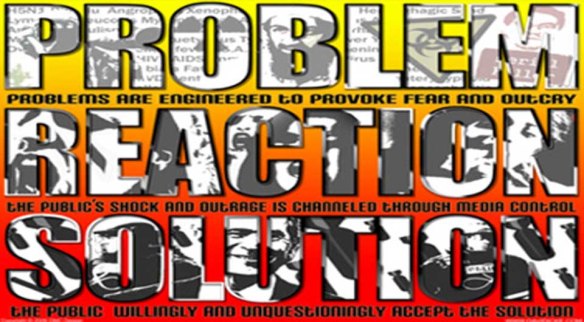
 

Henry A. Giroux currently holds the McMaster University Chair for Scholarship in the Public Interest in the English and Cultural Studies Department and a Distinguished Visiting Professorship at Ryerson University. His most recent books are America’s Education Deficit and the War on Youth (Monthly Review Press, 2013) and Neoliberalism’s War on Higher Education (Haymarket Press, 2014). His web site is www.henryagiroux.com.