Why this Draconian Response to COVID-19?

By Jeffrey A. Tucker

Source: Activist Post

Imagine if you are the organizer of a major arts and tech event that attracts a quarter-million attendees. One week out from the conference, the mayor cancels your event. Your event is not named specifically, just that all events involving more than 2,500 people are officially banned. He does this using emergency powers, justified in the name of containing a virus.

And that’s it. This is what happened to South by Southwest, one of the most important events in the world in Austin, Texas, which has thus far not reported a single case of COVID-19. Based on last year’s numbers, It’s the end for:

  • 73,716 conference attendees and 232,258 festival attendees;
  • 4,700 speakers
  • 4,331 media/press attendees
  • 2,124 sessions
  • 70,00 trade show attendees occupying 181,400 square feet of exhibit space
  • 351 official parties and events
  • 612 international acts
  • 1,964 performance acts

Local merchants are devastated. All hotel and flight reservations are lost. It’s a financial calamity for the city (last year brought half a billion dollars for local merchants) and for untold millions of people affected by the abrupt decision.

Draconian, to say the least.

Making matters worse, a vicious and completely false report published by Variety said that the festival was aching for the city to make the call so that the festival could collect insurance money. This turns out to be entirely wrong: South by Southwest had no insurance against infectious disease. It was a smear and response to mass frenzy. After all, a petition on Change.org signed by 55,000 people had demanded the cancellation.

The city acquiesced to the mob. A grand and glorious conference was destroyed – the first of many this season.

Italy now has 16 million people under quarantine, which is to say that they are prisoners.

Anyone living in Lombardy and 14 other central and northern provinces will need special permission to travel. Milan and Venice are both affected. Prime Minister Giuseppe Conte also announced the closure of schools, gyms, museums, nightclubs and other venues across the whole country. The measures, the most radical taken outside China, will last until 3 April.

Americans have been quarantined on cruise ships and then forced to pay for their later hospitalization. The government that quarantines you has zero intention to pay the costs associated with your care, to say nothing of the opportunity costs of missing work.

The press isn’t helping. The New York Times has cheered it all on, aggressively advocating that governments go Medieval on this one.

In six months, if we are in a recession, unemployment is up, financial markets are wrecked, and people are locked in their homes, we’ll wonder why the heck governments chose disease “containment” over disease mitigation. Then the conspiracy theorists get to work.

The containment strategy was never debated or discussed. For the first time in modern history, governments of the world have taken it upon themselves to control population flows in the hopes of stemming the spread of this disease – regardless of the cost and with scant evidence that this strategy will actually work.

More and more, the containment response is looking like global panic. What’s interesting, Psychology Today points out, is that your doctor is not panicking:

COVID-19 is a new virus in a well-known class of viruses. The coronaviruses are cold viruses. I’ve treated countless patients with coronaviruses over the years. In fact, we’ve been able to test for them on our respiratory panels for the entirety of my career.

We know how cold viruses work: They cause runny noses, sneezing, cough, and fever, and make us feel tired and achy. For almost all of us, they run their course without medication. And in the vulnerable, they can trigger a more severe illness like asthma or pneumonia.

Yes, this virus is different and worse than other coronaviruses, but it still looks very familiar. We know more about it than we don’t know.

Doctors know what to do with respiratory viruses. As a pediatrician, I take care of patients with hundreds of different viruses that behave similarly to this one. We take care of the kids at home and see them if the fever is prolonged, if they get dehydrated, or if they develop breathing difficulty. Then we treat those problems and support the child until they get better.

Meanwhile, the New England Journal of Medicine reports as follows:

On the basis of a case definition requiring a diagnosis of pneumonia, the currently reported case fatality rate is approximately 2%. In another article in the Journal, Guan et al. report mortality of 1.4% among 1,099 patients with laboratory-confirmed Covid-19; these patients had a wide spectrum of disease severity. If one assumes that the number of asymptomatic or minimally symptomatic cases is several times as high as the number of reported cases, the case fatality rate may be considerably less than 1%. This suggests that the overall clinical consequences of Covid-19 may ultimately be more akin to those of a severe seasonal influenza (which has a case fatality rate of approximately 0.1%) or a pandemic influenza (similar to those in 1957 and 1968) rather than a disease similar to SARS or MERS, which have had case fatality rates of 9 to 10% and 36%, respectively.

Slate’s piece on this topic offers more perspective:

This all suggests that COVID-19 is a relatively benign disease for most young people, and a potentially devastating one for the old and chronically ill, albeit not nearly as risky as reported. Given the low mortality rate among younger patients with coronavirus—zero in children 10 or younger among hundreds of cases in China, and 0.2-0.4 percent in most healthy nongeriatric adults (and this is still before accounting for what is likely to be a high number of undetected asymptomatic cases)—we need to divert our focus away from worrying about preventing systemic spread among healthy people—which is likely either inevitable, or out of our control—and commit most if not all of our resources toward protecting those truly at risk of developing critical illness and even death: everyone over 70, and people who are already at higher risk from this kind of virus.

Look, I’m obviously not in a position to comment on the medical aspects of this; I defer to the experts. But neither are medical professionals in a position to comment on the political response to this; mostly they have assiduously declined to do so.

Meanwhile, governments are willy-nilly making drastic decisions that profoundly affect the status of human freedom. Their decisions are going to affect our lives in profound ways. And there has thus far been no real debate on this. It’s just been presumed that containment of the spread rather than the care of the sick is the only way forward.

What’s more, we have governments all-too-willing to deploy their awesome powers to control human populations in direct response to mass public pressure based on fears that have so far not been justified by any available evidence. For this reason, we have every reason to be concerned.

Are we really ready to imprison the world, wreck financial markets, destroy countless jobs, and massively disrupt life as we know it, all to forestall some uncertain fate, even as we do know the right way to deal with the problem from a medical point of view? It’s at least worth debating.

‘What More Do You Need to Know?’ Health Insurance Stocks Drive Wall Street Rebound on Biden Super Tuesday Wins

“Biden is the preferred candidate for the financial markets.”

By Eoin Higgins

Source: CommonDreams

Health insurance industry stocks surged Wednesday morning in the wake of former Vice President Joe Biden’s strong showing in the Democratic presidential primary’s Super Tuesday contests, opening up 600 points after traders appeared to bet the candidate’s resurgence would box out any chance of single-payer universal healthcare.

“What more do you need to know,” tweeted journalist Jack Mirkinson of the market’s spike.

Sanders has made Medicare for All a centerpiece of his campaign. The healthcare industry has poured millions in ad buys against Sanders after the Vermont senator won primaries in Iowa, New Hampshire, and Nevada.

“The industry has long seen Biden as their white knight,” said Dr. Adam Gaffney, the president of Physicians for a National Health Program and an outspoken Medicare for All advocate.

Biden on Tuesday won at least nine of the 14 states up for grabs to Sanders’ four. At press time, Maine was yet to be called, with Sanders and Biden locked in a razor-thin contest.

The market surge came after a rough week for the stock market, which at the end of February saw its biggest decline since the 2008 financial crisis after fears of the economic cost of a worldwide coronvirus pandemic increased.

Business commentators also made the connection between Sanders’ victories in the early primary states, particularly in Nevada, and the market’s poor performance last week.

On Fox Business February 28, billionaire Steve Forbes remarked that the weeklong drop was not only about fears of the coronavirus.

“There’s the political side,” Forbes said of the reason for the poor performance. “In the last week, week-and-a-half, the possibility of Bernie Sanders becoming president of the United States has increased, exponentially.”

According to the Washington Post:

Stocks of healthcare companies roared in response to Biden’s performance. Cigna was up more than 10 percent in morning trading, while UnitedHealth Group rose nearly 12 percent. Humana jumped 1.25 percent and Anthem soared nearly 14 percent.

Investor Ed Yardeni told the Post that Wednesday’s spike was a correction to earlier fears of what he called “Bernie Sanders’ socialist program.”

“The market’s sell-off last week on Sanders’ primary victories and rebound on Monday after Biden’s big win in South Carolina and this morning after Super Tuesday suggest that domestic U.S. politics may matter as much as the global health crisis on investors,” said Yardeni.

As Common Dreams reported, the results—which saw billionaire Michael Bloomberg and Sen. Elizabeth Warren (D-Mass.) coming in far behind the two frontrunners—transformed a once-crowded primary into a two-man race. Though Biden put up a good showing, exit polls from the contests showed a majority of Democratic voters backing the elimination of private insurance in favor of a government-run system guaranteeing healthcare for all.

How Surveillance and Propaganda Work in ‘the Free World’

By Brian Cloughly

Source: Strategic Culture Foundation

A Bloomberg report of October 22 was concise and uncompromising in declaring Russia to be a surveillance state. Harking back to the good old days of the Cold War, as is increasingly the practice in much of the Western media, Bloomberg recounted that “The fourth of 10 basic rules Western spies followed when trying to infiltrate Russia’s capital during the Cold War — don’t look back because you’re never alone — is more apt than ever. Only these days it’s not just foreigners who are being tracked, but all 12.6 million Muscovites, too. Officials in Moscow have spent the last few years methodically assembling one of the most comprehensive video-surveillance operations in the world. The public-private network of as many as 200,000 cameras records 1.5 billion hours of footage a year that can be accessed by 16,000 government employees, intelligence officers and law-enforcement personnel.”

Terrifying, one might think. Straight out of Orwell’s 1984, that dystopian prediction of what the world could become, as noted in one description of how the face of the state’s symbolic leader, Big Brother, “gazes at you silently out of posters and billboards. His imposing presence establishes the sense of an all-seeing eye. The idea that he is always watching from the shadows imposes a kind of social order. You know not to speak out against The Party — because big brother is watching… The face always appears with the phrase Big Brother is watching you. As if you could forget.” Such is the terrifying Bloomberg picture of Moscow where there are supposedly 200,000 video cameras. You can’t blow your nose without it being seen. And wait for the next phase, in which Big Brother will hear you laugh.

In line with the Western approach, there is little mention of surveillance in other cities, but the website ‘Caught on Camera’ has analysed world-wide practices. It reports that there are some 25 million closed-circuit surveillance cameras world-wide and “the United Kingdom [with 4 million cameras] has more CCTV activity than any other European country, per capita… surprisingly, the Wandsworth borough in London in particular has more CCTV cameras than Boston, Dublin, Johannesburg and San Francisco put together. It is estimated there are 500,000 cameras dotted around London. The average person living in London will be recorded on camera 300 times in one day.”

The statistics obtained by Caught on Camera and comparitech differ markedly from those in the Bloomberg story which was retailed throughout the Western world by many news outlets, who increasingly refer to the West as “the Free World”. Comparitech records that as at August 2019 Moscow, with a population of 12.4 million, had 146,000 (not 200,000) cameras, while London’s 9 million citizens were being watched by 627,707 cameras. The picture (if one may use that word) is slightly slanted. To put it another way, London has 68 cameras for each 1,000 people, and the ratios elsewhere are enlightening: Shanghai 113 (China is in treble figures in three cities); Atlanta (Ga) 15; Chicago 13; Baghdad, Sydney and Dubai 12; Moscow and Berlin 11; and St Petersburg, Canberra and Washington DC tie at 5.

The slanting doesn’t stop there, because there are other ways of attacking Russia, spearheaded by such as the Washington Post, which highlighted the Bloomberg surveillance tale. The Post behaves like Big Brother focusing on Winston Smith, the hapless victim/hero of 1984 whose job it is “to rewrite the reports in newspapers of the past to conform with the present reality.” There is an eerie resonance in this, because the Post’s reportage on Russia verges on the obsessively censorious, while it avoids mention of anything remotely positive.

Understandably, the Post relies heavily on such sources as “Meduza, a Latvia-based online news outlet that covers the Kremlin” which reported that the Russian government “passed a law earlier this year that lets Vladimir Putin take all the country’s Internet traffic off the World Wide Web if he decrees that there’s an ‘emergency’.”

The fact that the intelligence services of the West have worked for a long time to devise strategies and tactics to destroy internet services in Russia and many other countries is neither here nor there, but it is important for Western propaganda purposes to condemn Russia for taking measures to counter the manoeuvres of the West’s cyberwar agencies. The Post emphasised that arrangements were made by various Russian ministries and agencies, including the Emergencies Ministry and the Federal Security Service which “is the successor to the KGB, where Putin was once an officer.”

The absurdity of that needlessly-injected personal point is amusing in a way, and serves to highlight the unending reiteration of detail intended to set the western public against Russia. Naturally, there is exclusion of information that could lead to audiences approving of Russia in any way.

The news site Axios states it aims to “deliver the cleanest, smartest, most efficient and trust-worthy experience for readers and advertisers alike” but when it comes to Russia it appears that there could be a bit of selectivity in that delivery. For example, in October the UK’s Guardian newspaper reported approvingly that according to the World Health Organisation (WHO), alcohol consumption in Russia “has dropped by 43% since 2003” and commented that the WHO had “put the decrease down to a series of measures brought in under the sport-loving president, Vladimir Putin, including restrictions on alcohol sales and the promotion of healthy lifestyles.” But Axios didn’t report it quite like that.

The Guardian also noted that “The last Soviet leader, Mikhail Gorbachev, led an anti-alcohol campaign with partial prohibition, which brought down consumption from the mid-1980s until 1990. But after the collapse of the Soviet Union, alcohol consumption exploded, continuing to rise until the start of the 2000s. Under Putin, Russia has introduced measures including a ban on shops selling any alcohol after 11 pm, increases in the minimum retail price of spirits and an advertising blackout.” The result has been “increased life expectancies in Russia, which reached a historic peak in 2018, at 78 years for women and 68 years for men. In the early 1990s, male life expectancy was just 57 years.”

This is an amazing societal development. In no other country has there been a comparable initiative that resulted in such a massive and positive shift in community habits.

The BBC was more coy than the Guardian about allocating approval for the remarkable success of the programme, and confined itself to reporting that the WHO “attributed the decline to a series of alcohol-control measures implemented by the state, and a push towards healthy lifestyles.” There was no reference to President Putin, and indeed the credit went elsewhere, because “alcohol-control measures introduced under former President Dmitry Medvedev included advertising restrictions, increased taxes on alcohol and a ban on alcohol sales between certain hours.”

Axios followed suit, and ‘Radio Free Europe’ didn’t mention Presidents Putin, Medvedev or Gorbachev, retailing simply that the “decline in consumption was due to “alcohol-control measures introduced at the beginning of the 2000s.” There were no reports of the achievement in US mainstream outlets or the UK’s resolutely right-wing anti-Russia media. (The Guardian doesn’t carry a Russian flag; it merely reports without xenophobic bias.)

The WHO Case Study provides an admirably detailed timeline of legislature and other developments concerning Russia’s successful drive against alcohol abuse, recording, for example, that in 2018 there was a “presidential decree on ‘National Purposes and Strategic Development Challenges of the Russian Federation until 2024’… including in the field of public health. The aim is to increase life expectancy to 78 years by 2024 and to 80 years by 2030, as well as the proportion of citizens leading a healthy lifestyle and systematically engaging in physical activities and sports.”

Don’t expect such an initiative to be praised or even mentioned by the Western media. Big Brother prefers to slant the cameras.

The political logic of the junk food revolution

By Jonathan Cook

Source: TruePublica

Here is an article on food whose political implications are really worth considering. We already know that people in western societies, particularly the US and UK, are eating far too much junk food, and that this leads to an epidemic of obesity, heart disease and cancer.

But the latest research not only reveals the extent that “ultra-processed” foods have come to dominate our diets in Europe – now comprising more than half of what Britons eat, for example – but raises the question of what effects the consumption of this much junk food will have on our behaviours.

The nutritionists here are reluctant to offer even well-informed speculation, which always seems to be the case with publicly funded scientists until things have moved beyond a critical point. Think of smoking and climate change: we usually learn much later that the corporations’ own pet-scientists had done the research decades earlier proving or predicting exactly what was coming.

But there are hints from the nutritionists to the Guardian of what might be going on:

“People are missing out not only on vitamins and minerals but also bioactive compounds found in natural foods such as phytoestrogens and fibre.

And then you get salt and starch and sugar and fat and all these additives. We are consuming every day an amount of new substances that are these flavours and colours and emulsifiers and we don’t have any idea as to what will be the problem of these items,” [Professor Carlos Monteiro from the University of Sao Paulo in Brazil, who led the research team] said. …

Other cumulative effects of eating these industrially-made substances are not yet known. “The honest answer is we don’t know what is going on,” said Monteiro.’

Here is an educated guess, based in part on experience and in part on the economic and political logic of our current junk food revolution. (Those of us who eat these industrial substances rarely enough that they do not dominate our diets still have a sense of what happens to us on the occasions we do.)

These lab-created, nutritionally empty substances that our bodies have not evolved to digest not only make us physically sick, but emotionally and mentally sick too: addicted, depressed, lazy, sluggish, docile and anxious.

In fact, a mess of emotions that transforms us into the perfect consumers, buying more of this cheap, harmful “food”. That boosts both the profits of food and other corporations and the electoral fortunes of crowd-pleasing, money-grubbing, vacuous politicians who wish to serve those corporations.

That is how an advanced capitalist system – premised on a psychopathic drive by the strongest to maximise profits by exploiting the weakest – will naturally evolve. It needs to make us as dependent, as passive and docile, as possible.

First Do No Harm

By Emmy Bee

Source: Dissident Voice

Let me preface what I am about to say by stating that I have the utmost esteem for mainstream medicine’s skill in emergency situations — the do or die surgeries, the dispensing of powerful life-saving drugs necessary in that setting are second to none; and its mastery of cosmetic surgery in cases of deformities and the advances made in prosthetics are nothing less than spectacular. These are what make mainstream medicine great.

I would also like to add that I am not an expert of any kind. I hold no degrees or certifications, and neither do I represent, belong to, or work for any party, organization or corporation. I speak for myself, a sixty-two year old woman, and from my experiences with, and extensive research of, a topic I find fascinating, intriguing and bothersome — mainstream medicine and how the belief in its infallibility harms us in so many ways.

The pompous certainty of mainstream medicine’s powerful proponents — be they multi-billion dollar pharmaceutical companies, medical associations, disease-specific charities, government agencies, Madison Avenue selling the diseases and the pills, TV or magazines, the news media parroting its cash cow’s every claim — combined have most people, hook, line and sinker, believing in the impeccable record of mainstream medicine. No questions asked.

Here, I would like to throw out some alarming statistics — ones that can be easily found in a variety of journals from Forbes to JAMA to CounterPunch, etc.

The estimated annual mortality rate for adverse drug reactions to “correctly” prescribed drugs is the 5th leading cause of death in the U.S.1 Over the counter (OTC) cold medications are among the top twenty substances causing death in children.2 Used according to direction, NSAIDs (Non-Steroidal Anti-inflammatory Drugs) are responsible for more than 20,000 deaths every year.3 There are over 400,000 deaths each year from drug and medical errors and tens of thousands more deaths from unnecessary procedures.4 Add those together and mainstream medicine is the third leading cause of death in the U.S.

So, why is it that most people trust, without question, the omnipotence of mainstream medicine in the same way religious zealots believe in their chosen religion or atheists in theirs? When well over 200,000 people die in the U.S. each year from prescription drug use alone — not abuse, but use; when we spend more, per capita than any other nation on earth and yet our health indices and life expectancy are near the bottom of all other developed nations5 why is there no sense of outrage (except for price gouging!) or, at the very least, a sense that something is not right, that something is terribly wrong?

Yet, as has happened many times, should a doctor, a scientist, a researcher or a curious layperson question conventional medical creed the herald is quickly battered down with jeers of derision, and swiftly “discredited” and shunned by the medical community. The media then parrots what they are told and soon everyone is asking, “How dare they question science? Haven’t they heard of collateral damage? Every war (and they are constantly reminding us of the war we are fighting against diseases) has collateral damage”. Yet when a few people die from dirty spinach, improper use of some herbal product, or a handful of people (some even vaccinated) catch the measles (and live to tell about it!) panic overruns the media.

Does anyone remember or know of the ad campaigns telling us that “nine out of ten doctors smoke Camel cigarettes” or that DDT pesticide spray is “good for you!”? We may laugh now but what about the more recent debacles such as HRT (hormone replacement therapy), Vioxx, swine flu vaccines and GMOs — all of which received the seal of approval from industry scientists, government agencies and all were pushed by Madison Ave. — just like the cigarettes given to my father for heart disease and the DDT sprayed on everything in sight, including children.

The number of TV commercials for drugs, medical clinics, hospitals, and doctor-related reality TV shows is mind blowing. It is a constant barrage of “a pill for every ill” and “don’t forget to ask your doctor about it”, while people with vapid eyes move in slow motion through white rooms or a meadow filmed through gauze, while a voice, soft and soothing, tells you of the pill’s benefits and then the same voice, just as soft but at breakneck speed, spews a partial list of possible side effects and a series of unwanted symptoms, some of which sound, and are (such as death) worse than the “disease” itself.

And interspersed between the ad for an over-the-counter (OTC) medication that had not long ago been given “by prescription only” and another ad for the new six story billion dollar specialty clinic are yet more commercials inviting us to join in what has become a celebration of you fill in the blank disease. There’s a “walk” or a “run”, even a paddle! for this disease and a different colored “ribbon” for that disease. It is almost as if having a disease has become the new “in” thing — fashionable, admirable, heroic even.  Are we being groomed to embrace our diseases, while at the same time being told to give, give, give to find a “cure”? According to Dr. Robert Sharpe, author of The Cruel Deception, a book about animal testing in medical research,” . . . in our culture treating disease is enormously profitable, preventing it is not.”

We have been told we are living longer but the sad fact is that the trend has reversed and now for the first time in decades life expectancy has dropped in the U.S.6 Even more alarming is that, along with adults, the number of children with chronic diseases has risen sharply. Think about it. How many of us make it past seventy (hell, even sixty!) without some major medical catastrophe (or two) requiring surgery and/or special apparatuses to help us do what used to come naturally and/or prescribed no less than three or four drugs? And how many “new” (iatrogenic) diseases do we then acquire from taking those drugs or undergoing those procedures that require even more drugs and/or more procedures?

And just what is conventional medicine’s track record for curing disease — any disease — not palliation or suppression or masking (all of which suppress and weaken the immune system) — but curing?  Forty years ago I knew one woman with breast cancer while today I know dozens, all of who underwent tortuous procedures, surgeries and drugging, and yes, some of them died. And why is it that when people die after making use of conventional medicine — surgery, chemotherapy, drugs, etc. — there are no cries of foul against their choice of healthcare? Instead they are hailed as heroes who fought a courageous battle, but when someone dies after trying an alternative medicine the cries against their choice are nothing less than vitriolic, as if no one ever dies using mainstream medicine, when in actuality many thousands die each year from mishaps alone, never mind the many hundreds of thousands who die from the diseases that have remained rampant — heart disease, cancer and diabetes, etc.7

Despite unprecedented technical and scientific advances, mainstream medicine’s only answer to disease is to destroy—with toxic substances, ingested or injected, with life-threatening procedures and with the removal of diseased (and often times healthy) body parts.  Kill germs, fight cancer, destroy cells, kick (name a disease)’s ass, crush, terminate, rub out, blast; never build up, heal, cure. Are we, as a society, even capable of imagining alternatives to mainstream medicine? I once told an MD I knew that a friend’s kidney stone passed with relative ease after drinking a herbal tea prescribed by an Acupuncturist. “If there was something out there that can do that,” he told me, “we would know about it”.  Not with that attitude!

When contemplating all that led up to the economic debacle of 2008, I would venture to guess that most people would be leery now (if they weren’t already!) of any advise given by the banking industry and Wall Street concerning, let’s say, home loans. And the same wariness would prevail when listening to the oil or coal industries’ take on environmental issues, or the weapons makers’ spin on whether to go to war or sell arms, or the pesticide- producing conglomerates on the safety of their products. The conflict of interest in each case should be obvious because when one considers that the very ones who profit by limiting the field of allowable research, who selectively choose among research papers to discredit alternative theories or boost their own are the very ones who control the message, it becomes obvious that we are seeing conflict of interest on a massive scale.

And, what of the research done by pharmaceutical companies that tell us a certain drug, or procedure, or vaccine is safe and effective? Does it make you comfortable to know that President Obama’s pick for FDA (Food and Drug Administration) Commissioner, Robert Califf, had received research funds from twenty-five drug companies while director of Duke University clinical research department where a major research fraud scandal had erupted under his watch8 or that Julie Gerderding, former head of the CDC (Center for Disease Control) concealed and then destroyed evidence of a link between the MMR vaccine and autism in African-American boys9, and yet congress refuses to subpoena her and the whistleblower from the CDC and the media never mentions it, and that this same Julie Gerderding left the CDC to become the president of Merck’s vaccine division and then executive VP of Merck, the sole manufacturer of the MMR vaccine? These examples are just two of many that are not only about a colossal conflict of interest but also about a dangerous threat to true scientific discovery affecting millions of lives.

So, why is it that pharmaceutical companies (which, by the way, have more lobbyists than there are members of congress and the senate combined) and which have a woeful track record when it comes to conflict of interest in medical research, drug research and alternative medicine viability research, are given a pass, a green light, a pat on the back of confidence and, besides, are vehemently defended and vociferously cheered on? What marketing magic do they spin that makes people overlook their complicity in fraudulent research, their over-the-top demonizing of opposing viewpoints, and above all their abhorrent safety record?

Why can’t we question the effectiveness, the safety or the necessity of some vaccines without being rudely shouted down?  I wonder if those who shout the, “Shut up! They are safe!” mantra have ever taken the time to study the long history of infectious disease and the history of vaccine use? Do they know there are no long-term studies on the effects of vaccines, or that vaccinated people are not necessarily protected from the diseases they are vaccinated against, or that the pharmaceutical companies and the government agencies refuse to do a vaccinated vs. unvaccinated population study as to their overall health indices, that vaccines, unlike other drugs are not tested against a placebo but against another vaccine, or that childhood infectious diseases had been on a downward trend for many years (measles deaths had declined by almost 100 percent!) well before vaccines were introduced as had many of the other infectious diseases — running their course, improving as our sanitary conditions and treatment of the illness improved?  So, why not let them continue to decline until they naturally disappear? Why introduce crude disease substances and a mixture of lethal chemicals (of which no one knows or bothers to test their long-term effects) into our bodies in an attempt to eradicate diseases that seemed to be doing a fine job of doing just that naturally?

Could there be a connection between the plethora of “new” or increasing diseases and the crude drugs (including vaccines) we have been putting into our bodies for decades now? If we stop to think about it does it make sense to inject ourselves with hazardous material we know nothing about to prevent diseases like the measles, mumps and the flu and others that are now so simple to treat?

But we are told, ad nauseam, to, “Shut up and just get your shots! All your questions have already been answered!”  However, when you look behind the scenes of medical research and find the pharmaceutical companies paying the bills, writing the reports and working closely with government agencies, research colleges, medical journals and the media to get their message out, it should raise a red flag.

What is the great harm brought about by this absolutism of the proponents of mainstream medicine? There are many but two are outstanding. One is that freedom of choice in one’s healthcare decisions can and will be taken away — it has begun already and is picking up momentum. I do not use conventional medicine except in some emergency situations, but that doesn’t mean I wouldn’t fight for the right of others to choose to use it exclusively if they believe it to be their best or only option. Being comfortable with one’s healthcare choice is, I firmly believe, of utmost importance. Yet if it were up to many people I should not be allowed to choose the kind of healthcare I want for my family and me.

And secondly, that same vitriolic certainty and insular thinking is truly harmful to the very essence of scientific inquiry. Great discoveries could be ignored simply because of a refusal to look beyond what we are told is scientifically acceptable today, the realm of inquiry having been limited by the greed of those in power and their manipulation of the masses by way of the fear factor.

  1. To Err is Human: Building a Safer Healthcare System: Institute of Medicine, Committee on Quality of Health Care in America, 2000.
  2. 2009 annual report of the American Association of Poison Control Centers’ National Poison Data System (27th report).
  3. Healing the NSAID Nation, E. Goldman, 2012.
  4. Leah Binder, Stunning News on Preventable Deaths in Hospitals, September 23, 2013; see also: Gary Null, PhD; Carolyn Dean MD, ND; Martin Feldman, MD; Debora Rasio, MD; and Dorothy Smith, PhD. Death by Medicine, Integral Options Cafe, January 12, 2010.
  5. Numbeo. Health Care Index for Country 2016.
  6. Public Health, Life Expectany in the U.S. drops for First Time in Decades, Report Finds, Health News from NPR, December 8, 2016.
  7. The Marshall Protocol Knowledge Base, Autoimmunity Research Foundation.
  8. Martha Rosenberg, Obama’s Latest FDA Nominee: No Hidden Big Pharma Links, They are all in Plain Sight, Counterpunch, November 19, 2015.
  9. Sharyl Attkisson, CDC Scientist:  “We scheduled Meeting to Destroy Vaccine Autism Study Documents“, March 23, 2016.

The Stomach-churning Violence of Monsanto, Bayer and the Agrochemical Oligopoly

By Colin Todhunter

Source: RINF

As humans, we have evolved with the natural environment over millennia. We have learned what to eat and what not to eat, what to grow and how to grow it and our diets have developed accordingly. We have hunted, gathered, planted and harvested. Our overall survival as a species has been based on gradual, emerging relationships with the seasons, insects, soil, animals, trees and seeds. And out of these relationships, we have seen the development of communities whose rituals and bonds have a deep connection with food production and the natural environment.

However, over the last couple generations, agriculture and food production has changed more than it had done over previous millennia. These changes have involved massive social upheaval as communities and traditions have been uprooted and have entailed modifying what we eat, how we grow our food and what we apply to it. All of this has been driven by geopolitical concerns and powerful commercial interests with their proprietary chemicals and patented seeds. The process of neoliberal globalisation is accelerating the process as farmers are encouraged to produce for global supply chains dominated by transnational agribusiness.

Certain crops are now genetically engineered, the range of crops we grow has become less diverse, synthetic biocides have been poured on crops and soil and our bodies have been subjected to a chemical bombardment. We have arrived at a point where we have lost touch with our deep-rooted microbiological and social connection with nature and have developed an arrogance that has placed ‘man’ above the environment and all other species. One of the consequences is that we have paid an enormous price in terms of the consequent social, environmental and health-related devastation.

Despite the promise and potential of science, it has too often in modern society become a tool of vested interests, an ideology wrapped in the vestiges of authority and the ‘superstition’ that its corporate-appointed priesthood should not be challenged nor questioned. Instead of liberating humankind, it has now too often become a tool of deception in the hands of companies like Monsanto, Bayer and Syngenta which make up the oligopoly that controls what is an increasingly globalised system of modern food and agriculture.

These corporations have successfully instituted the notion that the mass application of biocides, monocropping and industrial agriculture are necessary and desirable. They are not. However, these companies have used their science and propaganda to project certainty in order to hide the fact that they have no real idea what their products and practices are doing to human health or the environment (and in cases when they do know, they do their best to cover it up or hide behind the notion of ‘commercial confidentiality‘).

Based on their limited, tainted studies and co-opted version of science, they say with certainty that, for example, genetically engineered food and glyphosate are ‘safe’. And when inconvenient truths do emerge, they will mobilise their massive lobbying resources to evade regulations, they will seek to hide the dangers of their products or they will set out to destroy scientists whose findings challenge their commercial bottom line.

Soil microbiologists are still trying to fully comprehend soil microbes and how they function as anintegrated network in relation to plants. The agrochemical sector has little idea of how their biocides have affected soils. It merely churns out public relations spin that their inputs are harmless for soil, plants and human health. Such claims are not based on proper, in-depth, long-term studies. They are based on a don’t look, don’t find approach or a manipulation of standards and procedures that ensure their products make it on to the commercial market and stay there. The devastating impacts on soil are increasingly clear to see.

And what are these biocides doing to us as humans? Numerous studies have linked the increase in pesticide us with spiralling rates of ill health. Kat Carrol of the National Health Federation is concerned about the impacts on human gut bacteria that play a big role in how organs function and our neurological health. The gut microbiome can contain up to six pounds of bacteria and is what Carroll calls ‘human soil’. She says that with their agrochemicals and food additives, powerful companies are attacking this ‘soil’ and with it the sanctity of the human body.

And her concerns seem valid. Many important neurotransmitters are located in the gut. Aside from affecting the functioning of major organs, these transmitters affect our moods and thinking. Feed gut bacteria a cocktail of biocides and is it any surprise that many diseases are increasing?

For instance, findings published in the journal ‘Translational Psychiatry’ provide strong evidence that gut bacteria can have a direct physical impact on the brain. Alterations in the composition of the gut microbiome have been implicated in a wide range of neurological and psychiatric conditions, including autism, chronic pain, depression, and Parkinson’s Disease.

Environmental campaigner Dr Rosemary Mason has written extensively on the impacts of agrochemicals (especially glyphosate) on humans, not least during child and adolescent development. In her numerous documents and papers, she cites a plethora of data and studies that link the use of agrochemicals with various diseases and ailments. She has also noted the impact of these chemicals on the human gut microbiome.

Writing in The Guardian, Mo Costandi discusses the importance of gut bacteria and their balance. In adolescence the brain undergoes a protracted period of heightened neural plasticity, during which large numbers of synapses are eliminated in the prefrontal cortex and a wave of ‘myelination’ sweeps across this part of the brain. These processes refine the circuitry in the prefrontal cortex and increase its connectivity to other brain regions. Myelination is also critical for normal, everyday functioning of the brain. Myelin increases a nerve fibre’s conduction velocity by up to a hundred times, and so when it breaks down, the consequences can be devastating.

Other recent work shows that gut microbes control the maturation and function of microglia, the immune cells that eliminate unwanted synapses in the brain; age-related changes to gut microbe composition might regulate myelination and synaptic pruning in adolescence and could, therefore, contribute to cognitive development. Upset those changes, and, As Mason argues, there are going to be serious implications for children and adolescents. Mason places glyphosate at the core of the ailments and disorders currently affecting young people in Wales and the UK in general.

Yet we are still being subjected to an unregulated cocktail of agrochemicals which end up interacting with each other in the gut. Regulatory agencies and governments appear to work hand in glove with the agrochemical sector.

Carol Van Strum has released documents indicating collusion between the manufacturers of dangerous chemicals and regulatory bodies. Evaggelos Vallianatos has highlighted the massive fraud surrounding the regulation of biocides and the wide scale corruption at laboratories that were supposed to test these chemicals for safety. Many of these substances were not subjected to what was deemed proper testing in the first place yet they remain on the market. Shiv Chopra has also highlighted how various dangerous products were allowed on the commercial market and into the food chain due to collusion between these companies and public officials.

Powerful transnational corporations are using humanity as their collective guinea pig. But those who question them or their corporate science are automatically labelled anti-science and accused of committing crimes against humanity because they are preventing their products from being commercialised ‘to help the poor or hungry’. Such attacks on critics by company mouthpieces who masquerade as public officials, independent scientists or independent journalists are mere spin. They are, moreover, based on the sheer hypocrisy that these companies (owned and controlled by elite interests) have humanity’s and the environment’s best interests at heart.

Many of these companies have historically profited from violence. Unfortunately, that character of persists. They directly profit on the back of militarism, whether as a result of the US-backed ‘regime change’ in Ukraine or the US invasion of Iraq. They also believe they can cajole (poison) nature by means of chemicals and bully governments and attack critics, while rolling out propaganda campaigns for public consumption.

Whether it involves neocolonialism and the destruction of indigenous practices and cultures under the guise of ‘development’, the impoverishment of farmers in India, the twisting and writing of national and international laws, the destruction of rural communities, the globalisation of bad food and illness, the deleterious impacts on health and soil, the hollowing out of public institutions and the range of human rights abuses we saw documented during The Monsanto Tribunal, what we are witnessing is structural violence in many forms.

Pesticides are in fact “a global human rights concern” and are in no way vital to ensuring food security. Ultimately, what we see is ignorance, arrogance and corruption masquerading as certainty and science.

“… when we wound the planet grievously by excavating its treasures – the gold, mineral and oil, destroy its ability to breathe by converting forests into urban wastelands, poison its waters with toxic wastes and exterminate other living organisms – we are in fact doing all this to our own bodies… all other species are to be enslaved or driven to extinction if need be in the interests of human ‘progress’… we are part of the same web of life –where every difference we construct artificially between ‘them’ and ‘us’ adds only one more brick to the tombstone of humankind itself.” – from ‘Micobes of the World Unite!’ By Satya Sager

Wasted lives: The worldwide tragedy of youth suicide

Principles of goodness together with the golden seed of social justice – sharing – need to be the guiding ideals of a radically redesigned socio-economic paradigm.

By Graham Peebles

Source: Nation of Change

The pressures of modern life are colossal; for young people – those under 25 years of age – they are perhaps greater than at any other time. Competition in virtually every aspect of contemporary life, a culture obsessed with image and material success, and the ever-increasing cost of living are creating a cocktail of anxiety and self-doubt that drives some people to take their own lives and many more to self-abuse of one kind or another.

Amongst this age group today, suicide constitutes the second highest cause of death after road/traffic accidents, and is the most common cause of death in female adolescents aged 15–19 years. This fact is an appalling reflection on our society and the materialistic values driven into the minds of children throughout the world.

The World Health Organization (WHO) estimates that in total “close to 800,000 people die due to suicide every year, which is one person every 40 seconds. Many more attempt suicide,” and those who have attempted suicide are the ones at greatest risk of trying again. Whilst these figures are startling, WHO acknowledges that suicide is widely under-reported. In some countries (throughout Sub-Saharan Africa, for example) where stigma still attaches to suicide, it is not always recorded as the cause of death when in fact it should be, meaning the overall suicide figures are without doubt a great deal higher.

Unless there is fundamental change in the underlying factors that cause suicide, the WHO forecasts that by 2020 – a mere three years away, someone, somewhere will take their own life every 20 seconds. This worldwide issue, WHO states, is increasing year on year; it is a symptom of a certain approach to living – a divisive approach that believes humanity is inherently greedy and selfish and has both created, and is perpetuated by, an unjust socio-economic system which is at the root of many of our problems.

Sliding into despair

Suicide is a global matter and is something that can no longer be dismissed, nor its societal causes ignored. It is the final act in a painful journey of anguish; it signifies a desperate attempt by the victim to be free of the pain they feel, and which, to them, is no longer bearable. It is an attempt to escape inner conflict and emotional agony, persecution or intimidation. It may follow a pattern of self-harm, alcohol or drug abuse, and, is in many cases, but not all, related to depression, which blights the lives of more than 300 million people worldwide, is debilitating and deeply painful. As William Styron states in Darkness Invisible, “The pain of severe depression is quite unimaginable to those who have not suffered it, and it kills in many instances because its anguish can no longer be borne. The prevention of many suicides will continue to be hindered until there is a general awareness of the nature of this pain.”

Any suicide is a tragedy and a source of great sadness, particularly if the victim is a teenager, or someone in there twenties, who had their whole life ahead of them, but for some reason or another could not face it. As with all age groups, mental illness amongst young people is cited as the principle reason for, or an impelling cause of suicide, as well as for people suffering from an untreated illness such as anxiety anorexia or bulimia; alcohol and drug abuse are also regularly mentioned, as well as isolation.

All of these factors are effects, the result of the environment in which people – young and not so young – are living: family life, the immediate society, the broader national and world society. The values and codes of behavior that these encourage, and, flowing from this environment, the manner in which people treat one another together with their prevailing attitudes. It must be here that, setting aside any individual pre-disposition, the underlying causes leading to mental illness or alcohol/drug dependency in the first place are rooted.

Unsurprisingly young people who are unemployed for a long time; who have been subjected to physical or sexual abuse; who come from broken families in which there is continuous anxiety due to job insecurity and low wages are at heightened risk of suicide, as are homeless people, young gay and bi-sexual men and those locked up in prison or young offenders institutions. In addition, WHO states that, “Experiencing conflict, […] loss and a sense of isolation are strongly associated with suicidal behavior.”

Lack of hope is another key factor. Absence of hope leads to despair, and from despair flows all manner of negative thoughts and destructive actions, including suicide. In Japan, where suicide is the leading cause of death among people aged between 15 and 39 (death by suicide in Japan is around twice that of America, France and Canada, and three times that of Germany and the U.K.), the BBC reports that, “young people are killing themselves because they have lost hope and are incapable of seeking help.” Suicides began to increase dramatically in Japan in 1988 after the Asian financial crisis and climbed again after the 2008 worldwide economic crash. Economic insecurity is thought to be the cause, driven by “the practice of employing young people on short-term contracts.”

Hope is extremely important, hope that life will improve, that circumstances will change, that people will be kinder and that life will be gentler. That one’s life has meaning. Interestingly, in the aftermath of Princess Diana’s death in 1997, suicides in Britain increased by almost 20 per cent, and cases of self-harm rose by 44 per cent. To many people she was a symbol of compassion and warmth in a brittle, hostile world, and somehow engendered hope.

The list of those most vulnerable to suicide is general and no doubt incomplete; suicide is an individual act and flows from specific circumstances and a particular state of mind. Generalizations miss the subtleties of each desperate cry. Some suicides are spontaneous acts, spur of the moment decisions (as is often the case in Asian countries, where poison is the most common method of suicide), others may be drawn out over years, in the case of the alcoholic for example, punctuated perhaps by times of relief and optimism, only to collapse under the weight of life’s intense demands once more.

It is these constant pressures that are often the principle causes of the slide into despair and the desire to escape the agony of daily life. They are all pervasive, hard to resist, impossible, apparently, to escape. Firstly, we are all faced with the practical demands of earning a living, paying the rent or mortgage, buying food, and covering the energy bills etc. Secondly, there are the more subtle pressures, closely related to our ability to meet the practical demands of the day: the pressure to succeed, to make something of one’s life, to be strong – particularly of you’re a young man, to be sexually active, to be popular, to know what you want and have the strength to get it; to have the confidence to dream and the determination to fulfill your dreams. And if you don’t know what you want, if you don’t have ‘dreams’ in a world of dreamers, this is seen as weakness, which will inevitably result in ‘failure’. And by failure, is meant material inadequacy as well as unfulfilled potential and perhaps loneliness, because who would want to be with a ‘failure’?

These and other expectations and pressures constitute the relentless demands faced by us all, practical and psychological, and our ability to meet them colours the way we see ourselves and determines, to a degree, how others see us. The images of what we should be, how we should behave, what we should think and aspire too, the values we should adopt and the belief system we should accept are thrust into the minds of everyone from birth. They are narrow, inhibiting, prescribed and deeply unhealthy.

The principle tool of this process of psychological and sociological conditioning is the media, as well as parents and peers, all of whom have themselves fallen foul of the same methodology, and education.

Beyond reward and punishment

Step outside the so-called norm, stand out as someone different, and risk being persecuted, bullied and socially excluded. The notion of individuality has been outwardly championed but systematically and institutionally denied. Our education systems are commonly built on two interconnected foundations – conformity and competition – and reinforced through methods, subtle and crude, of reward and punishment. All of which stifles true individuality, which needs a quiet, loving space, free from judgment in which to flower. For the most sensitive, vulnerable and uncertain, the pressure to conform, to compete and succeed, is often too much to bear. Depression, self-doubt, anxiety, self-harm, addiction and, for some, suicide, are the dire consequences.

There are many initiatives aimed at preventing suicide amongst young people – alcohol/drug services, mental health treatment, reducing access to the means of suicide – and these are of tremendous value. However if the trend of increased suicides among young people is to be reversed it is necessary to dramatically reduce the pressures on them and inculcate altogether more inclusive values. This means changing the environments in which life is lived, most notably the socio-economic environment that infects all areas of society. Worldwide, life is dominated by the neoliberal economic system, an extreme form of capitalism that has infiltrated every area of life. Under this decrepit unjust model everything is classed as a commodity, everyone as a consumer, inequality guaranteed with wealth and power concentrated in the hands of a tiny percentage of the population – 1% of 1%, or less in fact. All facets of life have become commercialized, from health care to the supply of water and electricity, and the schooling of our children. The educational environment has become poisoned by the divisive values of the market place, with competition at the forefront, and competition has no place in schools and universities, except perhaps on the sports field: streaming and selection should be vetoed totally and testing, until final exams (that should be coursework based), scrapped.

All that divides within our societies should be called out and rejected, cooperation inculcated instead of competition in every area of human endeavor, including crucially the political-economic sphere; tolerance encouraged, unity built in all areas of society, local, national and global. These principles of goodness together with the golden seed of social justice – sharing – need to be the guiding ideals of a radically redesigned socio-economic paradigm, one that meets the needs of all to live dignified, fulfilled lives, promotes compassion, and, dare I say, cultivates love. Only then, will the fundamental causes of suicide, amongst young people in particular, but men and women of all ages, be eradicated.

Are Profit and Healthcare Incompatible?

By Charles Hugh Smith

Source: Of Two Minds

The only way to systemically lower costs is to make prevention and transparency the top priorities.

As I have been noting for a decade, the broken U.S. healthcare system will bankrupt the nation all by itself. We all know the basic facts: the system delivers uneven results in terms of improving health and life expectancy while costing two or three times more per person compared to our advanced-economy global competitors.

U.S. Lifestyle + “Healthcare” = Bankruptcy (June 19, 2008)

Sickcare Will Bankrupt the Nation–And Soon (March 21, 2011)

How Healthcare Is Dooming the U.S. Economy (Three Charts) (May 2015)

You Want to Fix the Economy? Then First Fix Healthcare (September 29, 2016)

This chart says it all: the global outlier in low life expectancy and exorbitant cost is the U.S.

The profit motive is supposed to lower costs, not increase them. In the idealized model of a completely free market, the profit motive is supposed to lower costs as customers are free to choose the best product/service for the lowest price.

In U.S. healthcare, the profits are stupendous, yet the costs are even more stupendous. Rather than lower costs, the U.S. system of for-profit healthcare has sent costs spiraling into the stratosphere, to the point that the system’s costs are threatening to bankrupt the government and the nation.

Why is this so? Karl Marx provided the answer in the 19th century. In the idealized model of free-market capitalism, those who provide superior services for the lowest price reap more profit than their less agile/productive competitors.

But as Marx observed, in real-world capitalism, open competition drives profits to zero. Every attempt to gain a competitive advantage in price increases supply and further commoditizes the product/service. This dynamic pushes prices down to the point that nobody can make a profit until competitors are driven out of business and a cartel or monopoly secures the market and controls supply, price and profit.

The most profitable structures in real-world capitalism are monopolies or cartels– which is precisely what characterizes U.S. healthcare. The only way to maximize profits is to ruthlessly eliminate competition in the marketplace–which is exactly how the U.S. healthcare system operates: the pharmaceutical industry is a cartel, hospital chains are a cartel, insurance companies are a cartel, and so on.

In the real world of state-cartel-capitalism, competition is eliminated so cartels can maximize profits.

Do-gooders are always claiming that the system could be fixed by re-introducing competition– this was the core idea behind Obamacare’s insurance exchanges–but the do-gooders are blind to the core dynamic of state-cartel-capitalism, which is cartels own the machinery of governance via lobbying and campaign contributions. The state creates and protects the cartels, period.

In state-cartel-capitalism, there is no way to maintain real competition, as the cartels instruct the state to protect their monopolies/cartels. State reformers can try all sorts of complex reform schemes (ObamaCare) but they fail to lower costs because they all leave the cartel structure and cartel ownership of governance intact.

In the good old days of the 1950s and 1960s, U.S. healthcare was more localized, and the central state (federal government) wasn’t the Sugar Daddy for the cartels. Hospitals were community hospitals (what a quaint idea in today’s hyper-cartelized system) managed by physicians and administrators who saw their role as serving the community rather than arranging for $20 million annual salaries and millions of dollars in stock options.

This is why the cartels love Medicare For All proposals: the federal government–protector and funder of the cartels–will give the cartels a blank check not just for the 120 million people currently drawing benefits from Medicare/Medicaid but for all 325 million Americans.

Fast facts on Medicare and Medicaid (Center for Medicare and Medicaid Services)

Medicare Beneficiaries: 57.7 million
Medicaid Beneficiaries: 72.3 million
estimated dual Beneficiaries (drawing benefits from both programs): 10 million

Total Beneficiaries: 120 million

Medicare/Medicaid budget, 2015: $1.2 trillion

Total U.S. healthcare costs: $3.2 trillion, 18% of GDP

Department of Defense budget, 2015: $575 billion
source

Are profit and healthcare incompatible? In the real world of state-cartel-capitalism, the answer is yes: a profit-maximizing system fails to deliver prevention while pushing costs higher, eventually bankrupting the Sugar Daddy government and the nation.

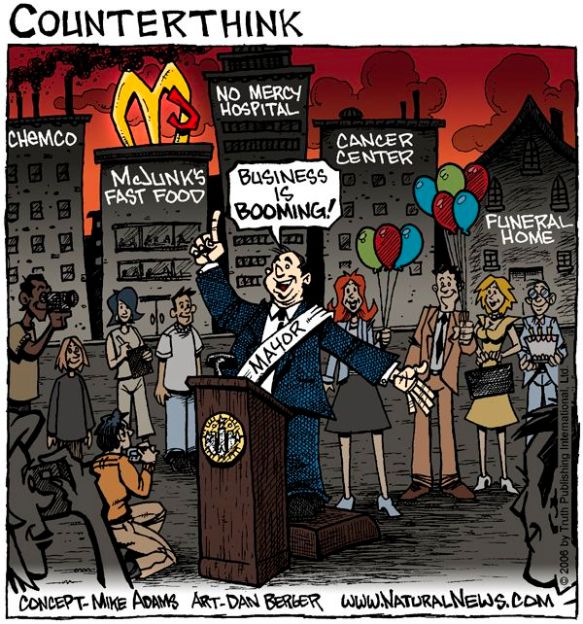
Prevention, like a bag of carrots, is intrinsically low-profit. Illness, especially chronic illness, is highly profitable because the profits flow continuously from treatments, medications, procedures, tests, visits, hospitalization, home care, a constant churn of billing, etc.

The only way to systemically lower costs is to make prevention and transparency the top priorities. Prevention, community ownership of healthcare services, transparency and unfettered competition kill profits, period. Yet these are the only way to lower costs to be in line with our competitors.

You can reconfigure the system any way you want, but you have to eliminate cartels, cartel ownership of governance, opaque pricing, government blank checks and incentives for profiteering from chronic illness. If you don’t eliminate all these, you’ve fixed nothing.