Your Efforts Make A Difference, And We Can Win This Thing

By Caitlin Johnstone

Source: CaitlinJohnstone.com

We can win this thing and create a healthy, harmonious world, and the work each of us does to help bring this about makes a real difference. The more I observe and learn about human behavior, the more convinced of this I become.

Let me explain.

Every positive change in human behavior is always preceded by an expansion of consciousness. This is true whether you’re talking about positive behavioral changes in an individual or in a collective.

By “expansion of consciousness” I mean an increase in awareness — someone or a group of someones becoming more aware of something than they previously were:

  • Someone gaining a new perspective on the forces within themselves which drive them to seek out dysfunctional relationships.
  • An addict becoming more conscious of the inner dynamics that compel them to use.
  • A victim of abuse realizing that abuse is happening, and that a better life is possible, and that they deserve it.
  • A community becoming aware that their clergy have been sexually abusing children.
  • The US civil rights movement making Americans more aware of the injustice and destructiveness of racism.
  • Increased literacy and a greater ability to distribute the written word giving society a greater hunger for freedom and democracy and less tolerance for overt tyranny.
  • Etc.

Conditions don’t get better until the forces which give rise to them are clearly seen and understood. This movement from the darkness of unconsciousness into the light of awareness can create the illusion that things are getting worse, because they turn up so much ugliness.

After the 1955 lynching of Emmett Till, his mother made the decision to hold an open-casket funeral to expose the world to the cruelty that black Americans were being subjected to by showing his mutilated body to the public. In that moment it looked like the world was being made more ugly, because an ugliness that had previously gone unseen by many people was being published in papers across the country. But it was later said that “The open-coffin funeral held by Mamie Till Bradley exposed the world to more than her son Emmett Till’s bloated, mutilated body. Her decision focused attention on not only American racism and the barbarism of lynching but also the limitations and vulnerabilities of American democracy.”

Similarly, the dawn of the internet has turned up a tremendous amount of ugliness and cruelty that had previously gone unseen and unknown to most people. This can lead to the mistaken impression that the internet itself is making people more cruel and ugly than they previously were, but it isn’t. It’s just turning up humanity’s longstanding inner demons that had previously functioned solely in the dark.

It looks ugly, it moves in a sloppy, clumsy, two-steps-forward-one-step-back shamble, but human consciousness is undeniably expanding. We’re getting so much better at sharing ideas and information with each other that we’ve arguably changed more as a species in the last thirty years than we did in the previous thirty centuries. We might outwardly look similar to the way we looked in our grandparents’ time, but billions of human brains connected to each other through the internet is something that is wildly unprecedented in the entire history of our species. Nothing like this has ever happened before.

So humanity is indisputably becoming more conscious, as awkward and sloppy as our situation looks right now. We’re becoming more and more aware of the problems our species faces, and our rulers are having to do more and more work to pull the wool over our eyes and keep us marching in a way that is convenient to them.

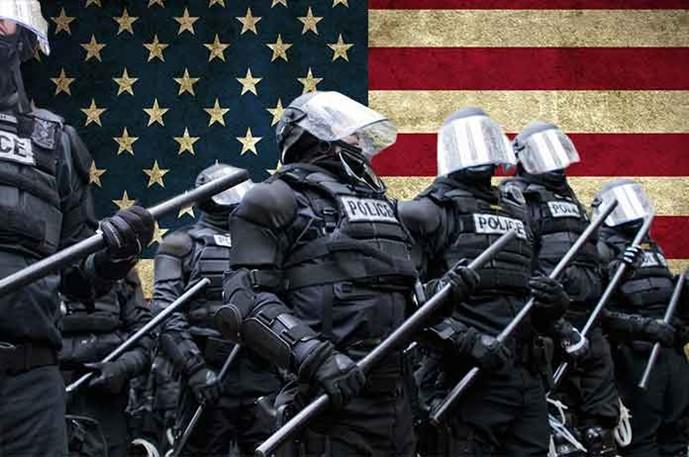
Police brutality. The abuses of Israeli apartheid. The agony of poverty. The ravages of ecocide. The ways we’ve been deceived and manipulated by the mass media. People are becoming more and more aware of these things than they used to be, because the truth about them is suddenly vastly more visible now than it previously was.

And what’s exciting is that we all have the ability to participate in, and facilitate, this expansion of consciousness. We each have the ability to help humanity become more conscious in our own small way, thereby bringing us that much closer to a positive shift in our collective behavior.

Anything you can do to help make humanity a little more aware of the abusive nature of the systems which drive the problems we now face makes a difference, even if it’s a difference as small as making one single person a little bit more aware of one specific aspect of the tyranny we’re being subjected to. It doesn’t make a huge difference, but it does make a difference. And as long as it makes the slightest bit of difference, it is worth doing, because a lot of slight differences adds up to a massive difference. And there are a whole lot of people who have the ability to do this.

What this means is that we each have the ability to directly and meaningfully participate in the creation of a healthy world, because we are each able to directly and meaningfully advance the only factor that ever leads to positive changes in human behavior. We can do this through the new technologies which have expanded humanity’s ability to share ideas and information like videos, blogs, podcasts, tweets and memes, and we can do this through older means like holding demonstrations, creating art, distributing literature, writing messages on walls, and just having conversations.

Anything you can do to help people become more aware of injustice, abuses, propaganda and tyranny, whether in your own community or in the world, makes a difference. Does this mean you will single-handedly save the day like the protagonist in a Hollywood movie? No. That’s not how real change happens, and it never has been. Real change is the result of sustained efforts of many, many people whose individual actions could never achieve much on their own.

I think the protagonist-driven storytelling models humanity uses in its legends, folk tales, novels and films often plays an unwholesome role in distorting people’s expectations about the efficaciousness of their own individual actions. Those storytelling models are designed to appeal to the human ego, which gets a tremendous amount of energy and attention in this particular slice of spacetime, but they are not accurate representations of the way real change actually happens in real life. In real life, change happens because a great many people put their shoulders up against the change that was needed and shoved in the required direction.

So that’s what we can all do: we can all lean our shoulders into the expansion of human consciousness and shove. Spread awareness of what’s going on in the world, make people more aware that we’re all being deceived and manipulated at mass scale, and help people to see that a better world is possible. The more people open their eyes to what’s happening, the more shoulders there are to help join in our collective shove toward consciousness.

Ultimately what we’re looking at is humanity’s journey toward becoming a conscious species. One that’s no longer driven by unconscious animal impulses and the flailings of illusory egoic constructs in our psyches, and is instead driven by a lucid perception of reality and a desire for the greater good of all beings.

We can all play a role in this achievement, both by expanding our own consciousness as far as it can go by bringing clarity to our own minds, our own worldviews and our own inner processes, and by helping others to become more aware of the world around them. It won’t often unfold in a way that is elegant and linear and egoically pleasing, but it will unfold. And if it unfolds enough, positive change becomes inevitable.

Despotism Is the New Normal: Looming Threats to Freedom in 2022

Design by Robo Mega

By John W. Whitehead & Nisha Whitehead

Source: The Rutherford Institute

“Looking at the present, I see a more probable future: a new despotism creeping slowly across America. Faceless oligarchs sit at command posts of a corporate-government complex that has been slowly evolving over many decades. In efforts to enlarge their own powers and privileges, they are willing to have others suffer the intended or unintended consequences of their institutional or personal greed. For Americans, these consequences include chronic inflation, recurring recession, open and hidden unemployment, the poisoning of air, water, soil and bodies, and, more important, the subversion of our constitution.—Bertram Gross, Friendly Fascism: The New Face of Power in America

Despotism has become our new normal.

Digital tyranny, surveillance. Intolerance, cancel culture, censorship. Lockdowns, mandates, government overreach. Supply chain shortages, inflation. Police brutality, home invasions, martial law. The loss of bodily integrity, privacy, autonomy.

These acts of tyranny by an authoritarian government have long since ceased to alarm or unnerve us. We have become desensitized to government brutality, accustomed to government corruption, and unfazed by the government’s assaults on our freedoms.

This present trajectory is unsustainable. The center cannot hold.

The following danger points pose some of the greatest threats to our collective and individual freedoms now and in the year to come.

Censorship. The most controversial issues of our day—gay rights, abortion, race, religion, sexuality, political correctness, police brutality, et al.—have become battlegrounds for those who claim to believe in freedom of speech but only when it favors the views and positions they support. Thus, while on paper, we are technically free to speak, in reality, we are only as free to speak as the government and tech giants such as Facebook, Google or YouTube may allow. Yet it’s a slippery slope from censoring so-called illegitimate ideas to silencing truth. What we are witnessing is the modern-day equivalent of book burning which involves doing away with dangerous ideas—legitimate or not—and the people who espouse them. Unfortunately, censorship is just the beginning. Once you allow the government and its corporate partners to determine who is worthy enough to participate in society, anything goes.

The Emergency State. Now that the government has gotten a taste for flexing its police state powers by way of a bevy of lockdowns, mandates, restrictions, contact tracing programs, heightened surveillance, censorship, overcriminalization, etc., “we the people” may well find ourselves burdened with a Nanny State inclined to use its draconian pandemic powers to protect us from ourselves. Therein lies the danger of the government’s Machiavellian version of crisis management that justifies all manner of government tyranny in the so-called name of national security. This is the power grab hiding in plain sight.

Pre-crime. The government is about to rapidly expand its policing efforts to focus on pre-crime and thought crimes. Precrime, straight out of the realm of dystopian science fiction movies such as Minority Report, aims to prevent crimes before they happen by combining widespread surveillance, behavior prediction technologies, data mining, precognitive technology, and neighborhood and family snitch programs to enable police to capture would-be criminals before they can do any damage. The intent, of course, is for the government to be all-seeing, all-knowing and all-powerful in its preemptive efforts to combat domestic extremism, a broad label that can be applied to anything or anyone the government perceives to be a threat to its power.

The Surveillance State. This all-seeing fourth branch of government, comprised of a domestic army of government snitches, spies and techno-warriors, watches everything we do, reads everything we write, listens to everything we say, and monitors everywhere we go. Beware of what you say, what you read, what you write, where you go, and with whom you communicate, because it is all being recorded, stored, and catalogued, and will be used against you eventually, at a time and place of the government’s choosing. Even agencies not traditionally associated with the intelligence community are part of the government’s growing network of snitches and spies.

Genetic privacy. “Guilt by association” has taken on new connotations in the technological age. Yet the debate over genetic privacy—and when one’s DNA becomes a public commodity outside the protection of the Fourth Amendment’s prohibition on warrantless searches and seizures—is really only beginning. Get ready, folks, because the government—helped along by Congress (which adopted legislation allowing police to collect and test DNA immediately following arrests), the courts (which have ruled that police can routinely take DNA samples from people who are arrested but not yet convicted of a crime), and local police agencies (which are chomping at the bit to acquire this new crime-fighting gadget)—has embarked on a diabolical campaign to create a nation of suspects predicated on a massive national DNA database.

Bodily integrity. It doesn’t matter what your trigger issue is—whether it’s vaccines, abortion, crime, religion, immigration, terrorism or some other overtly politicized touchstone used by politicians as a rallying cry for votes—we should all be concerned when governments and businesses (i.e., the Corporate State) join forces to compel individuals to sacrifice their right to bodily integrity on the altar of so-called safety and national security. This debate over bodily integrity covers broad territory, ranging from abortion and forced vaccines to biometric surveillance and basic healthcare. Forced vaccinations, forced cavity searches, forced colonoscopies, forced blood draws, forced breath-alcohol tests, forced DNA extractions, forced eye scans, and forced inclusion in biometric databases are just a few ways in which Americans continue to be reminded that we have no control over what happens to our bodies during an encounter with government officials.

Gun control. After declaring more than a decade ago that citizens have a Second Amendment right to own a gun in one’s home for self-defense, the Supreme Court has now been tasked with deciding whether the Constitution also protects the right to carry a gun outside the home. Unfortunately, when it comes to gun rights in particular, and the rights of the citizenry overall, the U.S. government has adopted a “do what I say, not what I do” mindset. Nowhere is this double standard more evident than in the government’s attempts to arm itself to the teeth, all the while viewing as suspect anyone who dares to legally own a gun, let alone use one in self-defense. Indeed, while it still technically remains legal to own a firearm in America, possessing one can now get you pulled over, searched, arrested, subjected to all manner of surveillance, treated as a suspect without ever having committed a crime, shot at, and killed.

Show Your Papers Society. With every passing day, more and more private businesses and government agencies on both the state and federal level are requiring proof of a COVID-19 vaccination in order for individuals to work, travel, shop, attend school, and generally participate in the life of the country. By allowing government agents to establish a litmus test for individuals to be able to engage in commerce, movement and any other right that corresponds to life in a supposedly free society, it lays the groundwork for a “show me your papers” society in which you are required to identify yourself at any time to any government worker who demands it for any reason. Such tactics can quickly escalate into a power-grab that empowers government agents to force anyone and everyone to prove they are in compliance with every statute and regulation on the books.

Singularity. Welcome to the Matrix (i.e. the metaverse), where reality is virtual, freedom is only as free as one’s technological overlords allow, and artificial intelligence is slowly rendering humanity unnecessary, inferior and obsolete. Indeed, it’s no coincidence that Elon Musk has announced his intentions of implanting brain chips in humans sometime in 2022. The digital universe—the metaverse—is expected to be the next step in our evolutionary transformation from a human-driven society to a technological one. Remaining singularly human and retaining your individuality and dominion over yourself—mind, body and soul—in the face of corporate and government technologies that aim to invade, intrude, monitor, manipulate and control us may be one of the greatest challenges before us.

Despotism. Even in the face of militarism, fascism, technotyranny, surveillance, etc., the gravest threat facing us as a nation may well be despotism, exercised by a ruling class whose only allegiance is to power and money. The American kakistocracy (a government run by unprincipled career politicians and corporate thieves that panders to the worst vices in our nature and has little regard for the rights of the people) continues to suck the American people into a parallel universe in which the Constitution is meaningless, the government is all-powerful, and the citizenry are powerless to defend themselves against government agents who steal, spy, lie, plunder, kill, abuse and generally inflict mayhem and sow madness on everyone and everything in their sphere.

It is a grim outlook for a new year, but it is not completely hopeless.

If hope is to be found, it will be found with those of us who do their part, at their local levels, to right the wrongs and fix what is broken. I am referring to the builders, the thinkers, the helpers, the healers, the educators, the creators, the artists, the activists, the technicians, the food gatherers and distributors, and every other person who does their part to build up rather than destroy.

“We the people” are the hope for a better year.

Until we can own that truth, until we can forge our own path back to a world in which freedom means something again, as I make clear in my book Battlefield America: The War on the American People and in its fictional counterpart The Erik Blair Diaries, we’re going to be stuck in this wormhole of populist anger, petty politics and destruction that is pitting us one against the other.

In such a scenario, no one wins.

Nullify Government Tyranny: In 2020, Harness the Power of Your Discontent

By John W. Whitehead

Source: The Rutherford Institute

“The people have the power, all we have to do is awaken that power in the people. The people are unaware. They’re not educated to realize that they have power. The system is so geared that everyone believes the government will fix everything. We are the government.”—John Lennon

Twenty years into the 21st century, and what do we have to show for it?

Government corruption, tyranny and abuse have propelled us at warp speed towards a full-blown police state in which egregious surveillance, roadside strip searches, police shootings of unarmed citizens, censorship, retaliatory arrests, the criminalization of lawful activities, warmongering, indefinite detentions, SWAT team raids, asset forfeiture, police brutality, profit-driven prisons, and pay-to-play politicians have become the new normal.

Here’s just a small sampling of the laundry list of abuses—cruel, brutal, immoral, unconstitutional and unacceptable—that have been heaped upon us by the government over the past two decades.

The government failed to protect our lives, liberty and happiness. The predators of the police state wreaked havoc on our freedoms, our communities, and our lives. The government didn’t listen to the citizenry, refused to abide by the Constitution, and treated the citizenry as a source of funding and little else. Police officers shot unarmed citizens and their household pets. Government agents—including local police—were armed to the teeth and encouraged to act like soldiers on a battlefield. Bloated government agencies were allowed to fleece taxpayers. Government technicians spied on our emails and phone calls. And government contractors made a killing by waging endless wars abroad.

The American President became more imperial. Although the Constitution invests the President with very specific, limited powers, in recent years, American presidents (Trump, Obama, Bush, Clinton, etc.) claimed the power to completely and almost unilaterally alter the landscape of this country for good or for ill. The powers that have been amassed by each successive president through the negligence of Congress and the courts—powers which add up to a toolbox of terror for an imperial ruler—empower whomever occupies the Oval Office to act as a dictator, above the law and beyond any real accountability. The presidency itself has become an imperial one with permanent powers.

Militarized police became a power unto themselves, 911 calls turned deadly, and traffic stops took a turn for the worse. Lacking in transparency and accountability, protected by the courts and legislators, and rife with misconduct, America’s police forces became a growing menace to the citizenry and the rule of law. Despite concerns about the government’s steady transformation of local police into a standing military army, local police agencies acquired even more weaponry, training and equipment suited for the battlefield. Police officers were also given free range to pull anyone over for a variety of reasons and subject them to forced cavity searches, forced colonoscopies, forced blood draws, forced breath-alcohol tests, forced DNA extractions, forced eye scans, forced inclusion in biometric databases.

The courts failed to uphold justice. With every ruling handed down, it becomes more apparent that we live in an age of hollow justice, with government courts more concerned with protecting government agents than upholding the rights of “we the people.” This is true at all levels of the judiciary, but especially so in the highest court of the land, the U.S. Supreme Court, which is seemingly more concerned with establishing order and protecting government agents than with upholding the rights enshrined in the Constitution. A review of critical court rulings over the past two decades, including some ominous ones by the U.S. Supreme Court, reveals a startling and steady trend towards pro-police state rulings by an institution concerned more with establishing order and protecting the ruling class and government agents than with upholding the rights enshrined in the Constitution.

The Surveillance State rendered Americans vulnerable to threats from government spies, police, hackers and power failures. Thanks to the government’s ongoing efforts to build massive databases using emerging surveillance, DNA and biometrics technologies, Americans have become sitting ducks for hackers and government spies alike. Billions of people have been affected by data breaches and cyberattacks. On a daily basis, Americans have been made to relinquish the most intimate details of who we are—our biological makeup, our genetic blueprints, and our biometrics (facial characteristics and structure, fingerprints, iris scans, etc.)—in order to navigate an increasingly technologically-enabled world.

Mass shootings claimed more lives. Mass shootings have taken place in virtually every venue, including at churches, in nightclubs, on college campuses, on military bases, in elementary schools, in government offices, and at concerts. However, studies make clear that the government’s gun violence—inflicted on unarmed individuals by battlefield-trained SWAT teams, militarized police, and bureaucratic government agents trained to shoot first and ask questions later—poses a greater threat to the safety and security of the nation than any mass shooter.

Debtors’ prisons made a comeback. Not content to expand the police state’s power to search, strip, seize, raid, steal from, arrest and jail Americans for any infraction, no matter how insignificant, state courts were given the green light to resume their practice of jailing individuals who are unable to pay the hefty fines imposed by the American police state. These debtors’ prisons play right into the hands of the corporations that make a profit by jailing Americans. This is no longer a government “of the people, by the people, for the people.” It has become a government “of the rich, by the elite, for the corporations,” and its rise to power has been predicated on shackling the American taxpayer to a debtors’ prison guarded by a phalanx of politicians, bureaucrats and militarized police with no hope of parole and no chance for escape.

The cost of endless wars drove the nation deeper into debt. America’s war spending has already bankrupted the nation to the tune of more than $20 trillion dollars. Policing the globe and waging endless wars abroad hasn’t made America—or the rest of the world—any safer, but it has made the military industrial complex rich at taxpayer expense. Approximately 200,000 US troops are stationed in 177 countries throughout the world, including Africa, where troops reportedly carry out an average of 10 military exercises and engagements daily. Meanwhile, America’s infrastructure is falling apart. The interest on the money America has borrowed to wage its wars will cost an estimated $8 trillion.

“Show your papers” incidents skyrocketed. We are not supposed to be living in a “show me your papers” society. Despite this, the U.S. government has introduced measures allowing police and other law enforcement officials to stop individuals (citizens and noncitizens alike), demand they identify themselves, and subject them to patdowns, warrantless searches, and interrogations. These actions fly in the face of longstanding constitutional safeguards forbidding such police state tactics.

The government waged war on military veterans. The government has done a pitiful job of respecting the freedoms of military veterans and caring for their needs once out of uniform. Despite the fact that the U.S. boasts more than 20 million veterans who have served in World War II through the present day, the plight of veterans today is America’s badge of shame, with large numbers of veterans impoverished, unemployed, traumatized mentally and physically, struggling with depression, suicide, and marital stress, homeless, subjected to sub-par treatment at clinics and hospitals, left to molder while their paperwork piles up within Veterans Administration offices, and increasingly treated like criminals—targeted for surveillance, censorship, threatened with incarceration or involuntary commitment, labeled as extremists and/or mentally ill, and stripped of their Second Amendment rights—for daring to speak out against government misconduct.

Free speech was dealt one knock-out punch after another. Protest laws, free speech zones, bubble zones, trespass zones, anti-bullying legislation, zero tolerance policies, hate crime laws, shadow banning on the Internet, and a host of other legalistic maladies dreamed up by politicians and prosecutors (and championed by those who want to suppress speech with which they might disagree) conspired to corrode our core freedoms, purportedly for our own good. On paper—at least according to the U.S. Constitution—we are technically free to speak. In reality, however, we are only as free to speak as a government official—or corporate entities such as Facebook, Google or YouTube—may allow. The reasons for such censorship varied widely from political correctness, so-called safety concerns and bullying to national security and hate crimes but the end result remained the same: the complete eradication of free speech.

The government waged a renewed war on private property. The battle to protect our private property has become the final constitutional frontier, the last holdout against our freedoms being usurped. We no longer have any real property rights. That house you live in, the car you drive, the small (or not so small) acreage of land that has been passed down through your family or that you scrimped and saved to acquire, whatever money you manage to keep in your bank account after the government and its cronies have taken their first and second and third cut…none of it is safe from the government’s greedy grasp. At no point do you ever have any real ownership in anything other than the clothes on your back. Everything else can be seized by the government under one pretext or another (civil asset forfeiture, unpaid taxes, eminent domain, public interest, etc.).

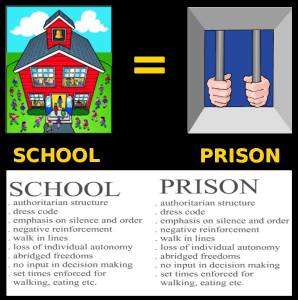
Schools became even more like prisons. So-called school “safety” policies—which run the gamut from zero tolerance policies that punish all infractions harshly to surveillance cameras, metal detectors, random searches, drug-sniffing dogs, school-wide lockdowns, active-shooter drills and militarized police officers—have turned schools into prisons and young people into prisoners. From the moment a child enters one of the nation’s 98,000 public schools to the moment she graduates, she will be exposed to a steady diet of draconian zero tolerance policies that criminalize childish behavior, overreaching anti-bullying statutes that criminalize speech, school resource officers (police) tasked with disciplining and/or arresting so-called “disorderly” students, standardized testing that emphasizes rote answers over critical thinking, politically correct mindsets that teach young people to censor themselves and those around them, and extensive biometric and surveillance systems that, coupled with the rest, acclimate young people to a world in which they have no freedom of thought, speech or movement.

The Deep State took over. The American system of representative government was overthrown by the Deep State—a.k.a. the police state a.k.a. the military/corporate industrial complex—a profit-driven, militaristic corporate state bent on total control and global domination through the imposition of martial law here at home and by fomenting wars abroad. The “government of the people, by the people, for the people” has perished. In its place is a shadow government, a corporatized, militarized, entrenched bureaucracy that is fully operational and staffed by unelected officials who are, in essence, running the country and calling the shots in Washington DC, no matter who sits in the White House. Mind you, by “government,” I’m not referring to the highly partisan, two-party bureaucracy of the Republicans and Democrats. Rather, I’m referring to “government” with a capital “G,” the entrenched Deep State that is unaffected by elections, unaltered by populist movements, and has set itself beyond the reach of the law. This is the hidden face of a government that has no respect for the freedom of its citizenry. This shadow government, which “operates according to its own compass heading regardless of who is formally in power,” makes a mockery of elections and the entire concept of a representative government.

The takeaway: Everything the founders of this country feared has come to dominate in modern America. “We the people” have been saddled with a government that is no longer friendly to freedom and is working overtime to trample the Constitution underfoot and render the citizenry powerless in the face of the government’s power grabs, corruption and abusive tactics.

So how do you balance the scales of justice at a time when Americans are being tasered, tear-gassed, pepper-sprayed, hit with batons, shot with rubber bullets and real bullets, blasted with sound cannons, detained in cages and kennels, sicced by police dogs, arrested and jailed for challenging the government’s excesses, abuses and power-grabs?

No matter who sits in the White House, politics won’t fix a system that is broken beyond repair.

For that matter, protests and populist movements also haven’t done much to push back against an authoritarian regime that is deaf to our cries, dumb to our troubles, blind to our needs, and accountable to no one.

So how do you not only push back against the police state’s bureaucracy, corruption and cruelty but also launch a counterrevolution aimed at reclaiming control over the government using nonviolent means?

You start by changing the rules and engaging in some (nonviolent) guerilla tactics.

Take part in grassroots activism, which takes a trickle-up approach to governmental reform by implementing change at the local level (in other words, think nationally, but act locally).

And then, nullify everything the government does that flies in the face of the principles on which this nation was founded.

If there is any means left to us for thwarting the government in its relentless march towards outright dictatorship, it may rest with the power of juries and local governments to invalidate governmental laws, tactics and policies that are illegitimate, egregious or blatantly unconstitutional.

In an age in which government officials accused of wrongdoing—police officers, elected officials, etc.—are treated with general leniency, while the average citizen is prosecuted to the full extent of the law, nullification is a powerful reminder that, as the Constitution tells us, “we the people” are the government.

For too long we’ve allowed our so-called “representatives” to call the shots. Now it’s time to restore the citizenry to their rightful place in the republic: as the masters, not the servants.

Nullification is one way of doing so.

Various cities and states have been using this historic doctrine with mixed results on issues as wide ranging as gun control and healthcare to “claim freedom from federal laws they find onerous or wrongheaded.” Most recently, a growing number of communities—including more than a 100 counties, cities and towns in Virginia—have declared themselves to be Second Amendment sanctuaries and adopted resolutions opposing any “unconstitutional restrictions” on the right to keep and bear arms. It is mass movements such as these that the government fears most.

Indeed, any hope of freeing ourselves rests—as it always has—at the local level, with “we the people.” One of the most important contributions an individual citizen can make is to become actively involved in local community affairs, politics and legal battles. As the adage goes, “Think globally, act locally.”

America was meant to be primarily a system of local governments, which is a far cry from the colossal federal bureaucracy we have today. Yet if our freedoms are to be restored, understanding what is transpiring practically in your own backyard—in one’s home, neighborhood, school district, town council—and taking action at that local level must be the starting point.

Responding to unmet local needs and reacting to injustices is what grassroots activism is all about. Attend local city council meetings, speak up at town hall meetings, organize protests and letter-writing campaigns, employ “militant nonviolent resistance” and civil disobedience, which Martin Luther King Jr. used to great effect through the use of sit-ins, boycotts and marches.

Let’s not take the mistakes, carnage, toxicity and abuse of this past decade into 2020.

As long as we continue to allow callousness, cruelty, meanness, immorality, ignorance, hatred, intolerance, racism, militarism, materialism, meanness and injustice—magnified by an echo chamber of nasty tweets and government-sanctioned brutality—to trump justice, fairness and equality, there can be no hope of prevailing against the police state.

As I make clear in my book Battlefield America: The War on the American People, we could transform this nation if only Americans would work together to harness the power of their discontent and push back against the government’s overreach, excesses and abuse.

American Apocalypse: The Government’s Plot to Destabilize the Nation Is Working


By John W. Whitehead

Source: The Rutherford Institute

“The most dangerous man to any government is the man who is able to think things out … without regard to the prevailing superstitions and taboos. Almost inevitably he comes to the conclusion that the government he lives under is dishonest, insane, intolerable.” — H. L. Mencken

The U.S. government is working hard to destabilize the nation.

No, this is not another conspiracy theory.

Although it is certainly not far-fetched to suggest that the government might be engaged in nefarious activities that run counter to the best interests of the American people, doing so will likely brand me a domestic terrorist under the FBI’s new classification system.

Observe for yourself what is happening right before our eyes.

Domestic terrorism fueled by government entrapment schemes. Civil unrest stoked to dangerous levels by polarizing political rhetoric. A growing intolerance for dissent that challenges the government’s power grabs. Police brutality tacitly encouraged by the executive branch, conveniently overlooked by the legislatures, and granted qualified immunity by the courts. A weakening economy exacerbated by government schemes that favor none but a select few. An overt embrace of domestic surveillance tactics if Congress goes along with the Trump Administration’s request to permanently re-authorize the NSA’s de-activated call records program. Heightened foreign tensions and blowback due to the military industrial complex’s profit-driven quest to police and occupy the globe.

The seeds of chaos are being sown, and it’s the U.S. government that will reap the harvest.

Mark my words, there’s trouble brewing.

Better yet, take a look at “Megacities: Urban Future, the Emerging Complexity,” a Pentagon training video created by the Army for U.S. Special Operations Command.

The training video is only five minutes long, but it says a lot about the government’s mindset, the way its views the citizenry, and the so-called “problems” that the government must be prepared to address in the near future through the use of martial law.

Even more troubling, however, is what this military video doesn’t say about the Constitution, about the rights of the citizenry, and about the dangers of locking down the nation and using the military to address political and social problems.

The training video anticipates that all hell will break loose by 2030—that’s barely ten short years away—but the future is here ahead of schedule.

We’re already witnessing a breakdown of society on virtually every front.

By waging endless wars abroad, by bringing the instruments of war home, by transforming police into extensions of the military, by turning a free society into a suspect society, by treating American citizens like enemy combatants, by discouraging and criminalizing a free exchange of ideas, by making violence its calling card through SWAT team raids and militarized police, by fomenting division and strife among the citizenry, by acclimating the citizenry to the sights and sounds of war, and by generally making peaceful revolution all but impossible, the government has engineered an environment in which domestic violence is becoming almost inevitable.

The danger signs are screaming out a message

The government is anticipating trouble (read: civil unrest), which is code for anything that challenges the government’s authority, wealth and power.

According to the Pentagon training video created by the Army for U.S. Special Operations Command, the U.S. government is grooming its armed forces to solve future domestic political and social problems.

What they’re really talking about is martial law, packaged as a well-meaning and overriding concern for the nation’s security.

The chilling five-minute training video, obtained by The Intercept through a FOIA request and made available online, paints an ominous picture of the future—a future the military is preparing for—bedeviled by “criminal networks,” “substandard infrastructure,” “religious and ethnic tensions,” “impoverishment, slums,” “open landfills, over-burdened sewers,” a “growing mass of unemployed,” and an urban landscape in which the prosperous economic elite must be protected from the impoverishment of the have nots.

And then comes the kicker.

Three-and-a-half minutes into the Pentagon’s dystopian vision of “a world of Robert Kaplan-esque urban hellscapes — brutal and anarchic supercities filled with gangs of youth-gone-wild, a restive underclass, criminal syndicates, and bands of malicious hackers,” the ominous voice of the narrator speaks of a need to “drain the swamps.”

Drain the swamps.

Surely, we’ve heard that phrase before?

Ah yes.

Emblazoned on t-shirts and signs, shouted at rallies, and used as a rallying cry among Trump supporters, “drain the swamp” became one of Donald Trump’s most-used campaign slogans.

Far from draining the politically corrupt swamps of Washington DC of lobbyists and special interest groups, however, the Trump Administration has further mired us in a sweltering bog of corruption and self-serving tactics.

Funny how the more things change, the more they stay the same.

Now the government has adopted its own plans for swamp-draining, only it wants to use the military to drain the swamps of futuristic urban American cities of “noncombatants and engage the remaining adversaries in high intensity conflict within.”

And who are these noncombatants, a military term that refers to civilians who are not engaged in fighting?

They are, according to the Pentagon, “adversaries.”

They are “threats.”

They are the “enemy.”

They are people who don’t support the government, people who live in fast-growing urban communities, people who may be less well-off economically than the government and corporate elite, people who engage in protests, people who are unemployed, people who engage in crime (in keeping with the government’s fast-growing, overly broad definition of what constitutes a crime).

In other words, in the eyes of the U.S. military, noncombatants are American citizens a.k.a. domestic extremists a.k.a. enemy combatants who must be identified, targeted, detained, contained and, if necessary, eliminated.

In the future imagined by the Pentagon, any walls and prisons that are built will be used to protect the societal elite—the haves—from the have-nots.

If you haven’t figured it out already, we the people are the have-nots.

Suddenly it all begins to make sense.

The events of recent years: the invasive surveillance, the extremism reports, the civil unrest, the protests, the shootings, the bombings, the military exercises and active shooter drills, the color-coded alerts and threat assessments, the fusion centers, the transformation of local police into extensions of the military, the distribution of military equipment and weapons to local police forces, the government databases containing the names of dissidents and potential troublemakers.

The government is systematically locking down the nation and shifting us into martial law.

This is how you prepare a populace to accept a police state willingly, even gratefully.

You don’t scare them by making dramatic changes. Rather, you acclimate them slowly to their prison walls.

Persuade the citizenry that their prison walls are merely intended to keep them safe and danger out. Desensitize them to violence, acclimate them to a military presence in their communities, and persuade them that there is nothing they can do to alter the seemingly hopeless trajectory of the nation.

Before long, no one will even notice the floundering economy, the blowback arising from military occupations abroad, the police shootings, the nation’s deteriorating infrastructure and all of the other mounting concerns.

It’s happening already.

The sight of police clad in body armor and gas masks, wielding semiautomatic rifles and escorting an armored vehicle through a crowded street, a scene likened to “a military patrol through a hostile city,” no longer causes alarm among the general populace.

Few seem to care about the government’s endless wars abroad that leave communities shattered, families devastated and our national security at greater risk of blowback.

The Deep State’s tactics are working.

We’ve allowed ourselves to be acclimated to the occasional lockdown of government buildings, Jade Helm military drills in small towns so that special operations forces can get “realistic military training” in “hostile” territory, and  Live Active Shooter Drill training exercises, carried out at schools, in shopping malls, and on public transit, which can and do fool law enforcement officials, students, teachers and bystanders into thinking it’s a real crisis.

Still, you can’t say we weren’t warned about the government’s nefarious schemes to lock down the nation.

Back in 2008, an Army War College report revealed that “widespread civil violence inside the United States would force the defense establishment to reorient priorities in extremis to defend basic domestic order and human security.” The 44-page report went on to warn that potential causes for such civil unrest could include another terrorist attack, “unforeseen economic collapse, loss of functioning political and legal order, purposeful domestic resistance or insurgency, pervasive public health emergencies, and catastrophic natural and human disasters.”

In 2009, reports by the Department of Homeland Security surfaced that labelled right-wing and left-wing activists and military veterans as extremists (a.k.a. terrorists) and called on the government to subject such targeted individuals to full-fledged pre-crime surveillance. Almost a decade later, after spending billions to fight terrorism, the DHS concluded that the greater threat is not ISIS but domestic right-wing extremism.

Meanwhile, the government has been amassing an arsenal of military weapons for use domestically and equipping and training their “troops” for war. Even government agencies with largely administrative functions such as the Food and Drug Administration, Department of Veterans Affairs, and the Smithsonian have been acquiring body armor, riot helmets and shields, cannon launchers and police firearms and ammunition. In fact, there are now at least 120,000 armed federal agents carrying such weapons who possess the power to arrest.

Rounding out this profit-driven campaign to turn American citizens into enemy combatants (and America into a battlefield) is a technology sector that has been colluding with the government to create a Big Brother that is all-knowing, all-seeing and inescapable. It’s not just the drones, fusion centers, license plate readers, stingray devices and the NSA that you have to worry about. You’re also being tracked by the black boxes in your cars, your cell phone, smart devices in your home, grocery loyalty cards, social media accounts, credit cards, streaming services such as Netflix, Amazon, and e-book reader accounts.

All of this has taken place right under our noses, funded with our taxpayer dollars and carried out in broad daylight without so much as a general outcry from the citizenry.

And then you have the government’s Machiavellian schemes for unleashing all manner of dangers on an unsuspecting populace, then demanding additional powers in order to protect “we the people” from the threats.

Seriously, think about it.

The government claims to be protecting us from cyberterrorism, but who is the biggest black market buyer and stockpiler of cyberweapons (weaponized malware that can be used to hack into computer systems, spy on citizens, and destabilize vast computer networks)? The U.S. government.

The government claims to be protecting us from weapons of mass destruction, but what country has one the deadliest arsenals of weapons of mass destruction and has a history of using them on the rest of the world? The U.S. government. Indeed, which country has a history of secretly testing out dangerous weapons and technologies on its own citizens? The U.S. government.

The government claims to be protecting us from foreign armed threats, but who is the largest weapons manufacturer and exporter in the world, such that they are literally arming the world? The U.S. government. For that matter, where did ISIS get many of their deadliest weapons, including assault rifles and tanks to anti-missile defenses? From the U.S. government.

The government claims to be protecting the world from the menace of foreign strongmen, but how did Saddam Hussein build Iraq’s massive arsenal of tanks, planes, missiles, and chemical weapons during the 1980s? With help from the U.S. government. And who gave Osama bin Laden and al-Qaida “access to a fortune in covert funding and top-level combat weaponry”? The U.S. government.

The government claims to be protecting us from terrorist plots, but what country has a pattern and practice of entrapment that involves targeting vulnerable individuals, feeding them with the propaganda, know-how and weapons intended to turn them into terrorists, and then arresting them as part of an elaborately orchestrated counterterrorism sting? The U.S. government.

For that matter, the government claims to be protecting us from nuclear threats, but which is the only country to ever use a nuclear weapon in wartime? The United States.

Are you getting the picture yet?

The U.S. government isn’t protecting us from terrorism.

The U.S. government is creating the terror. It is, in fact, the source of the terror.

Just think about it for a minute: Cyberwarfare. Terrorism. Bio-chemical attacks. The nuclear arms race. Surveillance. The drug wars.

Almost every national security threat that the government has claimed greater powers in order to fight—all the while undermining the liberties of the American citizenry—has been manufactured in one way or another by the government.

Did I say Machiavellian? This is downright evil.

We’re not dealing with a government that exists to serve its people, protect their liberties and ensure their happiness. Rather, these are the diabolical machinations of a make-works program carried out on an epic scale whose only purpose is to keep the powers-that-be permanently (and profitably) employed.

It’s time to wake up and stop being deceived by government propaganda.

Mind you, by “government,” I’m not referring to the highly partisan, two-party bureaucracy of the Republicans and Democrats.

I’m referring to “government” with a capital “G,” the entrenched Deep State that is unaffected by elections, unaltered by populist movements, and has set itself beyond the reach of the law.

I’m referring to the corporatized, militarized, entrenched bureaucracy that is fully operational and staffed by unelected officials who are, in essence, running the country and calling the shots in Washington DC, no matter who sits in the White House.

Be warned: in the future envisioned by the government, we will not be viewed as Republicans or Democrats. Rather, “we the people” will be enemies of the state.

For years, the government has been warning against the dangers of domestic terrorism, erecting surveillance systems to monitor its own citizens, creating classification systems to label any viewpoints that challenge the status quo as extremist, and training law enforcement agencies to equate anyone possessing anti-government views as a domestic terrorist.

What the government failed to explain was that the domestic terrorists would be of the government’s own making, and that “we the people” would become enemy #1.

As I make clear in my book, Battlefield America: The War on the American People, we’re already enemies of the state.

You want to change things? Start by rejecting the political labels and the polarizing rhetoric and the “us vs. them” tactics that reduce the mass power of the populace to puny, powerless factions.

Find common ground with your fellow citizens and push back against the government’s brutality, inhumanity, greed, corruption and power grabs.

Be dangerous in the best way possible: by thinking for yourself, by refusing to be silenced, by choosing sensible solutions over political expediency and bureaucracy.

When all is said and done, the solution to what ails this country is really not that complicated: decency, compassion, common sense, generosity balanced by fiscal responsibility, fairness, a commitment to freedom principles, and a firm rejection of the craven, partisan politics of the Beltway elites who have laid the groundwork for the government’s authoritarian coup d’etat.

Let the revolution begin.

 

Beyond Violence and Nonviolence

By Ben Case

Source: ROAR Magazine

The argument over violence and nonviolence — one of the oldest and most divisive on the left — is back. Broken windows, mass arrests and one well-timed punch marked Donald Trump’s inauguration alongside massive nonviolent marches. In the weeks since, demonstrators converged on international airports, adding weight to a heated judicial fight over a sweeping ban on refugees and immigrants from seven countries, and fiery protests outside a famed hate-monger’s talk at Berkeley cancelled the event and forced the speaker to flee under police escort.

Against the backdrop of a renascent fascist menace, the mix of tactical approaches has brought renewed fervor to the violence-vs-nonviolence debate. The dispute has been calcified into fixed positions, where it becomes less about persuading others to a strategic position and more about winning a point for one’s team.

Despite claims to the contrary, the current arguments over violence and nonviolence are based more in personal belief than in strategy. It is perfectly reasonable for an individual to dislike, be frightened of, or not want to participate in violent actions. To others, violent resistance on the part of the oppressed is inherently virtuous — and given social realities, the desire to break and burn things is understandable. But these personal positions should not be confused with strategic logic. In this debate, it does immense harm to the movement to represent personal sentiments as empirical fact.

Lucid strategic thinking is crucial in the present moment, and this type of quarrel is extremely destructive. It is time for movements to update frameworks for understanding disruptive actions, and that means thinking beyond the archaic violence-nonviolence dichotomy.

Nonviolence and Civil Resistance

The violence-nonviolence framework as we know it emerged from a twentieth-century context in which the paradigm for political revolution was armed struggle. Whether drawing inspiration from ideologically Maoist and Guevarist guerrilla strategies or theories of decolonization, revolutionaries took up arms and went to war with the state.

Original adherents to the doctrine of nonviolence, mostly pacifists, objected to acts of violence on a moral and historically religious basis. Gandhi’s philosophy of satyagraha, often translated as “adherence to Truth” or “truth force,” which means social change through and as the practice of nonviolence, was deeply influential for pacifists as an alternative to the dominant model of guerrilla warfare. In this view, nonviolence is valued over political victory, since enacting violence in order to achieve a material goal would not be victory at all.

The field of civil resistance studies changed the approach of “nonviolentism.” Gene Sharp, the founder of the field, separated Gandhi’s theory of nonviolent organizing from his theory of nonviolent spirituality. This new approach of “strategic nonviolence” argues for the use of nonviolent action as a political tool based on its superior strategic efficacy. Strategic nonviolentists distinguish themselves from “moral” or “principled” nonviolentists, who argue for nonviolence based on its inherent virtue. Here the value is placed on political victory, with nonviolent action understood to be the most effective method of achieving it.

Civil resistance studies has identified social and political dynamics that mass movements use to create material leverage in wildly lopsided power struggles with authoritarian regimes. The idea is to locate the “pillars of support” — the systemically loadbearing institutions — for a regime and to strategically dismantle them, focusing on the importance of mass noncooperation, polarizing populations through dramatic actions, and the backfiring effect of police repression.

In a moment when strategic thinking is desperately needed, the civil resistance framework is a powerful one. But the strategic nonviolent approach lags behind contemporary realities. The twentieth-century image of a revolutionary was the guerrilla unit facing off against the army; today it is the crowd facing off against lines of riot police. Of course, leftist armed struggle still exists, but it is increasingly framed as armed self-defense rather than armed conquest of the state, as in the Rojava Revolution and the Zapatista movement.

When guerrilla war was the prevailing method of revolutionary struggle, broadly distinguishing between violent and nonviolent strategy made more sense, because the strategic orientation of street protests was so dissimilar from that of warfare. In the emerging paradigm of revolutionary mass protest movements, whether or not any property is destroyed in a specific action is an entirely different issue, and far less consequential.

By Any Means Necessary

The use of low-level violent actions such as rioting and property destruction is often termed “diversity of tactics.” Like nonviolence, the defense of violent tactics can have both strategic and moral sides to it, and they can be equally difficult to separate.

Despite the objection that nonviolence depends on morality, arguments for the use of diversity of tactics frequently center on moral claims as well. For example, a common refrain is that the violence of breaking windows pales in comparison to the violence perpetrated by the state. While this is manifestly true, it does not constitute a strategic argument. A violent action being morally justifiable as a reaction to or defense from institutional violence does not mean that that type of action most effectively counters the institutional violence.

Malcolm X’s famous statement that “we want freedom by any means necessary” is frequently referenced to defend the use of diversity of tactics, classically juxtaposed to King’s nonviolence. However, the last word in Malcolm X’s sentence receives less attention than it should. The word “necessary” implies a strategic logic — by whichever means are required to achieve a particular goal — but in and of itself this approach does not point to a strategy. (It is worth noting that Malcolm X did not engage in any political violence himself.) Arguments for diversity of tactics might convince an activist that violence can be necessary, but questions of how and when those actions are strategically applied remain.

On the other hand, the study of civil resistance has focused on how and when certain tactics are most effective, but the field’s vestigial attachment to a totalizing concept of nonviolence limits its usefulness. Nonviolence is marketed as not only the most effective but the only viable method of political struggle. This position demands strict adherence to nonviolent discipline, as any act that can be reasonably perceived as violent is understood to help the enemy. Since violent actions nearly always occur at some point in large-scale social movements, a great deal of energy is wasted on hand-wringing over how these actions are hurting nonviolent efforts.

Focusing on What Works

The single most important study in civil resistance is published in Erica Chenoweth and Maria Stephan’s 2011 book Why Civil Resistance Works: The Strategic Logic of Nonviolent Conflict. Their claim is striking: nonviolent movements are almost twice as likely as violent ones to achieve “maximalist” political goals (overthrowing a leader, ousting a foreign occupation or seceding from a territory). This work has become the centerpiece of the assertion that nonviolence is more effective than violence.

Chenoweth and Stephan’s argument is based on a global dataset, Nonviolent and Violent Conflicts and Outcomes (NAVCO), which catalogues and compares uprisings between 1900 and 2006 based on whether or not the primary method was violent or nonviolent. The problem is that this study ignores riots and property destruction.

In fact, Chenoweth and Stephan’s study does not compare violence with nonviolence in the way those terms are used in movements today — it compares warfare to mass protests. According to the authors, NAVCO’s “violent” category comprises civil wars, while the nonviolent category is composed of campaigns that do not harm or threaten to harm opponents. Movements are ultimately categorized based on a campaign’s primary method of struggle, and the data contains no variables for any type of violent action that falls below the threshold for war.

NAVCO does include a variable for the “radical flank effect,” which in this case means an armed struggle being waged in the same country as a civilian protest movement. For example, during the civilian anti-Marcos protests in the Philippines in the 1980s, there was a separate armed insurgency going on at the same time elsewhere in the country — that is a radical flank in NAVCO data. This has nothing to do with the effect of protesters breaking windows or scuffling with police.

Indeed, campaigns in NAVCO’s nonviolent category contain prominent acts of violence. For example, the First Palestinian Intifada, iconically associated with people throwing rocks at soldiers, is listed as nonviolent because the movement was primarily nonviolent. The “Bulldozer Revolution” in Serbia, so named because activists used a bulldozer to break through police barricades at a crucial moment during climactic protests, allowing crowds to storm and burn government buildings, is also classified as nonviolent.

For the most part, activists today do not seriously discuss taking up arms and going to the mountains to wage guerrilla warfare. Instead, contemporary arguments over nonviolent discipline center around activities like smashing windows, throwing projectiles at police and punching neo-Nazis. To date, Chenoweth’s research does not address these actions whatsoever. Unfortunately, it is misrepresented as being directly relevant to the diversity of tactics debate, including by the researchers themselves, and has become the go-to reference for advocates of strict nonviolent discipline.

The gap between Chenoweth and Stephan’s findings and how they are presented is symptomatic of structural problems in the civil resistance field at large. The prevailing trend has been to ignore the types of actions that do not fit the theory. When violent actions occur, they are not investigated with the balanced, systematic analysis given to nonviolent actions, but are brushed off as random or unfortunate breaks from nonviolent discipline.

Between “Strategic” and “Nonviolence”

Though civil resistance studies claims to investigate which strategies are most effective for achieving a movement’s objectives, its conceptual framework ultimately emerged from a Gandhian view of political struggle. Sharp explained Gandhi’s movement in terms of its strategic approach and eventually abandoned the moral pacifism, but the foundational core of the field is still based on a theory of change constructed around the practice of spiritual nonviolence.

The term “strategic nonviolence” contains the contradiction within itself. A strategy that begins by assuming that a certain approach is correct is not actually a strategy but a belief. Civil resistance theorists claim to be motivated purely by the effectiveness of their approach, but if effectiveness is truly the goal, then one must be open to all possibilities that might prove to be effective in a given circumstance. If one rejects a priori all possibilities that are not nonviolence, then what is called strategy is actually selective evidence to support a preexisting conclusion.

While pacifism was never fully purged from strategic nonviolence, the attempt to abandon the moral foundation of nonviolence has had troubling consequences. Without a guiding ideology, that which is deemed to be most strategic can come to stand in for that which is just and correct. In other words, focusing exclusively on how movements win the next battle can obscure the meaning of the war. Ironically, moral nonviolentists like Gandhi and King were far more sympathetic to violent actions that were understood to be on the side of justice than strategic nonviolentists are to a broken bank window.

Rather than taking cues from Gandhi and King, who humanized and allied themselves with all resistance to oppression even when they disagreed with the methods, today’s strategic nonviolentists are quick to deride, abandon and even incriminate activists engaging in property destruction or self-defense. The loss of principle may have allowed strategic nonviolentists to pursue valuable research on effective tactics, but it has also led to a callous attitude towards fellow activists — one that is distinctly un-strategic in its approach to polarizing public opinion around systemic oppression.

Strategic Thinking Beyond Violence and Nonviolence

Like Chenoweth’s research, the field of civil resistance claims to do a lot more than it does — but what it does do is significant. The articulation of simple, user-friendly approaches for dismantling institutional targets using creative nonviolent disruption is important and needed. Research that illuminates how social movements effectively create widespread social and political change is one of the best uses of academic resources.

Unsurprisingly, there is evidence that violent actions generate greater police repression. At least one study suggests that mainstream tolerance for police repression of protests, especially violent ones, is quite high. These are important factors for activists to anticipate and strategize around, but this type of backlash does not necessarily undermine movements. In fact, state repression and polarizing public opinions are part of the cycle of disruption that is required for radical social change.

There are also many reasons to believe that use of limited violence, especially property destruction and community self-defense, might enhance a movement’s power. In addition to sometimes being strategic tools, acts of violence as collective resistance can be important components of consciousness-building and radicalization for many people, an effect that is sometimes overlooked by more clinical studies based on political outcomes. And far from being insulated from one another, there are often fluid interactions between more and less violent elements of movements — and those who participate in them.

Any tactic, whether or not it involves violence, has potential benefits and costs. Just as a riot might damage some people’s perception of a movement, it might galvanize others. A permitted demonstration led by liberal figureheads could play well on TV, but might also suck resources without challenging power. And of course there are differences in tactical impact between shorter term and broader strategic goals. The point is, violence is not necessarily the deciding factor in whether or not an action is strategic.

It is not about which team wins symbolic points in the violence-nonviolence debate; it is about how different groups’ tactical approaches can work in harmony to build power. In the context of today’s movements, the broad argument over violence and nonviolence is at best a distraction. At worst, it promotes a good protester/bad protester narrative that helps the state divide and conquer movements. We need a fresh approach.

Key principles of civil resistance such as noncooperation, mass participation, polarization and the backfiring effect are important and useful. If the blanket exclusion of all violent action is left aside, these principles are theoretically open to a much broader range of strategies and tactics than strict nonviolence currently admits.

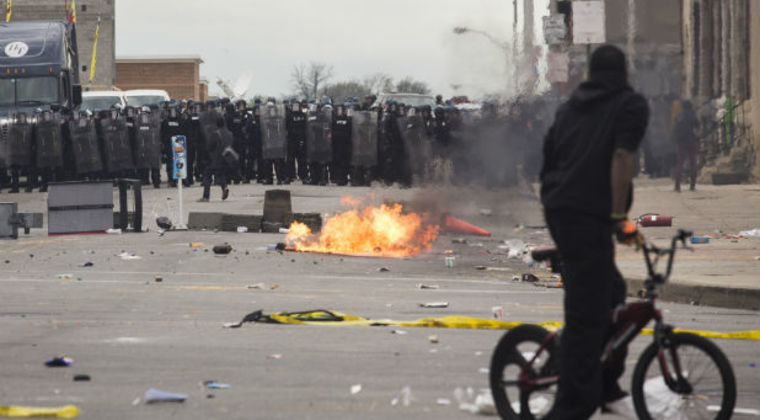
Movement strategist Frances Fox Piven sees riots as a form of noncooperation in the routines of civic life. Riots can also dramatize and bring mass attention to serious issues in precisely the way civil resistance advocates. And it might turn out that the backfiring effect has more to do with disproportionate repression than the complete lack of violence on the part of protesters. For example, riots in Ferguson brought police militarization into national focus.

Importantly, these possibilities do not imply an inversion of nonviolent discipline, like some kind of violent discipline. Certainly there are many circumstances in which nonviolent actions are appropriate and effective. Contrary to what some diversity of tactics advocates claim, more violence does not necessarily indicate a more successful movement. But neither necessarily does less violence. We need dynamic strategic models — rooted in principles of solidarity, autonomy and equity — that can accommodate a spectrum of disruptive and prefigurative action.

The rhetoric and meanings of violence can and should be debated, but those meanings are no longer attached to distinct forms of political struggle. It does not make analytical sense to categorize movements or actions into two artificial, opposing categories based on whether or not activists do anything that can be called violence. The civil resistance playbook says that when there is protester violence, nonviolent groups should try to enforce nonviolent discipline or distance themselves. But this response is based less in strategic logic than in a stubborn and unfounded belief that any violence at all is necessarily a movement-stopper.

The moment is urgent. In terms of strategy, the violence-nonviolence dichotomy has outlived its usefulness. Organizers should not evaluate actions based on whether or not there is anything that could be interpreted as violence, but rather based on the potential of those actions to disrupt oppressive systems, build power and win short-term goals that can lead to long-term victory.

The Lid is Off

tumblr_lsjs8cqofc1qanyg8

By Charles Eisenstein

Source: CharlesEisenstein.net

It is getting harder to keep a secret these days. The collective shadow of our society, once safely relegated to the dark basement of the unmentionable, is now exposed to daylight, forcing us to face our contradictions. I’ll offer three examples: Donald Trump’s leaked recordings, Hillary Clinton’s emails and Wall Street speeches, and the endless procession of videos of police brutality.

Once upon a time, “locker room talk” like Donald Trump’s lewd and degrading remarks leaked to the media would have stayed safely sequestered from public view. Misogynistic locker room banter existed, as it were, in an alternate universe. What was said on the golf course or the barroom didn’t register as part of a man’s public reputation; in those places, men were free to say things that would be unforgivable in public. The coexistence of these two realms was seldom questioned. As a high school and college athlete, I remember hearing the kinds of things Trump has said, and they were quite unremarkable in that context. A boy could say the most brutish, repellent things in the locker room without damage to his reputation outside it. Respectable society would never find out. Likewise, when reporters and politicians mingled outside the public performances of their roles, an unwritten understanding kept their conversations safely off the record. I imagine Donald Trump feeling a sense of betrayal at the revelation of his remarks, as if a boy reported to another boy’s girlfriend what he said about her in the locker room.

I think this division into two realms extended to internal, psychological divisions in the individuals making the degrading boasts and comments about women. In polite company, they became people who did not harbor such thoughts. The locker room alter-ego was safely contained in a different psychic compartment. I can imagine a Donald Trump being sincerely – sincerely! – scandalized to hear in polite company the very things he himself said in the safety of the mens’-only field of misogyny. I can imagine him condemning what was said in all earnestness, with zero awareness of hypocrisy.

So it is that rape culture is allowed to persist. It needs a shadow zone. The locker room conversations that objectify and degrade women and contribute to rape culture need a “locker room” in which to happen, a wall of separation between it and the larger realm of general social acceptability.

This wall of separation is breaking down, thanks in large part to the ubiquity of recording technology and the impossibility of stopping the distribution of the recordings on the Internet. Contradictions, whether personal or social, that could once remain hidden are coming unstoppably to light. It is getting harder to uphold a divided self.

As with sex, so with money. Hillary Clinton is having a hard time maintaining a wall of separation between her public posture of economic populism and her decades-long ministration to the needs of Wall Street. In former times a politician’s speeches to elite insiders would exist in an inviolably separate realm from his or her public image. In inside circles of power, the politician would be free to express himself directly. No concealment of his allegiances was necessary, because no one outside the political and corporate elite was listening. So of course, Hillary Clinton was loathe to release the transcripts of her speeches to Wall Street banks. Those speeches were the equivalent of locker room talk, which is supposed to stay in the locker room. Here, though, the context is financial domination rather than sexual domination.

Something similar applies to Clinton’s infamous deleted emails. There is nothing new about the contrast between the public presentation of governance and its ugly inner workings. The exercise of political power has never been pretty. The backroom deals, the threats and coercion, the buying of favors… all the nastiness that the email scandal hints at is characteristic of politics as we know it. The difference today is that it can no longer be confined to the back room. In other words, it is getting harder to maintain the appearance of democracy in a reality of oligopoly.

It is perhaps necessary that Clinton and Trump are both such extreme expressions of the suppressed shadow of our culture, presenting itself in unambiguous form for clearing. Liberal pundits have repeatedly observed that the bigoted sentiments Donald Trump expresses are merely the undisguised version of what Republicans have been saying in code for a long time. The hidden erupts into view. Clinton, meanwhile, is no ordinary establishment politician; she is the very epitome of the establishment, embodying its insincerity, lack of imagination, normalized corruption, and narrow technocratic commitment to preserving the status quo.

This is not meant as a personal criticism. My purpose here is not to condemn Hillary or the Donald; it is to illuminate the dissolving of the insulating compartments that allow contradictions and hypocrisy to exist. Probably in person, each of them is a complex individual like you and me, a mixture of beauty and pain, playing the roles laid out for them. I imagine that in their most private moments neither fully identifies with those roles nor believes in the game into which they have been thrust, any more than you or I believe in it. The elites usually precede the people into cynicism. In any event, our current moment of social evolution is calling each of them, in their public roles, to be an avatar of a cultural shadow archetype, presented to us in extreme form so that it cannot be ignored.

Clinton and Trump are a product of their conditions, playing the “game of thrones” according to the secret rules of the insiders, in a system that has long allowed, encouraged, and in some ways nearly required hypocrisy. That system is coming to an end. We are entering by fits and starts an era of transparency in which, we may someday hope, secret rules and hypocrisy will have no purchase.

Another arena with a longstanding division between sanitized public presentation and gritty reality is law enforcement. As with misogyny and political corruption, there is nothing new about police brutality and nothing new about its disproportionate application to brown-skinned people. For a long time though, it was sequestered in the realm of the unmentionable, relegated to the left-wing margins of political discourse or the statistics of academic papers. No longer. The advent of ubiquitous cell phone video cameras and other video surveillance has lifted the lid off the dark political unconscious and exposed its contents to light.

Here again, this exposure is making the two contradictory functions of the police – serving and protecting, and bullying and abusing – impossible to maintain simultaneously. It is only possible if the latter function is well hidden in the shadows.

I could go on to make similar points about drone strikes, refugee camps, clearcuts, and all the other injury and injustice that technology and social media are bringing into view. For a long time, propriety and ideology have buffered normalcy from the ugly inner workings of its maintenance. For example, the ideology of development has buffered us from the horrors of Third World sweatshops, strip mines, dispossession of land, and so forth. Lurid caricatures of violent criminals hides the grinding injustice of the legal system. The triumphal narrative of exploration and progress obscures the genocide of indigenous cultures. These various buffers, which allow contradictions to stand, have been necessary to operate a civilization built on exploitation and ecocide. Open up any social institution – politics, finance, business, education, medicine, academia, and even philanthropy – and you will find within it the same ugly machinations of power.

Today these buffers are disintegrating, despite the best efforts of established power to maintain secrecy, prosecute whistle-blowers, and control information. We might thank technology for bringing the dark underbelly of our system to light, but I think something larger is afoot. The trend toward transparency that is happening on the systems level is also happening in our personal relationships and within ourselves. Invisible inconsistencies, hiding, pretense, and self-deception show themselves as the light of attention turns inward. The tools of self-examination are proliferating on every level, from the personal to the collective. Herein is a link between the political developments I’ve described and the world of self-help, spirituality, or consciousness. At its best, these comprise ways of shedding light onto our internal contradictions and blockages in order to create a kind of inner transparency. On the interpersonal level too, a lot of work around partnership and community also aims for transparency, for example to expose hidden resentments, repressed desires, and unconscious conflicts. Illuminating the contradictions between the story and the actuality of a relationship brings the possibility of healing.

When previously hidden contradictions rise to consciousness and collide, the result is first denial and rage, followed by cognitive dissonance and the breakdown of normalcy. We see that happening today in the public sphere. That process can be disorienting, even paralyzing, as familiar orienting certitudes turn false. Who are we as a people? What is reliable? What is possible? What is real? We aren’t what we thought we were, and it isn’t what we thought it was. This confusion is a good thing. It is a sign of liberation from the old story that confined us. The exposure and clearing of hidden contradictions brings us to a higher degree of integrity, and frees up prodigious amounts of energy that had been consumed in the maintenance of illusions. What will our society be capable of, when we are no longer wallowing in pretense?

There is No Pipeline, Schools are Prisons

school_is_prison_by_twarrior-d4atw5g

By Ryan Calhoun

Source: Center for a Stateless Society

We are told there is a pipeline in the United States that travels from our school system to our criminal justice system. Correct as the data corroborating the pipeline’s existence may be, it is a flawed way of conceptualizing the issue. There is no pipeline out of schools and into prisons, because schools and prisons in this country are not conceptually separable.

Every child is mandated to receive an education with the threat of reprisal by the judicial system if they fail to. Children are thus coerced into attending a learning center, almost none of which adequately meet the educational needs of children. Some opt for public school “alternatives” like homeschooling or private schools, but the model of education is still generally the same and attendance is vigorously enforced. Through forced schooling, children are largely deprived of the ability to engage with the world and learn by means of play. They must cease the process of seeking fulfillment of genuine desires and begin one of alienation from their natural curiosity.

The consequences are shockingly apparent in a case out of Columbia, South Carolina where a police officer at a public high school physically manhandled a young black girl. The scene: A female student sits passively in her chair while the officer demands she stand. The lead-up to the incident is irrelevant. Insubordination to authority in schools is an inevitability for any child with a mind and drive of her own. For having such a mind and drive of her own (“resisting” in law enforcement-speak) the student was grabbed by the neck, slammed to the ground and dragged across the classroom, all while still partially connected to her desk.

Once again, this is not abnormal behavior. Disobedience is something youth do well and often. The response to disobedience, insubordination, and general independent-streaks at any school usually boils down to authoritative command and punishment. Physical assault on children is not legal in all schools, but it is in 19 states. Each year, over 800 children are assaulted legally and as a matter of policy at their schools. In South Carolina, it is legal to handcuff students for simply being loud.

In addition to the female assault victim in the South Carolina incident, the classmate who filmed the shocking video was also later arrested and held on bail. She was kidnapped for filming what was, by any reasonable standard, child abuse. Why was this allowed to happen? Her charge was “Disturbing school.” Please allow this to fully register. Non-violent, peaceful actions by children are construed as attacks on the supposed civility of school.

This officer’s assault is not an aberration; it is how schools treat students. They have no freedom to leave. Anyone who escapes is treated as a fugitive. They are permitted to go home, but this does not change the striking similarities between prisons and schools. It is now regular for schools to have guards — some are cops hired out and some are the schools’ own security staff. Students are filed along corridors and into rooms in such a way as to surveil and control their flow of activity.

People of color are far more likely to find themselves physically assaulted by staff in schools. They are more likely to receive punishment than their white counterparts for the same behavior, and as a result, they begin to recognize the system’s perception of them as marked criminals. Eventually, many are sent to even more coercive penal environments, where the violence and authoritarianism from the administration only escalates. Many students are lucky enough to avoid the transition from educational to criminal detention centers. But far too many either aren’t able to successfully navigate the educational-police state, or have the deck stacked against them from the outset. Their fate is a sad and unnecessary one.

There is no pipeline from school to prison. Some are just forced to stay in class.

Citations to this article:

Emanuel running scared; White House, Hillary camps alarmed

obama-eman

By Wayne Madsen

Source: Intrepid Report

President Obama and putative Democratic presidential candidate Hillary Clinton held a previously unscheduled and unannounced 90-minute luncheon meeting at the White House on December 7. Although the White House termed the meeting “personal,” WMR learned that chief on their agenda was the political scandal in Chicago surrounding former Obama chief of staff and former Clinton administration White House aide Rahm Emanuel. Obama and Clinton fear that an indictment of Emanuel for covering up the shooting death by Chicago police of an unarmed black teen in order to skate to re-election as mayor could upset Chicago and Illinois politics and harm Clinton’s current lead in the polls.

Emanuel, who was re-elected mayor of Chicago last month after defeating his Hispanic challenger, Jesus “Chuy” Garcia, in the April run-off primary, is mired in a major scandal arising from his covering up of the existence of a Chicago Police Department tape showing Chicago police officer Jason Van Dyke pumping sixteen rounds into Laquan McDonald, a 17-year old African-American, in 2014.

On December 7, just as Obama and Clinton were secretly meeting at White House, the U.S. Justice Department announced it was conducting a criminal probe of the Chicago Police Department. At the same time, Emanuel, who has had a tortured relationship with the press, called a news conference to announce that he would support the federal probe of the police. Last week, after publicly supporting his police superintendent, Garry McCarthy, an import from the New York Police Department, Emanuel suddenly asked for his resignation.

At the news conference, Emanuel, who is normally brash and ill-tempered with the media and others, looked like a deer caught in the headlights. After having rejected a federal probe of his police department, Emanuel reversed himself and said he welcomed it. Mrs. Clinton publicly stated she had faith in Emanuel. Clinton said she was “confident that he’s [Emanuel] going to do everything he can to get to the bottom” of the emerging scandal.

Illinois Republican Governor Bruce Rauner, a longtime friend of Emanuel, like Mrs. Clinton, expressed “shock” after seeing the video of McDonald’s shooting but refrained from criticizing the mayor. However, Rauner, whose wife Diana Mendley Rauner, like Emanuel, is Jewish and a strong supporter of Zionist causes, did criticize Obama for not ordering a federal investigation of the Chicago police earlier. The Obama White House is said to have been livid over Rauner’s criticism and believes it would not have been made without a “wink and a nod” from Emanuel’s backers.

Rauner’s chief operating officer is former Republican Governor of Hawaii Linda Lingle, another supporter of Zionist causes who is helping to deflect criticism away from Emanuel. Emanuel also has a powerful ally in Obama’s Cabinet, Commerce Secretary Penny Pritzker, the founder of PSP Capital Partners and Pritzker Realty Group and an heir to the Hyatt Hotel fortune and a financial backer of Emanuel.

Emanuel has also appointed as a senior adviser to his Task Force for Police Accountability former Massachusetts Governor Deval Patrick, an African-American and a close friend of Obama. Emanuel hopes to avoid any potential indictment for covering up the McDonald shooting by using Patrick, the head of the Department of Justice’s civil rights division under President Bill Clinton, to use his connections with Attorney General Loretta Lynch, also an African-American, and her senior staff to intercede on his behalf.

Emanuel and his political supporters have every reason to be worried. Emanuel stands accused of covering up the existence of the police dash cam video showing that Van Dyke shot McDonald without provocation from the teen. On April 15, 2015, the Chicago City Council, with Emanuel’s obvious blessing, offered to pay the McDonald family $5 million in a settlement. The offer came just a week after Emanuel defeated Garcia and a campaign in which Emanuel convinced the city’s African-American voters that he was a better choice than Garcia, a Cook County Commissioner.

On May 26, 2015, a freelance journalist filed a Freedom of Information Act request for the police dash cam video showing the shooting of McDonald. The city denied the request citing an ongoing investigation of the incident. In November, a judge ordered the city to release the explosive tape that enraged the city’s African-American residents and prompted Cook County State’s Attorney Anita Alvarez to charge Van Dyke with first degree murder.

However, it was known to Alvarez, McCarthy, and Emanuel what was on the 2014 video and Emanuel stands accused in the court of public opinion and by a number of newspapers of covering up the tape’s existence in order to glide on to re-election. It is certain that if the tape were made public earlier, Garcia would have garnered the support of a majority of Chicago’s African-Americans and defeated Emanuel in the April Democratic primary. Emanuel, the scion of a hard line Zionist family—his father, a former Irgun terrorist from Israel once stated that Arab women were only suited to be cleaning ladies in the White House—harbors his own presidential ambitions in 2020 or 2024. That is why Emanuel, former U.S. Attorney for Northern Illinois Patrick Fitzgerald, and U.S. Judge James Zagel arranged for former Democratic Governor and Emanuel’s predecessor in Illinois’s 5th Congressional District, Rod Blagojevich, to receive a 14-year federal prison sentence for corruption. Blagojevich, who insists he is innocent, is not slated for release until 2025.

Emanuel has called on all his Zionist friends to bail him out of his current political morass. With several quarters calling for his resignation, Emanuel is being hit with the age-old political scandal question arising from the Watergate affair: “What did he [Emanuel] know and when did he know it?”

Emanuel even has his own version of the Richard Nixon’s secretary Rose Mary Woods’s infamous 18 1/2 minute gap in an Oval Office audio tape. The manager of a Burger King testified before a grand jury that Chicago police erased 86 minutes from his restaurant’s security video tape that showed the shooting of McDonald. The FBI confiscated the Burger King’s video recorder and then stated that there was no evidence that the videotape had been altered. When it comes to mishandling and tampering with evidence of a crime, from the Kennedy assassination in Dallas to the crash of TWA flight 800 off Long Island and 9/11, the FBI has no peers. And when it comes to whether to believe a Burger King manager and the FBI, the Burger King manager wins any veracity contest hands down.

In addition to McCarthy, Emanuel fired Scott Ando, the chief administrator of the so-called “Independent” Police Review Authority and replaced him with a former assistant attorney flunky for Fitzgerald in the U.S. Attorney’s Office, Sharon Fairley. Fairley’s “independence” is dubious since she served as Emanuel’s general counsel and deputy inspector general during the cover-up of the McDonald shooting. Police confiscated the Burger King tape which was subsequently turned over to the FBI.

As for as the U.S. Attorney for Northern Illinois, Zachary Fardon, Emanuel has little to be concerned with. Fardon replaced Fitzgerald in 2013 and formerly assisted him in prosecuting and convicting former GOP Governor George Ryan after the governor commuted the death sentences of Illinois’s death row inmates after citing police and prosecutorial misconduct in their trials. Fardon’s assistant U.S. Attorney is Gary Shapiro, another pal of Emanuel.

By going after corrupt law enforcement officers and prosecutors, Ryan painted a target on his back. Ryan went to prison because he went after Fitzgerald’s and Fardon’s corrupt cronies. Blagojevich followed Ryan into prison after threatening to expose Obama’s and Emanuel’s political and personal cronyism in Chicago.

Emanuel created a number of enemies on his way up the political ladder. His enemies include Chicago public school teachers, public employee unions, the African-American community, the Hispanic community, former Democratic Governor Pat Quinn—defeated by Emanuel’s pal Rauner—and the Assyrian Chaldean Christian community in the 5th district. During his campaign for Congress, Emanuel had the Assyrians convinced that he, like them, was of Assyrian Christian descent. Emanuel never mentioned that he was a Zionist Jew who served in the Israeli Army during Operation Desert Storm. Now that Emanuel’s political blood is in the water, his enemies are coalescing and are ready to pounce on the political circle of wagons Emanuel believes he has formed around himself in Chicago, Springfield, and Washington, DC. Emanuel, who has been a “divide and conqueror” for all of his political life—he once called progressive and liberal Democrats “fucking retarded”—now stands to be politically “drawn and quartered” by enemies who are uniting in the common goal of seeing Emanuel “perp walked” off to prison.