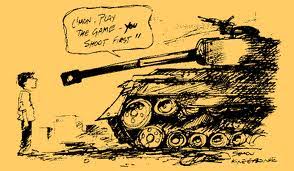
FIGHTING FOR OKINAWA — MY HOME, NOT A MILITARY BASE

By Moé Yonamine

Source: Rethinking Schools

My family moved to the United States from Okinawa when I was 7. But Okinawa is still home — and I’m hurt and angered at how the United States and Japan continue to treat Okinawa as little more than a colonial outpost. As a teacher, I’m even more dismayed at how the conventional school curriculum keeps young people in this country ignorant about the abuse, but also about the resistance, in my home islands.

“They are burying our beautiful ocean,” read the recent message from my mother in Okinawa, as though she was grieving the loss of a loved one. After decades of protest by Okinawan people to completely get rid of all U.S. military bases that occupy a fifth of the Ryukyu Island chain, the United States and Japan signed a treaty to evacuate one of the most contested bases located in the center of the main island, Futenma Marine Corps (MCAS) base. In exchange for the removal, both governments announced that they would construct a floating military base off the northeast coast of Henoko. Okinawans expressed vehement opposition, with a majority voting in a referendum for the complete removal of all bases. Still the construction continued and the people persisted in protest — marching for miles down main streets, creating human chains for peace, linking arms around military bases, elders repeatedly lying down in front of bulldozers. Governor Takeshi Onaga demanded the Japanese government terminate the heliport construction and city mayors prevented access of U.S. military construction vehicles through their districts — later overturned by federal court order last December sought by the Japanese federal government.

Today, the concrete seawalls are finished, and soon, rocks will be crushed and sand will pile high, burying the tropical, clear waters. The Japanese government and U.S. military continue to pursue the construction of the runway, despite community complaints of environmental damage and pollution, endangerment to sea life, harm to the fishing and tourism industry, as well as the ongoing threat to cultural survival and island sovereignty. On July 6th the Ryukyu Shimpo announced that the Japanese government would not return the land occupied by MCAS Futenma to the Okinawan people. The U.S. and Japan added a condition to the promise for Futenma’s removal: The Naha International Airport must be made available for the U.S. military any time they declare an emergency. When Governor Onaga rejected this demand, the U.S. military withdrew its promise to remove Futenma. Japanese Defense Minister Tomomi Inada stated, “If the requisite conditions for the return of Futenma are not met, it will not be returned.” In a surge of anger, pain and frustration, word spread quickly in Okinawa across social media.

Devastated at the sacrifice of my home, I turned to the news here in the United States, and there was not one story about Okinawa on any major network. Frustrated, I recalled my conversation with an elderly grandmother I met at a peace rally in my neighborhood when I went home last summer. When I told her I was a teacher in the United States, she told me that the best thing we as teachers can do is to teach kids about what’s happening in Okinawa and how we want a world without war. She said, “They need to know our story so they can stand up with us.”

But when I turn to a typical U.S. textbook, I see how students are ill-equipped to understand what’s happening in Okinawa. For example, in Holt McDougal’s widely used The Americans, there are a mere three paragraphs about Okinawa under the section, “The Atomic Bomb Ends the War.”

Discussion of Okinawa begins and ends with a skewed description of the Battle of Okinawa during WWII: “In April 1945, U.S. Marines invaded Okinawa,” it begins. “By the time the fighting ended on June 21, 1945, more than 7,600 Americans had died. But the Japanese paid an even greater price — 110,000 lives — in defending Okinawa.” Okinawans are completely invisible in this account of the war, the bloodiest battle in the history of the Pacific, where our islands were used as a battleground between the United States and Japan. The highest cost was in Okinawan lives, where more than a third of the population was killed within three months — almost 150,000 — and more than 92 percent were left homeless. The majority of today’s families — including mine — have experienced grief and loss of loved ones.What The Americans does not teach is that Okinawa was once an independent kingdom, was colonized by Japan, then controlled by the United States for 27 years, and finally became a Japanese prefecture. At the end of the war, the U.S. military stripped Japan of its constitution and replaced it with one that took away Japan’s right to have an offensive military. Henceforth, the United States would “protect” Japan, and create bases throughout Japanese territory. However, three-quarters of all U.S. bases on Japanese territory are on Okinawa, even though Okinawa makes up only .6 percent of Japan’s total landmass. Okinawa’s main island is just 62 miles long; and its width averages one mile.

MCAS Futenma was constructed in the middle of our skinny island — creating environmental destruction, air pollution and noise pollution, blocking direct access to roads in a densely populated community, and exposing survivors and families to the sights and sounds of war. Frequent violent crimes against women and children continue to bring hundreds of thousands of protesters together demanding justice and humanity — and the complete removal of U.S. military bases.

Not only do commercial textbooks fail to equip students to understand what’s happening in Okinawa, the mainstream school curriculum does not help students understand issues affecting island people more broadly. I have seen time and time again the shock when my high school students in Portland, Oregon, learn about the U.S. military’s long-standing nuclear testing in the Marshall Islands, the environmental damage to Vieques in Puerto Rico, or the history of U.S. military trainings on indigenous Hawaiian soil. Many of my students are confused when they learn that Guam is a “U.S. territory,” has the highest per capita U.S. military enlistment, has a huge U.S. base presence, but its people have no right to vote in U.S. elections. When I talk about the International Women’s Network Against Militarism, students wonder why women from places with high U.S. military presence — the Philippines, South Korea, Hawai’i, Puerto Rico, Guam and Okinawa — gather regularly to talk and organize.

When people say to me, “Why are Okinawans complaining? We’re there to protect you,” I want them to learn our whole history and to know our colonized story. When people ask, “Why don’t Okinawans complain to the Japanese government?” I want them to know about the history of our people’s movements to demand our rights. When people say, “So what? It’s just one little island,” I want them to know this is my home; it’s sacred — these are my loved ones. What’s more, our story of struggle today represents issues affecting so many island people.

The elderly grandmother from the peace rally told me that we must teach the children “that we have been fighting because we have always wanted peace but now we need the world to fight with us. Go back and tell our story.” Our story though, is much more than three short paragraphs in a textbook. It is a story about a people’s determination for sovereignty in the face of imperialism, resilience in midst of colonization, and perseverance for peace as survivors of war. Our story is urgent and it is a call for global action in the name of peace and justice. The history of Okinawa is a story of resistance but also a call to the world.


Moé Yonamine (moe@rethinkingschools.org) teaches at Roosevelt High School in Portland, Oregon, and is an editor of Rethinking Schools magazine. Yonamine is part of a network of Zinn Education Project teachers developing original people’s history curriculum. She is the author of “The Other Internment: Teaching the Hidden Story of Japanese Latin Americans During WWII,” “‘ANPO: Art X War’: A Film Tackles the U.S. Occupation of Japan,” a film review with teaching activities of “ANPO: Art X War,” a documentary about visual resistance to U.S. military bases in Japan, and “Uchinaaguchi: The Language of My Heart.”

The Conception of Nonviolence

By Robert J. Burrowes

Around the world activists who are strategic thinkers face a daunting challenge to effectively tackle the multitude of violent conflicts, including the threat of human extinction, confronting human society in the early 21st century.

I wrote that ‘activists who are strategic thinkers face a daunting challenge’ because there is no point deluding ourselves that the insane global elite – see ‘The Global Elite is Insane’ – with its compliant international organizations (such as the UN) and national governments following orders as directed, is going to respond appropriately and powerfully to the multifaceted crisis that it has been progressively generating since long before the industrial revolution.

For reasons that are readily explained psychologically – see Love Denied: The Psychology of Materialism, Violence and War’ and, for more detail, see Why Violence? and Fearless Psychology and Fearful Psychology: Principles and Practice – this insanity focuses their attention on securing control of the world’s remaining resources while marginalizing the bulk of the human population in ghettos, or just killing them outright with military violence or economic exploitation (or the climate/ecological consequences of their violence and exploitation).

If you doubt what I have written above, then consider the history of any progressive political, social, economic and environmental change in the past few centuries and you will find a long record of activist planning, organizing and action preceding any worthwhile change which was invariably required to overcome enormous elite opposition. In short, if you can identify one progressive outcome that was initiated and supported by the global elite, I would be surprised to hear about it.

Moreover, we are not going to get out of this crisis – which must include ending violence, exploitation and war, halting the destruction of Earth’s biosphere and ongoing violent assaults on indigenous peoples, ending slavery, liberating occupied countries such as Palestine, Tibet and West Papua, removing dictatorships such as those in Cambodia and Saudi Arabia, ending genocidal assaults such as those currently being directed against the people of Yemen and the Rohingya in Myanmar, and defending the rights of a people, such as those in Catalonia, to secede from one state and form another – without both understanding the deep drivers of conflict as well as the local drivers in each case, and then developing and implementing sound and comprehensive strategies, based on this dual-faceted analysis of each conflict.

In addition, if like Mohandas K. Gandhi, many others and me you accept the evidence that violence is inherently counterproductive and has no countervailing desirability in any context – expressed most simply by the Reverend Martin Luther King Jr. when he stated ‘the enemy is violence’ –  then we must be intelligent, courageous and resourceful enough to commit ourselves to planning, developing and implementing strategies that are both exclusively nonviolent and powerfully effective against extraordinarily insane and ruthlessly violent opponents, such as the US government.

Equally importantly, however, it is not just the violence of the global elite that we must address if extinction is to be averted. We must also tackle the violence that each of us inflicts on ourselves, our children, each other and the Earth too. And, sadly, this violence takes an extraordinary variety of forms having originated no later than the Neolithic Revolution 12,000 years ago. See ‘A Critique of Human Society since the Neolithic Revolution’.

Is all of this possible?

When I first became interested in nonviolent strategy in the early 1980s, I read widely. I particularly sought out the literature on nonviolence but, as my interest deepened and I tried to apply what I was reading in the nonviolence literature to the many nonviolent action campaigns in which I was involved, I kept noticing how inadequate these so-called ‘strategies’ in the literature actually were, largely because they did not explain precisely what to do, even though they superficially purported to do so by offering ‘principles’, ‘guidelines’, sets of tactics or even ‘stages of a campaign’.

I found this shortcoming in the literature most instructive and, because I am committed to succeeding when I engage as a nonviolent activist, I started to read the work of Mohandas K. Gandhi and even the literature on military strategy. By the mid-1980s I had decided to research and write a book on nonviolent strategy because, by then, I had become aware that the individual who understood strategy, whether nonviolent or military, was rare.

Moreover, there were many conceptions of military strategy, written over more than 2,000 years, and an increasing number of conceptions of what was presented as ‘nonviolent strategy’, in one form or another, were becoming available as the 1980s progressed. But the flaws in these were increasingly and readily apparent to me as I considered their inadequate theoretical foundations or tried to apply them in nonviolent action campaigns.

The more I struggled with this problem, the more I found myself reading The Collected Works of Mahatma Gandhi in a library basement. After all, Gandhi had led a successful 30 year nonviolent liberation struggle to end the British occupation of India so it made sense that he had considerable insight regarding strategy. Unfortunately, he never wrote it down simply in one place.

A complicating but related problem was that among those military authors who professed to present some version of ‘strategic theory’, in fact, most simply presented an approach to strategic planning (such as using a set of principles or a particular operational pattern) or an incomplete theory of strategy (such as ‘maritime theory’, ‘air theory’ or ‘guerrilla theory’) and (often largely unwittingly) passed these off as ‘strategic theory’, which they are not. And it was only when I read Carl von Clausewitz’s infuriatingly convoluted and tortuously lengthy book On War that I started to fully understand strategic theory. This is because Clausewitz actually presented (not in a simple form, I hasten to admit) a strategic theory and then a military strategy that worked in accordance with his strategic theory. ‘Could this strategic theory work in guiding a nonviolent strategy?’ I wondered.

Remarkably, the more I read Gandhi (and compared him with other activists and scholars in the field), the more it became apparent to me that Gandhi was the only nonviolent strategist who (intuitively) understood strategic theory. Although, to be fair, it was an incredibly rare military strategist who understood strategic theory either with Mao Zedong a standout exception and other Marxist strategists like Vladimir Lenin and Võ Nguyên Giáp understanding far more than western military strategists which is why, for example, the US and its allies were defeated in their war on Vietnam, Laos and Cambodia.

Some years later, after grappling at length with this problem of using strategic theory to guide nonviolent strategy and reading a great deal more of Gandhi, while studying many nonviolent struggles and participating in many nonviolent campaigns myself, I wrote The Strategy of Nonviolent Defense: A Gandhian Approach. I wrote this book by synthesizing the work of Gandhi with some modified insights of Clausewitz and learning of my own drawn from the experience and study just mentioned. I have recently simplified and summarized the presentation of this book on two websites: Nonviolent Campaign Strategy and Nonviolent Defense/Liberation Strategy.

Let me outline, very simply, nonviolent strategy, without touching on strategic theory, as I have developed and presented it in the book and on the websites.

Nonviolent Strategy

You will see on the diagram of the Nonviolent Strategy Wheel that there are four primary components of strategy in the center of the wheel and eight components of strategy that are planned in accordance with these four central components. I will briefly describe the four primary components.

Before doing so, however, it is worth noting that, by using this Nonviolent Strategy Wheel, it is a straightforward task to analyze why so many activist movements and (nonviolent) liberation struggles fail: they simply do not understand the need to plan and implement a comprehensive strategy, entailing all twelve components, if they are to succeed.

So, to choose some examples almost at random, despite substantial (and sometimes widespread) popular support, particularly in some countries, the antiwar movement, the climate justice movement and the Palestinian and Tibetan liberation struggles are each devoid of a comprehensive strategy to deploy their resources for strategic impact and so they languish instead of precipitating the outcomes to which they aspire, which are quite possible.

Having said that a sound and comprehensive strategy must pay attention to all twelve components of strategy it is very occasionally true that campaigns succeed without doing so. This simply demonstrates that nonviolence, in itself, is extraordinarily powerful. But it is unwise to rely on the power of nonviolence alone, without planning and implementing a comprehensive strategy, especially when you are taking on a powerful and entrenched opponent who has much to lose (even if their conception of what they believe they will ‘lose’ is delusional) and may be ruthlessly violent if challenged.

For the purpose of this article, the term strategy refers to a planned series of actions (including campaigns) that are designed to achieve the two strategic aims (see below).

The Political Purpose and the Political Demands

If you are going to conduct a nonviolent struggle, whether to achieve a peace, environmental or social justice outcome, or even a defense or liberation outcome, the best place to start is to define the political purpose of your struggle. The political purpose is a statement of ‘what you want’. For example, this might be one of the following (but there are many possibilities depending on the context):

* To secure a treaty acknowledging indigenous sovereignty between [name of indigenous people] and the settler population in [name of land/country] over the area known as [name of land/country].

* To stop violence against [children and/or women] in [name of the town/city/state/country].

* To end discrimination and violence against the racial/religious minority of [name of group] in [name of the town/city/state/country].

* To end forest destruction in [your specified area/country/region].

* To end climate-destroying activities in [name of the town/city/state/country].

* To halt military production by [name of weapons corporation] in [name of the town/city/state/country].

* To prevent/halt [name of corporation] exploiting the [name of fossil fuel resource].

* To defend [name of the country] against the political/military coup by [identity of coup perpetrators].

* To defend [name of the country] against the foreign military invasion by [name of invading country].

* To defend the [name of targeted group] against the genocidal assault by the [identity of genocidal entity].

* To establish the independent entity/state of [name of proposed entity/state] by removing the foreign occupying state of [name of occupying state].

* To establish a democratic state in [name of country] by removing the dictatorship.
This political purpose ‘anchors’ your campaign: it tells people what you are concerned about so that you can clearly identify allies, opponents and third parties. Your political purpose is a statement of what you will have achieved when you have successfully completed your strategy.

In practice, your political purpose may be publicized in the form of a political program or as a list of demands. You can read the five criteria that should guide the formulation of these political demands on one of the nonviolent strategy websites cited above.

The Political and Strategic Assessment

Strategic planning requires an accurate and thorough political and strategic assessment (although ongoing evaluation will enable refinement of this assessment if new information emerges during the implementation of the strategy).

In essence, this political and strategic assessment requires four things. Notably this includes knowledge of the vital details about the issue (e.g. why has it happened? who benefits from it? how, precisely, do they benefit? who is exploited?) and a structural analysis and understanding of the causes behind it, including an awareness of the deep emotional (especially the fear) and cultural imperatives that exist in the minds of those individuals (and their organizations) who engage in the destructive behavior.

So, for example, if you do not understand, precisely, what each of your various groups of opponents is scared of losing/suffering (whether or not this fear is rational), you cannot design your strategy taking this vital knowledge into account so that you can mitigate their fear effectively and free their mind to thoughtfully consider alternatives. It is poor strategy (and contrary to the essence of Gandhian nonviolence) to reinforce your opponents’ fear and lock them into a defensive reaction.

Strategic Aims and Strategic Goals

Having defined your political purpose, it is easy to identify the two strategic aims of your struggle. This is because every campaign or liberation struggle has two strategic aims and they are always the same:

  1. To increase support for your campaign by developing a network of groups who can assist you.
  2. To alter the will and undermine the power of those groups who support the problem.

Now you just need to define your strategic goals for both mobilizing support for your campaign and for undermining support for the problem. From your political and strategic assessment:

  1. Identify the key social groups that can be mobilized to support and participate in your strategy (and then write these groups into the ‘bubbles’ on the left side of the campaign strategy diagram that can be downloaded from the strategy websites), and
  2. identify the key social groups (corporation/s, police/military, government, workers, consumers etc.) whose support for the problem (e.g. the climate catastrophe, war, the discrimination/violence against a particular group, forest destruction, resource extraction, genocide, occupation) is vital (and then write these groups into the columns on the right side of the campaign strategy diagram).

These key social groups become the primary targets in your campaign. Hence, the derivative set of specific strategic goals, which are unique to your campaign, should then be devised and each written in accordance with the formula explained in the article ‘The Political Objective and Strategic Goal of Nonviolent Actions’. That is: ‘To cause a [specified group of people] to act in the [specified way].’

As the title of this article suggests, it also explains the vital distinction between the political objective and the strategic goal of any nonviolent action. This distinction is rarely understood and applied and explains why most ‘direct actions’ have no strategic impact.

You can read appropriate sets of strategic goals for ending war, ending the climate catastrophe, ending a military occupation, removing a dictatorship and halting a genocide on one or the other of these two sites: Nonviolent Campaign Strategic Aims and Nonviolent Defense/Liberation Strategic Aims.

The Conception of Nonviolence

There are four primary conceptions of nonviolence which have been illustrated on the Matrix of Nonviolence. Because of this, your strategic plan should:

  1. identify the particular conception of nonviolence that your campaign will utilize;
  2. identify the specific ways in which your commitment to nonviolence will be conveyed to all parties so that the benefits of adopting a nonviolent strategy are maximized; and
  3. identify how the level of discipline required to implement your nonviolent strategy will be developed. This includes defining the ‘action agreements’ (code of nonviolent discipline) that will guide activist behaviour.

It is important to make a deliberate strategic choice regarding the conception of nonviolence that will underpin your strategy. If your intention is to utilize the strategic framework outlined here, it is vitally important to recognize that this framework is based on the Gandhian (principled/revolutionary) conception of nonviolence.

This is because Gandhi’s nonviolence is based on certain premises, including the importance of the truth, the sanctity and unity of all life, and the unity of means and end, so his strategy is always conducted within the framework of his desired political, social, economic and ecological vision for society as a whole and not limited to the purpose of any immediate campaign. It is for this reason that Gandhi’s approach to strategy is so important. He is always taking into account the ultimate end of all nonviolent struggle – a just, peaceful and ecologically sustainable society of self-realized human beings – not just the outcome of this campaign. He wants each campaign to contribute to the ultimate aim, not undermine vital elements of the long-term and overarching struggle to create a world without violence.

This does not mean, however, that each person participating in the strategy must share this commitment; they may participate simply because it is expedient for them to do so. This is not a problem as long as they are willing to commit to the ‘code of nonviolent discipline’ while participating in the campaign.

Hopefully, however, their participation on this basis will nurture their own personal journey to embrace the sanctity and unity of all life so that, subsequently, they can more fully participate in the co-creation of a nonviolent world.

Other Components of Strategy

Once you have identified the political purpose, strategic aims and conception of nonviolence that will guide your struggle, and undertaken a thorough political and strategic assessment, you are free to consider the other components of your strategy: organization, leadership, communication, preparations, constructive program, strategic timeframe, tactics and peacekeeping, and evaluation.

For example, a vital component of any constructive program ideally includes each individual traveling their own personal journey to self-realization – see ‘Putting Feelings First’ – considering making ‘My Promise to Children’ to eliminate violence at its source and participating in ‘The Flame Tree Project to Save Life on Earth’ to preserve Earth’s biosphere.

Needless to say, each of these components of strategy must also be carefully planned. They are explained in turn on the nonviolent strategy websites mentioned above.

In addition to these components, the websites also include articles, photos, videos, diagrams and case studies that discuss and illustrate many essential elements of sound nonviolent strategy. These include the value of police/military liaison, issues in relation to tactical selection, the importance of avoiding secrecy and sabotage, how to respond to arrest, how to undertake peacekeeping and the 20 points to consider when planning to minimize the risk of violent police/military repression when this is a possibility.

Conclusion

The global elite and many other people are too insane to ‘walk away’ from the enormous violence they inflict on life.

Consequently, we are not going to end violence in all of its forms – including violence against women, children, indigenous and working peoples, violence against people because of their race or religion, war, slavery, the climate catastrophe, rainforest destruction, military occupations, dictatorships and genocides – and create a world of peace, justice and ecological sustainability for all of us without sound and comprehensive nonviolent strategies that tackle each issue at its core while complementing and reinforcing gains made in parallel struggles.

If you wish to declare your participation in this worldwide effort, you are welcome to sign the online pledge of ‘The People’s Charter to Create a Nonviolent World’.

Given the overwhelming violence that we must tackle, can we succeed? I do not know but I intend to fight, strategically, to the last breath. I hope that you will too.


Biodata: Robert J. Burrowes has a lifetime commitment to understanding and ending human violence. He has done extensive research since 1966 in an effort to understand why human beings are violent and has been a nonviolent activist since 1981. He is the author of Why Violence? His email address is flametree@riseup.net and his website is here.


Robert J. Burrowes
P.O. Box 68
Daylesford
Victoria 3460
Australia
Email: flametree@riseup.net

Websites:
Nonviolence Charter
Flame Tree Project to Save Life on Earth
‘Why Violence?’
Nonviolent Campaign Strategy
Nonviolent Defense/Liberation Strategy
Anita: Songs of Nonviolence
Robert Burrowes
Global Nonviolence Network

Gandhi’s Truth: Ending Human Violence One Commitment at a Time

By Robert J. Burrowes

Gandhi Jayanti – 2 October, the date of Mohandas K. Gandhi’s birth in 1869 and the International Day of Nonviolence – offers an opportunity to reflect on human violence and to ponder ways to end it. There may be a fast way to end human violence but, if there is, Gandhi did not know it. Nor do I. Nor does anyone else that I have read or asked either. But this does not mean there is no way to end human violence.

Human violence has a cause. See ‘Why Violence?’ and ‘Fearless Psychology and Fearful Psychology: Principles and Practice’. It has many manifestations. And it can be ended. But if this is to happen, then many of us must make the commitment to work towards that end. This is because, as Gandhi noted: ‘The future depends on what we do in the present.’

In other words, if human violence is to end, it will happen because individuals and organizations commit themselves to joining the effort to do so. Here is a sample of individuals around the world who have made that commitment, each in their own unique way. You are invited to join them.

HRH Prince Simbwa Joseph was born to a Ugandan Royal Family in Kampala. He abhors violence and is involved in many charities for helping those in need, as well as human rights organisations. He is currently manager of Nsambu and Company Advocates – a law firm and one of the oldest legal chambers in Uganda and East Africa, having been established in 1970. Among other engagements, he is also president of the African Federation Association in Uganda, which is a member of the World Federalist Movement Institute for Global policy. Following negotiations with Prince Simbwa as project manager in 2014, and involving the Ugandan Vice-President in launching the project, the World Sustainability Fund and its partners agreed to provide €1.5m to launch the AFA-WFM permanent office in Kampala in support of efforts to assist Uganda to achieve the UN Millennium Development Goals. In Prince Simbwa’s words: ‘Today the world is on tension due to so many things in social, economic, political disparities and pending nuclear wars. We are concerned as global citizens because if violence or war escalates those whom we call “Nalumanya ne Salumanya” in our local Luganda language (literally meaning “those concerned and less concerned”) shall be trapped equally…. Anti-apartheid icon Nelson Mandela and elder statesman appealed to the world during his lifetime to reinvent Indian freedom fighter Mahatma Gandhi’s nonviolent approach to solving conflicts.’

Lily Thapa is the inspirational founder president, in 1994, of Women for Human Rights, single women group (WHR) in Nepal. WHR is an NGO ‘dedicated to creating an active network of single women on a regional, national and international level. By working exclusively with and for them, WHR is dedicated to addressing the rights of single women and creating a just and equitable society where the lives of single women are strengthened and empowered.’ Rejecting the label ‘widow’, WHR ‘issued a national declaration to use the term “single women” instead of “widow”. The word “widow” (“Bidhwa” in Nepali) carries negativity and disdainful societal views which leaves many single women feeling humiliated and distressed.’ Working to empower women economically, politically, socially and culturally in order to live dignified lives and enjoy the value of human rights, WHR works at the grassroots, district, regional, national, South Asian and international levels. Lily has pointed out that there are ‘285 million single women in the world, among them 115 million fall below the poverty line and 38 million conflict-affected single women have no access to justice; these women are last.’ You can read more about Lily and WHR’s monumental efforts on their website. Recently, Lily was awarded the South Asian ‘Dayawati Modi Stree Shakti Samman’, which is ‘presented annually to a woman who has dared to dream and has the capability to translate that dream into reality’.

John McKenna’s commitment is to end discrimination in all of its forms against those with disabilities. In one recent article, the Australian surveyed the value of recent disability-mitigating technologies becoming available. In his thoughtful article ‘What’s App?’ he assessed the value of technologies that, for example, assist people who are blind, people who have problems with speech, and people with disabilities who are getting older.

In a nonviolent action to draw attention to the horror of drone murders, US grandmother Joy First was one of four nonviolent activists arrested at the Wisconsin Air National Guard Base (Volk Field) during one of the monthly vigils (held for over five years now) by Wisconsin Coalition to Ground the Drones and End the Wars. Volk Field is a critical component of the drone warfare program being conducted by the US government in a number of countries in the Middle East and Africa. At Volk Field personnel are trained to operate the RQ-7 Shadow Drone, which has been used for reconnaissance, surveillance, and target acquisition. You can read more about drone warfare and resistance to it in Joy’s highly informative article ‘Four Citizen Activists Arrested at Volk Field as they Attempt to Identify the Base as a Crime Scene’.

Father Nithiya is the National Programme Coordinator of the Association of Franciscan Families of India (AFFI). Their inspirational work is focused on two campaigns: the Violence of Extreme poverty and hunger and the Right to Food Campaign, as well as the National Campaign to Stop Violence Against Women. In relation to the latter campaign, AFFI has released a DVD and a booklet as a result of a four day intensive national consultation and training organised by them in 2016. Through their vast network of educational, social and medical ministries, AFFI has committed itself to stopping violence against women using various strategies all over the country, especially through their schools and colleges. Identifying ten types of violence against women – gender selection, female foeticide, child marriage, child abuse, harassment at work, prostitution and trafficking, domestic violence and Eve teasing, child labour, effects of alcoholism of men, and unemployment and underemployment of women – the DVD and booklet include analytical data, information about the legal framework and redress mechanisms. The aim is to empower women for their safety and security. Fr. Nithiya has given seminars to teachers and students to raise awareness of how they can stop any form of violence against women in their personal life, in their families, communities and society at large. The aim is to make these AFFI resources available in various Indian languages.

In one of her many engagements, Nobel Peace laureate Mairead Maguire from Northern Ireland continues her ongoing solidarity work in support of the Rohingya, the ethnic group in Burma currently suffering the genocidal assault of the Burmese government and its military forces, the Tatmadaw. In a recent evocative appeal to their fellow laureate Aung San Suu Kyi, signed by Mairead and four other laureates, they asked ‘How many Rohingya have to die; how many Rohingya women will be raped; how many communities will be razed before you raise your voice in defence of those who have no voice? Your silence is not in line with the vision of “democracy” for your country that you outlined to us, and for which we all supported you over the years.’ See ‘Five Nobel Laureates urge Aung San Suu Kyi to defend Rohingya Muslims’.

So if you would like to join the individuals above, as well as those individuals and organizations in 101 countries who have made the commitment to work to end human violence, you can do so by signing the online pledge of ‘The People’s Charter to Create a Nonviolent World’ which, thanks to Antonio Gutiérrez Rodero in Venezuela, is also available in Spanish.

If you also subscribe to Gandhi’s belief that ‘Earth provides enough to satisfy every [person’s] needs, but not every [person’s] greed’, then you might consider participating in ‘The Flame Tree Project to Save Life on Earth’ which he inspired as well.

And if you wish to use nonviolence, as Gandhi developed and employed it, for your campaign or liberation struggle, you will be given clear guidance on how to do so on these websites that draw heavily on his work: Nonviolent Campaign Strategy and Nonviolent Defense/Liberation Strategy.

Will enough people make the commitment to end human violence? Will you? As Gandhi warns us, fear of inadequate outcomes is no excuse for inaction: ‘You may never know what results come of your actions, but if you do nothing there will be no results.’


Biodata: Robert J. Burrowes has a lifetime commitment to understanding and ending human violence. He has done extensive research since 1966 in an effort to understand why human beings are violent and has been a nonviolent activist since 1981. He is the author of ‘Why Violence?’ His email address is flametree@riseup.net and his website is here.

Robert J. Burrowes
P.O. Box 68 Daylesford
Victoria 3460 Australia

Email: flametree@riseup.net

Websites:

http://thepeoplesnonviolencecharter.wordpress.com (Nonviolence Charter) http://tinyurl.com/flametree (Flame Tree Project to Save Life on Earth) http://tinyurl.com/whyviolence (‘Why Violence?’) https://nonviolentstrategy.wordpress.com/ (Nonviolent Campaign Strategy) https://nonviolentliberationstrategy.wordpress.com/ (Nonviolent Defense/Liberation Strategy) http://anitamckone.wordpress.com (Anita: Songs of Nonviolence) http://robertjburrowes.wordpress.com (Robert) https://globalnonviolencenetwork.wordpress.com/ (Global Nonviolence Network)

Profit Maximization is Easy: Invest in Violence

By Robert J. Burrowes

For those of us committed to systematically reducing and, one day, ending human violence, it is vital to understand what is causing and driving it so that effective strategies can be developed for dealing with violence in its myriad contexts. For an understanding of the fundamental cause of violence, see ‘Why Violence?’

However, while we can tackle violence at its source by each of us making and implementing ‘My Promise to Children’, the widespread violence in our world is driven by just one factor: fear or, more accurately, terror. And I am not talking about jihadist terror or even the terror caused by US warmaking. Let me explain, starting from the beginning.

The person who is fearless has no use for violence and has no trouble achieving their goals, including their own defence, without it. But fearlessness is a state that few humans would claim. Hence violence is rampant.

Moreover, once someone is afraid, they will be less likely to perceive the truth behind the delusions with which they are presented. They will also be less able to access and rely on other mental functions, such as conscience and intelligence, to decide their course of action in any context. Worse still, the range of their possible responses to perceived threats will be extremely limited. And they will be more easily mobilised to support or even participate in violence, in the delusional belief that this will make them safe.

For reasons such as these, it is useful for political and corporate elites to keep us in a state of fear: social control is much easier in this context. But so is profit maximization. And the most profitable enterprise on the planet is violence. In essence then: more violence leads to more fear making it easier to gain greater social control to inflict more violence…. And starting early, by terrorizing children, is the most efficient way to initiate and maintain this cycle. See ‘Why Violence?’ and ‘Fearless Psychology and Fearful Psychology: Principles and Practice’.

So, for example, if you think the massive number of police killings of innocent civilians in the United States – see ‘Killed by Police’ and ‘The Counted: People killed by police in the US’ – is a problem, you are not considering it from the perspective of maintaining elite social control and maximizing corporate profit. Police killings of innocent civilians is just one (necessary) part of the formula for maintaining control and maximising profit.

This is because if you want to make a lot of money in this world, then killing or exploiting fellow human beings and destroying the natural world are the three most lucrative business enterprises on the planet. And we are now very good at it, as the record shows, with the planetary death toll from violence and exploitation now well over 100,000 human beings each day, 200 species driven to extinction each day and ecological destruction so advanced that the end of all life (not just human life) on Earth is postulated to occur within decades, if not sooner, depending on the scenario. See, for example, ‘The End of Being: Abrupt Climate Change One of Many Ecological Crises Threatening to Collapse the Biosphere’.

So what forms does this violence take? Here is a daily accounting.

Corporate capitalist control of national economies, held in place by military violence, kills vast numbers of people (nearly one million each week) by starving them to death in Africa, Asia and Central/South America. This is because this ‘economic’ system is designed and managed to allocate resources for military weapons and corporate profits for the wealthy, instead of resources for living.

Wars kill, wound and incapacitate a substantial number of civilians, mostly women and children, as do genocidal assaults, on a daily basis, in countries all over the planet. Wars also kill some soldiers and mercenaries.

Apart from those people we kill every day, we sell many women and children into sexual slavery, we kidnap children to terrorise them into becoming child soldiers and force men, women and children to work as slave labourers, in horrific conditions, in fields and factories (and buy the cheap products of their exploited labour as our latest ‘bargain’).

We condemn millions of people to live in poverty, homelessness and misery, even in industrialized countries where the refugees of western-instigated wars and climate-destroying policies are often treated with contempt. We cause many children to be born with grotesque genetic deformities because we use horrific weapons, like those with depleted uranium, on their parents. We also inflict violence on women and children in many other forms, ranging from ‘ordinary’ domestic violence to genital mutilation.

We ensnare and imprison vast numbers of people in the police-legal-prison complex. See ‘The Rule of Law: Unjust and Violent’. We pay the pharmaceutical industry and its handmaiden, psychiatry, to destroy our minds with drugs and electro-shocking. See ‘Defeating the Violence of Psychiatry’. We imprison vast numbers of children in school in the delusional belief that this is good for them. See ‘Do We Want School or Education?’ And we kill or otherwise exploit animals, mostly for human consumption, in numbers so vast the death toll is probably beyond calculation.

We also engage in an endless assault on the Earth’s biosphere. Apart from the phenomenal damage done to the environment and climate by military violence: we emit gases and pollutants to heat and destroy the atmosphere and destroy its oxygen content. We cut down and burn rainforests. We cut down mangroves and woodlands and pave grasslands. We poison the soil with herbicides and pesticides. We pollute the waterways and oceans with everything from carbon and nitrogenous fertilizers to plastic, as well as the radioactive contamination from Fukushima. And delude ourselves that our token gestures to remedy this destruction constitutes ‘conservation’.

So if you are seeking work, whether as a recent graduate or long-term unemployed person, then the most readily available form of work, where you will undoubtedly be exploited as well, is a government bureaucracy or large corporation that inflicts violence on life itself. Whether it is the military, the police, legal or prison system, a weapons, fossil fuel, banking, pharmaceutical, media, mining, agricultural, logging, food or water corporation, a farm that exploits animals or even a retail outlet that sells poisonous, processed and often genetically-mutilated substances under the label ‘food’ – see ‘Defeating the Violence in Our Food and Medicine’ – you will have many options to help add to the profits of those corporations and government ‘services’ that exist to inflict violence on you, your family and every other living being that shares this biosphere.

Tragically, genuinely ethical employment is a rarity because most industries, even those that seem benign like the education, finance, information technology and electronics industries, usually end up providing skilled personnel, finance, services or components that are used to inflict violence. And other industries such as those in insurance and superannuation, like the corporate banks, usually invest in violence (such as the military and fossil fuel industries): it is the most profitable.

So while many government bureaucracies and corporate industries exist to inflict violence, in one form or another, they can only do so because we are too scared to insist on seeking out ethical employment. In the end, we will take a job as a teacher, corporate journalist or pharmaceutical drug pusher, serve junk food, work in a bank, join the police or military, work in the legal system, assemble a weapons component… rather than ask ourselves the frightening questions ‘Is this nonviolent? Is this ethical? Does it enhance life?’

And yes, I know about structural violence and the way it limits options and opportunities for those of particular classes, races, genders…. But if ordinary people like us don’t consider moral issues and make moral choices, why should governments and corporations?

Moral choices? you might ask in confusion. In this day and age? Well, it might seem old-fashioned but, in fact, while most of us have been drawn along by the events in our life to make choices based on such considerations as self-interest, personal gain and ‘financial security’, there is a deeper path. Remember Gandhi? ‘True morality consists not in following the beaten track, but in finding the true path for ourselves, and fearlessly following it.’

Strange words they no doubt sound in this world where our attention is endlessly taken by all of those high-tech devices. But Gandhi’s words remind us that there is something deeper in life that the violence we have suffered throughout our lives has taken from us. The courage to be ourselves and to seek our own unique destiny.

Do you have this courage? To be yourself, rather than a cog in someone else’s machine? To refuse to submit to the violence that surrounds and overwhelms us on a daily basis?

If you are inclined to ponder these questions, you might also consider making moral choices that work systematically to end the violence in our world: consider participating in ‘The Flame Tree Project to Save Life on Earth’, signing the online pledge of ‘The People’s Charter to Create a Nonviolent World’ and/or helping to develop and implement an effective strategy to resist one or the other of the many threats to our survival using the strategic framework explained in Nonviolent Campaign Strategy.

Of course, these choices aren’t for everyone. As Gandhi observed: ‘Cowards can never be moral.’


Biodata: Robert J. Burrowes has a lifetime commitment to understanding and ending human violence. He has done extensive research since 1966 in an effort to understand why human beings are violent and has been a nonviolent activist since 1981. He is the author of ‘Why Violence?’ His email address is flametree@riseup.net and his website is here.

Robert J. Burrowes P.O. Box 68 Daylesford Victoria 3460 Australia

Email: flametree@riseup.net

Websites:
http://thepeoplesnonviolencecharter.wordpress.com (Nonviolence Charter)
http://tinyurl.com/flametree (Flame Tree Project to Save Life on Earth)
http://tinyurl.com/whyviolence (‘Why Violence?’)
https://nonviolentstrategy.wordpress.com/ (Nonviolent Campaign Strategy)
https://nonviolentliberationstrategy.wordpress.com/ (Nonviolent Defense/Liberation Strategy)
http://anitamckone.wordpress.com (Anita: Songs of Nonviolence)
http://robertjburrowes.wordpress.com (Robert)
https://globalnonviolencenetwork.wordpress.com/ (Global Nonviolence Network)

A Nonviolent Strategy to Defeat Genocide

Rohingya protesters gather in front of a United Nations regional office building to call for an end to the ongoing unrest and violence in Myanmar’s Rakhine State in Bangkok on June 11, 2012. AFP PHOTO/ Nicolas ASFOURI


By Robert J. Burrowes

It is a tragic measure of the depravity of human existence that genocide is a continuing and prevalent manifestation of violence in the international system, despite the effort following World War II to abolish it through negotiation, and then adoption and ratification of the 1948 ‘Genocide Convention‘.

According to the Genocide Convention, genocide is any act committed with the intent to destroy, in whole or in part, a national, ethnic, racial or religious group by killing members of the group, causing serious bodily or mental harm to members of the group, deliberately inflicting on the group conditions of life calculated to bring about its physical destruction in whole or in part, imposing measures intended to prevent births within the group and/or forcibly transferring children of the group to another group.

While this definition is contested because, for example, it excludes killing of political groups, and words such as ‘democide’ (the murder or intentionally reckless and depraved disregard for the life of any person or people by their government,) and ‘politicide’ (the murder of any person or people because of their political or ideological beliefs) have been suggested as complementary terms, in fact atrocities that have been characterized as ‘genocide’ by various authors include mass killings, mass deportations, politicides, democides, withholding of food and/or other necessities of life, death by deliberate exposure to invasive infectious disease agents or combinations of these. See ‘Genocides in history‘.

While genocide and attempts at genocide were prevalent enough both before World War II (just ask the world’s indigenous peoples) and then during World War II itself, which is why the issue attracted serious international attention in the war’s aftermath, it cannot be claimed that the outlawing of genocide did much to end the practice, as the record clearly demonstrates.

Moreover, given that the United Nations and national governments, out of supposed ‘deference’ to ‘state sovereignty’, have been notoriously unwilling and slow to meaningfully respond to genocides, as was the case in Rwanda in 1994 and has been the case with the Rohingya in Myanmar (Burma) for four decades – as carefully documented in ‘The Slow-Burning Genocide of Myanmar’s Rohingya‘ – there is little evidence to suggest that major actors in the international system have any significant commitment to ending the practice, either in individual cases or in general. For example, as official bodies of the world watch, solicit reports and debate whether or not the Rohingya are actually victims of genocide, this minority Muslim population clearly suffers from what many organizations and any decent human being have long labeled as such. For a sample of the vast literature on this subject, see ‘The 8 Stages of Genocide Against Burma’s Rohingya‘ and ‘Countdown to Annihilation: Genocide in Myanmar‘.

Of course, it is not difficult to understand institutional inaction. Despite its fine rhetoric and even legal provisions, the United Nations, acting in response to the political and corporate elites that control it, routinely fails to act to prevent or halt wars (despite a UN Charter and treaties, such as the Kellogg-Briand Pact, that empower and require it to do so), routinely fails to defend refugees, routinely fails to act decisively on issues (such as nuclear weapons and the climate catastrophe) that constitute global imperatives for human survival, and turns the other way when peoples under military occupation (such as those of Tibet, West Papua, Western Sahara and Palestine) seek their support.

Why then should those under genocidal assault expect supportive action from the UN or international community in general? The factors which drive these manifestations of violence serve a diverse range of geopolitical interests in each case, and are usually highly profitable into the bargain. What hope justice or even decency in such circumstances?

Moreover, the deep psychological imperatives that drive the phenomenal violence in the international system are readily nominated: in essence, phenomenal fear, self-hatred and powerlessness. These psychological characteristics, together with the others that drive the behaviour of perpetrators of violence, have been identified and explained – see ‘Why Violence?‘ and ‘Fearless Psychology and Fearful Psychology: Principles and Practice‘ – but it is the way these (unconsciously and deeply-suppressed) emotions are projected that is critical to understanding the violent (and insane) behavioural outcomes in our world. For brief explanations see, for example, ‘Understanding Self-Hatred in World Affairs‘ and ‘The Global Elite is Insane‘.

Given the deep psychological imperatives that drive the violence of global geopolitics and corporate exploitation (as well as national, subnational and individual acts of violence), we cannot expect a compassionate and effective institutional response to genocide in the prevailing institutional order, as the record demonstrates. So, is there anything a targeted population can do to resist a genocidal assault?

Fortunately, there is a great deal that a targeted population can do. The most effective response is to develop and implement a comprehensive nonviolent strategy to either prevent a genocidal assault in the first place or to halt it once it has begun. This is done most effectively by using a sound strategic framework that guides the comprehensive planning of the strategy. Obviously, there is no point designing a strategy that is incomplete or cannot be successful.

A sound strategic framework enables us to think and plan strategically so that once our strategy has been elaborated, it can be widely shared and clearly understood by everyone involved. It also means that nonviolent actions can then be implemented because they are known to have strategic utility and that precise utility is understood in advance.

There is little point taking action at random, especially if our opponent is powerful and committed (even if that ‘commitment’ is insane which, as briefly noted above, is invariably the case). There is a simple diagram presenting a 12-point strategic framework illustrated here in the form of the ‘Nonviolent Strategy Wheel‘.

In order to think strategically about nonviolently defending against a genocidal assault, a clearly defined political purpose is needed; that is, a simple summary statement of ‘what you want’. In general terms, this might be stated thus: To defend the [nominated group] against the genocidal assault and establish the conditions for the group to live in peace, free of violence and exploitation.

Once the political purpose has been defined, the two strategic aims (‘how you get what you want’) of the strategy acquire their meaning. These two strategic aims (which are always the same whatever the political purpose) are as follows: 1. To increase support for the struggle to defeat the genocidal assault by developing a network of groups who can assist you. 2. To alter the will and undermine the power of those groups inciting, facilitating, organizing and conducting the genocide.

While the two strategic aims are always the same, they are achieved via a series of intermediate strategic goals which are always specific to each struggle. I have identified a generalized set of 48 strategic goals that would be appropriate in the context of ending any genocide here. These strategic goals can be readily modified to the circumstances of each particular instance of genocide.

Many of these strategic goals would usually be tackled by action groups working in solidarity with the affected population campaigning in third-party countries. Of course, individual activist groups would usually accept responsibility for focusing their work on achieving just one or a few of the strategic goals (which is why any single campaign within the overall strategy is readily manageable).

As I hope is apparent, the two strategic aims are achieved via a series of intermediate strategic goals.

Not all of the strategic goals will need to be achieved for the strategy to be successful but each goal is focused in such a way that its achievement will functionally undermine the power of those conducting the genocide.

It is the responsibility of the struggle’s strategic leadership to ensure that each of the strategic goals, which should be identified and prioritized according to their precise understanding of the circumstances in the country where the genocide is occurring, is being addressed (or to prioritize if resource limitations require this).

I wish to emphasize that I have only briefly discussed two aspects of a comprehensive strategy for ending a genocide: its political purpose and its two strategic aims (with its many subsidiary strategic goals). For the strategy to be effective, all twelve components of the strategy should be planned (and then implemented). See Nonviolent Defense/Liberation Strategy.

This will require, for example, that tactics that will achieve the strategic goals must be carefully chosen and implemented bearing in mind the vital distinction between the political objective and strategic goal of any such tactic. See ‘The Political Objective and Strategic Goal of Nonviolent Actions‘.

It is not difficult to nonviolently defend a targeted population against genocide. Vitally, however, it requires a leadership that can develop a sound strategy so that people are mobilized and deployed effectively.


Biodata: Robert J. Burrowes has a lifetime commitment to understanding
and ending human violence. He has done extensive research since 1966 in
an effort to understand why human beings are violent and has been a
nonviolent activist since 1981. He is the author of ‘Why Violence?
His email address is flametree@riseup.net
and his website is at http://robertjburrowes.wordpress.com


Robert J. Burrowes
P.O. Box 68
Daylesford
Victoria 3460
Australia
Email: flametree@riseup.net

Websites:
Nonviolence Charter
Flame Tree Project to Save Life on Earth
‘Why Violence?’
Nonviolent Campaign Strategy
Nonviolent Defense/Liberation Strategy
Anita: Songs of Nonviolence
Robert Burrowes
Global Nonviolence Network

Truth or Delusion?

By Robert J. Burrowes

One inevitable outcome of the phenomenal violence we all suffer as
children is that most of us live in a state of delusion throughout our
lives. This makes it extraordinarily difficult for accurate information,
including vital information about the endangered state of our world and
how to respond appropriately, to penetrate the typical human mind.

‘Phenomenal violence?’ you might ask. ‘All of us?’ you wonder. Yes,
although, tragically, most of this violence goes unrecognised because it
is not usually identified as such. For most people, it is a
straightforward task to identify the ‘visible’ violence that they have
suffered and, perhaps, still suffer. However, virtually no-one is able
to identify the profoundly more damaging impact of the ‘invisible’ and
‘utterly invisible’ violence that is inflicted on us mercilessly from
the day we are born.

So what is this ‘invisible’ and ‘utterly invisible’ violence?

‘Invisible’ violence is the ‘little things’ that adults do to children
every day, partly because they are just ‘too busy’. For example, when
adults do not allow time to listen to, and value, a child’s thoughts and
feelings, the child learns to not listen to themSelf thus destroying
their internal communication system. When adults do not let a child say
what they want (or ignore them when they do), the child develops
communication and behavioural dysfunctionalities as they keep trying to
meet their own needs (which, as a basic survival strategy, they are
genetically programmed to do).

When adults blame, condemn, insult, mock, embarrass, shame, humiliate,
taunt, goad, guilt-trip, deceive, lie to, bribe, blackmail, moralize
with and/or judge a child, they both undermine their sense of Self-worth
and teach them to blame, condemn, insult, mock, embarrass, shame,
humiliate, taunt, goad, guilt-trip, deceive, lie, bribe, blackmail,
moralize and/or judge.

The fundamental outcome of being bombarded throughout their childhood by
this ‘invisible’ violence is that the child is utterly overwhelmed by
feelings of fear, pain, anger and sadness (among many others). However,
parents, teachers, religious figures and other adults also actively
interfere with the expression of these feelings and the behavioural
responses that are naturally generated by them and it is this ‘utterly
invisible’ violence that explains why the dysfunctional behavioural
outcomes actually occur.

For example, by ignoring a child when they express their feelings, by
comforting, reassuring or distracting a child when they express their
feelings, by laughing at or ridiculing their feelings, by terrorizing a
child into not expressing their feelings (e.g. by screaming at them when
they cry or get angry), and/or by violently controlling a behaviour that
is generated by their feelings (e.g. by hitting them, restraining them
or locking them into a room), the child has no choice but to
unconsciously suppress their awareness of these feelings.

However, once a child has been terrorized into suppressing their
awareness of their feelings (rather than being allowed to have their
feelings and to act on them) the child has also unconsciously suppressed
their awareness of the reality that caused these feelings. In brief,
this means that the child now lives in a state of delusion. And because
this state was caused by terrorizing the child, the child is unable to
perceive the series of delusions in which they now live.

Moreover, unless the child (or, later, adult) consciously feels their
fear and terror, it will be extraordinarily difficult for them to
perceive anything beyond the delusions that they acquired during
childhood. This is simply because the various elements of the child’s
delusional state (the ‘values’, beliefs, attitudes, prejudices, biases)
were the ones approved by the key adults – parents, teachers, religious
figures – in the child’s life.

Needless to say, living in a delusional state has many outcomes that are
disastrous for the individual, for society and for nature because the
individual will now behave on the basis of their delusions rather than
in response to an accurate assessment of all available information
through appropriate sensory, emotional, intellectual and conscientious
scrutiny. For a full explanation of this process, see ‘Why Violence?‘ and ‘Fearless Psychology and Fearful Psychology: Principles and Practice‘.

In essence then, the typical human being lives in a delusional state and
this state is held in place by enormous, but unconscious, terror: the
unfelt and hence unreleased childhood terror of being endlessly
threatened and punished (for not complying with parental or other adult
‘authority’ throughout childhood).

And if you have ever tried to persuade someone, by argument of an
intellectual nature, that a belief they hold is inaccurate and wondered
why you couldn’t get anywhere, it is because you have run into their
unconscious terror. And sheer terror beats the best argument in the
world ‘hands down’.

So when you listen to people like Donald Trump and Marine Le Pen, or
ponder those politicians and military generals who conduct endless wars,
or watch those people on the street protesting against Muslims and
refugees, or watch police beating up another indigenous or black person,
or hear someone else deny the climate science, remember that you are
witness to a person or people living in a terrified and delusional state
that prevents them from perceiving and responding intelligently to
reality. And that, in the case of political and corporate leaders, they
only have the support to do what they do because a great many other
delusional individuals (including voters and employees) enable them.

Equally importantly, however, it is also necessary to recognise that a
delusional state afflicts many of those we like to regard as ‘on our
side’. It is just that their delusions work differently, perhaps, for
example, by making them believe that only token ‘make it up as you go
along’ responses (rather than comprehensive strategies) are necessary if
we are to work our way out of the multifaceted crisis in which human
society now finds itself. This is why many ‘leaders’ of liberation
struggles as well as activist movements concerned with ending war(s) and
the climate catastrophe, for example, are so unable to articulate
appropriately visionary and functional strategies. But the problem
afflicts many other ‘progressive’ social movements as well, which limp
along making only occasional or marginal impact, if they have any impact
at all.

So what are we to do? Well, the most important thing you can do is to
never consciously participate in a delusion, whether your own or that of
anyone else. I say ‘consciously’ of course because unless you identify
the delusion, you will not be able to avoid participating in it. And
there are probably few humans in history who have avoided all of the
delusions their culture threw at them. If they did, they were probably
outcast or killed. Christ, Gandhi and King are reasonably good examples
of people in this latter category. But, historically speaking, many
activists have been killed for refusing to participate in elite-promoted
delusions. And many others have been marginalised, one way or another,
depending on the culture.

The value of not participating in a delusion, whether someone’s personal
delusion or a widespread social one, arises from the impact you have on
those around you: some of these people will have the courage to reflect
on your behaviour and reconsider their own.

If you believe you are relatively free of delusion and are committed to
taking serious steps to tackle one or more aspects of our multifaceted
global crisis, then you are welcome to consider making ‘My Promise to
Children‘,  and to consider participating in ‘The Flame Tree Project to Save Life on
Earth‘, signing the online pledge of ‘The People’s Charter to Create a Nonviolent World
and/or considering using the strategic framework on one or the other of these two websites for your campaign or liberation struggle: Nonviolent Campaign Strategy
and Nonviolent Defense/Liberation Strategy.

Living the truth on a daily basis is a tough road. And it will never
come without cost. But living in the comfort of delusion, rather than
taking action, is the path of cowards.


Biodata: Robert J. Burrowes has a lifetime commitment to understanding and ending human violence. He has done extensive research since 1966 in an effort to understand why human beings are violent and has been a nonviolent activist since 1981. He is the author of ‘Why Violence?‘ His email address is flametree@riseup.net and his website is at http://robertjburrowes.wordpress.com


Robert J. Burrowes
P.O. Box 68
Daylesford
Victoria 3460
Australia
Email: flametree@riseup.net

Websites:
Nonviolence Charter
Flame Tree Project to Save Life on Earth
‘Why Violence?’
Nonviolent Campaign Strategy
Nonviolent Defense/Liberation Strategy
Anita: Songs of Nonviolence
Robert Burrowes
Global Nonviolence Network
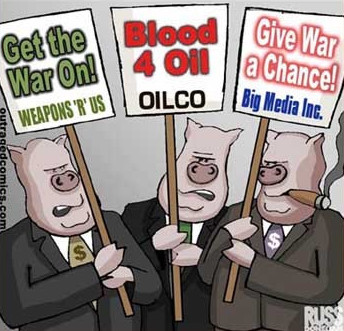
The War Conspiracy – Oligarchical Collectivism

s_500_wakeup-world_com_0_The-Conspiracy-Of-War-Power-Profit-Propaganda-and-Imperialism

By Ethan Indigo Smith

Source: OpEdNews.com

“Since armies are legal, we feel that war is acceptable; in general, nobody feels that war is criminal or that accepting it is criminal attitude. In fact, we have been brainwashed. War and the large military establishments are the greatest sources of violence in the world. Whether their purpose is defensive or offensive, these vast powerful organizations exist solely to kill human beings. We should all be horrified, but we are too confused.” (source)

Power, Profit, Propaganda and Imperialism

With all the wisdom and knowledge we have access to, I simply cannot believe that the governments of the world are once again positioning our armed forces in a war stance. I cannot believe that individuals are allowing it, and even pushing for it, and volunteering to take part in its violent uselessness. It’s as if there has been a breakout of some terrible disease that wrings out moral essences, removes our impetus for self-preservation and instills a self-destructive hatred of one’s fellow man. There is no sound logic to war, unless there is something more we are not being told”

The fog of war makes obtaining the facts stupendously difficult. Although most prefer to believe government propaganda is a thing of the past, history shows us that it is an inherent part of any wartime society, obscuring facts and motivations in favor of those who initiate — and benefit from — war. Known euphemistically as ‘public relations’, it is the manufacturing of consent to suit a particular agenda, and along with its ‘proper’ use comes the ability to control the thinking of masses (both their focus and beliefs) and mold the collective mind.

However, the more we know about history and the causes and effects of wars in the past, the less we need to know about the wars of the present. Indeed the more we know of the nature of war, the more likely we are to reach accurate conclusions of our current situation, making contextual hypotheses based on what we do know, without having to filter through what we’re (nonsensically) being told.

“Now, according to U.S. foreign policy in Syria, we want to fight ISIS while also fighting Assad in Syria” even though ISIS is fighting against Assad in Syria, and the Russians are helping Syria fight ISIS” so we may have to fight Russia to stop them from fighting with Syria against ISIS. If that sounds insane to you, that’s because it is.” ~ Investigative Journalist Ben Swann

So what’s the rationale?

War is a Racket

US Marine Corps Major General, Smedley Butler, eventually concluded that “war is a racket” in which individuals are used like fodder for institutions. Dear Smedley died the most decorated US Marine in history, and one might merely read his concise 4-chapter book, “War Is A Racket”, to understand the reality of war: it’s an act of institutions against individuals.

“War is a racket. It always has been. It is possibly the oldest, easily the most profitable, surely the most vicious. It is the only one international in scope. It is the only one in which the profits are reckoned in dollars and the losses in lives” It is conducted for the benefit of the very few, at the expense of the very many. Out of war a few people make huge fortunes” In World War 1, a mere handful garnered the profits of the conflict” [and] at least 21,000 new millionaires and billionaires were made.” ~ Smedley D. Butler, War Is a Racket

Written from an insider perspective, it reads like it might have been written five years ago rather than fifty. We are living in a world today that is very much like the world of Smedley Butler, in that not much has changed, not much has been learned, and we’re still doing the same thing — and, inexplicably, expecting a different outcome.

War does not bring peace. As the saying goes, “Fighting for peace is like f**king for virginity. “ War never serves any individual or group, except a powerful elite few — the oligarchs who perpetuate and manipulate tribal, feudal, nationalistic and fascist war-mongering the world over, generating trillion dollar profits from death and destruction, while touting their own patriotism, and encouraging your support.

One of the best ways to gain and maintain power and support for war is to keep the people in constant fear — in fear of wars, of outsiders, and more recently, of “terrorism”. Maintaining a culture of war-minded fear keeps a society in a prolonged stress-response, the kind biologically linked to the threat of death in the wild, enabling those at the top of the oligarchical pile to easily direct the thinking of — and therefore to shape — the society they control. As a result, we consent to a bulk of our taxes being spent on funding the endless military-industrial-complex, instead of creating Nirvana for ourselves. Believing we are under constant threat of the unseen, we have become willing and dedicated contributors to the financial and political objectives of the monstrous war industry, marketed to us under the guise of our own security and protection.

This motive becomes clearer when we consider that the United States Of America is actually a foreign corporation operating out of Washington DC.

The facts are, the United States has been at war for 222 years out of the last 239 years. (That’s 93% of the time!) Since the Declaration of Independence was written in 1776, the U.S. has actually been at peace (albeit planning for further wars) for a total of only 21 years. Not one U.S. president actually qualifies as a solely peacetime president, and the only time the United States lasted five years without going to war was between 1935 and 1940, during the period of the Great Depression — from which economic recovery was led by the war-industry.

More recently, if we look objectively at the history of the Presidents of the United States since the end of the Second World War, we see that each administration — Truman, Kennedy, Eisenhower, Nixon, Reagan, Bush, Clinton, Dubya, and now Obama — created a presidential Doctrine directly pertaining to war, either directly inciting conflict or inviting US involvement in it. Since U.S. involvement in World War II began in 1940, most of the world’s military operations have been initiated by the U.S., and U.S. Military spending today exceeds the rest of the world’s military spending combined, making the US war machine the single most profitable industry in the world. For the period 2010-14, the United States was the world’s biggest exporter of major arms, accounting for 31 percent of global shares, delivering weapons to at least 94 different recipients — many we are told are “hostile to US interests.” [source] In the fiscal year 2015, US military spending is projected to account for 54 percent of all discretionary federal spending — over $598 billion — exceeding the combined budgets for science, environment, housing, health, veterans affairs, education and transportation. [source] The U.S. defense industry employs a staggering 3.5 million Americans — or 1 in every 45 people employed in American [source] — while the private companies supporting the military generate in excess of $300 billion in revenue per year.

The U.S. economy is now so dependent on war, there is no incentive for the U.S. Government to strive for peace — it just isn’t profitable.

s_500_wakeup-world_com_0_War-becomes-perpetual-when-it-is-used-as-a-rationale-for-peace-12

With the U.S. economy and military operations so intrinsically linked, the American people have over time come to accept its war culture as normal, believing the increasingly ludicrous propaganda that tells us the U.S. is subject to threats from far weaker military nations and is nobly “fighting for peace” — an oxymoron of the highest order. As a result, the U.S. government has never been compelled by its People to create peace. The very notion of peace — and I don’t mean winning wars, I mean real peace — is so foreign to the people of the United States because we, as a nation, have never really experienced peace, nor have our leaders (despite their rhetoric) ever envisioned peace, much less planned for it or made it the focus of Presidential Doctrine.

The culture of war we live in today is no accident but the result of implicit cultural design — the very definition of conspiracy.

Conspiracy (noun): a secret plan by a group to do something unlawful or harmful.

Patriotism or Imperialism?

War is built on a narrative of “us” versus “them”, creating the perception of threat and inhumanity in those we are told are our enemies. With governments, corporate military machines and media working together, achieving that perception in any population is the easy part — quelling those who are opposed to war is more difficult.

To achieve this, the very idea of patriotism has been confounded and confused with elitism, imperialism and oligarchical collectivism. By definition, true patriots question information to educate themselves and share it with others, in order that we might progress beyond the status quo. Patriots are forward thinking, they observe and question actuality, and prioritize what is right over personal concerns. They are able to embrace change, including ceasing participation, and are willing to implement beneficial change through their actions. But they do not drive change for its own sake, or their own selfish ends, only when change is necessary to make a right or cancel a wrong. In this way, thetrue patriot poses a distinct threat to the status quo. They do not fear repercussions of their speech; they are unafraid to speak the truth so that others may benefit.

So, within and without their own ranks, institutions seek to isolate and disempower true patriotism by distorting and confusing its meaning, and eliminating the notion altogether by instilling nationalistic ‘you’re either for us or against us’ thinking — which is simply elitism dressed up in patriots clothing. As a result, the true patriot is absent from our mainstream narrative. Government and media institutions have attempted to delete the notion of true patriots and transform our understanding of ‘patriotism’ into flag-waving idiocy, war-minded zealotry, and hyper-nationlistic elitist imperialism. And they have done this so completely, in fact, that people identify materialistic oligarchs like Donald Trump or Hillary Clinton as patriots. In actuality, most politicians around the world are oligarchical collectivists, steering their societies toward imperialist goals — such as war, environmental desecration for corporate benefit and diminished individual freedoms, benefitting only those at the top of the social pyramid, not the society on the whole.

So, before serving your country, first learn who your government is serving.

Oligarchical Collectivism

What is oligarchical collectivism? The term was coined by George Orwell in his seminal book 1984. More precisely, the term is from ‘the book within the book’, entitled “The Theory and Practice to Oligarchical Collectivism”, which is heavily referenced through the narrative of 1984. Some researchers have suggested the only reason Orwell wrote 1984 at all was to enable writing the book within the book.

In it, the fictional world of 1984 is described and it is very much like the actual world of today, where endless war is waged not as a matter of winning, but as a matter of maintaining a steady war economy — a war society through which profits are garnered from the institutions of war and controls over individuals justified. It depicts a world where the states are eternally shifting sides, and eternally at war, and where citizens are constantly under threat of terrorist attack, by nobody knows who, much like we have today with the War On “Terror” — an abstract emotional response against which war can never be won.

Beyond that aspect, the fictional society of 1984 is very much like the reality of today in that everyone is watched and monitored, and pertinent information is restricted, controlled and manipulated to prop up the system.

1984 provides a stark view of a burgeoning culture of totalitarianism that is as important as a work of fiction as it is as a reflection of modern fact. Each aspect of the Five Freedoms of The First Amendment were infringed and removed. Freedom of speech was so restricted that not only was there one source of news — operated by the official governing body — there was also a whole arm of government dedicated to slowly and steadily eliminating and altering language deemed detrimental to the state. Today sharing information on institutional activity that harms individuals is already punishable, whistleblowers are treated as treasonists not patriots, and the sharing of ideas that challenge the status quo is becoming more heavily censored. Japan’s censorship of globally critical information relating to Fukushima, the United States’ constant surveillance of its own people, and the UK’s attempt to prohibit ‘esoteric’ information are all prime examples.

The Conspiracy Of War

The inference of 1984, the underlying lesson in Butler’s War Is A Racket, and the lessons we can learn from reality (both today and in history) is that wars are a matter of instituting control. War is waged on “them” to control “us”. And it is enacted as an unwritten policy, shrouded in secrecy, where the methods and true motives of government are routinely concealed from the People.

“The conscious intelligent manipulation of the organized opinions and habits of the masses is an important element in a democratic society. Those who manipulate this unseen mechanism of society constitute an invisible government which is the true ruling power of our country. We are governed, our minds molded, our tastes formed, our ideas suggested largely by men we have never heard of. In almost every act of our lives, whether in the sphere of politics or business, in our social conduct or our ethical thinking, we are dominated by the relatively small number of persons who understand the mental processes and social patterns of the masses. It is they who pull the wires that control the public mind.” ~ Edward Bernays, considered “the Father of Propaganda”.

Several elements of the war-machine State work in unison. Government priorities change from regulating industry and protecting individuals, to regulating individuals and protecting industry. The release of technology to the public is limited. The society is set up (through economic and other mechanisms) to literally keep people busy securing resources rather than considering the system they are living in, and the impact of that system on the planet, ourselves and each other. The media works to instill and reinforce the ideals, beliefs and official narrative of government. The monetary system is privately owned. The education system prepares children to join the ranks of the working class. Other cultures and ways of thinking are demonized. And the passing on of ancient knowledge and wisdom, history and spirituality, is suppressed.

“One of the saddest lessons of history is this: If we’ve been bamboozled long enough, we tend to reject any evidence of the bamboozle. We’re no longer interested in finding out the truth. The bamboozle has captured us. It’s simply too painful to acknowledge, even to ourselves, that we’ve been taken.” ~ Carl Sagan

What 1984 Can Teach Us About 2015

In the fictional world of 1984, oligarchies war against each other as a matter of routine. It is a world of shifting sides, of terrorism enacted by shadowy entities and populations under mass restriction of information, freedom, movement, natural resources and, importantly, technology — technology that would remove the need to fight over resources. It all sounds very familiar.

Whenever there is a surge of change and awakening in a society, those who profit the most from the status quo institute war and the threat of war, as a tried and tested way to maintain control. And today, the endless (unwinnable) War On Terror and numerous false flag attacks have proven to be effective (albeit transparent) ways to drive both corporate profits and tighter legislative controls, literally taking control of the collective consciousness of humanity.

One of the main ways that those in power control the consciousness of the people, and absorb patriotic opposition to war into the background of public awareness, is to create thought systems that appropriate war. An example offered by George Orwell in 1984 was the use of ‘Big Brother’ by the controlling Inner Party, the human image of “news” presented to the masses via the widely viewed Telescreen. Big Brother does not reflect the patriotic spirit of brotherhood, nor the potential or even the reality of the world, rather it provides an ‘official’ narrative for the actions of the controlling Party which appropriates and misrepresents the concept of brotherhood into a ‘brand name’ of the Telescreen — a psychology of collectivism, not brotherhood, which is a big difference indeed. Today, via the wonder of Television, institutions transfer and confuse words and ideas in the same manner, deliberately confusing themselves, their policies and their products with patriotic ideas, words and ideals. The ‘Patriot Act’ is the perfect example of the modern era.

“If thought corrupts language, language can also corrupt thought.” ~ George Orwell

One of the biggest lessons of 1984, and part of every war that has been — and sometimes the main inducing factor — is the creation of a certain bond within the nation that enables the oligarchical collectivism to continue. The “us” and “them” atmosphere of war creates an nationalistic togetherness within the “us”, bonding a society to its controllers and their goals, and causing that society not only to accept a war as “necessary” but to accept a constant state of hindered development, where resources are diverted to war, and just keeping our nostrils above water takes up most of our energy, time and concentration.

But more than a warning, 1984 and ‘the book within the book’ are an instruction manual for individuals bonded by the oligarchy. It shows us in detail that war is a function of individuals versus institutions, and that no matter what the beginning philosophy — be it capitalism or communism, or most any other structure — war ultimately ends up leading to oligarchical collectivism. War is more than simply influencing political ideas and seeking nationalistic gains, or whatever the stated reason, it is designed to further the goals of elitists, entrenching the corporate-military-industrial complex at the top, where they are, harvesting profit and power off of the rest of us.

“We know that no one ever seizes power with the intention of relinquishing it. Power is not a means; it is an end. One does not establish a dictatorship in order to safeguard a revolution; one makes the revolution in order to establish the dictatorship. The object of persecution is persecution. The object of torture is torture. The object of power is power. Now you begin to understand me.” ~ George Orwell, 1984

Final Thoughts

The war world we are seeing today is the result of text book oligarchical collectivism; the same formulation of authority used by empires and emperors for millennia before us, playing out in a rapidly degrading economic, political and environmental setting. It bears little difference to those societies that have risen and duly fallen before us. The only difference now is that there are “new and improved” modes and destructive war, resources and media/propaganda technologies being used to enforce the rule of the oligarchy. There are new tools and new names, the ‘order’ is packaged in a new sleek design with new bells and whistles, but at its core, it is the same system that sacrifices the lives and livelihoods of individuals to benefit those the system is biased toward.

Those institutions at the top of the pyramid and the “authorities” behind them claim act for the betterment of mankind, and yet, they always seem to get the better of mankind. In a community that is led by the wealthy for the wealthy, this continuation of the status quo comes at the direct cost of individuals and their basic rights to freedom, peace, and unimpeded access to the planet’s natural resources — all of which are treated as commodities. We are led to believe our personal freedoms and livelihood depend on adhering to the status quo, without which the rights and richness of our natural world cannot be accessed. In truth, the opposite is true.

“All the others, even those who resembled ourselves, were cowards and hypocrites. The German Nazis and the Russian Communists came very close to us in their methods, but they never had the courage to recognize their own motives. They pretended, perhaps they even believed, that” just around the corner there lay a paradise where human beings would be free and equal. We are not like that. The Party seeks power entirely for its own sake. We are not interested in the good of others; we are interested solely in power, pure power. What pure power means you will understand presently. We are different from the oligarchies of the past in that we know what we are doing.” ~ 1984

It is true: the war-minded imperialists of today know what they are doing, and arguably do it more effectively than most other empires in history. But in working to break their instilled culture of perpetual war, our strength lies in the lessons of history. Exploitative institutional mechanics can be dismantled and bettered, and individuals can ascend institutional walls. Just as people are capable of creating institutions, people are capable of halting institutions as well. Institutions after all, no matter how powerful or exploitative, are only human structures — a social machinery that relies on our consent and agreement. And as history has proven, when controlling empires push a population too far, they will inevitably fall.

If we educate ourselves and others of the inner workings of our society and, as C.G. Jung put it, “make the darkness conscious”, we can rise above the restraints of misinformation and disinformation, lies, deceit, and propaganda that creates benefit for some, and create a world of mutually agreed peace, which values living breathing beings over life-less institutions. In a world where war is the design of powerful conspirators, peace is the coming revolution.


Nonviolent Action: Why and How it Works

marcha_sal3

Nonviolent action is extremely powerful.

Unfortunately, however, activists do not always understand why
nonviolence is so powerful and they design ‘direct actions’ that are
virtually powerless.

I would like to start by posing two questions. Why is nonviolent action
so powerful? And why is using it strategically so transformative?

When an activist group is working on an issue – such as a national
liberation struggle, war, the climate catastrophe, violence against
women and/or children, nuclear weapons, drone killings, rainforest
destruction, encroachments on indigenous land – they will often plan an
action that is intended to physically halt an activity, such as the
activities of a military base, the loading of a coal ship, the work of a
bulldozer, the building of an oil pipeline. Their plan might also
include using one or more of a variety of techniques such as locking
themselves to a piece of equipment (‘locking-on’) to prevent it from
being used. Separately or in addition, they might use secrecy both in
their planning and execution so that they are able to carry out the
action before police or military personnel prevent them from doing so.

Unfortunately, the focus on physical outcomes (including actions such as
‘locking-on’ and its many equivalents), and the secrecy necessary to
carry out their plan, all functionally undermine the power of their
action. Why is this? Let me explain how and why nonviolent action works
so that it is clear why any nonviolent activist who understands the
dynamics of nonviolent action is unconcerned about the immediate
physical outcome of their action (and what is necessary to achieve
that).

If you think of your nonviolent action as a physical act, then you will
tend to focus your attention on securing a physical outcome from your
planned action: to prevent the military from occupying a location, to
stop a bulldozer from knocking down trees, to halt the work at an oil
terminal or nuclear power station, to prevent construction equipment
being moved on site. Of course, it is simple enough to plan a nonviolent
action that will do any of these things for a period of time and there
are many possible actions that might achieve it.

But if you pause to consider how your nonviolent action might have
psychological and political impact that leads to lasting or even
permanent change on the issue in question but also society as a whole,
then your conception of what you might do will be both expanded and
deepened. And you will be starting to think strategically about what it
means to mobilise large numbers of people to think and behave
differently.

After all, whatever the immediate focus of your action, it is only ever
one step in the direction of more profound change. And this profound
change must include a lasting change in prevailing ideas and a lasting
change in ‘normal’ behaviour by substantial (and perhaps even vast)
numbers of people. Or you will be back tomorrow, the day after and so on
until you get tired of doing something without result, as routinely
happens in campaigns that ‘go nowhere’ (as so many do).

So why does nonviolent action work?

Fundamentally, nonviolent action works because of its capacity to create
a favourable political atmosphere (because of, for example, the way in
which activist honesty builds trust), its capacity to create a
non-threatening physical environment (because of the nonviolent
discipline of the activists), and its capacity to alter the human
psychological conditions (both innate and learned) that make people
resist new ideas in the first place. This includes its capacity to
reduce or eliminate fear and its capacity to ‘humanise’ activists in the
eyes of more conservative sections of the community. In essence,
nonviolent activists precipitate change because people are inspired by
the honesty, discipline, integrity, courage and determination of the
activists – despite arrests, beatings or imprisonment – and are thus
inclined to identify with them. Moreover, as an extension of this, they
are inclined to change their behaviour to act in solidarity.

It is for this reason too that a nonviolent action should always make
explicit what behavioural change it is asking of people. Whether
communicated in news conferences or via the various media, painted on
banners or in other ways, a nonviolent action group should clearly
communicate powerful actions that individuals can take. For example, a
climate action group should consistently convey the messages to ‘Save
the Climate: Become a Vegan/Vegetarian’, ‘Save the Climate: Boycott
Cars’ and, like a rainforest action group, ‘Don’t Buy Rainforest
Timber’. A peace group should consistently convey such messages as
‘Don’t Pay Taxes for War’ and ‘Divest from the Weapons Industry’ (among
many other possibilities). Groups resisting the nuclear fuel cycle and
fossil fuel industry in their many manifestations should consistently
convey brief messages that encourage reduced consumption and a shift to
more self-reliant renewable energies. See, for example, ‘The Flame Tree
Project to Save Life on Earth’. Groups struggling to defend or reinstate indigenous sovereignty should convey compelling messages that explain what people can do in their particular context.

It is important that these messages require powerful personal action,
not token responses. And it is important that these actions should not
be directed at elites or lobbying elites. Elites will fall into line
when we have mobilized enough people so that they are compelled to do as
we wish. And not before. At the end of the Salt March in 1930 Gandhi
picked up a handful of salt on the beach at Dandi. This was the signal
for Indians everywhere to start collecting their own salt in violation
of British law. In subsequent campaigns Gandhi called for Indians to
boycott British cloth and make their own khadi (handwoven cloth). These
actions were strategically focused because they undermined the
profitability of British colonialism in India and nurtured Indian
self-reliance.

A key reason why Mohandas K. Gandhi was that rarest of combinations – a
master nonviolent strategist and a master nonviolent tactician – was
because he understood the psychology of nonviolence and how to make it
have political impact. Let me illustrate this point by using the
nonviolent raid on the Dharasana salt works, the nonviolent action he
planned as a sequel to the more famous Salt March in 1930.

On 4 May 1930 Gandhi wrote to Lord Irwin, Viceroy of India, advising his
intention to lead a party of nonviolent activists to raid the Dharasana
Salt Works to collect salt and thus intervene against the law
prohibiting Indians from collecting their own salt. Gandhi was
immediately arrested, as were many other prominent nationalist leaders
such as Jawaharlal Nehru and Vallabhbhai Patel.

Nevertheless, having planned for this contingency, under a succession of
leaders (who were also progressively arrested) the raid went ahead as
planned with hundreds of Indian satyagrahis (nonviolent activists)
attempting to nonviolently invade the salt works. However, despite
repeated attempts by these activists to walk into the salt works during
a three week period, not one activist got a pinch of salt! Moreover,
hundreds of satyagrahis were injured, many receiving fractured skulls or
shoulders, and two were killed.

But an account of the activists’ nonviolent discipline, commitment and
courage – under the steel-tipped lathi (baton) blows of the police – was
reported in 1,350 newspapers around the world. As a result, this
nonviolent action – which ‘failed’ to achieve the stated physical
objective of seizing salt – functionally undermined support for British
imperialism in India. For an account of the salt raids at Dharasana, see
Thomas Weber. ‘”The Marchers Simply Walked Forward Until Struck Down”:
Nonviolent Suffering and Conversion’

If the activists had been preoccupied with the physical seizure of salt
and, perhaps, resorted to the use of secrecy to get it, there would have
been no chance to demonstrate their honesty, integrity, courage and
determination – and to thus inspire empathy for their cause – although
they might have got some salt! (Of course, if salt had been removed
secretly, the British government could, if they had chosen, ignored it:
after all, who would have known or cared? However, they could not afford
to let the satyagrahis take salt openly because salt removal was illegal
and failure to react would have shown the salt law – a law that
represented the antithesis of Indian independence – to be ineffective.)

In summary, nonviolent activists who think strategically understand that
strategic effectiveness is unrelated to whether or not the action is
physically successful (provided it is strategically selected,
well-designed so that it elicits one or other of the intended responses,
and sincerely attempted). Psychological, and hence political, impact is
gained by demonstrating qualities that inspire others and move them to
act personally too. For this reason, among several others, secrecy (and
the fear that drives it) is counterproductive if strategic impact is
your intention.

If you are interested in planning effective nonviolent actions, a
related article also explains the vital distinction between ‘The
Political Objective and Strategic Goal of Nonviolent Actions’.

And if you are concerned about violent military or police responses,
have a look at ‘Nonviolent Action: Minimizing the Risk of Violent
Repression’.

For those of you who are interested in planning and acting strategically
in your nonviolent struggle, whatever its focus, you might be interested
in one or the other of these two websites: Nonviolent Campaign Strategy and Nonviolent Defense/Liberation Strategy.

And if you are interested in being part of the worldwide movement to end
all violence, you are welcome to sign the online pledge of ‘The People’s
Charter to Create a Nonviolent World’.

Struggles for peace, justice, sustainability and liberation often fail.
Almost invariably, this is due to the failure to understand the
psychology, politics and strategy of nonviolence. It is not complicated
but it requires a little time to learn.


Biodata: Robert J. Burrowes has a lifetime commitment to understanding and ending human violence. He has done extensive research since 1966 in an effort to understand why human beings are violent and has been a nonviolent activist since 1981. He is the author of ‘Why Violence?‘ His email address is flametree@riseup.netand his website is at http://robertjburrowes.wordpress.com

Robert J. Burrowes
P.O. Box 68
Daylesford
Victoria 3460
Australia
Email: flametree@riseup.net

Websites:
Nonviolence Charter
Flame Tree Project to Save Life on Earth
‘Why Violence?’
Nonviolent Campaign Strategy
Nonviolent Defense/Liberation Strategy
Anita: Songs of Nonviolence
Robert Burrowes
Global Nonviolence Network