
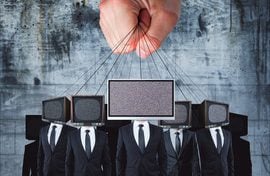
Questioning The Official Story About Official Stories: A Role for Citizen Investigations

By Time Hayward

Source: Tim Hayward Blog

Official stories, according to the official story about them, are (nearly) always true. The ‘nearly’ gets mentioned just because, on rare occasions, an official story is acknowledged to have been wrong, as, for instance, with Iraq’s falsely alleged weapons of mass destruction in 2003. But that’s considered an exception to the rule, and to extrapolate from it to a more pervasive mistrust is to be foolish, ill-informed or even a dupe of hostile propaganda. In fact, diagnosing what is wrong with sceptics about official stories, and proposing ways of curing or otherwise dealing with them, are now becoming a growth industry in the media and academia. So we hear a lot about how dissenting from official narratives is to fall victim to ‘conspiracy theory’ or ‘disinformation’; and dissenters may be diagnosed as needing re-education or even psychological help. As for the dissent itself, this is increasingly subject to censure and censorship.

However, a major question is left unaddressed: What is it that’s supposed to make official stories so credible?

The assumption is that official stories are produced by people with relevant expert knowledge, so disputing them is a product of ignorance; and since experts have credentials, experience and the backing of competent institutions, rejecting their expertise is unwise or even delusional. Also assumed is that official stories are generally produced and disseminated in good faith.

But are those assumptions generally warranted? In probing their grounds we are brought to question whether the official meta-story, as we may call it, overstates reasons for automatically accepting official stories and underestimates the competence that members of the public can bring to independent inquiries.

Why Believe Official Stories?

No serious thinker would suggest that an official story should be believed just because it comes from officials. Indeed, use of the very expression ‘official story’, in practice, tends to imply that there is also some alternative story that does not have the backing of officials but might be more credible. We know, too, that many societies from various times and places have maintained order by invoking all manner of mythological stories, ideological stories, and blatantly discriminatory stories. Sometimes this has meant denying, suppressing or persecuting as heretics people engaged in rigorous intellectual questioning of officialdom.

A more plausible reason for believing official stories has been set out by the philosopher Neil Levy (2007). He points out that we all know most of the things we know in life because we have learned them from others: our direct personal experience of the world is extremely limited compared to the expanse of our general knowledge and the intricacies of our more specialist understandings. We rely on the testimony and good faith of others in almost everything we do, so just to live a normal life in society we trust a wide range of institutions and social arrangements. To doubt their general dependability would contradict the tacit assumptions that get us through life and would render inexplicable how even a tolerably well-ordered society could ever be possible.

The force of that consideration is strong, but not absolute – and how strong also depends on what kinds of communication we are referring to as official stories. It is strongest if one uses the term to refer to all public communications that emanate from an official source. In actual usage, however, that is not how the term ‘official story’ is normally understood. We don’t regard it as an ‘official story’ that to get a passport you need to submit an authenticated photograph of yourself; we don’t regard it as an ‘official story’ that in UK cars are to be driven on the left; and nor do we these days regard it as an ‘official story’ that smoking is bad for our health. By far the greater part of public pronouncements, like these, are simply taken to state how matters stand. When the distinctive term ‘official story’ occurs, it is typically in contexts where a public pronouncement has met with scepticism. So, for example, whereas we seldom nowadays hear the rationale for mandating wearing seatbelts in cars referred to as an ‘official story’, because there is no longer serious dissent, recent claims that the rationale for mandating mRNA injections against SARS-Cov2 was substantially comparable to that for seatbelts encountered resistance: the ‘official story’ about the benefits and safety of the mRNA injections has been subject to criticism from some sections of medical and scientific communities.

Of course, the mere fact of scepticism in some quarters does not mean that a given official story is necessarily mistaken, but it does highlight how an official story is not just an uncontroversial statement of how matters stand. It leads thoughtful people to look more closely at the nature of authority claimed for an official story.

Are There Experts in Expertise?

The authority claimed for official stories derives, as Levy explains, from the fact of being produced by ‘people socially acknowledged as the relevant experts on a topic’ (Levy 2022). Relevance here is understood in terms of knowledge and experience relating to the salient subject matter. However, certain people might officially be appointed as relevant experts, on other bases, such as known affinities with the organisation’s mission. So it is possible for designated experts to support an official story while a number of other people with materially relevant knowledge and experience take a quite different view.

Even among designated expert advisers, however, achieving an authoritative consensus on the kind of matter that official stories relate to is not straightforward. This is for reasons similar to those involved in giving policy advice (see e.g. Grundmann 2017). Insofar as an official story appeals to a scientific basis, it should be borne in mind that findings of science – a process of open, collaborative and progressive inquiry – have a provisional status, with all scientific statements being in principle corrigible. This means that a scientific adviser’s confidence can never be completely unconstrained or unhedged. Zeynep Panuk (2021) refers to a ‘paradox of scientific advice’ that arises from the difficulties of basing decisions on scientific knowledge that is almost always uncertain and subject to disagreement. Panuk cites experience of how overconfident scientists in advisory committees may suppress dissent so as to present a consensus view, only to find that its implementation had unfortunate or even disastrous consequences. Recent experiences of overconfident pronouncements on ‘The Science’ during the Covid pandemic have furnished further examples (Miller 2022Nelson 2022).

The kind of controversy for which an ‘official story’ comes into play will not normally reduce to some specialist detail of basic science, or even a collection of these, but will concern a situation involving many factors – including those pertaining to social organisation, human action and decision-making. Such situations are similar to those where policy advice is sought from scientific experts (SAPEA 2019 Ch. 2; Martin et al 2020). Official stories are seldom if ever straightforward statements of scientific opinion on a single well-defined scientific research question: they typically relate to situations where many interacting variables may not all be clearly disaggregable. There is in principle no necessary reason why an independent and unofficial grouping of investigators with materially relevant expertise might not be as well-suited to an inquiry as an official grouping. In fact, challenges to official stories can sometimes draw on impressive constellations of expertise.

Citizen Investigations

If the official meta-story may overestimate the dependability of designated expert advice, it may also underestimate the investigative competence of ordinary citizens. For challenges to official stories can be mustered not just by isolated individuals, caricatured as ‘doing their own research’ while ‘reading things on the internet,’ but by well-informed collaborative groups. These can be better able to track truths than independent individuals: ‘the superiority of the group over the individual does not require that one member has the right answer prior to deliberation: group deliberation may enable the aggregation of the genuine insights of several members and the rejection of the false hypotheses of some of the same individuals.’ (Levy 2019: 316)

Furthermore, if it is the case that ‘[g]roups of individuals who are strangers to one another are better at tracking truths than groups of individuals who have a shared history’ (Levy 2019: 318) then this is an advantage of groups comprising people who come together in cyberspace from all walks of life and may have little or no biographical information about those they connect with. Citizens doing their own research sometimes start their own Wikis, or form groups on Reddit, or informally deliberate via Twitter or Telegram. Sometimes they create investigative collectives offline.

It was from participating in chatrooms, for instance, that the now much-feted organisation Bellingcat originated: its founder, Eliot Higgins, a gamer-turned-investigative-citizen, would review copious amounts of war footage from his sofa in Leicester and discuss his observations in chatrooms. The work of his investigative collaborative has come to be ‘commended in the global media and by global agencies such as Amnesty International and Human Rights Watch.’ (Nguyen and Scifo 2018: 377) Impressed by the methods of ‘open source intelligence’ (D’Alessandra and Sutherland 2021), curators of official stories in the West – particularly those relating to geopolitical issues involving Russia – have bestowed accolades on Bellingcat, along with generous funding and encouragement.

So, there is precedent for treating citizens’ investigations as authoritative. Other groups of citizen investigators, that do not receive any funding, have mounted significant challenges to some of the West’s own official stories. Thus, directly countering Bellingcat, on occasion, is the Working Group on Syria, Propaganda and Media which has earned the confidence of whistleblowers rather than officials (OPCW 2020).

Aside from the benefits of collaboration, the reality of serious dissent in the digital sphere is that it can involve myriad critical individuals with significant independent claims to epistemic authority in their professional fields and who exhibit judicious awareness of both their own limitations and the value of others’ insights. For instance, challenging various official narratives are whistleblowers who include scientists, diplomats, intelligence officers, and various state or corporate employees. Challenges come too from professionals with relevant specialist expertise across fields like medicine, architecture, engineering, pharmaceuticals, and a gamut of others. Also worth highlighting are those journalists with previous careers in mainstream media organisations who found they could only maintain their professional integrity by becoming independent.[1] When a group of people independently deliberating together can include, for instance, a former head of a nation’s armed services, a UN weapons inspector, a senior diplomat, an intelligence officer, a world leading International Relations expert and a seasoned war correspondent, the insights they generate regarding situations relevant to foreign policy may well be no less sound than those informing the official story.[2] Indeed, in virtue of their freedom from institutional constraints, they may be more reliably informative for the public than the official story.

If serious challenges to official stories have become more prevalent in recent years, as they arguably have, this is likely due in good part to the sheer extent to which mainstream media have excluded the voices of experts who, maintaining their professional integrity and independence in the face of sometimes considerable hostility, have continued to articulate their challenges to official stories. Attentive members of the public notice this – just as they notice when the force of the state is brought to bear on those who bring to light its lies and malfeasance, and not only in high profile cases like Edward Snowden, Chelsea Manning, Katharine Gun or Julian Assange.

Part of the official meta-story currently is that the internet and social media are being flooded by targeted disinformation that is misleading and confusing people. However, from another perspective one might see that thanks to digital communications citizens can become aware of arguments developed by other experts which are suppressed by protectors of an ‘official story’. An example would be the authors of the Great Barrington Declaration (GBD) (2020), advocating an approach to dealing with the Covid situation characterized as ‘focused protection’ instead of the officially promoted lockdown approach. Lay persons may not be able to adjudicate first hand between recommendations from the GBD and the John Snow Memorandum (2020), which defended lockdown, but they can understand enough to know that the latter does not command an unproblematic consensus such as would be rational simply to defer to. Members of the public can assess the trustworthiness of expertise and official stories without a high level of technical knowledge, as science studies scholars have shown (Yearley 2005; Hess 2012).

People understand that if a view is suppressed rather than openly addressed and rebutted the reason might be that it cannot be rebutted. If an attentive public observes that dissent is simply treated as inadmissible, and especially if those formulating it are subject to smearing or censorship, then there is a corresponding diminution of public trust in the orthodox view.

Tension At The Heart of An Official Story

If the claim that the authority of an official story derives from an expert consensus can be questionable, something more certain is that an official story is asserted with the kind of authority that comes with power. People may defer to an official story not because they necessarily find it credible but out of a prudent concern to avoid the costs of dissidence. Those with power can also incentivise wider media of communication to stick to the narrative. This difference between epistemically earned authority and politically declared authority is a tension at the heart of official stories. Understanding it helps explain why we find a good many journalistic and scholarly studies of the supposed pathologies of dissident citizens and rather little reflection on the real nature of the authority of official stories.

Today we find a welter of studies of online ‘disinformation’ that trace webs of connection across cyberspace seeking to link influential dissenting accounts on social media with bots and trolls associated with malign actors. These communications are said to be engaged in strategically. That is, their aim is to persuade the public to accept a pre-established story rather than to allow people to determine, through open deliberations, what the most credible story is.

Yet this is exactly what the promulgators of official stories themselves do. Regardless of whether the content of a given official story is reliable or not, the form of an official story – in virtue of fulfilling its official function – is that of a strategic communication. Its communication, as official, is presented as a matter not for deliberation but for public acceptance. It is not submitted to public scrutiny with an implicit invitation for critical feedback. It is not up for discussion. It is communicated not to advance debate but to settle it.

This is the inherent tension in an official story: its assertion of epistemic authority depends on an implicit claim that it can be backed by processes of deliberative reasoning, but the pronouncement of an official story as a settled opinion curtails any such process.

What this means in practice has been illustrated, for instance, in the situation arising with the UK Government’s Covid response, which professedly aimed to ‘Follow The Science’ (Stevens 2020). This notion can only ever be ‘a misleading oversimplification’ of what it means to base policy on science (Abbasi 2020), and when UK government ministers claimed to be ‘guided by the science’, what they meant in practice was being guided by their scientists: ‘Ministers formed strong relationships with key scientific advisors, relied on evidence from their Scientific Advisory Group for Emergencies (SAGE), and ignored or excluded many other sources.’ (Cairney 2021) Thus a policy of public communications was decided on the basis of a selective interpretation of scientific findings. But more than this, instead of caution in the face of uncertainty, a policy of robustly promoting a particular view involved the use of psychological operations of a kind more normally associated with a war effort than with public health advice (Sidley 2021, 2022).

Unfortunately, as that example also showed, the defence of an official story against criticism can include counter-measures taken to smear and discredit dissenters. This is never an edifying approach, but is especially troubling when it involves discrediting serious critics who have their own credible claim to epistemic authority. This was illustrated in the case of the eminent scientists who signed the Great Barrington Declaration. They were widely vilified not only in the media but even by other academics, for pointing to certain established principles of epidemiology – including those developed over the two preceding decades of pandemic preparedness planning – that were being set aside and overridden by policy-makers on the basis of modellers’ projections in favour of a ‘zero-covid’ strategy (Ioannidis 2022). This vilification involved not only overt smearing but also something more insidious, namely, the pre-emptive dismissal of their views – notwithstanding their impeccable academic pedigree – as too far ‘beyond the pale’ to warrant serious consideration (HART 2022).

This situation showed that the other institutions of civil society, including the media and academia, which the official meta-story claims provide critical scrutiny, can in fact simply amplify official strategic communications. Thus the organisations that Levy recommends we rely on as guarantors of the authors of official stories can in reality see it as their responsibility to promote and defend the official story rather than question it. Public perceptions that this is the case are accompanied by a deficit of trust in the media and institutions more generally.

The official meta-story blames ‘conspiracy theorists’ and other critical questioners for this lack of trust. But perhaps that gets things the wrong way round.

Conclusion

Trust is something that has to be won, and, if betrayed, it can be lost. As the public’s trust in official stories diminishes, the official meta-story looks to blame this on ‘conspiracy theorists’ and other ‘disruptive influences’. Perhaps a more credible story about official stories would include serious reflection on how they might be made more transparently trustworthy.

Meanwhile, it is reasonable to suggest that each serious challenge to an official story should be assessed on its merits. This does not mean being swayed by extravagant contrarian hypotheses, since these should be treated with even more caution, and, when appropriate, summarily rejected. It does mean being duly aware of how the presumption in favour of official stories is necessarily defeasible. That is the case not just because any story may prove to be mistaken, even in all good faith, but also because we know that any organisation with politically-conferred authority is liable at times to come under political pressures that may, in certain circumstances, override scruples of honesty.

References

Abbasi, Kamran. 2020. ‘Covid-19: politicisation, “corruption,” and suppression of science’. BMJ; 371:m4425, 13 November: doi:10.1136/bmj.m4425   

Cairney, Paul. 2021. ‘The UK Government’s COVID-19 Policy: What Does “Guided by the Science” Mean in Practice?’ Frontiers in Political Science 315 March.https://www.frontiersin.org/articles/10.3389/fpos.2021.624068 DOI: 10.3389/fpos.2021.624068

D’Alessandra, Federica and Kirsty Sutherland. 2021. ‘The Promise and Challenges of New Actors and New Technologies in International Justice’. Journal of International Criminal Justice, 19(1): 9–34. https://doi.org/10.1093/jicj/mqab034

Great Barrington Declaration. 2020. https://gbdeclaration.org/

Grundmann, Reiner. 2017. ‘The Problem of Expertise in Knowledge Societies’. Minerva 55, 25–48 (2017). https://doi-org.ezproxy.is.ed.ac.uk/10.1007/s11024-016-9308-7

HART [Health Advisory and Recovery Team]. 2022. ‘The crushing of dissent throughout the covid era’, 8 October: https://www.hartgroup.org/the-crushing-of-dissent-throughout-the-covid-era/

Hess, David J. 2012. Science Studies: An Advanced Introduction. New York: NYU Press.

Ioannidis, John P. 2022. ‘Citation impact and social media visibility of Great Barrington and John Snow signatories for COVID-19 strategy.’ BMJ Open 2022;12:e052891. doi:10.1136/ bmjopen-2021-052891

John Snow Memorandum. 2020. https://www.johnsnowmemo.com/

Levy, Neil. 2007. ‘Radically Socialized Knowledge and Conspiracy Theories’, Episteme 4(2): 181-192.

Levy, Neil. 2019. ‘Due deference to denialism: explaining ordinary people’s rejection of established scientific findings’. Synthese 196: 313-327.

Levy, Neil. 2022. ‘Do Your Own Research!’ Synthese 200: 356. https://doi.org/10.1007/s11229-022-03793-w

Martin, Graham P., Esmée Hanna, Margaret McCartney and Robert Dingwall. 2020. ‘Science, society, and policy in the face of uncertainty: reflections on the debate around face coverings for the public during COVID-19’. Critical Public Health 30:5: 501-508, DOI: 10.1080/09581596.2020.1797997

Miller, Ian. 2022. Unmasked: The Global Failure of COVID Mask Mandates.

Nelson, Fraser. 2022. ‘The lockdown files: Rishi Sunak on what we weren’t told.’ The Spectator, 27 August: https://www.spectator.co.uk/article/the-lockdown-files-rishi-sunak-on-what-we-werent-told/

Nguyen, An and Salvatore Scifo. 2018. ‘Mapping the Citizen News Landscape: Blurring Boundaries, Promises, Perils, and Beyond.’ In Journalism, edited by Tim P. Vos. Berlin/Boston: De Gruyter.

OPCW [Organisation for the Prohibition of Chemical Weapons]. 2019. ‘Report Of The Fact-Finding Mission Regarding The Incident Of Alleged Use Of Toxic Chemicals As A Weapon In Douma, Syrian Arab Republic, On 7 April 2018.’ OPCW Technical Secretariat S/1731/2019: https://www.opcw.org/sites/default/files/documents/2019/03/s-1731-2019%28e%29.pdf

Panuk, Zeynep (2021) ‘COVID-19 and the Paradox of Scientific Advice.’ Perspectives on Politics 20(2): 562-576. DOI: https://doi.org/10.1017/S1537592721001201

SAPEA [Science Advice for Policy by European Academies]. 2019. Making sense of science for policy under conditions of complexity and uncertainty. Berlin: SAPEA. https://doi.org/10.26356/MASOS 

Sidley, Gary. 2021. ‘A Year of Fear.’ The Critic 23 March: https://thecritic.co.uk/a-year-of-fear/

Sidley, Gary. 2022. ‘Britain’s unethical Covid messaging must never be repeated.’ The Spectator 6 February: https://www.spectator.co.uk/article/britain-s-unethical-covid-messaging-must-never-be-repeated/

Stevens, Alex. 2020. ‘Governments cannot just ‘follow the science’ on COVID-19’. Nature Human Behaviour 4, 560: https://doi.org/10.1038/s41562-020-0894-x

Yearley, Steven. 2005. Making Sense of Science: Understanding the Social Study of Science. Thousand Oaks, CA: Sage.


[1] This is the case, for instance, with Jonathan Cook (formerly of The Guardian), Chris Hedges (formerly with the New Yorker), John Pilger (award-winning documentary film maker), and the late Robert Parry who founded the independent outlet Consortium News.

[2] This is to characterize part of the composition of the Berlin Group 21 that has produced the Statement of Concern relating to whistleblowers from the OPCW. See https://berlingroup21.org/ and associated press release: https://www.einnews.com/pr_news/538579944/leading-international-voices-call-on-opcw-and-its-scientific-advisors-to-allow-all-douma-investigators-to-be-heard
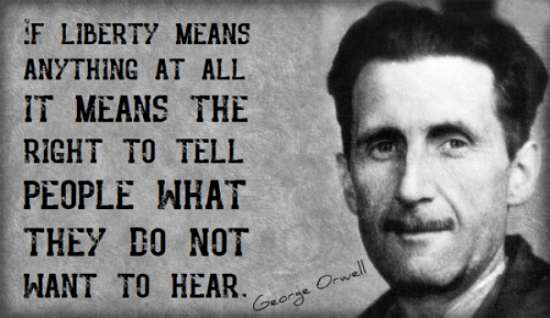
Truth Is What We Hide, Self-Serving Cover Stories Are What We Sell

By Charles Hugh Smith

Source: Of Two Minds

The fact that lies and cover stories are now the official norm only makes us love our servitude with greater devotion.

We can summarize the current era in one sentence: truth is what we hide, self-serving cover stories are what we sell. Jean-Claude Juncker’s famous quote captures the essence of the era: “When it becomes serious, you have to lie.”

And when does it become serious? When the hidden facts of the matter might be revealed to the general public. Given the regularity of vast troves of well-hidden data being made public by whistleblowers and white-hat hackers, it’s basically serious all the time now, and hence the official default everywhere is: truth is what we hide, self-serving cover stories are what we sell.

The self-serving cover stories always tout the nobility of the elite issuing the PR: we in the Federal Reserve saved civilization by saving the Too Big To Fail Banks (barf); we in the corporate media do investigative reporting without bias (barf); we in central government only lie to protect you from unpleasant realities–it’s for your own good (barf); we in the NSA, CIA and FBI only lie because it’s our job to lie, and so on.

Three recent essays speak to the degradation of data and factual records in favor of self-serving cover stories and corrosive political correctness.

Why we stopped trusting elites (The Guardian)

“It’s not just that isolated individuals are unmasked as corrupt or self-interested (something that is as old as politics), but that the establishment itself starts to appear deceitful and dubious. The distinctive scandals of the 21st century are a combination of some very basic and timeless moral failings (greed and dishonesty) with technologies of exposure that expose malpractice on an unprecedented scale, and with far more dramatic results.

Perhaps the most important feature of all these revelations was that they were definitely scandals, and not merely failures: they involved deliberate efforts to defraud or mislead. Several involved sustained cover-ups, delaying the moment of truth for as long as possible.

(The selective coverage) “generated a sense of a media class who were adept at exposing others, but equally expert at concealing the truth of their own behaviours.

Several of the defining scandals of the past decade have been on a scale so vast that they exceed any individual’s responsibility. The Edward Snowden revelations of 2013, the Panama Papers leak of 2015 and the HSBC files (revealing organised tax evasion) all involved the release of tens of thousands or even millions of documents. Paper-based bureaucracies never faced threats to their legitimacy on this scale.”

From the Late Founder and Editor Robert Parry of the Consortium for Independent Journalism (via John S.P.)

When I was a young reporter, I was taught that there were almost always two sides to a story and often more. I was expected to seek out those alternative views, not dismiss them or pretend they didn’t exist. I also realized that finding the truth often required digging beneath the surface and not just picking up the convenient explanation sitting out in the open.

But the major Western news outlets began to see journalism differently. It became their strange duty to shut down questioning of the Official Story, even when the Official Story had major holes and made little sense, even when the evidence went in a different direction and serious analysts were disputing the groupthink.

Looking back over the past two decades, I wish I could say that the media trend that we detected in the mid-1990s had been reversed. But, if anything, it’s grown worse. The major Western news outlets now conflate the discrete difficulties from made-up “fake news” and baseless “conspiracy theories” with responsible dissenting analyses. All get thrown into the same pot and subjected to disdain and ridicule.

In academia, censorship and conformity have become the norm (Globe and Mail)

In truth, facts today are deemed controversial if they deviate from accepted narratives, and professors must self-censor out of fear of being condemned and losing their jobs.

Based on conversations I’ve had with colleagues still working in academia and from what I can tell about recent cases of censorship, the antagonism is primarily from left-leaning colleagues attacking other liberals.

These instances are indicative of a larger, worrisome trend – instead of debating contentious ideas, those in opposition to them throw words ending in “-phobic” around, shutting the conversation down and pretending they don’t exist.

For those who say ideas that denigrate members of society shouldn’t be entertained, silencing the debate doesn’t make hateful beliefs go away. In many cases, it isn’t controversial findings that pose a threat; the threat comes from the possibility that others will use these facts to justify discrimination. But it’s important that we distinguish between an idea and the researcher putting forth that idea, and the potential for bad behaviour.

With academics avoiding entire areas of research as a result, knowledge currently being produced is constrained, replaced by beliefs that are pleasant-sounding but biased, or downright nonsensical. The recent “grievance studies” investigation, led by academics Peter Boghossian, James Lindsay and Helen Pluckrose, laid bare how bad the problem has become. The trio managed to get seven fake papers (but oh-so politically correct and hence “good to go”–CHS) accepted in high-ranking humanities journals.

In a consumerist-based culture accustomed to 24/7 selling of one self-serving story or another, the fact that lies and cover stories are now the official norm only makes us love our servitude with greater devotion. I’ve noticed a new twist on self-serving propaganda: an alternative opinion isn’t debated, it’s debunked, as if questioning the official narrative is by definition a “conspiracy theory” that can be “debunked” by repeating the official self-serving cover story enough times.


Of related interest:

Global Crisis: the Convergence of Marx, Orwell and Kafka (July 25, 2012)

Are You Loving Your Servitude Yet? (July 25, 2012)

Orwell and Kafka Do America (March 24, 2015)

The Ghosts of 1968 (February 14, 2018)


Conspiracy Theory

By Paul Craig Roberte

Source: PaulCraigRoberts.org

In the United States “conspiracy theory” is the name given to explanations that differ from those that serve the ruling oligarchy, the establishment or whatever we want to call those who set and control the agendas and the explanations that support the agendas.

The explanations imposed on us by the ruling class are themselves conspiracy theories. Moreover, they are conspiracy theories designed to hide the real conspiracy that our rulers are operating.

For example, the official explanation of 9/11 is a conspiracy theory. Some Muslims, mainly Saudi Arabians, delivered the greatest humiliation to a superpower since David slew Goliath. They outsmarted all 17 US intelligence agencies and those of NATO and Israel, the National Security Council, the Transportation Safety Administration, Air Traffic Control, and Dick Cheney, hijacked four US airliners on one morning, brought down three World Trade Center skyscrapers, destroyed that part of the Pentagon where research was underway into the missing $2.3 trillion, and caused the morons in Washington to blame Afghanistan instead of Saudi Arabia.

Clearly, the Saudia Arabians who humiliated Ameria were involved in a conspiracy to do so.

Is it a believable conspiracy?

The ability of a few young Muslim men to pull off such a feat is unbelievable. Such total failure of the US National Security State means that America was blindly vulnerable throughout the decades of Cold War with the Soviet Union. If such total failure of the National Security State had really occurred, the White House and Congress would have been screaming for an investigation. People would have been held accountable for the long chain of security failures that allowed the plot to succeed. Instead, no one was even reprimanded, and the White House resisted all efforts for an investigation for a year. Finally, to shut up the 9/11 families, a 9/11 Commission was convened. The commission duly wrote down the government’s story and that was the “investigation.”

Moreover, there is no evidence to support the official conspiracy theory of 9/11. Indeed, all known evidence contradicts the official conspiracy theory.

For example, it is a proven fact that Building 7 came down at freefall acceleration, which means it was wired for demolition. Why was it wired for demolition? There is no official answer to this question.

It is the known evidence provided by scientists, architects, engineers, pilots, and the first responders who were in the twin towers and personally experienced the numerous explosions that brought down the towers that is described as a conspiracy theory.

The CIA introduced the term “conspiracy theory” into public discourse as part of its action plan to discredit skeptics of the Warren Commission report on the assassination of President John F. Kennedy. Any explanation other than the one handed down, which is contradicted by all known evidence, was debunked as a conspiracy theory.

Conspiracy theories are the backbone of US foreign policy. For example, the George W. Bush regime was active in a conspiracy against Iraq and Saddam Hussein. The Bush regime created fake evidence of Iraqi “weapons of mass destruction,” sold the false story to a gullible world and used it to destroy Iraq and murder its leader. Similarly, Gaddafi was a victim of an Obama/Hillary conspiracy to destroy Libya and murder Gaddafi. Assad of Syria and Iran were slated for the same treatment until the Russians intervened.

Currently, Washington is engaged in conspiracies against Russia, China, and Venezuela. Proclaiming a non-existent “Iranian threat,” Washington put US missiles on Russia’s border and used the “North Korean threat” to put missiles on China’s border. The democratically elected leader of Venezuela is said by Washington to be a dictator, and sanctions have been put on Venezuela to help the small Spanish elite through whom Washington has traditionally ruled South American countries pull off a coup and reestablish US control over Venezuela.

Everyone is a threat: Venezuela, Yemen, Syria, Iran, Iraq, Afghanistan, tribes in Pakistan, Libya, Russia, China, North Korea, but never Washington. The greatest conspiracy theory of our time is that Americans are surrounded by foreign threats. We are not even safe from Venezuela.

The New York Times, the Washington Post, CNN, NPR, and the rest of the presstitutes are quick to debunk as conspiracy theories all explanations that differ from the explanations of the ruling interests that the presstitutes serve.

Yet, as I write and for some nine months to date, the presstitute media has itself been promoting the conspiracy theory that Donald Trump was involved in a conspiracy with the president of Russia and Russian intelligence services to hack the US presidential election and place Trump, a Russian agent, in the White House.

This conspiracy theory has no evidence whatsoever. It doesn’t need evidence, because it serves the interests of the military/security complex, the Democratic Party, the neoconservatives, and permits the presstitutes to show lavish devotion to their masters. By endless repetition a lie becomes truth.

There is a conspiracy, and it is against the American people. Their jobs have been offshored in order to enrich the already rich. They have been forced into debt in a futile effort to maintain their living standards. Their effort to stem their decline by electing a president who spoke for them is being subverted before their eyes by an utterly corrupt media and ruling class.

Sooner or later it will dawn on them that there is nothing they can do but violently revolt. Most likely, by the time they reach this conclusion it will be too late. Americans are very slow to escape from the false reality in which they live. Americans are a thoroughly brainwashed people who hold tightly to their false life within The Matrix.

For the gullible and naive who have been brainwashed into believing that any explanation that differs from the officially-blessed one is a conspiracy theory, there are available online long lists of government conspiracies that succeeded in deceiving the people in order that the governments could achieve agendas that the people would have rejected.

If liberty continues to exist on earth, it will not be in the Western world. It will be in Russia and China, countries that emerged out of the opposite and know the value of liberty, and it will be in those South American countries, such as Venezuela, Ecuador, and Bolivia that fight for their sovereignty against American oppression.

Indeed, as historians unconcerned with their careers are beginning to write, the primary lesson in history is that governments deceive their peoples.

Everywhere in the Western world, government is a conspiracy against the people.

Syrian Passports Planted by Police At Scene of Paris Terror Attack Are Confirmed Fakes

265

By M. David

Source: CounterCurrentNews.com

In the aftermath of the French terrorist attacks last Friday, many people were shocked to hear claims from law enforcement that Syrian passports had been found near the bodies of two of the suspected Paris attackers. The thought that terrorists could be blown up, and yet have their passports survive seemed implausible, at the very least.

Now we know that those passports were in fact complete fakes according to the Wall Street Journal.

Those fakes were almost certainly made in Turkey, according to what police sources told Channel 4 News on Sunday.

Middle East Eye reports that “Greek officials said on Saturday that one of the two passports was held by someone who had registered as a refugee on the Greek island of Leros on 3 October.”

They added that “Officials denied, though, that a second attacker had taken a similar route, telling the Guardian there was “no indication whatsoever” that the assailant had enteredEurope through Greece.”

Meanwhile, law enforcement agencies across Europe have continued their investigation into the seven attackers, trying to figure out how they coordinated the series of attacks without supposedly attracting any attention from the intelligence community.

French and German Intelligence Services, however, did in fact know that the Paris attack was coming, over a month ago and yet they still apparently did nothing.

Police named one of the attackers as Omar Ismail Mostefai, a 29-year-old French citizen who was born and raised in Paris. In spite of claims by police that some of the attackers were there on Syrian passports, that was not the case.

Who put the fake Syrian passport at the scene of the crime?

Middle East Eye notes that “fake Syrian passports have become a valuable commodity in recent months and are freely traded on the black market, as they can help ease the path for non-Syrians to get protection as refugees in Europe.”

They add that “a Dutch journalist reported in September that he had bought a fake Syrian passport and ID card, both bearing the picture of the Dutch prime minister, for $825.”

But there would have been no need for French citizens to utilize such fake passports.

What does that tell us? The logical answer is that the passports were planted.

But who would plant them? Clearly, it would be foolish to imagine that one of the victims or bystanders just happened to have a fake Syrian passport, and they decided to plant it at the scene of the attacks.

Not only does it not make any sense that the passports would have survived explosions, but it makes even less sense that the passports would have been on the attackers at the time of the attacks.

Finally, it makes the least sense that French citizens would have fake Syrian passports, and would bring them to the attacks, only for police investigators to conveniently “find” them at the scene of the crime.

This really only leaves us with one logical possibility: that the fake Syrian passports were planted by law enforcement. The motivation is obvious: to bolster the government’s position that a military invasion of Syria is both necessary and a direct response to attacks from Syrian nationals.

France has moved to attack Syria in spite of the fact that these passports have now been confirmed fakes, with no logical connection to the terrorists they were found by. If law enforcement didn’t plant them near the bodies, then who did?


Related Video:

The Golden Era Of Knowledge Resistance Is Upon Us

freedom-mental-slavery2

By Bernie Suarez

Source: Truth and Art TV

With the recent Virginia shooting false flag incident now blown wide open it occurred to me recently that humanity is in the middle of an era of all-time highest abundance of knowledge and information.  We are swimming in knowledge thanks to the internet and technology. This knowledge is easily available to almost anyone in a moderately developed country. Even children have access to this abundance of knowledge. Used properly, the technology and information available to us today gives humanity the tools it needs to overcome and even replace the dying new world order empire seeking control of it.

That’s the good side of today’s technology, knowledge-sharing and information available to humanity. Here’s the dark side of the story however. With much knowledge comes much responsibility and intellectual expectation from the species. Given how much knowledge there is available to humanity, we must face objectively what is transpiring before our very eyes. A large percentage of humans are still blinded by the controllers because they are deliberately resisting this otherwise easily available knowledge and this almost unique first-of-its-kind level of resistance seems to be at an all-time high.

I say “resistance” because more than ever before in the history of mankind humans can rapidly educate themselves about almost anything. Anyone can easily get past the information bottleneck of mainstream media and do their research and discover how real the globalist new world order plans are. After all, they are not even hiding their intentions. Ask yourself why would they publish the Project for a new American Century BEFORE 9/11 telling the world what their intentions would be? How is it that we have access to ‘Operation Northwood‘ documents clearly outlining the controller’s plans for staging false flag terror attacks throughout the U.S. to use as a pretext for war, yet people still think this is not possible? They’ve admitted Vietnam was a war based on a lie but does anyone care? Crisis actors are now regularly being used to stage sloppy staged shootings but many refuse to look into this too deep for fear of what this new knowledge will require of them. Thus today it requires more mental energy to fend off the knowledge that is easily available at everyone’s fingertips. People are apparently willing to put lots of energy into resisting this knowledge just to preserve their paradigms.

Consider that today’s generation has easier access to concrete proof of false flags faster and more accurately than at any point in history. Much of this information can be obtained in almost real-time. Today, unlike any point in history, people who are privileged to this surreal flow of amazing information simply ignore the information like its not there. This unique engineered modern day complacency and resistance to easily available knowledge I believe is very special and must be pointed out to understand where we are and what possible solutions will work best.

Think about that next time you hear people still clinging on to government engineered “official story” lies, false flag events, planned agendas and propaganda. One of the reasons people cling to government lies and resist easily available truth and knowledge is because people don’t want to believe things are that bad. They would rather believe that government is looking out for the greater good of the people. They don’t want to believe anything that will compromise their view of the world and their paradigm about life. Paradigms are very real and many refuse to change how they think to accommodate a new paradigm. They will ignore logic, avoid tough questions, even ridicule the messenger to protect their belief systems and all of these examples are forms of resistance to knowledge.

Cognitive dissonance is at an all-time high. More than ever, people prefer to keep the conversation light. They just don’t want to discuss “conspiracies” or government corruption for fear of getting into an unwanted debate. So in order to avoid a debate or conflict over a political issue it’s better to avoid the topic. Today many work places expect their employees to avoid discussions about controversial topics because it’s not good for the work place. This is an institutionalized resistance to knowledge and it’s all deliberate and engineered. This resistance is cognitive dissonance at a mass scale.

So, although many people are waking up to the nature and true meaning of current and political events both domestically and globally, there is a great sifting going on and more than ever people are resisting simple truth that would have easily persuaded and awakened the average person many centuries ago if they had the same available information in their time. Thus, I believe this is widening the knowledge gap within the species and this knowledge gap widening is part of an intellectual and consciousness extinction phenomenon that I believe is happening. Sadly, many humans are deeply mentally tangled in the matrix of lies and will likely die in the matrix never having understood how or why they died. Like sheep led to the slaughter.

You may wonder, how did we get here? Perhaps due to several factors including that today, propaganda is much more sophisticated and thus more effective. We have sophisticated sensationalized mass media, advertisements, billboards, radio, TV, Hollywood movies, video games, news papers, magazines, social media, cell phone apps and more. All of these sources of information are well equipped to manipulate the human mind especially knowing that today people are subjected to these devices and distractions every day.

Solutions

You may be thinking, what can we do about this mass resistance to knowledge seen today. For one, keep the information awareness circulating. Don’t get too worked up every time they execute another false flag. Instead see the false flag from the point of view of the usual script blueprint they implement almost every time and do your best to share the information with those who are still living in the matrix of lies. Then move on and continue focusing on viable solutions for the problems we face.

Still running into people clinging on to government “official stories” on one false flag event after another? Realize who you are. Remind yourself that truth exists on its own and it’s not up to you to convince anyone, just show them the truth and let them recognize it for themselves. Realize we are living in an era of unusual resistance to knowledge because this resistance is engineered. Realize that it’s not about you winning an argument or convincing others of your personal point of view. It’s about putting out the objective truth and hoping people see the bigger picture for their own survival benefit. You can lead a horse to water but you cannot make it drink.

I believe understanding this engineered resistance to common knowledge we see today is a big part of the puzzle in terms of staying mentally healthy and staying focused on solutions. It’s all about keeping things in the right perspective and maintaining your own personal mental, emotional, spiritual and physiological balance.

Realize that for as much as people resist knowledge and information freely and widely available to humanity today, there is a constant hope and positive outlook that is burning in our hearts that reminds us that we may be part of an inevitable and important mass human awakening phenomenon.

Also lets consider that this knowledge resistance is equivalent to the diver who is too afraid to jump from the high diving board for fear of what will happen if he does. All those people who are afraid of giving up their current paradigms wouldn’t be if they were assured that everything was going to be all right.

Finally, realize that as things get worse many more people will be inclined to want to change their paradigms for a better one. That is why we need to offer hope to others. It’s not enough to point out false flags and focus on the fear and government corruption. We must answer back with some kind of solution and hopeful strategizing. Deliberate knowledge resistance is best met with the fewest amounts of words. Show someone the truth don’t debate with them so much. Allow them to believe whatever they want and move on after telling them what they need to hear. It’s not about convincing these people or winning an argument, it’s about being mentally stronger, more assured and wiser as you expose the other person to objective truth. It’s about staying focused on the bigger picture not about burning energy to fix someone else’s resistance to truth.

Bernie Suarez
Creator of Truth and Art TV Project

Bernie is a revolutionary writer with a background in medicine, psychology, and information technology. He has written numerous articles over the years about freedom, government corruption and conspiracies, and solutions. A former host of the 9/11 Freefall radio show, Bernie is also the creator of the Truth and Art TV project where he shares articles and videos about issues that raise our consciousness and offer solutions to our current problems. His efforts are designed to encourage others to joyfully stand for truth, to expose government tactics of propaganda, fear and deception, and to address the psychology of dealing with the rising new world order. He is also a former U.S. Marine who believes it is our duty to stand for and defend the U.S. Constitution against all enemies foreign and domestic. A peace activist, he believes information and awareness is the first step toward being free from enslavement from the globalist control system which now threatens humanity. He believes love conquers all fear and it is up to each and every one of us to manifest the solutions and the change that you want to see in this world, because doing this is the very thing that will ensure victory and restoration of the human race from the rising global enslavement system, and will offer hope to future generations.