
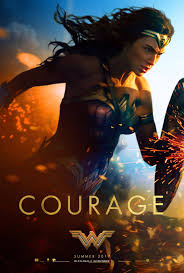
Wonder Woman Is a Hero Only The Military-Industrial Complex Could Create

By Jonathan Cooke

Source: TruePublica

For a while I have been pondering whether to write a review of the newly released Wonder Woman, to peel back the layers of comic-book fun to reveal below the film’s disturbing and not-so-covert political and militaristic messages.

There is usually a noisy crowd who deride any such review with shouts of “Lighten up, it’s only a movie!” – as though popular culture is neither popular nor culture, the soundtrack to our lives that slowly shapes our assumptions and our values, and does so at a level we rarely examine critically.

My argument is that this much-praised Gal Gadot vehicle – seemingly about a peace-loving superhero, Wonder Woman, from the DC Comics stable – is actually carefully purposed propaganda, designed to force-feed aggressive western military intervention, dressed up as humanitarianism, to unsuspecting audiences.

In short, this is straight-up propaganda for the military-industrial complex. It would have looked and sounded identical had it been scripted by a joint team from the Pentagon and the Israel Defense Forces.

My reticence to review the film has lifted after reading the latest investigations of Tom Secker and Matthew Alford into the manifold ways the U.S. military and security services interfere in Hollywood, based on a release of 4,000 pages of documents under Freedom of Information requests.

In their new book National Security Cinema, the pair argue that the Pentagon, CIA and National Security Agency have meddled in the production of at least 800 major Hollywood movies and 1,000 TV titles. That is likely to be only the tip of the iceberg, as they concede:

“It is impossible to know exactly how widespread this military censorship of entertainment is because many files are still being withheld.”

They write that their book “details how U.S. government involvement also includes script rewrites on some of the biggest and most popular films, including James Bond, the Transformers franchise, and movies from the Marvel and DC cinematic universes.”

The need for Pentagon toys

This isn’t just about minor adjustments, but wholesale collusion between film-makers and the military: “If there are characters, action or dialogue that the DoD [Department of Defense] don’t approve of then the film-maker has to make changes to accommodate the military’s demands. If they refuse then the Pentagon packs up its toys and goes home. To obtain full cooperation the producers have to sign contracts — Production Assistance Agreements — which lock them into using a military-approved version of the script.”

The fact that script-writers, producers and directors on these mega-budget pictures know their film may never make it into production if it does not get a thumbs-up from the Pentagon inevitably influences the choice of subjects, the political and military premises of selected films, and the story lines.

One movie, Countermeasures, was ditched after the military objected to a script that “included references to the Iran-Contra scandal … Similarly Fields of Fire and Top Gun 2 were never made because they couldn’t obtain military support, again due to politically controversial aspects of the scripts.”

One can imagine just how stringent the conditions imposed by the Pentagon must be, if it felt compelled to reject a movie like Top Gun 2, the sequel to the “flyboys with toys” killing fest that starred a young Tom Cruise.

The two authors add: “The documents also record the pro-active nature of the military’s operations in Hollywood and that they are finding ways to get involved during the earliest stages of development, ‘when characters and storylines are most easily shaped to the Army’s benefit’.”

Bad apples, not bad institutions

In addition, film-makers are pressured into changing scripts that suggest institutional or systemic problems in the U.S. security agencies.

The two authors observe that producer Jerry Bruckheimer has admitted that the script of the film Enemy of the State was changed under pressure from the NSA so that the wrongdoings at the heart of the film would be the responsibility of a single individual, not the agency itself.

“This idea of using cinema to pin the blame for problems on isolated rogue agents or bad apples, thus avoiding any notion of systemic, institutional or criminal responsibility, is right out of the CIA/DOD’s playbook,” they observe.

So not only are movies critical of U.S. and western politics and militarism almost certain to be off-limits for a big-budget production, but that void is certain to be filled by film proposals the studio is confident will win approval from the Pentagon, CIA and NSA.

And this is, of course, on top of the fact that the Hollywood money-men are themselves part of a larger globalized financial elite that depends on the proceeds of the homeland security industry, arms manufacturers and war profiteers. These financiers are certain to prefer funding films that support a neoliberal worldview at home and a neoconservative policy of warmongering abroad.

As Secker and Alford conclude: “In societies already eager to use our hard power overseas, the shaping of our popular culture to promote a pro-war mindset must be taken seriously.

Gal Gadot and the IDF

All of this is the context for deciphering the egregious propaganda in favor of western military violence, and the portrayal of peace-seeking as “appeasement”, that is Wonder Woman.

There has been plenty of guffawing at Middle East countries, including Lebanon, for seeking to ban Wonder Woman because it stars Gal Gadot, an Israeli beauty queen turned actress.

In fact, it is understandable that the Lebanese might object to a film heavily promoting Gadot as the world’s savior, given that she served in the Israeli army, one that brutally occupied parts of their country for two decades, until 2000, and continues to maintain a belligerent occupation of the Palestinians.

But there is also an undeniable irony to Gadot playing an Amazonian goddess who opposes the militarism of men, and cannot bear to see the suffering of children in war, when in real life she publicly cheered on the Israeli army’s massive bombardment in 2014 of the imprisoned population of Gaza, which led to the killing of some 500 Palestinian children there.

But more importantly, it is not just that Gadot, a former IDF soldier, is now the face of Wonder Woman; it is that the film’s superhero character too almost perfectly embodies the shared militaristic values of the IDF and the Pentagon. If there is one film whose script suggests it was jointly engineered by the Pentagon and Israeli army, it is Wonder Woman.

Hillary Clinton as Wonder Woman?

The film is set near the end of the First World War, a cataclysmic confrontation between two colonial powers, Britain and Germany, each trying to assert its dominance in Europe. The film-makers blur their focus sufficiently to gloss over the problem that there were no good guys in that “war to end all wars”. Instead in true Hollywood fashion, the First World War is presented simply as a prelude (or prequel) to the Second World War and the rise of the Nazis.

The Germans are murderous villains, while the British are the flawed – until Gadot shows them the error of their ways – defenders of humanity. In fact, the film prefers to cast the anti-German side as “Allies”, the humane members of the world community, represented by the U.S. – Chris Pine is the male lead and Gadot’s love interest – and a ragtag support group that includes a Scot, a native American, and a generic Arab, presumably symbolizing “moderate” Arab states like Saudi Arabia, Egypt and Jordan.

The British leadership is trying to find ways to make peace and bring the war to an end, but is stymied by an evil presence. A German super-general, Erich Ludendorff (Danny Huston), believes he can win the war decisively by developing a horrifying gas that will wipe out men, women and children, forcing the British to surrender on his terms. To demonstrate his power, he tests the gas on innocent villagers on the front lines in Belgium.

All of this might sound disconcertingly familiar to anyone who has been following the western media-scripted coverage that has for several years now been trying to promote more aggressive “humanitarian intervention” in Syria – and before that, in Libya and Iraq.

Is Ludendorff supposed to be Bashar Assad, the evil Syrian president who – as long as we discount the dissenting voices of some experts – has twice used the chemical weapon sarin against innocent civilians?

Are the British leaders, seeking a peace deal with the Germans, supposed to be those “appeasers” in the West who have stood in the way of “intervention” in Syria, blocking no-fly zones and bombing runs that could bring down the Syrian government?

And in an even more disturbing, if now outdated, parallel, given the film’s insistent identity politics, is Wonder Woman – the Amazonian who brings peace through overpowering military violence – a stand-in for Hillary Clinton? When the movie was in production, the filmmakers must have assumed it would be released as Clinton was enjoying her early months in office as the first female U.S. president.

The use of Wonder Woman to justify Clinton’s well-documented blood lust–the woman who laughed as “our rebels” murderously sodomized Libya’s Col Gaddafi, saying: “We came, we saw, he died” – would have proved timely had the U.S. election turned out differently.

War is Peace, Ignorance is Strength

Those who have not seen the film, and take it seriously as entertainment, may wish to skip this section, which includes a significant spoiler.

The source of man’s evil in Wonder Woman is the only surviving Greek god, Ares, who is hiding somewhere in the human world. Wonder Woman believes she can end all war and human suffering only if she can locate Ares and kill him – before he kills her.

No one in the human world, of course, believes Wonder Woman, and foolishly they dismiss her ideas as lunacy. And for a while Wonder Woman makes a terrible mistake in thinking the German Ludendorff (Saddam / Gaddafi / Assad) is Ares. It is late in the film that she discovers she has been on the wrong scent.

Humankind’s ultimate enemy is not Ludendorff, but the kindly Sir Patrick Morgan (David Thewlis), the British leader who has spent the entire film counseling for negotiations and peace with the Germans.

The ultimate evil, the wolves in sheep’s clothing, Wonder Woman finds, are  those among us who preach fraternity, compassion and turning the other cheek. They make possible the killing of the innocents.

Those who appear to care, those who seem to offer a route out of bloodshed and war – those who defeat the aims and threaten the profits of the military-industrial complex – are in truth nothing more than appeasers. Their efforts are certain, even intended, to lead to greater suffering.

Militarism, superior firepower, and an absolute belief in the justness of one’s cause, as Wonder Woman is reminded by her Amazonian tutors during her childhood Krav Maga training (Gadot was herself an Israeli army combat trainer) are the way to save mankind from the evildoers.

There is no time to delay, to stand back, to question or to negotiate. Wonder Woman is outraged by the dithering of the men around her. She wants to be at the front line as soon as possible, to kick ass.

“War is peace, freedom is slavery, ignorance is strength” – and all of it is good for business, the film Wonder Woman concludes in truly Orwellian fashion.

A veneer of identity politics

Of course, this story – like all effective propaganda – is supposed to work its magic at a subconscious level, where it cannot be interrogated by our reason and our critical faculties. But even so, a few critics – themselves enthusiastic liberal interventionists – seem to have intuited the movie’s message.

Perhaps not surprisingly, a reviewer with the clearest sense of how the film panders to the pro-war sentiments and identity politics of many liberals is the film critic of the conservative Washington Free Beacon.

Sonny Bunch applauds the way the film “highlights the need for the strong to intervene on behalf of the weak and the oppressed, and treats as villains quislings who sue for a peace that will bring only more destruction.

But he also understands how the film has been crafted to make its war-mongering more palatable to liberals. Wonder Woman, he writes, proves “you could slap an identity politics veneer on just about any neoconservative policy and progressives would lap it up. … Liberal interventionism is back, baby!”

Drooling from liberals

And sure enough, the community of largely liberal film reviewers has mostly drooled over Wonder Woman. Despite dire acting from Gadot, preposterous dialogue and a risible screenplay, the film has racked up an astounding 92 percent approval rating from critics on the review aggregator website Rotten Tomatoes.

Here is a brief selection of their assessments:

Dana Stevens, of Slate: “This is a movie about battling evil that pauses to ask what evil is and whether it’s necessary to understand its nature in order to defeat it.”

Mick LaSalle, of the San Francisco Chronicle: “What lingers … is the feeling of hope that the movie brings, that it someday might be possible for female rationality to defeat male brutality.”

Richard Brody, of the New Yorker: Wonder Woman is “an entry in the genre of wisdom literature that shares hard-won insights and long-pondered paradoxes of the past with a sincere intimacy.”

A. O. Scott, of the New York Times: “Her sacred duty is to bring peace to the world. Accomplishing it requires a lot of killing, but that’s always the superhero paradox. … Unlike most of her male counterparts, its heroine is not trying to exorcise inner demons or work out messiah issues. She wants to function freely in the world, to help out when needed and to be respected for her abilities. No wonder she encounters so much resistance.”

The paradoxes of power

Wonder Woman grapples with the paradoxes of military power every American interventionist and Israeli patriot understands. To save the “beautiful children”, she must sometimes rush to intervene and kill with extreme prejudice, even if the other side’s children are among those who are sacrificed.

Wonder Woman wants to “function freely”: she must enjoy the right to go wherever her interests take her. She cannot be shackled by borders in her quest for justice. She is there to “help out” others in trouble, even if she alone gets to decide who needs help and what counts as trouble. And she needs “respect”, and is prepared to force others to accord it to her, through her superior strength if need be.

She will face “much resistance” because others are jealous of her power and her freedoms. They are the evildoers, and they must and will be defeated.

Is it any surprise that in the Hollywood-Pentagon-IDF world of Wonder Woman, the values of a female superhero sound exactly like those of the military men who run the West’s wars?

Now roll on “Wonder Woman 2: Time to Intervene (Humanely)”.
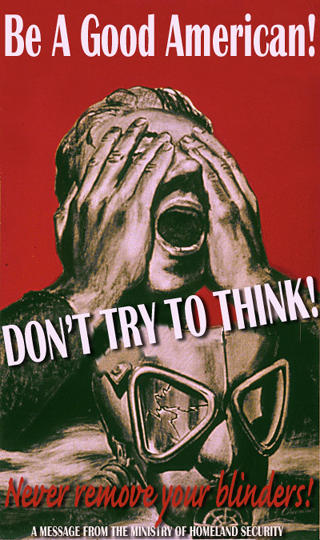
America’s Retarded Awareness

By Denis Conroy

(RINF)

Alternative ideas don’t come easily to Americans. It seems that Americans imported colonial hierarchal practices from Europe to cultivate them to their own advantage. Over millennia, Europeans had come to accept the authority of Church, Monarchy or State Principalities to be the places where the ‘rightful-centres’ existed. The ‘rightful-centre’ was always beyond the reach of the masses. Pontiffs and warlords alike had built their power base upon the belief that the common people should accept the fact that the centre of power was somewhere above their heads and that it was the lot of underlings to live the life of fellow travellers.

The Confucian idea, that the centre was everywhere, had failed to penetrate the European pantheon.  In Asia, actions and their consequences were measured in language that was neither hierarchical nor internalised within rhetorical borders, but connected to truths that had their origin in humanity-oriented-grass-root realism…ethics. Europe, for its part, went the way of evangelical Christianity by legitimizing religion as the celebrity voice par excellence. Operating in space above the heads of the common folk, Emperors and Popes engaged in the practice of issuing edicts that instructed the commoners on how they should think and respond to the celebrity classes doing their thinking for them.

Branding religion was the event that opened the door to the branding of everything. Patriarchal authority, the central tenet of the Old Testament, reappeared again in the guise of male-dominated New Testament culture when it was integrated into the Roman state. Rebranding regulations to secure the authority of the power-base required a narrative that sought to recluse authority from popular critique. The Founding Fathers in Rome or Washington, became very astute in crafting directives and devices that enabled them to toss their bountiful wisdom to an amorphous flock that would forever defer to their ‘wisdom’. The creation of an inscrutable Machiavellian dimension…secrecy…put in place to coddle the aspirations of the commoners, had the desired effect of separating them from the business of government.

By these means, the State as a force-unto-itself came into being, with lawmakers, merchants and agents of the evangelical stripe committing rank, energy and capital to fulfilling a dream of progress that would see them on a path to seeking mastery over all things…nature included…per subjugation of all things. This was the philosophy that the colonial mind found prepossessing…business-as-usual as a staple operation that would take devotees of their exceptional ilk anywhere they chose to go to, expropriate whatever resources were available to them, while defiling the health of the planet in the process…and think about what we Westerners became and what we did and to whom in the process?

When the genie was released from Europe’s empirical arse-crack, was it because the grass looked greener across the vast expanses of America’s prairies which appeared to be there for the taking? Was the Australian bush an all too alluring opportunity to rebrand someone else’s homeland? Europeans, living midway between science and barbarism went across the world to smote the idyllic ‘innocents’ living midway between paradise and paralysis, believing them to be inferior. With a pugnacious conviction born of arrogance, they swarmed through the greener-grasses with scant regard for life or limb.

So, moving on to present day America…which sees itself as the leader of the free world… who or what can explain the introverted perspectives that draw the national psyche into an ever-expanding empirical loop. There is much evidence available to show that a covert passion for Great-Game memes continues to haunt the power-elites in Washington. It now seems that American presidents may come and go but Henry Kissinger is here to stay. Henry…who served first as Nixon’s national security adviser and then as his secretary of state 1969 until 1974… and nowadays frequently seen slumped in a chair in the Oval Office, looking like a grim medieval gargoyle, whose drooping flesh and demeanour convey an image of intransigence…worthy of Machiavelli’s attention… hovering there to counsel the many presidents who pass through the White House, in the art of genuflecting before Zion. Henry, the Zionist Pope, keen to examine the credentials of all those aspiring to occupy this high office, conjures up the inevitable question; at what point in time did this secondary space and highest office in the land become a Zionist habitat?

Strangest of all, the recent election happened and hardly anybody gave a fig about the destructive consequences of America’s wars abroad. It was like permanent war was o.k. so long as it happens in somebody else’s country…or benefited Israel. The public, before-during-and-after the election, expressed zilch concern for the millions of people their government had destroyed. After all, the American corporate juggernaut was unstoppably hooked on exploiting the globe…leave no paddock unexploited…and the electorate, the fellow travellers… who accepted the propagandized narrative coming per media…from above their heads…would always accept corporate branded salve.

What helped them to ignore the consequences of permanent war was an inhouse injunction…the American narrative had become a religion that represented all that was good for business as gospel…and that was that! Confirming the only ‘reality’ they knew, the fellow travellers passively accepted a piece of the action. America’s brutality in the world at large would continue, signalling that ‘butcher shop’ carte blanche would go on, regardless of who was elected.

The election focused on brand and who would control the narrative. The winner was ‘more-of-the-same’…and that was good for business. The election was merely about people choosing their favourite celebrity, but the one who succeeded failed to fulfil the expectations of the liberal-elite and that meant a ‘wigs-on-the-green’ melee was in the offing. An awareness-deficient electorate left the rest of the world wondering if there was much difference between educated and uneducated Americans.

Where were the voices that might have stormed the barricades with rhetoric that condemned the American practice of sending its apprentices…butcher-boys all…abroad to kill! Kill! Kill! Awareness was absent because the electorate was too comfortable with the hierarchical world above their heads…Wall Street, the Pentagon and the accompanying galaxy of job opportunities available to the educated and uneducated alike. After all, inclusion in the system was all that mattered come payday… and after all, cash cows R us!

“According to U.S. Census 2013 data, 1.68 percent of Americans over the age of 25 have a PhD. This equates to approximately 2.5 million people. People with professional degrees such as MD or DDS make up 1.8 percent of the U.S. population making the total percent of Americans referred to as doctors equal to 3.16 percent.

The vast majority of adults in the U.S., over 88 percent, have a high school diploma or additional education. Around 31 percent of the population has a bachelor’s degree or higher, and almost 12 percent have a master’s degree or higher”…which begs the question; how can so many people live with so much carnage? Can it be that the American dream of freedom and independence, for so long the playbook of the straight white man expressing racial bravado in his quest for dominance, is now beginning to show evidence of him falling…in slow motion…upon his own petard? 

As America grew bigger and bolder and wealthier, the echelons attached to the running of the state multiplied too. In subtle ways, the business of the people operating in the zone above the level of the common people became ever more numerous and secretive…after 9/11, the main perpetrators of secrecy became the CIA and the FBI, regulating the level of fear to kept the public focused on fabricated threats designed to promulgate the ‘war-on terror’ mantra. In the process, the temporal beast grew an extra dimension of the mystical kind to extend its purview beyond its own borders so that the people could believe that greatness was now a context in which America and Americans could shine and shove it to the world. What was happening abroad was bound to enrich them…and to hell with the consequences.

Americans, surfing the contours of their very own exceptional imperial arse-crack, in quest of ever easier access to mother nature’s assets, deluded themselves into believing that the assets allocated to sand-bunnies and other assorted detritus were mistakes that needed correcting. Deriving emotional security from the possession of their vast stock of ballistic missiles, the American imperial persona descended into a state of amnesia as a convenient way of ignoring the increasing problem of the body-count forever multiplying in the countries they were rendering dysfunctional. American boots on the ground had come to spell venality abroad and valour at home.

What was happening abroad was inconsequential…reportage at home became more heated, but it had little impact on a critique-resistant ‘exceptional’ entity like astigmatic America. Retarded awareness was turning the ‘great’ society into an intellectual cadaver…critique had caught some fatal disease that caused ‘John Brown’s Body’ to mournfully turn in its grave.

As Uncle Sam, in horizontal locomotion style, cast his war-ware across the Muslim world, people came to recognized the familiar appearance of the grim reaper, hidden in the folds of the stars and stripes, as their great airpower transported democracy eastwards. They were aware that death and destruction in their country had long ceased to receive much attention in Western media. America was too busy navel-gazing.

To be too preoccupied with one’s own anatomy or infrastructure is likely to cause serious problems for people who live in glasshouses. America’s post traumatic rage over the result of the 2016 presidential election might have gained something if people had stopped a moment to reflect on proverbial insightfulness for a moment, “people who live in glass houses shouldn’t throw stones”.

Ad hominem warfare in America is spreading like wildfire. The population is determined to leave no stone unturned. A veritable ‘kristallnacht’ of sorts, affecting the secondary classes…celebrity classes…more than the ‘deplorable-class’ suggests that the America dream and its affiliations with politic heft and hove is up shit-creek. The current brand of stone thrower lives in that space above the common people’s heads and personifies the American dream from a specific perspective; status, power, money, independence et al… and nothing gels!

But on second thought, perhaps proverbial wisdom needs revision; for example; insular people who live in glass houses shouldn’t throw tantrums or missiles.

And there’s more; Wall Street, AIPAC, The Pentagon, The FBI, The CIA, The State Department, T.V. Talk Hosts, Established Media, Hollywood, Silicon Valley and countless other membranous boundaries that represent the hydra-headed social order are all insular to a man (or woman). Insularity however, inevitably means more trouble for the uninitiated masses excluded from the banquet… secrecy being the better part of valour…but?

So, we don’t ever really know what goes on behind closed doors. Nobody ever comes through the door to explain why evangelical America threatens 150 million Russian Christians with nuclear annihilation. Nobody comes through the door to explain why American bombing throughout the Middle East is Guernica writ large in perpetuity…as was the case with Korea, Vietnam, Cambodia, Laos, etc. etc., Nobody knows who decides which democratically elected government abroad is next in line for regime change. Nobody, on the other hand, is ever allowed to enter the closed doors that conceal the little men who ruminate over charts, statistics, numbers, surveillance data and funding dossiers that help insular careerists to navigate a path ever deeper into Doctor Strangelove’s hoary entrails where drone strikes and Armageddon is contemplated.

The American Constitution, Thomas Jefferson, James Madison, George Washington all have their place in history as instructors…and instructors are there to advise one on how to move forward. The great achievement of the new great country which embarked on so many projects to develop infrastructure, failed to acknowledge that developing at so great a tempo left no time to reflect on the consequences of its actions. As it rushed headlong into the future, it lost sight of where it was coming from.

On becoming a country without a past, its memory span disappeared more and more as the locomotion of its enterprise took America ever deeper into an illusion that the country had to keep its foot on the accelerator 24/7 to achieve greatness for all. In the absence of grass-root ethics that might have revealed the connection between object and subject, respecting and being respected, ‘greatness’ became a synonym of pedigree and power… ‘us-and-them’ a code for superior and inferior, exceptional and unexceptional. The America of superman fame adopted the eagle as super-bird, not as a Phoenix rising in a new world, but as a symbol of a bird of prey with a mission to destroy…the corporeal devouring the spiritual! …History does repeat itself!

“By three methods we may learn wisdom: First, by reflection, which is noblest; Second, by imitation, which is easiest; and third by experience, which is the bitterest”…………..Confucius, 551—479 BC……..

America’s Real Red Scare

The Slow-Motion Collapse of the American Empire

By William J. Astore

Source: TomDispatch.com

Jump into your time machine and let me transport you back to another age.

It’s May 2001 and the Atlantic Monthly has just arrived in the mail.  I’m tantalized by the cover article.  “Russia is finished,” the magazine announces.  The subtitle minces no words: “The unstoppable descent into social catastrophe and strategic irrelevance.”  Could it be that the country I had worried most about as a military officer during all those grim years of the Cold War, the famed “Evil Empire” that had threatened us with annihilation, was truly kaput, even in its Russian rather than Soviet guise?

Sixteen years later, the article’s message seems just a tad premature.  Today’s Russia surely has its problems — from poverty to pollution to prostitution to a rickety petro-economy — but on the geopolitical world stage it is “finished” no longer.  Vladimir Putin’s Russia has recently been enjoying heightened influence, largely at the expense of a divided and disputatious superpower that now itself seems to be on an “unstoppable descent.”

Sixteen years after Russia was declared irrelevant, a catastrophe, finito, it is once again a colossus — at least on the American political scene, if nowhere else.  And that should disturb you far less than this: more than a generation after defeating the Soviet Union in the Cold War, the United States of 2017 seems to be doing its level best to emulate some of the worst aspects of its former foe and once rival superpower.

Yes, the U.S. has a Soviet problem, and I’m not referring to the allegations of the moment in Washington: that the Trump campaign and Russian officials colluded, that money may have flowed into that campaign via Russian oligarchs tied to Putin, that the Russians hacked the U.S. election to aid Donald Trump, that those close to the president-elect dreamed of setting up a secret back channel to Moscow and suggested to the Russian ambassador that it be done through the Russian embassy, or even that Putin has a genuine hold of some sort on Donald Trump.  All of this is, of course, generating attention galore, as well as outrage, in the mainstream media and among the chattering classes, leading some to talk of a new “red scare” in America.  All of it is also being investigated, whether by congressional intelligence committees or by former FBI director — now special counsel — Robert Mueller.

When it comes to what I’m talking about, though, you don’t need a committee or a counsel or a back channel or a leaker from some intelligence agency to ferret it out.  Whatever Trump campaign officials, Russian oligarchs, or Vladimir Putin himself did or didn’t do, America’s Soviet problem is all around us: a creeping (and creepy) version of authoritarianism that anyone who lived through the Cold War years should recognize.  It involves an erosion of democratic values; the ever-expanding powers exercised by a national security state operating as a shadow government and defined by militarism, surveillance, secrecy, prisons, and other structures of dominance and control; ever-widening gaps between the richest few and the impoverished many; and, of course, ever more weapons, along with ever more wars.

That’s a real red scare, America, and it’s right here in the homeland.

In February, if you remember — and given the deluge of news, half news, rumor, and innuendo, who can remember anything these days? — Donald Trump memorably compared the U.S. to Russia.  When Bill O’Reilly called Vladimir Putin “a killer” in an interview with the new president, he responded that there was little difference between us and them, for — as he put it — we had our killers, too, and weren’t exactly innocents abroad when it came to world affairs.  (“There are a lot of killers. You think our country’s so innocent?”)  The president has said a lot of outlandish things in his first months in office, but here he was on to something.

My Secret Briefing on the Soviet Union

When I was a young lieutenant in the Air Force, in 1986 if memory serves, I attended a secret briefing on the Soviet Union. Ronald Reagan was president, and we had no clue that we were living through the waning years of the Cold War.  Back then, believing that I should know my enemy, I was reading a lot about the Soviets in “open sources”; you know, books, magazines, and newspapers.  The “secret” briefing I attended revealed little that was new to me. (Classified information is often overhyped.)  I certainly heard no audacious predictions of a Soviet collapse in five years (though the Soviet Union would indeed implode in 1991).  Like nearly everyone at the time, the briefers assumed the USSR would be our archenemy for decades to come and it went without saying that the Berlin Wall was a permanent fixture in a divided Europe, a forever symbol of ruthless Communist oppression.

Little did we know that, three years later, the Soviet military would stand aside as East Germans tore down that wall.  And who then would have believed that a man might be elected president of the United States a generation later on the promise of building a “big, fat, beautiful wall” on our shared border with Mexico?

I wasn’t allowed to take notes during that briefing, but I remember the impression I was left with: that the USSR was deeply authoritarian, a grim surveillance state with an economy dependent on global weapons sales; that it was intent on nuclear domination; that it was imperialist and expansionist; that it persecuted its critics and dissidents; and that it had serious internal problems carefully suppressed in the cause of world mastery, including rampant alcohol and drug abuse, bad health care and declining longevity (notably for men), a poisoned environment, and an extensive prison system featuring gulags.  All of this was exacerbated by festering sores overseas, especially a costly and stalemated war in Afghanistan and client-states that absorbed its resources (think: Cuba) while offering little in return.

This list of Soviet problems, vintage 1986, should have a familiar ring to it, since it sounds uncannily like a description of what’s wrong with the United States today.

In case you think that’s an over-the-top statement, let’s take that list from the briefing — eight points in all — one item at a time.

1. An authoritarian, surveillance state: The last time the U.S. Congress formally declared war was in 1941.  Since then, American presidents have embarked on foreign wars and interventions ever more often with ever less oversight from Congress.  Power continues to grow and coalesce in the executive branch, strengthening an imperial presidency enhanced by staggering technologies of surveillance, greatly expanded in the aftermath of the 9/11 terrorist attacks.  Indeed, America now has 17 intelligence agencies with a combined yearly budget of $80 billion.  Unsurprisingly, Americans are surveilled more than ever, allegedly for our safety even if such a system breeds meekness and stifles dissent.

2. An economy dependent on global weapons sales: The U.S. continues to dominate the global arms trade in a striking fashion.  It was no mistake that a centerpiece of President Trump’s recent trip was a $110 billion arms deal with Saudi Arabia.  On the same trip, he told the Emir of Qatar that he was in the Middle East to facilitate “the purchase of lots of beautiful military equipment.”  Now more than ever, beautiful weaponry made in the U.S.A. is a significant driver of domestic economic growth as well as of the country’s foreign policy.

3. Bent on nuclear domination: Continuing the policies of President Obama, the Trump administration envisions a massive modernization of America’s nuclear arsenal, to the tune of at least a trillion dollars over the next generation.  Much like an old-guard Soviet premier, Trump has boasted that America will always remain at “the top of the pack” when it comes to nuclear weapons.

4. Imperialist and expansionist: Historians speak of America’s “informal” empire, by which they mean the U.S. is less hands-on than past imperial powers like the Romans and the British.  But there’s nothing informal or hands-off about America’s 800 overseas military bases or the fact that its Special Operations forces are being deployed in 130 or more countries yearly.  When the U.S. military speaks of global reach, global power, and full-spectrum dominance, this is traditional imperialism cloaked in banal catchphrases.  Put differently, Soviet imperialism, which American leaders always professed to fear, never had a reach of this sort.

5. Persecutes critics and dissidents: Whether it’s been the use of the Patriot Act under George W. Bush’s presidency, the persecution of whistleblowers using the World War I-era Espionage Act under the Obama administration, or the vilification of the media by the new Trump administration, the U.S. is far less tolerant of dissent today than it was prior to the Soviet collapse.  As Homeland Security Secretary and retired four-star Marine General John Kelly recently put it, speaking of news stories about the Trump administration based on anonymous intelligence sources, such leaks are “darn close to treason.”  Add to such an atmosphere Trump’s attacks on the media as the “enemy” of the people and on critical news stories as “fake” and you have an environment ripe for the future suppression of dissent.

In the Soviet Union, political opponents were often threatened with jail or worse, and those threats were regularly enforced by men wearing military or secret police uniforms.  In that context, let’s not forget the “Lock her up!” chants led by retired Lt. General Michael Flynn at the Republican National Convention and aimed at Donald Trump’s political opponent of that moment, Hillary Clinton.

6. Internal problems like drug abuse, inadequate health care, and a poisoned environment: Alcoholism is still rife in Russia and environmental damage widespread, but consider the U.S. today.  An opioid crisis is killing more than 30,000 people a year.  Lead poisoning in places like Flint, Michigan, and New Orleans is causing irreparable harm to the young.  The disposal of wastewater from fracking operations is generating earthquakes in Ohio and Oklahoma.  Even as environmental hazards proliferate, the Trump administration is gutting the Environmental Protection Agency.  As health crises grow more serious, the Trump administration, abetted by a Republican-led Congress, is attempting to cut health-care coverage and benefits, as well as the funding that might protect Americans from deadly pathogens.  Disturbingly, as with the Soviet Union in the era of its collapse, life expectancy among white men is declining, mainly due to drug abuse, suicide, and other despair-driven problems.

7. Extensive prison systems: As a percentage of its population, no country imprisons more of its own people than the United States.  While more than two million of their fellow citizens languish in prisons, Americans continue to see their nation as a beacon of freedom, ignoring Guantánamo Bay, Cuba.  In addition, the country now has a president who believes in torture, who has called for the murder of terrorists’ families, and who wants to refill Guantánamo with prisoners.  It also has an attorney general who wants to make prison terms for low-level drug offenders ever more draconian.

8. Stalemated wars: You have to hand it to the Soviets.  They did at least exhibit a learning curve in their disastrous war in Afghanistan and so the Red Army finally left that country in 1989 after a decade of high casualties and frustration (even if its troops returned to a land on the verge of implosion).  U.S. forces, on the other hand, have been in Afghanistan for 16 years, with the Taliban growing ever stronger, yet its military’s response has once again been to call for investing more money and sending in more troops to reverse the “stalemate” there.  Meanwhile, after 14 years, Iraq War 3.0 festers, bringing devastation to places like Mosul, even as its destabilizing results continue to manifest themselves in Syria and indeed throughout the greater Middle East.  Despite or rather because of these disastrous results, U.S. leaders continue to over-deploy U.S. Special Operations forces, contributing to exhaustion and higher suicide rates in the ranks.

In light of these eight points, that lighthearted Beatles tune and relic of the Cold War, “Back in the USSR,” takes on a new, and far harsher, meaning.

What Is to Be Done?

Slowly, seemingly inexorably, the U.S. is becoming more like the former Soviet Union.  Just to begin the list of similarities: too many resources are being devoted to the military and the national security state; too many over-decorated generals are being given too much authority in government; bleeding-ulcer wars continue unstanched in Afghanistan, Iraq, and elsewhere; infrastructure (roads, bridges, pipelines, dams, and so on) continues to crumble; restless “republics” grumble about separating from the union (Calexit!); rampant drug abuse and declining life expectancy are now American facts of life. Meanwhile, the latest U.S. president is, in temperament, authoritarian, even as government “services” take on an increasingly nepotistic flavor at the top.

I’m worried, comrade!  Echoing the cry of the great Lenin, what is to be done?  Given the list of symptoms, here’s one obvious 10-step approach to the de-sovietization of America:

1. Decrease “defense” spending by 10% annually for the next five years.  In the Soviet spirit, think of it as a five-year plan to restore our revolution (as in the American Revolution), which was, after all, directed against imperial policies exercised by a “bigly” king.

2. Cut the number of generals and admirals in the military by half, and get rid of all the meaningless ribbons, badges, and medals they wear.  In other words, don’t just cut down on the high command but on their tendency to look (and increasingly to act) like Soviet generals of old.  And don’t allow them to serve in high governmental positions until they’ve been retired for at least 10 years.

3. Get our military out of Afghanistan, Iraq, and other war-torn countries in the Greater Middle East and Africa.  Reduce that imperial footprint overseas by closing costly military bases.

4. Work to eliminate nuclear weapons globally by, as a first step, cutting the vast U.S. arsenal in half and forgetting about that trillion-dollar “modernization” program.  Eliminate land-based ICBMs first; they are no longer needed for any meaningful deterrent purposes.

5. Take the money saved on “modernizing” nukes and invest it in updating America’s infrastructure.

6. Curtail state surveillance.  Freedom needs privacy to flourish.  As a nation, we need to remember that security is not the bedrock of democracy — the U.S. Constitution is.

7. Work to curb drug abuse by cutting back on criminalization.  Leave the war mentality behind, including the “war on drugs,” and focus instead on providing better treatment programs for addicts.  Set a goal of cutting America’s prison population in half over the next decade.

8. Life expectancy will increase with better health care.  Provide health care coverage for all using a single-payer system.  Every American should have the same coverage as a member of Congress.  People shouldn’t be suffering and dying because they can’t afford to see a doctor or pay for their prescriptions.

9. Nothing is more fundamental to “national security” than clean air and water.  It’s folly to risk poisoning the environment in the name of either economic productivity or building up the military.  If you doubt this, ask citizens of Russia and the former Soviet Republics, who still struggle with the fallout from the poisonous environmental policies of Soviet days.

10. Congress needs to assert its constitutional authority over war and the budget, and begin to act like the “check and balance” it’s supposed to be when it comes to executive power.

There you have it.  These 10 steps should go some way toward solving America’s real Russian problem — the Soviet one.  Won’t you join me, comrade?


William J. Astore, a retired lieutenant colonel (USAF) and history professor, is a TomDispatch regular.  His personal blog is Bracing Views.

Manufactured Reality: Two Steps Forward, One Step Back

(Editor’s note: though this article was originally published in 2008 it remains sadly relevant. We’ve appended it with a more recent video from Truthstream Media which needs to be seen and shared.)

Source: Global Research

In order to force a new reality upon any targeted populace, the masters of the universe follow a simple strategy – they immediately make things twice as bad as they intend to keep them, only to take one step back after a short while, so that the new manufactured reality will be easier to accept.  This strategy holds constant from the manipulation of oil prices to the military strategy to rule the world by force.

In the terror war, nuclear terrorism has become the weapon of both first choice and last resort for American war planners.  It was more important to create the impression that nuclear war was imminent than it was to convince the world that we intended to use nuclear weapons as our ace in the hole.  The world had to be terrorized into believing that our insane cowboy president was about to unleash nuclear war upon the world, so that it could be held over the people’s heads.  The world had to be shocked and awed by American military supremacy into submitting to Bush’s demands.

America took two giant steps forward militarily, intending in the end to take one step back from the precipice of actual global thermonuclear war, to a more limited approach that only called for a limited use of “tactical” nukes.  A two-track approach to the war was undertaken; one path leading to immediate global nuclear war and another “democratic” approach, which put-off the use of nuclear weapons until some future action, in order to create unlimited opportunities for subversion where America’s full military might could be brought to bear upon more specific targets.  (Have they already been used?)  http://webwarper.net/ww/~av/www.redress.cc/global/dhalpin20080517

The threat that full-scale nuclear war in the center of the world’s primary energy basket was imminent created a global atmosphere of mortal fear and dread, while covert limited wars were simultaneously pursued.  This was intended to cow both the American people and the people in the targeted countries into submission to presidential dictates. The threat of general nuclear war was used to intimidate the targeted governments into “playing nice” diplomatically, while America interfered in their national affairs, introducing its revolutionary “democratic” form of politics, which included backing extremist groups.

Fear of US nuclear forces provided cover to American agitation in the Middle East region along the lines of “Operation Gladio,” which was used against our own allies in Europe.   In both operations, sympathetic right-wing leaders were found who could be bought, to be groomed by the CIA, to cultivate and organize local opposition groups.  From these agitated groups more violent radicals were found and hired to stage terrorist (“false flag”) attacks upon civilians and the governments, to be blamed upon their local opposition, which were usually actual patriot groups.

The second leg of the neoconservative war doctrine is the spreading of subversion under the cover of implanting democracy by force, and its companion, the spreading of force through democratic means.  Divisive political campaigns in targeted nations (including staged attacks by extremists) were engineered, to split the tribal societies into heavily-armed polarized factions waiting for retribution.

We have this apt description of this divisive American strategy from former Pakistani  ISI agent, turned human rights activist, Khalid Khawaja:

“Many of us call it a battle between East and West, between the Islamic and Judeo-Christian world, but it is neither of these. It is in fact the ruling regimes that want to dictate their will…

Ninety percent of people accept to be ruled, but there always remain some elements who refuse to succumb. They fight for freedom and resist till their last. However, in this conflict of two minorities – those who impose their will and those who resist it – the majority remains the sole victim. Yet people talk about Islam versus Christianity or Judaism. The basic theme remains the same. There is a group of people who want to impose their will, whether they happen to be Christian or Muslim, and there is a group of people who want to resist, and there is a silent majority which is trampled in between.”

http://www.atimes.com/atimes/South_Asia/GF22Df04.html

Mr. Khawaja continues to delve into the under-discussed cause of the whole war on terror:

“In Afghanistan’s case, a similar game was carried out on a massive scale when Muslim youths from all over the world were brought in by Pakistan and the US [to fight against the Soviets in the 1980s]. They were tools for the empires’ proxy war. The name of jihad was used…it is a question of a state imposing its will. The message is clear: if you are against us, we will kill you and your sympathizers. In this state terrorism, there is no exception, be it Christianity, Judaism, Islam, Pakistan, India, the US or Israel. All are the same.

When two elephants fight, it is the grass that gets crushed. When two elephants make love, it is again the grass that gets crushed. Whether states fight with each other or make friendships, it is only the tools who became victims.”

The same deception has been practiced in both Iraq and Afghanistan, to prolong both of those wars until the doctrine could be spread beyond them.  Both countries had been targeted for regime change, but nonetheless, even after the first regime was replaced, the doctrine of creating surrogate militias to promote democratic revolution was still developed in each one, targeting the new regimes.  In each country violent extremist groups, usually identified as “al Qaida related,” were put on the American payroll to fight against US troops and US installed governments.  The hiring and training of these “militia” mercenary groups falls within the recognized definition of treason, “levying war against [the United States].”

That destabilizing doctrine is now being exported into Iran from Iraq, Afghanistan and Pakistan, where beachheads have been established for a planned assault upon the entire neighborhood. These training centers are terrorist camps, plain and simple.  These are the American trained terrorists who will carry the limited warfare scenario into Iran under cover of the greater threat of nuclear terrorism.  The United States of America is the world’s number one supporter and exporter of terrorism; it always has been.

In order to carry out the Israeli-centric PNAC (Project for a New American Century) terror war plan that they have committed to, Bush and Cheney have doggedly undermined America’s national interests at home and all over the world.  America’s national interest has always been based on advancing liberty and human rights to the whole world, but now, under the neocon plan, these are rights that must be earned.  Bush was sent unto the world to turn reality upon its head.

On a rotating basis, America and Israel took turns slinging threats of nuclear annihilation and libelous invective at Iran and Syria, hyping the threats to intensify the notion that a nuclear attack was becoming imminent.  As Israel and America ramp-up the war-mongering against Iran and Syria, Israel sings out the threats first, then America will provide the chorus and hopefully the highly desired “money shot” afterwards.

As a final machination, to seal America and Israel’s position, the neocon doctrine unlocked the prohibition of the offensive use of nuclear weapons, even in civilian areas.  It is this new free use of nuclear weapon doctrine that is the icing on the cake for those who are plotting to seize the world under the threat of American nuclear terrorism.  Because it is now possible, it is easy to convince us all that our cowboy administration of religious zealots is about to commit an insane act, i.e., unleashing nuclear war to eliminate the possibility of a nuclear war.

Patriotic anti-government voices in this country and in the targeted countries, helped to create a strong public perception that nuclear war was imminent.  Antiwar voices of protest like mine sound a warning to alert the people to the crimes being planned that must be heard, but in so doing, we play into the government scheme by helping to hype the threat.  It is both necessary and natural that patriots arise to defend their nations in the face of American invasion or aggression.  We play a vital role in the planned drama, as it unfolds.  We have convinced the world that Bush and Cheney were insane enough to radiate the Middle Eastern oil fields, in order to steal the world’s oil.  We now may have to convince the world that the crazies themselves are the source of most of the terrorism which we fight.

It is pretty obvious that they really are that insane, but it should be even more obvious that their greedy masters don’t want their world destroyed, they only want to control it.  Why should they actually nuke Iran, if they can persuade the locals to overthrow the regime for us, causing less collateral damage (it would be difficult to operate the Middle East oil facilities, if they were all radioactive).  We have to convince the American people that Bush even though the little dictator is both stupid and insane, the real deciders are neither of those things.  It is their wills which will prevail, meaning that there are other less final, less costly ways to takeover the oil reserves and the pipeline routes.

We have to concentrate on stopping the secret war, without being blinded by the glare of nuclear terrorism.  Exposure of American sponsorship of world terrorism (some of the very “terrorism” we are fighting) must become our top priority.  Legal actions must be taken to stop the illegal support of terrorism upon civilians by our government.  Further legal actions must be taken to separate American foreign policy from Israel, in order to bring the terror war to an end.

Israel has been the primary source for most of the “intelligence” that launched the war on Iraq, the Iranian reactors and hypothetical nuclear weapons, as well as the alleged Syrian reactors.  America turned Israel’s evidence into grounds for waging war, even nuclear war.  They are behind the new push to find other Syrian nuclear facilities as well as the alleged Iranian warhead blueprint.

Israel is behind every military move against Iran that is being brought-up in the press.  It was the first to suggest taking out Iranian reactors, the first to recommend a naval blockade of Iran and an embargo on air flights between Iran and Syria and Lebanon.  American Zionist Congressional leaders gladly took up the torches lit by Israel, to create Israeli security at America’s expense.  A Congressional resolution is awaiting passage in the Senate, which demands that our government carry-out these acts of war, both the naval blockade and the air embargo, House Resolution 1194.

The American people must rise-up in outrage to the terrorists who rule over us and stop the planned escalation, as a first step to de-escalating the war.  It is time for us to take our own two steps forward, to force the aggressors to take one step back and begin to tear-down their manufactured reality.


Contact author: peter.chamberlin@yahoo.com

Related Video:

Who Controls The Government?

By Scott Lazarowitz

Source: Activist Post

It is quite ironic that the previous Drone-Bomber-in-Chief, Barack H. Obama, has been given the “profile in courage” award, which is being presented to him this week by the JFK Library Foundation. But how much courage did it take for Obama to order the bombings of several different countries, killing mostly innocent civilians, when those countries were of no threat to us?

How insulting to President John F. Kennedy, who promoted peace after recognizing that the post-World War II Cold War and national security state were destructive and unnecessary, and who wanted to “splinter the CIA in a thousand pieces and scatter it to the winds.”

In a June, 1963 speech promoting peace, nuclear disarmament, and diplomacy, Kennedy stated, “No government or social system is so evil that its people must be considered as lacking in virtue. As Americans, we find Communism profoundly repugnant as a negation of personal freedom and dignity. But we can still hail the Russian people for their many achievements — in science and space, in economic and industrial growth, in culture, in acts of courage.”

The hard-core Cold Warriors probably didn’t like that. Their existence as “security” bureaucrats and their little fiefdoms in Washington were dependent on the fear and paranoia of those “commies,” just as the modern day bureaucrats are dependent on post-9/11 fear-mongering.

And the corporatist cronies back then also probably didn’t like Kennedy’s assertion that “the expenditure of billions of dollars every year on weapons acquired for the purpose of making sure we never need them is essential to the keeping of peace. But surely the acquisition of such idle stockpiles — which can only destroy and never create — is not the only, much less the most efficient, means of assuring peace.”

The hard-core Cold Warriors probably didn’t like that. Their existence as “security” bureaucrats and their little fiefdoms in Washington were dependent on the fear and paranoia of those “commies,” just as the modern day bureaucrats are dependent on post-9/11 fear-mongering.

And the corporatist cronies back then also probably didn’t like Kennedy’s assertion that “the expenditure of billions of dollars every year on weapons acquired for the purpose of making sure we never need them is essential to the keeping of peace. But surely the acquisition of such idle stockpiles — which can only destroy and never create — is not the only, much less the most efficient, means of assuring peace.”

The narcissistic arrogance could be seen in the military bureaucrats when they consciously and knowingly pursued continued aggressions in Vietnam despite their knowing by the mid-1960s that the war could not be won, as revealed by the Pentagon Papers. Those “leaders” contributed to the deaths of a million innocents and tens of thousands of American soldiers who died for no good reason but to serve the deranged egos of the military bureaucrats.

And Iraq in 1990-91, the decision by President George H.W. Bush to start a whole new war and bombing campaign against a country, Iraq, that didn’t attack us and was of no threat to us, was not just an act of incompetence, but a criminal act.

Bush approved of the U.S. military’s bombings of civilian water and sewage treatment centers and electric service facilities, followed by sanctions and no-fly zones that were continued by President Bill Clinton throughout the 1990s which led to the deaths of hundreds of thousands of innocent civilian Iraqis. It was an intentional policy of sadism and psychopathic cruelty, that perhaps involved more sinister long-term goals than just to do with oil.

Who would purposely cause a whole population to be vulnerable to disease and death? Who would do that?

But now we have President Donald Trump, who campaigned with anti-war, anti-imperialism rhetoric, but is now the Happy Warmonger. And Trump’s civilian cabinet advisors include military general graduates from West Point or other top military academies but they aren’t exactly trained in the ideas of restraint, diplomacy, the rule of law, and the U.S. Constitution.

No, post-World War II  military people are trained to suppress their consciences, their moral scruples, in order to rationalize their invasions of other territories and the deaths of innocents they cause.

And oh how happy the Trump-advising generals and the other higher-ups in the military must be that Donald Trump is so easily manipulable and spongy. Their psy-ops are working on him like a charm.

It used to be that psy-ops were used by the military and CIA on foreign agents, to manipulate the enemy’s emotions and their decisions. And then the military saw how useful such a technique had been on their own U.S. senators, as reported by the late Michael Hastings in Rolling Stone.

Which is apparently illegal, under U.S. law. Unless they view their own fellow Americans as the “enemy.” Hmm.

Foreign policy analyst Gareth Porter recently tweeted: “Military now seeking permanent US military presence in Iraq and Afghanistan. Time to say loud ‘No’ to permanent war.”

So it’s getting worse now.

Some theorists believe the zealous bureaucrats of the military need permanent war and occupation abroad in order to achieve such a takeover at home. (There may be other reasons, however.)

When the military controls the government, and then there is some kind of emergency or economic collapse, of course they will not think twice about imposing martial law, legal or not, constitutional or not. They will also not think twice about disarming law-abiding Americans.

In Revolutionary times, the early Americans were rightfully wary of militarism, because they knew that would lead to tyranny. But the immoral and incompetent bureaucrats of the modern U.S. government long ago abandoned any concern for the rule of law and the U.S. Constitution.


Scott Lazarowitz is a libertarian writer and commentator. please visit his blog.


Forbidden Questions? 24 Key Issues That Neither the Washington Elite Nor the Media Consider Worth Their Bother

By Andrew J. Bacevich

Source: TomDispatch.com

Donald Trump’s election has elicited impassioned affirmations of a renewed commitment to unvarnished truth-telling from the prestige media.  The common theme:  you know you can’t trust him, but trust us to keep dogging him on your behalf.  The New York Times has even unveiled a portentous new promotional slogan: “The truth is now more important than ever.” For its part, the Washington Post grimly warns that “democracy dies in darkness,” and is offering itself as a source of illumination now that the rotund figure of the 45th president has produced the political equivalent of a total eclipse of the sun. Meanwhile, National Public Radio fundraising campaigns are sounding an increasingly panicky note: give, listener, lest you be personally responsible for the demise of the Republic that we are bravely fighting to save from extinction.

If only it were so.  How wonderful it would be if President Trump’s ascendancy had coincided with a revival of hard-hitting, deep-dive, no-holds-barred American journalism.  Alas, that’s hardly the case.  True, the big media outlets are demonstrating both energy and enterprise in exposing the ineptitude, inconsistency, and dubious ethical standards, as well as outright lies and fake news, that are already emerging as Trump era signatures.  That said, pointing out that the president has (again) uttered a falsehood, claimed credit for a nonexistent achievement, or abandoned some position to which he had previously sworn fealty requires something less than the sleuthing talents of a Sherlock Holmes.  As for beating up on poor Sean Spicer for his latest sequence of gaffes — well, that’s more akin to sadism than reporting.

Apart from a commendable determination to discomfit Trump and members of his inner circle (select military figures excepted, at least for now), journalism remains pretty much what it was prior to November 8th of last year: personalities built up only to be torn down; fads and novelties discovered, celebrated, then mocked; “extraordinary” stories of ordinary people granted 15 seconds of fame only to once again be consigned to oblivion — all served with a side dish of that day’s quota of suffering, devastation, and carnage.  These remain journalism’s stock-in-trade.  As practiced in the United States, with certain honorable (and hence unprofitable) exceptions, journalism remains superficial, voyeuristic, and governed by the attention span of a two year old.

As a result, all those editors, reporters, columnists, and talking heads who characterize their labors as “now more important than ever” ill-serve the public they profess to inform and enlighten.  Rather than clearing the air, they befog it further.  If anything, the media’s current obsession with Donald Trump — his every utterance or tweet treated as “breaking news!” — just provides one additional excuse for highlighting trivia, while slighting issues that deserve far more attention than they currently receive.

To illustrate the point, let me cite some examples of national security issues that presently receive short shrift or are ignored altogether by those parts of the Fourth Estate said to help set the nation’s political agenda. To put it another way: Hey, Big Media, here are two dozen matters to which you’re not giving faintly adequate thought and attention.

1. Accomplishing the “mission”: Since the immediate aftermath of World War II, the United States has been committed to defending key allies in Europe and East Asia.  Not long thereafter, U.S. security guarantees were extended to the Middle East as well.  Under what circumstances can Americans expect nations in these regions to assume responsibility for managing their own affairs?  To put it another way, when (if ever) might U.S. forces actually come home?  And if it is incumbent upon the United States to police vast swaths of the planet in perpetuity, how should momentous changes in the international order — the rise of China, for example, or accelerating climate change — affect the U.S. approach to doing so?

2. American military supremacy: The United States military is undoubtedly the world’s finest.  It’s also far and away the most generously funded, with policymakers offering U.S. troops no shortage of opportunities to practice their craft.  So why doesn’t this great military ever win anything?  Or put another way, why in recent decades have those forces been unable to accomplish Washington’s stated wartime objectives?  Why has the now 15-year-old war on terror failed to result in even a single real success anywhere in the Greater Middle East?  Could it be that we’ve taken the wrong approach?  What should we be doing differently?

3. America’s empire of bases: The U.S. military today garrisons the planet in a fashion without historical precedent.  Successive administrations, regardless of party, justify and perpetuate this policy by insisting that positioning U.S. forces in distant lands fosters peace, stability, and security.  In the present century, however, perpetuating this practice has visibly had the opposite effect.  In the eyes of many of those called upon to “host” American bases, the permanent presence of such forces smacks of occupation.  They resist.  Why should U.S. policymakers expect otherwise?

4. Supporting the troops: In present-day America, expressing reverence for those who serve in uniform is something akin to a religious obligation.  Everyone professes to cherish America’s “warriors.”  Yet such bountiful, if superficial, expressions of regard camouflage a growing gap between those who serve and those who applaud from the sidelines. Our present-day military system, based on the misnamed All-Volunteer Force, is neither democratic nor effective.  Why has discussion and debate about its deficiencies not found a place among the nation’s political priorities? 

5. Prerogatives of the commander-in-chief: Are there any military actions that the president of the United States may not order on his own authority?  If so, what are they?  Bit by bit, decade by decade, Congress has abdicated its assigned role in authorizing war. Today, it merely rubberstamps what presidents decide to do (or simply stays mum).  Who does this deference to an imperial presidency benefit?  Have U.S. policies thereby become more prudent, enlightened, and successful?

6. Assassin-in-chief: A policy of assassination, secretly implemented under the aegis of the CIA during the early Cold War, yielded few substantive successes.  When the secrets were revealed, however, the U.S. government suffered considerable embarrassment, so much so that presidents foreswore politically motivated murder. After 9/11, however, Washington returned to the assassination business in a big way and on a global scale, using drones.  Today, the only secret is the sequence of names on the current presidential hit list, euphemistically known as the White House “disposition matrix.” But does assassination actually advance U.S. interests (or does it merely recruit replacements for the terrorists it liquidates)?  How can we measure its costs, whether direct or indirect?  What dangers and vulnerabilities does this practice invite?

7. The war formerly known as the “Global War on Terrorism”: What precisely is Washington’s present strategy for defeating violent jihadism?  What sequence of planned actions or steps is expected to yield success? If no such strategy exists, why is that the case?  How is it that the absence of strategy — not to mention an agreed upon definition of “success” — doesn’t even qualify for discussion here?

8. The campaign formerly known as Operation Enduring Freedom: The conflict commonly referred to as the Afghanistan War is now the longest in U.S. history — having lasted longer than the Civil War, World War I, and World War II combined. What is the Pentagon’s plan for concluding that conflict?  When might Americans expect it to end?  On what terms?

9. The Gulf: Americans once believed that their prosperity and way of life depended on having assured access to Persian Gulf oil.  Today, that is no longer the case.  The United States is once more an oil exporter. Available and accessible reserves of oil and natural gas in North America are far greater than was once believed. Yet the assumption that the Persian Gulf still qualifies as crucial to American national security persists in Washington. Why?

10. Hyping terrorism: Each year terrorist attacks kill far fewer Americans than do auto accidents, drug overdoses, or even lightning strikes.  Yet in the allocation of government resources, preventing terrorist attacks takes precedence over preventing all three of the others combined. Why is that?

11. Deaths that matter and deaths that don’t: Why do terrorist attacks that kill a handful of Europeans command infinitely more American attention than do terrorist attacks that kill far larger numbers of Arabs? A terrorist attack that kills citizens of France or Belgium elicits from the United States heartfelt expressions of sympathy and solidarity.  A terrorist attack that kills Egyptians or Iraqis elicits shrugs.  Why the difference?  To what extent does race provide the answer to that question?

12. Israeli nukes: What purpose is served by indulging the pretense that Israel does not have nuclear weapons?

13. Peace in the Holy Land: What purpose is served by indulging illusions that a “two-state solution” offers a plausible resolution to the Israeli-Palestinian conflict?  As remorselessly as white settlers once encroached upon territory inhabited by Native American tribes, Israeli settlers expand their presence in the occupied territories year by year.  As they do, the likelihood of creating a viable Palestinian state becomes ever more improbable. To pretend otherwise is the equivalent of thinking that one day President Trump might prefer the rusticity of Camp David to the glitz of Mar-a-Lago.

14. Merchandizing death: When it comes to arms sales, there is no need to Make America Great Again.  The U.S. ranks number one by a comfortable margin, with long-time allies Saudi Arabia and Israel leading recipients of those arms.  Each year, the Saudis (per capita gross domestic product $20,000) purchase hundreds of millions of dollars of U.S. weapons.  Israel (per capita gross domestic product $38,000) gets several billion dollars worth of such weaponry annually courtesy of the American taxpayer.  If the Saudis pay for U.S. arms, why shouldn’t the Israelis? They can certainly afford to do so.

15. Our friends the Saudis (I): Fifteen of the 19 hijackers on September 11, 2001, were Saudis.  What does that fact signify?

16. Our friends the Saudis (II): If indeed Saudi Arabia and Iran are competing to determine which nation will enjoy the upper hand in the Persian Gulf, why should the United States favor Saudi Arabia?  In what sense do Saudi values align more closely with American values than do Iranian ones?

17. Our friends the Pakistanis: Pakistan behaves like a rogue state.  It is a nuclear weapons proliferator.  It supports the Taliban.  For years, it provided sanctuary to Osama bin Laden.  Yet U.S. policymakers treat Pakistan as if it were an ally.  Why?  In what ways do U.S. and Pakistani interests or values coincide?  If there are none, why not say so?

18. Free-loading Europeans: Why can’t Europe, “whole and free,” its population and economy considerably larger than Russia’s, defend itself?  It’s altogether commendable that U.S. policymakers should express support for Polish independence and root for the Baltic republics.  But how does it make sense for the United States to care more about the wellbeing of people living in Eastern Europe than do people living in Western Europe?

19. The mother of all “special relationships”: The United States and the United Kingdom have a “special relationship” dating from the days of Franklin Roosevelt and Winston Churchill.  Apart from keeping the Public Broadcasting Service supplied with costume dramas and stories featuring eccentric detectives, what is the rationale for that partnership today?  Why should U.S. relations with Great Britain, a fading power, be any more “special” than its relations with a rising power like India?  Why should the bonds connecting Americans and Britons be any more intimate than those connecting Americans and Mexicans?  Why does a republic now approaching the 241st anniversary of its independence still need a “mother country”?

20. The old nuclear disarmament razzmatazz: American presidents routinely cite their hope for the worldwide elimination of nuclear weapons.  Yet the U.S. maintains nuclear strike forces on full alert, has embarked on a costly and comprehensive trillion-dollar modernization of its nuclear arsenal, and even refuses to adopt a no-first-use posture when it comes to nuclear war.  The truth is that the United States will consider surrendering its nukes only after every other nation on the planet has done so first.  How does American nuclear hypocrisy affect the prospects for global nuclear disarmament or even simply for the non-proliferation of such weaponry?

21. Double standards (I): American policymakers take it for granted that their country’s sphere of influence is global, which, in turn, provides the rationale for the deployment of U.S. military forces to scores of countries.  Yet when it comes to nations like China, Russia, or Iran, Washington takes the position that spheres of influence are obsolete and a concept that should no longer be applicable to the practice of statecraft.  So Chinese, Russian, and Iranian forces should remain where they belong — in China, Russia, and Iran.  To stray beyond that constitutes a provocation, as well as a threat to global peace and order.  Why should these other nations play by American rules?  Why shouldn’t similar rules apply to the United States?

22. Double standards (II): Washington claims that it supports and upholds international law.  Yet when international law gets in the way of what American policymakers want to do, they disregard it.  They start wars, violate the sovereignty of other nations, and authorize agents of the United States to kidnap, imprison, torture, and kill.  They do these things with impunity, only forced to reverse their actions on the rare occasions when U.S. courts find them illegal.  Why should other powers treat international norms as sacrosanct since the United States does so only when convenient? 

23. Double standards (III): The United States condemns the indiscriminate killing of civilians in wartime.  Yet over the last three-quarters of a century, it killed civilians regularly and often on a massive scale.  By what logic, since the 1940s, has the killing of Germans, Japanese, Koreans, Vietnamese, Laotians, Cambodians, Afghans, and others by U.S. air power been any less reprehensible than the Syrian government’s use of “barrel bombs” to kill Syrians today?  On what basis should Americans accept Pentagon claims that, when civilians are killed these days by U.S. forces, the acts are invariably accidental, whereas Syrian forces kill civilians intentionally and out of malice?  Why exclude incompetence or the fog of war as explanations?  And why, for instance, does the United States regularly gloss over or ignore altogether the noncombatants that Saudi forces (with U.S. assistance) are routinely killing in Yemen?

24. Moral obligations: When confronted with some egregious violation of human rights, members of the chattering classes frequently express an urge for the United States to “do something.”  Holocaust analogies sprout like dandelions.  Newspaper columnists recycle copy first used when Cambodians were slaughtering other Cambodians en masse or whenever Hutus and Tutsis went at it.  Proponents of action — typically advocating military intervention — argue that the United States has a moral obligation to aid those victimized by injustice or cruelty anywhere on Earth.  But what determines the pecking order of such moral obligations?  Which comes first, a responsibility to redress the crimes of others or a responsibility to redress crimes committed by Americans?  Who has a greater claim to U.S. assistance, Syrians suffering today under the boot of Bashar al-Assad or Iraqis, their country shattered by the U.S. invasion of 2003?  Where do the Vietnamese fit into the queue?  How about the Filipinos, brutally denied independence and forcibly incorporated into an American empire as the nineteenth century ended?  Or African-Americans, whose ancestors were imported as slaves?  Or, for that matter, dispossessed and disinherited Native Americans?  Is there a statute of limitations that applies to moral obligations?  And if not, shouldn’t those who have waited longest for justice or reparations receive priority attention?

Let me suggest that any one of these two dozen issues — none seriously covered, discussed, or debated in the American media or in the political mainstream — bears more directly on the wellbeing of the United States and our prospects for avoiding global conflict than anything Donald Trump may have said or done during his first 100 days as president.  Collectively, they define the core of the national security challenges that presently confront this country, even as they languish on the periphery of American politics.

How much damage Donald Trump’s presidency wreaks before it ends remains to be seen.  Yet he himself is a transient phenomenon.  To allow his pratfalls and shenanigans to divert attention from matters sure to persist when he finally departs the stage is to make a grievous error.  It may well be that, as the Times insists, the truth is now more important than ever.  If so, finding the truth requires looking in the right places and asking the right questions.


Andrew J. Bacevich, a TomDispatch regular, is the author of America’s War for the Greater Middle East: A Military History, now out in paperback. His next book will be an interpretive history of the United States from the end of the Cold War to the election of Donald Trump.

Imperialism and the Logic Of Mass Destruction

By Carl Boggs

Source: CounterPunch

As throughout much of its war-obsessed history, the United States is currently engaged in military conflict – or threatening such action – across a broad contested terrain.   In the cases of Iraq, Afghanistan, and Syria, Washington has resorted to its familiar global modus operandi: sending off barrages of missiles and bombs, much of it hitting civilian populations and resources needed for their survival.   Death tolls mount, the largest numbers lately in the protracted battle for Mosul.   Heavier casualties are being visited upon non-combatants in Yemen, thanks to U.S.-backed Saudi aerial savagery.

We have been told by the media that President Trump has apparently relaxed the rules of warfare, thus allowing civilians to be more easily victimized the midst of armed conflict.   Innocent noncombatants are being made increasingly vulnerable to ravages of the largest and most aggressive war machine in history.  That, however, would be a serious misreading of the situation: Trump, like Obama, the Bushes, and Clinton before him, is simply operating within an historical pattern of imperial war making for which rules of engagement matter little, if at all.    There is no deviation from the norm.

In fact Pentagon elites insist nothing has changed in their methods of warfare – and they are right.   While the U.S. accuses, threatens, and attacks others for their (real or imputed) transgressions, its own apparatus of mass destruction continues with few legal or moral constraints.  In particular, Washington long ago turned aerial terrorism into a normalized mode of technowar that reduces civilians to dispensable objects.

In recent weeks U.S. aerial bombardments in Syria alone have reportedly killed several hundred people, mainly civilians.   Daily raids in Iraq, mostly targeting ISIS in Mosul, have accounted for more than 3000 civilian deaths, according to AirWars sources.    To believe this is a departure from the past – or that civilian casualties are simply an inevitable by-product of combat – is to ignore the American history of savage warfare, which since World War II has meant bringing horrendous death and destruction from the skies.

There is actually nothing “indiscriminate” about this savagery: all too often it has been planned, deliberate, systematic – and discriminate.    Moreover, the U.S. has far surpassed any other nation in the production, deployment, and use of WMD, its military doctrines now as in the past embracing the virtues of weaponry designed to bring mass destruction.  Consider that WMD comes in four distinct types: nuclear, biological, chemical, conventional (mainly saturation bombing).    We could add to this list economic sanctions of the sort the U.S. (through the United Nations) imposed on Iraq during the 1990s that killed hundreds of thousands of civilians.  As the U.S. resorted to sanctions continuously in the postwar era – targeting Iran, Cuba, Yugoslavia, North Korea, and Russia as well as Iraq – the civilian death toll (well past a million) has far exceeded that from nuclear, biological, and chemical weapons combined.

Yet it is conventional warfare that has brought the greatest destruction, for both combatants and civilians – and it remains the most imposing threat today.    The WMD threat arrives in the form of strategic (alternatively saturation, area, carpet, or scorched-earth) bombing, introduced by the British and Americans during World War II and refined across the decades.   Worth noting is that the U.S. is the only nation to have manufactured, stored, deployed, and used all five types of WMD.

In densely-populated centers like Mosul and Raqqa – and where hundreds of drone strikes are carried out – efforts to distinguish between combatants and civilians are virtually impossible; large numbers of civilian dead and wounded tolls are inevitable.   That has never deterred U.S. military decision-makers at the Pentagon or in the field, whatever “rules” are set forth in the Universal Code of Military Justice (UCMJ) or international statutes. From World War II to Korea, Indochina, Iraq, Yugoslavia, and beyond, this carnage is alternately blamed on mistakes, inescapable “collateral damage”, intelligence failures, enemy use of “human shields” – all while boasting of the latest “precision weaponry”.   Unfortunately, the U.S. military rarely conducts genuine investigations into the devastation it produces, and for good reason: it does want to come face-to-face with its flagrant war crimes.

Since late 2014 U.S. (or Coalition) planes have carried out more than 20,000 strikes in Iraq and Syria, resulting in an estimated 70,000 “militant” deaths – a number that surely includes civilian losses that will never be known and based on a calculus that is routinely understated.  According to AirWars, at least 3325 civilians were killed from a total of 566 air strikes in the region, but that is only where evidence is clearly available.  Meanwhile, recent non-combatant deaths in Mosul alone have reached more than 2500, as reported by AirWars.  Important civilian objects – residences, public buildings, markets, etc. – have been repeatedly hit with high-explosive weaponry.  The bombing raids have only intensified.

What is taking place in Iraq, Afghanistan, and Syria replicates a familiar disregard for long-established international law, as even the corporate media unwittingly acknowledges by attributing a “loosening of rules” to the out-of-control Trump.   California Representative Ted Lieu recently sent a letter to Defense Secretary James Mattis seeking clarification of American global behavior: “The substantial increases in civilian deaths caused by U.S. military force in Syria and Iraq brings into question whether the Trump administration is violating the Laws of War.”  Trump is indeed violating such laws – specifically the 1949 Geneva Protocol prohibiting wanton attacks on civilians – but, as noted, he is simply following deeply-entrenched American practices.

For more than a century American imperialism has been fueled by a combustible mixture of national exceptionalism, militarism, racism, and pursuit of global supremacy.  Civilian inhabitants and their necessary supports have never stood in the way of these powerful forces, even where it has meant resort to WMD.    Demonized Asian populations have been mercilessly targeted, with impunity – and unbelievably savage consequences.   Looking at the apparent willingness of the Trump administration to consider nuclear warfare on the Korean peninsula, with its unthinkable horrors, we can readily see that little has changed over the decades.

As Washington looks to reassert economic, political, and military leverage in the Asia-Pacific region – the so-called “Asian Pivot” to contain China – escalating U.S. threats should be taken seriously.   Whether conventional or nuclear, the Pentagon is poised to strike first against North Korea.  For several months, indeed years, the U.S. has done everything short of all-out war to intimidate and subvert the Kim Jung Un regime: large-scale military exercises, economic sanctions, cyberattacks, new troop deployments, constant threats of attack.   There is much talk in Washington and the media of “preemptive war”, including efforts to “decapitate” the regime.   A supposedly impenetrable missile-defense system (THAAD) is being installed across South Korea.

Koreans already know far more than they would prefer about the horrors of mass destruction emanating from the U.S.   What can only be called a war of annihilation, carried out by the U.S. to secure battlefield victory over endless stalemate, in the face of strong Chinese and North Korean forces, left a death toll on the peninsula with estimates reaching as high as five million, nearly 80 percent civilian.   Political, legal, and moral constraints were routinely tossed aside, as American military culture eagerly took up the World War II code that mass killing of civilians was legitimate – actually vital – to the kind of war of attrition the U.S. had waged against the Japanese.

When the U.S. Army was forced into a perilous retreat in fall 1950, General Douglas MacArthur ordered his air force to destroy “every means of communication, every installation, factory, city, town, and village” in Korea.   Food sources and water facilities were systematically targeted and obliterated.   Nonstop raids, employing napalm and other incendiary devices, left the main centers of human life (including the capital Pyongyang) in smoking ruins.   Stephen Endicott and Edward Hagerman, in their eye-opening book The United States and Biological Warfare, write: “As it had been in World War II, strategic bombing was extended to the mass destruction of civilian populations, and as in World War II the reservations that the U.S. had about saturation bombing of Europeans in that earlier war were not extended to Asians.”

In December of 1950 the Joint Chiefs of Staff endorsed President Truman’s readiness to use atomic bombs in Korea to avoid further stalemate or defeat.   This “option” was retained throughout the war, finally to be jettisoned by President Eisenhower in 1953.  White House and Pentagon officials also favored employing both chemical and biological weapons in a theater where mass destruction was already far advanced.

In fact the U.S. did launch a phase of biological warfare in Korea, a criminal project the warfare state has tried to keep secret.  Evidence uncovered by the Koreans and Chinese revealed a U.S. military campaign to disseminate a wide variety of deadly biological agents, hoping to create epidemics, panic, and social breakdown in the north.  In late 1950 large outbreaks of plague, cholera, smallpox, and encephalitis were reported in Pyongyang and several provinces, according to Endicott and Hagerman.   This was part of a scorched-earth policy U.S. troops employed as they retreated southward throughout 1950 and 1951.

Endicott and Hagerman add: “The U.S. had substantial stocks of biological weapons on hand.  Moral qualms about using biological or atomic weapons had been brushed aside by top leaders and biological warfare might dodge the political bullet of adverse public and world opinion if it were kept secret enough to make plausible denial of its use.”  Moreover, Washington had not signed the 1925 Geneva Protocol banning such weaponry.  Later investigations and reports found the U.S. guilty as charged, a finding naturally dismissed by Americans as “Communist propaganda”.

The Pentagon’s biological program was kept intact until early 1953.   Meanwhile, the U.S. Air Force was busy destroying every Korean target in sight, including agricultural fields and hydroelectric dams, dropping an endless supply of fragmentation bombs, napalm, and high-explosive devices.  In August 1952 Pyongyang was leveled by a series of saturation-bombing raids.  Still unable to break the military stalemate, the USAF transferred a large stock of atomic weapons to Okinawa as it prepared for a new phase of warfare that, fortunately, was never set in motion.

Embracing the great benefits of WMD, the U.S. military was able to revitalize its strategy of total war, understood by many at the summits of power as God’s work.   General Matthew Ridgway, Eighth Army commander, could say in 1951: “The real issues are whether the power of Western civilization, as God has permitted it to flower in our own beloved lands, shall defy and defeat Communism . . . [and] whether we are able to survive with God’s hand to guide and lead us, or to perish in the dead existence of a Godless world.”  Before Korea, the God of a privileged imperial nation had similarly blessed the American takeover of the Philippines at a cost of several hundred thousand lives – and before that the massacre of Indian tribes (by Andrew Jackson’s troops) at Horseshoe Bend and (by Colonel John Chivington’s marauders) at Sand Creek, among many other atrocities.

An imperialist ideology that embellished, even celebrated, warfare against civilians reached its first methodical expression during World War II.   In the Pacific, this meant a war of annihilation against the Japanese, who at that time stood for the “Asian masses” or “hordes”.    In such a war everything was permissible, starting with the deliberate and ruthless obliteration of entire cities, including those with little or no military significance. Saturation bombing launched by waves of the most technologically-developed warplanes raised barbarism to new levels.  Admiral William Halsey, U.S. Pacific Fleet commander, vowing revenge for Pearl Harbor, promised that Japanese would henceforth be spoken only in hell while ordering his personnel to “kill Japs, kill Japs, kill more Japs.”  (Worth noting: only military targets were hit at Pearl Harbor.)  The remarkable American hatred of Japanese was destined to produce, in John Dower’s words (War without Mercy “a spellbinding spectacle of brutality and death.”

On March 9-10, 1945, U.S. planes dropped 1,665 tons of incendiary bombs on Tokyo, with the aim of destroying the city; at least 100,000 civilians were instantly killed.   Aerial terrorism then turned to Osaka, Nagoya, Kobe, and more than 60 other cities, targeting mostly defenseless civilian areas with vengeful frenzy.   A few cities remained – Hiroshima and Nagasaki among them – until they were obliterated by the new superweapon developed at the Manhattan Project, leaving another 150,000 dead amid unimaginable mass destruction.

There could be no justification for such criminality.   A.J. Grayling, in his book All the Dead Cities, surveyed the history of strategic bombing and concluded that World War II pilots should have refused orders to carry out such raids.   (None in fact did.)  General Curtis LeMay, architect of the firebombing attacks on Japanese cities, later conceded: “If we had lost the war we would all have been prosecuted as war criminals.”   Allied prosecutors at the Nuremberg and Tokyo tribunals moved to exclude that very possibility, so aerial mass murder was exempted from wartime culpability.

World War II set in motion an elevated trajectory of imperial atrocities that would continue throughout the postwar years.   While nations were generally expected to follow international law and wartime rules of engagement, and the vast majority have chosen to do so, the U.S. simply took another path: contempt for the norms of universality.   To this day Washington steadfastly refuses participation in the International Criminal Court (ICC), understandably fearing prosecution of its own government and military personnel for war crimes.  The plain fact is that American elites can routinely launch wars against peace and target civilian populations without even the pretense of any legal rationale.

Less than a decade after the Korean War the U.S. commenced a new phase of barbarism in Vietnam, Laos, and Cambodia, dropping eight million tons of bombs compared to the two million tons dropped on all countries in World War II.   This was equivalent to 640 Hiroshimas.   Saturation bombing was perfected beyond its usage against Japan and Korea:  B-52s systematically carpet-bombed large zones, followed by a torrent of anti-personnel weapons including cluster bombs, white-phosphorous, and a specially-upgraded napalm.   By 1974, the U.S. military had dropped seven bombs for every person in Indochina.   As for napalm, a staggering 373,000 tons was unleashed in Vietnam, compared to 32,000 tons in Korea.

In Vietnam, the Pentagon relied heavily on chemical warfare:  roughly 6500 flights to spray Agent Orange and other toxic agents were carried out between 1962 and 1971, the intent being to destroy crops and foliage.   Operation Ranch Hand contaminated more than 31,000 square kilometers, poisoning at least four million people and leaving hundreds of thousands afflicted with cancer, lung diseases, and birth defects.  Such warfare could never distinguish combatants from civilians, nor did the U.S. military command make any real efforts to do so.

In more recent decades, civilian death tolls resulting from U.S. military operations in the Middle East and beyond have easily surpassed one million.   Harsh economic sanctions imposed on Iraq, Yugoslavia, Iran, Syria, Cuba, and others could have reached that same figure.   Aerial bombardments have devastated large, densely-populated areas of Iraq, Panama, Yugoslavia, Afghanistan, Libra, and Syria.    Weapons “upgraded” with depleted uranium (DU) have left a toxic legacy in Iraq and Serbia, overwhelmingly harming civilians.

Back to Korea:  the Trump administration says it has “lost all patience” with North Korean leaders and their “reckless behavior”, and has (again) “opened the door” to military attack while seemingly holding out prospects of diplomacy that, however, depend on rigid stipulations.   Secretary of State Rex Tillerson said that for any talks to occur North Korea would first have to “exhibit good faith commitment” by jettisoning its nuclear program – a complete non-starter.  Given such imperial arrogance, can mounting confrontation be avoided?

With all that is at stake – perhaps one million people killed within the first day or so of a new Korean War, vast urban centers decimated, a potential nuclear exchange – rational leadership might be expected to retreat from such a nightmarish scenario and consider a more peaceful modus vivendi.   (For the U.S., a peaceful option is exactly what is “off the table”.)     From the standpoint of Washington, “rational” pursuits are also imperial pursuits and imperial pursuits generally lead to military pursuits, as history demonstrates.   Technowar managers are not especially sensitive to the prospects of massive civilian losses.  Normal behavioral assumptions therefore do not apply to U.S. war calculations, whoever occupies the White House.

Carl Boggs is the author of The Hollywood War Machine, with Tom Pollard (second edition, forthcoming), and Drugs, Power, and Politics, both published by Paradigm.     

Hastening the Downfall of the Neocons

By L’Ordre

Source: Dissident Voice

Neocons, whose name fits almost every mainstream politician and commentator, say America is destined to rule the world through violence, intimidation and the belief in its own moral superiority. Unfortunately, despite losing wars, their variant of fascism evades condemnation and trial thus far.

It is saddening to see politicians responsible for maintaining our catastrophic, failed foreign policies in the United States and the United Kingdom continue to evade justice since their illegal invasion of Iraq in 2003. Such neocons, including Tony Blair in Britain, have even been taken back from the sewer and polished by the press for us, almost as if they had not committed war crimes and bathed in the blood of innocent people.

For the press to present Tony Blair’s face to us, let alone allow him to assert his judgments and advise us, after he lied to us all and bloodied his hands with the children of Iraq, is an assault on human intelligence and dignity. For any journalist to present George W. Bush in a fond way because he isn’t Donald Trump is a disgusting attack on the memory of the women he massacred and the welfare of the children he orphaned.

A madness driven by the bizarre US Presidential Election of 2016 has overtaken much of the political left, who are realigning themselves to be primarily anti-Donald Trump and generally favorable towards anyone else. This has driven them into openly siding with Hillary Clinton and even George Soros, proclaiming that the CIA, the billionaire world elite and the reactionary warmongers of 2003 are now heroes of progressivism because of their opposition to Donald Trump.

What the strange theater of the Election has succeeded in doing was to twist minds and fragment the political left, not only in the United States but across the West. Many on the so-called center left are convinced the only thing to do with left wing activism over the next decade is to oppose Donald Trump, and that means they want to even support nationalist, neoliberal and neoconservative authority figures and even deep state thugs who might want to assassinate and overthrow the foolish President.

In truth, what Donald Trump represents is the same for the world as Hillary Clinton, Tony Blair and George W. Bush. Anyone freshly aligned against Donald Trump and the “alt right”, who now looks back in adoration at the murderers Barack Obama and George W. Bush, has been deceived and led on like a donkey. These war criminals are all identical, as far as world human welfare is concerned. They have no goal other than to position the United States as the moral chieftain over humanity, held up by the chauvinists on one side and the cowards terrified of America’s military strength on the other. According to one approach, people in either category must be named and shamed endlessly until their evil views are exposed and met with as much revulsion as Nazism.

The troubling reality, something few American readers are likely to accept here, is that the United States cannot be fixed. The same can be declared about the Western political system in its entirety, meaning all the other supposedly “exceptional” countries bragging at the top of all the lists of free and democratic states.

When modern democratic republics were new, their purity was thwarted by acts of betrayal. We were told the values of the French Revolution, the American Revolution and the transition away from absolute monarchy in Britain had prevailed. In fact, such attempts to form true republics were all corrupted, sabotaged and kept from completion by reactionaries within years of taking place, and only the ideals remained alive in desperate hearts. What was intended in the French Revolution, in taking the ax to the root of power, was kept from completion by the Thermidorian Reaction. In the centuries following such betrayals, we inherited this parody we see, a hollow shape of splendor cut from the vilest corruption, lies and moral sewage. This shape is what people are today mistaking for “democracy”, while it is used as an excuse to wage crusades and massacre other nations when we are told they are inferior.

One might strike back against the arguments made here by accusing me of being too forceful in deciding what is best for Americans without being one of them, but not one shred of any argument here is concerned with the future of the American people. The American people have shown too little regard for anyone else in their short but violent history to be the concern of the rest of the world. The only thing that should matter to us is neutering this destructive regime and ending the unprecedented evil it now embodies. As the only country to have used nuclear weapons, no crime is too great for Americans to commit. No injury to America’s interests could mean anything other than saving civilians from the regime’s endless war of terror.

What happens in the United States is not the concern of Americans foremost, but the concern of others. The US has committed global crimes and invaded the lives of everybody in the world, leaving the entire world with a supreme responsibility to stop the destructive aggressor. The fate of the United States must be decided by non-Americans first and by Americans second, because it has imposed itself so egregiously on the rest of the world. If the rest of humanity were to choose that this destructive regime should be destroyed, no attempt by Americans to appeal against justice can be allowed.

Mass murder will be the hobby of every Western government until there is a punishment for the neocon mentality. Since the neocons are invaders, they should be punished according to whatever laws exist in the land they helped invade. Neocons should be subjected to native justice, because to use our Western laws in punishing those of us who invaded oppressed nations would only be another arrogant policy against the oppressed.

The future contains great peril for the neocons. America’s behavior has proven it will never voluntarily give up its criminal designs, and will have to be physically defeated or rendered much weaker before it can be brought to justice. Until that day arrives, everything that immobilizes the American political system, confounds their deranged politics further, or leaves America vulnerable to foreign threats will be part of the regime’s collapse. For those who doubt this collapse, see the history of prior empires, and be aware that surviving longer only increases the horror and violence to descend on them in the end. It means less suffering to collapse now than later