On the Duty of Civil Disobedience

By Stephen Parato

Source: Waking Times

“If the injustice is part of the necessary friction of the machine of government, let it go, let it go: perchance it will wear smooth–certainly the machine will wear out… but if it is of such a nature that it requires you to be the agent of injustice to another, then I say, break the law. Let your life be a counter-friction to stop the machine. What I have to do is to see, at any rate, that I do not lend myself to the wrong which I condemn.” ~Henry David Thoreau

Obedience is the connective tissue of oppression.

In other words, any form of control on a collective level can only be carried out through obedience. A dictator can’t arrest or kill an entire population himself; he needs mindless minions to do the dirty work. This principle applies across all forms and degrees of systematic control, even the most subtle.

The desires of any wannabe controller can only come to fruition through the compliance of others. And that’s been the case throughout recorded history (his-story). The desire for control becomes a virus, driven by fear and infecting more and more people, until there are enough drones to oppress an entire population.

This phenomenon isn’t just the case with large-scale atrocities; it applies to anything which is an impediment to freedom or love; be it a person, group, system or idea.

Everything is held up by belief. Laws are merely words written on paper, only legitimized by collective acquiescence. Laws need people to enforce them. And if laws are unjust (as most are), those who carry them out must unquestioningly submit to authority and go against their own inner knowing.

The only way control or oppression works on any scale is through compliance. Too many people do the work of ‘the man’ for ‘the man.’ That’s the problem. The solution lies in civil disobedience.

Freedom Cannot Be Granted

“Freedom cannot be granted. It must be taken.” ~Max Stirner

Asking for freedom is oxy-moronic. If you have to ask for freedom, you’re already a slave.

How is freedom taken? The simple decision to be the master of your own body and mind.

It really is as simple as that, though difficult to apply. It’s easy to blame problems on others, it’s easy to neglect our health and think “the doctor can fix me.” We’ve been conditioned to externalize our power since childhood. We’ve been taught to not trust ourselves. We’ve been taught to submit to authority without question.

This is a recipe for a control system to stealthily and slowly permeate society (the totalitarian tiptoe).

When you attain a degree of self-mastery, you do not acquiesce to the will of destructive people or disharmonious institutions. Which leads to the next point…

Fear-Based Programming

“The pioneers of a warless world are the youth who refuse military service.” ~Albert Einstein

The covert means by which oppression takes over is through fear-based programming.

If you have people in fear, you can easily control them. Fear activates the part of the brain known as the amygdala (the center for emotional behavior/motivation) and inhibits neocortex function (our “thinking brain”). This means that rationality and intellect are thrown out the window, the perfect storm for brainwashing. There’s even a term for this fear response; amygdala hijack.

The media is one big amygdala hijack, perpetually programming the population with which boogeyman to fear next. This is a massive ritual of fear-based programming that insidiously shifts entire populations into thinking and acting irrationally out of fear. Television is called programming for a reason.

Remember the whole weapons of mass destruction fiasco with Iraq in 2003? US military action in Iraq and massive destabilization of the middle east (which continues to this day) was predicated on that lie. There were no weapons of mass destruction. But lingering fear from 9/11 resulted in a string of irrational behavior and many people blindly believing the hype.

The holocaust took place because German soldiers were thoroughly conditioned to carry out orders. They didn’t carry out orders because they liked doing it, but because they feared the wrath of their higher ranking officers, or even because they were conditioned to fear jewish people. These abominations only occur when fear is the driving force.

Fear is hard to pin down. It’s slippery, and ultimately illusory (False Evidence Appearing Real). Yet it’s the undercurrent of all “negative” emotions. Fear is what stops us from saying no to evil. Fear might actually distort our perceptions to support evil. That’s why it’s so dangerous.

When you cultivate self-mastery, you’re able to break the cycle. The spread of fear stops before you and is transmuted by the omnipotent force of unyielding love.

Love Over Fear

“There are two basic motivating forces: fear and love. When we are afraid, we pull back from life. When we are in love, we open to all that life has to offer with passion, excitement, and acceptance. We need to learn to love ourselves first, in all our glory and our imperfections. If we cannot love ourselves, we cannot fully open to our ability to love others or our potential to create. Evolution and all hopes for a better world rest in the fearlessness and open-hearted vision of people who embrace life.” ~John Lennon

Strive to choose love over fear in every situation. You can never go wrong if you act from a place of compassion. This is the fulcrum of change, and it starts within you.

The change we all yearn to see in the world will only happen in the wake of a fundamental change in consciousness. Everything we see in this world starts in the realms of imagination before coming into manifestation.

The change begins within and ripples outward. Embodying the change is the first step, the prerequisite. Without inner transformation, humanity will be stuck on the same merry-go-round of madness.

When a critical mass of people create positive inner changes, it will open up doors we never could’ve imagined before and will provide possibilities far beyond our current limited perspective. Solutions will spontaneously emerge.

Go within and stop the momentum of fear. Learn to listen to and trust your intuition. Have the courage to follow your heart instead of cowardly bowing to fear.

“Courage is a heart word. The root of the word courage is cor – the Latin word for heart. In one of its earliest forms, the word courage meant ‘To speak one’s mind by telling all one’s heart.’” ~Brene Brown

Compliance with destruction, hatred, oppression, violence and fear is cowardice, while noncompliance is courageous. In the depths of your being, in your heart of hearts, you know what is right.

Choose love over fear.

Have the courage of heart and freedom of mind to disobey oppressive forces.

Be the change.

Culture, Self and Law

By Darren Allen

Source: Off-Guardian

This is an extract from Self and Unself, Darren Allen’s new ‘philosophy of all and everything’. Some of the terms herein — consciousness, self, ego, etc — may appear somewhat mysterious or abstract as they are explained in earlier sections of the book.

Self produces manifest culture, and then that culture shapes self. First, self is externalised as an expression — some kind of act or presentation. The expression appears as an object, a thing in the world, which is related to other objects, which are then reappropriated by man back into the self.

A band releases an album, a building company constructs a block of flats, an advertising agency puts up hoardings around town, an individual recounts a few anecdotes. The songs, the dwellings, the signs and the stories become part of a world which then shapes those within that world.

If self is unselfish this process ultimately begins “beyond” culture, with consciousness, to which the reappropriated modifications are subject to some kind of evaluation — I can reject the bullshit music, the ugly council estate, the advertising lies and the witless jibber-jabber.

If, however, self is fundamentally egoic, consciousness is given no freedom to operate, and the caddis case is formed almost entirely from without, walling up inner quality, and with it, genuine individuality.

First self speaks, then the words get set in stone, then the stone speaks to the self, writing its words back into the human heart, which speaks again.[1] If there is freedom to speak, and to be heard, and to walk away, this dialogue (or dialectic) is fruitful and serves man.

But, just as if one person screws another down and forces words into her head it is no longer a conversation, so if society (culture plus self, or selves) fills its schools and lines its streets with messages that all say the same thing, with no way of escape, then we are no longer individuals participating in a society, but stackable storage units for whomever or whatever is filling us with the things we are forced to feel, eat, look at, think about and energetically engage with; in short, build our selves with.

Culture was once built from nature, and, more intimately, from the unselfish origin of that which nature and culture have in common. This is why pre-civilised man considered nature and culture to be identical. The more culture came to be built from itself, the less it served the essence of man, until it came to compel man to accept its objective validity or suffer the consequences. Not in an overt tyrannical sense, but in the unalterable fact of its existence.

You can think away culture or pretend it doesn’t matter — ignore, say, the rules of language or pretend that they are dispensable, but you will be punished, mocked, excluded, brought back into line or killed. Likewise, if your social self is at odds with your individual self, then all kinds of problems are on their way. This does not mean that I must be something other than my social self, but that I am continually compelled to harmonise the two, and if I can’t — if I cannot be in the world who I feel I really am—then I will suffer in the world, as everyone who is honest does.

Ego keeps this suffering at bay by endlessly affirming its social self. As that most unreal and egoic of sources, the average Teevee-American has it, ‘I am a cop, it’s what I do…’ ‘I am a mother, it’s what I do…’ Or, alternatively, ‘This is my town, these are my people’.

Such a ‘self’ is not something which is invented, it is there, ‘inside me’. I look inside and see that I am the cop or mother that society takes me to be (or, for the fake outsider, that I wish society to take me to be). And I have no desire to be anything else. Not that there is anything wrong with inhabiting a role, nor with identifying with a community, nor that there aren’t always elements of self that do not fit into what is required by the social world; rather that ego hides from itself in its social representation.

Man may be psychologically and spiritually deformed by his activity within the egoic group or institution, he may work in a mechanical manner, in mediated environments, in order to produce or manage things which have no recognisable human meaning, and he may be forced to conceal his horror and disgust behind an upbeat mask of emotional management, but if there is no truth beyond a self-constructed from the group, he will defend his deformity, and consequent duplicity and misery, as truth.

All criticisms of the group are taken to be criticisms of the self — ‘I am mortally offended by your prejudice’ — and all criticisms of the self are taken to be prejudice against the group — ‘It’s not because you are repulsed by my moral deformity, it’s because you are racist/homophobic/anti-white/anti-American etc’.

The seamless unity of self and society in the egoic mind explains man’s total blindness to systemic constraints, and to the fundamental paradigms of the system. They are one with his ego, which is why, today for example, man spends so much time thinking and talking about voting, about reforming teaching, about having fairer laws, about creating cleaner motorways and so on and so forth; but not a word on how disabling democracy is, or education, or law, or transport, or the encompassing system, which is as invisible to him as water is to a fish, or anger is to a van driver.

*

The social self and its inner component, the personality, are maintained through communication, through constant confirmation (either explicit or implied) of who I am to others. When there is nobody to validate my personality, it dies, which is why solitude is so necessary to people with character — who need to periodically let their personality wither away in winter so that spring life might grow—and so terrifying to people without character, who must exist in a constant stress of forced blooming for the world.

Likewise, if a critical avenue of personality-confirming communication is permanently disrupted—if a lover leaves, or a mother dies, or self is forced to live in another country, cut off from its culture—the whole world crumbles. The egoic self, forged through the shared reality created with a partner, a family or a society, is ripped out.

This is why people stay in abusive relations and in abusive societies. Leaving the objective world of the known is to be plunged into chaos, a fate worse than death for ego, which may even choose death in preference.

Loss of self-reinforcing dialogue is not just a threat to the individual self, but to the social body, which provides all kinds of ritualised means by which the disrupted self is expected to deal with its disarray and return soothed and placated to the ‘normal’ world. A spouse torn apart by the death of a partner is fine, we can accept and sympathise; but if the grief is too noisy or outstays its welcome, then the social world will take measures to exclude it, quarantine the infection as it were, and remove conspicuous misery from the scene, so that production and consumption can smoothly proceed.[2]

For the same reason, madness, bizarre dreams and visions, psychotropic intoxication, spiritual extremism and all other exits from the system—including literally leaving it to gad off into the forest—are to be bricked up, or, if that’s not possible, managed by society, which deals with the void by projecting a screen of rationalisations onto it.[3] Your visionary dream was a message from Satan, or a repressed desire, or a random brain signal, your glorious experience of the fundamental oneness of creation was a message from Allah, or a crazed illusion, or confirmation of your status as our Mystic Cham.

All of these validations are gratefully taken up by the ego, which cannot bear to be cut off, alone (or alone with unself), and prefers to masochistically submit itself to The Worldview — or, on behalf of that world, to sadistically control others — rather than have to face any kind of reality beyond the boundaries of the social known.

Just as society is threatened by loss of face and loss of reason, so it must also deal with the danger of men and women rebelling against their internalised role; finding, for example, that being a nice obedient little wife, or the upwardly-mobile manager of a car-rental firm, is something of a burden, and that they’d rather be members of a non-stop erotic cabaret or hunting-and-gathering in Botswana.

It’s fine for a man to masturbate to high-budget porn, or for a woman to spend a month on safari, but to actually do something about their dreams, particularly the genuinely wild ones, is out of the question, and again, if substitutes are not functioning, the machinery of social meaning must step in to make sure such desires are suppressed or channelled into something ‘productive’, or at least that the dreamer is reminded that if they are not, he can expect to pay an horrendously high price to realise them.

*

The most potent and pervasive threat to selfish society is not in this or that criticism, loss or disruption, but in consciousness itself; which is everywhere and at all times. Consciousness must therefore be continually suppressed, and man’s relation to it, to ever-present unselfish quality, continually managed.

This is largely done, on a social level, through laws, legitimations, taboos and totems. These are the rules of society — the ‘walls’ of cliched thought, feeling, sensation and activity — which range from everyday non-verbal norms of behaviour (we greet in such and such a way, we react to bad news in such and such a way), through more explicit linguistic formulations of what is right and proper (the shared ethics of society, encoded in its wisdom, its maxims, its proverbs and even its jokes), through the art, myths and folk tales of a culture (by which we learn what is appropriate or tasteful, and what is to be condemned), through the explicit legal codes of a civilisation or of its various institutions, up to, finally, the various sacred justifications or secular theories which explain, in the most abstract sense, why things are as they are.

Although all these legitimations are constantly in conflict, they work as a whole to order men and women’s responses to their own conscious impulses and the context they find themselves in. In a selfless society, these ‘orders’ are soft guidelines (or, if you prefer, flexible human laws) — useful and necessary, but fluid, and at the service of the individual.

In an egoic society, the individual must serve the laws, legitimations and taboos. If he breaks them — if he smiles when he should frown, does what the gods say never to do, questions evolution, utters the magical ‘n’ word or sends a magnet in the post — he’ll be punished.

Note that men and women must be continually reminded of these justifications and continually enjoined to affirm their commitment to them, just as communities of belief must be continually reinforced and protected. Human beings are never far away from their original nature, and easily forget what has been programmed into them from without.

This is why ritualised laws of defilement, containment of outsiders (physical or ideological), and, above all, walling off experiences of unreality (dream, madness, apostatic transcendence, death and love; even taking a shit puts one outside the bounds of history and religion and must be legitimately dealt with) play such an important, ongoing role in all ideological systems.

Today, in the West, continual reinforcement takes the form of constant affirmations of the goodness and rightness of a highly invasive, technocratic, global market-economy and of constant reminders that without the various ideological totems required to engage in it—tolerance, respect, pacifistic acceptance, keeping two meters apart from one’s fellows and keeping your trousers on in the supermarket—everything would fall apart and we’d all drown in a flood of anarcho-fascism, or die of a medieval lurgy, or be overwhelmed by the Beast.

If it looks like these reminders aren’t taking hold, then their intensity is stepped up and penalties for contravention escalate and intensify until you get your mind right.

Laws, legitimations, taboos and totems, being self-justifying and self-created, are entirely causal. The notion of law is coterminous with the notion of causality; a non-causal law is a contradiction in terms. In reality there are, ultimately, no laws in nature, in consciousness or in human affairs, because there is, ultimately, no causality in them; the world today was no more caused by the world yesterday than the morning was caused by the night before.

The laws we find in history (e.g. Hegel’s or Marx’s), or in nature (e.g. Aristotle’s or Newton’s), or in society (e.g. Confucius’ or Comte’s), or in consciousness (e.g. Leibniz’s or Freud’s), are products of self, and therefore only applicable to self; occasionally useful, as facts and causes are, but with zero qualitative truth.

The truth of an individual or society moving through ‘time’, like that of a tree, like the meaning of an act or the essence of reality, are invisible to causal consideration, which can only perceive a tumult of interrelated bits and pieces, slices and sections, and shrink-wrapped events, never the whole; which means it can never give an appropriate response to the whole (except by accident) which becomes impossible as soon as laws are set, and [directly or indirectly] enforced.

This is why people without direct experience of reality, isolated from it by money, power, fame, technology or drugs, rely on laws and legitimations, and give them the same existential status as experience. When it comes to right or wrong, for example, they cannot trust their experience, because they do not have experience, and so they cleave to factual-casual calculation.

Property is inviolable, therefore stealing is wrong; a man steals an apple, therefore he must be punished, no matter how wealthy the supermarket he steals from. Context — the history of the supermarket, the functioning of the market, the state of society — and consciousness — compassion for the man, empathic understanding of his life — cannot be allowed into consideration. To do so would disrupt one’s entire life.

The brutal inflexibility of the law-abider is sometimes seen as a ‘lack of imagination’, but imagination is part of the abstract schema that the law-maker appeals to, the series of ideas codified as The Law; it is wrong to lie, it is wrong to kill, it is wrong to steal.

When these ideas harden into eternal truths — when, in the management phase of civilisation, they are codified or written down, in holy texts or in statute books, or in the consciences of men and women — they serve, and can only serve, that which is incapable of abandoning facticity and causality, the inherently dishonest, selfish and violent ego. This is why you can’t trust a law-abider.

Self and Unself is available in the usual places, and on Darren Allen’s bookshop.

Notes:-

[1] Peter Berger and Thomas Luckman, The Social Construction of Reality.[back]

[2] Ernest Goffman, The Presentation of Self in Everyday Life.[back]

[3] Peter Berger, The Sacred Canopy.[back]

Is It Still Unconstitutional If the Govt. OUTSOURCES Spying on Citizens? After All, They’re Only Surveilling “Extremists.”

Brian Stauffer

By Robert Wheeler

Source: The Organic Prepper

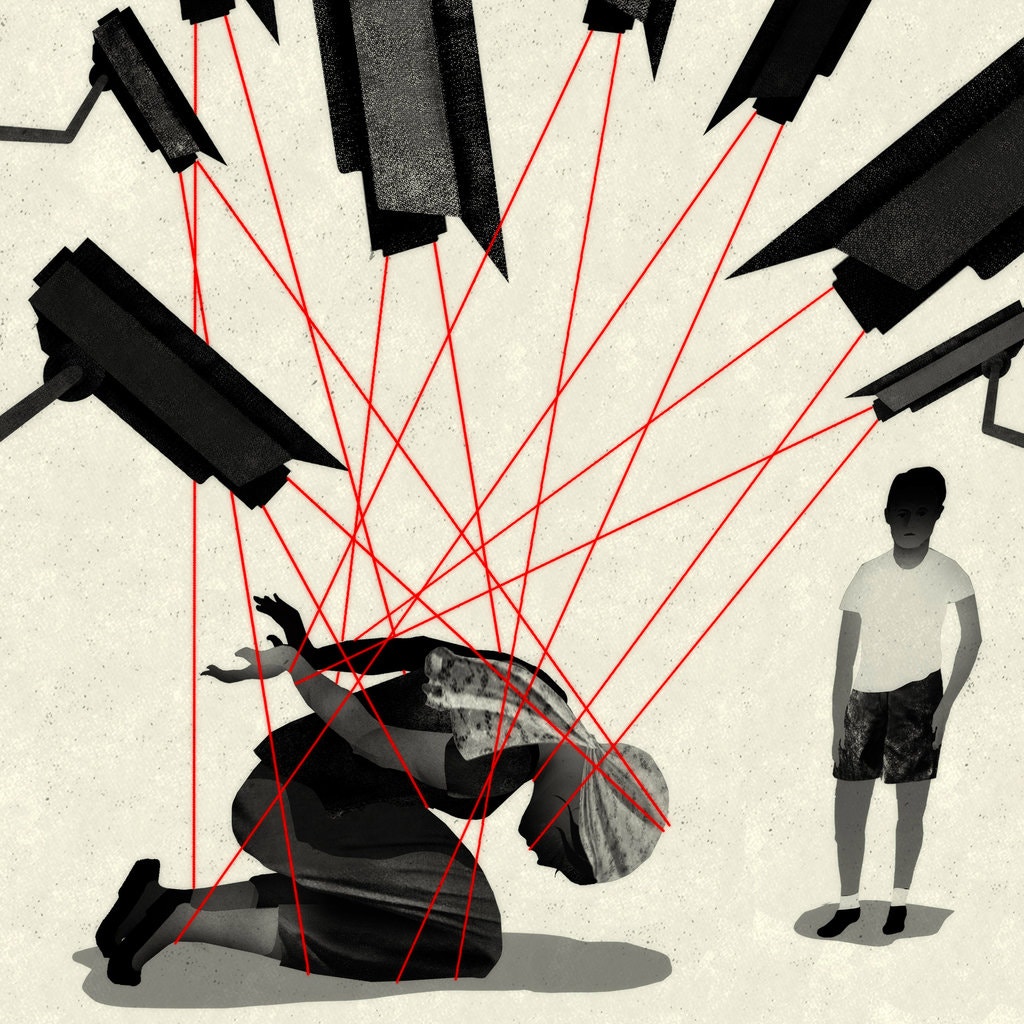
In 2021, there is no denying that the United States is a full-on surveillance state. The Biden Administration attempts to remove all pretense of privacy with its new consideration to use outside firms to track “extremist” chatter by American citizens online. But what exactly is an “extremist?” According to Tulsi Gabbard, recent efforts essentially criminalize half the country:

“It’s so dangerous as you guys have been talking about, this is an issue that all Democrats, Republicans, independents, Libertarians should be extremely concerned about, especially because we don’t have to guess about where this goes or how this ends,” Gabbard said.

She continued: “When you have people like former CIA Director John Brennan openly talking about how he’s spoken with or heard from appointees and nominees in the Biden administration who are already starting to look across our country for these types of movements similar to the insurgencies they’ve seen overseas, that in his words, he says make up this unholy alliance of religious extremists, racists, bigots, he lists a few others and at the end, even libertarians.” (source)

(So basically, if you’re reading this website, you’re probably an “extremist” in someone’s point of view.)

New efforts to spy on Americans

Their effort would expand the ability of intelligence agencies to gather information (spy) on American citizens.

Currently, the Department of Homeland Security (DHS) is limited on how it can monitor citizens online. For example, it is banned from assuming false identities to gain access to private messaging apps used by citizens without justification.

Instead, according to the law (but not necessarily in practice), federal agencies can only browse through unprotected information on social media sites. A source familiar with Biden’s effort said it is not about decrypting data. Instead, it is about using outside entities to access these private groups legally to gather large amounts of information that would help DHS identify “key narratives as they emerge.”

Note: Some of these outside entities are used by what the administration considers “extremists.” (Such as the Oath Keepers and Proud Boys.) 

The Department of Homeland Security claims they are doing no such thing

According to multiple sources cited by CNN, the plan would allow the DHS to make an end-run around those limits. In response to CNN, DHS said it “is not partnering with private firms to surveil suspected domestic terrorists online” and “it is blatantly false” to suggest that it would do so.

“All of our work to address the threat of domestic terrorism is done consistent with the Constitution and other applicable law, and in close coordination with our privacy and civil liberties experts,” the DHS statement added.

But the department has considered partnering with research firms that have more visibility and reach in this area. However, it has not done so yet, according to the sources. And do recall that they recently wanted to outlaw encrypted apps.

Suppose that does happen (and we have every reason to suspect it already has). In that case, DHS could produce information that would be helpful to it and the FBI, CIA, and NSA in its ability to spy on American citizens not committing any crimes.

“Narratives” that might lead to violence justify domestic spying?

CNN unintentionally explains the reason for the Biden Admin’s new focus on these messaging platforms when it writes:

Much of the planning for the Capitol Hill riot appeared out in the open on social media platforms and encrypted apps available to anyone with an internet connection. The DHS is trying to get a better sense of “narratives” that might lead to violence as they emerge across those channels, according to two DHS officials.

But tracking those narratives, particularly in the wake of January 6, increasingly requires access to private groups on encrypted apps as extremist groups migrate from more forward-facing sites like Facebook.

By the time narratives appear on Facebook, it is usually too late, one DHS official told CNN.

“Domestic violent extremists are adaptive and innovative. We see them not only moving to encrypted platforms but obviously couching their language so they don’t trigger any kind of red flag on any platforms,” the official added.

Outsourcing some information gathering to outside firms would give DHS the benefit of tactics that it isn’t legally able to do in-house, such as using false personas to gain access to private groups used by suspected extremists, sources say. Of course, China is already spying on millions of Americans.

Isn’t domestic spying a violation of our Constitutional Rights?

CNN continues by writing:

The department is also working on expanding its ability to collect information from public-facing social media sites where users’ posts offered clear warning signs about potential violence ahead of the January 6 attack, but were either ignored or underestimated by security officials prior to that date.

But any effort by the intelligence community to wade into the murky area of domestic spying is fraught with political risks, current and former officials say.

Gathering information on US citizens — no matter how abhorrent their beliefs — raises instant constitutional and legal challenges. Civil liberties advocates and privacy hawks have long criticized any efforts to collect even publicly available information on Americans in bulk as a violation of Americans’ First and Fourth Amendment rights.

The growing surveillance state and expanding government spying is the ultimate issue

Notice what is being considered “extreme” by the administration and DHS. It is not BLM or Antifa who have been tearing apart and burning American cities to the ground but right-leaning and even “Constitutionalist” groups targeted.

In the hands of the radical left, the US government is moving once again against one side in the American culture war, empowering the opposing side. (The same side that terrorized innocent Americans.)

For those on the left who support the crackdown on the right-wing and what they see as white supremacy, they need only wait until they have outlived their usefulness. Or until a right-wing administration takes over. When one gets purged it leads the way for others to be purged. Then they will come to realize why government overreach is a danger to everyone and not a force to be wielded lightly. 

How much more intense do you expect the spying to become?

Do you think we’re just at the tip of the iceberg for government surveillance? What do you think they’re doing that we don’t yet know about? Are you taking any steps to protect yourself from being spied upon? Let’s talk about it in the comments.

MORE PEOPLE WERE ARRESTED FOR CANNABIS POSSESSION THAN ALL VIOLENT CRIMES PUT TOGETHER IN THE US LAST YEAR

By John Vibes

Source: Waking Times

With legal recreational and medical cannabis now available in so many different US states, it is easy to get the impression that the war on cannabis users is over.

However, cannabis users still represent a significant portion of the people who are filling jails and courthouses throughout the country.

According to the FBI’s recent Uniform Crime Report, more people were arrested for cannabis possession last year than for all violent crimes put together.

The data showed that 545,602 people were arrested in the US for cannabis-related crimes last year. Meanwhile, just 495,871 people were arrested for violent crimes.

Furthermore, the vast majority of the people who got arrested for cannabis were not accused of selling or trafficking the substance, but just for simple possession. 500,395 of the total cannabis arrests last year, or about 92%, were for possession, which is still more than the number of people who were arrested for violent crimes.

Erik Altieri, the Executive Director for cannabis advocacy group NORML, says that police across America are still making a cannabis-related arrest every 58 seconds.

“At a time when the overwhelming majority of Americans want cannabis to be legal and regulated, it is an outrage that many police departments across the country continue to waste tax dollars and limited law enforcement resources on arresting otherwise law-abiding citizens for simple m***juana possession,” Altieri told Forbes.

Overall, cannabis arrests have been going down nationwide due to the spread of legalization. Last year, cannabis arrests were down by 18% when compared with 2018.

As suspected, the FBI’s data showed that people were less likely to get arrested for cannabis in states where it was legal or available for medical use, with eastern states seeing far more arrests.

According to the report, roughly 53% of all cannabis arrests last year took place in the northeastern part of the country, where cannabis laws are still catching up with the west.

People of color are also at a greater risk of being targeted for cannabis arrests. According to a report from the ACLU, 2018 data showed that people of color were 3.6 times more likely to be arrested for cannabis possession than white people, despite using the substance at the same rates.

In some states that are known to be especially dangerous for people of color, such as Montana or Kentucky, they are close to ten times more likely to be arrested for cannabis. In a few particular US counties, people of color were 50 times more likely to be arrested for cannabis possession.

In some states where cannabis has been legalized, lawmakers are making efforts to introduce pardons for those who previously broke the law.

Earlier this year, Nevada Governor Steve Sisolak introduced a measure that will pardon more than 15,000 people who were convicted for low-level cannabis possession in the state.

The resolution was unanimously approved by the state’s Board of Pardons Commissioners shortly after it was introduced.

In Colorado, lawmakers passed a bill that will allow the state’s governor to unilaterally pardon people with past convictions for possession of up to two ounces.

How Corporate Tyranny Works

By Chris Hedges

Source: OpEdNews.com

Those, like environmental lawyer Steven Donziger, who fight the corporate control of our society on behalf of the vulnerable find the institutions of power unite to crucify them.

The persecution of the attorney Steven Donziger is a grim illustration of what happens when we confront the real centers of power, masked and unacknowledged by the divisive cant from the Trump White House or the sentimental drivel of the Democratic Party. Those, like Donziger, who name and fight the corporate control of our society on behalf of the vulnerable see the judiciary, the press and the institutions of government unite to crucify them.

“It’s been a long battle, 27 years,” Donziger said when I reached him by phone in his apartment in Manhattan.

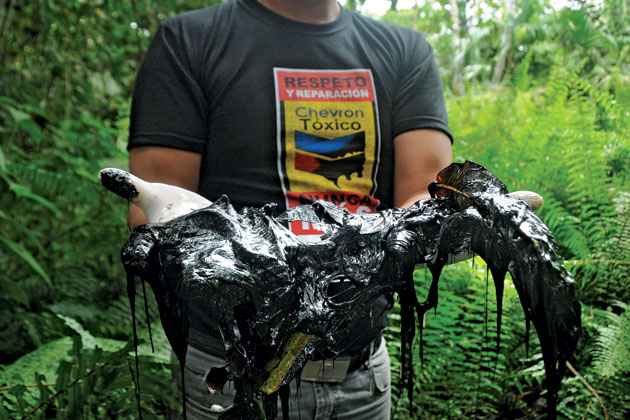
Donziger, who has been fighting polluting American oil companies for nearly three decades on behalf of indigenous communities and peasant farmers in Ecuador, has been under house arrest in Manhattan for a year. He will go to trial in federal court in New York on September 9 on contempt of court charges, which could see him jailed for six months. Ever since he won a multibillion-dollar judgment in 2011 against the oil giant Chevron, the multinational has come after him personally through litigation that threatens to destroy him economically, professionally and personally.

“Our L-T [long-term] strategy is to demonize Donziger,” Chevron wrote in an internal memo in 2009, as reviewed by Courthouse News.

It started when Texaco went into Ecuador in the Amazon in the 1960s and cut a sweetheart deal with the military government then ruling Ecuador,” Donziger told me. “Over the next 25 years, Texaco was the exclusive operator of a very large area of the Amazon that had several oil fields within this area, 1500 square miles. They drilled hundreds of wells. They created thousands of open-air, unlined toxic waste pits where they dumped the heavy metals and toxins that came up from the ground when they drilled. They ran pipes from the pits into rivers and streams that local people relied on for their drinking water, their fishing and their sustenance. They poisoned this pristine ecosystem, in which lived five indigenous peoples, as well as a lot of other non-indigenous rural communities. There was a mass industrial poisoning.”

“By the time I went down there in the early 1990s, many people had died, cancer rates were skyrocketing according to several independent health evaluations, people were really hurting. There was zero regard for the lives of the local people by Texaco. I was a very young lawyer back in 1993 when I first went to Ecuador. It was like looking at an apocalyptic scene. There was oil on the roads. People were living in abject poverty. They had no shoes. They would get oil on their feet when they walked along the roads. The oil pollution had permeated every aspect of daily life. It was in the food supply. It was in the water supply. It was in the air. The average person there would get exposed multiple times a day to very harmful, cancer-causing toxins, with foreseeable results.”

“I, with other lawyers, filed a lawsuit in New York against Texaco. The reason we filed in New York was because Texaco’s headquarters were in New York in 1993. The decisions to pollute in Ecuador, to play God to the people of Ecuador, were made in New York. We sued in New York. Texaco tried to get the case back to Ecuador where they had never been held accountable, where they knew the indigenous peoples had no money or resources to find lawyers.”

“They thought it would just go away,” said Donziger. “Over a 10-year period, we battled to get a jury trial in the United States. Ultimately, they won that part of the battle. It went down to Ecuador.”

“We started working with a team of Ecuadoran lawyers in the early 2000s. We went forward with the lawsuit. We produced voluminous scientific and testimonial evidence, showing that they caused probably the world’s worst oil pollution. It was called the ‘Amazon Chernobyl’ by locals and experts. They dumped 16 billion gallons of toxic waste. They did it deliberately to save money. This was unlike the BP spill in the Gulf of Mexico, which was a terrible accident, even though it was a product of horrendous negligence by BP. This was done by design to pollute, knowing that people would die, and that indigenous groups would be decimated, and that this beautiful part of the Amazon would be destroyed.”

The refusal to abide by even minimal environmental regulations saved Texaco an estimated $3 on every barrel of oil produced over 26 years (1964-1992), according to Amazon Watch, or an estimated extra $5 billion in revenue. The hundreds of waste pits the company eventually abandoned in Ecuador, on average, contain 200 times the contamination allowed by typical global standards.

“They tried to grind us down using classic corporate defense tactics,” Donziger said of the legal war. “They filed thousands of motions. We stood strong. We had a great legal team of Ecuadorian lawyers.”

In the end, they won a stunning victory, a rare moment of accountability for first-world conglomerates who rape the environment of developing nations by exploiting weak, corrupt governments.

“The verdict came down, about $18 billion in favor of the affected communities, which is what it would take at a minimum to clean up the actual damage and compensate the people for some of their injuries. That eventually got reduced on appeal in Ecuador to $9.5 billion, but it was affirmed by three appellate courts, including the highest court of Ecuador. It was affirmed by the Canadian Supreme Court, where the Ecuadorians went to enforce their judgment in a unanimous opinion in 2015.”

Chevron, as the evidence mounted against it, sold their assets in Ecuador and left the country. The corporation threatened the plaintiffs with a “lifetime of litigation” if they attempted to collect, and, according to internal Chevron memos, launched a legal and media campaign that has cost an estimated $2 billion to prevent payment of the settlement and to demonize and destroy Donziger.

Donziger came to his epic battle against Chevron through journalism. “I was a journalist on my college newspaper,” he said of his time as a history major at American University. “My first job out of college was as a journalist with [United Press International]. I worked for UPI in Washington. They were strong in Latin America. I traveled to Managua in 1983 or 1984, I don’t remember exactly, and found work in the UPI bureau. I was 23 years old. I worked in the UPI bureau in Managua during the Sandinista era.”

He left UPI after a year in Managua but stayed on in Nicaragua to work as a freelance journalist for newspapers such as The Fort Lauderdale News, The Toronto Star and The Atlanta Constitution. He spent about three years as a reporter before going to Harvard Law School. When he graduated from Harvard Law School in 1991, he worked as a public defender in Washington, D.C. He documented Iraqi civilian casualties in Iraq following the first Gulf War that became a report adopted by the United Nations.

A classmate at law school was from Ecuador. His classmate’s father organized a trip in April 1993 for lawyers and medical professionals to look at the contamination caused by the oil extraction in the Amazon. That trip, which Donziger joined, spawned the suit against Texaco. He would make more than 250 trips to Ecuador over the next two decades.

“Journalism significantly shaped my views and skill set,” he said. “It was vital to allowing my work to be successful. From the beginning this was a unique litigation, for many reasons, but one of the reasons was we, as a team, decided to work across multiple platforms. If we only saw this case as a lawsuit we would never win.”

“Chevron controlled the legal system in Ecuador with their influence. We needed to operate across different platforms, including engaging with the media and carrying out significant public education. Most Ecuadorians, other than those who lived in the region, knew nothing about the pollution that had been happening in their country. We carried out zealous advocacy in the public arena. We realized that the indigenous people would never get a fair trial in Ecuador if they did not illuminate what had happened to them and get public support.”

“The fact that I am detained shows how far we’ve come and how much risk Chevron feels. It’s not a sign we lost. It’s the opposite.”

Steven Donziger

Both the judge who oversaw its lawsuit against Donziger for “racketeering” and Chevron itself “claim that this type of activity is wrong,” he said. “The irony is that what we were doing is what the big oil companies have always done. They always operate in the public relations domain, lobbying Congress to pass legislation to extinguish various legal claims, meeting political leaders behind the scenes. They operate across every platform they can find to exercise their power. We were smart enough to meet them toe-to-toe wherever they were operating and neutralize their ability to undermine the fairness of the trial. That’s how they operate. They try to control court systems.”

“My journalism [experience] sensitized me to injustice. It allowed me to understand the media. I knew how to write press releases, which matters when you do a public case like this. I knew how to work across different platforms to mobilize positive energy around the case. Human rights work involves, first and foremost, justice for victims. But equally important is accountability for the perpetrators. The fact that I am detained shows how far we’ve come and how much risk Chevron feels. It’s not a sign we lost. It’s the opposite.”

Chevron, which had left Ecuador, went back to the New York court, where Donziger had originally filed the lawsuit before Chevron got a change of venue to Ecuador, and sued him, using a civil courts portion of the federal law famous for breaking the New York Mafia in the 1970s, the Racketeer Influenced and Corrupt Organizations Act.

In effect, “They sued me as a civil racketeer, under a civil RICO statute for $60 billion,” he said. “That was the largest amount of money an American individual ever had been sued for. This began a 10-year campaign to demonize me by Chevron and by its judicial allies.”

Chevron, which has more than $260 billion in assets, has hired an estimated 2,000 lawyers from 60 law firms to carry out its campaign, according to court documents. The oil giant dropped its demand for financial damages weeks before the RICO trial, which would have necessitated a jury trial. Judge Lewis A. Kaplan, a former lawyer for the tobacco industry who had undisclosed investments in funds with Chevron holdings, according to his public financial disclosure statement, decided the RICO case alone. He found credible a witness named Alberto Guerra, relocated to the US by Chevron at a cost of some $2 million, who claimed the verdict in Ecuador was the product of a bribe. Kaplan used Guerra’s testimony as primary evidence for the racketeering charge, although Guerra, a former judge, later admitted to an international tribunal that he had falsified his testimony.

“[Kaplan] wouldn’t allow me to bring in any environmental evidence that the Ecuadorian courts had used to find Chevron liable,” Donziger said. “He wouldn’t let me testify on my own behalf on direct. He allowed Chevron to use secret witnesses whose identities he wouldn’t reveal to me. He tried to treat it like a national-security kind of case to try to demonize me. Because Chevron’s whole strategy is to demonize [me] as a way to distract attention from its environmental crimes in Ecuador. And Judge Kaplan, who knows all the tricks in the books because he used to work for [tobacco company] Brown & Williamson, when he was [an attorney with the law firm of] Paul, Weiss. He knows the tobacco industry playbook that they used for years and years and continue to use. And he worked with the Chevron lawyers at Gibson, Dunn & Crutcher to implement them against me without a jury. And there was nothing I could do about it.”

(Paul, Weiss is a large law firm that currently advises Chevron on its $13 billion purchase of another energy company.)

John Keker, one of Donziger’s lawyers on that case, said he was up against 160 lawyers for Chevron and during the trial he felt “like a goat tethered to a stake.” He called the court proceedings under Kaplan “a Dickensian farce” and a “show trial.” In the end, Kaplan ruled that the judgment in the Ecuadorean court against Chevron was the result of fraud.

He also ordered Donziger to turn over decades of all client communication to Chevron, in effect eradicating attorney-client privilege, a backbone of the Anglo-American legal system with roots dating to ancient Rome. Donziger appealed what was, according to legal experts following the case, an unprecedented and illegal order. While Donziger’s appeal was pending, Kaplan charged him with criminal contempt for this principled stance, as well as his refusal to turn over his passport, his personal electronics and to refrain from seeking the collection of the original award against Chevron.

When his criminal contempt charges against the environmental lawyer were ignored by the U.S. attorney’s office for over five years, Judge Kaplan, using an exceedingly rare judicial maneuver, appointed the private law firm of Seward & Kissel, to act in the name of the government to prosecute Donziger. Neither the judge nor the law firm disclosed that Chevron has been a client of Seward & Kissel.

Kaplan also violated the established random case assignment protocol to personally assign Loretta Preska, a member of the right-wing Federalist Society, to hear the case. Chevron is a major donor to the Federalist Society. Preska, in a show of bias, already has said the charges against Donziger appear to be “very strong,” according to Courthouse News. In May, she disallowed him from having his charges heard by a jury.

“The last thing any of them wants is for a group of ordinary citizens to see what has happened to Steven Donziger,” Rick Friedman, one of Donziger’s attorneys, said of Chevron.

“The last thing any of them wants is for a group of ordinary citizens to see what has happened to Steven Donziger.”

Rick Friedman, attorney

Preska’s fealty to corporate power was previously on public display in 2013 when she imposed a 10-year sentence, the maximum allowed under a plea deal, on Jeremy Hammond, the activist who hacked into Stratfor, a private security firm. Hammond made public a barrage of damning internal emails and exposed the email address and password of an account used for business by Preska’s husband, Thomas Kavaler, a partner at the law firm Cahill Gordon & Reindel. Preska, despite the conflict of interest, refused to recuse herself. The 10-year sentence was one of the longest in U.S. history for hacking.

Kaplan had Preska demand Donziger post an $800,000 bond on a misdemeanor charge. Preska placed him under house arrest and confiscated his passport which he has used to meet with attorneys around the world attempting to enforce the judgment against Chevron. Kaplan managed to have Donziger disbarred. He allowed Chevron to freeze Donziger’s bank accounts, slapped Donziger with millions in fines without allowing him a jury, forced him to wear an ankle monitor 24 hours a day and effectively shut down his ability to earn a living. Kaplan allowed Chevron to impose a lien on Donziger’s apartment in Manhattan where he lives with his wife and teenage son.

Donziger is scheduled to go to trial without a jury on September 9 in New York City for contempt. Preska will preside over the trial. There has not been a criminal trial in Manhattan federal court since March because of the pandemic. Donziger’s trial would be the first, although hundreds of other defendants facing far more serious felony charges are waiting in jails, infested with COVID-19, for a trial date. Donziger’s four pro bono lawyers said they do not want to risk their lives by traveling to New York during the pandemic for what is a misdemeanor offense.

“The judgment against Chevron Corporation in Ecuador was the product of fraud, bribery and corruption,” Sean Comey, Senior Advisor – External Affairs Chevron Corporation said when I asked the corporation to comment on the case. “Steven Donziger is a proven liar and an adjudicated racketeer. He committed criminal acts in the U.S. and abroad in pursuit of his extortion scheme in the Ecuadorian courts. Donziger’s continuing lawlessness is now a matter for prosecutors and the U.S. courts to decide. Chevron is not involved in Donziger’s criminal prosecution.”

The flagrant corruption and misuse of the legal system to abjectly serve corporate interests in the Donziger case illustrates the deep decay within our judiciary and democratic institutions, one that was abetted by Democratic administrations that stacked the courts with corporate lawyers — Kaplan was appointed by Bill Clinton — and Donald Trump, who has elevated ideologues selected by the Federalist Society to the federal bench. Ruling after ruling in Donziger’s case has ignored or grossly distorted the law on behalf of Chevron to ensure that Donziger will be prosecuted, sent to prison and remain in debt for life — all while the $9.5 billion settlement is never paid to aid the people harmed in Ecuador.

The International Association of Democratic Lawyers and the international committee of the National Lawyers Guild issued a letter signed by more than 70 organizations calling the persecution of Donziger an “attack on the rule of law.” The letter said his house arrest was “unprecedented” and charged that he was being targeted for what it called “one of the most important corporate accountability and human rights cases of our time.” The letter accused Kaplan of “violating basic notions of fairness in the judicial process that lie at the core of the rule of law.”

“We cannot allow the rule of law to be upended by corporate interests and a highly biased federal judge seeking to destroy the willpower of one lawyer who has already withstood decades of brutal litigation and scathing personal and professional attacks,” the letter read.

Chevron has also used its clout and advertising dollars to keep the story from being reported in numerous media outlets.

“Based on where this story is trending, we have launched a full offensive to kill it or redirect it,” an August 10, 2010 internal memo from Chevron reads concerning a potential report — on the case being done by the Fox News bureau in Miami.

“In addition to working through the Miami bureau, we have reached out to more senior news folks at Fox News, both in NY (through Dana) and in WDC (through Greg Mueller). So, we are trying to attack this story on multiple fronts. To this end, Kent is set to talk to John Stack and Sean Smith who both reside at Fox News in NY at 1:30 today. Finally, if need be, I think we may need to pull the JSW card with Roger Ailes. We have checked John’s availability to place a call to Roger, but his first availability is tomorrow afternoon.”

From 2010 to 2018, John S. Watson was the CEO and chairman of the Chevron Corporation.

The story was killed.

Another internal memo lays out the steps, also ultimately successful, to prevent a similar story from appearing in GQ magazine. The memo suggests that Chevron work …with the Columbia Journalism Review (that ran the rebuke of 60 minutes) and the Media Research Center to expose any degree of bias by GQ and raise alerts about the reporting techniques prior to the story’s publication.”

The memo recommends letting the magazine know that it will face legal action if the story runs and calls on Chevron investigators to “conduct further due diligence on reporter.” Chevron has also hired reporters to produce fake pieces of journalism that peddle the corporation’s propaganda on fake news sites it runs.

The New York Times magazine earlier this year considered a story about Donziger and then dropped it. The newspaper runs its own ad agency called T Brand Studio. Chevron is a major client, meaning The New York Times, through T Brand Studio, produces ads for Chevron.

Jake Silverstein, editor of the magazine, when asked to comment said by email: “It was one of several stories William [Langewiesche] considered writing for us in the past year, one that ultimately we decided not to assign. Many factors go into our decisions about what to assign, and none of them ever include who is or is not a client of T Brand Studio or any other part of the paper’s advertising business.”

Dean Baquet, the newspaper’s executive editor, said, when I reached him by email, that the idea that the magazine piece on Donziger was killed because Chevron is a major advertiser is “a ridiculous claim.” He added, “I didn’t even know Chevron worked with T Brand [Studio].”

But that Chevron has invested tremendous resources to kill stories about this case is indisputable given the detailed campaigns to block coverage outlined in its own internal memos.

“I’ve experienced this multiple times with media over the past 10 to 15 years,” Donziger said. “An entity will start writing the story, spend a lot of time on it, then the reporter disappears. The story doesn’t run.”

While The NationThe Intercept and Courthouse News Service have reported on Donziger’s current legal battle, no major mainstream publication has touched it.

“Corporate influence over our federal judiciary has increased dramatically in recent years,” Donziger said. “This firm [Chevron] has captured an element of power from the government and deployed it against a human rights activist.”

Front Line Defenders issued a report in 2019 that found that 300 human rights activists had been murdered in 31 countries, more than two-thirds in Latin America. Of those killed, 40 percent fought for land rights, indigenous peoples and environmental justice.

“What’s shocking to a lot of people is that this is now happening in the United States,” Donziger said. “I don’t mean murder, but death by a thousand cuts. Chevron does not want me to be a lawyer anymore, at a minimum. They don’t want me advocating even as a non-lawyer. They want to silence me. They want to kill every story they can. They’d rather have no story about this case than even a positive story about their side. They don’t want people to know about it. They want to erase it from people’s thought process.

“I cannot get a fair trial with a judge appointed by Judge Kaplan rather than through the random assignment process,” he lamented. “I cannot get a fair trial with a prosecutor whose law firm [has worked] for Chevron. These are egregious conflicts of interest. Its misconduct on a grand scale. I’ve been locked up four times as long as the longest sentence ever imposed on a lawyer for criminal contempt in New York. Anyone who cares about the rule of law should be appalled.”

The System Is Rigged: Qualified Immunity Is How the Police State Stays in Power

By John W. Whitehead

Source: Mint Press News

The system is rigged, the government is corrupt, and “we the people” continue to waste our strength by fighting each other rather than standing against the tyrant in our midst.

Because the system is rigged, because the government is corrupt, and because “we the people” remain polarized and divided, the police state will keep winning and “we the people” will keep losing.

Because the system is rigged and the U.S. Supreme Court—the so-called “people’s court”—has exchanged its appointed role as a gatekeeper of justice for its new role as maintainer of the status quo, there will be little if no consequences for the cops who brutalize and no justice for the victims of police brutality.

Because the system is rigged, there will be no consequences for police who destroyed a private home by bombarding it with tear gas grenades during a SWAT team raid gone awry, or for the cop who mistakenly shot a 10-year-old boy after aiming for and missing the non-threatening family dog, or for the arresting officer who sicced a police dog on a suspect who had already surrendered.

This is how unarmed Americans keep dying at the hands of militarized police.

By refusing to accept any of the eight or so qualified immunity cases before it this term that strove to hold police accountable for official misconduct, the Supreme Court delivered a chilling reminder that in the American police state, ‘we the people’ are at the mercy of law enforcement officers who have almost absolute discretion to decide who is a threat, what constitutes resistance, and how harshly they can deal with the citizens they were appointed to ‘serve and protect.”

This is how qualified immunity keeps the police state in power.

Lawyers tend to offer a lot of complicated, convoluted explanations for the doctrine of qualified immunity, which was intended to insulate government officials from frivolous lawsuits, but the real purpose of qualified immunity is to rig the system, ensuring that abusive agents of the government almost always win and the victims of government abuse almost always lose.

How else do you explain a doctrine that requires victims of police violence to prove that their abusers knew their behavior was illegal because it had been deemed so in a nearly identical case at some prior time: it’s a setup for failure.

Do you know how many different ways a cop can kill, maim, torture and abuse someone without being held liable?

The cops know: in large part due to training classes that drill them on the art of sidestepping the Fourth Amendment, which protects us from being bullied, badgered, beaten, broken and spied on by government agents.

This is how “we the people” keep losing.

Although the U.S. Supreme Court recognized in Harlow v. Fitzgerald (1982) that suing government officials for monetary damages is “the only realistic avenue” of holding them accountable for abusing their offices and violating the Constitution, it has ostensibly given the police and other government agents a green light to shoot first and ask questions later, as well as to probe, poke, pinch, taser, search, seize, strip and generally manhandle anyone they see fit in almost any circumstance, all with the general blessing of the courts.

Whether it’s police officers breaking through people’s front doors and shooting them dead in their homes or strip searching motorists on the side of the road, these instances of abuse are continually validated by a judicial system that kowtows to virtually every police demand, no matter how unjust, no matter how in opposition to the Constitution.

Make no mistake about it: this is what constitutes “law and order” in the American police state.

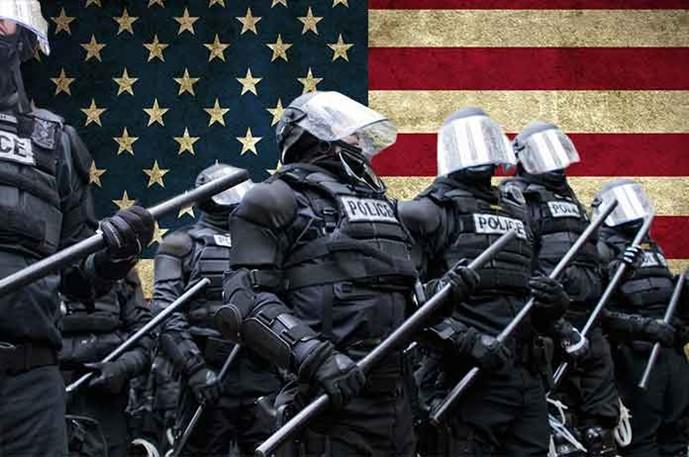
These are the hallmarks of a police state: where police officers, no longer mere servants of the people entrusted with keeping the peace, are part of an elite ruling class dependent on keeping the masses corralled, under control, and treated like suspects and enemies rather than citizens.

Unfortunately, we’ve been traveling this dangerous road for a long time now.

A review of critical court rulings over the past several decades, including rulings affirming qualified immunity protections for government agents by the U.S. Supreme Court, reveals a startling and steady trend towards pro-police state rulings by an institution concerned more with establishing order, protecting the ruling class, and insulating government agents from charges of wrongdoing than with upholding the rights enshrined in the Constitution.

Indeed, as Reuters reports, qualified immunity “has become a nearly failsafe tool to let police brutality go unpunished and deny victims their constitutional rights.” Worse, as Reuters concluded, “the Supreme Court has built qualified immunity into an often insurmountable police defense by intervening in cases mostly to favor the police.”

The system is rigged.

Police can claim qualified immunity for warrantless searches. In Anderson v. Creighton, the Supreme Court ruled that FBI and state law enforcement agents were entitled to qualified immunity protections after they were sued for raiding a private home without a warrant and holding family members at gunpoint, all in a search for a suspected bank robber who was not in the house.

Police can claim qualified immunity for warrantless arrests based on mere suspicion. In Hunter v. Bryant, the Court ruled that police acted reasonably in arresting James Bryant without a warrant in order to protect the president. Bryant had allegedly written a letter that referenced a third-party plot to assassinate President Ronald Reagan, but police had no proof that he intended to harm Reagan beyond a mere suspicion. The charges against Bryant were eventually dropped.

Police can claim qualified immunity for using excessive force against protesters. In Saucier v. Katz, the Court ruled in favor of federal law enforcement agents who forcefully tackled a protester as he attempted to unfurl a banner at Vice President Gore’s political rally. The Court reasoned that the officers acted reasonably given the urgency of protecting the vice president.

Police can claim qualified immunity for shooting a fleeing suspect in the back. In Brosseau v. Haugen, the Court dismissed a lawsuit against a police officer who shot Kenneth Haugen in the back as he entered his car in order to flee from police. The Court ruled that in light of existing case law, the cop’s conduct fell in the “hazy border between excessive and acceptable force” and so she did not violate clearly established law.

Police can claim qualified immunity for shooting a mentally impaired person. In City of San Francisco v. Sheehan, the Court ruled in favor of police who repeatedly shot Teresa Sheehan during the course of a mental health welfare check. The Court ruled that it was not unreasonable for police to pepper spray and shoot Sheehan multiple times after entering her room without a warrant and encountering her holding a knife.

Police officers can use lethal force in car chases without fear of lawsuits. In Plumhoff v. Rickard, the U.S. Supreme Court declared that police officers who used deadly force to terminate a car chase were immune from a lawsuit. The officers were accused of needlessly resorting to deadly force by shooting multiple times at a man and his passenger in a stopped car, killing both individuals.

Police can stop, arrest and search citizens without reasonable suspicion or probable cause. In a 5-3 ruling in Utah v. Strieff, the U.S. Supreme Court effectively gave police the go-ahead to embark on a fishing expedition of one’s person and property, rendering Americans completely vulnerable to the whims of any cop on the beat.

Police officers can stop cars based on “anonymous” tips or for “suspicious” behavior such as having a reclined car seat or driving too carefully. In a 5-4 ruling in Navarette v. California, the U.S. Supreme Court declared that police officers, under the guise of “reasonable suspicion,” can stop cars and question drivers based solely on anonymous tips, no matter how dubious, and whether or not they themselves witnessed any troubling behavior. Then in State v. Howard, the Kansas Supreme Court declared that motorists who recline their car seats are guilty of suspicious behavior and can be subject to warrantless searches by police. That ruling, coupled with other court rulings upholding warrantless searches and seizures by police renders one’s car a Constitution-free zone.

Americans have no protection against mandatory breathalyzer tests at a police checkpoint, although mandatory blood draws violate the Fourth Amendment (Birchfield v. North Dakota). Police can also conduct sobriety and “information-seeking” checkpoints (Illinois v. Lidster and Mich. Dep’t of State Police v. Sitz).

Police can forcibly take your DNA, whether or not you’ve been convicted of a crime. In Maryland v. King, a divided U.S. Supreme Court determined that a person arrested for a crime who is supposed to be presumed innocent until proven guilty must submit to forcible extraction of their DNA. Once again the Court sided with the guardians of the police state over the defenders of individual liberty in determining that DNA samples may be extracted from people arrested for “serious” offenses. The end result of the ruling paves the way for a nationwide dragnet of suspects targeted via DNA sampling.

Police can use the “fear for my life” rationale as an excuse for shooting unarmed individuals. Upon arriving on the scene of a nighttime traffic accident, an Alabama police officer shot a driver exiting his car, mistakenly believing the wallet in his hand to be a gun. A report by the Justice Department found that half of the unarmed people shot by one police department over a seven-year span were “shot because the officer saw something (like a cellphone) or some action (like a person pulling at the waist of their pants) and misidentified it as a threat.”

Police have free reign to use drug-sniffing dogs as “search warrants on leashes.” In Florida v. Harris, a unanimous U.S. Supreme Court determined that police officers may use highly unreliable drug-sniffing dogs to conduct warrantless searches of cars during routine traffic stops. The ruling turns man’s best friend into an extension of the police state, provided the use of a K-9 unit takes place within a reasonable amount of time (Rodriguez v. United States).

Not only are police largely protected by qualified immunity, but police dogs are also off the hook for wrongdoing. The Fourth Circuit Court of Appeals ruled in favor of a police officer who allowed a police dog to maul a homeless man innocent of any wrongdoing.

Police can subject Americans to strip searches, no matter the “offense.” A divided U.S. Supreme Court actually prioritized making life easier for overworked jail officials over the basic right of Americans to be free from debasing strip searches. In its 5-4 ruling in Florence v. Burlington, the Court declared that any person who is arrested and processed at a jail house, regardless of the severity of his or her offense (i.e., they can be guilty of nothing more than a minor traffic offense), can be subjected to a strip search by police or jail officials, which involves exposing the genitals and the buttocks. This “license to probe” is now being extended to roadside stops, as police officers throughout the country have begun performing roadside strip searches—some involving anal and vaginal probes—without any evidence of wrongdoing and without a warrant.

Police can break into homes without a warrant, even if it’s the wrong home. In an 8-1 ruling in Kentucky v. King, the U.S. Supreme Court placed their trust in the discretion of police officers, rather than in the dictates of the Constitution, when they gave police greater leeway to break into homes or apartments without a warrant. Despite the fact that the police in question ended up pursuing the wrong suspect, invaded the wrong apartment and violated just about every tenet that stands between us and a police state, the Court sanctioned the warrantless raid, leaving Americans with little real protection in the face of all manner of abuses by police.

Police can use knock-and-talk tactics as a means of sidestepping the Fourth Amendment. Aggressive “knock and talk” practices have become thinly veiled, warrantless exercises by which citizens are coerced and intimidated into “talking” with heavily armed police who “knock” on their doors in the middle of the night. Andrew Scott didn’t even get a chance to say no to such a heavy-handed request before he was gunned down by police who pounded aggressively on the wrong door at 1:30 a.m., failed to identify themselves as police, and then repeatedly shot and killed the man when he answered the door while holding a gun in self-defense.

Police can carry out no-knock raids if they believe announcing themselves would be dangerous. Police can perform a “no-knock” raid as long as they have a reasonable suspicion that knocking and announcing their presence, under the particular circumstances, would be dangerous or futile or give occupants a chance to destroy evidence of a crime (Richards v. Wisconsin). Legal ownership of a firearm is also enough to justify a no-knock raid by police (Quinn v. Texas). For instance, a Texas man had his home subject to a no-knock, SWAT-team style forceful entry and raid based solely on the suspicion that there were legally-owned firearms in his household. The homeowner was actually shot by police through his closed bedroom door.

Police can recklessly open fire on anyone that might be “armed.” Philando Castile was shot and killed during a routine traffic stop allegedly over a broken tail light merely for telling police he had a conceal-and-carry permit. That’s all it took for police to shoot Castile four times in the presence of his girlfriend and her 4-year-old daughter. A unanimous Supreme Court declared in County of Los Angeles vs. Mendez that police should not be held liable for recklessly firing 15 times into a shack where a homeless couple had been sleeping because the grabbed his BB gun in defense, fearing they were being attacked.

Police can destroy a home during a SWAT raid, even if the owner gives their consent to enter and search it. In West v. Winfield, the Supreme Court provided cover to police after they smashed the windows of Shaniz West’s home, punched holes in her walls and ceilings, and bombed the house with so much tear gas that it was uninhabitable for two months. All of this despite the fact that the suspect they were pursuing was not in the house and West, the homeowner, agreed to allow police to search the home to confirm that.

Police can suffocate someone, deliberately or inadvertently, in the process of subduing them. “I can’t breathe” has become a rallying cry following the deaths of Eric Garner and George Floyd, both of whom died after being placed in a chokehold by police. Dozens more have died in similar circumstances at the hands of police who have faced little repercussions for these deaths.

As I make clear in my book Battlefield America: The War on the American People, we are dealing with a nationwide epidemic of court-sanctioned police violence carried out with impunity against individuals posing little or no real threat.

So what’s the answer to reforming a system that is clearly self-serving and corrupt?

Abolishing the police is not the answer: that will inevitably lead to outright anarchy, which will give the police state and those law-and-order zealots all the incentive it needs to declare martial law.

Looting and violence are not the answer: As Martin Luther King Jr. recognized, “A riot merely intensifies the fears of the white community while relieving the guilt.” Using the looting and riots as justification for supporting police brutality is also not the answer:  As King recognized, “It is not enough … to condemn riots… without, at the same time, condemning the contingent, intolerable conditions that exist in our society. These conditions are the things that cause individuals to feel that they have no other alternative than to engage in violent rebellions to get attention. And I must say tonight that a riot is the language of the unheard. And what is it America has failed to hear? It has failed to hear that the plight of the negro poor has worsened over the last twelve or fifteen years. It has failed to hear that the promises of freedom and justice have not been met. And it has failed to hear that large segments of white society are more concerned about tranquility and the status quo than about justice and humanity.”

Police reform is necessary and unavoidable if we are to have any hope of living in an America in which freedom means something more than the right to stay alive, but how we reform the system is just as important as getting it done.

We don’t need to wait for nine members of a ruling aristocracy who primarily come from privileged backgrounds and who have a vested interest in maintaining the status quo to fix what’s broken in America.

Nor do we need to wait for 535 highly paid politicians to do something about these injustices only when it suits their political ambitions

And we certainly don’t need to wait for a president with a taste for totalitarian tactics to throw a few crumbs our way.

This is as much a local problem as it is a national one.

Be fair. Be nonviolent. Be relentless in your pursuit of justice for all.

Let’s get it done.

Will Censorship Prevail over the First Amendment?

By Paul Craig Roberts

Source: PaulCraigRoberts.org

I remember when censorship in America was a limited phemonenon.  It applied during war time—“loose lips sink ships.”  It applied to pornography.  It applied to curse words on the public airwaves and in movies.  It applied to violence in movies.  There could be violence, but not the level that has become common.

Today censorship is ubiquitous.  It is everywhere.  In the United States censorship is both imposed from above and flows from the bottom up.  Censorship is imposed from above by, for example, TV and print media, Google, Facebook, Twitter, and by laws in 28 states prohibiting criticism and participation in boycotts of Israel and by President Trump’s executive order preventing federal funding of educational institutions that permit criticisms of Israel. Censorship flows from the bottom up by, for example, people of protected races, genders, and sexual preference claiming to be offended. 

The ubiquitous censorship that today is characteristic of the United States has shut down comedians. It has shut down criticism of non-whites, homosexuals, transgendered, feminists, and Israel. Official explanations are shielded by labeling skeptics “conspiracy theorists.”  The ubiquitous censorship in the United States is an extraordinary development as the US Constitution guarantees freedom of expression and a free press.

We owe journalist Abby Martin appreciation for reminding us of our right to free speech.  Abby is suing the state of Georgia, one of 28 states that have violated the Constitutional protection of free speech.

Abby was scheduleded to give the keynote speech at a conference at Georgia Southern Univeristy.  She discovered that in order to speak publicly at a Georgia college she had to sign a pledge of allegience not to criticize Israel.  Her refusal to sign resulted in the conference being cancelled.

Here we have the state of Georgia blocking free speech because it will not support the Israeli position on Palestine. See: https://www.lewrockwell.com/2020/02/no_author/journalist-abby-martin-sues-state-of-georgia-over-law-requiring-pledge-of-allegiance-to-israel/ .  Also:  https://www.timesofisrael.com/filmmaker-who-wouldnt-sign-georgias-oath-not-to-boycott-israel-sues-us-state/ 

Think about this for a moment. More than half of the 50 states that comprise the United States have passed laws that are clear violations of the US Constitution.  Moreover, these 28 states have imposed censorship in behalf of a foreign country.  Americans have gags stuck in their mouths because 28 state governments put the interest of Israel higher than the First Amendment of the US Constitution. When government itself is opposed to free speech, what becomes of democracy and accountable government?

Why would 28 states legislate against the US Constitution?  One explanation is that the state governments were bought by the Israel Lobby with money under the table, by promises of political campaign donations, or by threats of financing rival candidates.  How else do we explain 28 state governments imposing censorship in behalf of a foreign country?

Abby Martin is one person who will not stand for it.  She has brought a lawsuit that—if the US Supreme Court is still a protector of the First Amendment—will result in the 28 state laws and Trump’s executive order being overturned.  The protection of Israel against boycotts parallels state laws passed in the 1950s that prevented Martin Luther King’s movement from boycotting businesses that practiced racial segregation. These laws were overturned by the Supreme Court.

The outcome of Abby Martin’s suit will tell us whether the US Constitution is still a living document.

The Gulag of the Mind

By Charles Hugh Smith

Source: Of Two Minds

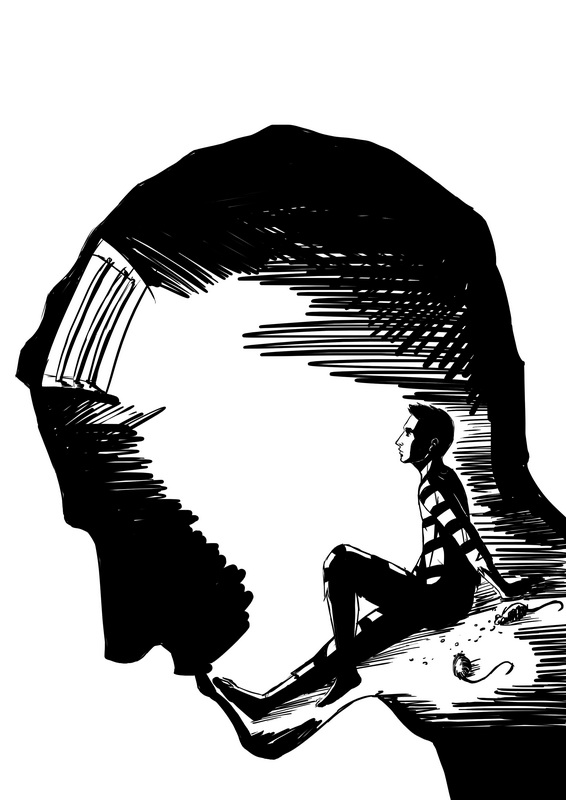
There are no physical barriers in the Gulag of the Mind–we imprison ourselves, and love our servitude. Indeed, we fear the world outside our internalized gulag, because we’ve absorbed the narrative that the gulag is secure and permanent.

We’ve also absorbed the understanding that escape will be punished. Dissent will quickly be suppressed or vilified, and the dissenter socially and economically marginalized.

In a peculiarly human pathology, we now believe the exact opposite of reality: our abuser is our savior, we’re getting wealthier when in fact we’re getting poorer, the government will always save us, even though the government is the problem, not the solution, and we’re entitled to all sorts of good things even as the entire system clings to a veneer of normalcy that is increasingly difficult to maintain.

We dare not realize the crises we’re about to face are novel, and the thinking of the past is worse than useless, as doing more of what’s failed is about to bear real consequences that cannot be papered over.

Michael Grant described this clinging to the past in his excellent account The Fall of the Roman Empire:

There was no room at all, in these ways of thinking, for the novel, apocalyptic situation which had now arisen, a situation which needed solutions as radical as itself. (The Status Quo) attitude is a complacent acceptance of things as they are, without a single new idea.

This acceptance was accompanied by greatly excessive optimism about the present and future. Even when the end was only sixty years away, and the Empire was already crumbling fast, Rutilius continued to address the spirit of Rome with the same supreme assurance.

This blind adherence to the ideas of the past ranks high among the principal causes of the downfall of Rome. If you were sufficiently lulled by these traditional fictions, there was no call to take any practical first-aid measures at all.

The Gulag of the Mind is constructed of both traditional fictions–that all the looming crises can be solved by repeating what worked in the past 50 years– and the new ones of virtual signaling–that publicly signaling our virtuous convictions is magically equivalent to actually solving problems, as if our problems are all nothing but a scarcity of virtuous convictions rather than real-world crises that will require immense fortitude and sacrifice to weather, much less resolve.

The Gulag of the Mind depends on technology–or more precisely, on a magical thinking faith that technology will always effortlessly save us: some new form of magic will manifest at the moment of need and we won’t have to change anything in our lifestyle or our corrupt power structure.

In the Gulag of the Mind, a perversion of justice passes for real justice: there are two sets of laws and two levels of enforcement: the wealthy and powerful escape justice while commoners are given life-crushing prison sentences for Drug Gulag offenses, and their vehicles and belongings are confiscated for being too poor to pay the state’s onerous penalties and fees.

Befuddled and blind, we wander toward the cliff without even seeing it, focusing on our little screens of entertainment and self-absorption. The bottom of the cliff beckons, and filled with the magical sense of security bestowed by the Gulag of the Mind, we imagine we can walk on air and escape unhurt.