The Troika of Tyranny: The Imperialist Project in Latin America and Its Epigones

By Roger Harris

Source: CounterPunch

Cuba, Nicaragua, and Venezuela are today threatened by US imperialism. The first salvo of the modern Age of Imperialism started back in 1898 when the US seized Cuba along with Puerto Rico and the Philippines in the Spanish-American War.

The Age of Imperialism, as Lenin observed, is characterized by the competition of the various imperial powers for dominance. That inter-imperialist rivalry led to World War I. Lenin called those putative socialists who supported their own national imperialist projects “social imperialists.” Social imperialism is a tendency that is socialist in name and imperialist in deed. Imperialism and its social imperialist minions are still with us today.

US Emerges as the World’s Hegemon

The United States emerged after World War II as the leading imperialist power. With the implosion of the Socialist Bloc around 1991, US hegemony became even more consolidated. Today the US is the undisputed world’s hegemon.

Hegemony means to rule but even more so to dominate. As the world’s hegemon, the US will not tolerate neutral parties, let alone hostile ones. As articulated in the Bush Doctrine, the US will try to asphyxiate any nascent counter-hegemonic project, no matter how insignificant.

In the Caribbean, for instance, the US snuffed out the leftist government of Grenada in 1983 in what was code named Operation Urgent Fury. Grenada has a population smaller than Vacaville, California.

The only powers that the world’s hegemon will tolerate are junior partners such as Colombia in Latin America. The junior partner must accept a neoliberal economic regime designed to serve the interests of capital. Structural adjustment of the economy is demanded such that the neoliberal “reforms” become irreversible; so that you can’t put the toothpaste back in the tube.

Colombia recently joined NATO, putting that junior partner’s military under direct interaction with the Pentagon bypassing its civilian government. The US has seven military bases in Colombia in order to project – in the words of the US government – “full spectrum” military dominance in the Latin American theatre.

Needless-to-say, no Colombian military bases are in the US. Nor does any other country have military bases on US soil. The world’s hegemon has some 1000 foreign military bases. Even the most sycophantic of the US’s junior partners, Great Britain, is militarily occupied by 10,000 US troops.

The US is clear on its enemies list. On November 1, US National Security Advisor John Bolton, speaking in Miami, labelled Venezuela, Nicaragua, and Cuba the “troika of tyranny.” He described a “triangle of terror stretching from Havana to Caracas to Managua.”

Venezuela, Nicaragua, and Cuba are targeted by US imperialism because they pose what might be called the “threat of a good example;” that is, an alternative to the neoliberal world order.

These countries are suffering attacks from the imperialists because of the things they have done right, not for their flaws. They are attempting to make a more inclusive society for women, people of color, and the poor; to have a state that, instead of serving the rich and powerful, has a special option for working people, because these are the people most in need of social assistance.

Sanctions: The Economic War against Venezuela, Nicaragua, and Cuba

The US imperialist rhetoric is backed with action. In 2015, US President Obama declared Venezuela an “extraordinary threat to US security” and imposed sanctions. These sanctions have been extended and deepened by the Trump administration. The US has likewise subjected Cuba to sanctions in a seamless bipartisan policy of both Republicans and Democrats for over half a century. Now the US is the process of imposing sanctions on Nicaragua.

Unilateral sanctions, such as those imposed by the US, are illegal under the charters of both the UN and the Organization of American States, because they are a form of collective punishment targeting the people.

The US sanctions are designed to make life so miserable for the masses of people that they will reject their democratically elected government. Yet in Venezuela, those most adversely affected by the sanctions are the most militantly in support of their President Nicolás Maduro.

Consequently, the Trump administration is also floating the option of military intervention against Venezuela. The recently elected rightwing leaders Bolsonaro in Brazil and Duque in Colombia, representing the two powerful states on the western and southern borders of Venezuela, are colluding with the hegemon of the north.

The inside-the-beltway human rights organizations, such as Human Rights Watch, fail to condemn these illegal and immoral sanctions. They lament the human suffering caused by the sanctions, all the while supporting the imposition of the sanctions. Nor do they raise their voices against military intervention, perhaps the gravest of all crimes against humanity.

Liberal establishments such as the advocacy group Washington Office on Latin America (WOLA) try to distinguish themselves from hardline imperialists by opposing a military invasion in Venezuela while calling for yet more effective and punishing sanctions. In effect, they play the role of the good cop, providing a liberal cover for interference in the internal affairs of Latin American nations.

These billionaire-funded NGOs have a revolving-door staffing arrangement with the US government. So it is not surprising that they will reflect Washington’s foreign policies initiatives.

But why do some organizations claiming to be leftist so unerringly echo the imperialists, taking such umbrage over Venezuela, Cuba, and Nicaragua while ignoring far greater problems in, say, Mexico, Colombia, and Honduras, which are US client states?

Most Progressive Country in Central America Targeted

Let’s take Nicaragua. A year ago, the polling organization Latinobarómetro, found the approval rating of Nicaraguans for their democracy to be the highest in Central America and second highest in Latin America.

Daniel Ortega had won the Nicaraguan presidency in 2006 with a 38% plurality, in 2011 with 63%, and 72.5% in 2016. The Organization of American States officially observed and certified the vote. Polls indicated Ortega was perhaps the most popular head of state in the entire western hemisphere. As longtime Nicaraguan solidarity activist Chuck Kaufman noted, “Dictators don’t win fair elections by growing margins.”

Nicaragua is a member of theanti-imperialist Bolivarian Alliance for the Peoples of Our America with Cuba, Venezuela, Bolivia, and some Caribbean states. Speaking at the UN, the Nicaraguan foreign minister had the temerity to catalogue the many transgressions of what Martin Luther King called “the greatest purveyor of violence in the world” and express Nicaragua’s opposition.

These are reasons enough for a progressive alternative such as Nicaragua to curry the enmity of the US. The enigma is why those claiming to be leftists would target a country that had:

+ Second highest economic growth rates and the most stable economy in Central America.

+ Only country in the region producing 90% of the food it consumes.

+ Poverty and extreme poverty halved; country with the greatest reduction of extreme poverty.

+ Reached the UN Millennium Development Goal of cutting malnutrition by half.

+ Nicaraguans enjoyed free basic healthcare and education.

+ Illiteracy had been virtually eliminated, down from 36% in 2006 when Ortega took office.

+ Average economic growth of 5.2% for the past 5 years (IMF and the World Bank).

+ Safest country in Central America (UN Development Program) with one of the lowest crime rates in Latin America.

+ Highest level of gender equality in the Americas (World Economic Forum Global Gender Gap Report 2017).

+ Did not contribute to the migrant exodus to the US, unlike neighboring Honduras, El Salvador, and Guatemala.

+ Unlike its neighbors, kept out the drug cartels and pioneered community policing.

In April of this year, all of this was threatened. The US had poured millions of dollars into “democracy promotion” programs, a euphemism for regime change operations. Suddenly and unexpectedly, a cabal of the reactionary Catholic Church hierarchy, conservative business associations, remnants of the US-sponsored Contras, and students from private universities attempted a coup.

Former members of Ortega’s Sandinista Party, who had long ago splintered off into political oblivion and drifted to the right, became effective propogandists for the opposition. Through inciting violence and the skillful use of disinformation in a concerted social media barrage, they attempted to achieve by extra-legal means what they could not achieve democratically.

Imperialism with a Happy Face

We who live in the “belly of the beast” are constantly bombarded by the corporate media, framing the issues (e.g., “humanitarian bombing). Some leftish groups and individuals pick up these signals, amplify, and rebroadcast them. While they may genuinely believe what they are promulgating, there are also rewards such as funding,media coverage, hobnobbing with prominent US politicians, and winning awards for abhorring the excesses of imperialism while accepting its premises.

Today’s organizations that are socialist in name and imperialist in deed echo the imperial demand that the state leaders of the progressive movements in Latin America “must go” and legitimize the rationale that such leaders must be “dictators.”

They try to differentiate their position from the imperialists by proffering a mythic movement, which will create a triumphant socialist alternative that fits their particular sect’s line: chavismo without Maduro in Venezuela, sandinismo without Ortega in Nicaragua, and the Cuban Revolution without the Cuban Communist Party in Cuba.

The political reality in Latin America is that a rightwing offensive is attacking standing left-leaning governments. President George W. Bush was right: “Either you are with us, or you are with the terrorists.” There is no utopian third way. Each of us has to determine who are the real terrorists, as the juggernaut of US imperialism rolls out a neoliberal world order.

Chaos: The New Imperialist Game Plan

For now, the coup in Nicaragua has been averted. Had it succeeded, chaos would have reigned. As even the most ardent apologists for the opposition admit, the only organized force in the opposition was the US-sponsored rightwing which would have instigated a reign of terror against the Sandinista base.

The US would prefer to install stable rightwing client states or even military dictatorships. But if neither can be achieved, chaos is the preferred alternative. Libya, where rival warlords contest for power and slaves are openly bartered on the street, is the model coming to Latin America.

Chaos is the new imperialist game plan, especially for Bolton’s so-called troika of tyranny. The imperialists understand that the progressive social movements in Venezuela, Nicaragua, and Cuba are too popular and entrenched to be eradicated by a mere change of personnel in the presidential palace. Much more drastic means are envisioned; means that would make the bloody aftermath of the US-backed Pinochet coup in 1973 in Chile pale by comparison.

In Venezuela, for example, the opposition might well have won the May 2018 presidential election given the dire economic situation caused in large part by the US sanctions. The opposition split between a moderate wing that was willing to engage in electoral struggle and a hard-right wing that advocated a violent takeover and jailing the chavistas.

When Venezuelan President Maduro rejected the US demand to call off the elections and resign, he was labelled a dictator by Washington. And when moderate Henri Falcon ran in the Venezuelan presidential race on a platform of a complete neoliberal transition, Washington, instead of rejoicing, threatened sanctions against him for running. The US belligerently floated a military option for Venezuela, stiffened the suffocating sanctions, and tipped the balance within the Venezuelan opposition to the radical right.

The US is not about to allow Venezuela a soft landing. Their intent is to exterminate the contagion of progressive social programs and international policy that has been the legacy of nearly two decades chavismo. Likewise, for Cuba and Nicaragua. We should also add Bolivia in the crosshairs of the empire.

We’ve seen what Pax Americana has meant for the Middle East. The same imperial playbook is being implemented in Latin America. Solidarity with the progressive social movements and their governments in Latin America is needed, especially when their defeat would mean chaos.

Written in History: The Death of America’s Hyper-Power Fantasy

By Martin Sieff

Source: Strategic Culture Foundation

In 1987, Paul Kennedy, a British professor of history at Yale University, unleashed a political and intellectual firestorm with the publication of his great (677-page) book, “The Rise and Fall of the Great Powers.” Kennedy produced a magisterial overview of the competition for global power over the past 500 years from 1500 AD to the present.

Kennedy proposed the thesis that any power that achieved, imagined it had achieved or sought to achieve and maintain a dominant hyper-power role of global dominance was doomed to lose it and then rapidly decline in overall power, wealth, prosperity and influence.

Kennedy argued – with a wealth of detail drawn from different nations over his vast period of half a millennium – that the very attempt to achieve and maintain such power forced every nation that attempted it into a ruinous pattern of strategic overstretch.

This demanded every major global empire in their turn to devote ruinously far too many economic resources to unproductive military power and ever more costly global commitments and conflicts.

The more ambitious the commitments, the quicker came military defeat, economic ruin and national collapse, Kennedy documented.

Kennedy published his book however at exactly the wrong moment for its abundantly documented conclusions and arguments to be taken seriously in the United States. The Cold War was just ending. The heroic actions of the Russian people in rejecting communism and leading in the dismantling of the Soviet Union were being misinterpreted as an eternal and lasting victory for the United States and for the forces of free market capitalism and minimum government regulation.

Kennedy was therefore subjected to a furious firestorm of abuse, especially from the emerging neoconservatives who under President George W Bush succeeded in imposing their reckless policies on nations across the Middle East and Eurasia. Kennedy, unlike his enraged critics was a gracious and tolerant gentleman as well as great scholar and took the firestorm in his stride.

Now more than 30 years after Kennedy published his great work, we can see how prescient, wise and visionary it truly was.

In 2016 President Donald Trump was elected on a platform of dealing with domestic crises raging from economic ruin and impoverishment to an out of control drug and opioid abuse epidemic and the collapse of law and order across the long US land border with Mexico.

That outcome provided telling testimony to the previous US policies of wasting at least $2 trillion on entirely unsuccessful nation-building and government-toppling projects ranging from Iraq to Afghanistan and since extended into such nations as Ukraine, Syria, and Libya

All the national pathologies of bankruptcy, exhaustion, decline and ever spreading human misery that Kennedy in his book traced in previous empires can now be clearly delineated in the policies of the post-Cold War United States.

The bottom line lesson to be drawn from Kennedy’s great book that so outraged neoconservatives at the time was a simple and stunning clear one: Unipolar Moments are just that and nothing more. They last for moments not ages.

Instead, the very attempt to maintain a unipolar moment of apparent global supremacy by any power automatically instead will raise up a host of challenges to that power that will rapidly exhaust and then doom it.

Kennedy traced this process of inexorable over – commitment and decline in 17th century Habsburg Spain. He followed it again in 18th century Bourbon France. He documented it once more in the rise, pride and inevitable fall of the British Empire and in the rash German attempts to create dominant global empires in both world wars of the 20th century.

A generation before Kennedy published his great work, British historian Correlli Barnett, focusing only on the British Empire, published in 1972 his own classic “The Collapse of British Power.” Barnett focused on a one, single unipolar moment – the 1920s and 1930s when the British ruling class, like their American successors today imagined that they were the divinely-appointed global policeman charged by Providence with maintaining their own conceptions of right and wrong over the whole world.

The British at least were reluctantly forced to cede independence to their vast global territories. It is doubtful whether the American people will be so lucky: The US Deep State establishment and their tame, unthinking media puppets remain blindly committed to inflexible expansion, conflict and strategic gambling with the peace and even survival of the world.

Thirty years after his magnum opus was published, Paul Kennedy’s message of warning remains unheeded. America’s Unipolar Moment is long since dead and gone. America’s pretensions to rule supreme as the world’s unchallenged hyper-power have become a dangerous and unsustainable fantasy.

A wakening to sanity is long overdue and the hour is late: National catastrophe can be the only other outcome.

Neoliberal Defenestration and the Overton Window

By Stephen Martin

Source: CounterPunch

‘It is difficult to get Artificial Intelligence to understand something, when the Research and Development funding it depends upon its not understanding it’

Paraphrase of Upton Sinclair.

defenestration  (diːˌfɛnɪˈstreɪʃən)

n

the act of throwing a person or thing  out of a window

[C17: from New Latin dēfenestrātiō, from Latin de- + fenestra window

The freedictionary.com

‘If there is such a phenomenon as absolute evil, it consists of treating another human being as a thing

John Brunner ‘The Shockwave Rider

This small article a polemic against neoliberal hegemony; in particular the emerging issue of ‘surplus population’ as related to technological displacement in context of a free market, an issue purposive to such hegemony which as an ‘elephant growing in the panopticon’  i.e. not to be mentioned?

The central premise is that Artificial Intelligence (AI) + Robotics  comprise a nefarious as formulaic temptation to the elite of the ‘Technetronic era’ as Zbigniew Brzezinski put it: this consistent with a determinism as stems ontologically from ‘Empiricism’  form of a  ‘One Dimensionality’ as Marcuse phrased it over five Decades ago; and which thru being but mere simulacra, AI and Robotics represent an ontological imperative  potentially expropriated under pathology to denial of Kant’s concept of ‘categorical imperative’?  (That Kant did not subscribe to determinism is acknowledged). The neoliberal concepts of ‘Corporatism’ and ‘free market’ are powerful examples of this ‘one dimensionality’ which is clearly pathological, a topic notably explored by Joel Bakan concerning the pursuit of profit within a Corporatist framework.

– ‘One dimensionality in, one dimensionality out’– so it goes ontologically as to some  paraphrase of GIGO as trending alas way of ‘technological determinism’ towards an ‘Epitaph for Biodiversity’  as would be – way of ‘Garbage’ or ‘Junk’ un apperceived as much as ‘retrospection’ non occurrent indeed -and where ‘Farewell to the Working Class’ as André Gorz conceived to assume an entirely new meaning: -this to some denouement of  ‘Dystopian Nightmare’ as opposed to  ‘Utopian Dream’, alas; such the ‘Age of Leisure’  as ‘beckoning’ to be not for the majority or ‘Demos’,but rather  for the ‘technetronic elite’ and  their ‘AI’ and Robotics – such ‘leisure’ being as to a ‘freedom’ pathological and facilitated  by the absence of conscience as much as morality; such the ‘farewell’; such the defenestration of ‘surplus’ , such the ‘Age’ we ‘live’ within as to ‘expropriation’ and ‘arrogation’  to amount to  ‘Death by Panopticon’ such the ‘apotheosis’?

It is being so cheerful which keeps these small quarters going.

But digression.

–  It is a relatively small step from ‘the death of thought’ to ‘the death of Life’under Neoliberal Orthodoxy as proving to be the most toxic ideology ever knownsuch the hegemony as a deliberative, shift of the ‘ Overton Window’ currently occurring as to trend deterministic; such the mere necrotrophy as a ‘defenestration’ – and the ‘one percent’ but a deadly collective of parasitic orifice? For what is ‘Empiricism’ when implemented thru  AI and Robotic Technology in a Corporatist economy as but a ‘selective investment’  as to Research and Development by elite ‘private interests’,  which to a determinism so evidently entailing a whole raft of ‘consequence’ ; such the means, such the production, such the ‘phenomenology’ as ‘owned’ indeed? Under pathology, selectivity is impaired to point of ‘militarization’?

But foremost amongst said ‘raft’ of consequence – the concept of ‘classification’ as incorporates methodological reduction of the particular to a composite of generalities so typical of ‘Science’ as expropriated; the fruition thereof replicated not least thru ‘Consumerism’ – and ‘Lifestyle’ – as much as ‘Life’ reduced as much as abrogated to but correlation way  of ‘possession’ of ‘things’: this  as said replication expressed as much ‘thru’ Linnaeus as Marx  concerning ‘class’- and as results in concepts’ Incorporated’ such as the ‘Overton Window’ – as will be explored by way of ‘extrapolation’ below? The debasing of identity as a correlate of possessions as a necessary ‘abrogation’ by way of engineered ‘bio hack’ is only furthered, such the loss of dimensionality as a potential, by such as social media? An excellent multimedia illustration of such loss is found here.

It’s to be noted that for Empiricism the concept of ‘good’ and ‘evil’ entails an extra dimensionality  as ‘metaphysical’ – and that ‘Politics’ so deconstructed despite abuse under orthodoxy as to ‘mitigation’ remains as  ‘Moral Economics’ – this despite the  mitigative contention of neoliberal orthodoxy that there no morality in the ‘synonymy’; to a pragmatic as ‘Utilitarian’ point of a ‘Killing the Host’ prevailing at paradigmatic as much as Geopolitical level as but explicative of a ‘necrotrophy’; as much as the ‘defenestration’ as euphemism herein proposed this small article  would explicate?

Kudos to Michael Hudson for exposing, and continuing to expose, the ‘death of thought’ which Neoliberalism as an orthodoxy as but a mere ‘racket’ of ‘transfer of resources’ represents.

– Are we ‘on a roll’ here as much as ‘off the leash’ – such the rebellion ‘psycho political’; such the ‘CounterPunch’ by way of digital pamphleteering as ‘restricted code’ rejected evidenced by way of ‘alternative’?

‘Politics’ should mean a diversity biological as much as phenomenological; it should mean more than Empirical ‘utility’, by way of the extra dimensionality which Metaphysics represents; this, as much as ‘Democracy’ demands diversity; ‘thought permitted’ as evidencing same as much as questions allowed to be asked; while Corporatism as antithesis demands ‘line’, a homogeneity, a uniformity, an abrogation as to a contingency?

Whether ‘Empiricism’ as to Philosophy is ‘Essentialist’ or ‘Instrumentalist’ is as of much political relevance as the Medieval question ‘how many angels can dance upon the head of a needle?‘ – the tragic fact remaining in ‘Oceania’  become to Corporatism  is that the economic impact of (AI + Robotics) constitutes a ‘technological displacement’ which under a ‘one dimensionality’ as ‘Orthodox’  is as a ‘political impact’ at a quintessential or axiomatic level, such the ‘formulae’ as (=Ecocide) ‘completes’ under a determinism of hegemony as demands ‘whoredom’? AI and Robotics destroy the symbiotic relationship between production and consumption thru reducing the requirement for human labor as waged in the productive process; AI and Robotics thereby impact upon the distribution of resources as wage based. The fairy tale of compensatory employment opportunities is at best wishful thinking, at worst it is a purposively contrived propaganda?

‘Biodiversity’, alas, becoming more limited to a ‘Thanatos‘ of ‘Military Industrial Corporatist Complex’  as explicates the ‘Age of the Anthropocene’as of the ‘1%’ as funders of ‘hegemony’ such the transfer of resources?

‘As ‘we’ view the world so it becomes’, indeed – this as much as how ‘Others’, through hegemony as ‘Utilitarian’, would have it viewed – and that such a large part of ‘Currency’ as ‘it’  to the permit of ‘Hegemony’ which would control and issue views – such the window as ‘Overtonian’ as can be shifted?

How long before the ‘collateral damage’ concerning premature fatality and reduced life expectancy as evidenced in homelessness, withdrawal of social welfare, militarization of policing, drug abuse, including prescription of synthetic opioids, incarceration all as obscenities explicating the ‘cheapening of life’  becomes ‘formalised’ under neoliberal orthodoxy as euthanasia? To such an Overton Window would it at first be ‘voluntary’?

It was ‘Utilitarianism’ as gave the World the concept of ‘Panopticon’ back in the Eighteenth Century.

Apropos to such ‘Thanatos‘ identified:

Wherefore art thou ‘Eros’: as represented by checkout operator, bank teller, driver, warehouseman, barista, cook, secretary, journalist, lawyer, receptionist, ‘ human voice at the end of the line’ – such the insidious inroads being made consequent the advance of Empirical based Technology?

The ‘Litany’ of such ‘displacement/defenestration’ could go on, as it undoubtedly shall under prevailing Hegemony ‘Western’ as ‘Oceanic’ as much orthodox as ‘deadly’, such the invasive penetration of ‘one dimensionality’ as ‘technological displacement’ evidenced under neoliberal orthodoxy as entailing a transfer of resources to mere ‘Stateless Bastards’, such the point of a determinism as would prevail woeful?

Ponerological questions such as would not be asked commensurate:

Is the ultimate ‘stateless bastard’ satan?

Can ‘synonymy seen’ be’ revolutionary’?

‘Technological displacement’ under an ontology of ‘One Dimensionality’ aka‘Corporatism’ but a euphemism for ‘surplus population’; this as much as ‘Corporatism’ promotes the illusion of ‘Democracy’ by way of ‘mental cheating’; such the synonymy as ‘simulacra’ an ‘illusion’ denied – but ‘real’ under ‘doublethink’?

‘Trickle down economics’ is as real as much as ‘technological displacement’ to be compensated for in the ‘opening up of a whole new vista of opportunity’, such the death of thought as neoliberal orthodoxy represents some parallel of tales told by such as Horatio Alger to point of ‘illusion’ encouraged?

These small quarters would ‘rip a new one’ in Neoliberal Orthodoxy by way of polemic.

It remains a ‘big’ question under contemplation of the genius of Orwell and the highly perspicacious ratio of ‘1/15/84’ (hence the ‘one percent’) as to why, within an undoubtedly comprehensive as prescient Dystopian vision where ‘oligarchic collective’ a synonym of ‘technetronic elite’, he ‘permitted the currency’ of the ‘Prole’ as ‘84%’ to prevail as a presence rather than but a memory disappeared by way of ‘memory hole’?

Under neoliberal orthodoxy the political utility of the ‘Proles’ and in particular the ‘Lumpenproletariat’, alas, is as to but fear as a ‘stick’; a basis of control and manipulation same sense as Upton Sinclair explicated ‘carrot’ contingent by way of synonym seen: to wit;  accept control and manipulation as ‘rewarded’ or be ‘expelled’; be but as a ‘Prole’ subsisting and awaiting death, such the economic incarceration as ‘CAFO’ epitomises the cheapening of life under a hegemony as has corollary of alienation, marginalization and impoverishment wielded under Dystopian imperative; this to a ‘transfer of resources’ from ‘Eros‘ to ‘Thanatos‘ reinforced thru contingency of profit such the ‘ponerology’ of ‘Biodiversity’ reduced by way of paradigm Geopolitical?

To love Life is to loathe the deadly; such the philanthropy as would only be evidenced, such the irony, by the ‘ragged trousered’ as so reduced, such the divide et imperaevidenced?

-And so to ‘defenestration’ as ongoing 21stC. by way of ‘surplus population’ generated deterministically as to be dealt with ‘Utilitarian’ as much as the elimination of ‘Biodiversity’ such the ‘technetronic era’ as much as of Dystopia for Humanity as opposed to a Utopia for (AI + Robotics)?

In the annals of International Finance, in which ‘usury’ figures large as polymorphous(?), the power of (AI + Robotics) ‘growing’ as ‘metastasising’ –  as evidenced by the concept of ‘Dark Pools’, and in political manipulation to point of control and issue of currency  by algorithms, such as  infamously deployed by the now defunct Cambridge Analytica using data ‘supplied’ by Facebook are on the rise – such the ‘technetronic era’ furthered?

When neoliberal orthodoxy states Say hello to my little friend!‘ way of the militarization of ‘AI +Robotics” then a ‘defenestration’ form of ‘take all to hell’ will occur, such the shift of the ‘Overton Window’ in progress?

As to the ‘Overton Window’ as in title this small article; a fellow ‘CounterPuncher ‘sees thru it’ most apposite:

Overton described the evolution to broad public acceptance as a process that develops by degrees: “Unthinkable; Radical; Acceptable; Sensible; Popular; Policy.” The right used this model and stuck with it for 30 years to achieve its current dominance. Ideas like slashing unemployment insurance and welfare, privatizing crown corporations, gutting taxes on the wealthy, making huge cuts to social programs and signing “trade” deals that give corporations more power, were all “unthinkable” or “radical” in the beginning. But after 30 years of relentless promotion and the courting of politicians, all of these ideas are now public policy.

Murray Dobbin

– You see it is really quite ‘simple’ when boiled down, such the reductioad absurdumas ‘one dimensionality’ the result of Empiricism embraced to an exclusion of alternative, as ‘Evolution’ circumscribes as much as theoretically delineates?

‘The Talking Heads’ got it right regarding the consequences of neoliberal orthodoxy as concerns the masses and the ‘death of thought’ whereby a ‘Road to Nowhere’  becoming more ‘incorporative’?

Thru Empiricism as an ‘Ontology’, Man in process of nurturing a necrotrophy, such the orifice as existing to be stuffed to a ‘friction of the finitude’. Each ‘Billionaire’ as become so Empirically quantifiable as under such ‘neoliberal jungle’ such the paradigm of abrogation is as to to an obscene ‘transfer of resources’ whereby egocentricity a ‘Thanatos‘ as opposed to ‘Eros‘, and whereby in such land of the blind as a ‘Kingdom’, the ‘one eyed’ as ‘one dimensional’ as much as Empiricism lack any sense of empathy let alone mercy, and which AI and Robotics to epitomise?

Under such ‘paradigm’ of necrotrophy as debasement as much as abrogation it is as blessed to be a Prole? As Martin Luther so humorously said:

‘So our Lord God commonly gives riches to those gross asses to whom He vouchsafes nothing else’

The rationale for composing this small article is not to be pessimistic, rather such the pretension it is as to be a ‘gadfly’ against the manifestly ongoing cheapening of life thru which such a small minority profit from, and which yet remains mutable, as future submissions shall propose.

The Bayer-Monsanto Merger Is Bad News for the Planet

By Ellen Brown

Source: Truthdig

Two new studies from Europe show that the number of birds in agricultural areas of France has crashed by a third in just 15 years, with some species being almost eradicated. The collapse in the bird population mirrors the discovery last October that more than three quarters of all flying insects in Germany have vanished in just three decades. Insects are the staple food source of birds, the pollinators of fruits and the aerators of the soil.

The chief suspect in this mass extinction is the aggressive use of neonicotinoid pesticides, particularly imidacloprid and clothianidin, both made by the Germany-based chemical giant Bayer. These pesticides, along with toxic glyphosate herbicides such as Roundup, have delivered a one-two punch to monarch butterflies, honeybees and birds. But rather than banning these toxic chemicals, on March 21 the EU approved the $66 billion merger of Bayer and Monsanto, the U.S. agribusiness giant that produces Roundup and the genetically modified (GMO) seeds that have reduced seed diversity globally. The merger will make the Bayer-Monsanto conglomerate the largest seed and pesticide company in the world, giving it enormous power to control farm practices, putting private profits over the public interest.

As Massachusetts Sen. Elizabeth Warren noted in a speech in December at the Open Markets Institute, massive companies are merging into market-dominating entities that invest a share of their profits in lobbying and financing political campaigns, shaping the political system to their own ends. She called on the Trump administration to veto the Bayer-Monsanto merger, which is still under antitrust scrutiny and has yet to be approved in the U.S.

A 2016 survey of Trump’s voter base found that more than half disapproved of the Monsanto-Bayer merger, fearing it would result in higher food prices and higher costs for farmers. Before 1990, there were 600 or more small, independent seed businesses globally, many of them family-owned. By 2009, only about 100 survived, and seed prices had more than doubled. But reining in these powerful conglomerates is more than just a question of economics. It may be a question of the survival of life on this planet.

While Bayer’s neonicotinoid pesticides wipe out insects and birds, Monsanto’s glyphosate has been linked to more than 40 human diseases, including cancer. Its seeds have been genetically modified to survive this toxic herbicide, but the plants absorb it into their tissues. In the humans who eat the plants, glyphosate disrupts the endocrine system and the balance of gut bacteria, damages DNA and is a driver of cancerous mutations. Researchers summarizing a 2014 study of glyphosates in the Journal of Organic Systems linked them to the huge increase in chronic diseases in the United States, with the percentage of GMO corn and soy planted in the U.S. showing highly significant correlations with hypertension, stroke, diabetes, obesity, lipoprotein metabolism disorder, Alzheimer’s, Parkinson’s, multiple sclerosis, hepatitis C, end stage renal disease, acute kidney failure, cancers of the thyroid, liver, bladder, pancreas, kidney and myeloid leukaemia. But regulators have turned a blind eye, captured by corporate lobbyists and a political agenda that has more to do with power and control them protecting the health of the people.

The Trump administration has already approved a merger between former rivals Dow and DuPont, and has signed off on the takeover of Swiss pesticide giant Syngenta by ChemChina. If Monsanto-Bayer gets approved as well, just three corporations will dominate the majority of the world’s seed and pesticide markets, giving them enormous power to continue poisoning the planet at the expense of its inhabitants.

The Shady History of Bayer and the Petrochemical Cartel

To understand the magnitude of this threat, it is necessary to delve into some history. This is not the first time Monsanto and Bayer have joined forces. In both world wars, they made explosives and poisonous gases using shared technologies that they sold to both sides. After World War II, they united as MOBAY (MonsantoBayer) and supplied the ingredients for Agent Orange in the Vietnam War.

In fact, corporate mergers and cartels have played a central role in Bayer’s history. In 1904, it joined with German giants BASF and AGFA to form the first chemical cartel. After World War I, Germany’s entire chemical industry merged to become I.G. Farben. By the beginning of World War II, I.G. Farben was the largest industrial corporation in Europe, the largest chemical company in the world, and part of the most gigantic and powerful cartel in all history.

A cartel is a grouping of companies bound by agreements designed to restrict competition and keep prices high. The dark history of the I.G. Farben cartel was detailed in a 1974 book titled “World Without Cancer,” by G. Edward Griffin, who also wrote the best-selling “Creature from Jekyll Island,” on the shady history of the Federal Reserve. Griffin quoted from a book titled “Treason’s Peace,” by Howard Ambruster, an American chemical engineer who had studied the close relations between the German chemical trust and certain American corporations. Ambruster warned:

Farben is no mere industrial enterprise conducted by Germans for the extraction of profits at home and abroad. Rather, it is and must be recognized as a cabalistic organization which, through foreign subsidiaries and secret tie-ups, operates a far-flung and highly efficient espionage machine—the ultimate purpose being world conquest … and a world superstate directed by Farben.

The I.G. Farben cartel arose out of the international oil industry. Coal tar or crude oil is the source material for most commercial chemical products, including those used in drugs and explosives. I.G. Farben established cartel agreements with hundreds of American companies. They had little choice but to capitulate after the Rockefeller empire, represented by Standard Oil of New Jersey, did so, because they could not hope to compete with the Rockefeller-I.G. combination.

The Rockefeller group’s greatest influence was exerted through international finance and investment banking, putting them in control of a wide spectrum of industry. Their influence was particularly heavy in pharmaceuticals. The directors of the American I.G. Chemical Company included Paul Warburg, brother of a director of the parent company in Germany and a chief architect of the Federal Reserve system.

The I.G. Farben cartel was technically disbanded at the Nuremberg trials following World War II, but in fact it merely split into three new companies—Bayer, Hoescht and BASF—which remain pharmaceutical giants today. To conceal its checkered history, Bayer orchestrated a merger with Monsanto in 1954, giving rise to the MOBAY Corp. In 1964, the U.S. Justice Department filed an antitrust lawsuit against MOBAY and insisted that it be broken up, but the companies continued to work together unofficially.

In “Seeds of Destruction: The Hidden Agenda of Genetic Manipulation” (2007), William Engdahl states that global food control and depopulation became U.S. strategic policy under Rockefeller protégé Henry Kissinger, who was secretary of state in the 1970s. Along with oil geopolitics, these policies were to be the new “solution” to the threats to U.S. global power and continued U.S. access to cheap raw materials from the developing world. “Control oil and you control nations,” Kissinger notoriously declared. “Control food and you control the people.”

Global food control has nearly been achieved, by reducing seed diversity and establishing proprietary control with GMO seeds distributed by only a few transnational corporations, led by Monsanto; and by a massive, taxpayer-subsidized propaganda campaign in support of GMO seeds and neurotoxic pesticides. A de facto cartel of giant chemical, drug, oil, banking and insurance companies connected by interlocking directorates reaps the profits at both ends, by waging a very lucrative pharmaceutical assault on the diseases created by their toxic agricultural chemicals.

Going Organic: The Russian Approach

In the end, the Green Revolution engineered by Kissinger to control markets and ensure U.S. economic dominance may be our nemesis. While the U.S. struggles to maintain its hegemony by economic coercion and military force, Russia is winning the battle for the health of the people and the environment. Russian President Vladimir Putin has banned GMOs and has set out to make Russia the world’s leading supplier of organic food.

Russian families are showing what can be done with permaculture methods on simple garden plots. In 2011, 40 percent of Russia’s food was grown on dachas (cottage gardens or allotments), predominantly organically. Dacha gardens produced more than 80 percent of the country’s fruit and berries, more than 66 percent of the vegetables, almost 80 percent of the potatoes and nearly 50 percent of the nation’s milk, much of it consumed raw. Russian author Vladimir Megre comments:

Essentially, what Russian gardeners do is demonstrate that gardeners can feed the world—and you do not need any GMOs, industrial farms, or any other technological gimmicks to guarantee everybody’s got enough food to eat. Bear in mind that Russia only has 110 days of growing season per year—so in the US, for example, gardeners’ output could be substantially greater. Today, however, the area taken up by lawns in the US is two times greater than that of Russia’s gardens—and it produces nothing but a multi-billion-dollar lawn care industry.

In the U.S., only about 0.6 percent of the total agricultural area is devoted to organic farming. Most farmland is soaked in pesticides and herbicides. But the need for these toxic chemicals is a myth. In an October 2017 article in The Guardian, columnist George Monbiot cited studies showing that reducing the use of neonicotinoid pesticides actually increases production, because the pesticides harm or kill the pollinators on which crops depend. Rather than an international trade agreement that would enable giant transnational corporations to dictate to governments, he argues that we need a global treaty to regulate pesticides and require environmental impact assessments for farming. He writes:

Farmers and governments have been comprehensively conned by the global pesticide industry. It has ensured its products should not be properly regulated or even, in real-world conditions, properly assessed. … The profits of these companies depend on ecocide. Do we allow them to hold the world to ransom, or do we acknowledge that the survival of the living world is more important than returns to their shareholders?

President Trump has boasted of winning awards for environmental protection. If he is sincere about championing the environment, he needs to block the merger of Bayer and Monsanto, two agribusiness giants bent on destroying the ecosystem for private profit.


Ellen Brown is an attorney, chairman of the Public Banking Institute, and author of twelve books including “Web of Debt” and “The Public Bank Solution.”

The Simulacra Democracy

By John Steppling

Source: CounterPunch

… a nation in which 87 percent of eighteen- to twenty-four year olds (according to a 2002 National Geographic Society/Roper Poll survey) cannot locate Iran or Iraq on a world map and 11 percent cannot locate the United States (!) is not merely “intellectually sluggish.” It would be more accurate to call it moronic, capable of being fooled into believing anything …”

— Morris Berman

I cannot remember U.S. culture ever being quite so compromised by ruling class control. Hollywood turns out one jingoistic and militaristic and racist film and TV show after another. Corporate news is completely controlled by the same forces that run Hollywood. It is the complete capitulation of the liberal class to the interests of the increasingly fascistic U.S. elite. And this didn’t start with Donald Trump. Certainly in its current incarnation it goes back at least to Bill Clinton, and really it goes back to the end of World War Two. The ideological trajectory was formed under the Dulles brothers and military industrial complex — representing U.S. business interests and exhibiting a demand for global hegemony. But once the Soviet Union collapsed, the project was accelerated and intensified.

Another starting point might well be the 1960 Bay of Pigs fiasco, or the 1961 CIA (and MI6) assassination of Patrice Lumumba. Or Kennedy’s 1962 speech at American University calling for the end of Pax Americana. We know what happened to Kennedy soon after that. Pick any of these incidents. But it was the fall of the U.S.S.R. that signaled to the governing class, the proprietor class, that the last real obstacle to global domination had been removed. In the interim, one finds the Iran/Contra affair, and the invasion of Iraq. The real and the symbolic meaning of the Soviet Union is forgotten today, I think. Its meaning for the developing world, especially.

The next conscious trial balloon was Clinton’s attack on the former Yugoslavia. A test run for expanding NATO. And it worked. The propaganda machine has never been as successful as it was when it demonized the Serbs and Milosevic. Then came 9/11. And the well honed PR machine spewed an endless barrage of hyper-patriotic rhetoric and disinformation. American exceptionalism was given full credibility. And remember Colin Powell and his cartoon visual teaching aids at the UN? Nobody was going to argue. Certainly not the white liberal class. And Hollywood upped its game in churning out military fantasies. And in just churning out fantasies. A genre that lent itself to obvious neo-colonial messages. By 2007, when Barack Obama announces he will run for President, the master narrative for America was firmly entrenched. The biggest hit from Hollywood in this period is Avatar (2009), a neo-colonial fable that fit seamlessly with Obama’s reconquest of Africa.

Dan Glazebrook recently wrote:

The year 2009, two years before Gaddafi’s murder, was a pivotal one for US-African relations. First, because China surpassed the US as the continent’s largest trading partner; and second, because Gaddafi was elected President of the African Union. The significance of both for the decline of US influence on the continent could not be clearer. Whilst Gaddafi was spearheading attempts to unite Africa politically, committing serious amounts of Libyan oil wealth to make this dream a reality, China was quietly smashing the West’s monopoly over export markets and investment finance. Africa no longer had to go cap-in-hand to the IMF for loans, agreeing to whatever self-defeating terms were on offer, but could turn to China – or indeed Libya – for investment. And if the US threatened to cut them off from their markets, China would happily buy up whatever was on offer. Western economic domination of Africa was under threat as never before.

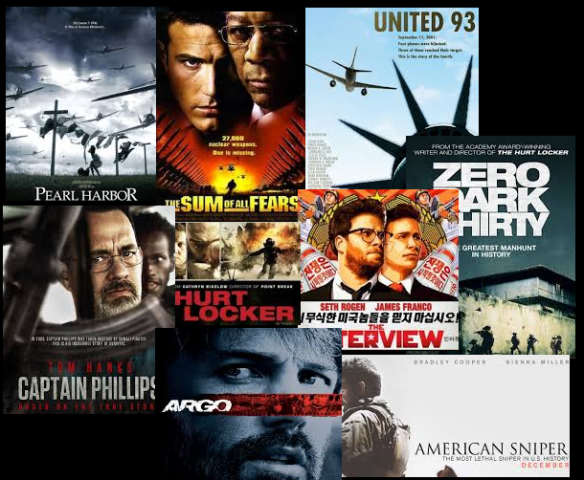
The US response was to increase base building, upgrade AFRICOM, and then murder Gadaffi. Hollywood hits from this period include The Hurt Locker and The Dark Knight. Meanwhile domestically Obama was giving the OK for militarizing of police departments across the country. On another front….Danny Haiphong wrote…

What isn’t discussed often enough is how Obama has worked tirelessly to protect and fulfill the interests of the corporate healthcare system. In 2009, he collaborated with the monopoly health insurance industry and its pharmaceutical counterparts to repress the demand for single payer healthcare. The conditions at the time appeared ripe for a single payer system. Popular discontent with Republican Party rule was at its highest point. A relatively organized movement for single payer care was represented by organizations such as Healthcare Now. The Democratic Party possessed a majority in both the House and Senate.

Obama came to power as Wall Street went into meltdown, 2008. But instead of hope and change we got almost 5 trillion dollars moving to the top 1% of the financial elite. Poverty increased every year under Obama, as did inequality. Social Network came out in 2010 and Wolf of Wall Street in 2013. Both were big hits. The message from Hollywood never changed. And part of that message is that wealth is its own justification and a symbol of virtue. Hollywood, and U.S. liberals just naturally gravitate toward the rich.

Obama attacked Afghanistan, Iraq, Syria, Libya, Sudan, Somalia, and Yemen. And it is perhaps that last venture that will prove to be his most significant. Arming, training, and coordinating the Saudi aggression (and now that has escalated to boots on the ground) against the helpless Yemen has resulted in the largest humanitarian catastrophe in five decades.

The U.S. now has all but formally criminalized dissent, especially if that dissent is aimed at Israel.

None of this is to create exact corollaries between political action and studio product. But rather that the overriding message of Hollywood in both film and TV is to validate U.S. exceptionalism. And to hedge criticism with faint token protest. But its not just Hollywood, its theatre and fiction and all the rest of the arts. The erasure of the working class is the most pronounced truth in American culture today. There are no Clifford Odets (a high school drop out) anymore; they have been replaced by a steady stream of well groomed compliant MFA grads. Mostly from elite and expensive schools. Hemingway and James Baldwin were not college grads, nor was Tennessee Williams, the son of a traveling shoe salesman. Even more recent authors such as Thomas Pynchon were college drop outs (to join the Navy), but the point is that today mass culture is carefully controlled. Dreiser was a college drop out, and Twain was a typesetters apprentice. Others like Faulkner, went to University, but also worked. In Faulkner’s case as a postman. Same profession as Henry Miller and Charles Bukowski. Stephen Crane and Hemingway worked as journalists, when that was an honorable profession.

The decision makers in mass culture are mostly firmly entrenched in the Democratic Party ethos (witness stuff like House of Cards, Madame Secretary, or Veep). If one only gets one’s news from MSNBC or FOX or CNN then one will take away mostly pure propaganda. Rachel Maddow has a career based on craven parroting of DNC approved talking points and conclusions. Bill Maher, whose show is on HBO, is of late pimping for war. Sunday news talk shows do not invite radical voices, not ever. Michael Parenti isn’t on those shows, nor  are Ajamu Baraka or Glen Ford Mike Whitney or Ed Curtin or Dan Glazebrook or Stephen Gowans. No, but there are plenty of retired generals and politicians. This is a media that exerts absolute control of message.

The loss of the working class, of class diversity, has been a far bigger blow to the health of the culture than anything else. One might argue that culture has always been, in the modern era, a province of the bourgeoisie, and that’s true. But there is still a rather pronounced change that has taken place. But Americans are discouraged from thinking in terms of class. They see individualism and identity. Get me more women directors they cry….which would give us more versions of Zero Dark Thirty, I guess. Gender equality matters, something every single socialist country in history has emphasized. Something Chavez saw fit to write into the Bolivarian constitution on day one. Chavez, who liberal avatar Bernie Sanders dismissed as a “dead communist dictator”. Chavez, who feminist avatar Hillary Clinton worked overtime to oust from power.

People are shocked…shocked I say…that US soldiers are killed in Niger. Darn that Donald Trump. When it is pointed out that it was Obama who sent troops there in his pivot to Africa, one is met with blank stares. The concern over U.S. soldiers dying is simply mind numbing in its hypocrisy and blinkered exceptionalism. I mean just count the numbers of dead civilians due to U.S. drone strikes from just one year. Pick any year you like.

Under Obama, the US African Command (AFRICOM) has penetrated every African country but Zimbabwe and Eritrea. AFRICOM has locked African nations into military subservience. In 2014, the US conducted 674 military operations in Africa . According to a recent Freedom of Information Act request by Intercept, the US currently has Special Forces deployed in more than twenty African nations.

Danny Haiphong

People are terrified today lest they be called conspiracy theorists. No single pejorative term has exercised such disproportionate power. There is a subterranean subject position associated with this, too. A masculine identity that connects with the presentation of those accepting of the official version of things. It is ‘no nonsense, mature, and sort of tough guy’ pose. Only weak and muddled (feminine you see!) would bother to question official narratives of…well, anything. It is staggering, really, why so few ask why is it OK to assassinate people without due process? Why is it whistleblowers, truth tellers, are being locked away and shunned? Why are there 900 plus US military bases around the world. Why, given the growing poverty in the U.S. do we need an updated nuclear arsenal that will cost trillions? In fact why is the defense budget over 4 billion a day? The liberal educated class seem not to ask such questions. Let alone ask is the U.S. arming takfiri jihadists in Syria? Most of what people call conspiracy is just perfectly reasonable skepticism. Given a history that includes COINTELPRO, Operation Northwoods, Gladio, MKUltra, and Operation AJAX. This is also relevant in terms of the coming war on *fake news*. An idea put forward by Obama and now in enthusiastic Orwellian operation by Facebook, YouTube, and Google. In the U.K. Theresa May proudly announces the government SHOULD control what one can see on the internet. Censorship is pitched as protection.

And then we come to NATO and Europe. Why does NATO even exist one might ask? I mean the USSR doesn’t exist anymore. Well, the answer has been under construction for a few years now, and that answer is the extraordinary anti Putin propaganda of the U.S. The “Russian Threat” is now an accepted trope in public discourse. Or the anti Iranian disinformation. In fact Iran is far more democratic and less a global threat (actually its NO global threat) than U.S. boon allies Israel and Saudi Arabia. Which brings us back to Yemen. The utter destruction of Yemen, poorest Arab country in the world, and now one with the largest Cholera outbreak in history, posed no threat to ANYONE. Certainly not to the United States. Are we to believe the House of Saud is worth supporting? They behead homosexuals and witches in Saudi Arabia. The leader of KSA is a 32 year old psychopath named Mohammed Bin Salman. Someone please explain the U.S. support for this country?

Or Venezuela. The U.S. has waged various campaigns against this sovereign nation for over a decade now. A democracy. But a disobedient one. Where is the outcry? When people are going on about Harvey Weinstein, a troglodyte movie producer that literally everyone knew was a serial abuser, I wonder that the women of Venezuela seem not to count. Or of Libya, or Haiti, or Puerto Rico, or hell, the women of Houston right now. Poor women. Ah, but that is class again. Now perhaps the Weinstein affair will yield good results and some form of collective protection and maybe even unionizing will take place to limit the power of rich white men. I doubt it, but maybe. Still, given that the liberal class today applaud the idea of making it OK for women to bomb defenseless villages in Afghanistan or Iraq or Yemen, just like men, and given that most of these horrified by Weinstein were and are solidly behind Hillary Clinton and the DNC, and laud adulation on figures like Maddie Albright, it seems hard to imagine.

David Rosen:

Sexual abuse and violence in the U.S. is as old as the country. America’s patriarchal culture long legitimized sexual abuse and violence toward women — and children — whether conducted at the workplace, at home, a nightclub or on a deserted street. During the nation’s earliest days, the custom of sexual abuse and violence was legitimized through the notion of “chastisement.” This was a feature of Anglo-American common law that recognized the husband as master of “his” household and, thus, permitted him to subject “his” wife to corporal punishment, including rape, so long as he did not inflict permanent injury upon her. Sexual abuse was institutionalized in the rape of African and later African-American female slaves. As the legal scholar Adrienne Davis notes, “U.S. slavery compelled enslaved black women to labor in three markets – productive, reproductive, and slavery – crucial to the political economy.”

One need only note the sexual violence that takes place in the U.S. military (See Kirby Dick’s The Invisible War). But that is not the military you see in this season’s TV shows such as SEAL Team or Valor or The Brave. The current Tom Cruise film American Made is a sort of comedy about Barry Seal who worked as a pilot for the CIA, and with various cartels in South America. Yeah, nothing funnier than squashing a socialist government like in Nicaragua. There is not a single Spanish speaking character who is not either a drunk, a sadist, or just incompetent. This stunningly racist revisionism was called “jaunty and bouncy” by the Hollywood Reporter.

The liberal class will always side with the status quo. Always. They do not care if the status quo is fascist. And its suits them much more to lay out bromides about male abuse of women, as long as this doesn’t mean having to untangle the complexity of women in unfamiliar non tourist visited nations like Yemen or Libya or Honduras. Just like the fact that U.S. domestic police departments murdered over a thousand black men in 2015. And continue to do so, along with increasing numbers of black women. That’s just not a jaunty bouncy story, I guess. Obama has never been comfortable talking about or to black people. He did manage to scold Colin Kaepernick recently though, about the pain he, Kaepernick, might be causing. The pain of white billionaire sports team owners I guess. The Uncle Tomism of what Glen Ford called black misleadership has never been greater. And that’s another crime we can lay, largely, at the feet of Barack Obama.

The U.S. House voted unanimously to sanction Iran and North Korea, an absurdity and a crime, and yet one that barely registered on the media Richter scale. What has Iran or North Korea ever done to hurt anyone in the United States? It is Saudi Arabia and Israel that fear a democratic nation like Iran and the influence they wield in the region. Iran is accused of fomenting instability but evidence is never given. Russia is said to control U.S. public opinion, but evidence is never given. The U.S. doesn’t even bother to really try and make claims about Venzeuela, because its just part of inherited wisdom that they are *bad*. Like Castro was bad, like Gadaffi, like Aristide, like anyone exhibiting independence. The world according to media entertainment is made up of bad guys and good guys. Mike Pompeo, head of the CIA, recently stated that his agency would become a “much more vicious agency” in fighting its enemies. Its actually hard to imagine what that might look like given CIA history. More vicious than rendition, drone killing and black site torture? Remember it was the U.S. and its School of the Americas that trained those death squads in Central America. Hollywood makes comedies about this.

In any event nobody in Hollywood complains. Just as none of the actresses assaulted by Weinstein (and countless others) said anything lest they lose career opportunities. Just as nobody complains about the racism and demonizing of Muslims or Serbs or North Koreans or Russians lest they not get the job. Coercion is silent and a given. It is also absolute. Most actors and directors simply don’t think about it, and most know little beyond what they hear on corporate news or read in the NYTimes. But I understand. People have to eat, have to feed their families. The real problem is that power is ever more consolidated. Distribution of films is monopolized. And for most Americans, foreign policy remains a giant black hole about which they know very little. Tell someone Milosovic was actually a good guy and they will laugh at you (this still happens on the left, too, rather depressingly). Tell them Russia is not threatening the U.S. or Europe, and they will laugh at you. Try to explain what Imperialism is and means, and you get that bored look of irritation. A good rule of thumb is if the U.S. targets a country or leader, then its worth questioning the western generated propagated propaganda in mainstream media about said country or leader (think Syria, Gadaffi, Aristide, Milosovic, Iran, North Korea). The U.S. does not go after countries who welcome western capital.

One of the things I’ve noticed about Hollywood film is the extraordinary amount of self pity from most characters. Self pity, entitlement, and sarcasm. The people who produce and make film and TV today, by and large, tacitly censor themselves. Some don’t have to, of course. But there is a general group think at work. And it extends to the way characters are written. The problems of affluent white people is the template here. Few examine the wider world, and mostly when they do it is seen as a world of threat and menace. An uncivilized place in need of guidance from the civilized white West (The Lost City of Z comes to mind, which made all the approved anti colonial notes while still creating a colonial narrative anyway.). But it is even more narrow than that. Everything resembles a studio; political discussions, even if they take place in outer space, resemble studio executives discussing opening weekend profits, or Neilson ratings. And since Hollywood itself ever more resembles Wall Street, or some corporate headquarters, that is increasingly what the world looks like. It is a profound loss of imagination. Westerns look and sound the same as melodramas set in Santa Monica or New York. Fantasy worlds resemble corporate headquarters or corporate motivational weekends. It is a world created by writers under thirty, largely, and certainly under forty. These are worlds created by people who themselves know very little of the world. They know even less about having to work for a living. The entire universe of film is absent any class awareness. History is simplified the better to appeal to a wider audience. Everything feels and sounds the same. And it is stultifying. There are films and TV from Europe, even from the U.K. that have merit, have heterogeneous sensibilities, but not from Hollywood. Like White House press conferences, the idea is to stay on message. Black characters sound white (or are given caricature *black* dialect and dialogue), brown characters sound white (or are given caricature barrio dialects), and Muslims sound dangerous and devious. Asians seem lifted from Fu Manchu serials or Charlie Chan. Strange when I hear people make fun of ethnic cliches from the 1940s, because it is really no different today (and check the recent TV incarnation of the venerable Star Trek franchise where the Klingon villains are very dark, live in dark spaceships and utter a guttural invented language all of which suggests something oddly racist and like nothing so much as colonial portraits of savages from darkest Africa).

Fixation on Trump’s crimes distracts from a system in which crime is a built-in factor. Clinton, Bush, Obama, and Trump. They are only the figureheads that carry water for the system. And the system is the property of the ruling class. People vote as if it crucially matters, and they vote for who they like. Not for policy because mostly they have no idea of policy. Trump is an obvious target, but that’s the problem in a sense. America didn’t become racist and violent overnight. The forces of social unrest have been building for decades. Trump was inevitable. His lack of basic literacy mirrors the nation he nominally heads, and his vulgarity mirrors the vulgarity of America, as does his misogyny and racism. The same advisors are in place and if Hillary had won, those openly fascist thugs applauding Trump would still be committing hate crimes. Has Trump empowered them? To a degree, yes. But an HRC win would likely have provided motivation of a different sort and the same violence would be taking place. You cannot sustain, as a country, this level of inequality. And as more super hurricanes descend on us, as the bio-sphere collapses, none of this may end up mattering. There is something disturbing, actually, about the relentless attacks on Trump. Its like beating up a special needs kid. Where was this hatred and outrage before? I mean Trump’s America, a term I hear a lot, is just America. We have over 2 million people in prison in the U.S. Far and away leaders in the world. Infant mortality however puts the U.S. between 26th and 51st, depending on who is counting. There is no Universal Heath Care, no union protection for workers, no maternity leave, no free education. What is there to feel so special about, exactly? Trump was very popular on his moronic reality TV show. I’m guessing more than few now outraged by this buffoonish reactionary watched that show. I mean it did last fifteen years I believe. Who did they think he was? There is nothing wrong with identifying the crimes of Trump’s administration. But there is something deeply wrong in not recognizing it as a continuation of prevailing policy. Yes, it is worse in many areas. The environment for one. But then again, 47% of the world’s pollution is caused by the military. And the U.S. has a military bigger than the next ten largest militaries in the world. And every president since the first  Bush has increased the military budget. The nightmare did not begin with the swearing in of Donald Trump. But nobody likes him. They liked Obama. And that is why he was able to do so much harm. Trump is dangerous not because of what he thinks (he mostly doesn’t) but because of his ignorance and weakness (and fear). And that weakness generated his welcoming hand to the Pentagon. Foreign policy is really in the hands of a man nicknamed ‘Mad Dog’. One cannot blame this catastrophic situation on one man. This is the creation of American history.

Tomorrow Belongs to the Corporatocracy

By C.J. Hopkins

Source: The Unz Review

Back in October of 2016, I wrote a somewhat divisive essay in which I suggested that political dissent is being systematically pathologized. In fact, this process has been ongoing for decades, but it has been significantly accelerated since the Brexit referendum and the Rise of Trump (or, rather, the Fall of Hillary Clinton, as it was Americans’ lack of enthusiasm for eight more years of corporatocracy with a sugar coating of identity politics, and not their enthusiasm for Trump, that mostly put the clown in office.)

In the twelve months since I wrote that piece, we have been subjected to a concerted campaign of corporate media propaganda for which there is no historical precedent. Virtually every major organ of the Western media apparatus (the most powerful propaganda machine in the annals of powerful propaganda machines) has been relentlessly churning out variations on a new official ideological narrative designed to generate and enforce conformity. The gist of this propaganda campaign is that “Western democracy” is under attack by a confederacy of Russians and white supremacists, as well as “the terrorists” and other “extremists” it’s been under attack by for the last sixteen years.

I’ve been writing about this campaign for a year now, so I’m not going to rehash all the details. Suffice to say we’ve gone from Russian operatives hacking the American elections to “Russia-linked” persons “apparently” setting up “illegitimate” Facebook accounts, “likely operated out of Russia,” and publishing ads that are “indistinguishable from legitimate political speech” on the Internet. This is what the corporate media is presenting as evidence of “an unprecedented foreign invasion of American democracy,” a handful of political ads on Facebook. In addition to the Russian hacker propaganda, since August, we have also been treated to relentless white supremacist hysteria and daily reminders from the corporate media that “white nationalism is destroying the West.” The negligible American neo-Nazi subculture has been blown up into a biblical Behemoth inexorably slouching its way towards the White House to officially launch the Trumpian Reich.

At the same time, government and corporate entities have been aggressively restricting (and in many cases eliminating) fundamental civil liberties such as freedom of expression, freedom of the press, the right of assembly, the right to privacy, and the right to due process under the law. The justification for this curtailment of rights (which started in earnest in 2001, following the September 11 attacks) is protecting the public from the threat of “terrorism,” which apparently shows no signs of abating. As of now, the United States has been in a State of Emergency for over sixteen years. The UK is in a virtual State of Emergency. France is now in the process of enshrining its permanent State of Emergency into law. Draconian counter-terrorism measures have been implemented throughout the EU. Not just the notorious American police but police throughout the West have been militarized. Every other day we learn of some new emergency security measuredesigned to keep us safe from “the terrorists,” the “lone wolf shooters,” and other “extremists.”

Conveniently, since the Brexit referendum and unexpected election of Trump (which is when the capitalist ruling classes first recognized that they had a widespread nationalist backlash on their hands), the definition of “terrorism” (or, more broadly, “extremism”) has been expanded to include not just Al Qaeda, or ISIS, or whoever we’re calling “the terrorists” these days, but anyone else the ruling classes decide they need to label “extremists.” The FBI has designated Black Lives Matter “Black Identity Extremists.” The FBI and the DHS have designated Antifa “domestic terrorists.” Hosting corporations have shut down several white supremacist and neo-Nazi websites, along with their access to online fundraising. Google is algorithmically burying leftist news and opinion sources such as Alternet, Counterpunch, Global Research, Consortium News, and Truthout, among others. Twitter, Facebook, and Google have teamed up to cleanse the Internet of “extremist content,” “hate speech,” and whatever else they arbitrarily decide is inappropriate. YouTube, with assistance from the ADL (which deems pro-Palestinian activists and other critics of Israel “extremists”) is censoring “extremist” and “controversial” videos, in an effort to “fight terrorist content online.” Facebook is also collaborating with Israel to thwart “extremism,” “incitement of violence,” and whatever else Israel decides is “inflammatory.” In the UK, simply reading “terrorist content” is punishable by fifteen years in prison. Over three thousand people were arrested last year for publishing “offensive” and “menacing” material.

Whatever your opinion of these organizations and “extremist” persons is beside the point. I’m not a big fan of neo-Nazis, personally, but neither am I a fan of Antifa. I don’t have much use for conspiracy theories, or a lot of the nonsense one finds on the Internet, but I consume a fair amount of alternative media, and I publish in CounterPunch, The Unz Review, ColdType, and other non-corporate journals. I consider myself a leftist, basically, but my political essays are often reposted by right-wing and, yes, even pro-Russia blogs. I get mail from former Sanders supporters, Trump supporters, anarchists, socialists, former 1960s radicals, anti-Semites, and other human beings, some of whom I passionately agree with, others of whom I passionately disagree with. As far as I can tell from the emails, none of these readers voted for Clinton, or Macron, or supported the TPP, or the debt-enslavement and looting of Greece, or the ongoing restructuring of the Greater Middle East (and all the lovely knock-on effects that has brought us), or believe that Trump is a Russian operative, or that Obama is Martin Luther Jesus-on-a-stick. What they share, despite their opposing views, is a general awareness that the locus of power in our post-Cold War age is primarily corporate, or global capitalist, and neoliberal in nature. They also recognize that they are being subjected to a massive propaganda campaign designed to lump them all together (again, despite their opposing views) into an intentionally vague and undefinable category comprising anyone and everyone, everywhere, opposing the hegemony of global capitalism, and its non-ideological ideology (the nature of which I’ll get into in a moment).

As I wrote in that essay a year ago, “a line is being drawn in the ideological sand.” This line cuts across both Left and Right, dividing what the capitalist ruling classes designate “normal” from what they label “extremist.” The traditional ideologicalparadigm, Left versus Right, is disappearing (except as a kind of minstrel show), and is being replaced, or overwritten, by a pathological paradigm based upon the concept of “extremism.”

* * *

Although the term has been around since the Fifth Century BC, the concept of “extremism” as we know it today developed in the late Twentieth Century and has come into vogue in the last three decades. During the Cold War, the preferred exonymics were “subversive,” “radical,” or just plain old “communist,” all of which terms referred to an actual ideological adversary. In the early 1990s, as the U.S.S.R. disintegrated, and globalized Western capitalism became the unrivaled global-hegemonic ideological system that it is today, a new concept was needed to represent the official enemy and its ideology. The concept of “extremism” does that perfectly, as it connotes, not an external enemy with a definable ideological goal, but rather, a deviation from the norm. The nature of the deviation (e.g., right-wing, left-wing, faith-based, and so on) is secondary, almost incidental. The deviation itself is the point. The “terrorist,” the “extremist,” the “white supremacist,” the “religious fanatic,” the “violent anarchist” … these figures are not rational actors whose ideas we need to intellectually engage with in order to debate or debunk. They are pathological deviations, mutant cells within the body of “normality,” which we need to identify and eliminate, not for ideological reasons, but purely in order to maintain “security.”

A truly global-hegemonic system like contemporary global capitalism (the first of this kind in human history), technically, has no ideology. “Normality” is its ideology … an ideology which erases itself and substitutes the concept of what’s “normal,” or, in other words, “just the way it is.” The specific characteristics of “normality,” although not quite arbitrary, are ever-changing. In the West, for example, thirty years ago, smoking was normal. Now, it’s abnormal. Being gay was abnormal. Now, it’s normal. Being transgender is becoming normal, although we’re still in the early stages of the process. Racism has become abnormal. Body hair is currently abnormal. Walking down the street in a semi-fugue state robotically thumbing the screen of a smartphone that you just finished thumbing a minute ago is “normal.” Capitalism has no qualms with these constant revisions to what is considered normal, because none of them are threats to capitalism. On the contrary, as far as values are concerned, the more flexible and commodifiable the better.

See, despite what intersectionalists will tell you, capitalism has no interest in racism, misogyny, homophobia, xenophobia, or any other despotic values (though it has no problem working with these values when they serve its broader strategic purposes). Capitalism is an economic system, which we have elevated to a social system. It only has one fundamental value, exchange value, which isn’t much of a value, at least not in terms of organizing society or maintaining any sort of human culture or reverence for the natural world it exists in. In capitalist society, everything, everyone, every object and sentient being, every concept and human emotion, is worth exactly what the market will bear … no more, no less, than its market price. There is no other measure of value.

Yes, we all want there to be other values, and we pretend there are, but there aren’t, not really. Although we’re free to enjoy parochial subcultures based on alternative values (i.e., religious bodies, the arts, and so on), these subcultures operate within capitalist society, and ultimately conform to its rules. In the arts, for example, works are either commercial products, like any other commodity, or they are subsidized by what could be called “the simulated aristocracy,” the ivy league-educated leisure classes (and lower class artists aspiring thereto) who need to pretend that they still have “culture” in order to feel superior to the masses. In the latter case, this feeling of superiority is the upscale product being sold. In the former, it is entertainment, distraction from the depressing realities of living, not in a society at all, but in a marketplace with no real human values. (In the absence of any real cultural values, there is no qualitative difference between Gerhard Richter and Adam Sandler, for example. They’re both successful capitalist artists. They’re just selling their products in different markets.)

The fact that it has no human values is the evil genius of global capitalist society. Unlike the despotic societies it replaced, it has no allegiance to any cultural identities, or traditions, or anything other than money. It can accommodate any form of government, as long as it plays ball with global capitalism. Thus, the window dressing of “normality” is markedly different from country to country, but the essence of “normality” remains the same. Even in countries with state religions (like Iran) or state ideologies (like China), the governments play by the rules of global capitalism like everyone else. If they don’t, they can expect to receive a visit from global capitalism’s Regime Change Department (i.e., the US military and its assorted partners).

Which is why, despite the “Russiagate” hysteria the media have been barraging us with, the West is not going to war with Russia. Nor are we going to war with China. Russia and China are developed countries, whose economies are entirely dependent on global capitalism, as are Western economies. The economies of every developed nation on the planet are inextricably linked. This is the nature of the global hegemony I’ve been referring to throughout this essay. Not American hegemony, but global capitalist hegemony. Systemic, supranational hegemony (which I like to prefer “the Corporatocracy,” as it sounds more poetic and less post-structural).

We haven’t really got our minds around it yet, because we’re still in the early stages of it, but we have entered an epoch in which historical events are primarily being driven, and societies reshaped, not by sovereign nation states acting in their national interests but by supranational corporations acting in their corporate interests. Paramount among these corporate interests is the maintenance and expansion of global capitalism, and the elimination of any impediments thereto. Forget about the United States (i.e., the actual nation state) for a moment, and look at what’s been happening since the early 1990s. The US military’s “disastrous misadventures” in Iraq, Libya, Afghanistan, Syria, and the former Yugoslavia, among other exotic places (which have obviously had nothing to do with the welfare or security of any actual Americans), begin to make a lot more sense. Global capitalism, since the end of the Cold War (i.e, immediately after the end of the Cold War), has been conducting a global clean-up operation, eliminating actual and potential insurgencies, mostly in the Middle East, but also in its Western markets. Having won the last ideological war, like any other victorious force, it has been “clear-and-holding” the conquered territory, which in this case happens to be the whole planet. Just for fun, get out a map, and look at the history of invasions, bombings, and other “interventions” conducted by the West and its assorted client states since 1990. Also, once you’re done with that, consider how, over the last fifteen years, most Western societies have been militarized, their citizens placed under constant surveillance, and an overall atmosphere of “emergency” fostered, and paranoia about “the threat of extremism” propagated by the corporate media.

I’m not suggesting there’s a bunch of capitalists sitting around in a room somewhere in their shiny black top hats planning all of this. I’m talking about systemic development, which is a little more complex than that, and much more difficult to intelligently discuss because we’re used to perceiving historico-political events in the context of competing nation states, rather than competing ideological systems … or non-competing ideological systems, for capitalism has no competition. What it has, instead, is a variety of insurgencies, the faith-based Islamic fundamentalist insurgency and the neo-nationalist insurgency chief among them. There will certainly be others throughout the near future as global capitalism consolidates control and restructures societies according to its values. None of these insurgencies will be successful.

Short some sort of cataclysm, like an asteroid strike or the zombie apocalypse, or, you know, violent revolution, global capitalism will continue to restructure the planet to conform to its ruthless interests. The world will become increasingly “normal.” The scourge of “extremism” and “terrorism” will persist, as will the general atmosphere of “emergency.” There will be no more Trumps, Brexit referendums, revolts against the banks, and so on. Identity politics will continue to flourish, providing a forum for leftist activist types (and others with an unhealthy interest in politics), who otherwise might become a nuisance, but any and all forms of actual dissent from global capitalist ideology will be systematically marginalized and pathologized.

This won’t happen right away, of course. Things are liable to get ugly first (as if they weren’t ugly enough already), but probably not in the way we’re expecting, or being trained to expect by the corporate media. Look, I’ll give you a dollar if it turns out I’m wrong, and the Russians, terrorists, white supremacists, and other “extremists” do bring down “democracy” and launch their Islamic, white supremacist, Russo-Nazi Reich, or whatever, but from where I sit it looks pretty clear … tomorrow belongs to the Corporatocracy.

The Superpower That Fought Itself — And Lost

By William Astore and TomDispatch

Source: TomDispatch.com

After 19 al-Qaeda militants armed only with box-cutters and knives hijacked four American commercial airliners, the U.S. military moved with remarkable efficiency to rectify the problem. In the years since, in its global war on terror, the Pentagon has ensured that America’s enemies in Afghanistan, Iraq, Syria, and elsewhere have regularly been able to arm themselves with… well, not to beat around the bush, a remarkable range of U.S. weaponry.  The latest such story: a report that in recent fighting around the city of Tal Afar, the Iraqi military recovered a U.S.-produced FGM-148 Javelin anti-tank missile and launcher from an Islamic State weapons cache. That’s a weapon capable of taking out an M1 Abrams tank. And this is hardly the first time U.S. anti-tank missiles meant either for the Iraqi military or Syrian rebels backed by the CIA have turned up in the hands of ISIS militants. In 2015, that group released photos of its fighters using U.S.-made BGM-71 TOW anti-tank missiles.

Of course, when the American-trained, funded, and armed Iraqi army collapsed in the summer of 2014 in the face of relatively small numbers of ISIS fighters, that group took vast stores of U.S. weaponry and vehicles that they’ve used ever since. But that was hardly the end of it.  The U.S. soon began retraining and rearming its Iraqi allies to the tune of $1.6 billion for “tens of thousands of assault rifles, hundreds of armored vehicles, hundreds of mortar rounds, nearly 200 sniper rifles, and other gear,” much of which, a government audit found, the Pentagon simply lost track of. The weaponry, you might say, went missing in action. No one knew whose hands much of it ended up in and this wasn’t a new story, either.  For example, in 2007 the Government Accountability Office found that “the United States could not account for nearly 30% of the weapons it had distributed in Iraq since 2004 — about 200,000 guns.”

Similar stories could be told about Afghanistan, another country where U.S. weaponry has disappeared in remarkable quantities. (The Taliban, for instance, recently released a video of their fighters sporting weaponry normally used only by U.S. Special Operations personnel.) In short, the Pentagon has been arming itself, its allies, and its enemies in a profligate fashion for years now in its never-ending conflicts across the Greater Middle East and Africa. As TomDispatch regular and retired Air Force Lieutenant Colonel William Astore suggests today, since 9/11 the U.S. military has in some sense been fighting itself — and losing. Someday, when historians look back on this bizarre tale, they will have to explain one thing above all: Why, year after year, in the face of obvious and repetitive failure in such conflicts, was no one in Washington capable of imagining another course of action? Tom

The American Military Uncontained

Out Everywhere and Winning Nowhere

By William Astore

When it comes to the “world’s greatest military,” the news has been shocking. Two fast U.S. Navy ships colliding with slow-moving commercial vessels with tragic loss of life.  An Air Force that has been in the air continuously for years and yet doesn’t have enough pilots to fly its combat jets.  Ground troops who find themselves fighting “rebels” in Syria previously armed and trained by the CIA.  Already overstretched Special Operations forces facing growing demands as their rates of mental distress and suicide rise.  Proxy armies in Iraq and Afghanistan that are unreliable, often delivering American-provided weaponry to black markets and into the hands of various enemies.  All of this and more coming at a time when defense spending is once again soaring and the national security state is awash in funds to the tune of nearly a trillion dollars a year.

What gives?  Why are highly maneuverable and sophisticated naval ships colliding with lumbering cargo vessels?  Why is an Air Force that exists to fly and fight short 1,200 pilots?  Why are U.S. Special Operations forces deployed everywhere and winning nowhere?  Why, in short, is the U.S. military fighting itself — and losing?

It’s the Ops Tempo, Stupid

After 16 years of a never-ending, ever-spreading global war on terror, alarms are going off in Asia from the Koreas and Afghanistan to the Philippines, while across the Greater Middle East and Africa the globe’s “last superpower” is in a never-ending set of conflicts with a range of minor enemies few can even keep straight.  As a result, America’s can-do military, committed piecemeal to a bewildering array of missions, has increasingly become a can’t-do one.

Too few ships are being deployed for too long.  Too few pilots are being worn out by incessant patrols and mushrooming drone and bombing missions.  Special Operations forces (the “commandos of everywhere,” as Nick Turse calls them) are being deployed to far too many countries — more than two-thirds of the nations on the planet already this year — and are involved in conflicts that hold little promise of ending on terms favorable to Washington.  Meanwhile, insiders like retired General David Petraeus speak calmly about “generational struggles” that will essentially never end.  To paraphrase an old slogan from ABC’s “Wide World of Sports,” as the U.S. military spans the globe, it’s regularly experiencing the agony of defeat rather than the thrill of victory.

To President Donald Trump (and so many other politicians in Washington), this unsavory reality suggests an obvious solution: boost military funding; build more navy ships; train more pilots and give them more incentive pay to stay in the military; rely more on drones and other technological “force multipliers” to compensate for tired troops; cajole allies like the Germans and Japanese to spend more on their militaries; and pressure proxy armies like the Iraqi and Afghan security forces to cut corruption and improve combat performance.

One option — the most logical — is never seriously considered in Washington: to make deep cuts in the military’s operational tempo by decreasing defense spending and downsizing the global mission, by bringing troops home and keeping them there.  This is not an isolationist plea.  The United States certainly faces challenges, notably from Russia (still a major nuclear power) and China (a global economic power bolstering its regional militarily strength).  North Korea is, as ever, posturing with missile and nuclear tests in provocative ways.  Terrorist organizations strive to destabilize American allies and cause trouble even in “the homeland.”

Such challenges require vigilance.  What they don’t require is more ships in the sea-lanes, pilots in the air, and boots on the ground.  Indeed, 16 years after the 9/11 attacks it should be obvious that more of the same is likely to produce yet more of what we’ve grown all too accustomed to: increasing instability across significant swaths of the planet, as well as the rise of new terror groups or new iterations of older ones, which means yet more opportunities for failed U.S. military interventions.

Once upon a time, when there were still two superpowers on Planet Earth, Washington’s worldwide military posture had a clear rationale: the containment of communism.  Soon after the Soviet Union imploded in 1991 to much triumphalist self-congratulation in Washington, the scholar and former CIA consultant Chalmers Johnson had an epiphany.  What he would come to call “the American Raj,” a global imperial structure ostensibly built to corral the menace of communism, wasn’t going away just because that menace had evaporated, leaving not a superpower nor even a major power as an opponent anywhere on the horizon.  Quite the opposite, Washington — and its globe-spanning “empire” of military bases — was only digging in deeper and for the long haul.  At that moment, with a certain shock, Johnson realized that the U.S. was itself an empire and, with its mirror-image-enemy gone, risked turning on itself and becoming its own nemesis.

The U.S., it turned out, hadn’t just contained the Soviets; they had contained us, too.  Once their empire collapsed, our leaders imbibed the old dream of Woodrow Wilson, even if in a newly militarized fashion: to remake the world in one’s own image (if need be at the point of a sword).

Since the early 1990s, largely unconstrained by peer rivals, America’s leaders have acted as if there were nothing to stop them from doing as they pleased on the planet, which, as it turned out, meant there was nothing to stop them from their own folly.  We witness the results today.  Prolonged and disastrous wars in Iraq and Afghanistan.  Interventions throughout the Greater Middle East (Libya, Syria, Yemen, and beyond) that spread chaos and destruction.  Attacks against terrorism that have given new impetus to jihadists everywhere.  And recently calls to arm Ukraine against Russia.  All of this is consistent with a hubristic strategic vision that, in these years, has spoken in an all-encompassing fashion and without irony of global reach, global power, and full-spectrum dominance.

In this context, it’s worth reminding ourselves of the full scope of America’s military power.  All the world is a stage — or a staging area — for U.S. troops.  There are still approximately 800 U.S. military bases in foreign lands.  America’s commandos deploy to more than 130 countries yearly.  And even the world is not enough for the Pentagon as it seeks to dominate not just land, sea, and air but outer space, cyberspace, and even inner space, if you count efforts to achieve “total information awareness” through 17 intelligence agencies dedicated — at a cost of $80 billion a year — to sweeping up all data on Planet Earth.

In short, America’s troops are out everywhere and winning nowhere, a problem America’s “winningest” president, Donald Trump, is only exacerbating.  Surrounded by “his” generals, Trump has — against his own instincts, he claimed recently — recommitted American troops and prestige to the Afghan War.  He’s also significantly expanded U.S. drone strikes and bombing throughout the Greater Middle East, and threatened to bring fire and fury to North Korea, while pushing a program to boost military spending.

At a Pentagon awash in money, with promises of more to come, missions are rarely downsized.  Meanwhile, what passes for original thinking in the Trump White House is the suggestion of Erik Prince, the founder of Blackwater, to privatize America’s war in Afghanistan (and possibly elsewhere).  Mercenaries are the answer to Washington’s military problems, suggests Prince.  And mercs, of course, have the added benefit of not being constrained by the rules of engagement that apply to America’s uniformed service members.

Indeed, Prince’s idea, though opposed by Trump’s generals, is compelling in one sense: If you accept the notion that America’s wars in these years have been fought largely for the corporate agendas of the military-industrial complex, why not turn warfighting itself over to the warrior corporations that now regularly accompany the military into battle, cutting out the middleman, that very military?

Hammering a Cloud of Gnats

Erik Prince’s mercenaries will, however, have to bide their time as the military high command continues to launch kinetic strikes against elusive foes around the globe.  By its own admission, the force recent U.S. presidents have touted as the “finest” in history faces remarkably “asymmetrical” and protean enemies, including the roughly 20 terrorist organizations in the Afghanistan-Pakistan theater of operations.  In striking at such relatively puny foes, the U.S. reminds me of the mighty Thor of superhero fame swinging his hammer violently against a cloud of gnats. In the process, some of those gnats will naturally die, but the result will still be an exhausted superhero and ever more gnats attracted by the heat and commotion of battle.

I first came across the phrase “using a sledgehammer to kill gnats” while looking at the history of U.S. airpower during the Vietnam War.  B-52 “Arc Light” raids dropped record tons of bombs on parts of South Vietnam and Laos in largely failed efforts to kill dispersed guerrillas and interdict supply routes from North Vietnam.  Half a century later, with its laser- and GPS-guided bombs, the Air Force regularly touts the far greater precision of American airpower.  Yet in one country after another, using just that weaponry, the U.S. has engaged in serial acts of overkill.  In Afghanistan, it was the recent use of MOAB, the “mother of all bombs,” the largest non-nuclear weapon the U.S. has ever used in combat, against a small concentration of ISIS fighters.  In similar fashion, the U.S. air war in Syria has outpaced the Russians and even the Assad regime in its murderous effects on civilians, especially around Raqqa, the “capital” of the Islamic State.  Such overkill is evident on the ground as well where special ops raids have, this year, left civilians dead from Yemen to Somalia.  In other words, across the Greater Middle East, Washington’s profligate killing machine is also creating a desire for vengeance among civilian populations, staggering numbers of whom, when not killed, have been displaced or sent fleeing across borders as refugees in these wars. It has played a significant role in unsettling whole regions, creating failed states, and providing yet more recruits for terror groups.

Leaving aside technological advances, little has changed since Vietnam. The U.S. military is still relying on enormous firepower to kill elusive enemies as a way of limiting (American) casualties.  As an instrument of victory, it didn’t work in Vietnam, nor has it worked in Iraq or Afghanistan.

But never mind the history lessons.  President Trump asserts that his “new” Afghan strategy — the details of which, according to a military spokesman, are “not there yet” — will lead to more terrorists (that is, gnats) being killed.

Since 9/11, America’s leaders, Trump included, have rarely sought ways to avoid those gnats, while efforts to “drain the swamp” in which the gnats thrive have served mainly to enlarge their breeding grounds.  At the same time, efforts to enlist indigenous “gnats” — local proxy armies — to take over the fight have gone poorly indeed.  As in Vietnam, the main U.S. focus has invariably been on developing better, more technologically advanced (which means more expensive) sledgehammers, while continuing to whale away at that cloud of gnats — a process as hopeless as it is counterproductive.

The Greatest Self-Defeating Force in History?

Incessant warfare represents the end of democracy.  I didn’t say that, James Madison did.

I firmly believe, though, in words borrowed from President Dwight D. Eisenhower, that “only Americans can hurt America.”  So how can we lessen the hurt?  By beginning to rein in the military.  A standing military exists — or rather should exist — to support and defend the Constitution and our country against immediate threats to our survival.  Endless attacks against inchoate foes in the backlands of the planet hardly promote that mission.  Indeed, the more such attacks wear on the military, the more they imperil national security.

A friend of mine, a captain in the Air Force, once quipped to me: you study long, you study wrong.  It’s a sentiment that’s especially cutting when applied to war: you wage war long, you wage it wrong.  Yet as debilitating as they may be to militaries, long wars are even more devastating to democracies.  The longer our military wages war, the more our country is militarized, shedding its democratic values and ideals.

Back in the Cold War era, the regions in which the U.S. military is now slogging it out were once largely considered “the shadows” where John le Carré-style secret agents from the two superpowers matched wits in a set of shadowy conflicts.  Post-9/11, “taking the gloves off” and seeking knockout blows, the U.S. military entered those same shadows in a big way and there, not surprisingly, it often couldn’t sort friend from foe.

A new strategy for America should involve getting out of those shadowy regions of no-win war.  Instead, an expanding U.S. military establishment continues to compound the strategic mistakes of the last 16 years.  Seeking to dominate everywhere but winning decisively nowhere, it may yet go down as the greatest self-defeating force in history.

Wall Street Primitivism: Nicaragua, China, The Middle East & Charlottesville

By Caleb Maupin

Source: New Eastern Outlook

Wall Street, London, and the Bretton Woods institutions like the World Bank, and the International Monetary Fund claim to support development and the eradication of poverty around the world. They also claim to support scientific progress and raising the global standard of living. However, often they seem to make friends and allies with very different goals. As Nicaragua proceeds with a huge construction project that has dynamic global implications, one can see a certain international pattern repeating itself, with quite dangerous implications.

“Native Activists” Fighting To Preserve US Maritime Dominance

Control of the Panama Canal by the United States has been vital in asserting control over the world economy. The US military has intervened militarily in Panama on many occasions to secure its control of this vital global shipping and transportation hub.

While the USA currently allows vessels to pass through, this could easily change in the case of a military confrontation. With so much of the world’s industrial shipping passing through this vital point, control of the canal gives the USA a level of unchecked power in the global economy. At any point they could “veto” a country’s economy by stopping ships.

However, a construction project currently in the works in Nicaragua could change that. The Chinese government and corporations based in China are cooperating with the socialist government of Nicaragua to construct a new canal, parallel to the Panama Canal. This canal will not be under US dominion, but under the dominion of the Sandinista government and the People’s Republic of China.

The announcement of the project was followed by all kinds of reports in western media claiming it would be an ecological disaster and contribute to global warming. Now, as the project proceeds, voices of the establishment are crying crocodile tears for the indigenous people who will be forced to move by the project. The Guardian has run stories bemoaning their plight. Amnesty International is warning Nicaragua not to interfere with their protests.

The USA is in the process of putting sanctions on Nicaragua, for their support of Venezuela. A bill currently in the US congress called the NICA Act aims to cripple the socialist government.

While it is ignored in US press reports, the Sandinista government has done a great deal to improve the lives of its population, a large percentage of which is indigenous. Poverty in Nicaragua has been reduced by 30%. The United Nations World Happiness Index reports the great increase of happiness in any country in 2016, as having taken place in Nicaragua.

The socialist government is asserting public control over major industries, guaranteeing jobs, housing, and education to the population, and moving toward a centrally planned economy. The Sandinistas are cultivating a layer of patriotic small business owners, who cooperate with the state to develop the economy with foreign investment. Their methods are similar to those employed by Deng Xiaoping when opening up China during the 1980s.

Though the Sandinistas are widely popular, the forces who oppose the canal project have found a number of indigenous leaders to align with. 76% of people in Nicaragua have some indigenous ancestry. The overwhelming majority of the country is ethnically “mestizo” meaning it has a mixture of European and native ancestry.

However, the forces being rallied to oppose the project are not from the overwhelming majority of the population which has indigenous ancestry, but rather to a specific group of just over 4% of the population, which is described as “unmixed indigenous inhabitants.” These are individuals who have cut themselves off from Nicaraguan society at large, and much like the Amish or Mennonites in the USA, maintain a lifestyle without technology, immersed in religious tradition. While the majority of Nicaraguans are Christians, these forces are Shamanists and practitioners of polytheistic faiths. They reject all “european” concepts and lump Marxism, dialectical materialism, and Christianity into the same basket.

The relationship between this isolated minority in Nicaragua and the US Central Intelligence Agency is not a new development. During the 1980s contra war, the CIA supplied weapons and military training to the indigenous Mosquito peoples to fight the Sandinistas. In addition to the weapons and funding they received from the USA, a number of Anti-Communist US Native American activists such as Russell Means joined with them. Many of these indigenous, anti-technology, and anti-science fanatics stood against what they called the “Racist European Marxism” of the Sandinista government, which was made up largely of dark skinned people with indigenous blood. While they claimed to oppose both “capitalism and communism” as European concepts, they quietly and sometimes not-so-quietly, worked with the Pentagon and the CIA.

Just as they took up guns in the 1980s in alliance with Washington, they now get promoted by pro-US Non-Governmental Organizations and Non-Profits, who conveniently see maintaining US maritime dominance as the latest, trendy, ecological, liberal cause, done to rescue some “mystical people” with “beautiful ancient traditions” being crushed by “racist” “dogmatic” Marxists.

“Traditionalist” CIA-Allies in China

Western utilization and manipulation of primitivist, conservative, and reactionary social forces in order to stop economic development is not restricted to Latin America. The political allies of the United States on the Chinese mainland, who work against the People’s Republic, often while spouting rhetoric about “human rights” are a rather interesting bunch.

The Chinese government has just cracked down on an extremist cult known as “Eastern Lightning.” The group is also known as the “Church of the Almighty God” and worships a woman who they claim is the second coming of Jesus Christ. They are reported to torture, mutilate, and even execute members who attempt to leave. Members of the group famously murdered a man in a Mcdonalds restaurant for refusing to allow his daughter to give her phone number to them.

While some would dismiss this simply as an obscure religious cult, it is important to note that the lead minister of the Church, along with the woman who claims to be Jesus Christ, both currently live in the USA. In 2001, they sought “political exile” in the United States, and while millions of people die attempting to cross the US border, the US government happily grants visas to anti-China activists, order to help them escape “persecution” from the US government.

Another friend of the USA in China is the Falun Gong, a strange buddhist sect. The group calls for the public execution of homosexuals and opposes inter-racial marriage. Li Hongzi, the group’s founder, lives in Queens, New York. His organization has been presented with awards by the Heritage Foundation.

Much like Eastern Lightning, the Falun Gong preaches that the Chinese Communist Party’s leadership, in particular its policies advancing the position of women, are harmful to society. The Falun Gong argues that the Chinese Communist Party’s rule represents a “Dharma Ending Period” and that its efforts to include women in government positions is one of its most grievous crimes. The group is also known for separating young people from their families, and threatening ex-members.

Following this pattern, the USA has worked endlessly to promote the deposed feudal theocratic monarchy of Tibet. The Dalia Lama, who ruled Tibet with an iron fist and executed and tortured all who questioned him, is presented as a harmless self-help, spiritual guru in US media.

While he is presented as a man of peace, it is widely known that his brother was given military training in Colorado, and air dropped into the Tibet Autonomous Region in the 1950s. With guns and weapons from the USA, the Tibetan separatists waged a violent proxy war in the mountains for years. This is all boasted about in the right-wing, anti-China book “The CIA’s Secret War in Tibet.”

All these bizarre religious groups aligned with the USA in China seem to glorify feudal, pre-Communist China. They all oppose the Chinese Communist Party for its modernization. While they speak different languages, and glorify different traditions, they probably would agree a lot with the Nicaraguan, US-backed “indigenous activists” who oppose the socialism of the Sandinistas. Meanwhile, it is a similar crowd of western liberals who admire them, and would accuse any who criticized them of “racism” and “white-splaining.”

Not only does Washington have a history of aligning with primitivist and feudalist forces, so do European fascists. Julius Evola, the Italian far-right ideologue who spoke of a “revolt against the modern world” had a particular admiration for feudalism and primitive societies around the world. In his book “Man Among Ruins” he speaks of “the demonic nature of the economy” in western countries, which people are always trying to advance, create, and become more prosperous. He admires pre-capitalist civilization for its poverty and “stability” amid starvation.

As members of the European far-right, the Nazis also admired primitivism and poverty. Heinrich Harrier, the author of the beloved “Seven Years in Tibet,” practically a holy book for advocates of Tibetan seperatism, was actually an SS officer. The Nazis believed Germans to be descended from Tibetans, and sent scientists to measure ancient skulls in order to somehow prove this. The Nazis had similar admiration for the caste system in ancient India, and adopted the swastika as their symbol for that reason.

CIA Loves Islamic Extremists

It was the British empire that first discovered the political value of Wahabbism. The Saudi monarchy owes its origins to a cleric named Muhammad ibn ʿAbd al-Wahhab. His interpretation of Islam in 1700s enabled the Saudi royal family to establish its brutal, repressive theocratic monarchy. The British cooperated with the Saudi royal family, which conveniently allowed them access to oil in exchange for propping up the barbaric regime. In 1945, the USA joined with the British is coddling the Saudi autocracy.

Today, Saudi Arabia is one of the only countries in the world where housing in bedouin tents, not modern buildings is widespread. The lack of infrastructural development accompanies a government that outlaws women from driving cars, conducts public floggings and beheadings, and punishes crimes with mutilation. Every person and everything in Saudi Arabia is the property of the King. Citizens are routinely executed for “insulting the King” or “sorcery” among other crimes. Sometimes bodies are crucified and left on public display after execution.

A large percentage of the Saudi population are guest workers who live as slaves with no human rights. Even among the Saudi born population, the Shia oil workers face brutal discrimination and exploitation on the job, with their religious freedom often denied.

While the western economic institutions and governments all claim to support “poverty alleviation” and “development” in the third world, they embrace the Saudi Monarchy in all its horror and backwardness. Meanwhile, the targets of the USA and NATO in the Middle East, are not the primitive oil autocracies, but rather, regimes that work toward modernization.

The Iranian revolution of 1979 deposed western capitalism, and established a government under the slogan of “not capitalism, but Islam.” After the revolution, even in the context of a massive war with Iraq, Imam Khomeni launched a “construction Jihad.” In this effort inspired by Stalin’s Five Year Plans and the rapid industrialization of socialist countries, Iranians were mobilized to build highways, schools, hospitals, power plants, and so much else in order to bring the country out of poverty. Despite sanctions and attacks from the west, Iran has utilized oil revenue and central planning to construct a highly modern country, with a comparatively prosperous population. The Islamic Republic of Iran that emerged from the 1979 revolution, and has made huge strides toward modernization, is now the target of western leaders.

The Syrian Arab Republic, born in the Baath Socialist revolution, is also targeted by the west. This is a government that has multiple parties in office, and has worked with Russia and China to construct huge power plants and highways. Syrian industrial workers are organized into labor unions, and have legal protections on the job. The Communist Party and the Communist Party (Baghdash) are permitted to participate in the government process. Religious freedom is guaranteed with Sunnis, Shia, Alawi, Christians, Druze, and other religious groups all freely practicing their faith. The achievements of Syria’s state controlled healthcare system are widely praised by international bodies, with many doctors and medical professionals trained the state run Universities.

Fitting with this pattern, western leaders are now arming and training Wahabbis, a force representing primitivism and barbarism of the Saudi variety, in the hopes of toppling the Syrian government. It is worth noting that prior to 2011, when the USA began working to foment civil war in the context of the Arab Spring, Syria had begun constructing an oil pipeline, connecting Iran to Mediterranean.

Prior to its destruction by NATO bombs in 2011, Libya was the most prosperous country on the African continent. It had the highest life expectancy, and had constructed a huge irrigation system in order to spread water across this dry, desert country. The forces backed by the United States to topple the Islamic Socialist government in Libya were Wahabbis. Now ISIS and Al-Queda have set up shop in the country, and citizens are fleeing on rafts trying to reach Europe.

Different Definitions of Imperialism

In his 1917 book “Imperialism: The Highest Stage of Capitalism,” Russian revolutionary leader Vladimir Lenin argued that capitalism had entered a globalist phase. He talked about the rise of “monopoly capitalists” in Britain, France, Germany, and the United States. He spoke of how bankers had triumphed over industrial capitalists, and described how wealthy financial elites in the west teamed up with governments to battle against each other, carving out “spheres of influence” in Africa, Asia, Latin America, and elsewhere. He described how third world countries were utilized as “captive markets” in which western countries could sell commodities without competition.

Imperialism, as Lenin understood it, was about keeping the world poor, so that western bankers could stay rich. Furthermore, imperialism meant dividing the working class within the western countries. A “labor aristocracy” of well paid workers was created. These were working class people who could be cultivated to identify with the western capitalists against the colonized people. With their rising standard of living, they would see their interests as identical to the interests of the monopolists that controlled their governments.

This understanding of imperialism was developed by Lenin, and adopted by figures like Mao Zedong, Che Guevara, Ho Chi Minh, Huey Newton. Even non-Marxists like Michel Aflaq, Juan Peron, and Moammar Gaddafi studied and came to understand imperialism this way. For various anti-imperialist figures of the 20th century, third world revolutions against imperialism were about raising their countries up from poverty, modernizing, and developing.

However, a large section of the modern political left has abandoned this understanding. The understanding of “imperialism” taught in Universities across the USA and western Europe is quite different.

Starting in the 1950s, the New Left, specifically beloved “cultural critics” in the Frankfurt School and elsewhere, began speaking about “cultural imperialism.” Suddenly, among western academics and leftist activists, imperialism wasn’t about holding back development and keeping people poor. Rather, it was about eroding “beautiful” “traditions” and “ways of life” and “imposing” supposedly “western” values.

So-called “Mcworld” & Wahabbi Extremists Work Together

When describing the supposed leftist critique of imperialism in his book “On Paradise Drive” New York Times Columnist David Brooks said that “anti-American” and anti-imperialist forces oppose “McDonalds, Barnes and Noble, and boob jobs.” Those who object to Wall Street running the world are depicted as Native American mystics, Islamic fanatics, or others who object to the industrialization, commercialization, and sexual freedom of western life.

This misrepresentation is widespread. The false dichotomy is often stated as “Mcworld vs. Jihad,” and was widely promoted in the USA, prior to, but especially after 9/11. In this “Clash of Civilizations” narrative, the forces said to represent “Jihad” were the Saudi Monarchy and Osama Bin Laden, while the forces said to represent “Mcworld” were the IMF, the World Bank, and Wall Street.

In reality, Mcworld globalizationists and the forces represented as “Jihad” are on the same team. They have never been enemies. Washington has been on friendly terms with Saudi Arabia since 1945. The CIA worked with Wahabbi extremists in Afghanistan to topple an independent, modernizing government called the People’s Democratic Party. The USA and Saudi Arabia worked with Wahabbis in Chechnya to fight against the Soviet Union and afterwards the Russian Federation. The USA currently funds and arms Wahhabis in Syria, and cooperated with these forces in Libya to topple the Islamic Socialist government.

The conservative forces in the Middle East that oppose modernization and development, and embrace the Wahabbi ideology of the 1700s are not enemies of Wall Street or the London Stock Exchange. Unlike the Shia revolutionaries, or the Baath Socialists, which represent legitimate resistance, the Wahabbi forces do not wish to modernize or industrialize the region. They want to keep it a mess of impoverished oil plantations ruled over by autocratic vassals. Wall Street has no objection to this setup, and it can largely be traced back to the Sykes-Pickot agreement, crafted by western colonizers.

However, in the west, especially in circles considered to be “progressive” there is a strange mystical and cosmopolitan admiration for the forces of primitivism. For example, those who defend the Syrian government, and point out the terrorist nature of the anti-government forces are labelled “Islamophobic.” Liberal crowds in the United States swoon over the pro-Saudi demagogue named Linda Sarsour as she wears a headscarf, uses exotic sounding Arabic words, accuses those who oppose her of racism, and holds rallies calling for the USA to topple the Syrian government.

This degeneration of leftist politics has been a long time in the making. In the 1960s, the Hare Krishna movement, an extremely right-wing Hindu sect in India, suddenly became a beloved staple of Peace Marches. Gurus from India, figures who promoted drug use for “spiritual” purposes, all suddenly became the fixture of the left. Previously these kinds of bohemian elements had been embraced by the far-right and fascists.

In the 1950s, it was Republicans and the “China Lobby” that rallied support for the Dalia Lama and his insurgency in the Tibet Autonomous Region. Republicans accused the democrats of “losing China.” However, in the present context it is liberals who sport “Free Tibet” bumper stickers, while the right-wing is less interested in foreign meddling and applauds to the words “America First.” No matter what region is being discussed, in the present context, it is the liberals, not the conservatives, whose hearts bleed the loudest for US proxy fighters around the world.

While in the 1980s, it was conservatives like Ronald Reagan and Oliver North who championed the fight against the Sandinistas in Nicaragua, it is now liberals who moan for the “indigenous cultures” that are supposedly being “oppressed” by the Marxist government, which dares challenge the hegemony of the Panama Canal.

The US Central Intelligence Agency is probably the most involved with supporting forces of primitivism around the world, as they work to battle independent modernizing governments that threaten the monopoly of western capitalism. It should be no surprise, that since the 1950s, the CIA has also been heavily involved in supporting the anti-communist political left, which seems now fully dedicated to their latest crusade.

The CIA began its infamous “Congress for Cultural Freedom” in the 1950s, hoping to direct anti-capitalist activists and artists away from the pro-Soviet Communist Parties in the USA and Europe. The CIA funded the art of Jackson Pollack, experimental music, and all kinds of cultural strata intended to clash with Marxist-Leninist dialectical materialism and socialist realism. The CIA also launched a program called “MK-Ultra” which involved distributing drugs on college campuses.

The Monument Fights in the USA

The media in western countries, as it champions various primitivist forces, has essentially embraced Julius Evola’s critique of the “demonic nature of the economy.” Like Mother Teresa who infamously said “There is something beautiful in seeing the poor accept their lot, to suffer it like Christ’s Passion. The world gains much from their suffering,” the non-Marxist, “liberal” element now sees social, economic, and technological progress as its enemy, and looks on poverty, ignorance, and primitivism in a condescending admiration.

While once it was the right-wing that pushed malthusian ideas about “overpopulation” it is now billionaire liberals like Bill Gates that work to decrease the global population. Often in the name of ecology, liberals will boast about how they refrain from shopping, and live frugal lives.

Now in the USA, a political clash that is very dangerous is unfolding. The fight involves monuments to various historical figures who did reprehensible things, such as owning slaves or fighting for the Confederacy in the hopes of preserving the slave system.

While it easy for anyone who hates racism and the racist mythology of films like “Gone With The Wind” and “The Birth of a Nation” to celebrate the destruction of Confederate Monuments, and they are absolutely right to do so, the context of their destruction, and who is destroying them, presents a new danger.

The forces that seek to defend the Confederate monuments are white supremacists, Ku Klux Klansmen, admirers of Hitler, traditionalists, and others. These are forces that want the USA to return to segregation, racial division, and other things overcome through decades of struggle. These forces are known to use violence, and they are widely hated and unpopular, though their prestige is slowly growing due to the absurd political context.

The problem is not that reactionary symbols are being destroyed. This is a positive thing. The problem is rather that the forces who line up against them do not seek to replace their hateful ideology with something new. In Charlottesville and elsewhere, the battle is taking place in which bigots who think Robert E. Lee was a hero are facing and off and violently clashing with those who believe society should have no heroes at all.

Racism Battles Post-Modernism

While the racist, hateful messaging and views of White Nationalists fill the airwaves, and become the subject of debate, what does Anti-Fa believe in? The media refers to crowds opposing the “Alt Right” as “anti-racist activists.” The White Nationalists are quick to call them “Communists.” But what ideas does “The Resistance” believe in? What alternative vision do they hold up to combat the right-wing?

The crowds of post-modern, non-ideological leftists largely do not seek to replace statues they destroy with statues of progressive figures like Frederick Douglas, Huey Newton, or William Z. Foster. Rather, they rally around the concept that “no one should be worshipped” and “there is no truth.” Images of Abraham Lincoln, the man who defeated Robert E. Lee and led the fight against slavery are now being destroyed, alongside the Confederates.

While “Anarchists” and liberals who destroy monuments are quick to point out and emphasize these leaders real crimes, the slogan they rally in opposition with is “No Gods and No Masters.” They fall back on concepts like “think for yourself” “question everything” and more subtly: “don’t believe in anything” “there is no truth.”

As media eulogized Heather Heyer, who was murdered by a white nationalist in Charlottesville, very few reports mentioned that she was a member of the Industrial Workers of the World. The IWW, an anarcho-syndicalist labor union formed in 1905, also known as “the wobblies,” indeed has an ideology and belief system of its own. The IWW believes in creating a society in which the major industries and workplaces are controlled by those who work in them. Throughout its history, it was known for working in favor something, it syndicalist vision, not simply for the destruction the old. Not surprisingly, US media, which largely cheers for the opposition to the Alt-Right, obscures this important aspect of the woman who recently died opposing them.

As the media champions the fight against the Alt-Right, they work to obscure any solid ideology that would oppose them. The primary voices opposing the Alt-Right are post-modernists from middle class backgrounds, trained at elite Universities. They tear down the statues of confederate monuments as they cheer for the “Syrian revolution” that reduces Syria to chaos, or the various “oppressed” primitivist groups that fight against China or the government of Nicaragua.

Bill Maher, a left-wing TV commentator interviewed Leah Remini about her painful history in the Church of Scientology. In the interview, Maher outrageously compared scientology to Communism. The outrageous comparison was in reference to the low income of scientology practitioners.

As the polarization continues, the dangerous reality is that this is not the 1930s. The fighting fascists are not armed with Marxism-Leninism and guided by the Soviet Union, fighting for the ideal of Communism. Unlike the anti-fascist of the 1930s, anti-fa and the liberals who support them are not fighting to impose their own ideology onto society. Rather, they are fighting in the hopes of destroying ideology itself.

This is a hopeless mission. Every society since the dawn of agriculture has involved ideas, religions, and some concept morality, however, incorrect or distorted they may have been. These things are the foundation of human civilization. Even pre-historic tribes of hunter gathers had some rules or beliefs to guide their actions. Post-modernism and relativism cannot lay the foundations of a healthy society.

Western capitalism now rallies around the belief that “there is no truth.” At home it promotes free market capitalism and austerity, an economic model in which selfishness rules, and many people are left in poverty and misery. Meanwhile, it emphasizes a social liberalism based on hedonism and shallow values. Internationally, the west aligns itself with forces that seek to stop economic and technological progress, and freeze their societies in poverty and ignorance, so that Wall Street can maintain its monopoly.

As Americans, like all human beings, long for something to believe in, and long for their lives to improve, not get worse, they are likely to rally around forces who offer them such things. If no alternative is presented, only the now marginal far right-wing will be available to offer such things.

While its easy to call Trump a fascist, something far more deadly, and far closer the reactionary regimes of Nazi Germany and Mussolini’s Italy could gain support. A population told to chose between either anarchy, chaos, and nihilism, or the hateful “truths” of reaction, could be pushed toward a very dangerous trajectory.


Caleb Maupin is a political analyst and activist based in New York. He studied political science at Baldwin-Wallace College and was inspired and involved in the Occupy Wall Street movement, especially for the online magazine “New Eastern Outlook”.