Saturday Matinee: Happiness

“Happiness” (1998) is a bleakly dark comedy written and directed by Todd Solondz. It follows the lives of three sisters and their respective problematic relationships. Joy (Jane Adams), is the youngest sister and is viewed by her family as the least successful by conventional standards. Helen (Lara Flynn Boyle) is the middle sister who is a famous writer but remains unfulfilled. The oldest sister is Trish (Cynthia Stevens), an upper middle-class housewife whose family seems perfect on the surface. The film was best described by Roger Ebert who wrote in his review: “…the depraved are only seeking what we all seek, but with a lack of ordinary moral vision… In a film that looks into the abyss of human despair, there is the horrifying suggestion that these characters may not be grotesque exceptions, but may in fact be part of the mainstream of humanity…. It is not a film for most people. It is certainly for adults only. But it shows Todd Solondz as a filmmaker who deserves attention, who hears the unhappiness in the air and seeks its sources.”

Watch the full film here.

Fuck Happiness! Forget Feeling Good and Focus on Being Better

By Gary Z McGee

Source: The Mind Unleashed

“The difference between a good life and a bad life is how well you walk through the fire.” ~Carl Jung

Fuck positivity. Fuck feelings. Fuck trying to make yourself feel good all the time. Focus instead on becoming a better version of yourself. Focus on action. Better yet, be proactive. It’s less about feeling positive and more about positive action. Even then, it’s less about being great and more about being better. Indeed. There’s more happiness in a spoonful of hard-earned self-improvement than in an ocean-full of self-affirmations.

Positivity is the opposite of motivation:

“May your trails be crooked, winding, lonesome, dangerous, leading to the most amazing view. May your mountains rise into and above the clouds.” ~Edward Abbey

Here’s the thing: there’s nothing wrong with being happy. When you’re happy, be grateful. Soak it up. Absorb it. Balls to bones. Ovaries to marrow. But then let that shit go. Don’t remain in that state for too long or you’ll atrophy. You’ll stagnate. You’ll lose your focus. Other feelings and emotions have just as much to teach you (even more so, some might argue) as happiness does.

Everyone talks a big game about stretching their comfort zones, but when it really comes down to it most people remain in their comfortable, positive, warm, and happy comfort zones. We cling to them without even realizing it. We get so caught up in them that we lose sight of one of the most vital secrets of living finite lives in a seemingly infinite universe: take all things in moderation.

This includes, especially, positive emotions. Because positive emotions are more likely to hold you hostage than negative ones are. Whereas negative emotions are more likely to motivate you. I’m not saying be negative all the time. For negativity too should be taken in moderation. I’m saying use negative emotions to motivate you into positive action. Ask yourself: what’s more motivating “you’ve made it,” or “there’s no way you’ll make it.”

With “you’ve made it” there nothing more to do. There’s nowhere else to go. You’re done. You’re content. You’re comfort zone has reached its capacity. You’re stuck. You’ve succumbed to the Master’s Complex and forsaken Beginner’s Mind. With “there’s no way you’ll make it,”on the other hand, there’s a challenge. There’s an obstacle to overcome. There’s adventure to be had. You’re comfort zone has something to grow into and ultimately overcome. And then on to the next obstacle. As Shunryu Suzuki said, “In the beginner’s mind there are many possibilities, but in the expert’s there are few.”

Besides, when it really comes down to it, there is no such thing as “you’ve made it.” As long as you’re alive there is still more life to live. As Richard Bach said, “Here is a test to find whether your mission on earth is finished: If you’re alive, it isn’t.”

Forget feel-good platitudes, focus on “what can I learn from this?” instead:

“To those human beings who are of any concern to me I wish suffering, desolation, sickness, ill-treatment, indignities — I wish that they should not remain unfamiliar with profound self-contempt, the torture of self-mistrust, the wretchedness of the vanquished: I have no pity for them, because I wish them the only thing that can prove today whether one is worth anything or not —that one endures.” ~Friedrich Nietzsche

Ever heard the common cliché, “everything happens for a reason”? Well, fuck that shit! That’s just some sentimental placating bullshit people say to make them feel better about things happening.

Better to be honest with yourself. Better to get rid of the pacifying middleman with his pitiful reach-arounds and mawkish petting. Better to simply own up to the simple fact that shit happens. Good shit happens. Bad shit happens. Good shit happens to bad people. Bad shit happens to good people. Life is just one big shit show and some people get more shit than others.

Sometimes it really is just as simple as good/bad luck. Sometimes fate is out of our hands. And that’s okay. There’s more to being human than choice, there’s vicissitudes. There are unexpected changes that shit all over our choices. Things don’t happen for a reason. Things happen and then we give them a reason to ease our burden.

Which is fine if you wish to remain stuck in the safety of your comfort zone. But it’s disastrous if you wish to become a better, healthier version of yourself. Challenge all feel-good banalities with the self-empowering question: “What can I learn from this?” instead, and then watch as your comfort zone melts into your own progressive evolution.

Self-importance is a trap:

“Self-importance is a trap, because the moment we start to think that we actually matter is the moment when things start to go wrong. The truth is that you are supremely unimportant, and nothing matters. All of man’s striving is for nothing; all effort is wasted. To realize that everything is meaningless is tremendously liberating, since it then leaves us completely free to create our own lives and ignore the plans that others have for us.” ~Tom Hodgkinson

If self-importance is a trap, then self-improvement is the key to that trap. This is because the former is based on emotion and the latter is based on action. The former is lodged in positive emotion while the latter is engaged in positive action. Again, the action is the thing.

Feel-good emotions, positive affirmations, and idea’s like The Secret, only get you so far. They are akin to having a life jacket in turbulent water. Sure, your safe and secure from drowning. But without action, without swimming, that life jacket means fuck-all. If you don’t swim toward health and survival, you’re dead anyway. Appreciate the life jacket for what it is, but don’t just sit there glowing in your self-importance. Swim! Act! The positive act of swimming toward health, vitality, and survival, trumps the positive emotion of merely having a life jacket so that you don’t drown.

Same thing with happiness. It only gets you so far. Sometimes you just have to say fuck happiness. Fuck just floating here in a contented state. Fuck clinging to this safe and secure comfort zone that everyday constricts my becoming a better version of myself. This is the way comfort zones have been stretched since time immemorial. So swim! Courageously stretch your too-small comfort zone. Transform your life jacket into a life well lived.

The irony is that, in the long run, you’ll reap more happiness out of sowing a little painful and uncomfortable self-improvement than by remaining content in a state of “happy” and comfortable self-importance. And even if you don’t, at least you gave it a shot. At least you had the courage and the wherewithal to make your life better.

Transform negative emotions into positive action:

“Turn those negative emotions into action that will make you better instead of just feeling better about who you already are.” ~Elan Gale

It all comes down to this moment. Who are you right now? Sincerely ask yourself: do I want to improve myself or do I want to remain the same. There’s nothing inherently “wrong” with choosing either way. But there is something wrong with expecting self-improvement when you choose to remain the same. There is something wrong with expecting your comfort zone to miraculously stretch when you do absolutely nothing to encourage it to stretch. There issomething wrong with expecting your health to improve when you do fuck-all to help it improve.

This is where the rich minerals of negative emotion can be mined and harnessed to encourage the positive action needed to knock down the walls of reinforced positive emotions. If you honestly wish to remain the same, then, by all means, continue to bask in your contentedness and shower in your sentimental positive affirmations and armored happiness. There’s nobody to stop you. But if you really want to get down to brass tacks and utilize the positive action necessary to stretch your comfort zone and live life to the fullest, then tell yourself, “Fuck happiness (for now). It’s time to learn from my other emotions for a time.”

There is immense wisdom in sadness, anger, jealousy, and pain. Nearly all art was created by harnessing the vital power inherent in these sacred yet “negative” emotions. As Anais Nin surmised, “Great art was born of great terrors, great loneliness, great inhibitions, instabilities, and it always balances them.” And so it is also with the art of life. So it goes with attempting to bring balance and harmony to life. True happiness, Eudaimonia-type happiness, is more about transforming bad shit into fodder for good shit, than it is about relishing in mediocre shit and suppressing the bad shit.

Suppressing the bad shit just creates shitty demons that haunt us in our comfort zones anyway. Better not to create the demons in the first place. Or, if they’re already there (which they probably are), embrace them. Engage them. Go full-frontal, vulnerable beast-mode on them. Meet them on their turf, and then dare to transform them into your ally. Now that’stransforming demons into diamonds. That’s the epitome of transforming negative emotion into positive action.

So yeah, fuck happiness! Especially if it’s handicapping you from striving toward Eudaimonia. And especially-especially if you are using it as a sentimental placation or an excuse to remain stuck. A life well-lived cannot be lived inside a safe and secure, yet tiny and ignorant, comfort zone. No matter how happy you are there. It can only be lived by daring yourself to stretch it, again and again. Even if that means Pain, Sadness, and Grief have to drag you through the brambles. There’s adventure at hand. There are new horizons to stretch into. So fuck your positive emotions. Focus instead on transforming your negative emotions into positive action.

The Cost of Resistance


(Museum of the Revolution, León, Nicaragua)

By Chris Hedges

Source: TruthDig

Resistance entails suffering. It requires self-sacrifice. It accepts that we may be destroyed. It is not rational. It is not about the pursuit of happiness. It is about the pursuit of freedom. Resistance accepts that even if we fail, there is an inner freedom that comes with defiance, and perhaps this is the only freedom, and true happiness, we will ever know. To resist evil is the highest achievement of human life. It is the supreme act of love. It is to carry the cross, as the theologian James Cone reminds us, and to be acutely aware that what we are carrying is also what we will die upon.

Most of those who resist—Sitting Bull, Emma Goldman, Malcolm X and Martin Luther King Jr.—are defeated, at least in the cold calculation of the powerful. The final, and perhaps most important quality of resistance, as Cone writes, is that it “inverts the world’s value system.” Hope rises up out of defeat. Those who resist stand, regardless of the cost, with the crucified. This is their magnificence and their power.

The seductive inducements to conformity—money, fame, prizes, generous grants, huge book contracts, hefty lecture fees, important academic and political positions and a public platform—are scorned by those who resist. The rebel does not define success the way the elites define success. Those who resist refuse to kneel before the idols of mass culture and the power elites. They are not trying to get rich. They do not want to be part of the inner circle of the powerful. They accept that when you stand with the oppressed you get treated like the oppressed.

The inversion of the world’s value system makes freedom possible. Those who resist are free not because they have attained many things or high positions, but because they have so few needs. They sever the shackles used to keep most people enslaved. And this is why the elites fear them. The elites can crush them physically, but they cannot buy them off.

The power elites attempt to discredit those who resist. They force them to struggle to make an income. They push them to the margins of society. They write them out of the official narrative. They deny them the symbols of status. They use the compliant liberal class to paint them as unreasonable and utopian.

Resistance is not, fundamentally, political. It is cultural. It is about finding meaning and expression in the transcendent and the incongruities of life. Music, poetry, theater and art sustain resistance by giving expression to the nobility of rebellion against the overwhelming forces, what the ancient Greeks called fortuna, which can never ultimately be overcome. Art celebrates the freedom and dignity of those who defy malignant evil. Victory is not inevitable, or at least not victory as defined by the powerful. Yet in every act of rebellion we are free. It was the raw honesty of the blues, spirituals and work chants that made it possible for African-Americans to endure.

Power is a poison. It does not matter who wields it. The rebel, for this reason, is an eternal heretic. He or she will never fit into any system. The rebel stands with the powerless. There will always be powerless people. There will always be injustice. The rebel will always be an outsider.

Resistance requires eternal vigilance. The moment the powerful are no longer frightened, the moment the glare of the people is diverted and movements let down their guard, the moment the ruling elites are able to use propaganda and censorship to hide their aims, the gains made by resisters roll backward. We have been steadily stripped of everything that organized working men and women—who rose up in defiance and were purged, demonized and killed by the capitalist elites—achieved with the New Deal. The victories of African-Americans, who paid with their bodies and blood in making possible the Great Society and ending legal segregation, also have been reversed.

The corporate state makes no pretense of addressing social inequality or white supremacy. It practices only the politics of vengeance. It uses coercion, fear, violence, police terror and mass incarceration as social control. Our cells of resistance have to be rebuilt from scratch.

The corporate state, however, is in trouble. It has no credibility. All the promises of the “free market,” globalization and trickle-down economics have been exposed as a lie, an empty ideology used to satiate greed. The elites have no counterargument to their anti-capitalist and anti-imperialist critics. The attempt to blame the electoral insurgencies in the United States’ two ruling political parties on Russian interference, rather than massive social inequality—the worst in the industrialized world—is a desperate ploy. The courtiers in the corporate press are working feverishly, day and night, to distract us from reality. The moment the elites are forced to acknowledge social inequality as the root of our discontent is the moment they are forced to acknowledge their role in orchestrating this inequality. This terrifies them.

The U.S. government, subservient to corporate power, has become a burlesque. The last vestiges of the rule of law are evaporating. The kleptocrats are pillaging and looting like barbarian hordes. Programs instituted to protect the common good—public education, welfare and environmental regulations—are being dismantled. The bloated military, sucking the marrow out of the nation, is unassailable. Poverty is a nightmare for half the population. Poor people of color are gunned down with impunity in the streets. Our prison system, the world’s largest, is filled with the destitute. And presiding over the chaos and the dysfunction is a political P.T. Barnum, a president who, while we are being fleeced, offers up one bizarre distraction after another, much like Barnum’s Feejee mermaid—the head and torso of a monkey sewed to the back half of a fish.

There is no shortage of artists, intellectuals and writers, from Martin Buber and George Orwell to James Baldwin, who warned us that this dystopian era was fast approaching. But in our Disneyfied world of intoxicating and endless images, cult of the self and willful illiteracy, we did not listen. We will pay for our negligence.

Søren Kierkegaard argued that it was the separation of intellect from emotion, from empathy, that doomed Western civilization. The “soul” has no role in a technocratic society. The communal has been shattered. The concept of the common good has been obliterated. Greed is celebrated. The individual is a god. The celluloid image is reality. The artistic and intellectual forces that make transcendence and the communal possible are belittled or ignored. The basest lusts are celebrated as forms of identity and self-expression. Progress is defined exclusively by technological and material advancement. This creates a collective despair and anxiety that feeds and is fed by glitter, noise and false promises of consumer-culture idols. The despair grows ever-worse, but we never acknowledge our existential dread. As Kierkegaard understood, “the specific character of despair is precisely this: it is unaware of being despair.”

Those who resist are relentlessly self-critical. They ask the hard questions that mass culture, which promises an unachievable eternal youth, fame and financial success, deflects us from asking. What does it mean to be born? What does it mean to live? What does it mean to die? How do we live a life of meaning? What is justice? What is truth? What is beauty? What does our past say about our present? How do we defy radical evil?

We are in the grip of what Kierkegaard called “sickness unto death”—the numbing of the soul by despair that leads to moral and physical debasement. Those who are ruled by rational abstractions and an aloof intellectualism, Kierkegaard argued, are as depraved as those who succumb to hedonism, cravings for power, violence and predatory sexuality. We achieve salvation when we accept the impediments of the body and the soul, the limitations of being human, yet despite these limitations seek to do good. This burning honesty, which means we always exist on the cusp of despair, leaves us, in Kierkegaard’s words, in “fear and trembling.” We struggle not to be brutes while acknowledging we can never be angels. We must act and then ask for forgiveness. We must be able to see our own face in the face of the oppressor.

The theologian Paul Tillich did not use the word “sin” to mean an act of immorality. He, like Kierkegaard, defined sin as estrangement. For Tillich, it was our deepest existential dilemma. Sin was our separation from the forces that give us ultimate meaning and purpose in life. This separation fosters the alienation, anxiety, meaninglessness and despair that are preyed upon by mass culture. As long as we fold ourselves inward, embrace a perverted hyper-individualism that is defined by selfishness and narcissism, we will never overcome this estrangement. We will be separated from ourselves, from others and from the sacred.

Resistance is not only about battling the forces of darkness. It is about becoming a whole and complete human being. It is about overcoming estrangement. It is about the capacity to love. It is about honoring the sacred. It is about dignity. It is about sacrifice. It is about courage. It is about being free. Resistance is the pinnacle of human existence.

Seeking Happiness Beyond Neo-Liberal Consumerism

(Photo by Chris Hondros/Getty Images)

By Graham Peebles

Source: Dissident Voice

Irrespective of nationality, religion, race, or gender; whether stinking rich, desperately poor, or somewhere in between, happiness is the one thing everyone is seeking – consciously or not.

The architects of the socio-economic system in which we live have devised a system that promises to satisfy this yearning. But instead of building a society at ease with itself, full of peaceful, happy people, collective discontent is fed, resulting in a range of mental health issues, and in some cases, suicide.

Happiness, according to the duplicitous devotees of Neo-Liberalism, is to be found in the homogenous shopping centers of the world, the sterile holiday resorts and brash casinos. In things, in products and services that stimulate and excite: Happiness in this perverse paradigm has been replaced by pleasure, love exchanged for desire, choice substituted for freedom.

Echoes of happiness

Happiness that lasts is what we yearn for, not a transient state in which one feels the tingle of happiness for a moment or so, only to see it evaporate as the source of our happiness loses its appeal, or is exhausted — the holiday comes to an end, a relationship breaks up, the gamble doesn’t pay off, a new I-Phone or handbag hits the high street making the old one redundant etc., etc. We sense that a state of lasting happiness is possible but know not where it is or how to find it. The mistake commonly made, and one we are constantly encouraged to make, is to search for happiness within the sensory world where all experiences, pleasant or unpleasant, are facile and transient. The inevitable consequence of such shallow encounters with happiness is discontent and frustration.

Despite being repeatedly confronted with disappointment, instead of refraining from this never-ending quest, the searcher becomes increasingly desperate; a new relationship may be sought, a change of job or new home, more shopping outings, dinners planned, alcohol and drugs taken and so on into the darker reaches of sensory satisfaction and hedonistic indulgence.

Of course, it is important to enjoy life, and, yes, something resembling happiness is experienced on these excursions, but it is a happiness dependent on something, other people, and on certain elements being in place: take these away and the “happiness” very quickly evaporates. Such happiness is a mere echo of ‘True Happiness’, and one that carries with it conflict, fear and anxiety; this taste of happiness, functioning via the desire principle and the medium of the senses is relentlessly stoked by the exponents of neo-liberal idealism.

The success of their divisive project; i.e., profitability, growth, development, progress, call it what you will, is totally contingent on consumerism and the act of consuming relies on, and is the result of, perpetual desire. To their utter shame, despite having a responsibility to create the conditions in which ‘True Happiness’, can be experienced, most, if not all governments collude with corporate man/woman to promote the unhealthy, materialistic values that are the source of unhappiness.

Desire is constantly agitated through advertising, television, film and print media; fantastical, sentimental, idealized images, of not just where happiness lies, but what love looks like, are pumped around the world every minute of every day. The aim of this extravagant pantomime is to manipulate people into believing they need the stuff that the corporate-state is selling in order to be happy. But happiness cannot be found within the world of sensations, pleasure yes, but not happiness, and pleasure will never fill the internal void that exists and is perpetuated through this movement into materiality. Pleasure is not happiness, nor does it bring lasting happiness, at best it creates a false sense of relief from unhappiness and inner conflict, a momentary escape before dissatisfaction and desire bubble up again.

Cycles of discontent

Nothing but discontent is to be found within this endless cycle of desire, temporary satisfaction, and continued longing. It is an insatiable, inherently painful pattern that moves the ‘Seeker of Happiness’ further and further away from the treasure he or she is searching for, creating disharmony and conflict, for the individual and society. Add to this polluted landscape competition and inequality and a cocktail of division and chaos emerges: Competition between individuals and nations separates and divides, working against humanity’s natural inclination towards cooperation, sharing and tolerance; qualities that were crucial in the survival of early man.

Competition fosters ideas of superiority and inferiority, and together with conformity, an image of ‘success’ and ‘failure’, of beauty, and what it means to be a man or a woman, particularly a young man or young, is projected and thrust into the minds of everyone from birth. One of the effects of this is the tendency towards comparison, leading to personal dissatisfaction (with myriad symptoms from self-harming to addiction and depression), and the desire, or pressure, to conform to the presented ideal.

At the root of these interconnected patterns of discontent and misery, lies desire. Desire not just for pleasure, but desire for things to be other than they are; it is this constant movement of desire that creates unhappiness and deep dissatisfaction. If desire is the obstacle to happiness, then all desire needs to be negated, including the desire for happiness. Perhaps the question to be addressed then is not what will bring lasting happiness, but how to be free of unhappiness and discontent.

In ancient Greece, where life was hard and happiness was widely believed to be reserved for those rare individuals whom the Gods favoured, Socrates (470 BC – 399 BC) proposed that happiness could be attained by everyone by controlling their hedonistic desires, turning their attention towards the soul and by living a moral life. His view finds its root in the teachings of the Buddha, who, almost 100 years earlier had made clear in the Second Noble Truth, that far from bringing happiness, desire is, in fact, the cause of all suffering, and further, that freedom from suffering and unhappiness is brought about when desire is overcome.

True Happiness is an aspect of our natural self. It will not be found within the world of pleasure and material satisfaction, comfort and indulgence. It is an inherent part of who and what we are, and in principle at least, the possibility of unshakable happiness exists for everyone, everywhere, irrespective of circumstances.

Jiddu Krishnamurti, the Inner Revolution, and Why We Don’t Really Love Our Children

(Editor’s note: on this anniversary of the birthday of Jiddu Krishnamurti [born May 11, 1895] please read and share this excellent overview of some of the key principles of his philosophy.)

By Matt Karamazov

Source: High Existence

“The mind must be utterly silent. Not asking, not hoping for experience. It must be completely still. Only then is there a possibility of that light which will dispel our darkness.”

— Jiddu Krishnamurti

IS FUNDAMENTAL CHANGE POSSIBLE?

In a collection of talks given throughout the 1950’s and gathered together in the book, The Revolution From Within, Jiddu Krishnamurti stressed the urgency of staging a revolution in our thinking.

Our habitual ways of thinking have led us to where we are now, he says, and nothing less than radical, fundamental change has any hope of remaking our thoughts, attitudes, and ultimately the societies in which we live. Anything less than fundamental change is a mere modification of what has come before, and key aspects of what has come before has in turn failed a large proportion of our population.

The paradox that Krishnamurti relentlessly demands us to consider, however, is that nothing we can DO can bring about this change. We can only observe the operations of our own mind, and ask questions about everything that we think we know.

Consider the question, “Is fundamental change possible?”, the jumping-off point leading to the multitudinous questions that Krishnamurti is asking us to examine deeply.

It’s where we have to begin if we want to observe the functioning of our own minds on a level that will have real significance with respect to the outside world, and how we live our lives.

So let’s go into this question, friends, with an open mind, a mind that is open to revelation.

If we go into it with the idea that we already know the answer, then we won’t turn up anything worthwhile. This is a question with real consequences for the way we organize our societies, parent our children, and direct our lives.

We must pursue the idea of fundamental change in the same way that Jiddu Krishnamurti relentlessly posed questions to his listeners.

You’ll notice, if you read the transcripts of some of his greatest talks, that Krishnamurti asks multiple questions for every single ‘answer’ that he gives. He might answer one, only to pose three others that each attempt to get at the original question in a more nuanced way.

Krishnamurti does this because life’s biggest questions have no final answers.

Given the asymptotic nature of perfect Truth, we can only approach it by negation; by discarding what isn’t true or helpful, in an effort to move past our conditioned thinking and to achieve radical, fundamental change.

But is such a change indeed possible?

This is something that must be gone into, and not just accepted because someone has said it. It has no meaning if you just merely accept it. Arguments from authority, that common logical fallacy, have no essential relationship to perfect Truth.

Truth needs no defenders or justification.

Rather, you must ceaselessly question what you think you know, and approach life’s biggest questions from the viewpoint of someone who knows nothing. And it really is clear that we do know nothing, in an absolute sense, as we will discuss later in more depth.

If I were to ask you who you are, where you came from, where you’ll ultimately end up, and where you are right now, you would have no satisfactory answers to any of these questions. There would always be a deeper level of Truth that you could never penetrate with your limited, conscious mind.

So let’s start from the beginning…

WHAT IS FUNDAMENTAL CHANGE?

What exactly is it that we can point to as evidence that a revolution in the mind has taken place that is not simply a modification of what was there before?

It’s clear that anything that can be incrementally added  is not fundamental change. It’s a modification, and it’s improvement, but it is not the fundamental change that we are seeking.

This “adding to” the mind, such as one can achieve by reading books or watching documentaries or listening to talks is simply an incremental increase of knowledge. No matter how compelling or insightful, this newfound knowledge will always be an addition to what was there before.

While learning is important, and proper education is never a waste of time, it’s merely representative of change on the surface, and change on the surface can never lead to radical, fundamental change. What we’re really after is meaningful change.

What kind of change IS meaningful? Is only fundamental change meaningful? How do we get closer to understanding what it might look like?

Let’s first take a look at a few examples of surface change, or simple modifications, in order to get an idea of what radical change is NOT. Thereby, we can approach the idea of fundamental change via negation.

For example:

If you are unhappy, and you are trying to BECOME happy, then you have instantaneously DEFINED YOURSELF as an unhappy person struggling to overcome his or her unhappiness.

You can become MORE happy, sure, but you will always be an unhappy person, always in the process of becoming slightly more happy, adding to your happiness, instead of experiencing the radical, fundamental change that brings with it a revolution in the mind.

Happiness will always be somewhere ‘over there’ and you will always be struggling to arrive there.

That can never be said to be true happiness and fulfillment, and it is certainly not what we mean by fundamental change.

In the same way, trying to become virtuous, we never acquire virtue, but rather expand our Self in the ‘guise’ of virtue.

Simply, a man who cultivates virtue ceases to be completely virtuous, because there is a part of him that is not, a part of him that is increasing his virtue. Likewise, a man who practices humility is no longer completely humble.

And further:

When violent, the mind has an ideal of non-violence which is ‘over there’ in the distance. It will take time to achieve that state, and in the meantime, the mind can continue to be violent.

This, too, is not the radical, fundamental change which we are seeking to illuminate.

So now that we know what fundamental change is not, do we know any more about what it is?

Is it not instantaneous, unconditional freedom in the here and now? Is it not timeless, in that we don’t have to wait for it to appear?

Are there any preconditions that have to be met?

I think that we can conclude, provisionally, that we have the freedom to drop our resentments and sadness at any time we so choose.

Easy for me to type, extremely difficult for you to do. I get that.

But from our current position, we can see that it is our mind, this thing that we call the self, that is preventing fundamental change from occurring. As we get further into our discussion, we’ll have a better handle on whether or not we can discard the restraints of the self, and realize radical, fundamental change.

THE NECESSITY OF FUNDAMENTAL CHANGE

Assuming that we can become radically different than we are today, we must ask ourselves:

Is this a pursuit that’s worthwhile?

Is it necessary?

Do we need to change at all?

I think it would be obvious to many people that we DO need to see fundamental change in our societies and our patterns of social interaction.

A world in which billions of people currently live on less than $2.00/day is crying out for change.

And to be clear, that figure is, shockingly, adjusted for purchasing power. It’s not what $2.00 would buy you in a developing country, although that would be bad enough; rather, billions of people are living on what you could buy for $2.00 a day in a country like Canada or the US.

Aside: There is commendable, although insufficient, progress being made by extremely committed individuals and organizations all over the world. In fact, the World Bank recently predicted that global extreme poverty will soon fall to under 10%. To make matters more complicated, there is an ongoing debate concerning what exactly constitutes “extreme poverty.”

To say that fundamental change isn’t necessary in a world like ours is akin to being in a sinking ship and saying: “I’m sure glad the hole isn’t in OUR end!”

However, we can state rather confidently that trying to change society, while leaving the individuals who constitute that society unchanged, is a dangerous error.

Simply put, we cannot afford to be “ordinary” any longer; the challenge of the world is too great.

We are the world; we are not on the sidelines. What we are, of that we make the world, and everywhere we face real problems that demand our urgent attention.

Thus, we return to the question at hand: Is fundamental change necessary?

I think it’s clear that it is necessary, if by fundamental change within our societies we mean implementing societal structures that would do better in meeting the needs of all our world’s inhabitants.

Obviously, this is a vastly more complex problem than it even may seem at first. It has many moving parts, but we can only begin where we are. A total revolution of the mind has to start from within. Society is comprised of individuals, and radical societal change starts at the level of the individual.

Yet, most of us are so eager to reform others and so little concerned with the transformation of ourselves.

Can we not see that this whole attitude is very confused?

We often look up to those who can help us or who can do something for us, and look down on those who cannot. So we are always looking up or looking down. Cannot the mind be free from this state of contempt and false respect?

Is it even possible to look through the lens of our own confusion and get a clear picture of the idea of radical, fundamental change?

It is to this question that we now turn.

WE ARE ALL CONFUSED

“There is a path to the known, but not to the unknowable. Thus every system of finding truth breaks down.”

— Jiddu Krishnamurti

Before going further in our discussion, I think it’s helpful to take a look at our own confusion when confronted with the problem and necessity of fundamental change.

We’ve asserted that it’s both possible and necessary, but what are the impediments to action? Why are we not all enlightened already? If it’s supposed to be instantaneous, why is it so difficult for us?

The answer has to lie somewhere within our own confusion.

It’s very difficult to admit to yourself that you are confused, but clearly, we are all confused.

And, truth be told, those who say they aren’t confused, are the most confused of all.

In order to be free from confusion, we would have to know that which it is impossible to know. We’d need to know where the universe in its totality is headed, we’d need to know our precise place within it, who we are fundamentally, and what we need to do with our lives.

Philosophers are good at coming up with “-isms” that seek to explain the world and its direction. We can look for answers in logical positivism, consequentialism, possibilianism, dialectical materialism, populism, liberalism, empiricism, and every other kind of ‘-ism’ that we can conceive of, but we are still going to remain confused. Every book and every teacher is only going to add to this confusion that prevents us from knowing what life is all about.

It may be that we do not know what living is about at all, and that is why death seems to be such a terrible thing. Obviously, everyone is confused about death, and many more things besides.

The whole totality of the mind is confused, and there simply isn’t a higher part of the mind which isn’t.

So how are we supposed to make sense out of all this confusion?

Is it possible to bring clarity to our naturally disordered minds?

Is there a method we can follow, or a path we can take towards clarity?

Krishnamurti explains that whenever one is confused, one must stop all activity, psychologically. Otherwise, anything new is just translated according to our own confusion.

If I’m confused, then I may read, or look, or ask, but my search, my asking, is the outcome of my confusion, and therefore it can only lead to further confusion.

We know this, but is there anything we can do about it?

The problem is not the real issue; rather, it is the mind which approaches the problem.

So, again we return to the necessity of radical, fundamental change.

We can’t keep incrementally increasing our store of knowledge and, at some distant point, realize fundamental change. So we have to drop down to the level of the mind, and see if we can’t somehow bypass the problem of incremental change altogether.

So, you see how our desire for the resolution of our confusion can never lead to fundamental change.

All solutions are based on desire, and the problem exists BECAUSE of desire.

Basically, thought is not the way out. All of our thought is conditioned, and a confused mind cannot resolve its own confusion.

You have chosen your political leaders, your religious leaders, out of your confusion.

You have chosen your career, your friends, your daily activities out of your confusion.

The books you’ve read, the experiences you’ve had, the lessons you’ve learned, have all been assimilated according to the confusion that already exists in your mind.

Collectively, we’ve established our social order based on our confusion. Our efforts to help the poor are based on our confusion. Our educational institutions are based on our confusion.

We don’t even know what we don’t know.

But…

When you realize that you don’t know, then you are beginning to find out.

THE FUTILITY OF SEEKING

“If we take this journey together, and simply observe as we go along the extraordinary width and depth and beauty of life, then out of this observation may come a love…which is a state of being free of all demand…and we may perhaps be awakened to something far more significant than the boredom and frustration, the emptiness and despair of our daily lives.”

— Jiddu Krishnamurti

How do we escape our confusion?

How can we even tell when we’re not confused any more?

Is there an end to our confusion while we are still alive?

Krishnamurti’s prescription is as follows:

“Observe the activities of the mind without trying to change them or put a stop to them, because the moment you seek an end, you are back in the ‘me, not-me’ duality.

It’s the mind that is unaware of its own activities that sets up as the authority someone or something external to which we go for help, and we therefore become slaves.”

He is saying that we can bring about a transformation in ourselves only when we understand the process of our own thinking.

What is important is to understand the whole field of thought, and see if the mind can go beyond all that.

He asks, “Is thought somehow different than the mind?”

This in turn leads us to the question of, “What is the ‘self’, the center of the ‘me’ from which all activity seems to spring?”

The self for most people is a center of desires, manifesting itself through various forms of continuity.

We ceaselessly desire to perpetuate ourselves, to satisfy our cravings, and to set ourselves up as an object of specialness in a world of meaning.

None of these desires are permanent except in the memory of what we have been and would like to be, although we try to make them permanent through clinging to various ideas, perceptions, and relationships.

For those who want more, more, more, life is an everlasting struggle.

Life is one thing, and what we want is another. We get what we want, only to discover that it’s not ultimately what we wanted at all. We wanted some other thing, tantalizingly just a little further up the road.

Can we live in this world without any effort to be or become something, without trying to achieve, to reject, to acquire?

I mean, of course, without trying to become something other than your authentic self?

Can the mind cease to think in terms of continuing, of the “me”?

The concern to become something more, to become something others want you to be, is the constant preoccupation of the mind and the primary cause of its superficiality.

That much is clear. Which leads Krishnamurti to say:

“It is my mind that creates the problem, my mind being the result of time, of memory, the seat of the ‘me’, which is everlastingly craving for the ‘more’, for immortality, for continuity, for permanency here and in the hereafter. It is this uncertainty within ourselves that leads to the outward manifestations of personal ambition, the desire to be somebody, the aggressive attitude towards life.”

What we are, of that we make the world. So in order to avoid superficiality and meaninglessness, there must be ceaseless questioning.

Any conscious effort on my part to become something other than what I am, or other than what I consciously want to become, only produces still further suffering, sorrow, and pain.

A man like Jiddu Krishnamurti would never tell his listeners that education was a waste of time. However, we must never believe that our education is over, or that we have somehow reached the end of our confusion.

Everything around us tells us what to think, books and teachers included, and we must continually renew our freedom from traditional and historical thinking in every moment.

Linear thinking and the all-too-human propensity to settle for easy answers has failed the bottom 40%. It even plagues those in the so-called ‘developed’ nations who are today stricken by existential anxiety.

At bottom, acquisitiveness and greed have destroyed our potential for gratitude.

Nationalism and eschatological certitude have crippled our capacity for understanding and reconciliation.

A radical, fundamental revolution from within can restore the unrestrained lust for life that gives us our reason for being. We can revive our capacity to greedily enjoy our friends, instead of our possessions.

But so long as there is the idea of the “me” or the “I”, then there must necessarily be loneliness.

And you can’t seek the immeasurable because you don’t know what it is; hence the futility of seeking.

But, can we give up seeking? Just like that?

Can we overcome our self-directed focus and do what is just and fair? Can we live with uprightness in a world often bereft of such character?

Or, even more basically, can we love our children?

JIDDU KRISHNAMURTI SAYS WE DON’T REALLY LOVE OUR CHILDREN

“If we did love our children, we would stop all wars tomorrow, obviously. We would not condition our children. They would not be English children or American children, they would just be children.”

— Jiddu Krishnamurti

If you have been following what has been discussed so far, you will see that fundamental change is absolutely critical to the dissolution of the threats to our continued existence.

Violence and suffering on a global scale can be reduced to the individual. It is the mind of the individual that approaches the problem that needs to change, and the world is made up of individuals.

Society is based on violence and comparisons, and as long as it is so, there will always be struggle within that society, not to mention all the struggles, pains, and difficulties that naturally accompany human existence. That is what Krishnamurti is driving at here.

Everything that we do is based on striving, ambition, success, achievement; but none of it is the abandonment of the self.

Granting that everyone is doing the best that they can, the best that they know how to do, how can it be otherwise that our toxic thoughts and undisciplined habits are being passed down to our children?

Our own confusion, with which we are now hopefully becoming intimately aware, cascades downward to future generations.

Parents want their children to conform to meet the demands of their insane societies, but is that education?

Since our society is not yet what it should be, why encourage our children to stay within its destructive pattern?

We are currently dependent on this pattern, but can we live without this dependence?

The insistence on one’s nationality, on race, on religious belief or any other idea, obviously separates. All of it represents the activities of the self, and its insistence on continuity and self-perpetuation. That much is clear.

We submit to authority because all of us have this inward demand to be safe, to feel secure. We have enough to think about with respect to our survival and to the “success” of our children, that we can easily settle into the acceptance of easy answers handed down to us from above. Whether that means from the state or from some religious authority.

This safety, so it seems to many, must be defended at all costs, because we have so much invested in it.

So much of our identities and our feelings of assurance of our continued survival rest on the perceived strengths of our existing institutions.

It’s here that Krishnamurti steps in with the bold and incendiary claim that we don’t really love our children.

You don’t really love your children, he says, so you sacrifice them to protect your property, to defend your State, or the church, or some other organization which demands of you certain things.

Organized religions don’t really insist that you step out of greed, envy, ruthless ambition, and cruelty. They are far more concerned with what you believe, with rituals and the rest of the confusion.

In contrast, righteousness of behavior is not something to be gained, to be arrived at, but must be understood from moment to moment in the actuality of daily living.

It requires a fundamental change in our approach to life, and constant awareness of how our actions impact others.

Krishnamurti’s own phrasing is as such:

“The man who is ceaselessly questioning, who has no authority, who does not follow any tradition, any book or teacher, becomes a light unto himself.”

Perhaps it’s radical, fundamental change that’s required to shake us out of our collective stupor and restore to us our humanity.

THE REVOLUTION

“Sirs, life is something extraordinary, if you observe it. Life is not merely this stupid little quarreling among ourselves, this dividing up of mankind into nations, races, classes; it is not just the contradiction and misery of our daily existence. Life is wide, limitless, it is that state of love which is beauty; life is sorrow and this tremendous sense of joy. But our joys and sorrows are so small, and from that shallowness of mind we ask questions and find answers.”

— Jiddu Krishnamurti

If there can be any conclusion at all, it’s that freedom is not at the end; it is at the very beginning, the now.

The end is at the beginning, which lies outside of time.

Radical, fundamental change does not come at the end. Rather, it’s our starting point. If we’re not happy now, then we never will be. If we don’t remake our societies now, then we never will.

Fundamental change doesn’t occur across time, but rather it is available to us at every moment.

Revolutions of the mind occur instantaneously, at the very moment when we cease our anguished searching.

And that is what our lives often are, correct?

We say: “I am ‘this’, and I would like to be ‘that,’” but the struggle to be something different is still within the pattern of our desire.

All suffering comes from desire, and so any incremental change that we pursue throughout our lives is not only going to be fraught with confusion, but will carry with it all the attendant suffering and anguish which it necessarily implies.

So where can we find relief for this condition of the mind?

Where can we go for some form of final answer to our continued searching and relentless questioning?

In the end, we must realize that life’s biggest questions have no definite answers. Indeed, the right question has no answer.

We must also conclude that a mind that seeks peace will never find it, and thought is not the way out.

When you see that fundamental change is instantaneous, and is a function of observing the workings of your own mind, you can break free of your past at any moment, and start to unravel your own conditioning.

It’s simple: The mind can never free itself through some system or method. Anything that your mind DOES can never bring about this kind of radical, fundamental change that we are discussing.

Anything that can be KNOWN is not what we’re looking for.

All that can be left to us is to observe the functioning of our own minds.

When we realize this, we also realize the truth of Krishnamurti’s words when he says:

“To have that inward fullness of life, which includes death, the mind must free itself from the known. The known must cease for the unknown to be.”

When you don’t know what it is that you’re looking for, and you don’t know what it’ll look like when you find it, all that remains to you is to examine the operations of your own mind.

Naturally, this leads to the falling away of every answer that has been and could be given concerning happiness and fulfillment, and concerning how we should govern our societies.

Since we see that the ideas of happiness and fulfillment are constantly changing, we must ask ourselves if there really is such a thing.

We’ve been discussing the necessity and possibility of fundamental change for some time now, and if you have been following the logical progression of our discussion, you can see that observing the function and operation of your own mind without judgement is the only way out of our collective confusion.

I can also assume that you WANT to love your children, that you WANT to overcome the destructive patterns of society, and that you WANT to affirm the meaningfulness of daily life.

So what’s stopping you?

What’s holding you back from experiencing this revolution of the mind?

In the final analysis, there is nothing to do, and nothing to attain.

“When you realize there is nothing lacking, the whole world belongs to you”

— Lao Tzu

There is no set of rules or precepts that you are required to follow, nothing that you are being asked to believe.

Rather, fundamental change is ready and waiting.

What are YOUR answers to these questions that we have been discussing? How will they impact you on the concrete level of your daily existence? Will you change?

If you don’t change now, then you never will.

All the best,

Matt Karamazov



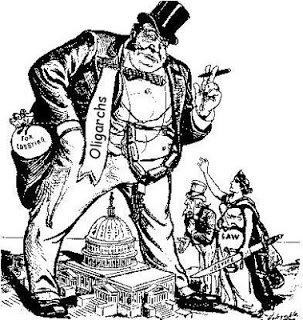
Five Studies: The Psychology of the Ultra-Rich, According to the Research

OLIGARCHY

Bernie Sanders says that billionaires have “psychiatric issues.” He’s not entirely incorrect.

By Livia Gershon

Source: Pacific Standard

“Let me tell you about the very rich. They are different from you and me. They possess and enjoy early, and it does something to them, makes them soft where we are hard, and cynical where we are trustful, in a way that, unless you were born rich, it is very difficult to understand. They think, deep in their hearts, that they are better than we are because we had to discover the compensations and refuges of life for ourselves. Even when they enter deep into our world or sink below us, they still think that they are better than we are. They are different.”
—F. Scott Fitzgerald

Bernie Sanders’ unexpectedly popular presidential campaign features a lot of rhetoric that we don’t usually hear in mainstream politics. One striking example is the Vermont senator’s contention that the ultra-rich suffer from “psychiatric issues” that manifest in an addiction to money and a worldview divorced from reality.

When we talk about inequality, we often spend lot of time considering poor people’s attitudes and behaviors, from whether they get married to how they talk to their kids. We’re less likely to stop and look at how the rich are different. But extremely wealthy people play a huge role in increasing inequality. With their heavy political clout, they help shape government economic policies, supporting very different positions from those of average Americans. From their perches on corporate boards and compensation committees they also give direct raises to their fellow oligarchs.

As inequality grows, in the United States and in the world, the shape of the wealthiest classes is also changing. The significance of inherited wealth fell rapidly in the mid-20th century, making way for the “self-made” rich. Now, though, there’s growing evidence that, as Thomas Piketty has famously argued, dynasties are making a comeback.

So there’s good reason to pay at least as much attention to the behaviors and beliefs of the rich as we do to those of the poor. But what does research tell us about the nature of wealth? How does it affect those who have it? Studies suggest the wealthy really do have significant psychological differences from the middle class in how they view money, and how they look at their relationship with society.

1. MONEY BUYS HAPPINESS—KIND OF

Richer people tend to be happier, but not by all that much. And it’s not really right to say money makes them happy. Wealth only makes affluent people more satisfied to the extent that it gives them more control over their own lives, making them feel richer. (Anyone who feels financially and personally stable because they’ve got a steady job, enough money to get them through an emergency, and a nicer house than their neighbor is likely to be happier than the poorest multi-millionaire in a hyper-rich enclave they can’t really afford.) Still, holding everything else equal, people who have more money have more stability. Of course, they also usually know they’re well off. And those two factors make them happier.

—”How Money Buys Happiness: Genetic and Environmental Processes Linking Finances and Life Satisfaction,” Wendy Johnson and Robert F. Krueger, Journal of Personality and Social Psychology, Vol 90(4), Apr 2006

 2. BUT RICH PEOPLE HAVE DIFFERENT CRITERIA FOR HAPPINESS

Asked about what makes people happy, extremely rich Americans, just like average Americans, typically put love first. But the ultra-wealthy are more likely than everyone else to say happiness depends on winning the appreciation and respect of others. They’re also more likely to cite the realization of personal potential as a key to happiness. But they’re much less likely than non-wealthy people to say that physical health is most important. (Perhaps because they’ve never been uninsured?) Rich people are also a bit more likely than the rest of us to say having a lot of money can occasionally present an obstacle to happiness.

—”Happiness of the Very Wealthy,” Ed Diener, Jeff Horwitz, and Robert A. Emmons, Social Indicators Research, April 1985

3. THE WEALTHY ARE MORE AND MORE LIKELY TO IDENTIFY WITH AN INTERNATIONAL ECONOMIC ELITE

Board members of the world’s largest corporations—a significant and influential segment of the ultra-rich—are increasingly likely to serve on the boards of foreign and multinational companies. Even directors who don’t serve on the boards of foreign companies usually interact with others who do. In other words, modern corporate elites are likely to be part of cosmopolitan, global social networks, whereas most poor and middle-class people are more likely to identify with their home populations.

—”Transnationalists and National Networkers in the Global Corporate Elite,” William K. Carroll, Global Networks, June 2009

4. AS A RESULT, THEY’RE NOT GREAT AT EMPATHY

People from higher socioeconomic classes do worse on a test where they’re asked to identify emotions in photographs of human faces. They’re also less accurate at perceiving the emotional states of others in real-life interactions. In fact, researchers can reduce people’s empathy just by prompting them to think of themselves as relatively high-status. Test subjects who are asked to imagine an interaction with someone from a lower social rung get worse at understanding other people’s emotions. The trouble higher-status people have recognizing emotions is tied to the fact that they tend to think about themselves and others in terms of fixed traits (“She’s a nervous person.”) In contrast, people from lower social classes are more likely to use contextual explanations for people’s behavior (“This interview is making her uncomfortable.”)

—”Social Class, Contextualism, and Empathic Accuracy,” Michael W. Kraus, Stéphane Côté, and Dacher Keltner, Psychological Science, October 25, 2010

5. AND THEY THINK DOMESTIC INEQUALITY REPRESENTS JUST DESSERTS

Americans are known for our trust in an ideal of meritocracy. When you ask the general public to assess statements like “most people who want to get ahead can make it if they’re willing to work hard,” well over 70 percent of us agree. But what happens when people see high levels of income inequality in their daily lives? It turns out that low-income Americans are less likely to believe in meritocracy if they live in counties with extreme economic inequality—places where they’re likely to run into much richer people a lot. For high-income people, the effect is exactly the opposite. The study’s authors suggest that rich people could be using a defense mechanism to stave off guilt and justify their relatively privileged position within a visibly unequal system. But, for whatever reason, the more inequality rich people see in their home county, they more likely they are to believe that meritocracy is working.

—”False Consciousness or Class Awareness? Local Income Inequality, Personal Economic Position, and Belief in American Meritocracy,” Benjamin J. Newman, Christopher D. Johnston, and Patrick L. Lown, American Journal of Political Science, April 2015


Inside the Psyche of the 1%

na50_3514938_1_px_470_

Don Fitz, editor of Synthesis/Regeneration, recently wrote an illuminating overview of what current scientific studies can tell us about psychopaths in positions of power. In the following passage he examines why the psychiatric establishment has focused less on “successful psychopathy” than on other anti-social personality disorders:

The concept of “successful psychopath” is not new. An early text described “complex psychopaths” who were very intelligent and included unscrupulous politicians and businessmen. [6] By the 1970s it was more widely recognized that “this category includes some successful businessmen, politicians, administrators.” [7] In other words, the unsuccessful psychopath might go to jail for swindling dozens of people with home improvement scams while successful psychopaths might swindle millions with bank deals, get bailed out by friends in government, and never spend a day in jail.

Perhaps the most fascinating aspect of the medicalization of the disorder is how the psychiatric establishment departed from science in order to grant partial exemption from being characterized as psychopaths to the wealthy. According to the Diagnostic and Statistical Manual of the American Psychiatric Association, in order to receive a diagnosis of “anti-social personality disorder” (i.e., psychopathy) a person must exhibit at least 3 of 7 listed behavior patterns. These include “arrest,” “physical fights or assaults,” and “failure to sustain consistent work behavior.” [8] This means that those who can pay off cops (or never have charges pressed against them due to their social status), or pay someone else to commit violence on their behalf, or own companies instead of having to work for a living are all less likely to receive an official label of “psychopath.”

An increasing number of psychologists are becoming aware that traditional research was limited by the bias of only looking at people in jail. One wrote that subjects in psychopathy research “were usually institutionalized at the time of testing, and consequently our research may not accurately capture the internal structure and dynamics of the successful antisocial or psychopathic individual.” [9]

Support for the concept of successful and unsuccessful psychopaths is provided by the discovery that the “Psychopathic Personality Disorder” syndrome actually has two factors. [10] Statistical analyses have revealed an “emotional detachment” factor, which includes superficial charm and skill at manipulating others, as well as an “anti-social behavior” factor, which includes poor impulse control and the tendency to engage in activities that are illegal.

Multiple studies have confirmed that run-of-the-mill psychopaths (often studied while in jail) score particularly high on anti-social behavior while successful psychopaths score higher on emotional detachment factors. For example, Babiak [11] looked at “industrial psychopaths” and found that they scored higher on “emotional” factors than “deviant life style” factors. Functioning smoothly in the corporate world, they had a “charming façade” that allowed them to easily manipulate others.

In a study of “disordered personalities at work” other researchers [12] were able to give personality tests to business managers and chief executives. They contrasted their personality scores to psychiatric patients and “mentally disordered offenders.” Compared to the mental patients, the corporate executives showed greater “emotional” components of personality disorder and less “acting out” (such as aggressiveness).

There were no clear-cut differences between “psychopaths” and “normals.”
The authors concluded that “participants drawn from the non-clinical population [i.e., business managers] had scores that merged indiscernibly with clinical distributions.” There were no clear-cut differences between “psychopaths” and “normals.” The most likely explanation of psychopathy is that, like any other personality dimension, it has a bell-shaped curve: a few people have almost none of the characteristics, most people have some characteristics of psychopathy, and a few people have a lot. The most visible outlets for people high on psychopathy scales are petty con artists and corporate conniving. Operating in different worlds, their psychopathy expresses itself in different ways.

Now that it is clear that a streak of psychopathy runs through the 1%, it would be worthwhile to go back to those who espouse that “there is no ethic which requires we treat him [the psychopath] as we treat other adults” and ask if that would apply to corporate psychopaths as well. Will editors of scholarly volumes seek out articles heaping abuse on the 1% with the same vigor with which they find articles despising prison inmates? Will academics proclaim that “public health needs” dictate that we suspend civil liberties of corporate executives even if they “have not been convicted of any crime?” Will professors compare the “needed treatment” of the 1% to the “necessary slaughter” of animals?

Since academics know very well where funding for their research comes from, my guess is that they will be a wee bit less harsh on the corporate class than the jailed burglar who provides no grant money. We can be confident that the Tea Party will not be proposing that, if corporate psychopaths who blast the tops off of mountains wreak a thousand times the havoc of petty thieves who steal copper wire from air conditioners, then their punishments should be 1000 times as great.

Yet, it is important not to overstate the evidence and suggest that every capitalist is a psychopath. Not all corporate executives score high on scales of psychopathy. This is likely because many actually believe their ideology of greed makes for a better world.

Fitz also offers plausible explanations for various studies indicating that, on average, test subjects of a higher income have lower levels of empathy while test subjects of a lower income have higher levels of empathy:

Compassion reflects the opposite of psychopathy. When those with wealth and power plan to strangle social security, they never say they intend to hurt people, but rather they want to help them stand on their own. When corporations drive native people from forests, they tell us it is part of their grand scheme to stop climate change. Are we to believe that they are just as compassionate as everyone else…but that they reveal their compassion in their own way? There is now good evidence that there are, in fact, class differences in levels of compassion.

Social class could be linked to compassion more than to any other emotion.
By definition, the rich and powerful have more material resources and spend more of their time telling others what to do. Those with fewer material resources get told what to do. As a result, the rich value independence and autonomy while those with less money think of themselves as more interdependent with others. [13] In other words, the rich prize the image of the “rugged individual” while the rest of us focus on what group we belong to.

How do people explain the extremely unequal distribution of wealth? Those with more money attribute it to “dispositional” causes—they believe that people get rich because their personality leads them to work harder and get what they deserve. Those with less money more often attribute inequality to “external” factors—people’s wealth is due largely to events beyond their control, such as being born into a rich family or having good breaks in life. [14]

People with fewer financial resources live in more threatening environments, whether from potential violence, being unable to pay medical bills, or fearing the possibility of being evicted from their homes. This means that social classes differ in the way that they view the world from an early age. Children from less financially secure homes respond to descriptions of threatening and ambiguous social scenarios with higher blood pressure and heart rate. [15] Adults with lower incomes are also more reactive to emotional situations than are those with more money.

This means that people with fewer financial resources are more attentive to others’ emotions. Since low income people are more sensitive to emotional signals, they might pay more attention to the needs of others and show more altruism in response to suffering.

This was the thinking behind research linking higher income to less compassion. In one study people either watched a neutral video or one depicting a child suffering from cancer. People with lower income had more change in their heart rate and reported feeling more compassion. But they did not rate other emotions as higher. Social class could be linked to compassion more than to any other emotion. [16]

In another study, people reported their emotions toward a partner when the two of them went through a hypothetical job interview. Lower income people perceived more distress in their partners and expressed more compassion toward them. Again, they did not report more intense feelings of other emotions. Nor did participants show more compassion toward people with the same income level as their own. [17]

Like most psychological research, these findings are limited by their use of university students. This makes it hard to conclude that their findings apply to those not in school. Of course, it is quite possible that effects would be even stronger in situations that are far more intense than the somewhat mild experiences that occur in psychological laboratories. A greater problem is interpreting psychological findings as showing absolute differences between groups rather than shades of grey.

It would not be accurate to claim that research proves that the 1% have no compassion while all of the 99% do. But it strongly implies that the 1% feel less compassion, whether watching a videotape of suffering or participating in a live social interaction. Also, lab studies are consistent with findings that people with fewer financial resources give a higher proportion of what they do have to charity. In economic game research, they give more to others. [18]

The greatest reason is the huge jump in happiness as people move out of poverty …
This line of research confirms that (1) people with fewer financial resources identify with a larger “in-group;” (2) “attention to and recognition of suffering is a prerequisite step before compassion can take place;” and (3) “moral emotion is not randomly distributed across social classes…” [19] Compassion toward the suffering of others is less likely among the 1%.

He follows this with a recap of studies indicating how once the accumulation of wealth and material possessions get people above poverty level, it generally doesn’t correlate to increased levels of happiness. There tends to be a “tolerance” effect for happiness derived from wealth while social connection and altruism are more important for sustained happiness for most non-psychopaths. In his conclusion, Fitz argues that for corporate psychopaths, obtaining wealth and power is an addiction with harmful consequences for everyone and the entire planet, and it’s a societal problem requiring nothing less than a cultural transformation to solve:

The 1% could easily find compassion getting in their way as their actions affect an increasing number of lives. Gaining enough wealth to move out of poverty makes a significant difference in the life satisfaction of a person who has little. Gaining the same amount of wealth has no effect on the happiness of the very rich. They must grab the wealth of many impoverished people in order to have a perceptible increase in happiness. As for a drug addict, the rush from an increase in material possessions of those who already have more than enough is merely a temporary fix.

Soon they will have to prevent even more from rising out of poverty if they are to get another short-term happiness rush. Whether the rush is from the actual possessions or the power that they manifest, it still won’t be enough. They must increase the rate of wealth accumulation that they push through their veins. If those with spectacular quantities of obscene wealth are to get their next high, they cannot merely snort enough happiness objects to prevent masses of people from rising out of poverty—they have to manipulate markets to grind an ever-increasing number into poverty.

The petty psychopath and the grand corporate psychopath seek happiness through the act of obtaining material possessions as much as having them. A major difference between them is that the grand psychopath has the ability to cause so much harm. Even more important, the amount of harm that corporate psychopaths cause grows at an exponential rate. Their financial schemes are no longer millions or billions, but now trillions. Not content to drive individual farmers off their land, they design trade deals that force entire countries to plow under the ability to feed their own people and replace it with cash crops to feed animals or produce biofuels.

Finding that the pollution of small communities generates insufficient funds, they blow off the tops of mountain ranges for coal, raze boreal forests for tar sands, attack aquatic ecosystems with deep sea drilling, and contaminate massive natural water systems by mining gold or fracking for gas. While the petty psychopath may become proficient enough to become a godfather, the grand psychopath is driven not merely to planetary destruction but to a frenetic increase in the rate of destruction at precisely the moment when the tipping point of climate change is most haunting. A natural question might seem to follow: Would getting rid of the current batch of corporate psychopaths benefit the world greatly? Actually, no. It would do no good whatsoever because what psychologists call the “reward contingencies” of the corporate world would still exist. The fact that capitalism prizes accumulation of wealth by the few at the expense of the many would mean that, even if the worst corporate criminals disappeared, they would soon be replaced by marketplace clones.

Progressives should avoid using the same “categorical” model so adored by right wing theorists for its utility in hating the poor. A much better explanation for psychopathy among the 1% is that the corporate drive to put profits before all else encourages norms of manipulating people without compassion. The more readily corporate leaders succumb to this mind set, the more likely they will be to climb the ladder. As the corporate mentality dominates society, it reproduces its attitudes and expectations of behavior throughout every organization, institution and individual it touches.

In challenging what the market does to our souls, Alan Nasser said it so well:

A certain kind of society tends to produce a certain kind of person. More precisely, it discourages the development of certain human capacities and fosters the development of others. Aristotle, Rousseau, Marx and Dewey were the philosophers who were most illuminating on this. They argued that the postures required by successful functioning in a market economy tend to insinuate themselves into those areas of social intercourse which take place outside of the realm of the market proper. The result, they claimed, was that the arena for potentially altruistic and sympathetic behavior shrinks over time as society is gradually transformed into a huge marketplace. [35]As mentioned, there are differences in compassion and types of psychopathy between high and low income people. But the differences are not large. Perhaps, even in the corporate board room, many feel the old norms of group loyalty. It is also possible that differences are small, not because of the unwillingness of corporate executives to be ultra-manipulative, but because capitalism pushes everyone toward a “use people” mode.

Thus, building a new society involves going beyond equalizing material wealth. It means changing the core nature of interpersonal relationships. This requires vastly reducing the emphasis on material possessions. Relationships of people to people can never flourish as long as relationships of people to objects reign supreme.

As long as society continues to be deeply divided between those who tell others what to do and those who get told, it will not be possible to establish the emotional sharing that is the basis of widespread altruism. If the 1% are to develop the same level of understanding of others that the 99% has, they will need to walk in their shoes. If they continue to be the ones who live their lives telling others what to do while the rest of us continue being told what to do, they will not develop levels of compassion typical of the 99%.

This means that in office jobs, they should be able to share the joys of typing letters rather than ordering others to type for them. If we decide mining is necessary, those who are now the 1% should get to know that work life. In work at home, they should not be excluded from washing toilets but should participate in the same human activities as the rest of society. Creating a world of universal compassion requires a world of shared experiences.

Read the full article here: http://www.greens.org/s-r/60/60-06.html

The Right Happiness is Felt on a Genetic Level

Happiness

A new study from UCLA and the University of North Carolina suggests that not all happiness is equal, and different types of happiness have different effects on the expression of inflammatory genes and antibody/antiviral genes. Participants of the study with high levels of hedonic happiness (the type of happiness that comes from consummatory self-gratification)  had high levels of inflammatory gene expression and low levels of antibody/antiviral gene expression. Participants with high levels of eudomonic happiness (the kind you get from working towards a noble goal and searching for meaning in life) had low levels of inflammatory gene expression and high levels of antibody/antiviral gene expression.

According to Steven Cole, UCLA professor of medicine and co-author of the study:

What this study tells us is that doing good and feeling good have very different effects on the human genome, even though they generate similar levels of positive emotion. Apparently, the human genome is much more sensitive to different ways of achieving happiness than are conscious minds.

Lead author Professor Barbara L. Fredrickson of UNC suggests that:

We can make ourselves happy through simple pleasures, but those ‘empty calories’ don’t help us broaden our awareness or build our capacity in ways that benefit us physically. At the cellular level, our bodies appear to respond better to a different kind of well-being, one based on a sense of connectedness and purpose.

…Most people are happy in both ways,” she said. And the secret to long-term good health may depend on keeping the two in balance.

Sources:

http://www.pnas.org/content/110/33/13684

http://www.newsobserver.com/2013/08/02/3079003/unc-researcher-not-all-happiness.html

Our Genes Respond Positively to The Right Kind of Happiness