The world of analysts has missed something critical, something fundamental for explaining what’s going on. We’re so focused on the symptoms of the great reset that’s been going on, that we’ve overlooked that which will reveal the end game. The techniques, the strategies being used, their breadth, and the essence of the psychological warfare being waged – let us know dangerous these days are. The Russians are not simply fighting to preserve Russia, they’re the footsoldiers standing against the beast. The real beast in the hearts of evil men.
“One believes things because one has been conditioned to believe them.” ― Aldous Huxley, Brave New World
Mask, or no mask. Vaccine, or no vaccine. The pandemic awakened the suspicions of millions that something other than a serious influenza epidemic is going on. But the conspiracy that was too big to be a genuine conspiracy, was meant to be unbelievable. The bug itself, likely manufactured in a Biolab by our own government, seems to have been engineered to be contagious enough, just deadly enough, to erase our principles. This bug, the manipulation of the pandemic, it set the world at odds with itself. And what about climate change? Do you think that the elites running this shit show would pass up yet another chance to befuddle us? Climate science, or climate hoax – we’re at odds even over fundamental physics. Are you sensing it, the dastardly strategies at work, I mean? I am sure many of you do. But, I am also sure most people have no conception of the depth of the mind games being played today.
We’re undergoing a morality and mind wipe no psychothriller novelist ever imagined. The idea came to me like a bolt, snapping me from a deep sleep last night. Something about all that’s been going on has gnawed at me, as I am sure it has you, for months now. And now I know what it is. We’re being prepared for those artificial wombs that Aldous Huxley conjured up for his post-dystopian Utopia in the novel Brave New World. We must have been totally blinded, not to have seen and felt it before. Trangenderism, the United States creating gender-free passports, and Walt Disney’s company being boycotted over what American moms are calling “grooming” their kids to be victims of pedophiles. A Supreme Court nominee the other day, said in her confirmation hearings the other day, that she could not define what a woman is. Think about this for a moment. Supreme court justices are the most powerful and influential officials in the U.S. government. They are justices for life, appointed to interpret the law!
Mind cleansing. The great erasure of our morality is what is happening right now. The elites in North America and in Europe have joined hands in some kind of ritual, with plans for the final takeover of Earth. And Russia is the biggest hurdle in the way of this. But also, another facet of the overall wipe – Putin bad, or Putin good, that kind of ideological dilemma. But the reader should not simply take my word here. Read the sort of academic papers the Rothschild advisors and the Queen Mother’s men would be reading. Start with “Wiping the Slate Clean: Psychological Consequences of Physical Cleansing,” which discusses how cleaning your hands with disinfectants helps absolve you morally, of past transgressions. No, I am not joking. Those billions of hand sanitizer bottles at every store, restaurant, and office have a secondary effect. I know, more to think about. But while you are thinking, here is a direct quote from this research. See if you can deduce any correlations or benefits for this Bold New World being built:
“These findings show that the psychological impact of cleansing goes beyond the conceptual metaphor of moral cleanliness (Lakoff & Johnson, 1980). The metaphoric notion of washing away one’s sins seems to have generalized to a broader conceptualization of “wiping the slate clean” (Lee & Schwarz, 2010b). This allows people to remove unwanted residues of the past, from threats to a moral self-view (Zhong & Liljenquist, 2006) to doubts about recent decisions (Lee & Schwarz, 2010b) and worries about bad luck (Xu et al., 2011).”
The ‘clean slate,” is the point I am driving at here. In order for the elites waging total war on the Russians to succeed in their ultimate plan, western societies (first) must be under total control, in harmony, willingly compliant to whatever the technocrats and their benefactors dictate. Think of this as the indoctrination young children get when they first go to a religious school. Everything is being broken down and eradicated so that something else can take the place of former reality, morality, and faith. I told you, it’s diabolical what’s going on. And I think Putin and his people know this, but hesitate to reveal the inconceivable nature of it all.
What’s taking place in the world right now is the start of the final battle for the planet, which begins with the warring within our own hearts and minds. What we see happening is an overriding strategy based on what the ancient philosophers called tabula rasa, or clean slate. This is the idea that we are born without built-in mental content, and that experience and learning imprint our desires, fears, love, hate, morality, etc. The reader might ask now, “How can these elites wipe our slate clean to imprint their orders into us now, after years or decades of experiences?” It’s a logical question, but an easy one to answer.
While these theories of the soul and the self have been bounced back and forth for centuries in the works of philosophers like Thomas Hobbes and John Locke, the concept of the “inconceivable” iterated by Diogenes Laërtius (3rd Century AD) weighs on the mind-wiping taking place in the media, in society, and with the individual right now. Our perception is what is being wiped clean so that it can be rewritten. The philosopher writes:
“Perception, again, is an impression produced on the mind, its name being appropriately borrowed from impressions on wax made by a seal; and perception they divide into, comprehensible and incomprehensible: Comprehensible, which they call the criterion of facts, and which is produced by a real object, and is, therefore, at the same time conformable to that object; Incomprehensible, which has no relation to any real object, or else, if it has any such relation, does not correspond to it, being but a vague and indistinct representation.”
The strategy, as it were, is all focused on where the source of knowledge is. First, all sources must be called into question. This is where the term “Fake News’ came in. First, anybody who did not talk nicely about Donald Trump became a fake news outlet. We all thought this was both funny, and correct, and we adopted the idea and the term wholeheartedly. But, as we see with the Ukraine crisis, news and information from Russia is totally banned, censored, and non-existent in the western psyche. And here’s where the real evil genius part comes in.
“Words can be like X-rays if you use them properly – they’ll go through anything. You read and you’re pierced.”― Aldous Huxley, Brave New World
Russia sympathetic sources of information, or those input channels, are not “good sources,” this is being established. Meanwhile, in America, people are getting the final touch of mind mopping via contrived incidents like the recent Academy Awards circus involving actor Will Smith and comedian Chris Rock. And, many other moral crises are being interjected before the final mind fuck. Half and half, like masks versus no masks, and climate change over climate hoax, Americans’ morality is being rubbed raw by the big rubber, gummy eraser of the controlling elites. And this, my friends, will lead to the powerful world order to literally dictate good and evil, right and wrong through the worldly version of what 11th-century philosopher Avicenna called the “perfect source of knowledge.” Their aim is to become, our source, our gods, our everything.
Look at how it rolls out. Western theorists and analysts, cringing because Vladimir Putin cites historical facts, or insists on legal precedent. The new generation ignorant of even 9/11 or the so-called “war on terror” is being indoctrinated. At the same time those who have experienced things like Vietnam or the Cold War, we’re being reprogrammed. Our principles are being wiped off of our cerebrums, like the spilled milk of belief in God, country, or the long-lost quest for peace. Mickey Mouse is a transvestite. Arnold Schwarzenegger does not vanquish torturing Nazis, he becomes one. And anyone who cannot be reprogrammed must be obliterated.
Finally, at the core of this wiping our slates clean strategy the original position (OP), often referred to as the veil of ignorance experiment seems to be in motion. On the one side, the elites seem convinced that humanity is capable of being totally alienated from past knowledge. And on the other, this veil cannot be applied because it is impossible for us to forget things like gender, ethnicity, the past, our complexion, or fact, as it were. Perhaps the ruling elites who have conjured up with gigantic brainwashing scheme, truly do feel like gods. Maybe their power to market and sell products and war has deluded them. At least I pray they are deluded. I pray the Russians and the other two-thirds of the world abstaining from the game, win out in the long run. I, for one, am not ready for a Brave New World of artificial wombs.
Speaking at a White House business convention on 21st March 2022 the US President, Joe Biden, said:
We are at an inflection point, I believe, in the world economy [. . .] it occurs every three of four generations. [. . .] Now is a time when things are shifting, there’s going to be a new world order out there, and we’ve got to lead it and we’ve got to unite the rest of the free world in doing it.
This caused a bit of a storm because Biden, once again, used the term “New World Order” (NWO). We are told that there is no identifiable globalist project called the NWO. Apparently, the only people who think such a project exists are “conspiracy theorists.” These people are all antesemites, can’t be trusted and absolutely must not be heard, or something like that.
In his 1992 article for the Wall Street Journal titled, How I Learned To Love The New World Order, Biden spoke about “America’s proper role in the new world order.” His latest statement indicates that his concern lingers, on this occasion with good reason. The US position as nominal leaders of the NWO is under threat from Russia and China.
Politicians, oligarchs and other alleged “leading voices” keep talking about the NWO. Every time they mention it the mainstream media (MSM) immediately spring into action, eager to “dispel the myths” or “set the record straight”, defining the term for us. Why do they feel the need to keep doing this? Why are the establishment and their media so sensitive about the term “new world order?”
The NWO Is Not an Antisemitic Trope
The “new world order” is a phrase that gets flung around by all sorts of people for a variety of reasons. It is occasionally expressed in distinctly antisemitic terms.
Some people believe that the NWO is a “Jewish plot to enslave humanity.” Very few people, who have researched and studied the NWO, share this view. It is not supported by the evidence.
Nonetheless, the false allegations of antisemitism applied to anyone who talks about the NWO provides a very useful canard which “debunkers” consistently deploy. As the historian Prof. Antony C. Sutton pointed out in his exploration of Wall Street and The Bolshevik Revolution:
The persistence with which the Jewish-conspiracy myth has been pushed suggests that it may well be a deliberate device to divert attention from the real issues and the real causes. [. . .] What better way to divert attention from the real operators than by the medieval bogeyman of anti-Semitism?
The mainstream media (MSM) role is to confuse and mislead the public. They do not want the people to know what the NWO really is. They hide its history and generally deny its existence, but if that fails they will exploit the Holocaust to bolster their disinformation.
Antisemitism means “hostility to or prejudice against Jewish people.” That hostility and prejudice led to the Holocaust. Falsely accusing people of antisemitism, simply to undermine their arguments, dilutes its true meaning. Doing so shows a lack of respect for the victims of the Holocaust and a casual disregard for Jewish people and their history.
The MSM insist that when US Presidents talk about the NWO they are simply referring to changes in the behavioural norms, regulations and laws that broadly shape international relations. This may be the case, but that doesn’t alter the fact that the NWO has a precise historical meaning.
Given that it is a heavily charged term, is it likely that senior politicians, foreign policy strategists and national leaders would routinely use it unwittingly, without understanding what it means? Perhaps so in some cases but not in all. It is clear than many presidents, prime ministers and geoplitical experts have referred to the NWO in its proper context.
The Term “New World Order” As Propaganda
In a typical example of MSM disinformation, the UK’s Independent newspaper attempted to cover up Biden’s slip by trotting-out the usual denials and obfuscations. They claimed that Biden was simply referring to the “shifting sands of geopolitical relations.”
The Independent did not divulge the reality of the NWO to their readers. Instead it relied upon the tired slurs and allegations traditionally used to discredit those who discuss the NWO. The Independent alleged:
[P]ost-war paranoia tapped into much more ancient social anxieties about the possibility of shadowy secret covens engaging in evil [. . .] The Illuminati, the model for all subsequent sinister behind-closed-doors cabals feared by conspiracy theorist [. . .] traces its origins to the German Enlightenment of the 18th century. Belief in such a group plotting insurrection to realise its “new world order” first gained real prominence in the US among anti-government extremists in the 1990s. [. . .] The movement brings together American right-wing militant instincts with Christian fundamentalist doom prophecies [. . .] and has exploded over the last three decades in tandem with the growth of the internet. [. . .] Conspiracy theories have now become a form of mass entertainment on social media. [. . .] [Z]ealots, bored in lockdown during the pandemic, blended ancient anti-Semitic smears with quest narrative mythologies and pop cultural borrowings to worrying ends.
The so-called “newspaper” followed all of the state approved propaganda to the letter. Mixing genuine history—yes, the Illuminati really did exist—with total gibberish—there is no “movement” of NWO-exposing “extremists”—the Independent managed to fuse “conspiracy theory” with “right-wing” extremism and antisemitism. This is the standard approach to NWO denialism.
By linking the whole hodgepodge together, in a word-salad of misdirection and innuendo, the Independent were able to deliver their essential message: people who talk about the NWO do not trust government and questioning government can only lead to “worrying ends.”
The Independent didn’t offer any evidence to substantiate its conclusion, but informing readers wasn’t the point of the article. Claiming that NWO investigators are all antisemites who believe in “lizard men” allows the reader to safely discount the historians and geopolitical analysts, who have published NWO research, as crazy people.
According to the Independent, no one would even bother talking about the NWO were it not for the Internet. By claiming that questioning government policy online is “extremism,” the Independent offered its support for the government’s proposed censorship of the Internet.
Ironically, the best NWO historians published their work long before the Internet was invented. As pointed out, in one of the many contradictions in the Independent’s article, the NWO was a hot topic of conversation decades before we took to our keyboards and devices.
Introducing The New World Order
Contrary to the opinions of propagandists and debunkers, the NWO is a defined globalist project. The objective is to establish global governance. It was inaugurated more than 100 years ago and it has undergone numerous changes over subsequent generations.
While it wields immense political influence it is not “all powerful.” The NWO is tyrannical and oppressive by nature, hence the need for subterfuge and concealment. Its architects cannot simply enforce their dictatorship and expect to get away with it. We would resist, and if we did so in sufficient numbers there’s not much the NWO could do about it.
Therefore we need to be controlled by other means. Education, society, culture, economics, party politics, finance, applied psychology, behaviour modification, censorship, propaganda, war and crisis management are all used to manoeuvre us into accepting the NWO’s policy agendas. We persistently fall into this trap because we imagine our “elected” leaders are making the ‘big’ decisions: they’re not.
The New World Order (NWO) is an idea that was first proposed by Cecil Rhodes’ Round Table Movement. It was envisaged as a secret system of global governance led by an anglo trans-Atlantic alliance. It didn’t stay “secret” for very long.
Not only have politicians and the leaders of industry, commerce and finance frequently spoken about it, it has also been thoroughly exposed by historians and researchers. Perhaps most notably by Professors Carroll Quigley and Antony C. Sutton.
Even in the early 20th Century, when it was first devised, the concept of the NWO wasn’t a particularly novel idea. It was simply an attempt, by a Western hegemonic power-bloc, to establish global dominion. It is an extension of the age-old game of empires.
Rhodes’ NWO project was itself built upon pre-existing global power structures. The Venetian bankers and the other private enterprises, such as the British East India Company, had already surpassed nation states in terms of their resources, wealth and global political control. Rhodes’ vision was to convert this private financial power, which he possessed in abundance, into one, cohesive system of global rule.
The NWO model, which emerged after Rhodes’ death in 1902, immediately came unstuck. Rhodes was a British imperialist who, alongside his fellow Brits, bemoaned the loss of “their” American colony. The NWO was supposed to re-assert British control in the US, with the city of London ruling Wall Street. This is not how the US contingent viewed the burgeoning trans-Atlantic alliance and it is they who would soon come to the fore. Internecine struggles have been a consistent feature of the NWO throughout its history.
It was led from the centre by “the Society of the Elect” who would oversee, and be protected, by the first ring of power called “the Association of Helpers.” Consecutive rings were then established, affording NWO control of financial institutions, multinational corporations, governments, intelligence agencies and militaries, etc.
Only the members of the “Society” and the “Association” had a full grasp of the entire NWO project. Conceptualisation of the whole system, among the members of each subsequent ring, progressively diminished as their positions moved away from the centre of power. NWO controlled assets, placed in key administrative, academic, military, media or political roles, only knew enough to be able to perform their required tasks and report accurately back to their handlers.
There’s Nothing “New” about the NWO
Tyrants have always sought to impose their authority upon as many people as possible. Just like Sumerian kings or Roman emperors, the leaders of the NWO sought exactly the same despotism, though on a grander scale. As technology has advanced the goal of centralised authority over a global governance structure has become more attainable.
While the manipulation and control techniques have advanced, the goal hasn’t changed. This ambition is as old as civilisation itself. There have always been people who wish to rule and many more who are content to be ruled.
Our collective obedience to authority guarantees tyranny. The NWO is by no means the first kleptocracy to have cultivated and exploited our compliance.
Like all the empires that preceded it, from its inception the proposed NWO was designed to take the form of a public-private partnership between government and an immensely wealthy “Superclass.” Often these individuals and family dynasties came from the world of international finance or banking, but leading industrialists and media moguls were also prominent.
They formed the hand behind the throne. As Prof. Quigley noted in 1966:
There really is a “world system of financial control in private hands” that is “able to dominate the political system of each country and the economy of the world.” [. . .] They now control every major international institution, every major multinational and transnational corporation both public and private, every major domestic and international banking institution, every central bank, every nation-state on earth, the natural resources on every continent and the people around the world through complicated inter-locking networks that resemble giant spider webs. [. . .] They were responsible for World War I, World War II, [. . .] They have created periods of inflation and deflation in order to confiscate and consolidate the wealth of the world. [. . .] This wealth is now being used to construct and maintain the World Empire that is in the last stages of development. [. . .] The chief architects of this new World Empire are planning another war—World War III—to eliminate any vestiges of political, economic or religious freedom from the face of the earth. They will then completely control the earth and its natural resources.
Elected politicians, and the governments they formed, were always the junior partners in this network. Many were hand picked for their malleability, predisposition to corruption or loyalty to the NWO project. With the intelligence and security agencies thoroughly co-opted, the deep state—the “state within the state” or “shadow state”—flourished.
The Party Political system was permitted because it ensured that electorates could never derail the NWO project. They could be placated with a misplaced sense of democratic oversight. Party politics also kept the masses occupied and distracted, leaving the NWO to get on with business unhindered .
Policy agendas were set and then political puppets were installed to sell the desired policies to the people, no matter who they voted for. Quigley explained the NWO’s approach to party based, representative democracy:
The argument that the two parties should represent opposed ideals and policies, one, perhaps, of the Right and the other of the Left, is [. . .] a foolish idea acceptable only to the doctrinaire and academic thinkers. Instead, the two parties should be almost identical, so the American people can ‘throw the rascals out’ at any election without leading to any profound or extreme shifts in policy.
The Leaders of the New World Order
The self-proclaimed leaders of the NWO are drawn from the so-called “Superclass.” Their only distinguishing attributes are immense private wealth, a ruthless willingness to act and an unshakeable belief in their divine right to rule.
The “old money” dynasties, sometimes referred to as the Black Nobility, have maintained their financial and monetary control for nearly a thousand years. They have been joined, in recent centuries, by banking families, industrialists and latterly the “new money” from the post WWII entrepreneurial, billionaire set.
The notion of a “Superclass” was proposed by Prof. David Rothkopf. As a member of the deep state think-tanks the Council on Foreign Relations (CFR) and the Carnegie Endowment for International Peace (CEIP), among others, Rothkopf was well positioned to be personally acquainted with the robber barons he eulogised:
We’re not looking at just the wealthy; we’re looking at power. And so, the definition that we used was people who influence the lives of millions across borders on a regular basis. [. . .] It’s a tiny, tiny fraction of the people of the planet Earth. [. . .] [T]he really defining characteristics of this group is the nature of the networks, that networking is the force multiplier in any kind of power structure[.]
The “people who influence the lives of millions across borders on a regular basis” have gone by many names. “The Rhodes Crowd,” “All Souls Group,” “the Cliveden set,” “the Pilgrims” and many more. Today we often refer to them as oligarchs, thought leaders or stakeholders. No one elected Rothkopf’s “Superclass” to power.
Their wealth is often inherited from their forefathers’ war profits, often it’s the product of nepotism or profits accrued from more recent military interventions. Others have enriched themsleves from the exploitation of slave labour, rigged markets, resource theft, the drug trade, financial crime or usury, etc. The “parasite class” is a more accurate description.
The New World Order Today
It isn’t clear if the “Society of the Elect” or the “Association of Helpers” still remain. What can be said is that the current global management network is a compartmentalised, authoritarian structures. Everything first proposed by Rhodes’ pilgrims remains on track and appears to be nearing completion.
The NWO has been through several iterations and has been re-marketed in different forms. The COVID-19 pseudopandemic has seen the World Economic Forum’s Great Reset come to public attention. This is simply a new brand for the NWO as the WEF makes its bid to be the central pillar of the Global Public-Private-Partnership (G3P). The G3P represents the current management structure of the NWO.
The proposed operating system for NWO global governance is Technocracy. There are a number of key elements which, once installed, will end the last vestiges of human freedom and place the world’s population under the totalitarian control of the technocrats. In turn, the technocrats will serve the interests of the parasite class, not humanity.
Democracy will continue in name only, reassuring the masses for a while, in the form of a communitarian “civil society.” Government, working in partnership with private corporations, will encourage civil society groups to “debate” policies. Every single one of those policies will be pre-selected by the technocratic state (Technate). The apparent political choice will remain an illusion.
The global economy is currently being transformed as new markets are created. As outlined in the 1992 UN Agenda 21 document (section 8.41), the “basis for action” has already been established. A global accountancy system for all business will use stakeholder capitalism metrics to rate assets, ensuring “the integration of sustainability into economic management.”
The rating mechanisms, such as environmental, social and governance ratings (ESG’s), will enable centralised global economic planning. It will determine which ventures receive or do not receive investment. Favoured corporate partners within the G3P will do very well, as long as they promote G3P goals. Those who don’t will go bankrupt without question.
The ratings system provides a “better measurement of the crucial role of the environment as a source of natural capital.” Natural Asset Companies will transform forests into ‘carbon sequestration services’ and natural water sources into ‘human settlement resource services,’ or some such thing.
By claiming that they own nature, the G3P will create new markets worth a projected $4 quadrillion. Thereby removing oil, as the base commodity of value, and replacing it with nature (natural assets). This transformation is called “sustainable development.” It has nothing to do with environmentalism or combatting “climate change.”
The notion of uniting all of humanity to work together to solve the “climate crisis” is a contrivance to facilitate global governance. It was fabricated in the late 1980’s and early 1990’s by the globalist think-tanks that set the world’s policy agendas.
The Club of Rome, the think-tank which greatly influenced the nascent WEF, took credit for imagining the perfect global crisis. In their 1991 publications The First Global Revolution, on page 75 under the heading “the common enemy of humanity is Man,” the Club of Rome wrote:
In searching for a common enemy against whom we can unite, we came up with the idea that pollution, the threat of global warming, water shortages, famine and the like, would fit the bill. [. . .] All these dangers are caused by human intervention in natural processes, and it is only through changed attitudes and behaviour that they can be overcome. The real enemy then is humanity itself.
This statement expresses two of the parasite class’ core beliefs. The assumed legitimacy of their claim to rule, which enables them to imagine they have the right to “designate” a global enemy, and their shared commitment to population control. They herd us like cattle, as they decide how to change our attitudes and behaviour to suit their objectives.
The International Monetary and Financial System (IMFS) has also undergone a transformation. With the introduction of Central Bank Digital Currency (CBDC) it will be revolutionised. CBDC currency will be issued by central banks as their liability. They are solely responsible for that liability. CBDC will always be their money.
CBDC is electronic money, it is therefore programmable money. This means the central banks will have complete control over every unit of CBDC currency. Whether it is in your wallet or not, it is the central bank’s money and they will permit or deny every transaction you make with it.
For example, the decisions you currently make about where you travel have already been restricted by the global policy response to a fake pandemic. If CBDC is fully adopted, you will no longer have any choice at all.
CBDC will enable your central bank’s AI algorithm to decide where you can go and when. If CBDC becomes the only form of currency available to us, none of us, no matter how much money we think we have, will have any financial freedom.
In order for Technocracy to operate, every citizen must be continually surveilled and controlled by the state (Technate). The technology capable of doing this is already being distributed globally as part of the so-called Fourth Industrial Revolution (4ID).
The Internet of Things (IoT) will see every device that we use report that use back to the Technate’s data centres. The Internet of Bodies (IoB) will enhance the Technates ability to monitor us in real time. Combined with the Digital-ID, that every nation is rushing towards, the surveillance and control of every individual “global citizen” will be centrally managed at the global governance level.
The New World Order, under the current management structure of the Global Public-Private Partnership, is nearing completion. It is a truly global system of governance. There are no leading governments anywhere on Earth opposed to it. All are racing ahead to adopt it with equal enthusiasm.
The Way Forward For The NWO
With Russia’s recent military operation in Ukraine, it has been suggested by some that the Russian and Chinese governments are not prepared to accept the imposition of the NWO. We can only be guided by their major policy statements and their actions. If these are anything to go by, both governments are fully on-board with the NWO agenda.
Both Russia and China are absolutely committed to sustainable development, Digital ID, 4ID, COVID biosecurity and vaccine-passports. Russia is ahead of most Western nations with regards to CBDC and China has surpassed Russia, having already started to use CBDC on a significant scale.
On 4th February Presidents Vladimir Putin and Xi Jinping issued a joint statement on the future relationship between Russia and China. It read, in part:
Today, the world is going through momentous changes, and humanity is entering a new era of rapid development and profound transformation. [. . .] of the global governance architecture and world order. [. . .] The ongoing pandemic of the new coronavirus infection poses a serious challenge to the fulfilment of the UN 2030 Agenda for Sustainable Development. [. . .] In order to accelerate the implementation of the UN 2030 Agenda for Sustainable Development, the sides call on the international community to take practical steps in key areas of cooperation such as poverty reduction, food security, vaccines and epidemics control, financing for development, climate change, sustainable development, including green development, industrialization, digital economy, and infrastructure connectivity. [. . .] [We] will further increase cooperation in the development and manufacture of vaccines. [. . .] Russia and China intend to encourage interaction in the fields of public health, digital economy, science, innovation and technology, including artificial intelligence technologies [. . .] Particular emphasis will be placed on the fight against the novel coronavirus infection pandemic and economic recovery, digitalization of a wide range of different spheres of life.
There is no evidence to suggest that either Russia or China wish to derail the objectives of the WEF’s Great Reset. On the contrary, the evidence points towards Russia and China as perhaps the most enthusiastic and aggressive advocates for the NWO agenda. China is the world’s first Technate and Russia is a major WEF partner, most notably on cybersecurity.
Much has been made of the WEF’s decision to distance itself from Russia and sanctioned individuals. Notably this is a “temporary” freeze and smacks more of political expediency and PR, rather than any genuine severance.
There is no aspect of the NWO, G3P managed agenda that either Russia or China stand against. Their joint statement read like a Great Reset checklist.
Perhaps this is all a cunning deception. Part of a “secret plot” by Russia and China to fight the NWO. However, it looks far more like a pact between two powers bidding for political leadership of the NWO.
There is no doubt that the NWO was conceived as a project of Western based oligarchs. In the post WWII era it has bared its teeth on the geopolitical stage as the “international rules-based order.” This unipolar order, centred around the G7 group of nations, with the US led NATO alliance providing the muscle, has been dominant within the Global Public-Private Partnership (G3P).
Russia’s military intervention in Ukraine, and the G7/NATO alliance response to it, appears to be a watershed moment. Together, Russia and China are challenging the G7 clique with a BRICS based, G20 focused, multipolar model. It seems they are determined to seize primacy within the G3P management structure.
As a paid spokesperson for the G7 rules-based order, Joe Biden anxiously observed “there’s going to be a new world order out there, and we’ve got to lead it.” The US-led alliance’s problem is that Russia and China, in league with their BRICS partners, are pursuing exactly the same objective.
In a televised address on 24 February 2022, Russian President Vladimir Putin announced his decision to order Russian military forces to invade Ukraine in what he labeled a ‘special military operation’ to defend the recently declared self-proclaimed republics of Donetsk and Luhansk and ‘to demilitarise and denazify Ukraine’. Watch President Putin’s speech here or read a transcript here.
Since the invasion started, there has been a huge amount of commentary on it from a vast range of authors with a remarkably diverse range of perspectives. Beyond this, the cascading impacts of the war along with the changes that have been precipitated at various levels, have already been far-reaching and will be increasingly devastating for humanity as a whole.
Here I will focus on some of the more obscure aspects of the deeper agenda that is driving this conflict to manifest in the way that it is occurring. This reflects my own long-standing interest in understanding how elite power manifests in the world.
As I have explained previously, since the dawn of human civilization 5,000 years ago, ‘ordinary’ people have been engaged in an ongoing struggle against elites, whether local, imperial, religious, economic, national or, now, global. See ‘Why Activists Fail’. But whatever the context, the elite intention is always the same: to kill undesired populations and/or control the lives of everyone else by depriving them of their fair share of political, economic, social and ecological resources.
Since about 1500CE, the intensity of this conflict has deepened considerably with elites intent on killing off a substantial proportion of the human population and enslaving those left alive. This has been done through imperial conquest precipitating genocidal campaigns against indigenous peoples, wars, control of food supplies and other resources to generate mass starvation, medical technologies, the deployment of lethal technologies notably now including 5G and, most recently, an injectables program, ostensibly to protect against a ‘virus’. See ‘Killing Off Humanity: How the Global Elite Is Using Eugenics and Transhumanism to Shape Our Future’.
In essence, elite intention has never really wavered. To reiterate: Whatever ideology supposedly guided any elite in a particular context, the elite has usually wanted a substantial proportion of any local human population killed off and the bulk of those left alive reduced to slavery, in one form or another, while endlessly commandeering planetary resources for elite use.
The only differences between earlier eras and the present is that the assault on humanity is now genuinely global and it is in its final stage.
Unfortunately, too, this assault is happening in plain sight with the bulk of the population completely unaware of what is taking place and those who are at least concerned and resisting in some way focused on the ‘smoke and mirrors’ distraction presented by the ‘virus’/‘vaccine’ narrative and the antics of politicians.
Which means that the Elite’s kill and control agenda, being implemented through the World Economic Forum’s ‘Great Reset’, proceeds with minimal resistance. And those not killed by the various measures being used to depopulate humanity will be enslaved in a technological prison from which there will be no escape. After all, the absolutely minimum requirements for effective resistance are life, a mind with free will and food to eat, none of which can be taken for granted any longer.
So Where Does the War in Ukraine Fit into All This?
Well, at immediate and great personal cost to those soldiers and civilians killed or otherwise adversely impacted by the fighting, the war is being used as a smokescreen to obscure a highly orchestrated sequence of events that accelerate the Global Elite’s kill and control agenda, in just the same way that the Covid-19 narrative has done.
Well, while this war rages on, generating enormous emotion among those siding with either Russia or Ukraine – and thus, in extremely simplified terms, outraged by either NATO’s precipitating encroachment and military buildup over recent decades or Putin’s ‘unjustified’ aggression – here is a short, partial list of rapidly accelerated key outcomes, all compliments of this war, that bring you closer to death or technological slavery in the near term, wherever in the world that you live.
The war, by accident (given that other key elite agents are well aware of what is happening and probably won’t precipitate it deliberately), could ‘go nuclear’, and kill off a huge proportion of humanity and, depending on its severity, starve most or even all of those left alive. But, assuming this outcome is avoided, there are plenty of other unpalatable options to contemplate.
Russia and Ukraine supply 30% of the world’s wheat and significant percentages of other grains, sunflower oil, fertilizers, oil and gas, and strategic minerals (such as palladium and platinum), among other products. The war, as well as the sanctions imposed on Russia by many countries, has exacerbated the already seriously interrupted supply chains of these products, which either cannot be alternatively sourced or not as cheaply. And the previously generated supply chain collapses in all sectors, causing food (and other) shortages, price hikes and energy crises around the world, cannot be restored in any timeframe that is short. Millions will starve to death because of these supply chain collapses.
According to one recent report: ‘We believe we are at the onset of a global famine of historic proportions.’ See ‘Farmers on the Brink’.
To repeat: ‘we are at the onset of a global famine of historic proportions.’
And the thoughtful account by Riley Waggaman includes this comment from Anatoly Nesmiyan: ‘That is why the “special [military] operation” is a minor episode of little importance against the background of impending cataclysms…. The fact that Ukraine and Russia have been used as a tool speaks not so much about the mind of the West, but about the impenetrable stupidity of the direct participants in the current competition.’ See ‘Up next: Global food crisis?’
If you want to keep close track of the destruction of your food supply, now being dramatically accelerated by the war in Ukraine, check out the daily updates shared by the Ice Age Farmer (Christian Westbrook) on various channels.
But a quick check reveals that the Russian and Ukrainian governments have both enthusiastically participated in the entire Covid-19 ‘virus’/‘vaccine’ scam imposing the familiar range of measures – mandatory vaccinations, QR codes… – implemented elsewhere to fulfil the elite’s kill and control agenda.
This includes elite Russian participation in the Global Preparedness Monitoring Board (GPMB) which, as noted by Robert F. Kennedy Jr. in his recent book The Real Anthony Fauci is ‘the real-life authoritative collective for imposing rules during the… pandemic. This so-called “independent” monitoring and accountability body’s purpose was to validate the imposition of police state controls by global and local political leaders and technocrats…: subduing resistance, ruthlessly censoring dissent, isolating the healthy, collapsing economies, and compelling vaccination during a projected worldwide health crisis.’ See ‘I Believe We Are Facing an Evil That Has No Equal in Human History’ and ‘Sputnik V is a scam: “A socioeconomic experiment on the Russian population”’.
The government of Ukraine is no different, using coercive measures to force vaccination on its citizens despite an unusually high level awareness of the dangers of vaccines – leading to substantial resistance – among the general population. See ‘As COVID Surges, Protesters Hit Streets of Ukraine to Decry Vaccine Mandates’.
Are you keeping track of the ever-lengthening list of those who are injured or killed by the injection, which is taking place in the background of this war?
The rollout of 5G, essential to elite creation of their surveillance and control grid, gathers pace under cover of the ‘virus’/‘vaccine’ narrative and now the Russia/Ukraine war. Of course, the electromagnetic radiation will also kill vast numbers of people, both outright and via decimation of the insect population (thus further reducing global food supplies), and the surveillance and control grid it will make possible will trap you in your home and immediate neighborhood, with any semblance of human freedom and human rights consigned to memory. See ‘Sleepwalking into Hell: The Global Elite’s Technological Coup d’état Against Humanity’ and ‘Deadly Rainbow: Will 5G Precipitate The Extinction Of All Life On Earth?’
And, unless you have been ignoring the World Economic Forum’s ‘Great Reset’, you are well aware that the Global Elite plans to transform 200 areas of human life using technologies associated with the fourth industrial revolution and transhumanism (including 5G and 6G, military weapons, artificial intelligence [AI], big data, nanotechnology and biotechnology, robotics, the Internet of Things [IoT], and quantum computing). These technologies will subvert human identity, human freedom, human dignity, human volition and human privacy reducing those left alive to transhuman slavery in which you will have a digitized personal identity. This digitized identity will be connected to your banking, health, legal and other records to establish your personal ‘social credit score’, like that used in China, to determine what you can, and cannot, do while living in your ‘smart city’ eating food-like substances synthesized from trash and insects. See ‘The Great Reset’.
In Ukraine, the government is simply using the war to rapidly expand what was already ‘one of the most expansive government-run digital ID systems in the world’, making the country the ‘world leader’ in some aspects of digitization via their Diia app, with all that this portends for the human future. See ‘How Ukraine Government Is Converting Digital ID System Into Wartime Tool’. Of course, there will be no backtracking from this at war’s end.
Russia is equally committed to its digitization program, although it is also playing a key role in developing the elite-controlled banking system, complete with digitized currencies, that will supersede the current model. It is hosting the annual Cyber Polygon simulations. See ‘Taking Control by Destroying Cash: Beware Cyber Polygon as Part of the Elite Coup’.
Like many people, I am concerned about the war too. In drawing attention to the deeper elite program that is rapidly trapping humanity in a nightmarish future, I am not suggesting that the war does not matter.
But I also know from long experience that the anti-war movement remains devoid of the capacity to act to prevent or halt wars because it lacks the analysis, strategic orientation, tenacity and courage to do so. I wish it was otherwise.
And if you want to participate in a strategy to end all war, you can read how to do so here: Nonviolent Campaign Strategy.
Having noted this, let me highlight that key aspects of these strategies are the need to recognize that violence is built deeply into human society by a parenting model that, in essence, is based on demanding obedience from a child, rather than nurturing the child’s Self-will. See ‘Why Violence?’ and ‘Fearless Psychology and Fearful Psychology: Principles and Practice’.
And this generates a society in which many people are so adversely impacted that they are rendered effectively insane. Unfortunately, some of these people end up in situations where they exercise extraordinarily levels of control. See ‘The Global Elite is Insane Revisited’.
Hence, if you want to reduce violence and war in the future, consider making ‘My Promise to Children’.
So What Does All of this Mean?
Whatever your concerns about the war in Ukraine however, I encourage you to not let it distract you from acting powerfully to defeat the deeper elite agenda. If you get caught up in the war hysteria and fail to defend yourself and those you love, you will soon find that everything about the life you have known has been taken away, irrespective of the outcome of this war.
So What Can You Do?
Ideally, if you wish to strategically resist the elite agenda, your most powerful option is to participate in the ‘We Are Human, We Are Free’ campaign.
The simplest version of this strategy is explained on the one-page flyer that identifies a short series of crucial nonviolent actions that anyone can take. This flyer, now available in 15 languages (Czech, Danish, English, Finnish, French, German, Greek, Hebrew, Hungarian, Italian, Polish, Romanian, Russian, Spanish & Slovak) with more in the pipeline, can be downloaded from here: ‘The 7 Days Campaign to Resist the Great Reset’.
Conclusion
The war in Ukraine is a tragedy for those immediately impacted but for all of us as well. Particularly if we do not recognise the threat it conceals and act powerfully in response to this deeper threat.
For 5,000 years elites have been pitting us against each other – at work, on the battlefield, in life generally – by drawing attention to, and magnifying, superficial differences (based on gender, race, religion, class, nationality….), exacerbating conflicts and convincing us that they are acting in our own best interests when we do what they tell us via their agents in government, the corporate media and elsewhere, and that human solidarity is worth nothing.
Well, one day very soon now, we would do well to realize that in the end only three things matter: Human solidarity is essential if we are to survive this existential crisis, our true enemy is not each other but the insane Global Elite, and we must act powerfully and nonviolently if we are to defeat it.
A human future worth living will be short otherwise.
Biodata: Robert J. Burrowes has a lifetime commitment to understanding and ending human violence. He has done extensive research since 1966 in an effort to understand why human beings are violent and has been a nonviolent activist since 1981. He is the author of ‘Why Violence?‘ . His email address is flametree@riseup.net and his website is at http://robertjburrowes.wordpress.com
In an article I published in April of 2018, titled World War III Will Be An Economic War, I outlined a number of factors that portend a large scale conflict between East and West and why this war would be mainly economic in nature. I investigated how this conflict would actually benefit globalists and globalist institutions seeking to bring down multiple nations’ economies while hiding the engineered crisis behind a wall of geopolitical chaos and noise.
The goal? To convince the masses that national sovereignty is a plague that only leads to widespread death, and that the “solution” is a one-world system – conveniently managed by the globalists, of course. That is to say, more centralization is always offered as the solution to every problem.
Furthermore, the war itself acts as cover for the inflationary collapse that our central bank and government has created. We are already seeing fraud propagandists like White House Press Secretary Jen Psaki attempting to mislead the public into believing all our current inflation problems stem from the Ukraine war. This claim requires some impressive mental gymnastics and an epic level of ignorance, but Psaki seems to have no shame about her role as a soulless Goebbels-like figure.
One issue which I used to get a lot of arguments over was the idea that countries like Russia and China would end up so closely aligned. People claimed there were too many disparities and that the countries would ultimately turn on each other in the middle of a financial crisis.
Well, it’s four years later and now we’re going to see if that is true or not. So far, it looks like I was correct.
My position has long been that certain nations have been preparing for a collapse of the U.S. dollar as the world reserve currency (the primary currency used in the majority of trade around the world). My belief is that America’s top economic position is actually an incredible weakness; the dollar’s hegemony is not a strength, but an Achilles heel. If the dollar was to lose reserve status, the whole of the U.S. economy and parts of the global economy would implode, leaving behind only those who prepared – those who saw the writing on the wall and planned ahead.
The Dollar Crash Coalition
There are four nations that have been actively positioning for the crash of the dollar and they include: China, Russia, India, Brazil (five if you count the limited involvement of part South Africa). These countries are also known as the BRICS. The BRICS are rarely mentioned in the mainstream media anymore, but there was a time around a decade ago when they were discussed regularly.
My fascination with the BRICS back then was primarily due to their odd trade behaviors. Specifically, their bilateral agreements which cut out the dollar as the reserve currency, and the fact that they were stockpiling tons upon tons of gold.
It was as if they had some kind of inside information that an economic conflict or disaster was coming, and they were getting ready to decouple from the dollar and the global supply chain.
Today, as the Ukraine war rages, there is constant hype about the union of nations opposed to Russia’s invasion to the point that the narrative has become bizarre. There is an incredible level of cultism in the mainstream media right now encouraging a mindless mob response. They have been trying to drum up something very similar to a behavioral vortex that many of us in conservative circles have seen thousands of times in the past few years: Western media is weaponizing cancel culture against Russia.
It’s not just a general admonition of the Kremlin or of Putin, that would be normal. Rather, it’s an outright dismissal of anything remotely related to Russia, from bar owning dummies throwing away all their vodka (even though most of it is not made in Russia), to the International Cat Federation banning certain cats from competitions because they are Russian bred.
This is pure childish insanity, but again, we’ve seen this before with cancel culture in the US.
The thinking is utterly collectivist and goes a little something like this:
“We shall shun them from the hive and isolate them. We will erase their existence and rewrite their identity and history. Then we will punish them by taking away their ability to survive economically until they submit and conform to the directives of the gatekeepers, who shall remain nameless.”
That said, as most conservatives know, cancel culture is a failed strategy. Despite the international push to cancel Russia and media claims that Russia is now “completely isolated and alone,” the narrative is apparently designed more to con the masses, not intimidate the Kremlin. They are, in fact, not isolated at all. And, guess which countries are staunchly refusing to support actions and sanctions against the Ukraine invasion?
That’s right, the other members of the BRICS.
China has outright refused to accommodate any sanctions and is directly working with Russia to alleviate trade issues. As I’ve been pointing out for ten years, they’ve been preparing for this moment. Hell, if the rest of the world doesn’t want Russian exports and oil, China will certainly buy them.
India is eerily silent on Ukraine, despite endless pressure from the U.S.
Both Brazil and South Africa have taken neutral stances on Ukraine and continue to trade with Russia. It would appear that the cancellation of Russia has already failed before it really began.
The narrative only serves a purpose in that it gives the western public two false impressions:
It makes the people think that cancel culture on an international scale is working and that Russia will soon fold when the opposite is true.
It tricks people into thinking that all the risk is on the Russian side when, in reality, most of the risk is on the western side. This will make the inevitable economic disaster all the more frightening when it occurs.
Personally, I don’t have any affinity for either side of the Ukraine conflict. I feel empathy for the Ukrainian people, but certainly not the Ukrainian government and their globalist partners. I also have no love for Putin and his many friends in the globalist World Economic Forum.
That said, even if you think one side is right and the other side is wrong, one cannot deny that the cancel culture mentality of the west is going to lead to an epic disaster. What people don’t seem to understand is that this calamity will hurt the U.S. and Europe just as much as it hurts Russia, if not more so.
The Economic Weaponry Of Fortress Asia
The close economic relationship between Russia and China is fast building towards a “Fortress Asia” which guarantees a certain amount of insulation from global instability.
Russia exports a surprising number of raw materials that many countries rely on, from fertilizers to industrial metals like nickel and aluminum. But, their biggest export by far is energy in the form of oil and natural gas. Europe in particular is utterly dependent on Russia for between 40% to 50% of its heating and electricity. Cuts to Russian energy exports would devastate Europe in a year’s time and it’s unlikely other exporters would be able to fill the void in the near term, at least not without huge price increases.
According to the IEA, Russia is the third largest oil producer in the world behind Saudi Arabia and the U.S. and it is the largest exporter to global markets. Sanctions on Russian oil would mean a massive shift in supply and multiple markets rushing to fill the gap.
Just the threat of cuts to Russian oil caused large overnight price spikes in gasoline in the U.S. and Europe. Brent crude prices skyrocketed from $90 a barrel to $130 a barrel in a matter of a couple weeks.
I don’t think it will stop there, either. I expect crude prices to climb into the $200 per barrel range and gas prices to jump to around $7 a gallon before increased U.S. shale pumping helps balance out the supply (and this is a best case scenario). Some of the price will be due to speculation, but ultimately without Russian oil prices will remain high even if the war in Ukraine ends.
And here is where we get to a key aspect of this scenario which I don’t think many people are taking into account. It does not matter if Russia pulls out of Ukraine, and it certainly doesn’t matter if Ukraine surrenders. The economic side of the war will continue, and it will only escalate.
Retaliation In Economic Warfare
Beyond oil and energy the combined influence of the BRICS has the power to dramatically disrupt the U.S. dollar’s world reserve status. China alone holds trillions in dollars and U.S. treasuries which it can dump on the market anytime it pleases. China is the world’s largest exporter and most nations including the U.S. rely on Chinese manufacturing. This is why China’s draconian Covid shutdowns have caused a constant strain on the global supply chain. Around 20% of imports to the US come from China, including over 97% of our antibiotics.
The BRICS in combination control a vast swath of the export and manufacturing markets. They don’t even need to dump the dollar in trade, all they have to do is say they prefer a basket of currencies like the International Monetary Fund (IMF)’s Special Drawing Rights. The dollar’s value would collapse, and that would be in the midst of already rising inflation.
Another interesting development from the economic war is the increasing calls for crypto and digital currency solutions. I would note that it’s not just the BRICS who are refusing to go against Russia; there is also the matter of globalist institutions like the IMF and the Bank for International Settlements (BIS). Not surprisingly, Russia’s membership in these world banking platforms remains secure. Russia continues to hold billions in IMF SDRs. Both institutions have been calling for the implementation of a global digital currency system (which obviously they would control).
If the world economic war continues at its current trajectory, it is only a matter of time before trade sanctions turn into currency attacks. This is where the U.S. will be hurt the most.
It is perhaps not so coincidental that the globalists have staged themselves to benefit. With no world reserve currency established and an inflationary crisis raging, they will attempt to swoop in to “save the day” and assert that they have the perfect solution: A global digital currency system based on blockchain technology but tied to the IMF’s SDR basket system and administered by them.
In other words, with all the inflation present in national currencies, the IMF will offer the public a digital currency or cryptocurrency that promises them more stability. The inflationary crisis in confidence will be used to push people into a digital system which has no privacy and can be used to control them by denying them access on a whim, much like how the Chinese social credit system operates.
Ukraine is only the first domino in a long chain that is meant to lead to a one-world economic system centralized into the hands of the money elites.
There are ways to disrupt it, and the plan may not succeed at all, but there’s no avoiding the economic pain that will be caused in the meantime. All that we can do is accept that World War III is upon us and the weapons will be economic rather than nuclear.
The current situation in Ukraine has once again invigorated the lying Western media and sent them into an anti-Russian frenzy. For the last two years the media has been enthusiastically pushing the genocidal Covid narrative on behalf of the Globalist faction. Whatever doubtful credibility they had prior to Covid they have destroyed with their relentless lies. With an astonishing lack of self-awareness they are now pushing the anti-Russian narrative like the unprincipled mindless hacks that they are. Ignoring both facts and context they are relentlessly promoting war propaganda to justify this hostility to their own beleaguered populations.
The unfortunate reality is that despite unprecedented distrust in the media that propaganda works. Anti-Russian sentiment is rising throughout the West. We have witnessed the same phenomena with the rabid anti-China narrative emanating from Western governments and their client stenographers in the media. The message is clear, unless you are a pliant puppet of the Anglo-American empire, then obviously you are evil and must be destroyed.
The truth of course is deeper, the real war the Globalists are fighting is against the citizenry of every country on earth. As the Covid atrocity is being rapidly exposed the repression of the people is the only option open to the New World Order Davos cabal. As has always been the case, a war abroad is the best excuse to impose tyranny at home. The Western Neo-liberal governments of America, Canada, Australia and most of Europe cannot afford to be removed from power. The full anger of the people will be unleashed full power against those who imposed the Genocidal Covid lie upon them. Trudeau, Macron et al will be held to account (one way or another) for their pivotal roles in this atrocity. They cannot allow that to happen, they have too much to lose.
The tragic and unnecessary conflict in the Ukraine can be viewed as the “Great Reset War”. Although targeted towards Russia for media purposes, its real objective is the further subjugation of the peoples of their own countries. The Western Neo-liberal agenda is failing on every front, economically, socially and morally. The Cabal has destroyed the once prosperous and free societies that they governed. The dystopian future that they have planned for the world is now plain for all to see. It has been on display in Canada and Australia, New Zealand and throughout Europe. It is a prospect that should alarm everybody.
“The Great Reset” is the Cabal’s way of ensuring that the same Globalists who plunged the world into chaos are still in charge after the coming inevitable collapse. The Green agenda and the 4th industrial revolution are about de-industrialising the world and destroying successful industrial competitors such as Russia and China. Not surprisingly, neither Russia or China, along with India and Iran are going along with this insidious plan. They are not alone, many countries from Africa, South America and Asia are also gravitating more towards the Russian/Chinese orbit. All have good reasons to be distrustful and angry at the Empire. The Cabal is weak and failing, it has created powerful enemies who are formidable obstacles to the New World Order and the Great reset. Expect this to embolden other countries to resist the Empire’s plans.
The Empire doesn’t care about the Ukrainians anymore than they care about the people in their own countries. It is about maintaining control over humanity. President Putin is not in essence fighting the Ukraine, he is fighting the N.W.O. And that is everyone’s fight. The battle being waged by the West is for the minds of the Western people so they can justify the imposition of further tyranny. Until recently, President Putin has demonstrated incredible restraint, despite the incessant lies and aggression he has pursued peace and diplomacy. This has not been reciprocated, it has been meet with more lies and provocations. It has been faced with only two options, capitulate or resist, he has resisted. Russia’s fight is the fight of all peoples who value freedom and resist tyranny.
The past few days, even weeks, have seen a definite alteration in the media’s attitude to the Covid “pandemic”.
There have been numerous examples of what, if the media were not so tightly controlled, might be referred to as “dissent”. But, since the media is tightly controlled, we must call it an apparent change in the message.
Famously, Dr Steve James, a consultant anaesthetist, confronted UK Health Secretary Sajid Javid over the weakness of the science supporting vaccine mandates. Note this was actually aired on Sky News:
"The science isn't strong enough".
Watch the moment an unvaccinated hospital consultant challenges Health Secretary Sajid Javid over the government's policy of compulsory COVID jabs for NHS staff.https://t.co/IvbdwQbF0N
A few days ago Dr Rochelle Walensky, the director of the CDC, went on Good Morning America to discuss the “Omicron” wave, and ended up pointing out that most “omicron deaths” have multiple co-morbidities.
In another interview, with Fox News, Dr Walenksy said the CDC was going to publish data on how many people had died of Covid, and how many died with it.
This begs a series of important questions.
Why is the director of the CDC (seemingly) engaging with these Covid skeptic arguments after two years of pretending they don’t exist?
Why would Sky News air, and then tweet out, the video clip of a doctor challenging the health secretary?
Why Endemic Covid-19 Will Be Cause For Celebration
An article which argued, among other things, that “Endemic Covid-19 will be no worse than seasonal flu”. This sentiment has been repeated ad nauseum across multiple outlets.
The messaging isn’t just media-based, either. Reports are coming out that “living with Covid” is going to be the UK government’s strategy moving into 2022, with an official publication on this topic expected “within weeks”.
So, “living with the virus” is going to be added to the Covid phrasebook alongside “flatten the curve” and “the new normal”. But what does it actually entail?
When they say “living with Covid”, what do they really mean?
Well, firstly, let’s not make the mistake of trusting any government, media, or “expert”, just because they start telling 20% of the truth.
They are liars, they have an agenda, this is always true, you should always be aware of it, even when – or especially when – they are suddenly telling you what you want to hear.
They have not seen the light, they are not correcting their mistakes, they not finally seeing sense, and they are not switching sides.
There have been no Damascene conversions. There is no wave of guilty consciences sweeping through the elite.
They have an agenda. They always have an agenda.
You should also dispel all notions of “getting back to normal” from your mind. That isn’t happening.
How do we know? Because they said so.
Half the articles talking about “living with Covid” go into detail about how things won’t really change. Take this one, from the Guardian yesterday:
‘Living with Covid’ does not have to mean ditching all protective measures
It outlines that Covid could become endemic soon, that the mass testing of asymptomatic people may be counter-productive and possibly should stop, but it doesn’t reverse course on masks or vaccines and leaves the door wide open for a new “variant” to jump-start more lockdowns in the future:
“Living with Covid” does not have to mean reversing every protective measure. If better ventilation and face masks reduce the impact of winter respiratory illnesses, that is a positive, even if the NHS is no longer under imminent threat of being overwhelmed. We will also need to remain vigilant about the threat from new variants, which could still cause big setbacks. There is no guarantee that another variant, more infectious and more virulent than Omicron, could emerge in the future. Scientists say that supporting global vaccination efforts will be crucial to securing the path to normality.
Masks, working from home, and social distancing in crowded settings could all be “sticking around”, according to one of the above CNBC articles. And “Covid Boosters could become like annual flu shots”.
Meanwhile, “experts” are warning that even once Covid is endemic we should prepare for “surges” every three or four months.
It seems “living with the virus” means maintaining the status quo, loosening a few restrictions, but leaving the path clear for new waves of fear porn should the need arise.
But why? Why are they doing this now?
It could be that there are splits and factions, fractures along the floors of the corridors of power. Perhaps some members of the great big club want to halt the Pandemic where it is, afraid that any more progress along the “Great Reset” path may imperil their own position or their own wealth.
Maybe.
What I see as more likely is that they sense they have over-extended themselves already, and that stretching further could break their entire story to pieces.
To use an apt metaphor, imagine the “Great Reset” agenda as an invading army, marching through town after town, winning battle after battle and burning as they go.
There comes a point where you have to stop. Your supply lines are pulled taut, your men are tired and numbers dwindling, and the occupied citizens are putting up more and more resistance. Push on now, and your entire campaign could crumble.
What you do in that situation is withdraw to a defensible position and fortify it. You don’t give back the land you’ve taken, or not much of it at least, but you stop pushing forward.
The people whose land you have invaded will be so glad the war is over, so tired of fighting, they’ll be so relieved by the respite before realising how much of their land you’ve taken away. They may even say “let them keep it, as long as they stop attacking us”.
That’s how conquest works, from the days of ancient Rome and beyond. A cycle of aggression followed by fortification.
When we switch from “pandemic” to “endemic”, we won’t be getting our rights back, the vaccine passes and surveillance and the culture of paranoia and fear will remain, but people will be so relieved at the pause in the campaign of fear and propaganda they will stop resisting.
They won’t push back, and the “New Normal” will literally become just that, normal.
Hell, they’ll probably greenlight funding for anything Bill Gates wants to do make sure “Covid is the last pandemic”.
And then, one day when people are nice and docile again, a new variant will come back, or we’ll need a “climate lockdown”, and the push for control of every aspect of our lives will start up again in earnest.
The best thing we can do is not fall into the trap.
The press politicians and Big Pharma didn’t all just realise the truth, they’re just using some small parts of truth they’ve been ignoring for two years to fortify their position.
But that doesn’t make it a bad thing.
The very fact they feel the need to do so shows that the resistance is building, and that they’re are trying to lull us into relaxing.
A global network of stakeholder capitalist partners are collaborating to usher in what they claim to be a new model of enhanced democratic accountability that includes “civil society”. However, beneath their deceptive use of the term civil society lies an ideology which offers this network an unprecedented degree of political control that threatens to extinguish representative democracy entirely.
Representative democracy is quietly being phased out to be replaced with a “new normal.” This “new normal” is a nascent form of governance being referred to as “civil society.” It is founded upon the principles of communitarianism and it is being offered to us as an illusory replacement for representative democracy.
The Global Public-Private Partnership (G3P), who set the worldwide policy agenda, have long-seen the manipulation of the concept of civil society as a means to achieve their ambitions. This is at odds with how many emergent “civil society” groups understand their allocated roll.
Set against the background of a corporate, global state, in this article, we will explore the exploitation of communitarian civil society and consider the evidence that, despite possibly good intentions, civil society is very far from the system of increased democratic accountability that communitarians had hoped for. In the hands of the G3P, what they refer to as “civil society” is a tyranny.
Shaping the Global Public-Private Partnership
Speaking at the World Economic Forum (WEF) annual Davos meeting in 1998, then United Nations (UN) Secretary General Kofi Annan, described the transformation of the United Nations. He signalled the transition to the G3P model of global governance:
“The United Nations has been transformed since we last met here in Davos. The Organization has undergone a complete overhaul that I have described as a ‘quiet revolution’ […] A fundamental shift has occurred. The United Nations once dealt only with governments. By now we know that peace and prosperity cannot be achieved without partnerships involving governments, international organizations, the business community and civil society […] The business of the United Nations involves the businesses of the world.”
The WEF describes itself as the “International Organization for Public-Private Cooperation.” It represents the interests of more than 1000 global corporations and, in June 2019, it signed a Strategic Partnership Framework agreement with the United Nations. The WEF and the UN agreed to work together to “accelerate implementation of the 2030 Agenda for Sustainable Development.”
Agenda 2030 establishes the initial waypoints along the path to completion of the plan for the 21st century, also known as Agenda 21. The policies required to achieve these goals will be developed by the multi-stakeholder partnership. The UN explain how this is envisaged to operate:
“Cross sectorial and innovative multi-stakeholder partnerships will play a crucial role for getting us to where we need by the year 2030. Partnerships for sustainable development are multi-stakeholder initiatives voluntarily undertaken by Governments, intergovernmental organizations, major groups and others stakeholders, which efforts are contributing to the implementation of inter-governmentally agreed development goals and commitments, as included in Agenda 21.”
For its part, the UN describes itself as the “place where the world’s nations can gather together, discuss common problems and find shared solutions.” Currently 193 sovereign states are signed up to the UN Charter.
National governments commit to abide by the principles of the Charter and the ruling arbitration of the International Court of Justice. While UN General Assembly recommendations are non-binding on member states, the UN provides a mechanism by which governments can take collective action.
With the Strategic Partnership in place, the WEF and the corporations they represent are now engaged in “effective collaboration” with the 193 national governments represented at the UN. They are directly partnering with government in the development of global policy agendas.
The partnership will guide the formation of policies and regulations related to international finance and the global financial system; the transition to a new, low carbon global economy; international public health policy, disaster preparedness and global health security; the technological development deemed necessary to bring about the Fourth Industrial Revolution; policies on diversity, inclusion and equality; oversight of the global education systems and more.
In an attempt to add a veneer of democratic accountability to this Strategic Partnership Framework, as the world uniformly moves towards Agenda 2030 Sustainable Development Goals (SDGs), the UN strongly advocates collaboration with “civil society.” Indeed, SDG 17 specifically refers to this arrangement: “Goal 17 further seek to encourage and promote effective public, public-private and civil society partnerships”
Civil society will be engaged by utilising the WEF concept of the “multistakeholder platform.” This is a core element of the WEF’s definition of stakeholder capitalism.
The communitarian model of civil society is based upon a triumvirate power sharing structure between state (public sector), market (private sector) and community (social or third sector.) However, the WEF’s interpretation of stakeholder capitalism assumes that the public-private partnership stakeholders (state-market) select the civil society communities (social or third sector) they wish to engage with.
Selection bias is a concern, as it obviously excludes the communities the public-private partnership does not wish to engage with. In part, this contradicts the communitarian view of civil society.
The WEF’s multistakeholder platform appears to exploit, rather than embrace, communitarian civil society. Understandably, the WEF’s partnership with the UN drew strong criticism from many civil society groups. The Transnational Institute (TNI) encapsulated their concerns as follows:
“This public-private partnership will permanently associate the UN with transnational corporations […] This is a form of corporate capture […] The provisions of the strategic partnership effectively provide that corporate leaders will become ‘whisper advisors’ to the heads of UN system departments, using their private access to advocate market-based profit-making ‘solutions’ to global problems while undermining real solutions […] The UN’s acceptance of this partnership agreement moves the world toward WEF’s aspirations for multistakeholderism becoming the effective replacement of multilateralism […] The goal was to weaken the role of states in global decision-making and to elevate the role of a new set of ‘stakeholders’, turning our multilateral system into a multistakeholder system, in which companies are part of the governing mechanisms. This would bring transnational corporations, selected civil society representatives, states and other non-state actors together to make global decisions, discarding or ignoring critical concerns around conflicts of interest, accountability and democracy.”
Less than six months after the Strategic Partnership Framework was signed the pseudopandemic allegedly began in Wuhan, China. Resulting world events have somewhat obscured the corporate capture of global governance from public attention, but it remains in place.
The Civil Society Tradition
Representative democracies have a long tradition of civil society. Between 1835 and 1840 the French aristocrat, Alexis de Tocqueville, wrote and published two volumes of “Democracy in America.” He noted that, for the representative democracy of the “new world,” the voluntary institutions of civil society promoted active engagement in decision making and acted as a bulwark against the excesses of centralised, governmental authority:
“Americans of all ages, all conditions, and all dispositions, constantly form associations. They have not only commercial and manufacturing companies, in which all take part, but associations of a thousand other kinds -religious, moral, serious, futile, extensive, or restricted, enormous or diminutive. The Americans make associations to give entertainments, to found establishments for education, to build inns, to construct churches, to diffuse books […] and in this manner they found hospitals, prisons, and schools […] they form a society.”
While he found that American civil society empowered the citizenry, de Tocqueville also identified some of the apparent risks:
“When several members of an aristocracy agree to combine, they easily succeed in doing so; as each of them brings great strength to the partnership, the number of its members may be very limited; and when the members of an association are limited in number, they may easily become mutually acquainted, understand each other, and establish fixed regulations. The same opportunities do not occur amongst democratic nations, where the associated members must always be very numerous for their association to have any power.”
There is nothing intrinsically wrong with concept of civil society, but even in the 19th century the potential for it to be exploited by powerful interest groups was apparent.
Today, civil society is sold to us as a way to fix what many people see as the “democratic deficit”. First coined in the late 70’s by the Congress of Young European Federalists (JEF), the “deficit” was conceived to explain the observed failings in representative democracy.
The JEF held that the ponderous, centralised bureaucracy of national government was unable to adapt to rapidly changing economic and social conditions. Further, that the interdependent, international nature of modern, technologically advanced industrial societies created conditions that no single nation could address in isolation.
This left the electorate unable to affect the policy changes they needed, as government became unresponsive to social and economic realities. Civil society was suggested as a way to bridge the gap between governance, government and community. Unfortunately, the inherent credulity of the communitarian theory driving it rendered civil society vulnerable to manipulation by more Machiavellian global forces.
Communitarian Civil Society Model
In 1848, Karl Marx and Frederick Engels published the first edition of the Communist Manifesto. In it they criticised their intellectual forebears, Henri de Saint-Simon, Charles Fourier and others, for their utopian naivety. In particular they decried the “utopian socialist” rejection of the class struggle, pointing out that, in their opinion, the proletariat needed an independent political movement in order to overturn the rule of the bourgeoisie.
In 1841, John Goodwyn Barmby coined the term “communitarian.” He was among those who Marx would subsequently label as utopian socialists. Communitarianism elucidated their theory that individual identity was a product of familial, social and community interactions. Communitarianism wasn’t widely referenced until, in 1996, the Canadian philosopher Charles Taylor highlighted that a new form of political communitarianism was building in the US:
“The term has been taken up by a group under the leadership of Amitai Etzioni in the US. This group has a political agenda. One might say that they are concerned social democrats who are worried about the way that various forms of individualism are undermining the welfare state. They see the need for solidarity, and hence for ‘community’ on a number of levels, from the family to the state.”
Amitai Etzioni, an Israeli-American dual citizen, is the director of the Center for Communitarian Policy Studies at George Washington University. A former advisor to the Carter administration, he formed an association of like minded sociologists and other scholars called the Communitarian Network.
In 1991, the Network produced its manifesto in the form of the Responsive Communitarian Platform. Etzioni et al. defined civil society as the moral and political space between community and state. They suggested that global problems could only be tackled with the participation of civil society:
“A communitarian perspective must be brought to bear on the great moral, legal and social issues of our time […] Moral voices achieve their effect mainly through education and persuasion, rather than through coercion […] they exhort, admonish, and appeal to what Lincoln called the better angels of our nature […] this important moral realm, which is neither one of random individual choice nor of government control, has been much neglected […] we see an urgent need for a communitarian social movement to accord these voices their essential place […] civil society is a constant, ongoing enterprise.”
Communitarianism is opposed to authoritarian control. It specifies “community” as representative of the people. Accordingly, in order for government to be genuinely responsive to the changing needs of the electorate, it must engage with communities:
“We seek to find ways to accord citizens more information, and more say, more often. We seek to curb the role of private money, special interests, and corruption in government. Similarly, we ask how ‘private governments,’ whether corporations, labor unions, or voluntary associations, can become more responsive to their members and to the needs of the community.”
Etzioni and other communitarians, like the utopian socialists before them, believe that the community represents the individual. Therefore, the community can speak for the individual. Further, they believe that governments and “private governments” can engage with the people via consultation with the communities. In combination, these communities form civil society.
Communitarian Assumptions
In his 2000 commissioned treatise for the UK-based, privately funded think tank DEMOS, titled The Third Way To A Good Society, Etzioni argued that civil society could remedy public disillusionment in democratic institutions. He noted the dwindling public trust in government and increasing sense of disenfranchisement. The remedy he proposed for this democratic deficit has since proven disastrous:
“We aspire to a society that is not merely civil but is good […] When we bond with family, friends or community members we live up to the basic principle of the good society […] The good society is one that balances three often partially incompatible elements: the state, the market and the community. […] Communities, in my understanding, are based on two foundations […] First, communities provide bonds of affection that turn groups of people into social entities resembling extended families. Second, they transmit a shared moral culture (a set of shared social meanings and values that characterise what the community considers virtuous verses unacceptable behaviour) […] These traits differentiate communities from other social groups […] Contemporary communities evolve among members of one profession working for the same institution […] members of an ethnic or racial group even if dispersed among others; people who share a sexual orientation; or intellectuals of the same political or cultural feather […]Groups that merely share specific interests – to prevent the Internet from being taxed or to reduce the costs of postage – are solely an interest group or lobby. They lack the affective bonds and shared culture that make communities.”
For communitarians shared morality defines the “good society” which manifests in the exercise of power sharing between “the state, the market and the community.” Communities, as defined, stand apart from mere “interest groups” because they have “affective bonds” whereas interest groups don’t, in the communitarian’s view.
Community is, according to the communitarians, held together because people have affection for each other. They suggest that interest groups lack cohesion by comparison.
Community is “good” and therefore the power-sharing triangle is “good” for society. Certainly the vast majority of us want to live in a peaceful society, where families of every shape and size can thrive, where children have the opportunity to reach their full potential and conflict is resolved without resorting to violence. Nonetheless, communitarianism poses some questions.
Absent a shared “specific interest,” it is not easy to define community. Which “communities” will be chosen to form civil society, how is this decision made and who makes it? Who represents the local community? Is it the church, if so which church? Is it a local charity or an environmentalist group? Does the local cyclist community represent the interests of the local road hauliers community? What “good” values do these selected communities promote, who among us agree with them and how many of us share their aims and objectives?
Who is selected from each alleged community to represent the opinions of all of its constituent members? Do the community members share the views of their representatives? Are they happy for these community leaders to speak for them?
In the multistakeholder platform-based model of civil society it appears that these judgments fall to the public-private partnership. How confident can the rest of us be in their rationale? Even the notion of the local community is a nebulous concept. Where are the boundaries of local? Is it our street, our town, city or nation state? Does everyone who lives in whatever is prescribed as the local community agree? Do we all share the same opinions, do we even want to be part of a community?
Communitarians offer few, if any, answers to these questions. It is an implicit assumption of communitarianism that this thing they call community is capable of acting as a voice for the individual. This is not evident.
Communitarian “New Normal” Intolerance
An oft quoted sound-bite during the 2020 iteration of the pseudopandemic was the phrase the “new normal.” Many of us probably believed that the prospect of a new normal referred to little more than the introduction of stringent public health measures following an unprecedented global pandemic. However, this is not what “new normal” means.
While he was far from the first to use it, the “new normal” was a phrase offered by Amitai Etzioni in his 2011 book of the same name. He accompanied his book with an essay, titled The New Normal, also written in 2011. In both the book and the essay, Etzioni explored the communitarian view on the new, post global economic collapse world. The “new normal” was the name Etzioni gave to a society of “diminished economic condition.”
He suggested that people must accept that continual growth was unlikely and should, in any case, eschew consumerism as a measure of success. He welcomed this envisaged change to a society that valued relationships as well as emotional, intellectual and spiritual growth beyond material acquisition. He claimed that a reduction in consumption was required to save the planet. We all needed to reduce our carbon footprints, he asserted.
As people have come to question the often dispiriting pursuit of modern materialism, Etzioni’s perspective was welcome perhaps. However, it is in Etzioni’s exploration of the balance between individual rights and the “common good” where doubts arise. Etzioni, alongside most communitarians, considers that balance to be fluid. Neither individual rights nor the common good take precedent in a sociological concept Etzioni called “libertarian communitarianism.”
As new situations arise and technologies emerge, what is good for the community today may not be good for the community tomorrow. Therefore, the point at which the common good does override individual rights—as it must—is constantly shifting, according to libertarian communitarianism.
However, one value which communitarianism does not espouse is diversity of opinion. In the communitarian model, the power to define the common good is absolute. The traditional democratic values of freedom of speech and expression are distinctly unwelcome in communitarian philosophy. This is not admitted, but it is implicit to their theory. For communitarians, dissent from the community or disagreement with the stated “common good” is not tolerated.
“We should not hesitate to speak up and express our moral concerns to others when it comes to issues we care about deeply […] Those who neglect these duties, should be explicitly considered poor members of the community […] A good citizen is involved in a community or communities. We know that enduring responsive communities cannot be created through fiat or coercion, but only through genuine public conviction […] Although it may seem utopian, we believe that in the multiplication of strongly democratic communities around the world lies our best hope for the emergence of a global community that can deal concertedly with matters of general concern to our species as a whole.”
Communitarians are ambitious. They see their civil society as a global project where everyone involved has a “genuine public conviction” to communitarian principles. This ambition is shared by the G3P, but for very different reasons.
What if we are not convinced? What if we believe individual sovereignty is sacrosanct and that freedom of speech and expression, of organic public protest and freedom of choice are more important than a commitment to any prescribed community or the community’s authorised version of the common good?
According to communitarians, like Etzioni, this makes us poor members of the community. We are not “good citizens” and they suggest how we should be dealt with:
“Responsibilities are anchored in community […] communities define what is expected of people; they educate their members to accept these values; and they praise them when they do and frown upon them when they do not […] Whenever individuals or members of a group are harassed, many non-legal measures are appropriate to express disapproval of hateful expressions and to promote tolerance among the members of the polity.”
This is community as a control mechanism, not as an extension of any egalitarian meritocracy where individuals can flourish. The community will define our responsibilities and spell out what is expected of us. The community will instill its values and we must agree with them. If we don’t, we will be “educated” to accept them.
If we strongly express disagreement with community values this could constitute “hate” and “harassment” of community members. Those of us outside of the community, for any reason, will be receive its disapproval and efforts will be made to make us more tolerant of the community’s beliefs. Whatever they may be.
Therefore, uniformity of opinion within these communities is enforced. Debate will be welcome as long as it doesn’t challenge the community’s precepts. These are off limits. Members will probably have to leave independent thought at the door before entering the community and certainly before being accepted by it.
There is a significant risk that groupthink will develop. The roots of communitarianism are in the utopian socialist view that identity is formed by the community. In turn, this also suggests that community identity becomes individual identity.
An individual suffering from groupthink possesses unquestioned certainty, intolerance for any opposing views and an inability to engage in logical discourse. Their critical thinking skills are impaired, because to question the community is to question their own identity.
Those who do not share the ordained group ethos, or those who question the evidence base underpinning the group’s certainty, are not part of the community. They are “other.”
Etzioni describes anyone who doesn’t embrace vaccine passports as Individual Rights Luddites. Having thought about vaccine passports, he concluded:
“These passports could enable scores of millions of people to leave their depressing quarantines, to go to work, to attend school, and to be socially active again, all of which would help revive the economy and reduce social tensions.”
He accepts that lockdowns and the closure of the global economy was an unavoidable response to a global pandemic and not a policy choice. He believes that school closures make sense and that the economy will be revived once the vaccine passport system is established. He believes that the mRNA and viral vector injections are vaccines and that they work as described by the manufacturers.
In other words Etzioni accepts a whole raft of assumptions. Based upon them, he insists that denying access to society to those who don’t want to be injected is not “discrimination” but rather “differentiation.” Applying his communitarian principles he wrote:
“Differentiation will exert some pressure on those who refuse to be vaccinated, as they will be unable to reap the benefits of the passports unless they reconsider their position.”
Etzioni has defined the common good. Or rather, he accepts the common good as defined for him. Freedom of choice or principles such as bodily autonomy are overridden by the “common good.”
Etzioni disagrees with the philosopher Giorgio Agamben who pointed out the horrific ramifications of a biosecurity state. This is fine, disagreement and debate are welcome in any free society.
Unfortunately, unlike Agamben, Etzioni doesn’t advocate a free society. He suggests a communitarian civil society based upon the consensus view of what does or does not constitute the common good. As did Hitler’s National Socialists in 1930s Germany, a society from which Etzioni fled as a child to what is now the state of Israel.
Communitarians oppose the abuse of power and it is unfair to describe them as fascists. Nonetheless, it is entirely reasonable to point out the parallels. Both political ideologies accept authoritarian diktat. That is what enforcement of the “common good” is.
However, this is not the most worrying aspect of the communitarianism. It is communitarians’ naive grasp of the global realpolitik, which renders communitarian civil society the perfect policy vehicle for the G3P. This is what should concern us most. Unlike communitarians, the G3P definitely wants to enforce dictatorial control.
The Political Class Embraces Communitarian Civil Society
In one sense, the global political class’ apparent enthusiasm for communitarian civil society seems surprising. It is unusual for them to seek ways to increase public scrutiny of state and corporate power or public involvement in their policy development.
While public consultation is nothing new, policy is typically designed via internal party political processes, set at party conferences and so-forth. The parties then produce manifestos that the people are invited to select in elections, once every 4 or 5 years.
Civil society, as envisioned by communitarians, suggests a permanent power sharing structure that affords individual voters “more say, more often” in an effort to “curb the role of private money, special interests, and corruption in government.” It is rare that governments, and the political parties that form them, willingly diminish their own power and authority.
That this seeming diminution of party political power should be embraced both simultaneously and globally is unprecedented. Yet, that is what we have seen, as Western representative democracies have advocated, what appears to be, increasing political power for civil society groups.
The recent COP26 summit, which established the basis for action for the new global economy, invited representatives from “governments, businesses, NGOs, and civil society groups.” The US State Department brought together “leaders from government, civil society, and the private sector” for their Summit For Democracy to deliberate on US foreign policy.
The German government has appointed a National Civil Society Body to monitor the site selection for potential nuclear waste storage facilities. The UK government has created the Office for Civil Society within the Department for Digital, Culture, Media & Sport. On the surface, it seems democracy is exploding everywhere.
Communitarian Civil Society Is A G3P Project
The Communitarian Network’s ideas certainly enthralled the western political class. During the 1990s, US president Clinton and then UK Prime Minister Tony Blair, with German Chancellor Gerhard Schröder leading the mainland European charge, embraced what they called “the Third Way.”
“Elements of both stakeholding and communitarianism can be found in the Third Way […] communitarian ideas have undoubtedly influenced New Labour [..] Outputs and not ideology are driving the new agenda of governance under New Labour. This is seen to have its roots in the new ways of working the party has embraced in local governance, where public–private partnerships have become the norm and a new ethos of public service has emerged.”
This transformation in governance was not solely a political shift of the “progressive left.” Following the demise of the UK Labour government, the Conservative-led coalition, under David Cameron, advocated the “Big Society.” Today, under another Conservative government, virtually no UK policy initiative or announcement is complete unless it speaks of engagement with “civil society.”
“Public-private partnerships” became prevalent in UK local government decision-making during the 1980s & 90s. This was an aspect of the forerunner of the Third Way, named by the UK Labour party as the “stakeholder society.”
The idea of the stakeholder society owed much to the reforms introduced by former UK Conservative Prime Minster, Margaret Thatcher. Under her leadership in the 1980s the pursuit of “Reagonomics” led the introduction of compulsory competitive tendering (CCT) for all local authority contracts.
Hitherto, standard local government practice had been to allocate infrastructure projects to private contractors while the regional government provided many local services. With CCT, all contracts were opened up to the private sector. This meant that multinational corporations had access to new taxpayer-funded markets.
“The key idea behind one nation socialism is the stakeholder society, a society in which all individuals and interests have a stake through democratic representation, and through the adoption by political parties like the Labour Party of a conception of the public interest.”
However, the stakeholder society redefined who would determine the public interest? Traditionally, this had primarily been an undertaking for elected governments. They could be kicked out of office if the public disagreed with their policies. However, the stakeholder society gave a formal policymaking role to both the third (social) and the private sector. No one voted for them, nor could they be removed through any electoral process.
Nor was the Third Way simply a European project. In the US, the Third Way policy think tank was formed in Washington in 2005. Supposedly a think tank of the “progressive left”, the Third Way was heavily backed by global corporations and lobbied Congress intensively to adopt multinational trade deals, such as the Trans-Pacific Partnership (TPP).
Initially, it seems difficult to understand why global corporations and governments would be eager to promote an idea like the Third Way or civil society. For global corporations, the ability to focus their lobbying efforts on a handful of elected officials would appear preferable, and easier, than trying to influence the communities forming civil society. Centralised authority benefits them, so why would they seek to to dilute it?
The “key idea” of the stakeholder society did not originate in centre-left think tanks like the Resolution Foundation or the Third Way. It sprang from the heart of the global capitalist network forming the Global Public Private Partnership (G3P).
Stakeholder capitalism is supposedly a new model of so-called responsible capitalism which the founder and current executive chairman of the World Economic Forum (WEF), Klaus Schwab, pioneered in the 1970s. The G3P he represents claims the right to act as trustees of society. In December 2019, Schwab wrote “What Kind of Capitalism Do We Want”, where he outlined the stakeholder capitalism concept:
“Stakeholder capitalism, a model I first proposed a half-century ago, positions private corporations as trustees of society, and is clearly the best response to today’s social and environmental challenges.”
“The person appointed, or required by law, to execute a trust; one in whom an estate, interest, or power is vested, under an express or implied agreement to administer or exercise it for the benefit or to the use of another.”
The referenced “other” is us, the population. We all apparently agree that private corporations should be invested with the power to administer the global estate. Or at least that is the assumption at the heart of stakeholder capitalism.
Communitarianism and stakeholder capitalism merge to form what is now being referred to as “civil society.” This then is the proposed model of representative democracy that will ostensibly enable us to have a say in the policy formation process. If we examine this claim, however, it is resoundingly hollow.
In the hands of the global stakeholder capitalists, with the connivance of a power hungry “progressive” left, Etzioni’s dream of a communitarian civil society has metastasised into a global control mechanism for the G3P. Civil society, as the term is now being used, is a threat to every democratic principle we value.
The Tyranny of the New Normal Communitarian Civil Society
Etzioni, Michael Sandel, Charles Taylor and other proponents of communitarianism, who advocate local and national governance via civil society, offer a model ripe for exploitation. Governments across the world have enthusiastically seized the opportunity presented by this rendering of civil society, typically in the form of people’s or citizen’s assemblies.
Many assemblies have formed their consultative community through the drawing of lots. So-called sortition is a governance model that invites members of the local community to deliberate on important policy issues. For example, the UK Government commissioned the Climate Assembly to look at policy enabling the UK to achieve “net zero” carbon emissions by 2050.
Selected delegates were able to debate what the net zero policy priorities should be. They considered how fast net zero policies should be implemented and looked at how net zero policies could impact their communities, considering what mitigation measures may be required. What they could not do is question net zero policy nor the underlying assumptions it is based upon.
“Civil society actors from a wide range of fields come together to collaborate with government and business leaders on finding and advocating solutions to global challenges. They also focus on how to best leverage the transformation brought by the Fourth Industrial Revolution and partner with industry, philanthropy, government and academia to take action and engage in the development, deployment, use and governance of technology. Non-governmental organizations (NGOs), labour and religious leaders, faith-based organizations and other civil society stakeholders are key members of the World Economic Forum’s multistakeholder platform.”
There is no questioning of either government or business. No opportunity is provided for the people, the subjects of the policy agenda under debate, to explore alternatives.
The necessity for the WEF model of the Fourth Industrial Revolution is assumed, as is the partnership with industry to achieve it. The problems are predetermined and the “solutions” have already been decided before civil society has the opportunity to “collaborate with government and business.”
The civil society stakeholders are chosen. Representatives from NGOs, religious communities, unions and philanthropic foundations are the selected stakeholders whose only role is to agree with the policies placed on the table by the public-private partnership. Their consent is deemed to be public consent.
As previously stated, the communitarian civil society creates a power sharing structure between state (public sector), market (private sector) and community (social or third sector.) It assumes that all three sectors are independent of each other and therefore governance, the setting of policy agendas, is achieved through equal compromise of all three parties.
This fatal naivety effectively extinguishes, rather than enhances, democratic accountability. In truth, the public and private sector are not independent of each other. They are working as equals in partnership.
Between them, they have all the money, all the legal authority, all the resources. Via the public sector (government), they also possess a monopoly on the use of force to compel communities to comply.
On the other side of the civil society equation sits some abstract form of “community” that is invited by the public-private partnership to collaborate. The public-private partnership selects the community or communities they want to rubber stamp their policies. The community has neither power, nor access to resources. Unlike their civil society “partners”, the community can’t force anyone to do anything.
The parameters of the alleged debate are set before the community joins and it will only be allowed to select from whatever “solutions” are put in front of it. All of this fulfills the immediate objectives of the G3P.
At the same time, this allows the G3P to address an issue that has plagued it for years: the democratic deficit or the public’s loss of trust in the institutions of government.
Within the G3P, governments don’t necessarily devise policy. Instead, their primary role is to market the policy and then enforce it.
Governments also provide the enabling environment for G3P policy agendas. They provide this environment both in terms of investment, via the taxpayer, and perhaps more importantly because the population is more likely to accept the rule of an allegedly democratic government rather than a dictatorship composed of a network of global corporations, NGOs and philanthropic foundations.
Consequently, a democratic deficit that erodes that trust is a problem. If you want to convert your policy agenda into legislation and regulation that impacts people’s lives, then you need to make them believe they still have some way of holding decision makers to account. Otherwise, they might resist your undemocratic rule.
The communitarian model of civil society is a gift for the G3P. Not only can they use it to continue maintaining the illusion of democracy, they can exploit claimed engagement with the community and build trust. Building trust is a current, major goal fo the G3P. For example, a “Crucial Year to Rebuild Trust” was the central theme of the 2021 Davos summit, hosted largely virtually by the WEF, and their planned theme for 2022 is “Working Together, Restoring Trust.”
Our continued “trust” in their institutions is vital for the G3P and the stability of their rule. The constant reference to civil society is intended to convince us that we too are stakeholders in the G3P’s multistakeholder platform. In reality, we aren’t. This is a deceit.
Instead, we are the subjects of the predetermined policy agendas that civil society will be invited to approve on our behalf. If we question the selected representative civil society groups, their communitarian beliefs or their assumed right to speak for us, we will be castigated as “bad citizens.”
Being in a community of like-minded souls, with whom we feel a bond, is nice but such a community has no chance against against a committed “interest group.” Such groups have a shared goal and often the will and the resources to attain it. Throughout history, communities have been ruthlessly oppressed by such “interest groups.”
Interest groups’ big advantage is that their members don’t have to feel any affection for each other or even agree on anything other than their objective. Its constituent members simply need to settle their purpose and they do so because each recognises how it benefits them. They are committed to the cause, not to each other.
In the case of the G3P, their cause is the creation and control of new markets and, in doing so, the establishment of a new global economic model. Civil society has helped to set this process in motion.
One of the G3P objectives is the global roll-out of Central Bank Digital Currencies (CBDCs). This offers the G3P the ability to individually monitor and control every financial transaction on Earth. We have every reason to fiercely oppose its introduction. It represents nothing less than absolute economic enslavement.
Yet, the civil society deception is being used to convince us that we are somehow stakeholders in its development. This will undoubtedly be exploited to persuade us to accept its imminent introduction.
The Bank of England (BoE), who claim they have yet to make a decisions on CBDC, has committed its CBDC Taskforce to “engage widely with stakeholders on the benefits, risks and practicalities.”
To this end, they have set up the CBDC Engagement Forum (EF). The BoE states that the EF will:
“Provide a forum to engage senior stakeholders and gather strategic input on all non-technology aspects of CBDC from a diverse cross-section of expertise and perspectives […] The EF will inform the Bank’s further exploration of the challenges and opportunities of potentially implementing CBDC […] Participation in the EF is at the invitation of the Bank and HMT (Her Majesty’s Treasury.) Members will be drawn from the relevant range of CBDC stakeholders: from financial institutions, to civil society groups, to merchants, business users and consumers.”
Given that the introduction of CBDC will radically transform all our lives, it would be good to know who the civil society groups are that will supposedly be representing the public interest. The BoE explains that representatives will be invited to join, following their application, from any of the following organisations:
“Organisation active in retail or the digital economy, a university, a trade or consumer representative body, a think-tank, a registered charity or non-government organisation.”
It is not clear how any of these hand-picked delegates will actually advocate in the public’s interest. However, the BoE assures us that they will:
“On an individual level, the EF will be representative of the gender and ethnic diversity of the UK population, and seek to incorporate members of different backgrounds to support diversity of thought.”
This is what the BoE call engaging widely with stakeholders. In many respects, it is the epitome of communitarian ideology.
The community (in this case, the British public) will be represented because the EF will reflect the right gender and ethnic balance. This is appropriate, but it is missing one vital aspect of diversity: Class.
Just like the utopian socialists who inspired Etzioni and other communitarian thinkers, the BoE does not think that economic power matters when it comes to defining civil society. As long as they tick the right diversity boxes, class is not an issue. However, when they decide to introduce CBDC, it is the working and middle class who will suffer most as a result.
This may not be the model of civil society that the communitarians intended, but it is the model that the rest of us are going to get. A powerful interest group, the G3P, has seized upon the opportunity of communitarianism to construct a form of fake democratic accountability that consolidates their power and authority.
In one sense, it does fix the democratic deficit. By cutting out the electorate, the “new normal” communitarian civil society effectively ends representative democracy.
The ‘We Are Human, We Are Free’ campaign was launched earlier this year. It is designed to enable people to participate in a grassroots nonviolent campaign to strategically resist the World Economic Forum’s ‘Great Reset’ and related initiatives of the Global Elite including the transhumanist, eugenics and Cyber Polygon agendas.
Since being launched, people have been joining from all over the world.
A key initiative of the campaign was to prepare and design a one-page flyer so that people could be given, by various means, a short list of nonviolent actions that offered a series of simple but powerfully effective ways in which anyone could participate in the strategy to defeat the elite agenda.
With the invaluable assistance of members of the campaign from around the world, translations of this one-page flyer are now available in English, Finnish, French, German, Greek, Hungarian, Italian and Spanish with other languages imminent or in the pipeline.
Anita McKone is a member of the TRANSCEND Network for Peace Development Environment and has been a nonviolent activist since 1993. She has been arrested and imprisoned on a number of occasions for her activism. Anita has written many articles on different aspects of nonviolent activism, psychology and philosophy including Fearless Psychology and Fearful Psychology: Principles and Practice. She has also written and recorded eight ‘Songs of Nonviolence’.

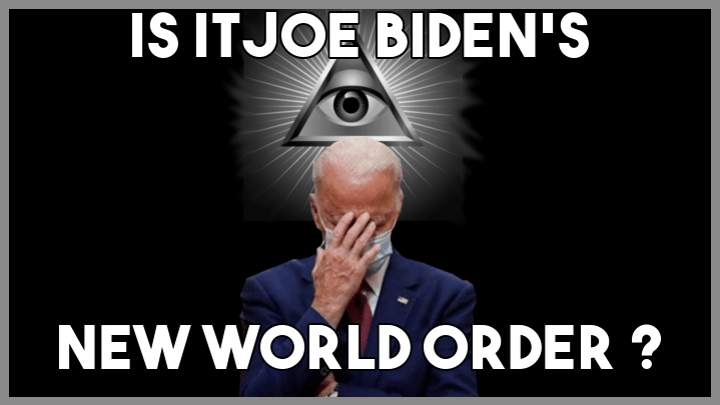

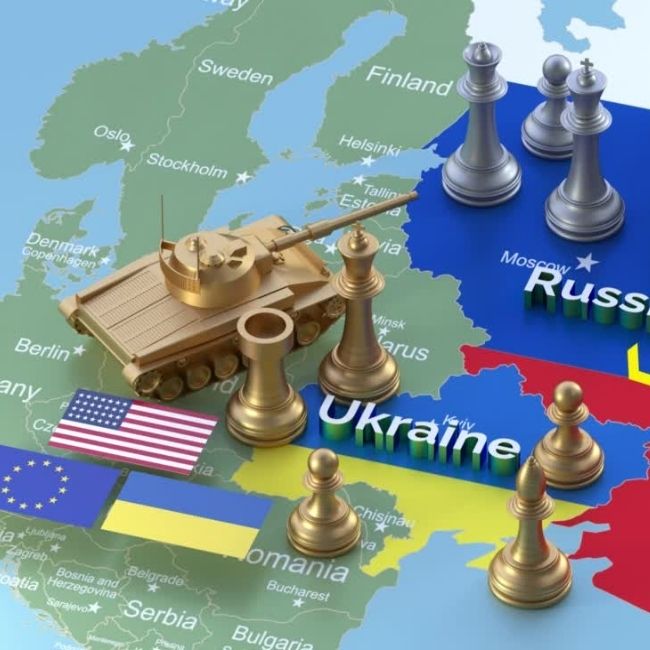


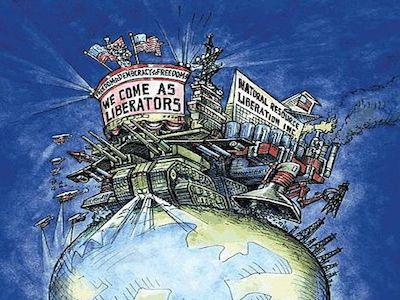

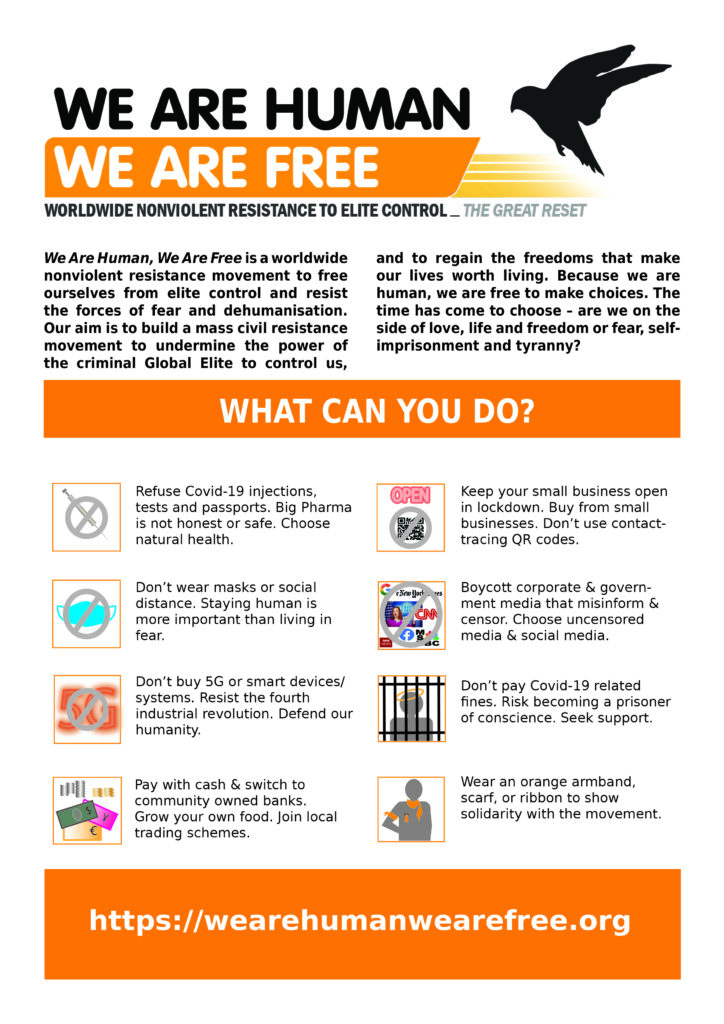
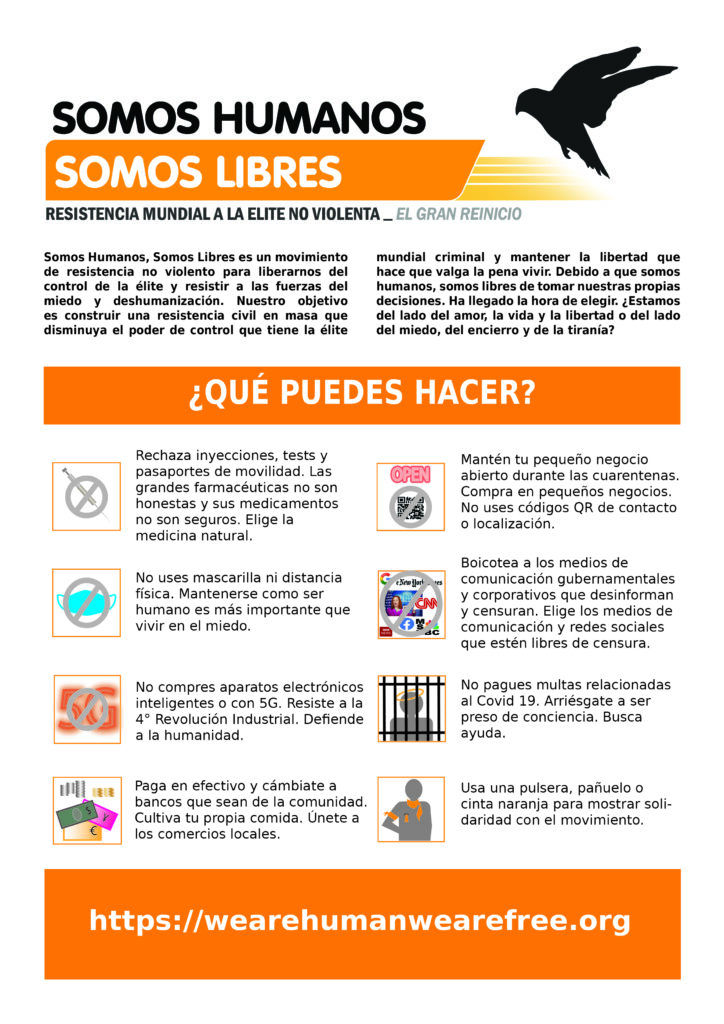

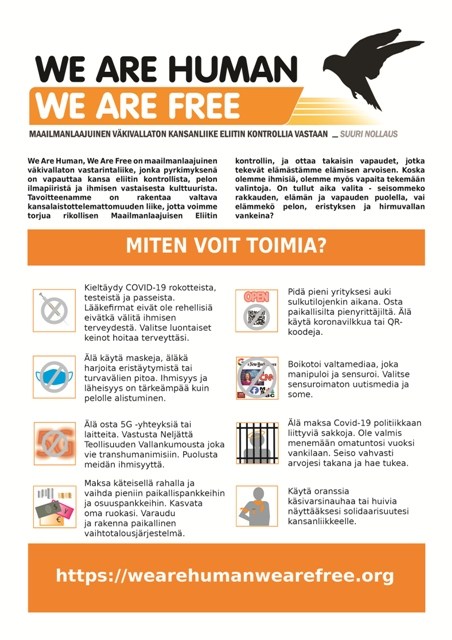
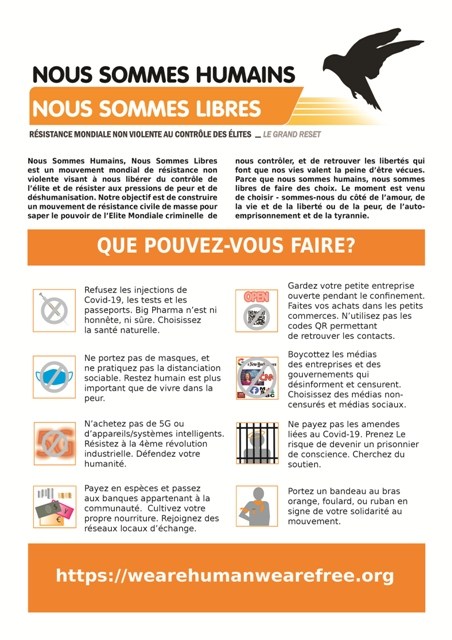
 After the Crash