Nature Is Not a Machine—We Treat It So at Our Peril

By Jeremy Lent

Source: resilience

From genetic engineering to geoengineering, we treat nature as though it’s a machine. This view of nature is deeply embedded in Western thought, but it’s a fundamental misconception with potentially disastrous consequences.

Climate change, avers Rex Tillerson, ex-CEO of ExxonMobil and erstwhile US Secretary of State,  “is an engineering problem, and it has engineering solutions.” This brief statement encapsulates how the metaphor of the machine underlies the way our mainstream culture views the natural world. It also hints at the grievous dangers involved in perceiving nature in this way.

This mechanistic worldview has deep roots in Western thought. The great pioneers of the Scientific Revolution, such as Galileo, Kepler, and Newton, believed they were decoding “God’s book,” which was written in the language of mathematics. God was conceived as a great clockmaker, the “artificer” who constructed the intricate machine of nature so flawlessly that, once it was set in motion, there was nothing more to do (bar the occasional miracle) than let it run its course. “What is the heart, but a spring,” wrote Thomas Hobbes, “and the nerves but so many strings?” Descartes flatly declared: “I do not recognize any difference between the machines made by craftsmen and the various bodies that nature alone composes.”

In recent decades, the mechanistic conception of nature has been updated for the computer age, with popularizers of science such as Richard Dawkins arguing that “life is just bytes and bytes and bytes of digital information” and as a result, an animal such as a bat “is a machine, whose internal electronics are so wired up that its wing muscles cause it to home in on insects, as an unconscious guided missile homes in on an aeroplane.” This digital metaphor of nature pervades our culture and is used unreflectively by those in a position to direct our society’s future. According to Larry Page, co-founder of Google, for example, human DNA is just “600 megabytes compressed, so it’s smaller than any modern operating system . . .  So your program algorithms probably aren’t that complicated.”

But nature is not in fact a machine nor a computer—and it can’t be engineered or programmed like one. Thinking of it as such is a category error with ramifications that are both deluded and dangerous.

A four-billion-year reversal of entropy

Ultimately, this machine metaphor is based on a simplifying assumption, known as reductionism, which approaches nature as a collection of tiny parts to investigate. This methodology has been resoundingly effective in many fields of inquiry, leading to some of our greatest advances in science and technology. Without it, most of the benefits of our modern world would not exist—no electrical grids, no airplanes, no antibiotics, no internet. However, over the centuries, many scientists and engineers have been so swept up by the success of their enterprise that they have frequently mistaken this assumption for reality—even when advances in scientific research uncover its limitations.

When James Watson and Francis Crick discovered the shape of the DNA molecule in 1953, they used metaphors from the burgeoning information revolution to describe their findings. The genotype was a “program” that determined the exact specifications of an organism, just like a computer program. DNA sequences formed the “master code” of a “blueprint” that contained a detailed set of “instructions” for building an individual. Prominent geneticist Walter Gilbert would begin his public lectures by pulling out a compact disk and proclaiming “This is you!”

Since then, however, further scientific research has revealed fundamental defects in this model. The “central dogma” of molecular biology, as coined by Crick and Watson, was that information could only flow one way: from the gene to the rest of the cell. Biologists now know that proteins act directly on the DNA of the cell, specifying which genes in the DNA should be activated. DNA can’t do anything by itself—it only functions when certain parts of it get switched on or off by the activities of different combinations of proteins, which were themselves formed by the instructions of DNA. This process is a vibrant, dynamic circular flow of interactivity.

This leads to a classic chicken-and-egg problem: if a cell is not determined solely by its genes, what ultimately causes it to “decide” what to do? Biologists who have researched this issue generally agree that the emergence of life on Earth was most likely a self-organized process known as autopoiesis—from the Greek words meaning self-generation—performed originally by non-living molecular structures.

These protocells essentially staged a temporary, local reversal of the Second Law of Thermodynamics which describes how the universe is undergoing an irreversible process of entropy: order inevitably becomes disordered and heat always flows from hot regions to colder regions. We see entropy in our daily lives every time we stir cream into our coffee, or break an egg for an omelet. Once the egg is scrambled, no amount of work will ever get the yolk back together again. It’s a depressing law, especially when applied to the entire universe which, according to most physicists, will eventually dissipate into a bleak expanse of cold, dark nothingness. Those first protocells, however, learned to turn entropy into order by ingesting it in the form of energy and matter, breaking it apart, and reorganizing it into forms beneficial for their continued existence—the process we know as metabolism.

Ever since then, for roughly four billion years, the defining quality of life has been its purposive self-organization. There is no programmer writing a program; no architect drawing up a blueprint. The organism is the weaver of its own fabric, using DNA as an instrument of transmission. It sculpts itself according to its own inner sense of purpose, which it inherited ultimately—like all of us—from those first autocatalytic cells: the drive to resist entropy and generate a temporary vortex of self-created order in the universe. In the words of philosopher of biology Andreas Weber,

“Everything that lives wants more of life. Organisms are beings whose own existence means something to them.”

This implies that, rather than being an aggregation of unconscious machines, life is intrinsically purposive. In recent decades, carefully designed scientific studies have revealed the deep intelligence throughout the natural world employed by organisms as they fulfil their purpose of self-generation. The inner life of a plant, biologists have discovered, is a rich plethora of complex experience. Plants have their own versions of our five senses, as well as up to fifteen other ways of sensing their environment for which we don’t have analogues. Plants act intentionally and purposefully: they have memories and learn, they communicate with each other, and can even allocate resources as a community through what biologist Suzanne Simard calls the “wood-wide web” of mycorrhizal fungi linking their roots together underground.

Extensive studies now point to the profound realization that every animal with a nervous system is likely to have some sort of subjective experience driven by feelings that, at the deepest level, are shared by all of us. Bees have been shown to feel anxious when their hives are shaken. Fish will make trade-offs between hunger and pain, avoiding part of an aquarium where they’re likely to get an electric shock, even if that’s where the food is—until they get so hungry that they’re willing to take a risk. Octopuses, one of the earliest groups to evolve separately from other animals about 600 million years ago, live predominantly solitary lives, but just like humans, get cozy with others when given a dose of the “love-drug” MDMA.

The ideology of human supremacy

As we confront the existential crises of the twenty-first century, the mechanistic thinking that brought us to this place may be driving us headlong toward catastrophe. As each new global problem appears, attention gets focused on short-term, mechanistic solutions, rather than probing deeper systemic causation. In response to the worldwide collapse of butterfly and bee populations, for example, some researchers have designed tiny airborne drones to pollinate trees as artificial substitutes for their disappearing natural pollinators.

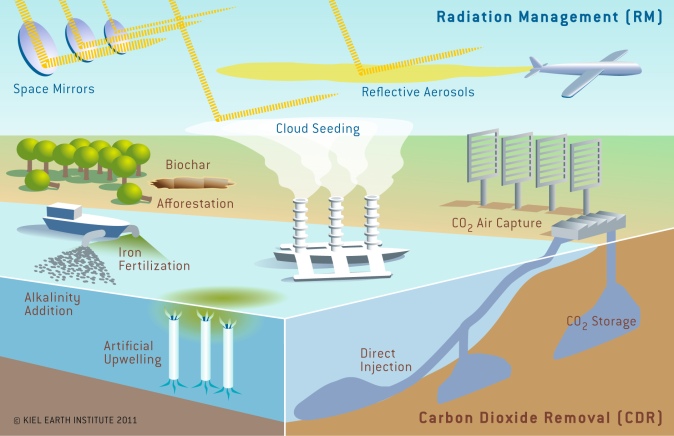
As the stakes get higher through this century, the dangers arising from this mechanistic metaphor of nature will only become more harrowing. Already, in response to the acceleration of climate breakdown, the techno-dystopian idea of geoengineering is becoming increasingly acceptable. Following Tillerson’s misconceived logic, rather than disrupt the fossil fuel-based growth economy, policymakers are beginning to seriously countenance treating the Earth as a gigantic machine that needs fixing, and developing massive engineering projects to tinker with the global climate.

Given the innumerable nonlinear feedback loops that generate our planet’s complex living systems, the law of unintended consequences looms menacingly large. The eerily named field of “solar radiation management”, for example, which has received significant financing from Bill Gates, envisages spraying particles into the stratosphere to cool the Earth by reflecting the Sun’s rays back into space. The risks are enormous, such as causing extreme shifts in precipitation around the world and exacerbating damage we’ve already done to the ozone layer. Additionally, once begun, it could never be stopped without immediate catastrophic rebound heating; it would further increase ocean acidification; and would likely turn the blue sky into a perpetual white haze. These types of feedback effects, arising from the innumerable nonlinear dynamic interdependencies of Earth’s complex systems, get marginalized by a worldview that ultimately sees our planet as a machine requiring a quick fix.

Further, there are deep moral issues that arise from confronting the inherent subjectivity of the natural world. Ever since the Scientific Revolution, the root metaphor of nature as a machine has infiltrated Western culture, inducing people to view the living Earth as a resource for humans to exploit without regard for its intrinsic value. Ecological philosopher Eileen Crist describes this as human supremacy, pointing out that seeing nature as a “resource” permits anything to be done to the Earth with no moral misgivings. Fish get reclassified as “fisheries,” and farm animals as “livestock”—living creatures become mere assets to be exploited for profit. Ultimately, it is the ideology of human supremacy that allows us to blow up mountaintops for coal, turn vibrant rainforest into monocropped wastelands, and trawl millions of miles of ocean floor with nets that scoop up everything that moves.

Once we recognize that other animals with a nervous system are not machines, as Descartes proposed, but likely experience subjective feelings similar to humans, we must also reckon with the unsettling moral implications of factory farming. The stark reality is that around the world, cows, chicken, and pigs are enslaved, tortured, and mercilessly slaughtered merely for human convenience. This systematic torment administered in the name of humanity to over 70 billion animals a year—each one a sentient creature with a nervous system as capable of registering excruciating pain as you or I—quite possibly represents the greatest cataclysm of suffering that life on Earth has ever experienced.

The “quantum jazz” of life

What, then, are metaphors of life that more accurately reflect the findings of biology—and might have the adaptive consequence of influencing our civilization to behave with more reverence toward our nonliving relatives on this beleaguered planet which is our only home?

Frequently, when cell biologists describe the mind-boggling complexity of their subject, they turn to music as a core metaphor. Denis Noble entitled his book on cellular biology The Music of Life, depicting it as “a symphony.” Ursula Goodenough describes patterns of gene expression as “melodies and harmonies.” While this metaphor rings truer than nature as a machine, it has its own limitations: a symphony is, after all, a piece of music written by a composer, with a conductor directing how each note should be played. The awesome quality of nature’s music arises from the fact that it is self-organized. There is no outside agent telling each cell what to do.

Perhaps a more illustrative metaphor would be a dance. Cell biologists increasingly refer to their findings in terms of “choreography,” and philosopher of biology Evan Thompson writes vividly how an organism and its environment relate to each other “like two partners in a dance who bring forth each other’s movements.”

Another compelling metaphor is an improvisational jazz ensemble, where a self-organized group of musicians spontaneously creates fresh melodies from a core harmonic theme, riffing off each other’s creativity in a similar way to how evolution generates complex ecosystems. Geneticist Mae-Wan Ho captures this idea with her portrayal of life as “quantum jazz,” describing it as “an incredible hive of activity at every level of magnification in the organism . . . locally appearing as though completely chaotic, and yet perfectly coordinated as a whole.”

What might our world look if we saw ourselves as participating in a coherent ensemble with all sentient beings interweaving together to collectively reverse entropy on Earth? Perhaps we might begin to see humanity’s role, not to re-engineer a broken planet for further exploitation, but to attune with the rest of life’s abundance, and ensure that our own actions harmonize with the Earth’s ecological rhythms. In the profound words of 20th century humanitarian Albert Schweitzer, “I am life that wills to live, in the midst of life that wills to live.” How, we may ask, might our future trajectory change if we were to reconstruct our civilization on this basis?

Was the COVID-19 virus genetically engineered?

By Claire Robinson

Source: GM Watch

Since the COVID-19 pandemic took off, speculation has been rife about its origins. The truth is that nobody knows for certain how the virus first took hold. But despite that uncertainty, suggestions that the virus may have been genetically engineered, or otherwise lab-generated, have been rejected as “conspiracy theories” incompatible with the evidence.

Yet the main evidence that is cited as ending all speculation about the role of genetic engineering and as proving the virus could only have been the product of natural evolution turns out to be surprisingly weak. Let’s take a look at it.

The authors of a recently published paper in the journal Nature Medicine argue that the SARS-CoV-2 virus driving the pandemic arose through natural mutation and selection in animal (notably bats and pangolins) or human hosts, and not through laboratory manipulation and accidental release. And they say they have identified two key characteristics of the virus that prove this: the absence of a previously used virus backbone and the way in which the virus binds to human cells.

Not the “ideal” design for infectivity?

As you would expect of a virus that can cause a global pandemic, SARS-CoV-2 is good at infecting human cells. It does this by binding with high affinity (that is, it binds strongly) to the cell surface membrane protein known as angiotensin-converting enzyme 2 (ACE2), which enables it to enter human cells. But, basing their argument on a computer modelling system, the authors of the Nature Medicine paper argue that the interaction between the virus and the ACE2 receptor is “not ideal”.

They say that the receptor-binding domain (RBD) amino acid sequence of the SARS-CoV-2 spike protein – the part of the spike protein that allows the virus to bind to the ACE2 protein on human cell surfaces – is different from those shown in the SARS-CoV family of viruses to be optimal for receptor binding.

They appear to argue, based on their and others’ computer modelling data, that they have identified the “ideal” CoV spike protein RBD amino acid sequence for ACE2 receptor binding. They then seem to imply that if you were to genetically engineer SARS-CoV for optimal human ACE2 binding and infectivity, you would use the RBD amino acid sequence predicted by their computer modelling. But they point out that SARS-CoV-2 does not have exactly the same computer program-predicted RBD amino acid sequence. Thus they conclude that it could not have been genetically engineered, stating: “This is strong evidence that SARS-CoV-2 is not the product of purposeful manipulation.”

To put it simply, the authors are saying that SARS-CoV-2 was not deliberately engineered because if it were, it would have been designed differently.

However, the London-based molecular geneticist Dr Michael Antoniou commented that this line of reasoning fails to take into account that there are a number of laboratory-based systems that can select for high affinity RBD variants that are able to take into account the complex environment of a living organism. This complex environment may impact the efficiency with which the SARS-CoV spike protein can find the ACE2 receptor and bind to it. An RBD selected via these more realistic real-world experimental systems would be just as “ideal”, or even more so, for human ACE2 binding than any RBD that a computer model could predict. And crucially, it would likely be different in amino acid sequence. So the fact that SARS-CoV-2 doesn’t have the same RBD amino acid sequence as the one that the computer program predicted in no way rules out the possibility that it was genetically engineered.

Limits to computer modelling

Dr Antoniou said that the authors’ reasoning is not conclusive because it is based largely on computer modelling, which, he says, is “not definitive but only predictive. It cannot tell us whether any given virus would be optimized for infectivity in a real world scenario, such as in the human body. That’s because the environment of the human body will influence how the virus interacts with the receptor. You can’t model that accurately with computer modelling as there are simply too many variables to factor into the equation.”

Dr Antoniou added, “People can put too much faith in computer programs, but they are only a beginning. You then have to prove whether the computer program’s prediction is correct or not by direct experimentation in a living organism. This has not been done in the case of this hypothesis, so it remains unproven.”

It is even possible that SARS-CoV-2 was optimized using a living organism model, resulting in a virus that is better at infecting humans than any computer model could predict.

More than one way to engineer a virus

The authors of the Nature Medicine article seem to assume that the only way to genetically engineer a virus is to take an already known virus and then engineer it to have the new properties you want. On this premise, they looked for evidence of an already known virus that could have been used in the engineering of SARS-CoV-2.

And they failed to find that evidence. They stated, “Genetic data irrefutably show that SARS-CoV-2 is not derived from any previously used virus backbone.”

But Dr Antoniou told us that while the authors did indeed show that SARS-CoV-2 was unlikely to have been built by deliberate genetic engineering from a previously used virus backbone, that’s not the only way of constructing a virus. There is another method by which an enhanced-infectivity virus can be engineered in the lab.

A well-known alternative

A well-known alternative process that could have been used has the cumbersome name of “directed iterative evolutionary selection process”. In this case, it would involve using genetic engineering to generate a large number of randomly mutated versions of the SARS-CoV spike protein receptor binding domain (RBD), which would then be selected for strong binding to the ACE2 receptor and consequently high infectivity of human cells.

This selection can be done either with purified proteins or, better still, with a mixture of whole coronavirus (CoV) preparations and human cells in tissue culture. Alternatively, the SARS-CoV spike protein variants can be genetically engineered within what is known as a “phage display library”. A phage is a virus that infects bacteria and can be genetically engineered to express on its exterior coat the CoV spike protein with a large number of variants of the RBD. This preparation of phage, displaying on its surface a “library” of CoV spike protein variants, is then added to human cells under laboratory culture conditions in order to select for those that bind to the ACE2 receptor.

This process is repeated under more and more stringent binding conditions until CoV spike protein variants with a high binding affinity are isolated.

Once any of the above selection procedures for high affinity interaction of SARS-CoV spike protein with ACE2 has been completed, then whole infectious CoV with these properties can be manufactured.

Such a directed iterative evolutionary selection process is a frequently used method in laboratory research. So there is little or no possibility that the Nature Medicine article authors haven’t heard of it – not least, as it is considered so scientifically important that its inventors were awarded the Nobel Prize in Chemistry in 2018.

Yet the possibility that this is the way that SARS-CoV-2 arose is not addressed by the Nature Medicine article authors and so its use has not been disproven.

No proof SARS-CoV-2 was not genetically engineered

In sum, the Nature Medicine article authors offer no evidence that the SARS-CoV-2 virus could not have been genetically engineered. That’s not to say that it was, of course. We can’t know one way or the other on the basis of currently available information.

Dr Antoniou wrote a short letter to Nature Medicine to point out these omissions in the authors’ case. Nature Medicine has no method of submitting a simple letter to the editor, so Dr Antoniou had to submit it as a Matters Arising commentary, which the journal defines as presenting “challenges or clarifications” to an original published work.

Dr Antoniou’s comments were titled, “SARS-CoV-2 could have been created through laboratory manipulation”. However, Nature Medicine refused to publish them on the grounds that “we do not feel that they advance or clarify understanding” of the original article. The journal offered no scientific argument to rebut his points.

In our view, those points do offer clarification to the original article, and what’s more, there is a strong public interest case for making them public. That’s why we reproduce Dr Antoniou’s letter below this article, with his permission.

Not genetic engineering – but human intervention

There is, incidentally, another possible way that SARS-CoV-2 could have been developed in a laboratory, but in this case without using genetic engineering. This was pointed out by Nikolai Petrovsky, a researcher at the College of Medicine and Public Health at Flinders University in South Australia. Petrovsky says that coronaviruses can be cultured in lab dishes with cells that have the human ACE2 receptor. Over time, the virus will gain adaptations that let it efficiently bind to those receptors. Along the way, that virus would pick up random genetic mutations that pop up but don’t do anything noticeable.

“The result of these experiments is a virus that is highly virulent in humans but is sufficiently different that it no longer resembles the original bat virus,” Petrovsky said. “Because the mutations are acquired randomly by selection, there is no signature of a human gene jockey, but this is clearly a virus still created by human intervention.”

Dr Antoniou agrees that this method is possible – but he points out that waiting for nature to produce the desired mutations is a lot slower than using genetic engineering to generate a large number of random mutations that you can then select for the desired outcome by a directed iterative evolutionary procedure.

Because genetic engineering greatly speeds up the process, it is by far the most efficient way to generate novel pathogenic viruses in the lab.

Vested interests?

So why do some experts – and non-experts for that matter – seem so determined to put a stop to any speculation about whether SARS-CoV-2 could have been genetically engineered?

One explanation might be fear of a backlash against such research from the victims of the pandemic. Virologists, for example, who may want as much freedom as possible to study and manipulate viruses in their labs, won’t want their research restricted because of public concern. Others using genetic engineering in their work may also fear it will damage the general reputation of the technology and encourage tighter regulation.

And if concerns that SARS-CoV-2 may have been developed in a lab were to gain traction, the consequences in such a heavily commercialised area as biotechnology might not just be reputational but also financial.

In this context it is worth noting that one of the authors of the Nature Medicine piece is Robert F. Garry, who lists his “competing interest” as being “co-founder of Zalgen Labs, a biotechnology company that develops countermeasures to emerging viruses”. Heavier restrictions on genetic engineering or laboratory virus research might be considered counter to the interests of Zalgen Labs.

Conclusion

It is clear that there is no conclusive evidence either way at this point as to whether SARS-CoV-2 arose by natural mutation and selection in animal and/or human hosts or was genetically engineered in a laboratory. And in this light, the question of where this virus came from should continue to be explored with an open mind.


SARS-CoV-2 could have been created through laboratory manipulation

Dr Michael Antoniou

Kristian Anderson and colleagues (“The proximal origin of SARS-CoV-2”, Nature Medicine, 26: 450–452, 2020) argue that their amino acid sequence comparisons and computational modelling definitively proves that SARS-CoV-2 has arisen through natural mutation and selection in animal or human hosts, and not through laboratory manipulation and accidental release. However, although the authors may indeed be correct in how they perceive SARS-CoV-2 to have arisen, the data they present does not exclude the possibility that this new coronavirus variant could have been created through an in vitro, directed iterative evolutionary selection process (see https://en.wikipedia.org/wiki/Directed_evolution). Using this method, a very large library of randomly mutagenized coronavirus spike proteins could be selected for strong binding to the ACE2 receptor and consequently high infectivity of human cells. The power of such directed evolution to select for optimal enzymatic and protein-protein interactions was acknowledged by the award of the Nobel Prize in Chemistry in 2018 (see https://www.nobelprize.org/prizes/chemistry/2018/summary/).

Offering Choice but Delivering Tyranny: The Corporate Capture of Agriculture

By Colin Todhunter

Source: Off-Guardian

Many lobbyists talk a lot about critics of genetic engineering technology denying choice to farmers. They say that farmers should have access to a range of tools and technologies to maximise choice and options.

At the same time, somewhat ironically, they decry organic agriculture and proven agroecological approaches, presumably because these practices have no need for the proprietary inputs of the global agrochemical/agritech corporations they are in bed with.

And presumably because agroecology represents liberation from the tyranny of these profiteering, environment-damaging global conglomerates.

It is fine to talk about ‘choice’ but we do not want to end up offering a false choice (rolling out technologies that have little value and only serve to benefit those who control the technology), to unleash an innovation that has an adverse impact on others or to manipulate a situation whereby only one option is available because other options have been deliberately removed. And we would certainly not wish to roll out a technology that traps farmers on a treadmill that they find difficult to get off.

Surely, a responsible approach for rolling out important (potentially transformative) technologies would have to consider associated risks, including social, economic and health impacts.

Take the impact of the Green Revolution in India, for instance. Sold on the promise that hybrid seeds and associated chemical inputs would enhance food security on the basis of higher productivity, agriculture was transformed, especially in Punjab. But to gain access to seeds and chemicals many farmers had to take out loans and debt became (and remains) a constant worry.

Many became impoverished and social relations within rural communities were radically altered: previously, farmers would save and exchange seeds but now they became dependent on unscrupulous money lenders, banks and seed manufacturers and suppliers. Vandana Shiva in The Violence of the Green Revolution (1989) describes the social marginalisation and violence that accompanied the process.

On a macro level, the Green Revolution conveniently became tied to an international (neo-colonial) system of trade based on chemical-dependent agro-export mono-cropping linked to loans, sovereign debt repayment and World Bank/IMF structural adjustment (privatisation/deregulation) directives.

Many countries in the Global South were deliberately turned into food deficit regions, dependent on (US) agricultural imports and strings-attached aid.

The process led to the massive displacement of the peasantry and, according to the academics Eric Holt-Giménez et al, (Food rebellions: Crisis and the hunger for Justice, 2009), the consolidation of the global agri-food oligopolies and a shift in the global flow of food: developing countries produced a billion-dollar yearly surplus in the 1970s; they were importing $11 billion a year by 2004.

And it’s not as though the Green Revolution delivered on its promises.

In India, it merely led to more wheat in the diet, while food productivity per capita showed no increased or even actually decreased (see New Histories of the Green Revolution by Glenn Stone). And, as described by Bhaskar Save in his open letter (2006) to officials, it had dire consequences for diets, the environment, farming, health and rural communities.

The ethics of the Green Revolution – at least it was rolled out with little consideration for these impacts – leave much to be desired.

As the push to drive GM crops into India’s fields continues (the second coming of the green revolution – the gene revolution), we should therefore take heed. To date, the track record of GMOs is unimpressive, but the adverse effects on many smallholder farmers are already apparent (see Hybrid Bt cotton: a stranglehold on subsistence farmers in India by A P Gutierrez).

Aside from looking at the consequences of technology roll outs, we should, when discussing choice, also account for the procedures and decisions that were made which resulted in technologies coming to market in the first place.

Steven Druker, in his book Altered Genes, Twisted Truth, argues that the decision to commercialise GM seeds and food in the US amounted to a subversion of processes put in place to serve the public interest.

The result has been a technology roll out which could result (is resulting) in fundamental changes to the genetic core of the world’s food. This decision ultimately benefited Monsanto’s bottom line and helped the US gain further leverage over global agriculture.

We must therefore put glib talk of the denial of technology by critics to one side if we are to engage in a proper discussion of choice. Any such discussion would account for the nature of the global food system and the dynamics and policies that shape it. This would include looking at how global corporations have captured the policy agenda for agriculture, including key national and international policy-making bodies, and the role of the WTO and World Bank.

Choice is also about the options that could be made available, but which have been closed off or are not even considered. In Ethiopia, for example, agroecology has been scaled up across the entire Tigray region, partly due to enlightened political leaders and the commitment of key institutions.

However, in places where global agribusiness/agritech corporations have leveraged themselves into strategic positions, their interests prevail. From the false narrative that industrial agriculture is necessary to feed the world to providing lavish research grants and the capture of important policy-making institutions, these firms have secured a thick legitimacy within policymakers’ mindsets and mainstream discourse.

As a result, agroecological approaches are marginalised and receive scant attention and support.

Monsanto had a leading role in drafting the WTO Agreement on Trade-Related Aspects of Intellectual Property Rights to create seed monopolies. The global food processing industry wrote the WTO Agreement on the Application of Sanitary and Phytosanitary Measures.

Whether it involves Codex or the US-India Knowledge Initiative on Agriculture aimed at restructuring (destroying) Indian agriculture, the powerful agribusiness/food lobby has secured privileged access to policy makers and sets the policy agenda.

From the World Bank’s ‘enabling the business of agriculture’ to the Gates Foundation’s role in opening up African agriculture to global food and agribusiness oligopolies, democratic procedures at sovereign state levels are being bypassed to impose seed monopolies and proprietary inputs on farmers and to incorporate them into a global supply chain dominated by powerful corporations.

We have the destruction of indigenous farming in Africa as well as the ongoing dismantling of Indian agriculture and the deliberate impoverishment of Indian farmers at the behest of transnational agribusiness. Where is the democratic ‘choice’?

It has been usurped by corporate-driven Word Bank bondage (India is its biggest debtor in the bank’s history) and by a trade deal with the US that sacrificed Indian farmers for the sake of developing its nuclear sector.

Similarly, ‘aid’ packages for Ukraine – on the back of a US-supported coup – are contingent on Western corporations taking over strategic aspects of the economy. And agribusiness interests are at the forefront. Something which neoliberal apologists are silent on as they propagandise about choice, and democracy.

Ukraine’s agriculture sector is being opened up to Monsanto/Bayer. Iraq’s seed laws were changed to facilitate the entry of Monsanto.

India’s edible oils sector was undermined to facilitate the entry of Cargill. And Bayer’s hand is possibly behind the ongoing strategy to commercialise GM mustard in India. Whether on the back of militarism, secretive trade deals or strings-attached loans, global food and agribusiness conglomerates secure their interests and have scant regard for choice or democracy.

The ongoing aim is to displace localised, indigenous methods of food production and allow transnational companies to take over, tying farmers and regions to a system of globalised production and supply chains dominated by large agribusiness and retail interests. Global corporations with the backing of their host states, are taking over food and agriculture nation by nation.

Many government officials, the media and opinion leaders take this process as a given. They also accept that (corrupt) profit-driven transnational corporations have a legitimate claim to be owners and custodians of natural assets (the ‘commons’).

There is the premise that water, seeds, food, soil and agriculture should be handed over to these conglomerates to milk for profit, under the pretence these entities are somehow serving the needs of humanity.

Ripping land from peasants and displacing highly diverse and productive smallholder agriculture, rolling out very profitable but damaging technologies, externalising the huge social, environmental and health costs of the prevailing neoliberal food system and entire nations being subjected to the policies outlined above: how is any of it serving the needs of humanity?

It is not. Food is becoming denutrified, unhealthy and poisoned with chemicals and diets are becoming less diverse. There is a loss of plant and insect diversity, which threatens food security, soils are being degraded, water tables polluted and depleted and millions of smallholder farmers, so vital to global food production, are being pushed into debt in places like India and squeezed off their land and out of farming.

It is time to place natural assets under local ownership and to develop them in the public interest according to agroecological principles. This involves looking beyond the industrial yield-output paradigm and adopting a systems approach to food and agriculture that accounts for local food security and sovereignty, cropping patterns to ensure diverse nutrition production per acre, water table stability and good soil structure. It also involves pushing back against the large corporations that hold sway over the global food system and more generally challenging the leverage that private capital has over all our lives.

That’s how you ensure liberation from tyranny and support genuine choice.


Colin Todhunter is an independent journalist who writes on development, environmental issues, politics, food and agriculture. He was named in August 2018 by Transcend Media Services as one of 400 Living Peace and Justice Leaders and Models in recognition of his journalism. 

Junk Planet: Is Earth the Largest Garbage Dump in the Universe?

By Robert J. Burrowes

Is Earth the largest garbage dump in the Universe? I don’t know. But it’s a safe bet that Earth would be a contender were such a competition to be held. Let me explain why.

To start, just listing the types of rubbish generated by humans or the locations into which each of these is dumped is a staggering task beyond the scope of one article. Nevertheless, I will give you a reasonably comprehensive summary of the types of garbage being generated (focusing particularly on those that are less well known), the locations into which the garbage is being dumped and some indication of what is being done about it and what you can do too.

But before doing so, it is worth highlighting just why this is such a problem, prompting the United Nations Environment Programme to publish this recent report: ‘Towards a pollution-free planet’.

As noted by Baher Kamal in his commentary on this study: ‘Though some forms of pollution have been reduced as technologies and management strategies have advanced, approximately 19 million premature deaths are estimated to occur annually as a result of the way societies use natural resources and impact the environment to support production and consumption.’ See ‘Desperate Need to Halt “World’s Largest Killer” – Pollution’ and ‘Once Upon a Time a Planet… First part. Pollution, the world’s largest killer’.

And that is just the cost in human lives.

So what are the main types of pollution and where do they end up?


Atmospheric Pollution

The garbage, otherwise labelled ‘pollution’, that we dump into our atmosphere obviously includes the waste products from our burning of fossil fuels and our farming of animals. Primarily this means carbon dioxide, methane and nitrous oxide generated by driving motor vehicles and burning coal, oil and gas to generate electricity, and agriculture based on the exploitation of animals. This is having a devastating impact on Earth’s climate and environment with a vast array of manifestations adversely impacting all life on Earth. See, for example, ‘The World Is Burning’ and ‘The True Environmental Cost of Eating Meat’.

But these well-known pollutants are not the only garbage we dump into the atmosphere. Airline fuel pollutants from both civil and military aircraft have a shocking impact too, with significant adverse public health outcomes. Jet emissions, particularly the highly carcinogenic benzpyrene, can cause various cancers, lymphoma, leukemia, asthma, and birth defects. Jet emissions affect a 25 mile area around an airport; this means that adults, children, animals and plants are ‘crop dusted’ by toxic jet emissions for 12 miles from a runway end. ‘A typical commercial airport spews hundreds of tons of toxic pollutants into our atmosphere every day. These drift over heavily populated areas and settle onto water bodies and crops.’ Despite efforts to inform relevant authorities of the dangers in the USA, for example, they ‘continue to ignore the problem and allow aviation emissions to remain unregulated, uncontrolled and unreported’. See Aviation Justice. It is no better in other countries.

Another category of atmospheric pollutants of which you might not be aware is the particulate aerosol emitted into the atmosphere by the progressive wear of vehicle parts, especially synthetic rubber tyres, during their service life. Separately from this, however, there are also heavier pollutants from wearing vehicle tyres and parts, as well as from the wearing away of road surfaces, that accumulate temporarily on roads before being washed off into waterways where they accumulate.

While this substantial pollution and health problem has attracted little research attention, some researchers in a variety of countries have been investigating the problem.

In the USA as early as 1974, ‘tire industry scientists estimated that 600,000 metric tonnes of tire dust were released by tire wear in the U.S., or about 3 kilograms of dust released from each tire each year’. In 1994, careful measurement of air near roadways with moderate traffic ‘revealed the presence of 3800 to 6900 individual tire fragments in each cubic meter of air’ with more than 58.5% of them in the fully-breathable size range and shown to produce allergic reactions. See ‘Tire Dust’.

A study in Japan reported similar adverse environmental and health impacts. See ‘Dust Resulting from Tire Wear and the Risk of Health Hazards’.

Even worse, a study conducted in Moscow reported that the core pollutant of city air (up to 60% of hazardous matter) was the rubber of automobile tyres worn off and emitted as a small dust. The study found that the average car tyre discarded 1.6 kilograms of fine tyre dust as an aerosol during its service life while the tyre from a commercial vehicle discarded about 15 kilograms. Interestingly, passenger tyre dust emissions during the tyre’s service life significantly exceeded (by 6-7 times) emissions of particulate matters with vehicle exhaust gases. The research also determined that ‘tyre wear dust contains more than 140 different chemicals with different toxicity but the biggest threat to human health is poly-aromatic hydrocarbons and volatile carcinogens’. The study concluded that, in the European Union: ‘Despite tightening the requirements for vehicle tyres in terms of noise emission, wet grip and rolling resistance stipulated by the UN Regulation No. 117, the problem of reduction of tyre dust and its carcinogenic substance emissions due to tyre wear remains unaddressed.’ See ‘Particulate Matter Emissions by Tyres’.

As one toxicologist has concluded: ‘Tire rubber pollution is just one of many environmental problems in which the research is lagging far behind the damage we may have done.’ See ‘Road Rubber’.

Another pollution problem low on the public radar results from environmental modification techniques involving geoengineering particulates being secretly dumped into the atmosphere by the US military for more than half a century, based on research beginning in the 1940s. This geoengineering has been used to wage war on the climate, environment and ultimately ourselves. See, for example, ‘Engineered Climate Cataclysm: Hurricane Harvey’, ‘Planetary Weapons and Military Weather Modification: Chemtrails, Atmospheric Geoengineering and Environmental Warfare’, ‘Chemtrails: Aerosol and Electromagnetic Weapons in the Age of Nuclear War’ and ‘The Ultimate Weapon of Mass Destruction: “Owning the Weather” for Military Use’.

With ongoing official denials about the practice, it has fallen to the ongoing campaigning of committed groups such as GeoEngineering Watch to draw attention to and work to end this problem.

Despite the enormous and accelerating problems already being generated by the above atmospheric pollutants, it is worth pausing briefly to highlight the potentially catastrophic nature of the methane discharges now being released by the warming that has already taken place and is still taking place. A recent scientific study published by the prestigious journal Palaeoworld noted that ‘Global warming triggered by the massive release of carbon dioxide may be catastrophic, but the release of methane from hydrate may be apocalyptic.’ This refers to the methane stored in permafrost and shelf sediment. Warning of the staggering risk, the study highlights the fact that the most significant variable in the Permian Mass Extinction event, which occurred 250 million years ago and annihilated 90 percent of all the species on Earth, was methane hydrate. See Methane Hydrate: Killer cause of Earth’s greatest mass extinction’ and Release of Arctic Methane “May Be Apocalyptic,” Study Warns’.

How long have we got? Not long, with a recent Russian study identifying 7,000 underground [methane] gas bubbles poised to “explode” in Arctic’.

Is much being done about this atmospheric pollution including the ongoing apocalyptic release of methane? Well, there is considerable ‘push’ to switch to renewable (solar, wind, wave, geothermal) energy in some places and to produce electric cars in others. But these worthwhile initiatives aside, and if you ignore the mountain of tokenistic measures that are sometimes officially promised, the answer is ‘not really’ with many issues that critically impact this problem (including rainforest destruction, vehicle emissions, geoengineering, jet aircraft emissions and methane releases from animal agriculture) still being largely ignored.

If you want to make a difference on this biosphere-threatening issue of atmospheric pollution, you have three obvious choices to consider. Do not travel by air, do not travel by car and do not eat meat (and perhaps other animal products). This will no doubt require considerable commitment on your part. But without your commitment in these regards, there is no realistic hope of averting near-term human extinction. So your choices are critical.


Ocean Garbage

Many people will have heard of the problem of plastic rubbish being dumped into the ocean. Few people, however, have any idea of the vast scale of the problem, the virtual impossibility of cleaning it up and the monumental ongoing cost of it, whether measured in terms of (nonhuman) lives lost, ecological services or financially. And, unfortunately, plastic is not the worst pollutant we are dumping into the ocean but I will discuss it first.

In a major scientific study involving 24 expeditions conducted between 2007 and 2013, which was designed to estimate ‘the total number of plastic particles and their weight floating in the world’s oceans’ the team of scientists estimated that there was ‘a minimum of 5.25 trillion particles weighing 268,940 tons’. See ‘Plastic Pollution in the World’s Oceans: More than 5 Trillion Plastic Pieces Weighing over 250,000 Tons Afloat at Sea’ and ‘Full scale of plastic in the world’s oceans revealed for first time’.

Since then, of course, the problem has become progressively worse. See Plastic Garbage Patch Bigger Than Mexico Found in Pacific’ and ‘Plastic Chokes the Seas’.

‘Does it matter?’ you might ask. According to this report, it matters a great deal. See New UN report finds marine debris harming more than 800 species, costing countries millions’.

Can we remove the plastic to clean up the ocean? Not easily. The US National Oceanic and Atmospheric Adminstration has calculated that ‘if you tried to clean up less than one percent of the North Pacific Ocean it would take 67 ships one year’. See ‘The Great Pacific Garbage Patch’. Nevertheless, and despite the monumental nature of the problem – see ‘“Great Pacific garbage patch” far bigger than imagined, aerial survey shows’ – organizations like the Algalita Research Foundation, Ocean Cleanup and Positive Change for Marine Life have programs in place to investigate the nature and extent of the problem and remove some of the rubbish, while emphasizing that preventing plastic from entering the ocean is the key.

In addition, the UN Convention on Biological Diversity outlined a series of measures to tackle the problem in its 2016 report ‘Marine Debris Understanding, Preventing and Mitigating the Significant Adverse Impacts on Marine and Coastal Biodiversity’. In February 2017, the UN launched its Clean Seas Campaign inviting governments, corporations, NGOs and individuals to sign the pledge to reduce their plastic consumption. See #CleanSeas Campaign and ‘World Campaign to Clean Torrents of Plastic Dumped in the Oceans’.

Sadly, of course, it is not just plastic that is destroying the oceans. They absorb carbon dioxide as one manifestation of the climate catastrophe and, among other outcomes, this accelerates ocean acidification, adversely impacting coral reefs and the species that depend on these reefs.

In addition, a vast runoff of agricultural poisons, fossil fuels and other wastes is discharged into the ocean, adversely impacting life at all ocean depths – see Staggering level of toxic chemicals found in creatures at the bottom of the sea, scientists say’ – and generating ocean ‘dead zones’: regions that have too little oxygen to support marine organisms. See Our Planet Is Exploding With Marine “Dead Zones”’.

Since the Fukushima nuclear reactor disaster in 2011, and despite the ongoing official coverup, vast quantities of radioactive materials are being ongoingly discharged into the Pacific Ocean, irradiating everything within its path. See ‘Fukushima: A Nuclear War without a War: The Unspoken Crisis of Worldwide Nuclear Radiation’.

Finally, you may not be aware that there are up to 70 ‘still functional’ nuclear weapons as well as nine nuclear reactors lying on the ocean floor as a result of accidents involving nuclear warships and submarines. See ‘Naval Nuclear Accidents: The Secret Story’ and ‘A Nuclear Needle in a Haystack The Cold War’s Missing Atom Bombs’.

Virtually nothing is being done to stem the toxic discharges, contain the Fukushima radiation releases or find the nuclear weapons and nuclear reactors on the ocean floor.


Waterways and Groundwater Contamination

Many people would be familiar with the contaminants that find their way into Earth’s wetlands, rivers, creeks and lakes. Given corporate negligence, this includes all of the chemical poisons and heavy metals used in corporate farming and mining operations, as well as, in many cases around the world where rubbish removal is poorly organised, the sewage and all other forms of ‘domestic’ waste discharged from households. Contamination of the world’s creeks, rivers, lakes and wetlands is now so advanced that many are no longer able to fully support marine life. For brief summaries of the problem, see ‘Pollution in Our Waterways is Harming People and Animals – How Can You Stop This!’, ‘Wasting Our Waterways: Toxic Industrial Pollution and the Unfulfilled Promise of the Clean Water Act’ and ‘China’s new weapon against water pollution: its people’.

Beyond this, however, Earth’s groundwater supplies (located in many underground acquifers such as the Ogallala Aquifer in the United States) are also being progressively contaminated by gasoline, oil and chemicals from leaking storage tanks; bacteria, viruses and household chemicals from faulty septic systems; hazardous wastes from abandoned and uncontrolled hazardous waste sites (of which there are over 20,000 in the USA alone); leaks from landfill items such as car battery acid, paint and household cleaners; and the pesticides, herbicides and other poisons used on farms and home gardens. See ‘Groundwater contamination’.

However, while notably absent from the list above, these contaminants also include radioactive waste from nuclear tests – see ‘Groundwater drunk by BILLIONS of people may be contaminated by radioactive material spread across the world by nuclear testing in the 1950s’ – and the chemical contamination caused by hydraulic fracturing (fracking) in search of shale gas, for which about 750 chemicals and components, some extremely toxic and carcinogenic like lead and benzene, have been used. See ‘Fracking chemicals’.

There are local campaigns to clean up rivers, creeks, lakes and wetlands in many places around the world, focusing on the primary problems – ranging from campaigning to end poison runoffs from mines and farms to physically removing plastic and other trash – in that area. But a great deal more needs to be done and they could use your help.


Soil Contamination

Our unsustainable commercial farming and soil management practices are depleting the soil of nutrients and poisoning it with synthetic fertilisers, herbicides, pesticides and antibiotics (the latter contained in animal manure) at such a prodigious rate that even if there were no other adverse impacts on the soil, it will be unable to sustain farming within 60 years. See ‘Only 60 Years of Farming Left If Soil Degradation Continues’.

But not content to simply destroy the soil through farming, we also contaminate it with heavy metal wastes from industrial activity, as well as sewer mismanagement – see ‘“Black Soils” Excessive Use of Arsenic, Cadmium, Lead, Mercury…’ – the waste discharges from corporate mining – see, for example, ‘The $100bn gold mine and the West Papuans who say they are counting the cost’ – and the radioactive and many other toxic wastes from military violence, discussed below.

We also lose vast quantities of soil by extensive clearfelling of pristine forests to plant commercially valuable but ecologically inappropriate ‘garbage species’ (such as palm oil trees – see ‘The Great Palm Oil Scandal’ – soya beans – see ‘Soy Changes Map of Brazil, Set to Become World’s Leading Producer’ – and biofuel crops). This leaves the soil vulnerable to rainfall which carries it into local creeks and rivers and deposits it downstream or into the ocean.

Staggering though it may sound, we are losing tens of billions of tonnes of soil each year, much of it irreversibly.

Is anything being done? A little. In response to the decades-long push by some visionary individuals and community organizations to convert all farming to organic, biodynamic and/or permaculture principles, some impact is being made in some places to halt the damage caused by commercial farming. You can support these efforts by buying organically or biodynamically-certified food (that is, food that hasn’t been poisoned) or creating a permaculture garden in your own backyard. Any of these initiatives will also benefit your own health.

Of course, there is still a long way to go with the big agricultural corporations such as Monsanto more interested in profits than your health. See ‘Killing Us Softly – Glyphosate Herbicide or Genocide?’, Top 10 Poisons that are the legacy of Monsanto’ and Monsanto Has Knowingly Been Poisoning People for (at Least) 35 Years’.

One other noteworthy progressive change occurred in 2017 when the UN finally adopted the Minimata Convention, to curb mercury use. See ‘Landmark UN-backed treaty on mercury takes effect’ and ‘Minamata Convention, Curbing Mercury Use, is Now Legally Binding’.

As for the other issues mentioned above, there is nothing to celebrate with mining and logging corporations committed to their profits at the expense of the local environments of indigenous peoples all over the world and governments showing little effective interest in curbing this or taking more than token interest in cleaning up toxic military waste sites. As always, local indigenous and activist groups often work on these issues against enormous odds. See, for example, ‘Ecuador Endangered’.

Apart from supporting the work of the many activist groups that work on these issues, one thing that each of us can do is to put aside the food scraps left during meal preparation (or after our meal) and compost them. Food scraps and waste are an invaluable resource: nature composts this material to create soil and your simple arrangement to compost your food scraps will help to generate more of that invaluable soil we are losing.


Antibiotic Waste

One form of garbage we have been producing, ‘under the radar’, in vast quantities for decades is antiobiotic and antifungal drug residue. See ‘Environmental pollution with antimicrobial agents from bulk drug manufacturing industries… associated with dissemination of… pathogens’.

However, given that the bulk of this waste is secretly discharged untreated into waterways by the big pharmaceutical companies – see ‘Big Pharma fails to disclose antibiotic waste leaked from factories’ – the microbes are able to ‘build up resistance to the ingredients in the medicines that are supposed to kill them’ thus ‘fueling the creation of deadly superbugs’. Moreover, because the resistant microbes travel easily and have multiplied in huge numbers all over the world, they have created ‘a grave public health emergency that is already thought to kill hundreds of thousands of people a year.’

Are governments acting to end this practice? According to the recent and most comprehensive study of the problem ‘international regulators are allowing dirty drug production methods to continue unchecked’. See ‘Big Pharma’s pollution is creating deadly superbugs while the world looks the other way’.

Given the enormous power of the pharmaceutical industry, which effectively controls the medical industry in many countries, the most effective response we can make as individuals is to join the rush to natural health practitioners (such as practitioners of homeopathy, ostepathy, naturopathy, Ayurvedic medicine, herbal medicine and Chinese medicine) which do not prescribe pharmaceutical drugs. For further ideas, see ‘Defeating the Violence in Our Food and Medicine’.


Genetic Engineering and Gene Drives

Perhaps the most frightening pollutant that we now risk releasing into the environment goes beyond the genetic mutilation of organisms (GMOs) which has been widely practiced by some corporations, such as Monsanto, for several decades. See, for example, ‘GM Food Crops Illegally Growing in India: The Criminal Plan to Change the Genetic Core of the Nation’s Food System’.

Given that genetic engineering’s catastrophic outcomes are well documented – see, for example, ‘10 Reasons to Oppose Genetic Engineering’ – what are gene drives? ‘Imagine that by releasing a single fly into the wild you could genetically alter all the flies on the planet – causing them all to turn yellow, carry a toxin, or go extinct. This is the terrifyingly powerful premise behind gene drives: a new and controversial genetic engineering technology that can permanently alter an entire species by releasing one bioengineered individual.’

How effective are they? ‘Gene drives can entirely re-engineer ecosystems, create fast spreading extinctions, and intervene in living systems at a scale far beyond anything ever imagined.’ For example, if gene drives are engineered into a fast-reproducing species ‘they could alter their populations within short timeframes, from months to a few years, and rapidly cause extinction.’ This radical new technology, also called a ‘mutagenic chain reaction’, combines the extreme genetic engineering of synthetic biology and new gene editing techniques with the idea ‘that humans can and should use such powerful unlimited tools to control nature. Gene drives will change the fundamental relationship between humanity and the natural world forever.’

The implications for the environment, food security, peace, and even social stability are breathtaking, particularly given that existing ‘government regulations for the use of genetic engineering in agriculture have allowed widespread genetic contamination of the food supply and the environment.’ See ‘Reckless Driving: Gene drives and the end of nature’.

Consistent with their track records of sponsoring, promoting and using hi-tech atrocities against life, the recently released (27 October 2017) ‘Gene Drive Files’ reveal that the US military and individuals such as Bill Gates have been heavily involved in financing research, development and promotion of this grotesque technology. See ‘Military Revealed as Top Funder of Gene Drives; Gates Foundation paid $1.6 million to influence UN on gene drives’ and the ‘Gene Drive Files’.

‘Why would the US military be interested?’ you might ask. Well, imagine what could be done to an ‘enemy’ race with an extinction gene drive.

As always, while genuinely life-enhancing grassroots initiatives struggle for funding, any project that offers the prospect of huge profits – usually at enormous cost to life – gets all the funding it needs. If you haven’t realised yet that the global elite is insane, it might be worth pondering it now. See ‘The Global Elite is Insane’.

Is anything being done about these life-destroying technologies? A number of groups campaign against genetic engineering and SynBioWatch works to raise awareness of gene drives, to carefully explain the range of possible uses for them and to expose the extraordinary risks and dangers of the technology. You are welcome to participate in their efforts too.


Nanowaste

A nanoparticle is a microscopic particle whose size is measured in nanometers. One nanometer is one billionth of a meter. In simple English: Nanoparticles are extraordinarily tiny.

Nanoparticles are already being widely used including during the manufacture of cosmetics, pharmacology products, scratchproof eyeglasses, crack- resistant paints, anti-graffiti coatings for walls, transparent sunscreens, stain-repellent fabrics, self-cleaning windows and ceramic coatings for solar cells. ‘Nanoparticles can contribute to stronger, lighter, cleaner and “smarter” surfaces and systems.’ See ‘What are the uses of nanoparticles in consumer products?’

Some researchers are so enamored with nanoparticles that they cannot even conceal their own delusions. According to one recent report: ‘Researchers want to achieve a microscopic autonomous robot that measures no more than six nanometers across and can be controlled by remote. Swarms of these nanobots could clean your house, and since they’re invisible to the naked eye, their effects would appear to be magical. They could also swim easily and harmlessly through your bloodstream, which is what medical scientists find exciting.’ See ‘What are Nanoparticles?’

Unfortunately, however, nanoparticle contamination of medicines is already well documented. See ‘New Quality-Control Investigations on Vaccines: Micro- and Nanocontamination’.

Another report indicates that ‘Some nanomaterials may also induce cytotoxic or genotoxic responses’. See ‘Toxicity of particulate matter from incineration of nanowaste’. What does this mean? Well ‘cytotoxic’ means that something is toxic to the cells and ‘genotoxic’ describes the property of chemical agents that damage the genetic information within a cell, thus causing mutations which may lead to cancer.

Beyond the toxic problems with the nanoparticles themselves, those taking a wider view report the extraordinary difficulties of managing nanowaste. In fact, according to one recent report prepared for the UN: ‘Nanowaste is notoriously difficult to contain and monitor; due to its small size, it can spread in water systems or become airborne, causing harm to human health and the environment.’ Moreover ‘Nanotechnology is growing at an exponential rate, but it is clear that issues related to the disposal and recycling of nanowaste will grow at an even faster rate if left unchecked.’ See ‘Nanotechnology, Nanowaste and Their Effects on Ecosystems: A Need for Efficient Monitoring, Disposal and Recycling’.

Despite this apparent nonchanlance about the health impacts of nanowaste, one recent report reiterates that ‘Studies on the toxicity of nanoparticles… are abundant in the literature’. See ‘Toxicity of particulate matter from incineration of nanowaste’.

Moreover, in January, European Union agencies published three documents concerning government oversight of nanotechnology and new genetic engineering techniques. ‘Together, the documents put in doubt the scientific capacity and political will of the European Commission to provide any effective oversight of the consumer, agricultural and industrial products derived from these emerging technologies’. See ‘European Commission: Following the Trump Administration’s Retreat from Science-Based Regulation?’

So, as these recent reports makes clear, little is being done to monitor, measure or control these technologies or monitor, measure and control the harmful effects of discharging nanowaste.

Fortunately, with the usual absence of government interest in acting genuinely on our behalf, activist groups such as the Institute for Agriculture and Trade Policy and the Organic Consumers Association campaign against nanotechnology as part of their briefs. Needless to say, however, a lot more needs to be done.


Space Junk

Not content to dump our garbage in, on or under the Earth, we also dump our junk in Space too.

‘How do we do this?’ you may well ask. Quite simply, in fact. We routinely launch a variety of spacecraft into Space to either orbit the Earth (especially satellites designed to perform military functions such as spying, target identification and detection of missile launches but also satellites to perform some civilian functions such as weather monitoring, navigation and communication) or we send spacecraft into Space on exploratory missions (such as the Mars Exploration Rover Opportunity).

However, getting spacecraft into Space requires the expenditure of vast amounts of energy (which adds to pollution of the atmosphere) and the progressive discarding of rocket propulsion sections of the launch craft. Some of these fall back to Earth as junk but much of it ends up orbiting the Earth as junk. So what form does this junk take? It includes inactive satellites, the upper stages of launch vehicles, discarded bits left over from separation, frozen clouds of water and tiny flecks of paint. All orbiting high above Earth’s atmosphere. With Space junk now a significant problem, the impact of junk on satellites is regularly causing damage and generating even more junk.

Is it much of a problem? Yes, indeed. The problem is so big, in fact, that NASA in the USA keeps track of the bigger items, which travel at speeds of up to 17,500 mph, which is ‘fast enough for a relatively small piece of orbital debris to damage a satellite or a spacecraft’. How many pieces does it track? By 2013, it was tracking 500,000 pieces of space junk as they orbited the Earth. See ‘Space Debris and Human Spacecraft’. Of course, these items are big enough to track. But not all junk is that big.

In fact, a recent estimate indicates that the number of Space junk items could be in excess of 100 trillion. See ‘Space Junk: Tracking & Removing Orbital Debris’.

Is anything being done about Space junk? No government involved in Space is really interested: It’s too expensive for that to be seriously considered.

But given the ongoing government and military interest in weaponizing Space, as again reflected in the recent US ‘Nuclear Posture Review 2018’, which would add a particularly dangerous type of junk to Space, the Global Network Against Weapons and Nuclear Power in Space has been conducting an effective worldwide campaign since 1992 to mobilize resistance to weapons and nuclear power being deployed and used in Space.


Military Waste

The carnage and waste produced by preparation for and the conduct of military violence is so vast that it almost defies description and calculation. In its most basic sense, every single item produced to perform a military function – from part of a uniform to a weapon – is garbage: an item that has no functional purpose (unless you believe that killing people is functional). To barely touch on it here then, military violence generates a vast amount of pollution, which contaminates the atmosphere, oceans, all fresh water sources, and the soil with everything from the waste generated by producing military uniforms to the radioactive waste which contaminates environments indefinitely.

For just a taste of this pollution, see the Toxic Remnants of War Project, the film ‘Scarred Lands & Wounded Lives’, ‘U.S. Military World’s Largest Polluter – Hundreds of Bases Gravely Contaminated’, ‘Depleted Uranium and Radioactive Contamination in Iraq: An Overview’ and ‘The Long History of War’s Environmental Costs’.

Many individuals, groups and networks around the world campaign to end war. See, for example, War Resisters’ International, the International Peace Bureau and World Beyond War.

You can participate in these efforts.


Nuclear Waste

Partly related to military violence but also a product of using nuclear power, humans generate vast amounts of waste from exploitation of the nuclear fuel cycle. This ranges from the pollution generated by mining uranium to the radioactive waste generated by producing nuclear power or using a nuclear weapon. But it also includes the nuclear waste generated by accidents such as that at Chernobyl and Fukushima.

Again, for just a taste of the monumental nature of this problem, see Emergency Declared at Nuclear Waste Site in Washington State, ‘Disposing of Nuclear Waste is a Challenge for Humanity’ and ‘Three Years Since the Kitty Litter Disaster at Waste Isolation Pilot Plant’.

While the London Dumping Convention permanently bans the dumping of radioactive and industrial waste at sea (which means nothing in the face of the out-of-control discharges from Fukushima, of course) – see ‘1993 – Dumping of radioactive waste at sea gets banned’ – groups such as Friends of the Earth and Greenpeace continue to campaign against the nuclear industry (including radioactive waste dumping) and to promote renewable energy.

They would be happy to have your involvement.


Our Bodies

Some of the garbage that ends up being dumped is done via our bodies. Apart from the junk food produced at direct cost to the environment, the cost of these poisoned, processed and nutritionally depleted food-like substances also manifests as ill-health in our bodies and discharges of contaminated waste. Rather than eating food that is organically or biodynamically grown and healthily prepared, most of us eat processed food-like substances that are poisoned (that is, grown with large doses of synthetic fertilizers, herbicides and pesticides that also destroy the soil and kill vast numbers of insects – see ‘Death and Extinction of the Bees’ and ‘Insectageddon: farming is more catastrophic than climate breakdown’ – and then cook this food in rancid oils and perhaps even irradiate (microwave) it before eating. Although microwave ovens were outlawed in the Soviet Union in 1976, they remain legal elsewhere. See ‘The Hidden Hazards of Microwave Cooking’, ‘How Your Microwave Oven Damages Your Health In Multiple Ways’ and ‘Microwave Cooking is Killing People’.

Unfortunately, however, considerable official effort still goes into developing new ways to nuclearize (contaminate) our food – see ‘Seven examples of nuclear technology improving food and agriculture’ – despite long-established natural practices that are effective and have no damaging side effects or polluting outcomes.

But apart from poisoned, processed and unhealthily prepared food, we also inject our bodies with contaminated vaccines – see ‘New Quality-Control Investigations on Vaccines: Micro- and Nanocontamination’, ‘Dirty Vaccines: New Study Reveals Prevalence of Contaminants’ and ‘Aluminum, Autoimmunity, Autism and Alzheimer’s’ – consume medically-prescribed antibiotics (see section above) and other drugs – see ‘The Spoils of War: Afghanistan’s Multibillion Dollar Heroin Trade. Washington’s Hidden Agenda: Restore the Drug Trade’ – and leave the environment to deal with the contaminated waste generated by their production and the discharges from our body.

Many individuals and organizations all over the world work to draw attention to these and related issues, including the ‘death-dealing’ of doctors, but the onslaught of corporate media promotion and scare campaigns means that much of this effort is suppressed. Maintaining an unhealthy and medically-dependent human population is just too profitable.

If you want to genuinely care for your health and spare the environment the toxic junk dumped though your body, the ideas above in relation to growing and eating organic/biodynamic food and consulting natural health practitioners are a good place to start.


‘Ordinary’ Rubbish

For many people, of course, dealing with their daily garbage requires nothing more than putting it into a rubbish bin. But does this solve the problem?

Well, for a start, even recycled rubbish is not always recycled, and even when it is, the environmental cost is usually high.

In fact, the various costs of dealing with rubbish is now so severe that China, a long-time recipient of waste from various parts of the world, no longer wants it. See ‘China No Longer Wants Your Trash. Here’s Why That’s Potentially Disastrous’.

Of course there are also special events that encourage us to dump extra rubbish into the Earth’s biosphere. Ever thought about what happens following special celebrations like Christmas – see ‘The Environmental Christmas Hangover’ – or the waste discharged from cruise ships? See ‘16 Things Cruise Lines Never Tell You’.

Does all this pollution really matter? Well, as mentioned at the beginning, we pay an enormous cost for it both in terms of human life but in other ways too. See ‘The Lancet Commission on pollution and health’.


Junk information

One category of junk, which is easily overlooked and on which I will not elaborate, is the endless stream of junk information with which we are bombarded. Whether it is corporate ‘news’ (devoid of important news about our world and any truthful analysis of what is causing it) on television, the radio or in newspapers, letterbox advertising, telephone marketing or spam emails, our attention is endlessly distracted from what matters leaving most humans ill-informed and too disempowered to resist the onslaught that is destroying our world.


So what can we do about all of the junk identified above?

Well, unless you want to continue deluding yourself that some token measures taken by you, governments, international organizations (such as the United Nations) or industry are going to fix all of this, I encourage you to consider taking personal action that involves making a serious commitment.

This is because, at the most fundamental level, it is individuals who consume and then discharge the waste products of their consumption. And if you choose what you consume with greater care and consume less, no one is going to produce what you don’t buy or discharge the waste products of that production on your behalf.

Remember Gandhi? He was not just the great Indian independence leader. His personal possessions at his death numbered his few items of self-made clothing and his spectacles. We can’t all be like Gandhi but he can be a symbol to remind us that our possessions and our consumption are not the measure of our value. To ourselves or anyone else.

If the many itemized suggestions made above sound daunting, how does this option sound?

Do you think that you could reduce your consumption by 10% this year? And, ideally, do it in each of seven categories: water, household energy, vehicle fuel, paper, plastic, metals and meat? Could you do it progressively, reducing your consumption by 10% each year for 15 consecutive years? See ‘The Flame Tree Project to Save Life on Earth’.

I am well aware of the emotional void that makes many people use ‘shopping therapy’ to feel better or to otherwise consume, perhaps by traveling, to distract themselves. If you are in this category, then perhaps you could tackle this problem at its source by ‘Putting Feelings First’.

No consumer item or material event can ever fill the void in your Selfhood. But you can fill this void by traveling the journey to become the powerful individual that evolution gave you the potential to be. If you want to understand how you lost your Selfhood, see Why Violence?’ and Fearless Psychology and Fearful Psychology: Principles and Practice.

You might also help ensure that children do not acquire the consumption/pollution addiction by making ‘My Promise to Children’.

If you want to campaign against one of the issues threatening human survival discussed briefly above, consider planning a Nonviolent Campaign Strategy.

And if you wish to commit to resisting violence of all kinds, you can do so by signing the online pledge of The Peoples Charter to Create a Nonviolent World.

In the final analysis, each of us has a choice. We can contribute to the ongoing creation of Earth as the planet of junk. Or we can use our conscience, intelligence and determination to guide us in resisting the destruction of our world.


Biodata: Robert J. Burrowes has a lifetime commitment to understanding and ending human violence. He has done extensive research since 1966 in an effort to understand why human beings are violent and has been a nonviolent activist since 1981. He is the author of Why Violence? His email address is flametree@riseup.net and his website is here.


Robert J. Burrowes
P.O. Box 68
Daylesford, Victoria 3460
Australia

Email: flametree@riseup.net

Websites:
Nonviolence Charter
Flame Tree Project to Save Life on Earth
‘Why Violence?’
Feelings First
Nonviolent Campaign Strategy
Nonviolent Defense/Liberation Strategy
Anita: Songs of Nonviolence
Robert Burrowes
Global Nonviolence Network

The Future of Crime

mindinvaders

(Editor’s note: This essay was originally published in G-Spot 14 Winter 1994 and later included in the anthology book Mind Invaders: A Reader in Psychic Warfare, Cultural Sabotage and Semiotic Terrorism [Home, 1997]. Though intended as speculative satire, aspects of it now seem eerily prophetic.)

By Stewart Home

Source: Stewart Home Society

In the nineteen-sixties a group of French radicals called the Situationists suggested that ‘freedom is the crime that contains all other crimes’. Things have changed a lot since then, although those at the top of the social heap still believe that the vast mass of humanity are simply cattle to be fattened and slaughtered. It sounds like a cliche, but it’s now ten years since 1984 and the hardware for our total electronic control not only exists, it is also completely obsolete.

The industrial economy based around railways, electricity and the car is a historical curiosity. Until recently, the technological innovations revolutionising society were centred on the generation, storage, processing and transmission of information. Today, we are witnessing the rise of a new technological revolution, a bioeconomy dependent upon genetic engineering, nanotechnology and neurocomputers. Obviously, the level of scientific, technological and cultural development within any given society dictates the types of crime that may be committed within it. Among nomadic tribes, the chief crimes are rape and murder. With the establishment of agriculture and the development of a class system, theft became the major concern of those who controlled the fast expanding, and increasingly bureaucratic, legal system.

A lot of would-be trendy magazines and tv programmes like to pretend they’re covering the cutting edge of crime by running features on computer hacking. Basically, what these people present as the future of crime is hi-tech theft, with cybernauts ripping off money from bank accounts and credit card facilities. When you think about it, this scenario isn’t so different from some farmer of three thousand years ago stealing his neighbour’s cow. A theft, is a theft, is a theft, despite the fact that the methodology of larceny is transformed by technological developments.

What isn’t being reported by the mainstream media is the way in which biotechnology, based on genetic engineering, is being used to boost the profits of multinational corporations as it simultaneously destroys the health of ordinary people. At its most simple, this consists of drugs like Thalidomide being prescribed to pregnant women in Brazil, despite the fact that Thalidomide is banned in Europe because it causes children to be born without limbs. Biotechnology gets even sicker when it’s combined with pre-existing forms of mind control based on psychiatric and electro-shock treatments.

While RoboCop and Terminator were presented to the public as futuristic scenarios, they portray a situation that already exists. The technology required to remake a man or woman, either psychologically or physically, has existed for years. This is where the future of crime really lies, because the police and intelligence services require criminal activity to keep them in a job. While biotechnology is being used to transform the bulk of the population into obedient slaves, the psychological aspect of such mass brainwashing works much more effectively when a minority of individuals are programmed to act as violent psychopaths. The passive majority already accept that the constant surveillance of both public places and cyberspace is fully justified to protect them from those maniacs who threaten the smooth functioning of a well ordered society.

A huge body of publicly available literature exists on CIA experiments such as MK-Ultra, which used LSD as a means of turning ordinary men and women into mind controlled zombies. A number of MK-Ultra test subjects were programmed to slaughter their fellow citizens. Everyone from Luc Jouret and Charles Manson, to Jim Jones and Mark Chapman, the bloke who murdered former Beatle John Lennon, is a victim of coercive psychiatry which transformed them from a regular guy into a murder maniac. During LSD sessions, these future killers were subjected to ‘psychic driving’, a torture technique which consists of revelations extracted under psychoanalysis being played back over and over again, via a helmet the victim can’t remove. In the future, virtually every piece of mayhem to gain widespread publicity will be the involuntary act of some helpless sap whose murderous antics were pre-programmed in a government institution.

Alongside increasingly sophisticated mass murder programmes sponsored by the security services and multinational corporations, there will be resistance from those groups who have already been criminalised for wanting the freedom to party. The Criminal Justice Act, now in force, makes raves illegal and worse is to follow. Fortunately there are still plenty of people about who want to defend themselves from this crackdown. In England, the resistance will be led by the London Psychogeographical Association, who will use games of three-sided football to free people from the shackles of dualistic thinking. Already, the state is preparing to outlaw football played on triangular pitches, with three goals, where a tally of the goals conceded reveals who has won. The shifting allegiances this game brings into play teaches people to break out of the dualistic system of thought that tricks them into becoming victims of the mind control techniques employed by the ruling class.

When three-side football is banned, which will certainly happen in the next two or three years, the London Psychogeographical Association will organise games in abandoned multi-storey car parks and the basements of deserted office blocks. Some games will be played for a full ninety minutes, while others will be broken up by the cops. Anyone arrested will have been told in advance to claim that they are Luther Blissett, a name which has been appearing mysteriously on buildings all over Bologna, Italy, in recent weeks.  Some of those who are nicked during games of three-sided football will later reappear among their friends, and with great sadness they will be killed, to free them from the programming that’s destroyed their personality and will compulsively drive them to murder anyone who resists the state. This is the future of crime and it demonstrates that the Situationists were right. FREEDOM IS THE CRIME THAT CONTAINS ALL OTHER CRIMES.

Real Rewilding

6ae1ed82e41b1b306efe339273279b5f-565x403

By Glenn Aparicio Parry

Source: Reality Sandwich

In an attempt to circumvent enmity toward genetically modified foods, Danish scientists are proposing what they claim is a precision breeding technique called “rewilding.” It is named rewilding because it mixes current genes from a plant with ancient genes of the same plant (old genes that were either lost or bred out somewhere along the way). The name sounds harmless, even restorative, and would likely be labelled non-GMO in the US because the genes are modified from the same plant. It could even be labelled “organic” if the introduced gene is determined not to be “foreign.” Like most genetic experiments, it is difficult to know the efficacy of this technique or if it ever will be successfully introduced. The outcome of the initiative notwithstanding, I find the name “rewilding” troubling. It reminds me of other similarly deceptive euphemisms, such as “tax relief” for millionaires. Who could be against “tax relief?” It sounds like a laxative, something we need to make it through the day.

Rewilding is exactly what we need—but not through genetic breeding. We need to rewild by reconnecting with what is wild in Nature and within ourselves if we are to save humanity and many of the other species with which we share this planet. Rewilding is a biological imperative.

So, how do we do this? One important way is to use our mind and our thoughts differently, in ways that reconnect us with our wild roots. These ancient ways of instinctual and intuitive thinking are not obsolete, just suppressed, and their recovery could help promote emotional and spiritual healing. We all need a sense of belonging, especially now. But modern abstract thinking has produced the opposite result—separating us from our “environment.” This fosters alienation, depression, and if untreated, violence.

Of course, abstract thinking has its benefits, and is largely responsible for much of high level science. But we would be wrong to assume that modern rationality is the most advanced form of thought. In my view, it has actually degenerated from its roots in ancient Greece. It is true that the Greeks prized rational thinking as the pinnacle of thought, but they also considered it to be the most beautiful form of thought. The key is in the word. “Rational” comes from “ratio,” or a relationship between things. In the right proportions (what the ancient Greeks called divine proportion or the sacred ratio) the relationship between things is beautiful. It is possible to think harmonious and beautiful thoughts that are inspired by and connect us to living nature, and this is what we should aspire to do.

Original Thinking = The Best of Old and New Thought

I find it curious that genetic rewilding seeks to bring modern and ancient genes together because I often support the idea of bringing old and new together, particularly old and new ideas. If an idea is wise, it is timeless. It can be brought back as needed, even if it has fallen out of favor for so long it is forgotten and its reintroduction is misperceived as brand new. The holistic health movement is a prime example of this phenomenon. It is only after we stopped treating people as whole that we rediscovered a need to do so. I recently saw a newspaper story proclaiming “new hospitals” that have fresh air, sunlight, and gardens for the patients to walk in. The concept is actually very old, used in the sanatoriums of the Middle Ages, where people were very much treated as whole (holy), even if the technologies were not as proficient.

I am not necessarily opposed to bringing old and new genes together providing it is something that genuinely helps the plant and if the plant wants it. That’s right. You read correctly. We should ask the plant first. I am opposed to human beings playing with the DNA of other species as if those species have no rights, as if all of nature is here merely to serve us. This is a fundamental flaw in modern Western thinking.

Of course, mainstream science would scoff at the idea of communicating with plants, but this is a self-imposed limitation. As the visionary physicist David Bohm noted, “The strength of science is that it is based in lived experience. The weakness is that it only admits certain kinds of experiences as legitimate.”

In antiquity, we possessed the ability to communicate with plants, as did Goethe, living in the late 18th and early 19th centuries, and Clive Backster (albeit through the medium of a lie detector) living in the 20th century. Contemporary Indigenous peoples (and other people who have reindigenized to the land) are still able to communicate with plants. In my opinion, all of us do this to some extent, even those who think they can’t. And why shouldn’t we be able to talk with plants? After all, plants and animals are so radically interconnected that we are in a literal conspiracy; we conspire, or breathe together, taking in what the other breathes out in a sacred circle of life.

As Paula Underwood, an Oneida elder observed, the development of one ability often disables another. Our capacities to study about nature have closed off the capacity we once had to speak directly with nature. It is also possible that our abilities to experiment upon the natural world only emerged out of necessity after we had lost our ability to listen. This would explain Frances Bacon’s frustrated cry to “put Nature on a rack and torture her” to learn her secrets.

My chief complaint about genetic engineering is that it tinkers with what ought to be left alone. We do this largely because we believe that knowledge must be obtained through trial and error, but this is one of the greatest fallacies of modern mind. We are so certain that trial and error is the only way to obtain knowledge that we have trouble imagining any other way. But there is another way.

Many intact Indigenous cultures have comprehensive knowledge of plant medicine. Ask them how they know this, and they will tell you that they learned (or their ancestors learned) by directly communicating with the spirit of the plants. The rishis of India were said to have written the Vedic texts in the same way. How else could the Native peoples of the Amazon have received the recipe for making ayahuasca? It is necessary to blend two plants together to make the brew, and one of them contains the monooxidase inhibitor necessary for transforming the DMT molecule in the other to be psychoactive. It boggles the mind to predict the odds of coming upon this by trial and error. I choose instead to believe the Indigenous peoples.

Real rewilding opens the possibility of connection, even communion, with other species. We humans have the instinctual capacity to do this. Of course, instinct has become a pejorative word, something we supposedly transcended in favor of free will. But this is misguided. Instinct serves a vital purpose, connecting us with the rest of creation. Ultimately, humans cannot thrive, or even survive, if the water, air, soil, other plants and animals we share this Earth with are not respected and protected.

Humans have free will, but that does not mean we should act in our selfish interest experimenting on the rest of nature willy-nilly. Our task is to first rewild and learn what nature wants to happen, and then use our free will to align with that sacred purpose.

Get Big or Get Out: Complex Systems and Reciprocal Ecocide

Europe-must-change-policy-on-GM-crops-warn-experts

By Gary Gripp

Source: The Hampton Institute

For awhile now I have been saying that the complex systems which supposedly serve us actually serve themselves: they call the tune and we dance as directed. But I haven’t offered a whole lot of examples of what I mean. Now I would like to remedy that by offering some examples of how systems may interlock with each other and lock us into their individual and collective agendas. I will jump in – not at the beginning, but in medias res – the world I was born into, in the middle of World War Two.

At this time, the bomb factories were manufacturing great guns here in America thanks to a discovery made in Germany in the early part of the twentieth century by Fritz Haber. The Haber process, for which Haber received the Nobel Prize, is a way of turning atmospheric nitrogen into ammonia, which can in turn be used as a basis for making military weapons like bombs. Munitions factories built amazing industrial capacity during the war years, but then, finally, the war came to an end. With such industrial infrastructure already in place, but with the cash flow drying up, there was incentive within these corporate-owned businesses to keep all their interconnected systems of extraction, production, and distribution chugging along, which, thanks to the Green Revolution, they were able to do by cranking out artificial fertilizer, pesticides, and other agro-chemicals.

During these same war years scientist Norman Borlaug was developing hybrid strains of wheat and other grains that required intensive irrigation and just the kinds of artificial fertilizers that these erstwhile bomb factories were now turning out. And thus began a revolution in land use, a population explosion, and a movement of people off the land and into cities. The institution of the small family farm, where parents and children worked together to make a living off the land, would come to be seen as an archaic way of life, and American Secretary of Agriculture, Ezra Taft Benson, would intone the new mantra of “Get big or get out” of agriculture. A later Secretary of Agriculture, Earl Butz, would enjoin those still on the farm to “plant fencerow to fencerow,” getting rid even of kitchen gardens and the trees that acted as wind breaks and thermal insulation in order to maximize “efficiency” in this industrial model of the economies of scale. In this atmosphere of postwar boom-times, America’s once small-scale farming became large-scale agribusiness where giant machines, artificial fertilizer, hybridized seed, and imported irrigation water became the order of the day. This trend continues, as less than two percent of Americans now make their living farming, while genetic engineering is touted as a technological breakthrough that will “feed the world.”

Many, many systems are involved in this revolution that has changed the face of America in our lifetimes. Two cultural institutions that preceded this land-use and societal revolution are the corporation and the banks, and both these have served as important drivers to the way things played out on the ground and in people’s lives. What keeps the banks in business is the culturally established convention of interest on debt. Money is borrowed to accomplish some desired project with the understanding (in the form of a contract) that all the money would be paid back plus a large bonus to the lenders: interest paid on debt is a huge factor in our economic system and a driver of continual growth. The system imperative of interest on debt is in fact a pyramid scheme that requires new players to enter the game in order to keep this system going. Likewise, the corporation, with its imperative to earn profits for shareholders above any societal or other value, requires management decisions that maximize profits while minimizing costs and risks to that single class of people. And this imperative is also a driver of growth. The “get big or get out” injunction applies not only to farmers; it applies at nearly all levels of business.

Between them, Fritz Haber and Norman Borlaug are credited with allowing the human population to grow to twice the size that it could have without the intervention of the systems their innovations set in motion. A burgeoning population in turn drives all the systems to do more and more: more extraction, more production, more distribution, more consumption, along with more waste products coming out of each one of these systems of the global industrial economy. Add to this the revolution of rising expectations, where everybody wants to live in the lavish way we do, and you have a recipe for using up every last asset of a living planet, until it is stripped down to a lifeless cinder. This is the direction we are headed in, and we are not slowing this juggernaut down; in fact, it is accelerating, as we add more people, more systems, and more drivers to push us at breakneck speed, toward what?

But let’s go back and consider some other implications of bomb factories becoming a driver of industrial-style agriculture. We have built one hell of a lot of dams in the last half of the twentieth century in order to supply irrigation water to chemically-enhanced crops on machine-carved, corporately-owned land. Redistributing the natural flow of rivers has been less than a boon to fish populations, including migratory fish like steelhead and salmon. Runoff of nitrogen-rich chemical fertilizers has created dead zones in the Gulf of Mexico, and everywhere this form of agriculture (temporarily) flourishes. All the little scraps of land that were once saved for wildlife by the small farmer have been effectively removed in the name of efficiency. The relationship that the small farmer once had to the land is all but gone now, replaced by a relationship to massive machines, and to the banks. All those small farmers who have lost their land to the economics of giant-sized agribusiness have surrendered a life they loved for something far less satisfactory, and how much less satisfactory is attested to by many a farmer suicide-sometimes by drinking the poisonous chemicals used to saturate the land. And the land itself is now all but dead, its living topsoil blown and washed away, and what is left depleted of its living, soil-building organisms. When the organisms that build soil health are drenched with poisons and leached away, the plants that grow in this diminished medium are robbed of much of their nutritional value, including many of the vitamins, minerals, and phytonutrients that are so important to human health. Deprived of full nutrition, the health of the people suffers-as we now see all around us.

This is just a sketch of some the interconnected systems that impinge on our lives. I personally don’t see much opportunity here for human interventions that are going to make meaningful change, and the reasons for this are several. The systems we find ourselves entangled in all seem to share in the same imperative for growth, and this growth manifests in several ways. One way it manifests can be seen is in the growth of medium-sized corporations in global mega-corporations, through mergers, buyouts, and hostile takeovers, resulting in an ever greater concentration of power in the hands of a few. This is a trend that became evident in post-war America, and has only intensified in the years since-despite lip service to anti-trust laws designed to prevent monopolistic distortions of a market that calls itself ‘free.’ The explosion of the human population, from 1.6 billion at the twentieth century’s start to 6.1 billion at its end, is another obvious example of the growth imperative gone off the rails. What may not be so obvious is how feedback loops between our population growth and the complex systems in which we were – and are – entangled, have swapped roles as driver in the growth of the other; were, and are, mutually reinforcing causes, while also being mutually reinforcing effects, of synergistic runaway growth. I personally don’t see that we humans have the clear option of disconnecting ourselves from these systems that both serve us and cause us to serve them. Something from outside this entangled relationship could break these very sticky bonds-something big, like Mother Nature, for instance. Short of such an intervention, I don’t expect to see our trajectory changing direction anytime soon.