
The Calling: How Cronyism Worsens Income Inequality (and Freed Markets Reduce It)

cronyism-out-of-control

By Steven Horwitz

Source: Future of Freedom Foundation

I recently gave an introductory Public Choice talk sponsored by Students for Liberty at the University of Ottawa. The next speaker was my friend Anne Rathbone Bradley, who was Skyping in from Washington. Anne gave a terrific talk about cronyism and rent-seeking that nicely complemented many of the points I’d made. But one of the side issues she raised really stuck with me, and I want to expand on it.

Anne connected cronyism (I hesitate to call it “crony capitalism”), rent-seeking, and income inequality in a way I hadn’t quite thought about before. The key to the connection is to realize some important truths about the political process.

The first truth is that cronyism is no accident. It is no accident that the U.S. economy has increasingly become one in which your connections to political power matter more for your ability to increase your wealth than does producing a product or service that consumers wish to buy. We are becoming what Ayn Rand deftly termed an “aristocracy of pull.”

The ability of some to get wealthier through political connections does trouble many on the political left, but they often argue that with better elected officials, or more ethical businesspeople, or limits on campaign contributions, we could dramatically reduce this sort of cronyism. What their argument misses is that as long as government gives out goodies, private-sector actors will find ways to get their hands on them. If you really want to take the money out of politics, you need to make it harder for politicians to hand out money.

For libertarians, the state is always little more than a dispenser of privileges to special interests. This is not an accident of who is elected or who is wealthy. Government privileges provide an easy path to profit for those who can capture them — and with none of the hard work of actually competing in the market. This is why many people, including those in the private sector, like the state.

The second important truth is that these political privileges are much more likely to be captured by those who already have financial and political power. Despite the fantasy believed by so many that government regulation and other interventions are all about constraining the rich and powerful in the name of the masses, in fact a great deal of government regulation is driven by the desires of those same rich and powerful to become more so. The more power we give to government, the more power we are giving to those with the money and connections to access political power. In other words, expanding the state gives more power and privilege to the powerful and privileged.

The last truth is that when private-sector actors seek to use political privileges to enhance their profits, they often do so by blocking smaller competitors’ access to the market, or by raising their costs of competing. When Walmart supports a higher minimum wage, it thereby favors raising the costs for their small mom-and-pop rivals. When taxicab companies defend their monopoly privileges, they intend to shut firms like Uber and Lyft out of the market altogether. When entrenched hairdressers demand that hair braiders be licensed, the established practitioners mean to raise their competitors’ costs or shut them out altogether.

When we put all three of these truths together, we get a story about the way in which those who already have wealth and power can and do make use of the state to block the upward mobility of their poorer, less-powerful potential competitors. Small-business owners, Uber and Lyft drivers, and African-American women who want to open hair-braiding businesses are trying to grab on to the bottom rungs of the income ladder and work their way up. These are the very people — start-up entrepreneurs and the working poor — that those critical of the market claim to care about.

In a world where government has all of these powers to intervene in markets, rent-seeking and cronyism are inevitable. Regulation will ensure that those who know the right people can tilt the regulatory playing field in their favor. The result will be a worsening of the income inequality that concerns so many. The rich will get richer through rent-seeking and cronyism, and they will do so at the expense of the poor and relatively powerless. If rent-seeking and cronyism worsen income inequality, and the source of rent-seeking and cronyism is the state’s ability to intervene, then a pretty good case can be made that freed markets will give us a world with less income inequality than the status quo.

Libertarians are right to point out that inequalities of income are not inherently bad. If the existing pattern of incomes were the result of a truly freed market (like in the famous, if simplified, Wilt Chamberlain example in Robert Nozick’s Anarchy, State, and Utopia), there would be no reason for worry. This is especially true because in a freed market, dynamic change would ensure that the same people do not occupy the same rungs on the ladder from year to year.

However, if inequalities are instead the result of a mixed economy in which those who already have wealth and power can enhance it at the expense of those with less — not to mention the consumers who lose out on the benefits of greater competition and lower prices, then libertarians are right to object and look for solutions. Of course, asking for more state action to combat state-driven inequalities is unlikely to work and very likely to make matters worse.

Thus, we can ground our arguments against government intervention in the market in our desire to reduce inequalities that are not the result of voluntary exchanges that benefit both parties.

Finally, this whole argument gives libertarians another reason to love the sharing economy of Uber, Lyft, AirBnB, and the rest. Not only are such companies providing important competition for established firms and thereby lowering prices and bringing better services and more options to consumers, they are also part of the fight against the unearned privileges of the rich and powerful and the fight against politically driven, and therefore unjustified, increases in income inequality.

Classical liberalism needs to reassert its long-standing commitment to progressive goals, even as it rejects the means preferred by most so-called progressives today. We have an opportunity to bring new allies to our cause by recognizing the interrelationships among rent-seeking, cronyism, the sharing economy, small businesspeople, and income inequality. Let’s not overlook it.
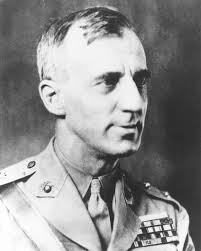
Smedley Butler and the Racket That Is War

index

By Sheldon Richman

Source: The Future of Freedom Foundation

From 1898 to 1931, Smedley Darlington Butler was a member of the U.S. Marine Corps. By the time he retired he had achieved what was then the corps’s highest rank, major general, and by the time he died in 1940, at 58, he had more decorations, including two medals of honor, than any other Marine. During his years in the corps he was sent to the Philippines (at the time of the uprising against the American occupation), China, France (during World War I), Mexico, Central America, and Haiti.

In light of this record Butler presumably shocked a good many people when in 1935 — as a  second world war was looming — he wrote in the magazine Common Sense:

I spent 33 years and four months in active military service and during that period I spent most of my time as a high class muscle man for Big Business, for Wall Street and the bankers. In short, I was a racketeer, a gangster for capitalism [corporatism]. I helped make Mexico and especially Tampico safe for American oil interests in 1914. I helped make Haiti and Cuba a decent place for the National City Bank boys to collect revenues in. I helped in the raping of half a dozen Central American republics for the benefit of Wall Street. I helped purify Nicaragua for the International Banking House of Brown Brothers in 1902-1912. I brought light to the Dominican Republic for the American sugar interests in 1916. I helped make Honduras right for the American fruit companies in 1903. In China in 1927 I helped see to it that Standard Oil went on its way unmolested. Looking back on it, I might have given Al Capone a few hints. The best he could do was to operate his racket in three districts. I operated on three continents.

That same year he published a short book with the now-famous title War Is a Racket, for which he is best known today. Butler opened the book with these words:

War is a racket. It always has been.

It is possibly the oldest, easily the most profitable, surely the most vicious. It is the only one international in scope. It is the only one in which the profits are reckoned in dollars and the losses in lives.

He followed this by noting: “For a great many years, as a soldier, I had a suspicion that war was a racket; not until I retired to civil life did I fully realize it. Now that I see the international war clouds gathering, as they are today, I must face it and speak out.”

Butler went on to describe who bears the costs of war — the men who die or return home with wrecked lives, and the taxpayers — and who profits — the companies that sell goods and services to the military. (The term military-industrial complexwould not gain prominence until 1961, when Dwight Eisenhower used it in his presidential farewell address. See Nick Turse’s book The Complex: How the Military Invades Our Everyday Lives.)

Writing in the mid-1930s, Butler foresaw a U.S. war with Japan to protect trade with China and investments in the Philippines, and declared that it would make no sense to the average American:

We would be all stirred up to hate Japan and go to war — a war that might well cost us tens of billions of dollars, hundreds of thousands of lives of Americans, and many more hundreds of thousands of physically maimed and mentally unbalanced men.

Of course, for this loss, there would be a compensating profit — fortunes would be made.  Millions and billions of dollars would be piled up. By a few. Munitions makers. Bankers.  Ship builders. Manufacturers. Meat packers. Speculators. They would fare well.…

But what does it profit the men who are killed? What does it profit their mothers and sisters, their wives and their sweethearts? What does it profit their children?

What does it profit anyone except the very few to whom war means huge profits?

Noting that “until 1898 [and the Spanish-American War] we didn’t own a bit of territory outside the mainland of North America,” he observed that after becoming an expansionist world power, the U.S. government’s debt swelled 25 times and “we forgot George Washington’s warning about ‘entangling alliances.’ We went to war. We acquired outside territory.”

It would have been far cheaper (not to say safer) for the average American who pays the bills to stay out of foreign entanglements. For a very few this racket, like bootlegging and other underworld rackets, brings fancy profits, but the cost of operations is always transferred to the people — who do not profit.

Butler detailed the huge profits of companies that sold goods to the government during past wars and interventions and the banks that made money handling the government’s bonds.

The normal profits of a business concern in the United States are six, eight, ten, and sometimes twelve percent. But war-time profits — ah! that is another matter — twenty, sixty, one hundred, three hundred, and even eighteen hundred per cent — the sky is the limit. All that traffic will bear. Uncle Sam has the money. Let’s get it.

Of course, it isn’t put that crudely in war time. It is dressed into speeches about patriotism, love of country, and ‘we must all put our shoulders to the wheel,’ but the profits jump and leap and skyrocket — and are safely pocketed.

And who provides these returns? “We all pay them — in taxation.… But the soldier pays the biggest part of the bill.”

His description of conditions at veterans’ hospitals reminded me of what we’re hearing today about the dilapidated veterans’ health care system. Butler expressed his outrage at how members of the armed forces are essentially tricked into going to war — at a pitiful wage.

Beautiful ideals were painted for our boys who were sent out to die. This was the “war to end all wars.” This was the “war to make the world safe for democracy.” No one mentioned to them, as they marched away, that their going and their dying would mean huge war profits. No one told these American soldiers that they might be shot down by bullets made by their own brothers here. No one told them that the ships on which they were going to cross might be torpedoed by submarines built with United States patents. They were just told it was to be a “glorious adventure.”

Thus, having stuffed patriotism down their throats, it was decided to make them help pay for the war, too. So, we gave them the large salary of $30 a month.

Butler proposed ways to make war less likely. Unlike others, he had little faith in disarmament conferences and the like. Rather, he suggested three measures: (1) take the profit out of war by conscripting “capital and industry and labor” at $30 a month before soldiers are conscripted; (2) submit the question of entry into a proposed war to a vote only of “those who would be called upon to do the fighting and dying”; (3) “make certain that our military forces are truly forces for defense only.”

It’s unlikely that these measures would ever be adopted by Congress or signed by a president, and of course conscription is morally objectionable, even if the idea of drafting war profiteers has a certain appeal. But Butler’s heart was in the right place. He was aware that his program would not succeed: “I am not a fool as to believe that war is a thing of the past.”

Yet in 1936 he formalized his opposition to war in his proposed constitutional “Amendment for Peace.” It contained three provisions:

  • The removal of the members of the land armed forces from within the continental limits of the United States and the Panama Canal Zone for any cause whatsoever is prohibited.
  • The vessels of the United States Navy, or of the other branches of the armed service, are hereby prohibited from steaming, for any reason whatsoever except on an errand of mercy, more than five hundred miles from our coast.
  • Aircraft of the Army, Navy and Marine Corps is hereby prohibited from flying, for any reason whatsoever, more than seven hundred and fifty miles beyond the coast of the United States.

He elaborated on the amendment and his philosophy of defense in an article in Woman’s Home Companion, September 1936.

It’s a cliche of course to say, “The more things change, the more they stay the same,” but on reading Butler today, who can resist thinking it? As we watch Barack Obama unilaterally and illegally reinsert the U.S. military into the Iraqi disaster it helped cause and sink deeper into the violence in Syria, we might all join in the declaration with which Butler closes his book:

TO HELL WITH WAR!

Postscript: In 1934 Butler publicly claimed he had been approached by a group of businessmen about leading half a million war veterans in a coup against President Franklin D. Roosevelt with the aim of establishing a fascist dictatorship. This is known as the “Business Plot.” A special committee set up by the U.S. House of Representatives, which heard testimony from Butler and others, reportedly issued a document containing some confirmation. The alleged plot is the subject of at least one book, The Plot to Seize the White House, and many articles.

Podcast News Updates

the-5th-horseman

There’s been another string of relevant news podcasts in the past few days so it’s time for another roundup post.

Last week Rob Kall of OpEdnews.cominterviewed Peter Ludlow a professor of linguistics and philosophy, on topics including systemic evil, whistleblowers and hacktivism:

https://itunes.apple.com/us/podcast/rob-kall-bottom-up-radio-show/id359765013

On Friday, Abby Martin of Breaking the Set did an excellent job deconstructing the corporatocracy on Coast to Coast AM with John Wells:

http://www.mediaroots.org/abby-martin-deconstructs-the-corporatocracy-on-coast-to-coast-am/

On Monday Nellie Bailey and Glen Ford of Black Agenda Report covered a wide range of important topics including an update on the corporate plan for Detroit (an American apartheid), the struggle to raise the minimum wage in Seattle, and Dave Swanson’s (of WarIsACrime.org) analysis of the multitude of lies in Obama’s recent UN speech : Listen to Black Agenda Radio on the Progressive Radio Network, with Glen Ford and Nellie Bailey – Week of 9/30/13.

From Traces of Reality there were two great consecutive shows. On 9/30 host Guillermo Jimenez interviewed Kevin Gallagher, director of Free Barrett Brown.  Brown is the journalist who faces a 105 year sentence, the bulk of which is related to charges associated with pasting a link in a chat room. On the 10/1 episode, Guillermo is joined by Vice President of The Future of Freedom Foundation, Sheldon Richman. They cover topics including the “government shutdown”, the national debt, taxation, private property, the “social contract,” and the fallacy of the “consent of the governed.”:

9/30

10/1