Saturday Matinee: The Nostalgist

4244

From TheNostalgistFilm.com :

SYNOPSIS

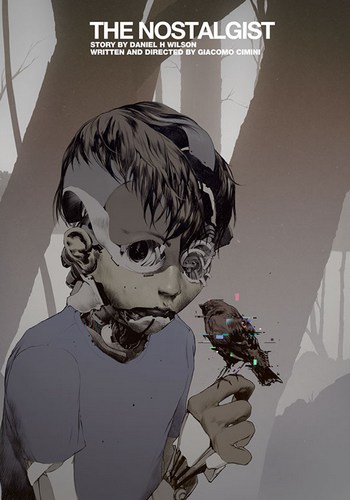
With properly tuned ImmerSyst eyes™ & ears™ the futuristic city of Vanille can look and sound like a paradise. But the life of a father and his son threatens to disintegrate when the father’s Immersyst begins to fail. Desperate to avoid facing his own traumatic reality, the man must venture into a city where violence and danger brew beneath a veneer of beautiful illusion.

THE PROJECT

The Nostalgist is a science fiction short film project based on Daniel H Wilson‘s short story of the same name. The Year’s Best Science Fiction: 2009 Finalist, the story was first published on Tor.com in July 2009 and is also available for download from major e-book retailers.

The short film version was developed by Wonder Room Productions, a London-based film production company formed by writer/director/producer Giacomo Cimini (City in the Sky) and producers Tommaso Colognese and Pietro Greppi. The team assembled a crew of highly skilled professionals and a cast led by Lambert Wilson (Of Gods and Men, The Matrix Reloaded) and Samuel Joslin (Paddington, The Impossible), and shot a short film version in early 2013, adapted and directed by Cimini.

The short was completed in May 2014 after an extensive period of VFX and post-production, headed by Milan and London-based post-production and VFX house Inky Mind, with key expertise in CG character creation provided by Barcelona-based MinimoVFX, and extensive compositing work provided by London based NOSEAMS VFX.

VFX artist Giacomo Bargellesi additionally joined Wonder Room as a partner and co-producer and provided further overall VFX supervision for the company, heading up the 2D compositing work.

The substantial post-production costs were covered thanks to the participation of Wonder Room’s VFX partners as well as the completion of a successful Kickstarter campaign, which raised a total of £32,800 from 460 backers.

The Nostalgist received its festival premiere at the Palm Springs Short Fest in June 2014, where it was awarded the runner-up prize for live-action short above 15 minutes, and it has since screened at a number of festivals, including the Giffoni Film Festival in Italy, where it was awarded the first prize as Best Short Film in the Generator 18+ (fiction) section.

How Do You Know When Your Society Is In The Midst Of Collapse?

boot

By Brandon Smith

Source: Activist Post

As economic turmoil worldwide becomes increasingly apparent, I have been receiving messages from readers expressing some concerns on the public “perception” of collapse. That is to say, there are questions on the average person’s concept of collapse versus the reality of collapse. This is a vital issue that I have discussed briefly in the past, but it deserves a more in-depth analysis.

What is collapse? How do we define it? And, are some of the notions of collapse in the public consciousness completely wrong?

It’s funny, because skeptics opposed to the idea of a U.S. collapse in particular will most often retort with a question they think I cannot or will not answer – “So, Mr. Smith, when specifically is this supposed collapse going to take place? What day and time?”

My response has always been – “We’re in the middle of a collapse right now; you really can’t see it right in front of your sneering face?”

The reason these people are incapable of grasping this kind of answer is in large part due to the popular mainstream conceptions of systemic collapse. These are conceptions that are for the most part delusional and not in line with the facts. The public idea of collapse comes predominantly from Hollywood, and not from personal experience. For the masses (and some preppers, unfortunately), a collapse is an “event” that happens visibly and usually swiftly. You wake up one morning and behold; the television and phones don’t work anymore and zombies are at your doorstep! Yes, it’s childish and cartoonish, but anything less than a Walking Dead/Mad Max scenario and many people act as if all other threats are benign.

This is the driving reason why many Americans are absolutely oblivious to the economic instability that is rampant and blatant within our system the past few months. They might see the same signals that alternative analysts see, but these signals do not register in their brains as dangers.

Look at it this way; say you told a person their whole life that a tiger is a 10-foot tall behemoth with four heads that breathes fire while urinating flesh-rending acid. Say you make movies and TV shows about it and they never have any experience to the contrary. When they finally come across a real tiger, they might try to pet the damn thing instead of running in terror or searching for a means of defense.

To use another vicious animal analogy, when I encounter skeptics with false assumptions of what a collapse actually is, I am often reminded of that woman in Anchorage, Alaska who jumped an enclosure fence at the zoo to get a closer picture of Binky the polar bear. These people have been made so inept when it comes to identifying threats that they will continue arguing with you as the animal takes a football-sized bite out of their meaty thigh.

So what is the root of the problem beyond Hollywood fantasies? Well, the problem is that social and economic collapse is not a singular event, it is a PROCESS. Collapse is a series of events that sometimes span years. Each event increases in volatility over the last event, but as time goes on these events tend to condition the masses. The public develops a normalcy bias towards crisis (like the old “frog in a boiling pot” analogy). They lose all sense of what a healthy system looks like.

It is not uncommon for a society to wade through almost a decade or more of violent decline before finally acknowledging the system is imploding on a fundamental level. It is also not uncommon for societies to endure years of abuse by corrupt governments before either organizing effectively to rebel, or caving in and submitting to totalitarianism.

But how does one recognize a failing system? How does a person know if they are in the middle of a collapse rather than on the “verge” of collapse? Here are some signals I have derived from research of various breakdowns in modern nations and why they indicate we are experiencing collapse right now…

The Criminals Openly Admit To Their Crimes

The surest way to know if your society is in the midst of disintegration is to see if the criminals who created the instability in the first place are openly discussing a collapse scenario or warning that one is imminent.

A year ago, central bankers presented little more than a chorus of recovery propaganda. Today, not so much. The Royal Bank of Scotland is now warning investors to “sell everything” ahead of a “cataclysmic” year in markets.

The Federal Reserve’s Richard Fisher has admitted that the Fed “frontloaded” (manipulated) stock markets into a bubble and that payment is about to come due in the form of severe economic volatility (up to 20% crash in equities).

The Bank for International Settlements, the central bank of central banks, has a track record of warning the public about collapse conditions – right before they happen, leaving little or no time for people to prepare. They have followed their habit by warning in September and December that a Fed rate hike would “shatter” the uneasy calm in markets.

The former Chief Economist of the BIS now says the economy is in worse shape than it was in 2008 and is headed for a larger fall.

What happened between last year and this year and why are these internationalists suddenly so forthcoming about our economic reality? The fact that central bankers are the cause of our current collapse leads me to believe that such admissions are designed to deflect guilt. If they put out a few warnings now, they can then later claim they are prognosticators rather than culprits, and that they were trying to “help us.” Beyond that, the reality is that our situation was just as dire in 2014/2015 as it is today; the difference is that now we are about to enter a new phase in the ongoing collapse, a much more detrimental phase, but still a phase of a breakdown that has been progressing since at least 2008.

The Fundamentals Break Through The Manipulation Barrier

Governments and central banks do not have the capacity to artificially create demand for goods or a supply of well-paying jobs in a crashing economy. What they can do, though, is hide the visible problems in supply and demand with false numbers.

I examined such false economic statistics in great detail last year in a six-part series titled “One Last Look At The Real Economy Before It Implodes.” I will not cover them all again here. I would only point out that recently the fundamentals of supply and demand have begun to break through the deceit of manipulated numbers, and this is a sign that the collapse is about to move from one stage to the next.

With global shipping and trucking freight in steep decline, with retail inventories in stasis and current oil consumption falling to levels not seen since 1997 despite a larger population, the mainstream can no longer deny that consumer demand is crumbling. If demand is falling dramatically, then the financial system is in the middle of falling dramatically; there is simply no way around this truth.

Stocks And Commodities Become Violently Erratic

Let’s be clear, if stock markets represent anything at all, they are merely lagging indicators of economic instability.  Stock markets are NOT predictive indicators of anything useful.  Therefore, any person who does nothing but track equities each day is going to be completely oblivious to the bigger picture behind the economy until it is too late.  They will be so mesmerized by the green numbers and red numbers and lines on minute-to-minute graphs that they will lose all sense of reality.

Violent swings in stocks are a sign of a financial system that is at the middle or end of the collapse process, not the beginning.

It is also important to note that extreme shifts in stocks and commodity values to the upside are just as much a signal of instability as shifts to the downside.  For instance, if you witnessed the recent 9% explosion in oil markets and thought to yourself “Ah, the markets are being stabilized again and nothing is different this time…”, then you are an idiot.

Of course, the next day oil markets lost almost all of the gains they made the day before.  And this is how markets behave when they are about to die; they expand and implode chaotically each day on nothing more that meaningless news headlines rather than hard data.  This heart attack in equities inevitably trends downwards as the weeks and months pass.  Keep in mind, equities are down nearly 10% from their recent highs, and oil is down approximately 50% in the past six months.  Every time there is a dead cat bounce in stocks skeptics come out of the woodwork to call alternative analysts “doomers”, yet they are nowhere to be found when markets come crashing back down.  They are not looking at the overall trend because their short attention spans hinder them.  Again, extreme swings in markets, whether up or down, are a sign of progressing collapse.

Deterioration Of Cultural Values, Heritage And Identity

I have written extensively over the years about the Cloward-Piven strategy; a strategy used by collectivists to destabilize social systems by dumping overt numbers of foreign immigrants into the population without demand for integration. This process has been obvious in the U.S. and Europe for quite some time, but only now is it peaking to the point that collapse is seen as an inevitable result by the public. Europe is worse off than the U.S. in this regard as millions upon millions of Muslim immigrants are injected into the EU’s already dying body; immigrants that intend to transplant their culture from their own failed societies rather than adopting the values and principles of the societies that have invited them in.

Natural-born Americans and legal immigrants with aspiration of integration appear to be fighting back against the Cloward-Piven strategy with some success by holding onto traditional American values despite being labeled “barbarians” and “racists.” Illegal immigration, though, is still completely unchecked.

In the EU, the long campaign of cultural Marxism has made natural-born Europeans perhaps the most self-hating people on the planet as well as the most passive and weak. Organized opposition to massive immigration programs in the EU should have taken place years ago. Now it is far too late, and the European system is finishing a social implosion which should have already been obvious to average citizens.

Open Discussion Of Totalitarian Measures

When corrupt leadership moves from quiet totalitarianism to more open totalitarianism, your society is in the FINAL stages of collapse, not the beginning of a collapse. The U.S. in particular has been slowly strangled with subversive legal directives and political policies ever since the so called “War on Terror” began. However, there are now multiple signals of a much deeper and open tyranny in the works.

A few recent examples stand out, including Barack Obama’s insistence that the office of the president has the legal authority to issues executive orders that affect constitutional protections such as the 2nd Amendment. As many liberty movement activists are aware, there is absolutely no constitutional precedent for the use of executive orders and such powers are not mentioned anywhere in the document. They were simply created out of thin air to be used by the federal government and sometimes state governments to supersede normal checks and balances.

While numerous presidents have issued executive orders, including some that were outright tyrannical, like Franklin Delano Roosevelt’s unconstitutional internment of Japanese Americans into concentration camps, George W. Bush and Barack Obama have been the most subversive in their bypassing of the Constitution. Obama, in particular, has tried to hide the number of executive actions he has taken by issuing hundreds of “presidential memorandums,” which are basically the same dirty play by another name.

These actions have been progressively setting the stage for the removal of checks and balances entirely in the name of crisis management. They are so broad in their nature and vague in their definitions and applications that they could be interpreted by federal authorities to mean just about anything in any given situation.

If executive actions are not scary enough, corrupt politicians are now becoming blunt in their demands for dominance. Two Republican Senators, Mitch McConnel and Lindsay Graham, are calling for unlimited AUMF-style (authorization of use of military force) war powers to be given to the president. Such powers would allow the president to project U.S. military forces anywhere in the world for any reason without review or time limits. This includes the use of military forces on U.S. soil.

The rationale for this is, of course, the threat of ISIS. The same group of terrorists the U.S. government helped to create.

And finally, if you want perhaps the most nonchalant admission of future tyranny in recent days, check out former General Wesley Clark’s call for “disloyal” Americans to be placed in internment camps through the duration of the war on terror, a war that could ostensibly go on forever.

One could argue that all of these measures are meant only to deter “Islamic extremism.” I would point out that government officials could have stemmed that tide at any time by enforcing existing immigration laws, or, by stopping all immigration for a period of years until the problem is handled. Instead, they have allowed open borders to remain, and have even imported potential terrorists while focusing Department of Homeland Security efforts more on evil white guys with guns.

If we accept the violation of the constitutional rights of any group of citizens, if we allow the concept of “thought crime” to become commonplace, then we leave the door open to the violation of our own rights someday. And that is how tyrants trick populations through incremental collapse; by applying despotism to a claimed dangerous minority, then expanding it to everyone else.

America is sitting near the end of the spectrum in terms of economic collapse and in the middle of the spectrum in terms of social collapse.  While more violent events are certainly gestating and are likely to be triggered in the near term, we should not overlook the reality that collapse is happening in stages all around us.  This process gives us at least some time.  All is not lost yet, and the steps we take to organize and prepare today will affect how the collapse process unfolds tomorrow. People who continue to ignore the outright evidence of collapse based on false assumptions of what collapse should look like are only preventing themselves from taking proper action until it is too late. Make no mistake, our system is dying. We cannot allow our false perceptions of this death to cloud the reality of it, or our response to it.


You can read more from Brandon Smith at his site Alt-Market.com. If you would like to support the publishing of articles like the one you have just read, visit our donations page here.  We greatly appreciate your patronage. You can contact Brandon Smith at: brandon@alt-market.com

The Mad Violence of Casino Capitalism

AmericanRoulette

By

Source: Counterpunch

American society is morally bankrupt and politically broken, and its vision of the future appears utterly dystopian. As the United States descends into the dark abyss of an updated form of totalitarianism, the unimaginable has become imaginable in that it has become possible not only to foresee the death of the essential principles of constitutional democracy, but also the birth of what Hannah Arendt once called the horror of dark times. The politics of terror, a culture of fear, and the spectacle of violence dominate America’s cultural apparatuses and legitimate the ongoing militarization of public life and American society.

Unchecked corporate power and a massive commodification, infantilization, and depoliticization of the polity have become the totalitarian benchmarks defining American society. In part, this is due to the emergence of a brutal modern-day capitalism, or what some might call neoliberalism. This form of neoliberal capitalism is a particularly savage, cruel, and exploitative regime of oppression in which not only are the social contract, civil liberties and the commons under siege, but also the very notion of the political, if not the planet itself. The dystopian moment facing the United States, if not most of the globe, can be summed up in Fred Jameson’s contention “that it is easier to imagine the end of the world than to imagine the end of capitalism.” He goes on to say that “We can now revise that and witness the attempt to imagine capitalism by way of imagining the end of the world.”1

One way of understanding Jameson’s comment is through the ideological and affective spaces in which the neoliberal subject is produced and market-driven ideologies are normalized. Capitalism has made a virtue out of self-interest and the pursuit of material wealth and in doing so has created a culture of shattered dreams and a landscape filled with “Broken highways, bankrupt cities, collapsing bridges, failed schools, the unemployed, the underpaid and the uninsured: all suggest a collective failure of will. These shortcomings are so endemic that we no longer know how to talk about what is wrong, much less set about repairing it.”[i]

Yet, there is a growing recognition that casino capitalism is driven by a kind of mad violence and form of self-sabotage and that if it does not come to an end what we will experience in all probability is the destruction of human life and the planet itself. Certainly, more recent scientific reports on the threat of ecological disaster from researchers at the University of Washington, NASA, and the Intergovernmental Panel on Climate Change reinforce this dystopian possibility.2 The undermining of public trust and public values has now given way to a market-driven discourse that produces a society that has lost any sense of democratic vision and social purpose and in doing so resorts to state terrorism, the criminalization of social problems, and culture of cruelty. Institutions that were once defined to protect and enhance human life now function largely to punish and maim.

As Michael Yates points out throughout this book, capitalism is devoid of any sense of social responsibility and is driven by an unchecked desire to accumulate capital at all costs. As power becomes global and politics remains local, ruling elites no longer make political concessions to workers or any other group that they either exploit or consider disposable.

Security and crisis have become the new passwords for imposing a culture of fear and for imposing what Giorgio Agamben has called a permanent state of exception and a technology of government repression.[ii] A constant appeal to a state of crisis becomes the new normal for arming the police, curtailing civil liberties, expanding the punishing state, criminalizing everyday behavior, and supressing dissent. Fear now drives the major narratives that define the United States and give rise to dominant forms of power free from any sense of moral and political conviction, if not accountability.

In the midst of this dystopian nightmare, there is the deepening abyss of inequality, one that not only separates the rich from the poor, but also increasingly relegates the middle and working classes to the ranks of the precariat. Concentrations of wealth and income generate power for the financial elite and unchecked misery for most people, a fear/insecurity industry, and a growing number of social pathologies.

Michael Yates in The Great Inequality provides a road map for both understanding the registers that produce inequality as well as the magnitude of the problems it poses across a range of commanding spheres extending from health care and the political realm to the environment and education. At the same time, he exposes the myths that buttress the ideology of inequality. These include an unchecked belief in boundless economic growth, the notion that inequality is chosen freely by individuals in the market place, and the assumption that consumption is the road to happiness. Unlike a range of recent books on inequality, Yates goes beyond exposing the mechanisms that drive inequality and the panoply of commanding institutions that support it. He also provides a number of strategies that challenge the deep concentrations of wealth and power while delivering a number of formative proposals that are crucial for nurturing a radical imagination and the social movements necessary to struggle for a society that no longer equates capitalism with democracy.

As Yates makes clear throughout this book, money now engulfs everything in this new age of disposability. Moreover, when coupled with a weakening of movements to counter the generated power of capitalists, the result has been a startling increase in the influence of predatory capitalism, along with inequities in wealth, income, power, and opportunity. Such power breeds more than anti-democratic tendencies, it also imposes constraints, rules, and prohibitions on the 99 percent whose choices are increasingly limited to merely trying to survive. Capitalists are no longer willing to compromise and have expanded their use of power to dominate economic, political, and social life. For Yates, it is all the more crucial to understand how power works under the reign of global capitalism in order to grasp the magnitude of inequality, the myriad of factors that produce it, and what might be done to change it.

Accompanying the rise of a savage form of capitalism and the ever-expanding security state is the emergence of new technologies and spaces of control. One consequence is that labor power is increasing produced by machines and robotic technologies which serve to create “a large pool of more or less unemployed people.” Moreover, as new technologies produce massive pools of unused labor, it also is being used as a repressive tool for collecting “unlimited biometric and genetic information of all of its citizens.”[iii]

The ongoing attack on the working class is matched by new measures of repression and surveillance. This new weaponized face of capitalism is particularly ominous given the rise of the punishing state and the transformation of the United States from a democracy in progress to a fully developed authoritarian society.   Every act of protest is now tainted, labeled by the government and mainstream media as either treasonous or viewed as a potential act of terrorism. For example, animal rights activists are put on the terrorist list. Whistleblowers such as Edward Snowden are painted as traitors. Members of the Black Lives Matter movement are put under surveillance,[iv] all electronic communication is now subject to government spying, and academics who criticize government policy are denied tenure or worse.

Under neoliberalism, public space is increasingly converted into private space undermining those sphere necessary for developing a viable sense of social responsibility, while also serving to transform citizenship into mostly an act of consumption. Under such circumstances, the notion of crisis is used both to legitimate a system of economic terrorism as well as to accentuate an increasing process of depoliticization. Within this fog of market induced paralysis, language is subject to the laws of capitalism, reduced to a commodity, and subject to the “tyranny of the moment….emaciated, impoverished, vulgarized and squeezed out of the meanings it was resumed to carry.”[v]

As the latest stage of predatory capitalism, neoliberalism is part of a broader economic and political project of restoring class power and consolidating the rapid concentration of capital, particularly financial capital.[vi] As a political project it includes “the deregulation of finance, privatization of public services, elimination and curtailment of social welfare programs, open attacks on unions, and routine violations of labor laws.”[vii] As an ideology, it casts all dimensions of life in terms of market rationality, construes profit making as the arbiter and essence of democracy, consuming as the only operable form of citizenship, and upholds the irrational belief that the market can both solve all problems and serve as a model for structuring all social relations. As a mode of governance, it produces identities, subjects, and ways of life driven by a survival-of-the fittest-ethic, grounded in the idea of the free, possessive individual, and committed to the right of ruling groups and institutions to exercise power removed from matters of ethics and social costs. As a policy and political project, it is wedded to the privatization of public services, the dismantling of the connection of private issues and public problems, the selling off of state functions, liberalization of trade in goods and capital investment, the eradication of government regulation of financial institutions and corporations, the destruction of the welfare state and unions, and the endless marketization and commodification of society.

Nothing engenders the wrath of conservatives more than the existence of the government providing a universal safety net, especially one that works, such as either Medicare or Social Security. As Yates points out, government is viewed by capitalists as an institution that gets in the way of capital. One result is a weakening of social programs and provisions. As Paul Krugman observes regarding the ongoing conservative attacks on Medicare, “The real reason conservatives want to do away with Medicare has always been political: It’s the very idea of the government providing a universal safety net that they hate, and they hate it even more when such programs are successful.”[viii] In opposition to Krugman and other liberal economists, Michael Yates argues rightly in this book that the issue is not simply preserving Medicare but eliminating the predatory system that disavows equality of wealth, power, opportunity, and health care for everyone.

Neoliberalism has put an enormous effort into creating a commanding cultural apparatus and public pedagogy in which individuals can only view themselves as consumers, embrace freedom as the right to participate in the market, and supplant issues of social responsibility for an unchecked embrace of individualism and the belief that all social relation be judged according to how they further one’s individual needs and self-interests. Matters of mutual caring, respect, and compassion for the other have given way to the limiting orbits of privatization and unrestrained self-interest, just as it is has become increasingly difficult to translate private troubles into larger social, economic, and political considerations. One consequence is that it has become more difficult for people to debate and question neoliberal hegemony and the widespread misery it produces for young people, the poor, middle class, workers, and other segments of society– now considered disposable under neoliberal regimes which are governed by a survival-of-the fittest ethos, largely imposed by the ruling economic and political elite. Unable to make their voices heard and lacking any viable representation in the process makes clear the degree to which the American public, in particular, are suffering under a democratic deficit producing a profound dissatisfaction that does not always translate into an understanding of how neoliberal capitalism has destroyed democracy or what it might mean to understand and challenge its diverse apparatuses of persuasion and power. Clearly, the surge of popularity behind the presidential candidacy of a buffoon such as Donald Trump testifies to both a deep seated desire for change and the forms it can take when emotion replaces reason and any viable analysis of capitalism and its effects seem to be absent from a popular sensibility.

What Michael Yates makes clear in this incisive book on inequality is that democratic values, commitments, integrity, and struggles are under assault from a wide range of sites in an age of intensified violence and disposability. Throughout the book he weaves a set of narratives and critiques in which he lays bare the anti-democratic tendencies that are on display in a growing age of lawlessness and disposability. He not only makes clear that inequality is not good for the economy, social bonds, the environment, politics, and democracy, Yates also argues that capitalism in the current historical moment is marked by an age that thrives on racism, xenophobia, the purported existence of an alleged culture of criminality, and a massive system of inequality that affects all aspects of society. Worth repeating is that at the center of this book, unlike so many others tackling inequality, is an attempt to map a number of modalities that give shape and purpose to widespread disparities in wealth and income, including the underlying forces behind inequality, how it works to secure class power, how it undermines almost every viable foundation needed for a sustainable democracy, and what it might mean to develop a plan of action to produce the radical imagination and corresponding modes of agency and practice that can think and act outside of the reformist politics of capitalism.

Unlike so many other economists such as Paul Krugman and Joseph Stiglitz who address the issue of inequality, Yates refuses the argument that the system is simply out of whack and can be fixed. Nor does he believe that capitalism can be described only in terms of economic structures. Capitalism is both a symbolic pathological economy that produces particular dispositions, values, and identities as well as oppressive institutional apparatuses and economic structures. Yates goes even further arguing that capitalism is not only about authoritarian ideologies and structures, it is also about the crisis of ideas, agency, and the failure of people to react to the suffering of others and to the conditions of their own oppression. Neoliberal capitalism has no language for human suffering, moral evaluation, and social responsibility. Instead, it creates a survival-of-the fittest ethos buttressed by a discourse that is morally insensitive, sadistic, cannibalistic, and displays a hatred of those whose labor cannot be exploited, do not buy into the consumerist ethic, or are considered other by virtue of their race, class, and ethnicity. Neoliberalism is the discourse of shadow games, committed to highlighting corporate power and making invisible the suffering of others, all the while leaving those considered disposable in the dark to fend for themselves.

Yates makes visible not only the economic constraints that bear down on the poor and disposable in the neoliberal age of precarity, he also narrates the voices, conditions, hardships and suffering workers have to endure in a variety of occupations ranging from automobile workers and cruise ship workers to those who work in restaurants and as harvester on farms. He provides a number of invaluable statistics that chart the injuries of class and race under capitalism but rather than tell a story with only statistics and mind boggling data, he also provides stories that give flesh to the statistics that mark a new historical conjuncture and a wide range of hardships that render work for most people hell and produce what has been called the hidden injuries of class. Much of what he writes is informed by a decade long research trip across the United States in which he attempted to see first-hand what the effects of capitalism have been on peoples’ lives, the environment, work, unions, and other crucial spheres that inform everyday life. His keen eye is particularly riveting as he describes his teaming up with Cesar Chavez and the United Farm Workers in the 1970s and his growing disappointment with a union that increasingly betrayed its own principles.

For Yates, the capitalist system is corrupt, malicious, and needs to be replaced. Capitalism leaves no room for the language of justice, the social, or, for that matter, democracy itself. In fact, one of its major attributes is to hide its effects of power, racial injustice, militarized state violence, domestic terrorism, and new forms of disposability, especially regarding those marginalized by class and race. The grotesque inequalities produced by capitalism are too powerful, deeply rooted in the social and economic fabric, and unamenable to liberal reforms.  Class disparities constitute a machinery of social death, a kind of zombie-like machine that drains life out of most of the population poisoning both existing and future generations.

The politics of disposability has gone mainstream as more and more individuals and groups are now considered surplus and vulnerable, consigned to zones of abandonment, surveillance, and incarceration. At one level, the expansive politics of disposability can be seen in the rising numbers of homeless, the growing army of debt-ridden students, the increasingly harsh treatment of immigrants, the racism that fuels the school-to-prison pipeline, and the growing attack on public servants. On another level, the politics of disposability has produced a culture of lawlessness and cruelty evident by the increasing rollback of voting rights, the war waged against women’s reproductive rights, laws that discriminate against gays, the rise of the surveillance state, and the growing militarization of local police forces. Yates argues convincingly that there is a desperate need for a new language for politics, solidarity, shared responsibilities, and democracy itself. Yates sees in the now largely departed Occupy Movement an example of a movement that used a new discourse and set of slogans to highlight inequality, make class inequities visible, and to showcase the workings of power in the hands of the financial elite. For Yates, Occupy provided a strategy that can be and is being emulated by a number of groups, especially those emerging in the black community in opposition to police violence. Such a strategy begins by asking what a real democracy looks like and how does it compare to the current society in which we live. One precondition for individual and social agency is that the horizons for change must transcend the parameters of the existing society, and the future must be configured in such a way as to not mimic the present.

What is remarkable about The Great Inequality is that Yates does not simply provide a critique of capitalism in its old and new forms, he also provides a discourse of possibility developed around a number of suggested policies and practices designed to not reform capitalism but to abolish it. This is a book that follows in the manner of Dr. Martin Luther King’s call to break the silence. In it Yates functions as a moral witness in reporting on the hardships and suffering produced by grotesque forms of inequality. As such, he reveals the dark threats that capitalism in its ruthlessly updated versions poses to the planet. Yet, his narrative is never far from either hope or a sense that there is a larger public for whom his testimony matters and that such a public is capable of collective resistance. The Great Inequality also serves to enliven the ethical imagination, and speak out for those populations now considered outcast and voiceless. Yates provides a furious reading of inequality and the larger structure of capitalism. In doing so he exhibits a keen and incisive intellect along with a welcomed sense of righteous fury.

Notes.

[i] Tony Judt, Ill Fares the Land, (New York, N.Y.: The Penguin Press, 2010), p. 12.

[ii] Giorgio Agamben, “The Security State and a theory of destituent power,” Philosophers for Change, (February 25, 2014). Online:

The security state and a theory of destituent power

[iii] Ibid., Agamben, “The Security State and a theory of destituent power,”

[iv] George Joseph, “Exclusive: feds regularly monitored black lives matter since ferguson,” Intercept (July 24, 2015). Online: https://firstlook.org/theintercept/2015/07/24/documents-show-department-homeland-security-monitoring-black-lives-matter-since-ferguson/; Deirdre Fulton, “Exposed: Big Brother Targets Black Lives:Government spying can be an ‘effective way to chill protest movements,’ warns Center for Constitutional Rights,” CommonDreams (July 24, 2015). Online: http://www.commondreams.org/news/2015/07/24/exposed-big-brother-targets-black-lives

[v] Zygmunt Bauman and Leonidas Donskis, Moral Blindness: The loss of Sensitivity in Liquid Modernity, (Cambridge, UK: Polity Press, 2013), p. 46.

[vi] I have taken up the issue of neoliberalism extensively in Henry A. Giroux, Against the Terror of Neoliberalism (Boulder: Paradigm, 2008) . See also, David Harvey, A Brief History of Neoliberalism (New York: Oxford University Press, 2007); Manfred B. Steger and Ravi K. Roy, Neoliberalism: A Very Short Introduction (New York: Oxford University Press, 2010); Gerad Dumenil and Dominique Levy, The Crisis of Neoliberalism (Cambridge: Harvard University Press, 2011). Henry A. Giroux, Twilight of the Social (Boulder: Paradigm, 2013); Henry A. Giroux, and in Against the Violence of Organized Forgetting: Beyond America’s Disimagination Machine (San Francisco: City Lights, 2014);

Wendy Brown, Undoing the Demos: Neoliberalism’s Stealth Revolution (Cambridge: Zone Books 2015).

[vii] Michael D. Yates, “Occupy Wall Street and the Significance of Political Slogans,” Counterpunch, (February 27, 2013). Online:http://www.counterpunch.org/2013/02/27/occupy-wall-street-and-the-significance-of-political-slogans/

[viii] Paul Krugman, “Zombies Against Medicare,” New York Times (July 27, 2015). Online: http://www.nytimes.com/2015/07/27/opinion/zombies-against-medicare.html?_r=0

This essay is excerpted from the introduction to The Great Inequality by Michael D. Yates.

Henry A. Giroux currently holds the McMaster University Chair for Scholarship in the Public Interest in the English and Cultural Studies Department and a Distinguished Visiting Professorship at Ryerson University. His most recent books are America’s Education Deficit and the War on Youth (Monthly Review Press, 2013) and Neoliberalism’s War on Higher Education (Haymarket Press, 2014). His web site is www.henryagiroux.com.

Saturday Matinee: Snowpiercer

Snowpiercer_poster

Snowpiercer (2013) is a film adaptation of French graphic novel Le Transperceneige by Jacques Lob and Jean-Marc Rochette directed by Bong Joon-ho (The Host, Mother, Haemoo). The majority of the movie takes place on a perpetually globe-spanning train containing the last surviving members of the human race after a geoengineering scheme creates an apocalyptic ice-age. Though the film has its share of plot holes (which become more apparent with repeat viewings), it remains the best cinematic metaphor for today’s dominant political/economic system. Snowpiercer also features outstanding performances from Chris Evans, Song Kang-ho, Tilda Swinton, Octavia Spencer, John Hurt, and Ed Harris among others.

Watch the full film here.

(Note: annoying pop-up ad windows may need to be closed after clicking the “play” button.)

The Fine Edge Between Comedy and Horror: The Millions Interviews Margaret Atwood

atwood-the_heart_goes_last

By Claire Cameron

Source: The Millions

The Heart Goes Last Margaret Atwood’s first standalone novel since The Blind Assassin, which won the Man Booker in 2000 — is a novel that teeters on the fine edge between comedy and horror. The writing is full of Atwood’s wry humor, but the dystopian world in which the characters live, whether they are a sleeping in a car and fleeing thugs or under surveillance in a tightly controlled community, is an alternate world that is full of horror.

The novel tells the story of Stan and Charmaine. After a great financial crash, their home is repossessed, their credit is frozen, and they are left to eek out a meager life living in their cramped Honda for shelter. Stan sleeps in the driver’s seat so they can flee quickly during the night if need be. With only Charmaine’s money from a bartending job, they dumpster dive, eat day old doughnuts, and have no viable prospects for their future. When Charmaine sees an ad on TV for Consilience, a suburban utopia and a ‘social experiment,’ she signs them up to take a look. Participants are given a home of their own in exchange for going to prison every other month.

The idea behind Consilience is that a full prison creates full employment and all prosper. While Charmaine and Stan do their month in jail, they swap places with an alternate couple who live their life, drive their scooters, and sleep in their bed until the month is up and they trade places again. In a set up that recalls a Midsummer’s Night Dream-like mix up, unknown to each other both Stan and Charmaine have chance encounters with their alternates. Confusion, obsession, and mistrust turn into revelations about the truth about Consilience.

The more I read, the more I questioned whether I could describe the community of Consilience and the chaos outside its gates as taking place in an alternate world. So much of what happens in this novel, from foreclosed houses to private prisons, is already part of our world. The world of The Heart Goes Last feels more like a twisted version of our current reality. Only small changes would be needed to make it all ‘true.’ Just as Charmaine and Stan’s lives contort when they seek out their alternates, utopian turns dystopian and comedy bends into horror with, as Atwood says, “one small turn of the wrench.”

I interviewed Atwood over the phone from her hotel room in New York. We spoke about not having sex with furniture, Pepper the greeting robot, themes in Victorian literature, and quotas in private prisons.

The Millions: The Heart Goes Last has your trademark humor, but the circumstances that Stan and Charmaine find themselves in are horrifying.

Margaret Atwood: A lot of things are funny to those watching them, but not to the person undergoing them. The person who slips on the banana peel doesn’t think it’s funny as a rule.

TM: Charmaine says near the beginning of the book that, “comedy is so cold and heartless, it makes fun of people’s sadness.”

MA: It does, unfortunately. Sometimes people make fun of themselves, but if you dig down there’s a bit of that too. On the other hand, where would we be if we couldn’t laugh? I think they’ve always been joined at the hip.

TM: At the beginning of the novel, you quote Ovid, William Shakespeare, and a blog post by writer Adam Frucci[1] — who sets out to test an ottoman with a fake vagina. I have to ask: Did you have sex with furniture to research this novel?

MA: I think that piece of furniture is intended only for men?

TM: Frucci warned that it was, “no Kleenex clean up, my friends.” Actually, what he endured to test the ottoman is a good example of something that is funny for the reader, but not so for the person going through the experience.

MA: One of the headlines of that post is “I did this so you don’t have to.” Frucci has probably woken to find himself strangely famous. A lot of people are reading that blog post.

The other thing that has to trouble your mind is — who had this idea for this piece of furniture? And would you have this in your living room? I have many questions.

TM: Maybe you’ve given the ottoman maker a little sales bump?

MA: I have a feeling that a piece of furniture with a sex thing built into it came and went fairly swiftly. If that blog post was written in 2009, the furniture has fairly quickly been superseded by the advances in robotics.

Do you know about Pepper the robot? Pepper is not a sex robot. In fact, Pepper comes with instructions that say explicitly that you are not supposed to use it for sex, though I don’t know how you could.

Pepper is a greeting robot, like one that Stan, the main character in The Heart Goes Last, is working on before he gets fired at Dimple Robotics. Except that Stan’s is a grocery bagging robot. It is supposed to smile at you.

Pepper is supposed to be able to read your emotions. They were installing Pepper as a greeting robot in Japan where greeting is a social custom. And then they put him/her on for private sale and he/she sold out very quickly. Apparently we want someone who can read our emotions.

TM: At Dimple Robotics, Stan’s job, before he looses it, was working on the empathy module of his robot.

MA: Personally, I don’t want someone who can read my emotions, because then you can’t dissimulate, can you? If somebody asks if you are having a nice day and you say yes, but you’re actually not…it spoils your act.

TM: It’s the white lies that get us through.

MA: I’m afraid that’s correct. They do. “That’s a lovely dress! You look wonderful!”

TM: The novel is filled with this kind of joke — your humor is always close to hand. I love a line on writing from Sheila Heti’s How Should a Person Be?: “You have to know where the funny is, and if you know where the funny is, you know everything.” Do you agree?

MA: No, but it’s a good hint. You don’t know everything if you know that, but you know some things. It’s true in a negative way. If something is unintentionally funny, you ought to know. If you intended it to be very serious and dramatic, but actually it’s funny, then you are in trouble.

There is a wonderful book called The Stuffed Owl. It’s an anthology of good, but bad, verse. It’s well worth reading. It is full of writers who were aiming for the heights and tripped on the banana peel.

TM: As I was reading The Heart Goes Last, I kept thinking back to Survival, your thematic guide to Canadian literature that was published in 1972. In it you said: “I read then primarily to be entertained.” Do you still?

MA: Go back to what the ancients used to say, that art should entertain and instruct. They didn’t say to what degree. If it doesn’t entertain, and by entertain I don’t mean just frivolous, I mean engage your attention and keep you going. If that doesn’t happen, you’re not going to turn the page. So there has to be something engaging enough to keep you reading.

That is why first chapters are so important. If you can’t get the reader through the first chapter, they are never going to get to your pithy piece of wisdom on page 85.

On the other hand, if there is nothing serious in it, you may be entertained on a superficial level and it’s a one time read. Or it’s what we call a “beach read.” Or what I sometimes call a “hotel room drawer read.” I leave them there for others to enjoy. I did that in Hong Kong once and they were so screamingly honest that they collected the books and mailed them back to me. I thought that was so sweet.

TM: The Heart Goes Last is about characters who give up their freedom for comfort. When Stan and Charmaine tour Consilience for the first time they both feel reason to worry about how it runs. However, after experiencing the discomfort and fright of life in a car, they opt for comfort, “the bath towels clinched the deal.”

MA: Yes. It’s also about how circumstances cause people to do things that they would otherwise not do. That is a human universal truth. Stan and Charmaine give up their freedom, but of what does their freedom consist? They don’t have a lot of money, they are living in their car, they are subject to every thug and criminal that stumbles across them, so that is maybe “freedom,” but of a very limited kind.

TM: Can we expect a scared or thirsty human to make good decisions?

MA: You can’t. Self-preservation kicks in. A person will make the decision that you think gives him or her the best chance of getting through.

TM: In that way, is The Heart Goes Last a survival story?

MA: A lot of people lived that, or something close to it, when the 2008 crash happened. They were thrown out onto their front lawn or living in their cars. That is ongoing.

There’s a movie that just came out that I must go and see called 99 Homes — it’s the story of a man who evicts people from their houses because they couldn’t pay their mortgages. As I said, the situation is ongoing.

I was listening to the radio in London, England, and there was a show about people who had moved back into their parents’ houses, or parents who have had their kids move back in, because they could not afford to either rent or buy in London. It was too expensive.

TM: The set up of your novel felt so real.

MA: It is real.

TM: But it’s not necessarily your reality. David Mitchell wrote about how he imagines the far past or the far future, that to get in the right mindset he thinks about the things that the characters might take for granted in life.

MA: We did a lot of car travel when I was a child. We also did a lot of camping out. So that wasn’t under duress, but I know what it’s like to sleep in a car.

TM: There are other parts of the book that could be taken as speculative fiction, but aren’t, like private prisons.

MA: There are private prisons in the U.S. The Atlantic just did a huge piece on this. There is nothing in the U.S. constitution that says you can’t make people do enforced labor if they are convicted criminals.

There’s a history of that kind of prison as enterprise. The Australian penal colony was one of them. They would send people to work off their sentence. Someone was making money out of it.

TM: I also read that in Arizona there are three private prisons that require 100 percent inmate occupancy.

MA: You have to keep them full to make them profitable and that is a recipe for creating more prisoners.

TM: In 2008, when you published Payback, a book of non-fiction about the nature of debt, it almost felt like the world of finance had collapsed at your feet. The timing was quite something. Tell me about your crystal ball?

MA: I don’t actually have a crystal ball, but I do read advertisements when I’m sitting on the subway. I was seeing a lot of them that said “let us help you get out of debt.” I thought, boy, if there are all these enterprises doing that, there must be an awful lot of people in debt.

The other thing is that, if you are a student of Victorian literature, as once I was, debt is a big theme. Not only with Dickens, but a number of other writers as well. So is the prison system.

TM: In Survival you wrote, “Literature is not only a mirror; it is also a map.” Can The Heart Goes Last be read as a map?

MA: Maybe a map, but also a door. Open the door and what’s inside? Stan and Charmaine are in a planned prison system, a for-profit enterprise. What they don’t know when they go in is how the enterprise is making its money. The thing to ask about private prisons is who is making the profit? And how much are they making. Maybe it’s time to rethink. What should we have instead?

__

[1] I contacted Adam Frucci, author of “I Had Sex with Furniture: The Shameful (NSFW) Fleshlight Motion Review,” to comment about the honor of becoming an Atwood epigraph: “I didn’t really believe it at first — Ovid, Shakespeare, and my goofy blog post from 2009. I can’t say that of all of the things I’ve ever written that this is the one I want people to remember and attach to my name, but what can you do? All I can really do is be honored and assume that Margaret Atwood is a huge fan of all of my work and looks to me for inspiration all the time. That’s about accurate, right?”


Saturday Matinee: Casshern

Casshern_movie

“Casshern” (2004) is a live-action adaptation of the anime of the same name written and directed by Kazuaki Kiriya. The story takes place during a period after a 50 year war in which a resistance movement regularly clashes with the military. When scientist Azuma’s soldier son Tetsuya is killed in battle, Azuma uses his research to bring him back to life. After learning the truth about supposed terrorists he was once ordered to kill, Tetsuya fights against the military with the aid of a prototype cyborg suit. The film is notable for strikingly anime-like special effects and action set pieces, atmospheric score, and poignant conclusion with a clearly pacifist message.

Watch the full movie with English subtitles here.

Breaking the chains: precarity in the Age of Anxiety

breaking-the-chainsBy Joseph Todd

Source: RoarMag.org

In our Age of Anxiety, society assaults us from every possible angle with an avalanche of uncertainty. How do we fight back under conditions of precarity?

­An Age of Anxiety is upon us, one where society assaults us from every possible angle with an avalanche of uncertainty, fear and alienation. We live with neither liberty nor security but instead precariousness. Our housing, our income and our play are temporary and contingent, forever at the whim of the landlord, policeman, bureaucrat or market. The only constant is that of insecurity itself. We are gifted the guarantee of perpetual flux, the knowledge that we will forever be flailing from one abyss to another, that true relaxation is a bourgeois luxury beyond our means.

Our very beings come to absorb this anxiety. We internalize society’s cruelty and contradiction and transform them into a problem of brain chemistry, one that is diagnosed and medicated away instead of being obliterated at root. All hope is blotted out. Authentic experience, unmediated conversation, distraction-free affection and truly relaxed association feel like relics of a bygone era, a sepia dream that perhaps never existed.

Instead we have the frenetic social arenas of late capitalism: the commodified hedonism of clubs and festivals, express lunches, binge culture and the escapist, dislocating experience of online video games, all underlined by either our desperate need to numb our anxieties or to create effective, time-efficient units of fun so we are available for work and worry.

This is assuming we have work, of course. Many of us are unemployed, or are instead held in constant precarity. Stuck on zero-hour contracts or wading through as jobbing freelancers in industries that used to employ but don’t anymore, we are unable to plan our lives any further than next week’s rota, unable to ever switch off as the search for work is sprawling and continuous.

And if we do have traditional employment, what then? We are imprisoned and surveilled in the office, coffee shop or back room, subject to constant assessment, re-assessment and self-assessment, tracked, monitored and looped in a perpetual performance review, one which even our managers think is worthless, but has to be done anyway because, hey, company policy.

Continuous is the effective probationary period and we are forever teetering on the edge of unemployment. We internalize the implications of our constant assessment, the knowledge that we’re always potentially being surveilled. We censor ourselves. We second-guess ourselves. We quash ourselves.

And thanks to the effective abolition of the traditional working day, work becomes unbearable and endless. The security of having delineated time — at work and then at play — has been eradicated. Often this is because individuals have to supplement their atrocious wages with work on the side. But it is also because traditional 9-to-5 jobs have suffered a continuous extension of working hours into out-of-office time, enabled and mediated by our laptops and smartphones. These gadgets demand immediacy and, when coupled with the knowledge that you are always reachable and thus available, they instill in us a frantic need to forever reply in the now.

And with this expectation comes obligation. Hyper-networked technologies gift our bosses the ability to demand action from us at any moment. Things that had to wait before become doable — and thus are done — in the now. If you are unwilling, then someone is ready to take your place. You must always be at their beck and call. From this, our only refuge is sleep, perhaps the last bastion of delineated time against frenetic capitalism, and one that is being gradually eroded and replaced.

For those that are out of work the situation is no better. They face the cruel bureaucracy of the Job Centre or the Atos assessment, institutions that have no interest in linking up job seekers with fulfilling employment but instead attempt only to lower the benefits bill through punitive, arbitrary sanctions and forcing the sick back to work. Insider accounts of these programs betray the mix of anxiety inducing micro-assessment and surveillance they employ.

Disabled claimants — always claimants, never patients, insists Atos — are assessed from the moment they enter the waiting room, noted as to whether they arrive alone, whether they can stand unassisted and whether they can hear their name when called. Compounding this is the hegemonic demonization of those that society has failed: if you are out of work, you are a scrounger, a benefit cheat and a liar. Utterly guilty of your failure, a situation individualized in its totality and attributable to no system, institution or individual but yourself.

We are surveilled, monitored and assessed from cradle to grave, fashioned by the demand that we must be empirical, computable and trackable, our souls transformed into a series of ones and zeros. This happens in the workplace, on the street and in various government institutions. But its ideological groundwork is laid in the nursery and the school.

These institutions bracket our imaginations while still in formation, normalizing a regime of continuous surveillance and assessment that is to last for the rest of our lives. Staff are increasingly taken away from educating and nurturing and instead are made to roam nurseries taking pictures and recording quotes, all to be computed and amalgamated so authorities can track, assess and predict a child’s trajectory.

It is true that this does not trouble the child in the same way traditional high intensity rote examination does. But what it instead achieves is the internalization of the surveillance/assessment nexus in our minds; laying the groundwork for an acquiescence to panoptical monitoring, a resignation to a private-less life and a buckling to regimes of continuous assessment.

Britain is particularly bad in this respect. Not only does our government have a fetish for closed-circuit television like no other, but also, GCHQ was at the heart of the Snowden revelations. Revelation, however, is slightly misleading — as what was most telling about the leaks wasn’t the brazen overstep by government institutions, but that few people were surprised. Although we didn’t know the details, we suspected such activity was going on. We acted as if we were being watched, tracked and monitored anyhow.

In this we see the paranoid fugitive of countless films, books and television dramas extrapolated to society writ large. We are all, to some extent, that person. Our growing distrust of governments, the knowledge that our technologically-integrated lives leave a heavy trace and the collection of “big” data for both commercial and authoritarian purposes contributes to our destabilized, anxious existence. An existence that impels us towards self-policing and control. One where we do the authority’s job for them.

Many individuals offer the amount of choice we have, or the amount of knowledge we can access at the click of a button, as the glorious consequences of late capitalist society. But our rampant choice society, one where we have to make an overwhelming number of choices — about the cereal we eat, the beer we drink, or the clothes we wear — is entirely one sided. While we have an incredible amount of choice over issues of little importance, we are utterly excluded from any choice about the things that matter; what we do with the majority of our time, how we relate to others or how society functions as a whole. Nearly always these choices are constricted by the market, the necessity of work, cultures of overwork and neoliberal ideology.

Again we find this ideology laid down in primary education. Over the years more and more “continuous” learning has been introduced whereby children, over a two week period or so, have to complete a set of tasks for which they can choose the order. This is an almost perfect example of how choice functions in our society, ubiquitous when insignificant but absent when important. The children can choose when they do an activity, which matters little as they will have to do it at some point anyway, but cannot choose not to do it, or to substitute one kind of activity with another.

Why does this matter? Because meaningful choices about our lives give us a sense of certainty and control. Avalanches of bullshit choices that still have to be made, as study after study has shown, make us incredibly anxious. Each of them takes mental effort. Each contains, implicitly, the multitude of choices that we didn’t make; all those denied experiences for every actual experience. This is fine if there are only one or two. But if there are hundreds, every act is riddled with disappointment, every decision shot with anxiety.

Compounding this orgy of choice, and in itself another root cause of anxiety, is the staggering amount of information that assaults us every day. Social media, 24-hour news, the encroachment of advertising into every crack — both spatially and temporally — and our cultures of efficiency that advocate consuming or working at every possible moment all combine to cause intense sensory overload. This world, for many, is just too much.

Although we’ve talked mostly about work, surveillance, assessment and choice, there are a multitude of factors one could add. The desolation of community due to the geographical dislocation of work, the increased transiency of populations and the growing privatization of previously public acts — drinking, eating and consuming entertainment are increasingly consigned to the home — shrinks our world to just our immediate families.

Camaraderie, extended community and solidarity are eroded in favor of mistrust, suspicion and competition. Outside of work our lives become little more than a series of privatized moments, tending to our property and ourselves rather than each other, flitting between the television shows, video games, home DIY and an incredible fetish for gardening with no hint towards the thought that perhaps these experiences would be better if they were held in common, if they appealed to the social and looked outward rather than in.

In the same way we could mention the ubiquity of debt — be it the mortgage, the credit card or the student loans — and the implicit moral judgment suffered by the debtor coupled with the anxiety-inducing knowledge that they could lose everything at any moment. Or we could consider the near-existential crises humanity faces, be it climate change, ISIS or the death throes of capitalism; all too abstract and total to comprehend, all contributing to a sense that there is no future, only a grainy, distant image of lawless brutality, flickering resolutely in our heads.

But the crux, and the reason anxiety could become a revolutionary battleground, is that neoliberal ideology has individualized our suffering, attributing it to imbalances in our brain chemistry, constructing it as a problem of the self, rather than an understandable human reaction to a myriad of cruel systemic causes. Instead of changing society the problem is medicalized and we change ourselves, popping pills to mold our subjectivities to late-capitalist structures, accepting the primacy of capitalism over humanity.

This is why “We Are All Very Anxious”, a pamphlet released by the Institute of Precarious Consciousness, is so explosively brilliant. Not only does it narrate the systemic causes of anxiety, but it situates the struggle within a revolutionary strategy, constructing a theory that is at once broad and personal, incorporating one’s own subjective experience into an explanatory framework, positing anxiety as a novel, contemporary revolutionary battleground, ripe for occupation.

It is, they claim, one of three eras spanning the last two-hundred years where we have progressed between different dominant societal affects. Until the postwar settlement we suffered from misery. The dominant narrative was that capitalism benefited everybody; while at the same time overcrowding, malnourishment and slum dwelling were rife. In response to this appropriate tactics such as strikes, mutual aid, cooperatives and formal political organization were adopted.

After the postwar settlement, until around the 1980s, a period of Fordist boredom ensued. Compared to the last era, most people had stable jobs, guaranteed welfare and access to mass consumerism and culture. But much of the work was boring, simple and repetitive. Life in the suburbs was beige and predictable. Capitalism, as they put it, “gave everything needed for survival, but no opportunities for life.” Again movements arose in opposition, positioned specifically against the boredom of the age. The Situationists and radical feminism can be mentioned, but also the counter-culture surrounding the anti-war movement in America and the flourishing DIY punk scene in the UK.

This period is now finished. Capitalism has co-opted the demand for excitement and stimulation both by appropriating formerly subversive avenues of entertainment — the festival, club and rave — while dramatically increasing both the amount and intensity of distractions and amusements.

In one sense we live in an age of sprawling consumerism that avoids superficial conformity by allowing you to ornament and construct your identity via hyper-customized, but still mass-produced products. But technological development also mean that entertainment is now more total, immersive and interactive; be it the video game or the full-color film watched on a widescreen, high-definition television.

Key to this linear conception is the idea of the public secret, the notion that anxiety, misery or boredom in these periods are ubiquitous but also hidden, excluded from public discourse, individualized and transformed into something unmentionable, a condition believed to be isolated and few because nobody really talked about it. Thus to even broach the subject in a public, systematic manner becomes not just an individual revelation but also a collective revolutionary act.

I’ve seen this first-hand when running workshops on the topic. Sessions, which were often argumentative and confrontational, became, when the subject was capitalism and anxiety, genuinely inquisitive and exploratory. Groups endeavored to broaden their knowledge of the subject, make theoretical links and root out its kernel rather than manning their usual academic ramparts and launching argument after rebuttal back and forth across the battlefield.

But more than this, there was a distinct edge of excitement, the feeling that we were onto something, a theory ripe with explosive newness, one that managed to combine our subjective experiences and situate them in a coherent theoretical framework.

However, we must be critical. To posit anxiety as a specifically modern affect, unique to our age, is contentious. What about the 1950s housewife, someone mentioned in one of the sessions, with her subjectivity rigidly dictated by the misogyny and overbearing cultural norms of the time? Didn’t this make her feel anxious?

Well, perhaps. But if we take anxiety to mean a general feeling of nervousness or unease about an uncertain outcome — with chronic anxiety being an actively debilitating form — then we can draw distinct differences. Although the housewife was oppressed, her oppression was codified and linear, her life depressingly mapped out with little room for choice or maneuver. Similarly with the slave — surely the universal symbol of oppression — hierarchies aren’t nebulous but explicit, domination is ensured by the whip and the gun, the master individualized and present.

This is in stark contrast to the current moment. While it is obvious that oppressions are distinct and incomparable, we can nevertheless see that the fug of the 21st century youth is of a different nature. Our only certainty is that of uncertainty. Our oppressor is not an individual but a diffuse and multiplicitous network of bureaucrats, institutions and global capital, hidden in its omnipotence and impossible to grasp.

We aren’t depressed by the inevitability of our oppression, but instead are baffled by its apparent (but unreal) absence, forever teetering on the brink, not knowing why, nor knowing who we should blame.

Similarly it is bold to claim that anxiety is the dominant affect of Western capitalism, tantamount to pitching it as the revolutionary issue of our age. Yet if we analyze the popular struggles of our time — housing, wages, work/life balance and welfare — they are often geared, in one way or another, towards promoting security over anxiety.

Housing for many is not about having a roof over their heads, but about security of tenure, be it via longer fixed-term tenancies or the guarantee that they won’t be priced out by rent rises that their precarious employment can’t possibly cover. In the same way struggles over welfare are often about material conditions, but what particularly strikes a chord is the cruel insecurity of a life on benefits, forever at the whim of sanction-wielding bureaucrats who are mandated to use any possible excuse to remove your only means of support.

Anxiety is also a struggle that unites diverse social strata, emanating from institutions such as the job center, loan shark, university, job market, landlord and mortgage lender, affecting the unemployed, precariously employed, office worker, indebted student and even the comparatively well-off. Again we find this unification in the near-universal adoption of the smartphone and other hyper-networked technologies. All of us, and especially our children, are beholden to a myriad of glowing screens, flitting between one identity and another, alienated and disconnected from our surroundings and each other.

This is not to say a movement against anxiety itself will ever arise. Such a rallying cry would be too abstract and fail to inspire. Instead, anxiety must be conceptualized both as an affect which underlies various different struggles, and a schema within which they can be assembled into a revolutionary strategy.

So, what is our tangible aim here? In part it must be to reduce the level of general anxiety so as to increase quality of life. Yet if we are to take a revolutionary rather than a mere humanitarian approach, this drop in anxiety must in some way translate into a rise in revolutionary disposition. In certain ways it obviously will. If there is a public realization that large swathes of the mentally ill are not as such because of their unfortunate brain chemistry but instead because of a misconfiguration of society, people are already thinking on an inherently challenging, systemic level.

Similarly, conflict with the state or capital — be it on the street, in the workplace or inside one’s own head — tends to be high-impact and anxiety-inducing. A drop in general anxiety will make it more likely that individuals will engage in such moments of conflict and, crucially, experience the intense radicalization and realization of hegemonic power that can only be achieved through such visceral moments. But a second part to this, hinted at already and integral to giving the struggle a revolutionary edge, is to emphasize that there is a public secret to be aired. As well as combating the sources of anxiety, we must say we are doing so; we must situate these struggles within larger frameworks and provide education on its systemic nature.

Thus, any strategy would need to be both abstract and practical. On one hand we must explode the public secret by raising consciousness. This would require a general onslaught of education, including, but not limited to, consciousness-raising sessions, participatory workshops, articles, books, pamphlets, leaflets, posters, YouTube videos and “subvertised” adverts. The emphasis would be to educate but also to listen, to intermingle theoretical understanding with subjective experience.

The second part would be to strategically support campaigns and make demands of politicians that specifically combat anxiety in its various different guises. When it comes to work, the abolition of zero-hour contracts, the raising of the minimum wage in line with the actual cost of living, and the tightening of laws on overwork as part of a broader campaign to assert the primacy of life over work, of love over pay, would be a good start.

For those out of work, underpaid or precarious, the introduction of a basic citizen’s income would represent a revolutionizing of the job market. In one move it would alleviate the cultural and practical anxieties of worklessness — ending the bureaucratic cruelty of the job center while removing the anxiety-inducing stigma associated with claiming benefits — while simultaneously allowing individuals to pursue culturally important and revolutionary activities such as art, music, writing or (dare I say it?) activism, without the crushing impossibility of trying to make them pay. When we look to housing obvious solutions include mandatory, secured five-year tenancies, capped rent increases and a guarantee of stable, suitable social housing for those who need it.

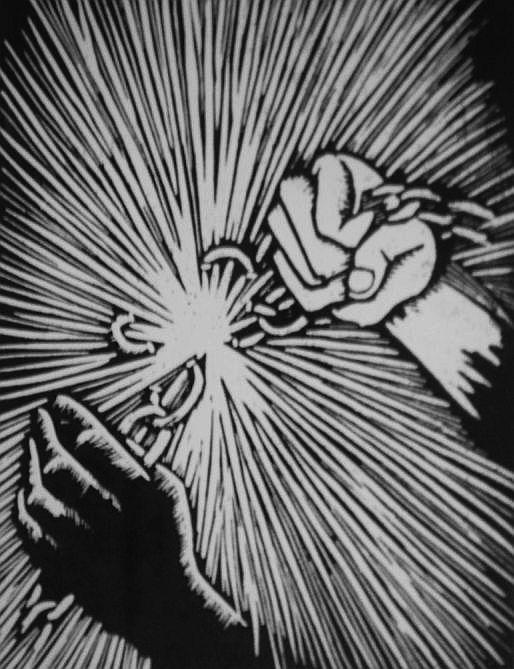
There are many more reforms I could list. You will notice, however, that these are indeed reforms; bread and butter social democracy. Does that mean such a program is counter-revolutionary? A mere placatory settlement between capital and the working class? No, it does not. Revolution does not emerge from the systematic subjection of individuals to increased misery, anxiety and hardship as accelerationist logic demands. Instead it flourishes when populations become aware of their chains, are given radical visions for the future and the means to achieve them. It is when leftists critique but also offer hope. It is when the population writ large are included in and are masters of their own liberation; not when they are viewed as a lumpen, otherly mass, of only instrumental importance in achieving the glorious revolution.

Look at the practicalities and this becomes obvious. How can we expect individuals to launch themselves into high-tension anxiety-inducing conflicts if the mere thought of such a situation causes them to have a panic attack? How can individuals, in the face of near panoptical surveillance and monitoring, combat the overwhelming desire to conform if they aren’t awarded some freedom from the practical anxieties of life? How are we to think and act in a revolutionary, and often abstract, manner if the very real and immediate anxieties of work, home and play fog our minds so totally?

This is not to say freedom will be given to us. It must always be taken, and we must not rely on electoral politics to hand us the revolution down from above. Nor will true struggle ever be an anxiety-free leisure pursuit. Genuine conflict with the state and capital will always entail danger, stress and the possibility of intensified precariousness.

Nevertheless, the dismissal of electoral politics in its totality represents abysmal revolutionary theory. The pursuit of reforms by progressive governments being bitten at the heels by sharp, vibrant social movements can produce real, tangible change.

It was what should have happened with Syriza, and it is what will hopefully happen with the new Labour leadership in the UK. And if, as individuals and communities, we are to puncture the distress, precariousness and general sense of cruel unknowing so particular to the moment in which we live, if we are to overcome the avalanche of bullshit and reclaim our confidence, if we to construct and disseminate a distinctly communal, hopeful revolutionary fervor, such changes are imminently needed.


Joseph Todd is a writer and an activist. Find more of his writings here or follow him on twitter.