
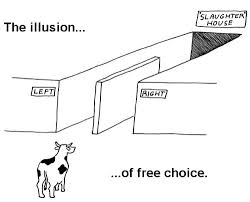
The Illusion of Freedom: The Police State Is Alive and Well

By John W. Whitehead

Source: Battlefield America

“What happened here was the gradual habituation of the people, little by little, to being governed by surprise; to receiving decisions deliberated in secret; to believing that the situation was so complicated that the government had to act on information which the people could not understand, or so dangerous that, even if the people could understand it, it could not be released because of national security… This separation of government from people, this widening of the gap, took place so gradually and so insensibly, each step disguised (perhaps not even intentionally) as a temporary emergency measure or associated with true patriotic allegiance or with real social purposes. And all the crises and reforms (real reforms, too) so occupied the people that they did not see the slow motion underneath, of the whole process of government growing remoter and remoter.”—Historian Milton Mayer, They Thought They Were Free: The Germans, 1933-45

Brace yourself.

There is something being concocted in the dens of power, far beyond the public eye, and it doesn’t bode well for the future of this country.

Anytime you have an entire nation so mesmerized by the antics of the political ruling class that they are oblivious to all else, you’d better beware. Anytime you have a government that operates in the shadows, speaks in a language of force, and rules by fiat, you’d better beware. And anytime you have a government so far removed from its people as to ensure that they are never seen, heard or heeded by those elected to represent them, you’d better beware.

The world has been down this road before.

As historian Milton Mayer recounts in his seminal book on Hitler’s rise to power, They Thought They Were Free, “Most of us did not want to think about fundamental things and never had. There was no need to. Nazism gave us some dreadful, fundamental things to think about—we were decent people‑—and kept us so busy with continuous changes and ‘crises’ and so fascinated, yes, fascinated, by the machinations of the ‘national enemies’, without and within, that we had no time to think about these dreadful things that were growing, little by little, all around us.”

We are at our most vulnerable right now.

The gravest threat facing us as a nation is not extremism—delivered by way of sovereign citizens or radicalized Muslims—but despotism, exercised by a ruling class whose only allegiance is to power and money.

Nero fiddled while Rome burned.

America is burning, and all most Americans can do is switch the channel, tune out what they don’t want to hear, and tune into their own personal echo chambers.

We’re in a national state of denial.

Yet no amount of escapism can shield us from the harsh reality that the danger in our midst is posed by an entrenched government bureaucracy that has no regard for the Constitution, Congress, the courts or the citizenry.

If the team colors have changed from blue to red, that’s just cosmetic.

The playbook remains the same. The leopard has not changed its spots.

Scrape off the surface layers and you will find that the American police state is alive and well and continuing to wreak havoc on the rights of the American people.

“We the people” are no longer living the American Dream.

We’re living the American Lie.

Indeed, Americans have been lied to so sincerely, so incessantly, and for so long by politicians of all stripes—who lie compulsively and without any seeming remorse—that they’ve almost come to prefer the lies trotted out by those in government over less-palatable truths.

The American people have become compulsive believers.

As Nick Cohen writes for The Guardian, “Compulsive liars shouldn’t frighten you. They can harm no one, if no one listens to them. Compulsive believers, on the other hand: they should terrify you. Believers are the liars’ enablers. Their votes give the demagogue his power. Their trust turns the charlatan into the president. Their credulity ensures that the propaganda of half-calculating and half-mad fanatics has the power to change the world.”

While telling the truth “in a time of universal deceit is,” as George Orwell concluded, “a revolutionary act,” believing the truth—and being able to distinguish the truth from a lie—is also a revolutionary act.

Here’s a truth few Americans want to acknowledge: nothing has changed (at least, not for the better) since Barack Obama passed the reins of the police state to Donald Trump.

The police state is still winning. We the people are still losing.

In fact, the American police state has continued to advance at the same costly, intrusive, privacy-sapping, Constitution-defying, relentless pace under President Trump as it did under President Obama.

Police haven’t stopped disregarding the rights of citizens. Having been given the green light to probe, poke, pinch, taser, search, seize, strip, shoot and generally manhandle anyone they see fit in almost any circumstance, all with the general blessing of the courts, America’s law enforcement officials are no longer mere servants of the people entrusted with keeping the peace. Indeed, they continue to keep the masses corralled, under control, and treated like suspects and enemies rather than citizens.

SWAT teams haven’t stopped crashing through doors and terrorizing families. Nationwide, SWAT teams continue to be employed to address an astonishingly trivial array of criminal activities or mere community nuisances including angry dogs, domestic disputes, improper paperwork filed by an orchid farmer, and misdemeanor marijuana possession. With more than 80,000 SWAT team raids carried out every year on unsuspecting Americans for relatively routine police matters and federal agencies laying claim to their own law enforcement divisions, the incidence of botched raids and related casualties continue to rise.

The Pentagon and the Department of Homeland Security haven’t stopped militarizing and federalizing local police. Police forces continue to be transformed into heavily armed extensions of the military, complete with jackboots, helmets, shields, batons, pepper-spray, stun guns, assault rifles, body armor, miniature tanks and weaponized drones. In training police to look and act like the military and use the weapons and tactics of war against American citizens, the government continues to turn the United States into a battlefield.

Schools haven’t stopped treating young people like hard-core prisoners. School districts continue to team up with law enforcement to create a “schoolhouse to jailhouse track” by imposing a “double dose” of punishment for childish infractions: suspension or expulsion from school, accompanied by an arrest by the police and a trip to juvenile court. In this way, the paradigm of abject compliance to the state continues to be taught by example in the schools, through school lockdowns where police and drug-sniffing dogs enter the classroom, and zero tolerance policies that punish all offenses equally and result in young people being expelled for childish behavior.

For-profit private prisons haven’t stopped locking up Americans and immigrants alike at taxpayer expense. States continue to outsource prison management to private corporations out to make a profit at taxpayer expense. And how do you make a profit in the prison industry? Have the legislatures pass laws that impose harsh penalties for the slightest noncompliance in order keep the prison cells full and corporate investors happy.

Censorship hasn’t stopped. First Amendment activities continue to be pummeled, punched, kicked, choked, chained and generally gagged all across the country. The reasons for such censorship vary widely from political correctness, safety concerns and bullying to national security and hate crimes but the end result remained the same: the complete eradication of what Benjamin Franklin referred to as the “principal pillar of a free government.”

The courts haven’t stopped marching in lockstep with the police state. The courts continue to be dominated by technicians and statists who are deferential to authority, whether government or business. Indeed, the Supreme Court’s decisions in recent years have most often been characterized by an abject deference to government authority, military and corporate interests. They have run the gamut from suppressing free speech activities and justifying suspicionless strip searches to warrantless home invasions and conferring constitutional rights on corporations, while denying them to citizens.

Government bureaucrats haven’t stopped turning American citizens into criminals. The average American now unknowingly commits three felonies a day, thanks to an overabundance of vague laws that render otherwise innocent activity illegal, while reinforcing the power of the police state and its corporate allies.

The surveillance state hasn’t stopped spying on Americans’ communications, transactions or movements. On any given day, whether you’re walking through a store, driving your car, checking email, or talking to friends and family on the phone, you can be sure that some government agency, whether it’s your local police, a fusion center, the National Security Agency or one of the government’s many corporate partners, is still monitoring and tracking you.

The TSA hasn’t stopped groping or ogling travelers. Under the pretext of protecting the nation’s infrastructure (roads, mass transit systems, water and power supplies, telecommunications systems and so on) against criminal or terrorist attacks, TSA task forces (comprised of federal air marshals, surface transportation security inspectors, transportation security officers, behavior detection officers and explosive detection canine teams) continue to do random security sweeps of nexuses of transportation, including ports, railway and bus stations, airports, ferries and subways, as well as political conventions, baseball games and music concerts. Sweep tactics include the use of x-ray technology, pat-downs and drug-sniffing dogs, among other things.

Congress hasn’t stopped enacting draconian laws such as the USA Patriot Act and the NDAA. These laws—which completely circumvent the rule of law and the constitutional rights of American citizens, continue to re-orient our legal landscape in such a way as to ensure that martial law, rather than the rule of law, our U.S. Constitution, becomes the map by which we navigate life in the United States.

The Department of Homeland Security hasn’t stopped being a “wasteful, growing, fear-mongering beast.” Is the DHS capable of plotting and planning to turn the national guard into a federalized, immigration police force? No doubt about it. Remember, this is the agency that is notorious for militarizing the police and SWAT teams; spying on activists, dissidents and veterans; stockpiling ammunition; distributing license plate readers; contracting to build detention camps; tracking cell-phones with Stingray devices; carrying out military drills and lockdowns in American cities; using the TSA as an advance guard; conducting virtual strip searches with full-body scanners; carrying out soft target checkpoints; directing government workers to spy on Americans; conducting widespread spying networks using fusion centers; carrying out Constitution-free border control searches; funding city-wide surveillance cameras; and utilizing drones and other spybots.

The military industrial complex hasn’t stopped profiting from endless wars abroad. America’s expanding military empire continues to bleed the country dry at a rate of more than $15 billion a month (or $20 million an hour). The Pentagon spends more on war than all 50 states combined spend on health, education, welfare, and safety. Yet what most Americans fail to recognize is that these ongoing wars have little to do with keeping the country safe and everything to do with enriching the military industrial complex at taxpayer expense.

The Deep State’s shadow government hasn’t stopped calling the shots behind the scenes. Comprised of unelected government bureaucrats, corporations, contractors, paper-pushers, and button-pushers who are actually calling the shots behind the scenes, this government within a government continues to be the real reason “we the people” have no real control over our so-called representatives. It’s every facet of a government that is no longer friendly to freedom and is working overtime to trample the Constitution underfoot and render the citizenry powerless in the face of the government’s power grabs, corruption and abusive tactics.

And the American people haven’t stopped acting like gullible sheep. In fact, many Americans have been so carried away by their blind rank-and-file partisan devotion to their respective political gods that they have lost sight of the one thing that has remained constant in recent years: our freedoms are steadily declining.

Here’s the problem as I see it: “we the people” have become so trusting, so gullible, so easily distracted, so out-of-touch and so sure that our government will always do the right thing by us that we have ignored the warning signs all around us.

In so doing, we have failed to recognize such warning signs as potential red flags to use as opportunities to ask questions, demand answers, and hold our government officials accountable to respecting our rights and abiding by the rule of law.

Unfortunately, once a free people allows the government to make inroads into their freedoms, or uses those same freedoms as bargaining chips for security, it quickly becomes a slippery slope to outright tyranny. And it doesn’t really matter whether it’s a Democrat or a Republican at the helm, because the bureaucratic mindset on both sides of the aisle now seems to embody the same philosophy of authoritarian government.

As I make clear in my book Battlefield America: The War on the American People, this is what happens when you ignore the warning signs.

This is what happens when you fail to take alarm at the first experiment on your liberties.

This is what happens when you fail to challenge injustice and government overreach until the prison doors clang shut behind you.

In the American police state that now surrounds us, there are no longer such things as innocence, due process, or justice—at least, not in the way we once knew them. We are all potentially guilty, all potential criminals, all suspects waiting to be accused of a crime.

So you can try to persuade yourself that you are free, that you still live in a country that values freedom, and that it is not too late to make America great again, but to anyone who has been paying attention to America’s decline over the past 50 years, it will be just another lie.

The German people chose to ignore the truth and believe the lie.

They were not oblivious to the horrors taking place around them. As historian Robert Gellately points out, “[A]nyone in Nazi Germany who wanted to find out about the Gestapo, the concentration camps, and the campaigns of discrimination and persecutions need only read the newspapers.”

The warning signs were definitely there, blinking incessantly like large neon signs.

“Still,” Gellately writes, “the vast majority voted in favor of Nazism, and in spite of what they could read in the press and hear by word of mouth about the secret police, the concentration camps, official anti-Semitism, and so on. . . . [T]here is no getting away from the fact that at that moment, ‘the vast majority of the German people backed him.’”

Half a century later, the wife of a prominent German historian, neither of whom were members of the Nazi party, opined: “[O]n the whole, everyone felt well. . . . And there were certainly eighty percent who lived productively and positively throughout the time. . . . We also had good years. We had wonderful years.”

In other words, as long as their creature comforts remained undiminished, as long as their bank accounts remained flush, as long as they weren’t being discriminated against, persecuted, starved, beaten, shot, stripped, jailed and turned into slave labor, life was good.

This is how tyranny rises and freedom falls.

As Primo Levi, a Holocaust survivor observed, “Monsters exist, but they are too few in number to be truly dangerous. More dangerous are the common men, the functionaries ready to believe and to act without asking questions.”

Freedom demands responsibility.

Freedom demands that people stop sleep-walking through life, stop cocooning themselves in political fantasies, and stop distracting themselves with escapist entertainment.

Freedom demands that we stop thinking as Democrats and Republicans and start thinking like human beings, or at the very least, Americans.

Freedom demands that we not remain silent in the face of evil or wrongdoing but actively stand against injustice.

Freedom demands that we treat others as we would have them treat us. That is the law of reciprocity, also referred to as the Golden Rule, and it is found in nearly every world religion, including Judaism and Christianity.

In other words, if you don’t want to be locked up in a prison cell or a detention camp—if you don’t want to be discriminated against because of the color of your race, religion, politics or anything else that sets you apart from the rest—if you don’t want your loved ones shot at, strip searched, tasered, beaten and treated like slaves—if you don’t want to have to be constantly on guard against government eyes watching what you do, where you go and what you say—if you don’t want to be tortured, waterboarded or forced to perform degrading acts—if you don’t want your children to grow up in a world without freedom—then don’t allow these evils to be inflicted on anyone else, no matter how tempting the reason or how fervently you believe in your cause.

As German theologian and anti-Nazi dissident Dietrich Bonhoeffer observed, “We are not to simply bandage the wounds of victims beneath the wheels of injustice, we are to drive a spoke into the wheel itself.”

Saturday Matinee: Helio

helio

Helio is a short, visceral film centered on a post apocalyptic underground society where miners work for light to survive. But when a dying rebel thrusts the unexpected onto an unassuming worker’s lap, all hell breaks loose. What begins as one man’s race to escape the hostile government quickly escalates into a city-wide uprising of the people.

Something Is Happening

collapse-era

By William Hawes

Source: Gods & Radicals

SOMETHING IS HAPPENING HERE, but you don’t know what it is: Do you? No one knows, really, as this something is still evolving. As we look back to 2016, though, it is abundantly clear that history has awoken from its slumber. We’ve had a couple events in the West last year: Brexit and Trump.

Politically-charged, dynamic events (as Alain Badiou might define them) have been rare in the West since the fall of the Berlin Wall and the disintegration of the USSR. Capitalism made it seem as if neoliberalism was winning in the 1990s, even as the US wantonly murdered in Iraq and took perverse pleasure in helping to dismember Yugoslavia, among other things.

In fact, one could argue there have only been four notable Western political events in the post-Cold War era: the 9/11 attacks, the 2003 protests against the Iraq War, the 2008 banking crisis and following protest movements of 2011 (Occupy and 15-M Movement), and the populist, anger-driven aforementioned events of 2016.

You see, authentic, spontaneous political events (in the form of uprisings or popular revolts against the elite) are a no-no in the West. History is supposed to have ended, remember? Max Weber called this the Iron Cage, and for good reason.

Now, though, the meaninglessness and rootlessness of our lives trapped inside the cage have become too obvious to ignore, for most of us. As each day passes, our political discourse glosses over how lazy, ignorant, mean-spirited, and numb our society has become. We import luxuries from all over the globe, but can’t be bothered to cook or grow our own food, assemble our own electronics, expand renewable energy projects, provide clean water to inner cities, organize high-speed transport, or educate our youth without drowning them in debt, etc.

So, many have lashed out against the system, and our more vulnerable members of society, in anger, defiance, out of sheer ignorance. Could it be because, deep down, we know how helpless, sheltered, and out-of-touch our society is, compared to the rest of the world? What are the root causes of this disintegration of public discourse?

One cause is our utter dependency on the capitalist system to clothe, feed, and shelter us. What we used to inherit from our mothers and fathers, important agricultural knowledge, artisanal and cultural wisdom, a sense of place and belonging, have all been traded in for money, the privilege to be exploited by capitalism, toiling in jobs that alienate us from ourselves, families, the Earth. Paper bills and electronic bank accounts are a pitiful substitute for self-reliance. This loss, this grief, isn’t allowed to be expressed in public. Logical positivism tells us that progress will prevail, the future will be better than the past, and anyone who thinks otherwise must be some sort of Luddite.

Since real income has fallen and social services have been slashed in the last 40-plus years, many have seen their loved ones’ lives cut short (lack of access to health care and quality food and produce, air and water pollution), their dreams defiled (steady jobs gone, factories shuttered), their entertainment homogenized and dangerous (sports mania has become normalized, “Go Team!”, alcohol, painkiller, and opiate addiction is rampant), their hopes for the future shattered (community and public space swallowed by corporations).

There are those, as well, still too plugged into the system (both Trump and Clinton voters), too attached to their gadgets, to the hum of their slave-labor appliances, to the glow emanating from their screens. They will cry incessantly about the turning away of Muslims from flights, but there is only silence for the millions killed abroad by the US war machine. Mainstream liberals are just as likely as the meanest, most selfish conservatives to fall prey to emotional pleas, demagoguery, and pathetic attempts to see themselves as victims in this Age of Anger.

The urge to resort to the myth of a righteous, homogenous, “pure” social group, to denigrate the other, is strong in such dire, despondent situations. In America, though, material poverty cannot be said to be the only, or even the main causal factor, behind this return of nativism and tribalism. Rather, it is undoubtedly a spiritual malaise that has swept over the West. Ever since the rise of the Industrial Revolution, it has been technology which has provided the underlying weltanschauung for our culture. Sprouting from this, an inhuman and Earth-destroying morality has formed. Jacques Ellul explains:

“A principal characteristic of technique … is its refusal to tolerate moral judgments. It is absolutely independent of them and eliminates them from its domain. Technique never observes the distinction between moral and immoral use. It tends on the contrary, to create a completely independent technical morality.” (1)

Thus, Western society, through the use of mass-produced electronics and disseminated in what some call our “Information Age”, has now seemingly accelerated the pace of change and ecological destruction beyond the scope of any group or nation which could possibly control it. We are then confronted with the thought that only an economic collapse or series of natural disasters could possibly provide the impetus for revolutionary change to occur. This only leaves us feeling helpless, depressed, and passive in the face of government oppression and capitalist exploitation.

Not only that, but capitalism has quite literally dulled our senses and disconnected us from our source of being, planet Earth. Don’t believe me? Read this amazing paper on how Polynesian wayfinders discovered islands thousands of miles apart without any modern technology. This is part of what Morris Berman means by Coming to our Senses. To re-establish our unity with nature, the Western notion of an ego-driven, domineering and reductionist search for truth, meaning, and creativity must be thrown out. Here, Berman invokes Simone Weil:

“‘decreate’ yourself in order to create the work, as God (Weil says) diminished Himself in order to create the world. It would be more accurate to say that you don’t create the work, but rather you step out of the way and let it happen.” (2)

This isn’t really discussed among wide swaths of leftists, the social-justice crowd, or with mainstream liberals. It’s anathema to a materialistic, dead world where freedom has been traded for comforting lies, money has been substituted for the ability to provide for ourselves and our communities, and the abundance and resiliency (truly a miracle!) of the Earth is taken for granted as we chase our next fix for consumer goods, our next chance for drugs or gadgets to dim our perception.

What you’re not supposed to say in public, of course, is that our world is falling apart, and we are doing nothing to stop it. The reactions are too raw, the reality too grim, even as we know, for example, that 10% or more of the total species on Earth will be gone by 2050.

Yet we can do something: there is an opening now in political discourse which has been previously denied to us. The Republican and Democratic parties have thoroughly delegitimized themselves by offering up Trump and Clinton as their figureheads: these were widely considered the most widely disliked candidates in recent memory, if not the history of our republic. There is room for Libertarians, Greens, and Socialists to gain power: yet only if they avoid their own regrettable sectarianism, organize, and promote an inclusive, broad-based platform.

To do so, citizens will have to gain some perspective on their lives. A slow pace of life needs to be seen as a virtue, not a sin: many on the right and left are quick to denounce the hedonism of the jet-setting, parasitic globalists, the Davos men; yet refuse to see their own lifestyles and actions as smaller examples of such outlandish consumption.

If we are open to life and our environment as part of a greater whole, an unfathomable mystery, we can refuse our culture’s siren songs of death, misery, and destruction. While modern technology can be useful if reined in by an Earth-conscious, responsible morality, some things are better left unknown, undiscovered, if it risks destroying the Earth in order to find the answer. Rather than running a cost/benefit analysis to determine the land’s worth, some aspects of the planet and the universe are better Left Sacred.

Also, acknowledging our mortality, and accepting the basic fact that death could come for you at any moment, can liberate our souls and propel them to unimaginable heights. Joe Crookston explains this quite well:

“And then when I turn dry and brown
I’ll lay me down to rest
I’ll turn myself around again
As part of an eagle’s nest
And when that eagle learns to fly
I’ll flutter from that tree
I’ll turn myself around again
As part of the mystery”


Notes:
1.) Ellul, Jacques. The Technological Society. Vintage Books, 1964. p. 97.
2.) Berman, Morris. Coming to Our Senses: Body and Spirit in the Hidden History of the West. Simon & Schuster, 1989. p. 337


William Hawes is a writer specializing in politics and environmental issues. His articles have appeared online at Global Research, Countercurrents, Dissident Voice, The World Financial Review, Gods & Radicals, and Counterpunch. He is author of the ebook Planetary Vision: Essays on Freedom and Empire. You can reach him at wilhawes@gmail.com

Saturday Matinee: Metropolis

2_opt

From Open Culture:

Today we bring you one of the most influential films of all time: Fritz Lang’s 1927 fable of good and evil fighting it out in a futuristic urban dystopia, Metropolis.

The melodrama is set in the year 2026. Metropolis is a beautiful high-tech city, but beneath the dazzling surface toil masses of enslaved workers. To keep the machinery running efficiently, the workers have been forced to become virtual machines themselves. The city is ruled by a heartless mastermind named Johann Fredersen, whose idealistic son, Freder, discovers the cruel conditions imposed on the workers and rebels against his father.

Freder falls in love with Maria, a messianic figure preaching love and reconciliation, but his father hatches an evil plot to turn the workers against Maria. He hires the mad scientist Rotwang to make a robotic counterfeit of Maria to wreak havoc among the workers, discrediting her and discouraging rebellion. An epic struggle ensues.

Lang actually detested the story, which was written mostly by his wife Thea Von Harbou. He told Peter Bogdanovich that Metropolis was “silly and stupid.” But from a visual standpoint the film is one of the great works of 20th century art. Lang said he got the idea of making a movie about a futuristic city while visiting New York in 1924. Standing at night on the deck of his ship in New York Harbor, the filmmaker looked up and was amazed:

I saw a street lit as if in full daylight by neon lights and, topping them, oversized luminous advertisements moving, turning, flashing on and off, spiraling…something that was completely new and nearly fairy tale-like for a European in those days….The buildings seemed to be a vertical veil, shimmering, almost weightless, a luxurious cloth hung from the sky to dazzle, distract, and hypnotize. At night the city did not give the impression of being alive; it lived as illusions lived. I knew then that I had to make a film about all of these sensations.

The iconic poster image above is reproduced from an extremely rare program printed for the March 21, 1927 London premiere of Metropolis. You can look through the entire 32-page program at the Web site of bookseller Peter Harrington. The page will open in a new window, so you can look at the program and stay here and watch the film.

There’s also a 2010 restoration of the film, supervised by the F.W. Murnau Foundation, which incorporates footage from an early print discovered in Buenos Aires, bringing the film closer to Lang’s original vision.

Saturday Matinee: Dust (2016)

dust-featured-800x413

Dust is set in a dystopian world where most of humanity lives in walled cities to protect themselves from a chaotic environment where evolution occurs at breakneck speed, creating organisms which can be a deadly plague or miraculous medicine. It’s the job of a tracker to document the changes and, with the help of a black-market merchant, find a cure to save the society which he rejected.

“Why Don’t You Just Get a Better Job” and Other Dumb Shit People Say to Low-Income Earners Stuck in Precarious Work

precarious-work

By Chloe Ann King

Source: The Hampton Institute

For most of my working life I have been stuck in the hospitality industry which is lowly paid, painfully precarious and poorly regulated. In New Zealand, where I live, hospitality employers mostly treat you as nothing more than an easily replaceable unit to turn-over-profit. I have spent over a decade in this industry and as such I have become acutely aware of the fact that no matter how many shifts I work or how many poorly paid jobs I undertake; I will never have enough money to meet rising living costs.

Sometimes, my life is a bit depressing. You know what I mean? I get up, I go and work one of my multiple jobs and I come home. Each week I check my bank balance and I feel pretty put-out about how low my pay is as compared to how hard I worked for it.

Obviously, working hard at minimum wage jobs is never going to land me economic security. No matter how hard I have worked in the hospo industry I have never ever received a pay-rise, not once. The lie of “hard work” serves to convince us that if we fail to achieve happy, healthy and joy filled lives which are economically secure thanks to well paid jobs, it is because we failed to work hard enough for it. Constantly we are told that external factors do not affect us. This type of pervasive ‘positive’ rhetoric isendlessly used by many self-help Gurus such as Tony Robbins, one of America’s most well-known motivational speakers.

The lie of “hard work” is pitched to us – those from the working and lower classes, by not only self-help gurus and spiritualists but politicians and well intentioned high school teachers and even our parents, as being one of the best paths to prosperity. This myth is perpetuated and disseminated by the mainstream media as motivational newsworthy ‘human interest’ stories. However, there is very little which is human about these types of stories. The core of these news pieces has nothing to do with humanity or being human and everything to do with selfishness and individualism and play on insecurities and our need to compare our lives to others who we think or we are passive aggressively told, have it better than us.

A few months ago the NZ Herald (New Zealand’s most read newspaper which controls the national narrative) ran yet another one of these “motivational” articles on a young landlord named Gary Lin. Who has managed to buy up a staggering eleven properties citing “hard work” as a reason for his success. He told the NZ Herald,

“Work hard, work smart, save hard, and invest smart. Wealth creation is not rocket science – perseverance and hard work can get you there.”

As if wealth creation is something we should as young people, be aspiring to. In times of great wealth inequality, we should be demanding wealth dispersal not setting out to create and covet wealth for ourselves. Gary, unlike most of us, was given a hefty “leg up” or what we poor folk call a “handout” by his father in the sum of $200,000 as a wedding gift which allowed him to buy his first home which cost him $175,000. I guess for some people money really does grow on trees.

I hate to break it to you Gaz – can I call you Gaz? But “hard work” had nothing to do with your successes in life.

Gaz got lucky. He won the genetic lottery and was born into wealth – he did not earn the money that helped him buy his first home. It was given to him. Instead of using his unearned wealth to help others he made the choice to punch-down and profit off the growing number of people stuck in the rental trap by hoarding properties. Gaz has engaged in predatory behavior by renting his properties out at market rental rates. In an unregulated rental market the odds are never in favor of tenants. As George Monbiot wrote for the Guardian, Rent is another term for unearned income.”

People like Gaz rarely acknowledge their economic success is at the expense of those from the lower and working classes. To recognize this Gaz, might have to feel a little bit bad about how he came into his millionaire property portfolio. He might have some kind of world shattering epiphany that he is not as smart as he believes and his successes are owed more to an ability to stomach the ruthless actions and attitudes needed to ‘make it’ in a society that is quickly turning into a dystopian one. Which makes The Hunger Games, look like child’s play. Sociopathy and luck had more to do with Gaz’s successes in life than actual “hard work”, talent and intelligence.

Lawyer and anti-poverty activist David Tong, responded to Gaz’s flawed belief that anyone can own property if they just “work hard” enough, with these words:

“Motivational read from the NZ Herald: You too can be a rich property investor. If dad gives you a $200,000 gift”

“Hard work” and motivation don’t mean shit in a broken economy that was built on the blood, backs and bones of the working class and the most marginalized and vulnerable. Increasingly, accessing upward mobility – which buying property can help you obtain as well as a better quality of life, is becoming an impossible task because of low wages, insecure work and a flooded job market. People are just struggling to get off minimum wage let alone save for a house.

***

The New Zealand Council of Trade Unions states that “At least 30% of New Zealand’s workers – over 635,000 people – are in insecure work. We believe it may well cover 50% of the workforce.” No matter how hard you work it is impossible to get ahead when your employer only offers you inconsistent hours and denies your basic right to a guarantee of minimum hours.

Casual contracts are used widely within the hospitality and service industries and state that your employer owes you “no minimum of hours.” But the expectation is that you will cover and come in when needed and if you refuse you are often faced with penalties. Such as having your shifts cut the next week. Having the stability of a salary as opposed to waged work is a far off dream for so many of us. You can’t budget let alone save money for a house when you never know what your pay-check is going to be from one week to the next.

Economic insecurity because of cut shifts and insecure hours has been a major feature of my working life. For example, last year just before Christmas I had my shifts cut in half. I went from working between four and five shifts a week down to only two. I was given six days’ notice and when I pointed out how hard this would hit me economically to a Duty manager I was told, “I should go and find a second job” and reminded that “I was only on a casual contract so there was not much I could do about it.”

For the last few months I had been back-breakingly flexible for this employer. I had come in whenever I was needed and covered shifts at short notice. I had worked hard to make every customer’s experience an enjoyable one, all this for minimum wage. I spent most of December desperately scrounging around for a second job, as did two other workers who had suffered the same fate.

I popped into the same work soon after my shifts had been cut to collect my tips and one of the regulars who had been drinking, accosted me verbally and demanded to know why I was in such vocal support of the recent rolling strikes of Bunnings Warehouse workers. These workers had been subject to Zero Hour contracts, eternal bullying and harassment from managers and no guarantee of shifts or rosters. He said “why don’t these Bunnings workers just go out and get a better job”. This statement coming from a white male Baby Boomer who enjoyed free tertiary education and did not start his working life off in debt. All is crimson and gold in middle class Whiteywood, I guess.

“Why don’t you just go and get a better job?” This singular narrative epitomizes the ignorant attitudes of people like Gaz and the regular from my work whose name is ironically Gary, as well. It also puts the sole responsibility of finding well paid and meaningful work onto the worker, while absolving a government’s responsibility to push for job creation which serves their citizenry and the environment and to raise the minimum wage to a living wage, in New Zealand.

If over 30% of the workforce is stuck in precarious work and large sectors of the workforce earn below Aotearoa’s living wage of $19.25 an hour, finding “better work” is statistically impossible for a vast majority of us. There are thousands of hospitality businesses in Auckland, New Zealand, and only a handful pay a living wage and nearly none offer a guarantee of hours. As such telling people to “get a better job” is like telling them to buy a lotto ticket and live in hope they take out the jackpot.

***

No matter what the Gaz’s, Gary’s and the self-help superstars such as Tony Robbins of this world have to say on the myth of “hard work” and perseverance paying off one day, the reality is our ability to access upward mobility; buy a house; obtain a decent standard of living is tied to what type of work you can access. External factors not only deeply impact people’s lives they oppress those who do not benefit from certain types of privilege. Not all roads lead to Rome. More often than not for us poor folk they lead to roadblocks and hurdles that increase based on the colour of your skin, the class you were born into and/or your gender, how bodily abled you are and your sexuality or a combination of all of these.

People’s situations are complicated and difficult and cannot be curtailed into passive aggressive motivational “one liners” that nearly always punch-down and not up. Our working class struggles cannot be solved by a set of self-help rules or keys or steps which are meant to guide anyone to economic stability and lead you to the life of your dreams and a perfect job. In the book, The New Soft War on Women, the chapter entitled ‘Doing Well May Not Work Out So Well’, Caryl Rivers and Rosaling C. Barnett, write,

“We like to believe that the workplace is fair and that if we do a good job, we will be rewarded. After all, that’s the American way. But this belief is less true for women than it is for men. Indeed, too often women’s performance which is stellar gets fewer rewards than men do – even men who are less than outstanding.”

During a major speech at Wellesley College, presidential candidate Hillary Clinton, talked about the role women can play in politics and public life, she said,

“We know we’ve got to keep pushing at that glass ceiling. We have to try and break it… Obviously. I hope to live long enough to see a woman elected president of the United States.”

Encouraging women to break the glass ceiling is all well and good but what if moving off minimum wage and accessing a living wage, is no easy feat? In America alone, 6 out of every 10 women are stuck on minimum wage.

The Glass Ceiling is so high up most of us can barely even see it. Researchers at the non-profit group Catalyst point out, “[…] when you start from behind, it’s hard enough to keep pace, never mind catch up-regardless of what tactics you use.” Both Rivers and Barnett went on to write,

“Doing all the right things to get ahead-using those strategies regularly suggested in self-help books, coaching sessions and the popular press-pays off much better for men than it does for women.”

As women, we do not struggle to “get ahead” because of personal failings but this struggle is born from structural sexism which creates gendered inequality.

Telling white women and women of colour to be more ambitious and just “work harder” if they want to smash the Glass Ceiling and obtain a decent standard of living is almost laughable. Considering many women, in particular, indigenous women and women of colour, are still struggling to make it out of the basement. Still, self-help gurus such as Tony Robbins preach to millions that none of what I am writing about actually matters: race, gender… whatever you were born as, and into, does not have to hold you back. You just have to believe in yourself and follow the Tony Robbin’s step-by-step guide to snagging a life beyond anything you could ever dream of. Which he has called: ’12 Keys to an Extraordinary Life’. You couldn’t make this shit up. He said at a recent event:

“I don’t care if you are young or old, I don’t care what your colour is, what your gender is, what country you come from, if you understand the science of building wealth you can have an abundance of it. If you violate those rules [of the 12 keys to an Extraordinary Life] either because you’re ignorant to them or you don’t apply then, you are going to have financial stress”

Tony, who sounds uncomfortably like Gaz in his belief anyone can become a millionaire, may as well have just said “we are all one”! “Everyone can make it no matter what grinding and economically depressive situations you come from”! And be done with it.

Financial stress is not brought about because you have unknowingly violated one or more of the ’12 Keys to an Extraordinary Life’ which Tony has made tens of millions off. Violating female stereotypes of passivity have a lot more to do with our failure or success in the workplace than how hard we do, or do not, hustle for top positions and top earning brackets. Rivers and Barnett write, “Competent women violate the traditional female stereotype of passivity. And that violation can trigger a reaction of fear and loathing [in the workplace].”

Financial stress is brought about because of injustices such as the pay-gap and the coloured pay-gap. Something Tony, has clearly gone out of his way to ignore. Self-help gurus and people like Gaz and Gary tend to, “displace questions of social justice and frame their rhetoric by the individualist and corporatist values of a consumer society,” as both Jeremy Carrette and Richard King wrote in the book, Selling Spirituality: the silent take over of religion.

Both Rivers and Barnett point out in relation to the American pay gap,

“Hispanic/Latino women have the lowest median earnings, earning just 55 percent of the median weekly earnings of white men; black women have, median weekly earnings of 64 percent of those of white men.”

The pay gap for America’s first nation indigenous women also sits at 55 cents in the dollar compared to white men, as non-profit AAUW reports. Indigenous women are faced with earning nearly half of what white men do in America.

Similarly, in Aotearoa indigenous Maori and Pasifika women, face significant coloured/indigenous pay-gaps compared to white men and women. TheDominion Post, reported last year, “Maori and Pasifika women are more likely to be in the lowest paying jobs, which increases the poverty in their lives and communities.” The Human Rights Commission has been tracking unfairness and inequality at work and cites that Pasifika women on average earn $57,668 while white men earn $66,900. What this data shows us is that, “Men are paid more than women overall and within ethnic groups. The effects increase when combining several factors as is the case between New Zealand European men and Pacific women. These patterns have persisted over time.”

These “patterns” of women of colour and Indigenous women being paid significantly less than white men and women, to do the same damn jobs have “persisted” all over the world from America to Aotearoa. Injustice and oppression is locally and globally connected.

A more accurate description of what the aspirational metaphor of the Glass Ceiling is made out of is to say it is made from lead. So many women are much more likely to fall off what Rivers and Barnett have labelled the “glass cliff” than triumphantly smash the glass ceiling into a million little pieces. Following Tony Robbin’s guide to obtaining some magical, fairy-tale life, or any other pseudo bullshit glittery guides to financial freedom, aren’t going to be very effective for women born into a system which was built to silence and eradicate them.

The only thing I am aspiring to “smash” is white imperial patriarchal systems that at best disempower women and at worst, brutally and often violently oppress them.

***

As workers we are criticized for our behavior whether we are told we need to be “more ambitious” or we “just need to work harder” in response to our perceived failure to land a great job with good pay and consistent hours. I am so tired of listening to people who endlessly tell me to go and get a “better job” or a “real job” (what does that even mean?!). And I have lost count of the times I have been told by people who hold anti-protester positions to “go and get a job” while I am on the picket line or the protest ground. As if the low waged work I do counts for absolutely nothing. As if service industry work is some kind of phantom job.

This is for anyone who has ever told a service worker to go and get a “job” or a “real job”: why don’t you make your own double shot soy latte, flip your own burgers and pour your own damn beer and make your own designer espresso martini, which costs more than I make in an hour.

When as a worker, I refuse to put up with horrible workplace conditions and hit the picket line or call the Union as a form of resistance I have been called a “trouble maker”, “dirty hippy” and an “inconvenience”. I am proud to be all of those things. I am glad I stood up and was brave and risked job loss (sometimes I have lost my job for speaking out) and arrest in an attempt to better my workplace conditions. The only people who are “dirty” are those who seize on disaster capitalism and economically benefit from the oppression of others… I am looking at you Tony Robbin’s and Gaz.

We need more workers collectively rising up and following the lead of Health Care workers, Bunning Warehouse and Supermarket workers and more recently Bus drivers. Who have all relentlessly hit union backed picket lines to demand ‘fair pay for fair work’ and better work conditions, in New Zealand. And less people thinking magically one day their lives will get better if they just play by the rules and perform their duties at work without complaint. This is nothing but blind faith. It is like believing in god: no matter how long you patiently wait he is not going to come and save you.

People from the working classes and those who have been in the wake of the 2008 financial crash, disenfranchised from the middle and upper-classes can save each other. But we need to refuse to allow those who hold power to continue to pit us against one another in some kind of Capitalist Death Match. Where the only prize you get is some demeaning job where the wages are so low you have to pick between buying food or paying the electricity bill. Starving or freezing does not sound like much of a “win” to me. It sounds like bullshit.

The more people who push against injustice in staggering numbers the harder it is for the media to ignore us and distort our messages of resistance.

Many people’s grinding situations have nothing to do with individual ‘bad choices’ or laziness or you know, violating the ’12 Steps to an Extraordinary Life’. No matter how many times we hear rotten rhetoric like this we must refuse – absolutely – to accept these types of pervasive and dominant narratives. At their core these narratives use shame and ruggedly focus on the individual as a method to pacify and silence. We must disrupt language that is designed to disempower and divide workers while seeming to empower. We need to seek out ways to elevate the voices of our most vulnerable and the messages of people of conscience who can envision a better world and whose political imaginations outstretch the dominant reality.

Lastly, we need to fight and stand with other workers against employers who exploit their employees and view them as nothing more than units to turn-over capital. Jeremy Carrette and Richard King, went on to write in their before mentioned book:

“We are never obliged to accept the dominant version of reality (however conceived throughout history) without question.”

Soylent Burgers and Cockroach Milk

wICCXTa

Source: The Hipcrime Vocab

“The profitability of production cannot expand indefinitely. Any increase in the quantity of soil, water, minerals, or plants put into a particular production process per unit of time constitutes intensification. It has been the burden of this book to show that intensification inevitably leads to declining efficiencies. That declining efficiencies have adverse effects upon the average standard of living cannot be doubted.’
-MARVIN HARRIS, ‘Cannibals and Kings’

This comment made me chuckle: “The futurology future is starting to look worse than the collapse future.” This was on Reddit in response to an article about cockroaches providing the “milk of the future”:

Scientists think cockroach milk could be the superfood of the future (Science Alert)

This really does seem like The Onion at this point. Someone suggested that Reddit’s collapse and futurology boards should merge at some point. Believe it or not, they aren’t all that far apart.

We’ve already been treated to an endless litany of articles about how insect ranching will provide the protein of the future. Then there’s the meat grown in a petri-dish, and the nutrition shake cheekily named Soylent scarfed down by the Silicon Valley crowd so they can cram in a few more hours of work after popping their Ritalin. Now people are questioning whether the government should step in and force us to eat less meat.

And yet we are still simultaneously told that overpopulation and resource depletion are not a problem, and that more growth is good.

This is progress???

One of the things I’ve written about over the years is this idea that technological innovations are inherently good. But it’s clear what’s really going on: desperately trying to maintain the status quo in the face of increasing population pressure and declining resources. There’s a technical term for this: intensification.

Marvin Harris, whose works serve as a guidepost for this blog, warned us that intensification always leads to lower living standards for the majority of people in the long run, while only benefiting a tiny handful. This is a law of history. Over the years, I’ve tried to point out the difference between true innovation which solves problems or allows us to do things we could not do before, and intensification, which is essentially squeezing blood from a stone. In the former category are things like antibiotics and radio, which solve problems (killer infections) or allow us to do new things (communicate globally). In the latter category are things like electric cars (attempting to keep the unsustainable automobile infrastructure alive) and aquaculture (to make up for stripping the oceans bare of wild fish).

For the majority of people, there is no difference, since both are “growth” and growth is always good, full stop. GDP, the yardstick by which we measure progress in the modern world (which even its creator warned us against) is agnostic as to the source of growth, whether it is producing more food to feed hungry people or asthma inhalers to deal with the lung irritants from air pollution.

People tend to forget we’ve been here before.

Back during the Ice Age (late Pleistocene), we H. sapiens lived primarily off of herds of large fauna, especially reindeer, mammoth and bison. This was supplemented with wild salmon in season. The fattiest parts of the animal were the most prized and sought after. Bones were cracked and boiled to extract the grease. Most calories came from nutrient-dense meat and fat, while plants were consumed for their beneficial vitamins and minerals (plants are less calorie dense).

Then the large fauna started to die off. They died off due to a double-blow of a changing climate and increasing human predation. Scientists debate about which was the primary cause, but it’s pretty clear that whenever humans showed up in a pristine environment, the large animals went extinct shortly thereafter. Many of these animals had survived previous climatic changes, so it’s doubtful that climate change alone was responsible. Skeletons riddled with spear points provide more damning evidence for our species.

In response, we launched a broad spectrum revolution – using our omnivorous diet to exploit a wider variety of foodstuffs, particularly plant foods. This began with acorns and pistachios, but soon moved to grass seeds, sedges and pulses. Meanwhile, the prey animals got smaller and smaller, from reindeer and bison, to gazelles and fallow deer, to hares and waterfowl. Instead of the nutritious and diverse food sources of their ancestors, we became more and more dependent upon eating pulverized grass seeds, obtained at the cost of backbreaking labor for harvesting, threshing and grinding.

The human population became mostly vegetarian by necessity, and remained so for roughly the next 8,000 or so years. The problem is, a vegetarian diet doesn’t provide a lot of necessary vitamins, minerals and nutrients for optimal health. Today’s vegetarians can choose from a plethora of foods year round that simply weren’t available to ancient people. They don’t have to worry about what is in season and have the entire world as their larder. In the past, however, the vast majority of people ended up subsisting on a diet of weak beer and gruel. Regular meat consumption became a privilege restricted to the wealthy upper classes, while everyone else went begging. Hunting, an activity once done by all humans everywhere since time immemorial, became the exclusive provenance of kings and princes – society’s rulers. While it is true that too much meat can be detrimental to health, too little is perhaps even more damaging. Humans are meat-eaters, and a certain level of fat and protein is required for optimal health. The protein in grains and legumes is incomplete (the body needs 22 different types of amino acids to function properly; adults can synthesize 13 of those internally, but the other 9 must be obtained from food), and there are no fats (the human brain is over 60 percent fat). Grains produce an over-abundance of omega-6 fatty acids, poisonous lectins to prevent their consumption, have low nutrient density, and high acidity. They are actually a terrible thing to base a primate diet around. But we had no other choice, thanks to intensification.

And this is dramatically reflected by the skeletons of ancient peoples, who show major signs of malnutrition, disease, and stunted growth. At the same time, arthritis and other signs of wear and tear make their appearance on the bones of people who now have to spend hours a day grinding grain in a saddle quern rather than fishing and chasing after wild animals. This gruel also breaks down into simple sugars in the mouth during digestion, meaning that cavities and premature tooth decay became endemic as well.

As population pressure grew, grains, pulses and sedges, once “unpalatable” dietary supplements cultivated by hunter-gatherers for times of extreme scarcity or fermentation into medicinal beverages, became the chief dietary staple for most people. At the same time, humans found themselves preyed upon by a new class of predator: their own kind, which continues unabated to this day.

In order to keep large herbivores from going totally extinct, we embarked upon what Harris called “the greatest conservation project in history”: animal domestication. Meanwhile, cheap carbohydrates from grain are what kept most of the human population alive from day-to-day for thousands of years, such that “bread” is synonymous in all ancient cultures with “food.”

All this came from attempting to exploit resources more intensively from our environment in the face of increasing population pressure.

This sad tale, memorably spun by Jared Diamond some years ago, reflects Harris’ principle: intensification inevitably leads to benefits for the few; misery and oppression for the many.

During periods of deintensifcation, we actually recovered some of the losses. This was due to either 1.) a reduced population or 2.) new lands and resources opened up for exploitation. For example, signs of health improve after the Black Death in Europe for the survivors, due to the reduced population pressure. There were more resources to go around per head. Also, the opening up of the new lands due to colonization (and the dieoff of the native peoples), brought vast new areas of virgin land under cultivation. This led to more wealth, as well as political freedoms. Serfdom waned after the black death, and the American Revolution put Enlightenment principles of representative democracy and justice into practice. Perhaps the most dramatic result came from the harnessing of millions of years of stored sunlight in fossil fuels, combined with the scientific method. This allowed many more people a higher standard of living, even in the face of increasing population and intensifying resource use. It was during this period that “economics” became the guiding principle of our civilization, and it chalked up all benefits to “institutions”–typically capitalist market institutions–rather than a temporary superabundance of energy and resources.

Thomas Jefferson once noted that the Americans in the room were all a head taller than their European counterparts. That’s what happens when you have plenty for everybody. The first Europeans in North America also noted how much taller the Native Americans were. As this article notes, in the past, Americans ate more meat than today, and were healthier as well:

How Americans Used to Eat (The Atlantic)

Eventually, the Malthusian cycle kicked in again. Population grew, the empty spaces filled up, and the frontier was closed. Increasing competition caused wages and purchasing power to drop. People gradually lost what self-sufficiency they had, allowing the elites to consolidate power. People once again began working longer, harder, for less. Sound familiar?

We intensified again – in order to keep up with the demand for meat, we crowded animals together into feedlots in unsanitary conditions and fed them cheap corn (maize), which they are not adapted to eat. To cope with the inevitable sickness which resulted, we pumped the animals full of antibiotics (which has a side effect of increasing growth). It is these miserable and tortured animals which most of us are forced to eat now, thanks to intensification.

However, domesticated meat is less nutritious than the wild variety. The Omega-3/Omega-6 profile is altered, and there are less antioxidants. Omega-6 fatty acids reduce inflammation, which is increasingly being pinpointed as the root cause of just about every disease you care to name, from autoimmune diseases, to Alzheimer’s, to arthritis, to chronic pain, depression, and cancer. At the same time, it’s been shown that grains actually increase inflammation, and are implicated in a host of metabolic diseases:

This Is Your Brain on Gluten (The Atlantic)

While grass-fed, hormone-free beef is still available, it costs more, meaning it is restricted to those with high incomes, just like in the past. And hunting is still primarily an elite sport for the rich in many places (especially outside North America). Just like in the past, the poor people trapped in “food deserts” feed themselves with cheap carbohydrates, now in the form of processed corn and sugar products made by the industrial food system, while the wealthy can purchase boutique ‘lifestyle” products at Whole Paycheck Foods.Malnutrition now takes the form of obesity as well as starvation, although much of the non-industrialized world still deals with empty bellies, stunted growth and vitamin deficiencies, including many of those who produce export crops for the West. That’s on top of poverty and pollution.

When we scraped the oceans clean of fish and poisoned our air and waterways due to industrial pollutants (e.g. mercury ash is a side effect of coal power generation) we turned to fish farming, (aquaculture) – one of the favorite high-tech “innovations” of the futurist crowd. But farmed fish are nutritionally inferior to wild ones. Wild fish travel widely and get their food from a great variety of sources. This means that they have a much better Omega-3 fatty acid profile (which prevents inflammation and helps brain growth). But farmed fish have to be fed. This means their diet is far more restricted, and hence their meat less nutritious (more Omega-6’s). In fact, salmon needs to be fed a pill in order to turn them pink so that consumers will buy them since their meat does not develop its natural color from their diet. As Spencer Wells notes in Pandora’s Seed, were now doing for fish what we did for ungulates some 8000 years ago: a desperate attempt to preserve what remains. Farmed fish is replacing wild fish in supermarkets. As with grass-fed meat, the wild variety is now sold at a premium affordable only to those with high incomes (sound familiar)?

In each and every case, intensification had led to far more work for ultimately inferior products. This is always the result of intensification in the long run.

We are constantly told we can’t go back to hunting and gathering (even if we wanted to). Why is that? What’s left unsaid is the reason: too many people and too much environmental degradation as the result of 6-8,000 years of intensification, which also brought about disease, governments, wars, taxes, poverty, inequality, and so on. Now we’re told we’ve got to eat less meat (which means more grains), live in small, tightly sealed houses, use less water, take shorter showers, and so forth. In essence, that we will “innovate” our way to success. But all of these are signs of lower living standards. And no wonder: seven billion-plus people, all quarters of the earth occupied and brought under the plow, rain forests being chopped down, the most easily accessible fossil fuels plateauing, toxic pollution of the air, land and water, overpumping of ground water, and the stable climate of the Holocene threatened by carbon levels. Intensification caused all of these things; it is not the solution. The next phase of intensification isn’t going to lead to better living standards any more than the last few rounds. Yet we’ve been tricked into thinking it will, because we don’t realize that fossil fuels are what are ultimately responsible for our current living standards (us Westerners, that is), not intensification. And even then, given the levels of stress, overwork, social dysfunction, health maladies and mental disease in industrialized societies, we might be tempted to wonder if even our living standards are all that great to begin with.

Furthermore, we are told that a healthy diet centered around pastured meat, plants and nuts is just not possible because it’s too damaging to the environment, or too “expensive.” That is, “we” need to “feed the world!” But according to the elites (the ones who benefit from intensification, remember) the answer isn’t less people, or curtailing economic growth. No, instead it’s new “innovations” that are profitable to the parasitical corporate owners of this planet: lab-grown meat, hydroponics, vertical gardens, meal-replacement shakes, protein powder from ground-up crickets, steel-and-glass human anthills. “The futurology future is starting to look worse than the collapse future.” Maybe that’s because the collapse future has more room to grow actual real food, live in a house you built yourself with your friends and family, spend time in nature, work less, play more, and get in touch with what we really are, deep down, instead of what industrial society wants to mold us to be.

Now, for the record, I have no problem with eating bugs. The Permaculturist in me says we should exploit all sources for sustenance in our environment such that they work together in a sustainable, harmonious way in line with the earth’s natural ecosystems. Raising insects, as we now do with bees, makes sense. And, yes, the overconsumption of Americans is grotesque and makes us unhappy, and we’d be better off ditching it (which I already do voluntarily). So to be clear: what I am criticizing is not eating insects or deriving milk from cockroaches per se. Nor am I defending the overconsumption produced by status-driven consumer capitalism. Rather, I am critiquing the idea that these futurology trends are signs of progress rather than collapse. Which is why r/collpase and r/futurology increasingly appear to be turning into the same thing.

P.S This comment nails it.


Future Crimes

precrime-777x437

By John Steppling

Source: CounterPunch

“Precrime Analytical Wing: Contains the precognitives and the machinery needed to hear and analyze their predictions of future crimes.”

Philip K. Dick, Minority Report

“I must confess that over the past few years I have been gravely disappointed with the white moderate. I have almost reached the regrettable conclusion that the Negro’s great stumbling block in his stride toward freedom is not the White Citizen’s Counciler or the Ku Klux Klanner, but the white moderate, who is more devoted to “order” than to justice; who prefers a negative peace which is the absence of tension to a positive peace which is the presence of justice…”

Martin Luther King

“The intellectuals are the dominant group’s ‘deputies,’ exercising the subaltern functions of social hegemony and political government”.

Gramsci

There was a jaw dropping but not unexpected article at The Guardian this week. It was actually part of a series of pieces at that paper that have sought to manufacture a legacy for Obama, the outgoing president, since his actual legacy is one of imperialist foreign policy, CIA support of jihadists, right wing coups, and most acutely, perhaps, a massive subverting of free speech and civil liberties. What Robert Parry has called a ‘war on dissent’. The Guardian piece took the form of asking novelists, public intellectuals {sic} and TV hacks what they perceived to be Obama’s legacy — and even the use of that word, *legacy* is a loaded indicator of the direction this piece was headed. What struck me most was not the predictable support for Obama policy (more on that later) but the utter banality of the writing. There were writers in this group who I have admired (Richard Ford for one, Marilynne Robinson, as well) but the sentiments were so stupefyingly superficial, so fatuous and fawning that it was hard not to see this as a kind of mini referendum on the state of Western culture.

Joyce Carol Oates (for whom ten words is usually better than the right word) described Obama as…“Brilliant and understated, urbane, witty, compassionate, composed..”. Siri Hutsvedt (who honestly I had to look up…finding her most notable achievement was being married to Paul Auster) wrote…“For eight years, we have been represented by an elegant, well-spoken, funny, highly educated, moderate, morally upright, preternaturally calm black man”. Richard Ford wrote…“This cold morning, when I think about Obama, immersed in what must be a decidedly mixed brew of emotions – mixed about his deeds, mixed about his effects on the US, decidedly mixed about our future – I’m confident he is thinking, right to his last minute in the office, as the president, and not much about, or for, himself. That’s what I expected when I voted for him – that he’d be a responsible public servant who’d try to look out for the entire country.” I know, I know, but that’s what he wrote. Look it up if you don’t believe me. Perhaps this is what a career of University teaching does to one. Edmund White called him one of our great presidents (love the use of *our*).

Jane Smiley, who at the least mentioned TPP and drones, but ended with…“As a national leader, he has engendered more chaos, but it is necessary chaos – a loud and meaningful return to the question of what constitutes the real America.” A necessary chaos? The fuck does that mean? I ask that sincerely, sort of. By the time I reached the end of this saccharine mind numbing bathos I thought back to the 1968 Democratic Convention and to Esquire Magazine, in its golden era, who sent William Burroughs, Jean Genet, Terry Southern and John Sack to cover the convention. I thought back to Robert Bly and his organizing of Writers against the Vietnam war. The readings he gave with Galway Kinnell and Ginsburg, and a dozen others. And to the way Bly spoke of art and the role of art in a society. In an interview with Michael Ventura, around the time of the Iraq invasion…

Bly:I don’t think we believe that a Great Mother is lying to us. It’s a father who’s lying to us. Thee whole system, in a way, is a father system.Ventura: It’s a patriarchy, so it’s a father who’s lying.Bly: Exactly. And we eventually get the sense that our ownfather is lying to us. { } Whenever you have a culture completely run by grosscapitalism, all of the gods are driven away. Well, then what?What does that mean when those gods are not present?

Later Bly says…

“When I talk about the world being mad, I tell people,“You won’t believe how bad television is going to be in ten years.You’re going to literally have to protect your children from it.”And we’re not going to be able to change that. The only thingwe can do is recognize that it’s mad, and reach inside ourselvesand bring out our own genuine madness in the form of art,and then teach our children to do the same.”

In 68, a corporate owned magazine, and hardly a socialist magazine, thought it reasonable to ask Genet or Burroughs to discuss a political convention. I mean even Norman Mailer wrote intelligently on Kennedy for Esquire, and Mailer isn’t exactly Gramsci. My point is, or I hope my first point, is that it is not always crucial to demand ideological analysis. For art’s radical nature is outside ideology. Just speaking from a radical perspective, an anti bourgeois perspective, can be enough. But in 1968 the U.S. still had artists. What artist could you invite today? What public intellectual? The Guardian picked Sarah Churchwell (who again, I’d never heard of) who wrote…

“The Obamas changed the rules for what it means to inhabit the White House, and not only because they were the first black family to do so. They were also the first modern family to do so, to be informal yet classy, upright yet kind, and, most important, themselves.”

That’s it then, just be yourself. But the lesson here, if there is one, is that the radical tradition in American life has been rendered invisible. Just as the history of labor and unions and strikes has been erased. There are plenty of great artists out there, actually. Tons of intellectuals, but they aren’t invited by corporate media. Was anyone from Black Agenda Report asked to comment? Or from, well, CounterPunch? Was Harry Belefonte asked? The manufacturing of an image of a culture, rather than an actual culture, is what organs of disinformation such as The Guardian are in the business of doing. And this is also what Hollywood does, of course. Look at the stuff that gets on in the flagship theatres of the U.S. What is the season at Lincoln Center? Does it matter? No, it really doesn’t. And running across all of this discussion is the question of class. In fact, that may be the most important aspect in all of this. The working class voice is erased. In total. And this is hugely significant. Even fifty years ago the stages of American theatres were filled by work from playwrights who did not have MFAs. Novels were written by criminals and outsiders. This is no less true, really, in the U.K. From Brendan Behan to Martin Amis is the road travelled. Now of course one can site exceptions to this, I think anyway. There are always celebrity outsiders, branded renegades. Usually this takes the form of a confessional. My time on oxycodone while writing Sit Coms. I was a teenage prostitute and was addicted to anti depressants, but then I found a higher power. But god forbid you express condemnation of the bourgeoisie. For that is the greatest of all crimes.

When I worked in Hollywood, I felt the class estrangement acutely. But I did get work and had some modest success. And I remember when a major cable producer of the era asked me, during a pitch meeting, for the names of writers I thought would be good to employ for an anthology series they wanted to put together. I said, well, Iceberg Slim (Robert Beck) and John Rechy. A silence fell on the room. I was very very naive. Hollywood today seems infested with lawyers, former political interns, and business school graduates. Most from Ivy league schools. And the world that is manufactured is one that reflects their class. And the effect this has had is to alienate the younger artists who do not come from affluent backgrounds. It has also normalized the a vision of the world that belongs to perhaps ten per cent of the population. The rest are strangers in their own land. Strangers to the official sanctioned culture. And in that sense, Hollywood has sort of merged with Madison Avenue.

The class divide is being starkly revealed this last few months. And it has also served to put in stark relief the real impetus of U.S. foreign policy (and to domestic policy, too, only not as drastically). After WW2 and the formation of the CIA, the shaping of a political intention was being finalized. This came from George Kennan and the Dulles Brothers. And Henry Kissinger was the premier exemplar of this thinking. Kissinger, who supported the Shah and his death squads in Iran, and chaired the Presidential Commission on Central America in the 1980s,(employing Ollie North) and which unleashed an unimaginable terror on that region, and who orchestrated the Pinochet coup in Chile to protect ITT and, as a side bar, to teach a lesson to any government not readily obedient. This has been the seamless and never changing foreign policy of the U.S. for seventy some years. Punish the disobedient (meaning anything smacking of socialism or any nation even the tiniest bit resistant to Western business) and to continue toward global hegemony, and at the same time perpetuating conflicts which make both defense contractors and giant service providers such as Halliburton a lot of money.

The U.S. has cultivated compliant nations (Australia, the U.K. most notably) to enforce its policy (think East Timor, Iraq and Libya et al) and now owns a complient organization with international standing: NATO. And NATO serves as a legitimizing international (sic) institution of pacification.

John Pilger writes…

“The other day, an Indonesian friend took me to his primary school where, in October 1965, his teacher was beaten to death, suspected of being a communist.
The murder was typical of the slaughter of more than a million people: teachers, students, civil servants, peasants. Described by the CIA as “one of the worst mass murders of the 20th century”, it brought to power the dictator Suharto, the west’s man. Within a year of the bloodbath, Indonesia’s economy was redesigned in America, giving western capital access to vast mineral wealth, markets and cheap labour. “

Stephan Gowans writes…

“The United States had waged a long war against Syria from the very moment the country’s fiercely independent Arab nationalist movement came to power in 1963. Assad and his father Hafez al-Assad were committed to that movement. Washington sought to purge Arab nationalist influence from the Syrian state and the Arab world more broadly. It was a threat to Washington’s agenda of establishing global primacy and promoting business-friendly investment climates for US banks, investors and corporations throughout the world.”

The rise of the neo cons, which rather officially began with Project for a New American Century (just prior to Bush Jr’s presidency) was really just an extension of that original plan for global domination. At that time this was articulated by a seething nearly hysterical hatred of the Soviet Union. And the structural aspect of this remains in place with today’s rabid and massive propaganda campaign directed at Putin. And indeed even on the left one hears the echoes of a Russophobic sensibility. It is as if these faux leftists can not allow a critique of U.S. imperialism (in Syria for example) without off handedly smearing Russia, too. One need only look at who is surrounding whom with military bases. And the same holds true, with slightly less hysteria, for China.

In 2012 Ed Herman, speaking in a radio interview, said

“…humanitarian intervention {has} been used strictly for the interests of the United States and other Western powers and Israel. Strictly. So there’s no intervention in Saudi Arabia or Israel or Yemen or Bahrain. There was none in Egypt…And there was Egypt, here you had a miserable dictator for decades, and then you had an uprising where a lot of people were being beaten and killed in the streets, and you never had Mrs. Clinton ever asking for any application of humanitarian intervention. Not once. Never. They’re getting away with the most unbelievable double standard imaginable.”

This is, none of it, new. And yet, despite the obvious record of Obama in furthering exactly this world vision, the liberal organs of *real* news continue to paint their revisionist narratives of American heroism and goodness. And it is breathtaking in a way to read this new class of quisling artist, the court eunuchs for the Democratic Party establishment. And Obama’s apparent anger and petulance belies, certainly, descriptions such as ‘preternaturally calm’, and ‘dignified’. But there is a thread of liberal guilt running through this as well. Obama’s race (and his perfect wife and kids — and one longs for Ron Reagan Jr or to go back to James Madison’s son John, and shit, even the Bush girls might be a relief from these Stepford children.) is the psychological glue for a visibly excessive adoration. And this is a white liberal class that is haunted, I suspect, in their heart of hearts, by the knowledge of their own privilege and that that privilege has resulted in oceans of blood, and the knowledge, if they were ever to question themselves, that they would sell out anyone to retain that privilege. They love Obama and Obama is black, therefore…etc.

As Ajamu Baraka noted

“In the face of the Neo-McCarthyism represented by this legislation and the many other repressive moves of the Obama administration to curtail speech and control information — from the increased surveillance of the public to the use of the espionage act to prosecute journalists and whistleblowers — one would reasonably assume that forces on the left would vigorously oppose the normalization of authoritarianism, especially in this period of heightened concerns about neo-fascism.
Unfortunately, the petit-bourgeois “latte left” along with their liberal allies have been in full collaboration with the state for the past eight years, with the predictable result that no such alarm was issued, nor has any critique or even debate been forthcoming.”

The openly Imperialist U.S. state has tortured, illegally kidnapped, and simply murdered both leaders of sovereign states as well as countless innocent victims. That Samantha Power’s motorcade in rushing through a village in Cameroon happened to run over a ten year old boy, and didn’t stop — this barely made the evening news at all (but hey, they did send the family fifteen hundred dollars by way of an apology). They have acted covertly to destabilize governments and have manufactured enemies at a rate that is staggering to contemplate. Obama’s tight relationship with the most odious autocratic and murderous country on earth, Saudi Arabia, speaks to the cynicism of the political elite.

And yet, the artistic communities by and large continue to focus on identity issues (once they have attended to their career moves and spoken with their agents), most of which affect their own class. The dire suffering of the poor makes good voyeuristic source material, but the segregation of classes is enforced zealously. Token exceptions are simply that.

How is it possible to become so alarmed by Trump, while supporting Democrats? Those millions on the street protesting the looming invasion of Iraq must have noticed that every single Democrat in government voted FOR the invasion (save for the honorable Barbara Lee). And yet here they all are wringing their hands in dismay that Hillary lost. Here they are constantly repeating the litanies of Trump evil and never noticing the crimes of earlier democratic presidents and administrations. So, yes Trump’s appointments are awful. But I refuse to even dig into that until a discussion of Obama’s appointments are dissected. First came Rahm Emanuel, former memeber of the IDF, all around thug and bully and lover of never ending war to help expand Israeli power. Penny Pritzker, heiress and elitist and friend to the 1%, or Robert Rubin or Tim Geithner (!!!) or Tom Daschle, the senator from Citibank. I’m just scratching the surface. Joe Biden and Hillary Clinton. The point is that I am coming to feel that almost any focus on Trump feels misplaced. Certainly now it does since he isn’t even president yet. The deconstruction of liberal Obama is far from complete and the propaganda apparatus is working overtime to rewrite not just recent history, but the present. And the anti Russian propaganda is so absurd, so transparent, that this feels far more important than the predictable stupidity of Trump. I mean Obama is massing troops near the Russian border. Obama is ramping up the building of purpose built navel bases near China. Obama is still looking to prosecute Chelsea Manning and every other whistleblower. And he is still signing draconian legislation to curb free speech and institutionalize legitimacy for the new McCarthyism. Talking about Trump is a form of forgetting. I can’t do it. And if there is an easier target for parody or even non parodic narrative than Donald Trump, I havent met them. And easy is never an act of rigorous self examination.

Thomas Bates writes, discussing Gramsci…

“Gramsci retained a skepticism towards these alienated fils de bourgeois, a
skepticism which was not, however, mere prejudice, but was an historical
judgment informed by the experience of the Italian labor movement. How was
one to explain the passing of entire groups of left-wing intellectuals into the
enemy camp? More precisely, how was one to explain the phenomena of socialists
entering into bourgeois governments and of revolutionary syndicalists
entering into the nationalist and then the Fascist movement? Gramsci viewed
these puzzling events as the continuation on a mass scale of the ‘trasformismo’
of the nineteenth century. The “generation gap” within the ruling class had resulted
in a large influx of bourgeois youth into the popular movements, especially
during the turbulent decade of the 1890’s. But in the war-induced crisis
of the Italian State in the early twentieth century, these prodigal children
returned to the fold…”

And Gramsci adds..

“The bourgeoisie fails to educate its youth (struggle of generations). The youth
allow themselves to be culturally attracted by the workers, and right away
they … try to take control of them (in their “unconscious” desire to impose
the hegemony of their own class on the people), but during historical crises
they return to the fold.”

White affluent self identifying liberals believe they are the decision makers. That is their destiny. They believe that. One must build a new culture. Not endlessly ratify a decrepit and atrophying one. One must stop perceiving *liberals* as being on the side of change. For they are not. Guy Debord began his situationist masterpiece (1967) by quoting Feuerbach, Preface to the second edition of The Essence of Christianity:

“But certainly for the present age, which prefers the sign to the thing signified, the copy to the original, representation to reality, the appearance to the essence… illusion only is sacred, truth profane. Nay, sacredness is held to be enhanced in proportion as truth decreases and illusion increases, so that the highest degree of illusion comes to be the highest degree of sacredness. “


John Steppling is an original founding member of the Padua Hills Playwrights Festival, a two-time NEA recipient, Rockefeller Fellow in theatre, and PEN-West winner for playwriting. Plays produced in LA, NYC, SF, Louisville, and at universities across the US, as well in Warsaw, Lodz, Paris, London and Krakow. Taught screenwriting and curated the cinematheque for five years at the Polish National Film School in Lodz, Poland. A collection of plays, Sea of Cortez & Other Plays was published in 1999, and his book on aesthetics, Aesthetic Resistance and Dis-Interest was published this year by Mimesis International.