Welcome to Philip K. Dick’s dystopia

Nothing is private and no one is free

 (Credit: Alamy)

By David Samuels

Source: UnHerd

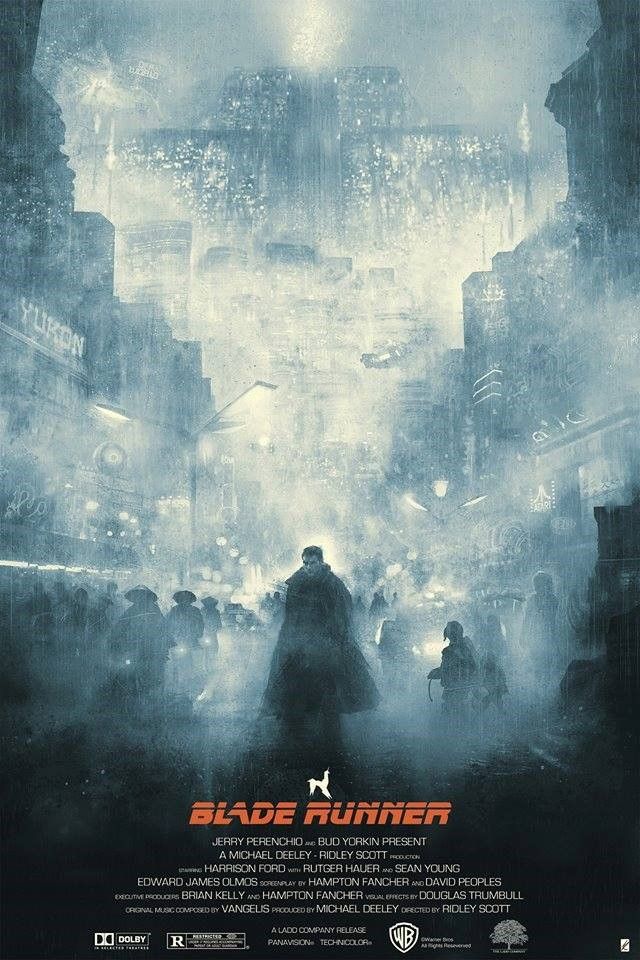
Philip K. Dick, whose novel Do Androids Dream of Electric Sheep? inspired the film Blade Runner, did not live to enjoy his Hollywood success. He died on March 2, 1982, three months before the film was released.

In the years since, the novelist once dismissed as a gutter pulp sci-fi weirdo has steadily climbed the ladder of posthumous literary reputation. The case for Dick’s genius has never rested on his dystopian vision of technology, which he shared in common with masters like HG Wells and Stanislaw Lem, and with hundreds of sci-fi writers since. Good science fiction — as opposed to fantasy novels set on other planets — is defined by a quasi-philosophical examination of interactions between men and machines and other products of modern science. It is part novel and part thought-experiment, centered on our idea of the human.

What made Dick a literary genius, then, was not any special talent for predicting hand-held personal devices or atom bombs the size of a shoe which might have led him to a job in Apple’s marketing department. His gift was for what might be called predictive psychology — how the altered worlds he imagined, whether futuristic or merely divergent from existing historical continuums, would feel to the people who inhabited them. Dick’s answer was, very often: “Not good.”

Dick’s dystopian-psychological approach marks him less as a conventional science fiction writer than as a member of the California anti-utopian school of the Sixties, whose best-known members include Robert Stone, Thomas Pynchon, Ken Kesey, Joan Didion and Hunter Thompson. Seen from this angle, Dick was perhaps the most powerfully and sweepingly paranoid of a group of writers whose stock-in-trade was conspiracy and paranoia, the hallmarks of a society marked — at that moment, and this one — by violent street crime, drug-induced psychosis, and visionary promises gone terribly wrong. Of his anti-utopian peers, Dick’s sci-fi genre background made him the only one who had any particular feel for the proposition that technology was inseparable from, and would therefore inevitably alter, our idea of the human.

Technology was and is perhaps the most Californian aspect of the American mythos. The idea that the universal constants of human nature were at war with the mutilating demands of technology-driven systems was a very Sixties Californian conceit, to which Dick’s fellow anti-utopians each adhered in their own way: In Kesey’s showdown between man and the castrating nanny-state; in Didion’s emphasis on the vanishing virtue of self-reliance; in Pynchon’s degenerate Ivy League Puritanism; in Thompson’s drug-addled primitivism; and in Stone’s Catholic idea of devotion to a God that might somehow salve the wounds of the survivors once the great American adventure goes bust.

What Dick saw, and what his fellow anti-utopians did not, was that human psychology and technology are not separate actors, and that whatever emerged from the other side of the future would be different to the human thing that entered it.

* * *

Seeing and describing how large numbers of people will perceive reality before anyone else does requires imagining states of consciousness that, in the moment, seem deeply strange. It is no accident that the greatest of works of speculative psychology were written by revolutionaries whose outlook was often bleak to the point of despair. The negative tone of these works often led future generations to describe their authors as conservatives, though artistically and psychologically speaking, they are radicals. Or rather, in their rejection of the dominant order, they are radicals and reactionaries at the same time.

The anti-utopian tradition emerged in earnest in 19th-century Russia. The Russian pioneers of the genre were superior to their rivals in England and elsewhere because the latter’s visions were constrained by attachments to a settled society, which one can argue never really existed in Russia — and because the ideas of revolution and violent reaction have always been so closely allied in the Russian psyche. Fyodor’s Dostoyevsky’s Notes From Underground struck many of its initial readers as a kind of artless mental vomit, before revealing itself as a Rosetta Stone for the century of Adolf Hitler and Lee Harvey Oswald. Yevgeny Zamyatin’s We is probably the greatest of at least a dozen weirdly prophetic novels written in the years immediately after the Bolshevik Revolution. In We, Zamyatin predicted what a surveillance society run by engineers would feel like to its inhabitants with a nauseating accuracy that did not become fully apparent until the rise of the modern tech surveillance complex.

The Dick novel that directly predicted our information-addicted, socially-networked 21st-century society, A Scanner Darkly, was both a prophecy of future psychological states and a half-veiled memoir of Dick’s own experiences in the California drug culture. Published in 1977, the book was a detective noir set in a druggy future in which large portions of the population appear to spend their lives scheming and snitching on each other to feed their addictions to a drug called Substance D — the “D” standing for Death, of course.

A Scanner Darkly, a reference to the line in Corinthians in which men at first see God “as in a glass, darkly”, is Dick’s rawest book and the one that reads least like science fiction. The book’s protagonist is simultaneously a narcotics agent known to his peers as Fred and a Substance D addict named Bob Arctor. Fred/Arctor lives in a house — his former marital abode — with two fellow addicts, and is in love with another addict named Donna, who comes to visit him there. Donna helps Arctor obtain Substance D, which he consumes, while Fred uses Donna to attempt to climb higher on the drug distribution ladder. At the end of the novel, Donna turns out to be a drug agent, who is spying on Bob Arctor.

What’s so striking about the book is not Dick’s heartfelt, if futuristically bent, portrayal of the evils of Sixties drug culture. For that, read Stone, who was a master of connecting the physical, mental and moral corruption of drug dealing and dependency, and the fantasies those pursuits inevitably engender to the deeper corruption of man’s nature.

What Dick uniquely captured was something else: The degenerative effects of the split-screen existence of a human brain ceaselessly spying on and doubting and implicating itself while at the same time being spied on by others, all of whom are embedded within machine systems that record everything for reasons that humans cannot understand. Over the course of this machine-and-chemical fed process of human self-contradiction and self-destruction, of which Fred/Arctor is only intermittently aware, we see his thoughts and perceptions being short-circuited and reduced to gibberish.

Drug-induced paranoia aside, the psychology of Dick’s addicts and narcs is as good a description as exists of the spreading incoherence of today’s information ecosystem, which none of us are able to fully see or understand. As a thought experiment, it doesn’t matter that Dick chose a drug rather than the stories we tell about ourselves and our world. It’s not the technology; it’s the psychology. What Dick saw was that the process of splitting ourselves in two — into subject and narc — was a brutal assault on the idea of being human and would make thoughts and communication impossible.

“What does a scanner see?” Arctor wonders, after examining the surveillance apparatus that has been planted, with his knowledge, in his own home. “I mean, really see? Into the head? Down into the heart? Does a passive infra-red holographic scanner like they used to use, or a cube-type holo-scanner like they use these days, the latest thing, see into me – into us – clearly or darkly? I hope it does, see clearly,” Arctor continues, “because I can’t any longer these days see into myself. I see only murk. Murk outside; murk inside. I hope, for everyone’s sake, the scanners do better.” They don’t.

* * *

Jeremy Bentham’s panopticon, which the English philosopher sketched out in a series of letters between 1786 and 1788 while visiting  the Mogilev district of the Russian Empire, was an architectural system of control in which all inmates of an institution could be made visible to a single guard. Bentham’s utopian-utilitarian idea was widely applied in Victorian England to a range of public and private spaces including prisons, asylums, hospitals, factories and even schools. The unique horror of the Benthamite set-up was not the power imbalance inherent in places like prisons and factories, whose existence is obvious to guards and prisoners alike. It was the attempt to eliminate privacy, which is a necessary precondition for being human.

Over the last decade, Bentham’s architecture of unfreedom has been replaced by the architecture of machines. This has created a new social reality where everyone is at once inmate and guard; a panopticon where nothing is private and no one is free. The invisible operations of the machines and programmes we use every day to buy books or food or communicate, which are linked to each other and to the surveillance operations of large government agencies in a single net, induces in most sentient beings a kind of free-floating paranoia of the type that destroys the inhabitants of A Scanner Darkly. On the one hand, everyone knows that everyone is being watched. On the other, it is necessary to deny that knowledge in order to appear to be functioning normally.

One of the most unpleasant characteristics of the weird split-screen mentality of our times is how people must routinely speak against themselves — deny what they see, hear, feel and believe  — in order to maintain the appearance of sanity. It is now routine, for example, to hear Americans on the Left and the Right deride their political opponents for believing in far-reaching conspiracy theories — while in the next breath revealing their own.

No doubt both sides are at least half right. During lockdowns, it became normal for public officials in Western countries to issue draconian edicts in the name of “science” for the supposed good of large numbers of people, only to violate those edicts themselves. The meaning of “science”, it turned out, had nothing to do with the “common good”, or with demonstrating a theory through evidence; it was “one rule for me and another for thee”.

The flagrant doublespeak that is nurtured in the surveillance societies of the West, which have sprung up around us unnoticed, is characteristic of totalitarian societies and mental asylums. The difference is that both totalitarian societies and asylums allow for nonthreatening zones of privacy in order to make life easier for the guards. What we live in today is something else, a set of mirrors into which we are encouraged to look so that our reflections can be distorted and then returned to us. As Bob Arctor puts it, reflecting on the words of Corinthians: “it is not through glass but reflected back by a glass. And that reflection that returns to you: it is you, it is your face, but it isn’t.”

Powerful people in Western societies have lately become convinced of their ability to accomplish great feats of moral and social engineering by controlling these mirrors, altering our reflections and selling them back to us, while undermining our ability to think coherently. The mirrors are not meant to help anyone think; they are systems of control. They are mechanisms of profit, which foster dependence. They are used to mete out punishment, and spy on us.

What’s alarming is that the people who delight in their mastery of these devices seem not to have thought very hard about the damage they are doing to the people who shoot up, a category that includes those who shoot up schools and malls. None of them seem to calculate what creating a miasma of nonsensical conspiracy theories will do to the psyches of their own children, who will inherit “the murk”. They appear to believe that people with minds that have been permanently broken by their gibberish machines will make the perfect workers on their farm. Let’s see how that turns out for them.

Tears in Rain: ‘Blade Runner’ and Philip K. Dick’s Legacy in Film

Blade Runner, and the work of Philip K. Dick, continues to find its way into our cinemas and minds. How did the visions of a paranoid loner become the most relevant science fiction of our time?

By Sean Bell

Source: PopMatters

You are an unusual man, Mr. Asher,” the cop beside him said. “Crazy or not, whatever it is that has gone wrong with you, you are one of a kind.”– Philip K. Dick, Flow My Tears, The Policeman Said.
“I’ve seen things you people wouldn’t believe…”
— Roy Batty, Blade Runner.

Los Angeles, 2019. The script simply reads: “Ext. Hades – Dusk”. Chemical flame bursts into the perpetual, post-nuclear Los Angeles gloom from skyscraping smokestacks, rising out of an industrial landscape Hieronymus Bosch might have envisaged. Flying cars flit through the darkness like fireflies. The camera moves slowly over impossible architecture with the immensity and decaying grandeur of ancient Egypt; a phantasmagorical megalopolis strung with necklaces of neon. The music rises.

The last war is over and nobody won. The Earth is living on borrowed time. Science has destroyed all boundaries between the real and unreal except those we choose to impose. Policemen are murderers, androids are lovers, nobody can be trusted, and everybody dies. Welcome back to the world of Blade Runner. Every time we return, it becomes more recognisable. Perhaps we never left.

Santa Ana, 1981. By now, Philip K. Dick — author, religious visionary and possible schizophrenic, who once said “You would have to kill me and prop me up in the seat of my car with a smile painted on my face to get me to go near Hollywood” — has read and approved the shooting script for Blade Runner by Hampton Fancher and David Peoples, as well as viewed a test reel of the movie’s groundbreaking special effects. In an effusive letter to Jeff Walker, the man in charge of the film’s marketing. Dick makes his prophetic opinion clear.

“Let me sum it up this way,” he wrote. “Science fiction has slowly and ineluctably settled into a monotonous death: it has become inbred, derivative, stale. Suddenly you people come in, some of the greatest talents currently in existence, and now we have a new life, a new start. As for my own role in the BLADE RUNNER project, I can only say that I did not know that a work of mine or a set of ideas of mine could be escalated into such stunning dimensions. My life and creative work are justified and completed by BLADE RUNNER… It will prove invincible.” (‘Letter to Jeff Walker regarding Blade Runner on Philip K Dick.com)

Dick, with a writer’s knack, chose the right words. Blade Runner has survived everything that could be thrown at it, including its initial critical reception, successive unsatisfactory edits, and dilution by both the science fiction genre and the film industry, which would plagiarise its vision with varying degrees of shamelessness for the next three decades. Yet nothing has been able to replicate its unique synthesis of elements, melding equal parts noir, action, romance, cyberpunk, dystopia and a meditation on what it means to be human. Whether praised or disparaged, ignored or overexposed, it has seen off all critics and challengers. Blade Runner‘s invincibility endures.

Unfortunately, the inimitable artistic fortitude of Ridley Scott‘s best work also allowed Hollywood to practice its favourite hobby of missing the point. The novels (or rather, in the film industry netherworld, ‘properties’) of Philip K. Dick — a writer largely unappreciated in his own lifetime who, at his lowest, claimed he he could not afford the late fee for a library book and infamously sustained himself on horse meat from a local pet store — have become highly prized and sought-after by studios eager to import intelligent ideas, rather than go through the hassle of conceiving their own. In the (twisted) spirit of Dick’s short story “We Can Remember It For You Wholesale“, no need for originality, we can develop it for you wholesale.

Question the nature of identity with Colin Farrell’s Douglas Quaid /Hauser as he flees the futuristic gunfire in the remake of Len Wiseman’s Total Recall (2012, an adaptation of an adaptation, as it were). Consider the limitations of free will with Tom Cruise’s Chief John Anderton (a well-known fan of unstable science fiction writers) in Steven Spielberg’s Minority Report (2012) while wondering how short he really is. Watch Jon Woo’s Paycheck (2003) and wonder how much Ben Affleck is actually being paid to appear in this piece of shit.

The names change, but the formula remains the same. Each summer, there must be blockbusters, and to fill the gaps in between the explosions with the barest bones of a Phil Dick story is, to the studio mindset, to buy instant, ready-made philosophical depth and artistic worth. Just add CGI!

Improbably, with 11 films based on his work and more in the pipeline, Dick has become the most adapted science fiction author in cinema history… And I’m not sure that’s a good thing.

“It’s a film about whether or not you can have a meaningful relationship with your toaster.” — Harrison Ford on Blade Runner in an interview with The Washington Post, 11 September 1992

That Scott is a director second only to George Lucas in his determination to tinker with a bygone masterwork until it meets his ultimate, exacting satisfaction (at last count, there are seven different versions of Blade Runner floating around the ether, finally culminating in Scott’s so-called ‘final cut’ in 2007), when a startling new interpretation of the film appeared online this June to wild acclaim, he had nothing to do with it. Instead, it was the work of the artist Anders Ramsell, who painstakingly recreated every frame of the movie’s opening 13 minutes with 3,285 gorgeous, haunting, impressionistic watercolours.

Dick, with a writer’s knack, chose the right words. Blade Runner has survived everything that could be thrown at it, including its initial critical reception, successive unsatisfactory edits, and dilution by both the science fiction genre and the film industry, which would plagiarise its vision with varying degrees of shamelessness for the next three decades. Yet nothing has been able to replicate its unique synthesis of elements, melding equal parts noir, action, romance, cyberpunk, dystopia and a meditation on what it means to be human. Whether praised or disparaged, ignored or overexposed, it has seen off all critics and challengers. Blade Runner‘s invincibility endures.

Unfortunately, the inimitable artistic fortitude of Ridley Scott‘s best work also allowed Hollywood to practice its favourite hobby of missing the point. The novels (or rather, in the film industry netherworld, ‘properties’) of Philip K. Dick — a writer largely unappreciated in his own lifetime who, at his lowest, claimed he he could not afford the late fee for a library book and infamously sustained himself on horse meat from a local pet store — have become highly prized and sought-after by studios eager to import intelligent ideas, rather than go through the hassle of conceiving their own. In the (twisted) spirit of Dick’s short story “We Can Remember It For You Wholesale“, no need for originality, we can develop it for you wholesale.

Question the nature of identity with Colin Farrell’s Douglas Quaid /Hauser as he flees the futuristic gunfire in the remake of Len Wiseman’s Total Recall (2012, an adaptation of an adaptation, as it were). Consider the limitations of free will with Tom Cruise’s Chief John Anderton (a well-known fan of unstable science fiction writers) in Steven Spielberg’s Minority Report (2012) while wondering how short he really is. Watch Jon Woo’s Paycheck (2003) and wonder how much Ben Affleck is actually being paid to appear in this piece of shit.

The names change, but the formula remains the same. Each summer, there must be blockbusters, and to fill the gaps in between the explosions with the barest bones of a Phil Dick story is, to the studio mindset, to buy instant, ready-made philosophical depth and artistic worth. Just add CGI!

Improbably, with 11 films based on his work and more in the pipeline, Dick has become the most adapted science fiction author in cinema history… And I’m not sure that’s a good thing.

“It’s a film about whether or not you can have a meaningful relationship with your toaster.” — Harrison Ford on Blade Runner in an interview with The Washington Post, 11 September 1992

That Scott is a director second only to George Lucas in his determination to tinker with a bygone masterwork until it meets his ultimate, exacting satisfaction (at last count, there are seven different versions of Blade Runner floating around the ether, finally culminating in Scott’s so-called ‘final cut’ in 2007), when a startling new interpretation of the film appeared online this June to wild acclaim, he had nothing to do with it. Instead, it was the work of the artist Anders Ramsell, who painstakingly recreated every frame of the movie’s opening 13 minutes with 3,285 gorgeous, haunting, impressionistic watercolours.

The painting technique employed to create this effect is known as aquarelle, which also acts as a sly commentary on Blade Runner‘s repeatedly-rejiggered legacy: because of its transparency, with aquarelle nothing can be painted over — once a mistake has been made, it has to be lived with. But as I watched what Ramsell called his ‘paraphrase’ of the movie, the familiar scenes and faces and voices emerging from the flickering, sensuous wash of colour, it seemed all the more appropriate. Other than Derek Jarman’s Caravaggio, I can think of no other film that so looks like a painting without paint — a piece of art that evokes other art, and yet remains entirely itself.

This is all a long way of saying that Blade Runner is beautiful, in almost every way possible. This has, ridiculously, sometimes been described as being to its detriment: Roger Ebert, one of the film’s more famous naysayers, wrote in a contemporary review in the Chicago Sun-Times that “It looks fabulous… but it is thin in its human story,” (11 September 1992) an oddly myopic remark to make about a parable on the nature of humanity. True, Blade Runner has an embarrassment of style, but never at the expense of substance, much like the best examples of the Cinema du look movement, which was just emerging in French cinema at the time of Blade Runner‘s release. Indeed, in appearance and atmosphere, Blade Runner is so distinct that it changed the aesthetic of science fiction, and new subgenres have since been invented simply to describe it — ‘future noir’, coined by the critic and filmmaker Paul M. Sammon, being the most enduring.

To those who have yet to experience the film, I wonder what to say that has not been said elsewhere. Based on Philip K. Dick’s 1968 novel Do Androids Dream of Electric Sheep?, Blade Runner somehow manages to be simultaneously the truest adaptation of Dick’s work yet produced — in spirit, if not plot — and also the freest in its interpretation of the material.

The central premise remains in both book and film; Rick Deckard (Harrison Ford), halfway between policeman and bounty hunter, makes his living by tracking and killing androids that are almost entirely indistinguishable from humans, living amongst us under false identities. The supposed test for distinguishing real from unreal humans is that of empathy, but as Deckard methodically adds to his ‘artificial’ bodycount, he begins to question who is really the unemotional machine.

Blade Runner dumps much of the novel’s narrative furniture — Scott justified this to Dick by saying: “You know you’re so dense, mate, that by page 32, there’s about 17 storylines” — in a way that, in almost any other adaptation, would be considered sacrilege. Most noticeably, in the novel, Deckard is trapped in a barely functional marriage, while in the movie, Harrison Ford’s laconic protagonist is the classic bachelor gumshoe.

Also prominent in the book are ‘Mercerism’, the religion based around its followers’ empathy for a man whom others were throwing rocks at, and the ‘Mood Organ’, the household device which stimulates any mood the user wishes to experience, and which much of the population now depends on in order to face another bleak, post-apocalyptic day — two tragicomic creations typical of Dick, but too wry to fit with the Blade Runner‘s overall tone. Despite such changes, Dick’s reading of the screenplay convinced him that this film could express his ideas in a way he had not thought possible.

The production could hardly be called smooth. Even before its release, troubling rumours had begun circulating, and as Paul M Sammon wrote ,”by the time BR (Blade Runner) officially completed principle photography in July on 1981, the gossip has become more specific — BR‘s workload had been horrendous, its shooting conditions miserable, and its director, difficult. Moreover, the whispers went, BR’s moneymen were unhappy, its leading man had clashed with his director, and the crew had been near revolt.” Some of these stories were indeed true, but one should bear in mind that movie moneymen are nearly always unhappy, and Harrison Ford will always be the man who told George Lucas that “you can type this shit, but you sure as hell can’t say it.”

Paranoia Runs Through Blade Runner Like a Knife Edge

When Blade Runner was first released, the reviews ran from lukewarm to underwhelmed to baffled, a fact that many critics have been doing their best to forget in the intervening years, polishing the film’s legend in a frantic effort to make up for missing the boat first time round. Considered today, in our gleaming plastic future of bad credit and worse politics, where we are reliant not on humanised robots but dehumanising gadgets, and where much of the movie’s retro-futurism appears as quaint as it does prescient, what is left to say about Blade Runner?

Should I recite the plaudits that have become ritualistic? Should I point out the Roy Batty’s (Rutger Hauer) ‘tears in rain’ monologue is among the most moving and eloquent ever written or performed? Or that Vangelis revolutionised jazz, electronic music and film scoring simultaneously in one of the best soundtracks ever composed? Is it really necessary to highlight the acting of all involved; Harrison Ford as one of the best soulful detectives to grace noir of any kind, an understated and heartbreaking Sean Young (as Rachael), a dangerous but innocent Daryl Hannah (as Pris), or Rutger Hauer’s mixture of the psychotic and the Shakespearean? Do I need to praise the costumes, the set design, or the script which balances so many themes, so many hidden or implied meanings, with such grace and economy?

Well, yes. You want a criticism of Blade Runner? I would’ve liked more of Edward James Olmos’ Gaff. He’s cool. I also want Deckard’s coat.

But we need to be reminded of these things, every now and again, as each new generation discovers the film afresh, and especially when the next logical question becomes: how did Blade Runner get it so right, more so than any other adaptation of Dick’s work since? What did it understand that they did not? To try and answer that, we have to go back to the source.

“Phil acknowledged that his talk sometimes sounded like “religious nonsense & occult nonsense” — but somewhere in it all was the truth. And he would never find it. God himself had assured him of that.” — Lawrence Sutin, Divine Invasions: A Life of Philip K. Dick.

In 2000, at the one and only Disinfo Con — a friendly gathering of millennial deviants concerning all things ‘counterculture’ — Grant Morrison, a writer who could arguably be counted as one of Dick’s prodigious bastard literary offspring, opened his keynote speech marvelling at the fact he spent his youth reading Robert Anton Wilson and now, all these years later, “we’re standing here, we’re talking about this shit and it’s real.”

Fans of Philip K. Dick have been feeling like that since at least the ’70s, when the dark realities on the other side of the Drug Revolution and the true possibilities of an all-powerful Nixonian surveillance state were becoming painfully apparent. Then as now, we use Dick’s paranoia to express our own.

Dick once commented that, with the making of Blade Runner, what had once been a private world that only he inhabited was now open to all; they would live in its murky depths, just as he did every day. At first, one might think that a paranoid and delusional visionary — and I use the word in its most literal sense — would want nothing more than for others to see and experience what he does. But perhaps Dick didn’t want anyone in his world. Maybe he didn’t think his world should be suffered by anyone else.

The fantastic, tortured mind of Philip K. Dick has been discussed, analysed and treated like an object of supreme curiosity since his death in 1982 (a few months shy of Blade Runner‘s release) and before. He had eked out an impoverished existence writing science fiction since the ’50s, when it was less a genre than a ghetto, and could only make a living by producing at a furious pace which he fuelled with huge amounts of amphetamines, at one point producing 12 novels over the course of two years.

But Dick was ever a seeker of truth, which made him, strangely, something of an oddity in science fiction. Within these novels, beneath the aliens and spaceships, moon colonies and interstellar wars, was arguably the best satire being done in science fiction on American life outside of Kurt Vonnegut‘s oeuvre, the philosophical undertones and untrammelled, often gothic imagination of which called to mind Jorge Luis Borges more than Isaac Asimov. The uniting thread that runs through his work — and, eventually, his life — is the notion that reality, as we know it, is fundamentally untrustworthy.

As the ’60s wore on, Dick’s involvement with the drug culture increased, adding a psychedelic aspect to both his ever-evolving philosophy and his ever-present paranoia. In 1971, Dick experienced a defining moment: his home was broken into, his safe blown open, and many of his personal papers burglerized. He never discovered who was responsible, though he had many suspects — local drug addicts, Black Panthers, the police, the FBI, the Soviets, or any of these, pretending to be one of the others.

The effect it left on Dick was to give him proof, unexplained and terrifying, that his paranoia was somehow justified. There had been comfort in simply telling himself he was crazy. But after years of grappling with his mental health, someone, it seemed, truly was out to get him.

“I mean,” he told the Aquarian magazine in a 1974 interview, “it’s a very frightening thing when the head of a police department tells you that you better leave the county because you have enemies, and you don’t know who these enemies are or why you’ve incurred their wrath.”

When one is peripherally aware of one’s own tenuous psychological condition (which we must be, we tell ourselves, if we have any hope of overcoming it), the uninitiated cannot imagine the sheer anguish, the self-doubt, the fear that follows when you know you cannot trust your own mind, and you cannot trust anyone to help you. The luckiest paranoids are also egotists, or better yet, megalomaniacs; they face the lurking forces of imagined persecution with a defiant roar or a knowing smirk.

Dick, on the other hand, was a sensitive, fragile, frightened soul, as well as a possible undiagnosed schizophrenic. His subsequent religious experiences — a series of hallucinations in which a beam of pink light connected him with a “transcendentally rational mind” — may have been his brain’s attempt to soothe his paranoia, or merely the next stage of his mental instability. In either case, as always, it provided inspiration for another novel.

Critics and biographers often talk about Dick’s paranoia and delusions like they were shocking fashion statements or extreme political opinions — just another interesting aspect to the bizarro image of a literary titan. What they don’t say, although the evidence is all around us, is that Dick’s paranoia is ours, as well. Ours may not have such colourful outlets or dramatic results, but we shall always carry our paranoia with us. It cannot be blotted out. There will forever be dark fears lurking in the deeper pools of our mind about our untrustworthy friends, co-workers, policemen, criminals, the FBI, the CIA, the Communists, the aliens, or God himself… and beyond. Existence will always be open to question, forever taunting us with its uncertainty. We can’t trust reality, but we have to live there.

This paranoia runs through Blade Runner like a knife edge. You cannot trust others, or yourself. You cannot trust your memories, your past, or your future. The entire world may be against you, even if it doesn’t appear to be. Then again, you don’t have to like it.

The heroes and villains of Blade Runner do not like, or accept, the oppression of the paranoid worldview. Deckard fights a series of seemingly impossible battles, even against what he thought was true, and finds romance where it should be impossible. Roy Batty, the leader of the renegade replicants, fights against death itself, seeking to extend and outlive his designer-mandated expiration date. The inhuman fights to become human, so humans must prove their humanity. This is the message at Blade Runner‘s core, and it has never been replicated.

Near the end of Dick’s 1976 novel Radio Free Albemuth, the protagonist, an author surrogate for Dick who also writes pulp science fiction, is faced by a gloating representative of the government conspiracy that the writer has become entangled with, who coolly informs him they will continue to put out books under his name — lurid trash scattered with a few of the author’s trademark concepts to keep it recognisable for his fans, but encoded with non-too-subtle propaganda messages designed to keep its readers afraid and unenlightened.

At our most cynical, it’s sometimes difficult not to think of Hollywood the same way: trading on Dick’s name and style and core ideas, but discarding the message and the mind behind them.

Authors often have to face a string of misfires and misinterpretations before their work gets the cinematic treatment it deserves; Dick, on the other hand, got a masterpiece on the first go. And it remains ours to enjoy: Blade Runner, as Dick wrote, is invincible.

Maybe it’s finally time for Hollywood to leave the legacy of Philip K. Dick at the local bookstore, where it belongs.

“What matters to me is the writing, the act of manufacturing the novel, because while I am doing it, at that particular moment, I am in the world I am writing about. It is real to me, completely and utterly. Then, when I’m finished, and I have to stop, withdraw from that world forever — that destroys me… I promise myself: I will never write another novel. I will never again imagine people from whom I will eventually be cut off. I tell myself this… and, secretly and cautiously, I begin another book.” — Philip K. Dick, “Notes Made Late At Night By A Weary SF Writer”, 1968.

Cyberpunk is Dead

By John Semley

Source: The Baffler

“It was an embarrasser; what did I want? I hadn’t thought that far ahead. Me, caught without a program!”
—Bruce Bethke, “Cyberpunk” (1983)

Held annually in a downtown L.A. convention center so massive and glassy that it served as a futurist backdrop for the 1993 sci-fi action film Demolition Man and as an intergalactic “Federal Transport Hub” in Paul Verhoeven’s 1997 space-fascism satire Starship Troopers, the Electronic Entertainment Expo, a.k.a. “E3,” is the trade show of the future. Sort of.

With “electronic entertainment” now surpassing both music and movies (and, indeed the total earnings of music and movies combined), the future of entertainment, or at least entertainment revenue, is the future of video games. Yet it’s a future that’s backward-looking, its gaze locked in the rearview as the medium propels forward.

Highlights of E3’s 2019 installment included more details around a long-gestating remake of the popular PlayStation 1-era role-playing game Final Fantasy VII, a fifth entry in the demon-shooting franchise Doom, a mobile remake of jokey kids side-scroller Commander Keen, and playable adaptations of monster-budget movie franchises like Star Wars and The Avengers. But no title at E3 2019 garnered as much attention as Cyberpunk 2077, the unveiling of which was met with a level of slavish mania one might reserve for a stadium rock concert, or the ceremonial reveal of an efficacious new antibiotic.

An extended trailer premiere worked to whet appetites. Skyscrapers stretched upward, slashed horizontally with long windows of light and decked out with corporate branding for companies called “DATA INC.” and “softsys.” There were rotating wreaths of bright neon billboards advertising near-futuristic gizmos and gee-gaws, and, at the street level, sketchy no-tell motels and cars of the flying, non-flying, and self-piloting variety. In a grimy, high-security bunker, a man with a buzzcut, his face embedded with microchips, traded blows with another, slightly larger man with a buzzcut, whose fists were robotically augmented like the cyborg Special Forces brawler Jax from Mortal Kombat. The trailer smashed to its title, and to wild applause from congregated gamers and industry types.

Then, to a chug-a-lug riff provided by Swedish straight-edge punkers Refused (recording under the nom de guerre SAMURAI) that sounded like the sonic equivalent of a can of Monster energy drink, an enormous freight-style door lifted, revealing, through a haze of pumped-out fog, a vaguely familiar silhouette: a tall, lean-muscular stalk, scraggly hair cut just above the shoulders. Over the PA system, in smoothly undulating, bass-heavy movie trailer tones, a canned voice announced: “Please welcome . . . Keanu Reeves.” Applause. Pitchy screams. Hysterics in the front row prostrating themselves in Wayne’s World “we’re not worthy!” fashion. “I gotta talk to ya about something!” Reeves roared through the din. Dutifully reading from a teleprompter, he plugged Cyberpunk 2077’s customizable characters and its “vast open world with a branching storyline,” set in “a metropolis of the future where body modification has become an obsession.”

More than just stumping for Cyberpunk 2077, Reeves lent his voice and likeness to the game as a non-playable character (NPC) named “Johnny Silverhand,” who is described in the accompanying press materials as a “legendary rockerboy.” A relative newbie to the world of blockbuster Xbox One games, Reeves told the audience at E3 that Cyberpunk piqued his interest because he’s “always drawn to fascinating stories.” The comment is a bit rich—OK, yes, this is a trade show pitch, but still—considering that such near-futuristic, bodily augmented, neon-bathed dystopias are hardly new ground for Reeves. His appearance in Cyberpunk 2077 serves more to lend the game some genre cred, given Reeves’s starring roles in canonical sci-fi films such as Johnny Mnemonic (1995) and the considerably more fantastic Matrix trilogy (1999-2003)—now quadrilogy; with an anticipated fourth installment announced just recently. Like many of E3 2019’s other top-shelf titles, Cyberpunk 2077 looked forward by reflecting back, conjuring its tech-noir scenario from the nostalgic ephemera of cyberpunk futures past.

This was hardly lost among all the uproar and excitement. Author William Gibson, a doyenne of sci-fi’s so-called “cyberpunk” subgenre, offered his own withering appraisal of Cyberpunk 2077, tweeting that the game was little more than a cloned Grand Theft Auto, “skinned-over with generic 80s retro-future” upholstery. “[B]ut hey,” Gibson added, a bit glibly, “that’s just me.” One would imagine that, at least in the burrows of cyberpunk fandom, Gibson’s criticism carries considerable weight.

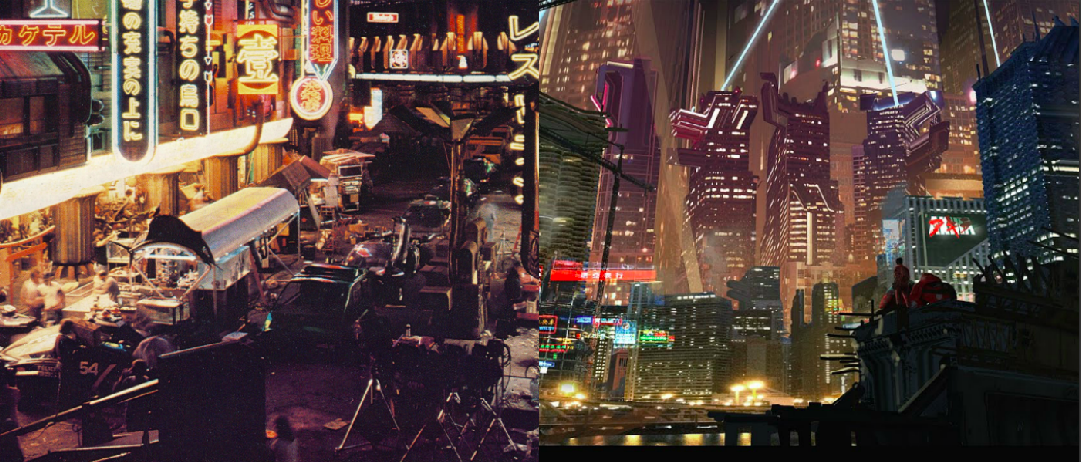
After all, the author’s 1984 novel Neuromancer is a core text in cyberpunk literature. Gibson also wrote the screenplay for Johnny Mnemonic, adapted from one of his own short stories, which likewise developed the aesthetic and thematic template for the cyberpunk genre: future dystopias in which corporations rule, computer implants (often called “wetware”) permit access to expansive virtual spaces that unfold before the user like a walk-in World Wide Web, scrappy gangs of social misfits unite to hack the bad guys’ mainframes, and samurai swords proliferate, along with Yakuza heavies, neon signs advertising noodle bars in Kanji, and other fetish objects imported from Japanese pop culture. Gibson dissing Cyberpunk 2077 is a bit like Elvis Presley clawing out of his grave to disparage the likeness of an aspiring Elvis impersonator.

Gibson’s snark speaks to a deeper malaise that has beset cyberpunk. A formerly lively genre that once offered a clear, if goofy, vision of the future, its structures of control, and the oppositional forces undermining those authoritarian edifices, it has now been clouded by a kind of self-mythologizing nostalgia. This problem was diagnosed as early as 1991 by novelist Lewis Shiner, himself an early cyberpunk-lit affiliate.

“What cyberpunk had going for it,” Shiner wrote in a New York Times op-ed titled “Confessions of an Ex-Cyberpunk, “was the idea that technology did not have to be intimidating. Readers in their teens and 20’s responded powerfully to it. They were tired of hearing how their home computers were tempting them into crime, how a few hackers would undermine Western civilization. They wanted fiction that could speak to the sense of joy and power that computers gave them.”

That sense of joy had been replaced, in Shiner’s estimation, by “power fantasies” (think only of The Matrix, in which Reeves’s moonlighting hacker becomes a reality-bending god), which offer “the same dead-end thrills we get from video games and blockbuster movies” (enter, in due time, the video games and blockbuster movies). Where early cyberpunk offerings rooted through the scrap heap of genre, history, and futurist prognostication to cobble together a genre that felt vital and original, its modern iterations have recourse only to the canon of cyberpunk itself, smashing together tropes, clichés, and old-hat ideas that, echoing Gibson’s complaint, feel pathetically unoriginal.

As Refused (in their pre-computer game rock band iteration) put it on the intro to their 1998 record The Shape of Punk to Come: “They told me that the classics never go out of style, but . . . they do, they do.”

Blade Ran

The word was minted by author Bruce Bethke, who titled a 1980 short story about teenage hackers “Cyberpunk.” But cyberpunk’s origins can be fruitfully traced back to 1968, when Philip K. Dick published Do Androids Dream of Electric Sheep?, a novel that updated the speculative fiction of Isaac Asimov’s Robot series for the psychedelic era. It’s ostensibly a tale about a bounty hunter named Rick Deckard chasing rogue androids in a post-apocalyptic San Francisco circa 1992. But like Dick’s better stories, it used its ready-made pulp sci-fi premise to flick at bigger questions about the nature of sentience and empathy, playing to a readership whose conceptions of consciousness were expanding.

Ridley Scott brought Dick’s story to the big screen with a loose 1982 film adaptation, Blade Runner, which cast Harrison Ford as Deckard and pushed its drizzly setting ahead to 2019. With its higher order questions about what it means to think, to feel, and to be free—and about who, or what, is entitled to such conditions—Blade Runner effectively set a cyberpunk template: the billboards, the neon, the high-collared jackets, the implants, the distinctly Japanese-influenced mise-en-scène extrapolated from Japan’s 1980s-era economic dominance. It is said that William Gibson saw Blade Runner in theaters while writing Neuromancer and suffered something of a crisis of conscience. “I was afraid to watch Blade Runner,” Gibson told The Paris Review in 2011. “I was right to be afraid, because even the first few minutes were better.” Yet Gibson deepened the framework established by Blade Runner with a crucial invention that would come to define cyberpunk as much as drizzle and dumpsters and sky-high billboards. He added another dimension—literally.

Henry Case, Gibson establishes early on, “lived for the bodiless exultation of cyberspace.” As delineated in Neuromancer, cyberspace is an immersive, virtual dimension. It’s a fully realized realm of data—“bright lattices of logic unfolding across that colorless void”—which hackers can “jack into” using strapped-on electrodes. That the matrix is “bodiless” is a key concept, both of Neuromancer and of cyberpunk generally. It casts the Gibsonian idea of cyberspace against another of the genre’s hallmarks: the high-tech body mods flogged by Keanu Reeves during the Cyberpunk 2077 E3 demo.

Early in Neuromancer, Gibson describes these sorts of robotic, cyborg-like implants and augmentations. A bartender called Ratz has a “prosthetic arm jerking monotonously” that is “cased in grubby pink plastic.” The same bartender has implanted teeth: “a webwork of East European steel and brown decay.” Gibson’s intense, earthy descriptions of these body modifications cue the reader into the fundamental appeal of Neuromancer’s matrix, in which the body itself becomes utterly immaterial. Authors from Neal Stephenson (Snow Crash) to Ernest Cline (Ready Player One, which is like a dorkier Snow Crash, if such a thing is conceivable), further developed this idea of what theorist Fredric Jameson called “a whole parallel universe of the nonmaterial.”

As envisioned in Stephenson’s Snow Crash, circa 1992, this parallel universe takes shape less as some complex architecture of unfathomable data, and more as an immersive, massively multiplayer online role-playing game (MMORPG). Stephenson’s “Metaverse”—a “moving illustration drawn by [a] computer according to specifications coming down the fiber-optic cable”—is not a supplement to our real, three-dimensional world of physical bodies, but a substitute for it. Visitors navigate the Metaverse using virtual avatars, which are infinitely customizable. As Snow Crash’s hero-protagonist, Hiro Protagonist (the book, it should be noted, is something of a satire), describes it: “Your avatar can look any way you want it to . . . If you’re ugly, you can make your avatar beautiful. If you’ve just gotten out of bed, your avatar can still be wearing beautiful clothes and professionally applied makeup. You can look like a gorilla or a dragon or a giant talking penis in the Metaverse.”

Beyond Meatspatial Reasoning

The Metaverse seems to predict the wide-open, utopian optimism of the internet: that “sense of joy and power” Lewis Shiner was talking about. It echoes early 1990s blather about the promise of a World Wide Web free from corporate or government interests, where users could communicate with others across the globe, forge new identities in chat rooms, and sample from a smorgasbord of lo-res pornographic images. Key to this promise was, to some extent, forming new identities and relationships by leaving one’s physical form behind (or jacked into a computer terminal in a storage locker somewhere).

Liberated from such bulky earthly trappings, we’d be free to pursue grander, more consequential adventures inside what Gibson, in Neuromancer, calls “the nonspace of the mind.” Elsewhere in cyberpunk-lit, bodies are seen as impediments to the purer experience of virtuality. After a character in Cory Doctorow’s Down and Out in the Magic Kingdom unplugs from a bracingly real simulation immersing him in the life of Abraham Lincoln, he curses the limitations of “the stupid, blind eyes; the thick, deaf ears.” Or, as Case puts it in Neuromancer, the body is little more than “meat.”

In Stephenson’s Metaverse, virtual bodies don’t even obey the tedious laws of physics that govern our non-virtual world. In order to manage the high amount of pedestrian traffic within the Metaverse and prevent users from bumping around endlessly, the complicated computer programming permits avatars simply to pass through one another. “When things get this jammed together,” Hiro explains, “the computer simplifies things by drawing all of the avatars ghostly and translucent so you can see where you’re going.” Bodies—or their virtual representations—waft through one another, as if existing in the realm of pure spirit. There is an almost Romantic bent here (Neuromancer = “new romancer”). If the imagination, to the Romantics, opened up a gateway to deep spiritual truth, here technology serves much the same purpose. Philip K. Dick may have copped something of the 1960s psychedelic era’s ethos of expanding the mind to explore the radiant depths of the individual soul, spirit, or whatever, but cyberpunk pushed that ethos outside, creating a shared mental non-space accessible by anyone with the means—a kind of Virtual Commons, or what Gibson calls a “consensual hallucination.”

Yet outside this hallucination, bodies still persist. And in cyberpunk, the physical configurations of these bodies tend to express their own utopian dimension. Bruce Bethke claimed that “cyberpunk” resulted from a deliberate effort to “invent a new term that grokked the juxtaposition of punk attitudes and high technology.” Subsequent cyberpunk did something a bit different, not juxtaposing but dovetailing those “punk attitudes” with high-tech. (“Low-life, high-tech” is a kind of a cyberpunk mantra.) Neuromancer’s central heist narrative gathers a cast of characters—hacker Henry Case, a cybernetically augmented “Razorgirl” named Molly Millions, a drug-addled thief, a Rastafari pilot—that can be described as “ragtag.” The major cyberpunk blockbusters configure their anti-authoritarian blocs along similar lines.

In Paul Verhoeven’s cyberpunk-y action satire Total Recall, a mighty construction worker-cum-intergalactic-spy (Arnold Schwarzenegger) joins a Martian resistance led by sex workers, physically deformed “mutants,” little people, and others whose physical identities mirror their economic alienation and opposition to a menacing corporate-colonial overlord named Cohaagen.

In Johnny Mnemonic, Keanu Reeves’s businesslike “mnemonic courier” (someone who ferries information using computer implants embedded in the brain) is joined by a vixenish bodyguard (Dina Meyer’s Jane, herself a version of Neuromancer’s Molly Millions), a burly doctor (Henry Rollins), and a group of street urchin-like “Lo-Teks” engaged in an ongoing counterinsurgency against the mega-corporation Pharmakom. Both Mnemonic and Recall rely on cheap twists, in which a figure integral to the central intrigue turns out to be something ostensibly less- or other-than-human. Total Recall has Kuato, a half-formed clairvoyant mutant who appears as a tumorous growth wriggling in the abdomen of his brother. Even more ludicrously, Mnemonic’s climax reveals that the Lo-Teks’ leader is not the resourceful J-Bone (Ice-T), but rather Jones, a computer-augmented dolphin. In cyberpunk, the body’s status as “dead meat” to be transcended through computer hardware and neurological implantation offers a corollary sense of freedom.

The idea of the cybernetic body as a metaphor for the politicized human body was theorized in 1985, cyberpunk’s early days, by philosopher and biologist Donna Haraway. Dense and wildly eclectic, by turns exciting and exasperating, Haraway’s “Cyborg Manifesto” is situated as an ironic myth, designed to smash existing oppositions between science and nature, mind and body. Haraway was particularly interested in developing an imagistic alternative to the idea of the “Goddess,” so common to the feminism of the time. Where the Goddess was backward-looking in orientation, attempting to connect women to some prelapsarian, pre-patriarchal state of nature, the cyborg was a myth of the future, or at least of the present. “Cyborg imagery,” she writes, “can suggest a way out of the maze of dualisms in which we have explained our bodies and our tools to ourselves.” Part machine and part flesh, Haraway visualizes the cyborg as a being that threatens existing borders and assumes responsibility for building new ones.

Though they are not quite identical concepts, Haraway’s figure of the cyborg and the thematics of cyberpunk share much in common. A character like Gibson’s Molly Millions, for example, could be described as a cyborg, even if she is still essentially gendered as female (the gender binary was one of the many “dualisms” Haraway believed the cyborg could collapse). Cyborgs and cyberpunk are connected in their resistance to an old order, be it political and economic (as in Neuromancer, Johnny Mnemonic, etc.) or metaphysical (as in Haraway). The cyborg and the cyberpunk both dream of new futures, new social relationships, new bodies, and whole new categories of conceptions and ways of being.

The historical problem is that, for the most part, these new categories and these new relationships failed to materialize, as cyberpunk’s futures were usurped and commodified by the powers they had hoped to oppose.

Not Turning Japanese

In an introduction to the Penguin Galaxy hardcover reissue of Neuromancer, sci-fi-fantasy writer Neil Gaiman ponders precisely how the 1980s cyberpunk visions came to shape the future. “I wonder,” he writes, “to what extent William Gibson described a future, and how much he enabled it—how much the people who read and loved Neuromancer made the future crystallize around his vision.”

It’s a paradox that dogs most great sci-fi writers, whose powers for Kuato-style clairvoyance have always struck me as exaggerated. After all, it’s not as if, say, Gene Roddenberry literally saw into the future, observed voice-automated assistants of the Siri and Alexa variety, and then invented his starship’s speaking computers. It’s more that other people saw the Star Trek technology and went along inventing it. The same is true of Gibson’s matrix or Stephenson’s Metaverse, or the androids of Asimov and Dick. And the realization of many technologies envisioned by cyberpunk—including the whole concept of the internet, which now operates not as an escapist complement to reality, but an essential part of its fabric, like water or heat—has occurred not because of scrappy misfits and high-tech lowlifes tinkering in dingy basements, but because of gargantuan corporate entities. Or rather, the cyberpunks have become the corporate overlords, making the transition from the Lo-Teks to Pharmakom, from Kuato to Cohaagen. In the process, the genre and all its aspirations have been reduced to so much dead meat. This is what Shiner was reacting to when, in 1991, he renounced his cyberpunk affiliations, or when Bruce Bethke, who coined the term, began referring to “cyberpunk” as “the c-word.”

The commodification of the cool is a classic trick of capitalism, which has the frustrating ability to mutate faster than the forces that oppose it. Yet even this move toward commodification and corporatization is anticipated in much cyberpunk. “Power,” for Neuromancer’s Henry Case, “meant corporate power.” Gibson goes on: “Case had always taken it for granted that the real bosses, the kingpins in a given industry, would be both more and less than people.” For Case (and, it follows, Gibson, at least at the time of his writing), this power had “attained a kind of immortality” by evolving into an organism. Taking out one-or-another malicious CEO hardly matters when lines of substitutes are waiting in the wings to assume the role.

It’s here that cyberpunk critiques another kind of body. Not the ruddy human form that can be augmented and perfected by prosthetics and implants, but the economic body. Regarding the economy as a holistic organism—or a constituent part of one—is an idea that dates back at least as far as Adam Smith’s “invisible hand.” The rhetoric of contemporary economics is similarly biological. An edifying 2011 argument in Al Jazeera by Paul Rosenberg looked at the power of such symbolic conceptions of the economy. “The organic metaphor,” Rosenberg writes, “tells people to accept the economy as it is, to be passive, not to disturb it, to take a laissez faire attitude—leave it alone.”

This idea calls back to another of cyberpunk’s key aesthetic influences: the “body economic” of Japan in the 1980s. From the 2019 setting of 1982’s Blade Runner, to the conspicuous appearance of yakuza goons in Gibson’s stories, to Stephenson’s oddly anachronistic use of “Nipponese” in Snow Crash, cyberpunk’s speculative futures proceed from the economic ascendency of 1980s Japan, and the attendant anxiety that Japan would eventually eclipse America as an economic powerhouse. This idea, that Japan somehow is (or was) the future, has persisted all the way up to Cyberpunk 2077’s aesthetic template, and its foregrounding of villains like the shadowy Arasaka Corporation. It suggests that, even as it unfolds nearly sixty years from our future, the blockbuster video game is still obsessed with a vision of the future past.

Indeed, it’s telling that as the robust Japanese economy receded in the 1990s, its burly body giving up the proverbial ghost, that Japanese cinema became obsessed with avenging spirits channeled into the present by various technologies (a haunted video cassette in Hideo Nakata’s Ringu, the internet itself in Kiyoshi Kurosawa’s Kairo, etc.). But in the 1980s, Japan’s economic and technologic dominance seemed like a foregone conclusion. In a 2001 Time article, Gibson called Japan cyberpunk’s “de facto spiritual home.” He goes on:

I remember my first glimpse of Shibuya, when one of the young Tokyo journalists who had taken me there, his face drenched with the light of a thousand media-suns—all that towering, animated crawl of commercial information—said, “You see? You see? It is Blade Runner town.” And it was. It so evidently was.

Gibson’s analysis features one glaring mistake. His insistence that “modern Japan simply was cyberpunk” is tethered to its actual history as an economic and technological powerhouse circa the 1980s, and not from its own science-fictional preoccupations. “It was not that there was a cyberpunk movement in Japan or a native literature akin to cyberpunk,” he writes. Except there so evidently was.

The Rusting World

Even beyond the limp, Orwellian connotations, 1984 was an auspicious year for science-fiction. There was Neuromancer, yes. But 1984 also saw the first collected volume of Akira, a manga written and illustrated by Katsuhiro Otomo. Originally set, like Blade Runner, in 2019, Akira imagines a cyberpunk-y Neo-Tokyo, in which motorcycle-riding gangs do battle with oppressive government forces. Its 1988 anime adaptation was even more popular, in both Japan and the West. (The film’s trademark cherry red motorcycle has been repeatedly referenced in the grander cyberpunk canon, appearing in Steven Spielberg’s film adaptation of Ready Player One and, if pre-release hype is to believed, in Cyberpunk 2077 itself.) In 2018, the British Film Institute hailed Akira, accurately, as “a vital cornerstone of the cyberpunk genre.”

Japan has plenty of other, non-Akira cyberpunk touchstones. As a cinematic subgenre, Japanese cyberpunk feels less connected to the “cyber” and more to the spirit of “punk,” whether in the showcasing of actual Japanese punk rock bands (as in 1982’s Burst City) or the films’ own commitment to a rough-hewn, low-budget, underground aesthetic. Chief among the latter category of films is Shinya Tsukamoto’s Tetsuo: The Iron Man, which was shot on 16mm over a grueling year-and-a-half, mostly in and around Tetsuo actress and cinematographer Kei Fujiwara’s apartment, which also housed most of the film’s cast and crew.

Unlike the Western cyberpunk classics, Tsukamoto’s vision of human-machine hybridization is demonstrably more nightmarish. The film follows two characters, credited as the Salaryman (Tomorowo Taguchi) and the Guy (a.k.a. “The Metal Fetishist,” played by writer/director/producer/editor Tsukamoto himself), bound by horrifying mutations, which see their flesh and internal organs sprouting mechanical hardware.

In its own way, Tetsuo works as a cyberpunk-horror allegory for the Japanese economy. As the Salaryman and the Fetishist learn to accept the condition of their mechanization, they merge together, absorbing all the inorganic matter around them, growing enormously like a real-world computer virus or some terrifying industrial Katamari. Their mission resonates like a perverse inversion of Japan’s post-industrial promise. As Tsukamoto’s Fetishist puts it: “We can rust the whole world and scatter it into the dust of the universe.”

Like Haraway’s development of the cyborg as a metaphoric alternative to the New Age “goddess,” Tetsuo’s titular Iron Man can offer a similar corrective. If cyberpunk has become hopelessly obsessed with its own nostalgia, recycling all its 1980s bric-a-brac endlessly, then we need a new model. Far from the visions of Gibson, in which technology provides an outlet for a scrappy utopian impulse that jeopardizes larger corporate-political dystopias, Tetsuo is more pessimistic. It sees the body—both the individual physical body and the grander corpus of political economy—as being machine-like. Yet, as Rosenberg notes in his Al Jazeera analysis of economic rhetoric, it may be more useful to conceive of the economy not as a “body” or an organism but as a machine. The body metaphor is conservative, “with implications that tend toward passivity and acceptance of whatever ills there may be.” Machines, by contrast, can be fixed, greased, re-oriented. They are, unlike bodies, a thing separate from us, and so subject to our designs.

Cybernetic implants and cyborg technology are not some antidote to corporate hegemony. The human does not meld with technology to transcend the limitations of humanity. Rather, technology and machinery pose direct threats to precisely that condition. We cannot, in Tsukamoto’s film, hack our way to a better future, or technologically augment our way out of collective despair. Technology—and the mindless rush to reproduce it—are, to Tsukamoto, the very conditions of that despair. Even at thirty years old, Tetsuo offers a chilling vision not of the future, or of 1980s Japan, but of right now: a present where the liberating possibilities of technology have been turned inside-out; where hackers become CEOs whose platforms bespoil democracy; where automation offers not the promise of increased wealth and leisure time, but joblessness, desperation, and the wholesale redundancy of the human species; where the shared hallucination of the virtual feels less than consensual.

There’s nothing utopian about the model of cyberpunk developed in Tetsuo: The Iron Man. It is purely dystopian. But this defeatism offers clarity. And in denying the collaborative, collectivist, positive vision of a technological future in favor of a vision of identity-destroying, soul-obliterating horror, Tsukamoto’s stone-cold classic of Japanese cyberpunk invites us to imagine our own anti-authoritarian, anti-corporate arrangements. The enduring canon of American-style cyberpunk may have grown rusty. It has been caught, as Bethke put it in his genre-naming story, “without a program.” But the genre’s gnarlier, Japanese iterations have plenty to offer, embodying sci-fi’s dream of imagining a far-off future as a deep, salient critique of the present. It is only when we accept this cruel machinery of the present that we can freely contemplate how best to tinker with its future.

Left to peddle such a despairing vision in a packed-out L.A. convention center, even cyberpunk’s postmortem poster boy Keanu Reeves would be left with little to say but a resigned, bewildered, “Woah . . .”

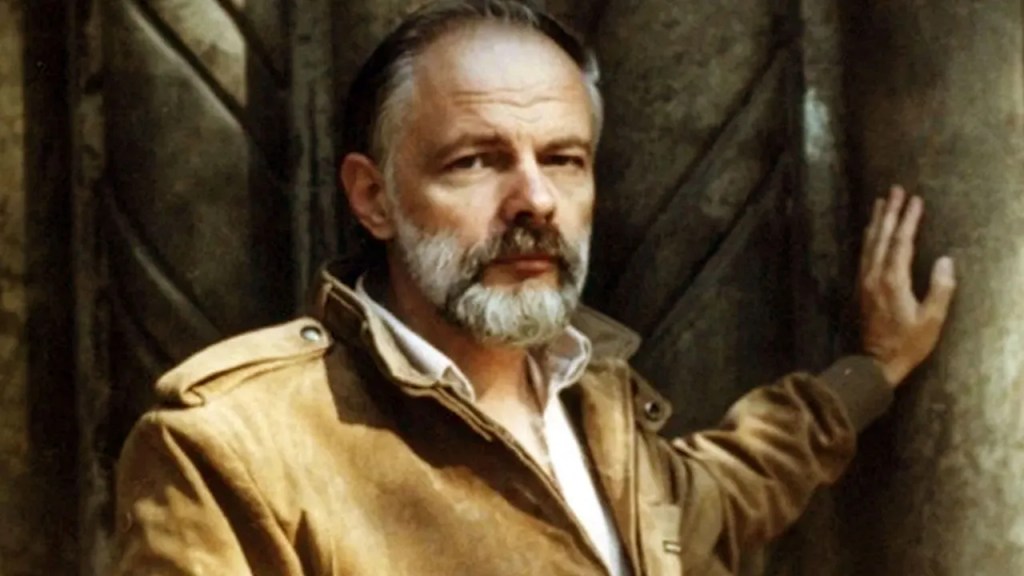
Philip K. Dick’s Moral Vision

731200982635AM

[Editor’s note: on this 34th anniversary of the death of Philip K. Dick, I’m sharing the 10th and final chapter of Patricia S. Warrick’s bibliographical retrospective “Mind in Motion” (1987). It’s a good reminder of what makes PKD’s work so unique and enduringly relevant.]

This critical study of Dick’s fiction is a work without a concluding chapter – and appropriately so. To summarize his ideas, to categorize his work, to deliver the final word would be to violate Dick’s vision. He saw a universe of infinite possibility, with shapes that constantly transformed themselves – a universe in process. He had not delivered his final word when he died on March 2, 1982, because for him the Word was truly the Living Word, the power that creates and re-creates patterns. Trapped in the stasis of a final statement, the Word would have been defeated by entropy and death.

But if we cannot make a final statement, we can at least note the significance of his opus of fiction for the times in which we live. Great creative personalities often see the essence of an age with a clarity denied to the mass of people. their vision is so vivid that when subsequent events confirm it, humanity, slower at arriving at a realization of its present, hails them as prophetic. I believe that Dick may well be one of those creative personalities whom we hail as visionaries. The claim seems a strange one, considering the literary form in which he worked. Blake, Wordsworth, Yeats – the Romantics with the the elegance of poetic diction make up the visionary company, not writers working in a prose form often regarded as trash. But let us for the moment ignore the form in which he was forced to write and consider instead his vision.

He had a remarkable sense of the cultural transformation taking place in the last half of the twentieth century. He pointed out the cracks in our institutions, our ideologies, and our value systems that would inevitably lead to their collapse. He understood that what had been functional in an industrial age would not work as our culture transformed itself and moved into an Information Age. Such changes often march in with violence. As Dick’s fiction declares again and again, the late twentieth century is a time at war with itself, not with an external enemy. To fight against what one abhors without realizing it lies within is to destroy all. Dick warns us against doing this to ourselves. The cloud of chaos inevitably hangs above the Dickian landscape, a reminder that a like chaos will descend on the real world and envelop us if we continue to make war.

Dick’s fiction calls up our basic cultural assumptions, requires us to reexamine them, and points out the destructive destinations to which they are carrying us. The American Dream may have succeeded as a means of survival in the wilderness of early America; it allowed us to subdue that wilderness and build our holy cities of materialism. But now, the images in Dick’s fiction declare, we live in a new kind of wilderness, a wasteland wilderness, because those cities and the culture that built them are in decay. We need a new American dream to overcome this wasteland. Dick’s ubiquitous wasteland landscape is a moral mirror asking us to journey within and explore the universe of mind and psyche where all the forms that shape the outer world are created. The critical journey of discovery is into the mysterious realm of inner space. Just as Dick’s Fomalhaut Cosmos was a universe created by his imagination, so the universe in which we live is constructed of our ideas about it. To change it we must change our ideas.

Dick’s work makes no new declarations about our time; we knew early in the twentieth century that ours was an Age of Anxiety. But the gift of his powerful mythmaking ability is to give us the stories that help us see both what we are and what we may become as we move into the Space Age. His novel contribution is the bizarre images he creates that so vividly picture our anxieties. Phantasmagoric  shapes, the Dickian protagonist calls them, as he muses about the swirl of awesome possibilities sweeping through his mind. They are disorienting images – without clear boundary, inconsistent, contradictory, fragmented, at war with one another. They force us to reconsider our conventional conception of reality. Dick said that “science fiction is uniquely a kind of semi-reality. It is not a statement that ‘this is,’ but a statement, ‘What if this were.’ The difference is crucial in every respect.” Frightening as are some of the futures Dick imagines for mankind, they are not fixed. We are Leo Buleros, we are “choosers,” Dick tells us in the Three Stigmata of Palmer Eldritch; and The Divine Invasion envisions another future than nuclear destruction that we can choose.

We have noted Dick’s wide acquaintance with the classics. But much as Dick loved classical literature, he did not draw on this source in creating his characters. The Dickian fictional world is a world without Titans or Heroes; instead it is a world cut off from the gods. It is filled with little people lacking in power or wisdom, who daily face the dilemma of trying to survive in the face of the inexplicable destructive forces that constantly try to snuff them out. Yet they are not the conventional antiheroes of modern fiction. Perhaps the oxymoron heroic antihero best describes Dick’s protagonist. finally, the Dickian hero acts. He may writhe and struggle to escape, but in the end he accepts the burden of his existential freedom. Daily, he finally learns, he must once again to push the boulder of moral responsibility up the hill of right action. Freedom thus becomes of highest value in Dick’s code. The individual must be free to make moral choices, even though he may often fail to make the right choice. Dick declares again and again, for the individual to be turned into a machine programmed to carry out the decisions of others is “the greatest evil imaginable; the placing on what was a free man who laughed and cried and made mistakes and wandered off into foolishness and play a restriction that limits him, despite what he may imagine or think, to fulfilling an aim outside his own personal – however puny – destiny.”

Our study of Dick’s writings has traced the journey of his restless mind, watching as it grasped an idea, created a metaphor for it in a fictional pattern of antimonies, discarded it for another idea – always spiraling forward albeit often in a wobbling, erratic course. Yet from the beginning one element remains constant in all the fiction – Dick’s faith in the power of empathy. The idea was not well developed or labeled when it first appeared. We see empathy in two of his early short stories as through a glass darkly. He has not yet given it a name. Instead, his characters act it out, and only later does he recognize what his fiction has said. In “Roog” Dick pictures a dog who guards the garbage can of his owners against the garbage men who come to collect it each week. The dog is driven crazy because he cannot offer protection to his owners against these weekly raids. Years later, Dick commented on the story, explaining that he was describing an actual dog owned by a Berkeley neighbor. “I watched the dog suffer, and I understood a little of what was destroying him, and I wanted to speak for him. That’s the whole of it right there. Snooper couldn’t talk. I could. In fact I could write it down, and someone could publish it and many people could read it. Writing fiction has to do with this: becoming the voice for those without voices. It’s not your own voice, you the author; it is all those other voices which normally go unheard.”

“Beyond Lies the Wub,” Dick’s first published story, also dramatizes the concept of empathy. It tells the story of a pig-like alien captured and eventually eaten be a crew of space adventurers despite the fact that the wub possesses human characteristics. Captain Franco and his men lack the ability to see beneath the wub’s appearance. Twenty years later Dick said of the story”:

The idea I wanted to get down on paper had to do with the definition of “human.” The dramatic way I trapped the idea was to present ourselves, the literal humans, and then an alien life form that exhibits the deeper traits that I associate with humanity: not a biped with an enlarged cortex — a forked radish that thinks, to paraphrase the old saying — but an organism that is human in terms of its soul.

I’m sorry if the word “soul” offends you, but I can think of no other term. Certainly, when I wrote the story “Beyond Lies the Wub” back in my youth in politically active Berkeley, I myself would never have thought of the crucial ingredient in the wub being a soul; I was a fireball radical and atheist, and religion was totally foreign to me. However, even in those days (I was about twenty-two years old) I was casting about in an effort to contrast the truly human from what I was later to call the “android or reflex machine” that looks human but is not — the subject of the speech I gave in Vancouver in 1972 [“The Android and the Human,” included herein] — twenty years after “Beyond Lies the Wub” was published. The germ of the idea behind the speech lies in this, my first published story. It has to do with empathy, or, as it was called in earlier times, caritas or agape.

In this story, empathy (on the part of the wub, who looks like a big pig and has the feelings of a man) becomes an actual weapon for survival. Empathy is defined as the ability to put yourself in someone else’s place. The wub does this even better than we ordinarily suppose could be done: Its spiritual capacity is its literal salvation. The wub was my idea of a higher life form; it was then and it is now. On the other hand, Captain Franco (the name is deliberately based on General Franco of Spain, which is my concession in the story to political considerations) looks on other creatures in terms of sheer utility; they are objects to him, and he pays the ultimate price for this total failure of empathy. So I show empathy possessing a survival value; in terms of interspecies competition, empathy gives you the edge. Not a bad idea for a very early story by a very young person!

Two years after writing “The Wub,” Dick again explored the concept in “The Last of the Masters” (1954) and now he named it and actually called it empathy. In the story a young freedom fighter, Silvia, finally encounters the head of the coercive government and discovers he is a robot. She says in horror, “My God, you have no understanding of us. You run all this, and you’re incapable of empathy. You’re nothing but a mechanical computer.”

By the second period of Dick’s fiction when he writes his great novels of the 1960s, empathy is regularly used as the key element defining the authentic human being. the concept is made concrete most vividly in “The Little Black Box,” published in 1964. Dick then incorporates the black empathy box in Do Androids Dream where those like J.R. Isidore who use it regularly gain the strength to climb up through the difficulties of their daily lives. Beyond that, the power of empathy frees the individual from the prison house of his own consciousness and allows him to slip through the mirror forever reflecting back his own image. Once beyond, he sees the world from an alien consciousness to which he gives the same rights and worth as his own awareness. All life, not just his own, becomes sacred.

At first glance, Dick seems to be a contemporary writer who in many ways espouses an old-fashioned moral view that places him in the long tradition of humanistic writers. From the beginning, his writing insists that each individual has a responsibility to act in a moral way, even though that early fiction makes no reference to God. And of course by the end of his career, the novels focus on the major concepts of the Judeo-Christian tradition. While these concepts are never accepted in their entirety – in fact they are almost always revised – they are never denied or negated.

A closer examination of Dick’s moral code, however, shows us that given the complexities of the contemporary world, the values of traditional Christian humanists are too simple to be workable. He develops a code of valor that is much more demanding. Choice is no longer a choice between good and evil, as the moralist in an earlier age would have declared. Today the problem facing each man is that even when he practices empathy and yearns to make the right moral choice, he often finds himself in a moral dilemma where in order to do right he must also do wrong. Again and again the Dickian hero is faced with this tragic choice: to do the right thing he must violate his own moral nature: for example, Tagomi, Glen Runciter, Joseph Adams, Joe Chip, Rick Deckard. The moral road is not an easy one. The critical metaphor for this arduous journey is the upward climb – Wilbur Mercer on the hill, Joe Chip on the stairs.

In an interview near the end of his life Dick once again reinforced his belief that moral values are the ultimate values: “In a sense what I’m saying is that all life is a moral issue. Which is a very Jewish idea. The Hebrew idea about god is that God is found in morality, not in epistemology. That is where the Almighty exists, in the moral area. It isn’t just what I said once, that in Hebrew monotheism ethics devolve directly god. that’s not it. It’s that God and ethics are so interwoven that where you have one you have the other.”

Dick is an iconoclastic literary figure. His fiction refuses to conform to the characteristics of any particular category. Because he uses many of the techniques of science fiction, he is customarily labeled as a writer in that genre. But the strong, often overwhelming, elements of realism in his fiction – novels Martian Time-Slip and Dr. Bloodmoney, for example – make that label somewhat inaccurate. In many ways he seems to fit into the tradition of Absurdist literature, and he readily admitted the influence in his formative stage of Beckett, Genet, and other Absurdist dramatists. The typical Absurd hero inhabits a grotesque world whose structures violate reason and common sense but are nevertheless true. He is constantly frustrated, muddled, or horrified by the inexplicable events that seem to happen only to him and finally lead him in paranoiac panic to decide that Fate is deliberately playing pranks on him. Not the Fall of Man but his pratfalls are the concern of the Absurdist writer. So, too, are pratfalls often Dick’s concerns. Yet in fuller assessment, we find that Dick does not fit neatly into this category because he refuses to give in to the nihilism of the French Absurdists.

Dick on occasion proclaimed himself a writer in the Romantic tradition who was particularly influenced by German Romanticism. He read Goethe and Schiller when he was young, and the works of Beethoven and other German romantic composers were among his favorites. His intuitive mode of creativity and his emotional excesses characterize him as a romantic, as does his rebellion against all institutions that violate individual freedom. “I’m a Sturm and Drang romantic,” he himself declares in one interview.

When we continue to look for Dick’s literary ancestors, we discover that the ones from which he is rooted most directly are the metaphysical poets. Dick claimed them as among his favorite poets and uses quotations from Vaughan and Marvell and Donne in his fiction. For example, he quotes Donne’s Holy Sonnet XIV, “Batter my Heart, three person’d God,” in its entirety in Timothy Archer. His four chambered metaphors resemble metaphysical conceits with their concentrated images that involve an element of dramatic contrast, or strain, or of intellectual difficulty. Like Donne, he uses a colloquial style. Both writers are obsessed with the idea of death and treat it again and again in their works. So, too, do both writers blend wit and seriousness, intense feelings and vast erudition.

A discussion of literary influences is not a discussion of the essence of Dick’s fiction because his literary voice is unique. He is an eclectic, choosing and using ideas, techniques, and quotations from the literary tradition as he creates in his own distinctive form. He is a synthesizer but never an imitator. the bibliography accompanying Timothy Archer demonstrates the wide range of literature that yielded material to him: the Bible, works of Aeschylus, Plato, Virgil, Dante, Shakespeare, Donne, Vaughan, Goethe, Schiller, Yeats, to name the major writers. In this final novel Dick felt free to reveal his debt to and use of the great literary tradition, a use that he hid under cryptic allusions in most of his science fiction.

Time must be  the judge of Dick’s literary worth. If, as some of us suspect it will, Time does declare him one of the major writers of the twentieth century, he will be hailed as the synthesizer of a new literary form yoking realism and the fantastic. The novels to which I have given major attention in this study (with the possible exception of A Scanner Darkly) all succeed in this new form, for which I have chosen the term quantum-reality fiction. Dick’s fiction gives too little emphasis to science to be called true science fiction. It gives too much emphasis to the real world to be called fantasy. It violates common-sense reality too often to be called realistic fiction. He sees with a new vision as he creates imaginary worlds for his reader – a vision that declares all worlds to be fictions, brought into existence by the consciousness of the creator. Man faces the void and keeps it at bay only by the power of his intelligence to create forms.

The universe where Dick’s characters live when they fall out of commonsense reality is built on concepts that are a part of quantum physics. As physicists describe it, quantum reality is evasive and seems forever to hide beyond direct observation. Quantum physicists do not entirely agree about the nature of quantum reality, except in labeling it as bizarre. A contemporary physicist notes, “if we take the claims [of some outspoken physicists] at face value, the stories physicists tell resemble the tales of mystics and madmen… Not ignorance, but the emergence of unexpected knowledge forces on us all new visions of the way things really are.” Quantum theory holds that all elementary events occur at random, governed only by statistical laws. And Heisenberg’s famous uncertainty principle forbids an accurate knowledge of a quantum particle’s position and momentum. Beyond that, the prevailing quantum theory holds that there is no reality without the act of observation. Dick’s fiction catches the essence of this quantum reality, and he is probably the first writer of fiction to have done so.

In addition to his creation of quantum reality fiction, Dick also deserves recognition for the development of the complex four-chambered metaphor that allows him to picture the dialectical mode of the human mind as it moves in the process of thinking.

Beyond his accomplishments as a writer, Dick merits recognition for his accomplishments as a human. He struggled to live by his code of valor. In the face of great adversity, he survived and created. He was a tortured genius, condemned to live within a brilliant mind that compulsively drove itself to gather up and live out all the anxiety, pain, and torment of our age. Perhaps he needed so to suffer before he could transform our shared experiences into literature. Perhaps he did not choose but worked heroically in the shadow of a mental illness from which he had no escape. He is not the first writer to be so tortured. I recently reread a biography of Virginia Woolf which describes her struggle to write in the face of repeated nervous breakdowns, and I noted how similar Dick’s life was in this respect. He was less fortunate than she; he had no lifetime spouse like Leonard Woolf to shelter him economically and emotionally and to publish his works.

Dick’s life was a quest for meaning, a struggle with the great metaphysical problem of our time – how to reconcile what he knew in his head with what he knew in his heart. He identified himself with his little men, unheroic protagonists who endure in the face of great adversity, going quietly about their work. His work was writing and he, too, went about it quietly, eschewing publicity. Through all the mental and physical illness he never stopped writing for more than a brief time. He never lost faith in the power of literature to create a shared consciousness for the community of men. Looking at our strife-torn world, he said:

The key is this. We must shape a joint dream that differs for and from each of us, but it must harmonize in the sense that it must not exclude and negate from section to section. How this is to be done I can’t of course say; maybe it can’t be done. But… if two people dream the same dream it ceases to be an illusion; the sole prior test that distinguished reality from hallucination was the consensus gentium, that one other or several others saw it, too. This is the idios kosmos, the private dream, contrasted to the shared dream of us all, the koinos kosmos. What is new in our time is that we are begining to see the plastic, trembling quality of the koinos kosmos – which scares us, its insubstantiality – and the more-the-merrier-vapor quality of the hallucination. Like science fiction, a third reality is formed half way between.

In his writing Dick shared with us his private dreams and his nightmares about this new reality in the future toward which we move. He said he was disturbed by those reviewers who found only bitterness and pessimism in his fiction because his mood was one of trust. “Perhaps,” he said, “they are bothered by the fact that what I trust is so very small. They want something vaster. I have news for them; there is nothing vaster.” For Dick all that one could trust was the capacity of the ordinary person to act with courage when courage is required. He explained, “To me the great joy in writing a book is showing some small person, some ordinary person doing something in a moment of great valor, for which he would get nothing and which would be unsung in the real world. the book, then, is the song about his valor.”

Perhaps this book can be regarded at least in part as a song about the valor of Philip K. Dick. For he continued to write over the years, hounded by poverty, often depressed, and ignored by the mainstream literary world where he hoped for recognition. He lived in a sea of emotional disaster, he was often ill, he used drugs, he alienated his friends, he destroyed five marriages… Yet incredibly he wrote well over forty novels and one hundred short stories, and at least eight of those novels, the ones we have examined in detail, seem likely to become classics. He was one of the most courageous of writers, a man who lived by his own code of valor.