
Nature Is Not a Machine—We Treat It So at Our Peril

By Jeremy Lent

Source: resilience

From genetic engineering to geoengineering, we treat nature as though it’s a machine. This view of nature is deeply embedded in Western thought, but it’s a fundamental misconception with potentially disastrous consequences.

Climate change, avers Rex Tillerson, ex-CEO of ExxonMobil and erstwhile US Secretary of State,  “is an engineering problem, and it has engineering solutions.” This brief statement encapsulates how the metaphor of the machine underlies the way our mainstream culture views the natural world. It also hints at the grievous dangers involved in perceiving nature in this way.

This mechanistic worldview has deep roots in Western thought. The great pioneers of the Scientific Revolution, such as Galileo, Kepler, and Newton, believed they were decoding “God’s book,” which was written in the language of mathematics. God was conceived as a great clockmaker, the “artificer” who constructed the intricate machine of nature so flawlessly that, once it was set in motion, there was nothing more to do (bar the occasional miracle) than let it run its course. “What is the heart, but a spring,” wrote Thomas Hobbes, “and the nerves but so many strings?” Descartes flatly declared: “I do not recognize any difference between the machines made by craftsmen and the various bodies that nature alone composes.”

In recent decades, the mechanistic conception of nature has been updated for the computer age, with popularizers of science such as Richard Dawkins arguing that “life is just bytes and bytes and bytes of digital information” and as a result, an animal such as a bat “is a machine, whose internal electronics are so wired up that its wing muscles cause it to home in on insects, as an unconscious guided missile homes in on an aeroplane.” This digital metaphor of nature pervades our culture and is used unreflectively by those in a position to direct our society’s future. According to Larry Page, co-founder of Google, for example, human DNA is just “600 megabytes compressed, so it’s smaller than any modern operating system . . .  So your program algorithms probably aren’t that complicated.”

But nature is not in fact a machine nor a computer—and it can’t be engineered or programmed like one. Thinking of it as such is a category error with ramifications that are both deluded and dangerous.

A four-billion-year reversal of entropy

Ultimately, this machine metaphor is based on a simplifying assumption, known as reductionism, which approaches nature as a collection of tiny parts to investigate. This methodology has been resoundingly effective in many fields of inquiry, leading to some of our greatest advances in science and technology. Without it, most of the benefits of our modern world would not exist—no electrical grids, no airplanes, no antibiotics, no internet. However, over the centuries, many scientists and engineers have been so swept up by the success of their enterprise that they have frequently mistaken this assumption for reality—even when advances in scientific research uncover its limitations.

When James Watson and Francis Crick discovered the shape of the DNA molecule in 1953, they used metaphors from the burgeoning information revolution to describe their findings. The genotype was a “program” that determined the exact specifications of an organism, just like a computer program. DNA sequences formed the “master code” of a “blueprint” that contained a detailed set of “instructions” for building an individual. Prominent geneticist Walter Gilbert would begin his public lectures by pulling out a compact disk and proclaiming “This is you!”

Since then, however, further scientific research has revealed fundamental defects in this model. The “central dogma” of molecular biology, as coined by Crick and Watson, was that information could only flow one way: from the gene to the rest of the cell. Biologists now know that proteins act directly on the DNA of the cell, specifying which genes in the DNA should be activated. DNA can’t do anything by itself—it only functions when certain parts of it get switched on or off by the activities of different combinations of proteins, which were themselves formed by the instructions of DNA. This process is a vibrant, dynamic circular flow of interactivity.

This leads to a classic chicken-and-egg problem: if a cell is not determined solely by its genes, what ultimately causes it to “decide” what to do? Biologists who have researched this issue generally agree that the emergence of life on Earth was most likely a self-organized process known as autopoiesis—from the Greek words meaning self-generation—performed originally by non-living molecular structures.

These protocells essentially staged a temporary, local reversal of the Second Law of Thermodynamics which describes how the universe is undergoing an irreversible process of entropy: order inevitably becomes disordered and heat always flows from hot regions to colder regions. We see entropy in our daily lives every time we stir cream into our coffee, or break an egg for an omelet. Once the egg is scrambled, no amount of work will ever get the yolk back together again. It’s a depressing law, especially when applied to the entire universe which, according to most physicists, will eventually dissipate into a bleak expanse of cold, dark nothingness. Those first protocells, however, learned to turn entropy into order by ingesting it in the form of energy and matter, breaking it apart, and reorganizing it into forms beneficial for their continued existence—the process we know as metabolism.

Ever since then, for roughly four billion years, the defining quality of life has been its purposive self-organization. There is no programmer writing a program; no architect drawing up a blueprint. The organism is the weaver of its own fabric, using DNA as an instrument of transmission. It sculpts itself according to its own inner sense of purpose, which it inherited ultimately—like all of us—from those first autocatalytic cells: the drive to resist entropy and generate a temporary vortex of self-created order in the universe. In the words of philosopher of biology Andreas Weber,

“Everything that lives wants more of life. Organisms are beings whose own existence means something to them.”

This implies that, rather than being an aggregation of unconscious machines, life is intrinsically purposive. In recent decades, carefully designed scientific studies have revealed the deep intelligence throughout the natural world employed by organisms as they fulfil their purpose of self-generation. The inner life of a plant, biologists have discovered, is a rich plethora of complex experience. Plants have their own versions of our five senses, as well as up to fifteen other ways of sensing their environment for which we don’t have analogues. Plants act intentionally and purposefully: they have memories and learn, they communicate with each other, and can even allocate resources as a community through what biologist Suzanne Simard calls the “wood-wide web” of mycorrhizal fungi linking their roots together underground.

Extensive studies now point to the profound realization that every animal with a nervous system is likely to have some sort of subjective experience driven by feelings that, at the deepest level, are shared by all of us. Bees have been shown to feel anxious when their hives are shaken. Fish will make trade-offs between hunger and pain, avoiding part of an aquarium where they’re likely to get an electric shock, even if that’s where the food is—until they get so hungry that they’re willing to take a risk. Octopuses, one of the earliest groups to evolve separately from other animals about 600 million years ago, live predominantly solitary lives, but just like humans, get cozy with others when given a dose of the “love-drug” MDMA.

The ideology of human supremacy

As we confront the existential crises of the twenty-first century, the mechanistic thinking that brought us to this place may be driving us headlong toward catastrophe. As each new global problem appears, attention gets focused on short-term, mechanistic solutions, rather than probing deeper systemic causation. In response to the worldwide collapse of butterfly and bee populations, for example, some researchers have designed tiny airborne drones to pollinate trees as artificial substitutes for their disappearing natural pollinators.

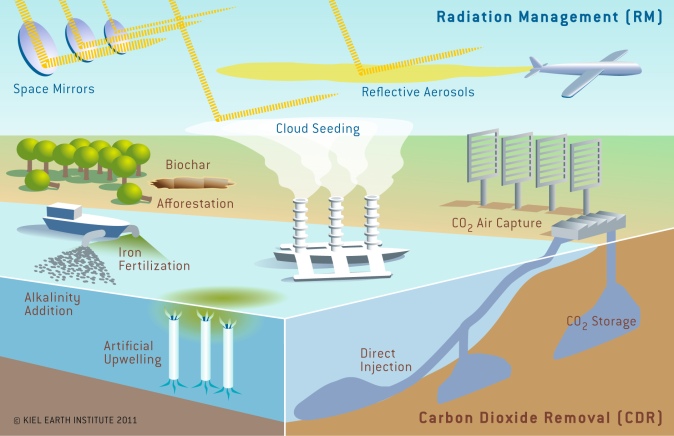
As the stakes get higher through this century, the dangers arising from this mechanistic metaphor of nature will only become more harrowing. Already, in response to the acceleration of climate breakdown, the techno-dystopian idea of geoengineering is becoming increasingly acceptable. Following Tillerson’s misconceived logic, rather than disrupt the fossil fuel-based growth economy, policymakers are beginning to seriously countenance treating the Earth as a gigantic machine that needs fixing, and developing massive engineering projects to tinker with the global climate.

Given the innumerable nonlinear feedback loops that generate our planet’s complex living systems, the law of unintended consequences looms menacingly large. The eerily named field of “solar radiation management”, for example, which has received significant financing from Bill Gates, envisages spraying particles into the stratosphere to cool the Earth by reflecting the Sun’s rays back into space. The risks are enormous, such as causing extreme shifts in precipitation around the world and exacerbating damage we’ve already done to the ozone layer. Additionally, once begun, it could never be stopped without immediate catastrophic rebound heating; it would further increase ocean acidification; and would likely turn the blue sky into a perpetual white haze. These types of feedback effects, arising from the innumerable nonlinear dynamic interdependencies of Earth’s complex systems, get marginalized by a worldview that ultimately sees our planet as a machine requiring a quick fix.

Further, there are deep moral issues that arise from confronting the inherent subjectivity of the natural world. Ever since the Scientific Revolution, the root metaphor of nature as a machine has infiltrated Western culture, inducing people to view the living Earth as a resource for humans to exploit without regard for its intrinsic value. Ecological philosopher Eileen Crist describes this as human supremacy, pointing out that seeing nature as a “resource” permits anything to be done to the Earth with no moral misgivings. Fish get reclassified as “fisheries,” and farm animals as “livestock”—living creatures become mere assets to be exploited for profit. Ultimately, it is the ideology of human supremacy that allows us to blow up mountaintops for coal, turn vibrant rainforest into monocropped wastelands, and trawl millions of miles of ocean floor with nets that scoop up everything that moves.

Once we recognize that other animals with a nervous system are not machines, as Descartes proposed, but likely experience subjective feelings similar to humans, we must also reckon with the unsettling moral implications of factory farming. The stark reality is that around the world, cows, chicken, and pigs are enslaved, tortured, and mercilessly slaughtered merely for human convenience. This systematic torment administered in the name of humanity to over 70 billion animals a year—each one a sentient creature with a nervous system as capable of registering excruciating pain as you or I—quite possibly represents the greatest cataclysm of suffering that life on Earth has ever experienced.

The “quantum jazz” of life

What, then, are metaphors of life that more accurately reflect the findings of biology—and might have the adaptive consequence of influencing our civilization to behave with more reverence toward our nonliving relatives on this beleaguered planet which is our only home?

Frequently, when cell biologists describe the mind-boggling complexity of their subject, they turn to music as a core metaphor. Denis Noble entitled his book on cellular biology The Music of Life, depicting it as “a symphony.” Ursula Goodenough describes patterns of gene expression as “melodies and harmonies.” While this metaphor rings truer than nature as a machine, it has its own limitations: a symphony is, after all, a piece of music written by a composer, with a conductor directing how each note should be played. The awesome quality of nature’s music arises from the fact that it is self-organized. There is no outside agent telling each cell what to do.

Perhaps a more illustrative metaphor would be a dance. Cell biologists increasingly refer to their findings in terms of “choreography,” and philosopher of biology Evan Thompson writes vividly how an organism and its environment relate to each other “like two partners in a dance who bring forth each other’s movements.”

Another compelling metaphor is an improvisational jazz ensemble, where a self-organized group of musicians spontaneously creates fresh melodies from a core harmonic theme, riffing off each other’s creativity in a similar way to how evolution generates complex ecosystems. Geneticist Mae-Wan Ho captures this idea with her portrayal of life as “quantum jazz,” describing it as “an incredible hive of activity at every level of magnification in the organism . . . locally appearing as though completely chaotic, and yet perfectly coordinated as a whole.”

What might our world look if we saw ourselves as participating in a coherent ensemble with all sentient beings interweaving together to collectively reverse entropy on Earth? Perhaps we might begin to see humanity’s role, not to re-engineer a broken planet for further exploitation, but to attune with the rest of life’s abundance, and ensure that our own actions harmonize with the Earth’s ecological rhythms. In the profound words of 20th century humanitarian Albert Schweitzer, “I am life that wills to live, in the midst of life that wills to live.” How, we may ask, might our future trajectory change if we were to reconstruct our civilization on this basis?
HOW TO REPROGRAM YOUR MIND TO TAKE AN ACTIVE ROLE IN YOUR PERSONAL EVOLUTION

By Jonathan Davis

Source: Waking Times

For a long time we’ve been taught that evolution is a process that is happening to us. Thankfully we’re living in times where the human race is finally getting a grasp on the fact that we’re actually actively involved in how we evolve as a species.

As humans, our bodies are constantly changing in response to the environment around us. Our muscles change according to whether we choose to use them or not. The enzymes in our digestive system change in response to the foods we choose to eat. Our endocrine system is in a constant feedback loop with our emotions which can change dramatically according to what’s happening in the world around us. As Dr Bruce Lipton put it, “the cell is a carbon-based ‘computer chip’ that reads the environment”, and the field of epigenetics teaches us that our DNA changes in quality – again, according to our environment.

When science talks about ‘environmental influence’ it seems to imply ‘all that which is outside ourselves’. It’s easy to overlook the fact that that our conscious choices about which environmental factors we engage with are part of what shapes the way our bodies restructure. We are part of the environment that influences our own development; our free will lets us choose and change the environment. We participate in our own evolution during our lifetime and what we do in our own lives can also affect future generations. In this way, personal evolution is collective evolution, and nowhere is personal evolution more apparent than how we are capable of rewiring our own brain.

How Reprogramming the Mind Is Helpful To Us

Humans work really well with routines. We repeat the same pattern over and over, and through neuroplasticity our brain wires itself so that it doesn’t have to think too much about that task anymore, it just runs that established electrical pathway. To riff off Noel Burch, it’s like when we learn to drive a car: we move from unconscious incompetence ‘I don’t know how bad at this I’m going to be’; to conscious competence ‘I now know how bad I am at this’; to conscious competence ‘OK, I can do this but I have to keep my mind on the job’; to unconscious competence ‘I can wind the window down, change the radio, turn a corner and change gears all at the same time, without even thinking about it’.

We program ourselves all the time with repetition, so we don’t have to waste energy engaging isolated focus on every task. The question is whether these are routines we are choosing for ourselves or that have been imposed on us? If they are imposed, are they helpful to us both personally and as a species?

When Are We Most Easily Able To Wire And Re-wire Our Mind?

During early childhood our brains are wiring themselves for the first time. While this process slows after the intense surge of development in first few years, our brains are still establishing the wiring we will largely use for the rest of our life throughout childhood. When we hit our teenage years we experience the second surge of new wiring and there is an opportunity for patterns to be created during this time that can setup behaviours for years to come. After this period, neuroplasticity still occurs but it just isn’t as fluid as it was before. So you can teach an old dog new tricks, it’s just a slower process.

The problem here is that our subconscious is overhearing everything our conscious mind is hearing, and is therefore to a being programmed by whatever influence we’re being exposed to. The Jesuits knew this 400 years ago. They would boast:

“Give me a child until it’s seven, it will belong to the church for the rest of its life.’” – Dr Bruce Lipton, paraphrasing Jesuit priests.

We Are Always Programming Ourselves

I like to imagine the subconscious mind is like an autopilot system. It is overhearing everything we ever think or say, and it’s mission (in the background and whenever possible) is to guide us towards whatever we want… or at least whatever it thinks we want according to what it overhears. An extra level of challenge is introduced when we imagine that the conscious mind has the capacity for judgment its higher expression – discernment. The subconscious, however, doesn’t have that ability. When it is overhearing everything you think and every word you say it simply hears the topic, not the context. ‘I don’t want to be fat’ with the judgment of ‘I don’t want’ removed becomes the topic only: ‘be fat’. The subconscious ‘overhears’ the topic of what is active in your conscious mind and it is listening for repetition. This is how it figures out for how ready we need to be for that particular thought process.

Repetition Is The Key. Repetition Is The Key.

If we lift weights we are using repetition to say to the muscles, ‘be ready for this, we may need to do this at any moment, so restructure yourself’. Scientists have found the fastest way to get fit is to do interval sprints, which is basically a physical way of saying to the body through repetition ‘you need to restructure yourself so we can sprint at top speed at any time, at the drop of a hat’. Rest, get your breath back and sprint again, over and over. This repetition tells the body that it’s a high priority to restructure and be ready for this at all times. My observation is that the same appears to be true for our brain. When our subconscious overhears our thoughts and words and there is repetition, there is an increased likelihood of neural rewiring. After all – neurons that fire together wire together.

The path of least resistance

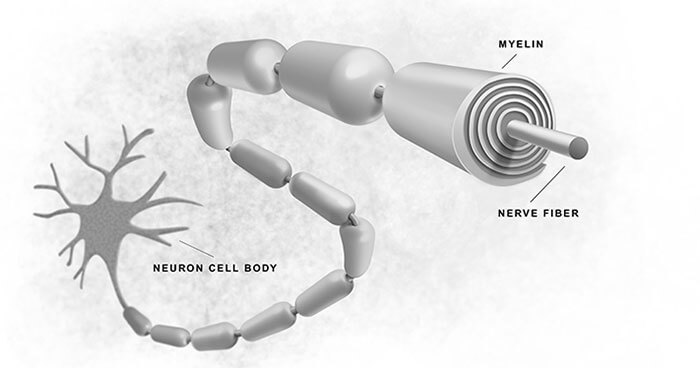
When attempting to re-wire an old habit or behaviour pattern, it is useful to remember the old adage from high school science: electricity follows the path of least resistance. Imagine the old pattern as a well-established electrical pathway in your brain. As you put conscious focus into creating a new electrical pathway to replace the old pattern, you make that new electrical pathway fatter. As soon as you stop putting conscious focus into running the new behaviour pattern the electricity will revert to the old cable for as long as it is the fatter of the two cables, as that is the path of least resistance. As soon as the day comes when the new electrical pathway is thicker than the old one you have a new program in your autopilot system, that will now run on it’s own without you needing to focus conscious intention on it. You have reached a level of conscious competence. According to Dan Coyle a key to making the consciously chosen wiring stick is holding the intention that ‘I want to know this for the rest of my life’. Coyle suggests this causes the brain to coat the new electrical pathway in the brain with myelin insulation, making it much more permanent.

Taking care with the programs we allow our subconscious to overhear

As stated earlier, our autopilot system is taking direction from everything you’re experiencing – which includes the media we watch, the people we surround ourselves with and more. For this reason, one of the most powerful things we can do is exercise discernment around the kind of experiences we expose ourselves to, and their level of intensity and repetition.

“It is easier to build strong children than to repair broken men.” – Frederick Douglass

More importantly is the need for extra care in exercising this discernment on behalf of the children in our care and teaching this discernment to teenagers as, in both cases they are in a heightened state of neuroplasticity and are more susceptible to influence. To be clear, I am by no means advocating prudishness or avoidance of the truth, just a higher level of awareness of how we are either consciously or inadvertently being programmed all the time.

In the video below Bruce Lipton speaks passionately on this very subject, citing this discernment on behalf of our children as a clear solution to war and conflict.

The Bayer-Monsanto Merger Is Bad News for the Planet

By Ellen Brown

Source: Truthdig

Two new studies from Europe show that the number of birds in agricultural areas of France has crashed by a third in just 15 years, with some species being almost eradicated. The collapse in the bird population mirrors the discovery last October that more than three quarters of all flying insects in Germany have vanished in just three decades. Insects are the staple food source of birds, the pollinators of fruits and the aerators of the soil.

The chief suspect in this mass extinction is the aggressive use of neonicotinoid pesticides, particularly imidacloprid and clothianidin, both made by the Germany-based chemical giant Bayer. These pesticides, along with toxic glyphosate herbicides such as Roundup, have delivered a one-two punch to monarch butterflies, honeybees and birds. But rather than banning these toxic chemicals, on March 21 the EU approved the $66 billion merger of Bayer and Monsanto, the U.S. agribusiness giant that produces Roundup and the genetically modified (GMO) seeds that have reduced seed diversity globally. The merger will make the Bayer-Monsanto conglomerate the largest seed and pesticide company in the world, giving it enormous power to control farm practices, putting private profits over the public interest.

As Massachusetts Sen. Elizabeth Warren noted in a speech in December at the Open Markets Institute, massive companies are merging into market-dominating entities that invest a share of their profits in lobbying and financing political campaigns, shaping the political system to their own ends. She called on the Trump administration to veto the Bayer-Monsanto merger, which is still under antitrust scrutiny and has yet to be approved in the U.S.

A 2016 survey of Trump’s voter base found that more than half disapproved of the Monsanto-Bayer merger, fearing it would result in higher food prices and higher costs for farmers. Before 1990, there were 600 or more small, independent seed businesses globally, many of them family-owned. By 2009, only about 100 survived, and seed prices had more than doubled. But reining in these powerful conglomerates is more than just a question of economics. It may be a question of the survival of life on this planet.

While Bayer’s neonicotinoid pesticides wipe out insects and birds, Monsanto’s glyphosate has been linked to more than 40 human diseases, including cancer. Its seeds have been genetically modified to survive this toxic herbicide, but the plants absorb it into their tissues. In the humans who eat the plants, glyphosate disrupts the endocrine system and the balance of gut bacteria, damages DNA and is a driver of cancerous mutations. Researchers summarizing a 2014 study of glyphosates in the Journal of Organic Systems linked them to the huge increase in chronic diseases in the United States, with the percentage of GMO corn and soy planted in the U.S. showing highly significant correlations with hypertension, stroke, diabetes, obesity, lipoprotein metabolism disorder, Alzheimer’s, Parkinson’s, multiple sclerosis, hepatitis C, end stage renal disease, acute kidney failure, cancers of the thyroid, liver, bladder, pancreas, kidney and myeloid leukaemia. But regulators have turned a blind eye, captured by corporate lobbyists and a political agenda that has more to do with power and control them protecting the health of the people.

The Trump administration has already approved a merger between former rivals Dow and DuPont, and has signed off on the takeover of Swiss pesticide giant Syngenta by ChemChina. If Monsanto-Bayer gets approved as well, just three corporations will dominate the majority of the world’s seed and pesticide markets, giving them enormous power to continue poisoning the planet at the expense of its inhabitants.

The Shady History of Bayer and the Petrochemical Cartel

To understand the magnitude of this threat, it is necessary to delve into some history. This is not the first time Monsanto and Bayer have joined forces. In both world wars, they made explosives and poisonous gases using shared technologies that they sold to both sides. After World War II, they united as MOBAY (MonsantoBayer) and supplied the ingredients for Agent Orange in the Vietnam War.

In fact, corporate mergers and cartels have played a central role in Bayer’s history. In 1904, it joined with German giants BASF and AGFA to form the first chemical cartel. After World War I, Germany’s entire chemical industry merged to become I.G. Farben. By the beginning of World War II, I.G. Farben was the largest industrial corporation in Europe, the largest chemical company in the world, and part of the most gigantic and powerful cartel in all history.

A cartel is a grouping of companies bound by agreements designed to restrict competition and keep prices high. The dark history of the I.G. Farben cartel was detailed in a 1974 book titled “World Without Cancer,” by G. Edward Griffin, who also wrote the best-selling “Creature from Jekyll Island,” on the shady history of the Federal Reserve. Griffin quoted from a book titled “Treason’s Peace,” by Howard Ambruster, an American chemical engineer who had studied the close relations between the German chemical trust and certain American corporations. Ambruster warned:

Farben is no mere industrial enterprise conducted by Germans for the extraction of profits at home and abroad. Rather, it is and must be recognized as a cabalistic organization which, through foreign subsidiaries and secret tie-ups, operates a far-flung and highly efficient espionage machine—the ultimate purpose being world conquest … and a world superstate directed by Farben.

The I.G. Farben cartel arose out of the international oil industry. Coal tar or crude oil is the source material for most commercial chemical products, including those used in drugs and explosives. I.G. Farben established cartel agreements with hundreds of American companies. They had little choice but to capitulate after the Rockefeller empire, represented by Standard Oil of New Jersey, did so, because they could not hope to compete with the Rockefeller-I.G. combination.

The Rockefeller group’s greatest influence was exerted through international finance and investment banking, putting them in control of a wide spectrum of industry. Their influence was particularly heavy in pharmaceuticals. The directors of the American I.G. Chemical Company included Paul Warburg, brother of a director of the parent company in Germany and a chief architect of the Federal Reserve system.

The I.G. Farben cartel was technically disbanded at the Nuremberg trials following World War II, but in fact it merely split into three new companies—Bayer, Hoescht and BASF—which remain pharmaceutical giants today. To conceal its checkered history, Bayer orchestrated a merger with Monsanto in 1954, giving rise to the MOBAY Corp. In 1964, the U.S. Justice Department filed an antitrust lawsuit against MOBAY and insisted that it be broken up, but the companies continued to work together unofficially.

In “Seeds of Destruction: The Hidden Agenda of Genetic Manipulation” (2007), William Engdahl states that global food control and depopulation became U.S. strategic policy under Rockefeller protégé Henry Kissinger, who was secretary of state in the 1970s. Along with oil geopolitics, these policies were to be the new “solution” to the threats to U.S. global power and continued U.S. access to cheap raw materials from the developing world. “Control oil and you control nations,” Kissinger notoriously declared. “Control food and you control the people.”

Global food control has nearly been achieved, by reducing seed diversity and establishing proprietary control with GMO seeds distributed by only a few transnational corporations, led by Monsanto; and by a massive, taxpayer-subsidized propaganda campaign in support of GMO seeds and neurotoxic pesticides. A de facto cartel of giant chemical, drug, oil, banking and insurance companies connected by interlocking directorates reaps the profits at both ends, by waging a very lucrative pharmaceutical assault on the diseases created by their toxic agricultural chemicals.

Going Organic: The Russian Approach

In the end, the Green Revolution engineered by Kissinger to control markets and ensure U.S. economic dominance may be our nemesis. While the U.S. struggles to maintain its hegemony by economic coercion and military force, Russia is winning the battle for the health of the people and the environment. Russian President Vladimir Putin has banned GMOs and has set out to make Russia the world’s leading supplier of organic food.

Russian families are showing what can be done with permaculture methods on simple garden plots. In 2011, 40 percent of Russia’s food was grown on dachas (cottage gardens or allotments), predominantly organically. Dacha gardens produced more than 80 percent of the country’s fruit and berries, more than 66 percent of the vegetables, almost 80 percent of the potatoes and nearly 50 percent of the nation’s milk, much of it consumed raw. Russian author Vladimir Megre comments:

Essentially, what Russian gardeners do is demonstrate that gardeners can feed the world—and you do not need any GMOs, industrial farms, or any other technological gimmicks to guarantee everybody’s got enough food to eat. Bear in mind that Russia only has 110 days of growing season per year—so in the US, for example, gardeners’ output could be substantially greater. Today, however, the area taken up by lawns in the US is two times greater than that of Russia’s gardens—and it produces nothing but a multi-billion-dollar lawn care industry.

In the U.S., only about 0.6 percent of the total agricultural area is devoted to organic farming. Most farmland is soaked in pesticides and herbicides. But the need for these toxic chemicals is a myth. In an October 2017 article in The Guardian, columnist George Monbiot cited studies showing that reducing the use of neonicotinoid pesticides actually increases production, because the pesticides harm or kill the pollinators on which crops depend. Rather than an international trade agreement that would enable giant transnational corporations to dictate to governments, he argues that we need a global treaty to regulate pesticides and require environmental impact assessments for farming. He writes:

Farmers and governments have been comprehensively conned by the global pesticide industry. It has ensured its products should not be properly regulated or even, in real-world conditions, properly assessed. … The profits of these companies depend on ecocide. Do we allow them to hold the world to ransom, or do we acknowledge that the survival of the living world is more important than returns to their shareholders?

President Trump has boasted of winning awards for environmental protection. If he is sincere about championing the environment, he needs to block the merger of Bayer and Monsanto, two agribusiness giants bent on destroying the ecosystem for private profit.


Ellen Brown is an attorney, chairman of the Public Banking Institute, and author of twelve books including “Web of Debt” and “The Public Bank Solution.”

Life in VALIS

216377

By Kingsley L. Dennis

Source: Reality Sandwich

VALIS is a 1981 science fiction novel by Philip K. Dick. The title stands for Vast Active Living Intelligence System, which in some respects is very close to the living intelligence I discuss in this series of essays.[i] A living intelligence also suggests a non-local field view of reality. The latest findings in the quantum sciences (notably quantum mechanics and biophysics) posit a field-view understanding that is said to underpin the construction of our universe, and hence the nature of our reality.

In the past, various people — mystics, psychologists, and consciousness researchers — have alluded to this intelligence field by a variety of names: cosmic consciousness, superconsciousness, transpersonal consciousness, integral consciousness, etc. All these descriptions share common themes; namely, a heightened sense of intuition and empathy, a feeling of greater connectivity to the world and to people, a sense of ‘inner knowing’ (gnosis), and the realization that humanity exists and evolves within a universe of intelligence and meaning. Forms and intimations of these new consciousness patterns are already emerging in the world, but as yet they have not become a part of our accepted paradigm.

As Dr. Richard Bucke stated in his work Cosmic Consciousness, the early signs of this new evolutionary development have been appearing within humankind for some time:

The simple truth is, that there has lived on the earth, ‘appearing at intervals’, for thousands of years among ordinary men, the first faint beginnings of another race … This new race is in the act of being born from us, and in the near future it will occupy and possess the earth.1

Such signs — or evolutionary mutations — have included, for example, visionaries, mystics, artists, psychics, and a smattering of young gifted children. I would posit that social and cultural events have occurred throughout world history that have served to seed higher functioning into human consciousness. Such events would have taken the form of artistic movements; scientific innovations; faith movements; cultural/social revolutions; architecture; fraternities; myths and legends; sporting fixtures, and more. All such socio-cultural impacts affect human consciousness in a way that prepares the human mind for periods of development and change. Within these seemingly random occurrences lie the components that act as the ‘technologies’ for developing human consciousness. In recent years we have seen the rapid expansion of our informational flows, and thus human awareness in general.

The increasing manifestation of a collective human consciousness — or rather a collective of minds accessing the living intelligence — is most likely to be in line with certain evolutionary necessities. Preparation has been necessary through a succession of events that form an overall pattern of mutually reinforcing stimuli aimed at raising humanity’s psychic awareness. This includes the expansion of intellect, psychological awareness, social development, humanitarianism, empathy, and creativity. These developments have also served to stimulate human intuition. In other words, there have been moments throughout recent human history that helped prepare the ‘mental soil’ for new patterns of consciousness to slowly seed and grow. According to one well-placed commentator on this subject:

The human being’s organism is producing a new complex of organs in response to such a need. In this age of the transcending of time and space, the complex of organs is concerned with the transcending of time and space. What ordinary people regard as sporadic and occasional bursts of telepathic or prophetic power are…nothing less than the first stirrings of these same organs.2

Similarly, the revered Persian poet Jalalludin Rumi stated,

New organs of perception come into being as a result of necessity/Therefore, O man, increase your necessity, so that you may increase your perception.[ii]

On the whole, socio-cultural and material forces are slow to react to changes in expressions of human consciousness. Yet this is nothing new, as throughout history there have been individuals who, feeling the need for transformational change, have been caught up in social-cultural upheavals. These events and human efforts, according to Gopi Krishna, indicate a stirring of the human evolutionary impulse:

I can safely assert that the progress made by mankind in any direction, from the subhuman level to the present, has been far less due to man’s own efforts than to the activity of the evolutionary forces at work within him. Every incentive to invention, discovery, aesthetics, and the development of improved social and political organizations invariably comes from within, from the depths of his consciousness by the grace of … the superintelligent Evolutionary Force in human beings.3

I would further add that in order for continued human development to occur there are particular periods of human history wherein humanity becomes ready, or in need of, the activation of particular faculties — our evolutionary potentials. During such transitional periods humanity will acquire — or be coerced into developing — new capacities for accessing consciousness (a.k.a. the living intelligence).  As in all paradigm shifts, old energies must inevitably give way to the new.

In the years ahead a new wave of young people will be manifesting a consciousness that is simultaneously open to spiritual impulses as well as to the latest in scientific research. A new generation will be growing up with the desire to develop a collective sense of wellbeing, connectedness, empathy and creative vision. What we refer to as the ‘nonlocal’ will to them be the same as integral interconnectedness, and will feel natural and normal. New patterns of thinking and a stronger sense of intuition will also be a sign that greater access to the field of living intelligence is occurring. This access is the same as, in our older language, direct interaction with nonlocal and non-ordinary states of consciousness.

The experience of direct nonlocal consciousness used to be the domain of experienced practitioners (shamans, mystics, psychics) who would have undergone rigorous and lengthy training. Our ‘everyday consciousness’ of the local view of the universe has been until now largely unprepared for the realms of non-ordinary reality. In Western civilization especially, the nonlocal mode of perception (subjective experience) has not been encouraged, or even recognized. As such it has lain dormant, atrophied, and largely left to the province of the esoteric sciences. The myopic, linear, and rational view of reality has resulted in the dominating values of competition, power, ego, and greed. A nonlocal, intuitive sense of reality, however, will be one that embraces the values of Connection ~ Communication ~ Collaboration ~ Consciousness ~ Compassion. It is my view that the new generation(s) of young people in the world will be the first to embody these values in a widespread manner — thus ushering in a new epoch for the development of human consciousness.

Connected to Living Information

It appears that the Earth is now receiving different forms of energetic impacts — especially electromagnetically — which will alter the Earth’s resonant energy signature. As the Earth’s magnetic field is not a static shield, but rather like an oscillating wave, fluctuations in the field are known to affect living systems upon the Earth. Biological bodies, being electrical energy units, are sensitive to external energetic and atmospheric variations, though usually these reactions operate at a subconscious level. Likewise, magnetic variations can have unusual effects on human consciousness. Our sciences are now understanding more and more how human life – our thoughts, emotions, and behavior — are affected directly by fluctuations in Earth’s magnetic field.[iii] As the energetic resonance of the Earth alters over time, this will undoubtedly affect how human DNA calibrates itself as a newborn child enters into the world.

The knowledge that human DNA can be influenced and modulated by frequencies (sound, light, language, and thought) has been utilized by various spiritual traditions over the ages. This can be seen in the variety of exercises that utilize thought focus (prayer), sounds (music, chanting, singing), light (both natural light and produced light, such as in stained glass), and language (specific recitations such as a mantra and zikr). Similarly, various shamanic practices have alluded to the notion that DNA can be accessed through deliberate, conscious intention.4 DNA appears to function, therefore, not only as a protein builder (the minority function) but also as a medium for the storage, receiving, and communication of information.

If we understand that information is processed by us on a neurobiological level, then we can accept that our nervous systems are channels for information. Since we know that DNA is present throughout our cellular structure, we can be sure that our complete physiology is involved in and related to external energy fields — electromagnetism, gamma bursts, solar rays, as well as consciousness fields.

It appears that part of our human DNA ‘energetic signature’ can be re-calibrated in our lifetime through exercising various techniques, as in a range of meditative practices and associated stimuli (as described above). For many people, these are the exact practices that have guided them through their lives. It may be that in past epochs direct intervention — such as wisdom teachings, mystery schools, and the like — were required in preparing individuals to access the living intelligence as the current environment alone was not sufficient to provide the catalytic trigger.

This situation, I speculate, may now be changing. The young children being born today appear to be already more connected with a form of intuitive intelligence. Contact with one’s own intuitive intelligence is another way of saying a person manifests a degree of gnosis. And true gnosis is a form of transceiving of information; that is, the receiving as well as transmitting of nonlocal information. Such gnosis is likely to be in the form of informational exchange between the human nervous system and living intelligence, which together in-form the body consciousness field. A more coherent connection between a person and the living intelligence field suggests greater potential/capacity for a self-initiated awakening, without the need for external teaching environments. It may be the case that humanity has just been waiting for the establishment of an energetically conducive environment. And that time may now be at hand.

Fields of Resonance

In preceding years the human socio-cultural environment was not conducive to individual development on a large scale. For this reason many wisdom teachings or streams of perennial wisdom had to operate quietly, or as clandestine operations. And yet the human capacity to access consciously the living intelligence field is without doubt an in-born natural ability. Only that for most people this capacity has lain dormant as, like an under-exercised muscle, it was never properly used. As one source recently pointed out — ‘The information you need is encoded in the structural makeup of every single cell in your body. Contact is there.’5 The same source also noted that:

When you are aware of your totality, the Life-impulse will transmit to you everything that you need to know in any given situation. Its message will always come as your first spontaneous impulse. Be attentive.6

We now know that the entire genetic information for a human body is contained in each of the body’s many trillion cells. It may be the case — only speculative at this stage — that accessing the living intelligence also operates through connection/communication with the information that is en-folded in these communicating fields of energy. That is, our human physiology — DNA, cellular structure, nervous system, etc. — acts as a whole, coherent, transceiving apparatus that filters our consciousness from the nonlocal intelligence field. The bodily ‘transceiving apparatus’ resonates with the various energy fields that originate literally under our feet as well as above our heads.

Geologists are developing their understanding of how Earth energies are transmitted both along the surface of the crust as well as within the core of the Earth. Latest research indicates that the Earth’s core behaves more along the lines of a crystalline structure, rather than as the molten mass that many of us imagine. In 1936 it was discovered (by the seismologist Inge Lehmann) that the Earth has a solid inner core distinct from its liquid outer core. This solid inner core was deduced by observing how earthquake-generated seismic waves were being reflected off the boundary of the inner core. Likewise, the outer core was found to be liquid, as earlier suspected. However, more recent observations have shown that the inner core is not completely uniform. Rather, it contains large-scale structures indicated by seismic waves that pass more rapidly through some parts of the inner core than through others. It has even been suggested that the inner solid core is formed from iron crystals. What is known by science is that the inner core, through its dynamo action, plays a significant role in the generation of Earth’s magnetic field. Similarly, the crust of the Earth is known to support a network of energized, or ‘magnetized’ paths — variously called ley lines, Earth grid, pilgrimage routes, etc. It appears that the Earth manifests particular tracks, or routes, of increased energy upon which it is said many ancient temples, ceremonial sites, gatherings, and the like have been based. Indeed, many gatherings and buildings today continue to be based upon certain accepted energized ‘hot spots.’ Quite literally, the energy fields of the Earth pulsate under our very feet. In addition to this, above our heads the Earth’s magnetic field, interacting with solar and cosmic rays, envelopes humanity in a bubble of fluctuating energy.

The latest findings in science tell us that the Earth’s electromagnetic field is a sensitive membrane that responds to solar activity such as sun spot cycles, solar flares, coronal mass ejections, and solar winds. We also know from neuroscience that human brain activity creates small electrical charges. Further, the human heart is now understood to act as a vibrant generator of electromagnetic energy. Collate this with a human nervous system and cellular structure that communicates as a coherent quantum field, then we have intrinsic resonance between human biology and our terrestrial, solar, and cosmic environments. We are literally living amidst a VALIS Vast Active Living Intelligence System.

This understanding connects us with notions of a nonlocal field of consciousness that has been referred to over the years as the noosphere (Teilhard de Chardin; Vladimir Vernadsky); Overmind (Sri Aurobindo); and the world sensorium (Oliver Reiser). We can also consider this ‘noosphere/overmind’ — a.k.a. living intelligence field — as emerging as a form of planetary consciousness. If this is the case, then humanity may be instrumental in facilitating the emergence of a single planetary organism with a shared living intelligence (i.e., consciousness). A collectively aligned conscious and aware human civilization could become a physical channel for this living intelligence. This suggests that, as a species, we would have arrived at the point where we now needed to interiorize the evolutionary process for further development to occur.

The manifestation of consciousness through humanity appears to be undergoing an increased psychic compression that may serve to synchronize life on this planet. This process, in fact, is nothing ‘esoteric’ as it has been part of human civilization from the first day our ancestors began to worship an external presence. The convergence of human consciousness/thought patterns takes place in ceremonial worship, and is central to human prayer. If we look at the salah practice of formal worship in Islam (it constituting one of the Five Pillars of Sunni Islam), we see that this ritual prayer obliges the worshipper to pray five times a day facing Mecca. These specifically designated times of concentrated states of consciousness create an intense convergence and focused stream of energy across the globe directed toward the geographical location of Mecca. We have many other forms of consciousness convergence (or mental synchronization) upon this planet, throughout a myriad of socio-cultural-religious-spiritual ceremonies, events, gatherings, etc. For example, the ‘Global Consciousness Project’[iv], established by Roger Nelson at Princeton University, has demonstrated how human consciousness becomes collectively coherent and synchronized at moments of global emotional release. In the past, however, heightened synchronization in the human collective consciousness field was induced by external triggers[v]. It is to be speculated whether a change is underway upon this planet that will result in supporting greater coherence in the human consciousness field. If this is the case, we may suspect that this will facilitate a clearer contact between the human transceiving apparatus (the human body) and the nonlocal living intelligence field.

It is my own sense that the coming generation(s) will be among the first to awaken en masse to an era of instinctual gnosis. That is, a generation of instinctively aware young children who inherently feel an intentional connection and communion between their ‘self’ and the living intelligence. This contact will be a young person’s primary contact in their life, providing trustful feelings and instinctual guidance. This, we can hope, will assist in making our epochal and monumental planetary transition less turbulent and more coherent. The 13th century Persian poet Jalāl ad-Dīn Rūmī – known in the West simply as Rumi – suggested this intentional coherence when he accurately wrote about the distinction between acquired and instinctual intelligence:

Two Kinds of Intelligence

There are two kinds of intelligence: One acquired,
as a child in school memorizes facts and concepts
from books and from what the teacher says,
collecting information from the traditional sciences
as well as from the new sciences.

With such intelligence you rise in the world.
You get ranked ahead or behind others
in regard to your competence in retaining
information. You stroll with this intelligence
in and out of fields of knowledge, getting always more
marks on your preserving tablets.

There is another kind of tablet, one
already completed and preserved inside you.
A spring overflowing its springbox. A freshness
in the center of the chest. This other intelligence
does not turn yellow or stagnate. It’s fluid,
and it doesn’t move from outside to inside
through the conduits of plumbing-learning.

This second knowing is a fountainhead

from within you, moving out. 7

This ‘second knowing’ which is the ‘fountainhead’ within us corresponds to the source of living intelligence – present within our very cells. Through accessing this contact/communication we are likely to find ourselves actively engaging with a developmental impulse unfolding upon this planet.

Notes 

1 Bucke, R. (1972/1901) Cosmic Consciousness: A Study in the Evolution of the Human Mind. London:  The Olympia Press.

2 Shah, I. (1982) The Sufis. London:  Octagon, p.54

 3 Krishna, G. (1993) Higher Consciousness and Kundalini. Ontario, CA:  F.I.N.D. Research Trust, p.166

 4 Narby, J. (1999) Cosmic Serpent: DNA and the Origins of Knowledge. London:  Phoenix.

 5Carey, K. (1995/1982) The Starseed Transmissions. New York:  HarperCollins, p.47

 6Carey, K. (1995/1982) The Starseed Transmissions. New York:  HarperCollins, p.41

7 Jalāl ad-Dīn Rūmī, ‘Two Kinds of Intelligence’, Mathnawi IV:1960-1968 (Trans. Coleman Barks) 

[i] See the first part –  The Rise of an Intuitive Humanity

[ii] Taken from Rumi’s Masnavi

[iii] See research material at HeartMath Institute – https://www.heartmath.org/research/research-library/

[iv] See http://noosphere.princeton.edu/

[v] Examples include the death of Princess Diana in the UK, and the World Trade Center collapse in the US.