A falling tree makes more noise than a growing forest A Tibetan proverb Let’s hope the silently growing forest represents a mass-awakening. —-
From the looks and evidence – ever more visible to even the ignorant – we are living in a Death Cult – a Cabal-driven Death Cult, with a key objective to do away with – eliminate – a large segment, if not the majority of the world population.
Who is executing this Death Cult? And on behalf of whom? Three entities come to mind.
The World Economic Forum (WEF), is a Cologny (lush suburb of Geneva, Switzerland)-registered NGO; a never-voted-for “influencer” organization, that has amassed power and money in the hundreds of millions of dollars, like no other NGO around the word. Its founder and eternal Chairman, Klaus Schwab (84), is an engineer cum economist, with origins linked to the former Third Reich Nazi-leadership.By the way – the WEF is holding their annual Davos conference from 16-20 January 2023. The pathology of this outfit and of those elitist billionaires and corporate honchos attending, is reflected in this year even more dystopian agenda. Have a look at the official program https://www.weforum.org/events/world-economic-forum-annual-meeting-2023/about/meeting-overview?gclid=CjwKCAiA8OmdBhAgEiwAShr402rG_ShAgll-Pwx4MjDBTbmhgZDg29ii18ztf-yKlsvgQqdSrVerIBoCCvIQAvD_BwE
This is only the visible agenda. None of us, the commons, know what’s going on behind closed doors in special secretive sessions. We feed on leakages, and as Globalism is fading, they become ever more abundant.
The World Health Organization – WHO – goes as a specialized UN Agency – which in reality it isn’t. It was founded in 1948 by Rockefeller, a eugenist and obsessed globalist, who was (and still is) aiming at controlling the world population through health (and death), and who is hellbent to make the Mother Earth a better place through a One World Order. WHO was then “bought” into the UN system.
At that time, Rockefeller with Standard Oil, had also a monopoly on petrol. He decided that pharmaceuticals, up to the 1950’s, mostly based on plants and plant chemistry – could be made from petro-chemicals.
WHO, according to its bylaws, a disease-preventive health organization, became, thus, largely a curative pharma-based and pharma-pushing organization.
While the bulk of the budget from other UN agencies stems from member countries’ contribution, WHO is funded at least to two thirds or more by the private sector, mostly the pharma industry, as well as the Bill Gates Foundation.
A conflict of interest is more than evident. WHO should not be a UN agency.
WHO – against its scientific staff’s better knowledge, has declared Covid as a deadly pandemic, spreading fear, imposing lockdowns, face masks, social distancing – and more human-denigrating measures.
Eventually, WHO, strongly nudged by the WEF (and the powers behind the WEF), was coercing governments to “vaccinate” their populations with never-before tested genetically modifying mRNA injections, of which nobody but the producing pharma-industry knows the composition – contents that has turned out deadly for tens of millions of people – and mounting.
By the end of 2022, excess mortality in western countries amounts to between 15% and 25% – in some countries even higher.
All of the western used so-called vaccines are, in fact, bioweapons.
This horrendous Vaxx-fraud was also a multi-billion, if not trillion, bonanza for the pharmaceuticals.
The covid jabs also contain sterilization agents for both men and women, resulting already by now in drastically falling birth rates in western countries.
The term “Western Countries” means all of Europe and the worldwide Anglosaxonia. So far, all fits well within the Rockefeller, Gates, Soros et al – eugenist agenda.
WHO is truth censuring through social platforms – NewsGuard, an organization of “True Journalism”, tracking credibility of news and information websites and online misinformation, provides WHO regularly with lists of the most important “influencers” of “misinformation” in matters of health, alias conspiracy theorists; people who do not conform with the official narrative.
WHO forwards this list to the different Social Media Platforms, requesting them to block the accounts of the “perpetrators”, or to clandestinely hide or limit their social media inputs. This is called “shadow banning”.
WHO works closely with the International Fact Checking Network (IFCN) at the Poynter Institute for Media Studies, a non-profit journalism school and research organization in St. Petersburg, Florida. The IFCN has a databank with more than 10,000 “fact-checked false information”, most of them related to WHO dictates.
IFCN is mainly funded by the US State Department, the National Endowment for Democracy (NED), the Bill and Melinda Gates Foundation, Soros Open Society Foundation, Google and Facebook. Coincidentally, the Gates Foundation and the US Government are also the biggest donors of WHO.
To top it all off, WHO is currently preparing a so-called Pandemic Treaty. Under this Treaty, if approved, WHO’s DG would have the power to declare worldwide pandemics as he, alias the ruling class, sees fit to control the masses.
Compulsory vaccinations could be military enforced. This would be an authority above each of the member countries’ National Constitution. So far trial votations have not succeeded, as several country blocks, for example, in Africa, do not agree.
But the beat goes on with coercing and potentially bribing of country delegates. A final vote should take place in the course of 2023. If approved, the lawless Pandemic Treaty rule should enter into effect at the beginning of 2024.
If so, this is a call on each WHO member to leave WHO.
NATO – the North Atlantic Treaty Organization – has long ceased being a defense alliance of North Atlantic countries. It has become a worldwide war machine with access and use of some 850 US military bases around the world.
NATO is not only a multi-billion-dollar income generator largely for the US Military Industrial Complex (MIC), but it is also an important US GDP engine, contributing an estimated 30% of the US GDP, counting all NATO-related and dependent industries and services.
NATO is the provoker, funder and main executer of the Ukraine-Russia war – the US – Russia proxy-war. Its expansionism has become a monster octopus, stretching its tentacles completely and all-controlling around Mother Earth.
Other than non-stop provoking Russia, NATO also fulfills a role in the Great Reset / UN Agenda 2030 eugenist agenda, as killing is one of its chief purposes.
NATO enters any territory where the “conventional” media lie-machine, and social engineering are failing or not completing their people-ordaining goals fast enough.
Russia, by far the largest and resources-richest country of our planet, was in the US hegemon’s cross-hairs for over a century. The 2014 Maidan Coup, engineered by EU / NATO, was a planned prelude to a war with Russia.
The without scruples NATO war machine would not shy from a hot WWIII – which could easily turn nuclear, all-destructive – and – all-killing.
Playing with Russian ethics, knowing that President Putin has no intention to annihilate a country that up to recently and for over 300 years in the past was an integral part of the Russian Empire, then the Soviet Union. Ukraine is inherently, and historically a part of Russia, even as an ally after it became independent in 1991.
Ukraine was forcefully and viciously detached from Russia by western aggression for greed and pathological grandeur.
Now western aggressions may backfire, as President Putin may soon have no other choice than to obliterate what’s left of Ukraine, to finally stop the war – and the senseless killing, the misery of the hapless and suffering population.
Be aware, NATO is ready for weaponized interference wherever a “human-conflict” cannot be resolved by the WEF / WHO oppressive tyrannical means.
——- We, the People, of the world have largely only little or no saying in how our world, our countries, even our communities are run. And this already for
In the last three years the common People’s exclusion form what is still sold as a democratic process, has reached a pinnacle. With the onset of a fake plandemic at the beginning of 2020 – the beginning of an agenda long ago planned – the UN Agenda 2030 – the beginning of the larger Agenda 21 (all of the 21st Century), officially decided at the UN Environment Conference in Rio in June 1992 – the so-called United Nations Conference on Environment and Development (UNCED), also known as the ‘Earth Summit‘.
The long-haul precursor to his was the 1968 Rockefeller founded Club of Rome’s book “Limits to Growth” (LTG) of 1972. The concepts and principles of this book, LTG, are the blueprint for what is currently – and probably at least for the coming ten to fifty years – being implemented.
LTG is the basis for the Great Reset, the 4th Industrial Revolution — and the UN Agenda 2030, also called WHO’s Decade of Vaccination. Following are the main life-curtailing threats we are facing today – listed not necessarily in order of priority. Remember, they are all inter-linked and inter-acting.
Population reduction, a massive genocide, through fake covid “vaxxes” – that are carefully engineered as gene-modifying mRNA killer-injections.
The US / EU / NATO provoked war between Russia and Ukraine; a US – Russia proxy-war, pumped up to the tune of about 155 billion dollars-worth of western weaponry and “budget-support” money in less than a year – more than Ukraine’s entire GDP for 2020 ($151 billion). Some US$112 billion from the US, the rest from Europe and other western countries.
Manipulated energy shortages, a proven combined manipulation of “sanctions” on Russia, and the worst western government sponsored terror sabotage act in recent history, the torpedoed Nord Stream 1 and 2 gas pipelines under the Baltic Sea from Russia to Germany. Russian hydrocarbons, mostly gas, provided at least 40% of all of Europe’s energy uses.
Compromised banker’s engineered hyper-inflation, leading more rapidly to poverty; crisis after crisis caused demolition of the western economy, bankruptcies, unemployment, poverty, unaffordable food and / or housing, disease and death – genocidal death.
Worldwide network of 5G microwaves – and would you believe, and soon to come all-controlling, potentially deadly Sixth Generation – 6G, whose target date is coverage of the entire planet by 2030.
Digitization of money – may result in turn-on, turn-off money, expiring money, blocked or canceled money for misbehavior, potentially resulting in lack of sustenance for non-behaviors, no food, no energy, no housing – disease – death
Universal Basic Income – (UBI) – can be controlled and is slated to become “You own nothing but are happy” – Klaus Schwab’s glorious ending of the Great Reset, and finally
A WHO / pharma controlled worldwide tyrannical “health system” (sic), through a so-called Pandemic Treatywhich – if approved by the World Health Assembly – would overreach every UN / WHO member country’s Constitution, putting the Director General of WHO in charge of health (and death) issues worldwide, in each country. It might amount to compulsory vaccination, enforced by the military, for whatever WHO decides is or might be a worldwide threat to health. Even the common flu.
If approved in 2023, the Pandemic Treaty would become effective at the beginning of 2024.
This would be an absolutely lawless rule against the will of ALL PEOPLE OF THE WORLD.
If the Pandemic Treaty is approved – and even if it is not approved – this is a call on all nations to EXIT WHO,which has become a biased pharma-led eugenist-funded terror organization.
The world is faced with a multi-disaster scenario caused by ultra-rich neo-Nazi multi-billionaire elitists and the international data / IT and finance system that controls some 25 to 30 trillion-dollar equivalent of the world’s assets, maybe more – and can leverage every country of this planet to do their bidding.
These are the dark Cult Masters, acting from the shadows of supra-governments, like the US and the European Union, mainly via their well-funded executive, or implementing, instruments – WEF, WHO, NATO.
Indeed, in unison, all 193 UN member countries (194 WHO members) – their corrupted leaders and media blasted the same fear-imposing message – lockdown, obligatory people-demeaning face masks, social distancing, working from home – so you would lose personal contact with your friends and colleagues.
Today, all these above-mentioned Limits to Growth measures are wrapped in a constant and permanent fear campaign, to demoralize and subjugate people into submission. A fear campaign carried out by mainstream media, all owned by 13 media conglomerates who own 90% of the media worldwide.
These corrupt media moguls are paid billions of dollars to comply with the power-money psychopaths’ request, to spread the world with lies – with deadly lies. They are party to the mass-murderers, as they know what they are doing. Their management must face the laws of justice.
Just as a parenthesis, looking at what these US Treasury generated dollars really are: They are worthless, unbacked money – dollars that are simple debt for the US Treasury; debt that is never paid back.
Therefore, money dished out to corrupt organization is worthless for the “spender”- the creator of the money, the US of A, but they buy the world for the recipients.
We are living in the midst of a Cabal-directed Death Cult.
The majority of the people haven’t noticed yet.
But the awakening has begun.
Remember the Tibetan Proverb of the silently growing forest. And as trees connect with each other, so do humans by their spirituality – not transhumans, but humans what we still are.
And let us never an abject power-hungry non-elected criminal like Klaus Schwab, with his roots in the Third Reich, and his by nobody desired NGO, the World Economic Forum – WEF – dominate humanity.
May the forest grow to a critical mass – that can by its sheer solidarity, togetherness of thought and will power overcome the pathological objectives of the psychopaths wish for power and money dominance.
Peter Koenig is a geopolitical analyst and a former Senior Economist at the World Bank and the World Health Organization (WHO), where he worked for over 30 years around the world. He lectures at universities in the US, Europe and South America. He writes regularly for online journals and is the author of Implosion – An Economic Thriller about War, Environmental Destruction and Corporate Greed; and co-author of Cynthia McKinney’s book “When China Sneezes: From the Coronavirus Lockdown to the Global Politico-Economic Crisis” (Clarity Press – November 1, 2020) Peter is a Research Associate of the Centre for Research on Globalization (CRG). He is also is a non-resident Senior Fellow of the Chongyang Institute of Renmin University, Beijing.
The world watched in varying states of mind as the Davos set enjoyed its annual turn on the world stage, supping on sumptuous Atlantic crab and fresh Iberian pork, sustainable Norweigian cod, and the best Italian coffee.
When not tucking into a lavish feast, they bandied about their ideas for how the world ought to exploited (the key euphemisms here are “sustainable,” “stakeholder,” and “impossible beef.”)
Some revile and protest the annual ruling class summit, but many millions more embrace it, even gaze admirably at the mandarins of the new world order as they flit across mobile screens and offer uplifting quotes to curious media attendees.
Indeed, few seem to care as the cabal of monied interests chat amiably about centrally managed digital currencies, consolidating global health authority in unelected bodies, collapsing the world economy, generating needless food shortages, unpopular fake meat, and other new market opportunities. Fewer still see the implicit threat of globalist agendas to the rule of sovereign states.
There is such little resistance largely because billions of people believe what they read and what they are told by the news media. A healthy dose of distrust would serve the global populace well, if only it could release itself from the grip of mainstream corporate news.
In this respect, it’s worth remembering two quotes from the incomparable muckraker Upton Sinclair–author of the startling expose The Jungle.
In his book The Brass Check, Sinclair betrays the great lie of modern media, namely that it is independent. This easy falsehood is widely accepted. Millions of Americans believe that the truly deceitful media are the ones that YouTube labels as “state-affiliated media,” a damning modifier that instantly discredits every outlet so identified.
But Sinclair reminds us that “[Media] represents private interests, not public interests.” He could have gone farther and said mainstream media represents the private interests of elite capital. Marx said that every state serves a particular class. So does corporate media.
Sinclair later writes that, “It is difficult to get a man to understand something when his salary depends on his not understanding it.”
This second quote explains why so much of the MSM go along quite happily with the prescribed narrative from Washington. Their livelihoods depend on it. Occasionally a pious mainstream journalist will fiercely declare his independence from any malign editorial influence.
But as Michael Parenti responds,
“They like what you write because you write what they like.”
The principles of American exceptionalism are a prerequisite for any journalist hoping to earn a slot at a high-paying MSM outlet. They have long internalized the values of power. Put together, these quotes tell us that we are subjected to an official narrative that serves the interests of elite capital and is dutifully disseminated by a cabal of right-thinking stenographers.
The same elite interests that own the government own the media. Hence the narrative consistency.
ALTERNATE REALITY
Given that elite interests are largely out of step with the interests of the vast majority of Americans, we often find ourselves living in an alternate reality. The war in Ukraine is just the latest iteration. Most of the reality of the conflict has been obscured from view, sins of omission that ensure the public is largely misled. Fierce and ‘principled’ op-eds reinforce the bias. For instance, little attention is paid to:
Economic motivations underlying the conflict: arms sales for American defense contractors; oil and grain profits by crisis-oriented commodity monopolies; and broader agricultural profiteering by Monsanto and Dupont via a post-coup IMF agreement; the foreclosure of the Nord Stream 2 gas pipeline from the Baltic Sea into Germany, which opens the door to western consortiums supplying the shortfall.
Ukrainian academic Olga Baysha gave a telling interview to The Gray Zone. She noted how Volodymyr Zelensky’s neoliberal policies were sold as “westernization” and “modernization” to the Ukrainian public. But these were camouflage for privatization, deregulation, and downsizing of the public sphere, all commonplace neoliberal prescriptions for wealth extraction by global corporations. To secure this narrative, Zelensky shuttered opposition media channels and political parties, including sanctions and repression before the final step.
Zelensky was following the post-coup government’s deployment of ultranationalist battalions to violently extinguish the anti-coup resistance in Donbas. That “anti-terrorist operation” was really the beginning of a civil war by Kiev against its own population, including tanks and artillery, gunships and warplanes. The subsequent Minsk peace agreements were likewise largely ignored by the aggressive Kiev action against the East.
All of these political and national conflicts seem to evolve from—and devolve into—imperial economic relations. West against East, with Ukraine as a battleground. War is a revenue stream in capitalism. War is a profit center for the elites that own the media; it is only carnage for the lower classes. This distinction is rarely made.
WHY SOCIAL MEDIA HAS ABDICATED ITS ROLE
What is relatively unique in the propaganda about the Ukraine war is the degree to which social media has advanced its repressive apparatus in line with state directives. Social media became a serious thorn in the side of state power and corporate media when it consistently exposed falsehoods about the 2016 election, Russiagate, and the pandemic.
Though much war propaganda has been uncovered by scrupulous independent journalists (with a working class bias), the success of the Ukrainian narrative has been stupendous. Social media is falling in line, censoring or discrediting wrongthink whenever it appears.
What Google and YouTube and others are doing at the behest of the federal government is as Brett Weinstein said of the pandemic narrative, “They are infantilizing a huge fraction of the population. They are making certain discussions off limits.” We must “…adhere to certain pre-digested conclusions and we pretend that they emerged from evidence, which they do not.”
What we need is rational discussion. The answer to bad speech is more speech, not less. One would expect Google and YouTube and Facebook and Twitter to know this. In fact, it is very likely they do know this. As the venerable linguist politico Noam Chomsky once derisively commented, there’s no point in speaking truth to power: they already know the truth, and don’t care.
What has happened is what happens to all new media in a corporate fascist state: it is threatened until it complies with the official narrative being disseminated by the government, which is effectively owned by elite capital. Congress may have a word with Justice, and Justice may on a quiet Tuesday open the preliminaries of an antitrust investigation.
Suddenly the bright horizons of the Silicon giants are considerably dimmed. It is similar with the news media. The MSM rely too heavily on the gossip and good favor of well-placed officials; they bend too easily to the unspoken preferences of the advertisers who line their coffers; they keel too readily at the unctuous general who cavils over the soft treatment of a geopolitical rival. These perverse incentives are nicely modeled in Manufacturing Consent.
Elite capital may be loosely defined as those groups that are making enormous amounts of money off the status quo, even as many more millions are harmed by the same status quo. Elite capital used to be called “special interests.”
They are the rich and powerful billionaires who can be seen at Davos, on the boards and membership lists of the Rockefeller and Ford Foundations, the Bill and Melinda Gates Foundation and the Clinton Foundation; the Trilateral Commission and the Council on Foreign Relations; and in important think tanks like the Heritage Foundation, the American Enterprise Institute, the Brookings Institute, RAND Corporation, Cato, Hoover, CSIS, and Center for American Progress, among a proliferation of others.
They are thus not a monolithic or discrete coalition of individuals, but rather intertwined interests that share a common desire to uphold the existing establishment, by force or fraud.
MASTERS OF MYTH
Our current experience—in which we are terrifically afraid of a mild seasonal respiratory virus and terrifically xenophobic toward Russians—is reminiscent of the heyday of the Bush administration, when the neoconservative believers were riding high on a surfeit of manufactured intelligence.
Abetted by the ghoulish founder of Blairism, who claimed kindly London burghers might be liquidated by Arab WMDs in just 45 minutes. From launch to impact. From Baghdad missile shed to Kensington glade in less than an hour. Around that frightful time, George Bush’s svengali Karl Rove, educated a stunned reporter about what reality truly meant at the Metropole, in the imperium itself,
We’re an empire now, and when we act, we create our own reality. And while you’re studying that reality — judiciously, as you will — we’ll act again, creating other new realities, which you can study too, and that’s how things will sort out. We’re history’s actors … and you, all of you, will be left to just study what we do.”
That reality is what Henry Giroux called, “…the deadening unity and totalizing narratives that now marks dominant neoliberal and instrumental ideologies of the West.”
More than any moment in recent American history, we find ourselves under the spell of these reality makers, who have over the past five years produced a breathtaking array of crises that have utterly enthralled the population.
From the stunning election of a reeling madman, to chilling revelations of foreign influence, feckless investigations, failed impeachments, lethal pathogens launched from fog-draped bio labs in polluted Sino capitals, and finally to the good news of a redemptive election, only to be circumscribed by fatal new “variants” spread by pathologically stupid Trumpists.
And finally, the plague is swept from the marquee by Russian imperialism on the march in Europe. The masses automatically swap their masks for Ukrainian flags. The fear and anger remain, but are merely redirected.
WAGE SLAVERY AND PUBLIC CONSCIOUSNESS
The indoctrination of individuals into the doctrinal system of American exceptionalism is driven not only by media consolidation but also economic enslavement. First a couple of figures—as if we need more—from a John Steppling’s essay on his Aesthetic Resistance blog. He notes that in 1870 some 67 percent of Americans were self-employed, probably artisans or farmers of some kind.
Once industrial capitalism particularly in urban areas grew, that number plummeted. Today it stands at 6 percent. The point being that the independence of millions of Americans has been compromised. Now they work—millions of them—not for themselves but for vast faceless corporations.
Companies that are essentially fascist constructs, whose decisions are inscrutable to most employees, and which typically sweep the scythe of cost cutting through the ranks every few years, and increasingly turn to automated processes that are merely overseen by an incrementally deskilled workforce.
This alienation from our own work was not unaccompanied by attendent catastrophes. Alongside the vast migration of men and women into wage labor came first a rise and then a fierce destruction of union representation. That too stands at around 7 percent today, once as high as 35 percent in the early to mid 20th century, when there were socialists roaming the untamed streets and word of a Bolshevik Revolution rippled through bourgeois mansions.
The currents of the time were not overlooked by the managers of the economy. The bankers bought the papers. The president created a commission for public information. The business roundtable sketched anti-labor plot lines. Sigmund Freud’s nephew invented the dark arts of public relations.
A similar phenomenon occurred after the cultural explosion of the Sixties. The neoliberal rollback of the so-called welfare state on one hand (happily embraced by hippies as they tossed aside their tasseled suede for wide lapels and polyester pantsuits) and the co-optation of counterculture on the other.
As hippies reproduced, they found themselves suddenly needing the money on offer from the corporate monoliths they once defaced the logos of. No longer able to sustain themselves as village artisans or independent producers, they succumbed to the economic pressures and joined the rat race.
Madison Avenue, a Cyclopean beast capable of the most astonishing mimetic performances, quickly absorbed the counterculture and regurgitated rebellion as offbeat consumerism.
Everything became a style code. Facing down a lynch mob or jackbooted police cordon was replaced with wearing Chuck Conners sneakers, running marathons in ‘Just Do It’ Nikes, or donning a Coca-Cola tee shirt with a sardonic grin. At the radical end of the spectrum, burning draft cards were replaced with ‘buy nothing’ anti-consumer holidays.
Irony supplants resistance, a concession of the educated classes to the diminished prospects for revolution.
And so, having been alienated from their work, having had their counterculture killed, gutted, dressed, and stuffed, the average person has little recourse for independent thinking. At work, he is conditioned by a corporate culture that esteems ‘yes men’, pathologizes optimism, and encourages virtue signaling on behalf of the corporate charter, the values of which one is welcome to adopt as one’s own.
Away from the office, he encounters an ersatz ‘culture’ of media news and entertainment that reifies the values of the corporate state, which ostensibly include diversity, multiculturalism, and inclusion. The news instantiates the tropes of the corporate news hour, which feature the sly demonization of other societies under the guise of national security and the banner of freedom.
Then entertainment reinforces them. One reads of new sanctions levied against a rogue regime in Caracas, and then watches a new action series on Netflix in which an earnest American thwarts a diabolical scheme by the brown Venezuelan with an unquenchable thirst for yanquee blood.
IDEOLOGIES AND SUB-IDEOLOGIES
But should one spy the troubling contradictions between our professed values of inclusion and our foreign policy of exclusion, there is nowhere to turn. Unless one knows about marginalized progressive websites, Noam Chomsky primers, or a nearby Communist Meet Up, one is left with the cardboard caricatures of corporate media, which go to great lengths to convince you those contradictions are all a misunderstanding—your own, to be sure.
Without ‘comrades’ to confirm your natural mistrust, it will tend to fade as the omnipresent corporate conditioning takes over.
Louis Althusser, the French Marxist philosopher, wrote that we are all conditioned by the Ideological State Apparatuses (ISAs) and repressed by Repressive State Apparatuses (RSAs). He said we are ‘interpellated’ by the ISAs into the helpful groupthink that sustains the status quo. Perhaps to keep his readers from guzzling Drano, he did concede that ‘interventions’ were possible in which a sub-ideology breaks through a crack in the dominant ideology.
What this intervention produces, though, is indeterminate. A riotous uprising that is brutally put down by some frightful caudillo general? Whose leaders are liquidated in the bowels of some rusting soccer stadium held over from the Pan Am Games? Or perhaps the glorious, dreamed of Revolution (capital ‘R’) that guts the capitalist oligarchy, assumes its productive forces, and achieves a breathtaking synthesis of revolutionary theory and worker power? The pipe-puffing Althusser declined to say.
REALITY REPEATS ITSELF: AMOR FATI?
It is no surprise when we see such little resistance in the population to the supplying of $40 billion in lethal aid to Ukraine, or to aggressive authoritarian mandates of the government regarding the pandemic. For all of the aforementioned reasons, the dominant response is unquestioning compliance and even gratitude.
After all, having never been taught the past, or having deliberately compartmentalized those troubling histories, we digest the official narrative like a child accepts the spoonfuls of baby food from a doting mother. Tens of millions of doses of soma shoveled down the hatch at daybreak or dusk, or both, do their numbing best to aid and abet digestion of those sometimes thorny narratives, so thick with intrigue and, not occasionally, senselessness. The reward of the incurious is consensus.
Within the official narratives themselves, there is at least one constant: the demonization of the other. We can easily see parallels in the gross caricature of unvaccinated individuals as pathogenic threats in need of the needle and the demonization of Russians as barbaric hordes in need of European refinements.
These depictions are not far from the efforts of German National Socialists to segregate non-Aryans, mostly of Jewish origin, from the righteous population of pure-blood Volk. Yet one needn’t leave one’s own history to see this blatant segregationist behavior. The dark era of Jim Crow, and the modern version of the carceral state, evince the deep hostility of society for the other, those that differ in skin color, sex, gender, sexual preference, religion, ideology, economic model, or worldview.
Edward Said notes in Orientalism how the western Orientalist needed to whittle down Islam to the caricature of “tent and tribe” in order to fit it into his orderly cosmology, in which the rationalism of the European Enlightenment prevailed. Today the West performs the same reductionist act on Eurasia.
Reclining in his sumptuous country estate, the elitist Marquis tells Charles Darnay in A Tale of Two Cities, “Repression is the only lasting philosophy. The dark deference of fear and slavery…will keep the dogs obedient to the whip, as long as this roof shuts out the sky.”
Like Sinclair, Charles Dickens historicized his novels, and it might be noted that the Marquis’ venerable roof would soon fall with the collapsing scenery of the French Revolution. Whenever we are sold those confident, end-of-history tales from the corridors of elite power—be it a French chateau or a chalet in the Swiss Alps—we’d do well to recall the timeless warning of every marketplace and bazaar: caveat emptor.
The created food crisis, whether real or a smoke-and-mirrors psy-op, is all about tearing down the global food system and “building back better” – a new dystopian food system built by corporate monoliths and rigidly controlled in the name of the greater good.
The press has been predicting this for years, but up until now it always appeared to be nothing more than fearmongering, designed to worry or distract people, but the signs are there that this time, to quote Joe Biden, it “is going to be real”.
Nobody knows how bad it could get, except the people who are creating it.
Because the evidence is pretty clear, it is being deliberately & cold-bloodedly created. We’ve been documenting it for months.
We have Russia’s “special operation” in Ukraine driving up the price of staple foods, wheat and sunflower oil, as well as fertiliser.
We have the sudden “bird flu outbreak” driving up the price of poultry and eggs.
The soaring price of oil is driving up the cost of food distribution.
The inflation caused by huge influxes of fiat currency means families are spending more money on less food.
And as all this is happening, the US and UK (and maybe others, we don’t know) are literally paying farmers not to farm.
It’s pretty clear this is The Great Reset: Food Edition. The lockdown melody with slightly different lyrics. A process of breaking down the structures already in place so we can “build back better” with a more controlled and more corporatised food system
Just as the Covid “pandemic” was said to highlight “weaknesses in the multilateral system”, so this food crisis will show that our “unstable food systems are in need of reform” and we need to ensure our “food security”…or a thousand variations on that theme.
That’s not supposition. They already started, over a year ago.
The Journal of Agriculture, Food Systems & Community Developments published a paper in February 2021 titled:
Dismantling and rebuilding the food system after COVID-19: Ten principles for redistribution and regeneration
In an interview from July last year, Ruth Richardson the Executive Director of the NGO Global Alliance for the Future of Food literally said:
Our Dominant Food System Needs to Be Dismantled and Rebuilt”
Later, in September 2021, the UN convened the first-ever “Food Systems Summit”, whose mission statement included the line:
Rebuilding the food systems of the world will also enable us to answer the UN Secretary-General’s call to “build back better” from COVID-19.
Writing in the Guardian two weeks ago, George Monbiot, weathervane for every deep state agenda, states with his trademark lack of subtlety:
The banks collapsed in 2008 – and our food system is about to do the same…The system has to change.
But what does “change” and “rebuilt” actually mean in this context?
Well, that’s no mystery, they’ve been talking it up for years.
Almost all of these are stories from just the past month or so, many of them talking points at the World Economic Forum’s Davos Conference.
As is almost always the case, the problem to which they’re currently “reacting” already has a series of pre-ordained solutions.
Just as we saw lockdowns break the economy to pieces whilst the billionaire class land record profits whilst corporate megaliths expanded their monopolies, so too will any proposed food security policies end up benefiting the already mega-rich or installing infrastructure for corporate control.
They just announced the building of the largest “cultured meat factory” in the world. Fake meat, of course, can’t be raised at home and is subject to patented processes of creation. Genetically edited or modified plants and animals are likewise subject to patents.
Supranational companies, with profits larger than the budget of some nations, are developing carbon footprint tracker apps which reward people for making the “right decisions”. That could easily be applied to food.
A global network of stakeholder capitalist partners are collaborating to usher in what they claim to be a new model of enhanced democratic accountability that includes “civil society”. However, beneath their deceptive use of the term civil society lies an ideology which offers this network an unprecedented degree of political control that threatens to extinguish representative democracy entirely.
Representative democracy is quietly being phased out to be replaced with a “new normal.” This “new normal” is a nascent form of governance being referred to as “civil society.” It is founded upon the principles of communitarianism and it is being offered to us as an illusory replacement for representative democracy.
The Global Public-Private Partnership (G3P), who set the worldwide policy agenda, have long-seen the manipulation of the concept of civil society as a means to achieve their ambitions. This is at odds with how many emergent “civil society” groups understand their allocated roll.
Set against the background of a corporate, global state, in this article, we will explore the exploitation of communitarian civil society and consider the evidence that, despite possibly good intentions, civil society is very far from the system of increased democratic accountability that communitarians had hoped for. In the hands of the G3P, what they refer to as “civil society” is a tyranny.
Shaping the Global Public-Private Partnership
Speaking at the World Economic Forum (WEF) annual Davos meeting in 1998, then United Nations (UN) Secretary General Kofi Annan, described the transformation of the United Nations. He signalled the transition to the G3P model of global governance:
“The United Nations has been transformed since we last met here in Davos. The Organization has undergone a complete overhaul that I have described as a ‘quiet revolution’ […] A fundamental shift has occurred. The United Nations once dealt only with governments. By now we know that peace and prosperity cannot be achieved without partnerships involving governments, international organizations, the business community and civil society […] The business of the United Nations involves the businesses of the world.”
The WEF describes itself as the “International Organization for Public-Private Cooperation.” It represents the interests of more than 1000 global corporations and, in June 2019, it signed a Strategic Partnership Framework agreement with the United Nations. The WEF and the UN agreed to work together to “accelerate implementation of the 2030 Agenda for Sustainable Development.”
Agenda 2030 establishes the initial waypoints along the path to completion of the plan for the 21st century, also known as Agenda 21. The policies required to achieve these goals will be developed by the multi-stakeholder partnership. The UN explain how this is envisaged to operate:
“Cross sectorial and innovative multi-stakeholder partnerships will play a crucial role for getting us to where we need by the year 2030. Partnerships for sustainable development are multi-stakeholder initiatives voluntarily undertaken by Governments, intergovernmental organizations, major groups and others stakeholders, which efforts are contributing to the implementation of inter-governmentally agreed development goals and commitments, as included in Agenda 21.”
For its part, the UN describes itself as the “place where the world’s nations can gather together, discuss common problems and find shared solutions.” Currently 193 sovereign states are signed up to the UN Charter.
National governments commit to abide by the principles of the Charter and the ruling arbitration of the International Court of Justice. While UN General Assembly recommendations are non-binding on member states, the UN provides a mechanism by which governments can take collective action.
With the Strategic Partnership in place, the WEF and the corporations they represent are now engaged in “effective collaboration” with the 193 national governments represented at the UN. They are directly partnering with government in the development of global policy agendas.
The partnership will guide the formation of policies and regulations related to international finance and the global financial system; the transition to a new, low carbon global economy; international public health policy, disaster preparedness and global health security; the technological development deemed necessary to bring about the Fourth Industrial Revolution; policies on diversity, inclusion and equality; oversight of the global education systems and more.
In an attempt to add a veneer of democratic accountability to this Strategic Partnership Framework, as the world uniformly moves towards Agenda 2030 Sustainable Development Goals (SDGs), the UN strongly advocates collaboration with “civil society.” Indeed, SDG 17 specifically refers to this arrangement: “Goal 17 further seek to encourage and promote effective public, public-private and civil society partnerships”
Civil society will be engaged by utilising the WEF concept of the “multistakeholder platform.” This is a core element of the WEF’s definition of stakeholder capitalism.
The communitarian model of civil society is based upon a triumvirate power sharing structure between state (public sector), market (private sector) and community (social or third sector.) However, the WEF’s interpretation of stakeholder capitalism assumes that the public-private partnership stakeholders (state-market) select the civil society communities (social or third sector) they wish to engage with.
Selection bias is a concern, as it obviously excludes the communities the public-private partnership does not wish to engage with. In part, this contradicts the communitarian view of civil society.
The WEF’s multistakeholder platform appears to exploit, rather than embrace, communitarian civil society. Understandably, the WEF’s partnership with the UN drew strong criticism from many civil society groups. The Transnational Institute (TNI) encapsulated their concerns as follows:
“This public-private partnership will permanently associate the UN with transnational corporations […] This is a form of corporate capture […] The provisions of the strategic partnership effectively provide that corporate leaders will become ‘whisper advisors’ to the heads of UN system departments, using their private access to advocate market-based profit-making ‘solutions’ to global problems while undermining real solutions […] The UN’s acceptance of this partnership agreement moves the world toward WEF’s aspirations for multistakeholderism becoming the effective replacement of multilateralism […] The goal was to weaken the role of states in global decision-making and to elevate the role of a new set of ‘stakeholders’, turning our multilateral system into a multistakeholder system, in which companies are part of the governing mechanisms. This would bring transnational corporations, selected civil society representatives, states and other non-state actors together to make global decisions, discarding or ignoring critical concerns around conflicts of interest, accountability and democracy.”
Less than six months after the Strategic Partnership Framework was signed the pseudopandemic allegedly began in Wuhan, China. Resulting world events have somewhat obscured the corporate capture of global governance from public attention, but it remains in place.
The Civil Society Tradition
Representative democracies have a long tradition of civil society. Between 1835 and 1840 the French aristocrat, Alexis de Tocqueville, wrote and published two volumes of “Democracy in America.” He noted that, for the representative democracy of the “new world,” the voluntary institutions of civil society promoted active engagement in decision making and acted as a bulwark against the excesses of centralised, governmental authority:
“Americans of all ages, all conditions, and all dispositions, constantly form associations. They have not only commercial and manufacturing companies, in which all take part, but associations of a thousand other kinds -religious, moral, serious, futile, extensive, or restricted, enormous or diminutive. The Americans make associations to give entertainments, to found establishments for education, to build inns, to construct churches, to diffuse books […] and in this manner they found hospitals, prisons, and schools […] they form a society.”
While he found that American civil society empowered the citizenry, de Tocqueville also identified some of the apparent risks:
“When several members of an aristocracy agree to combine, they easily succeed in doing so; as each of them brings great strength to the partnership, the number of its members may be very limited; and when the members of an association are limited in number, they may easily become mutually acquainted, understand each other, and establish fixed regulations. The same opportunities do not occur amongst democratic nations, where the associated members must always be very numerous for their association to have any power.”
There is nothing intrinsically wrong with concept of civil society, but even in the 19th century the potential for it to be exploited by powerful interest groups was apparent.
Today, civil society is sold to us as a way to fix what many people see as the “democratic deficit”. First coined in the late 70’s by the Congress of Young European Federalists (JEF), the “deficit” was conceived to explain the observed failings in representative democracy.
The JEF held that the ponderous, centralised bureaucracy of national government was unable to adapt to rapidly changing economic and social conditions. Further, that the interdependent, international nature of modern, technologically advanced industrial societies created conditions that no single nation could address in isolation.
This left the electorate unable to affect the policy changes they needed, as government became unresponsive to social and economic realities. Civil society was suggested as a way to bridge the gap between governance, government and community. Unfortunately, the inherent credulity of the communitarian theory driving it rendered civil society vulnerable to manipulation by more Machiavellian global forces.
Communitarian Civil Society Model
In 1848, Karl Marx and Frederick Engels published the first edition of the Communist Manifesto. In it they criticised their intellectual forebears, Henri de Saint-Simon, Charles Fourier and others, for their utopian naivety. In particular they decried the “utopian socialist” rejection of the class struggle, pointing out that, in their opinion, the proletariat needed an independent political movement in order to overturn the rule of the bourgeoisie.
In 1841, John Goodwyn Barmby coined the term “communitarian.” He was among those who Marx would subsequently label as utopian socialists. Communitarianism elucidated their theory that individual identity was a product of familial, social and community interactions. Communitarianism wasn’t widely referenced until, in 1996, the Canadian philosopher Charles Taylor highlighted that a new form of political communitarianism was building in the US:
“The term has been taken up by a group under the leadership of Amitai Etzioni in the US. This group has a political agenda. One might say that they are concerned social democrats who are worried about the way that various forms of individualism are undermining the welfare state. They see the need for solidarity, and hence for ‘community’ on a number of levels, from the family to the state.”
Amitai Etzioni, an Israeli-American dual citizen, is the director of the Center for Communitarian Policy Studies at George Washington University. A former advisor to the Carter administration, he formed an association of like minded sociologists and other scholars called the Communitarian Network.
In 1991, the Network produced its manifesto in the form of the Responsive Communitarian Platform. Etzioni et al. defined civil society as the moral and political space between community and state. They suggested that global problems could only be tackled with the participation of civil society:
“A communitarian perspective must be brought to bear on the great moral, legal and social issues of our time […] Moral voices achieve their effect mainly through education and persuasion, rather than through coercion […] they exhort, admonish, and appeal to what Lincoln called the better angels of our nature […] this important moral realm, which is neither one of random individual choice nor of government control, has been much neglected […] we see an urgent need for a communitarian social movement to accord these voices their essential place […] civil society is a constant, ongoing enterprise.”
Communitarianism is opposed to authoritarian control. It specifies “community” as representative of the people. Accordingly, in order for government to be genuinely responsive to the changing needs of the electorate, it must engage with communities:
“We seek to find ways to accord citizens more information, and more say, more often. We seek to curb the role of private money, special interests, and corruption in government. Similarly, we ask how ‘private governments,’ whether corporations, labor unions, or voluntary associations, can become more responsive to their members and to the needs of the community.”
Etzioni and other communitarians, like the utopian socialists before them, believe that the community represents the individual. Therefore, the community can speak for the individual. Further, they believe that governments and “private governments” can engage with the people via consultation with the communities. In combination, these communities form civil society.
Communitarian Assumptions
In his 2000 commissioned treatise for the UK-based, privately funded think tank DEMOS, titled The Third Way To A Good Society, Etzioni argued that civil society could remedy public disillusionment in democratic institutions. He noted the dwindling public trust in government and increasing sense of disenfranchisement. The remedy he proposed for this democratic deficit has since proven disastrous:
“We aspire to a society that is not merely civil but is good […] When we bond with family, friends or community members we live up to the basic principle of the good society […] The good society is one that balances three often partially incompatible elements: the state, the market and the community. […] Communities, in my understanding, are based on two foundations […] First, communities provide bonds of affection that turn groups of people into social entities resembling extended families. Second, they transmit a shared moral culture (a set of shared social meanings and values that characterise what the community considers virtuous verses unacceptable behaviour) […] These traits differentiate communities from other social groups […] Contemporary communities evolve among members of one profession working for the same institution […] members of an ethnic or racial group even if dispersed among others; people who share a sexual orientation; or intellectuals of the same political or cultural feather […]Groups that merely share specific interests – to prevent the Internet from being taxed or to reduce the costs of postage – are solely an interest group or lobby. They lack the affective bonds and shared culture that make communities.”
For communitarians shared morality defines the “good society” which manifests in the exercise of power sharing between “the state, the market and the community.” Communities, as defined, stand apart from mere “interest groups” because they have “affective bonds” whereas interest groups don’t, in the communitarian’s view.
Community is, according to the communitarians, held together because people have affection for each other. They suggest that interest groups lack cohesion by comparison.
Community is “good” and therefore the power-sharing triangle is “good” for society. Certainly the vast majority of us want to live in a peaceful society, where families of every shape and size can thrive, where children have the opportunity to reach their full potential and conflict is resolved without resorting to violence. Nonetheless, communitarianism poses some questions.
Absent a shared “specific interest,” it is not easy to define community. Which “communities” will be chosen to form civil society, how is this decision made and who makes it? Who represents the local community? Is it the church, if so which church? Is it a local charity or an environmentalist group? Does the local cyclist community represent the interests of the local road hauliers community? What “good” values do these selected communities promote, who among us agree with them and how many of us share their aims and objectives?
Who is selected from each alleged community to represent the opinions of all of its constituent members? Do the community members share the views of their representatives? Are they happy for these community leaders to speak for them?
In the multistakeholder platform-based model of civil society it appears that these judgments fall to the public-private partnership. How confident can the rest of us be in their rationale? Even the notion of the local community is a nebulous concept. Where are the boundaries of local? Is it our street, our town, city or nation state? Does everyone who lives in whatever is prescribed as the local community agree? Do we all share the same opinions, do we even want to be part of a community?
Communitarians offer few, if any, answers to these questions. It is an implicit assumption of communitarianism that this thing they call community is capable of acting as a voice for the individual. This is not evident.
Communitarian “New Normal” Intolerance
An oft quoted sound-bite during the 2020 iteration of the pseudopandemic was the phrase the “new normal.” Many of us probably believed that the prospect of a new normal referred to little more than the introduction of stringent public health measures following an unprecedented global pandemic. However, this is not what “new normal” means.
While he was far from the first to use it, the “new normal” was a phrase offered by Amitai Etzioni in his 2011 book of the same name. He accompanied his book with an essay, titled The New Normal, also written in 2011. In both the book and the essay, Etzioni explored the communitarian view on the new, post global economic collapse world. The “new normal” was the name Etzioni gave to a society of “diminished economic condition.”
He suggested that people must accept that continual growth was unlikely and should, in any case, eschew consumerism as a measure of success. He welcomed this envisaged change to a society that valued relationships as well as emotional, intellectual and spiritual growth beyond material acquisition. He claimed that a reduction in consumption was required to save the planet. We all needed to reduce our carbon footprints, he asserted.
As people have come to question the often dispiriting pursuit of modern materialism, Etzioni’s perspective was welcome perhaps. However, it is in Etzioni’s exploration of the balance between individual rights and the “common good” where doubts arise. Etzioni, alongside most communitarians, considers that balance to be fluid. Neither individual rights nor the common good take precedent in a sociological concept Etzioni called “libertarian communitarianism.”
As new situations arise and technologies emerge, what is good for the community today may not be good for the community tomorrow. Therefore, the point at which the common good does override individual rights—as it must—is constantly shifting, according to libertarian communitarianism.
However, one value which communitarianism does not espouse is diversity of opinion. In the communitarian model, the power to define the common good is absolute. The traditional democratic values of freedom of speech and expression are distinctly unwelcome in communitarian philosophy. This is not admitted, but it is implicit to their theory. For communitarians, dissent from the community or disagreement with the stated “common good” is not tolerated.
“We should not hesitate to speak up and express our moral concerns to others when it comes to issues we care about deeply […] Those who neglect these duties, should be explicitly considered poor members of the community […] A good citizen is involved in a community or communities. We know that enduring responsive communities cannot be created through fiat or coercion, but only through genuine public conviction […] Although it may seem utopian, we believe that in the multiplication of strongly democratic communities around the world lies our best hope for the emergence of a global community that can deal concertedly with matters of general concern to our species as a whole.”
Communitarians are ambitious. They see their civil society as a global project where everyone involved has a “genuine public conviction” to communitarian principles. This ambition is shared by the G3P, but for very different reasons.
What if we are not convinced? What if we believe individual sovereignty is sacrosanct and that freedom of speech and expression, of organic public protest and freedom of choice are more important than a commitment to any prescribed community or the community’s authorised version of the common good?
According to communitarians, like Etzioni, this makes us poor members of the community. We are not “good citizens” and they suggest how we should be dealt with:
“Responsibilities are anchored in community […] communities define what is expected of people; they educate their members to accept these values; and they praise them when they do and frown upon them when they do not […] Whenever individuals or members of a group are harassed, many non-legal measures are appropriate to express disapproval of hateful expressions and to promote tolerance among the members of the polity.”
This is community as a control mechanism, not as an extension of any egalitarian meritocracy where individuals can flourish. The community will define our responsibilities and spell out what is expected of us. The community will instill its values and we must agree with them. If we don’t, we will be “educated” to accept them.
If we strongly express disagreement with community values this could constitute “hate” and “harassment” of community members. Those of us outside of the community, for any reason, will be receive its disapproval and efforts will be made to make us more tolerant of the community’s beliefs. Whatever they may be.
Therefore, uniformity of opinion within these communities is enforced. Debate will be welcome as long as it doesn’t challenge the community’s precepts. These are off limits. Members will probably have to leave independent thought at the door before entering the community and certainly before being accepted by it.
There is a significant risk that groupthink will develop. The roots of communitarianism are in the utopian socialist view that identity is formed by the community. In turn, this also suggests that community identity becomes individual identity.
An individual suffering from groupthink possesses unquestioned certainty, intolerance for any opposing views and an inability to engage in logical discourse. Their critical thinking skills are impaired, because to question the community is to question their own identity.
Those who do not share the ordained group ethos, or those who question the evidence base underpinning the group’s certainty, are not part of the community. They are “other.”
Etzioni describes anyone who doesn’t embrace vaccine passports as Individual Rights Luddites. Having thought about vaccine passports, he concluded:
“These passports could enable scores of millions of people to leave their depressing quarantines, to go to work, to attend school, and to be socially active again, all of which would help revive the economy and reduce social tensions.”
He accepts that lockdowns and the closure of the global economy was an unavoidable response to a global pandemic and not a policy choice. He believes that school closures make sense and that the economy will be revived once the vaccine passport system is established. He believes that the mRNA and viral vector injections are vaccines and that they work as described by the manufacturers.
In other words Etzioni accepts a whole raft of assumptions. Based upon them, he insists that denying access to society to those who don’t want to be injected is not “discrimination” but rather “differentiation.” Applying his communitarian principles he wrote:
“Differentiation will exert some pressure on those who refuse to be vaccinated, as they will be unable to reap the benefits of the passports unless they reconsider their position.”
Etzioni has defined the common good. Or rather, he accepts the common good as defined for him. Freedom of choice or principles such as bodily autonomy are overridden by the “common good.”
Etzioni disagrees with the philosopher Giorgio Agamben who pointed out the horrific ramifications of a biosecurity state. This is fine, disagreement and debate are welcome in any free society.
Unfortunately, unlike Agamben, Etzioni doesn’t advocate a free society. He suggests a communitarian civil society based upon the consensus view of what does or does not constitute the common good. As did Hitler’s National Socialists in 1930s Germany, a society from which Etzioni fled as a child to what is now the state of Israel.
Communitarians oppose the abuse of power and it is unfair to describe them as fascists. Nonetheless, it is entirely reasonable to point out the parallels. Both political ideologies accept authoritarian diktat. That is what enforcement of the “common good” is.
However, this is not the most worrying aspect of the communitarianism. It is communitarians’ naive grasp of the global realpolitik, which renders communitarian civil society the perfect policy vehicle for the G3P. This is what should concern us most. Unlike communitarians, the G3P definitely wants to enforce dictatorial control.
The Political Class Embraces Communitarian Civil Society
In one sense, the global political class’ apparent enthusiasm for communitarian civil society seems surprising. It is unusual for them to seek ways to increase public scrutiny of state and corporate power or public involvement in their policy development.
While public consultation is nothing new, policy is typically designed via internal party political processes, set at party conferences and so-forth. The parties then produce manifestos that the people are invited to select in elections, once every 4 or 5 years.
Civil society, as envisioned by communitarians, suggests a permanent power sharing structure that affords individual voters “more say, more often” in an effort to “curb the role of private money, special interests, and corruption in government.” It is rare that governments, and the political parties that form them, willingly diminish their own power and authority.
That this seeming diminution of party political power should be embraced both simultaneously and globally is unprecedented. Yet, that is what we have seen, as Western representative democracies have advocated, what appears to be, increasing political power for civil society groups.
The recent COP26 summit, which established the basis for action for the new global economy, invited representatives from “governments, businesses, NGOs, and civil society groups.” The US State Department brought together “leaders from government, civil society, and the private sector” for their Summit For Democracy to deliberate on US foreign policy.
The German government has appointed a National Civil Society Body to monitor the site selection for potential nuclear waste storage facilities. The UK government has created the Office for Civil Society within the Department for Digital, Culture, Media & Sport. On the surface, it seems democracy is exploding everywhere.
Communitarian Civil Society Is A G3P Project
The Communitarian Network’s ideas certainly enthralled the western political class. During the 1990s, US president Clinton and then UK Prime Minister Tony Blair, with German Chancellor Gerhard Schröder leading the mainland European charge, embraced what they called “the Third Way.”
“Elements of both stakeholding and communitarianism can be found in the Third Way […] communitarian ideas have undoubtedly influenced New Labour [..] Outputs and not ideology are driving the new agenda of governance under New Labour. This is seen to have its roots in the new ways of working the party has embraced in local governance, where public–private partnerships have become the norm and a new ethos of public service has emerged.”
This transformation in governance was not solely a political shift of the “progressive left.” Following the demise of the UK Labour government, the Conservative-led coalition, under David Cameron, advocated the “Big Society.” Today, under another Conservative government, virtually no UK policy initiative or announcement is complete unless it speaks of engagement with “civil society.”
“Public-private partnerships” became prevalent in UK local government decision-making during the 1980s & 90s. This was an aspect of the forerunner of the Third Way, named by the UK Labour party as the “stakeholder society.”
The idea of the stakeholder society owed much to the reforms introduced by former UK Conservative Prime Minster, Margaret Thatcher. Under her leadership in the 1980s the pursuit of “Reagonomics” led the introduction of compulsory competitive tendering (CCT) for all local authority contracts.
Hitherto, standard local government practice had been to allocate infrastructure projects to private contractors while the regional government provided many local services. With CCT, all contracts were opened up to the private sector. This meant that multinational corporations had access to new taxpayer-funded markets.
“The key idea behind one nation socialism is the stakeholder society, a society in which all individuals and interests have a stake through democratic representation, and through the adoption by political parties like the Labour Party of a conception of the public interest.”
However, the stakeholder society redefined who would determine the public interest? Traditionally, this had primarily been an undertaking for elected governments. They could be kicked out of office if the public disagreed with their policies. However, the stakeholder society gave a formal policymaking role to both the third (social) and the private sector. No one voted for them, nor could they be removed through any electoral process.
Nor was the Third Way simply a European project. In the US, the Third Way policy think tank was formed in Washington in 2005. Supposedly a think tank of the “progressive left”, the Third Way was heavily backed by global corporations and lobbied Congress intensively to adopt multinational trade deals, such as the Trans-Pacific Partnership (TPP).
Initially, it seems difficult to understand why global corporations and governments would be eager to promote an idea like the Third Way or civil society. For global corporations, the ability to focus their lobbying efforts on a handful of elected officials would appear preferable, and easier, than trying to influence the communities forming civil society. Centralised authority benefits them, so why would they seek to to dilute it?
The “key idea” of the stakeholder society did not originate in centre-left think tanks like the Resolution Foundation or the Third Way. It sprang from the heart of the global capitalist network forming the Global Public Private Partnership (G3P).
Stakeholder capitalism is supposedly a new model of so-called responsible capitalism which the founder and current executive chairman of the World Economic Forum (WEF), Klaus Schwab, pioneered in the 1970s. The G3P he represents claims the right to act as trustees of society. In December 2019, Schwab wrote “What Kind of Capitalism Do We Want”, where he outlined the stakeholder capitalism concept:
“Stakeholder capitalism, a model I first proposed a half-century ago, positions private corporations as trustees of society, and is clearly the best response to today’s social and environmental challenges.”
“The person appointed, or required by law, to execute a trust; one in whom an estate, interest, or power is vested, under an express or implied agreement to administer or exercise it for the benefit or to the use of another.”
The referenced “other” is us, the population. We all apparently agree that private corporations should be invested with the power to administer the global estate. Or at least that is the assumption at the heart of stakeholder capitalism.
Communitarianism and stakeholder capitalism merge to form what is now being referred to as “civil society.” This then is the proposed model of representative democracy that will ostensibly enable us to have a say in the policy formation process. If we examine this claim, however, it is resoundingly hollow.
In the hands of the global stakeholder capitalists, with the connivance of a power hungry “progressive” left, Etzioni’s dream of a communitarian civil society has metastasised into a global control mechanism for the G3P. Civil society, as the term is now being used, is a threat to every democratic principle we value.
The Tyranny of the New Normal Communitarian Civil Society
Etzioni, Michael Sandel, Charles Taylor and other proponents of communitarianism, who advocate local and national governance via civil society, offer a model ripe for exploitation. Governments across the world have enthusiastically seized the opportunity presented by this rendering of civil society, typically in the form of people’s or citizen’s assemblies.
Many assemblies have formed their consultative community through the drawing of lots. So-called sortition is a governance model that invites members of the local community to deliberate on important policy issues. For example, the UK Government commissioned the Climate Assembly to look at policy enabling the UK to achieve “net zero” carbon emissions by 2050.
Selected delegates were able to debate what the net zero policy priorities should be. They considered how fast net zero policies should be implemented and looked at how net zero policies could impact their communities, considering what mitigation measures may be required. What they could not do is question net zero policy nor the underlying assumptions it is based upon.
“Civil society actors from a wide range of fields come together to collaborate with government and business leaders on finding and advocating solutions to global challenges. They also focus on how to best leverage the transformation brought by the Fourth Industrial Revolution and partner with industry, philanthropy, government and academia to take action and engage in the development, deployment, use and governance of technology. Non-governmental organizations (NGOs), labour and religious leaders, faith-based organizations and other civil society stakeholders are key members of the World Economic Forum’s multistakeholder platform.”
There is no questioning of either government or business. No opportunity is provided for the people, the subjects of the policy agenda under debate, to explore alternatives.
The necessity for the WEF model of the Fourth Industrial Revolution is assumed, as is the partnership with industry to achieve it. The problems are predetermined and the “solutions” have already been decided before civil society has the opportunity to “collaborate with government and business.”
The civil society stakeholders are chosen. Representatives from NGOs, religious communities, unions and philanthropic foundations are the selected stakeholders whose only role is to agree with the policies placed on the table by the public-private partnership. Their consent is deemed to be public consent.
As previously stated, the communitarian civil society creates a power sharing structure between state (public sector), market (private sector) and community (social or third sector.) It assumes that all three sectors are independent of each other and therefore governance, the setting of policy agendas, is achieved through equal compromise of all three parties.
This fatal naivety effectively extinguishes, rather than enhances, democratic accountability. In truth, the public and private sector are not independent of each other. They are working as equals in partnership.
Between them, they have all the money, all the legal authority, all the resources. Via the public sector (government), they also possess a monopoly on the use of force to compel communities to comply.
On the other side of the civil society equation sits some abstract form of “community” that is invited by the public-private partnership to collaborate. The public-private partnership selects the community or communities they want to rubber stamp their policies. The community has neither power, nor access to resources. Unlike their civil society “partners”, the community can’t force anyone to do anything.
The parameters of the alleged debate are set before the community joins and it will only be allowed to select from whatever “solutions” are put in front of it. All of this fulfills the immediate objectives of the G3P.
At the same time, this allows the G3P to address an issue that has plagued it for years: the democratic deficit or the public’s loss of trust in the institutions of government.
Within the G3P, governments don’t necessarily devise policy. Instead, their primary role is to market the policy and then enforce it.
Governments also provide the enabling environment for G3P policy agendas. They provide this environment both in terms of investment, via the taxpayer, and perhaps more importantly because the population is more likely to accept the rule of an allegedly democratic government rather than a dictatorship composed of a network of global corporations, NGOs and philanthropic foundations.
Consequently, a democratic deficit that erodes that trust is a problem. If you want to convert your policy agenda into legislation and regulation that impacts people’s lives, then you need to make them believe they still have some way of holding decision makers to account. Otherwise, they might resist your undemocratic rule.
The communitarian model of civil society is a gift for the G3P. Not only can they use it to continue maintaining the illusion of democracy, they can exploit claimed engagement with the community and build trust. Building trust is a current, major goal fo the G3P. For example, a “Crucial Year to Rebuild Trust” was the central theme of the 2021 Davos summit, hosted largely virtually by the WEF, and their planned theme for 2022 is “Working Together, Restoring Trust.”
Our continued “trust” in their institutions is vital for the G3P and the stability of their rule. The constant reference to civil society is intended to convince us that we too are stakeholders in the G3P’s multistakeholder platform. In reality, we aren’t. This is a deceit.
Instead, we are the subjects of the predetermined policy agendas that civil society will be invited to approve on our behalf. If we question the selected representative civil society groups, their communitarian beliefs or their assumed right to speak for us, we will be castigated as “bad citizens.”
Being in a community of like-minded souls, with whom we feel a bond, is nice but such a community has no chance against against a committed “interest group.” Such groups have a shared goal and often the will and the resources to attain it. Throughout history, communities have been ruthlessly oppressed by such “interest groups.”
Interest groups’ big advantage is that their members don’t have to feel any affection for each other or even agree on anything other than their objective. Its constituent members simply need to settle their purpose and they do so because each recognises how it benefits them. They are committed to the cause, not to each other.
In the case of the G3P, their cause is the creation and control of new markets and, in doing so, the establishment of a new global economic model. Civil society has helped to set this process in motion.
One of the G3P objectives is the global roll-out of Central Bank Digital Currencies (CBDCs). This offers the G3P the ability to individually monitor and control every financial transaction on Earth. We have every reason to fiercely oppose its introduction. It represents nothing less than absolute economic enslavement.
Yet, the civil society deception is being used to convince us that we are somehow stakeholders in its development. This will undoubtedly be exploited to persuade us to accept its imminent introduction.
The Bank of England (BoE), who claim they have yet to make a decisions on CBDC, has committed its CBDC Taskforce to “engage widely with stakeholders on the benefits, risks and practicalities.”
To this end, they have set up the CBDC Engagement Forum (EF). The BoE states that the EF will:
“Provide a forum to engage senior stakeholders and gather strategic input on all non-technology aspects of CBDC from a diverse cross-section of expertise and perspectives […] The EF will inform the Bank’s further exploration of the challenges and opportunities of potentially implementing CBDC […] Participation in the EF is at the invitation of the Bank and HMT (Her Majesty’s Treasury.) Members will be drawn from the relevant range of CBDC stakeholders: from financial institutions, to civil society groups, to merchants, business users and consumers.”
Given that the introduction of CBDC will radically transform all our lives, it would be good to know who the civil society groups are that will supposedly be representing the public interest. The BoE explains that representatives will be invited to join, following their application, from any of the following organisations:
“Organisation active in retail or the digital economy, a university, a trade or consumer representative body, a think-tank, a registered charity or non-government organisation.”
It is not clear how any of these hand-picked delegates will actually advocate in the public’s interest. However, the BoE assures us that they will:
“On an individual level, the EF will be representative of the gender and ethnic diversity of the UK population, and seek to incorporate members of different backgrounds to support diversity of thought.”
This is what the BoE call engaging widely with stakeholders. In many respects, it is the epitome of communitarian ideology.
The community (in this case, the British public) will be represented because the EF will reflect the right gender and ethnic balance. This is appropriate, but it is missing one vital aspect of diversity: Class.
Just like the utopian socialists who inspired Etzioni and other communitarian thinkers, the BoE does not think that economic power matters when it comes to defining civil society. As long as they tick the right diversity boxes, class is not an issue. However, when they decide to introduce CBDC, it is the working and middle class who will suffer most as a result.
This may not be the model of civil society that the communitarians intended, but it is the model that the rest of us are going to get. A powerful interest group, the G3P, has seized upon the opportunity of communitarianism to construct a form of fake democratic accountability that consolidates their power and authority.
In one sense, it does fix the democratic deficit. By cutting out the electorate, the “new normal” communitarian civil society effectively ends representative democracy.
The Global Public-Private Partnership (GPPP) is a world-wide network of stakeholder capitalists and their partners.
This collective of stakeholders (the capitalists and their partners) comprises global corporations (including central banks), philanthropic foundations (multi-billionaire philanthropists), policy think-tanks, governments (and their agencies), non-governmental organisations, selected academic & scientific institutions, global charities, the labour unions and other chosen “thought leaders.”
The GPPP controls global finance and the world’s economy. It sets world, national and local policy (via global governance) and then promotes those policies using the mainstream media (MSM) corporations who are also “partners” within the GPPP.
Often those policies are devised by the think-tanks before being adopted by governments, who are also GPPP partners. Government is the process of transforming GPPP global governance into hard policy, legislation and law.
Under our current model of Westphalian national sovereignty, the government of one nation cannot make legislation or law in another. However, through global governance, the GPPP create policy initiatives at the global level which then cascade down to people in every nation. This typically occurs via an intermediary policy distributor, such as the IMF or IPCC, and national government then enact the recommended policies.
The policy trajectory is set internationally by the authorised definition of problems and their prescribed solutions. Once the GPPP enforce the consensus internationally, the policy framework is set. The GPPP stakeholder partners then collaborate to ensure the desired policies are developed, implemented and enforced. This is the oft quoted “international rules based system.”
In this way the GPPP control many nations at once without having to resort to legislation. This has the added advantage of making any legal challenge to the decisions made by the most senior partners in the GPPP (it is an authoritarian hierarchy) extremely difficult.
The GPPP has traditionally been referenced in the context of public health and specifically in a number of United Nation’s (UN) documents, including those from their agencies such as the World Health Organisation (WHO).
In their 2005 document Connecting For Health, the WHO, in noting what the Millennium Development Goals meant for global health, revealed the emerging GPPP:
These changes occurred in a world of revised expectations about the role of government: that the public sector has neither the financial nor the institutional resources to meet their challenges, and that a mix of public and private resources is required……Building a global culture of security and cooperation is vital….The beginnings of a global health infrastructure are already in place. Information and communication technologies have opened opportunities for change in health, with or without policy-makers leading the way…….Governments can create an enabling environment, and invest in equity, access and innovation.”
The revised role of governments meant that they were no longer leading the way. The traditional policymakers weren’t making policy anymore, other GPPP partners were. National government had been relegated to creating the GPPP’s enabling environment by taxing the public and increasing government borrowing debt.
This is a debt owed to the senior partners in the GPPP. They are also the beneficiaries of the loans and use this comically misnamed “public investment” to create markets for themselves and the wider the GPPP.
The researchers Buse & Walt 2000 offers a good official history of the development of the GPPP concept. They suggest it was a response to the growing disillusionment in the UN project as a whole and the emerging realisation that global corporations were increasingly key to policy implementation. This correlates to the development of the stakeholder capitalism concept, first popularised in the 1970s.
Buse & Walt outlined how GPPP’s were designed to facilitate the participation of new breed of corporations. These entities had recognised the folly of their previously destructive business practices. They were ready to own their mistakes and make amends. They decided they would achieve this by partnering with government to solve global problems. These existential threats were defined by the GPPP and the selected scientists, academics and economists they funded.
The two researchers identified a key Davos address, delivered by then UN Secretary General Kofi Annan to the WEF in 1998, as marking the transition to a GPPP based global governance model:
The United Nations has been transformed since we last met here in Davos. The Organization has undergone a complete overhaul that I have described as a ‘quiet revolution’…A fundamental shift has occurred. The United Nations once dealt only with governments. By now we know that peace and prosperity cannot be achieved without partnerships involving governments, international organizations, the business community and civil society…The business of the United Nations involves the businesses of the world.”
Buse & Walt claimed that this signified the arrival of a new type of responsible global capitalism. As we shall see, that is not how the corporations viewed this arrangement. Indeed, Buse and Walt acknowledged why the GPPP was such an enticing prospect for the global giants of banking, industry, finance and commerce:
Shifting ideologies and trends in globalization have highlighted the need for closer global governance, an issue for both private and public sectors. We suggest that at least some of the support for GPPPs stems from this recognition, and a desire on the part of the private sector to be part of global regulatory decision-making processes.”
The conflict of interest is obvious. We are simply expected to accept, without question, that global corporations are committed to putting humanitarian and environmental causes before profit. Supposedly, a GPPP led system of global governance is somehow beneficial for us.
Believing this requires a considerable degree of naivety. Many of the stakeholder corporations have been convicted, or publicly held accountable, for the crimes they have commited. These include war crimes. The apparent passive agreement of the political class that these “partners” should effectively set global policy, regulations and spending priorities seems like infantile credulity.
This naivety is, in itself, a charade. As many academics, economists, historians and researchers have pointed out, corporate influence, even dominance of the political system had been increasing for generations. Elected politicians have long-been the junior partners in this arrangement.
With the arrival of GPPP’s we were witnessing the birth of the process to formalise this relationship, the creation of a cohesive world order. The politicians have simply stuck to the script ever since. They didn’t write it.
It is important to understand the difference between government and governance in the global context. Government claims the right, perhaps through a quasi-democratic mandate, to set policy and decree legislation (law.)
The alleged western representative democracies, which aren’t democracies at all, are a model of national government where elected representatives form the executive who enact legislation. For example, in the UK this is achieved through the parliamentary process.
Perhaps the closest thing to this form of national government on an international scale is the United Nations General Assembly. It has a tenuous claim to democratic accountability and can pass resolutions which, while they don’t bind member states, can create “new principles” which may become international law when later applied by the International Court of Justice.
However, this isn’t really world “government.” The UN lacks the authority to decree legislation and form law. The only way its “principles” can become law is via judicial ruling. The non-judicial power to create law is reserved for governments and their legislative reach only extends to their own national borders.
Due to the often fraught relationships between national governments, world government starts to become impractical. With both the non-binding nature of UN resolutions and the international jockeying for geopolitical and economic advantage, there isn’t currently anything we could call a world government.
There is the additional problem of national and cultural identity. Most populations aren’t ready for a distant, unelected world government. People generally want the political class to have more democratic accountability, not less.
The GPPP would certainly like to run a world government, but imposition by overt force is beyond their capability. Therefore, they have employed other means, such as deception and propaganda, to promote the notion of global governance.
Former Carter administration advisor and Trilateral Commission founder Zbigniew Brzezinski recognised how this approach would be easier to implement. In his 1970 book Between Two Ages: Americas Role In The Technetronic Era, he wrote:
Though the objective of shaping a community of the developed nations is less ambitious than the goal of world government, it is more attainable.”
The last 30 years have seen numerous GPPP’s form as the concept of global governance has evolved. A major turning point was the WEF’s conspectus of multistakeholder governance. With their 2010 publication of Everybody’s Business: Strengthening International Cooperation in a More Interdependent World, the WEF outlined the elements of GPPP stakeholder’s form of global governance.
They established their Global Agenda Councils to deliberate and suggest policy covering practically every aspect of our existence. The WEF created a corresponding global governance body for every aspect of our society. From our values and economy, through to our security and public health, our welfare systems, consumption, access to water, food security, crime, our rights, sustainable development and the global financial and monetary system, nothing was left untouched.
The executive chairman of the WEF, Klaus Schwab, spelled out what the objective of global governance was:
Our purpose has been to stimulate a strategic thought process among all stakeholders about ways in which international institutions and arrangements should be adapted to contemporary challenges…the world’s leading authorities have been working in interdisciplinary, multistakeholder Global Agenda Councils to identify gaps and deficiencies in international cooperation and to formulate specific proposals for improvement…
These discussions have run through the Forum’s Regional Summits during 2009 as well as the Forum’s recent Annual Meeting 2010 in Davos-Klosters, where many of the emerging proposals were tested with ministers, CEOs, heads of NGOs and trade unions, leading academics and other members of the Davos community…
The Global Redesign process has provided an informal working laboratory or marketplace for a number of good policy ideas and partnership opportunities…We have sought to expand international governance discussions…to take more pre-emptive and coordinated action on the full range of risks that have been accumulating in the international system.
By 2010 the WEF had taken it upon themselves to begin the Global Redesign process. They defined the international challenges and they proposed the solutions. Fortunately for the GPPP, their proposals meant more control and partnership opportunities for them. The WEF sought to spearhead the expansion of this international governance.
In just one example, in 2019 the UK Government announced its partnership with the WEF to develop future business, economic and industrial regulations. The UK government were committed to supporting a regulatory environment created by the global corporations who would then be regulated by the same regulations they had designed.
The WEF do not have an electoral mandate of any kind. None of us have any opportunity to influence or even question their judgments and yet they are working in partnership with our supposedly democratically elected governments, and other GPPP stakeholders, to redesign the planet we all live on.
Stakeholder capitalism lies at the heart of the GPPP. Essentially it usurps democratic government (or indeed government of any kind) by placing global corporations at the centre of decision making. Despite deriving authority from no one but themselves, the leaders of the GPPP assume their own modern interpretation of the “divine right of kings” and rule absolutely.
The most important characteristic of the stakeholder model today is that the stakes of our system are now more clearly global.. What was once seen as externalities in national economic policy making and individual corporate decision making will now need to be incorporated or internalized in the operations of every government, company, community, and individual. The planet is.. the center of the global economic system, and its health should be optimized in the decisions made by all other stakeholders.”
The GPPP will oversee everything. Every government, all business, our so-called communities (where we live) and each of us individually. We are not the priority. The priority is the planet. Or so the WEF claim.
Centralised control of the entire planet, all its resources and everyone that lives on it is the core ethos of the GPPP. There is no need to interpret GPPP intentions, we don’t have to read between the lines. It is stated plainly in the introduction to the WEF’s Great Reset initiative:
To improve the state of the world, the World Economic Forum is starting The Great Reset initiative.. The Covid-19 crisis.. is fundamentally changing the traditional context for decision-making. The inconsistencies, inadequacies and contradictions of multiple systems –from health and financial to energy and education – are more exposed than ever.. Leaders find themselves at a historic crossroads.. As we enter a unique window of opportunity to shape the recovery, this initiative will offer insights to help inform all those determining the future state of global relations, the direction of national economies, the priorities of societies, the nature of business models and the management of a global commons.”
It should be noted that the WEF are just one partner organisation among many in the GPPP. However, they have been perhaps the most influential in terms of public relations throughout the pseudopandemic. Contrary to the hopes of Buse & Walt, we see an emergent global, corporate dictatorship, not caring stewardship of the planet.
The GPPP will determine the future state of global relations, the direction of national economies, the priorities of societies, the nature of business models and the management of a global commons. There is no opportunity for any of us to participate in either their project or the subsequent formation of policy.
While, in theory, governments do not have to implement GPPP policy, the reality is that they do. Global policies have been an increasing facet of our lives in the post WW2 era. The mechanism of translating GPPP policy initiatives, first into national and then regional and eventually local policy, can be clearly identified by looking at sustainable development.
In 1972 the privately funded, independent policy think-tank the Club of Rome (CoR) published the Limits of Growth. As we saw with the roll-out out of the pseudopandemic, the CoR used computer models to predict what they decreed were the complex problems faced by the entire planet: the “world problematique.”
Their offered opinions derived from the commissioned work of the Massachusetts Institute of Technology’s (MIT’s) system dynamic “World3 model.” This assumed global population would deplete natural resources and pollute the environment to the point where “overshoot and collapse” would inevitably occur.
This is not a scientific “fact” but rather a suggested scenario. So far, none of the predictions made have come to pass.
The scientific and statistical to-and-fro on the claims made in the Limits to Growth has been prolific. However, ignoring all doubts, the World3 model was firmly planted at the centre of the sustainable development policy environment.
In 1983 the Brundtland Commission was convened by former Norwegian Prime Minister Gro Harland Brundlandt and then Secretary General of the UN Javier Pérez de Cuéllar. Both were Club of Rome members. Based upon the highly questionable assumptions in the World3 model, they set about uniting governments from around the world to pursue sustainable development policies.
In 1987 the Commission published the Brundtland Report, also known as Our Common Future. Central to the idea of sustainable development, outlined in the report, was population control (reduction.) This policy decision, to get rid of people, won international acclaim and awards for the authors.
The underlying assumptions for these policy proposals weren’t publicly challenged at all. The academic and scientific debate raged but remained almost completely unreported. As far as the public knew, scientific assumption and speculation was a proven fact. It is now impossible to question these unproven assumptions and obviously inaccurate models without being accused of “climate denial.”
This resulted in the Millenium Development Goals and eventually, in 2015, they gave way to the United Nation’s full adoption of Sustainable Development Goals (SDGs), In turn, these have been translated into government policy. For example, the UK government proudly announced their Net Zero policy commitment to sustainable development goals in 2019.
SDGs were already making an impact at the regional and local level in counties, cities, towns and boroughs across the UK. Nearly every council across the country has a “sustainable development plan.”
Regardless of what you think about the global threats we may or may not face, the origin and the distribution pathway of the resultant policy is clear. A privately funded, globalist think-tank was the driver of a policy agenda which led to the creation of a global policy framework, adopted by governments the world over, which has impacted communities in nearly every corner of the Earth.
SDGs are just one among numerous examples of GPPP global governance in action. The elected politician’s role in this process is negligible. They merely serve to implement and sell the policy to the public.
It doesn’t matter who you elect, the policy trajectory is set at the global governance level. This is the dictatorial nature of the GPPP and nothing could be less democratic.
“There was truth and there was untruth, and if you clung to the truth even against the whole world, you were not mad.”– George Orwell 1984
“People will agree with you only if they already agree with you. You do not change people’s minds.” – Frank Zappa
Orwell and Zappa’s words of wisdom have never been truer than they are today. The level of untruth proliferated by the government, mainstream media, central bankers, military leaders, Big Tech, Big Pharma, Big Corp., and billionaire oligarchs has reached prolific heights. We are lost in a whirlwind of lies, destined to grow into a tornado of tragedy and ultimately result in a cascade of consequences.
Since the installation of the illegitimate dementia patient as president of this dying empire of debt by the Deep State (billionaire oligarchs, surveillance state agencies, military industrial complex, Silicon Valley censorship tyrants, corrupt bought off state politicians, Soros installed bureaucrats, and their propaganda arm – fake news media outlets), the country has further fractured into warring factions.
It has been driven by political party, moral vs. immoral, black vs. white, criminals vs. police, normal vs. abnormal, capitalists vs. communists, Federal Reserve vs. the people, vaxxer sheep vs. natural immunity realists, authoritarians vs. freedom fighters, critical thinkers vs. non-thinking believers, privileged elite vs. common men and women, citizens vs. traitors, powerful vs. powerless, and evil versus good.
As Zappa realized, people believe the narrative they have been conditioned to believe, and no quantity of facts, data or rational arguments will change their minds. Arguing on twitter or facebook is not going to change the mind of those you are arguing against. Our public education indoctrination centers have taught multiple generations to feel rather than think, believe rather than question, obey rather than challenge, and allow their minds to be molded by elitists to follow orders and do as they are told, no questions asked.
This organized effort by men constituting a true invisible government has been a conscious, decades long, manipulation of the minds of the masses, through media propaganda, government cultural indoctrination, and most recently through internet social media platforms.
Those in control have achieved astounding success in exploiting the psychological weaknesses of millions of Americans by inducing them to believe absurd falsities, consume on command, become dependent on government handouts, go into debt, work soul crushing jobs, become addicted to the very technology used to manipulate them and surveil them, and believe anything authority figures tell them to believe. The past seventeen months have proven this to be true.
They convinced an enormous portion of the world’s population a non-lethal virus, for anyone under 80 years old in decent health, was such a threat they agreed to be locked down and masked for a year, destroying the global economy, putting tens of millions out of work, bankrupting hundreds of thousands of small businesses, and benefiting authoritarian government tyrants, mega-corporations, and criminal cabal who stole the presidential election for a senile hair sniffing angry gaffe machine functioning as a Trojan donkey (ass) to implement the Build Back Better, new world order WEF plan.
The Davos elite and their henchmen have accomplished more than they probably thought possible, achieving almost universal compliance and obedience to rules and dictates which have proven to be pointless in controlling Covid, but remarkable in controlling the masses. The throngs have demonstrated their willful ignorance and sheeplike qualities by unquestioningly trusting anything their superiors told them and obeying orders like submissive slaves. Those controlling the narrative took the teachings of Edward Bernays to heart and realized repeat a lie often enough and it becomes the truth.
The number of provable untruths conveyed by those running this global psy-op have reached colossal heights of deceit. When trusted medical “experts”, politicians, Hollywood stars, sports heroes, government health apparatchiks, and corporate media all relentlessly repeat the same lies, it is difficult for a dumbed down populace to not believe the official narrative. Anyone who presented factual data to counter the untruths has been immediately censored and disappeared by the Silicon Valley social media tyrants Zuckerberg and Dorsey.
When doctors and journalists, with opinions and views contrary to Saint Fauci and his fawning media minions, are banned from Facebook and Twitter, while a media conspiracy to cover up Hunter Biden’s laptop and documented voting fraud in multiple states is beyond doubt, and an unarmed selfie taking joke of an insurrection where a bunch of boobs were ushered into the Capital by the police has been portrayed as the worse attack than Pearl Harbor or 9/11, you realize your government is controlled by men who are actively working against your best interests. They are acting to make sure you remain enslaved in debt, beholden to token government handouts of money they have already taken from you, and locked down physically, mentally, and socially.
The blatant disregard for truth displayed by our overlords during the last two years is either a sign of utter disdain for the intelligence of the common man or an act of desperation as this global Ponzi scheme of debt, deception and delusion is teetering on the brink of collapse. I do know the Big Lie strategy has been utilized at a level of zeal monumental in scope and shameful in application against the citizens of this nation and the world.
I will try to document some of the more egregious falsehoods being perpetuated by those attempting to control the narrative and accomplish their goal of world domination, complete control over our lives, and accumulation of massive wealth, while we will own nothing and be happy. The execution of their plan has been virtually flawless until now.
I’ll address the numerous lies related to the plandemic, where the weaponization of relatively non-lethal flu to anyone under 80 years old not tipping the scales at 275 pounds has been used to steal a presidential election; destroy hundreds of thousands of small businesses while shifting the profits to mega-corps like Amazon, Wal-Mart and Target; created division and suspicion among the population making them easier to manipulate and control; effectively implemented authoritarian measures and mandates, putting a final nail in the coffin of our Constitutional rights; unleashed the power of a corporate fascist social media censorship regime designed to silence the truth and punish those who do not comply with the approved narrative; and creating perpetual unfounded fear among the masses in order to make them obey all orders from their oligarch controllers.
One of the biggest lies from the outset has been about masks. All guidance from renowned health organizations prior to 2020, and backed up with scientific studies, unequivocally stated masks DO NOT protect you from viruses. Fauci, the Surgeon General and head of the CDC were not lying in March 2020 when they told the American public masks do not stop the spread of the virus. They have been lying ever since. The manufacturers of the masks even put a warning on the box that they do not work in preventing the spread of Covid-19.
The two charts below prove the point, and I could present fifty more charts from around the world showing the same results. Japan, the most masked country on earth, even when there isn’t a pandemic, was widely lauded early in the pandemic for stopping the spread with masks. Somehow, with 96% mask compliance, they experienced a massive surge in cases in January, another surge in May/June, and now a new surge, just like everywhere. Masks prevented nothing. They are useless against all viruses.
That brings us to the left-wing media whipping boy – Sweden. As the only developed country on earth to not lockdown, close schools, or require masks, they are truly the control group. The NYT, Washington Post and every other left wing fake news outlet wrote numerous fear mongering articles about the disaster in Sweden. They experienced the same exact pattern of cases as every other country in the world, with a surge in April/May 2020 and January 2021.
Their death rate per million people is the 21st highest in the world, with the UK, U.S., Spain, France, and Mexico recording far worse rates despite lockdowns and mask mandates. What becomes self-evident from the graph is they are not experiencing a surge from the Delta variant. Their vaccination rate is in the mid 30% range and virtually no one wears a mask. They have had ZERO deaths “with” covid in the last week. Previously infected people are not catching the Delta variant, while vaccinated people are. It sure looks like Sweden has achieved herd immunity with no lockdowns, masks, or mass vaccinations. But don’t expect the left wing media or Fauci to applaud their undeniable success.
The powers that be are now invoking mask mandates once again. Data and facts are meaningless to these totalitarian tyrants. The masks have never been about safety or stopping the spread. We’ve never been in this together. The point of the masks has been control. They wanted to sow distrust among the masses as nothing but disease spreading parasites. They want to dehumanize us.
They don’t want like-minded people getting together and realizing they are being screwed by their leaders. They want you holed up in your basement, frightened of a flu with a 99.7% survival rate. Smiles don’t exist when you are masked. Giving miserable lonely cat lady Karens a purpose in life is designed to sow discontent, anger, and division. We all become faceless sheep being corralled, shorn, and ultimately sacrificed at the altar of the Build Back Better New World Order.
Again, I could use fifty other charts proving lockdowns did not and do not work, but this chart of the permanently locked down continent of Australia will suffice. The dictatorial lockdowns across Australia didn’t work last July and August, as cases soared, and they have been entirely unnecessary since. A country with 26 million people has recorded less than 5 deaths with Covid since last October. Because the 7- day average of cases (not sick people) in Sydney has “skyrocketed” to 100 (with 1 death of an 80-year-old), the entire city has been locked down.
The propaganda media supports this ridiculous overreach with hyperbolic headlines about super spreader events. At least a portion of their population is fed up and their protests have begun to get violent, clashing with police thugs ordered to silence the discontent. Lockdowns are not for the purpose of keeping you safe. Their purpose is to keep the authoritarian politicians safe, while enriching their corporate and banking benefactors. These politicians and bureaucrats are being bought off to do the bidding of the true masters of the universe – the billionaire class.
This brings us to the big lie about vaccines. It seems both the left and right are in on the vaccine lie. The first lie is this gene altering concoction is actually a vaccine. A vaccine is supposed to trigger your immune system and provide immunity from a disease. This supposed vaccine does nothing of the sort. The polio vaccine didn’t lessen the polio symptoms, it eliminated polio as a disease. The smallpox vaccine didn’t lessen smallpox symptoms, it eradicated smallpox. These covid vaccines were sold to the public as the cure for covid. The CDC’s own website says the vaccine was supposed to keep you from getting the virus. Fact Check – FALSE!!!
Despite the misinformation being promulgated by Dementia Joe and his White House sycophants, vaccinated people are getting covid, being hospitalized, and dying with covid. The vaccine worshipers declared that no one said it was full proof, because its effectiveness was 95%. Of course, there would be a few breakthrough cases. It appears we have a more than a few. The data from Israel, the most vaxxed country on the planet, is proving these “vaccines” to be virtually worthless.
Over 80% of new cases are among the vaxxed and the effectiveness of the vaccines are clocking in at 39%, just a smidge lower than the 95% from the doctored trials. The cognitive dissonance of the vaxxed, rationalizing their stupidity by flailing about with new reasons for why the vaxx works as advertised is fascinating to observe. Just like Zappa said, you cannot change people’s minds, even when their decisions have proven to be asinine.
Now the story-line has changed to it reduces the symptoms and keeps you from being hospitalized or dying. Another Big Lie. The narrative is now 99% of the cases are among the unvaccinated. Untrue once again. They are purposely not testing the vaxxed, but still the data is rolling in day after day of the vaxxed catching covid, being hospitalized and dying. In addition, all the paid off medical “experts”, sports figures, Hollywood stars, and social media influencers appear in the never-ending vaccine marketing blitz commercials, subsidized with your tax dollars, telling you how safe and effective these jabs are. Another huge lie. The VAERS database, which is likely under-counting by a factor of at least three, has recorded 500,000 adverse reactions, 50,000 serious injuries, and over 11,000 deaths from the vaccines.
When the swine flu vaccine killed several people, it was immediately pulled by the FDA as too dangerous. Despite this experimental gene therapy killing and maiming thousands, while not providing the advertised immunity, the powers that be are ramping up the fear volume to 11 in order to sell this Big Pharma profit bonanza (with zero liability for the deaths and injuries caused by this toxic brew) to the public. They have even bought off Republican governors, senators, and the Fox news shills through threats of de-funding or promises of compensation (aka bribes).
They are laboriously ramming the jab as essential for teenagers down out throats, with the assistance of woke leftist university administrators demanding compliance to attend classes. Virtually no one under the age of 19 has died “with” covid in the last 17 months, as the CDC’s own statistics show. The proliferation of myocarditis in young men after getting the jab is being suppressed by the media vaccine complex.
This leads us to the lies required to allow these EUA “vaccines” to be used in the first place. The FDA is only supposed to allow emergency use of non-approved drugs if there are no other treatments deemed capable of providing the same level of success in treating the disease. It was known very early in this scamdemic both ivermectin and hydroxychloroquine, safe, cheap, and effective drugs, both drastically reduced the symptoms of this flu. Scientific studies and papers were issued.
Many doctors began writing about their effectiveness and life-saving qualities. Even Trump was touting them. Suddenly, the Silicon Valley social media tyrants began censoring doctors, studies, or anyone daring to put forth facts about these cheap, plentiful, safe drugs. Trump stopped talking about them. Only the vaccines could save us. Doctors and hospitals were paid to shut up and deny writing prescriptions for these drugs. There was no money to be made prescribing these life-saving drugs.
How many lives could have been saved if these supposed “do no harm” physicians had not bowed down to Fauci and his Big Pharma co-conspirators. It’s always been about the Benjamins and Fauci has been the Liar-in-Chief during this plandemic, reaping the accolades from the vaccine rollout, keeping the fear flowing, and covering up his role in funding the creation of this virus in the Wuhan bioweapon lab. There are no coincidences when it comes to this engineered and weaponized pandemic. Was it a coincidence Gates, Fauci and Schwab conducted the Event 201 pandemic simulation in October 2019, three months before this bio-engineered virus was released into the world?
Why were Moderna patents for their vaccine obtained before the pandemic began? Why do Fauci and his NIH cronies have financial interests in Moderna? When will Fauci be brought to justice for funding the gain of function research at the Wuhan lab, as he continues to lie to Congress, despite documented proof of his guilt. This troll-like creature is a global mass murderer still lauded by the fake news media and treated like a holy figure by mindless liberal twits across the land. The sheep will bleatingly line up for their Pfizer booster shot, because three must be better than two. The only boost will be to Pfizer’s hundreds of billions of vaccine profits.
Now the latest Big Lie has been revealed, well after the damage has been done. Kary Mullis, who won the Nobel Prize in Chemistry for the invention of the PCR test, had this to say about its use and Fauci:
“The PCR, if you do it well, you can find almost anything in anybody. Those guys have got an agenda which is not what we would like them to have, being that we pay for them to take care of our health in some way. They have a personal kind of agenda. They make up their own rules as they go; they change them when they want to. And they (are smug)—like Tony Fauci does not mind going on television in front of the people who pay his salary and lie directly into the camera.”
His test was misused by Fauci and his financially motivated cohorts across the medical industrial complex to create a global casedemic, by measuring at greater than 35/40 cycles, creating the illusion of a pandemic by producing a huge number of false positives. As CNN and the rest of the propaganda spewing media outlets provided second by second case counts to frighten the masses into lockdown and mask compliance, only a tiny fraction of these cases were actual sicknesses.
There were critical thinking, rational medical professionals, journalists, and bloggers who argued the test was not accurately measuring the level of sickness in the world. The corporate media gave them no platform to speak, and the social media Big Brother entities censored and banned any discussion about the worthlessness of the PCR test and the level of false positives.
If the test had been conducted at 28 cycles, it would have ruined their agenda of removing Trump, destroying the economy, frightening the sheep into mass compliance, and furthering their Build Back Better New World Order. The moment Biden was installed as president, the guidance from the CDC on the PCR test was reduced from 35/40 to 28 cycles. They needed the case counts to drop to make it look like the vaccine was working. There was a narrative to peddle to the plebs.
Now, the vaccines are being revealed to be ineffective and dangerous. In a shocking development (not), late on a Friday night, the FDA put out a little alert that the PCR test is a complete failure and will be pulled from the market. It seems it accomplished its purpose of stoking mass global panic, and now that vaxxed people are testing positive in tremendous numbers, it has outlived its usefulness. And Fauci and his band of incompetent medical “professionals” won’t even blink or admit their devastatingly disastrous mistake of using a faulty test to shut down the entire planet.
Despite all these lies being revealed, the gullible, sheep-like masses breathlessly await the new proclamations and dictates from Fauci and the rest of the medical frauds dancing to the tune of Big Pharma, Gates, Soros, and Schwab. The narrative has devolved into renewed lockdowns, mask mandates, vaccine passports, and blaming the unvaxxed healthy people for the “surge” in cases (still 80% below January and 30% below April).
Despite over a year of factual data proving lockdowns and masks do not work, they demand compliance. Despite the fact vaxxed zombies’ contract and spread the virus, they insist on vaccine passports, which would be useless other than as a further control mechanism over the masses.
And lastly if the PCR test is entirely useless, according to the FDA, the surge in “cases” proclaimed by the politicians and compliant media mouthpieces, is a worthless data point and means nothing. What we do know is the entire U.S. is experiencing about 250 deaths per day “with” covid and the vast majority are over 80 with five co-morbidities. This is 93% below the January peak, 60% below the level in May, and 20% below the level in June. For some perspective, 400 people die each day from strokes and 1,650 die each day from cancer in the U.S. This fading faux pandemic is a nothing burger, with a side of fear mongering, and a dessert of permanent lockdowns.
They have pushed their agenda too far and too fast. The UK, France, Italy and Australia have tried to cross a bridge too far. Their totalitarian lockdowns, mandatory vaccine passport schemes, and generally treating their citizens like cattle has begun to backfire. Violent protests are taking place around the globe against the despotic tyranny of their elected leaders. The psychological manipulation and mass media propaganda worked for over a year. They took their foot off the gas by relaxing lockdowns and mask mandates but think their diabolical heavy-handed schemes will work again amid this faux delta variant charade.
The controllers’ hubris has led them to believe their Bernaysian propaganda mind manipulation techniques will work just as well the 2nd time around. As the mass protests attest, there are millions not buying what they are selling anymore. They want their freedom back. It wasn’t a majority that threw the British tea into the Boston Harbor. It was an irate tireless minority who set the brushfires of freedom in the minds of men. The smell of revolution is in the air.
Orwell’s fiction has become an instruction manual for our Big Brother overlords. He understood what power meant to these evil men. They are trying to remake the world by tearing everything apart and remaking it to their benefit.
“Power is in tearing human minds to pieces and putting them together again in new shapes of your choosing.” – George Orwell
The cascade of consequences created by those wielding power across the globe have only just begun. Their boldness in implementing a plan of global control where we will own nothing, eat bugs, be electronically surveilled 24/7, depend on government for an electronically delivered living stipend, be stripped of our rights to free speech, armed defense, and privacy, while living under constant fear of armed government thugs busting down our doors because we committed thoughtcrime, has rendered them recklessly arrogant.
Despite all their efforts to censor and suppress the truth, the internet is too vast and uncontrollable to shut down – unless this was the true purpose of Schwab’s recent Cyber Polygon simulation. As truth tellers across the world have begun to gain some traction, Huxley’s quote becomes more pertinent.
“You shall know the truth and the truth shall make you mad.” – Aldous Huxley
People are getting mad. Those in power want us to direct our anger at each other. They want the vaxxed fighting the non-vaxxed, blacks fighting whites, citizens fighting immigrants, men fighting women, young fighting old, and the country fighting Russia and China. What the oligarchs do not want is our ire to be focused on them. But they have pushed the people too far. The top 1% of Americans own $42 trillion of wealth, 16 times as much as the bottom 50%, with most of that wealth concentrated among a few hundred families. This is not accidental. It’s part of their plan. This pillaging campaign is aided and abetted by their puppets at the Federal Reserve. And this is not reserved for just America. Europe is equally controlled by the few.
The consequence of their traitorous deeds is pointing towards civil chaos and global conflict – as anticipated in the later stages of a Fourth Turning. The protests arising across the globe are just the beginning. The way to chip away at their power is mass non-compliance to their mandates and individual acts of heroism, which will inspire more people to resist. Mocking and ridiculing the oligarchs and their minions will contribute to their decline in status. Boycotting corporations and entities supporting the narrative weakens their sway. Shunning those supporting the establishment, whether they be family, friends, or coworkers, will be essential in shifting the balance of power.
Most people have proven to be followers. We need to shift the narrative to the point where they begin following the truth tellers. The enemy have the wealth, power of the media, and politicians in their pockets. They think they have the police and military, but videos of the police joining the protestors in Italy, offer hope they may turn on the oligarchs. They have families at risk too. Our freedom and our future hang in the balance. Critical independent thought, courage, and fortitude in the face of tremendous adversity will be essential in defeating these global tyrants who think of you as a parasite to be crushed under their boot. Remember Carlin’s first rule. Don’t believe anything your government tells you. It’s all lies.
A virtually unregulated investment firm today exercises more political and financial influence than the Federal Reserve and most governments on this planet. The firm, BlackRock Inc., the world’s largest asset manager, invests a staggering $9 trillion in client funds worldwide, a sum more than double the annual GDP of the Federal Republic of Germany. This colossus sits atop the pyramid of world corporate ownership, including in China most recently. Since 1988 the company has put itself in a position to de facto control the Federal Reserve, most Wall Street mega-banks, including Goldman Sachs, the Davos World Economic Forum Great Reset, the Biden Administration and, if left unchecked, the economic future of our world. BlackRock is the epitome of what Mussolini called Corporatism, where an unelected corporate elite dictates top down to the population.
How the world’s largest “shadow bank” exercises this enormous power over the world ought to concern us. BlackRock since Larry Fink founded it in 1988 has managed to assemble unique financial software and assets that no other entity has. BlackRock’s Aladdin risk-management system, a software tool that can track and analyze trading, monitors more than $18 trillion in assets for 200 financial firms including the Federal Reserve and European central banks. He who “monitors” also knows, we can imagine. BlackRock has been called a financial “Swiss Army Knife — institutional investor, money manager, private equity firm, and global government partner rolled into one.” Yet mainstream media treats the company as just another Wall Street financial firm.
There is a seamless interface that ties the UN Agenda 2030 with the Davos World Economic Forum Great Reset and the nascent economic policies of the Biden Administration. That interface is BlackRock.
Team Biden and BlackRock
By now it should be clear to anyone who bothers to look, that the person who claims to be US President, 78-year old Joe Biden, is not making any decisions. He even has difficulty reading a teleprompter or answering prepared questions from friendly media without confusing Syria and Libya or even whether he is President. He is being micromanaged by a group of handlers to maintain a scripted “image” of a President while policy is made behind the scenes by others. It eerily reminds of the 1979 Peter Sellers film character, Chauncey Gardiner, in Being There.
What is less public are the key policy persons running economic policy for Biden Inc. They are simply said, BlackRock. Much as Goldman Sachs ran economic policy under Obama and also Trump, today BlackRock is filling that key role. The deal apparently was sealed in January, 2019 when Joe Biden, then-candidate and long-shot chance to defeat Trump, went to meet with Larry Fink in New York, who reportedly told “working class Joe,” that, “I’m here to help.”
Now as President in one of his first appointees, Biden named Brian Deese to be the Director of the National Economic Council, the President’s main adviser for economic policy. One of the early Presidential Executive Orders dealt with economics and climate policy. That’s not surprising, as Deese came from Fink’s BlackRock where he was Global Head of Sustainable Investing. Before joining BlackRock, Deese held senior economic posts under Obama, including replacing John Podesta as Senior Adviser to the President where he worked alongside Valerie Jarrett. Under Obama, Deese played a key role in negotiating the Global Warming Paris Accords.
In the key policy post as Deputy Treasury Secretary under Secretary Janet Yellen, we find Nigerian-born Adewale “Wally” Adeyemo. Adeyemo also comes from BlackRock where from 2017 to 2019 he was a senior adviser and Chief of Staff to BlackRock CEO Larry Fink, after leaving the Obama Administration. His personal ties to Obama are strong, as Obama named him the first President of the Obama Foundation in 2019.
And a third senior BlackRock person running economic policy in the Administration now is also unusual in several respects. Michael Pyle is the Senior Economic Adviser to Vice President Kamala Harris. He came to Washington from the position as the Global Chief Investment Strategist at BlackRock where he oversaw the strategy for investing some $9 trillion of funds. Before joining BlackRock at the highest level, he had also been in the Obama Administration as a senior adviser to the Undersecretary of the Treasury for International Affairs, and in 2015 became an adviser to the Hillary Clinton presidential bid.
The fact that three of the most influential economic appointees of the Biden Administration come from BlackRock, and before that all from the Obama Administration, is noteworthy. There is a definite pattern and suggests that the role of BlackRock in Washington is far larger than we are being told.
What is BlackRock?
Never before has a financial company with so much influence over world markets been so hidden from public scrutiny. That’s no accident. As it is technically not a bank making bank loans or taking deposits, it evades the regulation oversight from the Federal Reserve even though it does what most mega banks like HSBC or JP MorganChase do—buy, sell securities for profit. When there was a Congressional push to include asset managers such as BlackRock and Vanguard Funds under the post-2008 Dodd-Frank law as “systemically important financial institutions” or SIFIs, a huge lobbying push from BlackRock ended the threat. BlackRock is essentially a law onto itself. And indeed it is “systemically important” as no other, with possible exception of Vanguard, which is said to also be a major shareholder in BlackRock.
BlackRock founder and CEO Larry Fink is clearly interested in buying influence globally. He made former German CDU MP Friederich Merz head of BlackRock Germany when it looked as if he might succeed Chancellor Merkel, and former British Chancellor of Exchequer George Osborne as “political consultant.” Fink named former Hillary Clinton Chief of Staff Cheryl Mills to the BlackRock board when it seemed certain Hillary would soon be in the White House.
He has named former central bankers to his board and gone on to secure lucrative contracts with their former institutions. Stanley Fisher, former head of the Bank of Israel and also later Vice Chairman of the Federal Reserve is now Senior Adviser at BlackRock. Philipp Hildebrand, former Swiss National Bank president, is vice chairman at BlackRock, where he oversees the BlackRock Investment Institute. Jean Boivin, the former deputy governor of the Bank of Canada, is the global head of research at BlackRock’s investment institute.
BlackRock and the Fed
It was this ex-central bank team at BlackRock that developed an “emergency” bailout plan for Fed chairman Powell in March 2019 as financial markets appeared on the brink of another 2008 “Lehman crisis” meltdown. As “thank you,” the Fed chairman Jerome Powell named BlackRock in a no-bid role to manage all of the Fed’s corporate bond purchase programs, including bonds where BlackRock itself invests. Conflict of interest? A group of some 30 NGOs wrote to Fed Chairman Powell, “By giving BlackRock full control of this debt buyout program, the Fed… makes BlackRock even more systemically important to the financial system. Yet BlackRock is not subject to the regulatory scrutiny of even smaller systemically important financial institutions.”
In a detailed report in 2019, a Washington non-profit research group, Campaign for Accountability, noted that, “BlackRock, the world’s largest asset manager, implemented a strategy of lobbying, campaign contributions, and revolving door hires to fight off government regulation and establish itself as one of the most powerful financial companies in the world.”
The New York Fed hired BlackRock in March 2019 to manage its commercial mortgage-backed securities program and its $750 billion primary and secondary purchases of corporate bonds and ETFs in no-bid contracts. US financial journalists Pam and Russ Martens in critiquing that murky 2019 Fed bailout of Wall Street remarked, “for the first time in history, the Fed has hired BlackRock to “go direct” and buy up $750 billion in both primary and secondary corporate bonds and bond ETFs (Exchange Traded Funds), a product of which BlackRock is one of the largest purveyors in the world.” They went on, “Adding further outrage, the BlackRock-run program will get $75 billion of the $454 billion in taxpayers’ money to eat the losses on its corporate bond purchases, which will include its own ETFs, which the Fed is allowing it to buy…”
Fed head Jerome Powell and Larry Fink know each other well, apparently. Even after Powell gave BlackRock the hugely lucrative no-bid “go direct” deal, Powell continued to have the same BlackRock manage an estimated $25 million of Powell’s private securities investments. Public records show that in this time Powell held direct confidential phone calls with BlackRock CEO Fink. According to required financial disclosure, BlackRock managed to double the value of Powell’s investments from the year before! No conflict of interest, or?
A Very BlackRock in Mexico
BlackRock’s murky history in Mexico shows that conflicts of interest and influence-building with leading government agencies is not restricted to just the USA. PRI Presidential candidate Peña Nieto went to Wall Street during his campaign in November 2011. There he met Larry Fink. What followed the Nieto victory in 2012 was a tight relationship between Fink and Nieto that was riddled with conflict of interest, cronyism and corruption.
Most likely to be certain BlackRock was on the winning side in the corrupt new Nieto regime, Fink named 52-year-old Marcos Antonio Slim Domit, billionaire son of Mexico’s wealthiest and arguably most corrupt man, Carlos Slim, to BlackRock’s Board. Marcos Antonio, along with his brother Carlos Slim Domit, run the father’s huge business empire today. Carlos Slim Domit, the eldest son, was Co-Chair of the World Economic Forum Latin America in 2015, and currently serves as chairman of the board of America Movil where BlackRock is a major investor. Small cozy world.
The father, Carlos Slim, at the time named by Forbes as World’s Richest Person, built an empire based around his sweetheart acquisition of Telemex (later America Movil). Then President, Carlos Salinas de Gortari, in effect gifted the telecom empire to Slim in 1989. Salinas later fled Mexico on charges of stealing more than $10 billion from state coffers.
As with much in Mexico since the 1980s drug money apparently played a huge role with the elder Carlos Slim, father of BlackRock director Marcos Slim. In 2015 WikiLeaks released company internal emails from the private intelligence corporation, Stratfor. Stratfor writes in an April 2011 email, the time BlackRock is establishing its Mexico plans, that a US DEA Special Agent, William F. Dionne confirmed Carlos Slim’s ties to the Mexican drug cartels. Stratfor asks Dionne, “Billy, is the MX (Mexican) billionaire Carlos Slim linked to the narcos?” Dionne replies, “Regarding your question, the MX telecommunication billionaire is.” In a country where 44% of the population lives in poverty you don’t become the world’s richest man in just two decades selling Girl Scout cookies.
Fink and Mexican PPP
With Marcos Slim on his BlackRock board and new president Enrique Peña Nieto, Larry Fink’s Mexican partner in Nieto Peña’s $590 billion PublicPrivatePartnership (PPP) alliance, BlackRock, was ready to reap the harvest. To fine-tune his new Mexican operations, Fink named former Mexican Undersecretary of Finance Gerardo Rodriguez Regordosa to direct BlackRock Emerging Market Strategy in 2013. Then in 2016 Peña Nieto appointed Isaac Volin, then head of BlackRock Mexico to be No. 2 at PEMEX where he presided over corruption, scandals and the largest loss in PEMEX history, $38 billion.
Peña Nieto had opened the huge oil state monopoly, PEMEX, to private investors for the first time since nationalization in the 1930s. The first to benefit was Fink’s BlackRock. Within seven months, BlackRock had secured $1 billion in PEMEX energy projects, many as the only bidder. During the tenure of Peña Nieto, one of the most controversial and least popular presidents, BlackRock prospered by the cozy ties. It soon was engaged in highly profitable (and corrupt) infrastructure projects under Peña Nieto including not only oil and gas pipelines and wells but also including toll roads, hospitals, gas pipelines and even prisons.
Notably, BlackRock’s Mexican “friend” Peña Nieto was also “friends” not only with Carlos Slim but with the head of the notorious Sinaloa Cartel, “El Chapo” Guzman. In court testimony in 2019 in New York Alex Cifuentes, a Colombian drug lord who has described himself as El Chapo’s “right-hand man,” testified that just after his election in 2012, Peña Nieto had requested $250 million from the Sinaloa Cartel before settling on $100 million. We can only guess what for.
Larry Fink and WEF Great Reset
In 2019 Larry Fink joined the Board of the Davos World Economic Forum, the Swiss-based organization that for some 40 years has advanced economic globalization. Fink, who is close to the WEF’s technocrat head, Klaus Schwab, of Great Reset notoriety, now stands positioned to use the huge weight of BlackRock to create what is potentially, if it doesn’t collapse before, the world’s largest Ponzi scam, ESG corporate investing. Fink with $9 trillion to leverage is pushing the greatest shift of capital in history into a scam known as ESG Investing. The UN “sustainable economy” agenda is being realized quietly by the very same global banks which have created the financial crises in 2008. This time they are preparing the Klaus Schwab WEF Great Reset by steering hundreds of billions and soon trillions in investment to their hand-picked “woke” companies, and away from the “not woke” such as oil and gas companies or coal. BlackRock since 2018 has been in the forefront to create a new investment infrastructure that picks “winners” or “losers” for investment according to how serious that company is about ESG—Environment, Social values and Governance.
For example a company gets positive ratings for the seriousness of its hiring gender diverse management and employees, or takes measures to eliminate their carbon “footprint” by making their energy sources green or sustainable to use the UN term. How corporations contribute to a global sustainable governance is the most vague of the ESG, and could include anything from corporate donations to Black Lives Matter to supporting UN agencies such as WHO. Oil companies like ExxonMobil or coal companies no matter how clear are doomed as Fink and friends now promote their financial Great Reset or Green New Deal. This is why he cut a deal with the Biden presidency in 2019.
Follow the money. And we can expect that the New York Times will cheer BlackRock on as it destroys the world financial structures. Since 2017 BlackRock has been the paper’s largest shareholder. Carlos Slim was second largest. Even Carl Icahn, a ruthless Wall Street asset stripper, once called BlackRock, “an extremely dangerous company… I used to say, you know, the mafia has a better code of ethics than you guys.”
In 2020, we saw the enshrinement of techno-feudalism – one of the overarching themes of my latest book, Raging Twenties.
In lightning speed, the techno-feudalism virus is metastasizing into an even more lethal, wilderness of mirrors variant, where cancel culture is enforced by Big Tech all across the spectrum, science is routinely debased as fake news in social media, and the average citizen is discombobulated to the point of lobotomy.
Top political analyst Alastair Crooke has attempted a sharp breakdown of the broader configuration.
Geopoliticallly, the Hegemon would even resort to 5G war to maintain its primacy, while seeking moral legitimization via the woke revolution, duly exported to its Western satrapies.
The woke revolution is a culture war – in symbiosis with Big Tech and Big Business – that has smashed the real thing: class war. The atomized working classes, struggling to barely survive, have been left to wallow in anomie.
The great panacea, actually the ultimate “opportunity” offered by Covid-19, is the Great Reset advanced by Herr Schwab of Davos: essentially the replacement of a dwindling manufacturing base by automation, in tandem with a reset of the financial system.
The concomitant wishful thinking envisages a world economy that will “move closer to a cleaner capitalist model”. One of its features is a delightfully benign Council for Inclusive Capitalism in partnership with the Catholic Church.
As much as the pandemic – the “opportunity” for the Reset – was somewhat rehearsed by Event 201 in October 2019, additional strategies are already in place for the next steps, such as Cyber Polygon, which warns against the “key risks of digitalization”. Don’t miss their “technical exercise” on July 9th, when “participants will hone their practical skills in mitigating a targeted supply chain attack on a corporate ecosystem in real time.”
A New Concert of Powers?
Sovereignty is a lethal threat to the ongoing cultural revolution. That concerns the role of the European Union institutions – especially the European Commission – going no holds barred to dissolve the national interests of nation states. And that largely explains the weaponizing, in varying degrees, of Russophobia, Sinophobia and Iranophobia.
The anchoring essay in Raging Twenties analyzes the stakes in Eurasia exactly in terms of the Hegemon pitted against the Three Sovereigns – which are Russia, China and Iran.
It’s under this framework, for instance, that a massive, 270-plus page bill, the Strategic Competition Act , has been recently passed at the US Senate. That goes way beyond geopolitical competition, charting a road map to fight China across the full spectrum. It’s bound to become law, as Sinophobia is a bipartisan sport in D.C.
Hegemon oracles such as the perennial Henry Kissinger at least are taking a pause from their customary Divide and Rule shenanigans to warn that the escalation of “endless” competition may derail into hot war – especially considering AI and the latest generations of smart weapons.
On the incandescent US-Russia front, where Foreign Minister Sergey Lavrov sees the lack of mutual trust, no to mention respect, as much worse than during the Cold War, analyst Glenn Diesen notes how the Hegemon “strives to convert the security dependence of the Europeans into geoeconomic loyalty”.
That’s at the heart of a make-or-break saga: Nord Stream 2. The Hegemon uses every weapon – including cultural war, where convicted crook Navalny is a major pawn – to derail an energy deal that is essential for Germany’s industrial interests. Simultaneously, pressure increases against Europe buying Chinese technology.
Meanwhile, NATO – which lords over the EU – keeps being built up as a global Robocop, via the NATO 2030 project – even after turning Libya into a militia-ridden wasteland and having its collective behind humiliatingly spanked in Afghanistan.
For all the sound and fury of sanction hysteria and declinations of cultural war, the Hegemon establishment is not exactly blind to the West “losing not only its material dominance but also its ideological sway”.
So the Council on Foreign Relations – in a sort of Bismarckian hangover – is now proposing a New Concert of Powers to deal with “angry populism” and “illiberal temptations”, conducted of course by those malign actors such as “pugnacious Russia” who dare to “challenge the West’s authority”.
As much as this geopolitical proposal may be couched in benign rhetoric, the endgame remains the same: to “restore US leadership”, under US terms. Damn those “illiberals” Russia, China and Iran.
Crooke evokes exactly a Russian and a Chinese example to illustrate where the woke cultural revolution may lead to.
In the case of the Chinese cultural revolution, the end result was chaos, fomented by the Red Guards, which started to wreak their own particular havoc independent of the Communist Party leadership.
And then there’s Dostoevsky in The Possessed, which showed how the secular Russian liberals of the 1840s created the conditions for the emergence of the 1860s generation: ideological radicals bent on burning down the house.
No question: “revolutions” always eat their children. It usually starts with a ruling elite imposing their newfound Platonic Forms on others. Remember Robespierre. He formulated his politics in a very Platonic way – “the peaceful enjoyment of liberty and equality, the reign of eternal justice” with laws “engraved in the hearts of all men”.
Well, when others disagreed with Robespierre’s vision of Virtue, we all know what happened: the Terror. Just like Plato, incidentally, recommended in Laws. So it’s fair to expect that the children of the woke revolution will eventually be eaten alive by their zeal.
Canceling freedom of speech
As it stands, it’s fair to argue when the “West” started to go seriously wrong – in a cancel culture sense. Allow me to offer the Cynic/Stoic point of view of a 21st century global nomad.
If we need a date, let’s start with Rome – the epitome of the West – in the early 5th century. Follow the money. That’s the time when income from properties owned by temples were transferred to the Catholic Church – thus boosting its economic power. By the end of the century, even gifts to temples were forbidden.
In parallel, a destruction overdrive was in progress – fueled by Christian iconoclasm, ranging from crosses carved in pagan statues to bathhouses converted into churches. Bathing naked? Quelle horreur!
The devastation was quite something. One of the very few survivors was the fabulous bronze statue of Marcus Aurelius on horseback, in the Campidoglio/ Capitoline Hill (today it’s housed in the museum). The statue survived only because the pious mobs thought the emperor was Constantine.
The very urban fabric of Rome was destroyed: rituals, the sense of community, singin’ and dancin’. We should remember that people still lower their voices when entering a church.
For centuries we did not hear the voices of the dispossessed. A glaring exception is to be found in an early 6th century text by an Athenian philosopher, quoted by Ramsay MacMullen in Christianity and Paganism in the Fourth to Eight Centuries.
The Greek philosopher wrote that Christians are “a race dissolved in every passion, destroyed by controlled self-indulgence, cringing and womanish in its thinking, close to cowardice, wallowing in all swinishness, debased, content with servitude in security.”
If that sounds like a proto-definition of 21st century Western cancel culture, that’s because it is.
Things were also pretty bad in Alexandria. A Christian mob killed and dismembered the alluring Hypatia, mathematician and philosopher. That de facto ended the era of great Greek mathematics. No wonder Gibbon turned the assassination of Hypatia into a remarkable set piece in Decline and Fall of the Roman Empire (“In the bloom of beauty, and in the maturity of wisdom, the modest maid refused her lovers and instructed her disciples; the persons most illustrious for their rank or merit were impatient to visit the female philosopher”).
Under Justinian – emperor from 527 to 565 – cancel culture went after paganism no holds barred. One of his laws ended imperial toleration of all religions, which was in effect since Constantine in 313.
If you were a pagan, you’d better get ready for the death penalty. Pagan teachers – especially philosophers – were banned. They lost their parrhesia: their license to teach (here is Foucault’s brilliant analysis).
Parrhesia – loosely translated as “frank criticism” – is a tremendously serious issue: for no less than a thousand years, this was the definition of freedom of speech (italics mine).
There you go: first half of the 6th century. This was when freedom of speech was canceled in the West.
The last Egyptian temple – to Isis, in an island in southern Egypt – was shut down in 526. The legendary Plato’s Academy – with no less than 900 years of teaching in its curriculum – was shut down in Athens in 529.
Guess where the Greek philosophers chose to go into exile: Persia.
Those were the days – in the early 2nd century – when the greatest Stoic, Epictetus, a freed slave from Phrygia, admirer of both Socrates and Diogenes, was consulted by an emperor, Hadrian; and became the role model of another emperor, Marcus Aurelius.
History tells us that the Greek intellectual tradition simply did not fade away in the West. It was a target of cancel culture.

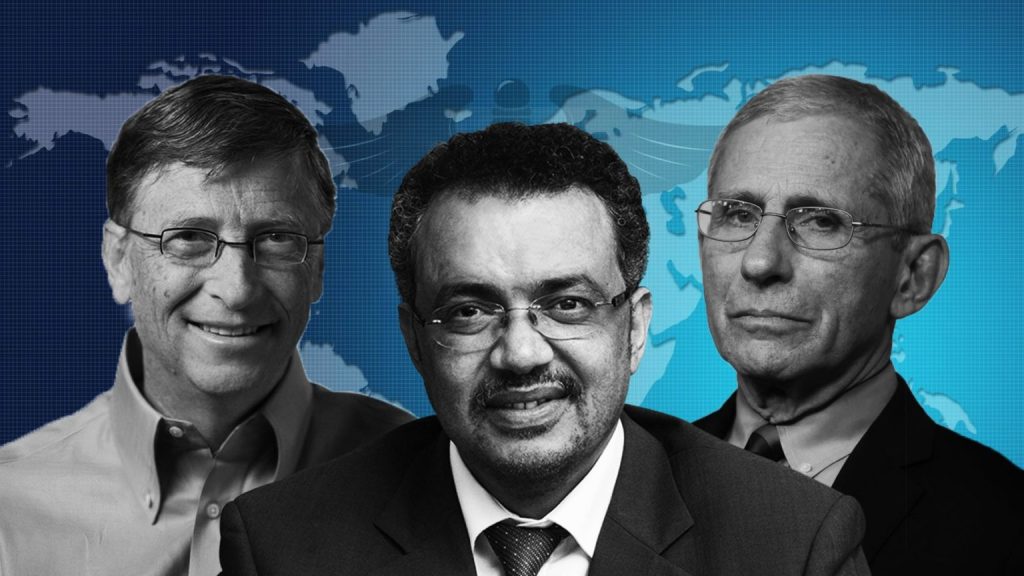



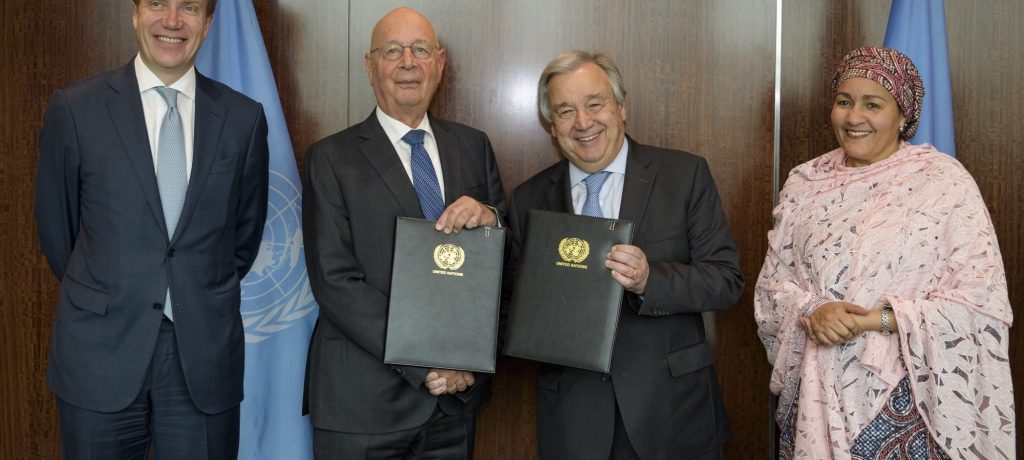
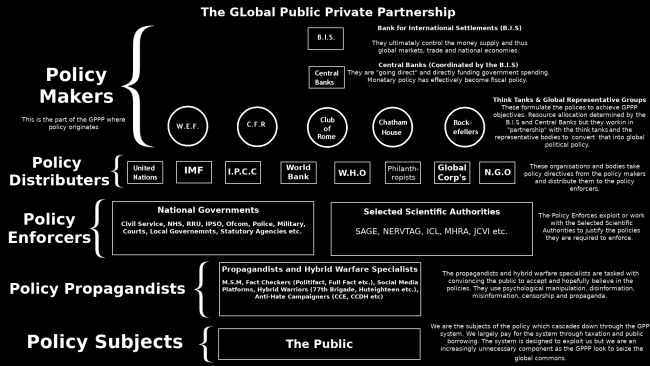
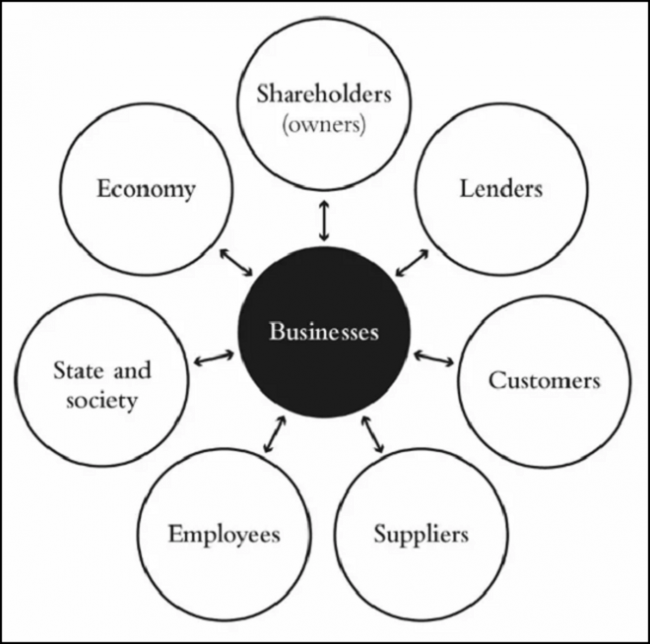


 After the Crash