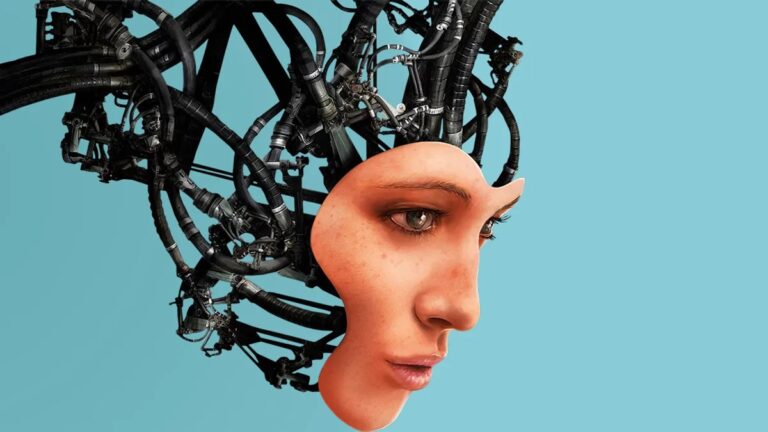
When Dissent Ends, Transhumanism Reigns And Digitization Rules, Humanity Will Cease To Be Human

By Gary Barnett

Source: GaryDBarnett.com

“The only thing worth globalizing is dissent.”

~  Arundhati Roy

Self-defense comes in many forms, but all defense of self begins and ends with dissent, non-compliance, disobedience, saying no to any and all rule, and never allowing aggression against mind and body; mental or physical. Without dissent, defense is not possible, because when voluntary compliance is the prevailing behavior, whether sought, desired, or not, all defense mechanisms are effectively disarmed. In other words, silence in the face of injustice, immorality, terror, or tyranny, creates a condition of weakness, submission, and irresponsibility, which are all the fodder of indifference. When you say nothing, when you do not say no, when you take no action against evil, you commit evil. By not speaking out, and by not responding, you have spoken loudly, and openly committed an act of cowardice. The ultimate blame lies not just with the aggressor in this circumstance, but also equally with he who hides and remains silent.

In “Beyond Good and Evil,” Friedrich Nietzsche wrote: “He who fights with monsters should be careful lest he thereby become a monster. And if thou gaze into an abyss, the abyss will also gaze into thee.” This is an accurate description of the phenomenon of becoming what one lives, so if you live in a state of indifference, ignoring the evil around you, accepting it in order to avoid conflict and responsibility, you become the evil you have chosen to ignore. The dark abyss in this circumstance, is created by your own inaction against it.

What we face as a society, is the most tremendous threat ever perceived or active in the history of mankind. Do you scoff at this seemingly ‘bold’ pronouncement? If so, you are already fooled, and a major contributor to the vast problems rampant in our world today. Instead of the State just singularly seeking war, the continuance of the bogus Federal Reserve System, isolated government corruption, communism, fascism, or any broad-based totalitarian assault on certain segments of society, we are all being bombarded from a thousand different directions at once with all these atrocities and many more, including attacks on our freedom and sovereignty, on our minds and bodies, and on every aspect of our being. Due to the colossal advances in technology, which in many more ways than not are being used against us in order to build a literal transhuman world run by technocratic means, we are facing what could be considered a technological Armageddon, where all control over humanity will be isolated in the hands of the most powerful few. To accept this, to treat it as normal or eminent, is a most fatal error, and one that could determine our fate in perpetuity.

When humanity ceases to exist in any natural form, when male and female become one, when transhumanism and mind control are inescapable realities, when perversion is commonly accepted, the presence of life that we have all known to be magical and a wonder, will have disappeared. The world being designed is not a world of love, hope, and dreams, it is a nightmare of horror, and those pursuing this downfall of man have already lost all human characteristics. They are monsters, so we must fight and defeat them without becoming monsters ourselves.

There is a reason that the children, beginning in infancy, are targeted by State indoctrination, drugs, chemicals, bioweapon injections masquerading as ‘vaccines,’  insane propaganda, distraction, gross perversion, and are pulled away from family mentally and physically throughout their lives. This, in and of itself, if allowed to continue, will guarantee mind destruction of multiple future generations, and that will secure a fully dumbed-down, compliant, and obedient proletariat mass in the future. At that point, total control by the technocrats over humanity will have been achieved.

While technology has the capability to accomplish many great things, in the hands of these monsters who seek universal control, it can also be used to destroy us. Many refer to this technological phenomenon as ‘artificial intelligence,’ (AI) but there is no such thing. This false terminology is being used against us, as machines are not intelligent, they are programmed by intelligence, or so it is believed. When man becomes a machine, real intelligence ends, and a programmed society of slaves is the result. AI is ‘defined’ as “perceiving, synthesizing, and inferring information–demonstrated by computers, as opposed to intelligence displayed by humans or other animals.” Intelligence is defined as the ability to learn, reason, and understand, so honest intelligence cannot be artificial, and machines are still machines. The transhuman digitization of man will mean the end of all traditional life as we know it.

The bulk of this society, has already succumbed to a digital world, and relies on what is falsely labeled ‘social media’ as parent, family, and friend, disregarding the natural state of personal communication, love, companionship, debate, and the grandeur of nature. At this point, the future is not owned by you, but is owned by your masters. All privacy has disappeared, and most all private and financial transactions are captured and data-based. Every aspect of life is now tracked, traced, used, surveilled, restricted, censored, taxed, and every activity imaginable requires licensure (paid permission slip) by the State. You are already a slave, whether you realize it or not.

The plot continues to thicken, as centrally-controlled digital currencies (CBDCs) are being rolled out around the world, which will allow for most every individual to be fully contained and regulated. This will lead to mass restrictions as to what you are allowed to do, where you may travel – if at all, what food you must eat, what medical care you may or may not receive, what State stipend you will be allotted, how much energy you will be permitted to use, and on, and on. Everything in your existence will depend on behavior modification; in other words, do as you are instructed by the State technocratic rulers, or lose everything, as your entire life will be technologically sanctioned.

It is imperative to understand that everything you think you know about technology, and technological advances, is likely at a minimum, 20 years behind. Every so-called new discovery and new technology recognized as such, are not new at all. What the military has now, and is working on today, is unknown to most all except the very few at the top of the pyramid of power. To understand and grasp this concept, should strike fear in the hearts of man. The internet, and therefore, the internet of things, was not discovered and implemented by some computer geek, but was designed and created by the military through the “Defense Advanced Research Projects Agency.” (DARPA) Getting to this terroristic time in our history was no accident, and was intentionally planned long ago. We have little time left to stop this totalitarian hell that has been created in order to destroy what we know as the human race.

Will you continue to sit on the sideline, keeping your eyes closed, your ears covered, and your mouth shut, or will you stand up and defend your freedom and life, and that of your family? The only solution, as I have often said, is through active dissent. Say no to the State, disobey, do not comply with any tyrannical order, and do so as individuals en masse. No one can do this for you, but it can and should be done by many independent freedom-minded individuals. Asking someone else for a solution for the masses as a collective, is worthless, and exposes apathy at a level that if practiced by the herd as it has been for so long, the end of humanity will surely be our destiny.

“Has there ever been a society which has died of dissent? Several have died of conformity in our lifetime.”

Transhumanism and the Philosophy of the Elites

By Danica Thiessen

Source: PANDA

In 2004, when Foreign Policy asked eminent scholar Francis Fukuyama to write an article answering the question, What is the world’s most dangerous idea?, he responded with a piece titled Transhumanism. Fukuyama argued that the transhumanist project will use biotechnology to modify life until humans lose something of their ‘essence’, or fundamental nature. Doing so will disrupt the very basis of natural law upon which, he believes, our liberal democracies are founded (Fukuyama, 2004). For Fukuyama, these losses lay unrecognised beneath a mountain of promise for a techno-scientific future of imaginative self-improvement. 

Currently, the Fourth Industrial Revolution, in which transhumanism plays a central guiding role, is shaping the policies of global corporations and political governance (Philbeck, 2018: 17). The converging technologies of this revolution are nanotechnology, biotechnology, information technology, cognitive sciences (NBIC), and artificial intelligence (Roco and Bainbridge, 2002). The political class and the new technology elite routinely tell us that ‘the age of AI has arrived’ (Kissinger et al., 2021). Simultaneously, modern humans have also become increasingly dependent on advanced technologies and the complex systems they enable. These changes have presented new challenges to old questions, namely: what does it mean to be human? And what future do we want for ourselves?

From the hype of super-intelligence to self-assembling nanobiology, the world can seem increasingly science-fictional. Contemporary technological society is “harder and harder to grasp”, is full of “disruptions…that move ever faster”, and is confronting us with “situations that seem outrageously beyond the scope of our understanding” (Schmeink, 2016: 18). 

This paper aims to further our critical engagement with an ideology that is emerging across influential sectors of society. With this aim in mind, I will make three essential arguments: Firstly, transhumanism is a movement based on a techno-scientific belief system that is striving towards the technological enhancement of biology and, in this regard, is self-consciously promoting bio-social engineering. Secondly, the technologies of transhumanism have the potential to bring tremendous financial and political gains to corporations and governments who are not incentivised to seek out nor address their potential dangers. Thirdly, the discontent towards transhumanism is diverse and comes overridingly from the threat to traditional values, nature-based ways of life, freedom, equality, and the loss of bodily autonomy to the will of those who operate these powerful systems. 

Much of the current scholarship on transhumanism focuses on the intellectual contribution of the movement, with minimal work assessing socio-political impacts. This neglect is worrying since, within the reality of global capitalism, transhumanism may be overridingly motivated by economic and political forces as it may be by ideology. Furthermore, perhaps only a minority of humans may be able to access certain NBIC technologies or utilise them for profits (McNamee and Edwards, 2006: 515).  Of course, the socio-economic ramifications may be culturally and politically disruptive in unanticipated ways. It is this overwrought relationship—of transhumanism, the global economy, profitable science, human nature, and traditional belief systems—that demand further critical examination.

Transhumanism: A brief history 

Transhumanism is a predominantly Anglo-American movement that has flourished since the 1980s in “American circles of science fiction fans” and with “computer experts and techno-geeks” (Manzocco, 2019: 36). Today, California’s Silicon Valley, with its culture of technological optimism and imaginative entrepreneurship, is the hub of transhumanist thought and innovation. Though scholars have noted that there is no single definition of transhumanism, the essence of transhumanist ideology is to use science and technology to re-design and re-shape the human condition away from randomness, imperfectability, and decay, towards order, perfectibility, and control (Bostrom, 2005: 14).

This ideology emerged in early 20th Century Britain. There is a clear continuity of ideas between current proponents of transhumanism and those who were writing before the Second World War of the potential of science to shape the trajectory of nature, while fostering international cooperation and governance. They included British scientists and thinkers such as Julian Huxley (credited with first using the word Transhumanism in the 1950s), his brother Aldous, and his grandfather Thomas Huxley, as well as their colleagues J.B.S. Haldane, H.G. Wells, J.D. Bernal, and Bertrand Russell. These influential thinkers and internationalists were writing and working on promoting political and scientific outlooks that would form the basis of a century of scientific transhumanist thought (Bostrom, 2005: 4-6; Bohan, 2019: 74-108). The subjects they explored still attract transhumanists today: behavioural conditioning, genetic control, technological augmentation, artificial foods and wombs, space travel, life extension, and total disease control. These and other themes circle around the assertion that nature, including human nature, operates optimally under scientific adjustment and management (Bohan, 2019: 99-100). 

Early transhumanists (or proto-transhumanists) viewed techno-scientific advancement as a cure for ‘primitive’ human nature (anger, violence, excess fertility), physical limitations (disease and possibly death), political ignorance, and international conflict. It was the Enlightenment ideal of mastery over nature, including human populations, that Aldous Huxley so aptly demonstrated in his dystopian novel, Brave New World. Huxley’s novel, written in 1931, illustrates a scientific dystopia where transhumanist aims (genetic engineering, anti-aging interventions, biotechnology and enhancement drugs) are used to manage society implicitly through pleasure rather than explicitly through force. Huxley’s depictions were based less on his prophetic abilities and more on his intimate knowledge of the possibilities of social engineering as discussed and promoted by the scientific minds with whom he mingled. His later essay, Over-population, surmises that his novel’s projections were “coming true much sooner than” anticipated (Huxley, 1960: 1). 

Notably, Aldous’s brother, Julian Huxley, also wrote about the ills of global overpopulation while promoting the genetic control (‘improvement’) of populations through eugenics (Hubback, 1989; Huxley, 1933). His 1957 essay, Transhumanism, claimed that man was the “managing director” of “evolution on this earth” (Huxley, 2015:12-13). He was very involved with Britain’s Eugenics Society for over three decades, serving as Vice-President and then President, as well as supporting “campaigns for voluntary sterilization…and for negative eugenics measures against persons carrying the scientific stigma of ‘mental defect’” (Weindling, 2012: 3). Julian Huxley was the first Director-General of UNESCO and founder of the World Wildlife Fund (Byk 2021: 141-142). In this role, he promoted the ideology of an international, scientifically-founded welfare state to further his aim of liberating “the concept of God from personality” because “religions as all human activities is always an unfinished work” (Byk, 2021:149), (Huxley, 1957:10). Julian Huxley’s work and writing envisioned an international social engineering project based on rational scientific management that promised to elevate humanity towards global peace (Sluga, 2010; Byke, 2021:146).

Philosophical and Spiritual Transhumanism: Towards a Technological Utopia

Transhumanism has a wide variety of interpretations, similar to how a major religion is expressed with a divergence of commitment, beliefs and motivations. In fact, many scholars consider transhumanism to be a novel, emerging religion with significant parallels to Christian eschatology (deGrey et al., 2022; O’Gieblyn, 2017). The vast majority of transhumanists do not accept a monotheistic ‘God’ or the moral restraints of traditional religions, but instead endow “technology with religious significance,” leading scholars to define it as “a secularist faith” (Tirosh-Samuelson, 2012: 710). 

While not all transhumanists partake in techno-spiritual views, transhumanists essentially view technology as the redemption for fallible biology. For some, these perspectives were inspired by the philosophical work of Pierre Teilhard de Chardin (1881-1955). Tielhard de Chardin was a palaeontologist and Jesuit who believed that a “worldwide network would be woven between all men about earth” and that a “God-like entity” would form from a future “conscious, collective, omniscient mind—the Omega Point” (Bohan, 2019:92). The concept of technological ‘transcendence’ has continued to be central to Transhumanism in conversations about the worldwide web, the Internet of Bodies, artificial intelligence, and the ‘Singularity’, which is the belief that human-machine intelligence will grow exponentially and reach a point where humanity will be thrust into a posthuman age (Bohan, 2019:96; Kurzweil, 2005). The belief that humans (or rather posthumans) can become immortal and ‘god-like’ in a future machine-dominated age—complete with astral travel and digital telepathic communication—is why, in its philosophical form, many scholars understand transhumanism as a techno-materialist religious movement. 

In an attempt to consolidate such a complex movement, transhumanist philosopher Nick Bostrom—current head of the Future of Humanity Institute at Oxford University, and transhumanism’s most legitimate academic—co-founded the World Transhumanist Association in 1998 (Bostrom, 2005:12-13). Out of this work, the Transhumanist Declaration was drafted. It consists of bold statements such as: Humanity will be radically changed by technology in the future. We foresee the feasibility of redesigning the human condition. The Declaration concludes with: Transhumanism advocates for the well-being of all sentience whether in artificial intellects, humans, posthumans, or non-human mammals. The Declaration makes it clear that transhumanism is an unprecedented social engineering project promoting the desirability of using “technology to push the boundaries of what it means to be human and to transcend our biological condition”, as described by Mark O’Connell, author of To Be a Machine (Mayor, 2018). 

Two American transhumanist philosophers who have worked, since the 1980s, to spread transhumanist ideas, are Max More and Natasha Vita-More. They are entrepreneurs in the cryonics industry, which deep-freezes human corpses (called ‘patients’) with the aim of future revival (McKibbin, 2019:184-185). Vita-More, in a recent interview, emphasised that the essence of transhumanism is, “a transition of being human-animal into becoming more mechanised using different devices and technologies to enhance humans into whatever they feel that they are.” This very Californian-esque promise of becoming ‘whatever you want to be’ could result in a more mechanised, or augmented, version of you. We already see the emergence of this new ‘becoming whoever you want’ phraseology in the popular acceptance of enhancement chemicals, biotechnology, and videogames. A pantheon of new technologies is on the horizon: exoskeletons, virtual reality, robotics, body-changing pharmaceuticals, remote-controlled nanotechnology, artificial foods, brain implants and synthetic organs. Adopting these technologies is a part of what Max More describes as becoming the Overhuman, otherwise known as the Posthuman: if you are Transhuman you are essentially a transitional human

In The Overman in the Transhuman, More attributes attitudes in transhumanism to Nietzsche’s philosophy, arguing that the overhuman is the “meaning-giving” concept meant to “replace the basically Christian worldview” of Nietzsche’s time (and, to a lesser extent, our times). More holds that the current “relevance of the posthuman” is that it ultimately gives meaning to scientifically-minded people” (More, 2010:2). In this influential paper, More asks the reader to “take seriously Nietzche’s determination to undertake ‘a revaluation of all values’” (More, 2010:3). Since a modern overhuman upgrade will depend on human gene editing and other biotechnology applications (such as Elon Musk’s Neuralink) becoming legally available, More’s call to ‘reevaluate values’ is understandable. Issues raised on both sides of the academic debate concern which values and traits would be genetically chosen, and to what extent human enhancement will be voluntary (Levin, 2018). 

While earlier Anglo-American eugenicists argued for the removal of anti-social genes by sterilisation, some modern transhumanist proponents have argued that moral bioenhancement, through selective gene editing, should become compulsory (Persson and Savulescu, 2008). Many notable transhumanists argue for procreative bioenhancement of offspring by the parents (Levin, 2018:38). Transhumanist advocates Ingmar Persson and Julian Savulescu believe moral enhancement should become obligatory like “education and water fluoridation,” since “those who should take them are least likely to be inclined” (Persson and Savulescu, 2008: 22). Transhumanist Niel Levy argues that “cognitive enhancement could be required,” much as vaccines currently are (Levy, 2013:38). Scholar Susan Levin writes that allowing a techno-scientific transhumanist vision to shape the “form that society takes” may lend itself to “socio-political requirements that would clash with…liberal democracy” (Levin, 2018:50). She also argues that when transhumanists use “public health analogies and reasoning” to “justify vigorous enhancement” they are putting into serious question their commitment to autonomy (Levin, 2018:48). In this way, the coercive vaccine mandates used during the Covid-19 pandemic can be interpreted as an early warning signal for how future bio-enhancements are likely to be accompanied by forceful moralistic and utilitarian arguments.

Ingmar Person, Julian Savulescu, and Niel Levy are prominent ethicists at the University of Oxford; all three advocate for mandatory genetic enhancement despite the trail of 20th century trauma wrought by grandiose social- and eugenic engineering projects. Does this suggest that a moral framework based on utilitarian arguments and flawed metaphysics remains fundamentally unchanged in public health governance since the last century? In his recent book God and Gaia: Science, Religion and Ethics on a Living Planet, scholar Michael Northcott argues that a growing “post-human agenda” has become central to policies around public health—referred to as “biosecurity”—which has very little to do with authentic “human health or health of the environment” (Northcott, 89). The consequences of this ideology became apparent during the recent mandating of the experimental gene-altering vaccines, and could represent what Northcott refers to as “automatism”. This is when we are culturally obligated to “use new technologies regardless of the possible consequences” because of a utilitarian ethic of the “managerial goal of efficiency” (Northcott, 2022: 114). To underestimate the suffering caused by one-size-fits-all public health measures is inadequate scholarship, yet despite this, only a minority of academics have openly questioned the use of coercive genetic therapy during the Covid-19 pandemic. 

A clash between individual rights and a movement that aims to “re-design the human condition” seems inevitable. In the words of transhumanist scholar Nick Bostrom, “human nature is a work-in-progress, a half-baked beginning that we can learn to remould in desirable ways” (Bostrom, 2005: 3). As the co-founder of the World Transhumanist Association, David Pearce said,

“…if we want to live in paradise, we will have to engineer it ourselves. If we want eternal life, then we’ll need to re-write our bug-ridden code and become god-like…only high-tech solutions can ever eradicate suffering from the living world”.DOEDE, 2009: 47

It is human nature that often comes into direct conflict with massive social engineering projects. Understanding transhumanism as a bio-social engineering project of unprecedented scale is a useful perspective in that it focuses the potential conflicts as value-based and ideological rather than as a direct result of specific scientific advances (Broudy and Arakaki, 2020). Furthermore, the term ‘social engineering’ is in itself inadequate, in that a utopia that aims to phase out Homo sapiens, while making way for the new, enhanced posthuman, is historically unprecedented (Bauman, 2010), and is possibly an energetic form of nihilism or an expression of ‘losing oneself’ to an intoxication with machine power, inspired by what scholars identify as “machine fetishism” (Geisen, 2018: 6). Yet, the surprising willingness to martyr one’s physical self to attain paradise has always been particular to our species (Pugh, 2017). 

Corporate Transhumanism: The Pursuit of Wealth and Power

In congruence with the scholarly work available, I have focused on the ideas of philosophical and academic transhumanists, but transhumanism is an ideology reaching far beyond discourse. Though under-discussed in the academic literature, the movement is advanced by corporate and political transhumanists, and transhumanist scientists. Massive corporate and state investment in NBIC technologies rely on specialised scientists working in the military, elite universities, and corporate laboratories to push the frontiers of reality with robotics, artificial intelligence and biotechnology (Mahnkopf, 2019: 11). These scientists are designing technologies with such potential that the world’s most powerful players, such as the Chinese Communist Party and the US Department of Defense (DOD), are deeply involved. In January 2023, Harvard University’s esteemed chemist Charles Leiber was on trial for lying to the DOD about his involvement with the Wuhan University of Technology over his work on “revolutionary nanomaterials.” In his Harvard laboratories, Leiber and his assistants have created nanoscale wires that can record electrical signals from neurons (Silver, 2022). Nanowire brain implants were designed by Leiber to “spy on and stimulate individual neurons” (Gibney, 2015:1). In an age where neurotechnology and mind-machine interfaces are changing the nature of warfare, the contested power-potential of transhumanist techno-science is quickly apparent (DeFranco, 2019).

The transhumanist vision for the future should not be viewed outside of the ‘technological arms race’ or a competitive, utilitarian mindset that informs business, war-making, and our cultural esteem of scientific research. This suggests that more research understanding corporate and political transhumanists is critical in analysing how this group is actively involved with determining humanity’s future. Political leaders with a sharp sense for power understand that machine intelligence and enhancement may determine the world’s winners and losers (Kissinger et al., 2021). As Vladimir Putin articulates: “Artificial Intelligence is the future, not only for Russia, but for all of humankind. It comes with colossal opportunities but also threats that are difficult to predict. Whoever becomes the leader in this sphere will become the ruler of the world” (Karpukhin, 2017). The elite fascination with transhumanist technologies concerns the potential power inherent in the technology itself—and in who creates and controls it. The influential historian and speaker, Yuval Noah Harari, expressed this view in his 2021 Davos Summit presentation where he said that technology “might allow human elites to do something even more radical than just build digital dictatorships. By hacking organisms, elites may gain the power to re-engineer the future of life itself. Because once you hack something, you can usually geo-engineer it.”

Harari is a frequently featured speaker at the World Economic Forum (WEF) and associated events. The WEF is currently acknowledged as one of the “most significant case studies of private authority with global impact” (Vincent and Dias-Trandade, 2021: 711). Criticised as being a “transnational elite club, with high media visibility” and a neoliberal “agenda-setting power,” the WEF can be understood as an “instrument for global geopolitical domination” (Vincent and Dias-Trandade, 2021: 711). At the very least, it is a forum where heads of state, CEOs of multi-billion-dollar companies, and academics who intelligently promote strategic values, are encouraged to collaborate and shape the global future. On WEF and other media collaborative platforms, Harari eloquently argues for humanity to “break out of the organic realms to the inorganic realm” with the creation of a new type of machine human so much more sophisticated than us that our current form will be more drastically different from it than “Neanderthals” or “chimpanzees” are from us today (BBC, 2016). Perhaps this epochal vision is received with welcome at the WEF because it boldly asserts a future dystopia for those who choose to ignore this high-tech revolution. It may act as a motivational warning to “acculturate” or “disappear.” 

Scholar Kasper Schiølin (2020) believes WEF agenda setting is accomplished through strategic political and corporate marketing and the discourse of “future essentialism” where the “fabrication of power” and of an inevitable global destiny is reinforced by “sociotechnical imaginaries” and “epochalism.” Future essentialism is the construct of narratives that use “historical analysis…speculative estimates…and hard statistics” to disseminate an idea of a “fixed and scripted…future” that can be “desirable if harnessed” but also “dangerous if humanity fails” to accept the vision. “Epocholism” is an attempt to capture “The Spirit of the Age” and promote a feeling that the current times are of unsurpassed historical significance. These strategies, Schiølin (2020:553) convincingly argues, are how the “WEF produces a moral-political universe around The Fourth Industrial Revolution (4IR).” Is it possible that these techniques can create a narrative of urgency, significance, and global opportunity that can persuade us (or our leaders) to participate in a transnational, transhumanist future?

Klaus Schwab is the founder of the WEF and the one responsible for conceptualising and promoting this revolution, which was announced in his 2016 book The Fourth Industrial Revolution. Schwab (2017) describes the 4IR as a social re-setting (named the ‘Great Reset’) enabled by “a range of new technologies that are fusing the physical, digital and biological worlds, impacting all disciplines, economies and industries, and even challenging ideas about what it means to be human.” Analyses of the 4IR conclude that the rate of technological change is supposed to “accelerate” and be “exponential”, covering the Internet of Things (IoT), AI, automation, genetic engineering of humans and natural biology, nanomedicine, smart cities (where sensors are embedded all over the environment), a sci-fi enabled military, and algorithms with political agency (Trauth-Goik, 2021: 3). 

Political scientist Klaus-Gerd Giesen convincingly argues that transhumanism is the “dominant ideology” of the 4IR, having become a “grand narrative” for politicians while “advancing the interests of multinational tech giants” (Geisen, 2018: 10). Giesen views this revolution as a “significant rupture in the evolution of capitalism” as well as the tradition of humanism, arguing that “transhumanist machinism” is “fundamentally anti-human—not least because the machine is by definition inhuman” (Geisen, 2018: 6). With global 5G networks, the Internet of Things and of Bodies, and the convergence of the NBIC technologies, the “body as market” (Geisen, 2018: 10), or what Céline Lafontaine defines as the corps-marché (Céline, 2014), is complete. The sheer mass of consumption will exponentially rise with marketable ‘smart’ products: “wearable tech, autonomous vehicles, biochips, bio sensors” and other new materials (Mahnkopf, 2019: 2). This is a materially focused future where consumer upgrades are baked into the system, so it’s no wonder that corporate monopolies such as Amazon, Apple, Facebook, Google, and Microsoft, the “new industrial kings” are actively promoting this revolution (Mahnkopf, 2019: 14).

In his book, Falter: Has the Human Game Begun to Play Itself Out?, the environmentalist Bill McKibben writes that, “the Silicon Valley tycoons are arguably the most powerful people on earth” (McKibben, 2019: 183). North American West Coast transhumanist visionaries are an avant-garde community of ultra-rich technologists, businesspeople and inventors who are idolised by the media and who collaborate extensively with the US State to advance their aims. Eric Schmidt illustrates the collaboration common between US State defence organs, academia, and giant technology corporations (Conger and Metz, 2020). With a net worth of $23 billion, Schmidt was the Executive Chairman of Google and is now the current Chairman of the National Security Commission on Artificial Intelligence (NSCAI) for the US Department of Defense, where he advised President Biden to reject a ban on AI-driven autonomous weapons (Shead, 2021). Schmidt believes that artificial intelligence will “govern society” and be “perfectly rational”, outdating and rendering useless human intuition and knowledge. As with most tech billionaires, Schmidt has set up a private charity, Schmidt Futures, and has so far donated a billion dollars towards his AI educational aims (Philanthropy News Digest, 2019). While he admits that he did not design Google to regulate ‘misinformation’ more effectively, censorship is increasing with the accelerated abilities of AI (working with humans) to moderate and remove content on the Internet (Desai, 2021).

Many of our most influential technologies come from programmes at the US Defense Advanced Research Projects Agency (DARPA). DARPA funds ‘blue sky’ technology research and is credited with inventing the Internet, GPS, virtual reality, and drones. The agency is now set on advancing human augmentation both in and off the battlefield, with the goal of mastering brain-computer neural-interfaces (Krishnan, 2016). Arati Prabhakar is the former head of DARPA, and Chief Science Advisor to President Biden. Prabhakar, like the prior head of DARPA, Regina Dugan, moves between working with technology companies in Silicon Valley and the US Department of Defense. Like most, she is enthusiastic about a transhumanist future of augmentation, and advocates for this as a matter of national security. And yet, she also admits that this “will bring surprises that we may not like. For generations we have thought about technologies that change our tools – but this is about technology that changes us.”  We already have ample evidence that our current technologies, particularly wireless devices and chemicals, are physically changing our human (and planetary) biology, but the aims of DARPA and the DoD are more ambitious and revolve around the complete mastery of evolution (including the human genome) and natural systems (including the human population) using technology (Carr, 2020). This is exemplified in the recent, far-reaching US Executive Order for Advancing Biotechnology, which states that “we need to develop genetic engineering technologies” to “write circuitry for cells and predictably program biology in the same way in which we write software and program computers.” The order states that this is to “help us achieve our societal goals.” These societal goals are central to what the White House identifies as the “bioeconomy” where “computing tools and artificial intelligence” will help us “unlock the power of biological data”, scale up production, and reduce “obstacles for commercialization” (Biden, 2022).

In March 2022 at the World Government Summit, Elon Musk, a self-identified transhumanist, and the world’s wealthiest individual, spoke bluntly from the podium. He announced that he sees the upcoming AI apocalypse as a human-extinction event. What is the solution? “We must all become cyborgs if we are to survive the inevitable robot uprising.” This may be marketing, since Musk’s Neuralink is poised to start human trials of brain implantable chips” (Neate, 2022). Radically enhanced human cognition should, Musk predicts, counterbalance the dangers posed by super-intelligent machines. If the richest man on earth prophesied a mass AI extermination event and an inevitable posthuman future from the platform of the World Government Summit, should we dismiss it as just another tech business strategy?

In her analysis of the 4IR, Birgit Mahnkopf (2019:2) writes that a “system of physical-to-digital technologies embodied in machines and equipment…would enable sensing, monitoring, and control of the entire economy.” This is occurring against a backdrop of increasing global inequality and centralisation of wealth. It is estimated that eight men own as much as half the monetary wealth of the other eight billion humans (The New York Times, 2017). Schwab and other elites understand the social and political implications of their technological ideology and the rules of the ‘winner-takes-all’ market economy that will continue to consolidate gains from disruptive technologies. Universal basic income and social credit systems (with a resource-based economy and central bank digital currencies, or CBDCs) are presented as solutions to managing popular resistance and social unrest. 

The WEF represents the fusion of transhumanist goals within global governance. As Schwab notes, the organisation has been very effective at ‘penetrating the cabinets’ of national governments. As Harvard scholar Kasper Schiølin (2020:549) astutely observes, the “4IR is justified as kings and emperors once justified their authority as divine and natural in uncertain times.” Hence, it may be that the potential problems from transhumanist ideologies come, not so much from the prospect of an AI take-over, but from the elites’ use of the culture and technologies of transhumanism. It may be that these risks overwhelm liberal democracies long before sentient AI does. 

The Discontents

Few intellectuals note the opposition to transhumanism better than the transhumanists themselves. Nick Bostrom writes that resistance comes from:

“Ancient notions of taboo; the Greek concept of hubris; the Romanticist view of nature; certain religious interpretations of the concept of human dignity and of a God-given natural order; Karl Marx’s analysis of technology under capitalism; various Continental philosophers’ critique of technology, technocracy, and the rationalistic mindset that accompanies modern technoscience; foes to the military industrial complex and multinational corporation; and objectors to the consumerist rat-race.”BOSTROM, 2005:18

Bostrom’s summary is a panorama of human expression, literature, thousands of years of culture, religion, philosophy and human meaning-making. Modern literature on philosophy, culture and technology, from Jacques Ellul, Jerry Mander, Neil Postman and Wendell Berry to Jürgan Habermas and Martin Heidegger, offer poignant critiques that are relevant to opposing transhumanist visions of the future, and remind us of the value of community, embodied wisdom, and traditions, and the effects of technological systems. The difference in writing styles is noteworthy: while pro-transhumanist writing tends to be utilitarian and have a tone of scientific authority, ‘bioconservatives’ will often use narrative, symbols, and a writing style considered traditionally beautiful in human culture. 

What is noticeable is that the opposition to transhumanism is broad, ill-defined and diverse. Nick Bostrom notes that “right-wing conservatives, left wing environmentalists and anti-globalists” are all pushing back against central transhumanist aims (Bostrom, 2005: 18). Firstly, there are the well-published intellectual and academic opponents that engage in a forceful scholarly debate with transhumanism over issues such as biotechnology, threats to liberal democracy, and scientific materialism (Leon Kass, 2000 and Francis Fukyama, 2003), and the environmental and social costs of transhumanism (Bill McKibbin, 2019). Also noteworthy are the bioethicists, George Annas, Lori Andrews and Rosario Isasi, who have advised making “inheritable genetic modification in humans a ‘crime against humanity’” (Annas, et al., 2002: 154-155). These scholars fear the posthuman potential for inequality and war, warning that, “the new species, or ‘posthuman’, will likely view the old ‘normal’ humans as inferior, even savages, and fit for slavery or slaughter…it is the predictable potential for genocide” (Annas, et al., 2002: 162).  The common factor amongst these academics is that they believe biological engineering (of humans) would be disruptive to values, rights, and equality, and would threaten liberal democracy itself. These men have been labelled bio-conservatives or, more dismissively, Neo-Luddites, for rejecting the legitimacy of a posthuman future (Agar, 2007:12).

The second group that is emerging as anti-transhumanist are the environmentalists, non-conformists, primitivists, and anarchists committed to Wild Nature with forceful anti-industrial sentiments. In North America, this includes elements of the Deep Green Movement (Bilek, 2021), represented by various writers, artists, activists, ecologists, organic farmers, herbalists and healers, forest-dwellers and hunter/gatherers, spiritualists, and various alternative people, off-grid or nomadic, who refuse to live within a mechanised, industrial system, and may intentionally attempt to sabotage it. As an eclectic group, they have significant influence over specific geographical areas, tend to identify with traditional local indigenous values, and deeply resent Western consumerist culture, war, global corporations, pollution, and industrial infrastructure (Tsolkas, 2015). Notably, some ecofeminists have written that biotechnology is a dangerous “extension of traditional patriarchal exploitation of women” in promoting the reshaping of natural human bodies (Bostrom, 2005: 18).

The third group that has rapidly developed increasing opposition to transhumanism is religious groups. Besides the Mennonite and Amish communities, who maintain ‘old world’ lifestyles across significant sections of the United States, there is a rising anti-transhumanist sentiment and increasing religious fervour amongst some Evangelical Christians across North America. The New York Times reported on the increasing politicisation of evangelical congregations, with defiant unifying songs that repeated, “We will not comply” in the chorus (Dias and Graham, 2022). The language these groups use to describe transhumanism is often symbolic, archetypal and apocalyptic, and understood as an epic battle between light and darkness. For example, speaker and writer, Thomas Horn, has been preaching about the dangers of transhumanism to Christian congregations for over a decade. His books have titles such as Pandemonium’s Engine: How the End of the Church Age, the Rise of Transhumanism, and the Coming of the Ubermensch (Overman) Herald Satan’s Imminent and Final Assault on the Creation of God. Suspicions of ‘Satanic technology’, and anti-transhumanist sentiments may have been a part of the reason why Evangelical Christians were the demographic most unlikely to cooperate with Covid vaccination mandates in the United States (Lovett, 2021; Porter, 2021).

The tragic situation in Ukraine suggests that ideologically-driven wars may increase with the growing animosity between religious and transhumanist world views, or this may be used in war propaganda. The Russian Orthodox Church, with well over one hundred million members, considers the invasion of Ukraine as a battle of light and darkness, with ‘Holy Russia’ fighting against an unholy NATO alliance (Klip and Pankhurst, 2022). The Church Patriarch, Kirill of Moscow, has taken a strong position against biotechnology—including “gene therapy”, “cloning” and “artificial life extension”—and views the Russian Orthodox Church as defending the traditional family against the liberalism of the West (Stepanova, 2022: 8). Addressing the leaders of Russia at the recent 24th World Russian People’s Council, the orthodox believer and philosopher Alexander Dugin proclaimed, “this war is not only a war of armies, of men…it is a war of Heaven against Hell…the Archangel Michael against the devil…the enemy came to us…in the face of LGBT, Transhumanism—that openly Satanic, anti-human civilization with which we are at war with today.” It may be that an influential number of religious Russians believe that they are not fighting against Ukraine at all, but rather rescuing it from the Satanic hold of the Transhumanist West (Siewers, 2020).

The fourth major group that is exhibiting overwhelming anti-establishment sentiments towards what is perceived as the ‘elites’ and their ‘transhumanist agenda’ are the politically and economically disenfranchised working classes and displaced farmers. Known in academic circles as ‘populists’ (Mazarella, 2019: 50), this group has recently displayed significant anger over extended ‘lockdowns’; losing the freedom to travel and to access decent healthcare (in the US); and experiencing unemployment and poverty. Their physically non-compliant behaviour, seen in mass demonstrations, notably across Europe and with the Canadian truckers, has been met with discursive and physical violence from increasingly irritated political leaders and media corporations. These ‘populists’ often reject transhumanism as an elitist ideology that they fear will lead to further loss of bodily autonomy, increased surveillance, political disempowerment, and a reduction of dignified employment to robots and automation (Mazarella, 2019: 130-134). These fears are not altogether unfounded since, according to the WEF, the 4IR is proposed to lead to significant worldwide job losses, perhaps up to 70% (Mahnkopf, 2019: 7). Steven Bannon, the instrumental ‘populist’ of Trump’s 2016 election force, uses religious polemics to rally resistance against what he sees as a rising transhuman globalist agenda. His popular show, the War Room, features broadcasts such as Descent into Hell: Transhumansim and the New Human Race. The outrage this group has towards 4IR transformations and transhumanism cannot be underestimated: within the US many working class families, though not all, also hold values of egalitarian weapons ownership, and their discourse exudes a willingness to engage in violent confrontation over threats to bodily autonomy (Sturm and Albretch, 2021: 130).

The United States’ most infamous anti-transhumanist/anti-technologist came, not from religious circles, but from within the radical environmental movement and academia. Theodore Kazcynski, a mathematical genius and professor at UC Berkeley, conducted an anti-technology terrorist campaign that spanned 17 years, killing three people and injuring 23 (Fleming, 2022). He blackmailed the FBI into publishing his 35,000-word thesis titled Industrial Society and its Future in the Washington Post and New York Times, which led to his capture. Since spending 25 years in solitary confinement, he has published volumes about how to conduct a revolution against the scientific elite. In one volume, The Anti-Tech Revolution: Why and How, he writes,

“The techies themselves insist that machines will soon surpass human intelligence and natural selection will favour systems that eliminate them (humans)—if not abruptly, then in a series of stages so that the risk of rebellion will be eliminated.”KAZCYNSKI, 2016: 79

Kazcynski reacted with terrorism to what he considered an existential threat posed by technology to humans and his greatest love, Wild Nature. His fear was a loss of freedom and masculine human nature, as well as the transformation of society into a controlled Brave New World, something he viewed as inevitable without a revolution (Moen, 2019: 3). In fact, it is arguable that the United States was already too similar to the Brave New World for Kazcynski, since he depicts “fighting industrial society” as “structurally similar to escaping a concentration camp” (Moen, 2019: 3).

Bill Joy, founder of Sun Technologies, authored an influential essay at the dawn of the 21st century, Why the Future Doesn’t Need Us, advocating for the relinquishment of developing “AI, nanotechnology and genetics because of the risks” (Joy, 2000). Interestingly, Joy argues for the legitimacy of Kazcynski’s logic about the threats of advanced technologies, despite Kazcynski having “gravely injured” one of his friends, a computer scientist, with a bomb. Parts of Kazcynski’s writing that shifted Joy’s views included the following: 

“The human race might easily permit itself to drift into a position of such dependence on machines that it would have no practical choice but to accept all of the machines’ decisions. As society and problems that face it become more and more complex and machines become more and more intelligent, people will let machines make more of their decisions for them…eventually a stage may be reached in which the decisions necessary to keep the system running will be so complex that human beings will be incapable of making them intelligently. At that stage, the machines will effectively be in control. People won’t be able to just turn the machines off, because they will be so dependent on them that turning them off would amount to suicide.”JOY, 2000: 48-49

This scenario is not too hard to imagine since it is quickly becoming our modern predicament. There is an implicit and explicit consensus in much transhumanist and anti-transhumanist thought, by Musk, Kazcynski, Joy and many others, that this phenomenon is leading, and will continue, to this logical end. The other scenario that Bill Joy quoted in his essay, again from Kazcynski, was:

“On the other hand, it is possible that human control over machines may be retained. In that case the average man may have control over certain private machines of his own…but control over large systems of machines will be in the hands of a tiny elite—just as it is today, but with two differences. Due to improved techniques the elite will have greater control over the masses; and because human work will no longer be necessary the masses will be ‘superfluous’, a useless burden on the system. If the elite is ruthless they may simply decide to exterminate the mass of humanity. Or if they are humane they may use propaganda or other psychological or biological techniques to reduce the birth rate until the mass of humanity becomes extinct, leaving the world to the elites.”JOY, 2000: 48-49

Interestingly, the scenarios do not seem mutually exclusive, at least for a time. 

Scholar Ole Martin Moen has noted similarities between Kazycinski, Nick Bostrom and Julian Savulescu in their projections of a future crisis (Moen, 2018: 5). Like Kazcinski, Bostrom has argued that transhumanist technologies expose humanity to a significant risk of eradication (Bostrom, 2019). Savulescu, also like Kazcyinski, argues in Unfit for the Future: The need for moral enhancement, that evolved human nature combined with transhumanist technologies will lead to catastrophic consequences (Persson and Savulescu, 2012). Kazcinski, who believed these outcomes were logical, reacted with violence because his highest ethic was one of authentic, uncontrolled freedom (Moen, 2018:5-6). His life is a warning that some human natures may be entirely incompatible with a techno-scientific future. In fact, the transhumanist vision of human extinction and a ‘posthuman’ future may actually promote anxiety and violence in some humans.

Conclusion

Martin Heidegger has warned that those who seek to use technology’s influence without realising the immense power that the technology has over them, are trapped into becoming extensions of machines rather than free actors. They are “framed like men with advanced computational devices into seeing all of reality as computational information” (Doede, 2009:49). For thousands of years, human existence and meaning-making has accumulated from “birth and death, flood and fire, sleep and waking, the motions of the winds, the cycles of the stars, the budding and falling of the leaves, the ebbing and flowing of the tides” (Powys, 1930: 73), and it seems fitting to question if our highly evolved human tissues and ‘natures’ are strengthened or undermined by advanced technology. Is it possible that human flourishing is encouraged by the ancient struggle with the limitations of our own animal natures, rather than by conforming to the constructs of complex technology? With transhumanism, who is in control and who benefits? 

It may be fair to say that transhumanism is a bio-social engineering project that ultimately concentrates power in machines, and humans who behave with machine-like characteristics. Large sections of the earth’s population, such as various religious groups, the working class, indigenous peoples, and other nature-based humans, may resent undemocratic announcements from forums like the WEF that, with the 4IR, industrialization is accelerating towards genetic engineering, robotic automation and virtual living. Furthermore, we may risk promoting an existential crisis and extreme reactions in those who dislike being told that the future belongs to the posthuman rather than to themselves and their offspring. It is a contested future and one that is entirely unwritten.  


References

Agar, N. (2007). Whereto transhumanism?: the literature reaches a critical mass. The Hastings Center Report37(3), 12-17.
Akhtar, R. (2022). Protests, neoliberalism and right-wing populism amongst farmers in India. The Journal of Peasant Studies, 1-21.
Annas, G. J., Andrews, L. B., & Isasi, R. M. (2002). Protecting the endangered human: toward an international treaty prohibiting cloning and inheritable alterations. American Journal of Law & Medicine28(2-3), 151-178.
Baumann, F. (2010). Humanism and transhumanism. The New Atlantis, 68-84.
BBC (2016) Yuval Noah Harari: “We are probably one of the last generations of Homo sapiens.” Available: https://www.bbc.com/news/av/uk-37171171
Bilek, J. (2021). The Gender Identity Industry, Transhumanism and Posthumanism. Deep Green Resistance News Service. Available: https://dgrnewsservice.org/resistance-culture/radical-feminism/the-gender-identity-industry-transhumanism-and-posthumanism/ 
Bohan, E. (2019). A history of transhumanism. Doctoral dissertation, Ph.D. thesis submitted for examination November 2018. Macquarie University.
Bostrom, N. (2005). A history of transhumanist thought. Journal of Evolution and Technology14(1).
Bostrom, N. (2005). Transhumanist values.  Journal of Philosophical Research30 (Supplement), 3-14.
Bostrom, N. (2019). The vulnerable world hypothesis. Global Policy10(4), 455-476.
Broudy, D., & Arakaki, M. (2020). Who wants to be a slave? The technocratic convergence of humans and data. Frontiers in Communication, 37.
Byk, C. (2021). Transhumanism: from Julian Huxley to UNESCO. Jahr: Europski časopis za bioetiku12(1), 141-162.
Carr, N. (2020). The shallows: What the Internet is doing to our brains. WW Norton & Company.
Céline, L. (2014). Le corps-marché. La marchandisation de la vie humaine à l’ère de la bioéconomie.
Conger, K., & Metz, C. (2020). ‘I Could Solve Most of Your Problems’: Eric Schmidt’s Pentagon Offensive. New York Times. Available: https://www.nytimes.com/2020/05/02/technology/eric-schmidt-pentagon-google.html 
DeFranco, J., DiEuliis, D., & Giordano, J. (2019). Redefining neuroweapons. Prism8(3), 48-63.
Desai, S. (2021). Misinformation is about to get so much worse. The Atlantic. Available: https://www.theatlantic.com/technology/archive/2021/09/eric-schmidt-artificial-intelligence-misinformation/620218/ 
deGrey, A., Bauman, W. A., Cannon, L., Checketts, L., Cole-Turner, R., Deane-Drummond, C., et al. (2022). Religious transhumanism and its critics. Rowman & Littlefield.
Dias, E., & Graham, R. (2022). The growing religious fervor in the American right: ‘This is a Jesus movement’. The New York Times. Available: https://www.nytimes.com/2022/04/06/us/christian-right-wing-politics.html 
Doede, B. (2009). Transhumanism, technology, and the future: Posthumanity emerging or sub-humanity descending?. Appraisal7(3).
Fleming, S. (2022). The Unabomber and the origins of anti-tech radicalism. Journal of Political Ideologies27(2), 207-225.
Fukuyama, F. (2003). Our posthuman future: Consequences of the biotechnology revolution. Farrar, Straus and Giroux.
Fukuyama, F. (2004). Transhumanism. Foreign policy, (144), 42-43.
Gibney, E. (2015). Injectable brain implant spies on individual neurons. Nature522(7555), 137-138.
Giesen, K. G. (2018). Transhumanism as the Dominant Ideology of the Fourth Industrial Revolution. Journal international de bioethique et d’ethique des sciences, (3), 189-203.
Hubback, D. (1989). Julian Huxley and eugenics. In Evolutionary Studies (pp. 194-206). Palgrave Macmillan, London.
Hughes, J. J. (2012). The politics of transhumanism and the techno‐millennial imagination, 1626–2030. Zygon®47(4), 757-776.
Huxley, A. (1960). Brave new world and brave new world revisited. Harper & Row, Publisher, Inc.
Huxley, J. (1933). What I Dare Think. Chatto & Windus.
Huxley, J. (1957). Religion Without Revelation.(New and Revised Edition.). Max Parrish.
Huxley, J. (2015). Transhumanism. Ethics in Progress6(1), 12-16.
Joy, B. (2000). Why the future doesn’t need us (Vol. 8, No. 4, pp. 47-75). San Francisco, CA: Wired.
Kaczynski, T. J. (2016). Anti-tech Revolution: Why and how. Fitch & Madison Publishers.
Karpukhin, S. (2017) Putin: Leader in artificial intelligence will rule the world. CNBC. Available: https://www.cnbc.com/2017/09/04/putin-leader-in-artificial-intelligence-will-rule-world.html 
Kass, L. R. (2000). Triumph or tragedy? The moral meaning of genetic technology. The American Journal of Jurisprudence45(1), 1-16.
Kass, L. R., & Kass, R. (2002). Human cloning and human dignity: the report of the president’s Council on Bioethics. Public Affairs.
Kardaras, N. (2016). Glow kids: How screen addiction is hijacking our kids—and how to break the trance. St. Martin’s Press.
Kilp, A., & Pankhurst, J. G. (2022). Soft, Sharp, and Evil Power: The Russian Orthodox Church in the Russian Invasion of Ukraine. Occasional Papers on Religion in Eastern Europe42(5), 2.
Kissinger, H. A., Schmidt, E., & Huttenlocher, D. (2021). The age of AI: and our human future. Hachette UK.
Krishnan, A. (2016). Military neuroscience and the coming age of neurowarfare. Taylor & Francis.
Kurzweil, Ray. (2005). The Singularity is Near. Penguin Books Ltd.
Levin, S. B. (2018). Creating a Higher Breed: Transhumanism and the Prophecy of Anglo-American Eugenics. In Reproductive Ethics II (pp. 37-58). Springer, Cham.
Levin, S. B. (2020). Posthuman Bliss?: The Failed Promise of Transhumanism. Oxford University Press.
Levy, N. (2013). There may be costs to failing to enhance, as well as to enhancing. The American Journal of Bioethics13(7), 38-39.
Lovett, I. (2021). White Evangelicals Resist COVID-19 Vaccine Most among Religious Groups. The Wall Street Journal. Available: https://www. wsj. com/articles/white-evangelicals-resist-COVID-19-vaccine-most-among-religious-groups-11627464, 601.
Mahnkopf, B. (2019). The ‘4th wave of industrial revolution’—a promise blind to social consequences, power and ecological impact in the era of ‘digital capitalism’. EuroMemo Group.
Mayor, S. (2018). Transhumanism: five minutes with… Mark O’Connell. British Medical Journal. (361:k2327).
Mazocco, R. (2019). Transhumanism—Engineering the Human Condition. Springer Praxis Books.
Mazzarella, W. (2019). The anthropology of populism: beyond the liberal settlement. Annual Review of Anthropology48(1), 45-60.
McKibben, B. (2019). Falter. Black Inc..
McNamee, M. J., & Edwards, S. D. (2006). Transhumanism, medical technology and slippery slopes. Journal of Medical Ethics32(9), 513-518.
Moen, O. M. (2018). The Unabomber’s ethics. Bioethics33(2), 223-229.
More, M. (2010). The overhuman in the transhuman. Journal of Evolution and Technology21(1), 1-4.
Neate, R. (2022) Elon Musk’s brain chip firm Neuralink lines up clinical trials in humans. The Guardian. Available: https://www.theguardian.com/technology/2022/jan/20/elon-musk-brain-chip-firm-neuralink-lines-up-clinical-trials-in-humans
Northcott, M. S. (2022). God and Gaia: Science, Religion and Ethics on a Living Planet. Taylor & Francis.
O’Gieblyn, M. (2017) God in the Machine: My strange journey into transhumanism. The Guardian. Available: https://www.theguardian.com/technology/2017/apr/18/god-in-the-machine-my-strange-journey-into-transhumanism 
Persson, I., & Savulescu, J. (2012). Unfit for the future: The need for moral enhancement. OUP Oxford.
Persson, I., & Savulescu, J. (2008). The perils of cognitive enhancement and the urgent imperative to enhance the moral character of humanity. Journal of Applied Philosophy25(3), 162-177.
Philbeck, T., & Davis, N. (2018). The fourth industrial revolution. Journal of International Affairs72(1), 17-22.
Philanthropy News Digest (2019). Schmidts Commit $1 Billion to Develop Talent for the Public Good. Available: https://philanthropynewsdigest.org/news/schmidts-commit-1-billion-to-develop-talent-for-the-public-good 
Porter, T. (2021) How the evangelical Christian right seeded the false, yet surprisingly resilient, theory that vaccines contain microchips. Business Insider. Available: https://www.businessinsider.com/how-evangelical-right-pushed-microchip-vaccine-conspiracy-theory-2021-9 
Powys, J.C. (1930). The Meaning of Culture. Jonathan Cape.
Roco, M. C., & Bainbridge, W. S. (2002). Converging technologies for improving human performance: Integrating from the nanoscale. Journal of Nanoparticle Research4(4), 281-295.
Schmeink, L. (2016). Dystopia, Science Fiction, Posthumanism, and Liquid Modernity. Biopunk Dystopias. Genetic Engineering, Society and Science Fiction. Liverpool: Liverpool University Press, 18-70.
Schiølin, K. (2020). Revolutionary dreams: Future essentialism and the sociotechnical imaginary of the fourth industrial revolution in Denmark. Social Studies of Science50(4), 542-566.
Shead, S. (2021) U.S. is ‘not prepared to defend or compete in the A.I. era,’ says expert group chaired by Eric Schmidt. CNBC. Available: https://www.cnbc.com/2021/03/02/us-not-prepared-to-defend-or-compete-in-ai-era-says-eric-schmidt-group.html 
Schwab, K. (2017). The fourth industrial revolution. Currency.
Siewers, A. K. (2020). Totalitarian transhumanism versus Christian theosis: From Russian Orthodoxy with love. Christian Bioethics: Non-Ecumenical Studies in Medical Morality26(3), 325-344.
Silver, A. (2022). What Charles Lieber’s conviction means for science. Nature601(7894), 493-494.
Sluga, G. (2010). UNESCO and the (one) world of Julian Huxley. Journal of World History, 393-418.
Stepanova, E. A. (2022). “Everything good against everything bad”: traditional values in the search for new Russian national idea. Zeitschrift für Religion, Gesellschaft und Politik, 1-22.
Sturm, T., & Albrecht, T. (2021). Constituent Covid-19 apocalypses: contagious conspiracism, 5G, and viral vaccinations. Anthropology & Medicine28(1), 122-139.
The New York Times (2017) World’s 8 Richest Men have as much Wealth as Bottom Half, Oxfam says. The New York Times. Available: https://www.nytimes.com/2017/01/16/world/eight-richest-wealth-oxfam.html  
Tirosh‐Samuelson, H. (2012). Transhumanism as a secularist faith. Zygon®47(4), 710-734.
Tolstoy, A., & McCaffray, E. (2015). Mind games: Alexander Dugin and Russia’s war of ideas. World Affairs, 25-30.
Trauth-Goik, A. (2021). Repudiating the fourth industrial revolution discourse: a new episteme of technological progress. World Futures77(1), 55-78.
Tsolkas, P. (2015). No system but the ecosystem: Earth first! and Anarchism. Available: https://anarchiststudies.org/no-system-but-the-ecosystem-earth-first-and-anarchism-by-panagioti-tsolkas-1/.
Vicente, P. N., & Dias-Trindade, S. (2021). Reframing sociotechnical imaginaries: The case of the Fourth Industrial Revolution. Public Understanding of Science30(6), 708-723.
Weindling, P. (2012). Julian Huxley and the continuity of eugenics in twentieth-century Britain. Journal of Modern European History10(4), 480-499.
Wells, H. G. (1940). The New World Order—Whether it is Attainable, How it can be Attained, and What Sort of World a World at Peace Will Have to Be. London: Seeker and Warburg.

Unraveling the Epstein-Chomsky Relationship

Recent revelations that the renowned linguist and political activist met with Jeffrey Epstein several times have surprised and confused many. Why was Epstein interested in meeting with Noam Chomsky? And why did Chomsky agree to meet him despite his past? The answer may surprise you.

By Whitney Webb

Source: Unlimited Hangout

On Sunday, the Wall Street Journal published a report detailing information contained within a “trove” of previously unreported documents of the deceased sex trafficker Jeffrey Epstein. Those documents, which have not been publicly released and appear to have been passed solely to the Journal, included Epstein’s private calendar and meeting schedules. The documents, per the Journal, contain “thousands of pages of emails and schedules from 2013 to 2017” and – as the report notes – detail Epstein’s dealings with several prominent individuals whose names were not on his flight logs or his infamous “little black book” of contacts. One of these individuals is the renowned linguist, political commentator and critic of capitalism and empire, Noam Chomsky.

Chomsky, who has previously discussed the Epstein case in interviews and who has maintained that Epstein’s ties to intelligence agencies should be considered a “conspiracy theory,” had not previously disclosed these meetings. Chomsky, when confronted by Journal reporters, was evasive, but ultimately admitted to meeting and knowing Jeffrey Epstein. 

Many, largely on the left, have expressed dismay and confusion as to why someone with the political views of Chomsky would willingly meet, not once but several times, with someone like Jeffrey Epstein, particularly well after Epstein’s notoriety as a sex trafficker and pedophile. As this report will show, Epstein appeared to view Chomsky as another intellectual who could help guide his decisions when it came to his scientific obsessions – namely, transhumanism and eugenics. What Chomsky gained in return from meeting with Epstein isn’t as clear.

Why Did Chomsky Meet with Epstein?

According to the Journal, Chomsky’s meetings with Epstein took place during the years 2015 and 2016, while Chomsky taught at the Massachusetts Institute of Technology, or MIT. Chomsky told the Journal that he met with Epstein to discuss topics like neuroscience with other academics, like Harvard’s Martin Nowak (who was heavily funded by Epstein). On a separate occasion, Chomsky again met with Epstein alongside former Israeli Prime Minister, Ehud Barak, allegedly to discuss “Israel’s policies with regard to Palestinian issues and the international arena.” A separate date saw Chomsky and his wife invited by Epstein to have dinner with him, Woody Allen and Allen’s wife Soon-Yi Previn. When asked about the dinner date with Woody Allen and Epstein, Chomsky referred to the occasion as “an evening spent with a great artist.”

When confronted with this evidence, Chomsky initially told the Journal that his meetings and relationship with Epstein were “none of your business. Or anyone’s.” He then added that “I knew him [Epstein] and we met occasionally.”

Before continuing further, it is important to note that aside from Epstein, both Ehud Barak and Woody Allen have been accused of having inappropriate sexual relationships with minors. For instance, Barak was a frequent visitor to Epstein’s residences in New York, so often that The Daily Beast reported that numerous residents of an apartment building linked to Epstein “had seen Barak in the building multiple times over the last few years, and nearly half a dozen more described running into his security detail,” adding that “the building is majority-owned by Epstein’s younger brother, Mark, and has been tied to the financier’s alleged New York trafficking ring.”

Specifically, several apartments in the building were “being used to house underage girls from South America, Europe and the former Soviet Union,” according to a former bookkeeper employed by one of Epstein’s main procurers of underage girls, Jean Luc Brunel. Barak is also known to have spent the night at one of Epstein’s residences at least once, was photographed leaving Epstein’s residence as recently as 2016, and has admitted to visiting Epstein’s island, which has sported nicknames including “Pedo Island,” “Lolita Island” and “Orgy Island.” In 2004, Barak received $2.5 million from Leslie Wexner’s Wexner Foundation, where Epstein was a trustee as well as one of the foundation’s top donors, officially for unspecified “consulting services” and “research” on the foundation’s behalf. Several years later, Barak put Harvey Weinstein in contact with the Israeli private intelligence outfit Black Cube, which employs former Mossad agents and Israeli military intelligence operatives, as Weinstein sought to intimidate the women who had accused him of sexual assault and sexual harassment.

In addition, Barak previously chaired and invested in Carbyne911, a controversial Israeli emergency services start-up that has expanded around the world and has become particularly entrenched in the United States. Barak had directed Epstein to invest $1 million into that company, which has been criticized as a potential tool for warrantless mass surveillance. Leslie Wexner also invested millions in the company.

In Woody Allen’s case, he has been accused of sexually assaulting his adopted daughter Dylan Farrow when she was 7 years old. That abuse claim has been corroborated by witnesses and other evidence. Furthermore, Allen refused to take a polygraph administered by state police in connection with the investigation and lost four exhaustive court battles related to child custody and his abuse of Dylan Farrow. One of the judge’s in the case described Allen’s behavior towards Dylan as “grossly inappropriate and that measures must be taken to protect her.” Actress Mia Farrow, Dylan’s mother, alleged in court that Allen took a sexual interest in her adopted daughter when she was between the ages of two and three years old.

Allen subsequently “seduced” and later married another adopted daughter of Farrow’s, Soon-Yi Previn, whom Allen first met when Previn was a child. However, Previn has stated that her first “friendly” interaction with Allen took place when she was a teenager. In 1992, Mia Farrow found nude photos of Previn in Allen’s home and has stated that this was her motive for ending her relationship with Allen.

In the case of Allen and Epstein, and potentially Barak as well, their sexual proclivities and scandals were well known by the time Chomsky met with these men, making a strong suggestion that this type of behavior was not seen by Chomsky as taboo or as a barrier to socialization. It is more likely than not that there was some other major draw that led Chomsky to overlook this type of horrendous behavior toward vulnerable minors.

In terms of reaching a deeper understanding about why Epstein would have been interested in Chomsky – and vice versa, it is important to review – not just the information recently reported by the Wall Street Journal, but also what Epstein himself said of Chomsky before his 2019 death. According to an interview conducted in 2017, but later published in 2019 when Epstein was a major news topic, Epstein openly stated that he had invited Chomsky to his townhouse and he also explicitly stated why he had done so. Oddly, this early acknowledgement of Epstein’s regarding his relationship with Chomsky was left out of the Journal’s recent report.

In that interview, which was conducted by Jeffrey Mervis and later published in Science, Epstein stated that following about Chomsky:

[…] Epstein readily admitted to asking prominent members of the scientific establishment to assess the potential contribution of these so-called outcasts [i.e. MIT students Epstein described as being “on the spectrum”].

“So, I had Jim Watson to the house, and I asked Watson, what does he think about this idea,” a proposal to study how the cellular mechanisms of plants might be relevant to human cancer. Watson is a Nobel laureate and co-discoverer of the structure of DNA. “Likewise with [Noam] Chomsky on artificial intelligence,” he said, referring to one of the pioneers in the field.

In fact, Epstein expressed great respect for the opinions of these elder statesmen. “It’s funny to watch Noam Chomsky rip apart these young boys who talk about having a thinking machine,” Epstein noted. “He takes out a dagger and slices them, very kindly, into little shreds.”

Thus, per Epstein, his interest in inviting Chomsky to his house was explicitly related to the “artificial intelligence,” which was a major scientific interest of Epstein’s. This also provides a major clue as to how Chomsky and Epstein might have first been introduced.

Chomsky, Epstein and MIT

Chomsky is most widely viewed as a famous linguist, political commentator and critic of modern capitalism and imperialism. So, why did Epstein seek to meet with him instead on Artificial Intelligence matters?

Well, an admitted “friend” of both Chomsky’s and Epstein’s was the AI pioneer Marvin Minsky. Like Chomsky, Minsky was a long-time professor and academic at MIT. It is very possible that Minsky connected the two men, especially considering the fact that Epstein was a major donor to MIT. Epstein described himself as being “very close” to Minsky, who died in 2016, roughly a year after Epstein began meeting with Chomsky. Epstein also financed some of Minsky’s projects and Minsky, like Ehud Barak, was accused of sexually abusing the minors Epstein trafficked.

Chomsky’s views on linguistics and cognition, for those who don’t know, is based very much on evolutionary biology. Chomsky was also a pioneer in cognitive science, described as “a field aimed at uncovering the mental representations and rules that underlie our perceptual and cognitive abilities.” Some have described Chomsky’s concept of language as based on “the complexity of internal representation, encoded in the genome, and their maturation in light of the right data into a sophisticated computational system, one that cannot be usefully broken down into a set of associations.” A person’s “language faculty”, per Chomsky, should be seen as “part of the organism’s genetic endowment, much like the visual system, the immune system and the circulatory system, and we ought to approach it just as we approach these other more down-to-earth biological systems.”

Despite their friendship, Minsky greatly diverged with Chomsky in this view, with Minsky describing Chomsky’s views on linguistics and cognition as largely superficial and irrelevant. Chomsky later criticized the widely used approach with AI that focuses on statistical learning techniques to mine and predict data, which Chomsky argued was “unlikely to yield general principles about the nature of intelligent beings or about cognition.”

However, Chomsky’s views linking evolutionary biology/genetics with linguistics/cognition were notably praised by the aforementioned Martin Nowak, who had attended one of the meetings Epstein had with Chomsky. Nowak, a professor of biology and mathematics and head of the Program for Evolutionary Dynamics at Harvard, later stated that he had “once broke out a blackboard during dinner with Epstein and, for two hours, gave a mathematical description of how language works,” further revealing that Epstein was interested in aspects of linguistics. It is unclear if this particular meeting was the same that Chomsky had attended alongside Nowak to discuss “neuroscience” and other topics.

However, given the importance of evolutionary biology and genetics to Chomsky’s theories, it is hardly surprising that Jeffrey Epstein would have gravitated more towards his views on AI than those of Minsky. Epstein was fascinated by genetics and, even per mainstream sources, was also deeply interested eugenics. Take for example the following from an article published in The Guardian in 2019:

Epstein was apparently fixated on “transhumanism”, the belief that the human species can be deliberately advanced through technological breakthroughs, such as genetic engineering and artificial intelligence.

At its most benign, transhumanism is a belief that humanity’s problems can be improved, upgraded even, through such technology as cybernetics and artificial intelligence – at its most malignant though, transhumanism lines up uncomfortably well with eugenics.


Thus, Epstein’s interest in AI, genetics, and more was tied into his documented obsession with “transhumanism,” which – as several Unlimited Hangout reports have noted – is essentially a rebranding of eugenics. Indeed, the term transhumanism itself was first coined by Julian Huxley, the former president of the British Eugenics Society and the first head of UNESCO who called to make “the unthinkable thinkable again” with regards to eugenics.

Aside from transhumanism, Epstein also had an avowed interest in “strengthening” the human gene pool, in part by impregnating as many women as possible with his “seed” in order to widely disperse his genes. These views may also explain Epstein’s interest in associating himself with people like James (Jim) Watson. As noted earlier in this article, Epstein stated in 2017 that he had invited both Watson and Chomsky to his home on separate occasions.

Watson has been a controversial figures for years, particularly after he openly stated that people of African descent are genetically inferior and less intelligent than their European counterparts. He also previously promoted the idea that women should abort babies that carried a “gay gene,” were such a gene ever discovered. He also felt that gene editing should be used to make all women “prettier” and to eradicate “stupidity”. Notably, Watson made all of these comments well before Epstein invited him to his home.

Watson was also praised, controversially, after these same comments by another Epstein-funded scientist, Eric Lander. Lander, who was recently Biden’s top science advisor, was forced to resign from that post last year after being accused of harassing those who worked under him in the Biden administration’s Office of Science and Technology. Prior to joining the Biden administration, Lander had collaborated with Watson on the Human Genome Project and later ran the Broad Institute, a non-profit born out of collaboration between MIT and Harvard.

Returning to Chomsky, though he may not have been aware of Epstein’s interests in eugenics and transhumanism, it has since become clear that Epstein’s main interest in Artificial Intelligence – his stated purpose for courting Chomsky – was intimately tied to these controversial disciplines. However, Chomsky did know of Epstein’s past, and likely also knew of Woody Allen’s similar past before meeting him as well. He turned a blind eye on those matters, telling the Journal that Epstein had “served his sentence” and, as a result, had been granted a “clean slate”. In saying this, Chomsky is apparently unaware of Epstein’s controversial “sweetheart deal” that resulted in an extremely lenient sentence and non-prosecution agreement. That “deal” was signed off on by then-US Attorney Alex Acosta because Acosta was told to “back off” Epstein because Epstein “belonged to intelligence.” Chomsky had previously told several people, including an Unlimited Hangout reader, that an Epstein-intelligence agency connection is a “conspiracy theory.”

Given Chomsky’s odd views on Epstein’s past and the fact that Epstein frequently discussed transhumanism and eugenics around other prominent scientists, it is possible, though unproven, that Chomsky may have known more about Epstein’s true interests in AI and genetics.

Would Chomsky have been willing to overlook these ethical conundrums? Given his political views on capitalism and foreign policy, many would likely say that he would not. However, finding ways to circumvent these ethical conundrums with respect to AI may have been one of Epstein’s main reasons for heavily funding MIT, particularly its Media Lab. Epstein, in addition to his own donations, also funneled millions of dollars from Bill Gates and Leon Black to the Media Lab.

According to former Media Lab employee Rodrigo Ochigame, writing in The Intercept, Joi Ito of MIT’s Media Lab – who took lots of donations from Epstein and attempted to hide Epstein’s name on official records – was focused on developing “ethics” for AI that were “aligned strategically with a Silicon Valley effort seeking to avoid legally enforceable restrictions of controversial technologies.” Ito later resigned his post at the Media Lab due to fallout from the Epstein scandal.

Ochigame writes:

A key group behind this effort, with the lab as a member, made policy recommendations in California that contradicted the conclusions of research I conducted with several lab colleagues, research that led us to oppose the use of computer algorithms in deciding whether to jail people pending trial. Ito himself would eventually complain, in private meetings with financial and tech executives, that the group’s recommendations amounted to “whitewashing” a thorny ethical issue. “They water down stuff we try to say to prevent the use of algorithms that don’t seem to work well” in detention decisions, he confided to one billionaire.

I also watched MIT help the U.S. military brush aside the moral complexities of drone warfare, hosting a superficial talk on AI and ethics by Henry Kissinger, the former secretary of state and notorious war criminal, and giving input on the U.S. Department of Defense’s “AI Ethics Principles” for warfare, which embraced “permissibly biased” algorithms and which avoided using the word “fairness” because the Pentagon believes “that fights should not be fair.”

Ochigame also cites Media Lab colleagues who say that Marvin Minsky, who worked with the Lab before his death, was known to say that “an ethicist is someone who has a problem with whatever you have in your mind.” Also troubling is the fact that Ito, and by extension the Media Lab, played a role in shaping White House policy with respect to AI. For instance, Obama called Ito an “expert” on AI and ethics during an interview with him in 2016. Ito, on his conversation with Obama, said the following: “[…] the role of the Media Lab is to be a connective tissue between computer science, and the social sciences, and the lawyers, and the philosophers […] What’s cool is that President Obama gets that.”

If you are Jeffrey Epstein, with a history of illegal and criminal activity, and interested in avoiding the regulation of controversial technologies you feel are necessary to advance your vision of transhumanism/eugenics, financing groups that greatly influence “ethics” policies that helps limit the regulation of those technologies would obviously benefit you.

Ochigame goes on to write:

Thus, Silicon Valley’s vigorous promotion of “ethical AI” has constituted a strategic lobbying effort, one that has enrolled academia to legitimize itself. Ito played a key role in this corporate-academic fraternizing, meeting regularly with tech executives. The MIT-Harvard fund’s initial director was the former “global public policy lead” for AI at Google. Through the fund, Ito and his associates sponsored many projects, including the creation of a prominent conference on “Fairness, Accountability, and Transparency” in computer science; other sponsors of the conference included Google, Facebook, and Microsoft.

Notably, Epstein was tied into these same circles. He was very, very close, not just with Bill Gates, but with several other top Microsoft executives and was also known to have a close relationship with Google’s Sergey Brin, who has recently been subpoenaed in the Epstein-JPMorgan case, as well as Facebook/Meta’s Mark Zuckerberg. Notably, many of these same companies are currently pioneering transhumanist technologies, particularly in healthcare, and are deeply tied to either the military or intelligence, if not both.

The MIT-AI-Military Connection

Chomsky is just one of several prominent academics and intellectuals who were courted by Epstein in an attempt to supercharge the development of technologies that could help bring his controversial obsessions to fruition. Notably, many of these characters, including Chomsky, have had their work – at one point or another – funded by the U.S. military, which has itself long been a major driver of AI research.

For example, Minsky and Danny Hillis, a close associate of Epstein’s in his own right, co-created a DARPA contractor and supercomputer firm called Thinking Machines, which was aimed at creating a “truly intelligent machine. One that can see and hear and speak. A machine that will be proud of us,” according to one company brochure. Minsky was Hillis’ mentor at MIT and the pair sought out Sheryl Handler, who worked for a genetic-engineering start-up at Harvard called the Genetics Institute, to help them create their supercomputer firm.

Thinking Machines, which made poor business decisions routinely from the beginning, was only able to function for as long as it did due to multi-million dollar contracts it had secured from the Pentagon’s DARPA. With the close of Cold War, DARPA sought to use its clout with Thinking Machines to push the company to develop a product that could deal with things like modeling the global climate, mapping the human genome and predicting earthquakes. Subsequent reporting from the Wall Street Journal showed that the agency had been “playing favorites” and Thinking Machine’s “gravy train” abruptly ended due to the bad publicity, subsequently leading to the collapse of the company.

Hillis, around this time, met Jeffrey Epstein. The introduction may have been brokered by former Microsoft’s Chief Technology Officer Nathan Myhrvold, a friend of Hillis’ who grew close to Epstein in the 1990s and even took Epstein on an official Microsoft trip to Russia. Myhrvold, who was also named as an abuser of the minors Epstein trafficked, was one of the other top Microsoft officials who was close to Epstein beginning in the 1990s. Another was Linda Stone, who later connected Jeffrey Epstein to Joi Ito of MIT’s Media Lab. As previously mentioned, Epstein would later direct the long-time head of Microsoft, Bill Gates, to donate millions to the Media Lab.

Chomsky’s own history at MIT brought him into contact with the military. For instance, during the early 1960s, Chomsky received funding from the Air Force, which aimed to program a computer with Chomsky’s insights about grammar in an attempt to endow it “with the ability to recognize instructions imparted to it in perfectly ordinary English, thereby eliminating a necessity for highly specialized languages that intervene between a man and a computer.” Chomsky later stated of the military funding of his early career that “I was in a military lab. If you take a look at my early publications, they all say something about Air Force, Navy, and so on, because I was in a military lab, the Research Lab for Electronics.”

Chomsky has since denied that military funding shaped his linguistics work in any significant way and has claimed that the military is used by the government “as a kind of a funnel by which taxpayer money was being used to create the hi-tech economy of the future.” However, reports have noted that this particular project was very much tied to military applications. In addition, the man who first recruited Chomsky to MIT in the mid-1950s, Jerome Wiesner, went on to be Chomsky’s boss at MIT for over 20 years as well as “America’s most powerful military scientist.”

To Chomsky’s credit, after this program ended, he became fully, and publicly, committed to anti-war activism. This activism led him, at one point, to consider resigning from MIT, which he declined to do – likely because he was rather quickly granted professorship. As Chris Knight writes, “this meant that instead of resigning, Chomsky’s choice was to launch himself as an outspoken anti-militarist activist even while remaining in one of the US’s most prestigious military labs.”

By staying at MIT, Chomsky chose to maintain his career, in relative proximity to the centers of power he would later become an icon for denouncing. However, it shows that Chomsky, from this time onward, began to make some choices that undermined his radicalism to an extent. Chomsky may have rationalized his decision to stay at MIT in the 1960s because it gave him a better platform from which to espouse his political and anti-war views. It is not unheard of for prominent public figures to make such compromises. However, in light of the recent Epstein revelations and what they appear to signal, it seems that Chomsky, particularly in his later years, may have become too comfortable and too willing to make these types of compromises – ones that a much younger Chomsky would have surely rejected.

On the Edge of a Nuclear Abyss

By Edward Curtin

Source: Behind the Curtain

Two days after Russia attacked Ukraine and the day before Vladimir Putin put Russia on nuclear alert, I wrote a little article whose first sentence was: “Not wanting to sound hyperbolic, but I am starting to conclude that the nuclear madmen running the U.S./NATO New Cold War they started decades ago are itching to start a nuclear war with Russia.”

It was an intuition based on my knowledge of U.S./Russia history, including the U.S engineered coup in Ukraine in 2014, and a reading of current events.  I refer to it as intuition, yet it is based on a lifetime’s study and teaching of political sociology and writing against war.  I am not a Russian scholar, simply a writer with a sociological, historical, and artistic imagination, although my first graduate academic study in the late 1960s was a thesis on nuclear weapons and why they might be someday used again.

It no longer sounds hyperbolic to me that madmen in the declining U.S. Empire might resort, like rats in a sinking ship, to first strike use of nuclear weapons, which is official U.S. policy.  My stomach is churning at the thought, despite what most experts say: that the chances of a nuclear war are slight.  And despite what others say about the Ukraine war: that it is an intentional diversion from the Covid propaganda and the Great Reset (although I agree it achieves that goal).

My gut tells me no; it is very real, sui generis, and very, very dangerous now.

The eminent scholar Michel Chossudovsky of Global Research agrees that we are very close to the unthinkable.  In a recent historical analysis of U.S.-Russia relations and nuclear weapons, he writes the following before quoting Vladimir Putin’s recent statement on the matter. “Vladimir Putin’s statement on February 21st, 2022 was a response to U.S. threats to use nuclear weapons on a preemptive basis against Russia, despite Joe Biden’s “reassurance” that the U.S. would not be resorting to ‘A first strike’ nuclear attack against an enemy of America”:

Let me [Putin] explain that U.S. strategic planning documents contain the possibility of a so-called preemptive strike against enemy missile systems. And who is the main enemy for the U.S. and NATO? We know that too. It’s Russia. In NATO documents, our country is officially and directly declared the main threat to North Atlantic security. And Ukraine will serve as a forward springboard for the strike.” (Putin Speech, February 21, 2022, emphasis added)

Putin is absolutely correct.  It is why he put Russia’s nuclear forces on full alert.   Only those ignorant of history, which sadly includes most U.S. Americans, don’t know this.

I believe that today we are in the greatest danger of a nuclear war since the Cuban Missile Crisis of October 1962, something I vividly remember as a teenager.  The same feelings return.  Dread.  Anxiety.  Breathlessness.  I do not think these feelings are misplaced nor they are simply an emotional response. I try to continue writing on other projects that I have started but feel stymied.  The possibility of nuclear war, whether intentional or accidental, obsesses me.

In order to grasp this stomach-churning possibility within the context of Ukraine, we need to put aside all talk of morality, rights, international law, and think in terms of great power politics, as John Mearsheimer has so clearly articulated.  As he says, when a great power feels its existence is threatened, might makes right. You simply can’t understand world politics without thinking at this level.  Doing so does not mean justifying the use of might; it is a means of clarifying the causes of wars, which start long before the first shots are fired.

In the present crisis over Ukraine, Russia clearly feels existentially threatened by U.S./NATO military moves in Ukraine and in eastern Europe where they have positioned missiles that can be very quickly converted to nuclear and are within a few minutes range of Russia. (And of course there are U.S./NATO nuclear missiles throughout western and southern Europe.)  Vladimir Putin has been talking about this for many years and is factually correct.  He has reiterated that this is unacceptable to Russia and must stop. He has pushed for negotiations to end this situation.

The United States, despite its own Monroe Doctrine that prohibits another great power from putting weapons or military forces close to its borders, has blocked its ears and kept upping the ante, provoking Russian fears. This fact is not in dispute but is shrugged off by U.S./NATO as of little consequence.  Such an attitude is pure provocation as anyone with a smidgeon of historical awareness knows.

The world was very lucky sixty years ago this October when JFK and Nikita Khrushchev negotiated the end of the Cuban Missile Crisis before the world was incinerated.  Kennedy, of course, was intensely pressured by the military and CIA to bomb Cuba, but he resisted.  He also rejected the insane military desire to nuke the Soviet Union, calling such people crazy; at a National Security Council meeting on September 12, 1963, when the Joint Chiefs of Staff presented a report about a nuclear first strike against the Soviet Union which they wanted for that fall, he said, “Preemption is not possible for us.”

Such leadership, together with the nuclear test ban treaty he negotiated with the USSR that month, inter alia (such treaties have now been abrogated by the U.S. government), assured his assassination organized by the CIA.  These days, the U.S. is led by deluded men who espouse a nuclear first strike policy, which tells one all one needs to know about the danger the world is in. The U.S. has been very sick with Russia hatred for a long time.

After the terror of the Cuban Missile Crisis, many more people took the threat of nuclear war seriously.  Today very few do.  It has receded into the ”unimaginable.” In 1962, however, as James W. Douglass writes in JFK and the Unspeakable:

Kennedy saw that, at least outside Washington, D.C., people were living with a deeper awareness of the ultimate choice they faced.  Nuclear weapons were real.  So, too, was the prospect of peace.  Shocked by the Cuban Missile Crisis into recognizing a real choice, people preferred peace to annihilation.

Today the reality of nuclear annihilation has receded into unconsciousness. This despite the recent statements by U.S. generals and the U.S. Ukrainian puppet Zelensky about nuclear weapons and their use that have extremely inflamed Russia’s fears, which clearly is intentional. The game is to have some officials say it and then deny it while having a policy that contradicts your denial.  Keep pushing the envelope is U.S. policy.  Obama-Biden reigned over the U.S. 2014 coup in Ukraine, Trump increased weapon sales to Ukraine in 2017, and Biden has picked up the baton from his partner (not his enemy) in this most deadly game.  It is a bi-partisan Cold War 2, getting very hot.  And it is the reason why Russia, its back to the wall, attacked Ukraine.  It is obvious that this is exactly what the U.S. wanted or it would have acted very differently in the leadup to this tragedy.  All the current ringing of hands is pure hypocrisy, the nihilism of a nuclear power never for one moment threatened but whose designs were calculated to threaten Russia at its borders.

The media propaganda against Russia and Putin is the most extreme and extensive propaganda in my lifetime.  Patrick Lawrence has astutely examined this in a recent essay, where he writes the same is true for him:

Many people of many different ages have remarked in recent days that they cannot recall in their lifetimes a more pervasive, suffocating barrage of propaganda than what has engulfed us since the months that preceded Russia’s intervention. In my case it has come to supersede the worst of what I remember from the Cold War decades.

Engulfed is an appropriate word.  Lawrence rightly points to this propaganda as cognitive warfare directed at the U.S. population (and the rest of the world) and notes its connection to the January 2021 final draft of a “diabolic” NATO study called “Cognitive Warfare.”  He quotes it thus: “The brain will be the battlefield of the 21st century,” . . . “Humans are the contested domain. Cognitive warfare’s objective is to make everyone a weapon.”

This cognitive warfare, however, has a longer history in cutting edge science.  For each successive decade beginning with the 1990s and a declaration from President (and ex-Director of the CIA) George H. W. Bush that the 1990s would be the Decade of Brain Research, presidents have announced additional decades long projects involving the brain, with 2000-2010 being the Decade of Behavior Project, followed by mapping of the brain, artificial intelligence, etc. all organized and funded through the Office of Science and Technology Project (OSTP) and the Defense Advanced Research Projects Agency (DARPA).  This medical, military, and scientific research has been part of a long range plan to extend MK-Ultra’s mind control to the population at large under the cover of medical science, and it has been simultaneously connected to the development and funding of the pharmaceutical industries research and development of new brain-altering drugs.  RFK, Jr. has documented the CIA’s extensive connection to germ and mind research and promotion in his book, The Real Anthony Fauci: Bill Gates, Big Pharma, and the Global War on Democracy and Public Health.  It is why his book is banned from the mainstream media, who do the prime work of cognitive warfare for the government.  To put it clearly: these media are the CIA.  And the issue of U.S. bio-weapons research and development is central to these many matters, including in Ukraine.

In other words, the cognitive warfare we are now being subjected to has many tentacles connected to much more than today’s fanatical anti-Russian propaganda over Ukraine.  All the U.S. wars of aggression have been promoted under its aegis, as have the lies about the attacks of September 11, 2001, the economic warfare by the elites, the COVID crisis, etc.  It’s one piece.

Take, for example, a book written in 2010 by David Ray Griffin, a renown theologian who has written more than a dozen books about 9/11.  The book is Cognitive Infiltration: An Obama Appointee’s Plan to Undermine the 9/11 Conspiracy Theory.  It is a critique of law professor Cass Sunstein, appointed by Obama to be the Administrator of the Office of Information and Regulatory Affairs.  Sunstein had written an article with a plan for the government to prevent the spread of anti-government “conspiracy theories” in which he promoted the use of anonymous government agents to use secret “cognitive infiltration” of these groups in order to break them up; to use media plants to disparage their arguments.  He was particularly referring to those who questioned the official 9/11 narrative but his point obviously extended much further.  He was working in the tradition of the great propagandists.  Griffin took a scalpel to this call for cognitive warfare and was of course a victim of it as well.  Sunstein has since worked for the World Health Organization (WHO) on COVID psychological responses and other COVID committees.  It’s all one piece.

Sunstein’s wife is Samantha Power, Obama’s Ambassador to the United Nations and war hawk extraordinaire.  She gleefully promoted the U.S. destruction of Libya under the appellation of the “responsibility to protect,”  a “humane” cover for imperialism.  Now she is Biden’s Administrator of the United States Agency for International Development (USAID), an arm of the CIA throughout the world.  It’s all one piece.

The merry-go-round goes round and round.

I have gone off on this slight tangent to emphasize how vast and interconnected are the players and groups on Team Cognitive Warfare.  They have been leading the league for quite some time and are hoping their game plan against Team Russia will keep them there.  So far they are winning, as Patrick Lawrence says:

Look at what has become of us. Most Americans seem to approve of these things, or at least are unstirred to object. We have lost all sense of decency, of ordinary morality, of proportion. Can anyone listen to the din of the past couple of weeks without wondering if we have made of ourselves a nation of grotesques?

It is common to observe that in war the enemy is always dehumanized. We are now face to face with another reality: Those who dehumanize others dehumanize themselves more profoundly.

Perhaps people are too ignorant to see through the propaganda. To have some group to hate is always “uplifting.” But we are all responsible for the consequences of our actions, even when those actions are just buying the propaganda and hating those one is told to hate. It is very hard to accept that the leaders of your own country commit and contemplate unspeakable evil deeds and that they wish to control your mind. To contemplate that they might once again use nuclear weapons is unspeakable but necessary if we are to prevent it.

I hope my fears are unfounded.  I agree with Gilbert Doctorow that the Ukraine-Russia war separates the sheep from the goats, that there is no middle ground.  This is not to celebrate war and the death of innocent people, but it does demand placing the blame squarely where it belongs and not trying to have it both ways.  People like him, John Mearsheimer, the late badly missed Stephen Cohen, Ray McGovern, Scott Ritter, Pepe Escobar, Patrick Lawrence, Jack Matlock, Ted Postol, et al. are all cutting through the propaganda and delivering truth in opposition to all the lies.  They go gentile with fears of nuclear war, however, as if it is somewhat possible but highly unlikely, as if their deepest thoughts are unspeakable, for to utter them would be an act of despondency.

The consensus of the experts tends to be that the U.S. wishes to draw the Russians into a long protracted guerrilla war along the lines of its secret use of mujahideen in Afghanistan in 1979 and after. There is evidence that this is already happening. But I think the U.S. strategists know that the Russians are too smart for that; that they have learned their lesson; and that they will withdraw once they feel they have accomplished their goals. Therefore, from the U.S./NATO perspective, time is reasonably short and they must act quickly, perhaps by doing a false flag operation that will justify a drastic response, or upping the tempo in some other way that would seem to justify the use of nuclear weapons, perhaps tactical at first.

I appreciate the input of the Russia experts I mentioned above.  Their expertise dwarfs mine, but I disagree. Perhaps I am an excitable sort; perhaps I am one of those Patrick Lawrence refers to, quoting Carl Jung, as too emotional and therefore incapable of clear thinking. (I will leave the issue of this long held but erroneous western philosophical belief in the division of emotions and thoughts for another day.)  Perhaps I can’t see the obvious that a nuclear war will profit no one  and therefore it cannot happen. Yet Ted Postol, MIT professor of technology and international security, while perhaps agreeing that an intentional nuclear war is very unlikely, has been warning of an accidental one for many years.  He is surely right on that score and well worth listening to.

But either way, I am sorry to say, perhaps because my perspective is that of a generalist, not an expert, and my thinking is informed by art as much as social science and history, my antennae pick up a very disturbing message. A voice tells me that the danger is very, very real today.  It says:

Beware, we are on the edge of a nuclear abyss.

Covid: Open Questions That Disturb the Mind

By John Hawkins

Source: OpEdNews.com

“Seems, madam? Nay, it is. I know not seems.”

– Shakespeare, Hamlet, (1.2.77), Hamlet to his mother, Gertrude

It’s all happening. We seem to be falling apart at the seems. Covid-19 may be a crypto-consciousness virus after all. Consciousness is how we’re different from, and superior to, other animals, and it’s our apparent Achilles’ heel. Aliens in outer space probably laugh their asses off at the condition of our inner space.

So many questions keep popping up about the rise of Covid-19 and how we responded to it in America. What’s ‘shifty’ Fauci been up to? Where’d the virus originate? How come DARPA was already preparing for it? Why did the Trump administration lift the money moratorium on gain-of-function (g-o-f) research after Obama had shut it down? How come Peter Thiel, CEO of PayPal, had the magical fortesight to invest in Abcellera, a Vancouver-based lab that was the first to receive antibodies from a Seattle patient in February 2020 (giving them a head start in the race for solutions), and what made Abcellera bring Thiel on as a director in October 2020? How come Nancy Pelosi isn’t being impeached for her monetary gains related to insider knowledge of Covid-19-related stocks? How is it possible that vaccines began coming out the pharmaceutical yin yang as soon as Trump was told to take a powder by the voters (most of whom were actually counted this time around)?

Let’s consider some of these worries one by one, soberly (put the fuckin bong down), and with rational relish. What do we actually know, and what just seems to be? Spoiler Alert: No conspiracy theories ahead.

A Faucian Bargain?

Recently, Dr. Anthony Fauci was said to be caught in a lie — new information seemingly reveals that he knew that NIH funds he approved as the director of the U.S. National Institute of Allergy and Infectious Diseases were being used to do gain-of-function research at the Wuhan Institute of Virology. The Intercept was one of the first to report on it with “Ecohealth Alliance Conducted Risky Experiments On MERS Virus In China.” A couple of days ago the standard in British journalism, The Daily Mail, amplified the same message with “NIH ADMITS to funding gain-of-function research on bat coronaviruses at China’s Wuhan lab despite Dr. Fauci repeatedly insisting to Congress that it did not happen.” Well, they mostly mean Rand Paul. Net conclusion: Fauci knew. Oh-oh.

Well, what do we know about this guy? His name means “jaws.” This is scary, conjuring up images of Peter Benchley Cape Cod communities consumed by fear of being devoured by multiple iterations of machine-like killers of the wide sarcasto sea (note: viruses are said to be neither dead nor alive, but feast on their host); and also, one thinks of Jaws from James Bond, whose name had to be changed from the original anti-semitic insinuation implied by his “hoodlum” name, Sol “Horror” Horowitz. But still, you can picture him in Tarantino’s Inglorious Basterds going to work on Nazi brains. Anyway, let’s just leave Italians out of this. You know where it’s going to lead.

Now as far reputation goes, it’s another story. Seemingly, sorta. If there ever was a poster boy for the Deep State that PBS’s own Bill Moyers described a while back, Tony Fauci’s your guy. Government service for 50 years. Wiki is kind enough to tell us that Fauci “has acted as an advisor to every U.S. president since Ronald Reagan,” including the present president, Joe Biden, and that “From 1983 to 2002, Fauci was one of the world’s most frequently-cited scientists across all scientific journals.” His service and peer respect translating eventually to a Presidential Medal of Freedom, the highest civilian award in the United States. Heady stuff, not to be trifled with by petty or false accusations. Whether Democrats or Republicans were in control, Fauci was there behind the scenes as director of the NIH’s National Institute of Allergy and Infectious Diseases (NIAID).

And as poster boy for the Deep State, he has been massively rewarded, as you’d (or he’d) expect. Fauci, the highest paid civil servant, currently earns approximately $450,000 annually. Forbes puts this in helpful perspective: “Fauci out-earned the U.S. president ($400,000); four-star generals in the military ($282,000); and roughly 4.3 million other federal employees.” He makes roughly twice as much as Mitch McConnell and Nancy Pelosi — or, put differently, he earns what they make combined annually, and probably deserves it twice as much, as the two congressional leaders spend most of their time very much stoking what the Bard from Duluth calls the Disease of Conceit. Still, Fauci is one of the very few public servants ever made “fabulously wealthy” — a one percenter — by being a govo. It’s difficult, without tax records, to know how many windfall leaves Fauci had raked in during his career, but It’s nice, as Borat would say.

Last June I wrote about these very same allegations against Fauci, which, even then, were gathering dust: Dr. Fauci is currently under MSM siege, especially from the right, for his supposed knowledge of gain-of-function activity at the Wuhan lab. His voluminous email collection is now being combed for evidence that he encouraged the Chinese to continue with the dangerous research that Obama had closed down funding for in 2014. Any continued g-o-f research, which Fauci is on the record as supporting (seeing potential for vaccine development, not WW3), would have to be conducted overseas. Critics of Fauci, director of the U.S. National Institute of Allergy and Infectious Diseases (NIAID), claim he snuck around Trump to get funding to Wuhan and DJ didn’t know anything about it, according to the Weekend Australian.

The Forbes piece linked-to above suggests that Fauci always had “exemption” loopholes working for him, and that in December 2017, two years before the Covid-19 alarms were raised, NIH and Dr. Fauci’s NIAID quietly restarted funding, with guidance, for what was then termed “enhanced potential pandemic pathogens.” It appears he didn’t tell Trump about the re-start. The Forbes piece goes on, “News of the funding restart surprised many in the scientific community.” A reasonable question to ask, we’ll see, is did the Department of Defense (DoD) pressure him to continue pursuing g-o-f research?

But Fauci’s interest in g-o-f went beyond feel-good research to be ahead of the curve should a global virus outbreak occur, to actually aggressively championing research related to defense against bioweapons. In a 2002 report hosted at openthebooks.com, NIAID Strategic Plan for Biodefense Research, and authored by Fauci, we read:

The mission of NIAID is to carry out the research needed to understand the pathogenesis of these microbes and the host response to them, and to translate this knowledge into useful interventions and diagnostic tools for an effective response. Accordingly, NIAID is committed to an agenda of basic and translational research for bioterrorism defense, working with partners in academia, industry, and other private and public-sector agencies.

This mission statement helps explain why Fauci would want to work with WIV, in China, in the first place. They are willing to do what the US was loathe to do under Obama.

But there’s more. As I wrote last year in a piece titled, “The Age of Synthetic Biology: Start the War Games!,” 16 years after Fauci’s Report, a more substantive framework for a massive development of new bio and chemical weapons, under the rubric of synthetic biology, was developed by “our” government. The framework is titled: Biodefense in the Age of Synthetic Biology (2018). In the framework, the multiple scientific community authors state:

…synthetic biology makes it possible to synthesize genomes and use those to generate, or “boot,” copies of naturally occurring organisms in the laboratory, opening new opportunities for the acquisition of existing, regulated pathogens… and synthetic biology tools could be used to synthesize and boot entirely new organisms, potentially incorporating genetic material from multiple existing organisms.

Note the similarities in missions and means between the Fauci report and the Framework.

Here’s the link.

Here’s the Quick and Easy: The US government has begun intentionally developing syn bio WMD in the field of synthetic biology with fully expressed intention of uncovering the most lethal response from viruses, and other bio weapons, so that we beat the Russkies (and other foes, presumably not the Chinese, if we’re willing to fund g-o-f research with them). Basically, “we” are beating the snot out of and waterboarding viruses and the like until they scream out their poetry of hatred for us; then we “cure” it. The lazy or hurried reader will find my highlighted areas in the framework so that you may quickly get the gist, although a fuller reading is recommended.

Further, the vaccine-development benefits that Fauci argued for seem to have come to fruition through the DARPA Pandemic Prevention Platform (P3) government-private-academic coalition that made the miraculous (and under-reported) burgeoning vaccines possible. Yes (No!) Yes, the Department of Defense P3 program aims specifically to develop a scalable, adaptable, rapid response platform capable of producing relevant numbers of doses against any known or previously unknown infectious threat within 60 days of identification of such a threat in order to keep the outbreak from escalating and decrease disruptions to the military and homeland.

The partners joined by P3 had been conducting ‘war games’ against a virus outbreak to make sure its infrastructure and response frameworks were up and running effectively. By coincidence, a real life pandemic emerged to test the engine for real. It passed. From the time syn biology lab in Vancouver received the antibody of the first American survivor to the identification and production of a monoclonal solution and partnership with Big Pharma (Eli Lilly) was within mission scope. Also, by coincidence, Jared Adams, chief of communications at DARPA, told me in an email: “The P3 program is two years into a four-year effort, so the goal of being able to identify and respond to a viral threat is not fully mature.” Thus, P3 is scheduled to end next year some time.

DARPA P3 pamphlet explaining flow of gene data as it heads toward a “cure.”

This activity happened under Trump. (And, sure, maybe behind his back, too. You get the feeling that there was a lot of goofy backstabbing and nefarious deep-state hijinks going on.) Key here is that the vaccines are, essentially, a military miracle. That’s where the story is. In a 60 Minutes episode last April titled, “Military programs aiming to end pandemics forever,” the DoD crowed about a coming era when pandemics are wiped out. Speaking with P3 partner Vanderbilt infectious disease researcher Dr. James Crowe, 60 Minutes’ Bill Whitaker elicits an eye-opening exchange, after a voice-over tells us that in 2005 scientists intentionally recreated the 1918 so-called Spanish Flu:

Bill Whitaker: So you find the antibodies in survivors who are almost 100 years old or more. Then what?

Dr. James Crowe: Well, once we have the genetic sequence, which is the DNA sequence, it’s a string of letters that encodes the antibody, essentially, we have the recipe to make it again. And — now we have a drug substance that we can use to prevent or treat that infection.

Voice Over: Dr. Crowe and CDC scientists infected lab animals with the deadly 1918 virus and cured them.

Bill Whitaker: And what happened?

Dr. James Crowe: Well, the antibody, like a heat-seeking missile, floats around in the animal, finds the virus, latches onto the virus and inactivates. Stops it — in its tracks — for us, after we had done that, we realized, “Wow, your body is a library of everything you’ve ever seen. Then we started thinking, as medical researchers, we could find the cure to virtually anything that had ever occurred — on the planet. [The video of this episode is difficult to locate, but here’s the transcript.]

Wow, DARPA claims that it has the technology to address any virus that comes along and develop a solution to it in 60 days. But can it do so without g-o-f? A contracting spokesperson for DARPA told me that the agency does not support g-o-f.

The most “recent” allegations aside, Fauci is eagerly on the record as affirming his support for gain-of-function research. And the reason for it is the promise of ending pandemics that such research holds out to humanity. Viruses bye-bye today, tomorrow cancer? Who knows? I don’t know. Do you know, reader?

Fauci is innocent until proven guilty of some criminal complaint in a court of law — and not before. If it turns out he lied to Congress about g-o-f research taking place at WIV, then he should be, at least, forced into retirement. If something nastier news develops — Fauci is shown without a doubt to have contributed to the development of Covid-19 that then accidentally escaped from the Wuhan lab — then we deal with it then. Right now, investigators are still trying to determine the origin of the novel coronavirus.

A House Foreign Affairs Committee Report has drawn a conclusion about the Origins of the Covid-19 virus. In their summary statement they write:

It is the opinion of Committee Minority Staff, based on the preponderance of available information; the documented efforts to obfuscate, hide, and destroy evidence; and the lack of physical evidence to the contrary; that SARS-CoV-2 was accidentally released from a Wuhan Institute of Virology laboratory sometime prior to September 12, 2019. The virus, which may be natural in origin or the result of genetic manipulation, was likely collected in the identified cave in Yunnan province, PRC, sometime between 2012 and 2015. Its release was due to poor lab safety standards and practices, exacerbated by dangerous gain-of-function research being conducted at inadequate biosafety levels, including BSL-2. The virus was then spread throughout central Wuhan, likely via the Wuhan Metro, in the weeks prior to the Military World Games. Those games became an international vector, spreading the virus to multiple continents around the world.

But a non-political, scientific quest continues nevertheless.

A very clear and thoughtful read on the continuing effort to find Covid-19’s origin is found in a recent New Yorker piece, “The Mysterious Case of the COVID-19 Lab-Leak Theory: Did the virus spring from nature or from human error?” by Carolyn Kormann. She ends her piece by pointing at humans as cause — one way or the other:

…humans have changed the equation. Calling viruses zoonotic obscures the role we play in their evolution, whether in the wilderness, a wet market, or a lab. What is an ecological niche when humans have their hands in everything? Nature’s staggering diversity includes human nature. Somehow, sars-CoV-2 found its ecological niche in us.

It sure seems that way.

Smart Dust: A Tiny Part of What They’ve Got Planned For You

By Mickey Z.

Source: Dissident Voice

Thanks to corporate media, anything outside the accepted parameters of debate (e.g. CNN vs. Fox, NY Times vs. Wall Street Journal) is considered beyond the pale. Thus, when I wish to introduce you to what the transhumanists in charge have planned for you, by default, I sound like a fringe weirdo in a tinfoil hat. This highly efficient system keeps the rabble in line by encouraging each of us to do the enforcing of such censorship. We willingly limit our own access to information — in the name of “justice” or “science,” of course.

With that in mind, I offer you a 2-minute video on “smart dust” in the hope you have enough attention span and open-mindedness to focus that long:

Keep in mind that the above video is already five years old. In tech years, that might as well be a century. As far back as 2013, MIT was talking about “How Smart Dust Could Spy On Your Brain.” Smart dust (or “neural dust”) is already here, already in use, and will soon be a daily part of your life — whether you ask for it or not. Are you okay with that?

Smart Dust is comprised of “many small wireless microelectromechanical systems (MEMS). MEMS are tiny devices that have cameras, sensors, and communication mechanisms to transmit the data to be stored and processed further. They generally range from 20 micrometers up to a millimeter in size. They are usually connected to a computer network wirelessly and are distributed over a specific area to accomplish tasks, usually sensing through RFID (radio-frequency identification) technology.”

You can probably see what they’ve been given the nickname of “dust.” In fact, they can even be distributed via tiny, unmanned aircraft that would serve as crop dusters of sorts. Without being detected, they’d spray the virtually invisible motes over a large area and collect information that way. They are so small, you’d never know they were there — perhaps gathering info on you. How small? The prototype smart dust currently measures 0.8 millimeters x 3 millimeters x 1 millimeter can be only 1 cubic millimeter or less in size — possibly as small as 100 microns per side. 

Some of you, I’m certain, are already embracing this sci-fi kind of idea as yet another fine example of  “science.” Before you get too misty-eyed about such “progress,” please allow me to remind you that smart dust was developed by (surprise, surprise) the U.S. military. More specifically, it is the brainchild of the notorious DARPA — Defense Advanced Research Projects Agency. These are the same folks who brought you mind-control weapons, cyborg insects, synthetic blood, mechanical elephants, programmable shape-shifting matter, and so much more.

So, go back and re-read the details above and recognize how easily smart dust could be weaponized. Even better, accept the reality that step one (as always) was weaponizing smart dust. And now, digest the fact that those well-intentioned and good-hearted souls in the military want to implant smart dust inside you… for your own good, of course.

“Neural dust represents a radical departure from the traditional approach of using radio waves for wireless communication with implanted devices,” said Doug Weber, a DARPA program manager. “The soft tissues of our body consist mostly of saltwater. Sound waves pass freely through these tissues and can be focused with pinpoint accuracy at nerve targets deep inside our body, while radio waves cannot. Indeed, this is why sonar is used to image objects in the ocean, while radar is used to detect objects in the air. By using ultrasound to communicate with the neural dust, the sensors can be made smaller and placed deeper inside the body, by needle injection or other non-surgical approaches.”

I’ve already told you about the Internet of Bodies. And I’ve also already told you about the Pentagon’s openly-discussed plan to insert microchips inside us to “protect” us. With smart dust, they could just let the technology waft down from the sky and have you unknowingly inhale it. Why is no one talking about this? I ask you to re-visit my opening paragraph for that answer. To even talk about smart dust is to be dismissed as a “conspiracy theorist.” Once again, those in power have trained the public to do the policing for them. Somewhere, Goebbels is drooling.

All of the above has become easier to employ thanks to the pandemic. To explain that, we need to meet Klaus Schwab — the founder and Executive Chairman of the World Economic Forum (WEF), and author of a book called The Fourth Industrial Revolution. Here’s how the WEF explains this concept

The First Industrial Revolution used water and steam power to mechanize production. The Second used electric power to create mass production. The Third used electronics and information technology to automate production. Now a Fourth Industrial Revolution is building on the Third, the digital revolution that has been occurring since the middle of the last century. It is characterized by a fusion of technologies that is blurring the lines between the physical, digital, and biological spheres.

To repeat: “a fusion of technologies that is blurring the lines between the physical, digital, and biological spheres.” This is transhumanism. It’s an ideology that proposes that technology can and must “enhance” the human mind and body and they are already working to “prove” this theory. Men like Schwab believe we must connect the physical, digital, and biological domains via steps like “implantable technologies such as smart tattoos, smart dust, smart pills, and other implantable smart functionalities.” They want to turn your heartbeat into your digital ID. Schwab and his ilk also support work going on in areas like designing human genomes, and simulating, monitoring, or even influencing brain activity, both in medical and non-medical applications. (P.S. Elon Musk is also currently setting up a company that links brains and computers.) Click here to watch Schwab telling Charlie Rose about his plans to edit your genes. 

Most people would’ve probably cast a wary side-eye at such suggestions — until Covid-19. For 18 months, the powers-that-be have successfully scared the population into believing anything they decree. They’ve also coerced and manipulated billions into allowing novel nanotechnology to be injected into them without a second thought. Never mind thinking, the masses are lining up to serve as unpaid PR people for the experimental jab.

With such widespread and enthusiastic compliance, there seems to be little to stand in the way of Schwab, the World Economic Forum, DARPA, Big Pharma, and the transhumanist agenda. They are counting on you going along without asking too many questions. But there’s the catch. You still can demand and reclaim autonomy over your mind and body. For starters, all you need to do is a little self-loving homework to see what they have planned for you and then… just say no. Unless, of course, you’d prefer having your consciousness uploaded to the cloud

This Biden Proposal Could Make the US a “Digital Dictatorship”

A “new” proposal by the Biden administration to create a health-focused federal agency modeled after DARPA is not what it appears to be. Promoted as a way to “end cancer,” this resuscitated “health DARPA” conceals a dangerous agenda.

By Whitney Webb

Source: Unlimited Hangout

Last Wednesday, President Biden was widely praised in mainstream and health-care–focused media for his call to create a “new biomedical research agency” modeled after the US military’s “high-risk, high-reward” Defense Advanced Research Projects Agency, or DARPA. As touted by the president, the agency would seek to develop “innovative” and “breakthrough” treatments for cancer, Alzheimer’s disease, and diabetes, with a call to “end cancer as we know it.”  

Far from “ending cancer” in the way most Americans might envision it, the proposed agency would merge “national security” with “health security” in such as way as to use both physical and mental health “warning signs” to prevent outbreaks of disease or violence before they occur. Such a system is a recipe for a technocratic “pre-crime” organization with the potential to criminalize both mental and physical illness as well as “wrongthink.”

The Biden administration has asked Congress for $6.5 billion to fund the agency, which would be largely guided by Biden’s recently confirmed top science adviser, Eric Lander. Lander, formerly the head of the Silicon Valley–dominated Broad Institute, has been controversial for his ties to eugenicist and child sex trafficker Jeffrey Epstein and his relatively recent praise for James Watson, an overtly racist eugenicist. Despite that, Lander is set to be confirmed by the Senate and Congress and is reportedly significantly enthusiastic about the proposed new “health DARPA.”

This new agency, set to be called ARPA-H or HARPA, would be housed within the National Institutes of Health (NIH) and would raise the NIH budget to over $51 billion. Unlike other agencies at NIH, ARPA-H would differ in that the projects it funds would not be peer reviewed prior to approval; instead hand-picked program managers would make all funding decisions. Funding would also take the form of milestone-driven payments instead of the more traditional multiyear grants.

ARPA-H will likely heavily fund and promote mRNA vaccines as one of the “breakthroughs” that will cure cancer. Some of the mRNA vaccine manufacturers that have produced some of the most widely used COVID-19 vaccines, such as the Pfizer/BioNTech vaccine, stated just last month that “cancer is the next problem to tackle with mRNA tech” post-COVID. BioNTech has been developing mRNA gene therapies for cancer for years and is collaborating with the Bill & Melinda Gates Foundation to create mRNA-based treatments for tuberculosis and HIV.

Other “innovative” technologies that will be a focus of this agency are less well known to the public and arguably more concerning.

The Long Road to ARPA-H

ARPA-H is not a new and exclusive Biden administration idea; there was a previous attempt to create a “health DARPA” during the Trump administration in late 2019. Biden began to promote the idea during his presidential campaign as early as June 2019, albeit using a very different justification for the agency than what had been pitched by its advocates to Trump. In 2019, the same foundation and individuals currently backing Biden’s ARPA-H had urged then president Trump to create “HARPA,” not for the main purpose of researching treatments for cancer and Alzheimer’s, but to stop mass shootings before they happen through the monitoring of Americans for “neuropsychiatric” warning signs.

For the last few years, one man has been the driving force behind HARPA—former vice chair of General Electric and former president of NBCUniversal, Robert Wright. Through the Suzanne Wright Foundation (named for his late wife), Wright has spent years lobbying for an agency that “would develop biomedical capabilities—detection tools, treatments, medical devices, cures, etc.—for the millions of Americans who are not benefitting from the current system.” While he, like Biden, has cloaked the agency’s actual purpose by claiming it will be mainly focused on treating cancer, Wright’s 2019 proposal to his personal friend Donald Trump revealed its underlying ambitions.

As first proposed by Wright in 2019, the flagship program of HARPA would be SAFE HOME, short for Stopping Aberrant Fatal Events by Helping Overcome Mental Extremes. SAFE HOME would suck up masses of private data from “Apple Watches, Fitbits, Amazon Echo, and Google Home” and other consumer electronic devices, as well as information from health-care providers to determine if an individual might be likely to commit a crime. The data would be analyzed by artificial intelligence (AI) algorithms “for early diagnosis of neuropsychiatric violence.”

The Department of Justice’s pre-crime approach known as DEEP was activated just months before Trump left office; it was also justified as a way to “stop mass shootings before they happen.” Soon after Biden’s inauguration, the new administration began using information from social media to make pre-crime arrests as part of its approach toward combatting “domestic terror.” Given the history of Silicon Valley companies collaborating with the government on matters of warrantless surveillance, it appears that aspects of SAFE HOME may already be covertly active under Biden, only waiting for the formalization of ARPA-H/HARPA to be legitimized as public policy. 

The national-security applications of Robert Wright’s HARPA are also illustrated by the man who was its lead scientific adviser—former head of DARPA’s Biological Technologies Office Geoffrey Ling. Not only is Ling the main scientific adviser of HARPA, but the original proposal by Wright would have Ling both personally design HARPA and lead it once it was established. Ling’s work at DARPA can be summarized by BTO’s stated mission, which is to work toward merging “biology, engineering, and computer science to harness the power of natural systems for national security.” BTO-favored technologies are also poised to be the mainstays of HARPA, which plans to specifically use “advancements in biotechnology, supercomputing, big data, and artificial intelligence” to accomplish its goals.

The direct DARPA connection to HARPA underscores that the agenda behind this coming agency dates back to the failed Bio-Surveillance project of DARPA’s Total Information Awareness program, which was launched after the events of September 11, 2001. TIA’s Bio-Surveillance project sought to develop the “necessary information technologies and resulting prototype capable of detecting the covert release of a biological pathogen automatically, and significantly earlier than traditional approaches,” accomplishing this “by monitoring non-traditional data sources” including “pre-diagnostic medical data” and “behavioral indicators.” 

While nominally focused on “bioterrorist attacks,” TIA’s Bio-Surveillance project also sought to acquire early detection capabilities for “normal” disease outbreaks. Bio-Surveillance and related DARPA projects at the time, such as LifeLog, sought to harvest data through the mass use of some sort of wearable or handheld technology. These DARPA programs were ultimately shut down due to the controversy over claims they would be used to profile domestic dissidents and eliminate privacy for all Americans in the US. 

That DARPA’s past total surveillance dragnet is coming back to life under a supposedly separate health-focused agency, and one that emulates its organizational model no less, confirms that many TIA-related programs were merely distanced from the Department of Defense when officially shut down. By separating the military from the public image of such technologies and programs, it made them more palatable to the masses, despite the military remaining heavily involved behind the scenes. As Unlimited Hangout has recently reported, major aspects of TIA were merely privatized, giving rise to companies such as Facebook and Palantir, which resulted in such DARPA projects being widely used and accepted. Now, under the guise of the proposed ARPA-H, DARPA’s original TIA would essentially be making a comeback for all intents and purposes as its own spin-off.

Silicon Valley, the Military and the Wearable “Revolution” 

This most recent effort to create ARPA-H/HARPA combines well with the coordinated push of Silicon Valley companies into the field of health care, specifically Silicon Valley companies that double as contractors to US intelligence and/or the military (e.g., Microsoft, Google, and Amazon). During the COVID-19 crisis, this trend toward Silicon Valley dominance of the health-care sector has accelerated considerably due to a top-down push toward digitalization with telemedicine, remote monitoring, and the like. 

One interesting example is Amazon, which launched a wearable last year that purports to not only use biometrics to monitor people’s physical health and fitness but to track their emotional state as well. The previous year, Amazon acquired the online pharmacy PillPack, and it is not hard to imagine a scenario in which data from Amazon’s Halo wellness band is used to offer treatment recommendations that are then supplied by Amazon-owned PillPack.

Companies such as Amazon, Palantir, and Google are set to be intimately involved in ARPA-H’s activities. In particular, Google, which launched numerous health-tech initiatives in 2020, is set to have a major role in this new agency due to its long-standing ties to the Obama administration when Biden was vice president and to President Biden’s top science adviser, Eric Lander.

As mentioned, Lander is poised to play a major role in ARPA-H/HARPA if and when it materializes. Before becoming the top scientist in the country, Lander was president and founding director of the Broad Institute. While advertised as a partnership between MIT and Harvard, the Broad Institute is heavily influenced by Silicon Valley, with two former Google executives on its board, a partner of Silicon Valley venture capital firm Greylock Partners, and the former CEO of IBM, as well as some of its top endowments coming from prominent tech executives. 

Former Google CEO Eric Schmidt, who was intimately involved with Obama’s 2012 reelection campaign and who is close to the Democratic Party in general, chairs the Broad Institute as of this April. In March, Schmidt gave the institute $150 million to “connect biology and machine learning for understanding programs of life.” During his time on the Broad Institute board, Schmidt also chaired the National Security Commission on Artificial Intelligence, a group of mostly Silicon Valley, intelligence, and military operatives who have now charted the direction of the US government’s policies on emerging tech and AI. Schmidt was also pitched as potential head of a tech-industry task force by the Biden administration.

Earlier, in January, the Broad Institute announced that its health-research platform, Terra, which was built with Google subsidiary Verily, would partner with Microsoft. As a result, Terra now allows Google and Microsoft to access a vast trove of genomic data that is poured into the platform by academics and research institutions from around the world.

In addition, last September, Google teamed up with the Department of Defense as part of a new AI-driven “predictive health” program that also has links to the US intelligence community. While initially focused on predicting cancer cases, this initiative clearly plans to expand to predicting the onset of other diseases before symptoms appear, including COVID-19. As noted by Unlimited Hangout at the time, one of the ulterior motives for the program, from Google’s perspective, was for Google to gain access to “the largest repository of disease- and cancer-related medical data in the world,” which is held by the Defense Health Agency. Having exclusive access to this data is a huge boon for Google in its effort to develop and expand its growing suite of AI health-care products.

The military is currently being used to pilot COVID-19–related biometric wearables for “returning to work safely.” Last December, it was announced that Hill Air Force Base in Utah would make biometric wearables a mandatory part of the uniform for some squadrons. For example, the airmen of the Air Force’s 649th Munitions Squadron must now wear a smart watch made by Garmin and a smart ring made by Oura as part of their uniform. 

According to the Air Force, these devices detect biometric indicators that are then analyzed for 165 different biomarkers by the Defense Threat Reduction Agency/Philips Healthcare AI algorithm that “attempts to recognize an infection or virus around 48 hours before the onset of symptoms.” The development of that algorithm began well before the COVID-19 crisis and is a recent iteration of a series of military research projects that appear to have begun under the 2007 DARPA Predicting Health and Disease (PHD) project.

While of interest to the military, these wearables are primarily intended for mass use—a big step toward the infrastructure needed for the resurrection of a bio-surveillance program to be run by the national-security state. Starting first with the military makes sense from the national-security apparatus’s perspective, as the ability to monitor biometric data, including emotions, has obvious appeal for those managing the recently expanded “insider threat” programs in the military and the Department of Homeland Security.

One indicator of the push for mass use is that the same Oura smart ring being used by the Air Force was also recently utilized by the NBA to prevent COVID-19 outbreaks among basketball players. Prior to COVID-19, it was promoted for consumer use by members of the British Royal family and Twitter CEO Jack Dorsey for improving sleep. As recently as last Monday, Oura’s CEO, Harpeet Rai, said that the entire future of wearable health tech will soon be “proactive rather than reactive” because it will focus on predicting disease based on biometric data obtained from wearables in real time.

Another wearable tied to the military that is creeping into mass use is the BioButton and its predecessor the BioSticker. Produced by the company BioIntelliSense, the sleek new BioButton is advertised as a wearable system that is “a scalable and cost-effective solution for COVID-19 symptom monitoring at school, home and work.” BioIntelliSense received $2.8 million from the Pentagon last December to develop the BioButton and BioSticker wearables for COVID-19. 

BioIntelliSense, cofounded and led by former Microsoft HealthVault developer James Mault, now has its wearable sensors being rolled out for widespread use on some college campuses and at some US hospitals. In some of those instances, the company’s wearables are being used to specifically monitor the side effects of the COVID-19 vaccine as opposed to symptoms of COVID-19 itself. BioIntelliSense is currently running a study, partnered with Philips Healthcare and the University of Colorado, on the use of its wearables for early COVID-19 detection, which is entirely funded by the US military.

While the use of these wearables is currently “encouraged but optional” at these pilot locations, could there come a time when they are mandated in a workplace or by a government? It would not be unheard of, as several countries have already required foreign arrivals to be monitored through use of a wearable during a mandatory quarantine period. Saint Lucia is currently using BioButton for this purpose. Singapore, which seeks to be among the first “smart nations” in the world, has given every single one of its residents a wearable called a “TraceTogether token” for its contact-tracing program. Either the wearable token or the TraceTogether smartphone app is mandatory for all workplaces, shopping malls, hotels, schools, health-care facilities, grocery stores, and hair salons. Those without access to a smartphone are expected to use the “free” government-issued wearable token.

The Era of Digital Dictatorships Is Nearly Here

Making mandatory wearables the new normal not just for COVID-19 prevention but for monitoring health in general would institutionalize quarantining people who have no symptoms of an illness but only an opaque algorithm’s determination that vital signs indicate “abnormal” activity. 

Given that no AI is 100 percent accurate and that AI is only as good as the data it is trained on, such a system would be guaranteed to make regular errors: the question is how many. One AI algorithm being used to “predict COVID-19 outbreaks” in Israel and some US states is marketed by Diagnostic Robotics; the (likely inflated) accuracy rate the company provides for its product is only 73 percent. That means, by the company’s own admission, their AI is wrong 27 percent of the time. Probably, it is even less accurate, as the 73 percent figure has never been independently verified.

Adoption of these technologies has benefitted from the COVID-19 crisis, as supporters are seizing the opportunity to accelerate their introduction. As a result, their use will soon become ubiquitous if this advancing agenda continues unimpeded. 

Though this push for wearables is obvious now, signs of this agenda were visible several years ago. In 2018, for instance, insurer John Hancock announced that it would replace its life insurance offerings with “interactive policies” that involve individuals having their health monitored by commercial health wearables. Prior to that announcement, John Hancock and other insurers such as Aetna, Cigna, and UnitedHealthcare offered various rewards for policyholders who wore a fitness wearable and shared that data with their insurance company.

In another pre-COVID example, the Journal of the American Medical Association published an article in August 2019 that claimed that wearables “encourage healthy behaviors and empower individuals to participate in their health.” The authors of the article, who are affiliated with Harvard, further claimed that “incentivizing use of these devices [wearables] by integrating them in insurance policies” may be an “attractive” policy approach. The use of wearables for policyholders has since been heavily promoted by the insurance industry, both prior to and after COVID-19, and some speculate that health insurers could soon mandate their use in certain cases or as a broader policy.

These biometric “fitness” devices—such as Amazon’s Halo—can monitor more than your physical vital signs, however, as they can also monitor your emotional state. ARPA-H/HARPA’s flagship SAFE HOME program reveals that the ability to monitor thoughts and feelings is an already existing goal of those seeking to establish this new agency. 

According to World Economic Forum luminary and historian Yuval Noah Harari, the transition to “digital dictatorships” will have a “big watershed” moment once governments “start monitoring and surveying what is happening inside your body and inside your brain.” He says that the mass adoption of such technology would make human beings “hackable animals,” while those who abstain from having this technology on or in their bodies would become part of a new “useless” class. Harari has also asserted that biometric wearables will someday be used by governments to target individuals who have the “wrong” emotional reactions to government leaders. 

Unsurprisingly, one of Harari’s biggest fans, Facebook’s Mark Zuckerberg, has recently led his company into the development of a comprehensive biometric and “neural” wearable based on technology from a “neural interface” start-up that Facebook acquired in 2019. Per Facebook, the wearable “will integrate with AR [augmented reality], VR [virtual reality], and human neural signals” and is set to become commercially available soon. Facebook also notably owns the VR company Oculus Rift, whose founder, Palmer Luckey, now runs the US military AI contractor Anduril. 

As recently reported, Facebook was shaped in its early days to be a private-sector replacement for DARPA’s controversial LifeLog program, which sought to both “humanize” AI and build profiles on domestic dissidents and terror suspects. LifeLog was also promoted by DARPA as “supporting medical research and the early detection of an emerging pandemic.”

It appears that current trends and events show that DARPA’s decades-long effort to merge “health security” and “national security” have now advanced further than ever before. This may partially be because Bill Gates, who has wielded significant influence over health policy globally in the last year, is a long-time advocate of fusing health security and national security to thwart both pandemics and “bioterrorists” before they can strike, as can be heard in his 2017 speech delivered at that year’s Munich Security Conference. That same year, Gates also publicly urged the US military to “focus more training on preparing to fight a global pandemic or bioterror attack.”

In the merging of “national security” and “health security,” any decision or mandate promulgated as a public health measure could be justified as necessary for “national security,” much in the same way that the mass abuses and war crimes that occurred during the post-9/11 “war on terror” were similarly justified by “national security” with little to no oversight. Yet, in this case, instead of only losing our civil liberties and control over our external lives, we stand to lose sovereignty over our individual bodies.

The NIH, which would house this new ARPA-H/HARPA, has spent hundreds of millions of dollars experimenting with the use of wearables since 2015, not only for detecting disease symptoms but also for monitoring individuals’ diets and illegal drug consumption. Biden played a key part in that project, known as the Precision Medicine initiative, and separately highlighted the use of wearables in cancer patients as part of the Obama administration’s related Cancer Moonshot program. The third Obama-era health-research project was the NIH’s BRAIN initiative, which was launched, among other things, to “develop tools to record, mark, and manipulate precisely defined neurons in the living brain” that are determined to be linked to an “abnormal” function or a neurological disease. These initiatives took place at a time when Eric Lander was the cochair of Obama’s Council of Advisors on Science and Technology while still leading the Broad Institute. It is hardly a coincidence that Eric Lander is now Biden’s top science adviser, elevated to a new cabinet-level position and set to guide the course of ARPA-H/HARPA.

Thus, Biden’s newly announced agency, if approved by Congress, would integrate those past Obama-era initiatives with Orwellian applications under one roof, but with even less oversight than before. It would also seek to expand and mainstream the uses of these technologies and potentially move toward developing policies that would mandate their use.

If ARPA-H/HARPA is approved by Congress and ultimately established, it will be used to resurrect dangerous and long-standing agendas of the national-security state and its Silicon Valley contractors, creating a “digital dictatorship” that threatens human freedom, human society, and potentially the very definition of what it means to be human. 

VANDANA SHIVA ON THE TAKING DOWN OF BILL GATES’ EMPIRES

By Dr. Mercola

Source: Waking Times

In this interview, Vandana Shiva, Ph.D., discusses the importance and benefits of regenerative agriculture and a future Regeneration International project that we’ll be collaborating on.

We’re currently facing enormously powerful technocrats who are hell-bent on ushering in the Great Reset, which will complete the ongoing transfer of wealth and resource ownership from the poor and middle classes to the ultra-rich. Perhaps the most well-known of the individuals pushing for this is Bill Gates who, like John Rockefeller a century before him, rehabilitated his sorely tarnished image by turning to philanthropy.

However, Gates’ brand of philanthropy, so far, has helped few and harmed many. While his PR machine has managed to turn public opinion about him such that many now view him as a global savior who donates his wealth for the good of the planet, nothing could be further from the truth.

Gates’ Stranglehold on Global Health

The magnitude of Gates’ role over global health recently dawned on me. I believe the COVID-19 catastrophe would not have been possible had it not been for the World Health Organization, which Gates appears to exert shadow-control over. Remember, it was primarily the WHO that facilitated this global shutdown and adoption of freedom-robbing, economy-destroying measures by virtually every government on the planet.

When then-President Trump halted U.S. funding of the WHO in 2020, Gates became the biggest funder of the WHO. As explained in “WHO Insider Blows Whistle on Gates and GAVI,” the WHO has turned global health security into a dictatorship, where the director general has assumed sole power to make decisions that member states must abide by, but according to a long-term WHO insider, Gates’ vaccine alliance GAVI actually appears to be the directing power behind the WHO.

The two — Gates and the WHO — have been working hand in hand pushing for a global vaccination campaign, and Gates has a great deal of money invested in these vaccines. We’ve also seen extraordinary efforts to censor natural alternatives and inexpensive, readily available and clearly effective drugs, such as hydroxychloroquine and ivermectin, and it appears the reason for this is probably because they’re competitors to the vaccine.

Emergency use authorization for pandemic vaccines are only given when there are no other treatments, so vilifying alternatives has been a key strategy to protect vaccine profits.

The Parallels Between Rockefeller and Gates

As noted by Shiva, the comparisons between Rockefeller and Gates are quite apt. Rockefeller created not just Big Oil but also Big Finance and Big Pharma. He had intimate connections with IG Farben.1 There was a Standard Oil IG Farben company. Without the fossil fuels of Standard Oil, IG Farben couldn’t have made synthetic fertilizers or fuels.

In 1910, Rockefeller and Carnegie produced The Flexner Report,2 which was the beginning of the end for natural medicine in the conventional medical school curriculum. They eliminated it because it saw natural medicine as a hugely competitive threat to the new pharmaceuticals that were primarily derived from the oil industry.

Much of Rockefeller’s history has been captured by Lily Kay,3 who sifted through Molecular Vision of Life’s archives. There, she discovered that the Nazi regime, which was a eugenics regime that thought some people were inferior and needed to be exterminated to keep the superior race pure, didn’t vanish when Germany lost the war.

Eugenics simply migrated to the U.S., and was taken up by Rockefeller under the term of “social psychology as biological determinants.” The word gene did not exist at that time. Instead, they called it “atoms of determinism.” Rockefeller paid for much of the eugenics research, which ultimately resulted in the silencing and suppression of true health.

To be healthy means to be whole, and wholeness refers to the “self-organized brilliance of your integrated body as a complex system,” Shiva says. That’s what Ayurveda is based on, and even this ancient system of medicine has been attacked in recent times. The notion of genetic determination ignores this foundational wholeness, seeking instead to divide the human body into mechanical components controlled by your genes.

“Coming back to the parallels, Rockefeller was behind it because he was driving the chemical industry. When the wars were over, they said, ‘Oh my gosh, we have all these chemicals to sell.’ And they invented the Green Revolution and pushed the Green Revolution on India.

Rockefeller, the World Bank, the USA all worked together, and if the farmers of India are protesting today, it’s a result of Rockefeller’s initiative, the Green Revolution in India. Most people don’t realize what high cost India has borne; what high cost the state of Panjon has born.

Then you have Gates joining up with Rockefeller and creating the Alliance for the Green Revolution in Africa (AGRA) … which pretends to be his solution to climate change. I say, ‘My god, what kind of stage has the world reached that absolute nonsense can pass the science?’ I’ll give you just three examples from his chapter on agriculture, in which he talks about how we grow things.

First of all, plants are not things. Plants are sentient beings. Our culture knows it. We have the sacred tulsi. We have the sacred neem. We have the sacred banyan. They are sentient beings. So many people are awake to animal rights. I think we need more people awake to plant rights and really tell Mr. Gates, ‘No, plants are not things.’

He goes on to celebrate Norman Borlaug, who was in the DuPont defense lab, whose job it was to push these four chemicals by adapting the plants [to them]. So, he created the dwarf variety, because the tall varieties are free varieties … [Gates] says we’re eating food because of Borlaug. No, people are starving because of Borlaug. The farmers are dying because of Borlaug.”

Gates Offers Problems as Solutions

Gates hails synthetic fertilizer is the greatest agricultural invention. “Doesn’t he realize synthetic nitrogen fertilizers are creating desertification, dead zones in the ocean, and nitrous oxide, which is a greenhouse gas?” Shiva says. In short, he’s offering the problem as the solution. Gates also, apparently, does not understand that nitrogen-fixing plants can fix nitrogen. He incorrectly claims that plants cannot fix nitrogen.

“There’s an extinction taking place. Most people think the sixth mass extinction is about other species. They don’t realize large parts of humanity are being pushed to extinction. ~ Vandana Shiva“

Gates is equally wrong about methane production from livestock. “Have you smelt methane behind nomadic tribes?” Shiva asks. “Have you ever smelt methane behind our sacred cow in India? No, they don’t emit methane.” The reason cows in concentrated animal feeding operations (CAFOs) emit methane that stinks to high heaven is because they’re fed an unnatural diet of grains and placed in crowded quarters. It’s not a natural phenomenon. It’s a man-made one.

“You know what Mr. Gates wants to teach us? He says cows make methane because of their poor stomachs,” Shiva says. “They call them containers. I think we should sue him for undoing basic biology 101. You’ve talked about how he controls the WHO. He’s also trying to take control of the Food and Agricultural Organization (FAO).

[FAO] has recognized ecological agriculture is the way to go and supported [regenerative] agriculture up until last year, when Gates started to take charge. Now he’s moving the food summit to New York. Five hundred organizations have said, ‘This is no longer a food summit, it’s a poison summit. The poison cartel and Bill Gates are running it to push more poisons, now under new names. So, we have a lot of work to do.’”

The answer to the environmental problems we face is not more of the very things that created the problems in the first place, which is what Gates proposes. The answer is regenerative agriculture and real food.

“When people are eating healthy food, there is no problem,” Shiva says. “[Gates] wants to commit a crime against our gut microbiome, pushing more fake food through Impossible Food. And he wants to create conditions so that real food will disappear. That’s why we all have to organize together and the scientists have to start being protected.

There’s an extinction taking place. They call it the sixth mass extinction. Most people think the sixth mass extinction is about other species. They don’t realize large parts of humanity are being pushed to extinction. Food is health, as Hippocrates said, [and that requires] indigenous systems of learning, ecological agriculture, small farmers.

In Bill Gates’ design, all this that makes life, life, that makes society, society, that makes community, community, that makes healthy beings, he would like to push this to extinction because he’s afraid of independence, freedom, health and our beingness. He wants us to be ‘thingness,’ but we are beings …

The worst crime against the Earth and against humanity is using gene editing technologies for gene drives, which is a collaboration of Gates with DARPA, the defense research system. Gene drives are deliberately driving [us] to extinction. Now he does it in the name of ending malaria. No. It’s about driving to extinction.

Amaranth is a sacred food for us. It’s a very, very important source of nutrition … There’s an application in that DARPA-Gates report of driving the amaranth to extinction through gene rights. And when this was raised at the Convention on Biological Diversity, do you know what he did? He actually hired a public relations agency and bribed government representatives to not say no. Can you imagine?”

Gates’ Long-Term Play

Gates clearly had a long-term vision in mind from the start. His growing control of the WHO began over a decade ago. Over this span of time, he also started transitioning into Big Pharma and the fake food industry, which would allow his influence over the WHO’s global health recommendations to really pay off.

While fake foods have many potential problems, one in particular is elevated levels of the omega-6 fat linoleic acid (LA). If you eat real food, you’re going to get more than enough LA. Our industrial Western diet, however, provides far more than is needed for optimal health already, and engineered meats are particularly loaded with LA, as they’re made with genetically modified soy oil and canola oil.

This massive excess of LA will encourage and promote virtually all degenerative diseases, thereby accelerating the destruction of human health. In addition to that, Gates is also investing in pharmaceuticals, which of course are touted as the answer to degenerative disease. Again, his solutions to ill health are actually the problem. Shiva says:

“Gates … [is] entering every field that has to do with life. Our work in Navdanya, which means nine seeds, is basically work on biodiversity in agriculture. We started to bring together all the work that he’s doing in taking over. I mentioned the Rockefeller Green Revolution, now the Gates-Rockefeller Green Revolution in Africa. The next step he wants to push is … digital agriculture.

He calls it Gates Ag One,4 and the headquarters of this is exactly where the Monsanto headquarters are, in St. Louis, Missouri. Gates Ag One is one [type of] agriculture for the whole world, organized top down. He’s written about it. We have a whole section on it in our new report,5 ‘Gates to a Global Empire.’”

Stolen Farmer Data Is Repackaged and Sold Back to Them

What does digital agriculture entail? For starters, it entails the introduction of a digital surveillance system. So far, Shiva’s organization has managed to prevent Gates from introducing a seed surveillance startup, where farmers would not be allowed to grow seeds unless approved by Gates surveillance system.

The data mining, Shiva says, is needed because they don’t actually know agriculture. This is why Gates finances the policing of farmers. He needs to mine their data to learn how farming is actually done. This knowledge is then repackaged and sold back to the farmers. It’s evil genius at its finest.

Through his funding, Gates now also controls the world’s seed supply, and his financing of gene editing research has undercut biosafety laws across the world. As explained by Shiva, the only country that doesn’t have biosafety laws is the U.S. “The rest of the world does because we have a treaty called the Cartagena Protocol on Biosafety,” she says.

“While he created the appearance of philanthropy, what he’s doing is giving tiny bits of money to very vital institutions. But with those bits of money, they attract government money, which was running those institutions. Now, because of his clout, he is taking control of the agenda of these institutions. In the meantime, he’s pushing patenting, be it on drugs, vaccines or on seeds.”

Taken together, Gates ends up wielding enormous control over global agriculture and food production, and there’s virtually no evidence to suggest he has good intentions.

The Anatomy of Monopolization

The company that collects patents on gene-edited organisms, both in health and agriculture, is Editas, founded by a main financial investor for the Gates Foundation. Gates is also a big investor in Editas.

“So, here’s a company called Editas to edit the world as if it is a Word program. The two scientists who got the Nobel Prize this year have both been funded in their research by Gates. My mind went back to how Rockefeller financed the research, got the Nobel Prize, and then made the money.

So, you finance the research. Then you finance the public institutions, whether they be national or international. You invest and force them down the path where they can only use what is your patented intellectual property. And, as he has said in an interview, his smartest investment was vaccines, because it is a 1-to-20 return. Put $1 in and make $20. How many billions of dollars have been put in? You can imagine how many trillions will be made.

At the end of it, where does food come from? It comes from seed. He wants to control it. It comes from land. He’s controlling that. He’s became the biggest farmland owner [in the U.S.]. But you need weather [control]. You need a stable climate.

So, what could be a weapon of control of agriculture? Weather modification. He calls it geoengineering. This is engineering of the climate. Again, making it look like he’s going to solve global warming by creating global cooling.”

As explained by Shiva, Gates is also heavily invested in climate modification technologies that not only will destabilize the earth’s climate systems more, but also can be weaponized against the people by controlling rainfall and drought. In India, they’ve been having massive hail during harvest time, which destroys the harvest.

Is the UN Subservient to Gates?

According to Shiva, Gates is also corrupting the United Nations system, just like he’s corrupted world governments and the WHO, and in so doing, he’s destroying the efforts built over the last three decades to protect the global environment.

“Whether it be the climate treaty, the biodiversity treaty or the atmospheric treaties, he is absolutely behaving as if the UN is his subservient institution,” Shiva says. “[He thinks] governments and regulatory bodies should not exist … and that people in democracy have no business to speak. [If they do], they’re conspiracy theorists.”

Taking Down Gates’ Empires

As it stands right now, ordinary people are forced to fight battles that are in actuality rooted in institutional, structural and societal crimes. These crimes really need to be addressed the way Rockefeller’s Standard Oil empire was addressed. In the case of Gates, his empire is actually multiple empires, and they all need to be dismantled. To that end, I will be collaborating with Shiva and Regeneration International, which she co-founded, on a project to boycott Gates’ empires.

“I’ve noticed that no matter what the movement, they’re using the word regeneration now. It could be a health movement, a democracy movement, a peace movement, a women’s movement — everyone has realized that regeneration is what we have to shift to,” Shiva says.

“So, what do we need to be doing in the next decade? For me, the next decade is the determining decade, because these petty minds’ insatiable greed want to go so fast that if, in the next decade, we don’t protect what has to be protected, build resilient alternatives and take away the sainthood from this criminal, they will leave nothing much to be saved.

The poison cartel is also big pharma. People think agriculture is here, medicine is there. No. The same criminal corporations gave us agrichemicals. They gave us bad medicine that creates more disease than it solves. So, Big Pharma, Big Ag, Big Poison — it’s all one. And Bill Gates is holding it all together even more, and trying to make them bigger because he has investments in all of them …

I think [seeds] is where we have to begin … I’m hoping that we will be able, together, to launch a global movement soon to take back our seeds from the international seed banks. The strategy is we need to remind the world that these are public institutions [and] that they’re accountable to the farmers whose collections these [seeds] are …

On the food question, I think that’s the big one because food and health go [together]. In Ayurveda, it says food is the best medicine, and if you don’t eat good food, then no medicine can cure whatever disease you have. The best medicine is good eating. And Hippocrates said ‘Let food be thy medicine.’ So, I think this is the time to really grow a very big global campaign for food freedom.

Food freedom means you cannot destroy our right to grow food. Secondly, you cannot destroy our governments’ obligations to us to support regenerative agriculture rather than support degenerative agriculture and subsidize it. And third, I think we should call for a worldwide boycott of lab foods …

Another part of this should be, don’t let big tech enter our bodies. Let big tech not enter life sciences … These guys will make life illegal. Living will be illegal except as a little piece in their machine through their permission.”

Each year, Navdanya holds a two-week campaign on food freedom starting October 2, which is nonviolence day. We now need to take that campaign to the global stage, and I will do my part to aid this effort. So, mark your calendar and prepare to join us in a global boycott of food that makes you sick — processed food, GMO foods, lab-created foods, fake meats, all of it.

More Information

You can learn more about Shiva’s work and her many projects on Navdanya.org. During the first week of April every year, Navdanya gives a five-day course called Annam, Food as Health, via Zoom. In this course, you’ll learn about soil and plant biodiversity and healthy eating for optimal health.

You can also learn more by reading the report “Earth Rising, Women Rising: Regenerating the Earth, Seeding the Future,” written by female farmers. And, again, mark your calendars and plan your participation in the food freedom campaign, starting October 2, 2021.

“When all the spiritual forces, all of nature’s forces and most of people’s forces are aligned together, what can [a few] billionaires, technocrats — who want to be richer than they are, greedier than they are, more violent than they are — do?” Shiva says. “They don’t count in the long run, really. It’s just that we cannot afford to not do the things that we can do.”