The Role of Dystopian Fiction in a Dystopian World

images

By Luther Blissett and J. F. Sebastian of Arkesoul

A few years ago, Neal Stephenson wrote a widely-shared article called Innovation Starvation for the World Policy Institute. He began the piece lamenting our inability to fulfill the hopes and dreams of mid-20th century mainstream American society. Looking back at the majority of sci-fi visions of the era, it’s clear many thought we’d be living in a utopian golden age and exploring other planets by now. In reality, the speed of technological innovation has seemingly declined compared to the first half of the 20th century which saw the creation of cars, airplanes, electronic computers, etc. Stephenson also mentions the Deepwater Horizon oil spill and Fukushima disasters as examples of how we’ve collectively lost our ability to “execute on the big stuff”.

Stephenson’s explanation for this predicament is two-fold; outdated bureaucratic structures which discourage risk-taking and innovation, and the failure of cultural creatives to provide “big visions” which dispute the notion that we have all the technology we’ll ever need. While there’s much to be said about archaic, inefficient (and corrupt) bureaucracies, there’s also a compelling argument invoked over the cultural importance of storytelling and art and how best to utilize it. One of the solutions offered by Stephenson, in this regard, is Project Hieroglyph which he describes as “an effort to produce an anthology of new SF that will be in some ways a conscious throwback to the practical techno-optimism of the Golden Age.”

While Project Hieroglyph may be a noble endeavor, one could argue that it’s based on a flawed premise. The role of science fiction has never been just about supplying grand visions for a better future, but to make sense of the present. There seems to be an assumption that the optimistic Golden Age had a causal relationship with a perceived technological golden age when it may have simply been a reflection of it— just as dystopian sci-fi reflects and strongly resonates with the world today. Stephenson may be correct in his view that much SF today is written in a “generally darker, more skeptical and ambiguous tone”, but this more nuanced perspective does not necessarily signify the belief that “we have all the technology we’ll ever need”. Rather, it reflects decades of collective experience and knowledge of unforeseen and cumulative effects of technologies. Nor does such fiction focus only on destructive effects of technology, as large a component of the narrative it may be simply because it makes for better drama and the subtext is often intended as a critique rather than celebration. For example, the archetypal hacker protagonists of technocratic cyberpunk dystopias employ technology for more positive ends (though some question whether good SF, as in speculative fiction, needs to involve new technology at all).

A particularly positive function for dystopian sci-fi is its use as rhetorical shorthand. It’s increasingly common in public discourse on major issues of the day to invoke dystopian references. Disastrous social effects of peak oil or post-collapse are often characterized as Mad Max scenarios. Various negative aspects of genetic modification and pharmaceutical development conjure Brave New World. Anxiety over out-of-control AI and resultant devaluing of human life brings to mind films as varied as Blade Runner, The Matrix and Terminator films. The expanding police/surveillance state is reminiscent of 1984 and numerous classics which have followed in its footsteps including V for Vendetta and Brazil. General fears of duplicitous, psychopathic power elites and social manipulation have elevated They Live from relatively obscure b-movie to cult classic. The entry of the term “zombie apocalypse” into the popular lexicon may in part stem from fear (and uncomfortable recognition) of images of viral social disintegration and martial law-enforced containment efforts depicted throughout various media. The burgeoning omnipotence of multinational corporations and hackers in Mr. Robot may have been the stuff of cyberpunk dystopias such as Neuromancer and Max Headroom 30 years ago, yet, it still has much to contribute to the public discourse as contemporary drama. Such visions may not prevent (or have not prevented) the scenarios they warn us of but have provided a vocabulary and framework for understanding such problems, and who’s to say how much worse it could be had such cautionary memes never existed?

The prophetic nature of storytelling, inasmuch as it derives from the minds of authors, artists and commentators that coexist with tensions and contexts particular to their epochs, resonate with the oughts, ifs, and whats inherent to our daily lives. As it were, the cautionary element of narrative is a natural product of the human mind, and the premium of what involves sharing our mental reserves to the world. To creatively dwelve and concoct problems and solutions from experience, is an axiom analogous to that of the categorical imperative—purely, and in abstract terms of what rationality involves. Yet, often times, we find material that is in favor of cultural malaise; of all things pathological in our society, such as censorship, conformity, bureaucracy, authoritarianism, militarism, and capital marketing; things which underpin issues that, if left untouched, can engulf the real brilliance of our spirit.

Stephenson fails to see this point. SF, as any form of intelligent culture, denounces and opposes systems of oppression, and even shows us the how, when, and why—the frameworks, the makings of apparent utopias into dystopias. Dystopian storytelling can serve the efforts of downtrodden creators with utopian ideals as effectively as utopian stories can reframe a societal trajectory led by beneficiaries of real world dystopia (though it may be experienced as utopia for a privileged few). SF does not only conjure visions of better futures. They lend us vocabularies and syntaxes to understand, and impede the fallenness of a confused, and ever increasingly isolated humanity. They are languages that pervade our interiorities, and that allow the exterior to change.

At the core, SF is prophecy through reasoned extrapolation and artistic intuition. This is what SF stands for when properly aligned with the subjectivities of the oppressed, and not with the voices of oppression: true testaments of a space and a time; visions of the future that carefully partake in not committing the mistakes of the past; and tools for our personal and collective flourishing.

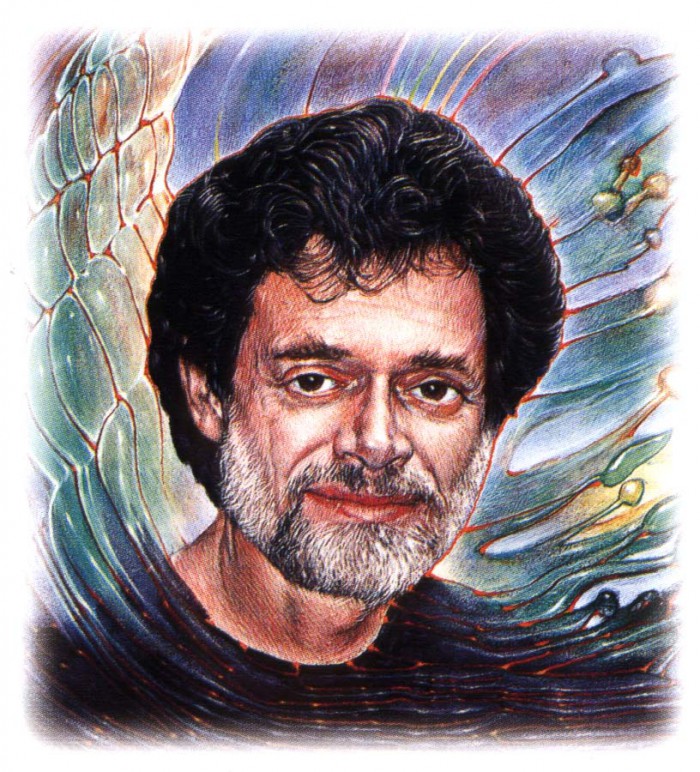
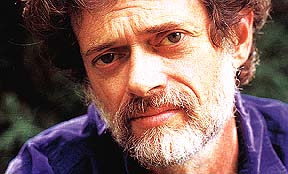
Terence McKenna’s Disillusioned Perspective on Mass-Consumerist Culture

Editor’s note: Since Terence McKenna’s passing on April 3 2000, his ideas have only grown in relevance and popularity largely because of their prescience and resonance to growing segments of internet culture. In commemoration of the 70th anniversary of his birthday we’re sharing this article which reflects an important yet often neglected aspect of McKenna’s worldview.

By Jordan Bates

Source: Refine the Mind

“We have to create culture, don’t watch TV, don’t read magazines, don’t even listen to NPR. Create your own roadshow.”

Terence McKenna is one of those cult-famous, societal-fringe figures of whom the majority of people have never heard. He’s also someone whose views probably have a polarizing effect on anyone who encounters them. At the very least, though, Terence was an exceptionally original thinker, and those who explore a fraction of his work will note his erudition and incredible ability to articulate his thoughts.

McKenna was an American philosopher and ethnobotanist who passed away in the year 2000. He was known for possessing expertise on a broad range of subjects including history, biology, geology, botany, and ecology. He toured and lectured extensively on everything from language and science to shamanism and extraterrestrials, developing a sizable and enthusiastic following.

His controversial status is in large part due to his vocal advocacy of  mind-altering substances. McKenna was a well-known psychonaut–one who explores consciousness through the ingestion of psychedelic hallucinogens–and a staunch proponent of the use of naturally occurring psychoactive compounds.

Obviously this latter aspect of McKenna’s legacy is an immediate turn-off to many. For a major sector of the population, the colossal stigma surrounding psychedelic substances is sufficient reason to lambaste the views of a well-known user. I, however, am not so quick to dismiss such a person, especially one as lucid, compelling, internally consistent, and dedicated to free inquiry as Terence McKenna.

McKenna’s Views on Mass-Consumerist Culture

I’ve delved into hours of McKenna’s lectures, and I am particularly interested in his ideas on culture. When McKenna speaks of culture, he seems to refer primarily to modern, mass-consumerist culture, so keep that in mind.

McKenna held a rather unfriendly position toward culture that can be summed up succinctly by one of his most famous quotations: “Culture is not your friend.” McKenna saw modern culture as a sort of engine detached from the interests of the individual and serving the manipulative, power-focused agendas of various institutions and wealthy individuals.

The following short video contains a portion of one of his lectures in which he addresses culture. I encourage you to watch it now (I will transcribe and elaborate on its central ideas below):

What Civilization is and What it Could be

McKenna certainly had a way of poetically articulating his ideas, and the video opens with what I feel is one of Terence’s most memorable metaphors:

“What civilization is is 6 billion people trying to make themselves happy by standing on each other’s shoulders and kicking each other’s teeth in. It’s not a pleasant situation. And yet you can stand back and look at this planet and see that we have the money, the power, the medical understanding, the scientific know-how, the love, and the community to produce a kind of human paradise.”

With this statement McKenna addresses the hyper-competitive environment that is symptomatic of the modern capitalistic socioeconomic paradigm. Our culture has a tendency to glorify competition, and many would argue that competition drives innovation and “progress” (a slippery word). I doubt McKenna would argue that competition has not been essential to the invention of our modern world, but he seems to step back and ask, “Yes, but when will it be enough?”

McKenna suggests that we’ve reached a stage of technological advancement and knowledge that would allow us to “produce a kind of human paradise.” This declaration sounds vague and idealistic, but based upon what I know of McKenna, I assume that by “human paradise” he envisioned something like a drastic change in the work paradigm, an elimination of poverty and starvation, a great reduction in disease and illness-related death, the end of war, and a much more palpable sense of a world community.

“Culture is Not Your Friend”

These items might sound far-fetched, but McKenna is not the first to suggest that such a situation is possible with our modern technology. R. Buckminster Fuller comes to mind as another prominent thinker who held similar views. After making this statement, McKenna elaborates on what he believes prevents us from attaining this state of affairs–namely, a lack of significant resistance to the poor leadership, dehumanizing values, and damaging cultural “control icons” that he perceives in the world. He states:

“Culture is not your friend. Culture is for other peoples’ convenience and the convenience of various institutions, churches, companies, tax collection schemes, what have you. It is not your friend. It insults you. It disempowers you. It uses and abuses you. None of us are well-treated by culture.”

[…]

But the culture is a perversion. It fetishizes objects. It creates consumer mania. It preaches endless forms of false happiness, endless forms of false understanding in the form of squirrelly religions and silly cults. It invites people to diminish themselves and dehumanize themselves by behaving like machines.”

Modern World as Dystopia?

McKenna holds that modern culture is centered around the agendas of those who are almost certainly not you. He believes that culture diminishes and dehumanizes the vast majority of the population by inviting them to unreflectively reinforce its models.

McKenna seems to suggest that instead of focusing on creating the type of world that is possible, we are caught up in a game of culture–a robotic pursuit of fetishized objects and false visions of a proverbial light at the end of the tunnel.

To some, this view may seem rather grim and dystopian. I don’t see it that way. I see it as a warning that remains pertinent in 2013 [and 2015]. The culture McKenna refers to does exist, and its effects are far-reaching and potentially insidious. However, I know that there are many, many people who are aware of this cultural game and do not conform to its status quo, who resolve to try to choose their own way of life and who see through the glitzy media-images.

Simply by being among this latter group of people, I think we’re doing the work that McKenna believed needed to be done–the work of resisting the damaging and dehumanizing aspects of modern consumerist culture. The mere realization that we are culturally conditioned to behave in certain ways is a sufficient catalyst to begin assuming a more active and reflective role in deciding how to live and act.

I see nothing wrong with being a cultural participant, but it should be our goal to develop a deeper awareness of the ideals our culture would have us pursue. When we understand the culture’s vision for our lives, we can continue to exist within our given society while challenging its flaws in subtle ways. We can deliberately express ourselves in forms that disrupt its norms, and we can consciously choose which aspects of it are worth partaking in. In this way, we become active constituents of culture, shifting and re-imagining its values, contributing to the gradual creation of a culture that we can call our “friend”.

McKenna Suggests We Must Create Culture

McKenna was certainly a vocal critic of mass culture, but to his credit, he was also quite vocal about offering alternatives. He believed strongly in the importance and utility of art, the primacy of felt experience, and the need to create our own values and alternative spaces for expression.

I’ll leave you with one last quote from another of Terence’s lectures that is especially poignant here. He was a frank and opinionated speaker, to be sure, but don’t let his style put you off. Terence was also always quick to check his own views and make light of his position. He didn’t want to insult people–he just wanted us to ask questions. This message from beyond the grave is valuable to each of us; ponder it with an open mind:

“We have to create culture, don’t watch TV, don’t read magazines, don’t even listen to NPR. Create your own roadshow. The nexus of space and time where you are now is the most immediate sector of your universe, and if you’re worrying about Michael Jackson or Bill Clinton or somebody else, then you are disempowered, you’re giving it all away to icons, icons which are maintained by an electronic media so that you want to dress like X or have lips like Y. This is shit-brained, this kind of thinking. That is all cultural diversion, and what is real is you and your friends and your associations, your highs, your orgasms, your hopes, your plans, your fears. And we are told ‘no’, we’re unimportant, we’re peripheral. ‘Get a degree, get a job, get a this, get a that.’ And then you’re a player, you don’t want to even play in that game. You want to reclaim your mind and get it out of the hands of the cultural engineers who want to turn you into a half-baked moron consuming all this trash that’s being manufactured out of the bones of a dying world.”
― Terence McKenna

Prophecy, Spirit and the Dreamtime

spiritual-phenomena-other-dimensions

By Jay Weidner

Source: ZenGardner.com

The mythology of our modern, high-tech culture teaches us that the last frontier for humanity is outer space. Somehow, according to this emerging mythos, the fragile human body is supposed to be able to survive the rigors of travel in outer space over vast distances. The writers of science fiction and Star Trek-style television shows would have us believe that human beings can somehow endure through every kind of radiation and danger to successfully colonize other planets and solar systems.

But this notion is probably never going to happen. As this age ends and the next age begins humanity will lose its interest in conquering space. The last 6000 years have been spent conquering the space around us.

The last frontier of humanity is not the conquering of outer space, of other planets and solar systems. As we approach the end of this era we will realize that the last frontier is time.

Space is defined by the three dimensional reality that surrounds us. It is height, width and depth. We humans possess the most spectacular array of physical and mental abilities ever devised in creation to navigate these three dimensions. These abilities have enabled us to conquer our three-dimensional world.

Now at this critical juncture in history we discover that we have completely conquered the planet’s biosphere. People are living in the coldest environments imaginable and in the hottest tropical jungles. There are few mysteries left concerning the outer physical reality of our planet. Due to oil and cheap energy, we have been able to travel to any place on Earth. As this age of oil ends there will be only one mystery left for us to ponder.

This final mystery is the mystery of time.

Let’s take a look at our perception of time. Much of the way we experience the present moment depends on our experience of time past. The events of the past are distilled and repainted in our memories until their very reality loses its solidity. If we let them cook long enough, images of past events take on a dream like quality. Through this process, our remembrances frequently slide into a fantasy disconnected from anything tangible.

How often have we encountered someone who remembers an incident in a completely opposite manner from the way we remember it? Our minds appear to be constantly rewriting history to make it more agreeable to our present day wishes. Incidents in the past that are disturbing or frightening are frequently glossed over in our memory until they disappear only to be replaced by a memory that is more easily digested by consciousness.

Our view of the future works in a similar but opposite texture. Whereas the past begins to become a dream within our memories, the future is the dream that has not yet arrived. When someone is successful in the material world we like to say that they have “lived their dreams”. This cliché reveals an intrinsic understanding that present and future reality is created from the dream state of the past.

This idea dovetails with the central belief of the Aborigines of Australia. The essential teaching from that tradition is that everything in our world begins in the Dreamtime. From their ancient perspective, every thought, every action emerges from a larger metaphysical landscape that surrounds and pervades our material world. They call this larger reality the Dreamtime. According to this tradition, each living thing first begins in the Dreamtime. After it has become fully developed in the Dreamtime it then concretizes and becomes a part of our three dimensional reality.

This process is recursive in that our future dreams are frequently constructed from the archetypes of ancient dreams. So the past and the future, the material world and the dream world work together to create not only everything that we see, feel and hear but all that we have manifested as human beings. If one looks beyond the veil of linear time, one can easily see that there is a certain control mechanism over this peculiar process. Because reality is so dependent on the dream world, it is possible to shift reality by simply shifting the dream.

Motivational speakers, politicians, television script writers, preachers and many others understand this fundamental concept and use it to re-script reality in their favor. The last thing that they want you to discover is that you have the innate ability to take control of your dreams. They much prefer that you dream their dream, live in their past and help build their future.

Just think about the nature of the media these days. Over the past century, finding new and ever more invasive means of manipulating thoughts, desires and actions have been at the forefront of the research conducted by “psychic engineers”; the advertising agencies, spin doctors, pollsters, pharmaceutical companies, and secret government agencies of our world.

Through the constant barrage of images projected by the media, through the manipulation of food, and the polluting of the atmosphere, much of humanity has become lulled into a hypnotic state and their Dreamtime is occupied with nightmares. This has led us to today, to the present moment, in which our planet and our species are in a state of crisis. To transmute this crisis, this very critical situation in time, we must learn to step outside of linear time and enter the Dreamtime, that subtle realm in which everything becomes possible.

As the word Dreamtime aptly describes, there is little difference between the dream and the time. This very moment will become a dream soon in your memory. Also you are creating the future that is racing towards you – right now.

The dream world, time and four-dimensional space are all the same thing. The fourth dimensional world, often referred to as ‘time’ by physicists, surrounds and permeates our three dimensional reality. Everything that we are is shaped and formed within this topological manifold that flows into and out of our existence. As the stream of time passes we have the ability to alter it’s course. Each moment of our lives offers us the chance to change the course of our dreams and the dreams of those we love.

Understanding this landscape, the ragged mountains and mossy valleys of the wilderness of time, is the frontier that awaits us. When we finally colonize this land and understand its many intricacies and nuances, we will realize that any future is possible. We will no longer need to be slaves to systems that require us to live in someone else’s dream. The powers of the dark sorcerers that rule our world will be overthrown and a new Dreamtime will be created. When we discover how to navigate the river of time, when the topological map of time is finally understood by us, all of the certain dangers that await us will vanish in the blink of an eye during REM sleep.

We are at the crossroads now. There is a choice. One road leads to a mechanistic, toxic, polluted, fascist nightmare from which we may never recover. The other road leads to a revitalized world where we live our dreams in freedom, prosperity and love.

One of the main aims of many ancient spiritual traditions is to provide us with the means to create a conscious break with the almost dictatorial dreams of our past. This is the essence of the teachings of the Buddha for instance. We are slaves to the dreams that we were born into, slaves to a past of which we had nothing to do. Many of these ancient spiritual traditions teach us how to break with the mental slavery that has burdened us for so long.

Humans frequently hurt themselves and others around them defending the imprinted dreams of their past and creating belief systems that make it all right to hurt and destroy people who come from a different past, a different dreamtime.

The way to stop this recurring cycle is to find our way towards a detachment from the heated beliefs and ego-inspired histories and cultures that we were born into. This is not to say that we should reject our traditions. Only that true liberation of ourselves can only begin when we detach ourselves from ingrained spiritual and cultural habits.

Right now we are trapped by time. And this means that we are trapped in a Dreamtime from which escape is nearly impossible. But as long as there is a chance, as long as the odds are not one hundred percent against us – and they are not – we should attempt to make this leap.

If we change the dream we can change the world and ourselves.

The spiritual emergence that is happening right now across the world is the realization that there is only one kind of time. There is no past and there is no future.

There is only NOW.

And we can change the NOW at any time that we like.


For more about the Shasta movie, go to ShastaMovie.com

Jay Weidner’s websites –    JayWeidner.comGaiamTV.com

Jay Weidner’s DVDs

Jay Weidner’s book:
“The Mysteries of the Great Cross of Hendaye: Alchemy and the End of Time”

Indulge . . . & Undermine

Crimethinc._boat_logo

Source: CrimethInc.

Have you noticed—exhortations to indulge yourself are always followed by suggestions? Adherents of doctrines seek footholds to claim territory within you, salesmen grasp for handles to jerk you around . . . from new-age prophets to advertisers, from pornographers to radicals, everyone exhorts you to “pursue your desires,” but the question remains: which ones? The “real” ones? Who decides which those are?

This just makes it clear what’s going on: a war for your soul on every front. And those much talked-about desires are all constructed, anyway—they change, they’re dependent on external factors, culture, the whole context and history of our society. We “like” fast food because we have to hurry back to work, because processed supermarket food doesn’t taste much better, because the nuclear family—for those who still have even that—is too small and stressed to sustain much festivity in cooking and eating. We “have to” check our email because the dissolution of community has taken our friends and kindred far away, because our bosses would rather not have to talk to us, because “time-saving” technology has claimed the hours once used to write letters—and killed all the passenger pigeons, besides. We “want” to go to work because in this society no one looks out for those who don’t, because it’s hard to imagine more pleasurable ways to spend our time when everything around us is designed for commerce and consumption. Every craving we feel, every conception we form, is framed in the language of the civilization that creates us.

Does this mean we would want differently in a different world? Yes, but not because we would be free to feel our “natural” desires—no such things exist. Beyond the life you live, you have no “true” self—you are precisely what you do and think and feel. That’s the real tragedy about the life of the man who spends it talking on his cell phone and attending business seminars and fidgeting with the remote control: it’s not that he denies himself his dreams, necessarily, but that he makes them answer to reality rather than attempting the opposite. The accountant regarded with such pity by runaway teenage lovers may in fact be “happy”—but it is a different happiness than the one they experience on the lam.

If our desires are constructs, if we are indeed the products of our environment, then our freedom is measured by how much control of these environments we have. It’s nonsense to say a woman is free to feel however she wants about her body when she grows up surrounded by diet advertisements and posters of anorexic models. It’s nonsense to say a man is free when everything he needs to do to get food, shelter, success, and companionship is already established by his society, and all that remains is for him to choose between established options (bureaucrat or technician? bourgeois or bohemian? Democrat or Republican?). We must make our freedom by cutting holes in the fabric of this reality, by forging new realities which will, in turn, fashion us. Putting yourself in new situations constantly is the only way to ensure that you make your decisions unencumbered by the inertia of habit, custom, law, or prejudice—and it is up to you to create these situations. Freedom only exists in the moment of revolution.

And those moments are not as rare as you think. Change, revolutionary change, is going on constantly and everywhere—and everyone plays a part in it, consciously or not. “To be radical is simply to keep abreast of reality,” in the words of the old expatriate. The question is simply whether you take responsibility for your part in the ongoing transformation of the cosmos, acting deliberately and with a sense of your own power—or frame your actions as reactions, participating in unfolding events accidentally, randomly, involuntarily, as if you were purely a victim of circumstance.

If, as idealists like us insist, we can indeed create whatever world we want, then perhaps it’s true that we can adapt to any world, too. But the former is infinitely preferable. Choosing to spend your life in reaction and adaptation, hurrying to catch up to whatever is already happening, means being perpetually at the mercy of everything. That’s no way to go about pursuing your desires, whichever ones you choose.

So forget about whether “the” revolution will ever happen—the best reason to be a revolutionary is simply that it is a better way to live. It offers you a chance to lead a life that matters, gives you a relationship to injustice so you don’t have to deny your own grief and outrage, keeps you conscious of the give and take always going on between individual and institution, self and community, one and all. No institution can offer you freedom—but you can experience it in challenging and reinventing institutions. When school children make up their own words to the songs they are taught, when people show up by the tens of thousands to interfere with a closed-door meeting of expert economists discussing their lives, that’s what they’re up to: rediscovering that self-determination, like power, belongs only to the ones who exercise it.


Shout it over the rooftops: Culture can belong to us. We can make our own music, mythology, science, technology, tradition, psychology, literature, history, ethics, political power. Until we do, we’re stuck buying mass-produced movies and compact discs made by corporate mercenaries, sitting faceless and immobilized at arena rock performances and sports events, struggling with other people’s inventions and programs and theories that make less sense to us than sorcery did to our ancestors, shamefacedly accepting the judgments of priests and agony columnists and radio talk show hosts, berating ourselves for not living up to the standards set by college entrance exams and glamour magazines, listening to parents and counselors and psychiatrists and managers tell us we are the ones with the problems, buying our whole lives from the same specialists and entrepreneurs we sell them to—and gnashing our teeth in secret fury as they cut down the last trees and heroes with the cash and authority we give them. These things aren’t inevitable, inescapable tragedies—they’re consequences of the passivity to which we have relegated ourselves. In the checkout lines of supermarkets, on the dialing and receiving ends of 900 numbers, in the locker rooms before gym classes and cafeteria shifts, we long to be protagonists in our own epics, masters of our own fate.

If we are to transform ourselves, we must transform the world—but to begin reconstructing the world, we must reconstruct ourselves. Today all of us are occupied territory. Our appetites and attitudes and roles have all been molded by this world that turns us against ourselves and each other. How can we take and share control of our lives, and neither fear nor falter, when we’ve spent those lives being conditioned to do the opposite?

Whatever you do, don’t blame yourself for the fragments of the old order that remain within you. You can’t sever yourself from the chain of cause and effect that produced you—not with any amount of willpower. The trick is to find ways to indulge your programming that simultaneously subvert it—that create, in the process of satisfying those desires, conditions which foster new ones. If you need to follow leaders, find leaders who will depose themselves from the thrones in your head; if you need to “lead” others, find equals who will help you dethrone yourself; if you have to fight against others, find wars you can wage for everyone’s benefit. When it comes to dodging the imperatives of your conditioning, you’ll find that indulge and undermine is a far more effective program than the old heritage of “renounce and struggle” passed down from a humorless Christianity.

To return, finally, to the original question—yes, we too are making suggestions about which desires you pursue. We would be scoundrels to deny that! But we would be scoundrels not to make these suggestions, not to extol freedom and self-determination in a world that discourages them. Exhorting others to “think for themselves” is ironic—but today, refusing to oppose the propaganda of the missionaries and entrepreneurs and politicians simply means abandoning our society and species to their control. There’s no purity in silence. And liberty does not simply exist in the absence of control—it is something we have to make together. Taking responsibility for our part in the ongoing metamorphoses of the world means not being afraid to take part in the making of our society, influencing and being influenced as we do.

We make suggestions, we spread this propaganda of desire, because we hope by doing so to indulge our own programmed passion for propaganda in a way that undermines an order that discourages all of us from playing with our passions—and so to enter a world of total liberty and diversity, where propaganda and power struggles alike are obsolete. See you on the other side.

Related Video:

How to Reclaim your Mind and Life from the Cultural Engineers

terence_piv

By Paul Fassa

Source: RealFarmacy.com

“We tend to disempower ourselves. We tend to believe that we don’t matter. And in the act of taking that idea to ourselves we give everything away to somebody else, to something else.”
– Terence McKenna [1]

Terence Kemp McKenna (November 16, 1946 – April 3, 2000) was a philosopher, social critic, psychonaut, ethnobotanist, lecturer, writer who authored several books. He examined, deconstructed and expounded on a variety of subjects, including: plant-based entheogens, shamanism, metaphysics, psychedelic drugs, epistemology, alchemy, language, culture, technology and theories about the origins of human consciousness. He created a mathematical theory of time (novelty theory) based on patterns found in the I Ching. [1]

In this short video Terence McKenna explains the necessity reclaiming your mind and creativity from a dying, materialistic consumer oriented society.

“We have to stop consuming our culture. We have to create culture.” –Terrance McKenna [1]

It’s easy to get lost in the noise and hub of the daily grind – dead end jobs, UN-fulfilling careers, relentless consumerism and the constant drone like buzz of the big brother mind control media matrix.

The mass media’s [2] primary purpose and expertise is shaping and programming the “herd” mind with a steady stream of mostly dubious, fear based information overload combined with a cynical parade of buy this NOW advertising.

To say human consciousness has been commercialized is an enormous understatement. Just as day follows night, mass commodification of nature results in the commodification  of human consciousness.

The cultural engineers are obsessed with turning everything into things including people. The predominant value or worth of a person  is based primarily on how many things they can produce directly or indirectly and how many things they own and consume. The sacred intrinsic, non-temporal value of one’s soul is disregarded in favor of the culture’s contrived materialistic value system, which is centered on perishable commodities.

Under these conditions the soul is reified. To reify is to regard (something abstract) as a material or concrete thing. The sacred, inner life of the individual is systemically marginalized and crushed, ensuring  the majority will unblinkingly sell their soul to the externalized value system, which is by design seamlessly interlocked with survival and success on all levels.

“Within this totally jaded society the “individual” had little chance. In fact, his only hope was to escape in some fashion, perhaps into the woods where a person could rediscover the fundamental truths that nature revealed, or into hallucinogenic drugs that pushed the mind past the limitations drilled into it by education and upbringing, or into a completely different lifestyle grounded on more humane and authentic values.” [3]

For those who desire an authentic life created from the inside out and not the other way around, here are some steps that can help you reclaim your mind and life from the cultural engineers.

The burning question is do you really want to reclaim your mind from the gaudy over-commercialized, technological barbarism euphemistically referred to as a consumer oriented society. Are you finally bored with exploitative greed and debt slave materialism? You should be. Why?

“You are a divine being. You matter, you count. You come from realms of unimaginable power and light, and you will return to those realms.”
– Terence McKenna [1]

Assuming you’re ready to leap over the rotting corpse called modern culture and its Kafkaesque matrix society, unfasten your seat-belt and take a deep breath as we take a spin down the road rarely traveled. It’s an esoteric path that takes you back to the source of your creative spirit, intuitive wisdom and your unique connection to all that is or ever will be.

Obviously, a critical first step on this journey into the unknown is to resolutely refuse to be a compliant consumer of ideas, things, and dis-empowering belief systems. Be ready to break the chains of your conceptual prison and be willing to view life from the cracks that exist between ideas. The objective is to have a clear view of reality without the distorting lens of preconceived notions of our “borrowed” reality.

Also, you’ll begin to critically reexamine all the deeply held values that were inserted into your impressionable mind and soul at a very young age before you had the option to critically examine each value in the light and depth of your own consciousness. Unfortunately, at any age the saturation effect of the mass media can instill false values and a substitute reality.

“Personal empowerment means deconditioning yourself from the values and the programs of the society and putting your own values and programs in place.”
– Terence McKenna [1]


The primary tool of the cultural engineers use to control the masses is the media. In fact, for most the media is reality. The media actually creates reality; it does not merely reflect it.

How the media creates our reality:

“… television cultivates a perception of reality among its viewers. . . . “television … has acquired such a central place in daily life that it dominates our symbolic environment, substituting its message about reality for personal experience and other means of knowing about the world.” [2]

2 Simple Methods to Help You Reclaim Your Mind and Your Life:

“My technique is don’t believe anything. If you believe in something, you are automatically precluded from believing its opposite.”
– Terence McKenna [1]


One very practical method for discovering and occupying the unconditioned space between thoughts is by using an ancient Buddhist practice called mindfulness. Jon Kabat-Zinn, PhD, is a scientist, writer, professor, lecturer and meditation teacher who brought mindfulness into the realm of mainstream medicine and society at large.

Zinn’s definition of mindfulness: “Mindfulness means paying attention in a particular way; On purpose, in the present moment, and non- judgmentally.”[3] You cultivate detachment and equanimity of mind regardless of what life throws at you. It really gets interesting when you are finally able to move into the present moment and respond directly to life situations as they occur opposed to reacting to them based on past conditioning.”

With practice, mindfulness enables you to take control of your attention via your intention so you can willfully move your awareness into that clear space of the present moment without interference from the conditioned mind.

Normally our attention automatically drifts and gets stuck in the same ruts and grooves that have already created strong, magnetic like impressions in your mind. This tendency creates a mind lock where the attention is effectively caged in the past and rarely has the opportunity to freshly explore the actual moment that is life that is occurring now. In other words, our attention and thus our life is stuck in the past because where we focus our attention is what our life becomes.

Essentially to break the chains of the past you need to practice anchoring your attention in the present moment. This is when you consciously move beyond your current life “story” perception template into reality directly- moment by moment.

From that operating viewpoint you are free to create your desired reality without dragging the burden of the past or anxiety about the future into the equation. If you ignore the mental noise and turn your attention inward you will eventually discover the expansive space that exists between thoughts.

That space is where the raw, unconditioned power and unfettered freedom to create is found. It’s a timeless reservoir of unlimited possibilities. It’s a no-mind that’s empty with potential. Some refer to it as the quantum mind.

This is where artists go when they want to create something fresh and free from cultural or personal clichés. Sages and shamans are familiar with this space as well. They go there to listen not to think. If they are really good listeners they share what they heard or saw for the benefit of others.

“Half the time you think your thinking you’re actually listening.”
– Terence McKenna [1]

Of course, Terence McKenna primarily relied on various psychedelics and marijuana to help him enter that sacred space beyond the conceptual realm; he was a dedicated psychonaut, but that’s not the only way.

Discover your Imagination

“If you don’t have a plan, you become part of somebody else’s plan.”
– Terence McKenna [1]

The best plan is to first get in touch with reality via direct experience – ditching the ingrained conceptual template your culture indoctrinated into you from birth. That’s when you can really start to harness the true power of your imagination and use it to intentionally create the personal reality you desire to walk into beyond prevailing ideologies. From the perspective of raw imagination there is no past or future, just now. And that is where your essential power lies, in the present moment.

Forget about slavishly following the yellow brick road – create your own experiential road show starting with your imagination. Venture beyond the  current ideological and spiritual constraints and institutionally sanctioned belief systems that tell you what reality is and decide to boldly experience reality directly and journey into terra incognita.

To create a new reality requires skillfully engaging your intention and imagination utilizing all the senses including: visual (seeing), auditory (hearing), kinesthetic (touch), olfactory (smelling) or even gustatory (tasting). Now with your imagination fully engaged, create a subtle imaginary version that exactly reflects your desired intention.  This is basically how one creates a new reality beyond past conditioning.

From a CNN article titled:

The power of perceptions: Imagining the reality you want

“What we are fighting for, Benjamin (Ruha Benjamin, sociology professor) says, is our imagination — the right to imagine a life and relationships and a social world that are happier, less anxious, more harmonious and more just. We are not being diligent enough or deliberate enough about cultivating our imagination. We have to fight, for the ability to imagine the world we want. Because one form of oppression is telling people that they’re not allowed [or can’t] to imagine something better and happier.”

“Either there are no illusions or everything is an illusion,” (…) “And given that we are pretty much all delusional, you might as well choose your delusion.” –  Beau Lotto, neuroscientist and artist[6]

Paul Fassa is a contributing staff writer for REALfarmacy.com. His pet peeves are the Medical Mafia’s control over health and the food industry and government regulatory agencies’ corruption. Paul’s valiant contributions to the health movement and global paradigm shift are world renowned. Visit his blog by following this link and follow him on Twitter here.

Sources:
[1] http://www.endalldisease.com/73-mindblowing-terence-mckenna-quotes/
[2] http://people.missouristate.edu/MichaelCarlie/what_I_learned_about/media.htm NOTE: The term “mass media” refers to the Internet, radio, television, commercial motion pictures, videos, CDs, and the press (newspapers, journals, and magazines) – what are referred to collectively as broadcast and print media.
[3] http://www.shmoop.com/1960s/culture.html
[4] http://www.webmd.com/jon-kabat-zinn (bio)
[5] http://www.wildmind.org/applied/daily-life/what-is-mindfulness
[6] http://www.cnn.com/2012/04/11/health/enayati-power-perceptions-imagination/

DATAcide: The Total Annihilation of Life as We Know It

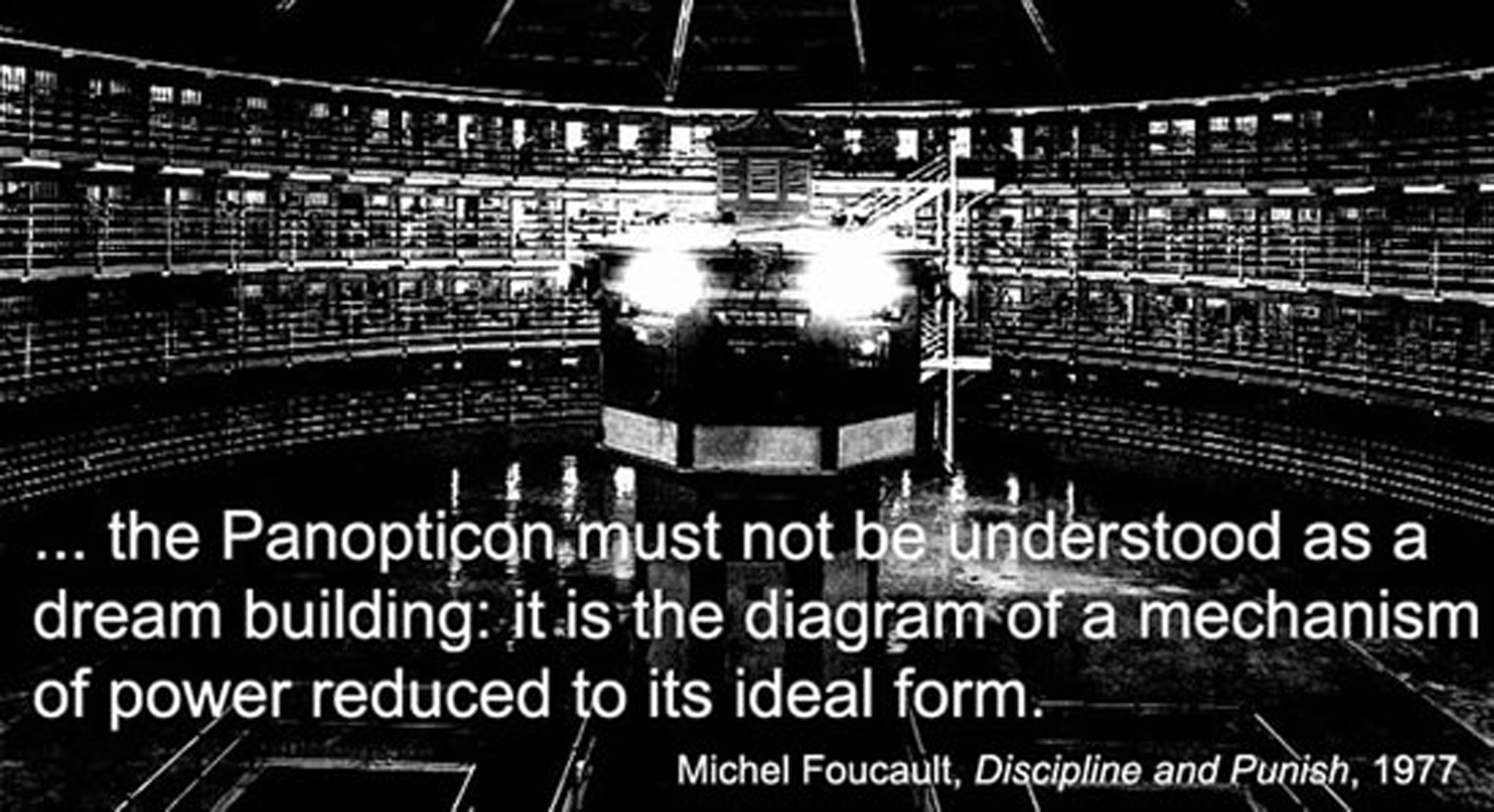
panopticon-image

By Douglas Haddow

Source: Adbusters

“So tell me, why did you leave your last job?” he asks.

The first thing I remember about the internet was the noise. That screeching howl of static blips signifying that you were, at last, online. I first heard it in the summer of ’93. We were huddled around my friend’s brand new Macintosh, palms sweaty, one of us on lookout for his mom, the others transfixed as our Webcrawler search bore fruit. An image came chugging down, inch by inch. You could hear the modem wince as it loaded, and like a hammer banging out raw pixels from the darkness beyond the screen, a grainy, low-res jpeg came into view. It was a woman and a horse.

Since then, I’ve had a complicated relationship with the internet. We all have. The noise is gone now, and its reach has grown from a network of isolated weirdos into a silent and invisible membrane that connects everything we do and say.

“I needed a bigger challenge,” I say. This is a lie.

The brewpub we’re in has freshly painted white walls and a polished concrete floor, 20 ft ceilings and dangling lightbulbs. It could double as a minimalist porn set, or perhaps a rendition chamber. Concrete is easy to clean. The table we’re at is long and communal. Whenever someone’s smartphone vibrates we all feel it through the wood, and we’re feeling it every second minute — a look of misery slicing across my face when I realize it’s not mine.

“Tell me about your ideal process,” the guy sitting down the table from us says. My eyes strain sideways. He looks to be about thirty; we all do. Like a young Jeff Bezos, his skin is the color of fresh milk. He’s dressed like a Stasi agent trying to blend in at a disco. Textbook Zuckercore: a collared blue-green plaid shirt unbuttoned with a subdued grey-on-grey graphic tee, blue jeans and sneakers. Functional sneakers. Tech sneakers. This is a tech bar. Frequented by tech people who do tech things. The park down the street is now a tech park. That’s where the tech types gather to broadcast their whimsy and play inclusive non-sports like Quidditch, which, I’m told, is something actual people actually do. It’s a nerd paradise where the only problems that exist are the ones that you’re inspired to solve. And I want in on it, because I want to believe.

“I’m a big fan of social,” I blurt out as an aside. He replies with a calm and ministerial nod. Nobody says “social media” anymore, it’s just “social” now.

My atoms are sitting here drinking a beer, being interviewed for a position at a firm that specializes in online brand management systems. Which is a euphemism for a human centipede of marketers selling marketing to marketers for marketing. The firm is worth a billion dollars. You’ve never heard of it. It’s the type of place where they force you to play ping-pong if you come in looking depressed. Meet the new boss, same as the old boss, except this one is very concerned that you see him as a positive force in the universe.

I’m here, bringing the cold beer to my dry lips and bobbing my head in my best impersonation of someone who doesn’t feel ill when he hears the words “key metrics,” “familiarity,” “control groups” and “variant groups.” It’s the dawn of the new creative economy, and I can dig it. I’m here, but I’m also spread across the internet in a series of containers. I’m in Facebook, I’m in Instagram, I’m in Google, I’m in Twitter and a thousand other places I never knew existed. Depending how my body is disposed of, it will either become dirt or atmosphere. But the digital atoms will live forever, or at least until civilization is incinerated by whatever means we choose to off ourselves.

“What about this position interests you?” he asks.

When the TechCrunchers preach the gospel of disruption, it’s from an industrial perspective that sees life on Earth as a series of business models to be upended. Disrupt or die is the motto, but they never mention the disruptees — the travel agents, the cab drivers, the bellhops. The journalists. The meat in the box before the box is crushed by the anvil of innovation.

“People have ideas about things but it’s a bunch of things. Sign up flow for example, high level things, but sometimes I think — let’s table this for now and put together some idea maps. I feel so empowered because we’re aligned,” someone else says. I look around but can’t trace the source.

It’s hard to focus on his questions when all the conversations occurring parallel to ours combine in a cacophony of sameness, as if we’re all Tedtalking a mantra of ancient buzzwords: Engagement. Intuitive. Connection. User base. Revolutionary. It’s like coke talk gone sour, not words that are meant to say things, but stale semiotics that signify you belong. This is the the new language of business. This is where Wall Street goes to find itself.

“I traded in my suit for khakis and sunglasses,” one of them says. But he’s wearing neither. “That’s the best decision you’ve ever made bro,” his colleague replies.

These are the most boring people on the planet. And it’s their world now, we’re just supplying the data for it. The game is simple: dump venture capital into a concept, get the eyeballs, take the data and profit. But the implications of this crude scheme are profound. Beyond all the hype, something weird is happening.

I can’t eat without instagramming my food. I can’t shit without playing Candy Crush. I can’t even remember who half the people are on my Facebook feed, but I’ll still mindlessly scroll through their tedious status updates and wince at their tacky wedding photos. Out of these aimless swipes, clicks and likes, a new world is being born. A world where everything we do, no matter how inane, is tracked, recorded, sorted and analyzed. Yahoo CEO Marissa Mayer has said the whole process is “like watching the planet develop a nervous system.” And through this system, every human action has become a potential source of profit for our data lords, a signal for them to identify and exploit.

“We are about to enter a world that is half digital and half physical, and without properly noticing, we’ve become half bits and half atoms. These bits are now an integral part of our identity, and we don’t own them,” says Hannes Grassegger.

Grassegger is a German economics journalist who was raised in front of his mom’s Macintosh, and later, on a Commodore 64 he got for his sixth birthday. He recently wrote “Das Kapital bin ich” (I am Capital), a book that has been criticized by the European left for being too capitalist, and by the right for being the communist manifesto of the digital era. In it he tries to answer a deceptively simple question: if our data is the oil of the 21st century, then why aren’t we all sheikhs?

“We’ve all been sharing. But the smart ones have been collecting — and they’ve packed us into their clouds,” he says. “Privacy. Transparency. Surveillance. Security gap. I don’t want to hear about it. These are sloppy downplayings of a radical new condition: We don’t own ourselves any more. We are digital serfs.”

Like Grassegger, and like everybody else, I was lured into this radical new condition with the feel-good promises of connection, friendship and self-expression. Apps, sites and services that allowed us to share what we loved, and do what we wanted. For Grassegger, these platforms were merely fresh lots ready to be ploughed, and in turn they kept the harvest: our feelings, thoughts, experiences and emotions, encoded in letters and numbers. Now they’re putting it all to work, exploiting these assets with algorithms and sentiment analysis, and our virtual souls are toiling even while we sleep.

His solution to this dilemma is practical and pragmatic, siding with a lesser evil of establishing a personalized free data market, which would allow us to exploit our information before others do it for us, arguing that “We must carry into the new space those rights and freedoms we eked out in the physical world centuries ago. The ownership over ourselves and the freedom to employ this property for our own benefit. Only this will help us leave behind our self-imposed digital immaturity.”

“KRRAAAAASHH!”

A waitress lets a pint glass slip from her hand and shatter on the floor, but no one bothers to look over; they’re too engaged. Then I notice something eerie about the vibe in this place. There’s no sneering, no sarcasm, and no self-deprecation. Everyone is just sort of floating along in an earnest tranquility. As if each anecdote about “that cool loft I found on Airbnb” contained some deep spiritual significance beyond my grasp.

My interrogator goes for a piss and I load up Facebook in the interim, hoping to find a shard of inspiration in my feed that will provide a topical talking point. Instead I find a listicle. A curiosity gap headline. An ad. A solicitation. Another ad. Another listicle. Oh dear, someone has lost their phone. And finally, an ad in the form of a listicle. Or is it a listicle in the form of an ad?

We were told to surf the web, but in the end, the web serf’d us. Yet there’s a worse fate than digital serfdom, as Snowden’s ongoing NSA revelations suggest. This isn’t simply about the commodification of all human kinesis, it’s the psychological colonialism that makes the commodification possible.

The nature of this bad trip was hinted at in June when we learned that Facebook manipulated the emotional states of nearly 700,000 of its users. Half of those chosen for the study were fed positivity, the others, despair. “The results show emotional contagion,” the Facebook scientists told us, meaning that they had discovered that alternating between positive and negative stimulus does indeed affect our behaviour. Or perhaps rediscovered. There’s a precedent for this. We’ve been here before.

Burrhus Frederic Skinner, known simply as B.F. to his BFFs, is best known as the psychologist with the painfully large forehead who tried to convince the world that free will was an illusion. But he wasn’t always so dire. He was once a young man with hopes and dreams who wrote poems and sonnets and wanted to become a stream-of-consciousness novelist like his idol, Marcel Proust. He failed miserably and it led him to conclude that he wasn’t capable of writing anything of interest because he had nothing to say. Frustrated and bitter, he resolved that literature was irrelevant and it should be destroyed, and that psychology was the true art form of the 20th century. So he went to Harvard and developed the concept of operant conditioning by putting a rat in a cage and manipulating its behaviour by alternating positive and negative stimulus. Now we’re the rats in the cage, only we don’t know where the cage ends and where it begins.

“What’s your five year vision for social?” he asks.

There’s a right way and a wrong way to answer this question. The wrong way is to be critical and cast scepticism on the internet’s role in our lives. For instance, you could draw a parallel between Facebook’s probing of emotional contagion and the Pentagon’s ongoing research into how to quash dissent and manage social unrest. Or you could mention how the Internet of Things will inevitably consolidate corporate power over our personal liberty unless we implement strict regulations on what part of ourselves can and cannot be quantified. But if you did that, you’d upset the prevailing good vibes and come off like a sickly paranoiac in desperate need of some likes.

The right way is to turn off, buy in and cash out. Reinforce the grand narrative and talk about how social is going to bring people together, not just online, but in the real world. How it will augment our interactions and make us more open. How in five years you’ll be able to meet your true love through an algorithm that correlates your iTunes activity to your medical history and how that algorithm will be worth a billion fucking dollars. And it’s through that magical cloud of squandered human potential that Skinner emerges once again and starts poking his finger into your brain.

After establishing himself as a household name, Skinner was finally able to live out his dream of writing a novel. That novel was Walden Two, a story about a utopian commune where people live a creative and harmonious life in accordance to the principles of radical behaviourism. In contrast to 1984 and Brave New World, it was meant to be a positive portrayal of a technologically-enabled utopian ideal. In it he writes, “The majority of people don’t want to plan. They want to be free of the responsibility of planning. What they ask for is merely some assurance that they will be decently provided for. The rest is a day-to-day enjoyment of life.”

In the late 60s, Walden Two directly inspired a series of attempts to create real world versions of the fictional community it described. These were just a few of the thousands of communes that were being established across America at that time. Some thrived, but the majority fell apart within a couple short years. They failed for a number of reasons: latrines overflowed, the tofu supply ran out, the livestock starved to death and so forth. But what many of them had in common was a cascading systems failure of their foundational hypothesis — that social change could be achieved through self-transformation and the problems of power could be solved simply by ignoring them. There was always a Machiavellian in the transformational mist, though, and a refusal to acknowledge outright how power creates invisible structures that undermine the potential for cooperative action ultimately led to their implosion. It’s in this stale pub, with its complimentary WiFi and overpriced organic popcorn, that those invisible power structures continue to thrive.

“There has to be incentive. There has to be. You can’t force people to use it,” a woman in the corner mutters. She’s among a cluster of people who for some reason are all carrying the same cheap, ugly backpack. Her hand gestures become more aggressive as the conversation progresses and she looks to be caught in a moment midway between panic and ecstasy. Her expression would make the perfect emoji for the inertia of our time. It looks sort of like this: (&’Z)

“Our notions of digital utopianism are deeply rooted in a communal wing of American counter-culture from the 1960s. That group of people have had an enormous impact on how we do technology. Many of the leading figures in technology come from that wing, Steve Jobs would be one,” says Fred Turner, a communications professor at Stanford University who researches and writes about how counterculture and technology interact.

“Their ideas of what a person is and what a community should be has suffused our idealized understanding of what a virtual community can be and what a digital citizen should be. That group believed that what you had to do to save the world was to build communities of consciousness — places where you would step outside mainstream America and turn away from politics and democracy, turn away from the state, and turn instead to people like yourself and to sharing your feelings, your ideas and your information, as a way of making a new world.”

There’s a fault line that runs underneath the recycling bins of America’s abandoned hippy communes all the way to my cracked iPhone 5 screen. And if there is one man who epitomizes the breadth of this fault, it’s Stewart Brand.

In 1968, Brand published the Whole Earth Catalog, an internet before the internet that provided a directory of products for sustainable, alternative and creative lifestyles, and helped connect those who pursued them. When the Whole Earth Catalog went out of business in 1971, Brand threw a “demise party” wherein the audience got to choose who would receive the magazine’s remaining twenty grand. They chose to give it to Fred Moore, an activist moonlighting as a dishwasher, who would go on to found the Homebrew Computer Club — the birthplace of Apple and the PC. In the 80s Brand launched The Whole Earth ’Lectronic Link, one of the world’s first virtual communities. Following its success, he started the Global Business Network — a think tank to shape the future of the world. They’ve worked on “navigating social uncertainty” with corporations like Shell Oil & AT&T, among others. In 2000, GBN was bought by Monitor Group, a consultancy firm that made headlines in 2011 by earning millions of dollars from the Libyan Government to manage and enhance the global profile of Muammar Gaddafi.

Brand’s most enduring legacy will likely come from coining the phrase “information wants to be free,” which serves as the business model for the Actually Existing Internet and the Big Data dream.

Looking around the brewpub, listening to the chatter, and staring into the bright blue eyes of my would-be employer, you can almost hear the words of Google CEO Eric Schmidt echo against the minimalist decor: “We know where you are. We know where you’ve been. We can more or less guess what you’re thinking about.”

In San Francisco, my fellow disruptees have taken to the streets and kicked off a proper bricks & bottle backlash against this sort of dictator-grade hubris that has come to define the Internet of Kings. Crude graffiti reading “DIE TECHIE SCUM” is scrawled on the sidewalk next to Googlebus blockades. TECH = DEATH signs are held up at protests. Tires are slashed, windows are smashed and #techhatecrimes is a hashtag that is being passed around Silicon Valley without a hint of irony.

Just down the street from where I’m sitting, a more passive form of protest has manifested in the form of a new café that promises an escape from the incessant blips and bleeps of the internet and its accoutrements.The tables there are also long and communal, but they’re wrapped inside an aluminum metal mesh designed to interrupt and restrain wireless signals and WiFi.

We are not going to escape this crisis by putting ourselves in a cage. There is no opt-out anymore. You can draw the blinds, deadlock your door, smash your smartphone, and only carry cash, but you’ll still get caught up in their all-seeing algorithmic gaze. They’ve datafied your car, your city and even your snail mail. This is not a conspiracy, it’s the status quo, and we’ve been too busy displacing our anxiety into their tidy little containers to realize what’s going on.

“Do you have any questions for me?” he finally asks, abruptly. My beer is empty, I’m thirsty for another, and the interview hasn’t gone well. I’ve failed to put on a brave face and the only questions that I have concern how much money I’m going to make. Will it be enough to pay for my escalating rent now that the datarazzi have moved into the neighborhood? Or will I have to drive an Über in my spare time to make ends meet?

The internet is a failed utopia. And we’re all trapped inside of it. But I’m not willing to give up on it yet. It’s where I first discovered punk rock and anarchism. Where I learned about the I Ching and Albert Camus while downloading “Holiday in Cambodia” at 15kbps. It’s where I first perved out on the photos of a girl I would eventually fall in love with. It’s home to me, you and everybody we know.

No, the appropriate question to ask is: “What is the purpose of my life?”

I’ve seen the best minds of my generation sucked dry by the economics of the infinite scroll. Amidst the innovation fatigue inherent to a world with more phones than people, we’ve experienced a spectacular failure of the imagination and turned the internet, likely the only thing between us and a very dark future, into little more than a glorified counting machine.

Am I data, or am I human? The truth is somewhere in between. Next time you click I AGREE on some purposefully confusing terms and conditions form, pause for a moment to interrogate the power that lies behind the code. The dream of the internet may have proven difficult to maintain, but the solution is not to dream less, but to dream harder.


Remember To Use Your Forgettery To Forget All the Trivia Meant To Divert Your Attention from Important Matters

yndwy

By Edward Curtin

Source: OpEdNews.com

What is the explanation for the brainwashing of so many Americans when it involves the nefarious, unspeakable deeds of their government? Why are so many so easily duped time and again? Why is there such a vast ignorance of the truth behind national and international affairs?

I would suggest that the answer lies not just with the specific issues themselves and the lies and propaganda used to befuddle the American people, but with the cultural and social background that frames Americans’ thinking. The latter serves to cut to the root people’s belief in their own power to think freely and clearly about the former. Invade people’s minds over many years with an ongoing series of interconnected memes, occupy their minds with alleged facts that induce a frenzied depression, and then fooling them on specific issues — e.g. Ukraine, Iraq, Syria, etc. – becomes much easier.

I am a sociology professor, and my students always laugh when during a discussion of memory, social and personal, I ask them about their forgetties (the actual word is forgetteries, but the shorter rhyme gets more laughs). They think I’m joking. Maybe you do, too. I’m not. But when I suggest that if they “possess” the faculty to remember, then they must “possess” the faculty to forget, they are astonished. You can’t forget, they reply, you just don’t remember; you can’t retrieve the memories that are stored in your brain. In other words, there are no forgottens, just temporarily unavailable memories. From there we are onto a discussion of retrieving (I think of dogs), processing (their word for thinking and mine for making American cheese), and all the computer lingo that has been the surround of their lives. Like fish in water, the mechanistic computer memes have been their environment since birth. They are shocked at the suggestion that there might be more outside the cultural water, and that they could go there.

And they have a lot of company.

This may sound flippant, but it’s crucial for understanding why so many Americans can’t comprehend and pay attention to the ways their minds are scrambled and confused about life and death issues, how their country has fallen victim to the military-industrial-intelligence apparatus that operates deep in the shadows, and oftentimes right in the open.

If we examine the social and cultural context of the last twenty-five years, we can see a number of issues that have dominated Americans’ “thinking.” These issues have been promulgated and repeated ad infinitum by the corporate media, professional classes, and schools at all levels. We have been swimming in these issues for years. I suggest the following five are key: the inability to concentrate or pay attention (ADD/ADHD), memory/forgetting (dementia, Alzheimer’s, technological memory devices), people’s lack of time and constant busyness (a recent email I received from a publisher read: “crazy-busy? use our power-point decks”), drugs legal or illegal as problems or solutions (over 4 billion prescriptions written in the U.S.A. yearly), and technology as our savior.

Together with shopping and the weather, these five topics have been the stuff of endless conversations and media chatter over the years.

When people are questioned about major issues of war and peace; political assassinations, such as those of JFK, MLK, or RFK; the alleged war on terror; the downing of Malaysian airlines; the overthrow of elected governments in the Ukraine or Egypt; the events of 9/11; government spying; economic robbery by the elites — the list is long, it’s common for people to echo the government/corporate media, or, if pressed, to say, I don’t know, I can’t remember, no one knows for sure, it’s impossible to know, we’ll never know, etc.. The confused responses are replete with an unacknowledged despair at ever arriving at clear and certain conclusions, not to say being able to do anything about them. On many issues they bounce between the twin absurdities of Democratic and Republican talking points, thinking they are being perceptive.

Why?

If we set aside the substantive issues, and examine the aforementioned cultural memes, the answers are not hard to find. Here most people speak as if they are certain. “Of course there isn’t a forgettery.” “Depression is caused by a chemical imbalance.” “Memories are all stored in the brain.” “I really am so busy all the time.” “Facts are just opinions.” Americans have internalized the ethos presented to them by the elites. At the core of this is the propaganda of scientific materialism and biological determinism that we are not free but are victims of our genes, neurotransmitters, brain/computers and chemicals, technology, etc. Having lost our minds and fixated on our brains, we have been taught to be determined to be determined, not free. And whether consciously or unconsciously, most have obliged. The linkages between memory, attention, distraction, drugs, technology all point to the brain and the obsessive cultural discussion of brain matters. We have been told interminably that our lives revolve around our brains (our bodies) and that the answers to our problems lie with more brain research, drugs, genetic testing, etc. It is not coincidental that the U. S. government declared the 1990s the decade of brain research, followed up with 2000-2010 as the decade of the behavior project, and our present decade being devoted to mapping the brain and artificial intelligence, organized by the Office of Science and Technology Project and the Defense Advanced Research Projects Agency. How convenient! George H. W. Bush, Clinton, George W. Bush, Obama — what a difference! But this is science and the welfare of the world.

For years we have been fed philosophical presuppositions smuggled in as fact. It’s an old trick, ever young. Tell people over and over and over again that life is in essence a mindless material/biological trap and over time they will believe it. Of course there are unspoken exceptions — those who are the masters of this con-game, the few, the elite, those who make and reinforce the case. And even some of them are too ignorant to comprehend their questionable presuppositions. They hoist themselves by their own petards while cashing in at the bank.

My students can’t forget because they don’t believe in it. But they can’t remember either. They don’t know why. So, like the older generation, they fall into the careless habit of inaccuracy, to turn Oscar Wilde on his head. They have downloaded their memories, uploaded their trifles, and been tranquilized by trivia.

As the great American sociologist C. Wright Mills wrote over fifty years ago, “Nowadays people often feel that their private lives are a series of traps.” That is truer today than then. A sense of entrapment and determinism pervades our culture. And it extends to public issues as well. We are told either to accept official explanations for public events or be dismissed as crazies.

I would suggest that for people to break through to a true understanding of the important public events of our time, they must also come to understand the false memes of their culture, the way they have been mindwashed to believe that at the most rudimentary level they are not free.

Maybe the first best step toward free thought and out of the propaganda trap would to accept that you “possess” a forgettery . Listen to the American philosopher Paul Simon sing, “When I think back to all the crap I learned in high school, it’s a wonder I can think at all.” Use your forgettery and forget the crap. Make haste slowly to question everything. Remember that the corporate media works hand in glove with the ruling elites on two levels of propaganda — cultural and political, and it is necessary to understand how they are intertwined. Freedom is indivisible.

That’s worth remembering.

Deep Anger

rage-super-rage

By Darren Fleet with Stefanie Krasnow

Source: Adbusters

In a better world, there’d be no reason to write this. In that world, plastic bags would be outlawed, rednecks would voluntarily stop driving those obnoxious Ford F-350s and the yogis in yuppie neighborhoods would stop believing that a hybrid SUV could save the planet. But that’s not the world we live in.

In this world, when push comes to shove, most of us are too comfortable to care, too polite to speak out. With so much at stake we need to rediscover something we lost along the way: our anger.

I’ve been around a while now and all I can say is that everything has gotten worse. Deforestation. Species extinction. Overfishing. Melting glaciers. CO2 through the roof. We won a few symbolic victories here and there, but the big picture is total loss. And that’s why this isn’t your standard a-better-world-is-possible-peace-and-love-we’re-all-in-this-together-be-the-change-you-want-to-see circle jerk that has become the cachet of an entire generation of professional activists.

I’m a child of the “awareness generation,” the one who grew up learning to reduce, reuse and recycle. I remember first learning about global warming and climate change in high school in the 90s. Back then it was called the Greenhouse Gas Effect. Most of my early environmental knowledge came from classroom videos about acid rain, slash-and-burn logging in the Amazon and the hole in the ozone layer. There was also the slogan “think globally, act locally” plastered across my Social Studies 11 class wall. Those of us who cared two cents about anything believed in that mantra religiously, even though by that point almost everything around us—the school supplies, the clothes on our backs, even the food in our stomachs—came from across an ocean.

At the same time that we were learning to be more conscientious about our market choices, the global bazaar was pried open by the WTO, NAFTA and GATT trade regimes, effectively eliminating any possibility we had to make truly environmental choices. Before we were even old enough to know about our carbon footprint, it was already ten times that of a kid in the developing world. Meanwhile, our history books were full of inspirational Gandhi, MLK and Mandela quotes, all driving home the point that change, even revolution, was sentimental, nice, easy, positive. The first time the cops threatened to arrest us at an environmental protest, we shit our pants. Turns out positivity has its limits. And that’s exactly how we got into this mess.

There’s nothing worse than interorganizational bitching, especially among environmental campaigners and NGOs. We’re like a bunch of abused children taking out our frustrations on each other when we should be unified and directing our focus elsewhere. But since we don’t have the collective gumption to stand up to the man, we squabble among ourselves; it’s the only way to release the impotent rage we all feel. Even so, I have this to say: every time I see one of my environmental heroes jump on the corporate bandwagon to say some stupid-ass shit about how there are no sides in the climate struggle—how pessimism is an affront to the imagination—my heart breaks.

Recently, best-selling environmental author, TED talker, anthropologist and National Geographic explorer-in-residence Wade Davis went down that road. In an interview with a Vancouver newspaper he reflected proudly on his days as an energy company consultant, saying, “In all these resource conflicts, there are no enemies, only solutions.” This kind of well mannered sweetness, in the face of such a violent problem, is our greatest problem.

So if we’re going to get serious about disrupting an increasingly apocalyptic horizon, we’ve got to challenge the feel-good Hallmark sentiments that inundated my generation. We have to say fuck the TED talks, with their sincere but vacuous optimism. Fuck the positivity gurus claiming the world is not dying, it’s only changing. And fuck environmentalists willing to play nice with Big Oil and Big Energy, saying things like: “you’re not going to stop the tar sands. It’s naive to think you can,” as Davis recently proclaimed. This type of thinking sounds a lot like those fearful souls who thought apartheid was too entrenched to defeat, that Big Tobacco was too rich to take on, that austerity was too fixed to shake—that there’s nothing you, or I, or we can do in the face of a multi-trillion dollar industry. Truth is, nothing on this Earth is inevitable.

Last year, I watched in amazement as a group of radical First Nations scholars brought down the house in Vancouver at an academic conference called Global Power Shifts. Rather than reply with academia’s standard response when confronted with a social issue—“that’s problematic”—they had the guts to take a stand. One in particular, Dr. Glen Coulthard of the Yellowknife Dene, delivered a paper saying that folks on the front-lines of land, climate and environmental battles in Canada are tired of being told not be angry; that given the ongoing process of colonization, theft and exploitation, anger is not only the natural response, but the only moral response.

What he hinted at was a resurgent anger. Deep Anger. The type of anger that overturns tables, defends the weak from the strong, would rather die than live on its knees. Most mainstream environmentalists don’t like this kind of language. It means you have to do more than sign a petition. It means you can’t count miniscule corporate concessions as victories. It means you have to let yourself unravel a bit.

In our culture, anger is seen as impolite, brutish, violent and indulgent. It’s politically incorrect. It makes people squeamish. We’re afraid of anger like we’re afraid of obsessive passion and overt eroticism. Anger is dark and dirty, but Deep Anger is a form of empathy, care, even love.

Psychologists explain that anger is a natural and appropriate response to violating behavior, to situations where our boundaries have been crossed. Not having a say in whether or not ecocide is going to happen—and being asked to participate in a calm and nice debate about whether or not the tar sands should expand or not—is a violation of our boundaries. Yet somehow, we’re expected to smile and keep our imaginations open as if positivity were the goal of the movement.

The great irony is that, despite our civilization’s claim to reason, there is a deep irrationality, a fatal blind spot blocking out emotion and sanity. We’re so deeply in denial about what is happening to our planet that we’re risking our own extinction.

Unless humanity breaks through the denial, unless we start to get angry—fuckin’ angry—then we won’t ever be able to accept the challenge at hand. We won’t ever be able to rise up and face our planetary reality … we won’t ever be able to fight … and we won’t be able to win.