Austerity, War & Dictatorship… the Charade of Western Democracy Is Over. Can We Lose Those Chains?

By Finian Cunningham

Source: Strategic Culture Foundation

Western liberal democracy and its ubiquitous “austerity economics” is a euphemism for fascism. And the charade is finally coming to an end.

Western liberal democracy and its ubiquitous “austerity economics” is a euphemism for fascism. And the charade is finally coming to an end.

Austerity is not some recent policy under neoliberal capitalism. It was born out of the historic crisis in the Western system following the First World War and during the 1930s when fascism became a way to curtail any democratic challenge to the prevailing capitalist system.

That political instrument of repression is wielded today across all Western states. Quite amazingly, for a long time, few people recognized their captive, repressive state as fascism. We generally lived under the illusion that we were free citizens in “liberal democracies”.

In this interview, Clara E Mattei explains how the technocratic-sounding “austerity” is used to hide the brutal reality of dictatorship and repression against the vast majority of citizen workers in Western states.

Clara Mattei is an Assistant Professor in the Economics Department of The New School for Social Research, New York. She is the author of The Capital Order: How Economists Invented Austerity and Paved the Way to Fascism.

Her book investigates the origins of austerity as an economic policy after the crisis of World War One. Crucially, she argues that austerity is not merely about governments balancing financial budgets. Professor Mattei contends that austerity policy implemented by all Western governments is a political instrument of mass repression to prevent any challenge to the prevailing capitalist order.

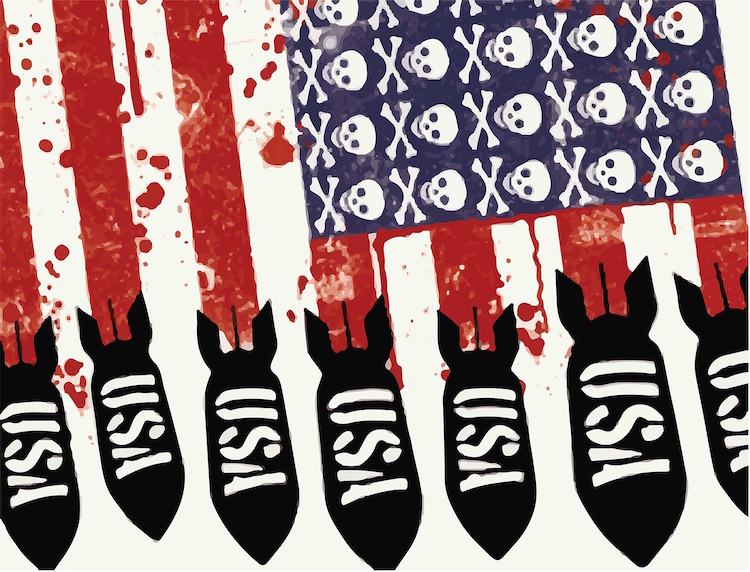
Austerity forces the vast majority to accept unacceptable conditions that are otherwise shockingly anti-democratic. The precariousness and insecurity of employment, the widespread denial of social services, deprivation and poverty, and the relentless abuse of taxes and resources that are fueling insane militarism and war.

If we really did live in free, democratic societies why are such deformities enforced without any alternative? Austerity is used to crush the political imagination for any reasonable, more humane, more peaceful alternative.

However, as Clara Mattei points out in this interview, the extreme anti-democratic conditions in Western societies are inevitably forcing greater numbers of people to question the injustices and hideous anomalies of the prevailing capitalist order.

People are realizing that Western governments are in reality regimes of repression in service for the enrichment of a minority. That fundamental deformity is why Western societies are collapsing and why the United States and its Western lackeys are driven to increasing conflict against Russia and China.

The charade of “Western democracy” is coming to an end. The rulers and their pantomime political parties are losing the moral authority to hold power over the masses.

As people necessarily seek ways to reinvent societies that are fit for meeting their democratic needs, socialist solutions are beckoning. We have to throw off the mental shackles imposed by our dictators, and realize, as Karl Marx once eloquently said, that we have got nothing to lose except our chains.

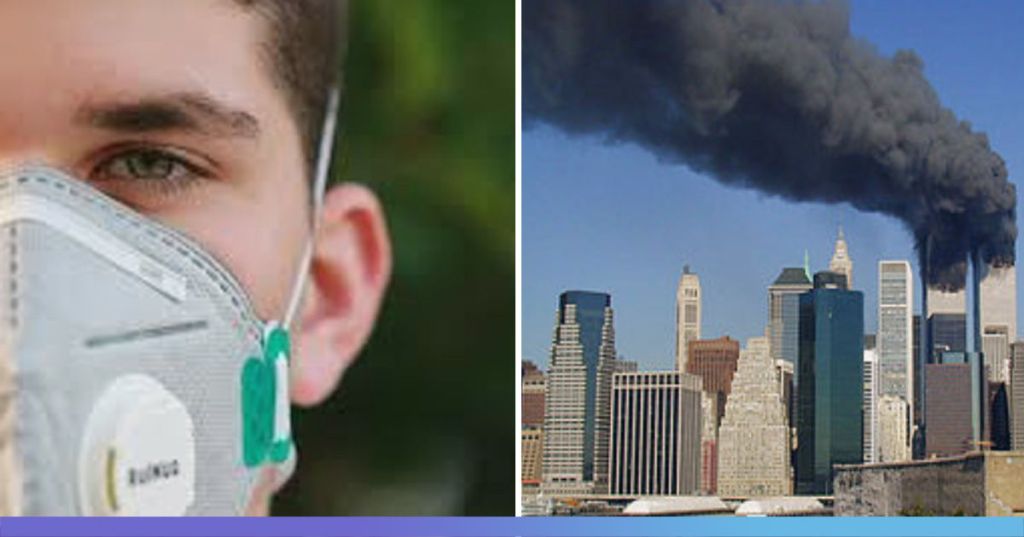
First Came 9/11. Then COVID-19. What’s the Next Crisis to Lockdown the Nation?

By John & Nisha Whitehead

Source: The Rutherford Institute

“The whole aim of practical politics is to keep the populace alarmed (and hence clamorous to be led to safety) by an endless series of hobgoblins, most of them imaginary.”—H.L. Mencken

First came 9/11, which the government used to transform itself into a police state.

Then the COVID-19 pandemic hit, which the police state used to test out its lockdown powers.

In light of the government’s tendency to exploit crises (legitimate or manufactured) and capitalize on the nation’s heightened emotions, confusion and fear as a means of extending the reach of the police state, one has to wonder what so-called crisis it will declare next.

It’s a simple enough formula: first, you create fear, then you capitalize on it by seizing power.

Frankly, it doesn’t even matter what the nature of the next national emergency might be (terrorism, civil unrest, economic collapse, a health scare, or the environment) as long as it allows the government to lockdown the nation and justify all manner of tyranny in the so-called name of national security.

Cue the Emergency State.

Terrorist attacks, mass shootings, “unforeseen economic collapse, loss of functioning political and legal order, purposeful domestic resistance or insurgency, pervasive public health emergencies, and catastrophic natural and human disasters”: the government has been anticipating and preparing for such crises for years now.

As David C. Unger writes for the New York Times: “Life, liberty, and the pursuit of happiness have given way to permanent crisis management: to policing the planet and fighting preventative wars of ideological containment, usually on terrain chosen by, and favorable to, our enemies. Limited government and constitutional accountability have been shouldered aside by the kind of imperial presidency our constitutional system was explicitly designed to prevent.”

Here’s what we know: given the rate at which the government keeps devising new ways to establish itself as the “solution” to all of our worldly problems at taxpayer expense, each subsequent crisis ushers in ever larger expansions of government power and less individual liberty.

This is the slippery slope to outright tyranny.

You see, once the government acquires (and uses) authoritarian powers—to spy on its citizens, to carry out surveillance, to transform its police forces into extensions of the military, to seize taxpayer funds, to wage endless wars, to censor and silence dissidents, to identify potential troublemakers, to detain citizens without due process—it does not voluntarily relinquish them.

The lesson for the ages is this: once any government is allowed to overreach and expand its powers, it’s almost impossible to put the genie back in the bottle. As Harvard constitutional law professor Laurence Tribe recognizes, “The dictatorial hunger for power is insatiable.

Indeed, the history of the United States is a testament to the old adage that liberty decreases as government (and government bureaucracy) grows. To put it another way, as government expands, liberty contracts.

In this way, every crisis since the nation’s early beginnings has become a make-work opportunity for the government.

Each crisis has also been a test to see how far “we the people” would allow the government to sidestep the Constitution in the so-called name of national security; a test to see how well we have assimilated the government’s lessons in compliance, fear and police state tactics; a test to see how quickly we’ll march in lockstep with the government’s dictates, no questions asked; and a test to see how little resistance we offer up to the government’s power grabs when made in the name of national security.

Most critically of all, it has been a test to see whether the Constitution—and our commitment to the principles enshrined in the Bill of Rights—could survive a national crisis and true state of emergency.

Unfortunately, we’ve been failing this particular test for a long time now.

Indeed, the powers-that-be have been pushing our buttons and herding us along like so much cattle since World War II, at least, starting with the Japanese attacks on Pearl Harbor, which not only propelled the U.S. into World War II but also unified the American people in their opposition to a common enemy.

That fear of attack by foreign threats, conveniently torqued by the growing military industrial complex, in turn gave rise to the Cold War era’s “Red Scare.” Promulgated through government propaganda, paranoia and manipulation, anti-Communist sentiments boiled over into a mass hysteria that viewed anyone and everyone as suspect: your friends, the next-door neighbor, even your family members could be a Communist subversive.

This hysteria, which culminated in hearings before the House Un-American Activities Committee, where hundreds of Americans were called before Congress to testify about their so-called Communist affiliations and intimidated into making false confessions, also paved the way for the rise of an all-knowing, all-seeing governmental surveillance state.

By the time 9/11 rolled around, all George W. Bush had to do was claim the country was being invaded by terrorists, and the government used the USA Patriot Act to claim greater powers to spy, search, detain and arrest American citizens in order to keep America safe.

By way of the National Defense Authorization Act, Barack Obama continued Bush’s trend of undermining the Constitution, going so far as to give the military the power to strip Americans of their constitutional rights, label them extremists, and detain them indefinitely without trialall in the name of keeping America safe.

Despite the fact that the breadth of the military’s power to detain American citizens violates not only U.S. law and the Constitution but also international laws, the government has refused to relinquish its detention powers made possible by the NDAA.

Then Donald Trump took office, claiming the country was being invaded by dangerous immigrants and insisting that the only way to keep America safe was to expand the reach of the border police, empower the military to “assist” with border control, and essentially turn the country into a Constitution-free zone.

That so-called immigration crisis then morphed into multiple crises (domestic extremism, the COVID-19 pandemic, race wars, civil unrest, etc.) that the government has been eager to use in order to expand its powers.

Joe Biden, in turn, has made every effort to expand the reach of the militarized police state, pledging to hire 87,000 more IRS agents and 100,000 police officers. Read between the lines and you’ll find that Biden has all but declared war on the American people.

What the next crisis will be is anyone’s guess, but you can be sure that there will be a next crisis.

So, what should you expect if the government decides to declare another state of emergency and institutes a nationwide lockdown?

You should expect more of the same, only worse.

More compliance, less resistance.

More fear-mongering, mind-control tactics and less tolerance for those who question the government’s propaganda-driven narratives.

Most of all, as I point out in my book Battlefield America: The War on the American People and in its fictional counterpart The Erik Blair Diaries, you should expect more tyranny and less freedom.

There’s every reason to worry about what comes next.

Certainly, the government’s past track record and its long-anticipated plans for instituting martial law (using armed forces to solve domestic political and social problems) in response to a future crisis are cause enough to worry about the government’s handling of the next “crisis.”

Mark my words: if and when another nationwide lockdown finally hits—if and when we are forced to shelter in place— if and when militarized police are patrolling the streets— if and when security checkpoints have been established— if and when the media’s ability to broadcast the news has been curtailed by government censors—if and when public systems of communication (phone lines, internet, text messaging, etc.) have been restricted—if and when those FEMA camps the government has been surreptitiously building finally get used as detention centers for American citizens—if and when military “snatch and grab” teams are deployed on local, state, and federal levels as part of the activated Continuity of Government plans to isolate anyone suspected of being a threat to national security—and if and when martial law is enacted with little real outcry or resistance from the public—then we will truly understand the extent to which the government has fully succeeded in acclimating us to a state of affairs in which the government has all the power and “we the people” have none. 

Killing Democracy in America

By William J. Astore

Source: Strategic Culture Foundation

The phrase “thinking about the unthinkable” has always been associated with the unthinkable cataclysm of a nuclear war, and rightly so. Lately, though, I’ve been pondering another kind of unthinkable scenario, nearly as nightmarish (at least for a democracy) as a thermonuclear Armageddon, but one that’s been rolling out in far slower motion: that America’s war on terror never ends because it’s far more convenient for America’s leaders to keep it going — until, that is, it tears apart anything we ever imagined as democracy.

I fear that it either can’t or won’t end because, as Martin Luther King, Jr., pointed out in 1967 during the Vietnam War, the United States remains the world’s greatest purveyor of violence — and nothing in this century, the one he didn’t live to see, has faintly proved him wrong. Considered another way, Washington should be classified as the planet’s most committed arsonist, regularly setting or fanning the flames of fires globally from Libya to Iraq, Somalia to Afghanistan, Syria to — dare I say it — in some quite imaginable future Iran, even as our leaders invariably boast of having the world’s greatest firefighters (also known as the U.S. military).

Scenarios of perpetual war haunt my thoughts. For a healthy democracy, there should be few things more unthinkable than never-ending conflict, that steady drip-drip of death and destruction that drives militarism, reinforces authoritarianism, and facilitates disaster capitalism. In 1795, James Madison warned Americans that war of that sort would presage the slow death of freedom and representative government. His prediction seems all too relevant in a world in which, year after year, this country continues to engage in needless wars that have nothing to do with national defense.

You Wage War Long, You Wage It Wrong

To cite one example of needless war from the last century, consider America’s horrendous years of fighting in Vietnam and a critical lesson drawn firsthand from that conflict by reporter Jonathan Schell. “In Vietnam,” he noted, “I learned about the capacity of the human mind to build a model of experience that screens out even very dramatic and obvious realities.” As a young journalist covering the war, Schell saw that the U.S. was losing, even as its military was destroying startlingly large areas of South Vietnam in the name of saving it from communism. Yet America’s leaders, the “best and brightest” of the era, almost to a man refused to see that all of what passed for realism in their world, when it came to that war, was nothing short of a first-class lie.

Why? Because believing is seeing and they desperately wanted to believe that they were the good guys, as well as the most powerful guys on the planet. America was winning, it practically went without saying, because it had to be. They were infected by their own version of an all-American victory culture, blinded by a sense of this country’s obvious destiny: to be the most exceptional and exceptionally triumphant nation on this planet.

As it happened, it was far more difficult for grunts on the ground to deny the reality of what was happening — that they were fighting and dying in a senseless war. As a result, especially after the shock of the enemy’s Tet Offensive early in 1968, escalating protests within the military (and among veterans at home) together with massive antiwar demonstrations finally helped put the brakes on that war. Not before, however, more than 58,000 American troops died, along with millions of Vietnamese, Cambodians, and Laotians.

In the end, the war in Indochina was arguably too costly, messy, and futile to continue. But never underestimate the military-industrial complex, especially when it comes to editing or denying reality, while being eternally over-funded for that very reality. It’s a trait the complex has shared with politicians of both parties. Don’t forget, for instance, the way President Ronald Reagan reedited that disastrous conflict into a “noble cause” in the 1980s. And give him credit! That was no small thing to sell to an American public that had already lived through such a war. By the way, tell me something about that Reaganesque moment doesn’t sound vaguely familiar almost four decades later when our very own “wartime president” long ago declared victory in the “war” on Covid-19, even as the death toll from that virus approaches 150,000 in the homeland.

In the meantime, the military-industrial complex has mastered the long con of the no-win forever war in a genuinely impressive fashion. Consider the war in Afghanistan. In 2021 it will enter its third decade without an end in sight. Even when President Trump makes noises about withdrawing troops from that country, Congress approves an amendment to another massive, record-setting military budget with broad bipartisan support that effectively obstructs any efforts to do so (while the Pentagon continues to bargain Trump down on the subject).

The Vietnam War, which was destroying the U.S. military, finally ended in an ignominious withdrawal. Almost two decades later, after the 2001 invasion, the war in Afghanistan can now be — the dream of the Vietnam era — fought in a “limited” fashion, at least from the point of view of Congress, the Pentagon, and most Americans (who ignore it), even if not the Afghans. The number of American troops being killed is, at this point, acceptably low, almost imperceptible in fact (even if not to Americans who have lost loved ones over there).

More and more, the U.S. military is relying on air power, unmanned drones, mercenaries, local militias, paramilitaries, and private contractors. Minimizing American casualties is an effective way of minimizing negative media coverage here; so, too, are efforts by the Trump administration to classify nearly everything related to that war while denying or downplaying “collateral damage” — that is, dead civilians — from it.

Their efforts boil down to a harsh truth: America just plain lies about its forever wars, so that it can keep on killing in lands far from home.

When we as Americans refuse to take in the destruction we cause, we come to passively accept the belief system of the ruling class that what’s still bizarrely called “defense” is a “must have” and that we collectively must spend significantly more than a trillion dollars a year on the Pentagon, the Department of Homeland Security, and a sprawling network of intelligence agencies, all justified as necessary defenders of America’s freedom. Rarely does the public put much thought into the dangers inherent in a sprawling “defense” network that increasingly invades and dominates our lives.

Meanwhile, it’s clear that low-cost wars, at least in terms of U.S. troops killed and wounded in action, can essentially be prolonged indefinitely, even when they never result in anything faintly like victory or fulfill any faintly useful American goal. The Afghan War remains the case in point. “Progress” is a concept that only ever fits the enemy — the Taliban continues to gain ground — yet, in these years, figures like retired general and former CIA director David Petraeus have continued to call for a “generational” commitment of troops and resources there, akin to U.S. support for South Korea.

Who says the Pentagon leadership learned nothing from Vietnam? They learned how to wage open-ended wars basically forever, which has proved useful indeed when it comes to justifying and sustaining epic military budgets and the political authority that goes with them. But here’s the thing: in a democracy, if you wage war long, you wage it wrong. Athens and the historian Thucydides learned this the hard way in the struggle against Sparta more than two millennia ago. Why do we insist on forgetting such an obvious lesson?

“We Have Met the Enemy and He Is Us”

World War II was arguably the last war Americans truly had to fight. My Uncle Freddie was in the Army and stationed at Pearl Harbor when it was attacked on December 7, 1941. The country then came together and won a global conflict (with lots of help) in 44 months, emerging as the planetary superpower to boot. Now, that superpower is very much on the wane, as Donald Trump recognized in running successfully as a declinist candidate for president in 2016. (Make America Great Again!) And yet, though he ran against this country’s forever wars and is now president, we’re approaching the third decade of a war on terror that has yielded little, spread radical Islamic terror outfits across an expanse of the planet, and still seemingly has no end.

“Great nations do not fight endless wars,” Trump himself claimed only last year. Yet that’s exactly what this country has been doing, regardless of which party ruled the roost in Washington. And here’s where, to give him credit, Trump actually had a certain insight. America is no longer great precisely because of the endless wars we wage and all the largely hidden but associated costs that go with them, including the recently much publicized militarization of the police here at home. Yet, in promising to make America great again, President Trump has failed to end those wars, even as he’s fed the military-industrial complex with even greater piles of cash.

There’s a twisted logic to all this. As the leading purveyor of violence and terror, with its leaders committed to fighting Islamic terrorism across the planet until the phenomenon is vanquished, the U.S. inevitably becomes its own opponent, conducting a perpetual war on itself. Of course, in the process, Afghans, Iraqis, Libyans, Syrians, Somalis, and Yemenis, among other peoples on this embattled planet of ours, pay big time, but Americans pay, too. (Have you even noticed that high-speed railroad that’s unbuilt, that dam in increasing disrepair, those bridges that need fixing, while money continues to pour into the national security state?) As the cartoon possum Pogo once so classically said, “We have met the enemy and he is us.”

Early in the Iraq War, General Petraeus asked a question that was relevant indeed: “Tell me how this [war] ends.” The answer, obvious to so many who had protested in the global streets over the invasion to come in 2003, was “not well.” Today, another answer should be obvious: never, if the Pentagon and America’s political and national security elite have anything to do with it. In thermodynamics class, I learned that a perpetual motion machine is impossible to create due to entropy. The Pentagon never took that in and has instead been hard at work proving that a perpetual military machine is possible… until, that is, the empire it feeds off of collapses and takes us with it.

America’s Military Complex as a Cytokine Storm

In the era of Covid-19, as cases and deaths from the pandemic continue to soar in America, it’s astonishing that military spending is also soaring to record levels despite a medical emergency and a major recession.

The reality is that, in the summer of 2020, America faces two deadly viruses. The first is Covid-19. With hard work and some luck, scientists may be able to mass-produce an effective vaccine for it, perhaps by as early as next spring. In the meantime, scientists do have a sense of how to control it, contain it, even neutralize it, as countries from South Korea and New Zealand to Denmark have shown, even if some Americans, encouraged by our president, insist on throwing all caution to the winds in the name of living free. The second virus, however, could prove even more difficult to control, contain, and neutralize: forever war, a pandemic that U.S. military forces, with their global strike missions, continue to spread across the globe.

Sadly, it’s a reasonable bet that in the long run, even with Donald Trump as president, America has a better chance of defeating Covid-19 than the virus of forever war. At least, the first is generally seen as a serious threat (even if not by a president blind to anything but his chances for reelection); the second is, however, still largely seen as evidence of our strength and exceptionalism. Indeed, Americans tend to imagine “our” military not as a dangerous virus but as a set of benevolent antibodies, defending us from global evildoers.

When it comes to America’s many wars, perhaps there’s something to be learned from the way certain people’s immune systems respond to Covid-19. In some cases, the virus sparks an exaggerated immune response that drives the body into a severe inflammatory state known as a cytokine storm. That “storm” can lead to multiple organ failure followed by death, yet it occurs in the cause of defending the body from a viral attack.

In a similar fashion, America’s exaggerated response to 19 hijackers on 9/11 and then to perceived threats around the globe, especially the nebulous threat of terror, has led to an analogous (if little noticed) cytokine storm in the American system. Military (and militarized police) antibodies have been sapping our resources, inflaming our body politic, and slowly strangling the vital organs of democracy. Left unchecked, this “storm” of inflammatory militarism will be the death of democracy in America.

To put this country right, what’s needed is not only an effective vaccine for Covid-19 but a way to control the “antibodies” produced by America’s forever wars abroad and, as the years have gone by, at home — and the ways they’ve attacked and inflamed the collective U.S. political, social, and economic body. Only when we find ways to vaccinate ourselves against the destructive violence of those wars, whether on foreign streets or our own, can we begin to heal as a democratic society.

To survive, the human body needs a healthy immune system, so when it goes haywire, becomes wildly inflamed, and ends up attacking and degrading our vital organs, we’re in trouble deep. It’s a reasonable guess that, in analogous terms, American democracy is already on a ventilator and beginning to feel the effects of multiple organ failure.

Unlike a human patient, doctors can’t put our democracy into a medically induced coma. But collectively we should be working to suppress our overactive immune system before it kills us. In other words, it’s truly time to defund that military machine of ours, as well as the militarized version of the police, and rethink how actual threats can be neutralized without turning every response into an endless war.

So many years later, it’s time to think the unthinkable. For the U.S. government that means — gasp! — peace. Such a peace would start with imperial retrenchment (bring our troops home!), much reduced military (and police) budgets, and complete withdrawal from Afghanistan and any other place associated with that “generational” war on terror. The alternative is a cytokine storm that will, in the end, tear us apart from within.

 

Prepare To Have Your Worldview Obliterated

By Caitlin Johnston

Source: CaitlinJohnstone.com

The first draft of the civil rights-eroding USA PATRIOT Act was magically introduced one week after the 9/11 attacks. Legislators later admitted that they hadn’t even had time to read through the hundreds of pages of the history-shaping bill before passing it the next month, yet somehow its authors were able to gather all the necessary information and write the whole entire thing in a week.

This was because most of the work had already been done. CNET reported the following back in 2008:

“Months before the Oklahoma City bombing took place, [then-Senator Joe] Biden introduced another bill called the Omnibus Counterterrorism Act of 1995. It previewed the 2001 Patriot Act by allowing secret evidence to be used in prosecutions, expanding the Foreign Intelligence Surveillance Act and wiretap laws, creating a new federal crime of ‘terrorism’ that could be invoked based on political beliefs, permitting the U.S. military to be used in civilian law enforcement, and allowing permanent detention of non-U.S. citizens without judicial review. The Center for National Security Studies said the bill would erode ‘constitutional and statutory due process protections’ and would ‘authorize the Justice Department to pick and choose crimes to investigate and prosecute based on political beliefs and associations.’

Biden’s bill was never put to a vote, but after 9/11 then-Attorney General John Ashcroft reportedly credited his bill with the foundations of the USA PATRIOT Act.

“Civil libertarians were opposed to it,” Biden said in 2002 of his bill. “Right after 1994, and you can ask the attorney general this, because I got a call when he introduced the Patriot Act. He said, ‘Joe, I’m introducing the act basically as you wrote it in 1994.’”

I point this out because it is now more important than ever to be aware that power structures (and their goons like Biden) can and will seize on opportunities to roll out pre-existing authoritarian agendas. We know it happened after 9/11, and we may be absolutely certain that it is happening now.

Commentator and satirist CJ Hopkins has a long, long, long, long ongoing thread on Twitter right now compiling dozens and dozens of creepy Orwellian steps that have been taken by governments around the world and by Silicon Valley tech giants in response to the virus over the last three weeks. I emphasize how long the thread is because if you think you’ve finished scrolling through it you probably haven’t; make sure you keep clicking “more replies” until you get to the current entries.

I strongly encourage everyone to scroll through the thread when you get a chance to get a sense of the scale and scope of the drastic measures that are being implemented around the world, and maybe bookmark it and keep checking back now and then for updates. The entire thread is comprised of mainstream media articles with excerpts; some entries are more jarring than others, but taken as a whole it becomes clear that we’re looking at a whole lot of power being handed over to the kinds of institutions which historically don’t do good things when given a lot more power.

And these are just the steps we know about.

To what extent are these drastic, intrusive, authoritarian measures justified? The answer, in my estimation, isn’t clear yet. There are too many unknowns about the virus, too many unknowns about the responses to it, and too many unknowns about exactly what is going on behind the veil of secrecy in opaque government agencies around the world. There’s an argument expert epidemiologists are making that there’s no time to get perfectly certain of these things before dealing with a pandemic, that speed is of the essence and hesitating due to fear of maybe getting something wrong can cost millions of lives. Maybe that’s true; I’m not an epidemiologist and I do not know.

What I do know is that enormous changes are happening, and that powerful people are definitely conspiring to advance their own interests as this unfolds. There are many theories about who specifically is conspiring with whom and the specific manner in which they are doing so, and they’re being dismissed by establishment loyalists as “conspiracy theories” as though that in and of itself constitutes some sort of argument. That conspiracies are happening is actually just a fact that is obvious to any adult with a mature understanding of the world, and it can be useful to come up with theories about how that might be occurring; calling theories about conspiracies the thing that they are in a disparaging tone does not actually invalidate them.

There are a ton of theories about what’s going on behind the scenes with this pandemic and the policies that are being put in place to respond to it. Some are smart and relatively well-founded, some are stupid and rooted in generalized paranoia or partisan idiocy, many contradict each other, and many could potentially fit together in some way. I personally haven’t seen enough evidence for any one theory to throw my weight behind it, but I am watching carefully, and I am glad that the hive mind is chewing on this riddle.

One thing I will put my weight behind right now is the prediction that those of us who are dedicated to truth are going to have to drastically revise our worldviews in the coming months. There are such large-scale shifts happening in such an unclear information environment that the only thing we should expect is the unexpected; this virus is shaking things up (and being used to shake things up) in ways we don’t really understand yet, and even before the virus the world’s dominant power structures were acting very weird. This means our ideas about what’s going on in the world will likely have to undergo some revising in the relatively near future; the bigger the revelations, the more revision will be necessary.

Right now that’s the primary piece of advice I have to offer: stay skeptical, stay intellectually honest, and keep your perspectives malleable. If we are more interested in the truth than we are in being proven right or in feeling smug, then we are likely on a collision course with future revelations that will change our ideas about how the world is functioning in some pretty significant ways. If this doesn’t sound possible to you, it’s only because you currently lack the humility, intellectual honesty and cognitive flexibility to understand that you may not be seeing the full picture yet.

Things are shifting; all we can do is keep our minds agile enough to shift with them. Prepare to have your worldview obliterated.

Question Everything

By Michael Krieger

Source: Liberty Blitzkrieg

Crises, like pandemics, don’t break things in and of themselves; they show you what’s already broken.

– Patrick Wyman

Big macro crises in any form are scary, massively disruptive, and in some cases, literally deadly. This is why governments and entrenched institutions always see such events as opportunities to further consolidate wealth and power.

The current global pandemic is no exception, as I detailed in last week’s piece: Power Grab. While it’s necessary to be aware of this reality — and to push back against it wherever possible — it’s equally important to recognize there’s a silver lining to all of this.

The paradigm we live under depends on us not thinking too hard about how power functions. It relies on us being so busy with the basics of survival, or distracted by superficial consumerism and endless entertainment, to contemplate how the system actually works. This method of social control has been wildly successful throughout my lifetime, but what’s interesting about moments of global crises is the mask is forced off for a period. In a desperate scramble to marshal all of the corporate-imperial state’s resources to save the interests of the oligarchy, we’re shown in full color who really matters and who doesn’t.

You do not matter. The imperial state doesn’t care about you. Oligarchs don’t care about you. Mega corporations don’t care about you. This truth is cleverly hidden from much of the public during “normal” times when the machine is humming along as intended, but it’s far more in your face during a crisis period. It’s much harder to hide the truth when the world gets turned upside down.

Aside from the grotesque spectacle of the U.S. government funneling all of its resources toward propping up Wall Street and large corporations, this crisis has exposed the rot and disfunction in another meaningful way. Our health experts, ostensibly there to help the public navigate exactly this sort of event, have failed us in spectacular fashion.

https://twitter.com/Surgeon_General/status/1233725785283932160

This is what political actors masquerading as experts do in a crisis. They either give bad advice, or intentionally mislead the public to hide the fact the U.S. simply doesn’t have adequate mask supply and sent its manufacturing capacity overseas. Which brings up an important topic worthy of further discussion: the crucial distinction between experts and expertise.

An “expert” in our society is someone with expertise in a particular field who’s been propped up by either the media, government or both as an authoritative source to listen to on a particular topic. This individual’s elevated stature is artificially created by an external source that’s selected this particular person as someone you should listen to. It tends to be a political appointment. This person has been chosen, not only because he or she has expertise (many others also do), but due to other attributes that appeal to those who’ve decided to prop them up. Anyone who’s worked in corporate America knows full well that many of those promoted to middle management, or higher, often end up there not because they’re particularly skilled, but because they’re good at playing politics and know the right ass to kiss. The same is true in all large organizations, and government is no exception.

In the days before the internet and social media, the public might know that government/media experts were behaving dishonestly, but didn’t have realtime access to competitive nonpolitical voices with equal or superior expertise to the government experts. What many of us discovered during this pandemic is people with expertise engaging publicly on Twitter provided far better and more timely advice than the government/media experts. This makes perfect sense because these people tend to not be political actors, but rather humans attempting to share information in an honest and selfless manner. If we’ve learned anything in the 21st century, it’s that actual track records don’t matter when it comes to media and government positions. In fact, the more catastrophically wrong you are in the interests of oligarchy, the more likely you are to be promoted and elevated.

Fortunately, I entered this crisis with a well established distrust of mass media and government, and therefore knew better than to look toward their experts for any useful guidance. Rather, I sought out the opinions of various nonpolitical individuals with relevant expertise who helped me see things for how they were very early on. Others have not been as lucky, but will no doubt emerge from this crisis with a deep distrust of established institutions and individuals, and with very good reason.

We’ve just witnessed a catastrophic failure of the centralized state in America, and the blowback will resonate within the larger culture for years if not decades. Similar to how many people were shaken to their core during the financial crisis a decade ago, I think this pandemic event will lead to an even larger wave of people awakening to how completely rotten, pernicious and corrupt the whole system is. Once you see that reality in all its glory, you can’t unsee it.

Of course, recognizing how broken things are isn’t enough. We need to have a thoughtful conversation about what we have too much of versus what we need. If we’re going to change the world, we need a vision. I have some thoughts on the matter.

Nothing is set in stone. The world as it is today is not some divine eternal paradigm beyond reproach. Humans shape the world through their choices, actions and mentality.

For additional thoughts on that and much more, check out my recent interview with Tales From the Crypt.

Dr. Peter Gotzsche On Coronavirus: “A Pandemic Of Panic, More Than Anything Else”

By Richard Enos

Source: Collective Evolution

Peter Gotzsche, a Danish physician and medical researcher, is well placed to comment on the measures being imposed to combat the Coronavirus. And he has his reasons to be suspicious of some of those measures.

In 1993, Gotzsche co-founded the Cochrane Collaboration, an international and independent non-profit organization that produces and disseminates systematic reviews of healthcare interventions and diagnostic tests, and promotes the search for evidence in the form of clinical trials and other interventional studies. As I examined in-depth in a previous article ‘Bill Gates Donation Turns Respected Independent Research Company Into HPV Vaccine Supporter,’ a massive donation of over $1M USD from Bill Gates was part of the transformation of Cochrane from an open and independent research company to a top-down hierarchy in which ‘there is stronger and stronger resistance to say anything that could bother pharmaceutical industry interests.’

In an unprecedented move, Peter Gotzsche was expelled from the Cochrane Collaboration in 2018 by a powerful minority within the newly-instituted Governing Board. Gotzsche’s outspoken and independent scrutiny of the pharmaceutical industry, highlighted in his 2014 book Deadly Medicines and Organized Crime: How big pharma has corrupted healthcare, made him an insufferable opponent to Cochrane’s new agenda. Suffice it to say, when we hear Peter Gotzsche’s opinion on health-related issues, they are sure to be direct, thoughtful, and unaffected by the prevailing narratives.

Weighing In On The Coronavirus Pandemic

Gotzsche, a specialist in internal medicine that has worked for two years at a department of infectious diseases, is not shy about calling out the ‘Elephant in the Room’ regarding the Coronavirus pandemic, even as some of our governments and medias organizations are treating it like the future of humanity is at stake if draconian measures of the highest order are not instituted across the board for the foreseeable future.

Gotzsche wrote in a recent blog post that he and most of those around him, both lay people and colleagues, ‘consider the Coronavirus pandemic a pandemic of panic, more than anything else.’ He believes that fear and panic are propagated by those with an agenda of control, not those who put the health and safety of citizens first. He cautioned that if people with mild symptoms are made to panic they are liable to flood the hospitals, which does more harm than good.

I do find it very prudent that they told people to stay in their homes in South Korea if they fall ill, and only if they become very sick, will a car come and bring them to a hospital that is not overcrowded. If the infectious dose is high, mortality will also be higher because there will not be sufficient time to establish an immune response. Therefore, overcrowded hospitals will have higher mortality rates. The panic does just that: leads to overcrowded hospitals.

The Perils Of Panic

Panic, in and of itself, is never useful. And during a crisis, it is even more dangerous. We see different types of recommendations coming out from our elected leaders, doctors and scientists, and mainstream media commentators. Often these recommendations are made based on unduly dire predictions about the danger of the virus.

It is important to have fine discernment around who is advocating for calm and who is actually stoking the fires of public panic. Whenever our elected leaders, with the power to legislate societal rules, try to instigate fear in our hearts, and threaten huge sanctions and punishment if we do not obey their decrees, we need to pay close attention to what the real motivation may be.

In a broader sense, we need to ask ourselves: how much are we agreeing to continue to play into the old parent-child relationship that has long existed between our elected leaders and ourselves? Do we really need to be shamed and threatened into a certain type of behavior if we really believe that such behavior will be beneficial for our community and world? And if a small percentage of people are not obeying in lock-step, does this justify the implementation of threats and more draconian measures for the rest of us?

As citizens, it is our duty to avoid following our elected leaders blindly. We actually need to be self-responsible for our actions and their impact on the health and well-being of the community around us. In the long run, it is much more beneficial for society to cultivate self-responsible citizens rather than blind followers. Of course, our leaders might not see it that way. They are aware that self-responsible citizens are more able and likely to hold them accountable and compel them to represent the will of the people, not their own agenda.

How Much Is Too Much?

Peter Gotzsche is the prototypical self-responsible citizen in this regard. And he characterizes some of the responses and measures applied to the Coronavirus as too much. He infers that if we had responded to the viral infection and mortality rates in previous years the way we have with the 2019 Coronavirus, the whole world would have had to be shut down permanently years ago!

Our main problem is that no one will ever get in trouble for measures that are too draconian. They will only get in trouble if they do too little. So, our politicians and those working with public health do much more than they should do. No such draconian measures were applied during the 2009 influenza pandemic, and they obviously cannot be applied every winter, which is all year round, as it is always winter somewhere. We cannot close down the whole world permanently.

Should it turn out that the epidemic wanes before long, there will be a queue of people wanting to take credit for this. And we can be damned sure draconian measures will be applied again next time. But remember the joke about tigers. “Why do you blow the horn?” “To keep the tigers away.” “But there are no tigers here.” “There you see!”

Since politicians have little to lose by overreacting, the citizens have to be vigilant about the current response to make sure we are not being drawn into dangerous precedents. Gotzsche calls out the ploy of the political establishment, which constantly seeks to gain more control over the people while making decisions based on what will make them look the best in the end. And the point he made that ‘we can be damned sure draconian measures will be applied again next time,’ is worth a much deeper examination–especially in the context of comments made by none other than Bill Gates.

Bill Gates Gives Chilling Forecast

In a recent interview with TED Talks founder Chris Anderson, Gates is given full latitude to speak from his home about the things we should be learning from the Covid-19 pandemic. The following is a summary of what Gates states in the interview:

(1) Covid-19 will fade away within a few months
(2) There will be fewer casualties than predicted
(3) That will be credited to strong action taken by governments
(4) Pandemics serve the purpose of testing and improving response
(5) The correct response centers on the development of vaccines, an industry in which he is heavily invested
(6) Pandemics and global warming have the common advantage of being sufficiently frightful to motivate the public and governments to accept drastic changes to society
(7) Leadership for this must come from technocrats, not politicians

What is most striking in this interview is the way Gates begins to pivot towards his vision of a post-Covid-19 world. Perhaps he had already given up on what may have been his original goal to orchestrate worldwide Coronavirus vaccine mandates; however, he takes the opportunity to explain that future pandemics will be met much more swiftly with medical interventions, and central to those interventions will be the timely development and implementation of vaccines for the entire population. He urges that scientists and technocrats, rather than our elected leaders, should be the decision makers regarding such policies, further alienating the general population from their individual sovereignty.

To listen to Bill Gates without understanding the agendas that truly drive those with power, it may be difficult to discern that he is not actually trying to help humanity. Perhaps for just that reason, it may be interesting to listen to the full interview to see if you can detect any signs of Bill Gates’ agenda of personal profit, depopulation and the creation of a global technocracy in which elite rulers like himself wield even more power than they have today.

Peter Gotzsche certainly has personal experience with how Bill Gates came into a company that was standing in the way of his vaccine-fueled profits and used his money and influence to turn that organization into an ally for his agenda. He has reason to believe that some of the way the response to the pandemic is playing out is aligned with that agenda.

Of course many in the public may dismiss the need for our vigilance and simply spout “it’s better to be safe than sorry.” And in principle I would agree with that sentiment. However if this motto is simply applied to the Coronavirus pandemic in a lazy and uncritical way, and we don’t collectively question seemingly unnecessary draconian moves by our leaders, then a society led by technocrats which further takes medical freedom away from individuals may be the future we are contributing to.

The Takeaway

I’ll be honest. Some of the restrictions and cancellations that have been put in place in our society have benefited me in terms of allowing me to take care of things around the house, reflect on my own life and spend more time with my family. But let’s not get lulled into complacency here. This should not stop us from being vigilant about the response to the Coronavirus in our communities and contemplating and talking to others about whether the response is measured and appropriate.

This applies as well to the responses going on all around the world. I certainly believe that many who are part of our global authority have agendas that are not in the best interests of humanity. It is imperative that we not assume the position that our political leaders and the medical ‘experts’ that are paraded out in mainstream media have the answers and we should blindly follow them. Would you not agree that the current goal for a humanity awakening to what is going on is to break the bonds of authority and become self-responsible and self-governing? In order to make this happen, we need all hands on deck.

Power Grab

By Michael Krieger

Source: Liberty Blitzkrieg

I met a traveller from an antique land
Who said: Two vast and trunkless legs of stone
Stand in the desert. Near them, on the sand,
Half sunk, a shattered visage lies, whose frown,
And wrinkled lip, and sneer of cold command,
Tell that its sculptor well those passions read
Which yet survive, stamped on these lifeless things,
The hand that mocked them and the heart that fed:
And on the pedestal these words appear:
‘My name is Ozymandias, king of kings:
Look on my works, ye Mighty, and despair!’
Nothing beside remains. Round the decay
Of that colossal wreck, boundless and bare
The lone and level sands stretch far away

– Percy Shelley, Ozymandias

It didn’t take long for the most opportunistic, nefarious and corrupt actors in the U.S. to turn a pandemic crisis into another massive power grab attempt. We’ve seen it before; after 9/11 and also throughout the response to the financial crisis a decade ago. The irredeemable sociopaths who always make the big, important decisions used those crises to consolidate wealth and power. They’re going for it again.

There are many examples, but let me list a few:

– The EARN IT bill, by which senators are attempting to destroy widespread public use of encryption, i.e. private communications. (EFF)

– The White House and the CDC are asking Facebook, Google and other tech giants to give them greater access to Americans’ smartphone location data. (CNBC)

– The Justice Department has quietly asked Congress for the ability to ask chief judges to detain people indefinitely without trial during emergencies. (Politico)

– U.S. Senators are attempting to use the crisis as an opportunity to pull off a gigantic corporate coup. (Matt Stoller, BIG)

Then there’s the really big one, the Federal Reserve. An institution with more unaccountable power to shape and manipulate our world than any other, yet whose actions remain subject to virtually zero public debate.

While we’re at it…

I wrote about the scam that is the Federal Reserve last year in the post, Monetary Looting, and what they’re doing now makes those repo operations look like child’s play.

We often get distracted debating the implications of Fed actions, and in the process lose sight of the bigger picture. The real question we need to be asking is why do we allow a handful of unelected banker welfare agents the right to shape our entire world? It’s a crazy system, and until we start questioning the underlying premises of everything about our world, we’ll remain confused and subjugated.

That said, I remain more optimistic than ever that once we get through this crisis and a rough transition period, a far better era awaits on the other side. I say this because I believe this pandemic will shake enough people to such an extent they’ll emerge from it very different people with a more enlightened understanding of the world and their roles in it. An event like this can make people less conscious, or it can make them more conscious. I think humanity will expand its consciousness.

Of course, the future is not written in stone. Each and every one of us needs to grow up and step up if we’re going to build a better world. We each have our skillsets, so I ask everyone reading this to think about how they can repurpose their talents to the great work of ushering in a new era. I don’t do any of this to change the world. I can’t do that. I do this to inspire as many people as possible to change their own worlds. Then everything changes.

If I had to summarize where we’ve been and where I think we’re going, it would be with the following.

The world you lived in no longer exists, but the world to come has not yet been created. The worst people in society will attempt to create it in their image, but we can’t allow that. We must step up and create it ourselves. It’s entirely possible. Get to work.

Conjuring Up the Next Depression

By Chris Hedges

Source: TruthDig

During the financial crisis of 2008, the world’s central banks, including the Federal Reserve, injected trillions of dollars of fabricated money into the global financial system. This fabricated money has created a worldwide debt of $325 trillion, more than three times global GDP. The fabricated money was hoarded by banks and corporations, loaned by banks at predatory interest rates, used to service interest on unpayable debt or spent buying back stock, providing millions in compensation for elites. The fabricated money was not invested in the real economy. Products were not manufactured and sold. Workers were not reinstated into the middle class with sustainable incomes, benefits and pensions. Infrastructure projects were not undertaken. The fabricated money reinflated massive financial bubbles built on debt and papered over a fatally diseased financial system destined for collapse.

What will trigger the next crash? The $13.2 trillion in unsustainable U.S. household debt? The $1.5 trillion in unsustainable student debt? The billions Wall Street has invested in a fracking industry that has spent $280 billion more than it generated from its operations? Who knows. What is certain is that a global financial crash, one that will dwarf the meltdown of 2008, is inevitable. And this time, with interest rates near zero, the elites have no escape plan. The financial structure will disintegrate. The global economy will go into a death spiral. The rage of a betrayed and impoverished population will, I fear, further empower right-wing demagogues who promise vengeance on the global elites, moral renewal, a nativist revival heralding a return to a mythical golden age when immigrants, women and people of color knew their place, and a Christianized fascism.

The 2008 financial crisis, as the economist Nomi Prins points out, “converted central banks into a new class of power brokers.” They looted national treasuries and amassed trillions in wealth to become politically and economically omnipotent. In her book “Collusion: How Central Bankers Rigged the World,” she writes that central bankers and the world’s largest financial institutions fraudulently manipulate global markets and use fabricated, or as she writes, “fake money,” to inflate asset bubbles for short-term profit as they drive us toward “a dangerous financial precipice.”

“Before the crisis, they were just asleep at the wheel, in particular, the Federal Reserve of the United States, which is supposed to be the main regulator of the major banks in the United States,” Prins said when we met in New York. “It did a horrible job of doing that, which is why we had the financial crisis. It became a deregulator instead of a regulator. In the wake of the financial crisis, the solution to fixing the crisis and saving the economy from a great depression or recession, whatever the terminology that was used at any given time, was to fabricate trillions and trillions of dollars out of an electronic ether.”

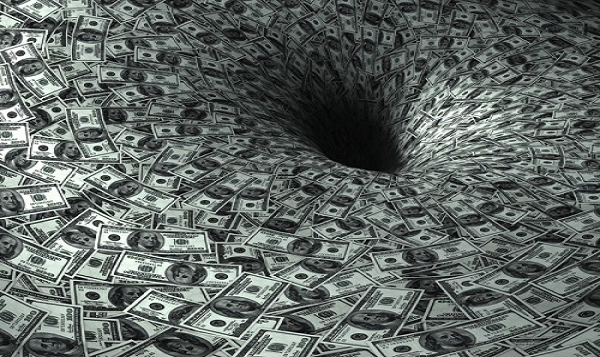
The Federal Reserve handed over an estimated $29 trillion of this fabricated money to American banks, according to researchers at the University of MissouriTwenty-nine trillion dollars! We could have provided free college tuition to every student or universal health care, repaired our crumbling infrastructure, transitioned to clean energy, forgiven student debt, raised wages, bailed out underwater homeowners, formed public banks to invest at low interest rates in our communities, provided a guaranteed minimum income for everyone and organized a massive jobs program for the unemployed and underemployed. Sixteen million children would not go to bed hungry. The mentally ill and the homeless—an estimated 553,742 Americans are homeless every night—would not be left on the streets or locked away in our prisons. The economy would revive. Instead, $29 trillion in fabricated money was handed to financial gangsters who are about to make most of it evaporate and plunge us into a depression that will rival that of the global crash of 1929.

Kevin Zeese and Margaret Flowers write on the website Popular Resistance, “One-sixth of this could provide a $12,000 annual basic income, which would cost $3.8 trillion annually, doubling Social Security payments to $22,000 annually, which would cost $662 billion, a $10,000 bonus for all U.S. public school teachers, which would cost $11 billion, free college for all high school graduates, which would cost $318 billion, and universal preschool, which would cost $38 billion. National improved Medicare for all would actually save the nation trillions of dollars over a decade.”

An emergency clause in the Federal Reserve Act of 1913 allows the Fed to provide liquidity to a distressed banking system. But the Federal Reserve did not stop with the creation of a few hundred billion dollars. It flooded the financial markets with absurd levels of fabricated money. This had the effect of making the economy appear as if it had revived. And for the oligarchs, who had access to this fabricated money while we did not, it did.

The Fed cut interest rates to near zero. Some central banks in Europe instituted negative interest rates, meaning they would pay borrowers to take loans. The Fed, in a clever bit of accounting, even permitted distressed banks to use these no-interest loans to buy U.S. Treasury bonds. The banks gave the bonds back to the Fed and received a quarter of a percent of interest from the Fed. In short, the banks were loaned money at virtually no interest by the Fed and then were paid interest by the Fed on the money they borrowed. The Fed also bought up worthless mortgage assets and other toxic assets from the banks. Since Fed authorities could fabricate as much money as they wanted, it did not matter how they spent it.

“It’s like going to someone’s old garage sale and saying, ‘I want that bicycle with no wheels. I’ll pay you 100 grand for it. Why? Because it’s not my money,’ ” Prins said.

“These people have rigged the system,” she said of the bankers. “There is money fabricated at the top. It is used to pump up financial assets, including stock. It has to come from somewhere. Because money is cheap there’s more borrowing at the corporate level. There’s more money borrowed at the government level.”

“Where do you go to repay it?” she asked. “You go into the nation. You go into the economy. You extract money from the foundational economy, from social programs. You impose austerity.”

Given the staggering amount of fabricated money that has to be repaid, the banks need to build greater and greater pools of debt. This is why when you are late in paying your credit card the interest rate jumps to 28 percent. This is why if you declare bankruptcy you are still responsible for paying off your student loan, even as 1 million people a year default on student loans, with 40 percent of all borrowers expected to default on student loans by 2023. This is why wages are stagnant or have declined while costs, from health care and pharmaceutical products to bank fees and basic utilities, are skyrocketing. The enforced debt peonage grows to feed the beast until, as with the subprime mortgage crisis, the predatory system fails because of massive defaults. There will come a day, for example, as with all financial bubbles, when the wildly optimistic projected profits of industries such as fracking will no longer be an effective excuse to keep pumping money into failing businesses burdened by debt they cannot repay.

“The 60 biggest exploration and production firms are not generating enough cash from their operations to cover their operating and capital expenses,” Bethany McLean writes of the fracking industry in an articletitled “The Next Financial Crisis Lurks Underground” that appeared in The New York Times. “In aggregate, from mid-2012 to mid-2017, they had negative free cash flow of $9 billion per quarter.”

The global financial system is a ticking time bomb. The question is not if it will explode but when it will explode. And once it does, the inability of the global speculators to use fabricated money with zero interest to paper over the debacle will trigger massive unemployment, high prices for imports and basic services, and a devaluation in which the dollar will become nearly worthless as it is abandoned as the world’s reserve currency. This manufactured financial tsunami will transform the United States, already a failed democracy, into an authoritarian police state. Life will become very cheap, especially for the vulnerable—undocumented workers, Muslims, poor people of color, girls and women, anti-capitalist and anti-imperialist critics branded as agents of  foreign powers—who will be demonized and persecuted for the collapse. The elites, in a desperate bid to cling to their unchecked power and obscene wealth, will disembowel what is left of the United States.