Why Kim Dotcom Connects The DNC Email Leak To The Murder Of Seth Rich

By: b

Source: Moon of Alabama

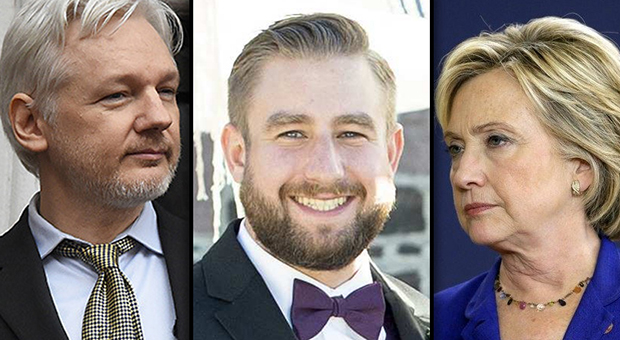
Last week we learned a new fact about the DNC email leak in 2016 and of the events that likely led to the killing of Seth Rich.

A quite aggressive Wikipedia page discusses the Murder of Seth Rich:

The murder of Seth Rich occurred on July 10, 2016, at 4:20 a.m. in the Bloomingdale neighborhood of Washington, D.C. Rich died about an hour and a half after being shot twice in the back. The perpetrators were never apprehended; police suspected he had been the victim of an attempted robbery.

The 27-year-old Rich was an employee of the Democratic National Committee (DNC), and his murder spawned several right-wing conspiracy theories, including the false claim, contradicted by the law enforcement branches that investigated the murder, that Rich had been involved with the leaked DNC emails in 2016. It was also contradicted by the July 2018 indictment of 12 Russian military intelligence agents for hacking the e-mail accounts and networks of Democratic Party officials and by the U.S. intelligence community’s conclusion the leaked DNC emails were part of Russian interference in the 2016 United States elections. Fact-checking websites like PolitiFact, Snopes, and FactCheck.org stated that the theories were false and unfounded. The New York Times, the Los Angeles Times and The Washington Post wrote that the promotion of these conspiracy theories was an example of fake news.

Well, that is not what really had happened.

Yes, Seth Rich worked as IT administrator for the Democratic National Committee. He was a fan of Bernie Sanders. During the 2016 primaries DNC functionaries did their best to work against Bernie Sanders and for Hillary Clinton. To make that public Seth Rich collected an archive of all DNC emails, copied it onto an USB stick and looked for someone who would publish them.

UPDATE 20:00 UTC

The former British ambassador Craig Murray said that he was given the USB stick by an intermediary of a disgusted Democratic whistleblower and brought it from Washington DC to Wikileaks which eventually published the emails. The data involved were not only from the DNC but also from Clinton’s campaign chair John Podesta:

WikiLeaks made the DNC messages public in July and the incriminating emails from Podesta were published in October. The messages predominantly showed that DNC officials were bent on sabotaging the presidential campaign of Bernie Sanders in favor of Hillary Clinton. Murray insisted that the information was leaked and not hacked by Russia.

“Neither of the leaks came from the Russians. The source had legal access to the information. The documents came from inside leaks, not hacks…leakers were motivated by disgust at the corruption of the Clinton Foundation and the tilting of the primary election playing field against Bernie Sanders.”

/End Update/

Craig Murray did not mention Seth Rich. Up to last week we did not know if Seth Rich really made contact with Wikileaks.

But we did know that the DNC was never ‘hacked’ by anything Russia. The date/timestamps of the leaked files were consistent with local copying and inconsistent with an internet transfer. The company Crowdstrike which was hired to protect the DNC’s networks and which did an investigation into the case never observed an actual ‘Russian’ hack or any data exfiltration from the DNC network. As ITwire wrote in May 2020:

The controversial American security firm CrowdStrike, which was called in to investigate the alleged Russian hack of DNC servers in 2016, had no proof that any emails from the system had been exfiltrated despite public assertions that this had occurred, according to the transcript of an interview released by the US Government a few days ago.

The transcript was from an interview conducted with CrowdStrike’s president of services and chief security officer Shawn Henry by the US House Permanent Select Committee on Intelligence in December 2017, but only released to the US Special Counsel Robert Mueller who conducted a two-year inquiry into alleged Russian collusion in the 2016 presidential poll.

While the exfiltration of emails from the DNC server has been accepted as a proven fact, Henry’s answers to queries from committee members make it clear that this was definitely not the case.

In one typical exchange, Henry was asked, “What about the emails that everyone is so, you know, knowledgeable of? Were there also indicators that they were prepared but not evidence that they actually were exfiltrated?” To this Henry responded, “There’s not evidence that they were actually exfiltrated. There’s circumstantial evidence – but no evidence that they were actually exfiltrated.”

PolitiFact, Snopes and FactCheck.org are, unsurprisingly, wrong with their assertions.

But how did the emails find their way to Julian Assange at Wikileaks. Assange has never explained that. But Wikileaks set out a $20,000 reward for finding the killer of Seth Rich. That made it obvious that there was a connection between them but no one gave further explanations of it.

It took until last week for the world to learn more about what really happened. On April 21 some rather pungent NAFO activist, Pekka Kallionniemi, launched a Twitter thread with an attack on a person well known in IT circles:

Pekka Kallioniemi @P_Kallioniemi – 10:09 UTC · Apr 21, 2023

In today’s #vatniksoup, I’ll introduce a German-Finnish entrepreneur, conspiracy theorist and propagandist, Kim Dotcom. He’s best-known for his illegal online activities and projects, for his hate towards the US, and for his unwavering support for Putin’s imperialism.
1/18
[…]
In 2017, Dotcom claimed that he worked with Seth Rich, a US citizen and employee on the Democratic National Committee who was murdered during a suspected robbery.His death spawned..
10/18
[…]
..several conspiracy theories stating that he was a whistleblower who had leaked documents damning Hillary Clinton and her campaign manager, John Podesta. The hack-and-leak operation was actually conducted by Russian intelligence service GRU’s hacker group called Fancy Bear.
11/18

Who is Kim Dotcom you might ask:

Kim Dotcom (born Kim Schmitz; 21 January 1974), also known as Kimble and Kim Tim Jim Vestor, is a German-Finnish Internet entrepreneur and political activist who lives in Glenorchy, New Zealand.

Dotcom is the founder and former CEO of the defunct file hosting service Megaupload (2005–2012). In 2012, the United States Department of Justice seized its website and pressed charges against Dotcom, including criminal copyright infringement, money laundering, racketeering and wire fraud. Dotcom was residing in New Zealand at the time; at the request of US authorities, New Zealand police raided his home in 2012 and arrested him. Dotcom posted bail and has been going through legal proceedings ever since to avoid extradition to the United States.

In 2017, Dotcom played a role in spreading conspiracy theories about the murder of Seth Rich.

In May 2017 the Washington Post wrote:

When Seth Rich’s Gmail account received an alert this week from Mega.com, attempting to start a new account on a website created by the New Zealand-based Internet businessman and convicted hacker Kim Dotcom, his family knew that something was off.

Over seven frenzied days, Dotcom had become a leading purveyor of the theory that Rich, a staffer at the Democratic National Committee who was shot dead near his home in Northeast Washington last summer, had supplied DNC documents to WikiLeaks and was killed as a result. Multiple security analysts and an FBI investigation have tied the release to hackers with ties to Russia. D.C. police have said repeatedly that they think Rich was slain in a random robbery attempt.

According to experts and Rich’s family, the emailed invitation from welcome@mega.nz appeared to be an attempt to gain access to Rich’s email. Joel Rich, who monitors his late son’s Gmail account when new emails come in, did not click the link. Dotcom had not worked at Mega itself for years, but he was promising on Twitter to prove that the younger Rich had been in contact with WikiLeaks — and Fox News host Sean Hannity was telling his 2.37 million Twitter followers to be ready for a ­revelation.

Hannity had invited Dotcom to appear on his show for what he said on Twitter would be a “#GameChanger” interview. The implication: that Dotcom would finally offer evidence of his claim that Rich had sent internal DNC documents to WikiLeaks before his death.

All that began to unravel Tuesday afternoon when Fox News retracted a story that had claimed the same Rich-WikiLeaks connection, telling readers that the article was “not initially subjected to the high degree of editorial scrutiny we require for all our reporting.” Fox News did not respond to a request for comment, but Dotcom wrote on his website that he would not speak further about his allegations.

Since then little on the issue was heard from Kim Dotcom. There was no explanation why he was involved in the Seth Rich issue in the first place.

But after Pekka Kallionniemi’s attack was widely retweeted Kim Dotcom contested it:

Kim Dotcom @KimDotcom – 0:41 UTC · Apr 22, 2023

🧵 NAFO bullying exposed

I’m responding to an attempted character assassination by NAFO troll @P_Kallioniemi who prides himself with having attacked over 150 “pro-Russian actors and propagandists.”

His problem is that he picked the wrong guy for his cyber bullying.

Who is Pekka? A research fellow at Tampere University in Finland and a self-proclaimed disinformation expert. Ironic because most of the claims in his attack against me are false. I’m tagging the Dean of Tampere University @SaariJuho to make him aware of Pekka’s NAFO bullying.

First of all I’m in good company because some of the people Pekka has bullied on Twitter are @ggreenwald, @mtaibbi, @rustyrockets & @jimmy_dore. None are “Russian propagandists” or “grifters looking to make some easy money” as Pekka claims. They are truth-tellers, like myself.

False claim 1: Kim was deported from Thailand to Germany.<

Truth: I was never deported from Thailand. I left voluntarily.
[…]
False claim 6: Dotcom claimed that he worked with Seth Rich.

Truth: Seth Rich contacted me and offered information about the DNC. I rejected receiving the data personally and forwarded him to someone close to Wikileaks. That’s how Wikileaks got the DNC and Hillary Clinton leaks.

False claim 7: The (DNC) hack and leak operation was conducted by Russian intelligence.

Truth: A forensic analysis of the leaked DNC data by former US intelligence officials proved that it wasn’t remotely transferred. The meta data shows that the files were transferred locally.

The bold part is significant as it is first time that we learn:

  • That there was a direct connection between Seth Rich and Wikileaks.
  • Why Kim Dotcom had involved himself in the Seth Rich case after Rich had been killed.

You may say that the first claim is not new because many had presumed that. But no one involved had ever actually publicly made the claim. Dotcom’s assertion of this connection through him is new.

After contacting Kim Dotcom Seth Rich was pointed to someone else near to Wikileaks. Eventually Wikileaks asked Craig Murray to fly to DC and to bring the files to Wikileaks. The  Clinton server emails were published by Wikileaks in March 2016. The DNC emails were published in June and July 2016. The Podesta emails were published in October 2016.

I hope that Kim Dotcom will one day write down the complete sequence of events that are related to Seth Rich and the publishing of the Clinton, Podesta and DNC leaks by Wikileaks.
Reporters Claim Facebook is Censoring Information on Julian Assange Case


“90% of my traffic has just been cut off by what seems to be a general algorithm command of some kind to downplay Assange.” “I think it is as simple as that.”

By Alan Macleod

Source: Mint Press News

Craig Murray, the former British ambassador to Uzbekistan and longtime confidant of Julian Assange, has been fastidiously reporting on the Australian publisher’s extradition hearing to the United States. Yet few people have been reading it. This, according to Murray, is because of a deliberate decision by online media giants to downplay or suppress discussion of the case. On his blog, Murray wrote that he usually receives around 50 percent of his readers from Twitter and 40 percent from Facebook links, but that has dropped to 3 percent and 9 percent, respectively during the hearing. While the February hearings sent around 200,000 readers to his site daily, now that figure is only 3,000.

To be plain that is very much less than my normal daily traffic from them just in ordinary times. It is the insidious nature of this censorship that is especially sinister – people believe they have successfully shared my articles on Twitter and Facebook, while those corporations hide from them that in fact it went into nobody’s timeline,” he added.

Asked about the situation by former New York Times reporter Chris Hedges, Murray explained that

Anybody who is at all radical or takes any view of anything that is outwith the official establishment view gets used to occasional shadow banning, but I have never seen anything on this scale before.”

“90% of my traffic has just been cut off by what seems to be a general algorithm command of some kind to downplay Assange,” he added. “I think it is as simple as that.”

There has been considerable public interest in the court proceedings, but very little mainstream attention given to them. To be fair, British authorities have made it inordinately difficult to cover the case, allowing only a small handful of journalists into the Old Bailey court system, where they can watch a live television link up but cannot bring in recording devices. An online stream can only be watched if one registers and signs in between exactly 9:30 and 9:40 a.m., and if they suffer even a momentary lapse in wifi connection, they are shut out of the session. The court system has also blocked human rights groups, including Amnesty International, from monitoring proceedings.

Still, considering the implications for the future of journalism, the lack of coverage might surprise some. The New York Times, the flagship outlet of American print media (and a Wikileaks partner) printed only two articles on the subject and has not mentioned Assange in over two weeks. Its broadcast journalism equivalent CNN, meanwhile, has not touched the issue at all.

Online media creators have, for many years, lived with the threat of algorithmic suppression or demonetization of content on sensitive or controversial issues. YouTube regularly cuts all advertising on videos on the Syrian Civil War, fracking, or other topics on which advertisers might not wish to promote scrutiny. Even airsoft and paintball enthusiasts have learned not to use words like “shoot” and “gun” in their titles, lest the platform demonetizes their content.

Perhaps more alarmingly, however, Silicon Valley tech giants are becoming increasingly closely intertwined with the state department, to the point where it is often difficult to tell where one ends, and another begins. “What Lockheed Martin was to the twentieth century…technology and cyber-security companies [like Google] will be to the twenty-first,” wrote Google executives Eric Schmidt and Jared Cohen in their book, “The New Digital Age: Reshaping the Future of People, Nations and Business.” For example, Facebook is now in a close partnership with the Atlantic Council, who essentially decides for them what content to promote in people’s news feeds and what content is discarded as fake news, misinformation, or low quality. The problem is that the Atlantic Council is a NATO cutout, and a government-funded organization whose board of directors is a who’s who of deep state officials, including virtually every living ex-C.I.A. director, Bush-era cabinet members like Condoleezza Rice and Colin Powell, and military generals like Wesley Clark and David Petraeus. Thus, an organization like this deciding what the world sees on their screens is barely one step removed from total government control of the flow of information.

The U.S. government also frequently directly interferes with content appearing on prominent social media. Earlier this year, Facebook announced that it would remove all comments or posts in praise of recently-slain Iranian General Qassem Soleimani from all its platforms. This was done to comply with the Trump administration’s designation of the Iranian Revolutionary Guard Corps (which Soleimani led) as a terrorist organization. The problem is that Soleimani was Iran’s most popular political figure, with an over 80 percent approval rating, and that Instagram is used by around one-third of the entire Iranian population. Thus, Iranians speaking in their local language were barred from sharing a majority opinion with their country folk because of a decision by Donald Trump.

The Middle East is a particularly contentious area of the world. Yet when news broke that the British Army’s online psychological operations brigade had managed to become a senior Twitter executive, responsible for Middle Eastern content, media largely ignored it, raising even more questions. Algorithm changes have also hammered independent alternative media outlets — often precisely the ones most likely to cover the Assange case — drastically reducing their search engine traffic flow.

Former C.I.A. chief Leon Panetta (an honorary director of the Atlantic Council) recently admitted that Assange is being prosecuted as a warning to journalists. “All you can do is hope that you can ultimately take action against those that were involved in revealing that information so you can send a message to others not to do the same thing,” he told a German documentary crew. While the message is being heard loud and clear by journalists, the public is far less aware that anything is going on, thanks, in part, to online suppression of news about the case. Judge Vanessa Baraitser is scheduled to pronounce judgment on the media “trial of the century” on January 4, after the U.S. presidential election. Murray will doubtless be there. But will anyone read what he has to say?

Internet Free Speech All But Dead

Unelected, unnamed censors are operating across the Internet to suppress “unapproved” content.

By Philip Giraldi

Source: OpEdNews.com

The Internet was originally promoted as a completely free and uncensored mechanism for people everywhere to exchange views and communicate, but it has been observed by many users that that is not really true anymore. Both governments and the service providers have developed a taste for controlling the product, with President Barack Obama once considering a “kill switch” that would turn off the Internet completely in the event of a “national emergency.”

President Donald Trump has also had a lot to say about fake news and is reported to be supporting limiting protections relating to the Internet. In May, a “net neutrality” bill that would have prevented service providers from manipulating Internet traffic passed in the House of Representatives, but it is reported to be “dead on arrival” in the Senate, so it will never be enacted.

Social networking sites have voluntarily employed technical fixes that restrict some content and have also hired “reviewers” who look for objectionable material and remove it. Pending European legislation, meanwhile, might require Internet search engines to eliminate access to many unacceptable old posts. YouTube has already been engaged in deleting existing old material and is working with biased “partners” like the Anti-Defamation League (ADL) to set up guidelines to restrict future content. Many users of Facebook will have already undoubtedly noted that some contacts have been blocked temporarily (or even permanently) and denied access to the site.

Google now automatically disables or limits searches for material that it deems to be undesirable. If Google does not approve of something it will either not appear in search results or it will be very low on the list. And what does come up will likely favor content that derives from those who pay Google to promote their products or services. Information that originates with competitors will either be very low in the search results or even blocked. Google is consequently hardly an unbiased source of information.

In May 2017 Facebook announced that it would be hiring 3,000 new censors, and my own experience of social networking censorship soon followed. I had posted an article entitled “Charlottesville Requiem” that I had written for a website. At the end of the first day, the site managers noticed that, while the article had clearly attracted a substantial Facebook readership, the “likes” for the piece were not showing up on the screen counter, i.e., were not being tabulated. It was also impossible to share the piece on Facebook, as the button to do so had been removed.

The “likes” on sites like Facebook, Yahoo! news comments, YouTube, and Google are important because they automatically determine how the piece is distributed throughout the site. If there are a lot of likes, the piece goes to the top when a search is made or when someone opens the page. Articles similarly can be sent to Coventry if they receive a lot of dislikes or negative marks, so the approvals or disapprovals can be very important in determining what kind of audience is reached or what a search will reveal.

In my case, after one day my page reverted to normal, the “likes” reappeared, and readers were again able to share the article. But it was clear that someone had been managing what I had posted, apparently because there had been disapproval of my content based on what must have been a political judgment.

A couple of days later, I learned of another example of a similar incident. The Ron Paul Institute (RPI) website posts much of its material on YouTube (owned by Google) on a site where there had been advertising that kicked back to RPI a small percentage of the money earned. Suddenly, without explanation, both the ads and rebate were eliminated after a “manual review” determined the content to be “unsuitable for all advertisers.” This was a judgment rendered apparently due to disapproval of what the institute does and says. The ability to comment on and link from the pieces was also turned off.

Dissident British former diplomat Craig Murray also noted in April 2018 the secretive manipulation of his articles that are posted on Facebook, observing that his “site’s visitor numbers [were] currently around one-third normal levels, stuck at around 20,000 unique visitors per day. The cause [was] not hard to find. Normally over half of our visitors arrive via Facebook. These last few days, virtually nothing has come from Facebook. What is especially pernicious is that Facebook deliberately imposes this censorship in a secretive way.

The primary mechanism when a block is imposed by Facebook is that my posts to Facebook are simply not sent into the timelines of the large majority of people who are friends or who follow. I am left to believe the post has been shared with them, but in fact it has only been shown to a tiny number. Then, if you are one of the few recipients and do see the post and share it, it will show to you on your timeline as shared, but in fact the vast majority of your own friends will also not receive it. Facebook is not doing what it is telling you it is doing — it shows you it is shared — and Facebook is deliberately concealing that fact from you. Twitter has a similar system known as ‘shadow banning.’ Again, it is secretive and the victim is not informed.”

More recently, pressure to censor Internet social networking and information sites has increased, coming both from government and from various interested constituencies. In late May, Facebook founder and CEO Mark Zuckerberg met with French President Emmanuel Macron to discuss how to eliminate “hate speech” on the Internet. The two men agreed that the United States Internet model, in spite of already being heavily manipulated, is too laissez faire, and expressed an interest in exploring the French system where it is considered acceptable to ban unacceptable points of view. Zuckerberg suggested that it might serve as a good model for the entire European Union. France is reportedly considering legislation that establishes a regulator with power to fine Internet companies up to 4% of their global revenue, which can in some cases be an enormous sum, if they do not curb hateful expressions.

So unelected, unnamed censors are operating all around the Internet to control the content, which I suppose should surprise no one, and the interference will only get worse as both governments and service providers are willing to do what it takes to eliminate views that they find unacceptable — which, curiously enough, leads one to consider how “Russia-gate” came about and the current hysteria being generated in the conventional media and also online against both Venezuela and Iran. How much of the anger is essentially fake, being manipulated or even fabricated by large companies that earn mega billions of dollars by offering under false pretenses a heavily managed product that largely does what the government wants? Banning hate speech will be, unfortunately, only the first step in eliminating any and all criticisms of the status quo.

Why We’re Blind to the System Destroying Us

By Jonathan Cook

Source: Information Clearing House

I rarely use this blog to tell readers what they should believe. Rather I try to indicate why it might be wise to distrust, at least without very good evidence, what those in power tell us we should believe.

We have well-known sayings about power: “Knowledge is power”, and “Power tends to corrupt, while absolute power tends to corrupt absolutely.” These aphorisms resonate because they say something true about how we experience the world. People who have power – even very limited power they hold on licence from someone else – tend to abuse it, sometimes subtly and unconsciously, and sometimes overtly and wilfully.

If we are reasonably self-aware, we can sense the tendency in ourselves to exploit to our advantage whatever power we enjoy, whether it is in our dealings with a spouse, our children, a friend, an employee, or just by the general use of our status to get ahead.

This isn’t usually done maliciously or even consciously. By definition, the hardest thing to recognise are our own psychological, emotional and mental blind spots – and the biggest, at least for those born with class, gender or race privileges, is realising that these too are forms of power.

Nonetheless, these are all minor forms of power compared to the power wielded collectively by the structures that dominate our societies: the financial sector, the corporations, the media, the political class, and the security services.

But strangely most of us are much readier to concede the corrupting influence of the relatively small power of individuals than we are the rottenness of vastly more powerful institutions and structures. We blame the school teacher or the politician for abusing his or her power, while showing a reluctance to do the same about either the education or political systems in which they have to operate.

Similarly, we are happier identifying the excessive personal power of a Rupert Murdoch than we are the immense power of the corporate empire behind him and on which his personal wealth and success depend.

And beyond this, we struggle most of all to detect the structural and ideological framework underpinning or cohering all these discrete examples of power.

Narrative control

It is relatively easy to understand that your line manager is abusing his power, because he has so little of it. His power is visible to you because it relates only to you and the small group of people around you.

It is a little harder, but not too difficult, to identify the abusive policies of your firm – the low pay, cuts in overtime, attacks on union representation.

It is more difficult to see the corrupt power of large institutions, aside occasionally from the corruption of senior figures within those institutions, such as a Robert Maxwell or a Richard Nixon.

But it is all but impossible to appreciate the corrupt nature of the entire system. And the reason is right there in those aphorisms: absolute power depends on absolute control over knowledge, which in turn necessitates absolute corruption. If that were not the case, we wouldn’t be dealing with serious power – as should be obvious, if we pause to think about it.

Real power in our societies derives from that which is necessarily hard to see – structures, ideology and narratives – not individuals. Any Murdoch or Trump can be felled, though being loyal acolytes of the power-system they rarely are, should they threaten the necessary maintenance of power by these interconnected institutions, these structures.

The current neoliberal elite who effectively rule the planet have reached as close to absolute power as any elite in human history. And because they have near-absolute power, they have a near-absolute control of the official narratives about our societies and our “enemies”, those who stand in their way to global domination.

No questions about Skripals

One needs only to look at the narrative about the two men, caught on CCTV cameras, who have recently been accused by our political and media class of using a chemical agent to try to murder Sergei Skripal and his daughter Yulia back in March.

I don’t claim to know whether Alexander Petrov and Ruslan Boshirov work for the Russian security services, or whether they were dispatched by Vladimir Putin on a mission to Salisbury to kill the Skripals.

What is clear, however, is that the British intelligence services have been feeding the British corporate media a self-serving, drip-drip narrative from the outset – and that the media have shown precisely no interest at any point in testing any part of this narrative or even questioning it. They have been entirely passive, which means their readers – us – have been entirely passive too.

That there are questions about the narrative to be raised is obvious if you turn away from the compliant corporate media and seek out the views of an independent-minded, one-time insider such as Craig Murray.

A former British ambassador, Murray is asking questions that may prove to be pertinent or not. But at this stage, when all we have to rely on is what the intelligence services are selectively providing, these kinds of doubts should be driving the inquiries of any serious journalist covering the story. But as is so often the case, not only are these questions not being raised or investigated, but anyone like Murray who thinks critically – who assumes that the powerful will seek to promote their interests and avoid accountability – is instantly dismissed as a conspiracy theorist or in Putin’s pocket.

That is no meaningful kind of critique. Many of the questions that have been raised – like why there are so many gaps in the CCTV record of the movements of both the Skripals and the two assumed assassins – could be answered if there was an interest in doing so. The evasion and the smears simply suggest that power intends to remain unaccountable, that it is keeping itself concealed, that the narrative is more important than the truth.

And that is reason enough to move from questioning the narrative to distrusting it.

Ripples on a lake

Journalists typically have a passive relationship to power, in stark contrast to their image as tenacious watchdog. But more fundamental than control over narrative is the ideology that guides these narratives.  Ideology ensures the power-system is invisible not only to us, those who are abused and exploited by it, but also to those who benefit from it.

It is precisely because power resides in structures and ideology, rather than individuals, that it is so hard to see. And the power-structures themselves are made yet more difficult to identify because the narratives created about our societies are designed to conceal those structures and ideology – where real power resides – by focusing instead on individuals.

That is why our newspapers and TV shows are full of stories about personalities – celebrities, royalty, criminals, politicians. They are made visible so that we do not notice the ideological structures we live inside that are supposed to remain invisible.

News and entertainment are the ripples on a lake, not the lake itself. But the ripples could not exist without the lake that forms and shapes them.

Up against the screen

If this sounds like hyperbole, let’s stand back from our particular ideological system – neoliberalism – and consider earlier ideological systems in the hope that they offer some perspective. At the moment, we are like someone standing right up against an IMAX screen, so close that we cannot see that there is a screen or even guess that there is a complete picture. All we see are moving colours and pixels. Maybe we can briefly infer a mouth, the wheel of a vehicle, a gun.

Before neoliberalism there were other systems of rule. There was, for example, feudalism that appropriated a communal resource – land – exclusively for an aristocracy. It exploited the masses by forcing them to toil on the land for a pittance to generate the wealth that supported castles, a clergy, manor houses, art collections and armies. For several centuries the power of this tiny elite went largely unquestioned.

But then a class of entrepreneurs emerged, challenging the landed artistocracy with a new means of industrialised production. They built factories and took advantage of scales of economy that slightly widened the circle of privilege, creating a middle class. That elite, and the middle-class that enjoyed crumbs from their master’s table, lived off the exploitation of children in work houses and the labour of a new urban poor in slum housing.

These eras were systematically corrupt, enabling the elites of those times to extend and entrench their power. Each elite produced justifications to placate the masses who were being exploited, to brainwash them into believing the system existed as part of a natural order or even for their benefit. The aristocracy relied on a divine right of kings, the capitalist class on the guiding hand of the free market and bogus claims of equality of opportunity.

In another hundred years, if we still exist as a species, our system will look no less corrupt – probably more so – than its predecessors.

Neoliberalism, late-stage capitalism, plutocratic rule by corporations – whatever you wish to call it – has allowed a tiny elite to stash away more wealth and accrue more power than any feudal monarch could ever have dreamt of. And because of the global reach of this elite, its corruption is more endemic, more complete, more destructive than any ever known to mankind.

A foreign policy elite can destroy the world several times over with nuclear weapons. A globalised corporate elite is filling the oceans with the debris from our consumption, chopping down the forest-lungs of our planet for palm-oil plantations so we can satisfy our craving for biscuits and cake. And our media and intelligence services are jointly crafting a narrative of bogeymen and James Bond villains – both in Hollywood movies, and in our news programmes – to make us fearful and pliable.

Assumptions of inevitability

Most of us abuse our own small-power thoughtlessly, even self-righteously. We tell ourselves that we gave the kids a “good spanking” because they were naughty, rather than because we established with them early on a power relationship that confusingly taught them that the use of force and coercion came with a parental stamp of approval.

Those in greater power – from minions in the media to executives of major corporations – are no different. They are as incapable of questioning the ideology and the narrative – how inevitable and “right” our neoliberal system is – as the rest of us. But they play a vital part in maintaining and entrenching that system nonetheless.

David Cromwell and David Edwards of Media Lens have provided two analogies – in the context of the media – that help explain how it is possible for individuals and groups to assist and enforce systems of power without having any conscious intention to do so, and without being aware that they are contributing to something harmful. Without, in short, being aware that they are conspiring in the system.

The first:

When a shoal of fish instantly changes direction, it looks for all the world as though the movement was synchronised by some guiding hand. Journalists – all trained and selected for obedience by media all seeking to maximise profits within state-capitalist society – tend to respond to events in the same way.

The second:

Place a square wooden framework on a flat surface and pour into it a stream of ball bearings, marbles, or other round objects. Some of the balls may bounce out, but many will form a layer within the wooden framework; others will then find a place atop this first layer. In this way, the flow of ball bearings steadily builds new layers that inevitably produce a pyramid-style shape. This experiment is used to demonstrate how near-perfect crystalline structures such as snowflakes arise in nature without conscious design.

The system – whether feudalism, capitalism, neoliberalism – emerges out of the real-world circumstances of those seeking power most ruthlessly. In a time when the key resource was land, a class emerged justifying why it should have exclusive rights to control that land and the labour needed to make it productive. When industrial processes developed, a class emerged demanding that it had proprietary rights to those processes and to the labour needed to make them productive.

Our place in the pyramid

In these situations, we need to draw on something like Darwin’s evolutionary “survival of the fittest” principle. Those few who are most hungry for power, those with least empathy, will rise to the top of the pyramid, finding themselves best-placed to exploit the people below. They will rationalise this exploitation as a divine right, or as evidence of their inherently superior skills, or as proof of the efficiency of the market.

And below them, like the layers of ball bearings, will be those who can help them maintain and expand their power: those who have the skills, education and socialisation to increase profits and sell brands.

All of this should be obvious, even non-controversial. It fits what we experience of our small-power lives. Does bigger power operate differently? After all, if those at the top of the power-pyramid were not hungry for power, even psychopathic in its pursuit, if they were caring and humane, worried primarily about the wellbeing of their workforce and the planet, they would be social workers and environmental activists, not CEOs of media empires and arms manufacturers.

And yet, base your political thinking on what should be truisms, articulate a worldview that distrusts those with the most power because they are the most capable of – and committed to – misusing it, and you will be derided. You will be called a conspiracy theorist, dismissed as deluded. You will be accused of wearing a tinfoil hat, of sour grapes, of being anti-American, a social warrior, paranoid, an Israel-hater or anti-semitic, pro-Putin, pro-Assad, a Marxist.

None of this should surprise us either. Because power – not just the people in the system, but the system itself – will use whatever tools it has to protect itself. It is easier to deride critics as unhinged, especially when you control the media, the politicians and the education system, than it is to provide a counter-argument.

In fact, it is vital to prevent any argument or real debate from taking place. Because the moment we think about the arguments, weigh them, use our critical faculties, there is a real danger that the scales will fall from our eyes. There is a real threat that we will move back from the screen, and see the whole picture.

Can we see the complete picture of the Skripal poisoning in Salisbury; or the US election that led to Trump being declared president; or the revolution in Ukraine; or the causes and trajectory of fighting in Syria, and before it Libya and Iraq; or the campaign to discredit Jeremy Corbyn as leader of the Labour party; or the true implications of the banking crisis a decade ago?

Profit, not ethics

Just as a feudal elite was driven not by ethics but by the pursuit of power and wealth through the control of land; just as early capitalists were driven not by ethics but by the pursuit of power and wealth through the control of mechanisation; so neoliberalism is driven not by ethics but the pursuit of power and wealth through the control of the planet.

The only truth we can know is that the western power-elite is determined to finish the task of making its power fully global, expanding it from near-absolute to absolute. It cares nothing for you or your grand-children. It is a cold-calculating system, not a friend or neighbour. It lives for the instant gratification of wealth accumulation, not concern about the planet’s fate tomorrow.

And because of that it is structurally bound to undermine or discredit anyone, any group, any state that stands in the way of achieving its absolute dominion.

If that is not the thought we hold uppermost in our minds as we listen to a politician, read a newspaper, watch a film or TV show, absorb an ad, or engage on social media, then we are sleepwalking into a future the most powerful, the most ruthless, the least caring have designed for us.

Step back, and take a look at the whole screen. And decide whether this is really the future you wish for your grand-children.


WikiLeaks and whistleblowers condemn new allegations against Julian Assange

By James Cogan

Source: WSWS.org

WikiLeaks has announced it will sue the British Guardian over the scurrilous allegations it made on May 15 that Julian Assange “hacked” the communication system of the Ecuadorian embassy in London where he has been confined since he sought political asylum in June 2012.

The only and obvious motive behind the unsubstantiated, “anonymous” allegations is to provide the Ecuadorian government with a pretext to renege on Assange’s asylum and force him out of the embassy. Upon doing so, he would be arrested by waiting British police for breaching bail conditions. Once in British custody, the WikiLeaks editor would face the prospect of extradition to the US to stand trial on charges of espionage, which could lead to his protracted imprisonment or, potentially, even his execution (see: “Conspiracy emerges to push Julian Assange into British and US hands”).

In a tweet issued shortly after the publication of the Guardian articles, WikiLeaks denounced the assertions as an “anonymous libel” made on behalf of the “current UK-US government onslaught against Mr Assange’s asylum—while he can’t respond. You’ve gone too far this time. We’re suing.”

Assange cannot respond because on March 28, more than seven weeks ago, the Ecuadorian government of President Lenín Moreno cut off all his communications with the outside world and has blocked him from even receiving visitors. Ample indications exist that Ecuador did so on the demand of Washington, as part of the price for improved relations with the US.

WikiLeaks ended its tweet with a link to the scathing review that Assange wrote of the Guardian-published 2014 book, The Snowden Files: The Inside Story of the World’s Most Wanted Man. The author of the book was Luke Harding, the same Guardian journalist who co-wrote the May 15 attack on Assange and WikiLeaks.

In the first sentence of his review, Assange described Harding’s work as a “hack job in the purest sense of the word” and more than substantiated that characterisation. He condemned the Guardian for having “caved to government pressure” over the publication of leaked material and for leaving Edward Snowden “in the lurch” when the NSA whistleblower fled to Hong Kong in June 2013. It was a representative of WikiLeaks who organised for Snowden to escape to Russia, where he was eventually granted political asylum.

Harding and the Guardian did not have credibility in 2014 and they do not today.

Beside WikiLeaks and the World Socialist Web Site, only a handful of other websites and individuals have stepped forward to denounce the Guardian for serving as the conduit for the anti-Assange vendetta of the US government and intelligence agencies. In the main, there is a complicit silence on the part of the pro-imperialist establishment media and no less pro-imperialist pseudo-left organisations.

Former British whistleblower Craig Murray, who has vocally defended Assange from the outset, wrote on his blog yesterday that the Guardian articles included “outright lies.” Murray exposed, for example, the false claim by the newspaper that Sweden was “unable to question Assange” over allegations he may have committed sexual offences in 2010. The reprehensible attempt to slander Assange as a “rapist” has been relentlessly used to try and undermine the immense international support for WikiLeaks and its editor.

In fact, Assange was questioned before he left Sweden for Britain and a prosecutor deemed he had no case to answer. A second prosecutor, however, reopened the case and pursued it aggressively, gaining an arrest warrant to force Assange to return to Sweden to answer “questions.” The warrant was issued under conditions in which US and allied governments were baying for Assange’s blood because WikiLeaks had published vast amounts of damning evidence of war crimes and intrigues that had been courageously leaked by then Private Bradley [now Chelsea] Manning.

Assange correctly refused to submit to the politically-motivated warrant and challenged it in the British courts. He sought asylum in June 2012 only when his legal avenues ran out to prevent his extradition to Sweden, and likely rendition on to the US.

When Swedish authorities finally agreed to Assange’s longstanding offer to answer any questions, from Britain, he was interviewed by prosecutors and police for two days in November 2016. In May 2017, Sweden completely dropped the case. After more than six years of persecution, Assange was never charged with any crime.

Craig Murray characterised the May 15 Guardian articles as a “new low… in a collaboration between long term MI6 mouthpiece Luke Harding and the CIA financed neo-con propagandists of Focus Ecuador”—the right-wing Spanish-language site which was also provided the “anonymous” information that Assange “hacked” the embassy.

Murray opined: “I would bet any money that these anonymous ‘sources’ are as always Harding’s mates in the British security services.”

The Intercept website featured today an interview conducted by Glenn Greenwald, its editor and former whistleblower, with previous Ecuadorian President Rafael Correa, whose administration granted Assange asylum in 2012.

Correa denounced his protégé and successor Lenín Moreno for cutting off Assange’s communications and visitors, labelling it as “basically torture and “a clear violation of his rights.” He declared the Ecuadorian government “is attacking Julian’s mental health.” He reviewed the closer relations between Moreno’s administration and Washington that had been developed immediately prior to the attack on Assange

Correa stated that the Guardian allegations that Assange hacked the embassy were “absurd” and that it had “presented no evidence for this, just an anonymous source.”

The ex-president stated that if Moreno allowed the WikiLeaks’ editor to be forced out of the London embassy without an iron-clad guarantee he would not be extradited to the US, it would be a “terrible betrayal, a violation of the rules of asylum and a breach of Ecuador’s responsibility to protect the safety and welfare of Julian Assange.”

The almost universal hostility towards Assange and indifference to his fate on the part of the establishment press and self-styled “left” is in stark contrast to mass popular sentiment. On Facebook, Twitter and other social media, every defence of Assange is being responded to with a stream of supportive comments, retweets and shares, and sharp and informed rebuttals of all those who attempt to attack Assange and WikiLeaks with pro-state propaganda and lies.

The social force that must be politically mobilised in defence of democratic rights is the international working class. It must be alerted and educated as to the tremendous dangers posed by the steadily escalating efforts to censor the Internet, suppress free speech and railroad whistleblowers and principled journalists like Julian Assange into prison or worse.


The author also recommends:

Ecuador hints it may hand over Julian Assange to Britain and the US
[12 May 2018]

Freedom for Julian Assange!
[11 January 2018]

Seth Rich, Craig Murray and the Sinister Stewards of the National Security State

By Mike Whitney

Source: Information Clearing House

Why is it a “conspiracy theory” to think that a disgruntled Democratic National Committee staffer gave WikiLeaks the DNC emails, but not a conspiracy theory to think the emails were provided by Russia?

Why?

Which is the more likely scenario: That a frustrated employee leaked damaging emails to embarrass his bosses or a that foreign government hacked DNC computers for some still-unknown reason?

That’s a no-brainer, isn’t it?

Former-DNC employee, Seth Rich, not only had access to the emails, but also a motive. He was pissed about the way the Clinton crowd was “sandbagging” Bernie Sanders. In contrast, there’s neither evidence nor motive connecting Russia to the emails. On top of that,  WikiLeaks founder, Julien Assange (a man of impeccable integrity) has repeatedly denied that Russia gave him the emails which suggests the government investigation is completely misdirected. The logical course of action, would be to pursue the leads that are most likely to bear fruit, not those that originate from one’s own political bias. But, of course, logic has nothing to do with the current investigation, it’s all about politics and geopolitics.

We don’t know who killed Seth Rich and we’re not going to speculate on the matter here.  But we find it very strange that neither the media nor the FBI have pursued leads in the case that challenge the prevailing narrative on the Russia hacking issue. Why is that? Why is the media so eager to blame Russia when Rich looks like the much more probable suspect?

And why have the mainstream news organizations put so much energy into discrediting the latest Fox News report, when– for the last 10 months– they’ve showed absolutely zero interest in Rich’s death at all?

According to Fox News:

“The Democratic National Committee staffer who was gunned down on July 10 on a Washington, D.C., street just steps from his home had leaked thousands of internal emails to WikiLeaks, law enforcement sources told Fox News.

A federal investigator who reviewed an FBI forensic report detailing the contents of DNC staffer Seth Rich’s computer generated within 96 hours after his murder, said Rich made contact with WikiLeaks through Gavin MacFadyen, a now-deceased American investigative reporter, documentary filmmaker, and director of WikiLeaks who was living in London at the time….

Rod Wheeler, a retired Washington homicide detective and Fox News contributor investigating the case on behalf of the Rich family, made the WikiLeaks claim, which was corroborated by a federal investigator who spoke to Fox News….

“I have seen and read the emails between Seth Rich and Wikileaks,” the federal investigator told Fox News, confirming the MacFadyen connection. He said the emails are in possession of the FBI, while the stalled case is in the hands of the Washington Police Department.” (“Family of slain DNC staffer Seth Rich blasts detective over report of WikiLeaks link”, Fox News)

Okay, so where’s the computer? Who’s got Rich’s computer? Let’s do the forensic work and get on with it.

But the Washington Post and the other bogus news organizations aren’t interested in such matters because it doesn’t fit with their political agenda. They’d rather take pot-shots at Fox for running an article that doesn’t square with their goofy Russia hacking story. This is a statement on the abysmal condition of journalism today. Headline news has become the province of perception mandarins who use the venue to shape information to their own malign specifications, and any facts that conflict with their dubious storyline, are savagely attacked and discredited. Journalists are no longer investigators that keep the public informed, but paid assassins who liquidate views that veer from the party-line.

WikiLeaks never divulges the names of the people who provide them with information. Even so, Assange has not only shown an active interest in the Seth Rich case, but also offered a $20,000 reward for anyone providing information leading to the arrest and conviction of Rich’s murder. Why? And why did he post a link to the Fox News article on his Twitter account on Tuesday?

I don’t know, but if I worked for the FBI or the Washington Post, I’d sure as hell be beating the bushes to find out. And not just because it might help in Rich’s murder investigation, but also, because it could shed light on the Russia fiasco which is being used to lay the groundwork for impeachment proceedings. So any information that challenges the government version of events, could actually change the course of history.

Have you ever heard of Craig Murray?

Murray should be the government’s star witness in the DNC hacking scandal, instead, no one even knows who he is. But if we trust what Murray has to say, then we can see that the Russia hacking story is baloney. The emails were “leaked” by insiders not “hacked” by a foreign government. Here’s the scoop from Robert Parry at Consortium News:

“Former British Ambassador to Uzbekistan Craig Murray, has suggested that the DNC leak came from a “disgruntled” Democrat upset with the DNC’s sandbagging of the Sanders campaign and that the Podesta leak came from the U.S. intelligence community….He (Murray) appears to have undertaken a mission for WikiLeaks to contact one of the sources (or a representative) during a Sept. 25 visit to Washington where he says he met with a person in a wooded area of American University. ….

Though Murray has declined to say exactly what the meeting in the woods was about, he may have been passing along messages about ways to protect the source from possible retaliation, maybe even an extraction plan if the source was in some legal or physical danger…Murray also suggested that the DNC leak and the Podesta leak came from two different sources, neither of them the Russian government.

“The Podesta emails and the DNC emails are, of course, two separate things and we shouldn’t conclude that they both have the same source,” Murray said. “In both cases we’re talking of a leak, not a hack, in that the person who was responsible for getting that information out had legal access to that information…

Scott Horton then asked, “Is it fair to say that you’re saying that the Podesta leak came from inside the intelligence services, NSA [the electronic spying National Security Agency] or another agency?”

“I think what I said was certainly compatible with that kind of interpretation, yeah,” Murray responded. “In both cases they are leaks by Americans.”

(“A Spy Coup in America?”, Robert Parry, Consortium News)

With all the hullabaloo surrounding the Russia hacking case, you’d think that Murray’s eyewitness account would be headline news, but not in Homeland Amerika where the truth is kept as far from the front page as humanly possible.

Bottom line: The government has a reliable witness (Murray) who can positively identify the person who hacked the DNC emails and, so far, they’ve showed no interest in his testimony at all.  Doesn’t that strike you as a bit weird?

Did you know that after a 10 month-long investigation, there’s still no hard evidence that Russia hacked the 2016 elections?  In fact, when the Intelligence agencies were pressed on the matter, they promised to release a report that would provide iron-clad proof of Russian meddling.  On January 6, 2017, theDirector of National Intelligence, James Clapper, released that report. It was called The Intelligence Community Assessment (ICA).  Unfortunately, the report fell far-short of the public’s expectations. Instead of a smoking gun, Clapper produced a tedious 25-page compilation of speculation, hearsay, innuendo and gobbledygook.  Here’s how veteran journalist Robert Parry summed it up:

“The report contained no direct evidence that Russia delivered hacked emails from the Democratic National Committee and Hillary Clinton’s campaign chairman John Podesta to WikiLeaks….The DNI report…as presented, is one-sided and lacks any actual proof. Further, the continued use of the word “assesses”….suggests that the underlying classified information also may be less than conclusive because, in intelligence-world-speak, “assesses” often means “guesses.” (“US Report Still Lacks Proof on Russia ‘Hack’”, Robert Parry, Consortium News)

Repeat: “the report contained no direct evidence”, no “actual proof”, and a heckuva a lot of “guessing”. That’s some “smoking gun”, eh?

If this ‘thin gruel’ sounds like insufficient grounds for removing a sitting president and his administration, that’s because it is.  But the situation is even worse than it looks,  mainly because the information in the assessment is not reliable. The ICA was corrupted by higher-ups in the Intel food-chain who selected particular analysts who could be trusted to produce a document that served their broader political agenda. Think I’m kidding? Take a look at this excerpt from an article at Fox News:

“On January 6, 2017, the U.S. Intelligence Community issued an “Intelligence Community Assessment” (ICA) that found Russia deliberately interfered in the 2016 presidential election to benefit Trump’s candidacy…  (but) there are compelling reasons to believe this ICA was actually a politicized analysis that violated normal rules for crafting intelligence assessments…… to ensure this one reached the bottom line conclusion that the Obama administration was looking for. …

….Director of National Intelligence James Clapper explained in his testimony that two dozen or so “seasoned experts” were “handpicked” from the contributing agencies” and drafted the ICA “under the aegis of his former office” …  While Clapper claimed these analysts were given “complete independence” to reach their findings, he added that their conclusions “were thoroughly vetted and then approved by the directors of the three agencies and me.”

This process drastically differed from the Intelligence Community’s normal procedures.  Hand-picking a handful of analysts from just three intelligence agencies to write such a controversial assessment went against standing rules to vet such analyses throughout the Intelligence Community within its existing structure.  The idea of using hand-picked intelligence analysts selected through some unknown process to write an assessment on such a politically sensitive topic carries a strong stench of politicization….

A major problem with this process is that it gave John Brennan, CIA’s hyper-partisan former director, enormous influence over the drafting of the ICA.  Given Brennan’s scathing criticism of Mr. Trump before and after the election, he should have had no role whatsoever in the drafting of this assessment.  Instead, Brennan probably selected the CIA analysts who worked on the ICA and reviewed and approved their conclusions….

The unusual way that the January 6, 2017 Intelligence Community Assessment was drafted raises major questions as to whether it was rigged by the Obama administration to produce conclusions that would discredit the election outcome and Mr. Trump’s presidency.”

(“More indications Intel assessment of Russian interference in election was rigged”, Fox News)

Repeat: “A politicized analysis that violated normal rules for crafting intelligence assessments.” That says it all, doesn’t it?

Let’s take a minute and review the main points in the article:

1–Was the Intelligence Community Assessment the summary work of all 17 US Intelligence Agencies?

No, it was not. “In his May 8 testimony to a Senate Judiciary subcommittee hearing, Clapper confirmed …(that) the ICA reflected the views of only three intelligence agencies — CIA, NSA and FBI – not all 17.”

2–Did any of the analysts challenge the findings in the ICA?

No, the document failed to acknowledge any dissenting views, which suggests that the analysts were screened in order to create consensus.

3– Were particular analysts chosen to produce the ICA?

Yes, they were “handpicked from the contributing agencies” and drafted the ICA “under the aegis of his former office” (the Office of the Director of National Intelligence.)

4– Was their collaborative work released to the public in its original form?

No,  their conclusions “were thoroughly vetted and then approved by the directors of the three agencies and me.” (Clapper) This of course suggests that the document was political in nature and crafted to deliver a particular message.

5–Were Clapper’s methods “normal” by Intelligence agency standards?

Definitely not. “This process drastically differed from the Intelligence Community’s normal procedures.”

6–Are Clapper and Brennan partisans who have expressed their opposition to Trump many times in the past calling into question their ability to be objective in executing their duties as heads of their respective agencies?

Absolutely. Check out this clip from Monday’s Arkansas online:

“I think, in many ways, our institutions are under assault, both externally — and that’s the big news here, is the Russian interference in our election system,” said James Clapper, the former director of national intelligence. “I think as well our institutions are under assault internally.”

When he was asked, “Internally, from the president?” Clapper said, “Exactly.” (Clapper calls Trump democracy assailant”, arkansasonline)

Brennan has made numerous similar statements. (Note: It is particularly jarring that Clapper– who oversaw the implementation of the modern surveillance police state– feels free to talk about “the assault on our institutions.”)

7–Does the ICA prove that anyone on the Trump campaign colluded with Russia or that Russia meddled in the 2016 elections?

No, it doesn’t.  What it shows is that –even while Clapper and Brennan may have been trying to produce an assessment that would ‘kill two birds with one stone’, (incriminate Russia and smear Trump at the same time) the ICA achieved neither. So far, there’s no proof of anything.   Now take a look at this list I found in an article at The American Thinker:

“12 prominent public statements by those on both sides of the aisle who reviewed the evidence or been briefed on it confirmed there was no evidence of Russia trying to help Trump in the election or colluding with him:

The New York Times (Nov 1, 2016);
House Speaker Paul Ryan (Feb, 26, 2017);
Former DNI James Clapper , March 5, 2017);
Devin Nunes Chairman of the House Intelligence Committee, March 20, 2017);
James Comey, March 20, 2017;
Rep. Chris Stewart, House Intelligence Committee, March 20, 2017;
Rep. Adam Schiff, House Intelligence committee, April 2, 2017);
Senator Dianne Feinstein, Senate Intelligence Committee, May 3, 2017);
Sen. Joe Manchin  Senate Intelligence Committee, May 8, 2017;
James Clapper (again) (May 8, 2017);
Rep. Maxine Waters, May 9, 2017);
President Donald Trump,(May 9, 2017).
Senator Grassley, Chairman of the Senate Judiciary committee, indicated that his briefing confirmed Dianne Feinstein’s view that the President was not under investigation for colluding with the Russians.”
(“Russian Hacking and Collusion: Put the Cards on the Table”, American Thinker)

Keep in mind, this is a list of the people who actually “reviewed the evidence”, and even they are not convinced. It just goes to show that the media blitz is not based on any compelling proof, but on the determination of  behind-the-scenes elites who want to destroy their political rivals. Isn’t that what’s really going on?

How does former FBI Director James Comey fit into all this?

First of all, we need to set the record straight on Comey so readers don’t get the impression that he’s the devoted civil servant and all-around stand-up guy he’s made out to be in the media. Here’s a short clip from an article by Human Rights First that will help to put things into perspective:

“Five former FBI agents…raised concerns about his (Comey’s) support for a legal memorandum justifying torture and his defense of holding an American citizen indefinitely without charge. They note that Comey concurred with a May 10, 2005, Office of Legal Counsel opinion that authorized torture. While the agents credited Comey for opposing torture tactics in combination and on policy grounds, they note that Comey still approved the legal basis for use of specific torture tactics.

“These techniques include cramped confinement, wall-standing, water dousing, extended sleep deprivation, and waterboarding, all of which constitute torture or cruel, inhuman, or degrading treatment in contravention of domestic and international law,” the letter states.

Those signing the letter to the committee also objected to Comey’s defense of detaining Americans without charge or trial and observed, “Further, Mr. Comey vigorously defended the Bush administration’s decision to hold Jose Padilla, a United States citizen apprehended on U.S. soil, indefinitely without charge or trial for years in a military brig in Charleston, South Carolina.” (“FBI Agents Urge Senate Judiciary Committee to Question Comey on Torture, Indefinite Detention”, Human Rights First)

Get the picture?

Comey is a vicious political opportunist who doesn’t mind breaking a few legs if it’ll advance his career plans. I wouldn’t trust the man as far as I could throw him. Which isn’t far.

American Thinker’s Clarice Feldman explains why Comey launched his counter-intel investigation in July 2016 but failed to notify Congress until March 2017, a full eight months later. Here’s what she said:

“There is only one reasonable explanation for FBI Director James Comey to be launching a counter-intel investigation in July 2016, notifying the White House and Clapper, and keeping it under wraps from congress. Comey was a participant in the intelligence gathering for political purposes — wittingly, or unwittingly.” (“Russian Hacking and Collusion: Put the Cards on the Table”, American Thinker)

Are we suggesting that the heads of the so called Intelligence Community are at war with the Trump Administration and paving the way for impeachment  proceedings?

Yep, we sure are. The Russia hacking fiasco is a regime change operation no different than the CIA’s 50-or-so other oustings in the last 70 years. The only difference is that this operation is on the home field which is why everyone is so flustered. These things are only suppose to happen in those “other” countries.

Does this analysis make me a Donald Trump supporter?

Never.  The idea is ridiculous. Trump might be the worst US president of all time, in fact, he probably is. But that doesn’t mean there aren’t other nefarious forces at work behind the smokescreen of democratic government. There are. In fact, this whole flap suggests that there’s an alternate power-structure that operates completely off the public’s radar and has the elected-government in its death-grip. This largely invisible group of elites controls the likes of  Brennan, Clapper and Comey. And, apparently,  they have enough influence to challenge and maybe even remove an elected president from office. (We’ll see.)

And what’s more surprising, is that the Democrats have aligned themselves with these deep state puppetmasters.  They’ve cast their lot with the sinister stewards of the national security state and hopped on the impeachment bandwagon. But is that a wise choice for the Dems?

Author Michael J. Glennon doesn’t think so. Here’s what he says in the May edition of Harper’s Magazine:

“Those who would counter the illiberalism of Trump with the illiberalism of unfettered bureaucrats would do well to contemplate the precedent their victory would set. …

American history is not silent about the proclivities of unchecked security forces, a short list of which includes the Palmer Raids, the FBI’s blackmailing of civil rights leaders, Army surveillance of the antiwar movement, the NSA’s watch lists, and the CIA’s waterboarding. …. Who would trust the authors of past episodes of repression as a reliable safeguard against future repression?”

(“Security Breach– Trump’s tussle with the bureaucratic state”, Michael J. Glennon, Harper’s Magazine)

“Who?”

The Democrats, that’s who.


Mike Whitney lives in Washington state. He is a contributor to Hopeless: Barack Obama and the Politics of Illusion (AK Press). Hopeless is also available in a Kindle edition. He can be reached at fergiewhitney@msn.com.