“We the people are the rightful masters of both Congress and the courts, not to overthrow the Constitution but to overthrow the men who pervert the Constitution.” — Abraham Lincoln
It’s easy to become discouraged about the state of our nation.
We’re drowning under the weight of too much debt, too many wars, too much power in the hands of a centralized government, too many militarized police, too many laws, too many lobbyists, and generally too much bad news.
It’s harder to believe that change is possible, that the system can be reformed, that politicians can be principled, that courts can be just, that good can overcome evil, and that freedom will prevail.
So where does that leave us?
Benjamin Franklin provided the answer. As the delegates to the Constitutional Convention trudged out of Independence Hall on September 17, 1787, an anxious woman in the crowd waiting at the entrance inquired of Franklin, “Well, Doctor, what have we got, a republic or a monarchy?” “A republic,” Franklin replied, “if you can keep it.”
What Franklin meant, of course, is that when all is said and done, we get the government we deserve.
Those who gave us the Constitution and the Bill of Rights believed that the government exists at the behest of its citizens. It is there to protect, defend and even enhance our freedoms, not violate them.
Unfortunately, although the Bill of Rights was adopted as a means of protecting the people against government tyranny, in America today, the government does whatever it wants, freedom be damned.
“We the people” have been terrorized, traumatized, and tricked into a semi-permanent state of compliance by a government that cares nothing for our lives or our liberties.
The bogeyman’s names and faces have changed over time (terrorism, the war on drugs, illegal immigration, a viral pandemic, and more to come), but the end result remains the same: in the so-called name of national security, the Constitution has been steadily chipped away at, undermined, eroded, whittled down, and generally discarded with the support of Congress, the White House, and the courts.
A recitation of the Bill of Rights—set against a backdrop of government surveillance, militarized police, SWAT team raids, asset forfeiture, eminent domain, overcriminalization, armed surveillance drones, whole body scanners, stop and frisk searches, vaccine mandates, lockdowns, and the like (all sanctioned by Congress, the White House, and the courts)—would understandably sound more like a eulogy to freedoms lost than an affirmation of rights we truly possess.
What we are left with today is but a shadow of the robust document adopted more than two centuries ago. Sadly, most of the damage has been inflicted upon the Bill of Rights.
Here is what it means to live under the Constitution, twenty-plus years after 9/11 and with the nation just emerging from two years of COVID-19 lockdowns and mandates.
The First Amendment is supposed to protect the freedom to speak your mind, assemble and protest nonviolently without being bridled by the government. It also protects the freedom of the media, as well as the right to worship and pray without interference. In other words, Americans should not be silenced by the government. To the founders, all of America was a free speech zone.
Despite the clear protections found in the First Amendment, the freedoms described therein are under constant assault. Increasingly, Americans are being persecuted for exercising their First Amendment rights and speaking out against government corruption. Activists are being arrested and charged for daring to film police officers engaged in harassment or abusive practices. Journalists are being prosecuted for reporting on whistleblowers. States are passing legislation to muzzle reporting on cruel and abusive corporate practices. Religious ministries are being fined for attempting to feed and house the homeless. Protesters are being tear-gassed, beaten, arrested and forced into “free speech zones.” And under the guise of “government speech,” the courts have reasoned that the government can discriminate freely against any First Amendment activity that takes place within a so-called government forum.
The Second Amendment was intended to guarantee “the right of the people to keep and bear arms.” Essentially, this amendment was intended to give the citizenry the means to resist tyrannical government. Yet while gun ownership has been recognized by the U.S. Supreme Court as an individual citizen right, Americans remain powerless to defend themselves against red flag gun laws, militarized police, SWAT team raids, and government agencies armed to the teeth with military weapons better suited to the battlefield.
The Third Amendment reinforces the principle that civilian-elected officials are superior to the military by prohibiting the military from entering any citizen’s home without “the consent of the owner.” With the police increasingly training like the military, acting like the military, and posing as military forces—complete with heavily armed SWAT teams, military weapons, assault vehicles, etc.—it is clear that we now have what the founders feared most—a standing army on American soil.
The Fourth Amendment prohibits government agents from conducting surveillance on you or touching you or encroaching on your private property unless they have evidence that you’re up to something criminal. In other words, the Fourth Amendment ensures privacy and bodily integrity. Unfortunately, the Fourth Amendment has suffered the greatest damage in recent years and has been all but eviscerated by an unwarranted expansion of governmental police powers that include strip searches and even anal and vaginal searches of citizens, surveillance (corporate and otherwise), and intrusions justified in the name of fighting terrorism, as well as the outsourcing of otherwise illegal activities to private contractors.
The Fifth Amendment and the Sixth Amendment work in tandem. These amendments supposedly ensure that you are innocent until proven guilty, and government authorities cannot deprive you of your life, your liberty or your property without the right to an attorney and a fair trial before a civilian judge. However, in the new suspect society in which we live, where surveillance is the norm, these fundamental principles have been upended. Certainly, if the government can arbitrarily freeze, seize or lay claim to your property (money, land or possessions) under government asset forfeiture schemes, you have no true rights.
The Seventh Amendment guarantees citizens the right to a jury trial. Yet when the populace has no idea of what’s in the Constitution—civic education has virtually disappeared from most school curriculums—that inevitably translates to an ignorant jury incapable of distinguishing justice and the law from their own preconceived notions and fears. However, as a growing number of citizens are coming to realize, the power of the jury to nullify the government’s actions—and thereby help balance the scales of justice—is not to be underestimated. Jury nullification reminds the government that “we the people” retain the power to ultimately determine what laws are just.
The Eighth Amendment is similar to the Sixth in that it is supposed to protect the rights of the accused and forbid the use of cruel and unusual punishment. However, the Supreme Court’s determination that what constitutes “cruel and unusual” should be dependent on the “evolving standards of decency that mark the progress of a maturing society” leaves us with little protection in the face of a society lacking in morals altogether.
The Ninth Amendment provides that other rights not enumerated in the Constitution are nonetheless retained by the people. Popular sovereignty—the belief that the power to govern flows upward from the people rather than downward from the rulers—is clearly evident in this amendment. However, it has since been turned on its head by a centralized federal government that sees itself as supreme and which continues to pass more and more laws that restrict our freedoms under the pretext that it has an “important government interest” in doing so.
As for the Tenth Amendment’s reminder that the people and the states retain every authority that is not otherwise mentioned in the Constitution, that assurance of a system of government in which power is divided among local, state and national entities has long since been rendered moot by the centralized Washington, DC, power elite—the president, Congress and the courts.
Thus, if there is any sense to be made from this recitation of freedoms lost, it is simply this: our individual freedoms have been eviscerated so that the government’s powers could be expanded.
It was no idle happenstance that the Constitution opens with these three powerful words: “We the people.” As the Preamble proclaims:
We, the people of the United States, in order to form a more perfect Union, establish justice, insure domestic tranquility, provide for the common defense, promote the general welfare, and secure the blessings of liberty to ourselves and our posterity, do ordain and establish this CONSTITUTION for the United States of America.
In other words, it’s our job to make the government play by the rules of the Constitution.
We are supposed to be the masters and they—the government and its agents—are the servants.
We the American people—the citizenry—are supposed to be the arbiters and ultimate guardians of America’s welfare, defense, liberty, laws and prosperity.
Most citizens have little, if any, knowledge about their basic rights. And our educational system does a poor job of teaching the basic freedoms guaranteed in the Constitution and the Bill of Rights. For instance, a survey by the Annenberg Public Policy Center found that a little more than one-third of respondents (36 percent) could name all three branches of the U.S. government, while another one-third (35 percent) could not name a single one.
Many who responded to the survey had a strange conception of what was in the First Amendment. For example, a startling number of respondents believed that the “right to own a pet” and the “right to drive a car” were part of the First Amendment. Another 38% believed that “taking the Fifth” was part of the First Amendment.
Government leaders and politicians are also ill-informed. Although they take an oath to uphold, support and defend the Constitution against “enemies foreign and domestic,” their lack of education about our fundamental rights often causes them to be enemies of the Bill of Rights.
As Jefferson wrote in 1820: “I know no safe depository of the ultimate powers of our society but the people themselves; and if we think them not enlightened enough to exercise their control with a wholesome discretion, the remedy is not to take it from them, but to inform their discretion by education. This is the true corrective of abuses of constitutional power.”
From the President on down, anyone taking public office should have a working knowledge of the Constitution and the Bill of Rights and should be held accountable for upholding their precepts. One way to ensure this would be to require government leaders to take a course on the Constitution and pass a thorough examination thereof before being allowed to take office.
Some critics are advocating that students pass the United States citizenship exam in order to graduate from high school. Others recommend that it must be a prerequisite for attending college. I’d go so far as to argue that students should have to pass the citizenship exam before graduating from grade school.
Here’s an idea to get educated and take a stand for freedom: anyone who signs up to become a member of The Rutherford Institute gets a wallet-sized Bill of Rights card and a Know Your Rights card. Use this card to teach your children the freedoms found in the Bill of Rights.
A healthy, representative government is hard work. It takes a citizenry that is informed about the issues, educated about how the government operates, and willing to do more than grouse and complain.
The powers-that-be want us to remain divided over politics, hostile to those with whom we disagree politically, and intolerant of anyone or anything whose solutions to what ails this country differ from our own. They also want us to believe that our job as citizens begins and ends on Election Day.
Yet there are 330 million of us in this country. Imagine what we could accomplish if we actually worked together, presented a united front, and spoke with one voice.
There is a case to be made that the most important part of any propaganda campaign is the drive to ensure that certain voices, claims and arguments either never see the light of day or otherwise remain contained within “fringe” or “alternative” circles.
Since the start of the COVID event, authorities around the world have sought to implement quite extraordinary policies including the so-called “locking down” of entire populations, compulsory masking and coercion through, for example, the mandating of multiple ‘vaccine’ injections. Many of these policies fly in the face of long-established and well-evidenced public health approaches to dealing with respiratory viruses whilst the scientific cogency of these measures – including lockdowns, community masking and “vaccine” injections – is coming under increased scrutiny.
At the same time, the catastrophic consequences, the so-called “collateral damage” (a military euphemism for wartime civilian casualties), of these extreme policies for populations around the world is becoming well-established. Randomised controlled trials of the injections to date have not shown net overallbenefit, while accumulating evidence from passive reporting suggests they may be a cause of significant levels of harm. A central part of selling these extreme, and ultimately highly destructive, policies has involved the use of propaganda.
One of the problems with researching and writing about propaganda is that many people believe it to be alien to democratic states. However, as Edward Bernays, considered by many to be a key figure in the development of 20th century propaganda techniques, explained and promoted…
the conscious and intelligent manipulation of the organized habits and opinions of the masses is an important element in democratic society.
At least to an extent, this belief in propaganda rests upon an assumption or belief that people are ultimately selfish, egotistical, power-hungry and hedonistic beings who require guidance and incentive; it therefore follows that propaganda is required by powerful actors in order to provide a degree of structure, order and purpose to a given society. In contrast, if one assumes that humans are ultimately good and well-inclined towards each other and to the natural world, and that they are capable of great things if conditions permit, propaganda emerging from self-interested and powerful actors equates to a parasite within the human mind that seeks to lead humans away from their better instincts [1].
To this one might add the propensity of those with power to define themselves as the arbiters of truth and morality:
The moral attitudes of dominant and privileged groups are characterised by universal self-deception and hypocrisy. The unconscious and conscious identification of their special interests with general interests and universal values […]. […] the intelligence of privileged groups is usually applied to the task of inventing specious proofs for the theory that universal values spring from, and that general interests are served by, the special privileges which they hold.[2]
Whatever one’s position on the justifiability of propaganda, and although we usually call these techniques by different names today, employing euphemisms such as “public relations” or “strategic communication”, it is a fact that techniques of manipulation are part and parcel of contemporary liberal democracies.
PROMOTING THE NARRATIVE
In the case of the COVID-19 event, propaganda has been deployed across democracies on an unprecedented scale. In order to gain compliance with the unorthodox and intrusive measures adopted during the COVID-19 event many forms of “non-consensual persuasion” have been employed, ranging from manipulated messaging designed to increase “fear levels” through to coercion.
Indeed, very early on it came to light that behavioural scientists were providing advice to the UK government’s Scientific Advisory Group for Emergencies (SAGE). UKColumn reported that this group, named the “Scientific Pandemic Influenza group on Behaviour (SPI-B)”, was (re)convened on 13 February 2020. One document produced by this group identified “options for increasing adherence to social distancing measures” which include persuasion, incentivization and coercion.
In the section on “persuasion” it states that the…
perceived level of personal threat needs to be increased among those who are complacent, using hard-hitting emotional messaging
The document also referred to using…
media to increase sense of personal threat.
Many of these “behavioural science” approaches to manipulation used in the UK context have been documented in Laura Dodsworth’s influential work State of Fear whilst Dr Gary Sidley has written about the remarkable reluctance of anyone in authority to accept responsibility for the deliberate manipulation of the public. Dr Colin Alexander has, for some time, been tracking the propaganda output across the UK public sphere.
More widely, and as described by Iain Davis, these approaches have been paralleled at the global level. In February 2020, according to Davis, the World Health Organisation (WHO) had established the Technical Advisory Group on Behavioural Insights and Sciences for Health (TAG);
The group is chaired by Prof. Cass Sunstein and its members include behavioural change experts from the World Bank, the World Economic Forum, and the Bill and Melinda Gates Foundation. Professor Susan Michie, from the UK, is also a TAG participant*.
One aspect of the COVID-19 event propaganda has been the aggressive promotion of official narratives; but just as important has been the suppression and censorship of those questioning authorities. Indeed, there is a case to be made that the most important part of any propaganda campaign is the drive to ensure that certain voices, claims and arguments either never see the light of day or otherwise remain contained within “fringe” or “alternative” circles.
Part of this process of suppressing arguments and opinion involves superficially well-meaning attempts to manage what has been increasingly labelled as “misinformation” and “disinformation”. Elizabeth Woodworth documents the emergence of the so-called Trusted News Initiative (TNI) prior to the 2020 COVID-19 event and which involved a coalition of mainstream/legacy media establishing a network that would serve to combat “misinformation” and “bias”. She quotes the then BBC Director-General Tony Hall:
“Last month I convened, behind closed doors, a Trusted News Summit at the BBC, which brought together global tech platforms and publishers. The goal was to arrive at a practical set of actions we can take together, right now, to tackle the rise of misinformation and bias … I’m determined that we use [the BBC’s] unique reach and trusted voice to lead the way – to create a global alliance for integrity in news. We’re ready to do even more to help promote freedom and democracy worldwide”
By 2020, according to Woodworth, the TNI had incorporated “Twitter, Microsoft, Associated Press, Agence France-Presse, Reuters, and the Reuters Institute for the Study of Journalism” and, predictably, adopted the role of tackling “harmful coronavirus disinformation”.
In the UK at least, there has also been military involvement with the 77th Brigade operating as part of the COVID-19 communication strategy. 77th Brigade activities include information warfare and “supporting counter-adversarial information activity” which includes…
creating and disseminating digital and wider media content in support of designated tasks.
Tobias Ellwood, who is both a Member of Parliament and Chair of the House of Commons Defence Select Committee, is, remarkably, a reservist with 77th Brigade. In an answer to a written question in parliament it was confirmed that “members of the Army’s 77th Brigade” are…
currently supporting the UK government’s Rapid Response Unit in the Cabinet Office and are working to counter dis-information about COVID-19.
The Rapid Response Unit itself was established in 2018 in order to, according to its head Fiona Bartosch, counter “misinformation” and “disinformation”, and “reclaim a fact-based public debate”.
The World Health Organisation (WHO) has also followed a similar tack cautioning the public about “misinformation” and “disinformation”. In a release titled “Let’s flatten the infodemic curve”, they advise people to refer to “factcheckers” and legacy media:
When in doubt, consult trusted fact-checking organizations, such as the International Fact-Checking Network and global news outlets focused on debunking misinformation, including the Associated Press and Reuters
The WHO describes in detail its involvement with social media and “big tech”:
“WHO has been working closely with more than 50 digital companies and social media platforms, including Facebook, Twitter, LinkedIn, TikTok, Twitch, Snapchat, Pinterest, Google, Viber, WhatsApp and YouTube, to ensure that science-based health messages from the organization or other official sources appear first when people search for information related to COVID-19. WHO has also partnered with the Government of the United Kingdom on a digital campaign to raise awareness of misinformation around COVID-19 and encourage individuals to report false or misleading content online. In addition, WHO is creating tools to amplify public health messages – including its WHO Health Alert chatbot, available on WhatsApp, Facebook Messenger and Viber – to provide the latest news and information on how individuals can protect themselves and others from COVID-19.”
AN INSTITUTIONALISED CULTURE OF CENSORSHIP AND SUPPRESSION OF “WRONG THINK”
These developments, along with others to be documented in due course via work at PANDA, would appear to have had major consequences in terms of suppression of debate. A preliminary examination of events over the last 2.5 years indicates this suppression has operated in at least three different ways:
direct censorship through removal of content and deplatforming;
sponsoring of hostile coverage designed to smear and intimidate anyone raising critical questions regarding the COVID-19 narrative;
coercive approaches involving threats to livelihood and employment.
I shall deal with each in turn.
• Censorship and deplatforming
Formal approaches to censorship via state-backed action were seen early on in the UK context with the regulatory body OFCOM issuing guidelines to broadcasters.
Dodsworth (p.31) reports that broadcasters were instructed to be alert to:
health claims related to the virus which may be harmful; medical advice which may be harmful: accuracy or material misleadingness in programmes in relation to the virus or public policy regarding it”(Dodsworth p. 31).
One possible manifestation of this policy was the remarkable instruction issued to Oxford professor Sunetra Gupta. On October 14, 2020, she appeared on BBC News to talk about the lockdowns imposed in the north of England. It is claimed that just before she went on air, one of the producers told her not to mention the Great Barrington Declaration, a document signed by eminent scientists setting out an alternative policy that would avoid lockdowns and other unorthodox measures.
Across social media, from almost day one of the COVID-19 event, tech giants (“big tech”) were willingly signing up to a strategy of censorship.
In April 2020 it was reported that YouTube CEO Susan Wojcicki had declared that it would act to remove anything going “against World Health Organization” recommendations. Notable removals from YouTube included interviews with Dr John Ioannidis of Stanford University and British physician Professor Karol Sikora whilst US Senator Rand Paul’s speech questioning the efficacy of facemasks in August 2021 was removed by YouTube. Dr Robert Malone, inventor of part of the MRnA technology used in the COVID-19 injections, and who has become a notable critic of official policies and narratives, was also removed from Twitter.
A large part of the policing of debate across social media platforms has involved issuance of warnings that a given post violates “community standards” in some way and some, such as LinkedIn, state that content at variance with authorities can lead to censoring. As Dr David Thunder has documented, the exact wording of Linkedin’s policy on “misinformation” states: “Do not share content that directly contradicts guidance from leading global health organizations and public health authorities.“
Thunder notes:
What does this actually mean, in practice? It means that some select persons, just because they got nominated to a “public health authority” or a “leading global health organization,” are protected by Linkedin from any robust criticism from the public or from other scientists.
Furthermore, censorship and suppression of academic debate has been reported with respect to academic journals whereby articles and research running against the so-called scientific consensus appear to have been unfairly removed or blocked. For example Dr Peter McCullough reports unjustified censorship of a peer reviewed and published article relating to COVID-19 whilst, more broadly, undue suppression of legitimate research findings was reported by Dr Tess Lawrie with respect to Ivermectin trials. All of these are worrying indications that academic processes themselves have become subject to nefarious censorship and control.
The censorship continues unabated and it might even be intensifying. Whilst detailed and systematic research should be conducted in order to identify the scale and range of the censorship that has been occurring, it is reasonably clear now that, relative to pre-2020, the levels are unprecedented and represent a normalization, or routinization, of censorship.
• Character Assassination through Smearing
Suppression of debate is achieved not only through formal censorship, but also through indirect tactics whereby attempts are made to destroy the reputation of those challenging power. Although perhaps not widely appreciated, the tactic of character assassination appears to have become more prevalent in recent years and it appears to be an important feature of contemporary propaganda and our ‘democratic’ landscape.
Broadly speaking, smear campaigns are designed to avoid substantive rational debate and instead denigrate the person making the argument – ‘playing the man rather than the ball’ or ‘shooting the messenger’. A feature of smear campaigns is the use of identity politics sensibilities such as concern (legitimate) over racism and the deployment of pejorative and tendentious labels. For example, those questioning COVID-19 policies have sometimes been described as far right or fascist whilst pejorative use of the term “conspiracy theorist” is frequently employed to describe those questioning official narratives.
Smear campaigns can be justifiably seen as underhand and disreputable approaches to challenging dissenting voices and they frequently pass off without observers or even the victims being fully aware that they are being targeted: those ordering or enabling the smears have good reason to avoid being uncovered whilst those executing the smears, i.e. the journalists, will defend their hit pieces as legitimate critique.
In the case of the COVID-19 event, however, at least one high level smear campaign has been identified.
At the time of the release of the Great Barrington Declaration (GBD) during autumn 2020, the authors were only aware of a barrage of hostile media attention such as the above noted instruction by the BBC to Professor Sunetra Gupta to not mention the Declaration during an interview. But at least some of the hostile coverage was not simply a spontaneous reaction by journalists but had been initiated by high-level officials. When the GBD was published, leaked emails showed Anthony Fauci and National Institute of Health director Francis Collins discussing the need to swiftly shut it down. Collins wrote in an email that this…
proposal from the three fringe epidemiologists … seems to be getting a lot of attention … There needs to be a quick and devastating published takedown of its premises.
Other prominent instances, unproven but which bear the hallmarks of a directed smear campaign, include repeated attacks on the popular US podcaster Joe Rogan. In the European sphere, Professor Bhakdi, an early and prominent critic of COVID-19 policies has been repeatedly accused of anti-semitism and is now being prosecuted by the German authorities for inciting hatred (*see Endnotes for alt. link -Ed.). None of the accusations made in these attacks appear to be reasonable. Rogan, for example, was chastised for promoting the use of Ivermectin with many journalists referring to it, misleadingly, as “horse dewormer”. The vast bulk of Bhakdi’s work and output concerns the COVID-19 policies and, relatively speaking, his references to any issue related to Judaism is at most vanishingly small.
A subtle and arguably more widespread form of smearing involves the routine labelling of information by social media companies as harmful; for example the independent UK-based outlet OffGuardianhas its tweets subject to a blanket warning suggesting their output might be ‘unsafe’ and contain…
violent or misleading content that could lead to real-world harm.
Such labelling is, arguably, defamatory.
• Coercion
Suppression of inconvenient opinions works through both the realm of information – censoring a person’s voice or ad hominem attacks – but also through action in the real, “material”, world via coercion. This could be the creation of conditions that deter people from speaking their mind by offering material incentives or, alternatively, threatening to deplete someone’s material circumstances. Put simply, the threat of loss of earnings.
In the case of the COVID-19 event the role of coercion can be seen through the threats to employment experienced by those challenging the narrative.
For example, Professor Julie Ponesse was forced from her position at Western University in Canada because of her refusal to receive the COVID-19 injection following the issuing of “vaccine” mandate there whilst a similar fate was suffered by Dr Aaron Kheriarty (Professor at University of California Irvine, School of Medicine and director of the Medical Ethics Program). Other academics have cited lack of institutional support with respect to their academic freedom, such as Professor Martin Kuldorff.
The coercive nature of mandates is particularly pernicious in that their implementation in universities forces ‘dissident’ academics to either go against their beliefs and opinions and comply or otherwise leave their posts. The disciplining effect is, of course, much more widely felt across the academy: the few who lose their posts serve as a warning to everyone else to reconsider their beliefs and actions. In particular, younger academics and those completing their PhDs will come to understand that compliance with the dominant narrative is the only realistic option if they are to realise their goal of an academic career.
The tactics of censorship, smearing and coercion are synergistic and help construct an environment in which self censorship becomes ubiquitous: Deplatforming of dissident scientists sends a clear warning as to the subject matter and issues that are off limits whilst examples of smearing highlight the potential unpleasant consequences of discussing such issues.
Coercion acts as a final hardstop for anyone entertaining the possibility of risking talking about censored issues and riding out the smears that will result: loss of job and income is simply too much to bear. Overall, the role of authorities in enabling censorship and coercion results in, broadly speaking, an institutionalised culture in which suppression of opinions and debate becomes the norm.
THE DANGERS TO DEMOCRACY AND RATIONAL DEBATE: ONLINE HARM LEGISLATION AND DIS/MISINFORMATION ‘FACT CHECKERS’
Clearly this situation has deleterious consequences for rational debate and democracy. John Stuart Mill explained that silencing the expression of an opinion robs us all of the opportunity to either hear an argument that might turn out to be true, or refine or reject an opinion that is faulty. There are very good reasons for this, as Mill notes:
First: the opinion which it is attempted to suppress by authority may possibly be true. Those who desire to suppress it, of course deny its truth; but they are not infallible. … All silencing of discussion is an assumption of infallibility.
And:
if wrong, they lose, what is almost as great a benefit, the clearer perception and livelier impression of truth, produced by its collision with error.
Scientific and scholarly research demands such openness to questioning and critique and, behind concepts such as tenure, is the core grounding for the academy that scholars need to be allowed to present what might appear to be controversial and even offensive (to some) opinions.
Of course, there are well argued and established limits to freedom of expression – incitement to violence for example – but we are not talking about the usual areas of debate and controversy that lie at the limits of permissible speech. Rather, we are talking about the right of people to raise questions and concerns about policies that directly affect them, such as lockdown, masking and ‘vaccinations’, and, moreover, the right of credentialed experts to raise such questions in the public sphere. That the censorship, smearing and coercion of such people has come to be tolerated is a clear indicator of how far our democracies have slipped into an authoritarian abyss.
And things are, potentially, about to become even worse with the pushing through of so-called ‘online harm bills’ including in the UK, Europe and Canada. In the UK, the proposed bill creates a category of legal but ‘harmful’ speech: as described by the pressure group Big Brother Watch:
Under the threat of penalties, the legislation will compel online intermediaries to censor swathes of online discussion including in matters of general discourse and public policy. Harmful content is defined entirely by the Secretary of State who is also granted a host of executive powers throughout the legislation.
We are concerned that the ‘legal but harmful’ category set out in the OSB is inadequately prescribed by law and risks disproportionately infringing on individuals’ right to freedom of expression and privacy. In particular, we are concerned about the wide definition of online harm as meaning “physical or psychological harm” (clause 187). This is an extremely low threshold, and encompasses innumerable kinds of harm, the extent of which in our view far exceeds the qualifications on Article 10 provided by the ECHR and HRA.
The real vice of the bill is that its provisions are not limited to material capable of being defined and identified. It creates a new category of speech which is legal but ‘harmful’. The range of material covered is almost infinite, the only limitation being that it must be liable to cause ‘harm’ to some people. Unfortunately, that is not much of a limitation. Harm is defined in the bill in circular language of stratospheric vagueness. It means any ‘physical or psychological harm’. As if that were not general enough, ‘harm’ also extends to anything that may increase the likelihood of someone acting in a way that is harmful to themselves, either because they have encountered it on the internet or because someone has told them about it.”
It is likely that such legislative developments will operate in tandem with so-called “fact checking” entities and algorithms that work to define and then exclude what is defined as “misinformation”, “disinformation”, and now “malinformation”.
The latter two are being defined now as, respectively, false information spread in order to mislead or cause harm and accurate information which is used out of context in order to harm or mislead. These terms are so nebulous that they will enable authorities to proscribe virtually any serious debate or criticism in the public sphere.
Here we see the continuing development and entrenchment of the mis/disinformation fact checking industry noted earlier. During the COVID-19 event the United Nations itself started working with the public relations entity Purpose to “combat the growing scourge of COVID-19 misinformation” which is described as a “virus spread by people”.
[t]hrough Verified, we are leveraging the UN brand, as well as popular brands that connect audiences online and offline: from Cartoon Network in Brazil to Flipkart in India.
UNESCO, similarly, is promoting education about so-called “conspiracy theories”. Remarkably, and in apparent contradiction to rhetoric regarding inclusiveness and community-driven decisionmaking, the WHO actually asks people to report on people spreading “misinformation”: As such, an un-elected international organization is actively advocating for the suppression of free speech in democratic societies.
Entities tasked with deciding what is true and what is false, as opposed to allowing ideas and arguments to be openly debated as Mill would suggest, are already creating the link between dis/misinformation and harm. For example, the Institute for Strategic Dialogue, a state-sponsored think tank, attacked the disparate groups questioning the COVID-19 response with a publication titled “Between Conspiracy and Extremism: A Long COVID Threat?” The institute tweeted:
Today we launch a new series of reports on the global anti-lockdown movement, beginning with this paper examining how COVID restrictions have brought together a broad church of activists in a conspiracy-extremist movement we call a ‘hybrid threat’
On the issue of coercive measures, the recent passing of a bill in California, that will enable doctors who spread ‘false information’ to be charged with ‘unprofessional conduct’ and have their licenses revoked, is a worrying sign of just how aggressive authorities are becoming.
The trajectory here is clear to discern and it entails the move to a world where the truth is defined by factcheckers and authorities, and legislation provides the underlying coercive framework to ensure any deviance is punished. This is entirely at odds with basic principles of open debate, objective scholarship and freedom of expression and is not compatible with democracy.
THE END OF DEMOCRACY?
There is nothing new about censorship, smearing and coercion in western democracies. For some time now, those questioning, for example, western foreign policy have been subjectedto such tactics whilst the broader 9/11 global war on terror spawned wide ranging examples of censorship, smearing and coercion in order to shore up official narratives and the belligerent wars that have been fought under its banner.
Indeed, in the realm of foreign policy and war, the prevalence of propaganda and associated drives to marginalise dissent are well known to researchers in these fields. And, today, in 2022, we are witnessing a preeminent example of coercion as we see the Wikileaks founder, Julian Assange, facing the prospect of deportation to the US and the rest of his life in prison. His crime was to reveal accurate information about the 9/11 wars, especially those in Iraq and Afghanistan. There is little reason to doubt that authorities in the West are seeking to make a powerful example of Assange; a warning to the rest of us as to the price of questioning our governments when they commit illegal wars of aggression.
What is new with the COVID-19 event is a combination of the spread of these strategies of suppression and a sharp uptick in awareness amongst increasingly large swathes of the population as to the existence of propaganda in democracies. The spread can be seen in how it is now a large number of medical scientists who have been at the receiving end of drives to suppress debate, whereas before it was often just a handful of relatively unknown dissident social scientists researching foreign policy issues.
Regarding public awareness, attempting to censor high profile researchers from the medical sciences alerts more of the public as to what is going on.
And, of course, as we rapidly see the dissident scientists now being vindicated by the facts – lockdowns don’t work, the “vaccinations” can harm etc – more people become aware of the basic truth that the official COVID-19 response has been underpinned by ferocious propaganda campaigns designed to silence any experts speaking truth to power.
It is also apparently the case that trust in mainstream, or legacy, media continues a sharp decline whilst, presumably, increasing numbers of people seek out the new independent media platforms and go to organisations such as PANDA and HART for reliable information on COVID-19 related issues and more widely. [3]
And yet the broader trajectory for our public spheres looks ominous.
Further legislative measures to redefine free speech, networks of sponsored factcheckers defining what is and what is not, resources poured into censoring, smearing and coercing dissident voices all parallel what some analysts argue is a wider drive to restructure Western societies.
Ending any semblance of democracy may indeed be the goal, starting with the ending of freedom of expression. There are likely to be dark days ahead and it has never been so important for there to be a robust and uncompromising defence of freedom of expression.
Endnotes:
Thanks to Colin Alexander for comments on the justifiability of propaganda and to David Bell, Maryam Ebadi, Gary Sidley and David Thunder for other comments and feedback.
Niebuhr, R., (1932), Moral Man and Immoral Society: A Study in Ethics and Politics. New York: Charles Scriber’s Sons.
“It is the function of mass agitation to exploit all the grievances, hopes, aspirations, prejudices, fears, and ideals of all the special groups that make up our society, social, religious, economic, racial, political. Stir them up. Set one against the other. Divide and conquer. That’s the way to soften up a democracy.”― J. Edgar Hoover, Masters of Deceit
The U.S. government has become a master of deceit.
It’s all documented, too.
This is a government that lies, cheats, steals, spies, kills, maims, enslaves, breaks the laws, overreaches its authority, and abuses its power at almost every turn; treats its citizens like faceless statistics and economic units to be bought, sold, bartered, traded, and tracked; and wages wars for profit, jails its own people for profit, and has no qualms about spreading its reign of terror abroad.
Worse, this is a government that has become almost indistinguishable from the evil it claims to be fighting, whether that evil takes the form of terrorism, torture, drug trafficking, sex trafficking, murder, violence, theft, pornography, scientific experimentations or some other diabolical means of inflicting pain, suffering and servitude on humanity.
With every passing day, it becomes painfully clear that this is not a government that can be trusted with your life, your loved ones, your livelihood or your freedoms.
Of the many weapons in the government’s vast arsenal, psychological warfare (or psy ops) can take many forms: mind control experiments, behavioral nudging, propaganda.
As Brianna Nofil explains, “MK-Ultra’s ‘mind control’ experiments generally centered around behavior modification via electro-shock therapy, hypnosis, polygraphs, radiation, and a variety of drugs, toxins, and chemicals.”
Similarly, the top-secret Montauk Project, the inspiration for the hit Netflix series Stranger Things, allegedly was working to develop mind-control techniques that would then be tested out on locals in a nearby village, triggering crime waves or causing teenagers to congregate.
As journalist Lorraine Boissoneault concludes, “Despite MK-ULTRA violating ethical norms for human experiments, the legacy of brainwashing experiments continued to live on in U.S. policy. The same methods that had once been used to train American soldiers ended up being used to extract information from terrorists in Abu Ghraib, Iraq and Guantanamo Bay.”
Fast forward to the present day, and it’s clear that the government—aided and abetted by technological advances and scientific experimentation—has updated its psy ops warfare for a new era. For instance, the government has been empowered to use its ever-expanding arsenal of weapons and technologies to influence behaviors en masse and control the populace.
Back in 2014, for example, a Fusion Center in Washington State (a Dept. of Homeland Security-linked data collection clearinghouse that shares information between state, local and federal agencies) inadvertently released records on remote mind control tactics (the use of “psycho-electronic” weapons to control people from a distance or subject them to varying degrees of pain).
This is how you persuade a populace to voluntarily march in lockstep with a police state and police themselves (and each other): by ratcheting up the fear-factor, meted out one carefully calibrated crisis at a time, and teaching them to distrust any who diverge from the norm.
This is not a new experiment in mind control.
Add the government’s inclination to monitor online activity and police so-called “disinformation,” and you have the makings of a restructuring of reality straight out of Orwell’s 1984, where the Ministry of Truth polices speech and ensures that facts conform to whatever version of reality the government propagandists embrace.
This “policing of the mind” is exactly the danger author Jim Keith warned about when he predicted that “information and communication sources are gradually being linked together into a single computerized network, providing an opportunity for unheralded control of what will be broadcast, what will be said, and ultimately what will be thought.”
We’ve already seen this play out on the state and federal level with hate crime legislation that cracks down on so-called “hateful” thoughts and expression, encourages self-censoring and reduces free debate on various subject matter.
The end goal of these mind-control campaigns—packaged in the guise of the greater good—is to see how far the American people will allow the government to go in re-shaping the country in the image of a totalitarian police state.
The government’s fear-mongering is yet another key element in its mind-control programming.
It’s a simple enough formula. National crises, global pandemics, reported terrorist attacks, and sporadic shootings leave us in a constant state of fear. The emotional panic that accompanies fear actually shuts down the prefrontal cortex or the rational thinking part of our brains. In other words, when we are consumed by fear, we stop thinking.
A populace that stops thinking for themselves is a populace that is easily led, easily manipulated and easily controlled whether through propaganda, brainwashing, mind control, or just plain fear-mongering.
Fear not only increases the power of government, but it also divides the people into factions, persuades them to see each other as the enemy and keeps them screaming at each other so that they drown out all other sounds. In this way, they will never reach consensus about anything and will be too distracted to notice the police state closing in on them until the final crushing curtain falls.
This Machiavellian scheme has so ensnared the nation that few Americans even realize they are being brainwashed—manipulated—into adopting an “us” against “them” mindset. All the while, those in power—bought and paid for by lobbyists and corporations—move their costly agendas forward.
It was almost 100 years ago when Bernays wrote his seminal work Propaganda:
“We are governed, our minds are molded, our tastes formed, our ideas suggested, largely by men we have never heard of… In almost every act of our daily lives, whether in the sphere of politics or business, in our social conduct or our ethical thinking, we are dominated by the relatively small number of persons…who understand the mental processes and social patterns of the masses. It is they who pull the wires which control the public mind.”
As I point out in my book Battlefield America: The War on the American People and in its fictional counterpart The Erik Blair Diaries, to this invisible government of rulers who operate behind the scenes—the architects of the Deep State—we are mere puppets on a string, to be brainwashed, manipulated and controlled.
For years now, the powers-that-be—those politicians and bureaucrats who think like tyrants and act like petty dictators regardless of what party they belong to—have attempted to brainwash us into believing that we have no rights: to think for ourselves, make decisions about our health, protect our homes and families and businesses, act in our best interests, demand accountability and transparency from government, or generally operate as if we are in control of our own lives.
Well, the government is wrong.
We have every right, and you know why? Because, as the Declaration of Independence states, we are endowed by our Creator with certain inalienable rights—to life, liberty, property and the pursuit of happiness—that no government can take away from us.
It’s time we started reminding the government that “we the people” are the ones in charge.
“The most dangerous man to any government is the man who is able to think things out for himself, without regard to the prevailing superstitions and taboos. Almost inevitably he comes to the conclusion that the government he lives under is dishonest, insane and intolerable.”—H. L. Mencken
The American kleptocracy (a government ruled by thieves) continues to suck the American people down a rabbit hole into a parallel universe in which the Constitution is meaningless, the government is all-powerful, and the citizenry is powerless to defend itself against government agents who steal, spy, lie, plunder, kill, abuse and generally inflict mayhem and sow madness on everyone and everything in their sphere.
Think about it.
Almost every tyranny being perpetrated by the U.S. government against the citizenry—purportedly to keep us safe and the nation secure—has come about as a result of some threat manufactured in one way or another by our own government.
Cyberwarfare. Terrorism. Bio-chemical attacks. The nuclear arms race. Surveillance. The drug wars. Domestic extremism. The COVID-19 pandemic.
In almost every instance, the U.S. government (often spearheaded by the FBI) has in its typical Machiavellian fashion sown the seeds of terror domestically and internationally in order to expand its own totalitarian powers.
Which country has conducted secret experiments on an unsuspecting populace—citizens and noncitizens alike—making healthy people sick by spraying them with chemicals, injecting them with infectious diseases and exposing them to airborne toxins? The U.S. government.
What country has a pattern and practice of entrapment that involves targeting vulnerable individuals, feeding them with the propaganda, know-how and weapons intended to turn them into terrorists, and then arresting them as part of an elaborately orchestrated counterterrorism sting? The U.S. government.
Are you getting the picture yet?
The U.S. government isn’t protecting us from terrorism.
The U.S. government is creating the terror. It is, in fact, the source of the terror.
Consider that this very same government has taken every bit of technology sold to us as being in our best interests—GPS devices, surveillance, nonlethal weapons, etc.—and used it against us, to track, control and trap us.
So why is the government doing this? Money, power and total domination.
We’re not dealing with a government that exists to serve its people, protect their liberties and ensure their happiness. Rather, these are the diabolical machinations of a make-works program carried out on an epic scale whose only purpose is to keep the powers-that-be permanently (and profitably) employed.
Case in point: the FBI.
The government’s henchmen have become the embodiment of how power, once acquired, can be so easily corrupted and abused. Indeed, far from being tough on crime, FBI agents are also among the nation’s most notorious lawbreakers.
Whether the FBI is planting undercover agents in churches, synagogues and mosques; issuing fake emergency letters to gain access to Americans’ phone records; using intimidation tactics to silence Americans who are critical of the government, or persuading impressionable individuals to plot acts of terror and then entrapping them, the overall impression of the nation’s secret police force is that of a well-dressed thug, flexing its muscles and doing the boss’ dirty work.
It’s a diabolical plot with far-reaching consequences for every segment of the population, no matter what one’s political leanings.
As Rozina Ali writes for The New York Times Magazine, “The government’s approach to counterterrorism erodes constitutional protections for everyone, by blurring the lines between speech and action and by broadening the scope of who is classified as a threat.”
This is not an agency that appears to understand, let alone respect, the limits of the Constitution.
For instance, the FBI has been secretly carrying out an entrapment scheme in which it used a front company, ANOM, to sell purportedly hack-proof phones to organized crime syndicates and then used those phones to spy on them as they planned illegal drug shipments, plotted robberies and put out contracts for killings using those boobytrapped phones.
All told, the FBI intercepted 27 million messages over the course of 18 months.
What this means is that the FBI was also illegally spying on individuals using those encrypted phones who may not have been involved in any criminal activity whatsoever.
Even reading a newspaper article is now enough to get you flagged for surveillance by the FBI. The agency served a subpoena on USA Today / Gannett to provide the internet addresses and mobile phone information for everyone who read a news story online on a particular day and time about the deadly shooting of FBI agents.
This is the danger of allowing the government to carry out widespread surveillance, sting and entrapment operations using dubious tactics that sidestep the rule of law: “we the people” become suspects and potential criminals, while government agents, empowered to fight crime using all means at their disposal, become indistinguishable from the corrupt forces they seek to vanquish.
To go after terrorists, they become terrorists. To go after drug smugglers, they become drug smugglers. To go after thieves, they become thieves.
It’s hard to say whether we’re dealing with a kleptocracy (a government ruled by thieves), a kakistocracy (a government run by unprincipled career politicians, corporations and thieves that panders to the worst vices in our nature and has little regard for the rights of American citizens), or if we’ve gone straight to an idiocracy.
This certainly isn’t a constitutional republic, however.
Some days, it feels like the government is running its own crime syndicate complete with mob rule and mafia-style justice.
In addition to creating certain crimes in order to then “solve” them, the FBI—the government’s law enforcement agency—also gives certain informants permission to break the law, “including everything from buying and selling illegal drugs to bribing government officials and plotting robberies,” in exchange for their cooperation on other fronts.
USA Today estimates that government agents have authorized criminals to engage in as many as 15 crimes a day (5600 crimes a year). Some of these informants are getting paid astronomical sums: one particularly unsavory fellow, later arrested for attempting to run over a police officer, was actually paid $85,000 for his help laying the trap for an entrapment scheme.
In addition to procedural misconduct, trespassing, enabling criminal activity, and damaging private property, the FBI’s laundry list of crimes against the American people includes surveillance, disinformation, blackmail, entrapment, intimidation tactics, and harassment.
For example, the Associated Press lodged a complaint with the Dept. of Justice after learning that FBI agents created a fake AP news story and emailed it, along with a clickable link, to a bomb threat suspect in order to implant tracking technology onto his computer and identify his location. Lambasting the agency, AP attorney Karen Kaiser railed, “The FBI may have intended this false story as a trap for only one person. However, the individual could easily have reposted this story to social networks, distributing to thousands of people, under our name, what was essentially a piece of government disinformation.”
Then again, to those familiar with COINTELPRO, an FBI program created to “disrupt, misdirect, discredit, and neutralize” groups and individuals the government considers politically objectionable, it should come as no surprise that the agency has mastered the art of government disinformation.
The FBI has been particularly criticized in the wake of the 9/11 terrorist attacks for targeting vulnerable individuals and not only luring them into fake terror plots but actually equipping them with the organization, money, weapons and motivation to carry out the plots—entrapment—and then jailing them for their so-called terrorist plotting. This is what the FBI characterizes as “forward leaning—preventative—prosecutions.”
Another fallout from 9/11, National Security Letters, one of the many illicit powers authorized by the USA Patriot Act, allows the FBI to secretly demand that banks, phone companies, and other businesses provide them with customer information and not disclose the demands. An internal audit of the agency found that the FBI practice of issuing tens of thousands of NSLs every year for sensitive information such as phone and financial records, often in non-emergency cases, is riddled with widespread violations.
The FBI’s surveillance capabilities, on a par with the National Security Agency, boast a nasty collection of spy tools ranging from Stingray devices that can track the location of cell phones to Triggerfish devices which allow agents to eavesdrop on phone calls.
In fact, the NSA was responsible for the threat posed by the “WannaCry” or “Wanna Decryptor” malware worm which—as a result of hackers accessing the government’s arsenal—hijacked more than 57,000 computers and crippled health care, communications infrastructure, logistics, and government entities in more than 70 countries.
Mind you, the government was repeatedly warned about the dangers of using criminal tactics to wage its own cyberwars. It was warned about the consequences of blowback should its cyberweapons get into the wrong hands.
The government chose to ignore the warnings.
That’s exactly how the 9/11 attacks unfolded.
First, the government helped to create the menace that was al-Qaida and then, when bin Laden had left the nation reeling in shock (despite countless warnings that fell on tone-deaf ears), it demanded—and was given—immense new powers in the form of the USA Patriot Act in order to fight the very danger it had created.
This has become the shadow government’s modus operandi regardless of which party controls the White House: the government creates a menace—knowing full well the ramifications such a danger might pose to the public—then without ever owning up to the part it played in unleashing that particular menace on an unsuspecting populace, it demands additional powers in order to protect “we the people” from the threat.
Yet the powers-that-be don’t really want us to feel safe.
They want us cowering and afraid and willing to relinquish every last one of our freedoms in exchange for their phantom promises of security.
As a result, it’s the American people who pay the price for the government’s insatiable greed and quest for power.
Suffice it to say that when and if a true history of the United States is ever written, it will not only track the rise of the American police state but it will also chart the decline of freedom in America: how a nation that once abided by the rule of law and held the government accountable for its actions has steadily devolved into a police state where justice is one-sided, a corporate elite runs the show, representative government is a mockery, police are extensions of the military, surveillance is rampant, privacy is extinct, and the law is little more than a tool for the government to browbeat the people into compliance.
Somewhere over the course of the past 240-plus years, democracy has given way to kleptocracy, and representative government has been rejected in favor of rule by career politicians, corporations and thieves—individuals and entities with little regard for the rights of American citizens.
This dissolution of that sacred covenant between the citizenry and the government—establishing “we the people” as the masters and the government as the servant—didn’t happen overnight. It didn’t happen because of one particular incident or one particular president. It is a process, one that began long ago and continues in the present day, aided and abetted by politicians who have mastered the polarizing art of how to “divide and conquer.”
“The whole aim of practical politics is to keep the populace alarmed (and hence clamorous to be led to safety) by an endless series of hobgoblins, most of them imaginary.”—H.L. Mencken
First came 9/11, which the government used to transform itself into a police state.
Then the COVID-19 pandemic hit, which the police state used to test out its lockdown powers.
In light of the government’s tendency to exploit crises (legitimate or manufactured) and capitalize on the nation’s heightened emotions, confusion and fear as a means of extending the reach of the police state, one has to wonder what so-called crisis it will declare next.
It’s a simple enough formula: first, you create fear, then you capitalize on it by seizing power.
Frankly, it doesn’t even matter what the nature of the next national emergency might be (terrorism, civil unrest, economic collapse, a health scare, or the environment) as long as it allows the government to lockdown the nation and justify all manner of tyranny in the so-called name of national security.
As David C. Unger writes for the New York Times: “Life, liberty, and the pursuit of happiness have given way to permanent crisis management: to policing the planet and fighting preventative wars of ideological containment, usually on terrain chosen by, and favorable to, our enemies. Limited government and constitutional accountability have been shouldered aside by the kind of imperial presidency our constitutional system was explicitly designed to prevent.”
Here’s what we know: given the rate at which the government keeps devising new ways to establish itself as the “solution” to all of our worldly problems at taxpayer expense, each subsequent crisis ushers in ever larger expansions of government power and less individual liberty.
This is the slippery slope to outright tyranny.
You see, once the government acquires (and uses) authoritarian powers—to spy on its citizens, to carry out surveillance, to transform its police forces into extensions of the military, to seize taxpayer funds, to wage endless wars, to censor and silence dissidents, to identify potential troublemakers, to detain citizens without due process—it does not voluntarily relinquish them.
The lesson for the ages is this: once any government is allowed to overreach and expand its powers, it’s almost impossible to put the genie back in the bottle. As Harvard constitutional law professor Laurence Tribe recognizes, “The dictatorial hunger for power is insatiable.”
Indeed, the history of the United States is a testament to the old adage that liberty decreases as government (and government bureaucracy) grows. To put it another way, as government expands, liberty contracts.
In this way, every crisis since the nation’s early beginnings has become a make-work opportunity for the government.
Each crisis has also been a test to see how far “we the people” would allow the government to sidestep the Constitution in the so-called name of national security; a test to see how well we have assimilated the government’s lessons in compliance, fear and police state tactics; a test to see how quickly we’ll march in lockstep with the government’s dictates, no questions asked; and a test to see how little resistance we offer up to the government’s power grabs when made in the name of national security.
Most critically of all, it has been a test to see whether the Constitution—and our commitment to the principles enshrined in the Bill of Rights—could survive a national crisis and true state of emergency.
Unfortunately, we’ve been failing this particular test for a long time now.
Indeed, the powers-that-be have been pushing our buttons and herding us along like so much cattle since World War II, at least, starting with the Japanese attacks on Pearl Harbor, which not only propelled the U.S. into World War II but also unified the American people in their opposition to a common enemy.
That fear of attack by foreign threats, conveniently torqued by the growing military industrial complex, in turn gave rise to the Cold War era’s “Red Scare.” Promulgated through government propaganda, paranoia and manipulation, anti-Communist sentiments boiled over into a mass hysteria that viewed anyone and everyone as suspect: your friends, the next-door neighbor, even your family members could be a Communist subversive.
By the time 9/11 rolled around, all George W. Bush had to do was claim the country was being invaded by terrorists, and the government used the USA Patriot Act to claim greater powers to spy, search, detain and arrest American citizens in order to keep America safe.
Despite the fact that the breadth of the military’s power to detain American citizens violates not only U.S. law and the Constitution but also international laws, the government has refused to relinquish its detention powers made possible by the NDAA.
Then Donald Trump took office, claiming the country was being invaded by dangerous immigrants and insisting that the only way to keep America safe was to expand the reach of the border police, empower the military to “assist” with border control, and essentially turn the country into a Constitution-free zone.
That so-called immigration crisis then morphed into multiple crises (domestic extremism, the COVID-19 pandemic, race wars, civil unrest, etc.) that the government has been eager to use in order to expand its powers.
Joe Biden, in turn, has made every effort to expand the reach of the militarized police state, pledging to hire 87,000 more IRS agents and 100,000 police officers. Read between the lines and you’ll find that Biden has all but declared war on the American people.
What the next crisis will be is anyone’s guess, but you can be sure that there will be a next crisis.
So, what should you expect if the government decides to declare another state of emergency and institutes a nationwide lockdown?
You should expect more of the same, only worse.
More compliance, less resistance.
More fear-mongering, mind-control tactics and less tolerance for those who question the government’s propaganda-driven narratives.
There’s every reason to worry about what comes next.
Certainly, the government’s past track record and its long-anticipated plans for instituting martial law (using armed forces to solve domestic political and social problems) in response to a future crisis are cause enough to worry about the government’s handling of the next “crisis.”
Mark my words: if and when another nationwide lockdown finally hits—if and when we are forced to shelter in place— if and when militarized police are patrolling the streets— if and when security checkpoints have been established— if and when the media’s ability to broadcast the news has been curtailed by government censors—if and when public systems of communication (phone lines, internet, text messaging, etc.) have been restricted—if and when those FEMA camps the government has been surreptitiously building finally get used as detention centers for American citizens—if and when military “snatch and grab” teams are deployed on local, state, and federal levels as part of the activated Continuity of Government plans to isolate anyone suspected of being a threat to national security—and if and when martial law is enacted with little real outcry or resistance from the public—then we will truly understand the extent to which the government has fully succeeded in acclimating us to a state of affairs in which the government has all the power and “we the people” have none.
Throughout your lifetime, you or someone you trusted has unwittingly given up many aspects of your biometric and other personal data so that your digital identity can be created. Over time, this digital identity is being progressively defined and is replacing your actual physical, intellectual, emotional and spiritual identity. What you are allowed to do, and not do, will increasingly depend on your technological identity rather than your moral character, intellectual and/or physical abilities, your emotional suitability, religious beliefs and the many other attributes that define your unique personality.
Starting with your birth certificate, which identifies your name, birth date and birth location, as well as parenting, an endless series of details about your personal life has been accumulated and stored, sometimes with your knowledge and consent. Far more often it has been done without either.
Do you remember having your photo taken for a student and/or employee identity card, your vehicle license and/or a passport? Do you remember being finger and/or palm-printed, submitting to an iris scan, agreeing to a recording of your voice, offering data for ‘two-factor’ authentication, and requesting an ancestry search by submitting a sample of your DNA? Most often you had no choice: It was ‘legally required’. Other times, you were probably offered something in return, such as admission to an educational institution, ‘secure’ access to an account or information you wanted. But whatever other price you paid, you also paid an ‘identity cost’.
Moreover, none of that information has ceased to exist and there is a lot more interest in it now than there was when you, or someone, innocently agreed to tender it all those years ago. And it is being added to all of the time with information you have surrendered or that has been obtained about you, up until this morning. In addition, it will be added to by information gathered about you tomorrow.
Your bank account(s), academic and employment records, health records (including vaccination record), legal record (including traffic violations), internet search history, and any other information compiled by or submitted to a government authority, corporation or other entity has been recorded, compiled and systematically stored in data banks of which you have never even heard. And they are being used to generate your ‘social credit score’ which, depending on the country in which you live, is already or will be soon, used to determine what you can, and cannot, do.
In addition, facial recognition technology is vastly expanding the capacity of the surveillance state, and those corporations and entities that work with it, to identify and track you. And it is doing this already in the most obvious places such as on the street and in shopping centres. See, for example, ‘Microsoft partners with banks to introduce facial recognition: More invasive technology’.
Beyond that, of course, existing technologies already enable many aspects of your unique identity to be imitated precisely. Think you voice is unique? Not once they clone it so they can present some technological imitation as your voice. See ‘Voice Cloning for Content Creators’.
And you are no doubt well aware of simple ways that photos of you can be replicated. Or altered by ‘photoshopping’, to put you in an entirely different context or location.
Does this matter?
This has all been done, fundamentally, so that one day soon now you can be locked in the technological prison that is being created around you. This technological prison, being promoted under the guise of ‘smart cities’, is being built around you as cities are converted to ‘smart’ by installing 5G and the other technologies necessary for comprehensive surveillance and control. But the Saudis are building a ‘smart city’ in the desert too. You can watch their promotional video here: Neom.
Despite the positive spin endlessly put on these projects by governments and corporations – see ‘Smart cities: The cities of the future’ – the fundamental outcome is that you will require a digital ID to do those particular things that the elite has decided you will be allowed to do. And you won’t be able to do anything else. This is usually called ‘slavery’ except that, in this new technological world, virtually all of the slaves will be transhuman with no independent will of their own.
How has this happened?
In a report published by the World Economic Forum in 2016, the authors wrote ‘Consistent with the World Economic Forum’s mission of applying a multi‐stakeholder approach to address issues of global impact, the creation of this report involved extensive outreach and dialogue with the financial services community, innovation community, technology community, academia and the public sector…. The mandate of this project was to explore digital identity and understand the role that Financial Institutions should play in building a global standard for digital identity. Identity is a critical topic in Financial Services today. Current identity systems are limiting Fintech innovation (as) well as secure and efficient service delivery in Financial Services and society more broadly. Digital identity is widely recognized as the next step in identity systems. However, while many efforts are underway to solve parts of the identity challenge and create true digital identity, there is a need for a concerted and coordinated effort to build a truly transformational digital identity system.’
By 2018, another report by the World Economic Forum was proclaiming ‘Our identity is, literally, who we are, and as the digital technologies of the Fourth Industrial Revolution advance, our identity is increasingly digital. This digital identity determines what products, services and information we can access – or, conversely, what is closed off to us.’
But one primary motivation for their interest in digital identity was reported in a World Economic Forum article in August 2022. Citing research conducted by the consultancy Cebr – see ‘The digital trust index’ – the World Economic Forum noted that ‘our global digital economy can unleash trillions of dollars of opportunities. But if we don’t know for certain who we are interacting with online, we cannot have trust. Digital identity must therefore be the foundational element to our digital economy….’ Moreover, according to the WEF: ‘Consumers also told us they would trust banks and financial services firms the most to create and maintain an identity system.’
Of course, the World Economic Forum is not the only institution planning our digital identity prison. In a 2019 report, the United Nations stated ‘We recommend that by 2030, every adult should have affordable access to digital networks, as well as digitally-enabled financial and health services, as a means to make a substantial contribution to achieving the Sustainable Development Goals.’
In addition, that long-standing bastion of economic exploitation known as the World Bank has had a long-running involvement in digitizing identity, publishing a report on the subject in 2017 which was updated in 2021 and, unsurprisingly, linked to its notion of ‘sustainable development’: ‘Every person has the right to participate fully in their society and economy and to be recognized as a person before the law. Yet, as many as 1 billion people across the world do not have basic proof of identity, which is essential for protecting their rights and enabling access to services and opportunities.’
This report goes on to outline a set of ten principles – universal access, accuracy, security, privacy… – to guide the nature of digital identity, in various categories, that sound wonderful.
But fundamental issues are left unaddressed.
Why the rights to participation in society and the economy, and recognition before the law, suddenly requires ‘basic proof of identity’ and is ‘essential for protecting their rights and enabling access to services and opportunities’ is not explained. Nor is it explained why those same rights enshrined in the Universal Declaration of Human Rights in 1948 – on which the world has so spectacularly failed to deliver since that time (and particularly for those billions of people marginalized by the global capitalist economy) – will now be magically delivered by a digitized identity.
As is often the case, the delusional rhetoric sounds good despite being a vast distance from the truth.
But the World Bank continues its rhetoric in a more recent report: ‘Vulnerable and marginalized groups are often the least likely to have proof of their identity, but also the most in need of the protection and services linked to identification.’
Moreover, according to the World Bank, experience has supposedly ‘shown that there are key actions countries can take to unlock their own paradigm shift towards building digital ID and G2P [government-to-person] payments ecosystems that empower people and support sustainable development outcomes’.
Of course, the documents go on to outline why identity is important to access certain rights and services – banking, voting, owning property, particular transactions… – but do not specify why a digital version of identity is necessary. A sleight of hand made necessary by the complete absence of any genuine reason for moving beyond long-accepted means of establishing identity, where they are appropriately useful.
Beyond international organizations such as these, major Non-Government Organizations including the Bill and Melinda Gates Foundation and Rockefeller Foundation, as well as corporations, are predictably behind the moves to digitize identity for reasons explained in the ID2020 Manifesto. For example, as Peggy Johnson of Microsoft Corporation noted: ‘… it’s exciting to imagine a world where safe and secure digital identities are possible, providing everyone with an essential building block to every right and opportunity they deserve.’
Again, why rights and opportunities, theoretically long-ago enshrined in a multitude of human rights laws, should now somehow be accessed through a digitized identity is, obviously, not explained.
With such a predatory list of sponsors – the World Economic Forum, World Bank, United Nations, major corporations, particular NGOs – clearly endorsing digital identity and the complete absence from any consultation process of those of us who might identify (not digitally, of course) as ‘ordinary’ people, it is obvious why those who understand the rapidly advancing technocratic agenda have issued a multitude of warnings about participating in the ongoing efforts to digitize your identity.
What, precisely, is at stake?
Your identity itself. Your freedom. Your privacy. Your human rights generally, including the right to choose what you eat and how you obtain it. And everything else that matters to you. Gone forever, if this global push is successful.
And while digitizing your identity in this way might appear to be technologically savvy and even more convenient – after all, opening a door without a key is a pretty slick move hey? – the problem is that once your identity is linked to other more important functions, control of your life is soon easily taken from you.
As John Adams noted in a recent interview by Martin North, once you link a microchipped identity with the soon-to-be-introduced Central Bank Digital Currency (CBDC), the Central Bank can simply reprogram your personal chip (or the chips of millions of people) to prevent you from engaging in a particular type of commerce if you do not comply with whatever mandatory requirements are in force at the time. Beyond this, of course, what else will the chip be used to control? Do you know? Watch ‘Australia’s banks want you MICROCHIPPED!’
And what if, as planned, your identity chip is linked to your driver’s licence and your car? How far do you think you will be able to travel from home? To go shopping for food? To travel to work? Will you be allowed to go on holiday?
Beyond these simple examples, what if your digital identity is linked to your health records (including vaccination status), your legal records, and anything else they decide to add – such as carbon credits – so that you can be given a ‘social credit score’? Perhaps you will be deemed unsuitable to be a parent and have your children taken away.
But the answers to these questions, as well as others, are already known and you can watch a fuller explanation of just how securely you are already locked in this digital ID prison in this video presentation by technology expert Aman Jabbi – see ‘Facial Recognition: Digital ID or Digital Dictatorship?’ – who spells it out in gruesome detail.
By the end of 2022, there will be more than twenty billion data collection (not just simple surveillance) cameras (of many types) in the world keeping track of the nearly eight billion people on Earth. As Jabbi observes: Under the guise of privacy, security and convenience, ‘We are being monitored everywhere and all the time’ by the ‘Internet of Eyes and Ears’ linked to artificial intelligence and a vast array of technological devices, such as smart street poles and lights which gather data via facial recognition cameras and environmental sensors, display digital signage, use speakers to instruct the immediate population how to behave, include ‘drone charging stations’ because drones ‘are going to be the new aerial police’ with everything wirelessly connected to each other and the Internet of Things (IoT). This comprehensive network will be used to collect your data and control your behaviour, including by use of LED (light-emitting diode) incapacitators (which Jabbi calls ‘puke guns’) which emit high-intensity beams of different frequencies that can make you vomit or inflict other forms of behavioural control. In short, behavioural compliance will be enforced not by human guards, but by artificial intelligence and electromagnetic weapons.
The digital identity they say is a new chapter in the social contract. It’s a social contract that nobody signed up for and nobody wants. But they are… going to force this on us.
Every entity, person, device and thing is going to have a digital identity and once you sign on to a digital identity, the only way you can access healthcare or your bank finances, ability to travel, ability to access the internet, to go to social platforms or do anything in your life, to buy food, you need a digital identity. And how will that digital identity be authenticated? Through your face. So your face is the key to unlocking access to life.
And this key is going to be linked to a new type of financial system which is going to be a combination of carbon credits, your social credits or social score… ‘reputation capital’, and then of course your status with respect to vaccines and boosters…. And if you don’t have enough carbon score and you don’t have enough social score or you haven’t taken your latest booster, your face will not be able to unlock your digital identity and therefore you cannot access stuff.
You’ll be locked out of the whole new matrix system. And this is what they call central bank digital currencies (CBDCs)….
This is essentially the key to understanding what sort of a new world that is going to be upon us once the final switches are turned on….
Your digital identity is really a digital prison and your face is used to unlock the digital prison if you behave well….
And how are they going to implement this? There is a new protocol called ‘Zero Trust in Cyber Security’… so by default we are going from a world of implicit ‘allow’ to default ‘deny’.
So as an example, when you log into your computer you type in a password… and you have access to your browser, your files, your applications but now this zero trust is about ‘default deny’ which means ‘we don’t trust you and for everything you need to do you’ll be denied initially until you can prove that you’re trustworthy’ and that trust will come from face recognition and from digital identity. (If you want to read more about ‘digital trust’, here is the Callsign report: ‘The digital trust index’.)
Beyond the above, by using ‘geofencing’ (both digitally and geographically), your access to everything, including who you can contact, how you can travel and how far, what media you can access or book you can read… can be controlled through your digital identity. ‘So the goal is to lockdown humanity in these smart cities and not allow them to move anywhere…. So the digital identity is inside the Trojan horse of security and privacy. I can’t stress this enough…. And this will result in total control of humans because people will comply in order to unlock access to life.’ In addition, ‘they can even be monitoring the emotional state of a child and the algorithms can decide whether child abuse is happening at home and then they can come for the children, which they will.’
Jabbi also points out that in late April 2022, the World Economic Forum and the United Nations took over the internet which means that, soon enough, ‘If you don’t accept a digital ID, you cannot get onto the internet and you cannot open your phone’. And he emphasizes that ‘Banning facial recognition means nothing because neither your government, nor your state or local officials are doing facial recognition so banning it is pointless because facial recognition is going to be done in the cloud on Amazon and Google servers with artificial intelligence algorithms, with cameras installed by private companies on public lands which are now owned by private corporations.’
Apart from Aman Jabbi, other scholars have also thoughtfully researched what is happening regarding digital identity and how it relates to other features of the overall elite plan.
As outlined in this primer, and as many of our partners and colleagues have documented, the World Bank and a wider network of global actors are promoting a specific model of digital ID. This model privileges economic identity, is disconnected from legal status, and steers attention away from civil registration. Contrary to the human rights and inclusive development language used to promote this vision of digital ID, this model threatens a range of fundamental rights, from the right to social security to the right to privacy. The purported benefits remain mostly unsubstantiated in the absence of serious baseline studies, cost-benefit and value for money analyses, and impact assessments. Meanwhile, researching and revealing the impacts of these systems has mostly been outsourced to an already overburdened and under-resourced community of human rights organizations, advocates, scholars, journalists, and other civil society actors.
The report includes three recommendations for addressing concerns about digital ID, given the transformational nature of the change intended: 1. detailed investigation and research, consideration (particularly of possible harms and their mitigation), cost-benefit analysis and impact assessments; 2. thorough discussion in democratic fora based on detailed knowledge of plans, actors involved in the scheme and roles played by foreign governments and international organizations; and 3. engagement of all stakeholders, including us, not just ‘technical experts’ in the deliberations.
Researcher Lynn Corey has also written an insightful four-part series of reports which are published on her website and as a book. In the second report – see ‘The Global Landscape on Vaccine ID Passports Part 2: How Your Digital Identity is Moving to The Blockchain for Full Control Over Humans’ – Corey identifies key players driving the long-term plan that is currently being implemented, particularly noting the importance of central banks but also other key elite agencies such as the World Economic Forum and United Nations. Their aim is to institute ‘complete digital control… over the world and all human beings’ and Corey observes that different agents ‘have their areas of expertise when it comes to building the digital identities, which is the key to making this all happen.’
Investigative journalist Jesse Smith bluntly observes:
With the evidence being provided openly, there is little reason to doubt that humanity is being ushered into a new era of surveillance and control through digital ID systems. This effort is being pushed by governments, banks, multinational corporations, and global governance organizations like the World Health Organization, World Trade Organization, and the United Nations.
But digital IDs only represent one aspect of the digital revolution….
A whole world is being created to enslave us in a perpetual digital panopticon including the metaverse, digital currency (CBDCs), mass surveillance, AI and biometrics, and body implants while blockchain technology records everything we do.
Beyond these scholars and organizations, there are other fine analysts who have explained why digital ID promises to inflict great harm on humanity. You can watch, for example, the excellent video report by James Corbett: ‘The Global Digital ID Prison’ and read the critique by Derrick Broze ‘Exposing The “Digital ID Is A Human Right” Scam’.
In addition, we also have the experience of India to consider, as documented in the report ‘Busting the Dangerous Myths of Big ID Programs: Cautionary Lessons From India’ which offers this summary before going on to expose how India’s digital ID system, introduced some years ago, has spectacularly failed to deliver gains for ‘ordinary’ people in twelve key areas, noting that ‘ID systems often promise a technological solution for a political problem’.
Around the world, the quickly expanding ‘Big ID’ industry has driven the adoption of centralized digital identity programs that severely undermine human rights. Governments, companies, and international agencies sell the idea of implementing a Big ID project as the silver bullet for solving a host of problems…. without ever presenting evidence that these tools will actually be effective at meeting people’s needs.… Aadhaar, India’s flagship Big ID project, is a clear example of this approach. Despite all the positive propaganda in its favor, Aadhaar has had a disastrous impact.
Despite the solidly documented negative experiences in relation to digitized identity and the many expert warnings against it, a range of powerful elite agents has a comprehensive program to impose this technocratic nightmare upon us. Consequently, it will require many people resisting strategically if it is to be defeated.
The bottom line is simple: Every time you submit to participation in some technological convenience, you give up some control over your own life. And there is no easy way to reclaim it, assuming that you even can.
This does not mean that we do not face a profound threat. We do. But it means that we cannot rely on reason or thoughtfulness alone to get us out of this mess: You cannot reason with insanity. And because the Global Elite controls international and national political processes, the global economy and legal systems, efforts to seek redress through those channels must fail.
Moreover, if we are going to defeat this long-planned, complex and multifaceted threat, we must defeat its foundational components, not delude ourselves that we can defeat it one threat at a time or even by choosing those threats we think are the worst and addressing those first.
This is because the elite program, whatever its flaws and inconsistencies, as well as its potential for technological failure at times, is deeply integrated so we must direct our efforts at preventing or halting those foundational components of it that make everything else possible. This is why random acts of resistance will achieve nothing. Effective resistance requires the focused exercise of our power. In simple terms, we must be ‘strategic’.
If you are interested in being strategic in your resistance to the ‘Great Reset’ and its related agendas, you are welcome to participate in the ‘We Are Human, We Are Free’ campaign which identifies a list of 30 strategic goals for doing so.
In addition and more simply, you can download a one-page flyer that identifies a short series of crucial nonviolent actions that anyone can take. This flyer, now available in 20 languages (Chinese, Czech, Danish, Dutch, English, Finnish, French, German, Greek, Hebrew, Hungarian, Italian, Japanese, Polish, Portuguese, Romanian, Russian, Serbian, Spanish & Slovak) with several more languages in the pipeline, can be downloaded from here:
If this strategic resistance to the ‘Great Reset’ (and related agendas) appeals to you, consider joining the ‘We Are Human, We Are Free’ Telegram group (with a link accessible from the website).
And if you want to organize a mass mobilization, such as a rally, at least make sure that one or more of any team of organizers and/or speakers is responsible for inviting people to participate in this campaign and that some people at the event are designated to hand out the one-page flyer about the campaign.
If you like, you can also watch, share and/or organize to show, a short video about the campaign here:
Finally, while the timeframe for this to make any difference is now in doubt, if you want to raise children who are powerfully able to investigate, analyze and act, you are welcome to make
Resisting the digitization of your identity is an important element of effective resistance to the Elite’s ‘Great Reset’ program.
While there are some elements of this that are very difficult to avoid, such as facial recognition cameras that are virtually everywhere, it certainly includes not signing up for a digital identity or participating unthinkingly in those programs, such as using a QR code, getting a ‘vaccine passport’ or willingly submitting to efforts to palm-print or microchip you, that are linked to it.
But, as I have already noted, just resisting digitization of your identity is not enough.
We must strategically resist the foundational components of the Elite program.
The alternatives are death or slavery.
Robert J. Burrowes has a lifetime commitment to understanding and ending human violence. He has done extensive research since 1966 in an effort to understand why human beings are violent and has been a nonviolent activist since 1981. He is the author of ‘Why Violence?’ His email address is flametree@riseup.net and his website is here.
This past May, Rand Paul, the Senator from Kentucky, did something that made a lot of sense. Before a vote to send another $40 Billion to Ukraine, Paul demanded language that would create oversight for that money.
Most of Congress was furious with him for daring to put restrictions on U.S. funding for the proxy forces in Ukraine. One of his peers who was most upset with him was Senate Majority Leader Chuck Schumer.
As former UN weapons inspector Scott Ritter writes for Consortium News, three weeks after Schumer forced that bill through and got the money for the proxy war in Ukraine, something funny happened,
…[O]n July 14, Andriy Shapovalov, a Ukrainian civil servant whose salary was paid for by U.S. taxpayer monies, convened a “round table” in Kiev on ‘countering disinformation.’ Shapovalov …published a list of the names of 72 people whom he accused of deliberately spreading disinformation about Ukraine. Shapovalov labeled them ‘information terrorists,’ adding that Ukraine was preparing legislation so that such people can be prosecuted as ‘war criminals.’”
They want the power to call people war criminals for printing something Ukraine doesn’t like, and you can bet that the U.S. supports this outrageous policy.
Ritter continued,
The “round table’ was organized by the U.S. Civil Research and Development Fund (CRDF Global Ukraine), an ostensible nonprofit organization authorized by U.S. Congress to promote ‘international scientific and technical collaboration.’ It is supported by the U.S. State Department, some of whose officials sat in attendance.”
This committee was organized by a U.S.-backed nonprofit, and State Department officials were in the room.
Who exactly do they want to call information terrorists who should be prosecuted as war criminals? “One of the people singled out by Shapovalov as an ‘information terrorist’ targeted for criminal prosecution as a ‘war criminal’ was none other than Rand Paul,” reported Ritter. So Sen. Paul is being called a war criminal for trying to get some oversight on the billions of dollars sent to Ukrainian Nazis.
The senator from Kentucky isn’t the only U.S. politician on the list. An obscure New York Senate candidate named Diane Sare also appears on the list of information terrorists.
But how did she get on there?
Ritter wrote, “On May 31, Diane Sare, a LaRouche candidate challenging Schumer for his Senate seat in November, filed 66,000 signatures — well over the 45,000 required by law — with the New York State Board of Elections, thereby getting her name on the ballot.” Do you think, perhaps, that Sen. Schumer might have some say on that list?
Everyone in the U.S. should be repulsed at the idea of people being labeled “terrorists” or “war criminals” for standing up to U.S. propaganda about the proxy war in Ukraine. But beyond that, we should be more disgusted by the Senate Majority leader using taxpayer money to seemingly go after his political opponents.
Who is the U.S. and its proxy government in Ukraine to tell people what is and is not the truth? That’s like Fred Durst telling you what is and is not good music.
Lee Camp is an American stand-up comedian, writer, actor and activist. Camp is the host of Behind The Headlines’ new series: The Most Censored News With Lee Camp. He is a former comedy writer for the Onion and the Huffington Post and has been a touring stand-up comic for 20 years.
“Once a government is committed to the principle of silencing the voice of opposition, it has only one way to go, and that is down the path of increasingly repressive measures, until it becomes a source of terror to all its citizens and creates a country where everyone lives in fear.” — President Harry S. Truman
This is not the language of freedom. This is not even the language of law and order.
This is the language of force.
This is how the government at all levels—federal, state and local—now responds to those who speak out against government corruption, misconduct and abuse.
These overreaching, heavy-handed lessons in how to rule by force have become standard operating procedure for a government that communicates with its citizenry primarily through the language of brutality, intimidation and fear.
We didn’t know it then, but what happened five years ago in Charlottesville, Va., was a foretaste of what was to come.
At the time, Charlottesville was at the center of a growing struggle over how to reconcile the right to think and speak freely, especially about controversial ideas, with the push to sanitize the environment of anything—words and images—that might cause offense. That fear of offense prompted the Charlottesville City Council to get rid of a statue of Confederate General Robert E. Lee that had graced one of its public parks for 82 years.
In attempting to err on the side of political correctness by placating one group while muzzling critics of the city’s actions, Charlottesville attracted the unwanted attention of the Ku Klux Klan, neo-Nazis and the alt-Right, all of whom descended on the little college town with the intention of exercising their First Amendment right to be disagreeable, to assemble, and to protest.
That’s when everything went haywire.
When put to the test, Charlottesville did not handle things well at all.
On August 12, 2017, government officials took what should have been a legitimate exercise in constitutional principles (free speech, assembly and protest) and turned it into a lesson in authoritarianism by manipulating warring factions and engineering events in such a way as to foment unrest, lockdown the city, and justify further power grabs.
On the day of scheduled protests, police deliberately engineered a situation in which two opposing camps of protesters would confront each other, tensions would bubble over, and things would turn just violent enough to justify allowing the government to shut everything down.
In fact, as the Washington Post reports, police “seemed to watch as groups beat each other with sticks and bludgeoned one another with shields… At one point, police appeared to retreat and then watch the beatings before eventually moving in to end the free-for-all, make arrests and tend to the injured.”
In other words, the government failed to uphold its constitutional mandates.
The police failed to carry out their duties as peace officers.
And the citizens found themselves unable to trust either the police or the government to do its job in respecting their rights and ensuring their safety.
This is not much different from what is happening on the present-day national scene.
Indeed, there’s a pattern emerging if you pay close enough attention.
Civil discontent leads to civil unrest, which leads to protests and counterprotests. Tensions rise, violence escalates, police stand down, and federal armies move in. Meanwhile, despite the protests and the outrage, the government’s abuses continue unabated.
It’s all part of an elaborate setup by the architects of the police state. The government wants a reason to crack down and lock down and bring in its biggest guns.
They want us divided. They want us to turn on one another.
They want us powerless in the face of their artillery and armed forces.
They want us silent, servile and compliant.
They certainly do not want us to remember that we have rights, let alone attempting to exercise those rights peaceably and lawfully, whether it’s protesting politically correct efforts to whitewash the past, challenging COVID-19 mandates, questioning election outcomes, or listening to alternate viewpoints—even conspiratorial ones—in order to form our own opinions about the true nature of government.
And they definitely do not want us to engage in First Amendment activities that challenge the government’s power, reveal the government’s corruption, expose the government’s lies, and encourage the citizenry to push back against the government’s many injustices.
Why else do you think Wikileaks founder Julian Assange continues to molder in jail for daring to blow the whistle about the U.S. government’s war crimes, while government officials who rape, plunder and kill walk away with little more than a slap on the wrist?
This is how it begins.
We are moving fast down that slippery slope to an authoritarian society in which the only opinions, ideas and speech expressed are the ones permitted by the government and its corporate cohorts.
In the wake of the Jan. 6 riots at the Capitol, “domestic terrorism” has become the new poster child for expanding the government’s powers at the expense of civil liberties.
Of course, “domestic terrorist” is just the latest bull’s eye phrase, to be used interchangeably with “anti-government,” “extremist” and “terrorist,” to describe anyone who might fall somewhere on a very broad spectrum of viewpoints that could be considered “dangerous.”
This unilateral power to muzzle free speech represents a far greater danger than any so-called right- or left-wing extremist might pose. The ramifications are so far-reaching as to render almost every American an extremist in word, deed, thought or by association.
Watch and see: we are all about to become enemies of the state.
For starters, we need to remember that we’ve all got rights, and we need to exercise them.
Most of all, we need to protect the rights of the people to speak truth to power, whatever that truth might be. Either “we the people” believe in free speech or we don’t.
Fifty years ago, Supreme Court Justice William O. Douglas asked:
“Since when have we Americans been expected to bow submissively to authority and speak with awe and reverence to those who represent us? The constitutional theory is that we the people are the sovereigns, the state and federal officials only our agents. We who have the final word can speak softly or angrily. We can seek to challenge and annoy, as we need not stay docile and quiet… [A]t the constitutional level, speech need not be a sedative; it can be disruptive… [A] function of free speech under our system of government is to invite dispute. It may indeed best serve its high purpose when it induces a condition of unrest, creates dissatisfaction with conditions as they are, or even stirs people to anger.”
In other words, the Constitution does not require Americans to be servile or even civil to government officials. Neither does the Constitution require obedience (although it does insist on nonviolence).
Somehow, the government keeps overlooking this important element in the equation.

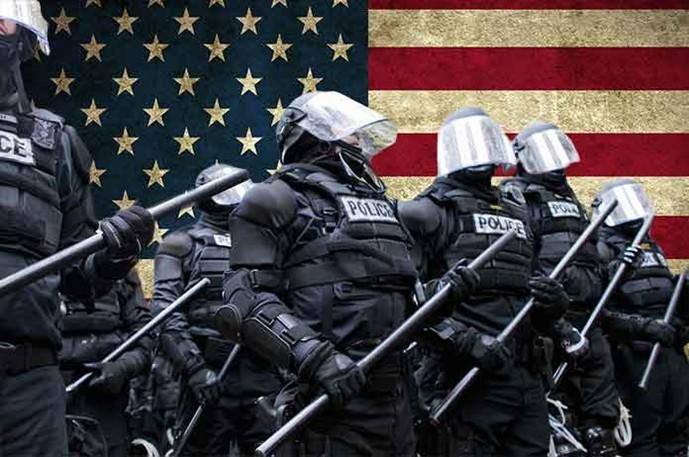

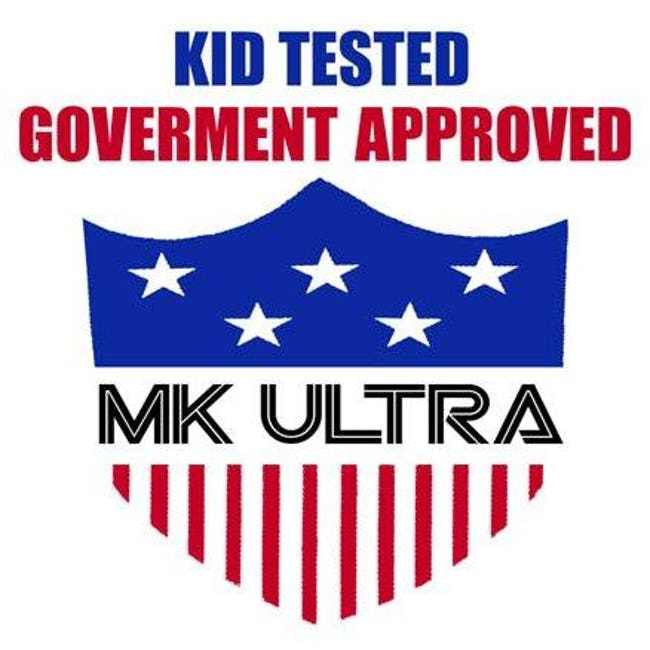
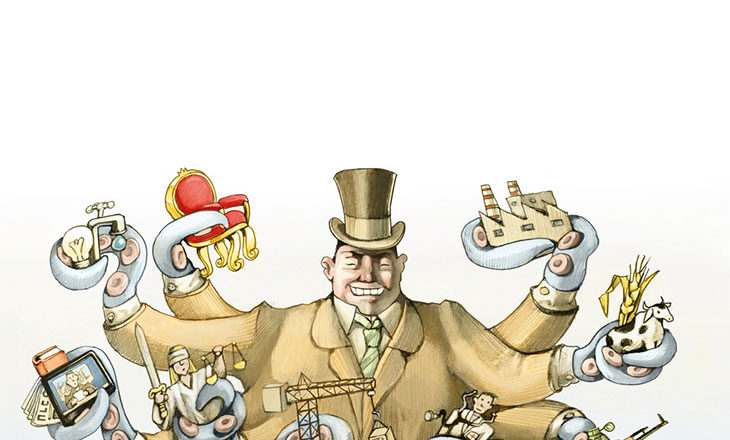


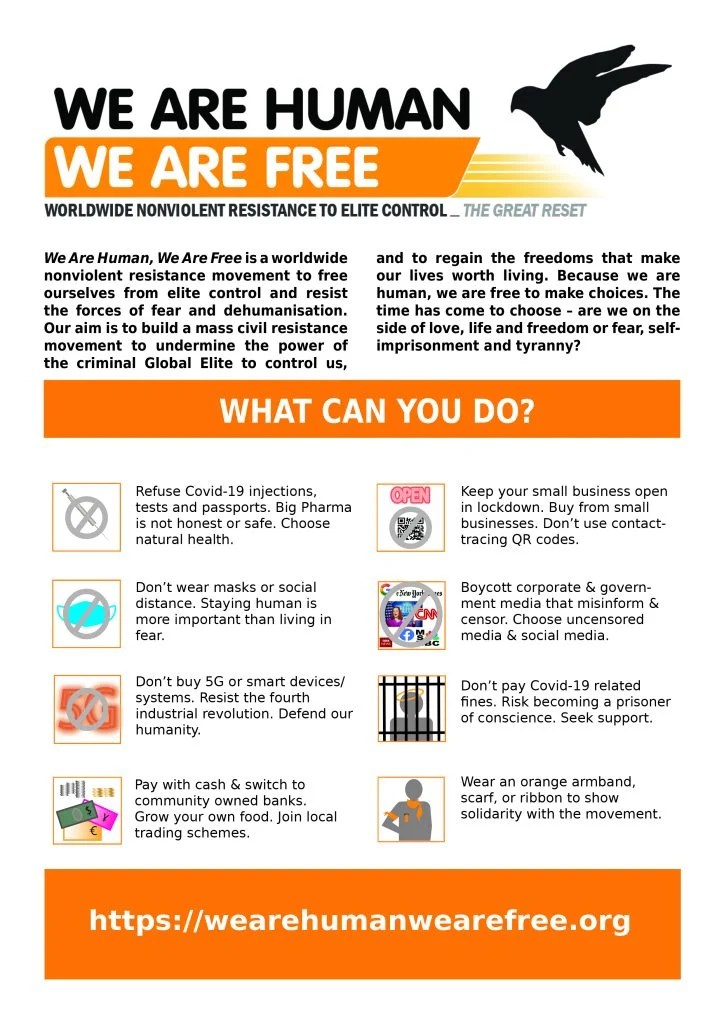
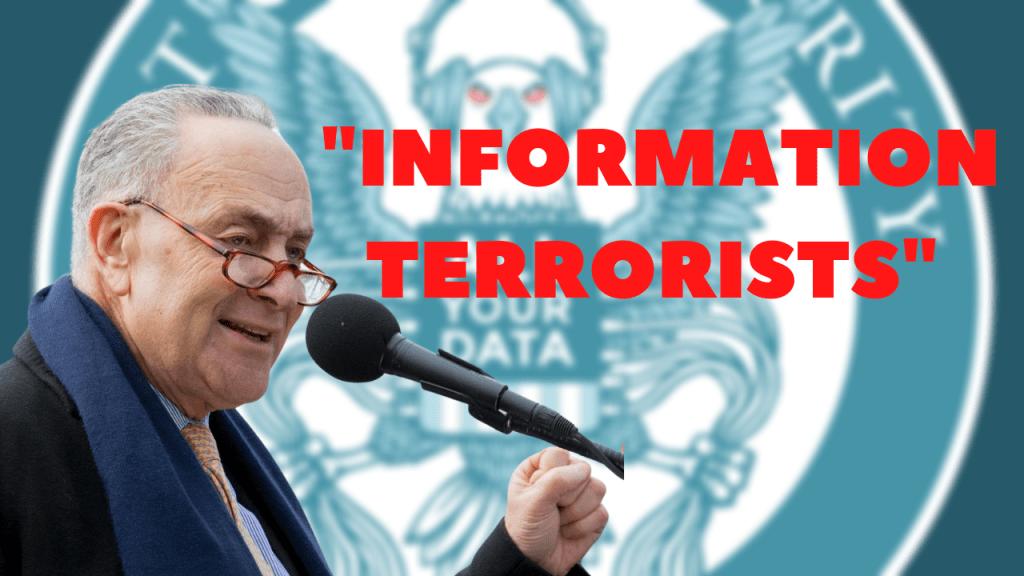
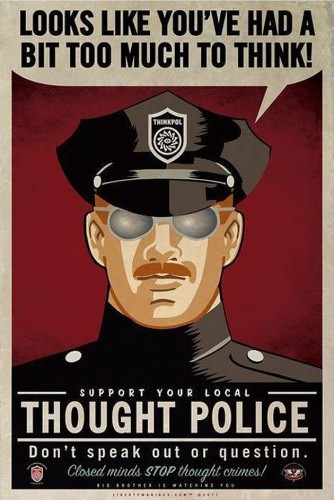
 After the Crash