“When the song of the angels is stilled, when the star in the sky is gone, when the kings and princes are home, when the shepherds are back with their flocks, the work of Christmas begins: to find the lost, to heal the broken, to feed the hungry, to release the prisoner, to rebuild the nations, to bring peace among the people, to make music in the heart.”—Howard Thurman, theologian and civil rights activist
The Christmas story of a baby born in a manger is a familiar one.
The Roman Empire, a police state in its own right, had ordered that a census be conducted. Joseph and his pregnant wife Mary traveled to the little town of Bethlehem so that they could be counted. There being no room for the couple at any of the inns, they stayed in a stable (a barn), where Mary gave birth to a baby boy, Jesus. Warned that the government planned to kill the baby, Jesus’ family fled with him to Egypt until it was safe to return to their native land.
Yet what if Jesus had been born 2,000 years later?
What if, instead of being born into the Roman police state, Jesus had been born at this moment in time? What kind of reception would Jesus and his family be given? Would we recognize the Christ child’s humanity, let alone his divinity? Would we treat him any differently than he was treated by the Roman Empire? If his family were forced to flee violence in their native country and sought refuge and asylum within our borders, what sanctuary would we offer them?
Those nativity scenes were a pointed attempt to remind the modern world that the narrative about the birth of Jesus is one that speaks on multiple fronts to a world that has allowed the life, teachings and crucifixion of Jesus to be drowned out by partisan politics, secularism, materialism and war, all driven by a manipulative shadow government called the Deep State.
The modern-day church has largely shied away from applying Jesus’ teachings to modern problems such as war, poverty, immigration, etc., but thankfully there have been individuals throughout history who ask themselves and the world: what would Jesus do?
What would Jesus—the baby born in Bethlehem who grew into an itinerant preacher and revolutionary activist, who not only died challenging the police state of his day (namely, the Roman Empire) but spent his adult life speaking truth to power, challenging the status quo of his day, and pushing back against the abuses of the Roman Empire—do about the injustices of our modern age?
Dietrich Bonhoeffer asked himself what Jesus would have done about the horrors perpetrated by Hitler and his assassins. The answer: Bonhoeffer was executed by Hitler for attempting to undermine the tyranny at the heart of Nazi Germany.
Martin Luther King Jr. asked himself what Jesus would have done about America’s warmongering. The answer: declaring “my conscience leaves me no other choice,” King risked widespread condemnation as well as his life when he publicly opposed the Vietnam War on moral and economic grounds.
Even now, despite the popularity of the phrase “What Would Jesus Do?” (WWJD) in Christian circles, there remains a disconnect in the modern church between the teachings of Christ and the suffering of what Jesus in Matthew 25 refers to as the “least of these.”
Yet this is not a theological gray area: Jesus was unequivocal about his views on many things, not the least of which was charity, compassion, war, tyranny and love.
After all, Jesus—the revered preacher, teacher, radical and prophet—was born into a police state not unlike the growing menace of the American police state. When he grew up, he had powerful, profound things to say, things that would change how we view people, alter government policies and change the world. “Blessed are the merciful,” “Blessed are the peacemakers,” and “Love your enemies” are just a few examples of his most profound and revolutionary teachings.
When confronted by those in authority, Jesus did not shy away from speaking truth to power. Indeed, his teachings undermined the political and religious establishment of his day. It cost him his life. He was eventually crucified as a warning to others not to challenge the powers-that-be.
Can you imagine what Jesus’ life would have been like if, instead of being born into the Roman police state, he had been born and raised in the American police state?
Consider the following if you will.
Had Jesus been born in the era of the America police state, rather than traveling to Bethlehem for a census, Jesus’ parents would have been mailed a 28-page American Community Survey, a mandatory government questionnaire documenting their habits, household inhabitants, work schedule, how many toilets are in your home, etc. The penalty for not responding to this invasive survey can go as high as $5,000.
Instead of being born in a manger, Jesus might have been born at home. Rather than wise men and shepherds bringing gifts, however, the baby’s parents might have been forced to ward off visits from state social workers intent on prosecuting them for the home birth. One couple in Washington had all three of their children removed after social services objected to the two youngest being birthed in an unassisted home delivery.
Then again, had Jesus’ parents been undocumented immigrants, they and the newborn baby might have been shuffled to a profit-driven, private prison for illegals where they first would have been separated from each other, the children detained in make-shift cages, and the parents eventually turned into cheap, forced laborers for corporations such as Starbucks, Microsoft, Walmart, and Victoria’s Secret. There’s quite a lot of money to be made from imprisoning immigrants, especially when taxpayers are footing the bill.
From the time he was old enough to attend school, Jesus would have been drilled in lessons of compliance and obedience to government authorities, while learning little about his own rights. Had he been daring enough to speak out against injustice while still in school, he might have found himself tasered or beaten by a school resource officer, or at the very least suspended under a school zero tolerance policy that punishes minor infractions as harshly as more serious offenses.
Had Jesus disappeared for a few hours let alone days as a 12-year-old, his parents would have been handcuffed, arrested and jailed for parental negligence. Parents across the country have been arrested for far less “offenses” such as allowing their children to walk to the park unaccompanied and play in their front yard alone.
Rather than disappearing from the history books from his early teenaged years to adulthood, Jesus’ movements and personal data—including his biometrics—would have been documented, tracked, monitored and filed by governmental agencies and corporations such as Google and Microsoft. Incredibly, 95 percent of school districts share their student records with outside companies that are contracted to manage data, which they then use to market products to us.
Jesus’ anti-government views would certainly have resulted in him being labeled a domestic extremist. Law enforcement agencies are being trained to recognize signs of anti-government extremism during interactions with potential extremists who share a “belief in the approaching collapse of government and the economy.”
While traveling from community to community, Jesus might have been reported to government officials as “suspicious” under the Department of Homeland Security’s “See Something, Say Something” programs. Many states, including New York, are providing individuals with phone apps that allow them to take photos of suspicious activity and report them to their state Intelligence Center, where they are reviewed and forwarded to law-enforcement agencies.
Viewed by the government as a dissident and a potential threat to its power, Jesus might have had government spies planted among his followers to monitor his activities, report on his movements, and entrap him into breaking the law. Such Judases today—called informants—often receive hefty paychecks from the government for their treachery.
Had Jesus used the internet to spread his radical message of peace and love, he might have found his blog posts infiltrated by government spies attempting to undermine his integrity, discredit him or plant incriminating information online about him. At the very least, he would have had his website hacked and his email monitored.
Had Jesus attempted to feed large crowds of people, he would have been threatened with arrest for violating various ordinances prohibiting the distribution of food without a permit. Florida officials arrested a 90-year-old man for feeding the homeless on a public beach.
Had Jesus spoken publicly about his 40 days in the desert and his conversations with the devil, he might have been labeled mentally ill and detained in a psych ward against his will for a mandatory involuntary psychiatric hold with no access to family or friends. One Virginia man was arrested, strip searched, handcuffed to a table, diagnosed as having “mental health issues,” and locked up for five days in a mental health facility against his will apparently because of his slurred speech and unsteady gait.
Without a doubt, had Jesus attempted to overturn tables in a Jewish temple and rage against the materialism of religious institutions, he would have been charged with a hate crime. More than 45 states and the federal government have hate crime laws on the books.
Had anyone reported Jesus to the police as being potentially dangerous, he might have found himself confronted—and killed—by police officers for whom any perceived act of non-compliance (a twitch, a question, a frown) can result in them shooting first and asking questions later.
Rather than having armed guards capture Jesus in a public place, government officials would have ordered that a SWAT team carry out a raid on Jesus and his followers, complete with flash-bang grenades and military equipment. There are upwards of 80,000 such SWAT team raids carried out every year, many on unsuspecting Americans who have no defense against such government invaders, even when such raids are done in error.
Instead of being detained by Roman guards, Jesus might have been made to “disappear” into a secret government detention center where he would have been interrogated, tortured and subjected to all manner of abuses. Chicago police have “disappeared” more than 7,000 people into a secret, off-the-books interrogation warehouse at Homan Square.
Indeed, as I make clear in my book Battlefield America: The War on the American People and in its fictional counterpart The Erik Blair Diaries, given the nature of government then and now, it is painfully evident that whether Jesus had been born in our modern age or his own, he still would have died at the hands of a police state.
Thus, as we draw near to Christmas with its celebration of miracles and promise of salvation, we would do well to remember that what happened in that manger on that starry night in Bethlehem is only the beginning of the story. That baby born in a police state grew up to be a man who did not turn away from the evils of his age but rather spoke out against it.
In a linear world, the external order dictates an artificial way of life to the individual, creating a conformist society and forcing us to relinquish our power to a machine that is unnatural and devoid of life. This passive conformity can be traced back to the origins of the Vedic Hindu caste system and the feudal system under medieval Western Christianity. When a settled agrarian culture such as these is born, it tends to build towns, not only to protect people from outside influences but also to develop a mental framework based on rules and regulations.
The complexity of agrarian culture leads to a division of labour and a division of function. From this division, the ancient Hindus (the Vedic civilisation of Dravidians and Aryans) developed a caste system. The Hindu caste system is made up of the Brahmins (priesthood), Kshatriyas (nobility), Vaishyas (merchants and farmers), and the Shudras (labourers). A direct parallel to the Hindu caste system can be found in medieval Christian society, where we see the priesthood and the church, feudal lords and nobility, farmers and merchants of the commons, and the serfs.
Although we no longer have a caste system, this underlying pattern is still with us today. When we are born into this world, we come out of our mother’s womb (nature) and are taught to submit to the rules of society and culture according to our socioeconomic status. This is the crucifixion of the individual; it is the sacrifice we all make. According to the tyranny of the machine, this crucifixion is for the “common good” or “greater good.” But there is a stark difference between the Hindu and Christian societies of ancient times.
First of all, the function of the Vedic caste system was an act of surrender to Brahman (ultimate reality/godhead). Individuals would crucify their egos and their desires in favour of the lives they had been given by nature. This means they would not seek another path or to try and control their lives according to their interests. Instead, they would abide by the order of society, which helped them diminish their egos so that they could feel the presence of Brahman within themselves. This is dharma as social duty.
The second difference is that, once Hindus have fulfilled their social duties in this life, they are allowed to break away from caste and become renunciate sages in the forest, a practice and title known as vanaprastha in Sanskrit. (This possibility is loathed by Christian society because one is thought of as useless if one does not contribute to the social order.) This breakaway from caste is viewed as a return back to nature and could be thought of as a resurrection. A sage is not part of society and does not conform to its rules. Jesus was a sage in this mould. This is why he was not thought of as a particularly good member of society, and he was actually put to death (if we take the story of Jesus to be real).
Those who submit invariably lose their natural innocence. Conformity is the result of force. When individuals are forced by society and culture into life situations that are against their will, they give away their natural sovereignty in exchange for comfort and servitude and are psychologically reduced to sheep. We developed this sheeplike behaviour as a result of the belief that the morals and ethics forced upon us by society are avenues to success and freedom. This notion is absurd inasmuch as the success and freedom of our world are unnatural. These goals are gauged only by finances. But obviously this is not true success or freedom, as money is empty and void of meaning, and it provides no happiness other than that of acquisition. Happiness cannot be contained in anything that we need to force to happen.
As human life is forced into a sheeplike way of being, happiness is reduced to momentary stimulants of excitement. In such a life we can never express our natural divinity, li, because we are following the model of someone else’s idea of life. Yet conforming to anything other than one’s own innate world destroys us physically, mentally, and spiritually, as te, the virtue of Tao, cannot come through the organic pattern of the individual, li. Anxiety, depression and stress are so prevalent in this day and age partly because we are forced to live such lives. Wars and social unrest then reflect the individual’s anxiety.
Liberated individuals are in alignment with their own nature and with the Tao. They do not benefit the accepted social order and are regarded as useless in the eyes of institutional and organisational power. [Taoist sages] Lao-tzu and Chuang-tzu were treated this way because they could see the unnaturalness of an artificial society. The Buddha and Jesus of Nazareth were two other such sages who could see through the hypnotic veil. A liberated sage understands that anyone who continues to act out the unnatural patterns of conditioning is contributing to chaos and destruction, either consciously or unconsciously. One who is liberated, on the other hand, begins the yoking process until a crystal-clear perception of the Tao in reality can be experienced. In Richard Wilhelm’s translation of the I Ching, he states:
Not every man has an obligation to mingle in the affairs of the world. There are some who are developed to such a degree that they are justified in letting the world go its own way and in refusing to enter public life with a view of reforming it. But this does not imply a right to remain idle or to sit back and merely criticise. Such withdrawal is justified only when we strive to realise in ourselves the higher aims of mankind. For although the sage remains distant from the turmoil of daily life, he creates incomparable human values for the future. (The I Ching or Book of Changes)
Evidence for these “incomparable human values” can be found in the legacy that a sage leaves behind. Lao-tzu is a good example. It has been over 2,500 years since he lived, and yet his wisdom still reverberates within our consciousness today. This is the power of te.
The virtue of te is only available to those who do not seek power, control, or force. Governments, politics, banking, religions, and commerce, on the other hand, are constantly striving for control by forcing the population to their will. This poses a significant hurdle for humanity to overcome. What would it take to bring the individual and the collective back into harmony with the Tao?
The above is an exclusive extract from Jason Gregory’s book Effortless Living: Wu-Wei and the Spontaneous State of Natural Harmony. Gregory outlines the Taoist practice of wu-wei, revealing that when we release our ego and allow life to unfold as it will, we align ourselves more closely with our goals and cultivate skill and mastery along the way. The book is available from all good bookstores.
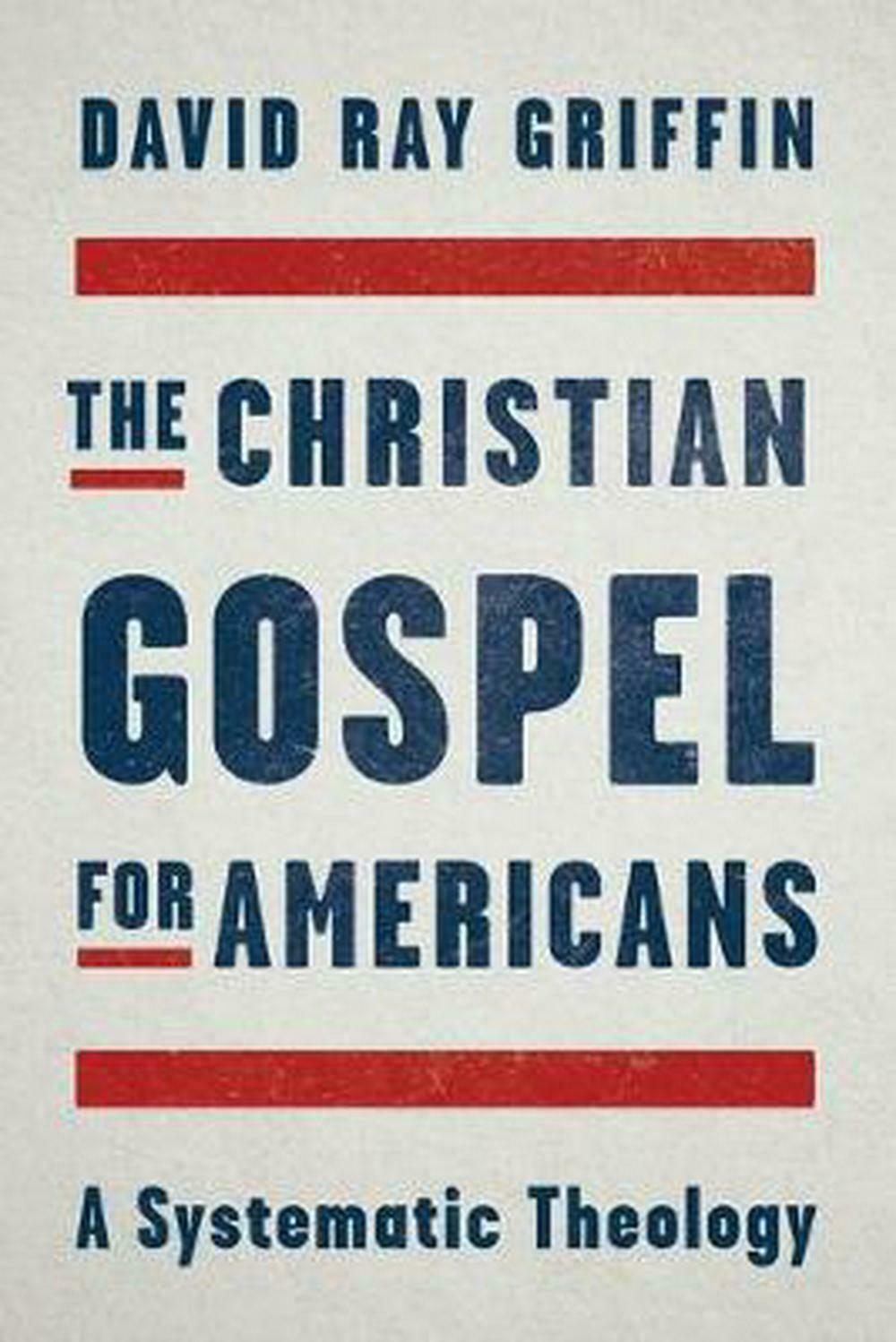
There are very few writers who have done more to try to open the public’s mind to the evil nature of the American empire than David Ray Griffin. His series of books on the false flag attacks of September 11, 2001 will endure for a long time, and they will one day, when it is safe to do so, be recognized as seminal texts exposing the traitorous conspiracy of elements within the Unites States’ government to launch the endless so-called war on terror. That many now know, and many more will, that those so-called “terrorist” attacks were carried out by terrorists in the highest reach of the U.S. government will be due to his extraordinary work.
What many do not know is that David Ray Griffin is a Christian theologian with impeccable credentials and a scholarly oeuvre of dozens of theological books. And that long before his conscience led him to devote himself to exposing the U.S. government’s lies about the September 11 attacks, he was committed to proclaiming the radical Christian gospel of a living Christ, who was executed by the Roman state for opposing its grotesque and violent empire.
The Christian Gospel for Americans is his crowning achievement, a rare marriage of spiritual contemplation and social analysis that brings to life Jesus and the Hebrew prophets for contemporary Americans. It is an accessible systematic theology of freedom and creativity that will inspire hope in all caring souls to resist the demonic American Empire. It is an intellectual tour de force, a kaleidoscopic “constructive postmodern” example of process theology at its finest, drawing on the work of Alfred North Whitehead, John Cobb, and Henri Bergson, among others. Rarely does such a book come along to roil the waters of religious and social complacency.
Times change. Once in the United States of America, theologians were fêted as important social critics and considered worth heeding. Two of the most famous in the mid-to-late twentieth century were Reinhold Niebuhr and Paul Tillich. Both appeared on the cover of Henry Luce’s Time Magazine, and Barack Obama was later fond of referring to Niebuhr to justify his violent policies to extend the American empire. Obama knew his audience, for Niebuhr was noted for a neo-orthodox theological perspective that encouraged “political realism,” popular among the elites who had created and extended the American empire. He was a friend of the rich and famous ruling establishment. His critiques of immoral government practices were always offered within the parameters of official acceptance, conservative and liberal. He was the establishment’s theologian, lionized by the empire-touting Time magazine as the theologian who really understood politics and how God figured into the necessary realism of American foreign policy.
To his great credit, David Ray Griffin is a brave theologian who will never appear on the cover of Time magazine, for his message is more in keeping with the Biblical prophets who warned the people that their government’s behavior is an abomination in the eyes of God, and if they do not dissent and reject such policies, they will be rejecting the God they say they worship. In true prophetic style, he connects the dots to say: look at what you are doing, slaughtering innocents everywhere as you worship your golden calf. When the Hebrew prophets “indict Israel or Judah,” he writes, “the indictments are not directed against the people in general, but against the elites who were responsible for creating and maintaining the structures of domination and exploitation.’”
The American elites surely do not wish to publicize a man who says such things; better to ignore him or have their mouthpieces call him a “conspiracy nut,” which of course they have.
Griffin’s book is rooted in the basic fact that “Christian theology is necessarily at once theological and political” since Jesus was a radical rebel leader who opposed the demonic power of the Roman Empire and was executed for that reason. This is so fundamental, yet it has been papered over, especially since the age of Constantine in the fourth century. Griffin says:
For one thing, the complete opposition of Jesus and his followers to the imperialism of their day has been largely hidden to readers of the gospels. The main reason for this hiddenness is that the authors of the gospels, seeking to present the message of Jesus so as to serve the needs of the Christian movement 40 or more years after the death of Jesus, sought to make it appear that Jesus’ message was directed against, and evoked opposition from, ‘the Jews,’ rather than the Roman Empire and those who collaborated with it….This failure of later Christians to understand the beginnings of their religion has contributed to what is arguably the most fateful reversal in history: Christianity, in origin probably the most explicitly anti-imperial religious movement ever, has since the fourth century provided the religious foundation for the growth of empires even more extensive than Rome’s….He [Jesus] was crucified by the Roman Empire – not by ‘the Jews’ – because he was perceived as a threat by Roman authorities. Given the nature of Jesus’ life and his death, American Christians today should be anti-imperialistic, rather than basking in the pleasures of Empire, as did the Roman populace two thousand years ago – ignoring the terror and poverty brought to other provinces by Roman rule.
This is the foundation upon which Griffin builds his gospel for Americans.
His theological method is liberal, while his content is conservative. This means that to establish truth by appealing to authority is rejected as a method. It is only evidence and reason that he relies on to establish the truth of various doctrines. Therefore science and modern scholarship are important and must always be considered. To claim something is true because of a deposit of divine revelation that you can read in the Bible is an old way of doing theology and Griffin rejects that method. In fact, his understanding of revelation is an ongoing process, insight as part of the creative and spontaneous freedom of living in openness to God’s spirit.
His theology is conservative in content because it rests upon certain primary doctrines of the Christian gospel (good news) “such as God’s creation of the world, God as actively present in it, and divinely-given life after death.”
For those unfamiliar with modern theological thinking that is not bound by a particular church’s teachings and respects science, Griffin’s method might at first seem unusual. As one trained in theology and philosophy, I can assure you it is not. His process of reasoning accords with the best scholarship in those disciplines, but one has to take the time to enter into its postmodern worldview that positions many of the conundrums of traditional religious thinking within a new framework, one that Griffin calls postmodern naturalism where “divine influence must be understood as part of the normal cause-effect relations, not an exception to them.”
Griffin takes on many of the great issues that have perplexed inquiring minds: the problem of evil, creation, truth, human freedom, God’s so-called omnipotence, miracles, life after death, out-of-body experiences, etc. Whether you end up agreeing with all his reasoning or not, you will be challenged to assess your thinking. I find his systematic theological analyses to be brilliant and always intriguing.
But the point of his systematic theology is to bring us to his analysis of the demonic nature of the American Empire and the need for Christians and people of all faiths to resist it. In my opinion, his argument for the demonic as a real power in the world, and that the United States is in its grip, is true. He says:
Can we look at the past century of our world without thinking that the human race must be under the influence of such a power? The twentieth century was by far the bloodiest century in history, with unprecedented slaughter and genocide, and yet we have taken no steps to overcome the war-system of settling disputes. Americans created nuclear weapons and then, when we learned how deadly they are, built thousands more, until we had the world wired to be destroyed many times over. After we learned that a relatively modest exchange of nuclear weapons could initiate a “nuclear winter,” leading to the death of human civilization and other higher forms of life, we still did not abolish them.
He gives the historical background to the American belief in its divine mission, the idea of Manifest Destiny, and the city on the hill nonsense about America being God’s country whose mission was to spread democracy around the world. He quotes George W. Bush saying, in his state-of-the-union address two months before laying waste to Iraq based on lies, “The liberty we prize is not America’s gift to the world; it is God’s gift to humanity.”
Melville couldn’t have said it better through the mouth of mad Ahab. Mad Ahab, mad Bill Clinton, mad George, mad Lyndon Johnson, the list goes on and on. Madmen all, God’s men in their minds, or perhaps just lying madmen playing with our minds, God be damned.
Griffin lays it all out – Iran 1953, Guatemala 1954, Vietnam 1954-73, Indonesia 1965, etc. – all the blood, the massacres, the evil empire doing its nonstop handiwork across the world.
He does, however, omit a crucial element of the demonic at work here in the U.S., as if something is blocking him from recognizing it, some shadow blocking his sight. It is a strange omission. It is as if his vision is focused outward on all the evil the American government inflicts on the world, but here in his own house, he cannot see the demonic at work.
He nowhere mentions the American government’s assassinations of JFK, Malcolm X, MLK, and RFK, all martyrs to the unspeakable truth that this country is in the grip of evil killers who will stop at nothing to silence the voices of genuine peacemakers who have opposed the American Empire. Their deaths opened the door to hell on earth for millions of others around the world.
He correctly catalogues the long list of U. S. atrocities, false flag attacks, coup d’états, immoral and endless wars; gives dates; draws a damning picture of a country in the grip of demonic forces intent on savagely killing innocents wherever it can find them. He shows conclusively that the United States is the Roman Empire updated and outfitted to kill millions with sophisticated weapons and to spread its imperialistic power with evil intent.
He makes an open and shut case that if one wishes to follow the Christian Gospel, one must act in opposition to this evil empire. But he forgets that the crucifixion is also a domestic affair, and the homegrown rebels must be eliminated first.
Even the wisest of men, such as the David Ray Griffin, have their Achilles heels.
But despite that omission, or maybe because of it since it shows us how flawed we all are, The Christian Gospel for Americans is a brilliant clarion call to action.
Christmas Day. Very late on this day and into the morning of the 26th in 1776, George Washington led a surprise night crossing of the Delaware River and bloody pre-dawn attack on unarmed hung-over-from-Christmas troops still in their underwear — a founding act of violence for the new nation to proudly remember as the progenitor of either the crimes of its “special” forces all over the globe or of peace on earth, I can never recall which.
A more useful memory is certainly that of the 1914 Christmas truce, which was actually more than one truce that year and in the subsequent years of the Great War. This is a true story of people not just managing to speak to each other but actually becoming friends with not just people they had a disagreement with but people who a moment before and for a longtime running had been trying to murder them. It’s a story of war enemies figuring out that the actual enemy is not any people but war itself. And they did it on Christmas. Maybe we can do something good on Christmas too.
Better still is the memory of Jesus, whether fictional character or real man, stripped of all the magical powers, but understood as an innovative and courageous nonviolent activist, or — if you prefer — engager in active nonviolence. In the account Terrence Rynne gives in Choosing Peace: The Catholic Church Returns to Gospel Nonviolence, edited by Marie Dennis, Jesus lived in a violent time and place, the people around him full of rage at the Roman occupiers and their proxy tyrants. (Maybe I should just say a violent time, as the place is still violent and full of rage at distant occupiers and their proxy tyrants.) Jesus predicted catastrophe if the violence was escalated, and he was not heeded, and he was proved right. But his unheeded advice has often been put to use and can still be put to use.
If an occupying soldier smacks you, you can calmly and courageously and lovingly look him in the eye and offer your other cheek. If he takes your coat, you can expose his cruelty by offering your shirt too. If he forces you to carry his pack for a mile, you can make him see your humanity by offering to carry it a second mile. Those of us in the heart of the empire can block distant operations and ask that only the person who has never done anything wrong fire the first missile. We can confront fictional humanitarian justifications with the principled clarity of Jesus who preferred to be killed rather than condone the use of violence against the Romans. We can reject the morality that places politeness above saving the world from climate chaos or nuclear war, with the righteous loving anger of a nonviolent activist overturning the tables of the oligarchs.
A still better memory, though we don’t quite have it and need to create it, is the memory of the cultures displaced by the war-mad Western culture that adopted Christianity and turned it into a powerful argument for both war and sloppy thinking through just war theory. I’m reading right now a book called Kayanerenko:Wa The Great Law of Peace by Kayanesenh Paul Williams, about the law of peace created among the Mohawk, Oneida, Onondaga, Cayuga, and Seneca who became collectively the Haudenosaunee. There is as much to be learned from cultures that did not invent imperialism as from those that invented both it and ways to resist it.
There is the possibility of something being done for peace. President Donald Trump claims he will remove all U.S. troops from Syria. There is very little correlation between what he says and what he does, but if he does this, we need to be prepared to thank him, to celebrate such an action, and to insist that bombing cease as well, and that actual humanitarian aid and unarmed peace workers replace the military force, and that weapons sales and gifts to the region be ended. Trump needs to be shocked by the support for this act from unexpected places.
The U.S. Congress is making a lot of noise about possibly for the very first time using the 1973 War Powers Resolution to end a war, the war on Yemen. We need to make sure this happens and then celebrate it, while insisting that the law be complied with, that all loopholes in it be closed, and that weapons sales and gifts to the region be ended. Similar talk is beginning about also ending the war on Afghanistan. Our responsibility there is the same.
If any of these wars can be ended, we need to rapidly build on that success to end more wars, and more wars, and the funding of the preparations for wars. The United Nations says that $11 billion per year could end the lack of clean drinking water globally. The United States is building a single ugly boat for $13 billion that has no defensive purpose but is likely to start wars. It’s time to change course.
Three years ago, the Pope said this to the U.S. Congress which stood and cheered for it:
“Being at the service of dialogue and peace also means being truly determined to minimize and, in the long term, to end the many armed conflicts throughout our world. Here we have to ask ourselves: Why are deadly weapons being sold to those who plan to inflict untold suffering on individuals and society? Sadly, the answer, as we all know, is simply for money: money that is drenched in blood, often innocent blood. In the face of this shameful and culpable silence, it is our duty to confront the problem and to stop the arms trade.”
If anyone else had said that — I mean anyone else at all — he or she would have been denounced and mocked by members of Congress and by the corporate communications system in the United States. The Pope was cheered instead (and then ignored rather than heeded) not because he has established himself as a moral leader. It’s not that he hasn’t, so much as that we just don’t have those in U.S. corporate media; it isn’t done. The Pope was cheered and tolerated because he is understood to be speaking as a moral leader and is widely believed to be associated in some way with magical powers.
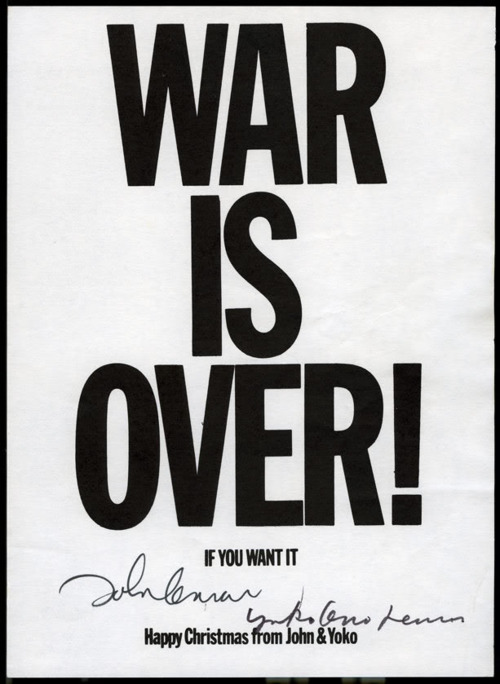
This makes the project that so many great Catholic peace activists are engaged in of trying to move the Catholic Church toward a complete rejection of war very valuable. It also makes it valuable for us all to use Christmas as an occasion to urge the consideration of morality in the question of war or peace, and to demand an end to weapons dealing and death dealing, base building and occupying, killing and maiming and destroying, and threatening fire and fury, in every corner of the world.
Society should not do the wrong thing for the right reason, even though it frequently does the right thing for the wrong reason.
History has shown us what happens when you try to make society too civilized, or do too good a job of eliminating undesirable elements. It also shows the tragic fallacy in the belief that the destruction of democratic institutions will cause better ones to arise in their place.
An obscure Texas political consultant named Bill Miller once said “politics is show business for ugly people”. It’s true for the most part, aside from the consequences. This is because the theatrics of politicians result in policies that affect the lives of others; often against the will of the governed. In books and movies, however, the characters are much ado about nothing. Until, that is, life imitates art.
So it is with the futuristic dystopian story of “A Clockwork Orange”. Both the book, by the author Anthony Burgess, and the film by director Stanley Kubrick, serve as moral dilemmas and cautionary tales plumbing such considerations as free will, the duality of mankind, societal anarchy, and the ascendancy of an all-powerful state.
A 1973 review written in Sight and Sound Magazine, stated: “Kubrick has appropriated theme, character, narrative and dialogue from Anthony Burgess’ novel, but the film is more than a literal translation of a construct of language into dramatic-visual form”. Therefore, for that reason, and for others described later, the film will remain this article’s primary focus.
As any perfunctory internet research will show, Stanley Kubrick is known as a visionary artist and director, but also as the subject of multiple conspiracies. In addition to A Clockwork Orange, Kubrick’s oeuvre includes avant-garde films such as Dr. Strangelove, The Shining, 2001 A Space Odyssey, and Eyes Wide Shut; to name a few. Just as these movies demonstrate the inner workings of mankind operating through the disparate threads which bind reality, so do some claim that a larger picture is presented as well. The big picture, of course, is said to include conspiratorial clues and undertones in Kubrick’s films ranging from Freemasonry, to America’s alleged faked moon landing, to an occultist global financial elite, and the terrorist attacks of 911 being planned as a world transformational event.
There exist multiple published writings, both online and in print, describing the secret meanings hidden in Kubrick’s movies. Furthermore, it has been argued that Kubrick’s “somewhat surreal films” appeal to the viewer’s subconscious and, therefore, “lend themselves to this sort of interpretation”.
That is another reason why Kubrick’s film will remain the focus of this essay, as opposed to the novel: Either these alleged conspiracies are imagined in the minds of the viewers, or Kubrick deliberately inserted these elements into his creations. Given Kubrick’s reputation for perfectionism, one can only conclude the symbolism was specifically placed and for exact reasons.
In his other films, like 2001 A Space Odyssey, it has been argued the strategic placement of the sun, or other circular lights, were utilized by Kubrick as symbolic movie projectors of sorts, whereby time and events unwind before the audience like a clock. Additionally, even in movies not directed by Kubrick, there are those who say mirrors are used to demonstrate mind control. It is a fact both of these visualizations are present in A Clockwork Orange.
Once again, and for all of the reasons delineated heretofore, the following presentation will analyze Kubrick’s film as opposed to the novel from which it derived. The story, and Kubrick’s alchemy, will then be analyzed through the lens of three separate realities followed by some concluding comments at the very end.
THE UNWINDING
In Kubrick’s A Clockwork Orange, the viewers witness the tragic life and circumstances of a teenager named Alex DeLarge navigating a decadent post-modern world. In the film, Alex is played by the actor Malcolm McDowell. The story unfolds against the backdrop of a futuristic dystopian society that has descended into anarchy and violence; especially within the younger generation.
The very first scene focuses on the evil-eyed Alex adorned with a black fedora and sunray eyeliner beneath his right eye. As the camera pulls back, the boy is shown with three of his young friends identified in the narrative as “droogs”. The youths are shown sitting in the Korova Milk Bar where they imbibe “Milk Plus”; or milk laced with recreational drugs of various types.
Upon leaving the bar, the boys come across a drunk lying in an alley and singing what Alex calls the songs of the drunk man’s “fathers”. This implies a line of separation between the previous time and the new; between the old and the young. This separation of time is actually confirmed when the drunk tells the young hooligans he no longer wants to live in this “stinking world” because there’s “no law and order anymore”, where the young “get onto the old”, and “it’s no world for an old man any longer”.
The boys commence to beat the old boozer senseless.
In the next scene, Alex and his droogs come across a group of five other boys who, on an abandoned theatrical stage, are attempting to rape a young woman. Seemingly, the stage implies the violence unfolding as melodrama, causing this viewer to question if the descent into societal violence was staged as well? The boys assaulting the woman were wearing military-style camo clothing and adorned with Nazi accoutrements. Alex taunted them in a near Shakespearean manner, and the rival gangs went to war. The battle also appeared as theatrically choreographed and was set in sync to Giaochino Rossini’s La Gazza Ladra overture.
In the next scene, we see Alex and his gang fleeing to the countryside in a red sports car, looking very much like four demons racing towards hell.
Chaos ensued until Alex eventually ended up in prison and, thus, in possession of the state.
In prison, Alex sat before an open Bible and fantasized he was a Roman soldier whipping the back of Jesus Christ. His voiceover narration said he didn’t like the New Testament’s “preachy talking” as much as the Old Testament’s violence and sex. He furthermore envisioned slicing open the throats of ancient enemies and later eating grapes fed to him by the naked wives and handmaidens of his vanquished foes.
In the privacy of the facility’s library, Alex petitioned the prison chaplain regarding a new treatment that could help him secure his freedom. The chaplain informed Alex the new treatment was called the Ludovico Technique and that it was dangerous. The boy then tells the priest that in spite of any potential danger, he wanted “for the rest of his life to be one act of goodness”.
In response, the chaplain tells Alex that “goodness is chosen” and “when a man cannot choose, he ceases to be a man”.
The next scenes showed a group of prisoners walking outside around a circle on the ground. Before the men are lined up for inspection, a cadre of dignitaries exit from a long hallway, and walk before the prisoners. In so doing, one man tells the others that, soon, the “prisons will be full of political prisoners” and that the “petty criminals need faster reconditioning”. Standing in line, Alex speaks up and the man selects Alex from the group. The viewer later discovers the man was actually the new Minister of the Interior who was visiting the prison that day.
Soon, Alex is admitted into the Ludovico Treatment Center and begins his reconditioning. He is strapped to a chair with brackets forcing both of his eyes open so they can’t be closed. He then watches violent videos of which he greatly enjoys at first. When a man begins to bleed on screen, Alex’s bloodlust is quenched, and speaking in the Nadsat lingo (a combination of Cockney English and Russian), he says: “It’s funny how the colors of the real world only seem really real when you viddy them on a screen”.
After the first video, another film is shown where a woman in a red wig is being gang-raped. Due to the drugs being injected into Alex’s bloodstream, he begins to feel ill, but he can’t avert his gaze due to the brackets on his eyes. Even trying to move his eyes away, he says: “I still could not get out of the line of fire of this picture”.
In another scene, Alex views another session which consists of Nazis marching, paratroopers jumping, bombs falling, and all to the light and airy melody of Beethoven’s “Ninth Symphony, Fourth Movement”. When Alex realizes the soundtrack is Beethoven, he begins to scream pitifully, begging the doctors to stop the treatment; because he once enjoyed that music as a free man.
Certainly one of the most challenging and difficult social problems we face today is, how can the State maintain the necessary degree of control over society without becoming repressive, and how can it achieve this in the face of an increasingly impatient electorate who are beginning to regard legal and political solutions as too slow? The State sees the spectre looming ahead of terrorism and anarchy, and this increases the risk of its over-reaction and a reduction in our freedom. As with everything else in life, it is a matter of groping for the right balance, and a certain amount of luck.
His treatment complete, Alex is then presented to a group of onlookers as the Ministry of Interior addresses the audience. The man tells them his political party promised Law and Order and “to make the streets safe for ordinary peace-loving citizens“.
In a demonstration that ensues on a raised dais, or stage, in front of the group, Alex is verbally and physically bullied while remaining unable to fight back. As the bully exits the stage, an overhead spotlight, appearing very much like a film projector, or the sun, follows the man as he bows and waves to the audience.
Next, Alex was presented with a gorgeous, nicely tanned, platinum blonde who stands topless before him wearing only a pair of cotton panties. As Alex, on his knees, reaches upward to touch her breasts, he becomes sick once again. The blonde then exits the stage similar to the bully, waving and bowing in dramatic fashion.
As the minister touts the new and improved Alex, the boy’s old prison chaplain rises up to challenge him, claiming Alex had been deprived of choice, and that his “reformation is insincere” because his conditioning requires “self-interest merely to avoid pain”. The chaplain then says: “He ceases to be a wrongdoer, he ceases also to be a creature capable of moral choice”.
In response, the Minister exclaims: “We’re not concerned with motives, with the higher ethics; we are concerned only with cutting down on crime and with relieving the ghastly congestions within our prisons”. He then added:
“He will be your true Christian, ready to turn the other cheek. Ready to be crucified rather than crucify. Sick to the very heart at the thought of even killing a fly. Reclamation. Joy before the angels of God! The point is that it works!”
The State had set Alex free. Literally. More chaos ensued; but, this time, it is all directed against the boy. As Alex eventually returns to his old self, and the State even apologizes for not knowing any better, it remains clear the government still views Alex as a political pawn to be played in its next theatrical production.
The viewer is left with the impression of the cycle continuing; or merely more of the same as the sun rises and sets over the spinning world.
Alex is characterised not only by his actions against society, but in the actions of the State against Alex. The two are equated in the film, his charm reproduced in its durance, the principal difference – a perhaps considerable one – in the State’s coarsely institutional and indiscriminately committed immoralities that Alex can only practise on a restricted scale.
[A clockwork orange is] an organic entity, full of juice and sweetness and agreeable odor, being turned into an automaton.
– Burgess, Anthony. 1987 prefatory note to “A Clockwork Orange: A Play With Music”
…the attempt to impose upon man, a creature of growth and capable of sweetness, to ooze juicily at the last round the bearded lips of God, to attempt to impose, I say, laws and conditions appropriate to a mechanical creation, against this, I raise my swordpen–”
– Burgess, Anthony. The character F. Alexander, “A Clockwork Orange”, p. 25
Through the Lens of Psychology and Violence, Chemically Enhanced
When I was a young man at college more than three decades ago, I asked one of my friends what he thought of the film A Clockwork Orange. Now, this guy had a high IQ. When younger, he was identified as a gifted child who then became member of Mensa, and later the dean of the psychology department at a large American university. I’ve never forgotten his answer. He said: “The future is sex and violence”.
Obviously, both he and Kubrick were proven correct.
Over the past four decades, global academia has made ignorant the youth in Western Societies. Whereas emphasis was once placed on critical thinking, logic, classic literature, science, and math, today’s schools now prioritize identity politics while the youth, especially boys, fall through society’s cracks mesmerized by television, violent video games, and drugs; prescribed or otherwise.
In A Clockwork Orange, Alex and his gang of droogs demonstrated awareness and cleverness, but simultaneously lacked compassion and empathy in ways that were near reptilian. Moreover, Alex’s parents were goofy enablers; the mother in particular, who had purple hair and seemed blind to her son’s evil. They were, in fact, perfect representations of the modern real-world parents who go on television, after their child murders and maims, to say: “He seemed like such a nice boy. We never saw it coming”.
This has remained true since the Columbine shooters through the most current of events in even the bucolic U.S. Midwestern state of Iowa, where two separate girls were recently brutally assaulted and murdered in as many months. Both the killers of Mollie Tibbets and Celia Barquin Arozamena were young men in their early twenties. In the latter case, the murderer, Collin Daniel Richards, admitted he had “an urge to rape and kill a woman” and the meme for his Facebook cover page said: “Let’s go commit a murder”.
Obviously, we no longer live in a Norman Rockwell world. Even so, we can’t say we weren’t warned by Kubrick in A Clockwork Orange.
The famous psychologist, Sigmund Freud, presented the idea that humans operate by means of a trinity of cognitive processes as follows: The Id (instincts), Ego (reality) and Superego (morality). Freud furthermore speculated these three systems (i.e. tripartite) developed at different stages of life.
In the case of Alex in Kubrick’s film, he was representative of the Id, acting out of his desire for childish satisfaction. It is therefore possible the Ego in the film was represented by the modifying presence of the prison chaplain, and with the State acting as the Superego taming Alex’s Id by means of chemically conditioned censorshipof action.
The Id, Ego, and Superego could also be perceived as manifested in the body (impulse), mind/soul (cognitive) and spirit (conscious /law).
As both the film, A Clockwork Orange, and present reality indicate: When balance is lacking, chaos follows in the form of hell on earth. But, on the other hand, if proper balance can be restored, then both individuals and society are better off.
But what is the proper balance and who decides? The State? Or, is there another way to unify mankind into peace and harmony?
By definition, a human being is endowed with free will. He can use this to choose between good and evil. If he can only perform good or only perform evil, then he is a clockwork orange–meaning he has the appearance of an organism lovely with colour and juice but is in fact only a clockwork toy to be wound up by God or the Devil or (since this is increasingly replacing both) the Almighty State. It is as inhumane to be totally good as it is to be totally evil. The important thing is moral choice. Evil has to exist along with good, in order that moral choice may operate. Life is sustained by the grinding opposition of moral entities.
– Burgess, Anthony. 1986 introduction to “A Clockwork Orange”
I think this suggests the failure of culture to have any morally refining effect on society. Hitler loved good music and many top Nazis were cultured and sophisticated men but it didn’t do them, or anyone else, much good.
Through the Lens of the Occult, Sun Worship, and Ancient Knowledge
Again, a simple internet search of “Stanley Kubrick occult” will yield a number of online links and even a book on the topic entitled “Kubrick’s Code: An Examination of Illuminati & Occult Symbolism in Stanley Kubrick’s Films”. In A Clockwork Orange, specifically, there are those who contend “subliminals”are present therein, including references to MK Ultra/mind control, Freemasonry, Sun/Solar worship, Templar/Iron Cross, Black Sun, the Eye of Horus, and more.
Having personally seen the movie, and recently, I will say these elements are definitely incorporated into the film. I was intrigued by the “Clockwork Orange as Sun” angle but, upon viewing the movie again, it appeared to me the solar aspect was presented (similar to Kubrick’s other films) as more of a film projector of sorts; whereby the viewers could nearly perceive themselves as projections in the screen, along with the fictional characters, as the story unwound.
A Clockwork Orange. Mechanical. Circles. Time.
It is also said the sun can affect people’s moods; as does film.
In the earliest written creation epic, the “Enuma Elish”, claimed by some scholars to have influenced the Bible’s Book of Genesis, Marduk is the Babylonian god who defeats the female water god, Tiamat. Marduk is then awarded fifty other names. In Mesopotamia and Sumeria, Marduk is known as the sun gods Shamash and Anu (Utu), respectively. In Egypt he was worshipped as Ra.
In the scriptures of Judaism and Christianity, Marduk and Tiamat were first identified as the humans Nimrod (In Genesis, chapter 10, called “a mighty hunter before the Lord”) and his wife Semiramis (later known as the mythological Queen of Heaven).
There are those who say it was Nimrod who established the first state religion by unifying mankind and building a tower in the Tigris/Euphrates region of antiquity. However, after he incorporated, and then diversified, he went public:
Did it all start on the plains of Shinar after a great flood, when the malesun overcame femalewater?
In A Clockwork Orange, Alex and his droogs were certainly warlike and sought to ravage the females in their paths. Moreover, perhaps as another clue, one of the songs on the film’s soundtrack is titled “Overture to the Sun”.
In the scene previously described, when the rival gang was in the act of melodramatically wrestling a woman in order to rape her on a stage, it did appear Kubrick incorporated elements of the “Enuma Elish” into his film: namely the expanse of sky above and a winged sun god overlooking acts of sex and violence (Chaos) below.
Within the occult, there are those identifying the Sun as being a symbol of Lucifer the Light Bringer and with the accompanying “illuminating rays of knowledge”; all supposedly essential to the ancient sun worship cult called “The Illuminati”.
Furthermore, others have connected both Freemasonry and the Illuminati as having originated in ancient Egypt:
Popular history texts and encyclopedias generally paint the Illuminati as having its origins in 1776 Bavaria. However, the origins go back much further. The Illuminati are tied directly through masonry to the sun and Isis cults of ancient Egypt.
In truth, Kubrick’s A Clockwork Orange has more occult symbols than even a U.S. dollar bill; along with specific parallels to Freemasonry. All of these visuals, like the Eye of Horus right on the money, are hidden in plain sight:
The checkered pattern is found in Freemason lodges and is known as “Moses Pavement” which symbolizes the duality of man. Of course, the Eye of Horus, snakes, and phalluses, are all symbols of the occult as well.
Why would Kubrick have included these in A Clockwork Orange and, also, in his other films?
Coincidence? Art? Conspiracy?
Let the readers, and viewers, decide.
Additionally, as addressed before, Kubrick’s film does include some peculiar references to Christianity. Complementing Alex’s aforementioned prison fantasy of being a Roman soldier in the act of whipping Christ, there was an earlier scene in his room where he fondles his pet snake before the snake appeared to act as a phallus between the legs of a naked woman pictured on his wall. The buttocks of the woman looked to have been held up by the raised arms of four naked Jesus Christ figurines; complete with crowns of thorns. Then, as a rapturous Alex enjoyed the music of Beethoven in a near masturbatory manner, he envisioned himself a vampire and saw a woman in a white (wedding?) dress being hung by rope, along with fiery explosions and men being crushed by rocks.
These examples, along with the symbols of Alex’s pet snake and the Eye of Horus on his right sleeve and right eye, leave the viewer with the impression the boy’s worldview was nothing short of Luciferian.
Moreover, just as western holidays like Christmas (Sol) and Easter (Ishtar) have their originations in ancient sun worship and female pagan fertility deities, so too, it seems, does A Clockwork Orange. In another example, one of the droogs in the Korova Milk Bar, with sun/projector overhead, drew milk from the breasts of a replica nymph that he called “Lucy”.
Are all of these occult references designed to point the viewer’s attention towards Lucifer? Was Kubrick trying to warn his audience that the future for both individual and state belonged to Satan? Or, is it possible the director was actually advocating for such?
Through the Lens of the Established State, Modern Politics , Time, and the Circular Cycles of Man
There are those who have tied Donald Trump to Kubrick’s A Clockwork Orange:
And, paradoxically, it now appears the Satanists are even threatened by The Orange Jesus as they seek to convert the younger generation.
Founded in 2012, The Satanic Temple (not to be confused with the Church of Satan) is a non-theistic organization that has gained prominence since President Trump’s election. The group reported it gained “thousands of new members” after Trump won the presidential race.
…Since the election, The Satanic Temple has launched multiple campaigns aimed at challenging Christian influence in the political sphere. One example is their After School Satan Clubs.
Obviously those on the Political Left, and some in the middle, view Trump as similar to the right-wing, authoritarian (law and order) party in Kubrick’s film; who brainwashed naive dupes into supporting misguided policies. Yet, to the other half of the audience watching the political theater on their screens, it appears that Trump is more comparable to Alex; who, after creating carnage in the proverbial political swamp, is now undergoing reeducation by the Established State right before their very eyes.
Could Kubrick have foreseen the inevitability of time’s passage delivering an Orange Reality TV Star to the world stage? It’s doubtful, because he didn’t write the book. Even so, is it still possible that Trump is a clockwork man, arriving right on schedule?
Since the times of the first songs, the elite have cynically oppressed the proles while telling them it’s for their own good; for their safety, or for the good of Mankind overall. That is the commonality of gangsters, thugs, neocons, corrupt politicians, fascists, and tyrannical collectivists. They abrogate timeless moral principles for their own benefit and tell us it’s for ours.
In the narrative of A Clockwork Orange, there is a contrarian to the current government, an author, who played dual roles in the film’s plot. Towards the end, he argues on the telephone with an unseen coconspirator that “the common people must not sell liberty for a quieter life”.
Yet, isn’t that what we’ve done today in the once free nations of the western world?
In many ways, A Clockwork Orange is a mirrored representation of modern America. In the movie, a right-wing party is the established power suppressing the rights of commoners in order to sustain its continuity of control; and the media, and opposition party, were fighting on the side of liberty.
Paradoxically, in the real world currently, the media, the Political Left, and lukewarm conservatives, are in singularity with the Established State; as Trump and his Deplorables wreak havoc before the global towers of power.
Based upon raw intuition, instinct, and Tweets, Trump is the political manifestation of Freud’s Id. Therefore, he and his gang of supporters must be reformed via electronic programming and conditioning (punishment and reward) by the state as it seeks to secure its everlasting continuity.
Play ball and society will experience harmony, but only on the state’s terms. Disobey at your own peril. This is one of the themes in A Clockwork Orange. Other undertones of the film speak to secrecy, smoke, mirrors, and mind control, where the state vanquishes the violent urges of its citizens by creating a new reality via cyclical, or looped, feedback. Consensus will be manufactured and contrarian views need not apply. Not acceptable? No problem. The state has a pill for that.
As humans, we have free will, and that is a right that cannot be denied to us. The Ludovico Technique represents the government’s, or any authority figure’s, interference with our personal liberties, and the dangers of these interferences. The battle of good versus evil is presented an innumerable amount of times in literature and cinema–but A Clockwork Orange puts a twist on this common theme. Which is worse, chosen evil or forced good? According to A Clockwork Orange, chosen evil is the lesser evil, because it demonstrates it allows us a choice. If humans lose moral choice, they become machines. Free will to choose between good and evil is the central theme and message in A Clockwork Orange.
Whether or not Trump is real or just an actor, like in Kubrick’s films, he has revealed certainrealities. The fact remains the state does not now endorse free will and it has, instead, resorted to electronic conditioning to form its new reality.
This will work until it doesn’t. Then the process begins again, just has it always has throughout history; as predictable as seasons, or the sun crossing the sky.
Conclusion
In researching this article, and Stanley Kubrick’s life’s work, I discovered many websites that were a strange combination of profoundly perceptive insights, unique observations, and batshit craziness. But one interesting theme presented in Kubrick’s storytelling is the idea of mankind’s Odyssey: Seeking meaning through faith, action, and fortune, upon the world stage; overcoming base instincts, then rising on a tide of reason and rationality, before the cycle rounds another bend and mankind falls again.
When watching A Clockwork Orange, the viewer is forced to consider the ironies of individual and state. In turn, this blogger now questions if both entities are not merely two parallel paths to hell on earth.
The sun rises and sets on individuals and nations alike. Yet, throughout history, Man’s Id was successfully moderated at times by his Ego and Superego thus allowing, for the most part, periods of equilibrium and justice; even if only for a season.
Fate or free will? That is the question. Given the cycles of history, where does hope now reside? Why would anyone have optimism at all?
In A Clockwork Orange, the Ludovico Technique was meant to fix dystopia’s problems. Today, in the real world, it is media narratives that are meant to address what ails us. Unfortunately, however, these are twin movies unspooling separately and all at once. In turn, it means certain worldviews must be reprogrammed, as it were.
This explains why social media companies are purging “incorrect thinkers” on their respective platforms. They are viewed as subversive moles, and petty criminals, damaging the fertile ground of the new world order.
It’s also why a bogus Russian dossier was utilized to derail the Orange Criminal. One wonders if he was wound up as part of a plan to place asunder the old ways; like the tide rolling out before the dawn of a new day.
The lesson learned from A Clockwork Orange is to beware the algorithmic hammers of conformity; always watching, ever ready, and waiting to shine down from on high; ceaselessly smiling, shaking hands, and kissing babies on the way.
Before new experiments and orthodoxies can be tried, there must be good reasons to do so. For out of chaos comes creation. The circle runs like clockwork and always on time.
The Id of Man will be tempered by a new religion; or perhaps an old one by another name.
“Jesus is too much for us. The church’s later treatment of the gospels is one long effort to rescue Jesus from ‘extremism.’”—author Gary Wills, What Jesus Meant
The Christmas narrative of a baby born in a manger is a familiar one.
The Roman Empire, a police state in its own right, had ordered that a census be conducted. Joseph and his pregnant wife Mary traveled to the little town of Bethlehem so that they could be counted. There being no room for the couple at any of the inns, they stayed in a stable, where Mary gave birth to a baby boy, Jesus.
Unfortunately, Jesus was born into a police state not unlike the growing menace of the American police state. When he grew up, he had powerful, profound things to say—things that would change how we view people, alter government policies and change the world. “Blessed are the merciful,” “Blessed are the peacemakers,” and “Love your enemies” are just a few examples of his most profound and revolutionary teachings.
When confronted by those in authority, Jesus did not shy away from speaking truth to power. Indeed, his teachings undermined the political and religious establishment of his day. It cost him his life. He was eventually crucified as a warning to others not to challenge the powers-that-be.
Yet what if Jesus, the revered preacher, teacher, radical and prophet, had been born 2,000 years later? What if, instead of being born into the Roman police state, he had been born and raised in the American police state?
Consider the following if you will.
Had Jesus been born in the era of the America police state, rather than traveling to Bethlehem for a census, Jesus’ parents would have been mailed a 28-page American Community Survey, a mandatory government questionnaire documenting their habits, household inhabitants, work schedule, how many toilets were in their home, etc. The penalty for not responding to this invasive survey can go as high as $5,000.
Instead of being born in a manger, Jesus might have been born at home. Rather than wise men and shepherds bringing gifts, however, the baby’s parents might have been forced to ward off visits from state social workers intent on prosecuting them for the home birth. One couple in Washington had all three of their children removed after social services objected to the two youngest being birthed in an unassisted home delivery.
Then again, had Jesus’ parents been undocumented immigrants, they and the newborn baby might have been shuffled to a profit-driven, private prison for illegals where they would have been turned into cheap, forced laborers for corporations such as Starbucks, Microsoft, Walmart, and Victoria’s Secret. There’s quite a lot of money to be made from imprisoning immigrants, especially when taxpayers are footing the bill.
From the time he was old enough to attend school, Jesus would have been drilled in lessons of compliance and obedience to government authorities, while learning little about his own rights. Had he been daring enough to speak out against injustice while still in school, he might have found himself tasered or beaten by a school resource officer, or at the very least suspended under a school zero tolerance policy that punishes minor infractions as harshly as more serious offenses.
Had Jesus disappeared for a few hours let alone days as a 12-year-old, his parents would have been handcuffed, arrested and jailed for parental negligence. Parents across the country have been arrested for far less “offenses” such as allowing their children to walk to the park unaccompanied and play in their front yard alone.
Rather than disappearing from the history books from his early teenaged years to adulthood, Jesus’ movements and personal data—including his biometrics—would have been documented, tracked, monitored and filed by governmental agencies and corporations such as Google and Microsoft. Incredibly, 95 percent of school districts share their student records with outside companies that are contracted to manage data, which they then use to market products to us.
Jesus’ anti-government views would certainly have resulted in him being labeled a domestic extremist. Law enforcement agencies are being trained to recognize signs of anti-government extremism during interactions with potential extremists who share a “belief in the approaching collapse of government and the economy.”
While traveling from community to community, Jesus might have been reported to government officials as “suspicious” under the Department of Homeland Security’s “See Something, Say Something” programs. Many states, including New York, are providing individuals with phone apps that allow them to take photos of suspicious activity and report them to their state Intelligence Center, where they are reviewed and forwarded to law-enforcement agencies.
Viewed by the government as a dissident and a potential threat to its power, Jesus might have had government spies planted among his followers to monitor his activities, report on his movements, and entrap him into breaking the law. Such Judases today—called informants—often receive hefty paychecks from the government for their treachery.
Had Jesus used the internet to spread his radical message of peace and love, he might have found his blog posts infiltrated by government spies attempting to undermine his integrity, discredit him or plant incriminating information online about him. At the very least, he would have had his website hacked and his email monitored.
Had Jesus attempted to feed large crowds of people, he would have been threatened with arrest for violating various ordinances prohibiting the distribution of food without a permit. Florida officials arrested a 90-year-old man for feeding the homeless on a public beach.
Had Jesus spoken publicly about his 40 days in the desert and his conversations with the devil, he might have been labeled mentally ill and detained in a psych ward against his will for a mandatory involuntary psychiatric hold with no access to family or friends. One Virginia man was arrested, strip searched, handcuffed to a table, diagnosed as having “mental health issues,” and locked up for five days in a mental health facility against his will apparently because of his slurred speech and unsteady gait.
Without a doubt, had Jesus attempted to overturn tables in a Jewish temple and rage against the materialism of religious institutions, he would have been charged with a hate crime. Currently, 45 states and the federal government have hate crime laws on the books.
Rather than having armed guards capture Jesus in a public place, government officials would have ordered that a SWAT team carry out a raid on Jesus and his followers, complete with flash-bang grenades and military equipment. There are upwards of 80,000 such SWAT team raids carried out every year, many on unsuspecting Americans who have no defense against such government invaders, even when such raids are done in error.
Instead of being detained by Roman guards, Jesus might have been made to “disappear” into a secret government detention center where he would have been interrogated, tortured and subjected to all manner of abuses. Chicago police “disappeared” more than 7,000 people into a secret, off-the-books interrogation warehouse at Homan Square.
For those who celebrate Christmas as a season of miracles, it is indeed a time for joy and thanksgiving. Yet it should also be a time of reckoning, re-awakening and re-commitment to making this world a better place for all humanity.
Remember, what happened on that starry night in Bethlehem is only part of the story. That baby in the manger grew up to be a man who did not turn away from evil but instead spoke out against it, and we must do no less.
Thus, we are faced with a choice: remain silent in the face of evil or speak out against it. As Nobel Prize-winning author Albert Camus proclaimed:
What the world expects of Christians is that Christians should speak out, loud and clear, and that they should voice their condemnation in such a way that never a doubt, never the slightest doubt, could rise in the heart of the simplest man. That they should get away from abstraction and confront the blood-stained face history has taken on today. The grouping we need is a grouping of men resolved to speak out clearly and to pay up personally.








 After the Crash
