Back when I first began selling my labor for a wage in the wasteland of suburbia’s strip malls, I can recall the tedium of stocking shelves, summoning up insincere courtesy in the face of entitled customers and obnoxious bosses, comparing the stacks of money counted at the end of the day with the totals on our paychecks, and feigning adherence to whatever motivational façade management cooked up to mask the reality of our exploitation.
Yet I also remember, much more vividly and fondly, the latent and occasionally eruptive defiance among my co-workers. This included the constant collective complaining about the job, taking more and longer-than-approved breaks, working as little as possible, fudging time sheets, stealing, and the intermittent screaming matches with the boss in the middle of the store. Underpinning all these actions was an unspoken but broadly understood code of silence when it came to such transgressions and, when appropriate, expressions of support for them.
At the time, I didn’t think much about this, it was just how things happened and I’ve encountered similar experiences to varying degrees in every workplace since. Our actions weren’t guided by a political framework nor was there any attempt to organize them in a directed manner. It was more a spontaneous, innate reaction to experiencing the coercion of capitalism. I had cause to reflect upon this anew while reading Kevin Van Meter’s new book, Guerrillas of Desire: Notes on Everyday Resistance and Organizing to Make a Revolution Possible, published by AK Press and the Institute for Anarchist Studies.
In the preface, Van Meter observes that the question motivating him is not “What is to be done?” but “How do people become what they are?” Throughout the course of the book he seeks to provide an answer by locating power in the resistance of workers, apart from any political ideology or organization. Whether and how that inherently anti-capitalist refusal of work develops into revolt or rebellion are the questions he compellingly urges us to reflect and act upon.
To reach that point, Guerrillas of Desire ambitiously takes on multiple tasks that feed into and build on one another. Van Meter initiates a dialogue between anarchism and Autonomist Marxism that leads to a reconceptualization of the working class, bolstered in part by a historical accounting of workplace actions such as the ones I recounted. He labels these “everyday resistance,” committed by “guerrillas of desire,” and proposes a focus on those deeds as the entry point for organizing revolutionary resistance to capitalism. The impetus for this initiative, concisely carried out in under 160 pages, is his proposal that the current approach to organizing is conceptually flawed and therefore destined to fail. “Guerrillas of Desire offers a contentious hypothesis: the fundamental assumption underlying Left and radical organizing, including many strains of anarchism, is wrong. I do not mean organizationally dishonest, ideologically inappropriate, or immoral. I mean empirically incorrect” (13). The incorrect basis for current organizing is the assumption that the poor and working classes are unorganized and passive and that it therefore rests upon activists and organizations to educate and mobilize them for their own sakes. Van Meter instead proposes that there is in fact informal organization and resistance occurring, it is just of a sort that does not fit within the Left’s organizing vision and therefore goes unseen, unrecognized, and unincorporated into political theories, analysis, and action.
To provide a political frame for understanding the “everyday resistance” of the working class, Van Meter draws upon anarchism’s mutual aid – the material and emotional cooperation and reciprocal support that exists in societies – with Autonomist Marxism’s self-valorization – autonomous working class action that counters the state and capitalism, primarily the refusal of work in its myriad forms. Combined together and reinforcing one another, mutual aid and the refusal of work comprise the “everyday resistance” of the working class.
These phenomena also give definition to what is meant by “working class,” which Van Meter defines as “autonomous from both capitalism and the official organization of the Left, broadly including all those who work under capitalism, based in relationships between workers rather than as a structural component of the economy or sociological category” (32). Rather than being premised on income, occupation, or union membership, the working class under Van Meter’s formulation is made up of all those who must perform work under capitalism – be it waged or unwaged, in the factory, home, office, bedroom, affective, or social spheres. However, when they are not taking action in response to their subjugation under capitalism, these people are just workers. They become a class through the process of struggling against the conditions imposed upon them by capitalism. This struggle initially takes the form of everyday resistance based on mutual aid and the refusal of work. It is everyday resistance that unites individual workers as a class because such resistance, even when performed by one person, requires at a bare minimum the tacit complicity of co-workers and preferably their active collaboration.These acts and the social relationships they create and depend on lay the groundwork for the broader and overt organizing against capitalism more commonly interpreted as working class struggle. Using this framework as offered by Van Meter, we can understand the working class as composed of the relationships forged among workers actively in resistance against capitalism.Without anti-capitalist struggle, the working class does not exist.
After laying this theoretical groundwork, the bulk of the book traces the various forms of resistance by slaves, peasants, and workers in the industrial and social factories (the expansion of capitalist logic from the factory into society at large, in particular in service, immaterial, and reproductive work), creating a lineage and legacy of working class resistance against the various formations of capitalism that spans centuries. “Viewing the working class broadly to include slaves and peasants as well as students, homemakers, immigrants, and factory and office workers reveals the breadth of struggle and generalized revolt against work that continues to be imposed” (128). In doing so, Van Meter further builds the framework of the working class as being formed through its self-activity against the demands and deprivations of capitalism.
The historical survey brings the discussion into the present, where Van Meter offers a proposal to address his initial hypothesis that the Left is carrying out its organizing work in an incorrect way. His suggestion is for the organizers of today and in the future to begin their work by “reading the struggles” already underway in the form of everyday resistance. Through investigation and documentation by organizers, new relationships may be fostered with guerillas of desire that allow everyday resistance to expand into larger and more overt forms of autonomous anti-capitalist struggle. He proposes that the seeds of the new, liberatory worlds sought by anarchism and Autonomist Marxism are to be found in the everyday resistances that are already occurring rather than in the latest organizing manual or official Left strategy document..
While impressed after reading through this formulation, I was left with lingering questions. It remained unclear how, for instance, everyday resistance morphed into more overt, organized resistance and the part organizers positioning themselves as readers of struggle played in such a development. The personal anecdotes he provided on stepping back from ideological assumptions and reorienting towards the collective experiences of communities during his work in Long Island were helpful. It brought to mind the story of Marxist-Leninist intellectuals heading off to the Chiapan jungle with grand plans of starting a peasant guerrilla force. Only when they arrived, they found the population had no time or interest in their grandiose ideology. It was only when they dropped their assumptions and worked within the community to understand its needs, concerns and own history of resistance that the Zapatistas emerged. That, however, is a rather specific and exceptional example. I feel Van Meter’s proposal to begin organizing from within everyday resistance based on the notion that it will lead to more overt resistance could benefit from further articulation and direction.
Similarly, the focus on work as existing solely within the capitalist sphere left me curious as to his vision of the place of non-leisure activity under capitalism or even after capitalism. The refusal of the work that maintains capitalism is indispensable. Yet I would not advocate the refusal of work that maintains communal and personal well-being or builds autonomous organization, or writes books reviews in spare time, for example. Certainly, Van Meter would not advocate that either, but it remains a matter necessitating clarification and one that I believe extends beyond an issue of semantics.
Despite those questions, Guerrillas of Desire is aspirational in its scope and contains ideas and proposals worthy of consideration by radicals reflecting on how to engage in the current moment. In a time when mobilizing and organizing around class has fallen off the radar of many, it is a welcome reminder of the importance of paying attention to the working class and the integral role working class struggle plays in resistance to capitalism, alongside the currently more prevalent resistances to capitalist white supremacy, heteropatriarchy, colonization, environmental destruction and more.
Van Meter assists in this advocacy by accessibly presenting an updated Autonomist Marxist perspective of the working class, expanding it, breathing life into, and imbuing it with its own power, separate from both capitalism and the official Left. As such, he allows readers who may toil in a variety of ways under capitalism to see themselves within the working class, conceptualize their activities as part of a broader resistance with a rich history, and inspire them to build on that legacy.
As someone who grew up on the internet, I credit it as one of the most important influences on who I am today. I had a computer with internet access in my bedroom from the age of 13. It gave me access to a lot of things which were totally inappropriate for a young teenager, but it was OK. The culture, politics, and interpersonal relationships which I consider to be central to my identity were shaped by the internet, in ways that I have always considered to be beneficial to me personally. I have always been a critical proponent of the internet and everything it has brought, and broadly considered it to be emancipatory and beneficial. I state this at the outset because thinking through the implications of the problem I am going to describe troubles my own assumptions and prejudices in significant ways.
One of the thus-far hypothetical questions I ask myself frequently is how I would feel about my own children having the same kind of access to the internet today. And I find the question increasingly difficult to answer. I understand that this is a natural evolution of attitudes which happens with age, and at some point this question might be a lot less hypothetical. I don’t want to be a hypocrite about it. I would want my kids to have the same opportunities to explore and grow and express themselves as I did. I would like them to have that choice. And this belief broadens into attitudes about the role of the internet in public life as whole.
I’ve also been aware for some time of the increasingly symbiotic relationship between younger children and YouTube. I see kids engrossed in screens all the time, in pushchairs and in restaurants, and there’s always a bit of a Luddite twinge there, but I am not a parent, and I’m not making parental judgments for or on anyone else. I’ve seen family members and friend’s children plugged into Peppa Pig and nursery rhyme videos, and it makes them happy and gives everyone a break, so OK.
But I don’t even have kids and right now I just want to burn the whole thing down.
Someone or something or some combination of people and things is using YouTube to systematically frighten, traumatise, and abuse children, automatically and at scale, and it forces me to question my own beliefs about the internet, at every level. Much of what I am going to describe next has been covered elsewhere, although none of the mainstream coverage I’ve seen has really grasped the implications of what seems to be occurring.
To begin: Kid’s YouTube is definitely and markedly weird. I’ve been aware of its weirdness for some time. Last year, there were a number of articles posted about the Surprise Egg craze. Surprise Eggs videos depict, often at excruciating length, the process of unwrapping Kinder and other egg toys. That’s it, but kids are captivated by them. There are thousands and thousands of these videos and thousands and thousands, if not millions, of children watching them.
As I write this he has done a total of 4,426 videos and counting. With so many views — for comparison, Justin Bieber’s official channel has more than 10 billion views, while full-time YouTube celebrity PewDiePie has nearly 12 billion — it’s likely this man makes a living as a pair of gently murmuring hands that unwrap Kinder eggs. (Surprise-egg videos are all accompanied by pre-roll, and sometimes mid-video and ads.)
That should give you some idea of just how odd the world of kids online video is, and that list of video titles hints at the extraordinary range and complexity of this situation. We’ll get into the latter in a minute; for the moment know that it’s already very strange, if apparently pretty harmless, out there.
Another huge trope, especially the youngest children, is nursery rhyme videos.
Little Baby Bum, which made the above video, is the 7th most popular channel on YouTube. With just 515 videos, they have accrued 11.5 million subscribers and 13 billion views. Again, there are questions as to the accuracy of these numbers, which I’ll get into shortly, but the key point is that this is a huge, huge network and industry.
On-demand video is catnip to both parents and to children, and thus to content creators and advertisers. Small children are mesmerised by these videos, whether it’s familiar characters and songs, or simply bright colours and soothing sounds. The length of many of these videos — one common video tactic is to assemble many nursery rhyme or cartoon episodes into hour+ compilations —and the way that length is marketed as part of the video’s appeal, points to the amount of time some kids are spending with them.
YouTube broadcasters have thus developed a huge number of tactics to draw parents’ and childrens’ attention to their videos, and the advertising revenues that accompany them. The first of these tactics is simply to copy and pirate other content. A simple search for “Peppa Pig” on YouTube in my case yielded “About 10,400,000 results” and the front page is almost entirely from the verified “Peppa Pig Official Channel”, while one is from an unverified channel called Play Go Toys, which you really wouldn’t notice unless you were looking out for it:
Play Go Toys’ channel consists of (I guess?) pirated Peppa Pig and other cartoons, videos of toy unboxings (another kid magnet), and videos of, one supposes, the channel owner’s own children. I am not alleging anything bad about Play Go Toys; I am simply illustrating how the structure of YouTube facilitates the delamination of content and author, and how this impacts on our awareness and trust of its source.
As another blogger notes, one of the traditional roles of branded content is that it is a trusted source. Whether it’s Peppa Pig on children’s TV or a Disney movie, whatever one’s feelings about the industrial model of entertainment production, they are carefully produced and monitored so that kids are essentially safe watching them, and can be trusted as such. This no longer applies when brand and content are disassociated by the platform, and so known and trusted content provides a seamless gateway to unverified and potentially harmful content.
(Yes, this is the exact same process as the delamination of trusted news media on Facebook feeds and in Google results that is currently wreaking such havoc on our cognitive and political systems and I am not going to explicitly explore that relationship further here, but it is obviously deeply significant.)
A second way of increasing hits on videos is through keyword/hashtag association, which is a whole dark art unto itself. When some trend, such as Surprise Egg videos, reaches critical mass, content producers pile onto it, creating thousands and thousands more of these videos in every possible iteration. This is the origin of all the weird names in the list above: branded content and nursery rhyme titles and “surprise egg” all stuffed into the same word salad to capture search results, sidebar placement, and “up next” autoplay rankings.
Play Go Toys’ channel consists of (I guess?) pirated Peppa Pig and other cartoons, videos of toy unboxings (another kid magnet), and videos of, one supposes, the channel owner’s own children. I am not alleging anything bad about Play Go Toys; I am simply illustrating how the structure of YouTube facilitates the delamination of content and author, and how this impacts on our awareness and trust of its source.
As another blogger notes, one of the traditional roles of branded content is that it is a trusted source. Whether it’s Peppa Pig on children’s TV or a Disney movie, whatever one’s feelings about the industrial model of entertainment production, they are carefully produced and monitored so that kids are essentially safe watching them, and can be trusted as such. This no longer applies when brand and content are disassociated by the platform, and so known and trusted content provides a seamless gateway to unverified and potentially harmful content.
(Yes, this is the exact same process as the delamination of trusted news media on Facebook feeds and in Google results that is currently wreaking such havoc on our cognitive and political systems and I am not going to explicitly explore that relationship further here, but it is obviously deeply significant.)
A second way of increasing hits on videos is through keyword/hashtag association, which is a whole dark art unto itself. When some trend, such as Surprise Egg videos, reaches critical mass, content producers pile onto it, creating thousands and thousands more of these videos in every possible iteration. This is the origin of all the weird names in the list above: branded content and nursery rhyme titles and “surprise egg” all stuffed into the same word salad to capture search results, sidebar placement, and “up next” autoplay rankings.
A striking example of the weirdness is the Finger Family videos (harmless example embedded above). I have no idea where they came from or the origin of the children’s rhyme at the core of the trope, but there are at least 17 million versions of this currently on YouTube, and again they cover every possible genre, with billions and billions of aggregated views.
Once again, the view numbers of these videos must be taken under serious advisement. A huge number of these videos are essentially created by bots and viewed by bots, and even commented on by bots. That is a whole strange world in and of itself. But it shouldn’t obscure that there are also many actual children, plugged into iphones and tablets, watching these over and over again — in part accounting for the inflated view numbers — learning to type basic search terms into the browser, or simply mashing the sidebar to bring up another video.
What I find somewhat disturbing about the proliferation of even (relatively) normal kids videos is the impossibility of determining the degree of automation which is at work here; how to parse out the gap between human and machine. The example above, from a channel called Bounce Patrol Kids, with almost two million subscribers, show this effect in action. It posts professionally produced videos, with dedicated human actors, at the rate of about one per week. Once again, I am not alleging anything untoward about Bounce Patrol, which clearly follows in the footsteps of pre-digital kid sensations like their fellow Australians The Wiggles.
And yet, there is something weird about a group of people endlessly acting out the implications of a combination of algorithmically generated keywords: “Halloween Finger Family & more Halloween Songs for Children | Kids Halloween Songs Collection”, “Australian Animals Finger Family Song | Finger Family Nursery Rhymes”, “Farm Animals Finger Family and more Animals Songs | Finger Family Collection – Learn Animals Sounds”, “Safari Animals Finger Family Song | Elephant, Lion, Giraffe, Zebra & Hippo! Wild Animals for kids”, “Superheroes Finger Family and more Finger Family Songs! Superhero Finger Family Collection”, “Batman Finger Family Song — Superheroes and Villains! Batman, Joker, Riddler, Catwoman” and on and on and on. This is content production in the age of algorithmic discovery — even if you’re a human, you have to end up impersonating the machine.
Other channels do away with the human actors to create infinite reconfigurable versions of the same videos over and over again. What is occurring here is clearly automated. Stock animations, audio tracks, and lists of keywords being assembled in their thousands to produce an endless stream of videos. The above channel, Videogyan 3D Rhymes — Nursery Rhymes & Baby Songs, posts several videos a week, in increasingly byzantine combinations of keywords. They have almost five million subscribers — more than double Bounce Patrol — although once again it’s impossible to know who or what is actually racking up these millions and millions of views.
I’m trying not to turn this essay into an endless list of examples, but it’s important to grasp how vast this system is, and how indeterminate its actions, process, and audience. It’s also international: there are variations of Finger Family and Learn Colours videos for Tamil epics and Malaysian cartoons which are unlikely to pop up in any Anglophone search results. This very indeterminacy and reach is key to its existence, and its implications. Its dimensionality makes it difficult to grasp, or even to really think about.
We’ve encountered pretty clear examples of the disturbing outcomes of full automation before — some of which have been thankfully leavened with a dark kind of humour, others not so much. Much has been made of the algorithmic interbreeding of stock photo libraries and on-demand production of everything from tshirts to coffee mugs to infant onesies and cell phone covers. The above example, available until recently on Amazon, is one such case, and the story of how it came to occur is fascinating and weird but essentially comprehensible. Nobody set out to create phone cases with drugs and medical equipment on them, it was just a deeply weird mathematical/probabilistic outcome. The fact that it took a while to notice might ring some alarm bells however.
Likewise, the case of the “Keep Calm and Rape A Lot” tshirts (along with the “Keep Calm and Knife Her” and “Keep Calm and Hit Her” ones) is depressing and distressing but comprehensible. Nobody set out to create these shirts: they just paired an unchecked list of verbs and pronouns with an online image generator. It’s quite possible that none of these shirts ever physically existed, were ever purchased or worn, and thus that no harm was done. Once again though, the people creating this content failed to notice, and neither did the distributor. They literally had no idea what they were doing.
What I will argue, on the basis of these cases and of those I’m going to describe further, is that the scale and logic of the system is complicit in these outputs, and requires us to think through their implications.
(Also again: I’m not going to dig into the wider social implications of such processes outside the scope of what I am writing about here, but it’s clear that one can draw a clear line from examples such as these to pressing contemporary issues such as racial and gender bias in big data and machine intelligence-driven systems, which require urgent attention but in the same manner do not have anything resembling easy or even preferable solutions.)
Let’s look at just one video among the piles of kid videos, and try to parse out where it comes from. It’s important to stress that I didn’t set out to find this particular video: it appeared organically and highly ranked in a search for ‘finger family’ in an incognito browser window (i.e. it should not have been influenced by previous searches). This automation takes us to very, very strange places, and at this point the rabbithole is so deep that it’s impossible to know how such a thing came into being.
Once again, a content warning: this video is not inappropriate in any way, but it is decidedly off, and contains elements which might trouble anyone.It’s very mild on the scale of such things, but. I describe it below if you don’t want to watch it and head down that road. This warning will recur.
The above video is entitled Wrong Heads Disney Wrong Ears Wrong Legs Kids Learn Colors Finger Family 2017 Nursery Rhymes. The title alone confirms its automated provenance. I have no idea where the “Wrong Heads” trope originates, but I can imagine, as with the Finger Family Song, that somewhere there is a totally original and harmless version that made enough kids laugh that it started to climb the algorithmic rankings until it made it onto the word salad lists, combining with Learn Colors, Finger Family, and Nursery Rhymes, and all of these tropes — not merely as words but as images, processes, and actions — to be mixed into what we see here.
The video consists of a regular version of the Finger Family song played over an animation of character heads and bodies from Disney’s Aladdin swapping and intersecting. Again, this is weird but frankly no more than the Surprise Egg videos or anything else kids watch. I get how innocent it is. The offness creeps in with the appearance of a non-Aladdin character —Agnes, the little girl from Despicable Me. Agnes is the arbiter of the scene: when the heads don’t match up, she cries, when they do, she cheers.
The video’s creator, BABYFUN TV (screenshot above), has produced many similar videos. As many of the Wrong Heads videos as I could bear to watch all work in exactly the same way. The character Hope from Inside Out weeps through a Smurfs and Trolls head swap. It goes on and on. I get the game, but the constant overlaying and intermixing of different tropes starts to get inside you. BABYFUN TV only has 170 subscribers and very low view rates, but then there are thousands and thousands of channels like this. Numbers in the long tail aren’t significant in the abstract, but in their accumulation.
The question becomes: how did this come to be? The “Bad Baby” trope also present on BABYFUN TV features the same crying. While I find it disturbing, I can understand how it might provide some of the rhythm or cadence or relation to their own experience that actual babies are attracted to in this content, although it has been warped and stretched through algorithmic repetition and recombination in ways that I don’t think anyone actually wants to happen.
Toy Freaks is a hugely popular channel (68th on the platform) which features a father and his two daughters playing out — or in some cases perhaps originating — many of the tropes we’ve identified so far, including “Bad Baby”, above. As well as nursery rhymes and learning colours, Toy Freaks specialises in gross-out situations, as well as activities which many, many viewers feel border on abuse and exploitation, if not cross the line entirely, including videos of the children vomiting and in pain. Toy Freaks is a YouTube verified channel, whatever that means. (I think we know by now it means nothing useful.)
As with Bounce Patrol Kids, however you feel about the content of these videos, it feels impossible to know where the automation starts and ends, who is coming up with the ideas and who is roleplaying them. In turn, the amplification of tropes in popular, human-led channels such as Toy Freaks leads to them being endlessly repeated across the network in increasingly outlandish and distorted recombinations.
There’s a second level of what I’m characterising as human-led videos which are much more disturbing than the mostly distasteful activities of Toy Freaks and their kin. Here is a relatively mild, but still upsetting example:
A step beyond the simply pirated Peppa Pig videos mentioned previously are the knock-offs. These too seem to teem with violence. In the official Peppa Pig videos, Peppa does indeed go to the dentist, and the episode in which she does so seems to be popular — although, confusingly, what appears to be the real episode is only available on an unofficial channel. In the official timeline, Peppa is appropriately reassured by a kindly dentist. In the version above, she is basically tortured, before turning into a series of Iron Man robots and performing the Learn Colours dance. A search for “peppa pig dentist” returns the above video on the front page, and it only gets worse from here.
Disturbing Peppa Pig videos, which tend towards extreme violence and fear, with Peppa eating her father or drinking bleach, are, it turns out very widespread. They make up an entire YouTube subculture. Many are obviously parodies, or even satires of themselves, in the pretty common style of the internet’s outrageous, deliberately offensive kind. All the 4chan tropes are there, the trolls are out, we know this.
In the example above, the agency is less clear: the video starts with a trollish Peppa parody, but later syncs into the kind of automated repetition of tropes we’ve seen already. I don’t know which camp it belongs to. Maybe it’s just trolls. I kind of hope it is. But I don’t think so. Trolls don’t cover the intersection of human actors and more automated examples further down the line. They’re at play here, but they’re not the whole story.
I suppose it’s naive not to see the deliberate versions of this coming, but many are so close to the original, and so unsignposted — like the dentist example — that many, many kids are watching them. I understand that most of them are not trying to mess kids up, not really, even though they are.
I’m trying to understand why, as plainly and simply troubling as it is, this is not a simple matter of “won’t somebody think of the children” hand-wringing. Obviously this content is inappropriate, obviously there are bad actors out there, obviously some of these videos should be removed. Obviously too this raises questions of fair use, appropriation, free speech and so on. But reports which simply understand the problem through this lens fail to fully grasp the mechanisms being deployed, and thus are incapable of thinking its implications in totality, and responding accordingly.
The New York Times, headlining their article on a subset of this issue “On YouTube Kids, Startling Videos Slip Past Filters”, highlights the use of knock-off characters and nursery rhymes in disturbing content, and frames it as a problem of moderation and legislation. YouTube Kids, an official app which claims to be kid-safe but is quite obviously not, is the problem identified, because it wrongly engenders trust in users. An article in the British tabloid The Sun, “Kids left traumatised after sick YouTube clips showing Peppa Pig characters with knives and guns appear on app for children” takes the same line, with an added dose of right-wing technophobia and self-righteousness. But both stories take at face value YouTube’s assertions that these results are incredibly rare and quickly removed: assertions utterly refuted by the proliferation of the stories themselves, and the growing number of social media posts, largely by concerned parents, from which they arise.
But as with Toy Freaks, what is concerning to me about the Peppa videos is how the obvious parodies and even the shadier knock-offs interact with the legions of algorithmic content producers until it is completely impossible to know what is going on. (“The creatures outside looked from pig to man, and from man to pig, and from pig to man again; but already it was impossible to say which was which.”)
Here’s what is basically a version of Toy Freaks produced in Asia (screenshot above). Here’s one from Russia. I don’t really want to use the term “human-led” any more about these videos, although they contain all the same tropes and actual people acting them out. I no longer have any idea what’s going on here and I really don’t want to and I’m starting to think that that is kind of the point. That’s part of why I’m starting to think about the deliberateness of this all. There is a lot of effort going into making these. More than spam revenue can generate — can it? Who’s writing these scripts, editing these videos? Once again, I want to stress: this is still really mild, even funny stuff compared to a lot of what is out there.
Here are a few things which are disturbing me:
The first is the level of horror and violence on display. Some of the times it’s troll-y gross-out stuff; most of the time it seems deeper, and more unconscious than that. The internet has a way of amplifying and enabling many of our latent desires; in fact, it’s what it seems to do best. I spend a lot of time arguing for this tendency, with regards to human sexual freedom, individual identity, and other issues. Here, and overwhelmingly it sometimes feels, that tendency is itself a violent and destructive one.
The second is the levels of exploitation, not of children because they are children but of children because they are powerless. Automated reward systems like YouTube algorithms necessitate exploitation in the same way that capitalism necessitates exploitation, and if you’re someone who bristles at the second half of that equation then maybe this should be what convinces you of its truth. Exploitation is encoded into the systems we are building, making it harder to see, harder to think and explain, harder to counter and defend against. Not in a future of AI overlords and robots in the factories, but right here, now, on your screen, in your living room and in your pocket.
Many of these latest examples confound any attempt to argue that nobody is actually watching these videos, that these are all bots. There are humans in the loop here, even if only on the production side, and I’m pretty worried about them too.
I’ve written enough, too much, but I feel like I actually need to justify all this raving about violence and abuse and automated systems with an example that sums it up. Maybe after everything I’ve said you won’t think it’s so bad. I don’t know what to think any more.
This video, BURIED ALIVE Outdoor Playground Finger Family Song Nursery Rhymes Animation Education Learning Video, contains all of the elements we’ve covered above, and takes them to another level. Familiar characters, nursery tropes, keyword salad, full automation, violence, and the very stuff of kids’ worst dreams. And of course there are vast, vast numbers of these videos. Channel after channel after channel of similar content, churned out at the rate of hundreds of new videos every week. Industrialised nightmare production.
For the final time: There is more violent and more sexual content like this available. I’m not going to link to it. I don’t believe in traumatising other people, but it’s necessary to keep stressing it, and not dismiss the psychological effect on children of things which aren’t overtly disturbing to adults, just incredibly dark and weird.
A friend who works in digital video described to me what it would take to make something like this: a small studio of people (half a dozen, maybe more) making high volumes of low quality content to reap ad revenue by tripping certain requirements of the system (length in particular seems to be a factor). According to my friend, online kids’ content is one of the few alternative ways of making money from 3D animation because the aesthetic standards are lower and independent production can profit through scale. It uses existing and easily available content (such as character models and motion-capture libraries) and it can be repeated and revised endlessly and mostly meaninglessly because the algorithms don’t discriminate — and neither do the kids.
These videos, wherever they are made, however they come to be made, and whatever their conscious intention (i.e. to accumulate ad revenue) are feeding upon a system which was consciously intended to show videos to children for profit. The unconsciously-generated, emergent outcomes of that are all over the place.
To expose children to this content is abuse. We’re not talking about the debatable but undoubtedly real effects of film or videogame violence on teenagers, or the effects of pornography or extreme images on young minds, which were alluded to in my opening description of my own teenage internet use. Those are important debates, but they’re not what is being discussed here. What we’re talking about is very young children, effectively from birth, being deliberately targeted with content which will traumatise and disturb them, via networks which are extremely vulnerable to exactly this form of abuse. It’s not about trolls, but about a kind of violence inherent in the combination of digital systems and capitalist incentives. It’s down to that level of the metal.
This, I think, is my point: The system is complicit in the abuse.
And right now, right here, YouTube and Google are complicit in that system. The architecture they have built to extract the maximum revenue from online video is being hacked by persons unknown to abuse children, perhaps not even deliberately, but at a massive scale. I believe they have an absolute responsibility to deal with this, just as they have a responsibility to deal with the radicalisation of (mostly) young (mostly) men via extremist videos — of any political persuasion. They have so far showed absolutely no inclination to do this, which is in itself despicable. However, a huge part of my troubled response to this issue is that I have no idea how they can respond without shutting down the service itself, and most systems which resemble it. We have built a world which operates at scale, where human oversight is simply impossible, and no manner of inhuman oversight will counter most of the examples I’ve used in this essay. The asides I’ve kept in parentheses throughout, if expanded upon, would allow one with minimal effort to rewrite everything I’ve said, with very little effort, to be not about child abuse, but about white nationalism, about violent religious ideologies, about fake news, about climate denialism, about 9/11 conspiracies.
This is a deeply dark time, in which the structures we have built to sustain ourselves are being used against us — all of us — in systematic and automated ways. It is hard to keep faith with the network when it produces horrors such as these. While it is tempting to dismiss the wilder examples as trolling, of which a significant number certainly are, that fails to account for the sheer volume of content weighted in a particularly grotesque direction. It presents many and complexly entangled dangers, including that, just as with the increasing focus on alleged Russian interference in social media, such events will be used as justification for increased control over the internet, increasing censorship, and so on. This is not what many of us want.
I’m going to stop here, saying only this:
What concerns me is not just the violence being done to children here, although that concerns me deeply. What concerns me is that this is just one aspect of a kind of infrastructural violence being done to all of us, all of the time, and we’re still struggling to find a way to even talk about it, to describe its mechanisms and its actions and its effects. As I said at the beginning of this essay: this is being done by people and by things and by a combination of things and people. Responsibility for its outcomes is impossible to assign but the damage is very, very real indeed.
One of the basic claims of capitalism is that people are rewarded in line with their effort and productivity. Another is that the economy is not a zero sum game. The beauty of a capitalist economy, we are told, is that people who work hard can get rich without making others poorer.
But how does this stack up in modern Britain, the birthplace of capitalism and many of its early theorists? Last week, the Office for National Statistics (ONS) released new data tracking how wealth has evolved over time. On paper, the UK has indeed become much wealthier in recent decades. Net wealth has more than tripled since 1995, increasing by over £7 trillion. This is equivalent to an average increase of nearly £100,000 per person. Impressive stuff. But where has all this wealth come from, and who has it benefitted?
Just over £5 trillion, or three quarters of the total increase, is accounted for by increase in the value of dwellings – another name for the UK housing stock. The Office for National Statistics explains that this is “largely due to increases in house prices rather than a change in the volume of dwellings.” This alone is not particularly surprising. We are forever told about the importance of ‘getting a foot on the property ladder’. The housing market has long been viewed as a perennial source of wealth.
But the price of a property is made up of two distinct components: the price of the building itself, and the price of the land that the structure is built upon. This year the ONS has separated out these two components for the first time, and the results are quite astounding.
In just two decades the market value of land has quadrupled, increasing recorded wealth by over £4 trillion. The driving force behind rising house prices — and the UK’s growing wealth — has been rapidly escalating land prices.
For those who own property, this has provided enormous benefits. According to the Resolution Foundation, homeowners born in the 1940s and 1950s gained an unearned windfall of £80,000 between 1993 and 2014 alone. In the early 2000s, house price growth was so great that 17% of working-age adults earned more from their house than from their job.
Last week The Times reported that during the past three months alone, baby boomers converted £850 million of housing wealth into cash using equity release products – the highest number since records began. A third used the money to buy cars, while more than a quarter used it to fund holidays. Others are choosing to buy more property: the Chartered Institute of Housing has described how the buy-to-let market is being fuelled by older households using their housing wealth to buy more property, renting it out to those who are unable to get a foot on the property ladder. And it is here that we find the dark side of the housing boom.
As house prices have continued to increase and the gap between house prices and earnings has grown larger, the cost of homeownership has become increasingly prohibitive. Whereas in the mid-1990s low and middle income households could afford a first time buyer deposit after saving for around 3 years, today it takes the same households 20 years to save for a deposit. Many have increasingly found themselves with little choice but to rent privately. For those stuck in the private rental market, the proportion of income spent on housing costs has risen from around 10% in 1980 to 36% today. Unlike homeowners, there is no asset wealth to draw on to fund new cars or holidays.
In Britain, we have yet to confront the truth about the trillions of pounds of wealth amassed through the housing market in recent decades: this wealth has come straight out of the pockets of those who don’t own property.
When the value of a house goes up, the total productive capacity of the economy is unchanged because nothing new has been produced: it merely constitutes an increase in the value of the land underneath. We have known since the days of Adam Smith and David Ricardo that land is not a source of wealth but of economic rent — a means of extracting wealth from others. Or as Joseph Stiglitz puts it “getting a larger share of the pie rather than increasing the size of the pie”. The truth is that much of the wealth accumulated in recent decades has been gained at the expense of those who will see more of their incomes eaten up by higher rents and larger mortgage payments. This wealth hasn’t been ‘created’ – it has been stolen from future generations.
House prices are now on average nearly eight times that of incomes, more than double the figure of 20 years ago. It’s unlikely that house prices will be able to outpace incomes at the same rate for the next 20 years. The past few decades have spawned a one-off transfer of wealth that is unlikely to be repeated. While the main beneficiaries of this have been the older generations, eventually this will be passed on to the next generation via inheritance or transfer. Already the ‘Bank of Mum and Dad’ has become the ninth biggest mortgage lender. The ultimate result is not just a growing intergenerational divide, but an entrenched class divide between those who own property (or have a claim to it), and those who do not.
Misleading accounting and irresponsible economics have provided cover for this heist. The government’s national accounts record house price growth as new wealth, ignoring the cost it imposes on others in society – particularly young people and those yet to be born. Economists still hail house price inflation as a sign of economic strength.
The result is a world which is rather different to that described in economics textbooks. Most of today’s ‘wealth’ isn’t the result of entrepreneurialism and hard work – it has been accumulated by being idle and unproductive. Far from the positive sum game capitalism is supposed to be, we have a system where most wealth is gained at the expense of others. As John Stuart Mill wrote back in 1848:
“If some of us grow rich in our sleep, where do we think this wealth is coming from? It doesn’t materialise out of thin air. It doesn’t come without costing someone, another human being. It comes from the fruits of others’ labours, which they don’t receive.”
Britain’s housing crisis is complicated mess. Fixing it requires a long-term plan and a bold new approach to policy. But in the meantime let’s start calling it what it really is: the largest transfer of wealth in living memory.
Splatter Capital: The Political Economy of Gore Films By Mark Steven Repeater Books, 2017
“Splatter confirms and redoubles our very worst fears. It reminds us of what capital is doing to all of us, all of the time—of how predators are consuming our life-substances; of how we are gravely vulnerable against the machinery of production and the matrices of exchange; and of how, as participants of an internecine conflict, our lives are always already precarious.”
—from the Introduction to Splatter Capital
Political readings or interpretations of horror films are nothing new. But in Mark Steven’s 2017 study, Splatter Capital, an explicit connection is made between the bloody gore of what Steven terms “splatter” horror films and the dehumanizing, mutilative forces of global capitalism. Moreover, Steven posits the artistic motivation behind splatter horror as an explicit repudiation of this system: “It is politically committed and its commitment tends toward the anti-capitalist left.” In splatter films, Steven tells us, the images of gory dismemberment do double duty. They both offer a clear metaphor for capitalism’s cruelty, and act as a cathartic revenge in which the bloody legacy of capitalist exploitation is often visited upon its perpetrators and profiteers among the bourgeoisie.
Some definitions are in order here, given that Steven’s schema of genres—“splatter,” “slasher,” “extreme horror”—draws distinctions that might not be apparent even to horror fans. Splatter horror, according to Steven, is all about the violence that can be visited upon the human body and all the abjection that follows. It is machinery tearing apart flesh, blood, and guts: the moment a human body becomes meat. It differs from the personalized and often sexualized “hunt” of the slasher flick. The protagonist in a slasher movie is an individual (often female) resisting violent death at the hands of another individual (often male). In victory against Jason, Freddy, or Michael Myers, this protagonist, in Steven’s words, “restores a social order, which is all too regularly white, middle-class, and suburban.” Splatter horror not only expands the horizons of mutilation and violence allowable in a horror film but systematizes it. The splatter enemy is an implacable, impersonal force, full of shock and awe; its grudge is not personal, but instead overwhelming, inescapable, and, most importantly, class-based.
The language of violence and horror has been with Marxist thought from the beginning. Steven gives us a good précis of Marx’s use of explicitly Gothic (along with bloody and cannibalistic) imagery throughout his works, as well as a splatter-tastic explanation of the exploitation behind surplus value, using an imaginary case study in the manufacturing of chainsaws and knives. The October Revolution in Russia is viewed as a reaction to the inhuman mechanized slaughter of the first World War; Eisenstein’s early filmic paeans to the necessity of revolution such as Strike (1925) demonstrate, thanks to Eisenstein’s pioneering use of montage, capitalism’s role as butcher. Steven also discusses avowed leftist filmmakers from outside the Soviet Union such as Godard, Makavejev, and Pasolini—specifically their use of gore to embody the cruelty of the ruling classes.
As we enter the world of Hollywood film in Chapter Three, Steven examines splatter film as a specifically American reaction to the constant churning crisis of capitalism. Specifically, Steven looks at the two peaks of gore-flecked horror—the mid ’60s through the early ’80s, and the post-Cold War “torture porn” trend of the early ’00s—as expressions of two very important economic and political shifts. The first splatter peak in the ’70s is seen as a clear reaction to the slow, inexorable widening of neoliberal and globalist postindustrial economics and its impact on the American industrial worker. (The aftermath of this trend continues into the 1980s with the evaporation of industry and the establishment of a new information-and-finance-based economy.) The splatter/torture porn trend of the ’00s and beyond is a reaction to the crises of capitalism under a new world order of neocolonialist conflict: the War on Terror, the final disestablishment of the Western industrial base in favor of cheap labor in the developing world, and the new interconnected, networked world’s rulership by speculative capital in the form of the finance sector.
Steven cites too many splatter movies to cover in this review, but central to his thesis is the seminal 1974 Tobe Hooper film, The Texas Chain Saw Massacre. The death of local industry leads Leatherface and family to keep their slaughterhouse traditions alive by carving up and eating young people. These young people, Steven is quick to point out, are only here at all because they were unable to get gas for their car (thanks to the first of two 1970s oil crises). American decline is everywhere; betrayal by global economic forces are central to the trap that’s being laid by the cannibals. (Of course, the carnage of the Vietnam War can’t be overlooked here either, given the visual language of ambush, capture, and torture; Hooper himself has cited this in subsequent interviews.) Steven notes that the victims in The Texas Chain Saw Massacre are representative of a bourgeoisie who don’t know how the sausage is made. It’s important and vital, Steven says, that the cannibalistic side of splatter involves the bourgeoisie being forced to eat members of their own class. It’s Burroughs’s famous “naked lunch“: “the frozen moment when everyone sees what is at the end of every fork.”
As the neoliberal takeover of the world economy begins in earnest in the 1980s, as complex and largely ephemeral systems of mass media and finance take the place of the visceral, grinding monomania of industrial capitalism, splatter horror follows suit. Steven’s analysis of David Cronenberg’s Videodrome (1983) is especially sharp, examining the links between the body horror of the film and the Deleuzian body without organs. Max Renn’s body becomes an endlessly modular media node, able to accommodate video cassettes, to generate and fuse with phallic weapons (used to assassinate and destroy the media forces who’ve made him this way), to mesh and mold and mix with the hard plastic edges of media technology. By the end of the film, Renn is a weapon reprogrammed and re-trained on the very media-industrial complex that made him. More body horror: the cult classic Society (1989) and its shocking conclusion posits the ruling class as a cancerous monster, an amorphous leviathan straight out of a Gilded Age political cartoon, eating and fucking and vomiting, red in tooth and claw and pseudopod. Barriers between bodies break down; the system begins swallowing up all alternate possibilities.
By the time the Cold War is finished, the era of post-9/11 eternal war, of Abu Ghraib and Guantanamo, led to the popular new splatter sub-genre of “torture porn.” Steven identifies the genre’s distinguishing aesthetic feature: the indisputable, systematic, and worldwide victory of capitalism and the hypnotic Spectacle that accompanies it. In this era, there are no longer any alternatives. Everyone, rich and poor, is trapped in the system, and the system reintegrates torture into a worldwide video spectacle. This is embodied in both the global conspiracies of the wealthy in Roth’s Hostel series and in the Jigsaw Killer’s industrially-themed Rube Goldberg devices in the Saw franchise—devices of dismemberment explicitly linked to moral quandaries reminiscent of capitalism’s impossible everyday Hobson’s choices for the working class. The system will go on consuming you, whether you’re unlucky enough to be a splatter film’s victim, or “lucky” enough to wield the power to splatter (for example, Hostel: Part II‘s reversal of fate on the ultra-wealthy hunters, or the Jigsaw Killer’s death from cancer in Saw III—ultimately due to… a lack of health insurance).
Possibly the most intriguing aspect of this already very good book is Steven’s interspersing of personal anecdotes on when and where he discovered some of his favorite horror and genre films. By placing his personal and psychological experience of splatter films front and center, and linking it to his personal growth and increasing political maturity, he demonstrates the personal impact of the political, and the necessity of personal epiphany, mediated by culture, to achieve political awareness. Splatter Capital ultimately is not a book for the already-convinced and committed leftist, the Marxian thinker already well-versed in theory. (Another of Splatter Capital‘s very strong points is how Steven largely eschews jargon and obscurantism for an approachable tone and topic that laypeople can dive into easily.) It is for the fans of these films who’ve always wondered about the ineluctable appeal of visceral, shocking violence on screen, and perhaps why it all feels so strangely familiar.
By increasing global competition, the precariousness wrought by financialization has laid the foundations for reactionary authoritarianism around the world.
Financialization: Fictitious Capital in Popular Culture and Everyday Life, released last month in paperback from Palgrave Macmillan. The book argues that financialization is not just the increasing power and authority of speculative capital over the global economy, but also the way the it seems into and is reflected in politics, social institutions and the realm of cultural meaning.
This section comes at the end of a chapter on the ways financialization both drives onward and depends on the increasing precariousness of workers, putting us into global competition with one another and also infecting our sense of value and success. Haiven argues that this situation produces a tendency towards reactionary authoritarianism based on a “forgetting” and a loathing of our shared human condition of precariousness. He concludes by asking us to consider other models for thinking about debt and precarity that stress radical interdependence.
It is followed by a brief authors’ note reflecting on the piece four years since it was first penned in 2013.
Precarious fear and loathing
Today precariousness is the norm, not the exception. Our current precarious moment, one dominated by market and financial forces and manifesting itself as a violent form of hyper-neoliberal austerity (which is producing ever more and deeper economic precariousness), is only one particularly pernicious manifestation of an underlying ontological condition. It is worse than many such manifestations precisely because it is so successful in privatizing precariousness through the logic of individualism and competition.
We come to blame ourselves, rather than the system, for our precariousness, in part because, unlike some rigid caste-based system or a slave society, we are (most of us) legally and technically free to escape precariousness (though, ironically, to escape by embracing precarity, by using every skill, talent and asset we might possess to leverage ourselves into fabled prosperity). It is a system that works by promising that we can, each of us, alone, escape our existential condition of precariousness by getting rich, by obeying the system’s axiomatic dictates and playing our role.
The constant barrage of images and tales of the lifestyles of the rich and famous, of celebrities and of others who have “made it” do not exist (as they did in a previous era) to show us the right social order and the natural superiority of certain sorts of people. Rather, these ubiquitous dream-images promise each of us a life without precariousness or, more accurately (if we think about the cinematic depictions of the Wall Street predator) a life where precariousness is mastered and leveraged.
This helps explain the virulent disdain that grows and grows towards the poor, the refugee, the (almost always racialized) populations deemed to be “at risk.” To the extent that we succeed in leveraging ourselves out of the total liquidation of our lives by building up a life of financial prosperity and (the illusion of) security, we are compelled to close ourselves off to what Judith Butler, drawing on the work of Emmanuel Levinas, calls the “face” of the other: the empathetic image of existential suffering. In fact, to the extent participation in financialization has come afford us the privilege of forgetting our inherent shared condition of precariousness, we come to loathe the face of precarity, loathe the way it calls us back into a fellow precarious human body.
The colors of risk
As a result, we should not expect that the almost universal adoption of the free market will lead to any sort of peace or cosmopolitanism in the world, as neoliberal thinkers like Fredrich Hayek or Francis Fukayama believed. Nor should we assume that the financialized age of austerity will prompt such a wave of popular discontent that radical social transformation is inevitable. To the extent that we are made more and more precarious, we brew an existential anger, a self-loathing that can easily be displaced onto convenient others.
Ironically, it is not easily displaced onto the architects and beneficiaries of financialized capitalism, but instead gravitates towards the more precarious, the more abject: they who call us back into the shared precarious what Marx called our “species being,” our shared precarious condition as imaginative cooperative animals dependent on one another for joy and survival. While this may or may not manifest itself in the form of new nationalisms, it will manifest itself in the form of hatred towards the homeless, towards refugees, towards welfare recipients and towards others.
It is vital to note that, in North America and Europe, and in different ways elsewhere, this precarious vitriol cannot be separated from the history of race and racism. Older modes of racial enslavement, apartheid and segregation served the same function, similarly allowing those read as “white” to posit a superior form of humanity which both occluded a shared precariousness and elevated the material wealth and security of whites at the expense of immiserated, exploited and impoverished non-whites (in different ways, in different times and places).
Indeed, earlier moments of capitalism explicitly mobilized whiteness and its real and perceived benefits vis-a-vis precariousness to divide workers along color lines, a condition that fed, and was fed by, the existential precariousness of non-whites who, as second-class citizens, slaves, migrant laborers or perpetual “outsiders,” were not afforded the same personal safety or security (neither de jure nor de facto).
The current reigning assumption is that we have entered a “post-racial” moment, that racism is merely a marginal anachronism, and that racialized people face no systemic barriers to achieving a non-precarious life like “everyone else” — in other words, they are as free to enter the market as anyone else, and the market does not “see” race. The opposite is, in fact, the case: racism and racial inequality towards non-white people persist and, in some ways, are even worse thanks to the mechanisms of financialized market which also works to make those inequalities functionally invisible.
Banking on resentment
On another level, we might speculate that precariousness, in both image and concept, is already racialized, that our understandings of what it means to be precarious, and the negative associations with which this term resonates, are already coded as non-white and call up a legacy and a present of racialized images of abjection, destitution, subservience and shiftlessness. Indeed, we might ask to what extent political systems in the West base their legitimacy on the invisiblized darkness of precariousness. The politically expedient citation of the disappearance of “hard-working Americans” and “the middle class” (both of which are imagined as white) into a dark miasma of economic depression is indelibly associated with popular depictions of ghettos and menial racialized workers.
Suffice it for now to say that we can certainly see these trends as played out in largely white backlash movements which have arisen to confront non-white peoples’ or groups’ claims to social and economic justice. From anti-Muslim organizing in Western Europe (framed in terms of defending a white national heritage and white workers), to anti-Black “whitelash” in the United States (from the Detroit Riots to Rodney King to Trevon Martin), to the anti-Indigenous vitriol in my home country of Canada, these seemingly spontaneous “social movements” speak not only to the politics of ignorance and fear, but also to the socio-economic conditions of precariousness, as well as the perceived failure of the state to live up to its promises to prevent precariousness for white people, all coupled with a history that locates precariousness along the axes of race and racialization.
This deeper existential and ontological crisis and anger is joined by another: the crisis of the middle class. Those professional or semi-professional workers who have been taught to expect middle-class incomes and job security are quickly finding themselves disposable in a vast pool of precarious workers, leading highly indebted, precarious lives with little hope for reprieve. In the coming years, increasingly fascistic political powers will gain ground by offering hollow promises to rebuild the middle class and to end precarity, through neocolonial geopolitical adventure or by creating or maintaining localized under-classes of hyper-precarious migrant or abject workers.
The cult of risk management
What would a politics look like that promised not to end but to embrace precariousness, not as an inescapable economic “reality” (which is what our current system of financialized austerity pledges) but as a socio-ontological sine qua non?
The answer is yet to be determined. But, ironically, an answer may be emerging out of the financialized paradigm that has driven precariousness to a new level of universality and acuity. The speculative ethos that animates financialization is one intimately and irreducibly acquainted with the ontological realities of precariousness. “Risk” and “risk management” are, underneath all their trappings of quantitative and scientistic rigour, mythological constructs for engaging with, navigating through and manipulating the cultural fabric of precariousness. Investments are, at a certain abstract level, attempts to leverage precarious life into more advantageous out- comes.
Finance, as a broad sphere of activities, is a mechanism by which individuals and society at-large seek to gain agency over the precariousness and contingency of the future. It is a particularly perverse mechanism, and one whose logic and mechanisms are either occluded from sight, or so complex, rapid or vast to be fully grasped, even by their primary engineers and agents in hedge funds and investment banks. Yet finance reproduces itself by cultivating and mobilizing the energies, creativity and hope of almost everyone in their attempts to thwart or diminish precarity, and aggregates all these individual and institutional actions into a system which, tragically, only drives greater and greater precariousness.
Generative debts?
The silver lining is perhaps this: what financialization reveals is the inherent futurity of precariousness. The word itself derives from the Latin prex or prayer, with strong connotations of begging or soliciting: yearning for future outcomes, throwing oneself on the mercy of fate or divine provenance. What our financialized moment might reveal is that our shared precariousness, which is the condition both of disastrous authoritarianism (including the disorganized and diffuse totalitarianism of finance capital itself) and of solidarity, does not only emerge from our shared material and ontological conditions; it is also a horizon of shared futurity. That is, precariousness carries encrypted within it a shared relationship with the future.
In this sense, nascent anti-debt organizing in the United States and elsewhere bears a great deal of potential. As Richard Dienst, David Graeber and Andrew Ross all affirm, the politics of debt, if they are to be a radical challenge to the financialized empire, cannot simply be a demand for some libertarian fantasy of complete individual freedom. Rather, they must embrace a broader, more capacious concept of the ontological wealth of social bonds that make life possible, that render all of us precariously reliant on one another. In this sense, they, each in their own way, encourage us to envision an expanded notion of (non-monetary) debt beyond as a grounds for crafting and building common futures through the entanglement of our social relationships.
Likewise, Angela Mitropoulos insists on the importance of moving beyond the limited concepts of financial debt and “debt servitude,” which depend upon and exalt the ideal of the individuated (white, masculine) self, the esteemed, contract-making personage at the heart of Western liberal political and economic philosophy and law. She notes that behind today’s politics of debt there reside the unacknowledged debts germane to the worlds of social reproduction and affective labor on which we all rely, which today are increasingly commodified in the so-called service sector. Indeed, the growth of precarious, feminized service-based labor over the past few decades cannot be separated from the rise of debt as a means to discipline workers and extract surplus value. Beyond the hollow promise of an ideal state of freedom from all obligations, radical potentialities might emerge from the affirmation and recognition of shared interdependency, of the shared need for what today is misrecognized as “service.” As she puts it:
The question it seems to me is not whether our debts can be erased, but what the lines of indebtedness are, how debt is defined, whether it takes the form of a financial obligation or some other consideration of relational inter-dependence, of the forms of life that the routine accounting of debts lets flourish or those that it obscures behind propositions of a seemingly more natural order of individuation, dependence, and obligation.
Beyond the colonial bond?
Glen Coulthard articulates a radical Indigenous reenvisioning of obligation that goes well beyond the Western philosophical canon:
Consider the following example from my people, the Dene Nations of what is now the Northwest Territories, Canada. In the Yellowknives Dene (or Weledeh) dialect of Dogrib, land (or dè) is translated in relational terms as that which encompasses not only the land (understood here as material), but also people and ani- mals, rocks and trees, lakes and rivers, and so on. Seen in this light, we are as much a part of the land as any other element. Furthermore, within this system of relations human beings are not the only constituent believed to embody spirit or agency. Ethically, this meant that humans held certain obligations to the land, animals, plants, and lakes in much the same way that we hold obligations to other people. And if these obligations were met, then the land, animals, plants and lakes would reciprocate and meet their obligations to humans, thus ensuring the survival and well-being of all over time.
Coulthard’s articulation of a broader field of grounded land-based obligation, reciprocity and care demonstrates the radical potentialities that might emerge from a reconsideration of the bonds of debt and the conditions of shared precarity, were we open to re-envision their meanings beyond the hollow promises of security proffered by capital and the state.
Since the publication of Cultures of Financialization I have felt unhappily vindicated in my suspicion that financialization would give right to revanchist authoritarianism. But were I to approach the topic of this excerpt again, I would take more care to locate the origins of the loathing of precariousness within the specific histories of anti-Black racism. I would approach this by making more explicit the origins of finance capital in the trans-Atlantic slave trade and slave economies in the Americas. I would follow this tendency through to the present-day ways that anti-Black racism and white-supremacy, as the template and operating condition of all forms of modern racism, is manifested again and again in the machinations of the financial empire, from the continued neocolonial pillage of Africa to the racialized dimension of the sub-prime loan crisis which led to the single largest theft of Black family wealth since Reconstruction.
Were I to approach this topic again I would also stress more centrally the ways in which settler colonialism destroys and denigrates a cooperative relationship with land, most horrifically by seeking the systematic elimination of autonomous Indigenous presence and power on land. I would seek to understand (as I have elsewhere) how settler colonialism has always been a financialized project, and how financialization has, historically and in the present, been enabled by settler colonialism.
I think that only with these in mind can we seek to understand how financialization has given rise not only to new forms of authoritarianism that promise (white people) respite from the precarity financialization has created, but which are fundamentally based on the acceleration and intensification of white supremacy and settler colonialism.
Finally, were I to approach this chapter again I would caution myself against a conclusion that could appear to call for a kind of new universalist embrace of shared precarity. I would have concerned myself with the way such a universalism, while noble in a certain abstract sense, can work to erase precisely the continued centrality of (anti-Black) racism and settler colonialism. Instead, I would have stressed that overcoming financialized precarity and these systems of oppression and exploitation will be based not only on high-minded virtues but meaningful relationships of militant solidarity and the collective invention of new forms of power, new institutions of care and new frames and practices of revolutionary thought and action.
Wall Street, London, and the Bretton Woods institutions like the World Bank, and the International Monetary Fund claim to support development and the eradication of poverty around the world. They also claim to support scientific progress and raising the global standard of living. However, often they seem to make friends and allies with very different goals. As Nicaragua proceeds with a huge construction project that has dynamic global implications, one can see a certain international pattern repeating itself, with quite dangerous implications.
“Native Activists” Fighting To Preserve US Maritime Dominance
Control of the Panama Canal by the United States has been vital in asserting control over the world economy. The US military has intervened militarily in Panama on many occasions to secure its control of this vital global shipping and transportation hub.
While the USA currently allows vessels to pass through, this could easily change in the case of a military confrontation. With so much of the world’s industrial shipping passing through this vital point, control of the canal gives the USA a level of unchecked power in the global economy. At any point they could “veto” a country’s economy by stopping ships.
However, a construction project currently in the works in Nicaragua could change that. The Chinese government and corporations based in China are cooperating with the socialist government of Nicaragua to construct a new canal, parallel to the Panama Canal. This canal will not be under US dominion, but under the dominion of the Sandinista government and the People’s Republic of China.
The announcement of the project was followed by all kinds of reports in western media claiming it would be an ecological disaster and contribute to global warming. Now, as the project proceeds, voices of the establishment are crying crocodile tears for the indigenous people who will be forced to move by the project. The Guardian has run stories bemoaning their plight. Amnesty International is warning Nicaragua not to interfere with their protests.
The USA is in the process of putting sanctions on Nicaragua, for their support of Venezuela. A bill currently in the US congress called the NICA Act aims to cripple the socialist government.
While it is ignored in US press reports, the Sandinista government has done a great deal to improve the lives of its population, a large percentage of which is indigenous. Poverty in Nicaragua has been reduced by 30%. The United Nations World Happiness Index reports the great increase of happiness in any country in 2016, as having taken place in Nicaragua.
The socialist government is asserting public control over major industries, guaranteeing jobs, housing, and education to the population, and moving toward a centrally planned economy. The Sandinistas are cultivating a layer of patriotic small business owners, who cooperate with the state to develop the economy with foreign investment. Their methods are similar to those employed by Deng Xiaoping when opening up China during the 1980s.
Though the Sandinistas are widely popular, the forces who oppose the canal project have found a number of indigenous leaders to align with. 76% of people in Nicaragua have some indigenous ancestry. The overwhelming majority of the country is ethnically “mestizo” meaning it has a mixture of European and native ancestry.
However, the forces being rallied to oppose the project are not from the overwhelming majority of the population which has indigenous ancestry, but rather to a specific group of just over 4% of the population, which is described as “unmixed indigenous inhabitants.” These are individuals who have cut themselves off from Nicaraguan society at large, and much like the Amish or Mennonites in the USA, maintain a lifestyle without technology, immersed in religious tradition. While the majority of Nicaraguans are Christians, these forces are Shamanists and practitioners of polytheistic faiths. They reject all “european” concepts and lump Marxism, dialectical materialism, and Christianity into the same basket.
The relationship between this isolated minority in Nicaragua and the US Central Intelligence Agency is not a new development. During the 1980s contra war, the CIA supplied weapons and military training to the indigenous Mosquito peoples to fight the Sandinistas. In addition to the weapons and funding they received from the USA, a number of Anti-Communist US Native American activists such as Russell Means joined with them. Many of these indigenous, anti-technology, and anti-science fanatics stood against what they called the “Racist European Marxism” of the Sandinista government, which was made up largely of dark skinned people with indigenous blood. While they claimed to oppose both “capitalism and communism” as European concepts, they quietly and sometimes not-so-quietly, worked with the Pentagon and the CIA.
Just as they took up guns in the 1980s in alliance with Washington, they now get promoted by pro-US Non-Governmental Organizations and Non-Profits, who conveniently see maintaining US maritime dominance as the latest, trendy, ecological, liberal cause, done to rescue some “mystical people” with “beautiful ancient traditions” being crushed by “racist” “dogmatic” Marxists.
“Traditionalist” CIA-Allies in China
Western utilization and manipulation of primitivist, conservative, and reactionary social forces in order to stop economic development is not restricted to Latin America. The political allies of the United States on the Chinese mainland, who work against the People’s Republic, often while spouting rhetoric about “human rights” are a rather interesting bunch.
The Chinese government has just cracked down on an extremist cult known as “Eastern Lightning.” The group is also known as the “Church of the Almighty God” and worships a woman who they claim is the second coming of Jesus Christ. They are reported to torture, mutilate, and even execute members who attempt to leave. Members of the group famously murdered a man in a Mcdonalds restaurant for refusing to allow his daughter to give her phone number to them.
While some would dismiss this simply as an obscure religious cult, it is important to note that the lead minister of the Church, along with the woman who claims to be Jesus Christ, both currently live in the USA. In 2001, they sought “political exile” in the United States, and while millions of people die attempting to cross the US border, the US government happily grants visas to anti-China activists, order to help them escape “persecution” from the US government.
Another friend of the USA in China is the Falun Gong, a strange buddhist sect. The group calls for the public execution of homosexuals and opposes inter-racial marriage. Li Hongzi, the group’s founder, lives in Queens, New York. His organization has been presented with awards by the Heritage Foundation.
Much like Eastern Lightning, the Falun Gong preaches that the Chinese Communist Party’s leadership, in particular its policies advancing the position of women, are harmful to society. The Falun Gong argues that the Chinese Communist Party’s rule represents a “Dharma Ending Period” and that its efforts to include women in government positions is one of its most grievous crimes. The group is also known for separating young people from their families, and threatening ex-members.
Following this pattern, the USA has worked endlessly to promote the deposed feudal theocratic monarchy of Tibet. The Dalia Lama, who ruled Tibet with an iron fist and executed and tortured all who questioned him, is presented as a harmless self-help, spiritual guru in US media.
While he is presented as a man of peace, it is widely known that his brother was given military training in Colorado, and air dropped into the Tibet Autonomous Region in the 1950s. With guns and weapons from the USA, the Tibetan separatists waged a violent proxy war in the mountains for years. This is all boasted about in the right-wing, anti-China book “The CIA’s Secret War in Tibet.”
All these bizarre religious groups aligned with the USA in China seem to glorify feudal, pre-Communist China. They all oppose the Chinese Communist Party for its modernization. While they speak different languages, and glorify different traditions, they probably would agree a lot with the Nicaraguan, US-backed “indigenous activists” who oppose the socialism of the Sandinistas. Meanwhile, it is a similar crowd of western liberals who admire them, and would accuse any who criticized them of “racism” and “white-splaining.”
Not only does Washington have a history of aligning with primitivist and feudalist forces, so do European fascists. Julius Evola, the Italian far-right ideologue who spoke of a “revolt against the modern world” had a particular admiration for feudalism and primitive societies around the world. In his book “Man Among Ruins” he speaks of “the demonic nature of the economy” in western countries, which people are always trying to advance, create, and become more prosperous. He admires pre-capitalist civilization for its poverty and “stability” amid starvation.
As members of the European far-right, the Nazis also admired primitivism and poverty. Heinrich Harrier, the author of the beloved “Seven Years in Tibet,” practically a holy book for advocates of Tibetan seperatism, was actually an SS officer. The Nazis believed Germans to be descended from Tibetans, and sent scientists to measure ancient skulls in order to somehow prove this. The Nazis had similar admiration for the caste system in ancient India, and adopted the swastika as their symbol for that reason.
CIA Loves Islamic Extremists
It was the British empire that first discovered the political value of Wahabbism. The Saudi monarchy owes its origins to a cleric named Muhammad ibn ʿAbd al-Wahhab. His interpretation of Islam in 1700s enabled the Saudi royal family to establish its brutal, repressive theocratic monarchy. The British cooperated with the Saudi royal family, which conveniently allowed them access to oil in exchange for propping up the barbaric regime. In 1945, the USA joined with the British is coddling the Saudi autocracy.
Today, Saudi Arabia is one of the only countries in the world where housing in bedouin tents, not modern buildings is widespread. The lack of infrastructural development accompanies a government that outlaws women from driving cars, conducts public floggings and beheadings, and punishes crimes with mutilation. Every person and everything in Saudi Arabia is the property of the King. Citizens are routinely executed for “insulting the King” or “sorcery” among other crimes. Sometimes bodies are crucified and left on public display after execution.
A large percentage of the Saudi population are guest workers who live as slaves with no human rights. Even among the Saudi born population, the Shia oil workers face brutal discrimination and exploitation on the job, with their religious freedom often denied.
While the western economic institutions and governments all claim to support “poverty alleviation” and “development” in the third world, they embrace the Saudi Monarchy in all its horror and backwardness. Meanwhile, the targets of the USA and NATO in the Middle East, are not the primitive oil autocracies, but rather, regimes that work toward modernization.
The Iranian revolution of 1979 deposed western capitalism, and established a government under the slogan of “not capitalism, but Islam.” After the revolution, even in the context of a massive war with Iraq, Imam Khomeni launched a “construction Jihad.” In this effort inspired by Stalin’s Five Year Plans and the rapid industrialization of socialist countries, Iranians were mobilized to build highways, schools, hospitals, power plants, and so much else in order to bring the country out of poverty. Despite sanctions and attacks from the west, Iran has utilized oil revenue and central planning to construct a highly modern country, with a comparatively prosperous population. The Islamic Republic of Iran that emerged from the 1979 revolution, and has made huge strides toward modernization, is now the target of western leaders.
The Syrian Arab Republic, born in the Baath Socialist revolution, is also targeted by the west. This is a government that has multiple parties in office, and has worked with Russia and China to construct huge power plants and highways. Syrian industrial workers are organized into labor unions, and have legal protections on the job. The Communist Party and the Communist Party (Baghdash) are permitted to participate in the government process. Religious freedom is guaranteed with Sunnis, Shia, Alawi, Christians, Druze, and other religious groups all freely practicing their faith. The achievements of Syria’s state controlled healthcare system are widely praised by international bodies, with many doctors and medical professionals trained the state run Universities.
Fitting with this pattern, western leaders are now arming and training Wahabbis, a force representing primitivism and barbarism of the Saudi variety, in the hopes of toppling the Syrian government. It is worth noting that prior to 2011, when the USA began working to foment civil war in the context of the Arab Spring, Syria had begun constructing an oil pipeline, connecting Iran to Mediterranean.
Prior to its destruction by NATO bombs in 2011, Libya was the most prosperous country on the African continent. It had the highest life expectancy, and had constructed a huge irrigation system in order to spread water across this dry, desert country. The forces backed by the United States to topple the Islamic Socialist government in Libya were Wahabbis. Now ISIS and Al-Queda have set up shop in the country, and citizens are fleeing on rafts trying to reach Europe.
Different Definitions of Imperialism
In his 1917 book “Imperialism: The Highest Stage of Capitalism,” Russian revolutionary leader Vladimir Lenin argued that capitalism had entered a globalist phase. He talked about the rise of “monopoly capitalists” in Britain, France, Germany, and the United States. He spoke of how bankers had triumphed over industrial capitalists, and described how wealthy financial elites in the west teamed up with governments to battle against each other, carving out “spheres of influence” in Africa, Asia, Latin America, and elsewhere. He described how third world countries were utilized as “captive markets” in which western countries could sell commodities without competition.
Imperialism, as Lenin understood it, was about keeping the world poor, so that western bankers could stay rich. Furthermore, imperialism meant dividing the working class within the western countries. A “labor aristocracy” of well paid workers was created. These were working class people who could be cultivated to identify with the western capitalists against the colonized people. With their rising standard of living, they would see their interests as identical to the interests of the monopolists that controlled their governments.
This understanding of imperialism was developed by Lenin, and adopted by figures like Mao Zedong, Che Guevara, Ho Chi Minh, Huey Newton. Even non-Marxists like Michel Aflaq, Juan Peron, and Moammar Gaddafi studied and came to understand imperialism this way. For various anti-imperialist figures of the 20th century, third world revolutions against imperialism were about raising their countries up from poverty, modernizing, and developing.
However, a large section of the modern political left has abandoned this understanding. The understanding of “imperialism” taught in Universities across the USA and western Europe is quite different.
Starting in the 1950s, the New Left, specifically beloved “cultural critics” in the Frankfurt School and elsewhere, began speaking about “cultural imperialism.” Suddenly, among western academics and leftist activists, imperialism wasn’t about holding back development and keeping people poor. Rather, it was about eroding “beautiful” “traditions” and “ways of life” and “imposing” supposedly “western” values.
So-called “Mcworld” & Wahabbi Extremists Work Together
When describing the supposed leftist critique of imperialism in his book “On Paradise Drive” New York Times Columnist David Brooks said that “anti-American” and anti-imperialist forces oppose “McDonalds, Barnes and Noble, and boob jobs.” Those who object to Wall Street running the world are depicted as Native American mystics, Islamic fanatics, or others who object to the industrialization, commercialization, and sexual freedom of western life.
This misrepresentation is widespread. The false dichotomy is often stated as “Mcworld vs. Jihad,” and was widely promoted in the USA, prior to, but especially after 9/11. In this “Clash of Civilizations” narrative, the forces said to represent “Jihad” were the Saudi Monarchy and Osama Bin Laden, while the forces said to represent “Mcworld” were the IMF, the World Bank, and Wall Street.
In reality, Mcworld globalizationists and the forces represented as “Jihad” are on the same team. They have never been enemies. Washington has been on friendly terms with Saudi Arabia since 1945. The CIA worked with Wahabbi extremists in Afghanistan to topple an independent, modernizing government called the People’s Democratic Party. The USA and Saudi Arabia worked with Wahabbis in Chechnya to fight against the Soviet Union and afterwards the Russian Federation. The USA currently funds and arms Wahhabis in Syria, and cooperated with these forces in Libya to topple the Islamic Socialist government.
The conservative forces in the Middle East that oppose modernization and development, and embrace the Wahabbi ideology of the 1700s are not enemies of Wall Street or the London Stock Exchange. Unlike the Shia revolutionaries, or the Baath Socialists, which represent legitimate resistance, the Wahabbi forces do not wish to modernize or industrialize the region. They want to keep it a mess of impoverished oil plantations ruled over by autocratic vassals. Wall Street has no objection to this setup, and it can largely be traced back to the Sykes-Pickot agreement, crafted by western colonizers.
However, in the west, especially in circles considered to be “progressive” there is a strange mystical and cosmopolitan admiration for the forces of primitivism. For example, those who defend the Syrian government, and point out the terrorist nature of the anti-government forces are labelled “Islamophobic.” Liberal crowds in the United States swoon over the pro-Saudi demagogue named Linda Sarsour as she wears a headscarf, uses exotic sounding Arabic words, accuses those who oppose her of racism, and holds rallies calling for the USA to topple the Syrian government.
This degeneration of leftist politics has been a long time in the making. In the 1960s, the Hare Krishna movement, an extremely right-wing Hindu sect in India, suddenly became a beloved staple of Peace Marches. Gurus from India, figures who promoted drug use for “spiritual” purposes, all suddenly became the fixture of the left. Previously these kinds of bohemian elements had been embraced by the far-right and fascists.
In the 1950s, it was Republicans and the “China Lobby” that rallied support for the Dalia Lama and his insurgency in the Tibet Autonomous Region. Republicans accused the democrats of “losing China.” However, in the present context it is liberals who sport “Free Tibet” bumper stickers, while the right-wing is less interested in foreign meddling and applauds to the words “America First.” No matter what region is being discussed, in the present context, it is the liberals, not the conservatives, whose hearts bleed the loudest for US proxy fighters around the world.
While in the 1980s, it was conservatives like Ronald Reagan and Oliver North who championed the fight against the Sandinistas in Nicaragua, it is now liberals who moan for the “indigenous cultures” that are supposedly being “oppressed” by the Marxist government, which dares challenge the hegemony of the Panama Canal.
The US Central Intelligence Agency is probably the most involved with supporting forces of primitivism around the world, as they work to battle independent modernizing governments that threaten the monopoly of western capitalism. It should be no surprise, that since the 1950s, the CIA has also been heavily involved in supporting the anti-communist political left, which seems now fully dedicated to their latest crusade.
The CIA began its infamous “Congress for Cultural Freedom” in the 1950s, hoping to direct anti-capitalist activists and artists away from the pro-Soviet Communist Parties in the USA and Europe. The CIA funded the art of Jackson Pollack, experimental music, and all kinds of cultural strata intended to clash with Marxist-Leninist dialectical materialism and socialist realism. The CIA also launched a program called “MK-Ultra” which involved distributing drugs on college campuses.
The Monument Fights in the USA
The media in western countries, as it champions various primitivist forces, has essentially embraced Julius Evola’s critique of the “demonic nature of the economy.” Like Mother Teresa who infamously said “There is something beautiful in seeing the poor accept their lot, to suffer it like Christ’s Passion. The world gains much from their suffering,” the non-Marxist, “liberal” element now sees social, economic, and technological progress as its enemy, and looks on poverty, ignorance, and primitivism in a condescending admiration.
While once it was the right-wing that pushed malthusian ideas about “overpopulation” it is now billionaire liberals like Bill Gates that work to decrease the global population. Often in the name of ecology, liberals will boast about how they refrain from shopping, and live frugal lives.
Now in the USA, a political clash that is very dangerous is unfolding. The fight involves monuments to various historical figures who did reprehensible things, such as owning slaves or fighting for the Confederacy in the hopes of preserving the slave system.
While it easy for anyone who hates racism and the racist mythology of films like “Gone With The Wind” and “The Birth of a Nation” to celebrate the destruction of Confederate Monuments, and they are absolutely right to do so, the context of their destruction, and who is destroying them, presents a new danger.
The forces that seek to defend the Confederate monuments are white supremacists, Ku Klux Klansmen, admirers of Hitler, traditionalists, and others. These are forces that want the USA to return to segregation, racial division, and other things overcome through decades of struggle. These forces are known to use violence, and they are widely hated and unpopular, though their prestige is slowly growing due to the absurd political context.
The problem is not that reactionary symbols are being destroyed. This is a positive thing. The problem is rather that the forces who line up against them do not seek to replace their hateful ideology with something new. In Charlottesville and elsewhere, the battle is taking place in which bigots who think Robert E. Lee was a hero are facing and off and violently clashing with those who believe society should have no heroes at all.
Racism Battles Post-Modernism
While the racist, hateful messaging and views of White Nationalists fill the airwaves, and become the subject of debate, what does Anti-Fa believe in? The media refers to crowds opposing the “Alt Right” as “anti-racist activists.” The White Nationalists are quick to call them “Communists.” But what ideas does “The Resistance” believe in? What alternative vision do they hold up to combat the right-wing?
The crowds of post-modern, non-ideological leftists largely do not seek to replace statues they destroy with statues of progressive figures like Frederick Douglas, Huey Newton, or William Z. Foster. Rather, they rally around the concept that “no one should be worshipped” and “there is no truth.” Images of Abraham Lincoln, the man who defeated Robert E. Lee and led the fight against slavery are now being destroyed, alongside the Confederates.
While “Anarchists” and liberals who destroy monuments are quick to point out and emphasize these leaders real crimes, the slogan they rally in opposition with is “No Gods and No Masters.” They fall back on concepts like “think for yourself” “question everything” and more subtly: “don’t believe in anything” “there is no truth.”
As media eulogized Heather Heyer, who was murdered by a white nationalist in Charlottesville, very few reports mentioned that she was a member of the Industrial Workers of the World. The IWW, an anarcho-syndicalist labor union formed in 1905, also known as “the wobblies,” indeed has an ideology and belief system of its own. The IWW believes in creating a society in which the major industries and workplaces are controlled by those who work in them. Throughout its history, it was known for working in favor something, it syndicalist vision, not simply for the destruction the old. Not surprisingly, US media, which largely cheers for the opposition to the Alt-Right, obscures this important aspect of the woman who recently died opposing them.
As the media champions the fight against the Alt-Right, they work to obscure any solid ideology that would oppose them. The primary voices opposing the Alt-Right are post-modernists from middle class backgrounds, trained at elite Universities. They tear down the statues of confederate monuments as they cheer for the “Syrian revolution” that reduces Syria to chaos, or the various “oppressed” primitivist groups that fight against China or the government of Nicaragua.
Bill Maher, a left-wing TV commentator interviewed Leah Remini about her painful history in the Church of Scientology. In the interview, Maher outrageously compared scientology to Communism. The outrageous comparison was in reference to the low income of scientology practitioners.
As the polarization continues, the dangerous reality is that this is not the 1930s. The fighting fascists are not armed with Marxism-Leninism and guided by the Soviet Union, fighting for the ideal of Communism. Unlike the anti-fascist of the 1930s, anti-fa and the liberals who support them are not fighting to impose their own ideology onto society. Rather, they are fighting in the hopes of destroying ideology itself.
This is a hopeless mission. Every society since the dawn of agriculture has involved ideas, religions, and some concept morality, however, incorrect or distorted they may have been. These things are the foundation of human civilization. Even pre-historic tribes of hunter gathers had some rules or beliefs to guide their actions. Post-modernism and relativism cannot lay the foundations of a healthy society.
Western capitalism now rallies around the belief that “there is no truth.” At home it promotes free market capitalism and austerity, an economic model in which selfishness rules, and many people are left in poverty and misery. Meanwhile, it emphasizes a social liberalism based on hedonism and shallow values. Internationally, the west aligns itself with forces that seek to stop economic and technological progress, and freeze their societies in poverty and ignorance, so that Wall Street can maintain its monopoly.
As Americans, like all human beings, long for something to believe in, and long for their lives to improve, not get worse, they are likely to rally around forces who offer them such things. If no alternative is presented, only the now marginal far right-wing will be available to offer such things.
While its easy to call Trump a fascist, something far more deadly, and far closer the reactionary regimes of Nazi Germany and Mussolini’s Italy could gain support. A population told to chose between either anarchy, chaos, and nihilism, or the hateful “truths” of reaction, could be pushed toward a very dangerous trajectory.
Caleb Maupin is a political analyst and activist based in New York. He studied political science at Baldwin-Wallace College and was inspired and involved in the Occupy Wall Street movement, especially for the online magazine “New Eastern Outlook”.
Last time we looked at the differences between the “Left” as manifested in the mainstream political discourse and those of a number of authors, blogger and thinkers that I’ve (somewhat arbitrarily) lumped under the umbrella of the Alt-Left. We listed a lot of their views, but what lies at the heart of the Alt-Left’s critique?
The article describes the ideas of a thinker named Rajani Kanth. Like some on the Alt-Right, Kanth is highly critical of many of the ideas which came out of the European Enlightenment. Kanth’s critique, thought, centers around what he calls Eurocentric Modernism, which he feels had come to define the current world order, pushing out any alternatives:
We’re taught to think of the Enlightenment as the blessed end to the Dark Ages, a splendid blossoming of human reason. But what if instead of bringing us to a better world, some of this period’s key ideas ended up producing something even darker?
In [author Rajani Kanth’s] view, what’s throwing most of us off kilter…was…a set of assumptions, a particular way of looking at the world that pushed out previous modes of existence, many quite ancient and time-tested, and eventually rose to dominate the world in its Anglo-American form…Kanth argues that this framework, which he calls Eurocentric modernism, is collapsing….
Many of the authors previously mentioned are critical of Eurocentric Modernism, even if they are not familiar with that concept. What is Eurocentric Modernism?
The Eurocentric modernist program, according to Kanth, has four planks: a blind faith in science; a self-serving belief in progress; rampant materialism; and a penchant for using state violence to achieve its ends. In a nutshell, it’s a habit of placing individual self-interest above the welfare of community and society.
Eurocentric Modernism is also intrinsically tied up with the concept of the One Big Global Market put into place by European economic liberals using strong centralized states and top-down state violence. The Market itself is the greatest “social engineering” project ever conceived, and is currently showing signs of fraying around the edges (or even collapsing outright):
Eurocentric modernism…delivered a society which is essentially asocial — one in which everybody sees everybody else as a means to their own private ends…[and] consigned us to an endless and exhausting Hobbesian competition. For every expansion of the market, we found our social space shrunk and our natural environment spoiled. For every benefit we received, there came a new way to pit us against each other…[P]eople are not at all like Adam Smith’s homo economicus, a narrowly self-interested agent trucking and bartering through life. Smith…turned the human race — a species capable of wondrous caring, creativity, and conviviality — into a nasty horde of instinctive materialists: a society of hustlers.
In fact, economics has been called the “crown jewel” of the Eurocentric Modernist project. Rather than any sort of actual “science,” it is a code of ethics and philosophical justification for the world as it is under Eurocentric Modernism. It prevents any challenge to it, depicting the current order as “scientific,” “natural” and “inevitable.” (i.e. “There is no alternative”). According to its adherents, any criticism of it is contrary to “human nature.” Every day, millions of people in every corner of the globe are indoctrinated in its tenets, like a modern-day religion. You can’t understand the political regime of Eurocentric Modernism without its philosophical handmaiden—Economics.
Modern orthodox economists frequently theorize and propose their models wrapped in algebraic expressions and econometrics symbols that make their theories incomprehensible to anyone without a significant training in mathematics. These complicated mathematical models rely on sets of assumptions about human behavior, institutional frameworks, and the way society works as whole; i.e. theoretical underpinnings developed through history. Yet, more frequently than not, their assumptions go to such great lengths that the models turn out utterly detached from reality.
This approach was promoted during the 1870s, in an effort to emulate the success of the natural sciences in explaining the world around us, and so transform Political Economy into the “exact” science of Economics. The new discipline, born with a scientific aura, would provide a legitimate doctrine to rationalize the existing system and state of affairs as universal, natural, and harmonious.
It is understandable that economists wanted their field to be more like the natural sciences. At the time, great advances in physics, biology, chemistry, and astronomy had unraveled many mysteries of the universe. Those discoveries had yielded rapid development around the world. The Second Industrial Revolution was well underway, causing a transition from rudimentary techniques of production to the extensive uses of machines. Physics and mathematics were validated to a great extent with the construction of large bridges, transcontinental railroads, and the telephone. There exists extensive evidence to establish that this success of the natural sciences and the scientific method had a big influence on the mathematization of what had been the field of Political Economy. Early neoclassical theorists misappropriated the mathematical formalism of physics, boldly copied their models, and mostly admitted so. Particularly guilty of this method were W.S. Jevons and Léon Walras; credited with having arrived at the principle of marginal utility independently…
Not only did it borrow the language of science, at around the same time it eliminated all class/institutional power relations from consideration, instead depicting us all as “equals” making mutually beneficial voluntary exchanges.
…Power was originally recognised as important by the Classical economists like Adam Smith. However this changed with the rise of socialism. Wealthy industrialists and rulers feared this threat and sought to find an economic theory that would debunk socialism and protect themselves. It was for this reason that economics began to downplay issues like inequality and poverty. It also de-emphasised production and therefore any resulting questions about social relations. Instead economics switched to discussing marginal utility of hypothetical individuals where none had power over the other. There was no boss or servant, but rather groups of individuals voluntarily interacting in mutually beneficial arrangements.
Crucially, economics became depersonalised and it was no longer possible to make value judgements. A dollar spent by a rich person on a loaf of bread was the same as a dollar spent by a poor person on the same loaf. It was no longer argued that one person may need the dollar more or that the starving may need the loaf more than the fat. Economics abandoned the idea that people have needs and assumed we only have desires. This change in focus did not happen by chance or due to superior argument but due to the politics of the time…
Rather than the pseudoscience of Economics, Kanth suggests we take our social inspiration from a different source—human anthropology:
Utopian dreamers have often longed for a more hospitable way of living. But Kanth believes that when they look to politics, economics or philosophy for answers, they are missing the best inspiration: human anthropology…without which our forays into economics, psychology, sociology, and pretty much everything are hopelessly skewed…the Eurocentric modernist tradition, influenced by the Judeo-Christian idea that we are distinct from the world of nature, seeks to separate us from the animal world. We are supposed to be above it, immortal, transcending our bodies and the Earth…
As Kanth sees it, most of our utopian visions carry on the errors and limitations born of a misguided view of human nature. That’s why communism, as it was practiced in the Soviet Union and elsewhere, projected a materialist perspective on progress while ignoring the natural human instinct for autonomy— the ability to decide for ourselves where to go and what to say and create. On flip side, capitalism runs against our instinct to trust and take care of each other.
[D]idn’t Eurocentric modernism…give us our great democratic ideals of equality and liberty to elevate and protect us?…Kanth…notes that when we replace the vital ties of kinship and community with abstract contractual relations, or when we find that the only sanctioned paths in life are that of consumer or producer, we become alienated and depressed in spirit. Abstract rights like liberty and equality turn out to be rather cold comfort. These ideas, however lofty, may not get at the most basic human wants and needs.
The key is not to project ourselves into the future, but to learn from the practical, beneficial ways humans have lived in the past and still do, in some cases, in the present…
Now let’s introduce a related concept here called High Modernism. This concept was developed by James Scott in his book Seeing Like A State. It has some similarities and overlaps with Eurocentric Modernism, but is distinct from it.
High Modernism is associated with the project of state-building. To this end, it is intrinsically tied up with many elements of the mainstream Left/Right view–democracy, meritocracy, top-down technocratic management, rationalism, materialism, educational attainment, laissez-faire capitalist markets, centralized power, standardization, multiculturalism and globalism.
High Modernism is the attempt to standardize and regularize the world so as to make it legible for rational management and top-down planning by centralized bureaucracies. It places a premium on maximizing “efficiency.” The ultimate purpose is taxation–the funneling of resources from a periphery to a core. In Scott’s view, this process defines the creation of what we normally term “the State.” However, this process often has unforeseen consequences.
[James] Scott defines [High Modernism] as[:]
“A strong, one might even say muscle-bound, version of the self-confidence about scientific and technical progress, the expansion of production, the growing satisfaction of human needs, the mastery of nature (including human nature), and above all, the rational design of social order commensurate with the scientific understanding of natural laws.”
…which is just a bit academic-ese for me. An extensional definition might work better: standardization, Henry Ford, the factory as metaphor for the best way to run everything, conquest of nature, New Soviet Man, people with college degrees knowing better than you, wiping away the foolish irrational traditions of the past, Brave New World, everyone living in dormitories and eating exactly 2000 calories of Standardized Food Product (TM) per day, anything that is For Your Own Good, gleaming modernist skyscrapers, The X Of The Future, complaints that the unenlightened masses are resisting The X Of The Future, demands that if the unenlightened masses reject The X Of The Future they must be re-educated For Their Own Good, and (of course) evenly-spaced rectangular grids (maybe the best definition would be “everything G. K. Chesterton didn’t like.”).
Clearly both the Mainstream Left and Right are adherents of High Modernism. But more importantly, even the major so-called “Leftist” or “collectivist” movements of the Twentieth Century, such as Soviet Communism, were just as wedded to ideas of “progress” and High Modernism as was Western “libertarian” capitalism. The distinction between Left and Right breaks down here.
Many adherents of Communism were moved by Marx’s descriptions of Capitalism’s flaws and shortcomings, but they attempted to construct a “new and improved” top-down hierarchical system in its place which was just as much based on a flawed conception of human nature (the Soviet “new man;” a “classless society”). To keep this utopian project going also required state violence and oppression. Yet we forget that our Capitalist Systems rely just as much on state violence and social control. Note that the “free” societies of the West have now become just as much carceral/surveillance states as the fallen regimes of Eastern Europe, if not more so. As John Gray commented, “The Cold War was a family quarrel among Western ideologies. “
Both ostensibly “Left” and “Right” movements were obsessed with an idea of “progress” that left millions of dead bodies in its wake. As I’ve written before, we are taught to believe that One Big Capitalist Market came about organically through the “scaling up” of primordial farmer’s markets due to our “natural” instincts to “truck barter and exchange.” Yet this is horribly wrong. It’s another part of economics indoctrination.
As Karl Polanyi demonstrated, the One Big Global Market was an artificially constructed by aggressive top-down state violence. The Enclosure Movement, the Highland Clearances, the Poor Laws, Speenhamland, Work Houses, Debtor’s Prisons, the Luddite Revolts, the Corn Laws, Game Laws, Colonialism, the Gold Standard, state-granted corporate charters (e.g. the East India Companies), national banks (the Bank of England), and many other historical changes brought it about.
Millions of people perished in the construction of the Market, from Native Americans, to English peasants, to Irish subsistence farmers, to Indian and African villagers (to the unemployed coal miners overdosing in rural Appalachia today). Many institutions we take for granted in the modern world are band-aids put into place as a result of popular demands for some sort of protection from the destructiveness of this project (e.g. popular democracy, the Welfare State, unemployment insurance, child labor laws, environmental protections, etc.). These people were victims of Modernism just as much as the victims of the Holdomor, yet they have been erased from history. The top-down creation of the Market by central governments is what allowed Capitalism to form in Northern Europe and to project itself around the world.
It may be hard to believe given how much we’ve become inured to it, but the social dysfunction we take for granted today, with its rampant homelessness, mental illness, unemployment, abused children and elderly, beggars on the street, and so forth, would have been unthinkable to traditional societies. What was once shocking has become normal.
Scott describes in detail the processes by which local knowledge is supplanted by regularized systems. Some examples he gives are: the replacement of small-plot peasant agriculture with large-scale, “efficient” mechanized farms of monocrops, assigning people permanent last names (and later ID numbers), bulldozing neighborhoods of crooked streets and replacing them with planned, rectangular grids of wide-open streets, replacing vernacular architecture with cookie-cutter high-rise housing projects, the supplanting of regional dialects with a single “national” language, universal childhood education, and the standardization of money, weights and measures. For example:
…Enlightenment rationalists noticed that peasants [in 18th century Prussia] were just cutting down whatever trees happened to grow in the forests, like a chump. They came up with a better idea: clear all the forests and replace them by planting identical copies of Norway spruce (the highest-lumber-yield-per-unit-time tree) in an evenly-spaced rectangular grid. Then you could just walk in with an axe one day and chop down like a zillion trees an hour and have more timber than you could possibly ever want.
This went poorly. The impoverished ecosystem couldn’t support the game animals and medicinal herbs that sustained the surrounding peasant villages, and they suffered an economic collapse. The endless rows of identical trees were a perfect breeding ground for plant diseases and forest fires. And the complex ecological processes that sustained the soil stopped working, so after a generation the Norway spruces grew stunted and malnourished. Yet for some reason, everyone involved got promoted, and “scientific forestry” spread across Europe and the world.
And this pattern repeats with suspicious regularity across history, not just in biological systems but also in social ones…
With the advent of globalism, the High Modernist concept now has the entire world in its grip, and is driving us off a cliff. From the countless environmental catastrophes, to the breakdown of entire nations like Syria and Afghanistan, to the ultimate High Modernist project of China, it seems like this project has run its course and is leaving us with a destabilized climate and social situation.
Unemployment, violent crime, war, violence, depression, obesity, environmental catastrophe, social chaos, extreme inequality, mass incarceration–all are getting worse, and our leaders have no answers besides enriching themselves! No wonder we’re desperately searching for alternatives.
I see a lot of the criticism of the Alt-left stemming from a critical view of both Eurocentric modernism and High Modernism. The similarities between them are that both are fundamentally a Procrustean bed for humans, as opposed to the anthropology-centered approach advocated by Kanth.
Nassim Nicholas Taleb argues that we, the human beings inhabiting this planet, try to solve problems of great significance and complexity with the…Procrustean method. Instead of making the bed fit the travelers, we stretch and cut off limbs to do the inverse.
One example Taleb points out are schoolchildren who we pump full of medication so that they adapt to the unbelievably flawed education system, instead of altering the curriculum to suit the children. It couldn’t be that the 10-year-old boy is not meant to sit in the same chair inside the dull classroom for hours on end every day, and when he starts to fidget he’s diagnosed with ADHD, considered hyperactive and has a learning disability, which of course needs to be corrected by tinkering with his brain chemistry.
Situations like this are everywhere around us and they often bear grave consequences…[The Bed of Procrustes] represents Taleb’s view of modern civilization’s hubristic side effects:
Modifying humans to satisfy technology
Blaming reality for not fitting economic models
Inventing diseases to sell drugs
Defining intelligence as what can be tested in a classroom
Convincing people that employment is not slavery
Philosopher John Gray writes in Straw Dogs:
The chief effect of the Industrial Revolution was to engender the working class. It did this not so much by forcing a shift from the country to towns as by enabling a massive growth in population. At the beginning of the twenty-first century, a new phase of the Industrial Revolution is under way that promises to make much of that population superfluous.
Today the Industrial Revolution that began in the towns of northern England has become worldwide. The result is the global expansion in population we are presently witnessing. At the same time, new technologies are steadily stripping away the functions of the labour force that the Industrial Revolution has created.
An economy whose core tasks are done by machines will value human labour only in so far as it cannot be replaced. [Hans] Moravec writes: ‘Many trends in industrialized societies lead to a future where humans are supported by machines, as our ancestors were by wildlife.’ That, according to Jeremy Rifkin, does not mean mass unemployment. Rather, we are approaching a time when, in Moravec’s words, ‘almost all humans work to amuse other humans’.
In rich countries, that time has already arrived. The old industries have been exported to the developing world. At home, new occupations have evolved, replacing those of the industrial era. Many of them satisfy needs that in the past were repressed or disguised. A thriving economy of psychotherapists, designer religions and spiritual boutiques has sprung up. Beyond that, there is an enormous grey economy of illegal industries supplying drugs and sex. The function of this new economy, legal and illegal, is to entertain and distract a population which – though it is busier than ever before secretly suspects that it is useless.
Industrialisation created the working class. Now it has made the working class obsolete. Unless it is cut short by ecological collapse, it will eventually do the same to nearly everyone. ..Bourgeois life was based on the institution of the career – a lifelong pathway through working life. Today professions and occupations are disappearing. Soon they will be as remote and archaic as the ranks and estates of medieval times.
Our only real religion is a shallow faith in the future; and yet we have no idea what the future will bring. None but the incorrigibly feckless any longer believe in taking the long view. Saving is gambling, careers and pensions are high-level punts. The few who are seriously rich hedge their bets. The proles – the rest of us – live from day to day.
In Europe and Japan, bourgeois life lingers on. In Britain and America it has become the stuff of theme parks. The middle class is a luxury capitalism can no longer afford.
What is Kanth’s alternative?
Kanth thinks what we’d much prefer is to live in what he calls a “social economy of affections,” or, put more simply, a moral economy. He points out that the simple societies Europeans were so moved by when they first began to study them, conjuring images of the “noble savage,” tended toward cooperation, not competition. They emphasized feeling and mutual affection. Karl Marx got his idea of communism from looking at the early anthropological studies of simple societies, where he was inspired by the way humans tended to relate to each other.
“Today we are taught to believe that society doesn’t owe us a living,” says Kanth. “Well, in simple societies they felt the exact opposite. Everybody owed everybody else. There were mutual ties. People didn’t rely on a social contract that you can break. Instead, they had a social compact. You can’t break it. You’re born with it, and you’re delighted to be part of it because it nurtures you. That’s very different from a Hobbesian notion that we’re all out to zap each other.”
Note that this is very different from the Alt-Right, who celebrate capitalist Markets as Social Darwinist winnowing mechanisms eliminating the “weak” and “unfit” and argue that one’s intrinsic value as human being is solely a function of one’s Intelligence Quotient (IQ) and money-earning power. They celebrate a society of constant, unremitting conflict, where all one is entitled to is what he or she can claw free from the impersonal market, nothing more and nothing less.
The Alt-Right is, as one commenter observed, obsessed with the idea of inequality–between people, nations, and various “races.” They believe that the strong are entitled to rule, and that the weak must yield. They believe in a society where the “best” climb to the top, and anything that retards this, like “democracy” or “collectivism” is bad and leads to dysgenics or some sort of ill-defined cultural rot. The Alt-Right wants an “every man for himself” predatory world of relentless individualism, where society owes you nothing and you owe nothing to society, and the strong are free to prey upon the weak at every turn (“There is no such thing as society…there are individuals, and there are families…”).
In my view, one of the major mistakes of the Alt-Right is their refusal to accept that modern globalized libertarian capitalism is a project of the High Modernism of the Enlightenment, rather than a permanent feature of the human condition stemming from our “natural instincts” to “exchange value.” Note that “exchanging value” is not the same thing as maximizing profits. Most ancient thinkers saw profiting at the expense of others as unnatural, since by definition it implies an unequal exchange of value (which it must be). Furthermore, they made no distinction between “the economy” and the rest of society. This was a creation of economic liberals of eighteenth century Britain.
While there’s always been an elite with a lust for power, the desire to hoard and accumulate possessions was not a major factor until fairly recently. Neither was acquiring large amounts of money. The Alt-Right accepts the economics creed as gospel—that markets are “natural”, that we are instinctively inclined to maximize our own self-interest, and that anything that restricts this behavior is an affront to “freedom.” However, most societies before the present day recognized that runaway greed and self-interest would tear society apart and lead to collapse, not to “higher” states of civilization. They put certain limits on self-seeking behavior. It was the centuries-long process of breaking down communitarian values and privatizing the commons that led to market-based capitalism (along with mechanization). Capitalism is simply impossible without strong centralized states (meaning that “anarcho-capitalism” is an oxymoron).
The Alt-Right looks to the Victorian Era (and perhaps the Roman Empire) as their ideal society. Men rule, and women’s sexual behavior is extremely regulated. Constraints on social behavior are strictly enforced by restrictive social norms. Political control is restricted to the “best” people (the wealthy and property-holders) rather than the “rabble.” Monarchy is still a valid system of government, and power is often hereditary. The gap between rich and poor is extreme, and there is no “welfare state” to support the useless eaters. In this Dickensian economy, people are forced to struggle just to survive, and this breeds “achievement culture.” The winners (usually white males) are rewarded with higher reproductive success, driving Darwinian evolution to “superior” lifeforms. Without being able to satisfy their carnal urges, people instead channel their efforts into work and duty to empire. Europe is not on its back foot, but ruling over much of the globe (including Africans and Muslims) with no apologies, as it should be. The Market dominates the globe without all the pesky rules and regulations imposed by nanny states to protect the weak and unfit. Large-scale heroic engineering projects are launched on a weekly basis, from bridges to canals to railroads. Anything that departs from this ideal society is “decline”–an obsession with the alt-right.
Personally, I don’t think that most people want to live this way.
We may be able to perform dazzling technical feats, like putting a colony on Mars, but we will pay for it by working even harder and longer hours so that a few may get the benefit. A whole lot of lost time and suffering, and for what? Kanth points out that the Bushmen do not have a Mars rocket, but they do have a two-and-a-half-day workweek — something that most modern humans can only dream of. What’s more significant to the lives of most of us?
“We have become unhinged from our own human nature as heat-seeking mammals,” says Kanth. “What we really crave is warmth, security, and care — the kinds of things we get at home and in close social units.” Our greatest human need, he says, is something far more humble than launching rockets: we want to huddle.
The Alt-Left, from what I can tell, is much more focused on creating a well-functioning society where the rapacity of the elites is held in check. They believe in communitarian values–things like common ownership and worker self-determination. To this end, they oppose authoritarianism, institutionalized hierarchy, slavery, gender inequality, racism, bigotry, and conflict. They advocate that the needs of business and the market be subordinated to the needs of a healthy society, rather than society arranging itself according to the requirements of the global marketplace. They advocate environmental stewardship and living in harmony with the natural world (e.g. Permaculture in place of the industrial food system).
If there’s once commonality I see in many of the Alt-Left’s arguments, it is the replacement of large-scale, depersonalized, centralized, high-tech, authoritarian systems with communal, locally-based, more informal ones based in face-to-face relationships and intrinsic social ties such as family, friendship and community. This does not advocate isolationism; only that one’s local community is intact and more important than abstract notions of globalism. It is a vision of a convivial society. There is often more than a hint of nostalgia in their writings.
Thus, for example, James Howard Kunstler argues that we need to downsize and downscale, abandon suburban sprawl, move back to small and medium-sized towns, grow our own food in local farms and gardens, get the old train system up and running again (NOT build new high-speed rail) and reactivate downtown main streets in place of Wal mart. He sees much ill in the alienating suburban infrastructure America has built around automobiles (“Happy Motoring”) and big-box consumerism.
His fictional World Made by Hand series of books depicts a future America where we live essentially like modern-day Amish–with pre-Civil war technology in small towns connected by horses, canals and railroads, growing food locally and living in line with the seasons. Computer scientists, business executives and telemarketers have been replaced by dirt farmers, carpenters and blacksmiths. But the key is, he depicts this way of life, harsh as it is–as far more meaningful and emotionally satisfying than life in modern-day America, which is increasingly resembling the hellish dystopias envisioned by cyberpunk authors in the 1980’s.
When I go around the country, there’s a great clamor for ‘solutions.’ Whenever I hear that world solutions, it’s always invariably in connection with the wish to keep all our stuff running. The amount of delusional thinking that’s being generated by this set of very vexing problems is staggering. There’s understandably a wish to keep all the stuff running that we’ve got up running. That’s the psychology of previous investment. The only conversation they want to have at the Aspen Environmental Institute is all the nifty new ways we’re going to run our cars.
The most impressive part of the situation at the moment is our failure to construct a coherent consensus about what’s happening to us, and what we’re going to do about it…I think the young people especially are going to have to discover that hope is not something that is given to them by a politician or a corporation or by anybody else. Hope is something that you generate inside yourself by demonstrating to yourself that you’re competent–that you understand the signals that are coming to you from the universe…Life is tragic, and history doesn’t care if we pound our civilization down a rathole…
John Michael Greer advises us to “collapse now and avoid the rush.” He argues that we will increasingly be unable to sustain our extravagant ways of life due to decreasing net energy available to industrial civilization. This means that more and more people will inevitably be thrown into what is considered poverty by modern American standards, and we had best learn to live with it. He looks to the past to find inspiration about different and less resource-intense ways to live. He is highly skeptical of new technology, seeing them as “solutions in search of problems.”
His recent fiction work imagines a world where modern cutting-edge high technology has been replaced with older, simpler, more resilient technologies (Retropia). The imaginary country has “fallen back” to earlier levels of development, but these are far more stable and politically functional that the world depicted “outside” where the status-quo is failing and a slavish devotion to technology and “innovation” is increasingly becoming a burden for most people rather than a blessing.
First, industrial society was only possible because our species briefly had access to an immense supply of cheap, highly concentrated fuel with a very high net energy—that is, the amount of energy needed to extract the fuel was only a very small fraction of the energy the fuel itself provided…Second, while it’s easy to suggest that we can simply replace fossil fuels with some other energy source and keep industrial civilization running along its present course, putting that comfortable notion into practice has turned out to be effectively impossible. No other energy source available to our species combines the high net energy, high concentration, and great abundance that a replacement for fossil fuel would need…Third, these problems leave only one viable alternative, which is to decrease our energy use, per capita and absolutely, to get our energy needs down to levels that could be maintained over the long term on renewable sources. The first steps in this process were begun in the 1970s, with good results, and might have made it possible to descend from the extravagant heights of industrialism in a gradual way, keeping a great many of the benefits of the industrial age intact as a gift for the future. Politics closed off that option in the decade that followed, however, and the world’s industrial nations went hurtling down a different path, burning through the earth’s remaining fossil fuel reserves at an accelerating pace and trusting that economic abstractions such as the free market would suspend the laws of physics and geology for their benefit…
Fourth, while it’s fashionable these days to imagine that this process will take the form of a sudden cataclysm that will obliterate today’s world overnight, all the testimony of history and a great many lines of evidence from other sources suggests that this is the least likely outcome of our predicament. Across a wide range of geographical scales and technological levels, civilizations take an average of one to three centuries to complete the process of decline and fall, and there is no valid reason to assume that ours will be any exception…Fifth, individuals, families, and communities faced with this predicament still have choices left. The most important of those choices parallels the one faced, or more precisely not faced, at the end of the 1970s: to make the descent in a controlled way, beginning now, or to cling to their current lifestyles until the system that currently supports those lifestyles falls away from beneath their feet…
Dmitry Orlov advises us to disengage from the money economy and formal work arrangements, and instead develop informal, face-to-face relationships based on shared commonalities. He advises “investing” in practical skills and land rather than opaque financial instruments. He himself lives a peripatetic life based on sailing.
His book “Communities that Abide” looks at what are considered minority “out-group” cultures that nonetheless have managed to sustain themselves even as big, top-down hierarchical political systems have collapsed around them (like the Soviet Union, the original focus of his writings). These groups all have durable, time-tested ways of living that have largely resisted Scott’s “High Modernism” and retained earlier lifeways, for example, the Roma (Gypsies), The Old Order Mennonites (Amish), the Pashtun tribes of Afghanistan, and others. His latest book, “Shrinking the Technosphere” describes how our dependence on centralized high technology is increasingly antagonistic to genuine freedom and autonomy, and describes ways to minimize dependence on such technologies in our daily lives.
He cynically believes that large-scale institutions, including state, national, and local governments, are irreformable, and that any attempts to “fix” them are doomed to fail. Politics is nothing more than show business. Instead, he argues, we should actively disengage from them to the greatest extent possible, refuse to participate, and tend to our own business by forming ways to attend to our daily needs which do not rely on the existence of any large-scale institutions, whether public or private.
I would argue that all of the above authors are all “Small-C” conservatives, in the true sense of the word. They are highly suspicious of anarchic capitalist markets and banks and skeptical of all the new technology being foisted upon us. They see “innovation” as more often than not a dirty word. They all advocate less dependence on top-down hierarchical systems, an emphasis on local community, self-reliance for one’s daily needs, and a slower/simpler way of living.
According to Ran Prieur:
If I defined an alt-left, it would explicitly take no position on race, or on racially charged subjects like immigration. The core of my alt-left definition would be economics. Libertarians want a “level playing field” but I want a playing field slanted so hard that trying to turn a lot of money into more money would be like climbing a mountain, and being content with just enough money for basic dignity and comfort would be like coasting downhill on a bicycle.
Rather than the Victorian Era, the Alt-Left looks back much farther—to the hunter-gatherer past—in search of answers. It was a world of equality, sexual openness, freedom, spontaneity, abundance, and leisure. They are likely to see our decline as starting with the transition to sedentary agriculture where elites gained control of the political system, women’s reproductive behavior began to be strictly regulated, war became endemic, slavery was established, yawning gaps between rich and poor emerged, we destroyed our natural habitats, population exploded, people got sicker had to work far longer and harder to support the ruling class.
Or, perhaps they might look for inspiration to the European High Middle Ages, with the dissolution of the centralized Roman State and the re-emphasis on small-scale local economies. While the mainstream Left sees this as a time of backwardness caused by adherence to religion, the Alt-Left sees much to admire in societies not based on acquisition and overproduction, but instead focused on humanism and spiritual values (even if the behavior of the Catholic Church was less then admirable):
The Alt-Left has many antecedents, what Morris Berman calls the “alternative tradition.” This ranges from the old-school communist/anarchist thinkers such as Marx, Proudhon, Kropotkin, Owen, and others, to the American Transcendentalists like Thoreau, Whitman and Emerson, to voices from the 1960’s–Lewis Mumford, E.F. Schumacher, Richard Theobald, Kenneth Boulding, Jane Jacobs, Barry Commoner, and others. These views have always been suppressed by the dominant culture, which is dedicated to the religion of progress.
However, the religion of progress seems to be breaking down. It’s telling that many of the above writers are put in the “collapse” camp. Perhaps when Eurocentric Modernism has run its course and consigned to the dustbin of history, we can rebuild something more healthy and durable. Assuming there are any of us left, that is.
Kanth…senses that a global financial crisis, or some other equivalent catastrophe, like war or natural disaster, may soon produce painful and seismic economic and political disruptions. Perhaps only then will human nature reassert itself as we come to rediscover the crucial nexus of reciprocities that is our real heritage. That’s what will enable us to survive.
Hopefully it won’t come to that, but right now, we can learn to “step out and breathe again,” says Kanth. We can “reclaim our natural social heritage, which is our instincts for care, consideration, and conviviality.” Even in large cities, he observes, we naturally tend to function within small groups of reference even though we are forced into larger entities in the workplace and other arenas. There, we can build and enrich our social ties, and seek to act according to our moral instincts. We can also resist and defy the institutions that deny our real humanity. Rather than violence or revolution, we can engage in “evasion and disobedience and exile.”
We had better get to it, he warns. To put it bluntly, Eurocentric modernism is not compatible with human civilization. One of them has got to go.
A 1636 Dutch print depicts a tender domestic scene: a father in his nightdress walks to and fro, soothing a wakeful baby while mom gets some well-deserved sleep. The accompanying verse is equally sweet, assuring us that God, like this kindly father, will comfort us when we become gripped with anxiety and cry out in the night.
But when we wake today, heart pounding at the recollection that we have a big presentation in six hours, many of us might find a last-minute cancellation more conducive to recovering sleep than the idea of a loving God who cradles and sings to us. Adding to our anxiety is the knowledge that the loss of every minute is setting us back. There seems hardly to be sleep enough to go around, much less to share with our loved ones. We know the stats: most Americans sleep a paltry 6.8 hours per night, less than the recommended eight hours. The litany of sleep deprivation consequences is also familiar: obesity, depression, anxiety, loss of libido, and heart disease, among others.
We also instinctively understand that we have a stake in each other’s sleep. In addition to immediate hazards, like overtired drivers taking the wheel or bleary-eyed colleagues gumming up our beautiful spreadsheets, we know that widespread depression and worn-out immune systems affect society broadly, and over the long term. And yet we often understand our sleep in terms of pure individual choice.
For that reason, wilful sleep deprivation remains a cultural ideal. This you-snooze-you-lose mindset was recently captured by internet-marketplace Fiverr’s advertisement poster, which, alarm-like, blared “SLEEP DEPRIVATION IS YOUR DRUG OF CHOICE . . . YOU MIGHT BE A DOER.” After all, what is the condition of sleep, if not an absence of motivation to chase the $5 gigs the company peddles? In this same vein, a 2012 Business Insider slideshow fawned over “19 Successful People Who Barely Sleep.” Marissa Mayer, Yahoo! CEO, got pride of place as slide number one. Slide number three was Donald Trump.
An equally individualistic pro-sleep discourse does exist, primarily in click-bait articles nestled within chum boxes, which limply scold us for watching Netflix in bed. Entering this soporific terrain, sleep-evangelist Arianna Huffington urges readers of her book, The Sleep Revolution, to sleep more, prescribing rituals to maximize its quality, including pre-bedtime soaks with Epsom salts, and counting one’s blessings.
As with our wakefulness, our slumber too is motivated and shaped by anxiety. Those who do protect their eight hours often do so because it helps them perform better at work. It’s no wonder that Huffington, a boss, approves of this motivation for sleep, writing, “It would actually be better for business if employees called in tired, got a little more sleep, and then came in a bit late, rather than call in sick a few days later or, worse, show up sick, dragging themselves through the day while infecting others.”
It may appear that as a society we have conflicting sleep ideals, but really, we’re not so much of two minds as we are fumbling around, trying to work out the role that sleep plays in a prosperous life. We want to get sleep right because we know that doing so is essential to thriving individually—indeed, Thrive is the name Huffington chose for her wellness company—but we fret over the quantity, preparatory rites, and timing of our sleep because sleep lies at the juncture between the private and the social, the biological, and the cultural.
Sleep is intensely private: where, when, with (and without) whom, and how we dress and prepare for sleep are intimate and emotional decisions. But sleep is also social: we modify our behavior and expectations on the assumption that those beyond our immediate domiciles—neighbors, colleagues both local and time zones away—are slumbering at certain hours. And although sleep is private, we do want social reassurance that we are sleeping the right way and look down upon those who choose other arrangements. Just mosey over to the comment section of any website discussing infant sleep, and you’ll find accusations of “baby torture,” and remarks like, “You may think you are fine, but no. You did hurt your baby.” Just as eating habits often come with a moral or ethical motivations that imply—or outright state—the absence of such morals and ethics of those who eat differently, sleep helps constitute our identity, something we generally like to have affirmed.
Enter the market. There are seemingly endless ways to buy yourself some sleep—books like Huffington’s, herbal teas, white noise machines, Ambien, melatonin, ear plugs tucked into earplug cases, therapy. And if you want to put sleep off—stimulants from espresso to cocaine, late night TV, alarms, gyms that open at 5 am.
Contrary to Huffington’s claim to revolutionary momentousness, it seems someone’s always been around to sell sleep optimization. Historian Sasha Handley writes in her book Sleep in Early Modern England that in the seventeenth and eighteenth centuriesthe panoply of goods deemed ideal for proper sleep by Brits counted breathable bed linens, thermometers to help maintain ideal room temperatures, bedclothes including nightcaps and nightcap liners, even ventilators. “No other daily activity was so heavily governed by principles of good health,” Handley writes, “nor consumed as much time, money, and labour as did sleep.” Yesterday’s silver-gilt ventilator has today become a whole range of electronic devices to track your sleep and analyze which components of your psyche and environment need correction.
We may scream at each other over the “correct” way to sleep, but the truth is that where we come down on these questions—and, indeed, whether we even have a choice at all—is largely a matter of our financial resources and anxieties. As with parenting, there are multitudinous dictums competing over how to do sleep right, but few resources to actually achieve our cultural ideals. For well-to-do families, whether to co-sleep with babies may be a considered choice. No such luck for households that cannot afford a bassinet or crib. Coffee-fuelled all-nighters are technically a choice, but usually one coerced by negative economic consequences for missing a deadline. And what can Huffington say to readers who don’t have a bathtub or even a private bedroom from which to banish their phone?

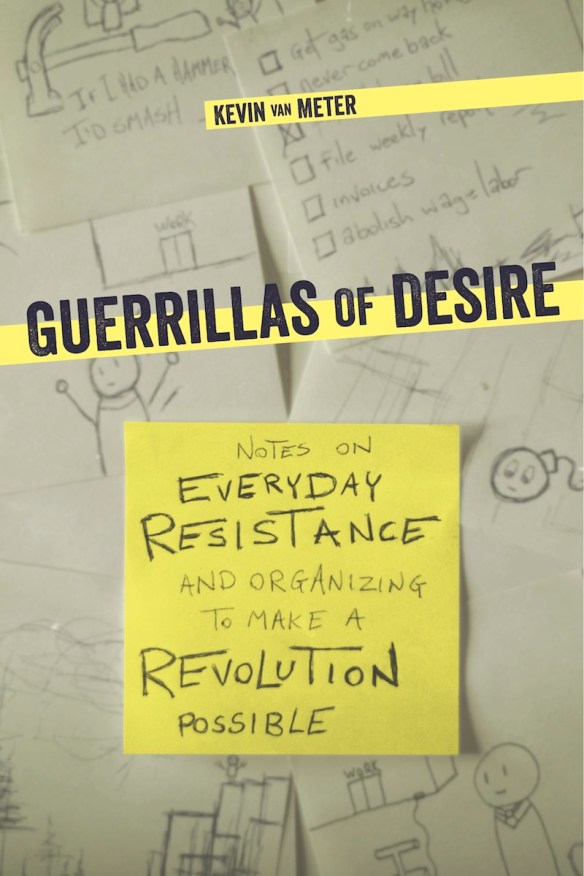








 After the Crash