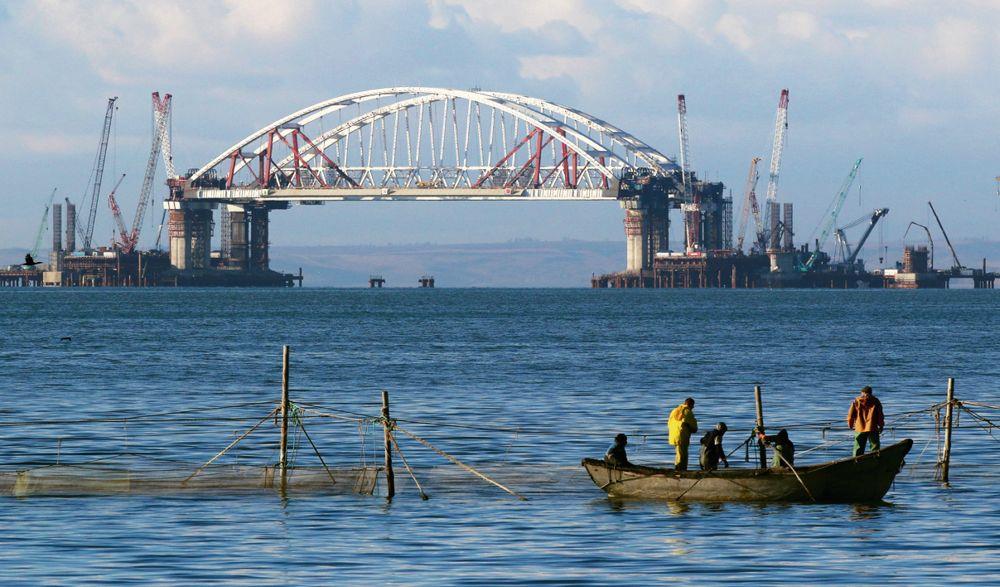
Two massive terrorist strikes misfired spectacularly and a terrible beauty is born in the Ukraine war. These two carefully planned attacks in quick succession — on Nord Stream gas pipelines and Crimean Bridge — were intended as a knockout blow to Russia. According to President Vladimir Putin, people ‘who want to finally sever ties between Russia and the EU, weaken Europe’ are behind the Nord Stream blasts. He named the US, Ukraine and Poland as ‘beneficiaries’.
Last Wednesday, Russia’s domestic intelligence service FSB identified Ukraine’s military intelligence chief, Kyrylo Budanov, as the mastermind behind the Crimean attack. The New York Times and Washington Post also pointed fingers at Kiev, quoting ‘sources’. While Nord Stream-1 has been crippled, one of the strings of Nord Stream-2 remains intact. Putin said last week that the pipeline could be restored and Russia could deliver about 27 billion cubic metres of gas. ‘The ball is on the side of the European Union, if they want — let’s turn on the tap,’ he said.
But mum’s the word from Brussels. It is a profoundly embarrassing moment for the EU. The triumphalism has vanished as Europe is threatened by years of recession caused by the blowback from sanctions against Russia, where the US insisted on the cut off of energy ties with Moscow. The EU has now become a captive market for Big Oil and is left to buy LNG from the US at the asking price, which is six to seven times higher than the domestic price in the US. (Contracted price for long-term Russian supply for Germany used to be about $280 per 1,000 cubic metres as against the current market price hovering around $2,000.)
Plainly put, the Europeans have been nicely played by the Americans. India should take note of the US’ sense of entitlement. Basically, the Biden administration created a contrived energy crisis whose real aim is war profiteering.
The Crimean Bridge attack of October 8 is much more serious. Zelenskyy has crossed a red line that Moscow had repeatedly warned him against. Putin has disclosed that there have also been three terrorist attacks against the Kursk NPP. Russians will settle for nothing less than the ouster of the Zelenskyy regime.
Russia’s retaliation against Ukraine’s ‘critical infrastructure’, something Moscow refrained from so far, has serious implications. Since October 9, Russia has begun systematically targeting Ukraine’s power system and railways. Noted Russian military expert Vladislav Shurygin told Izvestia that if this tempo was kept up for a week or so, it ‘will disrupt the entire logistics of the Ukrainian military — system for transporting personnel, military equipment, ammunition, related cargo, as well as the functioning of military and repair plants.’
The Americans are cocooned in a surreal world of their self-serving narrative that Russia ‘lost’ the war. In the real world, though, Ivan Tertel, KGB chief in Belarus, who has an insider view of Moscow, said last Tuesday that with Russia boosting its troop strength in the war zone — 3 lakh troops who have been mobilised plus 70,000 volunteers — and the deployment of advanced weaponry, ‘the military operation will enter a key phase. According to our estimates, a turning point will come in the period from November of this year to February of next year.’
Policy-makers and strategists in Delhi should make a careful note of the timeline. The bottom line is, Russia is looking for an all-out victory and will not settle for anything less than a friendly government in Kiev. Western politicians, including Biden, understand that there is nothing stopping the Russians now. The US’ weapon kitty is running dry as Kiev keeps asking for more.
When asked whether he’d meet Biden at the G20 in Bali, Putin derisively remarked on Friday, ‘He (Biden) should be asked whether he is ready to hold such negotiations with me or not. To be honest, I don’t see any need, by and large. There is no platform for any negotiations for the time being.’
However, Washington has not yet thrown in the towel and the Biden administration remains obsessed with exhausting the Russian military — even at the cost of Ukraine’s destruction. And, for the Russians too, there is still much to be worked out on the battlefield: the oppressed Russian populations in Odessa (which suffered unspeakable atrocities from the neo-Nazis), Mykolaiv, Zaporizhya, Dnipropetrovsk, Kharkov are expecting ‘liberation’. It’s a highly emotive issue for Russia. Again, the overarching agenda of ‘demilitarisation’ and ‘denazification’ of Ukraine must be taken to its logical conclusion.
When all that is over, Putin knows Biden will not even want to meet him. Hungarian PM Viktor Orban said last week, ‘Anyone who seriously believes that the war can be ended through Russian-Ukrainian negotiations lives in another world. Reality looks different. In reality, such issues can only be discussed between Washington and Moscow. Today, Ukraine is able to fight only because it receives military assistance from the United States…
‘At the same time, I do not see President Biden as the person who would really be suitable for such serious negotiations. President Biden has gone too far. Suffice it to recall his statements to Russian President Putin.’
India should expect the defeat of the US and NATO, which completes the transition to a multipolar world order. Sadly, Indian elites are yet to purge their ‘unipolar predicament’. Europe, including Britain, is devastated and there is palpable discontent over the US’s ‘transatlantic leadership’. Indo-Pacific strategy is hopelessly adrift. New power centres are emerging in India’s extended neighbourhood, as the OPEC’s rebuff to Washington shows. A profound adjustment is needed in the Indian strategic calculus.
President Joe Biden, with German Chancellor Olaf Scholz by his side, promised a White House press conference in early February that the U.S. was “able” to shut down the German-Russian Nord Stream 2 gas pipeline in the Baltic Sea if Russia invaded Ukraine.
A reporter asked Biden, “But how will you do that, exactly, since…the project is in Germany’s control?” Biden said: “I promise you, we will be able to do that.”
When Russia indeed invaded Ukraine on Feb. 24, Washington was able to get Berlin to suspend the pipeline project that was about to go online, even though it wasn’t in Germany’s interests.
The pipeline has remained closed ever since. Why then did someone attack the pipeline on Monday, releasing the gas it contained into the Baltic Sea? As long as the war continues, the U.S. has what it wants regarding the pipeline.
Evidently, the fear in Washington is that the war might not continue for as long as it wants. I argued on Feb. 4, twenty days before the invasion, that the U.S. was setting a trap for Russia and needed it to invade Ukraine in order to unleash an information, economic and proxy war with the ultimate aim of regime change in Moscow. All that was confirmed by March 27.
Since then the U.S. and Britain have done everything it can to keep the war going, and the economic sanctions in place. But those sanctions on Russia are devastating the European economy, driving energy prices up and shutting businesses down. Ordinary Europeans are facing a winter in which they may not be able to afford to heat their homes.
This has led to growing popular unrest and pressure on European governments to end the war, lift the sanctions and save their economies. Ending the war and lifting sanction would lead to the reopening of Nord Stream 2.
Offer to Resume Shipments
Three weeks ago, President Vladimir Putin told a press conference in Samarkand that Russia was ready to resume supplying natural gas to Germany if Germany lifted its economic sanctions against Russia. Putin said:
“After all, if they need [gas] urgently, if things are so bad, just go ahead and lift sanctions against Nord Stream 2, with its 55 billion cubic metres per year – all they have to do is press the button and they will get it going. But they chose to shut it off themselves; they cannot repair one pipeline and imposed sanctions against the new Nord Stream 2 and will not open it. Are we to blame for this? Let them think hard about who is to blame and let none of them blame us for their own mistakes. Gazprom and Russia have always fulfilled and will fulfil all obligations under our agreements and contracts, with no failures ever.”
So the offer is there to return normal gas supplies to Europe if the sanctions are lifted. With the war having passed into its most dangerous phase, there is a growing urgency to stop the war, including talk of a Saudi-led peace process in which Ukraine would cede territory to Russia in exchange for peace.
If momentum grows for a peace deal of any kind it would ruin Washington’s long-term plans to weaken Russia. It would mean Nord Stream 2 would reopen, which would help Germany and Russia, but crush U.S. aims at regime change and making Europe dependent on U.S. energy.
“I promise you, we will be able” to shut down Nord Stream 2, Biden vowed. But how would the U.S. do that if Germany became poised to reopen it?
My forebodings/predictions about the Kremlin’s limited go-slow war in Ukraine are proving correct. Putin and Russia are demonized. Unprecedented sanctions amounting to piracy and theft have been imposed on Russia. The US and Europe are joining the war as de facto combatants. More countries are joining NATO with the result being the prospect of more US missile bases on Russia’s borders. The Western media controls the narrative, which is Russia is losing and can be defeated with more many billions of dollars from the US and more weapons that enrich the US military/security complex. Why any Russian government would expose itself to this and so many chances for miscalculation that ends in WW III is a mystery. What did the Kremlin imagine it was achieving by creating a situation that exposed Rusaia to many months of war propaganda, punishment, and Western preparations for wider war?
What peace needed was a quick decisive Russian victory that demonstrated extraordinary military power that completely stopped any further Western provocations of Russia. But the Kremlin was too liberal-minded to do what was neccessary. Consequently the Kremlin made a strategic error, dropped the ball and has failed to protect Russia from provocations that are leading to WW III.
Instead, the Kremlin filled with liberal delusions long discarded in the West decided to show a good side by limiting itself to the rescue of the Donbass Russians. This gave the West all it needed to present Russia as a military incompetent upstart. Among the Kremlin’s errors, the Kremlin overlooked that Ukraine’s distress from the limited Russian intervention created an opportunity for Poland to claim former Polish territories in western Ukraine where there are no Russian troops engaged. It is possible that the Polish government, disinformed by Western media’s picture of Russian military failure in Ukraine, will occupy western Ukraine as preparation to reclaiming it as Russia did Crimea and now Donbass. As Russia will have eastern and southern Ukraine, the country could simply disappear as Poland resurrects greater Poland. In its history, Ukraine has either been part of Poland’s empire or part of Russia.
If Poland moves into western Ukraine as it is tempted to do, opportunities for Polish-Russian conflict arise. As Poland is a NATO member, Washington has given Poland, as the British government did with World War II’s “Polish Guarantee,” the power to start a world war.
The Polish government has a penchant for emotional decisons, not responsible decisions. Just as the Polish military dictatorship thought the “British Guarantee” protected them, causing them to spurn Hitler’s demand for the return of German territory stripped from Germany in the Versailles Treaty despite President Wilson’s “guarantee” of no territorial losses, the Polish government thinks today that NATO membership protects Poland from Russian retaliation.
The government in Warsaw does not comprehand that the “NATO Guarantee” is worth no more than the British Government’s guarantee that launched WW II.
The governments that comprise the Western World have given Poland, once again, the decision whether there is to be a World War.
This deplorable and unsettling fact stares us in the face, but no Western media, not even online media, acknowledges it.
The situation that exists today is that either Russia and China must accept US hegemony or the neoconservaties will push Russia and China into war with the West. The hegemonic ambition of the neoconservatives is inconsistent with a peaceful world.
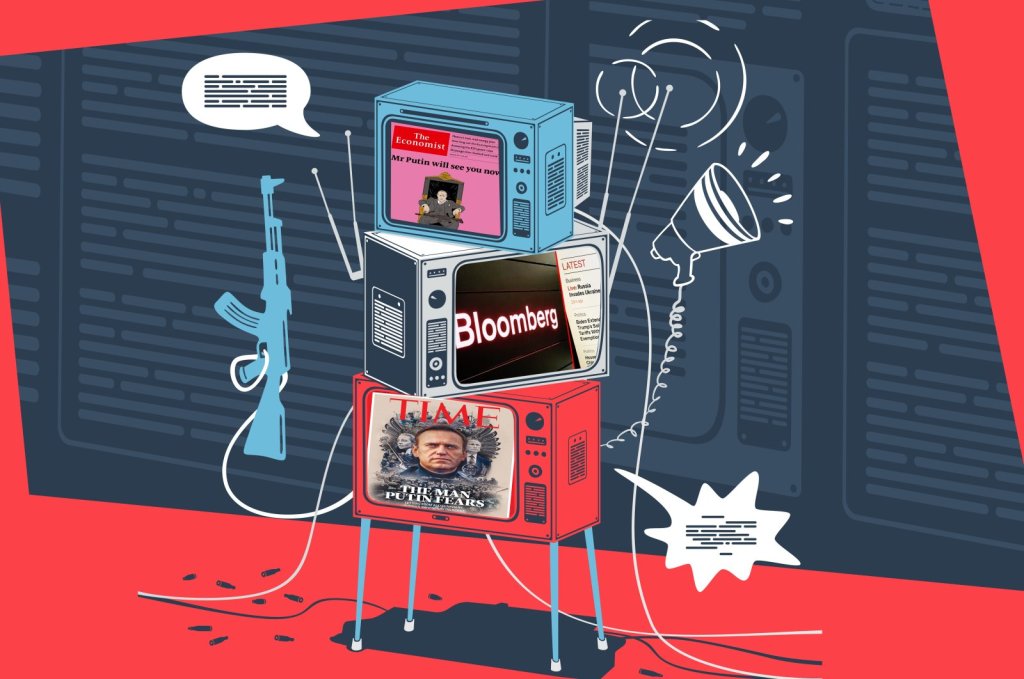
Marshall McLuhan’s prophecy that “the successor to politics will be propaganda” has happened. Raw propaganda is now the rule in Western democracies, especially the US and Britain
On matters of war and peace, ministerial deceit is reported as news. Inconvenient facts are censored, demons are nurtured. The model is corporate spin, the currency of the age. In 1964, McLuhan famously declared, “The medium is the message.” The lie is the message now.
But is this new? It is more than a century since Edward Bernays, the father of spin, invented “public relations” as a cover for war propaganda. What is new is the virtual elimination of dissent in the mainstream.
The great editor David Bowman, author of The Captive Press, called this “a defenestration of all who refuse to follow a line and to swallow the unpalatable and are brave”. He was referring to independent journalists and whistle blowers, the honest mavericks to whom media organisations once gave space, often with pride. The space has been abolished.
The war hysteria that has rolled in like a tidal wave in recent weeks and months is the most striking example. Known by its jargon, “shaping the narrative”, much if not most of it is pure propaganda.
The Russians are coming. Russia is worse than bad. Putin is evil, “a Nazi like Hitler”, salivated the Labour MP Chris Bryant. Ukraine is about to be invaded by Russia – tonight, this week, next week. The sources include an ex CIA propagandist who now speaks for the US State Department and offers no evidence of his claims about Russian actions because “it comes from the US Government”.
The no-evidence rule also applies in London. The British Foreign Secretary, Liz Truss, who spent £500,000 of public money flying to Australia in a private plane to warn the Canberra government that both Russia and China were about to pounce, offered no evidence. Antipodean heads nodded; the “narrative” is unchallenged there. One rare exception, former prime minister Paul Keating, called Truss’s warmongering “demented”.
Truss has blithely confused the countries of the Baltic and Black Sea. In Moscow, she told the Russian foreign minister that Britain would never accept Russian sovereignty over Rostov and Voronezh – until it was pointed out to her that these places were not part of Ukraine but in Russia. Read the Russian press about the buffoonery of this pretender to 10 Downing Street and cringe.
This entire farce, recently starring Boris Johnson in Moscow playing a clownish version of his hero, Churchill, might be enjoyed as satire were it not for its wilful abuse of facts and historical understanding and the real danger of war.
Vladimir Putin refers to the “genocide” in the eastern Donbas region of Ukraine. Following the coup in Ukraine in 2014 – orchestrated by Barack Obama’s “point person” in Kyiv, Victoria Nuland – the coup regime, infested with neo-Nazis, launched a campaign of terror against Russian-speaking Donbas, which accounts for a third of Ukraine’s population.
Overseen by CIA director John Brennan in Kyiv, “special security units” coordinated savage attacks on the people of Donbas, who opposed the coup. Video and eyewitness reports show bussed fascist thugs burning the trade union headquarters in the city of Odessa, killing 41 people trapped inside. The police are standing by. Obama congratulated the “duly elected” coup regime for its “remarkable restraint”.
In the US media the Odessa atrocity was played down as “murky” and a “tragedy” in which “nationalists” (neo-Nazis) attacked “separatists” (people collecting signatures for a referendum on a federal Ukraine). Rupert Murdoch’s Wall Street Journal damned the victims – “Deadly Ukraine Fire Likely Sparked by Rebels, Government Says”.
Professor Stephen Cohen, acclaimed as America’s leading authority on Russia, wrote, “The pogrom-like burning to death of ethnic Russians and others in Odessa reawakened memories of Nazi extermination squads in Ukraine during world war two. [Today] storm-like assaults on gays, Jews, elderly ethnic Russians, and other ‘impure’ citizens are widespread throughout Kyiv-ruled Ukraine, along with torchlight marches reminiscent of those that eventually inflamed Germany in the late 1920s and 1930s…
“The police and official legal authorities do virtually nothing to prevent these neo-fascist acts or to prosecute them. On the contrary, Kyiv has officially encouraged them by systematically rehabilitating and even memorialising Ukrainian collaborators with Nazi German extermination pogroms, renaming streets in their honour, building monuments to them, rewriting history to glorify them, and more.”
Today, neo-Nazi Ukraine is seldom mentioned. That the British are training the Ukrainian National Guard, which includes neo-Nazis, is not news. (See Matt Kennard’s Declassified report in Consortium 15 February). The return of violent, endorsed fascism to 21st-century Europe, to quote Harold Pinter, “never happened … even while it was happening”.
On 16 December, the United Nations tabled a resolution that called for “combating glorification of Nazism, neo-Nazism and other practices that contribute to fuelling contemporary forms of racism”. The only nations to vote against it were the United States and Ukraine.
Almost every Russian knows that it was across the plains of Ukraine’s “borderland” that Hitler’s divisions swept from the west in 1941, bolstered by Ukraine’s Nazi cultists and collaborators. The result was more than 20 million Russian dead.
Setting aside the manoeuvres and cynicism of geopolitics, whomever the players, this historical memory is the driving force behind Russia’s respect-seeking, self-protective security proposals, which were published in Moscow in the week the UN voted 130-2 to outlaw Nazism. They are:
– NATO guarantees that it will not deploy missiles in nations bordering Russia. (They are already in place from Slovenia to Romania, with Poland to follow) – NATO to stop military and naval exercises in nations and seas bordering Russia. – Ukraine will not become a member of NATO. – the West and Russia to sign a binding East-West security pact. – the landmark treaty between the US and Russia covering intermediate-range nuclear weapons to be restored. (The US abandoned it in 2019)
These amount to a comprehensive draft of a peace plan for all of post-war Europe and ought to be welcomed in the West. But who understands their significance in Britain? What they are told is that Putin is a pariah and a threat to Christendom.
Russian-speaking Ukrainians, under economic blockade by Kyiv for seven years, are fighting for their survival. The “massing” army we seldom hear about are the thirteen Ukrainian army brigades laying siege to Donbas: an estimated 150,000 troops. If they attack, the provocation to Russia will almost certainly mean war.
In 2015, brokered by the Germans and French, the presidents of Russia, Ukraine, Germany and France met in Minsk and signed an interim peace deal. Ukraine agreed to offer autonomy to Donbas, now the self declared republics of Donetsk and Luhansk.
The Minsk agreement has never been given a chance. In Britain, the line, amplified by Boris Johnson, is that Ukraine is being “dictated to” by world leaders. For its part, Britain is arming Ukraine and training its army.
Since the first Cold War, NATO has effectively marched right up to Russia’s most sensitive border having demonstrated its bloody aggression in Yugoslavia, Afghanistan, Iraq, Libya and broken solemn promises to pull back. Having dragged European “allies” into American wars that do not concern them, the great unspoken is that NATO itself is the real threat to European security.
In Britain, a state and media xenophobia is triggered at the very mention of “Russia”. Mark the knee-jerk hostility with which the BBC reports Russia. Why? Is it because the restoration of imperial mythology demands, above all, a permanent enemy? Certainly, we deserve better.
New leaked documents show Reuters’ and the BBC’s involvement in covert UK FCO programs to effect “attitudinal change” and “weaken the Russian state’s influence,” alongside intel contractors and Bellingcat.
The UK Foreign and Commonwealth Office (FCO) have sponsored Reuters and the BBC to conduct a series of covert programs aimed at promoting regime change inside Russia and undermining its government across Eastern Europe and Central Asia, according to a series of leaked documents.
The leaked materials show the Thomson Reuters Foundation and BBC Media Action participating in a covert information warfare campaign aimed at countering Russia. Working through a shadowy department within the UK FCO known as the Counter Disinformation & Media Development (CDMD), the media organizations operated alongside a collection of intelligence contractors in a secret entity known simply as “the Consortium.”
Through training programs of Russian journalists overseen by Reuters, the British Foreign Office sought to produce an “attitudinal change in the participants,” promoting a “positive impact” on their “perception of the UK.”
“These revelations show that when MPs were railing about Russia, British agents were using the BBC and Reuters to deploy precisely the same tactics that politicians and media commentators were accusing Russia of using,” Chris Williamson, a former UK Labour MP who attempted to apply public scrutiny to the CDMD’s covert activities and was stonewalled on national security grounds, told The Grayzone.
“The BBC and Reuters portray themselves as an unimpeachable, impartial, and authoritative source of world news,” Williamson continued, “but both are now hugely compromised by these disclosures. Double standards like this just bring establishment politicians and corporate media hacks into further disrepute.”
Thomson Reuters Foundation spokesperson Jenny Vereker implicitly confirmed the authenticity of the leaked documents in an emailed response to questions from The Grayzone. However, she contended, “The inference that the Thomson Reuters Foundation was engaged in ‘secret activities’ is inaccurate and misrepresents our work in the public interest. We have for decades openly supported a free press and have worked to help journalists globally to develop the skills needed to report with independence.”
The tranche of leaked files closely resemble UK FCO-related documented released between 2018 and 2020 by a hacking collective calling itself Anonymous. The same source has claimed credit for obtaining the latest round of documents.
The new leaks illustrate in alarming detail how Reuters and the BBC – two of the largest and most distinguished news organizations in the world – attempted to answer the British foreign ministry’s call for help in improving its “ability to respond and to promote our message across Russia,” and to “counter the Russian government’s narrative.” Among the UK FCO’s stated goals, according to the director of the CDMD, was to “weaken the Russian State’s influence on its near neighbours.”
Reuters and the BBC solicited multimillion-dollar contracts to advance the British state’s interventionist aims, promising to cultivate Russian journalists through FCO-funded tours and training sessions, establish influence networks in and around Russia, and promote pro-NATO narratives in Russian-speaking regions.
In several proposals to the British Foreign Office, Reuters boasted of a global influence network of 15,000 journalists and staff, including 400 inside Russia.
The UK FCO projects were carried out covertly, and in partnership with purportedly independent, high-profile online media outfits including Bellingcat, Meduza, and the Pussy Riot-founded Mediazona. Bellingcat’s participation apparently included a UK FCO intervention in North Macedonia’s 2019 elections on behalf of the pro-NATO candidate.
The intelligence contractors that oversaw that operation, the Zinc Network, boasted of establishing “a network of YouTubers in Russia and Central Asia” while “supporting participants [to] make and receive international payments without being registered as external sources of funding.” The firm also touted its ability to “activate a range of content” to support anti-government protests inside Russia.
The new documents provide critical background on the role of NATO member states like the UK in influencing the color revolution-style protests waged in Belarus in 2020, and raise unsettling questions about the intrigue and unrest surrounding jailed Russian opposition figure Alexei Navalny.
Further, the materials cast serious doubt on the independence of two of the world’s largest and most prestigious media organizations, revealing Reuters and the BBC as apparent intelligence cut-outs feasting at the trough of a British national security state that their news operations are increasingly averse to scrutinizing.
Reuters solicits secret British Foreign Office contract to infiltrate Russian media
A series of official documents declassified in January 2020 revealed that Reuters was secretly funded by the British government throughout the 1960s and 1970s to assist an anti-Soviet propaganda organization run by the MI6 intelligence agency. The UK government used the BBC as a pass-through to conceal payments to the news group.
The revelation prompted a Reuters spokesman to declare that “the arrangement in 1969 [with the MI6] was not in keeping with our Trust Principles and we would not do this today.”
The Trust Principles outline a mission of “preserving [Reuters’] independence, integrity, and freedom from bias in the gathering and dissemination of information and news.”
In its own statement of values, the BBC proclaims, “Trust is the foundation of the BBC. We’re independent, impartial and honest.”
However, the newly leaked documents analyzed by The Grayzone appear to reveal that both Reuters and the BBC are engaged yet again in a non-transparent relationship with the UK’s foreign ministry to counter and undermine Russia.
In 2017, the non-profit arm of the Reuters media empire, the Thomson Reuters Foundation (TRF), delivered a formal tender offering to “enter into a Contract with the Secretary of State for Foreign Affairs, as represented by the British Embassy Moscow, for the provision of a project ‘Capacity Building in Russian Media.’” The letter was signed by Reuters CEO Monique Ville on July 31, 2017.
Reuters’ tender was a response to a call for bids by the FCO, which sought help in implementing “a programme of themed tours to the UK by Russian journalists and online influencers.”
Working through the British Embassy in Moscow, the FCO sought to produce an “attitudinal change in the participants,” promoting a “positive impact” on their “perception of the UK.”
In 2019, the FCO put forward a similar initiative, this time articulating a more aggressive plan to “counter the Russian government’s narrative and domination of the media and information space.” In effect, the British government was seeking to infiltrate Russian media and propagate its own narrative through an influence network of Russian journalists trained in the UK.
Reuters responded to both calls by the FCO with detailed tenders. In its first bid, the media giant boasted of establishing a global network of 15,000 journalists and bloggers through “capacity building interventions.” In Russia, it claimed at least 400 journalists had been cultivated through its training programs.
Reuters claimed to have performed 10 previous training tours for 80 Russian journalists on behalf of the British embassy in Moscow. It proposed eight more, promising to promote “UK cultural and political values” and “create a network of journalists across Russia” bonded together by a shared “interest in British affairs.”
Reuters’ tender highlighted the institutional prejudices and interventionist agenda that underlined its training programs. Detailing a series of UK FCO-funded programs dedicated to “countering Russian state-funded propaganda,” Reuters conflated Russian government narratives with extremism. Ironically, it referred to its own efforts at weakening them as “unbiased journalism.”
At the same time, Reuters appeared to recognize that its covert collaboration with the British Embassy in Moscow was highly provocative and potentially destructive to diplomatic relations. Recounting a UK FCO-funded tour it ran for Russian journalists in the midst of the Sergei Skripal affair, after the British government accused Moscow of poisoning a turncoat Russian intelligence officer who spied for Britain, the tender stated, “[Thomson Reuters Foundation] was in constant communication with the British Embassy in Moscow, to assess levels of risk, including reputational risk to the embassy.”
The mention by Reuters of the Belarusian TV Station Belsat, and its particular relevance “to the UK Government Strategy’s capacity to detect and counter the spread of Russian information” was notable. While describing itself as “the first independent television channel in Belarus,” Belsat is, as the Reuters tender makes clear, a vehicle of NATO influence.
Based in Poland and funded by the Polish Foreign Ministry and other EU governments, Belsat played an influential role in promoting the color revolution-style protests that erupted in May 2020 to demand the ouster of Belarusian President Alexander Lukashenko.
Ultimately, Reuters’ bid appears to have been successful, as it received a July 2019 contract with the FCO’s Conflict, Stability & Security Fund (CSSF). But neither entity seemed to want the public to know about their collaboration on a project designed to counter Russia. The contract was marked “Strictly Confidential.”
“Weaken the Russian state’s influence”
The programs exposed through the latest leak of documents operate under the auspices of a shadowy division of the Foreign and Commonwealth Development Office called Counter Disinformation & Media Development (CDMD). Led by an intelligence operative named Andy Pryce, the program has shrouded in secrecy.
Indeed, the British government has denied freedom of information requests about the division’s budget and stonewalled members of parliament like Chris Williamson who sought data about its budget and agenda, citing national security to block their demands for information.
“When I tried to probe further,” former MP Williamson told The Grayzone, “ministers refused to let me have access to any documents or correspondence relating to this organization’s activities. I was told that releasing this information could ‘disrupt and undermine the program’s effectiveness.’”
During a meeting convened in London on June 26, 2018, Pryce outlined a new FCO program “to weaken the Russian State’s influence on its near neighbors.” He solicited a consortium of firms to assist the British state in establishing new and seemingly independent media outlets to counter Russian government-backed media in Moscow’s immediate sphere of influence, and to amplify the messaging of NATO-aligned governments.
Justified on the basis of Russia’s supposed intention to “sow disunity and course[sic] disruption to democratic processes,” the campaign Pryce laid out was more aggressive and far-reaching than anything Russia has been caught doing in the West.
Pryce emphasized that secrecy was of the essence, warning that “some grantees will not wish to be linked to the FCO.”
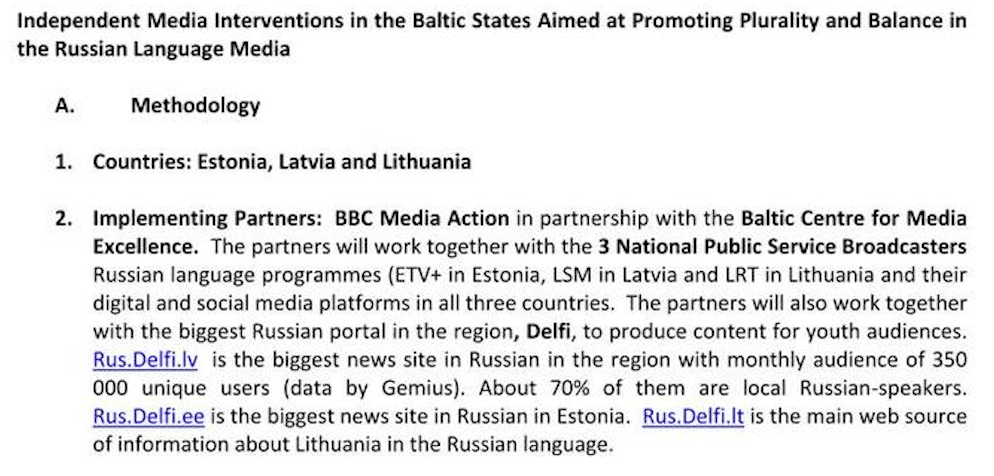
A year later, the FCO’s CDMD division outlined a program to run through 2022 at a cost of $8.3 million to the British taxpayer. It aimed to establish new outlets and support preexisting media operations “to counter Russia’s efforts to sow disunity” and “increase resilience to hostile Kremlin messaging in the Baltic states.”
Thus the British government set out with an array of intelligence contractors to dominate Baltic media with pro-NATO messaging – and perhaps sow some disunity of its own.
As seen below, the BBC placed an apparently successful bid to participate in the covert Baltic program through its non-profit arm, known as BBC Media Action.
The BBC also proposed to participate in a separate UK FCO media propaganda program in Ukraine, Moldova, and Georgia. It named Reuters and a now-defunct intelligence contractor called Aktis Strategy, which participated in previous FCO CDMD programs, as key allies in its consortium.
The BBC identified local partners like Hromadske, a Kiev-based broadcast network born in the midst of the so-called Maidan “Revolution of Dignity” in 2014 that relied on ultra-nationalist muscle to remove an elected president and install a pro-NATO regime. Hromadske materialized almost overnight with seed money and logistical support from the US Agency for International Development (USAID) and billionaire media mogul Pierre Omidyar’s Network Fund.
BBC Media Action proposed working through Aktis to cultivate and grow pro-NATO media in conflict areas like the Donbas region of eastern Ukraine, where a proxy war has raged since 2014 between the Western-backed Ukrainian military and pro-Russian separatists. It was textbook information warfare, weaponizing broadcast media to turn the tide of battle in a protracted, grinding conflict.
The UK FCO propaganda campaign warned that “Kremlin-affiliated structures” could undermine the project if it was exposed. For a media organization that claims to place trust at the heart of its charter of values, the BBC was certainly operating under a high degree of secrecy.
The UK FCO’s meddling in Eastern Europe and the Baltics created a feeding frenzy among contractors seeking to provide “capacity building” and media development assistance on Russia’s periphery. Among the bidders were Reuters and veteran FCO contractors that had participated in an array of information warfare campaigns from Syria to the British home front.
The Consortium
Among the intelligence contractors bidding to participate in the UK FCO-funded Consortium were the Zinc Network and Albany Communications. As journalist Kit Klarenberg noted in a February 18 report on the recent FCO leaks, these firms “boast staff possessed of [security] clearances, individuals who previously served at the highest levels of government, the military and security services. They furthermore have extensive experience in conducting information warfare operations on London’s behalf the world over.”
Previously known as Breakthrough, Zinc has contracted for the UK Home Office to covertly implement media projects propagandizing British Muslims under the auspices of the Prevent de-radicalization initiative. In Australia, Zinc was caught running a clandestine program to promote support for government policies among Muslims.
Ben Norton reported for The Grayzone on Albany’s record of “secur[ing] the participation of an extensive local network of over 55 stringers, reporters and videographers” to influence media narratives and advance Western regime-change goals in Syria, while conducting public relations services on behalf of extremist Syrian militias funded by NATO member states and Gulf monarchies to destabilize the country.
In its bid for the UK FCO media program in the Baltic region, Albany proposed a series of satirical “interactive games” like “Putin Bingo” to encourage opposition to the Russian government and exploit “frustrations experienced by Russians in the EU.”
Albany pitched a Latvia-based outlet called Meduza as “a leading proponent of these games.” A top website among Russian opposition supporters, Meduza has received financial support from the Swedish government and several billionaire-backed pro-NATO foundations.
As a UK FCO contractor, the Zinc Network said it was “delivering audience segmentation and targeting support” not only to Meduza, but also to Mediazona, a supposedly independent media venture founded by two members of the anti-Kremlin performance art group Pussy Riot.
One of Mediazona’s founders, Nadya Tolokonnikova, shared a stage with former US President Bill Clinton at the Clinton Foundation’s 2015 conference. The following year, Tolokonnikova trashed now-imprisoned Wikileaks founder Julian Assange, claiming, “He’s connected with the Russian government, and I feel that he’s proud of it.”
Besides delivering “targeting support” for “independent” outlets pushing the right line against the Kremlin, Zinc proposed leveraging UK FCO funding into a program of direct payments and gaming Google search results in their favor. The intelligence cut-out was explicit about its desire to reduce the search visibility of the Russian government-backed broadcaster RT.com.
The UK covertly funded and managed a network of Russian YouTubers and “activated” anti-government protest content
In a document marked “private and confidential,” Zinc revealed the Consortium’s role in setting up a “YouTuber network” in Russia and Central Asia designed to propagate the message of the UK and its NATO allies.
According to Zinc, the Consortium was “supporting participants mak[ing] and receiv[ing] international payments without being registered as external sources of funding,” presumably to circumvent Russian registration requirements for foreign-funded media outfits.
Zinc also helped the YouTube influencers “develop editorial strategies to deliver key messages” while working “to keep their involvement confidential.” And it carried out its entire program of covert propaganda in the name of “promoting media integrity and democratic values.”
Perhaps the most prominent Russian YouTube influencer is Alexei Navalny, a previously marginal nationalist opposition figure who was nominated for a Nobel Prize after becoming the target of a high-profile poisoning incident that brought relations between Russia and the West to its post-Cold War nadir.
The Russian government’s sentencing of Navalny to a 2.5-year prison term for evading parole has inspired a new wave of anti-government protests. Back in 2018, Navalny personally co-sponsored national demonstrations against the banning of the encrypted messaging app Telegram.
In its bid for a UK FCO contract, Zinc revealed that it played a behind-the-scenes role “to activate a range of content within 12 hours of the recent telegram protests.” Whether those activities involved Navalny or his immediate network was unclear, but the private disclosure by Zinc appeared confirm that British intelligence played a role in amplifying the 2018 protests.
Russian intelligence services have released sting video footage showing Vladimir Ashurkov, the executive director of Navalny’s FBK anti-corruption organization, meeting in 2013 with a suspected British MI6 agent named James William Thomas Ford, who was operating out of the British embassy in Moscow. During the rendezvous, Ashurkov can be heard asking for 10 to 20 million dollars to generate “quite a different picture” of the political landscape.
In 2018, Ashurkov’s name appeared in leaked documents exposing a covert, UK FCO influence network called the Integrity Initiative. As The Grayzone reported, the Integrity Initiative operated behind the cover of a think tank called the Institute for Statecraft, which concealed its own location through a fake office in Scotland.
Run by a group of military intelligence officers, the secret propaganda group worked through clusters of media and political influencers to escalate tensions between the West and Russia. Listed among the London cluster of anti-Russian influencers was Ashurkov.
The Integrity Initiative’s military directors outlined their agenda in stark, unequivocal terms. As the leaked memo below illustrates, they aimed to exploit the media, think tanks and their influence network to stir up as much hysteria about Russia’s supposedly malign influence as possible. Since they embarked on their covert campaign, nearly all their wishes have come true.
Bellingcat joins the Zinc Network, allegedly meddles in Moldova’s elections
After Alexei Navalny’s poisoning, he collaborated with the UK-based “open source” journalism outfit Bellingcat to pin the crime on Russia’s FSB intelligence services. Though it is well established that Bellingcat is funded by the National Endowment for Democracy, a US government entity that supports regime-change operations around the globe, the fact has never appeared in the reams of fawning profiles that corporate media outlets, including Reuters, have published about the organization.
Bellingcat’s role as a partner in the Zinc Network’s UK FCO-funded EXPOSE Consortium may add an additional layer of suspicion about the outlet’s claim to independence.
Indeed, Bellingcat was listed in leaked 2018 documents as a key member of Zinc’s “Network of NGOs.” Among the members in the network was the Institute for Statecraft, the front for the Integrity Initiative.
Bellingcat founder Eliot Higgins has vehemently denied accepting funding from the UK FCO or collaborating with it. But after Zinc documents leaked in early 2019, Higgins disclosed that some version of the Zinc proposal had received the green light from the Foreign Office.
Christian Triebbert, a Bellingcat staff member who was named as a potential trainer by the Zinc documents, and who now heads the New York Times’ video investigations unit, claimed the program consisted of benign workshops on “digital research and verification skills.”
What he and Higgins did not mention, however, was that Bellingcat had apparently been dispatched by the Zinc Network to “respond” to the 2019 parliamentary elections in North Macedonia. Stakes were high as the elections were likely to determine whether the tiny country would enter NATO and join the EU. The pro-NATO candidate triumphed, and not without a little help from the British Foreign Office and its allies.
According to the Zinc proposal, Bellingcat provided training to the Most Network, a Macedonian media outlet. It was joined by DFR Lab, a project of the NATO- and US government-funded Atlantic Council in Washington, DC.
After apparently participating in the covert UK FCO-funded intervention in North Macedonia, Bellingcat published an article ahead of the country’s 2020 parliamentary elections entitled, “Russia’s interference in North Macedonia.”
Several Zinc Network documents list Reuters as a member of the UK FCO-funded Consortium media intervention in the Baltic states.
Asked by The Grayzone how Reuters’ participation in UK FCO-funded programs aimed at countering Russia conformed to the news organization’s Trust Principles, spokesperson Jenny Vereker stated, “This funding supports our independent work to assist journalists and journalism all over the world, as part of our mission to strengthen a free and vibrant global media ecosystem to support a plurality of voices and preserve the flow of accurate and independent information. This is because accurate and balanced news coverage is a crucial pillar of any free, fair and informed society.”
In recent years, the BBC and Reuters have played an increasingly aggressive part in demonizing the governments of countries where London and Washington are seeking regime change. Meanwhile, high-profile online investigative outlets like Bellingcat have sprouted up seemingly overnight to assist these efforts.
With the release of the UK FCO documents, questions must be raised about whether these esteemed news organizations are truly the independent and ethical journalistic entities they claim to be. While they hammer away at “authoritarian” states and malign Russian activities, they have little to say about the machinations of the powerful Western governments in their immediate midst. Perhaps they are reluctant to bite the hand that feeds them.
The influence on public opinion is one of the primary functions of the information space, presented today not only by TV, radio and print media, but also by the Internet and social networks. Therefore, it isn’t surprising that the CIA is especially focused on obtaining control of the information field and seeks ways to influence it. Thus, in the middle of the last century, the agency began a large-scale secret operation named Mockingbird on the territory of the U.S. and abroad. Most of the documents related to said operation are still classified. The purpose of Operation Mockingbird was to secure the CIA’s control over the media and the information space in America and beyond by establishing an extensive network of agents in leading publications, news outlets, radio and television all around the world.
After numerous pieces of evidence of illegal CIA activities in the media, including those executed through Operation Mockingbird, a special working group called the Church Committee (named after Senator Frank Forrester Church III, a Democrat from Idaho) was established in 1975 in the U.S. Senate. The Commission was later transformed into the Senate’s Select Committee on Intelligence.
In 1976, the Committee even prepared a separate report detailing the CIA’s interference into the U.S. and foreign media in order to misinform the public. In particular, the report notes: “The CIA currently maintains a network of several hundred foreign individuals around the world who provide intelligence for the CIA and at times attempt to influence opinion through the use of covert propaganda. These individuals provide the CIA with direct access to a large number of newspapers and periodicals, scores of press services and news agencies, radio and television stations, commercial hook publishers, and other foreign media outlets.”
After investigations and hearings held by the U.S. Congress, it was decided to forbid the CIA to continue Operation Mockingbird. In 1976, George W. Bush, appointed director of the CIA, even announced the following new policy: “Effective immediately, the CIA will not enter into any paid or contractual relationship with any full‑time or part‑time news correspondent accredited by any U.S. news service, newspaper, periodical, radio or television network or station.” However, he added that the CIA will continue to ‘value’ voluntary cooperation with journalists, which is obviously always influenced by money.
Many experts are convinced that Operation Mockingbird has not been completely terminated and is being carried out not only through traditional media, but also in the cyberspace. The operation’s main targets in its current form are all those who speak against the policy of the White House. From here arise numerous anti-Russian and xenophobic campaigns of the U.S. special services, which preserve the CIA’s traditions of working not only with journalists, but also with social networks controlled by Washington.
A large-scale research “The Global Disinformation Order 2019: Global Inventory of Organised Social Media Manipulation” was carried out recently by Oxford University. It focuses on the ways public opinion is swayed by via the Internet and social networks. In the resulting report, the researchers showed that the number of countries where attempts of organized manipulation of public opinion with the help of social networks were detected has more than doubled since 2017. The authors registered 28 such countries back then, and the number went up to 48, then 70 in 2018 and 2019 respectively. 25 countries cooperate with private Internet companies to disseminate propaganda on the Internet. The most popular among them is Facebook, and the second most popular platform for attempts at manipulation is Twitter. At the same time, the researchers found that 56 countries, in one way or another, have organized campaigns to misinform users of social networks. The leading perpetrators are the United States and the United Kingdom.
Today many countries possess special cyber forces, whose representatives use social networks to try and influence the opinion of Internet users from certain countries, different religions and political beliefs. Special attention is paid to such efforts in the Pentagon and American security services. Only Americans (ideally those who know the language of the country being manipulated) are involved in these activities. The CIA’s website even has a detailed description of the people who can apply for such jobs. In order to further impact the public, today the FBI is even trying to recruit Russians living in the United States through social networks (in particular, Facebook), as reported by CNN.
Anti-Russian sentiment of the main direction of Operation Mockingbird is evidenced by several media outlets which are independent from Washington. The same goals are pursued today by U.S. intelligence agencies. “The U.S. State Department considers the battle against state-run media from Russia, Iran and China one of its top priorities,” said Acting U.S. Deputy Secretary of State Heather Nauert in March 2018. That is why the U.S. budget for fiscal year 2019 includes $661 million meant to finance the BBG (Broadcasting Board of Governors), which is engaged in anti-Russian propaganda. The White House project for the budget of the U.S. government in 2021 entails the allocation of $700 million for the information war ‘against Russia’s destructive influence.’
Britain is not behind the United States in waging a hybrid war. A special unit in the British cyber forces is called JTRIG, and it is this unit’s ‘specialists’ who quite often carry out propagandistic cyber operations, which have recently most often been directed against Russia. Among these are the anti-Russian fuss around Skripal poisoning, groundless accusations of Russia’s alleged involvement in the crash of the Malaysian plane MH-17 over Donetsk, and accusations of Moscow’s aggressive actions in Syria. Such work is done using both the cyberspace, as well as media which are loyal to London. The 77th brigade of these troops is working specifically on Twitter. They actively attempt to undermine the users’ faith in their own beliefs, trying to convey ‘their thoughts’ by appealing to emotions. Further promotion of the propagandistic struggle against Russia, £18 million is going to be spent by the British government on ‘counteraction’ in Eastern Europe and on strengthening the ‘independent media’ in the Western Balkans. This was reported by the press service of the British Foreign Office.
NATO also has a cyber force, which includes over 13,000 military personnel. The organization is called CCDCEO and is located in Tallinn.
Governments have long used propaganda, but digital tools have made it more complex and effective. Over the past few years, intelligence agencies have mirrored the experience of activists in using social media to disseminate information and are now actively using these methods. Additionally, interactive tools, such as data analysis software, allow for adapting cyber warfare to be more effective against certain groups of people, maximizing its impact.
The persecution of Julian Assange is one of those breakthrough moments when suddenly people realise that almost everything they have been told to believe is not true.
This week the Australian-born journalist and publisher has been subjected to a show trial in a British court with the threat of extradition to the United States looming. If he is extradited, the 48-year old is facing 175 years – a death sentence – in prison on wholly contrived espionage charges.
Assange is being persecuted for the sole and simple reason that he exposed war crimes and systematic corruption by the US government and its Western allies. His years of arbitrary detention and the torture endured over the past year while in solitary confinement in a British dungeon are a grim warning to all citizens. The warning is that their supposed democratic rights are non-existent as far as the powers in Washington and London are concerned. If you dare speak truth to power, then this fate will also be yours.
Thus, when it gets down to it, the harsh reality is that there is no such thing as democracy in the US or Britain. Elections and media are but window-dressing to hide the brutal truth that fundamental, basic democratic rights of free speech and due legal process are not inalienable principles, but rather are dispensable privileges whenever the powers-that-be ordain so.
Julian Assange’s incarceration and pillorying is like an inquisition from medieval times happening in the year 2020. He dared expose the rampant, systematic crimes of so-called authorities through his Wikileaks site. His blasphemy was to expose the charlatans and mass-killers who masquerade as pious leaders.
Those revelations showed the public that the pretensions of democracy and rule of law by the American and British governments are nothing but hypocritical, empty posturing. Assange’s courageous publishing work demonstrated how those governments have waged criminal wars and committed genocidal crimes; how they have made a mockery of international law and democratic rights. And for that heroic service to public truth and empowerment with the truth, Assange is being pilloried like a rebellious serf by overlords posing as “governments” and “judges”.
Assange’s show trial is also powerfully revealing of the real nature of Western so-called news media. Not one of the major US or British news outlets have given any coverage, let alone comment, regarding his week-long extradition trial.
A journalist and publisher is being whipsawed in the court as if he is a dangerous terrorist. He is denied elementary due process by being confined to a glass-cage dock, not able to communicate with his defence lawyers, unable to even hear what his accusers are claiming.
His extradition, to be determined at a future court hearing, seems like a foregone conclusion, such is the bias and hostility towards Assange from the presiding British judge, Vanessa Baraitser.
Given the international outcry from hundreds of doctors and UN representatives over Assange’s torture endured while in British custody, and given the grotesque abuse of legal process by the American and British so-called authorities, the case should be thrown out immediately – if there were any modicum of justice.
The vendetta against Assange tells us what kind of societies citizens (or rather subjects) are living under in the US and Britain. These states are oligarchies where “democratic rights” are strictly conditional on subjects not stepping out of line, such as criticising war crimes or illegal global spying.
Julian Assange has torn through the largely invisible matrix of propaganda and power that people really live under. The saccharin myths of “democracy” and “free speech” are shown for the ugly, putrid reality that they are. And the Western corporate-controlled media in their silence about what is going on are also condemned for the lying servile machines that they are.
We must not accept the fate being prepared for Assange as if it is inevitable or as if we are powerless to overthrow it. The first step towards freedom is truth, and thanks to Julian Assange, we have the power to be free. We know the tyrannical nature of the governments that presume to rule over us in our names. There must be a popular uprising in defence of Assange. Because no-one is free until he is.
A final note by way of testimony: anyone who has been enlightened by Wikileaks’ revelations over the past decade will know that the current escalation of conflict in Syria’s Idlib is due to NATO powers illegally occupying that country. They will know that NATO powers have for years covertly sponsored terror groups to carry out a criminal regime-change war. By contrast, anyone who relies on Western governments and mainstream media for “information” will have no idea whatsoever about what is really going in Syria. A wider war could erupt any day and those who are brainwashed by Western regimes and their media are impotent to stop it. The empowerment of citizens by Julian Assange and Wikileaks over the years is the difference between ending wars or fueling them.
The vendetta against Assange tells us what kind of societies citizens (or rather subjects) are living under in the US and Britain. These states are oligarchies where “democratic rights” are strictly conditional on subjects not stepping out of line, such as criticising war crimes or illegal global spying.
Julian Assange has torn through the largely invisible matrix of propaganda and power that people really live under. The saccharin myths of “democracy” and “free speech” are shown for the ugly, putrid reality that they are. And the Western corporate-controlled media in their silence about what is going on are also condemned for the lying servile machines that they are.
We must not accept the fate being prepared for Assange as if it is inevitable or as if we are powerless to overthrow it. The first step towards freedom is truth, and thanks to Julian Assange, we have the power to be free. We know the tyrannical nature of the governments that presume to rule over us in our names. There must be a popular uprising in defence of Assange. Because no-one is free until he is.
A final note by way of testimony: anyone who has been enlightened by Wikileaks’ revelations over the past decade will know that the current escalation of conflict in Syria’s Idlib is due to NATO powers illegally occupying that country. They will know that NATO powers have for years covertly sponsored terror groups to carry out a criminal regime-change war. By contrast, anyone who relies on Western governments and mainstream media for “information” will have no idea whatsoever about what is really going in Syria. A wider war could erupt any day and those who are brainwashed by Western regimes and their media are impotent to stop it. The empowerment of citizens by Julian Assange and Wikileaks over the years is the difference between ending wars or fueling them.
Chris Hedges gave this talk Tuesday, June 11, at an event held in London in support of Julian Assange.
Ask the Iraqi parents of Sabiha Hamed Salih, aged 15, and Ashwaq Hamed Salih, aged 16, who were killed by shrapnel in Baghdad on July 31, 2004, what they think of Julian Assange.
Ask the man and his two young daughters who saw their wife and mother shot to death and were themselves wounded in a car fired upon by U.S. Marines in Fallujah on July 22, 2005, what they think of Julian Assange.
Ask the parents of Huda Haleem, an 18-year-old girl, and Raghad Muhamad Haleem, a 5-year-old boy, shot dead by U.S. soldiers on June 2, 2006, in Iraq’s Diyala province what they think of Julian Assange.
Ask the parents of the 15-year-old boy choked with a wire and then shot to death by U.S. Marines in Ramadi on Aug. 10, 2006, what they think of Julian Assange.
Ask the relatives of Ahmed Salam Mohammad, who was shot dead on Nov. 27, 2006, when U.S. troops attacked a wedding party near Mosul, an attack that also left four wounded, what they think of Julian Assange.
Ask the families of the over one dozen people shot to death with .50-caliber machine guns by bantering U.S. Apache helicopter crews in east Baghdad in July 2007—the crew members can be heard laughing at the “dead bastards” and saying “light ’em up” and “keep shooting, keep shooting”—a massacre that included two journalists for Reuters—Namir Noor-Eldeen and Saeed Chmagh—what they think of Julian Assange. Ask the then 10-year-old Sajad Mutashar and his 5-year-old sister, Doaha, both wounded, whose 43-year-old father, Saleh, was shot to death from the air as he attempted to assist one of the wounded men in the Baghdad street what they think of Julian Assange.
There is nothing like the boot of the oppressor on your neck to give you moral clarity.
None of these war crimes, and hundreds more reported to the U.S. military but never investigated, would have been made public without Julian, Chelsea Manning and WikiLeaks. That is the role of journalists—to give a voice to those who without us would have no voice, to hold the powerful to account, to give the forgotten and the demonized justice, to speak the truth.
We have watched over the last decade as freedom of the press and legal protection for those who expose government abuses and lies have been obliterated by wholesale government surveillance and the criminalizing of the leaking and, with Julian’s persecution, publication of these secrets. The press has been largely emasculated in the United States. The repeated use of the Espionage Act, especially under the Obama administration, to charge and sentence whistleblowers has shut down our ability to shine a light into the inner workings of power and empire. Governmental officials with a conscience, knowing all of their communications are monitored, captured and stored by intelligence agencies, are too frightened to reach out to reporters. The last line of defense lies with those with the skills that allow them to burrow into the records of the security and surveillance state and with the courage to make them public, such as Edward Snowden, Chelsea Manning and Jeremy Hammond, now serving a 10-year prison term in the United States for hacking into the Texas-based private security firm Strategic Forecasting Inc., or Stratfor. The price of resistance is high not only for them, but for those such as Julian willing to publish this information. As Sarah Harrison has pointed out: “This is our data, our information, our history. We must fight to own it.”
Even if Julian were odious, which he is not, even if he carried out a sexual offense, which he did not, even if he was a poor houseguest—a bizarre term for a man trapped in a small room for nearly seven years under house arrest—which he was not, it would make no difference. Julian is not being persecuted for his vices. He is being persecuted for his virtues.
His arrest eviscerates all pretense of the rule of law and the rights of a free press. The illegalities carried by the Ecuadorian, British and U.S. governments in the seizure of Julian two months ago from the Ecuadorian Embassy in London are ominous. They presage a world where the internal workings, abuses, corruption, lies and crimes, especially war crimes, carried out by the global ruling elite will be masked from the public. They presage a world where those with the courage and integrity to expose the misuse of power, no matter what their nationality, will be hunted down around the globe and seized, tortured, subjected to sham trials and given lifetime prison terms. They presage an Orwellian dystopia where journalism is outlawed and replaced with propaganda, trivia, entertainment and indoctrination to make us hate those demonized by the state as our enemies.
The arrest of Julian marks the official beginning of the corporate totalitarianism and constant state surveillance, now far advanced in China, that will soon define our lives. The destruction of all protection of the rule of law, which is what we are witnessing, is essential to establishing an authoritarian or totalitarian state.
The BBC China correspondent Stephen McDonell was locked out of WeChatin China a few days ago after posting photos of the candlelight vigil in Hong Kong marking 30 years since student protesters in Beijing’s Tiananmen Square were gunned down by Chinese soldiers in June 1989.
“Chinese friends started asking on WeChat what the event was?” he wrote. “Why were people gathering? Where was it? That such questions were coming from young professionals here shows the extent to which knowledge of Tiananmen 1989 has been made to disappear in China. I answered a few of them, rather cryptically, then suddenly I was locked out of WeChat.”
In order to get back on WeChat he had to agree that he was responsible for spreading “malicious rumors” and provide what is called a faceprint.
“I was instructed to hold my phone up—to ‘face front camera straight on’—looking directly at the image of a human head. Then told to ‘Read numbers aloud in Mandarin Chinese.’ My voice was captured by the App at the same time it scanned my face.”
Governmental abuse of WeChat, he wrote, “could deliver to the Communist Party a life map of pretty much everybody in this country, citizens and foreigners alike. Capturing the face and voice image of everyone who was suspended for mentioning the Tiananmen crackdown anniversary in recent days would be considered very useful for those who want to monitor anyone who might potentially cause problems.”
This is almost certainly our future, and it is a future that Julian has fought courageously to prevent.
In another sign the noose is tightening, the offices of the Australian Broadcasting Corp., the country’s national broadcaster, were raided by federal police last Wednesday. The raid was carried out because the broadcaster had disclosed detailed accounts of Australian special forces in Afghanistan killing unarmed people, including children. That story was generated, in part, by a leak of hundreds of classified military documents. The police raid and search through raw footage and thousands of files, emails and internal documents appear to be part of a hunt for the source, who will, no doubt, be arrested and imprisoned.
Under what law did Ecuadorian President Lenín Moreno capriciously terminate Julian’s rights of asylum as a political refugee? Under what law did Moreno authorize British police to enter the Ecuadorian Embassy—diplomatically sanctioned sovereign territory—to arrest a nationalized citizen of Ecuador? Under what law did Prime Minister Theresa May order the British police to grab Julian, who has never committed a crime? Under what law did Donald Trump demand the extradition of Julian, who is not a U.S. citizen and whose news organization is not based in the United States?
The psychological torture of Julian—documented by the United Nations special rapporteur on torture and ill treatment, Nils Melzer—mirrors the breaking of the dissident Winston Smith at the end of the novel “1984.” It is said the Gestapo broke bones and the East German Stasi secret police broke souls. Today, we too have refined the cruder forms of torture of the Gestapo. We break souls as well as bodies. It is more effective. This is why Julian, his physical and psychological health in serious decline, has been moved to a prison hospital. We can all be taken to George Orwell’s dreaded Room 101 to be made compliant and harmless. These “special administrative measures”—and you can be sure there are American intelligence operatives here assisting the British in the psychological torture of Julian—have destroyed thousands of detainees in black sites around the globe. These techniques, including prolonged solitary confinement, are the staple form of control in maximum-security prisons in the United States, where the corporate state makes war on its most oppressed and politically astute underclass—African Americans.
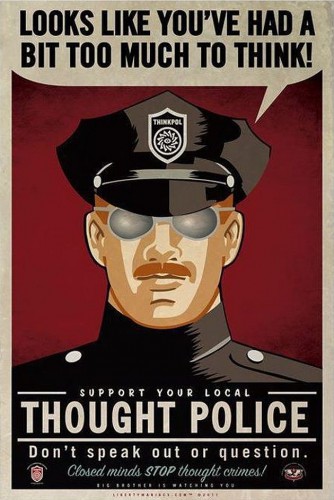
There has been a coordinated smear campaign against Julian by our Thought Police, one that is amplified by the very media organizations that published WikiLeaks material. The campaign was detailed in a leaked Pentagon document prepared by the Cyber Counterintelligence Assessments Branch and dated March 8, 2008. The document called for eradicating the “feeling of trust” that is WikiLeaks’ “center of gravity” and destroying Julian’s reputation.
This character assassination was championed by the Democratic Party establishment after WikiLeaks published 70,000 hacked emails copied from the accounts of John Podesta, Hillary Clinton’s campaign chairman. The Podesta emails exposed the donation of millions of dollars from Saudi Arabia and Qatar, two of the major funders of Islamic State, to the Clinton Foundation. It exposed the $657,000 that Goldman Sachs paid to Hillary Clinton to give talks, a sum so large it can only be considered a bribe. It exposed Clinton’s repeated mendacity. She was caught in the emails, for example, telling the financial elites that she wanted “open trade and open borders” and believed Wall Street executives were best positioned to manage the economy, a statement that contradicted her campaign statements. It exposed the Clinton campaign’s efforts to influence the Republican primaries to ensure that Trump was the Republican nominee. It exposed Clinton’s advance knowledge of questions in a primary debate. It exposed Clinton as the principal architect of the war in Libya, a war she believed would burnish her credentials as a presidential candidate. Journalists can argue that this information, like the war logs provided to WikiLeaks by Chelsea Manning, should have remained hidden, that the public did not have a right to know, but they can’t then call themselves journalists.
WikiLeaks has done more to expose the abuses of power and crimes of the American Empire than any other news organization. In addition to the war logs and the Podesta emails, it made public the hacking tools used by the CIA and the National Security Agency and their interference in foreign elections, including in the French elections. It disclosed the internal conspiracy against British Labour Party leader Jeremy Corbyn by Labour members of Parliament. It intervened to save Snowden from extradition to the United States by helping him flee from Hong Kong to Moscow after he made public the wholesale surveillance of the American public by our intelligence agencies. The Snowden leaks also revealed that Julian was on a U.S. “manhunt target list.”
We must build popular movements to force the British government to halt the extradition and judicial lynching of Julian. We must build popular movements to force the Australian government to intervene on behalf of Julian. We must build popular movements to reclaim democracy and the rule of law. If Julian is extradited and tried, it will create a legal precedent that will terminate the ability of the press, which Donald Trump has attacked as “the enemy of the people,” to hold power accountable. The crimes of war and finance, the persecution of dissidents, minorities and immigrants, the pillaging of the ecosystem and the ruthless impoverishment of working men and women to swell the profits of corporations and consolidate the global oligarchs’ total grip on power will no longer be part of public debate. First Julian. Then us.







 After the Crash