The Slow, Inevitable Collapse of the Two-Party System

march_of_tyranny

By Russell A. Whitehouse

Source: Strategic Culture Foundation

In this election year, it’s clear that a seismic political shift is rumbling through America.  Widespread discontent for the status quo is surfacing from both the left and right.  A year ago, it would have been impossible to envision a card-carrying socialist and a pre-WWII style populist mounting legitimate presidential campaigns (much less without Super PACs).  Now, far-left and far-right sentiments are emerging from the underground as perfectly palatable options to Middle America.  Establishment darlings like Hillary Clinton, Jeb Bush & Marco Rubio have faced extreme pressure from the New Normal in their respective political tents.

It has become clear that the traditional 2-party system in America is starting to erode.  Sanders’ supporters view Clinton as too untrustworthy & beholden to Big Business.   Meanwhile Trump’s blue-collar base has rejected rank-and-file Republicans as being too unsympathetic to their economic concerns, while his surprising chunk of the evangelical contingent is refuting the Bush-flavored puritanism of Ted Cruz.  Conversely, Clinton’s supporters reject Sander’s bold platform as delusional and Cruz’s base is increasingly being filled by #NeverTrump neocon purists and Romey-ite country club Republicans.

One can see political parallels across the pond, in the UK’s 2015 Parliamentary elections.  The two main parties in Westminster Palace, Conservative and Labour (roughly equivalent to the GOP and Democrats), were shaken up by two popular insurgencies.  UKIP, the UK Independence Party, rose up from the rising flames of the relatively conservative British heartland’s fears of free trade in the EU and immigration, winning an eighth of the popular vote in England. To the north, SNP, the Scottish National Party, won 95% of Scotland’s seats by inspiring among other things, record youth turnout and social media support (sound familiar?), with a message of social democracy and defiance against the British status quo.

Intra-party schisms are also forming in the two Anglophone democracies.  The Tories are tearing themselves apart over the Brexit, austerity and jockeying to succeed Cameron as Party Leader, while the American neocons are assessing the fallout of Trump’s ascendance while in free fall.  Labour officials are debating whether to follow their insurgent leader Jeremy Corbyn to the far Left after 20 years of Tony Blair’s New Labour movement, which moved the party to the center to win back the support of big business and blue-collar voters.  The New Labour centrist putsch coincided with Bill Clinton (and later Obama’s) similar efforts as the face of the Democrats.   Now, Democratic voters are beginning to second-guess this political realignment, spearheaded by the presumptive Democratic nominee’s husband.  Her opponent Bernie Sanders is siphoning away the youth vote and blue-collar moderates from the Democratic establishment, two of the Party’s traditional constituencies, by railing against neoliberal policies like free trade and social welfare cuts.

Given the rise of social-democratic populism and nativist-protectionist populism to either flank of American politics, it would make sense to look at the formation of entirely new parties.  Bernie Sanders can form a Stars-and-Pinstripes version of SNP; he too has the momentum of a more secular, progressive generation reaching political maturity as the more religious, conservative Baby Boomers begin to die out.  Assuming Trump completes his takeover of the Grand Old Party at July’s convention, the neocon brain trust can form a new conservative movement; this is already being planned by members of the #NeverTrump triad. Evangelical and free market diehards can unite to mount a serious challenge to Trump’s right by fielding a Texas crusader like Ted Cruz or Rick Perry, or Mormon elder statesman Mitt Romney.

Regardless of how Trump and Sanders fare in their respective conventions, they could still operate a serious race for the White House.  Both New York loudmouths boast a gigantic wave of rabid new voters, as well as a wellspring of working-class Americans desperate to reverse Wall Street’s increasingly oligarchical dominance, mass layoffs/underemployment, stagnant wages, crumbling infrastructure & the other byproducts of the neoliberal-neoconservative economic policy alliance.  Sanders could march into November as the nominee of the new Democratic Socialist Party, with a trail of young, idealistic future leaders tweeting and live-streaming behind him.  Depending on July’s RNC, we could see a Make America Great Again Party (MAGAP, for short) trumpeting Trump’s message of putting power back in the hands of the American working class or a Romney-Cruz True Conservatives Party ticket touting Christian piety and Wall St fiscal policy.

Get used to Sanders, Clinton, Trump & Cruz.  You may see all 4 of them, come November…

Credible Account Says Clinton Is Behind Violent Protesters at Trump Rallies

hillary-clinton-winking-AP-640x480

By Eric Zuesse

Source: RINF

This concerns the question of the identity of the people who are behind the violent protesters at Donald Trump’s rallies.

There are going to be ad-hominem attacks against me for my reporting this account, which will contradict the myths that both progressives and conservatives hold regarding the U.S. government, but anyone who recognizes that the press to this day hides its having hidden the incontestable fact that George W. Bush knowingly falsified, lied regarding the evidence concerning “Saddam’s WMD,” will at least give this account, and its source, fair and unprejudiced consideration, as being possibly accurate and honest. Sometimes, in order to get to the truth in a case, it’s necessary to rely upon the testimony of people that one considers despicable; the FBI wouldn’t be able to crack many cases otherwise — and, sad to say, neither can I. So: please don’t dismiss me for relying here upon a researcher whom I personally detest — and whom you might likewise detest.

I believe that the libertarian Roger Stone, who is the Republican Party’s most gifted opposition-researcher, after having been Richard Nixon’s most gifted dirty-trickster, and after his having ferreted out the hypocrisy of Eliot Spitzer for paying prostitutes — after, in other words, Stone’s having worked for politicians I despise, and destroyed the careers of ones I admire — is among this nation’s stellar investigative journalists; and I have found, over the years, that, when he reports about dirty tricks, what he has reported is only confirmed, not disconfirmed, as time passes. In other words: though I don’t like the man, and I disagree with his politics, I respect his news-reporting. And, here is what he says, in a rush interview with the ‘conspiracy theorist’ (another libertarian) Alex Jones, on Saturday evening, March 12th, and I think that the entire nation needs to hear Stone’s account, at least to give it consideration. So, here it is:

https://www.facebook.com/AlexanderEmerickJones/videos/10153989651258459

My rush transcript of highlights from his rush-interview:

I think everybody in the country has now heard about these violent protests [at Trump rallies] which are being blamed on supporters of Bernie Sanders. … This is a false-flag. These demonstrators are flying under a false banner. They are not Sanders supporters by-and-large. This is an operation directed by supporters of Hillary Clinton, paid for by George Soros and Move-On, by David Brock at Media Matters for America, also funded by Soros, and also by the reclusive billionaire Jonathan Lewis. Now, Lewis was identified by the Miami New Times as a ‘mystery man.’ He inherited roughly a billion dollars from his father Peter Lewis … [founder of Progressive Insurance Company]. Jonathan Lewis interestingly withdrew his support of the Democratic National Committee over the immigration bill that he thought was unfair to gays. In any event, this is a Hillary Clinton operation. The idea here, very clearly, is to divide the Sanders economic voters from Trump; in other words, those voters who lost their jobs because of NAFTA and all of the other globalist international trade-deals that have screwed this country, they now realize that these voters are potentially, when Sanders is out of the race, Trump votes, and this is an effort to make Trump toxic, to disqualify him, [as a] racist, bigot, the whole thing is essentially a hoax. It’s a gambit directed, by the way, by Brock. Brock was once a friend of mine and was a comrade in the fight for freedom; but he went over to the dark side, with the Clintons, for money: big, big, big, money; and this is unfortunately his little dirty trick, Unfortunately, they have leaks within their operation, my sources are of the very best. The entire collaboration in Chicago is a Hillary Clinton operation. And, frankly, I can’t see Bernie Sanders having anything to do with it. I don’t agree with Bernie, but I respect him, and this is not his handiwork or the handiwork of his campaign.

[Jones here goes on to explain why he respects the investigative reports from Stone, then says, “When I saw all these Bernie shirts and Bernie people saying ‘We attack!’ — you know, people shooting guns in the air saying ‘We support Bernie!’  that is so clearly a way to attack him, make him look like a radical revolutionary, and to make Hillary look good, and also make Trump look like a racist when the media plays this up. You’re absolutely right. … To be clear: you have sources inside saying this is a Soros/Brock Media Matters, which they admit is run by the White House, they have weekly meetings, Obama’s former transition chief. … We’ve seen the build-up toward race-war this summer, this fall, to try to cloud the entire election; is that what you’re getting at; is this the opening salvo …  ]

[Stone continues] I think Hillary understands that Trump would lose the votes of certain establishment Republicans if he is the nominee. On the other hand, it doesn’t matter, because of his crossover outreach. Right now in Ohio, Democrats and independents in the Mahoning Valley, these people have lost their jobs because of these great globalist trade deals, are lining up to vote for Donald Trump in the Republican primary, which is legal in Ohio with some paperwork. And we saw this same crossover in Michigan. So it occurred to the Clinton people that Bernie’s economic voters — not his hard-left voters, she’s not going to get them, they’re not going for Hillary, blue-collar folks who have just figured out that they have been left out of the new-world-order economy, are a ripe target for Trump; he’s already getting that, she is petrified of it; so, this little maneuver, this David Brock dirty trick, solves two problems at once: it helps knock down Bernie, because after all these people are involved in violence; and it also disqualifies Trump as a future vote, by portraying him as a racist or a bigot. The whole thing is a kabuki dance. And I think it’s very important that Trump understand that it’s not the Sanders campaign that’s disrupting his rallies; this is a Hillary Clinton operation.

[Jones asks for more details.]

[Stone continues] Hillary Clinton empowered a certain member of Congress to approach the billionaire John Lewis to pay for a portion of this overall program. This isn’t just Chicago. You’re now going to see these phony demonstrators, these ringers, showing up at other Trump events. … That’s as much as I’m prepared to say. … 

——

That’s the interview.

Hillary Clinton’s campaign benefits enormously by this tactic:

1: It re-orients the issue away from economics toward race; away from economic issues and toward ethnic conflicts

2: It identifies Sanders with violent supporters.

3: It identifies Trump with racism and violence by his having black ‘Bernie supporters’ (of which there are few) disrupting Trump’s rallies.

4: While it smears both Sanders, her current opponent, and Trump, her likely future opponent, it leaves Hillary herself unscathed.

So: the proposed explanation makes sense, and it’s entirely in character for Hillary Clinton.

Therefore: I believe it.

The 1% Versus the 99%: Realignment, Repression or Revolution

640px-Standard_oil_octopus_loc_color

Wealth Inequality Is Putting the US on Course for a Showdown

By Klaus Marre

Source: WhoWhatWhy.org

The richest 20 Americans now own as much wealth as the country’s poorest 152 million people combined.

That is just one of the findings of noted inequality scholar and author Chuck Collins’s most recent report, “Billionaire Bonanza, The Forbes 400 and the Rest of Us.”

In a wide-ranging interview, which will be available in its entirety as a podcast tomorrow, Collins likened the current situation to the “Gilded Age,” the time just before the turn of the 20th century, when there was a similar accumulation of wealth at the top and political power was concentrated in the hands of a few rich men.

And Americans are slowly realizing that the extreme accumulation of wealth at the very top is hurting their own prospects.  But grassroots efforts to redress economic inequality must contend with the political power that comes with great wealth.

This is an unstable situation. With pressure building for change but potent forces stacked against it, there are only three options, Collins told WhoWhatWhy: “Realignment, revolution or repression.”

Rules Rigged, and the Rich Get Richer

Back in the Gilded Age, the country managed to convert the pressure that was building from the bottom up into meaningful changes that resulted in a realignment of political power and the rise of the middle class. Those gains, however, are now being reversed. In fact, a new report found that, for the first time in decades, the middle class no longer constitutes the economic majority in the United States.

The shift toward increasing inequality began in the 1970s. At that time, Collins says (and research shows), “we stopped being an economy in which most people grew together” and instead became a “society that is dramatically pulled apart.”

Wages have now been stagnant for three decades and the median wealth of Americans has actually declined since 1990. At the same time, the rich have gotten richer. A lot richer.

Like the Great Depression in the early 1930s, the economic crisis of 2008 has been a wake-up call for the country. Polls historically have shown that people are indifferent to great wealth as long as they feel the rules are fair and that they at least have the option of moving up the ladder. But for many, the latest crash is changing that perception.

“In the economic meltdown of 2008, people realized the rules are rigged, that the big financial industry people … are tipping the scale in their favor,” Collins said. This has led to a perception that upward mobility in America is stalled — a perception supported by statistical data.

Collins believes that this sentiment has helped boost the candidacies of presidential hopefuls as diverse as Donald Trump and Bernie Sanders.

The collapsing middle class, including groups like recent college students whose prospects are blighted by crushing debt burdens, represents an “angry and mobilized constituency.” These are the people whose dissatisfactions are articulated by populists like Trump.

At the other end of the spectrum, the success of self-avowed “democratic socialist” Sanders shows how fluid the situation is. Collins pointed out that the Vermont senator has been saying the same things for 30 years — but only now are they resonating with a larger proportion of the electorate.

Collins pointed out that Sanders is the only major candidate who does not need a billionaire bankrolling his primary campaign to do well in the polls.

One bloc of voters who can cause a tectonic shift in the near future are millennials, many of whom are resentful of the obstacles they face in pursuing the American dream while paying off their college loans. With 40 million households shouldering a burden of $1.2 trillion in college debt, Collins believes that if this segment of the population were to organize, they could force significant change.

“Otherwise, the machinery of inequality will just keep chugging along as it currently is and it will get more concentrated,” Collins said. In any case, all of the ingredients are there for a major political realignment.

“We’re headed for a showdown.”

[audio http://www.whowhatwhy.org/files/Chuck%20Collins%20WWW%20Final.mp3 ]

http://www.whowhatwhy.org/files/Chuck%20Collins%20WWW%20Final.mp3

Why Hillary Won the Debate (Even though She Didn’t)

images

By Gary Leupp

Source: Dissident Voice

CNN and Facebook co-sponsored last week’s Democratic presidential frontrunners’ “debate.” After the event, CNN conducted a poll. “Who won the debate?” it asked. The result: 83% Bernie Sanders; 12% Hillary Clinton.

Facebook also took a poll. “Who do you think won?” Over 79% responded, “Bernie Sanders.”

The CNN editors’ take? “CLINTON’S CONFIDANT SWEEP.”

Slate conducted a poll. “Who won the presidential debate?” asked the magazine. 75% of respondents said Bernie Sanders; 18% gave it to Hillary Clinton.

“Hillary Clinton won,” reported Slate “senior writer” Josh Vorhees exuberantly. “She just needed to be solid in the debate. Instead, she was spectacular.”

Spectacular! with 18% of Slate’s own polling numbers. Go figure.

“Who do you think won?” asked Time Magazine. The response?  Bernie Sanders: 70%, Hillary Clinton 16%.

The Time headline:  “CLINTON IN CONTROL.”

Are you disgusted yet? This goes far beyond distortion, and far beyond the tampering with facts that characterized Soviet-style reporting in Izvestia and Pravda in the decade before the USSR collapsed. This is in-your-face rejection of empirical reality, to say nothing of an insult to the viewers polled. The entire mainstream news media is complicit.

Imagine if the “free” press—free to publish whatever its corporate editors want, including even the truth, at their discretion—had sought to spin this story differently.

“POLLS SHOW BIG WIN FOR SANDERS,” CNN might have proclaimed, between commercials.

“A great night for Sanders,” Slate might have announced.

“SANDERS TROUNCES CLINTON,” Time might have acknowledged.

But no, and this is par for the course. The TV cable news anchors took ages to concede that, well, yes, maybe Jed Bush—despite his solid RNC support and Wall Street’s firm endorsement—is not the inevitable GOP candidate. They’ve had to acknowledge that (for whatever reasons) Donald Trump’s actually striking a much deeper chord than warmonger Dubya’s little brother among likely voters.

But they’re stubbornly refusing to recognize some things they don’t want to see—things that don’t follow their script.

They don’t understand that people in their twenties who constitute the 75-year-old Sanders’ support base have no problem with “socialism” but rather have lots of problems with Wall Street. These “millenials” are even—horrors!—increasingly inclined to question the national god of capitalism itself. It has fewer positive connotations to them than it did for their parents who grew up during the Cold War and were subjected to its particular brainwashing agenda.

That’s the sort of brainwashing that allows Trump, a demagogue preying on the most abjectly ignorant to tell cheering crowds that he calls Sanders “a ‘socialist, slash, communist,’ okay? ‘Cause that’s what he is!”

‘Cause that’s what he is! Sanders is a communist. End of story. End of rational thought.

I myself am not a Sanders supporter. He’s nowhere nearly left enough for me. But then I’m not a supporter of the whole bogus, skewed, money-driven two-party electoral system itself, which seems designed to hoodwink people, channel their energies into itself, and then produce disillusionment soon after the election, as the elected official reneges on promises and proved to be anything other than a harbinger of “change.” The system is wired to then hoodwink people again, re-channel their energies (again back into itself), bouncing people back and forth between two hopelessly corrupt parties that are really two factions of a single corporate party.

The system tells us, “If you don’t vote, you have nothing to say” and reduces political involvement to endorsing one of its (safe) choices. It excludes from the debate stage even the discussion of needed radical change. The electoral process is designed to keep you out of the street (where history is really made) and lead you into a box, like a confessional booth or a porno video cubicle, a private space in which you’re touched by something greater than yourself and leave with a sense of gratification. You were a good citizen. You exercised your precious right to VOTE and did your part!

Casting that ballot in private is supposed to make you feel good about yourself, as a participant in the state. It’s supposed to make you think that, since you actually participated in the construction of the existing polity, when you talk about what it does, you can accept personal responsibility for its crimes.

For example, you might say: “We shouldn’t have invaded Iraq.” In doing so you implicitly include yourself—despite your disagreement—among those who actually did the vicious deed. I prefer to say, “Leave me out of that ‘we,’ since I had nothing to do with it. I fought against it, tooth and nail, attending every anti-war demonstration I could and railing against it to all who would listen.”

“Well, our government did it,” you might correct yourself. “We voted for it.” But I will reply I didn’t; I stayed at home on election day, 2000. It’s like I was invited to a party that day, and disliking all who’d be there, I politely declined to attend.

When you vote, you vote not so much for a person as for the system itself, validating it and the rules surrounding the procedure. Casting the ballot is the state’s highest ritual, the individual’s most intimate connection with the state. It makes you feel one with it. It’s rather like taking the Holy Communion at mass. You’re swallowing something, and making a statement of faith: I believe in this system!

This (corporate) system you vote for, every time you vote at all, commands the (corporate) media to such an extent that it can do what we see in the reportage cited above. It can turn reality on its head and get away with it, whether it’s shaping public opinion about Saddam’s weapons of mass destruction, a Russian invasion of Ukraine, U.S. successes against the Taliban in Afghanistan, Syrian “moderates” gaining against Assad, or victory in a farcical televised debate.

Whatever you think about Sanders, is it not outrageous that the mass media can obscure his plain victory in that exercise as a triumph for Hillary Clinton? Even a “spectacular” win? Isn’t it clear that she was pronounced the victor not because she actually won out over Sanders but because powerful people steering the “free” press needed her to do so?

As PR/disinformation master Karl Rove once put it (and this should be repeated as often as we repeat that wonderful quote from the imprisoned Goebbels at Nuremberg about using fear to build mass support for war): “We’re an empire now, and when we act, we create our own reality.”

It’s not a sentiment unique to Republicans. Recall how, during the 2012 Democratic national convention, the crowd clearly voted down the inclusion of a line supporting Jerusalem as the eternal, undivided capital of Israel in its platform. The change required a two-thirds majority of the vote, according to party rules. At least half the delegates voted against it.

Still, the convention chairman to the outrage of many present announced (after some hushed consultation) that the “Ayes” carried the day. So much for democracy at the “Democratic” Party’s convention.

The mainstream press, by and large, wants Hillary Clinton to be the Democratic nominee for president. Wall Street’s leading candidates are Jeb Bush and Clinton; both are beloved of big money and either one will do. Sanders (even though in office he would likely buckle to their will, the same way Greece’s “socialist” Alexis Tsipras buckled to the IMF and European Central Bank) is anathema to Wall Street. And the connections between Wall Street, the Washington power elite, and the press are—to use the Chinese expression—as close as lips and teeth.

Finance capital rules the world and will do so until the “millions and millions” Bernie keeps talking about find some way to effectively challenge it.

Thus Sanders could not win the debate, even though he did. And Hillary was destined to win the debate, even though she didn’t. Get it? And isn’t it great you have the right to vote for her?


Gary Leupp is a Professor of History at Tufts University, and author of numerous works on Japanese history. He can be reached at: gleupp@granite.tufts.edu. Read other articles by Gary.

Five Studies: The Psychology of the Ultra-Rich, According to the Research

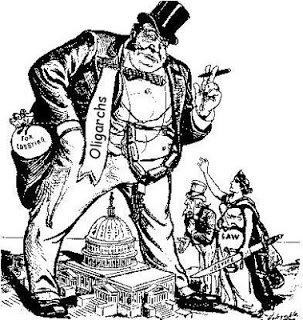
OLIGARCHY

Bernie Sanders says that billionaires have “psychiatric issues.” He’s not entirely incorrect.

By Livia Gershon

Source: Pacific Standard

“Let me tell you about the very rich. They are different from you and me. They possess and enjoy early, and it does something to them, makes them soft where we are hard, and cynical where we are trustful, in a way that, unless you were born rich, it is very difficult to understand. They think, deep in their hearts, that they are better than we are because we had to discover the compensations and refuges of life for ourselves. Even when they enter deep into our world or sink below us, they still think that they are better than we are. They are different.”
—F. Scott Fitzgerald

Bernie Sanders’ unexpectedly popular presidential campaign features a lot of rhetoric that we don’t usually hear in mainstream politics. One striking example is the Vermont senator’s contention that the ultra-rich suffer from “psychiatric issues” that manifest in an addiction to money and a worldview divorced from reality.

When we talk about inequality, we often spend lot of time considering poor people’s attitudes and behaviors, from whether they get married to how they talk to their kids. We’re less likely to stop and look at how the rich are different. But extremely wealthy people play a huge role in increasing inequality. With their heavy political clout, they help shape government economic policies, supporting very different positions from those of average Americans. From their perches on corporate boards and compensation committees they also give direct raises to their fellow oligarchs.

As inequality grows, in the United States and in the world, the shape of the wealthiest classes is also changing. The significance of inherited wealth fell rapidly in the mid-20th century, making way for the “self-made” rich. Now, though, there’s growing evidence that, as Thomas Piketty has famously argued, dynasties are making a comeback.

So there’s good reason to pay at least as much attention to the behaviors and beliefs of the rich as we do to those of the poor. But what does research tell us about the nature of wealth? How does it affect those who have it? Studies suggest the wealthy really do have significant psychological differences from the middle class in how they view money, and how they look at their relationship with society.

1. MONEY BUYS HAPPINESS—KIND OF

Richer people tend to be happier, but not by all that much. And it’s not really right to say money makes them happy. Wealth only makes affluent people more satisfied to the extent that it gives them more control over their own lives, making them feel richer. (Anyone who feels financially and personally stable because they’ve got a steady job, enough money to get them through an emergency, and a nicer house than their neighbor is likely to be happier than the poorest multi-millionaire in a hyper-rich enclave they can’t really afford.) Still, holding everything else equal, people who have more money have more stability. Of course, they also usually know they’re well off. And those two factors make them happier.

—”How Money Buys Happiness: Genetic and Environmental Processes Linking Finances and Life Satisfaction,” Wendy Johnson and Robert F. Krueger, Journal of Personality and Social Psychology, Vol 90(4), Apr 2006

 2. BUT RICH PEOPLE HAVE DIFFERENT CRITERIA FOR HAPPINESS

Asked about what makes people happy, extremely rich Americans, just like average Americans, typically put love first. But the ultra-wealthy are more likely than everyone else to say happiness depends on winning the appreciation and respect of others. They’re also more likely to cite the realization of personal potential as a key to happiness. But they’re much less likely than non-wealthy people to say that physical health is most important. (Perhaps because they’ve never been uninsured?) Rich people are also a bit more likely than the rest of us to say having a lot of money can occasionally present an obstacle to happiness.

—”Happiness of the Very Wealthy,” Ed Diener, Jeff Horwitz, and Robert A. Emmons, Social Indicators Research, April 1985

3. THE WEALTHY ARE MORE AND MORE LIKELY TO IDENTIFY WITH AN INTERNATIONAL ECONOMIC ELITE

Board members of the world’s largest corporations—a significant and influential segment of the ultra-rich—are increasingly likely to serve on the boards of foreign and multinational companies. Even directors who don’t serve on the boards of foreign companies usually interact with others who do. In other words, modern corporate elites are likely to be part of cosmopolitan, global social networks, whereas most poor and middle-class people are more likely to identify with their home populations.

—”Transnationalists and National Networkers in the Global Corporate Elite,” William K. Carroll, Global Networks, June 2009

4. AS A RESULT, THEY’RE NOT GREAT AT EMPATHY

People from higher socioeconomic classes do worse on a test where they’re asked to identify emotions in photographs of human faces. They’re also less accurate at perceiving the emotional states of others in real-life interactions. In fact, researchers can reduce people’s empathy just by prompting them to think of themselves as relatively high-status. Test subjects who are asked to imagine an interaction with someone from a lower social rung get worse at understanding other people’s emotions. The trouble higher-status people have recognizing emotions is tied to the fact that they tend to think about themselves and others in terms of fixed traits (“She’s a nervous person.”) In contrast, people from lower social classes are more likely to use contextual explanations for people’s behavior (“This interview is making her uncomfortable.”)

—”Social Class, Contextualism, and Empathic Accuracy,” Michael W. Kraus, Stéphane Côté, and Dacher Keltner, Psychological Science, October 25, 2010

5. AND THEY THINK DOMESTIC INEQUALITY REPRESENTS JUST DESSERTS

Americans are known for our trust in an ideal of meritocracy. When you ask the general public to assess statements like “most people who want to get ahead can make it if they’re willing to work hard,” well over 70 percent of us agree. But what happens when people see high levels of income inequality in their daily lives? It turns out that low-income Americans are less likely to believe in meritocracy if they live in counties with extreme economic inequality—places where they’re likely to run into much richer people a lot. For high-income people, the effect is exactly the opposite. The study’s authors suggest that rich people could be using a defense mechanism to stave off guilt and justify their relatively privileged position within a visibly unequal system. But, for whatever reason, the more inequality rich people see in their home county, they more likely they are to believe that meritocracy is working.

—”False Consciousness or Class Awareness? Local Income Inequality, Personal Economic Position, and Belief in American Meritocracy,” Benjamin J. Newman, Christopher D. Johnston, and Patrick L. Lown, American Journal of Political Science, April 2015


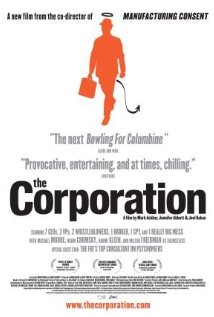
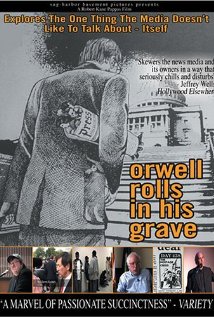
Saturday Matinee: Documentary Double Feature

MV5BMTQxMjMzMTczM15BMl5BanBnXkFtZTcwNzg5MzUyMQ@@._V1_SY317_CR4,0,214,317_AL_MV5BMTM4Nzk5Mzk4N15BMl5BanBnXkFtZTcwNTk5OTgyMQ@@._V1_SY317_CR5,0,214,317_AL_

Today I’m featuring two classic political documentaries, both more than a decade old (from 2003) yet still equally topical and among the best films on their respective subject matters.

The first is Mark Achbar and Jennifer Abbott’s “The Corporation”, a comprehensive and well-researched film exploring the history of corporations, how they operate and how they’ve come to attain so much political power. Related topics they cover include the 1933 attempted corporate coup exposed by General Smedley Butler, the Fox news coverup of the dangers of Monsanto’s Bovine Growth Hormone, and the mass protests in Bolivia sparked by the attempted privatization of their water supply in 2000.

“Orwell Rolls in His Grave” directed by Robert Kane Pappas is possibly the best dissection of contemporary mass media propaganda yet, with a focus on corporate media consolidation and the role of corporate media in the controversial US presidential election of 2000. The film features interviews with Mark Crispin Miller, Bernie Sanders and Danny Schechter among others.

No matter what political reasons are given for war, the underlying reason is always economic. – A.J.P. Taylor

With so much attention on arguments for and against a potential World War 3, it’s almost easy to forget about economic problems though the issues overlap. To remind us (if we did need reminding), a number of great articles have come out recently.

Two headlines at OpEd News explain how economic pressures play a part in mass opposition against the war and reasons why even without another war, America is headed towards a greater financial crisis.

Though corporate media tells us we’re in an economic recovery, the truth is it’s a recovery for the rich, a recession for the rest.

A new UC Berkeley report documents the growing gulf between the rich and poor in the U.S. since 2009, while on a global scale a new “superclass” has emerged who are 94% male, white, and connected to financial corporations, governments, and the military, as reported in this expose on the Financial Core of the Transnational Capitalist Class.

On related notes, ever wonder how much money missile strikes cost and how many CEOs were prosecuted for their role in the financial crisis? The answers will tell you something about the priorities of the U.S. government.

Greg Palast article about the “End-Game” memo: http://www.gregpalast.com/larry-summers-and-the-secret-end-game-memo/