Winston Smith lives on Airstrip One, a part of Oceania. He resides in a shabby one-room apartment where his movements are monitored by a two-way telescreen. Winston works for the Ministry of Truth, where he rewrites history according to the party line.
Big Brother dominates the lives of Oceania citizens through psychological manipulation via the media. The totalitarian state seems to be in a constant state of war with either Eurasia or Eastasia. Hate rallies are designed to encourage allegiance to Big Brother; dissenters are publicly executed; and natural sexual behavior is forbidden.
Winston defies the authorities when he begins keeping a diary of his feelings. He goes a step further by beginning a love affair with Julia, another rebellious individual. O’Brien, a member of the privileged Inner Party, befriends Winston but later betrays him. The maverick is taken by the Thought Police to the Ministry of Love. Then in the notorious Room 101, O’Brien proceeds to torture and brainwash Winston. His ultimate goal is to replace the man’s love for Julia with love for Big Brother.
This screen version of 1984 is unrelentingly grim and ominous. Airstrip One seems more like a dank and dreary prison than a city. John Hurt is just right as Winston Smith, a stubborn individualist who refuses to reduce his life to a series of reductive slogans. Despite the haggard look, this British actor vividly conveys his character’s inner fire. Suzanna Hamilton plays Julia as flinty outsider who savors sex and sees it as a sacrament. In his final screen performance, Richard Burton plays O’Brien with convincing clout; he is an efficient bureaucrat whose cool demeanor masks an ugly love of raw power.
Although screenplay writer and director Michael Radford (Another Time, Another Place) gives the drama’s ending a twist that goes against the grain of George Orwell’s 1984, this intense film version of the book succeeds very well in depicting the totalitarian tendencies which tend to crop up in societies all over the world. The human spirit is violated when war is made into a vehicle for peace, when truth is twisted into disinformation and language is turned upside down; when loyalty to the state is built upon paranoia and neighbor begins betraying neighbor; and when surveillance takes away personal privacy and makes all dissent a crime. While many refuse to acknowledge the present reality of this Orwellian nightmare, others know that creeping totalitarianism thrives best when it moves quietly in the shadows.
The deployment of clever linguistic tricks has created a hostile upside-down universe, where even the vaccine-injured are tarnished as “anti-vaxxers” or liars rather than acknowledged as ex-vaxxers who took risks that turned out to be life-changing.
Psychological and linguistic manipulation are, for those in power, proven tools for building, consolidating and maintaining dominance — a reality keenly depicted in George Orwell’s never-more-relevant novel, “1984.”
As phrased by master propagandist Edward Bernays, an approximate contemporary of Orwell’s, the mind of the people “is made up for it by the group leaders in whom it believes and by those persons who understand the manipulation of public opinion.”
Recent events surrounding COVID vaccines have shown that medicine and public health — with the help of a complicit media — are particularly skilled at “pull[ing] the wires which control the public mind.”
The clever bag of linguistic tricks deployed by the medical cartel includes seeding evocative terms such as “vaccine hesitancy” and “lockdowns” (which is prison terminology) into popular and scientific discourse, forging slippery new definitions of words with formerly fixed meanings (such as “pandemic,” “herd immunity” and “vaccine”), and circling failed products back around by giving them the positive spin of “boosters.”
Ominously, medicine’s and public health’s verbal assaults encourage shaming of, or violence against, those who ask questions, while upholding the disingenuous pretense that vaccine mandates are compatible with freedom.
In this hostile upside-down universe, even the vaccine-injured are tarnished as “anti-vaxxers” or liars rather than acknowledged as ex-vaxxers who took risks that turned out to be life-changing.
‘Much like other stressors’
One of the more insulting recent examples of linguistic weaponization involves a dubious psychiatric cover term, “functional neurological disorder” (FND), that is suddenly being trumpeted as an explanation for the tsunami of adverse events — especially severe neurological reactions — being reported all over the world in the aftermath of COVID vaccination.
Psychiatrists conveniently define FND — which they also refer to as a “psychogenic” (originating in the mind) or “conversion” disorder — as “real” nervous system symptoms that “cause significant distress or problems functioning” but are “incompatible with” or “can’t be explained by” recognized neurological diseases or other medical conditions.
Lest members of the public derive a “simplistic impression of potential links between the [COVID] vaccine and major neurological symptoms,” neurologists pushing the FND story have hastened to reassure people that the “close development of functional motor symptoms after the vaccine does not implicate the vaccine as the cause of those symptoms.”
One of these individuals is National Institutes of Health-funded neurologist Alberto Espay, who implausibly adds that COVID vaccination (which entails injection with high-risk substances and technologies) is just “a stressor or precipitant, much like any other stressor … such as a motor vehicle accident or sleep deprivation.”
Officials and the media are audaciously trotting out the FND narrative on both sides of the pond, as evidenced by a recent Daily Mail headline that read, “Videos of people ‘struggling to walk’ after getting their COVID vaccine are NOT result of jab itself but a condition triggered by stress or trauma.”
Helping with the spin, a member of the UK’s Joint Committee on Vaccination and Immunization straight-facedly attributed this “stress” to coercion, stating: “If people begin to feel they are being kind of forced against their will to do something, then in a sense that’s quite a damaging thing to do because it gives people the impression vaccination is something being imposed on them.”
Hammering home the point that “there is nothing to see here,” Kings College London physician Matthew Butler solemnly (and without evidence) agrees that FND — though “serious and debilitating” — “does not implicate any vaccine constituents and should not hamper ongoing vaccination efforts.”
Butler is the lead author of a May 2020 paper proposing FND patients’ “abnormal body-focussed attention” be treated with psychedelics such as LSD and psilocybin — never mind that psychedelics themselves, admit Butler and co-authors, “sometimes produce abnormal physical and motor effects,” including seizures.
An all-too-familiar game
To past victims of vaccine injury, the “it’s all in your mind” sleight-of-hand being summoned to dismiss COVID vaccine injuries is all too familiar.
Consider autism, which psychiatrists blamed, in its earliest days, on emotionally distant “refrigerator moms.”
In more recent decades, families affected by autism have experienced the double whammy of regulatory indifference to likely culprits (including not just neurotoxic vaccines but other probable environmental triggers) alongside brazen denial of autism’s escalating prevalence.
Young people injured by human papillomavirus (HPV) vaccines tell similar stories of “denial and dismissal of reported harms and deaths.” Researchers who in 2017 reviewed the serious adverse events reported during two of the largest HPV vaccine clinical trials noted that “Practically, none of the serious adverse events occurring in any arm of both studies were judged [by the manufacturers] to have been vaccine-related.”
In the face of severe symptoms such as heart-attack-like chest pain, numbness and swelling of extremities, hair loss, whole-body aches and extreme fatigue, boys and girls injured by HPV vaccines have been repeatedly subjected to medical gaslighting — told they are “crazy” and just need to “slow down.”
In one incident in Australia, after “26 girls presented to the school’s sick bay with symptoms including dizziness, syncope [fainting] and neurological complaints” within two hours of receiving HPV vaccines at school, pharma-funded researchers had the chutzpah to dismiss the safety signal and characterize the episode as a “mass psychogenic event” — which they defined as “the collective occurrence of a constellation of symptoms suggestive of organic illness but without an identified cause in a group of people with shared beliefs about the cause.”
Recognize, question and reclaim
The medical-public health-pharma cartel, the “small cabal of wealthy countries, corporations and individuals” that support it, and their media mouthpieces are supremely confident in their ability to manage public perceptions through words and narratives, whether for the purpose of “mystifying” the public about key events, securing buy-in for oppressive policies or sowing discord to divide and conquer. (As journalists Caitlin Johnstone and Glenn Greenwald also remind us, many media personalities are intelligence agency veterans or assets, and the “sole owner of the Washington Post is a CIA contractor.”)
Thus, it pays to be attentive to how health authorities use language, for “the more you know about language, the more immune you become to its effects.”
Beyond noticing the manipulation, we must also stop ceding the linguistic terrain to our would-be manipulators — for example, by eschewing weaponized vocabulary such as the pejorative term “vaccine hesitancy.”
Catholic journalist Jane Stannus points out that the term “vaccine hesitant” portrays those who decline COVID (or other) vaccines as “‘trapped by irrational fears’ in a state of inaction or ignorantly opposed to science,” with the strong suggestion “that such backward and weak-minded persons are worthy of contempt, especially compared with the enlightened, confident people who signed up for the vaccine immediately.”
The unfortunate corollary of such language is the “witch hunt on the unvaccinated” that we are already witnessing, “an act of violence against the fabric of society,” says Stannus, that is “a greater evil … than the shared suffering of disease.”
We can and urgently need to see through these shenanigans and reclaim our humanity.
Fast-moving current events are proving those who have declined COVID injections are the wise ones, with science proving them correct in just about every way.
Whether we consider the many suspected dangers of products unleashed on the public less than a year ago, or the injuries and deaths occurring on a never-before-seen scale (including in teens who had their lives ahead of them), or the clear superiority of natural immunity, or the fact that the injections don’t even do the one thing the clinical trials alleged they could do (i.e., keep more severe illness at bay), it is clear that citizens who would rather think for themselves than swallow prefabricated lies are the ones who are going to come out ahead.
“But I don’t want to go among mad people,” Alice remarked. “Oh, you can’t help that,” said the Cat: “we’re all mad here. I’m mad. You’re mad.” “How do you know I’m mad?” said Alice. “You must be,” said the Cat, “or you wouldn’t have come here.”
We are living in a world where the degree of disinformation and outright lying has reached such a state of affairs that, possibly for the first time ever, we see the majority of the western world starting to question their own and surrounding level of sanity. The increasing frenzied distrust in everything “authoritative” mixed with the desperate incredulity that “everybody couldn’t possibly be in on it!” is slowly rocking many back and forth into a tighter and tighter straight jacket. “Question everything” has become the new motto, but are we capable of answering those questions?
Presently the answer is a resounding no.
The social behaviourist sick joke of having made everyone obsessed with toilet paper of all things during the start of what was believed to be a time of crisis, is an example of how much control they have over that red button labelled “commence initiation of level 4 mass panic”.
And can the people be blamed? After all, if we are being lied to, how can we possibly rally together and point the finger at the root of this tyranny, aren’t we at the point where it is everywhere?
“If you tell a lie big enough and keep repeating it, people will eventually come to believe it. The lie can be maintained only for such time as the State can shield the people from the political, economic and/or military consequences of the lie. It thus becomes vitally important for the State to use all of its powers to repress dissent, for the truth is the mortal enemy of the lie, and thus by extension, the truth is the greatest enemy of the State [under fascism].”
And here we find ourselves today, at the brink of fascism. However, we have to first agree to forfeit our civil rights as a collective before fascism can completely dominate. That is, the big lie can only succeed if the majority fails to call it out, for if the majority were to recognise it for what it is, it would truly hold no power.
The Battle for Your Mind
“Politicians, Priests, and psychiatrists often face the same problem: how to find the most rapid and permanent means of changing a man’s belief…The problem of the doctor and his nervously ill patient, and that of the religious leader who sets out to gain and hold new converts, has now become the problem of whole groups of nations, who wish not only to confirm certain political beliefs within their boundaries, but to proselytize the outside world.”
It had been commonly thought in the past, and not without basis, that tyranny could only exist on the condition that the people were kept illiterate and ignorant of their oppression. To recognise that one was “oppressed” meant they must first have an idea of what was “freedom”, and if one were allowed the “privilege” to learn how to read, this discovery was inevitable.
If education of the masses could turn the majority of a population literate, it was thought that the higher ideas, the sort of “dangerous ideas” that Mustapha Mond for instance expresses in “The Brave New World”, would quickly organise the masses and revolution against their “controllers” would be inevitable. In other words, knowledge is freedom, and you cannot enslave those who learn how to “think”.
However, it hasn’t exactly played out that way has it?
The greater majority of us are free to read whatever we wish to, in terms of the once “forbidden books”, such as those listed by The Index Librorum Prohibitorum. We can read any of the writings that were banned in “The Brave New World”, notably the works of Shakespeare which were named as absolutely dangerous forms of “knowledge”.
We are now very much free to “educate” ourselves on the very “ideas” that were recognised by tyrants of the past as the “antidote” to a life of slavery. And yet, today, the majority choose not to…
It is recognised, albeit superficially, that who controls the past, controls the present and thereby the future. George Orwell’s book “1984”, hammers this as the essential feature that allows the Big Brother apparatus to maintain absolute control over fear, perception and loyalty to the Party cause, and yet despite its popularity, there still remains a lack of interest in actually informing oneself about the past.
What does it matter anyway, if the past is controlled and rewritten to suit the present? As the Big Brother interrogator O’Brien states to Winston, “We, the Party, control all records, and we control all memories. Then we control the past, do we not? [And thus, are free to rewrite it as we choose…]”
Of course, we are not in the same situation as Winston…we are much better off. We can study and learn about the “past” if we so desire, unfortunately, it is a choice that many take for granted.
In fact, many are probably not fully aware that presently there is a battle waging for who will “control the past” in a manner that is closely resembling a form of “memory wipe”.
* * *
William Sargant was a British psychiatrist and, one could say, effectively the Father of “mind control” in the West, with connections to British Intelligence and the Tavistock Institute, which would influence the CIA and American military via the program MK Ultra. Sargant was also an advisor for Ewen Cameron’s LSD “blank slate” work at McGill University, funded by the CIA.
Sargant accounts for his reason in studying and using forms of “mind control” on his patients, which were primarily British soldiers that were sent back from the battlefield during WWII with various forms of “psychosis”, as the only way to rehabilitate extreme forms of PTSD.
The other reason, was because the Soviets had apparently become “experts” in the field, and out of a need for national security, the British would thus in turn have to become experts as well…as a matter of self-defence of course.
The work of Ivan Pavlov, a Russian physiologist, had succeeded in producing some disturbingly interesting insights into four primary forms of nervous systems in dogs, that were combinations of inhibitory and excitatory temperaments; “strong excitatory”, “balanced”, “passive” and “calm imperturbable”. Pavlov found that depending on the category of nervous system temperament the dog had, this in turn would dictate the form of “conditioning” that would work best to “reprogram behaviour”. The relevance to “human conditioning” was not lost on anyone.
It was feared in the West, that such techniques would not only be used against their soldiers to invoke free-flowing uninhibited confessions to the enemy but that these soldiers could be sent back to their home countries, as zombified assassins and spies that could be set off with a simple code word. At least, these were the thriller stories and movies that were pumped into the population. How horrific indeed! That the enemy could apparently enter what was thought the only sacred ground to be our own…our very “minds”!
However, for those who were actually leading the field in mind control research, such as William Sargant, it was understood that this was not exactly how mind control worked.
For one thing, the issue of “free will” was getting in the way.
No matter the length or degree of electro-shock, insulin “therapy”, tranquilizer cocktails, induced comas, sleep deprivation, starvation etc induced, it was discovered that if the subject had a “strong conviction” and “strong belief” in something, this could not be simply erased, it could not be written over with any arbitrary thing. Rather, the subject would have to have the illusion that their “conditioning” was in fact a “choice”. This was an extremely challenging task, and long term conversions (months to years) were rare.
However, Sargant saw an opening. It was understood that one could not create a new individual from scratch, however, with the right conditioning that was meant to lead to a physical breakdown using abnormal stress (effectively a reboot of the nervous system), one could increase the “suggestibility” markedly in their subjects.
Sargant wrote in his “Battle of the Mind”:
“Pavlov’s clinical descriptions of the ‘experimental neuroses’ which he could induce in dogs proved, in fact, to have a close correspondence with those war-neuroses which we were investigating at the time.”
In addition, Sargant found that a falsely implanted memory could help induce abnormal stress leading to emotional exhaustion and physical breakdown to invoke “suggestibility”. That is, one didn’t even need to have a “real stress” but an “imagined stress” would work just as effectively.
Sargant goes on to state in his book:
“It is not surprising that the ordinary person, in general, is much more easily indoctrinated than the abnormal…A person is considered ‘ordinary’ or ‘normal’ by the community simply because he accepts most of its social standards and behavioural patterns; which means, in fact, that he is susceptible to suggestion and has been persuaded to go with the majority on most ordinary or extraordinary occasions.”
Sargant then goes over the phenomenon of the London Blitz, which was an eight month period of heavy bombing of London during WWII. During this period, in order to cope and stay “sane”, people rapidly became accustomed to the idea that their neighbours could be and were buried alive in bombed houses around them. The thought was “If I can’t do anything about it what use is it that I trouble myself over it?” The best “coping” was thus found to be those who accepted the new “environment” and just focused on “surviving”, and did not try to resist it.
Sargant remarks that it is this “adaptability” to a changing environment which is part of the “survival” instinct and is very strong in the “healthy” and “normal” individual who can learn to cope and thus continues to be “functional” despite an ever changing environment.
It was thus our deeply programmed “survival instinct” that was found to be the key to the suggestibility of our minds. That the best “survivors” made for the best “brain-washing” in a sense.
Sargant quotes Hecker’s work, who was studying the dancing mania phenomenon that occurred during the Black Death, where Hecker observed that heightened suggestibility had the capability to cause a person to “embrace with equal force, reason and folly, good and evil, diminish the praise of virtue as well as the criminality of vice.”
And that such a state of mind was likened to the first efforts of the infant mind “this instinct of imitation when it exists in its highest degree, is also united a loss of all power over the will, which occurs as soon as the impression on the senses has become firmly established, producing a condition like that of small animals when they are fascinated by the look of a serpent.”
I wonder if Sargant imagined himself the serpent…
Sargant does finally admit:
“This does not mean that all persons can be genuinely indoctrinated by such means. Some will give only temporary submission to the demands made on them, and fight again when strength of body and mind returns. Others are saved by the supervention of madness. Or the will to resist may give way, but not the intellect itself.”
But he comforts himself as a response to this stubborn resistance that “As mentioned in a previous context, the stake, the gallows, the firing squad, the prison, or the madhouse, are usually available for the failures.”
How to Resist the Deconstruction of Your Mind
“He whom the gods wish to destroy, they first of all drive mad.”
For those who have not seen the 1944 psychological thriller “Gaslight” directed by George Cukor, I would highly recommend you do so since there is an invaluable lesson contained within, that is especially applicable to what I suspect many of us are experiencing nowadays.
The story starts with a 14 year old Paula (played by Ingrid Bergman) who is being taken to Italy after her Aunt Alice Alquist, a famous opera singer and caretaker of Paula, is found murdered in her home in London. Paula is the one who found the body, and horror stricken is never her old self again. Her Aunt was the only family Paula had left in her life. The decision is made to send her away from London to Italy to continue her studies to become a world-renowned opera singer like her Aunt Alice.
Years go by, Paula lives a very sheltered life and a heavy somberness is always present within her, she can never seem to feel any kind of happiness. During her singing studies she meets a mysterious man (her piano accompanist during her lessons) and falls deeply in love with him. However, she knows hardly anything about the man named Gregory.
Paula agrees to marry Gregory after a two week romance and is quickly convinced to move back into her Aunt’s house in London that was left abandoned all these years. As soon as she enters the house, the haunting of the night of the murder revisits her and she is consumed with panic and fear. Gregory tries to calm her and talks about the house needing just a little bit of air and sun, and then Paula comes across a letter written to her Aunt from a Sergis Bauer which confirms that he was in contact with Alice just a few days before her murder. At this finding, Gregory becomes bizarrely agitated and grabs the letter from Paula. He quickly tries to justify his anger blaming the letter for upsetting her. Gregory then decides to lock all of her Aunt’s belongings in the attic, to apparently spare Paula any further anguish.
It is at this point that Gregory starts to change his behaviour dramatically. Always under the pretext for “Paula’s sake”, everything that is considered “upsetting” to Paula must be removed from her presence. And thus quickly the house is turned into a form of prison. Paula is told it is for her best not to leave the house unaccompanied, not to have visitors and that self-isolation is the best remedy for her “anxieties” which are getting worst. Paula is never strictly forbidden at the beginning but rather is told that she should obey these restrictions for her own good.
Before a walk, he gives as a gift a beautiful heirloom brooch that belonged to his mother. Because the pin needs replacing, he instructs Paula to keep it in her handbag, and then says rather out of context, “Don’t forget where you put it now Paula, I don’t want you losing it.” Paula remarks thinking the warning absurd, “Of course I won’t forget!” When they return from their walk, Gregory asks for the brooch, Paula searches in her handbag but it is not there.
It continues on like this, with Gregory giving warnings and reminders, seemingly to help Paula with her “forgetfulness” and “anxieties”. Paula starts to question her own judgement and sanity as these events become more and more frequent. She has no one else to talk to but Gregory, who is the only witness to these apparent mishaps. It gets to a point where completely nonsensical behaviour is being attributed to Paula by Gregory. A painting is found missing on the wall one night. Gregory talks to Paula like she is a 5 year child and asks her to put it back. Paula insists she does not know who took it down. After her persistent passionate insistence that it was not her, she walks up the stairs almost like she were in a dream state and pulls the painting from behind a statue. Gregory asks why she lied, but Paula insists that she only thought to look there because that is where it was found the last two times this occurred.
For weeks now, Paula thinks she has been seeing things, the gas lights of the house dimming for no reason, she also hears footsteps above her bedroom. No one else seems to take notice. Paula is also told by Gregory that he found out that her mother, who passed away when she was very young, had actually gone insane and died in an asylum.
Despite Paula being reduced to a condition of an ongoing stupor, she decides one night to make a stand and regain control over her life. Paula is invited, by one of her Aunt Alice’s close friends Lady Dalroy, to attend a high society evening with musical performances. Recall that Paula’s life gravitated around music before her encounter with Gregory. Music was her life. Paula gets magnificently dressed up for the evening and on her way out tells Gregory that she is going to this event. Gregory tries to convince her that she is not well enough to attend such a social gathering, when Paula calmly insists that she is going and that this woman was a dear friend of her Aunt, Gregory answers that he refuses to accompany her (in those days that was a big deal). Paula accepts this and walks with a solid dignity, undeterred towards the horse carriage. In a very telling scene, Gregory is left momentarily by himself and panic stricken, his eyes bulging he snaps his cigar case shut and runs after Paula. He laughingly calls to her, “Paula, you did not think I was serious? I had no idea that this party meant so much to you. Wait, I will get ready.” As he is getting ready in front of the mirror, a devilish smirk appears.
Paula and Gregory show up to Lady Dalroy’s house late, the pianist is in the middle of the 1st movement of Beethoven’s Piano Sonata #8 in C minor. They quickly are escorted to two empty seats. Paula is immediately immersed in the piece, and Gregory can see his control is slipping. After only a few minutes, he goes to look at his pocket watch but it is not in his pocket. He whispers into Paula’s ear, “My watch is missing”. Immediately, Paula looks like she is going to be sick. Gregory takes her handbag and Paula looks in horror as he pulls out his pocket watch, insinuating that Paula had put it there. She immediately starts losing control and has a very public emotional breakdown. Gregory takes her away, as he remarks to Lady Dalroy that this is why he didn’t want Paula coming in the first place.
When they arrive home, Paula has by now completely succumbed to the thought that she is indeed completely insane. Gregory says that it would be best if they go away somewhere for an indefinite period of time. We later find out that Gregory is intending on committing her to an asylum. Paula agrees to leave London with Gregory and leaves her fate entirely in his hands.
In the case of Paula it is clear. She has been suspecting that Gregory has something to do with her “situation” but he has very artfully created an environment where Paula herself doubts whether this is a matter of unfathomable villainy or whether she is indeed going mad.
It is rather because she is not mad that she doubts herself, because there is seemingly no reason for why Gregory would put so much time and energy into making it look like she were mad, or at least so it first appears. But what if the purpose to her believing in her madness was simply a matter of who is in control?
Paula almost succeeds in gaining the upper-hand in this power-struggle, the evening she decided to go out on her own no matter what Gregory insisted was in her best interest. If she would have held her ground at Lady Dalroy’s house and simply replied, “I have no idea why your stupid watch ended up in my handbag and I could care less. Now stop interrupting this performance, you are making a scene!” Gregory’s spell would have been broken as simple as that. If he were to complain to others about the situation, they would also respond, “Who cares man, why are you so obsessed about your damn watch?”
We find ourselves today in a very similar situation to Paula. And the voice of Gregory is represented by the narrative of false news and the apocalyptic social behaviourist programming in our forms of entertainment. The things most people voluntarily subject themselves to on a daily, if not hourly, basis. Socially conditioning them, like a pack of salivating Pavlovian dogs, to think it is just a matter of time before the world ends and with a ring of their master’s bell…be at each other’s throats.
Paula ends up being saved in the end by a man named Joseph Cotten (a detective), who took notice and quickly discerned that something was amiss. In the end Gregory is arrested. It is revealed that Gregory is in fact Sergis Bauer. That he killed Alice Alquist and that he has returned to the scene of the crime after all these years in search for the famous jewels of the opera singer. The jewels were in fact rather worthless from the standpoint that they were too famous to be sold, however, Gregory never intended on selling these jewels but rather had become obsessed with the desire to merely possess them.
That is, it is Gregory who has been entirely mad all this time.
A Gregory is absolutely dangerous. He would have been the end of Paula if nothing had intervened. However, the power that Gregory held was conditional to the degree that Paula allowed it to control her. Paula’s extreme deconstruction was thus entirely dependent on her choice to let the voice of Gregory in. That is, a Gregory is only dangerous if we allow ourselves to sleep walk into the nightmare he has constructed for us.
“When I use a word,” Humpty Dumpty said in rather a scornful tone, “it means just what I choose it to mean — neither more nor less.” “The question is,” said Alice, “whether you can make words mean so many different things.” “The question is,” said Humpty Dumpty, “which is to be master – – that’s all.”
Who could have predicted that so many years after Orwell typed the final words to his dystopian novel, “He loved Big Brother,” we would come to love Big Brother.
“To the future or to the past, to a time when thought is free, when men are different from one another and do not live alone— to a time when truth exists and what is done cannot be undone: From the age of uniformity, from the age of solitude, from the age of Big Brother, from the age of doublethink — greetings!”—George Orwell
1984 portrays a global society of total control in which people are not allowed to have thoughts that in any way disagree with the corporate state. There is no personal freedom, and advanced technology has become the driving force behind a surveillance-driven society. Snitches and cameras are everywhere. People are subject to the Thought Police, who deal with anyone guilty of thought crimes. The government, or “Party,” is headed by Big Brother who appears on posters everywhere with the words: “Big Brother is watching you.”
We have arrived, way ahead of schedule, into the dystopian future dreamed up by not only Orwell but also such fiction writers as Aldous Huxley, Margaret Atwood and Philip K. Dick.
“If liberty means anything at all, it means the right to tell people what they do not want to hear.”―George Orwell
Much like Orwell’s Big Brother in 1984, the government and its corporate spies now watch our every move. Much like Huxley’s A Brave New World, we are churning out a society of watchers who “have their liberties taken away from them, but … rather enjoy it, because they [are] distracted from any desire to rebel by propaganda or brainwashing.” Much like Atwood’s The Handmaid’s Tale, the populace is now taught to “know their place and their duties, to understand that they have no real rights but will be protected up to a point if they conform, and to think so poorly of themselves that they will accept their assigned fate and not rebel or run away.”
And in keeping with Philip K. Dick’s darkly prophetic vision of a dystopian police state—which became the basis for Steven Spielberg’s futuristic thriller Minority Report—we are now trapped in a world in which the government is all-seeing, all-knowing and all-powerful, and if you dare to step out of line, dark-clad police SWAT teams and pre-crime units will crack a few skulls to bring the populace under control.
What once seemed futuristic no longer occupies the realm of science fiction.
Incredibly, as the various nascent technologies employed and shared by the government and corporations alike—facial recognition, iris scanners, massive databases, behavior prediction software, and so on—are incorporated into a complex, interwoven cyber network aimed at tracking our movements, predicting our thoughts and controlling our behavior, the dystopian visions of past writers is fast becoming our reality.
“People sleep peaceably in their beds at night only because rough men stand ready to do violence on their behalf.”―George Orwell
The courts have shredded the Fourth Amendment’s protections against unreasonable searches and seizures. In fact, SWAT teams battering down doors without search warrants and FBI agents acting as a secret police that investigate dissenting citizens are common occurrences in contemporary America. And bodily privacy and integrity have been utterly eviscerated by a prevailing view that Americans have no rights over what happens to their bodies during an encounter with government officials, who are allowed to search, seize, strip, scan, spy on, probe, pat down, taser, and arrest any individual at any time and for the slightest provocation.
“The creatures outside looked from pig to man, and from man to pig, and from pig to man again; but already it was impossible to say which was which.”―George Orwell, Animal Farm
We are increasingly ruled by multi-corporations wedded to the police state.
What many fail to realize is that the government is not operating alone. It cannot. The government requires an accomplice. Thus, the increasingly complex security needs of the massive federal government, especially in the areas of defense, surveillance and data management, have been met within the corporate sector, which has shown itself to be a powerful ally that both depends on and feeds the growth of governmental overreach.
In fact, Big Tech wedded to Big Government has become Big Brother, and we are now ruled by the Corporate Elite whose tentacles have spread worldwide. The government now has at its disposal technological arsenals so sophisticated and invasive as to render any constitutional protections null and void. Spearheaded by the NSA, which has shown itself to care little to nothing for constitutional limits or privacy, the “security/industrial complex”—a marriage of government, military and corporate interests aimed at keeping Americans under constant surveillance—has come to dominate the government and our lives.
Money, power, control. There is no shortage of motives fueling the convergence of mega-corporations and government. But who is paying the price? The American people, of course.
Orwell understood what many Americans are still struggling to come to terms with: that there is no such thing as a government organized for the good of the people. Even the best intentions among those in government inevitably give way to the desire to maintain power and control over the citizenry at all costs.
“The further a society drifts from truth the more it will hate those who speak it.” ― George Orwell
Even our ability to speak and think freely is being regulated.
In totalitarian regimes—a.k.a. police states—where conformity and compliance are enforced at the end of a loaded gun, the government dictates what words can and cannot be used. In countries where the police state hides behind a benevolent mask and disguises itself as tolerance, the citizens censor themselves, policing their words and thoughts to conform to the dictates of the mass mind.
Dystopian literature shows what happens when the populace is transformed into mindless automatons.
In Ray Bradbury’s Fahrenheit 451, reading is banned and books are burned in order to suppress dissenting ideas, while televised entertainment is used to anesthetize the populace and render them easily pacified, distracted and controlled.
In Huxley’s Brave New World, serious literature, scientific thinking and experimentation are banned as subversive, while critical thinking is discouraged through the use of conditioning, social taboos and inferior education. Likewise, expressions of individuality, independence and morality are viewed as vulgar and abnormal.
In my debut novel The Erik Blair Diaries, the dystopian future that George Orwell predicted for 1984 has finally arrived, 100 years late and ten times as brutal. In this post-apocalyptic world where everyone marches to the beat of the same drummer and words like “freedom” are taboo, Erik Blair—Orwell’s descendant and unwitting heir to his legacy—isn’t volunteering to be anyone’s hero. Unfortunately, life doesn’t always go according to plan. To save all that he loves, Orwell will have to travel between his future self and the past.
And in Orwell’s 1984, Big Brother does away with all undesirable and unnecessary words and meanings, even going so far as to routinely rewrite history and punish “thoughtcrimes.” Orwell’s Big Brother relies on Newspeak to eliminate undesirable words, strip such words as remained of unorthodox meanings and make independent, non-government-approved thought altogether unnecessary.
Where we stand now is at the juncture of OldSpeak (where words have meanings, and ideas can be dangerous) and Newspeak (where only that which is “safe” and “accepted” by the majority is permitted). The power elite has made their intentions clear: they will pursue and prosecute any and all words, thoughts and expressions that challenge their authority.
This is the final link in the police state chain.
“Until they became conscious they will never rebel, and until after they have rebelled they cannot become conscious.”—George Orwell
Having been reduced to a cowering citizenry—mute in the face of elected officials who refuse to represent us, helpless in the face of police brutality, powerless in the face of militarized tactics and technology that treat us like enemy combatants on a battlefield, and naked in the face of government surveillance that sees and hears all—we have nowhere left to go.
We have, so to speak, gone from being a nation where privacy is king to one where nothing is safe from the prying eyes of government.
“Big Brother is Watching You.”―George Orwell
Wherever you go and whatever you do, you are now being watched, especially if you leave behind an electronic footprint. When you use your cell phone, you leave a record of when the call was placed, who you called, how long it lasted and even where you were at the time. When you use your ATM card, you leave a record of where and when you used the card. There is even a video camera at most locations equipped with facial recognition software. When you use a cell phone or drive a car enabled with GPS, you can be tracked by satellite. Such information is shared with government agents, including local police. And all of this once-private information about your consumer habits, your whereabouts and your activities is now being fed to the government.
The government has nearly inexhaustible resources when it comes to tracking our movements, from electronic wiretapping devices, traffic cameras and biometrics to radio-frequency identification cards, satellites and Internet surveillance.
In such a climate, everyone is a suspect. And you’re guilty until you can prove yourself innocent. To underscore this shift in how the government now views its citizens, the FBI uses its wide-ranging authority to investigate individuals or groups, regardless of whether they are suspected of criminal activity.
“Nothing was your own except the few cubic centimetres inside your skull.” ― George Orwell
Here’s what a lot of people fail to understand, however: it’s not just what you say or do that is being monitored, but how you think that is being tracked and targeted. We’ve already seen this play out on the state and federal level with hate crime legislation that cracks down on so-called “hateful” thoughts and expression, encourages self-censoring and reduces free debate on various subject matter.
Total Internet surveillance by the Corporate State, as omnipresent as God, is used by the government to predict and, more importantly, control the populace, and it’s not as far-fetched as you might think. For example, the NSA has been working on an artificial intelligence system designed to anticipate your every move. Aquaint (the acronym stands for Advanced QUestion Answering for INTelligence) has been designed to detect patterns and predict behavior.
No information is sacred or spared.
Everything from cell phone recordings and logs, to emails, to text messages, to personal information posted on social networking sites, to credit card statements, to library circulation records, to credit card histories, etc., is collected by the NSA and shared freely with its agents in crime: the CIA, FBI and DHS.
What we are witnessing, in the so-called name of security and efficiency, is the creation of a new class system comprised of the watched (average Americans such as you and me) and the watchers (government bureaucrats, technicians and private corporations).
Clearly, the age of privacy in America is at an end.
So where does that leave us?
We now find ourselves in the unenviable position of being monitored, managed and controlled by our technology, which answers not to us but to our government and corporate rulers. This is the fact-is-stranger-than-fiction lesson that is being pounded into us on a daily basis.
It won’t be long before we find ourselves looking back on the past with longing, back to an age where we could speak to whom we wanted, buy what we wanted, think what we wanted without those thoughts, words and activities being tracked, processed and stored by corporate giants such as Google, sold to government agencies such as the NSA and CIA, and used against us by militarized police with their army of futuristic technologies.
To be an individual today, to not conform, to have even a shred of privacy, and to live beyond the reach of the government’s roaming eyes and technological spies, one must not only be a rebel but rebel.
Even when you rebel and take your stand, there is rarely a happy ending awaiting you. You are rendered an outlaw. Just look at what happened to Julian Assange.
So how do you survive in the American surveillance state?
We’re running out of options.
Whether you’re dealing with fact or fiction, as I make clear in Battlefield America: The War on the American People and in my new novel The Erik Blair Diaries, we’ll soon have to choose between self-indulgence (the bread-and-circus distractions offered up by the news media, politicians, sports conglomerates, entertainment industry, etc.) and self-preservation in the form of renewed vigilance about threats to our freedoms and active engagement in self-governance.
“If liberty means anything at all, it means the right to tell people what they do not want to hear.”― George Orwell
This is the slippery slope that leads to the end of free speech as we once knew it.
In a world increasingly automated and filtered through the lens of artificial intelligence, we are finding ourselves at the mercy of inflexible algorithms that dictate the boundaries of our liberties.
Martin Niemöller’s warning about the widening net that ensnares us all still applies.
“First they came for the socialists, and I did not speak out—because I was not a socialist. Then they came for the trade unionists, and I did not speak out— because I was not a trade unionist. Then they came for the Jews, and I did not speak out—because I was not a Jew. Then they came for me—and there was no one left to speak for me.”
In our case, however, it started with the censors who went after extremists spouting so-called “hate speech,” and few spoke out—because they were not extremists and didn’t want to be shamed for being perceived as politically incorrect.
Eventually, “we the people” will be the ones in the crosshairs.
At some point or another, depending on how the government and its corporate allies define what constitutes “extremism, “we the people” might all be considered guilty of some thought crime or other.
When that time comes, there may be no one left to speak out or speak up in our defense.
Whatever we tolerate now—whatever we turn a blind eye to—whatever we rationalize when it is inflicted on others, whether in the name of securing racial justice or defending democracy or combatting fascism, will eventually come back to imprison us, one and all.
Watch and learn.
We should all be alarmed when prominent social media voices such as Donald Trump, Alex Jones, David Icke and Robert F. Kennedy Jr. are censored, silenced and made to disappear from Facebook, Twitter, YouTube and Instagram for voicing ideas that are deemed politically incorrect, hateful, dangerous or conspiratorial.
The question is not whether the content of their speech was legitimate.
The concern is what happens after such prominent targets are muzzled. What happens once the corporate techno-censors turn their sights on the rest of us?
It’s a slippery slope from censoring so-called illegitimate ideas to silencing truth. Eventually, as George Orwell predicted, telling the truth will become a revolutionary act.
Knowing what we know about the government’s tendency to define its own reality and attach its own labels to behavior and speech that challenges its authority, this should be cause for alarm across the entire political spectrum.
Here’s the point: you don’t have to like Trump or any of the others who are being muzzled, nor do you have to agree or even sympathize with their views, but to ignore the long-term ramifications of such censorship would be dangerously naïve.
In other words, whatever powers you allow the government and its corporate operatives to claim now, for the sake of the greater good or because you like or trust those in charge, will eventually be abused and used against you by tyrants of your own making.
The glaring fallacy that always lies at the heart of pro-censorship sentiments is the gullible, delusional belief that censorship powers will be deployed only to suppress views one dislikes, but never one’s own views… Facebook is not some benevolent, kind, compassionate parent or a subversive, radical actor who is going to police our discourse in order to protect the weak and marginalized or serve as a noble check on mischief by the powerful. They are almost always going to do exactly the opposite: protect the powerful from those who seek to undermine elite institutions and reject their orthodoxies. Tech giants, like all corporations, are required by law to have one overriding objective: maximizing shareholder value. They are always going to use their power to appease those they perceive wield the greatest political and economic power.
Welcome to the age of technofascism.
Clothed in tyrannical self-righteousness, technofascism is powered by technological behemoths (both corporate and governmental) working in tandem to achieve a common goal.
Thus far, the tech giants have been able to sidestep the First Amendment by virtue of their non-governmental status, but it’s a dubious distinction at best. Certainly, Facebook and Twitter have become the modern-day equivalents of public squares, traditional free speech forums, with the internet itself serving as a public utility.
When given a choice, the government always goes for the option that expands its powers at the expense of the citizenry’s. Moreover, when it comes to free speech activities, regulation is just another word for censorship.
Right now, it’s trendy and politically expedient to denounce, silence, shout down and shame anyone whose views challenge the prevailing norms, so the tech giants are lining up to appease their shareholders.
This is the tyranny of the majority against the minority—exactly the menace to free speech that James Madison sought to prevent when he drafted the First Amendment to the Constitution—marching in lockstep with technofascism.
With intolerance as the new scarlet letter of our day, we now find ourselves ruled by the mob.
Those who dare to voice an opinion or use a taboo word or image that runs counter to the accepted norms are first in line to be shamed, shouted down, silenced, censored, fired, cast out and generally relegated to the dust heap of ignorant, mean-spirited bullies who are guilty of various “word crimes” and banished from society.
For example, a professor at Duquesne University was fired for using the N-word in an academic context. To get his job back, Gary Shank will have to go through diversity training and restructure his lesson plans.
This is what passes for academic freedom in America today.
If Americans don’t vociferously defend the right of a minority of one to subscribe to, let alone voice, ideas and opinions that may be offensive, hateful, intolerant or merely different, then we’re going to soon find that we have no rights whatsoever (to speak, assemble, agree, disagree, protest, opt in, opt out, or forge our own paths as individuals).
No matter what our numbers might be, no matter what our views might be, no matter what party we might belong to, it will not be long before “we the people” constitute a powerless minority in the eyes of a power-fueled fascist state driven to maintain its power at all costs.
We are almost at that point now.
The steady, pervasive censorship creep that is being inflicted on us by corporate tech giants with the blessing of the powers-that-be threatens to bring about a restructuring of reality straight out of Orwell’s 1984, where the Ministry of Truth polices speech and ensures that facts conform to whatever version of reality the government propagandists embrace.
Orwell intended 1984 as a warning. Instead, it is being used as a dystopian instruction manual for socially engineering a populace that is compliant, conformist and obedient to Big Brother.
Censorship power, like the tech giants who now wield it, is an instrument of status quo preservation. The promise of the internet from the start was that it would be a tool of liberation, of egalitarianism, by permitting those without money and power to compete on fair terms in the information war with the most powerful governments and corporations. But just as is true of allowing the internet to be converted into a tool of coercion and mass surveillance, nothing guts that promise, that potential, like empowering corporate overlords and unaccountable monopolists to regulate and suppress what can be heard.
As I make clear in my book Battlefield America: The War on the American People, these internet censors are not acting in our best interests to protect us from dangerous, disinformation campaigns. They’re laying the groundwork to preempt any “dangerous” ideas that might challenge the power elite’s stranglehold over our lives.
Therefore, it is important to recognize the thought prison that is being built around us for what it is: a prison with only one route of escape—free thinking and free speaking in the face of tyranny.
With President Biden’s inauguration many feel that they can finally breathe a deep sigh of relief. At last sanity has been restored and we can all go back to our predictable lives knowing that the future can only get better during these next four years.
Well…not quite.
There still remains the problem that everybody may not be on board with the progressive changes that Biden’s Administration plans to push through. This, of course, is wholly unacceptable.
Disagreement has become an extremely sensitive issue lately; it was once thought that debate was an essential component to a strong and healthy democracy, however, we are now told that it is extremely dangerous, in fact, it may soon be categorised as a form of domestic terrorism.
As early as mid-Nov 2020, Biden was already discussing the need to pass further laws against domestic terrorism. This is interesting since under the 2001 Patriot Act (which was meant to be a temporary enforcement in reaction to 9/11, however, is still in place 19 years later), domestic terrorism is already defined as;
“activities that (A) involve acts dangerous to human life that are a violation of the criminal laws of the U.S. or of any state; (B) appear to be intended (i) to intimidate or coerce a civilian population; (ii) to influence the policy of government by intimidation or coercion; or (iii) to affect the conduct of a government by mass destruction, assassination, or kidnapping; and (C) occur primarily within the territorial jurisdiction of the U.S.”
So, the question begs, what else needs to be added to the Patriot Act, which was recognised at the time of its enforcement as something that should only be temporary since it was understood that it infringed upon civil liberties? Come to think of it, why is the Patriot Act still in place, which allows for the indefinite continuation of human rights violations such as warrantless wiretapping; illegal torture, kidnapping, and detention; mass surveillance; government secrecy; Real ID; no-fly list; political spying; abuse of material witness statutes; and attacks on academic freedom?
Well, the answer is apparently simple and as always for our own good. We have come to a point in time where the enemy is not some radicalized ideology, it is not some foreign despot, it is not even the threat of war (whether it be economic, cyber or nuclear), but rather it is ourselves. We, the people, are the new enemies of the State.
You may protest “Not I! I am a model citizen! I pay my taxes on time, I am never late or call in sick for work, I make sure to be up-to-date with the newest ‘woke’ revelations and I don’t engage with anything outside of the mainstream matrix during my free-time.” People such as yourself think, that when the Biden Administration is calling for tougher laws against domestic terrorism, that it is obviously meant for the ‘other guy,’ those uneducated bigots who are screaming at the top of their lungs “Treason!” and inciting what we are told to be forms of ‘insurrection,’ all in the name of the archaic ideas of ‘patriotism’ and the ‘U.S. Constitution.’
You, unlike so many others, have no problem recognising that the U.S. Constitution is actually part of the problem, that by the standards used today, the U.S. Constitution is itself responsible for ‘inciting violence’ and thus guilty of domestic terrorism, and thus needs to be revoked.
But you see… that’s just not good enough.
Though you are well on your way to becoming a model citizen in the 21st century, you still have a little ways to go. It is for this reason that a guide to 21st century Newspeak has been recently released to make sure that well-intentioned citizens like yourself are fully informed of what is required of you in terms of appropriate behaviour, as well as appropriate thoughts, and though this will take a little more time, appropriate instincts.
21st Century Newspeak
The first alteration that will need to take place is freedom of thought. It has been shown through peer-review studies that individual thoughts are susceptible to forming erroneous beliefs and can lead to dangerous behaviours such as refusal to integrate into a community standard.
Once an individual refuses to integrate into its designated community, it is only a matter of time before this individual shows opposition and even antagonism towards said community. Thus failure to integrate is one of the first signs that an individual is on the path to becoming a domestic terrorist.
Because the individual mind is flawed, it can no longer be trusted to be the standard of its own judgement of what is right and wrong. It is for this reason that we are introducing groupthink. This concept is not new, however, the difference is from now on the individual’s environment will only be allowed to reciprocate the values of groupthink, and all other thoughts outside of groupthink are to be banned and punishable under the new laws.
Even if thoughts outside of groupthink appear as harmless to the collective, they are not, for any thought that is not groupthink threatens to lead to a different outcome than that intended by groupthink and thus is a threat to the security of the collective.
In order to ensure commitment to groupthink, it will be mandatory that every individual engage in at least 2 minutes of Hate every hour throughout the day, every day. This can be achieved either by watching 2 minutes of Hate news, or by engaging in a public 2 minutes of Hate with a colleague, a friend or family member via social media.
It is imperative that an individual watch the 15 minute morning and evening “What to Hate” news provided by the Ministry of Truth (or Minitrue), in order to be the most up-to-date with what are the ongoing and new subjects of Hate, and what were previous subjects of Hate which are no longer deemed to be subjects of Hate.
It is most important that an individual never refer to a former subject of Hate as such. Any present subject of Hate must be seen as having always been a subject of Hate and any former subject of Hate must be seen as having never been a subject of Hate.
This may appear as an impossible task, but we assure you it is entirely possible with the use of doublethink, which many of you have already been practising. Doublethink requires that one be both conscious and unconscious of the fact that they are telling deliberate lies while genuinely believing them; to deny the existence of objective reality and all the while to take account of the reality which one denies. This makes up a part of our new Party slogan: FREEDOM IS SLAVERY.
Those who excel the most in doublethink will receive the highest stations within our newly organised community, as safe-guards against the renegade, the domestic terrorist.
Another alteration that will need to occur is how we think and refer to the past and the future. With the newly enforced groupthink, the present is what groupthink dictates it to be, which is subject to change, however, must be regarded as having always been.
The past is what the present dictates it to be, if it were not, it could challenge the basis for the present. Thus to preserve the present, the past must serve the present, only justifying why we Hate what we presently Hate and why we Love what we presently Love and can do nothing to contradict these Party lines. There will be permitted no records of an alternative past, there will be no way to prove that the past was ever different from what the present dictates it to be, the only threat to this narrative is the record of the individual mind, and once this ceases to be there will only be the Minitrue record as the recorder of past Truth.
In effect, the model citizen will perceive the past as dead and the future as unimaginable. The future is unimaginable because it is impossible to think of an alternative to the present, in fact, the mere act of thinking of an alternative to the present is considered a challenge to the status quo of the present, and thus is a challenge to groupthink, and thus is a form of domestic terrorism, which we will call from now on thoughtcrime.
Thoughtcrime is essentially any thought pertaining to memory, judgement of right and wrong, thoughts of an alternative reality, and self-reflection, which are now all deemed forms of thoughtcrime. If an individual is to engage in any of these sorts of thoughts, it is only a matter of time before they will come into conflict with groupthink and the Party line, thus private thoughts are banned and punished under the new laws.
It may seem an impossible task at first not to engage in private thoughts, but again, we assure you it is entirely possible using crimestop. Crimestop is the practice of not grasping analogies, failing to perceive logical errors, misunderstanding the simplest arguments, of being bored or repelled by any train of thought which is capable of leading in a heretical direction. Crimestop is essentially, protective stupidity.
It is imperative that one practice crimestop during any interaction with another individual, however, it is also imperative that one practice crimestop within their own inner-dialogue, such that even from your own conscience you will be protected from committing a thoughtcrime.
Newspeak will also help dissuade from thoughtcrime. Newspeak is to be the new acceptable vocabulary, anything that references words outside of the most-up-to-date edition of the Newspeak dictionary will be considered Oldspeak and something to be construed as counter to groupthink. It is understood that by reducing the vocabulary to revolve around a few words such as good; which for example can be used as plusgood, doubleplusgood, ungood etc, it will serve to narrow the range of thought an individual is capable of, and thus reduce the capability of committing a thoughtcrime. How wonderful! That in the future we will be unable to commit crime for we will be incapable of its thought! This makes up another part of our new Party slogan: IGNORANCE IS STRENGTH.
In terms of the new laws, in effect, nothing will change. Unacceptable behaviours and thoughts will not be designated as illegal per se; one reason for this is because we do not plan on having any public trials. Anyone who is in violation of conduct will simply be removed either temporarily into a “re-education facility” or will be vaporised. Any subject that has been vaporised will be removed from the collective memory records and can never be referred to as having ever existed.
The reason why no public trials will be held from now on is because, as we have seen, dissent is infectious. Thus, holding public trials risk further encouragement towards dissent. It is for this reason that dissenters must be removed swiftly and quietly in the middle of the night. Such disappearances will occur relatively regularly and will eventually become the new normal, however, it will not be traumatic for the collective. The subject will simply cease to exist as if it were all just a dream, the structure of our daily routine unaffected.
In order to ensure utmost compliance, the collective will be employing the use of children spies, this has already been occurring abroad, and proves to be very effective.
Purges and vaporizations will be a necessary part of the government mechanics and will become the new normal. We have already discussed the necessity for vaporizations, as for the necessity of purges, it is because the community will be built so as to remain in stasis, however, this can only be accomplished through artificial means, for it is not natural that a thing remain the same but rather that it either improves or deteriorates.
However, in order for the Party to maintain absolute control, there can be no change to the present except for that chosen by the Party, thus any change is a challenge to the Party. In order to facilitate an artificial environment of no change, resources must artificially be kept low, and purges need to occur so that this environment of scarcity is tightly controlled and maintained.
In order for us to achieve this, our economy will have to go through stagnation, we will need to decrease the amount of land used for cultivation, we will no longer add capital equipment needed for industrial growth and great blocks of the population will be prevented from working and will be kept half alive by State charity. The wheels of industry cannot be allowed to turn so as to increase the real wealth of the world. Goods must be produced, but they must not be distributed, and in practice the only way of achieving this is by continuous warfare.
War will continue under the Old Cold War doctrine. War will always be present, and yet will never be seen by the majority of our citizens, the reason for this being that war will not be about a real threat to security nor about real conquests but rather will be about maintaining the present status quo by exhausting the surplus of consumable goods, while also helping to preserve the special mental atmosphere that a hierarchical society needs.
However, real war will be purely an internal affair, the war waged by the ruling group against its own subjects, with the object of the war as to keep the structure of society intact and unchanging.
A peace that is truly permanent under this new ideology is no different than an invisible permanent war. For peace in our new era will equate to stability through no change. This makes up our first Party slogan: WAR IS PEACE.
Conclusion
All of these means are necessary if we are to realise that the only secure basis for oligarchy is collectivism, and that oligarchy is the only means to achieving peace, freedom and strength for the collective.
However, we are still very far from this ideal and there is much that threatens its becoming, namely, the masses, or what we call the proles. So long as the masses believe that they are entitled to freedom of thought, our endeavours cannot succeed.
The individual must voluntarily relinquish this. It cannot be taken from them no matter the degree of control and no matter the threat of physical harm. An individual’s mind is theirs and cannot be taken, instead, the individual must be led to believe that it is in their best interest to relinquish their mind.
Let us do our best then to convince the individual that they are no longer fit to use their mind and let us pray that we are successful, for if we fail, our entire system of control fails with it.
“You would not make the act of submission which is the price of sanity…Reality exists only in the human mind, nowhere else. Not in the individual mind, which can make mistakes, and in any case soon perishes: only in the mind of the Party, which is collective and immortal. Whatever the Party holds to be truth, is truth. It is impossible to see reality except by looking through the eyes of the Party.”
This is a con game, a scam, a grift, a hustle, a bunko, a swindle, a flimflam, a gaffle, and a bamboozle.
In this carefully choreographed scheme to strip the American citizenry of our power and our rights, “we the people” are nothing more than marks, suckers, stooges, mugs, rubes, or gulls.
We are victims of the Deep State’s confidence game.
Every confidence game has six essential stages: 1) the foundation to lay the groundwork for the illusion; 2) the approach whereby the victim is contacted; 3) the build-up to make the victim feel like they’ve got a vested interest in the outcome; 4) the corroboration (aided by third-party conspirators) to legitimize that the scammers are, in fact, on the up-and-up; 5) the pay-off, in which the victim gets to experience some small early “wins”; and 6) the “hurrah”— a sudden manufactured crisis or change of events that creates a sense of urgency.
In this particular con game, every candidate dangled before us as some form of political savior—including Donald Trump and Joe Biden—is part of a long-running, elaborate scam intended to persuade us that, despite all appearances to the contrary, we live in a constitutional republic.
In this way, the voters are the dupes, the candidates are the shills, and as usual, it’s the Deep State rigging the outcome.
Terrorist attacks, pandemics, civil unrest: these are all manipulated crises that add to the sense of urgency and help us feel invested in the outcome of the various elections, but it doesn’t change much in the long term.
No matter who wins this election, we’ll all still be prisoners of the Deep State.
We just haven’t learned to recognize our prison walls as such.
It’s like that old British television series The Prisoner, which takes place in a mysterious, self-contained, cosmopolitan, seemingly idyllic retirement community known only as The Village.
Perhaps the best visual debate ever on individuality and freedom, The Prisoner (17 episodes in all) centers around a British secret agent who abruptly resigns only to find himself imprisoned, monitored by militarized drones, and interrogated in The Village, a beautiful resort with parks and green fields, recreational activities and even a butler.
While luxurious, the Village is a virtual prison disguised as a seaside paradise: its inhabitants have no true freedom, they cannot leave the Village, they are under constant surveillance, all of their movements tracked. Residents of the Village are stripped of their individuality and identified only by numbers.
First broadcast in Great Britain 50-some years ago, The Prisoner dystopian television series —described as “James Bond meets George Orwell filtered through Franz Kafka”—confronted societal themes that are still relevant today: the rise of a police state, the loss of freedom, round-the-clock surveillance, the corruption of government, totalitarianism, weaponization, group think, mass marketing, and the tendency of human beings to meekly accept their lot in life as prisoners in a prison of their own making.
The series’ protagonist, played by Patrick McGoohan is Number Six.
Number Two, the Village administrator, acts as an agent for the unseen and all-powerful Number One, whose identity is not revealed until the final episode.
“I am not a number. I am a free man,” was the mantra chanted on each episode of The Prisoner, which was largely written and directed by Patrick McGoohan, who also played the title role.
In the opening episode (“The Arrival”), Number Six meets Number Two, who explains to him that he is in The Village because information stored “inside” his head has made him too valuable to be allowed to roam free “outside.”
Throughout the series, Number Six is subjected to interrogation tactics, torture, hallucinogenic drugs, identity theft, mind control, dream manipulation, and various forms of social indoctrination and physical coercion in order to “persuade” him to comply, give up, give in and subjugate himself to the will of the powers-that-be.
Number Six refuses to comply.
In every episode, Number Six resists the Village’s indoctrination methods, struggles to maintain his own identity, and attempts to escape his captors. “I will not make any deals with you,” he pointedly remarks to Number Two. “I’ve resigned. I will not be pushed, filed, stamped, indexed, debriefed or numbered. My life is my own.”
Yet no matter how far Number Six manages to get in his efforts to escape, it’s never far enough.
Watched by surveillance cameras and other devices, Number Six’s attempts to escape are continuously thwarted by ominous white balloon-like spheres known as “rovers.” Still, he refuses to give up. “Unlike me,” he says to his fellow prisoners, “many of you have accepted the situation of your imprisonment, and will die here like rotten cabbages.”
Number Six’s escapes become a surreal exercise in futility, each episode an unfunny, unsettling Groundhog’s Day that builds to the same frustrating denouement: there is no escape.
As journalist Scott Thill concludes for Wired, “Rebellion always comes at a price. During the acclaimed run of The Prisoner, Number Six is tortured, battered and even body-snatched: In the episode ‘Do Not Forsake Me Oh My Darling,’ his mind is transplanted to another man’s body. Number Six repeatedly escapes The Village only to be returned to it in the end, trapped like an animal, overcome by a restless energy he cannot expend, and betrayed by nearly everyone around him.”
The series is a chilling lesson about how difficult it is to gain one’s freedom in a society in which prison walls are disguised within the seemingly benevolent trappings of technological and scientific progress, national security and the need to guard against terrorists, pandemics, civil unrest, etc.
As Thill noted, “The Prisoner was an allegory of the individual, aiming to find peace and freedom in a dystopia masquerading as a utopia.”
The Prisoner’s Village is also an apt allegory for the American Police State: it gives the illusion of freedom while functioning all the while like a prison: controlled, watchful, inflexible, punitive, deadly and inescapable.
The American Police State, much like The Prisoner’s Village, is a metaphorical panopticon, a circular prison in which the inmates are monitored by a single watchman situated in a central tower. Because the inmates cannot see the watchman, they are unable to tell whether or not they are being watched at any given time and must proceed under the assumption that they are always being watched.
Eighteenth century social theorist Jeremy Bentham envisioned the panopticon prison to be a cheaper and more effective means of “obtaining power of mind over mind, in a quantity hitherto without example.”
Bentham’s panopticon, in which the prisoners are used as a source of cheap, menial labor, has become a model for the modern surveillance state in which the populace is constantly being watched, controlled and managed by the powers-that-be while funding its existence.
Nowhere to run and nowhere to hide: this is the new mantra of the architects of the Deep State and their corporate collaborators (Facebook, Amazon, Netflix, Google, Instagram, etc.).
Government eyes are watching you.
They see your every move: what you read, how much you spend, where you go, with whom you interact, when you wake up in the morning, what you’re watching on television and reading on the internet.
Every move you make is being monitored, mined for data, crunched, and tabulated in order to amass a profile of who you are, what makes you tick, and how best to control you when and if it becomes necessary to bring you in line.
When the government sees all and knows all and has an abundance of laws to render even the most seemingly upstanding citizen a criminal and lawbreaker, then the old adage that you’ve got nothing to worry about if you’ve got nothing to hide no longer applies.
Apart from the obvious dangers posed by a government that feels justified and empowered to spy on its people and use its ever-expanding arsenal of weapons and technology to monitor and control them, we’re approaching a time in which we will be forced to choose between obeying the dictates of the government—i.e., the law, or whatever a government official deems the law to be—and maintaining our individuality, integrity and independence.
When people talk about privacy, they mistakenly assume it protects only that which is hidden behind a wall or under one’s clothing. The courts have fostered this misunderstanding with their constantly shifting delineation of what constitutes an “expectation of privacy.” And technology has furthered muddied the waters.
However, privacy is so much more than what you do or say behind locked doors. It is a way of living one’s life firm in the belief that you are the master of your life, and barring any immediate danger to another person (which is far different from the carefully crafted threats to national security the government uses to justify its actions), it’s no one’s business what you read, what you say, where you go, whom you spend your time with, and how you spend your money.
Unfortunately, George Orwell’s 1984—where “you had to live—did live, from habit that became instinct—in the assumption that every sound you made was overheard, and, except in darkness, every movement scrutinized”—has now become our reality.
A byproduct of this new age in which we live, whether you’re walking through a store, driving your car, checking email, or talking to friends and family on the phone, you can be sure that some government agency, whether the NSA or some other entity, is listening in and tracking your behavior.
This doesn’t even begin to touch on the corporate trackers that monitor your purchases, web browsing, Facebook posts and other activities taking place in the cyber sphere.
Stingray devices mounted on police cars to warrantlessly track cell phones, Doppler radar devices that can detect human breathing and movement within in a home, license plate readers that can record up to 1800 license plates per minute, sidewalk and “public space” cameras coupled with facial recognition and behavior-sensing technology that lay the groundwork for police “pre-crime” programs, police body cameras that turn police officers into roving surveillance cameras, the internet of things: all of these technologies (and more) add up to a society in which there’s little room for indiscretions, imperfections, or acts of independence—especially not when the government can listen in on your phone calls, read your emails, monitor your driving habits, track your movements, scrutinize your purchases and peer through the walls of your home.
This is the electronic concentration camp—the panopticon prison—the Village—in which we are now caged.
It is a prison from which there will be no escape. Certainly not if the government and its corporate allies have anything to say about it.
As Glenn Greenwald notes:
“The way things are supposed to work is that we’re supposed to know virtually everything about what [government officials] do: that’s why they’re called public servants. They’re supposed to know virtually nothing about what we do: that’s why we’re called private individuals. This dynamic – the hallmark of a healthy and free society – has been radically reversed. Now, they know everything about what we do, and are constantly building systems to know more. Meanwhile, we know less and less about what they do, as they build walls of secrecy behind which they function. That’s the imbalance that needs to come to an end. No democracy can be healthy and functional if the most consequential acts of those who wield political power are completely unknown to those to whom they are supposed to be accountable.”
None of this will change, no matter who wins this upcoming presidential election.
And that’s the hustle, you see: because despite all of the work being done to help us buy into the fantasy that things will change if we just elect the right candidate, the day after a new president is sworn in, we’ll still find ourselves prisoners of the Village.
This should come as no surprise to those who haven’t been taking the escapist blue pill, who haven’t fallen for the Deep State’s phony rhetoric, who haven’t been lured in by the promise of a political savior: we never stopped being prisoners.
So how do you escape? For starters, resist the urge to conform to a group mind and the tyranny of mob-think as controlled by the Deep State.
Think for yourself. Be an individual. As McGoohan commented in 1968, “At this moment individuals are being drained of their personalities and being brainwashed into slaves… As long as people feel something, that’s the great thing. It’s when they are walking around not thinking and not feeling, that’s tough. When you get a mob like that, you can turn them into the sort of gang that Hitler had.”
You want to be free? Remove the blindfold that blinds you to the Deep State’s con game, stop doping yourself with government propaganda, and break free of the political chokehold that has got you marching in lockstep with tyrants and dictators.
As I make clear in my book Battlefield America: The War on the American People, until you come to terms with the fact that the government is the problem (no matter which party dominates), you’ll never be free.
In 1888, the year before he went insane, Friedrich Nietzsche wrote the following in Twilight of the Idols:
We have got rid of the real world: what world is left? The apparent world perhaps? … But no! Along with the real world we’ve done away with the apparent world as well.
So, if you feel you also may be going insane in the present climate of digital screen life, where real is unreal but realer than real, the apparent is cryptic, and up is down, true is false, and what you see you don’t, it has a history. One hundred and thirty-two years ago, Nietzsche added that “something extraordinarily nasty and evil is about to make its debut.” We know it did, and the bloody butcher’s bench known as the twentieth century was the result. Nihilism stepped onto center stage and has been the star of the show ever since, straight through to 2020. Roberto Calasso puts it this way in Literature and the Gods:
Here we are, announces Nietzsche, and it would be hard not to hear a mocking ring in his voice. We thought we were living in a world where the fog had lifted, a disenchanted, ascertainable, verifiable world. And instead everything has gone back to being a ‘fable’ again. How are we to get our bearings … This is the paralysis, the peculiar uncertainty of modern times, a paralysis that all since have experienced.
Obviously, we haven’t gotten our bearings. We are far more adrift today on a stormy electronic sea where the analogical circle of life has been replaced by the digital, and “truths” like numbers click into place continuously to lead us in wrong, algorithm-controlled directions. The trap is almost closed.
Of course, Nietzsche did not have the Internet, but he lived at the dawn of the electric era, when space-time transformations were occurring at a rapid pace. Inventions such as photography, the phonograph, the telephone, electricity, etc. were contracting space and time and a disembodied “reality” was being born. With today’s Internet and digital screen life, the baby is full-grown and completely disembodied. It does nothing but look at its image that is looking back into a lifeless void, whose lost gaze can’t figure out what it’s seeing.
Take, for example, the phonograph, invented by Thomas Edison in 1878. If you could record a person’s voice, and if that person died, were you then listening to the voice of a living person or one who was dead? If the person whose voice was recorded was alive and was miles away, you had also compressed earthly space. The phonograph suppressed absence, conjured ghosts, and seemed to overcome time and death as it captured the flow of time in sound. It allowed a disembodied human voice to inhabit a machine, an early example of downloading.
“Two ruling ambitions in modern technology,” writes John Durham Peters in his wonderful book, Speaking into the Air, “appear in the phonograph: the creation of artificial life and the conjuring of the dead.”
Many people started to hear voices, and these people were not called deluded. Soon, with the arrival of cinema, they would see ghosts as well. Today, speaking ghosts are everywhere, hiding in hand-held devices. It’s Halloween all year round as we are surrounded by electronic zombies in a screen culture.
This technological annihilation of space and time that was happening at a frenetic pace was the material background to Nietzsche’s thought. His philosophical and epistemological analyses emerged from German intellectual life of his time as well, where theologians and philosophers were discovering that knowledge was relative and had to be understood in situ, i.e., within its historical and social place or context.
Without going into abstruse philosophical issues here, suffice it to say, Nietzsche was suggesting that not only was God dead because people killed him, but that knowledge was a fiction that changed over time and was a human construction. All knowledge, not just science, had to be taken “as if” it were true. This was a consoling mental trick but falsely reassuring, for most people could not accept this, since “knowledge” was a protection racket from pain and insanity. It still is. In other words, not only had people murdered God, but they had slain absolutes as well. This left them in the lurch, not knowing if what they knew and believed were really true, or sort of true – maybe, perhaps. The worm of uncertainty had entered modern thought through modern thought.
While the average person did not delve into these revolutionary ideas, they did, through the inventions that were entering their lives, and the news about Darwin, science, religion, etc., realize, however vaguely, that something very strange and dramatic was under way. Life was passing from substance to shadow because of human ingenuity.
It is similar to what so many feel today: that reality and truth are moving beyond their grasp as technological forces that they voluntarily embrace push everyday life towards some spectral denouement. An inhuman, trans-human, on-line electronic life where everything is a parody of everything that preceded it, like an Andy Warhol copy of a copy of a Campbell’s soup can with a canned mocking laugh track that keeps repeating itself. All this follows from the nineteenth century relativization of knowledge, or what at least was taken as such, for to say all knowledge is relative is an absolute statement. That contradiction goes to the heart of our present dilemma.
This old feeling of lostness is perhaps best summarized in a few lines from Mathew Arnold’s 19th century poem, “Dover Beach”:
The Sea of Faith
Was once, too, at the full, and round earth’s shore
Lay like the folds of a bright girdle furled.
But now I only hear
Its melancholy, long, withdrawing roar,
Retreating, to the breath
Of the night-wind, down the vast edges drear
And naked shingles of the world.
But that was then. Today, the Joker’s sardonic laughter would suffice.
***
I am sitting outside as I write, sipping a glass of wine before dinner. Although New England fall weather is approaching, a nasty mosquito is buzzing around my head. I hear it. I am in killer mode since these bastards love to bite me. This is real life. If I went into the house and connected to the Internet on the computer screen – news, social media, anything – I would be entering another dimension. Screen life, not real life. The society of the spectacle. No real mosquitoes, no wine, no trees swaying in the evening breeze.
In his novel, The Sun Also Rises, written between Nietzsche’s time and now, Ernest Hemingway, a man who surely lived in the physical world, writes of how Robert Cohn, the boxing champion from Princeton University, wants Jake Barnes, the book’s protagonist, to take a trip with him to South America. As they sit and talk in Paris, Barnes says no, and tells Cohn, “All countries look just like the moving pictures.”
Whether Hemingway was being ironic or not, or simply visionary, I don’t know. For in the 1920s, before passports and widespread tourism, there were many places you could only see if you traveled to them and they would never appear in moving pictures, while today there is almost no place that is not available to view beforehand on the internet or television. So why go anywhere if you’ve already seen it all on a screen? Why travel to nowhere or to where you have already been? Déjà vu all over again, as Yogi Berra put it and everyone laughed. Now the laugh is on us.
***
This is neither an argument nor a story. It’s real. I am trying to get my bearings in a disorienting situation. Call it a compass, a weather-vane, a prayer. You can call me Al or Ishmael. Call me crazy. Perhaps this writing is just an “as if.”
***
About fifteen years ago, I was teaching at a college where most communication was done via email. I was, as they say, out of the loop since I didn’t do email. I was often asked why I didn’t, and I would repeatedly reply, like Melville’s Bartleby, because “I prefer not to.” Finally, in order to keep my job, I succumbed and with the laptop computer they provided me, I went “on-line.” There were 6,954.7 emails in my in-box from the past three years. In those three years, I had performed all my duties scrupulously and hadn’t missed a beat. Someone showed me how to delete the emails, which I did without reading any, but I had entered the labyrinth. I went electronic. My reality changed. I am still searching for Ariadne’s thread.
***
But I am not yet a machine and refuse the invitation to become one. It’s a very insistent invitation, almost an order. Neil Postman (Oh such a rich surname!) sums it up well in Technopoly: The Surrender of Culture to Technology:
The fundamental metaphorical message of the computer, in short, is that we are machines – thinking machines, to be sure, but machines nonetheless. It is for this reason that the computer is the quintessential, incomparable, near perfect machine for Technopoly. It subordinates the claims of our nature, our biology, our emotions, our spirituality. The computer claims sovereignty over the whole range of human experience, and supports its claim by showing that it ‘thinks’ better than we can…John McCarthy, the inventor of the term ‘artificial intelligence’…claims that ‘even machines as simple as thermostats can be said to have beliefs…What is significant about this response is that it has redefined the meaning of the word ‘belief’ … rejects the view that humans have internal states of mind that are the foundation of belief and argues instead that ‘belief’ means only what someone or something does … rejects the idea that the mind is a biological phenomenon … In other words, what we have here is a case of metaphor gone mad.
Postman wrote that in 1992, before the computer and the internet became ubiquitous and longer before on-line living had become de rigueur – before it was being shoved down our throats as it is today under the cover of COVID-19.
There is little doubt that we are being pushed to embrace what Klaus Schwab, the Executive Chairman of the World Economic Forum (WEF), calls COVID-19:The Great Reset, that involves a total acceptance of the electronic, on-line life. On-line learning, on-line news, on-line everything – only an idiot (from Greek, idiotes, a private person who pays not attention to public affairs) would fail to see what is being promoted. And who controls the electronic life and internet? Not you, not I, but the powers that be, the intelligence agencies and the power elites. Goodbye body, goodbye blood – “I don’t think we should ever shake hands ever again, to be honest with you,” said Dr. Anthony Fauci, the director of the National Institute of Allergy and Infectious Diseases (NIAID) in support of human estrangement.
Peter Koenig, one of the most astute investigators of this propaganda effort, puts it this way:
The panacea of the future will be crowned by the Pearl of the Fourth Industrialization – Artificial intelligence (AI). It will be made possible by a 5G electromagnetic field, allowing the Internet of Things (IoT). Schwab and Malleret [Schwab’s co-author] won’t say, beware, there is opposition. 5G could still be blocked. The 5G existence and further development is necessary for surveillance and control of humanity, by digitizing everything, including human identity and money.
It will be so simple, no more cash, just electronic, digital money – that is way beyond the control of the owner, the truthful earner of the money, as it can be accessed by the Global Government and withheld and / or used for pressuring misbehaving citizens into obeying the norms imposed from above. You don’t behave according to our norms, no money to buy food, shelter and health services, we let you starve. No more travel. No more attending public events. You’ll be put gradually in your own solitary confinement. The dictatorial and tyrannical global commandeering by digital control of everything is the essence of the 4th Age of Industrialization – highly promoted by the WEF’s Great Reset.
***
Like everything, of course, this push to place life under the aegis of cyberspace has a history, one that deifies the machine and attempts to convince people that they too are machines without existential freedom. Thus the ongoing meme pumped out for the past three decades has been that we are controlled by our brains and that the brain is a computer and vice versa. Brain research has received massive government funding. Drugs have been offered as the solution to every human problem. So-called diseases and disorders have been created through the Diagnostic and Statistical Manual of Mental Disorders (DSM) and matched to pharmaceutical drugs (or the revers) for scandalous profits. And the mind has been reduced to a figment of deluded imaginations. People are machines; that’s the story, marvelous machines. They have no freedom.
If one wishes an example of techno-fascism, there is one from the art world. Back in the 1920s and 1930s there was an art movement known as Futurism. Its leader proponent was an Italian Fascist, friend of Mussolini, Filippo Tommaso Marinetti. The futurists claimed that all life revolves around the machine, that the machine was god, that it was beyond human control and had to be obeyed. They extolled war and speed and claimed that humans were no more significant than stones. Patriotism, militarism, strength, method, and the kingdom of experts were their blueprint for a corporate fascist state. The human eye and mind would be re-educated to automatically obey the machine’s dictates.
Now we have cyberspace, digital machines, and the internet, an exponential extension of the machine world of the 1930s and the rise of Mussolini, Fascism, and Hitler. That this online world is being pushed as the new and future normal by trans-national elite forces should not be surprising. If human communication becomes primarily digitally controlled on-line and on screens, those who control the machines will have achieved the most powerful means of mind control ever invented. That will be MKULTRA on a vast scale. Surveillance will be complete.
Yes, there are places on the internet where truth is and will be told, such as this site where you are reading this; but as we can see from today’s growing censorship across the web, those power elites and intelligence forces who control the companies that do their bidding will narrow the options for dissenting voices. Such censorship starts slowly, and then when one looks again, it is a fait accompli. The frog in the pan of slowly heating cold water never realizes it is being killed until it is too late. Free speech is now being strangled. Censorship is widespread.
The purpose of so much internet propaganda is to confuse, obsess, depress, and then repress the population. The overlords accomplish this by the “peculiar linking together of opposites – knowledge with ignorance, cynicism with fanaticism – [which] is one of the chief distinguishing marks of Oceanic society,” writes Orwell in Nineteen Eighty-Four. “The official ideology abounds with contradictions even where there is no practical reason for them.” One look into one’s life will suffice to see how the overlords have set people against each other. It’s a classic tactic. Divide and conquer. Trump vs. Biden, Democrats vs. Republicans, whites vs. blacks, liberals vs. conservatives. Pure mind games. Contradictions every day to create social disorientation. Orwell describes Doublethink as follows:
Doublethink means the power of holding two contradictory beliefs in one’s mind simultaneously, and accepting both of them. The Party intellectual knows in which direction his memories must be altered; he therefore knows he is playing tricks with reality; but by the exercise of doublethink he also satisfies himself that reality is not violated. The process has to be conscious, or it would not be carried out with sufficient precision, but it also has to be unconscious, or it would bring with it a feeling of falsity and hence of guilt…To tell deliberate lies while genuinely believing them, to forget any fact that has become inconvenient, and then, when it becomes necessary again, to draw it back from oblivion for just as long as it is needed, to deny the existence of objective reality and all the while to take account of the reality which one denies – all this is indispensably necessary…If one is to rule, and to continue ruling, one must be able to dislocate the sense of reality. [author’s emphasis]
Nietzsche said that along with the real world we have done away with the apparent as well. Digital online life has accomplished that. It has allowed the rulers – through the media who are the magicians who serve them – to create counterfeit news and doctored videos at will, to present diametrically opposed points of view within the same paragraph, and to push breaking news items so fast that no one half-way sane could keep up with their magic shows. Nietzsche obviously didn’t foresee this technology, but he sensed the madness that the relativity of knowledge and the technology of his day would usher in.
***
The popular 1990s term “Information Superhighway,” meaning the internet and all digital telecommunications, was the perfect term to describe this lunacy. Get on that highway and go as fast as you can while trying to catch the meaning of all the information flashing past you as you speed to nowhere. For not only does censorship, propaganda, disinformation, mixed messages, and contradictions line the road you are traveling, but contextless information overload is so heavy that even if you were stopped in a traffic jam, there is too much information to comprehend. And if you think this Superhighway is a freeway, think again, for the cost is high. No one puts out their hand and asks you to pay up; but the more you travel down this road you’ll notice you are missing a bit of flesh here and some blood there. And without a speed pass, you are considered road kill.
To make matters much worse, they say we need 5G to go much faster.
Paul Virilio, who has devoted himself to the study of speed (dromology), puts it this way in Open Sky:
The speed of the new optoelectronic and electroacoustic milieu becomes the final void (the void of the quick), a vacuum that no longer depends on the interval between places or things and so on the world’s very extension, but on the interface of an instantaneous transmission of remote appearances, on a geographic and geometric retention in which all volume, all relief vanishes.
***
And yet I don’t have a simple answer to the internet dilemma. You are reading it on-line and I am posting it there. It is very convenient and quick. And yet…and yet….
Can we just walk away from it? Maybe. Perhaps like those few who, in Ursula K. Le Guin’s excruciating story, “The Ones Who Walk Away From Omelas,” we may decide the price for our conveniences and so-called happiness is too high and that there are hidden victims that this techno-scientific “progress” creates beneath its veneer of efficiency. Others, us, our children, all children, who are reaching out not for speed and machines, but for the human touch that the on-line propagandists hope to destroy. In Le Guin’s story, the price nearly all the citizens of Omelas are willing to pay for their happiness and comfort is the imprisonment of a single child. Perhaps we should consider what we are doing to all the world’s children and their futures.
My friend Gary recently sent me this letter. I believe it sums up what many people feel. There is a vast hunger for reality and truth. The analog life. How to live it – the question hangs in the air as the artificial intelligence/digital controllers try to reduce us to machines.
Although apparently it isn’t clear if Twain ever said this, it’s still a great quote: (“If you don’t read the newspaper, you’re uninformed. If you do, you’re misinformed.”) To which “amen” is the only appropriate response.
I continue to daily stay abreast of events through the web, and these days much of what passed for “progressive media” simply regurgitates the covid madness as if it had been delivered on stone tablets – rather than by the same MSM that lie to us daily about literally ANYTHING of any importance.
There are days I wonder “why” I continue to bother to follow the unfolding madness as if it made some “difference.” I could certainly play guitar more, and I might even get it together to write a few pieces on the nature of our collective madness, for which I have studiously assembled copious notes. I really don’t need any more information or examples – I think I have things covered on that front.
Instead I find myself daily doing the little dance we’re all familiar with – uncomfortable with being “uninformed” – yet at almost every turn finding myself being routinely – “misinformed” – and so having to sift through the endless debris to have any chance at developing any coherent understanding of the world.
So yes, I totally get the draw of just saying to hell with the internet. After years of shifting through the endless propaganda operations our generation has been subject too, I have no doubt you and I see through most the nonsense for what it is before we even have the proof in hand. Once the rose-colored glasses of ‘American exceptionalism’ are off, one can almost sense and see through the lies in real time even as they are being uttered.
Reading Gary’s words reminded me of those of the Trappist monk Thomas Merton’s definition of the Unspeakable:
It is the void that contradicts everything that is spoken even before the words are said, the void that gets into the language of public and official declarations at the very moment when they are pronounced, and makes them ring dead with the hollowness of the abyss. It is the void out of which Eichmann drew the punctilious exactitude of his obedience…
Yes, real time, real life – as we do our little dances.
Can we do our little dances and preserve reality? I’m not sure.


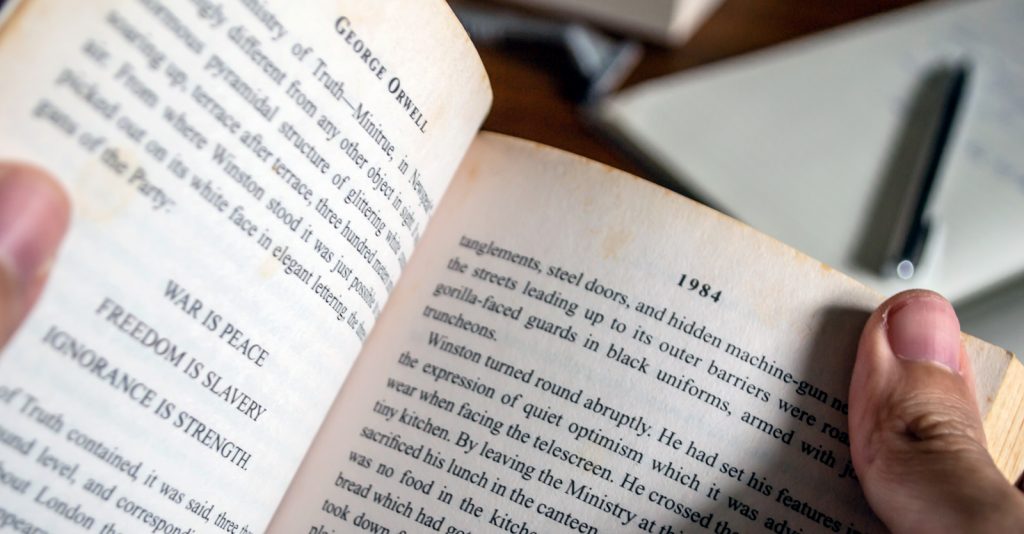

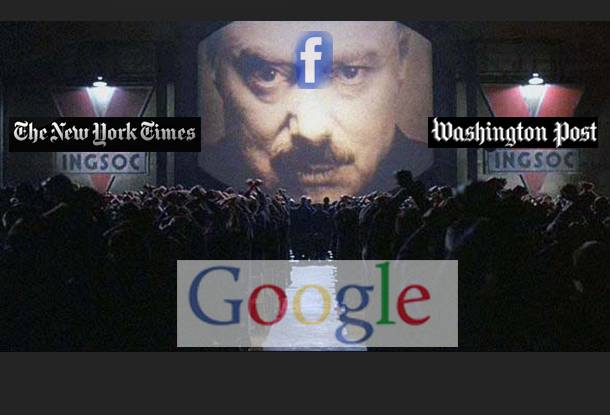
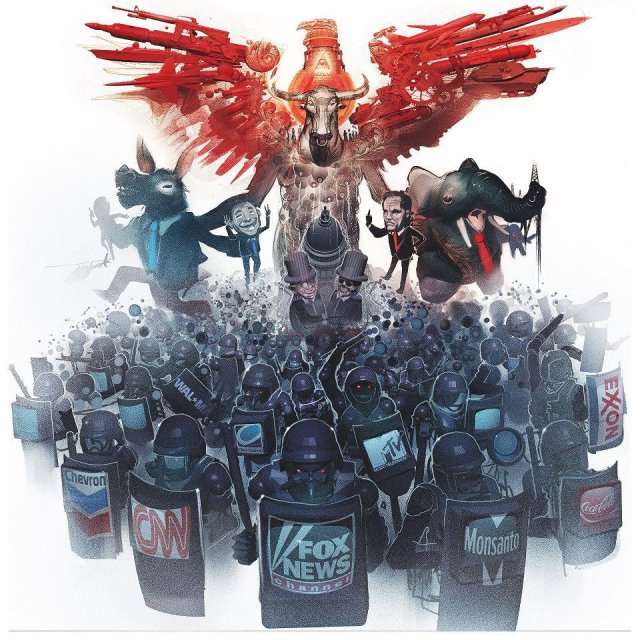
 After the Crash